Author: Jarl Forsman

  • Relieve Physical Pain by Releasing Your Grievances

    Relieve Physical Pain by Releasing Your Grievances

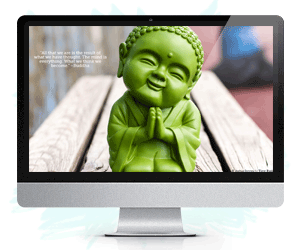
    “Remembering a wrong is like carrying a burden on the mind.” ~Buddha

    When the mind is burdened by a perceived wrong for an extended period of time, the body automatically steps in to carry part of the load. We store many of our painful life experiences deep within the framework of our physical bodies.

    If we don’t consciously feel and heal these hurts as they occur, they linger in our muscles, organs, and tissues long after the mind has consciously forgotten the specifics of the event.

    The body is actually a repository that faithfully carries this load until the essence of the experience is cleansed “from the record.” Fortunately, a bit of conscious awareness focused on the simple exercise below can greatly help to release the baggage of past experiences.

    While dining with a neighbor recently, I recalled the time we’d met several years earlier when he’d been suffering from severe back pain. I noticed that he was standing straighter and seemed so much more at ease now, even though he’s in his mid eighties.

    There was such a marked difference in his countenance that I asked him how his back was feeling. “Totally fine,” he twinkled. “How did that happen?” I inquired, sensing I might be in for a good story. “Forgiveness! I forgave myself and everyone else I was holding any kind of grievance against.” He answered matter-of-factly.

    “Just by forgiving, your serious back pain went away?” I asked. “That’s it,” he exclaimed, preparing to give me the full story. “Every grievance you hold against yourself or others shows up as a physical ache.”

    I immediately thought of several idiomatic expressions, like: He’s a pain in the neck. It was gut wrenching. She broke my heart. He’s shouldering too much responsibility, etc. I quickly saw the truth in what he was saying and agreed with him that our bodies warehouse the effects of our thoughts.

    Buddhist teachings refer to these grievances as samskaras. The term essentially refers to the psychic baggage that gets lodged in your being every time you have a reaction to something.

    Any time you want less of something (aversion) or more of something (craving), you are “in conflict” with the moment and adding items to your list of things that are not okay. (more…)

  • 3 Causes for Judging People (And How to Accept Yourself)

    3 Causes for Judging People (And How to Accept Yourself)

    “If we learn to open our hearts, anyone, including the people who drive us crazy, can be our teacher.” ~Pema Chodron

    Every person you meet has something special to give you—that is, if you are open to receiving it.

    Each encounter offers you the gift of greater self-awareness by illustrating what you do and don’t accept about yourself. An honest look will show you that the reactions you have to others give you more information about yourself than about them.

    You can never know for sure what motivates other people, but you can learn what you are accepting or judging in yourself.

    For instance, if someone makes a remark about you and it’s something you also judge in yourself, it will most likely hurt. However, if they make the same remark and you don’t have that judgment about yourself, it probably won’t bother you at all.

    I once visited a new friend’s house and everyone in the family was shorter than me. Since I’m the shortest person in my family, I never felt too tall.

    When my friend’s mother met me at the door and said with a slightly disappointed tone, “Oh, you are so tall,” it didn’t affect me. I was aware that she had some discomfort with my height, but I didn’t take it personally.

    However, had she been tall and said, “Oh, you are so short,” it probably would have pushed my buttons, since I do feel somewhat short.

    This point is valid for almost any interaction imaginable: Reactions always have to do with our own self-judgments and feelings of inadequacy or strength, not the other person.

    Most judgments of others stem from one of three basic causes: (more…)