

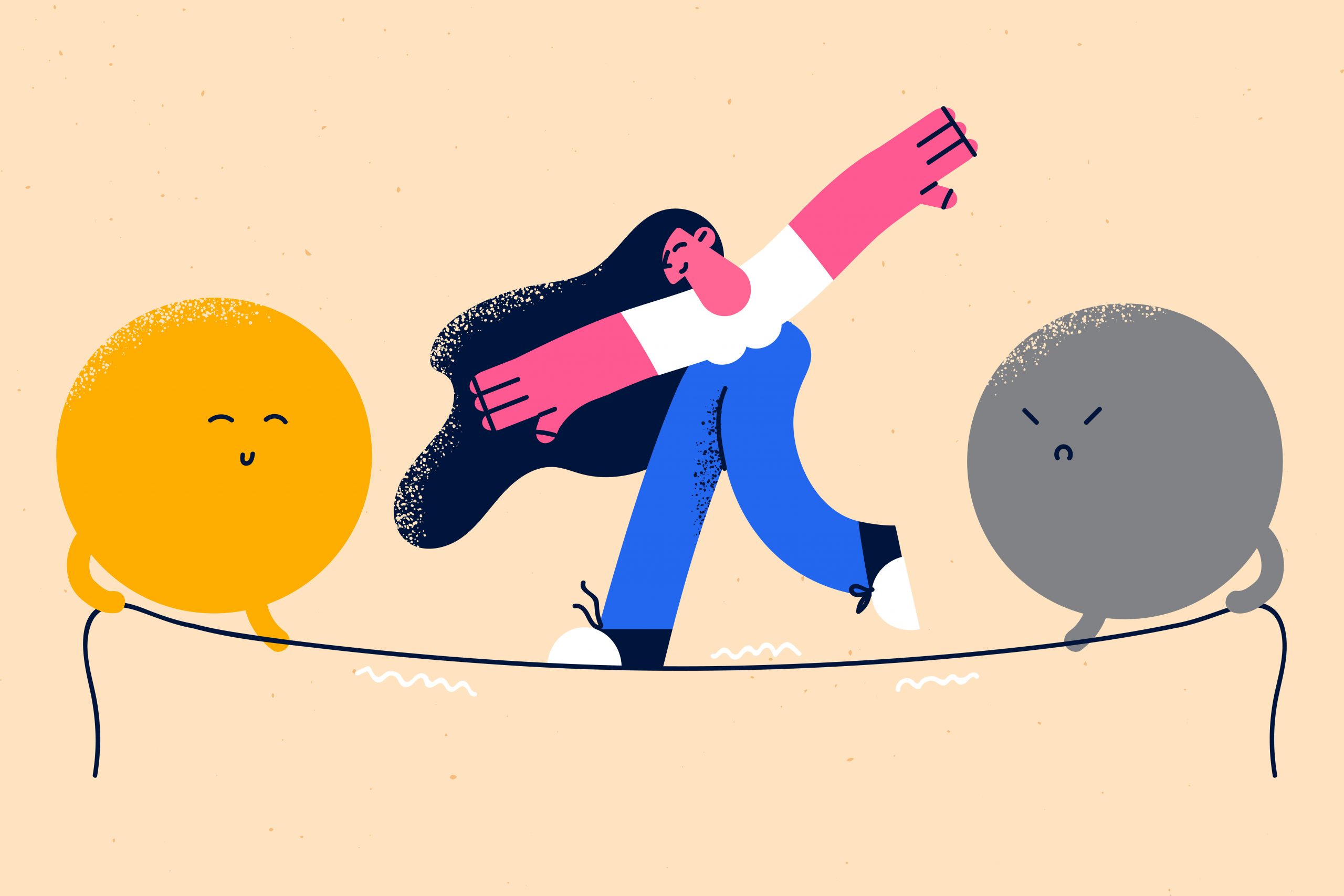
“When life is sweet, say thank you and celebrate. When life is bitter, say thank you and grow.” ~Shauna Niequist
Imagine if you had a tool that, with no effort or change on your part, could cast a glow around you, exposing hidden gems within your everyday life.
You do! It’s called gratitude.
It has the power to light your way through tough times. And it can multiply the good. Of the many tools I use daily, I love gratitude the most. It is so simple to implement and immediately effective. It’s a powerful way to change the world—through seeing, not doing.
I’ve invested a lot of thought, time, and deliberate action into creating the life I want. But building a life is one thing; relishing it is another.
Having gratitude allows me to squeeze every last bit of joy from what already exists around me and within me, creating more with no extra effort. Few things in life are simple, practical, and magical.
Without gratitude, our tendency is to focus on what’s missing. Life is what we choose to see. Without gratitude, we might waste a lifetime searching instead of enjoying.
Using this practice keeps me out of dark places. There are days when I find myself in an emotional fog for reasons I cannot explain. I used to dwell in those moments, or days, weighted down and powerless. Though I wanted to feel like myself again, I would retreat within rather than allow myself to engage with the world and resurface.
Gratitude has forever changed that. I possess a knowing (stemming from a consistent gratitude practice) that gifts are all around me, and I use them like a ladder to climb out of my hole. Gratitude shows me I always have choice.
I choose to want to feel better and then I ask for what I need—a hug, time, inspiration—and then I allow myself to move on. Spending so much time in awe and appreciation for life allows me to see beyond my temporary state. I no longer confuse my present state with my true state of being—joyful, grateful.
Gratitude doesn’t eliminate all the icky feelings and thoughts, but it absolutely makes me more resilient. It is my springboard. Not only am I aware of my shifting mood, but I actually take the action I need to take in order to come back to my true self.
Gratitude and I go way back. As a first generation South Asian, it was instilled in me to always see the blessings around me. My family worked hard to give me a leg-up in life: a life with love, education, and opportunity.
Gratitude also complements my positive nature. But it took me years to realize gratitude also appealed to my younger self because I was a pleaser, a peacemaker, a don’t-rock-the-boater. It turns out gratitude was also a great tool to keep me small. I used it as a ceiling.
As my dream job turned into a nightmare, I confused fear for gratitude. I could not bring myself to seek a solution because it felt ungrateful. I was so thankful for the opportunity that I endured a hostile work relationship with a superior that belittled and disrespected me. I am not a complainer, I told myself. This is the price I pay for my dream, I thought.
Gratitude allowed me to settle for less.
I have avoided conflict by exercising gratitude. In difficult situations, it gave me an out. Have you ever said or thought the following?
“It could be worse.”
“At least they didn’t …”
“I’m so grateful for this job/partner/friend. Who am I to complain?”
In all of these scenarios, I wasn’t wrong to see the upside. Things absolutely could’ve been worse. But they also could have been opportunities to practice enforcing boundaries, to see my own self-worth, and to imagine new possibilities.
I wasn’t able to see it then, but it’s clear now. Gratefulness is a powerful tool, but it should never be a way of accepting less than we deserve. It should amplify us, not diminish us. It should be our springboard.
Gratitude is a way for each of us to find joy, not a way to make excuses for others.
Yes, I have a loving family, but that’s no excuse to allow or accept disrespectful behavior. Yes, I work for an amazing company, but no, I don’t have to accept a toxic work environment. Yes, I love my partner, but I am worthy of a healthy relationship and love.
It can be so easy to slip into limiting beliefs, tricking ourselves into thinking we are grateful when we are actually unhappy. Many of us have more than we need and are aware of how many are in need in our communities, near and far. But we serve no one by making ourselves small.
How do you know when gratitude is limiting or a springboard? Know this: More is never made from less. Putting yourself below someone won’t create lasting joy, love, peace, or happiness.
Practicing true gratitude requires understanding that we are equals. No one is better. If you hold yourself to the same (not higher or lower) standards as someone else, then gratitude will be your springboard.
Gratitude is also a way to find what you’re looking for within your current life. It often requires little to no change. When we’re unhappy or unfulfilled we often think we need to get rid of things, maybe start from scratch somehow.
But the truth is, what we’re looking for is often already in our lives. We must simply possess (or practice) the ability to see it.
Gratitude also slows things down for me which, in this day and age, is precious. Being able to identify the gifts I have means knowing what’s important to me and taking the time to cherish them. It’s the ability to find my why—why I work hard, why I sacrifice and give of myself… why I am here.
That’s a lot to gain from one simple act of seeing. How grateful I am to gain so much from a simple practice.

About Nithya Karia
Nithya Karia is a lifestyle coach teaching women five simple habits to prioritize their health and happiness without the guilt. As a coach, speaker, and writer, Nithya explores how your current habits might be barriers to joy and how to transform them into High Vibe Habits so you gain the clarity, control, and confidence to thrive. Learn more about High Vibe living: https://nithyakaria.com











 Though I run this site, it is not mine. It's ours. It's not about me. It's about us. Your stories and your wisdom are just as meaningful as mine.
Thank you so much for putting things so clearly. I was adopted as a child by a complete monster of a ‘father’ who expected me to be grateful for being adopted by him. He pushed me into a college course which I neither wanted or served me in the career path which I would have liked to have followed. Its only true purpose was for him to be able to say to anyone who would listen ‘she’s at college’. When I went for a job interview for a job which I would have chosen, I was told that my my qualifications did not fit. For all this I was expected to feel grateful and made to feel guilty for any resentment. He is dead now and I curse his memory ( if there is a spirit world he’s probably cursing me ! ) so yes, gratitude though it can be vital is very much a double edged sword.
Thank you for sharing. I’m glad this piece was able to help you.
Wonderful article Nithya, thank you so much for this. I’ve been more grateful of late, using almost as an escape tool out of “when I find myself in an emotional fog for reasons I cannot explain”. However, I’d never stopped to think about the other side of the coin. It further confirms my recent observation about pretty much anything in life: everything, in moderation, is best
Thank you Aditya. When it comes to gratitude it’s more about perspective than moderation. Awareness is key.
The first thing that struck a chord with me was….
“As a first generation South Asian, it was instilled in me to always see the blessings around me. My family worked hard to give me a leg-up in life: a life with love, education, and opportunity.”
As a first generation “POM” (English) it was instilled in me to not expect more than I had to ward off disappointment. My parents always said I should be grateful but my Mother’s favourite accusation was that I was an “ungrateful little wretch” after all she had given up for me.
It is one thing to know someone has sacrificed for your good, but another to have it thrown in your face with scorn and jealousy. Thanks for that Mum.
I have been practising meditation for years and the one guided meditation I struggle with most is gratitude. I can give it itellectual consideration but I cannot FEEL it. I struggle to locate any gratitude in being left a widow at 58, my retirement dreams dying with the man I found late in life and wanted to “live happily ever after with”. He’s gone forever and despite being left with his loving family and a home and friends, I fail to FEEL gratitude for these things. How do you DO it? What do you tell yourself to bring positive feelings into the mire of grief, lonliness and lost dreams? The “what” sounds reasonable but the “how” still illudes me.
Thank you for sharing. I’m so sorry for your loss. I hope that continuing to connect with others will help you through this time.