

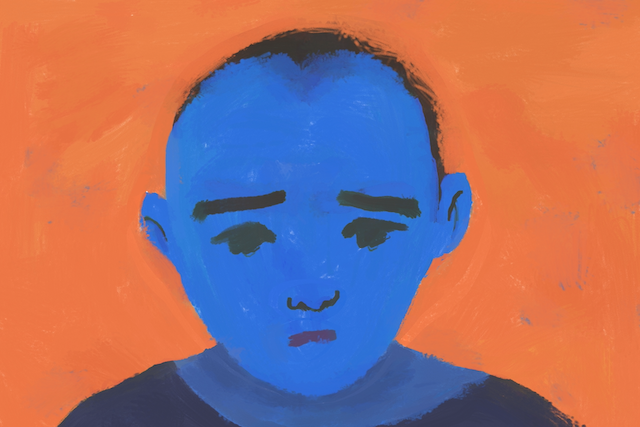
“You just never know what someone is dealing with behind closed doors. No matter how happy someone looks, how loud their laugh is, how big their smile is, there can still be a level of hurt that is indescribable. So be kind. Even when others are not, choose to be kind.” ~Andrea Russett
Everyone is doing the best they can. When they can do better, they will.
“I disagree,” you say. “I see people who are not doing their best all the time!”
Before the year 2006, I had a ton of complaints about the world and the people around me, including my parents, friends, and coworkers. I felt no one cared. Or at least didn’t care enough to try to do better. People seemed to do the bare minimum to get by or only what benefitted them directly. They didn’t care about how they affected others. They certainly didn’t care about me.
I had issues with my family I couldn’t make sense of, such as how my parents treated me, the way they communicated or lack thereof, and how they were never there for me. Everything I experienced in my family seemed like the direct opposite of how parents love their children was publicized.
Outside of my own family dynamics, I saw others with a variety of their own family issues. From financial struggles, household duties, to resentment and neglect, even abuse.
My view of mankind and my hopes to find happiness were dark and pessimistic.
I went to therapy, attended workshops, tried support groups, but nothing really answered the burning question I had in my mind: “Why do people continue to behave the way they do when they can change? WHY?”
Then in 2006, I attended a three-day workshop hosted by the late Dr. Lee Gibson. It changed my perspective forever.
Lee, as we all lovingly called him, was a brilliant behavioral psychologist who taught from a spiritual and energetic foundation. It was my first experience seeing everything from a holistic point of view, and I was hungry for more. I still practice all of his teachings today.
Among all the Leeisms he shared, it was the insight, “Everyone is doing the best they can. When they can do better, they will” that sparked a lightbulb in my head. It would free me from an emotional trap I had created for myself.
I will admit, it took me some time to fully grasp and embrace that perspective. I was not going to let everyone off the hook that easily. Every moment I was hurt, ignored, and betrayed flashed before me. What about my uncaring parents, my condescending boss, or my selfish boyfriend? Why should I give them the benefit of the doubt?
Then it occurred to me that I was, in fact, doing my best at the very moment but still felt sad, angry, not good enough in many areas of my life. Not because I wasn’t trying, or didn’t want to be better, but because I didn’t always know the exact right things to say or do every step of the way. I was filled with confusion and uncertainty a lot of time, bombarded by my own emotional past. And as far as I knew, I had never chosen a lesser option if I knew there was a better way. Turned out I was the first person I needed to give that benefit of the doubt.
If others are going through similar struggles, bound by emotional pains and egotistical voices, then I can surely believe they are as helpless as I was in breaking free of those patterns until they are aware and have the right tools to do so.
Life events are arbitrary, and most of us don’t get to practice each scenario over and over again until we get it right (like in the movie Groundhog Day). We are often put in a position to respond to whatever is thrown at us unexpectedly. All we have to go by is what we learned at a young age from our guardians or mentors. Even if we suspect they were not the best ways, we are still unsure what the best ways are.
It was as if a weight was lifted off my body. My mind felt more open, and I began a sort of social experiment by slowing down, observing the way people react in different situations from an outsider’s point of view, and freeing myself from taking anything personally.
What I discovered was when I positioned myself at a place of compassion and objectivity, I became less reactive to others’ reactions. The knowledge of everyone is doing the best they can but can’t help themselves gave me a sense of power—a power to disengage from their personal struggles and maintain focus on my own powers.
Shortly after that shift of perspective, my relationship dynamics began to shift as well. The people around me gradually put down their weapons and began to relax and open up about their internal struggles. They even started to take an interest in how I felt and expressed remorse in how they behaved in situations. It was unbelievable!
I won’t lie in saying all my relationships have flourished. A few of them remained the same or faded away, while others were brought closer than ever because of my newfound perspective.
For me, the greatest outcome was knowing that the few relationships that could not progress was not because of my rigid condemning stance of “Why wouldn’t you try to be better?” And that was a new level of emotional freedom.

About Liv W.
Olivia (Liv) Wu is a writer, meditation teacher and forever student of the body, mind, spirit connections. She is the creator of Soulove — a mindfulness community focusing on authenticity, emotional mastery and personal development. Liv hopes to inspire a more heart-based society through her work. She believes who we are at our core defines our capacity for joy and purpose, and who we are collectively sets the fate of our planet and the future of humanity.









 Though I run this site, it is not mine. It's ours. It's not about me. It's about us. Your stories and your wisdom are just as meaningful as mine.
Though this could be applied to a lot of people, it simply doesn’t work when it comes to abusive ones.
They’re doing the best they can becomes an excuse to explain away bad behaviour and by accepting it you leave yourself open to mistreatment. People should always try to do better and if they don’t when you clarify your needs, limit contact with them to whatever feels comfortable for you.
I didn’t read the article as suggesting that discernment, setting of healthy boundaries, growth… aren’t also part of the equation. How else does a person learn to do better if they aren’t held accountable. Holding ourselves and others responsible and accountable is part of the experience of Love creating the opportunity to grow and do better.
For myself the ask that we ‘love others as we love others’ begs the question how do we love ourselves? When I ask myself that question part of the answer was that I’m doing the best I can with the added intention that when I learn better I try to do better. When I fail I hope I take responsibility. This is what I ask of myself and so of others as a starting place.
Such practice requires a great deal of self knowledge or as you mentioned could be easily used as a excuse to avoid confrontation. It really is idiotically difficult being human.
.
You explained it quite well, thank you 🙂
Thank you for sharing your views. This article was meant to show a different perspective and to help reduce our own anger and confusion towards feeling wronged. It isn’t meant to suggest for someone to tolerate abuse. It’s difficult to offer compassion towards someone who has hurt us so badly, especially when wounds are fresh. We can however, try to see that they are struggling hard too. That doesn’t mean we keep allowing them to harm us. What you articulated above is a good way to establish boundary.
If everyone is doing the best they can would you support the concept of a prisonless society where people can incite violence, commit violent acts or rob people of their belongings intentionally? Would you say that Hitler and Mussolini did the best they can as leaders of their countries?
Thank you for your view on this article. I feel the topic of what’s right and wrong is a separate one. Some acts are fundamentally wrong and cannot be justified. This article was meant to show a perspective of compassion and understanding towards relationship dynamics. It isn’t meant to suggest violence should be accepted. It was meant to help reduce our own anger and resentment towards feeling wronged. That said, we don’t know if the criminals would have gotten in too deep or become too far gone if they were shown by people in their lives how to see things differently. They might have chosen differently as well.
Thanks for the reminder!
A helpful tool for me has come from The Principle of Charity: If someone statements or actions can be interpreted in multiple ways, and if I am unable or not willing to determine which explanation is the correct one, chose the kindest explanation. Often the kindest explanation is that were all doing our best. That rule has stopped me from ‘being offended’ and righteously angry many times over.
I’m reminded of Fredrik Backman book ‘Anxious People’ which starts out with the following:
“This story is about a lot of things, but mostly about idiots. So it needs saying from the outset that it’s always very easy to declare that others people are idiots, but only if you forget how idiotically difficult being human is. Especially if you have other people, you’re trying to be a reasonably good human being for.”
I think he is right. It can be so idiotically difficult being a reasonably good human being… we do the best we can. Learn better do better what more can we ask of ourselves and so others?
Thank you for reading, and for sharing your insights on this topic!