

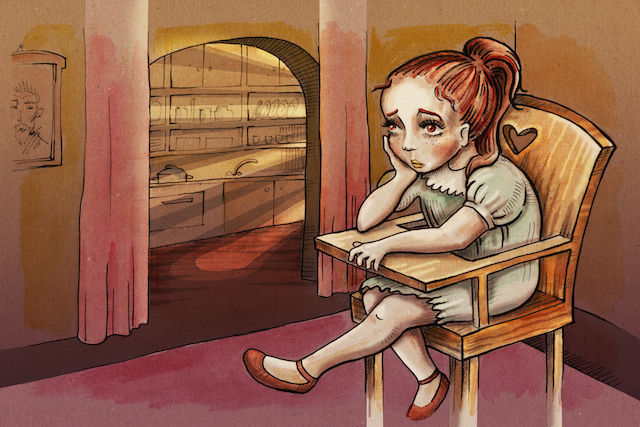
“The emotional wounds and negative patterns of childhood often manifest as mental conflicts, emotional drama, and unexplained pains in adulthood.” ~Unknown
I am a firm believer in making the unconscious conscious. We cannot influence what we don’t know about. We cannot fix when we don’t know what’s wrong.
I made many choices in my life that I wouldn’t have made had I recognized the unconscious motivation behind them, based on my childhood conditioning.
In the past, I beat myself up over my decisions countless times. Now I feel that I needed to make these choices and have these experiences so that the consequences would help me become aware of what I wasn’t aware of. Maybe, after all, that was the exact way it had to be.
In any case, I am now hugely aware of how we, unbeknownst to us, negatively impact our own lives.
As children, we form unconscious beliefs that motivate our choices, and come up with strategies for keeping ourselves safe. They’re usually effective for us as children; as adults, however, applying our childhood strategies can cause drama, distress, and damage. They simply no longer work. Instead, they wreak havoc in our lives.
One of my particular childhood wounds was that I felt alone. I felt too scared to talk to anyone in my family about my fears or my feelings. It didn’t seem like that was something anyone else did, and so I stayed quiet. There were times I feared I could no longer bear the crushing loneliness and would just die without anyone noticing.
Sometimes the feeling of loneliness would strangle and threaten to suffocate me. I remember trying to hide my fear and panic. I remember screaming into my pillow late at night trying not to wake anyone. It was then that I decided that I never wanted anyone else to feel like me. This pain, I decided, was too much to bear, and I did not wish it on anyone.
As an adult, I sought out, whom I perceived as, people in need. When I saw someone being excluded, I’d be by their side even if it meant that I would miss out in some way. I’d sit with them, talk to them, be with them. I knew nothing about rescuing in those days. It just felt like the right thing to do: see someone alone and be with them so they wouldn’t feel lonely or excluded.
Looking back now, I was clearly trying to heal my childhood wound through other people. I tried to give them what I wish I’d had when I was younger: someone kind, encouraging, and supportive by my side. I tried to prevent them from feeling lonely. This isn’t necessarily a bad thing—it’s kind to recognize others in pain and try to be there for them.
The problem with my strategy was that I chose people who were alone for a reason: they behaved badly and no one wanted to be around them. I chose people healthy people would not choose to be with. People who treated others poorly and did not respect themselves, or anyone else for that matter. That included me.
And so I suffered. I suffered because I chose badly for myself. And I chose badly for myself because I followed unconscious motivations. I obediently followed my conditioning. I followed the rules I came up with as a child, but playing by those rules doesn’t work out very well in adulthood.
I never understood why I suffered. I couldn’t see that I had actively welcomed people into my life who simply were not good for me. It didn’t matter where I went or what I changed; for one reason or another, I’d always end up in the same kind of cycle, the same difficult situation.
At one point I realized that I was the common denominator. It then still took me years to figure out what was going on.
Eventually, my increasing self-awareness moved me from my passive victim position into a proactive role of empowered creator. Life has never been the same since. Thankfully. But it wasn’t easy.
I had to look deep within and see truths about myself that were, at first, difficult to bear. But once I was willing to face them and feel the harshness of the reality, the truth set me free. It no longer made sense to play by rules I had long outgrown. I didn’t realize that I had become the adult I had always craved as a child. But I was not responsible for rescuing other adults—that was their job.
I have since witnessed the same issue with everyone I meet and work with. One particular person, who had endured terrible abuse growing up, was constantly giving people the protection he had craved but never received as a child. He gave what he did not receive. And yet, in his adult life it caused nothing but heartache for him.
When he saw, what he perceived as, an injustice like someone being rude to someone else or a driver driving without consideration for others, he intervened. Unfortunately, he often got it wrong and most people didn’t want his input, which left him feeling rejected and led to him becoming verbally aggressive. Eventually, his ‘helping’—his anger and boundary crossing—landed him in prison.
He was not a bad person—far from it. He was simply run by his unconscious motivation to save his younger self. He projected and displaced this onto other people who did not need saving and never asked for his help. But his conditioning won every time and in the process wrecked his life.
What ends this cycle is awareness, understanding, and compassion.
We must learn to look at the consequences of our actions or inactions and then dig deep. We must ask ourselves: What patterns do I keep repeating? What must I believe about myself, others, and life in order to act this way? Why do I want what I want and why do I do what I do? And what would I do differently if I stopped acting on my childhood conditioning?
Beliefs fuel all of our choices. When we don’t like the consequences of our actions, we must turn inward to shine a light onto the unhelpful unconscious beliefs we formed as children. Only awareness can help us find and soothe them. Only understanding can help us make sense of them. And only compassion can help us forgive ourselves for the patterns we unknowingly perpetuated.
We didn’t know what we didn’t know. We couldn’t have made any different choices. But once we begin to see and understand how our minds work and how our conditioning drives everything we do, we grow more powerful than we ever thought possible.
It is then that we are able to make healthier, wiser, and more life-enhancing choices for ourselves. We can then break the cycles that previously kept us stuck in unfulfilling and often harmful situations and relationships.
There is always a different choice. We just have to begin to see it.

About Marlena Tillhon
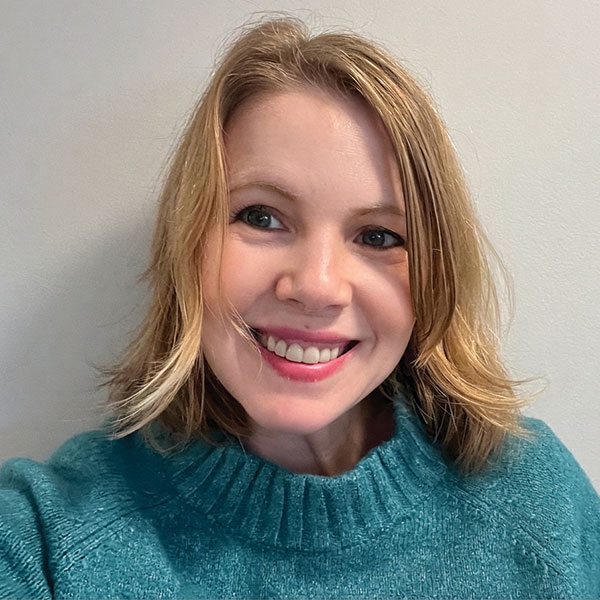
Marlena is a highly experienced psychotherapist and success coach specialising in healing inner trauma and breaking unhealthy patterns that stop her ambitious clients from having the success they know they can have in their lives, relationships, and careers. You can find her on Instagram or Facebook and receive her free training and gifts on her website.




 Though I run this site, it is not mine. It's ours. It's not about me. It's about us. Your stories and your wisdom are just as meaningful as mine.
Oh my gosh, this was so well written and it so resonated with me. I am finally (at age 54) at a stage where I am not choosing friends who are harmful to me, however, I also don’t have any friends because I don’t trust myself anymore. In some ways it’s easier to not have any friends, but it is also lonely. I still feel shame at the choices I made in life; marrying a man because he fit the role of my abusive parent, etc. I am working on it. It is hard to see how my childhood abuse affected so much in my life. I thought I was making the right choices at the time, but I wasn’t and fear ruled my life. Thanks to amazing my analyst, articles like this and resources like “The Tiny Buddha”, I’m moving forward!
Sometimes when we need to transcend the obvious, it is apparently there(did we notice the sign?). Our younger self can and does become somewhat of a burden. It is up to us to see the present and work towards the future.
this is gold 🙂
The problem with my strategy was that I chose people who were alone for a reason: they behaved badly and no one wanted to be around them. I chose people healthy people would not choose to be with. People who treated others poorly and did not respect themselves, or anyone else for that matter. That included me. <-- this line really put into words what I do sometimes
Dear Marlena, I so agree with everything you wrote, well said. Do you think that in order to shed light on our conditioning it is essential to get help from a therapist, since we use our own filters when doing introspective work and it can be difficult to bring the patterns to the surface? Perhaps it is just a faster process if we chose to consult but I would think that trying to accomplish that without support is a very challenging task. Thank you.
I can totally relate to this article. I have found myself, many times, wondering why I attract certain types of people. I would think of myself as “friend to the friendless” and “champion for the underdogs”. I have been involved in many friendships, beginning in childhood, where I was used. I reconnected with who I thought was my childhood BFF on Facebook only to find she was posting about her childhood BFF which wasn’t me. I experienced a traumatic event in which I felt alone and felt that I had to make sure no one else felt that painful isolation. Thank you for this enlightening article.
Marlena, I love this article and it’s one I’m going to keep. I can relate to the man who intervened on other people’s behalf. I think for me I was doing what I wished someone had done for me. It’s like I wanted to be a mentor for such people yet I now know it’s a mentor that I needed. Thank you for such a thought provoking article.
One of the reasoning why our conditioning in the child world doesn’t work in the adult world is because the adults shove the conditioning down our throats while knowing that it doesn’t work in the adult world, yet, they keep doing it hoping that there will be a different outcome.
This is a very touching article. I’d like to speak to the dilemma wit different terms. We have no idea how much time we live in “chronically regressed trance states of identity” (Finding True Magic), These waking hypnotic states contain the power of unresolved childhood wounds and confused beliefs. We project these on to present time as this article describes. Sometimes we comment, “I feel like a 3 year old” or “Stop acting like a child”, but very much of the time we are not aware that we are operating from the psychological trance state of the child we used to be.
or it’s our parts – we all have parts that developed during our childhood that try to protect us (our self) and our wounded parts – if we can work with our parts we can start living from our core self, from a fulfilling place of connection with our inner potential, with self compassion
Sounds like the beginning understanding of Internal Family Systems. Next, heal those young parts carrying those burdens so the adult can behave without their influence! Well written.
haha yep, I thought that too 🙂
This is a great start but maybe needs a follow article on how people go about healing themselves from past neglect and trauma. It’s good to look at our beliefs but we also need to go a lot deeper – to our wounds, to our exiles. This requires some kind of depth psychology like IFS, inner child work, inner critic work and so on. Meditation, art therapy, journaling are all ways to get into some depth work on our healing. CBT might work for changing attitudes but it just doesn’t go far enough to heal childhood neglect, abuse, CPTSD etc. Great topic!