Tag: worry

  • Tiny Buddha’s Worry Journal – Last Day for Three Free Bonus Gifts!

    Tiny Buddha’s Worry Journal – Last Day for Three Free Bonus Gifts!

    Hi friends!

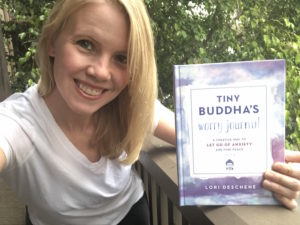
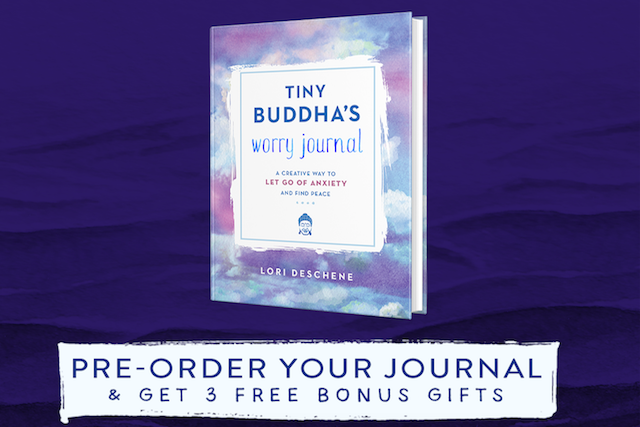
    Today’s the day! Tiny Buddha’s Worry Journal is officially available for purchase, and today is the last day to claim the three free bonus gifts.

    Stored high in my closet I have a collection of more than a dozen journals from my childhood and teenage years.

    The early ones are full of angst, pain, and rage. During the later years I began to use journaling not just to vent my feelings but also to reframe my thoughts and recognize and overcome negative patterns. This helped me feel less stressed, depressed, and fearful and more peaceful, empowered, and optimistic.

    This is what compelled me to create this journal: I know from personal experience how journaling can help us move through difficult feelings and overcome mental blocks that prevent us from feeling happy, relaxed, and free.

    Whether you’re worried about the future, people you love, what people think of you, or any of the many things we can’t control in life, this journal can help you let go and calm your busy mind.

    Filled with quotes, prompts, and questions, along with coloring and doodling pages, Tiny Buddha’s Worry Journal provides a number of different activities to help you reframe your worries and minimize anxiety in your daily life. 

    If you grab your copy today, you’ll receive the following:

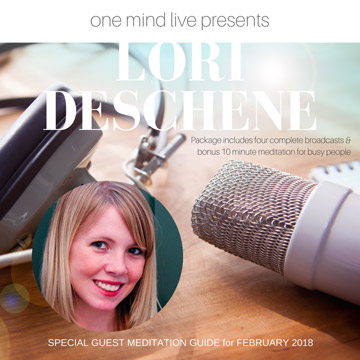
    A series of four meditations on letting go (led by yours truly), each with an EFT tapping session led by Naomi Jansen and an introductory chat with Naomi and her One Mind Live co-founder Stephen Fearnley

    An exclusive audio interview with me and Ehren Prudhel, host of the soon-to-be-launched podcast Next Creator Up, focusing on worries related to pursuing a new dream (more specifically, my first feature screenplay)

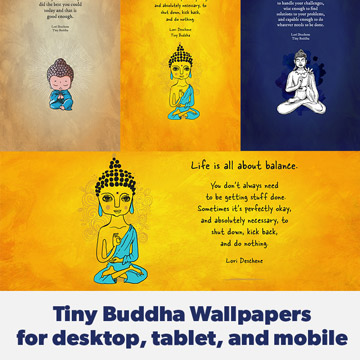
    A series of three vibrant desktop wallpapers featuring adorable Buddhas and calming quotes

    All you need to do to claim your bonuses is pre-order your copy from any online vendor and then forward your purchase confirmation email to worryjournal@tinybuddha.com.

    We all worry; it’s just part of being human. But it doesn’t have to control us. Not if we proactively choose to work through our worries, one moment and one page at a time. I hope these exercises help you as much as they’ve helped me!

  • Perspective Coloring Page from Tiny Buddha’s Worry Journal

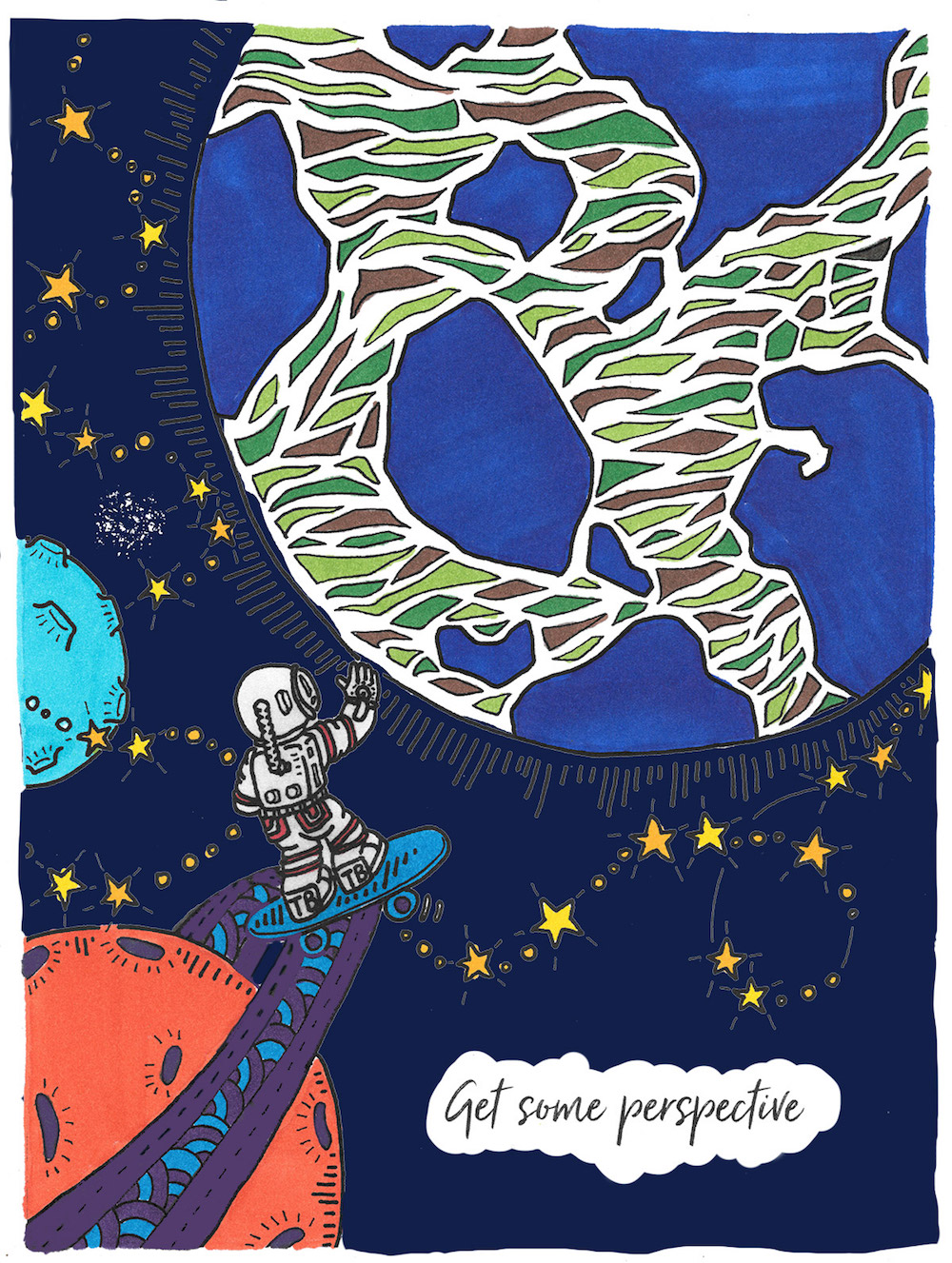
    Perspective Coloring Page from Tiny Buddha’s Worry Journal

    Hi friends! We’re now less than two weeks away from the launch date for Tiny Buddha’s Worry Journal. As you may have noticed, I’ve been sharing some of the coloring pages over the past few weeks, all colored by yours truly, to give you a sense of what the journal has to offer. So far I’ve shared:

    In addition to coloring pages, the journal includes questions, written prompts, and doodle prompts to help you reframe your worries and minimize anxiety in your daily life.

    Really, it all comes down to perspective. Everything seems more difficult and overwhelming when we’re wading through the muck of a disappointment, crisis, or tragedy, knee-deep in our messy emotions. But oftentimes when we step back and view things in a different light, life suddenly seems more manageable, and sometimes the painful seems not only tolerable but also useful.

    There’s a Taoist fable that I’ve found particularly powerful because it reminds me not to panic when things go “wrong.” You’ve quite possibly read it before, but perhaps it’s something you need to read again today:

    A farmer had only one horse. One day, his horse ran away.

    His neighbors said, “I’m so sorry. This is such bad news. You must be so upset.”

    The man just said, “We’ll see.”

    A few days later, his horse came back with twenty wild horses following. The man and his son corralled all twenty-one horses.

    His neighbors said, “Congratulations! This is such good news. You must be so happy!”

    The man just said, “We’ll see.”

    One of the wild horses kicked the man’s only son, breaking both his legs.

    His neighbors said, “I’m so sorry. This is such bad news. You must be so upset.”

    The man just said, “We’ll see.”

    The country went to war, and every able-bodied young man was drafted to fight. The war was terrible and killed every young man, but the farmer’s son was spared, since his broken legs prevented him from being drafted.

    His neighbors said, “Congratulations! This is such good news. You must be so happy!”

    The man just said, “We’ll see.”

    You can’t see the whole picture from where you’re standing, so take a deep breath and remind yourself that things likely aren’t as bad as they seem. And even if the worst thing happened, you could handle it and maybe even grow and gain in ways you can’t possibly predict.

    From now until June 26th, you’ll get three bonus gifts, including a guided meditation series on letting go, when you pre-order Tiny Buddha’s Worry Journal. All you need to do is order a copy here and forward your purchase confirmation email to worryjournal@tinybuddha.com.

  • How to Stop Worrying About the Future and Start Living Your Life Now

    How to Stop Worrying About the Future and Start Living Your Life Now

    “Every tomorrow has two handles. We can take hold of it with the handle of anxiety or the handle of faith.” ~Henry Ward Beecher

    Retirement. A word that fills people with both excitement and fear.

    On the one hand, we’re excited about the possibilities that retirement brings. The possibility to travel, to try new hobbies, to live our lives the way we want.

    On the other hand, we worry about whether we’ll have enough money to survive until that unknown age at which we’ll die. And maybe not just survive but to actually thrive in our later years.

    That fear, that endless worry about the future, is what keeps many people stuck in soul-sucking careers. Following the safe path in life, trying to save up money for that day in which they’ll no longer be working. Sacrificing their one precious life in exchange for a sense of security later on.

    I understand those fears about the future and retirement. I recently turned forty-nine years old, which means that my retirement is only fifteen years away. Fifteen years may seem like a long time, but I know that those years will pass quickly.

    I have some money saved up in retirement accounts and I will also receive a small pension. And hopefully I’ll also receive money from Social Security.

    Will that be enough? And how long will that money last? I have no idea.

    My retirement years could have been a lot different. Three times in my life I’ve walked away from jobs that paid me lots of money and paid generous retirement benefits. My friends who decided to stay in those jobs will likely have few worries when they retire.

    So yes, I gave up a lot of money and a secure retirement. But I also saved my soul in the process. Those jobs I walked away from? They were destroying me.

    I hated being stuck in a cubicle. I hated sitting in front of a computer all day long. I hated writing pointless memos. I hated going to meetings to talk about things that I didn’t care about.

    My dad spent over twenty years in a job he hated because he had no choice. He had to support his wife and three kids. And I saw firsthand how staying in that job destroyed him. And I vowed a long time ago not to do to myself what he did to himself.

    So I did whatever was necessary to get out of those jobs. And then I used some of my savings and took the time to do things that people say they’ll do in retirement:

    • I backpacked around the world, visiting over thirty countries and living in several others.
    • I volunteered with street children in Mexico and with cancer patients in the Philippines.
    • I learned Spanish, starting from point zero to becoming near fluent.
    • I lived at a yoga center in Pennsylvania and a meditation center in Wisconsin.

    And afterward I started my own business so that I could live life on my terms instead of how others wanted or expected me to live it.

    In my opinion, there’s no amount of money that makes staying in a job that you hate worthwhile. Not for me, at least. Not unless I have absolutely no other choice. Life is now, not in some imagined future.

    I honestly have no idea what the future holds for me and what my retirement will be like. I may not have much money when that time happens. And the money I do have for retirement may run out quickly.

    But over the years I’ve learned to be adaptable. I’ve learned how to do without. I’ve learned how to live simply.

    Most importantly I’ve learned that the three most important things in life are connection, community, and contribution. Those are things that can’t be bought with money. And as long as I have those, everything else is negotiable.

    So whatever happens in the future, I trust in myself and my ability to adapt. I know that I’ll figure something out.

    And I’ll not just survive…I’ll thrive!

    • Maybe I’ll join the Peace Corps.
    • Maybe I’ll live in a monastery in Thailand and study Buddhism in depth.
    • Maybe I’ll teach English in a rural village in Peru in exchange for room and board.
    • Heck, maybe I’ll drive a school bus till I’m seventy-five years old like my dad did (and absolutely loved!) after he finally left his soul-sucking job.

    I leave you with this message. If you’re in a soul-sucking job, and only staying for the money, then do whatever it takes to get out as soon as you can. Your one precious life isn’t worth wasting.

    Yes, you need money to survive. We all do. But there are always far, far better options than sacrificing your life for money.

    So if you’re ready to stop worrying about the future and start living your life now, here are my tips for you:

    Accept and trust that you’ll find a way to make things work in the future, even if you’re not sure how.

    Chances are, you are more intelligent, resourceful, and adaptable than you realize. And that you will find a way to not only survive in the future but also to thrive. That’s what I found out when I started taking more risks in my life.

    For example, I used to think that I couldn’t learn a foreign language. But once I put myself in the right situation (intensive lessons in Mexico), I quickly found out that I could learn a foreign language.

    I also used to think that I couldn’t adapt to living in a foreign country. My first two attempts ended after three months due to homesickness. But my third attempt was successful and I’ve now lived in Bogota, Colombia, for over five years. I’ve adapted to living here even though I thought I couldn’t.

    Start taking a few risks and testing your limits. Just like me, you’ll learn to be more resourceful and adaptable—skills that will both help you in the future and give you more options in life.

    Strike a balance between now and the future.

    You need money for the future and for retirement. But you also need to live in the now. Aim to strike a balance between those two competing desires. Do everything you can to live your life now while also preparing for the future.

    For example, when I go out to eat with my friends, they will often order a glass of wine, an appetizer, a main course, and dessert, spending $50 per person. I, on the other hand, only order a main course and drink water, spending $10-15 dollars. I still get to enjoy a nice meal and the company of my friends (living now) while spending a lot less money (preparing for the future).

    Give up the idea that life has to look a particular way.

    Lots of people follow the safe path in life because that’s what they see everyone else doing. But there’s no reason why your life has to look like everyone else’s.

    By their forties, most of my friends and family had settled down, bought houses, started families, and worked the same jobs for years. On the other hand, when I was in my forties, I quit my job, sold all my possessions, and backpacked through Latin America and Eastern Europe. That’s not what most people do in their forties, but it’s what I wanted to do.

    Similarly, I’m sure my retirement will look a lot different than that of my friends and family. But my life isn’t bound by what other people do and neither is yours. Live the life you want to, the life that resonates with your heart—both now and in the future!

    Accept that the future is ultimately unknowable.

    None of us knows what the future holds. And no matter how much you plan for the future, your future will likely turn out to be very different than you expect. I know that mine has—for example, I never expected to be living in Bogota, Colombia, nor did I expect to own my own business.

    There’s nothing wrong with planning for the future, but in the end you can’t control it. So I suggest that you embrace the unknown, go with the flow, and see what unfolds in your life.

    In the end, you only get one chance at life. You can wait around for the future, wait around for your retirement to finally start living the life you want. Or you can start taking steps to do that right now and let the future take care of itself when it arrives. The choice is yours.

  • Our Future Is Bright—Why Worry?

    Our Future Is Bright—Why Worry?

    “How much pain has cost us the evils that have never happened.” ~Thomas Jefferson

    When my friend said she worried about the kind of future world her grandkids would live in, her daughter and I stared in disbelief.

    I hear it often, the concern for the future. There’s concern for many things, from the Earth itself to the concern for the lack of community and the implications of generations reared in a world where social media appears to be the new community.

    My friend’s daughter is quite a bit younger than me, but our kids are the same age—she came to motherhood early, I came late. Over the years I have watched as this young lady has absolutely blossomed as a mother and as a member of our society.

    Her conversations are intelligent, witty, and insightful, but most precious of all is her ability to ask questions that make people think, to question their beliefs, without creating a defensive reaction. It’s a beautiful thing. As her mum was questioning what the future would be like, my first thought was “with people like this in our younger generation, why worry?”

    The Earth right now, our people and our society, are a reflection of yesterday’s actions.

    Given our actions are driven by our thoughts, I’m really not in the least worried about our future.

    Sure, I can browse the internet, watch media, or walk out my front door and spend time observing the kind of behaviors that created the world we live in today. In fact, it’s fair to say there are many things we can look at and feel utterly horrified about.

    The fact that we do is the catalyst for change.

    There are the people like you and me, becoming more conscious of our actions, becoming more conscious of the thoughts that drive our actions. And there are our younger generations, born with more wisdom and insights into tomorrow than any amount of worry would give them credit for.

    A few years ago I watched an Australian drama series called Puberty Blues, set in the 1970’s, but played by actors born in the millennium. Having grown up in the 1970’s, I could relate to a lot of the experiences the young characters were going through.

    However, the most striking thing was an interview with the actors that I read; they were being asked how different their characters’ experiences were from their own.

    The boys felt that their 1970’s counterparts suppressed a lot of their feelings, masquerading as macho men. One commented how common it is these days for male friends to hug each other, which would have been unheard of then. The girls commented on how subservient to whims of the boys their counterparts were, something they themselves couldn’t contemplate.

    I was astounded, and rather reassured. In just thirty years, society has apparently evolved more than it has in hundreds (if not thousands) of years. The patriarchal ego has been called out; the feminine traits within us all rising to create more of a balance it seems.

    Then there are the likes of Boyan Slat that I saw on a social media site a few years ago, the young Dutch student who invented a way to clean up our ocean’s plastics and is now trialing it, and Melati and Isabel Wijsen, sisters from Bali that I found via Google, who founded Bye Bye Plastic Bags in 2013 and now the entire island of Bali is declared free of plastic bags—with the whole of Indonesia planning to ban all plastic bags by 2021.

    You only need to search “young people changing the world” or similar and you will find countless examples, ranging from environmental to humanitarian. It made my heart soar.

    Yet I need not look even that far; there are my own kids, and my friend’s granddaughter who were all happily playing together as we had this conversation. These are really enlightened kids.

    Just a month or so ago I had been reading a kids’ book about people who changed the world. This particular story was about Martin Luther King Jr. My daughter’s eyes went wide as she took it all in. I could see her wrangling with the injustice of it all and saw a look of what I’d describe as determination appear on her face.

    One of her friends had been reading another children’s book about women who changed the world, and she knew the story of Rosa Parks. I listened to them discuss it in depth as we did a scavenger hunt around a local nature reserve last week.

    These two seven-year-olds and an eight-year old friend, along with my younger child who, despite bouncing around the room at the time we had read Martin Luther King Jr.’s story, had obviously taken in more details than I would have given her credit for.

    Future activists, these kids. Not simply on the topic of equality, but they are informed about environmental issues, diet, money, healthcare, education, politics, and government. This isn’t just because they grow up in homes where we take an interest in these things; it’s because society at large is starting to take an interest.

    They are assessing this world and seeing things they like and dislike, and have the energy and sense of self-worth to believe things can be different. They know they have choices in the way they do things, and it seems likely they will.

    Our kids may not go out and start a movement, but their thinking will lead to actions that change the world.

    Tonight when we watched Disney’s WALL-E movie about a future Earth that was simply a huge garbage dump that humans had abandoned 700 years before, the kids asked so many questions about it, I am sure they came away with a strong resolve that that was not going to be the kind of future they live in.

    Sure, these are just my kids and my friends. However, I see a world full of people just like that, and we are certainly not leading lights when it comes to most of this thinking; we are simply following because it resonates and makes sense.

    In the last decade alone, the amount of choice on supermarket shelves has increased amazingly to incorporate environmentally friendly, free range, and organic produce. Many more independent, locally owned and operated alternatives have sprung up too. Even produce sold for cash along the roadside sports signs such as “spray free.”

    Pharmacies now stock many more alternative and complementary healthcare products. Even doctors are starting to recommend a broader context for treatment than the pharmaceuticals at their disposal. The world is a changing place.

    It really was surreal to listen to someone who has awareness of all these issues express worry, at the same time sitting there with future generations who are so overwhelmingly wise, empowered, and enlightened.

    To be fair, it’s crazy to worry about anything. No amount of worry ever solved anything.

    The worry was more of a habit. One I am not immune to myself, on a myriad of fronts, but mainly when it comes to my personal behaviors and achievements. In other people and in the future of this planet, I have every faith.

    In the hands of our next generation, I’d say the future looks absolutely bright.

  • Accept Yourself Coloring Page from Tiny Buddha’s Worry Journal

    Accept Yourself Coloring Page from Tiny Buddha’s Worry Journal

    Hi friends! If you’re a regular reader, you know I’ve recently been sharing some of the coloring pages from Tiny Buddha’s Worry Journal, which includes questions, written prompts, and doodle prompts to help you work through worries and minimize anxiety in your daily.

    So far I’ve shared:

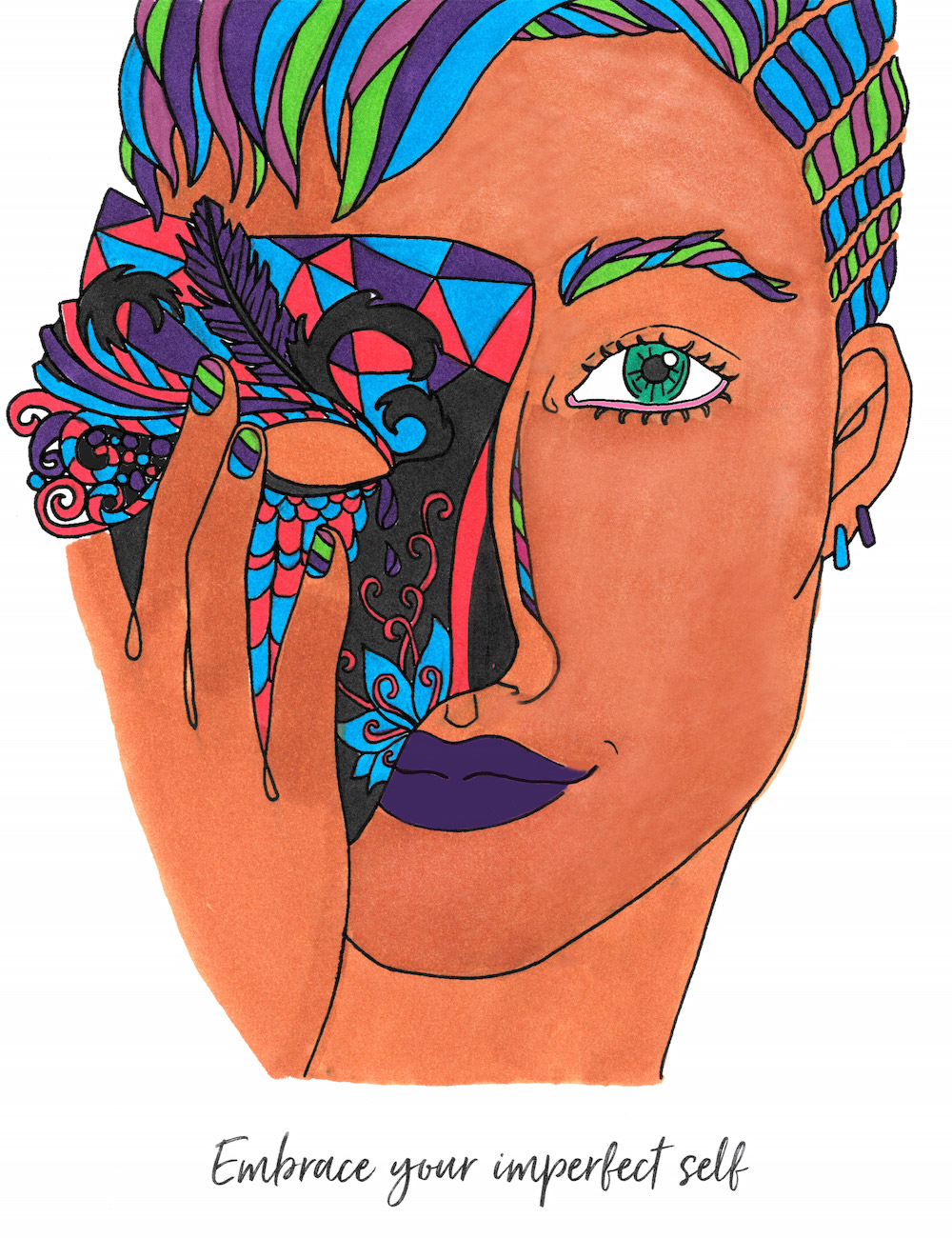
    Today’s page is one of my favorites, and not just because I love Rose Hwang’s beautiful illustration and enjoyed using so many bright colors.

    I love this page because it reminds me that imperfection is all about perception. What you consider a flaw someone else might consider a strength. What you feel tempted to hide someone else might perceive as beautiful.

    There’s a Japanese term, Kintsugi, that refers to the art of repairing broken pottery with lacquer mixed with powdered gold or other precious metals. This practice began in the 15th century when Japanese military commander Ashikaga Yoshimasa wanted to repair a broken tea bowl in a visually pleasing way. Kintsugi has come to be known as way to honor an object’s history, rather than attempting to hide the damage.

    I think about this sometimes when I look at my left leg. I have a series of scars toward the top, remnants from a time when I channeled my depression and shame into self-harm. For a while I was too insecure to wear shorts or a bathing suit because I worried that someone might see them and judge me. Now when I look at them, I try to visualize the faded lines in gold.

    Then I remember those lines are like a map that led me directly here. Every other scar, physical or emotional, is a testament to my strength, not my weakness. And every idiosyncrasy, from my introversion to my sensitivity, is a gift, not a curse, that has enabled me to make a difference in the world.

    The same is true for all us: our scars, our quirks, our imperfections—these aren’t things we need to hide. We are who we are because of them, not in spite of them. And every colorful piece of our past and personality is part of what us makes us beautiful.

    From now until June 26th, you’ll get three bonus gifts, including a guided meditation series on letting go, when you pre-order Tiny Buddha’s Worry Journal. All you need to do is order a copy here and forward your purchase confirmation email to worryjournal@tinybuddha.com.

  • Creativity Coloring Page for Tiny Buddha’s Worry Journal

    Creativity Coloring Page for Tiny Buddha’s Worry Journal

    Hi friends! Since Tiny Buddha’s Worry Journal launches in three weeks, I’ve recently been sharing some of the coloring pages, which all depict things we can do to minimize anxiety in our daily lives.

    So far I’ve shared:

    Today’s tip: Create something with your hands.

    If you’ve ever immersed yourself in any type of creative activity, you know how meditative and calming it can be.

    When we’re focused on the next brush stroke, bead, or stitch, we’re deeply immersed in the present moment—not caught up in our thoughts, fears, and worries.

    This is why I decided to include doodling and coloring pages in this journal. Research has shown that coloring calms down our amygdala—the fear center of the brain—and it also activates the parts of the brain that are responsible for focus and concentration.

    Beyond that, coloring and other creative activities bring us back to the ease of a simpler time—before we had to worry about bills, bosses, and other stresses of adulthood.

    When we were kids, we didn’t need to make time for creativity; it was as natural as breathing and saying no to things we didn’t like. Whether we were pretending to be pirates, fairies, or superheroes, we were always eager to pick up some cardboard and markers to make our own accessories and props.

    And for that brief flicker of time, all we saw was the fantasy in our head, projected onto our bedroom or yard.

    For many of us, childhood wasn’t all rainbows and butterflies, but the time we spent creating was.

    When I look back on my life up until now, I see that all the happiest and most defining moments involved some form of creativity.

    Like the decade I spent working at an afterschool program for kids, where I directed them in plays, made some of their costumes, and often designed arts and crafts projects for us to try.

    And the years I spent sketching in my book of shadows (during my teenage wiccan years), trying to create a guidebook for magic and light in the dark ages of my adolescence.

    And the time I spent crocheting afghans for everyone I love—first during the three months I spent at a residential treatment center for eating disorders, and later while traveling across the US with assorted mobile marketing tours.

    These days, I don’t create with my hands often enough. I’m more likely to create something digitally (like the many coloring posters in the fun & inspiring section). But whenever I disconnect from technology and focus on making something from nothing, it’s like the whole world stops—along with my thinking mind. And for a brief flicker in time there’s only heart. Just love, joy, and pure presence.

    I know there are a lot of you out there who also enjoy creating, and I would love to connect with you. So please, take a minute or two and say hello. Introduce yourself if we’re not acquainted, and tell me about something you’ve recently created, or you’d like to create. You can even share a picture if you’d like. Whatever it is, it’s a piece of your heart, and I would love to see it.

    From now until June 26th, you’ll get three bonus gifts, including a guided meditation series on letting go, when you pre-order Tiny Buddha’s Worry Journal. All you need to do is order a copy here and forward your purchase confirmation email to worryjournal@tinybuddha.com

  • Hugging Coloring Page from Tiny Buddha’s Worry Journal

    Hugging Coloring Page from Tiny Buddha’s Worry Journal

    “Sometimes in life all you need is a hug. No words, no advice, just a hug to make you feel better.” ~Unknown

    Hi friends! Over the past couple of weeks I’ve been sharing coloring pages from the soon-to-be-launched Tiny Buddha’s Worry Journal, which also includes doodle prompts, writing prompts, and questions to help you minimize anxiety in your daily life.

    So far I’ve shared the music coloring page and the meditation coloring page.

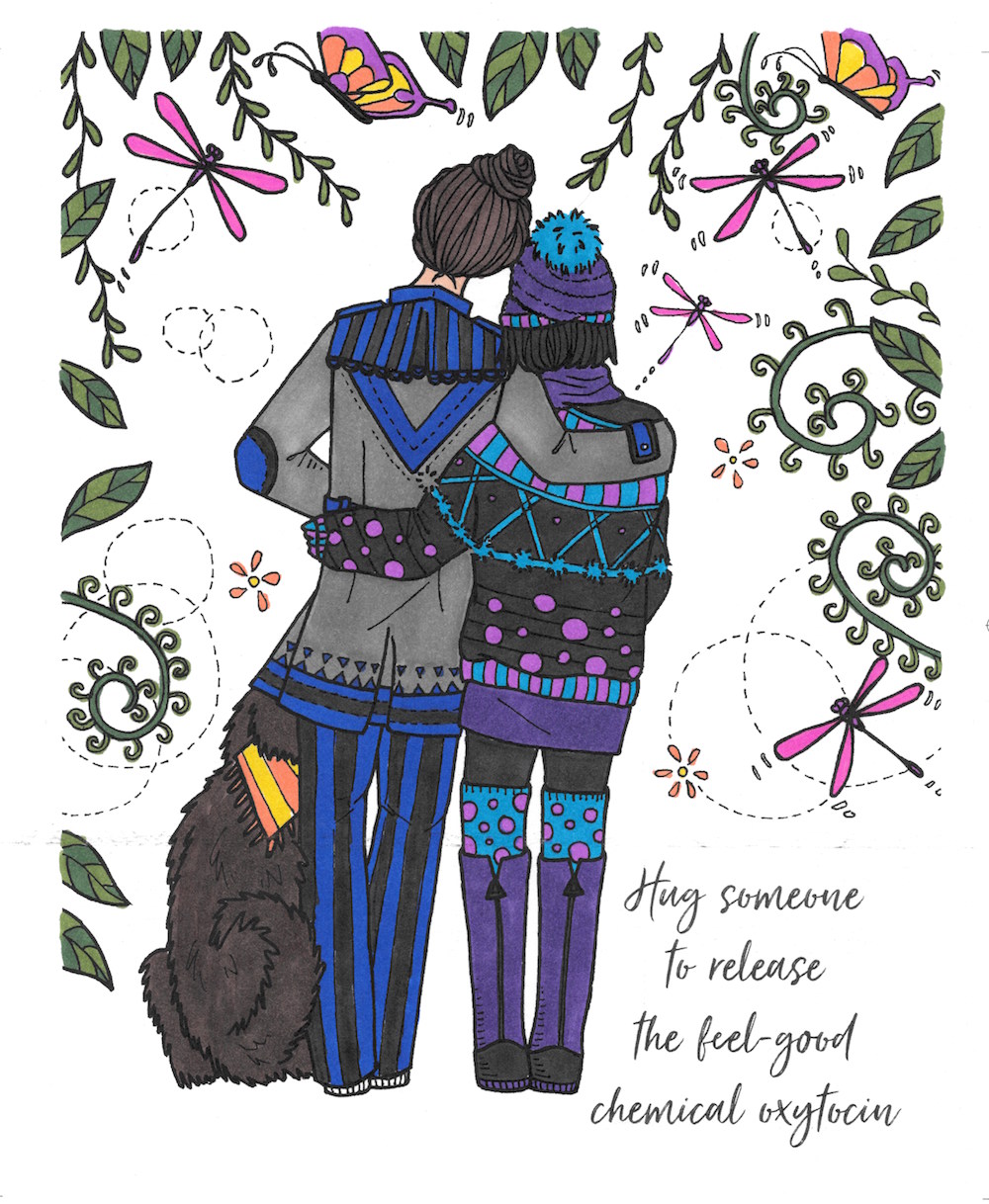
    Today’s page is one of my favorites. The tip: Hug someone to release the feel-good chemical oxytocin (a hormone that some have called an “antidote to depressive feelings”).

    “Hugging is good medicine. It transfers energy and gives the person hugged an emotional lift. You need four hugs a day for survival, eight for maintenance, and twelve for growth.” ~Unknown

    As someone who works alone, I can sometimes feel a little starved for connection during my day—which is ironic, since I connect with so many people online. But you can’t look into someone’s eyes in a comment. You can’t hear their heartbeat in an email. And you can’t touch their hand in a Facebook exchange.

    Whenever I’ve had a tough day, it’s tempting to want to talk it all out—more thoughts, more words, more analysis. And sometimes, this helps. But more often than not, I just need a hug.

    I just need to feel close to someone I love and to melt into their arms.

    Sure, it feels great to be heard. But sometimes I just need to be held so I can remind myself what it feels like to let go.

    We all need this sometimes. We all need this connection, this comfort, this release.

    Everything seems easier when we feel supported, and everything feels more manageable when we remember we’re not alone.

    “Hugs are so underrated, especially those hugs that are so tight you can literally feel the other person’s heartbeat and for a moment everything feels so calm and safe and like nothing can hurt you.” ~Unknown

    Hug someone today. Put down your phone, reach out your arms, and feel their heartbeat. It could help you more than you think, and the person you give it to could need it more than you know.

    From now until June 26th, you’ll get three bonus gifts, including a guided meditation series on letting go, when you pre-order Tiny Buddha’s Worry Journal. All you need to do is order a copy here and forward your purchase confirmation email to worryjournal@tinybuddha.com

  • The Past May Have Shaped Us, But We Have the Power to Change

    The Past May Have Shaped Us, But We Have the Power to Change

    “If you want to fly, you have to give up the things that weigh you down.” ~Toni Morrison

    Our very first relationship is the one we develop with ourselves. However, even that one is shaped by outside forces.

    You may or may not believe that we choose our family. Regardless of your position regarding how your soul made it to your parents’ household, the truth is that the environment we are born into determines a great deal of the rest of our lives. This is especially true about the way we relate with ourselves and others.

    We learn by observing and experiencing the dynamics in our home. Our brains absorb the discourses. The judgments passed over us and the stories told about us become a part of our personality. The words we hear from the voices around us become embedded into our inner voice.

    We end up with a creation from the hands of Dr. Frankenstein: a patched up combination of voices that we later adopt as our own. That voice plays a huge role in how we develop a relationship with ourselves and, therefore, with those around us.

    The outside world shaped the inner reality that, in turn, will facilitate how we relate to that outer world.

    We learn from the way that our caregivers react to stress, from how they manage their anger, and how they engage in arguments.

    We learn from how they treat themselves, us, and the rest of the world.

    We learn about limitations and about fear.

    We learn to worry and to lie.

    We learn to yell out and to bottle it all in.

    We learn to over-react and to act like leaves at the mercy of the wind.

    We learn to micromanage and to be oblivious to life.

    We can learn the extremes. However, we can also learn balance.

    What is your vision for yourself? I’m talking about a real life vision, not about your annual income goal, or your income-to-debt ratio, or that degree you’ve been meaning to get. I’m not talking about the car you want or the trip you’ve dreamed of. Not that those things are bad or meaningless; they’re simply not a vision, they’re goals.

    What I am asking is: What is your vision? What state of being do you wish to create for yourself? What kind of relationships to you want to nurture? How do you want to feel? 

    My parents did their best to give me the best they had to give. I learned about hard work, being of service in the community, and believing in the divine. However, I did not develop anger management and conflict resolution skills, calming strategies, a healthy self-concept, or effective communication and decision-making skills.

    In other words, I was a typical clueless adult who was able to make money and run the rat race functionally. But I knew very little of myself, or how to develop healthy relationships with myself and others.

    As a matter of fact, I had no idea what healthy relationships looked and felt like. This led to a bumpy road that involved quite a few panic attacks, aggression, toxic relationships, isolation, and a social media and sugar addiction. The details of my journey are truly irrelevant. However, the lessons gained do have value.

    It started with answering questions I had never asked myself. Also, tools such as meditation, counseling, spiritual work, a lot of reading, journaling, praying, and developing a support village assisted me in the journey.

    Being open to the process is quintessential. So, I invite you to address the following questions with an open heart and observe your thoughts about yourself and others.

    Take note of the things you visualize on a daily basis. Do your visualizations match your vision? Or are they hindering it?

    What does a healthy relationship with yourself feel like?

    How about the conversations you have with yourself? How did that voice form?

    Where do these stories about yourself come from? Are you truly that person?

    How is your relationship with yourself? Are you hyper-critical? Do you “bash” on yourself? Or do you make excuses for yourself?

    What type of relationships do you envision for your journey?

    What type of narratives do you create in your mind with those who surround you? Do you imagine arguments? Do you mentally practice “come back phrases”? Do you spend time rehearsing irrelevant hypothetical situations? Do you declare negative labels on the rest of the world?

    Your early caregivers started the work of raising you, but you are the one responsible for continuing it. We are never done growing. You are not done. The universe is not done with you. Now it’s your turn to help yourself create the reality you envision for yourself.

  • Meditation Coloring Page from Tiny Buddha’s Worry Journal

    Meditation Coloring Page from Tiny Buddha’s Worry Journal

    Hi friends! As I mentioned last week when I shared the music coloring page from Tiny Buddha’s Worry Journal, I’m planning to share some of the other pages, twice weekly, until the journal launches on June 26th.

    Each page depicts one simple thing we can do to help ease our worries.

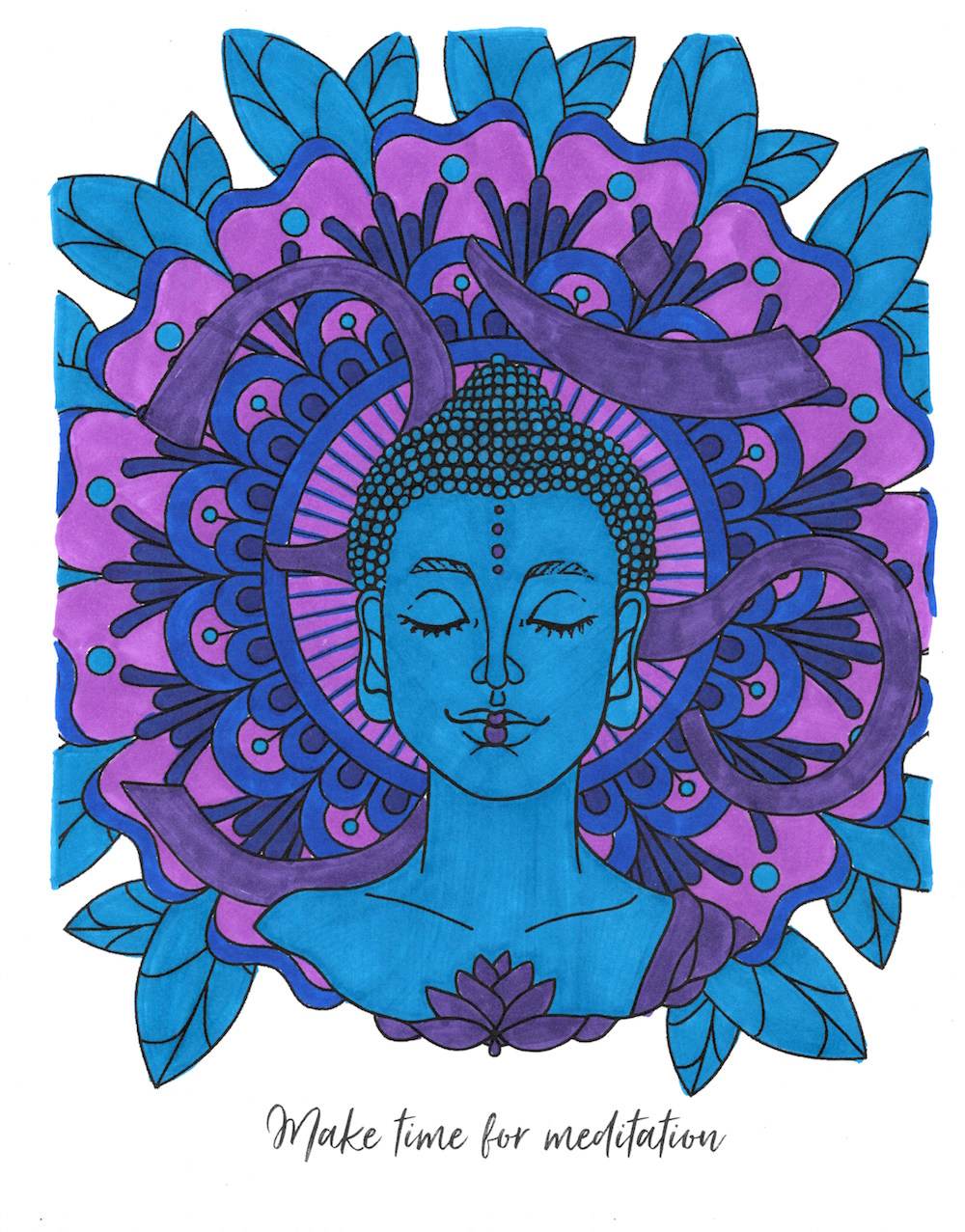
    Today’s tip: Make time for meditation.

    Of all the healthy habits I’ve adopted, meditation has been, by far, the most transformative.

    It’s enabled me to observe my negative, obsessive thoughts instead of getting caught up in them, and it’s helped me create space between my thoughts and my response, so I’m less apt to do and say things I’ll later regret.

    The beautiful thing about meditation is that there are many ways to do it, to suit your schedule and needs.

    You can use guided meditations (I’ve included four in the pre-order bonus package!); you can learn any number of different techniques for seated meditation; you can practice deep breathing; you can try a movement-based practice, such as yoga, qigong, and meditative walking; or you can simply practice mindfulness in your daily life—while eating or doing the dishes for example.

    And even if you only have five minutes, you’ll experience the benefits.

    Research has shown that anxiety can change the structure of your brain, increasing the size of the amygdala (the part responsible for your fear response), causing you to become even more anxious.

    A regular meditation practice can reverse this. It can literally change how your brain works and, consequently, how you respond to the events in your life.

    My preferred forms of meditation include:

    -Yoga (Vinyasa, hot yoga, and yin yoga—which a teacher recently described as “basically a nap with light stretching”)

    -Guided meditations (I’ve found tons of free options on YouTube)

    -Deep breathing (alternative nostril breathing being my favorite)

    If I have the time, I’ll go to an hour-long yoga class at a studio down the street (which also allows me to clear my mind a little on the walk) or find a thirty-minute guided meditation online.

    If I have less time available, I’ll do five to ten minutes of poses, a five-minute guided meditation, or a few minutes of deep breathing. No matter what I choose, I always feel calmer and more centered after.

    Do you have a regular meditation practice? If so, what’s your practice of choice, and how has it changed your life for the better? Your experience could help other readers find peace, calm, and healing, so please share the good!

    From now until June 26th, you’ll get three bonus gifts, including a guided meditation series on letting go, when you pre-order Tiny Buddha’s Worry Journal. All you need to do is order a copy here and forward your purchase confirmation email to worryjournal@tinybuddha.com

  • Music Coloring Page from Tiny Buddha’s Worry Journal

    Music Coloring Page from Tiny Buddha’s Worry Journal

    Hi friends! Since Tiny Buddha’s Worry Journal officially launches a month from tomorrow, I decided to start sharing some of the coloring pages on the blog, twice a week, until then.

    I was thrilled to once again work with the talented Rose Hwang, the illustrator for Tiny Buddha’s Gratitude Journal, and her work this time is just as beautiful.

    Each page depicts one simple thing we can do to help ease anxiety.

    Today’s tip: listen to calming music.

    Music can be so transformative. The right song can instantly transport you to a different time, remind you of someone or somewhere you love, or communicate everything you’re feeling but can’t put into words.

    It can simultaneously calm your mind, heal your heart, and lift your spirits.

    And it’s the ultimate tool for mindfulness. It’s hard to dwell on the past or worry about the future when you’re lost in a melody, eyes closed, the beat reverberating deep in your chest, the lyrics drowning out the repetitive thoughts in your head.

    There have even been studies to show how healing music can be—it can boost brain activity and the mood enhancing chemical serotonin, lower blood pressure and the stress hormone cortisol, and slow our heart rate, creating an overall calming effect.

    I know I always feel more centered and at ease when I take even just a few minutes to listen to my “peace playlist,” which includes:

    -A selection of movie theme songs (far too many to list!)

    -Musical soundtracks, some of the newest of which include The Greatest Showman and La La Land (specifically: A Million Dreams and Here’s to the Ones Who Dream)

    -Songs from Bob Marley, The Beatles, The Rolling Stones, Radiohead, Coldplay, The Lumineers, The Fray, Augustana, David Gray, Ben Folds, Gary Jules, Josh Ritter, and Ray LaMontagne, to name some of my favorites

    What are some of the songs that calm your mind? Which songs help you relax and unwind after a long, stressful day? Feel free to share an album name, a song title, or a link. You never know whose day you could brighten by sharing your playlist for peace.

    From now until June 26th, you’ll get three bonus gifts, including a guided meditation series on letting go, when you pre-order Tiny Buddha’s Worry Journal. All you need to do is order a copy here and forward your purchase confirmation email to worryjournal@tinybuddha.com

  • 5 Journal Prompts to Help You Let Go of Anxiety and Find Peace

    5 Journal Prompts to Help You Let Go of Anxiety and Find Peace

    “You don’t have to control your thoughts. You just have to stop letting them control you.” ~Dan Millman

    There was a time when my mind was completely consumed by worries, and I lived in a perpetual state of panic.

    I worried about things I’d said and whether people were judging me, things I should be doing and whether I was using my time well, the state of my life, the state of the world, and just about anything else one could worry about.

    Life always felt scary and uncertain, so I always felt unsafe, and worrying gave me the illusion of gaining some semblance of control.

    Well-intentioned people advised me to just be positive—then I’d feel a lot better about life. But I’ve always found the concept of positive thinking somewhat frustrating.

    First, it made me feel guilty, since no matter how hard I tried to avoid negative thoughts, they’d inevitably pop into my head. Secondly, it was exhausting. To constantly monitor your mind takes monumental effort, and it seemed contrary to my goal—to be less burdened by my brain.

    Still, there’s no denying that our thoughts influence our feelings. When we sit around dwelling on everything that could go wrong, or everything we think we did wrong, we end up feeling drained and depressed.

    So what’s the solution then? How can we allow ourselves to be human and simultaneously ensure we don’t drown in our fearful thoughts?

    For me, journaling has been key.

    Journaling has helped me find solutions to my problems, identify and let go of things I can’t control, and change my perspective on the things I want to change but can’t.

    It’s also helped me recognize my own strength so that I can worry less about what’s coming and trust more in my ability to handle it, whatever it may be.

    If you’re looking for a little mental relief this week, I recommend starting each weekday with one of these five journal prompts from Tiny Buddha’s Worry Journal: A Creative Way to Let Go of Anxiety and Find Peace

    The beauty of these particular prompts is that they help us focus on the moment, be kind to ourselves, and have faith in ourselves and our journey, wherever it may lead.

    5 Journal Prompts to Help You Calm Your Anxious Mind

    1. Today, I choose to let go of the things I can’t control, including…

    2. I recognize that I don’t need to have all the answers right now. Today, I give myself permission not to know…

    3. Dear inner critic: You always focus on everything I’m doing wrong, but I know I’m doing a lot right, including…

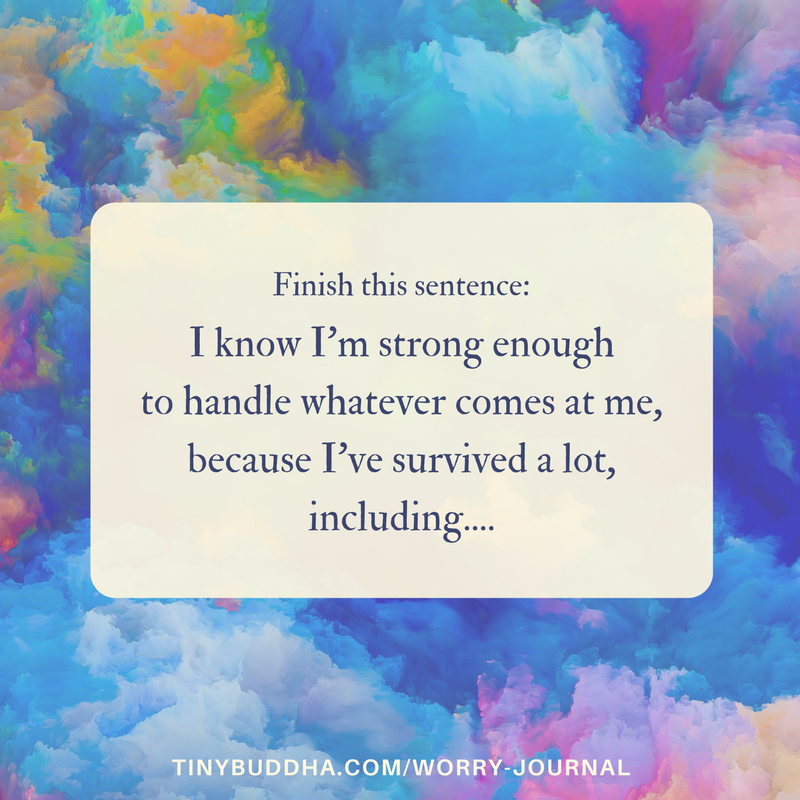
    4. I know I’m strong enough to handle whatever comes at me, because I’ve survived a lot, including…

    5. Instead of worrying about making the “wrong” choices, I trust that no matter what I choose…

    You don’t need to write anything specific or lengthy, though you can take all the time you have and need. The important thing is that you get in the habit of thinking about yourself and your problems in a new way.

    It’s not about suppressing thoughts or replacing them with positive ones. It’s about directing your mind to useful thoughts so you can spend less of your life feeling worried and overwhelmed.

    Just like gratitude journaling can help us feel happier and more optimistic, keeping a worry journal can help us feel calmer and more at peace.

    If you’re interested in pre-ordering a copy of Tiny Buddha’s Worry Journal, which officially launches on June 26th, you can reserve a copy here.

    Once you receive your purchase confirmation email, forward it to worryjournal@tinybuddha.com and you’ll receive access to the following free bonus items:

    • Four guided meditations on letting go (of control, the need for approval, stresses/pressure, and self-judgment)
    • Three colorful desktop wallpapers with cute Buddhas and calming quotes
    • An exclusive interview with me and Ehren Prudhel, founder of the soon-to-be-launched podcast Next Creator Up, in which I discuss how I’ve overcome worries related to writing my first feature film

    I hope these prompts (and the other activities in the journal) help you as much as they’ve helped me!

  • 3 Ways to Stop Worrying and Feel Less Anxious

    3 Ways to Stop Worrying and Feel Less Anxious

    “There isn’t enough room in your mind for both worry and faith. You must decide which one will live there.” ~Sir Robertson

    Do you consider yourself a worrier?

    Maybe even a perfectionist or Type A personality?

    When I’m not at my best, I can be all of those things combined. (Not cute, I know.)

    Because of this, I know exactly what it feels like to be stuck in my head, with tightness in my chest and emotional wrenches in my gut.

    If you also struggle with worry and anxiety, then I feel you. I rode the worry struggle bus for a long time—until I finally addressed my psychology.

    Why Your Psychology Matters Most

    My aunt once told me (after I called her in the middle of a freak out), “You’re worried because you’re trying to control the future Kari, and that’s impossible.”

    Woah. Paradigm shift. That’s when it all ‘clicked’ and I realized that my issues with worry and anxiety were all self-created.

    Then it got me wondering… If I created this worry and anxiety with my thoughts, maybe I can create relaxation with my thoughts too.

    After researching the psychology of worry, I learned some practices that helped transition me from an uptight chronic worrier into a pretty relaxed person. I still have my moments, but it’s nothing like before.

    Today, I’d like to share three of my best practices with you. I hope they can help you reduce your worry and anxiety too.

    Let’s start with the most practical piece of advice.

    1. Practice using coping imagery.

    This involves visualizing yourself handling worst-case scenarios with confidence.

    And just to be clear: You’re visualizing the worst-case scenario, not the best case. It’s like defensive pessimism, which can actually help with anxiety more than positive thinking.

    So instead of worrying about being crushed by the worst-case scenario, try visualizing yourself handling it with confidence.

    Here’s an example (that I cringe to share with you because it seems so silly in hindsight):

    I recently started dating a guy who I developed some serious feelings for. I had the most successful first date of my life with him, and it’s been amazing ever since.

    But instead of getting excited about the potential, I started worrying about all the things that could go wrong. (Like I said, being a worrier is self-created misery!)

    Specifically, I was worried that in the future we wouldn’t be able to see each other for weeks because he was crazy busy. I grew anxious over feeling devastated in the future by the potential lack of quality time I crave.

    Although it wasn’t even a problem yet, I started worrying about making plans to the point where I started sabotaging the romance by “trying too hard.”

    I let my anxiety consume me, and I became the chaser instead of allowing something beautiful to naturally unfold. I hated that I started to sabotage something beautiful, but in that moment, (it felt like) I couldn’t help myself.

    And this is where the switch happens.

    Instead of worrying about how devastated I would feel if we couldn’t spend time together, I started visualizing myself feeling okay if I didn’t get to see him. (I chose “okay” instead of “happy” because it needs to be realistic.)

    Instead of thinking about the void, I thought about all the other wonderful things I could do with my time, like surf or entertain my hobbies.

    This seriously helped put my mind and body at ease! Here are more details for the process:

    How to Do It

    To practice using coping imagery, start by imagining the situation that brings you anxiety. How do you feel? What are you thinking?

    Then, start to imagine a warm glow of confidence radiating from you. Imagine being in that situation feeling totally confident and capable. How does it feel? What are you thinking?

    Then, imagine something going wrong—something that you’re worried about—and imagine yourself handling that situation with confidence and ease too. What thoughts and feelings helped you handle it

    Get comfortable with these thoughts and feelings and keep mentally practicing them.

    This “mental rehearsal” helps activate neuroplasticity, your brain’s ability to rewire itself and form new neural connections, like new thought loops.

    The more you practice using coping imagery, the more you strengthen the new thought loops for positive thinking (or defensive pessimism) and weaken the thought loops for worrying.

    In time, you’ll naturally become less of a worrier because your brain has been trained to think confident thoughts instead of worrisome thoughts.

    2. Be willing to feel uncomfortable.

    Worry and anxiety often come from trying to protect yourself from pain. And I don’t blame you. Our primal brain is wired to seek pleasure and avoid pain; and anxiety is often caused by worrying about the potential pain that we might feel in the future.

    Sometimes we’re so afraid of emotional pain and loss that we forget that they can’t physically harm us.

    And this is where the saying “make peace with discomfort” will serve you very well, because your ability to be uncomfortable is directly related to your ability to be a relaxed person.

    Sometimes we assume that we need to be comfortable in order to be relaxed. But sometimes being relaxed simply means feeling uncomfortable and being okay with that.

    The more discomfort you’re able to tolerate, the less you’ll worry about preventing it from happening.

    For me, I had to develop the skill of tolerating uncertainty (which is an uncomfortable feeling for me) in my dating life. Although uncertainty feels uncomfortable, I learned to make space for it instead of worrying about making it go away.

    If you want to develop the skill of tolerating discomfort too, here’s how you can do it:

    How to Do It

    A great way to train yourself to tolerate discomfort is to take cold showers. Yup! Even just a five-minute cold shower a day can train your brain to tolerate discomfort.

    Not into cold showers? Another great practice is setting aside fifteen minutes every day as your “uncomfortable practice periods.” These practice periods will help you develop the skill of tolerating discomfort.

    So whenever you start to feel uncomfortable in your daily life, use it as practice. Hold space for the discomfort and make peace with it as best you can.

    For example, if you really hate public speaking, then use your weekly company meeting as a place to practice being uncomfortable by speaking up at least once.

    The more you practice feeling uncomfortable, the better you will get at being uncomfortable. And the more uncomfortable you’re willing to be, the less worry and anxiety you will feel.

    You’ll learn to let life unfold naturally without worry.

    3. Plan what you can and let the rest unfold.

    During the months preceding graduation from college I experienced the biggest bout of anxiety and worry that ever consumed me.

    What if I don’t get any interviews? What if I totally flunk the interview I get? What if I get the job and hate it? What if, what if, what if?

    Fueled by tons of stress, I worked really hard to apply to dozens of jobs before I graduated. In constant panic mode, I refused to leave my desk to play because I was convinced that every ounce of my energy needed to be dedicated to solving this problem.

    In the end, I ended up getting a job through a friend who happened to mention the opportunity through random conversation.

    I couldn’t have planned for that.

    All my preparation paid off, but there was one lesson that I took away from all the unnecessary worry and anxiety:

    If I had done everything the same, but did it all in a relaxed fashion, I would have created the same result.

    “Let go of the idea that gentle, relaxed people can’t be superachievers… One of the major reasons so many of us remain hurried, frightened, and competitive, and continue to live life as if it were one giant emergency, is our fear that if we were to become more peaceful and loving, we would suddenly stop achieving our goals.” ~Richard Carlson

    Sometimes we get tripped up thinking that stress is somehow essential for getting things done. And while some stress is beneficial, extreme stress and anxiety are not necessary for success.

    You can be a totally relaxed person and still get everything done—without worry.

    How to Do It

    Sit down and write down all the things you’re worried/stressed about. Then pretend like you’re coaching someone else with those problems.

    What advice would you give them? What steps would you have them take?

    Then, follow those steps and stop there. Don’t worry about whether or not you did enough. You followed your own advice, and you can relax about the rest.

    Plan what you can, and then breathe. Don’t let your mind continue to race about all the things that could go wrong (unless you’re using Coping Imagery).

    Just have faith that what’s meant to be will be, and let the universe carry you for a while.

    You’ve Got This

    Together, these three steps helped me seriously reduce my anxiety and worry. Will you join me and try them too?

    Start by making coping imagery and “uncomfortable practice periods” daily habits. This will help you develop the skill of tolerating discomfort, and your worry and anxiety will lessen.

    In time, you will get better at letting life unfold the way it was always meant to be.

    Some days you might still find yourself on the worry struggle bus. But maybe this time you’ll feel like you’re in the driver’s seat.

  • Pre-Order Tiny Buddha’s Worry Journal and Receive 3 Free Bonus Gifts

    Pre-Order Tiny Buddha’s Worry Journal and Receive 3 Free Bonus Gifts

    There was a time when worrying was like breathing to me. It’s estimated that we think between 50,000 and 70,000 thoughts per day and we breathe 23,040 breaths. It would likely be accurate for me to say I once panicked as often as I inhaled.

    I worried about what people thought of me. I worried that people weren’t thinking of me at all. I worried about what could go wrong. I worried I might have done something wrong. And I worried about being wrong—just by being me.

    All this worry was crippling. It’s hard to enjoy anything when you’re there but not because the deepest part of you is tied up in knots, held hostage by your perpetually panicked brain.

    I eventually learned that my body and mind were primed for anxiety in my younger years—meaning I lived in a constant state of fight-or-flight mode, always on edge and on the lookout for threats—and that I’d reinforced this sense of dread through persistently negative, irrational thoughts.

    I suspect many of us live like this: with a fearful, racing mind and a sense that at any time, the other shoe could drop—and it might be freakishly large enough to crush us. But we don’t have to stay under this weight.

    Over the years, I’ve learned a lot about relaxing my body, calming my mind, and proactively managing anxiety.

    I’ve learned to recognize the thoughts that don’t serve me and to actively shift my perspective before I get swept up in a vortex of fear.

    I’ve learned to embrace uncertainty and to trust that I can handle whatever comes at me.

    And I’ve learned to accept that I will sometimes experience anxiety, no matter how much I heal or grow, so I don’t fight myself so much when it inevitably happens.

    This is what compelled me to create Tiny Buddha’s Worry Journal, with the help of my talented friend, illustrator Rose Hwang.

    Filled with quotes, prompts, and questions, along with coloring and doodling pages, Tiny Buddha’s Worry Journal provides a number of different activities to help you reframe your worries and minimize anxiety in your daily life. 

    If you have a hard time detaching from worrisome thoughts, this could be just what you need to learn to let go and ease your troubled mind. It takes a little time and practice, but with just a few mindful minutes each day, and the right tools, anyone can become less anxious.

    If you pre-order before the June 26th launch date, you’ll receive three free bonus gifts, including:

    A series of four meditations on letting go (led by yours truly), each with an EFT tapping session led by Naomi Jansen and an introductory chat with Naomi and her One Mind Live co-founder Stephen Fearnley

    An exclusive audio interview with me and Ehren Prudhel, host of the soon-to-be-launched podcast Next Creator Up, focusing on worries related to pursuing a new dream (more specifically, my first feature screenplay)

    A series of three vibrant desktop wallpapers featuring adorable Buddhas and calming quotes

    All you need to do to claim your bonuses is pre-order your copy from any online vendor and then forward your purchase confirmation email to worryjournal@tinybuddha.com.

    Worry is a part of life, but it doesn’t have to control us. It’s possible to breathe a lot easier. These days, I do. I hope this journal helps you do the same.

    **Though Amazon hasn’t yet discounted the price, it will likely go down soon, as it always does. As part of Amazon’s pre-order price guarantee, you’ll be charged the lowest price offered before the launch date.

  • What’s Helped Me Get Out of My Head and Do Things That Scare Me

    What’s Helped Me Get Out of My Head and Do Things That Scare Me

    “Don’t let the fear of what could happen make nothing happen.” ~Unknown

    I knew it was coming.

    But as I sat there on the first day of the seminar, my stomach still did a little turn when the trainer announced the exercise we’d be doing over our lunch break:

    The dreaded pizza walk!

    I knew this was the trainer’s wry (but equally as unnerving) riposte to Tony Robbins’ famous fire walks. But right then, I would have much rather taken my chances with the coals.

    The idea is simple: Go into a shop, restaurant, or other public establishment and make an absurd and bold request; for example, walk into a hardware store and ask for a pizza.

    Easy? Maybe.

    As we broke for dinner there was lots of nervous chatter amongst the trainees, but I chose not to engage with the others. I wanted to get out there and face these pizza demons as soon as possible.

    Now, the aim of the exercise on one level seemed obvious: to teach us to be more forthright, in businesses, in our relationships, in life.

    The bolder the requests we make, the less ridiculous they’ll seem, and the easier it will be to make other bold requests. Thus we can go home and feel more comfortable speaking our truth, asking for what we want, and generally showing up in life more confidently.

    Or so I thought. Because what I actually learned from this exercise was much more powerful.

    After leaving the building where we’d been, I walked down the main street, which was in fact the Baker Street.

    So, as I passed Sherlock’s ‘house’ and the eager tourists queuing outside, I began looking around for my target.

    There were a few souvenir shops I could pick. A Subway restaurant (of course!), a few bars, but nothing that really took my fancy.

    (Or rather, if I’m honest, I knew I had an hour to do this and it all felt too edgy and I wanted to put it off as long as possible.)

    So I ducked into a Nando’s Restaurant and had some chicken. (Oh, the irony!)

    As I ate my half Piri Piri chicken (medium-hot with rice, if you’re interested), I contemplated my task.

    It felt silly to be so up in my head and nervous about this simple, innocuous exercise.

    What was the worst that would happen? Perhaps a bemused stare from the shop worker at best.

    So why was I shaking just thinking about it?

    If you’re thinking I’m being daft and wussy as you read this, I encourage you to try this for yourself. It’s not as easy as it seems. In fact, making that bold request can feel pretty scary.

    But then again, is that really true?

    Because the insight I had next changed a lot of things for me.

    You see, I realized that what the trainer actually wanted us to learn from this experience was something completely different from my original notion.

    As the clock ticked away and I saw that we were due back in ten minutes, I knew it was now or never. I had to make my absurd request. I had to do the pizza walk.

    I also knew that I had to just get it done, to stop waiting to feel ready and just get to it. Action was key.

    So as I passed the next shop, a newsagent, I went in. I strolled up to the counter, looked the guy straight in the eyes, and, poker-faced, said:

    “Can I have a cheeseburger and large fries please?”

    And it was weird.

    My immediate feeling in that moment was actually one of real elation. I felt dizzy but happy, like I’d just nervously jumped out of a plane and now found that my parachute had opened and I could enjoy the float to earth.

    Of course, the man behind the counter didn’t appear to be experiencing any of this. He just looked a little confused and taken aback.

    Yet I also felt there was something else present in him. Compassion maybe? Concern?

    I’d jarred us both out of our day-to-day reality and allowed us to be supremely present with each other. We connected on a deeper level.

    In that moment, we dropped out of being on autopilot and a more profound interaction could take place.

    (Again, I’m not sure that the man behind the counter assessed it all this way, but I felt it!)

    Next he kind of stuttered something about having some sandwiches in the chiller, and I was suddenly overcome with warmth toward him—that even in this bizarre situation he was trying to help this strange man at his counter.

    From nowhere I heard myself say:

    It doesn’t matter about the cheeseburger actually. I’ll have a Lotto scratchcard, but can you make sure it’s the winning one?”

    I was having fun now. Still totally present and enjoying this interaction.

    Thankfully. I think my new friend was beginning to enjoy it too, as he play acted choosing the right scratchcard, which he assured me was the winning one.

    I thanked him, paid, and left. As I stepped outside onto that cold February afternoon I saw something I’d not truly, insight-fully seen up to now.

    You see, I’d spent the last hour stuck in my head worrying about this event.

    I’d been living in an imagined future where the event went really bad, where I felt silly, where I was ridiculed. And these thoughts had made me really fearful of making this silly request. My confidence had dropped and it had almost stopped me from taking part.

    But what actually happened was that when I did make the request I was truly in the moment. I was living in real life, not in my imagination about what this might look like.

    And more importantly, in the moment I was so much more resilient, confident, creative, and connected than I’d given myself credit for. So much so that I forgot all about that imagined reality and just lived in actual reality.

    This insight was massive for me because that’s how we can all be, quite a lot of the time.

    This is how we can show up with our careers, in our relationships, in life.

    We get so stuck in our thinking that we can almost talk ourselves out of doing things we want to do.

    We second-guess ourselves, we make stuff up about what people might think about us, and then we sit with those thoughts and go over and over them until they start to look real. In that process we always underestimate our resilience and our moment-to-moment creativity.

    What I really saw that day was that it’s never the future event we fear. It’s only ever our thinking about that future event.

    And if it’s just our own thinking—and not the imagined, self-created ‘event’—then why do we give it so much attention?

    I see now that there have been loads of times in the past when I’ve worried and stressed about things, only for them to be fine, even enjoyable when they actually happened.

    I’m sure you’ve got lots of examples you can recall right now as you think about your own life.

    The more we can explore this and shine a light on what’s going on, the more grounded and confident we become.

    What would it mean to you if you could use all this anxious energy for good use?

    What would it mean if you could quickly drop out of worrying about future events and stay present?

    Let’s be clear here, we are only ever able to do anything right now, in this moment. When we live in that scary future world we have no power. We don’t exist there except in our thinking.

    By exploring this deeper, I know it’s allowed me to be calmer, more confident, and more productive in my work. A better human being even.

    I don’t take things so personally any more. I don’t spend needless hours and days worrying about what might happen.

    I stay more in the moment, which means when I’m at work I’m no longer in my head wondering if people will want to hire me, or what they think of me, or if I’m going to be able to get them the results they want. When I’m with friends and loved ones I’m not living in my thinking about what’s going on; I’m enjoying being present and in the now with them.

    This frees up my attention to really listen to what they’re saying, to connect with them on a deeper level. And in doing so I can have so much more impact than if I was trying to second-guess the situation or worrying about what will happen next.

    How do you stay more present?

    Remind yourself that, no matter how real the future event looks in your mind, your feelings don’t indicate anything about the outcome of that event; they are just a response to your thoughts in that moment.

    Your feelings have no idea what will happen in the future.

    Like me, you might just find that what, in your imagination, seems really scary is actually incredibly liberating and enjoyable when it actually happens.

    So next time you catch yourself stuck in your head, simply take a moment to step back and notice where your attention is.

    Is it in your thinking, or in life?

    In asking yourself this you’ll automatically drop back into life, where you have everything you need to really connect with the person in front of you.

    And if you were wondering, it wasn’t the winning scatchcard.

    You can’t win ’em all!
  • 3 Questions That Help Me Stop Worrying About Things I’ve Said and Done

    3 Questions That Help Me Stop Worrying About Things I’ve Said and Done

    “If you have fear of some pain or suffering, you should examine whether there is anything you can do about it. If you can, there is no need to worry about it; if you cannot do anything, then there is also no need to worry.” ~Dalai Lama

    Another sleepless night had passed, with me worrying about whether I’d said the wrong thing to my colleague yesterday or if the tone of my email I’d sent was too critical.

    They were not the only things that kept me awake.

    I would go out to dinner with friends and say some ‘bad’ jokes—bad because nobody laughed. Was I wrong? Do people not like me? They looked unhappy.

    I prided myself on being the funny guy. The entertainer.

    The list of worries and fears continued. It used to be endless.

    I had a cure for overcoming my fears. I would talk to anybody I could find who was willing to hear about my problems. I was desperately seeking to hear “Poor you, Kieran” from someone. Anybody. 

    Then everything would be okay. The problem would go away.

    Strangely enough, the problem would go away. It was never as bad as I had feared. Yet the behavior—how I dealt with my fears and anxieties as they arose—continued.

    I continued to feel anxious, fearful, and nervous in a wide variety of situations.

    Then one day, it all came to a head.

    A few years ago, I was working in a stressful corporate environment. I had a one-on-one meeting with my manager. In this meeting, he informed me that I was depressed.

    It was a strange thing to say. Bizarre. I thought he was joking and rejected the comment.

    I couldn’t shake this comment out of my head. I continued to think about that meeting over the next few days.

    I began to realize that I had spent a lot of energy protecting myself, fearful that others might perceive any negative perceptions I had about myself and then would judge me.

    As soon as somebody confronted me directly and pierced through the protective bubble I had placed around myself, I felt a sudden need to make changes.

    Looking back, I suspect that I knew deep down that I was able to influence how I perceived these situations. Feeling fearful had become part of my identity, though. Like a drug, I was addicted to feeling this way and refused to believe that it was possible to change my perceptions.

    I started reading countless self-help books. Some of the advice in these books I have either plainly ignored or considered too hard to implement.

    However, what I noticed in all or most of these books is the need to explore and question why you feel the way you do and challenge this on a regular basis.

    So I did. And after a while, I began to form my own questions to attempt to deal with all challenges and anxieties that arose in my life.

    Now, whenever a fear arises, I sit down in a quiet space and write the answers to the following three questions:

    What do I actually fear about this?

    In other words, what is the worst thing that can happen? Maybe they won’t talk to me again if they were offended by something I said. They might end the relationship I have with them. I might lose my job. Perhaps all of this is okay. Perhaps all of this is a great learning experience. Whatever it is, I write it down.

    Do I have the ability to change this?

    Next, I look at what I fear. Can I change this situation?

    If the answer is yes, I write down how I can and what steps I need to take.

    If the answer is no, I tell myself to let it go. This is hard, but it gets easier with time.

    If this happened to somebody I love, what would I tell him or her?

    It is important to reflect on this. Most of us are great at giving other people advice but terrible at following it ourselves. I find that by asking this question, not only does my self-respect and self-love increase, I feel more understanding and compassionate toward others who hold similar fears and anxieties.

    I have answered these questions many times.

    One situation that immediately comes to mind was when, at the end of a workday, I sent an email to a client, including some confidential information about his manager. This was clearly an accident, but it was sloppy on my part.

    I felt sick. What made this worse was that this day happened to be my birthday.

    I took a deep breath. I got a pen and some paper and started answering the three questions.

    What was my fear?

    I thought the person would think I was stupid for sending this to them. I was worried that my boss might think I was ineffective, incompetent

    As I began writing the answers to this question, I started to question whether I even valued my abilities and worth as a human being.

    I put this down. It was hard. I realized that I’d had a negative impression of myself. It was difficult to ponder this, but it was such an invaluable experience that I used it to springboard into improving other areas of my life.

    Did I have the ability to change this?

    No. The email was sent. The workday had finished. I was celebrating my birthday that evening. Yet the fear kept coming up.

    I couldn’t change what had happened, but the fear remained. How could I change that? I wrote down a solution when I returned home, one that would benefit me and hopefully the other person.

    I acknowledged it was a mistake. I told myself that I would take care and be diligent before pressing the send button in future. I turned the negative into a positive.

    Lesson learned. The fear subsided.

    And onto the last question: If this happened to somebody I love, what would I tell him or her?

    This is the easy bit, as it is no longer about me. I would tell them, “These things happen. We all make mistakes. Everything will be okay. This is one event that will likely seem insignificant when weighed against the many things that will happen to you over the course of your life.”

    I went to bed that night feeling much better and got some sleep.

    So, what happened?

    The next day, the moment I sat down at my desk, I rang the person to whom I sent the email and explained the situation. I asked him to delete the email, and he said he would.

    That was the end of the saga. No further communication came my way. From anyone.

    Did he look at the information in the email? I don’t know. Does it matter? No. Because I could not revoke what happened in the past.

    Answering the three questions helped me feel better about myself. It still does.

    Since I have implemented this into my life, most of these troubling events have started to disappear. Well, maybe they didn’t disappear, but my perception of them as being problems, which causes anxiety, has disappeared.

    In the past, I had conditioned myself to feel bad all the time. It was who I was. Today, referring back to this list whenever I have a problem or anxiety is immensely therapeutic.

    It does take time to make this a habit, and it is certainly not a quick fix to eliminating all anxieties and fears. It is also confronting, initially, to spend time exploring how your fears manifest.

    However, the rewards, in my case, have been very satisfying. I have developed a sense of love toward myself, which had never existed before, and more importantly, I feel more love toward others.

    What do I fear most now? That I might revert back to the “old Kieran” and start worrying about every little thing. Oh, great, now I’ve identified this fear, I need to ask myself the three questions again!