Tag: trauma

  • Finding Home After Divorce: What Brought Me Peace and Healing

    Finding Home After Divorce: What Brought Me Peace and Healing

    “We need to learn how to navigate our minds, both the good and the bad, the light and the dark, so that ultimately, we can create acceptance and open our arms and come home to ourselves.” ~Candy Leigh

    Divorce is so common that my son, at a young age, asked if my husband and I could divorce so he could have “a mom’s and dad’s house too!” And my daughter agreed because then “we could get double presents on holidays!” Given my experience as a child with divorced parents, I assured them, “Guys, divorce is not really that much fun.”

    The truth is there is nothing romantic about divorce for the parents or the children. When a family breaks up it becomes de-stabilizing for everyone. Suddenly, how things were disappears and everything feels tilted. Like being on one of those “tilt-a-whirl” amusement park rides where you just want it to right itself so you can feel better.

    Home doesn’t feel like home anymore in the way one knew it. A mother’s kitchen may have no child at Christmas. A parent’s bedroom looks different with someone missing.

    I remember before my parents divorced, I noticed a sign. Their bed was actually two twin beds pushed together. But in the year before the divorce the beds were separated. Soon, my dad wasn’t around on Sunday mornings to make me bagel and bacon sandwiches, and our house echoed emptiness.

    One’s home is grounding and so important to their inner stability. Divorce is like an earthquake leaving emotional rubble in the living room that a family must heal and recover from.

    My “earthquake” happened when I was fifteen years old. There had been tremors before. My parents sometimes liked each other. But when they didn’t, there was a lot of shrieking in the kitchen and even worse, cold silences where they would walk by one another as if each one didn’t exist—a scary distance that gave me a stomachache.

    My worst fear was that they’d divorce, but I decided if that happened, I could always just kill myself.

    Thankfully, my plan never came to pass. But on that autumn day, after a tearful conversation on our beige sofa when my parents used the terrifying “D” word,  I decided that I would never cry about it again and tell no one. Instead, I got on my bike and pedaled away my pain, my voice lost in spokes of sorrow. I didn’t eat enough for years hoping that swallowing less would lessen the pain.

    The literature points out that living in a home with high conflict is more detrimental than divorce for all parties involved, so no matter how painful it is, separation is often the next right and healthy step.

    Recent findings indicate that better adjustment after divorce correlates with less conflict before and after between the parents. So it’s the detrimental effects of conflict rather than the divorce itself that is an important mediating factor to consider.

    Yet “nice” divorces without conflict and with excellent communication are rare. Most couples will divorce how they were married and bring the dysfunctional communication and marital issues into the divorce process. After deciding to divorce, things may become more stressful for families. But if the marriage doesn’t feel salvageable, separation provides hope for something healthier and happier that staying in an unhappy relationship may not provide.

    Quickly, my father met someone new. And suddenly, I was meeting a lady in a big house that was neat, orderly, and had three teenagers. I was scared they wouldn’t like me. But they were nice to the curly-haired young girl who visited every other weekend.

    My stepmother taught me to make a pie crust being careful the dough was as “soft as a baby’s bottom.” She bought me my first prom dress and called my father “dear,” and no one yelled. She never became my mother, but over the years, I had the security of two women who took care of me. And when she died on a cold Christmas morning thirty years later, I had finally learned to weep.

    There is a strange sense of togetherness in divorce even if a family doesn’t realize it at the time. Parents grieve, don’t feel good enough, and often have guilt because of the children. Children grieve and can have guilt about not being good enough to hold parents together. No one is alone in the sorrow, and that mutual understanding can reduce a family’s disconnection and isolation.

    The importance of home and family is never shattered; it is how to rebuild and find a sense of belonging in the new arrangement that is left standing. Often, that includes new partners, stepbrothers and sisters, or a smaller family of a single parent and child.

    The uncertainty of the future with new family constellations is challenging. Yet tomorrow’s uncertainty is an issue that parents, children, and all of us grapple with throughout life. But with time we adjust, build new homes, and find safety and a sense of security once again.

    The emotional toll on children often includes increased sadness, anger, and depression, as well as increased physical symptoms and academic challenges. But just being aware of these reactions and comforting, normalizing, and giving voice to a child’s experience can be healing.

    We have to encourage everyone not to divorce from their emotions. My parents, at the time of the divorce, thought it would be a good idea for me to see a therapist. He was an old man sitting behind a big desk who asked me a lot of questions that I didn’t want to answer. I think I sat through the whole session but was very clear I’d never go there again!

    It was only with leaving my family for college that I could get help on my own terms. My hunger for my true feelings had finally become more important than remaining hungry for food, which was how I had coped for years.

    I walked into my therapist’s office, and she smiled and said, “Take a seat.” I finally had found true nurturance in a safe space where I could share my anger, sadness, and grief. It was that deep home inside all of us which is the tender place of truth.

    The timeline for healing is different for everyone and every family. But it comes with grieving and an acceptance of the loss—like a death we never forget but learn to live with, and it becomes part of us and our life story.

    Divorce may not be what we planned for, that fairy tale of happily ever after. And we can easily be hard on ourselves or hurt ourselves with destructive behaviors instead of facing our pain. But learning how to grieve, care for, and love ourselves through the difficult times brings a sense of peace and healing to the home inside. And that home isn’t defined by a mom’s or a dad’s house.
  • We Are Both Darkness and Light: How to Reconcile Them and Grow

    We Are Both Darkness and Light: How to Reconcile Them and Grow

    “We have to bear our own toxicity. Only by facing our own shadows can we eventually become more light. Yes, you are kind. But youre also cruel. You are thoughtful. But youre also selfish. You are both light and shadow. I want authenticity. I want real. I claim both my light and my shadow.” ~Kerry Mangis

    Many of us can recall the painful moments that have shaped us. As we grow older, we become intimately aware of all the ways we were hurt, wronged, or betrayed. I think it’s a natural impulse, to number these moments and process them in order to heal.

    I reflected on this when on my way to the California River Delta—a peaceful marsh-land setting located between the Bay Area and Sacramento that I often sought refuge in.

    The night before I’d watched an episode of Thirteen Reasons Why that had dealt with the theme of the contradictory elements that live inside each of us. How difficult it is to arrive at a clean summary of good or bad once you’re made privy to all a person has been through, every feeling they’ve experienced or thought that’s run through their mind.

    My own list of hurts floats in and out of my mind, activating more on some days than on others. When I’m doing well emotionally, it largely fades to the background. When stress is higher and sleep has failed to restore me, it’s likelier to make an appearance.

    Here’s a little glimpse into how it reads:

    It started for you at the age of five, when you learned that the girl you’d considered your best friend  wasn’t as attached to you as you were to her. 

    In sixth grade your core group told you, seemingly out of the blue one day, that you could no longer sit with them. You didnt know why. You only knew that for whatever reason, people you’d trusted didn’t want you around anymore. Traits and mannerisms you hadn’t previously questioned were suddenly suspect now, and subject to intense self-scrutiny.

    The way you talked. Your interests. The sound of your voice. You just didn’t know. It could have been any of these. Or maybe all of them.

    Regardless of what that thing was, the message that resonated loudest of all was “Not good enough. Not worth keeping around.”

    A year later, self-esteem beaten down, you forged a friendship with a girl who showered you with positive attention one day and shoved you so hard you’d bleed (“jokingly” though) the next. This girl told you that you were selfish in order to get you to pay for things and comply to her wants.

    She rolled her eyes and called you “Dr. Phil” when you told her this hurt your feelings. Whenever you spoke up for yourself, it would lead to a fight. You’d sense this was toxic, years before learning what that word even means, but you’d also blame yourself, thinking maybe this was just what you deserved, or was the best you could do. Especially when there was no one else to turn to.

    Years later, dating hurt your heart too many times to count. You let down your guard and began to trust, only to realize you made a choice that wasn’t smart. Rinse and repeat.

    Your feelings were dismissed more times than you can count—sometimes because you were too afraid to be upfront about them; other times, even when you were. You felt like the carpet had been pulled out from under you, over and over and over again like a sinister movie on repeat.

    **

    I realized that day, as I drove to the California River Delta, that this narrative I’d carried for years wasn’t altogether wrong. Acknowledging those moments is an act of self-compassion. Once we validate what we went through, we can then begin to heal it.

    It was just that this narrative was incomplete. What I had yet to incorporate into my story was the harm that I too had left in my wake—and the way both of these, input and output, fed each other in a repeating cycle.

    And so, as I looked out at the blue-grey water after parking my car, my brain began expanding its narrative.

    You carried those childhood scars with you. They slept, only to activate. When they did, you saw from your vantage point and yours only, blinded to others’.

    You said hurtful things when at your breaking point, lashing out at friends and the people you dated. Consumed by your own issues, you sometimes failed to fully be there or show up for others in their time of need.

    You attached yourself to people and relationships, putting unconscious pressure and expectations onto them without their consent.

    You stayed with women you claimed had let you down, hoping they’d change, or trying to change them. You refused to accept the present moment on its own terms, instead insisting on seeing it for how you wanted it to be.

    Small acts of inconsideration built over the years, even when you weren’t blatantly mistreating someone or behaving in an overtly harmful way.

    My mind had briefly ventured to these uncomfortable places before—but that day, with only itself and the bucolic scenery to contend with, it stayed there for longer than its customary five or ten minutes.

    As I looked out at the water, I considered what attitudes, beliefs, and cognitive-road blocks often stop us from going here.

    How might we learn to move through (rather than away from) thoughts or memories of our mistakes when they surface? I wondered. Because taking accountability benefits not just the harmed person, but our own souls too.

    **

    I was able to see that shame is a big contributor. Brené Brown has said that when held back by this all-encompassing emotion, we cease to grow. So long as we remain stuck in its slog, we’re ironically more likely to repeat the very mistakes that pulled us down there to begin with.

    The character Bojack Horseman (from the Netflix show)—who hurts his friends, strings a good woman along, and even commits sexual assault—is one example of a person (er, horse) undoubtedly stuck in this cycle. He doesn’t see how his own conception of himself as irrevocably damaged largely contributes to the continuation of his harmful behaviors. If you’re just bad and there’s nothing you can do about it, then harming others is inevitable—so why even try to change?

    And so Bojack keeps drinking. He keeps hurting people. He keeps making the same mistakes. He himself continues to suffer. By shrouding himself in the shame robe, he self-protects—both from the hard work of change and from the extreme discomfort of examining the insecurities that underly his destructive actions.

    Those with trauma in our pasts developed coping mechanisms in response to what happened to us, often many years before fully understanding and contextualizing our pain. These defenses resulted in some level of collateral damage on the people around us.

    Some of us thought there was just something wrong with us. Or that these behaviors stemmed from character flaws we’d have to learn how to hide. We didn’t recognize them as signs pointing us toward what needed to be healed.

    Nor did we understand that rather than stay stuck in guilt and shame, we could allow it to guide us. That, when a fork in the road presented itself, we could let the sting of remembering direct us onto the kinder path.

    Black-and-white thinking also keeps us away from full acknowledgement of the past. We may think that if we’ve done bad things, it must mean we’re bad people. But it’s entirely within our control to learn from our past actions and become better every day.

    It took some wonderful people years of fumbling missteps to arrive at who they are today. If we were all judged solely by the single worst thing we’d done, many of us would be on our own right now.

    Sometimes we don’t acknowledge the past because it doesn’t line up with our image of ourselves as good people. Even though merely envisioning oneself as a loyal person or good friend doesn’t guarantee we’ll never act in ways that are hurtful.

    **

    Owning up to our role in past events doesn’t mean we’re forgoing self-compassion. I’ve found I can hold myself accountable and learn healthier replacements for destructive defenses while also maintaining compassion for what my younger self went through, and the struggles she didn’t yet understand.

    I wasn’t taught emotional regulation back when I was in school. Nor how to process my experiences. It’s hard to practice what you haven’t been taught. I remind myself, though, that I now have the tools to teach myself. That I can be that person to heal the hurting younger self who still lives somewhere inside me.

    Rather than allow the shame swamp of my past to ensnare me, I can seek to understand the unmet needs and unprocessed pain that prompted my negative behavior.

    We can extract the debris that led to insensitive actions until eventually we come upon that better and kinder self. The one who exists inside all of us.

    In my own journey, confronting regret hasn’t come without pain—but it has motivated change. Reminders compel me to be better now, to the people in my life currently. They also compel me to be a much better friend to myself.

    I’ve realized that acknowledging what was done to me is just one side of the coin when it comes to full healing and self-actualization. The other side is self-awareness and honesty. Looking not just at what’s most convenient, but also at our impact on others.

    That day on the dock, I gathered a few stones—each representing a person I’d harmed in some way. I held each one in my hands. I wished each person well and imagined filling them with a protective circle of love.

    And then I sent each stone on its way. Watched it fly through the air and land in the water with a small and almost imperceptible splash.

    Each of us is capable of so much better than the worst thing we’ve ever done. Yet much of how we strip those mistakes of their long-lasting power is by owning up to them—while at the same time, forgiving ourselves.

  • Two Things Not to Do After a Traumatic Event (Lessons from Being Robbed)

    Two Things Not to Do After a Traumatic Event (Lessons from Being Robbed)

    “True emotional healing happens by feeling. The only way out is through.” ~Jessica Moore

    Have you ever loved someone so much that you could no longer see who they really were? Or have you ever been young and naive to the danger that surrounds you?

    I’m the first to raise my hand and say I did that! I’m a person who trusts people until they give me a reason not to.

    Trust

    Trust can be broken in so many ways by those you least expect it from; those you love and thought loved you. In some cases, it may not be that they don’t love you, but just that they have had a temporary moment of madness that has hindered their ability to think clearly—who knows?

    But whatever the reason for their betrayal, it can cause so much pain that you feel it in every part of your body. You know the kind of pain I’m talking about, which is so intense that it feels like you’re being pricked with needles. It’s not a nice place to be.

    Story Time

    For me, that moment came on a quiet night in June 2009, which was the calm before the storm that shook my young life. The month before, I had just turned twenty and was looking forward to the summer holidays after finishing my first year at university.

    At the time, I was with someone, and we had been together for just over a year. I had told him about certain areas of my life that I didn’t like to talk about because I didn’t think anyone would be able to understand or relate to them.

    That’s how much I trusted this person, so when he asked me for my house key, I agreed, although I was hesitant to give it initially. I thought we were cool. I know, before you look at me askance, I was young and stupid. I had been living on my own for about a year and ten months at that point, after moving out of foster care.

    On that horrible day, I remember my friend coming to see me during the day and leaving in the early evening. I then remember that shortly after she left, the guy I was with came into the house and stared at me for quite a while. I asked him why he was staring at me like that. He said it was nothing, I just looked different. I said yes, my hair was straight (I usually wore my hair with a natural afro).

    But I could tell something was wrong, so I asked him if he was okay. He said yes and walked out. I thought it would be like any other night and just lazed around the flat.

    Around 10 p.m. I was lying on my sofa playing my favorite game on the Nintendo DS (Ace Attorney) with my legs up and no trousers on. I heard the key unlock my door, but thinking it was my boyfriend, I didn’t flinch… until the door to my living room opened and I saw a boy with a bandana on his face.

    I jumped up quickly to cover myself, and while one of the boys held me at knifepoint, I watched as several other boys with hoods and covered faces took my things. The last thing they took was my wallet, but one of the boys had to ask me where it was.

    Due to the shock of what was happening, my brain couldn’t think, so I answered with “I don’t know,” which of course the boys didn’t like at all, as you can imagine. I ended up getting smacked in the face to jog my memory.

    It Was Not Over

    When they were gone, I quickly got up and ran to the door to put the chain on so they wouldn’t come back in. Lo and behold, one of them came back to get the remote control for the TV. To his surprise, of course, he couldn’t get in, and that made him angry. So he ordered me through the crack to get him the remote and threatened that he’d break down the door and kill me if I didn’t.

    Can you imagine being killed over a remote control?

    I got the remote and pushed it through the crack. Then he asked me for the password to my laptop, and I didn’t hesitate to tell him. Then he said, “If it’s wrong, I’ll come back.”

    During this exchange, I had the police on the phone in the bathroom. When the boys had left, I checked and found that they had taken my house phone, but I still had a spare phone in the cupboard, which I used to call 999.

    Just a few minutes after I finished talking to the suspect, the police knocked on my door. He had been arrested not far from my door and the police were able to recover some of my belongings (which were now evidence), including my front door key. The other boys managed to escape, but the arrested boy was later charged and convicted.

    That was a tough night for me, but the toughest pill I had to swallow was the realization that those boys wouldn’t have gotten my key without my ex-boyfriend’s consent.

    It seemed too premeditated because only he knew how much some of the stolen things cost.

    It was the biggest betrayal I’d ever experienced. I thought hearts could only be ripped out in vampire shows until it happened to me in real life that night (at least that’s how it felt).

    After the incident, I stayed with friends for the summer, which helped me cope better with the aftermath because I was out of the area for a while. But I also think it took me longer to heal because I was in denial for the first few months.

    I couldn’t fully process what had happened. I was finding it hard to get my head around it, and I didn’t talk about it because I couldn’t formulate the right words to express how I felt. I also felt embarrassed that it was partly my own fault for giving him my key.

    After the summer I moved to another area in time for my second year of university, and I never saw or spoke to my ex again.

    A Little Encouragement

    I’d like to say to all those who experience betrayal or survive traumatic crimes that the memory may never completely go away, but the healing will come with time and effort.

    This means feeling, processing, and accepting your emotions, reflecting on the situation and thinking about lessons learned, and forgiving and letting go so you can continue living.

    The two things I’d advise you not to do:

    1. Don’t suffer in silence.

    2. Don’t suppress your feelings and pretend nothing has happened.

    I did both for many years. It was only when I started talking about what had happened and allowed myself to feel all the different emotions that came with it that my healing journey really began.

    My emotions ranged from confusion, disgust, fear, shame, anger, and rage to sadness. They would be up and down on any given day. Sometimes it could be because something had triggered me, and other times just because I was thinking about what happened.

    Sometimes the event replays in your mind repeatedly like a broken record. Let it, because you’ll eventually come to a place of acceptance and slowly begin to let go of the pain.

    I also found it very hard to trust people after that, especially men. But I realized that the more pain I clung to, the more it prevented me from moving forward.

    Not trusting meant I would keep people at arm’s length. I wouldn’t allow them to get too close to me. I appeared cold and detached and thus had very few friends and no romantic relationship for over five years. So I started to forgive.

    I learned that forgiveness was more for me than for the other person, so I forgave myself first for not listening to my intuition when I was resistant to give him my key in the first place.

    Forgiving my ex without ever getting an explanation or apology wasn’t easy, but it allowed me to trust again. I chose to forgive him firstly for my own inner peace and secondly because I refused to believe that he was that coldhearted; instead, I reasoned that something must have happened to trigger the incident.

    Whatever you’re going through, it’ll get better, I promise. Hang in there and remember that this is just part of your story, not your whole story. If you do the work to heal and allow yourself to grow through the experience, it can only serve to make you better, not bitter.

  • Abandonment Wounds: How to Heal Them and Feel More at Ease in Relationships

    Abandonment Wounds: How to Heal Them and Feel More at Ease in Relationships

    “I always wondered why it was so easy for people to leave. What I should have questioned was why I wanted so badly for them to stay.” ~Samantha King

    Do you feel afraid to speak your truth or ask for what you want?

    Do you tend to neglect your needs and people-please?

    Do you have a hard time being alone?

    Have you ever felt panic and/or anxiety when someone significant to you left your life or you felt like they were going to?

    If so, please don’t blame yourself for being this way. Most likely it’s coming from an abandonment wound—some type of trauma that happened when you were a child.

    Even though relationships can be painful and challenging at times, your difficult feelings likely stem from something deeper; it’s like a part of you got “frozen in time” when you were first wounded and still feels and acts the same way.

    When we have abandonment wounds, we may have consistent challenges in relationships, especially significant ones. We may be afraid of conflict, rejection, or being unwanted; because of this, we people-please and self-abandon as a survival strategy.

    When we’re in a situation that activates an abandonment wound, we’re not able to think clearly; our fearful and painful emotions flood our system and filter our perceptions, and our old narratives start playing and dictate how we act. We may feel panic, or we may kick, cry, or scream or hold in our feelings like we needed to do when we were children.

    When our abandonment wound gets triggered, we automatically fall into a regression, back to the original hurt/wound and ways of reacting, thinking, and feeling. We also default to the meanings we created at the time, when we formed a belief that we weren’t safe if love was taken away.

    Abandonment wounds from childhood can stem from physical or emotional abandonment, being ignored or given the silent treatment, having emotionally unavailable parents, or being screamed at or punished for no reason.

    When we have abandonment wounds, we may feel that we need to earn love and approval; we may not feel good enough; and we may have our walls up and be unable to receive love because we don’t trust it, which keeps us from being intimate.

    We may try to numb our hurt and pain with drugs, alcohol, overeating, or workaholism. We may also hide certain aspects of ourselves that weren’t acceptable when we were young, which creates inner conflict.

    So how do our abandonment wounds get started? Let me paint a picture from my personal experience.

    When I was in third grade a lady came into our classroom to check our hair for lice. When she entered, my heart raced, and I went into a panic because I was afraid that if I had it and I got sent home, I would be screamed at and punished.

    Where did this fear come from? My father would get mad at me if I cried, got angry, got hurt and needed to go to the doctor, or if I accidentally broke anything in the house. Did I do it purposely? No, but I was punished, screamed at, and sent to my room many times, which made me feel abandoned, hurt, and unloved.

    When I was ten years old, my parents sent me away to summer camp. I kicked and screamed and told them I didn’t want to go. I was terrified of being away from them.

    When I got there, I cried all night and got into fights with the other girls. My third day there, I woke up early and ran away. My counselor found me and tried to hold me, but I kicked, hit her, and tried to get away from her.

    I was sent to the director’s office, and he got mad at me. He picked me up, took me out of his office, and put me in front of a flagpole, where I had to stay for six hours until my parents came to get me. When they got there, they put me in the car, screamed at me, and punished me for the rest of the week.

    When I was fifteen, I was diagnosed with anorexia, depression, and anxiety and put in my first treatment center.

    When my parents dropped me off, I was in a panic. I was so afraid, and I cried for days. Then, my worst nightmare came true—my doctor told me he was putting me on separation from my parents. I wasn’t allowed to talk to them or see them for a month. All I could think about was how I could get out of there and get home to be with them.

    I didn’t understand what was happening. I just wanted my parents to love me, to want to be with me, to treat me like I mattered, but instead I was sent away and locked up.

    I started to believe there was something wrong with me, that I was a worthless human being, and I felt a lot of shame. These experiences and many others created a negative self-image and fears of being abandoned.

    For over twenty-three years I was in and out of hospitals and treatment centers. I was acting in self-destructive ways and living in a hypervigilant, anxious state. I was constantly focused on what other people thought about me. I replayed conversations in my mind and noticed when someone’s emotional state changed, which made me afraid.

    It was a very exhausting way to be. I was depressed, lonely, confused, and suicidal.

    There are many experiences that trigger our abandonment wounds, but the one that I’ve found to be the most activating is a breakup.

    When we’re in a relationship with someone, we invest part of ourselves in them. When they leave, we feel like that part of ourselves is gone/abandoned. So the real pain is a part of us that’s “missing.” We may believe they’re the source of our love, and when they’re gone, we feel that we lost it.

    So the real abandonment wound stems from a disconnection from the love within, which most likely happened when we abandoned ourselves as children attempting to get love and attention from our parents and/or when our parents abandoned us.

    When I went through a breakup with someone I was really in love with, it was intense. I went into a panic. I was emotionally attached, and I did everything I could to try to get her back. When she left, I was devastated. I cried for weeks. There were days when I didn’t even get out of bed.

    Instead of trying to change how I was feeling, I allowed myself to feel it. I recognized that the feelings were intense not because of the situation only, but because it activated my deeper wounding from childhood. Even though I’ve done years of healing, there were more layers and more parts of me to be seen, heard, cared for, and loved.

    The “triggering event” of the breakup wasn’t easy, but it was necessary for me to experience a deeper healing and a deeper and more loving connection with myself.

    When we’re caught in a trauma response, like I was, there is no logic. We’re flooded with intense emotions. Sure, we can do deep breathing, and that may help us feel better and relax our nervous system in the moment. But we need to address the original source of our thoughts, feelings, and beliefs in order to experience a sense of ease internally and a new way of seeing and being.

    Healing our abandonment wound is noticing how the past may still be playing in our thoughts, feelings, and behaviors. It’s noticing the narratives and patterns that make us want to protect, defend, or run away. It’s helping our inner child feel acknowledged, seen, heard, safe, and loved.

    Healing the abandonment wound is not a quick fix; it does take self-awareness and lots of compassion and love. It’s a process of finding and embracing our authenticity, experiencing a sense of ease, and coming home.

    Healing doesn’t mean we’ll never be triggered. In fact, our triggers help us see what inside is asking for our love and attention. When we’re triggered, we need to take the focus off the other person or situation and notice what’s going on internally. This helps us understand the beliefs that are creating our feelings.

    Beliefs like: I don’t matter, I’m unlovable, I’m afraid, I don’t feel important. These underlying beliefs get masked when we focus on our anger toward the person or what’s happening. By bringing to the light how we’re truly feeling, we can then start working with these parts and help them feel loved and safe.

    Those of us with abandonment wounds often become people-pleasers, and some people may say people-pleasing is manipulation. Can we have a little more compassion? People-pleasing is a survival mechanism; it’s something we felt we needed to do as children in order to be loved and safe, and it’s not such an easy pattern to break.

    Our system gets “trained,” and when we try to do something new, like honoring our needs or speaking our truth, that fearful part inside gets afraid and puts on the brakes.

    Healing is a process of kindness and compassion. Our parts that have been hurt and traumatized, they’re fragile; they need to be cared for, loved, and nurtured.

    Healing is also about allowing ourselves to have fun, create from our authentic expression, follow what feels right to us, honor our heartfelt desires and needs, and find and do what makes us happy.

    There are many paths to healing. Find what works for you. For me, talk therapy and cognitive work never helped because the energy of anxiety and abandonment was held in my body.

    I was only able to heal my deepest wound when I began working with my inner child and helping the parts of myself that were in conflict for survival reasons make peace with each other. As a result, I became more kind, compassionate, and loving and started to feel at peace internally.

    Healing takes time, and you are so worth it, but please know that you are beautiful, valuable, and lovable as you are, even with your wounds and scars.

  • How Grieving My Parents’ Divorce (20 Years Later) Changed Me for the Better

    How Grieving My Parents’ Divorce (20 Years Later) Changed Me for the Better

    “There are years that ask questions and years that answer.” ~Zora Neale Hurston

    At the age of thirteen, my childhood as I knew it came to an end. My parents sat my brother and me down at the kitchen table and told us they were getting a divorce. In that moment, I could acutely feel the pain of losing the only family unit I knew.

    Although my teenage self was devastated by this news, it would take another twenty years for me to realize the full extent of what I had lost. And to acknowledge that I had never fully grieved this loss.

    While divorce is so common in the United States, it is not a benign experience for children or adolescents. In fact, divorce is even considered a type of adverse childhood experience, or childhood trauma, that can have long-term behavioral, health, and income consequences. Children of divorced families have an increased risk of developing psychological disorders, attaining lower levels of education, and experiencing relationship difficulties.

    However, not all divorce is equal and will impact children in the same way. And if the children still feel loved, protected, and supported by the parents following the divorce, this can act as a buffer against long-term harm.

    But in many cases following a divorce, parents are not in an emotional or financial state to continue meeting the children’s needs at the same level as prior to the divorce. In these circumstances, children are less likely to receive the emotional support needed to properly grieve—which is what I personally experienced.

    After receiving news that my parents were planning to divorce, I did begin the grieving process. I was in denial that they would actually go through with it. Then I felt anger that they were uprooting my entire world. And then after the anger settled, I remember pleading with them for weeks to stay together. But I think I got stuck somewhere in the stage of depression, never being able to fully reach acceptance.

    Then, twenty years later, after a series of stressful life events, I realized how much the divorce of my parents still impacted me—and how I still had grieving to do. So, at thirty-two years old, I faced a childhood head-on that I had spent my entire adult life attempting to avoid. And I gave myself everything that the thirteen-year-old me had needed twenty years ago but had never received.

    I gained social support through my husband, friends, and therapist. I showed myself compassion. And after two decades, I finally gave myself permission to grieve the childhood and family of origin that I never had and never will.

    I believe the reason that divorce can be so harmful for children is because there is a prevalent belief that children are resilient and they’ll always bounce back. When provided the right support and care, this may be true. However, children don’t have the emotional maturity to manage their emotions on their own when experiencing such an intense loss. This is particularly true when the divorce precipitates or is accompanied by other types of adverse childhood experiences.

    Since divorce can oftentimes lead to intense upheaval and disruption in the family structure, this makes children more susceptible to other types of trauma. Financial difficulties, abuse from stepparents, or a parent suddenly becoming absent can all amplify an already distressing situation for a child. And since children are programmed to rely on their parents for survival, what may seem like a mildly stressful incident for an adult could feel life-threatening for a child.

    I never fully grieved and accepted my parents’ divorce because I lacked the social support I needed to do so. And since the breakdown of the family also led to a breakdown in parenting, I was focused on survival, not grieving. However, it took me many years to realize that my parents were also focused on survival, which can take precedence over ensuring your children are prepared for adulthood. 

    I know my parents did the best they could with the tools they had at the time. But it has been difficult to understand why a parent wouldn’t do everything in their power to shield their child from trauma.

    I was not old enough to understand that it was mental illness and substance abuse that caused a parent’s partner to go into violent rages. My parents had to pretend everything was normal for their own survival—all while neglecting to consider the long-term impacts of trauma during such formative, developmental years.

    To avoid the instability and chaos of the post-divorce homes, from the age of fourteen, I bounced around living from friend’s house to friend’s house. And by the age of sixteen, I had left school and was working nearly full-time in restaurants.

    I didn’t have any plans for my life, but working gave me a sense of safety and an alternate identity. No one had to know that I was a teenager from a broken home living in a trailer park. They only cared that I came in on time and did the job.

    Looking back, it’s clear that my desire to leave school and work was very much a means to gain some control over my chaotic and troubled home life. I felt as though I had to support and protect myself because I had no one to fall back on. And this has been a consistent feeling throughout my life.

    When I began the process of grieving my parents’ divorce as an adult, I realized how many of my beliefs about the world and myself were connected to the aftermath of this traumatic experience.

    My early years instilled beliefs in me that the world is not a safe place—and that I’m not worthy of safety or protection. And it was through the process of grieving that I realized that the thirteen-year-old girl that feared for her safety was still inside me wanting to be heard and comforted.

    I wanted to tell her that she had nothing to fear. But that wouldn’t be the truth. Because the decade following the divorce would be filled with intense distress and tumult. And she would be expected to endure challenges beyond her years.

    While I couldn’t tell her that she would have nothing to fear, I could tell her that she would get through it with courage. And she would become an adult with the ability to love, and a devotion to the health and preservation of her own marriage. And that she would put herself through college and grad school and have a professional career and travel the world.

    I could tell her that some stressful life experiences in her early thirties would open up wounds that she had kept closed for decades. But that she would be strong enough to constructively deal with her past and accept the loss of a childhood cut too short. And that through this journey, she would learn to forgive and show compassion—to herself and to others.

    Grieving my parents’ divorce changed me. I’m no longer waiting for the other shoe to drop. And I’m no longer blaming myself for a truncated childhood. I’m also learning that the world is not as scary and unpredictable as I’ve spent my entire adult life thinking it was.

    I’ve discovered that while there was a point in my young life when I experienced hardships that exceeded my ability to cope, I now have all the tools I need inside of me. And I know that it is possible to reach a point in life where you are no longer focused on surviving but rather on thriving.

  • The Secret to Letting Go (And Why It’s Okay if You Can’t Right Now)

    The Secret to Letting Go (And Why It’s Okay if You Can’t Right Now)

    “It’s not a matter of letting go—you would if you could. Instead of ‘Let it go,’ we should probably say ‘Let it be.’” ~Jon Kabat-Zinn

    When I was in my twenties, I went to see an acupuncturist because I’d been through a bad breakup and felt uncertain about my life path and purpose. “Went” is a kind way of saying it; I was dragged. I didn’t want to go, but my family was going and thought it might be supportive with all that I was going through.

    I was dealing with a lot of rough emotions and felt like I was on a daily roller coaster of lows. The ride took me from anger, to sadness, back to regret, and to general disappointment in myself and life. I felt so angry that life had taken me down that path and that I hadn’t seen the breakup coming.

    I continued repeating this mental narrative for months, and my biggest trigger was thinking about the mistakes I’d made—starting with choosing a relationship that looked good on paper because I’d been hurt in the past when I’d followed my heart. 

    It was a whirlwind of an unhealthy relationship, and when I looked back, I wasn’t sure how it happened, but I knew that I was untrue to myself and to others.

    It felt like my boyfriend wanted me to change and didn’t accept me. When I started the relationship, I felt confident in myself and shared my opinions and ideas openly. Over time, I got quiet and began to take on his opinion of how I should be. Whether it was my style of clothing, weight, or even sense of humor, I felt so afraid that I would lose him that I tried to change myself to please him.

    I now realize that his controlling and manipulative behavior stemmed from his own insecurities and fears of losing me, but at the time I had no idea. I thought it was my fault and that there was something wrong with me.

    About a year later, when I went to the acupuncturist for the first time, I was surprised when she wanted to talk to me about letting go. I told her I didn’t know how, and she put a bottle she was holding in my hand and told me to let go. This, of course, led to the bottle dropping on the floor.

    I needed to let go of all the emotions and thoughts of the past and how things didn’t work out the way I wanted. I’ve realized that, contrary to what the acupuncturist suggested, letting go is easy to say and hard to do. Letting go isn’t a one-time thing. It takes time.

    Looking back, I see that there were many layers in letting go, including: seeing the situation from a different perspective (realizing we all want love, so it makes sense we sometimes stay in unhappy relationships), forgiving myself and others (because we’re all doing our best), taking space from the world and spending time alone, and directly working at releasing my feelings through movement.

    There were a lot of emotions to process, and it helped to talk about it with others, write unsent letters to say what I needed to say, and eventually, dream up a healthier future so I could experience a new present.  

    However, none of these actions provided instantaneous relief. It wasn’t the same as opening my hand and dropping the bottle. It was more like shedding layers and discovering new ones as the old ones disappeared. It was like seeing myself through new eyes and discovering more about my heart and soul.

    Letting go wasn’t about getting over it or feeling nothing at all. It was about learning more about myself and pulling at the seams, which took time. It wasn’t about not caring anymore because some pain never fully goes away, but it does evolve.

    I see now that this is true for many of life’s painful experiences and learnings. They often repeat themselves, and each time I get disappointed that I am in the same space or frustrated that I haven’t let go of something that hurt, I remind myself that evolution, growth, and expansion aren’t one-time things—they’re constant.

    If there’s something important for me to learn, it’s likely to take time and include many elements.

    If you, like me, have a hard time letting go and want to move forward, remember that many streams lead to the sea. And remove the thought that there’s an end point or that letting go is instantaneous so that you can embrace your learnings and move on from the past naturally, one tiny step at a time.

  • Looking Back: The Silver Linings of the Pandemic and Why I’m Grateful

    Looking Back: The Silver Linings of the Pandemic and Why I’m Grateful

    “You gotta look for the good in the bad, the happy in the sad, the gain in your pain, and what makes you grateful, not hateful.” ~Karen Salmansohn

    The 2010 decade was difficult for me. Hardly a year went by without someone close to me passing away.

    When the tragic decade started, I was in the midst of my residency training and free time was a luxury I did not have. When I graduated and became an attending physician, I was too busy caring for patients on my own to take a break.

    In 2018, my world was shattered when one of my best friends died unexpectedly. The sudden shock of it left me feeling helpless. To counter my feeling of despair, I worked even harder to take care of patients in need.

    Shortly afterward, my father-in-law was diagnosed with a recurrence of his cancer. Over the next year, my husband and I spent whatever free time we had flying across the country to see him. We watched as he slowly deteriorated until he took his last breath in 2019.

    Instead of slowing down, I kept on. It seemed like the more I needed a mental health break to grieve, the harder I worked to suppress my grief.

    When the world stopped due to COVID-19, I too was forced to take a pause. With the whole world quarantined, I finally had the time to heal my broken heart.
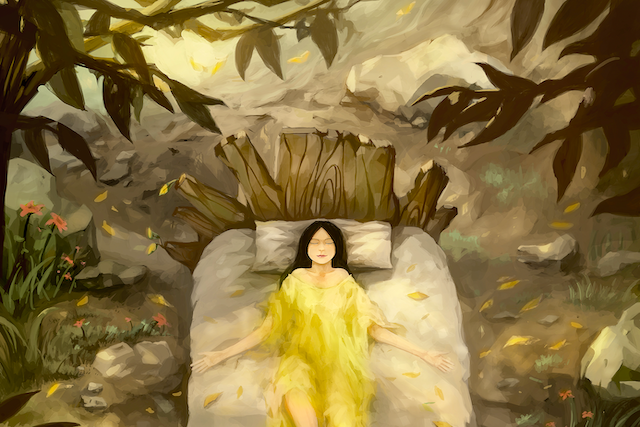
    With more time at home, my husband and I found ourselves taking more walks, cooking more meals, and openly talking about our feelings. We visited with family over FaceTime and Zoom and shared stories about those who were now gone.

    We found joy in the small things: a sunrise, a bird’s song, and even just a cup of tea. With the past vastly different from what we were living through and the future feeling so uncertain, we were finally living in the present.

    Though the pandemic brought with it so much suffering and sadness, I found unexpected gratitude in the midst of it:

    Gratitude for the time that we had with our lost loved ones before COVID-19.

    Gratitude for the extra time to spend with one another now.

    Gratitude for the technology that allowed us to stay connected with our family and friends.

    Gratitude for the reminder that life is fragile and that “taking it slow” is sometimes necessary.

    Gratitude for the chance to take a step back and reflect on the important things in life.

    Surprisingly, I realized that I felt gratitude for COVID-19.

    It’s been the darkest of times. I’m devastated by all the lives lost and all the other losses people have experienced. The course of humanity has changed, and likely not for the better.

    But I’ve found solace in the silver linings that have emerged from the pandemic—things that will stay with me long after the virus has passed. I am far more grateful today than I have ever been and with it comes a sense of peace and a newfound strength to carry on.

    My father-in-law, for instance, died peacefully at home surrounded by his loved ones. For a year, we were able to join him at his medical appointments and also create new memories. We arranged for a family trip to Mexico so he could enjoy warmth in the wintertime with his sons and brothers.

    These otherwise normal events would not have been possible during the beginning of the pandemic. If he had passed away a year later, we wouldn’t have been able to say goodbye the way we did. I’m grateful for the quality time we had.

    During the pandemic, I finally grieved my best friend’s death. Instead of keeping myself busy to distract from it as I had done before, I now had time to truly process and feel his loss through the five stages of grief. I think about him at least once a day but instead of feeling sorrow, I’m usually thinking about how he would guide me through this new normal.

    While the pandemic is not something to celebrate, it has certainly opened my mind. I never would have thought that something so awful could bring about so much healing and hope.

    COVID-19 made it very clear that life is too short to worry about the little things. Life is too precious not to enjoy every moment, especially with our loved ones. When we choose to be grateful for all that we have, we open ourselves up to more joy, peace, and connection.

    While we may not be able to control our circumstances, we can control how we react to them. We can choose kindness, understanding, and empathy for ourselves and others.

    Did someone just cut me off in traffic? It’s okay, maybe they’re rushing to the hospital to see a loved one. I hope they make it there safely!

    Is the Wifi connection poor again? No worries, I can use this time to read a book.

    Did I make the wrong decision? It’s okay, I’ll learn from it and make a better choice next time.

    Reframing our thoughts to focus on the good, no matter how small, can have a powerful effect on our mood and outlook. Things that would otherwise be frustrating or upsetting are suddenly not so bad.

    For all of us, COVID-19 has taken away so much. But if we can find a way to look for the positive and cultivate gratitude then we can find happiness amid hardship. We can come out of this stronger, kinder, and more connected to the people and things that matter most.

    I’ve developed several good habits during the pandemic. I now journal every day writing about all the things that made me happy. Whenever I spend time with friends and family, I give them my undivided attention. I enjoy my work—I treat my patients as I would my family and consider it a privilege to be part of their care. I’ve also been taking more time for self-care and nurturing my creative pursuits.

    The world has changed and so have I. I am grateful for the life lessons and growth.

  • How I Stopped Being Everything I Hated About My Parents

    How I Stopped Being Everything I Hated About My Parents

    “The beautiful thing about life is that you always change, grow, and get better. You aren’t defined by your past. You aren’t your mistakes.” ~Unknown

    When I was an angsty fourteen-year-old, I remember screaming at my parents that I never (ever!) wanted to become like either of them. And I meant it.

    My dad was a workaholic who was never at home. When he was at home, he was emotionally unavailable, arguing with my mother, or he’d escape the stress of our house by going to the betting shop to gamble.

    My mother had erratic mood swings, did not allow me to have age-appropriate boundaries, and would talk to me about the lack of intimacy between her and my father. These were, unfortunately, not role models that inspired me.

    As I entered my twenties and experienced adult life for the first time, I continued to carry the ideation that my life would be different. I was determined not to become my parents. And for many years, I naively lived life proudly thinking I had not turned into them.

    Then, one day, I opened my mouth and heard my mother’s voice come out. I can’t even remember what I said, but I recall the feeling of utter despair. Despite all my thinking and wishing over the years, I had become my parents. This prompted me to reflect on my life so far, and I realized that I had repeated many of my parents’ patterns.

    I had become a workaholic to avoid feeling my emotions, was in an abusive relationship but didn’t realize this until well after it had ended, and I struggled to know how to develop healthy friendships due to difficulties setting boundaries.

    Shit. Damn. Bugger it.

    I’d accidentally become my parents! Why was all my thinking and wishing over the years not enough to stop this from happening? I thought that I had more control over my life than this.

    During my own self-discovery journey, I found that there are many reasons why we repeat the same family patterns. I also learned that we can change them.

    Humans learn from watching and copying other people’s behavior, and children are sponges that soak up everything in their environment.

    For example, when I was a child, I remember my dad ordering a meal at a restaurant, and the vegetables on his plate were stone cold. Instead of sending the meal back and asking for hot veggies, he complained about how terrible the restaurant was and ate the cold meal. When I became an adult, I struggled to assert myself in similar situations, which led to a lot of anger and resentment.

    Learned behavior is not just a one-time thing. It is passed down from generation to generation.

    For instance, my paternal grandparents lived through the Great Depression in the 1930s, before my dad was born.

    They taught my dad that food was a scarce resource, so he carried this belief with him into his adulthood, and subsequently passed this down to me through not being able to model assertive behaviors.

    This is called intergenerational trauma because the unhealthy family dynamics continue throughout new generations. Generally, intergenerational trauma is defined by events that affect people profoundly, such as child abuse, parental incarceration, poverty, war, natural disasters, etc.

    Sometimes, we aren’t even aware that our family dynamics are unhealthy, or we might be aware but are too scared to change. This is usually because humans have a strong desire to be accepted and belong. In fact, this is very important for our survival.

    For some people, repeating those family dynamics means that they continue to be a part of the family unit.

    From a young age, I was often labelled as the ‘black sheep’ of the family, because I voiced the unspoken, toxic family rules. It became easier for me to distance myself from my family rather than remain enmeshed in a family environment that was detrimental to my mental health and well-being.

    The good news is we can change our patterns so that we don’t become (or continue to be) our parents.

    The first step is to be aware of the unhelpful patterns that you’re carrying with you. Without awareness, we cannot change.

    I started by asking myself what emotions I experienced frequently and whether they ever seemed like they were out of context or disproportionate to the situation.

    One emotion I often struggled with was jealousy. Whenever a friend would share something positive about their life—if they got a new car, got a promotion at work, or won a competition—my go-to emotion was jealousy.

    This impacted my friendships, as I was constantly comparing my life to theirs and driving them away by trying to find ways to make sure my life was more successful. This led to perfectionism in everything that I did, and let me tell you, it was exhausting! I couldn’t maintain this lifestyle, and I felt like I was drowning.

    When I hit a low point after my relationship ended, I sought therapy. Through therapy, I learned that the reason I compared myself to other people so frequently was due to the beliefs I held about myself. I didn’t feel like I was good enough as I was. This made a lot of sense when we explored the relationship I had with my parents.

    They regularly compared me to other kids and were only proud of me when I performed better than anyone else. It made sense that, as an adult, I would experience strong feelings of jealousy toward other people. Jealousy meant that I was constantly trying to prove my worth to other people rather than living life on my own terms.
    I then looked at my beliefs about this situation/emotion and thought about where and when those beliefs developed. Identifying the patterns behind my behavior was a positive first step in my inner healing journey, because you can’t heal what you don’t know.

    Because I wasn’t taught what emotions were or how to understand my emotions as a kid, I needed to learn how to do this as an adult.

    My therapist helped me to better understand the motivations behind our emotions and develop new strategies to cope with these.

    For example, with my jealousy, I learned that this was a response from fear and insecurity. I was able to learn to identify my thoughts, and when I realized that I wasn’t actually unworthy but rather that was the story I had learned from my parents, I was able to choose different behaviors instead of continuing to follow the same old patterns as before.

    I recognized that perfectionism meant I worked too much, so I learnt how to slow down through mindfulness and yoga. Once I was able to recognize my emotions for what they were, rather than reacting to them without awareness, I was able to make better choices about how I wanted to respond to that emotion.

    Having that space to understand my emotions meant that I could move out of the comparing myself to other people situation, and I was able to step into the entrepreneurial space and create a business that I love. I wouldn’t have been able to do that if I hadn’t done the inner work to change and not become my parents.

    I learned this was why my wishful thinking didn’t work. I knew I didn’t want to be like my parents, but without additional support from a therapist, I didn’t know what to do instead! Therapy helped me learn how to deal with old patterns in new ways.

    From there, it was all about practice. These habits and patterns existed for many, many years. I knew they would not change overnight. However, with perseverance and practice, I was able to make meaningful changes in my life. I found it helpful to keep a journal to record my progress so that I didn’t forget how far I’d come.

    Finally, it was important for me to remember that my parents are human too. In addition to recognizing the unhelpful habits they taught me, I found it useful to remember some of the positive traits or experiences I’ve gained.

    Even though my dad was a workaholic, he instilled a strong work ethic in me, which has helped me when creating my own business. My mother loved to travel, and she has definitely passed that love to me as well.

    Reminding myself of these things allows me to acknowledge my parents’ humanness, especially in moments where I find it hard to offer them grace. For me, reminding myself of the positives is a way to honor my need to have compassion for myself.

  • How ‘Griefcations’ Helped Me Heal from Loss and How Travel Could Help You Too

    How ‘Griefcations’ Helped Me Heal from Loss and How Travel Could Help You Too

    “To travel is to take a journey into yourself.” ~Danny Kaye

    The brochure read, “Mermaid tail, optional.” What forty-something mom doesn’t have a shimmering fish tail tucked in her closet for just the right occasion? Not me. I live in Minnesota. I’d borrow one when I got there.

    I took a flight from Minneapolis to Panama City, and then a water taxi to a backpackers’ resort. Not the kind with frozen cocktails and bad DJs. The next thing I knew, I was on a sailboat, swinging from an aerial circus hoop suspended over the sparkling Caribbean Sea, dressed as a mermaid.

    I felt free and alive and playful in my body.

    How did I, a grieving daughter, sister, and mother, end up there? That’s what I was asking myself. It’s both a long and short story.

    After a few years marked by death and loss, an “aerial and sail” retreat called to me. It would be a gift to my wounded self. That’s the short take.

    The longer explanation is the most painful, but probably speaks to why so many of us chase adventure or time away from our routines and responsibilities. We’ve got to work on ourselves outside of our regular lives. I certainly did.

    After losing my dad to cancer and my brother to suicide within a span of six months, I then had to say goodbye to the daughter we’d made part of our family for four years. We thought we would adopt her, but she went to live with another family.

    In my grief, I’ve redesigned my approach to life.

    It’s grief that pulls me to say, “Yes, I’ll try that.” Travel. The flying trapeze. Mermaid tails.

    An unexpected gift of grief is being cracked open and feeling the urgency of these opportunities. They are too fleeting and too precious to pass up. I’ve also embraced play and movement and taken up circus arts. The retreat offered some of the best aerial coaches out there.

    But aside from honing a skill, I craved an escape from the underpinnings of my everyday life and the frequent reminders of my missing family.

    Losing loved ones is something we will all experience, no doubt many times over. How each of us grieves is individual, but what I can say from experience—as a trauma psychologist and as someone living in grief—is that taking a journey out of one’s comfort zone can be profoundly healing.

    A “griefcation” won’t cure the pain, but meaningful travels can help us cope, possibly even heal.

    When I last Googled “griefcation,” it appeared just over 400 times on the search engine, with the earliest hits dated from 2017. That’s not a lot when you compare it to “staycation,” which appeared in more than 100 million articles. But I believe that travel is a conscious way to grieve that yanks us out of a funk of isolation and provides an opportunity for relief, insight, healing, peace, and transformation.

    Travel forces us to be in the moment, hyper-aware of new surroundings as we read a map, find a hotel, hail a cab (or look for an uber), and mentally calculate currency exchanges. All of this is a welcome reprieve from the overthinking and overwhelm that comes with grief.

    These days there are “grief cruises” and bereavement boats, with a chaplain on call. If you want to dip your toe into a travel experience, instead of fully diving in, retreats—mini-vacations, if you will—can be a good and less pricey alternative.

    I’m living in grief, but I am also lucky and privileged to work for myself, with flexible time off and enough travel points accumulated from business trips to orbit the planet. For others, your grief vacation might be closer to home or shorter in duration.

    I first sought out a short griefcation in the year after my dad and brother died. I had an urge to be with others who were grieving: those who would just know that I had no words for how I was feeling. I found a “Grief Dancer” retreat in Big Sur with a description that spoke to me: We invite you to a weekend retreat to hold together what should not be held alone.

    I flew to San Francisco and then drove the Pacific Coast Highway to what I affectionately called a “hippie’s paradise,” where primal music, soulful rhythm, and unselfconscious dancing helped me find joy in judgment-free movement.

    Ever since my dad and brother died, I’ve sought out places to travel, sometimes to escape traditions that now trigger me.

    My dad loved the gaudy, over-the-top nature of Christmas celebrations and would string twinkly rainbow lights all over our house in southern California. He collected singing snowmen from Hallmark, too. He had a dozen of them. He’d terrorize us, his grown children, by switching them on all at once so they’d each sing a different Christmas carol, competing for cheery seasonal supremacy.

    My dad died from cancer in November and after an early December memorial, my mom and my surviving brother retreated to our respective corners of the country to grieve alone. I hunkered down with my husband and two boys, hibernating in the dark cold of Minneapolis.

    And just like that, my family stopped gathering for Christmas. In its absence, I’ve worked to build a new holiday tradition for my sons that has a travel experience at its core. We now routinely head to sunny beaches to relax, read books, play together, and create special moments to remember those we’ve lost. No matter where we find ourselves on Christmas Day, we always set a place at the table for my dad and brother.

    I’ve learned that it’s possible to be living in grief, but also experience profound joy. Grief is an invitation to deeply value the moments of your life and find joy where you can, because of a renewed sense of how fleeting they are.

    We can travel to escape our grief, or we can focus on our loss as a significant component of the travel experience, creating activities to honor the lives of those we’ve lost.

    Dr. Karen Wyatt, a hospice physician and the founder of End-of-Life University Blog, has written extensively about the “safe container” that travel can provide to heal grief and loss. She defined six categories of grief travel to consider when making plans. Restorative. Contemplative. Physically active. Commemorative. Informative. Intuitive.

    Before a significant grief anniversary, I took another retreat, this time to Morocco with my husband and other entrepreneurs, to experience “radical self-awareness while leaving our comfort zones in a wild, extraordinary place.” While I wasn’t there to grieve specifically, I am always on that journey. There, my experience—to borrow categories from Wyatt—was contemplative, intuitive, physically active, informative. And commemorative.

    In the Sahara Desert near the border with Algeria, I honored the fourth anniversary of the death of my dad. It was a day of beauty and reflection. The shifting sand was a meditation on the transient nature of life. The stark nature of the landscape was an affirmation that life is never guaranteed to be long, and survival is not assured.

    The stunning beauty of the place, and the company I was with, was an invitation to honor the magic of this one “wild and precious life”—to borrow from poet Mary Oliver. It was both an embodied and soulful experience to dwell in grief. To hold in my body and spirit the importance of Dad’s memory. I grabbed handfuls of his ashes and sand and flung them into the air. Releasing. Weeping. Celebrating.

    You can’t live every day like it’s your last—if I did, I’d be broke, exhausted, and probably in prison—but you can do what makes you truly happy as often as possible.

    Travel, like grief, takes you to different lands, where life seems more precious and urgent. If you’re lucky, you will find joy amid the sadness, as I did. The memories stay with you forever.

  • 9 Things I Would Tell My Younger Self to Help Her Change Her Life

    9 Things I Would Tell My Younger Self to Help Her Change Her Life

    “You are one decision away from a completely different life.” ~Mel Robbins

    At twenty-six years old, I lost my dad to suicide. I was heartbroken and so angry.

    My dad was not the best. Ever since I was little, he would criticize everything I did. I was never good enough for him, and I was a place he discharged his anger through emotional insults.

    It never stopped, and I was always on high alert around him. Right until the moment he took his life.

    He could also be loving, kind, funny, and warm, but my nervous system could never relax around him. He was a Jekyll and Hyde. I never knew what behavior would set him off.

    Then all of a sudden, he was gone.

    I was angry because he had caused me a lot of pain growing up, and now he had left me.

    I was angry that I loved this man so much and felt such deep pain without him. It made no sense to me. Surely my life should be better now that his constant abuse was over.

    But it was just the beginning of my emotional breakdown. Children love their parents unconditionally, no matter how we are treated. But if our parents project their pain on to us, we end up not loving ourselves.

    Now that the abuse had stopped, it was time to deal with all the emotional wounds he’d inflicted over the years.

    But I resisted this and got stuck. I struggled in romantic relationships, unconsciously dating versions of my dad.

    I was full of self-hate. He may have died, but his criticism was very much alive in my head! And I was the one now persecuting myself for everything.

    I may have loved him, but I had no love for myself, as he had taught me that I wasn’t worth that.

    I felt powerless and in so much pain. I numbed this pain with the tools he had given me—wine, TV, food, and caretaking others. I had the busiest diary so I would never have to feel.

    I had no idea how to stop feeling so awful and like I was doomed for life because of this childhood trauma I had suffered. I was in denial that I had even experienced childhood trauma.

    The man who had caused me the pain had gone, so why did I feel the same, if not worse?

    I would lie in bed at night with this huge ache, longing to be loved by someone but looking for it in all the wrong places.

    I felt trapped in my emotions and like there was no way out.

    I sit in my front room now, over fifteen years later, in a life I didn’t think was possible, in a home that feels safe and peaceful. No longer abusing myself. Doing a job that I love and married to the most amazing man.

    I feel like life is a gift and there is no dream I cannot make a reality. That pain that kept me awake at night is no longer there but replaced with love for myself, and even for my dad.

    If I could go back in time, I would tell myself these nine things to get me moving forward to the life I’ve since created. If you also grew up with an abusive parent, my list may help you too.

    1. It was not your fault.

    We put our parents on a pedestal as children because we have no choice. We need them to survive. When my dad persecuted me for not being quiet enough or not pleasing him, I translated that as “I am not good enough” and that everything was my fault.

    We often take all the blame when our parents mistreat us. But what were their stories? How did they grow up? Did someone teach them how to balance their emotions?

    I see now that my dad was struggling. He was grieving the loss of his parents and a difficult childhood. He was not given any tools to manage his emotions. He was shown how to lash out and project them. He was shown how to drink to numb them out.

    He would come home from a job he felt he had to do, feeling tired and stressed, and blame others to help himself calm down.

    Realizing this helped me let myself off the hook. It has also helped me forgive him, which has brought me peace. I started to understand him and his traumas. He was repeating a pattern of survival that his parents had taught him.

    This is generational trauma, and it wasn’t his fault. But it was his responsibility to keep his children safe, which he didn’t fulfill because he had no idea he was traumatizing them!

    2. Reparent the wounded child within.

    The versions of me that still hurt and felt this ache to be loved still lived within me, many years later. The seven-year-old who was shouted at for being too loud, the thirteen-year-old who didn’t study enough, and the twenty-five-year-old that wasn’t there for my dad. All these parts of me had unmet needs and were in pain.

    We can’t change the past, but we can go back in time in our imagination and be the parent we needed.

    I have imagined taking baby-me out of the house where I was born to live with adult me. Telling my parents to get some therapy and sort themselves out before they can have the baby back.

    I’ve imagined holding her and telling her how special she is. Over time, this helped that deeper pain to heal.

    3. Work on self-love.

    I was always seeking love and validation outside of myself.

    I was never taught or shown that self-love and self-care are necessities. You have to be able to fill up your own cup in order to love others.

    I would tell my younger self to take a step back from pleasing others and finding a man. I would tell her to focus on giving herself the love she longed for.

    For example, speaking to myself with love and kindness, having quality alone time, buying myself gifts—these were all things I longed for from a man, but I needed to start doing them for myself.

    I needed to spend time every day giving myself love and listening to my needs, not ignoring them. Do I need rest? Water? A healthy meal? To just breathe? To be in nature to calm my anxiety?

    Learning to listen to my own needs and fulfill them took time. It felt unnatural. It was a new behavior I had to repeat every day, and then soon enough it became second nature.

    4. Get to know your shadow.

    We all have parts of us that are dysfunctional and behaviors that are not serving us.

    For me, it was emotional eating, drinking wine, pursuing emotionally unavailable men, and caretaking my family. The last two made me miserable.

    But I blamed the men and my family for being needy. I didn’t take responsibility for my own behavior.

    I felt powerless over how others treated me. I was trapped in this victim state, and then I would numb with food and booze.

    Getting to know my shadow and recognizing my toxic behaviors were the first two steps to change.

    When a man didn’t treat me well, I stopped trying to prove my worth and changed my behavior to move away from the relationship.

    When it hurt, I learned how to love myself instead of chasing someone else’s love.

    Ask yourself: What am I doing that hurts me? Then work on a step-by-step plan to change the behavior. Baby steps are key in this process, as you can get overwhelmed by trying to do too much at once.

    5. Get support.

    It takes time and work to change toxic behavior and heal. I would give my younger self permission to get help when I was struggling with a change. For example, giving up toxic relationships and booze was a real challenge for me. Finding people who had already been through the transformation I was seeking was so valuable.

    Sometimes this would mean listening to a podcast or reading a book, blogs like this one, or posts on social media, and other times it would be investing in working with someone who had already done the work.

    When you work with someone who’s already made the change you’re seeking, they can outline the steps they took, which saves time and energy and makes you feel less alone.

    6. Get in your body.

    I once was a floating head and very disconnected from my body. It didn’t feel safe to feel fear, so I had to be that way to survive my life!

    I would tell my younger self to slow down and notice how her body feels. That it was safe to do that now.

    For example, certain relationships made my heart race out of fear. This was a sign that they weren’t good for me.

    I would also tell her to find ways to bring the body back into balance by discharging the stress and fear.

    For example, breathwork techniques, movement, and Emotional Freedom Technique (EFT) tapping all help us process our emotions rather than running away from them.

    7. It’s safe to speak your truth.

    I have always been incredibly loyal in relationships. Growing up with a dad who was awful meant I had few boundaries and expectations in relationships. This was the only way I could have some form of a relationship with my dad.

    I would let my younger self know it is okay to step back or walk away from relationships that don’t feel good or safe, even family.

    I would let her know that she can always express her truth in relationships and explain when a boundary has been crossed, but that also it’s okay to walk away. Especially in relationships that feel unsafe and abusive.

    8. Celebrate all your progress.

    A journey of healing and transformation takes time! It’s a marathon, not a sprint. It’s so important to celebrate the smallest of wins daily. For example, “I meditated every day this week,” or “I said no to an invite so I could take care of myself when I used to say yes all the time.” Change starts small and grows big.

    At the beginning especially it is so important to track everything because it feels like such a mountain to climb. It will motivate you to carry on. Seeing the little changes shows your efforts are paying off.

    Younger me didn’t have a family that celebrated small wins and growth. They focused on my imperfections and were highly critical. By celebrating myself, I help that little girl feel enough!

    9. Set intentions and dream big.

    Each month, set little goals to improve your life and keep you moving forward. This could be for your personal growth, relationships, physical health, emotional health, money, love, or work.

    Make the goal super small, for example, “In January, I will not text my ex.”

    You may want to set an intention to take better care of yourself. Break this down into daily tasks to repeat for the month. And if you don’t know what you need to work on, maybe your task for the month is to read a book to help you find out.

    With intention you can create the life you dream of. But often we don’t know what our dreams are. Get still and explore what would bring you happiness.

    I think of younger-me who looked out of her bedroom window wishing for a safe home.  I think of that little girl and the life she deserves. A full, fulfilling life, just like I’d want for my own child. This has helped me to dream bigger to create a life that is not only safe but also makes me happy.

    You too deserve an amazing life! Not a life stuck in patterns of surviving and playing it small, but one where you heal and thrive. Your parents treated you the way they did not because you were not enough but because they were wounded. You were always enough, and now you have the power to take daily steps to change your reality so it is not longer tainted by trauma.

    I have the most incredible life now, and it has and continues to be a journey of healing. I wish I would have done these things sooner, but it’s never too late to take the first steps on a new path! There is hope, and I believe in you.

  • All the Things I Didn’t Tell the Men I Dated Because I Was Afraid

    All the Things I Didn’t Tell the Men I Dated Because I Was Afraid

    I’ve recently been reflecting on my relationship history and how often I did things I wasn’t comfortable with instead of speaking up.

    It would be easy to solely blame the men I’ve been with, but I’ve recognized I played a role by remaining silent instead of communicating my wants and needs and telling them when they were pushing my limits.

    I have played a role in my own disrespect by swallowing my truth and showing a smile when I really felt uncomfortable.

    I realize that everyone’s experiences are different, but if you can relate to what I wrote, perhaps you might appreciate these reminders I wrote for myself.

    Tell him that he hurt you.

    Tell him that when he rolled over on top of you and penetrated you that you were not ready.

    Tell him you froze. So thrown off by the quickness of his moves that you were in shock.

    Tell him it felt like you were not present in your body.

    Tell him that even though you kissed him and laid in the bed with him with your bodies close, you were not ready.

    Tell him you were afraid to tell him these things.

    Tell him that you have silenced your feelings for most of your life and were afraid to speak your truth.

    Tell him you thought that he was the key that unlocked the door to your happiness.

    Tell him you knew that if you kept having sex with him, he would keep coming around.

    Tell him that you learned and that he taught you what it was you needed.

    Tell him that you love him.

    Tell that you understand that he could not see past his own desires.

    Tell him you know the pain inflicted was not intentional; it was unconsciously embedded by society and personal desire.

    Tell him that you are healing.

    Tell him to get consent.

    Tell him to take his time with a woman.

    Tell him that you thought he was the one, that you felt it to your bone.

    Tell him you were wrong.

    Tell him that you used him without conscious awareness because he felt like home—familiar but, like the home you grew up in, not happy or safe.

    Tell him you are whole.

    Tell him you found your own key to happiness and that it resides in your heart.

    Tell him that you forgive him.

    Tell him that you forgive yourself.

    Tell him thank you for all the warnings about the reality of your relationship, like blocking your number and ignoring you at times.

    Tell him that you chose to ignore how emotionally unavailable he was because you too have trouble looking past your own desires—in your case, the desire to feel wanted to validate your worth.

    Tell him that you wanted to do things differently, but old patterns are not easy to break.

    So often we avoid conversations that are difficult. We avoid feeling the pain or simply the discomfort of honesty.

    I believe that if we start having these uncomfortable conversations we can heal. If we acknowledge what role we played in the situation and acknowledge another viewpoint besides our own. If we stop blaming and start speaking our truths, how much progress could we make?

    I have pushed down my truth my whole life. As these truths are coming up and out my goal is not to blame.

    My goal is to have a conversation so perhaps we can all understand each other a little better.

    My goal is to learn what role I played in these events and how to do better.

    My goal is to be comfortable being uncomfortable. Because what I know now is that you can only silence your truth for so long; there is only so much space to push things down. It will come out. Why wait until it makes you sick?

  • 7 Ways Childhood Trauma Shows Up in Your Romantic Relationships

    7 Ways Childhood Trauma Shows Up in Your Romantic Relationships

    “Love is the greatest miracle cure. Loving ourselves creates miracles in our lives.” ~Louise Hay

    When you are unlucky in love, you tend to blame yourself for not being enough and maybe blame fate for not giving you a break already! Everyone else around you is in happy, long-term relationships, but you just can’t get there.

    You might come to the conclusion that there is something wrong with you—you’re too old or too fat—and all the good ones are already married, and you will just die alone! You never think for one moment that your relationship history is playing out a dynamic from childhood.

    I felt like this for thirty-seven years of my life. It was like I kept dating the same man but in different bodies. The way I felt was always the same. Always chasing after someone who was unavailable in some way. Some had addictions, some were in relationships, some prioritized other people, but the underlying feeling was the same. I am not good enough to be loved.

    Other times I avoided relationships all together, or I was the one running away from the ones who did want me, telling myself that they were not what I wanted. In all situations it ended in the same way—me single, feeling incredibly lonely and hopeless. Looking at everyone who could manage a relationship wondering what was wrong with me.

    I continued aimlessly looking for love in all the wrong places, completely unaware of how my childhood was impacting my relationship choices. Thankfully, I began a journey of healing that started by reading and listening to self-help content. I became aware of Pia Melody and the concept of love addiction after reading her book by the same name.

    This relationship behavior I kept repeating was actually a trauma response. I had grown up with a dad who was emotionally unavailable and very much focused on his own needs. Unconsciously, I was finding him in these other relationships. It got worse after his suicide.

    Since then, I’ve learned a lot about how our childhood trauma plays out in relationships. Here are seven ways it can happen:

    1. You are in a relationship but don’t feel loved.

    You are in the relationship you once wished for, but you still feel this emptiness and feel like your partner is to blame. If they did x, then you would feel loved and enough.

    You blame them and they trigger you. But are you expecting the love and care from them that you are not even giving to yourself? Are you filling up your own love so that their love is just a bonus? Are you even noticing the ways they show you love? It may be different to your love language. Maybe things are not right, but are you working on repairing the issues rather than blaming or ignoring them?

    Our first relationships (with our parents or childhood caregivers) teach us about attachment. If your relationship with your parents was sometimes really loving but other times they were cold and distant, you didn’t grow up with love being available and consistent. Which is why relationships can make you feel anxious and you can over-give and feel lonely in a relationship.

    2. You are the fixer in love.

    When you date or even marry, your partner tends to be the broken bird that you are obsessed with fixing. Or they might be a narcissist who is all about their needs and you taking care of them. Either way, you have found yourself in toxic relationships that don’t feel safe or good.

    They could be an addict and you pour all your energy trying to save them while feeling depleted and unloved. You become almost obsessed with how you can save this person you love so much. It’s quite possible you’re repeating a dynamic with one of your parents.

    For example, I very much repeated a pattern of finding men to fix because my relationship with my dad was all about his needs and his struggles with his mental health. I was always saving him, and when I did, I would receive love from him. I thought this was love, so I repeated this unconsciously in other relationships.

    3. You chase unavailable love.

    You spend all your time and energy chasing after someone who is not available in some way. They need fixing, have addiction or family issues, are in a relationship already, or won’t commit to you. But you think of them day and night. You are obsessed with getting them to choose you, but they don’t and this spirals you into despair.

    You just keep trying and sometimes use other addictions to numb the pain. I was addicted to a psychic line at the height of my love addiction with an unavailable man because I was looking for confirmation that we’d end up together. This is what launched my healing journey, as it really did make me feel insane at times, especially when the object of my affection kept coming forward and then running away.

    We often will attract people who are playing out their attachment trauma from childhood with us. Often one that is opposite to us. So if you chase love, you may attract someone who runs away.

    4. You avoid relationships entirely.

    Falling in love feels like too much and it just makes you feel so anxious, so you might avoid relationships entirely and seem to function better single. But the loneliness is intense. You wish you could be held at night.

    You will do things to avoid these feelings, like overwork, take care of others, keep your social calendar super busy, numb with TV, drink all the time—whatever you can do to not feel your feelings!

    If you even attempt to go on a dating app your heart races and you feel terrified. So you run back to your safe single life, wondering what is wrong with you that you can’t even go on a date.

    5. You ignore the red flags.

    The object of your affection does things that don’t feel safe, yet you don’t say anything out of fear of losing them. You have no idea how to set a boundary and ignore warning signs that this person may not be good for you—how they talk to you, put you down, deny your reality, or even get physically violent.

    Since you grew up with a parent that did the same to you, it feels almost normal. Even though your body will tense up around them, you are used to that. You stay too long in relationships that don’t make you feel good, where you get very little. You feel like this is the best you can get, so you focus on the good rather than noticing the bad.

    6. You feel suffocated in your relationship.

    You are in a relationship that feels safe and easy, but then your brain starts to question it all. Am I attracted to this person? Do I feel suffocated by them? Are they the right one for me? You will convince yourself that they are wrong for you and end the relationship, as you have no idea what healthy love even is. It makes you feel so anxious to end up with the wrong person.

    7. You don’t think you can get better.

    You are in a relationship because you don’t want to be alone, but it doesn’t make you happy. But you don’t think you deserve any better. The fear of leaving and being alone feels like too much, so you just stay. Resenting the other person for not making you happy but not taking any action to make your situation better.

    Many of us fall into more than one of these categories.

    Without healing and inner work, we unconsciously play out patterns from the past and stop ourselves from having a fulfilling relationship.

    We can’t even objectively see what is wrong because so much of what we are experiencing in our relationships is based on our past trauma wounds. We don’t know what we don’t know, and if no one  modelled a healthy relationship for us growing up, how can we know what it is ?

    I had no ideas my parents’ relationship was unhealthy because the constant fighting was my normal, so I had no idea I could have something different.

    Romantic love felt stressful for me for many years. I was either pining after them or they were driving me mad. I didn’t know there could be any another way.

    But understanding my relationship patterns and where they came from has been a game changer for me.

    Now, after a journey of healing the past relational traumas with my parents through therapy, books, and support groups, I know how to have healthy love. What changed was I learned how to love myself and care for myself the way I wish others would love me.

    This changed everything…

    As my relationship with myself improved, so did my relationship with men. I am now married, and thankful my marriage is nothing like my parents’. When there’s conflict, we have the tools to move through it and come out stronger.

    We have a strong relationship in large part because I have done a ton of inner work and healing. Unlike in previous relationships, I now know my own worth, and I also know how to express my needs and boundaries with love and kindness.

    I finally took responsibility for my behavior and moved out of victim mode. This changed the relationships I attracted, not just romantic. I now knew how to treat myself with love and respect, and this meant the quality of love I received was healthier as a result.

    Our internal issues play out in our relationships. Once we heal on the inside, everything changes.

    Love yourself the way you wish to be loved by someone else. Notice when your relationship is triggering negative emotions and ask yourself, “What do I need?” Start to give yourself what you need and then you will learn to ask others for what you need. Showering yourself with your own love will change everything.

  • The Major Aha Moment That Helped Me Stop Fixating on Fixing Myself

    The Major Aha Moment That Helped Me Stop Fixating on Fixing Myself

    “The real difficulty is to overcome how you think about yourself.” ~Maya Angelou

    My newest friend ended our three-month-long friendship on a July day when I’d just returned from a dreadful summer vacation. Her Dear Jane email read, “It’s not you, it’s me.” The lever had been pulled, I was dumped, and I thought, “Ha!” I’d spent the last three months trying to help her fix her problems. I knew she had more problems than me.

    But then an anxious, obsessive thought loop began. What did it really mean? How could it not be about me?

    This wasn’t the first time I’d lost a friend, so of course, I needed to diagnose, dissect, and determine the origin of this unhappy pattern. My anxieties were ramping up, and I needed to fix something before this reoccurred. So I made an appointment with a therapist named Dr. Mary.

    After an hour’s drive through big city traffic, I arrived late and shaken to that first therapy session.

    Within fifteen minutes, Dr. Mary helped me recognize the parallel between my friendships and my relationship with my mother and and pointed out I didn’t have to parent my mom, a lifelong project due to her unsteady mental health. I was disappointed but relieved to find I wasn’t there to fix my mom’s narcissistic behavior. I was there just to fix myself. I paid her the ninety-five out-of-pocket dollars I owed and left feeling slightly better.

    Two weeks later, I drove that same hour for my second therapy session. I was not prepared for what I would take away this time.

    When I brought up my mother again, Dr. Mary asked me why I needed to change my mother. Couldn’t I allow her to just be?

    I was confused. Weren’t my mother issues the cause of everything? “If it’s not one thing, it’s your mother,” my friends and I always joked. And why wouldn’t my mom want to gain from my knowledge, love, and insight?

    Dr. Mary fed this next concept to me slowly. “Maybe you need to fix people so you can feel powerful, and then no one will be paying attention to your flaws. Maybe you want to distract others from seeing how unlovable you think you are.”

    This concept slowly hummed in my head until tears seeped from my face.

    Eventually I found tissues near my couch spot. And then our time was up.

    “Do you have any books you can suggest reading on raising self-esteem?” I asked as I paid her, needing something more to help process this information. “No,” she said, and then she opened the door and let a different version of me out into the world than the me who’d entered.

    As I drove to meet my friend for a lunch date, my mind screamed, “I’m freaking forty-five years old, and I have low self-esteem!!??” Over our Cuban pork sandwiches with mojo sauce, my friend Terry said, “Who doesn’t have low self-esteem?”

    Apparently, my discovery of my buried dysfunction was the new trendy life hiccup I was now living. When had low self-esteem become the in thing?

    My head was filled with angry bees as I journeyed the hour-plus back home. I didn’t feel good enough to be my kid’s parent that night. I fumed over Dr. Mary’s edict about my sentence of low self-esteem and not okay-ness.

    I had worked hard all my adult life on my self-awareness and self-love with therapy, self-help books, and humility! How dare she rob me of my self-definition and my purpose of showing others how to be okay. Who was I supposed to be now?

    A week and many journal pages later, I wanted to be done marinating in my indignation, so I crossed the grassy field to the library, intending to check out any and all books on self-esteem. When I explained what had happened, the librarians agreed that it’s hard to fill your self-esteem cup up if you don’t know what that cup or its contents looks like. Wise souls those women.

    At home, I read and thought and sat with my low self-esteem verdict. And then unexpectedly, I began to feel a new peacefulness. My anxiety was diminishing. Dissipating. Disappearing.

    If I was off the hook to fix the faults I saw in others, I would no longer have to fix the faults I saw in myself. My low self-esteem and anxieties were allowed. I could be just where I was until I was somewhere else. I was in a new place where I was okay with me, you could just be you, and where judgments no longer served a purpose. By naming the inner beast, I had somehow released it too.

    I am still attracted to people who self-admittedly need a little life tune-up, but I don’t obsess over “their” recipe for success or what “they” could do to be fixed. I make every day count toward my own healing.

    Eventually, with the help of medication, my anxiety felt like a phantom limb, a memory of a part of me that was no longer there, though I also need an occasional therapy tune-up.

    All I had to do was admit and own who and where I was to stop fixating on the fixing. If I saw her today, I’d thank Dr. Mary for the gift of my freedom. And I’d mention a couple of very good books on self-esteem I’d read.

  • The Agony of Anxious Attachment and How to Attract Better Relationships

    The Agony of Anxious Attachment and How to Attract Better Relationships

    “If you don’t love yourself, you’ll always be looking for someone else to fill the void inside you, but no one will ever be able to do it.” ~Lori Deschene

    There are four attachment styles including anxious, avoidant, anxious/avoidant, and secure.

    Attachment theory teaches us that the way in which we attach ourselves to our romantic partner mimics the relationship we had with our primary caregivers growing up.

    So, if you were like me and had parents who were not physically or emotionally present, you grew up feeling a void within yourself and always worrying if you were lovable. Because of this void, you feel unlovable and unworthy of love, which causes you to be drawn to partners who are considered avoidant.

    An avoidant partner is someone who believes their independence is more important than being in any relationship. They feel uncomfortable opening up to others. They prefer a casual hook up over an intimate relationship. And the moment they begin to feel vulnerable or like they like you too much, they ghost.

    Suddenly that super cute date you both planned gets canceled or pushed back with no explanation, and you are left questioning your worth and what you possibly did wrong. I know because I have been there before.

    In a way, your subconscious is trying to recreate the experiences you had growing up. If, for example, you told your parents you loved them and tried to hug them, and they responded with “Stop being so touchy” and “Get off of me,” you began to normalize being rejected when you expressed love. So now, your subconscious is drawn to avoidant partners who react in the same way your primary caregivers did.

    Our attachment styles play a huge role in our relationships, and our relationships impact our mental health. If you are a person with an anxious attachment style and you’re subconsciously drawn to avoidant partners, you will go from one toxic relationship to the next.

    If you are someone who is anxious, you tend to:

    • Quickly attach; you go from 0 to 100 when you like someone.
    • Worry constantly if they will stop loving/liking you.
    • Worry they don’t feel as deeply for you as you do for them.
    • Fear if they get to know the real you, they will no longer love you and will leave.
    • Think “I will never ever find anyone else” or “This is as good as it gets” when thinking about your relationship, even though you know deep down inside you’re not getting your needs met.

    Back in 2018, I decided to seek out therapy for the first time. I was a young grad student with a bright academic future ahead of me, but this was also the time I decided I was ready to date—and oh boy, did that open a can of worms.

    I went from being this super cool, calm, and collected young woman to constantly feeling anxious. “Why hasn’t my date texted me yet?” “It’s been four hours since I texted him.” “Does he not like me anymore?” These were just some of the ruminating thoughts that kept echoing in my head. I was losing it.

    I didn’t know it at the time, but I kept attracting men who were avoidant, and the more I felt them trying to put distance between us, the more obsessed I became with closing the gap. I wanted to feel close to them; I wanted them to love me because if they didn’t, it meant something was wrong with me.

    You know how people say, “If they’re not into you, it’s their loss?” To me, it didn’t feel that way. To me, it felt that I had to win their love, and if I didn’t win it, it meant I wasn’t worthy of their time and attention. I began to hyperfocus on every detail of our interactions. I began to notice if they texted me back with a period at the end of a sentence or if they added an emoji.

    I would even time how long it took for them to reply to me. If I was dating someone and they usually responded to my texts within two hours, that meant that I was able to feel safe and relaxed for that first hour, but as soon as it was getting closer to hitting that two-hour mark, I would feel the anxiety creep up.

    I could feel the anxiety in my body, starting with my stomach. It would feel tense and tender, then my shoulders would feel tense and my appetite would disappear. I lost about twenty pounds during this time in my life from the stress and anxiety I couldn’t get under control.

    I even developed a bald spot at the top of my head. I was baffled at the quick deterioration of my mental and physical health. A few months ago, I had been a new grad student, excited about life and building a successful career, and now I was barely holding on and smiling to seem sane.

    I have an anxious attachment style, so I become hypersensitive to the tiniest of shifts within somebody’s tone, body, facial movements, the words they use, etc. If my date said, “I love you” one day and the next “I like you a lot,” that was enough for me to ruminate on for the rest of the week.

    I knew that something was wrong and that I needed to get my emotions back under control, so I began to look for help online. I landed on Tiny Buddha many times, and it was extremely helpful to read other people’s experiences so I could better navigate my situation.

    Since I couldn’t force my romantic partners to meet my needs, I thought, It must be me. I need to chill out and not expect so much from them. I can change. And change, I tried. I read countless articles on how to let go of expectations.

    I convinced myself that I was the problem, that I was expecting too much from a boyfriend. I thought that men were just incapable of meeting my needs and showing up for me the way I did for them. Because up to this point in my life, I had never experienced a man being consistently loving. At one point, I even tried to cleanse myself of my “bad energy” by doing a Limpia (cleansing).

    I really wanted to be the issue, because if I was the issue, I could be in control and fix it. But the harder I tried to change and loosen my expectations, the more deeply I fell into a depression.

    As you can see, the way we attach ourselves to romantic partners can affect our mental health, and if we’re not aware of the type of partners we are attracting, we can fall into a cycle of going from one toxic relationship to the next.

    Going to therapy and seeking help was the best decision I made for myself. I was able to have someone point out to me the toxic cycle I found myself in. If you find yourself in this same toxic cycle and are ready to break out of it, there are a few things you can do.

    1. Admit to yourself that you are ready to break the cycle.

    Be honest with yourself. Identify the ways in which you have betrayed yourself by choosing partners that only hurt you. Be committed to ending this cycle.

    2. Begin to do inner child work.

    When you feel hurt and lonely and want to reach out to those toxic partners, instead, visualize the you that you were at five to seven years old and connect with the little you. Write them a letter. What would you tell little you if you were feeling hurt and lonely? I would tell myself  I love you. You are safe. I will always be here for you.

    3. Write a list of all the negative feelings and emotions your partner triggered within you.

    Write a list of all the reasons why you need to stay away from this person and reference it anytime you feel like you want to reach out to them.

    4. Regulate your nervous system.

    When our sympathetic nervous system becomes activated, our fight-or-flight response turns on and that makes it so hard for us to tolerate the discomfort of separation from the person we’re anxiously attached to. A breakup can feel like imminent danger, so we begin to panic and go back to our comfort zone, staying in a toxic relationship.

    Some simple ways to regulate your nervous system include taking a barefoot walk in nature, doing a moderate to intense workout, practicing breathing exercises, and/or listening to music that soothes you.

    5. Begin to develop a self-love and self-care routine.

    You can begin to journal daily for ten minutes as a way to reconnect with yourself, work through your feelings, and identify thought and behavior patterns. You can make a list of your physical, mental, and emotional needs and identify small ways to meet them each day. You can go on weekly dates with yourself; go out to eat and watch a movie.

    Do whatever it is that will make you feel happy and full. When you feel better about yourself and more comfortable being alone with yourself, you’ll be less apt to turn to another person to fill a void inside yourself.

    You get to create the life and experiences you want to live. And while it may feel like you will never find the right partner for you because of your anxious attachment style, that is simply not true. When you begin to fill yourself up with love, even if you attract an avoidant partner, you will leave at the first sign of trouble rather than staying and trying to fix it.

    Eventually, you will meet a partner who is secure and/or willing to become securely attached to you.

    You will find someone to whom you can voice your anxiety, and instead of them dismissing you and telling you to “stop being so sensitive,” they will respond with “What can I do to ease some of the anxiety you’re feeling?” or “What can I do to help you feel safe?” Remember that you are always in control of creating the reality you want to live in.

  • Why Trauma Doesn’t Always Make Us Stronger (and What Does)

    Why Trauma Doesn’t Always Make Us Stronger (and What Does)

    “Literally every person is messed up, so pick your favorite train wreck and roll with it.” ~Hannah Marbach

    You’ve probably heard this before: “What doesn’t kill you makes you stronger.” A beautiful saying, based on what Nietzsche wrote in one of his books (Twilight of the Idols). It always makes me feel like life can’t go anywhere but up. Forward and up.

    According to Nietzsche, suffering can be taken as an opportunity to build strength. No matter the pain, sickness, or trauma you experience, you will come out stronger for itas long as you take the opportunity to grow.

    But what if you fail to seize that opportunity? What if suffering and emotional trauma don’t result in strength but instead make us weaker?

    I lost my dad to suicide a bit over twenty years ago. His disease and death left their marks on me. Even now, on some days, I feel insecure, not good enough, weak. This usually happens when I’ve been way too stressed.

    On those days, I forget that all I need to do is relax. To deal with that insecurity, I activate my survival mechanisms—and subsequently stress out even more. I keep people out and worry frantically about all sorts of things.

    Workwise, it makes me stick to ‘safe’ jobs, like working for clients I don’t really enjoy working for (I’m a content writer).

    I’d much rather be doing something truly creative, something that comes from my heart. Like writing this article or writing another book. Or reaching out to people to collaborate on projects.

    That’s scary, though! So when I’m stressed out, I put all of that to the side and choose safety.

    Self-Protection or Self-Destruction?

    Doesn’t that mean that trauma then stops us from growing?

    Because if you look at it, if you look at how most of us adults react after suffering trauma in our childhood, what do you notice?

    It makes us more protective. It strengthens our survival mode. Our walls. It stops us from living fully because to live fully means to live fearlessly.

    And I don’t mean without fear; I mean “fearless” as in not being controlled by fear. Because fears are always there. Fears are part of existence.

    When you experience trauma, especially in your younger years, it’s more likely that you will develop a sensitive stress system and become a self-protective adult.

    Eric Kandel, Nobel Prize winner for Physiology, has researched this topic by watching slugs react after getting their tails slapped. He found that they retreat faster if the first slap is the strongest, even when the slaps after that are softer.

    If the first slap is gentle, though, they retreat less quickly. So the trauma of the initial, stronger slap makes the slugs react more violently to neutral stimuli (the softer slaps).

    Humans show similar hypersensitivity. Childhood trauma can make you react more violently to certain situations as an adult. You can have difficulty dealing with rejection, worry about what others think of you, and might be less likely to trust others—or yourself.

    You can do all the work, read all the self-growth and self-help books, and do all the inner child therapy in the world to mend the cracks in the vase that houses your soul.

    But you will forever have this hurt little you inside that enters the stage when you least expect it. It stops you from being your unique, vulnerable self, without you realizing it.

    Your self-defense mechanisms have become so strong that you can’t see how they’re digging your own grave. A grave for your ambitions, your dreams, your expressions, your creativity, your youniqueness.

    Embracing Your Trauma

    It doesn’t have to be this way. Not if we realize that it’s not the cracks that make us vulnerable. It’s not the trauma.

    It’s our desire to be crack-free, trauma-free, that does. We tend to ignore the cracks, not wanting to see—nor show—these imperfect parts of our pretty little vase.

    And then one day, something bad happens again and it all falls apart. You pick up the pieces and try to glue them together with transparent glue so other people won’t notice it’s broken.

    But it’s no use. The original strength of your vase, your soul’s home, is gone. It will forever remain sensitive and in need of protection.

    What if you would do the opposite? What if, instead of using glue that you hope nobody notices, you use gold?

    A beautiful, eye-catching gold that not only gives your vase incredible strength but also makes the cracks the most beautiful and unique part of the whole structure.

    This is called kintsugi: the Japanese art of repairing broken pottery with gold. It teaches us to celebrate flaws and imperfections instead of hiding them. The broken parts are what make the pottery more valuable!

    This perspective doesn’t only free us from the constrictions we place upon ourselves: of always wanting to be perfect, avoiding anything that causes fear, and never being our true selves. It also helps us to connect with others as they see they’re not the only ones who are broken.

    Maybe, for us to truly shine and live a colorful, connected life, we need to embrace our trauma, our cracks. I know it’s hard. And it may take a long time before you reach that point and feel able to let go of the pain, the broken bits, the story.

    But when you do, you’ll see that what remains shines brighter than ever before.

    You’ll be able to use your story and help others deal with theirs.

    That’s when trauma can actually make all of us stronger.

  • 4 Things I Needed to Accept to Let Go and Heal After Trauma

    4 Things I Needed to Accept to Let Go and Heal After Trauma

    TRIGGER WARNING: This post references sexual abuse and may be triggered to some people.

    The truth is, unless you let go, unless you forgive yourself, unless you forgive the situation, unless you realize that the situation is over, you cannot move forward.” ~Steve Maraboli

    My family immigrated to the U.S. from India when I was sixteen. Being Indian, my traditional family expected me to have an arranged marriage.

    At twenty-two, as a graduate music student, I fell in love with an American man. When my family found out about our secret relationship, they took me back to India and put me under house arrest. For a year.

    That year of imprisonment and isolation was severely traumatizing. I shut down from my acute distress and pain. I dissociated from myself, my truth, my power, my body, my heart, and my sexuality.

    Two years after they let me out, I escaped to the US but was emotionally imprisoned by my past. I lived dissociated, afraid, and ashamed for eighteen years. Eventually, I broke free from an abusive marriage and my family.

    Since then, I have been on a path of healing and empowerment.

    Beginning my healing journey was like walking through a long, dark tunnel. I was and felt like a victim but was determined to heal.

    To heal from dissociation, I needed to feel again. I felt the bottomless grief, loss, and heartbreak of all that I didn’t get to experience and enjoy.

    I faced and began to address my childhood history of sexual abuse.

    I set boundaries with my family. I started therapy and studied psychology. I learned my mother is a narcissist and my father an enabler.

    Coming from a traditional patriarchal, colonial culture, I had grown up with codes of obedience, sacrifice, and duty. I questioned and challenged my deep internalized beliefs of who I am, what I can do, and what is possible for me as a person of color.

    I learned about my rights. Growing up in India, I had a very different understanding of my rights than those born in Western countries.

    Therapy helped me reconnect with my body, with my needs, wants, and desires. I learned to identify and feel my sensations and emotions. I learned to discern who and what was safe and what wasn’t safe.

    I learned to listen to and trust myself and become more embodied through my dance practice. This allowed me to dance out my rage, shame, grief, and everything I had disconnected from and suppressed. I came alive and opened to pleasure and passion.

    I’ve struggled with low self-worth, people-pleasing, caretaking, perfectionism, fear, shame, guilt, and codependency. One of my most painful realizations was that my inner critic had become as severe as those who abused me. I continue to practice being kind and gentle to myself, loving myself and my inner child and encouraging my artistic self.

    In relationships, it has been hard for me to discern whom to trust and not trust. I had an emotionally abusive marriage and have given my power away in relationships. In romantic relationships, I projected my goodness and integrity and supported my partners’ dreams instead of my own.

    I have finally learned that I can choose myself and honor my needs, wants, desires, dreams, and goals. I continue to shed other people’s projections that I internalized. I am realizing that I am worthy of and can have, dream, aspire for, and achieve what white women can. And finally, I believe in my goodness, of others, and of life.

    Having emerged from the long, dark tunnel of healing, every day is a triumph for my freedom and a priceless gift. Every day I have the opportunity to be true to myself, face a fear, shift a perspective, and love, encourage, and enjoy myself.

    Acceptance

    There are so many steps and milestones on the journey of healing. Of the five stages of grief, acceptance is the final one.

    Acceptance is a choice and a practice. Acceptance is letting go, forgiving yourself and others, and honoring, claiming, and loving every twist and turn of your journey. Acceptance is treasuring all you have learned from your experience no matter how painful it was and how meaningless it seemed.

    Here are some things I have learned to accept.

    Accept the deep impact of trauma

    Coming from a family and culture that valued perfectionism and purity, I wasn’t aware of and wanted to gloss over and hide my trauma, shadow, and coping behaviors. Because I could live a life that seemed relatively high-functioning, I was ashamed to admit and address my childhood sexual trauma to myself for years. I was afraid and ashamed to share my trauma with others because I didn’t want to be seen as broken, damaged, or crazy.

    Once I acknowledged and faced my sexual trauma, I began my healing journey. Healing and acceptance mean seeing, claiming, and loving each and every part of ourselves, however broken or ashamed we feel. As we do that, we liberate ourselves from believing we needed to fit into other people’s ideas to be loved and accepted.

    When we don’t admit and accept our traumas, we can cycle through life alive but not living, succeeding but not fulfilled, and live according to programs we’ve inherited but not from our truths. As a result, joy, pleasure, passion, and true power escape us.

    Accepting that I didn’t get to have the life and dreams I expected

    As a victim, I was stuck in grief, loss, anger, denial, disillusionment, blame, and resentment. Life seemed unfair.

    These feelings are natural after trauma, especially extended severe trauma. But despite years of therapy and healing, I continued to cycle and swim in them and didn’t know how to not have those feelings.

    I was fighting to accept what I had lost. I kept ruminating on who I might have been and what my life would have been like had it not been interrupted or derailed. It was how my subconscious mind tried to control and “correct” the past to have the outcome I desired and stay connected to my past dreams.

    I was tightly holding on to what I had lost—to who I was then and my dreams. I was terrified that if I let go of what was most precious, I would be left with nothing.

    But the reverse happened. When I decided to let go of my past dreams, regrets, and lost opportunities, I stepped into the river of life anew, afresh, and in the now. I opened to who I am now and what is possible now.

    We don’t let go of trauma because, on a deep level, we believe we will condone what happened, and forget or lose what was so precious.

    Not letting go keeps us stuck like a monkey clutching peanuts in a narrow-mouthed jar. We don’t want to let go of what we had then for fear that we will be left with nothing at all. It keeps us stuck in blame and resentment. It keeps us from joy, pleasure, and possibility.

    But to live and breathe and come alive again, we need to unclench our past. By no means is this forgetting, or condoning, but allowing, receiving, and welcoming new, fresh beginnings, possibilities, and life.

    Accepting the character, mental illness, and wounds of my abusers

    Though my family had been brutal, my inner child wanted to believe in their goodness. I couldn’t accept that people I loved, who were supposed to love, care for, and protect me, could treat me that way.

    I was in a trauma bond and in denial. I had to come to terms with and accept that my mother is a narcissist and my father an enabler. And that the rest of my family only looked the other way.

    I had to let go of my illusion of my family, see through the fog of gaslighting, and accept the truth of who they are.

    Acceptance is learning to see our abusers with clear eyes beyond our expectations, illusions, and stories of what we needed and desired from them, and who we want them to be.

    No matter what was done to or happened to me, I am responsible for my life.

    Staying stuck in a cycle of blame, resentment, and anger told me I wasn’t taking responsibility for myself.

    After severe trauma, it’s painful and challenging to look at ourselves and realize that we played a part in it. Trauma is something that happens to us, but we are the ones who make conclusions about ourselves, others, and life because of it. My beliefs and perspectives about myself, especially about my self-worth, self-esteem, body, and sexuality, drastically changed after the trauma.

    I had to take responsibility for creating my beliefs. I needed to accept every time I didn’t choose, value, and honor myself and my gifts. I realized that just as I had adopted others’ projections of myself, creating a negative self-perception, I could shift to regard myself in a positive light.

    Accepting my part in my trauma set me free from blame and resentment. And it set me free from the power my abusers had over me and my connection to them.

    Acknowledge what I don’t have control over

    My inner child and I wanted to believe in the goodness, love, and protectiveness of my family and partners. But I have no control over who my parents, family, and culture are, or their mental health, values, and behaviors. I had no control over my culture’s beliefs and attitudes toward women and sexuality.

    Because of deep shame from childhood abuse, I felt bad at my core and had a low sense of self-worth. Subconsciously, I tried to control how I was seen. I lived a life acceptable to my family and culture and followed what the world defined as successful, believing it would make me feel good about myself and be accepted and loved.

    But my happiness, freedom, and success lie in my own truth. I learned to honor and follow that. I learned to mother and father myself. I learned about mental illness and mental health and reached out for support from therapists and friends.

    As I let go of trying to please others, pursuing my own needs, talents, and interests, I found myself, my joy, and my purpose.

    Forgive myself

    Looking back, I see so many roads I could have taken but didn’t. I see many ways I could have taken help but didn’t. I was filled with regret for past choices and decisions. I was angry with and judged myself.

    We can be our own harshest critics. I needed to forgive myself.

    I learned to see and be compassionate with my inner child and younger self, steeped as she was in family binds and cultural beliefs. I learned to hold her with tenderness and love for all the ways she didn’t know how to protect and choose herself. And for all she wanted but didn’t know how to reach for and have, for what she wanted to say and do but couldn’t or didn’t.

    As I held my younger selves with understanding, compassion, and love, and forgave them, they began to trust me and offer their gifts, which allowed me to open to joy, innocence, freedom, and play again.

  • You Have Just Five Minutes Left to Live – What Are Your Deathbed Regrets?

    You Have Just Five Minutes Left to Live – What Are Your Deathbed Regrets?

    “Yesterday was heavy—put it down.” ~Unknown

    Death is still taboo in many parts of the world, yet I must confess that I’ve become fascinated with the art of dying well.

    I was thinking about the word “morbid” the other day, as I heard someone use it when berating her friend for his interest in better preparing for death. The word’s definition refers to “an unhealthy fixation on death and dying,” but who gets to define what’s healthy? And why are so many of us keen to avoid discussing the inevitable?

    We talk about death from time to time on our podcast, and it’s through this work that I’ve been contemplating the topic of regret.

    We all have a story, and they’re rarely fairy tales. As we doggedly plow through life’s box of chocolates, it’s not uncommon for us to say (or not say) and do (or not do) things that we later regret. However, if we motor on, never assessing or addressing the regretful moments from our past, could we hold onto remorse for years?

    In such cases, are we unconsciously retaining dis-ease in our bodies and minds? It’s a hefty weight, after all. Some of us spend our whole lives carrying shame and regret. Cumbersome, compounded emotions clouding our hearts and minds, we take these dark passengers to the end.

    So, there you are—about to die—still living in the past or an unattainable future. Even then, you’re incapable of forgiveness. Even then, you cannot let go or express your true feelings.

    Is this the ending you want for yourself? To spend the last moments of your life incapacitated, surrounded by loved ones (if you’re lucky), yet unable to be present, all thanks to the train of regrets chug-chugging through your failing, fearful mind? Now there’s a positively joy-filled thought.

    And what of my regrets and motivation to write these words? Well, now, there’s a question.

    Like you, my life to date was not without incident. I’ve lived with childhood abuse, high-functioning addiction, self-harm, depression, and emotional immaturity. There’s nothing particularly unique about my story of suffering; I’m just another Samsaric citizen doing the rounds.

    As is traditional, I bore the shame and regret of my actions for a long time, and the weight of my co-created drama nearly drove me to suicide. My rampage lasted almost two decades, and I made quite a mess during that time. However, after a fair whack of internal work, I’m grateful to report that I no longer feel like that. 

    In recent years, I discovered a new way to live—a life of sobriety, self-love, forgiveness, acceptance, awareness, gratitude, and presence.

    Through this beautiful transformation, I saw that to live a life within a life had already been a gift, but two was an outright miracle. One might say that I died before I died. This experience drove me to review, reinvent, and begin learning the art of living and dying well. And I’ll continue learning until my last day here at Earth School.

    So I now find myself in an incredible position. If you told me I only had five minutes left to live, I’d wave my goodbyes and then spend my last few minutes contemplating how unequivocally grateful I am for the lessons and gifts I’ve received during my stay.

    But this isn’t about me—far from it. You see, presently, I’m on a mission to understand how others feel about shame and regret. Do you long to let go of grudges? Do you wish you’d said “I love you more,” or that you spent less time at work and more with family and friends? Or are you deferring such inconsequential concerns until you’ve achieved this goal or that milestone?

    But what if you suddenly ran out of time?

    In her book On Death and Dying (what the dying have to teach doctors, nurses, clergy, and their own family), Elizabeth Kübler-Ross, MD, occasionally touches on the regrets of the dying. Some of the remorse described includes failures, lost opportunities, and sadness at being unable to provide more for those left behind.

    The book features excerpts from many interviews with folks with terminal illnesses and, to this day, remains an excellent guide for people working with those near death.

    A few ideas circulate about the many regrets of the dying. We might suppose that in the final transitional phase, folks often lament the lives they didn’t live, which culminates in a significant degree of regret. But there’s been very little research done to prove this idea.

    In The Top Five Regrets of the Dying, Bronnie Ware interweaves her memoirs with five deathbed regrets gleaned during her stint working as a palliative care worker. It would appear that there’s no science to support the anecdotal regrets listed in her book, but they’re interesting, not least because they feel entirely likely.

    Digging into the subject further, on top of Ware’s list, I found more information discussing the top deathbed regrets. My entirely unscientific internet search coughed up some common themes as follows:

    1. I wish I had taken better care of my body.
    2. I wish I’d dared to live more truthfully.
    3. I wish I’d had the courage to express my feelings.
    4. I should’ve said “I love you” more.
    5. I wish I’d let go of grudges.
    6. I wish I’d left work at work and made more time for family.
    7. I wish I had stayed in touch with friends.
    8. I wish I’d been the better person in conflicts.
    9. I wish I’d realized that happiness was a choice much sooner.
    10. I wish I’d pursued my dreams.

    Heartbreaking if true, right? 

    So while I found little to no research on deathbed regrets, I did find a 2005 American paper titled What We Regret Most… and Why by Neal J. Roese and Amy Summerville.

    The report collates and analyzes several studies surrounding the regret phenomenon. Nine of these papers were published between 1989 and 2003 and contain some highly insightful metadata on life regrets. That said, one wonders how attitudes have changed in all that time.

    The research required participants to review their lives and consider what three (from a list of eight) aspects they would change if they could reset the clock and start again. Other studies asked what parts of life they would alter, and another inquired about people’s most significant life regrets.

    Interestingly, the studies showed a correlation between advancing age, diminishing opportunity, and gradual regret reduction. As older individuals’ life opportunities faded, so did their most painful regrets. Perhaps this meant they simply gave up, feeling there’s no point in regretting something one no longer has the power to change.

    While not specific, there were clear categories for Americans’ biggest regrets as follows:

    • Education 32%
    • Career 22%
    • Romance 15%
    • Parenting 10%
    • Self 5.47%
    • Leisure 2.55%
    • Finance 2.52%
    • Family 2.25%
    • Health 1.47%
    • Friends 1.44%
    • Spirituality 1.33%
    • Community 0.95%

    The paper summarizes, “Based on these previous demonstrations, we suggest that the domains in life that contain people’s biggest regrets are marked by the greatest opportunity for corrective action.” Indeed, this makes perfect sense. Perhaps it is not surprising that people regret career and education decisions in adulthood (with time left to change their course).

    I suspect, however, that such thoughts change entirely the moment one comes face-to-face with their mortality. At this point, one surely cares less about education and a successful career—about the stuff one has or has not accrued.

    I imagine that when one reaches the inevitable moments before death, we consider the true beauty of life, love, experience, family, friends, and living in peace, free from hatred, envy, or resentment toward one another. But then, I’m a bit of a hippie like that, and perhaps I’ve got it all wrong. 

    So how about we create a study of our own? I invite you to grab a pen and paper (or keyboard) and spend a few minutes imagining that you’ve got five minutes left to live—not in the future, but right now at this point in your life. You have five minutes left.

    Consider your deathbed regrets. Close your eyes if it helps (you’re dying, after all). Take a little time to breathe into these reflections consciously. When finished, perhaps you might share some or all of your list in the comments section of this post. Regardless, maybe this offers a chance to address one’s would-be deathbed regrets by considering them now, with a little breathing room.

    Perhaps it’s a timely invitation to stop and take stock. By contemplating life and death in such a way, we are learning that the secret to the art of dying well is right under our noses in how we live our lives.

  • Healing from Abandonment Trauma: 3 Things I Learned from Being Cheated On

    Healing from Abandonment Trauma: 3 Things I Learned from Being Cheated On

    “The wound is the place where the light enters you.” ~Rumi

    I want to share an experience I went through that hurt like hell, but that helped me so much in the long run.

    The experience was being “cheated on,” though the woman wasn’t my girlfriend. Nevertheless, I was very attached and it felt awful.

    So, let me start with the backstory.

    I met Diana through mutual friends in late 2021. I thought she was cute, and a little anxious, which I seem to gravitate toward. That’s just my savior complex coming out, which is another story for another day.

    Eventually we hooked up after a holiday party and continued hooking up regularly. I began to have stronger feelings for Diana than I anticipated, though I tried to play it cool and not cause any awkwardness in the group.

    Things started deteriorating between us at one point, and it culminated in Diana going home with another guy basically in front of me.

    Needless to say, I was devastated.

    My friend who introduced me to Diana was there, and he asked me, “Are you catching feelings?” I was so angry that he would try to shame me into not feeling what I was feeling. I said, “Yes, I am” and left immediately.

    On the way home, I was screaming in my car, and I even punched my steering wheel, which I had never done before. I was so triggered and mad. There was a tornado of emotion ripping through my chest—anger, grief, worthlessness, desperation.

    The next day, I woke up and left the house to get a smoothie. I didn’t want to be by myself as I was going through this.

    Initially I didn’t feel so bad, but I knew that the wave was going to hit me sooner or later. I started rereading books on relationships that I had read before. Books like Fear of Intimacy by Robert Firestone and Facing Love Addiction by Pia Mellody. Luckily, I had these books to turn to for guidance.

    Over the next two weeks I cried multiple times on my way to work, or on the way home from running errands. I even pulled over a few times to bawl my eyes out and wail alone in my car before continuing.

    Over the next couple of months, I worked on processing the grief and pain. Occasionally I would dive deep and get a memory of childhood abandonment, the real source of the pain. I’d get a memory of my mom not being there for me…

    While I was growing up, my mom worked all the time to support our family. And we had such a big family that one-on-one time was basically nonexistent.

    That meant there were countless times when I felt lost, abandoned, and overlooked.

    Being deeply hurt by Diana gave me the opportunity to go right to the source of the pain, my original abandonment experiences. Daily meditation and journaling helped whittle away the pain.

    It was slow progress for a while. I even stopped writing for a few weeks because I was overwhelmed with emotion. But eventually I began to feel like myself again.

    The first two months were rough, the next two were a little better, and after six months I was finally out of the weeds. But more than that, I feel better than I did before I met Diana.

    I feel as if my baseline level of security and happiness is higher. The way I think about it is that my abandonment experiences were heavy boulders weighing down my soul. Not carrying them around feels so much lighter.

    I must have spent over 100 hours meditating to let go of these emotions, and I’ve learned a few things in the process…

    1. Present pain is compounded by pain from the past. If you want to be free, heal the original wound.

    2. We seek what is familiar in relationships, even at the expense of our safety and happiness. And what is familiar is the love we received from our parents. If we want to have better relationships, we need to heal our past or we will repeat what we know endlessly.

    3. We get what we need to heal in relationships. And I think that’s beautiful. While things might suck in the short-term, you’ll come to know that life has your best interests at heart. Now that this episode is over, I’m glad life gave me the experience I needed to heal.

    Now it’s time for a counterintuitive move that helped me close this chapter in my life.

    I used to think “being left by Diana like that hurt so bad and I wouldn’t want to experience it again, but I am glad that I was able to learn and grow from it.”

    But that thought reveals that there is more work for me. To get closure from this experience, I had to open myself up to going through it again (but trusting life to not be so cruel).

    It’s not what you would think would help, but when you run from an experience you are still controlled by it.

    And if your goal is genuine freedom, you need to open yourself up to it. Of course, I will still be cautious going forward, just not fearful.

    Once I opened myself up to experiencing that same pain and hurt, I became freer. I took off the armor I was wearing, and I know that life can be trusted to have my back.

    I’d rather live with an open heart and get hurt than live closed off. That’s the way of freedom.

    “You have to keep breaking your heart until it opens.” ~Rumi