Tag: trauma

  • Always Exhausted? Native Wisdom to Restore Your Energy

    Always Exhausted? Native Wisdom to Restore Your Energy

    TRIGGER WARNING: This post references sexual assault and may be triggering to some people.

    “Spirit carved by Nature
    Here I am.
    Slowly ascending
    toward my own profundity.”
    ~Elicura Chihuailaf

    That exhaustion you feel when your body is fighting something, the feeling of being completely drained to the point where you can barely move your body…. that’s how I felt when I was living with trauma.

    Over the years it had piled up inside of me—the sexual assault I survived one night after I’d just turned twenty, the physical and emotional abuse that went on almost daily when I lived with my ex-husband… all of it was still living inside of me. And every day it was making me feel more and more tired.

    The difference is, when we come down with, let’s say, a cold, once we fight it and heal, our energy returns, and we feel like ourselves again. But trauma… again, it’s different. At least in this culture; more on that in a little bit.

    That’s why I never “got over” it. I never got my energy back; I never woke up feeling rested or like I was back to being myself. Not until eight years later.

    Too Tired to Listen

    From a very young age, our people are taught the importance of listening… especially to energy. We recognize that energy is in everything that’s alive, from the forest to a rock, the water, the sun, all animals, and, of course, ourselves. And energy will always “speak” to let us know when something is out of balance.

    It’s hard to listen in this culture, though, even as an Indigenous person who comes from these teachings, and even though I’m only the first generation in my family to live in Western society. It’s hard because here we are distracted and so tired of just trying to survive.

    Whatever energy we have has to go to work so that we can pay our bills, rent, food, and whatever else is needed. We don’t have the support of our communities, where everyone helps each other out, growing food, caring for those who are sick or injured, and even raising children. At least that’s how it was in my community, on our reservation, before so many of us were forced to leave.

    It takes a lot of energy to do everything alone, as most of us do in this culture. That’s why so many of us don’t see any other option but to push through, and as a result, we forget to listen.

    Back then, if I’d listened instead of feeling guilt and shame for not doing enough, I would’ve understood myself better. I would’ve shown myself more compassion and known that my energy was telling me something was off.

    The fact that I could barely get out of bed and jumped at any chance to doze off: in parking lots in my car, at work behind some boxes in the stockroom, in bed while watching Friends. It wasn’t laziness or a lack of motivation. It was me, still trying to survive what I’d been through.

    Not Living, Busy Surviving

    While we don’t always think of the stress we go through or even the trauma that happened in our past as something that would be considered surviving—and if we do think of it as surviving, it’s usually past tense—it is how our energy and body respond.

    And what’s important to remember about energy and ourselves as nature is that we don’t have an endless amount of it. We’re not like our laptops or phones, with a charger that you can just plug in and recharge. That means when your energy is focused on surviving, it doesn’t have enough left to take care of you.

    Going back to the comparison of having a cold. When you go to sleep, your body doesn’t just stop fighting the virus, right? It continues while you sleep, which is why you wake up feeling exhausted.

    Stress and trauma work the same way. Just because you’re lying down, resting on your couch, or going to sleep, that doesn’t mean your body (and energy) stops protecting you.

    Think of a deer trying to escape a hunter. At that moment, their energy can only focus on survival, right? It’s not until they get away and find safety that their energy changes back to its natural state, balance, because then they don’t need to try to survive anymore.

    But let’s say this deer is living in a place that is not their natural environment. Instead of open meadows and deep forests, there’s a high chain-link fence trapping the deer with the hunter. The deer runs and desperately tries to find a way out, a place to be safe, but can’t find it.

    Eventually, the deer will become tired and lie down because, like us, the deer can’t fight for survival forever.

    My life back then was not focused on living. It was almost exclusively focused on sleep and coming up with excuses so that I wouldn’t have to leave my bed. And to no surprise, my friends eventually got fed up with me always turning them down, so they stopped calling. While I was relieved to not have to come up with excuses anymore, I felt lonelier than ever.

    That’s the strange thing about survival, or it’s not strange; it makes a lot of sense. When we’re in this state, we don’t want to be alone, but at the same time, we’re also too tired to be around people. Or to pick up the phone or answer calls or texts from loved ones. We want to, but there’s not enough inside of us to make us do it.

    So we hide behind the walls we build to protect ourselves, while at the same time, wishing for a way out.

    It was only meant to be temporary.

    It was never meant to be this way. Survival is meant to be temporary, to protect you, to help you through something, to keep you alive. That’s why you were born with responses to finish it. That’s why you were born with the ability to heal, just as you heal from any other wound or when you’re sick.

    It’s the laws of nature, or else life could never continue.

    And like the deer, when your nge, your energy, knows you’re safe, it changes the message it sends to your body: from doing everything to protect you to taking care of you.

    What keeps us stuck in survival, too drained and exhausted to live our lives, is living in a culture that keeps trying to convince us that we’re not nature and that these responses we have had to be controlled, even stopped.

    Think about the responses you have that would make you embarrassed if they happened around other people, or would make you think of yourself as “weak” but are completely natural. Crying, trembling, shaking.

    Here we learn to look at ourselves as humans without human responses, and it has consequences.

    Too many people are now living too exhausted to engage with life because they can’t finish survival. They don’t know about the gifts nature gave them to heal from trauma and release stress from their bodies. That what comes in must come out, and what starts must finish.

    The arrogance of this dominant culture is thinking they can do better than, and even replace, nature. And the danger of a homogeneous societal culture is that it makes us believe it too.

    Conclusion

    Remember that no matter how strong and resilient you are, your energy can only do so much at a time.

    When you go to sleep, that’s when nothing else is going on and your body can focus on taking care of you. But if it still has to survive what you went through in your past, it can’t do that. No amount of bubble baths, journaling, Tempur-Pedic pillows, medications, or talking it over with logic will change the fact that survival has to end.

    It wasn’t until I healed from trauma (a reality that unfortunately causes a lot of suspicion in this culture) that I finally started feeling rested.

    And that’s the bottom line—no matter how much you sleep, your body can’t truly rest until it feels you’re safe.

    Just like the land we walk on and the water that gives us life, our bodies come with powerful abilities that, today, only ancestral Indigenous wisdom can help us remember and return to. Not just for a good night’s sleep but for all the things we miss when we’re too tired to live our lives.

    We just need to listen.
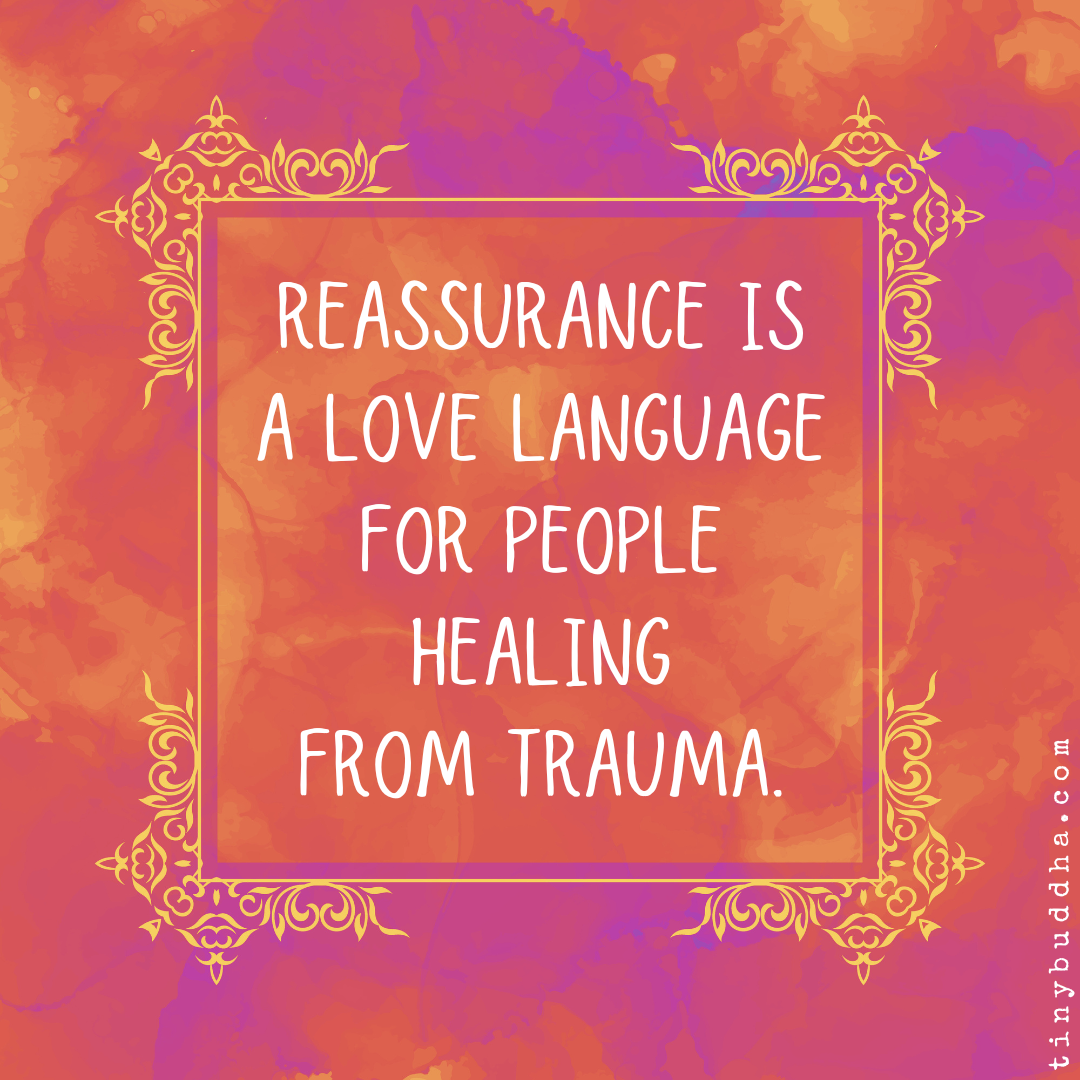
  • How I’ve Been Shaking Out My Pain Since Losing My Daughter

    How I’ve Been Shaking Out My Pain Since Losing My Daughter

    “Movement has incredible healing power.” ~Alexandra Heather Foss

    My ten-year-old daughter, who had been ill for all her life, was dying. She was hooked up to tubes and monitors, and they were always going off. Her numbers were off the charts, and the doctors kept saying, “Your daughter’s numbers aren’t normal, and we would normally have a team coming in here to check on her breathing and to rouse her.”

    After the last operation, one doctor said she was surprised that she was still alive when she came into work. We all were. She kept fighting. She would just be sleeping heavily, deeply, and then would wake with a massive smile on her face and a giggle, as if it to say, “Ha! I fooled you again.” She kept fooling us… until she didn’t anymore.

    My husband and I made the decision to turn those monitors off because they were not helping her or us, as the constant beeping with no action was just stressing us all out. It was a massive decision. The doctors had done everything they could, and there was no miracle cure.

    During this time, we were having daily conversations with the doctors about what her body would look like and feel like when she was going to die, what we could expect. We had to make decisions that no parent would want to make—about where we wanted her to die: home, hospice, or hospital.

    We talked about all the different scenarios. They were trying to prepare us for the worst. Her little body was failing her. She had a rare genetic issue, and the future was bleak because she wasn’t well or strong enough for any other operations.

    She couldn’t walk or talk; she couldn’t hold herself up; she had scoliosis, brain damage, and hip dislocation, as well as a horrible condition called dystonia. She had lived her life with a smile on her face but was in the most unimaginable pain daily.

    Doctors were telling us that they had reached the end of the road, and that either we could stay in the hospital or choose to go home with an even stronger set of medications than we had arrived with.

    Around this time, I found myself jumping around and shaking my arms and legs.

    Doctors, nurses, and my husband would look at me, and I would say I needed to get it out. It was the stress. It helped calm my nervous system; it helped calm me even though my whole body was in a state of mass fear and my whole world was crashing around me.

    We had nearly a whole extra year—we tried so much—and then on that last day I went into her room at home and she looked awful. I knew it was the end.

    I rang the ambulance, and they came and asked us what we wanted to do. Then they confirmed our worst fears.

    We had an end-of-life plan in place; again, something that no parent ever should have to write. We loved her so much.

    I held her, I cuddled her, and I loved her. I love her still so much.

    Since she has died, I have felt empty, but I am trying my best to forge a way forward.

    I had a terrible childhood, one of fear and abandonment. It led me down a path of being needy, constantly needing reassurance. I haven’t loved myself at all. Whenever people broke up with me, it reignited those feelings of fear, that I wasn’t enough.

    When I was under ten my mother broke my arm, tried to drown me, scared me, and decided with my father to leave me on the side of the road when I was naughty. The house was full of arguing, my mother narcissistic and unwilling to take any responsibility for any of her failings. We, the people around her, had to adapt ourselves to her and her mood.

    I then went to school and was bullied. My sense of self-worth was shot. Where was I safe?!

    I met my husband and we are happy, and I thought my life was complete when we had our beautiful daughter.

    I was scared she wouldn’t love me, that she would love my husband more. She seemed to know what I needed. She would have mummy days and daddy days, or both of us days. I didn’t mind sharing her love. The mummy days were hard work (as they entailed being with her 24/7) but, oh my, the look of love on her face. When I looked at her, I felt so loved and I loved her.

    Since she died, I have been doing things to heal myself that I never would have tried before. Ecstatic dance—two hours where I keep my eyes closed and dance but, actually, I find myself shaking the whole time, like I did in hospital, and crying, letting it all out. Shaking my arms and kicking my legs out over and over again.

    I have seen a healer and had a dynamic breathing session, where I howled like a wounded animal for everything that I have been through and what I have lost—my childhood and now my child.

    Since being home, I have been having hypnotherapy and more dynamic breathing sessions, as well as EMDR therapy. All with the view of healing myself, trying to love myself. My body has hurt more than I realized is possible. While dynamic breathing, the pain I felt in my stomach before I breathed it out was immense. Physical pain from mental pain.

    I feel like my daughter gave me love, and I am honoring her by making sure that this next part of my life is going to be healthy. I am going to hug myself, breathe deeply, and try to calm the nervous people-pleaser inside of me. It’s going to be hard, but by now, at fifty, I feel I am ready to do the work.

    Wish me luck!

    Rest in peace my Taylor Swift-loving Ella Bella. She was eleven when she died.

    We will dance for you when we see Taylor next year.

    And for anyone out there who’s dealing with unbearable pain of their own, I can’t promise you the pain will ever fully go away. But maybe, like me, you’ll find a little relief in moving your body to get some of it out.

  • How Tonglen Practice Healed My Pain After Trauma

    How Tonglen Practice Healed My Pain After Trauma

    “Tonglen reverses the usual logic of avoiding suffering and seeking pleasure. In this process…we begin to feel love for both ourselves and others; we begin to take care of ourselves and others. Tonglen awakens our compassion and introduces us to a far bigger view of reality.” ~Pema Chodron

    It was challenging to focus during the summer months, with my six-year-old son at home more than usual. I had tons of ideas to write about, but my creative energies were exhausted from hours of playing. When the school year started, I finally sat down to write. The words took their own path and directed me into a memory that had surfaced a few days earlier.

    It was a memory of the first days of my son’s life. It came as nostalgic remembrance of his life so far, as he reached the milestone of first grade. I wanted to write about how Pema Chodron’s Tonglen practice saved me during these challenging days. I had no idea that there was much more in this story for me.

    ***

    Even though I was forty-three when I was about to give birth for the first time in my life, I insisted on having a natural birth at a birthing center, despite my parents’ protests. I wanted to show them, and the world, that women can give birth naturally at my age. I envisioned the book I would write, and the courses I would teach to give women like me more confidence.

    Many of my dreams come true, but not this one.

    I went into labor on the morning of the full moon in March. After twenty hours of rapid contractions and vomiting at the birthing center with no progress, I was moved to the nearby hospital.

    This was not the time for idealism. I surrendered under complete exhaustion. I gave in and took an epidural, willing to do anything to have my baby in my arms.

    During my pregnancy, I envisioned that once my son would be born, he would stay cuddled with me at the comfort of the birthing center and that we would return home shortly after. I wanted him to feel nourished, loved, and welcomed right away.

    Again, reality hit me in my face. My son had severe jaundice and was forced to spend most of his first few days in the nurses’ room under therapeutic lights.

    One of the reasons I wanted to avoid birthing at a hospital was that as soon as I walk through the big swing doors, I feel my blood is washed away from me and I turn into a ghost. How many times I walked the white, sterile, cold corridors, feeling that I was turning white, sterile, and cold myself. It did not matter if I came to greet a friend’s newborn or to visit my dying mother. The reaction was always the same.

    And there I was, living in a hospital during the first days of motherhood, barely carrying my body, depleted by lack of sleep and nonstop breast-pumping. I kept asking why? Why? Why?

    Why did it have to start like this? Why can’t my child be with me? Why do I have to pass by the nurses’ room and see him crying while no one pays attention? Why did they have to poke his finger for blood every few hours?

    My husband and I were thrown into our worst nightmare, fearing our son’s brain would be damaged. We knew that even if he would eventually be healthy and well, the trauma of these first days would be forever imprinted on him. What hurt the most was that we could not even embrace him with our loving support.

    During one of the short nursing breaks we got, my son was lying on top of me, resting in my arms. I felt his heartbeat and his little breaths. I patted him and cried, “Please be healthy, please be healthy, please be healthy.” The pain was breaking me into a thousand little pieces.

    Then I remembered Tonglen. I had read about it in Pema Chodron’s book When Things Fall Apart. I had practiced Tonglen throughout three challenging years of fertility treatments and three miscarriages. It was weird that I hadn’t thought of it earlier, but then again, I was in the midst of a whirlpool of suffering; I could barely even remember my own name.

    I started the practice with breathing in my son’s pain and breathing out healing for him. As I was doing that, I felt a new sense of power. I was no longer helplessly lying there. There was something I could do for my son; I could take away his pain and heal him.

    After a few minutes, I moved on to breathing in my own suffering, and breathing out healing to all the struggling parents whose babies were sick or hospitalized. Suddenly, I was not alone. I was a part of a group of parents. I was a parent for the first time in my life, and I felt all the emotions that came with it: the joy, the gratitude, the pain, and the fear, of a magnitude that I’d never experienced before.

    Not only was I a part of a community of struggling parents, but I was also helping to ease their pain and healing their children. This exercise connected me to my power, and my wisdom. I was no longer a broken body, but an empowered soul.

    My perspective shifted. I stopped taking it personally. I understood that what happened to my son, to me, and to my husband, happens to others too. It was all a part of the journey of life, which contains suffering as well as joy. I was connected to something bigger than me. I was supported by it and supporting it.

    A good friend told me, “You cannot control your child’s path, you can only support it.” I could not change his journey. I could only make it easier on him and help him grow through his challenges.

    Once we were finally released from the hospital, life did not get easy right away. My son was crying a lot and had difficulties nursing. I kept practicing Tonglen all that time. It took us about a month to settle in and shift from hardship to joy. Since then, I haven’t noticed any traces of trauma in my son so far.

    But what about my trauma?

    Through writing about this memory, I acknowledge that these were the hardest days of my life. I also realize that I have never really processed this hardship. I have worked on my disappointment from the vacuum extraction delivery at the hospital. But I have never talked about the days that followed with anyone, not even my husband or my therapist.

    At first, I thought that the trauma was so deep that I had to repress it. But on second thought, it did not feel like an open wound. I believe that thanks to practicing Tonglen, the healing occurred in real time. I did not repress the pain when it was present; I allowed it to manifest in me. I processed the pain so well that it went away and left us clean and clear to start our new lives as a family.

  • How Trauma Affects the Brain and How I’m Healing from PTSD

    How Trauma Affects the Brain and How I’m Healing from PTSD

    “Owning our story and loving ourselves through that process is the bravest thing that we’ll ever do.” ~Brené Brown 

    Several months ago, I was stoked about writing a piece on the living legacy of trauma, sharing how much we think we know about these so-called injuries of the mind, body, and spirit when, in reality, we know diddly squat.

    I thought that a piece on this topic would inform and help folks like me. I’d suffered long and hard from PTSD, triggered initially by the sudden death of my brother and, simultaneously, the unfortunate finding of an email that confirmed that my husband of twenty-five years was having an affair with a girl half his age who lived in Germany.

    Little did I know that after broaching this idea in an article that explored how trauma manifests itself in intense physical, perceptual, and emotional reactions to everyday things, I would experience the absolute worst trauma imaginable since that fateful day when my world turned into a nightmare that didn’t end when I woke up.

    You see, after three years of working virtually with a therapist who specialized in drug and alcohol addiction and trauma—a woman with a gentle English accent and passion for all four-legged creatures (her “family” consisted of a husband, cat, horse, and donkey)—I got a text that rocked my world like a magnitude 10 earthquake. An energy force that, to me, far surpassed what 32 Hiroshima atomic bombs would feel like.

    In tiny bold font, I was informed on a Wednesday morning at 10 a.m. that my beloved therapist, Vanessa, had died peacefully at home, surrounded by those who loved her dearly.

    Although I should’ve found some sort of comfort in hearing that, I curled up in a fetal position on my deck, letting the warm summer breeze wash over my badly shaking body.

    I grabbed the folds in my oversized Life Is Good T-shirt, using them to wipe away tears that didn’t stop. Not even when I realized that my two Chihuahua rescues were whimpering next to me, confused as to why the sad, high-pitched noises coming out of me sounded a lot like theirs when I left the house.

    And although it shouldn’t have come as such a huge surprise after she went into remission after her first bout of ovarian cancer several months ago, Vanessa’s death came fast and furious within a span of just two weeks of her terminal diagnosis.

    Without the ability to correspond with her in the days leading up to her death (due to her illness becoming so severe it rendered her 99% incapacitated), I literally stopped, dropped, and rolled on the floor upon receiving this news. I felt as if I was lit on fire, with the pain from this communication leaving me excruciatingly traumatized and broken.

    Not knowing what was happening during these many weeks of radio silence, I was texting her number over and over and over again, not realizing that all of this communication was being read by her husband. He was caring for her in their Vermont farmhouse, assisted by family who flew in from England a few weeks prior to spend whatever little time they had with this very special and beloved daughter, sister-in-law, and cousin.

    There are no road maps to trauma. No GPS or Waze apps can get us from point A to B. What I did discover during my three-plus years of work with my incredibly wise, informed, compassionate, insightful, and funny therapist in the trauma work we did each week was that there are alarms in our bodies that go off, signaling that we have to find a safe place to get out of danger, away from the darkness lurking within.

    Using a workbook that was beyond helpful, Transforming the Living Legacy of Trauma: A Workbook for Survivors and Therapists, by Janina Fisher, PhD (2021), a huge epiphany for me was connecting the dots of trauma.

    I learned that “the living legacy of trauma manifests itself in intense physical, perceptual, and emotional reactions to everyday things—rarely recognizable as past experience. These emotional and physical responses, called ‘implicit memories,’ keep bringing the trauma alive in our bodies and emotions again and again, often many times a day” (Fisher, 13).

    Doing weekly homework was an integral part of my journey to wellness, although, as anyone knows, you don’t ever really rid yourself of a lifetime of events, symptoms, and difficulties common to individuals who are traumatized.

    Worksheets were incredibly helpful in guiding my work with Vanessa, holding me accountable to “naming” the symptoms and difficulties I recognized in myself. Those include a feeling of emotional overwhelm, loss of interest in most things, numbing, decreased concentration, irritability, depression, few or no memories, shame and worthlessness, nightmares and flashbacks, anxiety and panic attacks, chronic pain and headaches, substance abuse and eating disorders, feeling unreal or out of body, and a loss of sense of “who I am.”

    I had to examine how these symptoms helped me to survive. For example, if I suffered from depression, how did that help me get through my PTSD? How did losing interest in things help me? How did not sleeping help? How did using alcohol help me survive? (I unfortunately combined prescription meds with alcohol, putting my life in jeopardy for years).

    One of the most important pieces of my trauma work was recognizing just how integral understanding the brain was in experiencing trauma. Certain areas of the brain are specialized in helping us survive danger (van der Kolk, 2014).

    “A set of related structures in the limbic system hold our capacity for emotional, sensory, and relational experience, as well as the nonverbal memories connected to traumatic events. The limbic system includes the thalamus (a relay station for sensory information), the hippocampus (an area specialized to process memory), and the amygdala (the brain’s fire alarm and smoke detector). When our senses pick up the signs of imminent danger, that information is automatically transmitted to the thalamus, where, in a matter of nanoseconds, it is evaluated by threat receptors in the amygdala and in the prefrontal cortex to determine if it is a true or false alarm.” (Fisher, 15)

    One of the most interesting parts of studying the relational pieces of trauma with the brain is that the prefrontal cortex is designed to hold the “veto power” (Fisher, 15). Depending on how a stimulus is recognized, such as being benign or threatening, I discovered that when I construed a stimulus as threatening (which I did many, many times), my adrenaline stress response prepared my body to fight or flee.

    Adrenaline causes our heart rate and respiration to increase, turning off non-essential systems, including the prefrontal cortex, putting us in survival mode. Pausing to think might put me in danger, simultaneously losing the ability for conscious decision-making, acting, and reacting by crying for help and “bear witness to the entirety of the experience” (Fisher, 16). I often found myself freezing in fear, fleeing, fighting, or giving in when there was no way out.

    My understanding of triggers and triggering was instrumental to my understanding of my post-traumatic stress, which forced me to look at the behaviors of our forebears—cavemen and cave women. They lived in a very dangerous world, where they were vulnerable to diseases, harsh climates, the challenges of providing food for their tribe, and potential attacks by animal and human predators.

    Folks back then had to strike preemptively, something that their environment helped with (using stones, tree branches, etc. as weapons to fight off enemies or craft bows and arrows). Their survival was enhanced by this ability to sense danger and to keep on going, no matter how they felt or what was in their way. They innately had the ability to sense danger before the fact rather than analyze the level of threat once it was in front of them.

    Centuries later, human beings still have heightened stress and survival responses. The brain and body have become “biased to cues” indicating potential threat. Cues connected even indirectly to specific traumatic events are called “triggers.”

    These triggers have caused me to shake in my boots (or Converse sneakers) simply by smelling certain smells or experiencing certain weather conditions. These strong physical and emotional responses are known as triggering, and I struggled with this for many years before I was lucky enough to find a therapist who really “got it.”

    I can literally hear my ex cursing and screaming if I am in somebody’s basement because that is where our fights often took place in our family home years and years ago.

    I can start shaking when I drive through my old neighborhood in upstate New York because I start to “see” all of the evidence I found in our family home that confirmed my ex was having an extramarital affair.

    Just driving down a street a few miles from our family home, I can reactivate the sensors in the limbic system and amygdala and see a flashing “danger” sign. I then feel that lightning bolt of obsessive anger that I felt when I found pictures, letters, and other paraphernalia confirming that I was “dumb and clueless” when my ex made up stories about where he had been or where he was going.

    Vanessa would be extremely upset with me if she were here, knowing that I’m “time traveling” with the writing of this piece and shaming myself in the process by calling myself names.

    Her points are valid, and because of the incredible growth and insight I gained through my work with her, I own both of those things and know that time traveling is incredibly triggering for me, causing me to stir up very upsetting and traumatizing feelings.

    As for the self-shaming I have gotten to be very good at, I can recognize (now) that it is extremely counterintuitive to call myself names or demean myself. All it does is give life to the negative, punitive, cruel, abhorrent words that my ex articulated to make me feel as if “I” was the crazy one in the relationship and that “I” deserved to suffer from his extramarital affair because I was a crazy, terrible wife.

    To all of that I say, bah, humbug, knowing that I have worked way too hard to travel down that dark and dank road of the past, growing by leaps and bounds through weeks of tears, laughter, more tears, and hard-earned self-actualization and growth from sessions with an amazingly good clinician.

    I know that Vanessa always gave me the credit for getting where I am today. I always argued that I never would have arrived at this destination without her patience, expertise, and extraordinary empathy, which I never experienced with the twenty other therapists I had over the years. I tell those closest to me that Vanessa saved my life, and I don’t say that lightly.

    What folks who don’t have PTSD need to understand is that it is virtually impossible for anyone who has experienced severe trauma to truly believe that they “deserve” the good and positive things that come from the extremely hard work they put in.

    They’re convinced that they are not deserving of those good and positive things and that being “messed up” will be a lifelong, integral part of them. As such, positive things are for other folks, and change for the good is something that might be attainable but rarely is, due to the falls and flaws that define the lives of those with trauma.

    Healing and forgiveness begin to happen the moment we accept and forgive ourselves—the moment we see that small child who we once were through the eyes of the compassionate adult we have become.

    For me, I was convinced that the little girl of yesteryear would never be anything but wounded and broken, despite the pep talks and logical arguments presented by very intelligent, intuitive clinicians. But that was then and this is now.

    And if Vanessa is looking down at me (and I’m pretty sure she is), she would imitate Mary Poppins and say, “Pish, posh” with a smile on her face and remind me every time I achieved a new level of insight, understanding, and self-care with a “well done,” putting her right thumb up as an exclamation mark.

    Well done, indeed.

  • How I Healed My Strained Relationship with My Addict Mother

    How I Healed My Strained Relationship with My Addict Mother

    “We come to love not by finding a perfect person, but by learning to see an imperfect person perfectly.” ~Sam Keen

    Like so many of us, my relationship with my mother throughout my life is best described as complicated.

    We’ve had our fair share of turbulent times in our journey, and her alcoholism and drug abuse while I was growing up fueled great dysfunction on every level: literal physical fighting when I was a teenager (yep, Jerry Springer-style), seemingly continual acts of rebellion, a total lack of understanding, deep mistrust, unwillingness (or likely even an inability at the time) to change, and ultimately a total separation when I was thirteen years old that would take decades to shift.

    Today, I’m forty-eight years old, and my mother and I have been rebuilding our relationship for over twenty years.

    I deeply acknowledge how her decision to get sober and stay sober in 2001 laid the foundation for me to develop the willingness to try and have a relationship. To get to where we are today has required a lot of deeply personal internal work for me, and it is my hope that by sharing my story, you may feel hope and even inspiration on your journey.

    My mother was just twenty years old when I was born, and by the time my sister was born two years later, my parents were already divorced. My mother grew up in fourteen foster homes and became the first cycle breaker in our family by deciding to walk away from the system at eighteen and not seek contact with her family. (It’s so clear to me now how truly ill-equipped she was to be a parent.)

    My sister and I lived with my mother, and we saw our father some weekends but there was never a consistent schedule, as consistency wasn’t a word that could describe any part of our childhood. I lived briefly with my father when I was five for one year, and my sister stayed with my mom.

    Because of the inconsistent contact with my father, over the years I idealized him and his life, which was often a bone of contention with my mother.

    By the age of thirteen, I had grown extremely tired of life with my mother and fantasized daily about creating a new one. After a particularly awful experience where she came to my school drunk and dragged me out of the school dance by my hair, I decided to take action and to seek refuge for me and my little sister by living with my father an eight-hour drive away (my paternal grandmother helped to facilitate this).

    When we left my mother’s house, we didn’t have any contact with her for a few years. She moved away from California, and I turned my focus to my new and exciting life with my father. Boy, was I in for a surprise and more excitement than I could have ever wanted!

    My father worked in the blossoming tech industry when we moved in with him in Southern California in 1989. He had a house built for us in a swanky new development, and at first, it really felt like life was taking a turn for the better.

    Until it wasn’t. It really, really wasn’t.

    One fateful day, my father went out for a haircut and didn’t return for three days, leaving us with our stepmother, who never wanted kids or for us to come and live with them. When he returned, he was disheveled—no haircut—and extremely quiet.

    Through the angrily clenched teeth of my stepmother’s whisper in my ear, I found out that my father was a barely functioning drug addict who enjoyed cocaine, heroin, and eventually to his demise, crack cocaine (crack is definitely whack).

    As my grandmother would say, we jumped from the frying pan into the fire, and after living with him for not quite two years, he committed suicide when I was just fifteen. Since we had no relationship with my mother and didn’t want one, my paternal grandmother graciously took us in, and I again turned my focus to starting a new life.

    At the tender age of sixteen, I decided that both of my parents were losers and I only wanted to move forward with my new life with my grandmother. I turned my focus toward school but made plenty of room for recreational drinking, experimenting with LSD and mushrooms, and going to metal concerts in the Bay Area.

    I went off to college at eighteen (with a decent GPA, considering), the first in my immediate family to do so, determined that I would be the next cycle breaker by being and doing better than where I came from.

    Until it appeared that I wouldn’t be or do any better.

    I got unexpectedly pregnant with my son when I was twenty (just like my mom) while in college, and this news was not well received by my grandmother, who “thought I was going to be different.” I was still determined to break the cycle, and my grandmother’s comment would fuel years of overachieving in an effort to prove myself (my story of incredible burnout is one for another day!).

    I extended a tentative and boundaried-up olive branch to my mother, allowing her to come to the hospital when my son was born as long as she was sober (amongst other rules). It would take another four years, a second child for me, and a fateful DUI for her to choose sobriety. This was the fragile beginning of deep healing and transformation for me that would take many, many years.

    “As traumatized children we always dreamed that someone would come and save us. We never dreamed that it would, in fact, be ourselves, as adults.” ~Alice Little

    I can share four things that I did (and do) that helped me to come to the place where I am able to have a positive relationship with my mother after all of the dysfunction that defined our relationship for most of my life.

    1. I looked at pictures of my mother as a child and committed them to memory.

    Seeing my mother as a child helped me to view her as more than just my mother. I looked at photos of my mother when she was younger and imagined the trauma she experienced as a child and how much pain and suffering that little girl endured that affected how she evolved into an adult and a parent.

    This practice gave me insight and helped me to develop compassion for her and her journey.

    I learned that I had the ability to consciously choose another perspective, another way of looking at her. Picturing her as a young child and thinking of the experiences she has slowly shared with me over the years gave me a new light and new eyes with which to see her.

    I still use this practice when I need to cultivate compassion for her, as we are not in the same place when it comes to our healing journeys, and sometimes I need this reminder when I interact with her.

    2. I made a conscious decision to let go of my story about the mother I wished she was and my victim mentality around my childhood.

    First, I had to become deeply aware of the story I told myself about my mother and my childhood. Writing in my journal about it helped me the most, knowing that this was my private and sacred place that I didn’t have to share with anyone if I didn’t want to.

    I asked and responded to questions like “Who is my mother to me? How do I feel about my mother? Who did I wish my mother to be? How do I wish things were different when I was growing up? What were the best parts of my childhood? What were the worst parts?”

    Once I developed deep awareness of my thoughts, feelings, and perspectives on my experiences, I made the conscious decision to let go of the story of the mother that I wished I had and how I felt like I was dealt a terrible hand in the parent department. I consciously decided that I was not a victim of my childhood, nor a victim of my mother. I embraced and eventually accepted that all of my experiences helped me to be who I am today.

    On my spiritual and healing journey, I discovered that some people believe we actually choose our parents before our souls incarnate into this life, and that we choose the parents that can teach us the most in our lifetime.

    This idea helped me to look at my mother and my childhood in a different way. I now deeply know that she is the perfect parent for me because I have never liked being told what to do, and she was absolutely the best at teaching me what I didn’t want so I could forge my own path (she always did say when we were kids that “I’m a warning not an example!”).

    3. I let go of the expectations that I had created for her as a mother.

    Society, family, the media, and movies all paint pictures for us about what parents and families should and shouldn’t be. We are both subtly and overtly programmed with certain expectations for how we and others should be and should behave, especially in specific roles, like that of a parent.

    I realized by looking deeply that I had a lot of expectations for how my parents should be that were not realistic and not even fair given who they actually were. Recognizing my expectations and making a conscious decision to let them go allowed me to create space for my mother to just be who she is without me getting disappointed when she couldn’t be or do what I wanted her to.

    4. I created boundaries for myself for our relationship from a place of love and compassion for both of us.

    I looked deeply at what I needed as a conscious adult to have a positive relationship with my mother, and I created boundaries to support myself. It was important to me that these boundaries came from a place of love and compassion for the both of us, with the intention to keep our relationship positive.

    One boundary that has really helped me with our relationship is to be mindful of what we talk about and how I choose to respond.

    We don’t often share the same views on politics, for example, so I’ve set the boundary that we just don’t talk about this. If she happens to say something political that I don’t agree with, I usually just don’t say anything, as it’s really not that important to me to die on that hill (and I try to find a kind way to shift the topic of conversation without engaging).

    My mother feels differently, but I believe that she still has deep healing to do around the trauma she experienced as a child. This topic has become a boundary for me because we are not yet in the place to have deep conversations about this, and that’s okay. I’ve accepted that we can’t go there right now (and maybe never will), so I choose to let it go.

    It also helps me greatly to remember that we are all doing the best we can with our current level of consciousness, and that no matter where we are in the journey, there is always more to be learned. This reminder helps me to cultivate patience and grace with and around my mother (and others).

    While I wouldn’t classify our relationship as perfect by any stretch, I’ve come to learn that there is no such thing as a perfect relationship, but there are times when making an effort to have an imperfect relationship is the perfect medicine for healing.

  • A Little-Known Truth About People-Pleasing and How to Stop (for Good)

    A Little-Known Truth About People-Pleasing and How to Stop (for Good)

    “Being a people-pleaser may be more than a personality trait; it could be a response to serious trauma.” ~Alex Bachert

    Growing up in a home, school, and church that placed a lot of value on good behavior, self-discipline, and corporal punishment, I was a model child. There could have been an American Girl doll designed after me—the well-mannered church girl with a nineties hairbow edition.

    I was quiet and pleasant and never got sent to the principal’s office. Complaining and “ugly” emotions were simply not allowed. Though I was very rambunctious and “rebellious” as a toddler, all of that was cleansed from my personality by the time I was school-aged.

    I had no other choice. I felt unsafe in my body at the slightest hint that someone was upset with me. It was enough to tame my inner rebel, at least for many years.

    I carried this pattern into adulthood. I found myself in jobs with supervisors who would fly off the handle at every opportunity. I worked extra hard, more than anyone else, to avoid getting in trouble. When my colleagues got yelled at over their mistakes, they laughed with amusement under their breath—but when the anger was directed at me, I was ridden with anxiety.

    How could my coworkers brush off our manager’s anger, but I felt triggered for hours afterward?

    It took me many years to learn the answer—that some of us are conditioned from a young age to develop a deep-seated fear of losing our sense of belonging and safety in our relationships. To cope with this fear, we develop strategies to safeguard ourselves, which for some, turns into a habit of people-pleasing.

    There’s one clear common denominator for people-pleasers—feeling beholden to others. You put your needs last and feel obligated to manage everyone else’s happiness. You’re hypersensitive to being judged, shamed, and rejected. You worry about what other people think about you. You overextend yourself to be helpful. When you dare to stand up for yourself, you suffer from anxiety and guilt.

    When you don’t address and change these patterns, you may eventually feel resentful, frustrated, and angry. It compromises your emotional and physical well-being and contributes to an overwhelming sense of powerlessness.

    And it lights a blazing fire under your ass.

    Because we aren’t responsible for juggling other people’s emotions.

    We don’t owe anyone comfort.

    We’re not a charity receptacle for others’ emotional venting, unhealed trauma, or misdirected anger.

    Our time, energy, and well-being are not up for negotiation.

    And we don’t deserve the guilt-tripping manipulation.

    Truthfully, we cannot control how other people show up in our relationships, but we can change our patterns of powerlessness and take back our lives, and it doesn’t have to compromise our genuine desire to care for others.

    Brain Ruts

    It’s not a mystery what you should be doing in lieu of carrying the burden of responsibility that comes with people-pleasing.

    You need to set boundaries, speak your truth, be more confrontational, use your voice to advocate for yourself, separate your feelings from others, and put your needs first.

    Which begs the question—what’s getting in the way of you taking these steps?

    Though you may feel the need to change your patterns through sheer willpower or more self-discipline, that isn’t the answer.

    You don’t need to read useless books about how to “grab life by the horns” or “grow some balls” (ew, gross!).

    You don’t need to muscle through debilitating anxiety or guilt.

    You don’t need to give-up your generosity or empathy to take back your power in one-sided relationships.

    You don’t need to be “thicker skinned” or less “sensitive.” (Your sensitivity is a gift.)

    Here’s the little-known truth about people-pleasing—it’s a learned pattern that gets “turned on” in your unconscious mind over and over again.

    Whether it’s avoiding conflict, freezing up when you need to speak your truth, or feeling guilty, people-pleasing is a survival strategy. And all survival strategies are a set of automated behaviors, thoughts, and emotions that repeatedly get turned on unconsciously.

    In a sense, you’re not fully in control of how your people-pleasing habits show up. Which is why just “trying harder” doesn’t work, because you can’t beat the speed at which your unconscious mind is turning on patterns.

    Ninety percent of how we show up in life is unconscious and based on our past. Your brain needs to save energy, so it’s automating your decisions, behaviors, and feelings for you. Think of your bad habits as brain ruts.

    Every time a people-pleasing habit is presenting itself, your brain is riding down the same neural pathway, deepening the grooves, much like how a dirt path naturally forms over time if you keep walking over the grass.

    This well-worn path appears to be safer and easier than walking through the wild, unruly grass, which feels unfamiliar, dangerous, and risky to deal with—you fear being judged, shamed, or rejected out there. Just the thought of standing up to your evil mother-in-law turns on the anxiety.

    But you’ve reached a point where you long to be in the wild grass. It represents the life you could be living—taking up space, effortlessly putting your needs first, being in your pleasure, and feeling amazing in your emotional well-being.

    So how do you take the leap into the metaphorical grassy field of your “hell yes” life?

    By planting new seeds in your unconscious mind and watering them on a regular basis.

    Planting Seeds

    If people-pleasing wasn’t a problem for you anymore, what would be possible in your life?

    Imagine a scenario where you’ve already reconfigured the pathways of your unconscious mind and you feel exactly how you want to feel, showing up exactly how you want to, and it’s just easy. You’re confident, powerful, and unapologetic.

    Whose rules would you stop following?

    What boundaries, enmeshed in barbed wire, would you put in place?

    Whose misdirected emotions would you feel bulletproof against?

    What responsibilities would you shamelessly give up?

    What self-indulgence would you treat yourself to?

    What truths would come spilling from your mouth? (Truths that are SO electric, that you feel you might burst if you don’t say them right now!)

    There’s a reason it’s so intoxicating to fantasize about our ideal life. We’re wired to “believe” what we imagine because a part of our brain doesn’t know the difference between what is real and imaginary. It’s the same reason we get emotionally pulled into TV and movies. You do realize it’s acting, right?

    When the critical thinking part of your mind goes quiet—as it does when you’re getting wrapped up in a good story—you’re accessing your unconscious mind, where all habits are formed. It’s where we’re most swayed, influenced, and sold on ideas.

    To get out of a people-pleasing brain rut, you need to plant seeds in your unconscious mind to “influence” yourself to show up the way you want in your life. Done with repetition, these seeds help build new neural pathways, making it possible to be your best self at home, work, and in your community.

    One of the most powerful ways to plant seeds is to visualize while in a deeply relaxed state of mind. Here are some tips on how to get started.

    Start in the Right Frame of Mind

    Visualization works best when you’re feeling relaxed and calm in your body. If you’re actively triggered, self-regulate your emotions before jumping into visualization.

    One quick and easy way to do this is to combine a breathing exercise with stimulation of the acupressure points on your wrist. Grab one wrist with the opposite hand and squeeze. Take one big inhale, hold at the top of your inhale for a couple seconds, and then exhale twice as long. Repeat two to three times. Once you feel nice and grounded, find a quiet place without any interruptions so you can focus and go inward.

    Get Specific

    The brain works in very specific, finite ways. If you want to be a badass who lives life on your terms, what exactly does that look like? Imagine yourself in specific places, taking specific actions, feeling a certain way about it. Focus on actions like speaking your truth, confronting people, feeling confident, setting boundaries, etc.

    Repetition Counts

    Your mind needs enough new information on who you want to be in order to generalize the changes into your life. You don’t need to visualize for long periods of time—two to three minutes at a time is enough, but be sure to make it a part of your routine. Try starting with a handful of times a week.

    Water the Seeds

    Take real-life action that supports the person you’re becoming. Your brain and nervous system are always learning and adapting when you show up in new ways. It’s like providing the proof to yourself that yes, I can do this. Start with small steps. Choose places where you want to put yourself first and practice using your voice to advocate for yourself. Be tenacious about doing this work—the confidence and bravery you crave will naturally emerge.

  • Dysfunctional Family Survivors: 7 Myths that Hold Your Healing Hostage

    Dysfunctional Family Survivors: 7 Myths that Hold Your Healing Hostage

    I have never known a patient to portray their parents more negatively than they actually experienced them in childhood but always more positively–because idealization of their parents was essential for their survival.” Alice Miller, Thou Shalt Not Be Aware: Society’s Betrayal of the Child

    If were born into dysfunctional families and, by some miracle, manage to recognize theres something really wrong there, we can end up devoting a huge portion of our time on Earth (if not all of it) to piecemealing a life not defined by the despair and pain we felt as children.

    This is as challenging a feat as it gets.

    The institution of family is universally recognized as sacrosanct. But when this unquestioned bubble becomes a breeding ground for trauma, neglect, or abuse—be it covert or explicit, emotional or physical, subtle or extreme—then naming a breach, taking a stand, protecting ourselves, or even deciding to proactively heal can be seen as a betrayal.

    After a lifetime of some version of this, I want to share with you seven family myths that, for years, held my healing hostage. 

    It was through gradually unwinding these myths one by one that I mustered the strength and resolve to go no-contact with my mother and set necessary boundaries with other members of my family, which cleared the way for a difficult but true healing process.

    It hasnt been an easy road; in fact, its been an almost entirely off-road journey involving enormous patience, grief, truth, and courage. But I can tell you, cross my heart, I owe it my life.

    Admittedly, this is a confronting topic. Were unpacking an aspect of being human thats rife with open wounds, loyalty, heartbreak, and primal bonds. 

    My intention here isnt to rebuff the natural ties of family but to validate your longing to feel safe, whole, and seen as you are and to shed light on the enormous potential for healing that can happen within the family structure when these myths are dismantled.

    Lets begin.

    MYTH 1: Blood bonds are a free pass for bad behavior.

    The pervasive refusal to address our trauma and do the work to actively heal it plays out in the family like nowhere else.

    Because this is an institution that we take for granted as just and loving, its one in which our worst behavior can run rampant, completely exempt from checks and balances.

    In these cases, the measure for love seems to be how much were willing to endure and how much theyre willing to endure from us. This is not okay. Family members treating each other in ways wed be ashamed to treat virtual strangers is only the norm for one of two reasons. Weve either taken it for granted as the only way (it isnt), or were invested in not taking responsibility for healing our trauma and would rather keep open the channels to unconsciously play it out.

    If the only thing binding us together is our fear of going against this institution, if the only thing that keeps us in each others lives is fear, guilt, shame, or the hope for a change that never materializes, and if we dont bring these conditions to the light and question them, we sign our lives over to more of the same and enable the problem.

    Refusing to play by the rule of ignoring and enduring dysfunction is the only way to end the pain chain. Repeat after me: Blood bonds are no excuse for bad behavior. Not our own, not anyone else’s.

    MYTH 2: This dysfunction is whats real and primary; well-being and sanity are fantasy and secondary.

    One of the most painful parts of my experience growing up and throughout my twenties was that, despite investing more time, money, effort, and faith in my healing than I did on anything else, at the end of the day it was the energy, dynamics, and unspoken rules of the dysfunction that defined the baseline of my life.

    How I wanted to live, the boundaries I was setting, and the way I was able to conduct my life were dismissed as fantasy or denial. My needs werent real, the relational code was. Reality was fighting, bending the truth, manipulating, worrying, speaking behind each others backs, enabling, blowing up, and pretending it was all okay. I was wrong and in dreamland to suggest that this wasnt okay and that something else was possible.

    Heres what I want you to know:

    You are real. And if youre able to live without abusing others, if youre able to take responsibility for your healing, if youre able to create peace and harmony in your life, if youre able to take any window of personal freedom to grow and thrive, its absolutely real. It can be done and its 100% legitimate, not to mention preferable as a way of living.

    Just because your predecessors havent made the same choice, that doesnt make it make-believe or a fantasy.

    You make your healing and a whole new set of rules to live by true by living them out. If youre doing it, its not make-believe, its reality.

    MYTH 3: If they dont recognize my wounds or my right to heal, I dont get to heal.

    Ive been working on myself forever. And for a long time, while I was working on myself, I was also furiously trying to find ways to be understood and help or change my family. 

    I needed them to be the bridge that facilitated my healing. Only once I got them sorted or got them to understand me would I get my permission slip to live the way I was here to live. That permission slip didnt come.

    Eventually, I did the unthinkable: I gave that permission to myself.

    I figured out exactly what it was that was costing my sanity, expressed it every way I could, and when it became clear that ignoring my non-negotiable needs was an implicit expectation, I said,No more.” And in the case of my mother, I even decided to go no-contact for good. It wasn’t easy, but that began the process of healing a lifetime of parentification, erasure, and trauma.

    Giving up the need to have my right to heal legitimized by family (and even friends) was the single most pivotal, empowering, and positive turning point in my life.

    This shift allowed me to validate myself in the way Id always needed. For the first time in my life, I stopped negotiating the reality of my lived experience, and in hindsight I can say without that shift, healing would not have begun.

    Asserting my right to choose and protect my safety and sanity, no matter what, created the inner trust required for the magnitude of my grief and wounding to come to the forefront so I could work with what I was packing. 

    Healing our real wounds is a vulnerable process that requires the safety to come undone and the assurance that we wont knowingly put ourselves back in harms way as we build ourselves up to wholeness.

    MYTH 4: If its in the name of love, its as good as love.

    When, in the name of love, we hurt, belittle, or abuse each other and demand that the flow of toxicity remains intact, were ultimately saying that real love doesnt exist, or that love and truth cannot coexist.

    Real love is coherent, straightforward, and present. Real love sees and honors the other as a whole, separate being with a will and truth of their own. Real love doesnt picket someones right to peace, safety, and healing.

    Abuse or denial in the name of love wounds, creates vortexes of remorse and resentment, and compromises our ability to recognize healthy love in ourselves and from others.

    We must begin to take notice of sanctioned behaviors that are actively un-loving in the name of a love that never or rarely manifests or registers as true in the here and now.

    We can all do better, and I believe, with every fiber of my being, that deep down its what we most long for.

     MYTH 5: Whatever healing you muster is owed to the dysfunctional dynamic.

    This was another big piece for me. After an abusive or painful event, the expectation was that Id take a little break to recoup and then come back for more, rinse and repeat. This held my healing in a vice because I could never heal further than the fear of being torn to shreds again. 

    I knew there was a ceiling I had to break through to become the woman I knew in my heart I was, but Id always end up at square one when I circled back to the toxic dynamics.

    It wasnt until I decided my healing was final, until I was sure I wasnt available to siphon it back into the scheme, that my healing ceiling began to shatter and I started feeling whats on the other side.

    Repeat after me: Im not healing so I can be hurt again. Im healing so I can move forward whole.”

    MYTH 6: Your job is to change your NO to a YES.

    This is another big one.

    The truth is that most of us that have incurred substantial wounding in the family bubble have also learned to de-legitimize whats true for us.

    Because being chronically wounded (by those who gave us life, no less!) is so deeply invalidating, we come out on the other end with a wall-to-wall feeling of not being real. To them, our feelings and inner truth are getting in the way of the real us—the one they want, can do what they want with, and get what they want from without boundaries, protest, or consequence.

    As a coach I see this all the time. Incredible humans with big hearts and a commitment to courageously heal that simultaneously use spirituality and self-help as a means to deny their lived experience. This allows them to avoid rocking the boat, setting boundaries, or making a real stand for their needs and truth.

    Taking the high road” seems to mean enduring breaches and abuse without hurting, feeling sated in withholding relationships, placing everybodys needs ahead of their own, or even better, not having needs (let alone desires) at all.

    I believe this is a manifestation of the same wounds of invalidation they incurred in childhood (now operating from within on the DL), combined with the unconscious belief there is no version of life thats not subject to the rules and dynamics of their families.

    Whenever I see someone bust through this myth, my heart leaps with joy because I know thats when theyre cooking with gas.

    In my personal journey, another huge turning point was when I threw in the towel of self-denial and began to notice that my NO was telling me something, and that it was up to me to listen. I could turn that NO into a YES by standing firmly in it so my life force could move toward whats true for me.
    I can guarantee thats how it works. 

    How do you move into an authentic YES if someones trying to shove a spoonful of poison in your mouth? By saying no, trusting that no, and moving away from it.

    Each and every one of us is alive and feeling regardless of the agendas and expectations of others. Your NO is not a problem; its a pointer to the real-deal solution for you.

    Regardless of how unreal core wounding makes us feel, our reality is overruling and speaking volumes at every moment. Listening to and aligning with that is a non-negotiable step in restoring ourselves to wholeness.

    MYTH 7: Youre forever bound to the role you played in your family drama.

    Were closing with a bang here, so listen up. 

    The coping mechanisms we employed to survive childhood often end up becoming who we believe we are.

    If we had to be boundary-less, or else…,” needless, or else…,” believe we were nothing, or else…,” this is how we learn to operate and how we try to survive and get our needs met in adulthood.

    When we take a real stand for our healing and begin to assert and protect our safety, the parts of our persona that came about as coping mechanisms begin to unravel. 

    Each and every inch of safety and inhabiting of personal truth we take back systematically renders these parts obsolete and allows the full essence of our being to emerge, in self-responsible ways.

     This means the limitations these parts imposed on us—compromising our ability to love, create, work, relate, speak up, rest, earn, enjoy, connect the way weve longed for, in alignment with love and truth—little by little begin to fall away, and life opens up in ways we hardly thought possible.

     Listen, theres always a reason why people are abusive or hurtful, and its usually trauma of their own. But while thats a valid reason and a tragic one, its not an excuse or a free pass to rob anyone of their will, peace, truth, and the life they were born to live. Family is not an exception to this rule.

    But here is a rule Ive created for myself that Im learning to live by: To love, set boundaries, treat others, accept treatment, and express my needs the same way in all close relationships, be they family or not. If a behavior or dynamic needs the shield of this or any other institution to be okay, its not okay. 

  • Coming out of Survival Mode: How I Healed and Found Peace

    Coming out of Survival Mode: How I Healed and Found Peace

    “I have come to believe that caring for myself is not self-indulgent. Caring for myself is an act of survival.” ~Audre Lorde

    I can’t pinpoint the exact moment when I realized that I no longer needed to fight for my survival, but I do know that it came after several years of prayer, healing, and intensive work. It wasn’t an event, but rather the feeling of peace and calm that comes after a storm.

    For me, the storm dissipated slowly. It was the kind of storm that kept swirling and re-emerging until I finally realized that it would take concentrated effort and work on my part to eliminate the threat.

    By threat, I mean anything in my inner and outer world that was wreaking havoc on my nervous system. This included things on the inside (such as trauma, subconscious beliefs, childhood wounds, and energetic and nervous system damage) as well as things on the outside (people and things in my environment that were having a negative impact).

    When your mind, body, and spirit are under attack for a prolonged period of time, there’s no one solution that will bring you out of the dark. Rather, you must practice a variety of healing methods and make the conscious choice to free yourself from the chains that bind you.

    For me, the freedom did not just come from leaving my unhealthy, toxic, and codependent marriage of nineteen years. It didn’t come solely from the fact that my oldest son finally stabilized and was no longer in danger of losing his life. Nor did it come solely from separating myself from the people, places, and situations that held my nervous system in a constant state of turmoil.

    It was a combination of many things.

    The reprieve came gradually over time, as I learned to listen to my body, understand my nervous system and its relationship to my emotions, and what people and situations threatened my inner peace.

    Each time I would notice that I did not feel safe in my body, that someone’s words or actions were causing harm, or that a relationship or situation was adding stress or creating an imbalance in my life, I would make adjustments as needed.

    This meant setting firm boundaries around who and what I was allowing into my headspace and heart space. This meant releasing people, places, and situations that were no longer healthy for me or serving me in a positive way. This meant working in therapy to heal childhood traumas that were still living in my body.

    For starters, I left a long-term relationship that, on the surface, seemed to provide stability but, in reality, kept me in a constant state of anxiety, resentment, and emotional chaos.

    The relationship was a textbook example of two unhealed people recreating their childhood wounds with one another, with no awareness of what they were doing. The impact trickled down to our children, who unfortunately suffered the negative consequences of their parents’ wounding.

    It wasn’t until months after our divorce, when my oldest son was diagnosed with PTSD, that I realized the environment I had been living in was not only toxic but also abusive. Sadly, the relationship with my former partner so closely resembled the patterns and behaviors I had witnessed as a child that I had somehow normalized them. I hadn’t put the puzzle pieces together soon enough.

    In fact, the moment that I read my son’s psych evaluation results, I was hit with the reality that I had lived in that kind of environment (chaotic, unhealthy, toxic) for most of my life. In my childhood and then later in my adult life.

    I was shocked.

    Why hadn’t I connected the dots before? The reason I felt anxious, the reason I was crawling in my skin, feeling on edge and unable to relax or find stillness, was because my nervous system had been under attack by the very people who were supposed to make me feel safe.

    I had been existing in survival mode for as long as I could remember.

    From that point forward, I made a pact with myself to never go back to people, situations, or environments that created chaos inside. I promised myself I would do whatever it took to protect myself from further harm, regain my stability, and break the cycles of toxicity and abuse that had been passed down through my lineage.

    These are the methods I used to free myself:

    • Subconscious reprogramming
    • EMDR (Eye Movement Desensitization and Reprocessing)
    • EFT (Emotional Freedom Technique) Tapping
    • Brainspotting
    • Meditation
    • Somatic healing
    • Energy healing
    • Boundaries
    • Cutting Relationship Cords

    To some, my methods seemed extreme, selfish even. And in some ways, they were. But not in the typical way one would think.

    The fight to find my peace was only selfish in that I cared about myself and my well-being so much that I was not willing to stay stuck in cycles of suffering any longer. Nor was I willing to pass my wounding along to my children.

    I had a choice, and I chose myself. I chose my peace.

    And I would do it again if the time ever came.

    To anyone who is struggling with the suffocating feeling of living in survival mode, please let this be your reminder: you must choose yourself. You must do something, because doing nothing will only keep you in the eye of the storm.

    Even if it means letting go of close relationships, or removing yourself from certain environments, the hard decisions you make will eventually create the peace and freedom you seek in your life.

    Of course, leaving people and places behind is going to hurt. It’s going to cause some discomfort. But remember, you cannot heal in the same environment that is harming you.

    You have to be willing to get radically uncomfortable for a period of time until your nervous system stabilizes and you are able to invite healthier, more supportive relationships into your life. Once you are able to look in the rearview mirror at your distant past and see that you have left behind all the things that were harming you, you will realize it was all worth it.

    You will be proud of yourself for having the courage to take these brave steps. You will be proud of yourself for taking your happiness into your own hands. You will be proud of yourself for choosing YOU.

    Make peace your priority. Your nervous system will thank you. Your children will thank you.

    Sending you love.

  • Releasing Fascia: A Simple Way to Reduce Tension, Pain, and Disease

    Releasing Fascia: A Simple Way to Reduce Tension, Pain, and Disease

    “Take care of your body, it’s the only place you have to live.” ~Jim Rohn

    I hear this happens to so many, but when it happens to you, it’s unsettling. I didn’t know what was going on with me, and I wasn’t getting any satisfying answers either.

    Most days were good, and I felt fine and went about my regular routine wearing my many hats: mother of two young kids, human mom to three fur babies, a household-manager-of-all-the-things and full-time dental hygienist. And then out of the blue, it could hit me like a ton of bricks… the backache, neck pain, jaw pain, tension headaches, and even migraines.

    I would wake up in the morning with tension or pain in my body, but I had no idea how it got there! Sometimes it was pretty intense too, It would drive me bananas because I couldn’t put my finger on the reason why.

    Didn’t do any yard work yesterday. Didn’t hurt myself. Didn’t trip or fall. Didn’t shovel snow the last few days either. It was so strange. I had no idea what was going on.

    I remember that the first time it happened, I was about thirteen years old. It was a summer morning, and I wasn’t able to get out of bed to go to my babysitting job. Another time, in my late twenties, my lower back seized as I was bent down shaving my legs, so I dropped to the floor unable to get back up. There were many times like these.

    When I had one of those unexplained episodes, I would feel off for a few days and then it would settle. Luckily for me, most days I just felt my regular minimal tension at night. It wasn’t intense, but it was enough for me to notice.

    Other times, I’d have migraines or tension headaches that would last for days at a time. It wasn’t fun for anyone, including my young family. I also felt guilty and stressed out with my list of errands getting longer by the minute. I wanted to avoid this at all costs because it would stop me in my tracks when it happened, and everyone around me suffered.

    During medical visits I was told I had muscle spasms, tension headaches, or migraines. And was told to relax (right!) or prescribed something for the pain or given a topical cream to rub on the affected area. It helped, but I still didn’t understand why it would happen out of the blue like that.

    In my circle, I was hearing things like: “Wait till you hit thirty or forty, that’s when all the problems start!” or “Wait ‘til you’re my age!’ or ‘Welcome to the club!” or my favorite one: “You ain’t seen nothing yet!” To be honest, it was upsetting and depressing to hear that things would get worse as I aged.

    Ever have an ultrasound, scan, or MRI only to be told that everything looked normal? That it must be muscular, or even worse, it’s all in your head? It’s a very frustrating diagnostic for most people, as they are left feeling puzzled and still looking for answers. They’re hoping to find anything that could help, to alleviate some of the pain and tension. They’ve done many things, but nothing seems to help…

    As it turns out, it’s all about fascia!

    What is FA-SH-EE-AH? It is a connective tissue in our body. Picture one continuous piece of a three-dimensional spider web, from head to toe. It’s a semi-opaque membrane, thicker in some areas.

    This tissue does not only wrap or divide our organs, muscles, and other body parts, like previously thought, but it actually interconnects every single one of our cells, all 100 trillion of them! Fascia is everywhere! It protects us, it supports surrounding tissues, and communicates with our entire being. It is the only system in the body that connects to every other system in our body.

    The magic of our precious fascia doesn’t stop here, as it also has a memory! It records our entire life, but it’s the traumatic events—the physical, repetitive, and emotional stresses (every fall, burn, bruise, surgery, repetitive movement), the viruses (hello, Covid!), and infections… plus unprocessed emotions, negative thoughts, limiting beliefs, and unhealthy habits and behaviors—that affect it the most. From the 3rd trimester in the uterus to our last breath, our fascia keeps track and memorizes everything.

    Our beautiful body does have the potential to auto-regulate, and so does our fascia. But we live in a world where productivity is a sport, our to-do lists are never-ending, and our over-scheduling is a badge of honor. This absolutely takes a toll on our body and mind! Therefore, our fascia doesn’t always release like it’s supposed to, and it starts accumulating tensions.

    Tight fascia, that is unreleased, clamps down on its surrounding tissues and gets worse with time. Left unreleased, it can get rock hard. Plus, since it’s like a 3D blanket, it starts affecting and pulling other parts of the body… just like when you tug or pull on a corner of a blanket, it pulls on the entire thing. The fascia in our body is the exact same!

    This is why the root cause of our symptoms may be coming from a completely different place in our body. And it explains why many therapies don’t work, as they treat the location of the symptom and not the cause.

    Bound fascia creates havoc on our health and wellness and has a domino effect on our body and mind. It impacts all our cells (every tissue that makes up the muscles, organs, bones/joints, and all the other systems).

    As an example, clamped fascia that is tight around and inside an organ (remember, fascia is in every cell) will affect this organ so much that it won’t be able to function properly.

    The pain in your neck that keeps coming back, your tight shoulder blades and digestive issues, could all be from tight fascia from that time when you fell off your bike when you were learning to ride at the age of five years old. Your fascia protected you in the fall, but it’s been tight all this time and is now pulling on your 3D fascia blanket.

    The TMJ issues you’ve been experiencing, the acid reflux, and reduced range of motion in your shoulder could be from when you had your appendix removed as a child. With scars, we only see a tiny scar on the skin, but inside, it’s an iceberg of adhesion and it’s pulling constantly!

    That nagging hip tension that’s been around for ages, the ringing in your left ear, and your weak bladder could all be from your high-risk pregnancy and stressful delivery. Those babies take up a lot of room, and our tissues should go back to their original place, but sometimes they don’t, and that starts pulling too! Not to mention the impact of all that stress of having a high-risk delivery; this too could very well be the root cause of your issues!

    Healthy fascia is the missing piece to health and wellness! A holistic approach is needed to release this complex tissue, which impacts us in so many ways. For optimal health, gentle movements are best to release bound fascia and relax your nervous system, which go hand-in-hand.

    If your intention is to release your fascia, you’ll want to avoid anything that is too intense or that jacks it up like HIIT, spinning, and marathons.

    Other than body work (osteopathy, energy work, massage), walking, swimming, yoga, and meditation are great options that you can do without an appointment. Every bit counts! Here are some things you can add to your daily routine to keep your fascia happy and pliable:

    First, stay hydrated! Drink water throughout the day. The general rule of thumb is to drink your weight in pounds, divided by two. That’s the number of ounces your body requires daily to function properly. Therefore, someone that weighs 200 pounds could benefit from drinking 100 ounces of water per day. Some exceptions apply, but for most people this is a good guideline. Remember, we are mostly water, and that includes our fascia!

    Stretching is a must! To stretch a muscle, it takes twenty to thirty seconds, but to stretch and release one layer of our dysfunctional fascia, it can take around three to five minutes, sometimes more.

    Yoga is a great fascia therapy, as it’s wonderfully designed around fascia lines; for example, downward dog stretches the posterior line of fascia. Thread the needle pose stretches the arm line. Fish pose stretches the anterior line.

    Hatha is the style of yoga that most of us think of when we picture yoga. Downward dog, warrior pose, child’s pose, lotus, to name a few poses, are all great options to try.

    In yin yoga, we hold the poses longer, about three to five minutes, which is long enough to release the fascia. That’s when all the magic happens! These poses are gentler. As we hold them, we can feel a little flutter or a soft release somewhere else in the body. It’s all connected!

    Another kind of yoga that is great for our fascia health is restorative yoga. This one is a very passive yoga done with many props. It’s all about supporting the body and feeling safe. This creates immense healing, as it activates the parasympathetic nervous system. It’s incredibly powerful and utterly relaxing! So, let’s not discredit this type of yoga because it’s more passive than the others. The benefits are exponential!

    EFT/Tapping Meditation is also a great option to release tension in our fascia. As we tap on specific acupressure points on meridians in the body (hint: meridian and fascia lines are in the same places!), we release stored unprocessed emotions, limiting beliefs, and negative thought patterns, which all impact our fascia.

    It’s an amazing body-mind release technique! Tapping also activates the vagus nerve, promoting rest and relaxation, which is what we want, as the happiness of your fascia depends on the state of your nervous system, and vise-versa.

    Fascia health is a journey, and it’s so worth it! Do yourself a favor and start releasing your fascia today. Caring for it has the best return on investment and undeniably impacts your health and well-being. You totally deserve it, and your future self will thank you!

  • Learning to Speak Up When You Were Taught That Your Feelings Don’t Matter

    Learning to Speak Up When You Were Taught That Your Feelings Don’t Matter

    A proper grown-up communicates clearly and assertively.”

    This is something I have heard many people say.

    By that definition, I wouldn’t have classed as a proper grown-up for most of my life.

    There was a time when I couldn’t even ask someone for a glass of water. I know that might seem crazy to some people, and for a long time I did feel crazy for it.

    Why couldn’t I do the things others did without even thinking about it? Why couldn’t I just say what I needed to say? Why couldn’t I just be normal?

    Those questions would just feed into the shame spiral I was trapped in at that time in my life.

    But the question I should have been asking myself was not how I could overcome being so damaged and flawed, but how my struggles made sense based on how I was brought up.

    Because based on that I was perfect and my behaviors made perfect sense.

    I was the child that was taught to be seen and not heard.

    I was the child whose feelings made others angry and violent.

    I was the child whose anger got her shamed and rejected by the person she needed the most.

    I was the child that got hit again and again until she didn’t cry anymore.

    I was the child whose needs inconvenienced those who were in charge of taking care of her.

    I was the child whose wants were called selfish, attention-seeking, or ridiculous.

    I was the child who was made wrong for everything she felt, wanted, or needed.

    I was the child who was called a monster for being who she was—a child.

    I was the child that grew up feeling unwanted, alone, and entirely repulsive.

    So why would that child ever speak? Why would that child ever share anything about herself? She wouldnt, would she? It all makes sense. I made sense. It was a way of living. A way of surviving.

    I had been taught that I didn’t matter. That what I wanted or needed and how I felt was something so abhorrent it needed to be hidden at any cost. And I did it to avoid getting hurt, shamed, and rejected. Even when I was with different people. Even when I was an adult.

    That pattern ran my life. I just couldn’t get myself to say the things I wanted and needed to say. It felt too scary. It felt too dangerous. It was too shame-inducing.

    So if you struggle to express yourself and feel embarrassed about that, I get it. I did too. But I need you to know this: It’s not your fault. It was never your fault.

    And yes, life is harder when you didn’t get to be who you were growing up. When the only way you could protect yourself was by being less of you. When you could never grow into yourself because that would have gotten you hurt. When you couldn’t learn to love yourself because that was the biggest risk of all.

    But today, that risk only lives on within you. In your conditioning. And thats where the inner healing work comes in.

    For me, that meant getting professional support to help me learn how to safely connect to myself and my truth, and how to banish the critical, demanding, and demeaning internal voice that told me my feelings, needs, and wants were wrong.

    It meant learning to regulate my nervous system so that I could get past my fear and be honest about what worked for me and what didn’t. This was a major turning point in my relationships because I started to represent myself more openly and assertively, which meant that my relationships either improved dramatically or I found out that the other people didn’t really care about me and how I felt.

    It also meant opening up emotionally and learning to understand what my feelings were trying to tell me. Since I’d learned to avoid and suppress my emotions growing up, I knew it would be challenging to truly get to know myself.

    I had the great opportunity of reparenting myself—giving myself the love, affection, and attention I didn’t receive as a kid.

    And that’s what ultimately allowed me to finally feel safe enough to express myself.

    The relationship I had with myself started to become like a safe haven instead of a battleground, and my life has never been the same since.

    Everything on the outside started to align with what was going on inside of me. The safer I became for myself, the safer the people in my life became, which allowed us to develop deeper, more meaningful and intimate relationships.

    So I know that that kind of change is possible. Even if it doesn’t feel like it right now. I know that it is possible because today I am the most authentic and expressed version of myself I have ever been.

    Just look at everything I am sharing here with you. That’s a far cry from asking for a glass of water.

    Today I no longer choke on the words that I was always meant to speak. I speak them.

    Today I no longer hold back my feelings. I feel them. I share them. Freely.

    Today I no longer deny my needs and play down my desires. I own them. I meet them. I fulfil them.

    Today I own who I am and I don’t feel held back by toxic shame in the ways that I once did.

    Back then I would have never thought this was possible for me.

    I hope that in sharing my story and my transformation you will follow the spark of desire in you that wants you to express yourself. To share your thoughts and desires. To express what its like to be you. To finally get to meet more of you and eventually all of you.

    That’s what you need to listen to. Not the voice of fear or shame. Not your conditioning. Not anything or anyone that reinforces your inhibitions or trauma.

    You were born to be fully expressed. That was your birthright. That is the world’s gift.

    Just because the people who raised you didn’t understand you as the unique miracle that you are, that doesn’t mean that you have to deprive the world, and yourself, of experiencing you. More of you. All of you.

    It’s never too late to open your heart and share yourself in ways that feel healing, liberating, empowering, and loving to you.

  • Anxiety Sucks, But It Taught Me These 7 Important Things

    Anxiety Sucks, But It Taught Me These 7 Important Things

    “Anxiety is the dizziness of freedom.” ~Soren Kierkegaard

    Let’s be clear:

    This isn’t an article about positive thinking.

    This isn’t an article about how silver linings make everything okay.

    This isn’t an article about how your perspective on anxiety is all wrong.

    The kids call those things “toxic positivity.”

    No toxic positivity here.

    This is an article about my lifelong relationship with anxiety and what I’ve learned from something that won’t go away. At times the anxiety spikes and feels almost crippling. I have a hard time appreciating the learning at those times, but it’s still there.

    That is what this article is all about.

    Please do not confuse me learning things from something that won’t go away with me endorsing that thing or saying it’s a good thing. I would trade everything I’ve learned from anxiety for less anxiety. I don’t even like writing about it because focusing on it this much gives me anxiety. But I want to write things that help people.

    How a Bare Butt Sparked My Anxiety

    Stranger Things has shown how cool the eighties were. For the most part, this is true. I miss arcades and the music. I miss the freedom I had as a kid that I don’t see kids having these days. I miss some of the fashion. I don’t miss people not knowing anything about mental health.

    We used to play football every day after school at a baseball field/park in our little town. This was unsupervised tackle football with kids a lot older than me.

    I remember one time a guy broke his finger. It was pointing back at him at a ninety-degree angle. He took off sprinting toward his house. One of the older kids said, “He’s running home to mommy!” and we all went back to playing.

    Oddly enough, possibly breaking my finger didn’t worry me. What did worry me was one day when a kid was running for a touchdown, and another kid dove to stop him. He only caught the top of his pants, pulling them down and exposing his bare butt. He made the touchdown anyway, but while everyone else thought it was hilarious, it scared me to death.

    What if that happens to me?

    I started tying my pants up with a string every day, pulling it tight enough to make my stomach hurt (remember, this was the eighties—I was wearing those neon-colored pajama-pant-looking things). I started to feel sick before we played football, before school, and before everything.

    You would think it was obvious that I was dealing with anxiety, but you have to remember that in the eighties and nineties, we did not talk about mental health like we do now. We didn’t throw around terms like anxiety and depression. I was just the weird kid that threw up before he went to school.

    The anxiety has gotten a little more noticeable over the past few years. It seems to have gotten worse since having COVID in 2020 and 2021. I don’t know if that’s a thing, but it feels like it is. It has forced me to deal with it mindfully and with more intention. It’s never pleasant, but I’ve learned a few things.

    1. Anxiety has taught me to be present.

    The crushing presence of high anxiety forces me to be exactly where I am at that moment. I’m not able to read or write. I cannot play a video game or watch a movie with any kind of enjoyment. There’s nothing I can do.

    This roots me in the moment in a very intense, authentic way. That might seem bad since I’m anxious, but there’s another layer to it. When I can be completely present with the physiological sensations of anxiety, I recognize that they are energy in the body. When I’m super present, I can see how my mind is turning those sensations into the emotion we call anxiety, and that’s where my suffering comes from.

    2. Anxiety has taught me about control.

    I’ve been told that my hyper-independence and need to be prepared for anything is a trauma response. I was a therapist for ten years, and I still don’t know what to do with this information. I do know that anxiety gives me a crash course in what I can control and what I cannot control.

    The bad news is that I can’t control any of the things that I think are creating anxiety. The good news is that I can control my response to all those things. Anxiety forces me to do this in a very intentional way.

    Anxiety also puts my mind firmly on something bigger than myself. Maybe it’s that higher power we hear about in AA meetings and on award shows. It’s good for me to get outside my head and remember that I’m not in charge of anything. It’s helpful to only box within my weight class.

    3. Anxiety teaches me to have good habits and boundaries.

    I’m bad about allowing my habits and boundaries to slip when times are good. I start eating poorly, I stop exercising, I stay up too late, and I watch a bunch of shows and movies that beam darkness and distraction directly into my head.

    I also start to allow unhealthy and even toxic people to have a more prominent role in my life. This is all under the guise of helping them because people reach out to me a lot. Over the years, I’ve learned I have to limit how close I let the most toxic people get to me, no matter how much help they need.

    When I’m feeling good, I start thinking I can handle anything, and my boundaries slip. Anxiety is always a reminder that the unhealthiness in my life has consequences, and I clean house when it spikes.

    4. Anxiety reminds me how important growth is.

    Once I clean house, I start looking at new projects and things I can do to feel better. I start taking the next step in who I want to be. This has been difficult over the past three years because the waves of anxiety have been so intense, but I see the light at the end of the tunnel as the good habits I put in place and the new projects and things I started are beginning to come to fruition.

    I chose to let my counseling license go inactive and focus on life coaching because it’s less stressful, and I’m better at it. This would not have happened without anxiety. I have changed my diet and exercise in response to blood pressure and anxiety, and these are good habits to have whether I am anxious or not.

    5. Anxiety taught me to be gentle.

    I’ve written and spoken a lot about my desire to be gentler with people. I’m not unkind, and I have a lot of compassion for people, but this is often expressed gruffly or too directly. It’s how I was raised, and I often feel like I am patronizing people if I walk in verbal circles when I’m trying to help them with something.

    When I’m experiencing high anxiety I feel fragile, which helps me understand how other people might feel in the face of my bluntness. I started working on being gentler around 2018, and I was disappointed in my progress.

    It was also around that year that anxiety began to become a fixture in my life again. As I look back now, I can recognize that I am a lot gentler with everyone around me when I’m anxious. Being a little fragile helps me treat everybody else with a little more care.

    6. Anxiety taught me to slow down and ask for help.

    When I started experiencing increased anxiety, it led me to make quick decisions and change things to try to deal with it. This makes sense. Evolutionarily, anxiety is meant to prompt us to action.

    The problem was that these decisions rarely turned out to be my best ones and often led to other consequences I had to deal with down the line. Because of this, I’ve learned that an anxiety spike is not the time to make big decisions.

    If I have to make a decision about something, I slow down and try to be very intentional about it. I’ve also learned I need to talk it out with somebody else, something I’ve never been inclined to do. Asking for help is a good thing.

    7. Anxiety helps me speed up.

    Yeah, yeah, yeah, this is the opposite of what I just said.

    Let me clarify.

    One of the most important quotes I’ve ever read came from the folk singer Joan Baez: “Action is the antidote to anxiety.” (Years later, I learned she might have said despair instead of anxiety, but I heard it the first way).

    Some tasks bring anxiety that I do not want to deal with. These usually involve phone calls or emails to bureaucratic organizations or errands that I find unpleasant and anxiety-inducing (avoiding these also makes sense—our evolutionary legacy cannot understand why we would do something that may feel dangerous).

    Over the years, I’ve learned that anxiety diminishes if I take the steps I need to take to address these tasks. The cool thing is that this has translated over to many of my day-to-day tasks.

    By acting in the face of anxiety, I’ve gotten pretty good about doing things when they need to be done. I mow the lawn when it needs to be mowed, take out the trash when it needs to be taken out, put the laundry up when it needs to be put up, and get the oil changed in my truck when it needs to be changed.

    Once we start addressing tasks immediately, it becomes a habit. Anxiety helped me do this.

    Anxiety Still Sucks

    So there you go. Seven things anxiety has taught me. I’m grateful for these lessons, but they don’t make anxiety any less difficult in the moment.

    Anxiety is meant to suck. It’s meant to make things difficult and uncomfortable for us until we do something to address the problem. The problem, unfortunately, is often un-addressable these days.

    We worry about things like losing our job, not having enough money, divorce, and the general state of the world. Anxiety did not develop to address any of these things, so sometimes being comfortable with discomfort is the best we can offer ourselves.

    Maybe that’s the last thing anxiety is teaching me.

  • How I’ve Stopped Letting My Unhealed Parents Define My Worth

    How I’ve Stopped Letting My Unhealed Parents Define My Worth

    “Detachment is not about refusing to feel or not caring or turning away from those you love. Detachment is profoundly honest, grounded firmly in the truth of what is.” ~Sharon Salzberg

    A few months ago, my father informed me that he’d been diagnosed with prostate cancer. Although he seemed optimistic about the treatment, I knew that hearing such news was not easy.

    After a few weeks, I followed up with him. He ignored my message and went silent for a couple of months. Although his slight ghosting was common, it made me feel ignored and dismissed.

    In the meantime, I went to India for a couple of months. A few weeks before I returned, he reached out, saying he needed to talk. Although he wasn’t specific, I knew something was happening and immediately agreed to speak to him.

    It was Sunday afternoon when he called. After I picked up, I immediately asked about his health. He went on to explain the situation and the next steps of the treatment.

    The call took one hour and twenty-six minutes. I learned everything about his health, where he goes hiking, what food he eats after the hike, what time he wakes up, the fun he and his girlfriend have, what his relationships with his students is like, and where he goes dancing every Saturday night.

    The only thing he knew about me was that my trip to India was great. He didn’t ask me what I did there or why I even decided to take such a radical step.

    Right after the call, somewhat discouraged because of his lack of interest, I received a call from my mom.

    Since my parents are divorced, I must divide these calls and often keep them secret in front of each other.

    The call with my mom went pretty much the same way. The only difference was that she repeated things numerous times without realizing it since she is on anti-depressants, often accompanied by alcohol.

    After both calls were over, thoughts of unworthiness started hitting me. At first, I judged myself for expecting my father to care about my life and used his health as a justification for his treatment. Then I realized I always made excuses for my parents. It was the way I coped with their behavior.

    Although talking to them was more of a duty than anything else, I knew not having contact wouldn’t resolve the issue. However, I didn’t know how to deal with these feelings. It felt as if every phone call with them reminded me how unworthy and unimportant I was to them.

    While growing up, my mother struggled with alcohol, and my father abused the entire family. When I began dating, I naturally attracted partners that reflected what I thought of myself: I was unworthy and unlovable.

    Although I wasn’t sure how to handle it, I knew there must have been a solution to this emotional torture.

    Typically, when I ended my calls with my parents, I would reach for thoughts of unworthiness and inadequacy. However, this Sunday, I chose differently. For the first time, I stopped the self-destructive thoughts in their tracks and asked myself the fundamental question that changed everything: How long will I let my unhealed parents define my worth and how lovable I am?

    After sitting in awe for about ten minutes and realizing the healthy step I just took, I asked myself another question: How can I manage these relationships to protect my mental health and, at the same time, maintain a decent relationship with them?

    Here is how I decided to move forward.

    1. Setting boundaries while finding understanding

    I always dreamed of how it would be if my mom didn’t drink. I remember as a fourteen-year-old kneeling by the couch where she lay intoxicated, asking her to please quit drinking. As a child and as an adult, I believed that if she could stop the alcohol abuse, everything would be better. She wasn’t a bad mother but an unhealed mother.

    Today, I understand that this may not be possible. Although watching someone I love destroying themselves almost in front of my eyes is painful, after working through my codependency, I understand that it’s impossible to save those who have no desire to change their life.

    Therefore, emotional distance for me is inevitable. I decided to use the skills I learned as a recovering codependent when appropriate. If I feel guilty that I moved far away, stopped financially supporting my mom since she drinks, or that I am not there to deal with her alcohol issue, I pause. Then, I forgive myself for such thoughts and remind myself that the only power I hold is the power to heal myself.

    If I find myself secretly begging for the love of my father, I reflect on all those loving and close relationships I was able to create with people around me.

    Another self-care remedy I use when feeling sad is a loving-kindness meditation to soothe my heart, or I talk with a close friend.

    2. Accepting and meeting my parents where they are

    Frankly, this has been the hardest thing for me to conquer. For years, the little girl inside me screamed and prayed for my parents to be more present, loving, and caring.

    Because I secretly wished for them to change, I couldn’t accept them for who they were. I wanted my father to be more loving and my mom to be the overly caring woman many other mothers are.

    When I began accepting that the people who caused my wounding couldn’t heal it, I dropped my unrealistic expectations and let go.

    I also realized that instead of healing my wounded inner child, I used her to blame my parents. Therefore, I was stuck in a victim mentality while giving them all the power to define my value.

    Today, I understand that expecting change will only lead to disappointment. Frankly, my parents are entitled to be whoever they choose to be. Although it takes greater mental power and maturity, I try to remind myself that this is what their best looks like while considering their unhealed wounds. This realization allows me to be more accepting and less controlled by their behavior. It allows me not to take things too personally.

    3. Practicing detachment

    Frankly, I felt exuberant when I chose not to allow my parents to define how I felt about myself when we last spoke. It wasn’t anger or arrogance; it was detachment. I remember sitting there with my phone in hand, mentally repeating: “I won’t let you define my worth anymore.” After a couple of weeks of reflecting on this day, I can say that this was the first time I took responsibility for my feelings concerning my parents.

    Although this story doesn’t necessarily have a happy ending, it feels empowering, freeing, and unbelievably healing. Breaking the emotional chains from the two most important people in my life is the healthiest decision I could have made.

    After my first victory in a years-long battle, I feel optimistic that this is the beginning of immense healing. Although I know that thoughts of unworthiness will creep in when interacting with them in the future, now I understand that I hold in my hands the most powerful tool there is—the power of choice.

  • How I’ve Navigated My Grief and Guilt Since Losing My Narcissistic Father

    How I’ve Navigated My Grief and Guilt Since Losing My Narcissistic Father

    “One of the greatest awakenings comes when you realize that not everybody changes.  Some people never change.  And thats their journey.  Its not yours to try and fix it for them.” ~Unknown

    In 2021 my father died. Cancer of… so many things.

    Most of the events during that time are a blur, but the emotions that came with them are vivid and unrelenting.

    I was the first in my family to find out.

    My mother and sister had gone on an off-grid week-long getaway up the West Coast of South Africa, where there’s nothing but sand, shore, and shrubs.

    I was living in China (where I continue to live today), and we were under Covid lockdown.

    He called me on WhatsApp (which was rare) from the Middle East, where he lived with his new wife. Asian and half his age.

    The cliche of the aging white man in a full-blown-late-midlife crisis. Gaudy bling and all.

    He looked gaunt and ashen-faced. That’s what people look like when they’re delivering bad news. He dropped the bomb.

    “I have cancer.”

    What I am about to admit haunts me to this day: I cared about him in the way one human cares for the well-being of any other human. But at the time, I never cared at the level that a son should care for a father. I had built a fortress around myself that protected me from him over the years.

    He’d never really been a parent to me. He wasn’t estranged physically, but emotionally, he’d never been there.

    He was emotionally absent. He always had been.

    I was the weird gay kid with piercings, tattoos, and performance art pieces.

    He was a military man. The rugby-watching, beer-drinking, logically minded man’s man.

    We were polar opposites—opposite sides of completely different currencies.

    I sat with the bomb that had just been delivered so hastily into my arms and ears. Information that I didn’t know what to do with. It felt empty. I didn’t know how to feel or how to respond. 

    Six years earlier, in 2015, I had flown back to South Africa to sit with my mother on her sofa for two weeks while she grappled with the complexity of the emotions of being recently divorced after forty-something years of marriage.

    My mother and I always had been close. She had spent her life dedicated to a narcissistic man who had cheated on her more than once, who was absent a lot of the time during our childhood because of his job in the Navy, and from whom she had shielded my sister and me.

    He had hurt her again. And I hated him for it.

    She had been devoted to him. Committed to their marriage. Gave him the freedom to work abroad while she kept the home fires burning. She’d faithfully maintained those home fires for over a decade already. She had planned their whole future together since she was sixteen years old and pregnant with my sister, who’s five years old than me.

    And this is how he repaid her.

    He’d taken it all away from her and left her alone in the house they’d built together before I was born.  Haunted by the shadows of future plans abandoned in the corners.

    She descended into a spiral of anxiety and depression, resulting in two weeks of inpatient care at a recovery clinic with a dual diagnosis of depression and addiction (alcoholism) that wasn’t entirely her fault.

    He caused that.

    I remember lying in bed when I was about six or seven years old; I was meant to be asleep, the room in deep blue darkness. Hearing my father in the living room say, “That boy has the brains of a gnat.”

    I assume I hadn’t grasped some primary math homework or forgotten to tidy something away. Things that I was prone to. Things that annoyed him to the point of frustrated outbursts and anger.

    “Ssh! He can hear you,” my mother replied. I still hear the remorseful tone of her voice.

    He was logical and mechanical. I am not.

    I don’t remember my crime that day, but I still suffer the penalty of negative self-talk, a lack of confidence, and a fear of being considered “less than” by others.

    It’s one of my earliest memories.

    And there, in 2021, I sat with the news of his diagnosis. I didn’t know what to feel.

    Guilty for not having the emotional response I knew I was meant to be having?

    Shouldn’t I be crying? Shouldn’t I be distraught?

    How do other people react to this kind of news?

    I’ve always been a highly sensitive person. It’s my superpower. The power of extreme empathy. But there I sat, empty.

    I felt trapped.

    I was in China in 2021, and we were under Covid lockdown. There were zero flights.

    I was emotionally and physically trapped.

    Gradually, more feelings started surfacing.

    At first, I felt compassion for a fellow human facing something utterly devastating.

    Then I started to feel fear for my mom, who had held onto the idea that maybe, one day, they’d get back together.

    I was terrified about how she would take this news when she returned from her holiday.

    Within a few weeks, a “family” Facebook group was set up—cousins, uncles, people I’d never met before, myself, my sister, and my mother.

    And the “other woman” and her kids from previous relationships, none of whom we’d ever met.

    Phrases like “no matter how far apart we are, family always sticks together” were pinging in the group chat.

    I didn’t know how to absorb those sentiments.

    Family always sticks together? Didn’t you tear our family apart? Where were you when I was lying in a hospital bed in 2011 with a massive abdominal tumor?  Family always sticks together? What a convenient idea in your hour of need.  

    More guilt. How could I be so jaded?

    A month later, in January 2021, he passed away.

    It happened so quickly, and for that, I am grateful. No human should ever suffer if there is no hope of survival.

    That’s when the floodgates of emotions opened.

    I cried for weeks.

    I cried for the misery and suffering he caused my family, my mother’s despair, and my sister’s loss. I shed tears for my grandfather, who had lost two of his three sons and wife. I wept for my uncle, who had lost another brother.

    I cried for the future my mom had planned but would never have.

    And I cried for the father I never had and the hope of a relationship that would never be.

    I sobbed from the guilt of not crying for him.

    Then I got angry. Really, really angry.

    I got angry with him for never being the father I needed. I got mad for the hurt he caused my mom. I blamed him for never accepting me for me. I was angry with him because I was the child, and he was the adult.

    Being accepted by him was never my responsibility.

    In the weeks and months that followed, the wounds got deeper. My mother’s drinking got worse, to the point of (a very emotional and ugly) intervention.

    We found out that my father had left his military pension (to the tune of millions) to his new, younger wife of less than a year and her four children from different men. 

    While I want to take the moral high ground and tell you it’s not about the money—it’s solely about the final message of not caring for his biological children in life or death—I’d be lying.

    My sister and I have been struggling financially for years, and that extra monthly money would’ve offered us peace of mind, good medical insurance, or just a sense that he did care about our well-being after all.

    But there’s no use ruminating on it.

    Accept the things you cannot change.

    It’s been two years since he passed away.

    I’ve bounced between grief, anger, and acceptance, like that little white ball rocketing chaotically around a pinball machine, piercing my emotions with soul-blinding lights and sound.

    The word “dad” never meant anything to me. To me, it was a verb, not a noun. It never translated into the tangible world.

    My mother once said, “Now I know you were a child who needed more hugs.”

    She hugged me often.
    But I also needed his hugs.

    I’ve found a way to accept that he would never have been the father I needed. I will never have a relationship with my father. Even if he were still alive, he would never have been capable of loving us the way we needed him to.

    You cannot give what you don’t have.

    He was a narcissist. Confirmed by a therapist in the weeks and months after their sudden divorce.

    He was never going to change. He didn’t know how to.

    Using NLP (neuro-linguistic programming) techniques, I’ve been able to reframe the childhood memories I have about my father.

    That fateful night all those years ago, lying in bed, hearing those words that have undermined my confidence and self-worth for thirty-four years: “That boy has the brains of a gnat.”

    Through visualization and mental imagery, I’ve found a pathway to healing.

    Through NLP, I became the observer in the room of that memory. I could give that little boy lying in bed, his head under the sheets, the comfort, protection, and acceptance he needed.

    I wrapped golden wings around that little boy and protected him.

    I became my own guardian angel.

    During the same session, my NLP coach gently encouraged me to look into the living room where my father sat that night.

    What I saw in my mind’s eye took my breath away.

    I saw a broken and withered man. His legs were drawn up close to his chest. I saw the pain inside him. I saw a man who didn’t know how to love or be loved.
    I saw a man who was scared, confused, and deprived.

    In that moment of being the observer, the guardian angel in the next room, a brilliant light forcefully rushed from me and coiled around him. A luminous cord of golden energy.

    I don’t know if the surge of energy wrapped around him was to heal or restrain him. Frankly, it doesn’t matter. It was pure love, compassion, and light. And it was coming from me: I was my own Guardian Angel.

    At that moment, all the past yearning for his love, acceptance, and approval dissipated. I didn’t need it from him; I needed to give it to him—filled with empathy and compassion. I needed to release him from the anger, hurt, and pain he had caused.

    I needed to do it for myself, but I also needed to do it for him.

    I’ve accepted him for who he was.

    It took a lot of journaling, visualization, mindfulness and meditation, listening to Buddhist teachings (Thich Nhat Hanh in particular), and sitting with the emotions.

    It took the desire to heal myself and him—to be happy and whole again.

    He was painfully human. But aren’t we all?

    He was a narcissist. He drank too much, cheated on his wife, never took the time to have any meaningful connection with his kids, and loved Sudoku.

    He caused my mother pain that still haunts her to this day.

    She still dreams about him.

    I like to think that if he had one more chance to reach out from The Great Beyond, he might say something along the lines of what Teresa Shanti once said:

    “To my children,  I’m sorry for the unhealed parts of me that in turn hurt you.  It was never my lack of love for you.  Only a lack of love for myself.”

    He was a deeply flawed man—but he was my father.

  • One Thing We Need to Survive Crisis, Loss, and Trauma

    One Thing We Need to Survive Crisis, Loss, and Trauma

    “What man actually needs is not a tensionless state but rather the striving and struggling for a worthwhile goal, a freely chosen task.” ~Viktor Frankl

    A couple of years ago, I was sitting in my little mountain cottage, writing away on a new novel. It was a cold and dark February afternoon. So, first, I felt pleasantly surprised when I saw something bright lighting up behind me: I thought it was the sun coming out. But when I turned around, I noticed that my porch was on fire!

    Before I knew what was happening, I was standing out in the snow in my slippers, looking back at the entrance and facade completely engulfed by flames.

    It was like a near-death experience. My mind quickly took an inventory of all the things that were inside the cottage now burning down—pretty much all of my personal belongings. However, in that moment, I realized that nothing else mattered but the manuscript I’d been working on.

    Hours later, after the fire-brigade had left and I took one last look at the charcoaled ruins of what used to be my home, I finally got into the car with Marius, my border collie. (The car key survived by nothing short of a miracle.)

    I was on my way to my mother’s house, nearly 100 miles away, where I would, or so I thought, crash, cry, get drunk, whatever. Any sort of self-care—bathing in chocolate or drugs, massive allowance for self-pity— seemed justified under these circumstances.

    Luckily, it occurred to me that some meditation and self-hypnosis may be a good idea also. And as I tried, I immediately received some deeper intuition about what to do.

    A voice of inner wisdom (or Higher Self, if you want to call it, that has access to cosmic intelligence) gave me some rules to follow in order to remain in a high state of mind, despite the misfortune that had happened.

    These were the rules given to me:

    • Do not, under any circumstances, drink alcohol.
    • Eat a vegan, fresh fruits and vegetables-based diet. Cut all sugar. Your system is under shock and won’t be able to eliminate the toxins without further damage.
    • Go to the gym every day and work out for an hour, vigorously. That will flush out the stress hormones and make you stronger.
    • For now, forget about the house. Live as simply as you can and concentrate on the project that carries the highest energy and greatest hope for the future; i.e., writing your novel. Make it your highest priority, give it regular time and attention, and protect the space in which it is happening.

    For sure, these were words of tough love. Wouldn’t it be, in moments of a great crisis, loss, or trauma, only natural to seek comfort and distraction? However, I’ll remain forever grateful to have received this different kind of inspiration at the right time. Otherwise, it would have been too easy to fall into a dark pit of self-pity, victimhood, and destructive patterns.

    In Andersen’s fairy tale The Little Match Girl, the orphaned child is trying to make a livelihood by selling matches on the street. It’s winter and she’s suffering from the freezing cold, so eventually gives in to the temptation to light one of those matches to warm her hands.

    In the moment of ignition, she feels like being back in her late grandmother’s living room, cozy with a fireplace, roast dinner, and a luminous Christmas tree. Her short-term escape, however, has a price. She gets addicted to lighting the matches; eventually, she wastes all her merchandise and dies. So can we, if we give in to temporary temptations of relief, live up all our resources, and slowly waste away.

    There is, however, a high path out of a crisis. Etymologically, the word crisis goes back to the Ancient Greek κρίσις, which means decision. In moments of great danger, loss, or threat, we are forced to focus our attention and see what really matters

    To me, it was in the moment when I stood there out in the snow, watching my house burn, that I realized what was the most important thing. Even before that, I took writing seriously, but only in the crisis did I learn to prioritize my soul’s calling against all odds.

    The essential question of decision that arises from the crisis is:

    Do we let our lives be determined by the trauma of the past, or do we have a future vision strong enough to pull us forward?

    Once I was at a conference on consciousness where a very interesting idea was brought forward.

    Many of us have heard of entropy: the tendency of closed physical systems to move forward in time, toward increased levels of chaos. (For example, an ice cube being heated up to liquid water (increased entropy as molecules are freer to move) and then brought to a boil (as the molecules in the vapor move around even more randomly.)

    It is, however, less often discussed that—following from the mathematical equations—there also must be a counterforce to it.

    This counterforce is called syntropy. Being the symmetrical law, it moves backward in time toward increased levels of harmony.

    It has been suggested that if entropy governs physical (non-living) systems, syntropy must be true for consciousness (life), which hence, in some strange and mysterious way, must be (retro-) caused by the future.

    Although intriguing, first, this sounded very much like science-fiction to me…

    However, when I began to think about it deeper, I realized how much practical truth there was in this. Psychologically, the future indeed can have a tremendous harmonizing and organizing effect on our present lives.

    Think, for instance, of an athlete who spends several hours a day swimming up and down the pool. When you ask them why they do that, they say because they are training for the Olympics. The Olympics is in the future, but it causes the swimmer in the present to follow an organized and structured training regime instead of just fooling around all day long.

    The life-saving effect of having a worthwhile future goal has been documented ever since the early days of psychology.

    World famous psychotherapist Viktor Frankl observed his fellow sufferers while incarcerated in Nazi concentration camps. Later, he taught that those who had a purpose to keep on living (e.g., a study or manuscript to complete or a relationship to rekindle) were also the ones most likely to survive even under those horrendous circumstances.

    Having worked for years with battered women, I made similar observations. In hypnotherapy we have a set of techniques under the umbrella of future life progressions, which gives the subconscious mind a chance to explore alternative futures. In one exercise, the women were asked to just imagine that overnight a miracle happened, and they were now waking up in their best possible future.

    Shockingly, the individuals most resistant to change were the ones who could not imagine any future day different from their current reality. As it turned out, even more important than healing the trauma of their past, was to teach their brains to imagine a new future

    If we want to take the high path out of a crisis, we must learn that—to imagine our future in the best possible way. It begins by focusing not on the trauma, the pain, and the past, but on the single thing that feels most valuable and worthwhile to pursue in our lives. Once we have found that, our worthwhile goal will serve as a light tower for us to safely sail into the future, no matter how obscure our present circumstances are.

    And what is my most worthwhile goal, you may ask. Ultimately, as Viktor Frankl also said, that is not something we must ask, rather realize that in life it is we who are being asked: “In a word, each man is questioned by life; and he can only answer to life by answering for his own life; to life he can only respond by being responsible.”

    What will your best response be?

  • How I Learned That My Pain is Valid and Worthy of My Own Empathy and Love

    How I Learned That My Pain is Valid and Worthy of My Own Empathy and Love

    “Sit with it. Sit with it. Sit with it. Sit with it. Even though you want to run. Even when it’s heavy and difficult. Even though you’re not quite sure of the way through. Healing happens by feeling.” ~Dr. Rebecca Ray

    It’s July 2022 and I’m in the middle of a red tent at Shambala Music Festival in British Columbia.

    I sit elbow to elbow, knee to knee, heart to heart with a group of women who I am meeting for the first time.

    It’s hot and we’re sweaty.

    A teacher is leading a healing womb meditation, and she prompts us to identify a person that has caused us pain, so that we can release that person and the power they wield over us.

    I am coming up short, thinking…

    “No one has caused me any real pain.”

    “I don’t have any real trauma.”

    “The pain I have experienced isn’t bad enough.”

    So I directed my healing energy to two friends who I believed were in need of more healing than me.

    I instantly realized what I was doing. I was defining my friends by their perceived abundance of pain and trauma and defining myself by my supposed lack of pain and trauma.

    I knew in that moment that this was probably not fair to my friends or to me, but this way of thinking had been familiar to me throughout my thirty-two years of living.

    Over and over again, I have found myself feeling guilty for the fact that I don’t think I have any “real” trauma.

    I come from a stable home with parents who love and support me. Growing up, I had everything I needed and most things I wanted. I have a big brother who is one of the best men (best humans) I know. I grew up in a middle-class part of Maryland. I have white skin in America. I can see, hear, and move my body.

    I used to constantly wonder how the challenges I have experienced could possibly stack up against those of my friends. She who experienced the deepest sexual trauma at a young age; or she who had an alcoholic father who was physically and emotionally abusive; or she who is regularly profiled when she walks home to her apartment because of the color of her skin.

    Or how my challenges could stack up against students I’ve mentored…like a ten-year-old boy from Syria whose legs are decorated with shrapnel scars; or a fifteen-year-old boy from Eritrea who was a child soldier; or a sixteen-year-old young woman who is the caretaker for her sick mother and five younger brothers and sisters.

    Luckily for me, and for you, I have detached from my struggle story that my pain is not enough. I have learned quite a few things and shifted away from this unhealthy way of thinking about pain and trauma.

    First, I have learned, and will continue to re-learn, that there is no competition for who has suffered the most. Trauma and pain are not a comparison game. 

    All experiences, emotions, and feelings are valid. And we all get to practice empathy for and awareness of the experiences and heartache of others, and of ourselves.

    I have also learned that people are not defined by their trauma. 

    And I am deeply sorry to the people in my life who I have ever defined in this way.

    My final learning is that the things I have experienced are valid and enough to warrant my own empathy, healing, and love. 

    Like…

    The countless times having sex with a previous partner, even though I didn’t want to, because it was just easier to go along with it. Which resulted in a period of my life where I really didn’t like sex. I told myself, it’s not that big of a deal, it’s just sex.

    The pressure from a friend to mess around with her boyfriend while she watched. Even though I said, “I don’t want to.”  I told myself I was just being a prude. This should be fun. What’s wrong with me?

    The grabs and gropes on the street, in the club, at the bar. I told myself this just came with the territory of being a woman.

    The unwanted touch and advance from a friend. I told myself I’ll just forget this and move on.

    The shame of one-night stands, even though I knew he, whoever he was, felt not shame but something more akin to glory. I told myself it was my fault for having a one-night stand. I brought this shame upon myself

    All of these experiences, and more, have been buried deep within me for years and I had barely been aware of them, until recently, as I have embarked on a very intentional journey of self-excavation.

    For me, this journey has included meditation, prayer, journaling, somatic healing, and experiences like the one in the red tent.

    I embarked on this journey thinking I would unpack a few insecurities and move on with my life with relative ease.

    But what has actually happened is that I have uncovered so many hidden treasures in myself.

    These treasures are sometimes in the form of past pain. Other times they take the form of nuggets of ideas that I buried long ago for a rainy day. And yet other times, they are in the form of things that I used to love as a child but forgot about as I grew up and was told by the world what I was supposed to love and who I was supposed to be.

    And now I get to excavate even further to see what each of these treasures is here to teach me. For the ones I shared above, there is a clear theme of sexuality, and that theme has led me to deep dive into this space with myself. This looks like self-pleasure, dancing naked in the mirror, loving every part of my body, and speaking my desires out loud to my partner.

    This journey has plunged me into the depths of my own darkness. And in that plunge, I have been reminded of my own strength—of my ability to bask in the darkness, all while knowing I will be okay.

    I also get to remind myself that I am enough. My pain is valid. I am worthy of taking up space.

    Guess what. The same goes for you, love.

  • How I Claimed My Right to Belong While Dealing with Imposter Syndrome

    How I Claimed My Right to Belong While Dealing with Imposter Syndrome

    TRIGGER WARNING: This post briefly references sexual abuse.

    “Never hold yourself back from trying something new just because you’re afraid you won’t be good enough. You’ll never get the opportunity to do your best work if you’re not willing to first do your worst and then let yourself learn and grow.” ~Lori Deschene

    The year 2022 was the hardest of my life. And I survived a brain tumor before that.

    My thirtieth year started off innocently enough. I was living with my then-boyfriend in Long Beach and had a nice ring on my finger. The relationship had developed quickly, but it seemed like kismet. Unfortunately, we broke up around June. And that’s when the madness began.

    I believe it to be the extreme heat of the summer that somehow wrought this buried pain from underneath my pores to come up. Except the pain didn’t evaporate. It stayed stagnant, and I felt suffocated.

    There were excruciating memories of being sexually abused as a child. Feelings of intense helplessness came along. I had nightmares every night, and worse, a feeling of horrendous shame when I woke up. All of this made me suicidal.

    Before I knew it, every two weeks I was being hospitalized for powerful bouts of depression, PTSD, and the most severe anxiety that riddled my bones.

    This intense, almost trance-like experience of going in and out of hospitals seemed like the only way to cope with life. I felt broken, beyond repair. I gained a lot of weight and shaved my head and then regretted it. My self-esteem plummeted.

    I felt like I didn’t belong to society anymore. I’d had superficial thoughts like this before, growing up in the punk scene, but the experience of constantly being in and out of mental hospitals was beyond being “fringe.” I felt extremely alienated.

    With many hospitalizations in 2022, I was losing myself. Conservatorship was now on the table. I was terrified and angry at the circumstances fate had bestowed upon me.

    In my final hospitalization in December, I suffered tortuously. I was taken off most of the benzos I was on, and I was withdrawing terribly, alone in a room at the psych ward. My hands and feet were constantly glazed in a cold sweat.

    I was so on-edge that every sound outside my door jerked my head up. The girl next door would sob super loud, in real “boo-hoos,” and do so for hours on end. It eroded me. I would scream at her to stop, but she would then cry louder.

    If there was a hell on earth, this was it. I told myself, with gritted teeth, staring out the window, that this would be my last time in a psych ward. No matter how miserable I was, I would just cope with it. I didn’t want to deal with this anymore.

    So I made a commitment to myself to really try to get better. Hope was hatched by that intense amount of pain. I knew I had a long journey ahead to heal, but that there was no other way but up.

    After that final hospitalization, I joined a residential program that helped me form new habits. There was a sense of healing and community there. I felt a mentorship connection with one of the workers, who was a recovered drug addict.

    I was glad I was finally doing a little better. I realized I shouldn’t have gone to the hospital so much and perhaps should have plugged into one of the residential places first.

    This year has been easier as a result of sticking to treatment and addressing some of the issues that were plaguing me. I now have better coping mechanisms to deal with symptoms of PTSD, as well as some better grounding techniques.

    As a result, I’ve been able to go back to work, despite still dealing with intense anxiety. For the first time in a while, I feel hopeful for my life. But I can’t help but getting hit with a barrage of thoughts before I go to work.

    This whole thing I’m going through is commonly known as “imposter syndrome.” Basically, it feels like I don’t belong where I’m going in order to make the quality of my life better. I feel like a fake or a phony, afraid my coworkers will understand who I really am—someone who has struggled with PTSD and depression.

    As a result, some days are more difficult than others when it comes to showing up at work. I’ll have mini panic attacks in the restroom. There’s an overwhelming feeling of surrealness.

    Although I’m glad to have gotten out of the merry-go-round of doom, putting on a happy face and attempting to appear as a healthy, well-adjusted person is too much sometimes.

    And I know it’s not just in my situation that people experience imposter syndrome. Some people that were once extremely overweight feel out of place once they’ve lost their extra pounds. Others who are the minority in race or gender where they work can also feel like they don’t belong.

    I’ve come to realize this is a universal experience, the feeling of “not belonging.” It’s also a syndrome of lack of self-worth. I try to tackle this in baby steps every day.

    Here are some things I try to live by to feel more secure where I’m trying to thrive.

    I ask myself, “Why NOT me?”

    There’s a Buddhist quote that suggests, when you’re suffering, instead of asking, “Why me?”, you’re supposed to humble yourself by asking, “Why NOT me?” But I think this is also relevant to feelings of belonging.

    When you feel like you don’t belong, ask yourself, “Why NOT me?” Why wouldn’t you deserve to belong, when everyone else does, despite their varied challenges? This sort of thinking levels the playing field.

    I remind myself of my worth.

    I could spend hours thinking about why I’m not adequate or deserving. But I try to think about why I do have a right to be there. I deserve to get a paycheck like everyone else. I deserve to work, no matter what I’ve been through, and to value the sense of belonging offered through my coworkers.

    I try to power through my inner resistance.

    Many days this is more difficult than others, but I know if my greater goal is improving my life and feeling like I belong to society again, its worth challenging all the mental resistance I feel. I also know that my feelings will change over time if I keep pushing through them.

    Cherish the times of connection.

    There are times at work where I feel really connected to my coworkers, even though I doubt we have the same psychiatric history. I try to savor those times of connection because they keep me going. Since we are social beings, it is important to us to feel connected.

    Take comfort in knowing this will fade.

    Already, having just worked a few weeks at this job, my feelings of imposter syndrome are starting to fade. If I had known this would happen in the beginning, I wouldn’t have put so much anxiety on myself. If you’re going through this too in any capacity, just remember that the feelings are only temporary and will pass as you find your footing.

    Make peace with your past.

    Everyone has a past, some that may feel more shameful than others. But don’t conflate that with your right to belong and be a contributing member of society. Sure, some things are harder to rebound from than others, but that doesn’t mean that you can’t get past them. And that doesn’t mean you need to be defined or limited by your past challenges.

    Validate your feelings of struggle.

    Although it would be nice to just use denial to move forward, that’s not possible since you know the truth. You know what you’ve been through and how it’s affected you. I validate my experience in the struggle by going to support groups after work. That way I’m not gaslighting myself, pretending I’m fine. It’s just about knowing there’s a time and place for that unheard, marginalized part of yourself.

    We all put on a brave face to be accepted, but we all deserve to belong, regardless of how we’ve struggled.

    Don’t let your struggles define you. Instead, validate the fact that they have given you the strength to get where you are now.