Tag: relationships

  • 7 Lessons from My Father That Have Made Me a Better, Happier Person

    7 Lessons from My Father That Have Made Me a Better, Happier Person

    “A father is neither an anchor to hold us back, nor a sail to take us there, but a guiding light whose love shows us the way.” ~Unknown

    I couldn’t understand his grateful mindset, especially given his obvious rapid decline. My dad was dying. None of us could reconcile a life without our mentor, hero, spouse, brother, uncle, friend, and champion of cheesy dinner table games.

    But it was coming, and we all knew it. Still, he’d tell us he’s “counting his blessings, not his struggles.” This from a man with a failing liver and ammonia on his brain.

    When that fateful morning arrived, my mom and I were in direct alignment with him. We’d stayed by his bedside all night, watching for any changes to his breathing. It seemed to settle—at least, the rattle was gone. Soon, we were also unable to breathe as we watched him slip away to his next chapter.

    He didn’t really look like himself, but he looked peaceful. I felt an immediate panic that I’d left unanswered questions on the table. About his past. About my grandparents that I never knew. About how to maneuver through an uncertain future… Do we lock in for the longer-term mortgage rate? Do we renovate the house now, never or in a few years? Do we pull our kid out of school for an epic family adventure?

    Dad would know these things.

    Despite my aching heart, I’ve realized over the last few months that my dad left us with a legacy of Golden Rules. These will pop into my head randomly, but sometimes I wonder… It seems whenever I long for his wisdom, I hear his voice whispering:

    “Count your blessings, not your struggles.”

    Easier said than done, right? But we can all find something to be cheerful about. My dad weathered deep pain in his last month of life. His leg cramps were the worst! It was torture to see him suffer, but more torturous to witness his declining cognitive function.

    Because my dad was a capable, super-human of a man. He built companies from nothing, organized events to support our city, and could relate to anyone he ever met. To watch him struggle with his phone, and to hear his slurred, slowed-down speech, killed me. And yet… Even ten days before his last day on earth, he continued to believe he was lucky.

    “If it weren’t for my liver disease, I wouldn’t have all these check-ins by my grandkids!” 

    “If it weren’t for the ammonia on my brain, I wouldn’t have had all this extra time with you, Sammy.” (I’d taken a leave of absence from my serving job to be more available.)

    His courageous outlook inspires me to do better. Instead of lamenting my long list of grievances, I can choose to focus on the good in my life. I’m healthy. My kids still think I’m cool. My husband supports my new business gig. I’ve let my gray grow in and have been told it’s not “that cringy.” I believe in myself. I have a lot to be grateful for.

    “You can’t teach a lamb to bark.”

    For years, I tried to mold my youngest daughter into the person I thought would be her best self. I fought her incessant quest to be online, even though she had some prodigious knack for beating all the levels in her games. I pushed playdates on her, because they seemed “age-appropriate” and a “better use” of her time when all she wanted was to be alone.

    I’d lecture her on speaking up; I’d answer for her whenever adults put her on the spot; I’d correct her sometimes quirky behaviour; I’d badger her for not opening up to me.

    The list goes on.

    One day, for reasons related to my nephew and not my daughter, my dad politely informed the family that “you can’t teach a lamb to bark.” It took us a beat, but then it sunk in.

    My kid is an introvert. She should not be shamed into behaving more gregariously. My kid likes gaming, and she’s good at it. Why should I take that away from her if we have some healthy boundaries in place? She doesn’t want to be forced into social situations just because other kids her age want that. My kid is a lamb. I should not expect her to bark.

    “Sit on an emotional email for a day or two.”

    This rule saved my bacon countless times over my sixteen-year career in finance. In the heat of some frustrating situation—often defied by any sense of logic—I’d craft seething emails to send to our head office. In my rookie years, I sent some of them and regretted the fallout immediately.

    Having an emotional response to disappointing news is a natural reaction; it’s part of our humanity to feel. But he would always say, “Sammy, imagine your email is printed on the front page of the Globe & Mail [our national newspaper]. Make sure you’ve digested everything first and given yourself the space to think critically.”

    His technique led to dozens of phone calls rather than heat-infused emails whose tone could potentially be misinterpreted. Or I’d sit on them and just never hit send, later realizing, my knee-jerk reaction would have set off a chain of even more difficult situations I’d rather avoid.

    Then there were those that I would send. I’m proud of them… because I was able to express myself from a place of patience, time, and space. Our initial reaction to things does not always end up as the final say.

    “No amount of past trauma can hold you back if you can forgive and find purpose.”

    As a young boy, my dad was molested by a close family member for years. He repressed this abuse, until one day, the world he built to hide his unconscious pain crashed down on all of us.

    The details are difficult to relive. He was accused of some terrible things. He lost his high-powered position in finance. He’d been living a double life, fighting a sex addiction that had manifested out of his childhood trauma. Something none of us, including him, knew anything about. I was eighteen at the time. I thought for sure my mom would leave him. I remember thinking we would lose the house, and that there could be no way through this.

    When his hidden truth rose to the surface, he began to dig into his past and we watched him fight to keep the family together; rebuilding, restoring, and recovering. In his quest to prove himself worthy, he took on a new purpose. He was not going to let his past define him. He was going to forgive. And he was going to help other male survivors of sexual abuse.

    It was hard for us to watch him speak so candidly about his addiction and past. But the more open he was in his speaking engagements, the more courage he passed onto others who’d been suffering in silence. To witness my father rise above and advocate so passionately has taught me the greatest life lesson around: we have more power than we realize.  

    If we don’t like the chapter we’ve written, we can start a new one. We can make productive choices to use our pain in the service of others. We do not need to stay victimized.

    “Just say the truth.”

    If I had a dollar for every time I pulled my dad’s sleeve and asked, “What should I say to this person, Dad?” I’d have a lot of extra dollars! It used to annoy the Bejesus out of me, because his blunt reply seemed to come without any actual consideration.

    One day early in my career, I was in “a slump.” I hadn’t managed to secure any prospect meetings in weeks and was feeling lousy about myself. Desperation exuded out my pores. I did have one appointment coming in, though; he was a friend of a friend. But I thought for sure he’d already have his financial ducks in a row. He was a doctor, after all.

    About an hour before the meeting, the sweat stains began to show through my tailored navy blazer. What could little old me possibly do to help this guy? I was certain our mutual friend had called in a favor to get him to meet with me.

    “Dad, what do I even say to him?”

    “Just say the truth.”

    “That I’m a rookie and nervous to meet him?”

    “Yup.”

    “Not helpful, Dad.”

    As it turned out, I went with his whole “say the truth” guidance, which seemed to immediately disarm this nice man. And as that turned out, he gave me a chance to review the plans he had in place. I wound up saving him money and replacing his unreliable ‘parachute’ with a more airtight solution.

    My relationship with this client eventually morphed into a specialization in looking after physicians’ insurance needs. He told me it was my down-to-earth nature and zero “know-it-all” attitude that led him to trust me.

    Since then, I come back to this favorite line of Dad’s anytime I begin to concoct an excuse for backing out of plans. It’s easier to say it like it is: “I bit off more than I can chew; can we reschedule?”

    “You can’t steal second without leaving first.”

    That was my dad’s shortened version of the Frederick B. Wilcox quote, “Progress always involves risk; you can’t steal second base and keep your foot on first.” Dad loved a good baseball analogy!

    I’ve applied this to my life countless times when mulling over whether to take a chance. I used it when I was twenty-four, after being dumped by my fiancé just months before our wedding. Ended up dragging my sad ass to the city we were going to start our lives in, without having secured a job. I told myself I was young and had nothing to lose. That I’d figure it out. And I did.

    I used it when my husband and I opted for expensive fertility treatments. We knew it was a crapshoot, but we wanted another child. On the other hand, the money we had set aside made us feel secure. Thank God we took that chance. Our little Saffron was born nine months and two weeks later.

    The highest stakes use of this mantra came when I began to dread going into work several years ago. I felt like a hamster on the treadmill, always under pressure and in hot pursuit of a carrot I could never reach. If it wasn’t my insomnia, the leaking left eye and chronic stomach aches were enough to tell me something needed to change.

    I’d had dreams for the future, but no real battleplan. I knew, however, if I sold my business, I’d have a little runway to try my hand at reinventing myself. Still, I clung tightly to security. I was the main breadwinner and couldn’t be so foolish.

    I ended up walking away, deciding life was too short to hate my Monday through Friday for another fifteen, twenty years. Others had managed to reinvent themselves. Surely, I could, too.

    That chapter in the Book of Sam is still unfolding, and I don’t consider my reinvention reckless. I consider it vital to my life force. If I’d kept my foot on first base, I’d still be there… looking off in the distance at second… wondering if I could make it. That wondering would haunt me. I’d rather know I tried than skip it altogether.

    “Don’t wait until funerals to tell people they’re special.”

    More than a decade ago, a friend of ours lost his battle with cancer. He was a legend in the business and a close pal of my dad’s. He lived in another city, and though we’d meet for focus groups once a year, we regretted not having the chance to tell him how special he was.

    When Randy died, Dad took immediate action. He invited some clients over for a dinner at his and my mom’s home, motivated to seize the day. At first, I thought it was bizarre he’d bought these wigs and weird hats at some costume store, insisting we all don something ridiculous while we ate our meal.

    But when that client was killed in a plane crash a few months later, I finally got the message. We cannot wait to let someone know they matter.

    On December 2nd, 2019, I walked into a so-called ‘networking’ event thinking, “Just a few more of these and then this career and I are done!” Instead, it was a surprise retirement party,” hosted by my dad, in honor of me.

    I was floored. Instead of thinking about himself and the impact my leaving would have on his succession plan, my dad got busy concocting a farewell party. He flew in my sister from out west. Colleagues from down east. Clients were there. He managed to assemble every special person in my life, and I spent the evening listening to people tell me that I mattered.

    It was like a reverse funeral. Let’s call it, the death of my career… cheered on by those I loved and had helped in my years as a financial advisor. I could cry thinking about the effort he put into this special evening.

    If my dad were alive right now, I think he’d be proud to know these lessons have sunk in. But just like you, I’m a work in progress. I’ll be needing his guidance as I continue to walk my new path. So, to all the dads that have shown up for their children, thank you. Not everyone has had this blessing in their life.
  • How Sensitive People Can Stop Taking Things So Personally in Their Relationships

    How Sensitive People Can Stop Taking Things So Personally in Their Relationships

    “The truth is that the way other people see us isn’t about us—it’s about them and their own struggles, insecurities, and limitations. You don’t have to allow their judgment to become your truth.” ~Daniell Koepke

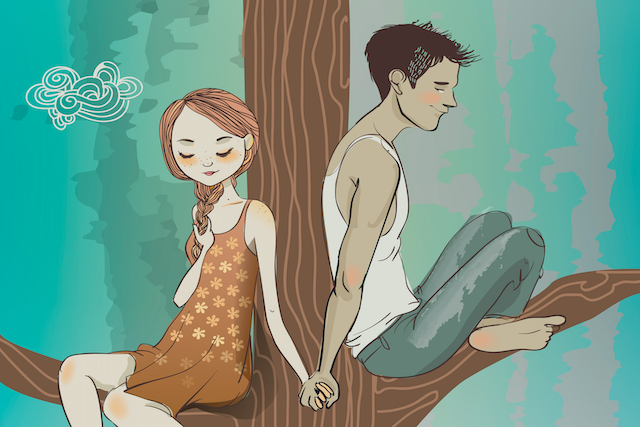
    As a child growing up with a highly sensitive mom, I often noticed her go quiet at the dinner table after my stepfather would make some little comment. Looking back, I know he was just tired and a bit grouchy from a long day at work, but my mom felt hurt by his words.

    Over the years, the comments didn’t lessen, but I noticed my mother being less and less bothered by them. They seemed to slide off of her like water off a duck’s back. As a result, my parents seemed to have a lot more fun, laughter, and ease together—and still, forty some years into their marriage, live happily side by side.

    Just like my mom did in the earlier days of her marriage, it’s so common for sensitive people to take things personally–both in our intimate relationships and in general–and for that to make the relationship more painful and less fulfilling.

    Up until seven or eight years ago, I, too, found myself getting easily hurt by things my husband did, or most often, the things he did not do.

    It stung when my husband didn’t seem to be listening when I was talking, when the scenery seemed to captivate his attention more than my heartfelt words, when he forgot to do the thing I’d asked him to do, or when he interrupted me when I was speaking—all of which happened (and still does) with regularity!

    One thing that felt especially hurtful then was when my husband would fall asleep while I was vulnerably sharing deep feelings about our relationship. I felt so hurt by his sleeping, like he didn’t really care about me.

    I’ve known many other sensitive people to take it personally and feel hurt when their partner doesn’t give them verbal appreciation when they do something nice or helpful, or when their partner isn’t as affectionate or openly enthusiastic about spending time with them.

    It is true that many partners do not always act with kindness or consideration. Yet, when we take it personally, the hurt we feel can show, often in how quiet we suddenly get, or in a slightly defensive reaction, or in outright tears.

    As we hold onto that hurt, over time, it takes a toll in our relationship and our emotional well-being.

    If you take things personally often in your relationship, it’s likely to build up some deep resentment and disappointment.

    It can also lead to defensive interactions with your partner, escalating arguments, and withdrawal or criticism from both sides—which only results in even more disconnection between you.

    Eventually, in my own marriage, I realized that taking things so personally was really rough on our relationship. Not only did it simply feel bad to me, but I also didn’t act how I really wanted to in my marriage. When I felt hurt, I would often retaliate with some criticism, like “Talking to you is like talking to a stone wall!”

    Needless to say, that led to more distance, discord, and deep unhappiness between my husband and me.

    So I looked to my mother and her wisdom. What she told me opened the door for me to the power of not taking things personally—and developing a whole arsenal of tricks to help me become someone who hardly ever takes anything personally anymore.

    What a blessing this has been in my marriage, and even in my career, allowing me to feel more confidence and calmness, and to love my hubby—and feel loved by him—more deeply than ever. (Yes, even if he spaces out—or falls asleep!—when I’m talking to him.)

    Not taking things so personally is possible for you, too, and it will allow you to have much more connection and loving intimacy in your relationship–which you were born for as a highly sensitive person.

    Here are six tips to help you, as sensitive person, become someone who no longer takes things so personally in your intimate relationship.

    1. Tend to your stress levels.

    As highly sensitive people, our nervous systems tend to get overloaded more quickly than non-HSPs, due to how deeply we process stimuli.

    This means you will feel more easily overwhelmed and stressed than non-HSPs if you are not attending to your nervous system regularly.

    Interestingly, research shows that when we have higher stress levels, we misinterpret neutral comments from others as criticism, or see their behaviors in a more threatening, negative light.

    In other words, unless you are regularly de-stressing, you are likely to see and experience everything your partner does or does not do in a much more negative way, take things more personally, and feel hurt a lot more.

    That hug your spouse resisted? If you were stressed, it may have seemed like he was actually snubbing you instead of just distracted by the kids. If you had been calm and centered, it would have been no biggy; maybe you would have even appreciated it that he was attending to the kids and taking some work off your hands.

    A huge part of our emotional well-being, and feeling connected instead of feeling hurt, depends on tending to our nervous systems regularly to keep our stress levels moderated.

    Some of my favorite ways of doing so include a medium-paced walk in nature, meditation, coherent breathing, yoga nidra, and dancing wildly or gently in my living room. There are many options. Find ones you like and add them—even just for a few minutes here and there—to your daily routine.

    2. Know your goodness.

    Other people’s words or actions cause a lot of pain when we think it means something about who we are and don’t keep our own good opinion of ourselves at the forefront. Because the hurt we feel from taking things personally actually comes from believing other people’s negative judgments of us.

    In other words, if we don’t feel great about ourselves, whenever anyone else isn’t caring or kind, we can more easily take it to indicate something bad about ourselves.

    When you can hold the clear knowledge of your own goodness in your awareness, you will have a much easier time separating other people’s confused thoughts from who you really are and letting them roll off you like water off a duck’s back. So make sure your opinion of yourself is a good, healthy one.

    For many HSPs this can be especially hard because we have been misunderstood and perhaps treated like something is wrong with us for much of our lives…which can convince us this is true and lower our self-esteem…which makes it even easier to feel hurt when someone says or does something that could indicate disapproval or lack of care about us.

    But as an HSP, you have so much to feel good about yourself for!

    So it’s well worth your energy to spend time actively seeing what you like and even love about yourself. What do you know about the goodness of who you really are? (Need some hints? This post will help.)

    Deeply knowing your goodness will prevent and ease the pain of taking things personally.

    3. Think about your thinking—both yours and your partner’s.

    Our own thinking is the biggest culprit of taking things personally as HSPs. This is great news because it means we can shift our thinking to minimize the pain of hurt feelings.

    As HSPs, we tend to be so conscientious, attentive, and attuned to those we care about, so we unconsciously expect the same from our partner. If it turns out that they aren’t as attuned and caring naturally, we think it means we aren’t as important to them as they are to us, that we aren’t loved, that we aren’t good enough, that we have done something wrong—or are wrong.

    I can’t tell you how many HSP women I know have told me that when their hubby says, in a tone, something like, “What, you can’t give me five minutes to get to xyz?!!” They think to themselves, “Oh no, I’ve done something wrong. I suck.”

    This is what I call a negative misinterpretation. And our HSP brains naturally do this a lot! This negative interpretation is where the pain of hurt feelings really comes from.

    Let’s get a quick understanding of this: For survival reasons, the human brain is wired by default to see and hear things negatively. We unconsciously focus on flaws, on what’s wrong, or missing. This is called the negativity bias of the brain. And HSPs, we have this even more strongly than non-HSPs.

    You can use this knowledge to help you observe when your brain tends to put a negative spin on things—and decide to stop drinking that Kool-Aid. Just because your brain thinks what it thinks, it doesn’t mean it’s true!!

    Can you see how in the above comment, one could have interpreted it to mean many things other than “I‘ve done something wrong. I suck.”? You could interpret it as He’s having a hard day,” or “He feels pressured.” Which is way closer to the truth than “I suck.

    Nowadays, when I’m sharing from my heart to my husband and his eyelids start getting heavy with sleep, I no longer interpret it to mean he doesn’t care about me. I see it for what it is: he’s tired after a full day of working to support our family.

    So, when you feel that familiar sting of hurt feelings, step back and notice what your negatively biased brain is interpreting the thing your partner said or did to mean. And get curious about what else might be going on that is closer to the truth.

    4. See it as their inner disconnection or their confusion about you.

    What if your significant other really does say something harsh about who you are—or does something truly mean or negligent?

    Remember, they have a flaw-seeking brain, too, that also sees in a negative way by default. And just because they may be having a negative thought about you doesn’t make it true!

    What’s really happening is they are having a moment of confusion about you, or they can’t see beyond their flaw-brain at the moment.

    The truth is, when someone sees bad in you, or treats you poorly, it is always a symptom of their own inner turmoil and distress. Unloading on you is just an unskillful way of trying to reduce their own inner turmoil. It means nothing about you.

    As my mom wisely said when I asked her the trick to not taking those dinner table comments personally,  “I remember that it’s just his stuff.”

    If you can remember this truth, you may even feel compassion for your partner instead of hurt—and let me tell you how much better that feels! I’ll take compassion over hurt feelings any day. Because it is from there that we are best able to effectively advocate for and create more caring interactions.

    5. Be your own zone of safety and love.

    As you learn to break the habit of taking things personally, you will want to be able to hold yourself through any hurt feelings that still arise with kindness and love.

    This means, instead of trying to avoid the feelings of hurt, learning to be with them in a loving way.

    When they come up, gently move your attention from the spinning thoughts in your mind to how the hurt actually feels in your body. Be curious about the sensations. And hold them with your gentle and compassionate attention the way you would hold a baby bird in your own soft hand—spaciously, with warmth and tenderness.

    It can help to place your hand over your heart area in a gesture of love and care for yourself, and imagine the sensations in your body are soaking up that kind attention.

    As awkward as it may feel at first, by being with your painful feelings in this way, you will move out of them more quickly, and experience much more peacefulness with them as you do. And even experience more love in your life.
    As I learned to make this kind of space for any hard feelings that come up, the most amazing thing began to happen: The hard feelings became a doorway to feeling a deep warmth and a loving intimacy with my own self, and a sense of inner safety I never before knew was possible.

    Now I no longer fear the harder feelings of life because I trust myself to always lovingly support myself through them. Which has made my relationship with myself so loving and strong—and my relationship with my husband much more peaceful and less reactive.

    6. Re-root in love.

    In our committed intimate relationships, what always soothes and heals is coming back to love. First and foremost, love for yourself, and of course, love for your significant other.

    To do so, simply ask yourself: “What is the most loving way to see this?” Or, “What might love’s wisdom want me to know right now?”

    Perhaps the answer will be a reminder of how amazing you are, or to remember your partner is doing the best they can with the skills and experiences they have had, or that the truth is your love for each other is strong enough to weather these less than harmonious moments. Or maybe the answer will be to set strong boundaries for yourself, or even end the relationship.

    But if you come back to love, these harsher moments will be like a tiny, whitecap in a big sea of love—and have very little power to rock you or the depth of you and your partner’s love for each other.

    Please don’t misunderstand that any of this means you should stay with someone who doesn’t care about you or treats you badly. You want to be able to discern whether you’re tolerating things you shouldn’t be and staying with someone who is not good for you or just taking things personally that you really don’t need to be.

    If you’re doing the latter, you can completely transform your relationship by putting these tips into practice. When you do, you not only remove much of what is dragging you down in your relationship, but you also allow yourself to start seeing and feeling more of the love that is already there, which will invite more of it to keep pouring in.

  • All the Things I Didn’t Tell the Men I Dated Because I Was Afraid

    All the Things I Didn’t Tell the Men I Dated Because I Was Afraid

    I’ve recently been reflecting on my relationship history and how often I did things I wasn’t comfortable with instead of speaking up.

    It would be easy to solely blame the men I’ve been with, but I’ve recognized I played a role by remaining silent instead of communicating my wants and needs and telling them when they were pushing my limits.

    I have played a role in my own disrespect by swallowing my truth and showing a smile when I really felt uncomfortable.

    I realize that everyone’s experiences are different, but if you can relate to what I wrote, perhaps you might appreciate these reminders I wrote for myself.

    Tell him that he hurt you.

    Tell him that when he rolled over on top of you and penetrated you that you were not ready.

    Tell him you froze. So thrown off by the quickness of his moves that you were in shock.

    Tell him it felt like you were not present in your body.

    Tell him that even though you kissed him and laid in the bed with him with your bodies close, you were not ready.

    Tell him you were afraid to tell him these things.

    Tell him that you have silenced your feelings for most of your life and were afraid to speak your truth.

    Tell him you thought that he was the key that unlocked the door to your happiness.

    Tell him you knew that if you kept having sex with him, he would keep coming around.

    Tell him that you learned and that he taught you what it was you needed.

    Tell him that you love him.

    Tell that you understand that he could not see past his own desires.

    Tell him you know the pain inflicted was not intentional; it was unconsciously embedded by society and personal desire.

    Tell him that you are healing.

    Tell him to get consent.

    Tell him to take his time with a woman.

    Tell him that you thought he was the one, that you felt it to your bone.

    Tell him you were wrong.

    Tell him that you used him without conscious awareness because he felt like home—familiar but, like the home you grew up in, not happy or safe.

    Tell him you are whole.

    Tell him you found your own key to happiness and that it resides in your heart.

    Tell him that you forgive him.

    Tell him that you forgive yourself.

    Tell him thank you for all the warnings about the reality of your relationship, like blocking your number and ignoring you at times.

    Tell him that you chose to ignore how emotionally unavailable he was because you too have trouble looking past your own desires—in your case, the desire to feel wanted to validate your worth.

    Tell him that you wanted to do things differently, but old patterns are not easy to break.

    So often we avoid conversations that are difficult. We avoid feeling the pain or simply the discomfort of honesty.

    I believe that if we start having these uncomfortable conversations we can heal. If we acknowledge what role we played in the situation and acknowledge another viewpoint besides our own. If we stop blaming and start speaking our truths, how much progress could we make?

    I have pushed down my truth my whole life. As these truths are coming up and out my goal is not to blame.
    My goal is to have a conversation so perhaps we can all understand each other a little better.

    My goal is to learn what role I played in these events and how to do better.

    My goal is to be comfortable being uncomfortable. Because what I know now is that you can only silence your truth for so long; there is only so much space to push things down. It will come out. Why wait until it makes you sick?

  • The Agony of Anxious Attachment and How to Attract Better Relationships

    The Agony of Anxious Attachment and How to Attract Better Relationships

    “If you don’t love yourself, you’ll always be looking for someone else to fill the void inside you, but no one will ever be able to do it.” ~Lori Deschene

    There are four attachment styles including anxious, avoidant, anxious/avoidant, and secure.

    Attachment theory teaches us that the way in which we attach ourselves to our romantic partner mimics the relationship we had with our primary caregivers growing up.

    So, if you were like me and had parents who were not physically or emotionally present, you grew up feeling a void within yourself and always worrying if you were lovable. Because of this void, you feel unlovable and unworthy of love, which causes you to be drawn to partners who are considered avoidant.

    An avoidant partner is someone who believes their independence is more important than being in any relationship. They feel uncomfortable opening up to others. They prefer a casual hook up over an intimate relationship. And the moment they begin to feel vulnerable or like they like you too much, they ghost.

    Suddenly that super cute date you both planned gets canceled or pushed back with no explanation, and you are left questioning your worth and what you possibly did wrong. I know because I have been there before.

    In a way, your subconscious is trying to recreate the experiences you had growing up. If, for example, you told your parents you loved them and tried to hug them, and they responded with “Stop being so touchy” and “Get off of me,” you began to normalize being rejected when you expressed love. So now, your subconscious is drawn to avoidant partners who react in the same way your primary caregivers did.

    Our attachment styles play a huge role in our relationships, and our relationships impact our mental health. If you are a person with an anxious attachment style and you’re subconsciously drawn to avoidant partners, you will go from one toxic relationship to the next.

    If you are someone who is anxious, you tend to:

    • Quickly attach; you go from 0 to 100 when you like someone.
    • Worry constantly if they will stop loving/liking you.
    • Worry they don’t feel as deeply for you as you do for them.
    • Fear if they get to know the real you, they will no longer love you and will leave.
    • Think “I will never ever find anyone else” or “This is as good as it gets” when thinking about your relationship, even though you know deep down inside you’re not getting your needs met.

    Back in 2018, I decided to seek out therapy for the first time. I was a young grad student with a bright academic future ahead of me, but this was also the time I decided I was ready to date—and oh boy, did that open a can of worms.

    I went from being this super cool, calm, and collected young woman to constantly feeling anxious. “Why hasn’t my date texted me yet?” “It’s been four hours since I texted him.” “Does he not like me anymore?” These were just some of the ruminating thoughts that kept echoing in my head. I was losing it.

    I didn’t know it at the time, but I kept attracting men who were avoidant, and the more I felt them trying to put distance between us, the more obsessed I became with closing the gap. I wanted to feel close to them; I wanted them to love me because if they didn’t, it meant something was wrong with me.

    You know how people say, “If they’re not into you, it’s their loss?” To me, it didn’t feel that way. To me, it felt that I had to win their love, and if I didn’t win it, it meant I wasn’t worthy of their time and attention. I began to hyperfocus on every detail of our interactions. I began to notice if they texted me back with a period at the end of a sentence or if they added an emoji.

    I would even time how long it took for them to reply to me. If I was dating someone and they usually responded to my texts within two hours, that meant that I was able to feel safe and relaxed for that first hour, but as soon as it was getting closer to hitting that two-hour mark, I would feel the anxiety creep up.

    I could feel the anxiety in my body, starting with my stomach. It would feel tense and tender, then my shoulders would feel tense and my appetite would disappear. I lost about twenty pounds during this time in my life from the stress and anxiety I couldn’t get under control.

    I even developed a bald spot at the top of my head. I was baffled at the quick deterioration of my mental and physical health. A few months ago, I had been a new grad student, excited about life and building a successful career, and now I was barely holding on and smiling to seem sane.

    I have an anxious attachment style, so I become hypersensitive to the tiniest of shifts within somebody’s tone, body, facial movements, the words they use, etc. If my date said, “I love you” one day and the next “I like you a lot,” that was enough for me to ruminate on for the rest of the week.

    I knew that something was wrong and that I needed to get my emotions back under control, so I began to look for help online. I landed on Tiny Buddha many times, and it was extremely helpful to read other people’s experiences so I could better navigate my situation.

    Since I couldn’t force my romantic partners to meet my needs, I thought, It must be me. I need to chill out and not expect so much from them. I can change. And change, I tried. I read countless articles on how to let go of expectations.

    I convinced myself that I was the problem, that I was expecting too much from a boyfriend. I thought that men were just incapable of meeting my needs and showing up for me the way I did for them. Because up to this point in my life, I had never experienced a man being consistently loving. At one point, I even tried to cleanse myself of my “bad energy” by doing a Limpia (cleansing).

    I really wanted to be the issue, because if I was the issue, I could be in control and fix it. But the harder I tried to change and loosen my expectations, the more deeply I fell into a depression.

    As you can see, the way we attach ourselves to romantic partners can affect our mental health, and if we’re not aware of the type of partners we are attracting, we can fall into a cycle of going from one toxic relationship to the next.

    Going to therapy and seeking help was the best decision I made for myself. I was able to have someone point out to me the toxic cycle I found myself in. If you find yourself in this same toxic cycle and are ready to break out of it, there are a few things you can do.

    1. Admit to yourself that you are ready to break the cycle.

    Be honest with yourself. Identify the ways in which you have betrayed yourself by choosing partners that only hurt you. Be committed to ending this cycle.

    2. Begin to do inner child work.

    When you feel hurt and lonely and want to reach out to those toxic partners, instead, visualize the you that you were at five to seven years old and connect with the little you. Write them a letter. What would you tell little you if you were feeling hurt and lonely? I would tell myself  I love you. You are safe. I will always be here for you.

    3. Write a list of all the negative feelings and emotions your partner triggered within you.

    Write a list of all the reasons why you need to stay away from this person and reference it anytime you feel like you want to reach out to them.

    4. Regulate your nervous system.

    When our sympathetic nervous system becomes activated, our fight-or-flight response turns on and that makes it so hard for us to tolerate the discomfort of separation from the person we’re anxiously attached to. A breakup can feel like imminent danger, so we begin to panic and go back to our comfort zone, staying in a toxic relationship.

    Some simple ways to regulate your nervous system include taking a barefoot walk in nature, doing a moderate to intense workout, practicing breathing exercises, and/or listening to music that soothes you.

    5. Begin to develop a self-love and self-care routine.

    You can begin to journal daily for ten minutes as a way to reconnect with yourself, work through your feelings, and identify thought and behavior patterns. You can make a list of your physical, mental, and emotional needs and identify small ways to meet them each day. You can go on weekly dates with yourself; go out to eat and watch a movie.

    Do whatever it is that will make you feel happy and full. When you feel better about yourself and more comfortable being alone with yourself, you’ll be less apt to turn to another person to fill a void inside yourself.

    You get to create the life and experiences you want to live. And while it may feel like you will never find the right partner for you because of your anxious attachment style, that is simply not true. When you begin to fill yourself up with love, even if you attract an avoidant partner, you will leave at the first sign of trouble rather than staying and trying to fix it.

    Eventually, you will meet a partner who is secure and/or willing to become securely attached to you.

    You will find someone to whom you can voice your anxiety, and instead of them dismissing you and telling you to “stop being so sensitive,” they will respond with “What can I do to ease some of the anxiety you’re feeling?” or “What can I do to help you feel safe?” Remember that you are always in control of creating the reality you want to live in.

  • What Most People Get Wrong About Singles and 6 Messages You Might Need

    What Most People Get Wrong About Singles and 6 Messages You Might Need

    “In a world that treats a forty-one-year-old single woman like a teenager who didn’t get asked to prom, I think it’s extremely important to recognize the unique wisdom of a solitary life—a wisdom that develops slowly over many years, that is fundamentally different from that of, say, the person who was between boyfriends for a year when she was twenty-six.” ~Sara Eckel

    I was twenty-three and had just told a woman I was casually dating that I’d never been in a long-term committed relationship.

    Her response was this: “Wow, really? I mean, you’re attractive, so why haven’t you?”

    Having spent more of my life single than coupled, I’ve become accustomed to questions and comments like these. And although I am currently at a place of contentment and acceptance with my singleness, I wasn’t always. Shame often attaches itself to people (women especially) who remain un-partnered for long patches of time, particularly as we get older.

    As author Sara Eckel put it: “In polite society, there’s an understanding that inquiring about the reason two people marry is completely inappropriate. Singles are not afforded this privacy. Instead, the rude inquiries are wrapped in compliments about how attractive and together you are.”

    “For many of us, living alone in a society that is so rigorously constructed around couples and nuclear families is hard on the soul,” she wrote.

    Look to sites like Quora and Reddit, and you’ll find a plethora of questions posted by the worriedly un-partnered—from “What’s wrong with me? I’ve been single for seven years” to “Do you become undateable after being single for over ten years?”

    There are many negative messages and annoying presumptions about singleness percolating through society that I wish would stop. It’s no coincidence in my mind that women (more than men) are the more frequent targets of them.

    Here are my own counter-messages that I’ve developed in my thirty-two years as a woman on this planet.

    1. It’s quite possible that you’re not trying too hard.

    From the time I was eighteen, people told me that the desire for a connection was what kept me from finding one. If I just stopped caring or wanting it, a relationship would find me. As Sara Eckel wrote, “The fact that you want love is taken as evidence that you’re not ready for it.”

    I’ve known many people through the years whose desire for a relationship definitely didn’t stop them from finding one.

    2. Wanting a relationship doesn’t mean you are ungrateful for all the other positive aspects of your life

    In my ambivalently single years, I often felt I was constantly pushing myself to look on the bright side, count my blessings, and express gratitude (both to myself and to those around me) for the friends, hobbies, and other things I had going on in my life.
    I feel this way far less now. That is, I don’t feel as if I need to force the gratitude and appreciation; it flows in naturally in response to all the positive that currently fills my life. I’m living it in alignment with my values. I’m spending my time in the ways I want to.
    Still, it was okay to want more, even back then. The desire for partnership is human and valid, and it’s more than understandable for it to surface from time to time.

    As Rachel Heller put it in Attached (which she coauthored with Amir Levine), “Our need for someone to share our lives with is part of our genetic makeup and has nothing to do with how much we love ourselves or how fulfilled we feel on our own.”

    Singles are wired to want love and companionship as much as the next person. Our own company can be wonderful, but we’re not weak if that “there’s something missing” feeling still creeps up unexpectedly some days.

    What gets me about this one is the contradiction. Being single raises antennae. So too does the inability to find happiness on one’s own. It’s a bit of a damned if you do, damned if you don’t predicament.

    3. It’s completely possible that you genuinely just want companionship, not necessarily someone to satisfy all of your emotional needs.

    At times people assume a woman’s desire for a partner is rooted in an unrealistic expectation for a romantic relationship to fulfill all of her emotional needs. The truth for me, back in my twenties, was that I would have been happy to meet some of those needs through platonic connection. The older I got, though, the less available friends seemed to become.

    I feel more content with my friendships now, and a combination of expectation adjustment and meeting more like-minded people has helped me to feel like my connection needs are mostly met. But this wasn’t always the case. And for the people out there currently feeling a void, it’s not always due to lack of effort.

    As Sara Eckel wrote, “Our society is structured around couples and families—and if you don’t fit neatly into one of those units, you often have to build a support system from scratch, which is a big task. Friends move, or marry, or disappear into time-sucking work projects. And they usually don’t consult you about it.”

    Back when I felt more of that connection void, many of my friends had partnered off, become consumed by career commitments, or moved out of the area.

    It would be convenient to believe that the full secret to happiness lies completely within oneself. But individual efforts and self-care can only enhance one’s life so much. The truth is we do need others, to some extent. Most of us need (at least some amount of) healthy and satisfying connections. If you feel like you’re doing all that you can and not getting back what you need, it’s disheartening.

    4. Your life might actually be full enough as it is.

    “Take up a hobby.” “Become a more interesting person.” “Work through your issues.” “Focus on your friendships.” “Get more settled in your career.” These are just some of the many morsels of advice bestowed upon singles.

    I think that at times people prescribe the “have a full life” advice too heavily—using it to justify why some remain un-partnered, even when it doesn’t apply.

    For instance, back when I really wanted a relationship, I enjoyed the life I’d carved out for myself. I led a mostly full one, making time to hike and appreciate the outdoors at least several times a week. I biked. I read voraciously. I cooked healthy meals. I planned solo trips and made ample time for friends. I kept myself open and receptive to the beauty of the world around me.

    Though my job didn’t always feel like a perfect fit and lacked the comfort of a consistent coworker community, it drew upon my skills and passions while allowing me to serve a vulnerable population.

    Even though I had all that, I still at times found myself wanting a partner.

    The truth is that all kinds of people, from those with full lives to ones with few hobbies, find love. Even people whose lives seem unadorned or ”empty” when viewed from the outside are capable of intimate connections. Our species would not have persisted if the only ones of us who partnered were those with past-times and over-stuffed days.

    Many of the same people who prescribed “spend more time with friends or on hobbies” seemed to have also (ironically) been the ones who’d never had to fill their time in this way for more than a year (or maybe two) tops—either because they’d been in a partnership for many years or had only been single intermittently (having spent far more of their adult lives coupled off).

    5. The losses of “mini” or “almost” relationships are still losses.

    Chronically single people are likelier to have more experience with the dating apps. More time spent in the dating game means more exposure to the muck and unhealed emotional issues that circulates its fetid waters. We’re more susceptible to getting caught up in a frustrating and constant cycle of false hope and cautious optimism, followed by disappointment and disillusionment that the partnered don’t have to deal with.

    As much as I wanted to “just get over” some of these dating situations and not let them affect me, as blogger Janis Isaman wrote, “inside our bodies, it doesn’t work that way when we feel loss—over and over again—and lack support, lack feeling, lack an empathetic abiding witness, or lack self-compassion.”

    She writes, “this failure to give space to: ‘this is painful,’ ‘this feels like rejection,’ ‘this feels awful’ means we not only abandon our authenticity but also that we experience trauma. The tiny interactions of serial dating transmute themselves up into pain and disconnection, and we might find ourselves increasingly angry or panic-filled because we haven’t metabolized the previous losses.”

    Now I’m able to see: these experiences were still losses. Any time you invest heart and time, you are building some form of connection. When that connection dissolves, you will feel the hurt. It’s not only more than okay to feel your feelings; doing so is necessary for moving on.

    6. It’s not because you’re broken or need to spend more time healing your issues.

    This counsel isn’t totally without merit. In several relationships when younger, I had a lot of issues to work through; I wasn’t emotionally healthy. A relationship would not have been the wisest move.

    Still, this piece of advice mythologizes perfect health and implies we can arrive at a place where we’re fully healed—when health is always along a spectrum, with no human ever completely on the side of perfection.

    People with far more emotional baggage than both me and other chronically single people I know have found loving connections. Perpetual worriers. “Boring” folks. Individuals all across the spectrum have found partners who think the world of them. They didn’t have to work to improve themselves in order to. They didn’t have to go through years and years of rigorous therapy. They didn’t need a full-on personality transplant.

    The underlying message I hear poking out from this piece of advice is this: Change who you are.

    What if we were to shift to this message instead? You don’t need to perpetually strive. Therapy can help you become more self-aware, secure in yourself, and clear in what you’re looking for—but ultimately, a lot of meeting a compatible partner has to do with luck, timing, and the types of people you are encountering. You are worthy of love as you are.

    Not only does this feel kinder, but also more accurate.

    ~~

    For years I sought reasons to explain my single status. The conclusion I’ve arrived at now is: There is no grand overarching reason. Or rather, there are so many that it’s no use trying to pick them all apart. Seeking to fully untangle the bundle would be an unproductive use of time.

    Yes, some societal positions might increase your odds. And healthy relationships are less likely to occur between people with unhealed emotional issues. Ultimately, though, timing and chance are key aspects.

    The right partners will grace our lives when they’re meant to. I can’t say when that will happen. I just know that what we can control is the amount of energy we spend pursuing, perseverating, and picking ourselves apart in our pursuit of the “why.”

    I feel less urgency to be in a relationship now than before, and I am grateful for this. Having a more discerning lens has allowed me to be a better guardian of my emotional energy (and life in general)—where before, I would let in a questionable fit just for the sake of being able to say I was in a relationship. It has also led to growth that I don’t think I would have achieved if a significant other were a part of the equation.

    My hope is for anyone who’s struggled with shame and self-doubt to breathe a little easier, knowing you don’t have to try so hard to improve yourself—that you’re as lovable as the rest of us, exactly as you are.

  • Freedom Is the Space Between Each Judgmental or Righteous Thought

    Freedom Is the Space Between Each Judgmental or Righteous Thought

    “It is inner stillness that will save and transform the world.” ~Eckhart Tolle

    Life is hard. Impenetrable at times. How can we use our spirituality to navigate through the density of life?

    That question inspired this piece of writing. And my navigation tool is almost effortless; I feel compelled to share it.

    When my mind is churning and burning with thoughts and fears and worries, I take myself off to a quiet place, get still, and watch my mind. I wait for the tiny gap between each thought. Bingo.

    That space, that little gap, is freedom in its truest, purest form. It is the birthplace of peace. And every time I enter that space, I am no longer at war with anything. Despite what madness may surround me, that place always remains untouched. It is like an infinite reservoir of strength and love—one that feels like, well, freedom.

    How I came to find that reservoir is a long and nuanced story (that’s why I wrote a whole book about it), but I’ll try and give you the nutshell version.

    Essentially, to even find it, I had to first get to the point where I was so disillusioned—with my cancer, with people, with the system, with the greed, with the house chores, with the destruction of the planet, with war, and with life full stop.

    Little did I know it then, but that disillusionment was freedom’s gateway.

    For so long, I looked to ‘the other’ as the source of my disillusionment.

    Sometimes ‘the other’ was a person, sometimes it was a situation—my cancer, the pandemic, the person who I believed had wronged me, the political party; anything or anyone that caused a disturbance to my happiness fell into this bucket.

    Of course, it felt good to blame cancer, that person, or the pandemic for my woes, at least on the surface. Yet the blaming was also the root of my suffering. The biggest wars I’ve had in my own life were when I was trying to get ‘the other’ to yield / change / admit they have it wrong so I could live in peace.

    But the true source of my disillusionment was never with them. When I stopped waiting for the situation to change and shifted my attention to my mind, I observed something that floored me at first: my own righteousness.

    Staring back in the mirror were my tendencies to be correct, envy, judge, complain, and win. That mirror revealed one simple truth: I was adding to the war I desperately wanted to end. I had arrived at the place where I was simply fed up—no longer fed up with life but rather fed up with the suffering caused by my very own mind.

    The challenges and hindrances of life may have taken you to a similar point—the point where you’ve had enough. Before freedom is even possible, this stage is necessary, essential even.

    The world is unsatisfying. So, now what? This is freedom’s front door. It is the opening to the very core of your being. When we have had enough of looking outside for contentment, only then do we look inward. This is where the rubber meets the road.

    But we have to go deeper—beyond the mind, beyond our thoughts about what is right vs. wrong, left vs. right—to our essential oneness.

    And, as a collective, I think we get there by asking ourselves one simple question: Do I want peace or war?

    If it is peace, we must start with the peace in our minds. In all the frenzy, it is possible to simply stop and enter into the space between every thought. Rest there for a few scared moments. Feel the ease wash over every cell of our being. Come home to that again and again. Life doesn’t need to be any different to enter that space.

    That space is freedom. And true freedom is not bound in any person or situation. Freedom is what sits underneath the war. It is found in the tiny gap between every righteous and non-righteous thought; it occurs through stillness.

    From this stillness, I’ve learned (yes, the hard way) that we can speak our truth, but now we speak it without the need to control any outcome.

    For example, rather than trying to force my husband to read a spiritual book instead of opting for Netflix—as if I know what’s right and best for him—I can respect him for where he is at in his inner journey. I still act. I still suggest books. But my happiness is not dependent on his choice.

    Instead of being angry at a friend who hurt me, I can step out of my righteousness and cultivate empathy for where she is at in her life. I still reach out. I still attempt resolution. But my peace is not dependent on her response.
    I throw my seeds of truth, dug up from the depths of my heart, out into my family and the world. Sometimes they land in the fertile soil of ‘the other,’ and sometimes they don’t. So be it. It is action without criticism, judgment, blame or control—without the war. I had found a place within where I could look at ‘the other’ and feel compassion and even love instead of anger and annoyance.

    Eckhart Tolle says, “It is inner stillness that will save and transform the world.”

    I couldn’t agree more. Because from that place, from the silent stillness within, war is not escalated but instead averted.

    So, to anyone feeling disenchanted, I want to honor you and say one thing: The freedom your soul is aching for is within arm’s reach. It is as close as your breath, as close as the space between each of your thoughts.

  • How I Found Peace and Self-Love After a Toxic Relationship

    How I Found Peace and Self-Love After a Toxic Relationship

    “Bravery is leaving a toxic relationship and knowing that you deserve better.” ~Unknown

    When my marriage ended, it left a huge void that I desperately needed to fill, and quickly.

    Along with my divorce came the unbearable feelings of rejection and being unlovable. To avoid these feelings, fill the void, and distract myself, I turned to dating. And it turns out, it was much too soon.

    What seemed like a harmless distraction soon became what I needed to feel wanted and loved. This was a way to avoid doing the harder work of learning to love myself instead of needing outside validation to feel good about myself.

    The online dating scene was a complete circus that I didn’t know how to navigate with all of my wounding. I ended up falling for a guy—let’s call him Steve.

    Steve seemed nice enough when I met him. He was quiet and seemed like he may have been a little too passive for me, but he was really into me, so I kept coming back for more. It was nice to feel wanted again.

    We had some things in common, and he was handsome and sweet. We had fun together, and he was always texting me to say hello and chat—again, that made me feel wanted.

    Eventually, Steve grew more distant. When I brought it up, it only seemed to get worse. But at this point, I was addicted to the feeling of being with someone again. I was addicted to feeling wanted and loved, so leaving wasn’t an option I was willing to entertain.

    The unconscious programming in my brain that would do anything to avoid rejection kicked in. I began to justify everything that should have been a red flag. I found myself constantly doing whatever I thought I needed to do to keep Steve from rejecting me, but it never seemed to be enough. I became unconsciously obsessed with being who I thought I needed to be to win his love and approval.

    Steve and I had both been through divorces and were both dealing with mental health issues. The relationship became very codependent, and I began putting my own needs aside to be his caretaker. He would never return the favor unless it was convenient for him, so I would just try harder to get him to want to return the favor.

    It never worked.

    As each day went by, I was becoming less and less of myself to be loved and accepted by someone who would never be able to give me what I wanted or needed. He just wasn’t capable of it. There was no possible way that I would ever be enough for him.

    He ended up breaking up with me, but shortly after we resumed our relationship on a casual basis. Deep down, I didn’t feel this was showing myself respect, but I allowed it to happen because again, I was trying to be who he wanted me to be—a casual friend-with-benefits.

    Our relationship eventually started to get more serious again, and it seemed we were headed back to exclusive relationship status when I found out he was dating other women behind my back. I’m so thankful I found out about this because it was the singular event that made me stop and get intentional about respecting myself.

    I realized how completely I had lost myself in this dysfunctional, codependent, and toxic relationship, where my only concern was avoiding feelings of rejection and being unlovable. It was the last straw for me, and I decided I was done tolerating it. I was done abandoning myself to get something he was never going to give me.

    I cut off all contact with Steve that day.

    You’d think that it would be easy to leave a relationship that is toxic. I mean, who wants toxicity? But the truth is, it isn’t easy.

    Why do we get into these tricky situations in the first place?

    My divorce had left me in so much pain, feeling rejected and unloved, that I was willing to do anything to avoid those feelings. Instead of being discerning and heeding the red flags that were, in hindsight, obvious, I jumped in and continued the pattern of proving that I was worthy of love.

    When you’re always trying to feel loved and accepted, you’ll ask yourself questions like, “Who do you need me to be to love me?” You’ll shape-shift to fit someone else’s needs and abandon your own. You may over-give, or shower your partner with gifts and affection, all in an effort to win their love so you can feel loved.

    The end result is similar to being rejected because you end up feeling alone—except this time it’s because you’ve abandoned yourself and your truth.

    You lose yourself, which, in the end, can be just as lonely as feeling rejected and unloved. That’s how it was for me. I spent so much time trying to prove my worth that I lost sight of who I was and what I deserved.

    I didn’t realize at the time that I needed to come home to myself first and love and accept myself before anyone else could ever give that to me.

    It turned out that leaving that relationship was an act of self-love and the beginning of finding peace.

    Was it easy? No. There were so many feelings that came up for me when I left the relationship. There was embarrassment that I had chosen him over myself so many times. There was the loneliness and pain that go along with the end of any relationship. And, of course, there was fear that I would never find that love and acceptance that I craved so desperately.

    So how did I do it? How did I find inner peace after leaving that toxic relationship?

    What it really came down to was finding peace within myself.

    When there is a void of some sort, we naturally want to try to fill it with something else. But when you try to fill the void with something external, it never works.

    If I had kept looking to fill that void with things outside of myself after my relationship ended, I would have likely bounced from one toxic relationship to another until I learned to turn inward and fill myself up from the inside.

    So how do you turn inward? Part of the reason you’ve gotten into a toxic relationship in the first place is that you don’t know how to do that.

    The act of leaving the relationship was the first step for me. It was a huge step. The feeling you get when you decide you’re no longer going to pretend you’re someone you’re not in order to gain someone’s love is empowering, and gives you a little boost of confidence that you’ve got your own back.

    It’s an act of love toward yourself.

    At the time, I didn’t think of it as an act of love, but in unpacking it later, I can see that it was. It was the first step in rebuilding my relationship with myself.

    The next part of the process for me was to reconnect with myself.

    We tend to get our identities tangled up with our partners’, and it’s easy to forget who we are without our relationships. That happened to me after seventeen years of marriage, and bouncing right into an unhealthy relationship didn’t help. I spent so much time worrying about who I was being and if I was good enough to be loved that I totally lost sight of my true self.

    Reconnecting with myself meant spending a lot of time with myself. I had become great at staying busy to avoid loneliness, but I knew I needed to learn how to sit with the discomfort of being alone in order to heal.

    I spent a lot of time connecting with nature. I started taking myself out on solo dinner dates and I went to movies by myself. And when the loneliness didn’t feel good, I sat with it while I cried tears of sadness, learning how to show myself compassion for what I was feeling instead of pushing the feelings away.

    For someone who has spent a lot of time avoiding rejection, being alone can be difficult. But it’s a necessary part of reconnecting with your truth, and you will learn, like I did, that it’s really not that bad. It’s actually refreshing and beautiful to have time with yourself.

    I also reconnected with my support system. When I was in the relationship with Steve, I didn’t make my friends and family as much of a priority as I once had. In my quest for feeling loved, I became so focused on the relationship that I not only abandoned myself but also some of the most important people in my life. I made some questionable choices when I was being who I thought I needed to be for him, and after leaving the relationship, it was time for me to reconnect with my true support system.

    But the most important thing I did to find peace after this toxic relationship was to learn to love myself.

    I started with a list of all of the reasons I didn’t deserve to be treated the way Steve had treated me, written with dry-erase marker on my bathroom mirror. Every time I looked in the mirror, I was reminded of why I deserved more. I also kept a list of all the things I wanted to believe about myself. I wrote a new list each day and eventually, one by one, I started to believe the things on that list.

    I made the decision not to date for a while so I could focus on strengthening my confidence in who I am without someone else. Through therapy and working with a life coach, I learned that my self-love issues were rooted in perfectionism, so I worked to lower the expectations I had for myself to a more realistic level.

    I learned that I was much happier when I was just focusing on enjoying the moment being an average human. In fact, I adopted the idea that we are all just average human beings. We all have unique gifts and talents, and there is no need to compete with one another to be exceptional. Average is a fine place to be, and I found embracing this attitude helped me navigate life with more compassion toward myself and others.

    The most important step I took toward self-love was learning how to surrender and accept the present moment as it is. If I was feeling a lack of self-love, I learned to sit with it and send love to the part of me that was feeling that way. I learned to not get hung up on the what-ifs and to appreciate who I am being in this very moment, which is all I know I have for certain.

    The journey to loving yourself is the most important one you will ever make. Self-love is a work in progress, of course, but knowing where you’re headed helps to know who you are, know your worth, and remind you to always choose yourself unapologetically.

    While the relationship with Steve was traumatic in many ways, I am grateful for it because I learned and grew so much from it. Needing to heal from the codependency and toxicity of the relationship created a beautiful space in which I was able to ground myself and find peace in knowing that no matter what, I always have my own back and I will always choose myself.

    It’s a serene feeling and I wish this for you too.

  • For More Love in Your Relationship, Love Yourself More (5 Tips)

    For More Love in Your Relationship, Love Yourself More (5 Tips)

    “If you don’t love yourself, you’ll always be looking for someone else to fill the void inside you, but no one will ever be able to do it.” ~Lori Deschene

    Two years ago, I sat in my basement with tears streaming down my face. I had just found a copy of an old letter I’d written to an old boyfriend years before. In it, I was practically begging for his love, and also complaining and even shaming him for not loving me well.

    As I read, I was overcome by three insights, all of which brought up big emotions:

    The first was that for well over the first half of my life, I had been so hungry for love, so needy for it, that in this and subsequent relationships, including my first marriage, I created a lot of pain and discord.

    I was so desperate to feel loved that I constantly focused on how I wasn’t being cared for enough, how my current romantic partner was not loving me right.

    Then I’d try to get him to do better by complaining, criticizing, having multiple-hour long talks explaining what I wanted, and crying to him so he’d see how deeply I needed his love and he’d finally change and give me the adoration I so wanted–which inevitably led to conflict, disconnection, and feeling less loved and connected!

    The second insight was that I did all of this because I simply didn’t love myself well. So the only way I could feel the love I needed (because we all need love) was from outside—which made it my partner’s job to fill that emptiness inside me. (I have since learned this is not a job anyone wants to do for too long, as it becomes burdensome, exhausting, and restricting, nor are many people well-equipped to do it!)

    My big tears really came from this second insight. And such deep compassion for that old me. Tears of forgiveness, tears of remembering the pain I was in for many years, tears of joy, too, that I no longer suffer the way my old self did.

    Because I now have such true love for this woman that I am, with all my human imperfections. 

    The third insight was that I was now so happy—years into my second marriage—not because my husband was the most adoring of men, but because I loved myself enough that I was able to recognize and receive his love in the natural way he gave it!

    In other words, I was able to feel it, to take in his love deeply, because I knew myself to be so lovable. Because I love myself so much. So I was no longer pushing away the love I love. I just enjoyed it deeply!

    After I processed all this, and the tears of recognition and forgiveness and love were complete, I walked out of that basement with such a sense of accomplishment. Really in triumph.

    Because I had chosen to do the work it takes to learn how to really love myself. And it had paid off in such beautiful ways.

    The thing is, we humans don’t come naturally wired to love ourselves. We don’t come into this world feeling all warm and cozy about ourselves. To naturally feel great about who we are, it takes a kind of nurturing in the early days of our lives by caregivers—and then a consistent modeling of self-love as we grow—that is rare in this world.

    Many of us don’t get that. And we are never taught how to love and deeply admire ourselves (in large part because our caregivers were not modeled that, themselves!).

    It is even harder for highly sensitive people, like myself.

    As youngin’s we often get the signal from the world around us that we’re a little weird, a little abnormal—that something’s a bit wrong with us—and this makes it even harder for us to feel good about ourselves.

    So, as adults, we need to actually learn how to have deep fondness for the humans that we are.

    I am happy to say that loving myself now feels natural to me.

    To be clear, this doesn’t mean I smittenly stare at myself in the mirror, or that I think I’m better than anyone. But I truly enjoy who I am. I know I can rely on myself for a sense of security. And I feel truly lovable whether others find me so or not.

    This makes it so much easier to love and feel loved in my marriage: to do the work and take the risks it takes to have one of the most ever-evolving, deeply loving, fun, joyful, passionate marriages I know of.

    I spend a lot of time simply enjoying the love I feel from my husband, and the love I am easily able to feel for him, because I am so rooted in love for myself.

    I want the same for you in your relationship!

    I notice that many highly sensitive people know they should love themselves more, but many say they don’t know how.

    If you feel the same, I want to help take the mystery out of it for you.

    Here are five pieces of the process I used to develop real love for myself.

    1. Understand where self-love comes from.

    Loving or not loving yourself starts in the thoughts you have about who you are, what you believe about your goodness and worthiness (or lack of it), and ideas you have about what makes a person lovable or not.

    Of course, most of the non-loving thoughts you currently think about yourself come from what you were taught to believe about yourself by caregivers, teachers, friends, and acquaintances—even magazines and movies!

    As young, impressionable beings, we unconsciously take on other people’s ideas about us, and messages we receive from our society—many of which are simply misperceptions and misunderstandings—and these ideas harden into who we think we are.

    For example, many highly sensitive people think they’re “too sensitive” or “too emotional.” We got that message from others! But when we think that about ourselves, we feel self-aversion, not self-love.

    The amazing news is that your thoughts, ideas, and beliefs are not fixed, and they are not fact. Even though we all have a natural negativity bias (meaning it’s easy for our brains to find fault with ourselves) we do not need to believe what our brains tell us. Nor do we need to continue to regurgitate other people’s critical, judgmental—and frankly wrong—ideas about ourselves, now that we are grown adults.

    You can decide what you want to believe about yourself—no matter what others have implied about you, and no matter what you have believed about yourself up until today. The choice is truly yours.

    2. Supervise your old thinking.

    Start by disbelieving all the crappy things your brain tells you about yourself, like: ”You’re too anti-social, too grouchy, etc.,” or the sneakier first-person version, like: “I’m not smart enough. I’m too reactive. Something’s wrong with me.

    To start “disbelieving” such things, take some time to question the negative beliefs you’ve adopted about yourself that came from others, as well as the ones that come from the flaw-seeking part of your brain.

    For example, my parents told me I was the “artistic one” while my brother was the “intellectual one.” Though they didn’t intend any harm, I took that to mean I wasn’t smart. That was something I told myself for thirty-five more years of my life, until I took the time to investigate how true that was. Turns out, I’m both artistic and intellectually smart.

    Your turn: Ask yourself, “Whose negative thoughts about me am I believing without questioning?” And “How were they wrong about me?” (I promise, they were wrong! Remember, they had flaw-seeking brains, too, that overlooked so much of your amazingness.)

    When those negative thoughts about yourself come up again (and they will, because they’ve been programmed in there), gently keep de-programming them by telling yourself some version of this: “There goes my flaw-seeking brain again in judgment-mode.” Or “That’s an old, outdated, painful thought. But it’s just a thought, not a truth.”

    3. Create a “soft landing” inside yourself for the moments when hard feelings flare.

    Think of this as a friendly zone in your own head and heart reserved for meeting yourself with the warmth you would give a dear friend when she’s upset or hurting. A metaphoric place you can retreat to comfort yourself. As if you had the coziest snuggly blanket inside your heart you could wrap yourself in when needed.

    So then, even when you’ve made a mistake, like we all do, or said something you regret, failed at a goal, been judged by someone—or even yourself!—or you’ve done something you don’t feel good about, you can turn toward yourself and be met with kindness and warmth from within.

    To begin to create that for yourself, answer these questions: How would I be there for my best friend or child if they were hurting? What would my attitude be toward them? What would I say? How would I be with them?

    Then do and say these exact things to yourself when something’s gone “wrong.” This will help you build a loving relationship with yourself even when you aren’t living up to any of your higher standards. This is the beginning of unconditional self-love.

    4. Choose to focus on what you appreciate and enjoy about yourself.

    It can be as simple as asking yourself, “In what ways am I likable (or lovable)—to me?” Let your brain go looking for lots of little answers. Nothing is too small.

    As you find things to admire about yourself, you will feel more good feelings toward yourself, since emotion follows thought.

    You’ll need to be intentional about all this for many weeks or months. Over time, this will rewire your brain so you naturally and effortlessly see your goodness and feel really good about who you are. If you are an HSP like me, this article will give you some great starting places.

    5. Set small, achievable goals for yourself that prove it’s possible to become someone you love and admire more and more.

    Keep in mind, you do not need to improve yourself to love yourself. You are lovable exactly who and how you are right now.

    But, not only is it a gesture of self-love to follow through on your goals for yourself, becoming more of who you want to be grows your confidence and pride in yourself by leaps and bounds, and naturally inspires more self-love.

    For example, if you’d feel great about being a more patient person with your loved ones, purposefully grow your patience, perhaps by putting yourself in some situations that gently test and strengthen your patience muscles. (i.e., playing a board game with a four-year-old). I’ve had three of them, so lots of patience-strengthening-practice and now more reason to feel good about myself!

    Has learning how to love myself made it so that I never worry or feel awkward? Or that my husband and I never have conflict? Or that we have a perfect sense of love and joy all the time?

    Of course not.

    But I love myself through all of it. I know I always have my own safe, gentle arms to turn back to for absolute support and love through the good times and the bad.

    And I can give my husband love way more freely because I have so much of it inside myself, and I’m not needing to get it from him all the time (like that hurting younger me did.)

    I can focus on being the person I want to be, and on loving him as he is fully. So he feels free and safe and happy around me (no shaming criticisms landing on him), which ironically has him loving me all the more obviously day in and day out!

    Learning how to love myself has also made a major impact on other areas that deeply matter to me in my life. I can do courageous things in the world that I used to back away from—like hosting my own podcast and helping people in way bigger ways than I ever would have before.

    I’ve also genuinely healed relationships with some of the more challenging people in my life, like my father, and old lovers who for so long I’d thought had done me wrong. And instead of feeling sadness, hurt, or longing when I think of these people, I feel love. Which feels so fulfilling and good.

    All because I chose to learn self-love, and keep choosing it every day.

    This is all possible for you, too, when you put in the intentional effort to learn to love yourself.

  • 7 Lessons That May Help You Find a Fulfilling Long-Term Relationship

    7 Lessons That May Help You Find a Fulfilling Long-Term Relationship

    “You, yourself, as much as anybody in the entire universe, deserve your love and affection.” ~Buddha

    “You’re not in love with me, you’re in love with the idea of being in love.”

    Ouch!

    Kate (not her real name) and I had met online before Internet dating websites—let alone apps—were even a thing, and ours was a long-distance relationship.

    I was twenty-four, and she was twenty-three.

    Initially bonding over our favorite musical artists, we soon found ourselves sharing all kinds of personal stuff with each other—first over AOL Instant Messenger, and then via countless hours on the telephone.

    I remember being startled and confused upon hearing a voice I was now intimately familiar with coming out of a face I had never seen before (save for a few photos) when we finally did meet in person a couple of months later. It was jarring.

    Nevertheless, we embarked upon a “real” relationship, in the flesh.

    Our incompatibilities cropped up almost immediately, however, and became increasingly apparent each time one of us visited the other. Still, how could we deny the substantial emotional intimacy we had established?

    Her declaration to me—“You’re not in love with me, you’re in love with the idea of being in love”—seemed harsh and unfair. Who was she to say how I did or did not feel?

    Yet, there was a ring of truth to it.

    No doubt, I had projected my deepest longings for love and my idealistic vision of realizing it onto her. It wasn’t the first time I had done such a thing, nor would it be the last.

    The relationship with Kate crashed and burned rather quickly, intense as it was. Even though it became clear we were not right for each other, it was a painful dissolution. Disillusionment can be painful!

    I would endure plenty more heartache in my dating and relationship life for years to come, as I slowly learned how to love myself more and matured in my understanding of what constitutes a healthy relationship.

    Eventually, at the age of thirty-three, I met the woman whom—seven years later, to the day—I would marry. A wonderfully compatible, loving, healthy, mutually supportive, and lasting relationship is possible, it turns out. As of this writing, we have been happily coupled for sixteen years (the last nine as spouses).

    My observation is that when it comes to relationships, there are “no rules”—meaning, almost anything and everything can happen within the dynamics of two human beings relating to each other.

    Certainly, there are no guarantees.

    There are many factors at play as to when, how, and why we connect with others in the ways that we do, not to mention how long our relationships (of all kinds) end up lasting, and what kinds of changes they undergo.

    Since we have no control over another person’s feelings and choices, nor over what may happen to our beloved, relationships entail inherent risk and vulnerability. That’s the price of admission.

    All of the above notwithstanding, here are seven key things I’ve learned, with experience as my teacher, that may help increase the chances of finding and maintaining a satisfying relationship with a partner long-term, if this is something you are seeking:

    1. Love and accept yourself.

    Loving and accepting yourself—flaws and imperfections as they are—is paramount. It is also the best way to prepare for loving and accepting another person, who will come with their own flaws and imperfections.

    There is always room for growth, and it is admirable to strive to improve ourselves, but we are all, always, works in progress. And that’s okay!

    If we wait until we are “perfect” before we are willing to love and accept ourselves, we never will.

    It is natural to get frustrated with yourself at times, but you can still choose to love yourself anyway and be your own best friend by recognizing and appreciating the goodness deep within you and doing everything you can to do right by yourself and others.

    You don’t have to be perfect to be worthy of a loving relationship. Be the best “you” you can be and love yourself all along the way—not in a narcissistic sense, but rather in a self-compassionate one.

    2. Find a partner who is “compatibly neurotic.”

    You will get along best with someone who is what I like to call “compatibly neurotic.” By this I mean not necessarily someone who is neurotic in exactly the ways that you are (this might be a disaster!), but rather someone whose neuroses are compatible with yours.

    In other words, the things about them that might drive other people nuts, you find somehow endearing, and vice versa. You appreciate each other’s quirks and can more or less gladly live with them because they are part of the whole person whom you treasure and adore.

    3. Mutual respect is essential.

    This is a no-brainer, but it must be mentioned. No healthy relationship is absent of this. You must not only each harbor deep respect and admiration for the other, but you must demonstrate this consistently through your behavior.

    If you feel disrespected, it is your responsibility to communicate this to your partner calmly and clearly at the earliest opportune time. Own your feelings and express them as such—your feelings—without attacking the other person, passively or otherwise.

    If your partner feels disrespected, it is similarly their responsibility to communicate this to you, and it is then up to you to rectify it to the best of your ability. You want to nip potential resentment in the bud.

    Don’t assume the other person is aware of how you are feeling. It is important to be able to voice your feelings and ask for what you want or need.

    As far as I’m concerned, putting the other person down, especially in front of others, is a serious violation of respect that should be avoided at all costs.

    In my experience, when there is mutual respect there is a natural give and take that tends to occur with very little effort.

    4. Mutual interest is non-negotiable.

    Again, it should go without saying, but you both should want the same things in a relationship and be interested in a relationship of this kind with each other specifically.

    The object of your interest might seemingly possess every quality you find desirable in a partner; they might be attractive, kind, brilliant, share similar interests and values as you, and so on. If they are not interested in you or are not available for the relationship you are seeking, however, all those other qualities are rendered irrelevant. Painful, perhaps, but 100% true.

    Move on and find someone else who is interested, who is available, and who genuinely appreciates you. Don’t settle for anything less. You are far better off single than in a relationship missing this key component.

    Mutual interest is non-negotiable, meaning it’s a must. It also means that it’s not something that can be negotiated into existence; it’s either there, or it’s not.

    5. Learn from previous relationships.

    Previous relationships are some of your best teachers.

    They help you clarify what you do and don’t want in a long-term partner. They also give you practice relating to another human being. And it is often within the context of our relationships that we develop important aspects of our own character and grow as a person.

    In this sense, all relationships can be seen as beneficial.

    See past relationships, if nothing else, as part of your journey toward finding the fulfilling relationship you are now seeking.

    Keep in mind that we tend to have far greater appreciation for that which doesn’t come easily, so if you have struggled in this realm, the potential reward awaiting you may be that much greater.

    6. Take responsibility for your own happiness.

    Realize that you—and only you—are responsible for your own happiness.

    Do the things you love and that you find meaningful, partner or not. Yes, having a wonderful relationship can be one of life’s greatest joys and blessings. But no one else is capable of, nor should be responsible for, making you happy. That is your job.

    Cultivate great friendships, too. (And realize that with these a lot of the same things already mentioned apply.)

    To promote your own happiness, you must make self-care a priority, which includes setting healthy boundaries for yourself. Self-care goes hand in hand with self-respect and self-love and is much more likely to make you an attractive and appealing partner for someone else, as well as to yourself.

    7. Choose explorations over expectations.

    Put yourself out there. Meet people (this is required if you want to ultimately find a partner). Show up. Do your part. Put forth some effort. And, as much as possible, keep your expectations in check.

    Every connection you make is an opportunity to get to know someone, but you ultimately have no way of knowing where any such connection will lead.

    When things don’t work out with someone the way you had hoped, the healthiest thing to do is to presume that it is for the best. You have no idea what potential miseries you are being spared by not ending up in a long-term relationship with this person!

    In sum, the best attitude to have when searching for a partner is one of exploration over expectation.

    This can be a lot easier said than done –we are human, after all. But the more you can approach your interactions with others as explorations (this person seems interesting, I wonder if there is some possibility for connection?) and the more you can let go of expectations about what a given connection will amount to, the better off you will be.

    Be sure to attend to other aspects of your life, as well, including giving yourself other things to look forward to.

    These seven lessons did not all come easily to me; some needed to be learned repeatedly, and some still present themselves as things for me to learn anew, or within some new context. But I find them essential to relating well to myself, my partner, and others in general.

    “Kate” was part of my journey toward eventually finding the lasting and loving long-term relationship I craved, a mutually nourishing and highly compatible one in which both of us could grow and thrive.

    You could say she helped me realize this by being one of the teachers on my path. I hope that I ultimately played the same “facilitator” role for her.

  • A Guide to Saying No Without Guilt: 7 Steps for People-Pleasers

    A Guide to Saying No Without Guilt: 7 Steps for People-Pleasers

    “You can be a good person with a kind heart and still say no.” ~Unknown

    Why is it so hard to say no? The uncomfortable buildup of emotion I felt while contemplating dropping the ‘n’ word used to have me rushing around town, home, and work for the people I loved in a heartbeat.

    I remember one day I was on the cusp of complete overwhelm with the responsibility of being a mother, wife, sister, daughter, friend, and business owner. Hanging up the phone with a potential new client who was keen to work with me, I was wired. I had jumped the gun and said yes, when I knew all too well that this was a bad idea.

    I jumped in my car to go pick up my kids from school, slightly perplexed at what had just unfolded in that thirty-minute conversation. It went from me asking questions to see if we were a good fit, to things being turned around when the potential client questioned my ability, to being locked in to meet in person a week later.

    Yet, something didn’t feel right. Still, the thought of landing them as a client was exciting, as it brought in a sizeable paycheck. And it gave me a sense of purpose knowing that I could help them, especially since they’d had bad luck in the past. My past track record of helping people is pretty expansive; I will do just about anything for anyone if I can.

    Sending over the invoice and contract with my two kids running around me wildly meant that a fifteen-minute task required an hour. Finally hitting send made my stomach drop. I questioned “How did this all happen?”

    Reality hit when one of my kids fell to the floor with a flood of tears—I now needed to get back to my day-to-day tasks.

    My life was busy, and I was desperate to get to my yin yoga class. My hubby was running late from work, the kids’ dinner was on the go, while my mate was on speaker phone.

    I shared with her how this new client wanted me to drive an hour for our sessions at no extra charge, and that somehow, I had agreed. I felt totally taken advantage of and my alarm bells were going off, but I wanted the extra income.

    She asked me, “How would you feel if you didn’t say yes?”

    I replied simply, “Bad, because I know I can help them.”

    Resting my head on my pillow that night, my mind whirled with thoughts about “what if?”. Is it too late to change my mind? What if they’re amazing people and I’m just scared because I felt a little resistance? I don’t really want to have to drive. Why did I agree to that? It’s my whole day out the window.

    The day before our meeting, I noticed that the invoice and contract still had not been paid or signed.

    Then my kids’ school decided they were throwing a last-minute sports day, which I really didn’t want to miss. My heart was loud and clear. My daughter won. I decided to call it. These people had not paid or signed, and it was twenty-four hours until their meeting.

    I emailed them to cancel our meeting and suggested they find someone else for the job. It took me a good hour to write that short, to-the-point email, and it took me another hour to hit send because I felt so guilty for letting them down. I wished I had just said no at the beginning. Instead, I took a week to stew.

    Within five minutes, our phone rang. I had forgotten that they had our number, which I never give out, but they’d insisted that we speak that way. I was completely caught off guard as a woman’s voice started questioning why I would do this at such late notice.

    Considering her tone, I felt under attack.

    I explained about the unpaid invoice and unsigned contract and then shared how I wanted to be there for my daughter’s unexpected sports day. She grilled me for ten minutes. The only thing I could say was “I apologize,” which I had to repeat over and over until she abruptly hung up the phone.

    Rattled, I sobbed while my body slowly stopped shaking. I realized that I had just asserted my boundaries by prioritizing my family first. Still, I felt guilty about what I had just done. But I also felt guilty for not wanting to say no in the first place.

    When we continually say yes to things we don’t really want, we are saying no to ourselves. We are confirming that other people matter more than we do.

    This is why it’s so important to embrace saying no and practice it with grace instead of guilt. If I had done that from the beginning, I would have saved myself—and my client—a lot of stress.

    Here’s how I now practice saying no without guilt, and how you can do it too.

    7 Practices to Embrace Saying No Without the Guilt

    1. Resist the urge to justify or overexplain yourself.

    The fear of saying no is just one part of the puzzle. The second is that we often feel we need a legitimate reason to say no, like we have to prove that our no is completely justifiable. Otherwise, of course we would help, right?

    Wrong. Overly explaining or justifying why we are saying no reinforces our need to please others—as if we need them to confirm that our reasoning is valid. That we’re still good people even if we can’t do what they’re requesting. A simple “no, I can’t” is actually enough, so get straight to the point.

    Try: Thanks, but I’ll have to pass. Or: I can’t today. Or simply: No, thank you.

    2. Give yourself more time to respond.

    Not all situations are created equally, but if you can buy yourself some extra time to respond it might save you from jumping right in with a big ole yes to save the day.

    Now this doesn’t mean giving yourself permission to ghost someone with an “I’ll see” or “I’m not sure” and then leaving them hanging. What you’re trying to do here is stop yourself from reacting impulsively so you have time to make an informed decision. Give yourself a little time to think it through and realize, for example, that staying at work for an extra couple of hours and missing your weekly yoga class is not worth the overtime in your pocket.

    Try: Can I let you know in {insert timeframe of choice}? Or: I’ll put some thought into it and get back to you.

    3. Refer them.

    The need to please often leaves us wanting to do all the things for everyone. We might not have the exact right skill but will throw ourselves into a task to help someone out.

    Over the years I’ve learned that I can only work with my skill set, and if I can’t do something, that doesn’t mean I’m letting someone else down. This simple way to say no is honestly my lifesaver. It doesn’t mean I’m palming off a task but redirecting where to find the right person for the job. I no longer need to be a jack of all trades

    If you’re broken down on the highway, you call roadside assistance; if you need your bathroom sorted, you call a plumber. Everyone has a skill set unique to them, so let’s all honor that.

    Try: Unfortunately, I can’t; however, you could try {insert person for them to contact}. Or: I know someone who would be perfect for this.

    4. Know your limitations.

    This is drawing a line in the sand according to our boundaries, and it requires us to learn more about who we are and what we value so we can understand our priorities around time, finances, relationships, home, family, and even our environment. Respecting our priorities means saying no when we realize we are not honoring our values. Each time we let one of our values drop, we are devaluing ourselves.

    These limitations can be simple, like not going out because you’ve got a big meeting the next day and want to be well-rested. Here, the importance of work outweighs socialization.

    Try: Unfortunately, I don’t have time for that today. Or: I’d like to help, but I can’t manage that at the moment.

    Negotiating solutions that work for both parties will help curb the pattern of always saying yes first. Here we already understand our limitations, so now it’s about supporting others in a way that feels good for us instead of just caving into what we’ve been asked.

    For example, perhaps a friend needs your help doing something on Saturday, but you have a full day planned out with your family. Instead of saying yes in a heartbeat and moving your family day, you could suggest that you can help on Sunday instead. Think of this as offering what you can do instead of what you can’t.

    Try: I can’t help you with that, but I can do *this* for you instead.

    6. Be persistent.

    If you’re anything like me, I bet the people around you think you’re superhuman. It’s almost like they expect you to help because you have never said no before.

    Here is an opportunity to get a little uncomfortable and stand your ground by practicing persistence with that one person who won’t take no for an answer, or keeps going and going until you break. It will bring up a lot of mixed feelings, especially if the other person doesn’t listen and  throws all kinds of accusations and emotional tidings your way.

    Reinforcing your response over and over again until they get it takes courage, and it might be tempting to start offering excuses if they keep it up. But hold on in there.

    Them: “Can you help me get to work?”

    You: “Unfortunately, I can’t.”

    Them: “You can pick me up whatever time suits you?”

    You: “I can’t today.”

    Them: “What if I give you gas money?”

    You: “Unfortunately, I still can’t.”

    Try: Holding your ground. Eventually they’ll get the message.

    7. Write yourself a permission slip.

    It’s okay to honor ourselves and respect our priorities. And if this is the permission slip you need today, then here it is: There is absolutely no need to do all things for everyone around you. It’s okay to say no. You are not responsible for anyone else but yourself. Remember that. It’s okay to turn down your best friend for a Friday night dinner when you’re exhausted. Or decline a work opportunity when there’s something you’d rather do. Or say no to anything when it’s not in your best interest.

    Try: I’m honored you’ve asked, but I can’t. Or: Thank you so much for thinking of me, but not today.

    Saying no was challenging at first, but it became easier with practice. I no longer feel like I have to be the one to save the day all the time—and this has saved my sanity.

    Do you find it hard to say no? And how are you tackling it?

  • How to Feel Comfortable Setting Boundaries and Why We Need Them

    How to Feel Comfortable Setting Boundaries and Why We Need Them

    “Avoiding certain people to protect your emotional health is not weakness. It is wisdom.” ~Unknown

    The word “boundary” often conjures up negative thoughts. After all, it’s usually an indication of something being restricted.

    However, deciding to set boundaries is one of the most empowering things you can do for your mental well-being.

    Growing up I always put the needs of others before my own, and not much has changed in my adult life.

    While I enjoy the idea of being a mediator in some ways, or the person that other people come to in times of need, it gets exhausting and emotionally draining.

    You see, the more you engage in these sorts of dynamics the more difficult it becomes to set boundaries to protect your emotional energy, especially when you’re a people-pleaser, like me.

    Where My Poor Boundaries Came From

    I grew up in a hostile environment where the norm was my parents arguing and me deciding whether to use fight or flight.

    Younger-me tried to intervene many times, but they just got angry with me or blamed me when the issue had nothing to do with me.

    I quickly learned that the best way to deal with things was to go with the flight response. I would keep myself in my room until the arguing or chaos had ended, and then, when it felt safe to return, I’d tip-toe around the house while my parents served each other the silent treatment—sometimes for days on end.

    I became accustomed to not expressing my feelings, since they weren’t available to receive them, but they often dumped theirs on me. I would often be unwillingly involved in their arguments as one parent would come to me and try and coerce me into taking their side and agreeing with their point.

    I knew this was a horrible tactic, but it was impossible not to be involved in their relationship to some degree.

    So, I grew up not knowing where I was to position myself. I learned to keep silent but other times agree with others all for keeping the peace, and I lost touch with my own emotions, growing to believe people didn’t care about my needs and it was best not to trust others.

    Boundaries became non-existent in my world. Until recently, they always have been. Thankfully, I’m now able to see that boundaries are healthy and important.

    Feeling Comfortable Setting Boundaries

    When I first explored the idea of boundary-setting, when I was twenty-two, I approached it in an unhealthy way and cut off all contact with my mum for almost a year.

    After setting this boundary, that I didn’t even communicate, I did not feel empowered. In hindsight, I’d say I was trying to escape my emotions rather than face them.

    The ongoing pattern of my parents’ dysfunctional relationship continues to this day; however, I now choose not to be involved.

    I’m far more mindful of how I set boundaries now, and I try to do so in a compassionate way. I’m often met with resistance, anger, or blame when I set them, but I know that they’re paramount to my healing.

    If you also struggle with boundary-setting, here are some suggestions to get comfortable with it.

    1. Get curious about your struggles.

    Think about which emotions you struggle to express. Is there a reason why (like my story above) you learned to minimize said feelings? Once you have insight into where your struggles began, you might find it easier to speak up and share your feelings and needs.

    2. Accept that boundaries are good.

    Think of how other people in your life assert their boundaries. If nobody comes to mind or you don’t have great examples, think about how you’d feel if a friend were to set a boundary. By doing this and accepting that it is normal and okay for others to set boundaries, you’ll come to accept that it is good to set your own.

    3. Journal about the boundaries you want to set.

    Perhaps you have a certain friend who texts you with problems around the clock, or your mum constantly gossips with you and pushes you to offer personal information you don’t want to share. Journal about why the situation makes you uncomfortable, what you’ll gain if you set a boundary, and why you have every right to do it.

    4. Visualize how much lighter you’ll feel with boundaries in place.

    Oftentimes poor boundaries result in feeling exhausted emotionally, not aligned with our true selves, and constantly anxious about other people’s lives.

    5. Use affirmations to reassure yourself that boundaries are okay.

    If you grew up without good examples of how boundaries can protect and serve you emotionally, you will struggle with boundary-setting. Affirmations can help especially when repeated each day aloud. Here are some examples:

    • I set boundaries with others to protect my energy.
    • Boundaries are not selfish.
    • I choose to put myself first with boundaries.
    • My needs matter, and that’s why I use boundaries.

    How To Set Boundaries Honestly and Compassionately

    Many people confuse boundary-setting with not caring, but this is far from true.

    When you set a boundary, you’re demonstrating that you care about yourself enough to honor your emotional needs. And when you communicate your need for a boundary, you’re conveying that you care about the other person enough to be honest about what your relationship needs to survive.

    You don’t need to give in-depth reasons as to why you are setting a boundary. In fact, you’ll likely find that people who aren’t used to you asserting boundaries with them will resist your decision. You may be met with all sorts of mixed emotions—including your own.

    Here’s how I communicate boundaries in an open, honest, and compassionate way:

    1. Choose a peaceful setting and a good time to have the discussion.

    If you have the conversation while the other person is driving in rush hour traffic, or right when they walk in the door after a stressful day at work, odds are they’ll be agitated and unreceptive.

    2. Show the person you care about them.

    Ask how they’re doing and have a normal conversation before bringing up the topic of boundaries. This may disarm them and make them more receptive to your feelings and needs.

    3. Approach the subject of boundaries gently.

    Bring up the subject in a compassionate way, owning your own feelings instead of blaming them. Perhaps start with “I’ve been feeling really emotionally drained recently because I haven’t been clear about my needs.”

    4. Talk about why you wish to set a boundary.

    Keep it short and to the point, e.g.: I can’t be in the middle of your arguments anymore because it’s not good for my mental health. Don’t allow the other person to emotionally manipulate you or diminish your reasoning or needs. Oftentimes, this will happen, and you have to be prepared to assert yourself again.

    5. Reassure the person, but put your needs first.

    If the person is insulted or shows negative emotion, you can say something reassuring, like “I understand this may feel uncomfortable, but this doesn’t mean I don’t value our relationship. I just need some space in our connection to honor my own needs.”

    If you take one thing from this article, let it be this: boundaries are healthy and a way of showing love for yourself.

    Today, I feel more empowered than ever knowing that I put boundaries in place to protect my energy and to maintain my inner peace. My relationships are far more balanced now, and I no longer feel like I’m neglecting my own needs just to keep other people happy.

    I hope that you too can grow to be comfortable with setting boundaries so you can reap the benefits as well.

  • How Overthinking Ruined my Relationships and How I Overcame It

    How Overthinking Ruined my Relationships and How I Overcame It

    “Overthinking ruins you. It ruins the situation. And it twists things around. It makes you worry. Plus, it just makes everything worse than it actually is.” ~Karen Salmansohn

    I grew up with parents who believed a kid shouldn’t have friends and should be indoors always. Because of that, I never had real friends in my childhood, except those I met in school and church.

    Since my early teenage years, loneliness has been my forte, and I have learned to pay too much attention to details. When people talk, I look at them, how they react, their facial expressions, etc. I try to draw out details from the tiniest cues and put a lot of thought in them.

    Conversations, of course, are meant to be enjoyed; however, for me, that isn’t the case. During a discussion, I think of a million ways it could go wrong. I wonder what I’ll say next after I get a reply. And a slight change in a listener’s facial expressions makes me think I’m bothering them—they dislike me, I’m boring, I need to stop talking.

    Having real friends has been difficult for me. I find it challenging to maintain a friendship for long. When I meet with someone for the first time and we both “connect,” I start fantasizing about how we might become everyday gist mates, lifetime buddies, and even in a romantic relationship (for ladies).

    Sometimes, I get tired and want to stop overthinking, but it always seems impossible. The tiniest of details always want to be thought of and processed. And instead of taking action on what I think, I continue thinking about it.

    So many opportunities have slipped through my fingers, making me not confident enough to take action. Except this one time I wanted to enroll in a writing competition. I tried every possible way to discourage myself from applying. I reminded myself of harsh critics and writing rejections I’ve faced in the past, but I never gave in to the voice. I tried to shut it up and applied for the competition—and I won.

    I don’t think I’ll ever fully stop overthinking. I’ve accepted it as a part of me I have to live with, but I’ve also made great progress in getting past it.

    If overthinking has affected your confidence and held you back as well, perhaps some of my techniques will help.

    1. Acknowledge that you’re overthinking.

    When overthinking starts ruining your mood or stops you from taking action, acknowledge it. Don’t beat yourself up or hate yourself for it.

    If you’re anxious to do something because you’ve been obsessing about it, acknowledge that you’re afraid. When we acknowledge something, our brain has a way of providing solutions for us.

    In fact, I started making real progress when I accepted myself as a big overthinker and this helped me love and accept myself instead of hating myself.

    2. Declutter your mind regularly.

    Decluttering your brain is the key to having a settled mind. You could speak to someone—it helps—or write down every thought running through your mind (my favorite technique to calm my mind).

    If, for instance, someone offends you and you can’t get it off your mind, talk to them about it. If you’re obsessing about an interaction with someone you can’t talk to, journal about it. The goal is always to take action whenever possible instead of ruminating on things that are bothering or worrying you.

    3. Don’t expect too much from people.

    The truth is, people will disappoint you. And this will hurt you even more when you place high hopes on them.

    To be on the safer side, don’t place so many expectations on people. People change; things happen, and people go back on their words.

    If you expect that people will disappoint you sometimes, you’ll be less likely to overthink things when they do. Instead of wondering why it happened and if you did anything to contribute to the situation, or if you should have done something differently, you’ll simply accept that people often don’t keep their promises, and you don’t need to take it personally.

    4. Work on developing self-confidence.

    Most times, overthinking is caused by a lack of self-confidence.

    There were times when I found it hard to connect with people. I believed I was a boring conversationalist, so whenever I was talking with someone, I’d always try hard to prove my belief wrong—sometimes unnaturally—to keep a pointless conversation going when I could end it.

    If you aren’t confident in what you bring to the table, you will always overthink your way into believing it’s always your fault if a conversation or something doesn’t go as expected. So instead of telling yourself that you’re lacking in some way, work on believing in your worth, and this will help you question yourself less in difficult situations.

    5. Know when to take a break.

    During a stressful day, it’s normal to have a lot running through your mind.

    Whenever you start worrying about mistakes you’ve made with other people or find the thoughts in your head feel overwhelming, take a break. Take nap, take a walk, practice deep breathing, or do an activity you enjoy to help you get out of your head.

    6. Resist the urge to impress people.

    Most overthinkers have a strong urge to impress and please other people. When in a conversation, they may carefully pick their words, and then obsess about whether they’ve said anything stupid or wrong.

    That said, a friendship based on trying to impress or please another person will be one-sided and may not last.

    People don’t want to feel like they’re being worshipped in a friendship. They want to know the real you—both the exciting and boring parts of you—so it turns them off when you make a conversation about them alone.

    When talking with people, say what you mean in the way you want to say it and trust that the right people won’t pick apart everything you say and will actually appreciate you for being you.

    7. Accept that you can’t be friends with everyone.

    Even as you try to make friends, you should know that not everyone will like you.

    You may try hard to make someone acknowledge you and be friends, but you won’t click with everyone, and you don’t have to overthink it.

    You aren’t meant for everyone, so if someone disrespects or ignores you, it isn’t your fault. You have to find people who like you and let go of the ones who don’t.

    8. Enjoy the moment and try not to think about tomorrow.

    In all you do, make sure you’re present in it. You can’t be in two places at the same time. In the same way, you can’t expect to enjoy the present if you worry too much about the past and future.

    Make it a rule to always be in the moment, focusing on the people right in front of you. If you let yourself be fully in the moment with them, you’ll worry a lot less about what they’re thinking of you (and about everything else, for that matter).

    Ever since I started practicing all I mentioned above, I’ve been happier in life than ever before. Making friends with people and holding conversations has become much easier for me.

    I failed many times when trying to rewire my brain, but I never gave in. I made the end goal, to make good friends and enjoy life as much as possible, my mantra. Now I overthink a lot less and connect with people more, and I believe you can do it, too!

  • Why We’re Afraid of Real Connection and Why We Need Deeper Conversations Now

    Why We’re Afraid of Real Connection and Why We Need Deeper Conversations Now

    “It’s one of the great paradoxes of the human condition—we ask some variation of the question ‘How are you feeling?’ over and over, which would lead one to assume that we attach some importance to it.  And yet we never expect or desire—or provide—an honest answer.” ~Mark Brackett, Ph.D., Permission to Feel

    I used to feel so satisfied if I had made them cry.

    Not in a twisted, sadistic way.

    I just knew once things went quiet and they felt safe, we could peel back enough layers, the tears would flow, and we could finally get to the truth. The truth of how they were really feeling, what their real struggles were, and what they really believed about themselves.

    I did not like seeing their pain, but I did know how to hold space for it.

    This was not achieved in a psychologist’s office or in some sort of support group for mental health. I carried this out in a workplace… for employees.

    You see, I have never been a surface level communicator. Most days, I would rather stick pins in my eyes than chitchat about the weather with someone, knowing there is so much more going on beneath the surface of that person. I get frustrated with the façade, pretending we are all okay, when everyone, on some level, is struggling.

    Product of Conditioning

    I know it is not how most of us are conditioned to operate in society. For many, cultural norms dictate that we be polite, keep emotions to a minimum, and keep conversational topics within acceptable boundaries.

    Why are our conversations this way when our fundamental need for connection and belonging is as strong as eating and sleeping?

    We have enough solid evidence to confirm that we feel more connected and happier when we take our conversations just a little deeper, yet we don’t. We even have a chemical in our brain called tachykinin that’s released when we feel lonely. It’s the brain’s way of making us feel uncomfortable, so we search out others and connect.

    It’s obvious we’re wired for connection. So then why is it so difficult to have meaningful connections that go beyond shallow pleasantries?

    Our Beautiful, Messy Complexity

    Well, as with most human behavior, I believe the answer is an intriguing confluence of reasons.

    I say this based on my academic studies and professional consulting experience. But a more honest answer would be to admit that my response is predominantly coming from my own childhood experiences going back decades, and even some personal experiences from as little as a few years ago.

    Since we see the world through our own filters and perceptions, we tend to focus on what we unconsciously decide is important. And I think for me, being able to sense the greater depths of other human being stems from my own childhood of no one acknowledging my own.

    I am aware I am not Robinson Crusoe, as all of us, to some degree, had some need that was not met in our smaller years, and I am sure Freud could have a field day here.

    The point being my dedication to creating more connection and belonging (primarily in a workplace context) with people, is mostly due to my past experiences. And thankfully for my past, I totally understand why people do not want to connect on a more meaningful level, even though it is so good for our psychological and physical health.

    Our Aversion to Deeper Connection

    There are many reasons why people find it challenging to have more meaningful, connected conversations with one another, and I feel the list would be even longer if we put this in a work context.

    However, here are my top five:

    1. We make emotions binary.

    Emotions are not “good” or “bad.” They’re simply data, giving us signs and clues. We have not been taught to be with and embrace all of our emotions, so we judge and suppress many of them. We are comfortable around someone who is happy but feel very uncomfortable if someone is sad.

    2. We hide our vulnerability.

    When we experience uncomfortable emotions like sadness, guilt, shame, or fear it can be scary and vulnerable to share these emotions with someone else. Naturally, we want to protect ourselves from this type of exposure.

    Yet sharing these deep parts of ourselves with someone we trust can provide us with a deep sense of connection, as well as a sense of acceptance and belonging (not to mention a cascade of feel-good brain chemicals).

    3. We don’t want to risk being ousted.

    The need to belong to a group is hardwired into our brains, so if we experience social exclusion, it actually registers in the brain as physical pain (true story). So, it would make sense that we would forgo our own needs, not take risks such as expressing our opinion or sharing deeper parts of ourselves in conversations, if it meant we get to stay and be part of a group. I think we have all seen plenty of this play out at work

    4. We get triggered.

    Any conversation that goes below the depths of surface level chitchat always runs the risk of an emotion making a guest appearance at some stage. With heightened emotions comes the gamble of getting triggered and moving into a threat response, which can be distressing and traumatic for some people. It is in this space we often see old patterns, defense mechanisms, childhood conditioning, and other unconscious behavior playing out.

    5. We hold ourselves back because our emotions were met poorly as children.

    When we were growing up, if any of our strong emotions like fear, sadness, or anger were met with negative consequences, we may have learned to shut down that part of ourselves. The narrative then became “it is not safe to show how I really feel.” This coping mechanism can make it difficult to connect with anyone on a deep level as an adult.

    Where There is Connection There is Light

    Even though this list may act as encouragement to keep our emotions and vulnerability to a minimum, doing so would not allow us to feel the full, beautiful, rich experience of being human.

    Thankfully, Covid has provided us with some benefits. All this disruption we have been experiencing the last couple of years has made us acutely aware of how we need to make connection a priority. Loneliness now becoming a public health concern.

    I’ve even noticed an increase in my own introversion and a strange apprehension to connect with others at the moment. Even though I specialize in connection and know all the benefits that come with it, I have had to give myself a bit of a push to get out and about and be with others (insert face palm here).

    But what I know for sure, is that sharing our vulnerability and struggles connects us. This is where we find commonality, where we do not feel alone. Where we get to see that we are all the same, trying to do the best we can with the tools we have. Where our hearts can soften, so that we have more compassion with not only those around us, but also with ourselves.

    Moments of real connection make for a real rich life. So go on, get out there….

  • How a Highly Sensitive Person Can Get Over a Breakup And Move On

    How a Highly Sensitive Person Can Get Over a Breakup And Move On

    “A shoutout to everyone who is trying right now… Trying to do the right thing. Trying to stay open. Trying to keep going. Trying to hold on. Trying to let go. Trying to find their flow. Trying to stay afloat. Trying to meet each new day. Trying to find their balance. Trying to love themselves. Trying new things and new ways. I see you. I’m there too. We’re in this together.” ~S.C. Lourie

    Breakups are devastating, and the pain is real. But if you’re a highly sensitive person (HSP), it can take an extreme toll on your system because HSPs feel everything twice as deeply.

    For the HSP, the pain of a breakup can be completely overwhelming and trigger a heightened emotional state.

    When a relationship ends, it can make you feel insignificant. Regardless of who initiated the ending, you experience a tremendous impact in your life that can drive you into despair, confusion, and rage. Not only do you feel emotionally affected, but you may feel as if you are physically wounded as well.

    My whole world came crashing down when my partner went radio silent. He refused to answer my texts and avoided any form of contact. I felt lost and confused, not knowing what to do or where to turn. Each day felt harder than the day before.

    I knew for months that things were not going well, but I was clinging on to hope that the situation would somehow improve. When my partner left without a word, I knew that was the end. I did not get any closure, not that I require it because I realized it would not make me feel even the least bit better even if I did.

    I’ve heard stories from fellow HSPs who took a long time to get over a breakup, and I didn’t want that same experience for myself. But the pain of dragging my broken heart around and the intense emotional stress were not getting any easier on me.

    A day felt like a month, and I wasn’t sure I could survive until the end of the month because the experience was so devastating. I wanted to get over to the other side quickly and get on with my life.

    These are the steps that helped me recover within a shorter time than I feared it would it take.

    1. Forcing Myself to Get Out

    When the realization that we’d never be together again hit my brain multiple times a day, I lost functionality. My entire system broke down. I could not think clearly or act normally. All I wanted to do was vegetate and cry, which only made the situation worse.

    To reset my brain, I tried to get out of the house as often as I could. My body and brain would fight me. I was already exhausted and feeling hopeless. It took a tremendous amount of willpower to drag myself out of bed. The moment I succeeded, I realized it wasn’t half as bad as I thought it would be. I just had to win the mind game.

    I engaged in simple activities such as dropping in for a cup of coffee at the local café, taking a drive to nowhere, sitting alone watching children play in the park, or just enjoying the sunset. Beauty has a way of distracting us from our thoughts and soothing our nervous system. It drew my mind temporarily away from the problem and provided relief at the moment.

    2. Affirming My Self Worth

    Whenever my mind started reminding me it was over, I blamed myself. I imagined there was something I could have done differently. Or that it was my fault it had happened. I beat myself up and placed the entire burden on my shoulders.

    Knowing there was nothing I could do to reverse the situation, I attempted to tell myself a different story, even though I did not believe it in the beginning. I assured myself I was worthy of love, that I deserved to have someone love me as I was, and I required no validation from others to feel good about myself. I made those affirmations out loud so I could hear myself speak.

    In the beginning, it was a struggle. I would sneer, criticize, or ridicule myself every time I said an affirmation because I did not believe my own words. I persisted between tears and disbelief. Thankfully, it got better over time. Gradually I stopped criticizing myself and what remained were purely affirmations. As I continued to hear myself speak, I gained my own acceptance.

    3. Practicing Self-Compassion

    Research suggests that practicing self-compassion can help us become better adjusted and significantly improve our mental health. But it doesn’t come easily to HSPs.

    We tend to have unlimited compassion for everyone else but struggle to offer the same compassion to ourselves. We often judge ourselves as weak when we’re struggling with emotional pain. But that’s when we need self-compassion the most.

    As I gradually came to terms with reality, I indulged in more positive self-talk. I spoke to myself as I would my best friend. I told myself that I was the main character in my story, and I needed to heal. Despite what was going on, I assured myself I could feel better and rise above the situation.

    I focused on myself, telling myself that I would get out of this episode just fine. I convinced myself that soon, the pain would go away, and the awful feelings would end. Again, in the beginning, there were no significant changes. I persisted and gradually experienced mental clarity that showed me I was on the right path.

    4. Dealing With Relapse

    As I began to heal, I noticed the gap between the time I crumbled and the time I could hold up became further apart. It was not uncommon for me to break down multiple times throughout the day. Sometimes, I managed to get by without crying for an entire day. To me, that was a breakthrough because it showed a marked improvement.

    Some days I unexpectedly suffered a relapse after a period that I thought was an improvement. That took me completely by surprise. Gradually, I accepted that I was still in the process of healing, and that it was normal for my brain to revert to the lingering memory.

    When that happened, I revisited what I practiced earlier—getting out, affirming my self-worth, and practicing self-compassion. Self-talk was a crucial part of my healing process.

    I had to listen to my own words long enough to believe they were true. I had to avoid giving in to the mental chatter about my role in the breakup and my worth.

    We generally act on what we believe about ourselves. If we believe we deserve to hurt, we don’t do the things we need to do to heal.

    Moving On With My Life

    In slightly less than two months, I woke up with no brain fog and was able to go through an entire day without breaking down. I was able to resume my normal activities and focus on the day ahead.

    For me, the whole healing process was a battle of willpower. Some days were tranquil, although most days were difficult. Typically, it was one step forward and two steps backward. Whenever I struggled, I reminded myself that I wanted to heal and feel better. That generally got me on my feet and out of the house.

    A breakup can have a huge impact on a highly sensitive person, since we are more susceptible to stress and extreme anxiety. Although healing takes time and often we have to allow nature to run its course, there is no need to prolong the pain longer than necessary.

    Once you decide you are ready to receive healing and do everything you need to accommodate the process, you can come out of the episode faster and move on with your life.