Tag: relationships

  • Book Giveaway and Interview: Rewire Your Brain for Love

    Book Giveaway and Interview: Rewire Your Brain for Love

    Update: The winners for this giveaway have already been chosen. Subscribe to Tiny Buddha for free daily or weekly emails and to learn about future giveaways!

    The winners:

    An old friend once told me that women frequently say all the men they’ve dated have been jerks; and men frequently say all the women they’ve dated have been crazy.

    You could chalk this up to gender differences, men being from Mars, women being from Venus and all that. But maybe there’s more to it. Maybe it’s actually our biology that influences how we act and interact—and why we often repeat unhealthy patterns with our romantic partners.

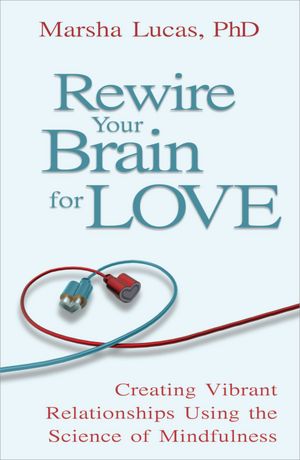
    In her book, Rewire Your Brain for Love: Creating Vibrant Relationships Using the Science of Mindfulness, Marsha Lucas explains how our inner workings can sabotage our relationships, and how we can change that through meditation.

    According to Rick Hanson, PhD, reading Rewire Your Brain for Love is “like having a best friend who is both savvy about the brain and a world-class therapist.”

    I haven’t yet finished this book; I’m publishing this interview today because this is the official launch date. Based on what I’ve read so far, I can say with absolute certainty this is the most fascinating, helpful relationship book I have ever read.

    Both educational and insightful, Rewire Your Brain for Love explains why we struggle in matters of the heart, and exactly what we need to do for healthier, happier relationships.

    The Giveaway:

    To enter to win 1 of 2 free copies of Rewire Your Brain for Love:

    1. Leave a comment below.

    2. Tweet: RT @tinybuddha Book Giveaway and Interview: Rewire Your Brain for Love http://bit.ly/yCvNBJ

    If you don’t have a Twitter account, you can still enter by completing the first step. You can enter until midnight PST on Sunday February 5th.

    The Interview:

    1. What inspired you to write this book?

    The inspiration came from seeing the changes in my psychotherapy patients when mindfulness practice was added to the mix. It was sometimes a challenge to get past the resistance some people had to meditation—my psychotherapy office is just a half-dozen blocks from the White House, so I see a lot of people who are very intellectually-driven, “show me the evidence” folks with no room for any “woo” stuff.

    It was a whole lot easier when we talked about the neurological bases of relationships, the peer-reviewed research coming out of neuroscience labs at universities they respected, and about this simple, well-documented practice that they could use to create actual changes in the brain—and that those changes support healthier, more successful relationships. Approaching it this way made it a much more empowering choice for them.

    Writing the book came out of my wish to share this with more than just the people I could see in my psychotherapy office. On the micro level, I want more people to have the healing experience that healthy relationships offer. At the macro level, my wish is to be a part of helping create a world that’s driven more by empathy than by fear.

    2. Why do we need to rewire our brains for love?

    Unfortunately, lots of us didn’t have an optimal experience of healthy, attuned attachment in that early, critical time when our “relationship brains” develop (mostly before age 2).

    By the way, it’s not necessarily about really bad experiences—it can be subtle, passed along by well-meaning parents who may not have had that optimal experience themselves.

    And because of the way our brains develop, those very early experiences aren’t readily accessible through memory or insight, so it’s difficult to get any traction just by trying to think or “will” our way through.

    If you can change that wiring, though—and mindfulness practice seems to help a great deal with that—then you can have a brain with better neural pathways that creates and supports better relationships.

    3. Your book focuses on making improvements in our relationships with other people. Can we also rewire our brains for greater self-love?

    Absolutely! I’d go farther to say that improving your relationship within yourself is the first step to being able to have better connections with others. I think of the practice of mindfulness as a way of cultivating more loving, compassionate relationships with everyone, and that includes you.

    4. Is traditional meditation necessary to rewire our brains for love, or are other mindfulness practices equally effective?

    The mindfulness practices that I’ve used to the best effect in my work (and that are in my book) are from the insight-meditation tradition. That approach has (in my view) the most compelling neuroscience research to date supporting the types of changes that I talk about and see in my work.

    Other forms of contemplative practice are also being studied. They all definitely have benefits—and I’m very interested in seeing more about their benefits to the brain.

    5. Can you talk a little about the seven “high-voltage” benefits of practicing mindfulness?

    The “high-voltage” relationships benefits get me really excited, so much so that they form the framework of my book.

    First thing to know: there are essential characteristics seen in people who had healthy, attuned childhood relationships—characteristics that bode incredibly well for their ability to have healthy relationships as adults.

    Now, add to that: Those same characteristics are seen in people who practice mindfulness.

    Then, to top it all off: the latest scientific research has increasingly been showing that these characteristics are associated with areas of the brain that change as a result of mindfulness practice.

    I’ve found that the most helpful way to think about these characteristics is to group them into a list of seven acquirable skills. (Yep: acquirable.)

    • Better management of your body’s reactions
    • Improved regulation of fear
    • Greater emotional resilience
    • Increased response flexibility
    • Improved insight (self-knowing)
    • Deeper and clearer empathy and attunement—within yourself and with others
    • Perspective shift from “me” to “we”

    Daniel Siegel, MD, a Harvard-trained psychiatrist and an expert on childhood attachment was the person who first made me aware of the connection between these documented and compelling characteristics of well-being, seen in people who grew up with healthy, attuned attachments, and the brain structures and pathways shown to change with mindfulness practice.

    I’ve been seeing the results confirmed through my psychology practice, in myself, and in the lives of my friends and colleagues. Very, very cool.

    6. I know a lot of people who stay in unhealthy relationships, constantly looking for ways to “fix” them. How can one recognize when the problem is faulty wiring and when it’s best to walk away?

    My first response is to share an anecdote from a friend of mine, Gay Hendricks, who’s also a psychologist: A middle-aged man came to his first therapy session, and talked about how lousy women were—he presented a long list of women in his life who’d just used him. Close to the end of the session he leaned in and quietly said, “But y’know… I’m beginning to wonder if it might have something to do with me.”

    We all have our relationship wiring issues—our own styles of attachment that developed early on. In part, mindfulness practice helps you increase your capacity to look at your relationship patterns with honesty and self-compassion (not excuses or blame). That’s necessary whether you’re going to stay in the relationship or end it. Otherwise, you end up staging the same play with the same script over and over again, whether it’s with the same actors or new ones.

    7. In Chapter 8, you explore empathy and how you misunderstood it when you were younger. I saw myself in your words, as I had the same experience! Can you tell us a little about what empathy is and what it isn’t—and why it’s important to our relationships to understand the difference?

    Healthy, balanced empathy is a tough one for a lot of people, especially those whose role in life leans heavily toward helping others. It’s easy to get lost in the feelings and needs of the other person, and end up not holding on to any empathy for yourself—and that often leads to feelings of burnout, resentment, depression, all kinds of un-fun stuff.

    My take on empathy is heavily influenced by the way that Frans de Waal, PhD talks about it—he’s a world-renowned primatologist and director of the Yerkes Living Links Center at Emory University, and he looks at empathy as an evolutionary advancement. As you go “up” in evolutionary terms, there are increasingly developed levels of empathic abilities, starting with the kind of “emotional contagion” that you might see in a herd of zebras, on up to through being able to take someone else’s perspective (though as Frans points out, psychopaths are good at this, too).

    Where many of us get off track is taking it to the next level, empathic perspective taking—what is s/he feeling and why might that be? And what am I feeling in response, and why might that be? If you lose sight of either one, you’re more likely to react out of old, unhealthy relationships habits—what can be called “autopilot.”

    Empathy’s not just about insight, and not just about feeling—it’s about an integration of those, happening in the space between you and your partner. Or, between you and more people in your community, however large that community may be—we’re all in this together, after all.

    Choosing to cultivate more empathy doesn’t mean losing your own integrity or point of view—it just means that you’re no longer governed by lower-order, fear-based reactivity. Now that’s empowering!


    Learn more about Rewire Your Brain for Love on Amazon.

    FTC Disclosure: I receive complimentary books for reviews and interviews on tinybuddha.com, but I am not compensated for writing or obligated to write anything specific. I am an Amazon affiliate, meaning I earn a percentage of all books purchased through the links I provide on this site.

  • Learning from the Relationships That Didn’t Work Out

    Learning from the Relationships That Didn’t Work Out

    “Stay away from what might have been and look at what will be.” ~Marsha Petrie Sue

    In my mere thirty years on this planet, I have had lots of boyfriends. Lots—hundreds. First one: Pat McGovern, first grade. We were in different classrooms, but we each took a casual stroll to the bathrooms at the same time. He leaned his three-foot-two body against the pink tiled wall and waited for me to walk by.
    Then, just at the perfect moment, he told me I looked smashing. (It was picture day, so I was slinging the old A game.) This was the first of many cheesy pick-up lines thrown at me from men leaning against walls, and I ate it up like Haagen-Dazs.

    Days later we were kissing under the slide at recess. That was my dating heyday, when relationships were easy. First: attraction. Then: coloring. Then: birthday parties, moms getting friendly on field trips, maybe some conversation about how the Stegosaurus was a vegetarian. And then: onto the next.

    Now it goes more like: attraction, fun times and laughter, imagining future together that is bright and perfect, time passes, perfect future slightly mired by his pot smoking and video games, six months pass, finally decide that future together indeed looks horrible, snoring no longer deemed “cute,” “break” requested, awkward friend period, mutual disgust.

    And repeat. And repeat again. And repeat again until you have had so many relationships that the index card holder you got as a teenager to record all your relationships won’t close anymore. (Yes, I record them all. Big fan of data entry.)

    And what happens to all those men busting out of your relationship box? They’re all still out there. And they’ve moved on. And they have wives and kids and they are much, much happier without your constant requests for compromise or time alone to write blog entries. (Yes, I’m using the universal “you,” but this is obviously all about me, my friend.)

    There’s always been some selfish part of me that has wished those exes wouldn’t move on.

    I’ve caught myself hoping they would freeze in Ex-land, waiting for me just in case I’d made an awful mistake by ending things.

    In the past, I’ve heard about an ex getting married or having four kids, and I’ve cringed and perhaps had a snifter of wine, thinking “What if that was supposed to be me?”

    I could have a house and kids by now. I could be “settled” into a comfortable life right now. What was I thinking? What if I made a mistake? (more…)

  • 10 Ways Overcome Conflicts in Relationships and Grow Together

    10 Ways Overcome Conflicts in Relationships and Grow Together

    “You can’t stop the waves, but you can learn to surf.” ~Jon Kabat-Zinn

    About six months into a serious relationship with my boyfriend, we started experiencing major conflict. Fighting over small things, flipping out over misunderstandings, we just couldn’t seem to get on the same page about anything. This caused me to think about relationship conflict in general, what causes it, and how to deal with it.

    It’s clear that relationship conflict occurs because expectations aren’t being met. Each person comes into a relationship with certain expectations. These are based on past experiences, childhood, or how you think things should be.

    The problem is that no two people think the same, no matter how much you have in common.

    A lot of couples see conflict as a time to bail—either because they were already looking for a way out or because they freak out and feel threatened. When our ego feels threatened, it activates our flight-or-fight response. Sometimes it may be hard to get resolution on a conflict, making matters worse.

    Instead of seeing conflict as a threat to a relationship, what if we reframed this and saw conflict as an opportunity and a sign of growth in a relationship?

    This requires understanding that conflict will inevitably occur in a close relationship. The only way of getting around it is to not share your opinion at all, which is not healthy.

    So what if we focused on sharing our opinions in a way that is productive?

    To do this:  (more…)

  • Knowing When to Walk Away from Unrequited Love

    Knowing When to Walk Away from Unrequited Love

    “Love does not obey our expectations; it obeys our intentions.” ~Lloyd Strom

    To say that love hasn’t obeyed my expectations would be the understatement of the century.

    I have not been lucky in love. I’ve been blessed with some amazing moments over the years, but somehow have managed to choose partners who did not want what I wanted, did not feel what I felt, and did not want to walk beside me into a future together.

    I have really had to sit with this and try and figure out what part of this was my doing, and how to change it, because this year I once again chose a partner who was not walking with me. Except this time not only was he not walking with me but he was subtly trying to kick my feet from under me every chance he got.

    I once again entered into a relationship desperate to find love and instead found a beautiful disaster. Love is a blessing, this we know. Unrequited love is toxic, and it can eat you alive.

    Falling in love can be a slippery slope, regardless of any protective barriers we may have built. It can ease in like a light a mist that settles itself beautifully over your life, or it can blindside you.

    Often we fall in love with a person before we have fully gotten to know them. By this point it’s too late—you’ve already stretched your heart for someone capable of bruising it. This is what love requires: utmost vulnerability and trust. Hopes and expectations rise along with the awareness that it can slip away.

    I suggest we do our best to live in the moment. Love is elastic. It stretches and retracts and changes shape constantly. It is very uncertain. One day you are over the moon and the next disillusioned.

    The elastic can break. You can re-tie it, but there is now a knot. Suddenly that perfect perception of the other person is a little bit tainted. Something rocked the pedestal. Sometimes we can recover from this, sometimes we can’t. 

    Loyalty and commitment teach us that we are not to walk away from people that we love. Buddhism teaches us to love without expectation. There are a lot of belief systems about love and I question them often. If your love is shared and you are both happy I assume you wouldn’t have to question love at all. (more…)

  • Why We Sometimes Choose Judgment Instead of Compassion

    Why We Sometimes Choose Judgment Instead of Compassion

    “In separateness lies the world’s great misery, in compassion lies the world’s true strength.” ~Buddha

    We talk about boys these days at our dinner table.

    Boys are sneaking into our home now—or at least the idea of boys. Although I love watching my daughters grow up—it’s much more fun (and much more challenging) than I ever could have imagined—I sometimes feel a certain sadness as their days of early childhood innocence slip behind us.

    Their battalion of stuffed animals, for example, who were accustomed to a life of travel and adventure—and a well-dressed one at that—often live in boredom now, with only an occasional new scarf or hairdo. But I know this is the natural turn of events. I’ll get over it.

    In fact, there is a juicy energy that our daughters bring back with them from their encounters with life these days.  As their view of life becomes more complex and inclusive, their struggles become richer, and I am honored to both witness and participate in this process of growing up with them. And that is what it often feels like to me—growing up with them.

    I know I am “the grown up” but, to be honest, I’m not always up to that title.

    I often struggle with the same kind of things that they do, though my struggles may be less visible and my excuses more sophisticated. Here’s an example of what I mean.

    One Saturday morning we all identified some family contributions that we were going to make. (Thanks to Parenting on Track, we now “make contributions” rather than “do chores”). One of my daughter’s contributions was to bring five pieces of wood in from the mud room for the woodstove.

    We each went about our work independently, with a plan to go sledding once everyone was finished with their list.  Later on, both girls let us know that they were all finished and ready to sled, so that’s what we did.

    But when Gregg was beginning to make a fire that evening, he realized that all the wood at the stove were the logs that he had brought in earlier.

    I heard him ask the question, “You brought in five pieces of wood?” And again, she confirmed she had. “Can you point to the ones you brought in?” he asked her. She was quiet for a moment and then said, “Oh, well…maybe I forgot to bring them in.” And when asked further, she admitted that she had lied.

    I felt disappointed. While this lie was in the minor league of lies, it still was a deliberate attempt to mislead us and avoid responsibility. How long would it have taken to bring in the wood? How should I respond to this lie? When was the last time that I lied?  (more…)

  • 11 Ways to Turn Strangers into Friends

    11 Ways to Turn Strangers into Friends

    “Fear makes strangers of people who would be friends.” ~Shirley Maclaine

    Up until a year ago, I saw the world as a place where very few doors opened for me. At first I thought it was due to being extremely introverted. But as time went on, I started to struggle with making friends.

    I didn’t have many of them—and opportunities only knocked a few times a year. That’s when I realized my problems stemmed from my passivity and fear of actually going out and talking to people.

    My few closest friends always told me to join a club or go to parties. People always told me where to meet people. But they never really showed me how to actually create conversation.

    On top of that, I never really liked going to big social gatherings. I’m introverted and tend to be overwhelmed when a lot of people are around. I like talking one-on-one.

    So I decided to do things my own way. I started talking to strangers on my college campus and in the city because I was tired of staying on the sidelines.

    It was scary for a naturally timid person like me, but I decided to fight the fear.

    Great things come to those who are willing to risk rejection and put themselves out there.

    After two months of doing this, I made some great friends, simply by starting conversations.

    It’s an empowering mindset to be able to create conversation with potentially anyone. There is always the choice to talk to whom I want to talk to.

    I asked people what drink they bought from the coffee shop. I asked someone about her customized bike. I asked people to share opinions on things that affected me.

    Some people opened up to me. Some people stayed shut down. Some of them continued talking about themselves when I put the spotlight on them. Others simply answered my question and left the conversation there.

    All of these interactions allowed me to understand how to engage with people. For example, I learned that tone and body language are more important than saying the right thing.

    Through my experiences, I learned that people are usually friendly and happy to talk to you.

    I’ve been able to meet more people than I ever expected just by opening up to them.

    That’s when I learned that it was up to me to be proactive and create my own doors instead of complaining that none were opening for me. It was up to me to create my own opportunities by connecting with people.

    Besides feeling more connected, I feel happier knowing that I have the power to talk to whomever I want to. More opportunities arrived by networking with others. For example, I was able to pursue photography with a new friend simply because I reached out and asked. (more…)

  • Love is a Choice: 30 Ways to Love in Action

    Love is a Choice: 30 Ways to Love in Action

    “We come to love not by finding a perfect person, but by learning to see an imperfect person perfectly.” ~Sam Keen

    I recently went with girlfriends to hear one of our favorite beach bands play. Since I turn into a pumpkin at midnight, I talked a friend into taking me home early.

    While walking to our car, we witnessed a couple fighting. There was no pushing or shoving.  Fists weren’t involved.  Bizarrely enough, this couple was on opposite sides of the parking lot having their fight over their cell phones.

    Due to the volume of their voices, the fight was easy to follow. Apparently, she didn’t give a rip about anyone but herself (his point of view) and he was a control freak (her point of view). There was much discussion back and forth and the words weren’t very nice, so I’ll gloss over that. However, what struck me about that fight was how pointless it seemed.

    Did that couple realize how lucky they were to have each other? I wanted to scream at both of them, “What if something tragic happened to one of you on the way home tonight—would this fight have been worth it?”

    I see too many couples take their relationships for granted. They forget why they fell in love. They forget the dreams they had and the plans they made. They forget their promises and commitments. The “healthy” of their relationships is based on personal happiness, rather than doing what is best for the both of them.

    Love is a choice, not a feeling or an emotion. It’s a decision you make every day of your life. Even when your mate doesn’t take out the trash, or spends too much time at the mall, or when your new haircut or outfit goes unnoticed, or when poor financial decisions set you back—you can still decide to love.

    Love is for better or worse. And when you choose not to love, you’ve given up and given in.

    It’s a decision you’ll regret.

    Take it from a widow that wishes every day that she had her husband at home to leave the toilet seat up, or scatter Popsicle sticks and papers all around the couch, or smoke stinky cigars in the house, or forget to pay the bills or pick up the kids. All those imperfections about your mate are what you will miss the most when they are gone.

    Choosing to love isn’t always easy, but it is worth the effort.  Here are some ways you can choose to love on a daily basis: (more…)

  • 4 Simple Tips for Confronting Someone Who Hurt You

    4 Simple Tips for Confronting Someone Who Hurt You

    “To get something you never had, you have to do something you never did.” -Unknown

    For many years I maintained a relationship that I was not happy with. I’m sure a lot of people have been there, or are there right now. I didn’t feel there was equality in the relationship; I always seemed to be the one giving, yet I consistently felt I was getting nothing out of it.

    A close friend of mine asked me why I tolerated the behavior of the person in question.

    As usual, a few excuses passed through my mind: the other person was going through a rough time; I felt I should be there for them; they probably wouldn’t respond to how I was feeling anyway, so I should strive to be the “better person.”

    I let these excuses wear on for over a decade, until one day I realized I needed to make a change.

    There was no point in silently wishing this person would be better, or hoping they would eventually acknowledge I deserved the same respect and support I gave them.

    After more than ten years without change, I wondered what on earth I was expecting. Did I think this person would suddenly have an epiphany, maybe another ten years later? Gently, slowly, I started to realize that I had to do something I had never done.

    I decided to confront them about it, without aggression or anger. The next time they treated me in a way that I thought was unacceptable, I would say something. I would let them know that they were being unfair or unkind. I wouldn’t try to sugar coat it—I would just be honest about how I felt.

    The moment came and I said what I needed to say. I was willing to accept that they may never agree with me or apologize, but I had to be true to myself. I had to say something, with no expectations—just a commitment to stand up for myself when it was necessary.

    “Integrity is telling myself the truth. And honesty is telling the truth to other people.” ~Spencer Johnson

    To my great surprise, I received an apology. I would have been okay without it—having come to the conclusion that purely standing up for my beliefs was enough for me—but the heartfelt apology made me realize how unnecessarily I had sacrificed myself and my needs. Since then, my relationship with this person has greatly improved. (more…)

  • 21 Ways to Build Strong Friendships

    21 Ways to Build Strong Friendships

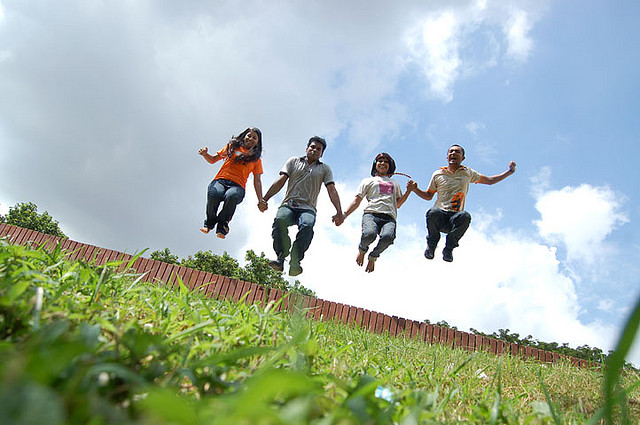
    Friends Jumping

    “To have a friend and be a friend is what makes life worthwhile.” ~Unknown

    I lost my beloved husband from complications following a routine surgery. His sudden death changed every facet of my life and rocked me to my knees. Now, more than a year after his passing, I am openly speaking of my grief experience with others and sharing how I’ve coped being a young widow.

    I was asked recently what was one of the great lessons I learned from losing my husband, and I knew what my answer was without hesitation:  the importance of having a diversified life.

    Your financial adviser will tell you to diversify your investments, rather than putting all your “eggs in one basket.” If one investment is lost, you’ll still have others to rely upon.

    The same is true in relationships. Certainly the relationship with your spouse should be your primary focus, but it cannot, and should not, be your only relationship. Emily Dickinson said, “My friends are my estate,” and I couldn’t agree more.

    As a mother of three boys, I lived in a house full of testosterone. My husband knew that not only was time with girl friends beneficial for my mental health, but also the positive tenor of our home. He encouraged me to participate in “girls’ nights” on a regular basis and to take a yearly trip to the beach with my gal pals, a tradition for almost 20 years.

    Thus, when my husband passed away, I had a fully developed support system of ladies who, even now, are still meeting countless needs and making me feel included even though I am flying solo. They have been my lifeline during this dark time. Don’t get me wrong, my family members have been wonderful, but they don’t live close enough to me to give me the daily encouragement I need.

    Cultivating lasting, loving friendships takes time and effort; however, I cannot impress on you how important the investment in friends is, in both good times and bad. Here are some ways to create and cultivate lasting friendships: (more…)

  • 10 Ways to Love the People in Your Life

    10 Ways to Love the People in Your Life

    Friends hugging

    “At the end of life, our questions are very simple: Did I live fully? Did I love well?” ~Jack Kornfield

    We all grow up with some healthy stories about love and some unhealthy ones. I learned some beautiful, life-giving ideas about love, ideas like these:

    • Loving people means believing in their potential.
    • Love means treating people with kindness and gentleness.
    • Loving the people in your life means celebrating their successes and cheering them on.

    But I also grew up with some stories about love that I came to see weren’t so helpful. Those ideas about love bred problems in my relationships.

    One of those stories was: Loving someone means always being available to them. (Turns out, it’s not true, and living as if it is breeds resentment.)

    Another was: Loving someone means always having space for what they want to talk to you about. (Turns out, not true either!)

    Another myth about love: If you love someone, you do what they are asking you to do, out of love, even if it feels difficult. (I can tell you, that doesn’t work so well.)

    I’ve developed my own guidelines for loving the people in my life, guidelines that express how I want to relate to the people around me.

    These are some of my guidelines for loving: (more…)

  • Lose Control to Find Closeness in Your Relationships

    Lose Control to Find Closeness in Your Relationships

    “Always be mindful of the kindness and not the faults of others” ~Buddha

    In these hectic and often chaotic times, for most people (controllers included), the need for intimate, close bonds with friends and family is more important than ever for their overall well-being.

    Yet, most controllers are unaware of how much their controlling actions prevent intimacy.

    Losing Intimacy with My Son

    Twenty years ago I was a massive, obsessive controller. I firmly believed that the best way to satisfy my needs and achieve what I wanted in life was by controlling everything and everyone. At home, Father truly knew best! I knew what was best for my children—and didn’t hesitate to let them know.

    When my son Brandon was a child, I constantly offered my two cents on almost everything he did, thinking it would help him better traverse life’s many challenges. When he was young, he had no choice but to put up with my intrusions.

    In his teens, however, he became very dismissive of me—he didn’t want to hear anymore from me, and he strongly let me know it.

    Our bond remained strained until I was literally brought to my knees by a rapid-fire series of traumatic events (concluding with 5 major cancer surgeries). At that point, I no longer had the desire or energy to continue intruding upon his life.

    Because I no longer offered him my opinions or advice, Brandon began seeking my input on important challenges he faced as a young adult.

    Hence, the very thing I had sought—intimacy—came to me only after I stopped trying to seek it! (more…)

  • Get Connected: How to Expand Your Offline Social Network

    Get Connected: How to Expand Your Offline Social Network

    “Strangers are friends you have yet to meet.” ~Unknown

    We are living in times of massive change.

    Looking at some of the problems we are facing—the crumbling economy, environmental pollution, wars over scarce resources—sometimes the idea of moving far away to a remote mountain top seems very attractive. Or hiding in that small space behind the computer screen. Anything that helps us avoid real life and all its challenges.

    But of course, if everybody thought that way, who would actually get up and do something about our situation? And is it enough to receive words of comfort through an email? We also need a smile and a good hug.

    Shouldn’t we move closer together in times of hardship?

    Despite accelerating globalization, which is connecting everybody and everything in an ever-growing web, there is a worrying development: People are feeling more and more isolated.

    We have hundreds of friends on Facebook, but hardly anybody knows the names of their neighbors. All the social online sites are great, no doubt about it. But does the exchange happening there provide the human warmth we so desperately need?

    Recently there was a fire in the head office of my internet provider. Over 100,000 customers went involuntarily offline for three days. Lots of people complained, many panicked, and almost everybody suffered from some kind of withdrawal symptoms within the first day.

    Imagine you were suddenly without Internet for a week. No email, no Facebook, and no chat rooms. An important question arises: Do you have enough friends left who live nearby? (more…)

  • 10 Ways to Create a Strong, Intimate Relationship

    10 Ways to Create a Strong, Intimate Relationship

    “We come to love not by finding a perfect person, but by learning to see an imperfect person perfectly.” -~Sam Keen

    Before I married my wonderful husband, I dated a lot of men. For most of my 20s (and even my early 30s) I had a perfect fairy-ideal of what romantic love was, probably because I was an actress and loved drama back then.

    It took years for me to realize a relationship is not a romance movie.

    At some point in our lives, we may believe that love should be like the kind of romance we see portrayed in films, television, and novels.

    For some reason, I always thought my romantic relationships were less if I did not experience this kind of fairy-tale relationship. Maybe this is why I kept meeting frogs.

    At times, I bought into the belief that if I had a relationship with the perfect prince, then all would be well in my life. I thought, Now, I will be safe forever.

    In truth, I did marry a prince—but a prince who is also human, who has faults and issues just like every person, no matter how wonderful he is.

    At some point I grew up and learned to let go of the crazy metaphor of romantic love in order to find true happiness. Yes, I was disappointed to realize that the knight riding through the night to save the damsel in distress is a fallacy. It’s a bummer.

    But, let’s look at it in this light: We all saw Romeo and Juliet and Titanic. Why stories like these make our hearts sing is that the love is unrequited. Unavailability fuels the romantic expression.

    This kind of romantic story can only work when there is an absence of the lover. Sometimes, they have to die in the end in order for their love to fit into this romantic view. Or, we eat handfuls of popcorn, waiting to see if they live happily ever after, and we rarely find out if they really do.

    The romantic love fantasy is really a substitute for intimacy—real, connected, vulnerable intimacy.

    So then, how do we make relationships work and stay happy? (more…)

  • How to Open Yourself to Love When You Didn’t Grow Up with It

    How to Open Yourself to Love When You Didn’t Grow Up with It

    “You, yourself, as much as anybody in the entire universe, deserve your love and affection.” ~Buddha

    I was always someone who craved love and attention. This is not to say that I accepted love willingly—quite the opposite, in fact.

    If someone decided to like or even love me they would have to pass through a path of obstacles, being pushed, pulled, and tested at every corner. Only then, upon arrival at the finish line, would they gain my acceptance.

    As you can imagine, this eliminated a number of potential friends and partners, and I often found myself lonely and disappointed.

    The root of my inability to accept love easily stems back to my childhood.

    My mother was unable to connect with me. She got pregnant during the height of her modeling career. After she gave birth, her career dried up. She resented the attention that a baby attracted and, in addition to this, she was highly addicted to narcotics.

    Growing up with my mother telling me that she felt no love and was ashamed of me made me desperate to be the perfect daughter. I would go to any length to prove myself worthy, even taking drugs with her as a way of connecting.

    When I was fifteen years old, she upped and left with no goodbye, leaving me with my stepdad and an overwhelming sense of failure.

    If my own mother could not love me, how and why would anyone else?

    After my mother left, I disguised my pain through drugs and control. Drugs provided an instant, closely-bonded social network. I tried to take control through self-harm. My life continued like this for ten years. I hated myself, and I was terrified of letting anyone in.

    Throughout these years, I did several stints in rehabilitation centers, where nurses and psychiatrists worked hard on me.

    I would almost give in and build connections with these people; however, when the time came to leave these institutions, I would find myself alone all over again.

    I was desperate for a loving relationship and a career. My battles were hindering me from achieving either.

    Luckily, I had a fantastic education under my belt, through a childhood spent at top boarding schools. It was just a matter of escaping this vicious cycle that I had spent the majority of my life spinning around in.

    I had stopped the drugs but was addicted to self-pity. Therapy had taught me that I needed to let go and learn to trust. This sounds quite easy now, but back then the very idea was not only terrifying but also impossible. (more…)

  • How to Help Someone Who Won’t Help Themselves

    How to Help Someone Who Won’t Help Themselves

    “We work on ourselves in order to help others, but also we help others in order to work on ourselves.” ~Pema Chodron

    Recently I got into a hypothetical conversation with someone who very quickly turned hostile and accusatory. Let’s call her Jane. My first instinct was to get defensive, but then I realized this subject was quite raw for Jane, and there was likely something going on below the surface.

    Usually when people are combative seemingly without cause, there’s some underlying pain fueling it.

    As we got to the root of things, I learned that Jane was holding onto anger toward someone she once loved, and she felt a strong, driving need to convince people that this other person was wrong.

    Since she acknowledged that she’d been feeling depressed, lonely, and helpless, I felt obligated to at least try to help her see things from a different perspective. But that ultimately proved futile.

    She was committed to being angry and hurt, and all she wanted from me was validation that she was justified.

    I kept thinking back to how I felt at eighteen years old, reliving scenes of adolescent abuse that I refused to let go of well into my twenties. I spent years stewing in anger because I felt like a victim, and any threat to that comforting sense of righteousness only made me angrier.

    Remembering how badly and unnecessarily I hurt myself, it felt imperative that I help her let go. I wanted to help her get out of her own way. I wanted her to do what I had failed to do for far too long.

    Seeing that stubborn, bitter commitment to pain reminded me of how angry I was with myself when I realized I’d hurt myself far worse than anyone else—and how ashamed I felt when I realized I enjoyed being a victim, receiving pity, attention, and (what felt like) love.

    Suddenly I recognized that I wasn’t just trying to help Jane; I was also judging my former self. (more…)

  • How Being Vulnerable Can Expand Your World

    How Being Vulnerable Can Expand Your World

    “What makes you vulnerable makes you beautiful.” ~Brene Brown

    Vulnerability has never been my strong suit. It’s no wonder. In order to be vulnerable, you have to be okay with all of you. That’s the thing about vulnerability that no one tells you about.

    Being vulnerable is not just about showing the parts of you that are shiny and pretty and fun. It’s about revealing what you deny or keep hidden from other people. We all do this to some extent. I bet you’ve never said to a friend, “Oh my god, I just love that I’m insecure.”

    But that’s the point, isn’t it? You’ve got to love everything, if you want to be vulnerable by choice.

    Most of us have probably experienced vulnerability through default. More often than not, we are either forced into that state through conflict, or we are surprised by it after our circumstances feel more comfortable.

    Few of us consciously choose vulnerability. Why? The stakes are too high.

    If we reveal our authentic selves, there is the great possibility that we will be misunderstood, labeled, or worst of all, rejected. The fear of rejection can be so powerful that some wear it like armor. (more…)

  • Conflicts with Friends: 13 Ways to Communicate Without Drama

    Conflicts with Friends: 13 Ways to Communicate Without Drama

    “Treat your friends like you do your best pictures; place them in the best light.” ~Unknown

    I recently had a disagreement with a close friend.

    There was a good deal of uncontrolled emotion on my side. I wasn’t expressing myself well and I knew it. I became more and more frustrated and less effective at explaining my feelings.

    I found myself laying unwarranted blame on my friend rather than admitting openly that something was hurting me and I was feeling vulnerable.

    Ultimately, he said the words I was having trouble finding for me, and that resolved the situation.

    I was embarrassed and grateful, but I realized I needed to evaluate a few of my shortcomings to avoid making the same mistake again.

    I also realized that what I was feeling wasn’t the problem.

    It was my inability to effectively convey what was in my heart and on my mind that led to hurt feelings and further misunderstanding. (more…)

  • How to Become a Magnet for Friends: 7 Mindful Tips

    How to Become a Magnet for Friends: 7 Mindful Tips

    Group of Friends

    “Always be mindful of the kindness and not the faults of others.” ~Buddha

    Would you like to have more friends? I mean true friends—people who laugh and cry with you.

    My close friends mean the world to me. They are there for me when I need them. When they’re on a high, I celebrate with them; when they fall, I help them up again. My life is so much richer because of my friends.

    But it hasn’t all been an easy ride. For example, one of my best friends is my ex-husband. It took years of work to move through heart-ache, anger, grief, and resentment in order to find the strong friendship we have now. To create a true friendship takes a lot of effort and dedication.

    A friend is one to whom one may pour out all the contents of one’s heart, chaff and grain together, knowing that the gentlest of hands will take and sift it, keep what is worth keeping and with a breath of kindness blow the rest away. ~Arabian Proverb

    How I Lost a Heap of Fake Friends (and Gained a Few True Ones)

    In the past, I learned a hard lesson about friends. I was a professional musician at the time and Director of one of the oldest and most renowned music schools in Australasia. My life seemed to be going fine: I was in a good marriage, had great job with a high public profile,  and was a popular friend of many.

    Or so I thought. Then things disintegrated: I lost my job, and my husband and I separated. (more…)

  • Fostering the Right Attitude: Know Who You Are

    Fostering the Right Attitude: Know Who You Are

    Woman with Open Arms

    “I urge you to try not to get hung up in the mentality that says ‘I hope I don’t lose him (or her),’ but foster the attitude that says ‘He should be appreciative of having me in his life.’”

    I read these words in the midst of a downward emotional spiral, and they grounded me almost immediately.

    I was fifty-three when I read Marie’s words. I was in the eighth year of my relationship with my husband and realized that I had become a shell of the woman I was when I first met him. Amidst all the compromises I’d made to keep my relationship, I had compromised myself away.

    By the time I reached forty, I had experienced enough of life to know relationships work best when individuals are authentic. I’m in awe of those who discover this treasure early in life.

    And, forty was a turning point for me. My mother had died at forty, my first husband at age twenty-one. So, reaching forty brought with it a dramatic realization. There was a tremendous gift in front of me—time—and I would not waste it.

    I devoted an inordinate amount of time and energy in my young adult life to finding for another Mr. Right; so I decided that I would not invest any more in that endeavor. I had raised my son, cultivated a successful career, put myself through college, and had recently bought my own home.

    I concluded my life was grand just as it was. I did not need someone else to complete me.

    Never did, actually. That frame of mind is society’s conditioning that a single person is half of something: it’s an albatross many of us carry until we choose to lighten the load. (more…)

  • Tiny Wisdom: On Love

    Tiny Wisdom: On Love

    “Love is loving things that sometimes you don’t like.” ~Ajahn Brahm

    The most challenging part of relationships is learning to accept people for who they are—knowing all their quirks, insecurities, and weaknesses and choosing to simply let them be.

    Psychologists suggest that once we form an idea, we develop an emotional attachment that makes it extremely difficult to abandon it. We feel convinced that our way is the right way and feel an imperative to sway other people accordingly, particularly people who are close to us.

    The irony is that this tends to push people further away. It’s hard to feel loved when you feel judged.

    Today, resist the urge to “fix” people around you (unless, of course, someone is legitimately unsafe).

    If there’s one thing we all want, it’s to feel fully accepted, inadequacies and all. We want permission to stop judging ourselves and just be. Put that kind of love out there and you may be surprised to notice it coming back to you.

    Photo here