Tag: relationships

  • From Broken Heart to Open Heart: When Breaking Up Is a Good Thing

    From Broken Heart to Open Heart: When Breaking Up Is a Good Thing

    Sunny Girl

    “When you blame others, you give up your power to change.” ~Dr. Robert Anthony

    On March 18th, 2011, I received an email that forever changed my life.

    “You got me—I’m seeing someone else.”

    That’s the only line I remember. I had noticed that my boyfriend at the time had been acting “strange” and confronted him on it. He fessed up to me in an email while I was at work. There was nothing I could do and nowhere I could go.

    I felt that burning sensation on the back of my neck. I wasn’t sure what to do next, so I sat there at my desk in my office in a haze for the rest of the afternoon.

    I spent the next few days plugging along, assuming that since I had not shed a single tear, everything was just fine. It wasn’t.

    Three days later, I walked into my house after an evening of hanging with friends, and all of sudden it hit me: He was gone. I was alone.

    I broke down, sobbing uncontrollably. I saw no hope, just days and days of pain ahead of me. Unfortunately, that would come to be true.

    Until that point, I was a “relationship jumper.” I’d move from one relationship to the next with little to no break in between, and had done so for fourteen years and four serious relationships.

    Not once during that time had I stopped to think about what I wanted.

    My fear of being alone far outweighed any desire to get to know myself, so I continued on from one relationship to the next, wondering with the ending of each one why it had failed.

    Of course, I blamed all of them. There couldn’t possibly have been anything wrong with me. I was a good girlfriend—I supported them, was there for them, gave more than they did, kept my mouth shut and tried not to get angry with them, stayed with them even when I knew something didn’t seem right.  (more…)

  • Ending Codependency in Relationships: Find Who You Really Are

    Ending Codependency in Relationships: Find Who You Really Are

    “Be yourself; everyone else is already taken.”  ~Oscar Wilde

    I remember clearly and will never forget the golden moment when I revealed my truth. Out through the locked up, suppressed little voice hidden deep down within, I allowed myself to say, “I always feel as if I need to give people what they want.”

    It was almost as if lighting struck and the clouds parted at the same time. I sat there comfortably in the chair of my therapist’s office, and with a deep breath I knew that “it” was over. I did not know what “it” was, or the amount of work and change that would follow, but I knew that I was ready and willing.

    I grew up codependent. From the influence of an alcoholic, narcissistic father to the string of narcissistic relationships formed afterward, my identity evolved through who I was to others and what I had given to them.

    A relationship with a narcissist defines your existence as not your own, but as a part of theirs. Others saw me as shy and nice, but I didn’t realize that I was lost and without balance.

    I wanted others to be their authentic selves, truthful and free, but I could not do that for myself, so I continued giving up and giving in. Not all was bad—life is beautiful in each form—but I knew I would need to learn something different, as I always struggled with fear and anxiety.

    So I have learned something different. It’s taken a long time, but things have been getting better. If you’ve also realized that you are codependent, these ideas may help you dig down and reveal your true, authentic, beautiful self.

    Create a relationship with yourself.

    Remember the scene in Runaway Bride where Julia Robert’s character decides she will choose what kind of eggs she likes instead of choosing the kinds that her former partners liked? This simple act is where it can all begin. I make an effort to just ask myself honestly, “How are you doing?”

    Take time to focus on your preferences, likes, dislikes, and so on, learning more about the things that make you happy and unhappy, and healthy ways to deal and cope with the latter. It’s important to always stay centered. (more…)

  • 5 Reasons to Stop Keeping Score in Relationships

    5 Reasons to Stop Keeping Score in Relationships

    Back to Back

    “It’s one of the most beautiful compensations of life that no man can sincerely try to help another without helping himself.” ~Ralph Waldo Emerson

    During my freshman year of college, my group of friends would always hang out in my room.

    For the most part, I enjoyed playing host.

    Then certain things started to bother me. People would constantly be eating my snacks, and I would constantly be cleaning up after them when they left.

    Day after day, I would provide my friends with food. They would make a mess eating it while sitting on my bed. And they wouldn’t clean up after themselves.

    Perhaps this sounds trivial to you, but over time I found it very annoying.

    And after a few months of this, I became resentful toward my friends.

    The problem here was that I couldn’t help but “keep score” in my relationships with them.

    What do I mean by this?

    Every time I gave my friends food, I would mentally record it, and expect to get something of equal value in return.

    In my mind, I was giving way more than I was getting.

    And then every once in a while when they would come in and offer me some of their food, I felt even worse.

    “How can they think that this is enough after all I’ve given them?”

    If they thought they were giving me a sizeable gift, then suddenly I felt obligated to pay them back to keep the balance in my favor.

    In hindsight, I see how disturbed this way of thinking is. But at the time, it all made sense to me.

    Keeping score got me nowhere, other than feeling bad and deteriorating my relationships.

    This kind of mindset is toxic. It causes nothing but harm.

    Think about your own life and your own relationships. Chances are you are keeping score in some of them.

    And I bet it’s having the same effect on you. (more…)

  • Share Your Vulnerable Story: Find Strength by Letting Others In

    Share Your Vulnerable Story: Find Strength by Letting Others In

    Holding Hands

    “Pain is not a sign of weakness, but bearing it alone is a choice to grow weak.” ~Lori Deschene

    In February of 2011, I went to see my doctor because I was suffering from severe headaches that I figured were associated with using computers all day at my law job. After having a few tests, the doctor said that I wasn’t doing well and he suggested that I take a leave from work to focus on my health.

    The next few months, I found myself in and out of doctors’ offices, medical labs, and hospitals on a weekly basis. With a variety of tests already done, my doctor suggested we do an MRI of my brain. I went for my MRI in June of 2011.  

    Weeks passed by after my MRI, and assuming no news was good news, I made plans for my summer. I decided to have a change of scenery and went to San Francisco for a fun summer job that didn’t involve computer work.

    After a great summer there, I was in Toronto in late August for two weeks visiting my parents when I got a call from my neurologist in Vancouver.

    She told me I had a brain tumor.  

    The floor dropped beneath my feet, my heart sank, and my mind raced, contemplating how I would break this news to my parents. I put the phone down, walked into the kitchen, and I told them. We hugged and then we cried.

    In that moment, my life flashed before me. I was 28 years old, single, unemployed, and now, more lost than ever. I didn’t know if I would finish my law license, return to Vancouver, move back into my apartment, or when I would see my friends again.

    But, as it always does, life went on. (more…)

  • Create Meaning By Helping Others (Without Doing it for Validation)

    Create Meaning By Helping Others (Without Doing it for Validation)

    Helping Hand

    “If you light a lamp for someone else it will also brighten your path.” ~Buddha

    Why are you here on this earth? What is your purpose? What are you supposed to be doing with your life? These deep questions burn in all of us. Our souls’ desire is to lead fulfilling lives that have meaning.

    My life’s journey has always been linked to helping other people; I just never saw it as serving them. As I have grown to know myself, I have discovered that I have this huge heart that wants the best for myself and for others. I now live to serve, and this brings me great fulfillment.

    The Difference Between Seeking Validation and Serving

    It wasn’t always easy for me. I spent a great deal of my life questioning why I was here and what my life was all about. I had been through so much pain and had suffered at the hands of others. I couldn’t understand it all until I took a stand. Enough was enough. I needed to be different.

    Little did I know that being different meant discovering myself and not simply changing my circumstances.

    I was always a helpful person, but it was about seeking validation for what I did, not about the difference I could make in others’ lives when coming from a place of inner strength.

    I started learning about who I was and why I was behaving the way I did. I would often be so angry with myself for doing things for other people that I really didn’t want to do.

    I was angry that I didn’t say no when I really wanted to. I was seeking validation in these moments and wanting to be liked. I realized that I could say no, and that I’d been saying no to the wrong person. I needed to start saying yes to me, and that meant no to others.

    I also wanted to be sure that I wasn’t being mean and hurtful to others by saying no to certain requests, and so I started asking them. I realized quickly that true friends are the ones who tell you what you need to hear, not what you want to hear.

    I wanted more of that in my life, and I knew if I were open and honest with others in this same way, I would help them discover something great about themselves. This was true servitude, and it came from a more empowered place.

    The focus was on serving them and not seeking validation for myself. (more…)

  • Relationships Should Complement Our Identities, Not Define Them

    Relationships Should Complement Our Identities, Not Define Them

    “On a deeper level you are already complete. When you realize that, there is a playful, joyous energy behind what you do.” ~Eckhart Tolle

    The first rain after a long draught gets people talking about cozy things. Being with others, being physically close to others, going out in groups, staying in with someone. Sharing affection. Cold weather seems to always entail groups and partnerships.

    What about when those groups and partnerships are missing from the tableau? The other night I was sitting in my apartment with my lanterns on, some incense burning, and some good reading material. The rain was trickling outside my window. The moment was perfect.

    For once in my life, I didn’t have my normal thought: “This moment is so beautiful, but it would be better if someone was here to share it with me.” I was completely at peace, enjoying the presence of my own heart and mind.

    This might not seem like a huge “Eureka!” moment, but it was for me.

    I grew up an only child, so I’ve always craved that group interaction and the comfort of crowds. I made friends easily and was sometimes accused of serial monogamy; I was rarely single for longer than six months. I always felt surrounded—and by being surrounded, I felt protected.

    Three months ago, however, I quit a job that made me unhappy and a relationship that was going nowhere, which had filled most of my time. I was face to face with myself in a frightening and jolting pause. I no longer had the noise of others to fill my silences.

    Friends advised me to go out, work out, or find someone else. I did all three, sometimes in excess.

    It alleviated my pain for a brief time. But I still felt hopeless, directionless. I took the long way in realizing something important: I needed to fall back in love with myself, which meant getting to know myself again, apart from the influences of everything else in my life.

    I had spent so much time being something for others, filling my life with adaptation, that I had forgotten what it was like to be me. (more…)

  • People Aren’t Always Out to Get Us: The Good Beyond Appearances

    People Aren’t Always Out to Get Us: The Good Beyond Appearances

    Waiting for the Train

    “If you judge people, you have no time to love them.” ~Mother Theresa

    Last year, I was on the CTA (Chicago’s public transit) heading to class to take an exam. Rather, I should say that I was rushing to class. I wasn’t running late, but I often got caught up in the hustle and bustle of Chicago during morning rush hour.

    Something about the “rush hour” energy made me feel a bit anxious; and, although I, along with others, am at the mercy of the CTA with its frequent delays, rarely do riders strike up conversations with fellow passengers.

    After making my usual transfer to another train line, I was able to find a free seat (which is hard to come by during rush hour), and I sat down.

    I acknowledged the woman I was sitting near just enough to immediately write her off as being someone I wanted to ignore. She looked at me and smiled, and I gave a half smile back but turned slightly away to make it clear that I didn’t want to engage in chit-chat.

    I am a warm person, hardly ever without a smile, and usually very open, but I was having a day where I just felt nonchalant toward other people, and the last thing I wanted was to feel “trapped” in a conversation with a “lowly” woman on the train who might pester me for money.

    I pulled out my textbook, clutch in hand, to begin “reviewing” for my exam.

    She began engaging me in small talk, and, after a few minutes, my disposition changed. My short answers became longer, and I became genuinely interested in what she had to say.

    A year or so later, I have forgotten the specifics of everything she said to me, but I remember getting off the train feeling light-hearted after she told me a bit about her life. We had a short but beautiful conversation.

    I got off at my stop, walked the couple of blocks to class, and entered the classroom when I realized I left my clutch on the train.

    No time is a good time to lose your wallet, but I was leaving for the Middle East soon and would have to replace everything before my trip.

    Well-played. (more…)

  • You Have to Know What Kind of Love You Deserve to Attract It

    You Have to Know What Kind of Love You Deserve to Attract It

    “Your task is not to seek love, but merely to seek and find all barriers within yourself that you have built against it.” ~Rumi

    My ex used to stomp out of the house every time we had an argument.

    Literally, he would leave. And usually before he left he’d smash something. One time it was a lamp; another time it was a cast iron skillet and the tile floor it landed on.

    He would stay away for about an hour, driving his sports car really fast to let off steam.

    I know this because when he returned, he’d tell me that his sports car helped him deal with the frustrations I caused him.

    I frustrated him.

    I didn’t mean to frustrate him. I certainly didn’t mean to make him angry.

    All I wanted to do was talk. I was having a problem and I was under the impression that people in a relationship were supposed to solve problems by discussing them.

    But somehow, our discussions would turn into arguments.

    And maybe a third of the way through the argument, I would have no idea what the initial discussion was about. The conversation would have turned so many corners that I’d need a map to get out. And the argument would usually end by me not understanding his feelings.

    It was very confusing to me.

    I found it hard to maintain a civil conversation when I wasn’t even sure what we were talking about. (more…)

  • A Lesson About Love Learned from Both Joy and Tragedy

    A Lesson About Love Learned from Both Joy and Tragedy

    Holding Hands

    “There are only two ways to live your life. One is as though nothing is a miracle. The other is as though everything is a miracle.” ~Albert Einstein

    A couple of months ago, I had one of the best and worst weekends in a very long time.

    My best friend for the last 15 years was getting married, and I was in the wedding party. We spent most of the weekend eating, drinking, laughing, and reminiscing, and above all celebrating a beautiful love story of two very wonderful people.

    It was particularly special to me, as earlier this year my boyfriend and I moved a thousand miles away, to Austin, Texas. Since 2010 I’d lived a three-hour drive from my Chicago area childhood home, but now I felt exceptionally far from most of the people I love.

    Emotions were high on the day of my friend’s wedding, and beyond the obvious excitement, we all felt a little nervous for her, as she’d expressed anxiety about walking down the aisle in front of so many people.

    Based on her smiles and laughter, the day went by without a hitch, until ten minutes before the ceremony was set to start. My friend’s mother was holding up her veil and fanning her; she was feeling lightheaded. It seemed to be a combination of nerves and the fact that she’d forgotten to eat anything that day.

    The bridesmaids and groomsmen (all 18 of us!) alternated between doting on her and giving her more space. We kept anxiously glancing at each other, silently asking, “What should we do?”

    Then her mother started to sing. “Goooing to the chapel, and we’re gonna get maaaarried.” We all joined in.

    We sang 60’s Motown, 90’s boy bands, every Disney song we could think of. When we couldn’t remember the words to a song, someone would shout out the beginning of a new one.

    My friend got up and danced with her soon-to-be husband, and by the end of it all, she was smiling. I choked back tears, feeling the love fill the room. When the wedding planner told us it was time to line up, the bride was ready to go.

    After the ceremony, I enjoyed the company of some old friends I hadn’t seen in years, danced and danced for hours, and shed a few more tears at some of the speeches in my friend’s honor. The next morning I woke up with a lost voice and leg cramps from dancing that didn’t go away for two days. (more…)

  • 10 Ways to Have Peaceful, Loving Relationships

    10 Ways to Have Peaceful, Loving Relationships

    “Love and compassion are necessities, not luxuries. Without them, humanity cannot survive.” ~Dalai Lama

    Though Valentine’s Day is coming up next month, this is not a post about romance. It’s about any relationship—with your brother, your mother, your coworker, or your friend.

    And I admit I am not an expert.

    I’ve made a million and one mistakes in relationships. I’ve expected too much. Or not asked for what I needed in fear of rocking the boat. I’ve been competitive. I’ve been suspicious. I’ve been dependent. I’d like to think what redeems me from all these mistakes is that I’ve also been honest.

    Being self-aware, in my opinion, is far more valuable than being perfect—mostly because the former is attainable and helpful, while the latter is neither.

    Relationships are not easy. They mirror everything we feel about ourselves. When you’ve had a bad day, the people around you seem difficult. When you’re not happy with yourself, your relationships seem to be lacking.

    If you’ve ever gotten in a fight only to find yourself wondering what you were really upset about, this post may help you. If you’ve ever been disappointed because someone didn’t meet your expectations, this post may help you, too. Feel walked on and unheard? You guessed it—there’s likely something in here that will help you change that.

    We don’t live in a vacuum. We have thoughts and feelings that can be confusing. Other people do too. And just like in the movie Crash, they don’t always collide smoothly.

    When I apply these ideas, I feel confident, strong, compassionate, and peaceful in my interactions. I hope they can do the same for you.

    1. Do what you need to do for you.

    Everyone has personal needs, whether it’s going to the gym after work or taking some alone time on Saturday morning. If someone asks you to do something and your instinct is to honor your own need, do that. I’m not saying you can’t make sacrifices sometimes, but it’s important to make a habit of taking care of yourself.

    Someone once told me people are like glasses of water. If we don’t do what we have to do to keep our glass full, we’ll need to take it from someone else—which leaves them half full. Fill your own glass so you can feel whole and complete in your relationships.

    2. Give people the benefit of the doubt.

    It’s tempting to doubt people—to assume your boyfriend meant to hurt you by not inviting you out with his friends, or your friend meant to make you feel inadequate by flaunting her money. People who care about you want you to feel happy, even if sometimes they get too wrapped up in their own problems to show it well.

    Sometimes they may be hurtful and mean it—let’s not pretend we’re all angels. But that won’t be the norm. It will likely be when they’re hurting and don’t know what to do with it. Odds are they’ll feel bad and apologize later. If you want to get good will, share it by seeing the best in the people you love. When we assume the best, we often inspire it.

    3. Look at yourself for the problem first.

    When you feel unhappy with yourself, it’s easy to find something wrong in a relationship. If you blame another person for what you’re feeling, the solution is on them. But this is actually faulty logic. For starters, it gives them all the control. And secondly, it usually doesn’t solve the problem, since you didn’t actually address the root cause.

    Next time you feel the need to blame someone for your feelings—something they did or should have done—ask yourself if there’s something else going on. You may find there’s something underlying: something you did or should have done for yourself. Take responsibility for the problem and you have power to create a solution.

    4. Be mindful of projecting.

    In psychology, projecting refers to denying your own traits and then ascribing them to the outside world or other people. For example, if you’re not a loyal and trusting friend, you may assume your friends are all out to get you. It’s a defense mechanism that allows you to avoid the discomfort of acknowledging your weaknesses. There’s no faster way to put a rift in your relationships.

    This comes back to down to self-awareness, and it’s hard work. Acknowledging your flaws isn’t fun, but if you don’t, you’ll continue seeing them in everyone around you. And you’ll continue to hurt. Next time you see something negative in someone else, ask yourself if it’s true for you. It might not be, but if it is, identifying it can help create peace in that relationship.

    5. Choose your battles.

    Everyone knows someone who makes everything a fight. If you question them about something, you can expect an argument. If you comment on something they did, you’ll probably get yelled at. Even a compliment could create a confrontation. Some people just like to fight—maybe to channel negativity they’re carrying around about the world or themselves.

    On the one hand, you have to tell people when there’s something bothering you. That’s the only way to address problems. On the other hand, you don’t have to let everything bother you. When I’m not sure if I need to bring something up, I ask myself these few questions:

    • Does this happen often and leave me feeling bad?
    • Does this really matter in the grand scheme of things?
    • Can I empathize with their feelings instead of dwelling on my insecurity?

    6. Confront compassionately and clearly.

    When you attack someone, their natural instinct is to get defensive, which gets you nowhere. You end up having a loud conversation where two people do their best to prove they’re right and the other one is wrong. It’s rarely that black and white. It’s more likely you both have points, but you’re both too stubborn to meet in the middle.

    If you approach someone with compassion, you will likely open their heart and mind. Show them you understand where they’re coming from, and they may be more willing to see your side. That gives you a chance to express yourself and your expectations clearly. And when you let people know what you need at the right time in the right way, they’re more likely to give that to you.

    7. Don’t be afraid to be vulnerable.

    There are all kinds of ways you can feel vulnerable in relationships: When you express your feelings for someone else. When you’re honest about yourself or your past. When you admit you made a mistake. We don’t always do these things because we want to maintain a sense of power.

    Power allows us a superficial sense of control, whereas true, vulnerable being allows us a sense of authenticity. That’s love: being your true self and allowing someone else to do the same without letting fear and judgment tear it down. It’s like Jimi Hendrix said, “When the power of love overcomes the love of power the world will know peace.”

    8. Think before acting on emotion.

    This one is the hardest for me. As soon as I feel hurt, frustrated, or angry, I want to do something with it—which is always a bad idea. I’ve realized my initial emotional reaction does not always reflect how I really feel about something. Initially, I might feel scared or angry, but once I calm down and think things through, I often realize I overreacted.

    When you feel a strong emotion, try to sit it for a while. Don’t use it or run from it—just feel it. When you learn to observe your feelings before acting on them, you minimize the negativity you create in two ways: you process, analyze, and deal with feelings before putting them on someone else; and you communicate in a way that inspires them to stay open instead of shutting down.

    9. Maintain boundaries.

    When people get close, boundaries can get fuzzy. In a relationship without boundaries, you let the other person manipulate you into doing things you don’t want to do. You act out of guilt instead of honoring your needs. You let someone offend you without telling them how you feel about it. The best way to ensure people treat you how you want to be treated is to teach them.

    That means you have to love and respect yourself enough to acknowledge what you need and speak up. The only way to truly have loving relationships is to start with a loving relationship with yourself.

    10. Enjoy their company more than their approval.

    When you desperately need someone’s approval, your relationship becomes all about what they do for you—how often they stroke your ego, how well they bring you up when you feel down, how well they mitigate your negative feelings. This is draining for another person, and it creates an unbalanced relationship.

    If you notice yourself dwelling on pleasing someone else or getting their approval, realize you’re creating that need. (Unless you’re in an abusive relationship, in which case I highly recommend getting help.) Instead of focusing on what you can get from that person, focus on enjoying yourselves together. Oftentimes the best thing you can do for yourself and someone else is let go and give yourself permission to smile.

    What do you do to create peaceful, loving relationships?

  • Being Honest: The Difference Between Privacy and Secrecy

    Being Honest: The Difference Between Privacy and Secrecy

    Hiding

    “The best way to find out if you can trust somebody is to trust them.” ~Ernest Hemingway

    When I was a child I was part of a family that didn’t communicate beyond “pass the salt.”

    There was no confiding of fears, sharing of hopes, and encouraging each other’s dreams. It was a superficial and empty existence but one that was completely normal to me.

    Fast forward numerous years, add in three children and a loving partner of my own; now I try to create a childhood for my own kids that is a polar opposite to my own experience. To have proper conversations with them every day, to make sure they know just how loved and important they are, not just to me, but that the world is a better place for having them in it.

    It can be really hard not to provide stock answers to my partner’s questions. I am “fine,” all is “okay,”‘ I have “everything” I need.

    To realize that I can contribute to a conversation—that I am valued, and somebody actually wants to delve inside my head (which can be a scary place), and yet love me and want to know more—is an exhilarating, sometimes terrifying experience.

    Practicing total honesty doesn’t always come easily, and it is something I have to consciously work on. I have spent such a huge proportion of my life feeling I am not worth listening to and I have always classed myself as a very private person, used to keeping my thoughts and feelings inside.

    My partner gently encourages me to share all aspects of myself, and although initially this made me feel really vulnerable, it is becoming more and more natural for me to do so. (more…)

  • The Top 10 Tiny Buddha Insights from 2012

    The Top 10 Tiny Buddha Insights from 2012

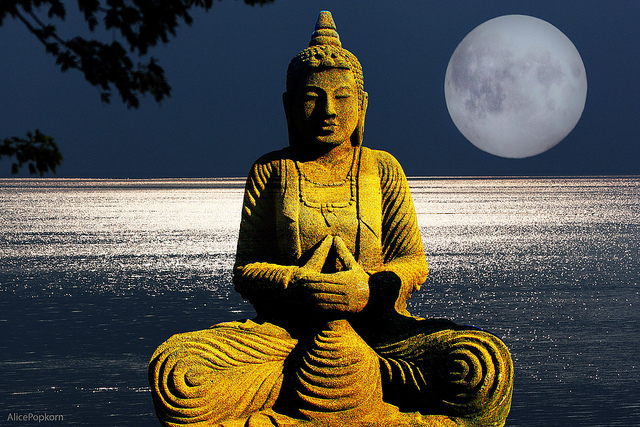
    Buddha

    Happy almost 2013!

    It seems like just yesterday I wrote “Happy almost 2012!” before summarizing the top lessons from 2011.

    I’m not one for New Year’s resolutions, as I like to think that any moment is an ideal time to make a change, but I always appreciate looking back and recognizing progress and growth.

    The site grew by leaps and bounds this year, surpassing two million monthly page views. However, what I’ve found most exciting is the increased interest in contributing to the blog.

    Each month, I’ve received more submissions than the month before, but what inspires me isn’t the number of posts that people have submitted; it’s the honesty and passion that people have put into them.

    Ultimately, I think we all want more than knowledge; we want to know that we’re not alone, and we want not just to be helped, but also to help others.

    I’m proud and grateful that this is a space where we can all do both—where we can connect with each other based on our shared experiences and feelings, and can both learn from each other and share what we’ve learned.

    The top ten insights from posts written this year (based on page views and comments) include: (more…)

  • 10 Powerful Gifts to Give and Receive Today

    10 Powerful Gifts to Give and Receive Today

    “Each day comes bearing its own gifts. Untie the ribbons.”  ~Ruth Ann Schabacker

    Regardless of what holiday you celebrate, or how you honor it, there’s no denying this is an emotionally loaded time of year.

    We either remind ourselves how grateful we are for all the people we love, or we remember how much it hurts that we don’t have people like that in our lives.

    We either celebrate all our blessings, or we look toward the year to come, wondering if we’ll have more then.

    You may find yourself reflecting on last Christmas in awe of how much has changed for the better in just one year’s time.

    Or you may look back on the last twelve months wistfully, wishing things could be the way they were.

    We’ll all experience the holiday season in many different ways over the course of our lives.

    Whatever your unique situation this year—whether you’re in a growth cycle or working through feelings of loss—you have a lot to give and receive.

    5 Gifts You Can Receive Today

    1. Your breath.

    It’s one of those things we take for granted—the air that gives us life. We don’t even need to think about breathing; we do it automatically.

    Clearly we can appreciate that our breath sustains us, but it can do so much more. When we focus on breathing deeply, it can ground us, calm us, detoxify us, and even heal us.

    Breathe in. Breathe out. Look at your hands, your feet, the tip of your nose. Fully inhabit your body. You’re here. You’re alive.   (more…)

  • Choose Your Battles: Fighting Less in Relationships

    Choose Your Battles: Fighting Less in Relationships

    “A more peaceful way to live is to decide consciously which battles are worth fighting and which are better left alone.” ~Richard Carlson

    Have you ever been in a relationship that seemed more like work than fun? Where every day you seemed to have a new issue to discuss?
    Maybe it had to do with little miscommunications, or an ongoing dispute, or a difference of opinion that regularly complicated your daily interactions.

    Whatever it was, you always found yourself wanting to hash things out to get everything back to normal.

    Except that was normal—conflict, friction, and disagreement; you just held out hope that maybe it could change.

    I had a friendship like this a few years back. We really got each other, and that’s a big part of why we grew close.

    But we also got on each other’s nerves on a near-daily basis. In retrospect, I see that our two personalities came together to create something toxic.

    It was like the perfect storm of insecurities and and egos colliding; our collapse may have always been a matter of time. But I also realize we both created drama where it didn’t need to be.

    We made everything an issue.

    I’ve since learned that healthy relationships require a little discernment as to what’s a problem and what’s just small stuff; and that sometimes, the instinct to sweat all that small stuff is a sign of a bigger problem—that the relationship may just not be right.

    Not sure why so much annoys you? There could be any number of reasons. One of these problems may seem familiar, and one of these solutions may help.
    Problem 1:

    You’re harboring resentment or anger, but instead of expressing what you really feel, you pick at the little things.

    The Solution:

    Take some time to get to the root of your feelings. What’s really bothering you? Sure, those unwashed dishes and slow email responses are annoying, but what’s the bigger issue? (more…)

  • Relationships That Hurt: When Enough Is Enough

    Relationships That Hurt: When Enough Is Enough

    “Relationships are like glass. Sometimes it’s better to leave them broken than hurt yourself trying to put them back together.” ~Unknown

    There was a time when I was quite black-and-white with relationships. I either trusted you implicitly, assuming you’d never intentionally hurt me, or believed you wanted to cause me pain and questioned everything you did.

    Once you moved yourself into the latter category, there was no going back.

    Eventually, I realized I was limiting my relationships by not recognizing the grey area, where people are human, they make mistakes, and they need forgiveness and understanding.

    From there I swung the pendulum the other way—I trusted everyone. I refused to consider that someone’s actions might reflect that they didn’t truly care. And I stayed in a lot of unhealthy relationships while making excuses for people.

    I wanted them to care. I wanted to believe they valued me—that it only meant I was interpreting incorrectly if their actions seemed to suggest otherwise.

    But this is where it gets confusing. On the one hand, we often create a lot of meaning in our heads that isn’t really there. We may feel convinced someone intended to be rude, inconsiderate, or thoughtless when really that wasn’t the case.

    On the other hand, sometimes actions speak louder than words, and our interpretations may be accurate.

    Sometimes someone is knowingly hurtful or neglectful. We need to be able to recognize that or we’ll end up feeling disempowered, disrespected, and stuck.

    So how do you know when to stay and when to walk away? How do you know when you’re not reading into things too much, or being too paranoid, or making mountains out of molehills, but rather simply seeing things for what they are?

    After placing myself in this situation more times than I’d like to count, I developed a little three-question guide that’s helped me recognize when enough is enough. (more…)

  • 10 Ways to Be Who You Really Are

    10 Ways to Be Who You Really Are

    Girl Hiding Face

    “It takes courage to grow up and become who you really are.” ~E.E Cummings

    I was a pretty shy and very quiet kid, so going to school for the first time in kindergarten was a terrifying experience for me.

    After a short time, though, life brightened for me in my little elementary school. As it turned out, I loved learning and was a natural student. It was my bliss and often a respite from tumultuous home circumstances, the first place that I spoke out loud with confidence.

    Unfortunately, in the urban neighborhood where I lived, being smart meant being very low on the social hierarchy.

    For years I was oblivious to this, but as I moved in to pre-adolescence, I became acutely aware of how my peers viewed me and felt increasingly embarrassed about standing out as a stellar student.

    In one particularly memorable experience, I left the stage of a successful debate speech humiliated because I spied several of my peers mocking me in the audience during my delivery. This was a turning point.

    Because of an intense desire to win the approval of my peers, I began to actively make decisions to fit in rather than finding my joy by expressing who I really was. Although uncanny to me now, at times, I even would intentionally give the wrong answers on exams to bring my scores down.

    An occasional wrong answer didn’t change who I really was, but each decision I made to choose the approval of others, buried my true self deeper.

    The momentary gratification of being liked or winning approval could have had profound consequences. It certainly left me feeling empty.

    Every time we make small decisions to fit in, whether as a child or as an adult, we are burying a little part of ourselves down deep. This is really serious business, this denying of who we are.

    Make it a habit, and you risk becoming confused about who you really are. Just search online for books on topics like finding your true passion or how to get back to your true self to get a sense of the energy it takes to find pieces that are lost.

    In high school, I made a dramatic internal shift. Because of a newfound faith, I started to think about my future and felt that I had a responsibility to begin living my life in a way that reflected who I really was.

    This, rather than the approval of others became a driving force for me. Small decision by small decision, I began to act with the courage to be me. (more…)

  • How We Judge Others Is How We Judge Ourselves

    How We Judge Others Is How We Judge Ourselves

    “Judge nothing, you will be happy. Forgive everything, you will be happier. Love everything, you will be happiest.” ~Sri Chinmoy

    Oh yeah, this has been a big one for me. Huge.

    I’ve had a long, tedious journey toward recognizing that many of my thoughts were based in judgments of others. I didn’t realize it for years.

    I used to think I had strong opinions, was decisive, and able to “evaluate” others. I “got” people. I understood where they were coming from, their motivations, and why they said what they said and did what they did.

    I was a highly skilled definer, and an even better dismisser. Once I’d figured you out, my opinions were set in stone. I didn’t leave much room for changing those opinions either. Once I’d decided, that was it. You were what you were, according to me.

    With the benefit of time and hindsight, I’ve come to realize that since I was actively embracing a life of personal growth (or “working on my stuff,” as I like to call it), I somehow felt that gave me free rein to comment on what others were doing.

    I’ve also realized this is a common behavior in those of us on the personal growth path.

    When we are seeking change for ourselves, we sometimes feel we can comment on (or seek change for) the lives of others—about how they should behave, about what is acceptable for them, and so on.

    I had some inexplicable sense of entitlement that validated my judgmental parts in behaving this way.

    This criticizing behavior was, for the most part, restricted to my thoughts. Outwardly, I was generally a pretty nice gal—helpful, polite, and funny; and I had plenty of friends who liked spending time with me.

    Internally though, my thoughts could be pretty acidic. The judgmental parts of me were constantly criticizing, sizing up, dismissing, and diminishing those around me.

    I slowly started to become more knowledgeable about the internal criticizers as my awareness grew and my judgments diminished in response to some other issues I was tackling.

    While that was a huge relief, I started to realize just how much mental space and energy I was giving those internal judges. I was shocked to recognize just how bossy and mean they could be.

    I also began to wonder how much criticism these internal judges had of me. And man, was I amazed when I started paying attention. I realized I had a pretty constant stream of internal dialogue that was just as critical of me as it was of the outside world. (more…)

  • 4 Lessons About Love and Long-Distance Relationships

    4 Lessons About Love and Long-Distance Relationships

    “Distance means so little when someone means so much.” ~Unknown

    People tend to think long-distance relationships are one of the hardest possible ways of loving someone. I live in one: As a young European, I am deeply in love with my African boyfriend who pursues his career in Asia.

    I met my love about two years ago. After dating for a few months and sharing a wonderful time in an Asian country, we split up, as he had many doubts about things that seemed to separate us. At this point in time, our differences seemed to be too wide to merge them into a happy, long-lasting life together.

    This period was very painful for both of us. After one year—when I had already returned to my home country—he approached me again, explaining how wrong he was, and asking for a second chance.

    I didn’t know what this implied, but my heart was saying wholeheartedly yes as I was confident the differences weren’t stronger than our love. My heart felt embedded in his, and I still loved him deeply.

    So we started fresh again—this time with an extreme distance between us.

    The first months felt easy, as the bliss of being back together melted the distance away. Even though different time zones and tight budgets influenced our ways of communication, it only mattered that we had found our way back to each other.

    We missed each other dearly; but there was a certain peace with the reality. I could feel him being on the other side, thinking of me and being in love with me. This was all I could ask for.

    However, I knew this serenity would come and go; frustration could kick in eventually and challenge us. Around one year and two visits later, the downsides of the distance did indeed knock me off. I missed my boyfriend during days and nights, and fear crept in.

    What if this would lead us only to a big disappointment? (more…)

  • Reaching Out for Help When The Road Gets Rough

    Reaching Out for Help When The Road Gets Rough

    “Pain is not a sign of weakness, but bearing it alone is a choice to grow weak.” ~Lori Deschene

    There was a time in my life when I struggled to share my pain. I actually took great pride in how stubborn I had become. It wasn’t until I started looking within myself that these prideful attitudes started to shift. Actually, my whole life started to change.

    Once I started my journey of self-discovery, I no longer wanted to deal with my pain by myself. I slowly reached out to others and asked them for help.

    It was in asking for help and sharing my pain with others that I felt myself getting stronger. 

    I didn’t expect, however, that I’d need to ask for help repeatedly.

    In August of 2006, I was with a small group of people inside a airplane hanger that was used as a classroom to give instruction for skydiving. Worn-out couches and old beanbag chairs formed  a circle where we gathered. The décor on the walls was something you’d find in a local head shop that sold 60’s and 70’s paraphernalia.

    A positive vibe filled the room, as a young instructor prepped us on the safety procedures needed for jumping out of the plane.

    It had been sixteen years since I had made my first jump. When I shared this information with the instructor, she asked me, “What took you so long to come back?”

    I didn’t respond out loud, but simply smiled. I wasn’t brave enough to explain why I had come back this time.

    Initially, I jumped in the fall of 1990 as a way for me to turn my life over to  a higher power; that jump marked the beginning of my inner journey.

    Skydiving had helped me change my life from despair to hope. For me, it wasn’t about seeking adventure or adrenaline; it was about letting go and finding myself. I had no intention of making a second jump.

    But I eventually discovered that my first jump was only the beginning of my journey.

    Why did it take me sixteen years to come back? Pride and stubbornness kept me away. I didn’t want to admit that things in my life had become difficult. When I did, I felt that I needed to return to skydiving to help me, once again, let go. (more…)

  • Stop Overextending Yourself to Please Others: 6 Simple Tips

    Stop Overextending Yourself to Please Others: 6 Simple Tips

    “Sometimes the wrong choices bring us to the right places.” ~Unknown

    In a span of one month, my beloved little red Toyota catches on fire, burning to a molten blob; I land in the emergency room with a ruptured disc after lifting a child out of her wheelchair; and I try a do-it-yourself hair highlighting kit, which leaves me looking, well, think Phyllis Diller.

    I feel confused. I have tried so hard to do all the right things. How could my life have gotten so off track?

    I am in the grip of a disorder some people might call manic compression—trying to do everything perfectly in an attempt to please everyone around me. Some of my friends seem to be enjoying life, but I’m definitely not.

    I flounder, looking for answers to this dilemma, without the vaguest inkling that I have created the situation. I call friends and bore them with my woeful tales of angst and doubt. I wake up every morning at 3:00 to wrestle with my pillow for an hour and then, as a last resort, drag my journal off the nightstand and into my lap.

    Most of what I write in that diary is page after page of questions with the same themes: Why are these bad things happening? How can I stop feeling so befuddled? Will I ever sleep again?

    You know how sometimes life sends little presents just when we need them. I was having lunch with a friend who was excited about sharing a story she had just read. She reached into her purse and pulled out a copy of Autobiography in 5 Short Chapters by Portia Nelson:

    I

    I walk down the street.
    There is a deep hole in the sidewalk.
    I fall in.
    I am lost. I am helpless.
    It isn’t my fault.
    It takes me forever to find a way out. (more…)