Tag: relationships

  • How to Overcome Envy So It Doesn’t Poison Your Relationships

    How to Overcome Envy So It Doesn’t Poison Your Relationships

    “Enjoy your own life without comparing it with that of another.” ~Marquis de Condorc

    I struggled to offer a tight smile to a friend who had achieved a life-changing career break.

    Although I was thrilled and excited for my friend, I was sad and disappointed in myself. I, too, had worked hard and waited patiently, but unlike my friend, my work and my wait continued, unacknowledged and unrewarded.

    At first I didn’t notice I had been bitten by envy. But its invisible poison infected my bloodstream, polluting my future interactions with my friend. I was guarded, afraid of being hurt yet again by yet another one of my friend’s successes.

    Each conversation rubbed between us, creating a visible strain in our relationship. Over time, I started to avoid her. She couldn’t understand why I was pulling away. Envy was killing our friendship.

    For years, I sat on the other side of envy. I was the one who friends showered with praise while hiding the sorrow in their hearts.

    One particular girlfriend who was equally talented and creative felt stuck in a dead-end teaching career that seemed to restart each two years at a different school, preventing her from the security of tenure.  She devoted all her free time to her students, sacrificing her dreams of writing and art. Finally, after yet another lay off, she crumbled into depression.

    She glanced over at me and felt the sting of envy. Here I was, married with children, both with publication credits and art exhibits, and a teaching gig to boot. Why couldn’t she have a little bit of what I had?

    At the time, I didn’t know how to comfort or encourage her. Envy festered until it overpowered the love we once shared. The friendship dissolved in bitterness and misunderstanding. 

    Now, years later, as more and more of my friends enjoy greater and greater success, I understand what my estranged friend must have endured all those years. If I didn’t do something, envy would kill off my friendships just like it had done years ago.

    But how do you treat poison envy?

    It’s taken a lot longer to learn how to turn away from envy, but here are the steps I used to free myself from its bondage and transform my life.

    1. Stop comparing yourself to others.

    The first step to overcoming envy is to stop focusing on what others have and face the truth about yourself.

    As long as I was staring at my friends’ successes, I could not see that the dissatisfaction I felt had nothing to do with their victories and everything to do with my own perceived losses.

    Once I turned the mirror away from others, I discovered I was not where I wanted to be in life. The envy I felt toward the success of others only masked the disappointment I felt in myself.

    2. Stop judging.

    Judgment, even self-imposed judgment, divides and conquers the soul into tiny squares designed to punish. I was stuck, unable to leapfrog to the next level of success, which was bad. My friends, on the other hand, were standing at the top of the mountain, which was good.

    I didn’t understand that good and bad are relative terms. Without them, things just are.

    Once I stopped judging myself, I was able to accept where I was. It may not have been where I wanted to be, but I was no longer angry about it.

    3. Start seeing things clearly.

    With no one to blame, I was forced to accept responsibility for where I was and how I got there.

    Without the veil of envy, without the mirrors of comparison, without the torture of judgment, I saw the truth clearly: I was not where I wanted to be because I was not who I needed to become.

    I had the education, the work experience, and the job skills needed to get promoted, but my attitude of entitlement kept me sidelined. It was only in realizing I was no one special that my humility allowed for my true light to shine. Others took notice of the internal change, and I was promptly promoted to the job I had been craving.

    Once I stopped comparing myself to others and acknowledged the truth about myself, the damaging effects of envy melted away. I was no longer pitted against my friends.

    Now I enjoy the blessings others have been given without the shadow of self-pity. And I am able to champion their success even if our blessings our different.

    I start each day anew, focused on my journey, no longer derailed by the journeys of others. I keep my friendships intact, even flourishing, without the bitterness of jealousy or the darkness of sorrow or the strangling voice of defeat.

    You, too, can treat the poison envy in your life. Start by turning the mirror away from others and toward yourself. Stop judging your life by impossible standards. See yourself clearly for the first time: a wonderfully flawed human being with passionate goals.

  • Recognizing and Overcoming the Fears That Make Us Settle

    Recognizing and Overcoming the Fears That Make Us Settle

    See the Light

    “Fear, uncertainty, and discomfort are your compasses towards growth.” ~Celestine Chua

    Settling feels awful. Take it from me—for the past few months I’ve been holding the Scepter of Settling in both my personal life and my business.

    And it hasn’t felt good.

    The other morning, as I sat waiting in LaGuardia Airport to board a plane for a three-day intensive business retreat in North Carolina, I had this sudden, radical a-ha! moment in which pieces of my life, both personal and business, just clicked into place.

    Have you ever had that happen to you?

    I realized I was settling in my personal life by accepting a relationship in which I was getting so much less than I wanted, and I was settling simply because I was afraid I couldn’t have more than I was currently getting.

    There is a part of me that feels slightly embarrassed to admit that I was settling because of this deep fear that I couldn’t possibly have what I wanted from a partner, because it’s been so long since I have.

    I was also settling in my business by continuing to work with a client who I bent over backward for again, and again, and again, who still always wanted more. I was settling by compromising myself and the way I work just for a few thousand dollars. I was afraid to trust that I would be absolutely fine without that money.

    Does any of this feel familiar to you? 

    • You’re settling for friendships where you don’t feel supported, where it feels like it’s rarely “about you,” or where you have to hide or make parts of yourself smaller.
    • You’re settling for intimate relationships where you’re not seen and heard the way you want to be, or can’t show up authentically.
    • You play small in your family of origin, having to dumb down your success or your inner “shine” because there are stories about who you’re supposed to be or what you’re supposed to do, or you might “out-shine” a family member if you really show your brilliance.
    • You accept more than your share of work, work longer hours than you want, get paid less than you want, or work with people for whom you feel like you’re compromising yourself.
    • You make or have way less time for yourself than you like—you put off self-care, rest, good food, and exercise because there’s not enough time, money, or support.

    In her amazing book Daring Greatly, Brené Brown talks about a marble jar that her daughter’s teacher used in the classroom.

    Every time the class collectively did something good, the teacher put a few marbles in the jar. When they misbehaved, she took a few out. When the jar got to be full of marbles, the teacher threw a class party.

    Brown talks about relationships in this context. Whenever we have a choice of attending to our partner, paying attention to them or their needs, seeing them fully and hearing them—showing up for them and our relationships—it’s like adding marbles to the jar.

    And every time we turn away from our partner, choose to walk by instead of asking what’s wrong, avoid getting involved, turn away from the work of connecting and feeding emotional intimacy, marbles come out of the jar.

    The last few relationships I’ve had were empty jars, with the occasional lonely marble rolling around desolately. I was getting sick with the settling—literally and figuratively. 

    And it was impacting my business, where I found myself also settling in ways that were completely fear-based.

    As I sat working just after dawn at LaGuardia Airport, getting ready to take three days for myself at a mastermind and business retreat, it hit me.

    I’m finally ready to let go of what hasn’t been working, and the fear, and make painfully blank, open, empty space for what works, what feeds me.

    I’m holding out for a full marble jar.

    Are you settling anywhere in your life? Does it feel awful, sad, frustrating, exhausting?

    Whether you’re settling in your friendships, your relationships, your work, your family, or your self-care, settling feels terrible and it’s bad for you, for your work, for your relationships.

    Here are a few questions to get you started thinking about where and why you’re settling.

    Grab a journal and a pen and get yourself a cup of tea. Light your favorite candle. Get comfortable. Dedicate this space to feeding yourself and filling that marble jar.

    Closing your eyes, think about the areas of your life—your work, your love life/partnership, your self-care, your friendships…

    Open your eyes and write each question. Then just start writing, without censoring or editing.

    1. Where in your life are you settling for less than you want and need? Write out each place and how you’re settling.

    2. Why are you settling? What’s the fear behind it? For instance, I found myself settling in a personal relationship because I had a deep fear that I couldn’t have what I wanted, so I thought I might as well settle for what I could get.

    3. What do you fear would happen if you stopped settling?

    4. What is a new belief about what’s possible for you that you’d like to think about working toward?

    5. What would the first small step be if you were to act as if this belief were true?

    We do this work in tiny steps so that they’re achievable and sustainable. Here’s to smashing the ways we settle.

    Photo by Jonathan Kos-Read

  • How to Improve Your Relationships and Make a Kinder World

    How to Improve Your Relationships and Make a Kinder World

    kindness

    “If you propose to speak, always ask yourself, is it true, is it necessary, is it kind.” ~Buddha

    I once attended a lecture given by a world-renowned expert on post-traumatic stress disorder. The lecture made two points that I have never forgotten. I call them “brain tricks.”

    1. Given a choice, our primitive brain will naturally select for the negative. It’s a survival thing.

    2. When in crisis, the part of our brain that conceptualizes time and space goes off line. In other words, our brain increases the urgency of the problem by making us think the crisis will never end.

    Fortunately, these tricks, while at times necessary to protect us, are the activity of our primitive mind and we do not have to be at the mercy of them.

    Through awareness and a desire not be reactive, we can shift to our more evolved brain and get an accurate perspective, enabling us to respond in a more equitable manner.

    I’m concerned that we may be unknowingly generating those “brain tricks.” There seems to be a strong movement toward trolling for what’s “wrong” on just about every level. It appears that popular culture’s collective brain is a giant reflection of a society in crisis.

    We live in a reactive world that would choose to focus on what is wrong rather than what is right, even when there is so much that is right.

    The term “snarky” has become an attribute to be admired. Being witty at someone else’s expense can leave us with a feeling of authority and control. Egos get a boost and identities get clarified when what we disagree with gets isolated.

    However, problems arise when this penchant for sarcasm, cynicism, and criticism takes a leap into our relationships.

    I believe this sanctioned attack on others is one of the primary reasons generalized anxiety is on the rise and long-term relationships are on the decline.

    There is a better way to strengthen egos and that is by embodying the art of common courtesy. Wouldn’t it be sweet if being kind and thoughtful was the “new” witty—the new identity booster and clarifier?

    Common courtesy begins with positive regard for all humanity. Though we may have differences, we have more similarities.

    Because our brains naturally select for the negative, we have to train our minds to proactively look for the positive and for what we have in common.

    Respecting others is an offshoot of positive regard. It’s not flattery, nor is it following orders.

    It is honoring people’s right to be themselves, along with their beliefs, and the way they want to live their lives. It requires empathy, not necessarily agreement.

    Treating a person as less valuable or worthy in any way shows disrespect and leads to conflict, both inward and outward. It is false pride to feel good when treating someone with disdain.

    Common courtesy shows you can look beyond yourself. It demonstrates caring, generosity, good will, and the valuing of others.

    I learned my lesson not long ago while out to dinner in a nice restaurant with my family. We were having a delightful evening, enjoying our food, and discussing plans for a possible European vacation.

    My two sons expressed an interest in going, but were having trouble seeing how their university schedules could accommodate a three-week vacation. One son was particularly snarky in his communication.

    I immediately got on the defensive, and returned his snarkiness with my own.

    “You know,” I said, “you can be really difficult to get along with.” As soon as the words left my mouth, heaviness spread throughout the room. The night was ruined.

    I felt both shame and anger. In my mind I determined we would not be spending any money on a European vacation, at least not one that included ungrateful sons. I went home and to bed, but not before my husband told me I had been too harsh.

    The next morning I woke up with a guilt hangover. I thought deeply about the night before. The light went off in my head when I asked myself how I would’ve felt if someone had told me I was hard to get along with.

    Ouch! That would’ve cut deep, and I said those words to someone I love very much. In fact, I love him so much I was planning an expensive vacation so that his mind could be expanded. Ironic, huh?

    The truth is, I could’ve conveyed my frustration in a more courteous manner. For example, I could have said:

    “I can see this is going to be complicated. Why don’t you give it some thought and we can talk more about it next week when we have more information.”

    Immediately, I texted him, “Please forgive me for the harsh words I said to you last night at dinner. I realize they were hurtful and it hurts my heart to know I caused you pain.” I heard back from him in seconds: ”No worries Mom. I love you.”

    Here’s what I’ve learned about building a kinder world through common courtesy:

    Greet others.

    When you make eye contact with anyone, say hello, smile, or wave. Everybody wants to be recognized, included, and acknowledged.

    Say please and thank you.

    Being polite sends a safety message. It shows positive regard and respect.

    Be courteous in conversation.

    Ask people questions about themselves to show a genuine interest in what’s important to them. Then fully listen. Show people you value and respect what they say, even if you disagree with them.

    Apologize.

    Admit when you are wrong and apologize.

    Build people up instead of tearing them down.

    Let people know what you admire about them. Give genuine compliments freely. Tell them you believe in them and share their good qualities with others.

    Go the extra mile.

    Show people you care by going out of your way to perform acts of kindness.

    The bottom line is: Follow The Golden Rule. It is no surprise that some form of it is found in every culture; it is a universal law. Treat others as you would like to be treated. It’s that simple.

    If we don’t like to be criticized, we shouldn’t criticize others.

    If we don’t appreciate someone rolling their eyes at us, we shouldn’t roll our eyes at others.

    If we don’t want people mocking us to others, we shouldn’t mock other people or gossip.

    If we are tired of people not respecting our values and choices, we need to respect others’ values and choices.

    If we don’t want to be the target of someone’s snarkiness, we need to stop being snarky ourselves.

    In the immortal words of Mahatma Gandhi, “Be the change you want to see in the world.”

    Photo by Ed Yourdon

  • What We Need to Do Before We Can Have Happy, Loving Relationships

    What We Need to Do Before We Can Have Happy, Loving Relationships

    “Once you have learned to love, you will have learned to live.” ~Unknown

    Ever since I was a young girl, relationships have fascinated me, particularly romantic ones. I had beautiful fantasies of my perfect partner appearing and completing me. We would fall in love and live happily ever after.

    As a child, I believed that being in a romantic relationship, and especially being married, meant lasting happiness. All the love and joy I would ever want or need would be mine when “the one” arrived. Daydreams of my soul mate filled my tween brain.

    This fairy tale view of relationships didn’t disappear when I came of age, but followed me into adulthood when I married a man that I knew in my gut simply wasn’t right for me.

    At first, it was exciting to be someone’s wife and to have a husband, but my high expectations quickly created tremendous disappointment for me. We both demanded that the other change, and the relationship quickly became one filled with resentment and contempt.

    After struggling to “work on” our relationship and seeing no improvement, we separated and eventually divorced. I was devastated and bitterly blamed him.

    He was the “bad guy” and I was the innocent victim. I lacked the awareness necessary to examine my own actions and learned nothing, except to fear entering into another relationship.

    The only thing that I knew for sure was that I never wanted to go through such a painful experience again.

    I had no idea that I had any power at all. I felt like I was at the effect of what others said and did, and I was so easily wounded. The world of men and relationships felt very scary and I was apprehensive when I re-entered the dating world.

    In what I now understand was an attempt to protect myself, I made terrible judgments and generalizations about relationships and men.

    My reality reflected these fearful thoughts, and in the year following my divorce I dated men who were perfect examples of the stereotypes I adopted. Even though I had left my marriage, nothing had truly changed and, in fact, through my own fear had grown worse.

    In spite of this, having a relationship with a man still remained a strong desire. I certainly didn’t want to repeat the past and I refused to settle for just any romantic relationship. With absolute resolve, I vowed that I would have a healthy, happy, close, and loving relationship.

    This became my intention, and I became passionately committed to learning and doing whatever I could to get me there.

    For over a year I studied the ways in which romantic relationships worked and how they could be close and loving, but was discouraged and frustrated by most of what I read. It seemed that most of what I learned required the effort of both partners.

    While I understood that a happy, healthy relationship takes two people, I knew I had to first work on myself.

    My question became: “What can I, and I alone, do to create a close, happy, and loving relationship?”

    As I studied over the next few months with this new distinction, I noticed something unexpected and wonderful unfolding.

    I had shifted from how to find the right man and get him to give me love and make me happy, to learning who I had to become in order to create and maintain a close, loving relationship.

    This was a brand new way of looking at things and a brand new way of being that was incredibly exciting for me.

    For the next two years, I learned as much as I could and put into practice everything I was learning. It yielded radically different results than I had ever gotten before. All of my relationships greatly improved, including, and especially, my relationship with myself.

    My relationship with myself had always been love/hate. Now, as I became more and more aware that I truly am empowered to create loving relationships as well as a wonderful life, I began to see myself and others in a new light.

    My new understanding of myself and others became: We are all infinitely and eternally beautiful souls, intrinsically worthy of love.

    Each one of us are intrinsically worthy of love, not because we are entitled to other people giving it to us, but because we are love. We are all whole and need nothing outside of ourselves to complete us. These words weren’t new to me, but for the first time I understood and felt the truth of them.

    For so long I had been trying to force others to give me love, manipulating them, making demands, giving with an expectation of receiving in return (also known as barter), and it only led to frustration and resentment.

    It struck me all at once that everything I had learned over the course of three years was truly about giving love joyfully from a place of being love. Wholeness was the name of that game.

    I was no longer concerned with trying to find the perfect man, fix relationship problems, or change anyone else.

    Although I’m not perfect and never will be, I’ve had increasing moments of awareness and clarity when I was able to keep the focus completely on my self. Not focused on my “needs” and how I can get those met by others, but what I could do to become more whole and full of love so that I’m more focused on giving than taking.

    Interestingly, my original intention in studying relationships was only to improve my own chances of having a good, lasting relationship with a man. It was my hope that I would learn some tricks to get a good man interested and then to get him remain attracted enough to me to shower me with gifts, affection, attention, and praise.

    What I have learned and continue to learn is infinitely better.

    What I’ve learned is how to use the resources that lie within me, that lie within each of us, to be the kind of partner that naturally has a close, loving, happy, healthy relationship with her mate without always “working on it.”

    As most of us can attest, this kind of struggle never works long term. I learned to grow through my experiences in my relationships, become more loving and more whole, and give from a place of joy, which effortlessly creates a close, loving, happy, healthy relationship.

    This journey to “love enlightenment” has been amazing so far, with many ups and downs, as I’m sure it will continue to be.

    The wisdom I have gained has been invaluable for creating positive change not only within myself and in my relationships, but in my entire life. I have learned to be a better partner for my partner, for myself, for everyone I know and meet, and for the world at large.

    The goal is not to reach some destination, but to understand more about what it means to be whole. Perfection isn’t possible, but perhaps your intention could be to become more aware of what you are giving and being, and let it be love more and more of the time.

    In short, through your relationships with others grow more into the truth of who you are at the core of your being: you are love.

  • Dealing with Disappointing Relationships: Change Your Expectations

    Dealing with Disappointing Relationships: Change Your Expectations

    Disappointed

    “If you can’t change the circumstances, change your perspective.” ~Unknown

    Sometimes it feels as if you are completely in control of your life, but when it comes to relationships there’s always the other person.

    In a relationship, you can’t be the puppeteer. People have their own emotions, behaviors, actions, beliefs, scars, wounds, fears, dreams, and perspectives. They are their own person.

    How often have you wanted a relationship to be something that it was not?

    How many times have you said a certain word or phrase in order to spark a specific reaction?

    How much do you expect from this person? Do they fail you each and every time?

    In healthy relationships there are certain expectations, like being treated well or being respected. Yet sometimes we find ourselves in relationships that don’t mirror what we anticipate to happen. We may feel hurt or used.

    We cannot expect other people to treat us as we would treat them. We cannot assume anything or force change upon someone who clearly demonstrates he or she is stuck in his or her own way.

    With eyes full of clarity, I am capable of changing the relationships in my life by adjusting my point of view.

    I call my father a sperm donor. He gave me life but never showed up in my life.

    My friends at school never knew I had a father because they never saw him. He missed all of the concerts and sports games. For the majority of my life, we didn’t talk. He didn’t acknowledge me—no birthday calls. I had no idea where my dad lived. Some days I was not sure he was still alive.

    In high school, my dad limped back into my life. I could stop by his apartment and visit him when I wanted to. If I called him, he would pick up the phone. Things were changing between us.

    Blindingly bright, his true colors revealed themselves the night before my high school graduation when I called to make sure he was coming. He said he couldn’t attend because he had to drive a friend to the airport. Cabs exist. His friend could have used one. I was angry, sad, and most of all, hurt.

    Rejection from my father has been the hardest thing for me to accept. It is not easy to grasp the idea that someone who once loved me, adored me, gave life to me could turn his back and walk away so easily.

    I could no longer take the feelings of disappointment.

    These feelings were a direct result of what I was expecting from him:

    • Assuming he would respond to things as I would.
    • Assuming he would care like I do.
    • Assuming he thinks in a similar way as I do.

    I was living in a fantasyland of my hopes, dreams, ideas, beliefs, expectations, and assumptions.

    I was hurting myself most.

    For the protection of my emotional body, I changed my perception from what I hoped would happen to being open to experience whatever actually happens.

    This shift didn’t occur immediately, but by following the five steps listed below I was able to come to peace with the type of relationship I have with my father.

    1. Be aware of reality.

    Acknowledge the other person’s behaviors. Look at patterns and how they regularly treat you. Remember the feelings you had in the past. Don’t be fooled into believing things are different from how they are.

    2. Stop manipulating situations.

    Many times we yearn for specific responses, like validation and approval. When we do not receive what we want, we may speak or behave in certain ways to try to elicit the desired reaction.

    This type of behavior leaves us feeling empty when the other person does not react the way we hope they would. Remember, you cannot change anyone; it is up to them to change.

    3. Let go.

    Throw expectations and assumptions out the door. Release the hopes, wishes, and dreams that things will change by detaching from the ideas.

    Get out of the fantasy world by not hooking into the thoughts of what could be. Keep your mind from running into the future. Remain open to all possibilities by staying in the present moment.

    4. Focus on those who love you.

    It will be easier to follow the third step if you remind yourself of those who are there for you. They continue to be there because they care about you. Focus on people who make you feel loved, connected, cared for, and worthy. Reach out to them and reconnect.

    5. Learn to love yourself.

    Provide yourself with what you are yearning for (compliments, compassion, or encouragement). Only you know what you truly need.

    Realize each moment you are being the best you at that time. Build self-confidence and strive to eliminate any doubts you have about yourself. When you feel shaky or alone, look in your eyes in the mirror and say, “I love you.” Nurture yourself. Feel the love you have inside of yourself.

    Let go of your expectations of people and see how your relationships change. And if you don’t feel differently about it or if it’s not benefiting you, you can always walk away. Your emotional state matters most. You cannot control other people, but you can make yourself happy.

    Photo by Don

  • The Difference Between Setting Boundaries and Shutting People Out

    The Difference Between Setting Boundaries and Shutting People Out

    Fence

    “The most important distinction anyone can ever make in their life is between who they are as an individual and their connection with others.” ~Anne Linden

    After growing up in a household with extremely loose emotional boundaries, I soon learned the importance of establishing my own personal boundaries as quickly and clearly as possible. And, in recent years, I have even managed to become more eloquent about when and how to set them.

    I grew up in a home with my grandmother, mother, and older sister. Grandmother was an immigrant from Hungary who came to America right after WWI. Her husband also came from Hungary a few years later, opened his own butcher shop in New Jersey and died right before the wedding of their only child, my mother.

    My grandmother moved into my mother’s newly established household right away. Although she contributed to expenses, and eventually childcare, she had a very strong personality and tended to dominate the emotional climate of the household, sometimes with a mere look or a snide word. 

    Because of this, my mother felt habitual anxiety and quiet judgment, while my father eventually left.

    Throughout her failing marriage, my mother made the best decisions she could for her family, in the midst of my grandmother’s steadily voiced opinions, while my sister and I acted as the emotional sponges of the household, as all children do.

    And as the younger sister, I had three strong, female personalities trying to temper uncertainty with an attempt to control whatever and whoever they could, resulting in an invasiveness that seemed to soak into my skin.

    Nevertheless, I established an underlying anxiety with a quietly strong and outwardly mellow personality.

    But whenever I became slightly aware that a person around me crossed into my zone of emotional intrusiveness, I would institute a quick and firm boundary, be it a mean word or complete disregard, often at the expense of kindness. 

    At times this seemed necessary and effective, and other times, the solid and immediate boundary was slightly aggressive, mostly pointless, and my anxiety turned inward to anger anyway.

    More often than not, the person I was dealing with had made a simple error in judgment, or I perceived the situation incorrectly.

    Nevertheless, I continued on this path until my mid-thirties when I was introduced to Buddhism and the idea that empathy, kindness, and the credence of fundamental goodness were paramount to living an authentic life.

    Although I thought my quick reactions and unyielding boundary setting for myself were based in genuineness, I was wrong.

    Rigid boundaries were my way of trying to swiftly rid myself of uncomfortable feelings, like anger and fear, often before I had all of the information, and never in a way that evoked compassion.

    As it turned out, I was unequivocally avoiding the present moment and trying to make it less prickly, while I focused on asserting my great, big self. It turned out to be mostly about me, not much about reality, and nothing about kindness.

    Overall, I believe that being assertive is a useful personality trait. But, when unnecessary assertion of self became my go-to reaction in daily situations, it began to feel somewhat silly and clearly was not the person I intended to be.

    Asserting yourself when all that is required is kindness and compassion is not assertiveness at all;  it is selfishness.

    Today, my initial motto in most situations that bring me discomfort is, “Do no thing.” This is not the same as passivity, because it is followed up for four additional habits that allow my values of kindness and compassion to be more in line with my actions and reactions.

    1. Do no thing.

    I was a witness to 9/11. When I saw the buildings go down and looked up at the Empire State Building from my office window, I knew that structure was the next likely target and an immediate, quick decision needed to be made.

    The directors at my office told us to “stay put” in the building, because they believed it was even more dangerous on the street.

    So we sat for the next two hours, and no other planes crashed into the city. In that moment of clear and present danger, the best thing that could be done was nothing and to just reside in the moment as it unfolded.

    I have rarely been in personal situations that needed to be handled immediately. Nevertheless, more often than not, I did handle every social exchange immediately, just to avoid the anxiety of not taking care of that situation.

    I spoke from an impulsive reaction and acted in a similar way. Many times, this resulted in regretful words or behaviors as well as hurt feelings. If only I had done nothing, waited to react, then decided to respond when the words and the time were right, I might have felt more authentic and better more often.

    2.  Self-ish may be too selfish.

    When our only concern is the skin on our backs, we neglect to see the vast picture, including those around us and the earth. In fact, we only see a very minute part of the picture, our own selves.

    When we respond to a situation as a whole, we are not sacrificing ourselves; in fact we are becoming our authentic self and surrendering to the whole of the circumstances, which is closer to the truth.

    3. Clarity can be gentle.

    Most reactions happen with only part of the information. One helpful way to gauge when and how to set a boundary, and avoid shutting the world out, is to ask further questions such as, “Did you mean to say that in this way?” or, “Do you intend to give this inconsiderate message?”

    When the answer is “no,” then you and the other person can communicate and find the real message, a common ground and hopefully mutual, social fulfillment.

    4. Humility goes a long way.

    When we feel sad, bad, or scared, we often blame the behavior of someone else and establish our emotional boundaries around that censure. But most times, this seemingly thoughtless or intrusive person is rarely intending to hurt us, and simply doing the best they can with what they have in their own social climate.

    In fact, whatever anyone else does or says usually has very little to do with us.

    We sometimes believe we are the center of the universe, the star actor in our own dramatic movie. We worry about what others think of us, how others treat us, and what we are getting from each situation.  Actually, we are just one of a few billion ordinary people who all want the same things like love, attention, and happiness.

    When we set boundaries with the realization that we make mistakes too, being kind is much easier. We hear it all the time: “No one is perfect.” Well, this includes us, and when we remember that, the behavior of others becomes less poignant to our ego, and we can act out of compassion rather than anger.

    5. “I’m sorry” is a perfectly perfect last resort.

    I use this one, and I use it often. I make mistakes in my interpersonal interactions and inevitably cross the emotional boundaries of others. Sometimes this happens to me daily.

    Mostly, the best I can do when I have crossed a boundary by saying an unkind word, disregarding the feelings of another, or snipping at my husband is to simply say, “I’m sorry,” and move on.

    When we finally realize that everyone is constantly just doing their best to live among other people, we have fewer resentments, less moments of anger, and can then have the emotional space to generate compassion instead of resentment.

    Photo by Bob Jagendorf

  • How Our Attractions Can Help us Learn to Complete Ourselves

    How Our Attractions Can Help us Learn to Complete Ourselves

    strolling

    “Sometimes the heart sees what is invisible to the eye.” ~H. Jackson Browne

    The first time I was stung with the notion of a soul mate, I was twelve years old. I had accompanied my mother to the wedding of a family friend. The church was blissful, the bride beautiful, and the way the groom looked at her had me thinking that one day this would be me.

    Almost instantly, I felt that I was already one half of the most beautiful love story, like a divine wave of love magically swept me into thinking that my soul mate, my proverbial “other half,” was waiting for me to find him so that we could live our lives together in wedded bliss.

    Of course, I was only twelve years old, which was just a little too young for that. But romantic dreams and fantasies soon followed, and they came and went as swiftly as two attractions I experienced as an adult.

    These attractions were powerful magnetic pulls, but unfortunately, the other thing they had in common was that both represented unattainable love. 

    It would have been impossible for these connections to transform into anything lasting. However, at their height, they lured me into a spiral of passion and longing for that sense of completeness that I thought only they could bring.

    The first of these attractions was to a man I met at the age of nineteen. A couple of years older than I, he was about to become an ordained priest and was in absolutely no position to be married to anyone but the church. Still, I was enchanted. He mesmerized me and piqued my interest in ways I didn’t understand.

    The second was with someone I met later. A free spirit who will, most likely, always want to make his life on the beach, he was not one for any type of commitment or responsibility. However, he liked me. And, I really liked him. To this day I feel happy to have met him.

    These men touched something in me, and each brought back my teenage belief in the existence of that proverbial “other half.” But both were also unavailable. If I would have actively pursued them, I would have dived into an emotional cesspool of heartache and drama. 

    So what was it then that made them so attractive? And why did they make me feel even fleetingly complete?

    I only found the answers to these questions later in life when I embarked on my journey back to Self.

    It was through meditation and self-reflection, imperative tools to my journey, that I slowly began to understand how these attractions were actually reflecting hidden parts of me.

    In other words, both these men in a way were indicative of my soul mate because they were pointing to parts of my true “other half,” my inner soul mate. They were pointing to aspects of my inner self. 

    As the first man touched upon, what was at the time, my underdeveloped spiritual side which held my need for prayer, meditation, and service to a higher power; the second man connected to another part of me—the part that was undisciplined, relaxed, and carefree, a part I always did my best to fight against.

    My heart and soul had picked up on something my brain couldn’t understand. These individuals were representing qualities within myself that needed my attention. 

    Through my journey, I learned a lot about these types of connections and, the more I did, the less I looked for anyone outside of myself to complete me.

    If you are struggling with a confusing attraction, unattainable love, or a complicated relationship that is causing you pain, yet you feel this person, in some way, completes you, I would take time out to self-reflect.

    Ask yourself what is pulling you the most toward this person.

    For instance, if the object of your attraction is a musician, could he or she be reflecting the musician in you? This is something you may wish to explore possibly through singing, learning how to play a musical instrument, or writing a song.

    If it’s not something musical, creative, or artistic, it could also be that they are pointing to an aspect of your sensuality—an underdeveloped inner energy like your inner masculine or inner feminine.

    For example, if you grew up in an aggressive environment where there wasn’t a compassionate, nurturing presence, and as a result, did not develop those qualities within yourself, you may be attracted to someone else who has them in spades simply because you’re seeking balance.

    When we meet someone and feel a magnetic pull toward them, their purpose in our life may not be one of romantic relationship or even one of deep or long lasting friendship. And, certainly, it does not mean they will or can ever possibly complete us.  

    Nevertheless, these types of attractions are important and magical because even when we don’t realize it, to varying degrees, we are seeing ourselves in another person.

    These attractions come into our lives to guide us. Each, in its own unique way, directs our attention to the parts of ourselves we need to see the most. Then, once seen, we begin to experience true completeness—that sense of wholeness that can only be found within.

    And it’s only when we’re already whole that we can feel complete in a relationship with someone else.

    Photo by Tony Hall

  • 5 Ways You Attract Great People When You Like Yourself More

    5 Ways You Attract Great People When You Like Yourself More

    Friends

    “By accepting yourself and being fully what you are, your presence can make others happy.” ~Jane Roberts

    Several years ago, I was so unhappy with my harsh loneliness that I decided that I was going to try anything under the sun to build a social life and have friends that cared about me.

    I read all the books I could find and tried all the techniques they shared, but I still had to make a lot of effort to build friendships and hold my social life together.

    Then I started to learn and apply the principles of self-esteem.

    I used to think that I needed to be as extroverted as possible. It was exhausting, and people could see that it wasn’t really how I wanted to present myself.

    As a celebration of my uniqueness, I started behaving a little more like who I am—a little calmer and more interested in the depth of things.

    While I became less gregarious-sounding, I actually started making more friends, and more genuine ones; and the relationships with them were more solid.

    I was amazed at those results; I knew that self-esteem would contribute to my happiness, but never thought that being less of a gregarious person would improve my social life.

    When I met new people, I no longer talked about the trendy subjects that everyone was raving about. I talked about what I wanted to talk about. I expressed my unique perspective.

    People responded well; it gave them the chance to meet a human being who’s not afraid to express his genuine thoughts and opinions.

    Self-esteem completely shifted the way I interacted with people and made my social much easier to hold and develop.

    Here, I want to dig deeper and share with you 5 reasons why self-esteem can help you have a better, more fulfilling social life. When you have high self-esteem:

    1. You have healthy boundaries.

    When you like yourself, you no longer have to say “yes” when you mean “no,” and don’t have to make false promises, either. People love to be friends with those who aren’t afraid to say “no.” This strength of spirit inspires them.

    This character makes people see you as trustworthy. Everyone wants friends they can trust.

    When you preserve your self-respect and stand up for yourself, you keep more of your energy and value. If you have no boundaries, you and your energy get depleted.

    2. You’re naturally a giver of value.

    When you like yourself, you believe you have value to offer, so you naturally start to see abundance instead of scarcity. You realize that the world is generous, there is enough for everyone, and we can create even more that didn’t exist before.

    People can tell that you’re not one of those people who think they have to take value from others to have more.

    This instantly puts you out of the selfish category. People fear that they’ll end up with selfish friends, who are only there to take whatever they can and give as little as possible. That’s not who they want in their life; they want friends that like them for who they are.

    Liking yourself indicates that you don’t have any neediness, and therefore, you only hang out with people because you genuinely appreciate them.

    3. You know you’re not perfect, and you’re not for everyone; you appreciate your uniqueness.

    When you like yourself, you appreciate your uniqueness and have no problem with some people seeing things differently than you. You therefore celebrate your unique talents and opinions.

    When you appreciate your uniqueness, you tend to cultivate and grow it. That is exactly what makes you an interesting person to be around.

    For example, if you like Southern Italian cuisine, even if no one you know else does, you start to get more and more interested in it, which means you’ll start to know more about Italian geography, history, and world views. You’ll maybe even go there on vacation.

    People love being around others who are passionate about something; it inspires them to get passionate about their own interests.

    4. You’re cheerful and you can see the good in people.

    When you like yourself, you see the good in yourself, but you also see the good in others. This is an instant charmer! People are keen to know if you’ll appreciate who they are and what they have to offer to the world.

    When you have that positive energy within your own life, you start to project it on to others. First, your cheerfulness catches their attention; second, they realize that you’re not only optimistic for yourself, but for them as well.

    5. You’re not overly serious.

    Liking yourself means that you’re realistic and can recognize your imperfections, quirks, and mistakes. You know you can improve what you want but will never be perfect, and you’re okay with that.

    This means you’ll have enough confidence to poke fun at yourself. Other people recognize this, and know that they can have lots of fun around you, as you don’t take yourself too seriously.

    This also shows a side of you that is vulnerable and completely human. People get fixated on this on the spot because they recognize the same human vulnerability in themselves.

    Great people reserve a special spot in their life for people who can interact and relate without masks or barriers to hide behind—and that comes from liking yourself.

    Photo by Christos Loufopoulos

  • Encourage, Don’t Criticize; Help Instead of Trying to Fix

    Encourage, Don’t Criticize; Help Instead of Trying to Fix

    “You must love in such a way that the person you love feels free.” ~Thich Nhat Hahn

    When you think you’re an evolved and conscious woman and your partner tells you in no unclear terms that you’re “hard to be with,” it does a number on you.

    Those words landed like a well-aimed boulder, smashing the immaculate vision I’d created of evolving myself: an exemplary girlfriend who was “doing the work” to grow, to become generously loving, spiritually awake, and to wholeheartedly support and encourage her beautiful partner to open to his fullest potential.

    We met under messy circumstances. Both just weeks out of intense breakups and deeply embroiled in “processing” our respective experiences, I had a laundry list of emotional baggage to shed, patterns to break, and new nonnegotiable standards for anything and anyone I’d allow into my intimate space.

    I pinned the badges of Emotional Consciousness and the Evolved Feminine on my heart. I journaled, meditated, and prayed to the Goddesses: Quan Yin. Kali. Durga. Sati.

    And as I learned, dove deeper, sailed higher, I held fiercely to his hand. I wanted to do this together. I begged him: join me. Rise. Dig. Excavate your stagnant places.

    It’s the only way forward.

    I believed it. And I think, to a certain end, so did he.

    Then encouragement, collaborative growth, and tough love turned to jagged criticism. Instead of holding one another in our struggles, we sat on opposing sides of some false fence. I saw only his flaws and I believed I needed him to fix them.

    I saw his potential. He was brilliant, deeply spiritual, an intuitive outdoorsman and incredible teacher. He had promise, gifts to bring to the world. I wanted him to reach for it—without fear.

    And when he didn’t, when he paused to rest, when he stumbled, I saw failure. I saw an unwillingness to try. I saw a man gripped by fear, clinging to safety.

    I used those words.

    Why couldn’t he just work as hard as me?

    It’s easy to say this now. To see where my ardent desires for his evolution—to shed the excess weight and step into his highest self—so quickly became toxic. How it clouded my vision of who he was, in the moment, without the changes I thought necessary.

    Wrapped up in my own work and redefining of what it meant for me to rise, I transposed my journey onto his.

    All I saw was his shining potential, his shadowed present, and the moments he wasn’t up to the challenge. When the stones the universe hurled at his foundation bested him.

    And I ignored the brilliant light already standing in front of me, showing up in his wholeness, wounds and all. So he learned to try and hide it, for fear that I would criticize the tenderest parts I saw to be flawed.

    Nobody is perfect.

    The funny part is that I’m a coach and a yoga teacher. I write about every angle of perfectionism, I preach about loving your tender and dark parts, I read endlessly about the divinity of this eternal growing process.

    Stretching is uncomfortable. Peeling off the layers hurts. It’s a messy, messy adventure, this evolution. Blah blah blah. My brain knew all that. But that’s different from living it—and dammit if I wasn’t a full-on hypocrite.

    So… nobody is perfect. Right?

    His imperfections became my teachers. And as I crumbled, defeated in my epic pursuit of New Age Girlfriend Perfection, he taught me what it is to hold someone you love to their highest potential, with grace, love, and honor.

    Your journey is not their journey. It seems straightforward, but it requires a humble and gracious heart to resist imposing your own standards of evolution on another.

    Just because you’re in love with transcendental meditation and it has blown your ego to pieces doesn’t mean your partner will find it moving in the least. And while you’re deeply questioning the meaning of “self,” the qualities of nonattachment, or the truth of your suffering, your partner might be doing battle with self-acceptance. Or body image. Or what it means to be masculine.

    And that’s all perfect.

    See the potential. Celebrate the present. That’s where I went wrong; I missed the second step. And he gently, kindly told me that he wasn’t feeling seen. Really seen—in his work, in his accomplishments, in the steps he’d already taken.

    Spend more time celebrating the positive elements of how far your partner has already come—and then encourage them to keep going, because you see such beautiful potential and brightness within.

    Let go of perfect. You know from your own excavations that the work never ends. There is always growth, always evolving, always new spiritual/emotional/soulful expanses to be explored.

    When we think “highest self,” it sometimes feels like an end point—a “point a to point b” kind of goal. It’s not, and living from that mentality makes the experience of evolution feel hurried and time-sensitive.

    As Osho says so simply, “Slowly, slowly.” Let that be your mantra, and honor each slow step your partner takes. Even more so, honor the pauses. The deep breaths. They’re part of the work, too.

    It is not yours to push. You’re not his life coach. You’re not her personal trainer. You’re not Mom. Position yourself on the same team—encouraging, supporting, celebrating, yes. Demanding? No. That creates a power dynamic that eventually becomes toxic and corrodes the integrity of your relationship.

    When you find yourself becoming the teacher, check your motivations and rephrase. How can you encourage with tenderness and love?

    Your love will become freedom. You have this one role in your partner’s evolution: to hold the space, to fill it with love and safety and, simultaneously, the encouragement to expand—and your love will become their freedom.

    Freedom to be exactly where they are on the path and to take the journey that is right at that moment and in that time. Freedom to fall. To screw up. And to try again, with unflinching faith in their own potential.

    And that freedom, ultimately, is the only path to the highest self.

  • 7 Ways to Form Deep, Meaningful Friendships

    7 Ways to Form Deep, Meaningful Friendships

    Friends

    “To have a friend and be a friend is what makes life worthwhile.” ~Unknown

    I am fascinated by friendships.

    Not the acquaintances you see occasionally or the Facebook friends who wouldn’t recognize you on the street.

    I’m talking about your real people. The people who know and love the deepest parts of you. Their soul sees yours.

    They’re the kind of people you can talk to about how hard it’s been to meditate lately or what’s really going on in your marriage. They’re the kind of people you call for a ride when you get a flat tire and they’re the ones who affirm and support all the “weird” things about you that make other people uncomfortable.

    They’re your inner circle people. The heart of your life.

    I’m so fascinated by deep, meaningful friendships like these because for most of my life, I’ve had none, or only a very small few.

    I always had friends, good friends, who I spent a lot of time with. We celebrated birthdays, analyzed boyfriend behavior, and discussed the pros and cons of the haircut of the season.

    But did I regularly look these friends in the eye and think to myself: Yep, you are a sister (or brother) to my soul?

    No. I didn’t.

    Admit when your friendships don’t nourish your soul.

    It’s not that I didn’t love them. I loved (and still love) them deeply.

    It’s not that I didn’t feel supported and cared for by them. I knew those things were true, beyond a shadow of a doubt.

    And it’s not that I thought I was better than them. I don’t. Acknowledging that you’re different or that you want different things doesn’t make you a snob. It just makes you different.

    According to my belief system, on the deepest of levels we’re all the same and all connected. But we also live in a human world, where personality, lifestyle choices, and values determine the way we live and relate to others.

    So I don’t think we should beat ourselves up for acknowledging that some relationships bring fluidity and symmetry to our hearts more easily and quickly than others.

    Once I faced the fact that I had very few of these profound soul friendships, the obvious next question was: Okay, so where do I find them?

    The general refrain in my head was something like:

    “Yeah, universe, I get that we’re all connected. We’re all one. Uh huh. But over here, in my corner of Planet Earth, I’m not feelin’ quite so connected these days. Where are my people?”

    A booming voice from the sky did not appear. But this old saying popped into mind:

    When you pray, move your feet.

    So I moved my feet. I turned my Soul Friend Radar to full tilt.

    I prowled the corners of the interwebs and relentlessly picked the brains of former colleagues and college friends, all in an attempt to find my siblings of the soul.

    I was determined to find the friends who I could talk openly with about my spiritual beliefs and how they informed every decision I made.

    And I wanted these same spiritually-minded friends to adore my sometimes-12-year-old sense of humor, my introversion, and my devotion to Grey’s Anatomy (even though this last one makes no sense to most of them).

    Spiritual and down to earth. Introspective and prone to kitchen dancing.

    Sounds like the duality of a perfect friendship to me, which is why I give thanks every day that I’ve now found these kinds of friends. It wasn’t that hard, actually (more on that soon).

    These friends have helped me become so much more joyous, fulfilled, and all kinds of giggly.

    And it didn’t take weeks or months for me to know if they were the soul friends I’d been hoping for. I could tell almost immediately.

    How I knew my soul knew yours.

    Stories I’d never told anyone easily fell off my lips. Sadness I thought I’d healed appeared as a crack in my voice. Our laughter together seemed like a sound I’d been hearing for centuries.

    As much as our culture waxes on and on about romantic love, some praise needs to be sent over to the soul brothers and sisters who hold us up through it all.

    The love that comes from your own, custom-made community of kinfolk is vital. Nothing is more nourishing.

    And because I wish that for you, too, here are 7 things I did to find my spiritual soul sisters and brothers. Go forth and make friends!

    1. Consider the possibility that you may already have friends who feel the same as you.

    Choose a few of your nearest and dearest and tell them what spirituality means to you and why it’s a big deal in your life. They may surprise you with enthusiasm, genuine curiosity, or a super-passionate spiritual story of their own.

    2. Be proactive in meeting like-minded people.

    Have you always wanted to go to a sweat lodge? Or do you get giddy at the thought of learning how to make your own incense? Do you daydream about being Byron Katie’s next door neighbor?

    Type whatever search terms tickle your fancy into Meetup.com, select your city, and voila! You’ll have a long list of gatherings to choose from, and they’ll be full of like-minded people who are also looking to make new connections.

    3. Run a Google search for conferences, retreats, or workshops with a spirituality theme.

    Sign up for one. Like, now.

    4. Ask your existing friends, family, or co-workers you trust for some referrals.

    Try something like:

    “Hey, not sure if we’ve ever talked about this in detail before, but I’m reeeally into [insert a specific area of spirituality that floats your boat–could be meditation, yoga, chanting, Eckhart Tolle’s books] and I’d like to connect with some local people who share my passion. Any names coming to mind? Would you feel comfortable introducing us?”

    5. When you find one soul brother or sister, tell them:

    I need more people like you! How about we plan a fun dinner/bowling night/karaoke party and invite a bunch of awesome people you know?

    6. Start a book club that focuses on spirituality/personal development books.

    Stick flyers up at your favorite yoga studios and coffee shops. You can also try posting an ad in the classified listings of your local paper, on a site like Craigslist and also on social media.

    7. If you get jazzed up by affirmations and mantras, try these on for size:

    • Deeply fulfilling friendships are on their way.
    • Love comes in many forms. I am open to them all.
    • Thank you for the friends that are coming. I know already: they’re the best!

    And remember that saying: When you pray, move your feet.

    Your friends are on their way.

    Photo by Vinoth Chandar

  • Finding the Courage to Let Go of the Familiar and Make a Change

    Finding the Courage to Let Go of the Familiar and Make a Change

    Walk Away

    “Courage is the power to let go of the familiar.” ~Raymond Lindquist

    I’ve been processing my beliefs on courage since I turned 31.

    When I was in my 20s and teens, my idea of courage was that you fight until the death, never give up, be the one to say the last word, and always, always prove your point. And yet, I spent most of those years feeling unseen and unheard by my family and friends.

    I felt completely isolated and exhausted, yet I wasn’t expressing these feelings. (Not to say I hold regret; in my journey I had to seek and exhaust what didn’t work before fumbling my way to what could.)

    On the day of my 30th birthday, I found myself stuck in an unsatisfying four-year relationship, feeling so much pain, but I lacked the strength to move on. During those four years, I felt more and more isolated.

    Some research suggests that isolation is the most terrifying and destructive feeling a person can endure.

    In their book The Healing Connection, Jean Baker Miller and Irene Pierce Stiver define isolation as “a feeling that one is locked out of the possibility of human connection and of being powerless to change the situation.”

    I felt I had lost my self-respect and power, and that made me feel trapped and ashamed. As painful as it was to feel that way, it also felt familiar and comfortable. I was drowning with no life raft, holding my own head underwater.

    Part of me was staying because I didn’t believe I would feel worthy or complete until I saved my then-boyfriend and the relationship.

    At the same time, I wasn’t voicing my needs or feelings. I was expecting and depending on someone else to change instead of changing myself.

    Perhaps this is the gift when relationships don’t work out: We learn where we are not loving or accepting ourselves. Relationships bring to light the wounds we have yet to heal. For that, I am grateful.

    Once I recognized that the relationship had served a divine purpose—that the experience had happened for me, not to me—I was able to move on.

    I’ve learned that the experience of shame traps us in self-defeating cycles; we feel unworthy and powerlessness to change our life conditions.

    It also prevents us from seeing and representing our authentic selves. Then instead of airing it out and clearing the water, we muddy it further by keeping it all inside.

    Familiarity can be more comforting than the uncertainty of what will happen after we let go and jump into the abyss, but we have to ask ourselves what we value more: comfort or growth?

    Richard Schaub wrote, “Surrender is an active decision, an act of strength and courage, with serenity as its reward.”

    Perhaps courage, for me, meant not hanging on and pushing through, but accepting the hurt, surrendering the need for certainty, and making the active choice to break the silence and begin clearing up the water.

    I have learned that as unique as our stories may be, we all struggle with the same fundamental fears and we all lose our belief in ourselves. We all feel alone and isolated at times, and that leaves us feeling powerless.

    When we get stuck in toxic behaviors and relationships and we feel trapped in this vicious cycle, we need to ask ourselves, “What do we stand to lose by not changing?”

    For me, I stood to lose my authentic self, my integrity, my spirit, and the opportunity to live my best life.

    It takes courage to be completely honest with ourselves about what’s keeping us stuck.

    It took courage for me to accept that I was staying in an unsatisfying relationship because it was familiar, and even harder to acknowledge the shame and unworthiness I felt for being too scared to face the truth.

    To feel worthy and take control back, I first needed to feel accepted and connected.

    Sharing my story helped with that, and helped me release my shame. Shame and fear can hide in silence, but have a hard time lingering around when shared in a loving space.

    When we don’t tell our stories, we miss the opportunity to experience empathy and move from isolation to connection. Breaking the cycle ultimately means breaking the silence.

    To begin my healing, I started by cultivating a loving space within myself. I then stumbled into a Buddhist meditation center.

    I talked and cried with others struggling with the same challenges of fear and uncertainty. I took up yoga and explored the scary places of myself. I even I booked a trip to Thailand to volunteer and experience a new culture.

    I took to heart Red’s advice from “The Shawshank Redemption”: Get busy living, or get busy dying.

    To do that, we need to recognize that the pain of staying the same is greater than the risk of making a change, and it’s worth facing the fear of uncertainty.

    Who knows what the future holds, and perhaps that is part of the beauty of life. Each moment is fresh and new and maybe, just maybe, that’s what makes it so precious.

    What’s your idea of courage and how can you expand your pain into growth? How could you reframe the situations in your life to see them as happening for you, not to you?

    And if you are in a spot in your life where you feel scared to take a risk, ask yourself: what do you stand to lose if you don’t change?

    Photo by monkeywing

  • When Your Friend’s Happy News Fills You with Envy Instead of Joy

    When Your Friend’s Happy News Fills You with Envy Instead of Joy

    “It is in the character of very few men to honor without envy a friend who has prospered.” ~Aeschylus

    It’s crazy, isn’t it?

    Your best friend enthusiastically shares some big news. You say all the right things and display the right emotions. But inside you’re burning up. Instead for feeling truly happy, you’re filled with uncontrollable envy.

    It’s not that you’re a bad person. You really want to feel happy for your friend. You really want to get rid of these feeling of envy. But in the moment, you just can’t.

    When the Green-Eyed Monster Took Me Over

    A few years back my closest friend told me she was pregnant. I responded with appropriate excitement, said the right words, and showed the right emotions. But with each smile, word, and act of joy, I died a little bit inside.

    The first chance I got to be alone, I wept bitterly. It seemed so unfair that while I’d been trying unsuccessfully for over four years, she got pregnant within a month of getting off the pill. She wasn’t even sure if she wanted a baby yet!

    Bad as all this misery was, I felt worse that I had these feelings in the first place. She’s always been a good friend to me, and here I was, seemingly incapable of being happy for her.

    I tried applying conventional wisdom—replace my envy with gratitude, look at all the good things I had, and stop worrying about what I didn’t. But I found out the hard way that’s not how it works in real life.

    I was worried. I feared that if I didn’t get over this feeling I might lose a very good friend. Worse, I might lose myself and become a bitter, resentful person.

    It took quite some effort to finally come of the situation without ruining my friendship or letting it poison my soul. Here are some of the lessons I learned along the way:

    1. Envy is a strong involuntary feeling that you cannot get rid of by just wishing or willing it away.

    Nobody gets up in the morning thinking, “Today I’m going to feel unhappy for my friend’s happiness.” (At least, I hope not!) And yet, sometimes when we want something bad and find that our friend got it instead, it fills us up with envy. It’s not pleasant. It’s not welcome. But it’s there.

    Just because you don’t like it, you can’t wish or will it away.

    Research has found that thought suppression is often ineffective, and can actually increase the frequency of the thought being suppressed.

    In an experiment, researchers found that subjects asked not to think about a white bear paradoxically couldn’t stop thinking about it. Other studies explored this paradox further, and support the finding that trying to suppress a thought only makes it more ingrained.

    So first thing, stop trying to get rid of these thoughts. Accept them for what they are—normal feelings that arise in a normal human being.

    2. Nail down the source of your envy to let the person who made you envious off the hook.

    At first glance it may seem like the person who made you envious is the source of your envy. However, if you dig a little deeper, you may realize that the reason you feel envious has little to do with the person who brought out the feelings.

    In my case, the real source of my feelings was that I desperately wanted a baby. Sure, the fact that my friend got what I didn’t triggered the feeling of envy, but the source was my want and my fear that my want won’t be met.

    3. Let this knowledge lead you toward personal growth instead of resentment and bitterness.

    At this point you have a choice. You know that there is something you want but can’t have. Will you become resentful of those who can, or will you make peace with the way things are?

    I knew there was nothing that my friend could do about my inability to get pregnant. I also realized how illogical it was to expect that nobody in this world have a baby just because I couldn’t.

    It didn’t mean that I stopped feeling envious instantly; I still desperately wanted to have what my friend had. But separating the source of my feeling from the person made it possible to feel happy for her, in spite of my continued feelings of envy.

    Ever so slowly, I started to feel excited about her pregnancy and the opportunity to experience the miracle of a baby through her.

    4. Focus your attention on addressing the source of your envy, instead of trying to eliminate the feeling.

    Your envy is probably here to stay—for a while anyway. Instead of fighting it, address the source of it.

    I knew deep down that four years was a long time to wait to have a baby. But I hated to face it head on. When I realized how easily I fell prey to the green-eyed monster, I knew it was time to take my head out of the sand and deal with the issue.

    I started infertility treatment. My friend was right there by my side as my biggest source of support through this emotionally exhausting roller coaster. In turn, I was able to share with her the excitement of her pregnancy. In fact, it was a huge motivation to keep going on rough days when all I wanted to do was give up and curl into a ball.

    I finally got lucky. Five months after she delivered her son, my daughter was born. Our friendship had survived the difficult test.

    The Green-Eyed Monster Is Never Too Far Away

    I could probably stop right there, and that would be a fine place to wind this story up. But I promised to keep this real, so here’s the rest of it.

    The year that I had my daughter, three of my other close friends had their first kids too, in addition to this one. It was as if the stork had declared a “friends and family” promotional event.

    In the subsequent years, however, it was clear that my little tryst with the stork was over. All my friends had their second kids, but my attempts at growing the family further just did not pan out.

    As my friends got pregnant one after the other and had babies, I looked at their growing bellies and subsequently, their tiny little bundles of joy with longing.

    Even though it’s been years since we’ve decided to move on, I still wish at times that my daughter had a sibling to share her life with. And at odd times, I still feel pangs of envy about my friends’ perfect families.

    Then I remind myself: while you really can’t stop feeling a sense of envy every now and then, you can choose how you deal with it.

    What’s your choice?

  • Get Past Disappointment: Release Expectations and Live Your Own Life

    Get Past Disappointment: Release Expectations and Live Your Own Life

    Free Man

    “Serenity comes when you trade expectations for acceptance.” ~Unknown

    Several years ago, I decided I had issues with surrender. I was often angry or resentful believing my life was not playing out as it should have been.

    I found a great measure of peace by performing a wonderful exercise I first learned of in Abraham-Hicks material.

    I took a large rectangular piece of paper and drew a vertical line, top to bottom, down the middle. On the left side, I listed things I felt responsible for and on the right side, I listed what needed to be turned over to a higher power (universal intelligence).

    It was an odd take on the idea of a job description, but it worked for me. I considered what types of things I had power over and surrendered much of the rest. When I did this, life became much easier.

    I did not let go of my tendency for disappointment, though, and I started looking at types of situations where I became disappointed.

    I found that my thinking fell into five main traps. My core issue seemed to revolve around having expectations for how other people should behave.

    1. I’d think, “Please be happy (sad, proud, indignant…) with me so I can feel justified having my feelings.”

    I recognized that I had a tendency to look to other people to validate my own feelings. When I would go to the movies with a friend, I would direct my glance away from the screen frequently to see if my friend was enjoying the same parts of the movie I liked.

    When I achieved a professional or financial goal, I remembered wanting my family to be proud “for me” and to congratulate me on things that made me feel proud.

    I wanted other people to mirror my emotional state, and I had to remind myself that they own their emotions and expressions, and I own mine.

    I learned that I cannot depend on other people to validate my feelings. I also understood that my feelings cannot be expressed by anyone except myself.

    Now, rather than look for others to validate my emotions, I realize I should simply experience them more fully.

    It’s good to laugh or cry or smile to ourselves whether someone else can see us or not.

    2. I’d think, “If I support you emotionally, you should support me.”

    If Emotional Intelligence were a highly regarded requirement for college entrance, I would have gone to an Ivy League institution, for sure. I have a knack for soothing ruffled feelings and for getting people to talk about things they want to talk about but can’t seem to express directly.

    I have often wished others could do this for me.

    But I have learned that we can’t expect this. We have to remember that we own our feelings, expressions, and abilities, and other people own theirs. Not everyone has the ability to make people feel better by attentive listening.

    Instead of being disappointed with giving more than I get, I try to look at how I can apply my sensitivity to mitigate my own hurts.

    3. I’d think, “People should act kindly toward others because I want everyone to get along.”

    Sometimes, I’ve observed myself recoiling if I witness a restaurant patron acting unkindly to a waitress or a driver cutting off another driver a hundred feet ahead of me. Again, I have to remind myself that I am responsible for my feelings, actions, and expressions, and other people are responsible for theirs.

    We are not personally responsible for making up the shortfall in simple acts of kindness someone else might experience. We can only aim to be examples of compassion, humor, patience, and any quality we would like to see more of in the world.

    4. I’d tell myself, “I am not ‘judging’ anything or anyone. I am simply refining a preference.”

    I rather not think of myself as judgmental. Yet, judgments flow through my mind constantly.

    I’ll tell myself that I need to make some judgments in order to make satisfying choices. I’ll tell myself that I’m not making judgments. I’m just refining preferences.

    I have to acknowledge, though, that I don’t always confine my thoughts about what is good or bad, what is “preferable” or not, to me and my life. I’ll think this person should lose weight, or that person should drink less alcohol, or this person should treat his children better.

    When the judgment first forms in my mind, I will feel a natural sort of entitlement to the opinion. After all, I have good values, maybe an enlightened perspective in some matters. But the judgments will still lead to disappointment and suffering.

    Why should I feel entitled to have any expectations on how someone else should live? This, too, is a practice of remembrance. I have to remember I own my feelings, emotions, and expressions, and other people own theirs.

    If I believe in moderation, I can give attention to not over-eating or drinking. If I believe in kindness, I can form an intention to ask after people or respectfully offer help.

    5. I’ll tell myself that I’m entitled to feel my feelings and use this as an excuse to spend extra energy holding on to an experience.

    There is often an interesting line to navigate between allowing myself to grieve a possibility not coming to fruition and romanticizing the loss. Truly, the loss is real, but it’s temporal.

    While acknowledging that it’s okay to feel sad, I do not want to give the feeling extra energy either.

    For me, holding on to an experience, or feelings about an experience, is fueling an expectation. I’ll get to thinking that things will always be a certain way or that I will always have the same feelings about something.

    But situations and moods are temporary, and an expectation that they’re permanent or probable can inhibit us from living life and enjoying the present.

    I’ve learned that getting beyond disappointments often involves moving beyond expectations and taking responsibility for living our own lives; owning our actions and emotions and letting others own theirs.

    Photo by yimmy149

  • 3 Often Overlooked Causes of Anxiety (And What to Do About Them)

    3 Often Overlooked Causes of Anxiety (And What to Do About Them)

    “Peace cannot be kept by force. It can only be achieved by understanding.” ~ Albert Einstein

    An anxious mind is a hard burden to bear. In fact, if you suffer from an anxious mind it can truly feel like a curse.

    The racing thoughts. The daily tirade of “what ifs.” The relentless voice of your inner critic constantly nagging you and deriding your every move.

    And the worst part is that the mental chatter feels uncontrollable. Truly, there were times when I struggled in vain to quiet my mind.

    It was like there was some hub or center in my brain that had gone haywire, flipped into overdrive, and couldn’t be switched off.

    I used to despair a lot over my unquiet mind. Even the great spiritual masters struggled to achieve mastery over their minds, so how could I?

    I read a lot about mindfulness and tried some mental mastery techniques like the Sedona Method and Emotional Freedom Technique. I meditated. These techniques helped, but the results would only last for a short time; the underlying issues driving my anxiety persisted and whatever peace I got would be short-lived.

    I eventually realized that if I was to quiet my chatterbox mind I would have to stop trying to control my mind and focus instead on letting my anxiety teach me what it wanted to teach me.

    I started keeping a dream journal (I had many of the typical anxiety dreams). I also started to get real with myself, sitting still with my anxious thoughts whenever they occurred and letting myself be receptive to what they were trying to show me.

    I went from trying to control and resist my anxious thoughts to the deeper place of understanding their underlying message and inherent wisdom. Here’s what I discovered.

    An anxious mind can be caused by:

    1. Unresolved relationship issues

    It turns out an anxious mind can be caused by unresolved issues in our interpersonal relationships. The anger, jealousy, regret, or unspoken feelings (positive or negative) that we harbor toward people lives on in our subconscious minds, undermining our inner peace. This is true even when we are not around those people or consciously focusing on them.

    For me, I had spent many years silently harboring anger toward my mother and father for perceived failures as parents. I was also holding on to an infatuation with a former flame that I hadn’t seen in years, and was still mentally “tuned into” negative relationship dynamics from as far back as my high school years.

    As I began to face up to these unresolved relational issues, releasing people from my heart’s tribunal, my anxiety decreased to a surprising extent. I literally felt like I could breathe easier.

    2. Unexpressed gifts or desires

    Anxious thoughts can be the result of unexpressed gifts, especially if the thoughts center around your career or how you spend your free time. In this way, anxiety is a manifestation of inner guidance.

    There is some gift or higher aspect of who you are that wants and needs to be expressed, but that has been denied expression because of fear.

    Psychologists have figured out that human beings have an inherent drive for self-actualization—to fulfill our individual potential. When there are obstructions to self-actualization, anxiety takes root.

    In ancient times, prophets often spoke of the urge to prophesy as being like a “fire shut up in their bones.”

    Anxiety is like this―a bottled-up feeling of having something inside of you that you long to express. The gift, desire, or calling within that longs for expression is bigger than you; it is tied up with your purpose for existing, which is why it feels so painful when it is suppressed.

    For me, my anxiety was telling me that I had a gift for using words and expressing myself through writing that I wasn’t cultivating enough. I also had leadership abilities and a yearning for spiritual development that I was ignoring.

    It could be latent artistic gifts, the secret desire to adopt a child, or a pull toward motivational speaking. Whatever it is, learning to express it will work wonders for your anxiety.

    3. Guilt

    Guilt is the emotional and cognitive state we experience when we feel we have done something wrong. We may have violated our own moral code or expectations, or those of others, or we may simply think that we have done something wrong even when we haven’t.

    Whatever the case, we feel judged (or we judge ourselves harshly and unforgivingly) for our actions, thoughts, or simply for being who we are.

    And because it’s so hard to express guilt (it’s not like anger where you can punch some pillows), guilt is often an internalized emotion, commonly referred to as a “bothered conscience.” Guilt sinks deep into our subconscious and manifests as anxious thoughts―it’s like our inner critic on heroin.

    At one time I harbored a lot of guilt over old friendships I had broken off. I had broken off those friendships because they were limiting my growth yet I still felt like I had violated my own standards of what it meant to be a good friend, hence the guilt.

    I walked around for years with a lot of anxiety because my guilt-tripped inner critic was always telling me that I hadn’t been a good friend in the past and never would be.

    I would feel guilty if I was anything less than the perfect, always-available, always-upbeat friend, and the fear that I wasn’t a good friend made me anxious about forming new friendships. I was always worried that I was doomed to mess up my friendships.

    It was only by examining my guilt more closely that I came to understand that my standards of being a good friend were irrational; after all, people change, it’s okay to move on, and you don’t have to be a perfect person to be a good friend.

    So our guilt is often irrational or out of proportion with what’s really at stake. And even if you feel your guilt is justified, remember everyone makes mistakes.

    You deserve self-compassion. So embrace it and put your anxious mind at ease!

  • 5 Effective Guidelines for Fair Fighting in a Conflicted World

    5 Effective Guidelines for Fair Fighting in a Conflicted World

    “The greatest obstacle to connecting with our joy is resentment.” ~Pema Chodron

    It happened today. Two minutes after announcing I was on lunch my coworker failed to pick up a call, letting it roll to my line. I angrily picked up the receiver and hustled through the call as fast as I could.

    As soon as the call ended, my coworker apologized, and in a voice that almost fooled me as well, I answered, “That’s okay!”

    It wasn’t okay. It upset me. I would really appreciate it if it didn’t happen again in the future.

    These are all clear indications that it’s time to establish clearer boundaries.

    Throughout my life, I’ve had the opportunity to explore healthy and unhealthy forms of confrontation.

    At best, a confrontation addresses specific behaviors, one at a time, and does not involve attacking the person’s character, in an environment that is comfortable for all parties. A worst-case scenario involves flat out berating someone, or a sudden attack after frustration after frustration has boiled you over the edge.

    I’ve gone both routes, and I can tell you the better prepared everyone is the better the conversation will go.

    Oftentimes, I find we avoid direct conflict management at all costs. Our first route is usually to find someone who knows those involved and complain. Sometimes this is called venting, but be aware that venting can easily turn into gossiping.

    Sometimes there is a person smack dab in the middle of the conflict, and she usually gets to hear both sides and mediate, never actually bringing the two of you together. This usually doesn’t help the situation. Your friend will become exhausted and overwhelmed and start to think you’re both being ridiculous.

    This kind of proxy communication often puts the middleman in a position vulnerable to breaching confidentiality. If anything, it will only prolong and fuel the conflict.

    If we don’t talk to someone who knows the other party, we are probably talking to someone who doesn’t. Be careful, these people are usually listening for their own entertainment and will do little to help you resolve the situation. There are people who will genuinely listen and try to help. Just make sure your listener is one of these people.

    Even when you find someone genuine to listen, he may soon grow impatient and be able to recite your own accusations for you. Because he doesn’t know who you’re mad at personally, he may soon realize his own lack of ability to resolve the situation as an outsider or may feel uncomfortable judging someone he doesn’t know. Now there’s one person left to speak with: The person who upset you!

    Confrontation and boundary setting take planning, consideration, and courage.

    The best advice my father’s ever given me is to write out what you want to say before you say it if you think your emotions will blur your true intentions. The best advice my mother’s ever given me is that we teach people how to treat us. I think both can be effective insights for conflict management. They have influenced my personal set of guidelines for effective confrontations:

    1. Never attack the person’s background, personality, or parents when confronting someone.

    Not only will this be extremely hurtful, it will distract you both from the true issue. This is actually a logical fallacy called “Ad hominen” in the academia of law; telling Susie because she rear-ended you with her child in the car she must be a bad mother is not only rude, it’s illogical.

    2. Address each behavior or event separately.

    Listing all the ways someone has let you down will overwhelm them and feel like an attack. Try by starting with what has upset you the most. You may find that the smaller details don’t need to be addressed or somehow tie in to the main upset.

    3. If you are able, try to think where your friend may say you failed.

    Having this wisdom going in will keep you from looking like a jerk when you vehemently deny your own shortcomings because you’re shocked that he has the audacity to actually be mad at you!

    4. Use feeling talk.

    “I felt very hurt when you said you were glad she cheated on me.” As opposed to: “For the record, you said you were happy she cheated on me, and that makes you a jerk!” The wisdom behind this is: 1) No one has the right to challenge the way you feel, and 2) By owning your feelings you keep the focus on your needs and away from attacking them.

    5. Know that when it’s over, it’s over.

    A mutual agreement must be made at the end of every attempt at conflict resolution. Either you decide to go your separate ways or you will devise a new set of conditions for your friendship, also known as boundaries.

    You and your friend may have different viewpoints as to where to go from here, and that’s okay. What’s important is to respect each other’s newfound boundaries.

    Down the road, chances are you and your friend will both feel a little differently about the situation. If this is the case, it may be worthwhile to revisit your feelings together, but only if you both feel safe and willing to do so. In all other cases, it is best to avoid bringing the issue to light over and over again.

    My guidelines have not only been influenced by my parents, but also by my personal experience with breaking each of these rules. Most likely, you won’t fight fairly every time you argue with someone. However, I’ve found that using the tips above creates a better experience in a conflicted world for everyone.

  • 4 Ways to Fulfill Your Needs While Helping Others

    4 Ways to Fulfill Your Needs While Helping Others

    Meditating

    “We can never obtain peace in the outer world until we make peace with ourselves.” ~Dalai Lama

    “Take care of the self.” This was the last line of an email I received from a professor many years ago. It was in response to my message explaining that I would not attend class that week because my brother-in-law had been killed by a drunk driver.

    I had expected a standard offer of sympathy and a summary of the assignments I would be missing. Indeed, my professor offered condolences for my loss, but then he told me not to worry about reading, assignments, or even showing up to class until I felt up to it. “Take care of the self,” he said.

    This is the first situation in which I remember feeling that I had permission to allow myself what I needed. After all, fulfilling our own needs before the needs of others is often perceived as selfish. We feel compelled to make commitments, promises, and sacrifices for others, but rarely for ourselves.

    It was not until several years after my professor’s email that I realized I did not have to choose between fulfilling my own needs and the needs of others. On the contrary, the more I focused on my own needs, the more support I was able to offer others.

    Sometimes acknowledging what we need—physically, emotionally, socially, intellectually—is more difficult that actually acquiring what we need. More often than not we simply need to grant ourselves permission.

    These are four methods I use to address and fulfill my own needs on a daily basis.

    1. Admit when you need a break.

    So often we push ourselves far beyond our mental and physical limits. This is often for a worthy cause, an important goal, or a valued relationship. Unfortunately, when we sacrifice our needs to keep working or giving and “push through,” we frequently sacrifice the quality of what we are doing as well.

    If I have a week full of deadlines or commitments, I will often award myself a timeout. That might mean taking an evening off and just watching TV, curling up with a book, taking a leisurely walk with the dog, or maybe even taking a much-needed nap.

    Taking a break can renew your energy and allows you to tackle projects with improved productivity and new perspectives.

    2. Commit to yourself.

    Smartphones and other technologies have made it even easier to over-commit our time and resources. Without even trying, I used to fill my week with coffee dates, book clubs, volunteering, and other appointments. With my life planned out by the hour, time with my family and to myself became things I had to “fit in.”

    Recently, I made a commitment to reduce social outings and plan “me time” into my schedule. Now I am shocked at all the things I have time to do that I was missing before! Make two or three commitments to yourself throughout the week that help fulfill your own needs; take a yoga class, make time to read for fun, or cook a special, healthy meal.

    Don’t just pencil in me time, write it in permanent marker! Be sure to honor commitments to yourself the same way you would keep plans with a friend. When we respect our own time and our own needs, it allows us the capacity to do the same for others.

    3. Reevaluate your external commitments.

    Make sure you are committed to something or someone because of genuine compassion or interest rather than a sense of obligation.

    After reevaluating all your commitments to causes, events, or relationships, you might find that some of them do not align with your values. Continuing to give your time and energy when your heart isn’t truly engaged does you and the person or cause you are involved with a disservice.

    My instinct whenever someone invites me to an event or asks for my participation is to say “yes” before evaluating how that request fits with my own values and needs. Now I try to take a moment, maybe even a few days, to consider whether I have the physical and mental capacity to truly commit to something.

    Spending my time with people whose company I value, or doing work that I believe makes a difference allows me to fulfill my own needs while also connecting with and helping others.

    4. Communicate your needs to others.

    If a friend told you she couldn’t participate in your fundraiser because she was overwhelmed with other commitments, would you make her feel bad? Chances are you would tell her, “No worries! I understand.” Allow yourself the same courtesy and understanding.

    Address your needs with others respectfully, but directly. If someone asks you to commit to something that conflicts with your needs, explain honestly why you can’t: “I’ve been tired all week so tonight I need to stay home and go to bed early,” or “I spent a lot last week so I need to save money; could we have coffee instead of dinner?”

    I often hear people say “I just don’t have the time…” to exercise, take a day off from work, or explore something they’re genuinely interested in. The truth is, without making a commitment to acknowledge and acquire what you need, you will never have the time.

    When you feel too overwhelmed to make time for yourself, remember that the help you can offer others will be limited if you neglect to fulfill your own needs as well.

    Photo by skyseeker

  • Dealing with Loneliness: Hold onto Patience, Not the Past

    Dealing with Loneliness: Hold onto Patience, Not the Past

    loneliness

    “Patience is not passive; on the contrary, it is active; it is concentrated strength.” ~Edward G. Bulwer-Lytton

    Last night, I discovered the tiniest of creatures in my shower: a minute scorpion, no larger than the average human fingernail.

    I could not for the life of me work out how it had ended up here because I live on the third floor of an apartment building in a busy South African city. Nonetheless, there it was—a little fellow in the corner of the tiles, receiving ricocheted water droplets on his tiny little carapace.

    My main personal learning theme for this year seems to be patience, and, whether initiated by the universe or by my own hand,  I have set out to embrace it in everything I do.

    Starting my first job in January required me to apply patience in many ways: in my interactions with co-workers and clients, in driving in to work every morning in such a bustling city, in waiting for a slot between several adjacent meetings to eat my lunch. Most importantly, it required me to exert patience on myself.

    Patience has never really been a strength of mine, especially with regard to relationships.

    I was a serial monogamist since I was 17, bridging each ending relationship with a romance that I could immediately start. Even small gaps between these adjacent relationships were filled with several casual physical interactions just to ensure that bridge was securely built.

    But somehow, it has been over a year since my last romantic commitment to another human, and I have learned to curb my need for somewhat less committed relationships to a great extent too.

    On the second night since the little being’s arrival, I could not find it anywhere. I bent down to examine every crevice, every dimple, every crack. Nowhere.

    I was concerned it may have ended up under my duvet, but decided to deal with that concept closer to bedtime.

    For now, I could remain blissfully unaware.

    I got into the shower and, after a few moments, the scorpion appeared to me mere centimeters from where it was discovered.

    I picked it up with an ear bud and it reared its tail and claws at me, before promptly turning and marching straight down the hard plastic rod away from me. I decided it would be best to release him outside, where he would hopefully find a decent meal and undergo less stress.

    After a good couple of flicks of the ear bud outside of my window, he let go. I released him to the external world knowing that the large tree ferns below my apartment would cushion his fall.

    I suddenly felt sadness wash over me for a reason I could not instantly grapple. It was such a transient little creature and I had so little to do with its life—nor did it have very much to do with mine. So why did it make me pause to feel and think?

    It became clear that the metaphor had struck my subconscious mind and was allowing me to work through feelings, those that I had previously not fully embraced, in a safer environment.

    The scorpion was akin to many a romantic partner: showing up from seemingly nowhere, planting themselves in the heart of our lives for a moment, and then inevitably vanishing from our existence.

    And sometimes, when a romantic partner gets ripped away, we panic in the void left behind, and make hasty decisions to fill it with something or anything at all.

    When my last relationship ended, I felt so terribly empty, as if part of me had evaporated alongside him as he walked away from me for the last time. He told me that I was not “the one.” I translated this as him saying that I could not be loved by him because I was innately flawed, beyond being lovable.

    So I threw myself into an active social life. I met people while out in bars—people who seemed to see the beauty in me—and established whatever form of connection with them they would allow me to have.

    Again and again, all they allowed me was a material connection based on physical need. I was fooled by them wanting to see me again. All they wanted was a repeat of the night we met. All I needed was to be deemed loveable.

    When they saw this need in me, they ended their connection without contemplation or care, and I didn’t always see it coming. But I was dragging this behaviour out of them. I was the cause and the effect. I was the sole player in the game. They were not to blame.

    Lovers and partners may exit in innumerable ways: they may aggressively march out of your life, they may gently release you, or they may leave you breathless by their abrupt and unjustified departure. They may leave this earth physically altogether. You may do the equivalent to your lovers and partners.

    I wandered into three considerable outcomes, and justifications, of patience.

    • Only patience allows us to fully understand why important people in our lives come and go.
    • Only patience allows us to reap the lessons of a past emotional interaction in its entirety.
    • Only patience from the point of solitude onwards will allow us to wander into a truly constructive circumstance with another human being.

    To liberate others is to liberate oneself. And vice versa.

    I then recognized that I had been holding on to some things (or someones) for a long time. People that I consciously remembered had left my world, but part of whom were still with me.

    I held onto their messages, gifts to me, and belongings they had left at my apartment. I held onto the things they said to me out of sheer gratitude and love for me, and replayed these over and over in my head, out loud. I held onto the smiles that I had caused. I held onto the idea that they would come back.

    These were not the full, whole, and meaningful parts. These were exoskeletons—something left behind that the person no longer needed when they moved on, but that I held tightly in my grasp to reassure myself that I was not alone.

    And in no way will these parts ever be that person. In no way will these elements ever represent the entirety of a being. In fact, they are warped memories that are left by your mind to comfort you and nourish your wounds, but are anything but true.

    My last romantic relationship’s end had been the most peaceful departing that I had ever experienced. He had gently released me. But for a while, I was lost—with the shell of him, and (seemingly) as a shell of myself.

    The fear of not being complete when solitary can be devastating. You are more inclined to stick with people who abuse and degrade you. You are more likely to pass up opportunities that may lead you to fulfilment in your career and personal life if they don’t allow you to stay with the person you’re bound to.

    Your confidence and lust for life diminishes when you are alone, and you may make harmful and self-destructive decisions.

    The time I have spent “alone” has been remarkable. I have embraced my deepest fear: loneliness. I have been afforded the opportunity to see my courage, and my scorpion-like perseverance.

    Now that I hold onto patience and not the past, I am more free. My confidence has been amplified, my sleep and concentration have improved, my moods have stabilized, pursuing my passions has a daily place in my life, I show more love to the people that matter, and I am a more easy-going person. In an interesting way, this all sets me up to meet the right people as a side effect.

     I encourage you to hold onto patience, and not the past, too.

    One of the easiest ways to instantly gain patience is to carry out a kind of on-the-spot meditation. When you are feeling overwhelmed or flustered by guilt, sadness, or regret from your past, stop your thoughts altogether and focus on the tension in your muscles, especially your face, neck and shoulders.

    Blink slowly, and let this tension go with a deep breath. You are not your worst mistakes. You are not the person from yesterday, or last month, or the previous year. You are present in this moment as a full human being. You have the ability and freedom to make new choices.

    Photo by Raj

  • Why It’s Not Selfish to Ask Someone You Love for Help

    Why It’s Not Selfish to Ask Someone You Love for Help

    Two People

    “Learn to appreciate what you have before time makes you appreciate what you had.” ~Unknown

    I’m a woman in midlife who thought she was set after a long successful career and the promise of financial security. I supported my own way through most of my life, fending for myself and then my two children, even during a 15-year marriage that ended badly and another that never really began.

    For a number of reasons my plans for an early and secure retirement ended a few years ago. The long story is for another time; the short story is health, burnout, spiritual growth, reorganization…life.

    A few months later, my oldest daughter announced she was engaged. I wanted to do for her what I always had been able to—give her what she wants—but I was no longer able to. 

    Now the wedding is only weeks away and the final plans and payments are being secured. More than we expected of course, despite her diligent attention to adhering to a modest budget.

    “You don’t have to, but I was just wondering…if you can…can you send more money? If you can’t, it’s okay. We will spend our own money,” she requested by e-mail reluctantly.

    On the one hand, I wanted to just say, “Yes, of course,” no questions asked; on the other, I thought it was a perfect opportunity to draw boundaries and to not do more than I was able.

    But on the hand that holds my heart, she was my little girl about to get married, and I didn’t know how to say no. 

    But how could I say yes, with mounting medical bills, another year of tuition for my other daughter, and having found myself unemployed and unable to work for more than two years? 

    I had never done this before, but in a quizzical moment that felt something like an inspiration, I decided to call my parents.

    My parents struggled financially for most of their life, but in their senior years they found themselves able to live fairly comfortably on their fixed incomes, with some money in the bank.

    I had never asked them for help before, and at 54 years old—having taken care of my own needs without help my whole life—it felt like some sort of failure on my part to make this choice.

    But for the sake of my daughter, I had to.

    My Dad picked up the phone, as I had hoped he would, and my Mom was out, as I hoped she would be. Daddy’s little girl and all. A much easier appeal.

    At first I felt so bad having to ask my Dad for money. I didn’t ask for much, but for a man who never was able to give much, not much is a lot.  

    I cried, and he tried to soothe me, hardly able to stand his little girl crying. Only now his “little girl” is 54 and he’s 80.

    He’s starting to break down. Little things, I can tell. But still, we are father and daughter, you know?

    He didn’t hesitate. He said he wished he could have done more. He said, “You are my flesh and blood.”

    Then soon after, I stopped feeling bad. I think I actually started to believe I made him feel good. He got to be a hero today.  

    It’s still such a small gesture, but such a large one.

    After I got off the phone I saw it all differently. There was indeed some goodness that came from my shame of not working and not making my own money right now—a chance to let him shine, to help. In a small way but a big way at the same time.

    Suddenly, I felt glad that I’d asked, and that I hadn’t let my ego need to show up as strong and infallible outweigh my daughter’s need, my need, and my Dad’s (and Mom’s) willingness and ability to become a hero for our family.

    I’m glad he got to do it. I’m thinking he needed to, in a way. Something for him to leave of himself before he goes.

    This whole experience made me realize something else, which was even more profound. I’ve had my parents around for so long that I’ve been lulled into believing they always will be.

    I’m lucky and grateful to be this age and to still have my parents—both of them to call on, and even more so for them to be there for me.

    I have not given much thought to what it would be like to no longer have them, but this exchange gave me the opportunity to realize that I’m really going to miss them when they do pass on.

    It will be strange and empty and weird when there physical presence is no more. In their own way, they have always been there, no matter what.

    I think my Dad got to be a hero today. And my daughter gets to have the wedding she wants.  And in some indirect way, I got to give each of these to both of them.

    Give someone you love this chance if it comes up. Don’t view it as weak or vulnerable to allow someone to step into their light and glory, and to give of themselves in a way that makes them feel good.

    Photo by Thejas

  • Loving Others Without Expecting Them to Fill a Void

    Loving Others Without Expecting Them to Fill a Void

    couple

    “You must love in such a way that the other person feels free.” ~Thich Nhat Hanh

    Conventional notions of what it means to love are populated with expectations for reciprocity, which often gets us into trouble. I know this personally, because whenever I have “freely” given my love and it has not been rewarded with reciprocity, I have often come face to face with my resentment.

    This has been especially true of my intimate relationships. I want the people who fall into this category, in particular, to reciprocate my love. I expect them to. But, as Thich Nhat Hanh points out, love is expansive, not constrictive.

    I had a boyfriend once, for example, who seemed to genuinely like spending time with me, but didn’t make our relationship a priority. This was a guy who was pretty laid back in general, and so I discounted his reserve and tried to be patient, thinking we’d eventually turn a corner.

    What became clear, over the course of four years, is that my patience was thinly veiling a whole host of disappointed expectations for reciprocity. And in the end I felt angry and betrayed.

    The question is: by whom really?

    When some time had passed and I was able to look back on the situation with a little more objectivity, it became clear that I’d entered into the relationship with typical expectations for attention, time, comfort, and affection—in other words, an agenda.

    I don’t mean to say there is anything wrong with wanting to be loved. There isn’t. It is a good and natural impulse.

    We all deserve the love of our intimate others and should be careful to choose partners whose love for us is a natural, abundant outpouring of their feelings, and investment in us and our wellbeing.

    The desire to be loved—to the extent that it is fueled by any underlying agendas or feelings of isolation and loneliness—can be very problematic. It often turns a relationship into some version of, “I’ll scratch your back if you’ll scratch mine.” And love isn’t contractual.

    However, bargaining is, and this, unfortunately, was the weak foundation on which my own compromised relationship stood and faltered. He failed to invest in the relationship while taking advantage of all the intimate benefits, and I failed to draw good boundaries; I settled for being used, rather than being loved.

    Revealed in all this was the fact that I hadn’t exactly been looking after my own needs very well. I’d neglected and betrayed myself, in some sense, and needed to assume greater responsibility for my own personal happiness.

    To that end I began a quest to locate the sense of inner contentment and satisfaction I so craved, but was not in possession of. I read books, magazines, watched films, and made note of what resonated with me and what did not—what stirred my enthusiasm, what made sense.

    I became more curious about my inner life. An act of love in itself.

    Later, I began a regular practice of journal writing and meditation. I’m a big believer in the contemplative arts, which, for me, can include things like painting, running, swimming, knitting—almost anything that helps you reach a more contemplative state of mind. For me this was huge.

    What I have learned the hard way is that a robust love stands the best chance of materializing between people who have ripened sufficiently as individuals. And it is always a work in progress.
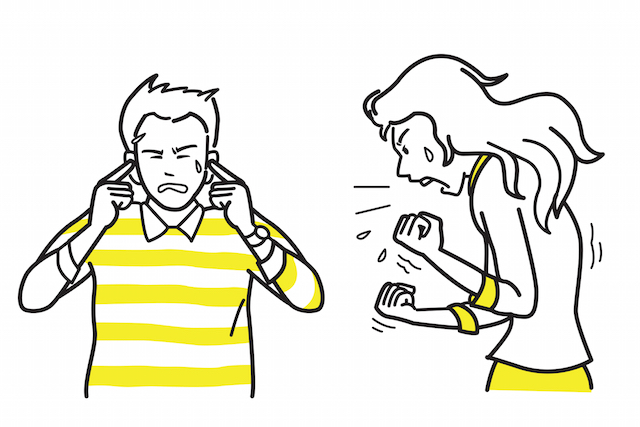
    Love is never complete. Just as life is always moving and re-shaping itself, this is true with love.

    Thus, loving in such a way that the person we love feels free is as simple and straightforward as it is complex and discursive.

    Essentially, we need to practice being the love we wish to see in the world, and that requires a deeply rooted sense of reverence and respect for ourselves, our intimate others, and the wonderfully complex, exquisitely vulnerable, flawed humanity we share.

    It requires making mistakes, making amends, and trying to manage matters with an increasing degree of skill and intelligence, not to mention forgiveness.

    Here is a lovely quote by Rumi that really gets to the heart of the matter.

    And still, after all this time, the Sun has never said to the Earth

    “You owe me.”

    Look what happens with love like that.

    It lights up the sky.

    Which is to say, we need to be love. That is all there really is to it in the end—simple, but not easy, as with most things worth striving for in life. Then the love returned by others can be received as the gift that it is.

    Ultimately, love is its own reward. Generous. Expansive. Inclusive. Receptive. Liberating.

    Love well, live well!

    Photo by mrhayata

  • Don’t Respond to Drama and Drama Won’t Come Back Around

    Don’t Respond to Drama and Drama Won’t Come Back Around

    “When you are not honoring the present moment by allowing it to be, you are creating drama.” – Eckhart Tolle

    One day several years ago, I was fraught with anxiety over with how to handle an uncomfortable personnel situation at work. I had an employee that was borderline explosive and insubordinate. I was a wreck over how to best handle the situation because before I was this employee’s manager, I was her friend.

    I found myself wanting to fix the problem by delving deeper into her drama, wanting to know why she felt a certain way, what I had done to contribute to it, and how we could work it out.

    Don’t get me wrong, I am all for conflict resolution and open communication. However, in this case, my employee was demonstrating signs of intense emotions that had the whirlwind energy of a cyclone.

    Her behavior and outbursts were unpredictable and inappropriate for the workplace.

    Her complaints, when listened to with close attention and discernment, were emotionally charged from unresolved personal wounds from the past. The drama— the whirlwind frenzy—was playing itself out in our present time employer/employee relationship, but it had nothing to do with me.

    I knew I needed to step back from this situation to calm my own reaction and fear. I too was becoming overly emotionally charged because of my own insecurities and unmet needs as a new manager.

    I was about to try to resolve her personal pain by bringing in my own whirlwind frenzy of emotions. Not a good idea.

    I needed to practice mindfulness and step into a space of neutrality. A space where my drama and baggage had a zero electrical charge. A space where her pain could not feed off of my pain.

    Was I successful? No.

    However, I did learn a big life lesson that I have been successful with practicing since this encounter: Don’t respond to drama and the drama won’t come back around.

    Drama loves more drama. Pain loves more pain. Negativity loves more negativity.

    With the practice of mindfulness it is possible to not respond to drama. If drama comes into contact with neutrality, it fizzles.

    How is it possible to not respond to drama? The first step is to recognize drama when it is in front of you. It is also critical to recognize if you are bringing the drama.

    Here are three ways to recognize signs of drama:

    You feel passion.

    Passion can be a wonderful experience. It can also fuel dysfunctional behavior and cause you to react without thinking.

    Signs that you are feeling passion include feeling a rush of energy pass through your body, a red face, an increased heart rate, butterflies in your stomach, flared nostrils, or shaky hands.

    Passion can also show up as emotionally charged thoughts and judgments. These include strong feelings of right or wrong, disbelief, blame, sadness, or a vehement desire for justice.

    The words spoken and behavior demonstrated don’t match.

    If someone is saying one thing and doing another, this is a sign of drama. Do not be fooled. What you see is exactly what it is.

    Be the witness of your experience and observe this discrepancy. If someone is telling you they do not mean to be rude, but proceed to offer a berating or condescending comment, trouble is in front of you.

    It feels urgent.

    Very few things in life are really urgent. Urgent qualifies as escaping from a burning building or swerving to miss an oncoming vehicle.

    Many times drama presents itself in the form of pressure that feels urgent. A false sense of urgency can be imprinted on you from another person’s frenzy of charged emotions. Urgency can also emerge from feelings that you are responsible for someone else’s situation.

    If something is not life threatening and you are told it needs to be done right now and you feel a sense of compression or fear, chances are, drama is in front of you.

    Once you practice recognizing drama, you are better equipped to not respond to it which in turn, allows drama to dissolve and stop in its tracks.

    Try these three practices to not respond to drama:

    Observe your body sensations, thoughts, and emotions.

    Mindfulness meditation teaches us to be the witness of our experience. It teaches us that we are not our bodies, not our thoughts, and not our emotions. It teaches us to develop a witness consciousness and be the third party observer of our experience.

    The more you are able to be the witness of your experience instead of identifying with the experience, the more easily you are able to discern the truth and make better choices.

    If you notice your heart rate increasing or your face flushing, let that be your cue to physically step away from the situation. Be present with your sensations and use your breath and mindfulness skills to bring you to a state of physical and emotional homeostasis where your muscles are relaxed and your breath is slow and even.

    Once the body, thoughts, and emotions are back to neutral, re-approach the situation from a grounded and centered place.

    Create a sense of spaciousness.

    Many times being around drama feels like compression, buzzing, or a whirlwind.

    You may notice you holding your breath as lots of people talk at once. You may notice drama feeding off of itself as voice speed, volume, and tone increase.

    Create space in these situations by softening your facial muscles, letting the jaw slightly part, gazing downward, and breathing slowly. Pay attention to the abdomen as your breath in and out to bring space to the body.

    By bringing space to the body, you bring more space to your thoughts and less opportunity to react. Your spaciousness also serves as an orientation point so the drama around you can loosen its grip. By loosening its grip, there is more opportunity for change.

    Sit with the discomfort.

    Not responding to drama is a practice. Not responding to drama means silence. It means not asking questions that take you deeper into the scenario. It means not agreeing or disagreeing, either with words or body language. Not responding means neutrality and not lending energy to the person or situation.

    This is a challenging practice. It feels uncomfortable.

    The most powerful thing you can do to remove drama from your life is sit with the discomfort of not responding.

    What you practice strengthens and gets easier with time.

    If drama comes into contact with neutrality, it fizzles.

    By not lending energy to something you do not want, you immediately create a closer connection to what you do want.

    If you want less drama in your life, drop your drama at the door. If you want more peace, be more peace.

    And remember…don’t respond to drama and drama won’t come back around.

    Peace to everyone and enjoy this practice!