Tag: negative

  • When Negative Thoughts Keep You Down: How to Break the Addiction

    When Negative Thoughts Keep You Down: How to Break the Addiction

    We think we are our thinking, and we even take that thinking as utterly ‘true,’ which removes us at least two steps from reality itself.” ~Richard Rohr

    Do you frequently obsess over worst-case scenarios? Do you struggle to think well of yourself or others? Are you frequently stressed, anxious, or depressed? You may be suffering from an addiction to your negative thoughts.

    We all fall into patterns of negative thinking from time to time, often triggered by difficult circumstances or everyday stress. But when that pattern occurs over a long period of time, it can degrade our health in body, mind, and spirit.

    When bad things happen to us, we can feel incredibly helpless. Sometimes the way we fight back against this feeling is by making negative thinking a default way of life. It satisfies our deep need for a sense of control over our lives. It keeps us from being disappointed when disaster visits.

    We trade our own joy and happiness for certainty. It’s a huge price to pay for a bill of goods. Because in truth, the certainty we crave is an illusion.

    I’ve experienced the toxic effects of negative thinking in my own life. Growing up with a severe stutter meant that I was always on guard for negative comments from others about my condition.

    My peers in school constantly teased and mocked me. This was the crucible in which I formed the habit of thinking negatively about myself and others.

    Convinced I had nothing good to contribute to the world, I spoke very little and avoided people. Even after the bullying subsided, I deeply mistrusted the goodness of others. I was always looking for the worst in others rather than the best. My negative thinking became a compulsion.

    As I grew into adulthood, I realized how much my addiction was costing me, as my most important relationships suffered needlessly. I needed to break the addiction. Over the course of improving my own life, I learned some important lessons that helped me. If negative thinking is causing you to suffer, consider taking these steps:

    1. Own your negativity.

    Avoid blaming circumstances or other people for how you feel. When we blame, we surrender our power and ability to change our thoughts and feelings. We put ourselves at the mercy and whims of our environment and other people.

    The first critical step to overcoming any addiction is to acknowledge and own the problem. Understand that only you can choose how you react to your circumstances. Only you can challenge your negative thinking and change your life. Once I owned my reactions to people who teased me, I was ready to reclaim my power to choose a different response.

    2. Challenge all-or-nothing thinking.

    Many of us fall into the trap of all-or-nothing thinking. If things don’t go exactly according to our expectations, we immediately turn to the worst-case scenario. Such thinking is usually a distortion of reality. When we’re caught in this trap, we engage in faulty interpretations of the actions of others.

    If you’re waiting to hear back from someone, do you entertain thoughts such as: “She hates me” or “The answer must be no.” Instead of attaching yourself to these thoughts, immediately ask yourself, “What else could it be?” When you do this, you’ll probably come up with a list of other possibilities that can diffuse your negative thinking and may be actually closer to reality.

    For me, this meant challenging the belief that everyone I encountered was mocking my speech in their minds.

    3. Give people the benefit of the doubt.

    As we learn to entertain other options, the next important step is to choose those options that give people the benefit of the doubt.

    In her book Rising Strong, Brené Brown wrote about her arduous journey to discovering this ultimately freeing idea: “People are doing the best they can.” It’s hard for most of us to be this generous in our thinking, but it will free you from the mental trap of thinking negatively toward others.

    When the emails go unanswered, when your boss says no to your request, when someone says something that comes across as mildly offensive, choose to believe that people are doing the best they can. Choose to believe that they are not purposely trying to hurt you.

    4. Let go.

    Learning to give people the benefit of the doubt can open the door to forgiveness.

    For a long time, I deeply resented the people who mocked my stutter. This happened mostly in my childhood and adolescent years when my stutter was much more pronounced. Even now, an ill-conceived remark can transport me right back to those painful years. But I’ve since learned to let go of the hurt associated with these memories.

    Is a past hurt or painful memory fueling your negative thinking? Choose to let go of that memory every time it comes to mind. Say, “I choose to let go of this memory and to forgive the person associated with it.” Know that the process takes time. Know that there will be days when you won’t feel like letting go. But when you do, you’ll begin to experience inner freedom.

    5. Think big.

    Negative thinking allows us the “luxury” of not expecting too much from ourselves and others. If we always expect to be let down by others, we spare ourselves the pain of being let down.

    By allowing our negative thoughts to thrive, we create a safe and small space for ourselves—free of judgment, disappointment, disillusionment, and heartache. But if we’re honest with ourselves, we know that thinking small will likely not protect us from pain. And it will keep you from the joy that comes with personal growth.

    I struggled with the idea that my stutter meant that I should be silent—that I had nothing worthwhile to say anyway. Then I came across the famous “Our Greatest Fear” quote by Marianne Williamson.

    The line “Your playing small does not serve the world” struck a chord with me. I decided that I would not allow my stutter to silence me. I decided instead to think big by deciding to speak up. Allow yourself to think big, even when your inner monologue tells you not to.

    6. Expect failure and setbacks.

    Negative thinking often begins with the unrealistic expectations that the path should be clear for whatever you’re trying to accomplish. When things go off-script, as they often do, the negative mind will gladly use the event to reaffirm idea that you’re a failure or that you’re no good at anything.

    Instead of dreading or hastening failure through your negative thinking, expect it. When you’re tempted to entertain negative thoughts, smile or laugh. Take each challenge as a signal that you are working toward something worthwhile. Use setbacks as a chance to hone your skills rather than seeing them as a sign that you are no good. Decide to do this ahead of time don’t waver regardless of how you’re feeling.

    7. Practice meditation.

    One of the primary benefits of meditation is that you eventually realize that you are not your thoughts. Negative thinking addicts get a fix from their own thoughts and their way of thinking about the world. They fully identify themselves with those thoughts. So the thought “I am a failure” becomes all of who they are.

    By practicing meditation, you will be able to observe your own thoughts without identifying with them. Why? Because you are not your thoughts. Learn to observe them without judgment. Watch the thoughts come and go without clinging to them. Watch long enough and you’ll see that your negative thoughts have no power over you.

    8. Practice self-acceptance.

    We often discount the practice of self-acceptance because it feels too passive. At least when we’re actively engaging our negative thoughts, it feels like we’re doing something to control our circumstances when we feel most helpless.

    Morrie Schwartz, who taught the world how to practice acceptance in the face of death wrote, “Acceptance is not passive—you have to work at it by continually trying to face reality rather than thinking reality is something other than what it is.”

    Most of the time, our negative thoughts are anything but realistic. Self-acceptance allows us to acknowledge all aspects of ourselves without clinging or judgment. Instead of fixating on the bad, it means loving all of who we are. It means having the courage to correct any behaviors that are harmful without engaging in self-loathing.

    You Have What It Takes

    Want to break your addiction to negative thinking? Understand that your addiction is based on the illusion that you can avoid pain by experiencing negativity on your own terms.

    Yes, negative things will happen to us. And it will hurt. But you have what it takes to face the pain and negativity without becoming addicted to it. As sure as day follows night, know that the pain will eventually subside. Know that opportunities for happiness and joy will come knocking again. Let go of negativity so that you can fully embrace these opportunities when they come.

  • My Proactive 8-Part Plan for Beating Anxiety and Negativity

    My Proactive 8-Part Plan for Beating Anxiety and Negativity

    “Nothing can bring you peace but yourself.” ~Ralph Waldo Emerson

    I’m on a much needed and looked forward to vacation with family whom I love dearly, and yet I’m entering the belly of the whale. Perhaps it was triggered by my habit of making sure everyone is okay and having a good time. Perhaps it’s because the act of preparing for and traveling to Baja was exhausting and now I’m just tired.

    Whatever the cause, my anxiety starts as an uncertainty, an insecurity tickling the back of my skull. Then it attacks my ego, assigning me responsible for the self-created and the mostly non-existent negative body language that whoever is sitting next to me is giving off. The way you picked up your fork makes me think you’re angry. The look you flashed when I coughed causes me to cower.

    From there the insecurity spreads like a plague until it’s part of every thought, every action. At some point, it doesn’t even seem to originate in the brain anymore. It becomes a vibration within. A simmering under my skin that makes me jump at the smallest of noises. A discomfort that makes eggshells appear under my feet.

    Once here, it’s like I can’t do anything right. Every action is disappointing. Every thought is wrong thinking. The big picture comes crashing down making it hard to breathe. It settles onto my shoulders and around my throat, like an over-zealous travel pillow. Tears usually follow accompanied with sides of hopelessness and embarrassment.

    Anxiety attacks. No really. It attacks. It’s calculated, methodical, and unforgiving. It makes me think that it’s All. My. Fault. It’s exhausting and it can happen anytime, even on vacation.

    I’ve been dealing with anxiety since I was a kid, although I didn’t know what it was until I was well into my thirties, at which point I had to make a decision: to be a stressed-out, anxiety-ridden person, which also meant living with the idea that there was something wrong with me; or to accept the fact that I’m a person and all people have struggles.

    Anxiety and negative thinking are my struggles, and I choose to handle them in the same way I handle having seasonal allergies or a bad back.

    Let me explain. I live in a state of sleepy sneezes when things start blooming. In the months before spring arrives, I begin taking bee pollen daily so I’m less prone to lethargy and allergy attacks. I injured my back last week surfing, so I’m not going to lift heavy things and after a period of rest, I’ll start doing stretches and exercises to strengthen myself so I can get back in the water.

    I’m not going to wait to get to the point where I’m laid out and feeling sorry for myself, and I’m not going to jump into an activity that will exacerbate the situation. I am being proactive about my well-being.

    When I was about thirty-five, my anxiety got so bad that it led to a depressive state. I was panicked all of the time and I began to realize that the life choices I habitually made were feeding my negative state of mind.

    I wasn’t living a healthy life style. I didn’t find my job fulfilling. I was angry that I didn’t have what “you” had. Something was always missing and I was constantly reaching outward to fill the empty space.

    The problem was that nothing from outside myself was helping. I realized that drinking alcohol and eating poorly (i.e. binging on sugar), sitting in front of social media, smoking cigarettes. and watching hours of television were all the same type of abuse.

    I had been using all of these things to dull myself to, well, myself. I had been living un-happily for the majority of my life and so unhappy had become my default.

    I also had to admit that my discontented state was a direct product of living dishonestly. I hadn’t been communicating about the things that I knew would make me unhappy because I was only worried about what would make me look good to others.

    So, I acted based on the assumptions of what others thought I should do (without asking them, of course). Then I got pissed off when others didn’t act the way I wanted them to. The result was that I pushed away the people I loved and in turn, felt isolated and angry.

    When I started seeing all of these things that were making me unhappy, the natural question to ask myself was “Well, then, what the heck makes me happy?” The shocking answer was that I didn’t know. Something had to change.

    Drinking alcohol was the first thing to go. It was a raging red flag that had been waving for a few years. I finally decided to pay attention.

    Once I had a few months of sobriety, an odd thing happened: I started painting. It wasn’t a huge stretch for me, as art had always been in my life in some way, but painting had never been my favorite medium.

    But there it was, in all of its colors and shapes. Abstract painting. I didn’t really care what the painting looked like. That wasn’t the point. The point was the present state of mind that creating art brought me to. I didn’t think about my to do list, my sadness, or my insecurities. I was just painting.

    When I was a kid, I loved to make art. The art studio in my high school was where I was most comfortable. I loved getting my hands dirty in clay. I left spatterings of paint and ink on my clothes because I liked them there. I felt at home when I was doing art.

    At thirty-six years old, immersing myself in abstract painting reminded me of what it was like to actually feel like myself again.

    I had to come to terms with the fact that since I was thirteen years old, I had been living the life of a person that I thought I should be, not who I really was. I had to let go of all aspects of that person that wasn’t authentic to me and remove all of my masks in order to follow the life I want to live.

    I felt relieved to finally be exposed. I didn’t have to hide anymore. I admitted that sometimes I am more of an introvert than extrovert. That if all I’m doing is chasing a paycheck, I’m never going to be okay with a nine-to-five job, even if it comes with an impressive title. That I am not ever going to be like anyone else but me.

    I recently had a discussion with a friend regarding how to be the best and most useful person to the world. She was given the advice to follow her authentic passion, as following passion leads to happiness and a happy person is more useful to themselves and everyone around them.

    I don’t really remember how old I was when I started making art, but I’m pretty sure that it’s the first thing I found that felt good to my soul, and it was life-saving to be reminded of that. Now, having come full circle, I have four years of my authentic work under my belt. I have quit my day job and I’m pursuing my passion of being a professional artist (which is something that I deemed not possible very early on).

    I don’t know what prompted me to pick up a paintbrush four years ago, but I believe it was a gift from my Self to myself. The really cool thing is that I don’t want to be anyone but me anymore. I’m so interested in giving attention to this person that has always been there, but I ignored because I didn’t think she was good enough.

    It was difficult to grasp that the only one judging and bullying me was me, but I have to remain compassionate to that misguided part of myself as well. She was only doing the best she could.

    Anxiety is still a part of my life. I am not “cured.” But just like I treat allergies or an injured back, I have decided to be proactive in dealing with my anxiety.

    When I’m actively practicing the below, I’m better rested and less reactive. I am able to clearly see my options leading to less confusion and better decisions. Most importantly, I can feel when anxiety is welling up and I have the tools to tamper it down before it is out of control.

    When I am active in the following, my anxiety is manageable:

    1. Choose to live authentically. What moves me? What do I feel I am here to do? What is going to make me happy? Whatever it is, don’t judge it. Do it.

    2. Practice acceptance. We all have hard things to deal with. Every last one of us. That’s life.

    3. Meditation in the mornings sets my base line for the day and helps me sleep at night.

    4. Painting every day keeps my hands busy and creates an outlet for the mental energy that cannot be released otherwise.

    5. Exercising outside in nature, particularly surfing in the ocean every chance I get, allows me to see that the world is sooooo much bigger than me and all decisions are not mine for the making (see the above mentioned back injury).

    6. Reciting my gratitude list regularly, and telling the people I love that I’m grateful for them, helps me to see the positive side of life instead of focusing on the negative.

    7. Eating right and treating my body with respect keeps me feeling whole, healthy, and balanced.

    8. Reminding myself that this is a practice. I am not perfect. It’s okay not to be.

    It’s not always easy. When I started writing this, I was entering the belly of the whale. Now that I’m many paragraphs in, I already feel more at ease.

    By identifying and accepting this particular whale, I don’t have to be swallowed. Just by writing this, I have taken the unknown out of the scenario by calling the anxiety out for what it is. Once I have given it a name, it’s not quite so scary. It just is what it is. Some people have diabetes. I have anxiety.

    We cannot choose whether or not we have problems like anxiety. We all have our issues and that’s just part of being human. Rather than be at odds with anxiety all the time, we can choose to learn more about it and actually co-exist. We have a choice about how much say we allow anxiety to have in our lives.

    I find that I prefer to swim along-side my whale and learn more about it rather than being engulfed by it. Frankly, more and more, I’m finding that I’m just grateful to be able to go for a swim, and so I dive in. Deeper and deeper. Excited to find what else is beneath.

  • How Reframing Your Self-Critical Thoughts Can Help Ease Anxiety

    How Reframing Your Self-Critical Thoughts Can Help Ease Anxiety

    “Don’t let the sadness of your past and the fear of your future ruin the happiness of your present.” ~Unknown

    I know what it feels like to be scared.

    I know what it feels like to question your sanity, your worth, your place in this world.

    Sometimes, all I can do is repeat the words it’s okay over and over and over again in my head, until I kind of, somewhat, maybe start to believe it’s true.

    Anxiety sucks. Depression does too. They’re not my favorites of the emotions we humans get to experience. But, truthfully, they have a purpose.

    I’ve been having panic attacks for a little over six months now. They’re still new to me, and every one is so different.

    The physical symptoms change, I’m still learning what my “triggers” are, and the ups and downs between my moods vary in time and extremity. But there’s one thing that has been consistent since the beginning, which is that every time I start to feel anxiety or depression creep in, I instantly hate myself.

    I sense the pit of worry in my stomach, and I hate myself. I wake up feeling sad, and I hate myself. I have to transfer money from my savings account, and I hate myself. I mess up at work, and I hate myself. I feel the uncertainty of my future, and I hate myself.

    As soon as I begin to enter that state, it’s the start of the freaking pity party of the century. Pretty soon all of my thoughts sound something along the lines of…

    I’m so messed up.

    No one else feels this way.

    I’m broken beyond repair.

    I shouldn’t feel this way.

    Why can’t I just be happy?

    I’m not good enough to be happy.

    There’s no way I’m going to get through this.

    I thought I had come so far.

    There’s just no point.

    I can’t remember the last time I felt happy, or excited, or tired, or bored, and thought anything close to these dark, nasty thoughts. So why do I instantly start abusing myself with such hateful thinking when these specific emotions of anxiety and depression appear?

    But wait! There’s good news here. This isn’t just a pity party, after all.

    I realized that there’s a way to pull myself out of the cyclical trap of feel sad or anxious, then hating myself for feeling sad or anxious, and then hating myself for hating myself for feeling sad or anxious.

    It’s a vicious cycle, but there is a simple solution: compassion, self-love, and reframing.

    For example, today I had a series of mini breakdowns, which included locking myself in my car so I could cry in (semi) privacy, throwing up in the bathroom at work because my stomach was so full of acidic worry it made me sick, leaving work early because of how I felt, and sobbing in my shower for about twenty minutes while wasting precious hot water. (#BestDayEver)

    So what did I do to turn it around?

    I treated myself with compassion and self-love, and reframed my negative thoughts.

    I showered, put on comfy clothes, made a cup of tea, and lit my favorite candle. I turned on Girls in the background because Hannah always makes me feel better. I read a few pages from one of my favorite books. I did some deep breathing. I told myself “I’m going to be okay” at least one hundred thousand times (slight exaggeration, maybe).

    Then, I started to pay attention to my thoughts as an outside observer. I was able to look at some of the terrible things I say to myself like “I’m so messed up” and “I shouldn’t feel this way,” and was able to crack them open for analysis.

    I was able to look at it from an objective point of view and question: Are these thoughts really true? And if not, can I replace these thoughts with ones that are actually true?

    Some examples…

    I’m so messed up became I’m going through a tough time right now, like everyone else in the world has, but it doesn’t reflect my worthiness or importance as an individual.

    I shouldn’t feel this way became It’s okay to feel down or nervous sometimes, because it’s temporary and it doesn’t define who I am.

    I’m broken beyond repair became I’m just figuring the craziness of this life out, as we all are, and I’ll feel better soon.

    There’s just no point became I have an infinite number of resources and people in my life who love and support me, and I’m worthy of that love and support.

    The stories that we tell ourselves are just that: stories. What we say to ourselves in our heads can hugely impact the way we perceive our lives and our self-worth.

    As the Buddha said, “We are shaped by our thoughts; we become what we think. When the mind is pure, joy follows like a shadow that never leaves.”

    By becoming more mindful of the stories running through your mind, you’re able to take an objective view on how those stories makes you feel, and then decide if they’re worth keeping around or not. If they’re not, choose to let them go.

    Reframing, self-love, and compassion are the three tools I use to help guide me through anxiety and depression. It’s all a learning process, but I can confidently say that this has helped me so much more than self-medicating or trying to ignore the problem.

    By observing our thoughts and the way we speak to ourselves in times of struggle, we can get a picture of how much we actually love ourselves, and then ramp up the love and positivity until we can’t help but feel better

    If you’re going through anxiety, depression, or any other tough time, I encourage you to:

    • Slow down; hit pause
    • Remember that you’re worthy of love and happiness
    • Take a few deep breaths, and tune into that inner dialogue you have going on
    • See if there are any negative thoughts or stories running through your mind that you can challenge
    • Replace them with positive, love-based truths

    Try to remember that we’re all just living, breathing, crazy little human beings, floating around on this planet through a limitless universe for a microscopic moment of time. None of us really know what the heck is going on here.

    We’re all just trying to get by, and have a little fun while doing it. Remember that you’re worthy of love from others, but most importantly, from yourself. And try to ease up on yourself. It’s okay to feel bad. It’s also okay to feel good. They’re two sides of the same coin, and that’s what this life is all about… our depth of human experiences and our connection to something more.

    I’m thankful for anxiety and depression because those emotions present me with an opportunity. It’s a chance for me to fall victim to my fear-based, negative stories, or for me to choose to see things from a place of love instead. The next time you feel those emotions creeping in, I challenge you to ask yourself, what do you choose?

  • How Gratitude Shifts Your Perspective When Things Go Wrong

    How Gratitude Shifts Your Perspective When Things Go Wrong

    “Gratitude turns what we have into enough, and more. It turns denial into acceptance, chaos into order, confusion into clarity…it makes sense of our past, brings peace for today, and creates a vision for tomorrow.” ~Melody Beattie

    Yesterday, while praying in the Ganges River, my purse got stolen.

    Standing in The Holy River Ganges, praying up to my neck in her healing waters, the outside world felt as if it had stopped.

    The feeling of happiness to be back in Rishikesh was so strong it bordered on invincible. Instant immersion into the healing waters of Maa Ganga was the only thing on my mind.

    I had casually left my bag on the beach before going in the river. Since I had never had any problems here in previous trips, my guard was down.

    India, a magnified mind mirror, reflects back exactly what I think about at lightening speed. It also has a knack of teaching me exactly what I need to learn.

    Upon getting out of the river, I didn’t notice my purse was missing, because it had been piled under clothes and nothing seemed amiss.

    Sitting on the beach, absorbing the feelings of my post prayer bliss, a dodgy Indian man approached, asking me if the beach was safe.

    “That’s weird,” I thought. “Why is he asking me if the beach is safe?”

    My internal alarm bell started ringing and I took it as a sign to check my belongings. Sure enough, my purse was gone.

    Now what? Here is the real test. How do I respond?

    Well, first, I went after the dodgy guy, assuming he was the thief, and told him to give me back my purse. He denied up and down that he knew anything about it.

    After badgering him for a while to return the purse, I realized it was a lost cause.

    Now what?

    Searching the rocky beach, hoping maybe he had stashed it, seemed like a good idea, but there was no luck on that front either.

    Two other western girls, who were sitting farther down the beach, kindly helped me to look for it after hearing my story.

    No luck.

    Feeling as though I had exhausted all possible options at the scene of the crime, the next logical step was to return to my room, call the bank, and cancel my ATM card.

    In the purse was $100 worth of Indian Rupees, my ATM card, and both room keys. Amazingly, the rest of my cash and passport were still safe in my room.

    Listening to the little inner voice that told me to leave them there, just prior to the beach excursion, was proving to be a massive blessing.

    I had switched out the padlock on my room door with a lock I had brought, thinking it would be more secure, and both sets of keys were in my stolen purse.

    Upon hearing the lost key predicament, the Ashram manager, without blinking an eye, set out to help break into my room.

    It wasn’t an easy mission.

    It took him about an hour of trying to saw through the un-sawable lock, until finally he decided to saw through the hardware on the door, which worked. I was able to enter my room, while the manager quickly ran to the market to buy new hardware for the door.

    Meanwhile, I called my bank and cancelled my ATM card. The bank people were absolutely lovely, empathetic, and helpful.

    My neighbor in the Ashram offered to make me a cup of tea, and the neighbors on the other side offered us some of their beautiful meal they had just cooked.

    In the midst of my vulnerability, I felt supported on all sides!

    Immediately, I began searching for the lesson in my purse getting stolen.

    Acceptance, gratitude, humility, and letting go were the words that came.

    Instead of focusing on what I had done wrong and beating myself up about it, I chose to focus on what was actually good:

    • I still had my phone and money I had left in my room.
    • I had a spare ATM card and credit card in the room.
    • I still had my passport.
    • Coincidentally, I had run into a friend the day before who remembered he owed me money, and it was the exact amount I just lost.
    • My neighbors were generous and kind.
    • The Ashram manager was lovely and helpful and didn’t bat an eye at destroying the door hardware.
    • The bank people were helpful.
    • The kind girls at the beach helped me search for my purse.
    • I had everything I needed!

    After making this gratitude list, I realized how much I truly have, how blessed my life is, how many kind and generous people are in the world, and how I am always provided for.

    Sometimes the lowest times are what make us stronger.

    Coming to India always shakes me out of my comfort zone, and this was no exception. I am still absorbing the lessons, and they are powerful ones:

    • This experience has made me want to give more.
    • It has made me realize I only need to take with me what I need.
    • I felt the vulnerability of having nothing for a short period of time, and that made me want to help others.
    • It showed me my inner progress: I didn’t panic. I didn’t beat myself up. I don’t feel like a victim and am not blaming the person who stole my purse.
    • It snapped me back into respect—respect for all that I have and respect that there are people that have a lot less. It reminded me to treat all people as equal regardless of their financial status.
    • It reminded me to give others not only what I can monetarily, but also acknowledge the presence in others, by giving them my full attention.
    • It also reminded me that have a choice where I focus my thinking and attention; I can choose to accept the things I can’t change, and have the courage to change the things I can.

    What happened, happened. Now I have a choice to learn the lessons and receive the gold out of the situation.

    Today I went back to the same beach to do my prayers in the river. This time I didn’t take anything with me except my change of clothes, bringing only bare essentials. Keeping a close watch on my bag, I didn’t let yesterday’s event tarnish my heartfelt love for this place.

    Feeling blessed, grateful, and humbled to be in Mother India again, I feel love for the people here, and especially the ones who have nothing.

    The Power of Gratitude is Astonishing

    It’s amazing how gratitude can shift your perspective when things go wrong. The next time you face a challenging situation, hit your internal pause button, breathe, and survey the situation. Don’t panic.

    Ask yourself, what can I do right now? What is the number one priority?

    Accept that what has happened, happened. Don’t beat yourself up for what you didn’t do. Drop resistance and fighting what is and instead focus on what you can do now.

    Focus on what’s good in the situation. Ask yourself, what are the lessons to be learned from this? And make a gratitude list as fast as possible.

    Talk about the good that came from the event rather than constantly repeating a negative story to others. Integrate the lessons, let it go, and move on.

  • How Defensive Pessimism Can Help Ease Your Worries

    How Defensive Pessimism Can Help Ease Your Worries

    “Worry does not empty tomorrow of its sorrow. It empties today of its strength.” ~Corrie Ten Boom

    You know if you’re a worrier.

    You worry about all kinds of negative things happening, without any evidence that they’re likely to happen.

    I’m a recovering worrier.

    It’s only been in the last few years that I’ve become conscious of the extent of my worry and the impact it has on me, and of how ineffective it is.

    My worry paralyzes me, making it hard to think, plan, or act.

    But, as anyone who is prone to worry knows, worry can feel productive. It feels like you’re doing something useful.

    When I’m told to relax and stop worrying about something, I will defend my worry. Justify it. It feels right!

    But here’s the problem.

    Worry is the most useless habit, a decoy, a waste of precious time, energy, and attention.

    And it completely undermines your self-confidence.

    Worry doesn’t actually do anything to help prevent the future outcome you’re afraid of.

    In fact, in some cases, it can make it more likely to happen.

    I had my first serious relationship in my early twenties. The more serious the relationship became, the more afraid I felt.

    I hadn’t felt so vulnerable before. It felt like such a risk. I was opening up to someone and showing them who I was, when there was a chance that they could decide that they didn’t like what they saw.

    I started to worry more and more that he would leave me.

    I became more insecure and jealous. When we went out, we would inevitably end up fighting.

    I felt so out control, and the more I worried, the less in control I felt.

    Over time, I recognized that my lack of trust in myself to cope if he should leave was at the heart of my worry.

    The more I became conscious of what I was doing with my worry, the more ridiculous I realized it was.

    I was spending so much time and energy worrying about what could go wrong that I wasn’t enjoying what was in front of me.

    In fact, it was quite likely that if I kept on doing what I was doing, I would contribute to the relationship ending.

    Developing Trust in Your Ability to Cope with the Worst

    While many people encourage positive thinking, it turns out that for people prone to anxiety, this may not always be the best advice.

    It’s far better to think negatively.

    Huh?

    This is a strategy called defensive pessimism. It’s a way to help you manage your worry so that you can plan and act effectively, and build your confidence in your ability to cope with challenges.

    Here’s how it works:

    When you notice yourself worrying about something, stop.

    Ask yourself what you’re worrying about. When left to its own devices, your worry will just run on autopilot, bringing you all kinds of negative possibilities, but you probably won’t even realize that you’re doing that.

    All you’ll be aware of is that you don’t feel good.

    So becoming conscious that you’re even worrying is a difficult but important first step.

    Say, for example you’re worried about a presentation at work. If you tell someone that you’re worried about it they’ll probably offer some well-intentioned: “Don’t worry, I’m sure you’ll be great.

    To which you’ll responds, either aloud in in your mind something along the lines of: “But what if I’m not? What if it goes terribly and I humiliate myself?”

    That’s where defensive pessimism kicks in.

    Instead of trying not to think about it, you allow yourself to think about all the things that could go wrong. Then you start figuring out how you’ll handle things if they do go wrong.

    What if I do humiliate myself? How would I deal with that?

    Asking yourself those questions and developing plans to cope has been shown to help anxiety-prone people feel more in control, and is a far more effective worry strategy than “Don’t worry.”

    For me, being reassured by my boyfriend or other people that he loved me never seemed to be terribly effective. But when I started allowing myself to think about what I would do if he did leave me, how I would cope with the pain and grief, I started to worry less and be more present and real in the relationship.

    I realized that I was allowing my whole sense of self-worth and value to hinge on someone else’s approval.

    If I was rejected, then I would see myself as not good enough.

    Once I realized this, my plan became working on my self-worth. I practiced recognizing when I started feeling vulnerable and would change the story I was telling myself and the assumptions I was making. Therapy played an important part in helping me shift the beliefs that were making me feel insecure and inadequate.

    I practiced changing my self-talk to become more encouraging and supportive. I’d say things like “Even if we break up, it doesn’t mean there is something wrong with me. We’re both learning and growing all the time, and our needs may change.”

    I also realized that I was underestimating my ability to cope with and recover from challenges.

    Just reminding myself of my own strength, the challenges that I’d overcome in the past, and my network of supportive family and friends helped me realize that although I would grieve the end of the relationship, I was far more capable of coping with it than I was giving myself credit for.

    Focusing on these aspects, rather than on endlessly and unproductively worrying, has been key to shifting my confidence, both in my value and my ability to cope with challenges.

  • Why “Be Positive” Isn’t the Best Advice When You’re Down

    Why “Be Positive” Isn’t the Best Advice When You’re Down

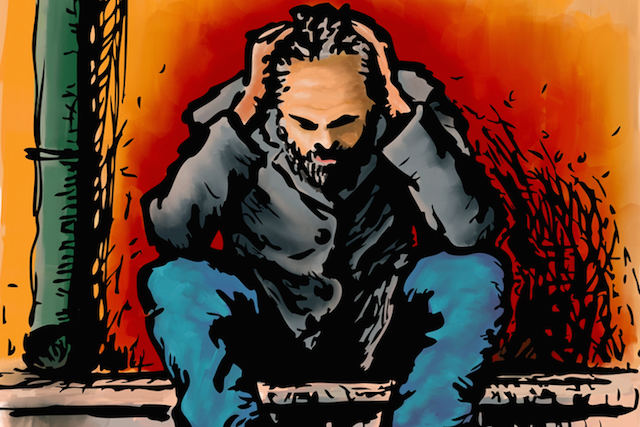
    Depressed man

    “Learn the alchemy true human beings know. The moment you accept what troubles you’ve been given, the door will open.” ~Rumi

    As much as I tried to apply personal development ideas in my life, I failed big time.

    All the affirmations in the world couldn’t make me love myself.

    The more I tried to “be present,” the more all-over-the-place my mind became, getting lost in overthinking.

    Mindfulness didn’t work for me either. Observing my thoughts got me to chase each and every thought and analyze it. When I tried “letting go,” I just held on tighter.

    This was my experience from reading hundreds of popular self-help books over a ten-year period. I studied intensely as if for a PhD, experimenting with the techniques several hundred such books suggested, but still my life wasn’t working very well, to say the least.

    My mind was a storm of thoughts and emotions. Sometimes I had panic attacks, which caused me to spend hours in bed, making me unable to work for stretches of time. I tried various drugs (medical and recreational) and other compulsive behaviors in an attempt to get over my depression that descended on me like storm clouds.

    Through my job at that time as a journalist, I interviewed some of my favorite personal development authors of the time, in a bid to overcome the low feelings and anxiety that were ruining my life. But little helped.

    At first I thought it was just me experiencing such problems—that there was something wrong with my mind—but when I spoke to other people in a support group I started at the time, I realized many people were experiencing the same frustrations as I had with some of the books out there, which made it all sound so easy.

    Although they knew they “should” be positive and focus only on what they wanted, they couldn’t do it. And then they felt bad about themselves that they couldn’t do it.

    Positive Thinking Pressure

    Positive thinking is everywhere these days, and yet it’s not helping the depression statistics—which are going up, not down.

    “Be positive” has become the new way of telling someone to “cheer up.” It didn’t work then and it doesn’t work now. It’s hardly like you need to be told that you should feel better. Of course you already know that. Of course you’ve heard it a million times before. And it’s downright annoying and useless to be told it again.

    Like Instagram and other forms of social media, this “positive thinking” movement seems to be about living up to an ideal standard of perceived perfection all the time. Not satisfied with looking “perfect,” now you’ve got to think perfectly, too.

    It’s like something out of the film The Stepford Wives, where real people are replaced with robots. Denying our emotions is an insult to the journey of what it means to be a human being, and it does nothing to help people feel better.

    Why It’s Okay to Be Down

    Even the great saints and mystics weren’t this perfect. They had bad days, and they were open about it. Buddhism, for example, teaches in the Noble Truths that pain is universal and inevitable. Of course, there is a difference between “feeling down” and dealing with major depression, but for many of us the former evolves into the latter because we compound our feelings with self-judgment.

    Unlike certain dubious New Age “teachings,” these authentic masters understood that negative thinking is part of the human journey, and that it’s okay to feel less than your best sometimes. And they also knew that it’s a quick route to self-hatred to expect any more of yourself.

    Without going into the low emotions, we would not feel and appreciate the high emotions. And another thing: it’s the challenges that actually evolve the best times and bring the best out of us by strengthening our “mind” muscles.

    Think of going to the gym and telling the trainer you want the ideal body, but you don’t want any tension on your muscles. It’s the same with experiencing challenges. The tension of life evolves us. 

    What to Do When You’re Feeling Low

    When you’re feeling low, the mind races into overthinking and you start trying to figure out a way to get out of the mood. Although doing this makes sense, this is exactly what keeps you stuck there. Like fighting with a giant spider’s web, the more you try to escape, the more trapped you get.

    Your Choice: To Fight or Relax

    In the middle of a bad mood you think your option is to feel good or not—to “be positive” or “be negative.” But it isn’t. Your two choices are seemingly more limited than this: to be okay with where you are, or fight against it.

    The frightened mind really wants to overthink and so trying to “be positive” becomes near impossible Trying to “be positive” is actually self-criticism; it is sending the message that you “shouldn’t” feel bad. We look for books to help us—suggestions to help us get out of the mood—all the while anchoring deeper into the darkness.

    Instead, you want to turn and face where you are. So in other words, you want to go with the anxiety rather than fight against it (and against yourself).

    You may not want to be there, but that’s beside the point. Making peace with somewhere you don’t want to be seems illogical, but it’s a necessary step in moving to where you want to be.

    Accepting All Parts of Life

    Now, whenever I feel low, I know it’s not the end of the world; it’s part of life. When I feel this way, I also know that positive change is on its way. I know that my life is evolving; that new ideas are on their way.

    Just as I don’t have a nervous breakdown at the gym when I feel tension in my muscles as I workout, I no longer fall apart when I feel the tension of life evolving me. I welcome it. I accept the process. And I accept myself even when I can’t accept the process in any moment. After all, I’m human.

    Nothing has gone wrong if we find ourselves feeling less than our best sometimes, despite what we may have read.

    Negative thinking will not make your world fall apart—quite the opposite. It is the source of our evolution. And the first step to feeling better is realizing it’s part of the process, and it’s okay. Just as what we resist, persists, it is only in acceptance that we can let go and move on to better feelings and better experiences.

    Meditation

    Forget rearranging thoughts; trying to sift the positive from the negative. Those “new age” gimmicks will get you nowhere, kind of like rearranging the deckchairs on the Titanic. To shift your life, a more “serious” approach is necessary. And that’s where meditation comes in. It’s something that’s been proven for centuries through all faiths and philosophies. In short: it works.

    Through meditation, we come into the present moment and foster a sense of inner calm. It’s not about changing our thoughts. It’s about learning not to attach to them and diminishing their power over us.

    Once you’ve made friends with exactly where you are, even with your negativity, a regular practice of meditation will make you less likely to be taken by those storms of negativity in the first place. But if they do take you down occasionally—and they probably will because that’s the journey of being human—you now know what to do about it.

    If you are suffering from depression or anxiety I recommend that you find a professional to support you and not do this journey alone.

  • How to Rise Above Negative Comments About Your Body & What You Eat

    How to Rise Above Negative Comments About Your Body & What You Eat

    Close up Portrait Of Beautiful smiling Plus Size Young Woman in

    “It’s also helpful to realize that this very body that we have, that’s sitting right here right now … with its aches and its pleasures … is exactly what we need to be fully human, fully awake, fully alive.” ~Pema Chodron

    I took a photograph with my mom last night. She sighed when she saw the photo, saying she looked “so big.” My heart sank.

    A few weeks ago, I was picking up sushi from the local supermarket with her, and she looked down at the to-go pack I was picking up and asked, “You’re really going to eat that? It has so many carbs.” Again, my heart sank.

    These two little scenarios shed light light on why I had so many body image and food issues growing up as a kid. If your mom, your main symbol of how a female “should” be, is consumed with calorie counting and her weight, you’re going to have some degree of that too, at least in my experience.

    More importantly, these scenarios showed me how far I’ve come. Because these things didn’t trigger me. Instead, they empowered me. Words like this now slide right off of me because of the strong relationship I now have with my body and food.

    As much as I don’t want to admit this, talk like this used to infuriate me. I’d feel like part of my soul was burning up inside.

    Now, I accept that that is how my mom is. Calorie counting works for her. It’s not my job to change that or her. It’s my job to practice acceptance and to choose to recognize that comments about weight and body image are coming from a place of insecurity within her, not me.

    That being said, how do you deal with people who make comments about your food, your body, or your choices on what you eat? While there are no black and white, clear cut, yes and no rules, there are some things to remember and tools you can use to help you stay grounded, centered, and most importantly, calm.

    I’ve discovered the more you do this work, the easier it becomes. Like all good things that last, it takes practice and dedication.

    Here are eight ways to rise above negative comments about your body and food.

    1. Don’t take things personally.

    We constantly need to remind ourselves of this, because when people make comments about us (in even the slightest negative context), it’s hard to not take them personally. But know that their comments about you show more about them.

    People who are truly happy with themselves (or the area of life they’re commenting on) don’t try to bring others down. Instead, truly happy people do the exact opposite—they’ll try to lift you up.

    People who are happy with themselves aren’t jealous or worried that there will be less for them, and they don’t make hurtful comments. No. Truly happy people are present and there for you, rooting you on. If they’re not, it’s a sign that your action, statement, thought, feeling, belief, or appearance, triggered a wound within them that needs some healing.

    2. Use people as a mirror.

    In that same context, watch when you get triggered. Triggers are strong emotional reactions to people, words, and situations. When someone’s words trigger you, don’t beat yourself up for reacting. Instead, use the person as a mirror for yourself and allow yourself to look within and investigate why you were triggered.

    If you do this when people make negative comments about your body or food, you’ll take the anger and emphasis off of them and put the focus back onto the only person’s reaction you can control—your own.

    This is what will further your personal development and self-love journey more than anything else. Even if you come up with no answers here, simply digging deep and exploring these emotions will allow you to expand your perspective. And it will provide insights on why you feel how you feel and what changes you need to make in your life, propelling you forward.

    3. Express how you feel.

    In all honesty, we can’t get upset with someone until we voice our feelings and tell them that what they’re doing or saying is upsetting us. Once you do this, it’s important to set boundaries (more on this below).

    There are so many times when people think their comments about your body, your diet, or your food choices are “helpful,” “inspiring,” or they’re just “trying to tell you what worked for them.” Whether or not something is helping in your journey, is your decision, not theirs. Let them know.

    4. Set boundaries.

    We teach people how to treat us. So if you never tell your friends, family members, or partner that commenting about your body or food in a certain way isn’t acceptable, they might continue to do it. Stand up for yourself. Often, what we think people should know, or people should be able to tell, they can’t. Tell them and teach them how to talk to you.

    An example: “When you’re always making comments on my weight I feel like I’m not good enough and that you don’t actually want me in your life. Can you please no longer bring it up unless I do?”

    Notice that you’re stating the action that bothers you, stating how it makes you feel, and then asking for what you need.

    If you begin to speak your truth and notice things aren’t changing, set boundaries with your time and how and with whom you spend it. You should spend time with people who generally make you feel good and who push you to grow in a positive way. If not, it’s time to reevaluate. And know that that’s okay!

    Not everyone is meant to be in our lives forever. Usually, once the growth period is over in any relationship, it’s time to move on.

    5. Have a grounding practice.

    When you begin speaking up for yourself it’s easy to get overwhelmed. So it’s important to find an activity that works for you that makes you feel calm, connected with yourself, and peaceful.

    There are many ways to do this: hiking, journaling, walking, meditating, painting, reading, exercising, singing, writing, deep breathing. The trick is to find what works for you, and once you do, to use it to bring you back to center when the chatter from others becomes too much.

    6. Reflect on your progress.

    If you’re receiving negative comments about your body, food, or weight, it’s hard to recognize all the good you’re doing. As human beings, especially sensitive ones, it’s super easy for us to reflect on everything we’re not and to let the negative talk (others and our own) consume us.

    Rise above this by making the time to reflect on your progress, how far you’ve come, and the amazing work that you’re doing right now to move forward along your journey.

    Keep a notebook and every day, write down three things about yourself or your choices that you’re proud of. Try it. It’s a serious life-changer. It’ll help you refocus your energy on the good.

    7. Practice radical acceptance (and don’t wait on the apology).

    This one is hard, but possibly the most rewarding. When you begin to not take others’ comments personally and accept them as who they are, it will change your world.

    You’re not trying to change them. You’re not trying to get them to see things a different way (this can be exhausting, especially when someone isn’t ready). You’re not trying to get them to apologize. Instead, you see them as who they are—working (or not working) through their own stuff—and you accept that.

    This may translate into you seeing them less, setting more boundaries, or expressing how you feel in a loving way. But at the end of the day, you see them, you accept where they’re at, and you choose your actions accordingly.

    8. Don’t wait on your weight, regardless, of what anyone says.

    For years I thought I wasn’t lovable or good enough unless I looked a certain way. This couldn’t be more wrong. Don’t you wait on your weight to do the things you want to do too! That chatter inside your mind is only your fear holding you back. And part of that fear of not feeling good enough comes from others who don’t feel good enough themselves.

    I’ve found it’s never really our bodies that hold us back; it’s our fear. Move through the fear and do “the thing” anyway. When you do this, what you find may very well surprise you—you’ll begin to break through your own body jail you’ve put yourself in and start living your life.

    And at the end of the day, your body is here to help you live the life you really want. Use your body to do what it’s intended to do—to help you live. And along the way, take care and speak kindly to it. Your body deserves that.

  • 7 Lessons to Remember When Life Seems to Suck

    7 Lessons to Remember When Life Seems to Suck

    “I’m grateful for past betrayals, heartaches, and challenges… I thought they were breaking me; but they were sculpting me.” ~Steve Maraboli

    I winced in pain as I climbed off the elliptical. This was one of the few times that I had ever set foot into a gym. And it was out of necessity rather than choice.

    That necessity came from chronic lower back and leg pain, which I had been living with for the better part of six months. At the time, I didn’t know it would end up being just chronic, idiopathic pain.

    All I knew was that it hurt, and I was limping with every step I took.

    The pain had a definite impact on my quality of life.

    For those first two years I could rarely sit for more than five minutes at a time, as a burning sensation would soon envelop my hip and thigh area, making it uncomfortable. The only way to alleviate the sensation was to stand. This was difficult for me, as I am an engineer who makes his living in front of the computer.

    In my quest to get better I saw enough specialists to count on both hands. Because I lived in a small town, they were often two-and-a-half to three-and-a-half hours by car, one way! Imagine the challenges of trying to sit in a car for that long a period of time when the very act of sitting was uncomfortable for me.

    Each time, the doctor would say that he didn’t know what was wrong with me. The good news, at least, was that I was not in danger of dying anytime soon.

    Little did I know at the time that I would find myself on a journey of self-improvement, borne out of a spiritual necessity. As a result, I would make drastic changes to my life.

    I would eventually learn to stop using pain as an excuse not to exercise. I discovered what it meant to make a decision—to decide, really decide.

    I would also discover that I am my own worst enemy, what with the constant barrage of negative thoughts that consumed every waking moment as I sought answers from one doctor to the next.

    Through it all, I would discover the power of meditation to help me deal with life’s stresses (people or situations).

    Four years later, this chronic pain is but a distant memory. From time to time it returns as nothing more than a mild muscle soreness or tension.

    These are the lessons I wish to share with you today.

    You Are What You Think

    Among many of the things I started changing were my thoughts.

    Because I have a history of cancer in my family, when I first started the doctor visits, I constantly assumed the worst.

    Several relatives had already passed away from this disease. My father had two bouts with cancer. Both times, he was fortunate enough to walk away.

    Unfortunately, after each time he still believed the disease was in his body, despite the doctor declaring a clean bill of health some ten years after his first bout.

    Sound familiar?

    Because I had the best training in the world, I saw doctor after doctor, trying to find something wrong with me. I refused to accept the second, third, or fourth opinion that I was really fine. That there was nothing wrong with me.

    Be in the Habit of Questioning Your Beliefs

    It starts with a subtle shift of consciously being aware of your thoughts and questioning them. I’m not saying that you should be constantly monitoring your thoughts. That would be tiring.

    So long as you are able to step back every now and then to ask yourself these questions, you are in good shape.

    • Why did I just think what I thought?
    • From where did I get these beliefs?
    • Are they correct? Is it possible that my beliefs are wrong?
    • What other perspectives are also correct?
    • How are these beliefs helping me?

    Question your thoughts, for they lead to emotions. Watch your emotions, which lead to actions. Examine your actions (or lack thereof), which ultimately lead to results.

    Another way to look at things is this: If you don’t like where you are, begin by looking at your results. Then look at the actions you took to achieve those results. Look yet another step backward to the emotions associated with those actions. Going further back, look at the thinking that created those emotions in the first place.

    Now, can you see why what we think is so important?

    Sometimes Things Have to Get Worse Before They Get Better

    Those words were from my chiropractor, and they would keep echoing through my head as I fought back the waves of pain running down the lower right side of my body.

    I almost laughed when he first said them to me, thinking they were terribly cliché. Yet, this doctor was doing something none of the other specialists could do: alleviate my pain. Within the first hour of seeing him, my discomfort had almost halved.

    Not only was he helping me with my pain, his simple words motivated me to start an exercise program for the first time in my life, despite the pain.

    Keep in mind that two other doctors had also suggested this, but I dismissed their advice, thinking it was crazy to suggest exercise to a patient in pain, since I assumed it would exacerbate his condition. In other words, I thought I knew best.

    As for what led up to those waves of pain, I was on the elliptical, trying this strange machine for the first time in my life. And I was hurting.

    It had only been ten minutes, but they were grueling. The guy next to me made it look easy, clocking in at thirty minutes and still going. I was hurting too much and had to jump off the machine.

    As I stood there wondering what was going on with my health, I had a do-or-die moment: I could give up, go home, piss and moan about how much everything was hurting and what a dumb idea it was for the doctors to suggest that I start an exercise program, and never come back.

    Yet, the words of my chiropractor kept playing back in my head. It shifted my perception: Sometimes things have to get worse before they get better.

    At this moment in my journey, my back was to the wall. I had no other direction but forward. I would decide then and there that I would give it another month to see if my condition would improve better.

    Many more times on the elliptical, something amazing gradually happened: My chronic pain was starting to go away!

    The Bad Times Are a Gift

    And so it is with things you are attempting for the first time. It may seem to really suck, when you’ve failed for the 100th time, with success seemingly a long ways off.

    It’s in these bad times that we choose to shift our perceptions and decide that failure is just a feedback mechanism. We learn both from our mistakes and our missed takes in life, about both the situations and ourselves.

    And when we finally achieve success, we can truly appreciate what had at the time seemed like terrible moments in our lives. It’s these moments that brought forth the hidden potential within us. In other words, we discover truly powerful and resilient parts of ourselves that would have lain dormant had these “bad” times not been gifted to us.

    Stop Finding Excuses for Why You Can’t

    Instead, look for reasons why you can.

    Over time, I added weights to my repertoire in order to strengthen my core. Initially, I was concerned about lifting because of my scoliosis. I soon attracted a Crossfit crowd into my life. This would be a source of valuable workout information for me.

    In particular, I met a power lifter (this guy can lift 700+ pounds!) and asked what he thought about scoliosis and lifting. He told me about Lamar Grant, a power lifter who stands at just 5’2” and has scoliosis.

    What was amazing about Grant was that he could deadlift 661 pounds at a bodyweight of 132 pounds. Grant holds world records for deadlifts in his weight class.

    What this friend was telling me was in essence this: Stop looking for excuses for why you can’t do something. Instead, go do it in spite of the situation.

    In my case, I should be lifting to strengthen my core because I do have scoliosis. I should be lifting because Lamar Grant is a prime example of someone who persevered in spite of his circumstances. It was because of his circumstances that he went on to set world records.

    Successful People Are Thankful for Their Circumstances

    Lamar Grant would not have been the Lamar Grant if he never started lifting because of his scoliosis.

    If not for his deafness, Beethoven would have fallen into obscurity as just another live concert performer. In spite of his growing and near complete deafness, Beethoven went on to compose some of the world’s most moving and beautiful symphonic pieces. Almost 200 years after it was written, his music is still listened and enjoyed today.

    These people rose above their circumstances. They asked themselves, “What is it that I am to learn from this particular set of circumstances at this time? How does the Universe want me to grow?”

    In other words, they stopped blaming whatever hand they had been dealt and learned to play it as best they could.

    In my case, I learned the discipline of working out three times a week on top of working through my pain. This discipline would transfer to other areas of my life.

    No matter how tired I am after work or how little I feel like going to the gym, I still do it. I know that as soon as I develop the habit of not going to the gym, then it’s over. Likewise, I simply developed the habit of going to the gym.

    It’s the same with other things I dislike doing. I do them anyway, as they are necessary to the path of success.

    You Can Calm Your Mind Through Meditation

    When I first learned how to meditate, it was one of the most difficult things to do. I would often fall asleep. Or, my mind would wander in totally different directions. I even gave up for some time.

    As I was still studying self-improvement, the concept of meditation kept coming up, especially among highly successful individuals. They often credited meditation as one of the pillars to achieving lasting success.

    So, I decided to give it another shot (or ten!) Over time, I was getting better at dismissing thoughts as they entered my mind, without any judgment or emotions.

    When you learn to mediate, you start to live in your own world, in your own terms. People who would have normally pushed your buttons no longer have the effect they used to have.

    I frequently get comments from my coworkers, who wonder how I can be so patient with so-and-so. They even thank me for being a buffer, or tell me they might have lost it already. I tell them that the “secret” to my inner peace and calmness is meditation.

    The “old me” would have been fuming for days after the offending event. The “new me” responds much differently.

    I have discovered another benefit of meditation. When I was first going through my chronic pain issue, one night I was able to “disconnect” my brain from my body. In other words, for that moment I felt pain-free!

    I now meditate every day for about fifteen to twenty minutes when I first wake up. This is the best time to meditate as your brain is still closest to emitting theta waves. Theta waves are generated during sleep and are the closest to accessing your subconscious you can get.

    By meditating during this time, you tap into the true self within you. As an example of why you would want to tap into your true self, consider this: You might have at one point in your life woke up, hit Snooze on your alarm, turned back to sleep, and said, “I hate my job. I don’t want to go to work today.”

    By meditating right after waking up, you will get closer to finding what truly gets your juices flowing. You discover what your real values and passions are so that you can start living authentically.

    Those intuitive thoughts or random ah-ha moments that you’re trying to tap into during meditation do not necessarily come during meditation. For me, 99% of the time they come when I’m taking a five-minute break, sipping some tea, working out, taking a walk, washing dishes, or doing something as mundane as sitting in the dentist’s chair.

    In other words, the payoff is outside of meditation. Through meditation, you learn to first let go of random thoughts so that you stop obsessing over the ones that hurt you. Instead, you want to focus on the ones that resonate with you.

    Most of All: Decide!

    You have to decide, really decide, what it is that you want. We have all made half-baked decisions in our lives. We put in the effort for a little while before giving up. That’s not really deciding.

    You already know what it is. When you have really decided, you feel it in your gut. You know that no matter what happens, no matter how long it takes, no matter how hard it is, you will see it through to the end.

    For me, it was that do-or-die moment when I was in pain from being on the elliptical. My back was to the wall, and I truly had no place to go but forward.

    Even to this day, when I am about to make a big decision, I think back to this defining moment and the emotions it wrought. I know I have really decided when I feel those same emotions.

    So grab hold of that feeling. Or, look for it when you make a decision. That’s how you know if you truly meant it when you decided.

    The Lessons at a Glance

    To sum up the lessons learned, here they are.

    • You are what you think. So, choose carefully!
    • Question your beliefs.
    • Sometimes things have to get worse before they get better.
    • Stop finding excuses for why you can’t. This is called blaming. Instead, find reasons why you can. This is called taking the initiative.
    • Be thankful for both the good and the bad in your life for both are gifts.
    • Meditate
    • Really decide.

    I used to wonder if, given the chance to be spared those three years of pain, infirmity, and uncertainty, would I take it.

    I have come to realize that at any given moment, life brings with it challenges. With each challenge is the amazing the opportunity to grow, so long as we see it this way. Others may rail against it.

    It’s made me the person I am today. I would have missed all those important lessons and tremendous opportunities for self-growth. More importantly, I would have missed sharing those lessons here today.

  • 5 Ways to Find Peace: Life Lessons from an 8th Grade Teacher

    5 Ways to Find Peace: Life Lessons from an 8th Grade Teacher

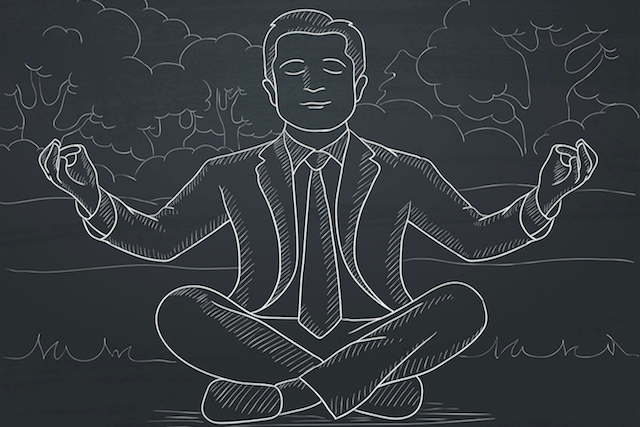
    Chalkboard meditation drawing

    “Life is a succession of lessons which must be lived to be understood.” ~Ralph Waldo Emerson

    Good Morning, and welcome to 8th grade History with Mr. Bacchus. The first thing I need everyone to do is to take out your class schedule and make sure that it says Mr. Bacchus for this period. Is there anyone who doesn’t have my name on their schedule?

    No? We sure? Great!!

    Now I need each one of you to take a moment and thank whoever you believe in, the powers that be, or even the magic genie that granted you this wish, because you’re one of the few lucky enough to be in my history class this year.

    Why lucky?

    Because there is going to be a day when you don’t feel like getting out of the bed, but you will remember that you have Mr. Bacchus today and you will be up before the alarm goes off.

    One day, your boyfriend or girlfriend will break up with you in the middle of the hallway, and the news will quickly spread via social networking. But when your friend asks you if you’re okay, you’ll simply smile and say,

    “I have Mr. Bacchus today.”

    I couldn’t make this up if I tried. A student fell in gym class and broke his leg one year. It was an awful injury, and he was seriously hurt but refused to go to the hospital. He said it wasn’t that bad. He had Mr. Bacchus next period.

    This has become my first-day-of-school opening monologue as an 8th grade teacher. It’s a nice way to break the ice. I say these words with a sense of confidence. A sense of purpose and joy comes over me the second I begin this inaugural address to my students.

    And it lasts throughout the school year.

    My class has often felt like a beautiful symphony (and I was the highly acclaimed maestro), but in the midst of my father falling back into addiction and my ex-girlfriend moving across the country with her new fiancé, it seemed as if I couldn’t play chopsticks in my personal life.

    My father has always struggled with addiction, but this was the first time I had to face it as an adult. This time around I knew exactly why he wasn’t answering my calls, why he was asking to borrow money, and why he was nowhere to be found for weeks at a time.

    Likewise, it wasn’t the first time my ex and I had called it quits either. But somehow the news of her impending move across the country with her new boyfriend—two months after our most recent breakup—had a sense of finality to it. The curtain was officially closed once I got word of their engagement.

    So I began going to counseling in hopes of finding my way, and one day my counselor asked me if I could “live like I teach.” Could I take some of the things that allow me to be at peace while teaching and apply them to my life?

    This is what I came up with.

    1. Be yourself.

    As a new teacher, you’re told not to crack a smile and to be extremely strict at the beginning of the school year. This will help you “set the tone” for the school year and show your students who is “the boss.”

    The problem is that I smile all the time!

    So as I tried to fight my smile with the students, they often fought against me. Whether it was Ashley throwing pencils at me or Shailia composing an essay titled “Mr. Bacchus, the Worst Teacher Ever,” my students weren’t responding well to the person I was trying to be.

    Once I finally gave up that lousy advice and started smiling, joking, and being myself from the beginning, my relationships with my students began to improve.

    It was a light bulb moment. Improving my relationship with my students made me realize that I have to be my genuine self in real life too. I can’t be who I think I’m supposed to be—I have to just be me.

    2. Don’t hold too tightly to plans.

    The projector isn’t working.

    The video won’t load!

    The copier is down!!

    FIRE!!!!

    These things can happen at any given moment, and the best laid lesson plans need to be adjusted. I plan every week but know that it’s just a blueprint of how I would like things to go.

    Once you arrive to school and realize the wifi isn’t working, you have two choices: You could continue forward with your lesson hoping the wifi genie magically shows up and the website you were going to use will somehow work, or you can change your plans.

    Learning to be fluid with my plans allows my classroom to flow with a certain ease. If I want that same ease in my personal life, then I have to understand that the Universe has a way of turning our plans upside down too. I need to be able to adapt and adjust just like I do when little Johnny throws up in the middle of the classroom during third period.

    3. Don’t get stuck on the negative.

    I planned what I believed would be an awesome lesson incorporating a Nas rap song into our coverage of Ancient African Empires.

    As I could barely contain my excitement, one of my students couldn’t seem to care less. He made unrelated comments, disturbed others, and left me feeling like the lesson was a complete failure.

    Later that afternoon, a group of students were leaving the school singing the song I used in the lesson. I inquired about the song choice, and they said how much they enjoyed it and thought it was cool how I tied it in.

    Here I was basing my perspective on one person while ignoring the reactions of the other thirty students in my classroom. How often in life do we only focus on the negative aspect and fail to notice the good all around us?

    We can always find the bad in our life experiences, or we can choose to find the good. I try and find the good every day. The entries in my daily gratitude log help me to focus on the daily good, like the students that remembered the song, not the one who didn’t.

    4. Each day is new.

    My first two years of teaching inundated my life with stories about something one of my students did, said, etc. I couldn’t wait to run and tell family and friends about my adventures as a teacher.

    As time passed, those stories became less and less unique, and I found myself looking at the days and the students as the same old blur. I had seen it all. The students, lessons, and days were starting to become a haze of gray.

    My friends and family would ask for new stories, and I had nothing. “It’s going” became my simple response to the question “How is teaching?”

    The reality is that each year I get different students, who will do different things, during each day of the year, every period of the day.

    I have to be aware of how much beauty and joy lies in that variety and appreciate the newness of it all, or else I will become like so many teachers who have lost their excitement for what they do.

    I try my best to see the newness of each student and each class every day because I don’t want to lose my passion for teaching.

    I also don’t want to lose my passion for life. I’m now starting to see that I have to find the newness of each moment in each day so that “it’s going” doesn’t become my answer to “How’s life?”

    5. It’s okay to laugh.

    Theodore Roosevelt set up the National Park System so that he could conserve the National Booty of America. Yeah, you read that right. I said National Booty instead of National Beauty. The kids laughed hysterically and I cracked up laughing too.

    The truth is, school is funny.

    There are too many moments that deserve a good laugh during the course of a school day. I can deny it or I can let out one of the few things guaranteed to increase my mood. I have chosen to increase my health and vitality by laughing in school.

    And also in life. Because just like the classroom, there are so many funny things to laugh at in this world! To deny laughter would be to deny one of the basic parts of pleasures in life.

    Three years ago I was blessed to receive the “Teacher as a Hero” award from the National Liberty Museum. I would have never thought the things that made me a “Teacher as a Hero” award winner would also help me to emerge from one of the toughest times in my life a better person.

    All I had to do was start living like I teach.

  • How to Stop Believing Negative Things About Yourself

    How to Stop Believing Negative Things About Yourself

    “If you accept a limiting belief, then it will become truth for you.” ~Louise Hay

    Have you ever felt like you weren’t living up to your potential? That chasing your ultimate dream is a waste of time because you’ll never accomplish it? You’re certainly not alone. I know the feeling, and quite frankly, it’s awful.

    Recently, I had occasion to visit a cemetery for military members and their families. I saw tombstones over 100 years old. Some of the people lived long lives, while many did not have the privilege of growing old.

    As I walked, I couldn’t help but think of the kind of lives they’d lived. Some saw unimaginable horrors in war that no doubt changed the quality and trajectory of their lives. Were most of these people happy and fulfilled? I didn’t know; tombstones don’t talk.

    The thoughts that kept coming back were: “How many of them went to their grave with regret? How many settled and accepted the labels assigned, without ever finding the satisfaction of breaking free and living life the way they truly wanted?”

    Going to the grave without ever realizing my full potential—that scares me to the bone. It’s something that I have had to fight for most of my life. It’s something that I emphatically refuse to let happen.

    Like most people, I took on the labels that authority figures assigned me at a young age. It’s what kids do.

    As the years go by, those labels, whether true or not, become sewn into the fabric of our being. They become part of our core, the vocabulary we use about ourselves, and the thoughts we hold of ourselves.

    The crime here is that so many times the labels have absolutely no anchor in truth. Rather, they are skewed or twisted interpretations that others have about us, or they are our skewed and twisted interpretations of things said and done to us. Rarely are the negative beliefs we hold about ourselves actually true.

    My nemesis was the belief “I am lazy.” In adulthood, after studying counseling theory for years in college, I finally figured out where it came from. I had always just assumed it was part of who I was.

    It came from my sixth-grade teacher telling my parents, before I moved up to junior high the following year, that I would be placed into remedial classes. I had tremendous potential, she said. But I was lazy and wasn’t performing to my full capability.

    My parents sat me down and broke the news. I was devastated. I knew all of the harsh things that other kids would say. I had heard them said before about others and didn’t like it. But now they would be saying it about me.

    That belief directed the course of my life. I walked through life believing I was lazy and began using that word in my inner vocabulary all because, at the age of eleven, my teacher and parents told me I was lazy.

    I never questioned it; I just accepted it. After all, why would my parents and teacher say it if it wasn’t true? They were supposed to know better than me.

    That is how the negative beliefs we hold about ourselves hold us back from unleashing the greatness within. Kids don’t have the cognitive capacity or life experience to question such things. They take the words of authority figures as truth, just as we are conditioned to do.

    If you’ve done the same, you must know that it doesn’t have to continue. There is a better way, and that way is to identify the negative beliefs that you hold deep down and challenge and reframe them through the lens of wisdom and experience.

    Going back to my example, I challenged that belief in my early thirties.

    What I found is that my teacher and parents did not take into consideration the fact that my mother and biological father went through an extremely violent divorce. He was the criminal leader of a notorious motorcycle gang.

    I didn’t have a stable, comfortable home environment, and academics certainly weren’t at the top of the priority list. My mom did her best, but working two or three jobs makes it difficult to do homework with the kids every day.

    Living in constant fear at such a tender age is not prime for a child’s development. Also, I started kindergarten before I turned five, so I was quite young for school.

    The sum of these circumstances contributed to my early struggles in school. It wasn’t because I was lazy or choosing not to live up to my potential.

    When I looked back through a different lens that only experience and wisdom can provide, I knew neither my parents nor my teacher meant any harm. They simply didn’t know any better, and the teacher never asked about what was happening at home. Putting myself in their shoes made me better understand what happened.

    I took on their words without ever asking myself, “Is it true?” Had I not taken the time to challenge this deep-seated belief, there is not a doubt in my mind that I would be an underperforming, underachieving, underpaid underling today. Changing that belief literally changed my life.

    The only thing stopping you from doing the same is you. If you hold negative views about yourself, you are not living life authentically. If you let the words of others define who you are, you are setting yourself up for failure. And chances are, you’ll become one of the people who get to the cemetery clutching regret.

    I don’t want that for you. You don’t want that for you. Make some time today to take back your authentic self by taking these four steps to eliminate any negative core beliefs you hold.

    1. Write down or say out loud the belief (preferably both).

    2. Think back to the earliest time you can remember having that belief.

    What happened that made you feel that way? Did someone say something that hurt your feelings? Put yourself in that moment again and hear their words, see their actions, and feel whatever comes up. Don’t push it aside. Stay there for a few minutes.

    3. After you’ve replayed it in your mind, put yourself in the other person’s shoes and reframe it.

    What was going on with them? Were they frustrated, stressed, or angry? This is important because it could signal that something was said in a moment when the person was lashing out and did not mean to harm. It could also reveal that you took something out of context.

    4. Challenge the belief.

    Write down the unequivocal proof that the person was right. Note—this must be unequivocal proof. Not opinion, emotion, or pity.

    If there is no proof, the belief is false and should be discarded. You will feel lighter after releasing it. If there is proof, you now have a rock-solid foundation from which to start changing.

    Changing behavior need not be intimidating. It requires that you be mindful when making decisions. You’ll want to make decisions that will get you to where you want to go in life. I ask myself a single game-changing question in everything I do: “Is this in alignment with my authentic purpose?” If it isn’t, I choose instead to do something that is.

    When you do that consistently, you’ll change both the behavior and the negative belief.

    You’ll gain confidence and momentum, and you’ll start achieving things that once seemed out of reach.

    Most importantly, you’ll realize that others’ words don’t define you. The words you use about yourself and the actions you take do.

  • How Complaining Rewires Your Brain for Negativity (And How to Stop)

    How Complaining Rewires Your Brain for Negativity (And How to Stop)

    “Spending today complaining about yesterday won’t make tomorrow any better.” ~Unknown

    When I was about sixteen or so, one of my parent’s friends got into some trouble with the law. When we’d visit him he’d often shake his head from side to side and mumble, my life is in the toilet.

    He said it many times, for many years, even when things seemed to have gotten better for him.

    My life is in the toilet was his mantra.

    At the time I thought it was funny, so I adopted it for myself, until one day I started to believe it. I’ve since dumped that charming phrase and gotten a new mantra.

    Things haven’t magically become ideal for me since I did that. I mean, there’s this pinched nerve in my neck and those construction sounds across the street, and I could really use some more work, and…

    Type of Drains

    Everyone complains, at some point, at least a little, says Robin Kowalski, PhD, a professor of psychology at Clemson University.

    There are different types of complainers, according to Kowalski, such as The Venter. The Venter is a “dissatisfied person who doesn’t want to hear solutions, however brilliant.”

    Venting. We’re just letting off steam, right? Maybe not. I’ve personally found that the complain drain can be soul draining, not just for the complainer, but for all within earshot.

    Other types you may have met along the way (or may be yourself) are the Sympathy Seekers, the I got it worse than you do, and the habitual everything sucks folks.

    The Chronic Complainers, those living in a state of complaint, do something researchers call “ruminating.” This basically means thinking and complaining about a problem again and again. Instead of feeling a release after complaining, this sort of complaining can actually make things worse. It can cause even more worry and anxiety.

    No one is suggesting you be a peachy-keen-Josephine and pretend all is swell when it isn’t. What I’ve learned in my mindfulness practice is to aim to do the opposite.

    In mindfulness meditation, we try to experience fully the truth of the situation, in this exact moment, and allow it to just be. Easier said than done (but what isn’t?) Still, with practice, the need to express our dissatisfaction for things not being how we’d like them to be lessens.

    Can’t We Just Call Roto-Rooter?

    Running with this drain analogy…

    Call Roto-Rooter, that’s the name and away go troubles down the drain!

    When I was a kid I loved singing along to those Roto-Rooter commercials. Wouldn’t it be cool if we could “away go troubles down the drain?” Well, maybe we can.

    Most of us may have been unintentionally reinforcing the nasty habit of complaining, by virtue of… complaining.

    There’s something called “experience-dependent neuroplasticity,” which is the continuing creation and grouping of neuron connections in our brains that take place as a result of our life experiences.

    Neuroscience teaches us that neurons that fire together, wire together. Donald Hebb, a Canadian neuropsychologist, coined that phrase back in 1949. What this means is that whenever we think a thought or have a feeling or physical sensation, thousands of neurons are triggered and they all get together to form a neural network.

    With repetitive thinking, the brain learns to trigger the same neurons each time.

    So, if you keep your mind looping on self-criticism, worries, and how nothing is working out for you, your mind will more easily find that part of your brain and will quickly assist you in thinking those same thoughts again.

    This shapes your mind into greater reactivity, making you more vulnerable to anxiety.

    Imagine a truck driving down a muddy road. The wheels create a groove in the mud, and each time that truck drives down that exact spot, the groove gets deeper and deeper.

    The truck might even, eventually, get stuck in that mud rut. But it doesn’t have to. Instead of repeating the same negative complaints, we can drive our thoughts on a different road so we don’t get stuck in that negative mud rut.

    Throughout our lives we are wiring our brains, based on our repetitive thinking. We get good at what we practice.

    If we worry, creating more unease and anxiety, we become stellar worriers since our brain is responding, making it easier for us to worry each time we do it, thus creating our default mode living.

    Default mode living is our habitual way of going about our lives. It’s our reacting minds as opposed to our responding minds.

    Our reacting minds are often knee-jerk reactions to something. We often say or do things that we’ve said and done in the past, as if we were in that default mode living, on automatic pilot. But our responding minds come into play when we give ourselves a pause before responding to a situation.

    We ask ourselves what’s really going on and what the next best step is. It’s a clearer response in the moment that’s not linked to past responses. So, how do we respond instead of react?

    4 D.I.Y. Tips – Stop The Drain!

    You’re stuck in traffic and not only are you complaining out loud to the cars that are in your way, you’re imagining getting home and complaining to tell your significant other all about it. You’re practicing this conversation in your head while in the car. Your heart races, your forehead tenses up. It’s all so very annoying! What to do?

    1. Catch yourself.

    During meditation we soon find out that our minds will wander. The moment when we notice it wandering and we bring it back to our focus, our breath, that moment is what one of my teachers calls “that magic moment.”

    The catching yourself is the practice. Also, the not judging or berating yourself for having a mind that thinks thoughts. All minds think thoughts. That’s their job.

    So to stop the drain:

    • Catch yourself in a complaint.
    • Stop complaining.
    • Congratulate yourself—you’re aware!

    2. Be grateful.

    I’ve tried it; I simply can’t seem to complain and be grateful at the same time!

    I’m stuck in traffic, but I’m grateful to have a car. I’m grateful for the song that’s playing on the radio and the sunny day.

    It doesn’t matter what you’re grateful for; it can be the smallest thing, just notice. Complaining could very well be the evil twin of gratitude. Favor gratitude.

    3. Practice wise effort.

    In Buddhism, wise effort is letting go of that which is not helpful and cultivating that which is skillful.

    In the book Awakening the Buddha Within, Lama Surya Das breaks down wise effort into four aspects, the first one being, restraint: “the effort to prevent unskillful thoughts and actions.”

    Make the effort to pay attention and catch your complaining, negative thoughts before they become words.

    Try it out and see how it feels. You might be surprised as to where you habitually have been putting your energy. Everything takes a certain amount of energy.

    Next time you find yourself caught in a complaining loop, pause and regroup. Make the choice to put your energy elsewhere. The more you do this, the easier it gets.

    4. Make a new groove.

    Just the way our thoughts created that groove to make negative thoughts easier to replicate, we can create a brand new groove for pleasant feelings.

    The more often we allow our minds to remember the good stuff, the easier that kind of thinking becomes.

    Do you want to be the person who’s never satisfied and can always find fault in others, yourself, and the world at large? Or would you rather be someone who sees things as they are and finds a way to make peace with it? Let’s pretend it’s up to you. Oh, wait, it is up to you.

    So, what do you say? You don’t need Roto Rooter to flush your troubles down the drain. Just make a new groove.

  • How to Boost Your Resilience So Nothing Can Keep You Down

    How to Boost Your Resilience So Nothing Can Keep You Down

    “No matter how much falls on us, we keep plowing ahead. That’s the only way to keep the roads clear” ~Greg Kincaid

    How is it that some people can breeze through physical and emotional pain, whereas others wince at the mere thought of it?

    Is it their genes? Their individual circumstances? Their support network?

    Or is it a certain strength of character, something each and every one of us can develop with the right tools and training?

    Two years ago I found myself needing to answer these questions.

    I was sitting in a cafe in East London, wiping the tears from my cheeks with a napkin. To my boss, who’d just informed me she no longer needed me, it would’ve looked a little overdramatic. But at least an hour had passed since she’d left.

    It was uncertain whether or not I’d be paid the previous month’s wages. I needed it to cover last month’s rent, to buy food for the following weeks, and now to call my mom. I’d moved to London only a month prior, giving up a good job and a bright future in a good company to work on a new, small but promising community project.

    Despite the words of warning and concern from my family, I believed this was going to be the start of something great. Those tears were not for losing the position or even a month’s worth of hard work, but for the excruciating feeling of having to admit I was wrong and call my parents to take me in.

    I was a mess. I felt like a failure to myself and to all those who’d been looking out for me.

    Today when I think about that unfortunate time, I realize I wouldn’t be where I am now without it. I learned an early and somewhat easy lesson in resilience.

    Resilience: ”An individual’s ability to properly adapt to stress and adversity.”

    Resilience is not something you either have or don’t have. It’s a set of behaviors, thoughts, and actions that can be learned and developed by anyone. And the great thing is, you don’t need to lose your job, money, or pride to cultivate it.

    There are three keystone habits to master in order to become a temple of strength and resilience in times of adversity. I’ve spent the past several years practicing them, and they’ve completely transformed my life, so naturally, I now want to share them with you.

    Some of the tips may appear simple, but they take a concerted effort to put into practice and master. Start little by little today, and they’ll soon become a part of your body’s natural stress response.

    Focus on Finding the Good

    To be resilient, you need to be able to find reasons to be optimistic—some way your circumstances may actually be beneficial to you in the long run. It’s nearly impossible to bounce back when you’re focusing on how horrible a situation is. It’s much easier when you can find blessings in disguise within difficult times or identify lessons that can help you going forward.

    But this doesn’t mean you don’t experience difficulty or distress. In fact, those who are highly resilient have a much more diverse repertoire of emotions than those who are not. They feel pain, mourn losses, and endure frustrations, but they understand that pain is temporary, and they focus on identifying the positive in the negative and opportunities in challenges.

    If we don’t learn to look for the positive, we quickly become victims to the negativity bias—which means that even when the positives and negatives of a situation are of equal intensity, the unpleasant and traumatic thoughts and emotions affect us most. This is toxic because as soon as we start to complain, we become victims. If we smile and refuse to get caught up in negative interpretations of events, we are simply experiencers.

    It took me a while to see what good could come of being left in East London with no money, job, or clue as to what I was going to do next. It was only several months later, when my life took an unexpected turn for the better, that I would start to question the whole idea of positive and negative experiences and see that each brings their own unique possibilities.

    That’s often how it happens; at first, it seems there’s only one way to interpret adversity. In retrospect, though, we often find that a chain of seemingly negative events put us directly on the path to something worthwhile. Resilient people remember this when everything seems bleak.

    Question Your Thoughts and Feelings

    One major difference between those who are resilient and those who are not is self-awareness—the ability to identify their emotions and question the thoughts that preceded them.

    We know highly resilient people still experience reactive emotions from adversity like fear and worry, but they approach them in an active manner, identifying the thoughts that led to these emotions, challenging them, and quickly adapting. This is how they’re able to bounce back and summon confidence at will.

    The best way to avoid getting caught up in emotional reactions is to practice meditation in small bouts every day.

    Traditional meditation is great, but come 3 p.m. when you’re tired and hungry and in the middle of a heated debate with a colleague, it’s easy to forget the twenty minutes of calm and tranquil bliss you experienced that morning. Incorporating small bouts of meditation into your day allows you to regularly regulate your emotional state.

    Today, I don’t actively seek out difficult conversations or sticky situations, but when they do appear on my radar, I’m fully prepared and equipped to handle them. Of course, this is easier said than done, and recently this belief was challenged when a call from a family member completely knocked me off my trajectory.

    I hadn’t seen my grandma for years, not because I didn’t care but because I got busy with life, and I unwittingly convinced myself that she wouldn’t get sick again. So when it happened, it hit me hard.

    The subsequent feelings of depression and woe that consumed me at first felt inevitable, but before I knew it, I was focusing on my breath, questioning my thoughts, and reframing the situation in a positive light.

    At first, the situation seemed to have no upsides. Then I realized this was a reminder that life is short, and I need to be in touch with my grandmother more regularly. This same reminder also rekindled her appreciation for life. Pain wasn’t the only thing that could come from this situation, but growth, opportunity, and greater meaning.

    Run Toward the Pain

    As human beings, we naturally seek refuge in comfort.

    Our minds and bodies are content following familiar patterns and routines, conserving energy and hiding from the scary unknown.

    Unfortunately, that means we become dependent on external aids like smartphones to do difficult tasks and any strenuous thinking for us. This discomfort-avoiding behavior rubs off onto other areas of our lives: one minute you’re avoiding the pain of being alone by scrolling through Facebook, and the next you may be avoiding your feelings after losing someone close to you, inhibiting your ability to move forward.

    Resilient people accept painful situations and face them head-on, trusting that they can get through them.

    Rethink the little moments of discomfort and anxiety in your day as signposts to resilience and optimal health, from setting limitations on checking your phone to having that awkward conversation with a loved one.

    Whenever I catch myself feeling even an ounce of discomfort, I stop and think, “What is the next course of action that will make me feel most satisfied: avoidance or plowing straight ahead?”

    The same characteristics that make us resilient are the same traits that allow us to live stronger and more enriched lives. So look on the bright side, challenge your reactive thoughts and emotions, and learn to lean into discomfort. Then even if life gets you down, it won’t be able to keep you there.

  • 10 Ways to Cultivate a Positive Mindset and Change Your Life

    10 Ways to Cultivate a Positive Mindset and Change Your Life

    “Each morning we are born again. What we do today is what matters most.” ~Buddha

    I remember how I used to think; it was always, “People suck” and “I hate (fill in the blank).” I was constantly focusing on the bad side of humanity, so that was all I could see. It cast a shadow, which took the joy out of life.

    It should have been obvious that I was creating my own misery, but I wasn’t able to see how my own thoughts affected my mood.

    I had to change my entire outlook by training my mind to see things in a new light. It would have been easy to stay on the same path. After all, I had chronic fatigue, no money, and nothing to look forward to because I didn’t have a compelling vision of the future. I felt the present situation was permanent.

    Eventually, I’d had enough and started thinking about what I could do to change my situation.

    Change was slow, but a new path that wasn’t clear to me before started to appear as I worked on my mindset. As things progressed, my goals and dreams became bigger and more ambitious. I started imagining being fit, healthy, running my own business, and traveling the world.

    These are some of the things I did to change my mindset and my life.

    1. Seek positive friends.

    A negative social circle will act as an echo chamber for bad ideas. A positive social circle will also act as an echo chamber, but one that supports your dreams, so choose your friends carefully.

    Find people who reflect the values you want to adopt. Join groups online and go to networking or social events focused on personal growth. As your own mind starts to change, it’ll become easier to connect with more positive people.

    I’m not suggesting that you ditch friends who are going through a hard time and need your support, but rather that you evaluate whether some of your relationships are persistently draining and unhealthy.

    I left my old social circle because it was an echo chamber for negativity. Instead of focusing on a great future, everyone was talking about the things they didn’t like about life.

    It was hard to make new friends at first. The problem was that I couldn’t offer any value to people with much more positive mindsets—the kind of people who I wanted to emulate.

    That changed, but it took time. Once you find your “tribe,” progress will come much more quickly because of your new influences.

    2. Challenge your thoughts.

    When old thinking comes up, as it will, it’s not enough to try and ignore it. We need to challenge our beliefs.

    Is everything too expensive, or is it just that I can’t afford it? Do “people suck,” or am I just looking for things to criticize?

    Weigh your thoughts against the evidence. If they crumble under scrutiny, then explore why you believe them in the first place. By challenging your thoughts, your mindset will begin to evolve.

    3. Consume positive media.

    Consuming positive media daily will alter your perspective through osmosis. “Positive media” is anything that emphasizes the good in life, or how to improve our living standards and the living standards of others.

    We all know that the best way to learn a new language is through immersion. If you hear this new language every day, it starts to stick and become easier to remember. Soon, you’ll not only understand that language but you’ll speak it too.

    New mindsets are exactly the same; if you immerse yourself in personal growth content every day, it will change the language of your mind. That language is your self-dialogue, the way you speak to yourself at every moment, and it’s habitual.

    Learn a positive self-dialogue and you’ll see the world in a different way.

    4. Volunteer.

    Volunteering to help other people can make a huge impact on how you feel about yourself and your view of the world.

    By focusing on how you can help someone else, you’ll draw your attention away from your own woes. It becomes easy to develop a positive mindset when you’re looking for new ways to make someone else’s situation better.

    You can’t focus on the bad while focusing on the good.

    5. Abstain from all “bad news.”

    Wars, murders, and politics all add baggage to our thoughts.

    It makes sense that most of the mainstream media focuses on bad news, though, because tragedy sells. It doesn’t make sense for us to sit around stewing over this bad news. It’s certainly not going to allow for an optimal mindset, one that’s focused on the best that life has to offer.

    By tuning into the news about a plane crash thousands of miles away, we’re putting our mental energy into something that won’t help. We can’t change the bad things happening at any given moment, but if we put our attention into things we can change, our lives will improve.

    6. Write out your action plan.

    This is about looking at the possibilities and then doing something to make it happen. Forward thinking will move your focus away from where you don’t want to be to where could be.

    But it’s not enough to simply write it out, because we only grow when we take action. It’s just a thought until we do something to make it happen.

    Don’t know what the right steps are? Don’t worry, just identify the first thing you could do to start on the path, then do it. Even if it’s a mistake, you’ll still make progress, and that will keep you focused on creating positive change. Never allow paralysis by analysis. You have the vision; go with it.

    7. Adopt a healthy lifestyle.

    A healthy body will support a healthy mind. During the most difficult time of my personal struggles, bad health was a major obstacle. Chronic fatigue could wipe me out for whole days.

    Nonetheless, getting into action, changing my diet, and working out set the foundation for all other changes to take place. Slowly, my energy levels started to rise till the point that my health no longer was an issue.

    Look at how you sleep, what you eat, and your activity levels to identify anything that could be sapping your energy. Sometimes laziness is just fatigue.

    8. Send thank you notes.

    The simple gesture of sending a thank you note can be empowering. Not only does it feel good, a thank you note creates goodwill in other people.

    Thank you notes will also strengthen your relationships and connections, because people like to feel appreciated.

    It doesn’t really matter what they did; any small gesture you appreciated, from good service to a favor, is a candidate. Send a quick email or a card in the mail to let them know you appreciated it.

    9. Create a morning mindset routine.

    A great way to start the day is by making a mental list of each thing we’re looking forward to; it creates a feeling of anticipation and excitement that creates momentum for the entire day.

    Every morning I play personal growth videos or audio books. By focusing on the positive messages coming from this content at the beginning of the day, it’s much easier to be happy and focused. My work gets done more quickly, and it doesn’t seem so hard either.

    10. Write a wins checklist.

    So you started on good note; now finish on a great note by making a mental list of the day’s wins. It doesn’t have to be monumental; the point of the exercise is just to keep your focus on the best your day’s experience.

    Keeping track of losses can help you improve, but dwelling on them will kill your motivation and momentum. Finish strong and it will be much easier to wake up feeling happy.

    Improving your life starts with improving your mindset. Like me, you may find that these steps are a great start.

  • How to Beat Anxiety So You Can Live Life to the Fullest

    How to Beat Anxiety So You Can Live Life to the Fullest

    Meditation Silhouette

    “Everything you want is on the other side of fear.” ~Jack Canfield

    When I was in my twenties, I was confident and fearless, and I lived life to the fullest.

    I remember going on vacation, and one of my friends was terrified to get on the plane. We had a four-hour flight ahead of us, and I thought her anxiety and fear of flying were ridiculous.

    I thought she was being pathetic and selfish, and spoiling it for everyone else. I remember having a ‘quiet word’ with her and berating her for talking absolute nonsense. I had no empathy or compassion for her feelings. In hindsight, I wasn’t being a very good friend.

    It’s funny how things can change. In June 2006, life as I knew it collapsed around me because a business I’d put my heart and soul into didn’t work out. I began to feel panicky, disconnected, scared, lost, weak, vulnerable, utterly ashamed, and broken.

    Simple daily tasks I once found easy became a chore. Even more disturbing was the realization that everything I previously enjoyed had become a source of fear and dread, such as going away, meeting friends, driving, and ironically, getting on a plane.

    Every minute of every day was filled with fearful thoughts; I overflowed with insecurities, self-doubt, and self-loathing.

    Physically, I felt nauseous, shaky, and dizzy. Day after day, my anxiety was relentless and exhausting. I was trapped on a never-ending emotional rollercoaster, and I couldn’t find any peace.

    Inappropriate anxiety makes you believe that there is something wrong when there isn’t; it eats away at your confidence and affects every part of your life.

    I was scared of my own thoughts and bodily sensations, constantly on red alert for the next attack. I spent my days trying to gain back some control by constantly monitoring my feelings and avoiding situations in which I felt anxious.

    I went on like this for ten years and spent a fortune on trying to ‘fix’ myself.

    I realize now that there was nothing to fix. I was the source of my own pain and suffering.

    The painful truth was that no amount of books, therapy, or money could get me out of the living nightmare. They would help me along the way, but true recovery came from within—the only way out was through.

    The Turning Point

    My turning point came one day when I had a panic attack in my car. I chose to sit with it and observe it. I didn’t add any more fear to it; I simply welcomed it and tried to understand it.

    I experienced my body calming down on its own, without any intervention from me. I then consciously decided that I wouldn’t revisit the experience in my head by worrying about it, analyzing it, or telling other people about it.

    The more I did this in various situations, the more my anxiety lost its substance.

    I acknowledged that my anxiety was like a dear friend, working for me and not against me. It had my back, warning me about pending fearful situations like an overprotective mother would. The only problem was, there was nothing to fear.

    I recovered by allowing myself to feel the anxiety without trying to suppress it, ignore it, or get rid of it. I learned how to accept it as my protector, and to be comfortable with anxiety being part of my life until my mind found other non-anxious ways.

    I gave up analyzing it, researching it, and looking for quick fixes. I stopped talking about it with others. I undermined its power by learning how to stay in the present moment and remain strong in the knowledge that it was just a feeling that would eventually pass.

    The more I did this, the more my confidence grew. It took time and patience, and there were many blips along the way, but by changing my relationship with anxiety, I eventually found my peace.

    I showed myself compassion, just like I should have showed it to my friend all those years ago on the plane.

    How You Can Help Yourself

    Anxiety is the body’s way of telling us we need to address something about ourselves.

    For me, my anxiety manifested because I’m a perfectionist; I’m also ambitious, but didn’t feel fulfilled in my work; and I generally take on too much, which puts extra stress on my body and mind. Throw in the fact that I’m a people pleaser, and  anxiety is sure to thrive.

    Anxiety can be messy, but it’s possible to fully recover.

    Here are the things that helped me.

    1. Tackle your stinking thinking and anxious behavior. 

    Recognize your anxious, negative thinking patterns, and be bold enough to challenge and change them. It takes time, but it works. It’s a huge breakthrough when you realize that you are not your thoughts.

    Before, I constantly feared the worst, dreading upcoming situations in case I felt unwell and anxious. This is called catastrophizing, when you think the worst will happen even though you have no concrete evidence that it will.

    Other unhelpful thinking patterns include:

    Over-generalizing – assuming that something will happen again just because it happened before. “I’ll mess up again, because I remember that last time I did.”

    Mind reading – assuming you know what others are thinking of you and situations. “She ignored me because she doesn’t like me.”

    Fortune telling – thinking you know what will happen in the future. “It won’t work, so I won’t try.”

    Critical mind chatter – negative thinking about yourself. “I’m such an idiot.”

    Black and white thinking – where you can’t see any middle ground, such as “my job is awful and I hate it” rather than “I don’t enjoy my job right now, but it could be worse and I’m going the make the best of it.”

    Here’s some helpful ways to deal with negative thoughts:

    • Recognize and label the unhelpful thinking pattern.
    • Challenge your thoughts; for example, if you think, “I’m not good enough,” think of some scenarios of times when you were good enough, which will dilute your initial negative thought.
    • Recognize extreme words you might use such as “I always fail,” and change them to “I sometimes fail, but that’s okay because I’m only human, and failure is simply feedback of how I can do better.”
    • Write down negative thoughts and journal next to them a more helpful way of thinking.
    •  A negative feeling such as low mood generally starts with a negative thought process, so try to link the two. If you’re feeling low, ask yourself what you’ve been thinking that led you to that low feeling.

    When I listened to my own thoughts, I realized how negative my mind was most of the time. No wonder I felt anxious!

    If you continue challenging your thoughts, eventually, more balanced thoughts will become second nature. You will become more skilled at it as time goes on, but do remember to pay attention to your thoughts and do the work needed to change them.

    2. Practice acceptance. 

    Accept that you have anxiety. Don’t suppress; instead, try to understand it, and see it as your friend and protector. Your body is working perfectly fine. Yes, anxiety makes you feel scared, but it’s meant to; that’s its job, right (fight or flight)?

    My anticipation anxiety was truly horrendous. The thoughts and feelings I experienced before going away even for one night were so strong that I often cancelled my plans. Once I saw anxiety as my overbearing protector, I could calmly tell it that I no longer needed its protection, and slowly it learned to back off.

    This requires you to be bold and strong, and to go against your natural instincts. It feels weird and scary at first, but keep going and you will find the anxiety eventually retreats.

    Acceptance means understanding that, for this moment in time, you are dealing with anxiety, and will still feel anxious while you’re going through the recovery process. There will be a period of time when negative thoughts keep popping up; this is only natural. Just learn to accept it as an anxious thought and move on.

    3. Look after yourself.

    Good nutrition, good sleep, and exercise set great foundations for tackling anxiety head on. Give yourself the best chance possible to beat this.

    Do as many things as you can to help you to relax, connect with your inner being, and make you laugh. Surround yourself with positive things and people. Be kind to yourself and make it your number one priority to fully recover.

    4. Look at your lifestyle.

    Are you in a bad relationship? Do you feel unfulfilled? Are you trying to please people? Ask yourself what anxiety is telling you to address in your life.

    What got you anxious in the first place? Is this something you are still continuing to do, and what could you do change this?

    5. Don’t avoid. 

    Don’t avoid the things you previously enjoyed and were able to do comfortably pre-anxiety. No matter how bad you feel, just keep on pressing through, knowing that anxiety cannot hurt you and will eventually pass.

    What helped me was to see every fearful situation as a challenge. I got excited about impending anxiety because it was an opportunity to face and overcome.

    I know all too well how it feels when every bone in your body tells you to avoid a fearful situation. In these instances, it’s beneficial to not engage in the negative thinking. Simply float through the feelings and know they will naturally pass.

    All avoidance does is teach your brain that there is something to fear, when there isn’t—that’s what keeps the anxiety alive!

    6. Don’t engage.

    Don’t feed the anxiety by monitoring it, engaging in conversations about it (even with yourself), or trying to fix it, suppress it, or wish it away. Allow it to be present for as long as it needs to be, and it will naturally diminish.

    See anxiety as your old habit. Like any habit, it will take time to heal, but by constantly engaging with it and worrying about it, you’re making it important and keeping it alive. Make your day structured, and fill it with fulfilling activities that keep your mind focused on something other than anxiety.

    7. Never give up!

    Never lose faith in yourself. Know that you are strong and resilient, and you can recover from this like many others have before you. Anxiety is, in fact, an easy thing to cure once we know how.

    Finally, if you’re suffering with anxiety, please know that you can and will recover. I now see my anxiety as a blessing because I’m a much stronger, more positive and compassionate person. Anxiety has taught me to live my life to the fullest and love every moment.

    Meditating silhouette via Shutterstock

  • Dealing with “Haters”: How to Rise Above the Negative

    Dealing with “Haters”: How to Rise Above the Negative

    Angry Egg

    “The final proof of greatness lies in being about to endure criticism without resentment.” ~Elbert Hubbard

    A splash of tequila to the unsuspecting open eyes is a brutal way to learn that someone has a problem with you.

    My brother’s girlfriend was drunk at the time, and laughing so hard at the sting of my agony that she had a bathroom accident. I hadn’t provoked her in any way. It was just one of those things that make you wonder.

    Later I would come to find out how much she secretly detested my academic success.

    I didn’t understand it at first. I thought she loved me as if I were her younger sister. It eventually was revealed that she was one of those people who smiled to your face and talked badly about you to other people. Especially when you were in a place to shine.

    That was the first time I realized that no matter what I did, there would people in this world who would seethe on the inside, just because I was who I was.

    Does any of this sound familiar?

    So, you’ve managed to kick start the old social dynamics domino effect of your success. The people who love you will support you and sing your praises. They will defend you in the sight of defamation, be there to toast your victories, and wipe your tears during your defeats.

    And just when you really begin to shine, you hear it on the wind: someone has a problem with the way you look, the way you sing, dance, or flip veggie burgers. Maybe he or she even has a problem with the way you express yourself.

    Our society calls them “haters.” Labeling these individuals as one-dimensional blots of hatred isn’t really the answer. Many of them have problems and are lost and misguided.

    And some of them may even be good people who just happen to be succumbing to the twinge of the ego.

    Here is where some of you are probably thinking, “that’s not my problem.”

    My answer to this is simple. It will be your problem if you let it be. And for many years, I let it be my problem. The tequila thrower wasn’t the only instance, and I burdened myself with what I did to deserve such negative feedback.

    Why didn’t these people like me? What could I do to stop them from “hating” on me? It took me years of inner spiritual exploration to discover one important fact:

    If you zero in on the negativity of these people when they are in the throes of their negative spin, you will be anchoring yourself to their personal baggage and participating in their internal struggle.

    In essence, you will be making their problem, your problem.

    But to rise above the darkness is a little tough. Many times, it will seem that these people will do anything and everything to make you feel bad about yourself. In fact, you have to be a pretty secure person to be able to withstand any onslaught that is less than warm and fuzzy.

    So how does one move forward in the face of ugliness?

    For me it took a flip of perspective. I had to toughen up and see that people who throw tequila in your face when you’ve done nothing wrong are a part of our life’s transformative process.

    1. Negative people will make you grow.

    How many times have you cried yourself to sleep because of something one of these people said or did? How many times after did you pick yourself up and vow to get better, stronger, and less accessible to emotional pain by the hands of others? Whenever a “hater” becomes active in the energy of their negativity toward you, this becomes your time for growth.

    You may fall down crying again or get angry. But you will often find a way to get better and grow beyond their criticism just to make certain that there is no validity in their claims.

    2. They secretly want to be like you.

    Envy is a special kind of cruelty serum. When a person becomes envious of another, it is always because they have admired a beloved trait in that person. Unfortunately, when they turn their focus inward in hopes of replicating your desirable characteristic, they find lack in their own lives.

    It can be a pretty hard thing to want something that others have and believe that there is little chance that you can create this experience in your own reality. Instead of bringing out the best in themselves, they will often fixate on the object that reflects their inadequacies.

    3. They are your success indicators.

    If you’ve attracted the attention of people who take pleasure in criticizing your every move, chances are that you are a shining star and the world has started to take notice. People who have it in them to try to knock you off your high horse are telling you something on the soul level.

    What are they saying?

    “You are a trendsetter, a trailblazer, a person who leads and conquers. And since you’ve decided to make a name for yourself and step up with the big boys, I’m going to have to challenge your fortitude.”

    4. They are your teachers.

    Have you ever heard the expression that we pick our teachers? It is believed by many who thrive in awakened circles that we choose the people who will help us to grow the most in our lifetime.

    We live in a physical world of polarities. In the expression of our physical experience, there is no light without dark, no good without evil.

    The opposing forces in the world serve to give dimension, color, and context to our earthly experience. Under this perception, we can see that there can be no friend without the adversary. For what is a friend without the adversary to use as a comparative backdrop?

    And it is the adversary that will give us some of our greatest lessons in our lives.

    They will teach us to love ourselves, cause us to muster our strength and grow far beyond our perceived shortcomings. The truth is, these people come in all shapes and mentalities. We can talk about personal traits such as prejudice, ignorance, and natural born cruelty to name a few, that could be seen as the true causes of “hateration,” but all of this just falls into the category of the person’s inner darkness and lack of personal evolution.

    The fact is this: Either they will purge through their garbage and learn to bring light inside of themselves, or they will stay stuck in their internal war. Either way you’ve got to find a way to deal with them while keeping your own light protected.

    So how do we deal with the negativity? It’s all fun and games when we talk about it, but how do we actually begin to overcome when the negativity rears its head? It helps to start with this:

    1. Free yourself of judgment.

    Relinquish the desire to form an opinion about what these people are saying or doing. Attempt to see their actions as neither good nor bad, just background chatter of their internal struggle that has little to do with you and everything to do with them. Try not to take their criticisms personally.

    2. Lead with compassion.

    Understand that because of their negativity, they have a lot of internal work to do to become a whole person. See that they may potentially be in the midst of their own suffering, which is spawning their criticism. Realize that their negativity probably affects their relationships and their ability to transform and receive true inner wisdom.

    That’s gotta suck.

    3. Keep your eyes on the road.

    You’ve been put on the planet for an important reason. You’ve gotten as far as you have by focusing on what you need to do. Anyone who is threatened by your positive performance is indicating that you’re doing things right.

    Don’t look to the left. Don’t look to the right. Just stay grounded on your path and continue to surround yourself with people who build you up.

    4. Forgive.

    Forgive these people for raining on your parade and forgive yourself for forgetting your umbrella.

    It’s okay to emote and react sometimes. You’re human. Cut yourself some slack. And if you’re really grown up, try to cut them some slack as well. We were not all created with the same level of pain tolerance, emotional endurance, and maturity level.

    Now remember, these are just some guidelines that you may want to add to your toolbox. I have found that the most important thing to remember is that all of this is just part of the journey of discovering the self.

    Angry egg image via Shutterstock

  • How to Move Forward When You Feel Like Your Life Is Over

    How to Move Forward When You Feel Like Your Life Is Over

    Stormy Night

    “When you get to the end of your rope, tie a knot and hang on.” ~Franklin D. Roosevelt

    At seventeen years old, baseball was my life. I played on the top summer Connecticut baseball teams, constantly practiced and trained, and dreamed of being a starter for the high school varsity team. Junior year I was on varsity but didn’t get any playing time, so I was putting all my hopes and dreams into spring of my senior year.

    When I went to college showcases, I was one of the standout players and I received many letters in the mail from interested colleges who wanted me to go and play for them. I had scouts coming up to me saying, “Wow, you are an incredible hitter and ballplayer.”

    Senior year, I did extremely well in tryouts. In live scrimmages against other teams, I was one of the only players on our team to consistently hit well.

    In the last scrimmage of tryouts, I crushed a double against a Division I college-recruit athlete, one of the only players on my team to get a hit off of him. As a soon-to-be college athlete, I was one of the best players in the league.

    Unexpected News in the Locker Room

    On the bus ride back to the locker room after the final day of scrimmaging against another team, I was on cloud nine. I’d had a good game and had proved myself. Years of hard work and sacrifice were finally coming to fruition.

    The coach took out the list and read the names of the players who made the team.

    My name wasn’t called…

    I was cut.

    I was beyond devastated—I was destroyed. On the drive home, all I could think was, I’m nobody, I’m nothing, and I’m worthless. Those horrible thoughts kept playing in my head like a broken record.

    I had all of my self-worth caught up with being on this team.

    The Dark Night of My Soul

    When I got home my parents were loving and supportive, but I pushed them away because I was so upset. I isolated myself, terrifying thoughts running through my mind:

    I’m nothing. My life is over. I will never be able to show my face to the world again. All my years of hard work are wasted.

    With all my self-worth flushed down the toilet, my dreams gone, and embarrassed to the full extent possible, I was ready to take my own life. I was ready to kill myself.

    Have you ever been so zoomed in on something that you completely lost yourself in it?

    That was exactly what I was experiencing, and because it was ripped from me so unexpectedly, I truly no longer wanted to be alive.

    Senior year turned out to be the worst year of my life after everyone told me that it would be the best year. The happy endings we see in movies don’t always exist in reality. At the time, it seemed like my life had become a nightmare from which I couldn’t escape.

    I went to the garage, grabbed the rope from the workbench, and considered hanging myself from the tree out back. But just before taking my own life, one last spark of hope came to me that said, “Put the rope down, go up to your room, and go to sleep. You will get through this.”

    Thankfully, I listened to that intuitive knowing that came to me.

    When You Feel Like Your Life is Over

    We all have things that we care passionately about, sometimes to an unreasonable and unhealthy extent. While our individual situations and circumstances are vastly different, feelings are what connect us and are universal. The feeling of devastating loss is the same.

    When those things that you care about most dearly are taken from you for reasons beyond your control, you don’t need to go to the extreme like I did.

    Through discussions with hundreds of people in travels around the world, extensive research, and my transformation over the last seven years from someone literally on the brink of suicide, I’ve discovered proven tips and insights you can apply to get through your dark night of the soul, that moment when you feel like your life is over.

    Take it one breath at a time—literally.

    Put down the million and one things from your past that you are upset about and the billion and one things in your future that you are anxious about and simplify life down to one moment, this moment.

    Just before I was about to hang myself, I used individual breaths to take me out of my downward spiral of self-hatred.

    Keep it in perspective.

    The tendency of the human mind is to zoom in on situations and lose perspective, especially when your heart and soul are involved in the outcome. We live in a huge world with a vast array of possibilities, and even though it doesn’t seem like it at the moment, your best days are ahead of you and your life is not ruined.
    Instead of trying to think positively, shift back to neutral.

    When you are that depressed—at rock bottom, with no hope like I was—the last thing you want is to be overly positive. Imagine driving your car and instead of putting it into drive, you are slowly shifting from reverse back to neutral; instead of fighting your thoughts, choose to be the observer of your thoughts.
    Recognize what’s happened is not a reflection of your worth.

    Your self-worth is infinite, and it’s not dependent upon external circumstances such as making or not making a team or getting a job, nor does it depend on what others think of you.

    Know that you are loved.

    I know it may not feel like it, and I absolutely understand the feeling of embarrassment that you’ll never be able to talk about what you are going through, but even when you feel most isolated, I promise there are people who still love you dearly.

    Remember that there is a hidden opportunity in every setback.

    When one door closes, another one opens. You can use setbacks to your advantage and a crisis is an opportunity for a breakthrough.

    Realize this situation serves a purpose.

    This unexpected and unfair situation you are going through (or have already been through) is the very situation life wants you to experience to get you to your next level. At the age of seventeen, with my biggest dream of being a starter on the high school varsity baseball team shattered to pieces, I never would have thought, from my limited vantage point, that life could get better, but it did.

    The truth is you can handle any challenge life hands you.

    The temporary feeling of rock bottom will go away when you realize just how connected and important you are. You have a purpose and you will help others.

    Why Did No One Tell Me?

    I’ll never understand, for as long as I live, why not one person told me that my self-worth doesn’t depend on being on some silly team. The people I went to high school with were as brainwashed as I was when it comes to what really matters in life.

    But you know what? I can’t control those people I went to high school with and I peacefully wish them well. But I can control, in this present moment, the experiences and lessons I share with the world. And I’m here to tell you that there is always a solution and a way out, even when you think all possible options and solutions have been exhausted.

    No matter how badly you feel right now, you will get through your predicament and end up using it to your advantage. You will find the silver lining and do incredible things with your life.

    See you at the mountaintop.

    Stormy night image via Shutterstock