Tag: loneliness

  • What to Do If You’re Single and Feel Like You’re Missing Out

    What to Do If You’re Single and Feel Like You’re Missing Out

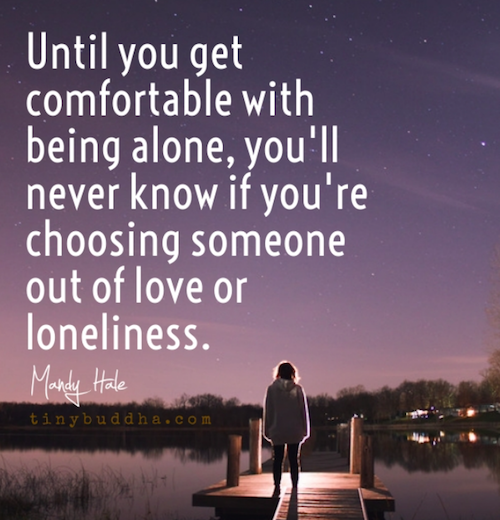
    “Hope for love, pray for love, wish for love, dream for love…but don’t put your life on hold waiting for love.” ~Mandy Hale

    Going to weddings alone, with no plus-one to take along with you. Watching the couples dance, thinking, “Will there ever come a time when that is me on the dance floor?” Going on holidays alone, with no partner to share memories with. Listening to stories of friends’ weekends away, as a reminder of just how solitary your own weekends are. If you are anything like me, you might recognize these signs of single life.

    “Will my situation and circumstances ever change?” I’d think as I struggled to fall asleep at night. I’d hold a pillow as a source of comfort, yet this too disappeared in the morning, when I woke up alone to face the day.

    Many single people think like this, yet rarely voice these thoughts. But sometimes we hit a turning point when we start to see everything differently—and then start to act differently.

    The turning point for me came one Saturday morning. After I had gotten dressed and ready, I sat down on a chair next to my bed. A photo of a couple friends was in front of me. They were on holiday, with smiles on their faces, standing under a bright blue sky with a clear blue sea behind them.

    As I looked at this picture of serenity and happiness, I had a sinking, empty feeling in my stomach. I thought, “God, will that ever be me?” I looked down in front of me and felt a sense of despair, worried about what my future held but paralyzed as to what I could do about it.

    At that moment I thought, “Enough.” I walked to the bathroom and looked in the mirror. I was tired of feeling sorry for myself. I was tired of watching the world go by. I was tired of the sad thoughts going around in my head like goldfish in a fishbowl.

    I asked myself then, “What do I have to be upset about?” I had a roof over my head, clothes on my body, and food in my mouth. That’s not to say it’s not normal to long for companionship when you’re single; it’s just that I had focused so much on what was wrong with my life that I hadn’t focused on what was right about my life. And I’d also focused on what was wrong with myself—as if there must have been something wrong for me to be single for so long.

    Until I became my own cheerleader, how could I expect others to start cheering for me? I decided then and there to take action. If I wasn’t happy with myself, I had to go out and change, and do things to change. Not just daydream and hope life would turn around by itself.

    So, what did I do?

    I’ve worked on enjoying my single life more and joined some dating apps to “get in the ring.” The results have proven mixed. Like with all things in life, there are good days and bad days. But on the whole, it’s been a positive experience because I’ve met some great people in my search for the person who ‘gets me.’

    I’ve realized we can only experience true happiness in life if we focus on ourselves instead of waiting for others to focus on us. People can join us for our stories, but we cannot expect them to complete our stories for us. We make our own paths in life. Walking on paths well-trodden will never be as satisfying as carving paths of our own, however rocky or imperfect they may be.

    So, what helped me move ahead? Here are four things that may help you:

    1. Work on loving yourself and your life.

    Work on yourself before trying to attract somebody else. As a natural result of working on yourself you will exude a glow of confidence. Your zest for life will radiate from your face, and you will naturally look and feel better to others.

    Work on developing positivity in your life. Embrace what you have, not what you wish you had or what your neighbor has. Read more, study more, travel more. Exercise for twenty minutes a day, try cooking one new dish a week, read or watch something every day that inspires you.

    Why should people get to know you? Evaluate the qualities you like about yourself and sing your own praises in your head each time you doubt how worthy you are.

    2. Be proactive.

    Join a few dating apps, take a few chances, take the time to connect with people. Bumble and Hinge are easy to use. You’ll meet new people and engage a new mindset.

    Get active and make the effort to swipe for a few minutes each day. What’s more, enjoy the process. Look beyond the photos. Recognize that there is a whole person behind the photo if you are willing to give that person a chance. Look for the gold in the profiles.

    3. Pay more compliments.

    If you see something you like on a profile, don’t be afraid to say it. You could make somebody’s day with your words. It costs nothing and it could provide just the lift they need. And the beauty of giving compliments is that you’ll likely get some in return—things people may have thought but otherwise not shared if you hadn’t gone first—which can help radically build your self-confidence.

    4. Focus on achieving one big goal a month.

    Write down twelve goals for each of the twelve months in the year. Buy a paper diary and write down how you are going to fill your time for the next week. Do something you wouldn’t ordinarily do. The person you seek should not compensate for all the things you are not; they should be an extension of all the things that you are. The more you live life, the more life you will have to share with a significant other.

    Review your progress once a week. Ask yourself, are you making too much time for people that do not have the time for you? Ruthlessly discard the things that don’t make you happy (people, pursuits, things) and selfishly embrace the things that do. Be generous with others and selfish with yourself.

    So, in summary, what can you do to improve your dating life?

    Treat yourself with the care you would treat a friend, broaden your mind and your approach when using dating apps, compliment freely, and give yourself one big thing to look forward to each month.

    True happiness in life can only be experienced when we focus on inside joy, not when we look for external fixes. Invite people into your life to join your life story, not to build your life story. Be your own cheerleader first to allow others to cheer for you.

  • Congruent Depression: What It Is and How to Overcome It

    Congruent Depression: What It Is and How to Overcome It

    “Not all of the depression that people experience is an illness… Unlike clinical depression, congruent depression is actually appropriate to your situation.” ~Dr. K

    ​Every day is the same. Every day I’m stiff. Every day I’m tired. These are the two main things that people with fibromyalgia deal with. It’s been like that for a couple of years now. Six to be exact.

    I’ve faced so much hardship all at one time: no job, no income, no friends, dealing with an emotionally immature/narcissistic mother, and not living where I want to live. All of this is making me sleep poorly.

    It’s all been chaotic and stressful and hasn’t helped my fibro or been helpful since discovering my highly sensitive personality trait a year and a half ago.

    I read that when you have fibro, you’re often depressed. However, anyone would feel mentally down in the dumps if they experienced these painful sensations all the time. Then for a little while, I started to believe that maybe I ​was​ truly depressed. I met all the criteria, after all.

    So I hopped onto the free listener service, 7 Cups. I’ve been using it for almost two months, and it’s helped me somewhat. It‘s good to have somewhere safe to vent, to feel heard and validated. It’s also nice to know someone is actively listening to what you’re saying. Still, despite this intervention I’ve had days where I’ve felt down.

    However, today, the clouds parted.

    I watched a video on YouTube by Dr. K on congruent depression.

    It’s a type of affective depression that occurs​:

    -When you’re in circumstances that you can’t control or have little control over

    -When you have no fulfilling purpose

    -When something is lacking from your life

    This type of depression is actually normal. You’re experiencing a very human reaction to a slew of negative situations that you feel you have no power over. It is your body telling you that something needs to change.

    It can also happen if you feel you have no direction, or the paths you’ve taken have always led to bad outcomes.

    ​Congruent depression can be remedied if one does the following​:

    1. Find purpose of some kind.

    Life purpose is complex nowadays, and our brains haven’t caught up. There’s very little physical labor needed to survive. Most of us don’t have to chop wood, work in fields, or trudge back and forth to a well, and I’m pretty sure no one rides horses on dirt roads. It’s harder to find true purpose when you don’t really need to do anything because everything is done by a machine.

    But we can still find purpose by working on something that matters to us personally, fighting for causes that we believe in, finding ways to help other people, and pursuing our interests and passions.

    2. Connect with people (to deflect loneliness).

    As humans, we are wired to be social/connect, but our modern digital world doesn’t help with this. We’re the most connected we could have ever possibly imagined, yet we are very disconnected. I believe this, aside from social media, is also another factor in the increasing rates of suicide.

    We need to connect with friends and family—face to face. And we need to really be present with them, honest with them, and open to their honest feelings so we can connect on a deeper level. When we can’t connect face to face, virtual connecting works just fine, so long as physical distance doesn’t turn into emotional distance. This is why I’m trying to post more to social media—so I can genuinely connect with people and feel less alienated.

    3. Find some way to deal with mind-numbing boredom (that doesn’t involve gaming, binge watching, social media, etc.).

    Our leisure activities in the hyper-digital age are all about consumption, not creation. There’s less painting, playing instruments, working with our hands—the kind of things that bring pleasure and joy to the person and society at large.

    Find a hobby that you can immerse yourself in, something physically engaging and maybe even creative—something that will get you out of your head and into a state of flow.

    4. Address the issues that contribute to your feeling of helplessness.

    Re-locate, find another job, or break off toxic relationships, if these things are contributing to your depression. None of these things are easy, but just taking steps to create positive change can help you feel empowered and more in control of your life.

    I’m actually considering moving at some point, pending COVID updates and my health, because I know this would go a long way toward improving my state of mind.

    5. Focus on self-discovery/self-help.

    Uncover your past traumas and commit yourself to healing. Work on identifying and overcoming limiting beliefs. Discover how you’re sabotaging yourself or holding yourself back so you can get past the blocks that keep you stuck.

    It’s only by learning about oneself, without the input of others prejudices or judgments, that one can find peace and happiness.

    *Self-help resources are free and plentiful nowadays. There are eBooks, podcasts, YouTube channels, blogs, websites, and Facebook groups to help with your personal development. You can also use astrology, the Myers-Briggs Type Indicator, and the enneagram to get a better look at yourself on an individual level. I personally have been using astrology and tarot to understand myself and have found both very helpful, and I’m loving the book Becoming Bulletproof by Evy Poumpouras.

    You can take all the prescriptions you want, do all the therapy there is out there, but for many, these are costly, time-consuming Band-Aids. They are not fixing what’s actually wrong—the drudgery of working a dead-end job you hate, the pain of staying with an abusive spouse, etc.

    That’s not to say taking medication or doing therapy is wrong. However, if you’re doing therapy and taking medication and nothing seems to improve, then you need to do more. You have to make actual changes in relationships, jobs, and lifestyles, to really feel different.

    Medication and therapies are simply aids to help you regain a better footing in the physiological and psychological sense. The rest is truly up to you.

  • 4 Ways to Overcome Alienation and Loneliness

    4 Ways to Overcome Alienation and Loneliness

    “What should young people do with their lives today? Many things, obviously. But the most daring thing is to create stable communities in which the terrible disease of loneliness can be cured.” ~Kurt Vonnegut

    Have you ever felt like a stranger in your own life? Watching other people like you were separated by some invisible wall?

    Most of us have felt it from time to time and understand all too well how detrimental loneliness can be if it doesn’t go away. In fact, research has shown that loneliness is worse than smoking or obesity to a person’s health.

    Yet we live in a world that is more connected than it has ever been. How is it that so many of us feel lonely?

    I’ve recently discovered the work of Gabor Maté, whose teachings on addiction and connection has inspired me deeply.

    He discusses the mind-body connection (particularly the deadliness of suppressing emotions) and how social connections can accelerate healing.

    When he speaks it makes so much sense it’s hard to believe this is not mainstream knowledge. How are we still treating the mind separate from the body? When someone develops cardiovascular disease, why are we not asking questions beyond their diet? Why are these people not supported holistically?

    It makes complete sense to me that someone who develops a chronic illness or disease and is socially isolated will not be able to heal as quickly as someone who feels connected to his or her community. What’s frightening is that our society is almost built on this artificial sense of connection that only creates feelings of alienation. I suppose it’s because it’s good for business.

    Alienation is a term originally coined by Karl Marx. His theory of alienation describes the “social alienation of people from aspects of their human nature as a consequence of living in a society of stratified social classes.” It occurs when a person withdraws or becomes isolated from their environment or from other people.

    People who show symptoms of alienation will often reject loved ones, society, and even aspects of themselves. It’s a very disorienting sense of exclusion and separation. It’s also lethal for human animals who thrive and prosper when they are connected and feel like they belong.

    Below are four types of alienation that pertain to our modern lives and how to combat each of them.

    Alienation from Nature

    It’s no surprise that alienation from nature contributes to our loneliness. We kill a part of ourselves when we destroy rainforests and dispose large amounts of garbage in our oceans. The movement to protect our earth is one that requires compassion and empathy for life beyond ourselves. It’s also a recognition that we are all connected.

    I don’t mean this in a ‘kumbaya’ sense, I mean it literally. The oil and coal we burn will become the air we breathe, just as the tiny microbes of plastic will become infested in the fish we eat. How people can deny this is infuriating. If we destroy our planet, we destroy ourselves. The planet is a large organism that has gone through many dramatic makeovers across its lifespan of 4.5 billion years. It does need us, we need it.

    I feel the best way to gain respect for our earth (if, for whatever reason, you don’t already) is to spend more time in the great outdoors. To leave the city and man-made buildings behind and spend time in nature.

    How can you not fall in love with our planet when you listen to rush of a waterfall? Or feel the aliveness and buzzing of a forest? We are nature, after all. We came from it and we will return to it. Connection to the earth is, in a sense, connecting to our truest sense of self.

    Alienation from People

    Many of us are no longer connected to others in a meaningful way. Social media has largely replaced social interaction and created an artificial sense of connection. We are wired to connect to others face to face, eye to eye, not through our phones.

    Social media is not only about connecting with others, but also an opportunity for companies to sell their products. There is an incentive for these platforms to keep you on longer and longer, stealing your precious attention.

    There is a reason why you open your phone and suddenly get pulled into a vortex of bright red notifications and an endless newsfeed. There are top psychologists and behavioural scientists working to keep you on your phone longer. I recommend watching The Great Hack or The Social Dilemma for more on this topic.

    This loss of attention causes us to become less present in the moment and more concentrated on what’s next, contributing to anxiety and depression. The effects of phone usage on our mental health are still being uncovered as are the laws around it. We are living in blurred lines, not quite sure how this will pan out. It’s like the era that our parents had with smoking before they connected the dots and accepted that it caused cancer.

    If there is a loss of genuine social connection in your life, I know how hard it can feel to connect with others. It can be an uncomfortable and vulnerable to seek friendships with people. Where do we start as adults? It was so much easier when we were in kids.

    Well, we can start by getting out more. Find hobbies, workshops, classes and meet people who share the same interests as you. During lockdown it’s obviously a bit harder, but there are also so many online communities that have popped up as a result. While it’s not the same as meeting in person, online groups of genuine sharing and connecting are the next best thing. Putting yourself out there is hard, but the risk is worth the reward.

    Alienation from Work

    When we do work that is just a means to an end and fulfills no purpose in our soul, it will slowly kill us. It reminds me of the quote, “The cost of not following your heart is spending the rest of your life wishing you had.” Doing some dead-end job because we are afraid to follow our dreams is painful.

    We all have gifts inside of ourselves, and the task is to find out how we can make a living out of them. Of course, this comes with a level of pragmatism, we simply can’t quit our well-paid office job and decide to become a puppeteer. There are intelligent and careful ways of getting where we want to go if we have the determination. Every day is an opportunity to take steps in the right direction.

    Go wherever you feel most alive and invigorated, it is always worth it. If you don’t believe me, look up “things people regret most on their deathbed.

    Alienation from Self

    Last but not least, the disconnection from ourselves. Our true selves. The person we were when we first entered this world. Wild and free, happy to be. Then we got our light dimmed by our parents, society, and culture to follow the well-laid path and do what everyone else does. It’s not surprising that so many of us forget our inner child. But it’s not lost, it’s just lying under those layers and layers of who we needed to be.

    I know I have disconnected from myself at times in my life. It hurts to go against my authentic self just to be liked or accepted. It’s like looking at my inner child and saying in her face, “You aren’t good enough. Change.” It breaks my heart.

    The saddest thing is those who have completely lost touch with their youngest self. They remind me of Robin William’s Character in Hook before he realizes he is Peter Pan. He grew up only to become an overweight, miserable lawyer who was obsessed with work. He was completely disconnected from his family, nature, and of course, himself.

    If only we all had a little Julia Roberts fairy to yank us out of our boring adult selves and remind us of our inner Peter Pan!

    Imagine the zest for life we’d all have if we had to go undergo training to reconnect with our true self? Healing and transformation begin by developing a deep relationship to ourselves. How? Through meditation, journaling, therapy, being in nature, connecting genuinely with others. It will also require vulnerability, patience, courage, and the willingness to change.

    We don’t need to keep our loneliness to ourselves. Ironically, it’s something we all have experienced and can relate to. If we can find ways to reconnect with nature, connect meaningfully to our friends and community, find fulling work that is aligned with our values, and connect to ourselves, the wall of loneliness will have no choice but to simply crumble away.

  • How Spending Time Alone Helped Me Overcome My Loneliness

    How Spending Time Alone Helped Me Overcome My Loneliness

    “If you’re lonely when you’re alone, you’re in bad company.” ~Jean-Paul Sartre

    I have spent most of my life surrounded by people, which is probably why I never realized I was lonely. For the majority of my adult life, the only quiet times I had to myself were the very start and very end of the day. Otherwise, my mind was inundated with chatter, notifications, and distractions.

    This constant noise let me mask the depths of my loneliness. I was bombarded with texts and distractions at all times, but I lacked deeper connections. As the years passed and I grew busier and busier, I found that I actually took steps to reduce my alone time. I’d watch TV until I fell asleep; I’d check my work emails first thing in the morning.

    Looking back, the situation was obvious—I was terrified of being alone with my own thoughts—but at the time, I just thought I was being productive, or simply didn’t like being bored.

    I didn’t realize my problem until my laptop suddenly broke. One chilly afternoon, when I was curled up on the sofa, ready for some New Girl, it unexpectedly powered off, and I was faced with my own reflection in the black screen. My phone was out of charge.

    Without distractions, work, or social media filling up my mind, I came to the abrupt realization that, despite all my activities and invites, I was deeply lonely. And that was making me profoundly miserable without even realizing it.

    That afternoon, I found out I was terrified of being alone. I looked at my relationship with myself and found it lacking.

    The prospect of being stuck in my own company was so scary to me that it jarred me into action. I’d gotten so good at filling my mind with chatter, I didn’t know who I was when I was alone. I was definitely one of the many Americans who spend more than five hours a day on their phones, according to a 2017 State of Mobile report—never really alone, after all. But I didn’t know how to start being less lonely.

    I didn’t want to only rely on others, so I made a plan to build my relationship with myself.

    I decided then to be mindful about my intentional alone time. First, I figured out when I had space to be with myself. Then, I identified the times I found it hardest to be alone. Finally, I picked out the obstacles.

    That left me with a solid three-point strategy: I had roughly three chunks of time during the day when I could have mindful alone time. My mornings and evenings were roughest for me. And my phone was the primary driver in stopping me from my goals.

    My plan was to have three sections of alone time: active alone time, time meditating, and time doing something that didn’t involve a screen. But before I did any of that, I had to remove the biggest obstacle: my phone.

    Even though it kept me connected to the world, it was holding me back from developing a deeper relationship with myself. I spotted that I used it most in the morning and the evening, so I invested in an old-fashioned alarm clock and decided on a strict no-screens-after-9:00pm rule.

    Normally, my morning started with me staring at my phone’s notifications. Instead, I got up and went for a fifteen-minute walk in my neighborhood. At first, it was boring—I was desperate for distraction. But the more I did it, the more I found myself capable of noticing birdsong, thinking about my plans for the day, unraveling the tangled feelings of the day prior, and looking forward to my first cup of coffee.

    I also worked in a five-minute meditation. At the time, meditation was new for me, so I figured that five minutes would be short enough for me to start getting into the habit. I quickly realized I needed to invest in an app to do guided meditation, which really helped me stay consistent and get actual benefits from it.

    Finally, I filled my evenings with reading and painting. Both of these activities are manual, which meant that I couldn’t check my phone while I was doing them. I was able to rediscover my love of books, and while I’m not very good at painting, the process of producing tangible art helped patch the gap in the evenings when I normally would reach for my phone.

    Research proves that loneliness is harmful for your physical and emotional well-being, but you don’t necessarily have to look outside yourself to cure your loneliness.

    All my habit changes pointed to one final conclusion: You can’t depend on others to feel better about yourself. Learning to be okay with being alone was crucial to my journey with myself. You can’t begin to work on real relationships with others until you have a solid relationship with yourself.

    For me, it took one crucial moment to bring home the reality of the situation. From there, I needed to actively carve out alone time—not just time without other people physically present, but time without distractions, notifications, phone calls, or emails.

    Time that belonged just to me.

    Finally, it did take tweaking. I tried to do it with my phone, but realized it was impossible, so I removed it. I originally tried to do a half-hour walk, but the time away from any devices stressed me out. When I began meditation, I thought I could do it without an app, but found I spiraled into negative thought patterns or fell asleep.

    My point is, I didn’t get it right on the first try. The most important thing for me was that moment of realization. From there, I was able to keep trying until I found methods that worked for me. The results were amazing in the long run. I have a better image of myself, and I’ve found my relationships with others have improved.

    Because I’m dedicated to feeling my feelings instead of drowning them out in a blur of notifications and escapes, overall, I’m more present and self-aware than I used to be, which helps keep me more self-accepting and centered. Nowadays, when things get rocky—and that does happen, as an unavoidable part of reality—I’m able to draw from my reserves and go with the flow.

    It was uncomfortable, it was difficult, it was frustrating, but it’s definitely been worth it.

  • How Illness Can Be Lonely and What to Do About It

    How Illness Can Be Lonely and What to Do About It

    “I wish I could show you, when you are lonely or in darkness, the astonishing light of your own being.” ~ Hafiz of Shiraz

    When we think of illness, we don’t usually equate it with loneliness; however, there seems to be a huge connection between the two conditions.

    The fact is, when dealing with health challenges, we are most connected to our bodies: we are one with ourselves. Even when we have thoughtful and caring loved ones in our inner circles, these individuals can never truly understand what we’re experiencing on a physical, psychological, and spiritual level.

    Illness is lonely, but loneliness is not just about being alone; it is a state of mind. Being lonely is about feeling disconnected from those around you, whether from an interpersonal or universal standpoint. Those who are lonely feel empty and drained.

    For years, I’ve pondered the connection between loneliness and illness. My musings began in 2001 at the age of forty-seven with my first bout of cancer.

    While raising three teenagers, and after having a routine mammogram, I learned that I had an early-stage form of breast cancer called DCIS. I was given the option to receive radiation, which would result in a severely deformed breast, or to have a mastectomy. I chose the latter. I thought it would be better living without a breast than being grossly deformed.

    The shock of the diagnosis magnified my already complicated feelings about being an only child. My loneliness grew deeper because my surgery was the week of 9/11. While the country was mourning the horrific terrorist events, I mourned the loss of my breast. The presence of both internal and external mourning magnified my already intense feelings of loneliness.

    I chose the best surgeons in the country, and my post-op recovery went extremely well; however, I struggled emotionally. No matter how many hugs my husband gave me, telling me how beautiful I was, I couldn’t shake the idea that part of my womanhood had been removed—the part of me that nourished my three amazing children.

    In spite of all the love around me, I felt a deep sense of loneliness that I was unable to adequately describe or shake. What helped me most was tapping into my lifelong journaling practice. My journal had always been my confidant and best friend, and its role became more vital during this time.

    Fast-forward to the present. I’m thinking about a good friend’s experience with loneliness as she navigates her health challenge (she has stage 3 lung cancer). If you met her, you’d think, I want to be this woman—she has it all: a wonderfully devoted husband; many friends; a successful interior-design business; and what appears to be a full, deeply spiritual life.

    Working primarily in an upscale California community, she brings magic and joy into the homes of some of America’s most beautiful estates. Because she has such a magnetic personality, many people turn to her for love and support, but sometimes when life shifts in ways beyond our control, we can no longer offer that type of support, and we can only try to help ourselves stay afloat.

    We all know how life can shift from one day to the next. What happened to my friend over the course of two years was horrific.

    In the early-morning hours of January 2018, she lost her beautiful home in the Montecito mudslide disaster. The following year, she watched her mother’s slow death from lung cancer. After being knocked down by those two events, she picked herself up and continued with her design projects.

    Just when she thought there could be no more horrible news, she was asked to deal with one more life challenge—a cancer battle.

    It all began at the end of her workday, when she came home and told her husband that she felt weird but couldn’t identify why. They decided to pay a visit to the local emergency room where an EKG was done. The doctors found that the lower part of her heart wasn’t working.

    The end result was that she was told she needed a pacemaker, but in preparation, she had a chest X-ray, which showed a large mass on one of her lungs. The first priority was to manage her heart issue, and then deal with the lung mass, which surgical intervention showed to be malignant. This was followed by chemotherapy and radiation.

    Under normal circumstances, this story is terrifying, but in this particular case, the terror was magnified by her mother’s recent passing from the same disease and being in the midst of a pandemic. My friend’s own health status triggered memories of her mom’s last months of life, and her slow deterioration in hospice care.

    Like myself and others who have navigated a cancer journey, my friend contemplates the fragility of her life—but as she does so, a deep sense of loneliness and sadness often overwhelms her.

    It’s been said that there is a “cancer personality.” Those who are generous, loving, and have a tendency to keep their emotions locked inside are more prone to the disease. My friend asked me if I had been scared when I received my breast-cancer diagnosis. I told her there was fear, but my overwhelming feelings were those of loneliness.

    “Having cancer was the loneliest experience of my life,” I told her.

    “Oh, thank you for telling me that,” she said. “I was feeling that myself, and I wondered if it was normal. It brings me relief to hear that you felt the same way.”

    Learning of my friend’s health challenges, I was once again reminded of how lonely illness can be.

    I thought back to the day of my breast-cancer diagnosis. The news was given to me on a speakerphone in the office my husband and I shared, as we sat side by side. He hugged me close as I glanced at the black-and-white photos of my three children on the wall, wondering how their lives would change if they lost their mother.

    I was glad that my husband listened attentively to the doctor’s words, as I was alone in my thoughts—thoughts that I couldn’t express except in puddles of tears. A deep sense of sadness permeated my being. Knowing that something cancerous is growing inside your body is daunting.

    No matter how many hugs my husband and kids gave me, I was unable to shake my profound sense of being alone. Even as I write this article, I feel alone. I never wanted to join cancer groups, which might have helped dissipate my feelings of loneliness. I felt that absorbing other people’s narratives could be exhausting. As an empath, it would drain me, and I needed space for my own healing.

    The fact is, that even without having to deal with illness, we’re living during very lonely times. Social media and video calls have now taken the place of direct human interaction, and in many ways, loneliness has become an even more prevalent epidemic, even for those not battling cancer.

    Whether dealing with health challenges or the isolation associated with being quarantined as a result of the pandemic, loneliness is a serious mental-health concern. Studies have shown that loneliness can decrease your lifespan by 26%, make you more prone to depression, result in decreased immune-system function, and cause stress to the cardiovascular system.

    According to Mayra Mendez, a psychologist in Santa Monica, California, the most helpful thing to know about loneliness is that it isn’t something that happens to you; it’s something you can control. She says that it’s important to find new and creative ways to deal with loneliness and to connect with others by whatever means available to you.

    Ways to Deal with Loneliness 

    • Video chat with friends or loved ones, who may feel lonely too, but might feel too scared to admit it.
    • Write a letter to someone you care about, opening up about what you’re going through, sharing your feelings, and asking them what’s going in their lives.
    • Take up a new hobby so you can meet likeminded people. It’s much easier to form a deep bond when we connect over shared passions.
    • Take an online course so you can interact with people with similar interests.
    • Learn a new language so you can connect with even more people.
    • Play digital word games with new friends. We don’t always need to have deep conversations to ease our loneliness. Sometimes it helps just to do something fun with someone else.
    • Make friends with a book.

    Let’s never forget: We’re born alone and we die alone. But there’s a lot we can do in between to nurture our souls.

  • Why We Feel Lonely and What to Do About It

    Why We Feel Lonely and What to Do About It

    “At the center of your being you have the answer; you know who you are and you know what you want.” ~Lau Tzu

    With social distancing measures in place in response to the new coronavirus, many of us have a lot more time on our hands, while also being isolated.

    This may also mean you’re feeling loneliness more intensely than you’ve experienced it before.

    This is a good thing! Challenges can help us to understand ourselves on a much deeper level than we would have if we weren’t challenged—precisely because our feelings are more intense.

    Loneliness is not new. It was around long before COVID-19, and it will be here long after this phase of isolation passes. So, whether you’re used to feeling lonely, or if it’s something new for you, this is an opportunity to connect to your heart and grow. But first you need to understand the true source of your loneliness.

    Alone vs. Lonely

    Some of us can be on our own and feel very comfortable and peaceful, while others will feel lonely when they’re by themselves. Then there are people who feel alone and lonely even when they’re with friends or surrounded by people.

    There’s a big difference between being alone and feeling lonely.

    Being alone is simply being on your own.

    Feeling lonely is your experience, which can happen regardless of whether you’re on your own or not.

    What is loneliness?

    Loneliness is a feeling we experience when we get caught up in judgments and insecurities about ourselves or our relationships.

    You might feel lonely because you feel like you have no one to talk to, or no one understands you, because you feel different to everyone else. I resonate with that!

    You might feel lonely because you deeply desire to connect with other people, even if just through Skype or Zoom, but maybe it feels emotionally unsafe to do so. You’ve seen how people can treat each other, or you’ve been hurt before, so now you’re not sure if you can trust people. I’ve been there!

    Maybe you want to have deep and meaningful conversations with people, but all you get is shallow everyday chit chat. Yes, that gets tiring very fast! You’re trying to connect with someone, but you feel alone because there’s no depth of connection.

    I’ve often wished people would either speak from their heart or just enjoy the silence.

    Maybe you’re very sensitive to other people’s energy (which is a superpower, just FYI), but the only way you currently know how to manage it and feel safe is to be on your own, even though you crave connection.

    Or maybe you feel left out because the people around you all like the same things, but you don’t.

    Sports, Connection, and Fitting In

    From my mid-teens through to mid-twenties, when many of my friends and the people I knew were starting to drink, smoke, and party, I really did feel alone.

    I loved playing sports. The one that excited me the most was ice hockey. Growing up in Australia it definitely wasn’t one of our most popular sports, but I loved it! The speed, dynamism, intensity, and flow really brought something out of me. Now that I live in Canada, it’s everywhere.

    This competitive team sport brought a sense of connection that also touched my heart. The feeling of relying on each other during a game made me feel much bigger than myself. Being connected on a deeper level, knowing how everyone would move or where they’d be on the ice without having to think about it, made me feel so alive and connected.

    I have very fond memories of playing and training with my teammates—the intensity of emotion during a game and then the ability to let it go afterward.

    But for me there was a split. I felt this sense of connection during a match or training, but then there was a loneliness that came after. Because I didn’t care for any of the usual post-game celebrations of drinking and going out to bars or clubs. I much preferred to come home after a game and relax and watch a movie.

    Knowing they were all out after a game sometimes made me feel lonely. I tried doing the drinking thing a handful of times in an attempt to fit in, but it never stuck. I just didn’t like it! So I didn’t do it.

    I’d sometimes go out with friends and just drink water while they drank alcohol. But this wasn’t much better, because I didn’t like what it did to people, and I didn’t like being around the energy of drinking.

    So even when I did go out, I still felt alone because I just couldn’t connect on this level.

    What I really wanted after a match was my quiet time.

    I was still in my early twenties when I accepted that I just preferred time on my own, but it didn’t stop that feeling of occasional loneliness.

    The interesting thing about feeling lonely is that you’re not alone in feeling it. Even though it might feel like that for you, it’s a common experience that touches most people’s life at some point.

    Loneliness and Disconnection

    When we experience loneliness, it’s only possible because of an underlying feeling of disconnection. We often associate loneliness with being disconnected from other people, which is true, but to understand loneliness, we need to realize that it all starts with how disconnected we are from ourselves.

    When I’d come home after a hockey game while my teammates went out drinking, I’d feel lonely because some part of me wanted to maintain that feeling of connection with them. Part of me wanted to be able to do what they wanted to do (go out and drink), but at the same time part of me had no desire to do it.

    As long as I judged myself for not going out with them, I’d feel lonely. I wasn’t accepting myself, which created a feeling of disconnection inside me.

    But as I came to accept that I was different, and I liked time on my own and a quiet night at home, the feeling of loneliness started to fade away. This self-acceptance got me out of my head and back into my heart, where I could feel a peacefulness start to emerge as I simply enjoyed my quiet night stretching or watching a movie without any self-judgment.

    Being quietly present with myself, enjoying what I enjoyed, brought a feeling of connectedness inside me—the thing I thought I’d get by going out with my teammates after a game.

    This wasn’t one incredible moment of realization after which I never felt lonely again. It was a gradual process. There were times when I’d come home while my friends went out, where I’d still feel that familiar loneliness return.

    But I’d gained an understanding of why I felt lonely—a disconnection from myself through a lack of self-acceptance. In times when the feeling of loneliness would return, if I’d come back to being present with myself the loneliness would again fade… like a muscle that needed to be strengthened.

    When I reflect on this time in my life, I always find it fascinating to realize that my friends never judged me for not wanting to go out. I was always welcome to join them. They’d accepted me for who I was. It was only me who didn’t accept me, and that was a source of disconnection and loneliness.

    Finding Connection

    This doesn’t mean I became a hermit with no human interaction. Yes, I can feel very at peace on my own, but I also love connecting with people. You just won’t find me doing it in an environment where people are getting drunk.

    I love having deep conversations. I love connecting and getting to know people. If I’m talking to you, I want to know who you are. I have a never-ending curiosity to understand what makes people who they are, and a sensitivity to feel others’ pain.

    When we experience loneliness, there’s a wanting to feel connected and connect with others, but the disconnection inside us creates a closing in our heart, and we get caught ruminating about the thing we don’t have (connection).

    The thoughts will fuel more emotional reaction and disconnection, which then create even more thoughts—a vicious cycle that can go on and on continually feeding itself.

    And then when we encounter other people and have an opportunity to connect, we might not even be able to be present with them because we’re still caught up in our heads, judging ourselves and our experiences.

    When we feel more present and accepting of ourselves, we can also feel a wanting to connect with others, but now there’s an openness in our heart.

    Our heart is the part of us that feels connection. Connection to our self—the essence of who we truly are, beyond the dramas and stories that fill our mind—and connection to other people, animals, nature, and creation.

    When we’re present and connected to our heart, we might be peacefully content on our own, or we may be inspired to go and connect with people. We don’t have to feel lonely to want to connect with people. The goal is to allow choices like these to flow from our heart.

    If you’ve been through challenging or traumatic life situations that have left you feeling broken, ashamed, or otherwise disconnected from yourself, it’s possible you have a harder time connecting to your heart. That’s okay.

    It’s also possible you have a hard time connecting with other people, perhaps because you’ve never felt a sense of belonging, and you live in a constant state of judgment and insecurity. That’s okay too.

    If you start by creating a connection to yourself, it will be much easier to connect with others, and in the times when you’re on your own you won’t feel that same overwhelming sense of loneliness.

    What can you do to connect with yourself when you’re feeling lonely?

    Meditate

    Meditation teaches us how to find a space of quiet inside our self. A simple stillness and acceptance.

    We don’t realize the heavy burden and the impact of our thoughts and self-judgments until we have a moment of inner quiet. In the quiet we can comprehend the burden we carried because by contrast it’s not there.

    Over the years of teaching meditation, one of the words I’ve noticed that people often express when they start a consistent practice of meditation is “relief.” A relief from the burden they didn’t realize they were carrying.

    The quiet relief brings an opening in the heart and a feeling of connection. But remember, it does take practice (like learning any other skill).

    Gentle yoga

    I’ve always preferred very slow and mindful holding of postures. It allows us to bring our awareness into our body through being present to our physical sensations. Remember, loneliness is a feeling with its own sensations.

    Often when we experience intense emotions we disconnect from our body, because we become caught in our thoughts (fueled by the emotions), which amplifies everything. Reconnecting to our body helps us to anchor ourselves into feeling—and it’s the feeling that will help slow the thinking (and overthinking).

    Connecting our body through feeling (not thinking about it or judging it) helps shift us to a place of acceptance.

    Follow the feeling

    Take time to just sit quietly and be present with your loneliness. No judgment. Just feeling it.

    If your mind wanders into thoughts, stories, emotional reactions, or dramas, just acknowledge that and bring your awareness back to the feeling of loneliness. This is where the practice of meditation is so valuable, because it teaches you the skill of how to simply be present.

    If you can allow yourself to consciously feel and be present with the feeling of loneliness (not wallow in it), you’ll learn more about the source of your loneliness. It may not always be comfortable, but it’s about being present and accepting of what is actually there for you.

    Be curious

    With all that you do, approach it with an attitude of non-judgmental curiosity. This helps ensure you won’t be too serious or hard on yourself. Curiosity makes things more enjoyable.

    And remember, you’re not alone!

    There are other’s just like you (well, not exactly like you, you’re unique!), who have these same thoughts and feelings and who are experiencing loneliness as a result.

    As you come to understand more about your own experience of loneliness, you’ll discover you understand more about others. Loneliness is inherent to the human experience and the world needs more people who understand.

    Understanding is what brings us together. Understanding is a form of connection.

  • How I Stopped Feeling So Lonely and Disconnected

    How I Stopped Feeling So Lonely and Disconnected

    If I were given the chance to relive my childhood, I wouldn’t take it. For the most part, those were times I’d rather forget. I didn’t get along well in school, and family life was less than ideal. About the only thing I liked about the seventies and eighties was the rock ‘n’ roll music.

    As a kid growing up in Miami, I had an Asian look about me, even though I was of Hispanic descent. Many of the kids in school asked me if I was Chinese; some called me a stupid chink; and a few just beat me up.

    Things at home weren’t much easier. My parents divorced when I was in grade school. I lived with my mom and three sisters (all older and bigger than me). There were the usual sibling rivalries. So, at school I got beat up by the boys, and at home I got beat up by the girls.

    I hardly had any friends. Anybody I associated with was just as much a misfit as I was. I spent most of my free time either with my head in a book or riding my bike around the neighborhood.

    High school was torture. I was shy, unattractive, and under-developed. And though I was small for my age, the hormones still surged through my body. Like any other teenage boy, I wanted to be at least noticed by the girls, but it seemed like every girl was out of my league.

    My whole existence could be described in two words: inadequate and lonely. I remember one day walking down the hall in school. I was so tense that I couldn’t seem to walk straight. I felt like I was a prisoner in my own body and mind. There was me, and then the rest of the world.

    Things didn’t get any better as I got older. Depression began to set in. I tried alcohol for a few years, but that only made things worse. I became even more isolated.

    At twenty-two, it seemed like my life was coming to an end. I didn’t know what to do. I always resisted help because I thought nobody could possibly understand what I was going through. I was wrong.

    I found a group of people who knew exactly how I felt. How did I know? They told me about their feelings of inadequacy and loneliness, even though I never told them how I felt.

    They offered to help me; one guy in particular, Steve, told me that I could be free from the bondage of self, and that he would show me the way. This was hard for me because I didn’t like taking directions from other people. I also didn’t want to impose on them. But Steve acted as if it was an honor to help me. I didn’t understand that.

    For the next couple of years, Steve had me do written exercises to examine my past. He also gave me assignments to change my behavior. For example, he had me do volunteer work to help other people in need. I chose to volunteer in prisons, helping inmates turn their lives around, as I was doing.

    Over time, I began to feel much better about myself. I was able to make friends and felt like I had a role in this world. But I still felt a bit out of place, and at times very lonely. My relationships with women were brief, more like just encounters.

    Up until that point, I had heard about meditation, but I didn’t know exactly what it was. I intuitively discovered that I could relieve stress by going to the park, sitting quietly, and contemplating the things that were happening in my life. I would also take time before work and sit for a few minutes before I started working at the computer. I was self-employed at the time, selling long-distance calling services over the Internet.

    One spring day in 1996, as I sat quietly at my desk having my morning cup of coffee, I suddenly found myself immersed in what seemed like pure consciousness. I had the distinct feeling that time had come to a complete stop, and I was seeing the essence of who I really was. I must have been in this state for only a short period of time, as the screensaver on my computer had not yet kicked in.

    When I returned to normal consciousness, everything looked surreal and I felt completely at peace, as if all my troubles had simply disappeared. All of a sudden, my entire life made complete sense. I realized that I was never lost at all, but that all my painful experiences had served a purpose—to learn an important life lesson. The confusion was gone.

    I also felt wide awake, as if I had been asleep my whole life. I now had an awareness, or a sense, that I didn’t have before, or even know that I could have. It was like I had been blind my whole life, and didn’t even know that it was possible to see. I could sense another presence in the room even though I was alone at the time. I kept looking around to see who was there, but I couldn’t see anyone, at least not with my eyes.

    In the weeks that followed, I underwent a dramatic transformation, and many people noticed. They said I looked so peaceful and wanted to know why. I didn’t yet know how to explain it to them.

    I now felt a deep connection with other people. It was as if they were a part of me. When I looked at them, it seemed like I could see deep inside their soul and feel what they were feeling. I could feel their joy and their pain, their confusion and their loneliness. There were many times that it brought tears to my eyes.

    While I changed in many ways as a result of this experience, I think the most profound change was my ability to see that we’re all connected on a deeper level. Interconnectedness was no longer just a concept to me, but rather a reality.

    Ever since that spring day in 1996, I have never felt alone, regardless of who was or wasn’t in my life, because no matter how far apart I may be from other people, I can always feel them in my heart. I have meditation to thank for that.

    How Meditation Can Help You Overcome Loneliness 

    While my experiences may seem unique, other people are learning how to overcome their loneliness through meditation, as well, and you can too. Meditation is a lot simpler than many people may think.

    The way meditation helps you overcome loneliness is by calming your mind and emotions. Then you’ll be able to see for yourself how you’re connected with other people on a deeper level. Meditation will literally help you expand your awareness.

    The form of meditation I practice, and now teach, is mindfulness meditation. Though it has its roots in Buddhism, it focuses on the techniques and leaves behind all the rituals and beliefs. There are two basic components of the practice: sitting meditation and writing meditation.

    Sitting Meditation

    The best way to start a meditation practice is to simply start meditating. I know I’m stating the obvious, but you’d be surprised at how difficult this can be. We often procrastinate until we find the perfect time. Don’t wait. Start now.

    Find a quiet place where you can sit for a few minutes without being disturbed. Close your eyes and begin following your breath. Observe how your lungs expand with each in-breath and contract with each out-breath. Let your breathing become relaxed and natural. As your body relaxes, notice how you take each breath in one graceful motion.

    When a distraction arises, observe it mindfully as it comes into being, then let it slip away without clinging to it. Then gently bring your awareness back to your breath. Don’t get upset if your mind keeps wandering off. This is perfectly normal. The idea is to keep bringing it back to your breath.

    Start with a ten-minute session and then work your way up to twenty minutes or more. It may be a challenge to sit still in the beginning, but it will get easier as your mind settles down over time.

    And as your mind settles down, you’ll likely find you’re less consumed by thoughts about being different, inadequate, or lonely, which means you’ll be better able to be present with other people and create connections from moment to moment.

    Loving-Kindness Writing Meditation

    Writing meditation is a technique I developed to reprogram the subconscious mind to help people achieve their goals. It only takes five to ten minutes a day, and it’s highly effective.

    The practice is simple. You just copy by hand a set of affirmations, such as the loving-kindness meditation, over and over in a notebook. This will force your brain to rewire itself for new thinking and behavior. Within a week or two, you’ll find yourself acting differently without any conscious effort.

    Here is a sample of the loving-kindness meditation:

    May I be healthy and strong. May I be safe and protected. May I be peaceful and free from mental, emotional, and physical suffering. May I be happy and joyful. May I be patient and understanding. May I be loving, kind, compassionate, and gentle in my ways. May I be courageous in dealing with difficulties, and always meet with success. May I be diligent and committed to my meditation practice, and to helping others along their spiritual path. May my True Nature shine through, and onto all beings I encounter.

    After you write this verse, write the same words again, swapping “I” for “every person and living being in my house.” Then write it again for every person and living being in your neighborhood, then again for all people and living beings in your city, your country, the whole planet, and the entire universe, for a total of seven verses.

    Remember, all you do is copy the meditation in a notebook for five to ten minutes a day. It doesn’t matter how far you get. The next day, just pick up where you left off. You don’t even need a quiet time or place to do it. It’s that simple.

    The purpose of loving-kindness meditation is to cultivate unconditional love for all people and living beings. Imagine the impact on your life if you truly lived according the ideals of the affirmations:

    • You’ll become more outgoing
    • It will improve your relationships
    • It will heal the wounds from your past

    The reason loving-kindness writing meditation is so effective is that you’re using multiple senses to assimilate information directly into your subconscious. And once it’s in your subconscious, it will manifest in your attitudes about yourself and other people.

    As you can see, overcoming loneliness is not as hard as you might think. It takes just a little bit of time for practice, and some diligence, but the rewards are tremendous. You’ll no longer feel disconnected and isolated. You’ll feel like you’re a greater part of humanity, and this can make all the difference in the world. I know from personal experience how painful it is to feel lonely. I overcame it, and so can you.

    Best wishes on your spiritual journey!

  • How to Stop Feeling Lonely and Escape the Emotional Eating Cycle

    How to Stop Feeling Lonely and Escape the Emotional Eating Cycle

    “When you no longer believe that eating will save your life when you feel exhausted or overwhelmed or lonely, you will stop. When you believe in yourself more than you believe in food, you will stop using food as if it were your only chance at not falling apart.” ~Geneen Roth

    I used to eat because I was lonely.

    Lunch hour at school would last nine billion years. I’d have no one to sit with—I was spotty and mega bossy, and my hobby was copying pages from anthropology books.

    Everyone would put a sweater on the chair next to them, so I’d have to sit further away. Then, just as I’d pick up my fork, they’d up and leave anyway! “Oh well,” I’d think, “If I eat slowly I can make my fries last till the bell goes.”

    I switched to packed lunches to avoid the dining hall. But I didn’t want to be spotted alone on a windowsill, so I’d eat my sandwiches in a toilet cubicle.

    After, I’d feel full, but unsatisfied. And still have time to kill! So I’d go to the dinner hall and buy a meat pie. I felt sad and gross.

    The truth was, I didn’t know how to be a friend, let alone make one. I was full of resentment toward other kids.

    I acted superior but felt inferior. I was needy, or tried to impress them.

    I didn’t think friendship was something people learned—I thought there was something wrong with me. That I’d be this way forever.

    I also hated that I couldn’t resist overeating. Since my family was big on brown rice and organic vegetables, I felt guilty for buying junk food.

    When I hit my teens, I became body-conscious. I panicked that comfort food would make me fat. I wasn’t! But I thought my thighs were big, and clenched my stomach in all day. All day!

    I felt too embarrassed to ask anyone—especially my parents—for help. I thought they’d say I was greedy. Or lecture me about eating crap. Or take me to a doctor—humiliating!

    I didn’t know it was called “emotional eating,” but I was pretty sure it was bad. So I kept quiet.

    I thought: “I can fix this myself. I just need the self-discipline to eat less!”

    Going on improvised diets made things a whole new level of worse: binge eating, bulimia, and feeling utterly obsessed and depressed about food.

    It took seven years before I found a way to recover.

    I wish I’d known how to deal with lonely emotional eating in the first place, instead of going off on an eating disorder tangent!

    So if you’re dealing with a double-whammy of eating and loneliness yourself, here are eight simple steps. They will guide you through solving your emotional eating, and your loneliness, from the inside out.

    1. Imagine your life without emotional eating, and shift focus away from guilt and shame.

    You’re not greedy. You’re not gross. You’re not ill. You’re just trying to cope with a fear: abandonment.

    It’s the emotional fear we’re born with. Outside the tribal circle, a baby would die. The primitive part of your brain thinks, “I’m alone—I’ll starve!”

    It’s how you’re wired, so give yourself a break.

    If you waste your energy wrestling with guilt and shame over eating, you’ll never tackle the real emotional challenge—loneliness.

    So when guilt and shame come up, shift your focus.

    Imagine a peaceful relationship with food. Imagine eating when you’re actually hungry. Visualize slowly nourishing yourself.

    2. Loneliness is a self-worth issue, so become willing to work on your self-worth.

    It’s like this: You’re by yourself. That’s not loneliness, that’s solitude.

    Sometimes it’s nice, but sometimes you don’t have a choice. Uh-oh!

    Mind games start: you imagine it’s because you’re unlovable.

    That’s loneliness. Low self-worth, in disguise.

    If you’re lonely, it’s easy to think you could earn your self-worth back by changing something external.

    You think, “If I found a great partner, then I’d know I was lovable.”

    Or you think, “I’ll be worth loving once I get a grip on my emotional eating and lose weight.”

    But that’s not how it works! Self-worth isn’t something you earn. Or that drops in your lap either.

    You choose to create it.

    So ask yourself: How can I work on my self-worth?

    (Don’t worry if you don’t know yet. Some ideas are coming up…)

    3. Spend some quality time with yourself.

    Are you enjoying your time by yourself? Or just watching TV?

    Imagine you treated a child the way you treat yourself on a too-tired evening.

    Browsing Facebook when they say, “Play with me.” Sending them to the fridge to scavenge instead of cooking dinner. Binge-watching Netflix instead of putting them to bed when they’re tired.

    They’d feel hurt, and start believing they weren’t worth spending time with. They’d also start misbehaving wildly to get your attention!

    The same is true for how you feel about yourself. When we ignore our inner selves, we start to believe we are worthless, and an emotional eating crisis is a great way for our heart and soul to grab our attention.

    Spend some quality time with yourself.

    Take yourself on a date, just you and you.

    Play (build a go-cart, paint your room), be in your body (move, bathe, meditate), or relax (read, whistle, sit in nature).

    Self-worth grows as you self-connect, so every little counts.

    4. Create thoughts that give an inkling of self-worth.

    When I was rock bottom with food and loneliness, my thoughts were dominated by failure, being a victim, and believing change was impossible.

    Stuff like “I’m gonna be lonely forever,” and “I hate my body, I hate myself for eating, and I’m too pathetic to stop.”

    Three positive thoughts in particular helped me out of my pit.

    They didn’t tell me directly I was worthy or fabulous—saying anything saccharine about my life would have felt like gloss painting a turd.

    They just implied a basic level of self-worth.

    They were: “I’m part of life unfolding.” (I’m not in a vacuum. Even though I feel totally dissociated and alone, I’m still participating in life on the planet.)

    “I really care about my body.” (I’m upset I overate again. But I couldn’t get upset if I were indifferent… So on some level, I must care!)

    And: “Things are already changing.” (Repeating this phrase is a positive action… So maybe I won’t always be like this).

    Find one thought that implies you aren’t your worst fears. That makes you feel worthy-ish. Then repeat it like you’re being paid a piece rate to do so.

    5. Explore how you’ve created loneliness.

    Try this: It’s funny!

    Imagine someone wants to master the art of loneliness. Lucky for them, you’ve honed the perfect system!

    Write down what you’d teach them.

    My own Perfect System for Staying Lonely says: “Don’t have a calendar for friends’ birthdays. Tell yourself that you’re too broke to buy gifts, cards, or book a babysitter.”

    And: “Get hired for shift work, and rehearse theatre shows every weekend.” I disconnected from my relationship like that that for the first five years of my marriage! (Thankfully, the guy’s a legend.)

    The point is, I thought loneliness happened to me.

    But I make myself lonely, when I don’t need to be. Years after my schooldays are behind me, I lead myself back to that painful-yet-familiar place. It’s called a comfort zone.

    It doesn’t mean it’s your fault you’re lonely—this isn’t about blame. This is actually good news: If you’re doing it, you can undo it.

    6. List everything that your loneliness buys you.

    An excuse not to face trust issues?

    A reason to avoid intimacy?

    A cover for social anxiety?

    I know it’s not obvious that loneliness has advantages, but sometimes it’s a way to avoid something even more scary or painful.

    Me? Loneliness excuses me from owning my introvert personality. Intimacy makes me feel vulnerable, and rejection scares the crap outta me.

    These hidden benefits to your loneliness are called “payoffs.” It pays off to explore them!

    Because they’re the reason you’re creating loneliness, even though it hurts.

    7. Explore the ripple effect of loneliness in your life.

    You’d expect loneliness to make you shy at parties, or reluctant to date.

    But has it changed you in other ways?

    Unhealthy self-reliance has made me a nightmare to cook with. And low self-worth has taken its toll on my financial outlook.

    Clean out your worldview.

    Defy your loneliness-inspired beliefs about what you can and can’t do (like, ask someone to chop the mushrooms while you stir the risotto, or ask your boss for a raise).

    It’s a great way to un-victim yourself.

    8. Finally, when you’ve done all that inner work, break up your emotional eating habit.

    Habits weld to each other! Drinking and smoking. Driving and talking to yourself in a variety of accents. Lonely emotional eating and—?

    Break the links.

    Don’t just say to yourself “Stop eating toast.” Don’t make any rules about what you eat.

    Instead, change how you eat. If you don’t know how you eat, slow down.

    Notice what you do at each stage of your emotional eating habit—beforehand, during, after, where, when, with what planning.

    Do any part of your habit differently.

    Say you eat ten slices of buttered toast and jam in front of the TV each evening. Buy different butter that you don’t like so much. Put the TV (or the toaster) in the cellar. Create an eating area, keep the sofa for relaxing. Shop differently. Go out.

    Keep disrupting your habit, and it will eventually dissipate.

    Habit change takes patience, and sometimes repeated attempts too.

    But break up your habit from enough angles, and you’ll eventually find you’ve replaced it with a way to enjoy food again.

    The way I think of it, addressing loneliness is 88% of the solution for emotional eating from loneliness.

    When I solved my eating struggles, I spent a couple of years of journaling and becoming aware of my beliefs, thoughts, and feelings. Then, only a month or two of habit change.

    I know a couple of years sounds really long! Perhaps it will take less time for you. The point is, this isn’t a quick fix. Quick fixes rarely address the underlying issues.
    It’s tempting to rush. To try to skip straight to solving the eating—out-of-control eating feels unbearable and you want it to stop, like, yesterday—but if that hasn’t been working for you, or you’ve even ended up binge eating like I did, give yourself permission and time to go deeper.

    Trust me, changing an emotional eating habit is much easier when it’s just eating, and the compulsion part has had your loving attention.

    So good luck, and don’t rush.

  • We Can’t Run from Ourselves and 6 Other Lessons from Living Abroad

    We Can’t Run from Ourselves and 6 Other Lessons from Living Abroad

    “Maybe the journey isn’t so much about becoming anything. Maybe it’s about un-becoming everything that isn’t really you… so you can be who you were meant to be in the first place.” ~Unknown

    From the outside looking in, my life was picture-perfect. I had a corporate job that paid more than just the bills, a charming little apartment in a boho neighborhood of Denver, a gorgeous SUV that took me on adventures in the mountains on the weekends, a vibrant dating life where I met some pretty amazing guys, and a group of incredible girlfriends that most people only dreamt of having.

    But deep down in my heart and soul, I knew it wasn’t right. I knew I was meant to be doing something totally different. I felt an intense calling, a longing for something unknown, and every day as it grew stronger, I became more restless. I was trying to live someone else’s ideal life, desperately hoping it would be right for me as well. It wasn’t.

    I was turning twenty-seven and knew if I didn’t make a change right then, I never would. My life would stay the same because I felt like I was getting to the point where (approaching thirty) I would want to think about settling down and starting a family.

    After months of being in denial, hoping the feeling would just go away so I could continue living my easy little life, I finally decided I wasn’t going to let fear hold me back any longer. I didn’t want to miss my calling or have regrets about any of the choices I made. My heart was telling me to go, and I knew it was taking me down the path I was destined to take—it always does.

    So, I quit my job, sold my car, donated my furniture, said my good-byes, stored a few boxes of personal items in my grandma’s basement, and boarded a one-way flight to Sydney, Australia, with nothing but a backpack and a box.

    People were calling it a “quarter life crisis,” which I kind of went along with, but the truth is, I had never felt settled and always knew something big was about to happen. My plan was to stay in Australia for a couple of years (if homesickness didn’t get the best of me first), but I ended up living abroad and traveling the world for six years.

    Let me tell you, if you ever want to bring up all of your issues, spend some time living in another country or traveling through places where your language isn’t spoken. It’s so powerful, so intense, so challenging on so many levels, yet so healing all at the same time.

    I knew it was going to majorly kick my arse, but I knew for my soul’s evolution, it was something I had to do.

    During those years away, I learned more about myself than I could have ever imagined, and I would not be who I am, or where I am today, without every moment spent overseas.

    Here are the life lessons I learned from six years abroad:

    1. We can’t run from ourselves.

    The same issues we have at home, we have abroad. I honestly thought I could leave it all behind and start afresh, be whoever I wanted to be. I assumed that since I was following my heart, the restlessness would subside, my life purpose would be magically unveiled, and the freedom I finally had, which I’d craved for so long, would create instant happiness.

    Sure, I felt on top of the world for a while, but I quickly learned that we can’t expect a new adventure, a new career, or a new guy in our life to fix all of our issues and suddenly bring us happiness.

    In the most beautiful places in the world, I still felt restless. I still worried that I would never figure out what my purpose was here on earth. The deep sense of unhappiness was still inside my heart, and the loneliness was even stronger than ever (no matter how many beautiful people were in my life).

    If we aren’t happy within our own hearts—if we aren’t our own best friend, our own source of love— we aren’t going to feel happiness no matter what we bring into our life or where we are (even in an incredible city like Sydney or on safari in Kenya).

    We will always be on the go, searching, and will never feel content. We will reach for food, alcohol, or something stronger—anything to give us just a moment of peace. We must turn our focus within. Feel compassion for ourselves. Genuinely love ourselves. Your life will change in so many ways when you realize the answers that you’re seeking are always within.

    2. We have no idea how much we are capable of.

    We are capable of doing whatever we put our minds to and can achieve absolutely anything we want in our lives. One of the biggest determining factors of whether or not our dreams come true is whether we take action on them.

    Our egos are biologically programmed to keep us safe by trying to get us to play small. We all have an inner voice that tells us “there’s no way I can do that” or “I don’t deserve to have this,” so we must work to overcome those kinds of thoughts and to think a different way.

    We were made for greatness; we were made to feel joy and love. We were made to live our dreams. People tell me all the time how lucky I’ve been to live such an adventurous life. I always say it has nothing to do with luck, and everything to do with choosing to work through my fear and follow my heart.

    3. Our career does not define who we are.

    For some reason, growing up, I thought in order to be “successful” in life I had to be earning over $100k in a corporate career. I had absolutely no idea what I wanted to do after college and spent my early twenties traveling, bouncing around in and out of jobs and relationships, feeling like a bit of a failure. I landed in a corporate job and spent five years trying to be a square peg in a round hole, but I didn’t know who I would be without my career.

    We spend so much time in our lives working, of course our career is a big part of who we are, but it doesn’t define who we are.

    I realized on a year-long backpacking trip that I am a soul, a spirit, a being of light. I am how I serve others, how I treat others, how I make others feel, and how I show up in my life and in the world. I am not just what I do for work. When I finally let go of the limiting belief that a career makes me who I am, the sense of freedom and relief I felt was astronomical.

    4. Loneliness can be one of our best teachers.

    When you move countries, or when you’re traveling by yourself, you’re really alone. For over two years my phone did not ring once.

    I went on a year-long backpacking trip without a phone, and when I returned to Australia, my husband and I (boyfriend at the time who I met on my travels) decided to move to his hometown where I hardly knew anyone. He already had a life established, and I was starting from scratch. He always had places to go, people to see, and something to do, and I desperately craved the same.

    However, in that loneliness I really got to know my heart. I read so many enlightening books, went through an intense period of spiritual awakening, got my Master’s degree, and really focused on becoming who I was meant to become.

    Sometimes we must lose ourselves to find ourselves, and when we hit rock bottom, that’s when we grow. We’re forced to strip away what’s no longer working for us and build from the ground up.

    Looking back, I know that time in my life was meant to be lonely. It took all the focus off other people and pushed me to turn inwards. Now I embrace loneliness and know I can always find comfort in my own heart.

    5. The Earth is designed perfectly to support us on our life journey.

    Because I was so alone for those two years, I spent a lot of time exploring and connecting with the Earth. It truly is an incredibly beautiful and magical place for us to live. There is beauty all around—just look at what a tree looks like blowing in the wind, or think about how the moon controls the tides of the ocean. It’s blissful, pure magic.

    When I’m feeling off, disconnected, or my mind is in a negative place, the first thing I do is get outside and spend time in nature. I go on a hike, I walk on the beach, or if I’m not near either of those, I sit under a tree blowing in the wind, watch the sunset, sit beneath the moon, or just get lost in the stars.

    It puts things into perspective and helps me remember I am part of something so much bigger than just my tiny little life. Our Earth is here for us, and I’ve developed a deep connection to our beautiful planet, which helps guide me through the difficult times in my life.

    6. People close to us aren’t always going to support with what we’re doing—do it anyway.

    I was fortunate that I grew up with parents who told me I could do or be anything I wanted. I truly believed that, and I think that’s a big reason why I’ve had the courage to work through my fear and live out so many of my dreams. There will always be people in our lives who don’t support what we’re doing. Whether it’s a friend, a boss, our parents, or our spouse.

    The thing is, this is not their life to live. They have their own life. I’ve had to disappoint people along the way, and I’ve even lost a few friends, which was all extremely hard for me. But at the end of the day, we only get one life, and it’s up to us to make the most of it. I knew I would never be truly happy if I made decisions based on other people’s thoughts or feelings.

    I learned the only way I’ll be happy in my life is to live out who I am, follow my heart, and embrace the beautiful, unique, challenging, scary, amazing, incredible, and awesome life I’m meant to live, regardless of what other people think.

    7. We find happiness by following our hearts.

    We are all made up of our own individual interests, gifts, desires, and talents. There’s a reason we’re not all the same, so why do we spend so much of our lives trying to be like everyone else?

    Throughout high school and college, I desperately wanted to fit in. I wanted to look like the girls in the magazines, live in a big house, and drive a fancy car. Of course, none of those things would ever keep me happy, but I had always been a people pleaser and a perfectionist, and I truly felt I should live my life according to what everyone else was doing, what the media was telling me, and what society was pushing me to do.

    We can never find true happiness if we’re living our lives trying to be someone we’re not. We find happiness by letting go of everything we think we should be, tuning out all of society’s noise, and turning our focus within. In the quiet and stillness of our own heart, that’s where our truth lies. That’s how we connect with our soul. That’s where we find who we are.

    **This post has been slightly edited for clarity.

  • 5 Emotions We Try to Numb with Food (and How to Stop)

    5 Emotions We Try to Numb with Food (and How to Stop)

    “If music be the food of love, play on.” ~William Shakespeare

    This quote holds a very special place in my heart.

    Growing up, I was always surrounded by classical music. My grandfather loved the arts, and the first song I ever sang was “Edelweiss” from The Sound of Music.

    I remember recognizing what it felt like to have a big voice come out of a tiny body, how powerful and scary that was.

    Years passed, along with plenty of practicing and an expanded repertoire, and I found myself going to college to study vocal performance. This was where the power of my voice and what could come from it started to emotionally affect me.

    I felt a lot of pressure to maintain my scholarship and pass classes like music theory, with which I deeply struggled, and the experience of being away from home for the first time was difficult for me. So I started to overeat, using food as a way to comfort myself.

    At the time, I had no idea that I was using food to combat my emotions, and how that response was not only unhealthy for my body, but was a temporary Band-Aid to ease the current stressors in my life.

    Instead of going out to parties every weekend, I felt comfort in ordering a pizza and watching a movie.

    I eventually realized that in order to reach my healthiest potential I had to develop ways to identify and manage my emotions.

    Emotions themselves aren’t “good” or “bad”; in fact, our emotions can be useful tools that let us know where we need to make changes in our lives. But they can become toxic based on how we respond to them.

    I want to share with you five potentially toxic emotions that can lead to overeating and some ways I discovered to deal with them.

    Frustration

    If you find that you’re constantly frustrated in your life, be it with school, work, or relationships, it can be easy to turn to food as a way to distract yourself from those feelings instead of dealing with the source of the feeling itself.

    There is a reason the term “comfort food” exists, after all! Food is comforting, and in that moment it may help you mask those stresses and resentments, but then what?

    A simple, and all too often overlooked method for dealing with frustration is just to breathe. Try to allow yourself just ten minutes at the end of your day to sit alone with yourself in silence, focusing on nothing but your breathing.

    Taking some time to breathe will help you identify proactive things you can do to address your frustrations, and let go of things you can’t control. It’s an exercise that anyone can do; all it requires is that you give yourself permission to try.

    Boredom

    I noticed that I would feel incredibly bored at night, after completing a day full of tasks.

    Before I was aware of mindfulness and meditation, I would often sit alone and become overwhelmed with a sense of extreme boredom. This uneasy feeling was very easily resolved by ordering something yummy.

    The key is to have something to focus on that is outside the scope of our daily responsibilities. Something that is entertaining or educational that can help us to relax in a productive or healthy way.

    I highly recommend a coloring book. Yes, you heard me—coloring isn’t just for the little ones anymore. There are a number of fantastic options online, from downloadable templates to good old-fashioned books. It’s a sublime way to spend a little free time after a long day, and you have something beautiful to show for it afterward.

    You might prefer a different hobby, like baking, crafting, photography, yoga, or playing an instrument. The goal is to choose something that’s engaging, and as an added bonus, it will likely be stress relieving, as well.

    Fear

    When I was struggling with eating emotionally, fear played a huge part. Fear of all of the things I had to do, fear of not being good enough, fear of messing up a note in front of 300 people.

    Fear was also easily combatted by a familiar snack, but once that snack was done those feelings would come creeping back in again.

    Instead, I found that writing was a more effective way to mute the angst. By journaling about my fears, I started to gain strength to face them. Writing helps you work through them, and also visualize ways of confronting them.

    Loneliness

    If you recall in the beginning of this article, I talked about how I would much rather sit at home and watch a movie with a pizza instead of going out to a party.

    I don’t think there’s anything wrong with not being a party animal, but staying in as much as I did and using food as a friend was unhealthy.

    I changed this habit by setting weekly hiking adventures or going to the movies, simple activities that I enjoyed, and loved to share with friends.

    If you recognize that you’re feeling lonely, be proactive to address that. Call someone. Meet up with a friend to catch up. Go to a free local event to meet new people.

    Shame

    Shame for me would always rear its ugly head after I decided to eat a meal as a way of dealing with the other four feelings mentioned above. Shame would start creeping up as I was taking the last few bites.

    “Why did you do that? You didn’t need all of that food,” I would think to myself. This continued until I acknowledged that it was my overeating magnifying the negative emotion I was trying to escape.

    Learning to eat mindfully was truly eye opening, and I didn’t feel that crushing sense of shame anymore because I ate to feel satisfied, not to numb my feelings.

    It also had the added benefit of teaching me to approach food with love again, and not as something sinful.

    You might overeat in response to shame related to other events, for example, something hurtful you said or did.

    Instead of turning to food, sit with the feeling, recognize what happened as a learning experience, and forgive yourself for being imperfect. We all make mistakes. That uncomfortable feeling won’t go away by stuffing the feeling down with food. It will only go away when you embrace it and cut yourself some slack.

    What I learned through all of this is that being healthy and mindful is a life-long journey. Life isn’t always going to be easy, and there will be times when we will overeat or turn to things like food for an escape.

    Perfection isn’t the goal here—the key is in the willingness to keep trying. That is one of the main things I hope you take from this. Love yourself enough to keep trying. Every emotion is an opportunity.

  • How to Make New Friends When You’re Feeling Lonely

    How to Make New Friends When You’re Feeling Lonely

    Boy Sitting Alone

    “The only way to have a friend is to be one.” ~Ralph Waldo Emerson

    It’s a weird paradox.

    In a world where technology and social media seem to bring more of us together more of the time, recent research indicates that more of us are feeling lonely more of the time too.

    People sometimes deflect their feelings of social nakedness by making a joke of it.

    “Look at me: Norma No Mates!” they say when admitting again to having no plans for the weekend.

    But it’s no laughing matter.

    And I get it. I really do. I’ve been Norma No Mates till recently myself. At least that’s how it felt.

    Six years ago, I moved out of the city and away from a community of long-standing friends and neighbors.

    From a scenario in which I used to go out to work pretty much every day and got about on foot or public transport, now I work from home and go everywhere by car. Not great for those bumping into people in the street moments that can give such rich social possibilities.

    Add to the mix that at the same time my husband changed jobs and is now often away for long periods of time, and you can start to understand just how life began to feel very solitary at times.

    I was that person making a virtue out of watching DVD box sets of an evening.

    “Got anything on the agenda this evening?” a client might ask at the end of a call.

    “Catching up on a couple of episodes of Mad Men with a nice glass of red wine,” I’d say, feigning buoyancy, and thinking, “I hope this person can’t tell I’m feeling like Norma No Mates.”

    It sucked.

    And the more I ached for company, the more isolated I felt. The more isolated I felt, the less able I was to reach out. And the less I put myself out there, the worse it all was.

    But recently I’ve broken through this horrible catch 22, and I’m happy to say that Norma has moved on and my countryside life is feeling more sociable at last.

    What changed?

    Well, my circumstances didn’t, but I did. If you want to ditch your own Norma (or Norman) No Mates Status soon, here are some of my insights for you to riff off.

    Feeling lonely is not a judgment.

    We can feel lonely for lots of reasons. In my case it was a big change in my living arrangements, and unfamiliarity with how things worked in my new surroundings. For others, it’s caused by focusing on work and achievement to the detriment of relationships and social life.

    For others again, it’s caused by the loss of someone or something dear: a parent, partner, sibling, friend, or child, maybe even a career or ability once held.

    Someone very close to me right now is becoming profoundly deaf, and I can’t tell you just how that’s causing him to often feel very lonely.

    But irrespective of what’s brought it about, there’s no judgment on you. You are not a bad person because you are feeling lonely.
    Yet I think at times we allow loneliness to say something about our worthiness. I certainly confused the two for too long.

    But the truth is that being lonely is one thing. Feeling that you’re somehow not okay is another.

    So, step one, separate them out.

    And know that, no matter how you’re feeling, you’re already okay just as you are.

    Create time and space for connection.

    If you want to make friends, you have to make space for them. Energetically invite them into your life.

    That seems obvious, but it plays hard.

    For me, making space meant stopping being so anal about work, and being prepared to trade time previously assigned to it with social time. It also meant allowing myself to drop the guilt of missing some of my self-imposed deadlines in favor of being more playful.

    It’s tough to let go of our old, familiar behaviors. But allow yourself to see just how often they keep you feeling lonely, as much as they keep you feeling safe.

    Let yourself experiment, and notice how eventually you feel your life enriched by the connections that you yourself have created.

    Become your own best friend first.

    As you begin to reach beyond yourself, check out how needy you feel.

    Needy is never a great place from which to create anything—certainly not relationships of any kind. If you’re needy, no matter how you try to disguise it, other people pick up your vibe and are likely to distance themselves from you.

    So, while you’re waiting for friendships to coalesce around you, do what I did and overcome the neediness factor by becoming your own best friend. Take yourself on dates to the cinema, museum, coffee shop, and restaurants. Let yourself explore that new hiking route. Check in for an afternoon at the spa.

    Then friendships become the icing on your cake because they truly are about connection and not about making you feel better about yourself.

    Don’t wait for others to reach to you.
    The Norma No Mates factor can cause us to be reticent about reaching out to others. Instead, we wait for them to come to us.

    But that puts us in a pretty powerless position, which doesn’t help the way we’re feeling at all.

    Take the risk. Even if it feels scary, dare to reach beyond yourself and make the first move.

    That can be as simple as making small talk with the person behind you in the coffee shop queue, or saying hello to a face that’s starting to become familiar in your gym.

    And when someone begins to emerge as a person you’d like to spend more time with, don’t overthink it. Don’t get all up in your head about whether you really do want them for a friend, or what they may say if you approach them.

    Trust your gut. If you feel inspired to reach out, do. Then listen to the feeling that forms between you.

    That will guide you on where to go from there.

    Learn the art of rejection.

    Quite often we don’t reach out because we fear rejection. But “no” in whatever form—a silence, a straightforward negative, an unanswered phone message, text, or email, something not followed up—is just a “no.”

    It’s just a piece of information. Someone is in their own way letting you see that they aren’t the kind of person you want to befriend.

    Seeing the truth of this was another big turning point for me.

    By the same token I came to understand that if, having invited someone to coffee I found myself wanting to check my phone early on in our time together, the fact that I’d made the first move didn’t oblige me to say “yes” when they suggested a subsequent get together.

    In fact, the more you can see that both “yes” and “no” are neutral words and don’t need to be laden with shame or guilt, the more lightly you can navigate your way through what begins to become the game of making friends.

    Beware the social media effect.

    Look, I love social media and have lots of friends on platforms like Facebook and Twitter that I’ve never met in real life.

    These are genuine connections. But it’s tempting to make them a surrogate for people you’d have a glass of wine with, or hang out at the weekend’s soccer game.

    So, sure, keep surfing. But know when to put your device down in favor of making an in-the-flesh connection. One of my happy innovations has been finding opportunities to meet social media friends in person. And then subsequently getting the best of both worlds.

    Maybe you could try that too?

    My Life After Norma

    While it has taken time and a shed load of vulnerability, I can honestly tell you that my new life finally feels a lot more social. The dark loneliness cloud has lifted. I’m happy in a way that I was not for a while, and I notice how that gives a new sense of color, hopefulness, and vibrancy to, well, everything.

    Which makes me reflect on how grateful I am for Norma, the challenges her presence made me confront, and the things I’ve learned and the new people in my inner circle as a result.

    So, if you’re sitting there feeling like you’re doomed never to make friends, don’t diss the feeling. Listen to it with curiosity. Try some of the things here that worked for me, and wave Norma a happy goodbye.

    Boy sitting alone image via Shutterstock

  • Create a Team to Battle Fears and Loneliness

    Create a Team to Battle Fears and Loneliness

    People Holding Hands

    “When you realize there is nothing lacking, the whole world belongs to you.” ~Lao Tzu

    Five years ago, I found myself rebuilding my life after my fourteen-year marriage ended. During those first months preceding my divorce, crushing feelings of fear and loneliness often consumed me. Thankfully, I began seeing a wonderful therapist named Muriel.

    Each week, I held my breath until it was time for my appointment, when I could curl up on Muriel’s sofa and exhale all my anxieties.

    One week, when I was particularly overwhelmed, Muriel gave me the number of the local Crisis Hotline and insisted that I save it in my mobile phone.

    “I’m not suicidal!” I said, laughing as I dutifully recorded the number.

    A few nights later, I awakened in the middle of the night filled with anxiety and fear. I couldn’t stop crying. I called a good friend, but she didn’t answer. Just as I began to panic, I remembered the number Muriel gave me.

    After pouring my heart out to a complete stranger at the Crisis Hotline Center, an hour later I hung up the phone and promptly fell asleep. (In fact, I felt better from the moment I heard the volunteer’s voice on the end of the line.)

    Having the right resource empowered me to get the help I needed, when I needed it, in an appropriate manner.

    After that night, I realized the value of reaching out to the “right” person to help me through the various challenges I faced.

    In the months that followed, I came to rely upon my attorney to navigate the often rough waters of custody negotiation and property dispersal.

    I called on my accountant to provide me with guidance on my tax return.

    When I became anxious about my financial situation, I tapped the expertise of a financial planner to help me set up long- and short-term goals.

    In my personal life, I knew I could rely on my sisters for parenting tips, and I tapped the wisdom of my (single) friends when I began dating again.

    I also had colleagues with whom I could share ideas about pitching stories, or finding new clients. And I sought out a spiritual community with whom I could study, meditate, and pray.

    After a while, I began to look at every person in my life who helped me with an aspect of my well-being as a member of “Team Brigid.” Soon, my phone was filled with numbers of “experts” who could help me weather any crisis, or celebrate any triumph.

    Celebrities and millionaires have entourages and handlers to take care of their every task and need. But I don’t have to have fame or fortune to put together my own personal concierge service. In fact, having a team doesn’t have to cost me a cent; I only have to identify the people who are most valuable in my life and ask them for help.

    Creating my team roster didn’t take a lot of effort. Most of these people were already helping me in some capacity. But it’s a great source of comfort and confidence to create a list of all the people in various areas of my life who could help me with different tasks.

    For example, the mechanic who changes my car’s oil every 3,000 miles is an incredibly valuable member of my team—if I choose to look at him that way. Same goes for my hair stylist and my dry cleaner and my editor. I can look at each facet of my life—intellectual, physical, and spiritual—and identify people who are already helping me.

    By using the team perspective, I consider everyone who provides me a service as an ally, which makes the world a friendly place.

    The checkout woman at the grocery store who is always so nice to me (and everyone in her lane), and the Zumba instructor at my gym are all members of my team. As I expand my list, I realize how many people contribute to how I get through the day. Sometimes a friendly smile in the checkout lane makes all the difference.

    I don’t have an intimate relationship with every single person on my list. In fact, most of Team Brigid doesn’t know what’s happening in my personal life, let alone that they are on my “team roster,” but I can count on them all to play their part.

    Today, my team is more important than ever. Some days, just remembering that I have a wealth of (paid and unpaid) experts at the ready to support and guide me helps me maintain sanity and perspective when life becomes difficult.

    “Team Brigid” includes: my accountant, financial advisor, therapist, attorney, gynecologist, general practitioner, dentist, spiritual teacher, my neighbors, work colleagues, editors and clients, my car mechanic, hair stylist, 12-Step Sponsor, 12-Step program friends, my sisters and family members, girlfriends, my son, boyfriend, ex-husband*, my son’s teachers, coaches, and school counselors, and my son’s pediatrician.

    (*Yes, my ex is on my team today, as he plays an important role in helping raise our son.)

    Whenever I begin to feel anxious or lonely, I pull out my team roster and call up the appropriate player. For example, if I’m concerned about my son’s math grade, rather than sit and worry, I send an email to his teacher.

    Sharing my team perspective comes in handy when I have a loved one who is struggling with a difficult situation and leaning on me for support. Like my dear friend who (thankfully) slept through my 2am meltdown years ago, sometimes I just can’t be on the end of the phone—or I’m not the appropriate person to provide assistance.

    By helping my loved one develop her own team roster, I’m empowering her with far more help than I could by simply doling out advice based on my limited experience. (Plus, the team approach helps reduce caregiver burn out.)

    Who’s on your team? Spend some time today making a list of all the helpful people in your life who contribute to your well-being. You might find a position or two that needs to be filled. Or you may discover that you’ve “over-hired” in some areas.

    Looking at my life from a team approach helps me be open to the resources that are around me. I don’t have to be completely self-reliant, nor depend on any one person to take care of my needs.

    Ultimately, creating a list of the Most Valuable Players in my life helps me remember that, no matter what comes my way, I am never alone.

    People holding hands image via Shutterstock

  • Why We Might Feel Lonely and What to Do About It

    Why We Might Feel Lonely and What to Do About It

    Lonely Woman

    “We have all known the long loneliness and we have learned that the only solution is love and that love comes with community.” ~Dorothy Day

    Throughout my life it’s been really hard to admit when I’ve felt lonely.

    I’ve been through intense periods where I have been without others.

    I’ve been surrounded by people yet have felt no real connections.

    The people I have loved have been physically or emotionally absent.

    I’ve simply been alone over weekends, over weeks, over months, over years, and it has been grueling and horrible.

    I found I had to monitor how much I shared with friends and family about how terribly lonely I felt, and that many resisted hearing it.

    I have been through periods when I’ve been successful and periods where my life has fallen into devastation; loneliness has been a part of both.

    In our society to admit loneliness seems like a big admission of failure. It’s uncomfortable to hear. The subtext is that our loneliness is a result of our inability to make connections. It’s all our fault.

    I don’t know about that. I think it’s time that we understood that we are not alone in our loneliness, and it has more to do with the society we live in than anything else.

    Experts are now saying that loneliness is becoming an epidemic, particularly in western societies.

    Governments are just starting to see loneliness as an issue that has serious repercussions on our health and well-being. It’s become obvious to the structures that govern and to those that study us that loneliness is an issue that needs to be addressed.

    Where Did This Epidemic Come From?

    The fact is that humans aren’t used to being so alone. We’ve had literally hundreds of thousands of years of programming for living in groups.

    Groups were important in keeping us alive. Our children were reared by the group. Meal times were a group affair. Groups were crucial in protecting us from predators and finding food.

    Groups played a part in helping us to advance as a species over our distant cousins, the chimpanzees. We were really good at hanging out, chewing the fat, having some intergroup fighting, and making up with group hugs.

    About 250 years ago the industrial revolution changed all that. Machines replaced the things we could do by hand. Stuff could be produced in mass quantities, which meant that we didn’t need to go down to Mrs Grumblebutt’s cottage for butter, or Arg Arg Arg’s corner of the cave for mammoth meat.

    Two hundred and fifty years is not long time if we consider that modern humans hung in groups for at least 100,000 years.

    This short, sharp change started to cause the dissipation of communities, as we no longer needed to rely on each other but on the system to meet our needs. We could live further apart, raise the height of our fences, and function as independent but separated beings.

    So there it is. It’s simple stuff, I know. We all know that it happened, but when we are crying in our houses we just need to remember that this has only just happened. Only just a little over 250 years ago things were different.

    We changed because our mechanism for survival changed from groups to a system, so it’s asking a lot to expect that a species that has had thousands of years of genetic programming for group living should all of a sudden live separately.

    Turning the Tide

    I think we still need groups for survival, maybe not so much anymore for the food in our mouths, but for everything else—for a chat, for help with working through issues, for a shared direction, a shared passion, for a fight or two if that’s what’s needed, for care, and for hugs.

    We don’t talk so much about pestilence or camels or carving sticks anymore, but there’s lots we need to discuss, such as how to fix a tap, climate change, cake recipes, sadness, music, politics—the list goes on.

    The rise of online communities is evidence that we are programmed for group living, but we really do need face-to-face contact, as that’s what we are used to as a species, whether it be through hobbies, friendships, families, or building better societies. We need to revive our tribes!

    So what’s stopping us from being part of a face-to-face group? One of the remedies for loneliness is within our grasp, so why aren’t we doing anything about it?

    Part of it could have to do with the recent rise of the ridiculously busy movement that seems to have appeared in response to loneliness. It’s about filling one’s life up so there’s no time to feel alone, and it has a particular call and response mechanism.

    “How are you?”

    “I’m so super duper busy. How are you?”

    “I’m ridiculously crazy over-the-top busy.”

    Hmmmm. Being ridiculously busy is not a badge of honor but evidence of imbalance. It’s not surprising that our culture has invented it, as there’s such a big gap to fill, but it’s not the way forward.

    It’s logical that ridiculously busy people get worn out and can feel even lonelier in the process.

    If one is rushing around, there’s little time to forge deeper bonds and be there for others. It’s rewarding and stimulating in the short term, but self-defeating in the long run.

    Many of you could argue that you are ridiculously busy as a result of society and its demands, but I would say that busyness is a choice, and we need to ask ourselves why we have made these choices.

    Was it to fill some gaping hole? Is it necessarily your fault that the hole is there as per the discussion above?

    When I think about my friends and family and their resistance to hearing about my feelings of loneliness, I realize there’s a very real possibility they felt this underlying loneliness too.

    Maybe underneath all those layers of busyness there was a gaping hole, and hearing about someone else’s loneliness was too much of a trigger for theirs.

    The problem with the ridiculously busy movement is that there’s no longer any time to hang out. All engagement must be scheduled. We don’t have time to ask of each other what we truly need. We don’t feel we have a right to do so.

    So what’s the answer? How can we feel less lonely?

    We need to reduce the amount of things we are doing, to see the formation of a group or groups as a priority, and to thank the system sincerely for supporting us but to make a firm commitment to working out how we can support each other. We need our tribes.

    Alternatively, if we aren’t busy and feel terribly lonely, then we’ve got plenty of time to get on our sneakers and get out to find the tribes that we’ve lost. We need to honor our programming.

    I know that there will be resistance and fear associated with making any of these moves, as we’ve put up a lot of gates between us over the last couple hundred years, but we’ve got to swallow this fear and go for it.

    Feel comfort from the fact that it’s the path that almost everyone else in our bloodline walked, so we do have some good intuitive backing to help us.

    Building Community with Self

    As well as being fierce about re-establishing our tribes, there’s something else that might help with loneliness.

    Most people in tribal communities had a role. They made shoes, rubbed goat dung on sick people, made swords and crossbows and feather dusters when they were feeling more peaceful.

    I’ve found one of the absolute keys to feeling less lonely is to ask myself, “If I could be anything, what would I be in the village? How would I serve others?”

    The beauty of asking this question is that we are actually asking who am I? We are getting to know ourselves.

    If we tune in to what we really want, we are ultimately not going to have to ignore or run away from our deepest needs.

    Obviously direction or purpose is just part of the puzzle of getting to know ourselves, but it’s a good place to start.

    I’ve found that honoring my calling as a writer has been absolutely fundamental in feeling comfortable with myself, and I’m far more able to handle times of loneliness and rejoice in times of connection.

    All this comes with the big caveat that society is, once again, not particularly encouraging of this type of thinking, and will do lots of things to put up barriers and fears to stop us from doing and being what we want. Society has created a structure, and there’s an incredible amount of pressure to conform to it.

    That said, it’s worth it to be able to sit down with yourself and say, “I’m happy with you. Finally you are doing what I’ve been asking for all along.”

    Let’s call this process self-talk, self-community, building a helpful dialogue in ourselves. The bottom line is that when we are happy with ourselves and are listening to our beautiful inner voice, we feel a lot less lonely.

    Calling in the Tribe

    So there it is. A little exploration into why we are lonely and what to do about it.

    Feeling lonely is not your fault. Our society has thrown us a bit of a curveball and now it’s time to throw that ball right on back, spit on a wall, build a bonfire, and have a super huge hug with ourselves and someone lovely.

    And right now, I’m also sending you that hug across the campfire, ‘cause that’s what tribe members do.

    Lonely woman image via Shutterstock

  • To This Day: An Inspiring Video About Pain, Loneliness, and Beauty

    To This Day: An Inspiring Video About Pain, Loneliness, and Beauty

    If you’ve ever been bullied, if you’ve ever felt ugly, if you’ve ever felt lonely, or unworthy, or unlovable, then you and I can relate. We are graduating members from the class of “we made it.” And like me, you may find this video powerful, moving, and beautiful.

  • 8 Solutions for Loneliness That Don’t Require a Romantic Relationship

    8 Solutions for Loneliness That Don’t Require a Romantic Relationship

    Lonely woman

    “People are lonely because they build walls instead of bridges.” ~Joseph F. Newton

    The epiphany has finally occurred. Why on earth has it taken so long? I ask myself this as I look back on the last nine years, which I have spent trying to cover up my real issue. Loneliness.

    After getting married at twenty and then leaving nineteen years later, it took another two years before I met another man that I fell in love with almost instantly. He told me from the very beginning it would never be a relationship, and yet I have persevered with our friendship in various formats for the last seven years.

    During that time, I have also tried, albeit unsuccessfully, to find someone else to be a part of my personal life. I met someone else just five months ago, and after a very difficult dating period of three and half months, I ended it. We had completely different primary values. So essentially, I have been single for nine years now.

    To my surprise, the last man taught me that the last nine years have not been a waste. Being single does not mean that I am not of value to society (which is what I had been thinking).

    Now that I am on my own again, I realize that this whole process of finding a partner has not been about finding a relationship at all. I have been desperately trying to overcome loneliness—and possibly for a long as twenty years!

    Let’s look at what has been happening and see if you can identify with any of these:

    Workaholic

    Rather than face the real issue of loneliness, I have dedicated myself to my work and various business enterprises.

    The people out there in the real world can see and have benefited from my productive endeavor. Alas, I have not managed to keep a reasonable amount of rewards for myself or spend as much time as I would like with my children.

    Constantly helping

    Yes, I find it easier to say yes rather than no. Oh Sue, you are so great at … could you please…? And the answer is nearly always yes. It’s only no when I have something else on that I am doing for someone else.

    Neglect

    I don’t cut my hair every six weeks, I only get my nails done if required, and I consider the effort it takes to get dressed up a waste of productive time rather than something fun and special to do. It recently took me four hours to get dressed and ready for a Christmas function, and I felt exhausted by the end of it. Isn’t it supposed to be fun to get dressed up? Why do social occasions feel like work too?

    Social isolation

    I moved from my hometown twenty years ago. Since then, I have raised two children, who are now nineteen and sixteen, without a family support network. I have tried countless times to connect with various people, but somehow they perceive me as too busy and so we hardly ever catch up.

    I have had brief moments of companionship and then lengthy periods of getting on with life on my own.

    Victimhood

    This is the real ugly face of it. I have been very good at disguising it in various forms to attract a bit of sympathy, but if I really want to fess up, then I should admit that I have fallen into the trap of reminiscing and saying “poor me.”

    That stops me from doing what I could be doing, and it gives me an excuse to say why my situation is like this and state that a relationship is the only panacea, when it isn’t.

    I have lost count of the number of books I have read, personal development courses I have attended, and healers I have sought assistance from. I have tried counseling, psychology, hypnotherapy, pastoral care, energy healing, kinesiology, massage, talking to anyone who will listen, writing, walking my neighbor’s dogs, going to all sorts of events, and more.

    I now realize that the root cause of all of this searching for answers or a cure for me is loneliness.

    However, I am wise enough to know that some strategies for overcoming loneliness are more successful than others.

    I also know that loneliness can occur either inside or outside of a relationship, as I have felt it in both situations.

    The irony is that I regularly advise people on how to connect in a new location and have even carried out my own advice, but the safety barrier I have put around myself to protect me from the pain of loneliness has stopped the friendship from coming through.

    I have been friendly but not vulnerable enough to let people see the real me. No wonder they have let me fend for myself!

    If you have also created a personal protection barrier or are feeling lonely, I can recommend these tips to overcome it:

    1. Connect through your sports, hobbies, passions or interests.

    Meet like-minded people who share something that you also love. They will make time for you; other people already have full calendars.

    2. Borrow or adopt a dog and go walking.

    People talk to people with dogs.

    3. Talk to senior citizens.

    They have plenty of wisdom, time, and advice that they can share. By listening, you are also validating them as well as yourself.

    4. Expect it to be challenging.

    It may be difficult for you, but don’t give up. Keep going but start with the easiest options first.

    5. Find out why you feel lonely.

    Perhaps there is some bitterness, resentment, or guilt that you are carrying around. It is time to forgive yourself and others so that you have the best chance possible to connect with yourself and others.

    6. Celebrate.

    Develop new routines and rituals to celebrate special occasions and reward your new healthy behaviors.

    7. Be brave.

    It takes courage and persistence to overcome your bad habits—but it all starts with you, not someone else. Ask for help, seek some guidance, but take full responsibility for your happiness.

    8. Dream big.

    Visualize what you want in the future and watch it materialize. Keep your vision sharp and clear.

    Can you see how none of these suggest finding a partner or fixing the one you have? Isn’t that liberating? By connecting through various people, activities, or regular commitments, you are no longer dependent on a partner to complete you or help you overcome your feelings of loneliness.

    And you may just find that when you are no longer lonely, you will be happy—with or without a partner.

    Photo by Hartwig HKD

  • Coping with the Pain of Loneliness After a Breakup

    Coping with the Pain of Loneliness After a Breakup

    Breakup

    “Relationships are like glass. Sometimes it’s better to leave them broken than hurt yourself trying to put it back together.” ~Unknown

    I am at a phase in my life right now where I’m struggling with loneliness.

    Most of the time, I feel a deep sense of disconnection from the world around me and the people I share it with.

    The mere fact that I am writing this in the small hours of the morning, deafened by the ear-splitting silence of an empty flat, unable to sleep, simply emphasizes this point to me even harder.

    The empty flat in question is mine. And the situation in which I find myself was not part of the plan that I had envisioned for my life at this moment in time.

    Everything that was once familiar has now changed.

    It was during the end of summer of last year that I split up with my long-term boyfriend. We had begun our six-year relationship stepping out into the big wide world, side by side, doing the grown-up thing of getting our first place together.

    It was new and exciting. The future looked promising. And to be fair, it did work, on and off, for a respectable number of years.

    However, fast forward past the cluster of good times and the occasional happy holiday, and I found myself having to face up to the heartbreak of a damaged relationship. In particular, the daunting prospect of sharing my future with another human being who, in essence, I just did not feel a connection with anymore.

    I could choose to spend my days feeling alone, on the surface still part of the relationship, but deep down feeling emotionally detached and distanced from him.

    I could patiently wait for the days where I felt an element of hope—the momentary optimism that everything would turn work out okay for us in the end. I could even reason with myself that this is only a rough patch in our relationship, just a little blip in the overall bigger picture.

    Or I could face up to the truth and accept the glaringly obvious: it was over, unfixable, and time to move on.

    For months my thoughts were in constant battle. The laborious task of trying to make things work seemed like it was set up to be life-long endeavor. Neither of us had the enthusiasm anymore. It seemed we had simply lost the passion.

    In the end, we knew what was coming. It was time to call it a day, move on, and go our separate ways.

    Here is what I’ve learned about dealing with loneliness:

    Feel your emotions.

    When you strip away a big part of your life, you feel exposed, empty, and vulnerable.

    During the time after my breakup, I experienced deep feelings of unshakable loneliness. And I still suffer with these feelings from time to time.

    However, I have learned that masking those uncomfortable feelings (my escapism being alcohol and meaningless dates) only leaves the pain unattended for a while longer.

    I started to understand that I needed to accept my loneliness as a true emotion. It would not just softly fade away, no matter how hard I tried to numb my feelings or look for distractions.

    As you experience your emotions, you start to feel lighter. Give them the time and space they need to be fully expressed. Write down your thoughts. Talk about them with someone. Acknowledge that they do exist and that what you are feeling is very real to you.

    Trust that the pain does eventually lose its intensity, making room for you to experience a sense of calmness and clarity amidst the difficulties.

    Listen to your own advice.

    I have indulged in my fair share of self-help books over the years, ranging from detailed accounts on depression, self-esteem issues, and more recently, tips and tricks on beating loneliness.

    These stories may offer a few moments of fleeting comfort as you flick through the pages. But they are not able to take the sting out of the raw emotions that you experience first-hand, such as during those times when you are sitting alone, feeling fed up and isolated from the world around you.

    Therefore, I have learned to take only the advice that works best for my own mind, body, and spirit, and leave the rest for someone else.

    Maybe you are someone like me who prefers to stay at home, enjoying a book, watching a film, or having a bath rather than getting “out there,” meeting people, and forging new relationships.

    Sometimes you just need to give yourself a break, making space during those times when you need to rest and restore. Go at your own pace. Understand that you are your own best teacher. And only you will know when it feels right to take the brave step out of your comfort zone into the unknown.

    Realize there is nothing to fix.

    We know the world is a busy place, crammed full of busy people with busy lives. But that doesn’t mean we need to rush around trying to mend everything that is seemingly wrong with us all of the time.

    While learning to stay with uneasy emotions, I realized that I didn’t need to find a speedy resolution for the difficult feelings. It’s okay to feel lonely; it’s just one of our many human emotions.

    In fact, it was a relief. There was no need to force myself to search in all the wrong places for the solution anymore. I am certainly not the only single person in the world. Why did I feel that I needed to fix this aspect of my life so soon? It wasn’t even broken.

    Try and enjoy the freedom that comes from being detached. Appreciate the opportunity to gain introspection on yourself. You may even discover new interests or familiarize yourself with old forgotten hobbies now that your life has shifted focus.

    Accept how it is.

    Accepting that there is nothing wrong with how I am feeling gave me the grace to relax. There is no problem right now; therefore, there is nothing I urgently need to attend to.

    I know that eventually life will change again; it always does.

    How I am feeling now may not be a true reflection on how I feel in a few weeks, months, or years’ time. And I trust that I will stumble across whatever it is I am looking for at some point again in the future.

    Right now, though, I am experiencing my life as it is, complete with its bundle of thought-provoking emotions that come as part of the package.

    I have learned to accept that this is just another passing chapter in my story, purposely placed here to keep life interesting and meaningful.

    It may not be a highlight, but it is still part of my life. And I can live with that.

  • Dealing with Loneliness: Hold onto Patience, Not the Past

    Dealing with Loneliness: Hold onto Patience, Not the Past

    loneliness

    “Patience is not passive; on the contrary, it is active; it is concentrated strength.” ~Edward G. Bulwer-Lytton

    Last night, I discovered the tiniest of creatures in my shower: a minute scorpion, no larger than the average human fingernail.

    I could not for the life of me work out how it had ended up here because I live on the third floor of an apartment building in a busy South African city. Nonetheless, there it was—a little fellow in the corner of the tiles, receiving ricocheted water droplets on his tiny little carapace.

    My main personal learning theme for this year seems to be patience, and, whether initiated by the universe or by my own hand,  I have set out to embrace it in everything I do.

    Starting my first job in January required me to apply patience in many ways: in my interactions with co-workers and clients, in driving in to work every morning in such a bustling city, in waiting for a slot between several adjacent meetings to eat my lunch. Most importantly, it required me to exert patience on myself.

    Patience has never really been a strength of mine, especially with regard to relationships.

    I was a serial monogamist since I was 17, bridging each ending relationship with a romance that I could immediately start. Even small gaps between these adjacent relationships were filled with several casual physical interactions just to ensure that bridge was securely built.

    But somehow, it has been over a year since my last romantic commitment to another human, and I have learned to curb my need for somewhat less committed relationships to a great extent too.

    On the second night since the little being’s arrival, I could not find it anywhere. I bent down to examine every crevice, every dimple, every crack. Nowhere.

    I was concerned it may have ended up under my duvet, but decided to deal with that concept closer to bedtime.

    For now, I could remain blissfully unaware.

    I got into the shower and, after a few moments, the scorpion appeared to me mere centimeters from where it was discovered.

    I picked it up with an ear bud and it reared its tail and claws at me, before promptly turning and marching straight down the hard plastic rod away from me. I decided it would be best to release him outside, where he would hopefully find a decent meal and undergo less stress.

    After a good couple of flicks of the ear bud outside of my window, he let go. I released him to the external world knowing that the large tree ferns below my apartment would cushion his fall.

    I suddenly felt sadness wash over me for a reason I could not instantly grapple. It was such a transient little creature and I had so little to do with its life—nor did it have very much to do with mine. So why did it make me pause to feel and think?

    It became clear that the metaphor had struck my subconscious mind and was allowing me to work through feelings, those that I had previously not fully embraced, in a safer environment.

    The scorpion was akin to many a romantic partner: showing up from seemingly nowhere, planting themselves in the heart of our lives for a moment, and then inevitably vanishing from our existence.

    And sometimes, when a romantic partner gets ripped away, we panic in the void left behind, and make hasty decisions to fill it with something or anything at all.

    When my last relationship ended, I felt so terribly empty, as if part of me had evaporated alongside him as he walked away from me for the last time. He told me that I was not “the one.” I translated this as him saying that I could not be loved by him because I was innately flawed, beyond being lovable.

    So I threw myself into an active social life. I met people while out in bars—people who seemed to see the beauty in me—and established whatever form of connection with them they would allow me to have.

    Again and again, all they allowed me was a material connection based on physical need. I was fooled by them wanting to see me again. All they wanted was a repeat of the night we met. All I needed was to be deemed loveable.

    When they saw this need in me, they ended their connection without contemplation or care, and I didn’t always see it coming. But I was dragging this behaviour out of them. I was the cause and the effect. I was the sole player in the game. They were not to blame.

    Lovers and partners may exit in innumerable ways: they may aggressively march out of your life, they may gently release you, or they may leave you breathless by their abrupt and unjustified departure. They may leave this earth physically altogether. You may do the equivalent to your lovers and partners.

    I wandered into three considerable outcomes, and justifications, of patience.

    • Only patience allows us to fully understand why important people in our lives come and go.
    • Only patience allows us to reap the lessons of a past emotional interaction in its entirety.
    • Only patience from the point of solitude onwards will allow us to wander into a truly constructive circumstance with another human being.

    To liberate others is to liberate oneself. And vice versa.

    I then recognized that I had been holding on to some things (or someones) for a long time. People that I consciously remembered had left my world, but part of whom were still with me.

    I held onto their messages, gifts to me, and belongings they had left at my apartment. I held onto the things they said to me out of sheer gratitude and love for me, and replayed these over and over in my head, out loud. I held onto the smiles that I had caused. I held onto the idea that they would come back.

    These were not the full, whole, and meaningful parts. These were exoskeletons—something left behind that the person no longer needed when they moved on, but that I held tightly in my grasp to reassure myself that I was not alone.

    And in no way will these parts ever be that person. In no way will these elements ever represent the entirety of a being. In fact, they are warped memories that are left by your mind to comfort you and nourish your wounds, but are anything but true.

    My last romantic relationship’s end had been the most peaceful departing that I had ever experienced. He had gently released me. But for a while, I was lost—with the shell of him, and (seemingly) as a shell of myself.

    The fear of not being complete when solitary can be devastating. You are more inclined to stick with people who abuse and degrade you. You are more likely to pass up opportunities that may lead you to fulfilment in your career and personal life if they don’t allow you to stay with the person you’re bound to.

    Your confidence and lust for life diminishes when you are alone, and you may make harmful and self-destructive decisions.

    The time I have spent “alone” has been remarkable. I have embraced my deepest fear: loneliness. I have been afforded the opportunity to see my courage, and my scorpion-like perseverance.

    Now that I hold onto patience and not the past, I am more free. My confidence has been amplified, my sleep and concentration have improved, my moods have stabilized, pursuing my passions has a daily place in my life, I show more love to the people that matter, and I am a more easy-going person. In an interesting way, this all sets me up to meet the right people as a side effect.

     I encourage you to hold onto patience, and not the past, too.

    One of the easiest ways to instantly gain patience is to carry out a kind of on-the-spot meditation. When you are feeling overwhelmed or flustered by guilt, sadness, or regret from your past, stop your thoughts altogether and focus on the tension in your muscles, especially your face, neck and shoulders.

    Blink slowly, and let this tension go with a deep breath. You are not your worst mistakes. You are not the person from yesterday, or last month, or the previous year. You are present in this moment as a full human being. You have the ability and freedom to make new choices.

    Photo by Raj