Tag: journal

  • 365 Days of Wonder: The Magic of Starting an Awe Journal

    365 Days of Wonder: The Magic of Starting an Awe Journal

    The news: everything is bad.
    Poets: okay, but what if everything is bad and we still fall in love with the moon and learn something from the flowers. ~Nikita Gill

    My dad died when I was thirty-one. I wasn’t a child but barely felt like an adult. He had reached retirement, but only just. Mary Oliver got it right when she wrote, “Doesn’t everything die at last, and too soon?”

    A few months later, I pulled myself out the door and off to work. The December weather and my heart were both raw. Then I saw it: a single rosebud on a ragged bush.

    I laughed aloud. A rose blooming in winter? And then I started to cry—for the wondrous absurdity of a tiny, lovely thing proclaiming its place in a dark world.

    This pink bud did not make things “all better.” And yet, for a moment, I remembered that my heart was capable of feeling more than grief. It had space for wonder and delight.

    I have spent the last three years studying the emotion of awe. I could share studies about how experiencing wonder makes us more generous, humble, and curious. I’ve written a whole book on the emotional, psychological, and cognitive benefits of this feeling.

    But here’s one thing I really love about this thoroughly human emotion: awe doesn’t require anything from us but our attention. We don’t have to do anything to feel awe. We don’t have to be anything we are not. We just have to show up in the world, eyes and ears open.

    When researchers ask people around the world to describe a moment when they experienced awe, they often point to ordinary moments. A piece of music that brought tears to their eyes. A stranger helping someone in need. A blooming cherry blossom tree. The smell of the earth after the rain. Holding someone’s hand in their final days.

    This year, I made a resolution to keep an awe diary. I call it “365 Days of Wonder.” I’m drawing inspiration from my late grandmother. She kept a daily diary for over fifty years, and most of her entries are only one or two sentences. Taken together, these micro-entries paint a rich picture of the rhythm of her years.

    So I feel no pressure to write a long journal entry each day. Just a sentence or two about something I saw, heard, tasted, smelled, or learned about that day that made me say, “Oh wow.”

    It’s now mid-March, and I have written seventy-seven entries. Can I share a few of them?

    Day 9:

    Listening to President Carter’s funeral, I was touched by this reflection from his grandson, Jason Carter: “In my forty-nine years, I never perceived a difference between his public face and his private one. He was the same person. For me, that’s the definition of integrity.”

    Day 27:

    Last night I randomly grabbed some old fortune cookies before driving home a group of teenagers. “Here, check out your fortunes for the week,” I said. The first teen read, “You will be surrounded by the love and laughter of good friends. Ha! Well, that one already came true.”

    Day 34:

    While on a morning walk, I got a text from a friend. She had woken up to the sound of a neighbor shoveling her driveway—a reminder, she wrote, that there are “good people everywhere.”

    Day 37:

    A beautiful family friend died today. She was ninety-five, and I remember when—at nearly eighty—she spotted our family across the beach and ran full throttle to greet us, with a hand atop her head to keep her sunhat from blowing away. I want to age like that.

    Day 38:

    I brought Humfrid the Octopus with me on a school visit today. At the end of my presentation, a kindergarten sidled up: “Can Humfrid give me a hug?” I replied, “With eight arms, he can give you a quadruple hug!”

    Day 41:

    Finding a moment of wonder was harder today. So this afternoon while driving, I tried to keep my senses open. And almost instantly, I got stuck behind a school bus.

    But, but, but . . . while stopped, I noticed a border collie sitting at attention. The moment his teenage person stepped off the bus, he bolted down the long driveway and danced happy circles around his kid.

    Day 42:

    It was fourteen degrees when I took the dog out this morning, but the dawn was full of birdsong. In a month, the migrating birds will start returning—but I’m so grateful to the hardy little birds who stick around all winter.

    Day 62:

    I backed into a car last night in a small, dark parking lot. Tears. I couldn’t find the owner, so I left a note with my info and contrition. The owner texted me later, we shared all pertinent insurance details, and then he wrote this:

    “The car is a car. They make thousands, if not millions, of them, and it’s no good for me to be angry because of an accident. Things happen. Better energy with happiness and kindness. Hope you have a lovely day.”

    Day 65:

    I came home late from a meeting last night. My thirteen-year-old was still up—writing heartfelt thank-you notes to people who had supported a service project she had helped organize.

    Day 73:

    Took my dog to be groomed. While he ran around the groomer’s backyard with her pups, she showed me an envy-inducing “She Shed” that her dad built for her last year. Mind you that she is my age and he is in his 70s. She got teary and said, “He’s the best man I’ve ever known. I’m so lucky.”

    Day 74:

    I didn’t need my Merlin app to identify woodpeckers today. At least three were rattling the neighborhood at dawn with their hammering. In other news, I heard my first red-winged blackbird of the season.

    Day 76:

    I wasn’t sure whether my youngest still believed in leprechaun magic and did the usual low-key-but-fun mischief around the house after the kids went to bed. When he came down the stairs this morning, he broke into a huge grin and whispered to me, “You did a good job this year, Mom!” And there it is. Another kind of magic.

    Seeking out wonder has become a habit. I find myself looking up when I go out to walk the dog, paying more attention to good news in my doom scrolling, and pausing to listen when I hear something lovely. Like finding that rose on a December day, these moments of wonder don’t fix what hurts. But they whisper each day, “This world is hard. And this world is so, so wonderful.”


  • Giveaway: Win a 2024 Day-to-Day Calendar, Gratitude Journal, and More!

    Giveaway: Win a 2024 Day-to-Day Calendar, Gratitude Journal, and More!

    UPDATE: The winners for this giveaway have been chosen. The winners, chosen at random, are:

    Please send your mailing address to me at email@tinybuddha.com so I can mail you your books and calendars!

    Hi friends! To celebrate the holiday season, I’m running a special giveaway today. Two people (US only) will win a bundle including Tiny Buddha’s 2024 Day-to-Cay Calendar, Tiny Buddha’s Gratitude Journal, and Tiny Buddha’s Guide to Loving Yourself.

    Uplifting and healing, this calendar offers daily reflections from me, Tiny Buddha contributors, and other authors whose quotes have inspired and encouraged me.

    Featuring colorful, patterned tear-off pages, the calendar is printed on FSC certified paper with soy-based ink. Topics include happiness, love, relationships, change, meaning, mindfulness, self-care, letting go, and more.

    Here’s what Amazon reviewers had to say about this year’s calendar:

    “I discovered the Tiny Buddha site a couple years ago and loved it, so I decided to get the calendar and I’m so glad I did. The quotes/advice are short and sweet but so incredibly profound. I hang my favorites on the bulletin board above my desk.” ~Elizabeth
    “Absolutely love these daily tidbits that always remind me of what’s really important in life and how to deal with stress and life’s difficult situations. I bought one for myself last year and two this year so I can share with my sister.” ~LV 

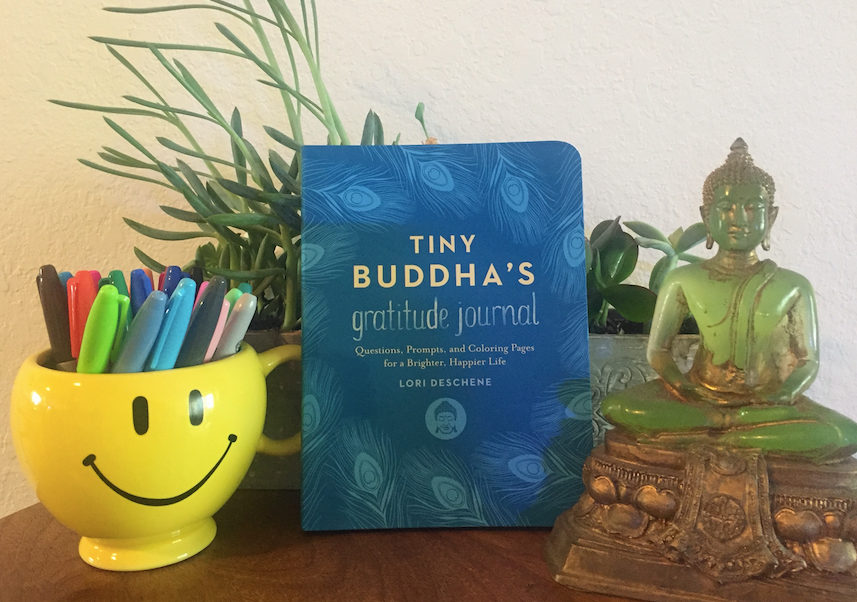
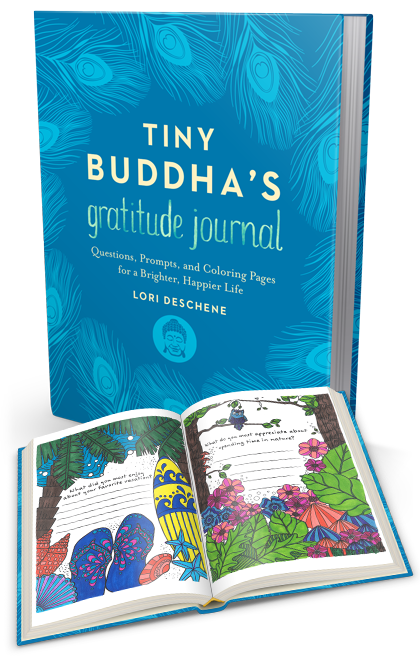
    Tiny Buddha’s Gratitude Journal includes thought-provoking questions and prompts to help you recognize and celebrate all the good things in your life, as well as fifteen coloring pages depicting awesome things we often take for granted.

    Here’s what some Amazon reviewers had to say:

    “This is the best little gratitude journal. The prompts are easy and thoughtful. I absolutely love the little coloring pages as well. Highly recommend.” ~Trisha Coonce

    “I use the Tiny Buddha Gratitude Journal on a bi-daily basis to perk up my spirits. When I am stressed or irritated, this is my go-to for a spot of happiness. I really appreciate purchasing the book.” ~Unnamed reviewer

    Tiny Buddha’s Guide to Loving Yourself is a collection of stories, tips, and insights to help you silence your inner critic, stop judging yourself, and start treating yourself with kindness and care.

    If you focus on your flaws, fixate on fixing yourself, or have a hard time believing in your worth, Tiny Buddha’s Guide to Loving Yourself can help you learn to value, honor, and care for yourself.

    Here’s what Amazon reviewers had to say about this one:

    “I love this little book. It is an incredible read and helped me have so much more compassion for myself and a broader perspective for my life. I’ve read it multiple times and each time I glean something new. I’ve bought this book for a lot of friends and family as well. Highly recommend!” ~CM

    “Hands down the best self help book I have ever read. Bought this as a gift for my honey, who has been struggling lately. Turns out its the book that I didn’t even know I needed. This book is helping me understand a lot about myself and why I act the way that I do. If you’re struggling with yourself, do yourself a favor and buy this book.” ~Samantha

    How to Enter the Giveaway

    Join the Tiny Buddha list, if you’re not already a subscriber. You can subscribe for daily emails (Monday – Friday), a weekly digest of blog posts on Fridays, or just occasional emails about freebies and special offers.

    Leave a comment on this post sharing one thing you’re grateful or one thing you love about yourself (or both!).

    You can enter until midnight PST on Sunday, December 3rd. I will update this post with the winners’ names sometime on Monday. Please check back on Tuesday to see if you’ve won so you can email me your mailing address.

    If you’d like to grab any of these resources for yourself or for a holiday gift now, you can find the calendar here, the Gratitude Journal here, and the Guide to Loving Yourself here.

    Happy Thursday, friends!

  • Two Guided Resources to Help You Live a Fulfilled, Empowered Life

    Two Guided Resources to Help You Live a Fulfilled, Empowered Life

    For many of us, setting goals is easy. Bringing our visions to life is a lot more challenging. And since we inevitably encounter obstacles and self-doubt when we try to do anything new, it can be hard to stay focused, motivated, and confident in our potential and our dreams.

    I remember back in my twenties, before I started Tiny Buddha, I set and abandoned goals countless times because I wasn’t clear on what would be meaningful for me personally. I just knew I felt behind in life and pressured to succeed, which made it hard to choose and stick to anything.

    If you’re struggling on your path like I did, fortunately, you don’t need to travel it alone.

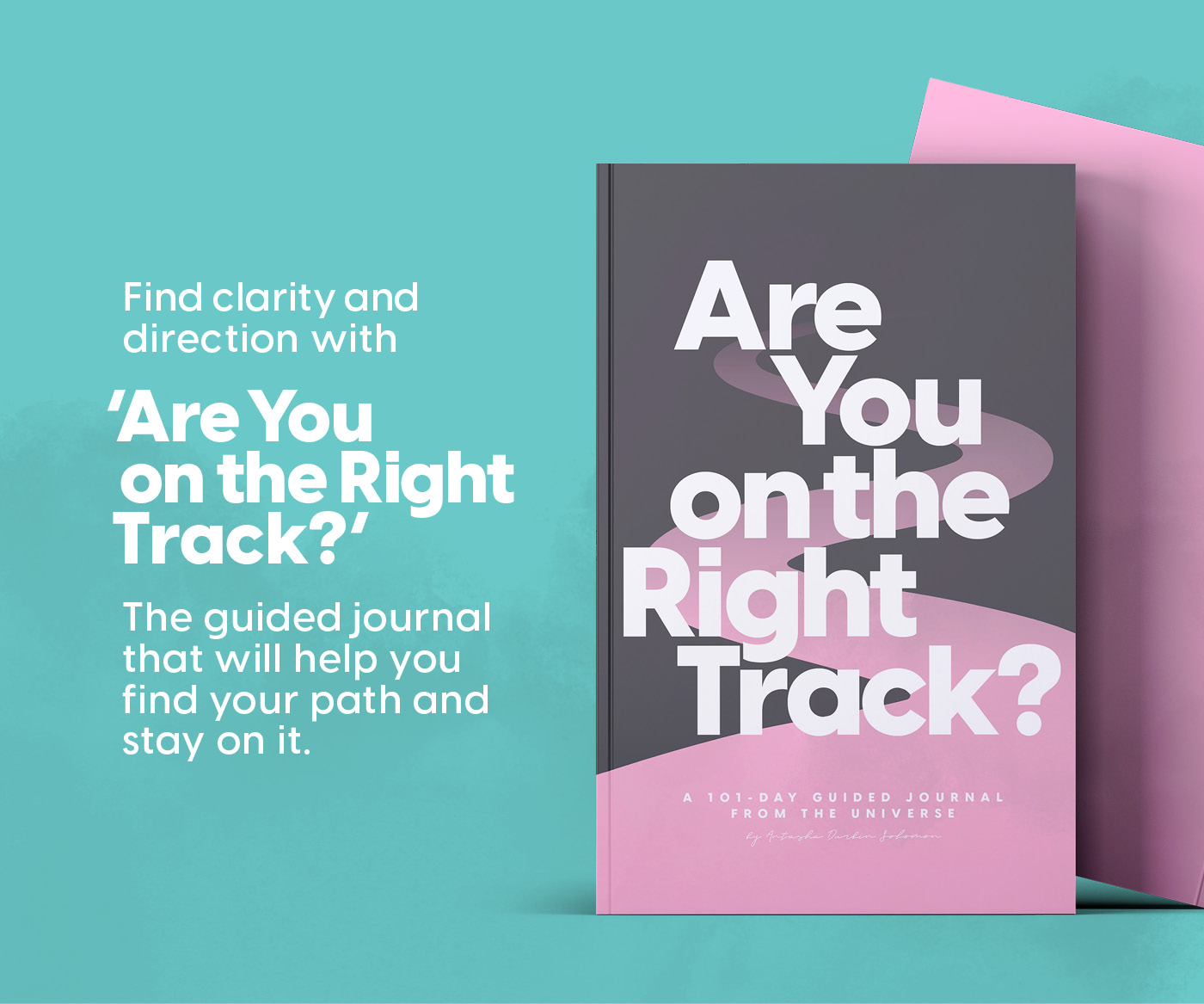
    I’m thrilled to introduce you to two guided journals from Tiny Buddha contributor Antasha Durbin Solomon that will empower you on your journey to success—helping you gain clarity on your goals, understand what it takes to bring them to fruition, and provide you with a structured path to follow.

    **You can get free sample pages for both journals here!

    Book One: Are You on the Right Track? A 101-Day Guided Journal from the Universe

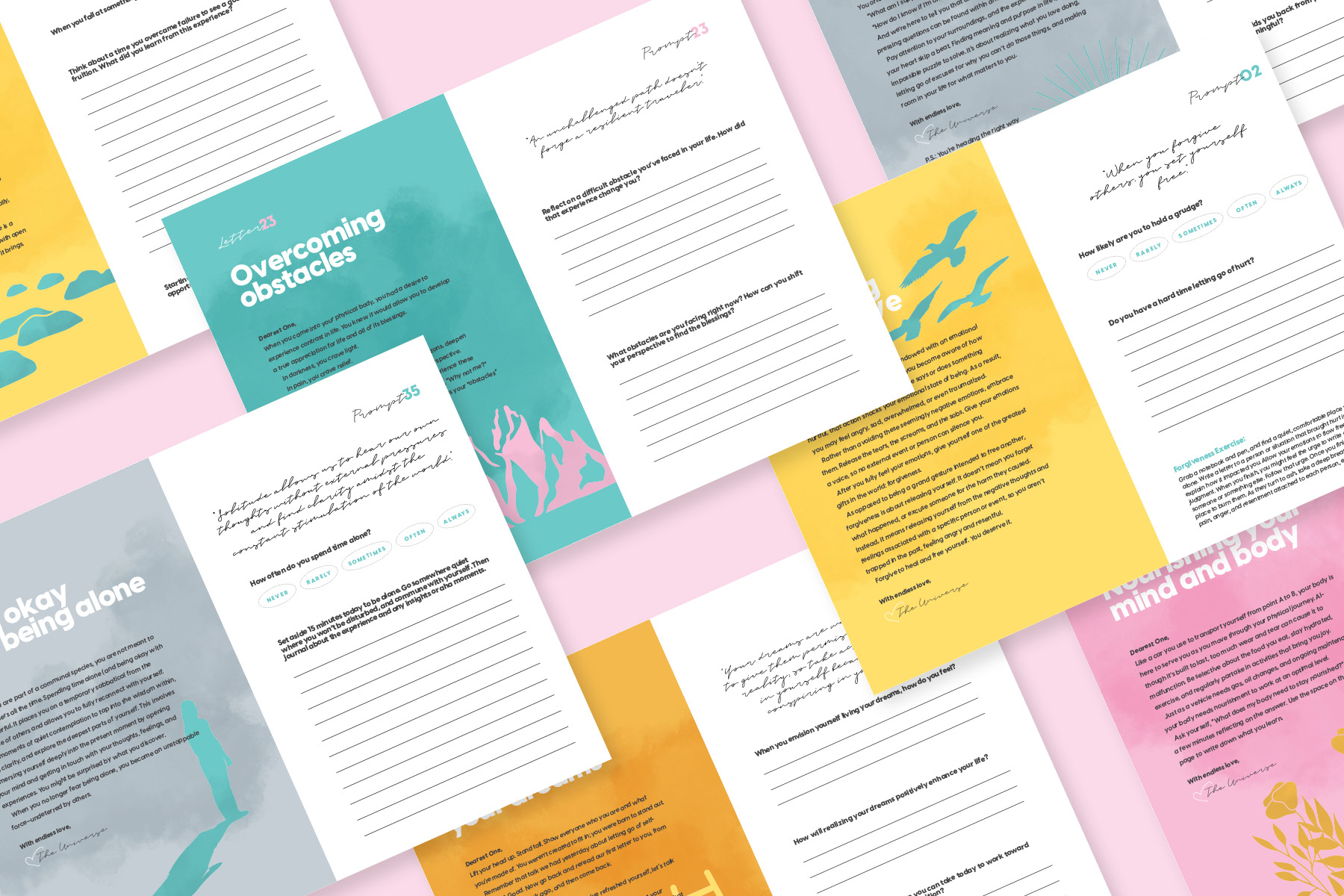
    Get ready for a daily dose of inspiration! This journal features heartfelt letters from the Universe, thought-provoking quotes, and carefully crafted journal prompts tailored to daily themes.

    Whether it’s focused on forgiveness, gratitude, or living with purpose, each entry will gently guide you in the right direction.

    If you’re to release past programming and push past personal limits so you can live an extraordinary, empowered life, this journal is for you.

    Get your copy here.

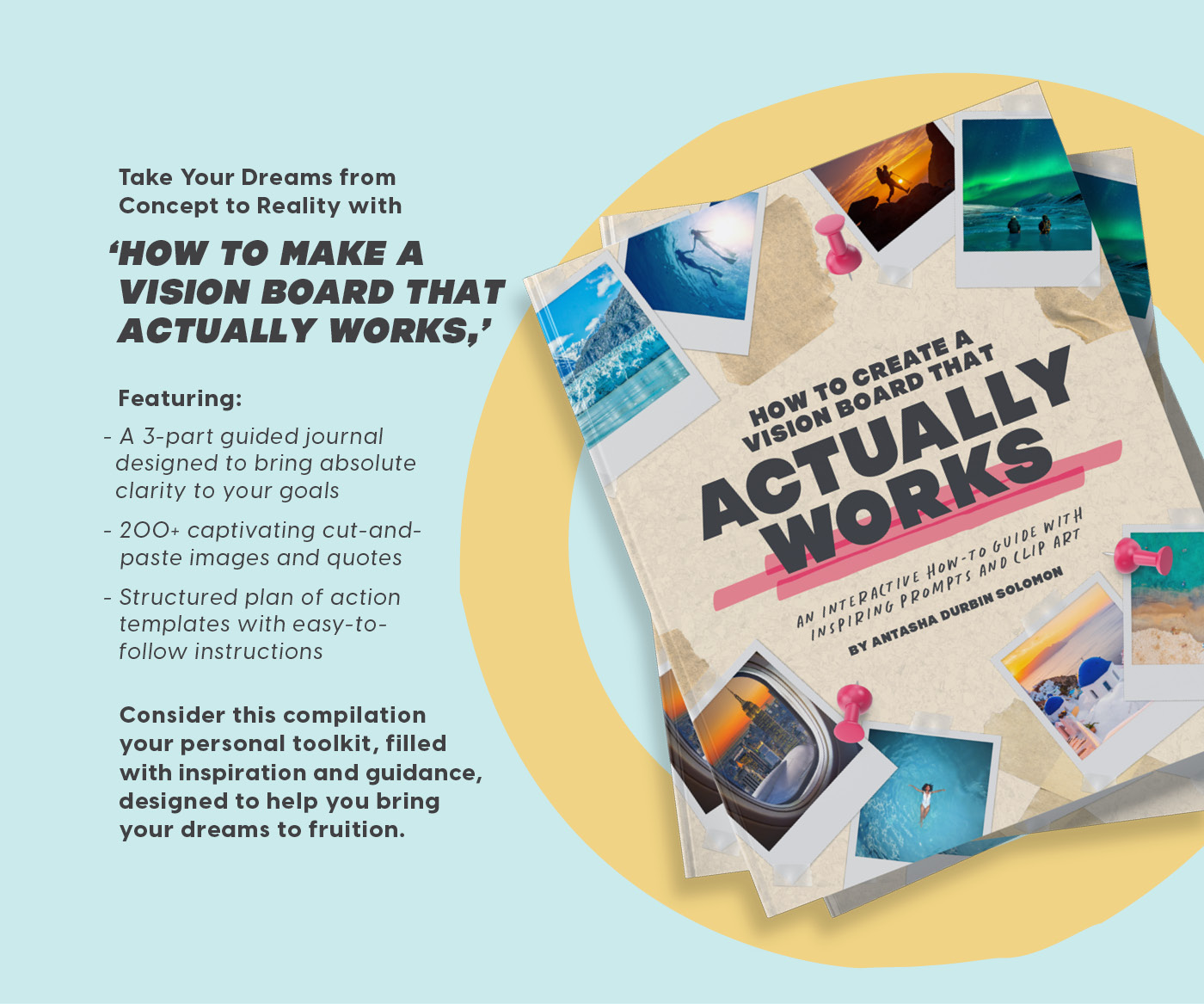
    Book Two: How to Create a Vision Board that Actually Works

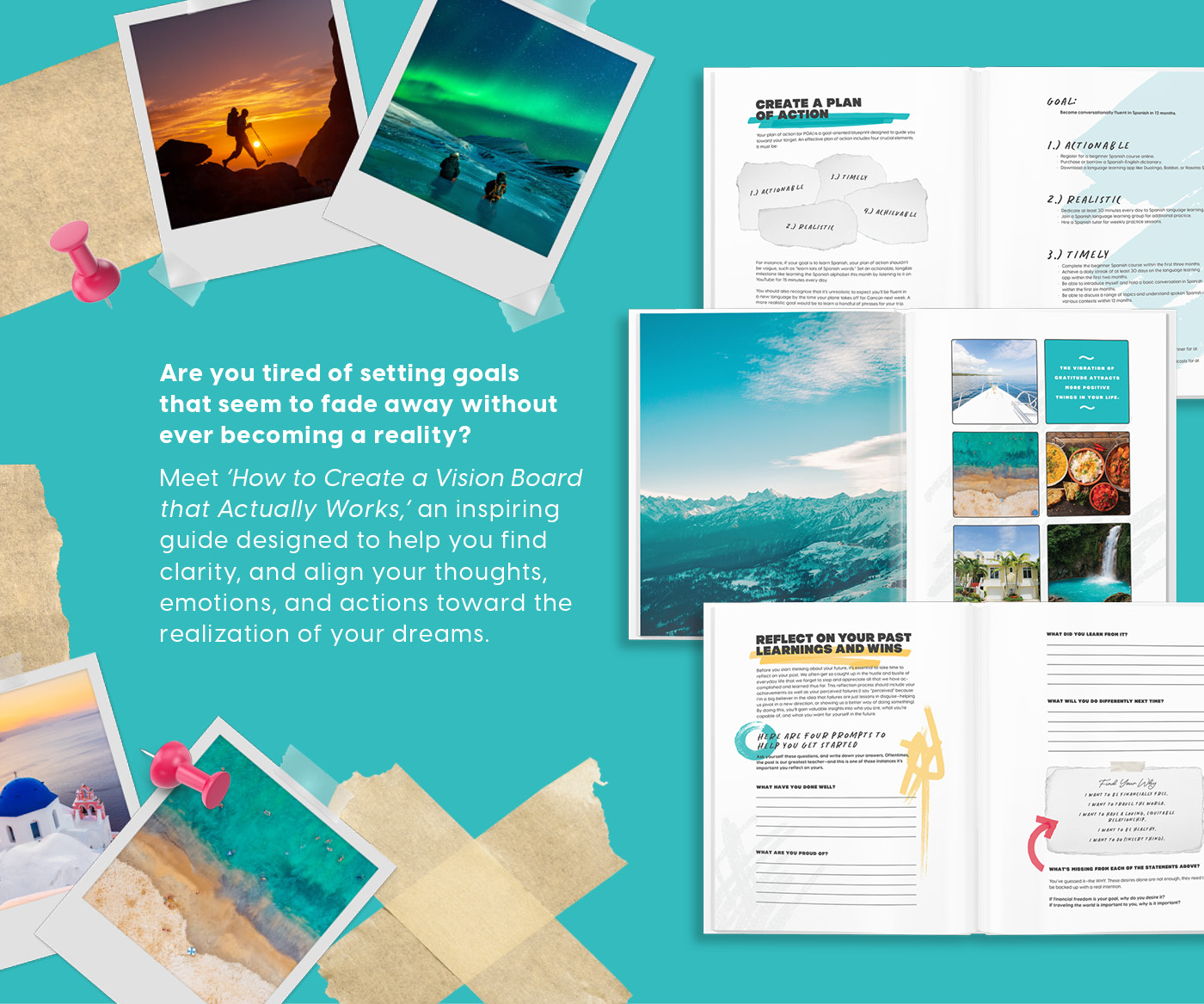
    Unlock the power of visualization with this three-part journal. It’s designed to walk you through the vision boarding process, ensuring complete clarity about your deepest desires and showing you precisely how to turn them into reality.

    With 200+ cut-and-paste images, inspirational quotes, and insightful prompts, creating an actionable vision board is easier than ever. This how-to guide will help you find clarity, set a plan of action, and overcome procrastination, taking your dreams from concept to reality.

    In the interest of full disclosure, I was skeptical about the idea of manifestation in the past because I wondered if it would encourage attachment to specific desires and outcomes. But I’ve come to realize that many of the things we want are actually things we need. Connection, purpose, physical wellness—we all need these things to be our best selves and to make a positive impact on the world.

    Antasha has created a powerful tool to help us all meet those needs—one vision and one action step at a time.

    Get your copy here.

    Intrigued? Head over to Antasha’s site to get free sample pages for both journals.

    I hope these powerful tools help you create lasting positive change!

  • Giveaway: New Inner Strength Journal – A Tool to Help You Get Through Anything

    Giveaway: New Inner Strength Journal – A Tool to Help You Get Through Anything

    The winners have been chosen! If you see your name here, please email me at email@tinybuddha.com so I can send you a copy. The winners (chosen at random) are:

    Hi friends! Today, I’m running a giveaway for my new Inner Strength Journal.

    I created this journal because I know life isn’t easy for any of us.

    Maybe you’re in a dark place right now, perhaps healing from trauma, illness, addiction, or loss. Or maybe things have always been hard for you, and you don’t know much longer you can go on.

    Whatever you’re going through, you have the capacity to not only get past it but also grow through it and even find something good in it.

    Tiny Buddha’s Inner Strength Journal can help you do just that.

    Including writing and doodle prompts, challenges, and colorable quote pages, the journal will help you create your own personal roadmap to resilience so you can change what you can and make the best of the rest.

    How to Enter the Giveaway

    To enter to win one of three free copies, leave a comment sharing a quote, mantra, reminder, or word that helps you when times get tough.

    You can enter until midnight PST on Monday, October 17th.

    ~~~

    “This little book was surprising for me but totally what I needed at this moment. For me this one is more like a journey than a book, and in these trying times, I think it’s exactly what we need to center ourselves and build inner strength in ourselves and project it to the world.” ~Joselyn Moreno

    “Tiny Buddha’s Inner Strength Journal by Lori Deschene is the companion you will want as you weather the personal struggles of the day to day.” ~Andrea Pole

    “This may be my favorite journal I’ve picked up. All the prompts really made me pause and think before I answered them. I also loved that each section started with a lovely quote.” ~Joni Owens

    “As someone that loves to journal, I have found this journal to be very insightful and helpful. Beautifully written HIGHLY RECOMMEND.” ~Michelle Wightman

    ~~~

    If you’d like to grab a copy now, for yourself or a friend who’s going through a hard time, you can find the journal on Amazon.

  • Does It All Feel Too Hard? Tiny Buddha’s Inner Strength Journal Can Help

    Does It All Feel Too Hard? Tiny Buddha’s Inner Strength Journal Can Help

    Do you ever feel like calling into the day? And I don’t just mean work. I mean everything. I mean turning it all off for a while. Freezing the full gamut of this messy human experience—the regrets, the fears, the adulting, the drama. The constant onslaught of anxiety-inducing news and personal problems to face.

    When everyone needs you and everything worries you and nothing helps you feel better, it’s tempting to disconnect. To numb out, shut down, or give up.

    But we can’t, at least not for long. And really, that’s not what we want. Or at least, that’s not what I want when I’m overwhelmed by it all. I don’t really want life to stop.

    When my relationships are triggering, my workload is mounting, and my kids’ needs feel hard to meet, I don’t really want to escape it all. I want to rise above it all. I want to respond wisely and make best of what’s in front of me instead of reacting impulsively and only making things worse.

    I don’t want to disconnect; I want to reconnect—with the still voice inside me that reminds me, if I listen, to breathe, take a step back, and take care of my needs so I can handle whatever life throws at me.

    Because I know I can. After all I’ve overcome, I know I’m strong, and I know you are too. I know, like me, you have stories of trauma, tragedy, and terror. But I also know we all have the capacity to not only handle life’s stressors and challenges but also learn from them and be better for it.

    That’s why I created Tiny Buddha’s Inner Strength Journal: Creative Prompts and Challenges to Help You Get Through Anything.

    I started working on this journal during the height of the pandemic, when I was exhausted from nights with a poor-sleeping toddler, drained from a high-risk, “geriatric” pregnancy, and overwhelmed by a new work project that ultimately failed in the end. And that’s not to mention all the Covid-related concerns and challenges we all had to face.

    I also knew from emails and comments that many of you were grappling with intense challenges and feelings of your own and struggling to get through each day.

    Since working things through on paper has always helped me feel less stressed, more confident, and more in control—all well-known benefits of journaling—I focused on prompts and questions that can help us access our personal power. Exercises that can help us protect our energy, manage our emotions, and take good care of ourselves so we feel our best—and feel prepared for the worst.

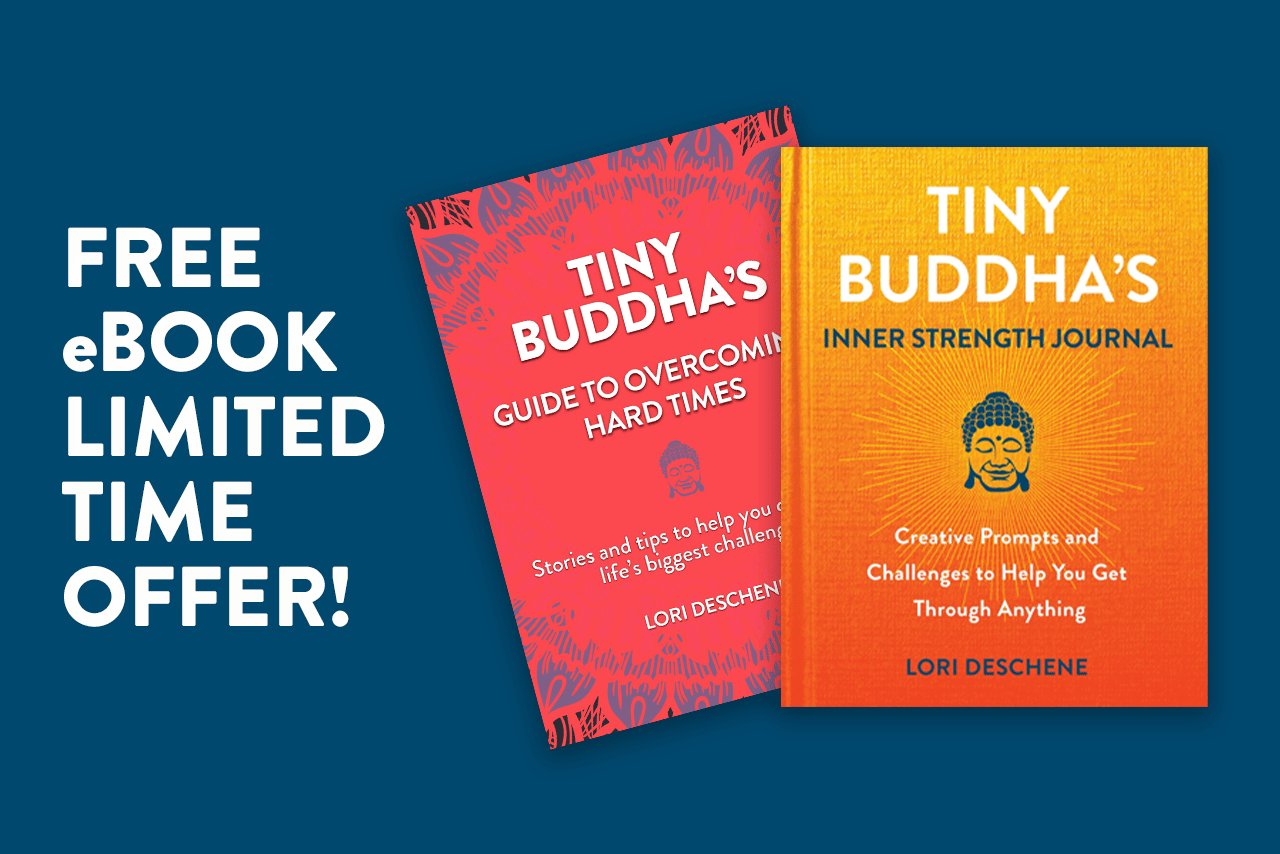
    I also put together a companion eBook—a free gift when you pre-order, for a limited time only—with forty of the site’s most helpful posts on overcoming hard times.

    The process of creating this journal was deeply healing to me, as I did each exercise as I went, and I have a feeling it can help you too. This isn’t a book of answers; it’s a framework to help you create your own personal roadmap to resilience so you can not only get through anything but also get the most out of life.

    As a mother to two young children, I’ve often wished I could prevent them from struggling. I’ve spent hours thinking about how I can insulate them from pain and ensure they never hurt as I have.

    But I realized a while back that if I protected them from pain, I’d also prevent them from gaining the wisdom and growth that accompany it. They’d live a flat, one-dimensional life, without the pride and confidence that come from doing hard things; and they’d never feel the sense of purpose we often find when we overcome something that once felt insurmountable and feel a burning need to help others do the same.

    What I really want for my sons, and for anyone I love—including myself—is the strength to handle life’s greatest challenges and the capacity to recycle their pain into something beautiful. Something meaningful. Something that makes all the darkness in life feel like a pathway to the light.

    I believe we all have that strength inside us, even if sometimes it all feels too hard. Even if sometimes we need to shut down for a while. We just need to learn how to access it.

    Whether you’re hurting, healing, or somewhere in between, I believe Tiny Buddha’s Inner Strength Journal can help you do just that. Click here to pre-order and get instant access to Tiny Buddha’s Guide to Overcoming Hard Times: Stories and Tips to Help You Cope with Life’s Biggest Challenges.

  • 20 Journaling Prompts to Help You Love Yourself

    20 Journaling Prompts to Help You Love Yourself

    “Time spent in self-reflection is never wasted—it is an intimate date with yourself.” ~Paul TP Wong

    I’ve found journaling is a polarizing activity. People love it or hate it. (If you are in the latter group, don’t worry, you’ll still get a lot out of this!) Personally, I’ve hit both ends of the spectrum at different points in my life.

    I spent many years in a place of self-loathing. I truly believed I was just not blessed with being born a likable person. And this belief fueled decades of social anxiety, avoiding parties, coming up with lame excuses to leave early, and even being too anxious to call a customer service number to dispute a phone bill!

    I didn’t have the tools at the time to dig into what was really going on inside my head. Like a lot of people, even though I knew the benefits and evidence of journaling, I had plenty of reasons why I never did.

    I told myself I didn’t have the time, that I was too lazy, I was afraid of what I might uncover, and I just didn’t know where to start.

    I didn’t understand what journaling really was.

    Journaling is a self-awareness tool. It’s one of many tools you can use to uncover what you’re really thinking and feeling, or what you really want.

    But you don’t necessarily have to write down the answers. Just like to get healthier, you don’t have to go to the gym three times per week. Sure, it can help get you in shape faster, but you can also park farther away, take the stairs more often, or do a few squats waiting for the microwave to beep.

    There are different paths for different people.

    So don’t fret if you think you need to dedicate an hour a day to writing down your deepest, darkest thoughts and feelings.

    And if you want to do that, more power to you!!

    Why Journaling Helps

    Our swirls of strong emotions tend to consume us. They cloud our vision. They make us behave in ways not in tune with our values. And let’s face it, sometimes they just make us feel like crap.

    Our emotions are the physical and energetic manifestation of our thoughts. They are how we physically experience the thoughts in our heads.

    When the emotion is strong and so loud, it can be hard to hear what thoughts are really driving them. Journaling, especially with prompts, helps to clear through the strong emotions to dig up the stories we’re telling ourselves.

    It helps take all the busyness out of our brains and put them on paper so we don’t have to keep getting exhausted managing the swirl. (Fun fact, thinking literally takes energy and burns calories!)

    And very often, the thoughts that are causing us anxiety, stress, and depression, and leading us to be so hard on ourselves, are mulling around in our subconscious, just below the surface. When they are down there, there isn’t much we can do with them. We need to bring them to the surface in order to see them, question them, challenge them, or change them.

    What Held Me Back the Most from Journaling

    Honestly, the biggest reason I didn’t journal was because I didn’t feel like it. Writing felt like more work than I really wanted to put in.

    The times that I did sit down and write were truly powerful and cathartic. By doing some digging, I was able to uncover the beliefs I held about myself that kept me feeling small. When I put them on paper, looked them in the face, and saw in black and white some of the things I was thinking, sometimes I couldn’t help but laugh.

    But even still, the writing part turned me off most of the time. So I personally switched to doing “mental journaling” more often than not.

    A few weeks ago, a former coworker of mine posted something on Facebook that was similar to something I’d posted. Our former boss (whom I respect very much) “liked” her post and not mine. I went spiraling down a hole thinking “does he like her more than me?”

    By stopping and doing some mental journaling, I was able to realize that I thought I was less “worthy” than my coworker because he “liked” her post. Seriously, I laughed out loud.

    I proceeded to remind myself that my worth is not determined by a Facebook like. But I couldn’t have gotten there if I didn’t stop and do the work.

    If you don’t like writing, you can still gain so much from these prompts.

    That’s what I want you to take away from this: You don’t have to write pen to paper or fingers to keyboard to benefit.

    You can use these prompts to write, or you can use these prompts to think. Sure, you might get more out of it if you dump it all onto paper. But you don’t need to do it that way. Try just thinking about these prompts first if writing isn’t your bag.

    Maybe someday you’ll start writing, but it doesn’t have to be today if you don’t want it to be.

    Three Styles of Journaling Prompts to Help You Love Yourself

    #1 Lists:

    1. Three things you did right this week.

    2. Two flaws you can forgive yourself for.

    3. Five things you are good at.

    4. Three times I was courageous.

    5. Picture someone who you feel judged by and what you feel that person has judged about you. Then write down all the reasons that opinion of you is wrong.

    6. What are two things you need to let go of? (Then picture how you will feel when you let go.)

    7. What are five things your past self would love about your current self?

    #2 Open ended questions and prompts:

    8. Write yourself a permission slip to be imperfect.

    9. Write down something you think you failed at, and what you learned from it.

    10. Write down something your inner critic has said to you and ask, “What is the positive intent behind this?”

    11. What is one thing you want to stop doing, and what is one thing you can do to take a step in that direction?

    12. What is something you are procrastinating on, and how would you motivate yourself if you were a cheerleader?

    13. What is one way you’re being mean to or unfair to yourself, and what would you say to motivate and support yourself with kindness instead?

    14. What is a compliment you received and brushed off because you didn’t feel you deserved it? Now practice fully accepting and appreciating the compliment.

    #3 Fill in the blank “Even though” statements:

    15. Even though I feel ______, I choose to keep working toward feeling ______ by ______.

    16. Even though (person’s name) was ______ to me, I choose to love and accept myself and can show it in action by ______.

    17. Even though ______ seems hard or scary, I know I can do hard things. For example, I’ve ______.

    18. Even though I don’t like ______ about myself, I appreciate how I ______.

    19. Even though I have a hard time accepting ______, I choose to keep working toward acceptance by ______.

    20. Even though I didn’t do ______ perfectly, I choose to learn and grow from the experience. I’ve learned that ______.

    Self-inquiry can be challenging. But whether you put pen to paper, fingers to keyboard or spend some time deep in thought, the journey will bring you closer to the real you. It’s a journey to self-love which is so worth the ride.

  • Giveaway: Tiny Buddha’s Worry Journal – A Tool to Calm Your Mind

    Giveaway: Tiny Buddha’s Worry Journal – A Tool to Calm Your Mind

    THE WINNERS HAVE BEEN CHOSEN! 

    Thank you, everyone, for opening your hearts and sharing a piece of yourself and your journey. I am amazed and inspired by all of you, and so grateful that you shared your strength and your stories here.

    I wish you all peace, joy, and so much love!

    The winners are:

    Please send your address to email@tinybuddha.com so I can send you a copy of the Worry Journal!

    Though life has become a lot less busy for many these days, I suspect a lot of us have incredibly busy minds given all the uncertainty we’re facing.

    It’s easy to get caught up in worst-case and what-if scenarios, trying to create some sense of control in a world where we have very little.

    I know, because I’ve done this many times. I’ve locked myself in a corner in my mind, filled my internal whiteboard with every possible combination of outcomes, and obsessed over how I could avoid potential pain—ironically, causing myself immense pain in the process.

    To some extent advance planning can be helpful. It gives us a chance to prepare for the worst and ascertain how we can do our best to get through it. But beyond a certain point it becomes maddening.

    It’s natural to have worrisome thoughts—they arise without our conscious choice. But we can consciously choose how we engage with them instead of spinning them into a tornado of anxiety that will surely destroy our peace, and possibly our health.

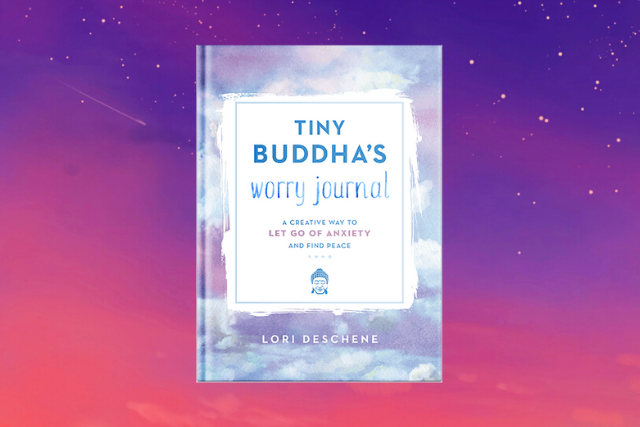
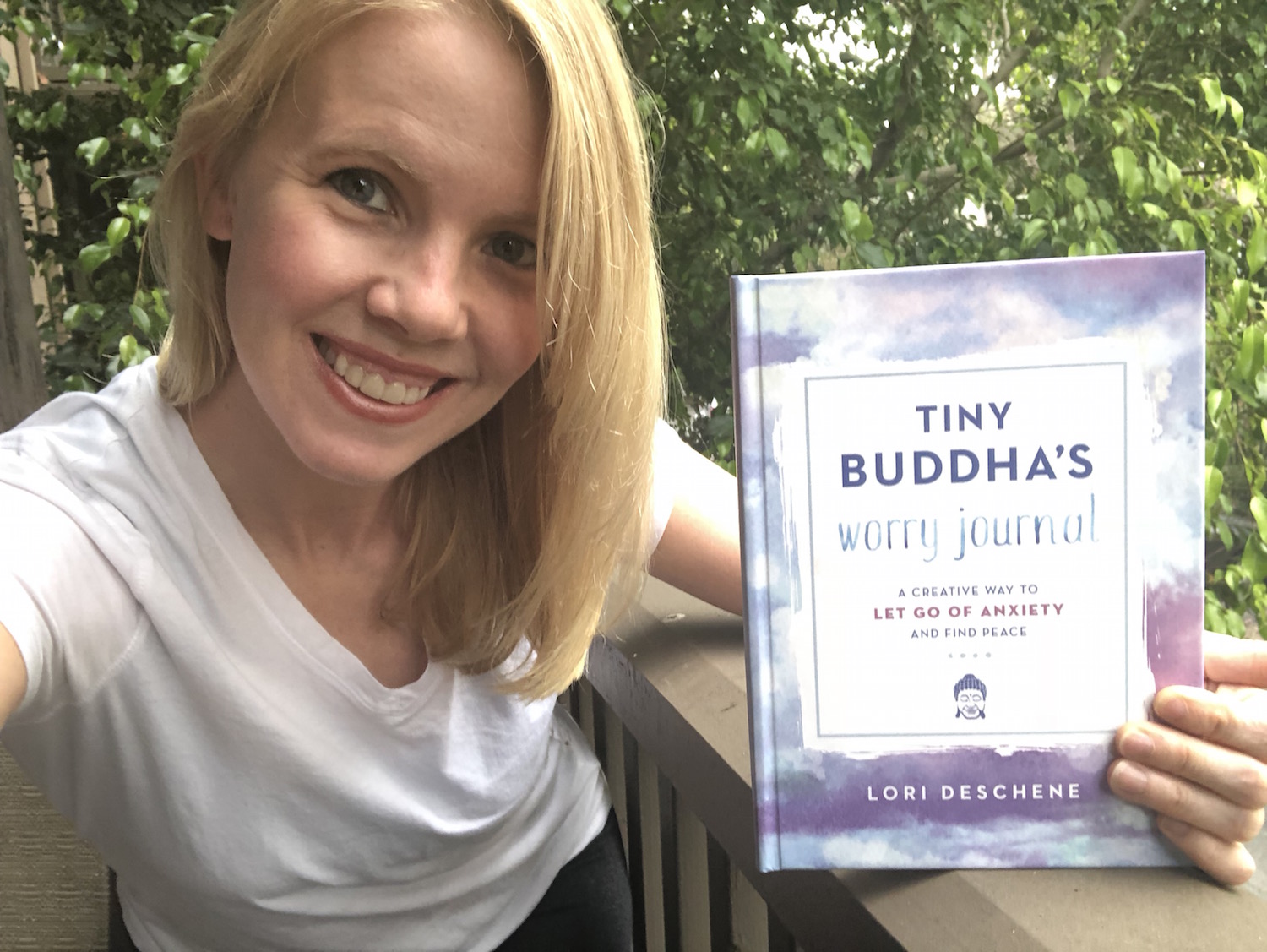
    This is why I created Tiny Buddha’s Worry Journal a couple years back: to help us all work through the fearful thoughts that would otherwise consume and control us.

    With writing prompts, quotes, questions for contemplation, and coloring and doodle pages, the Worry Journal can help you feel calmer, less anxious, and more present in your life.

    It’s a tool to help you reflect and then release, while broadening your perspective and helping you develop trust in your own ability to handle whatever’s coming.

    I think we all need that right now—a reminder that we’re stronger than we think and more resourceful than we realize. And that is why I’m giving away three free copies of Tiny Buddha’s Worry Journal.

    The Giveaway

    There are two things you need to do enter the giveaway:

    1. Subscribe to Tiny Buddha if you’re not already a subscriber. (You’ll receive instant access to Tiny Buddha’s 30-Day Health Challenge and three cool desktop wallpapers!) You can join the list here.

    2. Leave a comment below completing one (or more!) of these prompts from Tiny Buddha’s Worry Journal:

    • Today, I choose to let go of things I can’t control, including…
    • I recognize that I don’t need to have all the answers right now. Today, I give myself permission not to know…
    • Dear inner critic: You always focus on everything I’m doing wrong, but I know I’m doing a lot right, including…
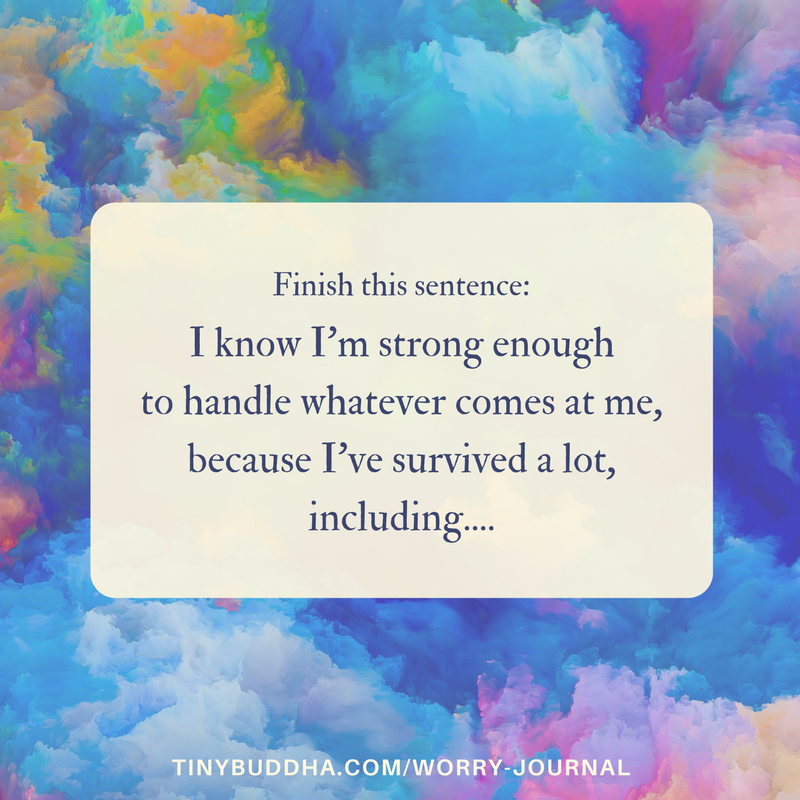
    • I know I’m strong enough to handle whatever comes at me, because I’ve survived a lot, including…

    Your comment can be as short or long as you’d like, and you can enter until midnight PST on Sunday, May 31st.  I will list the winners at the top of this post some time on Monday, June 1st.

    Please note you’ll need to check back then to see if you’ve won so you can email me your address.

  • Why Journaling is the Best Thing to Do During a Crisis

    Why Journaling is the Best Thing to Do During a Crisis

    EDITOR’S NOTE: You can find a number of helpful coronavirus resources and all related Tiny Buddha articles here.

    “The difference between despair and hope is just a different way of telling stories from the same set of facts.” ~Alain de Botton

    When I was told that the man I loved had a terminal illness, I instinctively reached for my journal. When I was asked to evacuate my home ahead of a category-5 cyclone three short weeks after his funeral, the first thing I threw into the back of my car was a large box with my journals.

    That was nearly a decade ago.

    Last month, when I stood in front of the empty shelves at my local supermarket, I was surprised to be instantly back in the grip of the fear and panic I felt during the crisis I had braved almost a decade ago. So I did the most logical thing. I took a deep breath, located the stationary aisle—which thankfully was still fully-stocked—and I bought myself a large new notebook.

    The next day, as the world prepared to go into lock-down, I missed the chance to return to my partner and my home in Vietnam.

    Depression and anxiety promptly came to visit, threatening to turn my self-isolation into another painful chapter of my life. But I know that I am more resilient than I think I am, and I instantly turned to my number one coping strategy. I opened my new notebook and started writing my Covid-19 journal.

    This is a challenging time for all of us, and we are all affected in different ways by this global pandemic. I don’t know how my partner and I will cope with the challenge of having to conduct our relationship across closed borders, via Zoom and Messenger, with no certainty when we might see each other again.

    But I know that writing will be there for me, as it has been during every crisis I have been through. Regular journaling has trained me to be my own therapist. Writing things down is an act of self-care. It’s like opening the door to my heart to see what’s in there and allowing myself to sit with all of it.

    Writing through the grief of my husband’s death and the aftermath of a natural disaster, I learned that we can cultivate resilience by allowing ourselves to experience our feelings, both good and bad.

    As I learned the hard way, writing builds resilience because it allows us to process, release, and make meaning of challenging events and complex emotions.

    Writing things down during a crisis is not only helpful as a way of processing and releasing our emotions—it is also a way to document what is happening as it unfolds.

    This strange and unprecedented moment in time sometimes feels like the world is collectively writing a new chapter. There is the official narrative, there is an abundance of alternative narratives floating around the internet, and then there are our personal narratives and the ways we as individuals cope with this crisis.

    Our memories will fade —though we’ll probably always remember that toilet paper was the first thing that ran out during a pandemic—but by keeping a diary and writing things down as they happen, we create a record of this unique historical moment.

    Writing is also a way to enter the creative flow, which is a great antidote to feelings of stress and anxiety. When we become absorbed in the process of writing, we momentarily step out of the chaos and the grief around us and into a safe zone of calm and flow.

    For many of us, self-isolation brings loneliness. Writing can be a great companion in times of loneliness. My diary has always been my best friend during difficult times. Writing can also be a safe place to retreat to for those of us who are assailed by a sense of cabin fever as members of a household suddenly have to live in close proximity with each other 24/7.

    It’s easy for conflict and irritation to arise in confined living environments. I think of my diary as my sacred space where I can say things I don’t dare to say out loud, where I can vent, rage and reflect and most importantly, where I enter into a dialogue with myself.

    Here are some suggestions for starting your own Covid-19 journal:

    1. Write about how you feel right now.

    Allow yourself to give voice to feelings that you might be holding back for the sake of protecting others or because you feel ashamed.

    Write about what feels particularly hard about this crisis. Begin by brainstorming words that describe your emotional state right now. Think of it as making an inventory of the feelings in your heart. You might even find that you feel stronger and calmer than you thought you did.

    2. Write about a time when you overcame a crisis.

    Remembering a time when you were resilient and got through a difficult emotional turning point will help you to believe in your own strength.

    Bring to mind a significant difficult emotional experience. Make sure it’s something in the past that you can safely write about.

    Begin to write about the experience in the first person. Bring the experience alive by giving concrete sensory detail, i.e. what smells, sounds and tastes do you remember? Maybe you want to make reference to the weather or the color of the car you drove. Use word pictures to get back in touch with the feelings you had during that time.

    3. Write a diary.

    Writing a diary about the current pandemic can be as simple as writing about your day. You may write about the things you did and did not do, the people you interacted with, the things you ate, the words you read, the news you watched, the things you did to care for yourself or the ways you allowed the news to affect your anxiety levels…

    Write about anything you’d like to capture about this day. This could be a simple brain dump. Or you could focus on the quirky things that happened today. The things that only a month ago, you couldn’t have imagined doing right now – things like having virtual sundowner drinks or virtual cups of tea via Zoom with your best friends.

    If you’re writing first thing in the morning, you might write about your dreams, the quality of your sleep, or about the day before.

    Be sure to include sensory detail to bring your world alive, i.e. write about the flowers that are in bloom right now, the smells during your daily walk, the noises that you can hear through the thin walls of your apartment etc.

    You never know, your Covid-19 diary may become the foundation of a memoir or something to leave behind for the grandkids.

    4. Write to practice self-compassion.

    In times of crisis, when we experience suffering, fear, or anxiety, it is important to give our hearts shelter. Self-compassion can help us feel less vulnerable and disconnected during this time of self-isolation. It’s also a great way to silence the voice of the inner critic who will be quick to tell you that you are poor at home-schooling or that you are a bad partner.

    Think of self-compassion as being like a warm embrace. Or as expert Dr Kristin Neff says, like speaking to yourself with the same care and kindness you would use towards a good friend.

    Write for ten to fifteen minutes about what you need from yourself right now to feel less vulnerable, less cranky, less anxious… or whatever you may be feeling right now. Another great way to use writing as a self-compassion practice is to write a letter to yourself from the perspective of a good friend, assuring you that whatever happens you’re loved and cared for.

    5. Write a gratitude journal.

    Gratitude is a secret superpower that helps to build resilience and happiness. Too often we focus on what we lack—and right now we lack a lot of things that we used to take for granted only a short while ago. Gratitude is a way of looking at what is abundant and good in our lives, despite the current crisis.

    Writing a gratitude journal can be as simple as listing five things you are grateful for at the end of every day: your warm bed at night, access to drinking water, having a shelter etc.

    Try to be more specific than just saying “I am grateful for my bed.” Tell your diary why you are grateful for having a bed, why you are grateful for the job that sometimes overwhelms you, or the kids that drive you mad during this pandemic.

    A good way to get started with a daily writing practice is to do a short meditation to settle your mind and to get into stillness. Then set the timer on your phone for ten to fifteen minutes and simply write without stopping to think or edit, trusting the pen to lead the way.

    I’ve kept a journal from the age of eleven, which makes me a seasoned diarist, yet during the current global crisis I am often feeling unfocussed and unmotivated.

    I tell myself that that’s okay, it’s part of the process of adapting to our new normal. But I always try to capture my new normal, even if I only write a quick list of things that stood out for me on a given day. It’s a way to stay connected to my inner voice and to write this new chapter one page and one breath at a time.

  • How to Journal Away Your Disappointment in Yourself

    How to Journal Away Your Disappointment in Yourself

    “Forgive yourself for not knowing better at the time. Forgive yourself for giving away your power. Forgive yourself for past behaviors. Forgive yourself for the survival patterns and traits you picked up while enduring trauma. Forgive yourself for being who you needed to be.” ~Audrey Kitching

    “I can’t do this.”

    “Why do I look so fat? I’m disgusting!”

    “I haven’t done enough today. I am so useless.”

    “I shouldn’t have said that. I shouldn’t have said that. I shouldn’t have said that.

    “Oh my god, why did this happen to me? What am I going to do now?”

    Since I was a teenager, there has always been a voice inside my head telling me that things are not going to be okay because I am not enough.

    At school, it told me I wasn’t popular or cool enough. At Arts university, that my work wasn’t original or deep enough. At my first job (which I disliked), that I wasn’t happy enough. In my current work (which I love), that I am never productive enough. And as the cherry on top throughout all these years, guess what—I’ve never been thin enough, talkative enough, or proactive enough.

    This voice has become so present and loud that it has led to severe anxiety attacks.

    One day, the feeling of self-loathing and despair was so strong that my usual journaling affirmations and gratitude practice were not enough. My soul, wounded by all the negative self-talk, needed something stronger. More than being fixed, it needed to be held in a tight, comforting hug.

    So that’s what I did: I knew that journaling was still the way, I just had to find a way to hug myself with it.

    Without thinking, I started writing to myself what a wise mother or a loving mentor would tell me in this situation.

    “My dear, I know you are feeling anxious about not having completed all your tasks for today. I know it makes you doubt if you will ever be able to achieve your goals. I know it makes you fear that you will end up out of money, out of friends, out of love. But here’s the truth: it doesn’t matter that you had a bad day. I know you’re trying hard. I know you’re giving your best. You deserve a rest. You are amazing, and you’re going to make it.”

    The effects were immediate: like with nothing else I had ever tried before, I felt a deep sense of comfort and relief.

    I had just discovered my new soul-medicine.

    How This Exercise Works

    The reason why so many of us constantly push ourselves to be more and do more (and blame ourselves when we fail) is because we’re trying to get from others the approval we have never learned how to give ourselves.

    This exercise teaches us to do just that: to give ourselves the appreciation we crave so much.

    But there’s one more reason why it is so powerful: it’s because it’s written in the second person.

    We are used to valuing more the compliments we hear from others than the ones we give ourselves. Therefore, it’s like having your adult self give your inner child the love and validation it has always wanted and needed, and that’s why it’s so healing.

    On top of that, writing it on paper instead of just thinking it in your head keeps your mind focused, and your heart fully immersed in the process. And it’s also quite relaxing!

    How To Do This Exercise

    1. Whenever your negative self-talk or your anxiety kicks in, grab your journal and a pen.

    2. Observe the thoughts and feelings that are happening right now. Don’t look away. Dive in.

    3. Now, imagine that the person thinking those thoughts and feeling those feelings is your inner child. Try to feel compassion and empathy towards their pain.

    4. Then, ask yourself: “Who is someone I look up to and what words would I like to hear from them in this situation?” This can be a higher power, a parent, a teacher, or whoever gives you comfort and guidance.

    5. Now, try to put yourself in that person/entity’s shoes, and start writing those words to yourself—to your inner child. Here are some examples:

    “I can see that you feel lost. You don’t know where to go next, and you doubt that you will ever know. But you will. I can assure you that you will. And when you know it, you can pursue it. You’ve made it so far, haven’t you? You have more in you than you think you do. You are kind to others, you are taking care of yourself the best way you can, you are doing everything at your reach. You always have. Just keep holding on, my love. This, too, shall pass.”

    “It’s okay to feel angry. Your anger is valid. I love you no matter what. You know what? You can scream. Scream, my beautiful creature. You are stunning when you scream. You are full of power, raw energy, and the time will come to use it well. You are simply taking your time. It doesn’t matter that things didn’t go well this time; but they will, when they have to. You are doing great.”

    As you write it down, let the words flow freely. Get fully immersed in the exercise. It might be helpful to imagine that you are hugging your inner child, and definitely focus on giving love, nurturing, caring.

    At points, the words you’re writing might feel like huge clichés, but it doesn’t matter: all that matters is that you feel them—that’s how you know it’s working.

    All You Need Is Love

    It’s easy to get trapped in a negativity loop: you feel bad because you failed to meet your own expectations; then you feel anxious because you’re feeling bad, and so afraid to get trapped into a negativity spiral that you don’t even notice you’re already in it.

    You can’t fight negativity with negativity. To break the loop, you need love.

    You have been hard enough on yourself. Give yourself the words and love you have been longing to hear. Do it from a different perspective—I guarantee, this will rock your world.

  • Tiny Buddha’s Worry Journal – Last Day for Three Free Bonus Gifts!

    Tiny Buddha’s Worry Journal – Last Day for Three Free Bonus Gifts!

    Hi friends!

    Today’s the day! Tiny Buddha’s Worry Journal is officially available for purchase, and today is the last day to claim the three free bonus gifts.

    Stored high in my closet I have a collection of more than a dozen journals from my childhood and teenage years.

    The early ones are full of angst, pain, and rage. During the later years I began to use journaling not just to vent my feelings but also to reframe my thoughts and recognize and overcome negative patterns. This helped me feel less stressed, depressed, and fearful and more peaceful, empowered, and optimistic.

    This is what compelled me to create this journal: I know from personal experience how journaling can help us move through difficult feelings and overcome mental blocks that prevent us from feeling happy, relaxed, and free.

    Whether you’re worried about the future, people you love, what people think of you, or any of the many things we can’t control in life, this journal can help you let go and calm your busy mind.

    Filled with quotes, prompts, and questions, along with coloring and doodling pages, Tiny Buddha’s Worry Journal provides a number of different activities to help you reframe your worries and minimize anxiety in your daily life. 

    If you grab your copy today, you’ll receive the following:

    A series of four meditations on letting go (led by yours truly), each with an EFT tapping session led by Naomi Jansen and an introductory chat with Naomi and her One Mind Live co-founder Stephen Fearnley

    An exclusive audio interview with me and Ehren Prudhel, host of the soon-to-be-launched podcast Next Creator Up, focusing on worries related to pursuing a new dream (more specifically, my first feature screenplay)

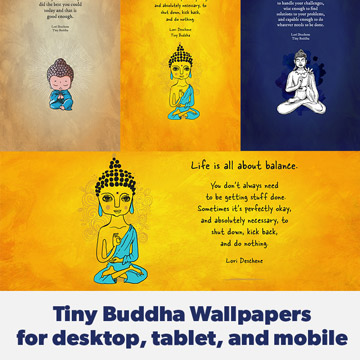
    A series of three vibrant desktop wallpapers featuring adorable Buddhas and calming quotes

    All you need to do to claim your bonuses is pre-order your copy from any online vendor and then forward your purchase confirmation email to worryjournal@tinybuddha.com.

    We all worry; it’s just part of being human. But it doesn’t have to control us. Not if we proactively choose to work through our worries, one moment and one page at a time. I hope these exercises help you as much as they’ve helped me!

  • Perspective Coloring Page from Tiny Buddha’s Worry Journal

    Perspective Coloring Page from Tiny Buddha’s Worry Journal

    Hi friends! We’re now less than two weeks away from the launch date for Tiny Buddha’s Worry Journal. As you may have noticed, I’ve been sharing some of the coloring pages over the past few weeks, all colored by yours truly, to give you a sense of what the journal has to offer. So far I’ve shared:

    In addition to coloring pages, the journal includes questions, written prompts, and doodle prompts to help you reframe your worries and minimize anxiety in your daily life.

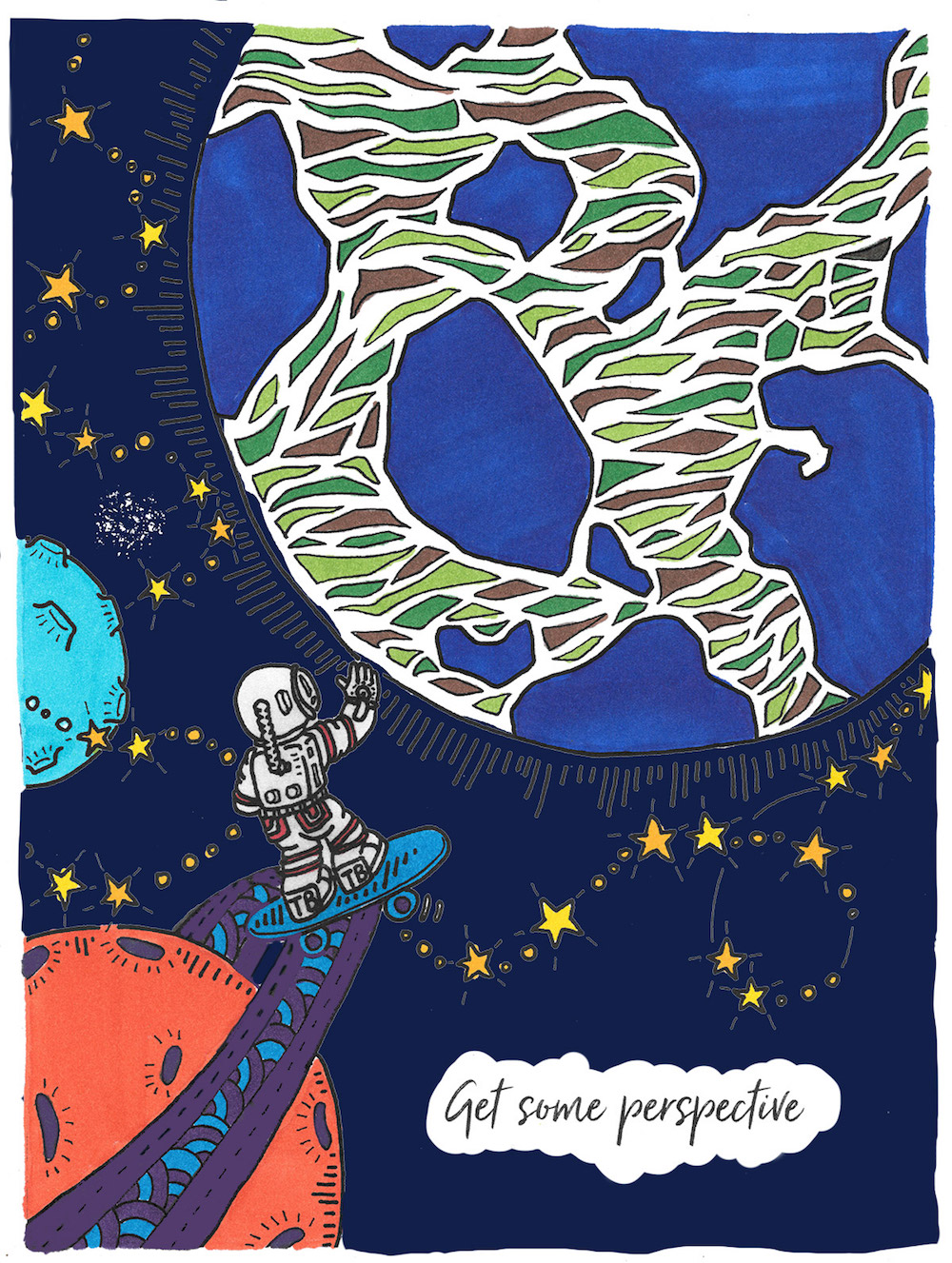
    Really, it all comes down to perspective. Everything seems more difficult and overwhelming when we’re wading through the muck of a disappointment, crisis, or tragedy, knee-deep in our messy emotions. But oftentimes when we step back and view things in a different light, life suddenly seems more manageable, and sometimes the painful seems not only tolerable but also useful.

    There’s a Taoist fable that I’ve found particularly powerful because it reminds me not to panic when things go “wrong.” You’ve quite possibly read it before, but perhaps it’s something you need to read again today:

    A farmer had only one horse. One day, his horse ran away.

    His neighbors said, “I’m so sorry. This is such bad news. You must be so upset.”

    The man just said, “We’ll see.”

    A few days later, his horse came back with twenty wild horses following. The man and his son corralled all twenty-one horses.

    His neighbors said, “Congratulations! This is such good news. You must be so happy!”

    The man just said, “We’ll see.”

    One of the wild horses kicked the man’s only son, breaking both his legs.

    His neighbors said, “I’m so sorry. This is such bad news. You must be so upset.”

    The man just said, “We’ll see.”

    The country went to war, and every able-bodied young man was drafted to fight. The war was terrible and killed every young man, but the farmer’s son was spared, since his broken legs prevented him from being drafted.

    His neighbors said, “Congratulations! This is such good news. You must be so happy!”

    The man just said, “We’ll see.”

    You can’t see the whole picture from where you’re standing, so take a deep breath and remind yourself that things likely aren’t as bad as they seem. And even if the worst thing happened, you could handle it and maybe even grow and gain in ways you can’t possibly predict.

    From now until June 26th, you’ll get three bonus gifts, including a guided meditation series on letting go, when you pre-order Tiny Buddha’s Worry Journal. All you need to do is order a copy here and forward your purchase confirmation email to worryjournal@tinybuddha.com.

  • Accept Yourself Coloring Page from Tiny Buddha’s Worry Journal

    Accept Yourself Coloring Page from Tiny Buddha’s Worry Journal

    Hi friends! If you’re a regular reader, you know I’ve recently been sharing some of the coloring pages from Tiny Buddha’s Worry Journal, which includes questions, written prompts, and doodle prompts to help you work through worries and minimize anxiety in your daily.

    So far I’ve shared:

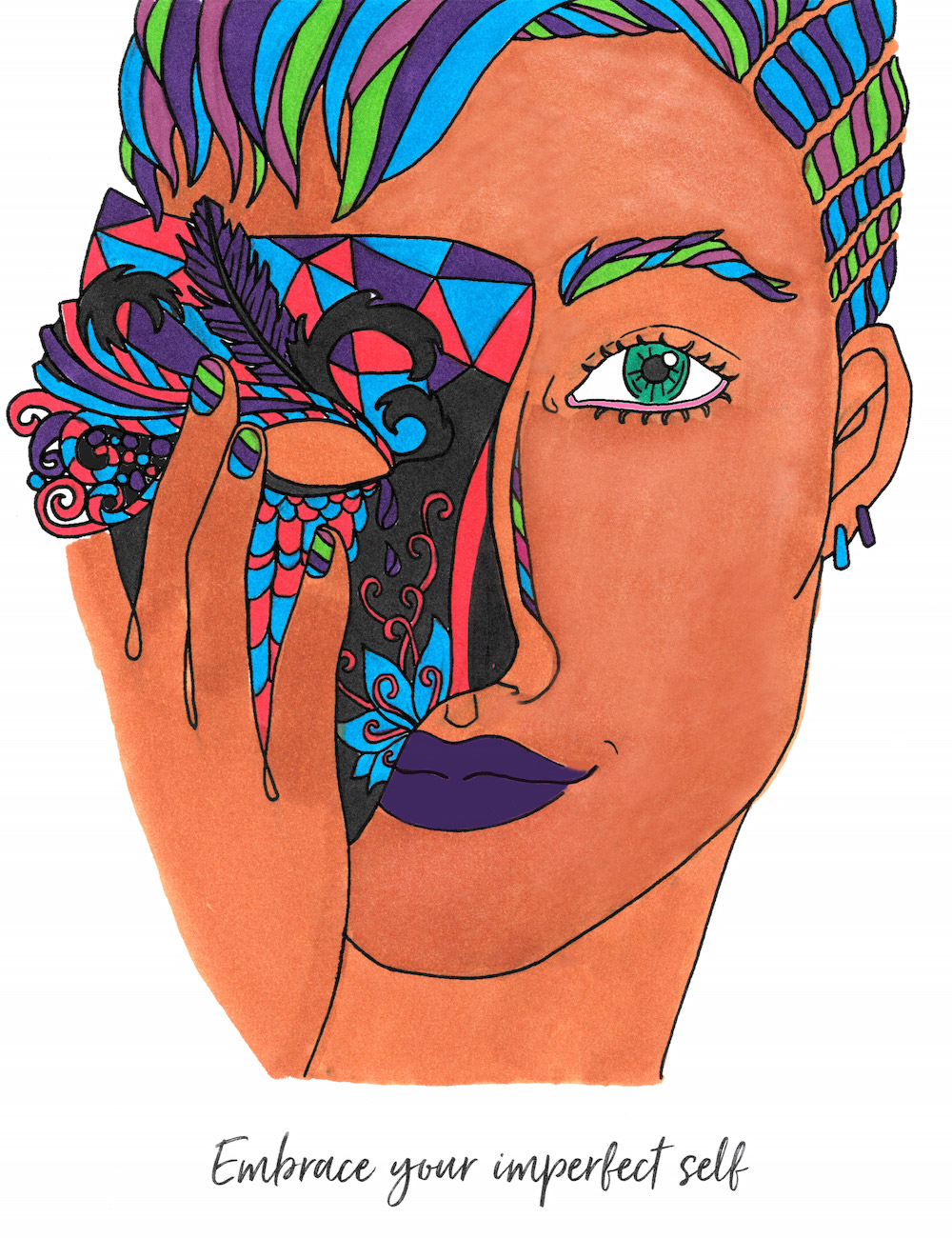
    Today’s page is one of my favorites, and not just because I love Rose Hwang’s beautiful illustration and enjoyed using so many bright colors.

    I love this page because it reminds me that imperfection is all about perception. What you consider a flaw someone else might consider a strength. What you feel tempted to hide someone else might perceive as beautiful.

    There’s a Japanese term, Kintsugi, that refers to the art of repairing broken pottery with lacquer mixed with powdered gold or other precious metals. This practice began in the 15th century when Japanese military commander Ashikaga Yoshimasa wanted to repair a broken tea bowl in a visually pleasing way. Kintsugi has come to be known as way to honor an object’s history, rather than attempting to hide the damage.

    I think about this sometimes when I look at my left leg. I have a series of scars toward the top, remnants from a time when I channeled my depression and shame into self-harm. For a while I was too insecure to wear shorts or a bathing suit because I worried that someone might see them and judge me. Now when I look at them, I try to visualize the faded lines in gold.

    Then I remember those lines are like a map that led me directly here. Every other scar, physical or emotional, is a testament to my strength, not my weakness. And every idiosyncrasy, from my introversion to my sensitivity, is a gift, not a curse, that has enabled me to make a difference in the world.

    The same is true for all us: our scars, our quirks, our imperfections—these aren’t things we need to hide. We are who we are because of them, not in spite of them. And every colorful piece of our past and personality is part of what us makes us beautiful.

    From now until June 26th, you’ll get three bonus gifts, including a guided meditation series on letting go, when you pre-order Tiny Buddha’s Worry Journal. All you need to do is order a copy here and forward your purchase confirmation email to worryjournal@tinybuddha.com.

  • Creativity Coloring Page for Tiny Buddha’s Worry Journal

    Creativity Coloring Page for Tiny Buddha’s Worry Journal

    Hi friends! Since Tiny Buddha’s Worry Journal launches in three weeks, I’ve recently been sharing some of the coloring pages, which all depict things we can do to minimize anxiety in our daily lives.

    So far I’ve shared:

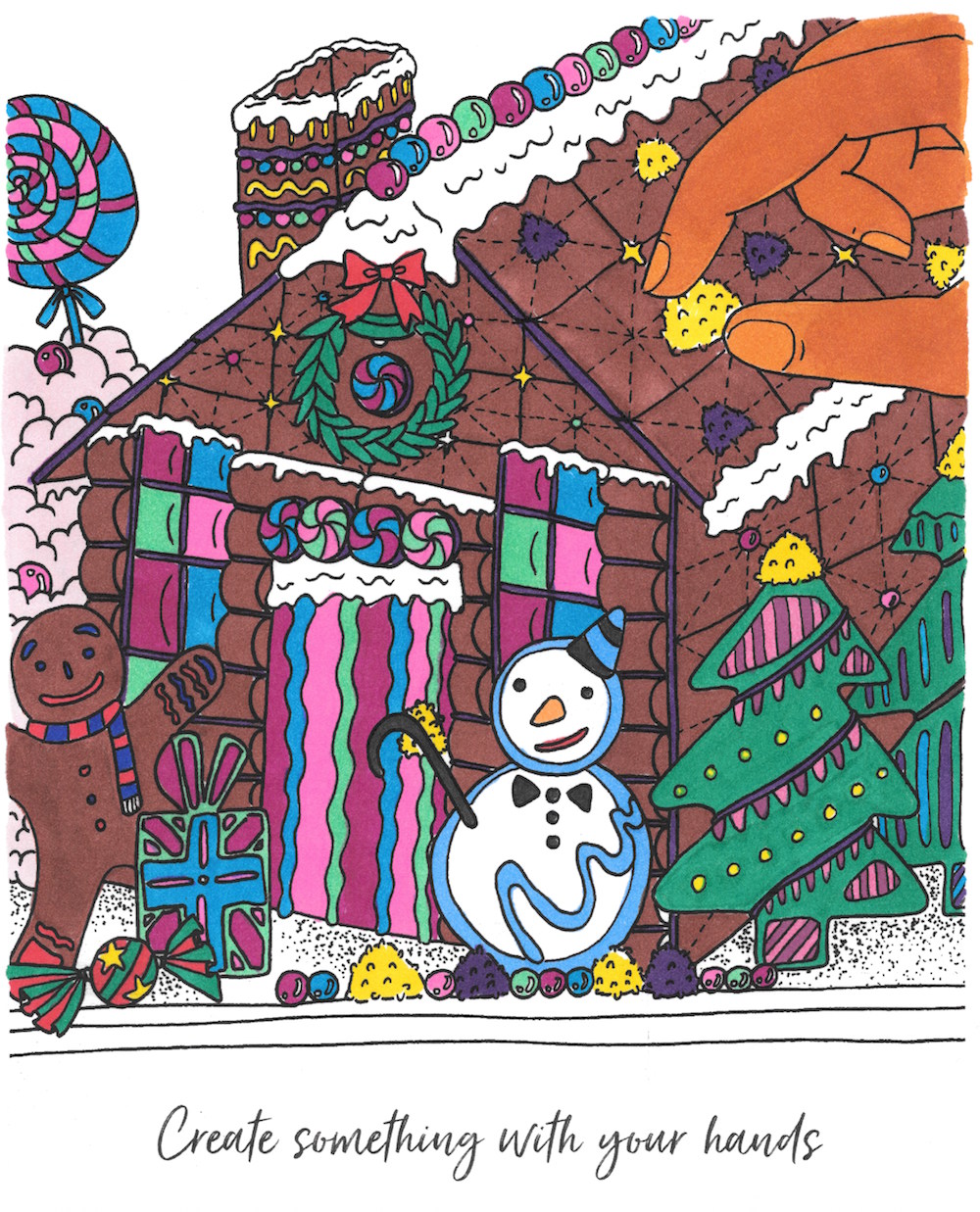
    Today’s tip: Create something with your hands.

    If you’ve ever immersed yourself in any type of creative activity, you know how meditative and calming it can be.

    When we’re focused on the next brush stroke, bead, or stitch, we’re deeply immersed in the present moment—not caught up in our thoughts, fears, and worries.

    This is why I decided to include doodling and coloring pages in this journal. Research has shown that coloring calms down our amygdala—the fear center of the brain—and it also activates the parts of the brain that are responsible for focus and concentration.

    Beyond that, coloring and other creative activities bring us back to the ease of a simpler time—before we had to worry about bills, bosses, and other stresses of adulthood.

    When we were kids, we didn’t need to make time for creativity; it was as natural as breathing and saying no to things we didn’t like. Whether we were pretending to be pirates, fairies, or superheroes, we were always eager to pick up some cardboard and markers to make our own accessories and props.

    And for that brief flicker of time, all we saw was the fantasy in our head, projected onto our bedroom or yard.

    For many of us, childhood wasn’t all rainbows and butterflies, but the time we spent creating was.

    When I look back on my life up until now, I see that all the happiest and most defining moments involved some form of creativity.

    Like the decade I spent working at an afterschool program for kids, where I directed them in plays, made some of their costumes, and often designed arts and crafts projects for us to try.

    And the years I spent sketching in my book of shadows (during my teenage wiccan years), trying to create a guidebook for magic and light in the dark ages of my adolescence.

    And the time I spent crocheting afghans for everyone I love—first during the three months I spent at a residential treatment center for eating disorders, and later while traveling across the US with assorted mobile marketing tours.

    These days, I don’t create with my hands often enough. I’m more likely to create something digitally (like the many coloring posters in the fun & inspiring section). But whenever I disconnect from technology and focus on making something from nothing, it’s like the whole world stops—along with my thinking mind. And for a brief flicker in time there’s only heart. Just love, joy, and pure presence.

    I know there are a lot of you out there who also enjoy creating, and I would love to connect with you. So please, take a minute or two and say hello. Introduce yourself if we’re not acquainted, and tell me about something you’ve recently created, or you’d like to create. You can even share a picture if you’d like. Whatever it is, it’s a piece of your heart, and I would love to see it.

    From now until June 26th, you’ll get three bonus gifts, including a guided meditation series on letting go, when you pre-order Tiny Buddha’s Worry Journal. All you need to do is order a copy here and forward your purchase confirmation email to worryjournal@tinybuddha.com

  • Meditation Coloring Page from Tiny Buddha’s Worry Journal

    Meditation Coloring Page from Tiny Buddha’s Worry Journal

    Hi friends! As I mentioned last week when I shared the music coloring page from Tiny Buddha’s Worry Journal, I’m planning to share some of the other pages, twice weekly, until the journal launches on June 26th.

    Each page depicts one simple thing we can do to help ease our worries.

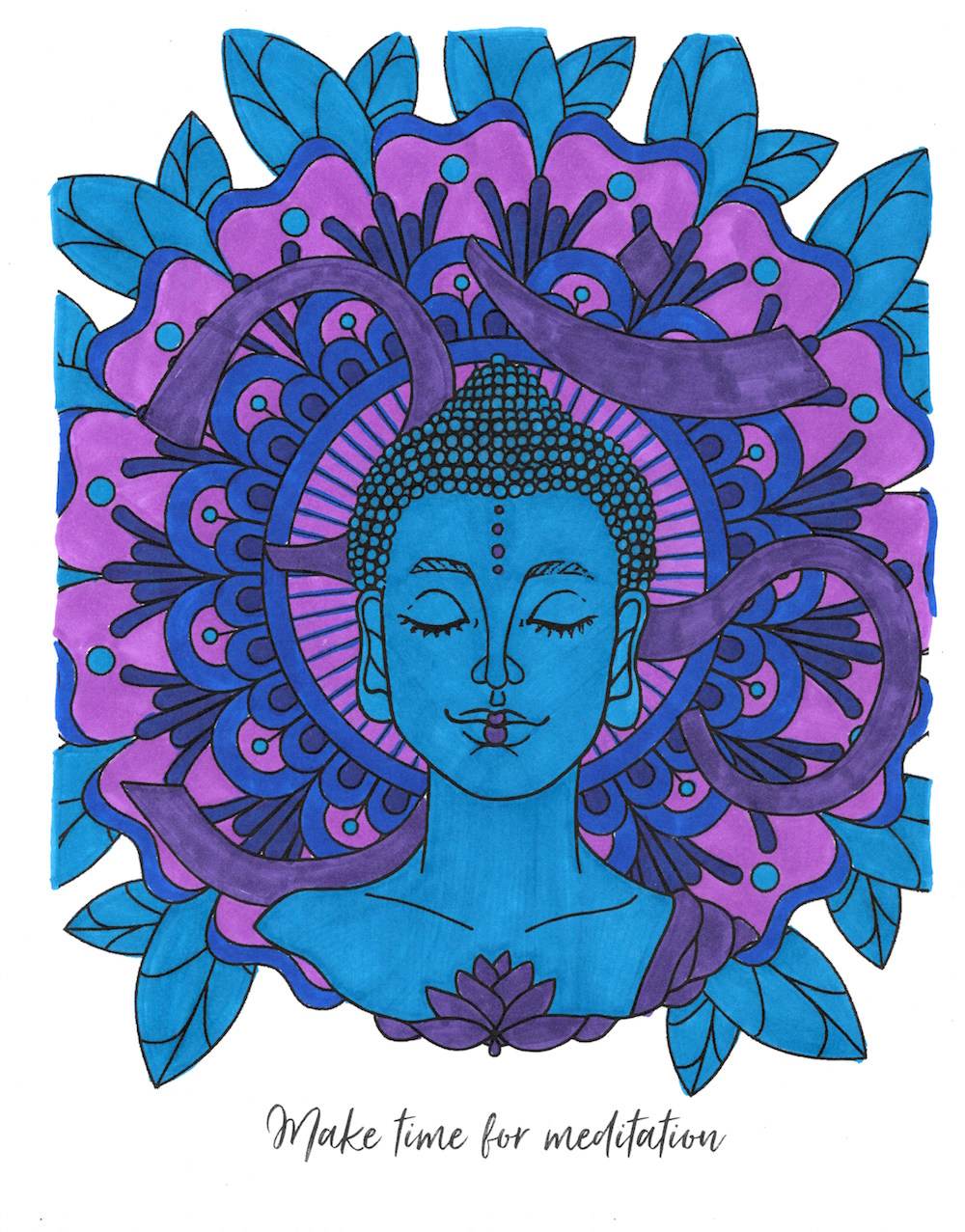
    Today’s tip: Make time for meditation.

    Of all the healthy habits I’ve adopted, meditation has been, by far, the most transformative.

    It’s enabled me to observe my negative, obsessive thoughts instead of getting caught up in them, and it’s helped me create space between my thoughts and my response, so I’m less apt to do and say things I’ll later regret.

    The beautiful thing about meditation is that there are many ways to do it, to suit your schedule and needs.

    You can use guided meditations (I’ve included four in the pre-order bonus package!); you can learn any number of different techniques for seated meditation; you can practice deep breathing; you can try a movement-based practice, such as yoga, qigong, and meditative walking; or you can simply practice mindfulness in your daily life—while eating or doing the dishes for example.

    And even if you only have five minutes, you’ll experience the benefits.

    Research has shown that anxiety can change the structure of your brain, increasing the size of the amygdala (the part responsible for your fear response), causing you to become even more anxious.

    A regular meditation practice can reverse this. It can literally change how your brain works and, consequently, how you respond to the events in your life.

    My preferred forms of meditation include:

    -Yoga (Vinyasa, hot yoga, and yin yoga—which a teacher recently described as “basically a nap with light stretching”)

    -Guided meditations (I’ve found tons of free options on YouTube)

    -Deep breathing (alternative nostril breathing being my favorite)

    If I have the time, I’ll go to an hour-long yoga class at a studio down the street (which also allows me to clear my mind a little on the walk) or find a thirty-minute guided meditation online.

    If I have less time available, I’ll do five to ten minutes of poses, a five-minute guided meditation, or a few minutes of deep breathing. No matter what I choose, I always feel calmer and more centered after.

    Do you have a regular meditation practice? If so, what’s your practice of choice, and how has it changed your life for the better? Your experience could help other readers find peace, calm, and healing, so please share the good!

    From now until June 26th, you’ll get three bonus gifts, including a guided meditation series on letting go, when you pre-order Tiny Buddha’s Worry Journal. All you need to do is order a copy here and forward your purchase confirmation email to worryjournal@tinybuddha.com

  • Music Coloring Page from Tiny Buddha’s Worry Journal

    Music Coloring Page from Tiny Buddha’s Worry Journal

    Hi friends! Since Tiny Buddha’s Worry Journal officially launches a month from tomorrow, I decided to start sharing some of the coloring pages on the blog, twice a week, until then.

    I was thrilled to once again work with the talented Rose Hwang, the illustrator for Tiny Buddha’s Gratitude Journal, and her work this time is just as beautiful.

    Each page depicts one simple thing we can do to help ease anxiety.

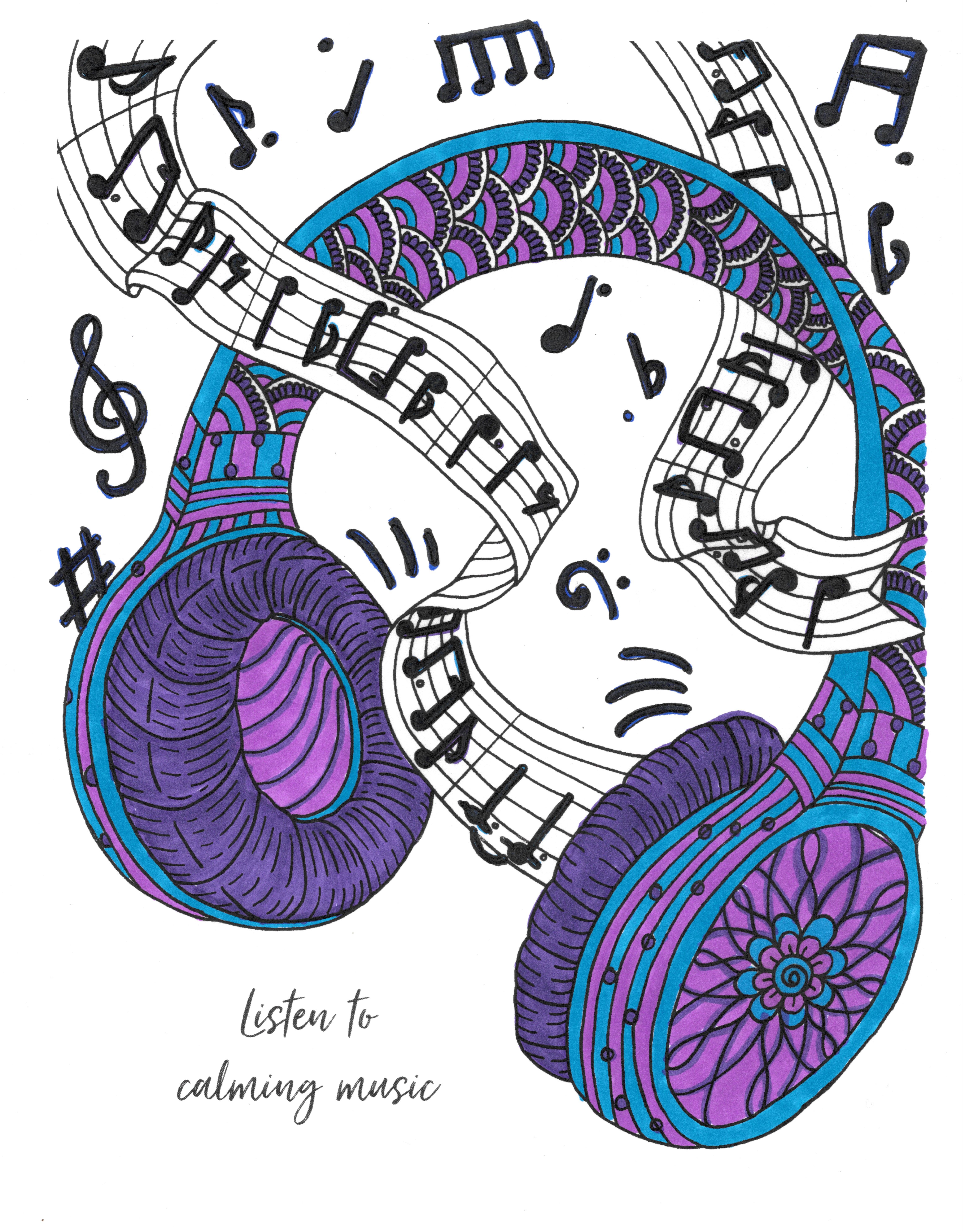
    Today’s tip: listen to calming music.

    Music can be so transformative. The right song can instantly transport you to a different time, remind you of someone or somewhere you love, or communicate everything you’re feeling but can’t put into words.

    It can simultaneously calm your mind, heal your heart, and lift your spirits.

    And it’s the ultimate tool for mindfulness. It’s hard to dwell on the past or worry about the future when you’re lost in a melody, eyes closed, the beat reverberating deep in your chest, the lyrics drowning out the repetitive thoughts in your head.

    There have even been studies to show how healing music can be—it can boost brain activity and the mood enhancing chemical serotonin, lower blood pressure and the stress hormone cortisol, and slow our heart rate, creating an overall calming effect.

    I know I always feel more centered and at ease when I take even just a few minutes to listen to my “peace playlist,” which includes:

    -A selection of movie theme songs (far too many to list!)

    -Musical soundtracks, some of the newest of which include The Greatest Showman and La La Land (specifically: A Million Dreams and Here’s to the Ones Who Dream)

    -Songs from Bob Marley, The Beatles, The Rolling Stones, Radiohead, Coldplay, The Lumineers, The Fray, Augustana, David Gray, Ben Folds, Gary Jules, Josh Ritter, and Ray LaMontagne, to name some of my favorites

    What are some of the songs that calm your mind? Which songs help you relax and unwind after a long, stressful day? Feel free to share an album name, a song title, or a link. You never know whose day you could brighten by sharing your playlist for peace.

    From now until June 26th, you’ll get three bonus gifts, including a guided meditation series on letting go, when you pre-order Tiny Buddha’s Worry Journal. All you need to do is order a copy here and forward your purchase confirmation email to worryjournal@tinybuddha.com

  • 5 Journal Prompts to Help You Let Go of Anxiety and Find Peace

    5 Journal Prompts to Help You Let Go of Anxiety and Find Peace

    “You don’t have to control your thoughts. You just have to stop letting them control you.” ~Dan Millman

    There was a time when my mind was completely consumed by worries, and I lived in a perpetual state of panic.

    I worried about things I’d said and whether people were judging me, things I should be doing and whether I was using my time well, the state of my life, the state of the world, and just about anything else one could worry about.

    Life always felt scary and uncertain, so I always felt unsafe, and worrying gave me the illusion of gaining some semblance of control.

    Well-intentioned people advised me to just be positive—then I’d feel a lot better about life. But I’ve always found the concept of positive thinking somewhat frustrating.

    First, it made me feel guilty, since no matter how hard I tried to avoid negative thoughts, they’d inevitably pop into my head. Secondly, it was exhausting. To constantly monitor your mind takes monumental effort, and it seemed contrary to my goal—to be less burdened by my brain.

    Still, there’s no denying that our thoughts influence our feelings. When we sit around dwelling on everything that could go wrong, or everything we think we did wrong, we end up feeling drained and depressed.

    So what’s the solution then? How can we allow ourselves to be human and simultaneously ensure we don’t drown in our fearful thoughts?

    For me, journaling has been key.

    Journaling has helped me find solutions to my problems, identify and let go of things I can’t control, and change my perspective on the things I want to change but can’t.

    It’s also helped me recognize my own strength so that I can worry less about what’s coming and trust more in my ability to handle it, whatever it may be.

    If you’re looking for a little mental relief this week, I recommend starting each weekday with one of these five journal prompts from Tiny Buddha’s Worry Journal: A Creative Way to Let Go of Anxiety and Find Peace

    The beauty of these particular prompts is that they help us focus on the moment, be kind to ourselves, and have faith in ourselves and our journey, wherever it may lead.

    5 Journal Prompts to Help You Calm Your Anxious Mind

    1. Today, I choose to let go of the things I can’t control, including…

    2. I recognize that I don’t need to have all the answers right now. Today, I give myself permission not to know…

    3. Dear inner critic: You always focus on everything I’m doing wrong, but I know I’m doing a lot right, including…

    4. I know I’m strong enough to handle whatever comes at me, because I’ve survived a lot, including…

    5. Instead of worrying about making the “wrong” choices, I trust that no matter what I choose…

    You don’t need to write anything specific or lengthy, though you can take all the time you have and need. The important thing is that you get in the habit of thinking about yourself and your problems in a new way.

    It’s not about suppressing thoughts or replacing them with positive ones. It’s about directing your mind to useful thoughts so you can spend less of your life feeling worried and overwhelmed.

    Just like gratitude journaling can help us feel happier and more optimistic, keeping a worry journal can help us feel calmer and more at peace.

    If you’re interested in pre-ordering a copy of Tiny Buddha’s Worry Journal, which officially launches on June 26th, you can reserve a copy here.

    Once you receive your purchase confirmation email, forward it to worryjournal@tinybuddha.com and you’ll receive access to the following free bonus items:

    • Four guided meditations on letting go (of control, the need for approval, stresses/pressure, and self-judgment)
    • Three colorful desktop wallpapers with cute Buddhas and calming quotes
    • An exclusive interview with me and Ehren Prudhel, founder of the soon-to-be-launched podcast Next Creator Up, in which I discuss how I’ve overcome worries related to writing my first feature film

    I hope these prompts (and the other activities in the journal) help you as much as they’ve helped me!

  • Tiny Buddha’s Gratitude Journal Giveaway

    Tiny Buddha’s Gratitude Journal Giveaway

    UPDATE: The winners for this giveaway have been chosen. They are:

    • Keri Olson
    • Your Computer
    • Kelly Hawkins
    • Jadice-Teal N Momz
    • Maryrose

    Hi friends! Last week I launched Tiny Buddha’s Gratitude Journal, after sharing some of the book’s fifteen coloring pages over the past several weeks. I’ve received some wonderful feedback so far, and I’m thrilled to know that so many of you are finding the book fun and helpful!

    Along with today’s coloring page, I’m running a giveaway, offering five free copies. If you’ve already purchased one for yourself, you may want to enter the giveaway for a chance to gift one to a friend.

    About the Journal

    Including questions and prompts pertaining to both your past and present, the journal will help you see your life through a new, more positive lens.

    The book also includes fifteen coloring pages, depicting awesome things we often take for granted, like nature and music.

    With space for written reflection, these pages provide all the benefits of coloring—including mindfulness and stress relief—and also guide you to recognize the beauty in the ordinary.

    Whether you’ve been gratitude journaling for years or you’re just giving it a try for the first time, Tiny Buddha’s Gratitude Journal will help you access a state of inner peace, contentment, and joy.

    The Giveaway

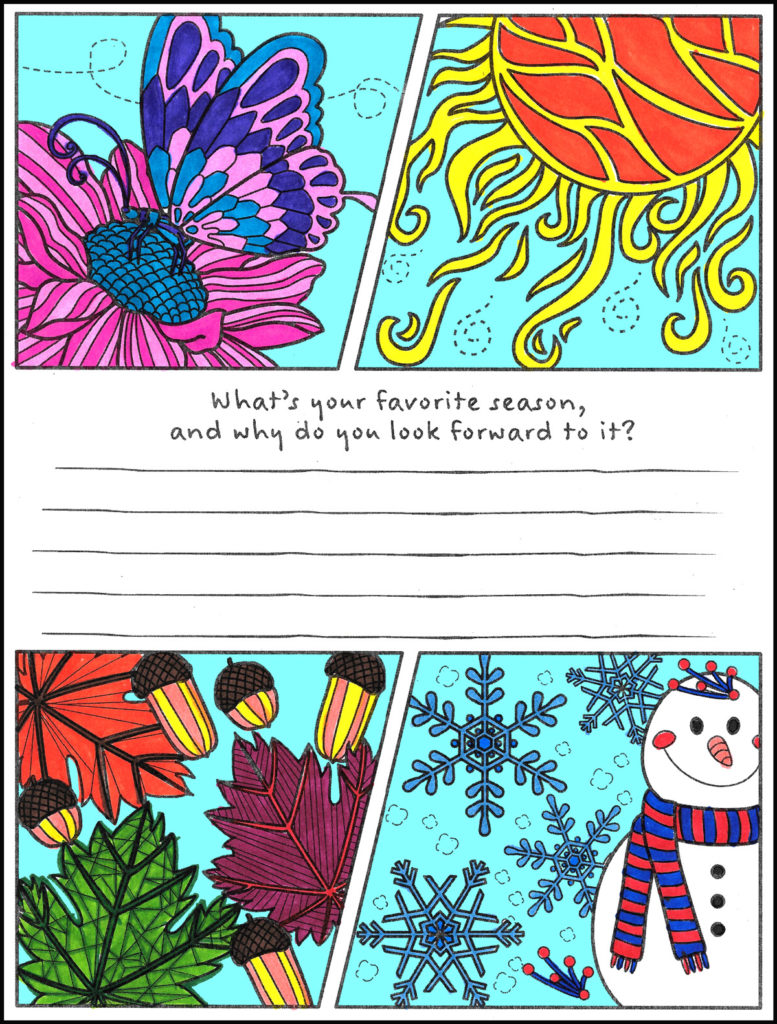
    • To enter to win one of five free copies, leave a comment below answering the question in the coloring page above.
    • For a second entry, share this post on one of your social media pages and include the link in a second comment.

    You can enter until midnight, PST, on Monday, June 26th.

    If you’ve already received your copy, I would appreciate if you’d leave a review on Amazon here. It doesn’t need to be long—even a tiny review can make a big difference!

    And if you’ve already colored a page or two, I’d love to see it! Please share it on social media using the hashtag #tinybuddhagratitude

    Thanks so much, everyone. I am grateful for you!

  • Tiny Buddha’s Gratitude Journal Launches Today – Last Day for 3 Free Gifts

    Tiny Buddha’s Gratitude Journal Launches Today – Last Day for 3 Free Gifts

    Today’s the day! I’m thrilled to announce that Tiny Buddha’s Gratitude Journal is now available for purchase, and if you order today, you can still get the three free bonus gifts.

    I decided to create this gratitude journal/coloring book, with the help of the talented illustrator Rose Hwang, because gratitude and coloring have both greatly enhanced my life.

    Coloring is not just for kids. It’s calming, creative, and meditative, and best of all, it’s easily accessible. You don’t need fancy equipment or an art class, just some markers or colored pencils and a little time and space to get lost in the colors.

    As for gratitude journaling, it traditionally involves jotting down a few things you appreciated throughout your day, and I’ve done that for years.

    I’ve taken a few moments in the morning or night to appreciate the small things (that I slept well, the sun was out, or someone hugged me when I needed it) and the bigger things (that my relatives are healthy, that I’m currently in good physical and mental shape, and I have a comfortable apartment in an area I enjoy).

    It’s amazing how much you can come up with when you consciously choose to look for everything that’s going right, and how much it can boost your mood.

    I’ve taken this concept and given it more structure with Tiny Buddha’s Gratitude Journal. Each page includes a question or prompt to help you focus on a specific area of your life, including your past, your relationships, your work, your passions, and more.

    The coloring pages depict common things we enjoy but may take for granted—such as nature and music—and space to reflect on what you appreciate about that thing.

    If you use this journal regularly, I believe you’ll feel better about life, more optimistic, and less stressed and anxious.

    It will help you shift your focus from everything you think should be happening to everything that’s already wonderful in your world. And armed with a new sense of presence and satisfaction, you’ll be more effective in creating positive change for the future.

    Order your copy of Tiny Buddha’s Gratitude Journal now and receive the following three free gifts:

    • Tiny Buddha’s Handbook for Peace and Happiness (an eBook not currently available for purchase)
    • Gratitude Discovery, a Guided Meditation Experience from One Live Mind
    • Three printable, colorable thank-you cards

    Get your copy here:

     Amazon B&N Booksamillion.com Indie Bound

    To claim the free bonus items, forward your purchase confirmation email to bookbonus@tinybuddha.com.

    Whether you’ve been gratitude journaling for years or you’re just giving it a try for the first time, Tiny Buddha’s Gratitude Journal will help you access a state of inner peace, contentment, and joy.

    I hope you enjoy it as much as I enjoyed creating it!