Tag: Gratitude

  • Enjoy the Little Things: How to Find the Sacred in Everyday Life

    Enjoy the Little Things: How to Find the Sacred in Everyday Life

    “Enjoy the little things, for one day you may look back and realize they were the big things.” ~Robert Brault

    One of the things I love about the Native American spiritual path is the focus on appreciating the simple things in life.

    Simple things are often hard to relate to in today’s world of overwhelm.

    Eric Schmidt, executive chairman of Google, says we human beings currently create as much information in two days as we did from the dawn of civilization up through 2003!

    And yet our bodies were, and still are, designed to be in tune with the sun, the moon, the seasons, and the cycles of nature. That simplicity is what our souls long for.

    So our adaption to the “modern age” has been fraught with peril to our peace of mind and our health.

    Our ancestors greeted the sun each morning, enjoyed simple home-cooked meals, played with their children and grandchildren, and delighted in a beautiful sunset, with no television to lure them inside on a beautiful summer evening.

    I am as tempted as the next person to watch a good TV show, but I have found that the evenings when I putter in the kitchen, making a healthy meal while listening to relaxing music, are much more fulfilling.

    Finding Meaning in the Little Things

    I designed my house around being able to have African violets in the kitchen window.

    I did it because my grandmother had them in her kitchen window. That meant the kitchen window had to be in the south, because that gave them the best light.

    So my entire house was designed around having a south-facing kitchen window for African violets.

    Every time I stand at the kitchen sink and see them, I think of my grandmother. And it becomes a simple, heartfelt connection to the past.

    Native Americans sought a simple, earth-based lifestyle also. No one who truly understood the responsibility involved ever sought to be a “medicine man.” They longed to be a simple human being, living a simple life.

    My first Native American teacher, Sun Bear, said, “I’m not interested in any philosophy unless it can help me grow corn.” Meaning, knowledge that makes our lives better is what’s most valuable.

    It’s fine to spend time philosophizing about lofty ideals, but how does that help you if you’re unable to enjoy a cup of tea, or a sunset, or delight in watching a child take her first steps?

    Living a peaceful, fulfilling life is sacred.

    Is There More to Life Than This?

    I remember an episode of the sitcom Seinfeld in which Jerry Seinfeld was, for once in his life, thoughtful and sensitive. In reviewing his shallow life, he asked, “Isn’t there more to life than this?”

    His neighbor Kramer replied, “I know the answer to that: There isn’t!”

    What if there isn’t more to life than simplicity, appreciating every day, helping others, and being kind when we can? I think that’s not so bad!

    I have two friends who recently retired and told me they asked themselves, “What should we do now with our time?”

    And they decided they just want to help people. They’re very handy and told me that whenever I need something fixed around the house, to just call them and they’ll come fix it at no charge. They do it just for the pure joy of it.

    It helps me enormously and gives them the fulfilling feeling of having helped someone. What a simple retirement solution.

    And I get the joy of inviting them over to dinner as a thank you.

    Spiritual Acts in Daily Life

    Here are some things that I feel are sacred in life, and they certainly are simple. Perhaps making time to add them to your day will bring the sacred back into it:

    1. Prayer.

    2. Meditation.

    3. Time in nature.

    4. Time with children; they certainly know how to live in the moment.

    5. Meal preparation. It’s an opportunity to pray over your food. Make it a meditation.

    6. Greet the day. Watch the sun rise and say, ”Thank you.”

    7. Say “goodnight” to the day and express gratitude for everything that happened that day.

    8. Declutter your home, which also leads to decluttering your mind. I’m going through a massive purging right now, getting rid of things I no longer use. It feels as though I’m opening up my mind and soul for a fresh breeze to flow through and renew me.

    9. Awake early to have time to meditate, breathe, and watch the birds, while slowly, mindfully, drinking a cup of coffee or tea.

    10. When you feel the need to buy something, stop. Wait twenty-four hours. Why do you want it? Do you need it? What void is it filling? What else can fill it?

    11. Do you keep the T.V. on without even watching it? Living alone, I am well aware that sometimes I like the T.V on just to hear the voices of other people. But I’ve recently taken to leaving the T.V. off and listening to music instead. So I still hear voices, but more pleasant ones.

    Here are a few things turning off the T.V. can give you: time with a loved one, time for exercise, time for meditation, time for self, time to observe nature, time for a nap.

    Why not take some time to slow down, incorporate some of these spiritual acts into your day, and see what a difference it makes?

  • Awakening to Life and Love After a Devastating Loss

    Awakening to Life and Love After a Devastating Loss

    “The world breaks everyone, and afterward, some are strong at the broken places.” ~Ernest Hemingway  

    For years I cursed spring.

    During that time my heart woke to the bitterness of life. In the harsh frost of winter my anguish and the season were one, a climate where I felt safe, cocooned in a blanket of grief, a camouflage that ensconced me from the world outside.

    Like grief, winter brings the bitter cold to our life, and those withered months drenched in sorrow tasted natural.

    In the time I lingered frozen in my shroud of despair, spring had arrived, with feathered creatures whistling joyous songs while the leaves danced up our driveway. The warmth of the sun was a charlatan, exasperating my pain while seducing me like a stranger to a foreign place.

    Welcoming the signs of spring felt like a betrayal of my grief. For years I remained suspended, cursing the seasons, as if they had something to do with my anguish. Spring represented an unwanted gift, and this rebirth offended me. How could life continue when I stood so raw?

    Marooned in a well of grief, I felt alone in a world surrounded by people, a place where I was unable to articulate the wound that clutched at my soul.

    My attention oscillated with an assault of questions, an endless loop of uncertainty that blemished my heart.

    Feeling guilty for being alive when he was gone, for waking each day, even the shame I felt running out of tears depleted me, until nothing but darkness remained. Each day another upheaval when I woke peacefully until the ambiguity dissipated and exposed me to the pain again.

    Meeting with other bereaved families and sharing our lives brought the courage I needed to begin functioning again. Slowly a thaw occurred and the bitter cold that once surrounded my heart began to warm.

    The heartache that previously consumed me now unfolded into a treasure of memories and the gifts they bring with the passage of time. Gratitude can nourish us when our heart feels empty. Though learning through loss is difficult, it remains powerful.

    Embracing this enlightenment and the growth it provided filled me with love and compassion. Through years of grief, love, and self-examination, I began to find myself authentically whole again, and like the new buds of spring, my heart began to open.

    Eventually spring’s return blossomed within me and I looked forward to the new beginnings it would bring—perhaps because of the cold, seemingly endless winter, or the accumulation of snow all around us?

    But when I happened upon an old journal from twenty years ago, the place where all this grief began, the year our five-year-old son died, the fog began to lift.

    Finding a quiet room I sat down and began slowly turning the pages, revisiting the season of loss I had endured. Tenderly I stroked the pages acknowledging that despairing period of my life.

    As I read, I recalled the brave woman I was, surviving the loss of my child, and I could not help but honor her and the battle she had forged to survive.

    For days I continued reading the journal entries, discovering stories that swelled my heart and welled my eyes with tears. Yellowed pages filled with letters and poetry, notes and emotions bringing the words to life again, reminding me of how far I had come.

    Entries I had written cursing the seasons stung at my vision, until suddenly aware of the anger I once held with spring, for it was not the season that hurt; the pain that gripped me was witnessing life moving on without me.

    It took me years of unraveling to find myself again, and there are still days when I hear his sweet voice in the quiet of my day and know that he is still with me. Learning to step beyond the loss and share the love I had for my son in positive ways became one of my greatest blessings.

    Gratefulness is plentiful when we look beyond ourselves and see the beauty that exists in life all around us.

    Ryan’s story became a story of love, one of giving to others the way this small child gave to us. Caring for strangers with random acts of kindness began filling the emptiness that once consumed me.

    The power connected to giving is immeasurable, and that influence sustained me. Beginning with small acts that kept me anonymous was the tipping point I needed to shift directions.

    Paying at a drive-through where I remained nameless energized me, and instead of the melancholy I had previously felt, a new kind of optimism emerged.

    Solace can be found in that quiet place of grace when you release a kind deed into the universe and let the laws of nature embrace it.

    Over twenty years later I was running a race on Ryan’s birthday and aspired to do something special.

    Although I was unclear on how I would present it, I went prepared, picking up two $10 gift cards from a local store. This time I needed to step out of my anonymous comfort zone and be present.

    After asking permission, I handed the two gift cards to two young siblings there to run the race. The delight alone was a gratification to witness, but this act gave more.

    After sharing Ryan’s story, they all thanked me and I returned to my own daughter, both of us beaming.

    Within a few minutes the children bashfully approached me, thanking me again and sharing how special they felt. Smiling, I looked up at their mom who stood watching with tears running down her face.

    Allowing Ryan to live on in positive ways is a gift I have given away countless times without regret. Connecting ourselves with others makes the world a more loving place.

    Although we try and live with a strategy in mind, planning how many children we want or the house we need, within all of this, there is no immunity from loss.

    When we realize that material things are fleeting collections of wants and will not sustain us in tragedy, we begin to embrace the little moments of life.

    Giving of ourselves is the most valuable offering we can present, shaping the world in a perfect light. A beautiful sunrise, a child’s laughter, even the smile we bring the elderly neighbor when we stop to visit will be the pause that will anchor us if our ship begins to sink.

  • How to Smile More Every Day (Even if Life Isn’t Perfect)

    How to Smile More Every Day (Even if Life Isn’t Perfect)

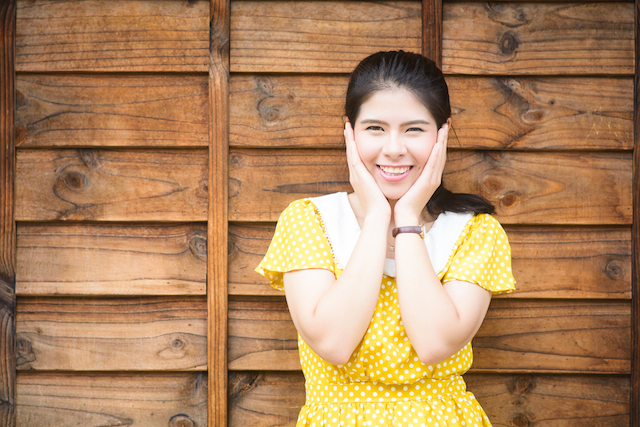
    Smiling Girl

     “A smile is happiness you’ll find right under your nose.” ~Tom Wilson

    I smile a lot.

    In fact, yesterday I smiled eighty-seven times (I counted).

    These aren’t fake smiles. They’re big, toothy, open-mouthed grins. And they’ve become a regular feature of my everyday life because I’ve been overcome with an immense happiness.

    Everything I see, touch, breathe, and taste brings me delight.

    It’s totally spontaneous and outrageously fun, and I want to share with you how it’s done.

    What I Smile At

    It could be the subtle texture of construction grating.

    It could be the way a flower pops out of the background at an unforeseen moment.

    It could be the way the sunlight glints off the window in the early morning.

    But the thing that’s powering all these smiles is very simple.

    Gratitude.

    Most people smile when they get something.

    We all like to smile when we receive a compliment, a surprise visit from a friend, or a big paycheck.

    In other words, we’re happy when we receive a direct benefit.

    But the way I see it, I’m the direct benefiter of everything happening around me.

    The caw of a crow, the taste of a mandarin orange, the sound of a truck passing.

    All of these things have made me smile today. I receive all of these things and am glad because of them.

    So how can you smile more?

    It’s simple really.

    Be grateful for everything in your life.

    It’s amazing what positive effects we experience once we begin to say, “Thank you!” for everything.

    Thanks for the gift of life. Thanks for a delicious meal. Thanks for the smile of a stranger.

    But the weird (and powerful) change I invite you to make is this:

    Give thanks for even the seemingly negative things that come into your life.

    Illness, pain, and loss are some of the most powerful teachers we have available. They reflect back to us the ways in which we need to grow. They show us the power that’s within us.

    And they show us that life is incredibly precious.

    For a few years I was in a really dark place. No home, no friends, no money. I slept outdoors in unfamiliar towns. I ate food stolen from dumpsters. I went days without talking to a single soul.

    There were frigid nights when I would sleep in a construction site. I would curl up in the cab of an unlocked bulldozer because my body heat could warm the tiny compartment just enough to sleep a few hours before the crew came in at 6AM.

    I was low.

    But I appreciate this experience because it gave me fortitude to live anywhere. I no longer worry that I’ll be able to survive without food or shelter, because in tough situations, you get creative. You get resourceful. And you stop being afraid to ask for help.

    Pay attention to the smallest details.

    Right now I’m staring into the red of my ceramic coffee cup and just smiling my ears off. It’s too perfect not to.

    But the coffee cup isn’t really just red.

    As I look closer, I see infinite shades glancing off the glaze.

    It’s reflecting the candy-cane stripes on a packet of sugar lying in the dish.

    It’s reflecting a page of notes I’ve got in front of me.

    And it’s following all the laws of light and shading, showing its brightest fire-truck vermillion face to the sun on one side, and a shadowy, murky maroon on the other.

    Truly a glorious thing.

    These details of experience are accessible to us everywhere, and they show us that no two things are alike.

    Even things that we find offensive are opportunities for thankfulness once we begin to appreciate their details.

    Plastic bottles on the street or decaying fruit, for example.

    They all contain such marvellous detail that when you stop and pay attention, you can’t help but smile in thanks.

    Write down your blessings.

    Thousands of great things happen to us every day but we only seem to remember a few, while we remember most of the dull, unfortunate, or painful things that happen to us.

    That’s not our fault; it’s just the way our brains are wired.

    But we can overcome it.

    That’s why it can be helpful to keep a notebook to jot down all the great things that happen to you daily.

    Reflect on it when you’re feeling down. You’ll notice that even on your lowest days, things happened that touched you, that blessed you.

    Don’t forget them!

    Look at what is, not what isn’t.

    Every time I look around, I think, “Wow, I’ve got a great life.”

    I don’t have a lot. And yet, I live the happiest life imaginable because I’m looking at what is, not what isn’t.

    Oftentimes we get caught up in worries about the future, giving substance to our negative thoughts.

    We think, “If only I had a bit more money to pay the bills.”

    “If only I didn’t have to worry about these aches and pains.”

    “If only I had a little more time to spend with my family.”

    Life isn’t the fantasies you have in your head—it’s what’s happening right now! All the great things around you are yours.

    The sunshine hitting your face.

    The smile of your kids and grandkids.

    The exhilaration of going for a run and feeling your blood rush about in your marvellous arms and legs.

    That’s all for you. And it makes me smile.

    What made you smile today?

    Smiling girl image via Shutterstock

  • When You’re Restless Because Every Day Feels the Same

    When You’re Restless Because Every Day Feels the Same

    Bored Man

    “To know yourself as the Being underneath the thinker, the stillness underneath the mental noise, the love and joy underneath the pain, is freedom, salvation, enlightenment.” ~Eckhart Tolle

    Years ago I found my self at a low point. It wasn’t a big, life-changing event that got me there; just a sudden realization that life sucked. Every day of that horrible summer, this question nagged at me: “Is this as good as it gets?”

    My sons were very young then and always happy, a joy to be around. My marriage was healthy and my husband was doing great. The problem was me—my pain body had attached itself to this feeling of “Is this all there is?”

    I spent many hours on my couch trying not to look like I was in this funk in front of my boys so they wouldn’t feel any negativity.

    I plodded along with everyday things, such as driving them to friends’ houses and joining my friends for lunch, but I lived with this underlying resentment that was consuming me, swallowing me up like a dark cloud.

    It felt like I had reached a point in life where I knew it all (of course, I hadn’t even scratched the surface), and I’d figured everything out, and now what? 

    I would get up every morning and go through my routine, part of which involved making my bed.

    When I was feeling this way and I was lost in my own perception of things, I would look at our bed as I put it together and have a sense of ugh! Here I am, making this bed again to have the same predictable day only to get into it again tonight and start all over tomorrow.

    WHAT’S IT ALL FOR?  

    This question nagged at me as I made sure the pillows lined up and ran my hands over the duvet to smooth it to non-wrinkled perfection. Yuk! What did it matter? Why did I care? Was this it? Would I just stay on my little path with these little details until I die?

    I couldn’t find my way back to happiness. I was stuck. Thankfully, the Universe and my free will started to show me another side.

    A friend opened my eyes to a different perspective and I started to re-think all of my negative thoughts. She helped me see everything around me with new eyes instead of taking it all for granted.

    I felt an opening of my soul and realized that there was so much more than I had previously allowed into my life. Just the fact that I was open to receive this better, more positive way of viewing my life made me happier.

    Within weeks I started gardening and got lost in the outdoors and the smell of the Earth.

    I was emerging as a more enlightened soul, lighter, taking on the day and feeling excited to do simple things—things that I had not considered doing for a long time, such as hiking and just sitting in the grass for hours.

    As part of my morning routine, I started meditating in my yard, then doing yoga in the glorious sun. My whole perception of my life turned around and I reveled in each day, so happy to be here in this beautiful place, having this amazing experience.

    Filled with love for my family, myself, and just about everyone and everything, I had transformed. And just like that, I left behind that persistent question, “What’s it all for?”

    Now I knew what it all was for—to experience love, to give it, to receive it, to relate to the Universe and others as part of the sum of everything imaginable.

    My life situation hadn’t changed; I hadn’t moved away or started a new career. I didn’t seek therapy or join any club. I simply changed my perception about my life. I saw things with new eyes and realized how closed off I had become.

    I have never again allowed myself to go to that dark place, as I am still high on life, with all of its simple pleasures and splendor. I walk around this beautiful lake every morning and marvel at nature and how perfect it is. I find ten miracles before breakfast, and I am living a life of joy. 

    I make my bed every morning, and I always make sure to run my hand over the duvet to make it smooth. I line up the pillows and spend a minute so it looks neat. I think about the day and how amazing it is that I can create whatever I choose.

    With a feeling of being blessed, I have deep gratitude for everything in my life. And then I think, “Wow, I’m about to have a great day and then end up back here back in my bed with my husband! How awesome is that?”

    Recognize that your thoughts represent just one possible way to perceive your circumstances. Write down all the great things in your life and decide to throw away any negative, self-limiting thoughts.

    It’s your choice how you see your life, so see it as a beautiful gift and take on each day with love in your heart and a smile on your face.

    Bored man image via Shutterstock

  • 6 Exercises from Positive Psychology to Boost Your Happiness

    6 Exercises from Positive Psychology to Boost Your Happiness

    “The secret of happiness is to count your blessings while others are adding up their troubles.” ~William Penn

    A friend recently asked me, “What’s the worst habit you’ve overcome?”

    “Besides eating chocolate for breakfast?” I joked. “That would be complaining.”

    I used to be an incessant complainer. Whining was practically in my DNA. When I was growing up, my father blamed the weather for his tennis elbow, the traffic, and his subpar golf game, and he frequently formed judgments and assumptions about other people.

    If we drove by a neighbor’s nicely manicured lawn, he’d whisper that the house was bought “for a steal,” while waving to the owner. When his colleagues vacationed in Hawaii, he presumed that family money financed the trip.

    So it wasn’t surprising when I started criticizing my friends during disagreements, or when I hit below the belt when my best friend invited another friend to Disneyland.

    I admit, it felt good at first—powerful even. But soon after, I felt sad and guilty.

    My turning point came during the fourth grade when my teacher gently pulled me aside one day after recess. “You know, sometimes we think our situation is worse than it is. But life is pretty great when you start noticing what’s going right.”

    Though the lesson was indirect, Ms. Braun taught me the gift of gratitude. And gratitude is one reason I love positive psychology.

    Positive psychology encourages us to question which thoughts and actions we can change to become happier.

    This intentional focus inspires us to cultivate positive emotions, nurture relationships, and commit acts of kindness.

    The following exercises can help improve your emotional well-being, and someone else’s, too.

    Exercise #1: Three funny things

    Write down three funny things you experienced in a given day, and why those things happened. For example, was this something you were directly involved in, something you observed, or something spontaneous?

    When you can laugh at yourself and your circumstances, it means that you don’t take life too seriously. Best of all, laughing is contagious!

    Exercise #2: Journaling

    Journaling provides a snapshot of a moment in time. Not only does journaling create a healthy habit of self-reflection, it allows us to document positive changes to our thinking and our actions, and it helps us transition from a bad mood to a good one.

    For example, if you earned a promotion at work this week, you would recount:

    • How it happened (through hard work and spending fifteen minutes double-checking my numbers)
    • Why it happened (I took the initiative to apply for the promotion.)
    • What I did right (I talked to senior executives in the company about the best ways to improve job performance.)
    • How I helped this happen (I gave up watching my favorite TV shows and read trade publications and stock reports instead.)

    Next, record one activity that you didn’t like and how you can address it. For example:

    I snapped at my roommate when she came home late on Thursday and woke me up.

    Problem-solve the following:

    • How this is keeping me stuck (I couldn’t fall back asleep because I obsessed over how inconsiderate she is.)
    • What thoughts and actions I can take to get unstuck (I can be more flexible; after all, she’s a grown-up and doesn’t need a curfew. I can buy earplugs and wear them when she goes out during the week.)

    Exercise #3: Write your future diary

    Whether you’re trying to eat healthier, studying for an advanced degree, or starting your own business, the time between being an apprentice and reaching your goal can seem like an eternity. Envisioning your future can be a great motivating factor to get you over the slump.

    Close your eyes and picture your future. Focus on how life will be different and what changes will be in place. Reflect on how you’ll feel and on how others will respond to the new, improved you.

    Most importantly, think about how you’ll utilize the habits, skills, and talents you’re learning now to benefit others.

    Exercise #4: Count kindness gestures

    Keep a record of all the kind acts that you do in a particular day, and the acts of kindness you witness. These can be as simple as placing the morning newspaper at your neighbor’s doorstep, helping an elderly person cross the street, or smiling at strangers.

    Exercise #5: Gratitude visit

    Think of someone you should thank, someone who’s been helpful or kind to you (and not a family member, partner, or spouse).

    Write a letter to this person, including details about how they’ve helped you and the lasting impact this has had on you.

    Arrange to meet up with your friend and tell them you have something to read to them. After you finish reading the letter, present it as a gift.

    A lovely gesture, though entirely optional, is to put the letter in a frame, or to laminate it.

    Exercise #6: Cultivate a positive outlook

    Despite the bad things that happen daily, it’s important to remember that the world is basically a safe place.

    We all suffer pain and trauma. People who find the good in every situation possess the resilience to bounce back more quickly.

    When you intentionally choose positivity, you look inward for resources and you trust your thoughts, emotions, and behaviors. Life still brings pain and heartache, but you know there’s a way out.

    After dropping my son off for school last week, I found myself feeling sad and scared for no reason. What if something bad happens and I never see him again?

    I knew these thoughts were futile, yet it was hard to shake the doom as I watched his disappearing frame recede amongst the sea of middle school students.

    I then breathed deeply, closed my eyes, and reminded myself that my feelings are not facts, and I could get myself on the other side of anxiety with intentional action.

    I looked around and savored the trees, the fresh air, the morning sunlight, and the giggly teens eagerly running toward the crossing guard at the edge of the street.

    I focused on the simple beauty around me. And then it dawned on me: The difference between people who complain and those who do not is utter appreciation and gratitude for what you have, right here and right now.

  • 10 Choices That Lead to a Happy, Fulfilling Life

    10 Choices That Lead to a Happy, Fulfilling Life

    “Happiness is a choice that requires effort at times.” ~Aeschylus

    My twenty-sixth birthday was approaching, and I asked myself one question: “Do I want this year to look like the last one?”

    The answer was an immediate and very solid no. I frantically began to analyze what I was doing with my life to get this reaction. I was unhappy for most of twenty-five, romantically, professionally, and socially.

    I had been with my live-in boyfriend for about a year and a half, and there seemed to be a growing disconnect. Despite the lies, resulting in jealousy and insecurity, I stayed with him because it was what I knew. I was comfortably uncomfortable.

    I justified staying by telling myself, “All relationships take work” and “I know he can change.” I had also become a bit of a hermit with him. Netflix marathons every weekend. My social calendar eventually became booked with Don Draper and Piper Chapman.

    Professionally, I was nowhere near where I wanted to be. As a millennial, I can say we carry a certain grandiose expectation for a picturesque life that we expect to have at a very young age, and we thoroughly believe it’s going to happen. Right up until the time when it doesn’t.

    Stuck and confused, I realized that if I changed nothing, the next year was destined to look like the prior one.

    I was in search of my truth and my happiness. I needed to know what this life thing is all about. Why do some people seem to have it all figured out and I’m left worried and more confused than ever before?

    I had some money saved up, so I broke up with my boyfriend, moved out, bought a plane ticket, and left to travel Asia in a timeframe of a whopping two days. I had nothing to lose. I was on a mission to learn how to live a meaningful and happy life.

    After a few months of trekking unfamiliar mountains, living with monks, and being freshly single, this is what I’ve learned.

    1. Don’t sweat the small stuff; don’t sweat the big stuff.

    I learned this after I had my wallet, passport, and camera stolen. Every day you will be faced with challenges that are both in and out of your control. Either way, there’s no sense in worrying about them.

    If the situation is uncontrollable, whatever is going to happen, will. If you can control it, then take a deep breath and face it with a calm mind to make the process much easier. Worrying gets you nowhere. Hakuna Matata.

    2. Do something every day that pushes you out of your comfort zone.

    Order and routine give us a sense of security. It feels nice to have familiarity, but it’s also hard to grow into the person you’re meant to be without pushing your limits and trying new things.

    At one point, everything is new to us. The more experiences you expose yourself to, the higher probability you’ll find one your passionate about.

    3. Live fully in each moment.

    Yesterday is gone and tomorrow is not promised. The only certain thing we have in life is right now, this very moment.

    This is an important lesson I’ve learned when meditating with the monks throughout Thailand. They teach the significance of remaining mindful and the importance of acknowledging our senses.

    By smelling, tasting, feeling, seeing, and hearing everything in our surroundings, we’re able to stay in the present, resulting in insight, a crucial stepping stone on the path to happiness. Life is incredibly beautiful when you slow down enough to enjoy it. Live in the moment, live for right now. This very moment is life.

    4. Give gratitude any chance you can, and lots of it.

    I really learned about gratitude when traveling through Indonesia. When once I would have complained about a bad Wi-Fi connection, I saw people just grateful for clean drinking water. It really puts things into perspective.

    Take the time to remember how lucky you are. Even if it doesn’t feel this way, it could always be worse. Share love and gratitude every chance you can, and you’re left with an overwhelming feeling of abundance and happiness.

    5. Remember, life is what’s happening while you’re busy on your cell phone.

    Dining solo, I was left to master the art of people watching. What I observed was this: the happiest, loudest, and liveliest tables were those with cellphones tucked away. They were making memories and sharing stories and experiencing what life is all about.

    They ate more slowly and stayed longer because there wasn’t anywhere they’d rather be. On the contrary, those with eyes glued to bright screens were quiet and quick to eat with emotionless expressions.

    Next time you’re out, try leaving your phone in the car to thoroughly enjoy your company. If you can’t imagine a meal without technology, at least take a few moments to observe the difference between people on their phones and those who aren’t, and ask yourself, who’s table would you rather be sitting at?

    6. Listen to your gut.

    I’ve never been so in tune with myself as when I was on the road with no travel companion to interrupt my thoughts. There have been countless times when I’ve gotten myself out of sticky situations (or avoided them altogether) by listening to my “gut feeling” as a reliable and trustworthy source.

    Silence the mind and listen to the body. Our gut is widely acknowledged as our second brain. If it feels wrong and you can’t exactly pinpoint why, it’s your intuition in physical form telling you it probably is. Listen to what it has to say.

    7. Look for similarities.

    Same same. In Bangkok, I probably heard this phrase nine thousand times, which inevitably led me to ponder its significance.

    No matter where you go in the world, as different as we appear, we are much more similar to one another. We all have human emotions. Sadness and excitement are genetically programmed in us, and we all have the same end goal of happiness.

    A smile and laughter are universal. When you meet someone new, look for similarities and it will form an intimate bond. You’ll begin to feel compassion and a connection to them. A feeling of connection gives you a sense of home no matter where you are.

    8. Let go of the fear of not being accepted and let your true self come out.

    Living abroad alone, I really embraced my inner weirdo. I laid out all the things I was hesitant to say and do before because I assumed no one would “get” me. The results? Confidence and self-respect.

    You owe it to yourself to celebrate your uniqueness and be the truest version of you. Those who are meant to stick around will love you even more for it. Besides, weird people bring a lot to the table. Just saying.

    9. Make time to reflect on relationships and make changes.

    Being on a twelve-hour time difference and half a world away makes communication to home difficult, and perfect for relationship reflection. I really began to analyze the quality of my relationships, asking, “Do they feed my soul? Do we really have that much in common?”

    Life is too short to spend time with anyone who exhausts you. Be selective with where your energy goes. For those who you decide to keep in your life, it’s important you show them how much they mean to you. Love and respect leads to quality relationships, which are the only ones worth having.

    10. Know that no matter how far you travel in search of happiness, it can only be found in one place.

    A monk at the Wat Mahathat in Bangkok said something I will never forget. “Why are you here in Thailand? To find happiness? You won’t find it here. I can’t give it to you. You can travel the world to find it, but there is only one place it can be found. It is found within.”

    I had left home and traveled across the world to find happiness, but I never felt it until I became fully connected with myself.

    Somewhere along the way I lost sight of the important things by forgetting my relationships, ignoring my gut, and worrying too much about the past and the future. None of these things served me.

    True and lasting peace is found within. When you learn to be appreciative for what you have, embrace the present moment, and love fully, this is happiness. This is nirvana.

  • We Can Find Reasons to Be Happy and Grateful Every Day

    We Can Find Reasons to Be Happy and Grateful Every Day

    Couple Playing in the Snow

    “A day without laughter is a day wasted.” ~Charlie Chaplin

    Many people have told me throughout my life that I sound just like my mother when I laugh. I lost her to cancer when I was sixteen, over twenty years ago. I learned from her to laugh and laugh often, even through the toughest of times. “Happiness is a choice,” she always said.

    Life has thrown a few curveballs my way over the past five years and tried to test my ability to choose happiness and laughter. My husband, Eric, and I had just started talking about having children when the first wild pitch came our way.

    Early in 2010, Eric was diagnosed with cancer. I remember how I refused to cry in front of him or in front of anyone really. I remember how overwhelmingly sad, scared, and angry I felt. I also remember the first time we laughed after we found out.

    We were sitting on our couch watching TV, and something very funny came on and we both laughed. I can’t remember what it was. I just remember looking at him and feeling a bit surprised.

    I realized that it was going to be really important for us to keep laughing, and we did, often at times when most people would think we were nuts.

    We laughed at the crazy sound Eric made when he got sick (to put it politely) after chemotherapy. We laughed when I blew into his ostomy bag to make sure it was attached correctly (a very risky maneuver considering what could have come out of there.)

    We laughed hysterically when a nurse very inappropriately commented that our sex life would probably be a lot better once he had the surgery to get rid of the ostomy.

    Fast-forward a few years. Eric was healthy and we were ready to move forward in starting a family. We knew there could be some complications, but they turned out to be worse than we thought. Cancer treatments had made Eric sterile and it turns out that I had some issues too.

    We decided to try IVF with samples Eric had frozen prior to treatment and failed multiple times. Again, we ended up laughing when most people would think we were crazy.

    We laughed when my first embryo transfer turned into a show for about six interns (thank you teaching hospital).

    We laughed when we got a box full of hormones and needles that would make some people faint.

    We laughed ourselves to tears when an employee at CVS very inappropriately asked me if I was pregnant yet because she’d seen me buy so many tests.

    We decided after two rounds of IVF and one frozen embryo transfer that we were not going to do any more fertility treatments. We had discussed adoption before, and we both agreed that we wanted to become parents this way.

    We took a good bit of time to research and discuss our options and eventually agreed that open adoption was the path for us.

    Fast-forward about a year to today and to the event that inspired me to write this post. We are in “the wait” to be chosen by an expectant mother to become parents through open adoption.

    This is something that could take months or years. Every day we are hoping that this woman, who we already love, will find us through our agency and want to place her child, who we already love, with us.

    We bought a separate phone for our toll free number to make sure we never miss a call. Today, I heard it ringing in my office and a million thoughts ran through my head instantly. Could this be her, already, we’ve only been live for a month, how should I answer, will I sound stupid…

    I ran like the wind to my office and as I was picking it up to answer, my husband jumped out from under my desk and yelled, “It was me!”

    I could have been irritated that he scared me half to death. I could have been angry that he got my hopes up that we were getting “the call.” Instead, I chose happiness and we laughed—a lot!

    Laughter has kept us sane and grounded through very trying times. I’m so thankful that my mother taught me to choose happiness and that I married my best friend who makes this choice with me every day.

    Yes, there have been sad, scary and angry moments, but we have always been able to find our way to happy and hopeful, which will make “the wait” much easier.

    We are so thankful that my husband is healthy.

    We are so thankful that we have the ability and opportunity to become parents through this amazing and loving way to create a family.

    We are so thankful that we choose to be happy. We can’t wait to share our lives, love, and laughter with our child and to teach him or her to choose happiness.

    Just as my mother encouraged me, I will now encourage all who are reading this to find at least one moment during the day to really focus on what you are thankful for.

    Taking these moments to be grateful—especially on the days when being happy may seem impossible—can be just what you need to get through them.

    Through all of life’s up and downs, at the end of the day, it is simply amazing that we are here, and we need to appreciate and enjoy it!

    Couple playing in the snow image via Shutterstock

  • A 4-Minute Animated Video Course on Training Your Brain for Happiness

    A 4-Minute Animated Video Course on Training Your Brain for Happiness

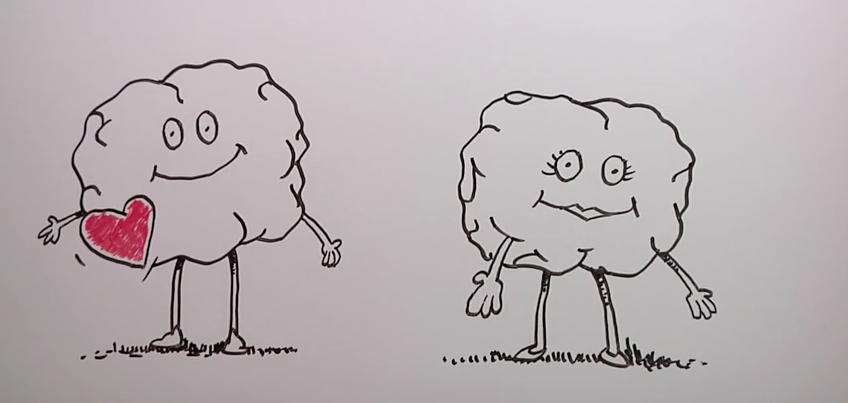
    If your brain is very unhappy, like Brody, who’s full of fear and self-doubt, take a few minutes to watch this cute little video. Happiness can be quite simple when we learn how to train our brain.

  • How to Intentionally Embrace Change in the New Year

    How to Intentionally Embrace Change in the New Year

    Woman and Sunset

    “Change is inevitable. Growth is intentional.” ~Glenda Cloud

    What do you do when you come to the end of a calendar year as it approaches the start of another one? Do you get caught up in the festive season hype and then, as you roll into the new year, find it all a bit anticlimactic? Or, are you a bit like me and prefer to keep it a quieter, reflective time?

    We know that calendar time is really artificial, for true time is simply an infinite and continuous cycle of day and night, seasons, birth and death, and change.

    When I used to trek the mountains of the Himalayas, I loved the prayer wheels at the Tibetan temples. I would happily spend hours walking around the Boudhanath, spinning the prayer wheels with my hand, engrossed in a meditative state.

    It always reminded me of how change turns the wheel of time and life. Without change, life is static, stale, and limited. Without change, there isn’t growth. Like everything in nature, a flower doesn’t remain forever regardless of how beautiful it is.

    So, each year when the calendar slips into its last pages, as people rush around in a frenzy of spending, I prefer to retreat into a silent space of reflection. I write my gratitude list for the year gone and set my intentions for the year to come.

    In doing so, I get a deep sense of the energy for the coming year, then prepare my mind, body, and soul to flow with it. This has become my ritual every New Year’s Eve.

    Babies grow into children, children into adults, adults now have children of their own, and the mature become aged. New lives are born as we say goodbye to those who have passed on. Relationships end, new ones begin; some people fall in love and others out of love.

    Every year we are bestowed more gifts and joys, while also confronted with more challenges and turbulences.

    One particular year was especially tumultuous for me. Usually when I write in my Gratitude Book on New Year’s Eve, my pen won’t stop moving and I end up with pages of blessings that I’m grateful for.

    However, that one particular New Year’s Eve, I just sat there, stared at the blank page, and thought. “Wow, how do I begin?”

    Then, without thinking, my heart immediately whispered, “I am grateful for making it through this year.” And then it flowed again, “I am grateful for making through this year a wiser, more evolved and compassionate soul.”

    That was the year I nearly killed someone (random unintentional freak accident, of course), thought I had lawn-mowed my pet tortoise, saw a friend suffer through severe burns in a freak accident, ended a relationship that I thought was true love, had conflicts with my children, experienced extensive damages to my home and car from a major thunderstorm in my city, and the list went on.

    Globally, wars and riots ran rife, topped by natural disasters, like earthquakes, and human caused disasters, like major oil spills into pristine oceans. It was a year of chaos, so sitting down to reflect and journal into my Gratitude Book was most interesting.

    As the saying goes, through chaos emerges a new order.Through chaos, I saw that I have indeed grown, expanded, and matured. Through adversities, I’d learned to trust more in my true and higher reality.

    Through challenges, I’d come to turn inward and listen to the wisdom and voice of my higher self.

    Over time, change continued to sweep through, and the world shifted into renewal and recovery. So the pages of my Gratitude Book continued to fill.

    Now that I’ve come to the end of another year, again I bear gratitude. At the start of this year I’d sensed a very strong wind of change blowing through and knew I had to be ready for restructuring. Sure enough, everything regrouped itself in my life.

    Transition wasn’t easy. It was tiring, and it required trust in stepping into the unknown. It summoned my courage in welcoming the new and acceptance in letting go of what was. My kids changed, one moved out of home, another fell in love, and another stepped into a newfound life path.

    I’m grateful as I celebrate their independence, growth, and expansion into their own world, as much as I miss them. My home and divorce settlement came to a final closure. Our family home was sold and I moved into a small rental home that I love.

    My work changed, evolved, and restructured as I stepped into a new role. Overall, it was simply a year of change and transitions.

    So, in line with embarking into a new year, here are some suggestions for setting your purest intentions for moving forward into the sea of change. Incidentally, they are contained in the acronym CHANGE.

    Choice

    At every point in time, and especially when confronted with imminent change, you have a choice of whether to embrace or to resist.

    Embracing change requires courage and trust because it’s always unnerving to step outside your comfort zone. But when you trust and embrace, change can bring you excitement, growth, and infinite new possibilities.

    Happiness

    Step into the New Year with the intention of choosing happiness for yourself and those around you.

    Happiness is a choice that comes from within. Regardless of your external circumstances, your perception determines your emotions.

    Choose to look on the bright side of everything; for example, ask yourself, “What can I learn from this?” Or, count your blessings with heart filled gratitude, and happiness will abound.

    Anchor

    Continue to anchor in your higher reality and wisdom, for there’s more to you than just this physical and transient existence.

    This brief life, with all its ups and downs, is merely a myriad of experiences for the growth of your soul. Staying anchored, you will ride and surf the storms and waves of life with skill and ease.

    New

    Time and change involve flow and movement. Along with these are borne new experiences, people, places, and ideas. Be open to receiving and bringing forth the new and nourishing, and let go of the old if they no longer serve you.

    Growth

    When you flow with the movement of time and change, and embrace the new while anchoring and trusting in the greater you, growth is the natural result. Like the sun enables a plant to sprout from a seed, the happiness that you soak in and project will allow you to grow and thrive.

    Emergence

    Out of that strength and solidly grounded foundation, new creations will emerge.

    You will find yourself forging new fulfilling friendships, relationships, successes, and joys. New ideas will emerge into manifestations. Imagination and dreams will become a reality. A new phase will continue and take you forward with the flow.

    What are your intentions for this New Year ahead? May you flow with the energies of change and embrace this wondrous gift of life, along with its mystery and excitement, into the unknown.

    Woman and sunset image via Shutterstock

  • How To Be The Best Version Of You A Lot More Often

    How To Be The Best Version Of You A Lot More Often

    Happy Woman

    “In chaos, there is fertility.” ~Anaïs Nin

    Are you a calm creature in your yoga class, then you get home and yell at your kids?

    Do you ever read a really inspirational book or blog and think, “Yes! That makes total sense, and I’m going to start doing that!” Then life gets busy and it never quite happens?

    Do you ever feel like you’re two different people living in the same body? Saying one thing, doing another?

    Me too.

    For the past fifteen years I’ve been a self-development junkie.

    I’ve read tons of books and I’ve attended courses and loads of amazing workshops. These covered everything from parenting to time management, relationships to getting organized, healthy eating to setting up a business, plus anything to do with spirituality and personal growth.

    All of these have inspired me with an array of fantastic ideas—but often they remained just ideas, floating around in my head without any action plan behind them.

    On the mat at my local yoga center I was the calm, peaceful, positive soul I craved to be. Yet, when I got home and re-entered my chaotic reality, it felt like just a temporary illusion.

    I was straight back to my grumpy, irritable, impatient “other self.”

    What was wrong with me? How could I be so Jekyll and Hyde?

    How could I more consistently be the “me” I loved being around?

    I was writing in my journal one day when I began to list the qualities I show when I’m being my best version of me.

    • Kind
    • Lighthearted
    • Playful
    • Calm
    • Relaxed
    • Positive
    • Present

    I knew what brought out the best in me—yoga, inspiring workshops, running in nature, laughing with friends, dancing my socks off, getting stuck in an amazing book.

    Then I listed what the poor version of me looks like.

    • Irritable
    • Impatient
    • Snappy
    • Short-fused
    • Negative
    • Mind spinning in overdrive!

    I asked myself, “What brings out the poor version of me?”

    • Feeling overwhelmed, with a lot on my plate
    • Too much on my mind, trying to figure things out in my head
    • Rushed, running late
    • Tired
    • Not enough “me” time

    And it occurred to me that, since I know what brings out the worst in me, why not look at each of these things and find ways to make them happen less often?

    I realized that I needed to get a handle on the day-to-day “running the show” stuff.

    To tackle overwhelm and having too much on my plate, I began to take a deep look at my time management. I learned how to say “no,” to delegate, and to structure my days better.

    I began to prepare for success by meal planning, laying clothes out for myself and the kids the night before, and always thinking one step ahead about what I’d need to take with me before going out the door, so I could feel calm and confident that I wasn’t forgetting anything.

    I began to feel less rushed. I was on time.

    Then I got back into a regular journal writing habit. I also had weekly scheduled brain-dumps to get things out of my head and onto paper so I could figure things. I crafted step-by-step action plans to get organized and on top of everything that needed doing.

    Instead of spending my evenings slumped in front of the TV or scrolling mindlessly on my phone, I started having regular candlelit baths and getting into bed earlier, curled up with a good book.

    It was the “me” time I always craved but never thought I had space in my day for. And I was consistent with it. I was finally implementing a lot of the great things I’d read about (hurrah!), and I felt the best version of me coming out more often.

    Once I got on top of the logistics, I felt less stressed and overwhelmed. It was easier to be more mindful and present. I began a daily practice of checking in with myself, asking, “How am I feeling?” listening to the answers and using them to guide me.

    After a lifetime of telling myself “I’m not a morning person,” I began to wake fifteen minutes before the children and used this quiet time to write in a gratitude journal or meditate using an app on my phone.

    It’s helped me stop being so cranky at breakfast and send my kids off to school peacefully, and with love.

    It took recognizing what brings out the worst in me to turn things around. It didn’t happen overnight, but by taking baby steps in the right direction I got there.

    Now I’m able to be my best version of me in my everyday life—not just on the yoga mat.

    If you want to be your best version of you more often, write your answers to the following questions:

    I feel like my best version of me when…

    How I feel about myself when I’m the best version of me…

    It’s easier to be my best version of me when…

    I’m a poor version of me when… 

    What can I learn from these insights? What new habits can I create to make it easier to be my best version of me?

    Inspired actions I will take this week:

    1.

    2.

    3.

    Share in the comments below: What brings out your best and worst you? What can you do to bring out your best self more often?

    Happy woman image via Shutterstock

  • Being Grateful for the Ordinary: The Life We Have Is Enough

    Being Grateful for the Ordinary: The Life We Have Is Enough

    Woman with Hands Raised

    “If we do not feel grateful for what we already have, what makes us think we’d be happy with more?” ~Unknown

    From time to time during my schooling years I’d be asked to identify my role models. I always chose someone who’d changed the world in a big way—Martin Luther King Jnr, Nelson Mandela, Mahatma Gandhi.

    I never looked within my own life for role models. I had lovely parents and great teachers, and still, I was always looking well beyond what was right in front of me. I was always striving for something more, out there, beyond my own life.

    As I reflect back, I see the dissatisfaction that this bred. I see how little I valued myself and by extension, my immediate surroundings. Somehow it all seemed… not good enough.

    People and experiences that were far away from my hometown seemed so much more important and exciting.

    It wasn’t until I started keeping a gratitude journal that this really began to change. I started the journal because I was depressed. Not sad—can’t-get-out-of-bed-or-even-talk-to-anyone depressed.

    It would hit me on and off over the years, and the only coping mechanism I had at the time was to hide in my bedroom and breathe through the long and agonizing hours, waiting for it to pass.

    A gratitude journal was the first tool I had to help me shift the fog. I would start very simply with the breath. I’d express gratitude that there was breath in my body (although at times I wasn’t even grateful for that).

    Then I’d be grateful that I had a home and a bed to rest in while I recovered. I would then build from there in an attempt to find at least five things I was grateful for that day.

    I wrote in that gratitude journal for a good couple of years before I started to see significant shifts in my perception of life. It was a slow and gradual process, but with each list I subtly turned my focus away from the world outside and toward my own life. Eventually, I turned my focus within.

    As I began to value myself and my life more deeply, I also valued those around me more. I stopped judging them or dismissing them as unimportant.

    I stopped thinking that there might be better people to be spending my time with or emulating, and I started appreciating the people who were right in front of me.

    Eventually, that brought me to appreciate my favorite role models of all time; a small handful of yoga students that I used to teach in an outdoor space by the ocean each Friday morning.

    The students were all women and they were all over the age of fifty.

    Although I’m sure they had very full lives and many reasons not to get out of their comfortable beds each Friday morning to do yoga, they would show up week after week, no matter the weather.

    Some had injuries, some were recovering from illness and some were simply not as strong as they once were. It was this fact that most impressed me. 

    When you’re young and ably bodied, it’s not overly challenging to do something like yoga. Your body is reasonably supple and your muscle tone hasn’t atrophied with the passing of time. As you age, it’s easier to find excuses—arthritis or a bad hip, the onset of an illness, or injuries in your back or knees.

    There’s a saying in yoga that the most difficult part of the practice is doing the practice. I’ve often found this to be true in my own life. It’s even more challenging when it’s dark outside and rainy and cold, and the alternative of staying in bed is right there in front of you.

    But here were these women—perfectly ordinary, everyday women—making choices that made them extraordinary.

    Every week they were the embodiment of the wisdom I’d learned through my gratitude journal; that with persistence and in small gentle steps, lives are transformed.

    Those beautiful students came every week on faith and on trust. They worked hard to build upper body strength and flexibility.

    I saw each of them giving it their all, and although I didn’t know them outside of the classroom, I knew that they understood the value of commitment, the value of continuing even when things are tough, and most of all, I knew that they were brave.

    After class I would watch them swim in the ocean (no matter the season).  They would swim and then they’d have breakfast together. Over breakfast they’d share stories about their lives.

    Watching them, I realized something else about these women. They were women who knew how to build community around them. They weren’t isolated and lonely; they were a part of something. 

    They’d found a place to come together, to connect with themselves, to connect with nature, and to connect with each other.

    In witnessing the simplicity and authenticity of this weekly ritual, I felt a deep gratitude that I’d been privileged enough to be both participant and witness.

    I realized too that my gratitude journaling days had come full circle. That gratitude was no longer something I needed to draw from the depths of my being as a means of abating depression, but was instead a living, breathing everyday experience.

    And in that moment there stopped being somewhere to go and someone to admire who was better, more accomplished, more intelligent, or more influential than me. There was, quite simply, the world and every living being within it.

    All teaching through their actions and all learning through their interactions. All role models to one another and for one another. In that moment there was no separation and no isolation. There was only oneness, and it was all home.

    Taking steps toward change can be so much simpler than we realize. We can start by noticing what’s around us and finding something to be grateful for in that.

    We can stop looking far away for role models in the recognition that we’re surrounded by teachers everyday, and they’re showing up as our friends, family members, colleagues, and neighbours.

    We can stop trying to force change to occur immediately and relax into the realization that change occurs through repetition and commitment—by continuing a practice (such as a gratitude journal) even when we’re not sure if it’s making a difference.

    And we can remind ourselves that we always have a choice. We can choose to be a victim of our life circumstances or we can choose to build on what we have right in front of us.

    My students could easily have stayed home, focusing on what their bodies could no longer do and what they felt they’d lost.

    Instead, they chose what they could do. They could show up. They could build community. And in so doing they declared in actions rather than words, “We are enough. This life is enough and we are grateful.”

    I couldn’t think of a more appropriate prayer to guide us each and every day.

    Woman with open arms image via Shutterstock

  • Releasing Expectations: It’s Okay to Be Right Where You Are

    Releasing Expectations: It’s Okay to Be Right Where You Are

    “The most important point is to accept yourself and stand on your two feet.” ~Shunryu Suzuki

    When I was younger, I am sure I was a little bit arrogant. I had high expectations for my life. They haven’t come to pass. I haven’t achieved whatever I thought I would achieve. It turns out that I’m an ordinary human being struggling with ordinary things.

    Now that I’m in my forties, I have experienced disappointment, failure, and confusion. Many times I have lost sight of the path, and sometimes it’s felt like there never was one.

    I expected I would be a writer. I did not expect to be a secretary. Not that there is anything wrong with that, it just wasn’t what I dreamed of.

    I didn’t expect to have periods of unemployment, loneliness, or despair. I didn’t expect to be just like everyone else. Maybe I thought I was special, different, exempt. Maybe we all think that when we’re younger.

    It’s not like I had it easy in my early life, but by my twenties I’m sure I thought it would all go to plan. It never went to plan. I’m not sure there ever was a plan.

    And yet, maybe it has gone to plan, just not my plan. If some higher power is running the show, maybe this is part of the plan.

    If I want to express the highs and lows of being human, then I need to have lived them. That’s what being a writer is. It’s not just being bulletproof and full of ideals. It’s making the dream right there in the gritty groundedness of everyday life.

    I also realize that what I have achieved is not that important. What’s more important is what I’ve learned, and much of that didn’t come from success. Often my lessons came from the struggle of being human—wanting, trying, failing, and wanting and trying some more.

    So at this stage, with my dreams still tugging at my heart and a lot of struggle behind me, I finally understand something about self-acceptance.

    Here I am, right now. This is where I am and it’s okay.

    Right here, right now.

    I am where I am right now. That’s my starting point. I might wish I were further along, but I am where I am. I have to accept where I am or I can’t move anywhere, let alone forward.

    Where are you now? Why is that okay?

    This is my life and it’s good.

    When I come back to gratitude, everything gets better. My expectations may be higher than my reality, but really, I have so much. Many people lack the basics: good food, clean water, access to healthcare, literacy. Even at the simplest level, my life is blessed.

    What do you give thanks for?

    A divine plan.

    It does seem that life isn’t running according to my plan. Maybe there is a bigger plan. I may not always like it, but maybe it’s perfect after all. I don’t know what the Universe has in mind. It would be very arrogant to think I did.

    How could this be part of a higher plan?

    Being very human.

    Experiencing disappointment, struggle, and failure is part of being human. It helps us feel for each other. I am fairly idealistic, but at this age I know that I am pretty human. I am full of faults and mistakes, and a few brilliant moments too.

    How do you feel most human in your challenges? Why is that good?
    No better or worse.

    In my twenties I went to acting school. When you act, you explore the potential to be many different selves. We all have the potential to be an angel or a devil. Most of us are in between, but it might have worked out differently.

    Why are you no better or worse than anyone else?

    Favorite faults.

    Honestly, sometimes our faults are simply our characteristics. Maybe you’re bossy but a great organizer, or a natural leader. Maybe you are a rebel who challenges the way we think and act. Maybe you channel your anger and make others laugh at your daring. Great comedians do that.

    What is your favorite fault? How could you use it?

    How it looks to the world.

    We are often much harder on ourselves than anyone else would ever be. You may think you’ve achieved nothing while, to the next person, you have everything. It’s all relative and it’s all perspective. None of us have an unbiased lens.

    There is no point wishing you were more than you are. It may all be happening this way for a reason. Even if there is no reason, the meaning you choose will make the difference.

    At the end of our lives, it won’t really matter how many toys we have or even what we have achieved. It will matter that we appreciated this one precious life. It will matter that we enjoyed and explored being human. Love and experience; that’s it.

    Let’s not give up on our dreams. Let’s keep moving toward them. Just play the game lightly with little attention to the score.

  • Stop Keeping Score in Relationships and Start Taking Care of Each Other

    Stop Keeping Score in Relationships and Start Taking Care of Each Other

    Loving Couple

    “Do your little bit of good where you are; it’s those little bits of good put together that overwhelm the world.” ~Desmond Tutu

    I was recently at the grocery store, and not once, but twice, I encountered couples practically duking it out in the aisles. I mean, full on snit-fits happening here. One pair was so mad, the woman actually walked in the opposite direction down the aisle, her five- or six-year-old in tow.

    Totally productive, right?

    The other pair was fighting because the husband couldn’t decide which milk to get. His wife was trying to hurry him up, and finally he said, in the most frustrated voice ever, “Can’t I take a minute to decide??” Needless to say, she got upset, while he stood in front of the milk case, fuming.

    This is what frequently happens in grocery stores.

    I used to drag my husband to the store with me on the weekends, thinking that it was some sort of household couple karma—I wash the dishes/you pay the bills; I do the laundry/you feed the dog every day; we both hit the grocery store once a week. One for one. Tit for tat. A leveling of the scales, and, if I’m honest, a somewhat misdirected homage to feminism in the household.

    But what I found is that not every chore is equal, and that’s okay. What I feel to be a difficult chore may be easy for my husband, and what I find to be fun or at least tolerable, he would rather walk across hot coals than do. So it is with grocery shopping.

    Every time we went together, it required hours of mental preparation:

    “When do you want to go to the grocery store?” My mantra. Every weekend.

    “Never.”

    “That’s not an option. How about in an hour?”

    “Fine,” said in a somewhat snarky twelve-year-old voice.

    Every time, this conversation. And every time, an hour would come and go, and I’d be waiting around, ready to go, while he was sitting on pins and needles waiting for me to come and nag about it.

    Not pretty. Not good for our relationship. So I decided if he really doesn’t want to go, then I really don’t want to make him.

    The grocery store is already a high stimulus environment—BUY THIS! LOW FAT! NATURAL! HONEST! The shelves are practically screaming and my synapses are firing on full-blast as I try to navigate between product displays and random children.

    I’m already apologizing to people every time I almost run someone over turning the corner; do I need to be feeling bad about dragging my husband along as well?

    To be fair, we never actually had a full-on fight in (or about) the grocery store—thank goodness. But it was never an easy, comfortable time. There was always mutual resentment, and who needs that?

    Not me. Not my husband. Not anyone.

    Besides, when he’s not there, I get to linger. I spend time looking at the ingredient lists and nutrition labels. I come up with ideas, make plans, and buy special snacks. It becomes an adventure, not a chore.

    Sometimes it isn’t about equality. Sometimes it’s about taking care of each other. I do what my husband doesn’t like to do, and vice versa, so that when we’re together, it’s about us, and not about how many chores the other person has completed.

    There’s no scoreboard, only gratitude.

    Divide and conquer. And save your marriage, relationship, friendship, or partnership. Serve the other by doing what they hate to do. Take out the trash. Go by the bank. Do the dishes.

    It isn’t a favor to cash in at a later date (though it’s always nice when it’s reciprocated). It’s an honest-to-goodness foot-washing of the 21st century.

    To be clear, I’m not advocating for you to do everything for your partner. That would be unfair. There should still be a feeling of balanced support in any relationship. But at the end of the day, caring for one another in a balanced way is not the same thing as keeping score.  

    We want to feel that we can lean on our partners when we need to, as much as they can lean on us. And that makes for one powerful relationship.

    Of course, if you and your partner love to shop together, by all means, keep it up! Even when it’s just folding laundry, it feels good to do things together. Even though we no longer grocery shop as a couple, my husband and I do a lot of other chores together—not because we’re made to, but because we want to.

    And more power to every couple who can work side by side. Just remember that it’s not the only way to get things done. I swear to all things delicious, I don’t totally love going to the grocery store. I probably never will.

    But I do love doing something kind for my husband every week. It’s that simple.

    Loving couple image via Shutterstock

  • A Simple 5-Minute Habit That Can Make You Happier

    A Simple 5-Minute Habit That Can Make You Happier

    Smiling Woman

    “Gratitude creates joy—not vice versa.” ~Dr. Brené Brown

    To be blunt, my summer of 2013 sucked. In a matter of months, a tidal wave of stressful events happened and it completely shattered my sense of safety. I was on the verge of a serious depression.

    The summer began with a broken heart. The love of my life, the man I planned to marry, broke up with me and admitted he had wanted to leave for the past year.

    In a matter of minutes, my dreams of starting a family and living happily ever after were crushed. It caught me so off guard I could barely breathe. I quickly moved out of our New York City apartment, crashed on friends’ couches, and started hunting for a second job.

    After a month of couch surfing, I found a small studio to sublet in Brooklyn. Things were starting to look up until I severely sprained my foot two days before moving into the fifth floor walk-up building. In the city where you must walk and climb stairs to get anywhere, it royally sucked.

    The frustrations kept rolling in. My studio apartment had no air conditioning for a couple weeks, two of my credit cards were stolen, and my office job started delivering rounds of layoffs. I started having panic attacks at night and my eye was twitching non-stop.

    Things got worse when my dad got sick. He passed away in July.

    Hanging on by shreds, I turned thirty at the end of the summer. Part of me wanted to throw a tantrum, kick and scream, and give up on life. But I was so exhausted, I just felt numb. So, I busied myself with work and exercise. I’ve always been stubborn, and I refused to fall apart.

    Even though I felt lonely, broken, and disappointed, I had to wonder if the universe was up to something. As tough as it all was, I knew it was up to me to make it better, no matter how “unfair” the circumstances. If I learned one thing while living in NYC, it was 100% up to me to fix my life.

    In perfect timing, I saw a re-run of Oprah’s Lifeclass on TV in September. The episode featured a panel of experts discussing how practicing gratitude offers life-changing relief from emotional pain.

    As if someone dumped a cold glass of water over my head, the show gave me a major wake-up call. I realized I desperately needed to change my story.

    That afternoon I wrote my first daily gratitude list and promised to write ten things I was grateful for every single day moving forward.

    Each day I rode the subway to work and typed up gratitude lists on my smartphone. At first, it was difficult to force my brain to stop complaining and noticing everything that was wrong. So, I started off listing small and simple blessings like air-conditioned trains and a clean bed to sleep in every night.

    It didn’t take more than a few days to realize I was incredibly lucky. I was up to my ears in blessings.

    My gratitude practice deepened over time, with thanks for the loving support of friends, and appreciation for every single lesson I was forced to learn that summer.

    For every loss, I had a gain. I had my health, I was never hungry, and I felt stronger than ever. Those are blessings that millions of people in the world will never have.

    But here’s the part I didn’t expect. The moment I started making gratitude lists, life just got easier. As each day passed, I felt better and, dare I say, blissfully optimistic.

    It got easier to put my life back together because I knew I was surrounded by support. Instead of wallowing in what was wrong, I made the daily intention to focus on all the people who made me smile at work, to seek out new things to be grateful for, and to take comfort in simple pleasures like candles, hot baths, sunsets, healthy homemade food, and journaling.

    I started smiling and laughing again, and everyone around me noticed. The new me was grateful to be alive, unapologetic, and full of wonder about where my life was headed next.

    Bursting with positive energy, I encouraged friends to let go of their sob stories and give thanks for everything they already had. The joy I’ve experienced since starting this habit feels absolutely miraculous.

    Shawn Anchor, Research Psychologist and CEO of Good Think Inc., says that gratitude listing “rewire[s] your brain, allowing [it] to actually work more optimistically and more successfully…to retain a pattern of scanning the world, not for the negative, but for the positive first.” I couldn’t agree more.

    Our lives are typically full of expectations, but we often can’t predict how our weeks, months, or years will turn out. I’ve learned that no matter what your current circumstances are, you have the power to change your perspective.

    Gratitude listing is a simple five-minute habit anyone can adopt that has an enormous positive impact on how you view your life. It simply makes you a happier person, and happier people attract the best of everything life has to offer.

    Smiling woman image via Shutterstock

  • Stop Striving for Happiness and Start Practicing It Now

    Stop Striving for Happiness and Start Practicing It Now

    Happy People

    “Happiness is the absence of striving for happiness.” ~Chuang Tzu

    It all started when one of my boys asked me if I was happy, and of course I answered yes.

    Why wouldn’t I be happy? I have a handsome and kind husband, two boys of which I am very proud, I had a successful business, I had a house I loved, I was surrounded by friends, I was a sought after speaker in my community, and blah blah blah.

    Then my son asked why I didn’t have fun anymore. I began defending my happiness to him, explaining all the reasons why I was happy, and I began to realize I wasn’t really happy at all. I was “surface” happy.

    It was that day, almost four years ago, that I started my journey toward finding happiness. Needless to say, there were plenty of bumps in the road.

    The problem was that in typical “type A” fashion, I wanted happiness right then. I did my research and found things that made people happier, like spending time with friends and reducing stress. I made a bunch of changes that were supposed to make me happier but in the end only caused my stress levels to rise.

    It didn’t take long before I realized my quest for happiness made things worse. I spent more time worrying about trying to be happy then just allowing myself the freedom to feel happy. Bottom line: trying to be happy was stressing me out.

    Then my husband lost his job and we were in jeopardy of losing our house. With the circumstances surrounding us, my worry and stress were kicked into high gear. And instead of moving toward happiness, I felt as if I was moving further away.

    Things were getting a bit desperate when my husband was offered his dream job in Bangkok, Thailand. Yes, the same Thailand that is located halfway around the world. I fought it, I ignored it, and I laughed at it, but most of all I worried about it.

    Moving that far away was inconceivable to me. We had two teenagers, a home, and family and friends in a town we loved. How could we just leave?

    With little choice, off to Thailand we went with two suitcases each and my fingers crossed for a smooth transition. Soon after our arrival in Thailand, my life was shattered. I received a phone call from my sister telling me that my brother had been murdered.

    Twenty-seven years ago, my other sister’s life was cut too short because of a car accident. I physically did not think I could endure this pain again. My heart had yet to heal and now the hole in it just got bigger. 

    I immediately headed home to be with mom, leaving my husband and the boys behind, when what I wanted most was to hold them tight.

    It was a very surreal time. It was like I was watching someone else’s life as I went through the motions of supporting my mother, accepting condolences, and trying to wrap my head around all that was going on.

    It is always tragic to lose a loved one, but to have a loved one murdered takes grief to a whole new level.

    The time came for me to head back across the globe and back to my boys. It became clear I couldn’t go back as a barely functioning mother, and I knew my boys would learn about adversity and grief through my example.

    I took the time to re-evaluate my quest for happiness that I started what seemed like a lifetime ago. This time though, I started with some small actions instead of tackling everything at once. Here’s how I did it.

    Practice Gratitude

    You’ve probably read by now that gratitude has the power to change your life. It’s hard to imagine something so simple having such a big impact. It’s also hard to imagine why more people don’t do it.

    I wanted to practice gratitude, I really did, but it always seemed an inconvenient thing to do as I crawled into bed. I had to figure out a way to remind myself to do it every night before my head hit the pillow, because once I crawled into bed all bets were off.

    It dawned on me that I went into the bathroom every night, so I put my journal in the bathroom next to my toothbrush. Not the most glamorous place to write in your journal, but it worked.

    As I brushed my teeth, the journal beckoned and soon it became automatic, better known as a habit. A habit that was helping me focus on the good in my life.

    I am blessed to be surrounded by a loving and supportive family, have meaningful friendships for encouragement and guidance, and my boys have kind hearts. And that’s just the beginning of my list.

    I learned that even in the midst of the darkest day, there are moments of light. Sometimes you just have to search a little harder. Quiet your mind and look for it. Believe me, you will find something wonderful that fills you with gratitude.

    Trust That Things Will Work

    I am not going to lie; trusting that everything will work out is scary and hard—very, very hard. But it does. It might not work out the way you intended, but it usually works out somehow.

    It’s hard to break the habit of worrying because there is no visual cue around the stuff in your head. When I worried, I noticed I played with my hair. I admit I play with my hair when I’m not worried too, but my hands hang out in my hair more when I am.

    Now every time I play with my hair, I ask myself what I am worrying about. Then I remind myself to trust that whatever happens, I can handle it, and I probably will become stronger and happier because of it.

    Look for cues that indicate you might be worrying and when you encounter them, talk yourself through the process. Create a mantra for yourself that calms your mind and helps you release your worry. Your self-talk may take longer in the beginning, but keep at because eventually your mind will get on board.

    Choose Happiness

    I quickly found wanting happiness isn’t enough. You have to choose it and work for it.

    I added one more step to gratitude practice. At the end of the day I began setting my intention for the next day—something that will make me take time to enjoy the moment.

    My first intention was to take pictures of flowers because flowers make me smile. Then afterward, I wrote about how my intention made me feel and added things that filled my heart with gratitude.

    An intention might be something as simple as watching an inspirational video or smiling at a stranger. The key is to choose something that will make your day brighter.

    I learned many things during the first year following my brother’s murder. I learned about forgiveness, grief, and true friendship, but the most powerful thing I learned was that I was in control of how I felt every day

    Practicing gratitude, trusting things will work out, and setting intentions has led me to create my own definition of happiness, a definition that is just right for me.

    Take the time to experiment with practices that work for you. Everyone goes through dark times, but you can find happiness in the midst of darkness by committing to the practices that work for you.

    Happiness image via Shutterstock

  • Don’t Let the Outside World Control Your Happiness

    Don’t Let the Outside World Control Your Happiness

    Happy Woman on Grass

    “On a deeper level you are already complete. When you realize that, there is a playful, joyous energy behind what you do.” ~Eckhart Tolle

    We have this strange need or conditioning to not take responsibility for our own happiness. We expect it to come from an outside source.

    It can happen, but it’s fleeting. True happiness has to come from within.

    True happiness comes from a connection to our true being.

    Years ago my family and I took our dog to obedience school, and the trainer told us, if we have more than one dog, to never let them share a crate. Yes, they would become best friends, even inseparable. Then one of them would die and the other would be completely heartbroken.

    Imagine putting all your happiness on another person. This could be a friend or a soul mate. You share your dreams, relying on each other for companionship and future plans. Then tragedy happens, a split of some kind.

    It’s natural to be heartbroken when you lose someone you love—but how could you survive this if all your happiness was contained in this one person?

    This same thing can happen with the material world. We easily put our happiness on getting that prized possession, the big house, the new car, or a job that we think we want.

    I spent most of my life up until now in the shadow of fleeting happiness. It followed me everywhere.

    It started when I was young. I searched for acceptance. I did ridiculous things to my hair, and I lost my virginity way too young. I thought these things would bring me a sense of happiness, but I never felt truly happy.

    Then my young adult self emerged still on the search for “when.” When I get to do this… when I go here… when I do that… then I will finally be happy.

    I spent my days waiting for various things to happen, to in turn bring me the happiness I longed for.

    I married young. I moved to a city that wasn’t conducive to my nature. I got the corporate job that would make me feel established, following society’s definition of success.

    With two young kids I moved to a way too expensive house that fit the mold of a successful, acceptable young adult. And—gasp—I bought a minivan. I was a mom, after all. Wasn’t this my road to happiness?

    With all these misguided beliefs of happiness under my belt, the waves of discontent still threatened to drown me. I kept treading water with no movement.

    I realized in time the truth behind my happiness, and it didn’t lie in things or people or society’s definitions. I had always had the ability to feel happy; I just hadn’t realized it.

    I realized it when I was able to accept myself, fully, in who I was.

    I realized I didn’t need to edit who I was. I was able to look in the mirror and see the perfectness in all my imperfections. I was able to go to a social event and be okay with myself sitting quietly in the corner. I learned to just be without worry or concern about what others thought. I was okay just being me.

    I would often find myself sitting quietly, taking it all in. These were the mindful moments that allowed me to acknowledge all that was around me. And you know what? It was full.

    The world was full of the richness of life—nature, people, laughter, smiles, wind, noise, and breath. I started to notice my breath and breathe a little deeper in gratitude for all the experiences of my life. The realization came with a flood of tears, joy, and intense connection…with myself.

    We believe in a happiness that really doesn’t exist. We search for it in many ways, rarely finding it in the form we are seeking.

    Happiness can sometimes comes from things. “When I get this car, or these shoes, or this job, man, will I be happy.” And you do, you get the position and you drive to your new job in your new car with your shiny new shoes on.

    The world is oh so perfect. It couldn’t get any better. Then the company you work for goes bankrupt, you can no longer afford your car, and now you have no place to wear your shoes.

    Are you happy anymore? Not if you banked all your happiness in those fleeting things.

    But let’s say you already discovered true happiness from deep within your soul and felt happy with yourself. Then you got your dream job. Would you be happier?

    You might feel more fulfilled but not happier, because your inner happiness was already infinite. If you lost your job, would some of your happiness diminish? No. You might feel disappointed but you wouldn’t lose your happiness because it was already infinite.

    Your happiness cannot come from the outside world. It must come from within you.

    When you are able to acknowledge that happiness already resides in you, a pressure will release because you’ll no longer feel ruled by your ego’s need for more.

    Still, it is important to know that true happiness may not always feel great. Realizing true happiness doesn’t mean you will be skipping through a field of daisies without a care in the world.

    You will have bad days. You will feel overwhelmed with normal life at times. You may even look beyond the horizon to see what lies ahead. This is all okay.

    Happiness doesn’t have to look like a storybook. Happiness is simply the realization that life is just fine as it is.

    You’ll experience true happiness when you allow yourself to be content in your true self, recognize the innate greatness of the world that surrounds you, and know that the people and things in your life hold no power over you. You are the master of your happiness.

    You are already complete. When you realize this, there will be happiness in everything you do.

    Smiling woman on grass image via Shutterstock

  • Why Uncertainty Isn’t So Bad and How to Embrace It

    Why Uncertainty Isn’t So Bad and How to Embrace It

    Uncertainty

    “Trust the wait. Embrace the uncertainty. Enjoy the beauty of becoming. When nothing is certain, anything is possible.” ~Mandy Hale

    Sitting in the auditorium during orientation, I listened to various deans, distinguished alumni, and student leaders drone on about the rigors of earning a law degree.

    There were obligatory mentions of not everyone making it to graduation (or even the end of the first week) and of the intense strain on personal relationships.

    But the message I remembered most clearly was about uncertainty.

    “You better get comfortable with gray areas. And fast. Because the legal field is not a place where black and white distinctions often exist. If you’re a person who thrives on certainty and absolutes, you will be an extremely frustrated attorney.”

    Being a comparative religion and psychology double major, I dealt with ambiguity and the unknown a fair amount. But I wouldn’t say I was comfortable with them.

    I mean, is anyone really comfortable with uncertainty?

    And with that superficial examination of my tolerance for uncertainty, I trudged onward to lawyerhood.

    Unfortunately, I was decidedly uncomfortable with uncertainty.

    Although I always wanted to become an attorney, it was a relatively uninformed desire. But it gave me a goal to work toward—a path to freedom and financial independence beyond high school and college.

    Or so I thought.

    I dreaded going to class. I even contemplated dropping out. A lot.

    I worried that I’d lost my academic edge.

    For the first time in my life, I didn’t always have the answers when questioned by professors. I wasn’t engaged by the subject matter either. So I procrastinated, which made everything worse.

    Looking back, it’s clear I was in denial.

    I couldn’t even entertain the idea that law school wasn’t for me, let alone accept that I may be better suited to a different career. You know, admit that I had made a hugely expensive mistake, cut my losses and start over from scratch.

    So I did what any self-respecting high-achiever would do: I threw myself into my studies and made damn sure I landed a job after graduation.

    In other words, I did whatever I could to avoid the appearance of failure.

    Which meant I was a complete and utter control freak. And by control freak, I mean high-strung hypercritical crabby pants.

    (I’m sure I was an absolute delight to behold.)

    It seems crazy to me now that it took three agonizing years of law school, seven miserable years as an attorney, a diagnosis of generalized anxiety disorder, and a two-year battle with infertility to get me to realize that uncertainty is the only true certainty in life.

    Did I really need all that time and heartache to accept this universal truth?

    Apparently, I did. The religion scholar in me shakes her head.

    And even though I was finally able to acknowledge the omnipresence of uncertainty, I wasn’t immediately able to embrace it.

    It took a lot of yoga, meditation, acupuncture, psychiatry, and life coaching for me to see that I hadn’t ever escaped the discomfort of uncertainty. Despite my best efforts.

    I busted my butt in law school and landed a job offer before graduation, which was rescinded when the organization lost funding for my position.

    I planned out future pregnancies assuming I was a fertile myrtle like all the other women in my family, who didn’t have the rare birth defects I had.

    I slogged through my legal career thinking after “paying my dues” and earning six figures I’d finally enjoy my profession, only to feel more and more hopeless every day.

    And those are just some ways uncertainty bested me over the last decade.

    But thanks to the luxury of hindsight, I grew to embrace the inevitability of uncertainty, and the fruitlessness of trying to elude it.

    Yes, I had the rug pulled out from under me when my first job offer fell through. But I found a higher paying job within weeks of graduation, where I met my mentor and some of my dearest friends.

    Yes, I endured the agony of infertility for two years. But after corrective surgeries (that also improved my overall health), I became pregnant with a baby girl who has brought exponentially more sleep-deprivation joy into my life than all the despair caused by those years of infertility.

    And, yes, my childhood “dream” of becoming an attorney turned out to be a nightmare. But like a bad dream, I finally woke up and realized it wasn’t my future.

    Although my current career didn’t exist when I was a kid, I have a feeling that even if it did I wouldn’t have found it by following a structured path.

    Because uncertainty is not only inevitable, it’s necessary.

    If we really were able to control every outcome in our lives, we’d most likely never experience failure. Or be forced outside our comfort zone. Or discover something previously unknown to us (or the world!) by way of happy accidents.

    We’d never truly grow.

    So now when I feel the urge to control all the things, I do what sounds incredibly simple to most, but has always been difficult for me.

    I breathe.

    I realize “breathing” isn’t what most people want to hear. But learning to slow down and focus on my breath has been life changing.

    Plus, it’s science.

    I catch myself holding my breath all the time. When I feel the need to check in with my breath, odds are it’s because my body is tense from oxygen deficit.

    Our brains need oxygen to think clearly. And without sufficient oxygen, the brain goes into fight-or-flight mode. All too often my battlefield is the supermarket or a blog post—situations in which breath is preferable to adrenaline.

    And while I am an advocate for mindful breathing in times of uncertainty, I’m not saying it’s a cure-all for everyone in every situation. But you know what is?

    Again, it’s science. Studies show that regularly expressing gratitude increases feelings of happiness and well-being.

    I admit I was skeptical when I first learned about gratitude practice as a way to boost happiness. Especially since it advocates keeping a gratitude journal.

    I am such a resistant journaler. Which is strange because I’ve gained some incredible insights into my psyche through journaling. (Okay, maybe it’s not so much strange, as it is the very reason I resist journaling. Note to self: Work through fear of journaling…through journaling.)

    Luckily, keeping a gratitude journal is nothing like the feelings poured onto page upon page that I imagined. At least, it doesn’t have to be.

    My only rule is that I need to write down at least five things for which I’m grateful each day. Some days it takes me ten seconds, others it’s more like ten minutes.

    But that’s the point.

    Those days when feeling thankful isn’t easy are the days you need gratitude the most.

    Someday you’ll probably be grateful for the struggle you’re in right now. But until then, maintaining a gratitude practice will ease the discomfort uncertainty brings.

    Even if it does involve a journal.

    I sometimes wonder how my life would be different today if someone at my law school orientation had outlined some practical ways of coping with uncertainty—like basic mindfulness—instead of characterizing an aversion to uncertainty as a personality flaw.

    Maybe I would have embraced the certainty of uncertainty sooner, possibly avoiding countless hours of heartache and anxiety. Perhaps I would’ve had the guts to drop out of law school and avoid a mountain of debt.

    Or maybe everything would have unfolded in exactly the same way.

    And you know what?

    I’m okay with that.

    Man walking image via Shutterstock

  • 5 Helpful Things to Do When You Think Life Sucks

    5 Helpful Things to Do When You Think Life Sucks

    “It isn’t what happens to us that causes us to suffer; it’s what we say to ourselves about what happens.” ~Pema Chodron

    You know that foreboding fear we all have—that something will go terribly wrong and life will never be the same again?

    Mine is that something will happen to our daughter. She is our only child. We battled infertility for years before conceiving her. I keep telling myself that it’s just an irrational fear and that every parent probably has it to some extent, but it’s a constant companion that stealthily follows me around everywhere I go.

    So, on a Saturday evening, when we returned from an evening out to pick her up from the playcare and were greeted by the sight of blood on her face and the sound of inconsolable weeping, my heart just stopped.

    She had fallen off a playscape headfirst. It had happened minutes before we arrived. All the caretakers could tell us was that a tooth was knocked off. We rushed her to the emergency room.

    After what seemed like hours, they gave the all-clear—no head trauma or fractures—and sent us home with a prescription of painkillers and instructions to rest.

    She spent the next twenty-four hours in pain and throwing up. She couldn’t even hold water down.

    I tortured myself with fears that it must be a devastating head injury that the emergency room staff had failed to catch. She felt better the next day, so I brushed my fears away.

    The next week was a whirlwind of visits to the dentist to extract fragmented and loose teeth. During one of the visits, the dentist noticed that her jaw was misaligned. We rushed to an oral surgeon.

    The emergency room staff had failed to catch it—her jaw had broken. And now it was too late. The bone had already started to set in a crooked manner.

    She’d need major surgery to reverse it. She was too young to do the surgery yet, but by the time she turns eighteen the misaligned jaw will likely bother her so much that surgery will be unavoidable.

    A couple of weeks later, as the dust started to settle, I took her to the park to let some steam off. As luck would have it, she had another fall, and this time she broke her arm.

    We hadn’t had any major trauma in her entire life. And now we had two sets of broken bones in as many weeks.

    Waiting for the orthopedic to put the cast on, I couldn’t help but think, “Right now, our life sucks.”

    And this wasn’t the first time I’d thought that.

    A few years back, I’d felt much worse when my husband was in the emergency room, I waited outside with her, and the doctors had no answers for us.

    And before that at work when a colleague was bent on making my life a living hell.

    And when my best friend was lost to depression and wouldn’t take my calls.

    And when I broke up with my first boyfriend.

    And a million other times.

    Every single one of us has these moments. It’s just the way life is. It’s what we do in those moments that matters.

    For the better part of my life, I’ve felt flustered and incapable of handling these moments. Over time, I feel like I’ve figured out a few things that I can start doing to bounce back.

    I’m sharing these with the hopes that some of you will find them as useful as I do.

    1. Replace “Why me?” with “What next?”

    It’s natural; when things go wrong, one of our first thoughts is likely to be “Why me?”

    Here’s the thing though: “Why me?” is a weakening phrase. It only serves to increase our feeling of victimhood and makes us feel incapable of dealing with the situation.

    By intentionally catching ourselves thinking “Why me?” and replacing it with “What next?” we not only gain back a feeling of control, but also figure out what we can actually do.

    Anytime my daughter had a mini accident after that, she would panic. I’d put on my calmest voice, even when I felt like screaming “Why us? Can we please catch a break?” and say, “Aww, poor baby. Are you hurt? Accidents happen. Do you think a boo-boo pad might help?” And yes, a boo-boo pad always helped.

    Ever so slowly, we were back to being resilient in the face of mini accidents again.

    2. Force yourself to practice gratitude.

    It is hard to feel grateful when you are dealt a blow, no matter how big or small it is.

    I was devastated by my daughter’s jaw fracture verdict. I had to practically force myself to practice gratitude.

    Every time I talked to someone, I’d say, “Well, we’re lucky it wasn’t a head injury.” After repeating it a few times, I actually started to believe it and started to feel the gratitude. And that eventually helped deal with the news of the misaligned jaw.

    No matter what you are dealing with, there is always, always something to be grateful for. Force yourself to say it out loud a few times. Your heart and your mind will soon catch up.

    3. Quit blaming.

    When you’re hurt, it is equally natural to look for someone to blame.

    In my case, I was tempted to blame myself, the caregivers at the playcare, the doctors at the emergency room, and so on.

    But blame only serves to prolong the hurt. It makes it harder to let things go. It makes us angry and corrodes us from the inside. It brings negativity into our life.

    So just stop.

    If something is meant to be, it will happen. That’s it. Deal with it and move on.

    4. Don’t give in to fear and despair.

    This is a tough one. It’s so much easier to just give in and surrender to the fear and grief. But we need to stand tall, even when we feel two feet too short.

    It was very hard for me to mask my worries from my daughter and project confidence. But I’m so glad I did.

    Back then, for a while, I’d actually started to wonder if something was wrong. The foreboding fear that was my constant companion kept telling me that something bad was going on.

    But slowly, she gained from my projected confidence and grew more confident herself. And got back to her monkey business. And didn’t having any more accidents.

    And my worries started to fizzle.

    When it comes to fear and despair, you have to fake it till you make it. And, sooner or later, you will make it.

    5. Never give up.

    We didn’t like the jaw surgery verdict. We sought out another opinion even though it seemed pointless.

    The new oral surgeon was old school. She suggested physical therapy. We set alarms on the phone, and my daughter diligently did her exercises (bless her soul, she’s just a wee little kid, but such a sport).

    After a month, the jaw was starting to get aligned again. Things are beginning to look good. Maybe we won’t need that surgery after all. We can only hope for the best.

    No matter where you’re at or what you’re going through, don’t give up. Try just one more thing; maybe it’s just the thing that will resolve it for you.

    It ain’t over, until it’s over.

    As I type this article, I hear my daughter biking around the house.

    And then I hear a loud thud. I catch my breath and wait. And there it comes: “I’m okay,” she calls out.

    Yes. I think we’re indeed okay.