Tag: Gratitude

  • If You Feel Stuck, Stressed, or Burnt Out, Nature Is the Solution

    If You Feel Stuck, Stressed, or Burnt Out, Nature Is the Solution

    “I go to nature to be soothed and healed and to have my senses put in order.” ~John Burroughs

    Nature is a big part of my life, as I spend a lot of time outdoors.

    When I first started hiking and backpacking, I liked being able to explore new places and get some exercise outside.

    In my twenties, I traveled throughout the Western United States hiking in the mountains and discovering the incredible desert. I moved a lot, I tried new things, and I kept craving more time in nature.

    Over the years, I started to realize that the benefits of my time in nature went way beyond physical fitness and seeing beautiful views. Of course, it felt good to exercise, and I loved the views of snowcapped mountains and red rock arches in the desert, but I started to notice other ways nature enriched my life.

    Below are some of the benefits I’ve experienced from spending time in nature that have nothing to do with physical fitness or how far you go.

    1. More self-awareness

    It’s easy to go through the whole day without ever taking a moment to be aware of your breathing or what is happening right here, right now.

    I started to notice that when I went outside for a hike, I naturally became more self-aware and more focused on the present moment.

    My time in nature started to become meditation for me. Walking among the trees or sitting around a fire on a chilly fall night helped me quiet all the chatter in my mind and land right in the present moment, open and curious about what’s around me.

    I would start asking myself how I felt in the moment. I noticed the leaves under my feet and the air filling my lungs.

    In nature, I find it easier to focus on deeper thoughts, creative ideas, and solutions to problems.

    For example, last summer I was offered a new position at work and I couldn’t decide if I should take the job. I thought about every possible scenario in the future and just felt overwhelmed and stressed about the decision.

    Luckily, that weekend I had a backpacking trip planned.

    Within an hour on the trail, I confidently decided that I didn’t want to take that job. The decision was no stress at all because I’d created the mental space necessary to find clarity and access my intuition—without stories about the past or future getting in the way. Now, when I need to make a decision or feel creatively stuck, I head into nature to sort it out.

    2. More gratitude

    On any given day, you probably have a lot going on, right? And while you’re tackling your never ending to-do list, you’re probably also responding to the constant stream of notifications on your phone.

    There’s so much focus on bigger, better, greater, and faster that it’s all too easy to get swept up in what you don’t have or all that still needs to get done. And considering how much time we spend on social media, it’s easy to compare our lives to someone else’s.

    I tend to focus on what I need to accomplish instead of really appreciating all that I have done and how hard I have worked. When I do this, I feel so much more stressed, anxious, and like I’m not doing enough.

    But every time I go on a backpacking trip or a camping trip, I’m always amazed by how quickly I completely forget about social media, my phone, and everything I lack or need to do.

    I’m more aware and appreciative of how much I do have.

    All of a sudden, a thought that was causing so much stress and anxiety becomes just a thought.

    I don’t know if it’s the space, the trees, the fresh air, the smell of the plants, or a combo of all of these things, but when I go for a walk in nature, I come back feeling so much more grounded and less anxious.

    I’m not so easily swept up by every thought that floats through my head, and I feel so much more awareness and gratitude for what I have—a healthy body that can walk outside, the supportive people in my life, how far I’ve come, and fresh air to breathe.

    3. Recovery from mental burnout

    Some of my best ideas come during or after a trip outdoors, and other people I hike and camp with have said the same thing!

    The study of how nature affects the brain is on the rise. The Attention Restoration Theory (ART) hypothesizes that nature has the capacity to renew attention after exerting mental energy.

    We modern day humans have a lot going on. We’re all over social media, we usually don’t get enough sleep, and our to-do lists are often very long. It’s crucial that we take time to rest and recover so we don’t burn out from mental fatigue.

    For me personally, I’ve always felt renewed after a good hike or camping trip, even long before I heard of the Attention Restoration Theory. It’s like hitting the reset button, and I return to my life in the city feeling renewed and energized.

    I invite you to try it out for yourself! Next time you’re feeling mentally burnt out or you’re having trouble focusing—maybe you just crammed for a big test or presentation at work, or you’ve been overwhelmed with personal matters—plan a local hike, camping trip, or a walk through the park without looking at your phone. Notice how you feel afterward.

    Simple Ways to Experience Nature

    While I love going on long multi-day hikes and backpacking trips, you don’t need to do that in order to experience the benefits of nature.

    Here are some ways to get outside that don’t involve hiking:

    • Visit a local park and sit in the grass under a tree.
    • Sit by a stream, lake, or ocean, close your eyes, and focus on the sounds around you. Then, focus on your breathing for a few minutes.
    • Visit a local greenhouse and walk around. Admire the plants and smell the flowers. This is something I love to do in the winter months!
    • Plant a garden. If you have the space, this is a wonderful way to experience nature!
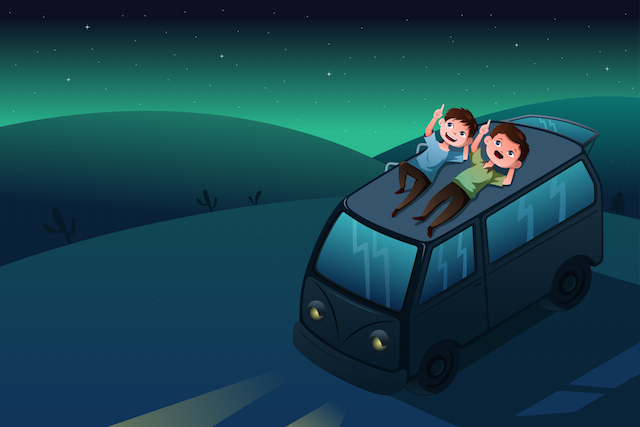
    • Plan a car camping trip with family or friends. Sit around the campfire, tell stories, roast marshmallows, and sleep under the stars.

    If you’re feeling confused about what to do, overwhelmed by your to-do list, or mentally burnt out, it can help to spend time appreciating the wonder of nature and letting your mind relax.

    There’s an entire natural world that’s incredible to sit and watch. The more time I spend outside, the more I’m learning that it’s not so much about how far you go, but what you notice along the way.
  • When Things Go Wrong, I Remember This Day

    When Things Go Wrong, I Remember This Day

    “There is no such thing as a problem without a gift for you in its hands. You seek problems because you need their gifts.” ~Richard Bach

    I’d wanted to visit Alaska nearly my entire life. I’d always wanted to see the vast landscape, majestic scenery, and awesome wildlife. So as a single, middle-aged mom with two boys aged fourteen and twelve, we went.

    It was going to be an epic trip—travel from our home in the Midwest to Anchorage, a few days to Denali and back, then down to the coast and a cruise all the way to Vancouver. So much to see, and I was finally there! I was thrilled to experience it all with my boys.

    The first few days of the trip exceeded my expectations. The train ride to Talkeetna was amazing, the lodge we stayed in was perfect, and one clear morning, we got to see Denali! I could practically hear the angels singing when the clouds parted and the mountain was visible.

    After the Denali leg of the trip, we returned to Anchorage to catch a bus to Seward, where we were going to board our cruise ship and head down the coast for the wonders ahead. We had eaten breakfast and were supposed to have lunch at a wildlife rescue center, and then board our ship. It was a lovely sunny day.

    But only an hour or so outside Anchorage, all the traffic on the two-lane highway came to a dead stop. Right there in the middle of nowhere, with the Cook Inlet on our right and the mountains on our left, we were stopped along with all the other traffic in both directions on the highway.

    The bus driver learned there had been a terrible accident up ahead that had involved seven vehicles. Some people were transported by helicopter back to Anchorage with serious injuries; some died. It was truly horrible.

    After the first hour of being stopped, passengers on our bus started getting anxious about how long we’d be stuck and if the cruise boat would leave without us, ruining our vacations.

    The driver told us the traffic jam was many miles long. My kids were hungry for lunch and starting to get stressed about missing the boat. I knew they were trying to figure out my reaction, and they’d probably catch my mood. If I was upset, angry, or anxious, they would be too.

    I realized at that moment that the universe had sent me a test! I think I actually chuckled to myself.

    I’d been interested in spirituality since my youth, reading and studying and pondering a lot. But I hadn’t expected to be tested in front of my kids on my long-awaited dream vacation. I decided in that moment to make some choices in accordance with all that I’d learned, and here’s how they played out.

    1. Acceptance of what is

    I told my kids that I didn’t know for sure if we’d miss our cruise, but that even if we did, we’d find a way to salvage the vacation. They were hungry and bored—their cell phones didn’t work out here. What should we do, Mom? How are we going to pass the time?

    I told them I was going to talk to people, and they should, too. They resisted at first. What will we talk about? We don’t know these people. But we were allowed to get out of the bus and stand beside it with the others, so we did. Wow was it beautiful there—water glimmering with sunlight, green fields in front of gorgeous mountains. And miles of vehicles standing still!

    2. Gratitude

    After a few hours, the wreckers started coming by on the opposite side of the road carrying the crushed vehicles back to Anchorage. One was flattened; another had its roof missing. Awful. My boys and I said a silent prayer for all the people who had been in the cars, and gave thanks that we weren’t among them. None of those people expected their day would end this way.

    3. Calm

    As the hours passed, people were getting hungry and thirsty and more anxious. The tour company sent water, and we had a working restroom on the bus, so we were okay. The boys were hungry, but we’d eat again later.

    We heard stories about people on the other busses yelling at their drivers, threatening, cursing, and acting badly. No one on our bus was doing that, which was another reason to be grateful.

    Before it got dark, our driver told us the cruise line was holding the boat because eleven busses were stuck in the traffic jam. We truly had nothing more to worry about.

    It got dark out and the moon was shining when the bus started moving again. We had been stopped for ten hours! The boys fell asleep on the bus, and we finally got to the boat at midnight. They had a big buffet for all who had been stuck and we were on our way.

    Sometimes when we anticipate something for a very long time, it turns out much differently that we’d imagined. I’m so glad I recognized a test when it presented itself. Now whenever I find myself being tested, I try to apply the lessons that served me so well in a traffic jam in the most breathtaking spot you could ever be stranded.

    Acceptance, gratitude, calm. Embrace the situation for what it is. Find something to appreciate. Keep things in perspective. Things often aren’t as bad as they seem, and even when a lot is beyond our control, we can always control our attitude and how we respond.

  • Why I’m Grateful for Accidents, Pain, and Loss

    Why I’m Grateful for Accidents, Pain, and Loss

    “If you have nothing to be grateful for, check your pulse.” ~Unknown

    I couldn’t feel my legs.

    There wasn’t any pain, just this odd “sameness” of non-sensation.

    My body was frozen as I turned my eyes downward to scan down my nineteen-year-old body. Below my knees, my legs were splayed out in a very peculiar way. I was halfway underneath my car, pinned down to the dirt and gravel of the road by the back right tire.

    The tire had caught my long, curly hair and the puffy left sleeve of my new white peasant blouse, miraculously missing my face.

    Blessing Number 1:

    In the distance, I could hear my two best friends shouting for help; as passengers, they were fast asleep when I fell asleep driving, hitting a tree and rolling the car. Thankfully, they escaped unscathed.

    Blessing Number 2:

    My vehicle was lifted off my broken body, and I was carefully hoisted into the ambulance. Without warning, pain seared through me like nothing I’d ever experienced. I remember worrying about my parents and how upset they would be that I’d crashed the car.

    The blur of the ER swirled around me, and I was quickly positioned on an ice-cold steel table.

    I could hear the ripping sound of my clothes as they were cut off my body. I was aware enough to be embarrassed when they got to my underwear. With no time for pain medication, the doctors yanked my left leg straight. Both of my femurs were badly broken and had to immediately be put in traction.

    When it came time for leg number two, the attending doctor told me it was okay to scream, so I did—loudly.

    I can still see my mother standing in the doorway of the ER. I will never forget the look of fear and horror on her beautiful face. Not wanting her to suffer, I looked up and said, “Mommy, I’m okay.”

    It’s been nearly four decades since my accident, and my eyes still well up as I share this part of my story. Not because of what transpired over the next extremely difficult year, but for the pain it caused my parents. It seems that while I woke up physically under the car, I had also woken up in spirit.

    Blessing Number 3:

    Before the accident that was to define my life, I was a carefree, hippie-type, artsy teen. Nothing bothered me; I went with the flow, was basically happy, and, like all teenagers, believed I was invincible. Traction, a body cast, a blood clot in my lungs, and a wheelchair would teach me that nothing was further from the truth.

    The details of the next twelve months don’t really matter, although they certainly did at the time. All I know is that facing my mortality at such a young age was the greatest gift of my life. Everything that I had taken for granted was gone—I lost everything during that time, from walking to finishing college to using the bathroom and everything in-between.

    Blessings Number 4, 5, 6… infinite:

    Over the course of the next year, I graduated from traction to a full body cast, into a wheelchair, onto crutches with a leg brace that wrapped around my hip, and eventually to a cane. Just before my twentieth birthday, I was set free, finally able to walk on my own again.

    Walking is something almost all of us completely take for granted, but not me, and never again. With each literal “step” back into life, I became more and more grateful. It wasn’t just the joy of advancing from a bedpan to a toilet, but to live in a place that had a toilet. To live in a country where insurance paid my staggering medical bills. To live!

    I was grateful to have a family that stayed by my side, day in and out over the course of that year, through multiple surgeries and life-threatening situations. A mother that drove the hour back and forth daily for the three-plus months that the hospital was my home. A father and brother who pressed their hands into my ribcage for an entire night to alleviate the pain of a blood clot that had traveled the distance from my right calf to my right lung.

    I was grateful for my older sister, who brought her toddler every week to sit on my stomach while my two legs were in traction. I was grateful to experience life in a wheelchair, being looked at with pity and wanting to scream, “I’m going to walk again!” to total strangers. Grateful for two legs that were still the same length. Grateful to be alive, and so much wiser than my peers.

    As soon as I could walk, I returned to college, finished my art degree, and went out into the world. At twenty-seven, I fell madly in love with a crazy comedian, who became my husband and the father of my children.

    During our thirteen years together, we traveled the corners of the earth, living a life of love and laughter. Until we didn’t. The loss of my marriage is another story, but I will say this: It was as dramatic and painful as breaking both of my legs and not walking for a year.

    There was no money; I lost my home and was forced into bankruptcy.

    The word “accident” is defined as “an unfortunate incident that happens unexpectedly and unintentionally, typically resulting in damage or injury,” or “an event that happens by chance or that is without apparent or deliberate cause.”

    Losing everything was completely unexpected, extremely unfortunate, and most definitely damaging.

    While the signs leading up to the demise of my marriage had been there all along, I had spent years pushing them down to a place where they couldn’t hurt me—at least not then. But I was much wiser this round: I knew that, in order to survive, I had better look for the blessings.

    Being broke meant my two sons and I staying home, making cardboard box forts and lots of brownies, which was actually my preference!

    The animals we rescued, that my ex-husband never wanted, were to love us for the next fifteen-plus years.

    Losing my marriage revealed who my friends really were.

    Having no money pushed me into single, working-mom mode, earning me a badge of courage that I proudly still wear today.

    My boys learned too: Losing our home made all of us appreciate our tiny rented condo and everything we shared in that beautiful, intimate space. Thousands of art projects, play dates, and burnt Eggo waffles later, my children and I became closer than I ever could have imagined.

    To navigate and process my pain, I became a “seeker,” which led me to incredible teachers, a lifelong meditation practice, becoming an author, lots of art, and a master’s degree in art therapy.

    Over time, I understood the true meaning of forgiveness and self-love, which fully opened my heart and my life. I understood that compassion was the answer to almost everything, and embarked on a path of helping others overcome hardship. This has become the most gratifying part of my life.

    I learned the beauty and blessings of the present moment, and how to stay there. I learned that loving someone with all of my heart did not mean sacrificing my own dreams.

    In the end, losing everything led directly to me finding myself.

    Both accidents taught me this: It’s easy to find things to be grateful for when life is wonderful. The key is finding things to be grateful about during and in challenge, so we feel good more of the time.

    Here’s how I did it: I learned to look at just about every situation and ask this question: “What’s good about that?”

    This was no easy feat, and I’m not at all saying that when life gets hard or tragedy strikes, we should immediately be expected to feel grateful. I certainly didn’t. Gratitude is a path and practice, and finding blessings-in-disguise can take years, even a lifetime.

    I believe that genuine gratitude is simply about finding good things in less time, whatever that is for you, and however you need to get there.

    Knowing all I know now, am I grateful enough to say I am glad it all happened? My accidents made me who I am, and I’m not sure how I would have gotten here without the hardship. So, in that sense, I can honestly say that I wouldn’t change a thing.

    I am most thankful for my abiding trust in the knowledge that looking for what’s good in hardship is a transformative way to live, and it both humbles and amazes me. The present moment is all we have, so we may as well find peace in it.

    I have absolute faith that by looking at all areas of life—emotional, social, physical, spiritual, familial, and vocational—and asking, “What’s good about that?” I will always have something to be grateful for, even if it’s simply using the bathroom again.

  • Why I Now Complain Less and Appreciate More

    Why I Now Complain Less and Appreciate More

     “It is not happy people who are thankful. It is thankful people who are happy.” ~Unknown

    I used to be a complainer, a fault-finder, a grumbler. I would grumble a hundred times a day about mundane issues, be it the weather, the traffic, or my husband.

    I complained when my husband didn’t help me around the house, and grumbled when he helped. It took me some time to realize that it was not him or his lack of housekeeping skills that made me unhappy. I was unhappy because I was turning into an ungrateful person.

    I have some fond and not so fond memories of my childhood. When I was a kid, my parents force-fed me green vegetables and limited my television and playtime. They wanted me to study and do my homework, and made me go to sleep every night at 8:30 PM. But all I wanted was freedom, freedom from homework and freedom to do whatever I wanted.

    I was nine years old when I first expressed my ingratitude to my parents. One day, after school, instead of boarding the school bus that would take me home I boarded the one that took me to my friend’s house. I thought this would be the end to the horrible veggies and boring homework. But things didn’t go as planned.

    My friend’s father got in touch with my dad, who drove down to take me back home. As I nervously watched my dad step out of the car I noticed worry etched on his face. He gently put his protective hands around my shoulders and said, “Come, let’s go home.” We drove home in silence, and gradually guilt found its way into my heart.

    When we approached home, I peered through the windows of the car and spotted a tired, lean figure standing by the gate of the house, my mom. I got down from the car and tentatively took one step toward her. Gazing into her moist eyes I gingerly called out, “Mummy.”

    She took me in her arms and hugged me tightly, while crying into my school shirt. As my tiny hands held her I realized my mistake.

    Today, when I look back to that incident, I realize now that as a child I took for granted all that my parents did for me.

    In a world where girls are denied education, at times buried alive, where orphanages are filled with children abandoned by their parents, here were my parents who catered to all my needs and prepared me for the future. In this unfair world, I was blessed with parents who gave me a fair chance at life, to grow and to prosper.

    My parents indeed planted the first seeds of gratitude when I was still a kid. But it wasn’t until I attained motherhood that I truly understood the importance of showing gratitude.

    Like every first-time mother, I went through anxious moments looking after and raising my baby. With my hyperactive daughter, things just seemed like a never-ending battle, with crayon painted walls, carrot juice stains on the carpet, moisturizers and lipsticks tested on every piece of furniture, and toys scattered around.

    I longed for peace, I longed for rest, and I longed for a clean house. I complained and cribbed about how being a mother was the toughest job in the world.

    Until one day, I visited a friend whose six-month-old son was admitted in the hospital, as he was diagnosed with Muscle Dystrophy, a genetic disorder that affects all the muscles including the muscles of the heart.

    That tiny baby lay on a bed motionless, strapped to a heart monitor. It was heartbreaking to watch the grieving mother coax and beg her frail baby to wake up, to cry, to whine, to do something, anything, while he did nothing. He just lay there, motionless.

    As I stood there, watching helplessly, an image of my little devil—my daughter—scribbling on the walls flashed through my mind.

    What had I been complaining about? An active child, a healthy child? Isn’t this what I had prayed for when expecting her? Surely, there would be plenty of women out there in this world who would give anything for my sleepless nights and messy house.

    From that day on, whenever my daughter was unable to go to sleep even at two in the morning, I didn’t complain. In fact, as I held her and kissed her forehead, I was thankful knowing I have such a wonderful gift.

    It’s human nature to forget our blessings and concentrate on our problems, but when we complain, our mind plunges into negativity, and like a domino effect everyone around us gets impacted by it.

    Panasonic founder Konosuke Matsushita would often finalize a candidate selection by asking his famous concluding question. “Do you think you have been lucky in your life?”

    The purpose of this question, according to him, was to comprehend if the candidate was thankful for the people who helped him in his life. He believed that this attitude of gratitude in employees leads to a happy work environment, which in turn boosts company productivity.

    Most of us tend to connect happiness to major events, like a promotion or winning the lottery. But these events don’t happen often. Gratitude is what makes our life richer, more beautiful, and a lot happier as we start to enjoy the little things in life.

    We often take people in our life for granted, or get caught up in complaining and grumbling. It’s true, my husband can be lazy sometimes, my parents keep nagging me, my teenage daughters never listen to me, and I have some crazy friends, but you know what? My life is incomplete without all of them.

    Life is a celebration. When we love everything we have, we have everything we need. So, let us make this journey of life worthwhile and take that huge leap from grumbling to gratitude.

  • How My Gratitude Journal Has Made Life More Fulfilling and Fun

    How My Gratitude Journal Has Made Life More Fulfilling and Fun

    “Be kind. Be thoughtful. Be genuine. But most of all, be thankful.” ~Unknown

    Have you ever tried to keep a daily journal?

    How long did you last?

    I’ve tried to keep one many times in my life, and I have failed every time. The longest I’ve ever kept a journal was for a measly two weeks, in a Google Doc, with my college roommates as a way to keep in touch, before I got bored and stopped.

    For the last four months, though, I’ve managed to write in my journal every day. The trick, for me, has been to keep my updates short and sweet and to write less about my daily problems, which tends to make me feel hopeless and overwhelmed instead of relieved, and more about the things I love in daily life.

    I keep a gratitude journal, and it isn’t a drag, like my past diaries. It’s fun and makes me laugh because I limit myself to writing about only two types of things: moments of gratitude and moments of triumph, or wins, as I call them. Occasionally, and I mean only when something bothers me so much that I can’t sleep, I rant.

    Keeping the journal has changed my life, and it’s good value too! Doing it costs me less than five minutes and five dollars, depending on the brand of pen I buy (I’m a sucker for Pentel Energel pens).

    If you’re looking for ways to integrate more gratitude into your life, I can definitely recommend keeping a gratitude journal. I’ve benefited from it in five specific ways, probably more. Here’s how:

    1. I enjoy spending time with loved ones more and see our challenging moments differently.

    I recently realized that one of the impacts of losing my mom is a constant fear of losing other people I love. My mom died five years ago, and I feel anxious about eventually losing my dad all the time. It puts a lot of pressure on me to be fully present for every moment we spend together and to be the perfect daughter.

    Here’s an example: My dad and I see a movie together, and I’ll periodically say to myself throughout the film “This could be the last movie we see together. You need to appreciate every moment!”

    It’s a pressure that will always be part of me, but I write in my gratitude journal because I refuse to let it control my life.

    Writing things like, “I’m grateful that I got to see a movie with Dad today,” relaxes me. It’s like giving myself permission to enjoy the movie because I know that I’m not letting the moment mindlessly slip by.

    My gratitude journal also helps me reframe the challenging moments I have with my dad. For example, I recently wrote, “My win today was setting aside my ego and communicating with Dad after we got into an argument over cleaning out old things.”

    Now, instead of seeing confrontations as disasters to be avoided, I see them as opportunities for us to communicate and strengthen our relationship.

    2. I can find rest, even when I’m upset.

    When I was little, my mom predicted that I would become a sensitive person because I had a big forehead. I have yet to find scientific proof of the relationship between the two, but I’m definitely passionate and I can take certain things very personally.

    What bothers me most is when people don’t follow through on their work. “How can they not have told me that they’d send it to me late?” becomes, “It’s so easy! I would’ve done that for them,” which then becomes, “I don’t trust this person anymore.”

    When I hop onto this train of thought, it’s hard to hop off and it weighs me down as I struggle over how and when to express my frustration.

    Writing in my journal every day helps me deal with the disappointments of daily life. It’s a safe space to rant about whatever is upsetting me. I do a big release of built-up anger and frustration on paper, and then I think critically about a solution to the problem.

    Not too long ago, I furiously wrote about an especially frustrating day at work and, while writing, realized that I had been doing everything right; I just wasn’t receiving the support I needed. Moreover, I saw that it was my responsibility to ask for it. I never would have come to this realization without journaling about it first.

    When I finish ranting and raving, and regain some feeling of control over the situation, I say to myself, “Okay, are you ready to move on?” And I write down one thing, no matter how small, to be grateful for. For example, “I’m grateful to my heart, for pushing oxygen to the rest of my body,” or, “I”m grateful for that awesome chocolate chip cookie I ate for dessert.”

    It’s my way of ending each day on a good note, and it prepares me for sleep.

    3. I wholeheartedly accept joy.

    In her Netflix special, “The Call to Courage,” Brené Brown says, “…joy is the most vulnerable of all human emotions. We are terrified to feel joy. We are so afraid that if we let ourselves feel joy, something will come along and rip it away from us…” (00:45:49).

    I love traveling. I’ve been traveling since I was two and have since been to over twenty different countries. Every time I go somewhere, I’m so overjoyed that I fear something bad happening. I might worry about the plane crashing or an accident happening at home while I’m away, both of which I hope I never have to experience.

    Another example is when I brave unnecessary hardship and call it the price I have to pay for something else, which is often completely unrelated.

    Brown’s research says that we wait for the other shoe to drop to protect ourselves from joy, which is one of the most vulnerable emotions along with love and belonging.

    Writing in my gratitude journal enables me to feel joy without the sense of foreboding. If something good happens to me, I no longer see it as a foreshadowing event to disaster. I just see it as another item to be added to the list of wins or moments of gratitude in my journal, which I can (and should) enjoy.

    4. I am deepening my commitment to certain people and activities.

    My gratitude journal helps me cope with the uncontrollable outcomes I face in everyday life, but it also helps me make healthy decisions about the activities and people I engage with.

    For example, after keeping my journal for several months, I noticed I was often grateful for my yoga practice and my public speaking and leadership club, Boston Toastmasters.

    As a result, I decided to increase my commitment to both activities. Instead of practicing yoga weekly, I now practice daily. I also recently ran for (and won!) an officer position at my Toastmasters club.

    Certain family members and close friends also make regular appearances in my gratitude journal. It reminds me to maintain our relationship and actively update them about my life, even if they live in another state—or country!

    I like having a record of interactions, activities, and people that bring joy or wins; it brings some very important parts of my life into focus.

    5. I am more satisfied with myself and my accomplishments.

    Historically, I’ve been my own harshest critic. Some days, when I refuse to believe that I’ve done enough, I spread myself too thin and completely exhaust myself.

    I was recently awarded a scholarship to go to journalism school. But everyone I shared the news with said something like, “Oh, journalists don’t make much money, you know.” Gee, thanks!

    I started doubting myself, thinking, “How will I take care of myself? I can’t believe I decided to go for journalism. Who am I to think I can write, anyway? There’s no way I’ll be able to make a living on it.”

    By chance, I happened to see the win I’d recorded the day I’d received my acceptance letter: “Today, I won a scholarship to go to journalism school.”

    I may not make a stable living on my writing yet, but I won a lot of money for the one piece I submitted in my application. That’s a big win! And thank goodness I had my gratitude journal to remind me of that; otherwise, I would’ve continued to question my decision, even though I know that this program is exactly what I want to do.

    My wins remind me that I’ve done enough, and in most cases, more than enough. If I see proof that I’ve done at least one thing that day to achieve my goals, then I can relax. Recording wins transformed me from being my own toughest critic into one of my biggest cheerleaders.

    I’ve written 142 entries, and I’m still going strong! In this short period, gratitude journaling has impacted my life in so many ways.

    It’s challenged me to cherish every moment with my family, good or bad. It’s helped me find rest and practice acceptance, especially on difficult days. It’s also become my way to methodically focus and deepen my commitment to certain areas of my life. Most importantly, it has reminded me to celebrate all of my wins, no matter how others see them. It’s changed my life, and it could change yours too.

  • How Gratitude Journaling Can Boost Your Mood and Change Your Life

    How Gratitude Journaling Can Boost Your Mood and Change Your Life

    “Gratitude unlocks the fullness of life. It turns what we have into enough, and more. It turns denial into acceptance, chaos to order, confusion to clarity. It can turn a meal into a feast, a house into a home, a stranger into a friend.” ~Melody Beattie

    A few years ago I had an ulcer and I would get dizzy after almost every meal. There was a point when I was afraid to eat. I lost twenty pounds when I didn’t need to lose weight.

    I wasn’t sleeping well.

    I was a complete wreck inside.

    It took me two and half years to get my stomach back on track. I tried one thing at a time until I found what worked well for me. I can no longer drink coffee or eat tomatoes or other acidic foods. And man, did I did love a good cup of coffee to help get my morning going.

    Still, I’m actually grateful for my ulcer. It was one of the best illnesses to ever happen to me because it helped me become a healthier person.

    I was only able to overcome it because of my gratitude journal. Each day, I thanked the foods that didn’t cause me to feel dizzy. As I journaled more and more about these foods, I began to see patterns, which helped me ascertain which foods to eliminate.

    I put my energy into appreciating the foods that helped me feel good instead of complaining about the foods that made me feel sick to my stomach. And that helped me both heal and keep a positive attitude.

    This is why I suggest everyone keeps a gratitude journal. It helps you see things that you missed before. It encourages you to focus your attention on things that are making your life better.

    The best part is gratitude not only helps you live longer because it helps reduce stress, it also helps you build stronger relationships because you are more likely to share your appreciation with others. And when you regularly practice gratitude, you’re generally more empathetic and less prone to envy—great for your mental health and your relationships.

    The Power of Gratitude Journaling

    It took me some time to turn gratitude journaling into a daily habit. When I first started, I would miss days at a time. It took almost a year to get a consistent habit going. Once I made gratitude a regular practice, it helped keep me sane since I was focusing on the things I had in life instead of wanting a situation to be different. This was a huge mindset shift for me.

    As I got busier I started getting away from my journal again. Then, as my father was passing, I leaned back into it, but I wanted to go a little deeper. I started writing stories in my gratitude journal, which helped me uncover details I hadn’t really processed before.

    I noticed him getting grumpier as he got older. My journal helped me see that I didn’t want myself to fall into the same bad habits. And I didn’t have to. I had a path to build a better attitude.

    I quickly noticed my new attitude changed how people responded to me. For example, coworkers started gravitating toward me because I was letting them know that I appreciated them. Who knew that a little appreciation would help you build friendships?

    I also noticed that the migraines that used to start at the base of my neck weren’t as intense. Gratitude was not only improving my attitude and my relationships, but also my health.

    I felt like I’d stumbled upon a magic formula for life. I know that people have been talking about gratitude for thousands of years, but it felt so refreshing to me.

    I did some research on gratitude and found some amazing studies.

    In one book, Why We Do What We Do, researcher Edward Deci explains that when someone has six positive interactions to one negative, they are 31% more productive.

    When you have positive thoughts and interactions, it’s easier to focus on what matters. That may be spending time with your family, traveling, or writing. Positive interactions free you up to have the energy to do what matters to you.

    Start Small

    The intense focus of finding some small bit of gratitude in every situation really changed me.

    When I was stuck in traffic, I thought about how I could appreciate the situation and write about it. When I was stuck in another meeting, I thought about how lucky I was to be in the situation and asked myself, “What is one important lesson that I can take away from this meeting?”

    Sometimes the lesson was to breathe into my belly more. Other times it was learning from a really smart coworker who handled the meeting very well, kept us all on track, and helped us get a lot accomplished.

    Because I started small, I planted seeds to be able to go deeper into gratitude.

    If you too would like to create more positive feelings and interactions, I highly recommend starting a gratitude journal. And it can actually be really simple.

    Each day this upcoming month, just write a few things you are grateful for and why, for example:

    • I’m grateful for my coworker because she is always willing to listen and help.
    • I’m grateful for my ability to dance in my car seat when I’m stuck at a traffic light, because it allows me to release my stress.
    • I’m grateful for my pets because they make me feel loved and needed.

    The key component here is your why. This is important because it helps you actually feel grateful, as opposed to just listing things you think you should appreciate. Soon you’ll likely start to feel a lot better about your work, your relationships, and even yourself. And before you know it, you’ll probably notice an improvement in your attitude—and major changes in your life.

  • How I Escaped the Negative Thought Loop That Kept Me Down and Stuck

    How I Escaped the Negative Thought Loop That Kept Me Down and Stuck

    “You will never be free until you free yourself from the prison of your own false thoughts.” ~Philip Arnold

    Do you ever doubt yourself? As if no matter how hard you try, it’s never enough.

    Do you always tell yourself that you could do more? Or that somebody else is doing more, so why aren’t you on their level?

    I’m not good enough.

    Do you keep your thoughts to yourself because you feel as though your opinion doesn’t matter?

    I’m not smart enough.

    Or how about when you’re casually scrolling through social media? You see beautiful people taking such awesome photos and they look so happy.

    I’m not attractive enough.

    These rapid-fire negative thoughts incessantly remind us of our faults and flaws. These negative thought loops are like water to fish. We’re swimming through them. Every day. All the time.

    This year I was practically drowning in negative thought loops. My grandmother died. Shortly after, I navigated my parents through a draining divorce process. Post-divorce, my fiancé and I moved back in with my mom to support her. Money was scarce.

    I downward-spiraled into negative thought loops, constantly blaming myself for being a disappointing grandson, son, and partner, and an overall disappointment.

    I didn’t like myself, and you needed more than a powerful microscope to find an inkling of self-esteem within me.

    Negative thoughts that loop on replay are dangerous because when you say something over and over again, you believe it.

    And, if you’re like me, these beliefs can be paralyzing.

    The Comparison Trap

    In today’s age of technology and social media, scrolling is second nature to us.

    Is it really surprising?

    After all, you get to see all the awesome things that other people are doing. Incredible photos and videos taken by beautiful people doing amazing things.

    I wish that were me.

    That awe instantly transforms into envy, and suddenly you feel like your life is lacking.

    But we keep doing it. Every day, we scroll, seeking out our next hit of dopamine and envy—which social media offers in abundance.

    I did this every single day, multiple times a day, and mostly as an escape.

    I immersed myself in somebody else’s carefully curated life to distract myself from mourning my grandmother or quenching the fires of my parents’ divorce.

    From waking up in the morning to going to bed at night, I would scroll endlessly, comparing my life to the lives of others.

    I had fallen into the comparison trap. Like a moth to a flame, I was hopelessly addicted and in awe of the lives that other people lead.

    Why can’t I be happy like that person?

    It’s a terrible thought loop to replay in your mind. To believe that your life is lacking simply because your life is different from somebody else’s life—it’s an awful way to live.

    Struggling to See the Positive

    What’s difficult about negative thought loops is that sometimes you don’t feel like you’re deserving of your victories.

    This year I graduated college, but I didn’t attend my walking ceremony because I didn’t feel proud of myself.

    I don’t deserve this.

    Also, I started working for a law firm, the first of many steps in building my career, but I never celebrated when I got the job because I didn’t feel worthy of it.

    I’m not good enough.

    It’s just so sad that I was unable to celebrate my blessings simply because my mind was flooded with sorrow and disillusionment from tending to my family.

    Instead, I sunk into a miserable slump.

    I think the best way to describe this feeling is like walking through life in haze. Everywhere you look is foggy and distorted. I was unable to realize my victories or be grateful for my blessings because a veil of negativity was draped over my eyes.

    It wasn’t until a conversation with an old friend that the haze cleared and I could see life with clarity.

    Learned Helplessness

    We met for lunch and she shared with me something she’d learned in class.

    Psychologist Carol Dweck performed an experiment in which a fifth-grade classroom was split into two groups to solve a given problem.

    The twist was that one group of students were given a set of unsolvable problems. No matter how hard these students tried, they were unable to succeed at the task.

    In the next round, when they were given a set of easy problems, many students either took longer than the average or gave up entirely.

    What happened?

    The earlier round with unsolvable problems caused the students to equate trying with failing. Helplessness became a learned behavior.

    I think a lot of times we do this to ourselves with our thoughts.

    I would tell myself repeatedly I can’t do this. I can’t do this. I can’t do this. And when it was my turn to bat, I’d run away and quit because I knew that I’d strike out anyway.

    I was entrapped in a fixed mindset.

    I convinced myself that no matter what I did, I would always be destined for failure. That my life would never amount to anything meaningful and I would never be happy.

    It wasn’t long before my frustrations with myself transformed into anger over the unfairness of it all.

    My job performance declined. My relationships suffered. I was at a loss. My moods swung back and forth between flatlined indifference and anxiety-wracked mania.

    I needed to shift from a fixed mindset to a growth mindset—to understand that the past doesn’t have to repeat itself, and that I have a say in what happens if I choose to learn and grow. But I didn’t know that then.

    At this point I realized it was time to seek therapy. This was one of the best choices I made this year because it opened a gateway to the wonders of mindfulness and gratitude.

    Finding Gratitude

    Who knew something as small as practicing gratitude could transform my thought process entirely?

    Too often we allow our negative thought loops to overwhelm and consume us. And it’s because we convince us we are our thoughts.

    However, we are not our thoughts. They’re just ideas floating through our heads that’s we don’t have to believe.

    Practicing gratitude helps you escape the negative thought loop because it encourages you to seek out what is good and right and beautiful in your life.

    With each day I counted my blessings, I was slowly releasing myself from the negativity that had shackled me for several months.

    Life will always be riddled with hardships. It’s inevitable. But to still summon the resilience to tell yourself that everything is okay, things will get better, you have people who love you, you know that you are strong; and most importantly, to truly believe that you have the courage and ability to create a positive shift in your life because you can still practice gratitude despite your struggles… it’s beyond empowering.

    Surround Yourself with People Who Uplift You

    “You cannot change the people around you, but you can change the people you choose to be around.” ~Unknown

    I recently discovered this quote while listening to a podcast, and it resonated with me.

    You really can’t change the people around you. If you try, you’ll end up disappointed. How other people behave, how they feel, what they think—these things are all beyond your control.

    But you can control who you surround yourself with.

    It’s been said that you’re the average of the five people you spend the most time with.

    If you’re mostly around people who complain a lot then, chances are, that you will complain a lot.

    I was exactly this type of person. And these were the type of people I surrounded myself with.

    I would always be moody. I was a true pessimist. I would combat every silver lining with criticism and some statement about how unfair life is.

    And to tell you the truth, being negative sucks. It’s exhausting.

    After hearing this quote, I tried something outside my comfort zone: I met new people.

    Being highly introverted and shy, this was difficult for me. But I did it. I joined clubs at school. I met positive and ambitious people with dreams and goals.

    I am convinced that positivity is contagious. The warm aura gained by practicing gratitude and welcoming abundance in your life touches the people around you. And this gratitude and abundance mindset slowly replaces those negative thought loops.

    I didn’t want to be in a slump anymore. I wanted to be driven, motivated, and well… happy. I learned that the key to achieving this is to seek out other people who want the same things you do.

    A Better Headspace

    It’s reaching the end of the year, and I’m faring far better than I did at the beginning. If I had to name one thing I think you and everybody should do more of, it’s this:

    Be kind to yourself.

    There’s a lot of truth to whoever said that we are our own worst critics. That is why I advocate that we also be our own best fans.

    Every time you criticize yourself, praise yourself for something else.

    Also, practice gratitude and remember your countless blessings instead of comparing your life to others’ lives.

    And realize the past doesn’t have to repeat itself. You can learn, you can grow, and you can do more than you think.

    Reflecting on this year, I now see that I am beyond blessed. I have a college degree. I’m soon to be married to the love of my life. I’m steadily working on my career.

    There are so many things in my life that are going so beautifully right, and so much that is possible.

    The same is likely true for you. You just need to shift your focus.

  • 50 People Share What They’re Grateful to Do Every Day

    50 People Share What They’re Grateful to Do Every Day

    At night, when you think about how you spent your day, how often do you focus on all the things you had to do?

    I worked. I ran errands. I went to the gym. I made dinner.

    And when you tell someone about this kind of day, how often do you do it with a less-than-enthused tone?

    I suspect this is the norm for many of us, at least during the workweek.

    Commitments, to work and family, can engulf our lives and seem like chores, not choices and chances.

    I distinctly remember one day, years ago, when my day felt particularly packed, stopping to remind myself that I had chosen the schedule I was keeping.

    I had chosen to get up early to write, to accept the job that supported me, to go to yoga in the evening, and to do laundry and other household tasks after that.

    And I was fortunate to have had these choices to make.

    These weren’t all things I had to do; these were things I got to do.

    I got to devote time to my passion in the hours before my paid work, creating possibilities for my future.

    I got to work a job that provided both pay and benefits, enabling me to take care of my needs, even if it wasn’t my dream career.

    I got to stretch my healthy body and create mental stillness.

    And I got to live in a comfortable apartment, filled with furniture and clothes I got to buy with money I got to earn.

    And in between all these things I had consented to do were lots of other beautiful little things I got to do.

    I got to wake up to sunlight coming through my window. I got to walk by interesting people, trees, and buildings on my way to work. I got to eat delicious food from various restaurants at lunch. And I got to use my hands when typing on my computer—hands I could have been born without, or could have lost to some type of injury or tragedy, but hadn’t.

    I get to do a lot of things worth appreciating every day. We all do.

    We all get to do things that challenge us, fulfill us, excite us, and energize us. We get to live, love, laugh, and explore in far too many ways too count.

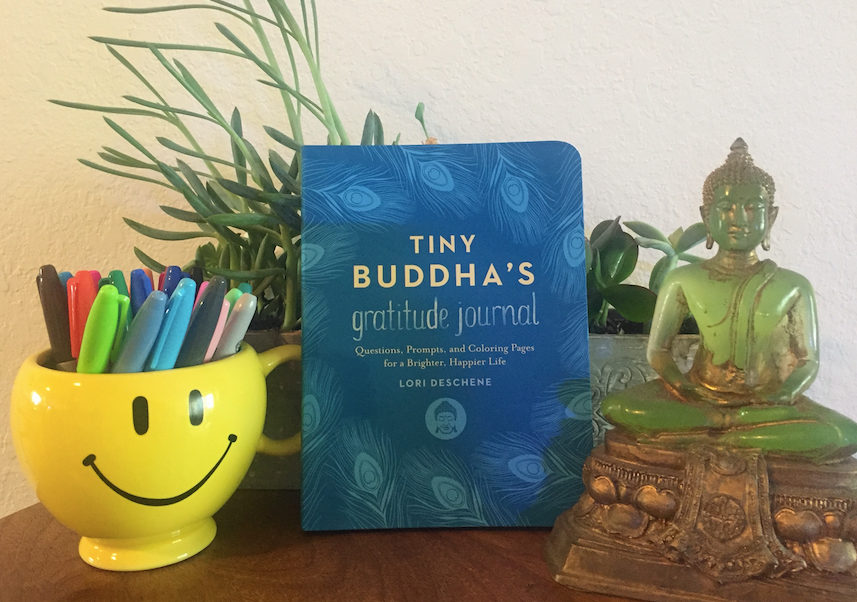
    Since I’ve long been inspired by this idea of focusing on what we get to do, I decided to include this as one of the prompts in my newly released gratitude journal.

    I shared this prompt on Facebook this past Sunday to see how other people would respond. Over 1,500 people chimed in, creating a monumental list of blessings, many of which we all share but could easily take for granted.

    Since I was inspired and touched by the list, I decided to share a selection of those responses here.

    I Appreciate That Every Day I Get To…

    Health

    1. Shelley White: Breathe. I received donor lungs nine years ago after my own lungs failed. I have Cystic Fibrosis. Just being able to wake every day knowing I can spend another day with my family is what makes me grateful to be alive. I appreciate life.

    2. Kristi VanTassel McHugh: Wake up. I had open-heart surgery nearly two years ago, to replace a faulty aortic valve and repair an aortic aneurysm. When I was first diagnosed, I was told, “If it’s not fixed soon (the aneurysm) it will burst and you will die.” That was two days before Christmas, and I waited just over six months for my surgery. I am thankful to still be here, every day.

    3. GusandMaggie Nosce: Be alive. I was born a congenital heart patient (blue baby) and was advised I would need a heart transplant by the time I was four years old. By the grace of God, I have never needed one, even though the open-heart surgery I received when I was days old is no longer in practice and is no longer advised to perform.

    4.Manal Khatib: I appreciate that I can walk after a serious car accident eight months ago. Every day I had to relearn how to walk. This journey has made me appreciate my body and treat it with kindness.

    5. Laina Amarantinis: Walk and stand. After three spine surgeries I am finally able to walk and stand more and more as the healing progresses. I am very thankful.

    6. Mary Beth Hudson: Spend time with my family. I beat my battle with cancer; others in my family were not so lucky.

    7. Linda Otto: Move my body. I can walk, run, lift, bend, etc., all with ease. This is not possible for many people. It can be taken away in an instant or gradually as we age. Your health, eyesight, hearing are never appreciated enough.

    Friends and Family

     8. Anna Hunt: Spend time with my daughter. Soon she will be off to college and I won’t have her close. Hearing her laughter, knowing she’s in the next room, fills my heart with warmth. I appreciate that every day I get to see her.

    9. Amy Albinger: Be with my family. Be with my parents, my husband, my sister, and niece. They are the reason I live today. They are my reason to get through each struggle. They are my definition of love.

    10. Riddhi Solanki: I appreciate that I get calls from my parents and friends, as my current job isn’t in my hometown. They call me and talk to me so I don’t feel more alone.

    11. Niquita LeValdo: I wake up to my child. He was born with a heart condition and needed surgery at two months old. The thought that he may not have been alive today gives me a new perspective and helps me appreciate every moment. Love your children, praise them, cherish them.

    12. Lillivette Colón:‪ Keep my baby in my tummy one more day. Every day is victory.

    ‪13. Tezra Blake:‪ I appreciate every day I get to see and hear both my sons growing into awesome men, and that they aren’t ashamed to say I love you mom and check on me and ask how I am doing. Despite their age they still want my opinion on things.

    ‪14. Laurel Hausafus:‪ Have the memories of my sweetheart and husband in Heaven .

    15. Cheryle Midgett: Spend another day with my ninety-four-year-old mom.

    16. Anika Bruce:‪ Every day I get to hug my family. I love hugs, they’re life changing.

    17. Nicole Werner-Sayre:‪ Stay at home to raise the tiny little human I created and help her grow up into a person I’ll be proud to add to the world.

    18. Laurie Clemons: Give a hug and say I love you. We all need to hear it more.

    19. Dawn Creason: I get to read and cuddle with the most precious little girl that I never thought I would have. I get to hear her giggle and I get to play with her.

    20. Fiona James: Wake up happy and healthy with my wonderful family. Too many people don’t have that luxury.

    Needs and Comforts

    21. Elizabeth Sherriff: Have a roof over my head, fresh water, food, and a family around me.

    22. Kathy Kellermann: Have a warm shower and a bed to climb into (especially in the middle of winter).

    ‪23. Jessica Grandelli‪: Eat food that nourishes and sustains my life. It is a privilege to live in a place with bountiful food.

    24. Jacinta Harrington: Enjoy a cup of coffee while reading the newspaper.

    25. Caroline Driver: Eat whatever I want and drink water straight out of the tap.

    26. Marsha Frakes Waggoner: Walk outdoors in the grass with my dog and see trees.

    27. Heather Demick: Drink in the world through my eyes.

    28. Yvonne Hernandez: Have a place I call home.

    29. Alice Louise Pocock: Listen with my ears, see with my eyes, and love with all my heart.

    ‪30. Xuandai Hoang‪: Sit in front of my candle and relax.

    31. Enchari Rivadeneira: Dishes. It means I have food, a kitchen, a family to share with, and I did it. I made through another day, whatever happened. It’s a beautiful thing, dishes.

    32. Chloe Cunningham Sarno: Finish all the housework all in the same day. Ah, clean house!!

    33. Tammy Pillsbury: Lay my head down knowing I have a roof over my head, food to eat, a job that rewards me, a husband that loves me, friends and family whom I love, nature outside my door.

    34. Michael Bell: Read. There is no aspect of life that I have derived more benefit and pleasure from, and I couldn’t imagine my life without it.

    35. Danielle Yingling-Lowrey: Be with my babies, take care of my flowers, cook, drink coffee, be a friend, be a neighbor, be mama, be a daughter, be a wife, drive my car, take care of my house, giggle, laugh, read, smile at others…. so many things!

    36. Nicola Wood: Wake up and just be me and appreciate how blessed I truly am!

    37. Steve Kenney: Not feel the pain of starving, the pain of extreme thirst. Having a roof over my head, and AC. Having a few people who really care about me for me, not what I can do or give them. Not suffering from bad health. That’s it. Everything else is inconsequential.

    Possibilities

    38. Gena Pegg: I appreciate that every day I get another chance to do the right thing.

    39. Bani San: I appreciate that every day I get to wake up in freedom and pursue whatever life I dream of.

    40. Jayne Duncan Stites: I appreciate that every day I get to begin again anew!

    41. Jim Zei: Have another opportunity to make things right—whatever right is.

    42.Lechenda Crichton: Have one more chance to be better than I was yesterday.

    43. Sherelle Myers: Use my body and working limbs for whatever I choose!

    44. Angela Charlwood-Derbyshire:‪ Practice making better choices.

    45. Linda May Knowles: To learn from the mistakes I made the day before.

    46. Wizz Tomo: I appreciate that every day I get to learn new things.

    47. Ashley Glenn: To be alive and experience whatever the new day presents.

    48. Amy Brock: Breathe and do normal activities of daily living. There was a time that I couldn’t do such a great job of either.

    ‪49. Herb Daum‪: I appreciate that every day I get to make the world a kinder place.

    50. Melissa Milligan: Be here. Not everyone made it through the night. Be grateful you’re still here.

    I appreciate that every day I get to…

    How would you finish this sentence?

    *This post was originally published in 2017. I decided to republish it again today for those who missed it because it’s fitting for the season!

  • 8 Things I Learned from Watching My Mum Die

    8 Things I Learned from Watching My Mum Die

    “Pain changes your life forever. But so does healing from it.” ~Kayil York

    In 2012 my mum got diagnosed with cancer. After an operation, she was cancer-free for some time when in March 2017 it was discovered that the cancer had returned and had spread everywhere, notably to her lungs.

    She was adamant that she did not want further treatment, which would have been palliative at best anyway and would have had significant side effects. Nobody was able to make a prognosis regarding how much longer she had left. Being seventy, there was a chance that it would develop slowly.

    Nothing much seemed to happen for a little while when suddenly from one day to the next, she couldn’t use her legs anymore, and a few weeks later in July 2017, she was able to move into a hospice, having her last wish fulfilled. After a further four weeks, she passed away.

    Those four weeks were a rollercoaster. Her condition changed up and down. But mostly I could not get my head around how she could die. I simply couldn’t imagine how her body could go from functioning to shutting down.

    I lived about 500km away and went up to see her for long weekends during that time. I experienced the hospice as a very peaceful place. Nevertheless, I often sat by her bed, holding her hand and feeling utterly overwhelmed and helpless and scared.

    I was convinced that I should be doing something, saying something, but could not think of anything at all that might ease her final passage. The relationship with my mum had always been difficult, thus this also felt like the last chance to make my peace with her, with us.

    Seeing her in pain was horrific. She quickly advanced to a stage where she was no longer able to ring for the nurses. Wrinkling her forehead became the indicator for her pain. It was terrible to know that this was probably happening when nobody else was in the room and who knows how long it could take for anyone to notice.

    Once the nurse came to administer more painkillers, it took another ten to fifteen minutes until you could see them work and my mum’s face slowly relaxing. The ten longest minutes.

    After three weeks, swallowing became an issue. Even just taking a sip of water became a massive struggle and ended in coughing fits. The doctors said there was nothing they could do to make it easier. With all the medical advances, it seemed crazy that she had to endure any pain at all.

    Her last four weeks were the toughest in my life so far and the first time I experienced the death of somebody close, and from such close quarters. At the same time it also turned out to be the most rewarding time.

    One of the things that struck me was that almost everyone has or will experience the death of a loved one. It had such a monumental impact on me, and I can only assume that it does for a lot of people, too, and so I would like to share my story.

    Here are some of the lessons I learned, which arose from a very specific situation but which I feel are equally applicable to other challenging situations in life.

    1. You are alone.

    Dying is personal. Watching somebody die is personal. Your whole life is personal.

    There is simply no manual or set of guidelines to refer to. Not to how we live, not to how we die, and not to how we grieve.

    Sometimes we might confuse our personal life lessons with universal laws. A number of people were giving me advice (I didn’t ask for). Advice about having to be there for her final breath (in the end my mum decided to slip away with no one else in the room). Advice about the importance of the funeral or on the appropriate length and ways of grieving.

    Some of the forcefulness behind the messages were overwhelming at the time and had me doubting my own feelings and decisions. While I fully appreciate they meant well, I had to remind myself that only I can decide for myself what to do and how to do it. There is no right or wrong. What feels right to someone, might feel very wrong to you.

    Listen to your inner voice! Tune in, and your heart will tell you what to do. We all have an inner compass; it’s just a matter of learning to access and trust it. Equally, when the tables are turned, be conscious of how you talk to people. Offer support and share your experiences by all means but give room for the other person to go their own way.

    2. You are not alone.

    In other ways I was not alone. One of the most important lessons for me was to accept help. Yes, bloody ask for help! I tend to be a control-freak, proud of my independence, always having been able to deal with things by myself. Suddenly I felt frighteningly helpless. I felt like everyone else had it figured out and I was failing miserably.

    Everyone in the hospice was amazing, whether it was talking to me, listening to me, letting me cry, offering me a cup of tea, providing me with food, or holding my hand. It meant the world and I stopped regarding accepting help as a weakness. There is no merit in going it alone, whatever it may be. You want to help those you love—allow them to be there for you, too.

    3. The power of a good cry.

    In line with my wish to be independent, I hate crying in front of people. I worried it would upset my mum. I worried I made other people uncomfortable. I worried the tears would never stop.

    Then somebody told me that it’s physiologically impossible to cry continuously. I can’t remember the time, but it’s something like twenty minutes after which the crying will automatically cease. That thought comforted me: The worst that could happen would be to cry for twenty minutes. That seemed manageable. Besides, there didn’t seem to be much I could do to stop the tears from coming anyway.

    Once I relaxed about crying, I discovered how transformative tears could be. They offered and still offer a release of tension that would otherwise keep building up inside. They have a message that is worth listening to. They are part of life. Don’t feel ashamed. Don’t worry on other people’s behalf, because it’s not for you to figure out how they deal with your tears.

    4. Feel it all.

    I used to strive for a life made up of only happy moments. People would tell me that without the crap, we wouldn’t appreciate the good. But I’ll be honest: I was not convinced.

    When feeling ‘negative’ emotions, in addition to feeling them, I was annoyed that I felt them, adding another layer of frustration. I engaged in an internal fight against those emotions, and as you may guess this only made things worse.

    Here I was dealing with feelings that were new to me, also in an intensity that was new to me and which felt uncomfortable as hell. I quickly worked out though that I couldn’t push them away. I couldn’t distract myself. Eventually I came to accept them as part of me and part of the experience. And the thing is that everything passes—the “good” as well as the “bad.”

    Don’t judge your feelings. Allow them to flow through you. Fighting them will only make them linger longer. Feel them and seek to learn from them. Everything we feel can teach us a lesson.

    5. Some things you cannot prepare for.

    Since my mum’s initial diagnosis, I had been mentally preparing for her death. Or so I thought. Grief took on many different forms for me. I hadn’t expected any of them and had nevertheless been going through various scenarios beforehand. It turned out to have been a waste of time to even attempt preparing for any of it. And this applies to most things in life.

    It will be whatever it will be. But most importantly you will be okay!

    It sucks at times. It still comes over me at random times. The realization that she is no longer around hits me again and again, as if it’s news. I often dream of her. Things happen, and I want to tell her about it and then realize that I can’t talk to her ever again. I have no idea where else my grief will take me so I have given up spending time of trying to anticipate it but I have faith that I will manage.

    6. Carpe diem.

    We know we will die one day, yet we still generally live our lives as if we will be around forever.

    Okay, I’m not saying that I’ve seized every minute of every day since my mum passed away. I forget. But I also remember. I remember that life is short. Death puts things into perspective in many ways. Is it worth getting upset or stressed over certain things? Do I really want to hold a grudge? Is this really worth my time? Is this who I want to spend my time with? How will I feel looking back on my life when my time comes?

    I ask myself these questions more often nowadays, and it has changed my life for the better. I am overall more relaxed and I stress less. I am more precious over how I spend my time and who with. I am less willing to put up with things that don’t feel good to me (this is where your inner voice plays a crucial role, too). It is liberating to say the least.

    7. Gratitude rocks.

    Almost a decade ago, I started a daily gratitude diary. I found it tough in the beginning. After a crappy day, I just didn’t think anything good had happened. But practice changed my mindset with lasting effects.

    It’s not about forcing yourself to be happy all the time; it’s about changing your perspective and focusing on the “good” without denying the “bad.” It helps me not to take things for granted in everyday life.

    Even during my mum’s last weeks, I found many things on a daily basis that I felt grateful for: I was grateful that even on her deathbed we were able to share a laugh. I was grateful to witness through her friends and family how she had touched other people’s lives. I was grateful how it brought me back closer to some people. I was also grateful for little things like sitting on her balcony in the sun or listening to music together.

    Above all I was and am grateful for having been given the opportunity to witness her dying. Especially given our difficult relationship, I am grateful I was able to say goodbye – I am aware not everyone gets the chance.

    8. Resilience is a superpower.

    If I got through this, I will get through other stuff, too. Death is outside your control. You have no choice but to deal with it when it comes your way. You do have a choice how to deal with it though.

    You can find the lesson in whatever life serves you. You can combine all of the above and be safe in the knowledge that you will be okay. I feel more resilient and I am confident that it will help me master other situations in the future. It doesn’t mean that there won’t be pain. But you are able to handle it and bounce back.

    I sense that my list of lessons learned will continue to grow. One of the keys I believe is to be open-minded, drop the pre-judgment and expectations. I never would have imagined that all or any of this would come from my mum’s death.

    Whether it’s grief you are dealing with or other challenging circumstances, I hope you will find the cathartic power in your experience that can lead to incredible personal growth. Whatever this may look like for you.

  • Why We May Have Already Won the Lottery of Life

    Why We May Have Already Won the Lottery of Life

    “Be thankful for what you have, you’ll end up having more. If you concentrate on what you don’t have, you will never, ever have enough.” ~Oprah Winfrey

    Occasionally, I experience moments of what I can only describe as “pure bliss.”

    It’s like a cool wave of peace washes over me, cleansing me momentarily of my worries, stress, and issues. Last week, I had such an experience.

    You may be curious, what was happening for me to experience such a state?

    The truth may come as a surprise.

    Because my outer reality was, well, rather underwhelming.

    I was walking home carrying the weekly shopping, having visited the supermarket.

    Not quite the setting for ”pure bliss” one may imagine.

    Perhaps you imagined me sat crossed legged, draped in silk robes, deep in meditation atop a mountain.

    Or, perhaps, gazing up at the glistening galaxy on a clear night.

    Nope, just a chump walking home with the shopping.

    As the late spring sun shone down on me, I smiled and said aloud, ”Man, I’m lucky.”

    Although externally, all was hum-ho and there was nothing out of the ordinary, internally, thoughts were flowing, like serene streams, forming a deep sea of appreciation in my mind. 

    I appreciated the lush green forest I could see in the distance.

    I appreciated the fact that I was walking.

    I appreciated that I had food.

    I appreciated that I had a home to return to.

    I appreciated being alive and experiencing it all.

    As I reflect on this experience, I’m curious: Why is it that such moments are rare?

    What stops me (and others) from tapping into this state of bliss more often?

    My answer, my truth is this: the disease of more.

    We spend so much of our time focusing on what is lacking in our lives. We focus on being, doing, and having more. When we focus on more, we become blind to all we are already. All we can do. All we have in our lives, right now.

    Like the proverbial donkey chasing a carrot on a stick, our focus on what is out of reach blinds us from all else surrounding us.

    What if, in many ways, we’ve already won the lottery of life?

    And what if the path to bliss was appreciating the carrots we already have rather than chasing more?

    I admit it can be challenging to appreciate the little things when you’re dealing with trauma, tragedy, or hardship. But I suspect that most of us lose sight of these gifts simply because we’re focusing on everything we want but don’t have.

    To deepen the appreciation I felt recently, I’ve researched each of the things I celebrated on this day. I hope by sharing my experience, I may help others to see that they, too, may have already won the lottery of life.

    1. I appreciate my senses.

    My apartment backs on to some forest and, although I see it every day, on the walk home this day its beauty captivated me. The different shades of the green trees and the forest’s sheer size as it towers over the houses in the village—wow, it was spectacular.

    I realize now how often I take my eyesight for granted. According to a 2010 data collection, it’s estimated that 39 million people worldwide are blind and 246 million have low vision.

    We have five traditional senses—sound, sight, touch, smell, and taste—but did you know we have fifteen other senses? These include a sense of balance, sense of temperature, and a sense of time. And they’re all worth appreciating.

    2. I appreciate my body.

    A wise friend of mine once told me ”If you want to feel more appreciative instantly, change your ‘I have to’ statements to ‘I get to’.” The first time I made this subtle change, it was profound.

    Late last year, I was feeling grumpy about having to walk across town to meet with a client. Remembering my friend’s advice, I changed the story in my head from ”Ergh, I have to walk across town” to ”I get to walk across town.”

    The sudden appreciation I felt for my legs made the hairs on the back of my neck stand on end. Since then, I no longer complain about having to walk places. It’s a gift to have a functioning body, a gift many people sadly don’t have.

    3. I appreciate that I have food to eat.

    Nearly half of the world’s population—more than three billion people—live on less than $2.50 a day. More than 1.3 billion live in extreme poverty—less than $1.25 a day.

    I didn’t mind carrying the heavy shopping bags home. I’ll be honest, there are times when I’ve complained. What a first world problem! I realized what a luxury it is to have a supermarket in walking distance where food is so readily available, and to have the money to purchase it.

    4. I appreciate having a place to live.

    The last time a global survey was attempted, by the United Nations in 2005, an estimated 100 million people were homeless worldwide. As many as 1.6 billion people lacked adequate housing (Habitat, 2015).

    When I read this statistic, my mind was blown. Imagining one million people is difficult enough, let alone 100 million. Many of us dream of a bigger house. The reality is, to many, the place we live in currently would be considered a palace.

    5. I appreciate being alive.

    As I returned home from shopping on this day, I felt an appreciation for life itself.

    Scientists estimate the probability of any of us being born at about one in 400 trillion.

    Think about that number for a moment. Let it sink in.

    For you to be here, right now, reading this, a ridiculous number of elements had to line up perfectly. That your parents, grandparents, and great grandparents met at the exact time they did is just the tip of the iceberg.

    The fact is, you are here right now. Your eyes have enabled you to read this. Meanwhile, your autonomic nervous system has been regulating your bodily functions, including your breathing and heartbeat, all without your conscious thought.

    There’s no limit to what we can appreciate if we’re paying attention. These are just a few of the things I celebrated recently. I appreciate having the opportunity to share them.

  • How I’ve Learned to Fully Appreciate the Little Time I Have on Earth

    How I’ve Learned to Fully Appreciate the Little Time I Have on Earth

    “Death is not the greatest loss in life. The greatest loss is what dies inside us while we live.” ~Norman Cousins

    Recently, my grandfather passed away. His departure was difficult for me but it has also left me with something I’ll keep for the rest of my life—an unlikely lesson about life and gratitude.

    I hadn’t seen my grandfather often before he died because I’ve been living abroad for the last couple of years. But I was still fond of him and I warmly remembered the days we had spent together when I was young. So his passing was a shock and a tragedy for me. I felt the grief of losing someone close for the first time.

    Yet, amid all the pain, some other feeling started to come up: a sense of gratitude. I began to feel grateful that I got the chance to say goodbye to him in person. I felt grateful for having known him and having shared so many good moments with him. And I felt grateful that he was able to live his life and even die the way he wanted.

    At first I couldn’t figure out what to make of this weird mix of feelings. I did feel sadness and grief, no doubt. But how could I also experience gratitude? How was I supposed to react? Was it okay for me to feel gratitude or should I only feel sadness?

    It took me a little while to give myself permission to just feel the way I felt. And then I realized that I could take this as a parting gift from him. I began to experience, firsthand, that even in the midst of tragedy, there is still hope. And there are things that I could still be grateful for.

    Gradually, all those good things that are so easily overlooked became more obvious. The people we love, those daily moments of joy that we let go by unnoticed, the little things that make life easier. I began to appreciate all those things as I turned my attention to what I already had instead of what I thought I needed to become happier.

    For my own sake and for the sake of my grandfather, I decided to keep this gratefulness alive and nurture it. Here are the four steps that I’ve been taking since.

    1. Starting the day with gratitude

    At first, the feeling of grief kept reminding me of my desire to be grateful. As long as my grief was fresh, it was easy to stick to this new intention. But I knew I needed something to keep me going when those strong feelings eventually subside.

    That’s why I began to form a daily gratitude routine. It’s the simplest gratitude exercise imaginable and based on an idea that originally came from a positive psychology intervention (a scientifically validated exercise to increase one’s happiness) named three good things.

    Every morning before starting my work, I now write down three things I’m grateful for. I usually think of someone or something that makes my life better until a feeling of gratitude arises. And I stay with this feeling for a little while, maybe a minute or two.

    At times, it can be hard to connect with this feeling. That’s when I use a little trick that psychologists call mental subtraction. That means I’m not simply thinking about what is good in my life but I’m deliberately imagining it wasn’t there. This makes it much easier to feel grateful.

    When we think about how great it is to be able to walk, it can be hard to appreciate. On the other hand, when we think of how much worse life would be if we were paralyzed, it’s easier to experience a sense of gratefulness.

    I’m not suggesting we compare ourselves to people who have it worse than us. I don’t think gratitude is the appropriate response to other people’s misery. I’m simply saying that if we imagine our own life without something, we can help our brain see and appreciate it more.

    2. Enjoying the present

    A blow like the death of a loved one often makes people reflect on their lives. This was also true for me. I couldn’t help but notice how many of my life’s moments I have wasted.

    There were so many evenings I spent alone instead of calling a friend to grab dinner. So many conversations when I didn’t listen properly in order to get to what I wanted to say. And so many unused opportunities to say I love you to my family.

    But the past is gone, what’s left is to enjoy this very moment. Right now, I am grateful. I’m not in pain and I’m safe, I have enough to eat and a roof over my head. And I don’t have to fear any of this will be taken away from me any time soon. So this moment really offers everything to be enjoyed. It’s a fact that’s true for most moments.

    Of course, being fully present for every moment is an impossible ideal (unless you’re an enlightened person, I guess). But aspiring toward more presence is something that we all can do.

    To help me bring more awareness to my moments, I started to use an app that rings a mindfulness bell once every hour. It serves as a reminder to pause for a few seconds and simply enjoy life as it is. Every time the bell rings is an opportunity to be present.

    3. Saying thank you

    Not just moments of joy go by unnoticed; so do opportunities to say thank you. We overlook the kindness of the people closest to us because we take it for granted. Yet there are so many small acts of kindness that we could be grateful for.

    In my case, it had never occurred to me to express my gratitude toward my grandfather. In fact, I haven’t really felt much gratitude toward him at all, because I never truly thought about all the sacrifices he’d made to provide for his children and grandchildren. It only dawned on me recently as I’ve thought (and read) about his life.

    It’s likely that all of us have a person like this in our lives, or several people who have influenced our lives in a positive way who we’ve never properly thanked. There’s another positive psychology intervention that aims to remedy this situation. It’s writing a gratitude letter.

    The exercise goes like this: You think of a person who’s had a positive impact in your life and then write a letter that tells them what they did and how it has affected you for the better. The letter can take any form, but the basic idea is to write as if you’d deliver it at the end.

    Even though we don’t necessarily need science to tell us whether or not we’re happier after writing a gratitude letter, it’s good to know that research shows that this is one of the most powerful happiness exercises out there. I have to admit that I haven’t yet written a gratitude letter myself. But it’s next on my list. I don’t want to miss another opportunity to say thank you to the people I love.

    4. Savoring good memories

    There’s one more ingredient for gratefulness and it is hidden in our past. It’s those wonderful memories of joy and love that we carry around with us. Some of those memories might even seem forgotten, but that’s exactly why it’s so important to bring them back to life.

    Looking through old photo albums and reminiscing with childhood friends about growing up are great ways to do that. Similarly, I’m glad that I’ve heard so many stories about my grandfather. They provide something to remember him by, and they’ve brought me closer to him and the rest of my family. Besides, it’s comforting to be able to keep him alive in my memories.

    I now keep a picture of him at my desk, and he’s smiling back at me as I’m writing this post. And occasionally, when I feel bad, I remember those long gone days together—driving around in his car, walking in the woods, visiting his friends. Because sometimes, especially when life is difficult,  it can seem that all we have left are some good memories of the past.

    I believe doing these four things regularly helps us appreciate how precious our little time on earth is. Of course, gratitude doesn’t inoculate us against feeling bad at all times, and it sure as hell doesn’t take away the grief. But it can be a powerful practice to help us live life fully while we have the chance—and to keep those alive who we have lost.

  • Life Is Better When We Focus on What We Appreciate, Not What’s Lacking

    Life Is Better When We Focus on What We Appreciate, Not What’s Lacking

    “Wisdom is merely the movement from fighting life to embracing it.” ~Rasheed Ogunlaru

    Recently a friend told me a story about taking her seven-year-old to the circus. It was a wonderful mother-daughter outing. Just the two of them, no pesky brothers or dad tagging along and getting in the way.
    They had the best time. They watched acrobats and clowns and all manner of brand new delights, gasping at one another gleefully at every new feat. They bathed in each other’s company without interruption, laughing and having fun. Literally all the things.

    After this magical afternoon, as the two of them were leaving, my friend’s daughter spied the merchandise stand and wanted her mum to buy her a plastic fairy wand. My friend gently but firmly said no.

    In the car on the way home, her daughter was quiet.

    “What did you like the most? What was your favorite thing today?” my friend asked her.

    She was sulking. “I’m just thinking about the wand I didn’t get.”

    I’m just thinking about the wand I didn’t get.

    How many of us fixate on the wands we didn’t get, even amidst the most wonderful experiences?

    How often do we home in on the one negative comment, or the thing that isn’t right instead of what is positive or right?

    How can we just see what is rather than disproportionately focusing on what isn’t?

    For myself, the wands I didn’t get loom most darkly now that we are in the age of the Internet. As much as I am a huge advocate for the awesomeness of online life, something that sucks me into a vortex of wishing for what ‘isn’t’ are reviews.

    I read reviews like others might read a newspaper. Cover to cover, looking for bias or bad writing or things I might not like, as well as things I’m sure I will. Inevitably this can lead to disappointment when I finally get to experience the actual thing I’ve been reading about for months.

    I turn up to a new café or a guesthouse and find myself honing in on what isn’t:

    “It said in the review that there was a 180 degree view, but this is only front-on.”

    “It said in the review they had lots of vegetarian dishes, but I can only see three and they don’t look that great to me.”

    “This house manager is frowning at me. The review said they were like family by the end of trip. How is that possible with this grump?”

    When my friend shared this anecdote about her daughter and the wand she didn’t get, it was very timely.

    A much-needed slap in the face, really.

    Here’s what I began thinking about:

    Which practices drag me into a space of entitlement and loaded expectations, and which practices make available a stronger sense of appreciation for what Is rather than what Isn’t?

    One thing is to be less obsessed with reviews, obviously.

    Another is to really spend some time reflecting on how I experienced life before the Internet. How I traveled, what behaviors, what choices opened up a sense of wonder about the every day world?

    In the last few months of digital nomad life, I’ve been much more inclined to just show up and try stuff out rather than worrying about what lots of folks thought.

    Here are my rules:

    1. A brief skim of a review is handy, but it’s time-limited. I now spend only a few minutes checking others’ thoughts, and look for basic practical things that are important.
    2. Get there and see. Make eye contact. Look Up. Be.
    3. Slow down and take my time so I am able to fully appreciate what’s in front of me. What’s the rush?
    4. Trust my gut. Give it a go.
    5. Talk to people in person, ask for recommendations.
    6. Be okay with imperfection. Enjoy what is good about what is happening.

    You know what?

    It’s working.

    I discovered a wild beach, and while it was unswimmable (which would normally drive me crazy), it was pretty much deserted and the waves were mesmerising, provoking an infinite number of thoughts.

    I also talked with a woman walking her dog there and found out about another beach closer to our new home. I then learned that even though the Indian restaurant doesn’t deliver at 3am she can get a box made up to pick up for her night shift (which might come in handy one day in a town where occasionally everything shuts by 8pm).

    I unwittingly drank the best coffee of my life.

    I lay in the still and stifling heat of the night in a tent, initially angry that I hadn’t known how hot it was going to be. But then I reminded myself there was nothing to be done but just accept it, lie very still, and I actually fell asleep, awaking refreshed and excited about the day ahead.

    I jumped on buses after asking locals which ones, and they were always right, even though there were a few scary “where the hell are we?” moments.

    After receiving a difficult email, I stopped. I listened to music and physically felt myself calm down (as well as rediscovered a few albums) instead of freaking out, scanning social media, and increasing my anxiety.

    I’m finding myself naming the things I like first:

    This room has great airflow.

    There are fascinating trees on the headland.

    Dogs are allowed in (!)

    The music is fantastic.

    The people crowding in the pool are smiling a lot and having fun, which is making me smile.

    These flowers are beautiful.

    The mist (obscuring the view) is mysterious and atmospheric.

    I’m learning something weirdly interesting from the radio interview I’m listening to instead of a podcast after my device died.

    That part of the meal was lush.

    I can hear birdcalls piercing through the heavy rain.

    Now that I’m making a habit of focusing on the good around me, I’m finding that I’m more apt to put good into the world, for example, by:

    Showing up alone at a community event.

    Sending a friend with a broken leg a card in the post.

    Taking extra time to offer quality information and support to people in need.

    Holding back a knee-jerk reaction and choosing a wiser response in a stressful situation.

    The wands I didn’t get are, slowly, fading from memory as I replace them with what I did get—with what is—and here’s what I’m learning: Acceptance and contentment are bringing me more joy and also strengthening a sense of bravery and connection while on this adventure of rediscovering daily life.

    You know what else?

    That wand would have been the highlight of my day… for all of five minutes. Then I’d be back to feeling bad and annoyed about the ice cream I didn’t get, the criticism I received over the praise, and the rain that came after the sun (and appeared to last so much longer).

    Wands we didn’t get only add up to seeking more wands, and then more, and then more, until our whole lives are made up of resentment for what we don’t have.

    We end up living life constantly seeking external pleasures and validations.

    Most of us really do have a lot. And while it’s great to acknowledge sadness and disappointment (especially when it’s more than warranted), and to speak up when something really is wrong, it’s equally important to get on board with what is.

    To know when it’s just a plastic wand and nothing more.

    And then get on with the business of appreciating that amazing day at the circus.

    Coz you just never know when you’ll be here again.

  • Life Is Fragile: Make Time for What Matters and Let Go of What Doesn’t

    Life Is Fragile: Make Time for What Matters and Let Go of What Doesn’t

    “Life is precious as it is. All the elements for your happiness are already here. There is no need to run, strive, search, or struggle. Just be.” ~Thich Nhat Hanh

    I lost one of my very best friends when we were both just twenty-nine years old. In the time since, I’ve thought about him on most days.

    Thinking about him sometimes makes me well up and feel sad. Sometimes it makes me think about the hole him not being here has left. Selfishly, perhaps, I think about how much I miss him.

    Sometimes I laugh aloud at the thought of a funny moment we shared, or a personal trait he had. I often draw inspiration from the zest for life he had, his drive to succeed.

    Although he died at a relatively early age we had been firm friends since we were twelve when, realizing he lived on my street, I walked up to him in class and introduced myself and we started to walk to and from school together.

    That was the beginning of a wonderful friendship. As kids, we spent the evenings hitting tennis balls until it got dark or listening to music and talking about girls. As we grew, we shared lots of firsts together—first holidays away without parents, first serious girlfriends, first homes, first relationship heartbreaks. In his case, him becoming a father.

    We celebrated, we laughed, we cried, we got into mischief, we supported each other. We did all the things really close friends do for each other over the course of many years.

    Brad had a zest for life. Always the first up on the dance floor at a party. Always ready with a funny anecdote or story. He had a genuineness that most people warmed to. I was, and am, lucky to call him my friend.

    Sometimes I think how unfair it is that was cut short so early, even though I am aware that cancer is no respecter of age or what type of person you are.

    Most often, though, thinking about him now brings a clarity and peace to my thoughts. Problems I had been focused on melt away. I gain a fresh perspective because I become acutely aware of how precious this life is.

    The Fragility of Life

    We all lose people we’re close to if we stick around long enough ourselves. This is an inconvenient truth of life. There is a fragility to it.

    There are no guarantees. No order or set amount of time our loved ones will be there for us. No promise that how we feel, and what we can do today, will be how we feel and what we can do tomorrow. No promise that the health and relative wealth we enjoy today will be with us in the morning.

    Facing up to the fragility of life can be scary. It can also be empowering. It can help us hold onto a perspective that supports us living a life rich with positive experiences. It can leave us with a conviction to make the most of our days.

    Applying Focus to Our Days

    One of the great ironies of our lives is that so many of us choose to stay busy, but then we complain that we don’t have time for our passion projects and goals. We put things off until tomorrow, as if we have unlimited time to make our dreams happen.

    The book we promised to write.

    The new skill we put off another year to learn.

    The dream trip we promised ourselves and our family for the last five years.

    We all do it, too much of the time.

    When we view life through the lens of having a finite amount of time, we are more likely to make better use of that time.

    Gratitude for the Way Things Are

    While striving for new goals is to be admired, we also need to learn to enjoy the present moment. To make time to enjoy our successes, small and big, and celebrate the way things are.

    Traveling has become a passion for me, mostly because I married someone that has the travel bug who has opened up the world to me, literally. I get to travel more than most—it’s a priority in our lives. Dream trips have become a reality for me. However, I don’t take this for granted.

    Every time I travel and visit somewhere new for the very first time, I’ll take a moment to pause and reflect on how lucky I am to experience this new adventure. I pause to think about the friend I lost, and others that are not so lucky. I try to embrace this feeling of gratitude fully. It helps me experience this new place on a deeper level.

    I try to hold onto this feeling and let it spill over into other areas of my life. When I gain some perspective, I realize that many of my problems are fairly minor.

    My train is running late, and when it turns up it’s packed.

    The coffee machine has broken, and I can’t get my regular latte from my favorite café on the commute into work.

    What do all of the above ‘problems’ have in common? They are, of course, first world problems. There are so many people in the world worse off than I am—people that endure unimaginable hardships on a daily basis, just trying to live their lives.

    I try to remember this so I don’t overlook the precious gifts I already have in my life, and so I don’t complain about “how tough I have it,” when really, I’m only dealing with minor annoyances and inconveniences.

    I’m not always successful of course. I still get in my own way more often than I should, as we all do from time to time. I’m a work in progress, but practicing gratitude has helped me keep perspective.

    Learning to Let Things Go

    Anger, hate, regret, envy, disappointment. All can become toxic emotions that eat us up.

    None of these emotions are really useful, or get us very far, yet we hold onto them, as if they are fuel.

    In my own case, I can, and do, take inspiration from others, but I am aware that if I start to compare too much, envy can follow. I have to watch this.

    If I even come close to feeling envy for someone else that I perceive to have more success than me, or be somewhere I want to be, I try to remind myself that I don’t know how these people actually feel.

    I don’t know what their story is or how much they have had to sacrifice. I don’t know if they are truly happy, or they’re just masking deep insecurity or self-doubt with lies and a smile. This helps me let go of the desire to compare and simply commit to my own journey.

    The same is true of regret. It’s an emotion I have done my best to distance myself from. I’m human and I make mistakes, mistakes I don’t want to repeat. I’ve hurt people close to me that I never want to hurt again with foolish acts or careless words at times. But beating myself up again and again for those mistakes is futile. It’s a waste of the precious life I am lucky to live.

    I’m someone that believes in living life. I have lessons to learn, and can use those to fuel me trying to be a better version of me.

    Maybe this outlook and approach to life is all part of the aging and maturing process. Or maybe it’s because I’ve gained a rounder perspective of who I am and how lucky I am, and learned to let go of these emotions. Seeing them for what they are, a waste of my focus.

    And to be totally transparent, I am very much still a work in progress. I’m far from Zen-like calm all of the time. I still get frustrated at things I shouldn’t. I can still overreact to situations at times. I can still carry a grudge more than I would like to. I still feel the bitter feeling of disappointment in others at times, even though I know this is more about my own expectations than them. I’m getting better at letting things go but I still have a way to go.

    When we truly embrace the fact that our lives are precious, we can choose to leave the negativity behind. We can choose to let go of the things that don’t matter so much, on closer inspection.

    Making Time for Those That Matter Most

    A finite amount of time in this world means we have to prioritize. We have to say no to some things so we can say yes to those things that matter most to us.

    This means ensuring there is quality space in our days for our families, our friends, and ourselves. I’m not talking about five minutes snatched here and there while staring at a screen; I’m talking about quality time where we are fully present with those around us and our surroundings.

    In the case of time for ourselves, quality time checking in with ourselves can involve a long walk, some meditation, any other act of self-care.

    Fleeting Moments in Time

    Facing up to the fact that we all have a temporary place in this world should be reason enough to apply a degree of clarity and purpose to our days.

    We need to make time for the people that matter most to us.

    We need to make time for ourselves.

    We need to make time to dream out loud.

    It’s wonderful and admirable to work hard, but we need to ensure we’re making ample time to celebrate our successes and enjoy our journeys.

    These are fleeting and precious moments in time. Let’s make the most of them.

    Note: This article is dedicated to Brad, always the first one up on the dance floor, consistently the greatest ally you could wish to have. I miss you, my friend.

  • Why I Now Appreciate Years of Pain and How Gratitude Healed My Life

    Why I Now Appreciate Years of Pain and How Gratitude Healed My Life

    TRIGGER WARNING: This post deals with an account of abuse and may be triggering to some people.

    “Hope is faith’s impoverished sister, but it’s a start.” ~Maureen Barberio, Gettin’ Out of Bullytown

    My life wasn’t always easy. It’s not always easy now, as a matter of fact. But there was a very long period where it was quite difficult and painful. It is sad how many of us can say that, isn’t it?

    I grew up in a dysfunctional home with two sisters. My father was an alcoholic and was physically and verbally abusive. My mother, herself a victim of my father’s verbal abuse, was very loving and complimentary but could do little about my father’s behavior. My mother, sisters, and I have always been very close.

    Each time I was yelled at, and with each blow I received, a little bit of my spirit was broken.

    Instead of gaining confidence during my grade school years, so I could enter the teen years ready to face the hormonal changes and roller coaster of emotions that go along with them, I went into the teen years feeling unworthy of anything good. I looked at my sisters and saw such beauty in them. I looked in the mirror and saw nothing but flaws.

    In addition, I had done what so many children do: I assumed all blame for the abuse my father was heaping on me. I continued to look up to both my parents, as impossible as that may sound, and I took to heart every word spoken about me.

    The fact that my father found me so imperfect and flawed meant it must be so. And being imperfect and flawed meant I was unlovable. The guilt and shame I felt about this was devastating, although at the time I had no idea that guilt and shame was what I was feeling.

    While other girls in high school got prettier and prettier, while my sisters became prettier in my eyes, I viewed myself as less and less attractive. I watched the excitement others had about boys and dating, and I knew in my heart I would never have those things. I’d never fit in. I was different. I was unworthy.

    There’s nothing like leaving a house of sadness on a sunny day, unable to enjoy the beauty of nature because your heart is so heavy that you want to die. There’s nothing like going to school and seeing how carefree your friends are, all laughing and having a great time, and joining in with them even though inside you feel like a piece of garbage who shouldn’t even have friends.

    I felt phony because I had so many secrets, not the least of which was my unworthiness, which they either didn’t see or they recognized but never mentioned out of pity for me.

    Even the most confident girls struggle in high school with all the changes they’re faced with. Imagine going into it convinced you’re nothing but a hideous thorn in everyone’s side. Those high school years magnify the negatives, but with the help of a loving, supportive family, young women come out of them feeling good about themselves and their future. I came out of those years just feeling worse about myself.

    By the time I hit my late teens I was convinced I would never have what ‘normal’ people have in the way of a life where there’s a man who cares about you and you plan for the future and build a life together.

    I was living in emotional pain, and to lessen that pain, I began drinking and using drugs. I wasn’t resorting to these things all the time, but I was using them as tools to help me instead of seeing the root of my problems and pain.

    In my early twenties, I met a man I thought was simply wonderful. The attention felt incredible. I started feeling better about myself. He loved me! This was as close to feeling loved and carefree as I had ever felt before, and it was so different that I embraced it.

    Six months after meeting, we began living together and then married when I was twenty-six, despite the fact that by that point he was drinking heavily and doing a lot of drugs. I guess it didn’t matter to me, because I was doing the same.

    Somewhere along the way, he began being very critical of me, so I found myself on the receiving end of verbal abuse once again. I tried harder to please him, as I had spent my childhood and teen years trying to please my father while always missing the mark. The little bit of my spirit that remained was constantly chipped away.

    To cope with the reality of increased disappointment and anger on the part of my husband, I went through periods of abusing drugs. During other points in our marriage I decided to live without taking substances, but my husband would push me to join him, and to keep the peace, I did.

    Even though I was a fully functioning adult, had jobs and attended college, I spent more than twenty years in a verbally abusive, alcohol and drug-fueled marriage.

    Each morning I’d wake up and tell myself I wasn’t going to drink or do any drugs, and each day that I failed I grew more and more disappointed in myself. I felt such intense shame about who I was and how I was living that it was difficult to even think about. I spent much time feeling depressed in a place of darkness.

    Growing tired of our lifestyle, we eventually stopped drinking and taking drugs and discovered we had nothing in common. The verbal and emotional abuse continued. So at the age of forty-five, I moved out of our home into another property we owned. I had no faith that my life would ever be better, but I hoped it would, and as the quote above states, that’s a start.

    There is something that is so satisfying about seeing a neglected garden of weeds and taking steps to clear them out to see what you can grow. Or watching a caterpillar move through various stages until a beautiful butterfly emerges.

    There were many uncertainties I was facing, but I decided that the Universe gives us each a garden—our lives—and it’s up to us to tend to that garden to see what beautiful things we can grow. Each of us is a beautiful butterfly, and sometimes we must let ourselves go through the process of getting rid of a hard shell in order to emerge as our true, beautiful selves.

    I was uncertain about who I was, what I wanted to do next, and had a million questions that couldn’t be answered. At the urging of a friend who had mentioned it numerous times, I finally gave in when she once again said, “Why don’t you try Centers for Spiritual Living? I think if you go it will help you.”

    And so I went. As soon as I walked in the door I felt like I was home. I actually felt something within me that was so moved on an emotional level that I cried.

    A wonderful speaker talked about gratitude and challenged us to spend forty days writing down everything we were grateful for, an exercise meant to shift our focus and put it on the good instead of what we felt was lacking in our lives. The Minister handed out a journal to each of us, and the person who walked out of the church that day wasn’t quite the same as the one who had walked in.

    Over the next forty days I diligently did my homework by trying to find something I was grateful for. At first it was hard. I’d sit for five minutes, ten minutes, fifteen minutes, and wonder what it was that I was grateful for.

    Oh wait, I’m grateful I don’t drink and take drugs anymore. I wrote that down. I’m grateful to be out of an abusive marriage. I wrote that down. Those seemed a little bit like I was still putting my focus on negative things, however, and I had to ask myself whether or not I was grateful about anything positive.

    Well, yes, I was grateful I finally took my friends advice and went to the Center for Spiritual Living. I was grateful my friend told me about it. Oh, and I was grateful for my friend! In fact, I was grateful for all the new friends I’d made. I was grateful to be living in a place where there was a Center for Spiritual Living to even go to. I was grateful to be living in a place that is surrounded by beautiful nature. I was grateful for nature!

    This is how it went every day. I would struggle to write something I was grateful for, but once I wrote down one thing, it would lead me to another and another and another.

    Sometimes I would close my journal and notice I’d spent thirty minutes writing and it felt like it was only five minutes. The floodgates would just open and I’d get lost in thinking about how wonderful my life had become. One more thing for which to be grateful!

    I so loved this exercise that I did it for a second time once the forty-day challenge was up. What happened after that was nothing short of astounding. I became more interested in the spiritual aspect of life, and filled with a bit more confidence, signed up for A Course in Miracles. I was starving for this kind of information, which seemed to fill me up!

    I began getting out more. I signed up for a couple of classes at the local university, in order to complete my studies and get a degree. I continued the practice of writing down the things for which I was grateful, only now it didn’t take five, ten, or fifteen minutes before I could think of something, I was already coming up with things while I was still reaching for my notepad and pen. I still found the flow to be the same though. I’d write down one thing, which would lead to another and another.

    I continued spending time at the Center, signing up for classes, and reading books to be discussed. It was a whole new world I was being exposed to.

    In the years that followed the dissolution of my marriage I achieved my goal and actually earned two degrees, graduating Cum Laude. Somewhere along the way, I began looking at my image in the mirror differently. I thought: Deborah, you’re not half bad! In fact, you’re pretty! You’re kind. You have a good heart. You’re lovable!!!!

    I met a wonderful man and got married. I started my own business, and I love the work I do.

    As I continued my spiritual studies and practice of gratitude, I came to be blessed more and more. I became a licensed Practitioner at our local Center for Spiritual Living, started a second business, and have become even closer to my two wonderful sisters, enjoying my time with them laughing and joking as though we’re three little girls.

    My life looks nothing like the life I lived until I was in my late forties, and yet, I’m grateful for that earlier life because the pain of it has led me to so many wonderful places. My heart and spirit have healed, and I am committed to spreading the word about the blessings you will receive through the daily practice of gratitude.

    This doesn’t mean my life is perfect, or without worry, or even absent from the occasional feelings of guilt or shame about something, but I am able to quickly deal with those feelings and put my focus back on the things for which I am grateful. And that has made all the difference in the world.

    Can you relate? Just for today, write down some things you feel grateful for. There are plenty of things. Just look out the window, go for a walk, and you’ll find them. Keep doing that each day and make it a habit.

    Think of some things you’ve always wanted to do but didn’t pursue because of fear, shame, lack of confidence, etc., and commit to doing just one of those things. Baby steps. That’s all it takes.

    And when you start feeling down or worried, open up your journal and read through your lists. It will move the focus from the negatives to the positives. You’ll find that writing about gratitude will lead to feeling more positive about your life, prompting you to take action that brings positive results—and even more blessings and opportunities. I’ve noticed this snowball effect in many lives, starting with my own.

    As I live a life that consists of gratitude, I see where every negative experience has molded me, taught me, made me compassionate, and led me to be the wonderful and best version of me that I can be today.

    Isn’t that a blessing?

  • How to Be Whole on Your Own and How This Strengthens Your Relationships

    How to Be Whole on Your Own and How This Strengthens Your Relationships

    “Only through our connectedness to others can we really know and enhance the self. And only through working on the self can we begin to enhance our connectedness to others.” ~Harriet Lerner

    Three decades ago, I married the man with whom I knew I would spend the rest of my life. We each had a rough childhood and had learned a lot about surviving, defending, and protecting ourselves. However, we did not know much about how to maintain a successful relationship.

    We took numerous classes on communication, learned to fight fair, and filled our goodwill bank accounts with lots of positive actions. However, despite our best efforts, something was still missing.

    There were times that the relationship felt smothering, and new types of problems kept arising. I got sick of saying “we” all of the time instead of “I.” Once when I was sick and slept in a different room, I was equally fascinated and worried by how much I enjoyed being by myself.

    Yes, we had learned to reconnect, to repair our troubles, and to deepen our intimacy. However, we had not yet figured out the crucial step necessary for keeping your relationship healthy.

    When it comes to love, we have two essential tasks. One, as most of us know, is to learn the skills and practices that allow relationships to thrive. The other lesson is less familiar to most people, but it is even more important. We must also learn how to love ourselves.

    By self-love, I do not refer to the type of vanity that is fed by money, power, influence, a gym-toned body, and the admiration of others. What I mean is the kind of love that leads to self-care, not only of our physical health but also of our minds and hearts.

    It’s the kind of love that creates for ourselves the time and space to develop and to use our talents. It’s the kind of love that frees us to discover and to foster our true purpose in life.

    To become truly wholehearted in our loving, we have to look at when we have acted in a “half-hearted” manner and when have we been “closed-hearted.” Also, we have to examine when it is that we have responded in a “hard-hearted” way.
    Our biggest challenge is to achieve the “whole” in wholehearted. In order to love anyone in a wholehearted way, we need to make ourselves whole first. We must integrate the two forces—the “me” and the “we.”

    Let me be clear about the three things that are not wholeness:

    • A constant state of happiness
    • An ongoing state of acceptance, love, and balance
    • A perpetual feeling of well-being

    Wholeness truly means accepting “the whole enchilada.” The hard, the sad, the mad, the scared, and the glad are all parts of you. The gratitude and the resentment together make you whole.

    Your acceptance of all the pieces of yourself makes you whole. Here are five practices that can each help us find our wholeness.

    1. Spend quality time with yourself.

    I once heard someone say that spending time with yourself is the greatest practice you can do, and I didn’t understand at the time what the speaker meant.

    While alone, I always felt like I was “by myself.” I mistook being alone for loneliness. It took me years to discover the pleasure of walking in nature, exploring an art museum, or hanging out at a farmer’s market loving my own company as much as with another person.

    2. Each day, check to make sure your self-esteem is balanced by your self-criticism.

    People sometimes mistake self-love for self-indulgence. Challenging myself when I am not living up to my own standards is important, but it must be done with compassion. Learning to love yourself despite your imperfections allows you to accept other people’s imperfections.

    3. Find a practice that centers you.

    Sitting in a lotus position and concentrating on breathing allows some people to find focus; there are also other practices like Zen meditation, walking meditation, Vipanassa meditation, and many more.

    In addition, there are methods of centering that are just as powerful for self-reflection; dance, art, writing, and prayer are just a few examples. What they all have in common is that we can use them to check in.

    4. Take an inventory of where you are right now. Explore it in your mind.

    Body: Am I satisfied with the ways I nourish my body? How can I make even better choices? Examine your nutrition, exercise for strength, flexibility, endurance, and cardiac wellness as well as all of the other kinds of self-care you can practice.

    Mind: Am I feeling fed, challenged, expanded, and interested? Am I growing?

    Spirit: Am I satisfied with the definition I have for spirit? How can I get more in touch my spirit? Is there a place within me where I can find peacefulness, wisdom, and guidance?

    Emotional: How am I coping with my current challenges? Is there a flow of different feelings, or do I find myself stuck on one emotion? Do I feel balanced?

    Social: How am I connected with the people in my life (family, friends, partner, coworkers)? What’s working, and where do I want to make changes?

    5. Develop a daily gratitude practice and begin by showing yourself appreciation.

    Ask yourself about the victories you have had during the week. Acknowledge when you did something that was brave. Thank yourself for taking the time to feel gratitude.

    As you explore these five techniques, you might discover others. You will find you already have wholeness inside; you just have to find the keys to open the door.

    When we feel good about ourselves, we’re more likely to feel generous toward others; it’s a symbiotic relationship. We feel grounded and centered enough to take risks and to reach out to others. We feel safe by acknowledging our shortcomings and forgiving ourselves, so we are able to open up to our partners wholeheartedly.

  • How I Stopped Chasing Happiness and Started Enjoying My Imperfect Life

    How I Stopped Chasing Happiness and Started Enjoying My Imperfect Life

    “I want to live my life without stress and worries. I don’t need to be rich or famous. I just want to be happy.” ~Unknown

    Have you ever set a goal and then become obsessed with it, making it the center of your life and arranging everything else around it? Did you think that only after you achieved your goal would you be totally relaxed and happy?

    I’ve done this many times before.

    Throughout my life, I’ve measured my happiness by my achievements. I pushed to get good grades in school, then focused on going to a good college, then getting a high-paying job.

    However, even after getting all of those things, I was not happy. After attaining them, they felt ordinary, not as extraordinary as I thought they were.

    The feeling of achievement was not that awesome after all.

    I blamed my achievements for my dissatisfaction—that they were not tremendous enough for me to feel happy. So I thought I had to do more. I found a new goal, and I fell into the trap again.

    I always had something to pursue, and I could never feel happy until I achieved everything.

    I abandoned other things in my life to pursue them. My excuses always were “I can’t rest right now. I am busy doing [x]. I will do that after I achieve [x]. I will be relaxed and enjoy my life only after [x].”

    My [x] constantly changed from one thing to another. And I never let myself rest. I deferred my life to the future. Now was never a good time to enjoy life.

    Even when I went out with my husband for a date night, I could never really enjoy my time.

    The feeling of guilt was always there to haunt me, to blame me for ditching my work, for being relaxed and lazy. Only when I felt miserable and exhausted did that guilt fade away.
    That was when I realized something was not right.

    The Problem with Measuring Your Happiness by Your Achievements

    In the next couple days, I attempted to stop thinking of how to achieve my goals and paid full attention to how I was feeling. I took time out for myself, just to think about my life.

    And it was a painful realization that not only I did not enjoy my life, I missed out so many things in the process.

    I Forgot the Ultimate Goal of My Life

    Everyone wants to be happy, including me. My ultimate goal is to enjoy my life. But I constantly postponed my happiness while working toward other short-term goals.

    I thought I was in charge of my life and my happiness, but I wasn’t. I let those short-term goals control of my life. As a result…

    I separated myself from my loved ones.

    In my vision of a happy life, I was always there with my family and for my family. But the hard truth was, I was not.

    In fact, I turned them down when they showed concern about me. I felt like they didn’t understand my choices.

    The whole reason I needed to achieve more was to be with them when they would be happy and proud of me. But that was not what they wanted. They wanted me, not my titles.

    Whenever I achieved something, they were happy for seeing me happy, not for anything else.

    A part of my happy ending was already with me, but I did not see it.

    I hurt my own feelings.

    As I was busy chasing the idea of my perfect life, measuring my worth by my achievements, I wasn’t fond of myself

    When I did not meet my target, I felt unworthy and I beat myself up.

    When I earned something, it wasn’t extraordinary enough to be proud of. I even beat myself up for not trying harder to receive something bigger.

    I had a rough relationship with myself. I thought I was never good enough for my own love, or for anyone else’s.

    It’s painful believing that you are unloved.

    I damaged my health.

    Because I was fixated on achieving my goals above all else, I ignored my body when she screamed for rest. I thought I only deserved to rest when I could no longer work, when all of my energy was gone.

    If I rested before my energy ran out, I thought I was a loser. A loser would not achieve anything.

    I worked my way to exhaustion just to earn myself some rest. I physically drained my immune system until just a simple cold would easily break me.

    Learning to Be Happy with My Imperfect Life

    We all have the tendency to compare ourselves with others. I grew up believing life is a race, and I tried to be the fastest horse.

    Social media has made this worse. We see other successful people and we crave their achievements. We think if we were as successful as they are, as rich as they are, as talented as they are, we would be as happy as they are.

    Only this isn’t the case.

    The truth is that we are different people, we have different goals and desires, but those are not factors that determine our happiness.

    Happiness is not the result of our effort. It cannot be measured by our accomplishments.

    Happiness is the direction we choose and the way we live our lives. For some, happiness is to hear your mom’s voice on the phone every day. It may also be hearing all the funny things that happened to your one-year-old niece. Or the look in your husband’s eyes when you spend quality time with him.
    Happiness probably can be measured by laughter. Deep down, happiness is love and self-love. It’s realizing how beautiful your life actually is.

    Here are few things I have done to discover my happiness.

    Meditation

    Meditation allows me to catch my breath, slow down, and look at my life with a totally different perspective.

    I used to think I could never meditate because I could not sit still and not think of anything. But I started small with eight minutes a day, and I’ve surprised myself.

    I finally learned that meditation is not about clearing your mind and thinking of nothing; it is about truly accepting who you are and not letting your wild thoughts control you. It helps me recognize and detach from my thoughts; to let go of all the chaos in my life.

    Stay in the moment

    After I started practicing meditation, I began to accept the moment more fully. It was not easy at first, as my mind was always wandering around, making up stories about my life. But as soon I surrendered to the present, I began to show up and truly live in the moment.
    I no longer try to read a book while having lunch. I no longer think of my work while cooking or taking a shower. Instead, I try to taste the food in every single bite, to listen to different noises I make in the kitchen, to feel the warm water running over my body and let it wash off all of the stress and anxiety.

    Needless to say, I have never felt more alive. I now recognize how beautiful and colorful my life is.

    Start writing a gratitude journal

    I end my day by writing a gratitude journal. It felt silly at first. But writing down all the beautiful things brightens my life and makes me appreciate them even more.

    No matter how hard we try, we can never feel positive all the time. Life is brutal sometimes. Still, a gratitude journal helps me to let go of the negativities and feel grateful for the things I have.

    Self-love affirmations

    I start my day by telling myself how beautiful life is, and how much I love myself. Before I get out of my bed, I smile and tell myself, “Thank you for another wonderful day. I love you.”

    When I put my feet on the floor, I thank myself and tell myself “I love you” again. I affirm this fifty times a day, and as a result, I’ve started to believe in myself.

    It is eye-opening and life-changing to see how wonderful it is to have another day to live, to feel love and to enjoy life to the fullest.

    “Today might not be perfect, but it’s a perfect day to feel happy.” ~Lori Deschene

    Happiness is not something to pursue in the future. Happiness is available right now, right where you are. When we stop chasing the shadow of happiness, we begin to recognize that all the things we need to to be happy have been with us all along.

    I still set goals to pursue, but I no longer arrange my life around them. I’ve stopped comparing myself with others. I’ve stopped trying to become a person whom I think will be happy someday. And I now realize what truly matters to me.

    I put myself in the center and I surrender to my heart, my soul. I let my heart tell me who I really am. I see, hear, smell, and taste like I never have before.

    I enjoy all the quality time I have with my husband, I enjoy calling my mom every night just to hear her voice. I enjoy sitting quietly and listen to what my soul has to say.

    Even though life has ups and downs, I now know all the emotions are different colors in my happy-ever-after picture. I appreciate that I can still feel them.

    And I know my life is not perfect, but today is a perfect time to feel happy.

  • 20 Inspiring Gratitude Quotes and Tiny Buddha’s Gratitude Journal Giveaway

    20 Inspiring Gratitude Quotes and Tiny Buddha’s Gratitude Journal Giveaway

    Update – the winners for this giveaway are:

    • Marc Remington
    • Kittenpants13

    Hi friends! Happy Thanksgiving to those of you who celebrate.

    I’m so grateful to all of you who share your experiences and insights on the blog, and to those who you who give your time and energy to help others in the comments and community forums. I am endlessly inspired by your openness, your empathy, and your kindness.

    To celebrate this day, I gathered some of my favorite gratitude quotes (mostly from anonymous sources), and I’ve also put aside two copies of Tiny Buddha’s Gratitude Journal for a special giveaway.

    About the Journal

    Including questions and prompts pertaining to both your past and present, the journal will help you see your life through a new, more positive lens.

    The book also includes fifteen coloring pages, depicting awesome things we often take for granted, like nature and music.

    With space for written reflection, these pages provide all the benefits of coloring—including mindfulness and stress relief—and also guide you to recognize the beauty in the ordinary.

    Whether you’ve been gratitude journaling for years or you’re just giving it a try for the first time, Tiny Buddha’s Gratitude Journal will help you access a state of inner peace, contentment, and joy.

    The Giveaway

    • To enter to win one of two free copies of  Tiny Buddha’s Gratitude Journal, leave a comment below sharing something you’re grateful for today.
    • For a second entry, share this post on one of your social media pages and include the link in a second comment.

    You can enter until midnight, PST, on Thursday, November 30th.

    If you’ve already received your copy, I would appreciate if you’d leave a review on Amazon here. It doesn’t need to be long—even a tiny review can make a big difference.

    The Quotes


    Yes, that last one is my own quote, so it’s probably kind of odd to include it in a list of my favorites. But I wanted to add this one in case you’re going through a tough time right now and not feeling all that grateful. Be good to yourself. Take care of yourself. And know that you are loved and appreciated.

    **One request before you go! Tiny Buddha has been nominated for Healthline’s Most Loved Blogs contest. If Tiny Buddha wins, the entire $1000 prize will be donated to Operation Smile to give new smiles to four children with cleft lips and palates. You can vote once daily until December 6th here. Thank you so much in advance for voting!

  • Book Giveaway: Tiny Buddha’s Gratitude Journal and The Self-Love Experiment

    Book Giveaway: Tiny Buddha’s Gratitude Journal and The Self-Love Experiment

    UPDATE: The winners for this giveaway are Alexandra Martinez and Kathy Kortegaard.

    Happy October, friends! Over the past several months since I launched Tiny Buddha’s Gratitude Journal, I’ve been excited to receive some wonderful feedback on the thought-provoking prompts and questions, and the coloring pages.

    I decided to create this journal because adopting a gratitude practice has been life changing for me; it’s shifted my perspective, boosted my mood, and enabled me to hold on to optimism during some of the darkest times of my life.

    And I chose to include coloring pages because I’ve been obsessed with adult coloring since it became a thing. Sitting with my markers and a book with intricate pictures or mandalas, I feel relaxed, completely focused on the present, and joyfully connected to the creative part of my brain.

    If you haven’t yet picked up a copy—or if you’d like an extra for a friend—now’s your chance to win one.

    And because the best gratitude practice is rooted in appreciation for yourself, I’m also giving away a copy of my good friend Shannon Kaiser’s new book The Self-Love Experiment.

    About Tiny Buddha’s Gratitude Journal

    This flexibound interactive journal includes questions and prompts to help you reflect on everything that’s worth appreciating in your life.

    Sprinkled throughout the journal are fifteen coloring pages depicting ordinary, often overlooked objects that enhance our lives, with space for written reflection on the page.

    Tiny Buddha’s Gratitude Journal will help you recognize your blessings, focus on the positive, and foster optimism so you can be your best, happiest self every day.

    About The Self-Love Experiment

    Whether you want to lose weight, land your dream job, find your soul mate, or get out of debt, it all starts with self-love.

    Shannon Kaiser learned the secrets to loving herself, finding purpose, and living a passion-filled life after recovering from an eating disorder, drug addiction, corporate burnout, and depression. She walks you through her own personal experiment, a simple plan that compassionately guides you through the process of removing fear-based thoughts, so you can fall in love with life.

    If you want to change your outcome in life, you have to change your daily habits and perspective. The Self-Love Experiment will help you do just that.

    The Giveaway

    To enter to win a copy of Tiny Buddha’s Gratitude Journal or a copy of The Self-Love Experiment:

    • Leave a comment below sharing something you’re grateful for today or something you appreciate about yourself (or both!)
    • For an extra entry, share the link to this giveaway on one of your social media pages and include that link in a second comment

    You can enter until midnight, PST, on Sunday, October 8th. Books will ship during the week of October 16th (as I’ll be on vacation before then).

    If you’d rather not wait to grab both of these books you can find Tiny Buddha’s Gratitude Journal on Amazon here, and The Self-Love Experiment here.

    FTC Disclosure: I receive complimentary books for reviews and interviews on tinybuddha.com, but I am not compensated for writing or obligated to write anything specific. I am an Amazon affiliate, meaning I earn a percentage of all books purchased through the links I provide on this site.