Tag: forgive

  • How Resentment Affects Your Health and How to Forgive

    How Resentment Affects Your Health and How to Forgive

    “If one by one we counted people out for the least sin, it wouldn’t take us long to get so we had no one left to live with. For to be social is to be forgiving.” ~Robert Frost 

    There are two things that may come to mind when you think about forgiveness.

    The many spiritual healers and gurus that talk about its importance, including but not limited to Buddha quotes.

    And the person you think you will never forgive.

    Forgiveness has a largely religious or spiritual connotation.

    In Buddhist teachings, grudges are likened to holding onto hot coal, in that it only ends up burning you. In Hinduism, the Vedas associate holding grudges with carrying a bag of negative memories and feelings, leading to anger and unresolved emotions that affect the present and the future. In Christianity, mercy is only shown to those who practice forgiveness when others have sinned against them.

    What’s least likely to come to mind, ironically, is the condition of your actual brain when faced with the conundrum of forgiving.

    Only recently has the scientific community begun studying the effects of forgiveness from a neurological standpoint.

    A plethora of studies have found links between the daily practice of forgiveness and improved psychological and physical health.

    Apart from lowering blood pressure, heart rate, and overall stress, the act of forgiveness has also been scientifically proven to improve sleep and reduce fatigue.

    Rarely has a subject garnered nods of agreement from both the scientific and religious community together. The results of these studies, along with several others, dovetail perfectly into what many spiritual leaders and religious teachings have concluded about forgiveness.

    Psychologist Charlotte Witvliet conducted one such study, asking her patients to recall an old grudge.

    She found that when they did so, it not only affected them mentally, but the bitterness manifested physically as well. Their blood pressure and heart rate increased, leading to increase in anxiety. Ruminating about over a past betrayal was stressful, uncomfortable, and anxiety-inducing.

    The only way out, says says Dr. Frederic Luskin, cofounder of the Stanford Forgiveness Project, is through forgiveness.

    Your brain has a happiness gauge called the nucleus accumbens. Throughout your life, your happiness meter might bounce back and forth on a scale of one to ten—ten being most happy.

    As you go about your daily routine (breakfast, work, social activities), the nucleus accumbens sends messages to the amygdala—the pleasure center of the brain—to stimulate it when something pleasant happens (e.g.: a good meal) or negatively stimulate it when something unpleasant happens (from minor infractions and small disagreements to larger fights and nasty altercations).

    As humans, we have two options in how we choose to respond to negative interactions and experiences.

    We can either ruminate in our misery over the boss that fired us or the roommate that betrayed our trust or choose to let it go.

    It’s natural for us to ruminate. It’s what comes most easily to us. What we don’t realize is that when we choose to ruminate, the mere name or any hint of the offence can cause a reaction in our nervous system. The amygdala gets activated in 27th of a second, releasing cortisol, the stress hormone. The same reaction that you would have if you were being chased by a wild animal.

    Those hormones stay in your system for a few hours, until they are metabolized out. Frequent activation of these pain sensors reduces serotonin levels and can even cause depression.

    On the other hand, letting go of the emotion, or forgiving, deflates the power of the situation and releases dopamine in the brain.

    For a while, I was one of the few who couldn’t experience a positive impact from practicing forgiveness.

    Despite my best efforts, I wasn’t able to let go of a deep betrayal by a close friend and roommate who had caused traumatic events in my life through derogatory rumors, lies, and homophobic comments.

    When faced with the past, I practiced what Dr. Luskin describes as “decisional forgiveness.” I consciously forgave my offender without releasing the emotion attached the event.

    For years, I told myself that I had let go of those memories, but I never let go of the sting attached to them. This led to a temporary reduction in hostility. It was only much later that I realized I was living my present life through the lens of the past, filling in reality with incidents from my betrayal.

    If left unchecked, those frequent recollections of our betrayal/past pain can cause the incident to form a part of our identity.

    Instead, what Dr Luskin suggests is to “emotionally forgive.” This would require one to release the bitterness, shedding their perception of the offence and leaving it in the past.

    In most cases, it is only emotional forgiveness that creates long lasting change in one’s personal life and mental health.

    Emotional forgiveness, for many, is laborious, mainly due to the unrelenting desire to hold the offender accountable for what they’ve done. We’re hardwired to seek vengeance, or justice, misunderstanding it to be the only thing to bring us peace.

    Forgiving garners the narrative that the person “got away with the crime.”

    The real crime, however, is the fact that the resentment lives on in you, for months or years, festering in your psyche. The proverbial poison that you drink and expect your offender to die.

    Assessing your damage and releasing your long-held grudges has nothing to do with your offender, and therefore doesn’t require you to reconcile with them. Real forgiveness doesn’t require two people. It only requires you to take your attention off your offender, quite simply because energy flows where attention goes.

    Emotional forgiveness requires three steps.

    Grieve

    This happens when we openly recognize the hurt that we’re feeling. Reflect instead of reacting. Learn from the experience instead of writing it off through blame. It sometimes takes months to simply bring one’s attention to the ‘grief elephant’ in the room.

    Empathize

    An integral part of emotional forgiveness, as hard as it might be, is to cultivate empathy or compassion for the offender. I am reminded, most often, of the phrase, “hurt people, hurt people” It’s almost circular in nature, it denotes a balance. It brings me comfort to know we’re all in this eternal cycle of passing down our personal pains to another.

    The only way to break that cycle is something that our ego strongly resists. Empathy. Putting yourself in the perpetrator’s shoes, asking why they could have done what they did can help. This doesn’t justify their actions; instead ,it satisfies the mind’s need to understand. As Neale Donald Walsh writes, “In the mind of the master, understanding replaces forgiveness.”

    When you understand, you realize everyone, despite their best efforts, is a slave to their conditioned past.

    When you understand, you realize a person’s actions are hardly their own and they reacted the best way their ego knew how.

    When you understand, you realize the number of times you might have reacted the best way your ego knows how.

    Let go

    The final act requires you to release the attachment from your story, keeping the memory and the lessons of the incident without the negative emotion that comes with the memory.

    This can be hard because memories are always better conjured up when you remember how they felt.

    In letting the negative emotion go, you might be able to see the incident from an outside perspective; a picture without the fogginess of emotion provides more clarity. You might find that viewing a memory without the bitter emotions attached to it leads you to insight and wisdom.

    Letting go enables one to bow to the past without being bound to it. Next time you’re faced with forgiveness, you don’t think of the person that hurt you; instead, you think about yourself.

    When neuroanatomist Jill Bolte Taylor had a stroke at thirty-seven, she was tasked with rewiring her entire brain from scratch, including re-learning how to read and write. Despite this, she felt happier after the stroke because she says, “I couldn’t remember who I was supposed to be mad at.”
  • How to Love a Lying, Cheating Heart

    How to Love a Lying, Cheating Heart

    Brett’s name flits onto my screen with an incoming email.

    “Call you right back,” I say, hanging up on a friend.

    Last time I talked to Brett, the Obama family lived in the White House. Last time I thought of him? Last year, as Melania took her third crack at presidential Christmas décor, and I failed to muster enough spirit to fetch our pre-lit tree from the garage.

    Brett’s message came in through the contact form on my website. He invited me to meet for coffee; full respect if I decline.

    Four years ago, it was me who reached out to Brett. On a dreary morning in early December 2015, I called his office to report that our spouses had been having an affair.

    The receptionist had put me on hold. I held my breath, rehearsing: I don’t know if you remember me. My husband Sean used to work with Rebekah—

    A soft click, then Brett’s voice on the line, “Jess.” He held that syllable of my name as if it were a preemie, just born. “I’m so sorry about Sean.”

    I slumped on the sofa. Five weeks in, I was still surprised to be greeted with condolences. “Thanks, Brett.” I said. “And I’m sorry for what I’m about to tell you.”

    A heart attack claimed Sean, in the Houston airport, on November 4, 2015. I woke up that morning a stay-at-home mom whose super-achieving husband was about to become CEO of a mid-sized company. By lunchtime, I was an unemployed widow, and sole parent of a heartbroken nine-year-old.

    My love story with Sean had begun in 1995. He was my biggest supporter, my closest confidante, and the co-author of a lifetime of inside jokes. When Sean died, I lost my best friend in the world. Two weeks later, when a good friend—who thought I already knew—let slip that Sean and Rebekah had been having an affair… I lost him again.

    I knew I was a mess, and resisted the urge to ricochet my pain onto Brett. But I finally decided to call him once I’d cottoned on to Sam Harris: “By lying, we deny others a view of the world as it is. Our dishonesty not only influences the choices they make, it often determines the choices they can make… Every lie is a direct assault upon the autonomy of the person we lie to.” Bingo.

    Years earlier, newly enchanted lovers Sean and Rebekah had set up dinner with Brett and me at Redwater Grille. I got to know Brett a little that night, and (since she didn’t attend Sean’s funeral) that evening was the last time I saw Rebekah. We sat next to each other in the leather booth. She took a bite of her salad, then held her French-manicured fingertips in front of her lips, “I fink I broke my toof.” Her cheeks were flushed pink. She looked timid and wide-eyed, like an anime character.

    “Lemme see,” I said, and she lowered her hand a little. The white porcelain veneers on her two front teeth were chipped, revealing a black half-moon and craggy yellowed ridges. “It’s not that bad,” I said, patting her arm as she scooted past me toward the washroom. “You can barely notice.”

    Sam Harris would not have been impressed with me that day.

    I told Brett about the affair in order to show him the respect I wished I’d been given. That doesn’t mean he welcomed my call. He never took me up on my offer to provide phone records or boutique hotel receipts. I don’t know what happened next in Brett’s world. Maybe he forgave his wife.

    Not me. A couple weeks after talking to Brett, I went for revenge. No public shaming. No, “You banged my husband—prepare to die.”  I owed Rebekah a few medical details, and I felt I owed myself the gratification of parceling them in unpleasantries and delivering them at a wildly inconvenient time.

    Christmas Eve 2015: I dropped off my son to sleep over with a cousin, walked my dogs by the river, and then settled into an armchair under a cozy blanket at home. In the late afternoon twilight, I pulled out my phone and fired off an onslaught of text messages.

    I felt like a boss for eight seconds, then realized how easily she could have thwarted me: Block caller—pass the eggnog. Damn.

    I re-sent the messages to Rebekah’s Skype account, instructing her to let me know she got them. No response.

    I paced, stared out the window. Lights twinkled at my neighbors’ houses. Smoke plumed out from their fireplaces. I called Rebekah’s cell. Called family’s landline. Nothing. I looked at my car keys, hanging next to the garage door. If Rebekah didn’t acknowledge me by midnight, I’d be crashing down their bloody chimney.

    Around the time that each of us should have been eating Santa’s cookies and going to bed, it occurred to me that Sean had once been Rebekah’s boss. I logged into Sean’s personal email account and wrote to Rebekah’s work account with the subject line, “Immediate action required: Possible HR concern.” Instant reply. She shot back, saying she’d sue for me harassment.

    I deleted her empty threat. Boom, bitch.

    Four years later, I’m curious how Brett’s life has unfolded. I’m keen to know how my revenge plan landed at Rebekah’s end, and I just want to ask Brett what the hell happened?

    For me, shrieking, “How could you?” toward Sean’s side of our empty bed turned out to be pretty unsatisfying. The only answers I’ve ever gotten are the ones I’ve cobbled together with my Nancy Drew skills. Brett’s email invitation said, “A LOT has happened since Sean’s passing (and the events around his life which somewhat entwined us.)” He’s right—we’re entwined. I can’t wait to talk to him.

    Brett’s late. He texts: Urgent call from his son’s school. I order a latte and grab the last free table—a tall two-seater, inches from other patrons.

    I stand up when Brett arrives and walk to meet him near the door. Brett’s tall, broad-shouldered, and athletic. We’ve both aged in the eight years since we last saw each other, but he’s still young-looking for his early fifties, and an attractive guy. We hug and say hello. I gesture across the crowded cafe, point out the lack of privacy and say, “You wanna get outta here?”

    He gives me a quizzical look. I burst out laughing, realizing what I’ve said. We end up in the sunroom of a quiet restaurant. It’s the mid-afternoon lull, and we have the place almost to ourselves. Our table is directly under a blazing patio heater. I tuck my winter parka into the corner of the booth and settle in. I order a burger and an iced tea. He gets a cranberry soda.

    Brett tells me that when I called him back in 2015, he and Rebekah were 90% down the road to divorce. He hadn’t been a perfect husband. She’d been happy to lay all the blame on him. He says that his conversation with me was a light at the end of the tunnel. It’s been a long process, but their divorce will be finalized soon.

    Brett mentions that he’s writing a book. Same here. He’s had a lot of physical pain and health problems from the stress of all this. Me too. He’s been learning mindfulness practices in order to heal. The enemy of my enemy is my new bestie. The server checks to see if we want drink refills. We do.

    Many years ago, I knew a fitness fanatic who followed a zero-sugar diet, but one Saturday each month he’d go to the movies, sneak in a bag of Goodie Rings and a bag of Twizzlers, and polish off the cookies and red liquorice while watching the show.

    I feel like that guy, watching Fatal Attraction, when Brett starts dishing about Rebekah.

    “She’s got these kinks in the bedroom…” (om nom nom)

    “She’s pretty much slept with all her bosses…” (nom nom nom)

    “Our son suspected her of cheating on me. He confronted her, and she tore a strip off him so deep, she cut him right to the core.”

    (gulp)

    My text onslaught to Rebekah had ended with: “My Christmas wish? That your children find out what a worthless, selfish, life-destroying coward their mother really is.” A pang of guilt flares in my belly. I take a sip of iced tea.

    I tell Brett about a three-day trauma release workshop I recently completed. “There was a dead ringer for Rebekah in that class. I could barely look at her. She looked exactly like her, but ten years younger.”

    “Ten years? Coulda been her. You should see what she spends on plastic surgery.”

    I raise an eyebrow.

    “Well, she kinda has to—a lot of people see her naked.” (Nom nom nom)

    When it’s time to pick up our kids, we thank each other for the meeting. I zip up my parka. Brett says, “I hope this was half as good for you as it was for me.”

    It was better. I’m giddy on a schadenfreude rush.

    One morning a week, I venture into Rebekah’s neighborhood to see my physical therapist. When I get to the stop light near the hospital, I always hold my breath, worried that she’s in a nearby vehicle, scoffing at me in my fourteen-year-old minivan. After today, I’ll never be nervous about bumping into Rebekah again.

    That night, my stomach hurts. Snippets from my conversation with Brett bubble up.

    He told me that Rebekah’s family emigrated from Hungary. I’ve spent the last two years learning as much as I can about healing trauma. One of my teachers is Dr. Gabor Maté, who was born in Budapest. He was two months old when the Nazis invaded. His grandparents were killed in Auschwitz, his father was sent to a forced labor camp. He and his mother starved. He speaks about the long-ranging impact of those experiences on his own life, and the rippling impact on his relationships, on his children.

    Dr. Maté’s story shapes an outline of what might also be true for Rebekah’s parents.

    Brett said Rebekah’s father was a problem drinker. Mine too. Colorful details self-populate into my imagined picture of Rebekah’s early life.

    One area of trauma research that I’ve been particularly drawn to is epigenetics. Our bodies contain molecules that prompt genes to either express or to remain dormant. That’s why some people with genetic markers for cancer will develop the disease and some won’t.

    Traumatic experiences can be a stimulus for gene expression, and, beyond that, traumatic experiences code into our genetic material to help our offspring recognize threats.

    When children live through trauma, they stop coding for connection and start coding for protection. This can affect the way they’re able to relate to others. I can’t know if any of this is true specifically for Rebekah, but when I attacked her, I sensed that pain point.

    The first eleventy-bazilion views of Brené Brown’s TEDx talk The Power of Vulnerability—those were mostly me. Listening to Brown, I could see the people in my life filing into two camps: On one side were those who believed they were worthy of love and belonging, and on the other: the tortured, the troubled, the pain-in-the-ass people with whom having a relationship felt like driving a pot-hole riddled road. The erosive force that kept those people lonely, insecure and disconnected: shame.

    When I assaulted Rebekah’s worthiness, I was trying to crush her f*cking windpipe. I wished for her children to see her as a coward because that was the most hurtful thing I could think to say. I wanted her to die of shame.

    I picture the scene Brett told me about: Their teenage son confronting Rebekah about the affair. I can see her yelling, red-faced, her finger pointing into his chest. Her big blues eyes are narrow with contempt.

    I imagine the boy shrinking back. His nervous system floods with chemicals that will help him build neural pathways to avoid this danger in the future. He’s coding for protection. He’s learning to doubt himself.

    My wish has come true. This boy has seen his mother wearing the coward’s ugliest face: the bully. I wished for something that has hurt a child. If I’d eaten a bag of Goodie Rings and a bag of Twizzlers I could purge that feeling from my system, but I have to lie here in the gurgling awareness that the pain is being passed to another generation.

    The next day I feel achy and drained. Brett follows up with a text, thanking me for meeting. I thank him back. He told Rebekah that we met for lunch, and she wasn’t pleased. He adds: “It appears she feels no remorse toward what she did to you and me.” That should piss me off, but it doesn’t. I read Brett’s text again, trying to spark some outrage. Nothing.

    The way Brett’s framed it for me, expecting Rebekah’s contrition looks like a baited steel-jawed trap. I don’t feel outrage because I can see the hazard, and I’m not caught.

    It dawns on me that I’ve been able to come to terms with Sean—against admittedly long odds—partly because I relinquished the requirement that he apologize. Of course I wanted Sean to be sorry, but given, y’know, the circumstances I don’t get to hear him say those words. I’ve wanted Rebekah to be sorry too, and she’s alive. She could make amends if she chose, but if Brett and I need that, we’re giving her the power to withhold it.

    Brett and I did not deserve to be betrayed. We didn’t deserve to be lied to. But the most hurtful lie of an affair is the romantic whopper that nobody ever apologizes for: That two people are moved by an overwhelming chemistry—the whole world falls away . . .

    Raise your hand if you fell away while your partner was sneaking around with someone else. Hey—would ya look at that. We were all still here.

    The chemistry of an affair is a complex chain reaction. Bonds are broken. New bonds are formed. Highly reactive, unstable isotopes are created. When Rebekah took up with my husband, she also created a relationship with me—not as an unfortunate byproduct, but as an inevitability. To this day, she tries to ignore that fact. I started off unaware that she was a force in my life, but her impact was perceptible, long before I knew what was causing the change.

    Rebekah’s instinct is to erase me from her world. That’s not so different from my attempt to snuff out her life force in a stranglehold of shame. It’s not easy to find common ground with someone who wants to banish you from existence.

    At lunch that day, Brett gave me the piece that changed the equation: He was upstairs in their bedroom when Rebekah got the call that Sean had died. He heard a sound coming from the kitchen, an animal wail he didn’t recognize as Rebekah’s voice—until she started sobbing. I know the sound he means. My body emitted that same tortured cry over the loss of the same man.

    That kind of pain isn’t just common ground; it’s primordial, alchemical. We couldn’t see one another, but Rebekah and I were in that pain-place together.

    That’s enough for me. I want to stop contributing to the suffering. My well-being doesn’t depend on anyone’s remorse; it depends on my decision not to create more pain.

    It’s not Christmas Eve, but somewhere in the cosmos right now, there’s a shooting star, a streak of light making its way through the darkness. In Rebekah’s real name, I wish upon that star:

    May your children know you as worthy, generous, creative, and brave.

    When I sent that hateful message to Rebekah, I thought I was taking my power back. I imagined my spite as a ballistic missile, swift and on target. Now, I see a reeling, desperate woman—all alone—waving a word-slingshot like a maniac.

    I’m stronger now.

    This new wish? There’s a mushroom cloud over it. Shockwaves ripple out from its epicenter. This wish is seeping into the groundwater.

    May you know yourself as worthy, generous, creative, and brave.

    May we all.

    Boom, fellow bitch.

  • What It Means to Love: 9 Steps to a Strong Relationship

    What It Means to Love: 9 Steps to a Strong Relationship

    “Be there. Be open. Be honest. Be kind. Be willing to listen, understand, accept, support, and forgive. This is what it means to love.” ~Lori Deschene

    They say your heart pounds when you’re in love.

    But the very idea of opening up and letting love in can bring on the wrong kind of palpitations.

    Saying yes to love… that’s like standing naked, bare naked, every inch of you on show.

    Completely vulnerable.

    Or so I thought.

    My Impregnable Force Field

     “Of all forms of caution, caution in love is perhaps the most fatal to true happiness.” ~Bertrand Russell

    You see, I was called a few different things growing up. People said I was reserved, quiet, or shy.

    But in truth I was just scared to let anyone in. I felt I needed an impregnable forcefield. To stay safe. To be in control.

    And I needed space. Lots of it.

    Getting close to people, close enough to fall in love, well, that felt way too intense and personal for me back then.

    We didn’t do love in my family growing up. It was busy, busy, busy in our house. Everything was about practicality, working super hard, and getting things done. And done well.

    Adults rarely showed affection with each other—something about it being inappropriate in public, my brain remembers. We were taught not to talk about personal things. Life felt secretive and awkward.

    As an adult, I ached to be loved. It hurt to be so alone.

    It took me a long time to realize that I didn’t really know how to love. And yet, it’s supposed to be an innate trait. Even newborn babies demonstrate the instinct to love, and the need to receive love back.

    But in all my years growing up, love and affection felt awkward, foreign. Love seemed equally dangerous and mysterious at the same time.

    I learned to keep everything inside, and everyone outside.

    In truth, life went wrong precisely because I acted that way. I ended up alone—no lifelong friends, no love in my life. I was lost. Every day felt like an uphill struggle.

    And around me love bloomed, but for others, not for me.

    Eventually I understood that unless I made some changes, I would never know the absolute security of another’s love. I would never hear someone telling me everything would be okay. That they’d be there for me, whatever life threw my way. And I’d never be able to be there for someone else.

    I realized that I needed to start doing these nine things or I would never know what love is.

    1. Be there.

    Love doesn’t grow and flourish because you dress up or make yourself up. All it needs is for you to show up, to be fully present.

    I used to believe soul mates were mythical creatures, as rare as unicorns, and that finding your soul mate was an honest to goodness miracle—one that happened to other people.

    Not true.

    Someone is ready to love you. They’re out there. And they’re looking for you right now. But you have to show up fully to connect with them.

    In the past, I spent a lot of time caught up in my head, paralyzed by my fears and insecurities. When I was focusing all my energy on protecting myself, I wasn’t available to the people around me. You can’t love or be loved when you’re physically there but mentally somewhere else.

    I now know that I need to focus more on the person in front of me than my worries, insecurities, and judgments. Love can only unfold when you get out of your head and get into your heart.

    “When you love someone, the best thing you can offer is your presence. How can you love if you are not there?” ~Thich Nhat Hanh

    2. Be open.

    Love is a powerful force, but you can’t share it if your heart is closed.

    I used to fear the slightest puncture in my protective force field. I worried that if I opened up even a little, it would be the end of me. Somehow staying closed felt like protection. If I let someone in, I couldn’t control what would happen. If I kept everyone out, nothing could go wrong.

    But I learned that you don’t need to expose the deepest parts of yourself all at once to be open to love. You just need to let your defenses down long enough to let someone else in.

    I started by sharing a little about myself—my opinions, my feelings, and my worries. A little at first, I tested others’ reactions to what I shared. But my confidence grew much more quickly than I expected. And you know, not holding back so hard or pretending turned out to be the biggest relief ever.

    “The greatest asset you could own, is an open heart.” ~Nikki Rowe

    3. Be honest.

    Being truthful in love goes further than just not telling lies. It takes being the real you, the wonderfully imperfect you.

    Pretending to be someone you’re not or disguising how you feel sends a worrying message to the person who loves you. Human beings have an inbuilt alarm when they sense someone isn’t telling them the whole truth.

    I had an image of the ‘perfect me,’ and it didn’t include being vulnerable. So I lied about the true me in everything I said and did. I pretended that I didn’t worry, didn’t need help, and that I knew exactly where I was heading in life. Those lies alone alienated some amazingly wonderful and loving people who would have been life-long friends… if I’d let them.

    “Honesty is more than not lying. It is truth telling, truth speaking, truth living, and truth loving.” ~James E. Faust

    4. Be kind.

    I wasn’t kind in the beginning. I was too insecure to let the little things go. A forgotten request felt like rejection. A different opinion felt like an argument. I was also too insecure to accept that it didn’t mean I was loved less.

    For example, one night I’d plucked up the courage to sing in front of a crowd, a small one, but to me it felt like standing on the stage of Carnegie Hall. My significant other muddled the dates and double-booked himself.

    I sang that night without his support from the crowd because he felt he couldn’t let down his double booking. At the time that felt like rejection, and I reacted harshly. In truth, the situation simply said “I know you’ll understand that I need to stand by my promise elsewhere; they need me more right now. I’ll be right next to you next time.” (And they were.)

    Being kind in love means accepting that people can’t always meet your expectations and giving the other person leeway in how they act and respond. It means looking after the other person’s heart even when you’re disappointed.

    “Be kind whenever possible. It is always possible.” ~Dalai Lama

    5. Be willing to listen.

    Love needs to be heard to flourish, that’s pretty obvious. But it took me years to figure out that it was as much my responsibility to listen as to talk.

    Because love is a conversation, not a monologue.

    In the beginning my head was too full of all the things I wanted to explain, my heart too full of all the emotions I wanted to express. And my mouth was too full of all the words I needed heard.

    But I found that when I listened, I learned valuable insights into the other person each and every time. I heard their concerns, self-doubts, and their words of love. I was able to help, support, and feel the growing connection we had. They drew huge comfort from having been heard. Listening fully said “I love you” as clearly as the words themselves.

    Like the night we left the movies, having watched School of Rock with Jack Black. It was supposed to be a comedy, a fun date. I laughed lots, but the other person had to sit through 106 minutes of their painful personal disappointment over not pursuing their dream career in music. I listened hard. I heard all their regret, their self-reproach.

    And I learned a whole relationship’s worth of areas where I could be super-sensitive and supportive in the future.

    Because you can’t speak the language of love until you learn to listen first.

    “The first duty of love is to listen. ” ~Paul Tillich

    6. Be willing to understand.

    Being willing to listen is only half of learning the language of love. The other half is understanding what you hear.

    And that means being open to a different perspective, even an opposite view.

    At first that sounded like I needed to give up what I believed, to forever bow down on the way I saw things.

    Not the case. It meant I needed to learn to see that there could also be an alternative, equally valid viewpoint.

    Understanding in love goes beyond being aware and appreciative of the other person’s stance and beliefs. It takes consciously embracing that you’re one of two, and both your perspectives have a place. Love is big enough to handle different opinions and philosophies.

    So the other person grew up in a different culture, for example. That works for them and the millions of people brought up the same. There must be something in it. Love means appreciating that.

    I learned that speaking your mind doesn’t have to be rude or inflammatory, no matter how directly you say it. In some cultures it’s rude not to! And yet I’d been programed to never disagree or say the ‘wrong thing’ and instead to give the accepted, acquiescent response. Love taught me there’s another way—that it’s more important to be honest and truly understand each other than to simple appease each other.

    “One of the most beautiful qualities of true friendship is to understand and to be understood.” ~Lucius Annaeus Seneca

    7. Be willing to accept.

    Love doesn’t have a complicated vocabulary. All it wants to hear is “That’s okay. I love you for who you are.” Accepting the other person for who they are, however, doesn’t guarantee love will flourish in a relationship. For that to have a chance of happening, you have to accept yourself for who you are as well.

    To let love in, you need to believe you’re worthy of love, that you truly are enough for another’s heart to fall for.

    You need to embrace your human-ness, your less than polished edges, and all your quirks—and theirs, too, in equal measure.

    I had to learn that I didn’t need to be perfect. And I never could be. That I needed help sometimes. And doing my best was plenty.

    I had to accept that about the other person too. I had to step back and see that no matter how large the mess or miscommunication, they’d gone into the situation dripping with good intentions and love.

    That didn’t happen overnight. It took some time, some gritting of teeth initially, and a fair bit of biting my tongue. It felt hard to accept it all for a while, until I truly opened my arms to all their idiosyncrasies, blind spots, and contrary points of view. I would have let those beliefs go years before if I’d known how liberated I would feel when I did.

    Accept that in a relationship you’re one of two wonderful, separate, yet intertwined individuals.

    You can be the amazing you that you are, and they can be their wonderful self too.

     “The greatest gift you can give to others is the gift of unconditional love and acceptance.” ~Brian Tracy

    8. Be willing to support.

    It’s hard to put the other person first when your own emotions are raging.

    I spent years too caught up in the rawness of my own emotions to take into account anyone else’s. I was so busy struggling up my own mountain of troubles that I missed the other person struggling right alongside me.

    We could have pulled each other up if I’d only reached across.

    Support starts with looking out for signs the other one is struggling. It means putting your own battles on hold for a while.

    I learned how to look beyond my thoughts and problems and truly be there for the other person, thank goodness. And our love deepened every time I did.

    “Surround yourself with people who provide you with support and love and remember to give back as much as you can in return.” ~Karen Kain

    9. Be willing to forgive.

    Whenever there are two people involved, there are going to be mistakes and misunderstandings. That’s a given.

    But the truth is, they are simply opportunities for love in disguise.

    My anxious thoughts made me stress over small things for far too long. I’d analyze and imagine a whole scenario around what was a simple error or miscommunication. Like that confused discussion over weekend plans, when I worried that he saw what I’d suggested as dull, and his mix-up was a disguised attempt to avoid having to drag himself along.

    A forgotten tiny promise felt like I didn’t matter. Like that planned cosy evening, just us and a relaxing dinner, that got steamrollered by him agreeing to watch the neighbors’ kids so that the parents could have a special evening instead.

    That hurt.

    Until I learned to forgive.

    Forgiving says, “That mistake is tiny, our love is huge.”

    And it says it just the same for what feels like a big mistake too. It says our love can weather this—really, it’s strong enough.

    And more than that, every time you forgive the other person you’ll find the compassion to forgive yourself too.

    “The reality is people mess up. Don’t let one mistake ruin a beautiful thing.” ~Unknown

    This is what it means to love.

    Imagine opening up your heart and allowing love in.

    Imagine feeling more confident in who you are. Confident enough to be open, honest, and kind in a relationship. To be willing to listen, understand, accept, support, and forgive.

    That impregnable force field that has kept you so alone for so long?

    Throw it out.

    And let love in.

  • What to Do If You Can’t Forgive

    What to Do If You Can’t Forgive

    “Your heart knows the way. Run in that direction.” ~Rumi

    “I know I should forgive but I can’t.” I squirmed in my seat as I said this to my teacher.

    I said this immediately after I explained all that I’d experienced during our meditation exercise.  In the meditation I’d had a vivid recollection of the constant verbal and emotional abuse I’d received from my dad.

    It had been ten years since I’d lived at home, but I was still angry, still carrying all of those emotions from years ago. Instead of telling me all the virtues of why it’s important to forgive, my teacher asked me one question.

    “Are you ready to forgive?”

    “No,” I said.

    “Then don’t.”

    When he said that I burst into tears of relief.

    At that time in my life so many people had been telling me about the virtues of forgiveness, suggesting different methods. When they’d see my resistance to forgiveness, they’d just tell me the same platitudes over and over again:

     Forgiveness isn’t about excusing the other person’s behavior.

     Forgiveness is for you not the other person.

     Forgiveness frees you.

    I intellectually understood what they meant. But I still couldn’t do it. I didn’t know why I couldn’t. I had started to feel guilty and shameful that I wasn’t able to do this one thing that so many people agreed I should do.

    My teacher giving me space to not forgive gave me the permission to observe myself and my pain without judgment. This meant I could explore the subtle feelings and beliefs that I didn’t even know I had. I uncovered my resistance by asking myself:

    How was not-forgiving keeping me safe?

    At the time I was a perfectionist and was excelling in my career. I had risen quickly through the ranks of my organization because I pushed myself hard and did a great job.

    At the same time there would be moments where I would go into extreme procrastination. I had learned that I procrastinated because I felt like what I should be doing was going to harm me. I stopped and went into avoidance mode whenever I was afraid that I was going to experience burnout or if I thought I would fail and be rejected.

    I looked at my reaction to not forgiving my dad in the same way. I was avoiding forgiveness because something about the idea of it made me feel unsafe.

    I sat down and wrote about why not forgiving my dad was keeping me safe. In my journaling I was surprised to see that I felt safe with the power I had in not forgiving.

    Through a family member who had told my dad I wasn’t willing to forgive him I’d heard that he was upset that I didn’t. That knowledge, that small thing that I had control of when I hadn’t felt in control of anything regarding my dad, felt like vindication.

    I wrote deeper:

    Why was it so important for me to hold that power? 

    I realized that inside of me was still a teenaged girl living in the experience—she hadn’t graduated high school and moved out. She was still in that pain right now. In this moment. And that feeling of power was the only thing keeping her together.

    It was shocking that I could feel her so strongly in my body. Mostly in my chest and in my stomach. The feeling was heavy and like sand  I couldn’t leave that girl feeling powerless while she was still actively in the moment of pain. I had to give her something to hold onto so she could survive.

    I didn’t try to correct my perception or be more positive. I just listened to me. I finally connected with the depth of pain I had been feeling all along and how often it was there without me even noticing. I wasn’t used to connecting with my body  I wasn’t used to listening to myself without judging.

    My teacher asked me if it was okay if instead of forgiving my dad if we released the energy that I was feeling from my body. I said yes, so he led me through a guided meditation.

    In it I took several deep breaths and visualized that I was sending all of my dad’s energy and the energy of situation through the sun and back to my dad. By moving the light through the sun my dad would only receive pure light back, not any of the pain he’d projected.

    I then took back my own energy, my authentic power, whatever I felt had been taken from me or whatever power I felt I’d given away. I visualized that energy moving through the sun and being cleansed so that all I received was my own pure light.

    Then I visualized all the other people who had heard my story or actually witnessed what went on with my dad letting go of all their judgments and attachments, like streams of light rising into the sky.

    After the meditation was done my body felt good. I felt lighter. I didn’t feel a part of me was caught in the past.

    Suddenly I had a strong urge to forgive my father. And I did.

    Over time I found that I still had more forgiving to do, but it was easier. I didn’t have to be convinced to forgive, I naturally wanted to.

    What helped me the most when I couldn’t forgive was finally recognizing that forgiveness is more than making a mental choice and saying words. Forgiveness is a decision that’s made with the body and the soul. It comes naturally when it is ready. 

    If you just can’t forgive, I invite you to explore what worked for me:

    1. Accept that you aren’t ready to forgive and trust your decision.

    2. Ask yourself how not-forgiving is keeping you safe and listen to your truth without minimizing or correcting your beliefs.

    3. Be present and feel where those beliefs are still active in your body,

    4. When you are ready (and only when you’re ready) releasing the energy that does not belong to you and reclaim what does using the process I wrote above.

    When we are willing to stop forcing ourselves to do what we ‘should’ do and actually listen to our truth in the moment, we expand our capacity for healing in ways we can’t even imagine.  Including forgiving the impossible.

  • How to Journal Away Your Disappointment in Yourself

    How to Journal Away Your Disappointment in Yourself

    “Forgive yourself for not knowing better at the time. Forgive yourself for giving away your power. Forgive yourself for past behaviors. Forgive yourself for the survival patterns and traits you picked up while enduring trauma. Forgive yourself for being who you needed to be.” ~Audrey Kitching

    “I can’t do this.”

    “Why do I look so fat? I’m disgusting!”

    “I haven’t done enough today. I am so useless.”

    “I shouldn’t have said that. I shouldn’t have said that. I shouldn’t have said that.

    “Oh my god, why did this happen to me? What am I going to do now?”

    Since I was a teenager, there has always been a voice inside my head telling me that things are not going to be okay because I am not enough.

    At school, it told me I wasn’t popular or cool enough. At Arts university, that my work wasn’t original or deep enough. At my first job (which I disliked), that I wasn’t happy enough. In my current work (which I love), that I am never productive enough. And as the cherry on top throughout all these years, guess what—I’ve never been thin enough, talkative enough, or proactive enough.

    This voice has become so present and loud that it has led to severe anxiety attacks.

    One day, the feeling of self-loathing and despair was so strong that my usual journaling affirmations and gratitude practice were not enough. My soul, wounded by all the negative self-talk, needed something stronger. More than being fixed, it needed to be held in a tight, comforting hug.

    So that’s what I did: I knew that journaling was still the way, I just had to find a way to hug myself with it.

    Without thinking, I started writing to myself what a wise mother or a loving mentor would tell me in this situation.

    “My dear, I know you are feeling anxious about not having completed all your tasks for today. I know it makes you doubt if you will ever be able to achieve your goals. I know it makes you fear that you will end up out of money, out of friends, out of love. But here’s the truth: it doesn’t matter that you had a bad day. I know you’re trying hard. I know you’re giving your best. You deserve a rest. You are amazing, and you’re going to make it.”

    The effects were immediate: like with nothing else I had ever tried before, I felt a deep sense of comfort and relief.

    I had just discovered my new soul-medicine.

    How This Exercise Works

    The reason why so many of us constantly push ourselves to be more and do more (and blame ourselves when we fail) is because we’re trying to get from others the approval we have never learned how to give ourselves.

    This exercise teaches us to do just that: to give ourselves the appreciation we crave so much.

    But there’s one more reason why it is so powerful: it’s because it’s written in the second person.

    We are used to valuing more the compliments we hear from others than the ones we give ourselves. Therefore, it’s like having your adult self give your inner child the love and validation it has always wanted and needed, and that’s why it’s so healing.

    On top of that, writing it on paper instead of just thinking it in your head keeps your mind focused, and your heart fully immersed in the process. And it’s also quite relaxing!

    How To Do This Exercise

    1. Whenever your negative self-talk or your anxiety kicks in, grab your journal and a pen.

    2. Observe the thoughts and feelings that are happening right now. Don’t look away. Dive in.

    3. Now, imagine that the person thinking those thoughts and feeling those feelings is your inner child. Try to feel compassion and empathy towards their pain.

    4. Then, ask yourself: “Who is someone I look up to and what words would I like to hear from them in this situation?” This can be a higher power, a parent, a teacher, or whoever gives you comfort and guidance.

    5. Now, try to put yourself in that person/entity’s shoes, and start writing those words to yourself—to your inner child. Here are some examples:

    “I can see that you feel lost. You don’t know where to go next, and you doubt that you will ever know. But you will. I can assure you that you will. And when you know it, you can pursue it. You’ve made it so far, haven’t you? You have more in you than you think you do. You are kind to others, you are taking care of yourself the best way you can, you are doing everything at your reach. You always have. Just keep holding on, my love. This, too, shall pass.”

    “It’s okay to feel angry. Your anger is valid. I love you no matter what. You know what? You can scream. Scream, my beautiful creature. You are stunning when you scream. You are full of power, raw energy, and the time will come to use it well. You are simply taking your time. It doesn’t matter that things didn’t go well this time; but they will, when they have to. You are doing great.”
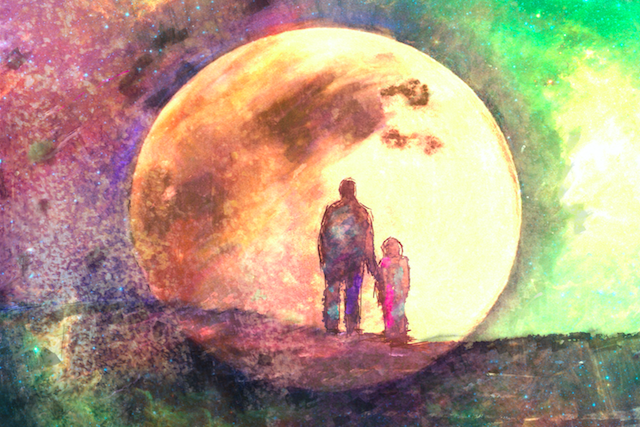
    As you write it down, let the words flow freely. Get fully immersed in the exercise. It might be helpful to imagine that you are hugging your inner child, and definitely focus on giving love, nurturing, caring.

    At points, the words you’re writing might feel like huge clichés, but it doesn’t matter: all that matters is that you feel them—that’s how you know it’s working.

    All You Need Is Love

    It’s easy to get trapped in a negativity loop: you feel bad because you failed to meet your own expectations; then you feel anxious because you’re feeling bad, and so afraid to get trapped into a negativity spiral that you don’t even notice you’re already in it.

    You can’t fight negativity with negativity. To break the loop, you need love.

    You have been hard enough on yourself. Give yourself the words and love you have been longing to hear. Do it from a different perspective—I guarantee, this will rock your world.

  • How to Stop Punishing Yourself for Your Breakup

    How to Stop Punishing Yourself for Your Breakup

    “The most difficult times for many of us are the ones we give ourselves.” ~Pema Chodron

    After you come out a meaningful relationship that you didn’t foresee ending, you begin to think about everything you did wrong.

    If you were not the one who wanted to the breakup, you may spend a lot of time blaming yourself and wondering about what you could have done differently.

    You might begin to believe you’re solely responsible for what went down and that you deserve to spend years in relationship purgatory by yourself, mourning the loss of the person you loved.

    You might take all the responsibility and blame as you spend months and years alone.

    You may tell yourself terrible things about yourself and what a monster you were in the relationship.

    Then you’ll probably feel guilty about everything you did and assume that the relationship ended only because of you.

    And you may feel ashamed, unworthy, and unlovable because the other person was so good and you weren’t.

    This kind of unhealthy thinking puts all the blame on you and removes all responsibility from your ex.

    Your ex moves on and maybe even finds love soon after, while you spend an inordinate amount of time reflecting, hurting, and punishing yourself for what you did.

    These are all things I experienced when my marriage ended.

    I was such a mess after the marriage, carrying a big brunt of the responsibility, blame, and guilt.

    I felt like I had committed a crime against my ex for how badly I’d treated her, how intensely we’d fought, and how dramatically the relationship had unraveled at the end.

    If I had been better, wiser, kinder, and more giving, I believed, we could have stayed together.

    These feelings and thoughts kept me hiding for years, replaying the events of the past. I mentally attacked myself and felt bad about myself for years afterward.

    I stayed home, locked myself up, and suffered silently, believing that no one would ever want me again and I was unworthy of loving or being loved.

    I didn’t think there was something wrong with her, the relationship, or both of us. I took the sole responsibility for everything that went wrong. I put all the blame squarely on myself.

    Everything I did, I magnified in my mind and scolded myself for. Everything she did, I excused, justified, or found ways to blame myself for.

    I later realized this was all a figment of my imagination, these self-harming thoughts. Sure, I had played a large role in the way this relationship had ended, but I wasn’t solely at fault.

    If you’re blaming yourself for everything and feeling guilty about a relationship gone wrong, I want to remind you of the following seven things so you can stop punishing yourself for the past.

    7 Ways to Stop Punishing Yourself for Your Breakup

    1. You were doing the best you could.

    If you knew better, you would have done better.

    You were acting on the tools you had at the time. You likely were not intentionally or purposefully sabotaging the relationship or your partner.

    We each do our best under the circumstances we’re in.

    If you had the ability to be more understanding, less critical, or more forgiving, you would have done that, but you couldn’t have at the time.

    At one point in my life, I thought that feelings were terrible, so I wasn’t willing to open up about how I felt about things with my ex. I thought stonewalling and shutting down were more effective at resolving issues than talking them out (trust me, they’re not).

    I also thought it was effective to threaten a breakup when things weren’t going right or casually suggest a divorce in the middle of an argument (it wasn’t).

    This wasn’t right or fair but it was the place that I was at in my life. If I had known a better way, I would have done that. If I had the skills to communicate better, I would have used them.

    You and I grow, develop, and improve as people and partners over time.

    The good news is that partner you were yesterday doesn’t have to be the partner you are in the future. I’m not the person of yesterday, and I am thankful for that.

    You can be better the next time around.

    2. You are not solely responsible for what happened.

    Remember, there are two people in a relationship. You did your part and your ex did theirs.

    You can’t take the blame and responsibility for both of you.

    It takes two people to dance, two people to make a relationship work, and two people to make a relationship come to an end.

    You may put your ex in a completely positive light and view all your actions with negativity and judgment. Try to see the situation more objectively. Give credit and blame equally to both of you. You and your ex contributed positively and negatively to the relationship.

    You can’t take 100% of the responsibility when you were only 50% of the partnership.

    3. You deserve the same forgiveness you’ve given to your ex.

    You deserved to give yourself as much of a break as you gave your former partner, if not more.

    You’ve likely been unusually harsh and critical of yourself, absorbing all the blame for what went wrong.

    You may be used to being hard on yourself because loved ones were hard on you when you were growing up, but instead of harshness and blame, choose compassion.

    You may have done things without knowing, unintentionally, and without trying to hurt your ex.

    You are a human, growing and making mistakes like all people do.

    Your past errors do not have to be life-long regrets.

    You can use the things that you did unconsciously as learning and growing tools to become a better version of yourself.

    4. Get more curious about what happened.

    Instead of blaming yourself, get curious about the experience you had with your ex and identify the root cause of what happened.

    I began to get curious about my upbringing, my past wounds, and why I showed up in the relationship the way I had.

    I gave myself a break when I got more curious about how I became the person I was in that relationship and why I behaved and communicated the way I did. Instead of blaming, I got help through counselors and friends to understand myself more.

    Become a student of your pain, suffering, and blame so you become wiser about yourself.

    You can’t do anything about the breakup, but in the aftermath, you can do the work to understand why you showed up how you did so you can do better in the future.

    You can find self-awareness and wisdom in the past. .

    5. Release comparisons and judgments.

    We’re taught from a young age to compare ourselves to others and to judge ourselves. These self-sabotaging habits are especially hurtful after a painful breakup.

    Comparing your life to your ex’s life and comparing yourself to friends who are in relationships won’t help you move on.

    Neither will judging yourself and putting yourself down for what happened in the relationship.

    Instead of comparing yourself to others, think of this as a path of growth.

    Compare yourself to yourself. Observe how you’re stronger, wiser, and smarter about relationships today than when you were in your past relationship.

    Also, flip self-judgment into gratitude. Instead of judging yourself harshly, be thankful for your development. Be thankful for the experiences that helped you evolve as a person and a partner.

    6. Affirm your worthiness for being who you are.

    You’re feeling as badly as you are about the previous relationship because it’s opening up wounds about your own worthiness.

    Instead of beating yourself up, can you cultivate and reaffirm your self-worth? Can you remind yourself that you’re more than your relationship and what happened with your ex?

    Regardless of what happened between the two of you, you are worthy for just being yourself.

    If you don’t believe that, then maybe your relationship was an opportunity to recognize the feelings of unworthiness you had before it even started.

    Once you see the wounds more clearly, you can begin working on them.

    You can remind yourself that you’ve brought so much good into the world, have been helpful to many people in your life, and you likely exude compassion and kindness to many.

    Remind yourself that you are more than the narrow shoebox of being a partner in a relationship.

    7. Take credit for the good that came out of this relationship.

    No, it wasn’t all perfect, and there are some things you can take responsibility for in your past relationship, but what can you take credit for?

    If you blame yourself for all the bad things, don’t you also have to take some credit for the good things that happened?

    What positives came out of this relationship?

    How did you grow as a person in your past relationship?

    How did you mature and become a better version of yourself?

    In my relationship, one positive thing that happened was that we both helped each other achieve our professional goals and advance in our careers. We also both recognized self-sabotaging patterns and behavior and went on to work on ourselves.

    Through our partnership, we exposed each other’s wounds, which enabled us to do the work to heal them. We could now show up better for ourselves, our loved ones, and future partners with more self-awareness and understanding.

    You too deserve just as much credit as the blame you’re assigning yourself.

    Reflect on the high roads you took in the relationship and, after it ended, the good you did. Think about how much both of your lives have improved, if they have, and whether you both came out as wiser, kinder, more open people.

    You don’t have to punish yourself for the rest of your life and take all the blame for what happened. You don’t have to go about filled with guilt and shame for what you did to your ex.

    If you can see that you were doing the best you could, look at the many good things came out of the relationship, and see your past as an opportunity to grow, you’ll be able to release the heavy weight of your past and move forward with a wiser and more open heart.

  • What I Did to Survive: Not Proud but I Forgive Myself

    What I Did to Survive: Not Proud but I Forgive Myself

    “Forgive yourself for not knowing better at the time. Forgive yourself for giving away your power. Forgive yourself for past behaviors. Forgive yourself for the survival patterns and traits you picked up while enduring trauma. Forgive yourself for being who you needed to be.” ~Audrey Kitching

    I used to suffer from survivor’s remorse.

    What does this mean exactly? Well, I was ashamed of the things I did to survive.

    As I reflected back on my life, I’d get filled with sadness, shame, and regret.

    Sadness because I did things that were against my moral values when I knew right from wrong.

    Shame because I did things that I never thought I would have to do, in order to survive.

    Regret because I was involved in drugs, sex, and violence.

    I had kids to feed, and they depended on me. As a single parent, I was willing to do whatever I had to do for them. I would sell tools and electronics for gas money. I would sell plates of food to buy diapers. I even chose to sell my body. I did whatever I needed to do to get by.

    I hurt family and friends along the way and lost their trust with my broken promises. Promises that I would pay back money that I borrowed, knowing I wouldn’t be able to. I used people for my own personal gain. My pain caused other people pain.

    I was risking my whole life, and I didn’t even realize it. I could have gone to jail and lost my kids, all because I was trying to provide for them.

    How Did I Get Into a Life of Drugs, Sex, and Violence?

    Well, I had a rough childhood; I dealt with physical, verbal, and sexual abuse as a child, and witnessed abusive relationships amongst relatives and family friends . I processed this into rejection, fear, and anger.

    I struggled to feel love because I equated it with hurt. My family members said they loved me and then did things that caused me pain. I thought this must be love; this is normal behavior.

    The hurt turned into anger, and then I started to resent people. This caused extreme paranoia.

    Still, despite my relationship fears, through a twisted turn of events, I had a baby at fifteen years old. I told myself I would do anything to make sure my son didn’t have the same life I’d had.

    Then at eighteen years old I was a homeless high school senior.

    My Survival Tactics

    I found myself on public assistance. I was in situations that evoked the exact feelings I’d experienced as a child, when I saw my mother depend on welfare and food stamps to get by. I felt impoverished, worthless, and dependent on a system to survive.

    I found myself wrapped up in an abusive relationship, with three kids now, around drugs, around violence, and I saw no way out. This was my life. I wanted to leave, and I tried to many times, but he held me at gunpoint, locked me in a closet, and even choked me at times.

    Domestic violence is a learned behavior. I witnessed it growing up and he witnessed it as well. This abuse was familiar. I didn’t know if I was prepared for the fight. I needed to be loved, so I accepted any love I could get even when it hurt.

    I eventually chose to break the cycle and free myself from the lifestyle I was caught in, but it left me at ground zero. I had to fight for myself, for my kids, for our future. I had to get out of this abusive relationship before he killed me, or I killed him. I’d had enough!

    But leaving was just the beginning of change, and not the end of my stress. My fight-or-flight response was constantly activated. I was always thinking, “I got to do something. My kids need shelter, food, and clothing.”

    I needed food stamps, I needed public assistance, I needed section 8 housing. I needed everything I could get to survive.

    I was doing things that I knew were wrong—lying and stealing what didn’t belong to me—but I felt like I had no choice. I couldn’t call anyone to come save me. I had already borrowed money from people. I couldn’t depend on help from my kids’ father. No one was coming to protect me. I had to save myself.

    I felt helpless. At this point I had a high school diploma, little job experience, and no stability. I was in complete survival mode.

    I did not possess the language to tell someone that I was hurting, that I was struggling and needed help. My fear (ego) told me that no one would listen, and no one would care.

    I feel so ashamed for lying to my mother, for stealing, for degrading my body. I know this is not who I am, but looking back I can see these were my survival tactics.

    I only wanted to survive, and guess what? I did.

    But eventually I wanted more than that. I wanted freedom. The freedom to let go of the past. These secrets that I was ashamed to say out loud.

    This was over fourteen years ago. I was still holding on to guilt.

    My Accountability

    I never wanted to talk about my past because it was painful. I wanted it to disappear.

    I didn’t want to admit that I was broke with $2.29 in my bank account, with three kids.

    I didn’t want to admit that I was on food stamps because I couldn’t afford food.

    I didn’t want to admit that I’d taken other people’s property for my personal gain.

    I didn’t want to admit I’d used my body for financial gain.

    I didn’t want to admit that I was in pain from different traumas, and I was self-medicating with drugs.

    Still, I had to stop and realize that I’d made it and could now focus on thriving—but I could only do that if I forgave myself. That required self-compassion. But I also realized I couldn’t blame anyone else; I had to take complete and total responsibility.

    I had to take responsibility for my choices. I had to take responsibility for doing what I felt I had to do to survive.

    Note to self: “Beating yourself up for your flaws and mistakes won’t make you perfect, and you don’t have to be. Learn, forgive yourself, and remember: We all struggle; it’s just part of being human.” ~Lori Deschene

    My Forgiveness and Pride

    I had to forgive myself for not understanding my power and for inheriting patterns from the trauma I’d experienced.

    I also had to give myself credit for breaking the cycle.

    I remember once, I was having a conversation with my three daughters, and I was telling them about a time when they were little, and I couldn’t afford to do certain things. One of my daughters said, “Aww, Mom. You used to be poor?”

    In that very moment, I realized that I had survived. And I had created a better future for myself and my kids. Not only did I make it, I provided a lifestyle for my kids without drugs, sex, or violence.

    I apologize if I was toxic energy in anyone’s life, including my own. My forgiveness doesn’t mean that the guilt never existed; it just means I’m letting go of the shame and pain that once controlled my life.

    I used to feel a sense of strength because I’d endured a high amount of abuse, but deep down I was so fragile.

    At this very moment in my life, I now choose to measure my strength by how quickly I release things that threaten my peace of mind.

    I looked at my sadness, I looked at my regret, I looked at my shame straight in the mirror. I acknowledged them, accepted my past, and decided they would no longer control me. This was my first step toward my freedom.

    I made mistakes. I was doing the best I could. I realized I was afraid of speaking my truth, but it’s my truth that’s setting me free.

    Whatever you did in the past to survive, I’m sure you did the best you could too. You were hurting and you used the tools you had based on what you’d witnessed and learned.

    But the past is behind you now. You don’t have to beat yourself up over who you’ve been. Accept your past. Learn from it. Forgive yourself for being who you thought you needed to be. And face your shame so you can let it go. You’ve been through enough. Why torture yourself even more?

    Whatever you’ve been through, and whatever you’re going through now, may your truth set you free and may you heal from your pain.

  • When Expectations Hurt: How I’ve Forgiven My Absentee Father and Healed

    When Expectations Hurt: How I’ve Forgiven My Absentee Father and Healed

    “What will mess you up most in life is the picture in your head of how it’s supposed to be.” ~Unknown

    I may have said a few words that hurt my father’s feelings, but…

    See, here’s the backstory.

    I’m thirty-four years old, and I started having a relationship with my biological father at age twenty-one. During my childhood years I would see him every now and then even though he lived less than three miles away from my home. I don’t have any memories of being with my dad for birthdays, holidays, family vacations, or even just hanging out watching TV at home.

    When I was twenty-one my father called and said, “Hey, I’m outside your house.”

    I went outside and he said, “Your mom told me you just had another baby.”

    I said, “Yes, I did.”

    By this time I rarely had any dealings with my father, and I had some negative feelings about him because he was not in my life in the way I felt he should have been.

    A part of me was upset and confused as to why he wasn’t around during my childhood when I needed him. I wanted his guidance and protection, and I felt that he hadn’t given that to me.

    We had a conversation, and he told me that I was welcome at his home anytime and that I should come around more often. Despite how I was feeling, I decided I would give it a try because a part of me wanted to be daddy’s girl.

    So, I did just that. I called him as often as I could and would go by his house for visits. I finally got comfortable enough that felt like I was in a good place with my dad. He has a wealth of knowledge, so we began having deep conversations about different things in life, and he would give me advice on things I was going through.

    I couldn’t help sometimes but wonder, what would my life be like if he’d been there from the beginning?

    I would look at him and his wife and the children they had together—they have so much joy and so many memories with my father. Why couldn’t I get that? Was it because of my mother? Was it because of his wife? What is wrong with me that I couldn’t get the same level of love and attention?

    Recently I saw a post on Facebook by one of my siblings. It read, “I have the world’s greatest DAD!”

    But that’s not who he is to me. I have no childhood bond with him. What we have shared these past thirteen years has been more of a great friendship. He’s not the world’s greatest dad, because if he were he would have been there for me! My emotions and feeling of neglect got the best of me, and I had to disagree with this statement.

    The little girl in me was crying. Why couldn’t my father love me the way he loves his other kids? I felt unworthy. I also felt guilty, like I maybe I had done something wrong. Maybe I wasn’t perfect enough. Maybe he didn’t want me. I asked myself over and over, why couldn’t I have that love? All I wanted was his attention and acknowledgment.

    If you have gone through this experience you know as you get older that little girl or boy is still hurting for the love they didn’t get. That pain often shows up as anger and resentment toward your parent(s).

    The feelings I felt as a child followed me into my adulthood. I was insecure as a person and followed the crowd. I had a hard time trusting people to show up for me; I couldn’t get my own father to be there for me, so why would anyone else?

    Since I felt unworthy of being loved by my father, I developed low self-esteem. Like a drop in the water, this caused a ripple effect. I ended up forming relationships with men who were just like the picture of my father; they would abandon me, and once again I’d feel unworthy of love.

    In order to stop this ripple effect from controlling my life, I had to acknowledge that little girl inside me. I had to let her know that I heard her, and I felt her pain. So I started journaling about my feelings. I took that energy out of my body and left it on the paper.

    I also had to have tough conversations with my parents. This was hard because it meant everyone needed to take accountability for their part in this situation—myself included. That meant releasing the expectations I’d placed on my father, which I’d never communicated to him. I recognized that I’d wanted him to be something he wasn’t, I wanted to change him, but I realized that I can’t control or change anyone but myself. 

    This is the part where I hurt my father’s feelings.

    I needed to have this conversation with my father and get these feelings off my chest. I knew there was a possibility he wouldn’t understand, because he may have felt justified in his absence. But I also knew the pain I was feeling was not my fault.

    I called him, and I stated, “Dad, I feel like we are really good friends, but I don’t feel like you are my dad. I have no childhood memories with you, but I know I can always call you for advice now.”

    I wasn’t trying to hurt his feelings. I wanted to explain my feelings, based on my experience and my perception. I didn’t really know why he wasn’t around during my childhood; I just knew I didn’t get my dad.

    He responded with, “It sounds like your saying I’m a failure.”

    I said, “No, I’m just sharing how I feel.”

    I took a few days to think about this conversation because it was tough for the both of us. I’d cried, and I could tell he felt disappointed. I realized then that just because people have children, that doesn’t mean they are ready to be parents.

    We think two people meet, fall in love, get married, plan to have kids, and plan out their career. Sometimes it happens that way. But often they really love and care about each other, and then they get pregnant, unexpectedly. Then things go south, and co-parenting goes with it. At least this was my reality with my parents. Neither was there to raise me in the way I thought parents should.

    I have no clue what specifically they were going through at that time. But whatever it was, it required me to live with my aunt till I was in third grade.

    My Ah ha! Moment

    A mother and father give you life, but that doesn’t mean they will be the ones who raise you. I have a mother and a father, but my aunt who stepped in and took me to live with her and her three children was my mother.

    My “dad,” who was my uncle, picked me up almost every weekend and promised to protect me from all danger.

    I had another “dad,” who just happened to be my grandfather; he provided for me like a father would.

    When I eventually went to live with my mother, her boyfriend at the time treated me like his own daughter.

    I realized then I’d been wrong when I told myself I didn’t have a dad, because I clearly did.

    Plenty of people had stepped in as father figures even though they had no obligation to do so. They created those birthdays, holidays, vacations, and just hanging out at the house type memories that I was looking for from my father.

    I was blinding myself to my blessings and holding my parents to an expectation that they were never going to be able to fulfill.

    As a child I wasn’t able to look at them for who they truly are or accept them with the good and bad. As an adult, I focused so much on what I was lacking in my relationships with them that I couldn’t see what I’d had in other people all along.

    I know now that I want to lead my life with love. That means accepting people for who they are and how they are, not what I would like them to be.

    Though the pain I felt when it came to my father was not my fault, my healing was my responsibility. As an adult, I’m now capable of taking responsibly for my life decisions in a way I wasn’t as a child. I had to take my power back and stop letting my pain control me.

    I told my father, “I’m not trying to hurt you. Things just are the way they are. It’s not good or bad; this is just our experience. Having you as a friend is better than having nothing at all.”

    I now call my dad often, because I know it’s difficult to find good friends. I’m happy to say that I have found one in my father.

    I think I’d just been caught up in the personal emotions and attachments to the people who gave birth to me and expected them to be X, Y, and Z. As a result, I caused myself a lot of unnecessary pain and suffering. I had to forgive both my parents and myself for holding on to these expectations.

    If we can let go of expectations and focus on appreciating the people who are there for us we can find healing in the painful truth. I think this is a key to finding peace with things that have hurt us. We have a picture in our minds that doesn’t match up with our reality. When this happens, we may feel disappointed and close ourselves off to other perspectives.

    Like me, you may not have had the relationship you wanted with your parents, but perhaps foster parents, aunts, uncles, brothers, or friends stepped into your life and become that dad or mom when they had no obligation to do so.

    To those people in my life I say thank you. It’s hard to see, at first, just how much you’ve done. As a child our pain can blind us from the love we are given. Because of your love, people like me can stop and say, “I did have mom or dad.”

    This insight doesn’t only apply to parents. Have you ever held someone to certain expectations, just because of who they are to you? Like a husband or wife, mother or father, brother or sister, aunt or uncle, grandparents, best friend, boss, co-worker, etc.

    At times we expect people to fill certain roles just because of their label. Some expectations are reasonable and healthy, but can you perhaps release some and replace them with gratitude?

    This is in no way, excuses anyone’s behavior or the pain they may have caused you. This is a step toward acceptance. Accepting people in their truth even when we don’t agree, this is taking back our power.

    I know I can’t change who my parents are or what they’ve done, but I can always change my perspective by looking for positive aspects in each of them. I receive more from being grateful than I do with expectations.

    I’ve stopped focusing so much on them and now focus more on myself, because I’ve realized the only person I can change is myself.

    Forgive yourself for hurting yourself or others with expectations. Know that the pain you feel is real, and that you can release that pain from your life at any moment you choose. And allow yourself to be grateful for all the good in your life instead of focusing solely on what’s hurt you.

    This is how I’ve healed some deeply rooted wounds that caused a great level of pain in my life. I hope by sharing my experience I’ve helped you take a step toward your own healing and understanding.

  • How Mindfulness Is Saving My Relationship

    How Mindfulness Is Saving My Relationship

    “Mindfulness is about love and loving life. When you cultivate this love, it gives you clarity and compassion for life, and your actions happen in accordance with that.” ~Jon Kabat-Zinn
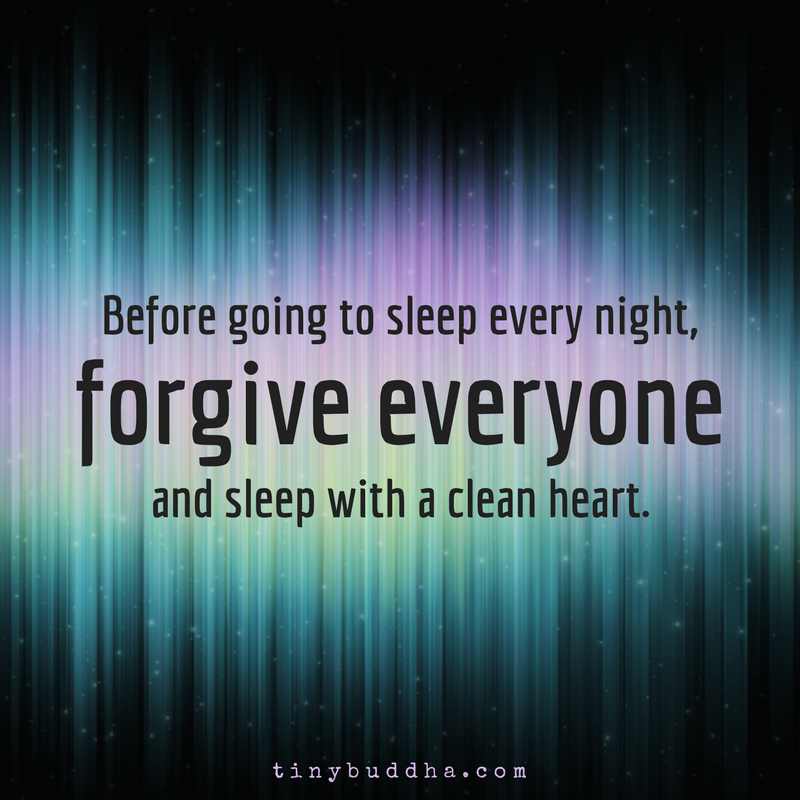
    I started meditating and practicing mindfulness more seriously several years ago incorporating it in to my daily routine, initially to help with my anxiety. My practice certainly helped me by leaps and bounds in overcoming my anxiety, but an unexpected side effect has been the impact it’s having on my marriage.

    We’ve not been married long, and as many couples before us have experienced, getting accustomed to this new dynamic can be at times… difficult.

    Learning to communicate and compromise isn’t always a smooth ride. He cares about being on time (or early), I care about not being rushed. I like the kitchen cleaned after dinner, he couldn’t care less. He gets stressed when he doesn’t know the schedule in advance, I feel stressed when I feel boxed into a plan.

    So we argued. And got mad at each other. And created these expectations for each other that we definitely didn’t always meet.

    But slowly I started to notice a change. It began with a change in me, my stress level, my tendency to blame, my expectations of him. I found myself more understanding, better able to let go of things that didn’t go my way, and better at communicating when an argument bubbled up between us.

    Then my husband started to change too. He’d noticed the changes in me and saw how much better I felt and how much easier communication was with me, and he started mimicking what he saw me do.

    He wasn’t letting things bother him as much. In a situation where we would have had an ugly argument, he was now starting the conversation from a place of curiosity instead of finger pointing. But the biggest thing that I noticed from him was how he was willing and able to reflect on how he was feeling and dig into why he felt the way he did whereas in the past he would have become angry at me for making him feel that way.

    What is Mindfulness?

    Mindfulness is paying attention to the present moment on purpose and without judgment. This can be done in day-to-day activities like driving, eating, and in conversation. It can also be practiced as formal meditation.

    This simple practice can transform our relationship with our thoughts, give us new perspectives on life and even our own behaviors, and free us from the hold that our emotions can have on us when we identify with them.

    Here are changes I’ve seen in myself from practicing mindfulness that have led to improving my marriage.

    I’m happier.

    Stress is a salty mistress with eight in ten adults suffering daily. And anxiety is pervasive in our society, affecting roughly forty million Americans (including me for thirty-ish years). Practicing mindfulness is a time-tested and scientifically proven method of dealing with and overcoming the hold of stress and anxiety.

    When we’re stressed, feeling down or angry, we’re on the lookout for anything to prove that life is stressful or crappy, or that we’re right and others are wrong. We notice the things that bother us like dishes left on the counter, a car driving too slowly in traffic, or the way your spouse asks what’s for dinner.

    And when we’re happy, we do the same—look for things to prove why life is great. You notice the nice things, the birds chirping, that your spouse gets up without complaint on Tuesday mornings to take out the trash. It’s also easier to be more compassionate and forgiving from a happy place.

    The less-stressed and no longer anxiety-ridden me is a much better wife and partner. From a happier place, I’m not only much more pleasant to be around, but things don’t tend to bother me as much.

    I’m a better listener.

    As a person with ADD, I’ve always found listening intently in conversations to be a difficult task. The mind wanders to other topics making it difficult to be fully present, take in what the other person is saying, and retain the information for later.

    My mindfulness practice has drastically improved my ability to pay attention. It’s like brain training, building the ‘muscle’ that helps direct our attention at will.

    I’m better able to fully listen to my husband when he’s sharing with me without always thinking of what I’m going to say next or what I need to do later. He feels heard, and we feel more connected to each other as a result.  

    I’m much more aware of how I’m feeling.

    Not to say that I’m happy 24/7—I don’t think that’s possible, nor would I want that. We have a rainbow of emotions, and there are good reasons to feel them even for a brief moment.

    The act of paying attention on purpose trains the brain to notice what we’re feeling. We’re so used to just feeling our feelings, and if they’re not pleasant we either try to run from them, numb them, or lash out.

    It’s more productive and much less stressful to look at our emotions with curiosity. Label them. Then ask questions. “Ah, I’m feeling irritated. What’s that about? What’s another way of looking at this? How can I change this situation or cope with it?”

    I’m also better able to catch myself before emotions spike high. Once emotions hit their peak in an argument, the horse had already left the stable. It’s tough, if not damn near impossible to reel it back in once you’ve reached the crest of pissed off-ness.

    At this point, your brain and body are in fight-or-flight mode where it’s impossible to access critical thinking skills and takes about twenty minutes to calm enough to think clearly to make sound, logical decisions.

    Granted, those high negative emotions are drastically fewer and further between for me now with years of mindfulness practice under my belt. However, I’m only human and once in a great while I can feel those emotions rising.

    Being more aware of how I feel has helped me resolve difficult or frustrating feelings internally and avoid arguments with my husband.

    I’m much more aware of how my husband is feeling.

    Mindfulness practice increases your ability to be present, and thus not be distracted by thoughts. As a result, you become more insightful, a better listener, and more observant.

    This results in higher levels of emotional intelligence because you are able to see things from another person’s point of view to facilitate better communication. It becomes a powerful tool that makes you more effective in understanding other people, as well as contexts and situations.

    When my husband seems upset, I’m better now at putting his behavior into context and empathizing with his emotions. For example, an angry outburst from him directed at me because we should have left five minutes ago, I can see is actually his frustration stemming from a lack of control over something he values—which is punctuality.

    I don’t get upset in return anymore. Instead, I empathize with him because I better understand what is causing his emotions and don’t take them personally.

    I’m able to forgive more quickly.

    Pobody’s nerfect. Mindfulness teaches us to forgive ourselves and others as we are paying attention to the present moment non-judgmentally.

    Using mindfulness techniques, a person is able to let go of or forget about the past and not dwell on what the future can be.

    Mindfulness can be highly beneficial because we are able to let go of unrealistic or materialistic thoughts and just exist in the moment.

    It can be used to accept the feelings of sadness, anger, irritation, or betrayal that you have and to move on from them. Your path to a freer you, begins with knowing what is hurting you the most.

    Cultivating a greater capacity for forgiveness has brought me to a place in my relationships where I don’t hold grudges or dig up the past in arguments.

    I’m aware of the stories I’m telling myself.

    When something doesn’t go our way, it’s so easy to identify with the story we’re telling ourselves and label it as the whole truth.

    Mindfulness has shown me the difference between me and my thoughts. They are not one in the same. Thoughts are ideas passing through our minds like clouds in the sky. They are fleeting. They change with context.

    Because of mindfulness, when I’m upset I can more easily identify the story I’m telling myself that is making me upset.

    For example, I was hurt after my husband didn’t get up and greet me enthusiastically when I came home from a week-long business trip. He stayed sitting on the couch absorbed with what he was doing.

    I was upset and went upstairs to fume. Then I realized I was telling myself a story that my husband doesn’t care about me or love me enough. I know that isn’t true. There are a number of reasons why he didn’t get up.

    When I came back downstairs he could tell I was still a bit upset, so he asked me about it. I said, “The story I’m telling myself is that you didn’t miss me because you didn’t get up when I came home. I know it’s not true, but I’m still feeling a little upset because I would have liked it if you gave me a big hug.”
    He apologized and said he’d wanted to wait until I was settled to love on me. He was much more receptive to “the story I’m telling myself” than he would have been had I started in on him about what he’d done wrong. And I felt better when I stopped jumping to the wrong conclusion and allowed him to share his side while avoiding confrontation.

    A few weeks later he calmly told me he was upset about something and started the conversation with “the story I’m telling myself is…”

    That’s when I knew our relationship was improving because of mindfulness.

    Being able to objectively look at my thoughts and feelings allows me to reframe any situation and gives me the space to respond thoughtfully instead of reacting impulsively.

    If there’s one thing I’ve learned from this experience it’s that self-love and striving for self-improvement can have a ripple effect through your life affecting those around you for the better. The better me I can become—less stressed, more compassionate, healthier, happier—the better wife, friend, daughter, and coach I can be.

  • How to Rebuild a Relationship with Someone Who’s Hurt You

    How to Rebuild a Relationship with Someone Who’s Hurt You

    “Holding a grudge doesn’t make you strong; it makes you bitter. Forgiving doesn’t make you weak; it sets you free.” ~Unknown

    My situation is probably not unlike that a lot of people reading this.

    I grew up in a single-parent home. Don’t get me wrong, I had a pretty happy childhood, and my mom did an unbelievable job raising me. She worked four jobs to make sure I always had the best of everything. But I could never shake the feeling that I always wanted a father figure in my life.

    My parents had separated when I was very young. My dad was a marine, my mom was a doctor, and she had realized that she didn’t want to be moving around her whole life. This meant that I only got to see him once or twice a year. And slowly, we became increasingly estranged.

    When I was sixteen, I found out that he was deciding where to buy a new house for a more permanent and stable job post. I started thinking that he would find something nearer to me. He now had more flexibility, and finally, I could see him more often. We could begin to build a real relationship and make up for the years of missed birthdays, graduations, and other memories.

    But then, right when I got my hopes up, he didn’t. He stayed where he was—with his new wife and her kids. Even though it seemed like they didn’t appreciate him, and even though I felt that I needed him more than they did.

    It broke my heart.

    In fact, it’s almost ten years later, and although we’re on better terms now than we’ve ever been, I’m still healing.

    I had to learn to let him go before I could learn to forgive him. And I had to learn to forgive him before I could build a relationship with him. We’re in the process of building that relationship, and we’re better off now than we’ve ever been. But I’m still accepting that I’ll never get the dad that the little girl in me always wanted.

    It’s a tough pill to swallow. Knowing that people that you have the most love for are sometimes going to hurt you. Sometimes even those who are supposed to protect you. It’s one of the most difficult lessons you’ll learn in a lifetime, but it’s a part of being human.

    I hope my experience can help to shed some light on your own relationships with partners, family members, and close friends.

    Here’s how I learned to let go and forgive.

    1. See the human being in the projection.

    A significant part of what we see in other people, particularly those with whom we have an emotional history, can often be a projection of our own unconscious attitudes toward that person, and not a reflection of how they are behaving.

    This is difficult to see in ourselves, and tends to be even more pronounced in people we’ve known for a long time, particularly our parents.

    I learned to forgive my dad by seeing the person in him and not the idea of what I thought a father should be. Doing so wasn’t an easy process, as I had to face shortcomings in both of us. On his side it was constantly making promises he couldn’t keep, out of a fear of losing love and affection from anyone around him. For me, it was the inability to give him a chance to make things right, and see him in a new light, even when it was the most appropriate thing to do for both of us.

    Fortunately, over time, as I grew as a person, I was able to build a new relationship with him, based on fresh experiences and not sour expectations.

    2. Constantly re-assess your expectations.

    When trying to start afresh with my father, I found myself constantly face to face with my old expectations. Whenever he would act in a certain way, such as making empty promises or failing to be there for me when I need him, it would trigger an old story (and old emotions) I had about how he’d always been this way or how he’d never change. But each time I did so, I was able to reassess my expectations.

    A cynical way to look at this would be to say that I lowered them. But who’s to say for whatever reason they weren’t too high to begin with? When he began to act in a way that was more congruent with what I had come to expect, we were both happier, and he even began to positively surprise me sometimes when he fulfilled promises I didn’t expect him to.

    3. Look at the world from their perspective.

    The spiritual teacher Ram Dass once said: “If you think you’re enlightened, go spend a week with your family.” It’s a tongue-in-cheek quote, and I’ve tried to apply the idea my situation. I’ve always thought that I’m an empathetic and understanding person. But can I really stand in the shoes of my family members and be completely ok with their actions, particularly those who have hurt me?

    I tried to think about my dad’s situation, his expectations and disappointments, the influences in his life like constantly being on the move because of his work. And I understood that he wasn’t there for me partly because he was afraid of losing his new family and being alone.

    At the end of the day, while I couldn’t come to justify his actions, I was able to see the rationale in them, and have empathy for him as a flawed human being, rather than someone who had intentionally done me wrong.

    4. Practice acceptance in all areas of life.

    Sometimes I couldn’t separate the man from the projection, I couldn’t change my expectations, and I couldn’t come to rationalize where I’d been done wrong. At this point, I had to try and accept things the way they are. And at first, I couldn’t. It just felt so inauthentic, I was still so angry and upset. So I decided to start small and practice acceptance as a skill.

    I accepted little things like traffic on the way to work and rudeness by people in shops. I accepted when I saw something I didn’t like on the news or friend of mine had been a little thoughtless. I even made it a habit to accept things I didn’t like about myself, and finally, I began to be able to accept my father for his mistakes.

    5. View relationships as fluid, not solid.

    This final point was one of the most interesting. I began to view relationships in my life as fluid and not solid. For me, fluid relationships meant that people could enter and leave, their roles could change, as could the way we related to each other. Unfortunately, this is a natural fact of life, and the choice we have is whether or not we resist it.

    My dad hasn’t been a huge support, nor a good role model, but right now he’s a father and a friend, and someone I love. That may change in the future, for better or worse, but I’m trying my best to be open to the journey.

    Learning to let go of people you love when they’ve hurt you is one of the most difficult challenges we will face in a lifetime. As you can see from my situation, letting go of someone may be releasing the grip you have on the idea of who they should be. Sometimes you can still maintain a relationship, just not the one you want. And sometimes, that’s exactly what you need.

    Have you ever had to rebuild a relationship with someone who’s hurt you? Leave a comment below, I would love to hear your stories!

  • What If You Were Suddenly Forgiven?

    What If You Were Suddenly Forgiven?

    “Forgiveness is not always easy. At times, it feels more painful than the wound we suffered, to forgive the one that inflicted it. And yet, there is no peace without forgiveness.” ~Marianne Williamson

    Twenty-seven years ago I made a terrible mistake that led to losing the friendship of someone important to me. I was twelve and I very vividly remember that I was at her front door, asking for her forgiveness and she was telling me she couldn’t do this.

    Friendship is one of those areas of my life that I have always felt I need to work on. I used to believe I had to do work in this area because I was uprooted every six months to three years in my childhood. I believed that my trust in friendships was shaky because my history suggested to me that eventually one of us would leave.

    And then the unimaginable happened.

    I was faced with the truth, my unforgivable moment. The girl, who is now a woman, showed up at an impromptu reunion and I sat across from the mistake I had made twenty-seven years ago.

    She and I were best friends. We spent the night at each other’s houses and shaved our legs for the first time together. She taught me all the big vocabulary words, I taught her all the swear words. We were inseparable.

    And then her mom got sick. Shortly thereafter, she died.

    I grew up in an unconventional family where my parents were married at nineteen and had kids by twenty-one. They were boundless young adults with children and stalwart opinions, lacking in education. My dad’s dad had also died when he was young, and instead of creating empathy and compassion in him, my dad was left with the notion that when you die, you’re just dead—get over it.

    My friend’s mom was the first person most of us kids actually knew to have died. I felt the tears and remember the sadness, but like any twelve-year-old, I was ready for our friendship to resume as normal seconds after her mom passed away. Naturally, that was not the case. Thus occurred the twelve-year-old “fight” over the conditions of our friendship.

    My parents told me she was just using her mom’s death as a reason to be difficult and that she just needed to get over it. I remember my mom hissing those heartless words at my best friend. And I remember echoing a similar sentiment myself, without conviction or the wisdom of experience, thus destroying our friendship forever.

    Over the years after that, I would try to regain access to her, to our friendship, with apologies and attempts at conversation. All efforts were met with a firm “No,” or “I’m not ready.” The words not only marred and destroyed our friendship but rippled through all of our mutual friends, ending many other friendships for me. I was devastated, alone, and unforgiven. I was twelve.

    Now imagine you are forgiven twenty-seven years later.

    As I was meditating this morning, I was brought to tears thinking of my daughter and how careful I have been to express and teach empathy to her, how I have given her the pieces that I was lacking.

    And as I meditated, I realized this is where my fear in friendship lives. This is where it all stemmed from. The moving and uprooting didn’t help my trust levels. But imagine you were never forgiven for a mistake you didn’t understand, for words that weren’t yours, in a time of grief you didn’t understand. Imagine you were left behind by all you had loved and trusted because you regurgitated your parents’ problematic view of grief and death to your friend.

    Never in a million years would I ever do anything to intentionally hurt anyone, let alone my best friend. And knowing what I know today, I cannot even fathom how badly she hurt from the loss of her mother. Her mom! The one person who is meant to care for us and help us with our periods, talk to us about dating, and hold us when we cry. Her mom died. And I said the unthinkable. The unforgivable.

    Last week I woke up thinking, “What if the unforgivable thing that has played a role in all of my relationships was forgiven? What if I was forgiven? How does that fit in? How does it transform itself in my life, in my body?”

    I would breathe in a room of strangers, trust a little deeper in the friendships I currently host. I would be able to unwrap and unbutton my tightly wound guard that has protected me all these years. I could stop worrying about whether or not people would like me if they knew who I really was, and instead trust that I am worthy of love and simply good enough… finally.

    We all have an un-forgiveness story buried deep inside. We don’t have to wait years for the relief of receiving someone else’s forgiveness, if it ever comes at all. We can choose to forgive ourselves now, whether they do or not, and free ourselves from the weight of our shame and self-judgment. Take these three steps to do just that:

    1. Think about the day your un-forgiveness was born. Relax and allow yourself to repeat it one last time.

    Close and eyes and remember: What was the context in which the story happened? Who was with you? What have you done? What happened after that?

    2. Now imagine if you forgave yourself, and if there is another person(s) in the party, feel their forgiveness as well.

    How would that feel in your body? How would that transform the beliefs you formed about friendships, partnerships, business, and life? What would you do differently if you knew you were forgiven and released the shame of your experience?

    3. Give yourself and the others involved forgiveness, as we all do our best with the information and understanding we have based on our upbringing and out time in the world.

    And as Maya Angelou wrote, once we know better, we can do better. We always have the opportunity to get wiser. Forgiveness is compassion and wisdom.

    Forgiveness in ourselves and others is one of life’s great lessons. We are often held hostage by our inability to forgive and therefore so is our potential to achieve our life’s purpose.

    A big powerful thank you to my friend who forgave me after twenty-seven years. I am honored and working to spread the love you showed me.

  • Healing, Forgiving, and Loving After a Painful Break Up

    Healing, Forgiving, and Loving After a Painful Break Up

    “People come into your life for a reason, a season, or a lifetime. When you figure out which it is, you will know exactly what to do.” ~Anonymous

    About five years ago, I learned the biggest lesson of my life about self-love and losing oneself in a relationship, through a breakup that almost killed me.

    After going through another night of three hours of sleep, I drove myself to the ER to save my own life. I hadn’t eaten or slept much in three weeks, and the scale pointed to ninety-seven pounds. I felt weak, malnourished, and unloved.

    Three weeks prior to that morning, I had found out that the love of my life, whom I had to break up with in March 2013, had started dating the girl we’d had the most painful fights over.

    He’d met her at a party when I was visiting family and continued flirting with her, despite saying he chose me. Though he would have been happy to stay in a relationship with me, I knew I couldn’t be with someone who openly flirted other women.

    When I learned he was now dating her, I heard a thump on my heart. Literally. It ached sharply as if there was a chestnut-sized rock sitting in the middle of it, vibrating strongly in response to a transmitter signal far, far away. I half-died that day.

    As I climbed back up from that point, I discovered truths about love, forgiveness, and healing.

    Maybe you are in the middle of such a painful breakup, or maybe you are in the aftermath of a breakup that left you shattered and undone. You are sitting on a ball of emotions you don’t know how to unravel.

    Although I can’t give you a personalized plan to heal and grow from your experience, I can share some pointers, as someone who is on the other side of it all, looking back over the five years of her recovery. These ideas may help you fine-tune your own healing process.

    1. Don’t make an event your whole life story.

    What I learned about letting go is that the pain starts changing form into wisdom when we make a decision to not make one specific event from the past our whole story.

    Instead of thinking your life is over because you’ve lost this one relationship, gain a broader perspective and try to see the breakup as valuable to your personal growth.

    The purpose of the pain was to reveal what needed healing and to gain the wisdom you will need further along your path. A relationship that taught you something about how to love and be loved is a win. A relationship full of mistakes but expanded by wisdom and forgiveness is a successful one.

    We are story-making machines. It is natural to make a recent event the focus of our current experience. But your story is not over. You are still writing your story with the choices you make today.

    2. To heal, you have to  be an active participant in your life.

    People often say, “Just let it go. Let the past stay in the past,” but this is misleading. Letting go isn’t as easy as turning off a switch or erasing words off a whiteboard.

    I didn’t know what letting go meant. As far as I was concerned, that part of my life was still alive in me, balled up and tangled. Every time I heard those words, I pictured removing an organ out of my body. That didn’t make sense. I wondered how other people let go and why I couldn’t just let go and live happily ever after.

    Here is what I discovered: You are never going to forget those relationships with deep soul connections. You just won’t be dwelling on them daily when you are busy exploring life and the depths of your own inner being.

    You don’t need to have forgiven or be completely healed to participate in life around you. I spent a year and a half in isolation. Nothing healed. Not even a feather moved during that time. My healing didn’t start till I started living.—by volunteering, going on lunch dates with friends, and going to events to meet new people. Sometimes letting go means simply living a full life, without the other person.

    3. Allow for forgiveness to unfold in its own time.

    I must admit, making the choice to forgive was not easy, but being patient while the process took place was even harder. Letting go, forgiving, and healing from a relationship is not like hitting a reset button. It takes time to build up the courage to face that buried pain and allow it to leave you. And sometimes, before we can forgive, we need time to experience enough joy and connection with others to dilute the pain of how we were hurt.

    Forgiveness is about digesting pain into wisdom. Into acceptance. Into compassion. Into an expanded heart that can hold space for it all. It is not about living like nothing painful happened, because life does not stop for us to heal. Flowers still bloom and the sun comes out every day. We heal while we take in more of life. The death-rebirth cycle in nature that exists in life also exists within us. It is a never-ending cycle.

    As I started opening up to new experiences and actually living, I allowed new insights to come in. My heart had time to breathe. I put myself in his shoes. I asked myself, “What would I do if the person I loved but kept hurting unintentionally left me when I didn’t want the relationship to end?”

    When I eventually developed enough courage to admit that I would have gone onto the next best thing (the other girl) to ease the pain, compassion came. It took me nearly two years to register the depth of his loss and how he must have felt left out in the cold. We all do what we can to find relief from pain, and that was his way. I didn’t need to judge it or to see it as a transgression against me.

    When you want to increase the temperature of water in a bath tub, you don’t take out the cold but add hot water until it reaches your desired temperature. That is how grief, healing, and forgiveness work. Trust your body and soul to hold you through the processing of a whole chapter in your life.

    4. Update your perception on relationships.

    I loved my ex deeply. I can carry that in my heart’s memory and still know that we were teachers to each other who were not destined to be together for a lifetime. I am no longer hurting because of not being with him. I have done my releasing ceremonies and let memories run through my mind, bringing up various emotions—anger, resentment, grief, jealousy, and lots of tears, too. I sat through them. Some of it hasn’t been pretty.

    We are taught that a ‘good relationship’ is one that lasts a lifetime. If it didn’t last, we believe that it was a failure. If we have several ‘failed relationships‘ behind us, we assume that it is because we are just unlovable. Success seems to be the most prized value in our modern society. But wisdom through experience can be even more valuable.

    I realized that the way I had been viewing relationships was outdated. What if relationships were intensive training programs for our souls to learn about love? What if they were the perfect set up to practice being loving, kind, understanding, forgiving, and accepting both toward ourselves and the other person?

    If you learned the lessons you needed to, the relationship was a success, whether it lasted three months, three years, or for decades. Take your wins and carry them forward with pride. You are a survivor. No one can take that away from you.

    I am now in a relationship that is continuously growing and teaching me more about love than any book on the planet could. I am in love and enjoying practicing new ways of doing relationships.

    I have spent time and energy recognizing how I put up walls, respond from a place of immaturity when I feel hurt, or disregard my partner’s needs because my inner child was triggered into her pain.

    I’ve learned to give him space, to do things that make me happy, to recognize and own my projections, and to practice self-love so I don’t expect it all to come from him. These were some of my mistakes in past relationships. I had to get honest with myself, own them, and work on them.

    Our love is not fickle; it is resilient because we both are. I found out that two people who have walked through fire and excavated their soul truths with their bare hands create a relationship that can stand the test of time and the tricks of their own egos. I can’t know for certain this relationship will last forever, but I now know all relationships are valuable and there there is life after a breakup.

  • How Forgiving Yourself and Others Changes Your Brain

    How Forgiving Yourself and Others Changes Your Brain

    “Be quick to forgive, because we’re all walking wounded.” ~Anonymous

    People often behave in ways that we find irritating, annoying, or worse. This can happen especially with people close to us.

    They can speak with little consideration for the impact of their words. They can criticize us and pounce on our mistakes. Sometimes they do unfair things that seriously disadvantage or damage us. Or they let us down when we’re counting on them.

    All these behaviors can lead to us feeling wounded. The scars can persist for years or even decades. The closer the offenders are to us, the greater the impact tends to be.

    Most of us would like others to understand us, to act reliably, and to be approachable when things go wrong. We’d like them to be kind in dealing with our mistakes or offences. We’d like them to understand that we aren’t set in stone, that we aren’t just the sum total of our mistakes.

    We deserve a chance to recover and show our better side. We’d like them to be more understanding and put a more favorable interpretation on what we did or failed to do.

    However, it can be different when others behave badly. Often, we spend a lot of time and energy going over the way we were wronged, mistreated, disappointed, disrespected, or disregarded.

    Dwelling on the perceived wrong kindles the fire of a grudge. The more we dwell on it, the bigger this fire grows.

    Can this fire burn us?

    When I was in high school, some of the coolest kids formed a band. Everyone wanted to be in that band. I played the piano, so I too wanted to be in it.

    One of my closest friends also played the piano, but not as well. It became a bit of a tussle between us. I was chosen, to my delight.

    When we started playing gigs, a piano was not always available. So I took to the melodica, a little instrument into which you blow. It has a keyboard.

    We started playing gigs, with quite a good response from audiences. Everything was going well, until we were invited to play a gig in a venue right near my home.

    The melodica was at the band leader’s house, because we rehearsed there. I asked for it to be brought to the gig.

    On the evening of the gig, my bandmates turned up. Unfortunately, the melodica could not be found. Apparently, it had been brought to the venue by the band leader but had disappeared.

    This was a bitter blow. I had so looked forward to strutting my stuff before a home crowd. I rushed around to various people who might have a melodica, but could not find one.

    The gig happened without me. I was downcast.

    Eventually, the real story came out.

    The melodica had been brought to the venue. The close friend I mentioned, who also played the piano, had simply taken it away and hidden it.

    I was outraged. I felt betrayed, violated, and angry. I felt ready to run my friend over with a large truck.

    We didn’t speak for a couple of years. Then I got an apology of sorts. Somehow, things were never the same between us.

    I went off to medical school and our paths have never crossed since.

    What happens to your brain when you cling to a grudge?

    The parts of your brain that specialize in criticism grow more active. They feed on your thoughts about the grudge. The neurons involved lay down more connections, strengthening this response.

    The next time someone behaves in a way that you disapprove of, your brain more readily jumps to criticism and judgment.

    All that is understandable, you’re not alone in practicing criticism. But there’s a price to pay for this practice.

    The same parts of your brain that criticize others also criticize you. You tend to become more unforgiving about your own mistakes. Self-acceptance recedes. It becomes harder for you to like yourself.

    Further, this can lead to a cycle of mutual criticism between you and people who matter to you. It tends to weaken the supportive relationships we all need.

    A recent study among 5,475 men and 4,580 women aged over 50 showed that a single point increase in negative social support score resulted in a 31% rise in the risk of eventual dementia. Negative social support is where you experience a lot of critical, unreliable and annoying behaviors from others, especially people close to you.

    What can you do to start breaking this downward spiral of mutual criticism and self-criticism?

    First, ask what stresses or problems may have led to the undesirable behavior. Try to find explanations that weaken the impact of the “bad” behavior on your mind. This is as true for self-criticism as for criticizing others.

    Perhaps there were circumstances that led to you acting in regrettable ways. If you regret it, don’t wallow in the regret. Find explanations to understand why you did what you did.

    Give yourself the gift of forgiveness, strengthen your resolve to do what is good and important going forward, then move on. This same gift of forgiveness may be given to others, recognizing that all human beings are vulnerable to errors or even terrible behavior.

    Forgiveness is not the same as reconciliation with the offender. Reconciliation is the re-establishment of mutual trust. That requires a further step as part of negotiation.

    But forgiveness can proceed regardless of reconciliation and mutual trust.

    The more you practice understanding and forgiveness, starting with yourself, the more you strengthen the self-reassuring parts of your brain. These are the same parts that show empathy and compassion to others. They make you more accepting of yourself, with all your flaws and stumbles.

    We all have flaws and stumbles. That’s okay. It’s part of being human.

    If I could go back to my youth and replay my friend’s apology, I hope I would respond with more understanding. After all, if our positions had been reversed and I’d been blinded by envy, who knows what I might have done.

    For a better quality of life right now, with more self-acceptance, and for a lower risk of cognitive decline, try loosening your grip on grudges. And be gentle with yourself when you slip up in this effort. The steering wheel of your life often requires a little time, patience and practice before you can turn it reliably.

    I’m still practicing. That’s okay.

    Illustration by Kellie Warren. Find her on Instagram @kellistrator.

  • The One Realization That Helped Me Forgive Myself and My Father

    The One Realization That Helped Me Forgive Myself and My Father

    “Do the best you can until you know better. Then when you know better, do better.”
    ~Maya Angelou

    Sunlight shone through the living room window. A lazy Sunday afternoon. I lounged on the couch reading a book with my dog cuddled at my feet. My love had just set out to purchase a new set of acoustic guitar strings. Soon he would return, and music would fill our home, adding to my sense of blissful peace.

    The telephone rang. I could see from the caller ID it was my father. “Good,” I thought. “It’s been a few weeks. I wonder what he’s been up to.”

    His voice was filled with rage. “I’m dying!” he screamed. “You are killing me.”

    “What’s this about?” I placed my book on the table. I was not alarmed; my father has been talking about his death for decades. I was only curious how his heart condition had suddenly become my doing.

    “Did you get a marriage certificate yet?” he asked angrily.

    “No,” I said. “We haven’t. That isn’t happening.”

    My father erupted again. “I’ll probably have another stroke! My arms are tingling. It could be a heart attack—heart attack number three. This one will be your fault. I can’t sleep. I can’t even take a shit. I ate two bowls of fiber yesterday and nothing came out of me.”

    “That’s not my fault.”

    “It is your fault! The anxiety is killing me. Get the marriage certificate, please. It’s what normal people do. If you don’t get that thing, it’ll be the official cause of my death.”

    “You should talk to someone about this. A therapist maybe.”

    “I’m not talking to anybody.”

    “Then pray,” I said. “Meditate.”

    He was silent for a moment, then he scoffed at me. “I’ll go to Afghanistan. I’ll become a missionary. I’ll kill as many ragheads as I can before they capture me. You know how my dad died?”

    I did, but I knew I was going to hear the story again.

    “The snow was deep that morning. There’d just been a big Chicago blizzard. He asked me to shovel the driveway, but I went out with my buddies instead. He died that morning of a heart attack while he was shoveling. I’ve lived with that guilt for over 50 years. I’ll never forgive myself. You’re going to live with the guilt of killing me. Never forget that. I’m planting that in your head right now.”

    “That’s not a nice thing to do. I’m not the one killing you. Your own mind is doing the killing.”

    “It’s you.”

    “There’s no reason for you to be so upset.”

    “You’re not even really married!”

    “That doesn’t matter to us. We’re happy the way things are. If it helps bring you peace, just pretend we never had any kind of ceremony. Pretend we’re still dating.”

    “You know what? I’m done with you.” My father hung up the phone.

    This was not the first time I’d been disowned by my father. I can count on both hands the times he’d chosen to end his relationship with me—sometimes for months, sometimes for years—always because a lifestyle choice on my end didn’t align with how he thought I should be living (e.g.: when I became a vegetarian, or traveled to Morocco, or lived with a gay roommate…)

    In truth, I was surprised that earlier that month after I first told my father that my boyfriend and I had flown to Scotland for a hand-fasting ceremony, he had expressed actual happiness and excitement for me. “Congratulations!” he’d beamed. “I’m happy for you guys. Those pictures of the Highlands are beautiful. What a beautiful country.”

    I remember thinking, “Well, that went well. That could have gone in so many directions. I’m glad he’s happy for me.”

    And I’m sure he was, in that moment, until his chronic anxiety returned—and he didn’t know how to deal with it other than to blame me.

    If my father died tomorrow, would I feel guilty? Would I blame myself for his death?

    No, I would not.

    I would be devastated. He’s my father; I love him dearly, despite our differences. He raised me as best he could, and I am grateful for that.

    But I will not accept responsibility for the mental anguish from which he suffers. The choices my father makes that support his unhealthy ways have nothing to do with me.

    We—the rest of the family—have tried for years to help him, but he refuses to change his habits: the poor eating (he just developed type 2 diabetes), the rejection of exercise, the harmful outbursts toward others, the fearful world he’s created inside his head.

    To be clear: I do not discount the severity of anxiety, depression, or PTSD. I’ve battled with depression myself; I understand it’s not as simple as “thinking positively” or “snapping out of it.” It often requires careful and tender care—whether that care is spiritual, therapeutic, medical, or a combination of the three. However, it is my belief that an illness of the mind is not an acceptable justification for emotionally, psychologically, or physically abusive behaviors.

    That’s all I’ll say about mental health because 1) I’m not a doctor and 2) this is not meant to be a story about illness; this is an exploration of forgiveness.

    As far as my father’s situation is concerned, I require no self-forgiveness. I will not regret the way I have always loved and accepted him.

    I will feel sad that he never forgave himself for his own father’s death. He was just 16 the winter his dad died from that heart attack. My father hadn’t known any better.

    And I will feel sad that my father never forgave himself for some of the choices he made as a soldier during the Vietnam War. He would never admit that those actions require any level of self-forgiveness, but I think the remorse is buried somewhere deep inside his heart—perhaps somewhere alongside his acceptance of me.

    Forgiveness is a tricky thing.

    It wasn’t difficult for me to forgive my father for the emotional violence he discharged upon our family over the years, ultimately causing my mother to leave him, and contributing to the struggles shared by my sister and me as we fumbled through adulthood attempting to construct better paradigms of what healthy relationships with men could be (i.e. we learned we didn’t need to tolerate crazy tantrums, or tiptoe on eggshells to prevent unpredictable sieges on peace.)

    But we didn’t blame our dad. We acknowledged his influence, forgave him for being imperfect, and moved on with our lives.

    I find this to be true with many human beings: forgiving others isn’t the hardest part. Forgiving ourselves is where we struggle.

    Self-forgiveness is directly tied to self-acceptance. The more we learn to forgive ourselves for our imperfections and growing pains, the more love and acceptance we allow our hearts to feel toward ourselves and others. I believe that if my father truly loved and accepted himself, it would be easier for him to peacefully love and accept those around him. Perhaps that serenity begins with self-forgiveness.

    Where there is forgiveness, there is acceptance, and where there is acceptance, there is peace.

    One of my sweet friends is struggling with the guilt from two abortions she had a decade ago. The trauma surrounding the events re-surfaced in her life last year, and she cried in my arms wondering if she’d ever be able to forgive herself.

    I told her it wasn’t helpful to hold ourselves hostage to the past. Guilt is not necessary as a reminder of our less-than-perfect decisions; we can learn from the past and make better choices moving forward, without weighing ourselves down with shame.

    I woke up one morning recently and didn’t want to get out of bed. I’d become plagued by all the little lies I’d ever told to those who loved me.

    And what of the illusions I’d built in my own head? The ways I lied to me?

    Or the decisions I’d made thinking of self-preservation, instead of the greatest good?

    I dwelled in remorse until I realized: in each of those situations—I’d done the best I could at the time.

    I realized I wasn’t the same person I was five years ago, two years ago, or even yesterday. And the self-punishment I was putting myself through was not going to change anything. The best I could do was forgive the younger, less-wise, less aware version of myself, then move forward as a wiser, more evolved human being.

    I climbed out of bed and sat in front of my altar, placing both hands over my heart. I sent a blessing to everyone in my life, then to all sentient beings. Then I did something I rarely ever do and probably should do more often: I closed my eyes, filled my palms with light and warmth, and gave a blessing to myself.

    I forgave myself for any strategy, plan, or chess game played during the end of difficult relationships, when I was negotiating the safest and calmest way to exit to my freedom. You did the best you could. Next time, you’ll do better.

    I forgave myself for misinterpreting dreams, visions, intuitions, and strong feelings. Sometimes I wanted so badly for something to be true, I pushed it the extra mile in the direction of the Truth-horizon, when all the while it was meant to remain in a field of uncertainty. You did the best you could. Next time, you’ll do better.

    I forgave myself for disconnecting from the people, places, and experiences that didn’t nurture my spirit or bring me peace. Those people may have felt abandoned or unsure why I’d suddenly felt the need to change my life in a way that no longer involved them—and my explanations hadn’t satisfied their questioning. You did the best you could. Next time, you’ll do better.

    I forgave myself for the times I hadn’t revealed the full truth in sticky situations—I’d held details back in fear that their exposure would lead to my own abandonment. You did the best you could. Next time, you’ll do better.

    And perhaps the biggest one: I forgave myself for once staying in a relationship my soul knew was not meant to last. I’d gone so far with a man in the ‘wrong’ direction—all the while knowing I was heading in the wrong direction, but still needing to make the journey. And once I’d finally arrived in a life that wasn’t mine—after investing so much time, love, and energy—my soul begged me to leave but I stayed longer, still, because my tender heart wasn’t ready to go.

    I forgave myself for that epic journey and released the guilt I felt for leaving the man who’d been by my side all that time. He had felt at home in that direction, and I left him behind, to follow a path that was truly mine. You did the best you could. Next time, you’ll do better.

    “You had difficult decisions to make,” I’d told my sweet, crying friend. “You did the best you could. You don’t need to wipe the events from your memory, but give yourself permission to let go of the guilt you feel. Once you forgive yourself, you’ll be lighter and more capable of movement and transformation.”

    “Lightness of being,” my sweet friend said. “I’d like to achieve that.”

    And she did. And we do. Every time we forgive—each other and ourselves.

  • The Problem with Forgiveness and What I Now Do Instead

    The Problem with Forgiveness and What I Now Do Instead

    “Change is the end result of all true learning.” ~Leo Buscaglia

    I cringe writing this. I have eaten so much humble pie that my pants don’t fit. This was a really hard lesson to learn.

    I had a forgiveness problem.

    When I was a kid, I learned to say sorry when I messed up and forgive other people when they did. With three sisters all two years apart, I got plenty of practice in as a kid (we all did).

    It was a pretty standard routine:

    1. Someone would mess up—say something horrible, lose something, break something, or hit someone.

    2. The other person would get upset or mad and possibly cry.

    3. We’d both take a little bit of time, and one or both of us would admit to doing something bad and apologize.

    4. We’d forgive each other.

    5. We’d get on with it.

    We got pretty good at this routine. Our fights didn’t last very long—maybe a day or two at the most. We didn’t hold grudges, and we weren’t punished for long periods of time.

    My parents made it safe to tell the truth.

    “Are you the one who backed into the garage door?” “Did you break that pot?” “Did you put your sister down the washing chute?”

    These were scary questions sometimes, but not too scary.

    It was safe to be honest. In fact, our parents made it pretty clear that lying was by far the more abhorrent option and always thanked us when we told the truth. There was punishment but also forgiveness and love. When you have the bouncy bag of forgiveness to fall back on, telling the truth is far easier.

    So I kept this with me as I grew up. When people were hurtful or insulting or inconsiderate, I didn’t take it too personally and didn’t hold grudges. I tried to see it from their perspective; I just assumed whatever they did had nothing to do with me or they had things going on in their life. Or I assumed they were trying their best at the time.

    I thought of myself as quite a forgiving person. I may even have been proud of it. It felt like a talent. I thought it made me empathetic and easy to get along with, powerful, and free.

    I bounced fairly easily and got good at saying sorry when I messed up. I also expected other people to be as good as me at forgiveness too—and if they weren’t, I would shake it off as their issue: “That poor person clearly has issues,” I would think. It made me feel bigger than the other person for being able to turn the other cheek. (Why are the alarm bells so clear in hindsight?)

    I was good at forgiving myself too. And I messed up a lot—not only with other people but also for myself. I would tell myself, “It’s okay, let’s try again. You’re doing okay. Everyone messes up.”

    This was particularly useful in not bashing myself up about food. When it came to eating, I often didn’t treat myself with the most respect.

    If you have an eating disorder, often you want to get better… tomorrow. Every time you mess up, you promise yourself (meaning it too) that next time you will do better. But also, it doesn’t matter too much when you don’t do better, because you will try again the next day. Always the next day. Never in the moments that it counted.

    I got good at moving on pretty quickly. Moving on, but not up.

    Self-righteous people are so unattractive. And I crashed and burned. The universe knocked me flat on my ass; it chewed me up and spat me out in itty-bitty pieces.

    I found myself standing in front of a judge in court and acknowledging that I had pinched an ex-boyfriend, who had taken out an apprehended violence order.

    Bad breakups are bad by definition; this one was traumatizing. But beyond that, being in court was a pretty shocking experience. It took a long time and a lot of work to sit with the reality of what was happening; it felt like being in a zombie movie. Or The Truman Show.

    It was incredibly surreal. A pinch and I was in court? I had always thought of myself as a nice, honest, upstanding person—pretty empathetic and chilled out. I had always had healthy relationships and breakups previously.

    How the hell did I end up there?

    Many reasons, but one was I had a forgiveness problem.

    I had forgiven that guy so many times for bad behavior and had compromised myself so often in doing so—always trying to demonstrate the love that he didn’t seem to see, until I felt so downtrodden and disrespected that I snapped and pinched him.

    When I was sitting there in the spew, I read something by John Demartini in The Breakthrough Experience: “Anything you feel guilty about, you repeat; and anything you forgive, you keep attracting to your life. Forgiveness is a self-righteous illusion that makes someone bad or wrong and then presumes to judge and pardon. Apology is judging yourself, and both are guaranteed to perpetuate whatever you judge.”

    I sat there and looked around at my life, at the chunks of spew. Oh, I thought.

    Forgiveness—expected and given willy-nilly—if it is too easy, that can mean you can miss the lesson.

    It can mean you don’t make the change.

    You don’t up your game, you don’t alter the gear, you don’t recognize the necessity for more effort, more time, more learning, changed behavior—either from yourself or someone else. You go back to doing the same thing over and over again, staying stuck in the same habit, the same place. You don’t grow; you stagnate. You continue unhelpful habits.

    If someone hurts you or you hurt them, and it changes nothing about either of you or your relationship, you or they are likely to be hurt again. Pain can help to figure out what went wrong, what boundary was crossed.

    Easy forgiveness can sometimes mean you put yourself back in the way of the bus that just mowed you down, making yourself vulnerable to disrespect from yourself and others—bullies, people who take advantage of you.

    It can mean you compromise yourself over and over and over again, until you are trodden all over by people who don’t really mind. Not really.

    These people might see you hurt and feel guilty and want you to make them feel better about it by letting them off the hook.

    Easy forgiveness also means you didn’t have to try anything new. Never mind that sometimes you need to go to the new or scary or hard to fulfill your potential.

    Forgiveness is sometimes the easy way out.

    I had a forgiveness problem.

    I wasn’t vigilant. I allowed—and created—crappy friendships, crappy behavior, and crappy relationships.

    And not only did I allow crappy relationships with other people, but also with myself.

    I wanted to eat better but didn’t.

    I wanted to get better at hobbies—dance, fitness, plaiting my hair—but needed to set aside space in the day to practice.

    I wanted to be respected but had to start respecting myself, do things I respected, and stop putting up with disrespect—from friends, boyfriends, and myself.

    I wanted to get better grades, but I needed to read and respond to the critical feedback and put the time or effort into figuring out what went wrong.

    I wanted to create but needed to sit down and plan, dream, and put the effort in.

    I wanted to be my best self, to do something great—write something or make something or have a great idea—but it was always off in the future, sometime when I had the inspiration, time, money, and energy. When I had the right body, the right friends, the right hair, the right income, and the right environment… THEN I would be that girl.

    My forgiveness problem left me stuck. It allowed me to stay on my ass. It made me vulnerable to my own laziness and fears, and manipulation, disrespect, and emotional abuse—from others and myself.

    It meant I allowed—perpetuated, even—poor behavior, my own and others’. I pimped out my time to hobbies and other people’s dreams and to people who didn’t inspire, appreciate, or treat me as well as I treated them. It meant I didn’t have to inspire, appreciate, or treat myself well.

    I was susceptible to a narcissistic relationship that left me half the person I had been before, tiring on my friends and family, distracted from what I wanted in life, with a fairly broken sense of trust, truth, and my own abilities, and a Section 10 on my record.

    I was caught in a puddle of spew with so much anger at the injustice, and incredulity that forgiveness was not going to cut it anyway.

    But holding onto guilt, anger, fear, betrayal, and hurt is horrible. It feels horrible. Especially the big kind—the big hurts, the big betrayals that course through your body. What do you do about those?

    What’s the alternative when someone treats you poorly? Revenge? Hatred?

    And what about when you yourself mess up? When you’re not feeling good enough? Years of self-flagellation? People who can’t let things go, who take offense at every single little thing, or who punish themselves and others over and over and over seem angry, bitter, cruel, and paranoid. It seems like an unpleasant way to go through life.

    John DeMartini suggests gratitude for the lessons learned and inspired action are better alternatives than forgiveness.

    That was really hard to swallow at first. We are supposed to be grateful to people who hurt us? Even the really, really, really, really, really, really horrible, insane, unfair, and cruel ones who really hurt us and messed with our body, mind, and life? What about women who are bashed? Sexually assaulted? What if someone kills your son? Are you supposed to be grateful for that too?

    Yes, he says. See the opportunity. Say thank you for the lessons/blessings and take inspired action to make a change or take advantage of a situation.

    So, there in my pool of spew, I tried to sit and look for the lessons, the blessings, and start taking inspired action.

    Once I did, life started getting a bit better. I learned about domestic violence and what emotional abuse looked like—the patterns of communication, the dynamic, the ego involved.

    I spent more time on schoolwork and with friends who had a value system more similar to my own. I meditated. I did yoga. I tried to sit with pain and hurt. I started listening to the pain rather than dismissing it out of hand. And I started to take a real look at myself and how I appeared in the world.

    I started spending my time focusing on working, writing, dancing, journaling, and reading. I spent more care on my hair, skin, clothes, environment, makeup, and food. I put up better boundaries. Made my time precious. I practiced spending time and effort on activities, hobbies, and work that put me on the path to my goals—goals that I perhaps hadn’t thought about well enough before. Enjoying your own company is a great antidote to feeling the compulsive need to forgive people.

    Is forgiveness still part of the answer? Maybe. Maybe I was doing it wrong; maybe what I was doing was not forgiveness at all—it was just ego in forgiveness’ clothing. It was too easy. No one had to realize their mistakes or make changes, especially not me.

    Maybe also, there’s a balance (my mother insists forgiveness is required for long-term relationships). Maybe it’s about not sweating the small stuff, but also not using forgiveness to minimize other people’s bad behavior, or your own, so that you feel like a bigger person.

    Maybe it’s just that we are looking in the wrong place when we reach for or dole out forgiveness willy-nilly as if it’s an antidote for hurt. Maybe that’s like reaching for chocolate when you’re starving.

    Maybe action, change, new behaviors, or boundaries practiced over time can be healthier options for healing.

    Maybe sometimes those are what you actually need in order to let go of bitterness, soothe pain and betrayal, let go of judgment (it’s so heavy!), and feel less like a victim. So that at some point, you turn around and realize the hurt has gone and has ceded to something wiser, stronger, clearer, lighter, and more helpful.

  • The 10 Most Important Things We Can Do for the People We Love

    The 10 Most Important Things We Can Do for the People We Love

    People. Life is all about people.

    We don’t have to have a ton of relationships, but we all need people in our lives who get us. Who’ve seen our freak flag countless times and love when it comes out.

    People who tag us on memes that capture our spirit, or Tasty videos they know we’d drool over. People who text us with random pictures of bumper stickers or book covers or bath mats or beard accessories with a note that reads “Saw this and thought of you.”

    We all need these kind of close connections to feel a sense of security and belonging in the world.

    We need people who think of us, look out for us, accept us, bring out the best in us, and challenge us to be the best us we can possibly be. And we need to be that person for them.

    It could be the family you were born into, the one that you chose, or the one that chose you after plowing down the big wall you erected to keep yourself safe.

    Whoever makes up your tribe, and regardless of its size, these are the kinds of relationships that make everything else seem manageable.

    Whether you’re having a hard day or a hard month or a hard year, a call or a hug from the right person can remind you that life really is worth living. And when things are going well, it’s all the more enjoyable for having people you love to share it with.

    Most of us would agree that our relationships are the most important thing. That a layoff or lost opportunity can be tolerated so long as the people we love are healthy and safe.

    And yet it’s all too easy to lose sight of the big picture when we’re knee-deep in the struggles of our daily lives. It’s easy to deprioritize the little things that keep relationships strong when we’re worried about our debt and our deadlines.

    It’s human nature—our negativity bias: we’re more sensitive to what’s going wrong than what’s going right. It’s how we’re wired, a means to keep ourselves safe.

    But life is about more than just being safe. Or at least I want it to be. I want to focus more on what I love than what I fear. I want to be proactive, not just reactive. I want to wake up every day and be the good that happens to someone else instead of just playing defense to prevent bad from happening to me.

    So this year, instead of focusing mostly on everything I want to gain or achieve, I plan to live each day with the following intentions in mind.

    I intend to…

    1. Be present.

    I will put down my phone and focus fully on the person in front of me. My texts and emails will be there later. The person in front of me won’t.

    2. Listen deeply.

    Instead of plotting what I’m going to say next, or collecting mental buckets of sage advice I can’t wait to dole out, I will listen completely, with the primary goals of understanding and being there.

    3. Speak truthfully.

    Even when it feels awkward and uncomfortable, I will share what’s true for me. I won’t exclude the messy parts, no matter how tempting it may be to try to appear perfect. The jig is up—I’m not. Not even close! And neither are you. Let’s be beautiful messes together.

    4. Accept fully.

    I will see your quirks and edges and shortcomings and peccadillos and will accept them all as crucial parts of the complete package that is you.

    5. Interpret compassionately.

    Instead of assuming the worst, I will give you the benefit of the doubt, as I would want to receive it. I’ll assume you didn’t mean to be rude or to hurt my feelings. That it came out wrong, or you were triggered and reacting from a place of hurt, or you were simply having a bad day. And then I’ll stop assuming and ask to verify, “Is everything okay?”

    6. Forgive often.

    I will take every perceived slight or offense and put it through my mental shredder before I go to sleep each night. And if I can’t let it go, perhaps because it’s too big to simply discard, I’ll tell you how I feel and what I need so we can work through it together.

    7. Appreciate vocally.

    I will let you know that I admire how you always stick up for the little guy and love how you make everyone laugh. I will compliment you on your passions, your parenting, and how you exude peace, because you’re awesome and you should know it.

    8. Give freely.

    I will give my love, support, understanding, and well wishes; I’ll give things new and old that I think will be helpful. If there’s something you need that I no longer do, I’ll send it with a note that reads, “I thought you could put this to good use. And if not, sorry for sending you clutter!”

    9. Remain unbiased.

    I will put aside everything I think I know about you based on who you appear to be, and will be open-minded when you tell me or show me what you believe and what you stand for.

    10. Love anyway.

    Even if you’re stubborn or moody or judgmental, I will love you anyway. And when I’m stubborn, moody, and judgmental I’ll try to do the same for myself. I’ll try to rise above petty thoughts and sweeping generalizations and keep sight of who you and I really are: good people who are doing our best to navigate a sometimes-painful world.

    Because we all stress and strain and struggle sometimes. We all get fed up, ticked off, and let down, and at times we all lash out.

    In these moments when we feel lost and down on ourselves, it helps to see ourselves through the eyes of someone who believes in us. And it helps to remember we’re not alone, and that someone else really cares.

    Someone who’ll stand by us at our worst and inspire us to be our best.

    Someone who’ll sit on a roof with us and and talk about everything big or nothing important for a while. Someone who might not always know which one we need, but who’s willing to ask and find out.

    This is the kind of friend I want to have, and the kind of friend I want to be. Because life is all about people. And all people need a little love.