Tag: control

  • Let Go of Control: How to Learn the Art of Surrender

    Let Go of Control: How to Learn the Art of Surrender

    “You must learn to let go. Release the stress. You were never in control anyway.” ~Steve Maraboli

    I’ve noticed that things go much more smoothly when I give up control—when I allow them to happen instead of making them happen. Unfortunately, I’m terrible at this.

    Although I’m much better than I used to be, I’m a bit of a control freak. I often use perfectly good energy trying to plan, predict, and prevent things that I cannot possibly plan, predict, or prevent.

    For example, I wonder if my baby is going to get a proper nap when we travel and, if not, just how crabby she might be. I think through her travel and napping patterns, attempting to figure out exactly what we’re up against, as if her sleep is something I can control.

    I also think about the weather a lot when out-of-town guests are visiting. I spend my already-limited time planning for every possible weather/mood combination when considering our itinerary.

    Like most humans I know, I spend a lot of time in business that’s not mine. The baby’s business, my friends’ business, Mother Nature’s business.

    As a recovering control freak, there are three things I know for sure about trying to control things: (more…)

  • How I Saved Myself by Surrendering When Everything Fell Apart

    How I Saved Myself by Surrendering When Everything Fell Apart

    “And here you are, living despite it all.” ~Rupi Kaur

    “I surrender!” I said this mantra out loud as my life was spiraling out of control.

    I had spent a summer in college as a camp counselor separated from my fiancé. He sent me no letters and did not keep in touch. Still, I held on. By the time I came back home, we were broken. I had also realized he was emotionally abusing me. It took that separation to make me see it.

    I realized I had been truly alone in the relationship. I was never lonelier than being with someone who refused to listen to me. A summer of independence brought me a new love of solitude, but it also made me realize I didn’t have a soulmate in him after all.

    I was forced to face that this life wasn’t perfect. I wasn’t perfect. But… I was enough. I needed to believe that to keep moving.

    When I said my mantra of surrendering, I was on a rollercoaster of emotions. I didn’t know where my life was going. The wedding planning ended. He called it off through text. I was left emotional and without closure. I didn’t know what would happen next. I just decided to be curious rather than try to control it.

    I woke up to the fact that I didn’t have to know everything. I had to just trust. This both terrified me and propelled me forward. I didn’t know if things were going to be okay, but I knew I would make meaning out of whatever would happen.

    I wanted to teach youth how to surrender too. I figured that would be my legacy since it had healed me of so much in life.

    I had already applied to graduate school, and I would start at Brandeis very soon. I was worried about being on top of it all while going through this heartbreak. I was a Type A student, president of four clubs and an honors student. I didn’t exactly have time for love back then, but I didn’t realize I had a choice to let my ex go if I wasn’t satisfied. I put too much effort into trying to make it work when it wouldn’t.

    I didn’t see that my effort to make everything work was actually blocking better things from coming my way. In other words, I had to stop holding on so tightly to life. I had to let go. I had to surrender to survive. I had to go with the flow to find my flow. I had to learn how to be happy for no reason other than to simply be.

    When I did that, my whole life opened up for me. I practiced radical acceptance and realized my place in this world mattered. I stopped white-knuckling through my problems and pain. I stopped waiting for love and decided to love myself. I started to see myself as capable and good no matter how others mistreated me. I decided by letting go, I would not give up. I made a promise to myself to always be authentic.

    Life didn’t go as planned. I left Brandeis MAT program for teaching because I realized I didn’t want to be a high school English teacher anymore. It was the hardest decision of my life because I also did not have a backup plan.

    So, I surrendered again. And again and again through it all.

    I surrendered when I found other ways to help youth. I surrendered through a bipolar breakdown and a relapse to the hospital years later. I surrendered when I went on disability and all expectations of my life were changed. I surrendered through bad side effects to meds and awful doctors. I surrendered all through my life because I knew despite how hard things could be, I was still doing good. I was still helping others. I was still waking up each morning appreciating being alive.

    It came down to the simple things. I didn’t need certain labels or popularity. I needed to rest, to do nothing sometimes. To breathe. To just live.

    I saw myself as rising in my own ways.

    I realized I couldn’t look back. Here’s what I held onto instead:

    1. Finding Purpose

    When I let go of my need to control, I became more mindful. I started to think about how I wanted to spend my time. Was it for achievements or authenticity?

    I had nothing, so I had nothing to lose when I left Brandeis. Serendipitously, I had a branding internship the same time a brand manager of a large TV personality discovered me. The internship taught me how to manage my own image and ideas while the manager wanted to simply own me like a puppet master.

    I had a choice. I could live on my own terms or have someone take over my life. I turned down advances from this man. I wasn’t going to fall for the same red flags as I did with my ex-fiancé. I let go; I surrendered.

    I decided to make my own way and live authentically as a person, not a brand, sharing my story along the way. I used my mental health journey to help end stigma and my writing for sharing insights on life.

    I did not let walking away from the brand manager stop my story. Instead, I redefined it for myself. I was enough as I was. I didn’t need anyone to discover who I was meant to be. I would live my life for me.

    My purpose became in proving him wrong, that I could make it on my own. Then, it became for me, to show myself I was worth it. I focused on living in the moment and just following my passions without a plan. That’s what saved me. But it wasn’t the only thing.

    Purpose dawned on me one day while I was simply walking my dog through the woods in my backyard. I listened to birds chirping. I grounded myself by looking up at the blue sky. I touched the bark on the trees. I felt my inner voice beckoning me to love this life as it was, not as I wanted it to be. I didn’t have to do anything. I just had to be in this moment. That’s all life was asking of me.

    It took simplicity to make me realize my purpose wasn’t just a to-do list. It wasn’t fixing everything. It wasn’t mastering every skill. It wasn’t making things work when they wouldn’t.

    I had to separate myself from the “shoulds.” I had to find the gift in what I was going through. In taking the time to do nothing but think, far away from a stressful schedule, I realized that my purpose was to be happy without needing a reason to be. That took a different kind of bravery.

    2. Forgiveness

    I wasn’t able to move on from the injustices of my life very easily. I had anger in me from living under others’ control and abuse. I had loss, which I felt every day, etched into my skin. I knew what it was to be alone. I had settled too often and always saw the best in people.

    I grew up walking on eggshells surrounded by abusers. It was an endless pattern I stopped in my twenties. After my ex-fiancé left me, I found a new type of strength. I realized the only power anyone could ever have over me was the one I consented. No one could steal the core of who I was. No one could take certain things away. No one could define me but me.

    I took my power back through forgiveness. It didn’t happen right away. I meant “I love you” to my ex, but then I realized it was governed in fear. Fear of doing this life on my own.

    Sometimes life makes you continually face the very thing you’ve been avoiding. You keep getting redirected to it even as you resist. You find yourself with the same lessons you needed to learn before.

    There’s a quote that reads “You repeat what you don’t repair.” Well, I was there. I was back there constantly in my anger and hate of those who I thought stole something from me.

    But when I decided to forgive them, I released it. I gave it back to the universe and pulled my heart from the chaos. They didn’t deserve it. It wasn’t for them. It was for me. I had to let them go and surrender so I could heal myself. I forgave myself in the process, too, for not knowing enough, for not seeing the truth.

    My heart wanted to hold onto the anger so that I could do something with it. I soothed it, though, with self-compassion. I made meaning of the events of my life by helping others through similar things.

    That meant I had to say goodbye. Goodbye to those who didn’t know me enough to love me right. Goodbye to the me that was in survival mode and didn’t know I could just let go and live. Goodbye to the dark nights of the soul where I felt like giving up and suicidal ideations crossed my mind. Goodbye to the past. Goodbye to the insecurities. Goodbye to the pain. Goodbye to the worst of it all.

    And then I said it. “I forgive you.” I salvaged myself from the wreckage of the storms I had suffered. I pulled myself out of the ruins of an old life. I realized I was the one who decided my fate. I was the captain of my soul. I was finally free.

    3. The Reason

    I found my way by allowing myself to go on the detour. I realized that I was meant to go down the wrong road so I would be sure of the right one. My road was brilliant, one of authenticity, that uplifted me above all that I had gone through. I was able to look at my life and see what really mattered. I suddenly knew what I was here to do.

    I was here to share my gift. Any insight I could. To love.

    I started volunteering, writing, speaking to youth, and advocating for mental health awareness.

    I stopped living in the stigma of struggling and became open about my story.

    I surrendered to what was happening.

    I stopped fighting every little thing that came my way.

    I didn’t need to know what would happen with the lives I touched and the good things I did along the way. I just had to follow my path hoping others would follow it too, making it a little easier for someone else.

    All I had to do was surrender—be still, quiet my mind, allow rather than resist, let go, and find myself even when losing it all.

    Surrendering isn’t easy. In fact, it’s one of the hardest things we can do. That’s because we want control. But sometimes, surrendering is seeing uncertainty as beautiful. We don’t have to know what lies ahead in order to move forward.

    What will you do when you surrender, stop fighting reality, and allow yourself to live in your life as it is?

    Can you improve a situation, share a kindness, give to a greater cause, become a better you, and build a better world? Can you dream of doing such things? That is the first step to resilience. Focus on the beauty found in the broken situation and in you. Focus on the light you can bring into the darkness.

    It doesn’t take away from the horror of any hardship to believe in yourself and your ability to make change from it. That takes its own grieving time. But during that time, you can’t let it consume you. The tragedy that befell you, the heartbreak that happened, the hurt inside that you can’t let go… they are indeed senseless. Hence, it is imperative you don’t get stuck on asking why, as many do.

    Instead of viewing yourself as a victim, it’s time to be a victor. Overcome the odds. Let what hurts and irks you be the fuel to your fire.

    Hardships do not define us.

    What you have been through, your circumstances, do not define you.

    There will be days where you need to prioritize self-care and forgiveness for who you had to be to get to this point. Maybe you were white-knuckling through the pain in your self-care journey, maybe you did what you did in order to survive, but the good news is that today is a new day for you.

    Hold space for the sacred gift of simply being alive on those days.

    It works like a cycle. You will feel all the emotions on the spectrum, which means you will feel anger and sadness and doubt, but you will also feel joy and love and hope again the longer you hold on, the more patience you practice with yourself.

    A reason not for why this happened but why to go on will come to you.

    That reason is everything.

    When you want to give up, that’s when you say, “I surrender,” which isn’t the same thing. Giving up is shutting down. Surrendering is letting go.

    When you surrender, you don’t need things to work out a certain way. You accept life as it comes, which leads to a breakthrough. When you give up, you breakdown. Surrendering is the sacred step to realizing your full potential. It’s realizing you are your own hero, and you must not stop now.

    When you let go, you realize everything could change tomorrow. All it takes is choosing this very moment and living it. Mindfully surrendering is about releasing your fears and doubts so you can see clearly and letting the light come through.

    Don’t wait for life to change to create peace, joy, and purpose. Choose to make the best of what you have in your life, right now as it is. Surrender. Say the words, and it will change your life.

  • The Surprising Strategy I Used to Stop Bingeing (and Why It Worked)

    The Surprising Strategy I Used to Stop Bingeing (and Why It Worked)

    “Sometimes the thing you’re most afraid of doing, is the very thing that will set you free.” ~Robert Tew

    I recovered from binge eating and bulimia by giving myself permission to binge. Sounds crazy, doesn’t it?

    My decades-long weight and food war started in my teens, immediately after reading my first diet book, about Atkins, to be exact. I spent the following two decades trying to lose weight (only to keep gaining) and struggling with food.

    By my early thirties, I’d finally managed to lose weight, but it hadn’t end the war, it had just started a new one. The war to try to keep the weight off and transform my body even further.

    Thus began the decade of my “fitness journey.” I became an award-winning personal trainer and nutrition wellness coach and even a nationally qualified, champion figure athlete.

    The weight and food war continued through it all.

    I was introduced to clean eating by a trainer I hired before I became one myself. Four days into my first attempt at clean eating, I was bulimic—bingeing out of control then starving myself and over-exercising to try to compensate. Within eight months, I was officially diagnosed.

    Bingeing to the point of feeling like I may die in my sleep became common, and I realized I had two choices: potentially eat myself to death or heal. I chose the latter.

    I sensed that understanding what was driving those behaviors was the key to learning to change it all, so I decided to get busy learning just that.

    And I recognized that meant I had to stop obsessing over (and hating myself for) my food choices. They were not the problem; they were the symptom of whatever was going on in me that was driving those behaviors.

    So I gave myself full permission to eat whatever I wanted, whenever I wanted.

    I even gave myself permission to binge as much as I wanted.

    And I slowly started bingeing less and less. Now it’s been years since I have—the drive is just completely gone.

    I know permission to binge sounds crazy, but has trying to force yourself not to binge or eat “bad things” been working? Is trying to judge, control, criticize, restrict, and shame your way to “eating right” and/or health and happiness working?

    If so, carry on. But if what you’ve been doing hasn’t been working, stay with me while I explain two reasons why permission is so vital, and the helpful versus unhelpful way to practice it.

    Why Is Permission So Vital?

    Permission to eat whatever we want helps reverse two of the biggest reasons we eat self-destructively: restrictions and self-punishment.

    Food restriction (the rules around what we think we should or shouldn’t be eating) caused my cravings, overeating, and even bingeing.

    Science has shown that food scarcity/restriction activates a millennia’s old survival instinct in our brains that triggers cravings, compulsions, and even food obsessions until we “cave.”

    Self-punishment contributes to bingeing because we treat ourselves how we believe we deserve to be treated.

    We’ve been taught that certain foods are good and create “good” bodies, and that certain foods are bad and create “bad” ones. We’re taught that we are what we eat, and to judge weight gain or eating “bad” things as failure, that we are good or bad depending on what we eat and what size we are.

    We punish ourselves by trying to restrict even more, or we go in the other direction and overeat the things we keep telling ourselves we’re not supposed to have, which fuels the cycle.

    How can you want to make nurturing or nourishing choices for yourself when you’re hating, judging, shaming, and criticizing yourself? You can’t.

    That thought, “Oh well, you already screwed up, you may as well eat the rest and start again tomorrow”—that all or nothing thinking, the bingeing, the self-sabotaging—it’s being driven in large part by those two things: restriction and self-punishment.

    Full permission, even to binge, helps start to shift both.

    It stops the feelings of scarcity around certain foods (so they lose their allure), and it helps improve the relationship you have with yourself (so you’re no longer judging and berating yourself for eating “bad things”).

    Now, you may be thinking, but Roni, eating whatever I want got me into this mess. I can’t be trusted to just eat whatever I want.

    Here’s where the biggest lie of all has steered us in such a toxic direction: the idea that our natural compulsion is to “be bad” and eat all that bad stuff is bull.

    We’re not born into bodies that naturally want to eat in ways that make them feel like garbage. We’re not even born into bodies that are “too lazy to exercise.” I call bull on all that too.

    We’re born into bodies that know how to eat and naturally want to move. We’re born into bodies that want to feel good and are actively working to try to keep us healthy 24/7.

    But we’re actively taught to ignore or disconnect from them, and we get so good at ignoring and disconnecting from our bodies’ natural cues that we can’t even hear them anymore.

    We learn patterns of thinking and behaving that get programmed into our brains and end up driving our choices, rather than the natural instincts we were born with.

    It’s not your natural instinct to chow down on a whole bag of potato chips just because they’re there. Nor is it your natural instinct to ignore your body’s cry for some movement. Those are learned behaviors.

    By the time we get to adulthood, the ways we eat, think, and live just become learned patterns of behavior—that can be changed when you stop trying to follow other people’s rules and start understanding how you got where you are.

    When you spend your life stuck in that “on track” versus “off track” cycle you’re completely disconnected from yourself, your body, and what you actually want and need.

    The two things that are driving you and your choices when you live in that place are either:

    1) learned patterns of thoughts and behaviors from old programming (when you’re “off track”)

    or

    2) fear and other people’s rules about what you think you should be doing (when you’re “on track”)

    Neither have anything to do with you—with what you, at your core, actually need or want.

    By giving yourself full permission to eat what you want, when you want (yes, even permission to binge) you’re given space to reconnect with yourself and what’s best for you.

    What You Think Permission Is Vs. What It Actually Is

    There are two ways to do this whole permission thing: the way you think you’re doing it when you’re “off track” and the helpful way.

    Typically, when we “fall off track” or binge, we start “allowing ourselves” all the foods we can’t have when we’re on track, but the whole time we keep telling ourselves it’s okay because when we get back on track, we won’t have it anymore. Then we feel bad and guilty the whole time.

    That’s not permission, it’s a clear example of the food restriction/self-punishment cycle that fuels feeling out of control around food/overeating or bingeing.

    How? It’s restrictive and punishing. We know at some point we won’t be “allowed” to have it anymore—ya know, when we start “being good”—and since we’re already “being bad” we may as well just eat all of it, then we end up not feeling great.

    That’s a food restriction/punishment fueled diet mindset that perpetuates those old patterns.

    True permission means losing all the food rules and judgments. I know it sounds scary and wrong, but it really is key to learning to want to eat in ways that serve you and hearing your body when it tells you what makes you feel your best.

    Begin noticing the things you’re saying to yourself around your food choices and start noticing how the foods you’re eating make you feel after you eat them.

    Do you feel energetic and good when you eat that thing, or do you feel bloaty, lethargic, and sick? How do you want to feel?

    If you’re eating lots of things that are making you feel the latter, just notice that, get curious about why, and most importantly, extend yourself compassion and kindness.

    The next time you’re about to eat something that you know makes you feel terrible, remember how it made you feel last time and ask yourself, do you really want to feel that way right now?

    If you think, I don’t care, ask why? Why do you not care about treating yourself and your body well? Don’t you want to feel good? If you keep hearing, I don’t care, that’s a sign more digging is likely required, but permission is still where you start.

    Notice how often through the day you judge yourself for eating something you think you shouldn’t. How does that judgment affect the choices you make next?

    Remind yourself that what you eat doesn’t determine your worth, and you’re an adult. You’re allowed to eat whatever you want.

    Giving myself permission to eat whatever I wanted, even to binge, was the first step toward a binge-free life because it helped me learn to change the biggest reasons I was bingeing in the first place: destructive thoughts, habits, and behaviors that were caused by food restriction and self-punishment.

    It’s how you start learning to end the food war, to trust yourself and your body, to stop feeling out of control around food, and to start making choices that make you feel your best, because you deserve to feel your best.

  • Congruent Depression: What It Is and How to Overcome It

    Congruent Depression: What It Is and How to Overcome It

    “Not all of the depression that people experience is an illness… Unlike clinical depression, congruent depression is actually appropriate to your situation.” ~Dr. K

    ​Every day is the same. Every day I’m stiff. Every day I’m tired. These are the two main things that people with fibromyalgia deal with. It’s been like that for a couple of years now. Six to be exact.

    I’ve faced so much hardship all at one time: no job, no income, no friends, dealing with an emotionally immature/narcissistic mother, and not living where I want to live. All of this is making me sleep poorly.

    It’s all been chaotic and stressful and hasn’t helped my fibro or been helpful since discovering my highly sensitive personality trait a year and a half ago.

    I read that when you have fibro, you’re often depressed. However, anyone would feel mentally down in the dumps if they experienced these painful sensations all the time. Then for a little while, I started to believe that maybe I ​was​ truly depressed. I met all the criteria, after all.

    So I hopped onto the free listener service, 7 Cups. I’ve been using it for almost two months, and it’s helped me somewhat. It‘s good to have somewhere safe to vent, to feel heard and validated. It’s also nice to know someone is actively listening to what you’re saying. Still, despite this intervention I’ve had days where I’ve felt down.

    However, today, the clouds parted.

    I watched a video on YouTube by Dr. K on congruent depression.

    It’s a type of affective depression that occurs​:

    -When you’re in circumstances that you can’t control or have little control over

    -When you have no fulfilling purpose

    -When something is lacking from your life

    This type of depression is actually normal. You’re experiencing a very human reaction to a slew of negative situations that you feel you have no power over. It is your body telling you that something needs to change.

    It can also happen if you feel you have no direction, or the paths you’ve taken have always led to bad outcomes.

    ​Congruent depression can be remedied if one does the following​:

    1. Find purpose of some kind.

    Life purpose is complex nowadays, and our brains haven’t caught up. There’s very little physical labor needed to survive. Most of us don’t have to chop wood, work in fields, or trudge back and forth to a well, and I’m pretty sure no one rides horses on dirt roads. It’s harder to find true purpose when you don’t really need to do anything because everything is done by a machine.

    But we can still find purpose by working on something that matters to us personally, fighting for causes that we believe in, finding ways to help other people, and pursuing our interests and passions.

    2. Connect with people (to deflect loneliness).

    As humans, we are wired to be social/connect, but our modern digital world doesn’t help with this. We’re the most connected we could have ever possibly imagined, yet we are very disconnected. I believe this, aside from social media, is also another factor in the increasing rates of suicide.

    We need to connect with friends and family—face to face. And we need to really be present with them, honest with them, and open to their honest feelings so we can connect on a deeper level. When we can’t connect face to face, virtual connecting works just fine, so long as physical distance doesn’t turn into emotional distance. This is why I’m trying to post more to social media—so I can genuinely connect with people and feel less alienated.

    3. Find some way to deal with mind-numbing boredom (that doesn’t involve gaming, binge watching, social media, etc.).

    Our leisure activities in the hyper-digital age are all about consumption, not creation. There’s less painting, playing instruments, working with our hands—the kind of things that bring pleasure and joy to the person and society at large.

    Find a hobby that you can immerse yourself in, something physically engaging and maybe even creative—something that will get you out of your head and into a state of flow.

    4. Address the issues that contribute to your feeling of helplessness.

    Re-locate, find another job, or break off toxic relationships, if these things are contributing to your depression. None of these things are easy, but just taking steps to create positive change can help you feel empowered and more in control of your life.

    I’m actually considering moving at some point, pending COVID updates and my health, because I know this would go a long way toward improving my state of mind.

    5. Focus on self-discovery/self-help.

    Uncover your past traumas and commit yourself to healing. Work on identifying and overcoming limiting beliefs. Discover how you’re sabotaging yourself or holding yourself back so you can get past the blocks that keep you stuck.

    It’s only by learning about oneself, without the input of others prejudices or judgments, that one can find peace and happiness.

    *Self-help resources are free and plentiful nowadays. There are eBooks, podcasts, YouTube channels, blogs, websites, and Facebook groups to help with your personal development. You can also use astrology, the Myers-Briggs Type Indicator, and the enneagram to get a better look at yourself on an individual level. I personally have been using astrology and tarot to understand myself and have found both very helpful, and I’m loving the book Becoming Bulletproof by Evy Poumpouras.

    You can take all the prescriptions you want, do all the therapy there is out there, but for many, these are costly, time-consuming Band-Aids. They are not fixing what’s actually wrong—the drudgery of working a dead-end job you hate, the pain of staying with an abusive spouse, etc.

    That’s not to say taking medication or doing therapy is wrong. However, if you’re doing therapy and taking medication and nothing seems to improve, then you need to do more. You have to make actual changes in relationships, jobs, and lifestyles, to really feel different.

    Medication and therapies are simply aids to help you regain a better footing in the physiological and psychological sense. The rest is truly up to you.

  • The Joy of Not Getting What We Want

    The Joy of Not Getting What We Want

    “Remember that not getting what you want Is sometimes a wonderful stroke of luck.” ~Dalai Lama

    Let me tell you a story. I first read it in a book on Taoism, but I’ve seen it in at least a dozen other places since then, each with its own variation. Here’s the gist:

    There’s this farmer. His favorite horse runs away. Everyone tells him that this is a terrible turn of events and that they are sorry for him. He says, “We’ll see.”

    The horse comes back a few days later, and it brings an entire herd of wild horses with it. Everyone tells him that this is a wonderful turn of events and that they’re happy for him. He says, “We’ll see.”

    The farmer’s son is trying to break one of the new horses, it throws him, and he breaks his leg. Everyone tells the farmer that this is a terrible turn of events and that they’re sorry for him. He says, “We’ll see.”

    The army comes through the village. The country is at war and they are conscripting people to go fight. They leave the farmer’s son alone because he has a broken leg. Everyone tells him that this is a wonderful turn of events and that they’re happy for him.

    The farmer says, “We’ll see.”

    Now let me tell you who I was when I first heard that story. I was twenty-three or twenty-four, trying to get off of drugs and stop drinking and turn my life around in general. I had recently rolled my car out into a field, lost my wife and most of my friends, and had moved to West Texas to start over.

    I was smart enough to know something had to change, but I wasn’t quite smart enough to know how, so I tried to do what I thought smart people did—I started going to the library.

    I initially got into a bunch of weird stuff like alternate theories about the history of the world, cryptozoology, and things like that. Not really the change I needed.

    One day I went to the library looking for a book about the Mothman, but Stephen Hawking’s A Brief History of Time was sitting in its place. I didn’t know anything about this book or the things it talked about, but the title was cool, and libraries are free, so I checked it out.

    It’s hard to exaggerate how much this book revolutionized my view of the universe and my place in it. It was thrilling to recognize how much there was out there that I didn’t know. Atlantis and Bigfoot were replaced by quantum mechanics and string theory.

    I eventually stumbled onto The Dancing Wu Li Masters by Gary Zukav, rearranging my worldview again. Having grown up in a pretty strict evangelical home, any sort of eastern philosophy was completely outside my frame of reference. This led me to begin studying Taoism and Buddhism, most specifically Zen Buddhism, and to the story I started this post with.

    I started to recognize that I had a mind, but I was not my mind. Meditation showed me how this mind was always grasping and wanting and reaching out for different things. It was a craving and aversion machine.

    It wasn’t long before I realized that it wanted these things solely for the sake of having them, and that none of them were all that important. I just wanted what I wanted because I wanted it.

    This changed everything.

    I had spent the previous fifteen years running from one thing to another in order to avoid anxiety, fear, anger, and depression. I did this through drugs and alcohol and taking crazy risks with my life. These things have consequences.

    These consequences came as car wrecks, jail time, hospitalizations, and a long string of destroyed relationships. I was so captivated by my wants that I was running through life with my eyes closed, blindly chasing them, with predictable results.

    Realizing that I was not my mind gave me a sense of objectivity about the things I wanted and the things I did not want. It taught me that I didn’t have to be so attached to having or avoiding things. This let me stop running.

    I learned that getting our way is overrated. Once we recognize this, we are much less susceptible to the whims of a flimsy, fragile, and fickle mind.

    Why We Have No Business Getting What We Want

    There are three primary reasons we need to be careful about being too invested in getting what we want:

    • We are emotional creatures, driven by things like hunger and a bad night’s sleep.
    • To a great extent we’re wired for short-term thinking. Immediate benefit often outweighs long-term consequences.
    • We experience time in a linear fashion, so the future is completely unknown to us.

    Let’s take a look at these.

    Hungry, Angry, Lonely, Tired

    I often encourage people to memorize the acronym HALTS to use when making decisions. It stands for hungry, happy, angry, lonely, tired, stressed, and sad.

    These are all common emotional states, and they are all terrible times to make a decision. We’ve all heard the advice not to go shopping while we’re hungry, and there’s a reason for that—it’s good advice. You will buy more food than you need, all based on how you feel in that moment.

    I’m not sure I’ve ever seen good decisions come from these emotional states, unless luck intervened and let the person off the hook. It all makes sense when we think about it.

    Anger shuts down the best parts of out brain. Situations go from bad to worse and from worse to unfixable when we decide to address something in a moment of anger.

    When we are sad the entire world seems bleak and it feels like it will never change. This is okay, unless we make long-term decisions based on the idea of an ominous, crushing world.

    Stress makes even the smallest things feel overwhelming. We cannot make good decisions when making our bed or going grocery shopping sound like monumental tasks.

    When we’re lonely we’re likely to let the wrong people into our lives just because we need someone. This opens us up to toxic, manipulative, and malicious people.

    Our brains are slow and sluggish when we are tired, and our decisions are, unfortunately, rarely our best.

    Even the so-called positive emotions aren’t safe. I know I have overcommitted to things on days when I was happy and feeling a little bit better than normal.

    When you take all of this together, it helps us to see that the things we want are flimsy and that they change depending on our mood. The things we want become a lot less important when we realize that we might only want them because we had a bad night’s sleep, or we skipped lunch.

    Short-Term Planning

    Our immediate responses are rarely oriented to the long term. This makes sense, since most of the things our body needs are immediate—food, sleep, protection, sex, using the bathroom, etc.

    The problem arises when we focus on meeting these needs to the exclusion of the things that are good for us long term. I wasn’t stupid—I’d always known that the drinking and drugs were a problem. The problem was that rational James was usually outvoted by crazy James.

    I had good intentions, and they held so long as I wasn’t around any of my temptations. My long-term planning was solid until short-term fun was in front of me. It was infuriating to watch my resolve and dreams go out the window over and over again.

    As I mentioned above, our wants are flimsy when we begin to explore them. Why do you want chocolate? Why do you want a beer? Why do you want to go on a walk? Why do you want to go to Disney World?

    We have all sorts of answers for these questions:

    Because I deserve it.

    Because I need to relax.

    Because it’s a nice day outside.

    Because Disney World is the happiest place on earth.

    These don’t really hold up when we examine them though.

    Why do you deserve it?

    What does it mean to relax?

    What makes it a nice day?

    What makes Disney World the happiest place on earth?

    If we keep going, we always arrive at the realization that we just want to feel good one way or another. We want to feel good for the sake of feeling good. While there’s definitely nothing wrong with this, it is ultimately baseless, and we cannot let it drive our lives.

    Not feeling good is a part of the human experience. You’re going to get sick, you’re going to have days that are not as good as other days, you’re going to have a headache sometimes. These things are unavoidable.

    The things we want right here and right now are rarely the best things for us long term. Because of this, long-term planning requires intentionality and energy. It may be inconvenient but it’s true.

    We Can’t Predict the Future

    As a kid, I remember thinking it was weird that we couldn’t remember the future. If I could remember what happened yesterday, why couldn’t my brain go the other direction?

    This is one of the primary limitations of our species, and the most important reason that we shouldn’t hold the things we want too tightly. We don’t know how anything is going to turn out, including what will happen if we get what we want.

    I used to drive through Lubbock, Texas, once or twice a year to go skiing. Lubbock is a city out in the desert, and while I have come to love it here, I don’t think anyone would describe it as beautiful.

    Lubbock has some dubious honors. We have been voted most boring city in America, worst weather in the world, and I recently read that we have the worst diet in the United States. Our poverty and violent crime rates are roughly double the national average, and we score high on things like child abuse and teen pregnancy.

    I always swore I’d never live in a place like Lubbock when I would pass through here, but moving here twenty years ago saved my life. The place that I loved, Austin, I brought me to rock bottom. it was only a matter of time before I was dead or in prison.

    On the other hand, the place that I swore I’d never live has given me a college education, a family, and a successful business—all things that I thought only existed for other people. I honestly shudder when I think what my life would have looked like had I not moved.

    There have been smaller examples along the way. I was working at a CD store and loved it, but one Sunday corporate came in and said they were shutting the place down. They gave me a two-week paycheck to help them pack the store up and move it out. It was that abrupt.

    It sucked, but this led me to working at hotels, where I was able to get paid to do all my homework and still have time to read for fun. I burned through all the Russian classics, made all A’s, and got to spend a lot of time with my son when he was little. I will always be grateful for that.

    Before opening my practice, I was working at a private university. For someone with sixty-plus jobs in their life (my wife and I made a list), working on a college campus was amazing—it was the first place I saw as a “forever” job.

    When things went bad, they went all bad and it was obvious it was time to leave, but I was comfortable. I ignored some problems I should not have been ignoring, and it caught up with me. By the time I left I was burned out and sick all the time.

    This catapulted me into opening my own business because I didn’t really see any other options. I’d never seen myself as being responsible enough to do this, and people told me I didn’t have the head for it.

    Six years later, my business has been super successful and afforded me more freedom than I could ever imagine, but even this wasn’t the end. I recently closed my office to stay home with my kids, another twist I couldn’t have seen coming.

    We are trapped in linear time, so we don’t know what’s coming right around the corner. Holding on to one thing or another as the right thing or the thing we “should’ have often causes us to miss the amazing things right in front of us.

    Accepting What We Get

    My life has been a series of hard lessons brought about by my self-absorbed, entitled, and foolish choices. They have all, in one way or another, taught me one thing: I don’t know what’s best, so a majority of the time I don’t have any business getting what I want.

    Things like someone shelving a library book in the wrong place, corporate closing the place I worked, and moving to a city I actively disliked have brought about the best things in my life. I would not have chosen any of these if I’d been given the choice.

    We are emotional, shortsighted creatures who have no access to the future. Learning to cultivate acceptance for the things outside of our control often opens up amazing paths for us. I know it has for me.

  • Why It’s Okay Not to Have Everything Under Control

    Why It’s Okay Not to Have Everything Under Control

    “Relax. Nothing is under control.” ~Adi Da Samraj

    This has been an incredibly difficult, stressful, and uncertain year for me, as it has been for most people.

    If I was told a year ago that in 2020, my work hours as a healthcare professional would be reduced, I would be quarantined for months in a small one-bedroom apartment with my boyfriend of seven months, I’d gain fifteen pounds in a few months, and I wouldn’t be able to travel to other countries, I would have rolled my eyes, laughed in disbelief, and thought to myself whoever is delivering this information had eaten one too many Cocoa Puffs.

    The truth is these past nine months, starting from before the pandemic, have been some of the most challenging times, both emotionally and mentally, that I have ever experienced.

    A little backstory: Prior to early November, I was working two part-time jobs. After some thought and deliberation, I decided that I was going to quit one job (of course the one that provided my health insurance) because I couldn’t keep working eleven-hour shifts while commuting an additional two hours in Chicago traffic to be at this clinic.

    Working these two jobs had drained me, and I’d stopped taking care of myself. So, I took a leap and decided to quit one of them in early November. At least I had until the end of the month to figure out what to do about health insurance. And honestly, how much could really happen in a month?

    I devised a plan to slowly increase my hours at my other job. Come the end of November, I ended up having a surprise “change in my health status.” This really shocked me and threw a curve ball since I would lose my group medical insurance at the end of November. Since I didn’t want to pay $700 a month in COBRA insurance, I decided to pay out-of-pocket so I could keep seeing my healthcare provider in December to address my change in health status.

    What are the chances that this would happen? How unlucky could this timing be? Why now?

    Then in December, my health status changed again. Lucky for me, I did not need to worry about continuing to pay to see my healthcare provider again. However, I did have a nice bill from those December visits with my primary care provider.

    I thought to myself, well this can only get better… right?

    Then in February, I got in a car accident while I was driving to work. My car got totaled. Fortunately, both the other diver and I were fine. But we’ll just say these past few months were off to a rough start.

    So, once the Coronavirus started to accelerate in March and my work hours were reduced, I didn’t even know what to think. With the pandemic, all this uncertainty really came full force. I remember staying up into the wee hours of the morning the week of March 16th with a heavy knot in my stomach reading all the articles I could about Coronavirus to try to make sense of what was happening.

    Instead of it making sense, panic started to fill me. I couldn’t stop texting friends every new article I could find about how the Coronavirus was continuing to affect others and spread. My friends in turn would text me similar articles, which only perpetuated the fear.

    This apprehension and restlessness wouldn’t stop. It grew and grew until it was the only thing in the room with me. It was all I could think about.

    I worried about my family and friends. Every article I read seemed to contradict the previous one. I worried about finances. I didn’t know what to believe. I worried about my job. Even now with the pandemic continuing, it’s still so confusing.

    These past nine months have really reinforced why it is okay not to have everything under control.

    The valuable lessons I’ve learned about control (or lack thereof) are helping to decrease my anxiety levels when I become overwhelmed and stressed. I hope this might help others who may feel similarly in these uncertain times.

    1. Life is full of uncertainties, and that’s okay.

    It’s human nature to want to have control and explanations for pretty much everything. It helps us stay at ease and somewhat sane. However, life really is a series of uncertain events.

    Yes, we have control over some things—like our actions. But when it comes down to it, we don’t have control over many things—like a pandemic, other people, the weather, accidents…

    It’s about being comfortable navigating through uncertainty. The more I am okay with not knowing everything, the more at peace I feel.

    2. Focus on the journey, not the destination.

    During times of stress this year, such as with my car accident, change in health status, or the pandemic, my mind would always go into fast-forward mode. Suddenly in my head I would skip to five years into the future.

    How am I going to buy a house with all this money that I am paying toward bills? With the pandemic, will my loved ones and I be okay? Will I have a stable job?

    This thinking pattern helped me realize that all anyone can really do is stay in the present moment. Especially in a case like the Coronavirus, going too far into the future with my fears and uncertainties will only add unnecessary stress to my life, since I have no idea what’s coming, or when.

    Yes, we can take precautions. However, it is also important to also realize that worrying constantly solves nothing in the long run. It only creates more problems to fixate on and takes us away from life and all the precious moments that are unfolding around us in the present.

    3. Make changes in your life that may be scary.

    Since I am doing contract work, I am now on a private individual insurance plan (which is not cheap). However, because my work caseload has been cut in half, I decided to go out of my comfort zone and take a job halfway across the country for a year because it offers healthcare benefits and the chance to grow professionally.

    I feel like this is taking a big leap traveling across the country with my boyfriend during a pandemic. However, I also believe life is short, and now is the time to continue to make changes to keep evolving.

    4. There are lessons every day.

    Let me tell you, I have not always had the best emergency fund prepared. It’s been in the back of my mind but not a priority until everything hit the fan for me in November. If this isn’t the universe sending some kind of strong message, I am not sure what it is.

    I have learned to start putting money into an emergency fund, and to use it more wisely. To not take my health for granted. To really appreciate and enjoy quality time with family and friends. This year has also taught me that nothing is guaranteed, and in an instant, everything can be taken away.

    5. The only constant in life is inner joy.

    I used to believe the quote that the only constant in life was change. This was before I traveled to Thailand and stayed at a yoga retreat two years ago. One day when my friend and I were taking a meditation class, our teacher, Ulf, told us that the only constant in life is inner joy. The more I think about this statement, the more I agree.

    Nobody can take your inner joy away. No matter how hard life gets, it’s important to find joy. So even though it can be quite challenging at times, that is what I have been trying to do more consciously.

    Taking a walk and finding joy in the sunshine. Talking to a friend on the phone that I haven’t reached out to in over a year. Eating a meal made from scratch. Cuddling with my boyfriend. Joy can be found even in hard and dark times because it comes from within. Nobody can take joy away except for ourselves.

    For all of you out there who are having a difficult time with all this uncertainty, here’s to being okay with not knowing and finding inner joy when everything seems to be unraveling and out of our control. Here’s to dealing with life and all of its uncertainties with openness and awe. Here’s to living.

  • How to Avoid a Soul-Crushing Life Crisis

    How to Avoid a Soul-Crushing Life Crisis

    “Sometimes it takes an overwhelming breakdown to have an unbelievable breakthrough.” ~Unknown

    I had hit rock bottom.

    Now that means different things to different people, so let me explain what my rock bottom meant.

    I’ll start with my physical health. I was underweight, about twenty-five pounds. My face looked gaunt and scrawny.

    I was hypertensive, even though I was eating a healthy diet. I also had severe eczema. The itching was so bad that I woke up in the middle of the night with my legs covered in blood from the scratching.

    The only thing that helped make the eczema less itchy was if my wife covered my whole body with bags of frozen peas.

    On top of that, my energy was down the drain. Some weekends I would lie in bed the whole day.

    My emotions were all over the place. Most nights I wept myself to sleep. I was anxious, stressed, depressed, and there were a few times that I wanted to end my life.

    The only thing that kept me from doing it was the potential pain it would cause my wife and family. I couldn’t put them through it.

    I was so ashamed of my state and so afraid of being judged that I completely isolated myself from all relationships. So, I lost connection with all my friends.

    My work performance had also gotten so bad that my employer retrenched and took legal action against me. I can’t blame them though.

    For most of my life, I had been an overachiever. Most of the time, I got what I wanted. I kept asking myself, how did I let things get so bad?

    Here are a few of the lessons I’d like to share in the hope that I can help someone avoid a similar breakdown. When I started applying these lessons, I saw a massive improvement in my life.

    1. Let go of control.

    I have a confession: I’m a bit of a control nut. What kept me from living a fulfilled life was resisting and wanting to control the present moment, especially when it wasn’t in line with my expectations.

    I would do everything in my power to either avoid the situation or change it. I discovered that whatever you resist will persist. So the more I resisted unwanted situations, the more they appeared in my life—because I hadn’t yet learned the lesson.

    Eckhart Tolle wrote, “Life will give you whatever experience is most helpful for the evolution of your consciousness.”

    It took me a while to learn this way of thinking. To say I’m stubborn is an understatement. But I finally learned the secret of surrendering and going with the flow.

    Resistance creates emotional turmoil that zaps you of your energy. You can even see how resistance manifests itself through your body. For example, you might frown, or tighten your chest, stomach, or shoulders. Let it go and let it be.

    We humans are too shortsighted to see the long-term benefit of that supposed horrible situation we’re resisting. But trust me, in the long term, it’ll make you a better version of your old self if you embrace it and let yourself learn and grow from the experience.

    2. Don’t try to do everything on your own.

    Pride can kill you. It almost killed me. Not only am I stubborn, I also used to think I knew better than everyone else. That led me to want to do everything on my own because I didn’t trust anyone.

    Now I’m much more trusting and can let go of a few responsibilities. I still keep my finger on the pulse, though. But instead of having too much on my plate, I know rather find someone that has the results I desire and work with them as a mentor, coach, or consultant. And that’s for all areas of my life. It’s much faster, cheaper, and less frustrating.

    3. Trust your gut.

    If you ignore your gut, you’ll allow people to force their will, beliefs, and opinions onto you. Your gut knows best.

    It’s about building your intuition and your ability to listen to your instincts. Sometimes we know what to do, yet we avoid the situation because we’re afraid to do it or scared of the potential outcome.

    If you avoid your gut for too long it will stop whispering and start shouting. Because it’s also the universe’s way of communicating with you. Telling you that you are not living life according to your highest values.

    It’s cool that we have this built-in tool that can guide us throughout life. And at the same time, it’s heart-breaking that some people don’t know this or refuse to use it. Don’t be one of them.

    4. Give up the “if/then” illusion.

    “If I’m successful, then I’ll be happy.” I know it sounds cliché, but life is all about the journey. Because there is no destination…

    There will always be a new challenge you seek. Think about it, every time you’ve reached a certain milestone you probably asked yourself, “Is this it?” And then you proceeded to chase a new goal, thinking it would give you the fulfillment you desire.

    Trust me, that fulfillment never comes. Fulfillment can only be found in the present moment. The trick is to be grateful for your current blessings, however small they might be.

    And also, detach from specific outcomes. Remember rule #1? Go with the flow!

    Don’t make the mistake I did by saying you’ll be fulfilled when X, Y, or Z happens. The planets are never going to align. The right time is now.

    5. Commit to a routine.

    Routine and structure keep us sane in the face of chaos and uncertainty. There are so many things we don’t have control over. Especially the situations (sometimes unwanted) that life throws our way.

    When we feel overwhelmed, the best way to ground ourselves is through a routine, including a morning routine to start your day right.

    That may include exercise, meditation, journaling, visualizing your ideal future, reading a spiritual book, etc. Doing a morning routine is like exercising. You don’t always feel motivated to do it, but you will feel like a new person afterward.

    6. Build a strong foundation.

    I always used to chase the wrong goals (wealth, success, money) to the detriment of my physical and emotional health and my relationships.

    I learned the hard way that no amount of money can buy those three things. If you don’t have them in place, you have nothing.

    I see so many “successful” people making this mistake. They reach the top of the mountain without those three things and then they get depressed or even commit suicide.

    Trust me, it’s not worth it. Make time for self-care—exercise, eat well, get enough sleep, get outside—and prioritize time with the people you love. Once those three foundational elements are in place, then feel free to chase the more material goals.

    7. Stop chasing happiness.

    So this one is a bit controversial, but hear me out. There is a universal law that keeps balance in the world. It’s like a pendulum.

    If you swing too far to the right, you’ll swing just as far to the left. This happened to me. I was chasing happiness and resisting sadness thinking that I was doing something wrong whenever I felt down.

    I learned that if I swing too far to the right (happiness) the universe will bring me back to center by swinging the pendulum to the left (sadness).

    Do you want to know what’s at the center of the pendulum and how to remain balanced? It’s love and gratitude—two things you can feel no matter what’s going on in your life.

    The universe, in her infinite wisdom, knows this and tries to teach us this. So be sure to do some gratitude journaling whenever you get a chance. Or be grateful for the small things in life whenever they arise. The things we sometimes take for granted.

    8. Be authentic.

    I always admired my grandmother. Not for her baking and cooking skills, but for how honest she can be. She tells it straight. She’s not trying to be something or someone she’s not. And I’ve seen this pattern in many elderly people.

    My best guess is that they have learned that life is too short to be inauthentic and not speak their mind. This is the exact opposite of how I acted.

    I tried to be something someone else wanted me to be. Or worse, I agreed with people because I wanted their approval even though my gut disagreed (rule #3!).

    Anyway, I’ve learned to be honest even if it’s uncomfortable. I now speak my mind (even if it hurts), and people respect me more for it.

    I’m not saying you should go around being mean and insulting people. I’m saying be classy, and be true to yourself. I know it can be hard, but the long-term benefits are worth it.

    9. Live life based on your own values.

    I’ve learned through my experiences that the purpose of life is to live life on your terms. Whatever that might be. The mistake I made was by living life on someone else’s terms. Living life through other people’s values instead of my own. Only we know what’s best for us.

    This allows me to respect other people’s values even if they didn’t align with my own. Even though I think I know what’s best for someone else, I don’t! I have no right to judge them or their situation. Everyone has their own journey. And let me share another secret with you…

    Once you know what you want out of life, give it! If you want love, give love. If you want money (value), give value. If you want respect, give respect.

    10. Choose consistency over intensity.

    I’m very intense, and I’ve always had this ‘go cold turkey’ approach to chasing my goals instead of easing into things.

    Now that might work for some people, but those people are in the minority. What’s helped me more is to be moderately consistent.

    I’ve learned that when I would go all out, I would tend to burn out.

    Take exercise as an example. Let’s say you want to get fit. You’re motivated and you hit the treadmill hard for thirty minutes on day one! The next day you are sore and miserable. That soreness lasts for four to five days.

    Now compare that to the guy who exercises moderately and consistently for ten minutes every day of the week. He isn’t sore and stiff and he gets in seventy minutes of exercise in a week, while the intensity guy only gets in thirty minutes of exercise a week.

    This principle ties in with a great quote from Tony Robbins: “We overestimate what we can accomplish in one year and underestimate what we can accomplish in a decade.” So be the tortoise that wins the race, not the hare.

    The biggest takeaway I want to give you is to focus on love. At the end of the day, that’s all there is. Love others, love what you’re doing, and most of all, love yourself. It’s hard to love others fully if we don’t love ourselves first. You can’t give what you don’t have.

    That being said, I’d LOVE to learn from you! What valuable life lessons have you learned up until this point in your life?

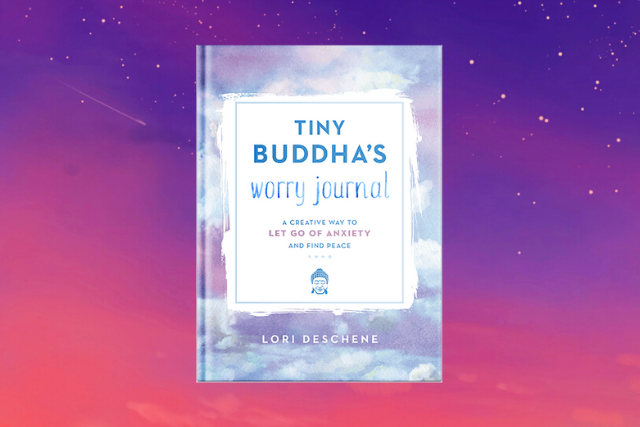
  • Giveaway: Tiny Buddha’s Worry Journal – A Tool to Calm Your Mind

    Giveaway: Tiny Buddha’s Worry Journal – A Tool to Calm Your Mind

    THE WINNERS HAVE BEEN CHOSEN! 

    Thank you, everyone, for opening your hearts and sharing a piece of yourself and your journey. I am amazed and inspired by all of you, and so grateful that you shared your strength and your stories here.

    I wish you all peace, joy, and so much love!

    The winners are:

    Please send your address to email@tinybuddha.com so I can send you a copy of the Worry Journal!

    Though life has become a lot less busy for many these days, I suspect a lot of us have incredibly busy minds given all the uncertainty we’re facing.

    It’s easy to get caught up in worst-case and what-if scenarios, trying to create some sense of control in a world where we have very little.

    I know, because I’ve done this many times. I’ve locked myself in a corner in my mind, filled my internal whiteboard with every possible combination of outcomes, and obsessed over how I could avoid potential pain—ironically, causing myself immense pain in the process.

    To some extent advance planning can be helpful. It gives us a chance to prepare for the worst and ascertain how we can do our best to get through it. But beyond a certain point it becomes maddening.

    It’s natural to have worrisome thoughts—they arise without our conscious choice. But we can consciously choose how we engage with them instead of spinning them into a tornado of anxiety that will surely destroy our peace, and possibly our health.

    This is why I created Tiny Buddha’s Worry Journal a couple years back: to help us all work through the fearful thoughts that would otherwise consume and control us.

    With writing prompts, quotes, questions for contemplation, and coloring and doodle pages, the Worry Journal can help you feel calmer, less anxious, and more present in your life.

    It’s a tool to help you reflect and then release, while broadening your perspective and helping you develop trust in your own ability to handle whatever’s coming.

    I think we all need that right now—a reminder that we’re stronger than we think and more resourceful than we realize. And that is why I’m giving away three free copies of Tiny Buddha’s Worry Journal.

    The Giveaway

    There are two things you need to do enter the giveaway:

    1. Subscribe to Tiny Buddha if you’re not already a subscriber. (You’ll receive instant access to Tiny Buddha’s 30-Day Health Challenge and three cool desktop wallpapers!) You can join the list here.

    2. Leave a comment below completing one (or more!) of these prompts from Tiny Buddha’s Worry Journal:

    • Today, I choose to let go of things I can’t control, including…
    • I recognize that I don’t need to have all the answers right now. Today, I give myself permission not to know…
    • Dear inner critic: You always focus on everything I’m doing wrong, but I know I’m doing a lot right, including…
    • I know I’m strong enough to handle whatever comes at me, because I’ve survived a lot, including…

    Your comment can be as short or long as you’d like, and you can enter until midnight PST on Sunday, May 31st.  I will list the winners at the top of this post some time on Monday, June 1st.

    Please note you’ll need to check back then to see if you’ve won so you can email me your address.

  • Why an Internal Focus is The Solution to All of Your Problems

    Why an Internal Focus is The Solution to All of Your Problems

    “The moment you take personal responsibility for everything in your life is the moment you can change anything in your life.” ~Hal Elrod

    I’m an introspective person, and at this point in my life don’t have any problems with taking personal responsibility. When I share my insights or understanding of situations I have been in, people often say, “Marlena, why are you so hard on yourself? What about the people that have wronged and harmed you? Why do you never mention them?”

    For most of my life, I was trapped in a victim mindset, which meant that I focused on how I believed other people had wronged me or what I thought they had done to cause me pain. I focused on my perceptions of their flaws, their shortcomings, how I felt they mistreated or harmed me. As a result, I mainly experienced a sense of helplessness, hopelessness, and despair.

    I’m not doing that to myself anymore.

    What some people may think of as being hard on myself is actually very empowering and liberating for me because I finally look in the right direction. My focus now is on the only thing I can control and change: me.

    Instead of trying to figure out how I can stop someone else from harming me, I notice what I’m exposing myself to. I notice how I am suppressing the anger that aims to motivate me to take action and to move away from something or someone that is simply not good for me. I focus on my inactions and my inhibition. I notice how I let old conditioning take over and then I put an end to it.

    How someone else treats me is outside my control. Noticing who or what I am exposing myself to is within my control. And so I focus on that.

    I reassure myself that I am not doing anything wrong when I speak up on my behalf. I no longer need anyone’s permission to do so because I have found my voice and I now know that my voice matters as much as everyone else’s.

    But it’s not about pepping myself up to do something that feels as forbidden as it once did.

    I now see standing up for myself as my duty and responsibility. It’s something I do to make everyone’s life easier. It simplifies relationships at all levels because I finally express myself, and by doing so I have grown up and matured in ways I never believed possible.

    But all of this came as the result of developing an internal focus. As long as my focus was on other people or challenging situations, I had no power to change anything.

    My anxiety and stress levels were sky-high. I was frustrated, angry, and constantly disappointed. I held on to resentments and felt bitter. I developed very negative views of life and people and became more and more stuck in a mindset that served no one.

    Worst of all, I was completely blind to it. I didn’t realize that I was disempowering myself because I was stuck in a victim mindset, believing I was born to suffer and endure an existence that was passively happening to me, that I could do nothing about.

    My focus on others had made me blind to myself.

    When you are unaware of your contribution to situations or problems, you render yourself helpless and out of control because you are not considering all available information or contributing factors.

    I didn’t understand that change was something I could do or make happen. In my mind, I was a passive recipient of change and life. Things happened, and I had to just deal with them to the best of my abilities, which left me feeling hopeless and depressed.

    If I was with a withholding partner, I just had to go without.

    If I was with someone angry, I just had to learn to not let it get to me.

    If I didn’t have enough money to buy food for me and my children, I just had to go without so I could feed them.

    If no one offered to help me, I just had to do it all by myself.

    If someone disrespected me, I just had to toughen up.

    I thought that I had to accept whatever was happening. I truly didn’t understand that I could take action and evoke change in that way. I lacked an internal focus and so did not see that my actions, inactions, and reactions shaped my experiences.

    This all changed when I started to undergo a huge transformation. It was a process I fought and resisted in the beginning. I was appalled at the suggestion that I had anything to do with my own suffering. Who would want this for themselves? Why on earth would I make this happen? At times, I got furious when I was pointed back toward myself.

    But eventually, there was no more denying it. I had too much evidence, and I couldn’t unsee what I was beginning to see very clearly: that I played the main role in all of my problems.

    The good news was that if I was part of the problem, then I would also be part of the solution.

    And to do that, I needed to really get to know and understand myself. I had to get honest. I observed what I was and wasn’t doing, what beliefs gave rise to my unhelpful behaviors, and what fears I was trying to hold at bay.

    I became aware of what I wanted and how I stood in my own way, ensuring I could never get what I wanted as long as I behaved the way I did.

    I started to see other people’s responses as reactions to me, and I started to see my reactions to others as expressions of my insecurities. Insecurities that needed tending to. Insecurities that required my attention and loving care, which was something I couldn’t do without first focusing inward. I needed my attention.

    Focusing inward created space between me and others. Where once there was conflict, confusion, and chaos, there now was time, space, and clarity, which allowed true connection to form. Blaming became a thing of the past, as did obsessing and ruminating.

    I was focusing inward for the first time in my life, and suddenly I felt freer and more powerful than I ever thought possible. I realized that it’s natural to feel out of control and helpless when you try to control what you simply cannot control. It makes perfect sense.

    I can’t control if someone withholds love, affection, and intimacy from me. I can control whether I address and talk about it. I can control walking away because it is not the kind of experience I want to have.

    I now see that I have choices. I am an active creator of my experience.

    Just because something happens to me does not mean that I have to stick around for it and expose myself to it. Old conditioning would make me believe that that was the case, but those beliefs were never true to start with.

    They were just old programming that ran unconsciously in the back of my mind. I didn’t notice because I didn’t pay any attention to myself. I didn’t focus inward, and so nothing made any sense to me. Things just seemed to happen because I couldn’t see my part in anything.

    But just because I wasn’t aware of it, didn’t mean that I had no impact on what was happening. I did. I know this now. And it doesn’t excuse what other people may or may not have done that I perceived and experienced as harmful or abusive. That is their burden to bear. That is not within my control and it is not something that I need to resolve.

    I resolve my issues when I liberate and empower myself by focusing on my part in things, on my business, on my role, on my contribution.

    I am now passionate about helping others in compassionate ways to develop their internal focus so that they too can empower themselves and change their lives in ways they currently daren’t dream of.

    It starts with being honest with yourself and allowing yourself to see and acknowledge your actions, reactions, and inactions without negatively judging yourself, shaming yourself, or justifying yourself. It means stepping away from blame and not using others’ negative behaviors as an excuse for your negative behaviors.

    If you feel helpless over a situation, it’s usually because you can’t see your part in it. Open up to exploring it. Allow yourself to see how it could be different if you made a different choice and acted or responded differently.  

    Notice what goes on for you: What are you trying to protect? What are you trying to avoid, defend, or control? How are you trying to keep yourself safe and from what?

    Then tend to that. Be compassionate. Reassure yourself. Set boundaries. Express yourself. Take action. Do what matters.

    This is how you take your power back. Focus on your part. Focus on what you can control.

    It is not about being self-critical or taking excessive responsibility.

    It’s about focusing on what brings relief and on what decreases our anxiety and sense of powerlessness.

    It’s about focusing on where your power lies. Even if you can’t see it yet, just know that it is there.

    Even if you don’t feel like you have a choice, remind yourself that you do and try to find it.

    Your life will become simpler and much more enjoyable as a result of that.

    Because I am living proof of that, I know that you can do it too.

  • How to Trust That You’ll Be Okay No Matter What

    How to Trust That You’ll Be Okay No Matter What

    “The only thing that makes life possible is permanent, intolerable uncertainty; not knowing what comes next.” ~Ursula K. Le Guin

    Did you play with cootie catchers as a kid?

    You picked a number and watched anxiously as your friend counted it out. Open. Close. Open. Close.

    You chose a color or picture or word and waited in anticipation as your friend unfolded the flap and read your destiny.

    Or how about that MASH game? Mansion, apartment, shack, house?

    I played these games with an insatiable desire for all the details.

    How is all of this going to play out?

    Where will I live?

    What will become of me?

    I was fascinated with details, and anyone who could supply them. Fortune cookies, horoscopes, and psychic phone readings all held the promise of telling me exactly what I yearned to know.

    Will I be okay? 

    With time, curiosity gave way to hard-core, type A planning. I’d plan everything out in excruciating detail and get my heart set on one specific outcome.

    I’d make a deal with the cosmos. Everything will be okay if it turns out just like this, okay? Okay.

    I craved certainty and the illusion of control.   

    The answer “surprise me,” made me uncomfortable. Playing it by ear was torturous. Penciling it in felt like the easy way out.

    I’ve made a lot of plans along the way: graduation plans, wedding plans, birth plans, career plans. Yet, no matter how painstakingly crafted these plans were, I was always a little surprised with where I ended up.

    My actual wedding dress was nothing like the pictures I collected with friends in high school.

    My thirty-eight-hour, two epidural labor was nothing like my 100% all natural birth plan.

    My house in Arizona is nothing like the one I’d dreamed of having in Northern California.

    And I’ve been okay.

    Okay, universe. I get the message.

    It’s not really about the details.

    We can make the best of difficult times, rising up after we’ve been dragged through the muck. We can surprise ourselves with what it turns out we actually want. And we can rain all over our own parades.

    The details are delicious, though.

    It’s so satisfying to make a list and check things off. It feels so good that sometimes we’ll even write down the things we’ve already done. And there’s something so soothing about having the who, what, when, and where sorted out.

    Best of all is knowing that the whole plan is exactly, perfectly the way you want it. It’s positively intoxicating.

    The only trouble is that the details hardly ever turn out as planned.

    This whole attachment to details thing is getting harder as time goes on. At a time when I most want to know if we’ll all be okay, I suddenly can’t figure the details out. Maybe I’ve lost my touch, or maybe the plans are getting more complicated.

    There are so many more variables and people involved now. Where it was once just me and my cats, there’s now me, my husband, my children, our families, old friends and new friends, employers, clients, school systems, licenses, and a mortgage to consider.

    With each new piece comes countless questions. So many, in fact, that I can’t even picture what all of this is going to look like.

    That’s got to be okay.

    I’m learning to accept that I’ll be okay if I don’t know the details because I know how I want to feel and what I want to leave room for in my life.

    As much as we’d like to take credit for them, the details are often things that just present themselves when they’re good and ready to be seen, anyway. They tend to sort themselves out in ways that we never could have planned.

    We take one step, then another. We prepare the best we can with what we know, knowing how we want to feel when it’s all said and done. Then we reassess along the way.

    Part of me really wants to fight that because it still believes that having all the answers now will guarantee that everything will be okay. Maybe it’s time to start having a little more trust that I’ll find a way to be okay no matter what happens.

    The more comfortable I get with letting the details reveal themselves when the time is right, the more aware I am of all the people who want to know the plan right now.

    They want to know when you’re visiting or moving back to your hometown or having your next child or finally graduating or asking for that raise.

    They ask all kinds of detailed questions about your plan, so much so that it can leave you feeling ashamed for not having figured it out.

    I get it, too.

    People want to feel closer to you or important or useful. They want to be heard.

    Maybe they’re kind of nosy. Or bossy. Or maybe they’re bored.

    Maybe they just really care and want to solve what they think is a problem for you.

    And maybe they also have a deal with the cosmos that everything will be okay if

    I get it because I’ve been them. I’ve interrogated, and I’ve demanded answers. Even after understanding that I can’t have absolute certainty (or control), I’ve been that person squeezing out the details before it’s time.

    Understanding is different from knowing deep in your bones that you’ll be okay no matter what.

    When you know, you live and breathe it. Instead of seeking control, you seek clarity. Instead of certainty, you seek courage.

    When you know the truth, you also know that it’s supposed to be a little scary to look out into the uncertain future. It’s unnerving to say, “Here goes nothing.”

    It takes courage to walk into the future knowing that you don’t have all the details nailed down. Your next step may be right, it may be wrong, it may lead you nowhere, and people may think you’re crazy, but you have to take it at some point.

    The truth is, no one ever really knows how it’s all going to look, but you probably have a good idea of how you want to feel and what’s most important to you. And if you don’t, maybe that’s why the details are so elusive.

    (But all the same, you don’t need the details.)

    You don’t need to see the details to trust that you’ll figure them out when the time is right, and you don’t need to see your path to know in your heart that it’s there waiting for you to take that step.

    You don’t need to know exactly how every piece will play out to know what the most important pieces are.

    And you don’t need absolute certainty to know that you’ll find a way to be okay no matter what happens.

    I’m not saying, “Let’s all throw caution to the wind from now until forever.” Make plans, yes, but there’s no need to obsess over the details if the details aren’t clear. Meet planning with flexibility and trust. Be curious about what happens next, not controlling.

    So go ahead, daydream, plan, manifest, make a vision board, or whatever calls to you. Just remember to begin from living and breathing the truth: that you will find a way to be okay no matter what.    

    I have no idea where I’ll be working five years from now, what our house will look like, what we’ll do on the weekends, if I’ll have lost the baby weight, or if I’ll dye my greys, but I do trust myself to make the call when the time is right.

    I don’t know all the when’s, where’s, or even how’s, but I do know how I want to feel and what I hold nearest to my heart.

    I want to feel light, energized, and free.

    I want to find meaning in my work.

    I want to be home in time for dinner.

    I want to create space for contemplation and creativity.

    I think I’ve had enough of the heaviness that comes from dragging around a lifetime of plans. It’s too much pressure, and even the most carefully made plans might change in the end.

    I still make plans, and I’m not throwing my bullet journal away any time soon. I’m just not letting my fear that I won’t be okay or that I’ll choose wrong or that people will disapprove suck the life out of living any more.

    So go ahead, universe. Surprise me. I’ll be okay no matter what.

  • How to Take Back Control from the Negative Script in Your Head

    How to Take Back Control from the Negative Script in Your Head

    “You don’t have to control your thoughts. You just have to stop letting them control you.” ~Dan Millman

    I’d love to say I had an “Eat, Pray, Love” moment where sitting sobbing in the bathroom I received divine guidance to leave my husband and go traveling the world eating amazing food. But sadly, it wasn’t quite that profound.

    It was more a long series of nights sobbing in the bathroom, looking at myself in the mirror, and concluding “You’re broken.”

    I wasn’t depressed and hadn’t been for a long time. My anxiety, a lifelong companion, was under control. So what was wrong?

    A general feeling of discontent, a lack of energy and enthusiasm to do more, a loss of my spark, a quietening and turning inward, and these overwhelming onslaughts of negativity and tears whenever I felt criticized or something went wrong, which was often. A sense of resentment and frustration that I’m sure ensured those around me felt less inclined toward being loving and giving me the care that I needed.

    So all those nights in the bathroom crying didn’t lead me to any insight, but thankfully the universe did send me guidance in other ways.

    Someone posted a video to a Facebook group I was part of by a guy named Richard Wilkins. It was called “My F*ck It Jeans.”

    Richard is well in his sixties, yet here he was making a Facebook video about how he doesn’t let his age dictate how he feels, acts, dresses, or his enjoyment of life. He doesn’t worry about others’ opinions or society’s views of how someone his age should be, but instead lives true to himself, and has never been happier. And here I was in my early thirties, feeling wiped out and like my spark for life had been put out before I’d even realized I had one!

    Over the next year I followed Richard on Facebook, and was drawn to drive one fateful Saturday morning to Northampton, to his Recharge Day.

    Richard always says, “The reason you are there is never the reason you are there.” This certainly proved true for me. I thought I was there to find out if the course would help my husband, but after I cried myself through the first half of the morning, I quickly realized I needed to be there for me.

    “You are not broken.” Richard’s words cut into my thoughts.

    Did I hear him right? Did he say I’m not broken? Did I dare to believe that? And how did he know that’s how I felt? There were over 200 people in the room. Was it possible that some of them also felt broken? If so, was it likely that I was the only one who really was?

    It was this question that led me to turn up on Richard’s front door step a few months later to attend a five-day Broadband Consciousness (BC) course with him and his partner, Liz, and seven other strangers, who have now become friends.

    For the next five days I shared things I’d not shared with anyone before. Then I shared more.

    I listened and didn’t jump in with advice. I made no plan for what I must do when I got back from the course. I didn’t look at my phone.

    I struggled, then I had a breakthrough, then I struggled harder. I spoke up when I did and found others had the same struggles. I supported others and they supported me in return.

    I woke up easily and full of energy. I laughed. I cried. I ate lots of biscuits and didn’t care. I felt like a very heavy weight had been lifted from my back. I felt like life didn’t have to be so damn hard anymore.

    I learned a way of separating that negative voice in my head (which BC calls “the script”) from the real me.

    I learned that the script is anything that doesn’t serve me and I would not choose.

    I learned to recognize the real me.

    I learned that the script is just thoughts based on incorrect beliefs, and that they are not true.

    I learned that if I’m not choosing my experiences, my actions, and my feelings, the script will choose for me.

    I learned that it’s not necessary to listen to, analyze, or try to change the script. All I need to do is recognize when it is the script talking and not me. And not believe it. And not act on it.

    And I learned this not from talking about myself but from witnessing other people and the script in their heads. Because guess what? The script told them they were broken too. And useless. And they always get it wrong. And they are fat and ugly. And they are not good enough. And they are not loved. And on and on… We were literally all reading from the same script!

    Since returning from the course, the impact has stayed with me and grown. After over thirty years of listening to the script, for every month I spend not believing it I get to know the real me more and ignore the script more easily.

    So how can we all take steps to turn away from the script and tune into our true selves?

    First off, you have to recognize the script and be open to the possibility that what it’s saying isn’t true.

    In fact, make it your job to discredit the script, to prove what it’s saying to be fake news.

    Remember that time it said you were dying because you were having a panic attack? Not true!

    What about the time it said you couldn’t do that thing, but then you did it? Yup, it was lying!

    Oh, this is a good one—how about that time it said you were worthless and no one would hire you? Ho ho ho!

    Once you recognize the script you will be surprised by how many times it pops up!

    Secondly, remember that you are not the script.

    Think of the script as a physical book. It has many chapters documenting every mistake we’ve ever made, all the bad things that could or have happened, detailing how we ‘should’ behave, think, and feel about every situation under the sun.

    The script also has an audio version, which is what we can hear in our heads each day. But it is not us. It is just the script being read to us.

    If the script says you are useless, this is not true, nor relevant. It is just the script’s opinion.

    Mentally put down the script and accept that, although we can’t change what’s in it or get rid of it, we don’t need to read it all day long, and we certainly don’t need to act upon what it says.

    Lastly, choose! Don’t let the script sit in the driver’s seat.

    The script lives in our reptilian brain and is much faster at responding than our conscious brain. If we don’t consciously choose thoughts, feelings, and actions, the script will jump in and choose for us.

    Start with small things: What would I choose to eat? What activities do I love? Be mindful of what you say. Cut off the script and choose to think of something else. Get out of bed at the time you planned to. Choose not to engage in arguments. Choose to take a bath or read a book.

    Every small choice moves us away from the script and strengthens our choosing muscles.

    Here are my top tips for doing so:

    1. Laugh or smile.

    I recently went to a laughter yoga class for the first time and learned that your body and mind don’t understand the difference between forced laughter and natural laughter.

    When you smile or make a laughter sound it makes you feel better. It strengthens your relationship with your true self and draws you away from the script. So as well as remembering to smile and laugh for no reason, building opportunities to laugh into your life can also be a real help.

    2. Focus on what the script doesn’t see.

    When you’re walking down the street, the script is on high alert for potential threats. It’s trained to look out for all the negatives and potential problems. If you (your higher self) are not alert, you will listen to all the bad things the script has spotted, not just in the street but in your job, your relationship, the activity you’re doing, your children’s behaviour, your body… and on and on.

    One way to practice disconnecting from the script and tuning into the real you is to focus in on all the good stuff the script filters out (in BC we call these “pearls”). Pearls don’t have to be anything huge. It could be a text from a friend, a hug for your child, a chance to grab a cup of tea in silence, or a warm bed at the end of a long day.

    3. Be mindful of your language.

    The more we look for something, the more it will show up in our life. This is true not just in terms of what we see in the world but also the stories we tell ourselves.

    The reptilian brain (where the script lives) doesn’t take time to fact-check what it tells us, yet because it’s coming from inside our own head we tend to believe it. It’s like taking in a headline but not reading or researching the article, then accepting that headline as fact and maybe even repeating it to others.

    So, if someone asks you how you are and you immediately jump in with “tired” or “stressed,” this is what you will believe and therefore how you will feel. If you moan about your partner or say critical things to them, you are repeatedly telling yourself that your partner isn’t good enough. How do you think this affects how you feel and act toward them? And the response you get in return?

    4. Choose.

    Start choosing instead of allowing the script to choose for you.

    Choose food you know will make you feel good. Arrange activities that bring you joy. Say no to that event you don’t really want to go to. Choose to go for a walk at lunchtime. Choose to give your opinion or choose to forget the ironing and take a bath.

    Do whatever you feel called to do when you really tune into your feelings rather than letting autopilot or society’s demands take over.

    5. Let it pass.

    A food craving lasts three minutes, so if you can ignore it for that long it will be gone. I’ve found it’s the same with the script.

    When something triggers the script and you suddenly feel angry, sad, or inundated with critical thoughts, it will generally abate after a few minutes. No need to act on the script either by saying something or doing something. Let it pass, then, when you’re no longer in the script, decide if you need to act.

    Also, remember that whatever triggered the script is not responsible for your subsequent feelings, it is the script making you feel bad, not your colleague, partner, or the guy who cut in front of you in the line.

    6. Share. Learn. Explore.

    The world of self-development can be overwhelming. The script will always tell you that you need to learn more, fix this problem, work on yourself just a bit more. Be conscious of this and instead stick to readings and learnings that align with the simple practices I have mentioned above.

    Focus on sharing as you learn rather than feeling drawn to learn more and more and more. This will reinforce the messages and in turn, you will learn through the telling.

    Be aware of your learning style. If you learn from sharing, then talk to people about what you have learned here. If you learn from writing, write about your experiences or doodle your own version of how to explain the script to a stranger.

    When we share what we have learned and help others, we move away from ourselves and our own problems, and this prevents us from dwelling and drawing more problems to us.

    7. Exercise.

    Everyone says this, but it’s for good reason. Exercising for twenty minutes a day is as effective in boosting your mood as some antidepressants. So whether you’re depressed or not, that has got to be good for you! It gets you out of your head, where the script is, and into your body.

    By getting into your body, you can tune into your conscious mind, and you’ll likely find that ideas, inspiration, and solutions to your problems present themselves.

    8. Listen to music that uplifts you.

    Similarly, use music to get yourself out of your head and into a chosen state. Choose music that reminds you of happy times, or music that gets you energized and ready for inspired action.

    9. Get competitive but not angry.

    Try to avoid getting angry with the script, since it’s only trying to help, although ineffectively. Instead, develop a healthy competition with it.

    If the script thinks you are too lazy to go for a walk, do it.

    If the script thinks you are too scared to do something you’d love to do, do it anyway.

    If the script thinks you should say no to an amazing opportunity, ignore it.

    If the script wants you to lose it with your partner, choose not to.

    Thank the script for its input, but remind it that your real self has the resources, experiences, and skills to deal with life without its help.

    10. Keep asking, “Is this true? Would I choose this?”

    Odds are, once you tune into your higher self, you’re realize the answer is no. And you’ll be able to choose for yourself instead of letting the script run the show.
  • How I Learned to Stop Pushing So Hard and Enjoy the Moment

    How I Learned to Stop Pushing So Hard and Enjoy the Moment

    “Life is a balance between what we can control and what we cannot. I am learning to live between effort and surrender.” ~Danielle Orner

    Over a year ago, I boarded a plane and found myself on the beautiful beaches of southeast Asia. My dream was to travel the world, indefinitely, while working independently and living out of a suitcase. I had worked hard in my life to come to this place, and there couldn’t have been a moment that was more positive for me.

    However, as I enjoyed sunbathing on the beautiful beaches, I started to feel weary. It’s hard to describe really, but I slowly started to slip into a deep apathy and restlessness. Everything was perfect, or at least it should have been, and yet I was becoming unsatisfied.

    In a day I would travel to unknown waterfalls, go hiking, and explore mysterious secret beaches, but I was stagnating on the inside and I couldn’t understand why.

    In time, I realized the problem: Before, when I had fought so hard to get to this place, that had been my purpose, and now that I was here in this beautiful paradise I felt purposeless. I had nothing to push for, only something to enjoy, and that wasn’t something I knew how to do.

    To combat the monotony I tried to change things up. One trip found me driving through an Indonesian island weaving in and out of mountain passes with my girlfriend, who I’d met there, on a scooter. It was a complete rush, and I should have been lost in the moment, yet I felt nothing.

    During that day I remember her being completely full of passion. She was exuberant and full of energy. We arrived at the extravagant water temple in the middle of a lake. I was calm and distracted trying to find how things could feel right for me, trying to understand how I could find that purpose again.

    Times before, when I had been deeply challenged, taught me that to overcome such obstacles I just needed to put forth more effort and try harder. Staying true to that pattern, even with all signs telling me not to, I made the decision to drive us back through the mountain pass with the ever dark grey skies clearly delineated.

    Sure enough it started raining lightly on the way back as I drove the scooter through the cliffs. Staying on the same course, I kept driving and pushing forward no matter the obstacles telling me clearly to stop and regain balance. Even the sweet girl’s cough in the rain couldn’t get me to pause for a moment.

    I was a jerk. Arriving back at my home, I knew something was out of place. My beautiful girlfriend’s sneezing and coughing made me feel even worse, though I still didn’t quite get what was right in front of me.

    You see, most things were never easy for me, and what I had learned to be an exceptional strategy was to always push forward. No matter what was standing in my way, I had learned over and over again that I could overcome those obstacles through pure willpower and force.

    I had a lot to learn, and it would be a painful lesson.

    In the following weeks instead of pacing myself, I pushed myself even harder. I went to work earlier, I worked harder, and I exhausted myself. Out of my awareness, my girlfriend started to distance herself from me. She was taking trips by herself, relaxing on beaches and enjoying her time, while I felt like I was running through quicksand.

    At first, it was difficult for me to notice when she was gone completely, but it came hard and fast. I tried to block it out entirely by doing more, but I couldn’t. I recall a half hug one evening that left me feeling empty, but everything else seemed vague and blurry, as I had managed to shut out those feelings.

    As you may have guessed, I continued my same pattern of trying even harder in life; whether that was in my relationships or my work, I believed that was the solution. I increased my working hours, and when that didn’t work, I did the complete opposite and didn’t work at all. Instead, I tried harder in my love life, going on too many dates and exhausting myself.

    Soon I came to look for healing with all my force. I read articles and tried to take better care of myself. I saw a therapist and tried to force the problems to go away with all my will, but it was all too elusive.

    I felt broken down and completely lost when a good friend offered to take me out for a surfing lesson.

    It was a fine day with beautiful weather, and we had just finished applying sunscreen when I looked out and saw all the surfers, young and old, having success on the waves. One that stood out to me and warmed my heart was a child, about eight years old, gliding along the waves so effortlessly.

    On the first run, I paddled out and got ready for the wave to come. I could see the white ripples coming, and excitement filled my untired chest, as I knew this moment was coming for me and I would be ready for it.

    I propelled myself as hard as I could; viciously, I accelerated as the wave came up behind me, and I knew that this was my moment. Looking up and with perfect form, I did exactly as my instructor had taught me. I put my leg in a star against my other leg, kept my arms firm, and pulled up to stand.

    I got on one leg and, with waves all around me, I was doing it. I started to bring my other leg up so I could stand, and just like that, another wave came out of nowhere and knocked me off my board and into the roar of the current. I flailed around just as if I had been a floundering fish.

    I’d almost had it. I was so close. All I had to do was get off of my one knee and onto my other foot, and I would have been standing there, firmly surfing this beautiful wave on this gorgeous day in Southeast Asia.

    You can probably imagine what I did after this. I tried even harder, over and over again, yet it felt like the waves kept hitting me harder and harder.

    I didn’t take the rejection easily either. I kept getting back up and throwing myself into the rough water. The same result kept happening. Over and over I got thrashed by the ocean, beaten down by a bully that I couldn’t defeat.

    After a while, my friend and instructor looked over at me knowing that I had probably had enough, but I wasn’t ready to quit. He watched on as we both saw the biggest wave coming that had been there the whole day. Again, I used the form he had taught me and again I got bombarded by the waves and thrown violently into the dark blue ocean.

    That one hurt. Feeling beat and exhausted, I looked up just in time to see my surfboard smack me squarely in the face, to the point of almost knocking me unconscious. This was the first time the lesson would finally hit me hard enough for me to recognize it.

    Meekly, I found my surfboard and paddled back to the shore. On the way I saw the younger children gliding along the friendly waves and enjoying the thrill of winning. Me, I felt complete exhaustion and utter defeat.

    Collapsing onto my surfboard on the shore of the sandy beach, I took a moment, actually probably many moments, to collect my breath. It would take me even longer to collect my thoughts, but I had taken away something significant from the moment that had came, bombarded me, and left me to think about things.

    Over and over again, I had tried to will myself to victory in every area of my life. My solution was always to try even harder, to be more, and to do more. I had finally realized that the key to life is balance—which means learning when to surrender.

    This same drive that had helped me become so successful in life was the thing that was causing me the most pain and preventing me from appreciating life. Always in a hurry to accomplish the next thing or make the next goal, I had adopted a sense of inadequacy that caused constant misery for me on a paradise island that was full of beauty I couldn’t see.

    This being out of balance and trying harder at everything finally made me have a complete breakdown. Most of the time when we lose our balance it’s too late, and we’re already on the floor before we notice it. This is what happened to me.

    I finally got to see through the illusions that I had been putting up all around me. I understood that I had been hiding my feelings of inadequacy with the hope that they would go away if I just tried harder. I realized that I had shut everyone else out, and most importantly all of these realizations opened me up to feeling again.

    A week later on the plane ride back home I put very black sunglasses on. It was a bright morning, but for the first time in a long while I let myself go and allowed myself to feel again. Most likely no one except for me truly knows how painful that airplane ride was, but after you lose your balance and fall it often hurts.

    My next challenge would be to restore my balance and regain a firmer foundation. This time, however, I would not have to try harder, because often life isn’t even about how hard you try.

    On that sunny day in the ocean surfing, it wouldn’t have mattered how hard I was trying to surf. Nearby an eight-year-old was hardly trying at all, and he was having the time of his life coasting on the waves. Ultimately, we were both going to end up eating water—just as we all fall in life at times—but he was going to be fulfilled and laughing while I was trying to force an outcome and causing myself to be unbalanced.

    Floating is natural, just as the waves in the ocean, and the chaos in life. I now have the ability to let go and find stillness so that I can regain my balance and move forward in life. This all came from having that complete breakdown and teaching myself that it was okay to go slow and take care of myself. I had to.

    I haven’t yet made it back out to the ocean or traveled since then, but I know that when I do I will be able to let go and relax into balance.

    Whatever challenges you are facing, consider that you still have the room to pause, relax, and take care of yourself. You don’t always have to be pushing, achieving, and succeeding. Sometimes it’s just as important to reflect, recharge, and simply be in the moment. With nothing to do or prove.

    When I feel myself trying harder or pushing too much, this is what I do now. Instead of stuffing my feelings down, I slow down, let myself feel them, and learn from them what I need.
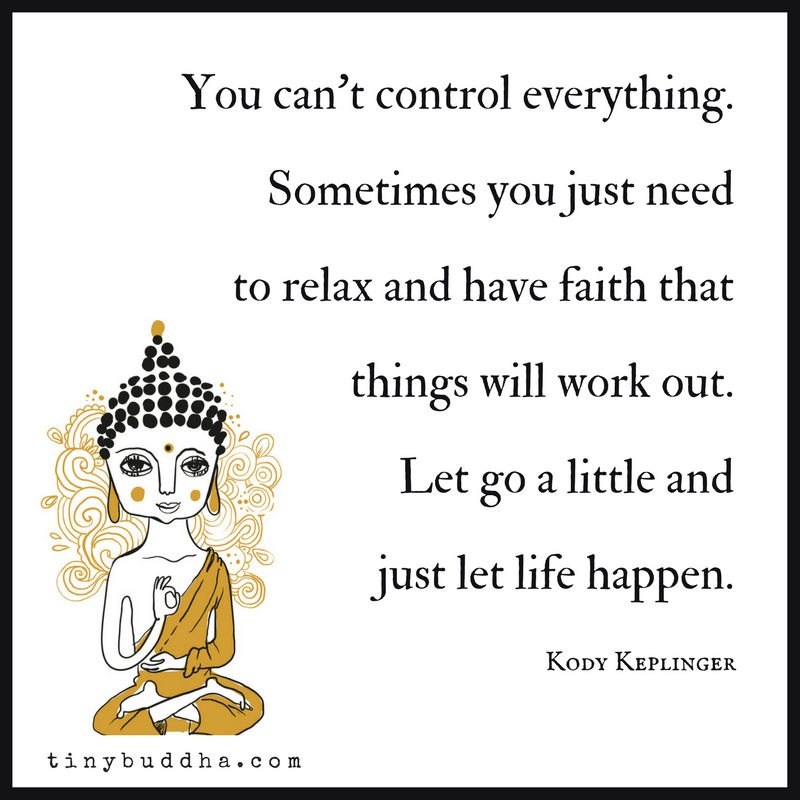
    I also remind myself that I don’t have to fight the current so hard to force things to happen. Sometimes it’s far wiser to surrender, relax, and enjoy the ride. When we embrace peace and balance we still move forward in life—just with far less stress and a greater appreciation for everything around us.

  • How to Feel More in Control When Life Gets Overwhelming

    How to Feel More in Control When Life Gets Overwhelming

    “When it is obvious that the goals cannot be reached, don’t adjust the goals, adjust the action steps.” ~Confucius

    I’m in the middle of a career transition and it hasn’t been easy. For the first few months after quitting my job—a job which I thought should have been perfect, where I thought I would stay for years—I was paralyzed into inaction regarding anything career-related. I had lost confidence in my own judgment; after all, I had thought that job would be the one and it wasn’t, so did I even really know what I wanted?

    This kind of self-doubt makes me second-guess myself to the extreme—my goals, my desires, and even the validity of my feelings. This often means I start doing something, question what I’m doing and how I’m doing it, feel stressed and overwhelmed, and then end up doing nothing.

    I’m still in this transition, but where once the self-doubt and overwhelm paralyzed me every day, I’m now taking back control and beginning to shape my life how I want it.

    First, let me present you with a story. Jessica is a high school student in the middle of taking the SAT. She really wants to do well because she knows that getting a higher score improves her chances of getting into her dream school and qualifying for scholarships.

    Everyone has told her how important the SAT is, how hard it is to do well, and (unfortunately) how unlikely she is to get her goal score. On the test, she reaches a tough question and has no clue how to answer it. Here are two of her choices:

    -Option A: Jessica racks her brain, her mind filled with thoughts of her dream school slipping away; she tries a few different methods but only manages to eliminate one incorrect choice; she second-guesses herself and then realizes that time has slipped away from her and, feeling anxious and flustered, she rushes through the rest of the test.

    -Option B: She skips the question, continuing with the rest of the test and answering all the questions she feels confident about. When she returns to the difficult question, she finds that it is not as hard as it first seemed and is able to solve it with confidence. She remains in control of her test experience and finishes the test with confidence.

    What does this example have to do with those of us who aren’t high school teenagers and are going through stressful times? A lot in fact.

    When Jessica encounters an obstacle in an already-stressful time, she can try to force her way through it, as in Option A, or skip the question and come back to it, as in Option B.

    As a test prep instructor, I teach my students to do the second option through a guided exercise, and the students are surprised to find how much easier the “hard” questions are after answering the easier ones. The second approach builds up confidence, while the first approach increases test anxiety.

    I wondered if I might be able to apply this test-taking strategy to life or if it was too ridiculous to work. As it turns out, by temporarily turning my attention to something else—’skipping’ the problem with the intention to return to it later—I was able to minimize my feelings of overwhelm and take steps that I was once paralyzed to take, steps like learning new skills.

    When faced with overwhelm, the best way to handle it is to stop and do something else. This holds true whether we are taking a test or facing a more complex source of stress.

    We rarely do this because it is counterintuitive. When we feel overwhelmed, we often feel that there’s too much to do, there’s not enough time or resources, we don’t know where to start, and in general our goals feel unattainable. If there’s so much to do and so little time, how can we justify “wasting” time doing something else? Won’t that just delay our goals further?

    However, by seeing how ineffective Option A is for Jessica, I realized there might be a parallel to other aspects of life. In the same amount of time that Jessica could spend being frustrated or anxious, she can choose to say “not yet” or “not right now” and move on to something else, knowing that the problem will be sitting right where it was.

    Now, whenever I notice the constricting sensation of overwhelm, I know that my next step is to stop whatever I’m doing and switch gears. I could be ruminating, folding laundry, or writing, but no matter what I must stop and do something else.

    An amazing thing happens when I do this: I regain control over the shape of my life.

    I may not have control over all my life circumstances or even my emotions, but I do control how I react. When I choose to react in ways that nourish my sense of well-being and provide me with a sense of accomplishment, I am able to face challenges for what they are.

    If sitting down to write a blog post seems especially daunting right now, then I’ll do some chores. If the chores seem difficult, I’ll go for a walk. If a walk seems like too much, I’ll journal stream-of-consciousness.

    The specific task that overwhelms us and the task we choose to do instead aren’t what matters most for this method. It’s the inherent power of choice that allows us to brush off societal definitions of success and pursue our own ever-evolving sense of success.

    While it’s not possible to provide specific alternative actions for every scenario, here are some general ideas of things to do when you’re feeling overwhelmed:

    -Go somewhere. It could be as simple as going to another room or going somewhere across town. The change of scenery can bring a fresh perspective to a prior problem.

    -Make something. You could draw, cook, or fold a paper airplane. When we engage our creativity, we have fun and build confidence through effort rather than results.

    -I often feel energized but directionless when I am overwhelmed, and maybe you do too. Enjoying your favorite type of exercise can improve your mood and release pent-up energy.

    -Whether you connect with loved ones or with a spiritual/religious practice, connecting with others helps us feel supported when we try something new.
    While overwhelm is bound to happen in our lives, we can choose to react in ways that enable us to feel confident and in control. It’s not the same as running away from your problems; it’s finding a circuitous route that has an immediate benefit of improving your sense of well-being and long-term benefit of helping you take action and find solutions.
    By taking charge of the content of our lives, we can find that even when overwhelm happens, we have the tools to work with it and the power to shape our lives through our choices and actions.

  • How to Be Less Anxious About Things You Can’t Change

    How to Be Less Anxious About Things You Can’t Change

    “One of the happiest moments is when you find the courage to let go of what you can’t change.” ~Unknown

    Over the last few years, I’ve had to deal with a frustrating problem.

    It’s something that’s not uncommon, but it can be debilitating, and it has affected me every day. Some days have been incredibly tough, and they’ve tested my tolerance and my patience.

    The problem is chronic back pain.

    Every day I get up, knowing that throughout the day I’m going to have a discomfort that could oscillate between a mild annoyance and an intense burning. At some point, it’s going to distract me. Either while I work, while I eat, while I meditate, while I exercise, and sometimes while I sleep.

    You’d think by now I would’ve gotten used to it, that it would’ve become the unwelcomed friend that I’d learned to live with. Unfortunately, that’s only the case sometimes.

    But I am (slowly but surely) learning firsthand the value of something incredibly profound that the meditation teacher Shinzen Young once said:

    “Suffering = Pain x Resistance.”

    When it comes to the suffering we experience when dealing with physical pain, it’s not always easy to know exactly what is pain and what is resistance to that pain.

    In my own situation, every now and then, when the pain is very uncomfortable, I’ll start to ruminate. My mind will begin to make up stories about how severe the pain is, how much worse it’s going to get, what I could’ve done to prevent it, and anything else to resist the experience.

    But there are certain things you can’t know and certain things you can’t change. I’m doing the best I can to try and prevent the pain—I’ve seen a number of specialists, all with varying opinions.

    My focus now is, how can I reduce the resistance and alleviate the suffering?

    This is broadly related to another important existential issue and something that I want to explore with you in a little bit of detail.

    We all have to deal with situations that we have no control over; illness, death, and loss are inevitable. I’m going to share with you how I’ve faced this, in the context of my back pain, but it’s highly likely that you’re going through something comparable in your life right now. It might be something less obvious, like a part of your job that you’re not entirely comfortable with, or it may be a lot more serious, like the terminal illness of someone you love.

    Either way, we’re facing the same question: How can I be less anxious about the things I can’t change?

    Here are four things I’ve done to manage this anxiety.

    1. Keep track of the stories my mind is telling me about any situation.

    One thing that you realize by paying attention to your pain is that the mind is a master storyteller. The natural response to any uncomfortable situation is to create a mental novella equipped with a list of assumptions, a worldview, and a timeline about the past and future.

    Your job, however, is to tease out fact from fiction. If I have pain when I’m working, my mind might start to tell me the story of how I’m going to be late to the project I’m working on, or that I’ll never figure out how to overcome the pain, or any number of things that one, aren’t either true or knowable and two, aren’t the least bit relevant to the situation at hand.

    If you write down a list of the ideas you have about the thing you can’t change, you’ll start to see recurring themes and you can see the movie that’s playing in your mind without getting absorbed in it.

    2. Meditate on the pain and resistance and figure out which is which.

    Remember the Shinzen Young quote I shared earlier: “Suffering = Pain x Resistance.” Well, understanding when resistance to the situation is making up the bulk of your suffering is an incredibly useful skill to learn.

    You can do this in meditation by inquiring into your thoughts and feelings. I may ask myself “If I could accept this pain completely, just for a few moments, what would the pain feel like?”

    If the pain decreases significantly, it’s clear that the experience was dominated by resistance. If, however, there is little change, then it’s the physical pain itself that is the problem. More often than not I’ve found that resistance is worse than the pain itself!

    3. Highlight the positive aspects of the thing I can’t change.

    This is pretty much good old-fashioned re-framing. Focus your attention on what’s positive about the thing you can’t change, and very importantly, celebrate the little wins.

    For example, I try to tell myself, “My back hurts today, but at least it’s not stopping me from going to the gym.” And if I have a day where the pain is less serious than other days, I’ll make a mental note of it, and try to express it in some form, e.g.: “My day was good. I got a lot of work down and it was relatively pain-free.”

    4. Practice the art of letting go.

    This practice is something that comes hand in hand with noticing resistance. We don’t often think of letting go as a skill, but it is. In the same way we can become adept at holding onto something, we can learn how to do the opposite.

    There are two aspects of letting go that you can practice. Firstly, the depth of letting go; that is, how completely can you consciously let go of something that is bothering you.

    If I have a pain in my back and I exhale deeply, telling myself it’s okay, but five seconds later I’m thinking about how frustrated I am about the pain—well, I have a lot of practice to do.

    The second aspect is how appropriately you can do so in the moment, i.e.: how good your timing is.

    For example, if you spend all day worrying, but then you get home and right before falling asleep you let go, then your timing needs some work. If, however, you catch your mind telling you a story in the moment, and you can objectively see that it’s just a story, you’re on the right track! Meditation is one way to help you see things as they come up in real time.

    Learning to become less anxious about things you can’t change is an incredibly valuable life-long skill. It’s unfortunate that typically we have to come to learn this through real challenges and discomfort, but making the best of tough times is one of the beautiful things about being a human being!

    When have you learned to be less anxious about things you can’t control? Let us know in the comments; we’d love to hear from you!