Tag: Compassion

  • We Need to Be Giving: Kindness Can Be a Win-Win Situation

    We Need to Be Giving: Kindness Can Be a Win-Win Situation

    “We make a living by what we get, but we make a life by what we give” ~Winston Churchill

    When asked what his religion is, the Dalai Lama tends to respond with one word: kindness.

    In the world we live in today it’s easy for us to get so caught up in our goals and commitments that we overlook the suffering or needs of those around us.

    Kindness may sometimes be put to the bottom of our to-do list when we feel a desperate need to survive, which seems to be increasing with all that is going on globally at the moment.

    Many of us have lost our jobs, are renting our homes from the banks, and are just about scraping by for the daily necessities.

    The paradox there is that now is the very time we need to be kind to one another because we need one another more than ever.

    And the old proverb “give to receive” is possibly the guiding light that we are meant to follow.

    Having recently returned from India where I spent six weeks in Dharamsala, alongside my Tibetan friends, they taught me a thing or two about the benefits of giving.

    My line of work takes me into the lives of Tibetan monks. These monks are my friends and really want what I am doing to succeed. As a result, they open up and welcome me and my friends without thinking twice.

    For example we were celebrating the birthday of one of our friends. It is not the tradition for Tibetan monks to celebrate birthdays, only that of the Dalai Lama’s, so they were not so sure what to do.

    I rounded up cakes and drinks and asked the monks if we could have our little get together in their working space, to which they readily agreed.

    We did the typical happy birthday song and cut the cake while a handful of the monks watched on slightly bemused at our Western ways. Slowly the rest of the monks wandered in and each of them instantly dropped the work they were doing and sat down to take part.

    Despite their lack of understanding of our unusual rituals they could see this was important to us and that seemed to be enough for them to make time for us.

    As a way of saying thank you for all they had done, I donated a hot water tank for the monastery which meant no more cold bucket showers for the monks when temperatures drop below freezing, as they easily do high up in the Himalayan foothills.  (more…)

  • 4 Easy Steps to Deal with Difficult People

    4 Easy Steps to Deal with Difficult People

    “There is a huge amount of freedom that comes to you when you take nothing personally.” ~Don Miguel Ruiz

    It seemed like a simple task. Please switch my gym membership from gold to silver level. I’m not cancelling, just switching.

    That was now the third time I repeated my request, each time a little more calmly and a little more slowly, despite the beginnings of blood boiling feelings.

    The person on the other end of the phone could not have been ruder. It was as if I was asking for a kidney instead of a membership change. A harsh tone and harsher words ensued. Why, I still have no idea.

    You have undoubtedly met them. You have maybe been one, once or twice.

    Why are some people continually difficult to deal with? What makes Joe easy to get along with and John such a struggle? Here are the major reasons and what can be done about it.

    1. We feel triggered when our needs aren’t met.

    We love it when we are acknowledged. We may not be crazy about when we are criticized, but it beats Option #3: being ignored.

    Being ignored is a terrible feeling for humans and one that we avoid like the plague. When this occurs, some people revert to “problem child” mode. These are the set of behavioral responses that are so ingrained that it is a reflexive series of actions. It is the default mode.

    When you find yourself in such a situation, ask the big question: What is my positive intention here? What am I trying to accomplish? (Or: What is the other person trying to accomplish?)

    If you can leave enough of the heated emotions aside, clearing enough space for some patience and I dare say, compassion, the root cause of the behavior often becomes crystal clear.

    What are you trying to accomplish? Great. Let’s find a way of getting what you want in a healthy fashion… (more…)

  • When Friends Fear We May Judge Them

    When Friends Fear We May Judge Them

    “When you judge another, you do not define them. You define yourself.” ~Wayne Dwyer

    One of the times I felt my lowest was when I found out a best friend didn’t tell me something important that had happened in her life. I felt about an inch tall when she said she feared I would judge her if she told me, and that’s why she kept it a secret.

    At that point, I broke down. Do all my friends feel this way? Why? I’ve always felt very protective of them and tried my best to be a great friend.

    I’m an only child. I’ve spent a lot of time with my parents. They’re wonderful and they’ve done a lot for me, but one thing they’ve passed on is a sort of judgmental, sarcastic type of humor.

    So as much as I joke around and I suppose, judge what others do, I always thought my friends knew that I would always accept them.

    I catch myself gossiping and talking about others, essentially judging them. I’ll admit there are times when I feel as if I’m better than someone. But who am I to think that? I’ve made mistakes. I don’t always do or say the right things. I’m by no means perfect or better than anyone else.

    Suddenly, I somewhat understood what my friend meant. Even though I hoped she knew that I would never judge her choices and I’d always be there for her—and as much as it pains me—I could see why she was afraid to tell me.

    I didn’t want to define myself as a judgmental person who people couldn’t trust to talk about important issues. Not even for one second. So I vowed to change. (more…)

  • How to Feel More Loved: 9 Tips for Deep Connection

    How to Feel More Loved: 9 Tips for Deep Connection

    “It is astonishing how little one feels alone when one loves.” ~John Bulwer

    If there’s one thing we all want, it’s to feel loved.

    We want to feel deeply connected to other people, fully seen and appreciated by them, and secure in those relationships.

    We can have a million and one acquaintances online, but if none of our connections feel intimate and meaningful, we will ultimately feel alone.

    There’s actually some interesting research that shows we tend to value physical possessions less when we feel loved and accepted by others, because relationships can provide a sense of comfort, insurance, and protection. They truly are the most valuable things in our lives.

    I remember when I completed my last promotional tour. It’s something I used to do for work—travel around the country promoting products at sporting events, concerts, and retail locations. I chose this career partly because it seemed adventurous, and partly because it allowed me to distract myself with constant change and motion.

    Although there were more than twenty people on the tour, I frequently stayed in separate hotels because my responsibility was to care for the tour dog, and the group often stayed in places that didn’t allow pets.

    I’d just decided to leave NYC shortly before this job, after slowly climbing out of years of self-loathing, depression, and isolation. I wanted nothing more than to make real friendships, but I simply didn’t know how.

    I saw it happening all around me. I saw women forming bonds that I knew would last for years, while I frequently felt awkward and insecure. I saw romantic relationships blossoming, while I had a superficial fling with someone I hardly knew, who hardly knew me back.

    Though I was trying to open up to people and create space for them to open up as well, I still felt alone, love-deprived, and terrified that these feelings would endure. As a consequence, I frequently sabotaged myself and potential connections. (more…)

  • Releasing Judgment and Allowing Others to Have Their Process

    Releasing Judgment and Allowing Others to Have Their Process

     “Judge nothing, you will be happy. Forgive everything, you will be happier. Love everything, you will be happiest.”  ~Sri Chinmoy

    We live in a world of judgment. We qualify everything in varying degrees of right and wrong, good and bad, pretty and ugly.

    We are taught from earliest childhood to judge everything and everyone. We label our days consistently, using adjectives like “beautiful” or “horrible.” Even the weather is not immune!

    The presence of judgment is pervasive in our lives, yet subtle enough in some cases to pass unnoticed. 

    I have worked for years at ridding my life of all judgment, but it’s far easier said than done! Just when I begin to think I’ve eradicated all traces of the poison, it pops up again, wearing a new disguise.

    One of the most valuable lessons of my life was witnessing the presence of judgment when I least expected it…

    Many of us on a so-called “spiritual path” find ourselves sorely challenged when we observe the suffering of those around us. This was especially true for me when my mother was dying.

    In the last days of my mother’s life, she was in severe, physical pain.  It’s hard for me to put into words the extent of my discomfort as I watched her, and the effect it had on my personal belief system.

    For years, I had lived with the belief that “all is well,” that regardless of any appearance of disharmony, there is a destiny, a plan, order in this great universe of ours. As my mother lay dying, I could not reconcile the image of her suffering with that belief system.  (more…)

  • No Act of Kindness is Too Small

    No Act of Kindness is Too Small

    “There are two ways to live: you can live as if nothing is a miracle, or you can live as if everything is a miracle.” ~Albert Einstein

    One of the key ways to bring about greater harmony and peace in our lives is through understanding—looking at a situation and taking the time to put ourselves into the minds and hearts of others.

    And the key to understanding begins with the seed of compassion. Sounds so simple, right? So why don’t we do it?

    As people living in the west, we can sometimes be in too much of a rush to be kind—particularly when we’re dealing with deadlines and pressures.

    Can you think of a time when you brushed passed a certain situation and later regretted it? Feeling afterward that somehow you should have lent a helping hand, no matter how big or how small?

    In Northern India I am very fortunate to have what I call my Tibetan family within a monastery there. The monks have welcomed me into their world, and as they go about their daily business, I’m right there with them spending time.

    The benefits of this unique and special opportunity range from attending wonderful sacred events to sitting watching TV together as they serve me momos (dumplings).

    One night, while relaxing with the monks after a nice meal, I received a late call and learned that my cat back home in London was sick.

    The monks stopped what they were doing—one was even dragged back out of bed—and did an impromptu prayer session for my furry friend without a second thought.

    There they were, five of them chanting away. It blew my mind, because it demonstrated to me that they understood my fears and concerns and held my cat’s health in great importance.  (more…)

  • Why We Find It Hard to Do Things That Are Good for Us

    Why We Find It Hard to Do Things That Are Good for Us

    “Have respect for yourself, and patience and compassion. With these, you can handle anything.” ~Jack Kornfield

    I find it hard to do things I know are good for me, harder than anything else in my day-to-day life.

    Yoga, meditation, journaling: these have all been invaluable tools during my personal journey, yet I have to will, sometimes fight myself in order to do them.

    It’s not that the activities themselves are hard (although yoga can be intense). It’s the motivation, the internal debate that starts up every day that I struggle with. Afterward, I feel great, more in touch with myself and far more at peace. But to get there, it’s a psychological mission.

    I used to think it was just me—that everyone else sat down to these activities with an eager mind and an open heart, especially people who write about these things, like I do, and practice them daily, like I want to.

    The fact that I was less skipping joyfully to and from these activities and more dragging myself with gritted teeth left me feeling like a fraud, which meant I wanted to do these things even less.

    Over time, I learned more about self-acceptance. I learned to accept that this was me, the way I am, and that perhaps I will always find it difficult to sit down and do these things, whether it makes sense or not. Yet, I still felt alone with my struggles and, therefore, afraid to really talk about them with anyone else.

    Last week, I was talking to a friend of mine about challenges he was having with a course I run. He was saying he felt resistance, he didn’t know why, and that it seemed like everyone else found sitting down and doing the work a walk in the park. They could just do it, whereas for him it was a daily battle.

    That sounded familiar…

    And as soon as I wasn’t trying to hide the resistance, as soon as I let myself talk about it openly, I could think more clearly about why I felt that way, and what was behind that resistance. And out of all those reasons came the realization: the resistance is on my side; sometimes it’s just misguided. (more…)

  • Reclaiming Valentine’s Day: 4 Real Expressions of Love

    Reclaiming Valentine’s Day: 4 Real Expressions of Love

    “Love is what we were born with. Fear is what we learned here.” ~Marianne Williamson

    Valentine’s Day. Yes, that day—the much maligned, much cherished, much hated, and much misunderstood day of the year.

    I remember being traumatized in adolescence. Not only were we supposed to, according to peer-reviewed social norms, like people and get liked back on this holiday, my school made us do Valentine’s day card/candy exchanges.

    We exchanged, in class, little pre-packaged cards and those infamous heart-shaped candies stamped with subtle expressions like “be mine.”

    Do you recall these candy hearts that I’m describing? They come in variety packs, taste like chalk, and have words stamped on them like “marry me” and “real love.”

    How traumatizing it was for me to pick the right heart to give to the right person in my class—I didn’t want to give the wrong person the wrong heart—and then, for the one girl I did have a crush on, to sheepishly hand her the candy that said, “kiss me.”

    Part of the trouble was: Which candy heart to give to my friends that wasn’t too sissy or too heart-wrenchingly sappy? Certainly the one that said, “let’s cuddle” was not the right one.

    But the worst part was feeling bad for the loner who didn’t get any candy exchanges and frantically trying to dig up one to give him that didn’t say “hottie” or “crush on you.”

    And then after giving him something, having him give a candy back that said “best friends forever.”  (Which now I find touching, as I write this. But, at the time, only found it to be extremely disconcerting.) (more…)

  • Remember to Breathe: How to Feel Calm, Peaceful, and Loving

    Remember to Breathe: How to Feel Calm, Peaceful, and Loving

    Peaceful woman with surfboard

    “Our greatness lies not so much in being able to remake the world as being able to remake ourselves.” ~Gandhi

    At some point during 2005 I discovered the sense that I am connected to everything, that nothing exists outside of me. This realization came while surfing with a friend of mine. From that moment, surfing became a religion for me.

    I sat on top a surf board about 100 yards off the sand, just a little north of the San Onofre Nuclear Power Plant in San Clemente, California, for hours on end every single day.

    At some point during each session, the endorphins would kick in. My mind would empty and I would relax. The best word to describe it would be “bliss.”

    Off the surf board, I spent most of my time at the public library reading books about the human experience—history, psychology, religion, and spirituality.

    Each morning, as I sank into this blissful state, I allowed the information to pour over me in a manner that Thich Naht Hanh called “Dharma Rain.” I just breathed deeply and joyfully as my mind filtered information, looking for truth.

    I could have easily stayed in that state of bliss had I not needed to go to work or interact with most of the people around me. I’ve never been much of a joiner. Monkhood was off the table.

    I tended bar just a few nights a week. I had been sober for nearly a year but rarely became thirsty even working. It was a means to an end, and it afforded me more free time than any other job out there.

    Tending bar also brought into focus the idea that all I observe is a reflection of me. I owe most of real growth spiritually not to the texts, not to meditation, and not even to surfing; I owe it to my time slinging drinks. (more…)

  • Why We Sometimes Choose Judgment Instead of Compassion

    Why We Sometimes Choose Judgment Instead of Compassion

    “In separateness lies the world’s great misery, in compassion lies the world’s true strength.” ~Buddha

    We talk about boys these days at our dinner table.

    Boys are sneaking into our home now—or at least the idea of boys. Although I love watching my daughters grow up—it’s much more fun (and much more challenging) than I ever could have imagined—I sometimes feel a certain sadness as their days of early childhood innocence slip behind us.

    Their battalion of stuffed animals, for example, who were accustomed to a life of travel and adventure—and a well-dressed one at that—often live in boredom now, with only an occasional new scarf or hairdo. But I know this is the natural turn of events. I’ll get over it.

    In fact, there is a juicy energy that our daughters bring back with them from their encounters with life these days.  As their view of life becomes more complex and inclusive, their struggles become richer, and I am honored to both witness and participate in this process of growing up with them. And that is what it often feels like to me—growing up with them.

    I know I am “the grown up” but, to be honest, I’m not always up to that title.

    I often struggle with the same kind of things that they do, though my struggles may be less visible and my excuses more sophisticated. Here’s an example of what I mean.

    One Saturday morning we all identified some family contributions that we were going to make. (Thanks to Parenting on Track, we now “make contributions” rather than “do chores”). One of my daughter’s contributions was to bring five pieces of wood in from the mud room for the woodstove.

    We each went about our work independently, with a plan to go sledding once everyone was finished with their list.  Later on, both girls let us know that they were all finished and ready to sled, so that’s what we did.

    But when Gregg was beginning to make a fire that evening, he realized that all the wood at the stove were the logs that he had brought in earlier.

    I heard him ask the question, “You brought in five pieces of wood?” And again, she confirmed she had. “Can you point to the ones you brought in?” he asked her. She was quiet for a moment and then said, “Oh, well…maybe I forgot to bring them in.” And when asked further, she admitted that she had lied.

    I felt disappointed. While this lie was in the minor league of lies, it still was a deliberate attempt to mislead us and avoid responsibility. How long would it have taken to bring in the wood? How should I respond to this lie? When was the last time that I lied?  (more…)

  • 6 Commitments to Maintain Momentum with New Projects

    6 Commitments to Maintain Momentum with New Projects

    “When you begin to touch your heart or let your heart be touched, you begin to discover that it’s bottomless.” ~Pema Chodron

    I always wanted to travel to exotic places. When I received an all-expenses-paid invitation to Bangkok after a conference accepted a paper I wrote, I jumped at the chance to go.

    I brought my camera and lugged it around in an oversize fanny back worn backwards. Looking like a dork is a small price for the opportunity to catch the wonder of a moment.

    The conference became a yearly event, and the overseas flights provided time to reread the Canon manual for umpteenth time. My mind is a sieve for numbers and buttons that require complex mathematical equations performed in an instant. I’m lucky to catch a great shot one-tenth of the time.

    Most times I stick to photographing sumptuous statues of Buddhas and Bodhisattvas. I am willing to wait hours for a shaft of light to strike them just so. Then I take a ridiculous numbers of shots just in case.

    I’m not a techie, but this pursuit keeps butting me up against long lists of directions on computer screens with hieroglyphics that could make decoding an Egyptian tomb look easy.

    While compiling my first photographic book I vowed to keep my cool at the computer. No ranting or raving at the keyboard; none of the usual expletives or threats to decimate the motherboard. I got more done than I ever could have imagined.

    Now the ante has been upped with my second book on Guanyin, a female deity capable of the greatest love under the direst circumstances. But has she ever faced the endless void of interminable options on the Internet without the hope of a human touch?

    In a moment’s notice, she can shift shapes to lift us out of a tough situation and firmly plant our feet on the road to enlightenment—or Kansas if necessary.

    Guanyin inspired me to make a second promise to myself: to be kind to every person I encounter—even after days of questing for a techie to solve problems that I’m incapable of describing without using phrases like “what-cha-ma-call-it” or “thing-a-ma-jig.”

    I knew that I could occasionally come across as brash when I asserted myself. That made this second commitment essential for my effectiveness. (more…)

  • 13 Tips for Eating More Compassionately

    13 Tips for Eating More Compassionately

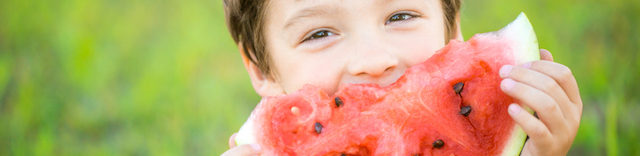
    Boy Eating Watermelon

    “If you want others to be happy, practice compassion. If you want to be happy, practice compassion.” ~Dalai Lama

    As a child, I had no idea that such a concept as vegetarianism even existed, let alone veganism.

    Since I grew up on a sheep farm, raising animals and eating them were just what we did.

    The sheep, cows, and chickens from my childhood seemed to have pretty happy lives. There was grass to eat and water to drink and space to roam about. The only thing that used to worry me about them was that they’d freeze outside in the winter with no coats on.

    It wasn’t until I went to university that I even thought to question whether I should be eating lamb, or beef, or chicken.

    Over the years, I’ve come back to the point of view that while I really respect people who choose to be completely vegetarian or vegan, it’s not for me.

    As a little experiment, I spent a month being vegetarian last year. While I found I struggled with a completely plant-based diet, it did give me some great ideas for how to eat more compassionately by not eating meat every day.

    It was quite refreshing to look at my diet with a completely fresh pair of eyes. To be honest, I was surprised by how easy it was to adapt some of my favorite dishes to suit a meat-free way of eating.

    Here are some of the lessons I’ve picked up to help get you started eating more compassionately.

    1. Make Monday meatless.

    Something I’ve been experimenting with over the last few months is making a conscious decision to eat meat-free on Mondays. It’s a great way to add a bit of veggie fun into the week. And I’ve actually found that seeking out vegetarian options for Monday has meant we’re more likely to eat vegetarian at other meals as well.

    2. Add some lentils to your life.

    I’ve always been a fan of lentils, but after my month of vegetarianism, I developed a newfound respect. If you’re in a hurry, canned lentils are a really convenient option.

    Cooking lentils from scratch is pretty simple, unlike beans and chickpeas. No soaking required, just simmer in a pot like pasta until the lentils are tender (about 15-20 minutes). Drain and use anywhere you’d normally use ground beef. Lentil bolognese, lentil tacos, lentil burgers, lentil lasagna, lentil chili—there are endless possibilities.

    3. Replace canned fish with canned legumes.

    You can do this whether it’s a tuna or salmon salad or a tuna sandwich. Canned white beans or chickpeas will be equally as satisfying and quick. If you normally mash your sandwich tuna with mayonnaise, try mashed chickpeas with Vegenaise for a change.

    4. Grate Brazil nuts, not cheese.

    If you love your grated parmesan sprinkled liberally over everything but are keen to cut down on cheese, consider Brazil nuts. They make a wonderful alternative. Just finely grate your nuts with a Microplane and use them anywhere you’d normally be reaching for the parmesan.

    5. Make the most of mushrooms.

    Known as ‘meat’ for vegetarians, a large roasted portobello or field mushroom can be just as satisfying as a steak. Just pop them in the oven with a little garlic, thyme, and a generous drizzle of olive oil. Leave for about a half-hour until tender and juicy.

    6. Order the vegetarian option for a change.

    One of the surprise outcomes of my vegetarian month was the discovery that the ‘vegetarian’ option on restaurant menus can be surprisingly delicious. Next time you’re out, why not give the veggie lasagna or the veggie burger a go?

    7. Try some tofu.

    While tofu may have a reputation for being pretty bland, it’s actually a great protein sponge for soaking up flavor. Try cubes of tofu in your favorite curry or stew. Crumbled tofu tends to work well as a ground beef replacer when you’ve had enough of lentils. Or try scrambled tofu with a little curry powder and a softened onion as an alternative to scrambled eggs.

    8. Cream it with tahini.

    Love creamy sauces? Then tahini, or ground sesame seed paste, could be just the thing if you’re looking for a dairy-free alternative. Drizzle this nutty sauce over roasted vegetables or make a dressing by combining equal amounts of tahini, lemon juice, and water.

    9. Go nuts.

    More than just a source of essential fats, nuts are a great way to add crunch and protein to veggie meals. They’re also a wonderfully portable snack for vegetarians and carnivores alike.

    10. Embrace the avocado.

    When eating meat-free, it can be difficult to fill up. Avocado salad with a handful of nuts is one of my favorite vegan lunches. And don’t forget guacamole.

    11. Delve into dark chocolate.

    Dessert can be a lonely place without butter and cream. Fortunately, there’s a whole world of vegan-friendly dark chocolate to explore. You could even get creative and serve a few different dark chocolates from different regions or chocolates with different cocoa contents, and have a little chocolate tasting party to end a meal.

    12. Season with soy sauce.

    I recently read a theory that the Buddhist monks invented soy sauce as a way to convince the masses to become vegetarian. Fish and meat are rich in compounds like amino acids and glutamates, which make them taste delicious.

    Soy sauce also contains a generous slug of these tasty glutamates. So it can be a great flavor booster in vegetarian dishes. Other sources include tomato and mushrooms.

    13. Avoid fake “meat” products.

    I’m a fan of Michael Pollan’s adage to not eat anything your grandparents wouldn’t recognize as food. To me, it defeats the purpose of avoiding meat products if you’re going to expose yourself to the additives and flavors required to get something that isn’t meat to taste like meat. They can’t be good for us.

    Ready to give meat-free Monday a try? Here’s a simple recipe to get you started:

    Lentil ragù with zucchini ‘noodles’ recipe


    Serves two

    Inspired by the good old family classic spag bol (or spaghetti bolognese), these baked zucchini noodles are one of my favorite options for gluten-free comfort food. It’s handy to have a mandoline or vegetable peeler to get lovely fine noodles. You could serve the lentil ragu with pasta if you prefer.

    Feel free to add to the lentils – I’ve kept it super simple but a little garlic, onion, chilli or even basil would work.

    • 2 zucchini, sliced into ribbons
    • 1 can lentils (400g / 14oz), drained
    • 4 tablespoons tomato paste
    • grated brazil nuts, to serve
    • salad greens, to serve

    1. Preheat oven to 200C (400F).

    2. Layer zucchini ribbons over a baking tray a few layers deep. Drizzle with olive oil and bake for 10 minutes or until the zucchini is no longer crunchy.

    3. Heat 3-4 tablespoons olive oil in a medium saucepan. Add lentils and tomato paste and cook for a few minutes until hot.

    4. Taste and season lentils, adding a little more olive oil or some butter if the tomato is too sharp.

    5. Divide zucchini between two plates and top with lentils.

    6. Serve with grated Brazil nuts on the side and a green salad

    Boy eating watermelon image via Shutterstock

  • 4 Ways to Be Kind When You Don’t Feel Like It

    4 Ways to Be Kind When You Don’t Feel Like It

    “Be kind, for everyone you meet is fighting a hard battle.” ~Plato

    I used to have a horrible boss.

    I worked as a trainer in a big corporation. I can remember him coming into one of my training sessions and telling me off about something in front of my whole group.

    He talked to me as if I was five years old and I’d done something terrible. When someone talks to you like that it’s difficult not to start feeling you are five years old and you’ve done something terrible. I wanted to sink into the ground.

    He treated other people badly, too. He frequently criticized people and talked down to them. He set unreasonable deadlines. He didn’t trust us to get on with our jobs.

    Plato suggests that we be kind, for everyone we meet is fighting a hard battle.

    Some people are very easy to be kind to.

    If my friend is having a bad time in her relationship, my instinct is to call her and ask her if she’s okay. If we see an elderly person trip over on the street, our instinct is to go over and see if we can help them up. It is easy to be kind.

    But what about my boss? Was I kind to him? And why should I be kind anyway? (more…)

  • 3 Causes for Judging People (And How to Accept Yourself)

    3 Causes for Judging People (And How to Accept Yourself)

    “If we learn to open our hearts, anyone, including the people who drive us crazy, can be our teacher.” ~Pema Chodron

    Every person you meet has something special to give you—that is, if you are open to receiving it.

    Each encounter offers you the gift of greater self-awareness by illustrating what you do and don’t accept about yourself. An honest look will show you that the reactions you have to others give you more information about yourself than about them.

    You can never know for sure what motivates other people, but you can learn what you are accepting or judging in yourself.

    For instance, if someone makes a remark about you and it’s something you also judge in yourself, it will most likely hurt. However, if they make the same remark and you don’t have that judgment about yourself, it probably won’t bother you at all.

    I once visited a new friend’s house and everyone in the family was shorter than me. Since I’m the shortest person in my family, I never felt too tall.

    When my friend’s mother met me at the door and said with a slightly disappointed tone, “Oh, you are so tall,” it didn’t affect me. I was aware that she had some discomfort with my height, but I didn’t take it personally.

    However, had she been tall and said, “Oh, you are so short,” it probably would have pushed my buttons, since I do feel somewhat short.

    This point is valid for almost any interaction imaginable: Reactions always have to do with our own self-judgments and feelings of inadequacy or strength, not the other person.

    Most judgments of others stem from one of three basic causes: (more…)

  • 5 Ways to Feel More Love and Compassion for Yourself and Others

    5 Ways to Feel More Love and Compassion for Yourself and Others

    “The amount of happiness that you have depends on the amount of freedom you have in your heart.” ~Thich Nhat Hanh

    Lately, I’ve been feeling a sense of vulnerability that I always wished I could feel without being afraid.

    I have always wished I was one of those people who could show my authentic self to the world and still be able to look you in the eye after I let you see me, without quivering in shame or regret.

    Not too long ago, I shared my feelings with someone who I deeply loved. This was one of the hardest, scariest things I’ve ever done, but it gave me the freedom to be vulnerable and to finally have a heart that’s ready to let love in.

    Loving this person has taught me so much about love, forgiveness, and acceptance. Although he did not want the same things I want, just having him in my life has taught me more about how to feel unconditional love and genuine compassion for myself.

    As a result, I am experiencing a deep level of unconditional love and compassion for others.

    I used to walk around taking things very personally.

    If I walked by a stranger who gave me a dirty look, or if a bank teller was rude, or if the man I loved didn’t want to love me back in the way I wanted him to, I thought it meant there was something wrong with me. However, I’m realizing that none of it has anything to do with me.

    I have a brand new sense of awareness now. (more…)

  • Compassionate Boundaries: Saying No Without Guilt

    Compassionate Boundaries: Saying No Without Guilt

    “Some people think it’s holding that makes one strong–sometimes it’s letting go.” ~Unknown

    Today I’ve been thinking about fences, I guess as a metaphor for boundaries in life. There are many different kinds of fences, but that they all have the same purpose: creating a boundary.

    Whether it’s a sweet white picket fence with roses or the electrified chain fencing at a federal prison, what it signifies is a line drawn in the sand. This is either a starting place or a stopping point, depending on your point of view.

    Creating boundaries has always been a challenge for me. Until now, maybe still, I have needed to use anger to build my fences, to re-enforce my boundaries.

    I recently became so angry with a family member that the anger seemed totally disproportionate to the deed. But I felt invaded, used, taken advantage of. I accused, I shouted, I slammed out the door. Nothing like being really, really mad to build a very solid fence.

    But the effect on my body was like hauling the heavy cement blocks into place and then pounding them into their position. It took a huge toll, not to even begin to mention the effect this had on my emotions and on my spirit.

    After my “anger fence” was firmly in place, I was exhausted; muscles rigid with residual fury, unable to even appreciate the fence so firmly planted. Yes, I had created a very defined boundary, but at what great cost, both to myself and to my family? (more…)

  • 5 Ways to Create Random Acts of Love

    5 Ways to Create Random Acts of Love

    “Practice random beauty and senseless acts of love.” ~Unknown

    I recently decided to reverse the order of common sense, and senselessly follow my heart through an unplanned acts of kindness. After I made the choice, it was amazing how the world changed before my very eyes.

    No longer was I fixated on how quickly I move through the events of my day. With my new focus, people began to shape shift from task zombies to loving beings.

    One situation in particular really humbled me to the true power of random acts of love.

    I was riding a train from LA to San Diego. As the train started I engaged the man sitting next to me in casual conversation. When he told me where he was going, a huge red flag went off in my head. It read DANGER.

    Eerily cold and calculating, he said he was going to an ex-girlfriend’s house, unannounced, to place a tracker in her glove box so he’d know where she is day and night. Then he pointed out an ankle bracelet that lets his probation officer know where he is at all times.

    Taking this train ride would violate his parole, putting him back in the system. He didn’t care. Being on the outside, he said, was meaningless any way.

    I was just about to move seats. Instead, I assessed the situation to see whether it was a conditioned fear response or if I was actually in a safe place. I did an intuitive check in my heart, and felt I was safe and had something to offer this man. I surrendered to what that may be and sat tight.

    Let me preface this with a disclaimer: I’m not recommending you seek out criminals on trains to brighten their days, potentially putting yourself in danger. I’m suggesting you learn to be present so you can receive  inner guidance that may affect other people positively. (more…)

  • The Dalai Lama’s Little Book of Wisdom: Review & Giveaway

    The Dalai Lama’s Little Book of Wisdom: Review & Giveaway

    The Dalai Lamas Little Book of WisdomUpdate: The winners have already been chosen for this giveaway:

    • Josh Kimbell
    • Rob Ruddle
    • Nathan Atkinson

    One of the founding principles behind Tiny Buddha is that simple wisdom, when applied, can have a huge effect on happiness, mindfulness and peace—not just for you, but also for the people around you.

    The most helpful ideas might not seem so simple in the context of our complex lives; but oftentimes, we make things more complicated than necessary by filtering them through a negative attitude or thinking too much and applying too little.

    That’s makes The Dalai Lama’s Little Book of Wisdom so compelling: it’s simultaneously profound and simple. It provides some of the most helpful of the Dalai Lama’s teachings in palatable, bite-size chunks.

    Having had a copy on my nightstand for over a year, I couldn’t have been more excited to receive three copies to give away to readers.

    The book offers insights about finding contentment, dealing with anger and emotions, transforming the mind, and more; and concludes with a question and answer section that addresses how to apply Buddhist wisdom to real life.

    Many of the highlighted passages in my copy have come to you via the Tiny Buddha Twitter stream, and more likely will down the line.

    As the book flap reads: (more…)

  • Letting Go of Stories About Other People

    Letting Go of Stories About Other People

    Sitting in Peace

    “The biggest problem for humanity, not only on a global level, but even for individuals, is misunderstanding.” ~Rinpoche

    Someone cuts you off in traffic.

    What a jerk!

    A date stands you up.

    She obviously doesn’t like you.

    Your colleague gives you a dirty look across the room.

    Your last email must have really pissed him off!

    In so many places in our lives, we see a behavior and automatically make a meaning out of it. Everything from a glance to an email gets snappily run through our minds and attached to a reaction or feeling.

    Part of this is biological. As animals, we’re built to rapidly process information so that we can react quickly, if need be. It’s how survival instincts work.

    However, most things we’re reacting to aren’t life-or-death level situations.

    Here’s how I work with my own brain to stop getting so upset by all these little situations. I call it “Alternate Stories.” (more…)