Tag: Compassion

  • Why Giving to Others Is Also Giving to Ourselves

    Why Giving to Others Is Also Giving to Ourselves

    Free Hugs

    “Don’t wait for extraordinary opportunities.  Seize common occasions and make them great.” ~Orison Swett Marde

    I stood at the library counter waiting to check out a stack of books when I overheard an overworked woman explain to the librarian why her books were late.

    “My boss has me running his errands after hours. It’s a miracle I made it on time to pick up my daughter from daycare,” she said.

    “Are you a personal assistant?” the librarian asked.

    “No, I’m a paralegal,” the woman explained. “But staffing is tight, and if I don’t take on the extra tasks I might lose my job. I can’t be picky in this economy.”

    I understood the woman. Years ago, when my children were younger, I took on extra tasks both because I needed money and because I could not say no. I connected with her story and wanted to do something to let her know she was not alone.

    But what could I offer her?

    The desire to give to others spontaneously was as reflexive as smiling. I had learned it over the years by watching others give to me when I was in no position to give back to them.

    I rummaged in my purse and found two tickets to the movies I had earned from working overtime. I abandoned my books at the counter and followed the woman and her child outside.

    “Excuse me,” I said. “I couldn’t help overhear your conversation about work. I understand what you’re going through because I’ve gone through it myself, and I want you to know I appreciate you even if your boss doesn’t.”

    I handed her the tickets. “Take your daughter to a movie,” I said.

    Her eyes widened and filled with tears. “Thank you,” she said. “You’ve just made my week.”

    That small gesture of solidarity, understanding, and generosity made me feel as close to the woman as I could get to my twenty-two-year old self who worked too many ungrateful hours for too many ungrateful bosses just to help my family survive.

    PBS’s special, “This Emotional Life,” explores the healing power of giving through volunteerism and philanthropy.

    Research shows that once people have enough to meet their needs, additional money and time do not increase their happiness. It’s only when the donor gives away the additional money and time that the donor’s happiness is increased.

    According to Emma M. Seppala, Ph.D., people benefit from giving by connecting with others.

    Humans have a built-in need to relate, resonate, and mirror each other. In a world increasingly dependent on technology, the gift of giving of oneself increases intimacy and reduces the likelihood of loneliness.

    Giving ripples out in waves like a stone plunked into still waters. It connects us in a tangible way. It makes us realize we are not alone.

    Giving doesn’t have to be complicated or grand. It can be an encouraging smile or a gentle hug. Fifteen minutes of attentive listening can be as valuable as a one-hour massage.

    After all, it’s not how much we give, but how we give.

    If we give from the heart, in a desire to connect, then we seize a common occasion and make it special, which is much different than if we give to a great cause out of obligation or self-importance.

    You also don’t have to have a structured system of volunteering and philanthropy to enjoy the benefits of giving. It can become a habit you develop over time until it becomes an integral part of your life.

    Start by paying closer attention to the people you encounter during the day. Soon you will recognize an opportunity to give.

    If you’re leaving a crowded parking lot and notice someone driving around looking for a spot, you can signal for the person to take your parking spot.

    If you see an overwhelmed waitress struggling to keep up with your table’s demands, you can leave a larger tip to show your appreciation. If you notice someone walking around with a permanent frown, you can flash your comforting smile and shine a tiny light on that person’s dark heart.

    Generosity isn’t only for strangers. You can weed a neighbor’s garden, cook a meal for your parents, or pay a visit to someone you haven’t seen in a while. Giving to those you know and love the most prevents you from taking them for granted.

    An odd by-product of giving freely out of compassion and love is how it makes the giver feel. The more you give from a place of unconditional generosity, the more joy you feel. Giving makes you realize how much power you have to make others feel better about themselves and their lives.

    Go out and give whatever you have to whoever needs it. Seek ordinary moments and make them extraordinary. Life truly is a special occasion.

    Photo by Jesslee Cuizon

  • 7 Ways to Cultivate a Deep Sense of Love for Yourself

    7 Ways to Cultivate a Deep Sense of Love for Yourself

    “You, yourself, as much as anybody in the entire universe, deserve your love and affection.” ~Buddha

    I have struggled with a lack of self-love for most of my life. I’ve experienced feelings of guilt and shame on a regular basis and have constantly sought the approval of others. My father committed suicide when I was fourteen years old, and that shaped my feelings about myself.

    It completely rocked my world and everything that I thought I knew. It happened at such a vulnerable age. I was on the verge of beginning high school, just going into the teenage years, and my self-esteem was already pretty shaky. My dad’s suicide shattered what was left of it.

    I struggled with his suicide for much of my teenage and young adult years. I felt angry for a long time, put up walls around myself so that others could not get too close, and never felt worthy enough for lasting friendships and intimate relationships.

    About five years ago I began the path of spiritual study and practice, which has changed my life like nothing that I have ever experienced before. I am thirty-four years old now and have been moving into a place of greater, deeper, passionate love for myself. I want to share with others what I have done to experience this in my life.

    These points below have helped me to expand in my consciousness and move to a place of actually feeling the love that already lies within.

    1. Embody love in everything that you do.

    That means give your loving attention to each task at hand. The more love that you put into whatever it is that you are doing, even if it is just brushing your teeth, the more that you will cultivate a love-filled consciousness.

    I began this practice months ago when I found myself constantly complaining in my head about the same old daily routine. I decided to see how peaceful and loving I could be while I was doing whatever I was doing. Not only did it make the actual activities more pleasant, a deep sense of peace took over me.

    2. Practice complete acceptance in your life.

    I struggled for years with thoughts that my life should be different, that my father shouldn’t have been depressed for so many years and ultimately take his own life, and that the past should not have happened the way it had.

    What is more painful than the actual experiences that we may be having are our thoughts about the experiences. The fact is that we have all experienced painful situations, and to deny them, wish them away, or say that they should not have happened only creates more pain.

    Complete acceptance of the past for what it is and of yourself for exactly where you are right now is truly powerful.

    3. Have compassion for others.

    Many like to use the word forgiveness, but everyone is doing the best that they can with what they know. Our true essence never gets its feelings hurt, only the mind does; therefore, there is nothing to forgive.

    When I looked at my dad and his suicide from the perspective of my spirit and placed myself into his shoes, I felt such compassion and love for him.

    What matters more than anything is not what the other person is doing but what we are doing, so practice sending the other person love no matter what. Look at the situation from their standpoint and release the tight grip that you may have on your own point of view.

    4. Be still and know that you are love.

    Our true, infinite nature is that of love, so recognize that infinite nature by retreating into stillness as much as possible. There are many ways to still your mind, but the one that has been the most effective for me, especially in the beginning stages of this practice, is to place my attention on my mind.

    I practice seeing how long I can go in between thoughts. They may come, but let them go, and eventually the space in between will get wider and wider. The one witnessing the mind is your true nature.

    5. Pay attention to the thoughts you have throughout the day.

    Are they critical, judgmental, and negative toward yourself and others? If so, stop when you become aware, accept and allow the thought to be, send love to yourself and to the other person, and move on.

    We create our reality through our thoughts. For example, I felt like I was a victim for so many years. The only thing that that did for me was create situations where I became the so-called victim, since that was what I had in my thought processes and, therefore, in my energy field.

    6. Surround yourself with love.

    Do what you can to move away from the people, places, and things that drain you of your energy. Surround yourself as much as possible with those who are loving and supportive.

    If you are at a job that you dislike with a passion, look for something else that you are passionate about. Love yourself enough to give that to yourself as a gift. The more that you begin to honor yourself and do what you feel is for your highest good, the more love that you begin to feel.

    7. Follow your intuition.

    Begin to take steps toward those passions and dreams that you have. We receive little nudges for a reason; our intuition is directing us that way. When we stop and listen to those feelings and begin to take baby steps to act on them, a whole new universe of possibilities opens up for us.

    I have been practicing this for the last five years or so now, and it has taken me down a path that my mind could never have even conceived. Many times we feel urges to do certain things, but our thinking stops us from acting. Begin to take baby steps each day in the direction of your passions.

    The more that I practice these, the easier they become. I feel a general sense of peace that I have never experienced before. There was major resistance that I had at first because of the old brain paths that were set in place.

    Fortunately, those brain paths can be undone and a new way of thinking, being, and doing can be brought forth. Peace and love are what make up our true nature, and all that we are doing is allowing that peace and love to shine in their natural essence. That small self then becomes the grand self.

    One thing that I forgot to mention: You are worth it.

    Photo by thea-bee photography

  • 3 Obstacles to Living in the Now (and How to Get Blissfully Present Again)

    3 Obstacles to Living in the Now (and How to Get Blissfully Present Again)

    “Never underestimate the desire to bolt.” ~ Pema Chodron

    I have been trying this present moment awareness thing for a while now, about two years, and I have to say, it’s not going quite like I expected.

    Somehow I got it in to my silly little head that after a while I would stop bolting from reality and I would just be present all the time, with complete effortlessness. Wrong.

    And if there was any lingering doubt as to the flaw in my plan, I then read a number of accounts by people who have been practitioners of present moment awareness for something like twenty or thirty years, and they said they still run away from the present moment sometimes. Damn.

    So clearly my unreasonable expectations have got to be changed.

    I also noticed that since I have been doing this for a while now, the why and how I flee the present moment has changed.

    I used to flee in overt and rather extreme ways, and still do sometimes, like binge eating and excessive TV watching.

    But now that the more extreme behaviors have lessened, bolting from reality happens in much more subtle ways, usually obsessive thought. Here are the three most common ways:

    1. Lack of compassion.

    People do things that tick me off. It’s just a part of life. Anger is a naturally occurring emotion; there’s nothing wrong with that. Where it becomes a problem for me is when I get lost in that mental commentary of “what they did and how awful it was.”

    This track of obsessive thoughts can go on for a long, long time. And when I am stuck in that story of “what they did and how awful it was” I am nowhere near the present moment.

    I don’t have to like everything everyone does. I need to be honest about my anger and feel it. But that story about how stupid and pathetic other people are keeps me in my unhappy mind and not in the present moment.

    Solution? When I remember what I struggle with—my flaws that are most embarrassing to me, that I dearly wish would go away—then I can get in touch with the part of me that needs compassion. And I can feel how painful it is for others to stand in judgment of my flaws.

    The secret is that the part of me that needs compassion is the same part that can give it to others. Remembering specifically how I’m not perfect helps me have compassion on others, and that works to break the spell of the “Unhappy story of what they did.”

    2. Lack of gratitude.

    I recently read that the brain, being a problem-solving machine, has a natural negativity bias for the purpose of identifying problems. That’s great. What’s not great is spending all of your time in your head instead of living in your immediate life experience.

    When I am stuck in my head instead of being in my present moment, my whole life becomes a long stream of obsessive thoughts about “my problems.” I focus on what I don’t like about a situation, what I don’t like about my reaction to that situation—and here is the important part—to the exclusion of everything else.

    Solution? Making the conscious choice to find the good stuff—to identify the things that do work out and what I did get right—makes a huge difference in breaking the spell of “everything sucks.” This helps me see my present moment for what it really is: some stuff I don’t like, but mostly lots of good stuff.

    And there is always good stuff, I promise. Here is a tip: if you cannot think of any good stuff, think of how it could be worse. For example, you could have no limbs or live in a far more dangerous part of the world

    3. Panic.

    When I realize I have been absent from myself, coming back home to my present moment experience can be a struggle. And it can take a long time, because there is panic in me over the idea that I have “done something wrong,” which creates a striving and straining to “do it right.”

    Typically, I over think it, try way too hard, and make it some kind of contest, although I have no idea who I think I am competing with or what exactly is the rush when I tell myself things like, “Hurry up and get back in the present moment!”

    Once the competitor in me is activated, I am back on the treadmill of thought about how to “fix this,” and as with all treadmills, no closer to my destination: the present moment.

    Solution? Relax. Breathe. Impress it upon my mind again and again that strain does not actually help me accomplish. Good enough is good enough. Perfectionism ruins all good things. There is no contest to win and no race to finish. All this kind of panic does is help me to further elude the present moment.

    This process can seem tedious, returning again and again and yet again to the present moment, then doing it all again tomorrow. But as with all things, it’s all about perspective. If I can let go of the competitor, the one who is trying to achieve, win, do it right, staying awake gets much closer to effortless.

    Making present moment awareness something that is achievement based only serves to keep us bound to shame, and make us feel like failures when we inevitably can’t stay present 100% of the time.

    In the crucial moment when I realize I have left the present moment again, instead of rejoicing that I am once again awake by virtue of that knowing, I often times plunge back in to unconsciousness with thoughts like “You failed again to stay present.”

    What a game changer it is, upon coming home to my present moment, instead of hearing “Where have you been?” I say to myself “Welcome back.”

  • Listen Instead of Correcting Others: What We Gain and Give

    Listen Instead of Correcting Others: What We Gain and Give

    Two friends talking

    “When you judge another, you do not define them. You define yourself.” ~Wayne Dyer

    I have a tendency to want to show off what I know, and in the worst cases, correct other people.

    Instead of listening and connecting I unconsciously try to sell to others an image of myself that I wish to project. Some part of me believes that if people are impressed with me then they’ll like me and be interested in my knowledge and point of view.

    In this way I fall into the trap of constructing the false self. This is the person I wish for others to see, a person without vulnerabilities, incorrect knowledge, or who makes mistakes. A thing that is more of a product than a person.

    Many of us fashion these false selves not only as an idealized version of ourselves, but also to keep other people’s judgments of us at bay. Before we realize what has happened, we have made our skills and knowledge into weapons that we wield on others while all the while we hide our true selves behind a shield. Without planning to, we have declared war.

    The constructed, false self is a one-way gate. Like a character in a stage play, the false self puts sights and sounds out to the audience while all the while it stands behind the fourth wall of separation from the observers. The audience sees the character, but the character doesn’t see the audience.

    I have someone in my life who deals with a fairly severe mental illness. Through most of my life I have tried to help him by showing him what was “wrong” with his thinking and actions. I wanted to use my logic and knowledge to set his perceptions straight.

    I didn’t realize it at the time, but I was mostly lecturing him. I did not listen and understand his point of view, but instead stayed behind my shield and wielded my weapons of logic at him. I thought I was being a good influence.

    Constructive influence, though, flows through positive human connections. When we judge others we sever those connections and directly destroy our chances of influencing others with our best information and ideas.

    But real, positive influence travels in both directions. Discovering wisdom works best as a collaboration formed through the conduit of relationships. There is give and take and neither person needs to be “the right one.”

    When we give others space to make mistakes, to have different skills and expertise than our own, then we also give ourselves space for the same things. No one of us is an expert at everything, but when we come together we close the gaps into a working whole.

    A few years ago, while preparing for a volunteer program, I took some training in listening. I learned that it’s more valuable to reflect back what people say, and to show understanding of them without judgment.

    I learned that if I showed understanding of the other person’s feelings and thoughts, that alone would ease their burden and do worlds of good.

    I learned that acceptance and understanding aren’t necessarily the same things as approval and agreement.

    We needn’t be afraid that we are compromising our own views or knowledge when we simply choose to understand another’s. In fact, the openness of understanding can strengthen our own point of view.

    We must receive what we wish to give and give what we wish to receive. If we want to be listened to, then we must listen to others. If we want to be valued for what we know, then we must value others for what they know.

    And if we want to be forgiven and loved, then we must forgive and love others.

    Lately I’ve been applying my new listening skills in conversations with my mentally ill loved one. I allow myself to relate to difficult things he experiences and have even tried to be brave enough to be honest when I see a bit of myself in him, when I see the same passions, fears, and mistakes.

    The funny thing is that by backing off I’ve gained more of his trust. By not pretending to have all the answers for him, I’ve strengthened our bond.

    Now I only give him my opinion if he asks for it. Sometimes this comes after a long spell of silence, when we are simply being together. And I’m honest enough to tell him when I don’t have a clue how to answer his question.

    And you know, I’ve learned a whole lot from him, too.

    Photo by pedrosimoes7

  • Motivate Yourself Without Pushing Yourself: Tips for Self-Compassion

    Motivate Yourself Without Pushing Yourself: Tips for Self-Compassion

    Happy

    “Our sorrows and wounds are only healed when we touch them with compassion.” ~Buddha

    I have always struggled with self-compassion. In fact, I’m not even sure I have been aware of it all that much throughout my life.

    I’ve always thought the only way to truly grow was to push myself, both physically and mentally, so without even realizing it, I set myself up for that.

    I would not study for my university exams until the night before. I would take it easy and not make enough money until it got to the stage that I had to almost create a miracle to pay my next credit card bill. I would push my partner until our relationship was at a breaking point so I could then save it.

    It was almost like I wanted to prove to myself that I was a hero in someway. As I reflect back now, it was so strange what I was doing, but the truth was I was not even aware I was doing it.

    Over the past few years I could see my patterns more and more. It shocked me that I would be that unconscious of my motivations.

    But as I dived into it, I could see that I actually had a fear that I’d somehow be less if I took that pressure off myself. It was the pressure that was keeping me motivated and more importantly keeping me growing.

    I wondered if I had to continue like that. What would happen if I let it go? Would I stop being as great as I could be?

    Then I became aware of self-compassion. It was a foreign concept to me, and one I remember fighting against for some time. My ego did not want to just give in that easy!

    At first I felt that I would become more self centered, and that was big no-no—after all, aren’t we all here to serve others, not ourselves?

    But then I started see what my lack of self-compassion was really doing to me. It was, in fact, the very thing that was isolating me from the world and making me self-centered.

    I was so caught up in my own struggles and issues that I had begun to feel that I was the only one on the planet going through what I was.

    I had forgotten that all my friends were feeling the same way as me; they too were struggling in life, and I had not seen it. My issues were not greater than everyone else’s, after all.

    As I saw this more clearly I felt myself soften to compassion for myself, and those around me. I started to “feel” compassion for the first time.

    I recall pondering one day, how I would feel in a relationship if I treated my partner or child in the same way I had been treating myself? Would I really be that motivated to keep going each day?

    The never-ending berating and judgments, constantly trying to fix, change, or improve myself, never being enough. How motivated can you stay under such conditions?

    I would have never expected anyone to respond positively to this, but yet I expected myself to. Something was very wrong with my perception of myself.

    It was at that moment that my belief structure started to collapse on itself, and I realized that I did not have to be that hard on myself for motivation. I could actually be kind and it would have an even greater effect.

    Bit by bit, I felt self-acceptance, and a love came over me like waves, like it had been wanting to come through for so many years, but I had blocked it.

    All I had been looking for was sweeping over me in one giant gush. It felt amazing and it felt true. I knew that I’m okay the way I am.

    I suddenly felt a common bond with humanity again. Like we are all perfect in our imperfect way, and that is actually what it’s meant to be like.

    I realized that I do not have to get everything right everytime. I do not have to be changed or improved; I just need to accept who I am right now.

    The pain and sorrow I had been feeling my whole life rose up, and I could clearly see what I had done to myself for decades. I was sorry for this, so very sorry.

    I broke down and cried and cried. I had been so mean to myself. The pain and struggles of the last few decades came pouring out of me like the dam gates had been opened.

    I felt relief for the first time. I could not do this any longer; there was simply no need. I had done nothing wrong by just being me.

    This was one of the most significant moments in my life—the acceptance of myself through self-compassion.

    My tips to create more self-compassion include:

    1. Be aware if you are being hard on yourself and recognize where this shows up for you.

    It can be subtle. Look at all life areas, including your health, finances, and relationships, at work and in your family.

    2. Challenge your beliefs and fears. 

    Do you have a belief that if you are gentle with yourself you will somehow not be motivated enough or not all you can be? Recognize that this doesn’t have to be true. Also, notice if you feel that being compassionate toward yourself will lead you to feel self-indulgent or selfish.

    3. Treat yourself kindly, without judgment.

    Picture your best friend and how you treat them. Now apply this same love and kindness to yourself. You should be your own best friend after all!

    4. Be mindful of when you slip out of compassion and start to treat yourself harshly again.

    Forgive yourself and understand that you are human and this is part of the human game.

    5. Feel the pain of others around you.

    Listen to their stories and feel what it must be like to be them. This will make you automatically feel compassion and be softer on yourself as you connect with their common humanity.

    We all have issues and problems that cause us pain, but suffering through them is optional. Self-compassion provides another option.

    Photo by JFXie

  • Start Believing in Yourself: How To Adopt A Language of Love

    Start Believing in Yourself: How To Adopt A Language of Love

    “Once you have learned to love, you will have learned to live.” ~Unknown

    We are powerful, vivacious, brilliant creatures. Our thoughts and ideas create the very world around us. We constantly, and often unconsciously, exude and radiate palpable energy that permeates through every crack and crevasse of our lives.

    Our words hold especially powerful energy and the ability to uplift and inspire others and ourselves, or send us spiraling down the ladder to Bummersville. Learning to recognize our inner Negative Nancy allows us to pump up the volume on our love lingo to bring us back to a place of clarity, peace, and happiness.

    As a young woman in my early twenties, I am no stranger to the pitfalls of self-criticism. As a child of divorced parents, I grew up with the belief that I was somehow imperfect. Inadequate. Just shy of being good enough

    My teenage years proved to be of little consolation, as I was suddenly introduced to the world of comparisons. The desire to be as thin as, rich as, and cool as whoever was entirely consuming. I validated this belief of not being good enough with constant self-judgment.

    I clouded every move I made with the veil of criticism. No goal or achievement was ever really celebrated, just held up in comparison to someone else’s triumphs.

    Finally, after being introduced to the idea of self-love, I did an experiment in which I tried to mentally note each time I said something negative about myself in one day. Holy eye-opener. Before I even finished breakfast I had already torn myself apart with self-criticism and harsh judgment.

    I would never think to speak to someone I dislike in the way that I was thought-bashing myself.

    It’s no wonder I didn’t feel enthusiastic or passionate about anything. All of that garbage mind chatter was blocking my ability to see the reality: I am outrageously perfect. I have purpose. My life has meaning. I am an integral part of the whole.

    I still struggle from time to time to tune out my inner critic and embrace my inner cheerleader; beliefs that we hold onto for a long time as truths are never easy to let go of. But I have found that there is a distinct correlation with the words I use as a part of my regular vocabulary and the way that I feel.

    Adopting a language of love is essential in keeping me aligned with my highest self. 

    Here are my no-no’s and big YES!’s when it comes to speaking the language de amor:

    • Stop saying, “I can’t.” You can; you just haven’t done it yet or you haven’t tried.
    • Stop saying, “Always.” Actually, just stop generalizing. Nothing is black and white.
    • Stop saying, “They did, he did, she did…” It’s a subtle (or sometimes not-so-subtle) form of blame. Observe your current situation and ask, “What can I do now? How can I make this better?”
    • Stop saying, “I wish this or that.” Instead say, “I want this and these are the steps I am going to take to get me there.”
    • Really stop saying “I am not good enough. I am fat. I am ugly. I’ve made too many poor choices. I’ve tried before and it didn’t work out.”

    I like to imagine that I am made up of a team. I’ve got inspiration, truth, gratitude, enthusiasm, ambition, worry, deprecation, blame, and sadness. The game’s all tied up, this is the crucial moment that decides whether my team moves forward or is left behind.

    Who am I gonna put in the game? Who’s gonna be on the bench? This isn’t practice…this is life! Keep worry, deprecation, blame, and sadness off the court. They’re gonna lose the game.

    Adopting a language of love is not about positive affirmations. It’s not about trying to convince yourself that you feel something else other than what you feel, or that a situation is something other than what it is.

    It’s about consciously choosing thoughts and words with uplifting energy. It’s about embracing what is intrinsically true and inherent: You got this. 

    Whatever your situation, whatever your roadblock or mental block or financial block, you’ll figure it out. How do I know? Because we all contain inside of us the capacity to manifest our deepest desires and stay the course all the way to the end.

    Let’s adjust our thinking and speaking to reflect that, shall we?

    May love become our new modus operandi.

    Photo by aussiegal

  • How the Need to Be Right Can Lead to Guilt and Regret

    How the Need to Be Right Can Lead to Guilt and Regret

    Sitting Together

    “The obstacles of your past can become the gateways that lead to new beginnings.” ~Ralph Blum

    I think we all have this issue: guilt, followed by its sister, regret.

    I didn’t realize how dark a blemish it was on my heart until I fully felt the anguish of my mother’s death. I never quite realized my full potential, courage, or strength until her passing.

    Her greatest sacrifice, leaving this earth, proved to be my greatest motivation to search myself for the answer of whom I was and why; it was the major catalyst in my life for change.

    Sometimes the best things for you are the hardest.

    Admitting the darkness you’re carrying inside is one of the hardest things to do. Convincing yourself that you have been wrong and need to change can be even harder.

    Forgiving yourself because you are human, and loving yourself enough to know you deserve more, and deserve to give others more, is the hardest task of them all.

    I was an embittered person almost my whole life. I could hold a grudge with the best of them. I felt I had a lot to be resentful for, and truthfully, much of it was not unwarranted. But with my inability to never let go of things, I was miserable, making everyone else around me miserable, as well.

    This went far beyond just being angry. I felt I was being terribly misunderstood and never heard. I also felt the constant need to have to defend myself and my views with a strong argument.

    I had a very strained relationship with my mother starting when I was 14. I was at that age when I thought my parents knew nothing and I was smarter than they were.

    I can now fully understand why I felt that way, beyond just normal teenage rebellion. I was projecting a lot of my older siblings’ perceived unpleasant experiences with my parents onto my own, and letting that determine my relationship with them.

    There was a lot of friction between them, and I somehow felt that if I didn’t share their same resentment I was somehow betraying them.

    Because of this, I went through my youth and into my adulthood expecting my mom to give more than she could and blaming her, instead of blaming myself for not having enough compassion and never taking the time to understand that she was a person, too.

    I seemed to always be aggravated at everything she did.

    I held onto the need to be right, never letting up and always needing to argue. I grew into this person who could never listen with a compassionate heart and lived with resentment instead of love, kindness, and forgiveness.

    I was very hard-hearted instead of soft and pliable and forgiving.

    We would have bouts of calm when we got along great, then something would shift in her mood or mine and it would turn volatile. I see now that, because we were so much alike, it caused much of that friction. This went on for our whole relationship, up until just a couple of years before she died.

    I’m not saying she was without her faults, too. But now that she’s gone, and since I am much older, I can see everything so much clearer. That’s where the guilt comes in.

    We had been working on our relationship, though we didn’t acknowledge that openly, and we were really making headway. You see, I couldn’t even hug her, hadn’t done since I was a kid. But I was getting closer to her and hugging her more because I knew she needed it, and so did I.

    My great wall was crumbling.

    We had always done things together for years, not that that stopped the bickering. But that was all but over for a long while. Not long enough, though. And this is where the regret comes in.

    I wasted so much time being angry and self-righteous that I missed out on having a better relationship with my mother.

    If I had only known then what I have learned in the last few years and especially since her death, I could have saved myself the burden of that guilt and regret.

    There are so many moments each day where I will have a memory of us together and I will feel shame for the way I reacted to a situation. In my mind I can change the outcome to something that I should have done to handle the situation better.

    When she would be difficult, and she could be at times, why did I have to make it worse? Why couldn’t I have just stayed calm and had compassion for her feelings instead of getting overwhelmed and lashing out?

    I was incapable of doing that at the time because it’s hard to do when you are totally unconscious. You act before you think, lash out before you embrace.

    Oh, how I wish I had known this calm before it was too late! I think about the agony I could be saving myself now, and I am filled with remorse. But it doesn’t have to be that way. You can save yourself from the pain that I am trying to overcome.

    All it takes is a step in the right direction.

    It is so important to put your prideful ego aside and try the softer way. Ask yourself these three questions:

    1. Will it destroy me to “give in,” take the barriers down, and not have to be right all of the time? 

    When you “give in” it is not to lie down and be trampled on, but to slow down and reflect on what’s most important. The egotistical need to be right is what will ultimately destroy you. It leaves no room for compromise or compassion for another’s feelings, and will cause you more damage in the long run.

    2. Is it worth it to be right, making the argument more important than making someone else happy?

    When you constantly reinforce to the people in your life that you value your own opinions more than their feelings, it can cause a lot of hurt. Why not take the higher road and save the moment by saving your voice?

    3. Will my actions now cause me pain and regret later? 

    My biggest lesson learned was that, if I had only known then what I know now, I could have prevented so much grief.

    I wish I had had more generosity in my heart at that time. I wish I knew how to pause and let myself have that moment to feel the clarity that I needed to make a better choice in how I handled the situation at hand.

    I know that, when she did things that I considered unforgivable, it’s because she didn’t know any better and was only doing the best she knew how at that time, as was I.

    I am so grateful that I have learned these lessons now so that I can have the opportunity to live this way from here on out. I’m a big believer in things happening for a reason, and though I don’t quite know how to justify this one, I thank my mother every day for her sacrifice in that in losing her, I gained the greatest insight.

    I just wished I’d learned these lessons sooner.

    Photo by Kevin Krejci

  • The Gifts of Empathy: We’re Not Alone with What We’re Feeling

    The Gifts of Empathy: We’re Not Alone with What We’re Feeling

    Hugging

    “In separateness lies the world’s great misery, in compassion lies the world’s true strength.” ~Buddha

    When asked why I write fiction, I used to say, “Because I enjoy writing and revising sentences” or “Because I like practicing an art I’ll never perfect” or “Because I love to read.” All those reasons remain true, but my answer has changed.

    The most important reason I write stories, and read them, is to practice empathy.

    Strange how we often feel empathy more easily for fictional characters than for real people. One reason is that sometimes we get to know fictional characters more deeply than our family members and friends.

    Too often in real life we keep aspects of our true selves hidden and miss an important opportunity to connect with other human beings.

    How many times has this happened to you? You run into a friend, sometimes a close friend, who says, “How are you doing?” and you say, “Good! How are you?” and the friend says, “Good!” Meanwhile, you’re not doing well at all, and later you discover that your friend hadn’t been doing well.

    Recently, I tried something different. When a friend asked how I was, I told him the truth—that I’d had a difficult week.

    He said, “I’m sorry to hear that. I know a few other people who had a rough week.” He waited to see if I wanted to share more, but didn’t prod. Then he said, “Hey, I hope you have a better week next week.” I could tell that he meant it, and that made me feel a little better, a little less alone.

    I’m not suggesting that we all become confessional and reveal our secret struggles, fears, and pains with everyone we meet. But I am suggesting that you don’t have to feel alone. When you take a chance and share a hidden part of yourself with someone, it’s amazing how often people respond with, “Me too.”

    Here is the most important thing to remember: Whatever you’re feeling, someone else has felt it. Whatever you’re going through, someone else has gone through it. You may feel alone, especially if what you’re experiencing is very frightening or painful, but you are never alone.

    I was having dinner with a close friend the other night, sharing with him about a difficult time in my life, the most difficult, when I had hurt someone I love very much. (more…)

  • We Need Compassion the Most When We Seem to Deserve it the Least

    We Need Compassion the Most When We Seem to Deserve it the Least

    “Our sorrows and wounds are healed only when we touch them with compassion.” ~Buddha

    When babies cry everyone rushes to find what’s wrong and alleviate their stress. It’s a bit of an instinct to do this in our culture.

    We understand that the only way that a baby can communicate a need to us, whether it’s hunger, a necessary diaper change, fatigue, or discomfort, is to cry out. No one wants to hear a baby cry, so we respond quickly.

    Unfortunately, as a child begins to grow and learns the language, we assume that they know how to communicate their needs effectively, yet do they?

    As an elementary teacher I have come to know that even though children have more vocabulary words when they enter school, they still do not know how to communicate their needs. Often, children cry out to get their needs met, but all we see is defiance instead of their plea for help.

    Bella is an adorable first grader who entered my classroom in September. I remember getting her kindergarten card, which noted that she could be a handful at times. I put the card in my filing cabinet at the start of the year because I like to get to know my kids from my own perspective without previous judgments.

    When I met Bella and her mom at our welcome back picnic, I noticed that Bella appeared to be running the show. Her mom and I talked for a bit, and she shared that Bella’s dad died when she was only eight months old, and it was just the two of them still to this day. It was easy to see that mom was compensating for the loss.

    Within the first month of school, I could certainly see why Bella had earned this reputation of being a handful. She could be a bit silly and somewhat defiant at times, but she knew the rules of our classroom and understood what kind of behavior was expected, so she did well with me.

    Right after the December break, things started to change.

    Bella was getting herself in trouble in art, music, and gym. She was not listening to directions and defying the teachers when they asked her not to do something. She was also talking back to adults in the building and getting herself into trouble at her before and after school program.

    Her mom and I talked on the phone to create a plan of action. I suggested a behavior plan to help her, but asked mom to promise to follow through at home for this to be effective. The plan worked for only a few days because Bella just didn’t have a strong interest in following the rules. (more…)

  • Book Giveaway – Random Acts of Kindness: Then and Now

    Book Giveaway – Random Acts of Kindness: Then and Now

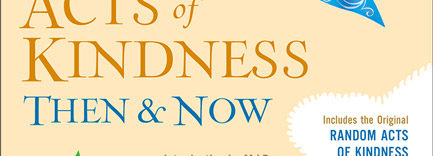
    Random Acts of Kindness

    Note: The winners for this giveaway have already been chosen. Subscribe to Tiny Buddha to receive free daily or weekly emails and to learn about future giveaways!

    The Winners:

    “Practice random acts of kindness and senseless acts of love.” ~Ann Herbert

    An unsolicited financial donation right when you need it. Roadside assistance from a stranger after your car breaks down.  An anonymous gift when you’re struggling and in desperate need of a smile.

    These are just a few random acts of kindness that can transform your day and renew your faith in people, and just a small sampling of the type of stories you’ll find in Random Acts of Kindness: Then and Now.

    Twenty years back, Conari Press published the first Random Acts of Kindness book, highlighting stories of people looking out for one another in their daily lives.

    As the book inspired a movement, Conari started the Random Acts of Kindness Foundation, which works with schools and communities to spread kindness.

    Every February for the past two decades, the foundation has spearheaded Kindness week, which runs from the 11th through the 17th.

    To celebrate the week and the book’s anniversary, Conari has offered five copies of the updated book for Tiny Buddha readers.

    Including the original book and new stories sourced through social media, Random Acts of Kindness: Then and Now is an inspiring, feel-good compilation that encourages a more generous, caring, compassionate world.

    The Giveaway 

    To enter to win 1 of 5 free copies of Random Acts of Kindness: Then And Now

    • Leave a comment below, sharing an act of kindness you’ve recently offered or received
    • For an extra entry, tweet: RT @tinybuddha Book Giveaway – Random Acts of Kindness: Then and Now http://bit.ly/Y7Oo9p

    You can enter until midnight PST on Monday, February 18th.

    Learn more about Random Acts of Kindness: Then and Now on Amazon.

  • 7 Realizations to Help You Deal with Feeling Judged

    7 Realizations to Help You Deal with Feeling Judged

    “Judge nothing, you will be happy. Forgive everything, you will be happier. Love everything, you will be happiest.” ~Sri Chinmoy

    Are you judgmental? Not many people would be aware if they were, let alone admit to being so, but it’s so easy to form an opinion about a person or situation without knowing all the facts.

    What if the conclusions people spring to could really hurt someone? I like to think there are very few people who would actively want to upset others. Has someone passed judgment on you? What can you do if you feel misunderstood?

    I want to share with you an unpleasant situation I was in recently, which has had a great impact upon my personal growth.

    A few years ago in my thirties, I was in a car accident that caused me some spinal damage and exacerbated a pre-existing pelvic condition, subsequently leaving me initially in a wheelchair.

    Currently, I am at a stage where I can now stand unaided and potter around a bit, but I still rely on a wheelchair or crutches for more than short periods of standing or walking.

    One evening my partner surprised me with theater tickets. I hadn’t been getting out much—outings now need to be meticulously planned—so I was really excited.

    We were lucky enough to be able to park in the disabled bays right outside the venue (I am registered disabled and have a badge). We sat in the car and discussed whether I should take my crutches inside, as I was quite anxious about blocking the aisles. We decided that with his support I would manage the few steps inside without them.

    The first upset of the evening was getting out of the car. A man queuing for a space behind wound down his car window and shouted that we should be ashamed of ourselves for parking there. We clearly didn’t “look” disabled, and we literally “made him sick.” Hmmm.

    This wasn’t the first time something like this had happened. I have a hidden disability, and unless I am in a wheelchair or using an aid, I look perfectly “normal” and am (relatively) young.

    I tried to concentrate on the show for the first half, but the evening had been ruined for me by then. In the interval I needed the bathroom. The female bathrooms are down two flights of stairs (no elevator), which I couldn’t manage, so I went into the disabled bathroom on the ground floor.

    When I came out, there was a queue of old ladies.

    The first lady in the queue took one look at me and declared to her friend in a loud voice, “Young people are so lazy nowadays.” She looked at me and said, “There’s nothing wrong with your legs,” and rapped me across my ankles with her walking stick! I went home in tears.

    This evening affected me emotionally for weeks. (more…)

  • 10 Steps to Create Lasting Change in Your Life

    10 Steps to Create Lasting Change in Your Life

    Free

    “Our greatness lies not so much in being able to remake the world as being able to remake ourselves.” ~Mahatma Gandhi

    From time to time I read my old journals. When the moment strikes me, I choose a journal at random from my bookshelf.

    This time it was the beautiful green and gold one my mom had given me in what must have been September of 2010, because the writing chronicles my life from September 20, 2010 to January 1, 2011.

    Basically, it is my perceptive exactly two years ago.

    I had just started my second year of grad school and I was a month into my internship at an outpatient drug and alcohol rehab facility.

    I loved what I was doing and I was really good at it. With conviction, I had found my passion.

    During these documented months of my life, I was also:

    • Catching myself being “in my head” and too hard on myself
    • Feeling angry with my parents after identifying the residual effects of the parenting I received, and then forgiving my mom for not understanding how to foster my spirit
    • Exploring my birth chart, seeing a psychic (or two), and using meditation and Dan Millman’s ideas to find my life purpose
    • “Practicing” with men and dissecting the happenings of all my past romantic relationships
    • Recognizing self-sabotage and self-deprecating tendencies and making an effort to change my self-talk (what I say and how I converse with myself when alone)
    • Beginning to understand that my thoughts affect my behavior, which impacts the circumstances of my life
    • Learning how to love myself, faults and all, and how to be my own partner so I know how I want a man to treat me
    • Practicing presence—trying to stay in the moment
    • Asking myself the hard-to-answer questions that I had previously been skilled at avoiding. Example: Why is my heart closed-off?
    • Investigating vulnerability, yet still feeling unable to attempt it in any real way
    • Trying to set personal goals
    • Starting to have close, meaningful relationships with intelligent, curious, and motivated women for the first time in my life
    • Acknowledging guilt I felt about making my life what I want it to be
    • Struggling with verbal communication and assertiveness—what I needed to say to people in my life
    • Starting to see what love really means—the action, the verb, instead of a noun             (more…)
  • 7 Powerful Realizations That Will Help You Suffer Less

    7 Powerful Realizations That Will Help You Suffer Less

    Peaceful

    “More important than the quest for certainty is the quest for clarity.” ~Francois Gautier

    Pain was my norm; not physical pain, but emotional pain compounded with mental self-torture. I was an introvert without introspection, painfully shy and unable to make eye contact. I caved to all manners of peer pressure.

    I was a doormat and didn’t stand up for myself, although I would fight tooth and nail for someone else. It seemed like others often took advantage of my kindness. I took everything personally and cried a lot. Thoughts of suicide lasted for years.

    After more than a decade of misery, I decided something had to change and was guided to self-acceptance work. 

    Gaining self-acceptance was the best thing I’ve ever done. It opened me up to a new perception of myself and to understanding what I did in the past that contributed to my pain.

    In understanding myself and the motivations behind my behavior, I was more clearly able to understand other people’s behavior.

    What I learned (and wish I knew then):

    1. Our behaviors are driven by our needs.

    Regarding: My kindness was often taken advantage of. I caved to all manners of peer pressure.

    Was it actually kindness? Maybe it was weakness. Or was it people pleasing for the purpose of gaining approval? I came to believe it was the latter.

    Everything I did—whether it was in my best interest or not, whether I wanted to do it or not—I did because it provided me with something I believed I needed.  (more…)

  • Becoming Friends With Yourself: You Deserve Your Love

    Becoming Friends With Yourself: You Deserve Your Love

    “You, yourself, as much as anyone in the entire universe, deserve your love and affection.” ~The Buddha

    Bodhicitta. Metta. Loving-kindness. Compassion. Whatever you call it, this is what spiritual practice is all about, right? Long story short, the teachings instruct us to generate these vast motivations and wishes that all sentient beings be free from suffering and experience true and lasting happiness.

    It sounds wonderful, doesn’t it?

    So why is it that so many of us are still unhappy, even after years of sitting on the cushion? Why do we still struggle with depression, anxiety, fear, and even self-loathing?

    Now, I’m not the first practitioner to point this out, but the main reason is that we forget the most important word in these prayers, aspirations and practices: all.

    This, as they say, means you.

    This would seem easy, wouldn’t it? To include ourselves in this great wish for limitless happiness seems to be nothing short of the most common sense. After all, you want to be happy, don’t you?

    But the truth is, this is very hard for us here in the west. At a very deep and wounded level, we don’t really think we deserve any of that. So even though we might spend a great deal of time thinking about others, we wholeheartedly neglect ourselves.

    At least I do.

    You see, before I discovered Buddhism and meditation, I was a drug addict. During those twenty-three years of madness, clinging, and sorrow, I hurt a lot of people. But mostly, out of self-loathing and shame, I hurt myself.

    When I finally made the choice to give recovery a real shot, I had to begin the long, slow, and always painful process of making amends, not only with my friends and family, but also with myself. (more…)

  • We Belong When We Connect with Each Other

    We Belong When We Connect with Each Other

    “When you live on a round planet, there’s no choosing sides.” ~Wayne Dyer 

    Te holiday season is a time to connect with others, to celebrate our common humanity, even if the holidays we celebrate are different.

    Instead sadly people all over the world are still taking sides. They seek to identify with one “side” or another (tribe, culture, religion, politics, nationality). They seek to belong by being distinct from others.

    They seek to belong by hating the other side, sometimes by killing the other side.

    But finding identity in reinforcing our differences will never give us a true sense of belonging, a real sense of connection. We are already connected; we are already one. We are all just individual expressions of the same universal energy.

    We need to work out how to stay united—connected in our diversity, rather than divided by our differences.

    When my husband and I were suffering infertility (infertility is still there, we just choose not to suffer anymore), I desperately wanted to belong to the Mother’s club.

    But instead of reaching out to friends and colleagues who were mothers (every woman around me, it seemed) I chose to disconnect. I let my insane jealousy drive a wedge in friendships, and my mom friends walked on eggshells around me.

    As I put distance between us, it was easy for them to drift away.

    We embarked on a long and arduous (and ultimately unsuccessful) IVF journey, and I remember walking out of our first information session feeling like I was already branded—infertile, guilty as charged.

    I stared into the faces of the other couples in the room, but I chose not to see them. I didn’t want to identify with them. I didn’t want to join the IVF patients club.

    So we became patients, but didn’t seek connection with other couples. We didn’t offer them compassion, nor seek solace in our own struggles. And running away from the shared sense of consolation we might have had only left us alone.  (more…)

  • Being Sick Doesn’t Mean You’re Wrong: Enabling Real Healing

    Being Sick Doesn’t Mean You’re Wrong: Enabling Real Healing

    “You must love in such a way that the person you love feels free.” ~Thich Nhat Hanh

    A lot of people I know who have had chronic illness, including myself, have had a hard time letting go of the feeling of “wrongness” that arises with it, in the mind.

    I sometimes wonder where this comes from. When I look at our culture I get a feeling for where we get these messages. It doesn’t, generally, seem to emmanate non-judgmental compassion!

    In our age of consumerism, photoshopped bodies, and a million-ways-to-look-young-and-feel-great-forever, the body’s propensity to get ill is generally seen as some kind of mistake. This may not be the spoken message, but it’s there in the subtext.

    We are encouraged to believe that we can (and should) control our material universe, including our bodies, to be exactly the way we want.

    When attached to, these beliefs and ideals can lead to misery.

    If you’re sick, for example.

    Why?

    Because when it is taken as an absolute truth, we start to feel an uncomfortable stirring in the heart. A quake in the depths of ego. It usually goes something like this:

    “I’m creating these conditions. It’s my fault. I must be wrong because of this.”

    And if feeling like crap physically wasn’t enough, the ego-mind and the energy body join in on the party. Cue depression, self-hate, and often, a worsening of symptoms.

    With a bit of perspective, it’s easy to see that this is not wisdom. This is self-harm. From the inside though, it can feel absolutely real, especially when we’ve got some teaching or another to back it up. The voice of some guru in our head whispering, “It’s your fault. You just don’t want to be healthy enough.”

    Hmmm…

    Luckily, in deep teachings, and in the presence of beautiful people, you never find this sort of thing.

    What do you find?

    You find real compassion. (more…)

  • 6 Ways to Deepen Your Compassion to Help People Who Are Hurting

    6 Ways to Deepen Your Compassion to Help People Who Are Hurting

    “Love and compassion are necessities, not luxuries. Without them, humanity cannot survive.” ~Dalai Lama

    I thought I understood compassion. Having spent ten years of my life training to be a psychiatrist, I knew how to define it, describe it, and think about it. I thought I got it.

    A few years ago, my brother was diagnosed with a serious mental illness. Being the mental health professional of the family, I took a long break to be with him as he navigated the initial stages of treatment.

    This experience taught me that compassion is more than being nice to someone for a few minutes or hours.

    True compassion is hard work, but it’s worthwhile. As Ralph Waldo Emerson wrote, “It is one of the most beautiful compensations of life that no man can sincerely try to help another without helping himself.”

    In trying to help him, I too was changed for the better.

    Among the many things I tried as part of the process, some worked. Here are the top six that have stood the test of time.

    1. Listen.

    Often while listening to someone, we are formulating replies in our mind, waiting for a lull in the conversation so we can interject. Try instead to just listen. Suspend all judgment and give the person your undivided attention.

    There is powerful healing in sharing your darkest secrets and having another person truly hear it and still love you. (more…)

  • The Zen of Dogs: On Mindfulness, Compassion, and Connection

    The Zen of Dogs: On Mindfulness, Compassion, and Connection

    “Joy is the simplest form of gratitude.” ~Karl Barth

    We were lying in bed. I said, “We can’t do it.” She said, “I don’t see what else we can do.” We lay there in silence, trying to figure it out.

    It was the third big decision of our relationship. The first was when I asked Nicole to marry me. The second was when she said yes. And the third—the one we couldn’t figure out—was what to do about Ralph.

    She’d had Ralph—a female German Shepherd—for a little over a year. Nicole had been waiting for years to get a dog, and now she’d found one, and it all felt so right—the timing, everything.

    What she didn’t expect was meeting me.

    And that I’d be allergic to dogs.

    Nicole was heartbroken, but decided that the only way we could live together would be to find a new home for Ralph. So we did—a nice, older couple who’d lost a dog years earlier who looked just like Ralph. We went to their house, and Ralph loved it there.

    But something in us just wasn’t ready to let Ralph go.

    So we lay in bed and tried to come up with a solution. We were getting nowhere.

    Then I surprised both of us by saying, “We’re not giving Ralph away. We’re just not.” We didn’t know what the solution would be, but we went on faith.

    I ended up trying new allergy medicines, and here we are ten years later. Ralph, hard to believe, is almost eleven. Our decision to keep her turned out to be one of the best we made—not just because we love her (and dogs in general), but because Ralph has been such a spiritual teacher.

    The first thing Ralph taught us is that you can’t predict the specifics of your life. You just can’t. You can envision the future, but life often turns out to be not quite what we were planning.

    And this is a good thing.

    So often we strive for control, certainty, predictability, but imagine how dull life would be, how much less wondrous, if we knew the specifics of our lives—the challenges as well as the joys—before they happened. (more…)

  • Developing Self-Compassion & Learning to Be Nicer to Ourselves

    Developing Self-Compassion & Learning to Be Nicer to Ourselves

    “Be gentle first with yourself if you wish to be gentle with others.” ~Lama Yeshe

    Several months ago, I sat in a large workshop audience being led by Kristin Neff, a pioneer in the field of self-compassion research.

    She directed us to divide up into pairs for a self-compassion exercise. I turned to the young woman next to me. We introduced ourselves and returned our attention to Kristin.

    Following her instructions, my partner closed her eyes while I sat looking at her. Kristin led those of us with open eyes through a loving-kindness meditation that was directed at our partners.

    Although I did not know this young woman, I could feel my heart open wide to her as compassion arose within me. I felt warm and loving toward her.

    Then it was my turn to sit with closed eyes. As Kristin repeated the meditation and I felt my partner’s loving gaze on me, I started to hear a voice.

    Not a psychotic one, mind you, but that familiar voice that so often takes up my internal space. It had started chatting quietly but zoomed to full volume within seconds.

    “You don’t deserve compassion! You don’t make enough money! You snap at Andrea all the time! You just need to get yourself under control!”

    Sigh. So much for self-compassion.

    But that was the point.

    After the exercise, Dr. Neff asked, “How many of you found it harder to feel compassion toward yourself than the stranger sitting next to you?”

    Just about everyone in that huge group—including me—raised their hands. (more…)

  • Small Acts of Love and Compassion Can Change the World

    Small Acts of Love and Compassion Can Change the World

    “All great changes are preceded by chaos.” ~Deepak Chopra

    We live in an eternally pregnant present, full of possibilities for a bright future. I believe it has always been that way throughout the history of the world. That’s just how the universe works. Unfortunately, we haven’t always experienced our lives the way the universe intended, especially right now.

    Humanity seems to be forever in a time of chaos, marked by violence against one another, and most of us do not know how we got that way or when it will end.

    I admit that sometimes I long for the good old days of the status quo, when I could navigate daily ugliness with a shrug and sit through dicey evening news with a steadfast, glassy stare. It was easy to ignore my feelings and stay mired in dark indifference. I just turned off my heart to survive it all. It was safer that way.

    But it is also very clear to me that the days of dark indifference are over. I think you might feel it too. Yes, life is filled with the same old problems and yes, life is fast. But we now move too quickly to rely on the same old solutions. Our survival tools are obsolete because humanity has upgraded. We are becoming more balanced. We are becoming our better selves.

    Six years ago, when my small family moved to Denver for my husband’s job, I fought it tooth and nail. I hated the harsh, dry climate that made my nose bleed and the 1100-mile distance that kept me from the rest of my family and friends. The culture shock and the intense high altitude sun forced me to retreat, literally, to the inside of my house and the inside of my soul for comfort.

    That was the beginning of creating my own better self. I read, meditated, and read some more. And I finally started to learn to balance my head and my heart.

    My effort started an inward journey that continues still, even though my days in Denver are long gone from my personal map. But the experience of relying on my heart to inform my thoughts forced me to evolve.

    I suspect the entire world is evolving, one person at a time. We are reaching a critical mass, a beautiful tipping point for humanity. We are leaving behind the outdated Handbook of Life, with all its heavy-handed solution of war, judgment, and oppression, and writing a new one from our hearts. (more…)