Tag: calm

  • To Reduce Stress, Stop Globalizing and Put Things in Perspective

    To Reduce Stress, Stop Globalizing and Put Things in Perspective

    “I’ve had a lot of worries in my life, most of which never happened.” ~Mark Twain

    Life happens. And sometimes when life happens, we can get pretty stressed out. I’ve found that the way we view situations can either reduce our stress or make it worse. Here is just one way we aggravate situations, possibly unnecessarily, and how we can adjust our perspective to keep stress in check.

    A colleague of mine claims that he is “calendar-challenged.” He is often unable to attend meetings at the last minute or shows up late. I am, by contrast, a planner. I live by my calendar and know what I am doing months in advance. The different approach that my colleague and I take in the way we plan—or don’t plan—can cause friction.

    I could interpret my colleague’s behavior as merely irresponsible and chalk it up to a fairly ingrained part of his personality. That situation is irritating at worst. Or, I could take his lackadaisical approach personally by assuming that he doesn’t value me or my time. That’s somewhat stressful. I could even interpret his behavior as intentional and assume that he takes delight in making me angry. That is really going to stress me out.

    Do you see how my interpretation of the behavior can be as benign as “he’s not a planner” and it can escalate all the way to a vengeful person determined to sabotage my career?

    When we draw conclusions about a situation without checking the facts first, we can escalate it into a full-blown crisis in our minds. In other words, our negative thinking can spiral out of control, rapidly increasing our anxiety, unnecessarily.

    That’s called globalizing. How we think about our circumstances can make all the difference in the level of stress we feel.

    Many of us have experienced a workplace where budget cuts or a bad economy results in layoffs. The pall that can settle over an organization going through a period of like this can cause a great deal of stress, even for those employees still employed.

    Enter globalizing. I have what I call “straight to bag lady” syndrome. I can become convinced that if I lose my job I will never find another one, I will become homeless, and then I will be forced to live on the street.

    During the downturn of 2008 when many organizations were shedding employees like leaves in the fall, I occasionally went into this spiral in my mind. My good friend and colleague, however, did not. When I would ask her if she was stressed out by the loss of colleagues around us, she would say, “Yeah, I’m not going to worry about it. Even if they let me go, I assume I can just find another job.”

    Wow. What I wouldn’t give to have her attitude.

    She wasn’t oblivious to the fact that there was a good chance she might lose her job. However, instead of globalizing and assuming everything would just get worse and worse, she was able to stick to the facts in her mind and not globalize. She knew she still had a job. She knew there was a good chance she might lose her job. If that came to pass, she had a plan in mind. Being a bag lady was not part of her plan.

    About a year into our firm’s layoffs, my colleague really did lose her job and she put her backup plan in place. She started her own business, something she had always wanted to do. Most importantly, throughout the year of layoffs, a legitimately stressful time in her life, she didn’t drive herself crazy with worry along the way by imagining the worst.

    I’ve heard that our bodies and brains respond to an imaginary worry in the same way they would if the imagined situation was actually happening to us. Why put ourselves through the stress of something that just isn’t as bad as we think?

    Globalizing places a very negative filter over our perception, causing stress and anxiety to feed on itself. We are, then, far more likely to interpret every situation as disastrous and to give the least benefit of the doubt to every person we encounter.

    The loss of a job is made worse by globalizing that we will never find another job again. The loss of a partner is made worse by globalizing that we will never find anybody else with whom to share our life—or that every member of our pool of potential candidates is horrible. The loss of a marriage is made worse by globalizing that we are not loveable.

    The best way to reduce anxiety is to look at the facts rather than our subjective interpretation of them. It is all the more important to doublecheck facts if we have come from anxious environments, where the people around us were globalizing up a storm.

    Digging into our own background to make sure we have not applied a negative filter to everyone we encounter is an important step. Doing so will cause us to lose the opportunities presenting themselves in times of perceived crisis or to miss out on all the people who would never dream of acting in a negative way toward us.

    Is my colleague’s calendar issue just an irritating quirk, is it part of an overall pattern of behavior that evidences one’s disrespect for another’s time, or is it evidence of something worse, such as intentional sabotage? Is my fear of going “straight to bag lady” based in reality in any way?

    One way I bring my perspective back to an objective one is by whipping out a pen and some paper and making a list that separates the facts from my fears.

    I can list the times that my colleague’s lack of organization affected me. Then I can all of the ways my colleague is respectful of me. When I step back and look at both lists, I will have a better picture of what that calendar quirk of his really means, if anything.

    My lists may show his calendar challenges as an anomaly compared to a long list of behaviors in which he is respectful and supportive of me. In that case, I can chalk up poor planning skills to an irritating and innocent habit, find a workaround to the problem, and be thankful I work with such a good guy. No one is perfect.

    On the other hand, if I see that there is a pattern of behavior in which my colleague seems to genuinely devalue me and my time, or the list reveals someone who is intent on sabotage and it is directed squarely at me, then I have clearly defined the problem at hand. Regardless of the results, they will bring my perspective much closer to reality instead of the anxiety-provoked interpretation that may be in my head.

    In gauging my risk of becoming a bag lady, I can write down all of the factors I have working in my favor. If I have solid work experience, a good education, and a good network of contacts, is there a reasonable expectation that I will find work, even in a poor economy?

    I can also list the backup plans available in case it takes a while to find another job. Perhaps I have savings, supportive friends and family, or an available line of credit at the bank. Since someone is always hiring even in the worst economies, I may need to start exploring other geographic areas or industries with opportunities.

    Reigning in our brains from globalizing a situation—even if it reveals that a problem does exist—still relieves our stress significantly. It defines the problem and it clarifies the extent of it, which enables us to respond appropriately. A problem accurately defined is already partially solved.

    Keeping globalization in check also means that we reduce the stress of the people around us. If we are constantly overreacting to others, assuming they have done something intentionally when their behavior is well intentioned—though perhaps imperfect—we are creating conflict that need not exist. People around us will distance themselves from us, since no one feels they can trust an overly sensitive, over-reactive, and accusatory colleague.

    If I freak out every time another of my colleagues is laid off, then the people around me will also keep their distance. They are focused on keeping their own anxieties in check and a frenetic worrisome person in their midst only makes it harder. Anxiety is contagious, but fortunately, so is calm.

    Are you inadvertently making a difficult situation even worse? Unfortunately, it is human nature to globalize about how badly things might be. It is our ego’s misguided attempt to gain control over an unknown. If we think about the worst-case scenario, then we will be prepared if it turns out to be true, right? Wrong. Globalizing just leads to the escalation of a situation.

    Regaining an objective perspective prevents us from floundering in negativity and enables us to move forward into a resolution that accurately addresses the situation.

  • Someday This Will Be Funny

    Someday This Will Be Funny

    “A great attitude becomes a great mood. A great mood becomes a great day. A great day becomes a great year. A great year becomes a great life.” ~Unknown

    I was already in a terrible mood by the time we arrived at the hotel around 7:30pm. It was Thanksgiving, and my family and I had spent four hours in the car in order to visit out-of-town family. My daughter had an accident in car seat on the way out there, and my husband and I were both battling colds. Oh, and it was my birthday.

    We’d spent the afternoon with my husband’s family, and had enjoyed the meal and the visit, but left on the early side to give ourselves time to get to the hotel before our three-year-old daughter could get overtired.

    We’d stayed at this hotel before; it offered a suite at a reasonable rate, which allowed our daughter to go to bed at her normal bedtime and for us to be in a separate room and be able to stay up until our own normal bedtime. I’d called months in advance to book a room, as soon as we knew we’d be making the trip to Raleigh, as I wanted to have that box checked off in my mind.

    In other words: I thought the hotel would be no problem.

    Unfortunately, it didn’t go as smoothly as I’d imagined. The person at the desk was new, and I had difficulty figuring out what he was trying to tell me; I just understood something was wrong. Finally he said it: We overbooked the suites and you’ll all have to be in one room together.

    One room together? On my birthday, when I have a cold and am exhausted and frustrated and grumpy? I have to go to bed before 8pm? With no chance to talk to my husband or read a book?

    Yup.

    I didn’t find this acceptable, and the front desk clerk half-heartedly called around to see if any other hotels were available, and I did the same. Being a holiday, though, there was nothing. Meanwhile, my daughter was getting more and more irritable and tired, actually asking when we could go upstairs and go to bed.

    My mood got worse and worse, and I’m not proud of the way I behaved. I was surly to the hotel employee, something I try to never, ever do after my own years in the hospitality industry. I was rude, unpleasant, and downright mean.

    It changed nothing. Well, we did get a discount on the room, but we probably would have gotten that either way. I felt terrible.

    We went upstairs, rushed to get unpacked and settled, me grumbling and agitated the whole time, then put our daughter to bed. She passed out instantly, out so cold that my husband and I were able to whisper in the dark for more than an hour, which was actually kind of fun.

    At some point during our talk in the dark, I realized this moment, this experience, this exact second, was an opportunity to stop and ask myself how I wanted to feel and behave.

    I told myself something that shifted my attitude in just one moment: “Someday this will be funny.”

    I felt an enormous energy shift and actually began to smile. My mood was completely changed.

    I saw that not having the right hotel room was so, so not a big deal. Yeah, it was an inconvenience, but it wasn’t worth being so upset over.

    And having a minor cold? And spending a lot of the day in the car? Also not big things to worry about.

    All of this happening on my birthday? It’s not like it was my sweet sixteen or the big four-oh. It was just not worth getting upset over.

    I wish I could let you feel the way I felt in that hotel room, because the shift happened so quickly and so completely. One minute I was stewing over everything that had happened in the past hour, getting more and more upset, and the next I felt complete and utter peace and relief.

    Looking back, I can also see that there was so much space for gratitude and appreciation, and not just because it was Thanksgiving.

    My family could not only afford to stay in a hotel, but we could afford to switch to a more expensive one the next night (one with a suite!). We have family to celebrate the holidays with. We have an awesome, reliable, and safe car to get us to wear we need to go.

    Appreciation is such a beautiful thing, and it goes hand in hand with shifting negative thoughts to more positive ones. Once you start looking around for things to appreciate, letting go of anger and frustration is much easier.

    This experience was really powerful and important to me, so I wanted to share what I’ve done differently since then. Perhaps these tips will help you improve your mood when dealing with inconveniences that aren’t a big deal in the grand scheme of things.

    Use the power of words to bring yourself back down to a calm place.

    I’ve started saying “someday this will be funny” whenever I can, because it brings me back to that hotel room and the way it shifted my mood. I also regularly ask myself if whatever is happening will matter tomorrow, or in a week, or in a month. Those all help me put things in perspective.

    Remind yourself things will turn out fine.

    Depending on your belief system, you may even take the long view and know that your spirit is completely safe and protected regardless of what happens in this life. If that doesn’t do it for you, simply ask yourself if this incident will even matter in a week or a month; often you’ll see that this isn’t going to have much of an impact on your life or well-being.

    Remember THIS IS IT.

    This thing that’s happening right now, even as you read this article, is your life. If you spend it going from sour mood to sour mood, your life is going to turn out pretty sour. You are the only one who has the power to change that.

    Think of the Chinese parable that teaches there is no good or bad.

    I’ve heard a few different versions of it, but the gist is that no matter what comes our way, it can be good or bad, who’s to say? Something may seem bad on its face, like losing a job, but it may bring something wonderful, like a new career you’re more passionate about.

    Use every possible opportunity to take a few deep breaths and reset.

    I know I get stuck in patterns, and feeling sorry for myself is one of them. I have to really, really work to notice when I’m getting sucked down into bad feelings and take the time to shift my perspective, so do it every single time you think of it.

    Remind yourself that like attracts like.

    You’ve probably noticed that when you’re in a bad mood and acting grouchy or defensive, other people react to you with that same energy, which doesn’t feel good and can put you in an even worse mood. You’re also more likely to notice negative things happening all around you when that’s what you’re focused on. Likewise, when you’re noticing the good stuff, you’re calmer and happier, and people you encounter reflect that back to you, too.

    This incident happened more than six months ago, but it’s stuck with me. You and I both get to decide how we will react in any given moment, in any given situation. Let’s take a collective deep breath and try to laugh.

  • Tiny Buddha’s Worry Journal – Last Day for Three Free Bonus Gifts!

    Tiny Buddha’s Worry Journal – Last Day for Three Free Bonus Gifts!

    Hi friends!

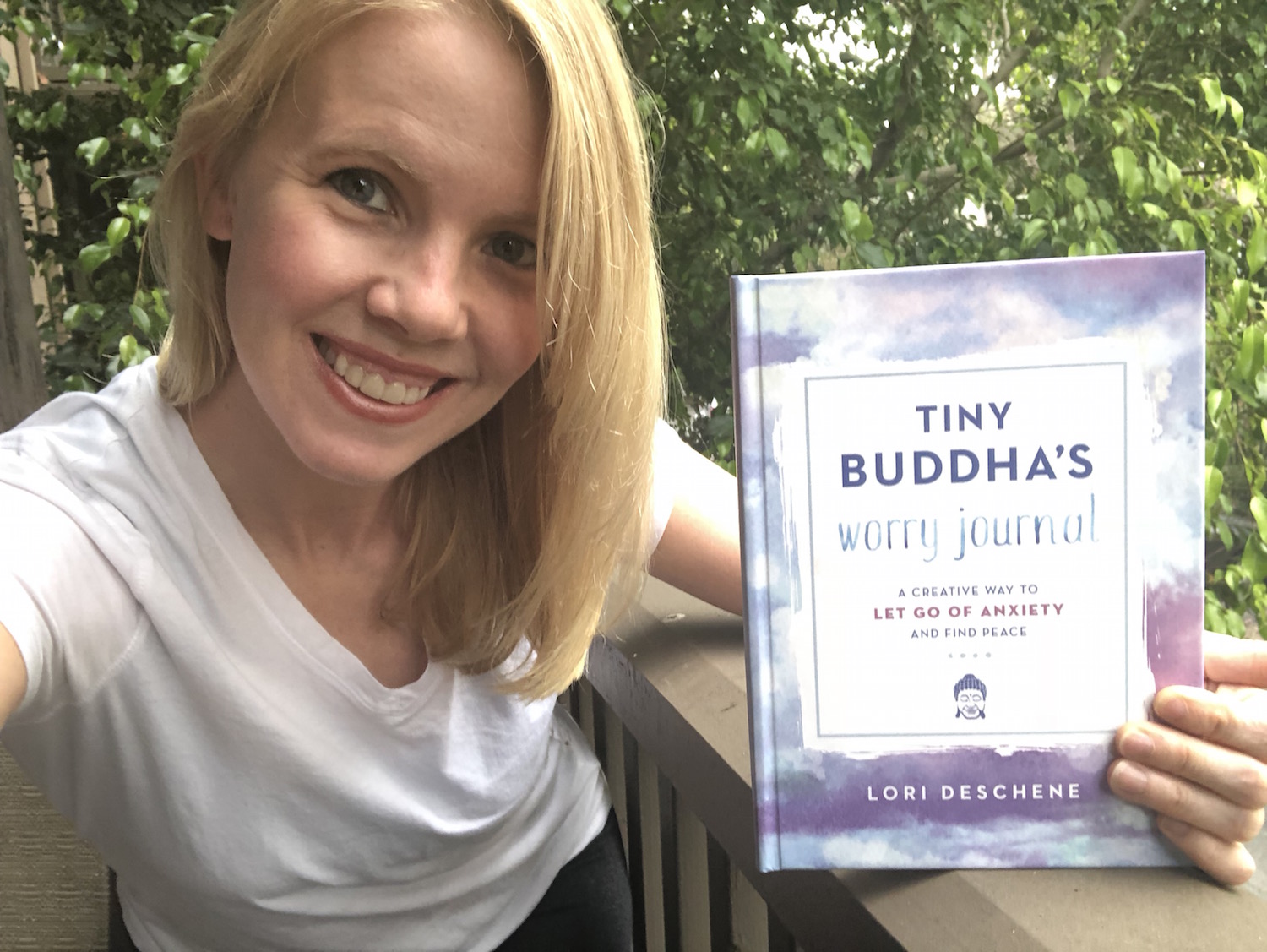
    Today’s the day! Tiny Buddha’s Worry Journal is officially available for purchase, and today is the last day to claim the three free bonus gifts.

    Stored high in my closet I have a collection of more than a dozen journals from my childhood and teenage years.

    The early ones are full of angst, pain, and rage. During the later years I began to use journaling not just to vent my feelings but also to reframe my thoughts and recognize and overcome negative patterns. This helped me feel less stressed, depressed, and fearful and more peaceful, empowered, and optimistic.

    This is what compelled me to create this journal: I know from personal experience how journaling can help us move through difficult feelings and overcome mental blocks that prevent us from feeling happy, relaxed, and free.

    Whether you’re worried about the future, people you love, what people think of you, or any of the many things we can’t control in life, this journal can help you let go and calm your busy mind.

    Filled with quotes, prompts, and questions, along with coloring and doodling pages, Tiny Buddha’s Worry Journal provides a number of different activities to help you reframe your worries and minimize anxiety in your daily life. 

    If you grab your copy today, you’ll receive the following:

    A series of four meditations on letting go (led by yours truly), each with an EFT tapping session led by Naomi Jansen and an introductory chat with Naomi and her One Mind Live co-founder Stephen Fearnley

    An exclusive audio interview with me and Ehren Prudhel, host of the soon-to-be-launched podcast Next Creator Up, focusing on worries related to pursuing a new dream (more specifically, my first feature screenplay)

    A series of three vibrant desktop wallpapers featuring adorable Buddhas and calming quotes

    All you need to do to claim your bonuses is pre-order your copy from any online vendor and then forward your purchase confirmation email to worryjournal@tinybuddha.com.

    We all worry; it’s just part of being human. But it doesn’t have to control us. Not if we proactively choose to work through our worries, one moment and one page at a time. I hope these exercises help you as much as they’ve helped me!

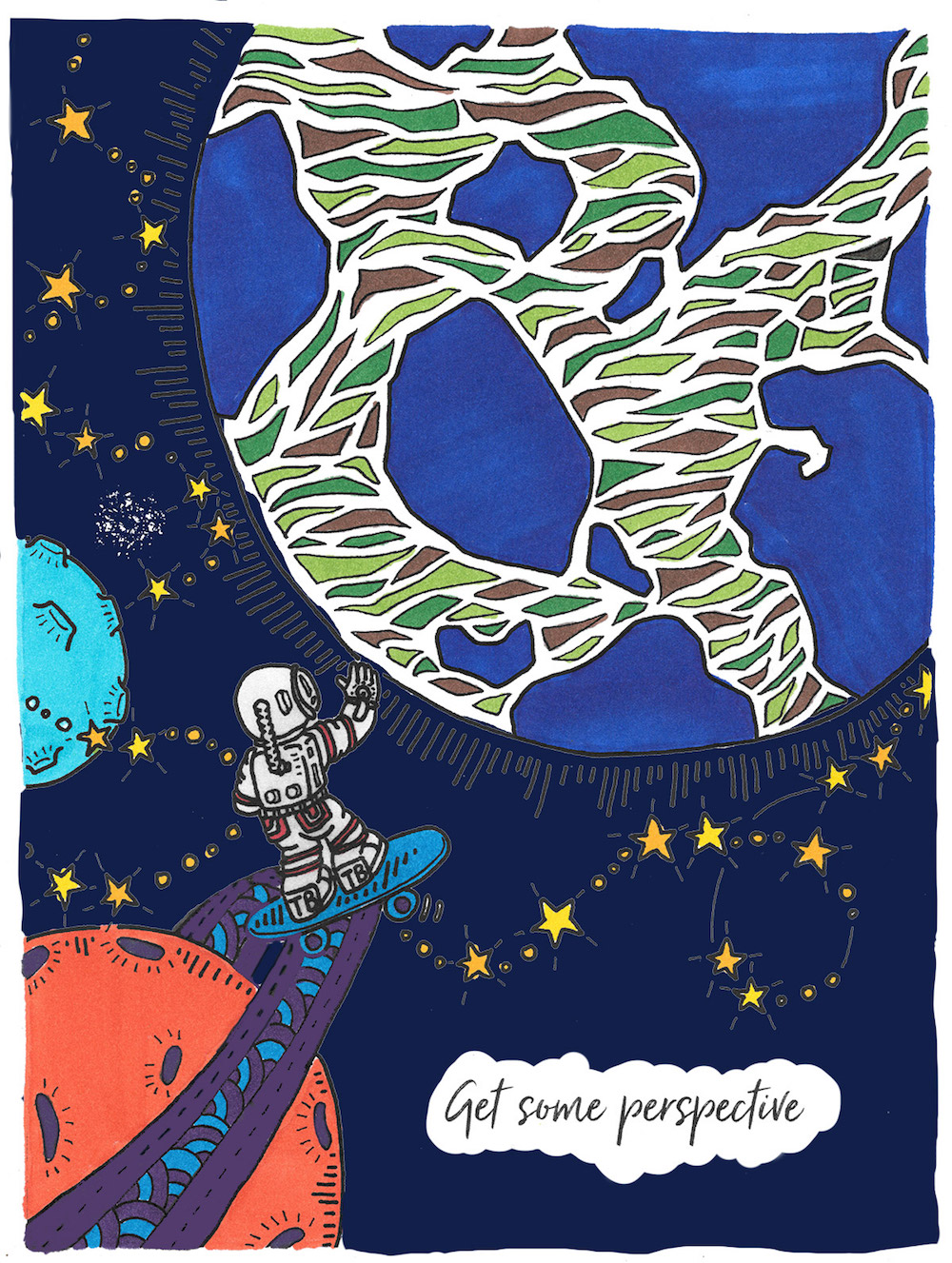
  • Perspective Coloring Page from Tiny Buddha’s Worry Journal

    Perspective Coloring Page from Tiny Buddha’s Worry Journal

    Hi friends! We’re now less than two weeks away from the launch date for Tiny Buddha’s Worry Journal. As you may have noticed, I’ve been sharing some of the coloring pages over the past few weeks, all colored by yours truly, to give you a sense of what the journal has to offer. So far I’ve shared:

    In addition to coloring pages, the journal includes questions, written prompts, and doodle prompts to help you reframe your worries and minimize anxiety in your daily life.

    Really, it all comes down to perspective. Everything seems more difficult and overwhelming when we’re wading through the muck of a disappointment, crisis, or tragedy, knee-deep in our messy emotions. But oftentimes when we step back and view things in a different light, life suddenly seems more manageable, and sometimes the painful seems not only tolerable but also useful.

    There’s a Taoist fable that I’ve found particularly powerful because it reminds me not to panic when things go “wrong.” You’ve quite possibly read it before, but perhaps it’s something you need to read again today:

    A farmer had only one horse. One day, his horse ran away.

    His neighbors said, “I’m so sorry. This is such bad news. You must be so upset.”

    The man just said, “We’ll see.”

    A few days later, his horse came back with twenty wild horses following. The man and his son corralled all twenty-one horses.

    His neighbors said, “Congratulations! This is such good news. You must be so happy!”

    The man just said, “We’ll see.”

    One of the wild horses kicked the man’s only son, breaking both his legs.

    His neighbors said, “I’m so sorry. This is such bad news. You must be so upset.”

    The man just said, “We’ll see.”

    The country went to war, and every able-bodied young man was drafted to fight. The war was terrible and killed every young man, but the farmer’s son was spared, since his broken legs prevented him from being drafted.

    His neighbors said, “Congratulations! This is such good news. You must be so happy!”

    The man just said, “We’ll see.”

    You can’t see the whole picture from where you’re standing, so take a deep breath and remind yourself that things likely aren’t as bad as they seem. And even if the worst thing happened, you could handle it and maybe even grow and gain in ways you can’t possibly predict.

    From now until June 26th, you’ll get three bonus gifts, including a guided meditation series on letting go, when you pre-order Tiny Buddha’s Worry Journal. All you need to do is order a copy here and forward your purchase confirmation email to worryjournal@tinybuddha.com.

  • Accept Yourself Coloring Page from Tiny Buddha’s Worry Journal

    Accept Yourself Coloring Page from Tiny Buddha’s Worry Journal

    Hi friends! If you’re a regular reader, you know I’ve recently been sharing some of the coloring pages from Tiny Buddha’s Worry Journal, which includes questions, written prompts, and doodle prompts to help you work through worries and minimize anxiety in your daily.

    So far I’ve shared:

    Today’s page is one of my favorites, and not just because I love Rose Hwang’s beautiful illustration and enjoyed using so many bright colors.

    I love this page because it reminds me that imperfection is all about perception. What you consider a flaw someone else might consider a strength. What you feel tempted to hide someone else might perceive as beautiful.

    There’s a Japanese term, Kintsugi, that refers to the art of repairing broken pottery with lacquer mixed with powdered gold or other precious metals. This practice began in the 15th century when Japanese military commander Ashikaga Yoshimasa wanted to repair a broken tea bowl in a visually pleasing way. Kintsugi has come to be known as way to honor an object’s history, rather than attempting to hide the damage.

    I think about this sometimes when I look at my left leg. I have a series of scars toward the top, remnants from a time when I channeled my depression and shame into self-harm. For a while I was too insecure to wear shorts or a bathing suit because I worried that someone might see them and judge me. Now when I look at them, I try to visualize the faded lines in gold.

    Then I remember those lines are like a map that led me directly here. Every other scar, physical or emotional, is a testament to my strength, not my weakness. And every idiosyncrasy, from my introversion to my sensitivity, is a gift, not a curse, that has enabled me to make a difference in the world.

    The same is true for all us: our scars, our quirks, our imperfections—these aren’t things we need to hide. We are who we are because of them, not in spite of them. And every colorful piece of our past and personality is part of what us makes us beautiful.

    From now until June 26th, you’ll get three bonus gifts, including a guided meditation series on letting go, when you pre-order Tiny Buddha’s Worry Journal. All you need to do is order a copy here and forward your purchase confirmation email to worryjournal@tinybuddha.com.

  • Creativity Coloring Page for Tiny Buddha’s Worry Journal

    Creativity Coloring Page for Tiny Buddha’s Worry Journal

    Hi friends! Since Tiny Buddha’s Worry Journal launches in three weeks, I’ve recently been sharing some of the coloring pages, which all depict things we can do to minimize anxiety in our daily lives.

    So far I’ve shared:

    Today’s tip: Create something with your hands.

    If you’ve ever immersed yourself in any type of creative activity, you know how meditative and calming it can be.

    When we’re focused on the next brush stroke, bead, or stitch, we’re deeply immersed in the present moment—not caught up in our thoughts, fears, and worries.

    This is why I decided to include doodling and coloring pages in this journal. Research has shown that coloring calms down our amygdala—the fear center of the brain—and it also activates the parts of the brain that are responsible for focus and concentration.

    Beyond that, coloring and other creative activities bring us back to the ease of a simpler time—before we had to worry about bills, bosses, and other stresses of adulthood.

    When we were kids, we didn’t need to make time for creativity; it was as natural as breathing and saying no to things we didn’t like. Whether we were pretending to be pirates, fairies, or superheroes, we were always eager to pick up some cardboard and markers to make our own accessories and props.

    And for that brief flicker of time, all we saw was the fantasy in our head, projected onto our bedroom or yard.

    For many of us, childhood wasn’t all rainbows and butterflies, but the time we spent creating was.

    When I look back on my life up until now, I see that all the happiest and most defining moments involved some form of creativity.

    Like the decade I spent working at an afterschool program for kids, where I directed them in plays, made some of their costumes, and often designed arts and crafts projects for us to try.

    And the years I spent sketching in my book of shadows (during my teenage wiccan years), trying to create a guidebook for magic and light in the dark ages of my adolescence.

    And the time I spent crocheting afghans for everyone I love—first during the three months I spent at a residential treatment center for eating disorders, and later while traveling across the US with assorted mobile marketing tours.

    These days, I don’t create with my hands often enough. I’m more likely to create something digitally (like the many coloring posters in the fun & inspiring section). But whenever I disconnect from technology and focus on making something from nothing, it’s like the whole world stops—along with my thinking mind. And for a brief flicker in time there’s only heart. Just love, joy, and pure presence.

    I know there are a lot of you out there who also enjoy creating, and I would love to connect with you. So please, take a minute or two and say hello. Introduce yourself if we’re not acquainted, and tell me about something you’ve recently created, or you’d like to create. You can even share a picture if you’d like. Whatever it is, it’s a piece of your heart, and I would love to see it.

    From now until June 26th, you’ll get three bonus gifts, including a guided meditation series on letting go, when you pre-order Tiny Buddha’s Worry Journal. All you need to do is order a copy here and forward your purchase confirmation email to worryjournal@tinybuddha.com

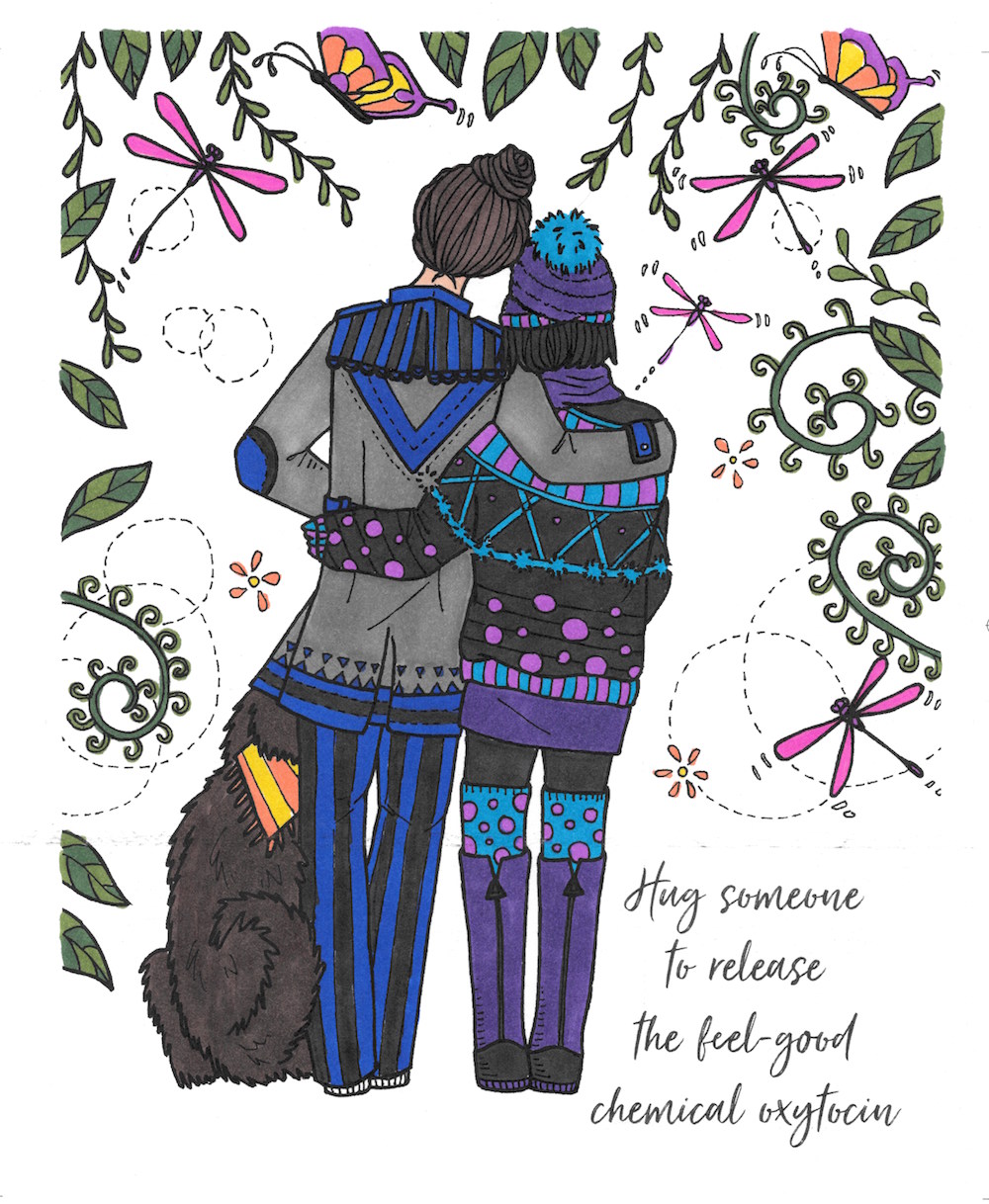
  • Hugging Coloring Page from Tiny Buddha’s Worry Journal

    Hugging Coloring Page from Tiny Buddha’s Worry Journal

    “Sometimes in life all you need is a hug. No words, no advice, just a hug to make you feel better.” ~Unknown

    Hi friends! Over the past couple of weeks I’ve been sharing coloring pages from the soon-to-be-launched Tiny Buddha’s Worry Journal, which also includes doodle prompts, writing prompts, and questions to help you minimize anxiety in your daily life.

    So far I’ve shared the music coloring page and the meditation coloring page.

    Today’s page is one of my favorites. The tip: Hug someone to release the feel-good chemical oxytocin (a hormone that some have called an “antidote to depressive feelings”).

    “Hugging is good medicine. It transfers energy and gives the person hugged an emotional lift. You need four hugs a day for survival, eight for maintenance, and twelve for growth.” ~Unknown

    As someone who works alone, I can sometimes feel a little starved for connection during my day—which is ironic, since I connect with so many people online. But you can’t look into someone’s eyes in a comment. You can’t hear their heartbeat in an email. And you can’t touch their hand in a Facebook exchange.

    Whenever I’ve had a tough day, it’s tempting to want to talk it all out—more thoughts, more words, more analysis. And sometimes, this helps. But more often than not, I just need a hug.

    I just need to feel close to someone I love and to melt into their arms.

    Sure, it feels great to be heard. But sometimes I just need to be held so I can remind myself what it feels like to let go.

    We all need this sometimes. We all need this connection, this comfort, this release.

    Everything seems easier when we feel supported, and everything feels more manageable when we remember we’re not alone.

    “Hugs are so underrated, especially those hugs that are so tight you can literally feel the other person’s heartbeat and for a moment everything feels so calm and safe and like nothing can hurt you.” ~Unknown

    Hug someone today. Put down your phone, reach out your arms, and feel their heartbeat. It could help you more than you think, and the person you give it to could need it more than you know.

    From now until June 26th, you’ll get three bonus gifts, including a guided meditation series on letting go, when you pre-order Tiny Buddha’s Worry Journal. All you need to do is order a copy here and forward your purchase confirmation email to worryjournal@tinybuddha.com

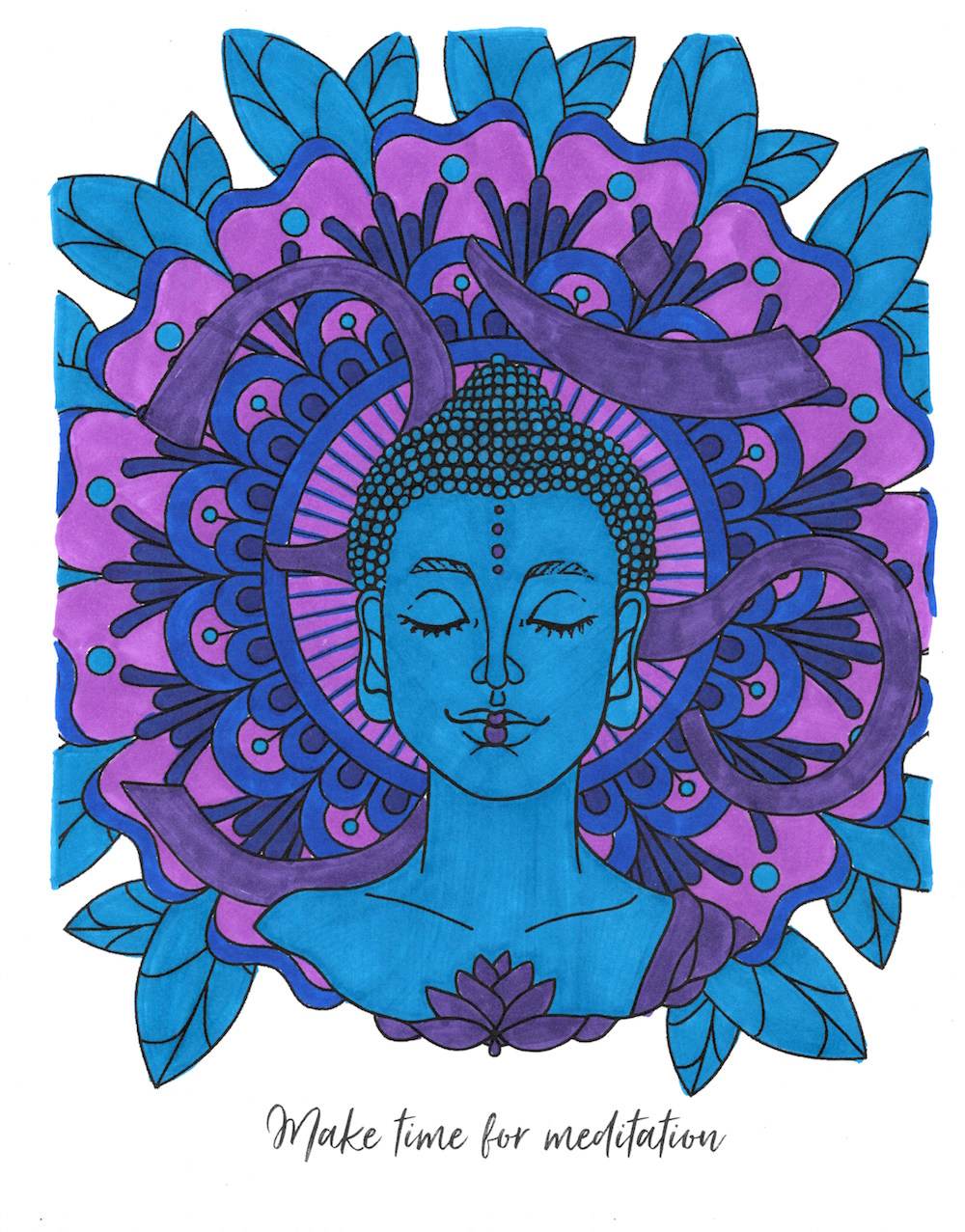
  • Meditation Coloring Page from Tiny Buddha’s Worry Journal

    Meditation Coloring Page from Tiny Buddha’s Worry Journal

    Hi friends! As I mentioned last week when I shared the music coloring page from Tiny Buddha’s Worry Journal, I’m planning to share some of the other pages, twice weekly, until the journal launches on June 26th.

    Each page depicts one simple thing we can do to help ease our worries.

    Today’s tip: Make time for meditation.

    Of all the healthy habits I’ve adopted, meditation has been, by far, the most transformative.

    It’s enabled me to observe my negative, obsessive thoughts instead of getting caught up in them, and it’s helped me create space between my thoughts and my response, so I’m less apt to do and say things I’ll later regret.

    The beautiful thing about meditation is that there are many ways to do it, to suit your schedule and needs.

    You can use guided meditations (I’ve included four in the pre-order bonus package!); you can learn any number of different techniques for seated meditation; you can practice deep breathing; you can try a movement-based practice, such as yoga, qigong, and meditative walking; or you can simply practice mindfulness in your daily life—while eating or doing the dishes for example.

    And even if you only have five minutes, you’ll experience the benefits.

    Research has shown that anxiety can change the structure of your brain, increasing the size of the amygdala (the part responsible for your fear response), causing you to become even more anxious.

    A regular meditation practice can reverse this. It can literally change how your brain works and, consequently, how you respond to the events in your life.

    My preferred forms of meditation include:

    -Yoga (Vinyasa, hot yoga, and yin yoga—which a teacher recently described as “basically a nap with light stretching”)

    -Guided meditations (I’ve found tons of free options on YouTube)

    -Deep breathing (alternative nostril breathing being my favorite)

    If I have the time, I’ll go to an hour-long yoga class at a studio down the street (which also allows me to clear my mind a little on the walk) or find a thirty-minute guided meditation online.

    If I have less time available, I’ll do five to ten minutes of poses, a five-minute guided meditation, or a few minutes of deep breathing. No matter what I choose, I always feel calmer and more centered after.

    Do you have a regular meditation practice? If so, what’s your practice of choice, and how has it changed your life for the better? Your experience could help other readers find peace, calm, and healing, so please share the good!

    From now until June 26th, you’ll get three bonus gifts, including a guided meditation series on letting go, when you pre-order Tiny Buddha’s Worry Journal. All you need to do is order a copy here and forward your purchase confirmation email to worryjournal@tinybuddha.com

  • Music Coloring Page from Tiny Buddha’s Worry Journal

    Music Coloring Page from Tiny Buddha’s Worry Journal

    Hi friends! Since Tiny Buddha’s Worry Journal officially launches a month from tomorrow, I decided to start sharing some of the coloring pages on the blog, twice a week, until then.

    I was thrilled to once again work with the talented Rose Hwang, the illustrator for Tiny Buddha’s Gratitude Journal, and her work this time is just as beautiful.

    Each page depicts one simple thing we can do to help ease anxiety.

    Today’s tip: listen to calming music.

    Music can be so transformative. The right song can instantly transport you to a different time, remind you of someone or somewhere you love, or communicate everything you’re feeling but can’t put into words.

    It can simultaneously calm your mind, heal your heart, and lift your spirits.

    And it’s the ultimate tool for mindfulness. It’s hard to dwell on the past or worry about the future when you’re lost in a melody, eyes closed, the beat reverberating deep in your chest, the lyrics drowning out the repetitive thoughts in your head.

    There have even been studies to show how healing music can be—it can boost brain activity and the mood enhancing chemical serotonin, lower blood pressure and the stress hormone cortisol, and slow our heart rate, creating an overall calming effect.

    I know I always feel more centered and at ease when I take even just a few minutes to listen to my “peace playlist,” which includes:

    -A selection of movie theme songs (far too many to list!)

    -Musical soundtracks, some of the newest of which include The Greatest Showman and La La Land (specifically: A Million Dreams and Here’s to the Ones Who Dream)

    -Songs from Bob Marley, The Beatles, The Rolling Stones, Radiohead, Coldplay, The Lumineers, The Fray, Augustana, David Gray, Ben Folds, Gary Jules, Josh Ritter, and Ray LaMontagne, to name some of my favorites

    What are some of the songs that calm your mind? Which songs help you relax and unwind after a long, stressful day? Feel free to share an album name, a song title, or a link. You never know whose day you could brighten by sharing your playlist for peace.

    From now until June 26th, you’ll get three bonus gifts, including a guided meditation series on letting go, when you pre-order Tiny Buddha’s Worry Journal. All you need to do is order a copy here and forward your purchase confirmation email to worryjournal@tinybuddha.com

  • 5 Journal Prompts to Help You Let Go of Anxiety and Find Peace

    5 Journal Prompts to Help You Let Go of Anxiety and Find Peace

    “You don’t have to control your thoughts. You just have to stop letting them control you.” ~Dan Millman

    There was a time when my mind was completely consumed by worries, and I lived in a perpetual state of panic.

    I worried about things I’d said and whether people were judging me, things I should be doing and whether I was using my time well, the state of my life, the state of the world, and just about anything else one could worry about.

    Life always felt scary and uncertain, so I always felt unsafe, and worrying gave me the illusion of gaining some semblance of control.

    Well-intentioned people advised me to just be positive—then I’d feel a lot better about life. But I’ve always found the concept of positive thinking somewhat frustrating.

    First, it made me feel guilty, since no matter how hard I tried to avoid negative thoughts, they’d inevitably pop into my head. Secondly, it was exhausting. To constantly monitor your mind takes monumental effort, and it seemed contrary to my goal—to be less burdened by my brain.

    Still, there’s no denying that our thoughts influence our feelings. When we sit around dwelling on everything that could go wrong, or everything we think we did wrong, we end up feeling drained and depressed.

    So what’s the solution then? How can we allow ourselves to be human and simultaneously ensure we don’t drown in our fearful thoughts?

    For me, journaling has been key.

    Journaling has helped me find solutions to my problems, identify and let go of things I can’t control, and change my perspective on the things I want to change but can’t.

    It’s also helped me recognize my own strength so that I can worry less about what’s coming and trust more in my ability to handle it, whatever it may be.

    If you’re looking for a little mental relief this week, I recommend starting each weekday with one of these five journal prompts from Tiny Buddha’s Worry Journal: A Creative Way to Let Go of Anxiety and Find Peace

    The beauty of these particular prompts is that they help us focus on the moment, be kind to ourselves, and have faith in ourselves and our journey, wherever it may lead.

    5 Journal Prompts to Help You Calm Your Anxious Mind

    1. Today, I choose to let go of the things I can’t control, including…

    2. I recognize that I don’t need to have all the answers right now. Today, I give myself permission not to know…

    3. Dear inner critic: You always focus on everything I’m doing wrong, but I know I’m doing a lot right, including…

    4. I know I’m strong enough to handle whatever comes at me, because I’ve survived a lot, including…

    5. Instead of worrying about making the “wrong” choices, I trust that no matter what I choose…

    You don’t need to write anything specific or lengthy, though you can take all the time you have and need. The important thing is that you get in the habit of thinking about yourself and your problems in a new way.

    It’s not about suppressing thoughts or replacing them with positive ones. It’s about directing your mind to useful thoughts so you can spend less of your life feeling worried and overwhelmed.

    Just like gratitude journaling can help us feel happier and more optimistic, keeping a worry journal can help us feel calmer and more at peace.

    If you’re interested in pre-ordering a copy of Tiny Buddha’s Worry Journal, which officially launches on June 26th, you can reserve a copy here.

    Once you receive your purchase confirmation email, forward it to worryjournal@tinybuddha.com and you’ll receive access to the following free bonus items:

    • Four guided meditations on letting go (of control, the need for approval, stresses/pressure, and self-judgment)
    • Three colorful desktop wallpapers with cute Buddhas and calming quotes
    • An exclusive interview with me and Ehren Prudhel, founder of the soon-to-be-launched podcast Next Creator Up, in which I discuss how I’ve overcome worries related to writing my first feature film

    I hope these prompts (and the other activities in the journal) help you as much as they’ve helped me!

  • 3 Ways to Stop Worrying and Feel Less Anxious

    3 Ways to Stop Worrying and Feel Less Anxious

    “There isn’t enough room in your mind for both worry and faith. You must decide which one will live there.” ~Sir Robertson

    Do you consider yourself a worrier?

    Maybe even a perfectionist or Type A personality?

    When I’m not at my best, I can be all of those things combined. (Not cute, I know.)

    Because of this, I know exactly what it feels like to be stuck in my head, with tightness in my chest and emotional wrenches in my gut.

    If you also struggle with worry and anxiety, then I feel you. I rode the worry struggle bus for a long time—until I finally addressed my psychology.

    Why Your Psychology Matters Most

    My aunt once told me (after I called her in the middle of a freak out), “You’re worried because you’re trying to control the future Kari, and that’s impossible.”

    Woah. Paradigm shift. That’s when it all ‘clicked’ and I realized that my issues with worry and anxiety were all self-created.

    Then it got me wondering… If I created this worry and anxiety with my thoughts, maybe I can create relaxation with my thoughts too.

    After researching the psychology of worry, I learned some practices that helped transition me from an uptight chronic worrier into a pretty relaxed person. I still have my moments, but it’s nothing like before.

    Today, I’d like to share three of my best practices with you. I hope they can help you reduce your worry and anxiety too.

    Let’s start with the most practical piece of advice.

    1. Practice using coping imagery.

    This involves visualizing yourself handling worst-case scenarios with confidence.

    And just to be clear: You’re visualizing the worst-case scenario, not the best case. It’s like defensive pessimism, which can actually help with anxiety more than positive thinking.

    So instead of worrying about being crushed by the worst-case scenario, try visualizing yourself handling it with confidence.

    Here’s an example (that I cringe to share with you because it seems so silly in hindsight):

    I recently started dating a guy who I developed some serious feelings for. I had the most successful first date of my life with him, and it’s been amazing ever since.

    But instead of getting excited about the potential, I started worrying about all the things that could go wrong. (Like I said, being a worrier is self-created misery!)

    Specifically, I was worried that in the future we wouldn’t be able to see each other for weeks because he was crazy busy. I grew anxious over feeling devastated in the future by the potential lack of quality time I crave.

    Although it wasn’t even a problem yet, I started worrying about making plans to the point where I started sabotaging the romance by “trying too hard.”

    I let my anxiety consume me, and I became the chaser instead of allowing something beautiful to naturally unfold. I hated that I started to sabotage something beautiful, but in that moment, (it felt like) I couldn’t help myself.

    And this is where the switch happens.

    Instead of worrying about how devastated I would feel if we couldn’t spend time together, I started visualizing myself feeling okay if I didn’t get to see him. (I chose “okay” instead of “happy” because it needs to be realistic.)

    Instead of thinking about the void, I thought about all the other wonderful things I could do with my time, like surf or entertain my hobbies.

    This seriously helped put my mind and body at ease! Here are more details for the process:

    How to Do It

    To practice using coping imagery, start by imagining the situation that brings you anxiety. How do you feel? What are you thinking?

    Then, start to imagine a warm glow of confidence radiating from you. Imagine being in that situation feeling totally confident and capable. How does it feel? What are you thinking?

    Then, imagine something going wrong—something that you’re worried about—and imagine yourself handling that situation with confidence and ease too. What thoughts and feelings helped you handle it

    Get comfortable with these thoughts and feelings and keep mentally practicing them.

    This “mental rehearsal” helps activate neuroplasticity, your brain’s ability to rewire itself and form new neural connections, like new thought loops.

    The more you practice using coping imagery, the more you strengthen the new thought loops for positive thinking (or defensive pessimism) and weaken the thought loops for worrying.

    In time, you’ll naturally become less of a worrier because your brain has been trained to think confident thoughts instead of worrisome thoughts.

    2. Be willing to feel uncomfortable.

    Worry and anxiety often come from trying to protect yourself from pain. And I don’t blame you. Our primal brain is wired to seek pleasure and avoid pain; and anxiety is often caused by worrying about the potential pain that we might feel in the future.

    Sometimes we’re so afraid of emotional pain and loss that we forget that they can’t physically harm us.

    And this is where the saying “make peace with discomfort” will serve you very well, because your ability to be uncomfortable is directly related to your ability to be a relaxed person.

    Sometimes we assume that we need to be comfortable in order to be relaxed. But sometimes being relaxed simply means feeling uncomfortable and being okay with that.

    The more discomfort you’re able to tolerate, the less you’ll worry about preventing it from happening.

    For me, I had to develop the skill of tolerating uncertainty (which is an uncomfortable feeling for me) in my dating life. Although uncertainty feels uncomfortable, I learned to make space for it instead of worrying about making it go away.

    If you want to develop the skill of tolerating discomfort too, here’s how you can do it:

    How to Do It

    A great way to train yourself to tolerate discomfort is to take cold showers. Yup! Even just a five-minute cold shower a day can train your brain to tolerate discomfort.

    Not into cold showers? Another great practice is setting aside fifteen minutes every day as your “uncomfortable practice periods.” These practice periods will help you develop the skill of tolerating discomfort.

    So whenever you start to feel uncomfortable in your daily life, use it as practice. Hold space for the discomfort and make peace with it as best you can.

    For example, if you really hate public speaking, then use your weekly company meeting as a place to practice being uncomfortable by speaking up at least once.

    The more you practice feeling uncomfortable, the better you will get at being uncomfortable. And the more uncomfortable you’re willing to be, the less worry and anxiety you will feel.

    You’ll learn to let life unfold naturally without worry.

    3. Plan what you can and let the rest unfold.

    During the months preceding graduation from college I experienced the biggest bout of anxiety and worry that ever consumed me.

    What if I don’t get any interviews? What if I totally flunk the interview I get? What if I get the job and hate it? What if, what if, what if?

    Fueled by tons of stress, I worked really hard to apply to dozens of jobs before I graduated. In constant panic mode, I refused to leave my desk to play because I was convinced that every ounce of my energy needed to be dedicated to solving this problem.

    In the end, I ended up getting a job through a friend who happened to mention the opportunity through random conversation.

    I couldn’t have planned for that.

    All my preparation paid off, but there was one lesson that I took away from all the unnecessary worry and anxiety:

    If I had done everything the same, but did it all in a relaxed fashion, I would have created the same result.

    “Let go of the idea that gentle, relaxed people can’t be superachievers… One of the major reasons so many of us remain hurried, frightened, and competitive, and continue to live life as if it were one giant emergency, is our fear that if we were to become more peaceful and loving, we would suddenly stop achieving our goals.” ~Richard Carlson

    Sometimes we get tripped up thinking that stress is somehow essential for getting things done. And while some stress is beneficial, extreme stress and anxiety are not necessary for success.

    You can be a totally relaxed person and still get everything done—without worry.

    How to Do It

    Sit down and write down all the things you’re worried/stressed about. Then pretend like you’re coaching someone else with those problems.

    What advice would you give them? What steps would you have them take?

    Then, follow those steps and stop there. Don’t worry about whether or not you did enough. You followed your own advice, and you can relax about the rest.

    Plan what you can, and then breathe. Don’t let your mind continue to race about all the things that could go wrong (unless you’re using Coping Imagery).

    Just have faith that what’s meant to be will be, and let the universe carry you for a while.

    You’ve Got This

    Together, these three steps helped me seriously reduce my anxiety and worry. Will you join me and try them too?

    Start by making coping imagery and “uncomfortable practice periods” daily habits. This will help you develop the skill of tolerating discomfort, and your worry and anxiety will lessen.

    In time, you will get better at letting life unfold the way it was always meant to be.

    Some days you might still find yourself on the worry struggle bus. But maybe this time you’ll feel like you’re in the driver’s seat.

  • Pre-Order Tiny Buddha’s Worry Journal and Receive 3 Free Bonus Gifts

    Pre-Order Tiny Buddha’s Worry Journal and Receive 3 Free Bonus Gifts

    There was a time when worrying was like breathing to me. It’s estimated that we think between 50,000 and 70,000 thoughts per day and we breathe 23,040 breaths. It would likely be accurate for me to say I once panicked as often as I inhaled.

    I worried about what people thought of me. I worried that people weren’t thinking of me at all. I worried about what could go wrong. I worried I might have done something wrong. And I worried about being wrong—just by being me.

    All this worry was crippling. It’s hard to enjoy anything when you’re there but not because the deepest part of you is tied up in knots, held hostage by your perpetually panicked brain.

    I eventually learned that my body and mind were primed for anxiety in my younger years—meaning I lived in a constant state of fight-or-flight mode, always on edge and on the lookout for threats—and that I’d reinforced this sense of dread through persistently negative, irrational thoughts.

    I suspect many of us live like this: with a fearful, racing mind and a sense that at any time, the other shoe could drop—and it might be freakishly large enough to crush us. But we don’t have to stay under this weight.

    Over the years, I’ve learned a lot about relaxing my body, calming my mind, and proactively managing anxiety.

    I’ve learned to recognize the thoughts that don’t serve me and to actively shift my perspective before I get swept up in a vortex of fear.

    I’ve learned to embrace uncertainty and to trust that I can handle whatever comes at me.

    And I’ve learned to accept that I will sometimes experience anxiety, no matter how much I heal or grow, so I don’t fight myself so much when it inevitably happens.

    This is what compelled me to create Tiny Buddha’s Worry Journal, with the help of my talented friend, illustrator Rose Hwang.

    Filled with quotes, prompts, and questions, along with coloring and doodling pages, Tiny Buddha’s Worry Journal provides a number of different activities to help you reframe your worries and minimize anxiety in your daily life. 

    If you have a hard time detaching from worrisome thoughts, this could be just what you need to learn to let go and ease your troubled mind. It takes a little time and practice, but with just a few mindful minutes each day, and the right tools, anyone can become less anxious.

    If you pre-order before the June 26th launch date, you’ll receive three free bonus gifts, including:

    A series of four meditations on letting go (led by yours truly), each with an EFT tapping session led by Naomi Jansen and an introductory chat with Naomi and her One Mind Live co-founder Stephen Fearnley

    An exclusive audio interview with me and Ehren Prudhel, host of the soon-to-be-launched podcast Next Creator Up, focusing on worries related to pursuing a new dream (more specifically, my first feature screenplay)

    A series of three vibrant desktop wallpapers featuring adorable Buddhas and calming quotes

    All you need to do to claim your bonuses is pre-order your copy from any online vendor and then forward your purchase confirmation email to worryjournal@tinybuddha.com.

    Worry is a part of life, but it doesn’t have to control us. It’s possible to breathe a lot easier. These days, I do. I hope this journal helps you do the same.

    **Though Amazon hasn’t yet discounted the price, it will likely go down soon, as it always does. As part of Amazon’s pre-order price guarantee, you’ll be charged the lowest price offered before the launch date.

  • 5 Ways to Calm Your Mind When You’re Exhausted (Without Meditation)

    5 Ways to Calm Your Mind When You’re Exhausted (Without Meditation)

    “Calm your mind. Life becomes much easier when you keep your mind at peace.” ~Unknown

    Let me start with a confession.

    If I’m honest with you, even just writing these words actually makes me feel kind of uncomfortable.

    But I’m going to say it because it’s true, and some of you reading this are going to realize that on some level you probably share the same feeling.

    I hate meditation.

    Now, let me do the obligatory defend-the-shocking-thing-I-just-said.

    I mean, to be more specific, some days I hate meditation.

    Most of the time, I love it. I really love it. It’s had the most positive influence of anything in my entire life. But so have my family, and some days… just joking. Look, normally meditation makes me feel on top of the world. I’m bursting with gratitude, and even the idea of stress can seem to be so far away.

    But on other days, I do also kind of hate it. Actually, hate is too strong, let me say I really dislike it. I’m sure some of you can relate.

    But there’s a reason we feel this way at times: exhaustion.

    About six months ago, my meditation practice had been going well. I was feeling incredibly content, just with life in general. But after a couple of weeks of travel, difficulties with work, and family commitments, I found myself tired, very tired. And my mind started racing a lot more than it had been.

    Mentally, I felt like I had lost my inner calm. Like I’d taken one step forward and two steps back.

    So I tried to do what I always do. Meditate.

    But for a couple of weeks, I was approaching the practice with completely the wrong attitude. I started trying to use meditation as my medication, and it had the opposite intended effect. It just wouldn’t work! I actually started to get completely annoyed with the whole thing.

    So I tried harder, and harder, and harder. Every day I would sit down to meditate, only to leave the session feeling even more tired than when I had started.

    It was at this point that I decided to shift my focus to other ways to calm my mind, at least until I had more energy.

    And I realized a few very important things.

    Firstly, I realized that I truly am in love with meditation. Even when I ‘hated’ it, I still wanted to practice consistently, and followed through with it.

    But I also understood that in times of stress, we can sometimes start to resent things we love. I understood that although I’ve barely missed a day of meditation in the last couple of years, I’m still a human being in a human body and I’m going to have days where I feel like I’m back where I started.

    I also came to realize that a calm mind is a focused mind, and a tired mind doesn’t have the resources to stay focused.

    It’s an unfortunate reality of the human brain that the more fatigued we are, the more our thoughts start to race. Anxiety and tiredness work on a feedback loop. So when you’re struggling with one, it’s inevitable that you’re going to have problems with the other.

    While meditation is the most effective way to calm your mind, it’s not an option when you’re incredibly tired! There is another way to do this, which is by doing things that naturally focus your mind outside of yourself and guide your brain to release calming neurochemicals.

    The following five ways to calm your mind don’t require as much mental energy as meditation. And in the short term, they have the same effect on our mood.

    1. Do something complex (but not too difficult).

    The default mode network (DMN) is the part of the brain that is associated with reflections about yourself. Thoughts like: “Why do I feel lazy today?” “Should I text John back now or later?” “I’m starting to get hungry, maybe I should get a snack.” Meditation researchers call this “mind-wandering.” It takes up a huge portion of our waking life.

    When we’re tired or anxious, our minds wander more than usual, which makes us more tired and anxious.

    There are two commonly used ways we can consistently quiet the DMN. The first is meditation; the second is engaging in a complex task. (In fact, mindfulness coloring books are effective because of task complexity as well mindfulness.)

    You can pick something you regularly do, like drawing, sports, creative writing, or a work project and just increase the difficulty slightly. With drawing, for example, you can try and draw something that is more of a challenge, or with sports or writing, you can try setting a timer and complete a task in a limited time period.

    2. Do something for someone else.

    This is another way we can get out of our own heads when exhaustion starts to set in. Obviously, you don’t want to do anything too strenuous, but even doing simple things, when focusing on others, can quiet a racing mind.

    You can make it a habit to contact someone that you feel may need it, or you can spend some time volunteering or building something that you think can help others. Focusing on the well-being of the community can also give us purpose and meaning, which can be very reinvigorating.

    3. Do something fun and creative.

    When we are trying too hard to feel better all the effort can defeat the purpose and be kind of damaging. Doing something fun can help us break the cycle. This is because dopamine has a re-energizing effect on the nervous system and by engaging in play and creativity, we recharge our depleted energy reserves.

    Sometimes for example, I like to do free-writing mind maps. Essentially you set a timer for fifteen minutes and just let all your thoughts out on paper, and create mind maps for how they relate to each other. You can do this as a mindfulness exercise or just to express any creative ideas you have. This helps you feel like your thoughts are organized and focused and not scattered and distracted.

    Trying to do anything artistic like painting, origami, or even lego (if you have kids) can also be effective. Fortunately, YouTube has millions of tutorials if you want to learn something new.

    4. Get some exercise and take a long sleep.

    Exercise may seem counter-productive when you’re tired, but when we’re mentally exhausted, it can sometimes start to mess with our sleep. This varies slightly depending on each individual, but is largely because exhaustion and anxiety impact our ability to wind down before bed, which is a critical part of good quality sleep. Unconscious worries can also wake us in the night and stop us from getting into the deep states we need.

    By exercising, eating a big and healthy meal, and taking a long sleep, you can get the restorative effects that you need. This isn’t an invitation to oversleep, but if it’s been a while since you got some deep rest, it could be exactly what you need. It’s also useful to create a pre-sleep ritual that involves calming down and not looking at any screens for two to three hours before sleeping.

    5. Do something social.

    This goes for introverts as well as extroverts. It’s a common belief that introverts are drained by social interactions, but typically this is only when interacting with people they’re not comfortable with.

    If you’re an introvert, make the effort be social with someone who you always have fun with. When we’re engaged in a social situation that is fun, and not anxiety-inducing, we naturally get out of our own heads and begin to recharge our batteries.

    Meditation is great for calming our minds, and while you should keep trying to meditate even through rough periods, it can be good to have some short-term solutions to help you get your energy back.

    Have you ever felt this way with meditation? How else have you tried to quieten your mind? Let us know in the comments!

  • How to Stop the War in Your Head and Find Peace

    How to Stop the War in Your Head and Find Peace

    “A mind at peace does not engender wars.” ~Sophocles

    There’s a classic Buddhist story about two monks who come upon a woman at the edge of a river. One of the monks carries her across and they continue on their way. Several miles on, the other monk turns to the first and says, “How could you do that? We have made vows never to touch a woman!” The first looks serenely at him. “Are you still carrying her? I set her down at the edge of the river.”

    This is exactly what our minds do, if we aren’t careful: We carry our upsets with us long after the original cause is over. (We also pick up imaginary burdens from a future that may never come.) It’s what I call “the war in your head.”

    You know what it feels like. On the surface, you are going about your day—at work, driving, shopping, watching TV. But in your mind you’re going over, maybe for the hundredth time, what your boss or neighbor or ex-spouse said last week. Or what they might say or do next week.

    Only a sliver of your attention is on what is happening now. The rest of you is in the future or the past, reliving an old battle or imagining a future one.

    I say the war in your head, but you will inevitably feel its effects in your body as well. Maybe your throat or your chest is tight, your breathing is shallow, and your stomach feels a bit nauseous. As far as your body’s concerned, you might as well be experiencing the scene in reality: the stress hormones flow just as surely, doing their damage.

    When the war is in your head, you are the loser, every time. It doesn’t matter how often you re-fight the battle (or fight it in advance)—you have ceded your peace of mind, and anything else that might be available to you in the present moment. You can wear yourself out, even boxing with shadows.

    I learned this the hard way, during and after my divorce. I spent hours, days, weeks, and months with a full-scale war raging in my head. I sleepwalked through the rest of my life to the accompaniment of a continuous background rumble of outrage, pain, and anger.

    Most of my energy and attention were sucked up in imaginary arguments with my ex-husband, his lawyer, and the judge. I would go over and over the same ground, inwardly reciting my grievances, telling them off, or spinning down the rabbit holes of innumerable “what if” scenarios. None of it did me any good—the war in my head only added to my suffering.

    Eventually I realized what I was doing to myself and laid down my arms in sheer exhaustion. The quiet in my mind was almost eerie, like a battlefield after the ceasefire is called.

    Although my divorce continued along much the same lines it had been, I refused to give up my entire life and energy to the fight. I consulted with my lawyer, did what was necessary when it was necessary, and slowly became aware of the life that had been flowing around me, unnoticed and unlived, while I fought my inner war.

    The truth is, the war in our heads harms no one but ourselves, and even a small-scale war can have major consequences. How often has someone cut you off in traffic, or made a rude remark that you ruminated on for the rest of the day? How often have you spent anxious hours worrying about a possible outcome that never occurred?

    Our mental real estate is too precious to give over to war and strife. Our bodies are too vulnerable to collateral damage. 

    Luckily, it is possible to stop the war in your head. The first—and most important—step is to simply recognize when it’s happening and what it’s doing to you. Most of us are so used to the war that we become essentially unconscious of it. It just feels normal.

    In the beginning, it will probably take a full-scale battle to get your attention, but eventually you’ll learn to recognize even a minor skirmish. When you do, the next step is to take a metaphorical “step back” from it.

    Put yourself in the role of a war correspondent, who is there to simply observe, not participate. You can’t stop the war through resistance—that will only fan the flames. You stop the war by removing the fuel it runs on, which is your unconscious participation.

    Imagine a dial that lets you turn down the volume on your thoughts, as if you were viewing a battle scene from a distance.

    Take some deep breaths, and let yourself be gently aware of any sensations in your body. You don’t have to do anything about them—just notice them and let them be. Becoming familiar with the negative effects of your mental war will help you to recognize it faster, and also give you the motivation to end it!

    If you’re a visual person, try imagining a breeze that blows through your mind, gently clearing away the thoughts… or perhaps waves crashing on a beach, leaving the sand smooth and empty. Then say to yourself: “I choose not to have a war in my head.”

    It really can be as simple as that. The war thrives on our unconscious participation. Once you become conscious of it, and make the choice to reclaim your mental real estate, the episodes of war will become both less frequent and less intense.

    When this happens, you actually become more effective at solving any actual problems you might have, because your thinking is not clouded by drama and noise. This kind of thinking—without the violent emotions and resistance attached—also doesn’t impact your body the way a mental war does.

    If you are tired of the war that rages in your head, join me in declaring a “no-war zone” in your mind and be vigilant in keeping it that way. There will always be events and situations in life that bring up resistance, anger, worry, and upset, but we can choose to be like the first monk and simply set them down rather than carrying them endlessly along with us.

  • 3 Tools to Help You Calm Your Mind and Let Go of Anxiety

    3 Tools to Help You Calm Your Mind and Let Go of Anxiety

    “I vow to let go of all worries and anxiety in order to be light and free.” ~Thich Nhat Hanh 

    I’ve struggled with anxiety throughout my life. A difficult childhood and my highly sensitive personality meant I grew into an anxious kid—there was just too much pain and emotional overwhelm for my young brain to handle.

    My anxiety most often manifested as perfectionism and people pleasing, so from the outside everything seemed great. I excelled in school and I was a good kid who did as she was told. But there was a war inside me.

    I felt broken, unable to navigate these huge feelings of fear and uncertainty on my own. Full of negativity and self-criticism, I felt like an outsider, misunderstood by the world, scared and alone.

    Over the years, as I stuffed down these feelings of inadequacy and isolation, I internalized the belief that somehow I was not good enough, that there was something inherently wrong with me.

    Afraid of being found out, ridiculed, and humiliated, I became invisible. I masked my fears, shame, and feeling rejected with arrogance. I became rigid and controlling. I was super hard on myself. I felt restless, angry, and defective even more.

    In denial about all of this until my late thirties, my children finally cracked me open.

    Motherhood was full of its own challenges, and my perfectionism shifted into high gear—the image of a wonderful, ever caring, ever patient mother was front and center. Hell bent on giving my children everything I was missing growing up, I put an enormous amount of pressure and responsibility on myself.

    The stress was too high and I started breaking down. I began to unravel.

    Anxiety happens in the presence of danger you can’t do anything about. Fear is a healthy and helpful response when you’re in an immediate danger. It alerts us and mobilizes us into action. But if you’re safe at home thinking about something that might happen or something that happened long time ago, you’re suffering needlessly.

    Anxiety can show up in many ways and on many levels: physically, emotionally, and mentally. For me, it’s being negative and super critical of myself—my anxious voice telling me I’m messed up not good enough, inherently wrong.

    I get easily stressed and overwhelmed. I become a perfectionist; I get restless, on edge. I’m unable to relax, sleep, focus. I’m so caught up in my head with worries that I’m not present, I’m not there for people who matter most. My chest is tight, my arms and legs tingly, headache and backache show up unannounced.

    And then I reject how it feels, wanting it to do away—my resistance only making things worse. Fear feeds on itself. I feel broken, I feel shame, and so I disconnect from others. Depression kicks in. I get stuck.

    3 Steps Toward Healing Anxiety

    Anxiety is often embedded deep into the subconscious, especially if there is a history of childhood trauma or neglect. Past events and experiences are stored in the body. Thinking patterns and defense mechanisms become habitual, and we carry them throughout our adult life, unaware of their negative consequences. These are all hard things to deal with.

    Fortunately, we have the capacity to change our brain by learning to be present, and becoming more aware of our habitual thoughts and behaviors. The brain is “plastic”; it can adopt new behaviors and learn new ways of looking at the world. This process is slow, but it’s our opening into healing anxiety.

    Mindfulness is the foundation of change.

    The first step in calming anxiety is mindfulness—becoming aware of the here and now, without judgment or trying to change our experience. The good news is that our physical body is a perfect vehicle for bringing ourselves into present awareness. And we start with out breath.

    Anxiety moves us out of the present moment and into our habitual reacting to the perceived threat. It overwhelms our brain and blocks us from seeing things clearly, entangling us in ceaseless fears and worries.

    We can’t heal what we don’t know. Mindfulness is the tool that can shed the light on our habitual thinking, feeling, behaving, and holding patterns—that is, where in the body we’re holding onto our fear and pain. Bringing these patterns to light allows us to break the cycle.

    When you are triggered (someone says something critical to you, your child comes home from school crying, you argue with a friend or spouse), start by anchoring yourself in your breath.

    Take a deep breath in, then slowly and fully exhale. Keep breathing deeply and slowly while allowing your experience to be as is, without judgment. This is truly hard—you may want to have a guided meditation handy for moments like this.

    Slowly move your attention to your entire body and start tracking your sensations. This allows us to get out of our head and embody our current experience. We can begin to notice where in our body the fear and anxiety are being stored, where we might feel frozen, afraid, or on fire.

    Observe, where is anxiety locked in your body? What does it feel like? What does it look like? What’s the texture, color, temperature?

    A lot of tension from anxiety is stored around our eyes, jaw, neck. Notice this and consciously release the grip. Let those points relax.

    If we’re able to stay present and open—with breath as our anchor—we will slowly calm the physical part of anxiety. This in turn, slows us down mentally, allowing us to calm down the racing thoughts and emotional reactions.

    Observe your mind for a moment and notice any difference from when you began this meditation. Come back to your breath if you notice you’re drifting into your thoughts.

    If you feel strong enough, you can notice and acknowledge any feelings and emotions you are now experiencing. You can commit to witnessing the fear, your vulnerability, allow and feel it so you can finally move past it.

    Another helpful tactic is visualizing peace flowing into your body with each breath in, and tension leaving your body with each breath out. Breathe in calm, breathe our fear.

    Again, if you’re feeling anchored, you can now observe your internal dialog in order to reframe your experience and learn new ways of responding in challenging situations.

    You have to be willing to observe your negative thoughts and emotions with openness and clarity. You can then look at what triggered you and why? You can dissect your reactions to figure out better ways of responding next time. This way you learn new ways of coping and responding in the moments that push our sore spots.

    Self-compassion is the engine that keeps us going.

    Kristin Neff defines self-compassion as “being warm and understanding toward ourselves when we suffer, fail, or feel inadequate, rather than ignoring our pain or flagellating ourselves with self-criticism.”

    No positive change can happen in the atmosphere of criticism and self-abuse. We can’t force ourselves to do better. We have to offer ourselves support and encouragement in order to heal and grow.

    Negative self-talk is the hallmark of anxiety.

    Perhaps, growing up, our caretakers criticized, shamed, or punished us for our mistakes and weaknesses and so we learned to treat ourselves this way. Perhaps we learned to believe that if we’re hard on ourselves, we’ll accomplish more, become a better version of ourselves.

    Tune into that inner voice. What is it telling you? Does this voice remind you of someone from your past?

    Tapping into self-compassion can help us break our entrenched patterns of self-criticism, while still allowing us to be honest about our fears.

    We can remember that no one is perfect, and everyone struggles in one way or another. And we can offer ourselves kindness and understanding. We are not weak or defective. We are human, and all humans go through moments of struggle.

    Think of your self-compassionate voice as a supportive and kind friend who’s encouraging you to see things in a clearer, more balanced way. Don’t add to the pain by putting yourself down, judging yourself harshly. Offer yourself understanding, love, and care. This is hard work, and you are doing the best you can with what you’ve got.

    This is not about excusing your behavior or bathing yourself in self-pity. It’s about giving yourself love and support so you can do better, be stronger, so you can rise above your past pain and better handle struggles ahead.

    Self-expression is the outlet for letting go.

    The hardest part of anxiety is learning to let go. Letting go is difficult, even if consciously we understand that our hurt and fears are a heavy burden to carry. This is the stuff that weighs us down, physically and emotionally diminishing our life force.

    The enormous energy needed to protect ourselves from pain and anxiety is depleting, and so we must learn to release the fears and unburden our soul.

    As Della Hicks-Wilson tells us, we have to “let the truth exist somewhere other than inside your body.”

    We have to get it out of our body, remove the stored pain, anxiety, fear, trauma, shock, and shame so we can make room for joy, peace and vitality.

    One of the best forms of emotional release is by writing. When we write we give our internal world a voice. We slow down and clear our head, and gradually deepen our understanding of ourselves. We are then able to process and makes sense of what’s happening with us and around us. We gain a new perspective, discover new choices, develop new mindset.

    Writing is an act of courage. You show up for yourself, expose your vulnerabilities bringing the ugly parts into the light to look at it up close. But the act of writing is liberating. It gives us permission to release.

    By putting our fears and hurts down on paper, we can let them go without judgment or worry. Our journal becomes a safe space for us to free ourselves, get unstuck, move forward. When we write we release, and when we release we heal.

    Healing Takes Time and Devotion

    I still get anxious sometimes, as does everyone else, but over the years I’ve picked up strategies that allow me to cope and manage my anxiety so it doesn’t control my life. My most reliable tools are daily meditation, yoga, making art, journaling, spending time in nature, surrounding myself with people who love and support me, and being mindful of my internal dialog.

    Writing has been the most transformative, however. When done mindfully, writing allows us to step back and shift our mindset, rewiring our brain over time. We can safely process our experience, integrate and heal it, all while staying present and kind to ourselves.

    Slowing down is the key to successfully transforming anxiety, and both mindfulness and writing allow us to slow down the rollercoaster of reactions so we can unpack and integrate our experience.

    We have a deep capacity to heal and grow, but we can only do with enough self-awareness, a healthy dose of self-compassion, and an empowering belief that we are inherently good.

  • 20 Reminders That May Comfort You When You Feel Anxious

    20 Reminders That May Comfort You When You Feel Anxious

    Your heart races. Your body temperature rises. Your hands may shake. Your stomach may churn.

    Your thoughts start spiraling to the worst could that happen, and suddenly you feel so unequipped—like everything’s going to fall apart, and you won’t be able to handle it.

    It can feel so powerless when anxiety takes over, almost like your brain and body are being hijacked, and there’s little you can do to feel safe or in control.

    Except that’s not actually true. Though anxiety can have both physical and mental symptoms, and we can’t just will it away, there are things we can do to calm ourselves.

    I know because, like most of us, I’ve been there many times before, and I’ve coped both poorly and well.

    I’ve panicked about panicking, believed every anxious thought, judged myself as weak, and tried to numb my feelings with alcohol—these are things I’ve done more often than I care to admit.

    I’ve also breathed deeply, observed my thoughts, treated myself with compassion, and chosen to embrace my feelings—more and more often as I’ve gotten older.

    Since I know we have a lot more power than we think when it comes to managing anxiety, I recently asked this question on the Tiny Buddha Facebook page:

    What’s one thing you try to remember when you feel anxious?

    More than 1,000 people responded, which I appreciated both because their thoughts were comforting and also because this reminded me just how common anxiety is. It’s natural. It’s human. But we don’t have to let it control us.

    Next time you’re feeling anxious, remember what these Tiny Buddha community members shared:

    1. This will pass, and more quickly if you don’t resist it.

    It’s a wave I must let hit me and ride until it passes. Fighting it prolongs it and turns it into a riptide. ~Lori Craven

    If you just let the current carry you to where it will for a little while, the river will eventually spit you out. Just go with it and it’s going to be okay. ~Renee Breuer

    2. You can and will get through this—and this can make you stronger.

    I verbally acknowledge and remind my inner child that it’s okay, and “Adult Doug” will take care of it. That’s where the anxiety arises from. I know as an adult that my success rate of surviving any crises I’ve faced is 100%. My little inner “Doug” gets scared and feels anxious, afraid, and insecure, so I just tell him that I have it in control. ~Doug Marcum

    I can handle whatever happens. I always have, one way or another. If things don’t work out the way I expect then that’s okay too. The anxiety will pass and I will be stronger afterward. ~Suzy Wedley

    3. You are safe.

    I breathe and repeat to myself: “I’m safe. I’m okay. I can take care of myself. I am powerful. I am significant.” Repeating it helps me refocus. ~Ida Zakin

    The situation isn’t life or death. I’ll live to see another day despite the outcome. ~Claire Denney

    My mantra: “It’s just adrenaline. It can’t hurt you. It will pass.” ~Chuck Striler

    4. Your body is trying to protect you.

    I’m not a dying zebra! I watched something that said stress is a natural part of our fight or flight response, which is helpful if you’re on the savanna running from a hungry lion. ~Jenn Miles

    Anxiety is my body’s way of trying to protect me. My body has good intentions. It’s just a little misguided. I’m grateful for my body’s protection. ~Jenny Britt

    5. The past and future cannot hurt you in the present.

    I try to think about what is causing me anxiety, and it is typically a thought or thoughts about the past or future. I remind myself that I am okay in this moment, and all we ever have is this moment. It helps me. ~Angela Regan-Storvick

    6. Thoughts can only hurt you if you give them power.

    Since mine stems from thoughts that then spiral, I remind myself that thoughts are just that. They do not have to have meaning attached to them if I do not let them. Let them come in and out and give them no power, no meaning. Do not fuel them but let them come and go. They do not have to be reality, and most times they are not a reflection of reality or my true self, just plain old thoughts, and I do not have to react to every single one. ~April Rutledge

    7. Worrying will not change the outcome.

    I remind myself that my worrying will not change the outcome—never has and never will. Then I focus on what I’m grateful for, things that are beautiful and wonderful in my life right now. And lastly I repeat this: “I let go and I trust that I am being taken care of.” ~Joie Kreze

    8. What’s worrying you is temporary.

    I try to remind myself that whatever is causing my anxiety is temporary and if I’m patient, it will be resolved. ~Jess Swanson

    I try very hard to remember that for most situations, they will pass whether I get all stressed out or not. ~Karen Jane Lehman

    9. You have everything you need.

    I try to remind myself that I have what I need: air, water, food, clothing, shelter. Then I remind myself to keep things in perspective and that I can choose how I am. ~Lorna Lewis

    10. You’re stronger than you think.

    I get anxiety over little things and I have to remind myself of how much I have overcome. If I can get through two brain surgeries, four different types of radiation treatment, Thyroidectomy for Thyroid Cancer, and a left neck dissection, I can get through the little stuff. Sometimes you just have to push through the discomfort of the situation and see it will be fine. ~Sara Ruggiero

    11. There’s a lot going right.

    I concentrate on what positive is going on right now this minute. I am safe, I am not hungry, I have a good job, a husband that loves me, my family is safe and healthy. I keep going until I feel the tension fading. Then slowly but surely I can clear my head enough to take on what lies ahead of me. ~Birgit Gerwig

    Things could be worse. I have my health. I try to count my blessings. ~Colleen Tayler

    12. You are loved and supported.

    I think of all the people who love me. I picture their faces and I imagine myself surrounded by a bubble of love, and as I’m breathing deeply I’m breathing that love in and out. ~Conni Wrightsman

    13. Things often aren’t as bad as they seem.

    Four by four, how will I feel about this? Will it still seem huge and overwhelming looking back in four days, four weeks, four months, four years? It helps me to put things in perspective . ~Jacqui Learmonth

    I ask myself, “Am I, or is someone I love in danger right now, in this moment?” 99.9% of the time, the answer is no, so I do some breathing and relaxation exercises to calm my mind and deal with the situation from a healthier perspective. ~Celeste Rothstein

    I ask myself: What are the most important things in my life, and then focus on that. What I am stressing about usually isn’t one of the important things. ~Nicole Neubauer

    14. You can calm yourself by focusing on your breath.

    Give your brain a simple task. Sit and breathe. Stare at a wall. Put yourself in time out and inhale slowly. You are not wasting your time. Thoughts will float into your mind. Let them keep floating. Re-align your spine as you sit. And breathe. Take ten minutes if you can. If you can’t, even a minute is better than nothing. ~Dabe Charon

    Inhale for four counts, hold for seven counts, exhale for eight counts. ~Lisa Martinez 

    Breathe. If that doesn’t work I run. It forces me to regulate my breathing. This will calm my body down forcing my mind to calm down as well. ~Carolyn Stennard

    15. Trust can sometimes be the antidote to anxiety.

    Trust and anxiety are mutually exclusive so focus on trust, whatever you can trust at the moment, and anxiety moves out. ~Alexia Bogdis

    16. It helps to focus on what you can control.

    “One step at a time.” I tend to become anxious because I worry and overthink things that I can’t control and may or may not happen in the future. So I started to think this in my head whenever I notice the feeling creeping up. To take action one step at a time on something that I can control and let the rest run its course. ~Adelia Benalius

    17. You don’t need to have everything figured out right now.

    Sometimes it’s not enough to take it day by day. Sometimes, it’s hour by hour, or even minute by minute. And if I breathe and stay calm, I can make better decisions to effect positive change with the situation with which I’m dealing. ~Susan Stephenitch

    18. Getting it out can help you let it go.

    Write it down, get it off your chest, relax, make a plan of attack. Do something instead of worrying. Don’t let it take away today’s peace. Nothing stays the same! ~Lisa Marie Wilson

    19. You deserve your own love and compassion.

    Anxiety can often come from a place of judgment of the self. Stop, breathe, and surrender to self-compassion. ~‪Christine Strauss‪

    20. You are not alone.

    Know you’re not alone. Others are struggling with something as well. We’re all in this together! ~‪Melanie Rn‪

    What helps you when you feel anxious?

    **Most responses were edited for spelling and grammar, and some are part of larger comments not included in full.

    UPDATE: Tiny Buddha’s Worry Journal is now available for purchase! You can grab your copy here

  • How We Can Break the Cycle of Pain

    How We Can Break the Cycle of Pain

    “Be the change you wish to see in the world.” ~Gandhi

    Pain is and isn’t just like energy. According to the first law of thermodynamics, energy can neither be created nor destroyed but is merely converted from one form to another.

    For example, the light energy from the sun can be harnessed by plants, which, through photosynthesis, convert it to chemical energy. Plants use this energy to grow fruit, which we eat. We store this energy for when we need to exert ourselves, when we convert it to kinetic energy. The energy never disappears but is instead just displaced.

    Pain is in a sense the same, creating a parallel to the first law of thermodynamics, which I call the cycle of pain.

    The manager is belittled by his boss because the boss was frustrated with the latest quarterly results, which disappointed because the customers were unhappy with the product. Upset, the manager comes home and mouths off to his wife, who is carrying her own tribulations from work.

    The wife and mother then loses her temper with her son, who is hurt by his mother’s outburst. In pain and having witnessed a bad example from his mother about what to do with frustration, the son then goes to school the next day and causes a fight in the classroom during the teacher’s lesson.

    His plans in tatters with the class disrupted, the teacher then exacts collective punishment on the whole class, who then each go and act out the negativity in their own separate ways.

    The form of the pain changes, but it doesn’t go awayit’s spread out and perpetrated on new victims in a seemingly endless cycle of pain.

    Except it can go away. After all, pain differs from energy in some important ways.

    First of all, pain can be created, added to, and multiplied or increased exponentially.

    Above, the frustration that the teacher caused can turn into sadness, hurt, or anger among his thirty pupils, who then have a negative emotional-energetic push to transfer and potentially increase the pain.

    More and more people are born and live longer each day, meaning there are more egos to feel and create pain. The internet and other mass communication technologies only expand each single person’s ability to transfer and create more and more pain in more and more people. Weapons of mass destruction have the same function. This is a depressing picture.

    The story, however, isn’t all bad, and as conscious human beings, we can actively work to stop the flow and creation of pain.

    When the husband comes home to vent at his wife, the wife can always ask what the matter is, listen compassionately, and react with love and a desire to help ease the pain.

    When the child acts out in school, the teacher can always take a deep breath, draw upon her compassion for whatever is driving an innocent child to be aggressive, pull the child aside, and try and find out what’s wrong.

    We can all recognize that another person’s negativity is his or her pain, not ours.

    This is very simple to comprehend but extremely difficult to achieve. It takes a lot of effort.

    Put yourself right in the moment of a very tense or stressful situation. Your boss has had a stressful week and is screaming at you, blaming you for the entire team’s failure or something that had nothing to do with you. Your mother always favored your older brother and is interrogating you, asking why you didn’t get married and have the perfect job like he did. Pick a real example from your own life.
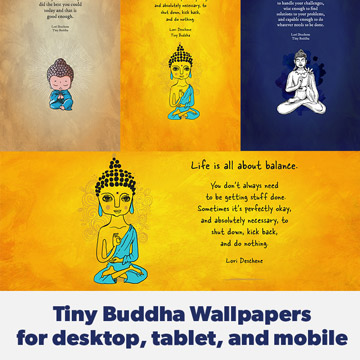
    How did you react—with total serenity and compassion? Did you lovingly embrace this as a spiritual challenge and opportunity for growth? In all likelihood, far from it!

    You probably shouted back, clamped down, cried, or otherwise reacted to negativity with negativity, and this in turn negatively affected someone else. Why? Because this is hard—really hard. And yet, it’s the struggle we, as human beings, face every day.

    However, when we sit around and think about being our best, about trying to make a difference in the world, we think about legendary figures placed in the fulcrum of historic events. We think about Gandhi or Martin Luther King Jr. or Mother Teresa. Saving the rain forest, ending poverty, or finding a cure for some horrible disease come to mind.

    In fact, very few people will ever even have the chance to be in the right place at the right time to make such a difference. Even if we had the skills and desire, we might not have the resources or connections, or even be born in the right era, to effect such a change.

    By definition, not everyone can accomplish extraordinary things. The rain forest needs saving, poverty needs ending, and diseases need curing, but why not start with what you can influence right now—the world’s little daily hurts that, through the cycle of pain, create big problems?

    But this is our bias, made dramatically worse in recent years by social media: to overlook or even look down upon the ordinary. And yet, it is the ordinary, everyday flow of life that is so difficult to navigate in a way that does no harm to ourselves or others. Indeed, daily life presents our most obvious opportunity to change the world around us—to end the cycle of pain.

    Imagine a world where parents didn’t smack or shout at their children out of anger, where spouses didn’t take their work frustrations home and get passive aggressive with each other, where strangers didn’t project their pent-up feelings onto each other.

    Imagine all of the infinite little tragedies that could be avoided. Imagine the child who, in a moment of despair, sees a helping hand instead of a fist. Think of what a different place the world would be if one million or one billion people had this same thought all at once.

    I, too, once had a head full of grandiosity, all the while overlooking the difference I could make each and every day.

    Growing up in an affluent suburb of New York, I was raised like most of the other kids in my peer group—to be hyper-competitive and keep up with the Joneses. I wanted to be a famous academic, a CEO, or the president. I thought about ending wars, saving the environment, and changing the economy.

    I was also short on patience. I punched back. I showed off. I overlooked people. It was only after I was brought so low by pain, when I saw no way forward, that I dropped my illusions and really thought about how to move forward in the world. When I felt there was no hope, I stopped contemplating the horizon and instead looked right in front of me.

    For maybe the first time, I really saw the people who came into my life and got to know so well who had wronged me, betrayed me. Rather than cursing them or begrudging them, I thought about how they got the way they were—their being bullied or even molested as children or abandoned as adults (true stories!).

    I thought about myself, put upon by my siblings and ignored by my parents. And I realized what a difference it would have made if even some minor character in any of these stories would have taken the initiative to break that cycle of pain.

    Everything that happens in life is the result of an unknowable series of chance events that happened over centuries. You are here right now because some peasant in the fields a thousand years ago smiled at one of his fellow laborers or some seamstress took the risk of getting on a ship bound for America or someone crossing the street didn’t get hit by a car.

    Likewise, the gang member might not be in jail if that teacher had taken a chance on him. The cheerleader might not be bulimic if someone had taken the time to notice her eating habits or cared enough to say anything.

    Even when we aren’t causing it, so many of us shut our eyes and turn our heads to other people’s pain because we’ve been hurt ourselves and don’t want to face more pain if we can avoid it.

    To come to and maintain the level of consciousness necessary to actively counter the cycle of pain requires a spiritual vigilance that is profound and yet so simple. To break and not perpetuate the cycle of pain, to purify and not pollute our emotional environment, is so mundane but can be so impactful. To me, this is what it means to be the change I wish to see in the world.

    Once I recovered from the deep, crushing, suicidal depression that I suffered, I left my high-flying job. I moved countries. I extricated myself from destructive relationships. Coming from a life in which I interacted with senior politicians and CEOs, I instead dabbled in coaching and tutoring and other endeavors I saw as making a small difference. I slowed down and, instead of chasing grand visions, became much more conscious of what I was doing each moment.

    This was a difficult transition to make, and it is a challenge each day to remember the cycle of pain and my role in it and, more importantly, not to perpetuate it. Nevertheless, I find life so much more rewarding now. Though my path is littered with mistakes and small failings, most days I am able to see the incremental positive differences that I make.

    I don’t know what all of this will amount to, but what I do know is that I feel so much more rewarded and empowered.

  • Boost Your Happiness: 10 Mindfulness Tips for Busy People

    Boost Your Happiness: 10 Mindfulness Tips for Busy People

    “There is no way to happiness. Happiness is the way” ~Thich Nhat Hanh

    Do you ever feel as though you would be happy if only things were a little different?

    You know that happiness is important, but you keep putting it on the backburner because there simply isn’t enough time to prioritize your own inner joy.

    And at the same time, you know that meditation would help, but you can’t even imagine where you’re going to get the spare time you need to sit still and meditate.

    In an ideal world, we would schedule moments every day in which to cater to our health needs, because health and well-being are paramount. Yet despite our best efforts we will inevitably face those times when we’re busy every minute of the day. I know I’ve been there.

    A few years ago I moved country while pursuing life as a freelance journalist. I was working non-stop for a less than minimum wage, and I had zero time to focus on my mental health.

    Life became unbearably stressful. And while I knew that I could stop the stress if I meditated, I simply couldn’t work out how I would ever get the time to do it.

    My happiness drifted further and further away. Stress built. Anxiety hit hard. And with zero free time I simply couldn’t find a way out of my misery.

    I knew meditation was the key. I just didn’t have the time for it. So I made a choice. Instead of meditating the old-fashioned way, sitting still doing nothing, I would find ways to meditate while still being productive. That way I could work on my happiness while still doing everything I needed to do.

    The key was mindfulness.

    By simply being present and living in the moment, I could meditate while getting things done.

    This was a total game-changer for me. Suddenly I had all the time in the world to practice mindfulness because I could do it while still being productive.

    I was mindful day and night. I would eat meals mindfully, walk mindfully, read my email mindfully… whatever I needed to do I would do mindfully.

    Suddenly I had gone from having no time to meditate to making mindfulness an integrated part of my life.

    All mindful moments were helpful at this time. But there were ten mindful practices that I found particularly valuable. And even though today I keep a much healthier schedule and make sure not to spread myself too thin, I still use these practices.

    Whether you’re going through a busy time or looking for an alternative to traditional seated-meditation, you can use these techniques to boost your mindfulness while saving time.

    1. Walk mindfully.

    Walking is one of the most relaxing exercises in the world. But it can be all too easy to ruin a good walk by thinking too much. When walking, be mindful of the world around you, paying attention to your five senses. Alternatively, meditate on the feeling of movement in your legs, which is a practice used in Zen walking.

    2. Eat mindfully.

    Eating mindfully is one of the most wonderful things we do for both body and mind. When we eat mindfully we become more aware of the food we are eating. This makes us more appreciative of food and of the digestive process, and also makes us more likely to eat healthily. Take time eating meals, and focus on the food.

    3. In a queue? Meditate.

    Here’s a great time-saving tip. When you’re in a queue, meditate. You’re standing still doing nothing anyway, and you could be there for a good few minutes, so why not make the most of the time?

    Close your eyes and focus on your breath. Or, if you don’t feel comfortable with your eyes closed in public, gaze at a wall or something else that is not distracting, and focus on breathing. This is a great way to actually make use of time that would otherwise be wasted.

    4. Meditate on the bus.

    This is my all time favorite mindfulness practice. I’m frequently using the bus in order to help cut emissions, and my trips range from half an hour to well over an hour. That’s time that would be utterly wasted. But by meditating I actually get something out of my time on the bus.

    Personally, I’m always happy to sit with my eyes closed and look a little bit funny doing so. But if you prefer not to draw attention to yourself, keep your eyes open and simply drop your gaze to a forty-five-degree angle. Now focus on your breath.

    5. Exercise with body and mind.

    Oftentimes when we’re exercising the body thoughts are still ruminating in the mind. Big mistake. Physical exercise can be used as training for both body and mind. All we need to do is focus while we exercise.

    Some exercises are more conducive to this than others. Yoga, tai chi, and Qigong are all excellent mind and body exercises, and running can be another good choice. Other exercises such as weight-lifting and competitive team sports are less appropriate.

    6. Actually watch the TV.

    How often do we have the TV on without actually focusing on it? We’ve got some random show playing in the background while we’re thinking of what to make for dinner or what we have to do at work. This creates a rift between our reality and what’s occurring in the mind. And this is detrimental to mental health.

    When watching the TV, actually set aside an hour or so in which to genuinely watch a show. Focus on the show. And when it is over turn off the TV.

    7. Lie down in body and mind.

    Lying down is, of course, an act of rest. But too often when we lie down we rest the body while still working the mind. How many times have you gone to bed worrying about the next day? Such moments are not genuine rest, and they certainly are not conducive to good sleep.

    When lying down with the body, we should lie down with the mind too. To do this, focus the mind on the body. Focus on the body at rest.

    Begin by focusing on the crown of your head. Notice what sensations are there. Is there any tension? If so, imagine breathing fresh air into that area. The fresh air relaxes. It carries away the tension.

    Once the crown of your head is relaxed, move down to your forehead and repeat the process there.

    Continue one step at a time, progressing through your eyes, nose, mouth, neck and so on, all the way to your feet.

    Your entire body will now be utterly relaxed. Focus on it. Be mindful of your entire body. Particularly be aware of the sense of relaxation. Keep the mind there, your consciousness evenly spread across your whole body.
    This is lying down in mind as well as in body. It is an immensely relaxing experience and one of the best ways of refreshing the mind.

    8. Really listen.

    Everyone loves a good listener, and listening can be an act of mindfulness too. All we need do is pay absolute attention to the person speaking. When doing this, we do not judge their voice or what they are saying, and we do not worry about how we are going to respond; we simply focus on the sound of the other person’s voice.
    9. When working, work.

    Let’s be completely honest, most of us do not focus on work 100% unless the boss is standing next to us. Instead, we’re thinking about how we want to get out of the office, how we’d rather be at home or out having fun. But dreaming about not working while we’re at work simply makes us miserable.

    When we focus the mind 100% on the work we’re doing we come to actually enjoy our jobs. So, when writing, write. When selling, sell. And when listening to that angry customer’s complaints, listen. This will stop work from feeling like a chore and make it a pleasurable, mindful experience.

    10. Listen to the kettle and meditate on the drink.

    As an Englishman, my kettle is turned on far too many times throughout the day, and I do delight in drinking far too much tea. (It’s usually green, so at least I’ve got that going for me.)

    One way to make a cup of tea or coffee even better is to meditate on it. Meditate on the sound of the kettle when it is boiling. Focus on the process of making the tea or coffee. And drink mindfully. This will make you appreciate the drink more, while also increasing present-moment-mindfulness.

    Mindfulness needn’t take time. We can be mindful while doing the things we need to do. And in the process, we can boost our happiness and health without losing time.

    The ten tips we’ve looked at provide ways to boost mindfulness while saving time. And there are many similar tips.

    What is your favorite way of being mindful?