Tag: wrong

  • You Are Broken, Let Me Fix You

    You Are Broken, Let Me Fix You

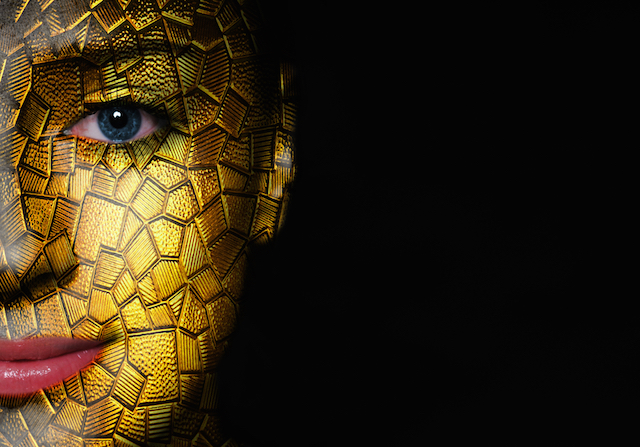
    Mosaic Face

    “To wish you were someone else is to waste the person you are.” ~Sven Goran Erikkson

    Let me fix you.

    You really should try not to be so sensitive, Leah. The world is sometimes a difficult and upsetting place, but you shouldn’t let it affect you so much.

    Let me fix you.

    You know, you really ought to spend more time with people, Leah. It’s not good for you to be alone so much.

    Let me fix you.

    You know, you really shouldn’t make such quick, spur-of-the-moment decisions, Leah. It’s not good to do that in life and you’ll end up regretting them.

    Let me fix you.

    You’re so young, Leah. You should be out dancing and dating and having fun, not sitting home alone with another book.

    Let me fix you.

    You need to be more realistic, Leah. I know you have big dreams for your business and life, but it’s not secure. We all have to do work we don’t enjoy, it’s just the way things are.

    Let me fix you.

    Thank you for trying to fix me. Now let me tell you this…

    Let me tell you…

    My greatest strength is empathy. I feel others’ feelings as if they were my own. Their pain is my pain. Their joy is my joy. I cannot help but cry sometimes and I cannot hold the tears in, as you would like me to, nor wait for a more convenient moment.

    Please don’t try to fix me. My sensitivity is my gift.

    Let me tell you…

    I am an introvert and a thinker. Introspection is in my blood. Long periods of time alone are a joy to me. Where others might feel lonely, I feel replenished.

    I ponder, I reflect, and I muse over the thousands of dreams and ideas that are always in my head. I’m filtering, planning, connecting the dots and making sense of the world around me

    Please don’t try to fix me. My thinking is my gift.

    Let me tell you…

    I am a woman of action and I do not like to wait. Once my mind is made up there is no turning back. Where others might be stuck in indecision, I have moved ten steps ahead. My life is in motion and I am creating in the real world the dreams I have in my head.

    Please don’t try to fix me. My ability to act is my gift.

    Let me tell you…

    The future is beautiful to me. I see all that is possible and all that I want to create. In vivid colour and in high definition it appears to me. Whilst others see all that is wrong and the reasons why not, I see all that is right and all that could be.

    Please don’t try to fix me. My dreaming is my gift.

    You Are Not Broken

    For the longest time, I thought I was broken. I thought I had to change myself. I thought I had to behave differently. I thought that my way of being wasn’t the way of being. I wished I were someone else.

    At school my reports went like this:

    “Leah is a wonderful student but she’s too quiet and needs to speak up more in class.”

    In my nine-to-five office jobs it went like this:

    “Try not to be so sensitive, Leah. It’s not good to let people see you cry at work.”

    And when I handed in my notice, it went like this:

    You can’t go through life making rash decisions like this, Leah,”

    And even now, almost three years into my journey of creating my dream life and business, it goes like this:

    “We believe in you, Leah, we really do, but don’t you think it’s time to look for a more secure job?”

    Everyone, everywhere, throughout my life has been ready with advice for me on how I should be.

    Over the years, not knowing any better, I tried to bend myself to their suggestions.

    I tried to be less sensitive. I tried to hold my tears in. I tried to be less impulsive and less impatient. I tried to spend more time around people. I tried to tame my dreams.

    But when I tried to do all these things, all I felt was pain and it didn’t make anything in my life work better the way people told me it would.

    Finally, thankfully, today, I see the truth.

    There isn’t and never was anything to fix.

    The very things that others told me were my faults turned out to be my greatest strengths and my most beautiful gifts.

    When I finally saw and embraced them as such, I was able to begin creating a life that encapsulated everything that I am instead of constantly struggling and trying to be something that I was not.

    It’s true for you too. There is nothing to fix.

    If you find yourself surrounded by people telling you should or need to be different, I hope these three short notes will help you let go of what they’re telling you and to embrace instead what is truly special about you.

    1. You are not broken, faulty, or defective.

    There is no right or wrong way to be. Each and every one of us makes sense of the world differently. The way you are may be different to those around you, but that does not make your way of being wrong.

    Instead of trying to bend yourself to their suggestions, take note of what the people around you say you should be like. There is a very good chance that they are pointing the way to your most special gifts and the things that make you uniquely you.

    2. Use your unique gifts to create a life you love.

    When you recognize, understand, and accept your personal strengths, you have the opportunity to consciously and thoughtfully craft a life that is in alignment with those strengths, instead of trying to squeeze yourself into a mould you won’t ever fit into.

    I didn’t see it at the time, but the pain I experienced in my office jobs were clear signs that I wasn’t where I was meant to be. The roles I was in didn’t value my biggest strengths and work often felt like a battle against my very nature.

    By seeing, understanding, and accepting my own personal strengths and gifts, I have been able to create a business and life that allows me to freely be all that I am. You can do the same.

    3. Forgive those who try to fix you.

    Remember that those who are telling you to be more like this or less like that—it’s not their fault. They, too, are filtering everything through their own set of unique gifts. Go easy on them; they’re just doing their best, like the rest of us.

    Listen to what they have to say, take anything that feels useful but go ahead and drop the rest without a second thought.

    Let me tell you this, my friend…

    There is nothing to fix and nothing to change.

    It is in those qualities that others might find difficult to accept that you will find your power.

    It is in the acceptance of those qualities that you will have the opportunity to not only create a life that feels right for you, but to have the greatest positive impact on the people and world around you in this short and precious life.

    You are a gift to the world. Just as you are.

    Mosaic face image via Shutterstock
  • I’m Not Broken, and Neither Are You

    I’m Not Broken, and Neither Are You

    “Our deepest fear is not that we are inadequate. Our deepest fear is that we are powerful beyond measure.” ~Marianne Williamson

    I used to have this secret habit of flipping through the DSM—The Diagnostic Statistical Manual for Mental Disorders—and diagnosing myself with every disorder in the book.

    Reading over the criteria for borderline personality disorder, cigarette in hand and eyes wide open, I scanned the diagnosis criteria.

    Frantic efforts to avoid abandonment? Check. Unstable and intense interpersonal relationships? Check. Unstable self-image? Check. Impulsivity that’s self-damaging? Check. Suicidal behaviour? Check. Unstable moods? Check. Chronic feelings of emptiness? Check. Inappropriate and intense anger? Check. Paranoia? Check.

    Oh my god.

    I thought that was an uncanny description of me, until I found antisocial personality disorder.

    Failure to conform to social norms? Yup. Doing things that are grounds for arrest? Regularly. Deceitfulness? Impulsivity? Failure to plan ahead? Oh yes. Irritability? Aggression? Reckless disregard for safety? Lack of remorse?

    Oh my god.

    That seemed spot-on, but nothing, and I mean nothing, compared to when I first read about post-traumatic stress disorder.

    Exposure to traumatic event? Yes. Recurrent, involuntary, and intrusive memories? Oh god, yes. Traumatic nightmares? All the time. Flashbacks? Yes. Avoidance of trauma-related stimuli? Yes! Feeling alienated from others? Persistent negative beliefs about self? Persistent negative emotions? Distorted memory and feelings of blame?

    Oh my god.

    After a few years, I added body dysmorphic disorder, substance use disorder, occasional episodes of manic disorder, and constant rotations between bulimia and EDNOS (eating disorder not otherwise classified).

    Admittedly, some of those diagnoses should really have cancelled each other out, but I was more interested in collecting diagnoses like some would collect stamps than achieving medical accuracy.

    All of my self-imposed labels gave me a strange kind of soothing feeling. They affirmed something I already believed, deeply, within me: I was broken. I was in a state of disorder. There was something wrong with me.

    In my scourings, I avoided certain disorders like the plague. Anxiety, for example, and depression. Anxiety didn’t seem like a very “cool” thing to have and depression just didn’t seem plausible because I was so violently self-destructive, never stopping to rest for a moment unless I got infected with mono or West Nile meningitis (both of which actually happened).

    To an onlooker, these things might have seemed like ploys for attention or misguided attempts at impersonating Hollywood. But, truly, these self-diagnoses stayed more private than many of my tortured war stories. They were something personal. They were just for me.

    Looking back, I realize that the fuel behind my self-diagnosing was an obsessive, perpetual drive to find the answer to a question I couldn’t avoid for more than a few hours at a time: “What’s wrong with me?”

    What was wrong with me, I liked to think, was childhood-trauma-induced permanent damage that, in mixing with my apparently high IQ, had created a sort of “Dr. House” complex within me, making me irreparably and irrevocably screwed up.

    That was a nice story, but it didn’t satisfy the question. A question like “What’s wrong with me?” isn’t just some domestic house cat in the mind. It won’t sit quietly and patiently for most of the day, becoming vocal only if it isn’t fed for too long.

    No, a question like that is a wild, ferocious, insatiable beast that rips into anything and everything in its path, killing simply for the sake of the kill, feeding constantly and ceaselessly on anything that smells like nourishment.

    What was wrong with me?

    By the time I made it to age twenty-three, there were so many answers.

    What was wrong with me?

    The stretch marks all over my body. The pimples on my skin, my back. The little hair growing an inch above my nipple. The moles on my upper back. The fat all over my body.

    What was wrong with me?

    The way I blushed at the drop of a hat. The way I wouldn’t be able to stop laughing when other people did. The way I made jokes that weren’t funny to anyone but me. The way my upper lip twitched when I was nervous.

    What was wrong with me?

    How I had absolutely zero ability to be sexy or act sexy without alcohol, feeling frozen and ugly if anyone ever saw me naked. How I had flashbacks, nightmares, and hallucinations I told close to no one about. How I drank alone.

    How I just couldn’t seem to sustain happiness and, even when I tasted joy for a second, soon enough the drugs would wear off and I’d be right back where I started, wishing for a freedom I wasn’t sure was real.

    All of my happiness, for about ten years, was induced by chemicals and co-dependence. I thought what was wrong with me was that I couldn’t feel happy without buying it or begging for it. I thought I was just that kind of person. I thought it would always be that way.

    I’d love to tell you that I was afraid of being broken and damaged, afraid that past emotional trauma had rendered me dysfunctional, afraid that I was different from other people. Of course, that’s what I used to say and that’s a nice story, but I know now that it was all a big lie.

    You know what I was really terrified of?

    Deep inside of me, there was the awareness that, even if I fit every symptom in the book, I had no excuse to live half a life. Somewhere in there I knew I wasn’t really broken. I was terrified of what my responsibilities would be if I allowed myself to be, truly, whole.

    When I was an addict, a victim, a diagnosis, I had no responsibility to anyone. If your neck is severed and bleeding, you can hardly be expected to open doors for people and make the world a better place.

    Like this, I dodged the responsibility to discover my skills and talents, to serve people, to do something meaningful in the world—all by playing broken.

    Of course, it wasn’t all a giant act. I had been abused. I had been raped. I had been an addict. I had horrible body image issues. I heard voices. I hated myself. Yes, those things were “wrong,” but so is a paper cut. And your body will do its best to heal the paper cut with no further intervention from you, if you let it.

    Yes, I’d been broken, but I didn’t have to keep being broken. For fear of my own greatness, I put bandages on my wounds, letting them grow necrotic for lack of oxygen. I never wanted to get better; I just wanted to get pity, because I was too scared to ask for love. I kept myself sick for fear of my own health.

    I’ll tell you right now that my fear wasn’t unjustified. Now that I’m not playing small anymore, I have more responsibilities than I ever have. I’m trusted with people’s most painful memories, with their deepest secrets, with the chance to support them when they’re on the brink of hurting themselves or others.

    Yes, the responsibility is there, but it’s not the horror show I imagined it would be. I think the only reason I ran from it was because I was so weak from keeping myself broken that I couldn’t imagine how much energy I’d have to help people when I allowed myself to be whole.

    I couldn’t have imagined how fulfilling it is to spread love, give love, be love instead of scrounging for tiny little pieces of approval and acceptance like a thief in the night.

    From what I’ve seen of myself and of people, I believe, without condition, that no one is irreparably broken. In fact, no one is broken. Is having a paper cut broken? Of course not. From the moment you get a cut, you’re already healing.

    And that’s what I believe. I believe we’re all already healing, no matter how great our pain or how serious the offenses against us. We’re built to heal, we’re already healing, and we can all experience this amazing life process—if only we’d get out of the way.

  • Rethinking Mistakes and Recognizing the Good in “Bad” Choices

    Rethinking Mistakes and Recognizing the Good in “Bad” Choices

    Thinking Woman

    “Sometimes the wrong choices bring us to the right places.” ~Unknown

    For most of my life, I’ve seen the world in black and white, and I’ve felt constricted and pained as a result.

    When I was a young girl, I believed there were good people and bad people, and I believed I was bad.

    When I was an adolescent, I believed there was good food and bad food, and because everything tasty fell into the latter category, I channeled the shame from feeling bad into bulimia.

    And when I grew into adulthood, I believed there were good decisions and bad decisions, which may sound like a healthy belief system, but this created extreme anxiety about the potential to make the “wrong” choice.

    When you see life as a giant chess game, with the possibility of winning or losing, it’s easy to get caught up in your head, analyzing, strategizing, and putting all your energy into coming out victorious.

    Back then, I thought for sure that if I made a misstep, I’d end up unhappy and unfulfilled, not to mention unworthy and unlovable—because there was a right path and a wrong path, and it was disgraceful to not know the difference.

    One pointed toward success and bliss (which I desperately wanted to follow), and one led to certain doom.

    With this in mind, I thought long and hard before moving to Spokane, Washington, at twenty-two. To live with a stranger I’d met on the Internet. And had only known for two months and met in person once.

    Okay, so I didn’t really think long and hard. But I felt in my gut, when we first connected, that this was the right choice for me.

    In fact, I felt certain, something I rarely felt about anything (except my innate bad-ness).

    He told me we were soul mates, which was exactly what I wanted to hear, especially after spending six months bouncing from hospital to hospital, trying find the worth and substance locked somewhere within my cage of bones.

    It made sense to me that, if I had a soul mate, he wouldn’t live right next door.

    Disney may tell us it’s a small world, but it’s not; and I thought for sure there was something big awaiting me 3,000 miles from my hometown near Boston.

    People told me I was making a mistake when I shared the details of my plan.

    Some said I was too fragile to move out of my parents’ house, even if I’d planned to move close to home.

    Some said I was a fool to think this man was my soul mate, or that I had one at all.

    Some said I’d one day regret this choice and that they’d have to say “I told you so.”

    But I felt absolutely confident in my decision—until he came to Massachusetts, two weeks before I was scheduled to move, to meet me for the first time.

    I knew right then it was wrong, somewhere in my gut. I didn’t feel even the slightest spark, but my “soul mate” and I had already planned a new life together. Before we’d even met.

    And I didn’t want to admit I’d made the wrong choice—not to him, who I was sure would be devastated, and not to the others, who I feared would be smug and self-righteous.

    So I moved across the country anyway, thinking that maybe I’d feel differently after getting to know him better.

    If you’ve ever seen a movie, you know exactly how things didn’t pan out. Since life isn’t a romantic comedy, I didn’t eventually realize he was my soul mate and fall madly in love.

    Instead, our individual demons battled with each other, we fought for the better part of six months, and we eventually broke each other’s spirits, broke down, and then broke up.

    You could say, after reading this, that I had made the wrong choice—especially knowing that I knew, the day I met him, that he wasn’t the man for me.

    You could say I’d chosen a bad path, running away from home in a misguided attempt to outrun who I had been.

    These are things I assumed I’d think if I ever decided it was time to leave.

    And yet I didn’t think these things at all. In fact, this was the very first time I broadened my vision to see not just shades of grey, but a whole rainbow of vibrant colors.

    Yes, I’d made an impulsive choice, largely driven by fear and fantasy. Yes, I’d acted against my instincts. And yet I knew, beyond a shadow of a doubt, that it had not been the “wrong” choice.

    Because right then, I realized that, despite things not working out as I planned, I’d learned and grown through the experience, and it had served a purpose, even if not the one I originally envisioned.

    Our demons colliding was a blessing, not a curse, because it forced us both to more closely examine how our issues affected our relationships—mine being toxic shame and destructive tendencies, and his being his business, and not for public consumption.

    Moving so far away was valuable, not shameful, because it taught me the difference between running away from what I didn’t want and running toward what I did—a lesson I struggled to apply for many more years, but, nonetheless, now understood.

    And acting against my instinct was a good thing, not a bad thing, because it taught me to listen to my intuition in the future, even if I might disappoint someone else—a lesson I may never have fully embraced without having had this experience.

    That’s the thing about “wrong” choices; they usually teach us things we need to know to make the right choices for ourselves going forward, things we can only learn in this way.

    Notice that I wrote “the right choices for ourselves”—not the “right choices.” Because the thing is, there are no right choices.

    There isn’t one single way that we should live our lives, or else we’ll be unhappy. There isn’t one path that will lead us to success, bliss, and fulfillment.

    There isn’t a straight ladder we’re meant to climb, hitting milestone after milestone until we emerge at the top, victorious, with the view to show for it.

    There’s just a long, winding road of possibilities, each with lessons contained within it—lessons that can help us heal the broken parts of ourselves and find beautiful pieces we never knew existed. Pieces we couldn’t know existed until we made choices and saw how we felt.

    If there’s one thing I’ve learned since that very first move, over a decade ago, it’s that life never offers any guarantees. And it can also be incredibly ironic.

    Sometimes the people who seem to make all the right choices are the least happy with the people they’re being and the lives they’re leading.

    We could spend our whole lives looking for external validation that we’re following a path that’s “good”—living in a narrow, black-and-white world, feeling terrified of making mistakes.

    Or, we could commit to finding something good in every step along the way, knowing that the only real mistake is the choice not to grow.

    I don’t know if this is right for everyone. But I know this is right for me.

    On this Technicolor journey of unknown destination, I am not good nor bad, not right nor wrong, but most importantly, not restricted. In this world of infinite possibility, at all turns, I am free.

    Thinking woman image via Shutterstock

  • How to Avoid Drama: Stop Taking Things Personally and Needing to Be Right

    How to Avoid Drama: Stop Taking Things Personally and Needing to Be Right

    “Concern yourself not with what is right and what is wrong but with what is important.” ~Unknown

    I remember quite distinctly the point where my rational self, less invested in the discussion, took a step back and pointed out that I was descending down the path of needing to prove that I was right.

    It was precisely when I started seeing the other commenter as needling my position and attacking the ideas as mine.

    What started out as an appeal to respect cultures that celebrate death as a normal part of life, turned into a mud-slinging event the moment I ceased to educate and instead went down the road of righteous anger.

    Even if we were to keep our social network to the closest friends and family members, there will inevitably come the time when, as we scroll through our Facebook feed, we encounter something that we disagree with.

    If we are not careful about the way we react or respond to these kinds of things, drama will arise.

    And oh, such drama it was! Despite not participating any further once some ganging up occurred and outright insults were being flung, I came away from the debacle more furious with myself than anyone else.

    In hindsight, it really was hilarious the way it quickly descended into a playground squabble where the crux of the matter was “I’m right, you’re wrong!”

    But unlike childhood fights where it is rare that full-blown grudges develop (notice how children make up and play together easily?), the issues that adults tend to have petty fights over are a bit more complicated, simply because we are way more invested in it.

    It isn’t over a fire truck belonging to us that can be easily shared with another child. It is occasionally belief systems and ideologies that we think define us, and so we do not take too easily to them being challenged.

    I later received a long message from the other person that was essentially an attempt at civility after the earlier descent into childishness. But while the absence of trolling was a nice welcome, here too was another invitation to engage further in another bout of drama.

    Ignoring the comments about my character and only clarifying issues I felt were relevant to the earlier discussion, I refused to bite.

    What I’m slowly learning, and I am quite a slow learner when it comes to social interactions, is that personal affronts are key to the development of drama, and how we choose to respond to what the other person doles out will determine our state of being.

    This isn’t something solely confined to social media interactions, either; Facebook, Twitter, and other sites like them are all just platforms where our interactions take place. Unnecessary drama and squabbles did not appear after the Internet but are simply magnified by it.

    If you decide earlier on that personal attacks will not hurt you and that you will not yourself fling insults, you’ll be much more likely to have a discussion that’s conducive for education and sharing of ideas.

    These attacks often come out innocuously enough. An adept practitioner of shade can fling one at you with much subtlety, so control is necessary in ensuring that you are always on the right road.

    Unfortunately, I have yet to be gracious enough to not throw shade myself, and thus the initial eruption of drama stemmed from my lack of control. We cannot control will perceive or retaliate with, but we can choose how we respond to them.

    The moment we choose to take the issues personally, we cease to participate in civil discourse as we insist upon the particular details that we feel attack our characters.

    We feel the need to yell that we are right rather than strive to seek and communicate truth.

    With that said, I am certainly not excusing those who choose to create conflict rather than communicate peacefully. Once you see things heading down that awful road, it’s best to simply disengage and leave because nothing fruitful will come out of it.

    What matters at this point, I feel, is how you resolve your position, and it isn’t about how you appear to other people who may be watching (or reading the thread), but how you now feel about your beliefs and ideas.

    Are ad hominem attacks ever conducive to the truth? The moment we associate ego and pride with our various ideologies, we miss the mark. 

    In a world of multivariate opinions, beliefs, and philosophies, friction is bound to occur when these ideas inevitably collide.

    There are certain fields more volatile than others, like politics and religion, and they require careful treading. When in the thick of drama, especially with drama-hungry spectators egging us on, we lose the point and indulge, instead, in a battle of wits over who can yell the loudest in being right.

    To keep drama at bay, it is necessary to maintain that, while ideas form much of what we think we are, they are merely constructs that only help us make sense of life and do not essentially form who we are.

    If someone attacks what we believe, they’re not attacking us. They’re disagreeing with our opinion because they hold a different point of view. And if they choose to attack us personally, it’s likely not about us, but rather reflective of their fear-based attachment to their beliefs.

    It is perhaps worth bearing this in mind whenever we feel the urge to take something personally.

  • People We Don’t Like: When Others Push Our Buttons

    People We Don’t Like: When Others Push Our Buttons

    I have a confession to make: there’s someone I know who I really don’t like.

    I know this isn’t exactly front-page news. It’s not like I’m the first person to ever dislike someone else. But this situation has brought me face to face with all my strongest relationship triggers.

    I find it incredibly difficult to do all the things I’ve written about when it comes to this person. Let’s call him Harry. (I’ve never in my life met a single person named Harry, but let’s just roll with it.)

    I regularly find myself wanting to judge Harry before giving him the benefit of the doubt—even though I know I’d want that courtesy if I did the things he did. But that line of thought brings me back to judgment, because I remind myself, “I would never do the things he does.”

    I find it easy to suspect him of poor intentions and conclude that maybe “he’s just a jerk,” even though I know that I get to decide what meaning to give his actions, and I also know that things are rarely black and white.

    In dealing with Harry—and perhaps more importantly, my reactions to him—I’ve found myself considering three important questions:

    • We’re always talking about letting go of judgments; is it possible that sometimes, someone is just a jerk?
    • Is it judgmental to decide someone’s actions are “wrong” when you feel strongly opposed to them?
    • Just because we know there are emotional triggers influencing our response to someone, does that mean they shouldn’t be accountable for their actions?

    I’ve decided to break these down, one by one, to see what there is to learn in this situation.

    We’re always talking about letting go of judgments; is it possible that sometimes, someone is just a jerk?

    I’ve wanted to use this label for Harry because of assumptions I’ve formed about his behavior: that he thinks he’s better than other people; that he’s really selfish, despite pretending to be caring and well-intentioned; and that all of this amounts to unfairness.

    When I break this down, I realize the “he thinks he’s better than me” assumption goes back to my childhood experiences with being bullied, when I felt inferior to most of my peers—and their actions seemed to reinforce that.

    The “he’s selfish” belief is a projection of my own fear that I’m actually a selfish person (something I’ve wrestled with all my life, no matter how giving I try to be).

    And the conclusion about “unfairness” relates to my life-long aversion to all things unjust—both a response to my childhood and a natural human reaction.

    When I pull it all apart like this, I realize I’m having a strong emotional reaction based on lots of things that aren’t solely related to him.

    So my desire to sum my feelings up with one harsh label isn’t only about his actions. It’s also about my past experience.

    And when I really think about it, whenever I’ve wanted to label anyone as a “jerk” (or something stronger), I’ve dealt with these same (and other related) triggers.

    That doesn’t mean no one has ever done anything to justify my anger. It’s just that usually, when I feel unable to access even a shred of understanding or compassion, it’s because there are strong layers of resistance, reinforced by years of my own pain, in the way.

    I suspect that’s true for most of us: the more tempting it feels to give someone one reductionist label, the deeper and more complex the triggers.

    This brings me to the next question…

    Is it judgmental to decide someone’s actions are “wrong” when you feel strongly opposed to them?

    While I realize there’s a lot more contributing to my feelings than his actions, that doesn’t change that I don’t agree with everything he says and does.

    Once I peel away the layers of my complex response to him, I can then objectively ask myself, “Which of the choices he makes don’t feel right for me?”

    This isn’t judgment—it’s discernment. It’s forming an assessment without the emotional weight behind it. And it’s essential to maintaining my own moral compass and forming boundaries within my relationships.

    That means I don’t need to label him anymore. Instead I can say, “I wouldn’t make the choices as he makes, and I don’t want someone in my life who makes them.”

    It’s not about me deciding he’s a “bad person” and, therefore, feeling better than him; it’s about me realizing he’s a bad match for a friendship and then feeling better about the situation.

    The positive consequence: I give him far less power over me and my emotions. He’s not wrong—just wrong for me.

    And then that brings me to the last question…

    Just because we know that someone’s actions trigger us, does that mean they shouldn’t be accountable for their actions?

    Now that I’ve accepted responsibility for my reaction to him, and acknowledged that his choices can make him “wrong” for a friendship with me without making him universally “wrong,” I no longer need to “hold him accountable.”

    But if I were to want to maintain a friendship with him, I’d have two choices: accept him as he is, or share my reactions to his choices and let him into my process.

    I know from past experience that people rarely respond well when they feel judged or attacked.

    But people sometimes surprise us when we explain how we feel in response to the things they do—not because they’re responsible for our feelings, but because they care about them.

    And if they don’t care, well, this brings us back to the first two parts: It doesn’t make them jerks. It just gives us a reason to be discerning about whether or not we want to care about them.

    So where has all this left me? I’m going to continue peeling away the layers of my issues around others “being better than me” and my fears of “being selfish.” And I’m going to silently thank Harry for reminding me to continue doing this work.

    Then I’m going to stop communicating with him. Because as much as I value the gifts he’s given me, I value myself enough to realize he’s given a lot more that I don’t want to receive.

    Have you ever felt a strong reaction to someone else and realized it had a lot to do with your own triggers?

  • A Powerful Lesson in Self-Compassion: Are You Allergic to Honey?

    A Powerful Lesson in Self-Compassion: Are You Allergic to Honey?

    Smile

    “If you want others to be happy, practice compassion. If you want to be happy, practice compassion.” ~Dalai Lama

    When things don’t go as planned, is your go-to explanation that it’s because you did something wrong, or because there’s something wrong with you? For many people, self-compassion is a real challenge.

    Most of us want to be kinder to ourselves, but our self-critical, perfectionistic patterns are often well-established, and it’s hard to know how to interrupt them.

    When I was in graduate school, I was driving home from school one evening when I noticed that my car was overheating. Just as I arrived in front of my building, the engine stalled completely.

    It was 5pm on a Friday, I was blocking the bike lane, and traffic was backed up behind me. Two cars sped past beeping their horns, and then a cyclist turned and waved his fist as he rode around me. I flipped on my hazard lights.

    As I dialed Triple A, the self-critical thoughts and stories started to spin:

    “Why didn’t I notice earlier that the car was overheating? I should have had it serviced. If I had been more on top of things, this wouldn’t be happening.”

    I heard more car horns beeping as the woman at Triple A promised that a tow truck would be there within 30 minutes. After I thanked her and hung up, the self-critical stories resumed:

    “I’m in the way; inconveniencing everyone around me. I’m taking up too much space.”

    I was startled by a knock at the passenger window. A guy with a goatee and a beanie stood next to my car, and I suspected that he was going to give me a hard time for being double-parked. Reluctantly, I lowered the window.

    “Hey,” he said. “I work at the cafe right here—do you want a latte or a chai or something?”

    I stared at him, speechless, blinking through the beginnings of tears.

    “We’ve also got hot chocolate and tea,” he said.

    He actually meant it.

    “Oh,” I said. “Wow. Thank you. I’d love some chamomile tea.”

    “You got it,” he said and headed back to the cafe.

    I sat there, stunned. This experience did not fit into the story my inner critic had been telling. All of my self-criticism had been completely silenced by this stranger’s spontaneous impulse of kindness.

    Suddenly none of this was my fault; it was just something that was happening, and I could allow it. All the stories had been just that: stories.

    A few moments later he reappeared with the chamomile tea and handed it to me.

    “Here you go,” he said.

    “Thanks.” I pulled a couple of bills from my wallet.

    “Oh, no, don’t worry about it,” he said.

    “Really?”

    “Yeah,” he said.

    I looked at him and took the tea.

    “Thank you,” I said.

    “Hey, I’ve been there.”

    He tapped the passenger door twice as a goodbye. I put the window back up. The tea was too hot to drink, so I held the paper cup as it warmed my hands.

    I let it register some more: This wasn’t my fault. It wasn’t evidence of me having done something wrong. It was just something that was happening, and it could just be that.

    And what was so wrong about taking up space, anyway?

    I was startled again by another knock. He was back. I lowered the window.

    “Hey, are you allergic to honey?” he said.

    “Huh? Mmm, no.”

    “Oh, good. I put honey in it. I didn’t think to ask if you were allergic. If you are, I can make another one.”

    “Oh, no. I love honey. Thank you,” I said.

    “No worries, then.” And back to the coffee shop he went.

    I smiled and blinked through a few more tears. He had put honey in my tea without me even asking? This baffled my inner critic even more; it had nothing to say.

    I thought about how the self-critical stories had flared up as soon as I found myself in a challenging situation, how automatic it was for me to think that the coffee shop guy was there to criticize me, and how immediately the trance of self-judgment was broken by his act of kindness.

    In five minutes, he had given me a life-altering lesson in how compassion alchemizes criticism. He had no ulterior motive: he was simply being kind and generous, and he inspired me to be more kind and generous with myself.

    If you struggle with self-judgment, tuck this simple phrase into your back pocket.

    The next time you notice that critical thoughts are present, experiment with asking your inner judge, “Hey, are you allergic to honey?” It just might help you interrupt those all-to-familiar patterns, and start creating new, self-compassionate ones.

    Photo by Ashley Campbell Photography

  • Listen Instead of Correcting Others: What We Gain and Give

    Listen Instead of Correcting Others: What We Gain and Give

    Two friends talking

    “When you judge another, you do not define them. You define yourself.” ~Wayne Dyer

    I have a tendency to want to show off what I know, and in the worst cases, correct other people.

    Instead of listening and connecting I unconsciously try to sell to others an image of myself that I wish to project. Some part of me believes that if people are impressed with me then they’ll like me and be interested in my knowledge and point of view.

    In this way I fall into the trap of constructing the false self. This is the person I wish for others to see, a person without vulnerabilities, incorrect knowledge, or who makes mistakes. A thing that is more of a product than a person.

    Many of us fashion these false selves not only as an idealized version of ourselves, but also to keep other people’s judgments of us at bay. Before we realize what has happened, we have made our skills and knowledge into weapons that we wield on others while all the while we hide our true selves behind a shield. Without planning to, we have declared war.

    The constructed, false self is a one-way gate. Like a character in a stage play, the false self puts sights and sounds out to the audience while all the while it stands behind the fourth wall of separation from the observers. The audience sees the character, but the character doesn’t see the audience.

    I have someone in my life who deals with a fairly severe mental illness. Through most of my life I have tried to help him by showing him what was “wrong” with his thinking and actions. I wanted to use my logic and knowledge to set his perceptions straight.

    I didn’t realize it at the time, but I was mostly lecturing him. I did not listen and understand his point of view, but instead stayed behind my shield and wielded my weapons of logic at him. I thought I was being a good influence.

    Constructive influence, though, flows through positive human connections. When we judge others we sever those connections and directly destroy our chances of influencing others with our best information and ideas.

    But real, positive influence travels in both directions. Discovering wisdom works best as a collaboration formed through the conduit of relationships. There is give and take and neither person needs to be “the right one.”

    When we give others space to make mistakes, to have different skills and expertise than our own, then we also give ourselves space for the same things. No one of us is an expert at everything, but when we come together we close the gaps into a working whole.

    A few years ago, while preparing for a volunteer program, I took some training in listening. I learned that it’s more valuable to reflect back what people say, and to show understanding of them without judgment.

    I learned that if I showed understanding of the other person’s feelings and thoughts, that alone would ease their burden and do worlds of good.

    I learned that acceptance and understanding aren’t necessarily the same things as approval and agreement.

    We needn’t be afraid that we are compromising our own views or knowledge when we simply choose to understand another’s. In fact, the openness of understanding can strengthen our own point of view.

    We must receive what we wish to give and give what we wish to receive. If we want to be listened to, then we must listen to others. If we want to be valued for what we know, then we must value others for what they know.

    And if we want to be forgiven and loved, then we must forgive and love others.

    Lately I’ve been applying my new listening skills in conversations with my mentally ill loved one. I allow myself to relate to difficult things he experiences and have even tried to be brave enough to be honest when I see a bit of myself in him, when I see the same passions, fears, and mistakes.

    The funny thing is that by backing off I’ve gained more of his trust. By not pretending to have all the answers for him, I’ve strengthened our bond.

    Now I only give him my opinion if he asks for it. Sometimes this comes after a long spell of silence, when we are simply being together. And I’m honest enough to tell him when I don’t have a clue how to answer his question.

    And you know, I’ve learned a whole lot from him, too.

    Photo by pedrosimoes7

  • What To Do When You Don’t Know What to Do

    What To Do When You Don’t Know What to Do

    “He who deliberates fully before taking a step will spend his entire life on one leg.” ~Chinese Proverb

    Here’s the thing: I don’t know what to do.

    About this thing, about that thing. About big things and small things.

    About anything.

    Actually, to be honest, even the smallest thing seems big when I don’t know what to do about it. The state of “not knowing what to do” is like some kind of Miracle Grow for small things in my mind.

    This is not a new thing. Not knowing what to do is a particular and well-honed talent of mine. I can even juggle several not knowing what-to-dos at once.

    For example, at the moment I don’t know whether to go away with my friends this weekend or not. And if I do will I take the train? Or get a lift?

    I don’t know whether to take that new job. And if I do, when should I start it? What about all those other job offers that will flood through the door the minute I say yes to this one?

    I don’t know whether to start the diet tomorrow. Or today. Or next week. Or not at all. I don’t know whether to call my counselor or ride this one out alone.

    I don’t know what is best, what is right. I don’t know what I want to do.

    Do you know what else I don’t know? I don’t know what to do about not knowing what to do.

    And whenever I feel like this (which is not always, but often), I start not knowing what to do about things I did know what to do about before. Things I had already made decisions on, things I felt excited and sure about before, now feel wobbly and wrong. Even though I know the decisions felt right when I made them.

    My brain starts questioning it all: What if I didn’t really know what to do then either, and just decided on something that wasn’t really the right thing to do after all? What if it turns out to be “wrong”? What if I acted on impulse and didn’t think it all through properly?

    It’s like I’m mourning all the other possible options that will never, ever happen now because I didn’t choose them.

    The little voice in my head chides me: If you choose option a, then such and such might happen, which could lead to x and then that may mean y. Had I known in the beginning about y, maybe I wouldn’t have chosen that original thing. Or would I? How do I know? 

    And this uncertainty, the worry, the anxiety, the not knowing, it isn’t picky. It doesn’t just stick to the thing I’m not sure about. It leaks. It seeps into everything else, so instead of feeling uncertain or anxious about one thing in particular, about one decision specifically, I feel anxious, uncertain, and worried full stop. I forget what started it. I just feel it.

    I feel it in my chest, near my heart. In my throat. It feels like guilt, muddled with regret, with overtones of panic and an undercurrent of fear. It feels hard and cold, like a vice-like grip.

    And I don’t like it. But I just don’t know what to do about it. So I do nothing. Except worry and be anxious that doing nothing is not the right thing to do. It’s exhausting, it’s frustrating, and it’s totally and utterly unproductive.

    And the only thing that makes it stop? Is to just decide and do something. To just do anything.

    And the only way to know what to do? Well actually, there is no answer to that one.

    Other than to not worry about worrying. To not feel anxious about feeling anxious. To accept that there is no right answer.

    To breathe. To try to feel beyond the worry, to try to feel the answer rather than (over) think it.

    To stop trying to second-guess every possible outcome of every possible decision. To stop trying to control and account for every accountability. It just isn’t possible.

    To trust.

    I can’t know what will happen. I can’t know how I will feel about any of it. I can’t know whether the decision I make is any better or worse than any other decision I could have made because I am only ever going to experience the one path I do choose.

    So I can only react with what I have, what I know, and how I feel, right here and right now. And I don’t need to know how to do that; I just need to do it. I just need to allow it to happen.

    Back to my decisions. Well, I still don’t know what to do. I still don’t know what the “right” thing is.

    But maybe that’s not so much of a problem after all.

    Because I do know what the wrong thing is. And that’s to make no decision at all. Even if the decision I make is not to decide just yet—that is still a decision. Own it.

    A friend once said to me, “Whenever the time is right, it will be the right time.” It helps me relax about my decisions.

    I often wonder: Am I the only one like this? I don’t know that either, but if you’re with me:

    Stop thinking it through. Stop making up what might happen. Because that’s what’s happening here, you’re just making it up. Just make the decision instead and enjoy the ride. Whatever it turns out to be, it doesn’t really matter—you can change it later if you really have to.

    Whatever the decision is, just make it. What’s the worst that can happen, really?

    Just make the decision and then be glad you did. Enjoy the freedom and the relief that follows.

    Enjoy the present, indecision free. Because while you’re busy worrying about what might happen tomorrow, guess what? You’re missing out on all the great stuff happening today.

    So just decide. Just relax.

    Want to know the good news? The decision thing is just as leaky as the indecision thing.

    Once I get going again, I know there’ll be no stopping me. I’ll breeze through decisions that floored me before. I’ll put those small things back in their place. And if it feels wrong, I’ll change it. I won’t worry about it. Things that felt a bit wrong and weird before just won’t matter anymore.

    I won’t know where this whole confident, decision making thing came from. I’ll just feel it.

    I’ll feel it in my chest, near my heart. It will feel like contentment, embracing joy, tickled with peace and flavored with lightness. It will feel soft and warm, like molten honey trickling through my veins. It will make me smile.

    And I will love it. And I will do all I can to hold on to it.

    That I do know.

    So let’s just get started. Let’s just relax. Let’s just decide. And let’s never look back.

    Photo by J. Tegnerud

  • Wanting to Feel Good and Look Good: Why Do We Do What We Do?

    Wanting to Feel Good and Look Good: Why Do We Do What We Do?

    Sun Goddess

    “Nothing is either good or bad, but thinking makes it so.” ~Shakespeare

    Have you ever stopped to question why you do what you do? Or how it looks to other people?

    I’ve done this pretty much all through my life. In fact, an outsider might say that I’ve spent more time analyzing my place in the world than experiencing it.

    In some ways, this is true, and not uncommon for someone who’s chosen to be a writer.

    As a young child I used to silently mouth the words of what I’d just said after every sentence I uttered.

    Even as a kid, I felt this need to rethink my thoughts after speaking them, and because I was too young to realize it looked strange, I did this while moving my lips.

    I wondered why I’d said what I’d said, and how others might have heard it.

    This followed me through life, and later manifested in a desire to not only say the “right” thing, but also to do it.

    Never was this more important to me than in my mid-twenties, after I’d spent the majority of my adolescent and young adult life self-destructing and unintentionally hurting others—something that, I feared, confirmed that I was a bad, selfish person (ironically, the same fears that led me to self-destruct).

    I wanted so badly to be good. To do good. To look good. I imagined and hoped that this was the key to feeling good.

    I didn’t want to be selfish—that was bad. So I concluded that I needed to be selfless.

    I didn’t want to crave so much attention—that was bad. So I concluded that I needed to be humble.

    I didn’t want to be or be seen as manipulative—that was bad. So I concluded that I needed to prove that I had good intentions.

    In retrospect, I can see that these realizations and conclusions sparked my initial interest in the personal development industry six years back, and they informed how I did what I did. (more…)

  • Being Sick Doesn’t Mean You’re Wrong: Enabling Real Healing

    Being Sick Doesn’t Mean You’re Wrong: Enabling Real Healing

    “You must love in such a way that the person you love feels free.” ~Thich Nhat Hanh

    A lot of people I know who have had chronic illness, including myself, have had a hard time letting go of the feeling of “wrongness” that arises with it, in the mind.

    I sometimes wonder where this comes from. When I look at our culture I get a feeling for where we get these messages. It doesn’t, generally, seem to emmanate non-judgmental compassion!

    In our age of consumerism, photoshopped bodies, and a million-ways-to-look-young-and-feel-great-forever, the body’s propensity to get ill is generally seen as some kind of mistake. This may not be the spoken message, but it’s there in the subtext.

    We are encouraged to believe that we can (and should) control our material universe, including our bodies, to be exactly the way we want.

    When attached to, these beliefs and ideals can lead to misery.

    If you’re sick, for example.

    Why?

    Because when it is taken as an absolute truth, we start to feel an uncomfortable stirring in the heart. A quake in the depths of ego. It usually goes something like this:

    “I’m creating these conditions. It’s my fault. I must be wrong because of this.”

    And if feeling like crap physically wasn’t enough, the ego-mind and the energy body join in on the party. Cue depression, self-hate, and often, a worsening of symptoms.

    With a bit of perspective, it’s easy to see that this is not wisdom. This is self-harm. From the inside though, it can feel absolutely real, especially when we’ve got some teaching or another to back it up. The voice of some guru in our head whispering, “It’s your fault. You just don’t want to be healthy enough.”

    Hmmm…

    Luckily, in deep teachings, and in the presence of beautiful people, you never find this sort of thing.

    What do you find?

    You find real compassion. (more…)

  • A Couple of Simple Strategies to Let Others Be Happier

    A Couple of Simple Strategies to Let Others Be Happier

    “Make the other person feel important, and do it sincerely.” ~Dale Carnegie

    About 20 years ago, I read Dale Carnegie’s classic book, How to Win Friends & Influence People. I loved the book and passed it along to my wife, Marcie. She read a bit of it and returned it to me saying, “This is all common sense. I don’t need to read this.”

    Marcie is naturally nice, no doubt one of the things that attracted me to her when we met 30 years ago. And indeed, Carnegie’s strategies, which largely revolve around being nice, were “normal, everyday behavior” for her.

    I’ve always prided myself on being a nice person, but I learned a tremendous amount from Carnegie’s 1936 classic.

    The first Carnegie suggestion that I recall applying is what I thought of as “Let others be right.” Carnegie tells a story of a dinner party he attended. The man sitting next to Carnegie told a humorous story, which included a quotation the gentleman attributed to the Bible. Carnegie knew that the quotation was from Shakespeare and said so.

    They argued the point until a third party, a friend of Carnegie’s, was asked to settle the argument. The third party kicked Carnegie under the table and then agreed with the other man. After dinner, Carnegie’s friend explained that while Carnegie was right, making the other gentleman look bad served no good purpose.

    I knew that I could apply that good advice. I had a habit of getting hung up on being precise, correcting other people because I didn’t like to let wrong information hang out there.

    Carnegie’s story helped me to realize, to paraphrase the title of another favorite book, that I had a bad habit of “sweating the small stuff” regarding precise information that was not important—a habit I then set out to change.

    Being precise is big stuff when you are building something—as the saying goes, “measure twice, cut once.” And it’s important to try to be precise if you are giving someone driving directions (make a left vs. make a right).

    But precision is not important in so many other situations, and correcting friends, your spouse, your kids, or anyone else, is often not necessary, and something that’s much nicer to hold back from doing.

    The first person with whom I had frequent opportunities to practice my new habit was my dad. He and I had started a company together about five years before I read Carnegie’s book. It had become a pet peeve of mine that he was never precise about dates. (more…)

  • Non-Dual Thinking: There Are Things We Don’t Know

    Non-Dual Thinking: There Are Things We Don’t Know

    “Nothing is either good or bad but thinking makes it so.” ~Shakespeare

    It is not possible to grasp the infinite from a position that is finite. Seems like a good place to start.

    “Dual” thinking, as I understand it, is the idea that something has to be “either/or.” That it’s either good or bad. Right or wrong.

    Here’s another way describing it: The concept of up and down seems to make sense from an earthly or gravitational perspective, but if you are somewhere out in space, it suddenly makes no sense at all. There is no up or down.

    The list of these polar opposites goes on and on, but they all have one thing in common—they are often laced with judgment, and the need for resolution.

    I find myself doing it all the time—making judgments or assumptions about the people I come into contact with on a daily basis.

    The waiter who doesn’t treat me as I deserve to be treated. The inconsiderate driver who cuts me off in traffic. The rude person on the phone that is completely unreasonable. My wife who has her own way of navigating through life.

    Why don’t they see things my way, the way they are?

    The fact is that dual thinking has become integrated in how I process things, and it is rooted in fear—fear of what I don’t know, fear of what I don’t understand, and fear of what I can’t control. A feeling of lack. Being right seems to quiet the screaming monkeys, at least temporarily.

    And when I think in black and white, I miss all the shades of grey in between. Someone has to be wrong for me to be right. My relationships have suffered because they are stuck in “defending a position” mode.

    I am so concerned about being right, of making sure that my viewpoint is heard, that I miss all the magic, learning, wisdom, and connection that are waiting to be discovered.

    And if my relationships are based in this “either/or” way of thinking, is it any wonder that I continue to feel separate and isolated, from myself and others?

    How can dual thinking represent “truth” when something can be right for one person, but wrong for another?

    Truth is simply a matter of perspective, and no one person can be the judge and jury on that.

    It is a very narrow, disrespectful, arrogant, and un-evolved way of thinking that I know does not serve me, or any of us.  (more…)

  • Life Isn’t Good or Bad; It Just Is

    Life Isn’t Good or Bad; It Just Is

    Ankh scale

    “Freedom is instantaneous the moment we accept things as they are.” ~Karen Maezen Miller

    Seemingly for months now, upon learning anything new, my seven-year-old daughter has asked me, “Is it good or bad?”

    Not brushing at night—good or bad? One hundred degree temperatures—good or bad? Water leak in the furnace—good or bad?

    Some things are more obvious than others, but it’s the stuff in the middle that requires a more subtle explanation, especially as I go through life with the stress and anxiety of trying to both deal with uncertainty and figure out life in the “new normal” called chaos.

    I wrestled with trying to make her understand that sometimes life is neither good nor bad—it just is.

    But like any child trying to adjust the settings on her moral compass, she had difficulty in trying to understand that there can be some things that fall neither in the good nor the bad category.

    Recently something happened that tested this notion and, in some strangely profound way, might have helped me find a way to explain life (as I understand it) to my seven-year-old.

    My wife’s grandmother passed away.

    Having been raised by her grandmother for most of her young life in India, my wife was distraught and sad. Although my daughter had very little contact with her great-grandmother, given the vast ocean that separated them, she could tell that her passing affected her mom deeply.

    At first we didn’t know how to explain the passing to our chirpy and inquisitive child. So we didn’t, for a day. We avoided it. But then, as seven-year-olds do, she overheard me on the cell phone explaining to someone what had happened.

    Almost instantly, a happy-go-lucky child became eerily quiet upon hearing that her mom’s grandmother died. She didn’t have to ask if it was good or bad. It was bad.

    But is it? (more…)

  • The Freedom of Not Needing To Be Right

    The Freedom of Not Needing To Be Right

    “You have your way. I have my way. As for the right way, the correct way, and the only way, it does not exist.” ~Friedrich Nietzsche

    Yesterday I drove my mother and father to the VA hospital in Albuquerque for a doctor’s appointment. I had never been to a VA hospital before. I guess I should have expected the numbers of crutches and canes, armless and legless veterans, young and weathered faces alike.

    I was personally witnessing the costs endured when humans war against each other.

    “Isn’t it odd,” I said to my mother, “that human beings war with each other?”

    Why in the world do we do that?

    Then I considered the ways in which we war on an interpersonal level. We humans war to varying degrees with our partners, our friends, our bosses, our co-workers, our siblings, our parents—pretty much all in the name of our need to be “right” or the need not to be wrong.

    We war over ideas and beliefs that we often have never questioned. These include ideas from our upbringings, our religions, our scars and wounds, and our existential need to identify ourselves in some way.

    How early did we lose our childlike wonder? When did we lose that innocent state in which we did not judge others, nor need to be “right”—when we saw the best in everything and everyone, and when it did not matter that someone was Christian, Muslim, Buddhist, atheist, republican, democrat, omnivorous, vegetarian, gay, or of a different race?

    When I observe my ten-year-old grandson, he appears to have no tendency to judge other people, not yet anyway. He has no need to diminish others, nor does he feel threatened by them.

    Would we, as children, have told lies about someone just because we wanted to win an election? Would we have been dismissive or even cruel to someone because they were of another race or religion? I don’t think so.

    As little children we only cared that we were loved. And we were still curious about everything.

    Somewhere along the way we lose our innocence and start to judge others. This becomes a primary source of our social anxiety and the undermining of our self-esteem, because if we are judging others, we fear that we are also being judged. (more…)

  • Sometimes There Is No Right Way

    Sometimes There Is No Right Way


    “You have your way. I have my way. As for the right way, the correct way, and the only way, it does not exist.” ~Friedrich Nietzsche 

    I was raised in a home where a very common phrase was, “There’s a right way and a wrong way.”

    The right way was the way my parents wanted things done. There were a great many rules surrounding the right way for nearly everything, in an attempt to ensure that we got it right, and, when the rules weren’t enough to enforce the rightness of our behavior, there were punishments, harsh words, and sometimes very public humiliation.

    I’ve spent most of my adult life learning to deal with the fallout of this type of ingrained thinking, once important for emotional survival and physical safety, but no longer useful.

    I work, now, to examine the precepts I live by, and whether they are helping me toward my goal of living a peaceful and conscious life. But there can still be some pretty huge blind spots in my view of things—places where I, myself, still expect those around me to conform to my concept of what is right. 

    Three years ago, when I began to practice the base principles of radical unschooling, I fell headlong into one of these traps. It caused a great deal of pain, and nearly cost me my oldest and dearest friend.

    We altered the way in which we interacted with our children from an authoritarian style to a partnership model. And I decided I would be a missionary for every other family who showed a glimmer of dissension (as all families, even mine, do, sometimes).

    I had found a piece that was missing from the puzzle of my own life, and I was awed by the rapid and wonderful changes I saw within my family once I placed it.

    I hadn’t yet learned that zeal and epiphanies in our lives can also be pitfalls; that not everyone will benefit from what benefits us. I was certain my way was perfect and even necessary—for everyone. (more…)

  • Choose to Lose

    Choose to Lose

    Two Friends

    “Being right is highly overrated. Even a stopped clock is right twice a day.” ~Unknown

    We all know someone who always needs to be right.

    She turns everything into an argument worthy of a courtroom, complete with counter arguments and below-the-belt accusations. She finds holes in everything you say, even if you were actually agreeing with her. And in the end she needs the last word, even if means belittling you or ignoring your feelings.

    Not everyone acts this righteous all the time, but we’ve likely all tried to win in an argument at least once before.

    Maybe it’s the rush of feeling like the more powerful or intelligent person, or perhaps it’s just a stubborn resistance to bending. Whatever the case, we all play to win in conversations on occasion.

    The irony here is that winning rarely feels as sweet as the fighter imagines it will. Research shows competitve people take less pleasure in their successes than their less combative counter parts because they’re rarely satisfied with their accomplishments, ever-ready to seek the next win. (more…)

  • 10 Ways I Know There’s Nothing Wrong with You (or Me)

    10 Ways I Know There’s Nothing Wrong with You (or Me)

    Different People

    “On a deeper level you are already complete. When you realize that, there is a joyous energy behind what you do.” ~Eckhart Tolle

    At seventeen I had it all. I made straight As, was the vice president of the Honor Society, held two jobs, took the lead in four community theater performances, and joined Donnie Osmond onstage as part of the children’s chorus in Joseph and the Amazing Technicolor Dreamcoat.

    I was busy. I did things well. I got attention. I was ready to snap.

    I was so hungry for success and approval I’d do anything to get it, even if it meant exhausting and dehydrating myself straight to the ER.

    What’s worse, I was continually dissatisfied with everything I did. I was my own punching bag.

    Thirteen years later I don’t do nearly as much. I don’t take any classes. I don’t work much at the moment. I don’t perform anymore. On the other side of overexertion, I’ve still beaten myself up.

    I still don’t know what I want to be when I grow up—there’s something wrong with me.

    I live across the country from my family and haven’t justified it by becoming a massive success—there’s something wrong with me.

    I’m obsessed with self-improvement, but I’m still not perfect—there’s something wrong with me.

    Stop. Revelation. Cue the spotlight: There’s nothing wrong with me.

    And there’s nothing wrong with you.

    Here’s how I know both of these statements are true:

    1. You’re playing the game of life as best you know how and trying to get better every day.

    You can’t possibly do someone else’s best, so there’s no point in stressing about it.

    2. You make mistakes like everyone else, which allows you to learn as you go.

    That means you’re doing what you should be.

    3. You’re unique, whether you’re introverted or outgoing, book smart or street smart, creative or technical…

    …the list goes on and on. You’re the world’s only opportunity to know a person just like you. The only hope to share what only you can.

    4. There’s no such thing as the way you should be.

    If you do what you enjoy and don’t harm other people, you’re living a beautiful life.

    5. You will never become someone—you are someone right now…

    …whether you influence millions of people or mean the world to just one person. Your impact is powerful, whether you realize it or not.

    6. If someone hurts you, you don’t deserve it.

    No one does. End of conversation.

    7. You feel emotions and respond to them.

    That’s the way this whole humanity thing works. If you could stand to improve the way you respond, newsflash: everyone could.

    8. You have a pulse right now, and it’s your choice what you do with it.

    There’s no right or wrong answer. (Unless what you want is to maim a puppy or something equally perverse.)

    9. You choose what you think is best, or else you wouldn’t choose it.

    As you get new information and grow stronger and smarter, you’ll make different choices.

    10. You are beautiful, inside and out.

    I’ve printed this out and put it in my nightstand where I can read it when I get hard on myself. I hope it gives you comfort when you start thinking there’s a good reason to not enjoy right now.

    Photo credit