Tag: writing

  • Free New Year Meditation & Writing Challenge

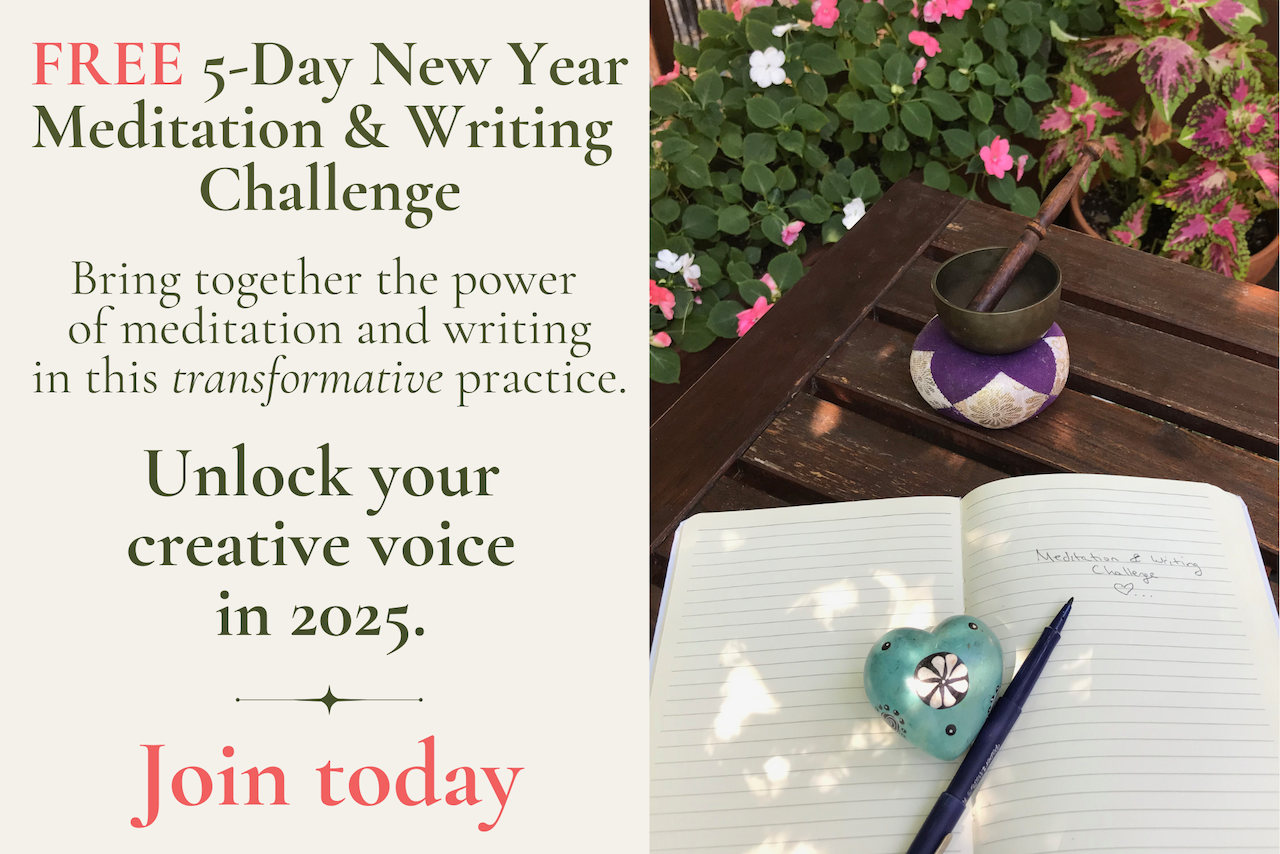
    Free New Year Meditation & Writing Challenge

    Hi friend! As you might recall, last fall I shared an empowering five-day meditation and writing challenge from Tiny Buddha contributor Nadia Colburn. This month, she’s back with another free meditation and writing challenge, designed for the new year, focused on transformation, and I can’t recommend it enough!

    Founder of the online creative writing school Align Your Story, Nadia is a poet, memoirist, and yogi who has a talent for helping people create inner calm and access their most authentic voice.

    That’s what I love about her challenges—they allow us to turn down the mental noise that creates stress and confusion and tune into the gold of our intuition and creative genius.

    Each day’s fifteen-minute recording includes a short meditation, an evocative poem, and a prompt-based writing exercise inspired by that day’s piece.

    Though the meditation practices all vary, they all gave me quick access to increased calm and focus. And the poems and prompts are all perfect for this season of transformation, when so many of us are looking to get unstuck and create positive change.

    Like last time, I recognized common themes in my writing—blocks I need to address, fears I need to face, beliefs I need to challenge, and truths I need to accept.

    Life has been particularly overwhelming in recent months, due to significant challenges in every area of my life, and I’ve often felt lost in the haze of my own mind. Each day’s challenge elicited a new aha moment for me, giving me hope that greater clarity is coming.

    You don’t need to even think of yourself as a writer to enjoy and get something out of this challenge. It’s for anyone who wants to connect with themselves more deeply and perhaps find some of the answers they’ve been seeking externally within the quiet of their own mind.

    Some of Nadia’s past participants have noted how easily their writing flowed after meditation and how the prompts brought them unexpected insights.

    If you decide to give this challenge a try, I have a feeling it could do the same for you. You can access it for free here.

    Happy writing!

  • Join the Writers Rising Retreat – 10% Off for Tiny Buddha Readers!

    Join the Writers Rising Retreat – 10% Off for Tiny Buddha Readers!

    I believe that most, if not all, of us want the same things in life.

    We want to feel seen. Want to be heard. We want to own our truth and express ourselves. And we want to believe we’re making a positive impact—to feel like we matter and that we’re leaving an indelible mark on the people around us in our short time here on this earth.

    That’s what writing has done for me, and I’m guessing for many of you too.

    But whether you’re creatively blocked or just full of self-doubt, it’s not easy to write consistently.

    Instead of creating the worlds we envision or sharing the wisdom we want to impart, we can easily end up spending all our time writing mental lists of why we shouldn’t. I know I’ve been there.

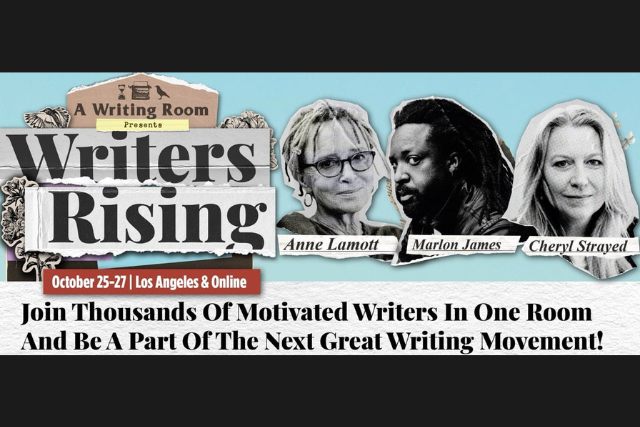
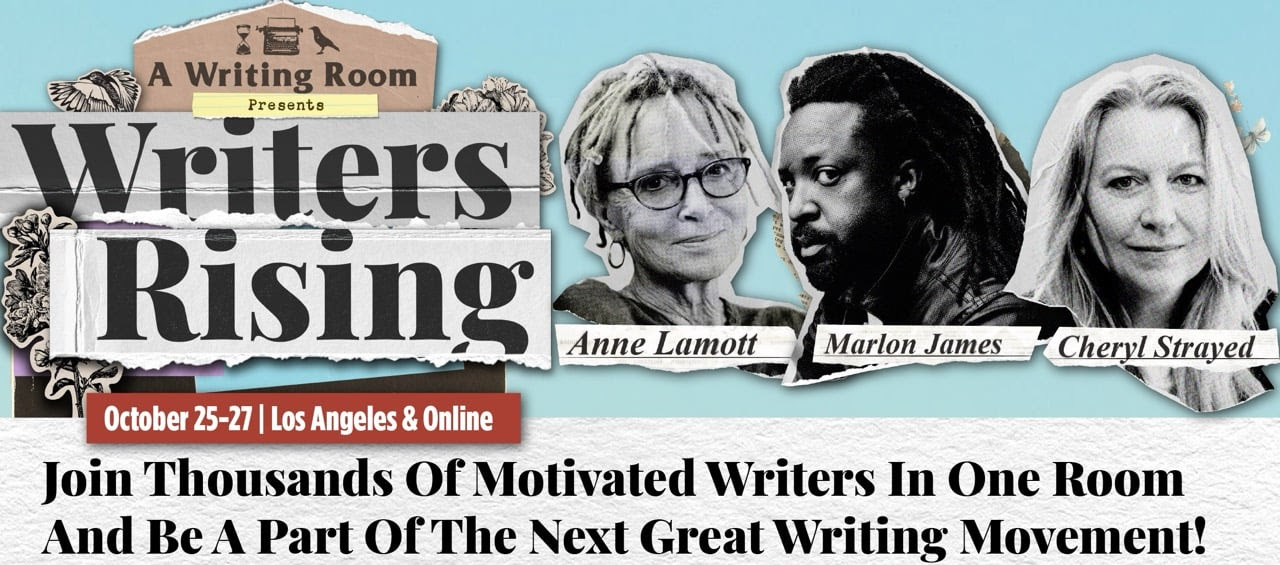
    If you get the struggle, or you’re just looking for support to help you do your most meaningful, inspired work, I highly recommend Writers Rising 2024, a retreat running from October 25th through 27th.

    With a truly stellar lineup of seasoned writers, Writers Rising can offer you a supportive and inspiring environment where you can explore your voice, express your truth, and tap into your inner wisdom.

    Keynote speakers such as Anne Lamott, Cheryl Strayed, Gay and Katie Hendricks, Jen Pastiloff, HeatherAsh Amara, and other luminaries in the world of writing and self-development.

    Here’s a glimpse of what you can expect during this weekend filled with insight, inspiration, and connection:

    • Experiential keynote workshops with renowned authors and thought leaders
    • Silent writing sessions to dive deep into your creative flow
    • Open mic readings where you can share your work and connect with fellow writers
    • Workshops and breakout sessions covering a range of topics, including overcoming writer’s block, finding your authentic voice, and harnessing the power of storytelling
    • Opportunities for group coaching and feedback on your writing
    • Fun social gatherings to connect with like-minded individuals

    Unable to attend the live event in Hollywood? Writers Rising has you covered! Wherever you are in the world, you can join the live stream for an affordable rate, so you can participate from the comfort of your home.

    Whether you’re seeking inspiration for your next writing project, looking to heal and grow through the power of storytelling, or simply craving a weekend of self-discovery and connection with fellow writers, Writers Rising has something extraordinary to offer you.

    And you can get 10% off any retreat pass (or Writing Room membership) using this code when checking out:

    tiny10

    Here’s what some of last year’s participants had to say about the experience:

    If you’re ready to grow as a writer and connect with other passionate (and published!) creatives, register for Writers Rising here​.

  • Join the Writers Rising Retreat – with Anne Lamott, Cheryl Strayed & others!

    Join the Writers Rising Retreat – with Anne Lamott, Cheryl Strayed & others!

    If you’re a fellow or aspiring writer, today’s post is for you!

    The people behind the Writer’s Room have organized a pretty amazing retreat that you won’t want to miss.

    Writers Rising 2024 , running from October 25th through 27th, is sure to be an unforgettable experience that will ignite your creativity, nourish your spirit, and deepen your connection to yourself and others.

    I do what I do for all these reasons, and because I believe that writing heals. It helps us process our emotions, identify lessons from our experiences, and feel a greater sense of clarity and control in our highly uncertain world.

    It can also enable us to take a break from consuming and get lost in the magic of creating, pushing us deeper and deeper into that blissful state of flow where time stands still for a while.

    Whether you’re an experienced writer or just starting out,  Writers Rising  can offer you a supportive and inspiring environment where you can explore your voice, express your truth, and tap into your inner wisdom.

    Featuring keynote speakers such as Anne Lamott, Cheryl Strayed, Gay and Katie Hendricks, Jen Pastiloff, HeatherAsh Amara, and other luminaries in the world of writing and self-development, Writing Rising promises to be a weekend filled with insight, inspiration, and connection.

    Here’s a glimpse of what you can expect:

    • Experiential keynote workshops with renowned authors and thought leaders
    • Silent writing sessions to dive deep into your creative flow
    • Open mic readings where you can share your work and connect with fellow writers
    • Workshops and breakout sessions covering a range of topics including overcoming writer’s block, finding your authentic voice, and harnessing the power of storytelling
    • Opportunities for group coaching and feedback on your writing
    • Fun social gatherings to connect with like-minded individuals

    Plus, if you’re unable to attend in person, you can join in the live stream for an affordable rate so you can participate in the retreat from the comfort of your own home—anywhere in the world!

    Whether you’re seeking inspiration for your next writing project, looking to heal and grow through the power of storytelling, or simply craving a weekend of self-discovery and connection with fellow writers, Writers Rising  has something extraordinary to offer you.

    Early Bird tickets expire on May 31 and spaces are limited, so I highly suggest you secure your spot ASAP if youre interested!

    Here’s what last year’s attendees had to say about the experience.

    You can register for Writers Rising here.

  • Why Journaling is the Best Thing to Do During a Crisis

    Why Journaling is the Best Thing to Do During a Crisis

    EDITOR’S NOTE: You can find a number of helpful coronavirus resources and all related Tiny Buddha articles here.

    “The difference between despair and hope is just a different way of telling stories from the same set of facts.” ~Alain de Botton

    When I was told that the man I loved had a terminal illness, I instinctively reached for my journal. When I was asked to evacuate my home ahead of a category-5 cyclone three short weeks after his funeral, the first thing I threw into the back of my car was a large box with my journals.

    That was nearly a decade ago.

    Last month, when I stood in front of the empty shelves at my local supermarket, I was surprised to be instantly back in the grip of the fear and panic I felt during the crisis I had braved almost a decade ago. So I did the most logical thing. I took a deep breath, located the stationary aisle—which thankfully was still fully-stocked—and I bought myself a large new notebook.

    The next day, as the world prepared to go into lock-down, I missed the chance to return to my partner and my home in Vietnam.

    Depression and anxiety promptly came to visit, threatening to turn my self-isolation into another painful chapter of my life. But I know that I am more resilient than I think I am, and I instantly turned to my number one coping strategy. I opened my new notebook and started writing my Covid-19 journal.

    This is a challenging time for all of us, and we are all affected in different ways by this global pandemic. I don’t know how my partner and I will cope with the challenge of having to conduct our relationship across closed borders, via Zoom and Messenger, with no certainty when we might see each other again.

    But I know that writing will be there for me, as it has been during every crisis I have been through. Regular journaling has trained me to be my own therapist. Writing things down is an act of self-care. It’s like opening the door to my heart to see what’s in there and allowing myself to sit with all of it.

    Writing through the grief of my husband’s death and the aftermath of a natural disaster, I learned that we can cultivate resilience by allowing ourselves to experience our feelings, both good and bad.

    As I learned the hard way, writing builds resilience because it allows us to process, release, and make meaning of challenging events and complex emotions.

    Writing things down during a crisis is not only helpful as a way of processing and releasing our emotions—it is also a way to document what is happening as it unfolds.

    This strange and unprecedented moment in time sometimes feels like the world is collectively writing a new chapter. There is the official narrative, there is an abundance of alternative narratives floating around the internet, and then there are our personal narratives and the ways we as individuals cope with this crisis.

    Our memories will fade —though we’ll probably always remember that toilet paper was the first thing that ran out during a pandemic—but by keeping a diary and writing things down as they happen, we create a record of this unique historical moment.

    Writing is also a way to enter the creative flow, which is a great antidote to feelings of stress and anxiety. When we become absorbed in the process of writing, we momentarily step out of the chaos and the grief around us and into a safe zone of calm and flow.

    For many of us, self-isolation brings loneliness. Writing can be a great companion in times of loneliness. My diary has always been my best friend during difficult times. Writing can also be a safe place to retreat to for those of us who are assailed by a sense of cabin fever as members of a household suddenly have to live in close proximity with each other 24/7.

    It’s easy for conflict and irritation to arise in confined living environments. I think of my diary as my sacred space where I can say things I don’t dare to say out loud, where I can vent, rage and reflect and most importantly, where I enter into a dialogue with myself.

    Here are some suggestions for starting your own Covid-19 journal:

    1. Write about how you feel right now.

    Allow yourself to give voice to feelings that you might be holding back for the sake of protecting others or because you feel ashamed.

    Write about what feels particularly hard about this crisis. Begin by brainstorming words that describe your emotional state right now. Think of it as making an inventory of the feelings in your heart. You might even find that you feel stronger and calmer than you thought you did.

    2. Write about a time when you overcame a crisis.

    Remembering a time when you were resilient and got through a difficult emotional turning point will help you to believe in your own strength.

    Bring to mind a significant difficult emotional experience. Make sure it’s something in the past that you can safely write about.

    Begin to write about the experience in the first person. Bring the experience alive by giving concrete sensory detail, i.e. what smells, sounds and tastes do you remember? Maybe you want to make reference to the weather or the color of the car you drove. Use word pictures to get back in touch with the feelings you had during that time.

    3. Write a diary.

    Writing a diary about the current pandemic can be as simple as writing about your day. You may write about the things you did and did not do, the people you interacted with, the things you ate, the words you read, the news you watched, the things you did to care for yourself or the ways you allowed the news to affect your anxiety levels…

    Write about anything you’d like to capture about this day. This could be a simple brain dump. Or you could focus on the quirky things that happened today. The things that only a month ago, you couldn’t have imagined doing right now – things like having virtual sundowner drinks or virtual cups of tea via Zoom with your best friends.

    If you’re writing first thing in the morning, you might write about your dreams, the quality of your sleep, or about the day before.

    Be sure to include sensory detail to bring your world alive, i.e. write about the flowers that are in bloom right now, the smells during your daily walk, the noises that you can hear through the thin walls of your apartment etc.

    You never know, your Covid-19 diary may become the foundation of a memoir or something to leave behind for the grandkids.

    4. Write to practice self-compassion.

    In times of crisis, when we experience suffering, fear, or anxiety, it is important to give our hearts shelter. Self-compassion can help us feel less vulnerable and disconnected during this time of self-isolation. It’s also a great way to silence the voice of the inner critic who will be quick to tell you that you are poor at home-schooling or that you are a bad partner.

    Think of self-compassion as being like a warm embrace. Or as expert Dr Kristin Neff says, like speaking to yourself with the same care and kindness you would use towards a good friend.

    Write for ten to fifteen minutes about what you need from yourself right now to feel less vulnerable, less cranky, less anxious… or whatever you may be feeling right now. Another great way to use writing as a self-compassion practice is to write a letter to yourself from the perspective of a good friend, assuring you that whatever happens you’re loved and cared for.

    5. Write a gratitude journal.

    Gratitude is a secret superpower that helps to build resilience and happiness. Too often we focus on what we lack—and right now we lack a lot of things that we used to take for granted only a short while ago. Gratitude is a way of looking at what is abundant and good in our lives, despite the current crisis.

    Writing a gratitude journal can be as simple as listing five things you are grateful for at the end of every day: your warm bed at night, access to drinking water, having a shelter etc.

    Try to be more specific than just saying “I am grateful for my bed.” Tell your diary why you are grateful for having a bed, why you are grateful for the job that sometimes overwhelms you, or the kids that drive you mad during this pandemic.

    A good way to get started with a daily writing practice is to do a short meditation to settle your mind and to get into stillness. Then set the timer on your phone for ten to fifteen minutes and simply write without stopping to think or edit, trusting the pen to lead the way.

    I’ve kept a journal from the age of eleven, which makes me a seasoned diarist, yet during the current global crisis I am often feeling unfocussed and unmotivated.

    I tell myself that that’s okay, it’s part of the process of adapting to our new normal. But I always try to capture my new normal, even if I only write a quick list of things that stood out for me on a given day. It’s a way to stay connected to my inner voice and to write this new chapter one page and one breath at a time.

  • What Helped Me Reclaim the Creativity I Loved as a Kid

    What Helped Me Reclaim the Creativity I Loved as a Kid

    “Absolute attention is an act of generosity.” ~Simone Weil

    When I was a child, I used to write poems as presents for my parents on birthdays and holidays.

    I’d sit quietly and think of what I wanted to say. Then I’d try to turn that into musical language. I’d write those words on the page, and then I’d draw a picture to go with it.

    It didn’t occur to me to even ask whether my parents would like my poem or not; I just assumed they would.

    Then I got older. I stopped giving my parents poems for presents. I stopped writing poems.

    I didn’t write poetry again until I was in college, and then I began to wonder whether my poetry was “good.” Were my poems “good enough” to get me into the advanced poetry workshop? Would they dazzle the teacher? Would the other students like them?

    I paid more attention to the way the words sounded on the page than to what I actually was saying. The depth was covered up by surface. And after all, I wasn’t sure I wanted to really bring my depth to the surface for other people to see.

    I didn’t write poetry very much again until I was pregnant with my first child. Then what was inside me—literally—was calling my attention. I started to put it on the page.

    But there was still this concern about whether what I was creating was “good enough.”

    I’ve been dancing with that “good enough” question for many years. I see now that that question is not just about my writing, but about myself, about my own interior life, and about the relationship between that interior life and my external life: Can my depth come out on the surface? Is my surface appropriate for my depth? Will I be seen, appreciated, understood? And how can I develop myself to the best of my potential, showing up and not shying away from who I am and want to be?

    Now, many years later, I’m a creative writer and a creative writing teacher, and I see my students similarly worry about whether their work is “good enough.”

    I often tell them that their concern, that comes out in relation to their writing, is really a deeper question of how they approach themselves.

    I tell them that, yes, the writing for so many of us brings out these insecurities, uncertainties, and learned patterns of thinking about ourselves that otherwise would lie buried. But that the writing doesn’t create those insecurities, uncertainties, or learned patterns. They’re there within us—and all around us.

    From the time we’re little, we’re given messages about what it means to be a worthwhile person: people are expected to act a certain way, to look a certain way, to speak a certain way.

    For women, our bodies often bear the brunt of these expectations about our physical selves: are our bodies “good” enough, thin enough, pretty enough, light enough, curvy enough, straight enough…

    And for women and men, our writing often comes to be the place where our intellect is valued: our writing is judged in schools; our expression is given grades. We measure ourselves against others.

    But if we’re always being judged—in body and mind—there is no space to be and to become.

    The question of whether we are “good enough” comes from feeling judged, and this restricts us. We experience ourselves as lacking, and a sense of lack leads in turn to our not being able to inhabit our full selves, to our making poor decisions and to living in constricted ways.

    So what happens when we put aside our judgment and allow ourselves to be with ourselves and with our creative voices?

    What helped me overcome my worry about being “good enough” (or mostly overcome it) is being a mother and seeing what it’s like to love my children unconditionally.

    When I am with my children, it never occurs to me to ask whether they are “good” or “good enough.” Those questions seem absurd and meaningless.

    I know that my children were born—as I believe all children are born—as wonderful light beings, miracles with unimaginable potential and unique personalities and gifts. They are, like all people, uniquely themselves.

    I also know that my children were born with the capacity to grow in countless ways. And this potential to grow and learn never stops.

    My children are “good” but that does not mean that they were born good at walking. They needed to learn, as we all do, how to walk. They needed to crawl and then learn how to pull themselves up, needed to learn how to take one step and fall down and then another. At times, also, my children, like all of us, learned how to be more self-aware, how to say they were sorry, how to think about how their actions impacted others.

    We all have room for growth—throughout our lives. We all have room for greater awareness and more skill. But as we mature and grow as people, our essential “goodness” does not change.

    I try to take the same attitude towards our creative acts: of course, we can learn how to be more skillful writers. But each of us is also born a creative being with a unique creative voice, and more skills will enhance the voice, but won’t essentially change what it has to express. Furthermore, our work is an expression of that voice that is appropriate for who and where we are at the moment that we create.

    As a poet, I needed to learn the skills to take my inner world and put it more effectively on paper. I learned from reading others and from having others read and comment on my poems.

    As I wrote more poems, my poems got more understandable, more moving, more skillful. But I don’t think I was ever asking the right question when I was asking whether my poems were “good” or “good enough.” Because that question was like cutting the life force off that was full of life and growing

    Similarly, as a teacher, I can help my students have more skills. I can show them writing that inspires them and that they can learn from; I can give them tools to use in their pieces. But it’s never my job to judge them or to suggest that their creative expression isn’t worthy.

    We are all creative beings. Not everyone is given legs to walk, but everyone is given a unique story and a unique perspective and a unique voice. And who are we, any of us, to say that one story is “good enough” and another is not? Would we ever say that one birdsong is worthy and another is not?

    Perhaps some people will like my poems. I know some will.

    Perhaps some people will not like my poems. I know many won’t.

    But I don’t set myself up waiting breathlessly to be “liked” or not. I set myself up to do my best work and to accompany myself, whether I fall down or walk across the room.

    When my children were little, I delighted in the freedom with which they played, danced, drew, sang. I want them to be able to be themselves as fully as adults, and to love themselves in the process.

    And I want that for all of us, even for myself. For I know that if I want something for my children, then I need to be able to at least try to model it, otherwise what message am I really sending?

    I tell my students: you might not write your most captivating poem this time around, but if you cut off your breath, then you will never will write at your full potential. So take a risk: go for it, and keep trying. Read, write, learn from what you love and engage fully, and keep listening inside and allowing the process to move from the inner to the outer without judgment.

    I started writing as a gift to my parents, but now I write as a gift to myself—and to the world.

    For me, poetry is an act of love, attention, and presence. When I show up fully and listen, then I can create a passage from what is larger than me through my interior self and then out onto the page.

    Absolute attention is an act of generosity,” the philosopher Simone Weil wrote. When I pay attention to the world around and within me and to the language that I use that is an act of generosity and grace—to myself and to the world and perhaps, also, I can hope, to some of my readers.

  • How Expressing Myself Helped Me Release Chronic Pain

    How Expressing Myself Helped Me Release Chronic Pain

    “Live life as if everything is rigged in your favor.” ~ Rumi

    It can be frightening to experience physical or mental pain. It’s not something anyone wants to deal with; nobody wants to race against the clock hoping that some future experience will take away their pain. Nobody wants to question the purpose of anything, like seeing a friend or even traveling, just because they feel their pain will ruin it.

    During my freshman year at college, I woke up one day with horrific nerve pain in my legs and in my pelvic area. What was this? My instinct told me this would go away in a few days, and when it didn’t, I took to Google to diagnose myself. According to Google, I had hundreds of different diseases and infections. That only kicked up my anxiety.

    I started seeing doctors—neurologists, urologists, and pain management specialists as the time went by. Over the course of few months, the pain not only spread but also got more difficult to deal with. The doctors were stumped. I was stumped. No MRIs or nerve conductive tests had any conclusive results. A spinal tap came out clear. I didn’t have any type of autoimmune disease.

    During the course of all this, I was extremely depressed. It was difficult to leave my bed, go out with friends, and enjoy the simplest things. I loved learning and I was in the midst of very exciting classes, but I identified with my pain—I believed I was pain and I was hopeless—so I cut out anything that interested me or could bring me happiness or joy.

    I was eighteen, young, and adventurous, but my pain caused me to fear the future. What was going to happen in next six months? I was convinced I would never get better. 

    It seemed the only thing I could do to escape the pain was release anger and tears and do different drugs. Though I had this new pain and was now a different person, I could not accept that and let go of the person I’d been before it happened.

    I finally had a breaking point when I was studying in Greece but couldn’t enjoy myself because of all the negative, terrifying thoughts my mind could produce. I kept fantasizing about life in the future, in situations that didn’t exist and situations that could “save me”:

    • I’m going to move to New York one day and then I will be fine, and I will be so happy.
    • This pain won’t stop me from meeting someone and gaining a beautiful partner, and I’ll be saved.
    • One day my writing will be published, I’ll be famous, and I will be so good!

    What I now know is that I was just feeding my ego. None of those scenarios were going to stop my pain or save me.

    The following year I decided not to go back to school. I had to ‘fix’ my broken self. It started off with many psychological TED talks. Many books on Eastern Religion, then meditation books, books on medicine and illness. It wasn’t always easy to find the motivation to research and read, but some part of me knew that it was the only way to free myself.

    After so much reading and many different books, I had to jump to action.

    I started meditating because I’d heard that it could help you tune in and listen to your body. This opened up a new world to me, and after some time, I realized my pain could have purpose and could be managed with meditation and other meaningful activities, including: 

    • Journaling
    • Creative expression

    Creativity has always been a passion of mine, and I had fiddled with meditation in the past, but not in a serious manner. All of these activities not only helped me deal with physical pain, but also helped me discover more about myself and my interests.

    I realized when there isn’t a cure for your chronic pain and the medications prescribed only make you feel worse, you have to take responsibility for yourself. And that’s what I decided to do.

    Journaling freely with no restraints took the focus off the pain and put me in the present moment. It helped me realize I could create my own reality, my own narrative.

    Through journaling, I was able to see how much I had to be grateful for. I was able to develop my intuition, let go of the day’s anxieties, and keep track of how my choices affect my mood.

    I recognized that I kept writing “I am pain,” and “I am depressed and scared” in my journal. It brought me the awareness that I am not pain, nor am I my depression. I was aware that I was in pain and I had feelings of depression, but I would no longer identify with those feelings.

    Journaling unlocked a new world. I physically felt the anger around my heart. I felt the pain in my legs. I felt my migraine. So, I wrote about it. I started writing directly to the areas of my body that hurt. “Dear Legs…” I asked my pain specific questions. I was ready to learn from the pain. It had to have a purpose, and I had to become present with it in order to recognize it.

    Journaling allowed me to see the repetitive patterns in my life. The things I was writing about were the same things I was worrying about two years ago. The same issues that I never took the time to actually acknowledge. Could it be that these issues needed attention so badly that they had to manifest physically within my body? The more I journaled, the more I started to believe that was true.

    I wrote, and hours went by, and eventually, I was writing about my childhood. I was writing about book ideas, TV ideas, I was creating characters. I was writing about how much I love to learn.

    And I didn’t put any pressure on this creative expression. I didn’t tell myself, “This has to be a bestseller!” and “This has to be the next Hamilton!” I just began creating. It made the time fly by, it was productive, and it took the energy away from my pain.

    While writing, my pain and mind transformed. It was as if each word written took a little bit of pain with it and transported it onto the paper. My writings became deeper and more creative, and my pain became less villainous and distracting. The more I journaled about the pain, the more I discovered about myself.

    Meditation was another form of journaling for me. I was able to watch my thoughts, and on days when I experienced heavy pain, I could see how they could change quickly and violently.

    On days where my pain was mild, my thoughts were filled with hope and excitement. I wanted to get out of bed and go out and see the world. However, if five minutes later aches came, my thoughts completely changed. I would glue myself to the television, waste my day, and fantasize about those “one day” experiences I would have: New York, a partner, fame.

    When I noticed this pattern, I stepped back and laughed. It was insane to witness how fast thoughts can change. How much easier it was to identify with a depressed mindset rather than a happy, hopeful one.

    I realized I had a choice: I could feed into the negative thoughts or choose to view the world optimistically. I decided I was not going to follow the negative, depressive narrative my mind provided for me. I was going to choose to identify with a more positive, open, and loving mindset.

    Meditation revealed that I am more than my pain. I was aware that I was in pain; I was seeing my thoughts. How could I be those thoughts if I was aware of them? And more importantly, if I wasn’t my thoughts, I couldn’t be my pain either!

    All of this, in time, helped show me that I didn’t need to be fixed, because I was already perfect. Sure, I was still messed up and my body didn’t feel right, but I was more than my physical body.

    Regardless of what would happen in the future, I had the tools my pain had brought me. I had the awareness to start creating my own reality. I knew I was bigger than whatever pain I would face.

    For a long time, I thought I had to achieve the maximum level of consciousness possible in order to free myself of pain completely. I had to be perfect.

    However, I soon realized that that my pain may never fully be gone, and I may never have complete Buddha nature. But that didn’t and doesn’t matter.

    An extraordinary life is not a pain-free life. An extraordinary life resides in the in the ordinary of the everyday. There is no need for perfection.

    I came to realize that I always was and always will be whole and complete. Regardless of where I live, regardless of my relationship status, regardless of my health.

    Nothing—good or bad—could define my life anymore. The only thing I could be from here was authentic and mindful to what I needed.

    I believe my pain needed expression; my inner child, the neglected being I had shut off for so long needed a way out, so it manifested in pain. All the times I listened to music I wasn’t into to impress others, all the times I spent hiding my sexuality from others and myself, the times spent stuffing my feelings down because of a large ego, I was neglecting my inner child.

    Not getting the right amount of sleep, going on ten mile runs and having a bag of Doritos for dinner, never drinking water but constantly drinking Gatorade and other sugary drinks—I hadn’t even provided the basic necessities for a child to thrive, let alone given that child love and expression.

    So that’s where I had to start. I had to start giving my inner child proper hydration and sleep, and much, much love. As I did with my pain, I had to sit down and talk to my inner child. I also started to spend time with my present self. Taking myself out on a date to a movie I wanted to see, going out to dinner with a nice book, taking long walks without a phone and other distractions. I had to show my inner child and myself unconditional love.

    I realized that previously, I was scared to be unique. I was afraid of expressing myself. What would people think? It was much easier to neglect, suppress, and resist feelings rather than be wrong or be judged.

    Gratefully, I was able to curb my pain and take it down many levels. It seems the more I discover about myself, the more I express my authentic self, the more I free myself.

    Now I make sure I do something every day to connect with my true self. Writing. Meditation. Sitting in nature. Having a cup of hot tea, focusing deeply on the present moment. In the present moment, you are truly saved.

    It’s still hard to wake up in pain and believe the Universe is rigged in my favor, but the experiences my pain gave me, the people I met through it, the maturation I developed from it, confirms that it is the truth.

    Meditation, journaling, and expressing myself awakened me from my pain. It provided more insight and compassion to those around me because we are all in some type of pain. Pain cannot be compared, because pain is a lesson constructed for each of us. The best thing we can do is make friends with our pain so we can understand what it’s trying to teach us. To meditate on the normal anger that arises with pain and sympathize with it.

    Ask your pain questions. Give yourself a hug. When it’s one of those days, be there for yourself. In the end, all you can do is surrender to the Universe and choose to graciously learn from it.

    It’s not always easy, especially when the pain takes control. It’s hard to step back and look at everything through a lens of positivity, but it is possible. All you can do is keep breathing, keep encouraging yourself to focus on the moment—the breath—and like everything in life, the pain will pass.

    Illustration by Kaitlin Roth
  • How Journaling Helped Me Heal from Grief and How It Can Help You Too

    How Journaling Helped Me Heal from Grief and How It Can Help You Too

    “No one ever told me that grief felt so like fear.” ~C.S. Lewis, A Grief Observed

    The day I was told that the man I loved was going to die from cancer, I did two things: I made a pact with myself never to have more than one bottle of wine in the house. I knew the risks of numbing pain and I knew that it didn’t work. Then I went to a stationery shop and bought a supply of fine moleskin journals.

    My journey through grief started the day the pea-sized lump behind my husband’s ear was given a name. Metastatic melanoma. Over the course of two years it spread to his lungs, then his brain. A brain tumor the size of a golf ball is what killed him.

    Four weeks after his death, a tightly sealed plastic box containing a dozen diaries was the first thing I grabbed when I had to evacuate my home ahead of a monster cyclone. Seven years after those events, the plastic container, which by now contains several dozen moleskins, is still the first thing I’ll grab at the next cyclone warning.

    Why? Because those journals were my lifesaver at a time when no therapist could help me. Grieving is a very long and lonely journey, and those journals were my most intimate, trusted friends during the most difficult time in my life.

    Grief comes in many forms. Divorce, being made redundant, a stillborn child, the list is long. We all have access to the world’s oldest and cheapest self-help tool.

    Here is how it helped me.

    1. Your journal is your best friend during the lonely process of grief.

    Grief turned me into a depressed mess, which made me feel like an outsider. It’s a common experience. As anybody who has been there will know, one of the most surprising things about grief is how alone it makes you feel. Only those who have grieved will be able to understand what you are going through.

    Your friends and loved ones will offer as much comfort as they can give, but they’ve got their own lives to live and nobody wants to hear your sad story over and over again.

    Writing provided comfort and relief at a time when nothing else did. I lived remotely and didn’t have access to a therapist. My journal became my lifesaver and my best friend. It was the only place where I could speak my truth and where I could safely express all of my emotions.

    My journal was always there for me to listen to the same story, over and over again, without judgment, until I was finally ready to let it go.

    2. Journaling allowed me to tell the story nobody wanted to hear.

    We live in a culture that is averse to grief. In the absence of proper grief rituals, people struggle for words and end up offering platitudes that diminish your grief. Before my bereavement, I too was ignorant about what to say to a grieving person.

    How many times did well-meaning friends, lost for words, offer meaningless platitudes? “He’ll be okay,” some would say, when it was clear that he was never going to be okay again.

    “You’ll be okay,” was just as hurtful. Of course I would be okay. I hadn’t died, even if it felt like part of me had. But I needed people to acknowledge my grief, not diminish it. Writing was a way of giving voice to the story nobody wanted to hear.

    I needed to say the things that I couldn’t say, that even the doctors wouldn’t say, as we desperately clung to hope.

    It was only in the pages of my journal that I could safely and without judgment write this messy story in the raw voice of pain. It helped me understand it and slowly craft a new narrative.

    I knew instinctively that my writing would lead me there, not my well-meaning friends who assumed to know what the appropriate timeframe for grief might be.

    3. Writing allowed me to hold on to memories.

    Journaling was also an effective way to hold on to the memory of him. I recorded the story as it was unfolding. The way he reacted to radiation treatment. The words he said when the word palliative care entered our conversation. The way he looked before and after each operation. The words he whispered into my ear, holding on to my hand as his strength faded during his last days.

    4. Journaling helped me find redemption after loss.

    For several years after my bereavement, the story I told about myself focused on the events that had burnt my life down. It was what defined me at that moment and I didn’t want it taken away from me.

    Writing about my pain allowed me to eventually gain a new perspective. Reading over my words, I became a detached witness of my story and I was able to see how my story is related to the universal narrative pattern of what Joseph Campbell calls “the hero’s journey.”

    Today I am able to tell my story as a narrative of redemption. I stumbled into the dark woods of grief and I came out of it transformed, stronger, and more aware of the preciousness of life. It’s a story I share with those who accept grief as an opportunity for deep transformation.

    5. Journal writing gave me the courage to venture into creative writing, which was healing in unexpected ways.

    Two years after my husband’s death, for my fiftieth birthday, I gave myself the gift of a year-long online creative writing course. I’d planned to write up my story as a memoir. But revisiting my pain in the pages of my journals felt like peeling the scab off a wound. It was still too raw.

    Writing creative fiction on the other hand, turned out to be incredibly liberating. I no longer had to write the story of how my life had exploded. I was free to write anything I wanted. I could create characters with red hair and freckles, I could make them Olympic swimmers or war correspondents. But deep down, the emotions I wrote into my characters were my own.

    By sorting the core of my personal grief story into a narrative arch, I could see how personal growth results from conflict and suffering. I could see how this is fundamental to the character’s journey and I could finally see redemption and envision a new ending for my story.

    I don’t know how I would have coped without my writing, it’s what guided me through my pain and showed me the way forward.

    Here are five suggestions on how to use journal writing during times of grief:

    1. Have your journal always with you.

    I found it incredibly comforting to have my journal always by my side. Sadness catches up with you in the back of a taxi or in the hospital waiting room. Being able to scribble in my journal provided relief.

    2. Do a brain and pain dump.

    On most days I’d do a simple brain and pain dump. I’d free write without editing or worrying about grammar for as long as it took to feel better. I found it helpful to record what was happening in detail and to name my emotions and reactions.

    By writing everything down, I felt like I was sharing my pain. It was liberating, even if it didn’t make the pain go away. It allowed me to see patterns in my thinking and to focus on the positive.

    3. Write a gratitude list.

    A gratitude list is a powerful way to focus on what is positive during a time when it seems that you will never find happiness again. By listing the things I was grateful for, I was able to momentarily reverse the feeling of overwhelming negativity.

    There was the bad test result, sure, but there was also the friend who brought a casserole around. It was always surprising and refreshing to acknowledge the things that made me feel grateful. It put my pain into perspective.

    4. Do timed writing exercises.

    If you are not naturally inclined to writing, you might find it useful to make journaling part of a routine and to set a timer. Timed writing exercises are surprisingly effective. Start small. Ten minutes of free writing every morning is a good start.

    5. Use writing prompts,

    Journal therapists will often use writing prompts. I personally feel too restricted by prompts, since my writing will naturally lead me towards the story that needs to be told. But when I am stuck, I find it helpful to pause and write “How I really feel is …” or “What I really want to say is …”.

    I also found great relief in writing unsent letters to my husband, both during his illness and after his death.

    Here are some writing prompts for you to try:

    I remember when …

    The first time we …

    My happiest memory of you is …

    What was good about today is …

    What I treasure is this …

    Today my grief feels like …

    Back when I went through my grief, I didn’t know that expressive writing and journal therapy are recognized modalities for healing, widely used by psychologists and therapists, especially with trauma victims.

    I’ve always used reflective and personal writing as a way to make sense of the world and my place in it. Faced with my husband’s progressive illness, I’d instinctively reached for my journal to process what was happening. By naming the emotions I felt, I could make sense of what seemed ungraspable and find healing.

    Journal writing really is the cheapest form of self-care there is. I hope you’ll try it, using some of the suggestions above. Or maybe you already have a journal writing practice and have your own favorite prompts. Feel free to share in the comments.

  • How to Make Time and Space for Creativity

    How to Make Time and Space for Creativity

    “The grass is always greener where you water it.” ~Unknown

    I’ve had this theory about life for a while now, ever since I embraced simplicity three years ago.

    Life, a good life, a life well-lived, is about maintenance. It isn’t chance or luck or fate (though I believe in those things, and in magic too); it’s about doing the work to create the life you want, and doing it over and over and over again.

    Not that long ago, my writing life resembled un-watered grass. I let the passion I have for writing and words get away from me in my quest for an adult life. I begrudged anyone who had ever done anything creative—they must have more time, more money, more luck, the right connections, or something, anything, I didn’t have.

    All my unused creativity turned into bitterness. I’m not one for jealousy or envy, because I know the value of living a happy, grateful life.

    Still, all that unused creativity made me feel like I had no purpose in life—looking around I saw dried up, brown grass. What I should have been tending to, lay fallow and ignored.

    By mere chance, I picked up a book on simple living at the library. It was spring, and while everything came to life around me, I felt—well, in retrospect, I think I felt nothing. A sort of apathy had taken over. Sitting on the back steps of my patio, flipping through that book, something clicked.

    For me, simplicity and creativity go hand in hand. I spent over a year simplifying my life—decluttering, meditating, and becoming very purposeful about what I wanted and needed, and how those two things are different.

    Then, one day, I sat down and started writing. Writing so much, in fact, that I finished the first draft of a novel.

    Writing (and all creativity) needs space. It needs intention and purpose. Like grass, it needs to be watered, and how can you water it if you’re so busy attending to all the other “things” in your life?

    Finding your simplicity edge can take some time and energy. There will be lots of sorting and deciding and donating and throwing away. Making space—physical space—can make a huge difference in your life; it is worth every minute decluttering. (more…)