Tag: wounds

  • Healing Childhood Wounds: A Journey to Love and Connection

    Healing Childhood Wounds: A Journey to Love and Connection

    The drive on I-95 from the New England coast back home to Washington, D.C., was harrowing— construction zones, accidents, and rush-hour traffic. I was glad my husband was at the wheel.

    After spending the weekend visiting our daughter at college in Connecticut, I was ready to check out, so I scrolled through social media on my phone to mindlessly pass the time. But when I paused on a post from my favorite self-help influencer, Cory Muscara, I got something very different from the relaxation I’d been craving.

    I started following Cory several months before, after a friend had sent me a post of his about navigating significant life transitions. After my daughters left for college, I faced an empty nest and was about to turn fifty. To help with the changes, I immersed myself in all the self-improvement content I could find.

    Cory’s striking blue eyes and calm, steady voice captivated me. He was a former monk, inspirational speaker, and teacher of all things zen. In the post that caught my attention in the car, he filmed himself walking through a forest, a green hoodie pulled over his head. Since my husband was busy with work calls, the sound was muted, and I focused on the captions.

    One word caught my attention: fireball. I continued to read, engrossed with the step-by step instructions to overcome stored pain, break free from destructive patterns, and achieve freedom and inner peace.

    I’m great at following directions, but the concepts of letting go or surrendering frustrate me. I’d love to, but how? I hoped that Cory was about to deliver the answers.

    I was told to connect with my heart. I closed my eyes, took a deep breath, and felt the space my heart occupied in my chest. Next, I was to identify a barrier or obstacle I had been struggling with, something preventing me from achieving what I truly desire: love and connection.

    When I discovered the barrier, I should then imagine my heart flowing toward it, softening it, and then, as the barrier began to soften, I was to observe it unravel. At the very bottom of this would be a fireball.

    In Cory’s vernacular, it was the core wound. Google defines this as a deep emotional wound that can be traced back to a significant event in childhood. It can be caused by suppressed pain or emotions and can lead to a belief system about the self. Core wounds can be a result of unmet needs and can include messages like “I am not enough” or “I am unworthy of love.”

    Cory warned me not to get distracted by the fireball and to move toward the pain, look at it, and acknowledge it. I felt emotional pain as a memory took hold and began to replay over and over in my mind. And he was right: it was a fireball.

    I was around fourteen, and it was the end of a school day. I remember walking with my friends, heading to the bus stop. And then, I saw my mom in the carpool line. She had never picked me up from high school; she was driving her new red sports car.

    Growing up as an only child and a latchkey kid on the outskirts of a small town in Northern Arizona, my afternoons were often spent alone at home. My parents were involved in their careers and were active members of the community, often not returning home until late in the evening. My neighbors were mostly retirees, and the distance from town made it difficult to hang out with friends.

    I often wondered why my parents didn’t want to spend time with me. Was I unlovable?

    With all the pain and insecurity I felt every day, the sight of my mom waiting for me in the carpool line filled me with joy. Seeing her there, in her new car, I felt something I rarely felt: special.

    My heart surged. I couldn’t believe she had surprised me. I stopped in my tracks, not believing she was actually there. I told my friends I had to go and then ran as fast as I could to the car. I was out of breath when I climbed into the passenger seat.

    “Thank you for picking me up!” I said.

    My mom turned to me. “Oh, I’m not here for you, Jennifer. I’m picking up a client.”

    Before I could respond, she added, “I’ll see you at home.”

    Mom was a therapist, and the client was a student.

    I remember how I swallowed back tears and feelings of rejection.

    I walked to the bus stop. It felt like the longest ride of my life, and the walk home even longer.  Angry with myself for getting my hopes up, all I wanted to do was crawl into bed and pull the covers over my head.

    When Mom returned from work that evening, there was no mention of the incident.

    And now, thirty-five years later, I sat in the car and cried as I recalled this painful moment. I had found a fireball, and I was told to stay with it, but then what? Did I have to be stuck with the pain of this core wound, unsure of what to do next?

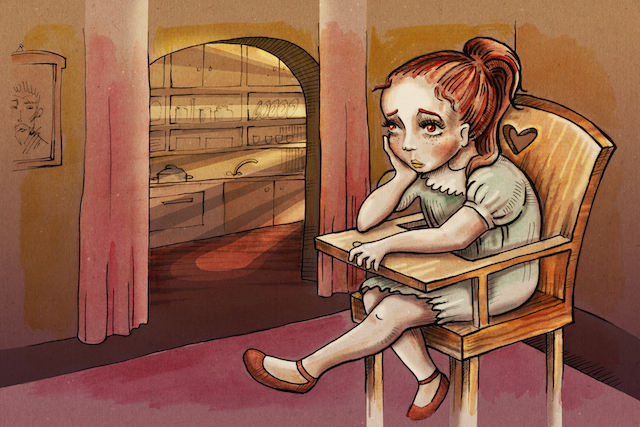
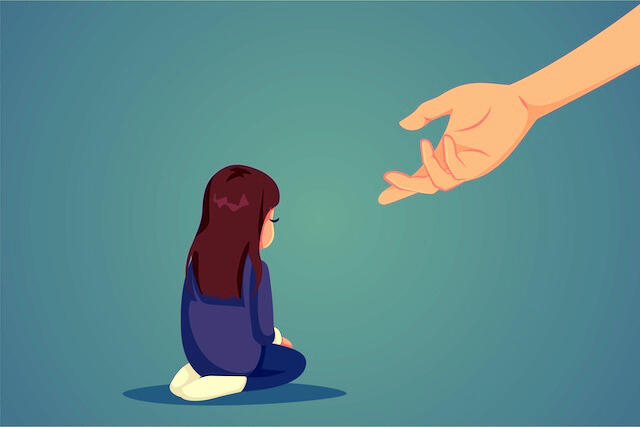
    This is when I realized that the girl on the bus so many years ago needed an adult to soothe her. I closed my eyes, imagined seating my fifty-year-old self next to her, and held her hand. I asked her to tell me what was wrong, and I listened with compassion. I sat with her until the pain subsided. Until our pain subsided.

    When I opened my eyes, I realized that an hour had passed since I had started watching Cory’s post. I was surprised my husband hadn’t noticed the tears that I had been too distracted to wipe away.

    I felt a mix of disappointment and relief. I felt sad that he wasn’t aware of my tears sitting so close to me, but the experience felt so personal that I didn’t want the burden of explaining it to him at that moment.

    Following Cory’s instructions had proven more effective than my past two years of therapy. In this short time, I had not only taken care of myself but had also become aware of the needs of that fourteen-year-old girl. I knew exactly what she needed to hear.

    It was up to me to heal her wounds.

    The girl on the bus couldn’t understand why a mom would dismiss her daughter so easily, but I was able to explain. I could see from what my mom had expressed to me about her childhood, growing up with an alcoholic mother and a traveling father, that she was so traumatized that she felt compelled to fiercely protect her heart.

    She didn’t allow herself to be curious about my emotional needs because she was conditioned to protect herself. My mother wasn’t capable of empathizing with me, not because she didn’t love me, but because of her own deep-seated wounds.

    I’ve tried to discuss this incident and others from my past with my mom, but every time a painful childhood memory resurfaced, she would inevitably ask, “Did I do anything right?” It’s clear that these conversations are not ones she is open to having with me.

    It took me a few days to tell my husband what had taken place during that ride. I told him about the wound and how it no longer felt painful, but I was still feeling raw, and I was worried that I wasn’t accurately explaining. However, as I described Cory’s steps and how I processed the memory until the fireball was extinguished, I became animated and excited to share this new tool.

    He was taken aback and said, “I can’t believe you had that experience in the car!”

    Then, I asked him if he had noticed my tears while sitting next to him. He responded, “No, I was focused on the road.”

    The truth is, much like my mom, my husband isn’t as attuned to my emotions as I would like. However, healing this childhood wound has empowered me in my relationships with him and others. I now have the confidence to express my emotions, and if I don’t feel heard, I make sure to speak up.

    Throughout this journey, I have come to understand that the solutions reside within us. We possess the ability to nurture the younger parts of ourselves and acknowledge our inherent worthiness of love. Perhaps, like me, you will experience healing by spending time with your younger self and addressing their pain.
  • Coming out of Survival Mode: How I Healed and Found Peace

    Coming out of Survival Mode: How I Healed and Found Peace

    “I have come to believe that caring for myself is not self-indulgent. Caring for myself is an act of survival.” ~Audre Lorde

    I can’t pinpoint the exact moment when I realized that I no longer needed to fight for my survival, but I do know that it came after several years of prayer, healing, and intensive work. It wasn’t an event, but rather the feeling of peace and calm that comes after a storm.

    For me, the storm dissipated slowly. It was the kind of storm that kept swirling and re-emerging until I finally realized that it would take concentrated effort and work on my part to eliminate the threat.

    By threat, I mean anything in my inner and outer world that was wreaking havoc on my nervous system. This included things on the inside (such as trauma, subconscious beliefs, childhood wounds, and energetic and nervous system damage) as well as things on the outside (people and things in my environment that were having a negative impact).

    When your mind, body, and spirit are under attack for a prolonged period of time, there’s no one solution that will bring you out of the dark. Rather, you must practice a variety of healing methods and make the conscious choice to free yourself from the chains that bind you.

    For me, the freedom did not just come from leaving my unhealthy, toxic, and codependent marriage of nineteen years. It didn’t come solely from the fact that my oldest son finally stabilized and was no longer in danger of losing his life. Nor did it come solely from separating myself from the people, places, and situations that held my nervous system in a constant state of turmoil.

    It was a combination of many things.

    The reprieve came gradually over time, as I learned to listen to my body, understand my nervous system and its relationship to my emotions, and what people and situations threatened my inner peace.

    Each time I would notice that I did not feel safe in my body, that someone’s words or actions were causing harm, or that a relationship or situation was adding stress or creating an imbalance in my life, I would make adjustments as needed.

    This meant setting firm boundaries around who and what I was allowing into my headspace and heart space. This meant releasing people, places, and situations that were no longer healthy for me or serving me in a positive way. This meant working in therapy to heal childhood traumas that were still living in my body.

    For starters, I left a long-term relationship that, on the surface, seemed to provide stability but, in reality, kept me in a constant state of anxiety, resentment, and emotional chaos.

    The relationship was a textbook example of two unhealed people recreating their childhood wounds with one another, with no awareness of what they were doing. The impact trickled down to our children, who unfortunately suffered the negative consequences of their parents’ wounding.

    It wasn’t until months after our divorce, when my oldest son was diagnosed with PTSD, that I realized the environment I had been living in was not only toxic but also abusive. Sadly, the relationship with my former partner so closely resembled the patterns and behaviors I had witnessed as a child that I had somehow normalized them. I hadn’t put the puzzle pieces together soon enough.

    In fact, the moment that I read my son’s psych evaluation results, I was hit with the reality that I had lived in that kind of environment (chaotic, unhealthy, toxic) for most of my life. In my childhood and then later in my adult life.

    I was shocked.

    Why hadn’t I connected the dots before? The reason I felt anxious, the reason I was crawling in my skin, feeling on edge and unable to relax or find stillness, was because my nervous system had been under attack by the very people who were supposed to make me feel safe.

    I had been existing in survival mode for as long as I could remember.

    From that point forward, I made a pact with myself to never go back to people, situations, or environments that created chaos inside. I promised myself I would do whatever it took to protect myself from further harm, regain my stability, and break the cycles of toxicity and abuse that had been passed down through my lineage.

    These are the methods I used to free myself:

    • Subconscious reprogramming
    • EMDR (Eye Movement Desensitization and Reprocessing)
    • EFT (Emotional Freedom Technique) Tapping
    • Brainspotting
    • Meditation
    • Somatic healing
    • Energy healing
    • Boundaries
    • Cutting Relationship Cords

    To some, my methods seemed extreme, selfish even. And in some ways, they were. But not in the typical way one would think.

    The fight to find my peace was only selfish in that I cared about myself and my well-being so much that I was not willing to stay stuck in cycles of suffering any longer. Nor was I willing to pass my wounding along to my children.

    I had a choice, and I chose myself. I chose my peace.

    And I would do it again if the time ever came.

    To anyone who is struggling with the suffocating feeling of living in survival mode, please let this be your reminder: you must choose yourself. You must do something, because doing nothing will only keep you in the eye of the storm.

    Even if it means letting go of close relationships, or removing yourself from certain environments, the hard decisions you make will eventually create the peace and freedom you seek in your life.

    Of course, leaving people and places behind is going to hurt. It’s going to cause some discomfort. But remember, you cannot heal in the same environment that is harming you.

    You have to be willing to get radically uncomfortable for a period of time until your nervous system stabilizes and you are able to invite healthier, more supportive relationships into your life. Once you are able to look in the rearview mirror at your distant past and see that you have left behind all the things that were harming you, you will realize it was all worth it.

    You will be proud of yourself for having the courage to take these brave steps. You will be proud of yourself for taking your happiness into your own hands. You will be proud of yourself for choosing YOU.

    Make peace your priority. Your nervous system will thank you. Your children will thank you.

    Sending you love.

  • You’re Bent, Not Broken: A Mindset Shift That Can Change Your Life

    You’re Bent, Not Broken: A Mindset Shift That Can Change Your Life

    Bent but never broken; down but never out.” ~Annetta Ribken

    I lived for a long time thinking I was broken beyond repair.

    Let me rephrase: I thought I was unloved, unworthy, scarred, and broken. What a package, right?

    It started young, never feeling like I was good enough for anything I did. Being the youngest of the typical modern recomposed family in the eighties, I never knew on which foot to dance and always thought I needed to bend left and right to be seen and loved.

    I carried this baggage under my badge of anxiety, feeling like no one and nothing could ever make me happy, that no one could love the real me, that nothing could ever make me feel worthy.

    It reached a point as I was entering my forties when all I wanted to do was disappear. I wanted to not be who I was. I wanted to die.

    I thought that was my only solution.

    I believed the world would be better without me.

    What I didn’t understand then is that by thinking I was broken, unworthy, unloved, and all the other awful things I told myself daily, I was pouring salt into old wounds that had no chance to mend until I stopped the self-loathing.

    The more I told myself I was broken, the more I was breaking my soul. The more I told myself I was unloved, the less I loved others and opened myself up to love. The more I told myself I was unworthy, the more I interpreted others’ words to mean the same.

    I didn’t know what I could do. I didn’t know how to get out of the storm I was stuck in. I didn’t know what could help me live in the moment and stop hurting from the past or getting scared of the future.

    How do you get out of hurting so much you want to die?

    For me: writing.

    It was the only thing I could do.

    I was losing friends left and right, closing up like an oyster, hurting myself and others with my words and actions—but my pen and paper were my salvation.

    I bled tears and words until the day I could take a step back.

    The pain, the feeling of being broken and unworthy was still here; I could barely look at myself in a mirror, even less love anyone properly. But as I was playing with my pencil not finding words for a poem I needed to write to survive, I kept pushing into a crack it had. And I pushed my nails into it, and I played with it, and picked at it and some more not really thinking what I was doing, desperately trying to find words, until the pencil broke in two.

    No, let me take responsibility—until I broke the pencil in two.

    I looked at the two pieces in my hand.

    I had played with that pencil’s crack until I broke it.

    My fingers kind of hurt, but I smiled.

    This wasn’t me. This couldn’t be me. I really didn’t want this to become me.

    I wasn’t two parts of one entity.

    I was still one.

    And if I was still one, I wasn’t broken, I was just scarred. I was just bent.

    From that moment on, everything shifted.

    I wasn’t broken, just bent. I could learn to love myself again.

    It became like a mantra I repeated daily.

    And if I wasn’t broken, just bent, then maybe I wasn’t unlovable but loved by the wrong people. And maybe I wasn’t unworthy but only surrounded by people who didn’t recognize my worth, or maybe I was blind to my awesomeness.

    And if I wasn’t broken, if I stopped playing with my wounds, then maybe the healed scars could tell a story. And if I could tell my story and help others in any way, maybe, just maybe my pain and hardship and years of anxiety and depression could become more than a feeling of brokenness.

    So maybe I wasn’t broken. Maybe I was indeed just bent.

    It was hard to say it out loud, it was hard to explain, but the moment I shifted my mindset, I felt a relief.

    I knew then I could rise from the traumas I’d gone through. Even the smallest ones.

    I could give myself a second chance at life by healing and sharing my story.

    I wasn’t broken; I was made to break the shell of my past and show that if I could do it, you could too.

    Because here is my biggest secret: I am no one, and I am everyone.

    My story is the same story as most of yours. I didn’t deal with my traumas, and they caught up. I thought I had dealt with the past by putting a bandage on it when I really needed an open soul surgery.

    I thought I could wear a mask and be loved for who I thought people wanted me to be, but this made me feel unloved to the core.

    I thought I was broken when I was only bent by circumstances I needed to untangle. I thought I was unworthy but I was capable of creating art with my scars and shining a light on the most common depression story ever to tell others they weren’t alone and could get out of it too.

    So don’t tell yourself that you are broken.

    Don’t think you need an extraordinary story to help others find their light.

    Don’t believe you are no one, because we are all no one, and we are everyone.

    I’m not a life coach, I’m not selling classes, I’m not even trying to save your soul. I’m just like you, trying to find a light of love and joy. And together, we are healing, and we have a story to write. A story about the power of choosing to see yourself as someone with strength, value, and purpose.

    Change your mindset today. See yourself as just bent, and don’t try to straighten yourself up.

    Allow yourself to be bent, and let the shift happen.

    Broken is irreparable.

    Bent is not.

    It’s not a big difference, but it might change your life.

  • How to Love Yourself and Break Your Relationship Patterns

    How to Love Yourself and Break Your Relationship Patterns

    “And still, after all this time, the Sun has never said to the Earth, ‘You owe me.’ Look what happens with a love like that. It lights up the sky.” ~Rumi

    I grew up believing love was conditional. My grandmother, as much as I adored her, was extremely controlling, and unless I met her high standards of behavior and gave her a certain level of attention, she treated me with coldness.

    Whenever she disapproved of my behavior, she would tell me, “I love you, but I don’t like you.” As if she had a switch she could turn on and off that stopped or started the flow of love from her heart.

    When I was in her good graces, she gave me the world.

    After my grandfather passed away, I provided her much support and attention. As such, she became very loving and generous toward me. Helping me pay off my credit cards, gifting me valuable pieces of her jewelry, praising me on my accomplishments. It felt amazing to be loved by her. But this kind of love based on conditions is not sustainable.

    Eventually I fell out of her favor, and the switch turned off once again. The flow of love stopped. This pattern continued until she passed away a few years ago.

    I do not fault her or claim to be a victim, as I understand she learned this behavior from her own mother, and it was passed down for generations. Even more devastating, she grew up in Nazi Germany, where her family was prosecuted for being Jewish. These are deep multigenerational wounds that need healing.

    As an adult I am aware enough to break this inherited cycle. I recognize how I have repeated this pattern in my own relationships.

    I am very nurturing and giving to others. This is my love language and it feels good to give. However, when a relationship ends or the flow of love stops, I feel those old emotional wounds resurface.

    When the love I attempt to give is rejected this causes me much pain and distress and makes me question my own value. I make it mean something about myself, as I did with my grandmother. That I’m not enough, worthy, or lovable.

    I have also withheld love and affection toward others when I have felt vulnerable or hurt. We mirror for one another the parts of ourselves we reject, the parts of ourselves that need healing.

    I’ve recognized that the only way to break my unhealthy relationship patterns is to work on healing my emotional wounds and develop love for myself.

    How can we cultivate self-love and change our relationship patterns?

     1. Become the observer.

    The first step to breaking down the barriers that impede self-love is through awareness of our thoughts. By observing our thoughts, we can begin to identify our own destructive patterns and shift our thinking. As Buddha said, “All that we are is the result of what we have thought. The mind is everything. What we think we become.” Our thoughts become our words, our words become our actions, and our actions become our life.

    So often we stand in our own way. By living in our own personal dramas. Through our stories and conditioned thought patterns. By our inability to see things as they actually are. So many of these barriers exist in our own mind.

    In order to become more aware of our thoughts we need to carve out space to simply be still and watch them. Meditation and mindfulness are powerful tools to develop awareness.

    If we want to take it one step further, we can write down the flow of thoughts, and from this space we can see the often-ridiculous nonsense our mind produces. The more space we have from our thoughts, the more we can find peace within ourselves and can choose where to direct our energy.

    2. Find ease in your aloneness.

    I find it extremely unconformable to be alone. I have this irrational need to be in constant communication with others, yet at the same time, when I feel I am being stifled or overwhelmed, I have an intense need to retreat and go within.

    Then often when I am alone the negative thoughts and questions of worth resurface. My mind replays all the ways I have failed in my relationships and in my life. I become sad or angry or hurt as I put energy into these thoughts. It’s a toxic dance with my own thoughts and emotions.

    There is a difference between being alone and being lonely. Being lonely is where we feel isolated and disconnected from others and from ourselves. Being alone is being comfortable enough with ourselves to sit still in our own presence. To quiet the mind and simply be present with our breath.

    When we find ease in being alone with ourselves, we can move from a place of self-love rather than a place of need or insecurity. The more comfortable we become with ourselves, the more ease we will experience in our relationships, which will be founded on an open flow of mutual love and acceptance.

    3. See the love all around.

    I often ask myself why am I so concerned about the few people who treat me unkindly when love exists all around and within me.

    There are many instances in my life where I have been rejected, and I dwell on these relationships for weeks; meanwhile, my best friend or my puppy or a stranger on the street is demonstrating love toward me.

    When we focus on what is lacking, it closes us off to the flow of abundance always available—the love demonstrated in nature, the love pouring from other relationships in our lives, the love that exists in our own heart.

    When we shift our focus from what is missing and see what is right in front of us, we develop an increased level of awareness and attract like situations, relationships and experiences. 

    4. Practicing presence, trust, and surrender.

    The more present we become, the less we live in our minds and the more we move with the flow of life.

    We can always choose a higher path of acceptance. When we find ourselves in a situation or relationship that is not in our best interest, we can choose not to take things personally or make it mean something about ourselves. We can have enough self-respect to walk away from a relationship or situation that is not healthy.

    Trust is letting go and allowing the beauty of life to flow through us. If we could trust our path like we trust our own breath, that with each exhale a fresh inhale will come and fill us back up again, then perhaps it would be easier to let go.

    Releasing attachment, for me, is a regular practice, which is why I tattooed the word “surrender” in Sanskrit on my ankle as a daily reminder.

    One of my favorite books, The Mastery of Love, by Don Miguel Ruiz Jr., tells the story of the Magical Kitchen.

    The story goes like this: Imagine you have a magical kitchen. You have so much abundance and amazing food to eat that you generously share with everyone. Everyone eats at your house because your kitchen is overflowing with nourishment.

    Then one day, someone comes to your door and offers you pizza for life. All you have to do in return is allow them to control you. What would you do? You would laugh and say, “I don’t need your pizza! I have a magical kitchen, but come in and enjoy the food I have to offer!”

    Now imagine you are starving, and your kitchen is empty. You haven’t eaten anything substantial for days. Now someone comes to your house and offers you the pizza. And you are so starving you accept it, allowing them to control your life.

    All of our hearts are like the magical kitchen, though we forget or get cut off from the abundance of love in our hearts. We accept relationships and situations that are unhealthy for us because we are starving for love and affection. All the while our heart has an eternal flow of love that asks for nothing. We are full of abundance, and once we rediscover this universal truth, we will never be hungry again.

    The most important relationship in our life is the one we have with ourselves. If we want to attract people and situations in our life that are healthy and based on mutual love and respect, then we must heal our emotional wounds, change our patterns, and love all parts of ourselves without condition. Only then can true love flow in our life and our relationships.

  • Why Some Things Trigger You Emotionally and Others Don’t

    Why Some Things Trigger You Emotionally and Others Don’t

    “If you’re hysterical, it’s historical.” ~Anonymous

    I had been having problems with my email. I dreaded calling technical support, since my experience in the past involved sitting for a long time on hold and listening to someone reading from a script instead of thinking creatively about my problem. However, since I could not fix the problem myself and I felt I had no other options, I called my Internet service provider’s technical support line.

    True to form, after thirty minutes on the phone we had barely moved past the point where I had repeated my name and account number to four different people. Then, after another hour on the phone while attempting to solve my problem, the technical support representative actually lost some of my emails.

    I’m not going to sugarcoat this. I went ballistic.

    Like most people, I’ve spent many hours of my life on the phone with technical support representatives, attempting to fix something that is very important to my life and my livelihood—my computer, my Internet connection, my phone, etc. When they can’t fix the problem, I become completely hateful toward them. For some reason, it’s this one area that just turns me into the ugliest version of myself.

    I’m not proud, but I have said some of the most vile things to these people on the phone because I want them to feel as bad as they are making me feel with their robotic repetition of “I’m so sorry for the inconvenience” or their insistence that their software isn’t the source of the problem; it must be my hardware.

    I used to hide the fact that I went ballistic. It felt like an ugly secret that I would occasionally lose it with someone on the phone. I think it’s healthy to be embarrassed about completely losing your cool, but it’s also healthy to learn from the situation so you don’t lose your cool so easily the next time.

    I have always assumed that my level of anger during these situations is much greater than the general population’s, although recent recordings of profanity-laced customer service calls around the Internet is making me question this.

    When I mentioned to a friend that I was fighting with Comcast, she quickly replied, “That’s enraging.” Even my therapist described her own experiences with technical support calls as “crazymaking.” Hey, it’s from a therapist. That makes it official.

    I still knew that my particular reaction was overblown. How do I know this? I look to the people around me as a gauge. I pick those people who have a generally positive outlook on life, who are stable, content and able to meet life’s challenges with resilience. I observe their example. I don’t look to those people who have a generally negative outlook on life. Grumpalumps are not a good gauge for what is normal behavior.

    I wondered aloud to a friend one day about my overblown reaction to these situations. She knows me well and offered this piece of wise advice. She said, “When you’re hysterical, it’s historical.”

    Growing up, I had a pervasive sense that I was surrounded by incompetent people who could not help me when I clearly needed it. I sensed this because it was true. Trust me. That sense of frustration was something that sat, ever so close to the surface, ready to be triggered, well into my adulthood.

    Enter the incompetent technical support representative who knows less about my iPhone than I do. In that situation I am, in fact, surrounded by people who cannot help my when I clearly need it.

    Trigger. I flash back to feeling like that frustrated little kid who felt that my clear requests for help went unheeded. I wound up figuring everything out by myself, since the people around me were unable to recognize the needs of others and to be of help. That made me furious—and exhausted. It’s that part of me who freaks out at the technical support representative.

    We are all carrying around that kind of old, outdated baggage in our present-day lives. This is why what triggers one person is absolutely no big deal to another.

    I found it such a relief to connect the dots between my specific type of childhood angst and my extreme reaction to an ordinary technical support nightmare. Making that connection immediately diffused my emotions around it. I was still frustrated—may I remind you it was a technical support call—but I wasn’t “ballistic-frustrated.”

    Why does something attached to childhood carry so much force? Remember that children have very little control over their lives. They have limited ability to have experiences that test the worldview presented to them. They have little ability to communicate their needs. They have little power to resist the authority around them. Problems seem so big when children are so small.

    Not anymore! As adults, we have power, resources, experience, and a much broader perspective than we ever did as children. We’ve learned a thing or two.

    I’ve been around long enough to know that even if there isn’t an immediately obvious solution, I’ll probably figure it out, or find someone else who can. I’m no longer helpless, powerless, or incapable. The kid in me forgets that sometimes and throws a tantrum.

    Think about a situation that makes you crazy. What part of you is reacting to the situation? Is it the five-year-old in you that felt ignored and taken for granted? Is it the angry teenager who felt oppressed and smothered? Is it the scared ten-year-old who feels insecure and incapable?

    Am I ultimately saying that our negative emotions around those things that trigger us all are unjustified? Not at all. I’m saying our reactions to them can be overblown.

    When we are triggered emotionally it’s a signal that something from our past is surfacing. Once I was able to disconnect my past from my present, my emotions diffused and I was no longer able to be triggered. I had a clear enough head to be able to handle the problem with out all of the angst.

    I eventually found someone to help me with my e-mail. He was, in fact, a rare find. Now I’m thinking about getting rid of cable and moving to Internet-based television. I’ll tackle that when I feel I’m in the right state of mind and have some extra time on my hands. In the meantime, maybe I’ll create a national network of Technical Support Support Groups.

  • How Unhealed Childhood Wounds Wreak Havoc in Our Adult Lives

    How Unhealed Childhood Wounds Wreak Havoc in Our Adult Lives

    “The emotional wounds and negative patterns of childhood often manifest as mental conflicts, emotional drama, and unexplained pains in adulthood.” ~Unknown

    I am a firm believer in making the unconscious conscious. We cannot influence what we don’t know about. We cannot fix when we don’t know what’s wrong.

    I made many choices in my life that I wouldn’t have made had I recognized the unconscious motivation behind them, based on my childhood conditioning.

    In the past, I beat myself up over my decisions countless times. Now I feel that I needed to make these choices and have these experiences so that the consequences would help me become aware of what I wasn’t aware of. Maybe, after all, that was the exact way it had to be.

    In any case, I am now hugely aware of how we, unbeknownst to us, negatively impact our own lives.

    As children, we form unconscious beliefs that motivate our choices, and come up with strategies for keeping ourselves safe. They’re usually effective for us as children; as adults, however, applying our childhood strategies can cause drama, distress, and damage. They simply no longer work. Instead, they wreak havoc in our lives.

    One of my particular childhood wounds was that I felt alone. I felt too scared to talk to anyone in my family about my fears or my feelings. It didn’t seem like that was something anyone else did, and so I stayed quiet. There were times I feared I could no longer bear the crushing loneliness and would just die without anyone noticing.

    Sometimes the feeling of loneliness would strangle and threaten to suffocate me. I remember trying to hide my fear and panic. I remember screaming into my pillow late at night trying not to wake anyone. It was then that I decided that I never wanted anyone else to feel like me. This pain, I decided, was too much to bear, and I did not wish it on anyone.

    As an adult, I sought out, whom I perceived as, people in need. When I saw someone being excluded, I’d be by their side even if it meant that I would miss out in some way. I’d sit with them, talk to them, be with them. I knew nothing about rescuing in those days. It just felt like the right thing to do: see someone alone and be with them so they wouldn’t feel lonely or excluded.

    Looking back now, I was clearly trying to heal my childhood wound through other people. I tried to give them what I wish I’d had when I was younger: someone kind, encouraging, and supportive by my side. I tried to prevent them from feeling lonely. This isn’t necessarily a bad thing—it’s kind to recognize others in pain and try to be there for them.

    The problem with my strategy was that I chose people who were alone for a reason: they behaved badly and no one wanted to be around them. I chose people healthy people would not choose to be with. People who treated others poorly and did not respect themselves, or anyone else for that matter. That included me.

    And so I suffered. I suffered because I chose badly for myself. And I chose badly for myself because I followed unconscious motivations. I obediently followed my conditioning. I followed the rules I came up with as a child, but playing by those rules doesn’t work out very well in adulthood.

    I never understood why I suffered. I couldn’t see that I had actively welcomed people into my life who simply were not good for me. It didn’t matter where I went or what I changed; for one reason or another, I’d always end up in the same kind of cycle, the same difficult situation.

    At one point I realized that I was the common denominator. It then still took me years to figure out what was going on.

    Eventually, my increasing self-awareness moved me from my passive victim position into a proactive role of empowered creator. Life has never been the same since. Thankfully. But it wasn’t easy.

    I had to look deep within and see truths about myself that were, at first, difficult to bear. But once I was willing to face them and feel the harshness of the reality, the truth set me free. It no longer made sense to play by rules I had long outgrown. I didn’t realize that I had become the adult I had always craved as a child. But I was not responsible for rescuing other adults—that was their job.

    I have since witnessed the same issue with everyone I meet and work with. One particular person, who had endured terrible abuse growing up, was constantly giving people the protection he had craved but never received as a child. He gave what he did not receive. And yet, in his adult life it caused nothing but heartache for him.

    When he saw, what he perceived as, an injustice like someone being rude to someone else or a driver driving without consideration for others, he intervened. Unfortunately, he often got it wrong and most people didn’t want his input, which left him feeling rejected and led to him becoming verbally aggressive. Eventually, his ‘helping’—his anger and boundary crossing—landed him in prison.

    He was not a bad person—far from it. He was simply run by his unconscious motivation to save his younger self. He projected and displaced this onto other people who did not need saving and never asked for his help. But his conditioning won every time and in the process wrecked his life.

    What ends this cycle is awareness, understanding, and compassion.

    We must learn to look at the consequences of our actions or inactions and then dig deep. We must ask ourselves: What patterns do I keep repeating? What must I believe about myself, others, and life in order to act this way? Why do I want what I want and why do I do what I do? And what would I do differently if I stopped acting on my childhood conditioning?

    Beliefs fuel all of our choices. When we don’t like the consequences of our actions, we must turn inward to shine a light onto the unhelpful unconscious beliefs we formed as children. Only awareness can help us find and soothe them. Only understanding can help us make sense of them. And only compassion can help us forgive ourselves for the patterns we unknowingly perpetuated.

    We didn’t know what we didn’t know. We couldn’t have made any different choices. But once we begin to see and understand how our minds work and how our conditioning drives everything we do, we grow more powerful than we ever thought possible.

    It is then that we are able to make healthier, wiser, and more life-enhancing choices for ourselves. We can then break the cycles that previously kept us stuck in unfulfilling and often harmful situations and relationships.

    There is always a different choice. We just have to begin to see it.

  • Why I No Longer Believe There’s Something Wrong with Me

    Why I No Longer Believe There’s Something Wrong with Me

    Our thoughts create our beliefs, meaning if you think about yourself a certain way for a long enough period of time you will ultimately believe it.” ~Anonymous

    You’re ugly. You’re stupid. You’re a loser.

    Imagine thinking this way about yourself every day. No exaggeration. That was me.

    When a girl didn’t want to go on a second date with me, I told myself I was ugly. When I didn’t know what someone was talking about, I told myself I was stupid. When my Instagram post only received two likes, I told myself I was loser.

    I spoon-fed myself toxic thoughts like these on a daily basis for years. And what’s worse is I believed them.

    But why? Where do these toxic thoughts and beliefs even come from? Well, for most of us they come from our childhoods, and they are largely based on experiences with our caregivers.

    My belief system (which fuels those not-so-nice thoughts listed above) was formed by the tragic death of my mother when I was three-and-a-half years old and by my rageaholic cocaine-addict father. I internalized Mom’s death and Dad’s crazy behavior (trust me, it was bad) the only way I knew how to: I thought I was the problem.

    You see, my dad never sat me down and apologized for bursting into my room in the middle of the night high on cocaine and torturing me. He never apologized for not allowing me to celebrate my birthdays. He never apologized for making me get in front of my soccer team and tell them that I was a bad boy and couldn’t play in that week’s game.

    Since he never apologized to me, my growing little mind took it personally and figured I must be the problem. I thought I deserved to be punished and as such, a negative thought pattern was born.

    Like a kid at school writing on a chalkboard because he did something wrong, my thoughts wrote in my mind over and over again: I did something wrong. I did something wrong.

    This consistent negative self-talk eventually turned into a core belief: I am wrong. I am wrong.  

    Imagine growing up believing that your very existence is wrong. That was me. I was hard-wired by my parents to believe this. It was like being sentenced for a crime that I didn’t commit.

    As an adult I actively looked for validation in other people as a result of this belief. I became a people-pleaser, a yes man, a guy that would do anything for you to like me. Please like me, please tell me I’m okay.

    If you liked me, I felt less broken, but one person liking me was never enough. If I was in a room with 100 people and all of them but one liked me I would worry and fret, wondering what I had done to upset that one person.

    I also thought I had to be perfect in every area of my life. My hair had to be perfect. My clothes had to be perfect.

    I had to say the right things. Do the right things. Be the right thing.

    I also used each failed attempt for your validation as proof that I was broken. See!

    I would go to bed at night saying I was done with that kind of behavior, yet I would wake up in the morning and start it all over again. It was like the movie Groundhog Day. I was living the same day over and over again, and I couldn’t stop.

    I hit what I’ll call my rock bottom eight years ago when I was thirty-seven-years old. I hated myself and the life I had created and desperately wanted change.

    But how? How do we let go of deeply rooted false beliefs that no longer serve us? The same way we formed them.

    You begin by detaching from the individual thoughts that reinforce the negative belief, then you let go of the belief all together. I’ve heard them called illusions, false beliefs, and even lies. It took time for me to believe these lies and it took time for me to undo them.

    Henry David Thoreau said, “As a single footstep will not make a path on the earth, so a single thought will not make a pathway in the mind. To make a deep physical path, we walk again and again. To make a deep mental path, we must think over and over the kind of thoughts we wish to dominate our lives.”

    In order to let go of false beliefs, we have to practice observing our thoughts and recognize when we are acting on old stories about our worth. By repeatedly choosing not to get caught up in the old stories, we can begin to experience the world in a new way.

    You don’t go to the gym once and suddenly you’re in the best shape of your life. No, you go five to six times a week, eat healthy, and get plenty of rest. And you do this over and over again.

    The same goes for our minds. The more we work toward mindfulness and self-kindness, the quicker we will default to it. When you catch yourself having a negative thought, recognize that you don’t have to get attached to it and choose to let it pass. If you’re having trouble letting it go, tell yourself a new, more empowering story.

    And above all else, just remember, it had nothing to do with you. You did nothing wrong. You are not flawed.

    I didn’t commit a crime. I just absorbed the information given to me the only way my eight-year-old mind knew how to.

    So where do we start? It’s different for all of us, but if you’re reading this and relating to any of it then that in and of itself is a start. That’s the beginning of self-awareness.

    For me it was all about becoming self-aware. That was my first step toward personal change.

    I knew I couldn’t do things on my own (been there, tried that), so I started with a twelve-step program. Liberation would never be possible if I kept reaching for validation from other people, so I took a deep breath and courageously stepped into my first meeting and admitted that I had a problem.

    It was there that I opened up and allowed myself to be seen for who I was: a wounded man who sometimes still felt like a scared little boy. Eventually, little by little, I shared my childhood secrets and I was loved for doing so. It was an eye opening experience, which immediately changed my thought process to: I did nothing wrong.

    For the last eight years I’ve been letting go of false thoughts and beliefs, which in turn has created new possibilities for how I think and feel in relationships. I hope you can do the same.

  • The Real Reason Some People Always Seem to Push Your Buttons

    The Real Reason Some People Always Seem to Push Your Buttons

    “Our sorrows and wounds are healed only when we touch them with compassion.” ~Buddha

    I always felt invisible whenever my husband and I got together with a certain couple.

    Every time we saw them, it triggered feelings of rejection because they would go on and on about themselves and never ask about how I was doing or feeling. I went home feeling ignored and sad every time.

    Finally, after putting up with this non-reciprocal relationship for a number of years, I decided that it was best for us to break free from it. 

    For the longest time I couldn’t figure out why this self-absorbed behavior bothered me so much.

    Eventually, the light bulb went off and I realized I kept hoping that one day this couple would validate me, in the same way that I kept hoping and hoping that one day my father would validate me.

    You see, my biggest negative childhood trauma was feeling invisible and unworthy of my father’s love. So anytime someone, like this couple, ignores me and I feel invisible, the little girl inside me feels pain.

    You may have people that trigger the young vulnerable parts of you, leading you to feel unloved, unworthy, and invisible.

    This little girl that is frozen in time in my psyche felt worthless and not enough.

    She eventually had had enough of me ignoring her, and she sought redemption by making me have a two-year battle with depression, anxiety, and panic attacks.

    Antidepressants and therapy took the edge off, but they didn’t heal the source of the hurt.

    I was searching for answers on how to permanently get rid of emotional scars, like a gardener looking for a way to dig up and discard the roots of stubborn weeds. My search ended when I discovered a little known powerful, rapid, and different method of healing emotional scars through self-led re-parenting and unburdening young parts of toxic memories.

    The young parts of you that hold negative emotions of shame, guilt, rejection, abandonment, and unworthiness need the love and reassurance from you that they never got when they first experienced negative events.

    I went back into the old toxic experiences that created the faulty beliefs that I was unlovable, unworthy, and not enough. I “re-parented” that little girl by telling her she is lovable, worthy, and enough.

    I explained to her that Dad didn’t know how to show his love. He was acting from his wounded parts, and that’s why she grew up in an environment that was filled with emotional misery.

    The little girl now understands what happened, and she’s able to believe that she is worthy, enough, and lovable because I told her she was. She is no longer frozen in time and has come into the present with me, where she resides in my heart.

    As a result of loving this young part, I recovered from depression, anxiety, and panic attacks for good.

    I also stepped into my father’s shoes and now know that validating me is something he was not capable of, because of his upbringing. I have forgiven him and now have compassion for him instead of anger.

    I am so thankful that this couple was in my life. They gave me the gift of identifying my most painful emotional wound.

    Who pushes your buttons? What is the gift they are giving you to help you identify your most painful wounds?

    This re-parenting technique that resulted in unconditionally loving myself has positively and permanently shifted my happiness set point and boosted my self-esteem and confidence.

    Nothing is holding me back from being happy now and in the journey to living to my potential and making a difference.

    My wounded part showed up as depression. Your wounded parts may show up as health and weight challenges; addictions such as eating too much, drinking too much, shopping too much, and procrastination; self-sabotage; anger; perfectionism; or overachievement.

    The following steps will help you heal your emotional scars at their source, delete the limiting beliefs that keep you stuck, and reprogram your brain with positive beliefs.

    1. Identify who triggers you.

    Which feelings do they trigger? Who is the parent, teacher, sibling, or old boyfriend/girlfriend with whom you originally felt this way?

    2. Step into this person’s shoes.

    Understand how much pain they are in from their own past. This will help you have compassion for them and forgive them.

    3. Access the young part of you that acquired the faulty beliefs as a result of interactions with this person.

    Examples of faulty negative core beliefs are: “I’m not lovable,” “I’m not enough,” “I’m not worthy,” and “I’ll never amount to anything.”

    4. Recall a scene that made you believe you were bad.

    Be with that part and give it the love and reassurance that it never got when that event happened. Tell it that it is lovable, worthy, and enough. Soak in the image of your loving self of today kissing, loving, and hugging this young part.

    5. Unburden yourself of the original negative feelings and beliefs.

    Imagine the ocean washing away the faulty beliefs of “I’m not lovable,” “I’m not worthy,” and “I’m not enough.” This energetically releases the bad memories and beliefs from your body.

    6. Bring that young part into the present.

    Have it be part of your team to move you forward and be happy.

    Healing myself through this technique has allowed me to create a new narrative for my life story. I now believe the Universe purposely gave me negative experiences for the evolution of my soul.

    These events gave me the gift of finding my life’s calling. 

    You too can figure out your life’s mission by healing your emotional scars first. Then you can figure out the new narrative that helps you make lemonade out of your lemons. As a result, you can live fully with joy and purpose before you die. 

    When you heal the emotional scars that keep you unhappy, you can significantly improve your happiness set point and positively change the course of your life.

    So, if you have people that push your buttons, thank them for being in your life. They are a gift because they help you find the source of your deepest wounds, which hold you back from being shameless and confidently showing up as the happiest version of you.

    Do you have emotional scars that are triggered by certain people?