Tag: worth
-

Why I Attracted One-Sided Relationships and Gave More Than I Got
“I was once afraid of people saying, ‘Who does she think she is?’ Now I have the courage to stand and say, ‘This is who I am.’” ~Oprah Winfrey
In May of this year, I decided to take a personal development course, hoping to resolve some of my limiting beliefs and raise my confidence to pursue my professional goals.
The course turned out to be far different from what I thought it would be, and it blew my mind. In just three days, I transformed the way I functioned in most of my relationships.
A week before the course, I began analyzing my friendships, and one in particular came to my attention. I was becoming aware of the triggers that led me to doubt our connection and how healthy this relationship had been. The resentment that had built up in me was slowly being revealed, and I wanted to make a change.
At first, I became very standoffish about the situation. I shut down and stopped reaching out. I reasoned with my ego that it’s not my job to make people aware of what they are supposed to do, or what I think they should be doing to make me feel worthy and valued. What can I say? Self-righteousness is a funny friend.
I had no plans to approach the situation between us, believing that she was at fault since she wasn’t investing in our friendship and I was the only one doing the work.
On the first day of the course, the leader challenged us to make amends with people who we weren’t authentic with. Suddenly, my reasoning started to crumble. I had to confront the situation, no matter the outcome. It terrified me.
As much as I resented the truth of neglecting myself and therefore creating relationships where I wasn’t appreciated and valued, it took me about three hours to let that go and reach for humbleness instead.
It was 7:15 pm when I dialed the number. I was nervous, my voice was shaking, and I kept reminding myself not to sound blameful. As we started the conversation, I told her that there was something I needed to talk about.
I went on to say that I didn’t feel our friendship was a balance of give and take and that there was a fair amount of negativity taking place.
After I expressed my concerns, she said she didn’t quite understand. She asked for specific examples of what I didn’t like about our relationship, and I cited several instances where I felt dismissed and unappreciated.
She went on the defensive and, after listening to me for a while, said, “I don’t think I can give you what you’re asking for.”
Ouch. Suddenly, I felt a familiar pit in my stomach that often occurred when someone rejected me. My worth was threatened, and I could feel it with every ounce of my being.
I wish I could tell you that this conversation ended with us resolving the issue and strengthening our friendship. Unfortunately, this wasn’t the case. I continued with the course for another three days while proudly sitting in my self-righteous state of mind.
When we don’t address our struggles concerning our worth, we tend to neglect our needs to gain validation, love, and attention from others. Although, deep down, we know our needs aren’t met and we are abandoning ourselves, we feed our egos by finding significance in being the bigger person.
Putting things into perspective, here are questions I pondered: Who plays the bigger role in an unhealthy relationship? Is it a person who feels that everything is about them, or a person who gives them space to be this way in order to feel valued and needed? I am concluding that both are equally responsible. Lack of self-worth can present itself in many forms, and this was mine.
Two days after the course was over, I spoke with one of my other friends, sharing what had happened and how hurt I felt by the whole situation.
She challenged my story by asking me, “Have you ever told her that you need help? Have you ever shown her that you’re struggling and need her?” Her questions triggered me because, deep down, I was fully aware that I often don’t express my needs or struggles to others.
Some of my favorite lines are “I got this” or “It is what it is.” Knowing what I know now, this may only work as a T-shirt slogan. But in all seriousness, I rarely communicated my needs since I didn’t consider them as important as the needs of other people.
She went on to ask me, “Considering that you’re never open and vulnerable enough to allow others to be there for you, would you say you might have been a fake friend?”
Another ouch. Suddenly, I was faced with how inauthentic I was. Leading people to believe that I was Wonder Woman without any need for help was a double-edged sword. It meant that I denied my needs while secretly becoming resentful and angry.
I realized that acting from an unhealthy place of unworthiness, while trying to maintain the role of a bigger person, was never about helping others. I was trying to fulfill some emptiness in my soul that I hadn’t healed.
If we believe, for whatever reason, that we aren’t worthy or enough, we will constantly look for validation from the outside world and use self-destructive behaviors to prove ourselves since our souls are starving.
Unless we heal our childhood wounds and stop seeking validation from our accomplishments or other people, we will spiral into a toxic circle of lack and inadequacy.
After a very honest and painful conversation with my friend, during which I sobbed like a four-year-old losing their most precious toy, I decided to reach out to her again. I was too scared to make an actual phone call, so I decided to send her a voice message instead.
The purpose of the conversation was to be authentic about having been inauthentic. I expressed the hurt I felt and how fake I’d been in our friendship. I expressed my resentment and that my ego was still standing in the way, but at least I was aware of it. Also, I told her that she wasn’t the only negative person in our friendship, and that my resentment created an equal amount of negativity and toxicity for both of us.
She replied by saying that she was acknowledging my message but needed to reflect on it. Since then, I haven’t heard from her.
Although this may sound like a sad ending, I don’t see it that way. For the first time in my life, I stood up for myself and for what’s important to me. Instead of denying my needs, I voiced them. I was aware of the boundaries that were missing and made them important. I was acting from a place of worthiness and self-love. Although it meant that I was losing the friendship, at least I wasn’t losing myself, as I often have.
While working on our healing and addressing our traumas, we often overlook the importance of others in our healing process. If we want to recover from past pains caused by difficult relationships, we must create bonds with people based on love, compassion, and mutual support.
Although our recovery is personal, even isolating at times, a big part of our healing happens within partnerships with others.
For example, let’s consider a scenario where our trust was broken, and we were traumatized to trust again. It’s difficult to heal this problem on our own. We must nurture new relationships or fix old ones since trust is the essential foundation of a relationship. This is how we heal and gain confidence in trusting others again.
Moving forward, I know I will face the challenge of helping others or being there for them from a codependent state of mind again. However, this time, I will be able to recognize it, pause, and reevaluate the actions and investments I make in other people.
Although breaking the limiting belief about my worth has been a tough task for me, I am getting a glimpse of what it feels like to stand in my power and value who I am. Knowing that I have the potential to feel worthy in relationships, I can say, with confidence, that I am certainly not stopping now.
-
Why Many of Us Chase Big Dreams and End Up Feeling Dissatisfied
“A dream written down with a date becomes a GOAL. A goal broken down into steps becomes a PLAN. A plan backed by ACTION makes your dreams come true.” ~Greg Reid
We all have dreams, some of them really big. And if we are serious about achieving these dreams, the next logical step is to set a goal, make a plan, and start taking action.
But we are missing out on one very important step in the dream-creating journey.
This step is one that has taken me, personally, two decades to come to realize. And my first clue came from my kids’ bedtime story book, of all places!
Down in the depths of the ocean lived a sad and lonely whale who spent his days searching and searching for the next shiny object, never feeling complete or fulfilled in his quest for more. Then one day, stumbling upon a beautiful reef, a clever little crab stops him and asks:
“You are the whale that always wants more. But what are you really wanting it for?”
We seem to spend our whole lives setting goals and planning out our dreams, but we rarely stop to ask ourselves what we want these things for. What do we want the new car, job, promotion or house for?
If we stopped to think, and if we were really honest with ourselves, we would all have a similar answer. Because our goals and dreams often boil down to the same underlying human need for significance: to feel good enough, valued, validated, accepted, loved, or worthy.
Most of our goals are essentially attached to our need to feel good enough in the eyes of others and ourselves.
The Missing Step of Having an Unattached Goal
Having an unattached goal is the missing step in our dream-living process. It is such an important step for two simple reasons. When we have goals that are conjoined to the need to be good enough, we can only end up with one of two finish-line photos:
- You on the podium with the winning medal around your neck, but looking around at the next shiny medal to chase, not fulfilled by your achievement.
- You not crossing the finishing line, with an “I’m a failure” sign around your neck, left with an even bigger hunger for validation and self-worth.
Cease the Endless Quest for More
Just like in the children’s book The Whale Who Wanted More, a typical pattern is to chase goal after goal, finding that we are never satisfied for long and continually hatching plans for the next shiny object to chase.
It makes complete sense when you realize that these goals are forged together with the need for significance, acceptance, or validation. Because if we don’t fill those needs first and instead use our goals to meet them, there is no car, house, promotion, or partner that will. And we will always be looking for that next thing to meet those needs.
Cease the Self-Sabotage
Self-sabotage was my MO for many years. Just like an ironsmith beating his flame-red metal into shape, I had beat and bent my purpose so that it would fulfill what I lacked in self-worth and what I secretly craved in acceptance and validation. I would be enough only when I achieved my purpose-related goal.
And here’s the kicker—I not only needed to live my purpose in order to fulfill my need for significance, I also had to swim against the undercurrent of feeling like I wasn’t capable of actually doing it.
The fear of failure was so real, because if I failed at this I wouldn’t get the validation and worth that I needed. So any time I felt like failure was in sight, I would give up and hatch a new plan to reach my purposeful goal, and in doing so, sabotage my own path to it. My way of seeing the world had become: better to keep the dream of a possibility alive than have the reality of failure come true.
The Question That Opened My Eyes to My Attached Goals
I lived for twenty years under the guise of a pure purpose, a burning flame to help others. And though that was very much part of my drive and work over the years, it was subtly intertwined with the need for recognition and “becoming someone.” And it had slowly and silently transformed into a shackle for self-worth and significance.
About a month or two after reading that bedtime book to my children, I heard a question that split my tug-of-war rope in half; a question that left my goal on one side and my self-worth safely on the other. It gave me the separation, distance, and freedom I needed to be me and to go after my goals with no emotional agendas, just pure passion and purpose.
And the magic question was:
If you don’t get what you want, what would that mean about you?
When I first heard that question, my answer came so quickly:
I’d be a failure.
It seemed like a simple mathematical truth to me: don’t achieve my life-long goal equals failure. What other answer could there possible be?
As it happens, there is only one right answer to this question. And it wasn’t the one I gave. The right answer sounded simple. There was nothing complicated about it, but it just didn’t sit, settle, or disperse in any way. It just kind of hung there in front of me, just waiting for something to happen.
And something did happen, about a week later.
I was running through my typical pattern: the way I would always approach my purpose-related goals and how, after seeing and concluding that nothing would ever come from my efforts, just give up.
But that day, I suddenly remembered the question, if you don’t get what you want, what would that mean about you?
And more importantly, I remembered the right answer:
Nothing.
Yes, you read that right. The right answer is nothing. Not getting what you want changes nothing about who you are. You are still you.
You are still worthy. You are worthy, whether or not you achieve your goal. When we tie so much meaning and worth to what we are trying to achieve it becomes a huge block. And we end up chasing that goal or that dream for all the wrong reasons: so that we don’t feel like a failure; so that we feel loved, accepted, and recognized.
Your goals do not complete you. You are complete whether you achieve them or not.
When you truly feel that not getting what you want means absolutely nothing about you, you know that you have an unattached goal. And when you have an unattached goal, you are free to go after it without those typical self-sabotaging patterns and to enjoy achieving your goal when you reach it.
A dream written down with a date becomes a GOAL. A goal broken down into steps becomes a PLAN. A plan backed by ACTION makes your dreams come true.
But a dream unattached to your self-worth is the real dream come true.
-
The Lies We Tell Ourselves About Our Worth and How I’ve Let Them Go
“You either walk inside your story and own it or you stand outside and hustle for your worthiness.” Brene Brown
I was shaking and sweating with fear as I stood in front of my graduate professor for the final test of the semester. I was twenty-two years old at the time and felt like a fish out of water in my graduate program. I dreamed of being a professor, studying, and writing, but deep down I thought, “I’m not smart enough. I don’t fit in here. No one likes me.”
When my religion professor announced that the final wasn’t a sit-down, bubble-in quiz, but a one-on-one translation, and I’d need to answer questions aloud, I knew I’d fail it epically, and I did. To add oil to the fire, I ran out of the room in tears.
I failed it before I even started because my fear was so great. My hands were shaking, and soon my teacher would know the truth: I didn’t belong there.
My professor was incredibly intelligent, and I was intimidated from our first meeting. The way I thought he spoke down to others, probably because his tone, diction, and vocabulary were academic (whether intentional or not), triggered a deep wound.
Since childhood I had developed a limiting belief: “I am not intelligent.” This followed me wherever I went.
In school, at work, and in relationships, I constantly trusted others to make decisions and discounted my own opinion. I looked to others for the answers and then compared myself to them. This left me feeling insecure and dependent on others. Not at all the leader I envisioned for myself.
It was the root of the shame I felt, and I allowed it to mean that I was stupid, I wasn’t worthy, and I would never succeed. My inner critic was loud and eager to prove to me why I was less-than.
There are a few memories I have from childhood that I can recognize as the start of this limiting belief.
I remember my first-grade teacher passing back a math worksheet. I received a zero at the top in red letters. I still remember that red marker, the questions, and feeling unworthy. I didn’t understand the questions or why my classmates got ten out of ten, and I was too shy to ask or listen to the answer.
This happened throughout my schooling. It took me more time than my classmates to understand concepts. I wanted to ask questions but was afraid I would look stupid or that I still wouldn’t understand, so I just avoided traditional learning all together.
I always looked around and thought, “If they understand it, so should I.” In other words, there is something wrong with me.
Growing up in the nineties, I was teased for being blonde and ditzy. I was friendly, silly, and loved to laugh, so I was labeled as a stereotype blonde airhead. It hurt my feelings more than I ever let on.
Even when the teasing was lighthearted and done by friends who loved me, it reinforced my belief that I wasn’t smart or good enough. This belief made me feel small and kept me locked in a cage because no matter what I achieved and how much love I received, I still felt like a failure.
This limiting belief even made its way into my friendships because I held this insecurity about myself and felt that I could not be my truest self in front of others. I wanted to please my friends by listening, supporting, and championing their dreams rather than risk showing my leadership abilities and the intellectual pursuits I yearned for deep within me.
Looking back now, I see that I was capable of excelling at school and in relationships, but due to my misconceptions about my worth, it felt safer not to stand out. Drawing attention to myself was too dangerous for my nervous system, which was always in survival mode.
I preferred to fly under the radar and pass classes without anyone noticing me. I preferred to focus on my friends’ problems and dreams because it felt safer than vulnerably sharing my own.
I never attended my graduate school graduation, nor did I complete all my finals. I still passed, but I didn’t celebrate my accomplishment.
In fact, I wanted to write a thesis, but my guidance counselor (a different professor) discouraged me. She told me how much work it would be and that it wasn’t necessary to pass instead of motivating me to challenge myself. Since writing was always important to me, I actually wanted to do it but never spoke up or believed in myself enough to tell her.
I have heard from many people like me and know that I am one of many sensitive souls that have been discouraged by a teacher. I mistakenly thought my differences made me less capable than others, but I am happy to say that none of these experiences stopped me from moving forward.
With time and building awareness I took steps to heal these wounds and to change my limiting beliefs about myself.
Learning about shame is the biggest step you can take to change this for yourself. Whether the shame you carry is from childhood, a traumatic event, struggles with addiction, coming out with your sexuality, or anything else, there is healing to be done here, and you are not alone.
At the present moment, I don’t allow this feeling of shame to run my life. I am aware of it when it arises and no longer value its protection. I have done the inner work to heal.
The first step I took was talking to someone about it. Letting it out. Shining a light down upon it. If we want to heal or change anything in our lives, we have to be honest about what we want and what we’re afraid of.
Once I did that I realized many other people had the same fear and that it wasn’t true.
It wasn’t true that I wasn’t smart enough. I had evidence that proved this. I’d been accepted to programs; I’d passed classes; I understood challenging ideas. I liked research and writing and was open to feedback in order to improve. I even had a graduate degree.
I was able to learn new skills in environments that felt safe and supportive to me and my sensitive nervous system. I realized I did better in small groups and with one-on-one support.
Knowing that didn’t mean the wound was no longer triggered, but it meant that I had the awareness to soothe myself when it was.
It meant that it hurt, but I didn’t allow it to stop me from moving forward. Instead, I let myself feel the pain while supporting myself and reminding myself of the truth: that I am unlimited and worthy of love, acceptance, and approval.
Whenever we believe a lie about ourselves it creates major internal pain for us. That pain is an invitation to dig deeper, expose the lie, challenge it, and adopt a new belief that makes us feel proud instead of ashamed.
The person that I most longed for approval from was myself. I had to be the one that finally accepted my differences without labeling myself as unworthy. I had to love myself even if I felt unsafe or unsure. Once I did that, it was reflected back to me tenfold.
We all have fears and limiting beliefs and carry the burden of shame within us. These are human qualities, meaning this is a natural challenge shared by all healthy people.
Instead of hiding them, numbing them, and burying them deep within, share them in a safe space, shine a light on them so the truth can emerge, and take your power back by feeling the emotions while knowing the truth: No matter what lies you’ve told yourself, you are good enough and worthy of love.
-
Why Judging People Hurt Me and 5 Things That Helped Me Stop
“It’s very easy to judge. It’s much more difficult to understand. Understanding requires compassion, patience and a willingness to believe that good hearts sometimes choose poor methods.” ~Doe Zantamata
In the past, judgments kept me safe. They reassured me that I had worth. That I was right. That I was good. I believed I knew the “right” way to live.
I felt I could clearly see the truth of matters. I didn’t understand why others weren’t always able to grasp the truth that I saw. However, the real truth was that my inner world was full of turmoil.
Since adolescence, I went about my day with a certain level of tension in my chest. It was almost imperceptible, but always there. I felt I was constantly fighting the world, the universe. I tried to control it, to mold it to the way I saw things. I judged anyone who didn’t follow my vision of right and wrong.
I spent a lot of time arguing and judging. Politics, religion, even school board meetings—they all elicited strong judgments from me. Judging others felt OH SO GOOD for a minute. That’s the kicker. Inevitably, though, the negative energy of the judgments left me feeling irritated or angry.
Why was I judging so much? Because I believed that missteps should be punished. My judgments were just that. I thought punishments were critical to learning. To growing.
The reality was that the person I was judging was mostly unaware of my judgy thoughts. My judgments weren’t resulting in positive change. When I sat down and actually thought about what punishments accomplish, I realized that no one needs to be punished in order to change. I saw that I was operating from a false “truth.”
What I hadn’t understood was that the only person I was punishing when I judged was myself. I was poisoning my body, my mind, even my soul, with anger.
What is clear to me now is that when I judge, I create division. When I judge someone, I am saying “I’m here and you’re over there.” I’m thinking, “I’m right and you’re wrong.” The problem is—they are thinking the same thing!
I experienced the wisdom of the introductory quote in what turned out to be a pivotal moment in my spiritual journey.
I was a witness to an unpleasant argument about vaccines between two friends. I started to feel the tension in my chest increase. I began to judge and felt the need to jump in and share my “right view” with them.
Then I centered. I became still. And I saw two moms who were scared. Two moms who loved their children. Two moms who were just trying to do their best. The tension fell away. I stopped judging and felt compassion for my two friends instead.
My inner world changed. The tension was replaced with expansion. I felt peaceful. I felt love.
There is a concept in Buddhism called “the right view.” The “right view” is often described as the perspective that doesn’t cause suffering. I’ve also heard it described as “all views, or none at all.”
I’ve learned that we filter all external information through our own personal experiences, knowledge, and traumas before coming to a conclusion. Our inner world and patterns determine our reactions. This is why we can all receive the same information and still come to different conclusions. None are right, and none are wrong. They are just different paths.
In the past, I would have tried to convince you that my path was right. I wouldn’t allow you to be who you were. I wanted you to be who I wished you to be. I would have judged you.
I don’t know about you, but when someone judges or shames me, I don’t change. I dig my feet in. It’s not a very effective communication technique.
Instead of judging, if we try to understand each other and allow each other to be who we are, we foster acceptance rather than division. We have compassion rather than judgment and our inner world changes. We feel an inner peace within.
It’s important to note that not judging someone doesn’t mean you condone what they’re doing. It also doesn’t change the consequences of their actions. It just allows you to keep your inner world peaceful.
So, how did I get here?
First, I learned to meditate and find that place of stillness within me.
Second, I learned how to find that place of stillness with my eyes open. These first two steps allowed me to create a space between an event and my emotions. This moment (or space) allowed me to respond rather than react. In this moment, the truth will often become clear.
Third, I practiced catching myself judging. I would take a moment and hold the person in compassion instead. I would try to understand them. I would allow them to be who they are rather than who I wished.
Fourth, I saw that punishments don’t work. Judging others or ourselves doesn’t facilitate growth. It creates tension and division.
Finally, I discovered that judging ties you to the past. To past patterns, reactions, and impressions. I’m judging based on my personal past experiences. I learned to let go and to forgive things in my past. I knew if I didn’t, nothing would change.
The result was inner peace. My chest doesn’t feel tight anymore. In fact, it feels like there is an open, shiny jewel in place of the tension. Love flows through me daily. I see the bliss of the present moment. I spend less and less time in the past.
When someone says something hurtful to me now, I try to pause and center. I bless them. I know when people are suffering that suffering often spills out onto others. I hold them in compassion. I understand that they are doing the best they can.
I’m also not perfect. I do still catch myself judging. I am also doing the best that I can.
I challenge you to try leading with compassion. First, compassion for yourself. We are all learning and growing. Then compassion for each other. See what happens to your inner world.
It is easy to judge; it’s much harder to try and understand.
-
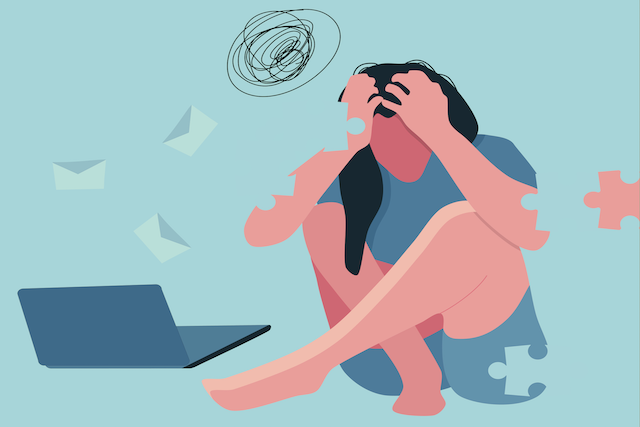
Was I An Overachiever or Really Just Trying to Prove My Worth?
“I spend an insane amount of time wondering if I’m doing it right. At some point I just remind myself that I’m doing my best. That is enough.” ~Myleik Teele
Just one more client. Just one more call. Just one more. Repeat, repeat, repeat.
Then, maybe, just maybe, I will feel validated. Worthy. Appreciated.
That’s how success works, right? Everyone has to like you, think you’re amazing, and recognize all of your hard work for you to be successful? I learned the hard way that this is the path to overwhelm, burnout, and a massive anxiety disorder. Because, you have to grind it out for that business; forget your physical, emotional, and mental health.
Let’s not scapegoat my business, however; my lack of self-worth started years, decades even before I opened my former company.
As the oldest of three, I was expected to achieve.
In middle school, I played competitively on an AAU (Amateur Athletic Union) basketball team. I remember never feeling good enough, tying my self-worth up in what my coach thought of me, if our team won or not, or if I scored a certain number of points. Something I loved became something I despised.
Playing basketball in high school left me feeling empty and like fraud. If I wasn’t the best, who was I? The performative pressure was suffocating.
The overachiever in me was never satisfied, never okay with mediocre.
In high school, I took the SAT three times to earn the scholarship I needed to pay for most of my education. I got into the top state schools and even some private colleges. I couldn’t apply to just one. I had to apply to just one more.
With each letter of acceptance, I felt validated. Like I actually belonged and that my life held meaning. Maybe then, when I got into my dream school, I would be worthy, and all of this anxiety would be worth it.
“Where are you going in the fall”? I remember not knowing how to answer that question.
Wanting to go to college and actually going were two very different things.
My parents sent me to a private college prep school, where we were practically reading through course catalogs freshman year. I thought it was something that was next in the sequence of achievements.
On the way home from a college tour in the spring, my mom told me I had to pay for room and board. I just had to figure out how. I ended up staying in my hometown and going to community college, which was a blow to my eighteen-year-old ego. I was devastated, angry with my parents, and frustrated about all the hard work I had put in with nothing to show for it.
My self-worth was in the tank; my need to prove myself was at an all-time high. So was that constant, chirping companion, anxiety.
After two years of community college, I transferred to a state college and chose education as my major. I wanted to be a leader, a catalyst for change, a visionary. I made the Dean’s list, worked my way through college, and even got married.
After I graduated, I taught physical education and was also athletic director of a grade school. I believed that by using my degree I worked so hard for, I would finally be happy and fulfilled. Instead, the position came with a principal who gaslit and bullied me daily, at the time taking away any joy that I had in my chosen field. But I had worked so hard for this. Shouldn’t that be enough?
Working hard was always a badge of honor I wore proudly; more accolades from others to put into the validation tank. All the while, I never felt worthy. As the things I’d worked so hard for were taken away from me, I began to wonder if success was even in the cards.
I felt lost. Undeserving. I was focused on my first year of marriage, teaching, and working on extended family relationships. Would I ever be accepted?
If I tried hard enough, they would like me, the overachiever in me believed.
But wait, was I really an overachiever? Maybe it was something deeper?
Was I just addicted to working hard because I was trying to prove my worth and gain approval?
With a full-blown anxiety disorder, depression, a drinking problem, and zero boundaries, I entered my thirties thinking that if I just made it in business, I would be whole.
What a crock.
The patriarchal standards I had tried to measure up to, were the same ones holding me back from living a life of peace. If I just, “hustled,” and “grinded,” despite the effects on my mental, emotional, and physical health, I could finally prove my worth. All that ended up proving was that mental health matters. My work is not my worthiness.
So how did I go from codependent thinking and seeking validation outside of myself to understanding that we are all born worthy?
First, I had to decide what really lights me up like a firecracker. Passion, playfulness, and purpose are lost when you were trained to look outside yourself for validation.
I’d spent my life focused on achievement. What did “success” even mean? It wasn’t until I was well into my thirties that I realized success, to me, means freedom, and freedom meant letting go.
I had to then get radically honest with myself about my upbringing, my relationships with family members, my belief system, and what I wanted out of life.
Did I really want to run the service-based business I’d started after I quit my teaching job, with several employees, ongoing calls and emails, that had me working holidays, nights, and weekends, and that left me in a people-pleasing tailspin on a regular basis?
My honest answer: No.
Relief washed over me. Not regret, longing, or sadness.
Relief.
I then realized I needed to let go of people-pleasing, overachieving, and the need for external validation in other aspects of my life, which meant doing some radical boundary setting and self-reflection.
Looking back through my years of wearing my hard work in school as a badge of honor, drowning in my former business like a sacrificial lamb, and navigating the sometimes-chaotic waters of a new marriage and family, I can finally understand that my worthiness doesn’t come from others. I am good enough as I am. My oneness comes from within, not from outside accolades.
Getting to the root cause of the unworthiness, worry, and workaholism was a deep dive into my childhood and young adulthood. I realized I carried toxic shame and guilt and believed that if I was just “enough,” I would be able to finally be free.
Turns out, the complete opposite is true. Chasing becomes all-encompassing. I had been treading water; doggie-paddling, not knowing that the pool of people-pleasing I was swimming in was keeping me stuck.
These days, creating takes the place of hard work, clarity takes the place of drinking to cope, and self-compassion takes the place of validation-seeking to prove my worth. And that toxic friend named Anxiety? She still likes to show up unannounced, but I have the self-acceptance and healthy internal dialogue to keep our interactions short.
Take it from this former overachiever: You are worth more than your work and your accomplishments. Just one more client? Just one more call? Not anymore. Now I just choose freedom.
-
Why I Stopped Measuring My Self-Worth and Trying to Prove Myself
“You alone are enough. You have nothing to prove to anyone.” ~Maya Angelou
How do you measure your self-worth? By the salary you make each year? By the length of your resume? By the number of people who follow you on social media?
Now what if you never had to measure your self-worth again? That is what I want to do.
I grew up as a gifted kid with high expectations to boot, always pushing myself to meet them. I earned the best grades I could, secured a full-ride scholarship to a local university, and soon enough ended up at one of the top law schools in the country.
Thanks to all the achievements, my self-worth was high. I believed I was outshining my peers, boosting my ego. I felt safe in this comfort zone I’d created.
Law school drastically changed my perspective of the world. My peer group became some of the smartest and most talented people in the country. I tried competing against them to prove myself, but I struggled more than ever to stand out and feel accomplished.
In just a few months, my ego began crumbling apart, taking my once lofty feelings of worth down with it. I was out of my comfort zone and felt invisible.
I turned to strangers online in an attempt to put the pieces back together and resurrect my worth. I relied heavily on social media to put myself out there for superficial likes and comments. I turned lifelong hobbies into side hustles, trading content I cared about for bits of validation here and there.
I was desperate to find some new measure of success on which I could rely. But I never noticed the damage that desperation was doing to my psyche until it had already taken its toll.
My ego had protected me for so long from doubt that as soon as it was gone, I never felt good enough. Once I believed I was a failure, I only kept confirming my demoralizing feelings by pushing myself to excel immediately in new areas. I compared myself to the best of the best and treated myself like the worst of the worst.
I was trapped in a downward spiral leading to worthlessness. It was only when I slowed down to reflect on my mental health that I realized my life looked like an endless rat race to find some proverbial cheese. I strained to earn my worth and ended up empty-handed.
If you always chase after self-worth, you never stop to see if you have found any.
How is it so many of us believe our worth is conditional? I believe it is a long, grueling process.
Many of us learned growing up to associate self-worth with achievement of some kind. As we discovered authority figures gave us the most positive feedback and attention when we were doing a great job, we linked our worth to excelling. Without that encouragement, we were lost.
The world around us exploits this correlation on a daily basis. To some extent, it makes the world go round.
Western culture, in particular, thrives on permanently tying worth to achievement: the more people pursue success in what they do, the more productive they are and the more money that flows. Accordingly, society constantly tries to push the idea that hard work is sacred and will ultimately lead us to a life of achievement, ergo worth.
Western culture does not reward those happy to just be. Instead, we are expected to keep laboring away until we can do something well. Even then, some types of work are highly valued over others, so we have to find the right work to do just to get by.
So, if you do not feel happy and fulfilled, do you not just have to work harder?
Yet, not all hard workers reap the benefits. After all, achievement requires meeting a certain standard, inevitably doing better than someone else. Only significant time and effort may lead to a worthy triumph.
There will inevitably be haves and have-nots because the system at play rewards a limited number of people who play the system best, who achieve the most success. The more limited the rewards, the more everyone forces themselves to try harder day in and day out.
Unfortunately for us, the reward is merely the validation we apparently need to go about our lives. If our worth is dependent solely on our achievements, we have no choice but to compete with one another over a limited, essential resource. Achievements are only as valuable as they are rare.
But this competition cannot be won. There will always be more to do. And someone will always do more.
External validation never makes you content. It only keeps you hungry for more.
In my struggles, I have had a difficult time understanding how to view my worth.
How much worth do I have? How does it compare to other people’s worth? Does it go up and down?
When am I finally worthy once and for all?
To answer these questions, I vehemently tried to attach a number to my worth whenever possible. After all, a number is a concrete, self-explanatory concept. I could tell when I had more or less than someone.
Thus, using numbers allowed me to measure my worth and other people’s worth with ease. This gave me a way to understand my place in the world.
Using numbers also allowed me to gauge how my worth was changing. For example, if I received more likes than usual, I was happier than usual since I must have been doing something right. If I received less, I was in need of quick improvement.
Except numbers are hollow. They have no value unless we agree to give them value, but our obsessive nature often gives extraordinary value to the benign.
We use shortcuts like numbers to explain concepts we have a hard time comprehending. Self-worth certainly seems to be one of those trying concepts, always just out of reach like an elusive fruit hanging above us or a receding pool of water.
Breaking away from society’s expectations provided me the room to realize self-worth is only as complicated as I make it.
If self-worth need not exist conditionally, it can exist inherently. In fact, it exists now without exception.
Your worth cannot be assigned a value. It simply is.
By virtue of the fact that you are alive, you are just as worthy as anyone else who has lived before, lives now, or will live after.
We all come into the world the same, and we all leave the same way. Our lives may differ widely in content, but not in value. Nothing separates us at the most fundamental level.
And none of us start out deficient in worth. We need not go on a lifelong journey to earn our worth by moving up in the world. Our worth remains steadfast regardless of how our lives take shape.
Work does not shape our worth. No matter how you decide to share your skills and talents, the world will be better off, even if you alone trust the value in what you do and who you are.
Society may try to tell us how we should view and feel about ourselves, but we are not obligated to listen. Fighting those ingrained ideas of what others think we should do is never an easy battle, but it is worth the independence.
No matter how one does or does not measure worth, it does not vary, and it does not waver.
We are all enough as is, right now.
There exist millions of ways to compare ourselves to others, but we owe it to ourselves to make light of differences and revel in our shared humanity.
So how do we move forward knowing that we cannot improve or reduce our worth?
Well, the possibilities are endless. The doors open up to a life where you can be you unabashedly. And more importantly, you can be a part of something bigger than yourself without feeling small.
Waiting for others to prove you are worthy is time better spent sharing your true self.
After spending the last few years of my life trying to prove myself without ever reaching the level of success I wanted, I realized my definition of success kept changing until I made it impossible to feel fulfilled. I stopped myself from being happy unless I was universally revered.
I lived thoughtlessly, spending what free time I had attempting to make myself look accomplished rather than enjoying the time. I conformed to what I thought people would like rather than let myself flourish.
My true self was suffocated. Receiving even the most primitive criticism felt like being stabbed in the chest. I was more distanced from others than ever before because I did not feel like I deserved to be liked anymore.
But I do deserve to be me, to take up space, to contribute to the world in my own way. And you do too.
Knowing that what you do cannot change who you are promotes freedom in how you want to live, freedom not just from others, but also from expectations and doubt.
Knowing you always have worth allows you to connect with the people around you more deeply, empathize with them, and support their journeys through life.
It is with this knowledge you can find and share true joy.
You can pursue what you love instead of what you feel you ought to do. You can work at your pace to be the person you want to be. You can stay present knowing neither praise nor disapproval affects your worth.
Many will struggle to agree with you, though, that you can exist in peace without having to fight to prove your value. Even I still struggle to keep not just naysayers, but also my inner, learned uncertainties at bay in regard to whether I offer anything worthwhile.
Learning more about your inherent worth means unlearning those harsh, ingrained principles of life as we have known it. These principles will never fade away completely, but we can make a choice every day to drown them out.
Take it from me, your life will not immediately change in discovering your own worth, but it can improve a little day after day the more you take your discovery to heart. As is the case with any transition, there will be ups and downs. I still have doubts creeping in when I least expect them.
But the more you live openly and share yourself with others, the more those principles will take hold and the stronger you will be in challenging what life throws your way. Instead of seeking achievement and improvement, you will be content, one with the universe.
You will be free.
-
How Accepting That We’re Ordinary Opens Us Up to Love
“Hardships often prepare ordinary people for an extraordinary destiny.” ~C.S. Lewis
I was talking to a mentor of mine several months ago, and they cut me off midsentence and said, “Zach, it sounds like you’re trying to be extraordinary. How about you just work at being ordinary?”
I paused then promptly broke into tears. Yep. Tears. Not ashamed to admit that.
Tears because the meat of the conversation was about self-worth and being enough. In that moment my deepest childhood wound was tapped into, and ordinary sounded horrible to me.
Who wants to be ordinary? Not this guy.
My mentor asked what was coming up for me, and I said my mom. Let me explain.
My mom was a celebrity. She was an Emmy award winning actress that was on the cover of TV Guide, and she dated one of Hollywood’s biggest stars.
She died tragically of cancer when I was three-and-a-half years old. One day she was there, the next she was gone.
I interpreted her death the only way I knew how: I made up a story to make sense of it all. Mom left me because I’m not special.
Ever since then, for as long as I can remember, the thought of being ordinary hasn’t agreed with me. Like a taboo subject, I’ve treated ordinary like something society considers a no-no. To me, ordinary equals “not enough,” and not enough equals rejection, aka, abandonment.
In my mind…
Ordinary doesn’t get me love and affection. Ordinary doesn’t get me Facebook or Instagram “likes.”
Ordinary doesn’t get me acknowledged at work. Ordinary isn’t talked about at parties.
Ordinary isn’t interesting. Ordinary is abandoned just like when I was as a little boy.
The thought of being ordinary scares the you-know-what out of me. So much so that I’ve spent most of my life trying to be something more.
It’s been an insatiable quest to fill an empty cup of not enough-ness. It’s been me putting on a mask every day and trying to be someone else.
My hair has to look just right out of fear of you judging me. I have to say all the right things out fear of sounding stupid.
I have to wear the right outfits because I only have one chance to impress you. I have to be the ultimate people pleaser or else you might not like me.
I have to be extraordinary out of fear of you rejecting and leaving me. I’ve been afraid all these years that if you knew the real me, the ordinary me, you would turn around and go in the other direction.
Note to self. Hustling for my worthiness all these years has been exhausting.
And here’s the kicker. The act of me trying to be something is what keeps me alone in the first place because I’m not letting anyone see the real me.
The definition of ordinary is normal. It doesn’t mean rejected or not enough. Just normal.
In other words, it’s me being my normal self and not trying to be something else. Ordinary is authentic. Yet for some of us being authentic doesn’t feel safe. So we put on a mask and try and be someone else.
It’s what our culture does to us and social media glorifies. Status is such a big thing in our lives today.
But when you try to be something other than your ordinary self, whatever you’re attracting isn’t real because it’s not the real you. You’re not attracting real love or adoration.
Therefore, you keep looking and you continue the cycle. Once you change your mind about this (and yourself) you will see change.
Look, I get it. It’s easy to get wrapped up in the stories we tell ourselves. I need to be (you fill in the blank) to be liked and loved.
But here’s the thing, when we do this, we show up differently in life. People don’t want to be impressed, they want to be understood.
At the end of the day this was all about me being disconnected from my own inner wisdom. My inner wisdom is the core of my essence, and I was disconnected from this when I was on the call.
When we try and be something we forget who we are and what love is. Ordinary is your return to love. It’s not you out there looking for love.
It’s a return to what you were born in to. It’s like a return to grace.
Here are four questions that I have found to be extremely helpful in shining a light on this subject:
- Where in your life do you feel like you are struggling to be extraordinary?
- Where in your life do you want to apply the healing balm of normalcy?
- Where are you putting pressure on yourself to be extraordinary?
- Who are you comparing yourself to?
If you want to explore this area of your life, in a very human and grounded way, journaling around these questions might serve you, if you’re open to it.
Put down the weight of extraordinary and be your beautiful, ordinary self. Extraordinary people exist within people with the most ordinary lives.
We’re all unique in our own right and that’s the beauty of being human. We’re all ordinary and we’re all extraordinary.
-
How I Stopped Putting Everyone Else’s Needs Above My Own
“Never feel sorry for choosing yourself.” ~Unknown
I was eleven years old, possibly twelve, the day I first discovered my mother’s betrayal. I assume she didn’t hear me when I walked in the door after school. The distant voices in the finished basement room of our home drew me in. My mother’s voice was soft as she spoke to her friend. What was she hiding that she didn’t want me to hear?
I leaned in a little bit closer to the opening of the stairs… She was talking about a man she’d met. Her voice changed when she spoke of him. The tone of dreamy wonder when you discover something that makes your heart race. She talked about the way they touched and how she felt being with him.
I felt my body go weak. I could not tell if it was sorrow or rage. All I knew was, she had lied to me.
Several months prior, my parents had announced their divorce. My mother told me the decision was my father’s choice. She told me he was the one breaking up our family. She told me she wanted nothing more than to stay with us and be together.
And now I heard her revealing that was not true. She wanted to leave. She was not choosing me. She was choosing him.
Since I was nine months old, my mother had been in and out of doctor’s offices, hospitals, psychiatrist’s and therapist’s offices trying to find the cure of her mental and emotional instability.
When I was a young child, she began to share her frustrations and sorrows with me. I became her support and the keeper of her pain. She had nicknamed me her “little psychiatrist.” It was my job to help her. I had to. I needed her stable so I could survive.
I don’t remember when or if she told us that she was seeing someone. I just remember she was gone a lot after that day. She spent her time with her new boyfriend out of the house. As the parentified child who she had inadvertently made her caretaker, it felt like she was betraying me. She left me for him.
I was no longer the chosen one—he was.
I hated him for it. When my mother moved in with him, I refused to meet him. I didn’t want to get to know or like this man she left me for.
I saw them one day in the parking lot outside of a shopping plaza. I watched them walking together and hid behind a large concrete pillar so they wouldn’t see me. The friend I was with asked if I wanted to say hello. I scowled at the thought. I despised him.
Within the same year, his own compromised mental health spiraled, and they broke up. He moved out of their apartment. I didn’t know why or what happened. I only knew my mother was sad. Shortly after their breakup, he took his own life. From what we heard, he had done so in a disturbingly torturous way. It was clear his self-loathing and pain was deep.
My mother was devastated. She mourned the loss of her love and the traumatic way he exited. She stopped taking her medication, and her own mental health began to spiral. My father received a phone call that her car had been abandoned several states away. I’m unsure what she was doing there, but she had some issues and took a taxi back home.
He later received a call stating that my mother had been arrested for playing her music too loud in her apartment. Perhaps to drown out the voices in her head. She was later taken to the hospital without her consent and was admitted due to her mental instability.
After several days of attempting to rebalance her brain chemistry with medication, my mother began to sound grounded again. The family decided she would move in with her parents a few states away from us and live with them until she was stable again.
A few days after Christmas she called me to tell me how sad she was. She grieved her dead boyfriend. I was short with her. I was still angry for her betrayal. I didn’t want to continue being used as her therapist. The imbalance in our relationship was significant, and my resentment was huge.
I loved her, but I could not fall back into the role of being her support without any support back. It was life-sucking. And I didn’t care that he was dead. She chose him over me. I was fine with him being gone.
I don’t recall feeling any guilt when I got off the phone that day. I felt good that I had chosen myself and put a boundary in place to not get sucked into her sorrow. I was fourteen years old, less than a week shy of fifteen. I just wanted to be a kid.
The next day, my mother chose to make more decisions for me and for herself. These were more final. She told her parents she was taking a nap and intentionally overdosed on the medication meant to save her. She died quietly to relieve herself from her pain and left me forever.
That choice—my own and hers—would change the course of my life.
The day my mother freed herself from this world was the same day I learned to become imprisoned in mine. I was imprinted with a fear that would dictate my life. I became quietly terrified of hurting other people. I feared their discomfort and feeling it was my fault. From that day forward I would live with the silent fear of choosing myself.
My rational mind told me it was not my fault. I did not open the bottle. I did not force her to swallow the pills. I did not end her life. But I also did not save it.
I learned that day that creating a boundary to preserve myself not only was unsafe, it was dangerous. When I chose me, people not only could or would abandon me, they could die.
Of course, I never saw this in my teenage mind. Nor did I see it in my twenties, thirties or the beginning of my forties. I only saw my big, loving heart give myself away over and over again at the cost of myself.
I felt my body tighten up when I feared someone would be mad at me. I heard myself use words to make things okay in situations that were not okay. I said yes far too many times when my heart screamed no. All because I was afraid to choose myself.
The pattern and fear only strengthened with time. I learned to squirm my way out of hurting others and discovered passive-aggressive and deceptive approaches to get my needs met. My body shook in situations where conflict seemed imminent, and I learned to avoid that too.
What I didn’t see was that this avoidance had a high price. I was living a life where I was scared to be myself.
On the outside I played the part. The woman who had it all together. Vocal, passionate, confident, and ambitious. But on the inside, I held in more secrets than I knew what to do with. I wasn’t living as me. My fear of being judged and rejected or not having my needs met was silently ruling my life.
So many have developed this fear over time. Starting with our own insecurities of not feeling good enough and then having multiple experiences that solidified this belief. The experiences and memories differ, but the feelings accompanying them are very much the same.
The fear of choosing ourselves, our desires, our truths, all deeply hidden under the masks of “I’m fine. It’s fine.” When in reality, we learn to give way more than we receive and wonder why we live unsatisfied, resentful, and with chronic disappointment. Nothing ever feels enough, and if it does, it’s short-lived.
The memories and feelings become imprints in our bodies and in our minds that convince us we can’t trust ourselves. That we can’t trust others. That we must stay in control in order to keep us safe. We learn to manipulate situations and people to save ourselves from the opinions and judgments outside of us. We learn to protect ourselves by giving in, in order to not feel the pain of being left out.
We shelter ourselves with lies that we are indifferent or it’s not a big deal in order to shield ourselves from the truth that we want more. We crave more, but we are too scared to ask for it. The repercussions feel too risky. The fear of loneliness too great.
In the end, our fear of choosing ourselves even convinces us we can live with less. That we are meant to live with less, and we need to be grateful for whatever that is.
Do we? Why?
What if we learned to own our fear? What if we accepted that we were scared, and it was reasonable? What would happen if we acknowledged to our partners, families, friends, and even strangers that we, too, were scared of not being good enough? Of being discarded, rejected, and left behind.
What would it be like if we shared our stories and exposed our insecurities to free them instead of locking them up to be hidden in the dark shadows of ourselves?
I’m so curious.
Where in your past can you see that choosing yourself left a mark? What silenced you, shamed you, discouraged you from choosing your needs over another’s? When were you rejected for not doing what someone else wanted you to do? And how has that fear dictated your life?
Choosing ourselves starts with awareness. Looking at the ways you keep quiet out of fear or don’t make choices that include your needs. Seeing where this fear shows up in your life gives you the opportunity to change it. The more you see it, the more you can make another choice.
Start with looking at the areas of life where you hold on to the most resentment and anger. Who or what situations frustrate you? Anger often indicates where imbalances lie or when a boundary has been crossed. It shows us where we feel powerless.
Make a list of the situations that annoy you and then ask yourself, what’s in your control and what’s not? What can you directly address or ask for help with?
Note the ways you may be manipulating others to get your needs met in those situations and how that feels. Note also what you may be avoiding and why.
How would it feel to be more direct and assertive? What feelings or fears come up for you?
Then start with one small thing you could do differently. Include who you could ask for help with this step, if anyone.
As for me, I have found myself in situations where I lied or remained silent to avoid being judged, in an attempt to manipulate how others see me. I have felt my body cringe with sadness and shame each time. It doesn’t matter how big or small the lie, it assaults my body the same.
I have learned that speaking my truth, no matter how seemingly small or insignificant, saves my body from feeling abused by the secrets it must keep. Choosing me is choosing self-honesty; identifying what is true for me and what is not based on the way my body responds. I am not in control of others’ judgments of me, but I am in control of the way I continue to set myself up to judge myself.
I have also found myself agreeing to do things I didn’t want to do in order to win the approval of others, then becoming resentful toward them because I refused to speak up for myself.
Choosing me in these scenarios is honoring the fact that I will still be scared to ask for what I need, as my fears are real and valid, but asking anyway, even when the stakes feel high. It’s scary to feel that someone may abandon us if we choose ourselves, but it’s scarier to lose ourselves to earn a love built on a brittle foundation of fear.
l cannot control the past where I have left myself behind, but I can control today, the way I forgive myself for falling victim to my human fear, and the way I choose to love myself moving forward. When I choose me, I have more love to give to others. Today I can take a small step toward change.
Taking these small steps and building on them will help us to show ourselves that we can make progress in bite size amounts and prove to ourselves we are going to be okay. The small bites are digestible and give us proof that we can do it. This helps us build our ability to do more over time, while also decreasing our fear.
If we look at our past, we will see the majority of our big fears do not come to fruition, and if they did, we survived them and gained knowledge or strength in the process.
It’s not the action holding us back, but the memory of the discomfort we still live with. The more we move through these fears, the more that discomfort will decrease, and the more we will trust that we will be okay no matter what.
-
Why We Often Fail When We Set Big Goals and What Actually Works
“You do not rise to the level of your goals, you fall to the level of your systems.” ~James Clear
If you pull up any popular motivational video today, you’ll probably hear things like “Set big goals!” and “Aim high and don’t stop until you get there!”
After watching a video like this, you may get inspired and start mapping out your plan to leave the 99% in the dust.
And typically, because you’re riding a wave of motivation, you’ll write out these monstrous, Mount-Everest-like goals. These goals paint a picture of your life that is so exciting that you can’t wait to wake up and get to work the next morning. But when you roll out of bed and take a look at the goals you set the day before, reality hits you like a truck.
Instead of being motivated to take action, you feel a massive wall of internal resistance. You want to take action. You know you need to take action. But for some reason you just can’t force yourself to muster up the discipline necessary to make progress.
So instead, you choose the path of least resistance. You retreat to the comfortable and the familiar, and then decide that you’re going to wait “just one more day.” One day turns into two, two days turn into weeks, and weeks turn into months.
But luckily, time heals all wounds, and six months later you get another surge of motivation and try it all over again. This is where most people find themselves in life—stuck on the self-improvement hamster wheel.
How do you stop this vicious cycle? What’s the best way to facilitate lifestyle changes that you actually stick to?
How Big Goals Ruined My Life
When I was a sophomore in high school, I had ambitions to become an NBA basketball player. Despite the fact that I was 5 feet 6 inches tall, had below average quickness, and could barely jump over a stack of books, I was determined to prove everyone wrong.
At this point, I didn’t have my driver’s license yet, so my wonderful mother would get up at 4:30 a.m. and drive me to my school gym early enough to get up shots before class. To make a long story short, I was cut from the team a few months into my sophomore year, and my NBA aspirations died right then and there.
When I was a freshman in college, my focus had shifted to day trading the stock market. Once again, I had complete confidence that I was going to turn day trading into a full-time income. And once again, I was wrong. The $1,000 I had deposited into my Robinhood account disappeared in about two months, leaving me with no financial flexibility to invest into my dream of becoming a full-time day trader.
During my sophomore year of college, I made the biggest decision I had ever made in my life up to that point. Despite having good grades, I decided to drop out of school and start my own marketing agency. Let me tell you, that phone call with my parents is undoubtedly the most emotional conversation I’ve ever had in my life.
I even distinctly remember my own cousin telling me, “I think that you’re going to regret this decision for the rest of your life.” Still, I was unbothered, because I knew in my heart that I needed to give this a shot. A month after telling my parents I wanted to drop out of school, I was on a flight back home to California.
Yet again, I found myself in a familiar spot—just a kid following his heart with some colossal goals.
Filled with passion and drive, I set myself a goal to build the agency to $50,000/month in revenue by the following year. To reach that goal, I committed to at least two hours per day of prospecting, and another two hours of educating myself on the real estate marketing industry.
By now, I think you can see where this is going. For fifteen months, I worked at trying to achieve my goals, but the highest monthly revenue target I was able to achieve was a measly $6,000/month. Despite desperately wanting to taste wealth and success, I had failed yet again.
It was at this point in my life where I really took a step back and engaged in deep reflection. After all, I had just been following the wisdom that successful people had been preaching for decades—set big goals and don’t stop working until you accomplish them.
Was it me that was a failure or was it my system? Why is it that so many people including me continually set big goals that they never accomplish? Pondering these questions drove me to explore the world of self-development.
The Power of Identity
I had always been passionate about self-improvement, but I had never really delved into the science and research behind what actually facilitates true behavior change. My research eventually led me to reach two life-changing conclusions:
- Setting big goals does more harm than good for people who want to change their lives.
- True behavior change occurs when you commit to small, seemingly insignificant shifts in your daily behavior.
After spending hundreds of hours combing through research on habits, behavior change, and neuroscience, I finally had the “aha” moment that shifted my entire perspective on life. The fatal problem with setting big goals is that they focus on the outcomes we want to achieve as opposed to the type of person we want to become.
The most powerful force in the human body is the desire to be consistent with who we’ve been in the past. Behavior that is incongruent with the self will not last, which is why big goals are often so hard to accomplish.
You may have a goal to build a million-dollar business, but if your identity is that of someone who procrastinates on important work, it’s unlikely you’re ever going to hit that goal. You may have a goal to lose weight, but if your identity is consistent with someone who eats fast food regularly and lives a sedentary lifestyle, you’ll continue to be pulled toward actions that sabotage your weight-loss goals.
You may have some new goals, but you still haven’t changed who you are. I wanted to build a marketing agency even though I was the type of person who procrastinated and refused to get out of my comfort zone. It was the inability to change those underlying beliefs that ultimately led to my failure.
How to Achieve Your Biggest Goals by Thinking Small
If big goals aren’t the answer, then what is? The key is to focus on who you want to be as opposed to the outcomes you want to achieve. You need to become the type of person who can reach the standards you have set for yourself.
Your identity emerges out of your daily habits. You don’t come out of the womb with a preset identity. Whoever you are right now is a direct result of the daily habits that you’ve developed up to this point.
In order to start forming new beliefs about yourself, you need to start building new habits. The formula for changing your identity is a simple two-step process:
- Figure out the type of person that you want to become
- Commit to small changes that align with your ideal self
First off, you have to decide what kind of person you want to be. When setting goals, most people are guided by the question “What do I want to achieve?” Instead, try asking yourself, “Who is the type of person that can get the kind of outcomes I want?”
Instead of setting a goal to lose fifty pounds, ask yourself, “Who is the type of person that can lose fifty pounds?” Instead of setting a goal to build a million-dollar business, ask yourself, “Who is the type of person that can build a million-dollar business?”
The beauty of focusing on identity change is that your success is no longer tied to arbitrary targets. Let’s say that you set a goal to lose fifty pounds in six months. As you pursue this goal, you start walking every day and improve your diet. At the end of six months, you step on the scale and you’ve lost thirty-seven pounds.
Did you achieve your goal? Nope, you’re thirteen pounds short. However, what if your goal was simply to become a healthy individual? Did you achieve that goal? Absolutely!
Once you’ve figured out what kind of person you want to become, the next step is to commit to small shifts in your daily behavior. Too often we convince ourselves that massive success requires massive action. This is the principle that guided my life for nineteen years.
Through constant trial and error, I’ve realized that true behavior change is the product of small, incremental changes compounded over time. We tend to dismiss the effectiveness of small actions because they don’t make an immediate impact.
If you walk for two minutes per day for a week, you’re not going to see the number on the scale move much. If you meditate for sixty seconds for a few days in a row, you’re not going to turn into the Dalai Lama. However, what you will do is to give your brain concrete evidence that you’re a different person.
James Clear puts this beautifully when he says, “Every action you take is a vote for the type of person you want to become. No single instance will transform your beliefs, but as the votes build up, so does evidence of your new identity.”
Once you’ve nailed down your desired identity, come up with a daily habit that you can perform no matter how you feel. When you set big goals, your brain tricks you into thinking that the present level of motivation you feel will carry over to when it’s time to take action. By focusing on shrinking your daily targets, you’re taking motivation and willpower out of the equation.
Here’s a few practical examples of this concept in action:
- Meditating for ten minutes per day becomes meditating for sixty seconds per day
- Walking for thirty minutes per day becomes walking for two minutes per day
- Reading for thirty minutes per day becomes reading one page
- Journaling for fifteen minutes every night becomes writing one sentence
- Writing 1,000 words per day becomes writing fifty words per day
It really doesn’t matter how successful you are right now, all that matters is that you’re on the right path. Once these small habits are solidified into your daily life, you’ll have mastered the art of showing up and acting in alignment with your desired identity.
Since your brain now has some new evidence, you’ll be able to stretch yourself and gradually aim higher. That’s the true power of small habits. The same way that money multiplies through compound interest, the positive effects of your habits multiply as they become a part of who you are.
So, the next time you get motivated to change your life, forget setting huge goals. If you do this, the power of your identity will loom large over you and prevent you from taking action. Harness the power of small, incremental change.
Have the courage to set the bar low enough and aim at targets that you can actually hit on a daily basis. Solidify this small habit into your life, and then do the same thing with another habit. And then another. And then another.
Soon enough, you’ll become someone unrecognizable.
-
Where Our Inner Critic Comes from and How to Tame It
“Your inner critic is simply a part of you that needs more self-love.” ~Amy Leigh Mercee
We all have that critical and judgmental inner voice that tells us we’re not good enough, smart enough, pretty enough, etc.
It tells us we don’t do anything right. It calls us stupid. It compares us to other people and speaks harshly about ourselves and our bodies. It tells us all the things we did or said “wrong” after communicating or connecting with someone.
Sometimes it projects criticism outward onto others so we can feel better about ourselves. Other times we try to suppress our inner critic through overachieving, being busy, and accumulating more and more things.
Sometimes it’s a protective mechanism that’s trying to keep us focused on our self-judgments so we won’t be authentic, because, if we are, we may be rejected and not get the love and acceptance we want.
But, by doing this, we’re creating even more pain and suffering because we’re disconnecting from and rejecting our own essence.
Just ignoring the critical voice doesn’t always make it go away. It may initially, but soon enough it will resurface if we haven’t healed/embraced our hurts, traumas, and wounds and shifted our internal patterning, which is where it comes from.
Have you ever heard the expression “What we resist persists?” Have you ever told an angry person to “just calm down” or a screaming child to stop crying? Does it work? Not when our energy is in a heightened state.
Why is someone angry? Why is a child screaming and crying? Because there’s something going on internally that’s creating how they’re behaving. There’s often an unmet need or pain that’s asking for attention.
Thinking a more positive thought to compensate can sometimes work, but sometimes it just creates an inner debate and mistrust in ourselves because deep inside we don’t believe what we’re saying.
As children, many of us were taught to suppress those “bad” feelings because if we expressed them, we may have been or were punished. Welcome to the beginning of the critical voice; it’s often a frightened part of us that’s wounded and asking for attention. It wants to be seen, heard, and understood.
My dad used to get really frustrated with me and constantly told me, “Damn it, Deb, you never do anything right.” Hearing that many times left an imprint in my subconscious. I started living with that interpretation of myself, and the critical voice kept me “in check” with being this way.
For me, the critical voice was my dad’s voice as well as the deep shame I was feeling for making mistakes and not doing things the “right way.”
I was holding in suppressed anger, sadness, guilt, unforgiveness, resentment, traumas, and pain that I tried to keep hidden with a smile on my face, but eventually it turned into a shame-based identity.
My inner voice criticized me whenever I fell short or wasn’t perfect according to society or my family’s expectations.
Just like when we’re triggered by another person, our critical voice is asking for our attention and guiding us to what needs healing, resolving, forgiving, understanding, compassion, and unconditional love.
When it comes to the surface, we’re experiencing an automatic regression; it’s a part of us that’s frozen in time. It’s a reflection of our unhealed wounds, which created ideas of not being enough or that something’s wrong with us. Basically, it’s a trance of unworthiness.
When we’re in a trance of unworthiness, we try to soothe ourselves with addictive behaviors. It’s hard to relax because we think we need to do something to be better and prove ourselves, so not doing anything, resting, isn’t safe.
When we’re in a trance of unworthiness, it’s hard to be intimate with others. Deep inside we think there’s something wrong with us, so we don’t get close because they may find out and leave. This keeps us from being authentic because we don’t feel okay with who we are.
Deep down I felt unworthy, unlovable, and undeserving, and the critical voice showed me what I was feeling and believing. I didn’t feel safe in life or in my body. How could I? I was living with so much hurt, pain, and shame inside.
The critical voice is often stronger for those of us with unhealed wounds and who are hard on ourselves, and it tries to get us with shame and guilt. We’re always looking at ourselves as the “good self” or “bad self,” and if we’re identified with a “bad self,” we’ll act in accordance with that in all areas of our life.
If we’ve become identified with the critical voice, it’s who we think we are; it just seems normal. And when we start to be more kind and loving, it doesn’t seem right because our identity becomes threatened and our system registers that as danger.
That happened for me. Eventually I became identified with being a “bad girl” who’s critical and hard on herself, and, even when I started being a little kinder, more compassionate, and more loving, I felt an angst in my body. It wasn’t familiar, and even deeper, it wasn’t okay for me to be this way. My survival was at stake, so I would automatically go back to self-criticizing and judging, without conscious awareness.
The critical voice didn’t only speak to me harshly; it also told me to do self-abusive things like cutting my wrists and face, starving my body or eating lots of sweets, and exercising for hours like a mad woman to get rid of the food I ate, whether it was a carrot or sweets, because I felt guilty.
Even after twenty-three years of going in and out of hospitals and treatment centers, taking medication, and doing traditional therapy, nothing ever changed; the critical voice had a hold on me.
It was a powerful force, and when I tried to stop it, it would get louder. It thought it was protecting me in a backwards sort of way; if it hurt me first, no one else would be able to do so.
When people used to say to me, “Debra, you just need to love yourself,” I looked at them like they were crazy. I had no concept of what that even meant because I had no experience of it.
What I’ve come to see with myself and those I assist in their healing is that the more we keep our deep hurts, traumas, anger, guilt, shame, and pain hidden, the more the critical voice chimes in.
And, for some, like me, it seems overpowering, so we try to find relief through smoking, drinking, eating, or being busy, and/or we experience severe depression, anxiety, or self-harming.
When we’re consumed by the critical voice, we’re disconnected from our true essence, and when we’re disconnected from our true essence, the love within, we feel a sense of separation; we don’t feel safe with ourselves or others, and we don’t feel lovable for who we are, as we are.
This is why many people can change, be happy for a day, but then go back to their critical and/or judgmental ways. Our automatic programming, stemming from our core beliefs, kicks in. It’s just like an addiction, and in a sense it is.
We can try meditating, deep breathing, and positive thinking, but, unless we address the underlying cause, we’re likely to keep thinking the thoughts our internal patterning dictates. They come from a part of us that doesn’t feel loved or safe.
So, what do we do when the critical voice comes to visit?
What do we do when it’s what we’re used to, and it just happens automatically?
What do we do when we don’t know how to be with ourselves and how we’re feeling in a kind and compassionate way?
What do we do when we have no concept of what it even means to experience self-love or ease in our bodies?
First off, please don’t blame yourself for how you’re being. Awareness isn’t about judgment; it’s about kindness, compassion, and love.
Working with and healing our traumas, where the critical voice was formed, is key in shifting our internal energy patterning. Many people call this inner child healing and/or shadow working.
This is a soft and gentle process of moving through the layers of trauma with compassion and love and making peace with our protector parts.
Through inner child healing, we can shift and transform that “negative” patterning and how the energy is flowing in our body. We can help that part of us that’s frightened, hurting, and maybe feeling separate have a new and true understanding so we can feel loved and safe in our bodies.
When we pause and take a deep breath when we first hear or sense the critical voice, it allows our nervous systems to reset and helps us come back to the present moment; this allows space for compassion, healing, and investigation.
Why do I believe that?
Where did I learn that?
Is it true?
How does my higher self see this and me?
Does the critical voice totally go away? No, it may still chime in; it’s part of being human. But once we realize where it’s coming from and heal/shift that energy pattern, more love can flow through, and we can experience our truth. When we learn how to be our own loving parent and meet the needs our caregivers didn’t meet when we were children, the critical voice often softens.
Remember, the critical voice is just a scared part of us who really wants attention, love, and a way to feel safe. When we no longer take it personally, when we’re no longer attached to it as our identity, we can offer ourselves compassion, understanding, love, truth, and whatever else we’re needing.
Life can be messy, and our thoughts can be too. This isn’t about perfection; this is about experiencing a deeper connection with our loving essence.
There’s a sweet and tender spirit that lives within you. This spirit is your deepest truth. This spirit is the essence of you. You’re naturally lovable, valuable, and worthy. You’re a gift to humanity. So please be kind, gentle, loving, and caring with yourself.
-
How I Developed Self-Worth After Being Sexually Harassed and Fired
“Your value doesn’t decrease based on someone’s inability to see your worth.” ~Unknown
In my early twenties, I was a food and beverage manager at a nice hotel in Portland, Maine. About a month after I started working there, they hired our department director, a man twice my age whom I would report to.
At the end of his first week, we went out for a “get to know each other” drink at a loud and busy bar. As we drank and chatted, he was physically very close to me. I told myself it was because of the noise.
His knees were against mine as we chatted facing each other on barstools. It made me uncomfortable, but I didn’t do anything about it. He put his hand on my thigh as we talked. I pretended it didn’t bother me.
He leaned in very close to my face and ear as he talked about himself and told me how attractive I was. He led me through doorways with his hand gently on the small of my back.
There was more of this over the next few months. More of him stepping on and just over that invisible line. More of me acting as though I was okay with it and convincing myself that I was.
A few months after that night, he and I were in a position to fire a male employee who had several complaints against him for not doing his work.
The morning before the firing, Human Resources pulled me into their office to tell me that this employee had lodged a complaint about my boss and me. He had said that he knew we were going to fire him, and he believed it was because my boss and I were having an affair. His “proof” was that he saw us at the bar that Friday night and saw us “kissing.” There was even a line cook who backed up his story.
A few days later, both of these employees admitted that they didn’t exactly see us kissing, they just saw us talking very closely together, and it looked intimate.
HR dropped the complaint but no longer felt comfortable with firing this employee, so he stayed on. A few weeks later after a busy event that went poorly due to being understaffed, I was taken into the CEO’s office, and I was fired.
The male employee continued working there. My male boss continued working there. The male employee was promoted to take my now vacant position. My male boss was promoted to work at a larger resort at a tropical destination.
These two events—being accused of having an affair with my married older boss, and subsequently being fired for an event that I wasn’t even in charge of staffing—were the two lowest points of my professional career.
I honestly rarely think back to this time in my life, but I also recently realized that I never talk about this experience because of my embarrassment that I let this happen without objection.
What This Story is Really About
I didn’t think that my boss would hurt me. I wasn’t even worried that I would lose my job if I pushed back. I was afraid that if I acted like someone who was bothered by his comments, I would be seen as a lame, no fun, boring, stuck-up prude.
I subconsciously believed that my worthiness as a person was determined by people who were cooler than me, more successful than me, smarter than me, or more liked than me.
I believe that had I told my boss “no,” he would have listened. I’d gotten to know him over several months, and while he was egotistical, dim-witted, and selfish, I think he would have respected my boundaries had I set them. I just never did.
There are a lot of layers to this story. Far too many to cover in one post.
But the reason for writing this today is to share what I was so ashamed of. I was ashamed that young, twenty-something me was so insecure and so afraid of rejection that her people-pleasing led to allowing this man to touch her and act inappropriately.
She was so afraid that if she set a boundary and said “no” she would be seen as too emotional, weak, and a complainer. She would become “less than.”
I’ll restate that there are a lot of layers to this; from the patriarchal system at this business (and society as a whole), to the abuse of men in power, to mixed messages at high school where girls were not allowed to wear certain clothes because the boys would get distracted, to a lack of examples through the 90s/early 2000’s of what it looks like for a young woman to stand up for herself in a situation like this, and far beyond.
But the part of the story I want to focus on right now is my insecurity. This is the part of the story that I had the most shame and regret about, because this was not an isolated incident for me.
Insecurity was a Trend Throughout My Life
People-pleasing was a huge problem for me in several areas of my life for many years. It’s something that held me back from so much.
- I didn’t leave a long relationship that I’d dreamt of ending for fear that I would disappoint our families.
- I let people walk all over me, interrupt me while I spoke, and tell me what I should think.
- In my late twenties I remember being home alone, again, crying that I had no one who would want to spend time with me or go somewhere with me, feeling sad and lonely, when in reality I was just too scared and embarrassed to pick up the phone and ask, for fear of rejection.
I wasted so many years and felt a lot of pain, and a whole lot of nothing happened as I was stuck. Stuck feeling worthless, unlikable, and unknowing how to “please” my way out of it.
I spent years numbing how uncomfortable my insecurity made me feel by smoking a lot of pot. I avoided what I came to realize were my triggers by staying home or finding excuses to leave early if I did go out. I blamed everyone else for how they made me feel. I compared myself to everyone and constantly fell short.
Until eventually, I realized the cause for all this pain and discomfort was believing my worth was based on what other people thought of me.
The Emotional Toolbox That Saved Me
If I could go back in time to give myself one thing, it would be the emotional toolbox that I’ve collected over the years so that I could stop living to please other people, because I know now that I am inherently worthy.
By my thirties I found myself on a journey to lift the veil of insecurity that hid me from my real self. This wall I’d inadvertently built to protect myself was keeping me from seeing who I really was beneath my fear and anxiety.
Once I found the courage to start tearing down that wall and opening myself to the vulnerability necessary to truly connect with the real me, I was able to discern between who I am and what I do. I learned to stop judging myself. I learned my true value. And I liked what I saw.
Finding My Core Values
I came to realize that it’s hard to feel worthy when you don’t really like yourself. And it’s even harder to genuinely like yourself if you don’t truly know yourself. Figuring out my core values was a crucial part of the puzzle.
Core values are the beliefs, principles, ideals, and traits that are most important to you. They represent what you stand for, what you’re committed to, and how you want to operate in the world.
Knowing your core values is like having a brighter flashlight to get through the woods at night. It shines a light on the path ahead—a path that aligns with your true self—so that you can show up in the world and to challenging situations as the person you want to be.
It helps you decide in any given scenario if you want to be funny or compassionate, direct or easy-going, decisive or open-minded. These aren’t easy decisions to make, but knowing how you want to be in this world helps you make the decisions that best align with your authentic self.
And when you truly know yourself and act intentionally and authentically in tune with your values (as best as you can) a magical thing happens: You connect with your own inherent worthiness.
For me, I came to realize that I am a compassionate, kind, courageous, funny, well-balanced woman constantly in pursuit of purposeful growth. I like that person. She’s cool. I’d hang out with her.
More importantly, I believe she is a good person deserving of respect. Which means I don’t need to accept situations that cross my boundaries. I have a right to speak up when something makes me uncomfortable.
So how do you want to be? Which of your principles and qualities matter most to you? And what would you do or change if you chose to let those principles and qualities guide you?
Connecting With Others About My Shame
Shame breeds in the darkness. We don’t normally speak up about the things that we feel embarrassed about. And that leads to us feeling isolated and alone with how we feel.
Whether it’s reading stories online, talking with friends, joining a support group, going to therapy, or working with a coach, share and listen. A vital component of self-compassion is learning to connect over our shared experiences. And it takes self-compassion to respect and believe in our own self-worth, especially when confronted with our inner critic.
By sharing my feelings of insecurity, I learned that a beautiful friend of mine also felt ugly. I thought, “Wow, if someone that gorgeous could think of herself as anything less than, my thinking might be wrong too.” I found out that even talented celebrities from Lady Gaga to Arianna Huffington to Maya Angelou have all felt insecure about their abilities. That somehow gave me permission to feel the way that I did, which was the first step in letting it go.
Who can you connect with? If you’re not sure, or you aren’t at a place yet in your journey to feel comfortable doing that, perhaps start by reading stories online.
Coaching Myself Through Insecurity
Alas, I am only human. Therefore, I still fall victim to moments of insecurity and feel tempted to let other people dictate my worth. Knowing that purposeful growth is important to me, I know that the work continues, and I’m willing to do it.
So I coach myself through those challenging times when I say something stupid and worry about being judged or I come across someone who is similar to me, but more successful and fear that means I’m not good enough. I’ll ask myself questions as a way of stepping out of self-judgment mode, and into an open and curious mindset. These are questions like:
- If my good friend was experiencing this, how would I motivate her?
- Did I do the best I could with what I had?
- If the universe gave me this experience for a reason, what lesson am I supposed to be learning so that I can turn this into a meaningful experience?
- What uncomfortable thing am I avoiding? Am I willing to be uncomfortable in order to go after what I want?
Or I’ll break out the motivational phrases that remind me of my capabilities or worthiness like:
- I can do hard things.
- My worthiness is not determined by other people’s opinions.
- This is just one moment in time, and it will pass.
- Even though this is difficult, I’m willing to do it.
- I forgive myself for making a mistake. I’ve learned from it and will do better next time.
Tools like these are simple, but priceless. They gave me my life. And I can say now without hesitation, I like myself, I love myself, I love my life, I’m worthy as hell, and I’m my own best friend. That’s how I want to live my life.
Because of this, I have the confidence to speak my truth with courage, and I have the confidence to live authentically and unapologetically myself. And the number one person I’m most concerned with pleasing is myself.
-
I Was a Bulimic Nutritionist, but I’m No Longer Ashamed or Hiding
“Shame derives its power from being unspeakable.” ~ Brené Brown
I felt like a hypocrite. I would tell my nutrition clients to eat a salad with vegetables, then I’d go home and scarf down an entire pizza. After guilt and shame set in, I would purge and throw it up.
I think I became a nutritionist partly so I could better control my relationship with food. If I learned the secrets behind eating I could biohack my way to putting the fork down, losing weight, and finally being happy. This was back when I thought thinness equaled happiness.
It’s taken me over ten years to recover from an eating disorder. Years filled with perfectionism, shame, and isolation as I untangled that my worth is not tied to my weight. I share my story in hopes that it sparks a deeper dive into your own relationship with food.
Growing up I was an over-achieving, people-pleasing perfectionist. Which by itself may have been fine but, paired with a sexual trauma I experienced in early University, it was the perfect storm for developing an eating disorder.
I used food as a coping mechanism for the trauma I’d endured. It was a way to dissociate from having to feel the shame of being assaulted. I assumed it was my fault this terrible thing happened, and while eating as much and as fast as possible, I could numb out from strong emotions.
For a short period of time, I was worry-free.
But then inevitably came the guilt and shame—ironic, since I was trying to numb the shame of my assault with food.
Why did I have to eat so much? Now I’ll gain weight, and if I gain weight no one will like me. Why don’t I have the discipline to control my food? To control myself? I am truly worthless.
Somehow my brain had built the association between looking a certain way and being accepted, worthy, and even safe. Having a sense of control over what I ate and how I looked made me feel powerful in a way. And maybe subconsciously it gave me a sense that I could also control what happened to me.
I knew I needed help in University when after purging for the third time one day I had a sharp pain in my chest. Bent over the toilet, clutching my heart, I realized things had gotten out of control.
Luckily, before I lost my nerve, I set up an appointment with a counselor. And there began my long and twisty road to recovery from bulimia. A word I would rarely utter in the coming years, instead referring to it as my “food issues,” downplaying the severity of my illness. Bulimia was something only celebrities developed, not something a straight-A student like me could encounter.
Wow, was I ever wrong! Along this journey I’ve met many others like me, and I discovered we had more similarities than differences. We put immense pressure on ourselves to be perfect, had an insane need to control everything, and we all felt deep shame about our behavior. Many others I met had also experienced trauma and used food to soothe.
In 2008, when I first sought treatment, I worked in secret on my recovery, only talking with a counselor and a doctor. I needed weekly blood tests to ensure my electrolytes were balanced. Turns out purging is very hard on the body, something my lack of tooth enamel will attest to.
It was years until I told friends and family, and even now many will be shocked reading this article. It was easy to hide from roommates, as I would binge alone in my room and come up with creative reasons to use the bathroom when needed. Sometimes even purging into bags in my room then disposing of it later.
In 2013, after a few weeks of some particularly painful binging sessions, a doctor told me I had lesions in my throat. I could barely swallow, having to sip smoothies through a straw. And my first thought was:
Yay, now I’ll definitely lose weight.
Thankfully, it was followed by a second thought.
This is dumb. I’m putting my health at serious risk here… to be thin? That makes no sense.
That’s when I knew I needed to kick my recovery into high gear. I started out-patient treatment in Toronto and attended support groups with others like me. I learned to sort through complicated emotions and release my need for everything to be perfect. In short, I was on a great track.
But here’s the thing no one tells you about recovery—it’s not linear. I was settling into my career as a nutritionist, my binging episodes reduced, then someone would make an off-hand comment…
Wow, you cleaned your plate, you must’ve been hungry!
And boom, I would spiral out and feel compelled to rid myself of the extra calories. Secretly hunched over the toilet once again, knowing I had failed.
I didn’t think people would trust my nutritional advice if I gained weight. I was also a yoga instructor at this point and convinced students wouldn’t return to my classes if I didn’t have a lean svelte yoga body.
I continued the ups and downs of recovery for years. Having to choose recovery every single day was exhausting. Over time, the periods between binges got longer.
For me, there was no silver bullet cure. It was a combination of using mindfulness to sit with difficult emotions and getting a whole lot of therapy to address the trauma. I never thought I’d get to this place, but eventually I learned to see myself as a worthy person—no matter my past, no matter my size.
I used to think having an eating disorder was a shameful secret. Now I see that struggle as the source of my strength. It takes an incredible amount of courage to address trauma, and working tirelessly on recovery has taught me how to bounce back over and over again.
I went through the ringer for many years, having to hide many of my behaviors, and thinking my weight was the most interesting part of me. I share my experience as part of the healing process, to take away the shame that hides in the shadows. I hope it encourages you to examine your relationship with food and your body—and how you might also be using food or another substance to avoid dealing with your own traumas.
We tend to judge what we’re eating and think of food as something to be controlled, but eating disorders aren’t just about food. They’re a reflection of how we judge ourselves and our need to regain control when we feel we’ve had none.
If we can come out of the shadows and face our pain and shame, we can start to heal, but it might not happen overnight. It might be two steps forward and one step back, sometimes one step forward and two steps back—and that’s okay. People who struggle with eating disorders are often perfectionists, but we need to accept that we can’t be perfect at healing. It’s a process, and as long as we stick with it, we will see progress over time.
Now that I’ve worked through the pain of my past, I can finally see that food is something to be enjoyed and celebrated, and I too deserve celebrating, no matter my size. I don’t need to be perfect to be worthy. And neither do you.
-

Why I Never Fit in Anywhere and the One Realization That’s Changed Everything
“Don’t force yourself to fit where you don’t belong.” ~Unknown
When I was young, I was a real daddy’s girl. He was so proud of me and took me everywhere with him.
When my parents got divorced and my dad moved away to start a new life with a new family, I didn’t understand why he left, as I was still a child. I thought that he didn’t love me anymore. I felt abandoned and rejected. Perhaps if I’d been better behaved, prettier, cleverer then he wouldn’t have left me?
Until recently, I didn’t realize the impact that this has had on my adult relationships.
Because I fear abandonment and rejection, I’ve struggled to fit in and make friends.
I had a relationship with an older man who was very similar to my dad. I hoped that he would provide me with the love and affection that I didn’t get from my father and would heal my wounds. However, while things started off great and I thought I had found the one, since the relationship felt like home and was so familiar, he was actually emotionally unavailable, just like my dad, and unable to commit.
When he started to pull away, this triggered my insecurity. This caused me to pursue him more, as I desperately wanted this relationship work.
I tried to change myself into what I thought he wanted. I became clingy and jealous, which only drove him further away. When the relationship finally ended and he found someone else, I couldn’t understand why he could love her but not me. What was wrong with me? It confirmed my greatest fear, that I was unlovable and unwanted.
This pattern continued to follow me in my relationships, which left me feeling more unloved and rejected.
So I threw myself into my career. I had done well academically, however, I struggled to fit in and make friends there too.
I was good at my job, but I didn’t feel valued or appreciated and I was often ignored, excluded, and ostracized by my fellow team members. My workplace became a toxic environment. I was bullied, which led to anxiety and depression, and I couldn’t face going into work. Eventually I was let go, as they said I could no longer do my job.
Since my identity was tied up with being a successful career woman, when I no longer had a career, I didn’t know who I was. What was my purpose in life now? I was at the halfway stage of my life with no family of my own and no job. I took everything that other people had said and done to me very personally.
I shut myself away at home. I didn’t go out or socialize. I was on medication for anxiety and depression, and I just wanted to stay in bed. What was the point of getting up? I was worthless, I had no value, no one wanted me, I didn’t fit in anywhere. I couldn’t love myself, as others didn’t love me. I had no self-esteem and no confidence to try to start again.
I had therapy, read lots of self-help books and articles, and did guided meditations. Although I could relate to everything, I struggled to apply the things I had learned to myself.
As I spent time alone, listening to relaxing music, I had a lightbulb moment. I couldn’t see straight before then because I was so emotional. However, I am naturally a very logical and analytical person, and good at solving problems, which is why I was good at my job.
The idea came to me that if I took the emotions out of my issues, then I could see them in a logical and rational way and try to solve them like any other puzzle.
And then I thought, what if I saw my whole life as a jigsaw puzzle? It’s a perfect analogy, really, since my lifelong struggle has been fitting in.
Visualizing Our Lives as Jigsaw Puzzles
Each of us start with just one piece—ourselves.
When we start the puzzle at birth, it is easiest to join the first two pieces together—ourselves and our family.
As we grow up, we try to find other pieces that fit—friends, romantic relationships, jobs. We may be lucky and find other pieces that fit perfectly straight away, but more often than not we struggle to find the right pieces, and in our frustration, we may even try to force two pieces together that don’t actually fit. However, if we do this, we find over time that none of the other pieces seem to work together.
No matter how much time we have already invested in this ill-fitting piece—be it an unhealthy relationship or a job that doesn’t align with our purpose and values—we will eventually realize that we have to accept reality and remove the piece that we tried to force to work. This is the only way to make room for a new piece that will fit perfectly into place. A piece we won’t even try to find if we’re too attached to the one that doesn’t fit.
This doesn’t mean there’s something wrong with us, or the other piece we tried to force to fit, which means we don’t need to blame ourselves or them. We simply need to recognize we don’t fit together, and then learn the lessons we need to learn to stop repeating the same patterns.
This also doesn’t mean that we made a mistake with the ill-fitting piece. Every time we try to make the “wrong” things fit, we learn the value of taking our time to find the right piece.
Sometimes we learn that we need to focus on another area of the puzzle first—if, for example, we realize we need to take a break from relationships so we can build up our self-esteem and learn to love ourselves first.
And sometimes when we’re having difficulty with one section of the puzzle, like love, we recognize that we need to focus on a different area instead, where it might be easier to find the right pieces—like our career or social life, for example.
When we connect with like-minded people who have similar hobbies or interests and enjoy our company, we feel better about ourselves and start to realize how great we truly are.
If we change jobs to something we love, that shows off our strengths and enables us to succeed, this improves our confidence and helps us realize that we’re good enough and we do add value.
Once we become happier with ourselves and other areas of our life, we’ll send out more positive vibes into the world and attract the right kind of people. And we’ll have enough self-worth to recognize people who are not right for us and not waste our time.
If we don’t do these things, we may complete the puzzle, with all the elements of our life neatly in place and find that we have a piece left over. That piece is you or me, and it doesn’t fit because it was in the wrong box and never meant for this puzzle.
That was why we struggled to fit in—we chose things in all areas of our lives that were never right for us. So the problem wasn’t us, it was where we trying to force ourselves to fit.
It may feel daunting to start over, but when we find the right puzzle we belong to, everything stops feeling like a struggle because we slot easily into place. We will end up with a different picture than we originally imagined, but it will feel much better, because our piece will finally fit.
Where Am I Now?
After spending half my life struggling to fit in and complete my jigsaw puzzle, I have realized that I am the piece left over, and it’s now time to start again and find the right puzzle that I belong to. This time, I’m starting with the most foundational pieces first—self-love, self-confidence, self-worth.
There was never anything wrong with me. I just needed to recognize my patterns so I could stop trying to force things that weren’t right. I know my pieces are out there. And so long as I let go of the wrong ones, I know, in time, I’ll find them.
-
How I’m Healing from the Pain of Growing up in a Dysfunctional Family
“Don’t try to understand everything, because sometimes it’s not meant to be understood, but accepted.” ~Unknown
As a child, I never had the opportunity to develop a sense of self. I had a father who was a drug addict. A mother who was abused by my father. And later, we had my mom’s possessive and controlling boyfriend. It was tough finding a consistent role model in the mix.
I was one of four kids and we grew up in a trailer, sharing one bunk bed among us all. As children, we often would brutally fight with each other. We all wanted our own space and sense of self, but there wasn’t enough to go around.
With our mom working so much, her boyfriend would watch us. He seemed to enjoy punishing us. I remember feeling so afraid. I didn’t want to do anything wrong. I wanted to have his love because it felt like the only way to be safe. I never felt good enough, not to my mom, dad, or the boyfriend.
Starting in my teen years, codependency started really kicking in, and I wanted my mom for everything. I unknowingly was part of her triangulation between me and my sister. We both craved her love and wanted to have her favoritism.
As a wild child, my sister was stuck with my mom’s negative self-projections, I received the positive. As the years progressed, these roles flipped, and I suffered a sense of rejection and confusion as to what I had done wrong.
Life was hard and I couldn’t live with the fear and shame, so I learned to unplug from my feelings. At the same time, these unprocessed feelings would cause outbursts of anger. I started feeling entitled to anger. It felt like life had kicked me so hard as a child, why wasn’t it getting easier? Why was it getting worse?
My learned dysfunction kept me yearning for connection but fearing it and pushing people away at the same time. I wasn’t capable of trusting others in a healthy way. With each loss, I took on more shame and perceived failure.
As I struggled through life, I was oblivious to the amounts of shame my family dynamic had me carrying. My mother’s triangulation and manipulation created an environment where she was justified in lashing out with no accountability. Everyone else was to blame for her poor reactions to situations.
As my mom and sister became a team, I became the problem who needed to learn how to accept and love them unconditionally. There was nothing wrong with them treating other people poorly. It was okay for them to deceitfully hide family secrets (e.g.: Mom drove home drunk from the bar and doesn’t remember getting home), because I wouldn’t agree, so they were justified.
I felt like I was on an island, broken and unable to figure out what was wrong and how to fix myself because the “rules” of justification changed so swiftly, and always in their favor.
Having no sense of self and being completely enmeshed with my mom and sister, I felt beyond broken each time I was accused of not being able to love unconditionally. I was worthless and a disgusting human being who was incapable of even a basic emotion that everyone else had.
It took a lot for me to see that love for my mom was making me feel close only when she was going through tough times, making me part of her someday club (our motto: “someday” will never happen for us).
My sister learned to use her money to express her love. She would take me to dinner and give me her quality hand-me-down clothes. While I was grateful, it also became justification for her to do crummy things toward me, usually when she had been drinking.
While sober, if she had a problem, she’d choose to “forgive.” The only problem is that she hadn’t really forgiven me because one night while everyone was having fun, I might get tired or I didn’t think a joke was funny or I looked at her the wrong way, and it would all come flooding out—every stored feeling she had been holding back for days or weeks.
If either my mom or sister hurt me, the expectation was that I should just get over it. There was no need for them to take accountability because “we are human” and “I am happy with who I am.”
I wanted to be loved and accepted but couldn’t ever really find my place within my family because the dynamics were so volatile. I was suffocating in the conflicting feelings. I felt angry but ashamed. I was unhappy and felt worthless.
When I hit bottom and I couldn’t see one thing in my life that gave me worth, I knew that I needed to make changes. I reached out and got help from a therapist and joined a local support group.
As I am separating from the dysfunctional patterns, the things that have helped me are:
1. Ask for help.
Dysfunctional family dynamics often create shame around the idea of talking to others. It’s seen as exposing family secrets and going against the unit. Nobody should suffer due to things out of their control. Reaching out helps you find the compassionate outlet you deserve and need.
I have been in therapy for about two years now. It has been the only time of my life where I have been able to experience consistent, reliable, and healthy direction. It has supported me in learning how to have self-compassion and make healthy, but tough choices.
I didn’t want to accept the reality that my mom and sister will likely never truly see me for me. My role as a scapegoat is brutally necessary for the emotional “economics” that occur within my family.
Therapy helped support me in my choice to find myself outside of my family of origin. There was much pain in going from seeing my family every weekend to now living a life outside of them. It required radical acceptance and the knowledge that I am unable to change anyone but myself.
I was lucky to have a kind, compassionate, reliable therapist to guide me as I dealt with each of the emotions that came up during this time.
2. Accept others as they are.
As a scapegoat in a dysfunctional family unit, I have learned to accept my situation for what it is. I have to set my expectations for what others are capable of giving.
We have no control over others or their view of the world. All we can do is accept a situation for what it is and assess if it is healthy for us. Once I accepted that my mom and sister do not really see the family dynamic as dysfunctional, I was able to free myself of the anger and need for control. They are blind to the ways they protect themselves emotionally and unwilling to have an open mind about it.
There is sadness, but I see that the relationship dynamic causes so much pain for me, and I cannot fix this on my own. While I am compassionate toward the pain they must be carrying, I see that I cannot continue a relationship that is built on dysfunctional habits.
3. Know your worth.
As an enmeshed individual, my worth was defined by external sources. I wanted my mom, sister, brothers, friends, coworkers, and acquaintances to validate me as a good, worthy person. I desperately needed to feel like others liked me enough to feel I had worth.
I now know that we all have worth, and it’s our individual responsibility to maintain this worth from within.
I have a tough inner critic, so having a consistent mindfulness practice has helped me establish my worth. It is hard to find worth when you are caught up in your own head, believing the negative thoughts going through it. Mindfulness helps me turn away from these thoughts and label them as just that, thoughts.
The more we tune out our negative self-talk, the more we can acknowledge our mistakes and learn from them without sinking into a low and getting down on ourselves. With this brings the awareness that our mistakes do not diminish our worth. Our worth is inherent. A mistake is just a mistake.
4. Learn what healthy love looks like.
Our family of origin doesn’t always teach us what healthy love looks and feels like.
In dysfunctional families, each person loves based on their limited capacity to process their own emotions. When someone has to keep reminding you that you are unconditionally loved, ask yourself, how do I feel right now? For me, I felt hated and restricted to being what was easy for my mom and sister.
Love should connect you with your inner joy. We all feel down at times and cannot rely on others to make us feel good about ourselves at all times. But I do feel that when someone loves you unconditionally, you shouldn’t feel lost. The joy of this love should be consistently present and help carry you through the tough times (e.g.: disagreements, hurt feelings, etc.).
When it comes to my mom and sister unconditionally loving me, I have had to accept that they love me the best and only way they know how while hiding from their shame. If they lash out, they are not able to carry the shame and embarrassment of their own actions. They cannot validate my feelings or experience in any way. They need me to carry this responsibility for them. This is not unconditional love.
—
As you move through the necessary steps to separate from learned family dysfunction, please remember that you didn’t learn these things by yourself and you will not unlearn them by yourself, nor should you.
Oftentimes things like depression or anxiety are a hurdle. Building a community is scary but necessary. This can be reaching out to a therapist or searching for support groups in your local community.
For years I struggled thinking that I could fix what was wrong with me on my own. It wasn’t until I reached out and got help that my mind was able to open up, process traumas, and make lasting changes.
-
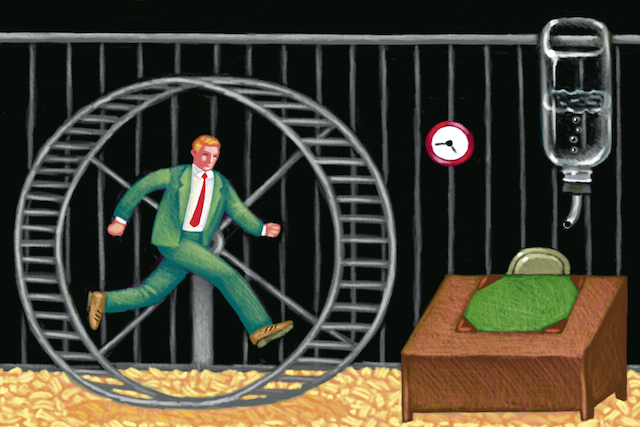
Why We Need to Be Present to Enjoy Our Lives, Not Just Productive
“Presence is far more intricate and rewarding an art than productivity. Ours is a culture that measures our worth as human beings by our efficiency, our earnings, our ability to perform this or that. The cult of productivity has its place, but worshipping at its altar daily robs us of the very capacity for joy and wonder that makes life worth living.” ~Maria Popova
I was high on productivity. I had one full-time job, two part-time jobs, and a side hustle. I was getting everything done. Sounds perfect, right?
Then I started hating my life.
I had read enough books and articles to tell me how I was not doing enough. Enough self-help gurus had told me that what I needed to do was max out every single hour I had to be minutely close to being “successful.”
My co-workers often got intimidated by my jam-packed calendar. I don’t exaggerate when I say that every minute of my life was scheduled. Sheldon-level scheduled, with dedicated “bathroom breaks” and everything.
I ran three to-do lists: daily, weekly, monthly. This was my way of setting out for maximum efficiency. I said “yes” to my boss so often I had become his favorite. Work-life balance, what’s that?
Tasks were flying off my list like never before—so many horizontal breakthroughs! I wore this as my badge of honor for a while, this art of getting it all done. And why not? I was rewarded for it in money, praise, promotions, awe.
But then it didn’t feel so great. Instead, I became downright miserable.
Why Busyness-Productivity Is A Mirage
I don’t claim that productivity is bad. Doing fulfilling work by minimizing distractions and getting deep focus is truly rewarding.
But it is crucial to stop and question why you’re doing what you’re doing. It is necessary to pause and reflect on the value of your tasks and actions. Otherwise, productivity translates to useless busyness.
When I became this productivity freak, I never stopped to ask if any of the things I was doing were giving my life meaning. I was doing a demanding full-time job that didn’t provide me any purpose. My days became a blur of mindless task completions. My mind, heart, and soul were absent from my work. Any given Monday didn’t look so different from a Tuesday three weeks prior.
And it wasn’t even like I was happy.
I was meeting all my deadlines, but I was spending no time with my family. There were enough accolades to prove all my achievements but not enough art to fulfill my soul. I answered every email I received within twenty-four hours, but I hardly focused on long-term self-growth.
On the outside, my life never looked better. But on the inside, I was worse than I had ever been. Distraction, schedules, irritability, and deadlines were the monsters that ruled my life.
After a month-long burnout, I hit the problem nail in the head. I knew I needed to move on. But how? I resolved to take a calculated leap of faith. I found a client willing to pay me for my freelancing services for at least two to three months and made a thick emergency fund by cutting out on expenses. Then, I quit the unfulfilling full-time job and gave my heart to work that I truly found meaning in. I stopped making productivity my goal. I opted to choose presence instead.
Presence > Productivity
I read Annie Dillard’s, The Writing Life, in which she memorably wrote, “how we spend our days, is of course, how we spend our lives.”
After reading this book, I realized that productivity would only be fruitful when coupled with presence. I knew then that presence was what would make my rewards meaningful.
What is presence? Presence is the art of being in the moment, the luxury of pausing, the virtue of stillness. It is being alert, aware, and alive to this moment.
There’s a reason why our culture runs for productivity instead of presence. Productivity helps us shut away from reality. It keeps us “busy” into a future that is yet to manifest.
It is so much easier and convenient to take the shield of productivity against the beautiful, buoyant, and sometimes disruptively painful present.
Performing one task after next gives us an excuse to not fully live, not completely concentrate, not unbiasedly accept.
I used to be that way—trying to avoid the truth that I was not finding my work meaningful. I wouldn’t accept that this job was emptying me slowly, living in denial of a reality I was living. Was I not getting things done? I was, more than ever before. But was I happy? I had never been more unhappy with my own choices.
Being productive every minute of every day meant I could avoid the fact that many of my friendships were depleting, toxic, and unhealthy. I was lying to myself that it was all to have a good social life. In reality, I would go out of my way to avoid being alone, to avoid answering the big questions pertaining to my life that can only be answered in solitude.
But coupling our actions with productivity and presence can have an astounding effect on our lives. It can make every task we do driven with intention, purpose, and meaning. Presence is what helps us reap the internal rewards that come with doing fulfilling work.
Choosing Presence
If you are anything like me, choosing presence over productivity can take some practice. Productivity was my normal mode of operation. It was easy; it came naturally. But opting for presence in my actions wasn’t so simple.
The art of being present and intentional in all my tasks was like writing with my non-dominant left hand. I searched for help and stumbled upon Tim Ferris. He often says to think of your epitaph to cut through all the noise and maze of productivity. It is a way to find out what truly matters to you by getting a super-zoomed out version of your life.
As morbid as it sounds, that is what I did. I imagined what I would like to carve on my epitaph, and the important stuff came into a laser-sharp focus:
I needed to write. I needed to make time for solitude, for serendipity, for hobbies. I wanted to create more memories with my family. I wanted to let go of draining friendships and put all my energy into relationships that filled me with fulfillment, meaning, and growth. Taking it one step at a time, I decided to hand in my resignation. I landed my first writing gig in under two weeks.
And hey, it’s not like I don’t struggle to write with my left hand anymore. But I am growing each day. It takes some practice and effort to make room in your calendar to “be present.” I am learning to be uncomfortable by turning the volume down of “getting things done.”
I have noticed that it is the minor changes that count. It is taking a little more time to craft that email mindfully. It is that courageous “no” to a project that can help you surpass your quarterly KPIs but take away from your family time. It is choosing to take a soothing fifteen-minute walk break over checking off another mindless to-do list task.
Presence is a process. It requires the discipline to focus on the present moment when productivity pushes you to see a non-existent future. Presence is your un-busy existence of utterly unadulterated joy. It is your creativity’s cradle. It is your time to just be.
So do it. Make the hard choice. Live your life with presence to help you find joy in the now instead of pushing toward some destination in the future. None of us really know where the future will bring us, but we can all choose to enjoy the scenery along the way.
-

On Those Hard Days When You Feel Like Nothing You Do Matters

“Just a reminder in case your mind is playing tricks on you today: You matter. You’re important. You’re loved. Your presence on this earth makes a difference whether you see it or not.” ~Unknown
Today I woke up feeling like nothing I do matters. I didn’t want to wake up feeling like this, but I did.
I got myself out of bed, brushed my teeth, and went through the motions until things inside my mind started to feel unbearable.
The first thing I did was try to reason with myself, tell myself that, of course I matter. I tell everyone else in my life that they matter and they’re enough just as they are. But there is a tiny voice in my mind that feels loud. Just chanting, “You know you’re trash, people are lying to you. You know you do terrible things and have hurt other people. Just give up.”
It reminds me of every mistake I’ve ever made. It attacks me with memories of my hurting someone with how I worded something or reminds me of someone who blocked me on social media, or just said, “I don’t like her because of xyz.”
This feels immobilizing. By the time I am done with this thought process I cannot leave the living room chair I am sitting in. I pull a blanket up to my chin, curl up into a small ball, and start crying. “You’re right,” I say to myself. “You win. I should just give up.”
My mind is spiraling with everything I have ever done that went unnoticed, that no one cared about. The essays I wrote that only a few people read. The points I made that were later recycled and went on to be successful once someone else made those same points that didn’t seem to matter when they came from me. And I have the overwhelming feeling that I deserved the bad reception, because I, too, am bad.
Never mind that there are dozens of things that I’ve done that were greatly appreciated. That made a difference. That moved someone else enough to say, “This helped me.”
Never mind that sometimes we can’t control algorithms, SEO, and the like.
Never mind that sometimes you make a stupid spelling mistake even though you re-read your piece fourteen times. You just didn’t notice it, but people were turned off from the piece because of it.
That’s the thing, being a mental health advocate, I feel like my whole purpose on some days as I struggle to get by is to hear someone say, “This helped me.” And if I helped no one, then why did I do it?
But while I was busy worrying about who I have helped and if my helping got noticed, I may have forgotten to help myself.
All the clichés, the putting on my own oxygen mask first, filling my own cup to fill others, they are reminders that I need on a daily basis, or I risk becoming my own victim.
And honestly, to me, there is nothing worse than someone who is helping other people just to be a martyr. They continue toiling to help others but neglect themselves so that they can say, “I almost died doing things for other people.”
Who are you useful to once dead, or even just burned out? The fight for mental health awareness and to end the stigma is long arduous. And if my goal really is to help others, to be there for the long haul, then I must find a reason to also do it for myself.
That mean voice feels so loud, but suddenly an argument erupts in my mind.
The other side finally feels empowered to speak because I kept pushing, although mentally exhausted, against the part of me that was convinced I deserve nothing. I told the quieter voice that it was okay if I messed up. That this doesn’t negate everything I have done that has helped someone, and yes, even if that was just one person. Even if it just helped me to get it out there into the universe.
And really, the main thing is this: Everything we do doesn’t have to matter on a grand scale. It doesn’t have to leave others speechless. It doesn’t have to change the world. Just doing it is something to be proud of.
Suddenly I feel a small sense of ease. I am tired from arguing with myself. I am tense from sitting in a tight ball with my jaw clenched this whole time. I unravel myself. I release my jaw. I inhale deeply and release more tension as I exhale. I choose to open up my laptop and write about what went on in my mind just now.
If you’ve ever felt this way, like nothing you do matters and it’s never good enough—like you have to do more or be more so people will notice that you matter and you’re good enough—here’s what I’d like you to know:
You are allowed to simply live. You are allowed to just be you. You are allowed to just exist and for that to be enough. You are allowed to be content with just breathing on some days. And you are allowed to be proud of yourself for wanting to help others, even if on some days it seems you’ve helped no one but yourself. It’s enough. You’re enough.
-
One Question for Anyone Who’s Stuck in a Rut: What Do You Believe?
“You become what you believe, not what you think or what you want.” ~Oprah Winfrey
What do you believe? During the forced stillness of the pandemic environment we’re all living in, this is a question I’ve been faced with more intensely than ever. In particular, I’ve come to question what I believe about myself, and how that impacts every element of my life.
Coming out of years of self-help for social and general anxiety, a long-standing eating disorder, and several dissatisfying personal relationships, I had to come to question what these external realities reflected back to me. For what you believe about not only your life, but more importantly, yourself, will show up again and again, and yes, again, until you’ve finally addressed the root of the problem.
In my case, my lack of self-value resulted in many dysfunctions and setbacks in my personal and professional world.
My deteriorating self-image led to my eating obsessions, a lack of confidence exacerbated anxieties, and the low value I placed on myself was most likely written all over me, judging by the way others showed disrespect toward me in personal relationships.
Not only was I devaluing who I was, but I also operated from a place of being closed off to others, afraid that if I showed my true self I wouldn’t measure up to their expectations.
This all came to a head when COVID-19 emerged and led to a global lockdown. Going off of numerous negative relationship experiences, I visited a doctor to discover I had a pelvic floor condition called vaginismus, which results in involuntary vaginal muscle tightening that makes sex and physical exams like pap smears either impossible or extremely painful.
I spent the next four months going through physical therapy to heal my body from this condition, breaking off a new relationship to focus completely on my own journey. It amazed me how the mind and body go hand-in-hand; my muscle tightening felt like a total embodiment of years of being closed off to others and remaining safely isolated from sharing my true self.
As I mentioned previously, prior to being diagnosed with vaginismus I’d spent years healing my mental health problems and gaining strength in my career experience.
After high school, I was lost in my career path for a solid period of time, making lukewarm attempts at artistic endeavors such as acting and modeling, never fully prepared to take a leap and fully immerse myself in any one field.
Again, this would require a bearing of my true self that would frighten me just to think about. Not only that, it would mean that I had the nerve to believe I was worthy of attempting a profession that’s reserved for an elite group of “special” people, a group I never considered myself to be a part of.
I did muster up enough courage to move to Los Angeles, however, where I felt I could start a new identity. My Northern California roots felt outdated, and along with some family I sought to better myself with a fresh start.
One of my first steps toward positive changes was a hostessing gig at a bowling alley, which forced me to get out of my shell and be more social for a change. I still felt very self-conscious, but the more I worked on interacting with customers and coworkers, the more I learned how much I loved people.
This further developed when, following a chance Intro to Journalism course I took at Pasadena City College in Southern California, I found a new joy that I wasn’t expecting.
I began to love writing, and not only that, my favorite element of this new career path was interviewing—something I never thought I’d be able to conquer with the severity of my social anxiety, which prevented me from going into grocery stores at its peak
Deep down, I started to believe that something different could be possible for me. Maybe I could break out of my old mindset and turn into the person I’d always felt I was inside: someone who loved people, longed for and accomplished successful interpersonal relationships, and stood in her power, unapologetically.
By January of 2020, I had gained a local job news writing in my home base of Burbank and felt optimistic about the future. After the pandemic hit, however, I went through a time of feeling down during isolation. This paired with the vaginismus diagnosis made me become initially quite frustrated.
“Why is this happening to me?” I wondered. I had done a lot to overcome other personal issues, but now having to do months of diligent, and sometimes extremely painful, physical therapy felt like a punishment that I didn’t deserve.
After a short bit of contemplation, however, I had a real and sudden shift in perspective. I simply thought, “I’ve been through more than this in the past. I’ll get through it.” I believed I could, and from that moment on dedicated myself to healing not only physically, but emotionally as well.
Within four months I made enough progress to end in-person physical therapy appointments, I started blog writing and continued with news writing in Burbank, earned a journalism scholarship over the summer, which I contributed toward my studies, and now have just started my own independent journalism writing website.
The more I believed that I could accomplish my goals, and the more I felt I was worthy of such things, the more I saw everything in the universe work for me, and not against me.
Today I continue to improve my self-image, and I have a long way to go. But overall, I feel healed from where I once was.
I’m pursuing my passions, now unashamed to show and share who I truly am.
I demonstrate a great deal of self-respect in personal relationships, no longer tolerating poor treatment from others who don’t consider my worth.
My diet and exercise habits are healthier, my vaginismus treatment is complete, and, although I still have to maintain physical therapy exercises, I feel grateful for where I’m at in that regard and in every aspect of my life.
If you had asked me five years ago, prior to all of this self-improvement, what I believed about myself and my life, I probably would have said I had a promising future ahead, although my actions and interactions continuously showed otherwise.
This is why I feel I’m at a much more positive place in life at this moment.
Not only do I propose that I believe positive things about myself, but I now show it through my actions.
I no longer want respect, I demand it.
I no longer want to pursue my goals wholeheartedly, I now do it as much as I can every day.
And not only do I dream of expressing the truth of who I am, I embody it.
So, if you too feel like you’re stuck in a rut in your life, if you feel that the world isn’t treating you fairly, and if you don’t like what the universe is showing you, then I urge you to ask yourself:
What do you believe? About yourself? Your worth? Your life? Your potential?
What do you believe about what you deserve, in relationships and in your career, and what you can accomplish if you try?
How do those beliefs affect how you show up in the world—the decisions you make, the chances you take, the things you tolerate, and the habits you follow each day?
What would you do differently if you challenged your beliefs and recognized they’re not facts?
And what can you do differently today to create a different outcome for tomorrow?
These are the questions that shape our lives because our beliefs drive our choices, which ultimately determine who we become.
-
How I Live My Life Purpose Without Doing Anything Big
“You know how every once in a while you do something and the little voice inside says, ‘There. That’s it. That’s why you’re here’ …and you get a warm glow in your heart because you know it’s true? Do more of that.” ~Jacob Nordby
Mornings running the busy roads with the echo of what this one or that one said, lying in my bed in the middle of sunlit days staring at a bamboo plant on my dresser, seasonal jobs, getting all dressed up for waste-of-time employment fairs, scribbling in my notebook when my spirit demanded I fight back—at the rejection letters, at the no responses, at the feeling that I simply wasn’t good enough—this is what a lot of my twenties was made up of, but that’s not all.
I had moments in those seasonal jobs that lit my unique spirit and showed me exactly what I loved and cared about.
In everything I took action on there were hints of a young woman crying out: “This is a puzzle piece of who you are right here. This is important. Take notice!”
The rejection letters led to setting myself free through concerts, unforgettable trips, and quality time with those closest to me, and they gave me more writing inspiration.
The time alone, not feeling that I fit in with any of my peers and that my life wasn’t progressing along the traditional trajectory I was witnessing, pushed me to dive into my emotions and think about what I truly value.
I wrote it all down. It turns out that all the tears and isolated fears pushed me into creating stories and poetry that are all about love and are essentially a quest to understand and care for each other more.
In spending so much time alone with my feelings and knowing deep down that there must be others who feel this way too, I developed an even more empathetic nature that caused me to want to reach out to others more than ever before.
But it took me a while to focus less on the destination and recognize the value in the journey.
The moment I graduated I felt this compulsion and desire, which I believe stemmed from my past imprinted insecurities, to define myself immediately. I needed to figure out right away who I was going to be, lock it all in.
No one tells you when you’re setting out on your life that no one’s story works that way.
I thought life would just tick along like checking off items on a to-do list, especially through witnessing the social media highlight reel of my peers. I didn’t make the connection that it was, in fact, their highlights.
I only saw a part of the character in these peers of mine, and honestly, who would tune into that show? Who would want to see a perfect life played out day after day with no one being challenged to see how they rise to the occasion and come out an even more beautiful form of their unique self?
I had watched so many soap operas and TV dramas by that time, and yet, I did not understand that this was clearly not the full picture, just as I was only showing my highlight reel. I wasn’t going around telling everyone about the pain and loneliness I felt. I wasn’t posting about the dozens of rejections I had received.
Maybe if we did post all of these things we would be more mentally at peace, but at the same time, I think that would also cause us to stagnate as we communicated all our troubles and injustices constantly.
What we want isn’t always what is best for us. If we were able to be so open, I don’t believe we would be propelled into action through having to sit in those feelings and figure out how we’re personally going to step up and out of a situation to create our own unique story.
I basically played the victim many times when I would see what I thought was my peers so effortlessly checking off milestones on their personal to-do lists. So, what did I do?
In some indignant notion that I would be missed, I went on and off Facebook more times than I could ever count, thinking when I came back on, things would be different, and I would be validated when joining my community once again. That’s not what I received, and that’s not what I truly needed.
I believe this loneliness and question of ones’ life purpose can come at any time. This just happened to occur for me in my twenties, and I’m glad I’m beginning to understand why I felt all that I did.
I believe we are all unique. None of us are replaceable, and we all have the capacity to fulfill many purposes in our lifetimes, through different stages, as our priorities, interests, and values change.
I am a very different person than the confused young woman of my twenties because I no longer search for my purpose, as if it’s this one big thing I need to figure out. Instead, I follow what I love and fixate on all the good I have in my life.
I constantly focus in on all that I am grateful for. I keep a record of my achievements. I read my favorite books over and over again. I watch my favorite TV shows, which are still teen dramas, I must confess. I look at art and listen to music that ignites my spirit.
When I’m feeling stuck, movement is key, whether it’s running or doing household chores.
I know that I am following my purpose as long as my heart feels that I am being true to myself.
I still get insecure. I don’t think that will ever go away, and maybe it’s one of those things you don’t want that is in fact good for you. Without my insecurities, I wouldn’t have to keep reaffirming what I am passionate about, and without reaffirming, there’s a chance I could lose myself.
I found through searching for my purpose in what I refer to as my “crossroads period” in my twenties that it’s not one thing to be achieved, one path to be fulfilled. My purpose is a continuous journey of loving those closest to me and deeply following what my heart tells me.
I believe in the search for my purpose I was also able to identify the kind of people I want on my team, the kind of people I want in my life. These people are few and rare but as true as can be.
I know that the overriding purpose of everyone’s life is to discover your people and keep them close. They will be your guideposts and your encouragement to fulfill the passionate enormity your life is meant to embody.
This family of mine is what keeps me moving forward and holding the belief that I am living a life of purpose simply by loving and being loved by them, regardless of what else I do with the time I’ve been given.
-
If You’re Insecure and Afraid of Rejection Like Me…
“How brave the moon shines in her skin; outnumbered by the stars.” ~Angie Welland-Crosby
I have this reoccurring dream where I am about to teach a yoga class. I stand to teach, and no one is paying any attention to me. They are all distracted or in deep conversation with one another and have no interest in engaging in the class.
As I begin, one by one the students get up and leave. I am mortified and discouraged, though I continue to teach anyway.
I wake up from the dream with a sinking feeling in my stomach and heaviness in my heart. Rather than indulge and spiral into sadness, I turn directly toward the aching.
“Where is this coming from?” This is the question I ask myself as I dive into self-healing. Just as the body has the ability to heal itself on a cellular level when injured, we too have the ability to heal our emotional wounds.
I have never been fired, from a job or relationship. I have always been the one to leave. This is not something I take pride in, rather I see a pattern that has developed over the course of my life since childhood.
When I receive criticism, my insecurities are triggered. It must be because I am not good enough, as an employee, teacher, friend, partner. Clearly there is something wrong with me. My instinct in these situations is to run, to leave before anyone discovers my flaws, before I feel more hurt.
I fear being abandoned or rejected, so at the first sign of conflict I retreat, like a turtle that goes into its shell the moment it senses danger.
When I look back at my past I am left with overwhelming grief. As I peel back the layers further, I see more clearly the origins. Beliefs deeply rooted in childhood and cemented in adolescence. False beliefs of being replaceable, unworthy, not enough.
Underneath the protective armor is an extremely sensitive and hurt little girl.
A girl whose older sister locked her out of her room and refused to play.
A girl who was teased by neighborhood kids for being weird.
A girl whose best friend started an “I hate Shannon club” in fourth grade.
A girl who always saw her friends as smarter, prettier, cooler, and more likeable.
A girl who was desperate to be accepted.
These deeply rooted wounds need proper acknowledgement in order to be healed.
When we feel vulnerable or hurt, we tend to close off our hearts, gossip, turn to anger, or run away rather than address the discomfort. None of these behaviors will heal our emotional wounds. They are only temporary means of alleviating the pain. In order to break these old, conditioned patterns, first we must identify where the feelings are coming from.
When We Feel Rejected
Let’s face it, people can be mean. We ourselves can be mean.
It can be hurtful and scarring to be left out, rejected, or on the receiving end of another’s harsh comments or behavior. But often, it isn’t as personal as we think. Often, others hurt us because they themselves are hurting. Perhaps it isn’t even intentional and the other is unaware they are inflicting pain.
When we look beneath the surface of rejection, we ultimately discover feelings of fear and abandonment. But we can choose to change how we think about rejection, and consequently, what we feel.
While we can’t control what other people think, say, or do, we can control how we receive and perceive. We get to choose whether we allow another’s comments to define who we are or how we feel about ourselves.
There are some situations where walking away is the right thing to do. But not out of fear, spite, or in defense, but rather from a place of surrender and acceptance.
We can redirect our energy to people and situations that are positive and enriching. Mutually loving relationships and situations where we treat one another with kindness, support, and encouragement. Where, rather than tear one another (or ourselves) down, we lift each other into the highest version of ourselves.
There are countless situations that can trigger feelings of unworthiness, but I’d like to focus on two specific ones that have been particularly challenging for me.
When a Relationship Ends
Whether we chose to leave or not, there is often a deep sense of loss when a relationship ends. These feelings of loss can reappear at any time after we think we have moved on, especially when we witness someone else taking our place. A place that once made us feel special, valued, adored.
I experienced this as I watched my ex’s new girlfriend move into a home that was once mine. The feeling of being replaceable. Even if ultimately, a relationship isn’t good for us and is no longer what we want for our future, watching someone move on can bring up grief and insecurity.
Rather than indulge in these feelings, we can choose to be happy for the other. Happy they have found love and comfort in someone else. Happy at their own ability to heal and move forward with their life.
Not always easy when we haven’t found love or comfort in another, we haven’t healed, and we aren’t moving forward with our own life. What makes it even harder is that we often reject ourselves when we feel rejected by someone we loved. The antidote? Focus on finding love and comfort in ourselves to reinforce that we are still worthy of love, and we don’t deserve to be or feel rejected—by anyone, including ourselves.
When We Compare Ourselves to Others
Jealousy is a destructive emotion and can be triggered by an off-hand comment, a sideways look, or a social media post.
We are happy and content one moment, the next our ex updates their Facebook status to “in a relationship,” or we see a post from someone who appears to be doing better in life, and we are sent into a downward spiral that involves stalking profiles, comparing ourselves to another, anger, questioning our decisions, feelings of regret… the list goes on.
In order to overcome the green-eyed monster, we must stop comparing ourselves to others and see our own unique gifts.
Often it is the desire to be someone special that drives unhealthy behavior and thought patterns. Consider this: You already are special. You already are good enough, just as you are. Without having to change or do anything different. You can stop trying to be good enough and allow yourself to just be.
When I recently experienced conflict in an interpersonal relationship, I was talking with my mom and I said to her in defeat, “I just try so hard to be a good person.”
She said to me, “Well then stop trying. You already are a good person. You don’t have to try, it’s who you are.”
The truth is, no one has come before you or will come after you with your exact qualities. You don’t need to prove yourself to anyone else or to yourself. The fact that you even exist is a miracle. What a gift. Allow who you are to shine, and allow others to shine, without insecurities, jealousy, or fear. Our true gifts are revealed when we recognize we are each perfect just as we are.
It’s Time to Write a New Story
Those old stories from childhood, the hateful words on the playground or rejection from others, they don’t fit any more. They never did. We unfortunately allowed them to mean something about us and replayed the same story over and over again. As adults we have the ability and awareness to see and break these old patterns.
Just recognizing our old stories is a great first step. The next step is to create new stories that better align with who we want to be and how we want to feel. And the last step is supporting those new stories with our perceptions and interpretations.
Instead of interpreting a breakup or layoff as proof of our unworthiness, we can tell ourselves there’s something better out there for us—and we deserve it. Instead of expecting people to reject us, we can focus on all the reasons we’re worth accepting, and recognize that if they don’t, it’s their loss.
We can also help ourselves engrain these new stories by surrounding ourselves with people who support, value, and encourage us.
As I continue on my own path to healing, I am so grateful for an amazingly supportive boyfriend and network of friends and family (including my sister, who has become my best friend over the years), as well as an incredible puppy who teaches me the meaning of unconditional love daily (I highly recommend a dog for healing emotional wounds). Even when I retreat or fall into old patterns, I continue to be surrounded by people who accept me, challenge me, lift me, and inspire me to be the best version of myself.
My new dream goes like this: I show up to class to teach yoga and students arrive ready and willing to practice. They are engaged and excited to be there, and so am I. I am no longer insecure and fearful of rejection or abandonment. In this new dream, I give everything I have and allow my gifts to shine. In doing this I give others permission to do the same.
We are the authors of our own story. The kind of story where we get to live our best life. We can rewrite our story if it no longer fits as we continue to grow and evolve on our path. What will your story say about you?