Tag: worry

  • 7 Tips to Challenge Perfectionism: Enjoy More and Worry Less

    7 Tips to Challenge Perfectionism: Enjoy More and Worry Less

    “Perfectionism is the voice of the oppressor.” ~Anne Lamott

    I originally planned to write this post a month ago. The topic was interesting, and it was one that I was sure most people could relate to. I mean, who hasn’t wrestled with the issue of perfectionism at some point?

    One after another, notions and examples of perfectionism flowed steadily from my mind onto my notepad. And when I ran those ideas by a few friends, each of them shared their own stories about how the need to be perfect at something had negatively affected their lives.

    Simply put, there was no shortage of material, and this post, I just knew, would be a breeze to write. A slam-dunk. A no brainer.

    Until I sat down at the keyboard. When I tried to weave my thoughts into a coherent post, the flow slowed to a trickle. Then, it just stopped. I was frozen, scattered, and unsure of how or where to begin.

    “You’re such a perfectionist!”

    I had fallen victim, yet again, to my own brand of perfectionism—the kind where I scrutinize every thought/phrase/sentence/punctuation mark circling through my head. The kind where everything has to be perfect, even before it’s typed onto the screen.

    If I was going to write this post, it had to be witty, intelligent, and insightful. But in my attempts to get there, I became frustrated, anxious, and creatively blocked. In my effort to be perfect, I nearly missed my deadline.

    Deep down, I’ve always felt proud to be known as a perfectionist. Working diligently to deliver excellence, being highly organized and detail oriented has served me well. All the while, however, I’ve often felt plagued, rendered semi-paralyzed, rooted in fear—petrified to take that leap for fear of making a mistake, for fear of failure.

    Am I, perhaps, more rigid, obsessive, and controlling than I’ve realized?

    Bottom line: The dividing line between admirably high standards and the painful distress of perfectionism is exceedingly thin. Alas, I’ve officially arrived at paradox junction.

    It’s time to determine when perfectionism pays off and when it becomes the villain, the saboteur.

    So wait: Perfectionism isn’t a good thing? (more…)

  • When You Feel Terrified: Come Out of the Panic Zone

    When You Feel Terrified: Come Out of the Panic Zone

    Meditation

    “Fear is a natural reaction to moving closer to the truth.” ~Pema Chodron

    Are you as scared as I am?

    I’m terrified.

    I’m not talking horror movie terrified either. This isn’t the kind of scared where you jump, but then realize it’s just your friend who’s surprised you. This isn’t even the kind of scared when you realize you left your iPhone in a public bathroom.

    This is the kind of scared where your gut churns and churns. You feel shaky, hungry, and out of sorts. It’s a visceral, palpable fear.

    Who’s Afraid Of the Big Bad… ?

    You’re probably wondering what it is that I’m so afraid of. Perhaps my house is haunted? It isn’t. Perhaps I have a stalker? No. Zombie apocalypse? Seriously, I wouldn’t be blogging at a time like that.

    I’m scared because I’ve decided to work full time on my own business. It’s a big step to start your own company and even bigger when you decide to do it without a  “back-up job” net.  If you have any doubts, let me assure you it’s mind numbingly scary.

    What if I can’t get clients? What if no one wants to read my blog or my books? What if I fail miserably, pathetically? What if my family and girlfriend abandon me because I have shamed them beyond repair?

    Change is Scary

    A bit too dramatic? Yes, very much so, but whenever we start to transform our lives it’s scary. Risk and vulnerability are essential qualities of transformation.

    Deep and fundamental change requires us to step outside of our comfort zone. The trick is not to step too far out. We need challenge, but we don’t need panic.

    Get In The Zones

    There are 3 zones that can describe most of our experiences.

    1. The Cool Zone. This is where we know the landscape, can predict many outcomes, and function with some sense of ease.

    2. The Change Zone. This is where our edges are being pushed, we might feel slightly uncomfortable, and there’s a bit of pressure, but we can handle it.

    3. The PANIC ZONE! This zone is all like AHHHHHH!! We are freaked out and we tend to react, shut down, or run away. (more…)

  • 4 Ways to Remain Centered Amid All of Life’s Chaos

    4 Ways to Remain Centered Amid All of Life’s Chaos

    Centered woman

    “Every day brings a choice: to practice stress or to practice peace.” ~Joan Borysenko

    Right now I’m in a tight squeeze. I’m in the process of making some big changes, and it’s bringing a lot of chaos, uncertainty, insecurities, and fears into my life, as changes will do.

    One of my deepest desires is to be able to look chaos in any form, of any magnitude, square in the eye, and levitate up to the next level of not letting any of the anarchy affect my inner homeostasis. Whatever the drama—work, family, friends, worldly, financial, school, natural disasters—I don’t want any of it to harsh my mellow.

    My desire is for peace or bust, on the inside and all around me.

    When we recognize that life is our mirror, we begin to understand that the outer chaos merely represents our mental state. If we can quiet our inner chaos, our outer chaos will simmer.

    However, too often we get this process backward, and that is why it takes us so long sometimes to tame all of the ruckus: We don’t take the time to first quiet our mental noise.

    I often say that I desire to be the glowing yogi in a mosh pit, untouched and at ease. My biggest fear is someone knocking me off balance and getting trampled.

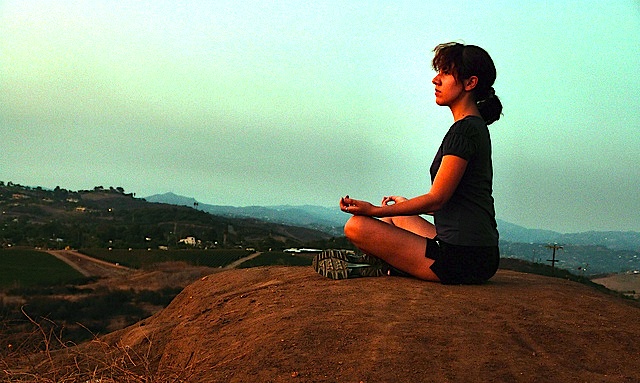
    So, my fantasy is to be just kind of floating there in the lotus position in the middle of it all, with pushing and shoving going on all around me, yet I am untouched. I remain at ease and guarded by my peaceful light.

    I crave that kind of serenity in my day to day. When situations arise that aren’t going according to my plan, I want to transcend into the glowing yogi in the mosh pit and remain perfectly centered, unfazed by the drama going on all around me.

    Keeping this vibe of peace is hard to do sometimes when we are faced with the challenges of life.

    Winds of change blow through our lives daily, and unpredictable circumstances happen on the regular that are beyond our control. How do we handle it all?

    Personally, my brain rushes to “fix” everything. If something comes up that doesn’t go according to my plan, I spend sleepless nights trying to figure out what to do.

    I will solicit advice from friends, loved ones, colleagues, my dog. I will scour the Internet for any hints and solutions I can find. I do anything other than assimilate myself as the peaceful yogi who doesn’t worry, and again that is approaching the issue backward. (more…)

  • 3 Simple Steps To Stop Worry In Its Tracks

    3 Simple Steps To Stop Worry In Its Tracks

    Sitting

    “Worry never robs tomorrow of its sorrow.  It only saps today of its joy.” ~Leo Buscaglia

    For as long as I can remember, I’ve been the worrywart extraordinaire.

    Worry: verb: To give way to anxiety or unease; allow one’s mind to dwell on difficulty or troubles.

    Fret, be anxious, brood, stress, panic.

    If worry came with a degree, mine would be a PhD.

    As a child I worried about my schoolwork. I worried if other kids would laugh, or not, as the case may be. I worried if I’d pass the test, miss the bus, make the team, or fall on my face.

    As I grew, so did my worries. Not only did I worry about myself, I also worried about my friends and family. I even worried about complete strangers.

    My worry became paralyzing.

    As soon as I decided on a course of action, my worry went to the other extreme. I’d worry that I’d be late to an interview, and when I arrived in plenty of time I worried that I was too early. And when my family and friends began to bring it to my attention, I worried about how much time I spent worrying!

    It seemed that nothing was right, that there was no way to stop this endless cycle.

    Then one day, as I sat in a little cafe (worrying if I had ordered the right thing), I over heard a snippet of conversation from the next table over.

    Two older women were seated there, one obviously of the nervous nature, conservatively dressed, worrying about doing everything right. The other, flamboyantly dressed, seemed as comfortable as if she sat in her own living room. By the ease with which they talked, it was obvious they had been friends for a long time.

    “You’re such a worrywart,” flamboyant said. “I’m surprised that you don’t worry about where your next breath of oxygen will come from!”  (more…)

  • 4 Tools to Reframe Stress to Feel Less Overwhelmed

    4 Tools to Reframe Stress to Feel Less Overwhelmed

    At Peace

    “I know but one freedom and that is the freedom of the mind.” ~Antoine de Saint-Exupery

    Stress, strain, tension, worry, overwhelm, nerves, feeling wound up, freaking out. Whatever we call it, the effects are universal.

    Our adrenals rev up, uneasy thoughts cycle on the brain’s hamster wheel, butterflies flitter in the stomach, our moods swing. There are many different ways that stress manifests, and none of them are particularly enjoyable.

    Stress is basically an emotion. It’s the way we feel when things aren’t going our way. “Things” can be as insignificant as feeling annoyed because we woke up two minutes before our alarm goes off; they can also be of the off the chart “I’m getting a divorce/changing jobs/applying to grad school/moving” variety.

    Question: Why do we attach importance to certain experiences (and therefore feel stress in regards to them) and not to others?

    Certainly there are the categories of events almost everyone would agree feel stressful: dealing with illness, starting a new job, or getting held up in traffic on the way to an important appointment.

    However, most of us have had the experience of feeling stressed about something we rationally know is not that important, is not the end of the world, yet, there we are, experiencing those telltale signs that let us know we are tense.

    What about the fact that one of us could feel excessive stress because we cannot get the particular brand of insert-favorite-food we want at the supermarket? Or that another one of us may feel a lot of tension because we have to wait in line at the bank?

    Others of us may not find these events stressful in any way. However, we all have our own triggers.

    What does this imply?

    It implies we have more power over “stress” then we may realize. (more…)

  • How to Find Peace When You Feel Scared About What Might Happen

    How to Find Peace When You Feel Scared About What Might Happen

    Uncertainty is the only certainty there is, and knowing how to live with insecurity is the only security.” ~John Allen Paulos

    I was in shock for about ten minutes after hearing the news, afraid while lying on the procedure table, and relieved when it was over.

    Six months ago I had a mammogram. My checkup was supposed to be for a general mammogram—the one you get when you turn forty—but when I got there and told the technician that two days ago I had discovered a small bump in my right breast, the prescription was changed to a diagnostic one.

    After some time waiting, the doctor came back and said that the small bump in my right breast was benign, but she had found calcifications in my left breast, and that another series of mammograms would be needed in six months.

    Earlier this month I went for my six-month follow-up. After several uncomfortable mammograms, I was told that I would need to have a biopsy (sampling of tissue removed) to determine whether the calcifications were benign.

    It turns out that in 20-30% of the population, calcifications are an indication of cancer.

    After the initial shock wore off, I decided I would get a burrito to eat and not worry about it. I knew that this was an opportunity to grow and I was determined not to miss it.

    Instead of using the two weeks before my biopsy as time to worry, I chose peace and serenity. I spent the time in reflection while de-cluttering my home and focusing on gratitude.

    I was at ease in the space of not knowing whether the calcifications were benign.

    I got the biopsy on November 19th. Two days later, at 12:00pm (the day before Thanksgiving), I received a call with the results of a negative report. Not only was I ecstatic about the results, I was also pleased with how I handled the uncertainty of the whole ordeal.

    What this experience taught me was: (more…)

  • 3 Ways to Transform Anxiety into Positive Energy

    3 Ways to Transform Anxiety into Positive Energy

    “Today is the tomorrow you worried about yesterday.” ~Proverb

    A few months ago, I moved from the metropolitan east coast to rural Indiana and bunked up with my grandparents to help them sell their house.

    The house has finally sold, and now I am faced with options for where to go next. In other words, my future is completely uncertain at this point, and I’m experiencing quite a bit of anxiety over it.

    On the real, I’m silently, and at times not so silently, freaking out.

    Anxiety is so annoying in that it can be completely paralyzing. It is for me right now.

    My anxiety has taken over my productivity and has almost completely shut down my creativity. Also, my sleep is suffering, which impacts my skin, eating habits, and energy. It’s a yucky downward spiral, my friends.

    The major bummer is that my anxiety doesn’t solve any of the things I’m worried about, and the blocked energy flow this negative emotion generates only creates more problems. What is a distressed girl to do?

    Today I dragged my anxiety with me to my meditation pillow, and had a piece of paper where I quickly jotted down all of my greatest fears surrounding this move that’s upon me in just a few short weeks. I sat for a moment and wrote down anything that surfaced.

    What came up was that I am fretting that I won’t have enough money to support my upcoming move, I’m wondering what would happen if my car breaks down, and I’m worrying that I might not be happy in my next environment (and so forth). All valid fears, I would say.

    But then I realized that I really needed to dissect those fears further. (more…)

  • Overcoming Anxiety: Moving from Fear to Presence

    Overcoming Anxiety: Moving from Fear to Presence

    Screen shot 2012-12-20 at 11.50.19 AM

    “I learned that courage was not the absence of fear, but the triumph over it.” ~Nelson Mandela

    When I was a trainee teacher at a Cambridge University, I attended one of the oldest, most sought-after colleges, where most of the other graduate students were astrophysicists and economists, and 90% male.

    They also seemed to come from families that were in some way related to the Queen of England, whereas I was a young, pregnant, trainee high school teacher whose nearest connection to Queens was owning a Freddie Mercury single, and I was a little shy.

    Formal college dinners were a regular occurrence, and you were expected make small talk as you sipped your cream sherry in the medieval banquet hall in your black robes before dinner.

    When I tried to talk honestly about what I was studying or what I was interested in, it tended to lead to embarrassed mumblings and a quick escape.

    So one day, when someone asked me what I did, I said I was a lion tamer.

    Their eyes lit up. “Really?” they asked, intrigued. “Oh yes!” I replied, “Each day I have to have nerves of steel as I enter a room of caged brutes and try to get them to perform tricks!”

    I am no longer a teacher. But I am still a lion tamer.

    In fact, it was the lions that stopped me teaching, the same lions who were hiding under the table at those grand banquets, when I couldn’t think of anything to say.

    Yes, you heard me right, I live in close proximity to a caged lion. Wild, unpredictable, untamable, he longs to roam the plains. But instead, it’s just him and me, locked in my head together. His name? Anxiety!

    I have learned what makes him roar, what feeds him. He smells blood and out he comes, lured by deadlines, taxes, financial issues, illness, death, or medical professionals. So far, so normal.

    But he’s a strange type. He doesn’t like parties and social occasions, talking on the phone, images of me, swim suits, nudity, heights, or criticism.

    And so anxiety and I live together. I know how to keep him sweet, and keep myself safe. We have learned to make deals. And I avoid his territory like the plague. (more…)

  • How to Choose Peace Instead of Stressing About the Future

    How to Choose Peace Instead of Stressing About the Future

    “If you worry about what might be, and wonder what might have been, you will ignore what is.” ~Unknown

    I was entering a completely new stage in my life. It could have been the beginning of something great, but it was entirely foreign to me. I could handle being productive, I could handle struggling to survive, but what was hard to handle was wading through the unknown.

    After working for six months in Italy and six months in Brazil I was back in the US—floating. I didn’t feel any closer to having a career. I was without a car, job, and permanent housing. My boyfriend still lived in Brazil, and my friends were scattered around the globe.

    I didn’t yet have the answer for who I wanted to be or what I wanted to do.

    I had such high expectations for my return to the US. I had spent the last year working small jobs in Italy and Brazil like teaching English, being a personal assistant, and whatever freelance crumbs I could gather.

    I was sure coming back to my home country would give me the luxury of landing a job I would love with an international company. No such luck.

    So, for the first month I was helping my mom settle in her new apartment, and then I was on the other side of the country for two weeks to give some emotional support to my sister while she finished up her last semester of college.

    I was helping people make it through their daily processes. So far, that’s all the direction and answers I had.

    I was happy to be helpful and supportive of my loved ones, but to my goal-oriented mind, I felt like a failure.

    I was having trouble sleeping at night. I found myself awake in the wee hours of the morning, with thirteen tabs open, trying to research and apply for jobs while emailing contacts and just generally having a panic attack.

    The days were passing rapidly as I sat numbly pecking at my computer from dawn to dusk, without significant results and definitely no peace of mind. I was busy, but not productive.

    My mind was divided between trying to solidify my future and beating myself up for not having made a solid plan sooner. Would I ever be successful? What if I never found a job I liked? How could I live around the world and make money at the same time?

    I didn’t have answers and it was driving me crazy. I was in uncharted waters and I felt totally lost.  (more…)

  • How to Deal with Unfairness and Change the Things You Can

    How to Deal with Unfairness and Change the Things You Can

    “If you don’t like something, change it. If you can’t change it, change the way you think about it.” ~Mary Engelbreit

    Many times in the past, I’ve complained that things weren’t fair.

    Sometimes I was legitimately wronged—like when I was a kid and an adult in my life regularly told people lies about me, seemingly to justify her disdain and mistreatment.

    Other times, I victimized myself to avoid taking responsibility—like when I didn’t prepare well and bombed at a community theater audition but attributed my failure to favoritism.

    As an indignant adolescent, I blamed many of my difficult early experiences for the perpetual chip on my shoulder. I bemoaned the injustices of the world because I felt so many befell me.

    It wasn’t my fault that I was angry all the time; there was just a lot to be bitter about. At least that’s what I thought back then.

    One day, when I was commiserating with a friend who was upset about a seemingly unfair situation in her life, I wondered: What good does this do us?

    Grumbling about injustice doesn’t make things just, and the ensuing hostility doesn’t help us effectively address things that need fixing.

    You can’t create positive change from a negative mindset. You have to heal your pain before you can set out to heal the world. And you have to stop seeing yourself as a victim if you want to access your personal power.

    Still, despite knowing this and making a conscious effort to change, I still feel an instinctively strong and irate response to perceived unfairness at times.

    If a friend gets passed over for a promotion because it went to the boss’s daughter, I feel outraged for that friend.

    If I see someone hit a parked car and speed away, I seriously consider following them and issuing a citizen’s arrest.

    If I believe someone is earning boatloads of money unethically, I ruminate on how it’s not right, and wish I could do something to stop it.

    I think it’s wrong when someone cuts in line; it’s wrong when someone bucks a system; it’s wrong when systems don’t do what they’re supposed to… the list goes on and on.

    I’m learning to understand my strong emotional response so that I can challenge the feelings and thoughts that disempower me. If you’d like to do the same, you may find this post helpful.

    Our Biological Response to Unfairness

    While we all learned about fairness in childhood, scientists have proven we’re actually hardwired for it.

    Studies have shown that the reward centers of our brains activate when we recognize fairness, even when it pertains to someone else. When we witness unfairness, it triggers our amygdala, the primitive part of the brain that controls fear and anger.

    This means that when we feel like we’ve been treated unfairly, we go into fight-or-flight mode, with its resulting sense of anxiety.

    Psychologists suggest that when we fight for fairness for others, it’s actually self-interest in disguise, meaning we’ve recognized it provides us with some type of advantage to be fair.

    No matter how you slice it, we experience a strong, instant physical and biological reaction to perceived injustices, and this can limit our ability to think rationally and respond proactively.

    Life Isn’t Always Fair

    Every day, we have abundant opportunity to recognize injustice, on scales large and small, in our own lives and the lives of people we love.

    You could find out you make less than someone else in the same job.

    You could lose a promotion to someone else who is far less qualified.

    You could lose a court case when it feels obvious someone else was in the wrong.

    You could discover that a friend of yours is losing her savings because her accountant mismanaged her money.

    You could learn that someone you trusted to care for your mother took advantage of her good nature.

    You could find out that your sister’s losing her home because of predatory lending.

    And this doesn’t even touch upon the massive injustices happening all over the world, far outside the scope of our everyday experience.

    Life isn’t always fair. Whether it’s self-preservation, basic human decency, or a combination of both, we want to change that.

    In some cases, we can. We are not powerless, and we don’t have to simply accept every injustice as an unavoidable part of life.

    We do, however, need to accept that our response to perceived wrongs affects our ability to right them.

    Dealing with Unfairness

    Those people who don’t let unfairness make them bitter aren’t somehow better than others.

    They aren’t necessarily people who haven’t experienced severe injustice or inequality, and they also aren’t people who simply accept whatever happens without ever taking a stand.

    The people who handle unfairness well possess three things in common:

    • They think rationally before they act.
    • They recognize the difference between what they can control and what they can’t.

    Stopping Obsessive Thinking

    Dwelling on unfairness doesn’t do anything to change it; it actually affects our ability to do that since obsessive thinking drains our energy, magnifies our emotions, and keeps us more focused on problems than solutions.

    This has been the biggest challenge for me, as I’ve found it almost satisfying at times to think about things that seem wrong, as if this is productive.

    If you struggle with this as well, recognize when you start fixating on blaming thoughts, and visualize a stop sign in your head. Then repeat an affirmation along the lines of, “This isn’t productive. It is what it is, and I can either accept it or try to change it.”

    Thinking Rationally Before Acting

    In order to think rationally, we need to recognize that our biological reaction is just that, and consciously choose not to let it dictate our actions.

    According to psychologist and author Marcia Reynolds, when we feel slighted or cheated, and react emotionally, we then use our logical brain to rationalize that response. For example, we may tell ourselves, “I snapped, but he deserved it!”

    We can be far more effective if we use our logical brain first, before we do something we’ll later regret.

    In some cases, when we think rationally, we may realize an unfair situation is not a big deal in the grand scheme of things—when someone cuts us off and runs a red light, for example.

    It’s annoying, but is it really worth fuming during a car ride that could otherwise be pleasant?

    Other times we’ll still feel strongly that we need to fight for justice, but this doesn’t require us to act with aggression. It requires calm, careful planning and acting… if it’s something we can, in fact, control. This leads to the last step.

    Knowing What We Can Control and Doing Something About It

    We can’t change mistreatment that happened in the past. We can address mistreatment that’s happening now.

    We can’t change someone else’s decision or behavior if they aren’t willing to change. We can change how we respond to them (and choose to help educate and positively influence them).

    We can’t change that tragedies have occurred, in our own lives or in places across the globe. We can support causes that seek to prevent future tragedies, or even spearhead our own.

    And we can’t guarantee specific outcomes for our actions, but we can increase our odds of making a difference by being clear-headed, patient, and consistent.

    Sometimes there will be unfair things that we simply need to accept, and it might feel instinctive to fight that. We’re only human, and we will sometimes give in to our emotional responses.

    What’s important is that we try to move beyond them so we don’t let the things we can’t control take control of us.

  • How Worrying Makes Life Less Joyful

    How Worrying Makes Life Less Joyful

    “Worry never robs tomorrow of its sorrow. It only saps today of its joy.” ~Leo Bucaglia

    As I stood on the street corner, tears streaming down my face, I called friends for confirmation that what I had just been told wasn’t true.

    My meeting with my “friend” had gone horribly wrong. And when I say gone wrong, that’s because she was wrong. Wrong, wrong, wrong!

    But what if she wasn’t wrong?

    What if her words, which stung so badly that I couldn’t stop myself from crying publicly, were true?

    Two weeks prior to this fateful day, three families had gotten together for what was supposed to be a wonderful reunion of friends and a celebration of the beginning of summer.

    One family lives on a beautiful property with a huge man-made pond. Spending time at their house is just the way you would envision the perfect childhood summer.

    With acres of green grass and a beautiful blue sky as a backdrop, you hold onto a rope, swing off a landing, fly through the air, and plunge into the pond. The sound of birds chirping tickles your ears, and the smell of fresh air fill your lungs.

    Ah, the idyllic beginning to a wonderful summer.

    Since we would be outside, it seemed the perfect place to bring our dog, Sunshine. Sunshine is part Australian Shepard, which means she has spent many an afternoon desperately trying to herd my kids together.

    As the afternoon progressed, the kids ran around. Sunshine barked and barked and barked some more. My son was so anxious that she would run off.

    Several times at home, Sunshine had escaped through the front door. Although we always caught her, the moments watching her chasing squirrels, oblivious to our offers of treats, were a little nerve-wracking for me and my son! (more…)

  • 9 Powerful Life Lessons from Studying with a Monk

    9 Powerful Life Lessons from Studying with a Monk

    “Doing your best means never stop trying.” ~Unknown

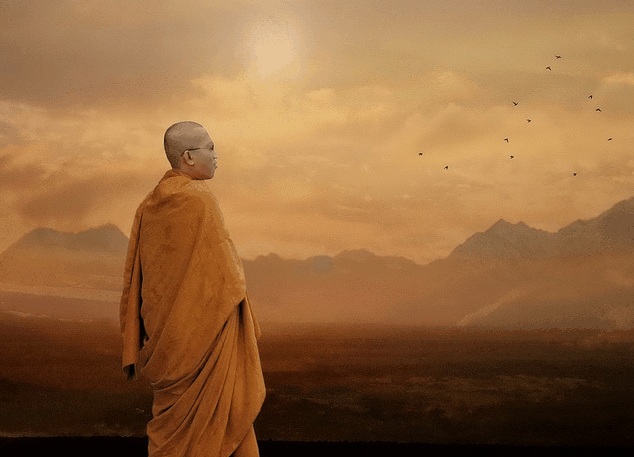
    When I was 18 years old, I suffered from anxiety and stomach problems. A compassionate physician and practicing Buddhist referred me to a Taoist monk who specialized in meditation and martial arts. I ended up healing myself of anxiety and stomach issues by doing meditation, and went on a great journey of self-discovery.

    Here are 9 lessons I learned while studying with a monk:

    1. Keep trying until you get it right.

    The most important life lesson I learned was trying something three times (maybe even four times) before you stop trying and move on. Also, this monk taught me that, even after multiple tries, you should work on different angles to approach things that are difficult.

    If you keep trying, you’ll eventually get where you’re going.

    2. The answer to your question is inside of you.

    As part of the original monastery training, a monk didn’t answer direct questions from a student unless it was a well thought-out question. A Chinese proverb says, “Teachers open the door, but you must enter by yourself.”

    Some forms of Zen Buddhism use a very similar style of training. An old saying (by Taoist monks) goes like this: “In making a four corner table, the teacher shows the student how to make one corner. It’s the student’s job to figure out how to make the other three.”

    They did this because they were preparing a student to deal effectively with problems in the real world.

    I traveled to South Korea one time, and I found it fascinating how much you have to rely on your intuition when you don’t speak the native language of a country. I remember one instance, I had trouble explaining to the cab driver where my hotel was, and he didn’t speak English. So I had to get out of the cab and ask several people until I could find someone to tell the cab driver in Korean how to get to my hotel.

    In life, whenever we try new things, we have to go into new places with only a small amount of information. The real world doesn’t give us all the answers. The greatest teacher is inside of us. (more…)

  • 5 Steps to Deal with Self-Doubt and Trust Your Self Again

    5 Steps to Deal with Self-Doubt and Trust Your Self Again

    “When you doubt your power, you give power to your doubt.” ~Honore de Balzac

    A while back I began to feel out of sorts with my writing. It happened after coming down from the high of creating almost nonstop with my inner muse. I noticed that I began to feel down, like the feeling one gets after being at the amusement park when the excitement is over.

    Creating and finishing my projects had been a wild ride. It was exciting and intense at times. But once done, an insidious feeling began to over take me.

    My thoughts began to wander to “the dark side” questioning my abilities.

    What if I can’t create something new? What if people don’t like what I have done?

    Like after any expenditure of energy, there is always a lull. Lulls have been known to drain ones creative energy if you let them. I know from experience that if I let myself I can easily slip into a creative stupor.

    When in that lull or in that space between creativity, it may seem like nothing is happening. But that couldn’t be further from the truth. We need that break.   

    When in this state I feel sensitive and quick to take things personally. I could just do nothing and give in to the disappointment when things have not gone as I have expected. Alternatively, I could use this as motivation, a starting point for another creative endeavor.

    But self-doubt has a way of getting under your skin. For me I begin to feel an uprising of the “you’re not good enough” gremlins inside me when this happens.

    I remember when this happened after something I submitted online was not accepted.  It felt like a rejection. “Forget it then!” belted out a voice inside with the force of a 2 year-old having a tantrum when she doesn’t get her way.  (more…)

  • 6 Ways to Find Composure When You Feel Panicked

    6 Ways to Find Composure When You Feel Panicked

    “Every day brings a choice: to practice stress or to practice peace.” ~Joan Borysenko

    I had a terrible morning. I needed to make a short YouTube video to promote my therapy practice, and I thought it would take twenty minutes at the most.

    The technology was more complicated than I thought. I struggled on, wanting to do it by myself. Half an hour later, I surrendered and asked my husband Kaspa for help.

    Two hours later, we were still trying to make it work.

    I started thinking about all the other things I was meant to be doing that morning. A tense knot formed in my stomach.I started snapping at Kaspa—if only he knew how to make it work, I’d be finished by now. Grr!

    I finally finished the video (with the help of a very patient husband!), but I was in no state to do any more work. I felt panicky and rushed, and my brain kept talking me through the list of all the things I needed to catch up on, like a stuck record.

    Once I allow myself to get into this kind of state, it takes me a while to “come down” again.

    After some time sitting at my desk and feeling agitated, I decided to go out into the garden.I walked slowly up the path, noticing the bang of my heart. I looked at the baby pink roses, the inner-most petals still holding onto drops of dew. I heard the clear song of a blackbird. I took a deep breath. And another.

    These are the things that help me when I get panicky. (more…)

  • Be Stress-Free: Eliminate 5 Common, Unnecessary Stressors

    Be Stress-Free: Eliminate 5 Common, Unnecessary Stressors

    “Some people think it’s holding that makes one strong – sometimes it’s letting go.” ~Unknown

    The human mind loves to find things to stress about.

    There seems to constantly be something in our lives that causes us to worry. And when the thing that caused the worry disappears, we feel happy, but only for a short period of time until we find something else to stress about.

    I’ve witnessed this pattern many times in my own life. As soon as I was able to solve one of my problems, my mind found me a new one.

    Compared to other guys, my body is very skinny. It has been that way since I was a little kid. My friends used to tease me because of it. I laughed at their jokes, but inside I always felt horrible.

    I felt like there was something wrong with me because I was different.

    As I got older I started going to the gym so I could gain weight. Progress was slow since my body naturally leans towards the skinnier side. But slowly I began seeing results in the size of my muscles.

    This is, however, where the results ended. I didn’t really get happier with my body at all, which was the main purpose of the training anyways.

    I still felt skinny and there was always something in my body that wasn’t quite right yet.

    At that point I realized that I was participating in a game that I couldn’t win. My body wasn’t the problem. The problem was what my mind was telling me about my body.

    In essence, as long as you are identified and run by your mind, it will come up with “problems” for you to focus on.

    Every single time a dilemma is solved, you can be sure of a new one arising that feels equally stressing as the previous one.

    The good news is that there is a way to break free from this endless loop of stress. It starts by realizing how pointless and harmful this useless worry actually is.

    Once you become aware of the negativity that these thought patterns create, it will be much easier to let go of your “problems” once and for all. (more…)

  • 7 Healthy Ways to Deal with Incessant Worrying

    7 Healthy Ways to Deal with Incessant Worrying

    Woman Meditating

    “I vow to let go of all worries and anxiety in order to be light and free.” ~Thich Nhat Hanh

    When you think about the future, are you filled with hope or worry? If you are like most people, it’s probably anxiety. You have largely been experiencing worry. Your mind feels unsettled.

    Worry arises because you realize that you cannot predict what is going to happen tomorrow and know that you cannot have full control over how events turn out. You are uncomfortable with not having absolute certainty.

    Incessant worrying happens when you find it hard to let go. You fret over the same details repeatedly. A fertile imagination causes you to play out mental scenarios of doom, failure, and fatal consequences over and over again.

    I Was a Worry Wart

    Well, I used to worry incessantly over the smallest of things. Before learning meditation, I did not know how to relax. Worry was my psychological mantra.

    When my children were born, my anxiety levels went into over-drive. Were they eating enough?  Were they having a happy time with their friends?  Were they faring well in school?

    I soon realized that I was not the only one.  In talking with one of my girlfriends, I realized she was excessively worrying over her children, too. I noticed how tense she was. She was not fun to be with.

    Eventually I knew that I needed to reclaim my sanity. Not doing so would mean continued misery.  I realized that it was only when I could lose my back load of worries could I be light and free. (more…)

  • 3 Steps to Make a Bad Day Good

    3 Steps to Make a Bad Day Good

    “To a mind that is still, the whole universe surrenders.” ~Chuang-Tzu

    The beauty of life is that we constantly have the opportunity to change it.

    We always have the power to recreate it. We can change our thoughts, remember how to live instead of planning each moment, forgive the past, be present for the now, slow down the speed, and push the reset button on a day that has escaped us.

    I recently had one of those days.

    This past Saturday was wonderful, or so I thought it would be when I woke up.
    I’d been invited to a traditional Cambodian, Vietnamese Wedding, and was excited to attend. Although I didn’t know the bride or the groom, I would be the guest of a good friend.

    I had a couple of mishaps that morning that caused me to be late. First, I spent thirty minutes with my younger sister, peeling a wad of gum off the heels she’d borrowed from me the night before—the ones I planned to wear to the wedding in the next hour.

    I half-sprinted without make-up to my car, holding a coffee that later spilled all over the front seat.

    I arrived to the ceremony fifteen minutes late. I quickly made my way toward the front door of the home. A room full of women in vibrant, traditional Asian clothing greeted me inside.

    I introduced myself to a couple as a guest of Sophya, a good friend of mine. They just looked at me blankly, perhaps unsure who she was, and didn’t really respond.

    I made my way to the nearby couch where a small group of kids were playing to wait for Sophya there. After getting lost in Legos for twenty minutes, I heard Sophya calling me from another room. (more…)

  • The Gift of Anxiety: 7 Ways to Get the Message and Find Peace

    The Gift of Anxiety: 7 Ways to Get the Message and Find Peace

    “Nothing ever goes away until it has taught us what we need to know.” ~Pema Chodron

    If there’s one thing that has led me the greatest amount of re-invention, it’s anxiety. By anxiety I don’t mean worry or concern. Anxiety is a different animal that grabs a hold of you and halts you in your tracks.

    We tend to reject its milder forms and are really terrified by its intense moments, like with panic attacks. It’s difficult to see when we’re fighting with anxiety that it can have any benefit, but it does.

    Anxiety comes with some great treasures hidden inside, and they can be yours if you know how to get to them. First, you have to stop fighting and listen to the anxiety for clues.

    Getting the Message

    The greatest truth about anxiety is that it is a message. Anxiety is not the real issue. It’s the voice of something else lying beneath that’s calling out to you.

    Most people who experience anxiety try to go after the symptoms more than its cause and try to fight it off as if it were the only thing to deal with.

    That’s not how to go about it if you ever want to know how it happened, why it’s there, and how you can gain long-term freedom from it. (more…)

  • Our Shared Fears & 5 Ways to Overcome Them

    Our Shared Fears & 5 Ways to Overcome Them

    Alone

    “Fear is inevitable, I have to accept that, but I cannot allow it to paralyze me.” ~Isabel Allende

    In life, we experience two kinds of fear: real fear and psychological fear. Or, as I prefer to think of the latter, ego-fear.

    In the words of Immanuel Kant, the ego is “our precious little self.” Or as Eckhart Tolle calls it, “the voice in the head.” It isn’t who you really are, but the you that you think you are.

    Each day, what you see in the mirror is the reflection of your physical being, and within, you may get glimpses of your unique personality in that reflection too, in between your laugh lines or furrowed brow. Still, it’s not really you.

    Same thing with the roles you inhabit each day and how they are reflected back to you: as friend, lover, parent, child, worker, boss. These are different selves we pick up each day as needed, as the situation or relationship summons them.

    But knowing that these roles, as well as your reflection in the mirror, are not who you actually are is an important distinction to which all enlightened, sentient beings become aware.

    With this background, we can better understand our shared fears and how to overcome them. (more…)

  • 6 Tips to Deal When You Feel Out of Control: When Your World Gets All Shook Up

    6 Tips to Deal When You Feel Out of Control: When Your World Gets All Shook Up

    Out of Control

    “Why worry about things you can’t control when you can keep yourself busy controlling the things that depend on you?” ~Unknown

    I celebrated an anniversary recently. It was the night I experienced my first, and hopefully last, earthquake.

    My husband and I had retired for the evening as usual—said our goodnights and went to sleep. I was jarred awake at 2:30 AM by him trying to pull me from our bed. At the same moment I heard the most deafening roar. Could a freight train be barrelling through our loft?

    Our attempts to escape the upper level were hampered by the violent shaking. As we stepped forward we were propelled side-to-side. We were being tossed like rag-dolls as we scrambled down the stairs, only to be greeted by the sound of glass objects smashing from below.

    Skirting around the shards of broken stemware, we fumbled with the house keys and made our escape to the front porch. The same instant that we arrived outside, the 7.3 earthquake stopped as abruptly as it had started.

    We were fortunate that our home did not collapse on top of us, that in our community there was no loss of life, and the tsunami that we were warned about never materialized.

    Although we were lucky and it only lasted sixty seconds, I put earthquakes at the top of my list of things I never want to experience again.

    So why celebrate the anniversary of such an event? (more…)