Tag: work

  • Recognizing and Overcoming the Fears That Make Us Settle

    Recognizing and Overcoming the Fears That Make Us Settle

    See the Light

    “Fear, uncertainty, and discomfort are your compasses towards growth.” ~Celestine Chua

    Settling feels awful. Take it from me—for the past few months I’ve been holding the Scepter of Settling in both my personal life and my business.

    And it hasn’t felt good.

    The other morning, as I sat waiting in LaGuardia Airport to board a plane for a three-day intensive business retreat in North Carolina, I had this sudden, radical a-ha! moment in which pieces of my life, both personal and business, just clicked into place.

    Have you ever had that happen to you?

    I realized I was settling in my personal life by accepting a relationship in which I was getting so much less than I wanted, and I was settling simply because I was afraid I couldn’t have more than I was currently getting.

    There is a part of me that feels slightly embarrassed to admit that I was settling because of this deep fear that I couldn’t possibly have what I wanted from a partner, because it’s been so long since I have.

    I was also settling in my business by continuing to work with a client who I bent over backward for again, and again, and again, who still always wanted more. I was settling by compromising myself and the way I work just for a few thousand dollars. I was afraid to trust that I would be absolutely fine without that money.

    Does any of this feel familiar to you? 

    • You’re settling for friendships where you don’t feel supported, where it feels like it’s rarely “about you,” or where you have to hide or make parts of yourself smaller.
    • You’re settling for intimate relationships where you’re not seen and heard the way you want to be, or can’t show up authentically.
    • You play small in your family of origin, having to dumb down your success or your inner “shine” because there are stories about who you’re supposed to be or what you’re supposed to do, or you might “out-shine” a family member if you really show your brilliance.
    • You accept more than your share of work, work longer hours than you want, get paid less than you want, or work with people for whom you feel like you’re compromising yourself.
    • You make or have way less time for yourself than you like—you put off self-care, rest, good food, and exercise because there’s not enough time, money, or support.

    In her amazing book Daring Greatly, Brené Brown talks about a marble jar that her daughter’s teacher used in the classroom.

    Every time the class collectively did something good, the teacher put a few marbles in the jar. When they misbehaved, she took a few out. When the jar got to be full of marbles, the teacher threw a class party.

    Brown talks about relationships in this context. Whenever we have a choice of attending to our partner, paying attention to them or their needs, seeing them fully and hearing them—showing up for them and our relationships—it’s like adding marbles to the jar.

    And every time we turn away from our partner, choose to walk by instead of asking what’s wrong, avoid getting involved, turn away from the work of connecting and feeding emotional intimacy, marbles come out of the jar.

    The last few relationships I’ve had were empty jars, with the occasional lonely marble rolling around desolately. I was getting sick with the settling—literally and figuratively. 

    And it was impacting my business, where I found myself also settling in ways that were completely fear-based.

    As I sat working just after dawn at LaGuardia Airport, getting ready to take three days for myself at a mastermind and business retreat, it hit me.

    I’m finally ready to let go of what hasn’t been working, and the fear, and make painfully blank, open, empty space for what works, what feeds me.

    I’m holding out for a full marble jar.

    Are you settling anywhere in your life? Does it feel awful, sad, frustrating, exhausting?

    Whether you’re settling in your friendships, your relationships, your work, your family, or your self-care, settling feels terrible and it’s bad for you, for your work, for your relationships.

    Here are a few questions to get you started thinking about where and why you’re settling.

    Grab a journal and a pen and get yourself a cup of tea. Light your favorite candle. Get comfortable. Dedicate this space to feeding yourself and filling that marble jar.

    Closing your eyes, think about the areas of your life—your work, your love life/partnership, your self-care, your friendships…

    Open your eyes and write each question. Then just start writing, without censoring or editing.

    1. Where in your life are you settling for less than you want and need? Write out each place and how you’re settling.

    2. Why are you settling? What’s the fear behind it? For instance, I found myself settling in a personal relationship because I had a deep fear that I couldn’t have what I wanted, so I thought I might as well settle for what I could get.

    3. What do you fear would happen if you stopped settling?

    4. What is a new belief about what’s possible for you that you’d like to think about working toward?

    5. What would the first small step be if you were to act as if this belief were true?

    We do this work in tiny steps so that they’re achievable and sustainable. Here’s to smashing the ways we settle.

    Photo by Jonathan Kos-Read

  • 4 Lessons on How to Find the Right Direction in Life

    4 Lessons on How to Find the Right Direction in Life


    “Life’s blows cannot break a person whose spirit is warmed by the fire of enthusiasm.” ~Norman Vincent Peale

    “Something just doesn’t feel right,” I thought to myself as I walked into my house after a long commute from work, being greeted by my exhausted spouse, who was trying to manage the kids after putting in a long day at her own job.

    Work hard, save money, buy a house, and live happily ever after. The formula I grew up with didn’t seem all that great anymore. Was it broken? I mean, I worked at a good job but felt as though I was meant to do more.

    My stress and anxiety were heightened by the increasing uncertainty in my career, the unpredictability of events, and the complicated, fast nature of life, especially over the last few years.

    I became stuck, frozen, and paralyzed by the chaos of life and work I felt all around me.  

    With no reasonable approach apparent I stood still. Examining my life, overthinking all the various life paths in front of me, presented a scary picture. Each path looked worse than the other, inhibiting any possible action I might take.

    As I was spinning down this spiral of anxiety, my life stagnated and I just felt hopeless.

    Then one day, I took an unexpected trip that changed my life and led me down an unpredictable path, where I learned, adapted, and grew to understand myself better. It also led me toward a life purpose that was neither grand nor perfect, but it seemed to fit. It just made sense, and I discovered it by chance.

    Or was it by chance?

    Breathing fresh air into a stagnant soul, I felt alive again, traveling on a road despite the uncertainty existing around me.

    Over the last few years, through my journey of trying to figure out which path to follow, I learned a lot about those factors that led me to ultimately discover what I think I’m meant to do.

    As a result, I am currently in the middle of a major life change, going from a twenty-year corporate career to being an author, speaker, and career counselor. While I am not sure how the next few years will go, I am at last open to new possibilities.

    Here are four lessons I learned on how to find the right direction in life:

    1. Stop overthinking.

    So much of our stress and anxiety about the future stems from all the analysis and thinking we do as adults. We ask ourselves all sorts of questions. I recall countless nights lying awake, entertaining ideas, and wrestling with my soul. I tried so hard to figure out where I would end up that I often felt defeated before I even began.

    But all the overanalysis got me nowhere; it just burned more time.

    The reality is that no matter how smart we may be, we cannot predict the future. Things are moving so fast and we’re so interconnected that it is impossible to predict where you’ll end up five years from now.

    You just don’t know. And that’s not necessarily a bad thing, because you will not be basing your choice of direction on a forecast that’s likely to be wrong.

    You’ll be making your choice on what’s really important to you, right here and right now, not tomorrow.

    By recognizing and ultimately accepting the unpredictable nature of life, we can stop overthinking and overanalyzing, and start living more in the present moment. This helps to open the mind up to the possibilities of today.

    2. Try anything. Do something.

    When you take action and start doing things, you begin to feel better almost immediately. Instead of thinking about some far-off place in your head, full of uncertainty, you will be working on something that is really certain: your actions.
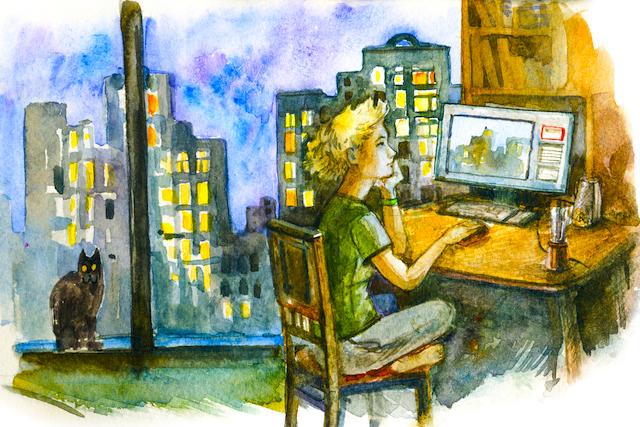
    So many times, I got caught up in the chaos of life and was consumed by it, until I realized that, while I cannot control what will happen tomorrow, I can control the actions I take every single day.

    That’s the real beauty of life—knowing that you have absolute control over each of your thoughts, words, and actions.

    And by trying, moving, asking, engaging, experimenting, and walking forward, you are one step further than where you were yesterday. And you just never know where that one step will lead you.

    3. Follow your inner voice.

    I used to feel that if only I knew more, I would be able to make a better decision about the direction I wanted to take in life. But as I dug deeper trying to get more information, the hole got so deep that I found myself buried.

    Confused and overwhelmed by so much information, some of it conflicting, I just didn’t know what or whom to believe.

    Then, I just let go. I let go of all evidence and started following my gut.

    I took chances; I took small steps walking forward in the dark. I stumbled, fell, but got back up and went in a different direction. Then again, and again, and again. As they say, the first step was the hardest, but I eventually found my way, not because some data point on a career chart showed me which way to go, but because I started to trust my inner voice.

    Sure, it was often wrong, but it got better eventually because I was out there doing and learning—not sitting and waiting.

    4. Believe in yourself.

    When I first started exploring new opportunities to find the right direction in my life, I found myself overwhelmed by the competition. There were so many others just like me trying to do what I was doing.

    Turning to my friends didn’t offer any respite, because, instead of encouraging me to try new avenues, some of them brought me back to where I began. “Why don’t you be more pragmatic?”

    With such seeds of self-doubt sown within me, it took me some time to recover my momentum. It was in the positive voices of so many others, in blogs such as this, in videos, and in social media, that I found encouragement to keep at it. It felt like these voices were talking about me.

    And in that positive lens, I found the light inside of me to bring forward the resiliency that until then had lain dormant.

    No longer suppressed by someone else’s ideas of the way things “ought to be,” I continued on my newly discovered path. The more I focused on my own voice and the voices of encouraging friends, the more I grew to believe in myself.

    Although for some, finding the right direction might require the journey of a lifetime, I do believe there is one direction in which we are all meant to go: forward.

    By taking small steps each and every day, putting aside overthinking, and realizing that you have everything you need deep within, you can find the right direction in your life. And while it may not be the direction you expected, it will work out just fine.

    Photo by katiaromanova

  • 3 Tips to Be Happier in Work and in Life

    3 Tips to Be Happier in Work and in Life

    “It isn’t our position but our disposition that makes us happy” ~Unknown

    I am just winding down from a business trip that has been both trying and inspiring at the same time. I’ve recently been put into a role to manage a department in a functionality I know nothing about, working with people I’ve barely met, and changing a formerly toxic environment.

    To say the least, I have a challenge ahead of me. Now six months into the position, I took my direct reports to breakfast and told them the sole purpose was for them to give feedback on how things have been going since the reorganization.

    During coffee, the responses were a flat “Everything’s fine”; by the last bite of my pancake, I had learned that both employees were frustrated—one feeling underutilized and the other having trouble balancing the “working manager” role.

    I had a lot of feedback to absorb, and it was very clear that there were items that needed to be addressed right away in order to ease frustration and point them in the right direction. At the same time, some of the comments and feedback needed to be dealt with some very honest directives.

    I spent the rest of the day and three hours in the middle of the night dwelling on what and how to address the main points that needed resolution.

    During those three mid-night hours, I finally worked through what to address and how to address it.  Then I had an epiphany.

    Having struggled to be truly happy most of my life, specifically with the pressure and expectations of my new professional role, I realized that the three items I would be preaching to my employees could be directly applied to my own personal life for the same purpose of easing frustration and moving in the right direction—being happy.

    How could I set these expectations for my own employees and hold them accountable and not do the same for myself? I knew the three points I would emphasize with them should also be emphasized in my own life. If I was going to hold them accountable, I was going to hold myself accountable too. (more…)

  • When Efficiency Isn’t Efficient: The Shortest Path Isn’t Always Best

    When Efficiency Isn’t Efficient: The Shortest Path Isn’t Always Best

    Taking time to think

    “There is more to life than increasing its speed.” ~Mahatma Gandhi

    “The shortest path between two points is a straight line.” That comes straight out of my eighth grade geometry textbook and if you can’t trust math, what can you trust?

    That pronouncement rang my chime. It put words to an unspoken feeling I had had for a long time. What could be better, truer, or more perfect than the shortest path?

    Kids Do the Darnedest Things

    As a teenager, I started putting in place “straight lines” in my life everywhere I could impose them. I got out of bed at the exact moment that would allow me to get cleaned up, dressed, fed, and off to class in the least amount of time necessary. It annoyed me to be even a few minutes early and terrified me to be late.

    I scheduled every moment of every day. I couldn’t stand an unplanned minute; I had to predetermine it all in advance.

    Now you might be thinking that I must have been one of those overly serious, driven, humorless kids. Not so. I partied with the best of them. But even that partying was all on schedule.

    I started going to college when I was just sixteen years old and still in high school. I had college in the morning and high school in the afternoon. No problem, I had it all mapped out.

    Of course that was just school. I worked too. I had a job after school part-time as a computer programmer. After that, I worked at a McDonald’s, closing five nights a week.

    Then I went out with my friends, then I came home and studied, then I slept for three or four hours. And then I did it all over again the next day.

    You probably see where this is headed. I thought I was being efficient and mature. After all, I worked hard and studied hard. I was reliable and diligent. I was the life of the party and seemed to have boundless energy.

    But one day, I just couldn’t muster the will go to work after school. I asked my mom to call in sick for me and I went to bed at 3:00 in the afternoon. I woke up 26 hours later, the next day at 5:00 in the afternoon. (more…)

  • How Mindfulness Can Help You Discover What You Want to Do in Life

    How Mindfulness Can Help You Discover What You Want to Do in Life

    “Nothing is a waste of time if you use the experience wisely.” ~Rodin

    When I was in college, I knew what to do and everything clicked along.

    But as graduation approached, I got nervous.

    I’d always assumed that some “good job” would turn up when I got out of school. But now it was in my face that I had no idea where I was going.

    I took a career workshop where we figured out our favorite interests and best skills. What the class didn’t provide was any follow-up to help me actually find the dream job.

    I didn’t know how to ask for help in putting these ideas into practice. Or even who to ask.

    I floundered.

    For the next three years I drifted through a series of little jobs. The bills got paid with some money I inherited from my father, but this cushion was getting thin.

    And I still didn’t know how to get a decent job.

    At some point I heard that people were always looking for reliable house cleaners. “I may not be able to do much,” I thought, “but at least I can clean a house.”

    So I started a housecleaning business.

    There were a number of great things about this job. The money was good. The part-time hours were good. I was my own boss. But I hated the work.

    So I decided quite randomly that a career in professional sales was the thing to pursue. Never mind that it held no interest for me. It seemed that I’d be good at it. (more…)

  • We Are More Than What We Do: Allowing Our Authentic Nature to Shine

    We Are More Than What We Do: Allowing Our Authentic Nature to Shine

    Light Will Guide You Home

    “The light at the end of the tunnel is not an illusion. The tunnel is.” ~Unknown

    In this society of ours, parents teach their children to do, to perform, to produce. We learn that to be adult, we need to be “productive members of society.” At social gatherings, more often than not, the first question among strangers is “What do you do?”

    My first memories include identifying so deeply with my movie director father that when asked what I wanted to be when I grew up, I always replied, “A writer and director.”

    Then life happened, and I spent decades acting out the painful and abusive relationship I had with my mother. Although I wrote almost daily, my life settled into a hand-to-mouth survival existence that had nothing to do with writing.

    A string of abusive relationships with men took the place of my unresolved relationship with my mother as I continued to act out the trauma of my youth in a repetitive cycle, all the while trying to keep a roof over my children’s heads and food on the table.

    All thoughts of any kind of career fell away and were replaced by anxiety, depression, and the urgent need to pay this month’s bills.

    When my mother died, much to my surprise she left me everything she had in the world, and I was able to buy a home and live for several years without worrying about money.

    During that time, I quit my job and started to write in earnest. My goal was to publish a memoir about growing up in a motion picture family in Hollywood and share the lessons my childhood taught me about love.

    These are the vastly over-simplified facts of my life. Less obvious was my growing self-identification as “writer” and a subtle yet mounting despair as time passed and I struggled to find a publisher or an agent to represent me.

    Recently, in a rare moment of absolute clarity, I realized that I had come to identify so deeply with the book and the rich and enviable career of my wonderful father that I saw both as extensions of myself. (more…)

  • Rituals for Renewal: 7 Steps to Lower Your Stress

    Rituals for Renewal: 7 Steps to Lower Your Stress

    Walking at Sunrise

    “Every day brings a choice: to practice stress or to practice peace.” ~Joan Borysenko

    Every day I meet with people who are stressed and want things to be different. I also encounter people who are so distressed they’ve accepted suffering’s dominion over their life. Almost all, however, are interested in the concept of change.

    Still, taking small, conscious steps toward a healthier emotional, mental, and physical life can sometimes seem overwhelming. More people have told me “I’m so busy—I can’t fit one more thing into my day!” than not. But what’s the alternative? It’s being just happy enough to be miserable.

    Take it from me. Early in my career, I decided to take a position with a new for-profit, up-and-coming business, determined to climb the professional ladder quickly. Immediately I moved my family from our safe, rural life to fast-paced, competitive Washington, DC.

    I became obsessed with work, committed, and my boss recognized my energy level and capacity to manage by awarding me with, of course, more work.

    At the time, I took this as a compliment; I saw it as evidence that I was achieving a goal. I did not recognize what my work was extracting from me physically, emotionally, and mentally until, ironically, I took a long overdue vacation.

    Walking out to the pool, my wife mentioned that we had forgotten the suntan lotion. Offering to retrieve it, I suddenly began to feel dizzy as I approached the lobby, anxious waiting for the elevator.

    I was sweating in the air-conditioning, and there was a sense of impending doom as I approached our room. I was afraid to walk inside, fearful there might be a blinking red light on my phone indicating a message from my boss about work.

    Seeing no red light, I was able to breathe again and regain my balance. But the truth was clear: The red light was a metaphor. If I didn’t begin caring for myself, soon enough I would be in a van with red lights whirling all around me.  (more…)

  • Realizing Your Dream: Stop Dwelling on “What Ifs”

    Realizing Your Dream: Stop Dwelling on “What Ifs”

    Holding Star

    “Excellence can be obtained if you care more than others think is wise, risk more than others think is safe, dream more than others think is practical, expect more than others think is possible.” ~Unknown

    I think I always had an idea of what I wanted to be when I grew up, but I sort of tweaked it along the way. I knew I wanted to work in the field of science, but like most kids, I wasn’t exactly sure where I fit in.

    When I was 10 years old, I wanted to be an astronaut. At the age of 14, I wanted to do absolutely anything for the United States Air Force (pilot, scientist, etc.). By the time I was 18 years old, I wanted to be a microbiologist.

    When I finally did grow up, I found myself working in bars by night and a dead-end office job by day; this lasted for most of my 20s. Who was I to complain? I was making decent money, but I felt awfully unfulfilled.

    I knew that I had what it takes to actually be a scientist, but I was not sure exactly how to get there. And for a moment, I thought it was too late.

    My childhood family was not comprised of college-bound folks; there were both hard workers and slackers alike, but school was not considered to be important.

    I was never pushed academically, and there were rarely any consequences for receiving bad grades. Also, like many families in the United States, mine was extremely dysfunctional.

    I was actually quite an intelligent child. I comprehended the concepts that the instructors were teaching; I just did not care to pay attention. And why would I?

    No one in my home valued education. Despite being able to understand science with my eyes shut, I struggled with mathematics because it’s hard to learn the subject when one is being rebellious. (more…)

  • Book Giveaway and Author Interview: 52-Week Life Passion Project

    Book Giveaway and Author Interview: 52-Week Life Passion Project

    52-Week Life Passion Project

    Note: The winners for this giveaway have already been chosen. Subscribe to Tiny Buddha for free daily or weekly emails and to learn about future giveaways!

    The Winners:

    It’s not easy to do something you’re passionate about for work—and not only because it’s hard to discover your passion or find a job to leverage it.

    Once we know what we love to do, we then need to work through all kinds of limiting thoughts, beliefs, and fears that may prevent us from taking action. Then we need to decide what that action should be—how and where to start, and how to stay motivated.

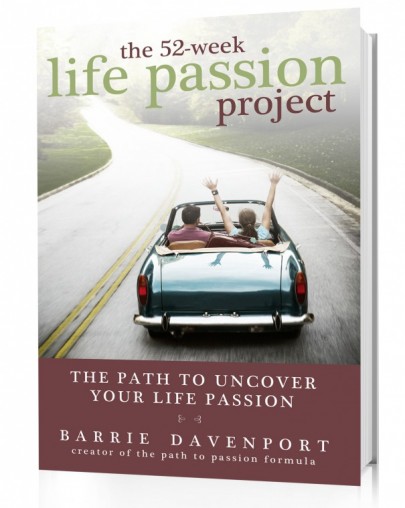
    It’s with this in mind that coach and blogger Barrie Davenport wrote the 52-Week Life Passion Project, an insightful, comprehensive guide to identifying what you really want to do and building your life around it.

    I’m excited to share an interview with Barrie, and grateful that she offered to give away 5 books for Tiny Buddha readers!

    The Giveaway

    To enter to win one of five free copies of 52-Week Life Passion Project:

    • Leave a comment on this post sharing something you’re passionate about. (If there’s nothing you’re passionate about yet, then just leave a comment saying hello!)
    • For an extra entry, tweet: RT @tinybuddha Book Giveaway: The 52-Week Life Passion Project: Comment and RT to win! http://bit.ly/W8WUUz

    You can enter until midnight PST on Monday, January 7th.

    The Interview

    1. What inspired you to write the 52-Week Life Passion Project? (more…)
  • Direct Your Emotional Memory to Feel Good Now

    Direct Your Emotional Memory to Feel Good Now

    “When everything seems to be going against you, remember that the airplane takes off against the wind, not with it.” ~Henry Ford 

    You’re stuck at work and you dream of something better.

    This dreaming usually starts off great. You imagine yourself sitting at a desk working on a million dollar project or teaching underprivileged kids how to multiply seven times three.

    Whatever your vision is, it’s good to daydream about this, but what usually happens is that we snap out of it, and reality smacks us in the face. We’re answering phones, running errands, and hating our lives.

    I’ve been there, most of Gen Y is currently there, and everyone else was also there at some point in their early careers. Through the years I’ve interviewed hundreds of people about their careers. Each one always talks about one tool that they use over and over again.

    Selective Memory

    I noticed that most of the older people look back on their early careers in fondness. They forget about the pain and remember the good times. A lot of times they even look back on the pain in fondness.

    They see how their superpowers had developed over the years. They know that each struggle was a part of their career growth and happiness.

    My father, a small business owner, an electrical contractor, struggled in his early years. He had to run around hunting down jobs. No one knew who he was, so the jobs didn’t fall on his lap. He had to schmooze with old and new contacts.

    I remember him coming home dejected, tired, and grumpy. I could have gotten free meals from the school, but my parents were too proud. I brown bagged my lunch 99.9% of the time. We couldn’t afford $.75 for a school lunch.

    Now my father looks back on that time in fondness. He’s proud of my family’s fortitude. It got them to where they are now. Let’s put it this way, they can go on vacation anytime they want even though my father still works. He works because he enjoys what he does and doesn’t want to give this up.

    If only he could have seen the magic in what he was creating when he created it. He would have saved himself a lot of worry. It’s this process that we can all use to help us to bring happiness to our struggles. (more…)

  • Are You Too Busy? 5 Signs of Chronic Stress

    Are You Too Busy? 5 Signs of Chronic Stress

    Busy

    “Beware the barrenness of a busy life.” ~Socrates

    A few years ago, the focal point of my life was my work. It took up and made up a huge portion of my life. In retrospect, I would even say that work became a sort of obsession. I became so obsessed with being productive that I set aside almost every minute of my waking hours for some work-related activity.

    I even coupled meals with work; toilet breaks meant mentally drafting reports and traffic jams signaled the start of phone meetings. You may look at this picture and think of me as an efficient multi-tasker. I honestly hope I was that, but no. I was nothing but a person trapped inside “too busy” cycle.

    Some people perceive being “too busy” as a sign of success or a flourishing career. Although this can be true, being constantly overworked and overwhelmed has more detrimental than positive effects. Being crazy-busy implies stress, and our body can only take so much pressure before it activates its stress response and runs on “survival or panic mode.”

    Stress can be helpful and motivating to some degree, but substantial evidence shows that chronic exposure to high levels of stress prompts the body to release hormones called glucocorticoids, which can potentially damage several body systems.

    When I learned about the gravity of chronic stress and my overly busy life, I made an effort to change my habits and keep everyday stress to a minimum. There are so many ways to effectively manage stress, but you can do so only after you actually notice and admit that you are indeed too busy and too stressed out.

    I have listed below some of the things that have made me realize that my “busyness” was out of hand.

    1. I was always looking for something.

    Searching for my car keys, phone, wallet, jewelry, eyeglasses, and documents became a part of my daily routine. Things seemed to be misplaced or lost all of the time.

    Cortisol, the hormone released when you are stressed, damages the brain over time and can lead to memory problems. But aside from that, when we are stressed out, our thoughts tend to be all over the place, and this lack of focus and the disorganized thoughts could very well cause us to lose track of things. (more…)

  • 5 Amazing Blessings from Being Fired

    5 Amazing Blessings from Being Fired

    “Sometimes the wrong choices bring us to the right places.” ~Unknown

    I was fired via email as my plane touched down at LAX.

    I am not the kind of person who gets fired, who gets dismissed, who is asked to leave and is not welcomed back.

    This was not my track record, no. What was happening?

    I had seen the ad on Craigslist, and it looked perfect. An educational theater program for kids was seeking instructors and administrators to help revitalize the company. They needed someone with current experience in the entertainment industry who was an educator and also had the business vision to help them grow.

    Application. Interview. Second interview! This was looking good. The company would soon be expanding into a beautiful, big, new building. They were interested in new ideas. I knew I could bring a lot to the table. 

    They wanted to hire me part time, as a contractor. I was okay with that. I asked if there was any kind of contract or written agreement. In my past experience, contractors had, you know, contracts.

    They said that they didn’t do contracts because they trust the people they hire, but if I wanted one, I could write it up and then we could go from there.

    So I did. I based it off a contract an employer had provided to me in the past and, of course, asked my attorney father if there was anything else I was missing. I made a couple adjustments and fired it off to them. Nothing overly litigious, just making sure we had in writing what our agreement was.

    Days passed. I started to worry. Things had been moving so quickly and so well. Finally, I got an email. Could I come in and talk about the contract?

    So I went in for a third meeting. This time, they had me sit in one of the classrooms. With a faux-paternal furrow in his brow, the owner asked me why I didn’t trust them. Why had I written up such a formal document? 

    Then came the PowerPoint presentation, highlighting each dagger I had thrown at them with my contract, line by line.

    This, ladies and gents, is when I should have picked up my purse, politely exited, and never looked back.  (more…)

  • How to Adopt a Growth Mindset and Stop Fearing Criticism and Failure

    How to Adopt a Growth Mindset and Stop Fearing Criticism and Failure

    “There are no failures. Just experiences and your reactions to them.” ~Tom Krause

    Ever found yourself working for a bad boss? I was shocked to learn recently that three out of every four people report that their boss is the most stressful part of their job and that it takes most of us up to twenty-two months to free ourselves of them.

    I thought it was just me!

    A few years ago I joined a large accounting firm to help them manage their employees. Though they were nice enough people outside of work, at the office, their professional pride in finding errors and vigorously pointing them out made them the worst bosses I have ever worked for!

    Every day was a battle of constant criticism and negativity. No matter what we achieved, the focus was always on what we needed to do better.

    Don’t get me wrong, I’m all for feedback and improving what I do at work. I also need to, at least occasionally, feel my efforts are appreciated in order to maintain my sense of enthusiasm and confidence.

    After all, we all have a deep psychological need to be respected, valued, and appreciated.

    As month after month of this behavior dragged on, for the first time ever I found myself really struggling to get out of bed and go to work. Their negativity seemed to be eating me up.

    Unwilling to just quit my job, I started researching ways to deal with my whining, moaning, negative bosses to see if I could restore some joy to my job. Luckily, I quickly discovered the field of positive psychology—the science of bringing out the best in people—and the phenomenon of “growth mindsets.”

    Stanford psychologist Carol Dweck has found that changing the way we perceive ourselves can dramatically improve our feelings and results.

    In particular, two beliefs can make a difference: Can we improve our abilities, or is this as good as we get?

    Reading this now, it probably seems like a no-brainer to you. Surely we’re all capable of change! The reality is, though, many of us secretly walk around with a “fixed mindset,” believing that our natural abilities are all we have and it won’t get much better than this. (more…)

  • The Top 25 Excuses to Wait on Your Dreams and How to Overcome Them

    The Top 25 Excuses to Wait on Your Dreams and How to Overcome Them

    “The best day of your life is the one on which you decide your life is your own. No apologies or excuses…The gift is yours—it is an amazing journey—and you alone are responsible for the quality of it.” ~Bob Moawad

    If we try, we can always find a reason not to do what we want to do, and it can seem perfectly valid. We can convince ourselves that we’re being smart, realistic, or safe, or that we don’t even really want it.

    We’re great at justifying the status quo, because we know exactly what that’s like, even if it’s dissatisfying.

    The unknown can feel terrifying. But somewhere in that same realm where anything could go wrong is everything that can go right.

    So many times in my life I’ve finally pushed myself to do something and then wondered, “Why did I wait so long?” If I had known the benefits would far outweigh my fear and discomfort, I would have pushed myself sooner.

    But we can’t ever know that in advance. We can only know that our reasons to do something are greater than our excuses not to.

    In my efforts to keep moving beyond my comfort zone, I’ve compiled the top excuses not to go after a dream, along with a few reminders to help us overcome them.

    (more…)

  • Keeping Our Hearts Open at Work and at Home

    Keeping Our Hearts Open at Work and at Home

    “A person’s world is only as big as their heart.” ~Tanya A. Moore

    I had a great boss. He was a creative spirit, just like me. He gave me total autonomy and creative license, and honestly, I did the best work of my career under his leadership.

    I can remember coming to him with outlandish ideas—never-been-done-before ideas—and he would listen, and then we’d spend hours brainstorming on how to bring them to life. When we brought them to life, we always shared in their success.

    We had a special relationship, and I felt like we could talk about anything.

    And then all of a sudden we stopped talking.

    The business climate changed dramatically. We were in the midst of a severe economic recession. Our industry was hit very hard. We had no time to talk. 

    The recession was a metaphor for all the relationships in my life. Lack, anxiety and shortfalls, disengagement.

    There was no time for questions, no room for ideas. It was too painful to go deep. There was just enough time and energy to stay afloat on the surface.

    I never even realized I closed off my heart. And then something awakened me to this reality.

    I was on a business trip in the mountains of Utah during early summer.

    My then estranged boss and I had a full day of meetings, and our two hosts invited us to take a ride on the chairlift before dinner. Somehow, our two hosts got pulled away to another meeting, so it was just the two of us—me and my boss—for the chairlift ride.

    There we were, two people on a four-person lift sitting as far apart as possible, in total silence, looking out into the distance.

    It was a beautiful evening, and there were many young couples snuggled in warm blankets, riding the chairlifts opposite us.

    They began to heckle me. “Why don’t you sit closer. He won’t bite you!” “Why are you sitting so far apart?” (more…)

  • What to Do When You’re New: In School, Work, or Your City

    What to Do When You’re New: In School, Work, or Your City

    “If you light a lamp for somebody, it will also brighten your path.” ~Buddhist saying

    Moving to a new country as a kid can be traumatizing because of the challenges of fitting into a new culture and new social customs.

    When I arrived in Northern California at the age of ten with my parents and younger two brothers, we were excited about being in America (home of Disneyland) but apprehensive about our how our classmates would react to us and how we would fit into the social environment of a school in a new country.

    My earliest memories of starting school in the 4th grade were not having to wear uniforms like we did in Malaysia, not having to stand up when speaking in class, and not having a regular morning assembly every morning prior to school starting.

    I welcomed the slightly relaxed curriculum, reading fun fiction titles in class and not having semester finals in elementary school.

    The challenges I found were as expected—not understanding the cultural context of what was happening in the classroom or references to American sports, entertainment, history and even holidays.

    It was also difficult fitting in and making friends initially in a close-knit school, where kids had grown up together since pre-school.

    Most of my classmates ignored me in the beginning. I found it difficult to engage in team sports activities or find lunchtime friends to visit with. Yes, there was some bullying, as well, about my mismatched, out-of-fashion clothes, my military-ready haircut, and even my accent, but I tried to take that all with good humor!

    While I recall eating lunch in solitude for several weeks and attending English as a Second Language classes trying to get accustomed to my new life in America, I did manage to make friends over the course of the school year and fit in.  I even started getting invitations to birthday parties by the end of the year. (more…)

  • Scaling Back to Propel Yourself Forward in Work and Beyond

    Scaling Back to Propel Yourself Forward in Work and Beyond

    “Your work is to discover your world and with all your heart give yourself to it.” ~Buddha

    Let me paint a picture for you, instead of clouding this post with emotion. To be more specific, I think I have Asperger’s Syndrome, and even if I wanted to cloud it with emotion, I would probably fail to convey the correct ones.

    I was born in Zimbabwe to well-educated and financially comfortable parents, which is as lucky a background as some people on this continent get to have. Unfortunately, my parents were also incredibly emotionally distant, and my earliest memories include several instances of domestic violence.

    Fortunately, they very rarely lived in the same house at the same time; we were usually a two-household family.

    My father, in the end, died of AIDS, and I’m not in contact with my mother or any reatives because they don’t want to talk about the abuse, the disease, or anything that happened within our family.

    I’m happy to accept that they are uncomfortable talking about it. After several years of struggle, I have learned a lot about my parents that teaches me what amazing people they were—and I am grateful to have been born into this family, because there was an incredible flip-side.

    Although my parents were emotionally distant, they pushed me intellectually more than any parents I have ever met.

    My mother relates a story of having purchased a VHS player in the United Kingdom when we lived there. At the time I was apparently around two or three years old.

    I pestered them about where the cartoon characters were, because I wanted to play with them. They dismissively told me that the cartoon characters lived inside the video machine. I waited until they were gone, and I remember painstakingly prying that VHS player open, so that I could have someone to play with.

    Instead of being annoyed or angry, my parents were amazed. From then on, they pumped me full of intellectual material. I remember reading Hemingway and Cousteau to my mother while she obsessively cleaned the house before I was even in middle school. It was incredible.

    It wasn’t surprising, therefore, that I chose to study medicine, or that I succeeded. (more…)

  • Balancing Home and Work: When Life Is in the Distractions

    Balancing Home and Work: When Life Is in the Distractions

    “It is not hard to make decisions when you know what your values are.” -Unknown

    My son has chickenpox.

    It started a few days ago and today is his third day at home.

    As a work at home mom who is her own boss, I’m fortunate that I can be at home with my son instead of having to ask my employer for time off work.

    I have been working from home for the past five years with three young children, and it was only just a few weeks ago that my youngest child started school full-time.

    I felt that I had reached some sort of milestone, having all three children at school full-time now. But I must say, I was also looking forward to having uninterrupted time at home.

    Ever since I was laid off five years ago, I have been struggling to find a good balance with spending time on my home business and raising three children.

    Now with my youngest finally off at school, it felt as though I had finally crossed that threshold where I was reclaiming my time back.

    Not to become a lady of leisure. Not to go to the gym. Not to go shopping in search of retail therapy.

    But I finally felt as though I had the time, free from the demands of children, to spend on my own business.  I had finally reached that point that I was always trying to get to: being able to work non-stop and to gain the momentum that would hopefully let me move forward in my business.

    On discovering that my son had chickenpox a few days ago, I knew I’d have to keep him at home for the rest of this week. It would—temporarily—be a return back to juggling work and childcare for a few days.

    Today trying to snatch snippets of time to myself to work, I was reminded only too well how I’d really struggled, especially when the three of my children were at home during the long, long summer break. I would barely sit down at my computer only to have to go and break up a fight or find something or help them with something within thirty minutes.

    After lunch today I told my four-year-old son that I had to go upstairs to work for a while and could he please watch Mickey Mouse Clubhouse for a little while until I got back.

    My four-year-old son then said, “I wish I was you Mommy and you were me.” (more…)

  • 4 Myths about Doing What You Love for Work

    4 Myths about Doing What You Love for Work

    “Your work is to discover your world and then with all your heart give yourself to it.” ~Buddha

    “Big flud strikes Revere!”

    That was the headline of the newspaper I made with my sister when I was six. I hadn’t yet honed my skills as an editor, but I knew a good fake story when I heard it.

    Eight years later, while wading through my anger toward several people who’d hurt me, I wrote a short book called The Line of the Virtues about the grey area between good and bad. An older coworker at my afterschool job asked, “Are all kids this deep these days?”

    Somewhere between six and fourteen, I’d found my calling: I was a writer who liked to tackle weighty topics. Though I took a lot of detours between realizing that and pursuing writing as a career, ultimately, it brought me to Tiny Buddha—my sweet spot for personal and professional fulfillment.

    Looking back, I realize I took those detours solely because I was scared. I thought writing was one of those careers that only a few people get to do. I figured it was better not to try than to try and fail, because then I could pretend I wasn’t writing by choice.

    I remember the first time I realized I was hiding from my passion. I was twenty-six years old, and part of a marketing team that was walking across the country to promote a number of fitness products.

    A coworker and I got into a ridiculous fight over the meaning of a word. She’d formerly worked as a comedy writer for radio shows—and, for the record, she was right about the meaning. Defending her stance, she shouted, “Don’t you think I’d know? I’m a writer!”

    I responded, “Me too!”

    Then she argued, “Not really!” Further drilling the point home, she continued, “Just wait ‘til you move to San Francisco and call yourself a writer there. Your MySpace blogs just aren’t going to cut it!”

    Since I’d held nothing back from Tom, this hurt—until later when I realized she’d given me a gift. She’d smothered me with the truth, and I had no choice but to acknowledge she was right yet again.

    I got a writing job the second day after I arrived in San Francisco. I was writing about senior care, a topic that interested me about as much as the mating habits of ants. But it was a decision to step onto a new path, knowing full well that, at that point, I had no idea where I was going.

    This is true for all of us whenever we start doing something new. There are never any guarantees about where it will lead, and that can be a scary thing, particularly if your current situation allows you to comfortably meet your responsibilities.

    There simply isn’t a one-size-fits-all formula for discovering what you’re passionate about and then transitioning to a new career. That being said, I’ve learned a few things about doing what you love for work—and I’ve learned that a lot of what I previously believed simply is not true. (more…)

  • Overcoming Shame at Work When You’ve Made Big Mistakes

    Overcoming Shame at Work When You’ve Made Big Mistakes

    “When there is no enemy within, the enemies outside cannot hurt you.” ~ African proverb

    Hitchen’s Kitchen. It sounds like a diner straight out of a romance novel. But there I was standing in yes, the kitchen, getting my first dressing down at my first paying job.

    At sixteen I had screwed up waiting tables. I got the special of the day, swiss steak, mixed up with sirloin. And so I kept putting in tickets ordering sirloins and the cook kept on grilling them.

    And then it struck. The customers were happily eating sirloin while paying the “special of the day” prices. The owner’s profits were tanking.

    By the end of the revelation, the only thing that was sizzling louder than the sirloins was Mr. Hitchen, the owner of the diner.

    And he was scolding me—loudly. Harshly.

    I stood there absorbing his tirade. I was shocked and silent while that warm wash came over my torso. My stomach felt sick. Then came the hollowness in my chest, up to my neck where the lump in my throat sat.

    How could I shrink away? How could I get away from this feeling? I’m drowning, I’m drowning. Save me, someone. I want to disappear.

    Shame.

    The Kingpin of Destructive Emotions

    Anger. Resentment. Hurt. Fear. Sadness. None of them feels good in our body. None of them are we racing to replicate.

    However, shame is worse. It is debilitating. Immobilizing. It makes us viscerally sick. It feels like we are wearing a cloak of badness. And it shakes our soul’s foundation.

    Shame doesn’t deliver just once either. The assault is made and the shame rushes in. For me, I replay searing scenes of shame in my mind and all the sensations come acutely pouring back into my body.

    As if the first showing wasn’t enough. No, we get the sequel of shame, too.  (more…)