Tag: words

  • How Changing My Words Changed My Life for the Better

    How Changing My Words Changed My Life for the Better

    “Our words create our world.” ~Rich Litvin

    I remember when I was about seven years old, shouting spitefully at my mum, ‘’I wish you were dead, I hate you!” Her jaw dropped in disbelief, and I knew my words had hurt her, which made my young heart heavy.

    I remember being fourteen years old asking my first crush, “H-h-hey, do you fancy going to the cinema with me this weekend? To my surprise, she said yes, which taught me there’s never any harm in asking for what you want.

    Later this year, I’ll be standing proudly next to my beautiful almost-wife saying the words, “I do.” With those two simple little words, I’ll convey my love and commitment to her.

    Words are powerful.

    They have the potential to hurt and destroy and to enhance and create.

    Since embracing this truth a few years ago, I’ve become more mindful of the words I use. That is, the words I speak and the words I think.

    Here are four ways I’ve changed my words and as a result changed my life.

    1. Swapping “I’ll try” for “I can, and I will.”

    Back when I felt stuck in life, I was always trying.

    Trying to lose weight.

    Trying to get out of debt.

    Trying to get my life back together.

    It struck me that, in all the areas of my life I was trying to change, I wasn’t having much success.

    I then looked at an area of my life I felt fulfilled in: my social life.

    Partying all weekend every weekend was the perfect escapism I needed.

    Drinking and partying masked my anxiety, making me forget about my money woes temporarily, and gave me the self-confidence I lacked when sober.

    Interestingly, when friends asked me if I would be out at the weekend, I never replied, “I’ll try and make it.”

    No! It was always, “I’ll be there! See you in the club, the first round is on me!”

    Upon recognizing this pattern, I made a new rule for myself: to swap “I’ll try” with “I can or “I will.”

    To no surprise, I started seeing improvements in my life. By saying “I can, and I will,” I somehow felt stronger and in control of my destiny.

    My confidence grew too. I used to say to my gym buddy, “I’ll try to get to the gym on Thursday,” only to cancel last minute (having never really intended to go), and then beat myself up for it.

    Thinking in terms of “I can/I will” gently forced me to be more decisive. I would then say “I will see you there” or “I will let you know by Tuesday.” If Tuesday came around and another commitment was more of a priority, I could communicate this clearly and without feeling bad for cancelling last minute. Switching from “try” to “can/will” caused me to ask, “What do I want to be committed to?”

    The word “try” does still have a place in my vocabulary. I can call a restaurant on a Friday afternoon to try to get a reservation for the evening.

    My rule is simple: I’ll never try to do something that’s in my full control.

    It’s possible I could call the restaurant and they’re fully booked. The outcome is not in my control.

    For anything that is in my control—exercising, writing, waking up early—I now use “I can” or “I will.”

    2. Ask better questions.

    Why am I so stuck?

    When my anxiety, debt, and drinking were at their worst and I finally felt it was time for a change, this question stuck in my head for several days.

    The answers I got were less than helpful…

    Because you’re a loser.

    Because you’ve got no discipline.

    Because life is hard.

    After several days of soul-searching and fed up with my lousy answers, ironically, a better question came to me: What if I’m asking myself the wrong question?

    I closed my eyes and asked my mind to give me a better one.

    What can I do today to move forward a little?

    For the next few months, this became my question of choice. And each day, I moved forward just a little more, focusing on progress over perfection and solutions rather than the problem.

    As Tony Robbins says, “Quality questions create a quality life. Successful people ask better questions, and as a result, they get better answers.”

    3. Saying “I get to” instead of “I have to.”

    Two years ago, I was on a Skype call with a good friend from Canada.

    We connect every now and again and share what we’ve been working on, and it’s always very high-energy and inspiring!

    He shared with me the idea of “I have to” vs “I get to.”

    “Anytime you wish to feel grateful, change your ‘I have to’ statements into ‘I get to’,” he said.

    Like many new ideas I hear, it sounded good at the time but, to be honest, I soon forgot about it.

    A few days passed and I was leaving the house to go meet a student. At the time, I was teaching English to non-native speakers, and every Monday evening I would travel across town to where this guy lived.

    It was quite a hot day and leaving the house, I wasn’t looking forward to the sixty-minute walk. I became aware of the dialogue in my mind…

    “Urgh, I have to walk across town to go teach English.”

    Suddenly, the conversation with my friend came flooding back to me, so I decided to change my train of thought.

    “I get to walk across town to go and teach English.”

    Wow, gratitude hit me hard and in a way I’d never felt before.

    For the first time in a very long time, I felt gratitude for my legs, for the fact that I’m fit and healthy enough to walk!

    Not only that, I felt gratitude for my student, who I got to spend time with each week so I could help him improve his English—a privilege I had overlooked before.

    It’s always important to me to honor how I feel, meaning if I am feeling tired or unmotivated that’s okay. Often, though, changing my “have to” statements to “I get to” is the switch I need to change my perspective and my mood.

    4. Swapping the punisher for the cheerleader

    Perhaps the biggest change I’ve made is shifting my internal voice from a punisher to a cheerleader.

    Like a lot of people, I was painfully strict with myself and overly critical.

    I’d speak to myself harshly whenever I failed.

    When I felt weak I’d judge myself for feeling that way.

    I would beat myself up for always beating myself up!

    Self-compassion was at the heart of making this switch. Speaking to myself in a gentler, more supportive tone. Less dictator and more supportive grandparent.

    With some practice, I began to respond to failure with words of encouragement.

    When I felt weak, I’d offer myself understanding and empathy.

    If I beat myself up, I’d forgive myself and move on.

    I read somewhere that as important as what we say to ourselves inside our heads is how we speak to ourselves, the tone of voice we use. The author encouraged me to imagine the most understanding, compassionate, and gentle voice imaginable and talk to myself in this voice.

    This has been a real game-changer.

    Louise Hay said, “You’ve been criticizing yourself for years and it hasn’t worked. Try approving of yourself and see what happens.”

    I’ve been amazed by what’s happened. Since approving of myself, I’ve relied less on approval from others, which has been liberating, and I’ve given myself full permission to live how I want to live, since approving of myself also means approving of my wants and choices.

    Part of me wishes I had realized the power of my words long before I did.

    Part of me knows I discovered that our words create our world at exactly the right time I was supposed to.

    No matter what age we are or where we are on our journey, I believe, it’s never too late to change our words—and change our world.
  • Our Words Have Power (So Speak Kindly To and About Yourself)

    Our Words Have Power (So Speak Kindly To and About Yourself)

    “I monitor my self-talk, making sure it is supportive and uplifting for myself and others.” ~ Louise Hay

    Three years ago, I ended up with no work in a foreign country. I was almost depressed, as I didn’t know what to say when people asked questions about my profession. The idea of making no income injected my mind with a wide repertoire of worries, fears, and concerns.

    I was lost and stuck, and the way I was labeling myself at the time felt quite painful: unemployed. Not only did it look like I had a serious problem to deal with, I was starting to feel like I was a problem, myself.

    We all perceive the reality of our experiences filtered through our own lenses, the expectations we set on ourselves and others, and our individual system of belief. To some people, being unemployed is a fact. Not good or bad, normal or abnormal, right or wrong. To me, it held a strong negative connotation. In a world that generally validates our self-worth through what we do for a living, being left with no work made me feel like a total failure.

    Thanks to Wayne Dyer, one of the spiritual teachers who helped me grow into who I am today, I managed to change my perspective and see things in a much different light. Here’s what I remember him saying in an interview on YouTube: “Your only problem is your belief that you have a problem. When you change the way you look at things, the things you look at change.”

    His words spoke to me from the inside out. It came like thunder: a wake-up call that was going to shift my entire experience. The moment I decided to look at the situation from another angle, everything changed.

    I decided to eliminate the word “unemployed” from my vocabulary, and I went for more empowering words instead. I was “job hunting,” and “looking for better employment opportunities” while being “in transition to a new career.”

    Those feelings of frustration and sadness, which came with a deep sense of unworthiness and identity loss, got replaced by a much cleaner space of possibilities, hope, and curiosity for a fresh start.

    By changing my perspective and the language I was using to describe my experience, I stopped feeling like a victim. Things were not imposed on me any longer, and I had power.

    All of a sudden, I could see the bright side of the situation. When I was busy with work, always running somewhere, working overtime to reach goals and fulfill my duties, I so much wanted to get more time. When I was left with no job, I accused life of being unfair. It wasn’t.

    I realized I had all the time in the world—and what a precious gift that was, because time never comes back! I had enough savings to rely on and a supportive husband, as well. And I had a dream to pursue—to do soul work with people and make this world a much better place. One year later, I got certified as a coach.

    Today, I know that was a real blessing in disguise. “Unemployed” was not a weakness, but an opportunity for me to grow professionally and build a new career from scratch.

    I have also learned that failing with anything doesn’t make me a failure, because I am not what I do. Being left with no work was an experience, and it didn’t have to define me or lower my self-worth unless I allowed it to.

    One more time, Wayne Dyer was right: I am a “human being,” not a “human doing.”

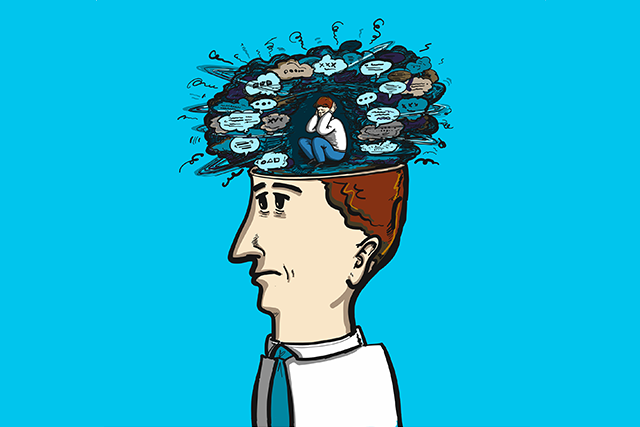
    You see, the thoughts we think and the words we speak have tremendous power. Words are a form of energy, and their vibration has a high impact on the way we feel and think; they can either empower us or put us down.

    I invite you to try the following exercise: think of a situation in your life that looks like a problem. Stay for a moment with that and get mindful of how that feels in your body.

    Now, think of the same situation as if that was an issue or a topic for you to brainstorm, reflect, and deal with. Can you see the difference and how much lighter you feel?

    You’ve done nothing else but replacing the word “problem” (which feels like a burden, something heavy for you to carry) with “issue” (much lighter, something that you could find a solution to).

    When I was a child, my mother advised me always to pay attention to my words. “One can kill or save another with only one word,” she said. I didn’t get what she meant at that time, but now I do.

    Looking back on my life, I came to realize I spent many years punishing myself with disempowering words about who I was. Thinking I wasn’t good enough, perceiving myself as a failure when I was making mistakes, taking myself for granted, unable to acknowledge my achievements, as if “anyone could do that” or “it wasn’t anything big or special.”

    “Stupid me!” “I’m not good enough.” “I’ll never get this.” “This is too big for me.” “I am average.” That’s how the voices in my head used to sound.

    Years later, thanks to the beautiful work of Louise Hay, I have learned that being mindful of my self-talk is one of the best forms of self-care and self-respect.

    “You’ve been criticizing yourself for years, and it hasn’t worked. Try approving of yourself and see what happens.“ ~Louise Hay

    I knew I would have never told my best friend what an idiot she was for doing this or saying that. And if she were to consider herself ugly or stupid, I would have never encouraged such an idea. I would have supported her in the best way I could.

    It took me a while to understand how unfair I was to myself: talking to others kindly and showing them compassion while putting myself down every day. Just like everyone else, I was also a person, worthy of being seen and listened to, appreciated, understood, forgiven, respected, acknowledged, nurtured, and loved.

    The day I stopped making myself small with my self-talk, my life transformed, and here’s what I know to be true today:

    I am whatever I believe myself to be. If I think I am smart, beautiful, ugly, or stupid, that’s what my reality becomes. We all get to shape our own story by the way we feel, act, and think.

    Besides that, I don’t have any weaknesses; I only have areas for growth.

    While I am aware of the things I need to work on (do less and be more, become more patient and sometimes calmer, talk less and listen more and so on), the very fact that I have replaced the word “weakness” by “area for growth” is empowering. Like everyone else, I am on a journey called Life, and that’s all about learning.

    My husband and I moved to Mexico a few months ago. We can understand Spanish, but neither of us can speak it. I could see this as a weakness, but I choose not to. This is nothing but an area for growth: we are both going to acquire new skills, expand our knowledge, and grow as individuals. We’ve already started to take lessons.

    The words we use in our everyday life have power. They can either destroy or build relationships with ourselves and other people. Getting mindful of our self-talk is one of the best forms of self-love and self-compassion. Let us choose our words wisely.

    Language shapes our behavior, and each word we use is imbued with multitudes of personal meaning. The right words spoken in the right way can bring us love, money, and respect, while the wrong wordsor even the right words spoken in the wrong waycan lead to a country of war. We must carefully orchestrate our speech if we want to achieve our goals and bring our dreams to fruition.” – Dr. Andrew Newberg, Words Can Change Your Brain

    And now, I would like to hear from you. If there were one single disempowering word for you to eliminate from your vocabulary, what would that be?

  • 3 Tips to Help You Stop Saying Things You Regret

    3 Tips to Help You Stop Saying Things You Regret

    Woman with hand over her mouth

    “If you propose to speak, always ask yourself, is it true, is it necessary, is it kind.” ~Buddha

    I initially saw this quote and, in true ego-first fashion, thought of my kids: this’ll be perfect for them. I’ll put it up in the kitchen as a regular reminder to stop pestering each other.

    But then, something a bit deeper poked me gently. Riiight, just for the kids, is it? You’ve got this mastered, then. I guess my true self is not afraid to use sarcasm when it needs to.

    My true self was right (as it always is). When I began to think about those small regrets that plague my running thoughts, so many of them came about because I didn’t adhere to the Buddha’s sage advice.

    Here are a few examples that spring to mind:

    The times I’ve blurted and blathered random nonsense to other parents while waiting for my kids to appear at the school gate.

    The times I’ve made a negative comment about someone.

    The words I’ve chosen when pestering my kids to get things done.

    All my many miserable rants about the usual annoyances in life.

    When I thought about it, I decided there are common themes to the things I say which I later regret. They usually fit into one of three categories:

    • I speak to avoid the discomfort of silence.
    • I speak to unload an ego-driven thought.
    • I speak with negative emotion like frustration or anger.

    Let’s drill down to see where each of these breaks one of the precepts of speaking only good words.

    I speak to remove the discomfort of silence.

    So many times I’ve been in the presence of people when there is an uncomfortable silence and I am desperate to break it. But why? And is it really uncomfortable, or is that just me?

    Inevitably, I end up speaking things that may well be true and kind, but are certainly not necessary. And I end up feeling like a blathering fool.

    Speaking just for the sake of speaking doesn’t help. And sometimes it can hurt, if I’m speaking in a rush, without thinking. So, the next time I’m standing with someone and conversation isn’t flowing, I will always stop myself and ask: is this necessary?

    I speak to unload an ego-driven thought.

    By ego-driven, I mean a thought that makes my self-image feel bigger and better. Gossip fits well into this category. Or bragging. Complaining about a negative situation is another. (Because in the complaining, I’m pointing out what everyone else is doing wrong.)

    If I speak these thoughts aloud, I usually do so with someone I can trust, like my husband, but that does not make it better. Vocalizing something negative about someone else always makes me feel worse, even if I can trust the person I’m sharing it with. It’s just not worth it.

    I speak with frustration or anger.

    This one’s a bit more nuanced, and often comes down to tone. Even if the words themselves are true and necessary (such as: “because you dilly dallied over breakfast, we’re now going to be late for school”), they are not kind. The unkindness often comes through in the tone, if not the words themselves.

    As usual, sage advice seems so simple but is not at all easy to put into practice!

    Here are some strategies to try:

    1. Breathe.

    Take a moment for a conscious breath before speaking. It’s an imperceptible pause, but it allows you the space to consider your comment before it is spoken. Not only does it give you space for second thought, it can somehow magically reframe the situation.

    I’ve found that noticing the simple miracle of breath can cause me to see the current situation in a completely different light.

    2. Respond; don’t react.

    There is a huge difference between a thoughtful response and a knee-jerk reaction. Often, the knee-jerk reaction is fueled by subconscious anxieties.

    Enabling yourself (via #1) to have a thoughtful response means taking control of the situation and not letting your subconscious run your life.

    3. Reflect.

    Use the lapses in judgment when you’ve said something regrettable to consider why you responded the way you did.

    The trigger is usually only half of the problem. It’s worth considering what in ourselves, deep down, was irritated enough to strike back. Being aware of these personal vulnerabilities is what contributes to tremendous personal growth over the long run.

    Ideally the transformation would occur at the level of thought, so words would never have to be checked at the door, as it were. Oh, to have only true, kind and necessary thoughts!

    Until then, this quote is going up on our fridge as a regular reminder for me to tick all three boxes before speaking. I’ll take it one day at a time. (Heck, one hour at a time!) If it rubs off on the kids, all the better.

    Woman holding mouth image via Shutterstock

  • Solve Your Problems and Set Yourself Free with Perceptual Language

    Solve Your Problems and Set Yourself Free with Perceptual Language

    SONY DSC

    “Use what language you will, you can never say anything but what you are.” ~Ralph Waldo Emerson

    Imagine using a new language that prevents you from blaming others, being reactive, manipulating, fearing anything in the outside world, needing social approval, being offended by others, and being controlled or controlling others.

    Imagine that these problems were simply eliminated from your life because your new language makes them impossible. Welcome to Perceptual Language.

    Refined by Jake and Hannah Eagle of Reology, Perceptual Language represents a major development in psychology, perhaps the greatest breakthrough since the days of Freud.

    When you learn Perceptual Language, you engage your tongue and your brain toward a new level of enlightenment. Here is a brief overview of how it works.

    Principle #1: There is no out there out there.

    Perceptual Language honors the principle that we don’t respond to “the world out there.” We respond to our perception of the world. Perception is formed by beliefs, cultural norms, religious affiliation, genetic factors, life experience, sense of right and wrong, and so much more.

    All of these factors combine to filter the information that passes through our senses, allowing us to figure out what things mean. In other words, we don’t ever directly experience anything outside of ourselves. We only experience ourselves.

    When I listen to my wife talk, I am actually hearing my perception of her words, gestures and so forth. I am making meaning out of what she communicates based on that. This may or not match the meaning she intends to convey.

    If I am offended by her, it is important to understand that I am actually offended by what I did with her words based on how I made meaning out of them. In essence, I am offended by her-in-me. Not by her, the real person. I can never experience her, the real person, directly.

    In essence, I am offended by this person that I have made a part of me by the way I perceive her. In the end, I am offended by none other than myself. (more…)

  • The Power of Words

    The Power of Words

    When I first saw this video, I thought it was about the title—the power of words. Then it occurred to me that it might be about the other part of the title (shared on the YouTube page, but not here): you should see this.

    Perhaps it’s not so much about saying the same thing in a different way; maybe it’s more about the gift of the second message and how that naturally inspired others to give back.

    It’s a powerful reminder, a truth we often forget. It’s a beautiful day. Can you see it?