Tag: wonder

  • 365 Days of Wonder: The Magic of Starting an Awe Journal

    365 Days of Wonder: The Magic of Starting an Awe Journal

    The news: everything is bad.
    Poets: okay, but what if everything is bad and we still fall in love with the moon and learn something from the flowers. ~Nikita Gill

    My dad died when I was thirty-one. I wasn’t a child but barely felt like an adult. He had reached retirement, but only just. Mary Oliver got it right when she wrote, “Doesn’t everything die at last, and too soon?”

    A few months later, I pulled myself out the door and off to work. The December weather and my heart were both raw. Then I saw it: a single rosebud on a ragged bush.

    I laughed aloud. A rose blooming in winter? And then I started to cry—for the wondrous absurdity of a tiny, lovely thing proclaiming its place in a dark world.

    This pink bud did not make things “all better.” And yet, for a moment, I remembered that my heart was capable of feeling more than grief. It had space for wonder and delight.

    I have spent the last three years studying the emotion of awe. I could share studies about how experiencing wonder makes us more generous, humble, and curious. I’ve written a whole book on the emotional, psychological, and cognitive benefits of this feeling.

    But here’s one thing I really love about this thoroughly human emotion: awe doesn’t require anything from us but our attention. We don’t have to do anything to feel awe. We don’t have to be anything we are not. We just have to show up in the world, eyes and ears open.

    When researchers ask people around the world to describe a moment when they experienced awe, they often point to ordinary moments. A piece of music that brought tears to their eyes. A stranger helping someone in need. A blooming cherry blossom tree. The smell of the earth after the rain. Holding someone’s hand in their final days.

    This year, I made a resolution to keep an awe diary. I call it “365 Days of Wonder.” I’m drawing inspiration from my late grandmother. She kept a daily diary for over fifty years, and most of her entries are only one or two sentences. Taken together, these micro-entries paint a rich picture of the rhythm of her years.

    So I feel no pressure to write a long journal entry each day. Just a sentence or two about something I saw, heard, tasted, smelled, or learned about that day that made me say, “Oh wow.”

    It’s now mid-March, and I have written seventy-seven entries. Can I share a few of them?

    Day 9:

    Listening to President Carter’s funeral, I was touched by this reflection from his grandson, Jason Carter: “In my forty-nine years, I never perceived a difference between his public face and his private one. He was the same person. For me, that’s the definition of integrity.”

    Day 27:

    Last night I randomly grabbed some old fortune cookies before driving home a group of teenagers. “Here, check out your fortunes for the week,” I said. The first teen read, “You will be surrounded by the love and laughter of good friends. Ha! Well, that one already came true.”

    Day 34:

    While on a morning walk, I got a text from a friend. She had woken up to the sound of a neighbor shoveling her driveway—a reminder, she wrote, that there are “good people everywhere.”

    Day 37:

    A beautiful family friend died today. She was ninety-five, and I remember when—at nearly eighty—she spotted our family across the beach and ran full throttle to greet us, with a hand atop her head to keep her sunhat from blowing away. I want to age like that.

    Day 38:

    I brought Humfrid the Octopus with me on a school visit today. At the end of my presentation, a kindergarten sidled up: “Can Humfrid give me a hug?” I replied, “With eight arms, he can give you a quadruple hug!”

    Day 41:

    Finding a moment of wonder was harder today. So this afternoon while driving, I tried to keep my senses open. And almost instantly, I got stuck behind a school bus.

    But, but, but . . . while stopped, I noticed a border collie sitting at attention. The moment his teenage person stepped off the bus, he bolted down the long driveway and danced happy circles around his kid.

    Day 42:

    It was fourteen degrees when I took the dog out this morning, but the dawn was full of birdsong. In a month, the migrating birds will start returning—but I’m so grateful to the hardy little birds who stick around all winter.

    Day 62:

    I backed into a car last night in a small, dark parking lot. Tears. I couldn’t find the owner, so I left a note with my info and contrition. The owner texted me later, we shared all pertinent insurance details, and then he wrote this:

    “The car is a car. They make thousands, if not millions, of them, and it’s no good for me to be angry because of an accident. Things happen. Better energy with happiness and kindness. Hope you have a lovely day.”

    Day 65:

    I came home late from a meeting last night. My thirteen-year-old was still up—writing heartfelt thank-you notes to people who had supported a service project she had helped organize.

    Day 73:

    Took my dog to be groomed. While he ran around the groomer’s backyard with her pups, she showed me an envy-inducing “She Shed” that her dad built for her last year. Mind you that she is my age and he is in his 70s. She got teary and said, “He’s the best man I’ve ever known. I’m so lucky.”

    Day 74:

    I didn’t need my Merlin app to identify woodpeckers today. At least three were rattling the neighborhood at dawn with their hammering. In other news, I heard my first red-winged blackbird of the season.

    Day 76:

    I wasn’t sure whether my youngest still believed in leprechaun magic and did the usual low-key-but-fun mischief around the house after the kids went to bed. When he came down the stairs this morning, he broke into a huge grin and whispered to me, “You did a good job this year, Mom!” And there it is. Another kind of magic.

    Seeking out wonder has become a habit. I find myself looking up when I go out to walk the dog, paying more attention to good news in my doom scrolling, and pausing to listen when I hear something lovely. Like finding that rose on a December day, these moments of wonder don’t fix what hurts. But they whisper each day, “This world is hard. And this world is so, so wonderful.”
  • Free to Shine: How I’m Rediscovering My Inner Light

    Free to Shine: How I’m Rediscovering My Inner Light

    “When a flower doesn’t bloom, you fix the environment it grows in, not the flower.” ~Alexander Den Heijer

    I remember the girl I used to be. Light, full of life, and constantly in motion—like a little twirl of joy spinning through the house. There was this rhythm inside me, an effortless dance between curiosity and wonder. I’d tap dance through the kitchen, counting how many twirls I could do before I lost my balance.

    The world felt vast, endless, and open. I didn’t just see beauty in big, grand things. I found it in small moments and delicate objects, like that little glass bird on the sofa table, a tiny piece of my world that always felt so fragile, so full of wonder.

    As a child, I never doubted that there was more to life than what I could see. I had this deep connection to the world, to the beauty hidden within it. I would hold that bird in my hands while doing my chores, dusting around it with care. It was simple, transparent, nothing extraordinary, but in my eyes, it shimmered with significance.

    That lightness, that sense of awe, stayed with me for a long time. But somewhere along the way, things started to shift.

    By the time I was in my thirties, I had built a life that looked perfect on the outside. I worked hard to create it. I was meticulous, structured, dedicated. I followed the steps I thought I was supposed to: high-paying corporate job, beautiful house, two kids, vacations—the kind of life people admire.

    On Facebook, we looked like the ideal family, smiling on beaches, posting about our Florida trips, standing in front of our towering house with that sparkling SUV in the driveway. But beneath the surface, I was crumbling.

    The lightness, the sense of wonder that had once danced so freely within me, was gone. I had replaced it with structure, control, and a constant need to keep everything in check.

    I would lie awake at night, my mind spinning with numbers, running the calculations over and over. The debt we had accumulated was crushing, and every bonus I earned was already spent before it even hit the account. I would total up the bills in my head, again and again, hoping that if I recalculated just one more time, the numbers would somehow change, the debt would somehow shrink, but it never did. I was suffocating under the weight of it all.

    On the outside, I kept up the facade. I went to work, managed my family, kept the smile in place. But behind closed doors, I was breaking.

    I’d cry in the shower so no one could hear me. I’d cry in the car, on my way to work, during moments where I was supposed to be “on,” a career woman with it all together. And then at night, after my husband and kids had fallen asleep, I’d lie in bed, silently crying into my pillow, overwhelmed by the crushing realization that despite everything I had built, I was miserable.

    There was a day, driving to work early one morning, when I saw the sun just beginning to rise. The sky was that deep, almost-black shade of pre-dawn, and then, there it was—the light. The same light I had seen thousands of times before, but this time, it hit me differently.

    I remember thinking, At least one day I’ll die. At least one day, I won’t have to feel like this anymore. The idea of my mortality didn’t scare me—it brought me comfort. The idea that this pain, this life that felt like a trap, wouldn’t last forever… it felt like relief.

    In that moment, a quiet truth began to take shape: something had to change. I couldn’t keep living this way, reaching for comfort in places that only deepened my pain. Somewhere, I had lost myself, drifting in an unhappy, unstable marriage, bound by a fear of judgment, a lack of self-worth, and the overwhelming weight of needing to please everyone but myself.

    The thought of leaving felt paralyzing, so I searched for solace anywhere I could find it. In moments of darkness, thoughts of my own mortality, and even fleeting thoughts about my husband’s, seemed to offer a strange sense of release. But I knew these weren’t answers—they were signals of how lost and trapped I had become, craving a way to ease the suffering but not knowing how.

    The truth was, it wasn’t freedom from my life I needed; it was freedom from the suffering within it. What I wanted wasn’t an escape but to find my light again, that part of me that once danced through life, open and filled with joy.

    She was still there, buried beneath years of silence and strain, waiting to be rediscovered. I knew that if I didn’t make a change, I risked losing her—losing myself—forever. And so, that realization became a turning point, a call to rise from within and seek out the light I thought I had lost.

    It took years—therapy, coaching calls, long coffee dates with friends, journaling, crying, and rediscovering who I am—but slowly, I started peeling back the layers. The walls I had built around my heart, the ones I thought were protecting me, were actually suffocating me. Piece by piece, I took them down, and with every wall that crumbled, more light began to shine through.

    Then, I met my now-husband. He wasn’t part of the plan. I had been so focused on fixing myself, on healing, that I didn’t expect to find someone who would see me, truly see me, in the midst of it all. But there he was, with love and patience, willing to walk alongside me on this journey. And with him, I learned to let even more light in.

    But life wasn’t done testing me. After all the healing, all the rebuilding, I lost my dad. His death was like another wall coming down, not in the way the others had fallen—this one was different. It wasn’t a wall I had built, but it was one that kept me tethered to the past, to who I was before.

    Sorting through his things, going through the house I had grown up in, I found that little glass bird. Still intact. After all these years, all the moves, all the changes, that tiny, fragile bird was still there. And I realized something: I’m still here too.

    I had been through so much—divorce, rebuilding, loss—but my light, the one that had been buried for so long, was still there. It had always been there. And now, after all the pain, after all the walls had crumbled, that light was finally free to shine again.

    I am the light. The light that had been hidden, buried under years of expectations and pain, was always within me. And now, after all the healing, all the self-work, I can see it so clearly. The light is me, and it is you. We all have that light within us, no matter how deep it’s buried, no matter how dark it feels. It’s there, waiting for us to let it shine.

    This is your moment. Your light is waiting, just like mine was. It’s always been there, and it always will be. All you have to do is let the walls come down, piece by piece, and watch as your light shines brighter than you ever imagined.

  • You’re Never Too Old To Feel Inspired, Excited, and Alive

    You’re Never Too Old To Feel Inspired, Excited, and Alive

    “I do not want to get to the end of my life and find that I just lived the length of it. I want to have lived the width of it as well.” ~Diane Ackerman 

    I’m in the business of watching people take risks. I observe them tackling challenges, fear, and discomfort, and sometimes, “making firsts” in their life.

    I observe a lot as a flight attendant, and sometimes wonder if my official title should rather be “Human Observer,” or “Social Experimenter.” It feels more accurate, or at least it’s the part that I typically enjoy the most. I’m also what’s called a “Death Doula” and hospice volunteer, both of which I consider to be more of a passion rather than a kind of “job” or “position.”

    I not only enjoy observing and assisting people through their living process, but also through their dying process. That includes everything in between. My interest in humans isn’t just with the young (who the media unfortunately tells us are the only “relevant ones”), but I rather have a special spot in my heart for the old and the dying.

    I experienced a rather benign interaction a couple of weeks ago, walking to my gate in the Salt Lake City Airport at the beginning of my work trip. As I was passing the TSA security area, a hunched elderly woman, slightly ahead of me, dropped all of her belongings. Her belongings included a small rollaboard and a large tote purse. Her bags were ripping at the seams with the items I’m sure she diligently chose ahead of time.

    My husband, who also happens to be a “Human Observer” with the same Human Observing company, was walking with me. The timing aligned perfectly—she dropped her bags, resulting in several items spilling out, and we, following right behind her, were ready to help pick up the pieces.

    It was just the interaction I needed at that time.

    As with any job, position, or career, it’s easy to feel “burnt out,” rundown, or simply uninspired, given the right circumstances. No matter how exciting your job or life may seem to other people, it’s your “normal,” but likewise, it’s your individual responsibility to keep that flame of inspiration burning.

    A similar idea can be true for what may seem like a “boring” life or “boring” job: it may be your ultimate passion and inspiration. Either way, life and circumstances ebb and flow. Sometimes you just need to get out of your own head and stop thinking about the same day-in, day-out rudimentary topics of your life.

    At the time, I had been feeling fairly lackluster. I’d been working more than normal and had barely had time to myself to contemplate and be introspective (which I desperately need on a regular basis), let alone time to even be home. This interaction changed things for me in that moment and has stuck with me since.

    It was clear that she was traveling solo. I helped pick up her dropped rollaboard luggage as my husband started helping with her tote bag. I noticed that some of the items that dropped from her bags were French language and culture-related books. She was disorganized, no rhyme or reason for any items’ place, and you could tell she used every inch of space possible.

    “I’m going to Paris for a month, and I’ve never traveled before! This is everything I’m bringing!” She exclaimed, her smiling face closely looking up at me. I’ll never forget her look—that wrinkled, rough face with a peeling nose, disheveled short hair, and haphazardly put-together outfit. She was ecstatic, and it almost seemed as if she had been waiting to tell someone—anyone—about what adventures she was about to embark upon.

    As my husband worked on putting some items back in order, quietly talking to himself (“these will just fall out again if we don’t put them here”), I told her how excited I was for her and how amazing it is that she is doing this—going for it. Her excitement radiated onto me, and I couldn’t help but feel absolutely elated for her.

    We exchanged some additional niceties, and we helped her find her departure gate. For the next several minutes after parting ways, I had the biggest, dumbest smile stuck on my face.

    I would have loved to have been a fly on the wall (plane “wall” or otherwise) throughout her journey—to see her sense of wonder and curiosity with everyone and everything she was to encounter. I think about her now, conscious of the fact that she’s exactly halfway into her journey.

    This entire interaction then made me wonder, “What was it in her life that served as the catalyst for this decision of hers?” What made her decide, “Yep, this is the time. I’m just going to go for it. What have I got to lose?” She didn’t look like your stereotypical “adventurer.” She wasn’t trying to be anyone but herself.

    In a modern world where the young, adventurous ones are on Tik Tok, YouTube, or Instagram, it was refreshing to see a normal, mature person just going for it. I see and experience examples of this kind of thing on a regular basis, but I guess I just wish that perhaps someone from a younger generation who may be insecure about the direction of their life could experience these things with me.

    As much as I’ve experienced those who are brave and taking up hobbies or doing things that inspire them, I’ve also seen the opposite: those who are afraid of the new. It seems as if people get settled in their ways and end up saying to themselves, “Welp, this is it. This is my life now.”

    But why do we do that? It seems so counterintuitive to how life should be: full of exploration and wonder. I don’t think this is a particularly new or modern concept. I don’t think it’s because of social media that more mature folks aren’t taking risks or taking up hobbies they genuinely enjoy.

    This is not to say that I think everyone should get on a plane and go to Paris. Traveling isn’t inspiring for everyone. For some, perhaps the exhaustion or the stress outweigh any benefit. To each their own. Perhaps your version of exploring curiosity or wonder is creating a garden, deciding to read more, finally getting into stand-up comedy, going outside more, or digging into that sourdough bread kit.

    Deciding to lead a life full of exploration and wonder doesn’t need to fit a particular theme. It’s getting out there (or staying in there) and doing what inspires you. It’s doing it for you—no one else. And sometimes it may take a catalyst against your will to make something happen.

    I can’t assume that it was something perceived as “negative” that happened to our Parisian friend that made her, for the first time ever, embark on a month-long trip across the world. But I find it fun to explore the possibilities.

    Many may also say they have a fear of “failure,” but what are we defining as “failure?” Does “failure” even exist if you’re actively enjoying yourself and not doing it for anyone else? You’re never too old to find inspiration—whether it be through a hobby, an activity, or through others. Our lives and deaths are constantly in cycle. That cycle is always in motion. You’ve got to keep moving.

    I think Ms. Paris, who I admire so, knew this. We didn’t need to have this particular conversation for me to know that.

  • Why My Boyfriend and I Play Like Kids and Are Happier for It

    Why My Boyfriend and I Play Like Kids and Are Happier for It

    “Play is the foundation of learning, creativity, self-expression, and constructive problem-solving. It’s how children wrestle with life to make it meaningful.” ~Susan Linn, Psychiatrist

    We met at a job interview for a summer camp. At the time, I was twenty-two years old and pursuing a bachelor’s degree in English literature and psychology at UBC. On the other hand, H was attending college in the hopes of one day becoming a high school history teacher. He also “liked to promote and support the development of children.”

    During our first date, we grabbed coffee and spent some time at Indigo Books & Music. I was impressed. I had not only found a boy who was willing to tolerate my endless browsing, but genuinely seemed to enjoy it.

    H was funny, dressed nicely, and most importantly, didn’t know much about me. Later, he would learn that I’d grown up a perfectionist, that I became overwhelmed easily, and that I always took life too seriously. I valued the art of productivity and felt self-conscious when acting silly.

    In our early days, we enjoyed sunbathing at the beach and went “playground hopping,” a term coined after spending an entire afternoon going from playground to playground, sitting on the swings, flirting. We climbed the various structures and found out we could no longer get across the monkey bars.

    We had a typical “summer romance.” We sent each other flirty texts at work, and I chased him around the jungle gym during one of our outings with the kids. We played Connect 4 instead of strip poker and went to the candy store to buy samples of all our favorite childhood treats. He loved to make blanket forts and was always to blame for the ensuing pillow fight. We put on music and danced in our underwear in my bedroom late at night.

    He brought out my inner child. We played handshake games while waiting for the bus without caring about the other commuters’ glances. We painted cheap wooden frames from the dollar store and bought a puzzle at Toys R Us. We went to the kid’s arcade and had a playful Skee-Ball competition.

    After a few months of dating, and as a result of my interest into Acceptance and Commitment Therapy (ACT), H and I sat down and made a list of what would become our Common Core Values. Out of sixty values, we picked about a dozen. Then, we talked about them.

    Connecting with our values adds meaning to our lives, but clarifying values can be challenging, because most values are words that are vague. Take, for example, the value of respect. Most people I know value respect. But what does it look like? And what does respect look like specifically in a romantic relationship? We recorded our choices in our newly bought couple’s journal.

    Our values included words such as connection (physical, emotional), equality, boundaries, safety, teamwork, gratitude, humility, and kindness, as well as trust, courage, and vulnerability.

    The value that stood out to me the most, though, was play.

    Play has been one of the core tenets of our relationship. When we first met, he had no idea that I was heavily involved in the mental health community.

    I worked at the hospital where I did peer support work and supported children as well as their families navigate the (highly complex) mental health system. I heard devastating stories of families trying to access care.

    I sat on the board of a non-profit organization that held support groups for students every week and spent a lot of my time holding space for others, while at the same time admiring their resilience. Outside of that, I was busy taking classes, and trying my best to care for my own mental health.

    A few years ago, when I fell in love with Brené Brown’s The Gifts of Imperfection, the chapter that stood out the most to me was: “Wholehearted Living Guidepost 7: Cultivating Rest and Play.”

    In the chapter, she introduced Dr. Stuart Brown, a psychiatrist who has studied play. He explained that play is time spent without purpose and can include a variety of “frivolous activities.”

    As a young adult, overachiever, and university student, I spend most of my time working hard, trying to achieve the definition of “success” society has defined for me. At times, there are sleepless nights, two cups of coffee, and skipped breakfasts.

    When H and I play, we lose track of time. We become immersed in our decorating of gratitude jars, tickle fights, and me chasing him down with an ice cream cone.

    My relationship with H has given me one of the greatest gifts: the ability to lose myself in laughter, and permission to focus on leisure without feeling guilt or anxiety. In the words of Brené Brown, it is all about “letting go of exhaustion as a status symbol and productivity as self-worth.”

    I like to refer to H as “Mr. Fun” because it’s the part I love most about him. If it wasn’t for him, I would rarely allow myself to play. I often feel self-conscious and judge myself harshly whenever I feel the urge to do something “childish,” like coloring. I tell myself, “Don’t be ridiculous. Grow up. You’re not a child anymore.”

    At the time of our discovering our common core values, we had only been dating for three months. Since then, we’ve grown enormously as a couple. The wonderful thing about our common core values is that we now have a silent agreement. We have both committed to living by those values, so we refer to them as needed, especially during a conflict. When we make mistakes, we refer to the value of forgiveness. It lessens the guilt and shame while still holding us accountable.

    Essentially, play encourages self-enquiry, social connection, and being curious about the world.

    Play has allowed us to cultivate a relationship that is based on vulnerability and helps us cope with the uncertainty of the world. It has enhanced our intimacy and helped us relax during stressful times. After all, we are realistic, and understand that our relationship will encounter many obstacles in the future, including having to cope with economic and political instability.

    From an outsider perspective, I am described as responsible, punctual, and can be found balancing my budget with an Excel sheet, every month. You are more likely to find me writing professional emails than singing in the shower or expressing my creativity.

    Sometimes H and I argue about the pros and cons of having carpet in our future dream home and sometimes we make lists of supplies to buy, like Play-Doh, or Legos. Sometimes we discuss Canadian politics while drinking apple juice in plastic cups. We eat Kraft Dinner as a snack and calculate the cost of a one-bedroom apartment. We are both children at heart and young adults trying to navigate the world.

    And not too long ago, H surprised me with a heart shape made of colourful melted beads.

  • What Happiness Means and How I’m Boosting My Day-to-Day Joy

    What Happiness Means and How I’m Boosting My Day-to-Day Joy

    “Don’t let this silly world trick you into starving your soul for material things. Cause someday you’re gonna be sitting out under the sun and realize how little you actually need to be truly happy.” ~Brooke Hampton

    Three years ago, at the height of pandemic, I made many pitchers of lemonade from scratch. This newfound ritual was one of the better things about being on lockdown.

    I’d hand squeeze a big bag of lemons for about one-third cup of juice, and experiment by adding vanilla extract, mint, and tablespoons of honey. I’d bring my drink outside, where I sat for as long as I dared in a lawn chair, sipping the elixir and daydreaming. It made me oddly happy, and even after a return to normal, I still like to indulge myself this way.

    My family wanders outside to check on me when I burn up a Saturday—and sometimes dinner—doing this. I’m just as annoyed as they are by the intrusion, little decorated paper straw sticking out of my glass, open book from Target on my lap.

    Isn’t that kind of expensive, my mother asked me once, and I had to laugh because the answer to that question is both yes and no.

    Does self-care cost the same as going out to a really nice meal, a vacation, clothes shopping? No. Then again, sitting for long periods, with a cold drink in your hand and doing absolutely ‘f-ck all’ as my teenaged son would say, isn’t how you’re going to afford a full and active lifestyle.

    I began to wonder if having fun and happiness are the same thing.

    I interviewed about a half dozen people on the subject, from therapists to friends—most were of the opinion that having fun and being happy are not mutually exclusive.

    “We don’t talk about our happiness. When we’re happy we’re busy being happy, and the unimportant things fade away. I never could keep a journal outside of the bad periods, because I forgot to write it down when the good was happening,” wrote a friend on Twitter.

    Dr. Sigmund Freud boiled happiness down to instant gratification:

    “What we call happiness, in the strictest sense, comes from the (preferably sudden) satisfaction of needs which have been dammed up to a high degree.”

    I think when I was a kid, I embodied Freud’s words. At age ten, I was the proverbial lab rat, pressing again and again on the same bar, hoping instant gratification would come out.

    Benny’s Oyster Bar in 1983 was that pellet. My family didn’t have much money at the time, so it was a real treat when we ate out.

    A hole in the wall, Benny’s was about two blocks from my Dad’s office, yet I can’t remember if we walked there or drove. In my unsophisticated mind, that restaurant—now a bike repair shop—was the best place on earth for hotdogs and crinkle cut fries drenched in ketchup that you squeezed from a bottle, while listening to a jukebox that competed (and lost) to noisy air-conditioning.

    We always chose to go there on a whim, and it only happened about four out of every ten times we were dragged to my dad’s place of business.

    He sold insurance, relying on my mom for clerical help. If we went to Benny’s, it usually meant my dad was having a good day.

    Thinking back on Benny’s makes me see that one of the main components to happiness is feeling safe and loved in equal measure.

    It didn’t have to be a trip to Benny’s Oyster Bar to make me practically swoon with happiness as a kid. Sometimes it was pretending to be mermaids in my friend’s pool, binge watching The Smurfs, or spending time with my cat.

    As an adult, my happiest moments remain just as uncomplicated.

    I’m a good guinea pig for this happiness experiment since I’ve never actually been depressed. That being said, I’ve only been “truly happy” a handful of times—my it doesn’t get any better than this moments slipping through my fingers before I’m aware they ever happened.

    I asked a psychologist, who works for a Florida county school board, how he’d define happiness.

    “Happiness can be one of the four core emotions. It involves dopamine hits to your hypothalamus. Easy. Then you have the cerebral cortex interpreting that which makes humans more of a pain in the ass to understand,” he said.

    What I took from this is that human happiness can be as unique as our thumbprints. It’s difficult to define, no matter who you are or where you come from.

    An artist I know put it this way:

    “Personally, I believe happiness is fleeting. I’m trying on using the idea of contentment instead. Am I content? Are there ways I can work on aspects to be more content in my life?”

    She may be on to something.

    I’m sure we’ve all heard expectation is the root of suffering, so maybe instead of expecting anything to make us happy all the time, we just need to prioritize the things that bring us joy—even if they look like “wasting time” to everyone else. Then we could visit our happy places more often and stay as long as we like when we get there.

  • How to Be a Lot Happier: A Simple Solution

    How to Be a Lot Happier: A Simple Solution

    “Simplicity is the ultimate sophistication.” ~Leonardo da Vinci

    There’s a funny thing with us humans.

    We spend our lives trying desperately to find happiness, and yet we don’t even know what it is. We can’t explain, describe, or define it. We just know that we want it because it’ll make everything peachy. Time and time again, though, studies have shown that our never-ending quest for happiness is quite often the very thing that makes us miserable.

    Trying to find happiness is an exercise in futility. This is a truth I did not easily come to realize. It took a succession of major depressive episodes, the sudden death of my father, a cross-country move, a broken heart, and countless hours reading airy-fairy, self-help nonsense for me to understand that instead of trying to find happiness, I should consciously take steps that let happiness find me.

    Suffice it to say, you will no longer find me spinning my wheels, dejectedly searching for answers and chasing the abstract. You will no longer find me on a never-ending quest for happiness.

    But given my endless fascination with the subject, my work as a coach, and my ever-present desire for more street cred, I recently found myself immersed in a year-long Psychology of Happiness certification program created by best-selling author and former Harvard professor Dr. Tal Ben-Shahar.

    During the program, we were asked:

    What was one of the happiest periods of your life?
    What did you do during that period that made it so good?
    How can you generate more happiness in your life?

    I had a profoundly difficult time answering these questions, particularly the first two. But the more I scanned through my mental scrapbook, the more I kept thinking about the months between ninth and tenth grade—my last romp as a camper at the sleepaway camp I’d been going to for six consecutive summers.

    It wasn’t so much what I did—or what we­ did—that made it so good. I think, perhaps, it was what we didn’t do.

    There were no smartphones. So, there were no screens to stare at, no calls to make, no messages to check, no constant dinging notifications.

    There was no social media. There were no Facebook rants, no Twitter trolls, no outlandishly phony Instagram influencers to drum up our insecurities.

    We weren’t constantly comparing ourselves to others while looking at the carefully curated highlight reels from their lives.

    No, we were making our own highlight reels in the middle of nowhere—or, more accurately, in the middle of northern Wisconsin. We hadn’t the slightest idea what anyone else was doing, and we didn’t care.

    There were no dating apps, no heads to swipe on for hours at a time. There was no ghosting, no haunting, no orbiting, no zombieing, no submarining, no breadcrumbing, no roaching. These hyper-specific subtypes of appalling human behavior simply didn’t exist.

    And despite our raging hormones, there was no palpable desperation. You either “hooked up” with someone the night before or you didn’t. Then, you moved on with your life.

    Nobody gave a damn who was president, either. We just knew it was some old, white guy just like it was the year before, and the year before that, and the year before that. He sat in his office, and signed some papers, and maybe spoke to the country every few months and that was it.

    There was nobody on the far left trying to ruin the life of anyone who’s ever made a mildly offensive quip. There was nobody on the far right trying to accelerate conflict and build some kind of white ethnostate. There were no conspiracy theorists trying to convince the world that celebrities run pedophile rings out of pizza parlors or that Jewish folks crisscross the country to start wildfires with space lasers.

    Oh, but Tony, you might be saying to yourself. There were definitely people like that back then! And you get no argument from me.

    But we never heard from them. They didn’t have public platforms. There were no 24/7/365 news channels, there were no online news magazines, and there was no YouTube; so, they just kind of kept their crazy crap to themselves.

    It’s no wonder that one of the happiest periods of my life was the summer of 1997, in the middle of nowhere in northern Wisconsin. We spent all of our time in nature, laughing and singing and bonding and playing frisbee.

    One could theorize that we were happier purely because we were kids, but I’m not so sure. From what I can tell, kids today are lost, distracted, and isolated. They spend most of their time indoors, glued to their devices. They are overstimulated, oversensitive, and overprotected. They are riddled with anxiety and depression as they deal with the psychological trappings of growing up in a technological world.

    Twenty-five years ago, during the summer of 1997, life was just…simpler.

    That’s what made it so good.

    And I don’t think that life in general will ever be that simple again.

    But every time I simplify my own life, even just a little bit, I’m a little bit happier.

    Every time I de-clutter, I’m a little bit happier.

    Every time I delete a dating app, I’m a little bit happier.

    Every time I forgo watching the news or sign off social media, I’m a little bit happier.

    Every time I turn my phone on Do Not Disturb, I’m a little bit happier.

    Every time I have a real conversation in real life with a real person I really care about, I’m a little bit happier.

    Every time I go outside and walk around and do nothing but look at the sky, and the trees, and the architecture, I’m a little bit happier.

    Every time I sit in silence and meditate and let my thoughts pass by like the weather, I’m a little bit happier.

    So, how can you generate more happiness in your life?

    Well, I don’t have a whole lot of street cred. But if I had to take a stab at it: Stop doing the things that cause you unhappiness. Simplify, simplify, simplify. And maybe find a summer camp for adults.

  • Searching for Purpose? 5 Ways to Embrace Not Knowing What You Want

    Searching for Purpose? 5 Ways to Embrace Not Knowing What You Want

    “Omnipotence is not knowing how everything is done; it’s just doing it.” ~Alan Watts

    We sometimes hear of remarkable people who just knew what they wanted to become from a young age. I, however, was not one of them.

    When I was about eight years old, I told my cousin that I wanted to become a scientist. Looking back, I find that pronouncement baffling since I wasn’t particularly interested in science at the time. What I did love doing, though, was making art.

    My interest in art eventually led me to study graphic design. I thought that design would be a perfect fit since I’m creative and logical. But at a certain point, I realized that while design made some sense logically, it didn’t feel right to me.

    I wondered, how could I have put so much time and effort into something I didn’t enjoy doing? It was only much later that I recognized my error: I believed that I had to have everything figured out completely.

    Embracing Not-Knowing

    What do you do when you realize what you worked so hard to attain isn’t what you want anymore? In this situation, many feelings may come up. I felt despair, fear, anger, resentment, sadness, hopelessness, and desperation.

    These powerful emotions can overwhelm us and bring us into a state of paralysis. I remember wanting to pivot, but seeing numerous obstacles before me. If I make a drastic change now, I will have to start from zero, I thought.

    I believe those thoughts and emotions stem from putting too much emphasis on the need to know. In the book The Overweight Brain, Lois Holzman, Ph.D., describes how our obsession with knowing “constrains creativity and risk-taking, keeps us and our dreams and ideas small, and stops us from continuing to grow and learn new things.”

    As Holzman explains, infants don’t know much of anything. However, they grow tremendously in a relatively short period. They can develop this way by “not-knowing growing,” which one does through play.

    Learning to Play Again

    Let’s think for a moment. When you play a game, do you want to know what will happen next? If you did, then the game wouldn’t be any fun—there would be no point in playing it.

    After working for seven years in my full-time job, I ended up quitting with nothing lined up and no idea of what to do next. Leaving your day job like this isn’t something I would suggest to everyone. But for me, it felt like the best thing to do at the time.

    Taking a risk like that was exhilarating. I felt like a newborn child, free to explore the world and its possibilities again.

    Before I made that decision, I used to sit in my office thinking, once I figure out what I want to do, I’ll be able to take some action. But I didn’t need to figure anything out. I just needed to begin by exploring.

    As I tried many new things, I gained insight into who I was becoming. By interacting with the world with openness and curiosity, I found the clarity I needed to create my life with purpose.

    Five Ways to Embrace Not-Knowing

    So, how do you start embracing not-knowing to realize your true potential? Here are five ways for you to consider.

    1. Question your situation.

    Notice the assumptions you’re making about what is and isn’t possible. Like a child, be curious about what opportunities are already available at this moment. Instead of thinking, “Things can’t change because (some reason),” ask yourself: “I wonder what would happen if I said this… looked that way… went over there… tried this and that…?”

    2. Take tiny risks.

    You don’t have to quit your job to find a sense of purpose. Once you’ve identified the possibilities by questioning your situation, see what would happen if you did something different.

    For example, if you’re passionate about diversity, inclusion, and belonging, how can you contribute to supporting that in your current role, or even outside your job? Perhaps you can spark a conversation about it with a few people. Because the risk is low, you may feel a rush of excitement from breaking your regular pattern.

    3. Alchemize the experiences you’ve gained.

    If you lose interest in something you worked hard for, realize that it wasn’t all for naught. Think instead, “Okay, so this is how I feel about it right now. How can I transmute this thing by combining it with other elements to produce something new and life-affirming?”

    For example, I already had design and writing skills. I also had an interest in anthropology, psychology, learning, and human development. So, I tried to combine my existing skills with my interest in learning and human development to become an instructional designer. That pivot eventually led me to join a team in designing an online course that teaches intercultural skills to internationally trained professionals.

    4. Give an improv performance.

    If you’re a person who feels the need to plan everything, see if you can give an improv performance of a different version of yourself. For example, you can perform the version of yourself that finds the unknown exciting. Go out and walk like that version of you, speak like that version of you, listen like that version of you, eat like that version of you.

    If it helps, imagine that you are an actor in a movie scene.

    5. Do something unexpected.

    Do you have a routine that you follow? What if you broke out of that routine for one day? Choose a day when you have no plans and do something that would surprise people who know you well. Maybe you will end up having a conversation with a total stranger and make a new friend.

    Final Thoughts

    From my journey, I’ve learned that not knowing what we want isn’t a sign that something’s wrong. It’s an invitation to walk the path of self-discovery. The journey is not a straight line—there are twists and turns, and sometimes we find ourselves at crossroads.

    Remember that we are constantly in a state of becoming. We can shape each instance of our life by choosing to stay open, be curious, and explore the world with a sense of child-like wonder, which releases us from the confines of the mind.

    Living this way, we give ourselves the space to grow into our true potential.

  • How Curiosity Can Improve Your Relationships and Your Life

    How Curiosity Can Improve Your Relationships and Your Life

    “I have no special talent. I am only passionately curious.” ~Albert Einstein

    When speaking to a parent recently, she said, “I have made it a rule that my kids read every day for an hour. There are no two ways about it. They now do it and it is great, but I have noticed that they have stopped asking questions, they have stopped being curious, and they look dull, and that bothers me.”

    Strange that reading would dull their curiosity instead of sparking it. But beyond that, this conversation got me curious—about curiosity.

    Why is it important to be curious? And is it even possible to stop being curious?

    Do you remember when you were a child, just grabbing anything and everything and looking at it from all angles, exploring what it was?

    Do you remember being obsessed with asking “Why?” till the crack of dawn because you were fascinated with the mystery?

    Do you remember feeling the wonder in your eye, the sparkle of fascination as you looked at an ant or a worm as if it were magic?

    As I think about it, I feel like there are two fundamental aspects of living—“being” and “doing.”  Curiosity, I feel, is a quality of “being.”

    Curiosity is taking the time to know something, to revel in the moment with wonder and fascination, to go beyond the limitations of the mind, time, perceptions, rules, and expectations.

    A curious mind is a mind that expands and grows, a mind that is fascinated with life, that is fully alive and bubbles with questions and wonders. It is a mind that is keen and observes and is limitless. It is a mind that is sharp and sees beyond the obvious.

    People with curious minds seem to lead fuller lives. If you think about it, they are likely to explore and seize more opportunities because they’re curious about where it could lead, they are likely to connect with more people because they are curious about who and how they are, and they try more new things because they’re curious about how much they can do.

    I actually think we are born curious, born in wonder, born into this magical place of being. So then, at what point do we stop being curious?

    My answer was—when we get caught up in the “doing”!

    Running from pillar to post, taking care of family and work, making ends meet, keeping up with the demands of the world and the ones we place on ourselves, it is not so difficult for the balance of life to tip toward “doing” and more “doing.” Curiosity can take a back seat and monotony can set in sneakily.

    Curiosity, in my opinion, is that polish that adds a shine to each and every single activity, to the “doing.”

    Like Brian Grazer says in his book A Curious Mind, we are born curious and no matter how much battering curiosity takes, it’s right there, waiting to be awakened… and that, to me, is fantastic news.

    So if you would like to awaken your curiosity, feel fascinated, and share this fascination with others, here are a few simple tips.

    1. Drop the label.

    This is a story about the famous Nobel Prize Winner, scientist Richard Feynman. One day when walking in the garden, he asks his father, “What bird is this?” His father says, “It is a brown-throated thrush” and then goes on to say the name in many different languages. Then he looks at Feynman and says, “Now you know absolutely nothing about the bird except the name.”

    A label closes the mind to an exciting world of possibilities.

    He is an “alcoholic,” She is a “liar,” I am a “failure”—all these are labels that can trap us into one way of perceiving the world around us and, in fact, our own selves too.

    There is a lady I know whom I had unknowingly labeled as “annoying.” Every single time she would call, I would say, “She is so annoying.” So it was no surprise that I would get annoyed because I was interacting with the label I had given her and closed doors to any other way of experiencing her.

    Dropping the label helped me notice that she is so much more—she is funny, she is loving, she is dedicated, she is curious, and much more! Now I still get annoyed sometimes, but it is not the only way I experience her. It feels like a buffet of experiences with her, and I feel freer within myself and more loving toward her, and we in fact share a few laughs every so often.

    And all I did was get curious and ask myself, “What else is she?”

    So how do you describe the people and relationships in your life, your work, your circumstances, yourself?

    And what if you could drop the label of something you think you already know? Look at it as if it were new, as if you knew nothing about it. Drop the label and allow your mind to journey through a world of possibilities. What else could it be? How is this happening?

    Think wild and think free!

    2. Go beyond the limitations of “I am bored” and use the power of “but.”

    Have you found yourself saying, thinking, or feeling “I am so bored”?

    Boredom, in my opinion, is poison to curiosity. It limits the mind.

    Oftentimes, feeling bored is not the problem. The problem is when we stop at that and look no further, when we close the door to an exciting world of possibilities.

    A little trick is to trick the mind using the power of “but.”

    Every time you find yourself saying, “I feel bored,” quickly and emphatically add the word “but” after it.

    I am bored, but let’s do something fun! I feel bored, but how do I even know I am feeling it?

    “But” negates everything that is before it and brings focus to what is after it.

    Even if you don’t find a filler after the “but,” just say “but”… and pause…. and see what happens next. Leave that door open.

    If you think about it, “I’m bored” is such a useless thing to say, isn’t it? We like in such a vast world, and we have barely seen anything, how could one get possibly bored? Look at any situation with curious eyes and allow your mind to wander and create what you want to experience.

    3. Question everything with pure fascination.

    Why are the trees green? Why do birds fly? Why is the sky blue? Why am I not getting that pay raise? Why can’t I lose those ten pounds I want to lose? Why am I doing the job I do now?

    The key is asking questions with pure fascination, as if you were trying to solve a mystery.

    Remember, millions of people saw the apple fall, but Newton asked “Why?”

    Growing up, I was teased about having a flat-ish nose. I felt like I had to have a sharp nose, and my grandmother and I would try to stretch my nose out every morning with oil, as if it were made of clay. Then one day, I remember curiously asking her, “Why is a sharp nose better than a flat one? Do they smell things better?”

    Now, I don’t remember what she said, but I can tell you that I love my nose now and am quite curious and fascinated by what a funny thing it is.

    Can you imagine looking at life, relationships, and work with pure fascination? The world becomes a playground of endless possibilities for the mind that is curious and fascinated.

    So what is one thing in your life you could be fascinated with and curious about, and how could that change things for you?

  • 8 Ways to Reclaim the Joy We Knew as Babies

    8 Ways to Reclaim the Joy We Knew as Babies

    Happy Baby

    “The soul is healed by being with children.” ~Fyodor Dostoyevsky

    Last year, my husband and I became proud parents of a delicate little baby girl. And since then we have entered into a whole new world of unimaginable joy, love, and frustration.

    As we embark on this lifelong journey of being parents, I am starting to appreciate some of the simple joys that our daughter has brought into our life. Here are some of the little life lessons our tiny Buddha is teaching us on our journey as newly minted parents:

    1. Laugh.

    I have discovered that my new favorite thing is listening to my daughter giggle. The first time we heard it, we thought she was crying, but in fact she was laughing uncontrollably. That should give you some idea of how deeply she must have been feeling the joy.

    While these gurgling fits of laughter only come around every once in a while (for she can be quite a serious little baby), when they do arrive they give us such immense joy and we always end up laughing right along with her.

    It’s a simple reminder of the power of a good laugh! As adults, we’re often too caught up in our myriad of worries or troubles and the most laughing we do these days is in an “Lol.”

    Find the joy in your life, let it take over, and release that joy into the world through your smile or laugh.

    2. Awaken your sense of wonder.

    We discovered that being outdoors leaves her in awe. Her demeanor always turns to one of calm and quiet.

    She is mesmerized by the way the sunlight filters through the tangle of tree limbs and leaves on the giant oaks in our back yard or will stop mid play and look out the window at the pouring rain. She is already meditating and she doesn’t even know it!

    Everyday things that most of us overlook and take for granted are amazing to her because they are new and wonderful. It’s a gentle reminder of the soothing nature of nature. It is such a precious resource in this fast paced world.

    While we are all turning to apps that promise to make us happier or calmer, this little Buddha has already figured it out. All you have to do is put your phone down and take a walk outside.

    3. Listen more than you speak.

    Granted, baby talk is not exactly real speak. “Mama” and “baba” don’t turn into endless monologues about her diaper woes. But her mind is a sponge, and when you talk to her she is captivated. She hangs on to your every word and you have her full attention.

    If we all adopt the attitude that we have more to learn from others than we have to teach them, we would probably find that the relationships in our lives improve.

    4. Take risks and expect success.

    She discovered crawling at eight months old, and since then she has been crawling, clambering, reaching, stretching, and scaling things like there are no limits to what she can do.

    She has been on a mission to discover every nook and cranny in the house. No place is off limit. She fixes on a destination or object and she goes for it with gusto.

    As adults, we see things from a different perspective and are more attuned to the dangers that she could face. We also tend to take a more cautious approach to our own lives. But there is something to be said for the confident way babies approach life at this stage.

    Every once in a while, make a conscious decision to embrace the unknown, and trust that you have the capabilities within you to succeed.

    5. Live in the present.

    She has no concept of past or future at this stage. She feels joy fully, and feels pain fully. But just as quickly she is over the moment. If she hurts herself, she doesn’t dwell on the pain. A simple distraction will can get her back to her smiling self in a few seconds.

    She also doesn’t lose sleep worrying about whether she will be having pureed spinach or pureed squash for lunch tomorrow or how many more thigh rolls she has than the next baby. She is perfectly content with everything that is in the now.

    6. Love fiercely.

    The love you receive from a child is a love like no other. You are hooked, from the very first heartbeat to the first time you feel those tiny chubby fingers grab onto your world-worn hands.

    There is nothing like the comforting weight of their tiny head on your shoulder as they finally succumb to sleep, or the loving reach of their hands for any part of you just because they want to feel your touch. And you realize that this little person loves you with all their being.

    If I could demonstrate that same level of love to all those I care about in my life, I would have fantastic relationships. At a minimum, I can practice loving my husband in the same way and we would make sure that our children grow up to see a happy and loving marriage.

    7. Recognize that you don’t need “things” to be happy.

    Find joy in the simple things. It is true what people say. Don’t bother buying expensive toys—just give your baby the box the toy came in.

    She can dedicate a whole stretch of time to just staring at a label on an item of clothing or drumming on an empty Amazon box. Forget about what toy that Amazon box contained!

    In a world where we show love and appreciation in the form of gifts, gift cards, checks, and “stuff,” we forget that the most meaningful gifts are usually those of time. To witness the sheer delight on your child’s face when you come back from any small absence is proof that they value nothing more than the simple pleasure of being in your company.

    8. Move your body.

    My daughter reminds me that we are born with amazing bodies that are capable of doing so much.

    As someone who loves yoga and strives to be better at it, I am so envious of how limber and supple her body is at this age. She does a perfect downward dog and happy baby pose (with giggles to boot) and I am pretty sure if she were sleeping and I had to manipulate her body into every single yoga pose out there, she would be able to do it with ease.

    Over time we let our bodies deteriorate. A common excuse I hear from my reluctant yogi of a husband is that he is just not flexible enough to do yoga. Our daughter is proof that anyone can do it. We just have to maintain and keep practicing and we too could be yogi buddhas! And if yoga isn’t your thing, maybe it’s running or playing tennis. The point is to get moving!

    The skeptic in you will say, of course a baby can do all these things. They don’t know everything yet. They are still learning. They haven’t been hurt and worn down by real life.

    And yes that is true. But then again, we as adults also don’t know everything yet either and we are also still learning.

    Children are a great reminder to us as adults to keep rediscovering and growing. If we live our lives as if the world is new and everything in it is an opportunity to discover and grow, we might find ourselves on the path to a more joyous life.

    Happy baby image via Shutterstock

  • Reclaim the Forgotten State of Wonder to Live an Extraordinary Life

    Reclaim the Forgotten State of Wonder to Live an Extraordinary Life

    Amazed Little Girl

    “There are only two ways to live your life. One is as though nothing is a miracle, the other is as though everything is a miracle.” ~Albert Einstein

    For years, I walked as if I were asleep.

    Autopilot steered me along the familiar paths between home and work and shopping centers and the gym. Paths I traveled so many times with my mind somewhere in the future or somewhere in the past, that everything around me passed like ghosts: present, unseen.

    Sometimes, in a moment between waking and sleeping, I glimpsed marshmallow clouds, a burnt sunset, the bruised hills, the star-studded night sky. But mostly I was pre-occupied with living my life: working, eating, sleeping, and sometimes playing.

    I didn’t even know that I didn’t notice what was around me, that I wasn’t paying attention or connecting to the world around me, until I had an encounter that changed the course of my life.

    Learning to scuba dive in the tropical sea, on my second ever dive, a small green turtle suddenly appeared and paddled gracefully through the water with her flipper-like limbs.

    As she moved in front of me, we locked gaze.

    In that moment, we were connected through an invisible essence, like all creatures and humans are connected in a way that we often don’t understand. I sensed her ancient wisdom and timeless soul, and was transfixed.

    Eventually, the turtle looked away then flapped her front limbs and swam away into the blue.

    I watched her until she was gone but she would never really leave me. That moment of connection flicked a light switch in my soul. From that moment I was hooked on diving and slowly I started to wake up.

    Some years later, in the midst of a career crisis, I quit my job in financial planning to be free for a while.

    I went to Thailand to pursue my love of diving and completed my Divemaster and Instructor courses.

    The way I lived changed completely: slow, in the sea, barefoot, lying on hot sand, riding motorbikes through jungle-covered hills, tangled hair, watching sunsets every day. I was wild and free.

    My senses were alive with bright colors, the scent of frangipani and the sweetness of ripe mangoes. I reveled in it all.

    I paid attention to everything—the moon’s fullness, the strength of the wind, the sun’s position to the horizon, and the presence of clouds for sunset’s potential beauty, although I always went to the beach to watch it anyway.

    Returning home to corporate, city life was a difficult adjustment; my free-spirit felt constrained, the concrete and glass buildings dead and cold, the routine numbing. But I carried within me everything I learned, and I knew that if I could see an amazing world overseas I could see one back home too.

    I kept a mindful writing practice called small stones, writing down at least one thing that I noticed every day, just as it was, in its beauty or plainness.

    I walked to work to escape the tired energy of the train and witnessed the city parks transform from green to tangerine to rust to paper bag brown to naked then back to green.

    I took time out to sit on the earth and feel the sun on my skin and the breeze brush my hair.

    As I opened my senses and my heart to the world around me, I re-discovered wonder—gasping “ah,” and “wow”—the essence of amazement that we all knew when we were children as we experienced something new only to forget how miraculous it was as the experience repeated became commonplace and normal.

    To be amazed and in awe of life is to feel fully alive and present in the moment.

    When we reclaim wonder in our everyday lives, whether we are washing the dishes, driving to work, or watching the clouds shift and change in the sky, we transform the mundane and the routine into a sacred experience.

    The ordinary becomes extraordinary and our lives deeper, richer, and more connected.

    You don’t need to spend money or go out of your way to find wonder. You can experience it right here, where you are.

    Simply stop and pay attention. Notice what is around you.

    Look with innocence and curiosity. Release the tendency to judge and describe with adjectives like ugly or pretty. Be grateful for what you witness and you will experience more.

    Let it move and inspire you. Write about it, take a photo, paint a picture, sing a song, say a prayer, dance.

    Your life is made up of some big moments but mainly many small ones. Without paying attention, your life will pass by quickly and your memory of it will be beige.

    But witness those moments with presence, gratitude, and wonder and your life will be vividly multi-colored. It will be extraordinary.

    Amazed little girl image via Shutterstock

  • 10 Ways to Be the Person You Wanted to Be as a Kid

    10 Ways to Be the Person You Wanted to Be as a Kid

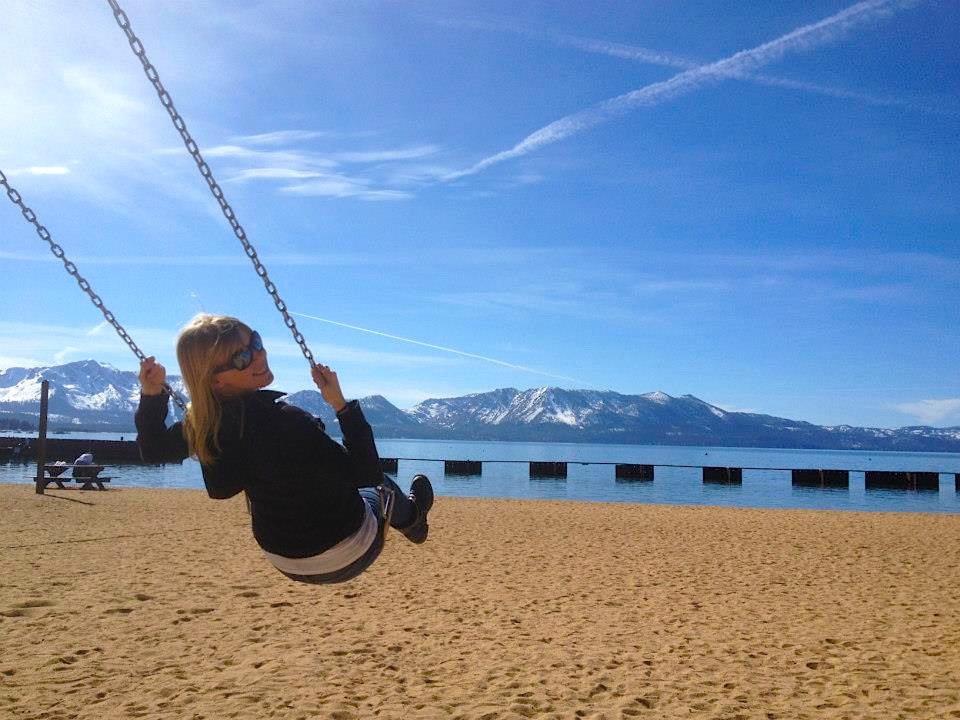
    Lori Swinging

    “While we try to teach our children all about life, our children teach us what life is all about.” ~Angela Schwindt

    When you’re young, anything seems possible. Whether you want to become a school teacher, a ballerina, or an astronaut, it all feels within your reach.

    And you so easily get excited by it.

    You can visualize in vivid detail what it would be like to hold your roses at curtain call, or how proud you’ll feel when you save the day—as a fireman, a soldier, or maybe even a superhero. You pretend your way through different roles and stay open to different ideas of who you are.

    You might know what you like and don’t, and you probably aren’t afraid to vocalize it, but you haven’t yet learned how to get stuck in your ways. You’re too curious for that. That would be boring.

    Though you knew back then that sticks and stones might break your bones but names could never hurt you, you did get hurt sometimes. You cried when a bully teased you, or you couldn’t get something you wanted.

    But the next day you were back swinging and giving underdogs at the playground, smiling and dreaming new dreams again.

    Then life happened. Maybe time and experience taught you to worry, fear, and limit yourself, and you slowly became a person younger you wouldn’t want to play with. You started playing by rules that no one even gave you. You stopped imagining possibilities and believing that you could meet them.

    And worst of all, you started thinking that it’s something the world did to you—not something you choose, moment to moment. (more…)

  • 10 Ways to Make Your Life More Playful

    10 Ways to Make Your Life More Playful

    “We don’t stop playing because we grow old; we grow old because we stop playing.” ~George Bernard Shaw

    I was 25 and traveling through Ireland by myself. I was in Cong, a rural small town outside of Galway. It was quiet. Very quiet. Even though I had met people on my trip, I was starting to feel lonely.

    I was thousands of miles from home. I had nobody around who knew me well or cared for me, and in the days before cell phones or internet cafes, I couldn’t just get in touch with my friends or family at the drop of a hat.

    I went on a walk in a local park, along a wide stream that emptied into a small, pristine pond.  The weather was grey and gloomy, the park was damp and romantic-looking, with its bending trees and dark water.

    On a whim, I sat down by the edge of the pond and began to do something I hadn’t done in probably 15 years: I started to build a fairy village out of sticks, pebbles, and leaves.

    As a child I had practically lived in the backyard, building intricate tiny villages, exploring the spaces in between plants and trees, making tree roots into cottages and lumps of mud into hillsides.

    It calmed me down and got me away from sometimes troubling thoughts. In Ireland, I found the same thing happened: My loneliness and anxiety vanished, and an hour or so later when I finished, I felt better: lighter, and less worried.

    When we lose ourselves in play, whether creating a make-believe world, throwing a ball between friends, frolicking with our dog, or watching silly YouTube videos, we allow ourselves to get out of the linear, problem-solution, adult mindset.

    We’re activating a part of our brains that we don’t use much in the grown-up world: the one that doesn’t care about deadlines or mortgages or how much we weigh, the one that doesn’t care how we look to others.

    In the land of play, we make connections we wouldn’t normally make. We see things in new ways. Play can boost our creativity, heighten our mood, make us laugh, and can engage us in the world in ways that regular “adult” life often doesn’t.

    For some reason, I’ve never grown up enough to stop playing. When I stop noticing the playfulness of the world around me, I know I’m in a bad mood or too stressed, and I often make myself stop and re-engage in the world in a playful way, even if just to watch a funny movie. (more…)