Tag: winning

  • The Truth About Failure: How Hitting Hurdles Makes You Successful

    The Truth About Failure: How Hitting Hurdles Makes You Successful

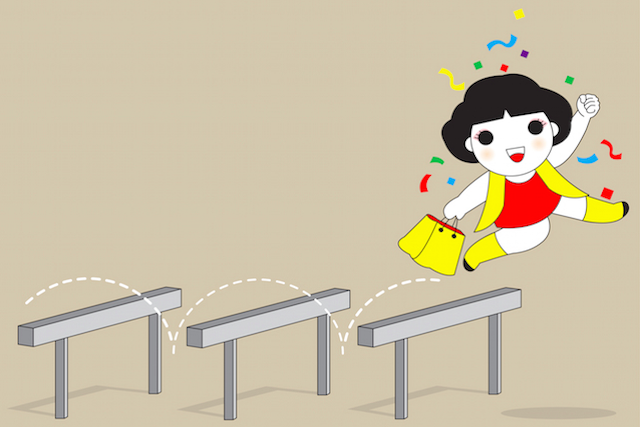
    Woman Jumping Hurdles

    “There are no failures. Just experiences and your reactions to them.” ~Tom Krause

    I had spent years training for this race. This was the big one. If I won and made the qualifying time, I would go on to compete in the Canadian National Track and Field Championships.

    I was burning to win. Only the winner of this race would qualify. Second place wouldn’t cut it.

    Competing at the national level could lead to all kinds of opportunities: sponsorship, athletic scholarships, and a career in athletics.

    My favorite form of self-torture was the 110-meter hurdles. I lived and breathed sprinting and hurdles. Track and field was my life in my last year at high school. In fact, track was probably the only reason I even showed up at class.

    I was good at it too. I had run the fastest time in my event that season and I was on target to win the Provincial Championships.

    I trained four to five days a week on the track, plus I hit the gym two to three times a week. I was in peak form and ready to destroy my competition.

    I was laser-focused on the day of the event in Vancouver, Canada, at the Provincial Track and Field Championships. In my races, I was usually the first one out of the blocks and this race was no different. I exploded out of the starting blocks and was the first one to reach the first hurdle.

    The hurdles for my age category were thirty-nine inches tall (three inches lower than Olympic height), made of thick wood, and were weighted with a metal base. When you hit them, they resist and they don’t move much.

    Best if you don’t hit them.

    I felt powerful in this race. By the third hurdle, I was already taking the race. At no time was anyone in front of me.

    Then, I started hitting hurdles. A lot of them. Each time you hit a hurdle, it dramatically slows you down.

    Some hurdles I smashed into with my knee, while others I hooked with my foot. Painful every time.

    And I didn’t just graze the hurdles. I really clobbered most of them. At times, it almost brought me to a complete stop.

    I hit five hurdles that day. There are ten hurdles in total. It was the worst race I had that season.

    Despite hitting so many hurdles, I still came in second place. I could have touched the winner with my arm, it was that close.

    If I had run a clean race like I usually did, I would have shattered my previous fastest time. I would have easily run the fastest time that year in the province and I would have qualified for the Canadian National Track & Field Championships.

    I was devastated after that race. All my training for nothing. I wasn’t going to get a chance to compete nationally. Game over. Done. I felt like all the life had drained out of me.

    That was the last time I ever jumped over a hurdle.

    I spent the rest of the summer partying and hanging out with friends. I became a bit directionless and I no longer had much interest in going to university (the only reason I was thinking about going was so that I could compete in athletics).

    At the end of summer, I started working full-time in a supermarket and saved up cash. By spring of the following year, I was on a four-month trip around Europe with one of my best friends.

    After that trip, the demands of life took over. I got stuck in low-paying jobs for a few years.

    I had an unhealthy diet and I would sometimes get drunk on the weekends. I barely had time or energy to even go for a short jog once a week.

    Failure Hangs Heavy

    That race is still my biggest failure in life. Seems silly but there it is.

    Over the years, I occasionally thought back to my track and field days.

    “That race was mine and I should have won that. If I had won, maybe I would have gotten sponsored by a sports company. Maybe I would have gotten an athletics scholarship. I might have had a sports career. I totally screwed up my big chance.”

    The concept of failure is very pervasive in most modern cultures. It’s also responsible for a lot stress, poor health and well…basically crazy, unbalanced behavior.

    In our culture, the attitude of “Second place is the first loser” is prevalent. You’re either a winner or you’re a loser. Not much in between.

    We equate “winning” and success with achieving certain milestones such as having high salaries, being in a relationship, or having high-status roles in life. For many of us, not achieving these external successes means we’re failures.

    Additionally, “mistakes” are often not tolerated at work or in relationships with people. There is usually a background, gnawing pressure to always say and do the right thing.

    Failing can feel like an imminently dangerous threat that we must avoid at all costs, and cover it up when it does happen.

    But it doesn’t have to be this way. If we just shift our focus, we can use failure to propel us towards our goals.

    You Must Fail to Have Success

    Quite often, when learning something new, we think that we have to nail it right off the bat. Who wants to look like a rookie, right? A clueless beginner?

    Nope, not me.

    Everyone wants to avoid mistakes and failure. But it is precisely through the path of making mistakes and “failing” that we learn.

    You will hit hurdles in your life. You’ve been hitting them. What matters is what you do after you hit one.

    In my case, I focused on my failure. I focused on hopelessness and I identified myself as being a failure just because I had a bad race.

    I didn’t value coming in second. I ignored what was good and I was dismissive of anything positive that I had achieved.

    I even gave up doing something I really loved doing.

    You can see how dangerous having a “win or lose mindset” is, right? It shuts down our learning, closes off options and causes us to suffer emotionally.

    We need to focus on our little successes, on what we did right and on how to keep learning and improving.

    Let’s get comfortable with the idea that we’re going to make “mistakes” and that we might not always run perfect races.

    If you take on the challenge of cultivating an improvement-oriented mindset, this will help you in all areas of your life.

    You’ll become curious about your mistakes, observing yourself kind of like a scientist might: How can I do this better? What could I do differently so that I can avoid making that same mistake?

    Winners and No More Losers

    I still cringe sometimes when I say or do the “wrong” thing, but I usually catch myself and resolve to do something different the next time.

    If I feel ashamed about making a mistake (or bombing big time), I try to move on as quickly as possible.

    I recognize that my mind is my greatest ally; I’m the one who defines my own version of success, and I re-frame my experiences in a healthy, positive way, whenever I can.

    Everyone deserves to “win” in life, and everyone is capable of reaching their goals in a way that is emotionally and physically healthy.

    Can everyone really be a winner in life?

    Yes, definitely…and you don’t need to come in first place or be the “best” to be a winner. When you love what you’re doing and when you’re focused on learning and making small improvements, anything is possible.

    That’s winning.

    Woman jumping hurdles image via Shutterstock

  • From Conflict to Compassion: Put Love Above Winning

    From Conflict to Compassion: Put Love Above Winning

    Angry Couple

    “Let go of your attachment to being right and suddenly your mind is more open.” ~Ralph Marston

    When we face a conflict we face an opportunity to learn from pain. It’s like putting your hand against a hot burner on the stove. The burn warns that you have to do something differently.

    You pull your hand back reflexively and you don’t touch the stove again. You’ve learned. As with the hot stove, if we get the lesson that is in front of us, we don’t need to keep repeating that particular pain.

    Inconveniently, our natural inclination when we feel the sting of conflict is to outsource the blame, making it impossible to get the lesson and move on.

    This is such a strong tendency that many of us live in a constant or re-occurring experience with conflict. We have conflicts with our co-workers, our boss, our neighbors, the guy in front of us in line at the coffee shop, our partners, children, and parents.

    It’s the same story running over and over. In its most basic form, the story is:

    I have been wronged by someone who does not see my value. They are self-centered and are not considering my point of view

    Oddly enough, that is also the story we are acting out. We are refusing to see the others’ point of view; maybe because it puts our own sense of self at risk.

    Who am I if I let go of my passionate perspective and wholly understand the others’ point of view? Will the world walk all over me if I don’t stand up for my rights?

    Fundamentally, this fear is about a loss of ego. My outrage at my neighbor because he continually lets his dog out at 5:30AM to bark is rooted in a desire to be right: to have my experience in the world validated.

    Of course, the pre-dawn barking disturbs my sleep. I don’t want to discount that impact. But if this were an event that I chose or knew I couldn’t control, I would accept it.

    For example, if I opted to live somewhere beautiful knowing that there would be a 5:30 siren every day, I would manage that in my life with earplugs or a different sleep pattern and not feel indignant about it. But when I feel disregarded by the neighbor, I experience the pain of conflict.

    When I am upset with my partner because he doesn’t do enough housework, it’s not because I’m in pain from doing too much housework. I’m in pain because I’m afraid he won’t see my value; that he will take me for granted and not recognize my worth. That is a fear of losing ego.

    What can we do with this need to win in order to be seen? This very need is central to our primary drivers and yet runs contrary to our best interests.

    As Leo Tolstoy wrote to Gandhi in 1908 in A Letter to a Hindu:

    “On the one side there is the consciousness of the beneficence of the law of love, and on the other the existing order of life which has for centuries occasioned an empty, anxious, restless, and troubled mode of life, conflicting as it does with the law of love and built on the use of violence. This contradiction must be faced.”

    It seems as though our very civilization is built on this tension between winning and loving.

    Tolstoy, optimistic about the resolution of this tension, believed love would rule eventually, if humans just got to the business of recognizing it and putting it at the forefront.

    I’m certainly not going to disagree with that lovely thought, but working with people in interpersonal conflict for many years has taught me that this is no small request.

    It’s all well and good to point a finger at terrorists or fundamentalists or the target du jour. It’s easy to see they need to lay down their arms and love one another.

    But when it comes to the feud with the neighbor, the lack of recognition from the boss, the unjust lawsuit, the cheating spouse, or any of the other truly personal forms of conflict in our day-to-day lives, we take umbrage.

    For those matters, it seems critical that we receive acknowledgement of our unique experience.

    I’m learning that transcending this desire for rightness requires that we build a pathway out and that we cultivate that pathway, tend it, and keep it free of stumbling blocks.

    Here are four not-so-simple steps to tend that path:

    Grow compassion.

    Let go of your perspective long enough to feel another person’s pain. Practice this every day with small matters like the person cutting in front of you in line, and increase to your miserable neighbor or needy mother. When you are annoyed by the screaming child on the plane, imagine what that parent must be feeling.

    Release the need to be right.

    Consider the notion that there is no right in this situation, just two perspectives. We tend to think that our perspective is the truth, but recognizing that our “rightness” is tied to our biased perspective helps get us past our ego.

    Take responsibility for yourself.

    Keep an eye out for what you bring to the situation that adds to the chaos. Overextending or having unclear expectations or boundaries can be as damaging as blaming or digging in your heals.

    Accept what is.

    When you’re in conflict with a person whose behaviors are unacceptable to you, you need to take care of yourself and let go of the desire for the other person to be different. You can’t change that person, but you can change your relationship. Staying engaged and wanting them to be better is like putting a hand back on the stove and wanting it to be cool.

    The opportunity to grow in conflict comes when we accept the other person’s limitations and take care of ourselves without feeling indignant, bitter, or self-righteous. If we can do that, we can broaden that path through the pain toward compassion.

    This post has been updated since it was first published. Angry couple image via Shutterstock

  • Why Sometimes It’s Good to Be a Loser

    Why Sometimes It’s Good to Be a Loser

    I love the word loser. I enjoy playing with it, feeling into it, and feeling my own gut reaction to the idea of allowing myself to be one. Some of the time.

    Our culture is obsessed with winning.

    At school we learn that we have to compete to get what we want. Many of us grow up internalizing this idea and subtly infusing it into our relationships, friendships, career, and even spiritual path.

    If this is strong in us, there can be a pervading sense of alienation, disconnectedness, or even mistrust that we carry around.

    In my early days as a Buddhist monk, I remember being almost shocked when I began to see that in the quietude of my mind, in this harmless, benevolent environment, I was secretly measuring myself and others according to how “spiritual” we were.

    And I was trying to be the best. I was doing many things, some of them ridiculous in hindsight, to be seen as “better than.”

    The flip-side of this was that I never felt good enough. Our fixation with winning is an attempt to cover up this feeling of being somehow deficient.

    A couple of years ago, I met an old friend, who asked me what I was doing these days. I replied, somewhat mischievously, “Being a bit of a loser.”

    His expression was telling. He looked confused. Then he looked sad for me. Then he asked, “You’re joking right?” (more…)