Tag: wholeness

  • FREE Online MindBody Therapy Summit for Healing and Well-Being, June 2-6

    FREE Online MindBody Therapy Summit for Healing and Well-Being, June 2-6

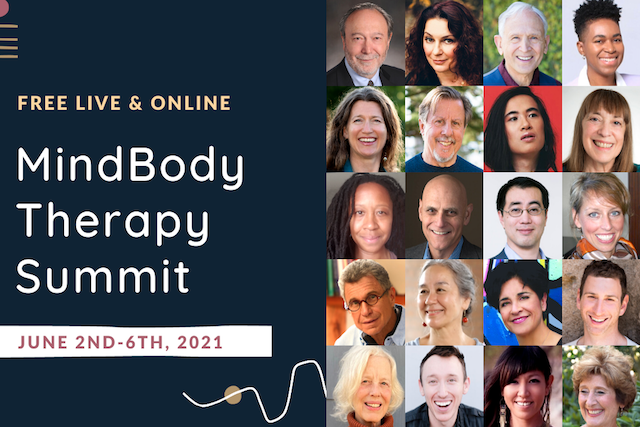
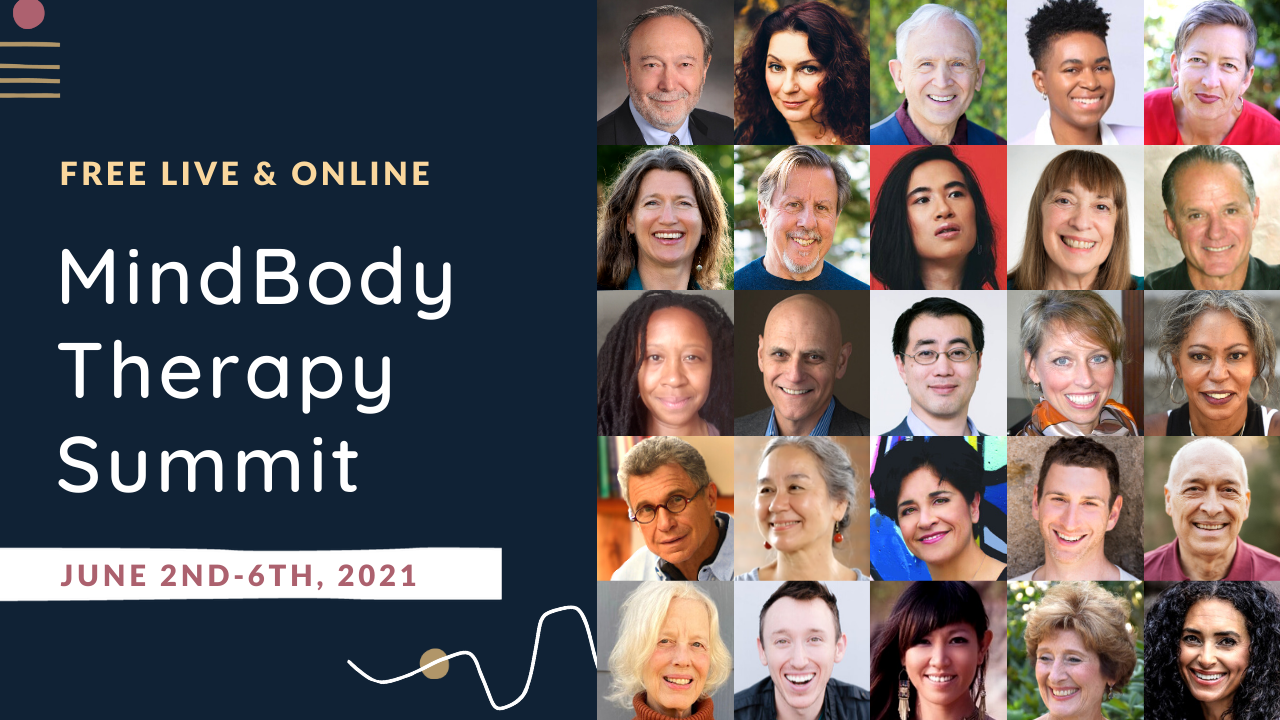
    Hi friends! I’m excited to let you know about the MindBody Therapy Summit, a FREE online event, presented by the Embody Lab, that’s coming up next week.

    In this inspiring 5-day summit, running from June 2nd through June 6th, you’ll hear from some of the most impactful healers, teachers, and researchers at the intersection of wellness, spirituality, psychology, embodiment, and somatics.

    What Is MindBody Therapy?

    MindBody therapy helps us understand and shift what gets in the way of being free, happy, and fully alive.

    While traditional therapy focuses on verbal processing and cognitive meaning making, MindBody therapy invites us into the wisdom of our body as the intuitive place of healing and well-being.

    How Can This Event Help You?

    Blending traditional wisdom and embodiment practices with contemporary neuroscience and psychology, MindBody therapy supports healing and transformation while working with every aspect of an individual—psychological, psychical, spiritual, energetic, and social.

    Through methodologies such as Somatic Experiencing®, Hakomi, Body-Mind Centering®, Gestalt, Sensorimotor Psychotherapy, Integral Somatic Psychology, and many other body-oriented approaches to psychology, you’ll gain practical tools to connect with your body and your true self.

    Who Is This Summit For?

    The MindBody Therapy Summit is for you if:

    -You’re seeking knowledge about psychology, somatics, trauma therapy, plant medicine, attachment/intimacy work, internal family systems work, experiential developmental psychology, social/cultural justice and therapy, stress and resilience, and applied poly-vagal theory.

    -You feel like you’ve hit a wall in your talk therapy and you’re looking for a fresh perspective on healing.

    -You’re interested in incorporating somatic methods of healing into your daily practice.

    -You’re ready to fulfill the highest expression of yourself and bring a new dimension of joy into your life.

    -You’re looking to connect with like-minded people engaged in psychology, embodiment practices, and self-inquiry.

    If you’re ready to access a new level of healing and wholeness, click here to register for the MindBody Therapy Summit and get FREE access to all 5 days of inspiring talks. I hope you find them healing and transformative!

  • How to Be Whole on Your Own and How This Strengthens Your Relationships

    How to Be Whole on Your Own and How This Strengthens Your Relationships

    “Only through our connectedness to others can we really know and enhance the self. And only through working on the self can we begin to enhance our connectedness to others.” ~Harriet Lerner

    Three decades ago, I married the man with whom I knew I would spend the rest of my life. We each had a rough childhood and had learned a lot about surviving, defending, and protecting ourselves. However, we did not know much about how to maintain a successful relationship.

    We took numerous classes on communication, learned to fight fair, and filled our goodwill bank accounts with lots of positive actions. However, despite our best efforts, something was still missing.

    There were times that the relationship felt smothering, and new types of problems kept arising. I got sick of saying “we” all of the time instead of “I.” Once when I was sick and slept in a different room, I was equally fascinated and worried by how much I enjoyed being by myself.

    Yes, we had learned to reconnect, to repair our troubles, and to deepen our intimacy. However, we had not yet figured out the crucial step necessary for keeping your relationship healthy.

    When it comes to love, we have two essential tasks. One, as most of us know, is to learn the skills and practices that allow relationships to thrive. The other lesson is less familiar to most people, but it is even more important. We must also learn how to love ourselves.

    By self-love, I do not refer to the type of vanity that is fed by money, power, influence, a gym-toned body, and the admiration of others. What I mean is the kind of love that leads to self-care, not only of our physical health but also of our minds and hearts.

    It’s the kind of love that creates for ourselves the time and space to develop and to use our talents. It’s the kind of love that frees us to discover and to foster our true purpose in life.

    To become truly wholehearted in our loving, we have to look at when we have acted in a “half-hearted” manner and when have we been “closed-hearted.” Also, we have to examine when it is that we have responded in a “hard-hearted” way.

    Our biggest challenge is to achieve the “whole” in wholehearted. In order to love anyone in a wholehearted way, we need to make ourselves whole first. We must integrate the two forces—the “me” and the “we.”

    Let me be clear about the three things that are not wholeness:

    • A constant state of happiness
    • An ongoing state of acceptance, love, and balance
    • A perpetual feeling of well-being

    Wholeness truly means accepting “the whole enchilada.” The hard, the sad, the mad, the scared, and the glad are all parts of you. The gratitude and the resentment together make you whole.

    Your acceptance of all the pieces of yourself makes you whole. Here are five practices that can each help us find our wholeness.

    1. Spend quality time with yourself.

    I once heard someone say that spending time with yourself is the greatest practice you can do, and I didn’t understand at the time what the speaker meant.

    While alone, I always felt like I was “by myself.” I mistook being alone for loneliness. It took me years to discover the pleasure of walking in nature, exploring an art museum, or hanging out at a farmer’s market loving my own company as much as with another person.

    2. Each day, check to make sure your self-esteem is balanced by your self-criticism.

    People sometimes mistake self-love for self-indulgence. Challenging myself when I am not living up to my own standards is important, but it must be done with compassion. Learning to love yourself despite your imperfections allows you to accept other people’s imperfections.

    3. Find a practice that centers you.

    Sitting in a lotus position and concentrating on breathing allows some people to find focus; there are also other practices like Zen meditation, walking meditation, Vipanassa meditation, and many more.

    In addition, there are methods of centering that are just as powerful for self-reflection; dance, art, writing, and prayer are just a few examples. What they all have in common is that we can use them to check in.

    4. Take an inventory of where you are right now. Explore it in your mind.

    Body: Am I satisfied with the ways I nourish my body? How can I make even better choices? Examine your nutrition, exercise for strength, flexibility, endurance, and cardiac wellness as well as all of the other kinds of self-care you can practice.

    Mind: Am I feeling fed, challenged, expanded, and interested? Am I growing?

    Spirit: Am I satisfied with the definition I have for spirit? How can I get more in touch my spirit? Is there a place within me where I can find peacefulness, wisdom, and guidance?

    Emotional: How am I coping with my current challenges? Is there a flow of different feelings, or do I find myself stuck on one emotion? Do I feel balanced?

    Social: How am I connected with the people in my life (family, friends, partner, coworkers)? What’s working, and where do I want to make changes?

    5. Develop a daily gratitude practice and begin by showing yourself appreciation.

    Ask yourself about the victories you have had during the week. Acknowledge when you did something that was brave. Thank yourself for taking the time to feel gratitude.

    As you explore these five techniques, you might discover others. You will find you already have wholeness inside; you just have to find the keys to open the door.

    When we feel good about ourselves, we’re more likely to feel generous toward others; it’s a symbiotic relationship. We feel grounded and centered enough to take risks and to reach out to others. We feel safe by acknowledging our shortcomings and forgiving ourselves, so we are able to open up to our partners wholeheartedly.

  • Why Letting Go of What We Want Enables Us to Get What We Need

    Why Letting Go of What We Want Enables Us to Get What We Need

    Seated woman

    “The most exquisite paradox: as soon as you give it all up, you can have it all. As long as you want power, you can’t have it. The minute you don’t want power, you’ll have more than you ever dreamed possible.” ~Ram Dass

    The first time I felt this paradox was in the middle of savasana after a challenging yoga class. I always say that yoga is a metaphor for life, and this is exactly why.

    Savasana is the final resting pose in which you lay flat on your back, close your eyes, and do nothing. A super yummy savasana is just so due after your work throughout the class.

    The more you are challenged throughout the yoga flow, the more likely you are to be pushed to a place of brokenness. You gave your all, and now you are spent. Dizzy and exhausted, you settle into savasana and release your entire body into the earth.

    Lying on the cold, hard ground never felt so good. You lie in silence, let your thoughts and breath go, and completely release. You feel deliciously blissful. And you might actually be feeling emotions for the first time all day, or maybe even all week.

    A slight smile spreads across your face as the sweat beads drip from your forehead. Or tears quietly stream from your eyes as you feel absolute joy and gratefulness. By the end of that savasana, you feel incredible. You feel like yourself again. You know you are whole.

    And it’s a good thing they have you do savasana at end of class, because you need the build up of tension during your yoga flow in order to allow yourself to really let go and just be.

    Could you imagine doing savasana at the beginning of class? Mind buzzing from a long, stressful day, thoughts racing. It’s possible, but much harder to do.

    This was how I came to understand the paradox of letting go in order to become whole. And trust me, it took many years of therapy, meditation, reading, seeking, and savasana to get there.

    We often cling to our desires and fight for them because we think we’ll be happy if we get what we want. But when we let go and accept what is, what shows up for us are often the things we need.

    These things tend to be the ones that really count, creating true happiness and meaning in our lives.

    But let’s face it, letting go on some issues is easier said than done. When it comes to deeper issues and matters of the heart, letting go can feel downright impossible. And on some issues, letting go may never happen. Some burdens may be too important not to bear. That is okay.

    However, even on the more difficult issues you may be facing, there still may be places in which you can soften your grip.

    I have had a strained relationship with my father since birth. From about four years old, I knew that he did not love me.

    All throughout my childhood, my father was both physically and emotionally abusive. My mother was loving, but also put in a position of trying to appease her husband, while at the same time protecting my siblings and me. This inevitably led to a lot of confusion and chaos in the household.

    Things finally came to a head when I was about ten. I was severely depressed, expressing passive thoughts of suicide, and displaying classic behaviors and symptoms of trauma.

    After a couple years of therapy and attempting to repair things in the home, my mother decided to divorce my father.

    Due to the history with my father, the court granted my siblings and me the opportunity to decide for ourselves whether or not we would like to visit him. Perfect timing too; my twelfth birthday was right around the corner as the divorce was being finalized.

    So, it was at the age of twelve when I decided to no longer participate in weekly visitation with my father. I would still see him occasionally for family events and holidays, but I kept my distance and he kept his.

    In my mid-twenties, I had little to no contact with my father, only seeing him about once a year for the holidays. However, I confronted him via email, defending my younger sister on an issue she was dealing with.

    She was only sixteen at the time, and was devastated when my father packed up all her belongings from his home and dropped them off on my mother’s doorstep without any warning. Apparently, she was no longer welcome in his home, and their relationship, too, was ending.

    In my father’s correspondence to me, he verbally confirmed what I had know all along, and stated outright that he did not love me and did not need me in his life.

    I was devastated and inconsolable. Although I had known and felt this since I was a small child, I had not actually heard these words before. Something about those words broke me wide open.

    I spun out of control and began a turbulent phase in my life in which I became severely depressed and anxious.

    I immediately began doing work in therapy, finally addressing the years of trauma that I had experienced, coming to terms with my broken relationship with my father. It was here that I began the long process of healing.

    Ten years later, I am significantly stronger. However, trauma is stored in our bodies, in our tissues, and in our brain chemistry, reminding me at times that it’s still there, but a mere shadow of what it used to be. Like an onion, the layers of trauma must be pulled back one at time.

    Looking back on my recovery process, the most challenging part for me had to do with my clinging to questions of what happened.

    I couldn’t understand why this had happened to me. I couldn’t let go of the fact that I was unloved by my father. I needed to have answers. I had been wrestling with these questions my entire life, and was bruised and broken time and time again, with no end in sight. This deep need and clinging only lead to more pain and hurt.

    Through therapy and yoga, I have come to let go of this ideal. I now know that I may never have the answers to my questions. I likely will never fully understand why this happened, why I had to experience this, or why my father behaved in this way.

    Now, instead of wrestling, I stand beside my questions, I cradle them in my arms, I offer them support, and I show them kindness. The questions, the injustice, the memories of hurt can be there, and I lovingly accept them into my life.

    More than this, I know that I am loved, that I am deserving, that I am kind, that I am a survivor, and I am whole. I always have been.

    In order to find acceptance and wholeness in my life, I had to release my death grip on my ideal relationship with my father.

    Whatever ideal outcome you’re clinging to, could you be open to the possibility of releasing it so that you can breathe, yield, and expand into something that is bigger? Could you give yourself time and create space so that you can become concise and clear about your being?

    If you can do these things, you will get what you need.

    Not unlike that challenging yoga flow I spoke of earlier, the real work comes when your body, mind, and spirit has been fully broken, your heart has been ripped wide open, and there is nothing left to do.

    And, no this is not easy. It will be hard.

    Letting go will make you question your identity, leaving you wondering if you give this one thing up, who will you be? What will you stand for? Will all your stress, worry, pain, hurt, sadness, be in vain? If you let go, who will believe your story? What will others think of you? What else will you have to let go of? What will you do next?”

    And here is where the paradox begins!

    “What will I do next?” is a tough question that can be scary to even consider. But it is here that change happens, and you do have a choice. Wholeness is knocking at your door, and you know what they say, “When one door closes, another door opens.”

    All that is required is to let go of the past and step boldly and bravely into your true self, your beautiful, loving, compassionate, deserving self. It is from this place of being that you may know wholeness.
  • Giveaway and Interview: Seeing, Knowing, Being by John Greer

    Giveaway and Interview: Seeing, Knowing, Being by John Greer

    Note: The winners for this giveaway have already been chosen. Subscribe to Tiny Buddha for free daily or weekly emails, and to learn about future giveaways!

    The winners:

    Regardless of our individual beliefs, we all want to feel a sense of wholeness to experience the present moment with peace and connection.

    It’s the foundation of spiritual practice, however we define that individually: We want to stop feeling a need to fix ourselves, and instead awaken to the infinite beauty of who we already are.

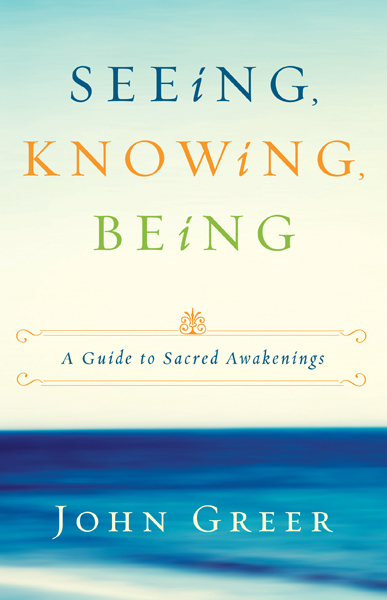
    In his powerful new book Seeing, Knowing, Being, meditation teacher John Greer explores insights from a wide range of spiritual traditions, inviting us to challenge our perceptions and thought patterns to access our inner knowing and experience oneness with the world around us.

    Laden with evocative metaphors, the book breaks complex ideas into understandable parts, inviting us to challenge what we think know for a greater awareness of what actually is.

    I highly recommend Seeing, Knowing, Being to anyone looking to explore or deepen their understanding of non-duality.

    The Giveaway

    To enter to win 1 of 2 free copies of Seeing Knowing Being: A Guide to Sacred Awakenings:

    • Leave a comment below
    • Tweet: RT @tinybuddha Book GIVEAWAY & Interview: Seeing, Knowing, Being http://bit.ly/O9HQWS

    If you don’t have a Twitter account, you can still enter by completing the first step. You can enter until midnight PST on Sunday, July 29th. (more…)