Tag: weight

  • How to Replace Body-Hate with Self-Compassion

    How to Replace Body-Hate with Self-Compassion

    “Loving yourself is the greatest revolution.” ~Unknown

    I’ve spent most of my life struggling with my weight and trying desperately to fit the idealistic image of beauty that our culture celebrates.

    As a young teen, I was obsessed with magazines and all their secrets to be prettier and have a better butt and get your crush to notice you. I see now how desperate I was at such a young age to feel beautiful. Nothing seemed to work, though, as years passed and my need to fit the ideal beauty image only increased.

    In high school I learned to skip meals, and in college I learned to combine food restriction with exercise. Even then, I don’t remember being happy with my body.

    Over many years my body and my weight have changed drastically. Also, struggling with depression and anxiety has meant trying different prescriptions, all with weight gain as a side effect. It’s contributed to more body changes, especially in recent years.

    The more my weight changed, the harder it became to reside in my own body. I didn’t feel like myself anymore, and I didn’t look or move like I once did.

    I looked back on when I was thinner and remembered that I was unhappy at that size, but now I’d kill to have that old body back.

    It was painful to look at myself in photos. I started avoiding old friends and acquaintances because I didn’t want anyone to see my new body. Every pound I weighed carried shame and self-blame. My body was the enemy and I was at war.

    In the midst of trying new ways to manage my anxiety and depression, I came across yoga therapy. It was life changing for me. I found that I felt better after every session, even amid a severe depressive episode. To feel a mood shift in the slightest degree was miraculous, and I was hooked.

    I needed more yoga in my life and, being the academic that I am, I decided to study it. I found a local program that specialized in training yoga teachers and yoga therapists, and a new journey began.

    The first thing I learned was that yoga means union. It aims to unify the mind, the spirit, and (lucky me) the body. As a woman currently waging war on her body and studying yoga at the
    same time, things were about to hit the metaphorical fan.

    Not too many months into my yoga studies, I found myself in treatment for an eating disorder. I had to learn, or in some ways, re-learn, how to connect with my body. Turns out there are a variety of sensations and sensitivities in the body that we can (and should) tune into.

    Our bodies give us subtle cues all the time, and when I started approaching my body mindfully, I became more aware of them. For example, as I was more mindful of my breath, I noticed that I’d stop breathing when I had a difficult thought or when I challenged my body to do something it wasn’t ready to do.

    My body responded to every negative thing I did to it. When I starved myself or pushed my body past its limits, it responded with headaches and overuse injuries.

    Once I realized these things were all related, I began to ask questions: Why am I so tired? Why do I feel so overwhelmed? Why am I pushing myself so hard? How do I begin to recharge? How do I honor my own needs?

    This body I’d been at war with for so long turned out to hold the key to healing many wounds.

    When I began listening to my body’s limitations and needs, I began to change. Learning to honor my body gave me the confidence to ask for what I needed. I tuned into when I was tired or hurting, and I set up new boundaries. Taking breaks when I needed them and stepping back from certain relationships actually left me feeling more connected and capable.

    I realized it was time to end the war. My body deserved peace. It deserved compassion.

    All those years of struggle have left a mark on me. I still tend toward eating disordered behavior from time to time, and still find myself comparing my body to those around me. Sometimes the body-hate speech in my head can still get so loud that I can’t hear myself think.

    In my recovery, I’ve realized that countering negative self-talk is key. I’ve found a few things that help, and I’d like to share them in hopes of helping someone else who needs it.

    1. Every time you notice body envy, thank your body for something it does well.

    This will require you to be mindful about when you are comparing yourself to others or checking yourself in a mirror. Take a moment to purposely think about something your body does that is good for you. Doing this may not create an instant change in mindset, but it will, over time, help to re-wire some old thought patterns.

    Some things you could thank yourself for are breathing, talking, hearing, and thinking. Maybe thank your body for transporting you from place to place, walking, frolicking, twirling. Feel free to be creative!

    2. Find body movements that suit you.

    Bodies are magnificent! They are capable of doing so many things. When we tune into our body’s capacity for movement and we’re active, we feel more connected to our bodies. In those moments of connection, we are more likely to be proud of what our bodies can do instead of ashamed of how they look.

    Not every person is a natural athlete, so I’m not going to insist everyone start running marathons. You know your body and you know what you’re capable of doing.

    Personally, I love yoga, as all good yoga teachers do. I also love the camaraderie of running activities, but I’m a walker. I walk 5ks and am planning to participate in a walker-friendly half marathon within the next year. It’s accessible to me and I feel good doing it.

    Maybe for you it’s swimming or dancing or hiking. You don’t have to be the best at it, just enjoy it.

    3. Scrub your social media feed.

    Nourishing ourselves goes way beyond just what we put in our mouth; it includes what enters our minds.

    Nearly everyone has some contact with social media these days whether it’s Twitter or Facebook or Instagram. These places are ripe for talk of new diets and weight loss before and after photos. Of course, it’s mostly full of weight loss stories because no one seems to post their weight gain to social media.

    Anyway, I find it important to unfollow anything that’s unhelpful to you. If it elicits negative feelings about yourself, I beg you to consider deleting or unfollowing. Replace these feeds with more body neutral or body positive or health-at-every-size feeds. Add stories and images of successful people who look like you and who behave in ways that make you feel good.

    4. Buy clothes you feel comfortable in.

    I am so uncomfortable in tight fitting clothes, and I’m not present when I wear them. My mind is constantly focused on how others may be seeing me or interpreting my outfit when I’m uncomfortable in the clothes I wear.

    So, I recommend going out and going shopping for a few new pieces that make you feel good. Ignore the numbers and go by how it makes you feel. Take a friend with you for support if you need it. It does improve your confidence when you wear clothes that really fit you.

    5. Have honest conversations with your loved ones.

    Set boundaries around diet talk. If certain topics and conversations trigger you to feel poorly about yourself, it’s important to talk to people you trust about your sensitivities. Loving friends will want to support you in this and are often really receptive.

    I’m lucky to have lovely friends who are respectful of my boundaries and who are honest with me when I ask them questions about my insecurities.

    I’ve asked my friends not to discuss diets around me and to avoid calling themselves “bad” for having seconds or eating dessert. Also, we agreed not don’t put our bodies down. Those things really affect me, so I’m grateful to have friends that understand that. I encourage you to find people you can trust and let them support you.

    Finding ways to stand up to your own body-hate speech is so important. These little exercises may seem small, but over time can help make a difference. When we habituate self-compassion, our lives will change. Sometimes the smallest things can make the biggest impact.
  • How I Lost 30 Pounds by Meditating (and All the Things I Gained)

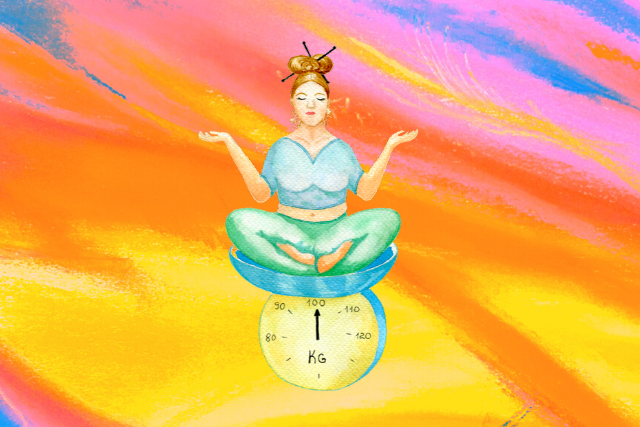
    How I Lost 30 Pounds by Meditating (and All the Things I Gained)

    “Clear your mind. Your heart is trying to tell you something.” ~Unknown

    I recently lost thirty-plus pounds without trying or intending to. I remember excitedly sharing this news on social media one day, after stepping on a scale in my hotel room and being shocked. I don’t own a scale, so between the time when I had last weighed myself and this day, I’d lost over thirty pounds without being conscious of it.

    After my public announcement, people from all directions contacted me asking me questions. Everyone wanted to know how I did it and what could they do to lose weight too. My heart could feel the longing and pleading in their voices. I wanted to help, but what a precarious situation to find myself in! Weight loss has many layers to it, and it is completely individual to each person.

    Many were hoping to hear about what pill they could take, or a new diet-of-the-day to adopt, or hoping for a secret exercise program that they hadn’t yet tried. What was the next Beach Body, ketosis, paleo, juice cleanse, gluten-free, South Beach diet, Crossfit fad—that was actually going to work this time?

    My answer to this riddle was surprising to all and too unbelievable for most of my friends. But there was a handful that said they would consider giving it a try.

    I lost the weight because I’d started meditating. That is the concrete foundation of it all. Many felt baffled by my answer, but it was because of my meditation practice that I naturally made lifestyle changes that led me to lose extra weight I wasn’t even aware I was carrying around.

    I was in grad school at the time, and for homework my professor assigned (prescribed!) meditation. I secretly rolled my eyes when she did this and thought to myself, “I’ll blow this one off.”

    About a month later, at our next teacher/student review, she told me that she could tell I wasn’t doing the meditation homework. She followed her accusation up with, “I understand if you think you don’t need this. But how are you going to lead someone down this road who does need it if you haven’t walked this road yourself?”

    I was shook! How could she possibly tell I wasn’t doing the meditation homework? And the way she just called me out on it? Shamed. As an “A” student, I felt humiliated that she could tell I blew off the assignment. The fact that she knew I wasn’t meditating was enough to get me to do it.

    Right there, humbled down, I began.

    For twenty minutes a day, we were to clear our heads and focus on only our breath. It was excruciating! It was so much harder than I thought it was going to be, which is humorous considering the reason I blew it off in the beginning was because I thought I already knew how to do it.

    I couldn’t even sit still at first. I would wiggle all around. I’d give up and then start again. Over and over. For what seemed like forever I would get angry and think about how this wasn’t working, and I didn’t think I could do it, and maybe meditation was for better people than me. Finally, after struggling daily but keeping at it, a little over two weeks later, a shift happened.

    It was like when you are learning how to snowboard and every day it’s hard, and frustrating, and you spend most of your time falling down, but then with giant relief, you have that moment where you finally link your turns and suddenly you just get it. Everything clicks, and you feel like you are floating on a cloud. Or like the first time you learn how to ride your bike. Or, when you are surfing and struggling and getting beat up by the waves, and then finally you catch your first wave, and suddenly you’re gliding.

    It felt like that. It was a connection. It felt good!

    After that experience, when I tapped into a feeling of complete ease, peace, and surrender, I felt like I finally understood how powerful meditation can be if you keep at it. And then it became easier for me to tap into that feeling each time I practiced. Gradually, it got easier for me to maintain that feeling for longer amounts of time during the meditation.

    Eventually, I was able to maintain that feeling outside of the meditation. And this is when my life really began to change.

    This deeper connection to myself felt really good. This new sense of being gave me a fresh perspective, a renewed reverence for myself, which propelled me to make some changes in my lifestyle. It didn’t seem too difficult because it felt like the next natural step to take. I felt called to live in a new way.

    When you meditate, you grow your self-love muscle. It grows your self-respect. Self-respect means to honor and care for yourself. This new feeling and self-awareness motivates you to make different choices and do healthier activities with your mind, body and soul.

    Meditation trains you to listen to the voice inside of you that is always looking out for your highest good. When we get really good at listening to that voice, we are led to treat ourselves and others with greater care. It is not to be underestimated how life-changing this can be.

    The voice inside of me told me that I needed to start going to bed by 10pm. It urged me to stop eating certain foods. It told me to get my booty moving and do daily exercise outdoors. It nudged me to stop drinking alcohol.

    These were some of the changes I was called to make to take care of myself better, and as a natural byproduct I lost thirty-plus pounds in a matter of months. I watched my body morph into a body so fit that I couldn’t even recognize myself in pictures. All without consciously trying to lose weight. Meditation simply led me to love myself better, and my dream body was the result.

    I don’t know what habits you personally need to change for you to get a healthier, fitter body. But I do know the tool that will get you there. We all have different habits that keep us from our best self, but meditation will give you the clarity to weed out whatever it is that you need to change.

    Meditation clears away our head chatter—everything that vies for our attention and keeps us from being our best selves. Our heart, the voice of love, will always be in a battle with the mind, the voice of our ego. Meditation helps us quiet the ego so the heart can talk.

    When we approach weight loss as something we need to fight, obsessing over calories and punishing our bodies in workouts, it’s an uphill battle that’s difficult to win. An unhappy journey doesn’t lead to a happy destination. This method is exhausting. It doesn’t feel good, and it doesn’t make us feel good about ourselves.

    You don’t have any more time to waste struggling against yourself, disliking yourself, or being unhappy with yourself. It’s time to try a new approach. It’s time to love yourself into better health.

    When we choose to love ourselves more, we have a greater desire to treat ourselves better.

    When I check in with myself before I eat, and ask myself what is the nicest food I can give to my body right now, I make different choices. Before, mostly all of my food choices were emotionally based.

    Most of us don’t eat consciously; we eat emotionally, trying to stuff down feelings from the past or the present.

    When we allow our emotions to rule us in this way, we are ignoring our guidance system—our intuition, our inner wisdom—about what our body needs to function at its best.

    Self-betrayal is when we disregard what’s best for us, which only leads us to more unhappiness and triggered eating. This is a painful cycle to be in, and it comes with a cost. The emotional weight that we carry manifests itself as physical weight. This sets a foundation for stagnancy and disease.

    Meditation stabilizes emotions. It lifts you up out of old patterns of thinking. It can set you free. Free your mind and the rest will follow.

    It also helps you develop self-awareness so you’re less apt to unconsciously reach for comfort food when you’re feeling something uncomfortable. Instead, you’ll be able to ask yourself what inside you needs to be comforted. Then you’ll be able to confront your emotion instead of trying to stuff it down.

    Craving comfort is really a call for love. Craving sweets is a call for more sweetness in your life. Rather than eating for your sadness, you’ll be able to see this craving as an opportunity to give yourself what you are really craving—love.

    Then, over time, as you allow meditation to soothe your mind, your need for comfort dissipates. It helps you recognize that love doesn’t come from outside you; it comes from within you. When you understand this, you will no longer crave it. Love is an unlimited resource located inside you.

    If you’re interested in sustainable weight loss, meditation is your key, though it’s not a quick fix. Nothing worthwhile is. A daily meditation practice will naturally lead you toward some lifestyle changes that will unburden you and lighten your load—mentally, emotionally, and physically. It will take some practice before you get the hang of it, but stick with it. Remember, it took a while for me to get it too. If I can do it, anybody can.

    Now I know how my teacher could tell that I wasn’t doing the meditation homework. So much changes in you when you start meditating daily. I wasn’t connected to my inner guidance, and to those who are connected, it’s obvious when others are not.

    I was living, eating, speaking, and acting unconsciously. I was led by my feelings instead of being grounded in love. So much of the world operates this way, hence why we see so much chaos, drama, and disease.

    Looking back on this now, it astonishes me because I had no problem with the way I had been living, and I had no previous intention to change. I am so thankful I had a teacher who led me to meditation and held me accountable long enough for me to experience the benefits.

    Only you can know what is best for you, and your inner guidance—your heart, your intuition—knows the way. Meditation will help you hear that voice. Don’t delay—begin your best life today!

  • Blinded by Our Diet Culture? How to Stop Hating Your Body

    Blinded by Our Diet Culture? How to Stop Hating Your Body

    “Don’t change your body to get respect from society. Instead let’s change society to respect our bodies.” ~Golda Poretsky

    Age thirteen—that was when my eating disorder kicked into full gear because our diet culture had its tentacles wrapped around me tightly. All I thought about all day was how I was going to control and restrict my food, then how I was going to burn it off.

    I sought to burn off every calorie I ate. I couldn’t go to sleep at night unless I’d burned off most of what I’d consumed. I was obsessed with exercise and trying to morph my body into an unreasonable shape.

    Thinness, that’s what I was seeking. I’d scroll through “ana” or anorexia forums online and gain inspiration from others. I’d swoon over protruding collarbones and thigh gaps. I was in eighth grade.

    I have a distinct memory of tears streaming down my face, when I was fourteen, in the parking lot of the YMCA in my boyfriend’s car. Desperation and regret were washing over me like waterfalls. I couldn’t believe I had eaten something outside of my diet plan.

    I had a roll of cookie dough in hand that I had just binged on. I wrapped it up and angrily threw it on the floor. Then I vowed to burn the sweet off by sweating on the elliptical and to never do that again.

    Though inevitably I had sweets again. Or something that was high in fat. Or something that was too carb-y. There was no winning, I had myself trapped.

    I’d even berate myself when I ate two granola bars because that was too many calories. I’d hide in the bathroom while at the beach in fear of being “too big.” Diet culture dogged my every step.

    I thought there was something fundamentally wrong with me, like I was broken, largely because of the messages I’d received from our culture—that I’d always have something that needed to be “fixed.” I lived my life as if that were true.

    I read in Jes Baker’s book, Things No One Will Tell Fat Girls, that 81% of ten-year-olds are afraid of being fat, and these same ten-year-olds are more afraid of becoming fat than they are of cancer, war, or losing both of their parents.

    That was me, terrified of weight gain. As a teenager headed into adulthood, I let the fear of gaining weight run my life. I developed a binge eating disorder, where I ate in private, and the shame, guilt, and remorse mounted.

    At seventeen years old I was the heaviest I’d ever been, though still small by most people’s standards. My dad was hoping to buy me a car for high school graduation, but instead, I convinced him to pay $4,000 to send me to fat camp for thirty days. There I starved and worked out until I was ill.

    They had us working out for hours a day, barely eating anything, and they restricted us from bringing in food from outside. We’d play running games, but also row on the lake that the camp resided on. Sometimes we would workout for upwards of six hours a day, so I got sick.

    Sun sickness, exhaustion, and insufficient nutrition knocked me on my butt. I went home a few days early.

    I had mixed feelings about the whole thing. The camp felt like a prison, but I also felt good about being there because I was on my way to being thin.

    I hoped that maybe this weight loss would mean that I’d finally be enough. I felt like I had to be good enough for my boyfriend, despite him thinking that I was just fine as I was. I was convinced that I needed to be skinny in order to keep him around.

    My weight continued to fluctuate: up, down, up, down. And you know what? No matter what diet, weight loss plan, or “lifestyle change” I tried, my total disdain for myself remained. When I hit my goal weight, I still hated myself.

    It was baffling. I told myself when I hit x weight I would be good enough, but even when I reached my goal, my level of misery was the same. I was still stuck with me, the same me that is the same no matter what I weigh.

    When I was talking to my AA sponsor about my dang weight plateau (even though I weighed less than my original goal), she asked me, “But, when will the weight loss ever be enough? What weight is ‘enough?’”

    It didn’t hit me like a ton of bricks that day. I had been hearing the sentiment over and over again. When is enough, enough? But I knew then I was sick of the cycle.

    What if I was enough just as I was? I began reading books like Health at Every Size and Bawdy Love. While reading these books I kept asking myself if diets and restriction were really the way to happiness. These books and others taught me, bit by bit, that I might just be an okay human without weight loss.

    I started questioning the way I thought about things and vocalized my feelings about my body. Like, what if I played hockey for enjoyment rather than to burn off food I’ve eaten? What if I stopped berating myself to others and instead chose to talk positively about my body?

    I slowly realized that I had more important things to worry about than how many calories I’d consumed and if I was thin enough for my date. Even before I was calling it body positivity, I was on a journey of self-acceptance.

    I’d been so convinced that I possessed innate badness, but I started to wonder, what if that was a lie? Can I really be all that horrible? What if there was another way?

    I had been studying Buddhism for years but got deeper into it right around the time that I was learning about body acceptance. That was when I found basic goodness, which is Shambhala’s Chogyam Trungpa Rinpoche’s idea of discovering our inherent worth, our fundamental nature that cannot be obscured by anything like body dysmorphia or diet culture.

    It didn’t happen overnight, but I slowly began to learn about my inherent worthiness.

    I fought along the way. For as long as I can remember, I’ve had a sense that there was something fundamentally wrong with me. Trying to turn that around has been quite a feat. It’s taken daily kind self-talk, a body positive community, and professionals like a therapist and a Health at Every Size nutritionist.

    It’s also taken my sangha’s love and wisdom. When I’m in the space of my center, whether it’s my local one or the land center tucked away a few hours north, I feel a sense of peace with myself and the world.

    It’s not always so simple to say everything’s okay. There are many things that feel difficult to accept about me. Some days it’s my “fat” thighs (which are actually average-sized) and other times my jiggly tummy. Neither of these are bad things.

    My “flaws” are actually things to celebrate about myself. My legs are strong enough to carry me around day-to-day and sometimes even go hiking! And I have a belly that digests all the delicious food I eat.

    While it’s important to feel positive about certain aspects of myself, basic goodness runs a little bit deeper. It’s not “good” or “bad” in the sense we’re familiar with, rather it’s a naturalness that’s difficult to describe.

    It started seeping into my life, though, and became very real for me. I started to have this deep feeling in my chest that reminded me that I’m fundamentally okay no matter what mistakes I make or flaws I think I have.

    It helped that I tattooed the words “basically good” in giant letters on my forearm. I needed the reminder!

    It didn’t just affect my relationship with my body, it bled out into different parts of my life. In connecting to my nature and understanding my own worth, I interacted with people differently. For example, I was better at setting boundaries and saying “no” because I realized I deserve respect. I also had more empathy for people who made horrible mistakes.

    When I started to believe in my basic goodness I began to treat myself differently. When I heard those voices in my head telling me that I was broken, I gently dismissed them and moved on with my day. I replaced them with new thoughts like “you’re lovable just as you are.”

    I dove right into body acceptance work. I started to practice intuitive eating, subscribed to the Health at Every Size movement, and became a body positive advocate on social media.

    Experiencing intuitive eating manifested as learning to tune into my body and dropping the “shoulds” and “shouldn’ts.” There were no longer “bad” foods in my life that I “shouldn’t eat,” and there were no longer exercises that I “should” be doing.

    Rather, I learned that my body has inherent wisdom. It sends me hunger and fullness cues. It tells me when it doesn’t like something. It’s naturally emotional, providing me the opportunity to share joy with friends through a birthday cake.

    My relationships with food and exercise go hand-in-hand. Exercise became an outlet to move my body and have fun. What a revelation! I didn’t have to punish myself in order to get moving. I could move just fine by playing hockey and taking walks.

    Health at Every Size taught me many things, one of the biggest being that diets don’t work.

    In the book Body of Truth: How Science, History, and Culture Drive Our Obsession with Weight—and What We Can Do About It, author Harriet Brown cites statistics that show “over 45 million Americans will go on a diet at some point each year. All but 5% of them will gain the weight back in a year, and all but 3% of them will gain the weight back plus some extra in three years.

    Many of us throw ourselves into dieting, thinking that it’s going to cure our problems and we’re finally going to be thin. It’s a sinkhole. The real solution isn’t an attempt to change your body. It’s connecting with that goodness deep inside of you.

    From there, you can take better care of yourself. A meta-analysis of twenty-four studies published between 2006 and 2015 found that people were actually more motivated to exercise when the drive wasn’t from shame and guilt and instead focused on enjoyment.

    The same goes for eating and anything else we do. When shame is the drive, everything suffers. On the other hand, if we’re operating from an understanding of our basic goodness, we actually want to care for ourselves.

    One of the best tools I’ve found to care for myself and connect to my basic goodness is meditation.

    Meditation isn’t the only answer to connecting to your basic goodness, but it’s the biggest. This practice may drum up images of monks on mountaintops, but everyone can do it and everyone can benefit from it.

    It’s not about being perfect. It’s not even really about quieting your mind or becoming happy, though these are often welcomed side effects. Instead, it’s about making friends with what’s going on inside your own mind and in turn connecting with your body and realizing it’s doing a great job.

    To listen to your body, things have to be clear. Pema Chodron made the analogy of a glass of water. If you put a tablespoon of dirt in the water and start stirring, everything’s all muddied.

    This is equivalent to negative diet culture thoughts churning in your mind. Thinking about weight loss, calories burned, and steps taken are the dirt swirling. These kinds of thoughts often take you away from your intuition, or your state of calmness.

    What if you stopped stirring, though? The dirt would go to the bottom and you could see clearly again; you could connect to your body’s needs.

    Pema identifies this as our natural state, or state of basic goodness. When our relationship to our body comes from a place of love instead of punishment, many benefits can occur.

    I’ve done much healing of my relationship with my body (and mind and spirit for that matter). I still have days where the old voices and habits creep in, but I connect to my basic goodness on a daily basis.

    The best advice that I can share is to become connected to a body positive community. Connect with others who are on the same journey. Follow Instagram influencers like Megan Jayne Crabbe, Tess Holiday, and Virgie Tovar.

    Learn about the topic of basic goodness. Chogyam Trungpa Rinpoche writes a lot about it, but you can also find more on the matter in books by Sakyong Mipham Rinpoche and Pema Chodron.

    Tap into that basic goodness. Use meditation to connect and use Health at Every Size and Intuitive Eating practices to be embodied. Know that you are so good, no matter what.

    Drop that diet culture garbage; it isn’t serving you. Remind yourself that your health is about so much more than weight. Lastly, work toward accepting your body; it’s the only one you’ll get.

    For me, it’s a journey. I’ll never achieve the perfect level of accepting my basic goodness and my body. We can talk all day about the best tactics to achieve freedom, but there are going to be plenty of days when I fall short.

    I just want to make it clear that, like many things, having a healthy relationship with our bodies is a practice. Fundamental worthiness and body acceptance have changed my relationship with myself for the better, for sure. But I’ll always be learning and growing.

  • 5 Things I Wish I Knew Before Trying to Lose Weight

    5 Things I Wish I Knew Before Trying to Lose Weight

    “You yourself, as much as anybody in the entire universe, deserve your love and affection.” ~Buddha

    I struggled to maintain a healthy weight for a large part of my life.

    Had I known these five things before my weight-loss journey, I would have had a much easier time shedding the pounds and would have realized that weight loss isn’t a magic fix-all solution to my issues.

    If you’re trying to lose weight, perhaps some of my lessons will be helpful to you.

    Here we go…

    1. This has to be for you, not someone else.

    Growing up as a closeted gay child, I was taught that homosexuality is a sin and anyone who likes members of the same sex is unworthy of love and affection.

    This caused me to develop an internalized belief that I was not good enough, which led me to seek external validation from others as the source my self-esteem.

    Being gay was a very heavy secret I carried, and as a result I became very heavy myself.

    Afraid to be seen, I used weight gain to hide myself from the rest of the world.

    After coming out, I thought if I had the hottest boyfriend then I would finally feel good about myself.

    I lost thirty pounds, transformed my body, and achieved my goal of dating a hot guy. My self-esteem was through the roof… until he broke up with me and I never saw him again (whomp, whomp). I had failed to achieve my goal, and I felt terrible about myself.

    Now I see the issue started when I attached my fitness goal and my self-esteem to something outside myself that I could not control—a guy wanting to date me.

    The reality is, a new body or a new boyfriend was never going to solve my problems. I had to ‘work out’ my inner self before I could feel good about my outer self.

    It’s like having an old, scratched-up cell phone that is super slow, so you put a brand new case on it and suddenly it’s nice and shiny again! However, the original issues are still there, and the phone is still damaged below the surface.

    Like the phone with the new case, I was still that same little boy inside desperately seeking validation from others.

    What I needed was to accept myself and to stop looking to others to validate my self-worth.

    Through meditation and coaching I’ve come to see that feelings of worthiness come from within. I choose to lead a healthy lifestyle for the sake of my own health and well-being, and I recognize that I have inherent value on my own, regardless of my appearance or what other people think.

    Nowadays I set goals that are within the realm of my own power and are not dependant on validation from others like: “I want to lose weight to be healthy and live a long life” instead of “I want to lose weight to have a guy ask me out.”

    Remember: You’re a whole, complete, capable person regardless of how you look. Just because you want to improve for tomorrow doesn’t mean you can’t feel good about yourself today.

    No one has the ability to make you feel a certain way about yourself; only you have that power! When you set goals within the limits of your own power, you will be unstoppable.

    2. You may lose friends, and that’s awesome!

    Let me explain: When I first set out to transform my body, most of my friends were very supportive… until they weren’t.

    A lot of my friends weren’t into health and fitness. As I got closer to my goals, they would say things like, “Who do you think you are? Acting all better than us with your salad and healthy lifestyle!”

    Sometimes it’s the people who know you best who hold you back from changing the most. They met you when you were a certain way, and they want you to stay that way.

    If you surround yourself with people who aren’t used to success, they may become fearful and threatened because you are reflecting back to them something that intimidates them. Not everyone is going to be happy for you.

    In letting go, you create space for other likeminded people who can support you on your path. Having help from people who have been in my shoes helps keep me motivated and allows me to learn from the experience of others. This saves a lot of time and effort and makes the journey more enjoyable.

    You can find supportive people by making friends with people at the gym, joining a running group from meetup.com, or joining a meditation studio. You can even consider working with a trainer or coach if you need a little extra help.

    3. Our self-talk can make or break our progress.

    I used to look in the mirror and focus all of my energy on my flaws. I would tell myself, “I want to lose weight so I’m not gross and disgusting.”

    Every time I thought about my goal I reinforced the identity of someone who is “gross and disgusting.” This negative self-talk was not helpful for my self-confidence, and it often led to binge eating. Not something you want to do when trying to lose weight!

    In order to create lasting change, I had to cut out the negative self-talk by connecting with a positive intention for my goal. So I shifted my intention toward living a healthy life and aging gracefully.

    I stopped putting my attention on the things I disliked about myself, which depressed me, and instead focused on the positive goals I was working toward, which energized me.

    After I changed my view of myself I was finally able to lose the weight—and enjoy the process.

    4. Patience is everything.

    Patience is more than just waiting, it’s the ability to put in the work required to achieve your goals and keep a positive attitude throughout the process.

    After I set out to lose weight, for the first three weeks I felt like nothing was happening and I was wasting my time. The funny thing is, this is when all the work started to pay off. By week four, I could finally see noticeable changes on the scale and I was moving in the right direction.

    It’s the small, seemingly insignificant choices we make every day that add up to something extraordinary. If you don’t have the patience to wait for these things to happen, you won’t make progress on your goals.

    Remember, a journey of a thousand miles is nothing but a series of single steps. Take things one step at a time, and you’ll go far!

    5. To reach any goal, you need to define success, create an action plan, and fall in love with the process.

    I’ve often felt overwhelmed by all the conflicting health and fitness information available. I didn’t know which plan was right for me, so I would try a new one every week and never see any changes.

    The truth is, the best plan for me is the one I stick to and have fun with.

    It’s important to fall in love with the process. Fitness is a lifelong journey, and if you don’t enjoy the process you’ll give up.

    If you’re feeling confused about which plan is best for you, try picking one that sounds fun and stick with it for eight weeks. If you haven’t seen any progress, try something new.

    Also, be sure to define what success looks like for you—whether that means hitting a certain number on the scale or being able to hike a specific number of miles—so you have a clear direction of where you are headed.

    When I set out to lose thirty pounds I had a defined goal in mind. This allowed me to focus my energy and weed out distractions. It also gave me motivation, purpose, and a clear vision for my future.

    Lastly, track your progress as you go, since this will keep you focused and motivated. I resisted doing this for a long time, but it’s made a world of difference. It’s like using a road map. When you see how far you’ve come, it’s a lot easier to stay committed to reaching your destination. Apps like MyFitness pal are great for tracking fitness goals.

    Ultimately, every fitness journey is about more than losing weight and changing your physical appearance. The most successful transformations are those that begin with self-love and require ‘working out’ your inner being as well as your physical being.

    Losing weight was merely a side effect of my bigger goal to lead a healthy lifestyle, and my fitness goals have grown to focus more on the health of my mind, body, and spirit, rather than solely my physical appearance.

    Because I find it hard to prioritize my own needs, I created a daily self-care routine and I devote a minimum of one hour every morning to my health and well-being. Self-care is the secret to my weight loss success because weight naturally falls off when you make healthy lifestyle choices and take care of your body.

    And finally, remember the power of intention! It’s not what you do but why you do it that will enable you to succeed.

    I wish you the best of luck on your journey, and am sending you all my love!

  • How Body-Obsession Made Me Sick and How I Got Better

    How Body-Obsession Made Me Sick and How I Got Better

    “You are not a mistake. You are not a problem to be solved. But you won’t discover this until you are willing to stop banging your head against the wall of shaming and caging and fearing yourself.” ~Geneen Roth

    I’ve spent so much time on the dieting hamster wheel that I am almost too ashamed to admit it. Throughout my teen years I went from one crash diet to the next. When this proved more than unfruitful and disappointing, I changed strategies.

    The next twelve years I spent searching for the “right lifestyle” for me, which would allow me to shrink to an acceptable size, be happy and healthy, and make peace with my body.

    You can probably guess that I never found such a lifestyle. And I’m sure that it doesn’t exist for me. I’m still making peace with my body, but now I know this is internal work. No diet or size can bring me to this place.

    How This All Began

    I first became aware that I was fat when I was four. We had this kindergarten recital, and regrettably, my costume didn’t fit, so I was the only one with a different dress. It was horrible. It didn’t help that my mother was very disappointed in me.

    Years later, I started dieting at the ripe age of ten.

    In my teenage years my focus was mainly on losing as much weight as possible, as quickly as possible. It was exhilarating to get praise from my mother and grandmothers. They were so happy that I was taking charge of my weight and that I could show such restraint and will power.

    I sometimes went months on almost nothing eaten. Eventually, I’d start to get dizzy and nauseous, and I’d get severe stomach aches. I was hospitalized multiple times for gastritis. But no one made the connection between my eating and these conditions.

    When the pains were severe, I knew I needed to get back to eating more regularly, and then the weight would return. You wouldn’t believe the disappointment this elicited in the ones closest to me. If only I could eat like a normal person, but not be fat.

    I was told hundreds upon hundreds of times that if I didn’t find a way to lose the weight, I’d be lonely, no one would like me, I’d have trouble finding a boyfriend, and I’d have almost no chance of getting married. This was so heartbreaking. And I believed every word of it.

    It became a major focus of my life to get my body in order, so I could be a ‘real’ girl.

    When I turned twenty, I learned that my weight was all my fault. That I wasn’t doing enough. That I just wanted results, without doing the work. And that “there’s no permanent result without permanent effort.” So, I decided to find the sustainable lifestyle change that would lead me to my thin and better self. This was just another wild goose chase.

    No matter what I did, the pattern was the same: I would lose ten to thirty-five pounds in about six months. And then—even if I doubled my efforts in terms of eating less and training more—I would start gaining weight and return to close to where I started.

    Even though it was soul crushing, I didn’t give up. Not even for a day.

    I was convinced that I just didn’t know enough, or hadn’t found the right diet for me, the right exercise, or the right combination. Or that maybe I was just doing things wrong, for some reason.

    I hired trainers, dieticians, the whole shebang. It didn’t help.

    This lasted more than ten years and took a lot of money that could have been spent better.

    I was convinced that I was missing something. Obviously, the professionals knew what they were doing, and there was something wrong with me.

    How Things Got Even Worse

    When I got married, even though my husband and I were planning to wait a couple of years before having children, the pressure to prepare for pregnancy was on.

    I went into crazy researcher mode and read every book on the best diet for pregnancy and ensuring healthy offspring.

    It was 2016 and keto was in (as it still is now). I was convinced that keto was the way to go.

    This was a turning point for me. First, because I was so determined to succeed at this point, and second, because keto is one of the most restrictive diets in existence.

    I became super obsessed, and for two years. I couldn’t see that things were going wrong. Very wrong.

    There were both physical and psychological signs. I just didn’t have the mental capacity to notice them. And regrettably, there wasn’t anyone around to point out that something was amiss. My environment was, and still is to some extent, more conducive to disordered eating behavior than to recovery.

    On the physical side:

    • My nails were brittle.
    • My hair was falling out.
    • My heart rate was slow.
    • I lost the ability to sweat, despite the vigorous exercise I did.
    • I was often tired.
    • I was getting dizzy a lot.
    • I was shivering cold all the time.

    On the psychological side:

    • I was irritable.
    • I felt I needed to deserve my food, so I exercised compulsively, at least two hours and up to five hours a day.
    • I had forgotten how hunger feels. I was eating on a schedule, and that was that. Not feeling hunger was even reassuring.
    • But despite the latter, when I got to the bakery or the supermarket, I felt intense cravings. My stomach was tight, but I would start salivating strongly. And I would think about food for the rest of the day, weighing the pros and cons of ice cream and my rights to a little pleasure and indulgence in life. My solution was to order just the ‘right’ food online and go out as little as possible.
    • I started avoiding my friends and family and any outings with food. I couldn’t risk eating anything if it wasn’t prepared by me.
    • On the other hand, I was keeping some sense of normalcy, while cooking normal food and desserts for my husband. I don’t know why, but the pleasure of cooking was somehow enough, and I didn’t get cravings from this.
    • I was also obsessed with food and thinking about what to cook for myself and my husband, and what great things we had eaten, but I could never have again.

    It was a torturous time. And even though my focus was on being my healthiest self, I had never been sicker in my life. I was suffering deeply.

    How I Got Better

    I can’t tell you I had a sudden realization about the errors of my ways. As I said, my whole environment supports the dieting mentality, and I had much more support in my dieting efforts than I do now in recovery. But still, I am managing.

    I started seeing a therapist because I was lashing out at my husband, and I wanted to control my emotions better. By digging deeper into the issues underlying my anger I found a deep sense of inadequacy and not being enough. In the process of unravelling, I was able to make the connection that my problems with food stem from the same place, and I started working on them.

    There are a few things that helped me most.

    The first is meditation. Meditating has made a huge difference in my life because it’s enabled me to distance myself from my thoughts, and stop believing everything I think. This was huge.

    It was important for me to observe this nasty, critical voice and to realize that it’s not mine. It sounded more like my mother. To distance myself from the voice and the emotionally charged image of my mother, I started seeing it like a mean, old witch. By associating a funny image with this chatter in my head, I was able to acknowledge it was there but go about my life, without engaging too much with it.

    This has helped me treat myself much more kindly. And by being kinder to myself I started to accept myself more. I am human and not perfect. In some situations, I still start berating myself. But I catch myself quickly and don’t fall into the rabbit hole.

    Second, I reached out for support from some trusted friends and started to go out more and observe other people. To my surprise, most people were not on the brink of death just because they ate pizza a couple times a month or because they enjoyed a drink or two.

    Also, I started reading more books written by fat activists, and they have been of great help. They are full of humor, compassion, love, and understanding. They have helped me feel less alone, and I’ve benefitted immensely from their recommendation to normalize your view of your body by looking at images of other fat people.

    For me, seeing other women of my size and finding them gorgeous and beautiful helped me accept myself more. Taking more pictures of myself, and getting used to how I look, was also huge for me. Because it’s very different from looking in the mirror. In the mirror you can look at just certain parts of your body and not pay attention to others. In a photo, you don’t have much choice.

    This can be really hard at first. But it gets so much better.

    Also, I found new ways to move my body and enjoy myself, and rekindled my passions for types of exercise I used to enjoy. This has made it so much easier for me to appreciate my wonderful body. I feel grateful for all I am able to do, every single day.

    Choosing what to eat is still a battle sometimes. The disordered voices in my head are not abolished, as I said. But now, I can choose not to pay attention to them or believe them.

    So now, when I am debating between pizza and fish with salad, I do a couple of things differently than before.

    First, I ask myself what do I really want, and why. If I see that I am leaning toward the fish, but only because it’s “better for me,” I remember the sad person I was before. I remember how bad I felt when my life was ruled by rules. And then I clear the rules from my head and imagine what will taste better for me in this moment. And choose that option.

    Of course, I don’t always eat pizza. I strive for balance and make healthy choices on the whole. The point is I don’t constantly deprive myself.

    What helps me not fall into my old patterns is remembering the way I feel now. I know that despite being heavier, I haven’t felt happier and freer in my life. Not having that constant anxiety is my motivation.

    It’s very hard, but I couldn’t be happier that I am going through this journey. I am connecting to myself, my body, and my wishes in a way I was never able to before. And I feel this is the most valuable experience.

    I hope that if you’re battling with the same demons, you’ll win. I am rooting for you. And yes, it is possible.

  • How I Healed from an Eating Disorder and Stopped Hating Myself and My Body

    How I Healed from an Eating Disorder and Stopped Hating Myself and My Body

    “Quiet the voice telling you to do more and be more, and trust that in this moment, who you are, where you are at, and what you are doing is enough. You will get to where you need to be in your own time. Until then, breathe. Breathe and be patient with yourself and your process. You are doing the best you can to cope and survive amid your struggles, and that’s all you can ask of yourself. It’s enough. You are enough.” ~Daniell Koepke

    I remember looking at the nutrition information on the bag of jujubes I had just eaten and feeling utterly and completely disgusted with myself.

    That was my first binge. Little did I know how much worse it would get.

    It was four days in to the first official diet that I had somehow managed to stay on for more than one day.

    I had dieted on and off most of my life, but any time I tried a diet that told me what I was and wasn’t allowed to eat (Atkins was the first of many), I never managed to last longer than a day or two before I’d “blow it” and give up.

    Prior to the day of my first binge, I had actually lost a lot of weight on my own, simply by counting calories, but I hired a trainer because, while I reached my goal weight on my own, I still hated my body and wasn’t happy.

    So, I did the only thing I knew to do at the time—pay someone else to tell me what to eat so I could have a perfect body and finally be happy.

    Ha.

    I white knuckled my way through four whole days before I found myself at the grocery store feeling much like I’d imagine a junkie feels as their high begins to wear off. I needed a fix and was jonesing bad.

    The next day, I barely ate anything and ran for about two hours to punish myself for being such a pig the day prior.

    Within a few months, I was sitting in a therapist’s office hearing him call me bulimic while I bawled hysterically and begged him to tell me how to stop feeling so completely out of control with food.

    The harder I tried to control my intake, the more out of control I became.

    The more out of control I felt, the worse I felt about myself and treated my body.

    Depression, panic attacks, bingeing, and restricting/over exercising (those were my compensatory behaviors) took over my world.

    What was wrong with me? I wanted a perfect body so desperately; why couldn’t I just eat what I was supposed to eat?!

    I spent a lot of time with my therapist, and he never really gave me answer for what was wrong with me (beyond the eating disorder) or how to fix it.

    It just kept getting worse.

    My body would shake and I’d be so desperate to get into whatever food I had as fast as humanly possible that I’d usually end up eating an entire large bag of candy on the drive home before continuing to eat until I was sick once I got home.

    After awhile I started noticing that it literally felt like a hole in the center of my being that I was frantically trying to fill—unsuccessfully. No matter how much I stuffed in there, it just never ever felt full.

    What started with one small bag of candy turned into a monster inside me that I could not control. It morphed from a bag of candy to eating myself sick and ultimately feeling like I was killing myself with food. At my worst, there were nights when I had eaten so much I was legitimately scared I was going to have a heart attack in my sleep and wondered if I should go to ER.

    So I started reading everything I could get my hands on. I was desperate—desperate to not eat myself to death, but also desperate to find a way to stop so I could just have that perfect body and finally be happy.

    But as I read, I came to realize that my bingeing wasn’t about the food. The over exercising and starving myself to compensate for the bingeing, none of it was about the food or exercise.

    And my desperate need to have a perfect body, in order to be happy, wasn’t even about my body.

    It all had everything to do with how I felt about myself and my worth as a person.

    I hated myself and felt worthless.

    I didn’t think I was good enough for anything.

    And in that one moment of awakening, everything that was wrong in my life made complete sense.

    I finally knew why I was angry all the time—I was in pain.

    The starving, restricting, bingeing, and over exercising made sense—I was punishing myself.

    The obsessive ways I dove into everything, including food and exercise, were attempts to keep myself numb and not address the pain.

    I knew that if I ever had any hope of changing anything, I had to stop chasing the perfect body and start learning to love and value myself, which meant figuring out where the self-loathing and feelings of inadequacy were coming from.

    The first thing I had to do in my process of healing, recovery, and growth was to start learning to be forgiving of myself and treat myself with compassion. I had been living with excruciating emotional pain my entire life that I never allowed myself to even acknowledge, never mind deal with.

    My constant anger didn’t make me a b*tch or a horrible person; it was a symptom of someone who was hurting deeply.

    The initial weight problem that morphed into dieting/disordered eating and ultimately bulimia didn’t make me disgusting or weak; it was a symptom of someone who hated herself so badly she was punishing herself every day.

    Those realizations allowed me to start extending myself compassion for those things in me that I wasn’t proud of. They allowed me the space to start healing. Because you cannot change while you believe you deserve to be punished.

    I gave myself permission to eat whatever I wanted.

    I even gave myself permission to binge, and the weirdest thing happened—I began to do it less and less. Now I cannot remember the last time I binged. It’s been years.

    It sounds crazy, like the opposite of what we should do. Permission to binge?!

    But when I realized the purpose it was serving and stopped judging myself for it so I could work on actually healing the need it was filling, it all changed.

    You see, as long as we’re judging and hating ourselves, we’ll always feel like we’re bad and deserve to be punished. And as long as we believe we’re bad and deserve to be punished, we’ll never stop punishing ourselves.

    It came down to five basic mindset switches for me: permission, acceptance, compassion, kindness, and curiosity.

    Permission: It’s okay because I’m doing the best I can with what I know right now. When I learn how to better handle these feelings, I’ll make more loving choices for myself.

    Acceptance: It sucks pretty bad, but it’s my journey. For whatever reason, whatever I’m supposed to learn from this, this is the journey I’m supposed to be on.

    Compassion: How would I speak to a friend or client going through this? That’s how I started trying to speak to myself.

    Kindness: The worse I felt, the kinder I was to myself.

    Curiosity: I couldn’t just blindly give myself permission to binge forever without actively getting curious about why I was doing it. So, every time it would happen, I’d spend a lot of time asking myself why. How was I feeling? What feelings was I trying to keep myself from feeling? Was there a better way I could manage those feelings?

    Alongside making those changes I also worked on learning to love and value myself and change the stories I had been telling myself about who I was and what I was worth my whole life.

    So, dieting may have made me bulimic, but my obsession with finding happiness and self-acceptance by building a perfect body led me down a path of learning to love myself and create happiness from within.

    I am enough.

    And so are you. So give yourself permission, acceptance, compassion, and kindness, and get curious about why you do the things you do. Perhaps, like me, you’ll find this is the key to your healing.

  • 6 Powerful Steps to Stop Binge Eating for Good

    6 Powerful Steps to Stop Binge Eating for Good

    “As long as you are breathing, there is more right with you than wrong with you, no matter how ill or how despairing you may be feeling in a given moment.” ~Jon Kabat-Zinn

    Binge eating is hard. For me, winter time has always been hardest.

    The winter of 2011 was particularly bad. It was then that I sat, hands clasped around my knees, thinking about how best to kill myself.

    Hopeless only scratches the surface of what I was feeling—that same feeling I’d had on-and-off for fifteen years. I was twenty-three. I’d spent half my life in darkness.

    I went over the mathematics: Depression + Eating Disorder = Agonizing Existence.

    I was finally ready to admit I needed help. So as I sat there, I vowed to put an end to my suffering. I told myself “I’m going to give this one final push. I’ll put all of my energy into stopping this continual depression, and these cycles of binge eating and starving myself. If it still doesn’t work, I’ll just kill myself.”

    It really was that simple.

    By the end of 2011, I didn’t want to kill myself anymore. A few years later, I’d stopped binge eating completely. These days, I’ve never been happier. I don’t get depressed anymore. I am healthy, mentally and physically, and I try to live every day in gratitude, happiness, and well-being.

    That’s how I know you can do this too, and why today I’m sharing with you six powerful steps that I found essential to my journey.

    1. Realize there’s nothing wrong with you.

    I know it feels like you’re a disgusting, terrible person for binge eating. I know you don’t understand what’s going on, or what happened to your “willpower.” I know you’re starting to feel insane.

    But listen up: there is nothing wrong with you.

    Binge eating isn’t about food; it’s about emotions. People deal with their emotions in all kinds of ways. If you’re at the end of your tether, you might do drugs, you might drink, you might get really angry with the people you love, you might have anxiety attacks, and/or you might binge eat.

    This isn’t a judgment call. Binge eating is just what you’re doing to try to deal with difficult emotions in the best way you know how right now. That doesn’t mean you’re broken, that doesn’t mean you’re going to “be like this forever,” and it doesn’t mean you can’t learn how to cope in different and more productive ways.

    It’s completely natural and normal to want to feel better. So although it’s not ideal to binge, know that it is human, and it is okay.

    2. Reattach your head to your body.

    Up until I was twenty-three, I didn’t even know I had a body.

    I will never forget this: one day, I was walking up a hill to my office (I was doing a Ph.D. at the time) and suddenly I just felt terrible. Then I was frustrated that I had been feeling okay, and suddenly everything had become unbearable.

    I’d just learnt about mindfulness, so I did what is known as a body scan (where you “scan” each part of your body with your mind, and notice whatever is present, without judgment).

    You know what I realized? I was just really hot from walking up the hill.

    I took my coat off and felt instantly better.

    This moment was huge for me. I’d spent so long in my head that I didn’t even realize I had a body–that it too had needs—and that I needed to listen.

    As well as allowing you to get back in touch with physical sensations in your body (like temperature, and gentle, non-scary sensations of hunger), mindfulness increases your control over your emotions (more precisely, it increases activation of the medial prefrontal cortex, and decreases activation of structures like the amygdala that trigger our emotional responses.

    That’s good news if you’re binge eating. Maybe right now there’s a disconnect between your mind and your body, but by using mindfulness to gain more control over your emotional responses, you’ll start to learn to decide whether to listen to those calls to eat emotionally, or not.

    Action step: Start doing the body scan once a day. If you can’t manage thirty minutes, start with two minutes every day. Then build it up to five minutes, then ten. Start slowly and build it up over time. This is about practice, not perfection.

    3. Shift your self-worth.

    I’ve always been athletic, but while at University, I decided to “get in the best shape of my life.” I trained excessively: high intensity intervals, multiple times a day. I became obsessed with what I ate. I weighed myself multiple times a day, checked how my belly looked in the mirror every opportunity I could. I called myself fat at every single opportunity, and always felt incredibly self-conscious everywhere I’d go.

    In reality, I was a skeleton, but all I saw was fat, fat, fat.

    When my obsessive exercising and restrictive eating turned into binge eating, I didn’t know what to do. I was so ashamed of myself for my actions and what I was doing to my body after “all that progress I’d made.”

    All of my self-worth was in how I looked, and how thin I was. It felt like binge eating was against everything I stood for.

    I decided I needed to be stronger, both mentally and physically, so I joined a gym and began to train for strength. Binge eating made me feel completely out of control, but by showing up to train no matter how I felt, I started to realize that I actually did have control—that I could still act in the way I wanted to, even if I didn’t feel like it.

    I realized that I always had a choice.

    It’s important to say at this point that strength training has been a helpful part of my recovery, but you don’t need to go to the gym to stop binge eating. In fact, exercise can be unhelpful for many people, especially if you aren’t listening to your body when it needs to rest and recover.

    Indeed, while my commitment to strength training boosted my self-worth in the short term (and helped me stop binge eating), I eventually recognized I was too focused on my performance. I never quite felt like I was achieving, doing, or being enough.

    I now know that we are all so much more than how we look, how much we weigh, and how well we perform, so I recommend a diversified approach to building your self-worth. Instead of tying it to your body, focus on a variety of things, like being a good friend and relative, acting with integrity and honesty, and taking care of yourself enough so you can give back to others.

    So many people who binge eat are overachievers and perfectionists, but when you’re in this deep, it’s a sign that you need to diversify your identity away from perfection, dieting, exercising to extremes, and working too much.

    Instead, I recommend trying to figure out what you truly value in your life, then focusing on the process of becoming the person you ideally want to be. 

    Action step: Take a few moments to ask yourself: What do you value in your life? I don’t know about you, but when I’m lying on my deathbed, I don’t want the only thing people can say about me to be:

    “Well, at least she had a six pack.”

    No. I want to be so much more than just a body to the people in my life, and to myself. I want to be kind and strong, encouraging and inspirational. I want to love.

    Do you value being a good friend, parent, sibling, artist? Do you value your well-being? Could you start practicing gratitude for the things you have in your life, including your body? Could you practice just sitting, breathing, and being human?

    4. Find the diamonds in the turd. 

    Right now you’re focused on all the times you binge, all the times you have these strong urges to eat, and all the other things that you are doing “wrong.” But, I guarantee you are doing so many things right.

    I call these the diamonds in the turd.

    For example:

    Maybe there are only actually two to three hours each evening where there’s a strong urge to binge. Right now you’re focused on that time, but think about it: for twenty-one hours of the day, you don’t want to binge. That’s great! It’s also powerful information, because recognizing when you’re most prone to a binge is going to help you stop.

    Maybe you notice that you feel more prone to binge after you’ve had a bad night’s sleep, or when you’re stressed, anxious, or worried. Is it possible to get more sleep? Can you plan to get more time in for your wellbeing in general?

    Maybe you notice the urge to binge is stronger after you’ve looked in the mirror and insulted how you look, or when you scroll through Instagram and see athletes, models, and random happy people that you want to look like. Can you limit your time on social media, or only follow people that actually help you? Can you be kinder to yourself in the mirror?

    By starting to notice your own behavior—by becoming a detective about it, rather than judgmental critic—you’ll see there are plenty of things you’re doing right. This means you can begin to focus more time on the actions that are helpful (like taking better care of yourself through sleep, and taking time out just for you), and limit the unhelpful things (like social media, diet blogs, and your negative, hurtful self-talk).

    If you’re not sure where to even start, try making a tally chart of the number of times you catch yourself thinking about food today. This will make you more aware of your thoughts, which means you’re more likely to be able to catch yourself and say:

    • “Okay, I’m thinking about food. Does this mean I need something else right now?”
    • Or maybe just “Okay, I hear this thought, but it isn’t helpful right now. Let’s focus on something else.

    It will also make you aware of how often your food thoughts aren’t occurring:

    Okay, so today I caught myself fantasizing about food 37 times, but 50,000 thoughts go through my mind every day! So I’m not thinking about food ALL of the time. So when am I not thinking about food? Can I do more of that?”

    Action step: Find your diamonds in the turd:

    • What’s different about the times where I’m not binge eating / don’t want to binge eat?
    • Where am I when I do, and don’t, want to binge?
    • What activities am I doing?
    • Is there some way I can do more of the things that help, and less of the things that don’t?

    5. Stop restricting.

    There are many scientific studies showing a strong correlation between diets and binge eating. (Here’s a summary of just one of those studies.)

    If you’re finding it difficult to stop binge eating, one of the best things you can do right now is to stop restricting yourself. That means giving yourself permission to eat any food, at any time. It means not starving yourself the day after a binge, or doing excessive amounts of exercise because you “slipped up.”

    When I suggest this to people, there’s normally a lot of hesitation. I totally understand. You’ve been dieting and restricting your intake for so long that it’s scary to try something different. But binge eating isn’t serving you any more, and if you don’t eat enough, or eat what you’re really craving, then you will simply never be satisfied.

    Instead, satisfaction can be increased (both physically and psychologically) by bringing awareness to your tongue. How does your tongue feel in your mouth? How does the food feel, and taste, on your tongue?

    A lot of people talk about mindful eating, and this will definitely help, but only as long as it doesn’t feel restrictive. If “eating only when you’re hungry” feels too restrictive right now, then it’s totally fine to eat when you’re not hungry. If “eating mindfully” feels too restrictive, it’s okay to not do that for a while.

    When you’re ready, you can begin to introduce one mindful bite a day, then one mindful bite per meal.

    Action step: Try to stop restricting foods. If you binge, try to do it as mindfully as possible (giving yourself full permission to do so). When you’re ready, you can introduce mindful eating into some of your meals.

    6. If you do binge, follow these three steps.

    Trust me, you’re going to “slip up” on this road, but that’s okay. You’re in the process of learning the skills you need to cope in a more productive and healthier way. That takes time.

    These three steps will help you if you binge eat:

    Step 1: Forgive yourself immediately. (That was a tough moment, and you didn’t behave in the ideal way. That’s okay, you’re human, and you’re learning. Think of what you’d say to a friend going through the same thing, then say that to yourself.)

    Step 2: Try to become curious about what happened. Try to pinpoint what caused it. Was it a particularly stressful day? Were thoughts whizzing around in your head? What could you do to increase your self-care the next time that happens?

    Step 3: Wait until you’re next hungry, then try to eat a “normal” meal (just some basic veggies, protein, carbs, and fats). Don’t try to overthink it, and don’t try to restrict.

    The great thing about this is you will always get hungry again. And when you are, it’s another opportunity to practice listening to your body’s natural hunger signals.

    Finally, no matter what happens, just remember: as long as you’re breathing, there is more right with you than wrong with you.

    Illustration by Kellie Warren. Find her on Instagram @kellistrator.

  • How to Move Through Feelings of Body Shame

    How to Move Through Feelings of Body Shame

    “Only when we are brave enough to explore the darkness will we discover the infinite power of our light.” ~Brené Brown

    My husband’s legs are smaller than mine.

    I wish I could tell you that when I first realized this (when we were dating) I wasn’t emotionally triggered. And that I didn’t care.

    But, I can’t.

    Instead, I can tell you that I walked right up next to him, planted my thigh next to his, and awkwardly declared, “Ha! My legs are bigger than yours!”

    I can still see him looking right back at me, saying, “So? I love your legs.”

    I didn’t know what to say.

    I thought—even though it wasn’t true—he’d say my legs weren’t bigger.

    But, he didn’t. He told the truth. And that truth was that my legs were (and are) bigger.

    I said nothing to him in return, except a mumbled “thank you” and changed the conversation topic. All while my body insecurities and feelings of shame and embarrassment jumbled up inside of me.

    I had some thinking to do.

    What was that?

    This stuff was supposed to be behind me. But here it was, staring me in the face.

    So I rolled up my sleeves.

    I needed to move through these feelings of body shame.

    Below are the five steps I used and that you can use too to move through body insecurities when you’re emotionally triggered.

    Step 1: Name your shame.

    By naming your shame you’re shining light on something that feels dark. And something that you’re embarrassed about.

    For example, in this experience, I named my shame with the following: “I’m feeling shameful because my legs are bigger than a man’s, and culturally, I feel it should be the opposite. I’m used to seeing images of the woman being smaller than the man.”

    By naming my shame not only was I lifting up a rock to let light in, I was allowing myself to get really clear on what my feelings of shame actually are and where they stem from.

    When you get triggered about your body size, name your shame. Write it out in a journal or if you need more time, allow yourself the time to digest your experience and come back to it. By recognizing that you want to name your shame, it’ll come to you when you’re ready.

    Step 2: Observe (instead of judge) your experience.

    Give yourself a break and stop judging yourself (or your body). Allow yourself to get curious about the experience and observe what happened. A helpful tactic to do this is pretending that you were a fly on the wall, witnessing your experience.

    What would that fly say happened in your experience?

    This allows you to stop beating yourself up and to get out of your head.

    For example, my judgmental experience with the “leg incident” would be, “I acted like a three-year-old and got super awkward and weird and started telling my now husband how much bigger my legs are than his. I’m a loser and so over dramatic.”

    My observational, “fly on the wall” experience would be, “I was feeling insecure and got triggered when I realized my legs were bigger than my husband’s legs.”

    See the difference?

    By making your triggering experience observational, you remove yourself from the experience. You allow yourself a different perspective. And it’s in this space that you can really move through something and learn from it, instead of stay stuck in it.

    Step 3: Own your experience.

    When we can own our experiences, we step back into our power. And we realize that we have more power than we think. Because we’re creating part of the experience, especially our reaction.

    Take my incident. When I own my part in the experience, I see that I chose my reaction.

    I can choose to feel bad about my body. Or, I can choose to be grateful for what my body allows me to do and that I have a partner who is accepting of me for me.

    Whether you had a “horrible food day,” got called a mean name, or feel insecure after scrolling through social media, own those feelings. Because once you name your shame and look at your experience objectively, you’ll realize that you’re the creator of your own reality and that somewhere in here there is something more for you to learn about yourself.

    I needed to learn that in relation to a man, a bigger body size doesn’t mean you’re any less feminine. And that there was still a part of me that was living based off of what society says is normal (i.e. the man should be bigger than the woman).

    There is no such thing as normal. This is the same thinking that has us feeling that we need to shrink ourselves to worthiness. In reality, this just isn’t true. Our size does not equate our worth.

    You see, it’s not about shrinking ourselves into happiness. It’s about caring for ourselves into health and happiness.

    You can do this when you begin to own your experiences and your part in them.

    Step 4: Move through (not around) your emotions.

    When you get to this step, you’ve already done a ton of work. This step is simply a reminder that working through triggers and funky emotions, especially surrounding our bodies and insecurities is hard work. We’re not taught this stuff in school.

    And in all honesty, it’s easier to just get angry when triggers come up and then pretend they never happened. But, what generally happens here is that the thing you need to work through will present itself again and again until you work through it.

    So make time to dissect what came up. You don’t need to do it all in one swoop. But plant the seed and allow the answers to come up. They will once you allow yourself and your mind to relax. Then, you can heal the wound, move through the trigger (or the belief) holding you back, and grow. Ultimately, you’ll feel more at peace with yourself and your body.

    Step 5: Choose a story that serves you.

    This is by far the most fun step. And will allow your wound to become a scar. Plus, it’s simple.

    Choose a new story that serves you.

    For example, my old story was, “Women should always be smaller than men. Especially, the ones they’re romantically involved with.”

    My new story, “The size of my physical body doesn’t determine if or how I’m loved. Especially, by the right romantic partner who sees me for who I am on a deeper level.”

    You see, we humans love to make up stories. They’re how we connect with one another. But, they’re also how we heal.

    So in your healing process, choose a story that serves you, heals you, and honors the direction you want to go.

    It’s not always easy, but I promise it’s worth it.

  • How to Start Liking Your Body More (Just as It Is)

    How to Start Liking Your Body More (Just as It Is)

    “Body love is more than acceptance of self or the acceptance of the body. Body love is about self-worth in general. It’s more than our physical appearance.” ~Mary Lambert

    This past week, I got married.

    For me, this symbolized not only a new chapter in my life with a partner, but also a new chapter in life with myself.

    Here, in this new chapter, I officially left behind the woman who was constantly trying to mold herself into whatever she needed to be to (hopefully) be accepted and loved by a partner.

    And instead, I found the woman who was unapologetically herself and loved for it. In fact, that’s what ironically got her to this point in the first place.

    And I left the girl who used to get by on a diet full of grapes, lettuce, and coffee. Who thought the thinner she was, the more worthy she was.

    This sad, hungry girl was replaced by a woman who didn’t think twice about losing an ounce to fit into a white dress, and who embraced her curves, thighs, cellulite, wrinkles, and all that goes along with the celebration (yes, celebration) of aging.

    My twenty-something self would be amazed.

    To be honest, my thirty-something self is amazed.

    If you had told me how I’d feel about my body and myself today, even ten years ago, I wouldn’t have believed you.

    And that realization got me sitting here, reflecting, thinking, “Wow, what a journey.”

    How did I get to this radical place of self-acceptance?

    While it’s difficult to pinpoint any particular moment that landed me here (because there isn’t any one moment), there are certain things that pop up that I distinctly remember that allowed me to begin liking my body (and myself) more.

    That allowed me to stop obsessively counting calories and to start actually enjoying food.

    That allowed me to trade frantically exercising for mindfully moving (and connecting with) my body.

    That allowed me to swap feeling shame about my thighs for gratitude that I have thighs.

    Here are a few of those things that allowed me to start learning how to like my body more. I hope they help you just as much as they helped me.

    1. Get clear on how you want to feel in your body and why that’s important to you.

    First thing first, you need to know how you want to feel in your body.

    Because you can’t get to where you want to go if you don’t know where that is.

    So make the time, grab a pen and journal, find a quiet calm space, and ask yourself, “How do I want to feel in my body?”

    Or, if it’s easier, ask yourself, “In my ideal world, where I am kind to myself, what would my relationship with my body look like?”

    Write your answers out.

    When you have your answers, ask yourself, “Why is this important to me?”

    Know that you may need to ask yourself “why” five to seven times and really dig deep to uncover the core reason changing your relationship with your body is important to you. Just continue asking “why” until you feel your heart is speaking instead of your head.

    You’ll need this reason to understand yourself more and to reflect upon when you feel frustrated and like you want to throw in the towel, because you will have those moments. But when you remember your WHY, you’ll rekindle your connection to being kinder to your body and yourself.

    For me, my “why” centered on the fact that I couldn’t imagine going through my entire life at war with my body. I just couldn’t. I wanted to feel confident and free in my body, not shameful and controlled.

    It took time and daily work to get to a new place, but my “why” and my vision of where I wanted to go was so strong I continued showing up.

    You can do this too.

    2. Flex your gratitude muscle.

    One of the most interesting tools I used to like my body more was gratitude. Today, you see this word everywhere, but there’s a huge difference in seeing it all over social media and online mediums versus putting it to use.

    When I began making the shift to what my body allowed me to do versus what my body didn’t look like, I was amazed.

    I slowly began forming this new perspective that my body was a gift and a vehicle that allowed me to move through life. And it was my job to nurture it, take care of it, and stop being so mean to it.

    What happened is that I became appreciative. I appreciated that I had thighs to hike, that even though I had cellulite, I could run a half marathon or participate in a yoga class. And it was through this viewpoint that I also came to like who I was as a person more.

    I appreciated that I was open to growth, that I was compassionate, and that I had the ability to inspire others. Ironically, I found that I was more than just a body.

    And so are you.

    You’ll be able to see this if every day, you bullet point one or more things that you are truly grateful for or appreciate about yourself.

    I promise that practicing gratitude is popular for a reason—it works.

    3. Surround yourself with healthy bodies.

    A huge part of my journey was surrounding myself with healthy bodies, all sorts of shapes and sizes, online and offline.

    Because what can so easily happen is that we end up comparing ourselves to ideals that aren’t even real or that aren’t physiologically possible for us because they’re simply not the intended shape of our bodies.

    For example, I used to be obsessed with model-type thighs. And then one day, it hit me. Those thin, “leggy” model-type thighs are not a part of my body shape. No matter how much I exercise or how little I eat, my body will never go there.

    And it was through this realization that I began paying attention to all types of bodies—smaller bodies, bigger bodies, in-between bodies—and I found that there are no better types of bodies; they’re just all bodies. And it’s how we treat them that matters.

    So if you’re struggling here, I highly recommend unfollowing social media accounts that make you feel bad about your body. And, if you haven’t, find a place to move your body where you feel comfortable and accepted. Because if you don’t feel comfortable in your body or accepted, you won’t want to go there to exercise, and movement is such a huge part in connecting with your body in mind, soul, and spirit.

    4. Connect and acknowledge your underlying fears.

    Acknowledging and understanding your underlying fears when it comes to your body is so huge. Those fears hold answers. But so many times, we’re taught to simply brush them under the rug and try to fit in and look like everybody else.

    But what if you allowed yourself to dig into your fears?

    To understand what you’re actually worried about?

    And then to dig deep and question if that fear is an actual truth or if it’s something that is truly just a fear?

    For me, when I allowed myself to examine my body fears, I found that I was afraid of not being accepted, of not being the way a woman was supposed to look.

    You see, as a little kid, I was always teased or left out because I was on the chunky side. I wasn’t one of the popular girls. When I realized that I could overexercise and undereat to become thinner, and that I looked more like how the girls in the magazines and the popular girls looked, that’s what I did.

    My deep underlying fear was not being accepted; it actually wasn’t about my body size.

    I internalized this and then realized that the key people in my life didn’t care about my body size (in fact, they were concerned by my shrinking size and misery). Rather, they cared about who I was as a human being.

    In other words, they accepted me for what was beneath my skin.

    So my fear that if I weren’t a certain size, I wouldn’t be accepted was just that—it was a fear. There wasn’t truth behind it.

    Wrapping my mind around this was revolutionary (and it still is).

    You can begin to connect and break through your fears too by first playing with the idea that you may have body fears. And then get curious and see what comes up for you. If fears come up, examine them and allow yourself time to question if they’re true or just a fear.

    5. Focus on actions that make you feel good in your skin.

    Releasing the need to lose weight or look a certain way and instead focusing on doing things that make you feel confident and good in your body is a game-changer. When you do this, your body will come to its natural state of being, no question.

    And trust me, I know this is so much harder than it sounds, but by really showing up and experimenting in your life and then keeping what works well for you and leaving behind what doesn’t, you will naturally like your body more.

    Simply because you’ll feel more “at home” in it.

    For example, when I first started down my body acceptance path, I realized I actually really disliked spending two hours a day in the gym. It made me feel worse about my body. So I experimented with walking and strength training and discovered I loved it.

    Later, I’d discover yoga and go on to become a yoga teacher.

    Yoga, during my body hate days, was something I said I’d never ever do.

    Today, I love it.

    You never know what you’ll find when you let go of the outcome and follow what feels right.

    I also discovered that I actually loved cooking healthy, nutritious meals with lots of veggies and tasty food. Before, I only allowed myself bars and wraps where I knew the exact calorie amount.

    You see, when I started truly allowing myself to let go and to experiment with enjoying food, moving my body in ways that felt good, and talking to myself kindly and coming at my body with gratitude instead of hate, something miraculous happened.

    I learned how to not only accept but my body, but to like my body.

    And I know that when you focus on actions that make you feel confident in your body, you’ll begin to like your body more too.

  • 5 Things to Remember When You Feel Disgusted by How You Look

    5 Things to Remember When You Feel Disgusted by How You Look

    “Your face will change. Your body will change. The only kind of beauty that endures is the kind that lives in your heart.” ~Lori Deschene

    How many times have you hidden away from the world when you felt ashamed by your appearance?

    How many invitations have you turned down because you felt disgusted by the way you look?

    And how many times have you gazed into the bathroom mirror and thought, “Why, in my brief existence on this planet, does it have to be me?”

    Seeing your reflection in the mirror is like a physical pain. It’s not just one part of your life. It’s obsessive. It consumes your every waking moment.

    Then you start feeling envy toward beautiful people. Wrath at whatever higher being there is for not making you one of them. Pride in your strengths whenever you see someone who looks worse than you. Self-loathing and blaming your treacherous genes for giving you an odd face, an imperfect shape, a visible health condition.

    For me, it was my skin.

    I was cursed by a chronic illness that regularly causes rashes all over my body, and sometimes even on my face.

    I can’t count how many times I cried over it. Sometimes from the pain. Sometimes from the itch. Too many times from people’s looks of revulsion or their unkind words.

    The borderline shallowness of many people who never bothered to open a book whose cover they didn’t like was painful and grating.

    My insecurity was like an open wound and my self-esteem was at rock bottom. I felt like a target, a second-class citizen with few rights to have dreams, hopes, or success.

    I perfected the art of avoiding mirrors and cameras, bought extra clothes to cover my skin, and learned how to keep my head down to avoid eye contact. I was terrified of social situations and worried that people would look at me in disgust.
    Every single comment could shatter my fragile confidence.

    The hopelessness and soul-crushing feeling of not looking pretty enough made me want to roll the duvet over my head in the mornings and not come out.

    Thinking that you’ll never be happy because of your looks is the most gut-wrenching thing. It’s isolating. It’s maddening. It’s frustrating and a thousand other things.

    We’re living in an appearance-saturated society that tells us that our likeability is dependent on being attractive. The diet culture, beauty industry, media—they all convey that beauty equals perfection.

    In today’s digital age, it’s easy to create a façade with carefully chosen photos and posts that lie through omission.

    But deep down, you know the truth.

    You can’t ignore it.

    The world doesn’t let you.

    Advertisements and magazine covers all remind you of how imperfect you are. Beauticians love to point out your flaws to sell you more products.

    It’s not until you decide to wear your imperfect look as a form of armor that you become comfortable in your own skin. People’s looks no longer intimidate you. Hurtful words don’t steal your sleep. You fall in love with yourself.

    It’s a journey toward acceptance. And the journey is liberating.

    We all face challenges in accepting who we are and how we look. But the truth is that, cliché as it may sound, beauty is in the eye of the beholder.

    It’s not what’s on the surface. It’s what’s inside you.

    Here are some of the things that helped me on my journey toward self-acceptance.

    1. You can make peace with the parts of you that you hate.

    Accepting that you don’t like everything about your body is the first step toward having a more positive frame of mind. It’s about acknowledging that you may feel “meh” about some parts of your body, but not letting that stop you from doing things you want to do.

    You’re probably thinking, “Yeah, right, but what about my stomach pooch?”

    Well, what about it? It’s there. You’re not perfect, and that’s okay.

    Often we forgo pleasure because we feel we don’t deserve it. Somehow simple parts of living become unobtainable “rewards.” Maybe you won’t let yourself hit the beach unless you get into a certain shape, or you can’t get married unless you drop the weight, or maybe you can’t buy new clothes until you’re a few pounds lighter.

    It sounds crazy when you say it out loud, but that’s how a lot of us think.

    So be kind to yourself. Be gentle and remind yourself of all the other things that you love about yourself.

    Give yourself permission to accept that some parts of your body may not be your favorite thing. You won’t always love every part of your body. However, you can still love your life even on the days you can’t love your belly.

    You’re certainly not alone in your struggle toward body acceptance. I could give you a laundry list of things I don’t like about my body.

    However, this is the body you were given. It’s the only body you were given. So it might be time to make peace with it.

    2. Everyone feels unattractive at times.

    We all have moments of weakness when we view everything through a negative filter, and the voice in our head becomes critical and unloving. Times when we feel ugly and unattractive. All of us. You. Me. Your best friend.

    Days when you look at yourself in the mirror and don’t see anything positive. You don’t see the loving spouse, the caring mother, the wonderful son, the understanding friend. You don’t see the wisdom in old age wrinkles, the power in stretch marks, and the beauty in your body curves.

    Instead, you just see . . . blah. Gross. Unlovable. Disgusting.

    In those moments of self-doubt, pause and ask yourself these questions: Is my mood affecting the way I’m feeling about my looks? Have I been getting enough sleep and fresh air? Have I been eating well and moving my body frequently? Self-care is so important because your mirror image is simply a manifestation of your positive energy.

    3. Media-defined ideals of beauty aren’t real.

    For years, the world of media has been trying to construct a sparkling image of what an ideal man and an ideal woman should look like. From television shows to commercials to magazine advertisements to celebrity culture, mainstream media has been reinforcing the notion that you only look beautiful if you have a toned body, perfect hair, and flawless skin.

    But the reality is that you just don’t.

    Why? Because the image of perfection doesn’t exist. It’s superficial. It’s unattainable. Even models themselves don’t look like their photoshopped, heavily edited images. No wonder you come up short whenever you compare yourself to celebrities and models on magazine covers.

    The pressure of looking perfect weighs you down. You begin to think that you aren’t beautiful enough, are too fat, too small, too whatever. All that to say that you’re not good enough.

    That’s, at least, what the beauty industry wants you to believe. If you feel inadequate about your looks, you’re more likely to buy whatever fix the ads are selling. Making you uncomfortable with your body sells – whether it’s a weight loss plan, fashion, or a beauty product.
    Are you going to change society’s definition of beauty? No. However, you can change your own. Don’t focus on the beauty you see in ads; focus on the beauty you see in the real-life people you admire.

    4. Your reflection doesn’t define you.

    The sum of who you are—your thoughts, beliefs, hopes, dreams, feelings—is much greater than what meets the eye of an observer who doesn’t know you. All those things about you are the force that draws others to you.

    You might have heard the saying that an ugly personality destroys the face. Well, I happen to agree with that 100%.

    Sometimes you hear somebody speak with kindness and compassion, and you perceive them as beautiful. However, it’s not their outer appearance you’re drawn to. It’s their inner depth, a kind of beauty that can’t be inherited, photoshopped, or surgically attained.

    I know many people who aren’t the most attractive, but their energy, joy, and positivity is so contagious that it’s hard not to have them around.

    So think about what brings you joy. Do things you like. Make your self-esteem contingent on inner, not outer, qualities. After all, a positive attitude brings more friendships than looks do.

    5. Your perception becomes your reality.

    If you feel beautiful, it will transcend your physical attributes.

    Think about the story you’re living right now. Did you consciously decide to create it, or was it shaped by your parents, your friends, or perhaps even the media?

    From the time you were born, you’ve received both positive and negative messages from your surroundings. All those messages create your belief system. You act on those messages as if they’re true until you believe them to be true. They become your reality. They give you your identity.

    Every time you say “I am,” you are telling a story about yourself. When your story takes on a life of its own, you become it. But who wrote that story? And why is there so much criticism and low self-esteem in there?
    Rewrite it. Take control of the pen and write the story you want.

    Let Yourself Be You

    Next time you notice that inner critic of yours attacking your appearance, catch it.

    Take a deep breath and ask yourself if you can release it.

    I’m not talking about making it spit out positive, self-loving affirmations that don’t feel authentic and real to you. I’m talking about the soft, embracing energy of acceptance.

    I’ve learned to cultivate self-worth apart from my appearance. I take pride in my talents, skills, intelligence, and caring heart. When my perfectionist self wants to critique not only my appearance, but also everything I do, I remind myself of those qualities.

    When you open up to all parts of yourself, you will feel lighter. As you rewrite your story and let yourself be you, the many facets of your beautiful self will shine.

    It’s a practice of making peace with what is. And you can make it happen within yourself.

    It’s an ongoing journey that feels liberating.

  • 6 Toxic Thoughts That Keep You Battling with Food

    6 Toxic Thoughts That Keep You Battling with Food

    “Eating is not a crime. It’s not a moral issue. It’s normal. It’s enjoyable. It just is.” ~Carrie Arnold

    Like many women, I was introduced to diet “tricks” and “hacks” at a young age. In my case, that was around twelve to thirteen years old.

    I consumed magazines and movies that constantly reminded me about the importance of dieting, losing weight, and looking skinny.

    As a self-conscious teenager, I began to compare myself to the women in music videos with flat bellies, the slim actresses in movies, and models in magazines with their perfect “beach bodies.”

    This self-consciousness only grew louder as I witnessed girls in my classroom getting teased for being “too fat” and “ugly.”

    Thinking there was only one type of “perfect body” made me feel I didn’t measure up.

    How I Broke My Relationship with Food

    The feeling of not being good enough made me pay attention to the diet tricks I was promised on magazine covers.

    This is when my relationship with food changed.

    Food stopped being an experience to enjoy, and it became a way to create the body I thought I wanted.

    To be completely honest, my experience wasn’t as traumatic as what other women have suffered. I never vomited. I never stopped eating for days. Although I was happy whenever I came down with a stomach virus because my stomach looked completely flat afterward.

    I started experimenting with green juices—the wrong way. I would drink a spinach and cucumber juice (hating the taste) and immediately give myself permission to binge on pizza and other foods because I had “endured” the juicing.

    I began counting calories on a blackboard, like if I was doing math at school.

    For a period of time, I decided to eat only liquid and very soft foods, in tiny portions.

    After several months of my “experiments,” my father started commenting that the bones in my wrists became more noticeable, and my mom insisted I looked too thin, but there was not such thing at “too thin” in the mind of my teenage self.

    One time that I came down with another stomach virus, the doctor told me I was underweight, and she gave me a prescription for a supplement to gain weight.

    I was horrified at the idea of putting on weight. I refused, much to my mother’s concern.

    The irony was that even though I was restricting my food on a daily basis, I had no problem with binging on cake and ice cream while watching TV in my room. I thought if I ate very little most of the time, these foods were my prizes.

    Eating turned into a bittersweet experience. When I was in “diet mode,” I ate too little, with worry, and calculated the effect of everything I ate on my weight. When I was on “binge mode,” I ate without restrictions, with guilt in the back of my mind, feeling upset that I would have to go back to “diet” soon.

    When My Body Said “Enough”

    Because of my inconsistent and emaciating eating habits, I had digestive problems most of my teenage years.

    My turning point happened when I developed serious digestive issues during holiday.

    For almost two weeks I couldn’t digest my food properly, I was bloated, and I had constant stomach pain.

    Because we were away on holiday in my grandparents’ house in the countryside in Costa Rica, there were no clinics or doctors around.

    My grandfather made me tea with ginger and digestive herbs from his garden to alleviate my pain.

    To my surprise, that same day my stomach problems diminished, and after two days I felt in perfect shape.

    I was baffled that drinking tea helped me get better when medications that I’d taken for years couldn’t fix my stomach problems.

    This is the moment when I realized food could heal my body.

    I began researching and learning about what food could do for me from the inside out. Quickly, I realized the damage I had been doing to my body by eating the way I was.

    I decided to start eating whole foods, mostly plant-based meals, almost right away.

    I wanted to heal my body and in the process I healed my relationship with food.

    In my mind, food became what it should have been all along: nourishment and pleasure.

    Fast forward to today, I’ve learned how to eat intuitively, how to eat with mindfulness and joy, and how to approach my body from a place of acceptance and love.

    Our Thoughts About Food Matter

    Looking back, I realize how damaging my thoughts about food were.

    Seeing food as my enemy made me eat in a way that damaged my body—too little, too much, and never with absolute pleasure. This happens to so many people in our diet-crazed society.

    In this post, I want to help you identify and transform thoughts that are harming your relationship with food and holding you back from eating with joy.

    The way you eat is a reflection of your thoughts and perceptions.

    If you have been struggling with dieting, obsessing over calories, and restricting your meals, I want to help you take a step back and shift your mindset so you can heal your relationship with food.

    Letting go of these six toxic thoughts about food will help you eat mindfully, and with pleasure.

    1. Thinking of food as a reward.

    Rewarding a healthy diet with unhealthy food, like during cheat days, defeats the purpose of eating with joy.

    Having cheat days can make your daily meals seem less enjoyable in comparison, which diminishes your pleasure.

    Also, cheat days often turn into binge eating episodes that leave you feeling physically and mentally upset. This doesn’t contribute to your health or happiness.

    A more mindful approach is to allow yourself to indulge on not-so-healthy foods occasionally in moderate portions, instead of reserving certain moments or days to pig out on junk food. Don’t see these indulgences as “rewards” or “prizes” reserved for certain occasions.

    At the same time, eat healthy food that makes you happy on a daily basis. Don’t limit your meals to bland or boring food. Expand your daily menu so you’re always eating healthy meals you like.

    2. Using food as a punishment.

    Using food to punish yourself is just as damaging as using it to reward yourself.

    Eating less or not eating to “punish” yourself for overeating is only going to reinforce the feeling you have been “bad,” and this will make you more anxious and paranoid around food.

    For example, forcing yourself to eat only certain foods—green juices, “detox” teas, salads—that you dislike to compensate for binging episodes or because you feel “fat” will deprive your body of the nutrients you need and make you miserable.

    You don’t need to deprive your body; torturing yourself is not the answer.

    The best thing you can do to stop this cycle is to practice self-love. Love yourself, love your body, and know you don’t need to punish it.

    A healthy diet that keeps you fit is abundant in whole, nourishing foods. If you want to start over, don’t stop eating. Eat more healthy foods: berries, nuts, beans, lentils, quinoa, all the veggies you can imagine, plenty of water, whole grains, soups, and more.

    3. Thinking of food as comfort.

    Emotional eating happens when we see food as a form of consolation.

    I ate cake many times a week because I thought it made me “happy.” I was a lonely teenager, and cake made me feel life was a little sweeter for a moment.

    Using food to cope when we feel sad, angry, lonely, or hurt can be addictive. We start to associate “happiness” with food, and the longer we do it, the harder it is to break the habit.

    Relying on food to feel better shuts down the opportunity to work on your problems in a meaningful way.

    The best thing you can do for yourself is to actively seek healthier ways to cope when things seem bad—and there are plenty of them.

    Exercising, meditating, listening to music, reading, taking a walk, playing with a kitten or a dog, brainstorming solutions to your problems, learning a new skill, taking a nap, and talking to friends are more effective and healthier ways to lift up your mood.

    4. Seeing food as something “prohibited.”

    Having a strict and inflexible diet will stress you and it may not even help you eat less, according to studies.

    Food restrictions often result in constant thoughts and cravings about the food you are “forbidding”—donuts, brownies, ice cream, or sugar—and this keeps you from fully enjoying the meals in your plate.

    Studies show that restricted eaters have more thoughts about food that non-restricted eaters.

    Obviously, this won’t let you feel at peace or happy with your food.

    I’m not saying you should eat without limits and binge on whatever you want, I’m suggestion to focus your efforts elsewhere: Instead of frantically forbidding foods, focus on adding healthier foods to your diet.

    Forbidding unhealthy food makes you stressed and is ineffective, but if you simply focus on eating more whole foods, your mind will be at peace and you will eat healthier without even noticing.

     5. Seeing food as entertainment.

    When you go to the movies, do you eat popcorn because you’re truly hungry or just because that’s how it’s done?

    It’s probably the latter, right? In this context, popcorn is part of the entertaining experience.

    However, if you start turning to food to keep you entertained every time you’re bored, you will overeat and won’t savor your meals.

    Eating mindfully means being aware of your food and enjoying the experience.

    Using food as a distraction won’t let you enjoy your meals the same way.

    Instead of using food as entertainment, find constructive ways to occupy your mind.

    Activities that engage you, like playing a game, reading a novel, drawing, organizing or exercising are better for your mind and body.

    6. Measuring your self-worth based on how much you eat.

    Finally, don’t give food the power to measure your self-worth.

    You’re more than what or how much you eat.

    Beating yourself up over what you eat is exactly what harms your relationship with food and steals your happiness.

    If you feel you haven’t been eating healthy, don’t get angry with yourself. You can always make a change for the better and improve your diet whenever you decide.

    It’s important you see food as your ally, not as the enemy.

    Food is not meant to make you feel guilty, worried, or restrict you in any way.

    It is there to nourish, support you, and make you feel your best.

    If you want to heal your relationship with food, begin by transforming the harmful thoughts that keep you from fully enjoying your eating experience.

  • 8 Ridiculously Easy Ways to Get (or Stay) in Shape

    8 Ridiculously Easy Ways to Get (or Stay) in Shape

    “The secret of living well and longer is: eat half, walk double, laugh triple, and love without measure.” ~Tibetan Proverb

    For a lot of my life, my weight was a source of great stress.

    Growing up, I was the frequently taunted chubby kid in class. Unlike my sister, who always chose strawberry-flavored everything, I leaned toward chocolate and spent way too much time sitting in front of a TV.

    I had a potbelly (which made me look like a pregnant eight-year-old) that only slightly deflated when a growth spurt shot me up to the towering height of 5’1½”.

    In my adolescence, teens, and early twenties, I struggled with bulimia—a misguided attempt to reclaim my self-esteem through thinness and control the only thing I felt I could control, my weight.

    In the years since I recovered, I’ve learned to value my body, not just for how it looks but also for what it does for me, and to take good care of it.

    When we take care of our bodies, we feel stronger, more energized, and more capable. We breathe and sleep better. We decrease our risk of developing certain diseases, increase our life span, and improve our mood and focus.

    We also open ourselves up to a world of possibilities. When you’re fit, you’re free to weigh your options based on what excites you, not based on your physical limitations.

    Rock climbing sound interesting? You can give it a try and see! Considering a dance class? Why not! Dreaming of doing a marathon or walking tours through your favorite European cities? Sure, you can handle it!

    There’s little more liberating than knowing that you can do what you want to do—that you have the strength, energy, and stamina to experience something that may blow your hair back and make you feel exhilarated and alive.

    That’s what being fit does for us. And that’s why I now do my best to move every day, and also to eat a mostly healthy diet.

    Since this is a popular month for implementing a new exercise plan, I thought it would be the perfect time to share some of my own fitness practices. Perhaps one or more of these will help you get moving and get (or stay) in shape.

    1. Get your 10,000 steps without leaving your living room.

    I first learned about the benefits of walking 10,000 daily steps—the default goal for Fitbit users—back when I worked in mobile marketing. As part of a promotion for pedometers, a team of us covered the country on foot over a three-month period.

    Prior to that time, it had never occurred to me that walking was a viable way to stay fit and healthy (or that it could be fun and exciting). It just seemed too low impact to count as exercise—but count it does!

    Not only does walking improve our overall health and decrease our risk of heart disease, it can also boost our mood and energy and reduce stress, since it has a meditative quality.

    While I prefer to walk outside, since I find it calming to be in nature and enjoy seeing the houses in my neighborhood, there are days when I just can’t make it happen. On those occasions, I find short bursts of time throughout my day to walk in place.

    Most often I’ll do this while working on my laptop or watching a show, if it’s the end of the night and I’m unlikely to do anything else. Is it the best workout in the world? No. But it’s something, and something is always better than nothing. That leads me to my next suggestion…

    2. Give yourself permission to do an incredibly short workout.

    If you’re an all-or-nothing person, like me, you may feel like it’s not worth going to the gym unless you’re going to do a full workout, whatever that looks like for you.

    For me, that would include at least thirty minutes on an elliptical, weights, crunches, and a couple of leg machines. But there are some days when I don’t have the time or energy to do all of those things.

    Recently I’ve been telling myself it’s okay to do fifteen minutes on the elliptical and crunches, and call it a day. Oftentimes I end up doing more than that, but giving myself permission to do the bare minimum helps get me out the door.

    3. Pair exercises with daily activities.

    I know this might seem like an odd recommendation from someone who promotes mindfulness, but I have found it very effective to multitask certain activities that I do daily. For example, I usually do squats while drying my hair.

    This ensures I do multiple reps, since I have several minutes to work with, and also decreases the likelihood that I’ll forget to do my squats, since I’ve linked them to an activity I do every day, without fail.

    Some other ideas to consider:

    • Before putting your Swiffer or broom back, use it as an oblique bar and do a set or two of ab twists.
    • Before cooking, use cans, bottles, bags of rice, or other food items as weights; hold one in each hand and lift your arms out to the side twenty-five times.
    • If you have stairs in your home, every time you need to go up, come down and go back up again, doubling your steps climbed.
    • Do leg lifts or squats while brushing your teeth.

    4. Look into a standing desk.

    Whether you work from home, like I do, or do any kind of computer work in the evening, a standing desk ensures you spend less time sitting. And as they say, sitting is the new smoking. No, I didn’t make that up. “They” really do say it!

    We’re spending far more time sitting than ever before, between driving, working in offices, and binge watching Netflix at night; and it’s increasing our risk of developing a host of different illnesses, such as cancer, heart disease, and Type 2 diabetes.

    If you can’t afford to buy a standing desk, you can easily make your own by piling a bunch of boxes on your dining room table and placing your laptop on top.

    I use this same set up when exercising on a portable elliptical machine—a small piece of equipment that cost me about $100, takes up very little space, and offers a nice alternative to walking in place.

    5. Trade your office chair for a stability ball.

    You may or may not be able to do this at work, but at the very least, you can consider this a viable alternative to a standing desk at home.

    Sitting on exercise ball ensures you keep your spine long, since that’s crucial for balancing, and it also tones your core. Experts recommend using a stability ball in place of a chair for twenty to thirty minute increments, since sitting on a ball puts increased load on your lower spine.

    If you’re anything like me, you may also prefer using a stability ball for crunches to lying on the ground. You work more core muscles balancing on a ball, and it’s a lot easier on your spine, since it’s soft.

    6. Combine exercise and stress relief.

    When I first found yoga in my mid-twenties, I quickly got hooked. After every class I left feeling dramatically calmer, less anxious, and more at peace with myself. And the benefits of class bled into my daily life. When situations arose that would ordinarily cause me stress, I was able to cope with far less internal drama. When your workout simultaneously eases your mental anguish, it’s pretty easy to make it a habit.

    If you think yoga could be a good fit for you, there are tons of different options to meet your individual needs, from hot yoga (far more intense) to restorative yoga (a much gentler practice). You can practice at a studio, in a gym that offers classes, or even find some videos on YouTube to try at home.

    Whether you do a ninety-minute class or a ten-minute video, you’ll see benefits, and will likely get hooked!

    7. Give up the good parking spots.

    I always enjoy integrating easy exercise into my daily life, whether that means taking the stairs instead of the escalator or walking instead of driving.

    When I’m going somewhere specific, it doesn’t feel like a chore—just a way to get from A to B. And I generally enjoy walking outside, since there’s always something around me that catches my interest.

    One easy way to get a little extra exercise is to leave a little early, wherever you’re going, and park a fifteen-minute walk away. This ensures a total of a half-hour of walking. And the best part, you can’t bail on the second half—at least not if you want to get home!

    8. Plank your way to a tighter core.

    I loathe crunches with a passion. As I mentioned, I mind them less with a stability ball, but I don’t have one at home, since my space is limited. So on days when I don’t go to the gym, I plank to tone my core.

    I started by holding the plank for just fifteen seconds, and then every couple of days increased the time by five seconds until I eventually got up to two minutes.

    My stomach isn’t back to what it was before I had fibroid surgery several years back (and it may never be), but the combination of planks, oblique twists, and crunches has dramatically tightened my core.

    I’m a big fan of mixing up my exercise routine, allowing myself lots of options—from hiking, to biking at the beach, to doing yoga or cardio at the gym, to moving in my own home—and I think that’s been the key to my consistency.

    When you give yourself choices to meet your varied moods and needs, you’re far more likely to move regularly. And at the end of the day, that’s all that really matters: that you do something, every day, to get your blood pumping.

    When you do this, you’re far more likely to feel strong in mind and body, good in your skin, and capable of doing whatever you want to do.

  • 3 Free, Life-Changing Events to Check Out in January

    3 Free, Life-Changing Events to Check Out in January

    inspiration quote,New year new your cloud text on blue sky and sun rise at morning time,Motivational typographic.

    As the New Year approaches, many of us are making lists of ways we can improve our lives and better ourselves.

    If you’re looking to transform your body, calm your mind, or push yourself outside your comfort zone, you may benefit from participating in one of these three free events from Tiny Buddha friends and contributors.

    Transform Your Body

    On Tuesday, January 10th, at 7:00pm EST, Tiny Buddha contributor Rena Greenberg is running a free webinar, entitled The Fastest and Easiest Way to Remove Subconscious Obstacles to Weight Loss and Feel Great Fast in 2017.

    In this webinar you’ll learn:

    • How to stop the endless cycle of dieting by tapping into the wisdom in your subconscious
    • How to lose weight without feeling deprived, by changing the way you subconsciously think about food
    • Quick and easy ways to change your behavior and eliminate overeating, binging, snacking, and emotional eating
    • How you can lose weight and get healthy with powerful self-hypnosis technology

    About Rena Greenberg:

    Since 1990 Hay House author Rena Greenberg has helped over 200,000 people, all over the world, lose weight and achieve optimal health. Her groundbreaking wellness seminar for weight control has been reviewed and sponsored in over 75 hospitals and in 100+ major corporations such as Walt Disney World and Home Depot.

    Her clients often say they “owe their lives to her,” because she finds the fastest and easiest ways to help people release subconscious blocks to losing weight and find lasting health, happiness, and freedom.

    Sign up for Rena’s free weight loss webinar here.

    Calm Your Mind

    No practice can improve your state of mind more effectively than meditation. It can reduce stress and anxiety, enhance your focus, increase your resilience, and even improve your physical health.

    From January 2nd through January 4th the non-profit Heartfulness is offering three free online video masterclasses in meditation, conducted by the teacher of Heartfulness, Kamlesh D. Patel.

    The masterclasses will be available online, starting at midnight, and will be accessible throughout the day. Each class runs about one hour.

    About the Masterclasses:

    January 2nd: Relax

    In the first class, learn Heartfulness relaxation for physical well-being, as well as the Heartfulness guided meditation on the source of light within your own heart

    January 3rd: Rejuvenate

    In the second class, be guided through a simple rejuvenative technique to unwind the mind at the end of the day, let go of stresses and emotions, and simplify your life.

    January 4th: Connect

    In the third class, learn to connect with your inner self by listening to the heart’s voice. Observe your deepest feelings, make wise choices and weave your destiny.

    Sign up for the Heartfulness free meditation masterclasses here.

    Push Yourself Outside Your Comfort Zone

    Do you wish you could do more with your life, but hold yourself back because you’re afraid of rejection?

    Whether you’re seeking new friends, a new job, or any other new possibility, you’d likely benefit from getting comfortable hearing with word “no.” Every “no” is one step closer to a “yes.”

    Tiny Buddha contributor Jacob Sokol’s free comfort zone challenge can help.

    About the Challenge:

    If you’re up for playing, the game will help you…

    • Expand your assumptions about what you think is possible in your life
    • Develop the skill of asking for what you really want
    • Overcome your fears of rejection and develop more courage

    The goal of the game is simple: collect NOs by asking for things you’d like.

    As a side effect of playing, you’ll stop taking things so personally and start to rewire your nervous system to feel rejection-proof.

    Once you get told no, you’ll want to come share about it in Jacob’s super engaged free FB group. The group shower you with celebration and share their own stories of getting NOs.

    The challenge will begin on Jan 1st, 2017 and will run until the end of January. It’s completely free, and you can join at any time.

    Join the free comfort zone challenge here.

    I hope you enjoy these wonderful events!

  • How to Rise Above Negative Comments About Your Body & What You Eat

    How to Rise Above Negative Comments About Your Body & What You Eat

    Close up Portrait Of Beautiful smiling Plus Size Young Woman in

    “It’s also helpful to realize that this very body that we have, that’s sitting right here right now … with its aches and its pleasures … is exactly what we need to be fully human, fully awake, fully alive.” ~Pema Chodron

    I took a photograph with my mom last night. She sighed when she saw the photo, saying she looked “so big.” My heart sank.

    A few weeks ago, I was picking up sushi from the local supermarket with her, and she looked down at the to-go pack I was picking up and asked, “You’re really going to eat that? It has so many carbs.” Again, my heart sank.

    These two little scenarios shed light light on why I had so many body image and food issues growing up as a kid. If your mom, your main symbol of how a female “should” be, is consumed with calorie counting and her weight, you’re going to have some degree of that too, at least in my experience.

    More importantly, these scenarios showed me how far I’ve come. Because these things didn’t trigger me. Instead, they empowered me. Words like this now slide right off of me because of the strong relationship I now have with my body and food.

    As much as I don’t want to admit this, talk like this used to infuriate me. I’d feel like part of my soul was burning up inside.

    Now, I accept that that is how my mom is. Calorie counting works for her. It’s not my job to change that or her. It’s my job to practice acceptance and to choose to recognize that comments about weight and body image are coming from a place of insecurity within her, not me.

    That being said, how do you deal with people who make comments about your food, your body, or your choices on what you eat? While there are no black and white, clear cut, yes and no rules, there are some things to remember and tools you can use to help you stay grounded, centered, and most importantly, calm.

    I’ve discovered the more you do this work, the easier it becomes. Like all good things that last, it takes practice and dedication.

    Here are eight ways to rise above negative comments about your body and food.

    1. Don’t take things personally.

    We constantly need to remind ourselves of this, because when people make comments about us (in even the slightest negative context), it’s hard to not take them personally. But know that their comments about you show more about them.

    People who are truly happy with themselves (or the area of life they’re commenting on) don’t try to bring others down. Instead, truly happy people do the exact opposite—they’ll try to lift you up.

    People who are happy with themselves aren’t jealous or worried that there will be less for them, and they don’t make hurtful comments. No. Truly happy people are present and there for you, rooting you on. If they’re not, it’s a sign that your action, statement, thought, feeling, belief, or appearance, triggered a wound within them that needs some healing.

    2. Use people as a mirror.

    In that same context, watch when you get triggered. Triggers are strong emotional reactions to people, words, and situations. When someone’s words trigger you, don’t beat yourself up for reacting. Instead, use the person as a mirror for yourself and allow yourself to look within and investigate why you were triggered.

    If you do this when people make negative comments about your body or food, you’ll take the anger and emphasis off of them and put the focus back onto the only person’s reaction you can control—your own.

    This is what will further your personal development and self-love journey more than anything else. Even if you come up with no answers here, simply digging deep and exploring these emotions will allow you to expand your perspective. And it will provide insights on why you feel how you feel and what changes you need to make in your life, propelling you forward.

    3. Express how you feel.

    In all honesty, we can’t get upset with someone until we voice our feelings and tell them that what they’re doing or saying is upsetting us. Once you do this, it’s important to set boundaries (more on this below).

    There are so many times when people think their comments about your body, your diet, or your food choices are “helpful,” “inspiring,” or they’re just “trying to tell you what worked for them.” Whether or not something is helping in your journey, is your decision, not theirs. Let them know.

    4. Set boundaries.

    We teach people how to treat us. So if you never tell your friends, family members, or partner that commenting about your body or food in a certain way isn’t acceptable, they might continue to do it. Stand up for yourself. Often, what we think people should know, or people should be able to tell, they can’t. Tell them and teach them how to talk to you.

    An example: “When you’re always making comments on my weight I feel like I’m not good enough and that you don’t actually want me in your life. Can you please no longer bring it up unless I do?”

    Notice that you’re stating the action that bothers you, stating how it makes you feel, and then asking for what you need.

    If you begin to speak your truth and notice things aren’t changing, set boundaries with your time and how and with whom you spend it. You should spend time with people who generally make you feel good and who push you to grow in a positive way. If not, it’s time to reevaluate. And know that that’s okay!

    Not everyone is meant to be in our lives forever. Usually, once the growth period is over in any relationship, it’s time to move on.

    5. Have a grounding practice.

    When you begin speaking up for yourself it’s easy to get overwhelmed. So it’s important to find an activity that works for you that makes you feel calm, connected with yourself, and peaceful.

    There are many ways to do this: hiking, journaling, walking, meditating, painting, reading, exercising, singing, writing, deep breathing. The trick is to find what works for you, and once you do, to use it to bring you back to center when the chatter from others becomes too much.

    6. Reflect on your progress.

    If you’re receiving negative comments about your body, food, or weight, it’s hard to recognize all the good you’re doing. As human beings, especially sensitive ones, it’s super easy for us to reflect on everything we’re not and to let the negative talk (others and our own) consume us.

    Rise above this by making the time to reflect on your progress, how far you’ve come, and the amazing work that you’re doing right now to move forward along your journey.

    Keep a notebook and every day, write down three things about yourself or your choices that you’re proud of. Try it. It’s a serious life-changer. It’ll help you refocus your energy on the good.

    7. Practice radical acceptance (and don’t wait on the apology).

    This one is hard, but possibly the most rewarding. When you begin to not take others’ comments personally and accept them as who they are, it will change your world.

    You’re not trying to change them. You’re not trying to get them to see things a different way (this can be exhausting, especially when someone isn’t ready). You’re not trying to get them to apologize. Instead, you see them as who they are—working (or not working) through their own stuff—and you accept that.

    This may translate into you seeing them less, setting more boundaries, or expressing how you feel in a loving way. But at the end of the day, you see them, you accept where they’re at, and you choose your actions accordingly.

    8. Don’t wait on your weight, regardless, of what anyone says.

    For years I thought I wasn’t lovable or good enough unless I looked a certain way. This couldn’t be more wrong. Don’t you wait on your weight to do the things you want to do too! That chatter inside your mind is only your fear holding you back. And part of that fear of not feeling good enough comes from others who don’t feel good enough themselves.

    I’ve found it’s never really our bodies that hold us back; it’s our fear. Move through the fear and do “the thing” anyway. When you do this, what you find may very well surprise you—you’ll begin to break through your own body jail you’ve put yourself in and start living your life.

    And at the end of the day, your body is here to help you live the life you really want. Use your body to do what it’s intended to do—to help you live. And along the way, take care and speak kindly to it. Your body deserves that.

  • Yo-Yo Dieting: How to Free Yourself From the Struggle

    Yo-Yo Dieting: How to Free Yourself From the Struggle

    “Your body is a temple, but only if you treat it as one.” ~Astrid Alauda

    Have you ever guiltily reached for second helpings of a tempting dish or dessert while justifying it with something along the lines of, “It’s okay, I’m going on a diet/detox after this”?

    Or, do you ever find yourself eating really healthy one week, then the minute you cave in and eat something unhealthy, your eating habits suddenly take a turn for the worst?

    Are you really hard on yourself when you don’t feel comfortable in clothes you want to wear and suddenly regret all the unhealthy food choices you’ve made the past few months?

    I’ve experienced all of these scenarios. I used to yo-yo diet for years, and I would cycle through super healthy or restrictive eating plans one week, to eat-whatever-you-like the next week.

    I was always fighting to be a particular weight or to look a certain way. My eating habits were inconsistent, and so were my weight, my energy levels, and the way I felt about my body.

    After years of unhealthy eating habits (that may have appeared healthy on the outside), my body didn’t take it so well anymore. I got to a stage where I would feel sick after most meals and suffered stomach cramps due to a digestive disorder.

    It was frustrating and a daily inconvenience, however it was irritating enough for me to stop and do something about it.

    After years of not looking after my body, the messages became louder and clearer until I made the choice to pay attention and listen to my body.

    I started to re-educate myself about my health from a more holistic perspective. I moved away from using food as a way to control how my body looked and moved toward using food as a way to heal my body of illness.

    By embracing mindfulness with my eating I began to notice which foods my body rejected and which foods fueled my body.

    I also noticed how my eating habits affected my mindset and how I feel much more confident about my body now that I look after it and eat well.

    I redefined what healthy means for me and it no longer means choosing fat-free options or tiny portion sizes.

    On reflection, these are the steps I took to redefine my health and finally be free of yo-yo dieting and controlling eating behavior.

    1. Make it your diet, not a diet.

    The word diet simply refers to the food that a living being eats day-to-day. (Like, the diet of a koala consists of eucalyptus leaves.) However, in modern times, the word diet is more commonly associated with a temporary eating plan that has an end goal of losing weight.

    But, what happens after the weight is lost? Do you go back to eating take-out and chocolate and whatever you can get your hands on? Being healthy is not a temporary thing that is to be attained in the future; it is a way of life that is to experienced now.

    View your health as a permanent thing in your life and see it as something in the present rather than in the future.

    2. Tune into your highest level of motivation.

    For many people the initial incentive to diet is to be thinner; however, this motivation is not always enough when more important things take priority in life, such as passing exams, building a career, and raising children.

    When I developed digestive problems, my motivation shifted and accelerated because attention was now drawn to one of my highest values: my health. I realized that striving to be healthy just so I could be thin was not helping me in the long run if my body was suffering.

    To be truly committed to creating a healthy lifestyle, you need to be driven by something of high value to you, across all areas of your life, such as your health and vitality (what keeps you alive and thriving so you have the energy to play with your kids, excel in your career, travel the world, or do whatever it is that makes you happiest).

    Use this to remind yourself why you need to be healthy to live a fulfilling life now; don’t wait till you’re burnt out and sick to value your health.

    3. Change your beliefs about healthy eating.

    When I started changing my perspective on health, I also realized some of my old beliefs about health were not helping me—i.e.: being healthy means only eat foods with fat-free labels; eat just under daily calorie requirements; never eat avocados, nuts, or any foods naturally high in fat.

    I had to let go of beliefs that held me back and create new ones that brought me toward a lifestyle where I felt energy and vitality to do the things I loved. My new beliefs include: eat whole foods as much as possible, make healthy snacks using nuts and seeds for energy boosts throughout the day, and listen to my body to judge food intake rather than counting calories.

    If you find your current beliefs for optimal health are a little skewed or unattainable, it is time to re-educate and recreate your beliefs about health. Then, visualize yourself living as your healthiest self, and draw on this daily to remind yourself of what is most important to you.

    4. Discover what’s holding you back.

    When we continue with unhealthy habits, even ones we want to change, we become stuck in it, because staying there is fulfilling a need (albeit it in an unhealthy way). Usually, we don’t know what that need is until we look within and be completely honest with ourselves.

    For me, this need was self-acceptance. I was striving to create a perfect body idolized and accepted by society, but the person I really wanted acceptance from was myself. 

    Dieting fulfilled that need because when I lost weight I would like my body; however, when I gained weight I’d dislike myself. Once I started to accept my natural body type and embrace the body I have rather than change it to look like a photoshopped celebrity, I began feeling good about my body all the time, regardless of how much I weighed or what I ate that day.

    Once you dig deeper and understand your why, you can work toward meeting your need for something like self-acceptance in a healthier way too.

    To do this, start with the behavior you see on the surface (such as restricting calories), and ask yourself why you do this. Get your answer and then ask yourself why or what is the purpose of this? Keep asking why until you get to the core of the issue.

    5. Listen to your body.

    Once you have tuned in to what motivates you and what holds you back, you have also tuned into the values that are unique to you. These values have been shaped by who you are and what you need to function as your best self. Therefore, it doesn’t make sense for you to follow a healthy lifestyle carved out by someone else; however, it does help to gain advice and inspiration from other people’s experiences.

    You need to listen to your body and make your food choices intuitively. The easiest way to start this is to keep a food diary. Record what you eat and how you feel after each meal so that you can choose to eat more of the foods that make you feel good and less of the foods that don’t make you feel so good.

    6. Implement your new perspective of health.

    The last step is to take action. In my opinion, the best way to do this is by taking baby steps. Set achievable goals so that you can comfortably introduce healthier behavior into your lifestyle.

    If you decide you’re going to give up all processed food, refined sugars, and gluten, and you’re going to start tomorrow, there’s a good chance you will be overwhelmed and disappointed and quickly return to old ways.

    You need to be realistic and set goals you can start now, that are achievable in a specific time frame. Be honest with your self. Ask, “Is this something I can do in that space of time, and do I believe the outcome will create the healthier lifestyle I envision?” If not, then re-adjust so it does.

    Accept what works for you and move away from what doesn’t. When you work from within you will naturally take action that feels best for you.

    Once you follow these steps and mindfully create a healthier lifestyle that is unique to you, being healthy will become a part of who you are, and not just something you strive for. This is what happened to me.

    I am now very passionate about my health and I love cooking and preparing healthy foods. I have learned how to listen to my body and honor and respect what I need to be at my optimal health. I now have a healthy relationship with food and diets are something of my past.

  • Why Dieting Never Works: 4 Reasons to Stop

    Why Dieting Never Works: 4 Reasons to Stop

    “Your body is precious. It is your vehicle for awakening. Treat it with care.” ~Buddha

    Diets are extremely seductive.

    We get lured in by the promises they make:

    The temptation of a smaller jeans size.

    The possibility of having a beach-ready body.

    The idea that everything would be better if you just weighed ten (or fifteen, or twenty…) pounds less.

    When you’ve overloaded yourself with sweets and feel horrible about your body, it’s easy to get sucked into attempting a diet as a quick-fix to your weight issues.

    In my own life, I struggled with gaining and losing the same sixty pounds for about twelve years. I would start over on Monday, swear off sweets and dessert, and then be knee-deep in a gallon of ice cream by Friday.

    If there was a diet out there, I tried it. Cleanses, detoxes, Paleo, South Beach, Atkins, The Zone Diet, Weight Watchers, and even diet pills.

    Even though I was continually seduced by the promise of weight loss, I never kept it off. I would inevitably end up failing miserably, but would still be seduced by the promise of “well, next time, I’ll really stick with it!”

    So when you’re seduced by the promise of weight loss and tempted to start another diet, let me save you weeks of frustration and tears with what I learned in my twelve years of dieting.

    Here’s why another diet is never the answer:

    Diets fail 100% of the time.

    Diets fail because there is an “on” and an “off.” If you go “on” something, at some point in time you have to go “off” of it. Yes, you may lose weight initially. You may drop a size or two from not eating carbs. But in six months, a year, or five years, has the weight come back?

    No one can sustain the “I’m eating only fruits, vegetables, and chicken” diet forever. When you rigidly restrict what you eat, eventually you’ll get to a point where you give in. This inevitably leads to a slippery downhill slope of overeating and then “starting over” the next day.

    Diets are never successful long term. Failure is built into the very nature of a diet. When you start a food plan, something will come up where you’ll desperately want something not on your diet. And then you feel like a failure because you broke the diet.

    Diets always measure “success” in days, weeks, or months, because the reality is, it never lasts long term.

    Diets set you up to crave even more sweets.

    When you tell a toddler he can’t have the green crayon, what does he immediately want? The green crayon. He throws a temper tantrum if you won’t give him the green crayon. After a while, you get so sick of him screaming about the crayon that you give it to him so he’ll stop his tantrum.

    And so it is with dieting. You tell yourself you can’t have cake, cookies, bread, or chocolate, so what do you think about all day long? The cakes, cookies, bread, and chocolate. You’re consumed with it, you dream about it, and you fantasize about ways you can eat one a piece of cake without having it “count.”

    Your forbidden foods seem to be consuming your thoughts and soon, you’re so sick of fighting an internal battle and thinking about cakes and cookies 24/7 that you give in so all of the fighting stops.

    The nature of something being forbidden means you’re much more likely to want, need, and crave it.

    Diets take you further and further away from learning to listen to your body.

    Diets work in direct opposition to intuitive eating. They’re based on strict rules and foods you can’t eat. There isn’t room to check in with your body, allow your needs/wants to arise, and nourish your body accordingly.

    “Success” is based on adhering to a system that’s prescribed. If there are rules you have to abide by, you can bet that the diet does not encourage listening to your body. Instead of learning how to tap into your body’s own intuition, you only eat what’s on the list of “acceptable” foods.

    Lasting weight loss requires that you are in touch with your body, that you understand what it needs and wants, and that you pay enough attention to yourself that you are aware of how/why you use food. And when you diet, it takes you farther away from listening to your own body’s wisdom.

    Diets create a sense of separation from yourself.

    Because diets operate on strict rules and guidelines, it creates a sense of separation from your body. Your body becomes this “thing” you’re fighting against. You wage war on it, you deprive it, and you punish it.

    The sense of separation grows as you work against your body, attempting to punish it into a place of weight loss.

    A diet is essentially a battle with yourself, and the more you diet, the more the distance you create between you and your body. The way back to hearing your body’s messages is through listening, honoring, and nourishing yourself (which dieting will never do for you!)

    Remember that dieting never brings about the results you truly want. Lasting change begins with awareness, love, and self-compassion as you start to understand your food patterns and behaviors.

  • 5 Ways to Feel Better in Your Body

    5 Ways to Feel Better in Your Body

    Woman raising arms

    “Do the best you can until you know better. Then when you know better, do better.” ~Maya Angelou

    We’re bombarded by advertisements that tell us if we’re thin, we’ll love ourselves. If we suddenly look a certain way, all our worries will vanish.

    I’ve always been thin without really having to work at it—well, in my younger days at least.

    Yes, I was skinny, but that didn’t mean I was happy. I was suffering from depression, had terrible skin, and just felt awful in my body.

    Being a “perfect” size is not what will make you happy, because happiness isn’t about how you look or how much you weigh; it’s about how you feel about yourself and how you feel in your own skin.

    One day I went shopping for a wedding dress and I was so depressed afterward that I swallowed most of my prescribed medication.

    All I wanted to do was sleep, and sleep I did.

    When I woke up I was hooked up to tubes and lying in a hospital bed. This was a major wake-up call for me. I was ashamed, and also mortified of how this was going to look.

    Again, I was focusing on other people’s opinion of me, and not enough on how I felt inside.

    After the overdose I knew I could take one of two different roads. I could go back to the way I was without making any changes and hope for the best, or I could take responsibility for where my life was and where I wanted it to go.

    I chose the one leading me to freedom and to feeling good about myself, both inside and out.

    Once I took down the filters and mental shackles that were holding me down, I started to see how good I could feel. It had nothing to do with how I looked, but rather how much love I gave myself.

    Body love has to do with how we feel about ourselves from the inside out.

    How did I get to “better”? A lot of self-healing, dedication, being totally honest with myself about what I required to feel good, and getting real about what my body needed to thrive.

    5 Steps to Feeling Better in Your Body

    1. Forgiveness

    I felt so much shame and guilt because of the things I had done, and these feeling kept me stuck in an unhealthy pattern until I forgave myself.

    I forgave myself for letting myself go, for not believing in myself, for being addicted to foods and habits that brought me down, for not having confidence or knowing my value, and for not using my strengths or working on my weaknesses.

    Guilt and shame bring negative energy and will just keep you stuck. Period!

    Forgiveness helps you let go of the past and enables you to focus on making healthy choices in the present.

    2. Self-love

    Before, I didn’t love or respect myself. No matter how great I looked, I would always find fault. I was putting my value on outside appearances to feel validated. If I didn’t look a certain way, that meant I was unlovable.

    Self-love doesn’t mean you can let yourself go. It means you have enough appreciation and value for yourself to create habits that nourish your soul and your growth.

    We show self-love by what we feed ourselves, by what we choose to say or think about ourselves, and by forgiving ourselves when we slip.

    Without having this sense of respect and appreciation for ourselves, no matter how we look, we will always feel a void.

    3. Self-awareness

    We have so much information coming at us, lots of different views and perspectives. Question everything and become aware of what you need—what your body needs to thrive and what feels good.

    Does it need more movement or more fresh air? If it’s not feeling the way you want it to feel, listen.

    It has nothing to do with trying to look a certain way just because the media says so; it has to do with paying attention to how you’re feeling and being rooted within your body. Our bodies aren’t separate from us; they’re part of us, and we need to pay attention to them.

    A funny thing that happens when you become aware—you care a lot less about other people’s opinions, stop taking on their beliefs as your own, and develop more confidence in yourself.

    4. Self-care

    Back then I didn’t know food affected my moods, so my diet consisted mostly of fast food and junk food. I wasn’t taking care of my body by working out, nor was I paying attention to my emotional needs.

    Our bodies give us signals to let us know what they need. We may feel tired or sluggish when we need more sleep or water. We may get headaches or light-headedness when we need a stress-relieving practice, like yoga or meditation. Until we pay attention and work with them, we’ll always feel an imbalance.

    5. Consistency

    It’s not what we do once in a while that brings change, but what we do consistently—day in and day out, when we feel like it and especially when we don’t.

    I grew up on junk food; this was a tough habit to break. It was the consistency of me eating healthy every day that made the cravings go away, so much that it turns me off to even smell junk food now. This wasn’t deprivation; this was pushing through my short-term resistance so I could feel better in the long term.

    Instead of focusing on being a certain weight, let’s focus on real health, inside and out. Chances are when you’re living an intentional life, and feeling happier and better in your skin, owning a scale won’t even be on your radar!

    Woman raising arms image via Shutterstock

  • Stop Shaming Yourself If You Want to Start Losing Weight

    Stop Shaming Yourself If You Want to Start Losing Weight

    Woman Hiding Face

    “Love yourself first and everything else falls into line.” ~Lucille Ball

    As I sat on my bedroom floor almost in tears that night, surrounded by all the clothes I’d just tried on before a night out with my friends, the same thoughts replayed through my mind. You’re fat, you’re ugly, and you’re disgusting for letting yourself get this way.

    I still cringe when I think about that, and the way I used to speak to (and about) myself. I would never think that of another person, let alone talk to them like that, yet it was second nature to say those things to myself!

    I canceled on my friends that night; I was so unhappy with how I looked and felt that I couldn’t face going out and worrying what other people thought of my shape and size.

    It’s ironic, isn’t it, that when we feel so low about ourselves, that’s the time when we’re most self-absorbed? We retreat into a small bubble that’s all about us. As if the people in the bar that night would care what I looked like! They were there to have a good time with their friends, and I should have been too.

    I struggled to lose weight during that time because I just couldn’t stay consistent or build new healthier habits. I’d do well for a while, but then I’d have one off moment and I’d give up, feeling like a failure. It was a vicious cycle, with my lack of consistency and results feeding my low self-esteem, and vice versa.

    That night that I canceled on my friends still sticks in my mind all these years later because it was a turning point for me. This was not the life I wanted to be living.

    If I could go back in time, I would tell that girl to get up off the floor and go and enjoy a great night out with her amazing friends. But that’s probably because I’m in a totally different place now and I no longer have those awful thoughts about myself.

    When this change first started happening and I grew my self-esteem, with that, I found it easier to take far better care of myself, and that’s when I really started to lose weight. Everything clicked into place. These are the steps I took to get here, and I hope they’ll help you make it too:

    1. Treat yourself as you would a close friend or loved one.

    Take stock of your thoughts as they come into your mind. Would you say that to a loved one? If not, get rid of it or reform it. If you wouldn’t say it to a loved one at all, discard it! If you would say it in the situation but word it differently, reform it.

    Try to always ask yourself: Is it true? Is it helpful? Is it inspiring? Is it necessary? Is it kind?

    2. Stop obsessing about yourself; start thinking about others.

    It’s so easy to get into that little bubble I mentioned earlier, but you need to get out of it and take your focus away from yourself sometimes. Try doing random acts of kindness, or helping someone you know, or even volunteering. Anything that helps you to remember there is much more in the world than yourself.

    3. Forgive yourself and release any guilt or anger.

    We’ve all done things we’re not proud of and messed up in some way. But our mistakes don’t define us as people. A friend of mine used this analogy when we were talking about this some time ago:

    Sometimes bad fruit can grow on good trees. The tree is good at its core, but it has produced something bad by mistake. But it’s also produced a lot of good fruit too!

    Good fruit never grows on bad trees. If a tree is bad at its core, it can never grow good fruit.

    If you’ve ever ‘produced good fruit,’ you are a good person at your core. Good people still sometimes do bad things, and ‘produce bad fruit,’ but it does not make you a bad person.

    4. Learn what your body needs.

    And start giving it those things! Learn about nutrition and healthy foods; find out which types of foods your body thrives on. Drink plenty of water each day to stay hydrated. Move your body—we’re not designed to sit at desks all day and then come home and sit on the sofa. Even if it’s not scheduled exercise, just getting more activity into your day, like taking the stairs, will help.

    And always remember to switch off and rest. With technology the way it is now, it can be difficult to unplug and unwind, but it’s so important to your well-being. Find out how much sleep your body needs to work at it’s best, and try to get those hours in each night; it’s different for everyone, so it’s worth testing out.

    5. Have more fun and connect with people.

    When we get into this place of low-self esteem it can affect our daily habits and our social life. Don’t forget the things that make you happy and light you up. Keep a list of them if you need to and make sure you do them regularly.

    Put yourself out there more and connect with people again. We all need human interaction and social bonds, we all need people we feel comfortable with. And it will help so much to have that group while you build your self-esteem.

    These points take time to go through; you won’t suddenly become confident and love yourself overnight. But they do work in helping you build healthier thoughts of yourself and enjoying your life more again.

    They help you want to take better care of yourself and, if you’re trying to lose weight and get in better shape, they will help you enormously.

    Woman hiding face illustration via Shutterstock

  • What the Bathroom Scales Are Not Telling You

    What the Bathroom Scales Are Not Telling You

    Feet on Scale

    The only person who can pull me down is myself, and I’m not going to let myself pull me down anymore.” ~ C. JoyBell C.

    At a recent visit to the doctor’s office I had some routine checks done. Afterward, the doctor flipped through the findings and said, “Blood pressure, good. Pulse, good. Weight, okay.”

    He then continued talking about other things, but my mind was still on his previous words. “Weight, okay.”

    Why wasn’t my weight “good” like my pulse and blood pressure? 

    I had managed to completely skim over the fact that my vital signs were absolutely fine. I immediately fixated on the physical aspect—and added my own negative slant to it. 

    There is so much that is so deeply ingrained within us that even when we are self-assured, we still get caught off guard sometimes.

    A few weeks before the doctors appointment I’d gone shopping for a winter coat. I found one I liked, grabbed two sizes for comparison, and went through to the fitting room. One size was slightly too snug under the arms and the other gave me more freedom to move.

    But the better fitting coat had a label that read “large.” And I had a problem with it.

    I tried both coats on again, as though somehow expecting a different result. I told myself I was just making sure. Just being certain. Once again I determined that the larger size was a better fit. Except this time, I played it a little differently.

    Instead of just looking at my body shape and size in my reflection, I looked into my eyes. I reminded myself that I am a beautiful, empowered woman who does not permit herself to be restricted by limiting labels. Who does not measure her self-worth by numbers. 

    And off I went to the cash register smiling.

    Both experiences gave me a bit of a wobble, but I was also grateful for the opportunity to remind myself of what truly matters.

    It can be challenging at times to keep our confidence in tact, because even when we deflect the worst of what some of society (and almost all of the media) tries to throw at us, occasionally it finds a way through.

    Yes, I could be slimmer. I could say no to the glass of wine or the homemade fudge. I could. But—empowerment alert—I don’t want to.

    I choose my life. All of it. I choose the thoughts that I feed my mind and I choose the food that I feed my body. I strive to ensure that I’m in balance.

    There is a space between greed and deprivation and I (mostly) live there. Sometimes I wander. I’m okay with that. Because honestly, it’s better for me to visit both directions occasionally than to be hell-bent on staying firmly in the middle. 

    I follow a plant-based diet and I exercise every day. But I don’t want to be fixated on a so-called ideal (and unrealistic) image that doesn’t allow me to enjoy my life.

    Sometimes a little loss of control is good for the soul.

    Like many of us, I used to obsess about my weight. I would step onto the bathroom scales every single day and look to see if I could hit that magic number. Quite often I did. I also had a variety of hospital trips that unearthed low blood pressure, repeated urinary tract infections, and a brutal inner ear infection.

    And that’s why I went to the cash register with the large coat and a larger grin.

    The bathroom scales cannot tell me how much my contribution to this world counts. They cannot tell me the density of the passion I feel for what I do. They cannot tell me the value of my cherished relationships.

    What if we stopped measuring our waistlines and started measuring our magical moments? The ones where we laugh like lunatics with our friends. The ones where we look down and find our hand wrapped in someone else’s. The ones where we let ourselves get gorgeously lost in a book or a movie. The ones where we fill up on love and get dizzy drunk with happy. 

    Will you get to the end of your days thinking, “I’m so glad I spent all those years sucking in my stomach”?

    Or will you smile as remember how much you enjoyed creating precious memories?

    Will your final thoughts be that you wish your thighs had been slimmer or smoother?

    Or will you just be grateful that they carried you?

    Will you ponder on what everyone else thought of your life?

    Or will you just think “I’m glad I did it my own glorious way”?

    I may have the odd moment of self-doubt (aka being human) but there are many, many more moments where I remember that I’ve come a long way since being that younger, slimmer, unhappier, less confident girl.

    I’m now a woman with a wonderful weapon—an empowered mind. And believe me when I tell you, she doesn’t play small.

    Feet on scale image via Shutterstock

  • Shedding Layers of Pain and Learning to Love Our Bodies

    Shedding Layers of Pain and Learning to Love Our Bodies

    Amy Pence-Brown

    “You yourself, as much as anybody in the entire universe, deserve your love & affection.” ~Buddha

    I cried when I watched the YouTube clip of Amy Pence-Brown standing in a bikini in a crowded marketplace in Idaho.

    In the clip Amy asks people to write on her body. Her arms are wide open, she has a blindfold on, she has curves and cellulite, and she is completely vulnerable.

    Why did she do it? Because she wanted to say: Here’s my body, complete and real. You can choose to accept me or reject me, but here’s my body. I want to make a statement that all bodies are valuable. I want to work toward self-acceptance.

    I cried because she was doing the inverse of what we have trained ourselves to do.

    I cried because I have spent most of my life disliking my body.

    I cried because I recognized how brave Amy’s gesture was.

    I cried because people were kind and wrote words and symbols of love and acceptance all over her body.

    I cried because I’ve experienced the inverse.

    I cried because so many of us have experienced the inverse.

    Let’s acknowledge just how deep it goes.

    I know a lot of people write about this. The advice is usually that we need to ignore the billboards and societal pressure and to stop striving for the body perfection we’ve been taught to seek; that instead, we should embark on a journey to love the skin we’re in.

    This is all true but it doesn’t really acknowledge just how very hard this is to do. It’s flippant.

    The fact is that many of us have had days, weeks, months, and years of messaging. It’s first come from external sources but is then repeated over and over again internally. The messaging is that our bodies are not okay; that they unacceptable.

    We have been living in a house that we’ve been taught to dislike or hate for a very long time.

    So when we are told that we should learn to love our bodies, we need to recognize that this is not an easy thing to do by any means. It’s going to take work and focus and a lot of grace and love.

    The whole debate about whether someone should be happy with themselves as “fat” or “thin” or “athletic” or “normal” is immaterial.

    When love is given, it doesn’t matter what shape it’s given to. It’s just given. Really, that’s what we are all looking for. When we think of our body we want to think of it lovingly. I’m not talking about pride here as pride arises from comparison and ego; I’m talking about love.

    Can we remember what it was like before?

    How on earth do we learn to love our bodies given that we have years of training to hate them?

    When I thought about what it would really take to love my body, given what I was up against, I had a fleeting memory of myself as a young girl playing in a stream on a sand island off the coast of Australia.

    I was determined to build a wall to block the stream so I could have a bath. I remembered how fun that was and exactly how it felt to be in that body.

    I then remembered other experiences in my young body like doing high jump, running around in bare feet, climbing up trees, dancing, and swimming in the ocean.

    I remembered back then I didn’t think of my body as anything other than a vehicle for adventure. In fact, there were many times I didn’t think of my body at all.

    I then started to think about the exact point in my life when I started to acknowledge and dislike my body. For me it was around puberty when my body started to fill out.

    I got pimples and started to be rated by others as attractive or unattractive. Soon boys rejected me or were indifferent, and the appearance of my body became a priority. My outside was now part of my worth.

    My body was affecting my social standing. I saw the people who had better bodies become more popular; their experience of life seemed effortless. Whether or not this was the reality was lost to me.

    In these formative years I would consciously or subconsciously direct my thoughts to how much I disliked my body.

    I had years of training before my twenties hit, so these thoughts didn’t go away even though, in my case, the pressure to have the perfect body did.

    After all of this remembering I asked myself, how I could get back to the little girl in the stream that was determined to build that dam?

    I looked down at my body. It’s not something we body traumatized people often do.

    Then. One by one, little by little I saw grey layers form around my body.

    I knew that these layers were old.

    They had formed over many, many years.

    They built on each other, binding together.

    They built over the little girl.

    They were the specific experiences that had haunted me. They were the memories of the people who rejected my body, who had called me ugly, whether it was through a gesture, a look, or words. They were the moments when I experienced overwhelming dislike for various parts of my body.

    I acknowledged that there were a lot of layers and my job was to work through them bit by bit. To thank the memory and experiences, to cry and to say that’s enough, I’d like to move on, thank you very much. You will not define me or my concept of who I am anymore.

    For the truth of it is that these are just layers and underneath them all is the girl that didn’t see her body as anything other than a vehicle for adventure. She is still gloriously there.

    I know there a lot of us out there who have these layers.

    I know that the journey toward body love is not simple.

    I wondered what would life be like if we worked through these layers and shed them with the goal of coming back to the part of ourselves that is unencumbered. I wondered if this would mean that this part of our existence would be a little freer, a little more joyful?

    Amy Pence-Brown did a very brave thing and stood in a crowded marketplace. She asked people to love her body, and they did.

    Her reward for this brave act was a shedding of some her own layers of pain and hurt and I’ve no doubt that she loved herself just a little more on that day.

    We have that opportunity to love in this lifetime as well. We just need to remember.

    Photo by Melanie Folwell