Tag: weight

  • How to Enjoy Food and Feel Good in Your Skin

    How to Enjoy Food and Feel Good in Your Skin

    Have you ever felt like fat and food were your enemies? Like everything would be better if you could just lose weight—and eat whatever you want without consequence?

    I felt that way for much of my childhood and teens, when unresolved trauma and low self-esteem led to a long battle with food and my body.

    I struggled with bulimia for over a decade, starting at twelve. And though I technically “recovered” in my early twenties, I spent years after trapped in rigid food rules and a lingering fear of eating the “wrong” thing.

    It wasn’t until my thirties that I finally felt free with food and truly comfortable in my own skin.

    So many of us struggle with food in ways that profoundly affect our lives.

    We eat to numb, then restrict to “make up” for it. We obsess over every bite, or we check out entirely. We feel ashamed of our habits, uncomfortable in our bodies, and unsure how to break the cycle.

    And the worst part? It can completely consume our lives.

    When food feels like a source of stress, it’s hard to be fully present. It’s hard to feel confident. It’s hard to enjoy much of anything.

    But when you change your relationship with food—when eating feels enjoyable, your body feels like home, and you’re not constantly judging yourself—everything gets better. Your energy, your self-esteem, your day-to-day happiness.

    Since I’ve lived both sides of this struggle, I’m passionate about sharing tools and teachers who help people find that same freedom. And it’s why I’m excited to introduce (or reintroduce) you to Jules Clancy, one of Tiny Buddha’s earliest contributors (from 2011) and this month’s sponsor.

    Jules is a former food scientist turned health coach who’s dealt with binge eating herself, so she understands both the biology and the emotional side of food struggles. She’s offering a free 31-minute training called:

    The Secret to Eating What You Want AND Feeling Good in Your Clothes

    In this short but powerful workshop, Jules shares:

    • The 3 essential skills for a naturally healthy relationship with food
    • 6 sneaky reasons past efforts haven’t worked (so you can do things differently now)
    • The 3 phases of healthy eating (so you know what you’re working toward)
    • A surprisingly simple, non-restrictive approach to nutrition
    • And a small, doable first step to help you eat with more ease and enjoyment

    Jules’ approach is warm, down-to-earth, and backed by both science and experience. And while she offers a paid program as well, the free training alone is incredibly insightful and actionable.

    If food has been a source of guilt or stress and you’re ready to feel calm and confident instead, I highly recommend checking out the free webinar.

    You can sign up for instant access here.

    I hope it’s helpful to you!

  • How I Am Learning to Trust My Body More and Control It Less

    How I Am Learning to Trust My Body More and Control It Less

    “I’m a beautiful mess of contradiction, a chaotic display of imperfection.” ~Sai Marie Johnson

    I don’t identify as having an eating disorder. I don’t struggle with anorexia, bulimia, or binge eating.  Yet I exercise precise control of my weight, down to the pound. If I gain a mere two pounds, I can feel it. First in my stomach. Then in my face.

    That’s when the self-loathing kicks in.

    I beat myself up for gaining those two pounds.

    I wear a shirt to sleep at night, instead of being naked like I am when I am two pounds lighter.

    I leave the towel wrapped around me when I get out of the shower, to avoid having to look at my naked body in the mirror.

    I eat only a smoothie for breakfast.

    I go to bed hungry.

    I don’t want to have sex because I don’t feel good in my body.

    I restrict myself from food and pleasure until I lose those two pounds.

    What’s worse is that I desire to lose even more weight.

    Sometimes I google “BMI calculator” and enter my height and weight in the tool. The tool tells me I am a normal weight. I enter a weight several pounds below my actual weight to see what weight I would need to be to be underweight. That weight is 133 pounds.

    I secretly crave to be underweight. Which is why I was so happy when I got food poisoning a few weeks ago and weighed 133 pounds for four days.

    I am disgusted with myself for being happy about this. I was throwing up for two days, was only eating toast, and was extremely weak. Yet I felt happy because I was smaller.

    I didn’t want to return to my normal weight. I wanted to remain small.

    I did slowly regain that weight. I hopped on the scale at the gym yesterday and I weigh 136.8 pounds. “Shit,” I thought. I want to be down to 135 before my wedding in three weeks. I quickly started calculating and felt relieved, knowing it would be easy to lose less than two pounds in three weeks. No problem.

    I’m also disgusted with myself about the amount of time I spend thinking about food and my weight. What did I eat today? Did I have too many pretzels? What will I eat for dinner? Today was my rest day, so I have to eat less. 

    I am slowly becoming aware of how much brain space food and weight take up. I wonder what creativity I could unleash if I devoted less time to thinking about food and more time to brainstorming, dreaming, and problem-solving.

    In addition to all this thinking, I also snack incessantly. Yesterday I counted and I went to the kitchen twelve times to get a tiny snack. A couple of pretzels, a mandarin, a handful of granola, a bite of chocolate, a few blueberries.

    I’m not sure if my constant snacking is due to actual hunger or if it’s connected to a more general anxiety and inability to relax.

    I think it’s both. When I eat a bigger breakfast, I have less desire to snack throughout the day. But I also think there’s an element of anxiety, because I find a moment of calm through the action of putting a bite of something in my mouth. For me this doesn’t show up as over-eating when I’m stressed, it’s more of a daily anxious habit. Perhaps some sort of desire for oral fixation.

    I could go even deeper to say that perhaps I feel like I am missing something in my life and, therefore, try to fill that void with snacks. I’m not sure if that’s the case, because mostly I am pretty happy and content. Yet my snacking behavior could suggest otherwise. Perhaps both things can be true. I can be happy in some ways and still yearn for more.

    I am also assessing my other eating habits. I don’t severely restrict myself from treats. I eat cake when I want to. I eat McDonald’s at the end of a long backpacking trip. I treat myself to an occasional burger. But I don’t enjoy these less healthy foods guilt-free. If I have cake one night, I’ll work out extra hard the next morning. It’s almost like I punish myself for indulging in a treat.

    I’m not sure what’s under my desire to be small. I know some of it comes from messages from society that thin is beautiful, and the insidious design of our culture to distract women with matters of physical appearance, so we have less brain capacity to think about things that really matter. I think it also comes from the positive feedback I receive about how fit I am. As if I’m a better person because I’m thin. I’m not.

    To this last point, I’m making an effort to give more non-appearance compliments to other people. My favorite one to give (and to receive) is: “I love your energy.” Let’s attune more to people’s energy than the size of their waist or definition of their brows or shape of their butt.

    I also know I have perpetuated these unfair beauty standards. I do it under the guise of: “I want people to be healthy.” But I know that thin does not necessarily mean healthy. I know that bigger does not necessarily mean unhealthy. Also, who decided that being healthy is something to strive for?

    Sure, we have a survival instinct, and being strong, mobile, and able to endure will help us survive. But I’m not sure that being healthy is some kind of moral standard. I strive for it for myself, but just like anything else, it’s an individual person’s decision if they want to be healthy, and what healthy means to them.

    Yes, I’m seeing the contradiction here, because I say I strive to be healthy, yet my desire to be underweight doesn’t seem mentally (or physically) healthy. The amount of time I spend thinking about food doesn’t seem healthy either. Which means I am going along with the lie that has been shoved down my throat my entire life: the lie that thin and small is beautiful.

    Of course I know that is not true. Of course I know that a person’s soul is what makes them beautiful. Of course I know that being weak and underweight is not healthy. Yet in some areas of my life, I act as if I don’t know these things.

    I would like to get to a place of trusting and listening to my body. Trusting it when it wants to eat a big burger after a long hike. Trusting it when it wants a piece of cake on a random night. Trusting it when it craves fruits and vegetables. Trusting it when my stomach feels jittery and empty and wants more fuel.

    I would also like to get to a place of not beating myself up if I gain two, three, four, or more pounds. I want to actually believe that I am still beautiful and worthy, no matter what my weight is.

    Wow. It’s weird to write this. Normally I write about my challenges once I’m on the other side of them. After I have unpacked them. But this time I am writing about a challenge right as I am becoming aware of it. Which means I don’t yet have much wisdom for you. But here’s what I do know:

    1. Exercise should be something we do because we love our bodies, not because we want to control them and keep them small.

    Sometimes I do have this relationship with exercise.

    I love being alive, and I do strength and cardio training because I want to be strong and mobile when I’m old. I want to be on this journey of life as long as possible. I do lunges because I want to be able to climb up a mountain and be stopped in my tracks at the beauty of our planet. I run because those endorphins make me feel good.

    Other times, I crank up the incline on the treadmill to punish myself for eating too much popcorn at the movies the night before. Or I try to do all the squats and deadlifts to make my butt rounder. My goal is to release those latter motivations, because those are grounded in control and inadequacy, not love.

    2. Your worth is not connected to your weight.  

    Read that one again. You are talented, strong, and beautiful no matter what your weight is. You can desire to lose weight or gain muscle or strengthen your heart, but doing so gets to be an act of love.

    3. We should stop thinking of indulging as a bad thing.

    To indulge is to allow oneself to enjoy the pleasures of life—eating a sweet fig in June, eating a chocolate croissant just because it tastes good, hugging your partner after being apart for a few days, driving through your neighborhood listening to your favorite song, sitting outside in the sun on a summer day, and sipping your coffee in the morning.

    Life should be pleasurable, and I want us all to indulge more, without guilt.

    4. Get to know your body.

    What I mean by that is not just getting to know how your body looks, but how your body functions.

    One of the most empowering and transformative things for me in the last few years has been learning about my menstrual cycle. Through reading, coaching, talking to my doctor, and being aware of my own body, I know what is happening hormonally each day of my cycle. I am able to pinpoint the day, how I will feel, and what my body will need. And then I (try to) honor what she needs.

    For example, on day seventeen of my cycle I am usually cranky, tired, and hungry. I clear my schedule, sleep more, and eat what I want.

    5. Your relationship with your body might not be black and white.  

    In some ways, I have a healthy relationship with my body. In other ways (as described above), I do not. Both things can be true. I think the goal is to shift toward a place of love and acceptance, and to spend less time thinking about what you look like and more time being aware of how you feel, how you live in alignment with your values, and how you show up for others.

    6. People’s struggles with confidence and self-esteem manifest in many different ways.

    Some people close to me might be surprised to hear about my inner dialogue and complex relationship with food because I look healthy. (And mostly, I think I am healthy.) But it doesn’t mean I don’t fall prey to the social pressures to look a certain way. We all do in some way or another.

    So let’s have grace, empathy, and understanding for each other, and know that we’re all going through stuff, whether it’s visible or not.

  • Thinner is Not Better – Healthy, Connected, and Happy Is

    Thinner is Not Better – Healthy, Connected, and Happy Is

    “Standards of beauty are arbitrary. Body shame exists only to the extent that our physiques don’t match our own beliefs about how we should look.” ~Martha Beck

    I have so many women around me right now—friends, mothers, clients that are on a diet—constantly talking about their weight and how their bodies look, struggling with body image.

    I am profoundly sad about the frequency and theme of those discussions.

    At the same time, I deeply get it; it is hard to detach from our conditioning.

    I too struggled with body image at one point in my life, and for a very long time. I suffered from anorexia in my late teens and early twenties. I was skinny as a rail and thought I was not thin enough. I hated the way I looked. I was never perfect enough.

    I controlled my food intake as a way to regain control over my life, as a way to maybe one day be perfect enough that I might feel loved. I almost ended up in the hospital, as my weight impacted my health, physically and mentally. I had no period, no healthy bowel movement. I was so unhappy and depressed. I had no energy.

    The messed-up thing is that the skinnier I looked, the more compliments I received from a lot of people, from family to friends: “You are so slim and gorgeous.” To me, this just validated the way I treated my body—and myself—with control, self-criticism, and harshness.

    Then there were the magazines, showing skinny models, getting so much positive attention. I was obsessed. The more my body looked like those magazine pictures, the better; though I could never quite get to a point where I looked at myself in the mirror and liked what I saw. It was an endless circle of judgment, control, and unhappiness. 

    It took me many years to change the way I saw my body and debunk the standards created by “society” for women.

    For many years I bit my tongue each time I would hear other women around me comparing and judging their body size and shape, repeating the same narrative of needing to lose weight. These conversations felt like an unbearable ringing in my ears, a knot in my stomach, the story in my head of “I am not good enough.”

    I was in the process of creating a new set of standards for myself, of what it was to be a woman in this world, but the old stories were hard to escape and easier to follow because they were the gold standard. I did not have any role models of women out there, younger or older, loving their body just the way it was.

    There was a point, though, when it was just too draining. I noticed that it was not the striving to get to a perfect body that brought me love. What brought me love was being vulnerable, authentic, sharing my inner life, supporting others, having deep talks, being kind with myself and others, and doing the things I loved.

    From then on, I started to soften and release all those standards that had been gifted to me. I allowed myself to be okay with how my body looked, to enjoy food, to enjoy movement, to enjoy my body. I learned to truly love my body, and with that came a different type of respect: I learned to rest when my body was tired. I learned to eat really nourishing food. I learned to move every day in a way that was respectful to my body and that I enjoyed.

    Thinner is not better. Healthy, connected, and happy is.

    Practicing yoga helped me so much in embodying this new belief, and studying neuro-linguistic programming as well.

    The truth is we are “society”—all of us, women and men—which means we are the agents of change. So let’s pause, reflect, and choose new standards. Is this constant need to lose weight healthy or serving anyone?

    There are a few different things to separate and highlight here.

    If your weight negatively impacts your health or your life, if you feel heavy in an unhealthy way and can’t do the activities you’d like to do, that is a different story; and yes, please, take care of your body, through what you think will work best for you: exercise, nutrition, mindset, support.

    Your body is your vessel to experience life, so finding your way to a healthy body is a worthwhile investment. And daily movement and good nutrition will have such a positive impact on your vitality and health, physical and mental, so yes, go for it, with love, softness and kindness—no control, judgment, or harshness.

    But if you feel that your body is strong and healthy, but you don’t like the way it looks… I feel you. I was there. I felt the shame, the discomfort, the sadness, the feeling of not being good enough. Allow yourself to feel this pain. It is okay, and human nature, to feel concerned about your appearance. We all want to be part of the tribe, to be loved and admired.

    But then, ask yourself, is it me that does not like the way my body looks, or is it because of society’s beauty standards? Is it because of all the noise from my friends, constantly talking about weight and looks? Do I want to transmit those standards to the next generation? To my sons? To my daughters? Is it really the most important thing for us women, to look thin and good? Is this story serving us all? Is it love?

    No, it is not love, and it serves no one. Not the women suffering in silence because they believe their body is not slim enough. Not the partners of those women who can’t appreciate their true beauty and fullness. Not the daughters that will believe the same messages and suffer as well. Not the sons that will not know how to recognize beauty in its diverse shapes and forms. Not society as a whole, which will be robbed of having a happy, compassionate, loving, self-confident population.

    So let’s choose differently. Let’s celebrate our different body shapes and weights and strength. Let’s feel good and enjoy life, movement, and food without counting and restricting and denying love to our bodies and selves.

    Let’s stop talking about our weight constantly and find other ways to connect.

    Some might say that I am too slim to really speak about this subject, that I have it easy. This is not quite true. My body has changed so much throughout the years. I went from an ultra-skinny teenager and twenty-year-old with anorexia, to a healthy weight in my thirties, to ups and downs with weight throughout my two pregnancies and breastfeeding journeys. I have seen my body change quite a lot and have been judged for how I looked oh so many times. I have been judged for being skinny, or envied for being slim, and I have been judged for gaining weight.

    Today I am forty-three. My body is not as slim as it used to be. I have a bit of fat around my belly, and my breasts are not as round and firm as they once were, but I feel strong and healthy. And I am SO grateful for my body for enabling me to experience life so far, and for creating life and feeding life, that I don’t want to ever criticize or shame my body again.

    I have learned to love every scar, my stretch marks, my extra skin, because they are the witness of my life, my loves, my years.

    So thank you, body, for everything you allow me to experience.

    The alternative to loving my body—the constant internal criticism and self-doubt—is too draining.

    We, as humans, are society, so let’s change this conditioning. Let’s never transmit this idea of what a woman’s body should look like to our daughters, to our sons. Let’s invent a world where it does not matter what you weigh as long as you feel healthy and good within. Let’s change the chattering from what diet we are on to how our heart is feeling.

    Let’s celebrate bodies, in their diverse beauty and forms.

  • How Restrictive Diets Mess with Our Brains and Lead to Bingeing

    How Restrictive Diets Mess with Our Brains and Lead to Bingeing

    “Your body is precious. It is your vehicle for awakening. Treat it with care.” ~Buddha

    When I went on my first diet in my teens (low-carb, it was back in the Atkins days), I wasn’t even overweight. I weighed less than 120 pounds, but my jeans had started to get a little tight, so I thought I needed to lose five pounds or so. At the time, I didn’t have a bad relationship with food; I just ate like a typical teenager—not the best choices.

    About two hours in, I remember starting to obsess over the things I couldn’t eat and being desperate to be skinny ASAP so I could eat them again.

    By mid day, I “failed.”

    I caved and ate…. *gasp, shock, horror*… carbs.

    And something weird happened. Instantly, I felt like I was bad.

    It’s not just that I thought I had made a bad choice.

    I thought, “You idiot, you can’t do anything right. Look at you, one meal in and you screwed up already. You may as well just eat whatever you want the rest of the day and start again tomorrow.”

    I think I gained about five pounds from that attempt.

    And I continued slowly gaining more and more weight every year after that—and feeling guiltier and guiltier every time I ate something “bad.”

    Atkins low-carb miracle cure had failed me horribly and began a decades-long battle with food and my weight.

    See, it wasn’t that I thought my choice was bad and then I just made a better choice next time; it was that I felt like I, as a person, was bad.

    And what happens when we’re bad?

    We get punished.

    I didn’t realize until many years later, but those degrading thoughts and overeating the rest of the day were, in part, my way of punishing myself for being bad and eating the bad things.

    The harder I tried to control what was going in, the worse it got and the more out of control I felt.

    In my thirties I hit bottom, as they say, as a result of trying to follow a “clean eating meal plan.”

    Four days into my first attempt to “eat clean” and strictly adhere to what someone else told me I should eat, I had my first-ever binge.

    Prior to that, I had some minor food issues. I ate kind of crummy, had slowly been gaining weight, and felt guilty when I ate carbs (thanks, Atkins).

    But a few days into “clean eating,” I was in the middle of a full-blown eating disorder.

    The clean eating miracle craze may have made me look and feel amazing, but emotionally, it failed me horribly and began my years-long battle to recover from bulimia and binge eating.

    But I thought it was just me. I was such a screw up, why couldn’t I just eat like a normal person?

    I saw how much better I looked and felt when I was managing to “be good” and “eat clean,” but within a few days or weeks of “being good,” no matter how great I felt from eating that way, I always caved and ended up bingeing again.

    And every time, I thought it was me. I told myself I was broken and weak and pathetic.

    Even later, when I started training other people, my message was “If it’s not on your plan, it doesn’t go in your mouth” and “You can’t expect to get the body you want by eating the things that gave you the body you have.

    I wanted clients to feel amazing and get the best results possible, so I gave them what I knew would accomplish those two things.

    But, at the time, I didn’t know that it was actually those messages and rules that had created all my own issues with food, and I most definitely didn’t know they would have that affect on anyone else.

    I thought everyone else was “normal.” I was just broken and weak and stupid—that’s why I struggled so hard to just “be good” and “stop screwing up.”  Normal people would see how much better they felt when they ate that way, and they’d automatically change and live happily ever after.

    Ha. No.

    The more people I trained, the more I became acutely aware that food is the thing most people struggle with the most, and I started recognizing the exact same thoughts and behaviors I’d experienced, in the majority of my clients.

    And almost every single one of them also had a looong history of failed diets.

    Hmmm. Maybe it wasn’t just me.

    Not everyone goes to the extreme of bulimia, but the more I spoke with other people about their struggles with food and shared my own with them, the more I realized how shockingly pervasive disordered eating and eating disorders have become.

    Binge eating is an eating disorder—one that more people struggle with than I ever imagined. Though, most people are horrified to admit it, and many may not even be willing to admit to themselves that they do.

    I get that because it’s associated with lack of self-control and gluttony, and there’s a great deal of shame related to both of those things. But it actually has little to do with either, and you can’t change anything until you admit you’re struggling.

    And disordered eating in general is even more pervasive.

    Feeling guilt after eating is not normal. That’s disordered eating.

    Restricting entire food groups is not normal. That’s disordered eating.

    Severely restricting food in general in not normal. That’s disordered eating.

    Beating yourself up for eating something “bad” is not normal. That’s disordered eating.

    Starting and stopping a new diet every few weeks or months is not normal. That’s disordered eating.

    Diet culture has us so screwed up that we spend most of our lives doing these things without ever realizing they’re not normal. And they’re negatively affecting our whole lives.

    As I was working on my own recovery, I dove into hundreds of hours of research into dieting, habits, motivation, and disordered eating—anything I could get my hands on to help not only myself but my clients better stick to their plans.

    It’s so easy, I used to think; there must be some trick to make us just eat what we’re supposed to eat!

    But I learned the exact opposite.

    I learned that trying to “stick to the plan” was actually the problem.

    The solution wasn’t in finding some magic trick to help people follow their meal plans; the solution lay in not telling people what to eat in the first place.

    There are many reasons behind why we eat what we eat, when we eat, and even the quantities we choose to eat; it just doesn’t work to tell someone to stop everything they know and just eat this much of this at this time of day, because at some later date it’ll make them skinny and happy.

    Our brains don’t work that way.

    Our brains actually work exactly the opposite.

    As soon as we place restrictions on what we’re allowed or not allowed to eat, our brains start creating compulsions and obsessive thoughts that drive us to “cave.”

    Have you ever noticed that as soon as you “can’t” have something, you automatically want it even more?

    That’s a survival instinct that’s literally been hard-wired into our brains since the beginning of time.

    In November 1944, post-WW II, physiologist Ancel Keys, PhD and psychologist Josef Brozek PhD began a nearly yearlong experiment on the psychological and physiological effects of starvation on thirty-six mentally and physically healthy young men.

    The men were expected to lose one-quarter of their body weight. They spent the first three months eating a normal diet of 3,200 calories a day followed by six months of semi-starvation at approximately 1,600 calories a day (though 1,600 calories isn’t even all that low). The semi-starvation period was followed by three months of rehabilitation (2,000-3,200 calories a day) and finally an eight-week period of unrestricted rehabilitation, during which time there was no limitations on caloric intake.

    Researchers closely monitored the physiological and psychological changes brought on by calorie restriction.

    During the most restricted phase the changes were dramatic. Physically, the men became gaunt in appearance, and there were significant decreases in their strength, stamina, body temperature, heart rate, and even sex drive.

    Psychologically, the effects were even more dramatic and mirror those almost anyone with any history of dieting can relate to.

    They became obsessed with food. Any chance they had to get access to more food resulted in the men binge eating thousands of calories in a sitting.

    Before the restriction period, the men were a lively bunch, discussing politics, current events, and more. During the restriction period, this quickly changed. They dreamt, read, fantasized, and talked about food all the time.

    They became withdrawn, irritable, fatigued, and apathic. Depression, anxiety, and obsessive thinking (especially about food) were also observed.

    For some men, the study proved too difficult—they were excluded as a result of breaking the diet or not meeting their weight loss goals.

    We don’t struggle to follow diets and food rules because we lack willpower. It’s literally the way our brains are wired.

    Why? Because from an evolutionary standpoint, we’re not designed to restrict food. Coded into our DNA is the overwhelming urge to survive, so when food (either over-all calories or food groups) is restricted, our brains begin to create urgency, compulsions, and strong desires that force us to fill its needs—and often, even more than its needs (binges).

    We cave because our brains are hardwired to. Then the act of caving actually gets wired into our brains as a habit that we continue to repeat on autopilot every time we restrict food or food groups.

    And it triggers the punish mode that I spoke of earlier, which only compounds the problem and slowly degrades our self-worth.

    So every year millions of people are spending tens of billions of dollars on diets that are making the majority of us heavier, depressed, anxious, food-obsessed binge eaters, and destroying our self-worth.

    Now I know all that sounds pretty bleak, but there is a way out. I know because I’ve found it.

    It sounds like the opposite of what we should do, but it saved my life.

    I gave myself permission to eat whatever I wanted, whenever I wanted, and stopped trying to restrict. The scarier that sounds, the more you need to do it.

    As soon as nothing is off limits, we can begin to slowly move away from the scarcity mindset and break the habits and obsessions created by dieting.

    When we give ourselves unconditional permission to eat whatever we want, without guilt or judgment, we give ourselves the space to get mindful about our choices.

    We give ourselves the opportunity to explore why we’re making the choices we’re making and the power to freely make different ones because we begin to value ourselves again.

    When we remove the guilt and judgment, start to value ourselves again, and work on being mindful, we can begin to notice how the foods we’re eating make us feel and make choices from a place of love and kindness rather than fear, guilt, and punishment.

    It sounds too simple to work, but it saved my life.

    Rather than telling people what they should and shouldn’t eat, or trying to listen to someone who’s telling us what we should or shouldn’t eat, we have to build a connection with our bodies.

    We have to learn to listen to them, to learn to distinguish the difference between physical hunger and emotional hunger. To stop eating when we’re not physically hungry, and to start feeling emotions instead of feeding them.

    We have to break the habits that drive autopilot eating. We have to be mindful, trust the wisdom of our own bodies, and make choices based on how they make our bodies feel rather than what some diet tells us is the answer to happiness and being skinny.

    UPDATE: Making the choice to not eat meat for ethical reasons and avoiding certain foods for allergy/medical purposes are not the same as restricting food groups for a diet. If you’re happy and feel great with whatever you’re currently doing, carry on! This is meant for people who are struggling with repeated diet attempts and overeating/bingeing, who feel out of control because they can never seem to “stay on track.”

  • How I Got Healthy & Overcame My Food/Body Issues by Ignoring Conventional Advice

    How I Got Healthy & Overcame My Food/Body Issues by Ignoring Conventional Advice

    I was an award-winning personal trainer and nutrition and wellness coach for over eight years.

    I also spent close to three decades struggling with my own weight and food issues—trying to “stick to” diets and/or healthy eating and lifestyle goals. And many years struggling with binge eating, bulimia, and (what I thought at the time was) an uncontrollable sugar addiction.

    During the years I was working in the fitness and nutrition industry, whenever I’d get new clients, I’d find out what their health and fitness goals were, and I’d give them the perfect plan to help them get there.

    And I made sure to remind them, it’s not a diet, it’s a lifestyle.

    I did that because it’s what I learned to do. It’s what everyone does.

    Because that’s what we’re taught—that eating, living, or being healthy requires us to make choices that others have told us are healthy and not do the things they’ve told us are unhealthy.

    You know… the perfect healthy lifestyle that constantly reminds you to:

    • Eat this, not that… or you’ll get sick, disease-ridden, and die early.
    • Weigh this amount and not more…. or you’ll get sick, disease-ridden, and die early.
    • Move this amount each day, in these ways… or you’ll get sick, disease-ridden, and die early.
    • And… you’re not dieting. You’re just eating healthy. You’re creating a healthy lifestyle.

    The perfect healthy eating and living plans constantly remind you that you must always be fighting, resisting, ignoring, and controlling yourself, your body, your hunger, and your cravings.

    And always doing more, working harder, being disciplined, having motivation, building willpower, etc.

    There’s a predictable formula for this supposedly “healthy” eating and living culture.

    The formula insists that we conform to a socially acceptable, mythical, perfect body size and shape.

    The formula treats our health as though it’s a future goal or accomplishment that we can only achieve later if we’re “good” now.

    The formula must be followed with no excuses. When it’s not, the problem is you and your obedience, willpower, discipline, motivation, and commitment.

    The formula is primarily concerned with optics rather than actual health. As long as we portray the “picture of health” and the behaviors we’re engaging in appear healthy, it doesn’t matter if the pressure, fear, and shame created by trying to stick to them are actually destroying us behind the scenes.

    The formula requires us to trust the rules and advice of others over our own bodies.

    It’s a mass-marketed, templated, “easy” model that allows no room for our own inner knowing, logic, self-trust, or personal power.

    It’s easy to sell because it preys on fear and always sounds so shiny and tempting.

    And this is what we’re taught it takes to eat and live healthy lives.

    Multi-billion-dollar-a-year industries have taught us how to “get healthy.”

    “Lose weight, feel great. Gain confidence. Get fit. Be healthy and happy. Live your best life.” But the unspoken truth is that it’s only “…as long as you follow our rules.”

    But you’re not going to be able to stick to this plan, and when you can’t, you’re going to waste your entire life at war with yourself, promising to “get back on track.”

    “On track,” of course, meaning doing all the things they say you’re supposed to.

    It’s a paradigm that promotes constant fear and oppressive attempts to control ourselves and our bodies in order to follow one-size-fits-all, arbitrary prescriptions.

    Nothing proves this more than how we’ve become so completely conned into believing the lie that healthy eating is hard work that requires willpower, discipline, commitment, and constant vigilance.

    That’s horrible and not a healthy way to live at all!

    We’ve been sold this message because it’s highly profitable for us to believe that we cannot trust ourselves and our own bodies and we must rely on others to tell us what to do.

    And we’ve bought it—hook, line, and sinker.

    But it forces us to go through life literally fighting with ourselves and our bodies, trying to follow their rules.

    It forces us to live disembodied, detached, disconnected from, distrusting, and fully ignoring the wisdom of our own bodies and our own inner knowing.

    Living in all that fear, disconnection, and distrust is so harmful.

    For me, it resulted in bulimia, binge eating, anxiety disorder, panic attacks, chronic clinical depression, self-loathing, crippling shame, and what I was fully convinced was a sugar/food addiction so severe that I often went to bed at night afraid I would die in my sleep because I’d eaten so much.

    I lived in a constant state of being completely consumed by not only the number on my scale but also fear and shame every time I “screwed up” and ate something “bad.” For decades of my life.

    Eventually, my mental, emotional, and physical health deteriorated so badly that I recognized my only choice was to learn how to heal because I couldn’t keep living that way—it was killing me.

    I finally recognized that my suffering was in large part the result of everything I was taught to do to maintain this supposedly healthy eating and lifestyle plan.

    And all I really wanted was peace.

    So I turned my back on it all.

    I stopped exercising every day and started a little light, mindful walking and mobility work instead— whatever helped my body heal.

    I released the need for my body to look a certain way or be a certain size and worked on healing my relationship with it instead of fighting to shrink, change, or control it.

    I stopped trying to make myself “eat healthy” and allowed myself to not only eat whatever I wanted, whenever I wanted, but I even allowed myself to binge. I know that sounds crazy, but it’s truly the first step that helped me stop binge eating.

    I shut out every single message I’d ever gotten in my life about what it takes to eat or live “healthy,” and I started reconnecting with myself so I could figure out what actually helped me best support my overall well-being, right now, in this moment.

    I even eventually quit being a trainer and (traditional) nutrition and wellness coach.

    I tuned out everything I knew about what “healthy” eating and living looks like, and instead I turned inward and started connecting with myself. I started getting to know myself, understanding the patterns that were driving all those unhealthy choices in the first place and learning to change those.

    I started asking, how do I feel right now? How do I want to feel? What do I need (mentally, emotionally, or physically) in order to bridge the gap between the two, if there is one?

    It’s changed everything in the most glorious ways.

    I haven’t binged in many years. That’s a pattern that simply no longer exists in me.

    I’m not scared of and don’t feel addicted to or out of control around sugar (or any food) anymore.

    Food no longer controls me… not even sugar.

    I crave things that help me feel my best, including water, which I never used to drink before.

    I treat (and speak to) myself and my body with love and kindness.

    All of the “unhealthy” choices we make, all the unhealthy things we do to ourselves—even binge eating and supposed “sugar addictions”—it’s all merely the result of our conditioning. The stuff going on inside us.

    My external world, my lifestyle, my unhealthy choices, they were all symptoms of what was going on inside me—all the self-abuse I heaped on myself, ironically, because I couldn’t “stick to” a healthy living plan.

    When I changed that, when I stopped focusing on what I was doing and started changing my inner world, who I was being, my outer world (and the choices I was making for myself and my body) naturally changed.

    Healthy eating and living should never be the goal; they’re the result of how we’re being.

    Because here’s the thing: your body doesn’t care about the “health” goals you hope to meet in the future.

    It only knows what it needs right now, in this moment, and whether you’re making choices that help support that or not.

    If you’re trying to make yourself be consistent with some plan that’s supposed to help you reach some goal at a later date, you are, by definition, disconnected from your body and what it’s trying to tell you it actually needs right now.

    That’s a recipe for not making healthy choices and ignoring your body’s cues and messages.

    Supporting our health requires supporting our overall well-being, and we can only do that when we’re deeply connected to ourselves through what I call wholehearted being: being present, connected, curious, and intentional about our unique moment-to-moment needs and loving ourselves and our bodies enough to want to honor them.

    When you do that, making choices that best support yourself and your body right now becomes the natural result.

    Not some arbitrary goal that you can’t ever stay consistent enough to reach.

    If you’re reading this and can relate to any parts of my struggles with weight, overeating, binge eating, and sugar addiction, I want you to know that you, at your core, instinctively know what you and your body need to feel and live your best.

    You’ve just been conditioned out of that inner knowing after a lifetime of learning from everyone else that the only way to be healthy is to control yourself and your body and follow their advice instead of trusting your own inner knowing.

    With wholehearted being, I’ve gone from binge eating, bulimia, obsessive and compulsive thoughts and patterns around food and exercise, self and body hate and distrust…

    …to kindness, compassion, self and body love and trust, and learning to genuinely want to eat in ways that best support and nurture me.

    A New Path to Healthy Eating and Living

    Healthy eating and living through wholehearted being helps you build a foundation rooted firmly in your own self-love, trust, and worthiness because how we feel about ourselves impacts every aspect of our lives, including how we treat ourselves and our bodies.

    From there, you learn to make choices for yourself and your body through four main pillars of being:

    Present in this moment and in your body so you can break the conditioning that drives unhealthy behaviors

    Connected to your inner world—your thoughts, feelings, and communication from your body about what you need

    Curious about your inner experiences in this moment, with gentle awareness, self-compassion, and non-judgment

    Intentional with your thoughts, behaviors, and responses—intentionally choosing from kindness, gratitude, and love

    This process is incredibly powerful because it does two things that are required for lasting change:

    1.It helps you learn to love, trust, and value yourself enough to care how you treat your body.

    2. It allows you to put space between your triggers and the conditioned, autopilot behaviors that drive unhealthy choices in the first place. This allows you to get to know yourself, your patterns, and your needs and learn new tools and practices that better support your overall well-being. Tools and practices that also help you learn to better understand and nurture, not only your physical needs, but your mental and emotional needs as well. And that’s vital because our thoughts and emotions are major components of our overall well-being. They drive the choices we make.

    It’s a powerful and simple process but not an easy one. It takes courage to relearn to trust yourself with food, to learn new ways of being, and it takes a lot of practice, repetition, and support, but it’s so very worth it.

    After eight years in the fitness, nutrition, and wellness industry (and almost thirty years of dieting), I finally got healthy and broke my sugar addiction by choosing to start focusing on my life instead of my weight or food choices.

    By learning to tune out the external messages trying to tell me what I “should” eat or do and turn inward to start making choices for myself that best nurture my whole being, moment to moment—choices that are grounded in love, self and body trust, connection, and kindness.

    And it’s changed everything.

  • The One Thought That Killed My Crippling Fear of Other People’s Opinions

    The One Thought That Killed My Crippling Fear of Other People’s Opinions

    “Don’t worry if someone does not like you. Most people are struggling to like themselves.” ~Unknown

    For as long as I can remember, I have been deathly afraid of what other people thought of me.

    I remember looking at all the other girls in third grade and wondering why I didn’t have a flat stomach like them. I was ashamed of my body and didn’t want other people to look at me. This is not a thought that a ten-year-old girl should have, but unfortunately, it’s all too common.

    Every single woman I know has voiced this same struggle. That other people’s opinions have too much weight in their lives and are something to be feared. For most of us women, there is nothing worse than someone else judging our appearance.

    After that fear first came to me in third grade, I carried it with me every day throughout high school, college, and into my twenties. This led me to trying every diet imaginable and going through cycles of restricting and binging. I just wanted to lose those pesky fifteen pounds so I could finally feel better about myself and not be scared of attention.

    There was no better feeling than getting a new diet book in the mail and vowing that I would start the next day. Following every rule perfectly and never straying from the list of acceptable foods. I stopped going to restaurants and having meals with friends because I wouldn’t know the exact calorie count.

    All this chasing new diets and strict workouts was because of one simple thought that I carried for years. I just assumed everyone was judging my body and would like me more if I lost weight. I was constantly comparing my body to every other woman around me.

    This fear of what other people thought also led me to have a complicated relationship with alcohol in my late teens and early twenties. At my core I am naturally sensitive, observant, even-keeled, and sometimes quiet. But I didn’t like this about me; I wanted to be the outgoing party girl that was the center of attention.

    The first time I got drunk in high school I realized that this could be my one-way ticket to achieve my desired personality. With alcohol I was carefree, funny, and spontaneous, and I loved that I could get endless attention. I was finally the life of the party, and no one could take it away from me.

    I wanted everyone to think that party-girl me was the real me, not the sensitive and loving person that I was desperately trying to hide. Classmates were actually quite shocked if they saw me at a party because I was so different than how I appeared in school. It was exciting to unveil this persona to every new person I met.

    But the thing with diets and alcohol was that this feeling of freedom was only temporary. When the alcohol wore off or the new-diet excitement faded, I was back to the same feelings. In fact, I found that I was even more concerned about what people thought of me if the diet didn’t work or the alcohol wasn’t as strong. I feared that they would discover the real me.

    The irony was that whenever I drank, I felt worse about myself after the alcohol left my system. I felt physically and emotionally ill from the poison I was putting into my body. I would often be embarrassed about not remembering the night before or fearing that I said something I shouldn’t have. It was a nightmare of a rollercoaster that I no longer wanted to be a part of.

    I decided in my mid-twenties that alcohol would no longer have power over me. That I wouldn’t rely on it to feel confident and instead work on loving the real me. I decided to break up with alcohol and put it on the back burner. I was moving to a new city where I didn’t know anyone, so I figured this would be a good time to start fresh.

    Once I moved and started my new life, those same familiar fears and pangs of shame started to show up again. If I wasn’t the loud party girl, who would I be? What would people think of me if I wanted to stay in and read instead of partying? I wasn’t confident in my authentic self yet, and I was desperately looking for a new personality to adopt. That’s when I turned back to a familiar friend for help: dieting.

    In the span of five years, I tried every major diet out there: paleo, keto, vegetarian, vegan, counting macros and calories, you name it. I dedicated all my free time to absorbing all the information I could so I could perfect my diet even more. At one point I was eating chicken, broccoli, and sweet potatoes for every single meal. My body was screaming at me for nutrients, but I continued to ignore it.

    Then one day I hit that illustrious number on the scale and finally felt happy. Well, I assumed I would feel happy, but I was far from it. I felt like absolute crap. My hair was falling out, I had trouble sleeping for the first time in my life, my digestion was ruined, and I had crippling fatigue. I finally lost the fifteen pounds, but my health was the worst it had ever been.

    I felt betrayed. The scale was where I wanted it, but I wasn’t happy. I was more self-conscious of my body than ever before. I didn’t want people to look at me and notice my weight loss. That little girl that cared about what people thought was still ruling my life. I had to make a change, and I had to start loving the girl in the mirror no matter what I looked like. My life depended on it.

    It was during one of those nights where I felt so confused and lost that I stumbled into the world of self-development. I bought my very first journal and the first sentence I wrote was: “Self-love, what does it mean and how do I find it?” I vowed to myself that I would turn inward and get to know the real me for the first time in my life. 

    This new journey felt uncomfortable and scary and pushed me completely outside my comfort zone. I couldn’t just hide behind external sources anymore like I did with alcohol and strict diets. I had to get to know authentic Annie and show the world who she was.

    It was in this journey that I found my love of writing and inspiring people. I decided to follow my dreams and get certified as a life coach and finally make my writing public. But when I went to hit publish on my first post, that same fear reared its ugly head.

    This time I was deathly afraid of what my coworkers and friends would think. They would see the real me, the sensitive soul that had deep feelings and wanted to inspire other people. This fear caused me to deny who I was for far too long, again.

    I hesitated for years to share my writing because this fear stopped me. But this time I wasn’t going to let it have control over me anymore. One day this thought popped into my head and stopped me dead in my tracks. It was an enormous epiphany and one I couldn’t ignore. The thought was:

    When I am eighty years old and looking back on my life, what do I want to remember? That I followed the same path as everyone else or I followed my heart?

    As soon as that thought came to me it was like I was hit over the head. For the first time in my life, I understood it. I realized that if I kept living my life in fear of other people’s opinions, I wasn’t really living my own life.

    Every human is here to be unique and serve out their own purpose, not to just follow the crowds blindly. I couldn’t live out my purpose if I wanted to hide away.

    Self-acceptance and self-love come from knowing and respecting all parts of myself. It comes from acknowledging my shadow sides and still putting myself out there regardless of opinions. It comes from going after big and scary goals and having fun along the way. Because the absolute truth is this: other people’s opinions are not going to matter in one year. They won’t even matter five minutes from now.

    So now I want you to ask yourself the same question: What do you want to remember most about your life when you are at the end of it?

  • How to Protect Our Kids from a Lifetime of Food, Weight, and Body Image Issues

    How to Protect Our Kids from a Lifetime of Food, Weight, and Body Image Issues

    I went on my first diet when I was around fourteen or so because, as they often do in growing teens, my jeans started getting tight.

    And because I grew up in the same anti-fat culture we all have, I hated myself for it.

    Around the same time, an adult in my life who was always obsessed with “eating healthy” gave me a copy of the new book she was reading outlining the healthiest way to eat.

    It was a book on the Atkins/low-carb diet.

    The author spent the bulk of the book demonizing carbs, explaining in convincing-sounding detail all the science he supposedly had about not only how harmful carbs were but how they were the cause of weight gain.

    Three things happened from reading that book.

    1. I became scared of eating carbs and started trying to eliminate them because, while of course I wanted to be healthy, I was terrified of gaining weight.

    2. Instead of losing the five pounds or so that I wanted to lose, I gained about five pounds and a slow progression of weight gain continued for years. Because the harder I tried to eliminate the carbs, the more I craved and obsessed over them; always eventually caving, eating them, and then hating myself for it and promising to start “being good tomorrow.

    Eventually the caving led to overeating them because “as long as I was being bad anyway, I may as well eat them all and get them out of the house so I won’t be tempted when I start being good again.”

    3. An almost three-decades-long war with my weight, my body, myself, and food began. A war that resulted in a hospitalization in my early thirties, after my first foray into the world of “it’s not a diet; it’s clean, healthy eating,” for bulimia so severe I often felt like I was going to eat myself to death.

    And the whole time, I blamed myself for it. I believed I was stupid, weak, pathetic, a pig who needed to try harder to control myself.

    So I kept trying. For more than half my life I tried, and it almost killed me.

    I’ve been working with women around the whole weight and food thing in one form or another for over fifteen years now. I started sharing my story because after listening to other women describe their histories with food and weight, I realized that my story is not unique.

    Varying degrees of my story are the norm, and they all start in basically the same seemingly innocent ways.

    We want to lose weight or “eat healthier,” so we do what we’re taught we’re supposed to.

    We start a diet or “healthy eating plan” of some sort that tells us what we “should” and “shouldn’t be” eating. This leads to a lifetime of trying to control our intake and our bodies, which results in disordered eating patterns, weight cycling, and self-loathing.

    I regularly hear from women in their seventies or eighties who have spent their entire lives fighting this losing battle with themselves to “eat right” and lose weight.

    In one survey of US women a few years ago, 75% reported disordered eating behaviors or symptoms consistent with eating disorders.

    My recovery didn’t start until I realized a few basic truths.

    First, if I had any hope of healing, I had to figure out what was causing my eating issues. Ultimately, it came down to my conditioning: patterns of thoughts, beliefs, and behaviors that had developed over the course of my life as a result of many different things, not the least of which being:

    1. The stories I had learned to believe about bodies and the people in them: Big ones are bad, unhealthy, undisciplined, and lazy. Small ones are good, healthy, and disciplined, and they work hard.

    These misguided beliefs taught me not only to live in fear of weight gain and the harsh judgment of others if I gained weight, but also to judge myself and my body harshly when I did so. This contributed to not only the decades of weight gain and disordered eating but ultimately the eating disorder.

    2. The stories I’d learned about food: These are the good foods, the healthy foods, the foods you should be eating, and those are the bad foods, the unhealthy ones, the ones that cause all manner of disease, poor health, and weight gain. Those are the foods you have to give up forever, or only allow in moderation.

    These misguided beliefs taught me to live in fear of food and my body becoming unhealthy or fat if I dared to eat the “wrong” thing. This created the never-ending pattern of promising myself I was going to “be good” only to end up craving, caving, hating myself, and starting over that I felt trapped in for so many years.

    3. Disconnection with myself, my body, and my own needs: As long as I was trying to make myself eat or do the things I thought I “should” do in order to control my body and my food intake, I was stuck in my head. Stuck in fear. Disconnected from myself, my body, and even the decision-making part of my brain. Ruminating, promising, obsessing, hating.

    In that state, I had no ability to understand the messages my body was constantly sending me about what it needed, nor did I have any concept that my body was something that could be trusted to tell me that. I saw it as an enemy to be ruled over, controlled, and beaten into submission… rather than the ally, healer, and communicator that it is.

    4. Self-loathing: I didn’t like, love, trust, or value myself, so my entire self-worth and relationship with myself relied on what my body looked like and my need to control how others saw me.

    The second truth I had to realize: if I had any hope of recovering and making peace with myself, my body, and food, I had to change the things that were causing the war.

    That meant giving up the obsession with my weight and eating or looking perfect.

    I had to recognize those things for what they were—distractions that kept me from dealing with the issues that were causing the problems in the first place and were making matters worse.

    So I put all my energy into changing the causes.

    It didn’t happen overnight, but one day I realized I couldn’t remember the last time I’d engaged in compensatory behaviors. The binges were getting fewer and farther between.

    And then I couldn’t remember the last time I binged or even overate, and I couldn’t even imagine ever doing it again.

    It’s been many years since those things were my daily reality, and I’m thrilled to say they simply don’t exist in me anymore because I changed the conditioning that was causing them. I learned to reconnect with and trust my body when it tells me what it needs or wants, and I learned to value myself enough that I cannot imagine treating myself or my body poorly anymore.

    Recovery and peace are blessings that I don’t take for granted for a second and I’m still grateful for every minute of the day.

    But disordered eating and eating disorder recovery are unbelievably difficult, prone to multiple relapses, and many aren’t so lucky.

    This brings me to my main points because the simplest solution to disordered eating or eating disorder recovery is to prevent those things from ever starting in the first place.

    That’s my dream, to save future generations from growing up with the disordered eating patterns/eating disorders and horrible body/self-images that ours has grown up with.

    It starts with us, as parents.

    What I Wish Parents Understood

    Living with disordered eating patterns or an eating disorder is a special kind of hell that I wouldn’t wish on anyone.

    It’s like living with the meanest, most self-destructive monster in your head one can imagine.

    You know the things you’re thinking and the choices you’re making are harming you, you know they’re making you miserable, you’re desperate to stop, and yet… no matter how hard you try, you can’t.

    You feel powerless. Hopeless. Helpless. Trapped.

    Recovery was one of the hardest things I’ve ever done in my life—and I’ve not had an easy life, so that says a lot.

    Given this, it’s my view that in addition to helping those struggling recover, prevention at an early age needs to be a top priority.

    And parents, I’m not trying to place blame, but after fifteen years of hearing women talk about their struggles, I’ve come to realize that we are often a big part of the cause, although not purposely of course.

    We all have our kids’ best interests in mind.

    We want our kids to be the healthiest, most confident versions of themselves, and we’re all doing the best we can to help them get there.

    We want them to maintain healthy bodies and eat nutritious foods. Nobody doubts that we all want the best for our children and are doing our best.

    But the way we’re approaching it is almost guaranteeing that our kids are going to struggle with the same food issues, eating disorders, or a lifetime of disordered eating and failed diet attempts that so many in our generation have.

    They’re learning to fight the same wars we have in the same ways we learned to fight them.

    All the things we typically do to try to help encourage health (restricting “bad” foods, teaching them that some are “good” and some are “bad,” encouraging them to lose weight or even acknowledging their weight) are among the worst things we can do for the health of our children.

    It’s difficult to overstate the damage that weight and food shame does to adults, and that damage is worse in children.

    We also have to remember that they learn from us. If your kids watch you struggle with food and your weight, if they see you tie your mood and your self-worth to your scale, they are going to be at a significantly higher risk for developing an eating disorder or living with those same struggles themselves.

    So this is what I want parents everywhere to know: encouraging weight loss, labeling or restricting their food intake (good vs bad, allowed vs not allowed), discussing weight, restricting foods, and dieting yourself—all of those things that millions of us are doing every single day that diet and healthy eating cultures have taught us is expected or accepted—they’re putting our children at risk.

    Research has shown that the younger girls are when they go on their first diet, the more likely they are to engage in extreme weight control behaviors like vomiting and laxatives (that’s an eating disorder), abusing drugs and alcohol, and becoming overweight by the time they reach their thirties.

    One out of four dieters will develop some type of eating disorder. That’s a number that’s doubled in the last twenty years. And the majority of the rest develop very disordered eating patterns.

    Eating disorders are widely recognized to have the highest mortality rate of all mental illness, while also being among the most underdiagnosed and under/poorly treated.

    Not even to mention the levels of anxiety, depression, and self-loathing that typically come from years of living with disordered eating and battling with our weight.

    There is a better way.

    Encouraging Healthy Choices Without the Risk

    DON’Ts

    Don’t discuss weight, size, or bodies—not yours, not theirs, not anyone else’s.

    Don’t let other people discuss their weight in front of them—not their doctor, not relatives, no one.

    Don’t label foods—no good, no bad, no healthy, no unhealthy… no food labels. At all. Binary food labels can cause shame, create self-punishing behaviors, destroy our relationship with food, and contribute to overeat/binge/restrict cycles that can take years to heal.

    Don’t tell them they are what they eat—our food choices don’t determine our worth.

    Don’t restrict foods—let them eat what they want. Restriction leads to guilt, shame, overeating, or bingeing and fuels disconnection.

    Don’t force exercise or “burning off calories”—encouraging exercise as a means of weight loss is setting them up for trouble.

    DOs

    Do encourage them to consider how their food choices make their body feel. How does that big mac and fries make their body feel when they’re done eating? What about the candy for breakfast? Do they feel good when they’re done eating? Or do they feel sick? Would they rather feel good, or sick? How does skipping a meal make their body feel? Do they want to feel that way? Do they really want to ignore their body’s most basic human needs with restriction? Why?

    Do encourage them to consider why they’re eating. Are they physically hungry? No? Are they emotionally hungry? Teach them the difference and help them learn to accept, honor, and express the emotions they’re trying to feed or soothe rather than ignore or numb them.

    Do teach them the value of understanding the why behind the choices they’re making and how their choices are often a result of their relationship with themselves.

    Do teach them that the relationships they have with themselves, food, and their bodies are the most important relationships they’ll ever have in their lives and to protect and nurture them.

    Do lift them up, teach them to value themselves exactly as they are, for who they are, not what they look like, weigh, or how they eat. Teach them to value and respect others, no matter what size they are.

    Do teach them about self-acceptance, kindness, authenticity, self-compassion, and the power of mindful living.

    Do teach them to appreciate the wonder and magic of their bodies, no matter what size they are. Teach them how to stay present in the moment and in their bodies, so they learn to listen to and trust their own bodies.

    Do teach them humans come in all shapes and sizes—and that no one shape or size is any better than another.

    Teach them that they are enough, exactly as they are, and that neither their bodies nor their food choices define their worth.

    And that will all be way easier if you learn it for yourself first.

  • How Weight and Food Obsessions Disconnect Us and Why This Is So Harmful

    How Weight and Food Obsessions Disconnect Us and Why This Is So Harmful

    “We are hard-wired to connect with others, it’s what gives purpose and meaning to our lives, and without it, there is suffering.” ~Brené Brown

    I was inducted into diet culture in my early teens and then into the health and fitness industry in my early thirties, when my “fitness journey” had finally really taken off, and I ultimately became a personal trainer and nutrition and wellness coach.

    Once we’ve given enough years of our life to diet culture, many of us begin to recognize the ways that it’s harming us and all the things it’s stealing from us.

    Peace of mind. Self-worth and self-trust. Mental, emotional, and physical health and well-being.

    My grandmother’s cookies.

    The ability to just eat and enjoy food without fear.

    Self-respect.

    Body trust.

    But we don’t notice all the ways “health and fitness” are promoted in our culture and how they do the same thing. And there are so many other things it steals from us that we often don’t think about or notice.

    One of the biggest examples of this for me, and the women I work with, was connection.

    Connection with myself and connection with others.

    I didn’t start losing my ability to connect because of my induction into diet culture. That started earlier as a result of growing up with an abusive, alcoholic father.

    But those industries preyed on it, fueled it, flamed it, and then ran away with it for decades.

    Feeling connected is a core human need. According to Maslow’s hierarchy of needs, love and belonging are right up there after things like food, water, and safety.

    We are hardwired to connect.

    Recent research has suggested that the brain processes the pain of feeling disconnected or rejected the same way it processes physical pain. Nearly every aspect of our health and well-being relies on connection.

    And while it may seem like we’re constantly connected, especially now through things like social media or video calls, it’s not actually the case.

    Loneliness has been on the rise, worldwide.

    Chatting about what food we should or shouldn’t eat; commiserating over how much we hate our bodies, how much weight we gained, the latest diet attempt we just failed; bragging about how we did in the gym, how much weight we lost, how many steps we took, or how “clean” we’re eating—this isn’t connection. It’s not connecting with others, and it’s definitely not connecting with ourselves.

    In fact, those things keep us from being able to connect with ourselves because we’re so focused on controlling external “shoulds.”

    We may form friendships around those things, but they aren’t based on genuine connections.

    Curating the picture-perfect Instagram feed, gathering around mutually hated or demonized “others,” and sharing memes or videos of the latest TikTok trend are also not the same as real, genuine human connections.

    It’s all just filling space with mindless, external distractions.

    It’s not truly allowing ourselves to be raw, real, and vulnerable. To be seen, heard, and valued for who we uniquely are as individuals—not just the perfectly curated image we present to the world but the messy, raw, and real parts we try so hard to hide.

    The parts we fear make us most undeserving of love and belonging.

    I certainly hid behind many of those things. I used them as a cover, as a tool to hide behind. A mask. A role I played, behind which I could feel (somewhat) safely tucked away and protected.

    My “passion for health and fitness” allowed me to play the badass.

    (In reality, I was scared all the time.)

    It allowed me to play the inspirational “success” story.

    (In reality, I was terrified of putting an ounce of weight back on because I desperately craved the praise and validation I was receiving. And it was destroying my mental, emotional, and physical health and well-being).

    The strong, fearless, confident “fitness freak” that could do anything she put her mind to.

    (Which, in reality, hid the fact that I was so scared and emotionally fragile and felt so broken that I needed the physical strength I could build through exercise just to get through the day.)

    I was good at these roles. I loved these roles, at least in the early years.

    Just be what people expected. Be what I’d seen get celebrated in others. Easy, right? Sure, until it isn’t.

    The longer I wore the mask, the more it started to hurt.

    The harder I worked to keep up those appearances, to maintain that external image of perfection through my body and what I was eating, the more damage it was doing.

    Externally, I was doing everything “right.”

    In reality? I ended up a binge eater, bulimic, clinically depressed, and living with generalized anxiety disorder and panic attacks. For many reasons, not the least of which because I was completely disconnected—from myself, my body, and from others.

    I was so focused on trying to be something I thought I was supposed to be, so I’d be liked, admired, impressive, that I lost who I was and what I needed.

    I lost what truly mattered to me and in life.

    I lost the ability to trust myself, to trust others, to let them in and truly see me.

    In fact, I was terrified of being really seen.

    Because I didn’t like myself and I didn’t believe anyone else would either if they knew the real me.

    So I hid behind what my body looked like. My external strength. The image I built.

    Holy cow, it got exhausting. And soul-crushing.

    You simply cannot simultaneously spend your life worried about what other people think about you (or your body), trying to micro-manage and control the image you project, and also be truly connected to yourself and others in any meaningful way. 

    Because in order to keep up those appearances, you have to actively work to hide parts of yourself—large parts of yourself that you’re terrified will be seen if you dare take off the mask.

    If you’re actively hiding parts of yourself, you’re not able to truly feel seen, heard, and valued… because you are hidden away. Locked in some dark, dusty corner of your inner world, and in my case, stuffed down with food.

    After a while, I didn’t even remember who I was. My identity became so wrapped up in who I thought I was (a worthless failure who was completely undeserving of love or acceptance) and who I was trying to be (the perfect, badass inspiration) to hide it, that I was lost.

    And completely disconnected. From myself and others.

    What I wanted or needed didn’t matter because my entire existence was being driven by fear and the disconnection that causes.

    Fear of rejection and abandonment if I stopped playing the role.

    Fear of weight gain and not looking “good enough.” Fear of not being good enough. Fear of what the binge eating was doing to my health. Fear of what would happen if I stopped micro-managing every morsel of food I ate and just trusted myself with food.

    Fear of judgment.

    And every time I turned around, there were diet, “health and wellness” cultures swooping in and stoking those fears.

    Eventually, I recognized that I couldn’t keep it up. I couldn’t keep playing the role. I was too tired, and it had completely broken me. I couldn’t keep caring about trying to be impressive or accepted. I had to start caring about being healthy and at peace with myself.

    In order to do that, I needed to find my way back to myself. I needed to shut out the garbage that was keeping me disconnected and learn how to connect.

    First with myself, because how could I ever truly connect with others if I didn’t even know who I was when I wasn’t playing the role?

    And how could I heal all that weight and food stuff if I stayed in the fear and obsession that kept me so disconnected from myself?

    I couldn’t.

    So I started working on being present with myself, not an easy feat when you don’t much like yourself. But required, nonetheless.

    I started getting curious and practiced connecting with my body, my thoughts, my emotions, my needs… my inner world.

    Who was I, really?

    What really mattered to me in life?

    Forget what I thought I should eat or do… what did I need?

    Was I really put here to spend my life hating myself, obsessing over these things that are destroying me, distrusting myself, and fearing real, meaningful connection with others?

    What if I could find a way to unconditionally accept myself and my body? How would that change the way I treated it and showed up in the world?

    What did I want to eat? Forget what I was “supposed to” eat; what did I want? How were the foods I was eating making me feel? How did I want to feel in my body?

    Forget what it was supposed to look like or weigh; how did I want it to feel to live in? How were my thoughts and conditioned patterns with food and exercise impacting that? Were they helping or harming? How could I learn to change them if they weren’t?

    And I started practicing being more intentional with my thoughts, beliefs, and actions. Intentionally making choices that were loving and kind, that helped me feel better, in general and about myself. Anything that wasn’t helping me live or feel better, and more connected with myself, could have no place in my world anymore.

    Once I started feeling deeply connected with myself and my body, I slowly started working on learning to connect with others.

    That’s still something I find difficult and am learning to do, but I’m still practicing. In baby steps.

    Because what I learned when I started reconnecting with myself was how much living with an alcoholic father impacted me as an adult.

    It taught me that not only is the world scary, but people are. They’re scary and unpredictable. It also created abandonment issues, and it’s where the fear of not being good enough, and the feeling that I needed to play a role to be loved or accepted, had actually begun. No wonder I had so much trouble connecting.

    I share this story because I’ve come to realize that most of us have an underlying fear around not being good enough that started in childhood for one reason or another. And those predatory industries sneak into every corner of our world, capitalizing on our fear with broken promises that do nothing but make things worse.

    The weight and food obsessions are a diversion.

    A socially acceptable, surface-level distraction that keeps us so externally focused and consumed that we spend most of our adult lives not even knowing that we’re disconnected—or that we’re living in fear and we’re just trying to “fix it” by making ourselves feel more socially acceptable.

    All while disconnecting us more and more. From ourselves and others.

    Because we’re hiding behind diversions and masks.

    Well, my mask is finally off.

    Under it, I have belly rolls. I have wrinkles. I have gray hair. I dye it because I prefer dark hair, but sometimes I put it off and rock a solid skunk stripe of gray down the middle of my head.

    Like all bodies, mine changes.

    None of that means I let myself go. It means I let myself just be.

    I’ve overcome a lot of things in my life, but still struggle with some others.

    I screw up a lot, even fail sometimes. Often, actually.

    I’m exceptionally good at some things and full-on suck at even more.

    I can’t do everything myself. Sometimes I need help and support. I’m still not very good at asking for it, but I’m working on it.

    All of that simply means that like you, I’m human. And I cannot connect with myself or anyone else if I’m trying so hard to be impressive that I’m not being real.

    So I don’t anymore.

  • When Things Have to Change: How to Find the Willpower to Achieve Your Goals

    When Things Have to Change: How to Find the Willpower to Achieve Your Goals

    “When it is obvious the goals cannot be reached, don’t adjust the goals, adjust the action steps.” ~Confucius

    Do you want to know my biggest fear?

    I’ve just come out of the closet, my parents have rejected me, and I am terrified, really, really terrified, because I’m completely alone, and the pain is unbearable.

    But it’s not just the rejection that terrifies me—it’s also what happens after that.

    With no one to turn to, I find comfort at the bottom of a bag of chips.

    Three months and thirty pounds later I’ve yet to leave the confines of my bedroom. I’m wasting away, haunted by dead dreams, dirty dishes, and empty soda cans. The depression is unbearable. I feel like I’ll never be able to turn things around.

    I look in the mirror and don’t recognize this person looking back at me. I’ve resigned myself to a life of sadness, solitude, and self-neglect. It feels as though everything is hopeless and I’ll never to amount to anything in life.

    Feelings of depression, lack of confidence, and fear of failure drive me to seek comfort with Aunt Jamima instead of with a new diet plan. This vicious cycle of depression and binge eating leads me to a state of paralysis, and obesity. I’ve completely stopped taking care of myself. I feel like I may as well die because my life is over!

    Yikes! Dramatic much?

    The secret is, not only is this one of my biggest fears, this actually happened!

    Spoiler Alert: Eventually, with therapy, I was able to break out of the depression and drop thirty pounds. Equally important, my parents have grown to love and accept my gayness! But that’s not what this post is about. This post is about the five strategies that helped me crawl my way out of the hole and get back to a healthy place, physically and emotionally.

    If you’re feeling discouraged and unmotivated to create positive change in your life, these five strategies may help you alleviate your emotional triggers, increase your willpower, and achieve your goals.

    Strategy #1: Chunking

    Many of us cannot complete the tasks we set out to do because we get overwhelmed thinking of all the work required, which leads to a state of paralysis. Overwhelm is one of my main emotional triggers, and chunking is a great way to alleviate this and follow through with my goals.

    Chunking is when you take a large task and break it down into smaller, more manageable pieces. With chunking you will find you have increased confidence and willpower and are able to complete more tasks with less stress.

    We basically have unlimited willpower (it’s true! See tip #3: Perception), but when presented with a momentous task the brain becomes overwhelmed and says, “ENOUGH! I’M DONE! BRING ME CHIPS!”

    When my depression was at its height I had many days where I didn’t feel like going to the gym and hitting the weights. When I was in this negative emotional state, I found my mind focusing on the long, tiring workout I had planned ahead while feelings of inadequacy and not measuring up to my peers came creeping in. It’s exhausting just thinking about it!

    It’s called paralysis by analysis—when you’re overthinking something and you get stuck in a place of inaction. During times like this I feel things are hopeless. I plop my ass down on the couch and prepare for a good long Netflix binge, with a side of chips of course! Then comes the uncomfortable feeling of my potential being wasted and my waistline slipping further and further away.

    To get over this state of inaction, I use chunking. I focus on the task at hand and think, “What is the next right move for me in this moment?”

    I tell myself that I’ll go to the gym and I’ll do just a five-minute workout. If I want to exercise more after that, I have the option to do so. After the first five minutes is complete, I tell myself I’ll do five more minutes. And repeat.

    Eventually the resistance to working out subsides, an hour goes by, and the workout is complete! I’m always in a better mood after I leave the gym, and the emotional triggers that were holding me back oftentimes seem insignificant once my workout is complete and I’ve gotten out of the house.

    Strategy #2: Confidence

    Confidence is the belief you have in yourself to achieve your goals. After coming out to my parents and feeling alone and abandoned, my confidence was basically non-existent. I needed to get my confidence back if I was going to be successful. Approaching a task with confidence will decrease the willpower required to complete said task, and feelings of self-doubt and insecurity will begin to melt away.

    How is it possible to increase confidence, you ask? It’s not as hard as you might think! Start by changing the way you frame your goals.

    When I wanted to lose thirty pounds, for example, I felt an extreme lack of confidence pursuing such an ambitious goal. Feelings of inadequacy and self-doubt became debilitating. I felt like I was permanently stuck in a place of inaction, never to achieve my goals.

    The truth is, the way I was framing my goal was setting me up for failure.

    I found success by chunking my goal down into something I felt was easy, manageable, and achievable. I shifted my focus from losing thirty pounds to losing just one pound. One pound is easy to lose, so I felt confident in my ability to achieve this small chunk of my ultimate goal.

    I started paying attention to the small wins and milestones. I began tracking my progress with a fitness app on my phone. A Virginia Tech study found that having a visual representation of your progress provides motivation to reach your goals; the easier a goal is to see, the closer it seems.

    Tracking your progress is another great way to increase confidence. It also decreases the amount of willpower required to stick to your routine and diet.

    With my renewed confidence, a strategically planned diet, and training regime, I achieved my goal weight and lost thirty pounds! Once I truly believed in myself, I was able to accomplish something that I thought was impossible.

    Strategy #3: Perception

    Perception is everything when it comes to maintaining willpower. It will make or break your chances for success.

    A recent study conducted by Stanford University found that if you believe you have unlimited willpower, you will in turn have more willpower than the average person.

    This means that when you believe you have a finite supply of willpower, you’re right! When you believe you have an infinite supply of willpower, you’re right about that too!

    You create your own reality. The beliefs you hold dictate the world around you. The limitations you put on yourself are the limitations that also hold you back. Create a new narrative for yourself, one in which you are empowered to achieve your goals, and you will transform limitations into strengths.

    Remember back when my depression was at its height and I gained thirty pounds in three months? l had lost all respect for myself and my body. I stopped believing I could achieve my goals. Feelings of hopelessness took over. I was sinking deeper and deeper into an intense and painful depression.

    Eventually, I began to realize how my perception was limiting my ability to lose weight. If I didn’t believe in myself, how could I expect to achieve anything? Through meditation, and with a lot of support from some amazing friends, I was able to shift my perception from hopeless to hopeful!

    With this shift in perspective, and a newfound love for myself, I began to take care of my body properly. The weight began to melt off and I became the success story you see today.

    Strategy #4: Identity

    Identity shapes the way we view ourselves and what we believe we are capable of, and it dictates our response to emotional triggers.

    Are you a smoker? Do you love to jog? Are you a fat, lazy slob who will never amount to anything? These are all examples of the identities we create that can hold us back or lead us to success.

    We constantly use our identity to quickly recognize the things we are good at and things we suck at. Did you ever stop to think about how this identity is based out of past experiences—many of which do not even hold true today? These beliefs will hold you back from reaching your full potential if you let them.

    When I gained thirty pounds I had allowed myself to take on the identity of victim, and as a result I became disempowered to change my situation. Eventually I learned to shift my identity from disempowered to empowered, by changing the stories I was telling myself.

    No longer was I a victim of circumstance. I accepted full responsibility for my situation and let go of the victim identity. Once I chose to stop playing the victim, I directed my energy toward creating the life I’ve dreamed of.

    By shifting my identity so that it was aligned with my life goals, I changed the narrative and opened the door for real change in my life. I also decreased the willpower required to achieve my goals and began my journey on the path to success.

    So I know you’re thinking, “How the hell do I change my identity!?”

    You can start by changing the stories you tell yourself. Flip the script!

    I’m reminded of a time when I was trying to quit smoking (for the tenth time). When I had a bad craving I would tell myself things like “I’m not allowed to smoke.” The language I was using—“I’m not allowed”—is of someone who identifies as a smoker. By speaking that way I was creating a sense of deprivation and giving away my power to the identity of being a smoker.

    I found that by changing the story from “I am not allowed to smoke” to “I do not smoke” I decreased feelings of deprivation. It also empowered me to create a new identity of someone who does not smoke.

    With this new identity, I decreased the amount of willpower required to quit smoking. I became empowered to make the changes necessary to achieve my goal, and I was able to successfully stop smoking with a slight shift of identity. I felt so proud of myself for this one too!

    Strategy #5: High-Level Thinking

    We essentially have two types of thinking: high-level and low-level.

    Low-level thoughts focus on how to complete a task, short-term goals, and execution of plans.

    “How am I going to workout today?” is an example of a low level thought.

    High-level thoughts focus on why you want to complete a task, and are charged with a sense of meaning and purpose. They help us to find that extra bit of willpower we need to carry us through tough times.

    “Why do I want to workout today?” is an example of a high-level thought.

    The high-level thought shown above focuses on the motivation behind the goal. It re-enforces the belief that working out is what’s best for me. Thinking in this way reduces the resistance to the task at hand and reduces the amount of willpower required to accomplish goals.

    A study by Professor Fujita in 2006 concluded that people who often engage in higher-level thinking have a higher amount of willpower than those who regularly engage in lower-level thinking.

    When I was in a full-blown depression I found low-level thoughts were much more common than high-level thoughts. With my focus on logistical things like the endless steps involved in getting in shape, I would feel overwhelm and sink deeper into depression. Just leaving the house to go workout became an arduous task.

    Eventually, I changed my focus to why I was going to the gym and connected to my overall goals of being fit and healthy. With less focus on the mundane day-to-day tasks, a lot of the resistance to leaving the house subsided, and I was more frequently able to get my workouts in as planned.

    With continued practice I’ve become more mindful of opportunities to choose between high-level and low-level thinking throughout the day. Just this morning I had an insatiable craving for cream in my coffee! I’m currently experimenting with intermittent fasting, and one of my rules is no cream till after 4:00pm.

    The struggle got real. I was ready to give in and make that coffee creamy and delicious. I didn’t care how wrong it was because it felt so right!

    Suddenly, as I was about to pour the cream, I started thinking at a higher level. I realized this cream would stop me from progressing toward my larger goal of being fit and healthy and inspiring others. After thinking at a higher level, the cream became much less tempting and I was able to put the cream down.

    Thanks to higher-level thinking, I found the willpower I needed to not break my fast!

    Conclusion

    These five strategies—chunking, confidence, perception, identity, and high-level thinking—are all tools to add to your tool box to help you alleviate negative emotional triggers, increase willpower, and ensure you reach your goals.

    These techniques have helped me through some very tough times, but they will help you with any goal in life that requires persistence and dedication. Implement these tools in your life today and see how much they help you!

    Let me know how this works for you—leave a comment in the comments section below!

  • Discovering Pleasure in Movement Instead of Exercising from Fear

    Discovering Pleasure in Movement Instead of Exercising from Fear

    “The choice that frees or imprisons us is the choice of love or fear. Love liberates. Fear imprisons.” ~Gary Zukav

    I come from a family of runners. When I was a young girl, my father would rouse us out of bed on the weekends to run the three-mile par-course at the local park, competing with my siblings for who could do the most sit-ups at the stations along the route. We would end the event with a bunch of chocolate eclairs from the local 7-11 as a reward.

    As benign as this story may be, it describes a pattern of connection between exercise and food that, by my late teens, became a rigid and dominating force in my life.

    The rules were clear: if you run or swim, you’re allowed to eat ice cream (my favorite treat); if you burn enough calories each day, you are a valuable human being who deserves to be on the planet and feel good about yourself. These beliefs crept in and took hold in my mind and became a kind of religion, complete with rules and a doctrine, as well as self-inflicted emotional punishments for deviation.

    As many of us do, I received messages from the world about needing to control my body and food.

    One family member told me that “making friends with my hunger” was an admirable power I should strive to achieve. Another time a complete stranger hit on me in a bar and when I declined to talk to him further, he said he thought at first I was “fat” (or maybe “phat”?) but now decided I was just “large.” I guess one was a compliment and the other an insult, but I found both mortifying.

    In a strange way, I think becoming bulimic saved me from this rigidity. If I ate too much and didn’t feel like exercising, I had another way to repent of my apostasy: I could always purge. I read somewhere that people with bulimia can be described as “failed anorexics,” and maybe this was true for me.

    By the time I reached my early twenties, I had made great strides in healing my eating disorder through psychotherapy, taking a deep dive into spiritual practices like meditation, and tuning into bodily wisdom and intuition. But my inner critic continued to torture me with demands for intense exercise.

    I gained more weight than I ever had before as I let go of the most dangerous part of the eating disorder—the purging—yet it was more difficult to surrender the last line of defense between me and the fat, ugly, undisciplined mess I was sure I was doomed to become.

    One of my mentors made a gentle suggestion that I give up exercise completely. I thought she was out of her mind! Her suggestion posed a threat to my ego’s fragile illusion of control over my body, so I pretended to entertain the idea but secretly shoved it away.

    Eventually, though, I took a good, raw look at the state of my body and mind. I had chronic shin splints from high school and college sports that had never fully healed; my body was always hurting as a result of developing an autoimmune disorder; I had come to hate exercise; and outside of the ephemeral moments of peace I found during meditation, I was depressed and anxious.

    It was time to put things on the line and test out the radical new approach to self-love, of not exercising.  So I decided that I wouldn’t exercise unless my body asked for it. For-real asked for it, not obeying the dictates of mental compulsion.

    I waited.

    One month passed.

    The first month was the hardest. Lots of self-criticism emerged, as well as fears about gaining weight. I breathed and talked to friends, did manual work cleaning houses (my gig at the time), journaled, meditated, prayed to a feminine divine presence whose wisdom I had begun to trust—if only just a little bit.

    Then the feelings came. Lots of feelings. Crying, memories of things I had forgotten about from a childhood riddled with trauma and loss, fear about the future. Feelings of shame about my eating disorder, my body, my lack of accomplishments despite a higher education.

    The second month.

    I started to notice more pleasant feelings. Pockets of peace and well-being, even moments of joyful laughter began to open like surprise packages from myself. Without exercise, my days became slower, more meandering and unstructured, and I felt free for the first time since I was quite young.

    The third month.

    I became aware of an effervescent feeling inside my legs, a bubbly, tingly sensation. I asked myself—what the heck was that? Then it came to me, my body wanted to move!!

    That day I took the most delicious walk in Golden Gate Park, not having any agenda about where I was going or how long I’d walk for. I found a grove of eucalyptus trees that shrouded me in complete silence, the kind of silence that is a palpable presence against your skin, like a hug, and I sat down in the middle of the grove and wept with joy. In that moment, I knew I was going to be okay.

    In that moment, I didn’t care how big or small my body was. I just wanted more of this moving-for-pleasure, this moving that comes from deep within. Moving because I’m in a body that wants to express itself with joy, grief, play, and all the emotions in between.

    That’s what happens when we stop pushing ourselves from a place of fear—fear of losing control, gaining weight, and not being good enough. We eventually feel pulled by a sense of love—for ourselves, for our bodies, and for the deeply satisfying and invigorating act of moving.

    Did I ever feel “fat” again and try to force myself to run to make the “feeling” go away? Or suffer an attack from my inner critic? Yes, of course.

    But what I discovered was that the journey out of an overexercising pattern doesn’t come from listening to the same old toxic and relentless demand for exercise. I had to rediscover the deep and spontaneous source of my body’s own desire to move in order to begin to heal.

    Once I found that natural aliveness, even though the old fearful and manipulative thoughts preyed on my mind from time to time, they didn’t have as much power as before, and I could hear another, kind and compassionate voice, stemming from deep-body-listening.

    My practice after that was to wait for that tingly bubbly feeling in my legs, which usually happened every four days or so, and use that sensation as a guide. Then I would take my bus pass, put on my running shoes, and walk or run as far or as little as I wanted.

    Sometimes I made it miles to Ocean Beach and sat on the wall meditating, then took the bus back.  Other times I just went to my favorite grove of trees and prayed and cried and felt so incredibly lucky to have listened to the small, quiet voice bubbling up from within.

  • I Was a Bulimic Nutritionist, but I’m No Longer Ashamed or Hiding

    I Was a Bulimic Nutritionist, but I’m No Longer Ashamed or Hiding

    “Shame derives its power from being unspeakable.” ~ Brené Brown

    I felt like a hypocrite. I would tell my nutrition clients to eat a salad with vegetables, then I’d go home and scarf down an entire pizza. After guilt and shame set in, I would purge and throw it up.

    I think I became a nutritionist partly so I could better control my relationship with food. If I learned the secrets behind eating I could biohack my way to putting the fork down, losing weight, and finally being happy. This was back when I thought thinness equaled happiness.

    It’s taken me over ten years to recover from an eating disorder. Years filled with perfectionism, shame, and isolation as I untangled that my worth is not tied to my weight. I share my story in hopes that it sparks a deeper dive into your own relationship with food.

    Growing up I was an over-achieving, people-pleasing perfectionist. Which by itself may have been fine but, paired with a sexual trauma I experienced in early University, it was the perfect storm for developing an eating disorder.

    I used food as a coping mechanism for the trauma I’d endured. It was a way to dissociate from having to feel the shame of being assaulted. I assumed it was my fault this terrible thing happened, and while eating as much and as fast as possible, I could numb out from strong emotions.

    For a short period of time, I was worry-free.

    But then inevitably came the guilt and shame—ironic, since I was trying to numb the shame of my assault with food.

    Why did I have to eat so much? Now I’ll gain weight, and if I gain weight no one will like me. Why don’t I have the discipline to control my food? To control myself? I am truly worthless.

    Somehow my brain had built the association between looking a certain way and being accepted, worthy, and even safe. Having a sense of control over what I ate and how I looked made me feel powerful in a way. And maybe subconsciously it gave me a sense that I could also control what happened to me.

    I knew I needed help in University when after purging for the third time one day I had a sharp pain in my chest. Bent over the toilet, clutching my heart, I realized things had gotten out of control.

    Luckily, before I lost my nerve, I set up an appointment with a counselor. And there began my long and twisty road to recovery from bulimia. A word I would rarely utter in the coming years, instead referring to it as my “food issues,” downplaying the severity of my illness. Bulimia was something only celebrities developed, not something a straight-A student like me could encounter.

    Wow, was I ever wrong! Along this journey I’ve met many others like me, and I discovered we had more similarities than differences. We put immense pressure on ourselves to be perfect, had an insane need to control everything, and we all felt deep shame about our behavior. Many others I met had also experienced trauma and used food to soothe.

    In 2008, when I first sought treatment, I worked in secret on my recovery, only talking with a counselor and a doctor. I needed weekly blood tests to ensure my electrolytes were balanced. Turns out purging is very hard on the body, something my lack of tooth enamel will attest to.

    It was years until I told friends and family, and even now many will be shocked reading this article. It was easy to hide from roommates, as I would binge alone in my room and come up with creative reasons to use the bathroom when needed. Sometimes even purging into bags in my room then disposing of it later.

    In 2013, after a few weeks of some particularly painful binging sessions, a doctor told me I had lesions in my throat. I could barely swallow, having to sip smoothies through a straw. And my first thought was:

    Yay, now I’ll definitely lose weight.

    Thankfully, it was followed by a second thought.

    This is dumb. I’m putting my health at serious risk here… to be thin? That makes no sense.

    That’s when I knew I needed to kick my recovery into high gear. I started out-patient treatment in Toronto and attended support groups with others like me. I learned to sort through complicated emotions and release my need for everything to be perfect. In short, I was on a great track.

    But here’s the thing no one tells you about recovery—it’s not linear. I was settling into my career as a nutritionist, my binging episodes reduced, then someone would make an off-hand comment…

    Wow, you cleaned your plate, you must’ve been hungry!

    And boom, I would spiral out and feel compelled to rid myself of the extra calories. Secretly hunched over the toilet once again, knowing I had failed.

    I didn’t think people would trust my nutritional advice if I gained weight. I was also a yoga instructor at this point and convinced students wouldn’t return to my classes if I didn’t have a lean svelte yoga body.

    I continued the ups and downs of recovery for years. Having to choose recovery every single day was exhausting. Over time, the periods between binges got longer.

    For me, there was no silver bullet cure. It was a combination of using mindfulness to sit with difficult emotions and getting a whole lot of therapy to address the trauma. I never thought I’d get to this place, but eventually I learned to see myself as a worthy person—no matter my past, no matter my size.

    I used to think having an eating disorder was a shameful secret. Now I see that struggle as the source of my strength. It takes an incredible amount of courage to address trauma, and working tirelessly on recovery has taught me how to bounce back over and over again.

    I went through the ringer for many years, having to hide many of my behaviors, and thinking my weight was the most interesting part of me. I share my experience as part of the healing process, to take away the shame that hides in the shadows. I hope it encourages you to examine your relationship with food and your body—and how you might also be using food or another substance to avoid dealing with your own traumas.

    We tend to judge what we’re eating and think of food as something to be controlled, but eating disorders aren’t just about food. They’re a reflection of how we judge ourselves and our need to regain control when we feel we’ve had none.

    If we can come out of the shadows and face our pain and shame, we can start to heal, but it might not happen overnight. It might be two steps forward and one step back, sometimes one step forward and two steps back—and that’s okay. People who struggle with eating disorders are often perfectionists, but we need to accept that we can’t be perfect at healing. It’s a process, and as long as we stick with it, we will see progress over time.

    Now that I’ve worked through the pain of my past, I can finally see that food is something to be enjoyed and celebrated, and I too deserve celebrating, no matter my size. I don’t need to be perfect to be worthy. And neither do you.

  • How to Embrace Your Physical ‘Flaws’ and Feel Comfortable in Your Skin

    How to Embrace Your Physical ‘Flaws’ and Feel Comfortable in Your Skin

    “When you’re comfortable in your skin, you look beautiful, regardless of any flaws.” ~Emily Deschanel

    I started doubting the way I looked at the age of eight following comments from other children, about my twin sister being cuter/prettier than me. During adolescence I suffered from bullying because of my appearance and thought I was ugly. Like many others, I believed for many years that everything would’ve been easier if I was better-looking.

    At eighteen, when I left home for military service (mandatory in Israel), I started to get positive feedback from men and to feel much better about the way I looked. But still, for many years after there was a big gap between my self-perception and how others saw me.

    Today, at fifty-one, even though I’m far from perfect-looking, I have finally come to terms with my appearance.

    In my work, I encounter many women, some traditionally beautiful, others with a pleasant appearance and charm, who feel that due to the way they look, there’s no chance that somebody would want them. And I know children and teenagers who think that something is wrong with them and who feel ashamed of themselves because they don’t look like models.

    Accepting how we look really comes down to developing self-esteem and self-love. Nonetheless, today I want to present to you ten steps that can create a shift in your relationship with your appearance and your body.

    1. Clean your social media feeds of anything that makes you feel bad about yourself and your body.

    Every time you scroll through social media and come across images or ideas that make you feel bad about your life or the way you look, stop following that person or page.

    You may tell yourself that certain content motivates you to change, but you can’t effectively create change from a place of self-condemnation, jealousy, or fear. So if you choose to follow someone, make sure their content genuinely inspires you and helps you feel better about yourself, not worse.

    2. Don’t try to force yourself to love a body part you don’t like.

    I know I might be breaking a myth here, but you don’t need to love each and every part of your body in order to love yourself.

    Trying to force yourself into loving a body part that troubles you might do more harm than good, as it consumes vital energy and evokes harmful self-judgment if you fail.

    If you don’t like the look of a particular part, you can still focus on its good qualities, like its strength, function, or the pleasure it can give you.

    For example, the breasts you judge as too small might produce all the milk needed for your baby. And those legs that seem too big to you might enable you to hike and enjoy nature.

    3. Think of people you love and appreciate who do not have a perfect look.

    I know it’s hard to stop believing that attractiveness is the key to happiness. That’s why I don’t expect that this step and the following one will radically change your self-perception. Nevertheless, I think it’s important to use them as a reality check from time to time.

    Start by creating a list of at least five people you love, appreciate, or look up to, who do not have a perfect look, yet you still find beautiful, charming, or attractive.

    Now think of what makes these people attractive to you.

    I bet that what you most like about them is their heart and personality, something we often forget to take into account when we are so absorbed in our shortcomings.

    I remember that my mother used to look at me with admiration and say how beautiful I was. But since I didn’t think I was beautiful, it used to annoy me.

    Now that my beloved nephew is a teenager, I find myself looking at him in this way. While he inspects his looks with critical eyes and mostly finds faults, I see a handsome young man with the biggest heart I ever saw, exceptional wisdom, and a unique personality, and he takes my breath away.

    4. Think of people who don’t look perfect, who are in happy relationships.

    If you insist that a worthy person would want you “if only…” (you had bigger breasts, blonde hair, or you weighed three pounds less or were four inches taller), think of people you know who are in happy relationships with great people, despite not having what you would consider perfect looks.

    Create a list of five or more such people to remind yourself that someone out there would find you perfect just as you are.

    Recognizing that you don’t need to look perfect to be lovable can help you accept yourself and stop wasting energy obsessing over your appearance.

    5. Nourish your body with things that are good for it and things you find satisfying.

    On the journey to loving ourselves and our bodies, people often suggest we nourish our bodies with healthy foods only.

    Though I largely agree, it’s easy to become obsessive and hate yourself every time you eat something that is considered unhealthy.

    Twenty-eight years ago, when freeing myself from an eating disorder, I integrated into my daily diet the foods that drove me to binge eat, and now I no longer feel the need to overeat them.

    This way, I eat in a more balanced way, experience greater enjoyment, and eliminate guilty feelings.

    And the happiest result of this decision is that it enabled me to lose the extra weight I was carrying and to gain complete freedom from obsessing over food and weight—which means I now feel far more comfortable in my own skin.

    6. Don’t force yourself to do mirror work.

    Another common recommendation that I personally find ineffective is to do what’s called “mirror work.”  That is, to stand in front of the mirror and praise your body.

    If there are body parts that you don’t like, and you feel down every time you see them in the mirror, instead of inspecting them closely from the least flattering angles, look at your body in dim lighting. This will allow you to enjoy the way you look without seeing all the minor flaws that no one but you sees anyway.

    If mirror work does work for you, that’s great. But if you are like me, be good to yourself and abandon it.

    7. Maintain a strong and healthy body.

    Love for our bodies stems not only from liking the way we look but also from feeling healthy and strong and being able to enjoy our bodies’ capabilities.

    I, for instance, am really proud of my body, which today is stronger than ever.

    The best thing Covid did for me is force me to quit the gym. I’ve started practicing yoga at home, and today I’m able to take much more advanced classes than I did a year ago. Recently I started running on the beach as well, and a few days ago I completed my first six-mile run!

    To maintain a strong and healthy body, incorporate physical activity into your daily routine. It may be exercising, dancing, running, walking, or hiking in nature. And if you don’t find any activity that you enjoy, focus on the good feeling your chosen activity provides.

    8. Stop talking to and about yourself in an offensive way.

    Statements like “no normal man would ever want someone with hips like mine” are not only detached from reality but also extremely offensive toward oneself.

    If you already completed step four (noting people who do not look perfect yet are in happy relationships), you must have realized that many worthy people choose imperfect-looking partners because of who they are, which is far more important than a perfect look!

    So talk to (and about) yourself as you’d talk to someone you love, not from a place of self-loathing. You don’t have to say that the part you don’t like is attractive, but if you stop condemning it, your feelings about it may start to change.

    Also, notice when you’re tempted to talk about your physical flaws with other people. The more you focus on your perceived shortcomings, the more you’ll obsess over them, and the less energy you’ll have to focus on the many beautiful things about you that have nothing to do with your looks.

    9. Set your boundaries with people who make you feel bad about your body.

    It’s important to spend time with people who love your body just as it is.

    If you are in a relationship with someone who keeps putting you down for your looks, don’t downplay or justify it.

    You may tell yourself that they’re just being honest, but you don’t have to be perfect for someone to love you, and no one who truly loves you would ever judge you for your looks or talk down to you.

    Even if they say they’re simply encouraging you to take care of your health, you don’t need to tolerate cruel comments about your appearance or constant reminders that you better not eat so much.

    If anyone around you comments on your looks, learn how to set your boundaries with them. Tell them you’re not comfortable discussing your appearance with them and therefore not going to participate in such a conversion anymore, or physically remove yourself from the situation when they start putting you down.

    10. Practice meditation!

    At the end of the day, whether we’re talking about happiness, self-love, or body-acceptance, I recommend practicing meditation (or more accurately, practicing the ability to be present in the moment).

    It’s only when we are present here and now that we can clearly see the reality that is in front of us, instead of the distorted reality created by our minds, and feel who we truly are—not just a body but a heart and soul.

    When we’re present, we’re simply in our bodies instead of judging them, and thus we’re automatically in a state of self-acceptance. Then our true beauty naturally shines through.

  • The Surprising Strategy I Used to Stop Bingeing (and Why It Worked)

    The Surprising Strategy I Used to Stop Bingeing (and Why It Worked)

    “Sometimes the thing you’re most afraid of doing, is the very thing that will set you free.” ~Robert Tew

    I recovered from binge eating and bulimia by giving myself permission to binge. Sounds crazy, doesn’t it?

    My decades-long weight and food war started in my teens, immediately after reading my first diet book, about Atkins, to be exact. I spent the following two decades trying to lose weight (only to keep gaining) and struggling with food.

    By my early thirties, I’d finally managed to lose weight, but it hadn’t end the war, it had just started a new one. The war to try to keep the weight off and transform my body even further.

    Thus began the decade of my “fitness journey.” I became an award-winning personal trainer and nutrition wellness coach and even a nationally qualified, champion figure athlete.

    The weight and food war continued through it all.

    I was introduced to clean eating by a trainer I hired before I became one myself. Four days into my first attempt at clean eating, I was bulimic—bingeing out of control then starving myself and over-exercising to try to compensate. Within eight months, I was officially diagnosed.

    Bingeing to the point of feeling like I may die in my sleep became common, and I realized I had two choices: potentially eat myself to death or heal. I chose the latter.

    I sensed that understanding what was driving those behaviors was the key to learning to change it all, so I decided to get busy learning just that.

    And I recognized that meant I had to stop obsessing over (and hating myself for) my food choices. They were not the problem; they were the symptom of whatever was going on in me that was driving those behaviors.

    So I gave myself full permission to eat whatever I wanted, whenever I wanted.

    I even gave myself permission to binge as much as I wanted.

    And I slowly started bingeing less and less. Now it’s been years since I have—the drive is just completely gone.

    I know permission to binge sounds crazy, but has trying to force yourself not to binge or eat “bad things” been working? Is trying to judge, control, criticize, restrict, and shame your way to “eating right” and/or health and happiness working?

    If so, carry on. But if what you’ve been doing hasn’t been working, stay with me while I explain two reasons why permission is so vital, and the helpful versus unhelpful way to practice it.

    Why Is Permission So Vital?

    Permission to eat whatever we want helps reverse two of the biggest reasons we eat self-destructively: restrictions and self-punishment.

    Food restriction (the rules around what we think we should or shouldn’t be eating) caused my cravings, overeating, and even bingeing.

    Science has shown that food scarcity/restriction activates a millennia’s old survival instinct in our brains that triggers cravings, compulsions, and even food obsessions until we “cave.”

    Self-punishment contributes to bingeing because we treat ourselves how we believe we deserve to be treated.

    We’ve been taught that certain foods are good and create “good” bodies, and that certain foods are bad and create “bad” ones. We’re taught that we are what we eat, and to judge weight gain or eating “bad” things as failure, that we are good or bad depending on what we eat and what size we are.

    We punish ourselves by trying to restrict even more, or we go in the other direction and overeat the things we keep telling ourselves we’re not supposed to have, which fuels the cycle.

    How can you want to make nurturing or nourishing choices for yourself when you’re hating, judging, shaming, and criticizing yourself? You can’t.

    That thought, “Oh well, you already screwed up, you may as well eat the rest and start again tomorrow”—that all or nothing thinking, the bingeing, the self-sabotaging—it’s being driven in large part by those two things: restriction and self-punishment.

    Full permission, even to binge, helps start to shift both.

    It stops the feelings of scarcity around certain foods (so they lose their allure), and it helps improve the relationship you have with yourself (so you’re no longer judging and berating yourself for eating “bad things”).

    Now, you may be thinking, but Roni, eating whatever I want got me into this mess. I can’t be trusted to just eat whatever I want.

    Here’s where the biggest lie of all has steered us in such a toxic direction: the idea that our natural compulsion is to “be bad” and eat all that bad stuff is bull.

    We’re not born into bodies that naturally want to eat in ways that make them feel like garbage. We’re not even born into bodies that are “too lazy to exercise.” I call bull on all that too.

    We’re born into bodies that know how to eat and naturally want to move. We’re born into bodies that want to feel good and are actively working to try to keep us healthy 24/7.

    But we’re actively taught to ignore or disconnect from them, and we get so good at ignoring and disconnecting from our bodies’ natural cues that we can’t even hear them anymore.

    We learn patterns of thinking and behaving that get programmed into our brains and end up driving our choices, rather than the natural instincts we were born with.

    It’s not your natural instinct to chow down on a whole bag of potato chips just because they’re there. Nor is it your natural instinct to ignore your body’s cry for some movement. Those are learned behaviors.

    By the time we get to adulthood, the ways we eat, think, and live just become learned patterns of behavior—that can be changed when you stop trying to follow other people’s rules and start understanding how you got where you are.

    When you spend your life stuck in that “on track” versus “off track” cycle you’re completely disconnected from yourself, your body, and what you actually want and need.

    The two things that are driving you and your choices when you live in that place are either:

    1) learned patterns of thoughts and behaviors from old programming (when you’re “off track”)

    or

    2) fear and other people’s rules about what you think you should be doing (when you’re “on track”)

    Neither have anything to do with you—with what you, at your core, actually need or want.

    By giving yourself full permission to eat what you want, when you want (yes, even permission to binge) you’re given space to reconnect with yourself and what’s best for you.

    What You Think Permission Is Vs. What It Actually Is

    There are two ways to do this whole permission thing: the way you think you’re doing it when you’re “off track” and the helpful way.

    Typically, when we “fall off track” or binge, we start “allowing ourselves” all the foods we can’t have when we’re on track, but the whole time we keep telling ourselves it’s okay because when we get back on track, we won’t have it anymore. Then we feel bad and guilty the whole time.

    That’s not permission, it’s a clear example of the food restriction/self-punishment cycle that fuels feeling out of control around food/overeating or bingeing.

    How? It’s restrictive and punishing. We know at some point we won’t be “allowed” to have it anymore—ya know, when we start “being good”—and since we’re already “being bad” we may as well just eat all of it, then we end up not feeling great.

    That’s a food restriction/punishment fueled diet mindset that perpetuates those old patterns.

    True permission means losing all the food rules and judgments. I know it sounds scary and wrong, but it really is key to learning to want to eat in ways that serve you and hearing your body when it tells you what makes you feel your best.

    Begin noticing the things you’re saying to yourself around your food choices and start noticing how the foods you’re eating make you feel after you eat them.

    Do you feel energetic and good when you eat that thing, or do you feel bloaty, lethargic, and sick? How do you want to feel?

    If you’re eating lots of things that are making you feel the latter, just notice that, get curious about why, and most importantly, extend yourself compassion and kindness.

    The next time you’re about to eat something that you know makes you feel terrible, remember how it made you feel last time and ask yourself, do you really want to feel that way right now?

    If you think, I don’t care, ask why? Why do you not care about treating yourself and your body well? Don’t you want to feel good? If you keep hearing, I don’t care, that’s a sign more digging is likely required, but permission is still where you start.

    Notice how often through the day you judge yourself for eating something you think you shouldn’t. How does that judgment affect the choices you make next?

    Remind yourself that what you eat doesn’t determine your worth, and you’re an adult. You’re allowed to eat whatever you want.

    Giving myself permission to eat whatever I wanted, even to binge, was the first step toward a binge-free life because it helped me learn to change the biggest reasons I was bingeing in the first place: destructive thoughts, habits, and behaviors that were caused by food restriction and self-punishment.

    It’s how you start learning to end the food war, to trust yourself and your body, to stop feeling out of control around food, and to start making choices that make you feel your best, because you deserve to feel your best.

  • Freedom from Food – This Time for Good!

    Freedom from Food – This Time for Good!

    “Nonresistance is the key to the greatest power in the universe.” ~Eckhart Tolle

    I cannot say that I didn’t struggle in my life. But there’s one area in which I have overcome the challenges I was facing with hardly an effort: letting go of the eating disorder I was suffering from, getting rid of the extra weight I was carrying, and maintaining the results easily for twenty-eight years.

    How Did I Do That?

    In a minute I’ll tell you exactly how I did that and how you can do it too. But first let me take a moment to explain what exactly I was dealing with.

    As a child I always loved to eat and ate quite a lot, but though I wasn’t skinny I was always thin.

    At around fifteen I developed an eating disorder. I usually say that I suffered from bulimia, but when I read the symptoms, I’ve realized it might have been a binge eating disorder.

    I would eat a huge amount of food one day in a short period of time, and the next day I would start an extreme diet plan that I never managed to maintain for long. On one occasion I managed to maintain such a diet plan for several months until my period stopped and my hair started falling out.

    I would rarely vomit. Firstly, because it took a couple of years until I found out it was possible, and secondly, because it made my eyes red and swollen.

    But I think the exact diagnosis is not that important. In any case, I was suffering. And I’m sure you can relate, because even if you are not diagnosed with an eating disorder, you might still be struggling with endless cycles of dieting and overeating.

    (You may not be calling your eating plan “a diet,” since today it’s fashionable to say “I simply eat healthy” instead. But all those healthy *and strict* eating plans are ultimately diets, and like any diet, they eventually drive us to binge eating.)

    Why Did This Happen to Me?

    Concurrent with the development of my eating disorder I struggled as a teenager with bullying for six years.

    As an adult, when thinking about what happened, I used to say that eating was a distraction from my feelings. This is not entirely wrong; however, over time I’ve realized that this was not the main cause of my problem.

    My mother struggled most of her life with obesity and for years she tried all sorts of diets, without success.

    When I was in the seventh grade, she became concerned that I was eating too much. “If you keep eating so much, you’ll end up being fat like me,” she repeatedly told me.

    As a consequence, I came to believe that I inherited her tendency to be overweight and thus shouldn’t eat certain kinds of food. And because I had a hard time resisting the temptation, I started eating in secret and eventually developed an eating disorder and gained weight.

    The Big Shift

    Toward the age of twenty-three I woke up one morning with the understanding that not only did I think about food all day long, my efforts to overcome my weight problem didn’t get me anywhere.

    That morning I decided I would never diet again, even if it meant being overweight my entire life. I also decided that the foods that made me break my diet time and time again would become an integral part of my menu.

    For instance, from that day on, for many years my breakfast consisted of coffee and cookies (and that wasn’t the only sweet thing I ate that day).

    Once the burden of dieting was removed from my life, I no longer felt the irresistible urge to finish a whole block of chocolate like before. I knew I could eat chocolate today, tomorrow, the day after tomorrow, and so on; and thus, I got to the point where I had chocolate at home and didn’t touch it—something I couldn’t imagine before.

    During the following year my weight has balanced and to this day, twenty-eight years later, I am thin and maintaining a stable body weight.

    I still think quite a lot about food, but not obsessively, only because I enjoy it so much. I also eat quite a lot, by estimation between 1700-2000 calories a day (I don’t count). I love healthy food but also enjoy unhealthy foods, and I never feel guilty for something I ate; in the worst-case scenario I suffer from a stomachache or nausea.

    The Principles That Gained Me My Freedom

    1. No food is the enemy.

    Contrary to popular belief, no food by itself has the power to create addiction, ruin your health (unless you are suffering from a specific medical condition), or make you instantly fat. However, many people have gotten extremely rich by convincing you otherwise.

    Obviously, the main part of your diet should be healthy, yet the bigger problem than eating unhealthy food is stressing, obsessing, and loathing yourself for doing so!

    If you can’t control yourself in front of a certain food, allow yourself to eat it only when you are outside or buy it in small packages.

    2. No food is strictly forbidden.

    When we forbid ourselves from a certain food, we inevitably develop an uncontrollable desire for it, and eventually find ourselves helplessly bingeing it.

    When we allow ourselves to eat whatever we crave, as I did with sweets, the day that we don’t feel like eating the food we couldn’t resist before, or desire it only once in a while, will surely come.

    The reason why this idea seems so unrealistic to most people is due to what I’ll describe next.

    3. Give yourself permission.

    The secret of my success was that I really allowed myself to eat whatever I want for the rest of my life.

    While people sometimes say that they give themselves permission to eat certain foods, they are still driven by fear of these foods and by the belief that they shouldn’t be eating them.

    While “enjoying” their freedom, in their minds they say to themselves, “tomorrow I’ll get back on track.” (Tomorrow, in this context, can mean the next day or “as soon as I can.”)

    And as long as this is their state of mind, they’ll be impelled to eat as much as possible of the forbidden food today.

    4. Stop treating yourself as an emotional eater.

    According to the urban legend about emotional eating, a “normal” person should only eat when they are hungry, only healthy food, never eat for pleasure only, and never reach a sense of fullness.

    Anything but this is emotional eating.

    But this is a complete deception, and if you hold onto it, you’ll forever be dieting and bingeing and will always feel that something is wrong with you.

    I often eat a bit too much or things that are not so healthy. I eat not only according to my needs but also for pleasure. And if I overdo it, nausea, stomachache, and a feeling of heaviness remind me that I need to regain balance.

    I’m not saying that overeating has no emotional motive; I’m just saying that this idea has gone way too far.

    5. Follow your own guidance.

    I can promise you that as long as you eat according to someone else’s plan, or according to any strict plan, over time your efforts will be futile.

    Rules such as “You must eat breakfast,” “three (or six) meals a day,” “Chew each bite thirty times,” “Never eat in front of the TV,” or, “Don’t eat after 7pm,” will only stand between you and your natural instincts and enhance fear and self-judgment.

    I eat fast, mainly in front of the TV, I eat small portions every one to three hours, I eat late at night—and that’s fine for me.

    So listen to yourself and learn through trial and error what works best for your body.

    6. Be honest with yourself.

    Often people say things like, “I’ve forgotten to eat,” “I’m never hungry before 4pm,” or, “one modest meal a day totally satisfies me.”

    They insist so strongly it’s the truth that they manage to deceive even themselves. But only for a while. Eventually their natural hunger and satisfy mechanisms reveal the truth, and again they find themselves bingeing.

    So don’t play games with yourself. It might work in the short term, but it keeps you in the loop of weight fluctuations and obsessive thinking about food in the long term.

    7. Do not waste calories on something you don’t like.

    If you insist on eating something you don’t want to, you’ll find yourself craving what you really desired and eventually eating it in addition to what you already ate.

    8. Be physically active.

    Being physically active boosts your metabolism and immune system and supports your emotional and physical well-being.

    Sometimes, however, people set a trap for themselves when they push themselves too far with exercising, and thus, after a while they can’t endure it anymore and ultimately quit.

    Instead, be as active as you can and in the way that best suits you. That will serve you much better in the long term.

    9. Focus on reaching a balance.

    Your ideal body weight might be a bit higher than the one you desire. But remember, insisting on reaching a certain body weight that is beyond your natural balance will cost you your freedom and keep you in the vicious circle of dieting and bingeing.

    Last but Not Least…

    The concept I’ve offered here won’t make you lose weight overnight. It took me a year to lose the excess twenty-two pounds I was carrying. And if you have more weight to lose it might take a bit longer.

    But if you feed it well, without driving it crazy with constant fluctuations between starvations and overeating, over time your body will relax and balance itself, this time for good.

  • Do You Remember When You Didn’t Worry About Your Weight?

    Do You Remember When You Didn’t Worry About Your Weight?

    “We need to start focusing on what matters—on how we feel, and how we feel about ourselves.” ~Michelle Obama

    Do you remember the little girl (or boy) in you? The kid who ran, jumped, danced, laughed anywhere and everywhere they felt like it—before someone told them to shush, that they were too big, too loud, too much.

    The kid who didn’t even know what a scale was before someone told them their size was wrong.

    The kid who just ate—before someone gave them a mile-long list of “bad” foods and made them scared of food and distrusting of themselves.

    After over two decades of fighting with food and my body, I’ve spent the last four years reconnecting with and relearning to trust the little girl in me. And it’s been glorious. The little girl in me, before she was taught to suck in her stomach, lift her boobs, hide her flaws, ignore rumblings of hunger in her belly,  or endure the excruciating pain of the perfect heels because beauty is pain and only skinny matters.

    We were born into bodies that we loved. Bodies that fascinated us. We learned to run, jump, dance, with no thought of how we looked while we were doing it.

    Our relationship with food and our bodies was easy, joyful, and magical.

    We’re born into bodies that know how to eat. They know what they need, when they need it. They know what makes them feel their best and what doesn’t, and they instinctively want to move and feel good.

    They also come with all kinds of built-in functions designed to communicate with us so we hear their signals.

    But slowly, it all changes. We hear people making jokes about weight gain. We hear those around us talking about being fat, needing to lose weight, or otherwise being self-critical. We’re warned against “bad” foods—“Careful, you’ll get fat if you eat that,” as though it’s something we should be afraid of.

    And we’re told we are what we eat, as though we’re good or bad based on what food we choose to consume on any given day.

    We start looking at ourselves and our bodies critically. We start learning that food comforts and we start learning to numb—to ignore the messages we get from our bodies.

    The little kids in us get pushed aside. They get quieter and quieter. We stop trusting them and eventually we forget all about them.

    All of a sudden, the wonder and joy with which we used to look in the mirror is replaced with feelings of disgust, distrust, and shame. We feel frustrated, discouraged, stuck…

    Rather than carrying the joy and wonder for our bodies that we’re born with, we waste decades stuck in the never-ending trance of self- (and body-) criticism, chasing external fixes to make it all go away. 

    Because we’re taught to. The sickest part of all is that it’s usually in the name of “health.”

    Like you, I grew up in a society where I learned that certain ways to look, eat, live, and be are good, and everything else is bad.

    Those messages first became destructive for me in my teens, when I read my first diet book and started my first attempt to lose weight, get fit, and eat healthier.

    I was already fairly small, but every time I looked in the mirror, I saw a reflection I hated because no matter how small I was, I was never small enough.

    There was my life before that awful Atkins book and my life after. Before the book, I just ate.

    After the book, every time I ate my favorite chocolate bar or even just a piece of toast, I felt bad and worried about getting bigger.

    Over time, as I continued to try to “stick to” someone else’s rules about what I should be eating to “be good,” only to keep failing and gaining weight, the guilt turned into shame and judgment every time I ate almost anything.

    My inner world was consumed with one ever present concern: I have to get my act together and get healthy. I have to get this weight under control.

    I’d start and stop a new “weight loss” or “fitness journey” every other month. Vowing that this time would be different because this time, I had the perfect plan, the perfect goals. This time I’d be strict. This time, I’d be good. This time, I was motivated enough to stick with it and I was going to work extra hard.

    It never lasted very long. I’d always “screw up,” lose motivation, “fall off the wagon” only to end up feeling even worse.

    We pray for the day we’ll finally lose weight and all our problems will be over, the day we’ll finally be able to stand in front of the mirror and feel the way we used to feel—before the world told us our bodies were a problem we needed to solve and gave us a thousand different “solutions” that only end up making things worse.

    And we’re taught the solutions to getting there lie in hitting goals. They lie in achievement. They lie in restriction. Deprivation. Suffering. Harder work. More discipline. More motivation.

    If we just hit those weight, food, water, lift, run time/distance, step goals (and stick to them), then we’ll be happy and healthy. Then we’ll be living the “good” lifestyle.

    So we try. Most of us have spent our entire lives trying, failing, and trying again.

    What part of any of that is healthy?

    Exactly none.

    But it’s how our population has been programmed to chase health and happiness. Through this warped need to achieve—to reach goals or see visible progress via the mirror or the scale or whatever.

    But human health and well-being has never been about achievement or goal-setting. It’s not the result of how much you can restrict or deprive yourself, how much you suffer, or how hard you work.

    It’s a moment-to-moment measure of our mental and physical condition, and it’s constantly changing based on a ton of different factors—only some of which have to do with our choices and none of which have anything to do with whether or not we have a thigh gap or what the scale says.

    Yet, those things can make or break our mood, our inner peace, the way we feel about ourselves, and what we think we’re capable of or worth as humans.

    We ride or die based on whether or not external measurements of success make us feel like we’re doing something right.

    Forget about how we feel and what we need—just be good. Be successful. Follow the rules, hit the goals, look good on the outside.

    Less than 5% of people will ever be “successful” at the whole “weight loss/fitness journey” thing, and since I was eventually one of them, I have to ask: How do you define success? We’re “successful” at what cost? 

    Yes, I failed for years, but I was also “successful” for years. I finally had what everyone spends their life chasing through all the diets, lifestyle change, fitness journey attempts, etc.

    Was I happier? A better person? Healthier? No.

    Sure, I looked it. I was celebrated for how amazing I looked, how hard I worked, how inspiring my “discipline” and “self-control” were. My Instagram account was peppered with #fitspo and before and afters. I regularly had comments like #bodygoals and questions from desperate followers asking how they too could achieve the same “success.”

    But in reality? It destroyed me mentally and physically.

    Even after I lost the weight, my life still revolved around the internal war I felt between what I thought I wanted to eat versus what I was “supposed” to eat to “be good” or “make progress” or hell, even just try to maintain the progress I had made. Because by that time, I used food as a coping mechanism for everything. And because reaching goals, forcing “lifestyle changes,” and even weight loss success doesn’t magically solve those kinds of food issues or self-destructive, self-sabotaging behavior patterns.

    I ended up with bulimia and binge eating so severe that many nights I went to bed afraid I may die in my sleep because I’d be so sick from what I’d eaten.

    But at least I was being celebrated every day for my “weight loss success.” At least I looked good. Right?

    It’s all so toxic.

    Because we’ve been taught to demonize certain bodies.

    Because instead of self-trust, kindness, and compassion, we’ve been taught rules and restrictions, hard work, self-control, and “success at any cost,” while ignoring the underlying causes of weight and food struggles.

    Forget about how we feel. Forget about what we need. Forget about the cues we’re getting from our bodies when they’re trying to communicate. Don’t listen to those.

    Just behave and do what everyone else tells us we’re supposed to do.

    We get so caught in this trance of obsessing over it all that we don’t even realize how miserable it’s making us, how much of our life it’s consumed, or how much damage that obsession and all those messages is doing to our health, happiness, and peace of mind.

    We waste decades not only distrusting and disconnected from our bodies, but full on rejecting and fighting them.

    Why? For health? Happiness? To feel good about ourselves? Because it’s just what everyone does so we think it’s what we’re supposed to do?

    We wonder why we struggle so much while being completely disconnected from, and even at war with, not only ourselves but our our bodies.

    No matter what it weighs, your body can and should feel like home. It should feel safe, loving, calm, and centered. But it’s very difficult to ever get there if you’re always fighting with it.

    Taking care of ourselves and our bodies should never have become associated with work, punishment, suffering, or something that required motivation, discipline, or even lifestyle changes.

    What do you suppose determines your lifestyle? Your daily choices.

    And what determines your daily choices? Your programming.

    That is, your thoughts, beliefs, and patterns of behavior. The vast majority of which have developed and been wired into your brain over the course of your life so completely that they run on autopilot.

    That’s why they’re so hard to change and it can feel like we have no control over them—because until we actively work to change those things, we kinda don’t have control over them.

    We just go through life in a trance being driven to repeat the same thoughts and behaviors day after day. If we’re not happy where we are for whatever reason, that’s all that needs to change. Change what’s going on inside and the outside falls into place.

    The greatest tragedy of all is that all the outside noise has made us stop trusting ourselves, our ability to decide what we should eat, and follow through, and often, even our worth as humans. 

    All of which affects our choices because we treat ourselves the way we believe we deserve to be treated.

    Really, all most of us want is to feel better, am I right? We want to feel healthy, happy, good in our skin, comfortable in our clothes, at peace and fulfilled.

    Stop trying to punish and suffer your way there.

    Healthy living shouldn’t make life harder. It should all make life easier, better, and make us feel better about ourselves.

    It’s time to ditch the healthy living goals, the lifestyle change attempts, and hopping on and off the fitness journey wagon every few months. It’s not working.

    Ditch the food rules and restrictions.

    Ditch the plans and goals and to-do lists.

    Ditch deprivation, suffering, and struggle.

    Ditch the fear and distrust.

    Trade them in for love. For self-acceptance. Self-kindness. Self-compassion. Awareness.

    Get to know yourself so you can start understanding what’s going on inside that’s keeping you stuck in patterns that aren’t serving you. That’s where the power is.

    Start finding your way back to that little kid, the one who felt like a superhero before the world taught her (or him) to fear, doubt, and live for achievements and goals.

    Forget all the things you think you “should be” doing and start reconnecting with yourself and your body.

    Pause and notice. Emotionally and physically—what do you feel? Where do you feel it? What is it trying to tell you?

    Try putting your hands over your heart and just breathing.

    Ask yourself, “What do I really want right now? What do I need?”

    Tell yourself and your body, “I love you and I’m listening.”

    Pay close attention to how you feel, physically and mentally, before and after you eat. Before you reach for that thing that you know is going to make you feel terrible ask yourself, “Why do I want it?” Is your body physically hungry, or is it a mindless, learned behavior?

    Ask yourself, “Do I really want to feel the way that’s going to make me feel if I eat it?” If you notice yourself answering, “I don’t care” ask yourself why. Why are you purposely eating something that makes you feel terrible?

    When I started asking myself those questions, I realized I was doing it to myself on purpose because I didn’t believe I deserved to feel good. That was super helpful information because then I could start practicing compassion and figuring out what I was punishing myself for, and ultimately stop.

    We’re born instinctively knowing how to eat, but by the time we reach adulthood, most of the ways we eat and live are learned behaviors.

    The beautiful thing about learned behaviors is that we can learn to change them if they’re not serving us, but it starts with awareness and kindness, not goals and restrictions.

    The more you love and honor yourself and your body, the more at home and connected you’ll feel. The more at home and connected you feel, the more you’ll be able to hear your body when it tells you what it wants and needs

    You’ll recognize and trust hunger and fullness cues. You’ll recognize emotions and manage them more easily, without always needing to numb or stuff them. You’ll naturally start feeling compelled to move in ways that make your body feel better because you’ll hear your body when it asks for it.

    The more you live from this place of love, trust, and connection, the more at peace you’ll be, and the better you will naturally start treating your body.

    That’s when health and happiness really have a chance to thrive.

    You don’t need another weight loss or fitness journey; you need a journey back to the place in you that is just love and trust.

    That little kid I spoke of earlier? That kid loves you, trusts you, and knows what you’re worth and capable of.

    That kid is still in you and you need each other.
  • For People Who Look in the Mirror and Cringe

    For People Who Look in the Mirror and Cringe

    “Authenticity is the daily practice of letting go of who we think we’re supposed to be and embracing who we are.” ~Brené Brown

    When I was fourteen years old, I vividly remember the first time I put my fingers down my throat and made myself puke.

    I remember feeling fat, ugly, unworthy, and like I was not good enough. I felt as if I had no control and I was unable to effectively process the strong emotions I was feeling. Binging and purging allowed me to temporarily release these feelings, to numb them out, and created a fallacy of control in my life.

    From that day on, for the next twelve years of my life, I became consumed with food, weight, working out, and binging and purging.

    I measured my value based on the inches on the measuring tape, the letters on my clothes, and the numbers on the scale.

    I measured my self-worth on the severely skewed perceptions of beauty that I held.

    The way I viewed myself led me down a lifestyle of numbing my emotions with substances, putting myself in risky situations, and hurting the people I loved most.

    My self-hatred kept me blocked off, emotionally numb, and gave me a false sense of control in my life. I became adept at constantly wearing a façade of masks—smearing a smile on my face was second nature to hide the ugliness and shame that I felt in every pore of my body.

    And although over the years I have overcome my disordered eating, the battle with self-love continues. I sometimes wonder if I will ever be able to silence the constant push and pull from the internal thought patterns and dialogue that goes on in my head.

    The one thing that gives me some solace (and sadness) is knowing I am not alone.

    Because, no matter your age, gender, race, family make-up, or religion, the majority of us struggle with some sort of skewed self-image, negative self-talk, and self-limiting beliefs that keep us stuck in the perpetual cycle of questioning our worthiness.

    Although the stories we tell ourselves based on our personal life experiences, traumas, and joys are unique to us, they are collective to the human experience.

    This post is for anyone who looks in the mirror and cringes…

    Who cry as they measure their self-worth by the letters on their clothes, the numbers on the scale, or the amount of “likes” they get on social media…

    Who judge themselves for the jiggle of their bellies, the cellulite on their legs, or the wrinkles on their face…

    Who take out their perceived inadequacies on their bodies, harming it through their method of choice—substances, eating disorders, self-harm, risky behaviors.

    This post is for the women who are researching the next fad diet, fretting about the color of their roots, their wrinkles, or their weight as they contemplate spending their savings on cosmetic surgery trying to live up to society’s filtered expectations of how a woman “should” look.

    For the men who are measuring their masculinity based on the size of their penis, the look of their muscles, or the hair on their heads.

    For the transgendered and Cis community who feel trapped in a body that is not aligned with the essence of their true being.

    For the people who refuse to look in a mirror, fearful of what they may see.

    For the people who feel like they will never be good enough, strong enough, or worthy enough.

    I want you to know: You are beautiful enough. You are good enough. You are worthy enough.

    I know if you are reading this right now, you may be skimming over those words thinking “yeah, yeah.”

    But slow down and read them again.

    You. Are. Beautiful.

    You. Are. Good. Enough.

    You. Are. Worthy. Enough.

    No matter your age, size of your pants, number of dimples or pimples you have. No matter the size of your muscles, the hair on your head or the wrinkles in your skin.

    You matter.

    Your life matters.

    The world needs your essence. Your love. Your personality. Your spirit. Your uniqueness.

    In a world where we are inundated with an average of 6,000 to 10,000 advertisements a day telling us how we should look, how we should live our lives, and who we should be, in a world where social media is a filtered lens skewing reality, allowing only glimpses into the realities of others’ lives, it can be easy to add fuel to the fire of self-deprecating thoughts and feelings of unworthiness.

    What I learned from my personal struggle with body image, self-hate, and pure distain for every inch of my being, is that self-love is going to look different for everyone, and it is going to take time to undo the decades of self-deprecating self-talk.

    But it can be done.

    The rise of body-positivity and self-love movement is encouraging, yet it can also leave you feeling as if it is one more thing you are failing at because you just can’t bring yourself to fully embrace those lumps, bumps, tiger stripes, pimples, and dimples just yet.

    Through my experience I have found if you start small and give yourself grace and compassion you can start shifting your mindset around how you view yourself. Below are the steps I took in my journey that you may find helpful for your own journey.

    Do the deeper work.

    Begin to understand how your subconscious mind and self-imposed limiting beliefs from your personal experiences are keeping you stuck. Neuroscience shows us that we can reprogram our subconscious beliefs. Start being the scientist of your life and figure out where these feeling come from so you can start becoming aware of them. The first step in changing any habit/belief is awareness.

    Start small.

    Focus on the features you love about yourself. The first body part I started liking was my fingernails. Yes, my fingernails. But as I got used to saying I loved my fingernails I moved on to other body parts and kept the snowball going.

    View your body as your partner, not your enemy.

    This body does so much for you day in and day out. Shift into a perspective of gratitude for all the amazing things it does. Those thighs help you walk, that belly processes nutrients to fuel you, those wrinkles are proof of years of love, life, and wisdom. Start using the holistic healing powers of your breath. Begin partnering with your body on how you can help each other.
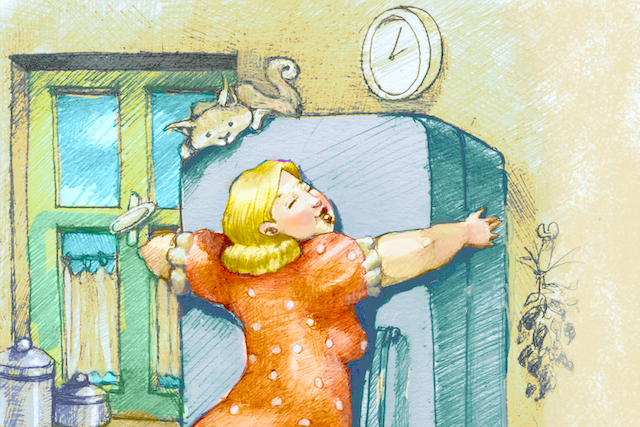
    Do an inventory of your strengths.

    If this is hard for you to do, then reach out to someone you love and ask them to tell you, in writing, what they love about you or see as your strengths. Seriously, this is scary. I get it because I did it. And I am so grateful I did. I reached out to three of my closest friends and family members and asked them what they saw in me. I did this over eight years ago and still have these letters taped in my journal so that I can read in times when I cannot see what they see.

    Consciously choose to focus on what gets you excited in life.

    It is so easy to waste our valuable time comparing our lives to others, focusing on what we hate about ourselves, or getting stuck in the perpetual cycle of negative self-talk. Instead, consciously choose to chase your curiosity.

    Have you ever set intentions for your year or your life? Setting intentions is one of the most powerful tips I adopted when I began my self-love journey, as it allowed me to focus on the bigger picture of who I wanted to be, how I wanted to show up each day, where I wanted my life to go, and what my definition of happiness truly looked like.

    Can you imagine how much passion, happiness, and love we would exude into the world if we were able to switch out the time we spend putting ourselves down into building ourselves up?

    We would change the world.

    You truly are so much more powerful that you know.

  • If You Hate Your Body and Think You Need to Fix It…

    If You Hate Your Body and Think You Need to Fix It…

    “That girl was fat, and I hate her.”

    One of my clients said this the other day—about herself. Well, her little girl self. And my heart broke.

    One of the very first things I do with clients is encourage them to practice self-compassion and kindness—just extending themselves the same basic human compassion and kindness that they would anyone else.

    Very much the opposite of what most people who struggle with weight and food are used to. After all, when it comes to our weight and food, we’re programmed with messages like “You just have to want it more, be motivated, build your willpower muscle, try harder, work harder, be better…”

    Perhaps to some, it may sound easy or silly, and it’s hard to understand what the hell kindness and compassion have to do with weight and food struggles when we’re so programmed to believe the opposite.

    Just extending yourself some basic human kindness and compassion really does end up being one of the most important things to do when you’ve struggled with weight and food for a long time. It’s also the hardest, and some struggle more than others with this simple concept.

    Personally, I struggled hard with it when I first started trying.

    I hated myself. I hated and was ashamed of every single thing about me, and didn’t think I deserved any kindness or compassion. But I knew that if I ever wanted to change the way I felt about myself, I had to figure out how to find some.

    So, I started picturing a little girl version of myself when I felt like I needed kindness and compassion. If I couldn’t give it to myself, I’d pull up a mental image of her and direct it that way.

    It worked, and it’s a trick I’ve also been using with clients since.

    But the other day, this woman (like many others) said, “Little girl me was fat… and… I… hate her. How am I supposed to give it to her when I hate her too?”

    It broke my heart, but it didn’t surprise me, and as I think about it, it makes me angry. It makes me angry because this beautiful lady wasn’t born hating herself for a little belly roll. She learned to from our stupidly broken society and has carried that belief around with her every single day since.

    From the time we’re old enough to make any kind of sense out of the world around us, we’re taught that fat is the enemy.

    Mothers have been taking their kids to Weight Watchers meetings with them to get publicly shamed for the number on a scale since they were seven or eight. We’ve been warned “Better not eat that, you don’t want to get fat, do you?” as though it was a fate worse than death, while simultaneously being taught that food fixes everything.

    “What’s wrong honey, you’re sad? Here, have a cookie.”

    “Sore throat? Here, have some ice cream.”

    We’ve watched as weight loss, at any cost, has been rewarded. Those who lose it are treated like royalty—showered with praise, attention, and acceptance, while we watch those who gain get whispered about behind their backs for “letting themselves go.” Or worse, they get openly teased and made fun of to their face—often even by friends and family who supposedly love them and claim to do it out of love and concern.

    Our society has programmed us to believe that fat is the enemy and thin people are somehow better than those who are bigger, through millions of micro (and macro) aggressions over the course of our entire lives.

    And here’s what’s happened as a result:

    Tens of millions of people (big and small) are wasting literally their entire lives desperately trying to “fix” their “fat” problem so they feel more acceptable to the current narrative that size and shape determine human worth.

    And when they put on a pound, they hate themselves.

    It’s all so unbelievably toxic, damaging, and counterproductive, and it fuels the exact “problem” our population is obsessed with trying to “fix.” Because the individuals behind the war we’ve waged on fat, go through their entire life hating and rejecting themselves.

    The stories they tell themselves about themselves end up looking a whole lot like this:

    I’m worthless and unlovable if I’m not skinny.
    I’m a failure if I gain weight.
    I’m useless and stupid.
    I ate bad, so I’m bad.
    I’m such an idiot because I let myself go.
    I’m disgusting and don’t deserve to feel good or be treated well (by myself or others).

    You may be thinking, “Good, how else are they going to get motivated to get their shit together and lose the weight!” You may even follow that thought with the typical “I’m just worried about their health” tripe. (If you still believe that weight loss obsessions are in the “best interest” of public health, pop over here and read this piece).

    Think about those words for a moment and consider how they make you feel. Now think about the impact of hearing them running through your head on autoplay, both consciously and unconsciously, tens of thousands of times a day, every single day, for years or even decades.

    We believe the things we tell ourselves. And if we’re telling ourselves that we’re worthless and unlovable and failures because of extra body fat, we believe those things to be true of who we are at our core, what we’re worth, and more importantly, what we deserve in life.

    And we treat ourselves accordingly.

    That woman I spoke of a minute ago? Like tens of millions of us, she struggles to feel anything but hatred for a little girl who she thought was fat. The little girl who doesn’t even physically exist anymore but is built into the fabric of who she is now and how she feels about herself because she carried those stories, feelings, and beliefs into adulthood.

    So did I. And I’d be willing to bet, so have you. Because we all do.

    So, she doesn’t prioritize herself. She does everything for everyone else, while ignoring what her mind and body need until she has no physical or emotional energy left to do anything. And then, when she can’t seem to muster the energy or willpower to force herself into following someone else’s stupid food rules to “fix” her “weight problem,” she hates and berates herself even more, and the cycle just keeps feeding off itself literally forever.

    No one in the history of mankind has ever thought, “I’m such a worthless failure, I think I’ll do something really nurturing and kind for myself and my body today.”

    That’s not how those stories work. That’s not how the shame they create works because we treat ourselves how we believe we deserve to be treated.

    When we associate our happiness and worth with our weight, weight gain makes us feel less worthy. The less worthy we feel, the less health-promoting behaviors we engage in.

    We don’t move our bodies (unless we decide to “lose weight”) because we don’t prioritize their health. We only care about the things we think we have to do as punishment for weight gain and to “whip them back into shape.” Corporal punishment is literally built right into the way we talk about it. But because we’re treating it as punishment, we can’t stick to it.

    We eat and overeat things that make us feel like garbage (and gain weight) on autopilot, as habit, as punishment, as reward, to numb and soothe, to celebrate, to mourn whether our bodies need or want those things—who cares what our bodies want, anyway, right? We’ve spent decades hating, berating, and learning to not trust those.

    That’s why stories matter. That’s what they have to do with weight. That’s why the entire weight loss industry has become such a friggen joke.

    We have got to stop demonizing and prioritizing weight. We have to.

    Instead, we have to shower ourselves with kindness and compassion. If we hate ourselves too much to consider that, we have to shower a younger version of ourselves with it (just keep going to the youngest version you need to, in order to find a version of you feel compassion for). 

    Kindness and compassion are so heavily built into this process because we cannot change self-punishing behaviors until we stop believing we deserve to be punished.

    If you want to change your weight, health, or the relationship you have with your body or food, you have to change the way you feel about yourself, and you cannot do that while berating yourself with stories of being worthless because of what you ate or what the scale says.

    It’ll just never happen.

    We have to stop rejecting parts of ourselves, since rejection writes those stories in the first place, and start working with the way our brains are wired (changing the thoughts and stories that create the beliefs that drive self-destructive habits and behaviors). And we have to tune into our thoughts and the wisdom of our own bodies with kindness and compassion.

    When we stop focusing on weight and weight loss and instead focus on shedding the stories (and beliefs that cause self-destructive choices), then, and only then, are we able to forever shed physical, and more importantly emotional weight they may have created. It eventually just becomes an effortless side effect.

  • The Truth About Body-Positive Activists on Social Media

    The Truth About Body-Positive Activists on Social Media

    “The most difficult times for many of us are the ones we give ourselves.” ~Pema Chodron

    I’m on my phone, posting a photo of myself on Instagram. It’s a vulnerable shot—I’m holding my bare belly.

    I type in the caption “Accepting my body isn’t easy, but it’s worth it.”

    I mean this, but I also have voices in my head telling me to delete the picture because I’m gross, not good enough, and a phony.

    I get half a dozen comments supporting me, mostly emoji hearts. One comment reads, “I wish I had your confidence.” I feel weird reading it because my feelings are mixed. I don’t necessarily think of myself as confident all the time.

    In fact, my reality is that I’m struggling with body image more than I’m swimming in acceptance. I think about how this person is comparing their backstage to my highlight-reel. 

    We do that—we look at ourselves as “not enough” and think that others have it all together.
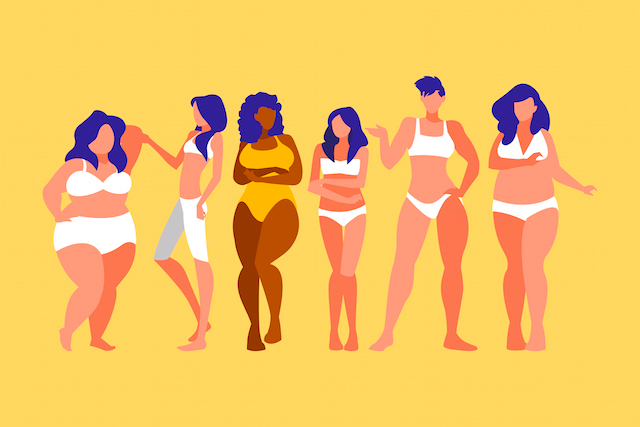
    We’re our harshest critics, and we hyper-focus on aspects of ourselves and bash them. We think that behind closed doors we are monsters. But when we focus all of our attention on that behind-the-scenes person, we’re not taking into consideration how human others are, too.

    The truth of the matter is that things aren’t always as they appear on social media. Yes, I realize I’m calling myself out, but I think it’s important for people to know that even people who seem wildly body-positive struggle, too. I mean, body acceptance is damn hard.

    I didn’t get to this point overnight, finding relative peace with myself. It’s been a long time of hating myself and wishing I was different. Even with finding some peace, I’m not “cured.” I don’t have a magic dose of body love all of a sudden.

    In fact, body acceptance doesn’t have to be self-love at all. It’s commencing on a simpler level. How about I just try to find acceptance in myself to think that this is how my body is at this moment? This is where we are, here in this body. It’s simple, but not easy.  

    It’s important to note that body acceptance is a moment-to-moment thing rather than a state of being in which you exist. It’s something that has to be fought for but is sometimes settled on.

    My background is that I’ve had eating disorders over the years, I’ve dieted like it was going to save me from body image issues, and I’ve had long periods where I weighed myself every day. I’ve also counted Cheez-Its out of the box, vowing to eat only the serving size. I’ve suffered in not accepting my body and instead succumbing to diet culture.

    At points, I thought I had it under control. I had dieted just right. I had even lost some weight. Inevitably, though, the self-disgust seeped in. I fell off the wagon over and over again, binging, particularly on sweets and foods high in carbs—the very foods I was depriving myself of.

    I’d say, “screw it” and I’d devour pizza with friends. I’d eat alone with a carton of ice cream or a box of cookies. Binging was inevitable after deprivation. While the high was fun during, it led to being sick and hating myself even more.

    In a fit of despair, I’d vow to “get back on the wagon” the next day.

    I’d tell myself I was definitely going to do better next time, but next time never permanently came. I may have been able to string together a few days of what I saw as “good” eating, but never lasting change.

    I got to a point where I felt defeated.

    Diet exhaustion looked like no longer finding joy in foods. It felt like a rock in my stomach. It sounded like sighs from having to make what felt like complicated food choices over and over again every day. 

    I couldn’t count my Cheeze-Its anymore. The scale was haunting and owning me. I feared social gatherings with friends, sometimes even avoided them. The next diet be it Keto or Whole 30 just sounded like another opportunity to fail.

    I got tired of chasing my tail. Diet culture wasn’t working for me anymore.

    What was the alternative? My ears started to perk up when I saw body-positive content on my social media feed. There were promises of body freedom and breaking the cycle of binging. I couldn’t believe it, but I thought about trying it for myself.

    The only thing was that I was terrified of trying it this way. The path of body acceptance sounded like giving up to me. It was far from it, though.

    I don’t remember if I googled body positivity, ran into it on social media, or some combination. I remember the despair I felt in searching for it. Thoughts passed through my mind like “could this work?” or “could this be real?” For so long all I had known was war with my body.

    While I was terrified, the positive effects of body acceptance began to flood my world in the best way possible. 

    I found influencers like Lauren Marie Fleming, Megan Jayne Crabbe, and Jes Baker. These women showed me that you could be happy and free in any body type. They started to break down those ideas I had about fatness and even what constitutes health.

    I started my journey. I downloaded all the podcasts I could on the topic: Food Psych and Love, Food were my favorites and top-ranking in the podcast charts. I filled my arms with books like Health at Every Size by Linda Bacon and Shrill by Lindy West. I religiously followed Instagram influencers like Virgie Tovar and Tess Holiday.

    Their messages were essentially the same:

    • Your size doesn’t determine your worth.
    • People can take actions to be healthy at any size.
    • Food isn’t to be defined as “good” and “bad.”
    • Dieting doesn’t work, and long-term weight loss from dieting is not sustainable.
    • All bodies are good bodies.
    • You can listen to and trust your body.

    These are just a small handful of the variety of beautiful messages I got from these amazing body-positive activists. They brought me hope.

    I also compared myself to them.

    I imagined their lives being perfect. I believed they had totally overcome diet culture and were floating above the clouds in body acceptance land. I thought that in order for me to experience freedom, I had to completely rid myself of negative thoughts.

    My backstage looked more like some body-accepting thoughts mixed in with a whole lot of self-loathing. Even today, I look down at my belly in disgust some moments. I guess the difference is that I have tools and messages to turn my thinking around these days.

    Some horrible thoughts that actually go through my mind are:

    • You’re only worthwhile if you’re thin.
    • No one’s ever going to love you.
    • You’re a failure and pathetic.
    • You ate terribly today.
    • Tomorrow I’ll eat “better.”

    I’m not immune from these thoughts just because I strive for body acceptance. In fact, these thoughts infiltrate my thinking regularly.

    It’s not a matter of having negative thoughts or not, it’s what I do with them.

    What I do with them these days is breathe through them. I turn them around and don’t let them control my life. In turning them around, I tell myself things like:

    • You’re worthwhile at every size.
    • You’re incredibly lovable.
    • The only thing that’s failed is diet culture’s promises.
    • You were feeding your body the best you could.
    • There’s no hope in a diet tomorrow.

    I want others to remember this when they think that myself or any other body-positive person on social media has it all together. I have to remind myself, too, when I go to compare my insides to another person’s outsides.
    We’re all just trying to figure it out, perhaps fumbling in the process. Those of us who are lucky enough to be working toward body acceptance know that this journey isn’t perfect. Changes aren’t going to happen overnight. Even the changes that do happen aren’t totally polished. 

    Just as others don’t know all that’s going on inside of us, we don’t know what’s going on inside of another person. They could be struggling just as we are. Attempts to mind-read only bring pain.

    What if that person you’re admiring is thinking the same self-deprecating thoughts as you are about themselves? What if they’re not happy with the way they’re eating and their relationship with their body isn’t nourishing?

    You can’t compare what’s going on inside of you to what’s going on outside for another person. All you can do is work to have the best relationship with yourself as possible.

    Acceptance is difficult and a process. In no way am I saying that it’s easy breezy. We wouldn’t all struggle so hard with accepting ourselves if it was easy.

    By recognizing that the person in the picture is just a human being, we see that we can have acceptance for ourselves, too. So, stop measuring yourself up to someone else. You’re your own person, flawed and beautiful. You deserve your own acceptance.

  • The Number on the Scale Does Not Dictate Your Value

    The Number on the Scale Does Not Dictate Your Value

    “To be beautiful means to be yourself. You don’t need to be accepted by others. You need to accept yourself.” ~Thich Nhat Hanh

    We try to give our bodies value with numbers. We’re obsessed with the number on the scale and the circumference of our waist.

    We also think our value lies in labels. Words like “obese,” “fat,” and “overweight” are triggers for many, and we abhor them like coffee breath, because we’ve been immersed in pocrescophobia (the fear of getting fat) from before we can remember.
    But we are more than a category on a pie chart. We are more than our body shape. Magazines tell us we are shaped like a fruit, but we are shaped by the experiences that have made us the people we are today.

    Our bodies may not be light, but inside we are shrouded with light. We may be soft where we’ve been told we ought to be hard and toned, but it’s in our softness that others feel comforted in the midst of their problems. We may not have a thigh gap, but there’s space between our arms for those we love to seek shelter.
    We are more than just a body.
    Our bodies are amazing. They can do so much, for ourselves and for others. We are each beautiful in our own right.

    But that’s not all there is to us. We are the imprint we leave on the planet during our short life on Earth. We are the heart that beats within us for the things we are passionate about.

    We are the smile that radiates out of our eyes when we experience a moment of pure joy, and the serenity that pervades us when we are content. We are the words we exchange, the words we write down, the words we guard in our minds at all costs. We are the feelings that pass through us, exhilarate us, drive us, guide us.

    We are the thoughts and memories and unique set of DNA that set us apart from everyone else. We are special. We are needed. We are designed for a purpose.

    We have value that surpasses everything society and the media wants us to obsess over. We have value apart from how we look. We have value apart from our relationship status.

    We have value apart from our income. We have value apart from whether we own a house or not, or have kids or not. We. Have. Value. Unchanging, unequivocal, perfect value.

    I regret that I wasted this whole weekend feeling depressed about how much I weigh now compared to how much I weighed in my early twenties (I’m approaching thirty). It seems so silly when you think about it, a stone here or there. But I found myself giving in to that black hole, falling-to-the-floor kind of despair.

    I should weigh less. I should look slimmer. I should try harder.

    I should be something that isn’t me at this moment in time.

    It seems like everyone is dissatisfied with the way they look. We will pay money and give up all our free time to try and achieve the illusion of perfection. Snapchat filters, Instagram filters, even paying for apps that will help us to create the perfect selfie, because heaven forbid we look anything less than perfect online!

    This, in turn, feeds into other people’s insecurities, spreading the toxic message that our “just as I am” is not enough.

    The thing is, weight is just one small way to measure health. My weight suggests I’m quite overweight for my height. But when you look at my waist-to-hip and waist-to-height measurements, I’m in the “healthy” category for both of them, with little-to-no risk of developing heart disease or obesity.

    Things just don’t add up. I’m left feeling like something is wrong with me. Am I in the red, or in the green?

    Do I need to lose weight, or can I breathe a sigh or relief?

    The thing is, it’s these categories and labels that have got it all wrong. Health can’t always be measured by numbers. It’s how you live your life. 

    Being obsessive isn’t healthy. Talking negatively (even in your mind) about yourself isn’t healthy. Striving for perfection isn’t healthy.

    What is healthy? Loving yourself exactly the way you are. Making good choices for your physical and mental health.

    Being balanced in everything.

    Some days I feel like I’ve come so far, that I truly do love and accept myself as I am, wobbly bits and all. Other days I feel lost in a sea of self-pity and a strong dislike for what I see in the mirror. I compare myself to other girls.

    Why can’t I be naturally skinny? Why has nature been so unkind? Then I remember that nature has been kind.

    I’m uniquely myself with my own combination of curves and body fat. Why would I want to look like anyone else?

    My thoughts go round and round like this. It can be so tiring.

    My parents used to tell me I had a “feminine figure.” My partner loves the way I look and never ceases to remind me, even when I’m in one of my funks and in a loop of obsessing over my supposed flaws. If I could only see myself through the eyes of those who love me, my obsessing and self-loathing would all stop in an instant.

    The thing is, we have to see ourselves through the eyes of love. We have to accept. We are craving our own love and acceptance.

    We need our own kindness. We need to talk about ourselves like we would talk to our best friend. We need to look in the mirror and say, “You are beautiful, just the way you are.”

    See your own value. Yes, your body has value. Yes, it is beautiful, exactly as it is.

    Shout it out! Proclaim it to the rooftops!

    But you are more than that.

    You are so much more than a body.

  • Why I’m at Peace with My Weight Gain

    Why I’m at Peace with My Weight Gain

    “Resistance keeps you stuck. Surrender immediately opens you to the greater intelligence that is vaster than the human mind, and it can then express itself through you. So through surrender often you find circumstances changing.” ~Eckhart Tolle

    I took a deep breath, feeling the recent change in my belly. I pinched at my belly rolls. They were familiar, I’d had them before, but recently I had gone through a period of over a year where I was in a smaller body. Now I was gaining weight again.

    I refuse to step on the scale, so I don’t actually know how much weight I’ve gained. I can just feel it in the extra belly rolls and the snugness in some of my clothes. In my mind, I have two choices: to wage war on my body or to surrender to the weight gain.

    Surrender is the ability to let go of the crushing weight of societal and personal expectations. It’s waving the white flag, signifying I’m giving up all the diet culture methods I’ve tried so hard to make work. I’m acknowledging that they actually never worked in the first place. This option isn’t always so easy, though.

    For some context, I’m a body positive and fat positive activist. I advocate for acceptance and health at every size. I tell others they’re worthwhile just as they are. Though when it comes time to put them into practice within myself, it’s very challenging.

    I still have days where I suck in my stomach, hoping to appear skinnier to the world and to myself. I try to shrink to become small enough. I feel as though my worth lies in the number on the scale (even though I’m a stranger to it now).

    I lie to myself and say that I’m never going to find a partner if I keep gaining weight. I beat myself up about the food I’ve consumed and I compare myself to other people.

    My body positive journey is far from perfect; I struggle with all of these things. One big reason is internalized weight stigma or fatphobia. It infests my mind and can take over if I’m not careful.

    I mean, look at the world: We fear and despise fat. People are bullied and discriminated against because of being in larger bodies. Fatphobia is very real. It’s ingrained subconsciously; our society trains us to be this way.

    The Body is not an Apology outlines some ways in which fatphobia rears its ugly head. In jobs, fat employees tend to be paid less for the same work. In dating, they often deal with people who fetishize them rather than seeing them as humans. In fashion, there are rarely sizes available beyond a size 16. In medicine, doctors see them as weak-willed and lazy.

    This is not surrender in our society. This is bullying and prejudice. No wonder it’s hard for people to accept their changing bodies—there are so many consequences for being fat.

    The irony of fat-shaming in the name of health is that it actually causes adverse health effects. According to a survey done by Esquire magazine, two-thirds of people report they’d rather be dead than fat. Can you imagine the damage this amount of stress does to one’s system?

    No wonder we’re terrified of gaining weight. We let those messages infiltrate our minds, and they drive us to pinch at our belly rolls as if we’re the worst people ever.

    On the other hand, being thin means being accepted, flying under the radar, even being complimented. It means that life is easier because you’re not oppressed in this way. Still, fatphobia manages to creep into all of our minds.

    When you’re scared to death of what other people are going to think of you, you’re carrying your own sense of internalized fatphobia. This phenomenon even impacts those who are in smaller bodies because of the negative feelings they have about themselves and the world.

    It makes sense, then, that my first reaction to my body admittedly isn’t always unconditional love. Rather, the old messages in my mind were saying, “You’re not good enough. You’re disgusting. No one will ever love you. You’re a failure.” They were loud and unrelenting. I was familiar with these messages.

    For many years I waged war with myself. I was stuck in cycles of binging and restricting that wreaked havoc on my body. I thought I was being “healthy,” but really I was very sick.

    I was obsessing over every little thing I consumed, making sure to track seventy-two calories of butter to my MyFitnessPal app and being hysterical when I gave into a Twix bar. Weight control owned me. I was constantly thinking about food.

    Binging and restricting create terrible health risks—getting physically sick from too much or not enough food and brittle hair, not to mention the emotional consequences that occur like stress, obsession, and the absence of joy.

    I loathed my very existence, and I definitely was fighting a war against my body and myself. I thought that there was something fundamentally wrong with me. It was utterly exhausting.

    I started to think that there had to be another way to relate to my body.

    When I was twenty-two, I discovered the body positivity movement. I began with a program called Bawdy Love, which was all about being a revolution to loudly declare that every body is worthy and no body is shameful.

    I began to follow body positive influencers online like Megan Jayne Crabbe, Tess Holiday, Roz the Diva, Jes Baker, and hashtags like #allbodiesaregoodbodies. Fat women filled my feed. They were beautiful and unapologetic. They taught me that fat isn’t bad and that people in larger bodies aren’t lazy, unhealthy, or unlovable.

    Now, I must say, I’m in a smaller body. I have privileges that many people do not. My level of weight gain so far is still keeping me in a body that’s relatively accepted by society. I don’t know what it’s like to face discrimination based on my size.

    I do, however, know what it’s like to hate your body and think that you’re broken. I know what it’s like to do the opposite of surrender. When I’m living this way I do things like workout until I’m ill, take my favorite foods out of my diet, and berate my body in front of other people. This is what waging war looks like.

    Instead of doing this, I chose to surrender to weight gain. I make this choice every single day. I try to let go of my expectations and preconceived notions. I’m throwing my hands up in the air.

    This isn’t a happily-ever-after story where everything is perfect. Rather, body acceptance takes rigorous work as well simply just letting myself be.

    I’m continuing to enjoy my food free from disordered eating. This means no restricting; every single food is available at any time. You won’t hear me talking poorly about my body or about anyone else’s. I refuse to diet and I refuse to indulge others in their diets.

    To counteract the voices that tell me I’m not good enough, refute them with “You’re worthy and lovable just as you are. Weight is just a number. You’re okay.”

    Eventually, I started to believe these thoughts are true. Part of me thinks that maybe, just maybe, my existence on this planet isn’t for nothing. In letting go of the self-pity, a beautiful sense of self begins to bloom.

    Surrendering is harder than you may believe. Internalized weight bias runs deep.

    I think at times I come off as someone who’s super-confident in myself and in my relationship with my body, but it takes a whole lot of work to get to the point of surrender. The point of being free from the grips of diet culture.

    I still poke at my belly, but mostly it’s with curiosity. If I feel disgust, I quickly try to turn my thoughts around to have compassion and confidence. I notice when my thighs are pressed against a bench. I smile, feeling thankful that my legs move me around.

    I don’t step on the scale because I know that it can’t tell me anything about my worth. The numbers are irrelevant. I open my arms to weight gain, though sometimes taking a deep breath first. Accepting it means healing from a disordered relationship with my body and food.

    Weight gain is an indicator that I’m living with joy in my life. I’m enjoying meals out with friends, snacking on treats at work, and taking seconds. I’m eating when I’m hungry, what a revelation.

    I’m taking deep care of myself, and that may not look like other people’s definitions of self-care. That’s okay.

    Fatphobia may say that I’m being stupid, but I choose surrender today. For me, that means throwing out lifelong conceptions that I’m not good enough. It means no longer running in circles chasing my tail, trying to lose weight. It’s opening up to the idea that there’s another way to go about this. It’s peace and joy.