Tag: wants

  • How to Free Yourself from Your Constant Desires

    How to Free Yourself from Your Constant Desires

    “Wealth consists not in having great possessions but in having few wants.” ~Epictetus

    I surely can’t be the only one tired of constantly wanting things. By things, I mean a new job, a nice car, new clothes, a new home, perhaps even a partner, more friends, more money, or better holidays in more luxurious locations.

    It feels like we are forever stuck in a cycle of seeking the next bigger or better thing. Once we have achieved one goal, yup, you guessed it, here comes another, even bigger goal that will probably be harder to reach than the last one.

    It seems that we always want more; nothing is ever enough.

    At one point I felt like I had truly gotten lost in trying to keep up with expectations from society, my peers, my colleagues, and even strangers!

    I was fed up with not getting what I wanted when I felt I needed it, and with getting what I wanted but only enjoying it for a short time before I wanted the next big thing!

    When does it end? When do we pass over to the other side? When do we reach enlightenment?

    I was tired of constantly chasing things. It was exhausting, and I didn’t have the energy for it.

    I wanted to afford to live on my own instead of having to house-share or live with family. I wanted a partner who would be true to me. I wanted my side hustle to earn me enough to do it full time. I wanted holidays multiple times a year.

    I was eventually offered a flat viewing for an affordable housing scheme. These were few and far between, so I was lucky to be offered one. I thought that this would be my chance to meet my goal of living alone.

    If I got the flat, I could tick it off my list! I would be halfway there to the ‘perfect’ life I had envisioned for myself.

    Sadly, I wasn’t offered the flat for reasons unbeknown to me, but being rejected for it certainly put things into perspective for me.

    To my surprise, I was not in the slightest bit angry, upset, or disappointed!

    I sat and asked myself what it would have changed if I had gotten it. I would have been happy in the flat for a short period, but it wouldn’t have been long before I was itching to live in a house, somewhere bigger or in a better area.

    I concluded that it wasn’t life handing me the shit stick; it was me. I was the problem! I always wanted more, I didn’t appreciate what I already had, and I was always looking to the future when things would be “better.”

    I sat and wondered what it would feel like to just be, to not want anything, to take everything as it comes without judgment or fear of where I’d end up if I didn’t meet my goals.

    Call it a spiritual awakening or an epiphany that there had to be more to life than constantly chasing things I desire.

    Annoyed and frustrated with myself, I turned to a search engine for answers. “Is it possible to live without desire?” I typed into Google.

    I was met with many articles that provided helpful information.

    I have discovered, through books, meditation, online information, and reflection on my own experiences, that desire isn’t necessarily bad.

    Issues arise when we chase desires because we feel they are necessary for our well-being and happiness, and we rely on them for fulfilment. The problem is that when we do not get the things we want, it leads to disappointment and misery.

    That was certainly my issue. I had become fixated on looking for things outside of myself to bring me peace, joy, happiness, and fulfilment, and they never did, or at least not for a significant period of time.

    We Desire More Because We’re Chasing Happiness

    We chase external things because we are ultimately chasing happiness; we think these things will make us feel good. When we acquire them, they usually do, but the feeling of happiness never lasts. Usually, it’s not long before we want something else.

    I discovered that as long as you believe there is something outside of yourself that can bring you happiness, you will never truly be happy because it starts within.

    Our Desire is Linked to a Feeling of Lack

    We want things because we think we lack something, even when all our needs are met, but if we constantly feel there is never enough, we will wind up creating more of that feeling.

    This is the basis of the law of attraction—like attracts like. What you focus your energy on, you receive more of.

    I realized that I needed to make changes in my life, slow down, refocus, and tame my constant need to obtain things. To do this, I had to look within to connect with who I really was—a spiritual being to whom materialism and what I have (and do not have) do not matter!

    In order to tame my constant striving for more and find happiness within, I implemented the following.

    Temper your expectations.

    We have to understand that the world doesn’t owe us a thing, but that doesn’t mean that we should stop pursuing the things we want. We should just refrain from expecting everything to turn out the way we hope they will.

    If we get what we want, that’s great; if we don’t, we didn’t have our hopes pinned on it anyway, so it’s also okay!

    When you have fewer expectations, less can disappoint you, and if you do feel disappointed about something, you will recover and be able to bounce back quickly.

    Accept where you are in life.

    Acceptance will free you from the victim mentality that keeps you focused on what you lack. Once again, this doesn’t mean you can’t strive to improve your situation. It just means you’ll get out of the judging mind that fixates on how unfair life is, enabling you to enjoy the things you do have and more effectively work to change the things that aren’t working for you.

    Surrender to life.

    Loosen your grip on your life and stop trying to swim against the tide.

    Often, we get so caught up trying to control everything and make everything work in our favor that we cause more harm than good, usually to ourselves.

    Trust that things could work out even better than you knew to imagine if you let go a little, and when you face adversity, remember it will pass, because nothing lasts forever.

    When you do have goals you want to achieve, try to enjoy the process of getting where you want to be instead of focusing on the end result. Things usually fall into place when we relax and let go of outcomes.

    Practice being more present.

    By constantly chasing our desires, we can end up living in the future and not here in the present moment, which means we can’t appreciate what’s right in front of us.

    The only matter that truly matters is that of now because yesterday is dead and tomorrow has not happened yet.

    I found that being present reduced my anxiety and worries about the future, because I made a conscious effort to only focus on the now.

    Practice gratitude.

    When we appreciate everything we have, we tend to focus less on what we do not have.

    Gratitude is linked to greater well-being and overall happiness, and it’s also effective in reducing stress and anxiety.

    What helps me is to take a little time at night to find something from the day I appreciated. It doesn’t have to be something big; it can be a colleague helping me with a task at work or a stranger holding the door open for me.

    Upon reflection, I personally think that it is okay to live with desire. We are human, and living from a desire-less state would be extremely difficult—even wanting to live without desires is a desire itself!

    It’s natural to want to eat tasty dinners, to look nice when we go out, and to be able to treat ourselves for our hard work. While these wants may be minor, they are still desires.

    Some would even argue that if we did not have any desires, our lives would have no meaning or purpose, and we wouldn’t be motivated to do anything.

    But constantly chasing external things and relying on them for happiness and fulfilment is an unhealthy way to live, leading to stress, worry, fear, and even depression.

    The alternative is to appreciate all the goodness we have in our lives and understand that happiness cannot be measured by the things that we have, or found by constantly looking outside of ourselves; if they could, then those that could afford to have everything they ever wanted would be the happiest people in the world, and this just isn’t the case!
  • What Carrots Are You Chasing, and Are They Worth the Sacrifice?

    What Carrots Are You Chasing, and Are They Worth the Sacrifice?

    “Not to arrive at a clear understanding of one’s own values is a tragic waste. You have missed the whole point of what life is for.” ~Eleanor Roosevelt

    I promise this essay isn’t an attempt to convince you that you’re living inside The Matrix. (Okay, maybe it is a bit.)

    But do you ever find that days, weeks, or even months have passed that you didn’t feel present for? I describe this odd sensation as feeling like you’re going through the motions like Bill Murray trapped in Groundhog Day.

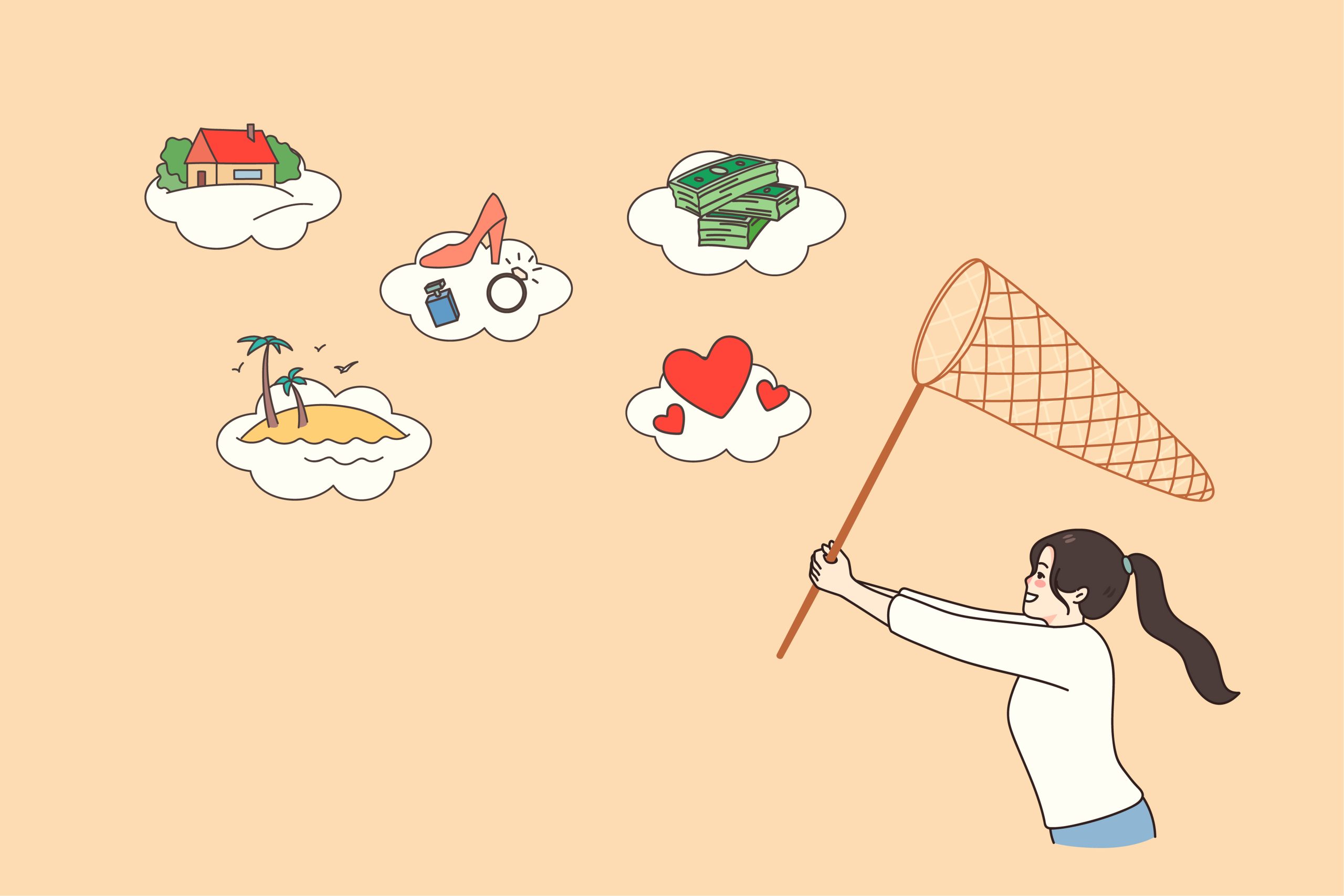
    Every day bleeds into the next because you’re future-focused, and what you’re doing right now only feels valuable insofar as it’s laying the groundwork for something else; the next stage of your career, the renovation that means the house is “done,” a number in the bank account that means you’ll never have to worry about money again.

    I think it’s fair to say we both know this is total BS. We’ve climbed enough mountains in our lifetime to know that as soon as we get what we want, we’re already planning what’s next.

    The problem is not with the aim or the goal but with the belief that we can cross a finish line that will magically make these uncomfortable feelings disappear. In psychology, they call this the hedonic treadmill.

    You know that promotion that would change your life?

    You know that new kitchen you obsess over because it would make life much better?

    You know that extra cash that would mean all of life’s money troubles would disappear?

    Will they provide everlasting happiness?

    Doubtful.

    We can blame this on the hedonic treadmill.

    It’s in our human nature to quickly return to a relatively stable level of happiness despite major positive or negative events or life changes.

    Put another way: No matter what we do, buy, or hope will change our life permanently, it’s a short-lived shot of happiness injected into our life.

    I understand why people don’t want to believe this. Because it forces us to question why we’re working so damn hard to change things and to be present with what is right now.

    When I realized this, I began to reflect on what it meant for my life in a way I couldn’t when I was lost in the chase. Accepting that we have a baseline is liberating. Most of what we’re chasing is nothing more than stupid carnival prizes in a game we didn’t know we were playing.

    If the $40,000 kitchen renovation will give you a flash-in-the-pan taste of happiness, is it worth the years of your life you need to sacrifice to pay that off?

    Is it worth more hours in the office?

    Is it worth less time with your family?

    Is it worth the crippling stress?

    You have no control over the hedonic treadmill. Still, you can control how much of your life you’re willing to trade for a future that won’t make you any happier in the present.

    It’s a hard habit to break because, as philosopher Alan Watts explains:

    “Take education. What a hoax. As a child, you are sent to nursery school. In nursery school, they say you are getting ready to go on to kindergarten. And then first grade is coming up and second grade and third grade… In high school, they tell you you’re getting ready for college. And in college you’re getting ready to go out into the business world… [People are] like donkeys running after carrots that are hanging in front of their faces from sticks attached to their own collars. They are never here. They never get there. They are never alive.”

    It’s drilled into us from the day we’re born to always think of what’s next.

    You end up chasing carrots to eat when you’re not even hungry. Hell, you probably don’t even like the taste of carrots.

    This lack of presence is toxic for our children. They end up repeating the same cycle we do when we role model the idea that we need to prioritize a future self (that may never come) over time spent with them.

    Life only feels short because we burn much of our alive time on shit that doesn’t matter.

    Do you want to experience a deep, rich, and fulfilling life?

    Start by asking, what carrots are you chasing? Are they worth the sacrifice? And what values would you honor in the present if you stopped living for the future?

    I can say family means everything to me, and I’ll do whatever it takes to support and provide for them. But if I’m consumed by my phone when I’m with my ten-month-old daughter, what value am I reinforcing? To make more money in my business so I have the freedom to do exactly what I’m too busy to enjoy right now?

    To honor my values means putting the phone down, looking into her eyes, and giving her literally the only thing she wants and needs from me. My presence. And that right there—being present enough to enjoy our lives—is what will give us the happiness we crave.

  • 10 Signs You’re Being True to Yourself

    10 Signs You’re Being True to Yourself

    “The most confused we ever get is when we try to convince our heads of something that we know in our hearts is a lie.” ~Karen Moning

    It’s painful and stressful to feel like you’re living a lie. Like you’re hiding how you really feel, saying what you think other people want to hear, and doing things you don’t actually want to do—just because you think you’re supposed to.

    But sometimes we don’t recognize we’re doing this. We just know we feel off, or something feels wrong, and we’re not sure how to change it.

    It makes sense that a lot of us struggle with being true to ourselves.

    From a young age, we’re taught to be good, fall in line, and avoid making any waves—to lower our voices, do as we’re told, and quit our crying (or they’ll give us something to cry about).

    And most of us don’t get the opportunity to foster or follow our curiosity. Instead, we learn all the same things as our peers, at the exact same time, and we live a life consumed by the mastery of these things, our bodies restless from long hours of seated study and our minds overwhelmed with memorized facts that leave very little room for free thinking.

    To make things even worse, we learn to compare our accomplishments and progress—often, at things we don’t even really care about—to those of everyone around us. So we learn it’s more important to appear successful in relation to others than to feel excited or fulfilled within ourselves.

    This was my experience both growing up and in my twenties. A people-pleaser who was always looking to prove that I mattered, I was like a chameleon, and I constantly felt paralyzed about which choices to make because all I knew was that they needed to be impressive.

    I never knew what I really thought or felt because I was too busy suffocating my mind with fears and numbing my emotions to develop even a modicum of self-awareness.

    This meant I had no idea what I needed. I only knew I didn’t feel seen or heard. I felt like no one really knew me. But how could they when I didn’t even know myself?

    I know I’ve made a lot of progress with this over the years, and I have a mile-long list of unconventional choices to back that up, as well as a number of authentic, fulfilling relationships. But I’ve recently recognized some areas where I’ve shape-shifted in an attempt to please others, and in some cases, without even realizing it.

    I don’t want to be the kind of person who panders to popular opinion or lets other people dictate my choices. I don’t want to waste even one minute trying to be good enough for others instead of doing what feels good to me.

    I want to make my own rules, live on my own terms, and be bold, wild, and free.

    This means peeling away the layers of fear and conditioning and being true to what I believe is right. But it’s hard to do this, because sometimes those layers are pretty heavy, or so transparent we don’t even realize they’re there.

    With this in mind, I decided to create this reminder of what it looks and feels like to be true to myself so I can refer back to it if ever I think I’ve lost my way.

    If you also value authenticity and freedom over conformity and approval, perhaps this will be useful to you too.

    You know you’re being true to yourself if….

    1. You’re honest with yourself about what you think, feel, want, and need.

    You understand that you have to be honest with yourself before you can be honest with anyone else. This means you make space in your life to connect with yourself, perhaps through meditation, journaling, or time in nature.

    This also means you face the harsh realities you may be tempted to avoid. You’re self-aware when faced with hard choices—like whether or not to leave a relationship that doesn’t feel right—so you can get to the root of your fear.

    You might not always do this right away, or easily, but you’re willing to ask yourself the tough questions most of us spend our lives avoiding: Why am I doing this? What am I getting from this? And what would serve me better?

    2. You freely share your thoughts and feelings.

    Even if you’re afraid of judgment or tempted to lie just to keep the peace, you push yourself to speak up when you have something that needs to be said.

    And you refuse to stuff your feelings down just to make other people feel comfortable. You’re willing to risk feeling vulnerable and embarrassed because you know that your feelings are valid, and that sharing them is the key to healing what’s hurting or fixing what isn’t working.

    3. You honor your needs and say no to requests that conflict with them.

    You know what you need to feel physically, mentally, and emotionally balanced, and you prioritize those things, even if this means saying no to other people.

    Sure, you might sometimes make sacrifices, but you understand it’s not selfish to honor your needs and make them a priority.

    You also know your needs don’t have to look like anyone else’s. It’s irrelevant to you if someone else can function on four hours of sleep, work around the clock, or pack their schedule with social engagements. You do what’s right for you and take good care of yourself because you recognize you’re the only one who can.

    4. Some people like you, some people don’t, and you’re okay with that.

    Though you may wish, at times, you could please everyone—because it feels a lot safer to receive validation than disapproval—you understand that being disliked by some is a natural byproduct of being genuine.

    This doesn’t mean you justify being rude and disrespectful, because hey, you’re just being yourself! It just means you know you’re not for everyone; you’d rather be disliked for who you are than liked for who you’re not; and you understand the only way to find “your tribe” is to weed out the ones who belong in someone else’s.

    5. You surround yourself with people who respect and support you just as you are.

    You understand that the people around you affect you, so you surround yourself with people who respect and support you, which motivates you to continue being true to yourself.

    You may have people in your life who don’t do these things, but if you do, you understand their issues with you are just that—their issues. And you set boundaries with them so that they don’t get in your head and convince you there’s something wrong with you or your choices.

    6. You focus more on your own values than what society deems acceptable.

    You’ve read the script for a socially acceptable life—climb the corporate ladder, have a lavish wedding, buy a big house, and make some babies—but you’ve seriously questioned whether this is right for you. Maybe it is, but if you go this route, it’s because this plan aligns with your own values, not because it’s what you’re supposed to do.

    You know your values are your compass in life, and that they change over time. So you check in with yourself regularly to be sure you’re living a life that doesn’t just look good on paper but also feels good in your heart.

    7. You listen to your intuition and trust that you know what’s best for yourself.

    You not only hear the voice inside that says, “Nope, not right for you,” you trust it. Because you’ve spent a lot of time learning to distinguish between the voice of truth and fear, you recognize the difference between holding yourself back and waiting for what feels right.

    You might not always make this distinction immediately, and you might sometimes be swayed by well-meaning people who want to protect you from the risks of thinking outside the box. But eventually, you tune out the noise and hone in on the only voice that truly knows what’s best for you.

    8. You do what feels right for you, even if that means risking disapproval from the people around you.

    Not only do you trust that you know what’s best for you, you do it. Even if it’s not a popular choice. Even if people question your judgment, vision, or sanity. You recognize that no one else is living your life, and no one else has to live with the consequences of your choices, so you make them for you and let the chips fall where they may when it comes to public perception.

    This doesn’t necessarily mean you have everything you want in life. It just means you hear the beat of your own drum, even if it’s silent like a dog whistle to everyone else, and you march to it—maybe slowly or awkwardly, but with your freak flag raised nice and high.

    9. You allow yourself to change your mind if you recognize you made a choice that wasn’t right for you.

    You may feel embarrassed to admit you’re changing directions, but you do it anyway because you’d rather risk being judged than accept a reality that just plain feels wrong for you.

    Whether it’s a move that you realize you made for the wrong reasons, a job that isn’t what you expected, or a commitment you know you can’t honor in good conscience, you find the courage to say, “This isn’t right, so I’m going to make another change.”

    10. You allow yourself to evolve and let go of what you’ve outgrown.

    This is probably the hardest one of all because it’s not just about being true to yourself; it’s also about letting go. It’s about recognizing when something has run its course and being brave enough to end the chapter, even if you don’t know yet what’s coming next. Even if the void feels dark and scary.

    But you, you recognize that the void can also feel light and thrilling. That empty space isn’t always a bad thing because it’s the breeding ground for new possibilities—for fulfillment, excitement, passion, and joy. And you’re more interested in seeing who else you can be and what else you can do than languishing forever in a comfortable life that now feels like someone else’s.

    As with all things in life, we each exist on a spectrum. Every last one of us lives in the grey area, so odds are you do some of these things some of the time, and probably never perfectly. And you may go through periods when you do few or none of these things, without even realizing you’ve slipped.

    That’s how it’s been for me. I’ve gone through phases when I’ve felt completely in alignment and other times when I’ve gotten lost. I’ve had times when I’ve felt so overwhelmed by conflicting wants, needs, and beliefs—my own and other people’s—that I’ve shut down and lost touch with myself.

    It happens to all of us. And that’s okay. The important thing is that we keep coming home to ourselves, and we eventually ask ourselves the hard questions that decide the kind of lives we lead: What am I hiding? What am I lying about? And what truth would set me free?

  • The Joy of Not Getting What We Want

    The Joy of Not Getting What We Want

    “Remember that not getting what you want Is sometimes a wonderful stroke of luck.” ~Dalai Lama

    Let me tell you a story. I first read it in a book on Taoism, but I’ve seen it in at least a dozen other places since then, each with its own variation. Here’s the gist:

    There’s this farmer. His favorite horse runs away. Everyone tells him that this is a terrible turn of events and that they are sorry for him. He says, “We’ll see.”

    The horse comes back a few days later, and it brings an entire herd of wild horses with it. Everyone tells him that this is a wonderful turn of events and that they’re happy for him. He says, “We’ll see.”

    The farmer’s son is trying to break one of the new horses, it throws him, and he breaks his leg. Everyone tells the farmer that this is a terrible turn of events and that they’re sorry for him. He says, “We’ll see.”

    The army comes through the village. The country is at war and they are conscripting people to go fight. They leave the farmer’s son alone because he has a broken leg. Everyone tells him that this is a wonderful turn of events and that they’re happy for him.

    The farmer says, “We’ll see.”

    Now let me tell you who I was when I first heard that story. I was twenty-three or twenty-four, trying to get off of drugs and stop drinking and turn my life around in general. I had recently rolled my car out into a field, lost my wife and most of my friends, and had moved to West Texas to start over.

    I was smart enough to know something had to change, but I wasn’t quite smart enough to know how, so I tried to do what I thought smart people did—I started going to the library.

    I initially got into a bunch of weird stuff like alternate theories about the history of the world, cryptozoology, and things like that. Not really the change I needed.

    One day I went to the library looking for a book about the Mothman, but Stephen Hawking’s A Brief History of Time was sitting in its place. I didn’t know anything about this book or the things it talked about, but the title was cool, and libraries are free, so I checked it out.

    It’s hard to exaggerate how much this book revolutionized my view of the universe and my place in it. It was thrilling to recognize how much there was out there that I didn’t know. Atlantis and Bigfoot were replaced by quantum mechanics and string theory.

    I eventually stumbled onto The Dancing Wu Li Masters by Gary Zukav, rearranging my worldview again. Having grown up in a pretty strict evangelical home, any sort of eastern philosophy was completely outside my frame of reference. This led me to begin studying Taoism and Buddhism, most specifically Zen Buddhism, and to the story I started this post with.

    I started to recognize that I had a mind, but I was not my mind. Meditation showed me how this mind was always grasping and wanting and reaching out for different things. It was a craving and aversion machine.

    It wasn’t long before I realized that it wanted these things solely for the sake of having them, and that none of them were all that important. I just wanted what I wanted because I wanted it.

    This changed everything.

    I had spent the previous fifteen years running from one thing to another in order to avoid anxiety, fear, anger, and depression. I did this through drugs and alcohol and taking crazy risks with my life. These things have consequences.

    These consequences came as car wrecks, jail time, hospitalizations, and a long string of destroyed relationships. I was so captivated by my wants that I was running through life with my eyes closed, blindly chasing them, with predictable results.

    Realizing that I was not my mind gave me a sense of objectivity about the things I wanted and the things I did not want. It taught me that I didn’t have to be so attached to having or avoiding things. This let me stop running.

    I learned that getting our way is overrated. Once we recognize this, we are much less susceptible to the whims of a flimsy, fragile, and fickle mind.

    Why We Have No Business Getting What We Want

    There are three primary reasons we need to be careful about being too invested in getting what we want:

    • We are emotional creatures, driven by things like hunger and a bad night’s sleep.
    • To a great extent we’re wired for short-term thinking. Immediate benefit often outweighs long-term consequences.
    • We experience time in a linear fashion, so the future is completely unknown to us.

    Let’s take a look at these.

    Hungry, Angry, Lonely, Tired

    I often encourage people to memorize the acronym HALTS to use when making decisions. It stands for hungry, happy, angry, lonely, tired, stressed, and sad.

    These are all common emotional states, and they are all terrible times to make a decision. We’ve all heard the advice not to go shopping while we’re hungry, and there’s a reason for that—it’s good advice. You will buy more food than you need, all based on how you feel in that moment.

    I’m not sure I’ve ever seen good decisions come from these emotional states, unless luck intervened and let the person off the hook. It all makes sense when we think about it.

    Anger shuts down the best parts of out brain. Situations go from bad to worse and from worse to unfixable when we decide to address something in a moment of anger.

    When we are sad the entire world seems bleak and it feels like it will never change. This is okay, unless we make long-term decisions based on the idea of an ominous, crushing world.

    Stress makes even the smallest things feel overwhelming. We cannot make good decisions when making our bed or going grocery shopping sound like monumental tasks.

    When we’re lonely we’re likely to let the wrong people into our lives just because we need someone. This opens us up to toxic, manipulative, and malicious people.

    Our brains are slow and sluggish when we are tired, and our decisions are, unfortunately, rarely our best.

    Even the so-called positive emotions aren’t safe. I know I have overcommitted to things on days when I was happy and feeling a little bit better than normal.

    When you take all of this together, it helps us to see that the things we want are flimsy and that they change depending on our mood. The things we want become a lot less important when we realize that we might only want them because we had a bad night’s sleep, or we skipped lunch.

    Short-Term Planning

    Our immediate responses are rarely oriented to the long term. This makes sense, since most of the things our body needs are immediate—food, sleep, protection, sex, using the bathroom, etc.

    The problem arises when we focus on meeting these needs to the exclusion of the things that are good for us long term. I wasn’t stupid—I’d always known that the drinking and drugs were a problem. The problem was that rational James was usually outvoted by crazy James.

    I had good intentions, and they held so long as I wasn’t around any of my temptations. My long-term planning was solid until short-term fun was in front of me. It was infuriating to watch my resolve and dreams go out the window over and over again.

    As I mentioned above, our wants are flimsy when we begin to explore them. Why do you want chocolate? Why do you want a beer? Why do you want to go on a walk? Why do you want to go to Disney World?

    We have all sorts of answers for these questions:

    Because I deserve it.

    Because I need to relax.

    Because it’s a nice day outside.

    Because Disney World is the happiest place on earth.

    These don’t really hold up when we examine them though.

    Why do you deserve it?

    What does it mean to relax?

    What makes it a nice day?

    What makes Disney World the happiest place on earth?

    If we keep going, we always arrive at the realization that we just want to feel good one way or another. We want to feel good for the sake of feeling good. While there’s definitely nothing wrong with this, it is ultimately baseless, and we cannot let it drive our lives.

    Not feeling good is a part of the human experience. You’re going to get sick, you’re going to have days that are not as good as other days, you’re going to have a headache sometimes. These things are unavoidable.

    The things we want right here and right now are rarely the best things for us long term. Because of this, long-term planning requires intentionality and energy. It may be inconvenient but it’s true.

    We Can’t Predict the Future

    As a kid, I remember thinking it was weird that we couldn’t remember the future. If I could remember what happened yesterday, why couldn’t my brain go the other direction?

    This is one of the primary limitations of our species, and the most important reason that we shouldn’t hold the things we want too tightly. We don’t know how anything is going to turn out, including what will happen if we get what we want.

    I used to drive through Lubbock, Texas, once or twice a year to go skiing. Lubbock is a city out in the desert, and while I have come to love it here, I don’t think anyone would describe it as beautiful.

    Lubbock has some dubious honors. We have been voted most boring city in America, worst weather in the world, and I recently read that we have the worst diet in the United States. Our poverty and violent crime rates are roughly double the national average, and we score high on things like child abuse and teen pregnancy.

    I always swore I’d never live in a place like Lubbock when I would pass through here, but moving here twenty years ago saved my life. The place that I loved, Austin, I brought me to rock bottom. it was only a matter of time before I was dead or in prison.

    On the other hand, the place that I swore I’d never live has given me a college education, a family, and a successful business—all things that I thought only existed for other people. I honestly shudder when I think what my life would have looked like had I not moved.

    There have been smaller examples along the way. I was working at a CD store and loved it, but one Sunday corporate came in and said they were shutting the place down. They gave me a two-week paycheck to help them pack the store up and move it out. It was that abrupt.

    It sucked, but this led me to working at hotels, where I was able to get paid to do all my homework and still have time to read for fun. I burned through all the Russian classics, made all A’s, and got to spend a lot of time with my son when he was little. I will always be grateful for that.

    Before opening my practice, I was working at a private university. For someone with sixty-plus jobs in their life (my wife and I made a list), working on a college campus was amazing—it was the first place I saw as a “forever” job.

    When things went bad, they went all bad and it was obvious it was time to leave, but I was comfortable. I ignored some problems I should not have been ignoring, and it caught up with me. By the time I left I was burned out and sick all the time.

    This catapulted me into opening my own business because I didn’t really see any other options. I’d never seen myself as being responsible enough to do this, and people told me I didn’t have the head for it.

    Six years later, my business has been super successful and afforded me more freedom than I could ever imagine, but even this wasn’t the end. I recently closed my office to stay home with my kids, another twist I couldn’t have seen coming.

    We are trapped in linear time, so we don’t know what’s coming right around the corner. Holding on to one thing or another as the right thing or the thing we “should’ have often causes us to miss the amazing things right in front of us.

    Accepting What We Get

    My life has been a series of hard lessons brought about by my self-absorbed, entitled, and foolish choices. They have all, in one way or another, taught me one thing: I don’t know what’s best, so a majority of the time I don’t have any business getting what I want.

    Things like someone shelving a library book in the wrong place, corporate closing the place I worked, and moving to a city I actively disliked have brought about the best things in my life. I would not have chosen any of these if I’d been given the choice.

    We are emotional, shortsighted creatures who have no access to the future. Learning to cultivate acceptance for the things outside of our control often opens up amazing paths for us. I know it has for me.

  • Why People-Pleasers Don’t Get the Love and Respect They Desire

    Why People-Pleasers Don’t Get the Love and Respect They Desire

    “Niceness is the psychological armor of the people-pleaser.” ~Harriet B. Braiker

    I used to think that being kind, gentle, and agreeable was guaranteed to win me love and acceptance from others. I’d tiptoe around destructive people’s behaviors, no matter how uncomfortable I felt about it, believing to my core that if only I could be nice enough to them, they would one day lead a better life.

    I lived my life constantly avoiding anything that might make me look like a bad, imperfect, antagonistic, or unlikeable person. Because as every people-pleaser knows, being disliked or disapproved of feels worse than ignoring your own feelings—at least at first.

    Some people were easy to please; a kind gesture or smile was all it would take. Getting their approval so effortlessly made me happier than a kid at Disney World. But with other people, it seemed the more I tried to please them, the more likely they were to treat me like an old dish rag; and the more this happened, the less I liked myself.

    Eventually, my efforts to please others left me feeling disrespected, violated, and disconnected—from life, from other people, and from myself.

    For many years, I silently endured the ongoing, relentless invalidation of who I was based on how others treated me. When someone close to me was feeling unsatisfied, negative, or in search of someone to blame, there I was, ready to take it.

    But no matter how unhappy I was, I still wanted to make them feel better. I wanted to see them happy, even at my own expense.

    At the core of these one-sided relationships I maintained with some of the perpetually dissatisfied people in my life was an enduring belief that if only I could solve their problems and make them happy, I’d finally receive the love and acceptance I desired all my life.

    I never stopped to think, “But what about me? What will become of me if I keep trying to satisfy people with an unquenchable thirst?” I couldn’t see that no matter what I did, it would never be enough. In fact, it wasn’t about me at all. I didn’t realize that no matter how good I am at solving problems, or how perfectly I can handle things, if someone wants to find fault with me, they will.

    Instead of seeing other people’s dissatisfaction as an issue for them to resolve on their own, I internalized it and interpreted it to mean I wasn’t good enough.

    But one day, I finally started asking myself some important questions: “What will become of me and my self-worth if I keep basing it on unhappy people’s perceptions? Who will love and respect me if I’m not even taking a stand for myself?”

    My conception of who I needed to be in order to gain love and acceptance was slapping me in the face over and over again like a flat tire driving on uneven pavement. But still, I wondered why my formula wasn’t working. I truly believed that living selflessly was a surefire way to get love, appreciation, respect, and lots of hugs in return.

    It took me a while to realize that living this way was actually having the opposite effect. My constant selfless giving and kindness didn’t automatically earn me a pass on the eternal acceptance subway. It actually seemed to be an invitation for people to take advantage of my generosity, allowing them to feel less anxious about their own lives.

    I set myself up to be other people’s emotional dumpster, personal life fixer, and convenient source of blame for their misfortunes.

    What I came to learn the hard way is that pleasing others isn’t the way to win their love and respect. I finally realized that if I kept taking on other people’s anxiety as my own, they would never change. And why would they, after all? They got lots of relief from me stepping in and resolving things. But at what cost?

    All this pleasing had left me feeling inadequate and stressed out as I watched the recipients of my pleasing play out the same problems and drama, over and over again.

    Love At All Costs

    One night I had a dream that I was standing in a field with nothing but the clothes on my back. I felt weak and tired, like I needed someone to come lift me up and ask me how I was doing.

    Slowly, my family and friends started to join me in the field. But they weren’t there to rescue me; they were there to bring me their troubles.

    One by one, they started pulling me in different directions. They wanted me to solve their lives for them, even though I was alone, tired, defeated, and left with nothing.

    The dream was showing me the truth about how I was living. When my life and health started to collapse around me like a burning building, I had to take a hard look at my perspective and decisions. I started to question my beliefs about what it meant to be a truly good person, and what it took to receive the love and respect I so desired.

    That dream helped me understand that my people-pleasing behaviors weren’t getting me what I desired; they were getting me the very experiences I spent my life trying to avoid.

    Back then, it would have been easier for me to blame others for their ungratefulness and neediness; but deep down, I knew that blaming would have been another way to avoid taking a look at myself.

    I was sick of exhausting myself trying to help and change other people, only to find that it didn’t work. I knew I had to change myself and, as cheesy as it may sound, give myself the love and respect I so desired. Because the truth is, no one can give you what you should be giving yourself from within—especially not those people who need the pleasing you so easily offer.

    After much reflection, I came to see that my pleasing behaviors were a way for me to get the validation from others that I wasn’t giving myself. Of course my efforts backfired, because I alone was responsible for my happiness; other people’s happiness wasn’t my responsibility, and just because I was overly nice to someone didn’t mean they had to treat me the same way.

    I was trying to please other people so I could feel worthy of love. In reality, my kindness wasn’t coming from a place of vulnerability, honesty, or acceptance; it was rooted in anxiety and fear.

    In my attempts to make everyone else happy, I lost control of my own identity, and they lost their ability to solve their own problems. By changing myself to become who everyone wanted me to be, I made myself less desirable and implicitly invited people to take me for granted.

    Pleasing Yourself

    Do you find yourself people-pleasing and wonder how you can get the love and respect you desire? Well, the answer is pretty simple, but the actions it takes aren’t quite as simple. The first step involves changing your perceptions. Once that’s done, changing your behaviors will follow naturally. Here are some things to remember:

    1. You aren’t treating yourself with love and respect when you regularly do things for others that they’re avoiding doing for themselves.

    2. You aren’t treating yourself with love and respect when people violate your boundaries, and you don’t speak up about it.

    3. You aren’t treating yourself with love and respect when you say yes to something but really want to say no.

    4. You aren’t treating yourself with love and respect when you internalize others’ dissatisfaction and take it on as your own problem.

    5. You aren’t treating yourself with love and respect when you hurt yourself in order to make others happy.

    Over time, I came to understand that my efforts to make other people happy were like deposits made in a piggy bank with a giant hole at the bottom.

    If you’re stuck in a people-pleasing cycle, chances are you’re subconsciously attaching to people who need you to soothe their discomfort, because they can’t do it for themselves. Since they don’t know how to manage their own emotions, they’ll continue to reach out to you whenever they’re in crisis—and, on the occasions when your pleasing behaviors aren’t sufficient for them, they’ll blame you for their discomfort.

    If you want to make changes in your life, it’s time for you to see this pattern clearly and stop basing your sense of worthiness on other people’s approval of you.

    Change your perceptions, beliefs, and behaviors. Make contributions to a bank that pays interest. Receive the love and respect you so desire by celebrating your freedom from the longing to be accepted by others.

    Editor’s note: Ilene has generously offered to give away two free copies of her latest book, When It’s Never About You: The People-Pleaser’s Guide to Reclaiming Your Health, Happiness and Personal FreedomTo enter to win one of two free copies, leave a comment below. You don’t have to write anything specific—”Count me in” is sufficient! You can enter until midnight PST on Sunday, November 5th.

    UPDATE: The winners for this giveaway have already been chosen. They are Emma Andmark Shishkin and Mari Toni.

  • Overcoming the Worst Part of Finding Your Passion

    Overcoming the Worst Part of Finding Your Passion

    Reach for the stars

    “You gain courage, strength and confidence by every experience in which you really stop to look fear in the face.” ~Eleanor Roosevelt

    Finding my passion made me fat.

    Not fat in an “I have to wear a Homer Simpson Mumu” kind of way, but in an “I eat cookies and chocolate all the time and I’m not sure what happened to my muscle. Oh, and these pants, they don’t really fit anymore” kind of way.

    I always was a stress-eater. Not early in my life, but as soon as I arrived, confused and distracted, into the world of corporate America.

    I ended up being a consultant after merrily traveling the world and earning an international Masters Degree. But, tired of being poor and rained on (I lived in Belgium for awhile), I headed back to the East Coast and into an office. That’s when the stress eating started. And it stayed with me for years.

    I managed, through a lack of grocery shopping and the occasional bad break-up, to control my weight despite a ready influx of cookies and cupcakes that always seemed to find me. But I thought to myself, “Okay, I’m eating like this because I’m unhappy and bored at work. As soon as I find my passion, I’ll be really svelte and trim. No worries.”

    I spent years on the quest to figure it all out, dreaming about finding a career that required wearing a tiara and spending time at the pool, and complaining about how I’d be stuck in my day job forever.

    Finally, I really did start to find my way. I thought about a few career fields that fit with my interest in helping people with their careers, and explored them. After attending a weekend on coaching, I was hooked. I knew career coaching in some form was my destination; I just had to get there.

    So, I got certified as a coach.

    I set up a website.

    And, I finally quit my job.

    And that’s when the stress eating really happened. Terrified about being without benefits, a steady paycheck, and a pretty fancy title for the first time in a long time, I panicked. Hard.

    Cookies and ice cream and chocolate couldn’t do enough for me. They filled a void that I hadn’t even seen coming. And I ate. And ate. And then took naps because my blood sugar was out of control.

    I was locked in a crazy cycle of eating, sleeping, and worrying—and I was terrified. I had found my passion after all, right? How could I be feeling worse than I did when I was consulting?

    Every time I felt afraid, I ate.

    And then I realized: every time I felt afraid…I ate.

    I was literally eating my fear.

    And that’s when I took myself out for a walk. Sitting and worrying and staying in my head was doing nothing for me. I had to try something else. Walking seemed as good an idea as any.

    As I walked, I asked my heart this question: “Is this the right path for me?”

    And then I kept walking, took deep breaths, focused inward on my heart, and listened.

    As much as I was hoping for a “Yes! And here are three things to do right now to feel better,” what I got instead was a feeling of peace and certainty.

    I was on the right path; I just had to put down the cookie and feel my fear instead of eating it.

    I went back home and thought about all of the things I wanted to do with my life, even though they felt terrifying. Things like moving to a place on the ocean, traveling more, and only working with individuals and not companies.

    I put together a list of everything I thought I should do, even though I felt weighed down by these ideas. Things like buying a home in my current location, working for anyone who would pay me, and traveling less and saving money.

    Then I threw away that second list. I was determined to live life on my own terms, no matter how scary.

    And I’ve never looked back.

    So now it’s a few years later, and I did move from DC to San Francisco, I only work with cool people instead of big companies, and I’m kind of excited for my next trip… to Oregon. I know, nearby, but I’ve never been!

    For me, the worst thing about finding my passion was the fear. The best thing about finding my passion was facing down my fears and embracing what I really want.

    I still feel them, but they have less power over me now, and I don’t think I’d have the kind of success I do now without having taken a leap of faith and truly listened to my heart.

    Struggling with fears around your passion? Here’s how to stop.

    1. Get your body involved.

    Go and do something that relaxes you and brings you some peace. Walking, yoga, crafts, fishing, sitting in the sun—do whatever you love to do. It’s time to get out of your head so you can hear what’s inside your heart.

    2. As you do it, ask your heart: Is my passion the right path for me?

    Take a few breaths, and focus inward. See what you feel in your heart.

    3. Write it out.

    Go home, and make a list of everything you want to do related to your passion, no matter how scary, and why it’s important to you. Now make a list of everything you think you should do instead. Throw the second list away.

    4. Remember that feeling in your heart, and pick one thing on your list of wants.

    Now plan how you will do it. You only need to take one step to start the journey, and with every step you take the less afraid you will be. You can do this!

    Reach for the stars image via Shutterstock

  • Finding a Good Match: Know What You Want and Need in a Relationship

    Finding a Good Match: Know What You Want and Need in a Relationship

    “You’ll never find the right person if you never let go of the wrong one.” ~Unknown

    I recently left a relationship that I was not happy in. Although my ex was definitely an unconditional lover, it painfully bothered me that the man I loved was not taking care of his responsibilities.

    Since I’ve entered my twenties, I’ve been looking for more than just a good time; I need a stable partner who will be able to meet our shared expenses and obligations in the future. So, I was faced with the crucial, inevitable decision of calling it quits.

    I cried the first few nights, but every night after was a learning experience. I realized that no matter how much he loved me, I needed more from the relationship than he could give.

    While I was still in it, he kept telling me that I made the entire relationship about me, saying, “You are only worried about your happiness. What about mine?”

    Although he was right about his happiness being important, I realized something: my happiness is just as important, and I cannot—and should not have to—sacrifice mine for his.

    Half of a couple can’t be happy while the other half is miserable. If neither is happy, then the relationship is already over.

    A few weeks after the big break, I began asking myself what I wanted out of a relationship. Who am I? What do I need?

    I wrote down a list of my nice-to-haves and my non-negotiables. This allowed me to see my past relationship for what it was: not what I really wanted. And thus, I experienced little pain and was able to move on gracefully.

    Don’t get me wrong, I felt incredibly terrible for breaking his heart. I have always been the one to break things off, but I wasn’t so sure if I ever broke a guy’s heart until the day I broke his.

    But I had to learn to forgive myself because I knew the relationship wouldn’t last. And it was better to break his heart now than to stay in it for far too long and inescapably break it later.

    He eventually told me I was his only source of happiness, but just as you shouldn’t sacrifice your own happiness, you shouldn’t be responsible for another’s happiness either.

    Happiness should come from within. If you have it before you enter the relationship, once ties are severed and the mourning phase is over, you will surely have it again.

    The greatest lesson I learned is that you have to know what you want before the relationship starts.

    When people say, “I don’t know what I want, but when I see it, I’ll know,” they are usually the ones who stick around in a relationship longer than necessary because they weren’t sure of what they wanted from the beginning. This causes unnecessary trial and error and a lot more pain.

    It doesn’t take long to ask yourself what it is you desire and write it down. You may not know for certain right away, but you should at least have a rough idea. Getting to know yourself better can help with this.

    Dating can also help refine your list, but making a serious commitment before really understanding your requirements in a relationship can be detrimental.

    Typically when we go into a relationship without truly understanding our requirements, we end up trying to change our partner, which never ends well.

    A loving relationship is meant to be the reward of knowing what you wanted and receiving it. Getting into a relationship in order to figure out what you want is backwards.

    Ask yourself what it is you appreciate in a partner. What will cause you to write off a potential partner (perhaps not having the same goals and dreams)? This is important because if we don’t determine what we will and will not accept, we end up accepting anything.

    But even more importantly, don’t forget about yourself. Get to know your own personal likes and dislikes. This is the one time where everything can be about what you want.

    When we’re in a relationship, we’re always so busy trying to learn about another person’s wants, needs, goals, and aspirations that we oftentimes forget about our own.

    During this time you don’t have to ask anyone for affirmation. All of your decisions are your own. No one can tell you who to be.

    And while in a relationship, you still have to remember that you complete yourself. The man or woman you’re with does not define who you are, and you do not need him or her to be complete. Your self-esteem should not begin or end with how that person feels about you.

    Be willing to give the person you love the shirt off your back, but your self-worth? Never give them that.

    You have to honestly know that you will be happy with or without them. This little piece of knowledge makes it easier for you to leave a relationship that causes you anguish, and find one that better serves you.

    That’s not to say that relationships are perfect and no one will ever hurt you; that’s certainly not the case. Every person will come with his or her own flaws, and every relationship will require a little work. You just have to know what you’re willing to work through and what you’re not.

    Some words of advice my wise mother once gave me: you are the prize. How big of a prize is defined by how much you love and respect yourself. You determine how much you are worth. Nobody else.

    Sometimes love can turn into a battle that we want to win but can’t. Many relationships aren’t meant to be. That doesn’t make it your fault, and it doesn’t make it the other person’s fault; it just makes it life.

    Whatever the case, you should never sacrifice your dignity at the expense of a futile relationship.

    As for me, I couldn’t wait for him to be who I needed him to be. And I couldn’t change him either. I had to do what was best for me and for him as well.

    If it were meant to be, it would’ve been right from the beginning.

    I just have to go out into the world and find someone who better suits me. In the meantime, I am discovering a lot about myself, things I would’ve probably never known otherwise.

    You must never get so caught up in your other half’s happiness that you forget about your own, and what matters most to you.

    By the time I get into my next relationship, I will have better clarity of what I want and what I need.

    But for right now, I am the love of my life. I am hoping that eventually I can share my love and happiness with another being, and he can share his with me.

    Romance does not only consist of loving another, but also finding it easy to love oneself in the process. And I have to remind myself to never lose sight of that self-love.