Tag: vulnerable

  • We Are All People Who Need People

    We Are All People Who Need People

    Man Behind Curtain

    “But first be a person who needs people. People who need people are the luckiest people in the world.” ~Bob Merrill, lyricist, Barbra Streisand, artist

    Act 1: Babs and Me

    Barbra Streisand and I could be twins.

    For starters, we were born on the same day.

    Sure, she got here a couple of decades earlier, but except the part where she’s a rich, famous, writer-director-actress married to James Brolin, and oh, that singing thing, we could have been separated at birth.

    We both have blue eyes and chemically enhanced blonde hair. We speak the same language; in Brooklyn or Philly, you say, tuh-may-duh, I say tuh-may-duh.

    Our cultural heritages are similarly steeped in neuroses and commandments, thus our identical self-confidence issues. A small sampling of the insecurities we share:

    • We are overly concerned with our appearances (but complain about getting dressed and combing our hair.)
    • We have stage fright and always will.
    • We suffer from PTCSD (post-traumatic-childhood self-worth disorder).
    • We only remember our bad reviews.
    • We photograph better from the left, we believe.
    • We want people to like us, mostly so they don’t hate us.
    • We prefer dark rooms filled with people we don’t know to small rooms of people we are supposed to.
    • We worry about money, me a little more than she.
    • We are people who need people.

    “People” was Babs’s first Top 10 hit. When my mom sang along with the “Funny Girl” in the sixties, I thought “People” was a love song. You too?

    Lyricist Bob Merrill’s original hook was “one very special person,” because “Funny Girl” is the story of how singer Fanny Brice found the half that made her whole in gambler Nick Arnestein.

    Lucky her.

    Except, there are two kinds of luck, as Nick learns, and Fanny ends up hungry and thirsty again.

    So Merrill put the kibosh on only lovers being very special in favor of, first, an emotional connection with people. Plural. The new focus reflected a key plotline in the movie: the need for people to be vulnerable enough to ask for help and have more than one person to ask.

    Barbra gave us a glimpse of Fanny’s vulnerability when she sang “People.”

    The audience connected to Fanny when she performed because they saw a real person with self-doubt and sorrows, despite her success. Fanny needed the audience to give her the confidence to come back after she lost everything.

    At the time, Barbra told reporters she too connected with the audience by being authentic. Thus, putting on a show made her vulnerable, to her emotions and to criticism, the worst of which came from herself. Her constant internal refrain was:

    “What if they don’t like me?”

    That’s it, isn’t it? The real feeling deep in our souls? What if they don’t like you?

    And we aren’t acting more like children than children.

    We crave inclusion so much that admitting we want a connection with another person—not even a lover, a fellow human—is as frightening as a death threat. Grown-up pride can’t hide the need to belong.

    So we hid, Babs and me. From the world, for years, for the same reasons, on fraternal twin timelines.

    I went underground a little later than Barbra. At thirty-three, I walked away from public office after seven successful years because I couldn’t live in the spotlight. Despite building playgrounds and guarding the treasury to the acclaim of voters and editorial cartoonists, I drew the curtains on 10,000 constituents.

    Fast-forward to forty and still single, my remaining confidence was shredded like a New York Times review. “One of these things is not like the others, one of these things does not belong” was my hit song. The words are forever imprinted in my brain.

    Stage fright seized Barbra’s confidence at twenty-five, when she forgot the words to a song, in front of 135,000 “voters,” under a literal death threat. Spotlight size is relative, though, so it was essentially the same situation as mine, and so Babs walked away from public performance too.

    What’s more, by her early forties, the great and powerful Ms. Streisand shared my Sadie envy. We had similar spinsterly reactions: we blamed ourselves and then spent years and thousands trying to fix ourselves.

    Working from home aided and abetted my self-imposed isolation for seven years. Barbra tightly controlled, well, everything, for twenty-seven years.

    Lucky her.

    While hiding from paying customers, Barbra used her talent to make the world a better place in performances for protecting the environment and civil rights. I try to make the world a better place by protecting animals and writing about single life. I hope I’m talented.

    We were happy during that time, B & me. Fear was barely an impediment. Life was a Greta Garbo bio-pic. We were content cocooning. Searching deep in our souls, we discovered we were already whole.

    Then we remembered we need people.

    Act 2: Babs and Me, Reprise.

    And people needed us.

    Were we ready for our comebacks? Seems so.

    Barbra hit the trail partly because her calendar was open: two films were serendipitously postponed. She also wanted to secure her financial future. Lucky her, she required only two performances to be set for life.

    A secure financial future is on my trail too, though right now I need two jobs to be set for the year. That said, I’m just about the age when Babs went public again. Give me another twenty years to achieve international fame and fortune.

    Time and money are powerful incentives, but as Barbra declared, “Opening your heart is the goal of the quest.” Ultimately, what brought us both back was the need for connection, with people.

    Despite stage fright and a black hole of confidence, we needed to belong, where we belong.

    So what did we do?

    Like twins, we did the same thing. Babs went back on tour. I went back East.

    While I moved home to Philadelphia, Barbra brought her home to the stage. The set for her first comeback concert looked like a living room, albeit Louis XIV’s living room.

    On her seven-month tour, Barbra had family on hand. On my return, I stayed with my sister for seven months. Needing people and living with them entail completely different kinds of vulnerability. And restraint.

    Barbra managed any word-related worries with Teleprompters. I prompted myself to exchange kind words with neighbors and to meet new friends—no worries.

    Babs had something to do with her hands, and visual aids. Me too—a puppy.

    She told stories, which is my real talent. Amusing anecdotes are mood-stabilizers for me.

    Speaking of drugs, we are both honest about it. Barbra and I benefitted from advances in psychopharmacology. A beta blocker here, an SSRI there, and we can face our mutual under-abundance of confidence.

    Medicine aside, maturity helped. By fifty, we understood that some losses are forever; some things cannot be changed. We realized we are each, first, a person who needs people, and that’s okay.

    Gambling with our vulnerability continues to pay confidence dividends.

    Barbra is able to do public shows whenever she wishes. She re-connects with her audience; she belongs on stage. Going solo in a duo society gives me the confidence to connect with people and to show up, for myself and my friends. This is where I belong.

    Barbra still retreats, hiding in Malibu, with James Brolin. I still hide at home, in Philadelphia, with yet another puppy.

    What’s really funny, girls and boys, is how many of us think hiding behind the curtain or in our bedrooms is riskier than opening night or opening a door. We might feel safe but we won’t ever feel secure without emotional connections. Poets, playwrights, and psychiatrists agree: people really do need people to survive.

    Maybe you have stage fright, and all the world is a stage. Maybe you are shy, or ‘new around here.’ Maybe you made a bad bet at work or love and lost your confidence.

    Take it from Fanny, Babs, and me, be vulnerable. Maybe for the first time, let yourself be a person who needs people and your luck will change.

    Are you ready for your Act 2?

    Man behind curtain image via Shutterstock

  • Overcoming the Fear of Vulnerability and Unlocking Your Power

    Overcoming the Fear of Vulnerability and Unlocking Your Power

    Open Heart

    “To share your weakness is to make yourself vulnerable; to make yourself vulnerable is to show your strength.” ~Criss Jami

    Wanting to avoid pain and shield ourselves from it is natural—and, by the way, completely not possible, because as we close up to protect ourselves against pain, we also block out the light that reflects from it.

    Despite our best efforts, the boundaries that we’ve built around our hearts to protect us from feeling pain, discomfort, and hurt are the very chains that keep us tethered to it, disallowing us from feeling the opposites—joy, love and passion.

    Only in embracing our true nature, at our deepest core level, as emotional, vulnerable, and feeling beings are we able to tap our resilient inner strength.

    Have you ever tried to cross your arms in front of your heart while smiling or laughing at the same time? Try it. It feels weird. You may be aware that you’re smiling or laughing, but you sure don’t feel like it.

    Or, try throwing your arms up wide with a big open heart like you just crossed the finish line of an amazing race, and see if you can wear a frown or angry face. It simply feels unnatural. This is because we are feeling beings and our heart center is our core feeling center.

    When we block our heart, we block the feelings as well, and when we open our heart it feels unnatural to be anything but joyous.

    Our feelings are indicators of our current alignment with our soul’s path and higher energy source.

    I used to stuff feelings down deep, especially negative ones, not understanding that by doing so I was suppressing my unique intuitive guidance system.

    Feelings are there to teach us something about ourselves and reveal to us our true desires. It is only in a state of vulnerability, when we drop the armor around our hearts, that we can truly access these feelings and lessons to become centered, strong, and wise.

    My early childhood and adolescent years were largely dysfunctional. I grew up broke for the most part in an unstable household, where my father, who was an alcoholic, was also verbally or physically abusive.

    This environment imprinted on my young developing mind a perception that the world was difficult. I viewed the world through a lens smudged of struggle, and this perception became my reality as I felt I had to muscle my way through life in in an effort to not end up like my past.

    As a result, I spent the better part of three decades unconsciously building walls to protect myself from these fears and insecurities I knew as a child.

    Vulnerability meant emotional pain, so I developed thick skin growing up. From the vantage point of others, I had a good front of just being strong-willed and determined; and my fear of being judged by my dysfunctional upbringing was somewhat minimalized.

    As I made my way through life, I’ve always seemed happy enough, pretty enough, and smart enough, yet I grew acutely aware there was a happiness ceiling I was hitting my head on, fully conscious of the fact that it simply was not high enough.

    While I experienced happiness regularly, when it came to feeling joyful, there seemed to be a disconnect. I was too guarded and allowed myself to become hardened, stiff, and in a state of resistance.

    I thought that in order to be strong and powerful I had to be tough and put up a good fight, putting up protective layers of resistance. Ironically, in an effort to be strong, I was giving up my power.

    My happiness was largely contingent on other things happening or not happening as if it was out of my control. I now can attribute this disconnect as a result of resisting my true authentic nature and not staying open and vulnerable to the calling of my inner Higher Self, due to the layers of walls and blockages I have built.

    There came a point in my life after my father’s traumatic death to cancer when I decided I no longer would accept going through my days hardened, disconnected, or defensive. I had not fully forgiven him at the time of his passing, but I made a conscious choice then, and now it’s a daily evolution, where I choose to surrender to my vulnerability instead of hiding from it.

    Through yoga, meditation, and a lot of conscious intention setting, I began to shed these walls one layer at a time, revealing each time the softer side that I’ve always known to be a core part of my being—the side that is moldable, connected and resides with a deep inner knowing; the part that changes, grows and allows.

    These days I choose to take my power back and wear my heart on my sleeve, where it belongs. This doesn’t mean I’m overly emotional, but I do allow myself to be vulnerable, to drop my resistance and feel my way through my experiences, reflecting as needed in pursuit for higher meaning behind anything that would otherwise cause me pain.

    I’m acutely aware that everything is fleeting or temporary, and because of this I try my best not to take things for granted. With this awareness I feel I have no choice but to completely absorb the moment by allowing myself to be vulnerable and truly deeply feel.

    The challenge lies in discerning what beliefs no longer serve you and understanding that, while you have emotions and deep feelings, you are not these emotions or feelings, and rather they are there to help guide your life’s experiences.

    If we move through life mistaking vulnerability for weakness, or build walls to hide from our vulnerability, we stifle the fruition of the very experiences we long for, and true love, joy, passion, and freedom will fall painfully at our feet, appearing out of reach.

    To be vulnerable is to be in a state of trust and courage. From this state, all things are possible and our drive, willpower, and strength align with who we really are, not what we fear.

    Any strength that lies outside of vulnerability is a façade built by fear. It must be shed to allow our completely raw and unrefined truth to shine through, so we can deeply experience all of life’s’ beautiful sharp edges.

    Joyful woman image via Shutterstock

  • Why We Talk More Than We Listen and What We Gain When We Stop

    Why We Talk More Than We Listen and What We Gain When We Stop

    Conversation

    “What makes you vulnerable makes you beautiful.” – Brene Brown

    I like to talk. A lot.

    It’s how I get ideas and work through concepts I’m not quite clear on. It’s how I get myself motivated or calm myself down.

    If you let me, I would probably talk your ear off all day. As a creative grasshopper, my mind runs a mile a minute, and has no shortage of ideas to explore.

    But a conversation in which people are talking, but not listening, is not really a conversation. It’s selfish, unsatisfying, and does absolutely nothing to build real connections.

    As much as I like to talk, what I really want is to connect.

    I talk about what I do because I crave appreciation and admiration. I want to inspire someone.

    I talk about what’s on my mind because I want to know that I’m not alone. I want to feel accepted and validated.

    I talk about what I know about anything because I want to show that I have something to offer. That I’m worth listening to, and wanting to be around.

    But no matter how much I want to be accepted, loved, and appreciated, over the years I have learned that talking is not always the way to get these things.

    For a talkaholic, talking is asking: for attention, praise, acceptance, love.

    But talking is not really giving. It feels like giving to us, but it isn’t.

    I may think that by telling my friend about what I do I’m inspiring her, but she has other worries and blocks that are keeping her from ever applying what insights she may gain from my overly generous monologue.

    I may think that by espousing my opinion about everything under the sun I’m showing that I’m a worthy conversation partner, but people have their own opinions, and feeling like their opinions are heard is much more valuable to them than listening to mine.

    It took many years of being bullied and feeling alienated before I realized that my strategy for getting me the things I wanted was backfiring and getting me the opposite.

    I used to kick myself for that. Why couldn’t I learn faster? Why couldn’t I just be there already?

    Just like every engrained habit, I realized that talking too much and listening too little was comfortable, even if it didn’t feel that way.

    The reality is that listening is much more vulnerable for me than sharing even my best kept secrets.

    When I’m listening, giving the other person my full attention, holding space for them, I feel vulnerable because they have control over the conversation.

    All of a sudden, I’m left open and naked.

    My thoughts are free to race, and keeping them focused on the other person is tough, just like meditating. Talking a mile a minute is so much easier.

    By not spouting out my ideas and beliefs, I’m letting the other person form their own opinion of me. Instead of trying to direct it. I am “just me,” and I can’t put on a mask through my words, opinions, and knowledge.

    A long time ago I made a commitment to be minimalistically myself—naked and raw, unapologetically open and authentic. No excuses. No drama. No frills.

    On this journey of rediscovery I learned that my true self does not need a mask.

    I don’t need to let my ideas and systems march forward to create a better impression. I now know that everyone else is just as broken as I am, and the cracks only have as much importance as you give them.

    I don’t need to always share a story of my own in order to connect. My heart knows how to connect without my help.

    I don’t need to give everyone the brilliant solution they need. I’ve learned that I can be most helpful when I just give people the space they so desperately need; then they are free to discover their own solutions, and are much more open to seeing and implementing them.

    Learning to listen is a lifelong journey, one that is definitely not easy for a talkaholic like me. But the joy that comes with the rewards makes up for the pain and effort. Achievements are, after all, only worth as much as the time put in.

    Talking about my achievements, opinions, conclusions, and lessons learned is a lot of fun. But listening for an hour, really connecting, fully being there, and watching the other person relax, unfurl, and bloom is priceless.

    What changes have you made to become a better listener? What have you learned about yourself along the way?

    Photo here

  • How to Tackle the Top 6 Fears That Keep Us Stuck

    How to Tackle the Top 6 Fears That Keep Us Stuck

    “Fear is inevitable, I have to accept that, but I cannot allow it to paralyze me.” ~Isabel Allende

    When you think of a fearless person, you might imagine a real-life James Bond who performs death-defying stunts knowing he could die at any second.

    But for most of us living “normal” lives, fear operates at a subconscious level and prevents us from being the best we can be.

    For a long time, I struggled with these fears. I could not get myself to speak in front of people without experiencing extreme nervousness. When it came to talking to girls I liked, I could list 100 reasons why I would get rejected.

    As I got older, I learned that these fears affected me not because I wasn’t talented or likable, but because I was limiting myself with my thinking.

    By training our minds, we can control our fears instead of letting them control us. Below are some tips that have helped me fear less and live more (which I hope will help you too).

    1. Be more vulnerable. (Tackle the fear of rejection and intimacy.)

    None of us want to have our hearts broken, but when we’ve experienced this before, we may be afraid of entering new relationships for fear of getting hurt.

    Being vulnerable means accepting yourself for who you are and accepting your imperfections. Revealing your authentic self is a powerful way to combat the fear of rejection because you don’t try to be an ideal person; instead, you learn to be confident in yourself, regardless of who accepts or rejects you.

    2. Work hard and expect nothing. (Tackle the fear of failure.)

    As harsh as it sounds, expectations set us up for failure. A lot of the things we plan and expect to happen never happen. The potential for failure hurts our egos and keeps us from trying new things.

    Your task is to discover what your heart wants and work really hard at it. Whether things actually work out how you planned is not under your control. Trust that life will take care of that, and that you can be happy regardless of what happens.

    This mindset helps you do your best; and even if you fail, you’ll still feel good about doing what you love.

    3. Know that you are capable of achievement. (Tackle the fear of success.)

    It’s not always fear of failure that stops us. Sometimes it’s the fear of success. As ridiculous as it may sound, sometimes even if we’ve worked hard at something, we are afraid of putting ourselves out there because we feel we don’t deserve it.

    As I mentioned before, I used to be afraid of public speaking and thought it was because of the fear of failing. But really, I was saying to myself, “You are not good enough; just leave it to the experts.” Then I changed my inner voice to, “Why not me? I deserve this and am fully capable of doing this.” This helped me get rid of my fear of public speaking.

    4. Let go. (Tackle the fear of losing control.)

    We like to be in control of everything in our lives. It’s easy to think of someone like Sherlock Holmes who plans everything out in detail; and even when things don’t seem to be going according to plan, he really had that planned all along too.

    But real life just doesn’t work this way. For example, one of the things I liked to control was time. I would try to plan my entire day on Outlook, and when things didn’t go that way, I’d be disappointed. When I stopped doing this, I felt less stressed, and many of the things I feared would happen if I didn’t plan things out never happened.

    I’m sure many of you have had similar experiences trying to control things. It is important to realize that you don’t need to control life to be happy; and if you try to control life, you definitely won’t be.

    5. Focus on the present. (Tackle the fear of the past repeating itself.)

    Sometimes, we let our past experiences prevent us from succeeding. Because you failed so many times before, you start to expect failure this time too.

    You hear people telling you to let go of the past all the time. But how exactly do you do it? By being fully absorbed in the present. Focus on your breathing right now. See what you are seeing right now and feel what you are feeling right now.

    For those who practice meditation, this may sound familiar. This is how you let go of attachment to the past and the fear of it repeating itself.

    6. Realize you can handle whatever happens. (Tackle the fearing of worst-case scenarios.)

    We humans like to picture the worst scenario that could arise out of a situation. In our minds, we may fear going bankrupt or something bad happening to our loved ones.

    I’m not saying we should be naïve and not expect bad things to happen at all. But to live in fear of these scenarios is a waste of time and energy, because many times the things we fear never end up happening, and when they do happen, it’s not quite as bad as we imagined it would be.

    We can’t control whether the worst will happen to us or not. But if it does happen, the only thing we can do is take action, knowing we can handle whatever comes at us, as we’ve handled every obstacle we’ve faced up until now.


  • Dare to Stand Out: 3 Ways to Let Your Unique Self Shine

    Dare to Stand Out: 3 Ways to Let Your Unique Self Shine

    Dancing Silhouette

    “If your number one goal is to make sure that everyone likes and approves of you, then you risk sacrificing your uniqueness, and, therefore, your excellence.” ~Unknown

    I can remember many times in my life when I was afraid to stand out.

    When listening to a lecture or panel discussion at school, I always had questions to ask, but the moment I finally raised my hand, my heart would start palpitating and gravity would force my arm down.

    The same thing happened in business meetings. I struggled to articulate my ideas, although I was sure they could have brought some new impulses. In the end, I felt miserable, as I’d missed another chance to join the debate.

    Why was it so difficult to speak out on the topics I was interested in? I’d missed so many opportunities to contribute and make my voice heard; to crack jokes or wear the clothes I wanted to wear; to try crazy things or be the only one on the dance floor.

    I missed out on being me, but I couldn’t manage to overcome my fear of standing out.

    What would others think of me?
    What if I said something stupid?
    What if they laughed?
    What if everybody stared at me?

    Why don’t we dare to stand out more often?

    Starting at a very early age, we learn that standing out is not desirable. When children speak their mind or they’re loud, playing wild games, adults tell them to calm down and be quiet. Many parents fear their offspring standing out in a way that might not be flattering, whereas when it comes to competing with others, kids are absolutely encouraged to stand out.

    In school, when articulating an opinion or questioning what they’ve learned, students are often labeled rebellious. Few teachers manage to appreciate uniqueness, because it means work.

    In adolescence, we’re torn between the desire to express our individuality and the urge to be accepted. Many times, we prefer to fit in because we’ve learned that we’re only going to belong to a group if we are like others expect us to be. But deep inside, we feel that something is missing.

    Showing Your True Colors

    Daring to stand out means being your true self, speaking your mind, dressing the way you want, or laughing out loud, even if you’re the only one who finds something funny.

    It means being different, following your dreams when no one believes in you, speaking up when no one else does, and making a difference in your life or the life of others by being who you are.

    Standing out implies being in the limelight, even if your audience consists of only one person.

    Whether it’s changing your life for good, getting a style makeover, asking uncomfortable questions and touching on sensitive subjects, joining a charity or keeping your lonely neighbor company, taking part in a local theatre play or quitting your banking job to buy your own food truck—that’s what makes you stand out, because you dare and care.

    All Magic Comes at A Price

    We all have talents and aspirations, some small, some big. Some might not be mainstream. This is when things start getting complicated and uncomfortable: in one way or another, we might rub someone the wrong way.

    We will never be able to please everyone.

    When standing out, we show the world that we’re here, and that we’re part of it; that we have something to say that might inspire others or even brighten their day.

    Take a deep breath, step out of your comfort zone, and reveal the person you really are.

    What’s to Lose?

    If others don’t want you to stand out, it’s because they don’t want you to grow. If you started to live the life you wanted, it might make them feel uncomfortable about themselves. Don’t let that hold you back.

    You might lose some acquaintances or false friends, but true friends will encourage and support you. And a lot of people will admire you for your courage. Even better, you will be loved for who you are. Isn’t this one of our deepest longings?

    3 Daring Steps to Let Your Unique Inner Self Shine

    It requires some courage to tackle the fear of standing out. You can always start small and take it one step at a time. But, if you feel adventurous, you might want to try one of these three daring steps to let your unique inner self shine.

    1. Go against the flow.

    If you don’t enjoy what everybody likes, stand by it. If you have another opinion, say it. If you don’t want to join your friends for the hottest event of the year, don’t go.

    What matters is that you feel good about yourself. It might mean not being part of the majority. So what? Dare to be a splash of color in a society of uniformity. You will always find like-minded people you can connect with.

    2. Dare to be unpopular.

    If the only way to popularity is by compromising your true self, then turn down the offer. Let others know what you want and what your boundaries are.

    Accept that you can’t be loved by everyone, and choose not to make your well-being dependent on others. The less glamorous but sustainable kind of popularity comes with authenticity.

    3. Embarrass yourself.

    A moment of embarrassment by choice can be very liberating. You’ll learn that you’re not going to die, and the ground won’t swallow you up (even if you wished for it).

    Quite often, others don’t even notice whatever you’re feeling embarrassed about. It’s mostly in your head. So next time you’re invited to a karaoke bar, grab the microphone and sing your heart out.

    In school and in business meetings, whenever I was anxious to take part in the discussion, the majority of other participants didn’t raise their hands, either, and remained silent like me.

    I wasn’t the only one but didn’t realize it. Instead, I was focused on the chance of embarrassing myself. The fear of standing out is rampant.

    Yes, standing out means being vulnerable, and it opens us up to the risk of being ridiculed, but it also gives us the possibility of letting our uniqueness shine and showing others who we really are. Does this feel so bad after all?

    Photo by D. Sharon Pruitt

  • Owning Our Stories: Overcoming The Fears That Make Us Play Small

    Owning Our Stories: Overcoming The Fears That Make Us Play Small

    Oh So Free

    “I now see how owning our story and loving ourselves through that process is the bravest thing that we will ever do.” ~Brené Brown

    It’s taken me a long time to figure out my story.

    I kept thinking, “Nothing particularly dramatic has happened to me, so how can I have a story?”

    Yet recently, after years of personal growth work, that’s shifted. I see the golden thread that weaves through my story and what that means for how I show up and what I bring to the world.

    I now see that this whole thing about owning your story isn’t about drama. It’s not about having a story that you feel is significant and worthy enough to share. 

    In many ways, it’s a metaphor. If I own my story, then I put my name to it. I become the author and with that I take the role of protagonist.

    It also makes me ask the question, “If I’m not owning my story and authoring it, then who is?”

    My story is one of learning to accept that I am enough, just as I am, and that what’s in my heart matters.

    For most of my life I’ve strived to be enough without consciously being aware of it. It seemed to be what everyone did in the corporate world to get along. Reach. Stretch. Push. Always seeking more. 

    I can’t say it felt exhausting, because with every new goal I’d have a ton of energy to push through. I would think, “If I get that promotion, then I’ll feel happy.” Or, “If I get that Masters Degree, then I’ll be credible and heard.”

    No, it didn’t feel exhausting. It did feel relentlessly unfulfilling.

    It was as if I kept promising myself it would all be better when—even though I knew on some deep level it wouldn’t.

    I felt so stuck. I knew I had all this powerful energy, but it was locked inside me. It would show up in bursts, but so often I would hold it back.

    I was blaming others for my circumstances. I was arguing for how I had no choice; I had a mortgage to pay and kids to support. I was angrily frustrated and I found it hard to contain. 

    I would start my day at work believing “I can change things and make a meaningful contribution,” yet, I’d keep being met by the story of the organizational culture: “It’s not the right time,” or, “it’s not the way we do things around here,” or, “we just care about the numbers.”

    I was so frustrated that I would come home and complain to my husband about how awful it was and how I should be doing something different but I couldn’t because we needed the money.

    I blamed him on some level. I also blamed myself for not having enough courage to really change my circumstances.

    People kept telling me how lucky I was to work part time while the kids were little, but it felt like such a trade off. Almost as if I could have part-time work but I couldn’t expect it to be meaningful.

    For me to really look inside and discover what I wanted to do, it took a coach to point out that I was being a victim in my current story. 

    I remember when he said it I cried, and, truth be known, I felt embarrassed that I was crying on the phone to a guy when I was supposed to be professional!

    Yet it was a painful release of the truth of how I felt. It was as if in some way he had just lanced a boil. I was being a victim. I had given my power away because I was scared.

    I had lost touch with who I was, what was in my heart, and what I wanted.

    From that moment on, I made a commitment to myself to get to the heart of who I was and what I bring to the world. 

    I wanted to become the protagonist in my story. I made the decision to quit my job and follow my heart.

    It felt completely counterintuitive. My head was going wild with sabotaging thoughts, but somewhere deep inside me I trusted that I could handle what showed up.

    I talked to my boss about what was happening in the organization and how the role wasn’t turning out as we had anticipated. We talked openly about this and I asked for what I wanted. We agreed to negotiate a severance package.

    From there I started to notice opportunities and invest in myself so I could pursue my dream of running my own business.

    I decided I had to manage my fears and made a conscious choice to let courage trump them.  I would say things to myself like, “Seriously, what’s the worst that can happen?” The answer would be “I go and get another job.” More often than not I would say, “You’ve got this. You can do this.”

    I clarified my minimum-squeak-by and dream income amounts and worked out a simple business plan based on these.

    Most importantly, I kept going. I had a mantra that was based on how we learn to walk as babies. I would say to myself when it was tough, “Just one foot in front of the other, Vanessa.” And I would do the next small thing, even though I had a tendency to focus on the big vision.

    That was nearly four years ago now and I’ve been on such a rollercoaster ride of adventure.  Of course it has had ups and downs, and I wouldn’t change it for anything, because I have grown so much and I now know what it means to be fully responsible and at choice.

    I have discovered the golden thread in my story: that my deepest fear is that I am not enough and I need to be more than I am to thrive.

    That thread sabotages me when I believe it, because it makes me try really hard to perfect myself, procrastinate, and play small. It also has me seek approval and validation and hold back my truth.

    Being aware of it helps me consciously work the muscle of radical self-acceptance and self-empowerment. It enables me to learn to practice compassion, kindness, self-love, and enough-ness.

    It helps me to let go of old defensive ways of playing small like people pleasing, avoidance, and perfection.

    It also helps me create connection. When I stand in the story of I am enough, just as I am, I’m great at helping people grow and find their soul truth. I’m perfect at showing up just as I am and every time I fail or show up trying to be something other than who I am, it serves as a wonderful opportunity to help me grow.

    I had two fears when I started to own this story: 

    1. What would people think about me? How could I openly stand up and say, “I practice radical self-acceptance,” because my wound is that I fear I am not enough as I am?
    2. I would come across as egotistical if I fully owned what I’m good at.

    Interestingly, they form a double bind, with being not enough at one end and at the other, being too much. Underneath them is a fear of your opinion of me.

    The key to unlocking my ability to stand in my story and fully own it has been learning to make my opinion the one that counts (at least where I’m concerned).

    Making my opinion count is a practice for me. It requires me to ground my energy and often to slow down, take a step back, and quiet my inner critic.

    In this place, I can connect to my inner wise woman and hear her truth. Then my only job is to trust it. It’s why my word for the year is trust.

    Trust that I know what I know and that I am enough.

    Trust that my heart can lead.

    Trust that I am the protagonist in my story and it’s a worthy story.

    Trust that the fear inside that you might judge my story is part of the old story of not being enough as I am.

    Trust that when you and I stand fully in the center of our stories, we come from love.

    Photo by ByLaauraa

  • Vulnerability Is a Sign of Strength, Not Weakness

    Vulnerability Is a Sign of Strength, Not Weakness

    Letting Go

    “I now see how owning our story and loving ourselves through that process is the bravest thing that we will ever do.” ~Brene Brown

    I was raised to be determined. I was raised to put my head down and solider on during tough times, and I was raised to never be vulnerable, because being so meant you were weak.

    Whether these were the intended lessons, it’s hard to say, but somewhere deep inside that is how I interpreted the messages from those who had influence in my life.

    Throughout most of my life I carried these messages like suits of armor protecting me from invisible opponents, sure to strike when I least expected it.

    Each time I unbuckled the armor and exposed my raw, tender skin to what I thought vulnerability looked like, it was only a matter of time before I was left broken hearted, disappointed, or worse yet, full of shame and self-hate.

    Looking back on memories, I am reminded of a time when I fell madly in love, the type of love where you are brave, do not hold back, and lead with your heart.

    Unfortunately, I later discovered that the person I was involved with was leading two lives, and would be on “business trips” while they spent time with me and then the reserve with their other life.

    It all came crashing down after they “claimed” a death in the family, and when I called to give my condolences to the family, the supposed deceased family member answered the phone.

    The lessons I learned during these perceived attacks left me carrying a heavy imaginary backpack full of reasons as to why I could not be vulnerable.

    In my mind, this determination was a brave path to be walked alone, and it proved just how independent I was, unlike those who “needed” people in their life.

    It’s been a slow evolution from this point, which reached a low five years ago, to now. In fact, sometimes it has seemed so slow that I thought I was inching backward.

    With an instinct to push, question, and doubt, buying in to the vulnerability bandwagon has been a tough sell.

    Despite reading a plethora of self-help, transition, and any other inspiring books I could get my hands on, it never seemed to make a difference. Something just was not connecting inside of me.

    During a personal development course three years ago, the facilitator used an actual full backpack to show me what the weight of my self-defeating story felt like.

    He then had a group leader push down on the pack with the goal that I would eventually give in to the weight and to the story in my head that was holding me hostage.

    During the demonstration, I could feel the weight of the pack getting heavier, my legs shaking, my stomach muscles twitching with fatigue, and my head pounding from my tenacious spirit fighting desperately to hang on to my story of why vulnerability was bad, I was determined, and I didn’t need anyone. 

    After what seemed like an eternity, I did give in, and although I wish I could say it was like a light switch and I immediately embraced a new way of viewing and practicing vulnerability, that wasn’t the case.

    Over the last three years it has been more of a slow sunrise, and on days when I felt brave and could trust who I was connecting with, I was able to open myself up even for just a moment and let people in.

    I always thought it was my strength and determination that inspired people. However, what I have learned over the last five years is that those qualities in fact intimidated and kept people at a distance.

    When I felt my weakest—when I could hardly get out of bed and face the challenge of a new day after a relationship had ended or when I was laid off due to a company downsizing—I dug deep and found the courage to ask for help from very supportive friends and my running group teammates.

    I was overwhelmed with support, encouragement, and people saying how I was inspiring them in their own lives.

    During this year of significant change and transition, I am proud to say that I have not put the armor back on. Being open to my vulnerability has allowed me to connect with people on a new level and embrace life lessons I definitely would not have learned previously.

    In moments when I felt alone, digging deep, finding just an ounce of courage inside and asking for help, and admitting when I did not have an answer to a challenge I was facing has brought deeper, more meaningful relationships into my life.

    In addition, I am now developing a calm in my life that has allowed me to embrace a new level of happiness.

    Looking back on that demonstration with the backpack three years go, what I remember isn’t how long I resisted or even that I surrendered in the end. I remember how it inspired others who saw that I found the courage to give in and embrace what I feared the most after fighting so hard.

    Strength isn’t about fighting; sometimes it’s about letting go. Having the courage to be vulnerable, even when it feels insurmountable, is the first step on the journey to a wholehearted life.

    Photo by Beth Scupham

  • Accepting Uncertainty: We Can Be Happy Without All the Answers

    Accepting Uncertainty: We Can Be Happy Without All the Answers

    “The quality of your life is in direct proportion to the amount of uncertainty you can comfortably deal with.” ~Tony Robbins

    I’ve recently begun to feel as though I am at a crossroads in my career and, as a result, have been feeling very uncomfortable.

    I love what I do, working with clients and mentoring new therapists; however, I’m also a mom to two little ones and am feeling the ache of the impermanence of their childhood. This has left me wanting to spend more time at home with them and, therefore, possibly working less.

    If you would have asked me when I was twenty-five years old, I knew with absolute certainty that I would never want to be a stay-at-home mom.

    In fact, most of my life has been colored by a laser-sharp determination and an absolute knowing of what my next step was going to be. I’m a bit of a perfectionist and a lot of a control freak!

    Today, I’m sitting in a much different place; today, I’m sitting in uncertainty. I don’t know what the next step will be for me.

    There are so many unknowns at this point: do I want to work or do I want to stay home, what other options do I have, where can my practice grow from here, where can I grow from here, and so on. My automatic response to this uncertainty is to obsess endlessly until I figure it out.

    However, what I’ve come to realize is that all of my ideas of “knowing” actually block me from the truth more than they reveal it.

    Uncertainty makes us feel vulnerable and so we try and escape it any way that we can.

    We convince ourselves that we are fortune tellers and can therefore see the future. We make ourselves crazy, spinning our minds through the same handful of scenarios we come up with, over and over again, never feeling any closer to some sort of resolution.

    However, it seems a great paradox of life that it is actually through embracing the uncertainty that we thrive. Our lives are greatly determined by what we do when we get uncertain.

    Without uncertainty, we might never grow because we would never be pushed beyond our comfort zones.

    Many of us have experienced staying in a soul-sucking job or an unhealthy relationship because the uncertainty of leaving those situations created more anxiety than the certainty of staying in those unhappy situations.

    Many people do not end up following their true passions because it is seemingly impractical, or because there is a large degree of perceived uncertainty associated with following that path.

    There are no guarantees when we step into the unknown. But it is in these periods of discomfort that life’s most important adventures can arise.

    Making peace with uncertainty requires courage, faith, and trust that you will in fact be taken care of, that no matter what happens, you’ll find a way through it, that you don’t have to have all of the answers today.

    Contrary to popular ideas, not knowing exactly what will happen next in our lives is okay. In fact, it is actually liberating.

    The ability to let go, not know, and not try to totally control what will happen next is a necessary skill for living happy, joyous, and free.

    Most spiritual practices ask us to consider the possibility that there is a power greater than ourselves at work and, therefore, it is okay to let go of the reins sometimes.

    I have found it easier to let go in many circumstances when I’m able to recognize that I’m not the only force at play, that there are circumstances far beyond my control that are impacting life and what the future holds.

    If we fixate on “solving” problems, we tend to get tunnel-visioned and we walk around with blinders on, failing to see the possibilities.

    We can’t embrace a new uncertain future when we are fully attached to our old lives or an idea of how we think something should be.

    I have found that when I am in that anxious, fearful state, where I’m trying figure it all out on my own, that noise in my head that is trying to control everything will often drown out my intuition.

    When we accept that things are unknown, that we don’t have all of the answers, we can see that teachings are always available if we are paying attention. When we trust, let go, and embrace the uncertainty, that noise in our own minds subsides.

    Ironically, the quietness created by letting go of the need to know then allows contact with our own intuition, and we actually get clearer direction from within our own hearts and we can feel more certain about this direction.   

    I’ve heard it said that the furthest distance in the universe is from the head to the heart, but it is in stillness that we find this path. It is in the quiet space that we can get out of our heads and connect more deeply with ourselves, thereby allowing ourselves to be open to the possibilities when they arrive.

    I have found meditation to be an incredibly useful tool to facilitate this connection. Carving out time in my day specifically for getting quiet and getting still has allowed me to find some peace with the fact that, for today, I don’t have all the answers of what’s going to happen next.

    I’m able to set mindful intentions for myself to remain present and aware throughout my day, within the context that I am proceeding onto a new path in my life. With fearful dialogue in my head quieted, this skill is enhanced and I am open to new possibilities.

    I will continue learning to listen to my heart, which let’s me know that I am okay even though I don’t have all of the answers.

    And you are too.

  • Opening Up to the Possibility of Love: 3 Things to Remember

    Opening Up to the Possibility of Love: 3 Things to Remember

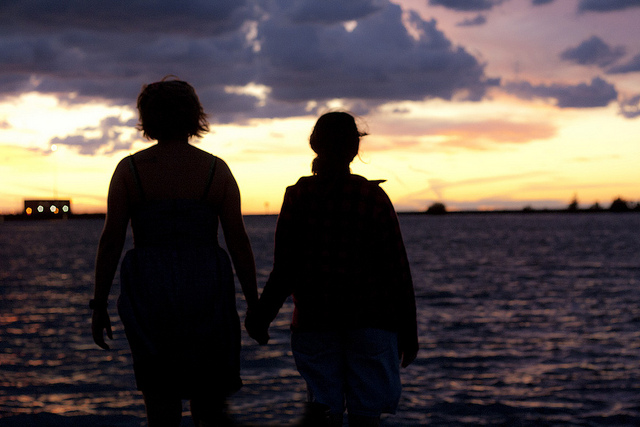
    Sunset Couple

    “Love takes off the mask that we fear we cannot live without and know we cannot live within.”  ~James Arthur Baldwin

    I sat silent on one end of the phone. I could hear my own breath and heart pounding in my ears.  I was sitting on the precipice of greatness, and all I had to do was express what I was feeling. Sounds relatively straightforward, so why did I feel so anxious?

    To say that I have worked hard at rediscovering my authentic self would be an understatement. I have been on this quest in one form or fashion since I was seventeen, so about seventeen years now. And I have made significant progress, if that is the most correct way to label my journey.

    I have struggled with eating disorders and self-acceptance and self-love and compassion and kindness for others. I have done away with meaninglessness in my life for the most part. I have gotten away from placing importance on material possessions and have worked to simplify my life.

    I am more content and sure of myself and who I am than I have ever been. So why would uncomfortable silence throw me for such a loop at this stage in the game?

    To be perfectly honest, although I have demonstrated gains in areas of my life, I have yet to find someone who is a kindred spirit. As I have come to know myself better, I have been better able to express and identify what I truly want in a partner. That being said, dating has been less than successful.

    More often than not, dates have ended with blank stares from across the table when I open my mouth about my spiritual journey. I have never been able to fully express to another the very thing that defines my existence on earth, and have it received in kindness and understanding.

    So, when I met Rob for the first time, he literally took my breath away. I immediately detected his soul, his compassion, and passion for life. I recognized his connection with his feelings, and yet his ability to not take the whole process too seriously.

    In him, I saw myself. For the first time, I did not feel alone. I did not feel different. I felt like I was home. 

    So, back to the phone call: the reason I was so nervous was that, although I had this intense connection with Rob, we were at a crossroads. I could sense that we both wanted to address it, and at the same time neither of us wanted to address it.

    We were so early in our developing relationship, I felt like I needed to let him know how intensely I felt about him and how incredibly special I thought our connection was. And boy, was it scary!

    And in that moment of silence, I reflected back to helpful ideas I had used in learning to love and accept myself. Incredibly, they applied in this new relationship and how I needed to proceed in expressing my feelings.

     1. Stay present and stay you.

    During our conversation, I felt this urgent need to run and hide from the emotion building inside me. I felt like I wanted to crawl back inside my shell and disengage from the desire to open up completely to him.

    We were obviously attracted to one another, but the old voices of fear of rejection and fear of not being good enough crept back into my head. I realized that I had gone through that when I was learning how to love and accept myself.

    I had all of the preconceived notions of who I was or should be, and had to demystify all of that and realize that I am enough just the way I am. As is.

    I had to continuously get myself back to my center, to focus on the present moment and trust in the process of being my authentic self, knowing that the person who was supposed to cross my path, would.

    2. Live openly and honestly and speak from your heart.

    As I learned to accept myself, I found that speaking from my heart became easier. It’s not that we deliberately try to deceive others, but we often do a good job of deceiving ourselves.

    Trying to stop emotion and put up your defenses won’t do anyone any good. It may protect you in the short term, but you are the only one who will be harmed in the end. It will be you who misses out on true happiness and joy.

    Things may not always turn out the way you envisioned, but there is no defeat in living with pure intention.

    3. Go all in and accept that it may fail.

    Part of discovering myself again was learning as I went along. But unlike times before when I was harsh and self-defeating when I made a misstep, I was kind with myself. I gave myself some encouragement, the benefit of the doubt, and got back up and continued the best I could.

    When I finally trusted myself and accepted myself fully, I was able to mess up completely, yet be okay with it, because I knew I was doing my best and had set out with good intention.

    In the same manner, I had to realize that I am not perfect and neither is my partner. Showing compassion when there is a misstep is what will make the bonds stronger. That is how I needed to view Rob and our budding relationship.

    We had established similar core beliefs and journeys and now I had to trust in that as being the foundation for whatever was ahead of us.

    If that meant faltering and deciding we were not as compatible as we first believed, then so be it. I couldn’t be disappointed if I gave it my all and at least attempted something amazing.

    The phone call ended with me bumbling through my feelings pretty inefficiently. And wouldn’t you know it, he reciprocated and expressed relief about me bringing it up. He too felt like we had a connection and had great interest in pursuing it.

    If there is one thing I could leave you with it would be this: Don’t harden yourself to that pure emotion. Open up and welcome it in. Let it flow through you. Let the tears well up in your eyes and say the things your heart whispers. The person who is meant to hear those words will.

    Photo by Darren Johnson

  • Why Being Scared Means You’re Fully Alive

    Why Being Scared Means You’re Fully Alive

    I Can Fly

    “To be fully alive, fully human, and completely awake is to be continually thrown out of the nest.” ~Pema Chodron

    Last year I decided to do something I’d always longed to do but had never been brave enough to take the plunge: I started my own business. Not only was it a new venture, my business would be based around myself—my skills, knowledge, and experiences.

    Holy crap.

    My emotions swung from terrified to awkward and uncomfortable. Seriously, that’s how good it got, at least initially! It’s been exciting and exhilarating, but not in the least bit comfortable.

    Here I was, standing for the entire world to see as a self-proclaimed “person who knows quite a lot about some stuff.” I may as well of had my subconscious make me a T-shirt that read “Who the hell do you think you are?”

    Revealing things about myself was not comfortable at all. Opening up about my years living with depression—an illness whose superpower is convincing its host that they are worthless and weak—left me feeling vulnerable and exposed.

    To acknowledge my depression, and put myself out there as someone who knew quite a lot about a certain subject, was nothing short of excruciating at times.

    But I had my secret weapon. Over the years I’ve gathered a group of people who “get” me. People who love and approve of me and what I do. I’ve always felt like this tribe insulated me from the feelings of exposure and judgment I might get from other people.

    One person in particular, who’s been my teacher on one of my courses, is someone I particularly admire. I basked in the warm glow of his encouragement and positive feedback; I felt approved of, nurtured, and safe around him.

    Because learning is something I hold dear (and I was utterly clueless about it) when I started my business, I decided to take some courses in marketing and business building. This seemed a better strategy than stumbling my way through blindly, so I hovered up new information like I was starved of it.

    I started implementing. I made gazillion mistakes but I kept going. I kept remembering the phrase “There’s no failure, only feedback”—and I was getting a hell of a lot of feedback!

    But I learned that I was much more tenacious than I’d first thought. There were lots of challenges, but I overcame or circumnavigated them. I kept moving forward. I felt a teeny bit proud of myself.

    I gradually became more courageous and shared more of the real me with readers and workshop participants. I became less of the safe, corporate “me” and more of the real, flawed, goofy, “me”—complete with opinions, imperfections, and history.

    I told my story of experiencing depression for years and rather than being lambasted for it, the connections I made with my students and readers were profound and rewarding. No one told me they thought less of me for it; if anything, they thought I was brave.

    Work started to come in—a trickle, but definitely a move in the right direction. As I took my wobbly steps one after the other, I started to feel stronger and more confident. My tribe was great—super supportive and really encouraging. It felt good.

    Apart from one thing.

    The teacher I admired so much didn’t seem approving. In fact, he seemed critical and dismissive of what I was doing.

    And I felt crushed.

    When we’re trying something new we can feel fragile, and any little thing can dent our confidence and break our resolve. It’s even more acute when we’re putting ourselves out there, whether that is through our creative work or our personal stories.

    When someone doesn’t approve of our work, it’s like they don’t approve of us. And this is painful—especially when the person in question is someone we admire and crave approval from.

    I so wanted him to get it—to support and champion what I was doing. But he didn’t. He wasn’t nasty or cruel; he’s a kind and warm person and that would be totally out of character for him.

    But his response was somehow harder to deal with. He was dismissive and uninterested.

    I bundled up my courage and asked him if something was wrong.

    “No,” came the reply, complete with furrowed brow and an edge of confusion in his voice. “I don’t really get what you’re doing. For me, it doesn’t work.”

    Because all of this self-growth stuff is a journey without a destination (the journey is the destination) I know that I would have responded in different ways at different times in this journey. Here are some past options:

    1. Stop completely. This feels too hard/scary and unsafe. I am obviously not good enough and certainly not strong enough to carry on.

    2. Stop, retreat, and go back to my original, “safe” world. Try and replicate whatever advice my teacher gives me, encompassing his philosophy, beliefs, and experience. I disappear but at least I don’t risk feeling unlovable.

    3. Rationalize his behavior; put it down to envy at my emerging success, or insecurity on his part for moving on from his teachings. I mean what’s his problem?

    4. Carry on, feeling the pain but moving through it anyway.

    To be honest, all of these were tempting. Having an excuse not to be “out there” feeling exposed and vulnerable was very enticing. I could go back to being safe, anonymous, and totally invisible.

    Even though it would be like silently dying inside everyday.

    So that wouldn’t really be a viable option then! I needed to do something different. I needed a shift of perspective. My teacher isn’t a cruel or vicious man, and his comments weren’t meant to wound me. So why was I hurt that what I was doing didn’t work for him?

    That was it; that was the shift I needed. What I was doing didn’t work for him. Instead of beating myself up and falling into a pit of “what’s wrong with me?” I realized it wasn’t about me at all.

    I’m a keen cake baker, and if I make a carrot cake (one of my favorites) I don’t get offended if someone says “Oh, thanks but I don’t really like carrot cake.”

    I know that this situation is different from a cake, but the analogy still holds. My teacher wasn’t saying, “I don’t like you.” He was saying that what I was writing about and publishing as part of my business didn’t work for him.

    So this was the response I chose instead:

    Realize that we’re on different paths. I don’t need him to approve of and like 100% of what I do. I know he respects me; it’s just not his thing. It’s my thing.

    It’s carrot cake. And there are plenty of other people out there who really like carrot cake.

    I don’t need everyone to appreciate the same things as me. My sense of self isn’t entirely dependent on what other people think. Hell, I’m still human; of course it still feels great when other people affirm me, but I don’t need it to still be okay with myself.

    Inside the nest feels safe and warm.

    But outside of the nest is where we learn to fly—feeling scared, but awake, alive, and fully human.

    Photo by Anurag

  • The Power of Vulnerability

    The Power of Vulnerability

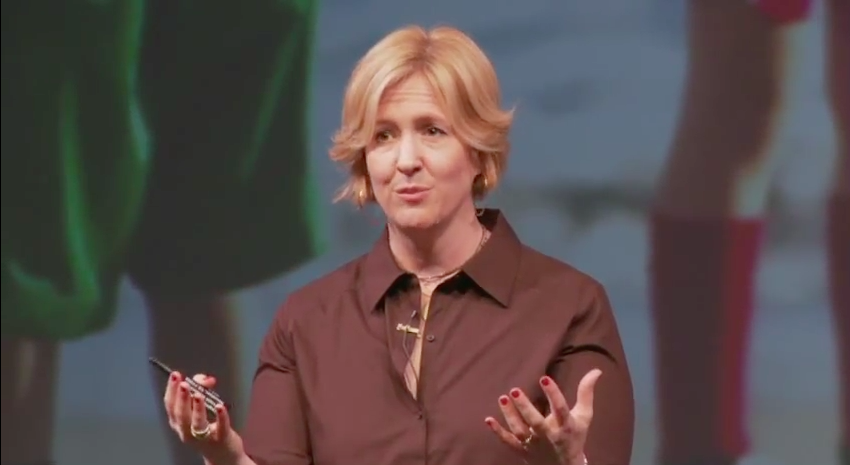
    There’s a good reason this is one of the most-watched TED talks ever—it’s insightful, profound, and potentially life-changing.

  • Are You Hiding Yourself in Fear of Being Fully Seen?

    Are You Hiding Yourself in Fear of Being Fully Seen?

    “If you learn from a loss you have not lost.” ~Austin O’Malley

    Two years ago I lost my grandfather. He’d been ill the last time I saw him and I knew it was coming. And yet, I was still not prepared for the depth of my grief.

    I had lost loved ones before, but while I had loved them, they weren’t him. He was special. He saw me.

    If you know what it means to be seen I don’t need to say anymore.

    If you’ve never felt seen, let me explain what that feels like: It is the very best feeling; better than love, better than friendship. It’s looking into another’s eyes and seeing complete acceptance, acknowledgement, and the truest form of love.

    And I got that from him. Every time he looked at me. Every conversation we had.

    Every moment we shared together. And then he was gone. He moved on and I was left feeling/worrying that I would never know that kind of love again.

    That I would never be seen.

    We all wear so many masks. We wear them to fit a role: mother, sister, wife, good worker. We wear them to protect us in social situations: good girl, bad girl, tough girl, sweet girl.

    For so many of us we hide ourselves because we’re afraid that the truth of who we are will not be acceptable. That if others, even those who we trust with our love, were to see who we really are they would turn from us, that we will be seen not as angels but as monsters.

    Do you “see” your loved ones? Do you let yourself be “seen”? I’ve been reading Dr. Brene Brown’s book Daring Greatly: How the Courage to Be Vulnerable Transforms the Way We Live, Love, Parent, and Lead. It’s an extraordinary piece of work. It’s beautiful and terrifying.

    Dr. Brown explains that while we are all afraid of making ourselves vulnerable, study after study shows that the majority of people are truly rooting for you. They want to see you; they admire your courage. It’s eye opening information.

    The very thing we are protecting ourselves from could be the source of our greatest strength. (more…)

  • Share Your Vulnerable Story: Find Strength by Letting Others In

    Share Your Vulnerable Story: Find Strength by Letting Others In

    Holding Hands

    “Pain is not a sign of weakness, but bearing it alone is a choice to grow weak.” ~Lori Deschene

    In February of 2011, I went to see my doctor because I was suffering from severe headaches that I figured were associated with using computers all day at my law job. After having a few tests, the doctor said that I wasn’t doing well and he suggested that I take a leave from work to focus on my health.

    The next few months, I found myself in and out of doctors’ offices, medical labs, and hospitals on a weekly basis. With a variety of tests already done, my doctor suggested we do an MRI of my brain. I went for my MRI in June of 2011.  

    Weeks passed by after my MRI, and assuming no news was good news, I made plans for my summer. I decided to have a change of scenery and went to San Francisco for a fun summer job that didn’t involve computer work.

    After a great summer there, I was in Toronto in late August for two weeks visiting my parents when I got a call from my neurologist in Vancouver.

    She told me I had a brain tumor.  

    The floor dropped beneath my feet, my heart sank, and my mind raced, contemplating how I would break this news to my parents. I put the phone down, walked into the kitchen, and I told them. We hugged and then we cried.

    In that moment, my life flashed before me. I was 28 years old, single, unemployed, and now, more lost than ever. I didn’t know if I would finish my law license, return to Vancouver, move back into my apartment, or when I would see my friends again.

    But, as it always does, life went on. (more…)

  • Embracing Vulnerability and Putting Yourself Out There

    Embracing Vulnerability and Putting Yourself Out There

    “He who deliberates fully before taking a step will spend his entire life on one leg.” ~Chinese Proverb

    I’m not going to put myself out there.

    I’m afraid to fail.

    I’m afraid to succeed.

    What are they going to say about me?

    What if I’m not good enough?

    What if they laugh at me?

    Are people going to think I’m weird?

    What are people going to think of me?

    The list of worries goes on and on. Our minds like to swim in the ocean of complacency.

    We all have fears. Let me repeat that—we all have fears. Guess what? They’re not going away.

    It’s time we embrace the fact that we need to be vulnerable. 

    I had the opportunity to see Brene Brown speak recently at the World Domination Summit in Portland.  Brene is a professor, author, and powerful storyteller. She has done some amazing research on embracing vulnerability and basically knocking fear out.

    It was an enlightening talk for me. As a guy’s guy (or at least I think of myself as one), I’m the guy that defaults to putting my armor on. Nice and tight.

    I’m challenged to put my feelings out there. I tend to put on a happy face, even when sadness hits. I default to the old school way of thinking—the “never let them see you sweat” motto. I’m working on it, however, and I’m making progress.

    My Evolution

    It’s not that I’ve never put myself out there. I started a blog in 2009 about productivity and personal development. It was hard for me to open up. A number of questions surfaced (like the ones at the beginning of the post).

    What were people going to think? Why am I qualified to talk on these topics? I finally said screw it and jumped in. (more…)

  • How Being Vulnerable Can Expand Your World

    How Being Vulnerable Can Expand Your World

    “What makes you vulnerable makes you beautiful.” ~Brene Brown

    Vulnerability has never been my strong suit. It’s no wonder. In order to be vulnerable, you have to be okay with all of you. That’s the thing about vulnerability that no one tells you about.

    Being vulnerable is not just about showing the parts of you that are shiny and pretty and fun. It’s about revealing what you deny or keep hidden from other people. We all do this to some extent. I bet you’ve never said to a friend, “Oh my god, I just love that I’m insecure.”

    But that’s the point, isn’t it? You’ve got to love everything, if you want to be vulnerable by choice.

    Most of us have probably experienced vulnerability through default. More often than not, we are either forced into that state through conflict, or we are surprised by it after our circumstances feel more comfortable.

    Few of us consciously choose vulnerability. Why? The stakes are too high.

    If we reveal our authentic selves, there is the great possibility that we will be misunderstood, labeled, or worst of all, rejected. The fear of rejection can be so powerful that some wear it like armor. (more…)

  • Tiny Wisdom: On Being Vulnerable

    Tiny Wisdom: On Being Vulnerable

    “What makes you vulnerable makes you beautiful.” ~Brené Brown

    To be vulnerable is to be free.

    It gives you a break from trying to pretend you’re always right and you don’t have any flaws. It gives you permission to show your authentic self and stop taking responsibility for the way other people perceive you. It allows you to try new things and take the risk of feeling awkward or uncomfortable.

    It also opens you up to the possibility of pain. We never know when we let our guard down that other people won’t hurt us, unintentionally or otherwise.

    We can know, however, that the pain of closing ourselves off to people and possibilities is far more dangerous than the potential risks of opening up. We’re just not meant to be isolated. We need to really connect with each other.

    Today, if you feel tempted to shut down and retreat into yourself, ask yourself : What’s the best thing that could happen today if I decided instead to move outside this place that feels safe?

    Photo by Thomas Euler

  • 4 Tips to Create Meaningful, Authentic Connections Online

    4 Tips to Create Meaningful, Authentic Connections Online

    “The most important things in life are the connections you make with others.” ~Tom Ford

    Three years ago I was living in the Bay Area, working for a start-up website as a community and content and manager. Every day, I signed online and wrote for hours about a topic that meant absolutely nothing to me.

    I accepted the position because it was a dramatic pay increase from my previous temp and freelance lifestyle, and it afforded me my first solo apartment. I’d held dozens of different jobs in my time as I searched for meaningful work, and I certainly worked hard, but I always felt like I’d failed when it came to taking care of myself.

    I simultaneously worked fifty-plus hour weeks to build my freelance resume and stockpiled ramen noodles, which felt disheartening to say the least. When I had a desk, a briefcase, and copious amounts of overtime where other people had a social life, I felt accomplished and important.

    It wasn’t until the office closed and I began working from home that I realized how unfulfilled I felt.

    I didn’t want to develop some calculated online persona to represent my company—I wanted to be my authentic self. I didn’t want to write about something that meant absolutely nothing to me for the sake of getting paid. And I didn’t want to engage with people superficially with an eye on Google Analytics.

    If I signed onto a social networking site with a link to something I wrote, I wanted my heart to be in it. If I commented on someone else’s blog, I didn’t want it to be a thinly veiled attempt to drive traffic back to my employer’s site. I wanted my words and interactions to mean something more than that. (more…)