Tag: vulnerability

  • Why We Need to Stop Hiding and Share the Beauty in Our Brokenness

    Why We Need to Stop Hiding and Share the Beauty in Our Brokenness

    “Out of perfection nothing can be made. Every process involves breaking something up. The earth must be broken to bring forth life. If the seed does not die there is no plant. Bread results from the death of wheat. Life lives on lives. Our own life lives on the act of other people. If you are lifeworthy, you can take it.” ~Joseph Campbell

    Head on my pillow, tears in my eyes, a list of to-dos in my brain, I felt unable to move my body. I’d worked so hard to leave behind this person who stayed in bed avoiding life. But someone’s angry words had pierced my soul, and I once again was a prisoner to my bed, my thoughts, and my anxiety.

    It wasn’t so much the disagreement that stung, but the chuckles and snide “You can’t really believe that?” More than “mansplaining,” he was patronizing and questioning my intelligence.

    I tried to stop the personal attacks by “setting up boundaries,” as they say. No doubt I did not express myself in a calm, clear manner, as my blood was boiling. However, I tried to protect my integrity during the argument for the first time in this particular relationship.

    What now, though? Concern for the future of this relationship was what was now spiraling out of control in my head and overwhelming my thoughts.

    In retrospect, the fight hadn’t left me paralyzed with anxiety; it was the new way of dealing with belittling behavior that I had allowed myself. This was unchartered territory.

    I had dared to make a change in a relationship. Now, I was awash with the resulting questions about what came next and if I’d done the right thing.

    Without leaving my bed, I catapulted myself out of yet another comfort zone by reaching out to a group of supportive people. Phone in hand, I scrambled to type the message before I could think myself out of it.

    A few days before, a friend and I had heard author and activist Glennon Doyle speak. She encouraged the audience to speak our truths, “Blow shit up, and walk away like Wonder Woman.” So, that morning, as I licked my wounds, I told my truth to a safe audience.

    Like a dog offering up his belly in a display of vulnerability, I spoke the truth of where I was. I pulled back the curtain and said life has knocked me down. Can I get a hand up? The responding support was worth the risk.

    Not long after, I heard the song “This Is Me” from the movie The Greatest Showman for the first time. I rushed home and looked up the lyrical version on YouTube. I sat and absorbed the rising beat.

    I read the words as Kesha belted them out. Words like “Today, I won’t let the shame sink in,” and “I am bruised. I am who I’m meant to be. This is me.”

    My soul surged. I sucked in the words and rhythm like air. I marinated in the meaning, replaying it over and over.

    I wanted to announce my bruises too. I’ve battled depression my entire adult life; “this is me.” My latest psychologist diagnosed me with generalized anxiety disorder; “this is me.” No one knows about my battles with bulimia, but “today, I won’t let the shame sink in.”

    I headed off to the gym with my new warrior anthem playing in my head. I’m pumped. I greet everyone with a huge smile on my face. This is my happy place.

    I got to an exercise requiring balance, which I lack. My arms are flitting around being more comical than helpful. The lady next to me says, “See? You’ve worked it out!”

    Wait, what is she seeing? I’m flailing around like a fish out of water, and she sees “worked it out?” This sends me back in my head thinking about the song and my story and my struggles.

    I rushed home and wrote the truth about all the messiness that lies beneath what people see. I wrote about how I “worked it out” through my battles with mental illness, not despite them.

    I started telling my truth and in doing so, embracing it. With every scribbled word, I accepted my wounds a little more.

    I wrote about all the things that I thought I had to keep hidden in order to be presentable. My struggles had been my flaws, my “dirty little secrets.” I wanted to tidy up the pieces of my broken world before I could let anyone in.

    I had it all wrong. Our scars are the proof that we are living and growing. Our strength is that we have battled with demons and are still standing.

    Just look at the natural world. It transforms flaws and mistakes into beauty all the time.

    The pearl starts as an intruding piece of sand. Protecting itself from the intruder, an oyster creates a thing of value.

    Quartz is naturally colorless, but if iron mistakenly mixes in, it turns a beautiful purple, resulting in amethyst. The bodies of long-extinct creatures are now our fuel.

    The power of the universe is on display when it turns decay into value. There are no wasted failures in nature. They are simply transformed and renewed.

    What if beauty begins when the imaginary ideal is broken? What if the universe needs the messy, broken, and failed to demonstrate its power to make the defective whole? What if we have that same power to turn our battles into our beauty?

    I’m convinced now of the inherent beauty of the damaged parts, and that we must resist the temptation to air brush our lives as if they are cover girls. Hiding robs us of our divine power to turn our broken pieces into something wondrous.

    The broken bits don’t go back together the same way as before, though. We may have to mourn that fact. For example, life after divorce will never look the same. Mourning that loss is healthy, but shouldn’t forever immobilize.

    The caterpillar has no choice but to transform into a butterfly. We, however, can impede our transformation like I did through shame, guilt, denial, and hiding. There is so much value that can come from our damaged, defeated souls if we open them up to the light.

    To courageously tell our truth allows others to see the beauty and hope in the battlefield before them. We are so much more than what life has thrown our way. We are the warriors who are still standing no matter how many times we had to get off the ground. When we become vulnerable enough to illuminate our brokenness, we harness the power of the universe to create beauty out of failure.
  • Stop Focusing on Your “Flaws” and Let Your Light Shine Bright

    Stop Focusing on Your “Flaws” and Let Your Light Shine Bright

    Glowing woman

    “Vulnerability is about having the courage to show up and be seen.” ~Brene Brown

    When I was twenty-seven someone told me I had old looking skin.

    Up until I heard this comment, I had never given much thought to my skin. Ever since, however, it’s been the only thing I see when I look in the mirror.

    Lately, I have been diving deeper into the inner areas of my life that still need further integration. Making themselves most apparent as top priorities are self-love and acceptance.

    A good friend recently told me that she has started to look at herself in the mirror every day and say “I love you,” and really mean it.

    She said when she first started this exercise, all she could see was the line that was between her eyebrows. Her one flaw.

    Before my friend mentioned this line in her face, I had never really noticed it.

    My friend has big, beautiful, blue eyes, and those are all I see every time I talk to her.

    This conversation was quite eye opening. It made me admit that I do the same thing.

    The only things I see in the mirror are the lines in my face, and I think, “maybe I need to get a facelift.”

    I am committed to loving and accepting myself fully and changing this behavior pattern.

    My friend said, “Polly, you have to see your lines in a different way. Your lines tell the story of who you are! Your lines show all of your many adventures, all the time you have spent outside kayaking, surfing, and cycling. This is the story your lines tell. Your lines have made you who you are. Love your lines!”

    AMAZING!

    Love my lines! Really?

    Love my biggest insecurity? Accept my flaws as they are?

    What if I loved my lines? What if I saw them like she did?

    They are the story of who I really am.

    I have not been wrapped up in cotton wool, sitting in a cubicle, and my face shows it.

    What if I even honored my lines and said thank you?

    Thank you for taking on the elements.

    Thank you for protecting me and allowing me to do all the sports I love outside for hours in the sun.

    Thank you, lines!

    Well, this is revolutionary!

    Self-acceptance, gratitude, compassion, and forgiveness are my practices today. I forgive myself for letting someone else’s opinion of me dominate me. For giving away my power, and allowing my sense of self to come from outside of me.

    In his book The Presence Process, Michael Brown says:

    “The behaviors we generate in order to feel safe and accepted in the world are a substitute for real peace and aren’t who we are. By embracing responsibility for our experiences, we embrace the capacity to change them.”

    In taking responsibility for my life and experiences I can see that I have allowed my worth and value to be dictated by one person’s superficial observation of my appearance.

    I now take back my power. I now change my story. I can choose a different path. I can love and have gratitude. I can forgive this person and myself. I can focus on my gifts instead of my imperfections.

    It is commonly believed that the eyes are the mirrors of the soul.

    When I talk to people I always look in their eyes. When I look at myself I hardly ever look in my own eyes.

    Why? What would I see if I looked beyond the surface? What have I been distracting myself with by only focusing on my skin?

    What if I saw who I truly am? What if I saw my own soul? What if I let my light really shine?

    Digging deeper, I see that perhaps Marianne Williamson is right when she says,

    “Our deepest fear is not that we are inadequate. Our deepest fear is that we are powerful beyond measure. It is our light, not our darkness that most frightens us. We ask ourselves, who am I to be brilliant, gorgeous, talented, fabulous?’ Actually, who are you not to be?”

    If I fully accept and embrace my imperfection, and believe Marianne Williamson, then what?

    Is my deepest fear that I am powerful?

    Does my light scare me?

    What if I truly let my light shine?

    What an amazing gift this would be! To myself and to the world.

    This is all I really want.

    To be my most authentic, whole, true self. To let my light shine. To be comfortable in my own skin.

    I believe this is the point of life, and that my inner work is to see beyond my lines—to see who I truly am.

    I now am showing up and having the courage to really be seen. Lines and all!

    I know that if I honestly allow this, I will be free.

    That no one outside of me can do this for me.

    I have begun to edit video footage that I took of myself last year, when I was on a self-searching walk by myself. I spent thirty-two days alone in the wilderness and recorded my journey on video. I haven’t shared these videos because I was self-conscious about my skin, and, as a result, I have been holding back the potential of letting my light shine.

    Letting my light truly shine means following my heart and inspiration. Allowing my gut instinct to rule, even when I don’t know why. Smiling big. Saying hello to people with my heart open. Seeing others as a reflection of myself. Asking, “What can I give?” rather than “What can I get?” and being present with everyone I come into contact with.

    If I feel like dancing, I get up and dance.

    Shining my light means sharing my gifts with generosity, and getting out of my own way. Putting myself out there and allowing my voice to be heard. Through writing, dance, film, art, and by simply being my whole, authentic, true self.

    It is well and truly time. Time to get over the insecurity, the reverse vanity, and practice self-love and acceptance.

    The only one who needs to love and accept me is me, and I know that once I do this what you think of me really doesn’t matter.

    We can all let our light shine bright—you too.

    Stop focusing on your perceived imperfections and recognize your inner light.

    Look yourself in the eyes in the mirror and say “I love you” or “You are amazing,” and really mean it!

    See yourself as your friends see you (without honing in on physical flaws).

    “Show up,” however that looks for you, and allow yourself to be seen.

    Call back in your power—from all people, places, and situations where you may have given it away.

    We owe it to ourselves and to the world to step into our full power, and shine our full brightness. Allowing ourselves to be, express, and create gives others the room to do the same.

    Our unique, authentic selves are here now, ready, and waiting for our permission to shine!

  • It’s Okay to Need a Little Help

    It’s Okay to Need a Little Help

    We Can Help

    “Don’t look for someone who will solve all your problems. Look for someone who won’t let you face them alone.” ~Unknown

    It’s 2004, and I awake in a student college in Melbourne, Australia. This comes as no surprise, because, at the time, I lived there.

    I groggily stagger to the shared bathroom on my floor, to perform my morning washing routine. There’s nothing unusual about my lavatory procedure, so I’ll omit the details, for all of our benefits.

    So far, so good. Already I’m full of optimism for today.

    As I wash my hands, I glimpse myself in the mirror and notice my majestic, messy bed-head.

    I often sport a disturbing, motley “I’ve just fallen out of bed” look for entire days, as I forget to check in the morning that I look sufficiently acceptable to go outside.

    I usually see myself in a mirror just before I go to bed, and invariably feel retrospectively ashamed that I’ve had tufts of hair beaming in assorted directions since I woke up.

    On this day, however, I notice my unconventional tufty hair and take immediate, drastic action, slapping the top of my head with my wet hands to encourage my mane into an acceptable shape. I stride out of the bathroom, feeling satisfied.

    Universe 0, Neil 1. One triumph already: not appearing for the entire day as if I have just fallen out of bed. What an excellent start to the day.

    Sadly, I only take a few steps before the soapy water I unthinkingly applied to my head pours into my eyes, burning them immediately with painful chemicals.

    Still, no need to panic. I’m an adult, I can handle a little soapy water. I am aware of the process for fixing a foamy intrusion into the eyes. As per the plan, I don’t even break stride, simply rubbing my eyes to remove the water.

    Unfortunately, this only makes things worse. It feels like I dislodged my contact lenses and got the soap in behind them. Now everything really burns.

    Okay. There’s no need for alarm. I simply need a new plan. I’m already most of the way to my bedroom, so I can slip in there, find the sink, wash my eyes out, replace my contacts with chemical-free fresh lenses, and then we’re all sorted. I’m still destined for victory today.

    I take another step toward my bedroom door, eyes screwed tightly shut.

    I fumble for my keys and pull them hurriedly out of my trouser pocket. Sadly, in my haste they slip out of my hand and fly somewhere into the dark void in front of me.

    Uh-oh.

    I squint my eyes open slightly and shut them immediately. I can’t see a thing through the caustic chemical tears. What the hell is in this soap, I probably would wonder if I weren’t so distracted by the agony behind my eyelids.

    Right. Time for a new “new plan.” The corridor is small, so it can’t take long to locate my keys, get into my room, find the sink, wash the soap out of my eyes, replace the contacts, and then—finally—victory!

    No need to cancel the celebratory parade for how awesome today will be. Yet.

    I scrabble on the floor for a moment, then another moment, and then another slightly longer moment.

    I seriously can’t find my keys. In making the “new new plan” I significantly underestimated how much I rely on the ability to see.

    The discomfort of squatting and bungling around is adding to the stinging in my eyes, and I realize my new highest priority needs to be getting rid of this infernal soap. 

    (With hindsight, this should probably have been the priority from the beginning.)

    Taking stock again, I come up with a new “new new plan.”

    I’ll go back to the original shared bathroom and wash my eyes out there. Then, using my regained power of vision, it will be trivial to find my keys. After that, I can let myself into my room, replace my lenses, and finally I can leave for breakfast. Still victorious. Definitely.

    I stand up, face toward the bathroom, and charge ahead at maximum eagerness.

    SMACK!

    I run face first into the wall, having apparently completely lost track of which way I was facing.

    I crumple to the floor, like a sack of idiotic potatoes.

    At this point, I finally admit that I am defeated.

    I have no new plans. No “new new plans.” No plans of any kind whatsoever. My face hurts from hitting the wall with it. My eyes hurt from the chemicals I foolishly rubbed into them. I cannot solve either problem.

    As I lie there, blankly failing to handle the situation, I hear the voice of the pretty girl from down the corridor:

    “Do you… do you need any help?”

    Yes. Yes, I need help.

    And not just with simple things like a morning routine.

    I’ve suffered from anxiety all my life. And the main lesson I’ve learned is that keeping it to myself only makes it worse.

    Yet I’m less willing to ask for help when I need it most because I don’t want to look weak. I’m scared of the judgment it might bring.

    But I’ve found that, in reality, people judge us far less harshly than we do ourselves. Being honest about needing help makes us seem strong, not weak.

    Whether it’s a major problem like daily anxiety, or a silly thing like getting soap in my eyes, I’ve learned that it’s crucial to just be honest about it with someone I trust.

    Whatever you may be suffering through, there are those who would happily suffer through it with you, if only you’d let them. Maybe you know them, maybe you haven’t met them yet.

    But, trust me, you’re better off seeking help than trying to do it all alone.

    We can help image via Shutterstock

  • Getting Real in a World of Fake

    Getting Real in a World of Fake

    Selfie Image

    “Nobody wants to be lonely. Everybody wants to belong to a group. The crowd is essential for the false self to exist. The moment it is lonely you start freaking out. Particularly in the West they have not discovered a methodology to uncover the real. To be an individual is the greatest courage. It does not matter that the whole world is against me. What matters is that my experience is valid. Don’t die before realizing your authentic self.” ~ Osho

    Authenticity. Courage. Vulnerability. We hear these words so often they’ve become a part of our daily language. But how often do we stop to investigate what they actually mean?

    I grew up within the gates of a fundamentalist religion that didn’t just discourage conformity, it taught us daily to demonstrate our opposition to the status quo. We were trained to speak about the awkward and practice the uncomfortable, sometimes in the face of hostile reactions.

    And so it was that, as a child, I learned the skill of both living boldly and sticking my foot into a person’s door so they would listen to what I had to say.

    Over the years, my vantage point became one of lone observation, both within my own “tribe” and when I was at school.

    I organized most people’s behavior into some variation of a desire for acceptance by their group. They wanted to follow a leader, or less often, to be one, all out of fear that if one is not accepted, one is somehow less worthy.

    At the time, I didn’t understand the great sacrifice people made for acceptance, stuffing away their uniqueness and covering it with a superficiality that was pleasing and likeable.

    Eventually, I left my own cloistered tribe after concluding that true radicalism is one’s ability to be courageously real—not in a bid to be different and unique, and therefore, somehow superior, but only to live according to what one believes.

    If you are on a path of seeking the real and avoiding the fake:

    1. Keep connected with the opposite of your tribe.

    We selected our friends because they make us feel good and they share similar tastes and desires. But with no challenge to our status quo, we risk losing out on vital learning.

    Our brain schemas are designed to accept familiar information and discard what doesn’t fit with our versions of reality. This makes for groupthink that ranges from boring to dangerous.

    Akin to the Facebook feed that caters to more of what we already like and know and creates homogenization, our tribe, bless them, are also prone to unconditionally support us, even when we are being unwise or thoughtless.

    While their support may feel good, it is also a disservice when they reinforce our faulty thinking and don’t question our actions.

    I have come to see a good friend as someone who can hold me kindly but boldly in the space of our relationship and ask, “What on earth are you thinking?”

    So don’t ditch all your old friends (unless you need to), but do challenge your viewpoints by talking and listening to the person you think is weird, reading the book that makes you shift uncomfortably, and exploring the activity that evokes a bit of fear.

    Instead of rejecting new ideas outright, play with them, think them through critically, and then keep or discard them.

     2. Start being real with people.

    The greatest challenge here is that we first have to be real with ourselves. This means becoming unmasked and accepting our strengths and foibles without shame.

    Only then can we begin to be real with others, because there will be nothing of us to hide.

    If we can accept our full, awkward humanity, then we can learn how to extend ourselves openly into what aligns with us and feels right, our purpose.

    We will know when to say “no” and when to say “hell yes.” We will speak our minds and take scary steps not because we have lost all sense of fear, but because we know we can be afraid and do it anyways.

    And we can meet conflict directly, without the misalignments that grow from avoidance, denial, and gossip.

    Speaking of gossip, when we are being real, we won’t do it.

    When we hear it, we will state that if a person has a problem with someone else, they should speak to them directly. And we will have no part in cliques that exclude others. Instead, we will seek other intrepid explorers, who also embrace life with the exclamation, “let’s be free of all of that.”

    3. Be in life instead of capturing it for Facebook, Instagram, or Twitter.

    I don’t know about you, but I reject the idea of capturing all of our sacred moments for social media instead of living them. And I battle with this personally, because I’m a documenter, but I favor tipping the scales toward real.

    In the movie The Secret Life of Walter Mitty, the famous and elusive photographer Sean O’Connell, played by Sean Penn, travels to the Himalayas for a shot of a rare snow leopard. Mitty tracks him down, and the two of them, perched out on a mountaintop, wait for the cat, who finally makes an appearance.

    Instead of taking the shot, O’Connell moves from the camera and watches. When Mitty asks him when he’ll take the photo, O’Connell replies, “Sometimes I don’t. If I like a moment. I mean me, personally, I don’t like to have the distraction of the camera. I just wanna stay… in it… right there. Right here.”

    You likely already know why this moment is valuable: it’s the only thing that’s real.

    You know exactly what you are losing. The tender touch your lover just gave you that you absentmindedly ignored. Lost. The book that lays on your lap unread, your son having placed it there long ago until he tired of waiting. Lost.

    Real time, with all its tastes, smells, and sensations, is irreplaceable. You have a choice each moment about who, and where, you want to be.

    4. Be in nature.

    If where you want to be is real, then immerse yourself in the greatest antidote for fake that we have in a social media obsessed, email-, text-, and like-checking society. Leave your phone alone when you are with the mountains, trees, or by the lake, with your beloved, your friends, or your little ones. It is rude and dismissive of their essence and humanity.

    Besides, at the end you lose out. Because there is no amount of screen time that can rival the pleasure of just one kiss, blowing all the wishes off a dandelion, or a deep breath of mountain pine.

    Selfie image via Shutterstock

  • Why Letting Ourselves Be Weak Is Actually the Key to Becoming Strong

    Why Letting Ourselves Be Weak Is Actually the Key to Becoming Strong

    “To share your weakness is to make yourself vulnerable; to make yourself vulnerable is to show your strength.” ~Criss Jami

    “You have to be strong.”

    Those were five words I heard without end after my father was diagnosed with stage 4 colon cancer on Black Friday 2012—a day that couldn’t have been more aptly named.

    In the months following, I marched, ran, skipped, crept, stumbled, crawled, and dragged myself through the darkest valley of my life. This was uncharted territory. This was an unprecedented season for us.

    My dad was a fitness junkie, running and biking every morning, performing aerobics daily like a champ, and going for the occasional swim when the mood struck. The possibility of cancer had never arrested our attention—why would it?

    Like so many others, I believed I’d have my dad for decades to come, that I would see his salt-and-pepper hair gradually transform to powder white as the crinkles stretching from the corner of his eyes grew in number.

    The usual questions that plague souls affected by cancer surfaced, as if some clarion call had gone out to the nether world. Questions like:

    Will the surgery be successful? (It was.) Will the oncologist order chemotherapy? (He did.)

    When will this end? When will my dad know peace and strength again? When will our lives go back to normal?

    The answers to those questions were a long time coming, until my dad was moved to ICU and put on life support in early September 2013, his organs failing.

    “Be strong,” came that ceaseless whisper. “Be strong,” well-wishers said. “Be strong. Be strong. Be strong.”

    And in the nine months leading up to that ICU transfer, I had been strong. I had remained unmoved and unaffected by any bad news, choosing to believe in a different outcome—besides, one must yet hope.

    I was like the unshakeable lighthouse tower you often see in paintings, standing tall in the midst of a tumultuous storm, gray skies, roaring waves, and angry sea breeze everywhere.

    Then one day, the feat of being that strong tower was simply too much to bear. I’d built a dam to keep back the emotions that threatened to overwhelm me, but that dam couldn’t possibly stand the weight of those emotions forever. It gave way.

    I sobbed like I’d never sobbed before in my mother’s arms. And so long as we’re being honest, I’d say I sobbed every day thereafter.

    This expression I’d so feared, this display of vulnerability I had for so long resisted and avoided, had at long last caught up with me. Yet I felt no shame or embarrassment. I felt no anger with myself or disappointment in my supposed weakness.

    Instead, I felt other things.

    Release.

    Freedom.

    Peace.

    Love.

    It was then that I realized that in my efforts to be strong, I had been denying myself the very feelings I’d wanted to experience all along.

    Too often, we build walls around ourselves in the midst of grief, pain, or challenges, inflating ourselves up to be proud people who don’t need anyone’s help, people who are getting by just fine, people who are strong enough to weather the storm on their own.

    We close ourselves off to feeling anything in the name of self-preservation. We distance ourselves from emotions that scare us because of how weak, vulnerable, incapable, or unable they may make us seem to our loved ones.

    However, it’s only through allowing ourselves to embrace that weakness and feel those daunting emotions that we invite love in to strengthen us.

    It’s actually a beautiful thing for someone to be weak for that reason, because in that weakness, we rely and depend on others to build us up again, to make us strong, to comfort and encourage us.

    An incredible bond is established between you and another person when you embrace your weakness. In that moment, transparency, honesty, and open communication win.

    Not only have you both reached a new level of personal growth and grown in your intimacy, but you’ve also given that individual an incredible gift: the opportunity to demonstrate their friendship, loyalty, and love for you by being there, by being a friend, by being present, and by enacting love.

    When we bottle our emotions in and suppress them, however, never letting anyone see into our soul, then we are denying others an amazing opportunity to show up for us.

    We are denying our relationships the opportunity to expand, evolve, and grow to a new level. And we are essentially stopping the flow of love between us and others—life-saving love that has the potential to give us more strength than we ever thought possible.

    So I made the decision to embrace my emotions and whatever weaknesses happened to visit me, to welcome the vulnerable position that would put me in.

    If someone wanted to hold me while I cried, I let them.

    If someone wanted to be a listening ear, I spoke from the depths of my heart.

    If someone wanted to take me away from the hospital scene for a good meal, I didn’t decline the invitation.

    If someone asked me how I was doing, I answered with honesty, even if it meant admitting that I was hurting and devastated.

    Again and again, I felt the flow of love between myself and those around me. It was uplifting and intoxicating; empowering and encouraging. It was love like I’d never seen it in action before—the type of love that can only be perfected in our very weaknesses.

    I had a role model throughout it all: my dad.

    I don’t even wish I could tell you he faced cancer stone-faced and unmoved by the unending dirges of prognoses.

    Instead, when the pain was too much to bear, when the figurative nights were blackest, when there seemed to be no light penetrating the all-encompassing darkness of cancer, my dad would cry, he would pray for one normal day, and he would openly talk with me about the weakness he felt.

    But it wasn’t weakness I saw. In those moments, when he opened himself so entirely and became vulnerable before me, I saw only strength. I saw only courage. And on the morning my dad’s heart beat for the last time, the sun laying bricks of gold across his hospital room while I held his hand in mine, I saw only inspiring beauty.

    Even now, as I write this, it’s with tears painting trails down my face. I embrace what we might call weakness because I know now that it’s in my weakness that I find strength. It’s in my struggle that I find determination; it’s in my challenges that I find perseverance; and it’s in my vulnerability that I find love, peace, and the will to go on.

    Have you been spending too much time hiding behind walls in an effort to be strong? Have you been distancing yourself from others, fearing they will think you weak? Have you kept your emotions at arm’s length because they intimidate you, scare you, or fill you with uncertainties?

    It’s time to give yourself permission to feel. It’s time to embrace the very vulnerability you shun and in doing so, discover the love, joy, and peace that waits for you on the other side.

    In the end, it’s through our weaknesses that we become strong again.

    In loving memory of my dad, ‘Bear.’ 04-01-1952 – 09-15-2013 

  • The Power of Vulnerability

    The Power of Vulnerability

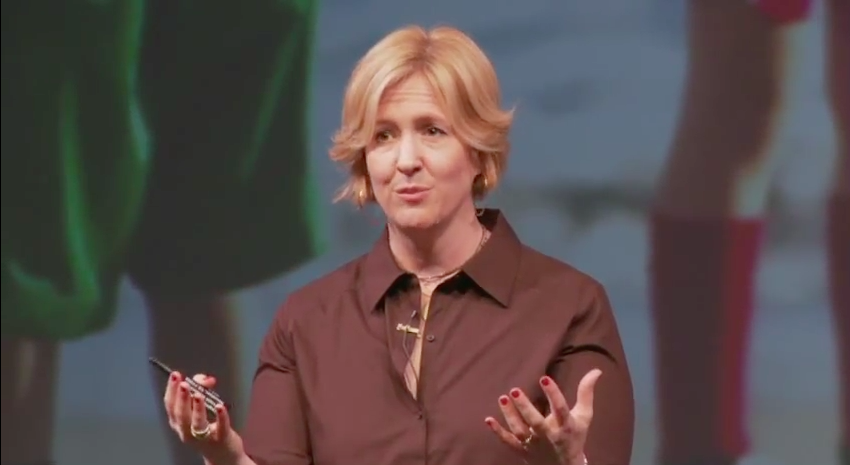
    There’s a good reason this is one of the most-watched TED talks ever—it’s insightful, profound, and potentially life-changing.

  • Learning to Trust: Let Go of Your Fear and Let Your Guard Down

    Learning to Trust: Let Go of Your Fear and Let Your Guard Down

    “The best way to find out if you can trust somebody is to trust them.” ~Ernest Hemingway

    In love and in life, our vulnerability is one of our greatest strengths. We often believe that we risk too much by being vulnerable, but, in fact, the opposite is true. When we build a wall around us to protect ourselves from our big, bad fears, we miss out on so much.

    When we live with the mindset that something may be taken from us (physically or emotionally), or that we need to be in control of everything that happens, we endure fear on a daily basis.

    It’s exhausting to live this way. It makes us cynical, suspicious, and unable to follow our hearts because we are afraid of what might happen.

    So what exactly are we protecting ourselves from when our walls are up?

    • Fear of rejection
    • Fear of being ridiculed
    • Fear of failure
    • Fear of being wrong
    • Fear of committing ourselves and having to follow through
    • Fear of being taken advantage of

    These fears are so normal that, unless we become self-aware, they can permeate our everyday interactions. It’s not just about trusting people either, but also life situations and opportunities that come our way. When the barriers are up, our lives become needlessly limited.

    We don’t bother talking to that person because we’re certain they won’t be interested in a date. We don’t show how much we care about a person because we’re afraid they won’t love us back. We don’t go for that job or that course because we’re scared we won’t get an interview.

    Nobody likes to feel exposed, but if you are someone who has suffered at the hands of betrayal, trust issues become even further magnified.

    Learning to be vulnerable after deep pain can feel impossible. But it doesn’t have to be. If you consciously choose to stay open and trusting, you will find that your world changes for the better in ways you may never have imagined. (more…)

  • Embracing Vulnerability and Putting Yourself Out There

    Embracing Vulnerability and Putting Yourself Out There

    “He who deliberates fully before taking a step will spend his entire life on one leg.” ~Chinese Proverb

    I’m not going to put myself out there.

    I’m afraid to fail.

    I’m afraid to succeed.

    What are they going to say about me?

    What if I’m not good enough?

    What if they laugh at me?

    Are people going to think I’m weird?

    What are people going to think of me?

    The list of worries goes on and on. Our minds like to swim in the ocean of complacency.

    We all have fears. Let me repeat that—we all have fears. Guess what? They’re not going away.

    It’s time we embrace the fact that we need to be vulnerable. 

    I had the opportunity to see Brene Brown speak recently at the World Domination Summit in Portland.  Brene is a professor, author, and powerful storyteller. She has done some amazing research on embracing vulnerability and basically knocking fear out.

    It was an enlightening talk for me. As a guy’s guy (or at least I think of myself as one), I’m the guy that defaults to putting my armor on. Nice and tight.

    I’m challenged to put my feelings out there. I tend to put on a happy face, even when sadness hits. I default to the old school way of thinking—the “never let them see you sweat” motto. I’m working on it, however, and I’m making progress.

    My Evolution

    It’s not that I’ve never put myself out there. I started a blog in 2009 about productivity and personal development. It was hard for me to open up. A number of questions surfaced (like the ones at the beginning of the post).

    What were people going to think? Why am I qualified to talk on these topics? I finally said screw it and jumped in. (more…)

  • What You Do Matters

    What You Do Matters

    “To know even one life has breathed easier because you have lived, this is to have succeeded.” ~ Ralph Waldo Emerson

    I used to refer to myself as a white crayon in the coloring box of life.

    Have you ever wondered what purpose a white crayon serves? There are all of these other beautiful colors to be put to good use, but the white crayon just kind of sits there and tends to get overlooked.

    That’s exactly how I felt. I felt like I was just merely existing and not serving any kind of purpose. And at the time, I sort of wasn’t.

    I wasn’t doing anything except coming up with demeaning nicknames for myself, and trying to swallow the fact that I might never be of any importance in the world. I honestly felt like I didn’t matter at all.

    I thought that in order to feel like I really mattered or that I was doing something worthy enough, I had to be doing something big—something that everyone noticed and applauded me for.

    We live in a society where the little things we do often get overlooked and it has a way of making us believe that those things don’t matter.

    They do.

    Compassion, understanding, small acts of kindness, or a willingness to simply reach out to others in any way can all make a huge difference.

    I want to share a few real life examples of little things making a big difference, including my own story in which I realized this fact.    (more…)

  • Tiny Wisdom: On Being Vulnerable

    Tiny Wisdom: On Being Vulnerable

    “What makes you vulnerable makes you beautiful.” ~Brené Brown

    To be vulnerable is to be free.

    It gives you a break from trying to pretend you’re always right and you don’t have any flaws. It gives you permission to show your authentic self and stop taking responsibility for the way other people perceive you. It allows you to try new things and take the risk of feeling awkward or uncomfortable.

    It also opens you up to the possibility of pain. We never know when we let our guard down that other people won’t hurt us, unintentionally or otherwise.

    We can know, however, that the pain of closing ourselves off to people and possibilities is far more dangerous than the potential risks of opening up. We’re just not meant to be isolated. We need to really connect with each other.

    Today, if you feel tempted to shut down and retreat into yourself, ask yourself : What’s the best thing that could happen today if I decided instead to move outside this place that feels safe?

    Photo by Thomas Euler

  • Learning to Receive: 5 Steps to Opening Up

    Learning to Receive: 5 Steps to Opening Up

    Arms Open

    “We must never forget that it is through our actions, words, and thoughts that we have a choice.” ~Sogyal Rinpoche

    I grew up deep in the “Bible Belt” in Texas, and along with that came the teaching that certain beliefs were never to be questioned. This kept life simple and reduced choices, but it also left me with the baggage of dogmas I no longer accept.

    One of the mainstay beliefs was “It is better to give than to receive.”

    Somehow, this one has held on in my head, in my heart, deep in my innermost belief system. Never mind that it makes no logical sense—to give requires someone to receive, so for someone, it must be better to receive. I just don’t know who that person is.

    All my life, I have practiced giving religiously, even while longing to receive. I even wound up with a career in the “Gift Industry”—talk about commitment!

    I could be counted on not only to give material and monetary gifts, but also to give my time, my support, and my skills. And then I would be angry for feeling depleted, all the while still giving.

    No one ever taught me how to receive. Not a compliment; I am a master at countering any comment with insight about all my faults. Not a gift; I immediately feel the need to give something in return, preferably bigger. Not a kindness; I wave people away from helping me in a grocery line, no matter that I am dropping bread as I speak.

    How could I have gone through so much life and have no experience with such a fundamental act as the ability to receive?

    As I begin to examine this, I realize for me receiving involves vulnerability. When I give, I feel in charge. When I receive, I feel less. (more…)