Tag: vulnerability

  • The Strength I Found Hidden in Softness

    The Strength I Found Hidden in Softness

    “You can’t heal what you won’t allow yourself to feel.” ~Unknown

    I used to act strong all the time. On the outside, I looked like I had it all together. I was competent, composed, and capable. I was the one other people came to for advice or support.

    The stickiness was that my version of strength created distance. I couldn’t allow myself to appear weak because I was terrified that if I let myself break down, I wouldn’t be able to pull myself back together.

    Maybe underneath it all, I was so fragile I might actually break.

    So I held it in. All of it—my grief, my fear, my loneliness. This is what strong people do, right?

    I learned to be strong early because I had to.

    My mother was depressed and suicidal for the younger years of my life. From a young age, I felt like it was up to me to keep her alive. I became the caretaker, the one who made things okay, even when nothing was.

    My father left before I was born. I didn’t meet him until I was six, and when I did, it wasn’t safe. He was abusive and schizophrenic. One time, he tried to strangle me. That moment embedded something deep: every moment is a risk. To survive, I learned to stay alert, in control, and numb.

    Later, my mum entered a same-sex relationship—a bold move in the eighties, when that kind of love wasn’t accepted. Her partner, a former homicide detective turned trauma therapist, was emotionally volatile and narcissistic. My home didn’t feel safe. There wasn’t a lot of room for me to be a child.

    So, I became hyper-responsible. A perfectionist. A fixer. I micromanaged not only my life but also the emotions of others when I could. My version of “strength” became what I hid behind and my identity.

    But underneath it all, I was scared. My “strength” was survival, not freedom.

    Years later, I moved to Australia and found myself with a friend in a power vinyasa yoga class. It was hot, sweaty, and intense. I hated it. The carpet smelled. The teacher talked the entire time. I was angry.

    And then it hit me: I was always angry.

    Beneath the appearance of having it all together, I was exhausted and resentful. The yoga mat didn’t create these feelings—it just revealed what I had been carrying all along.

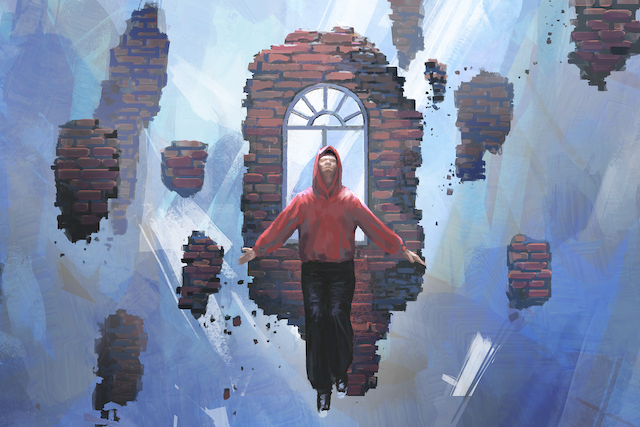
    That night, something shifted. I realized my “strength” wasn’t really strength; it was my wall. A wall that had kept me safe but also kept me from feeling.

    So, I kept going back. First to yoga, then to a deeper journey of healing.

    The process came in layers.

    Along my healing journey, I explored many different modalities. The first was EFT (emotional freedom technique), where I touched emotions I had buried for decades. Later, kinesthetic processing showed me that it was safe to feel everything—every emotion, every memory—through my body. This was the beginning of softness integrating into my life, not just as an idea, but as a lived experience.

    For so long, my strength had been armor—the courage to survive. But softness opened something new: the courage to thrive, because my heart was no longer closed.

    There was no single breakthrough, no magic moment.

    With each layer that fell away, I began to replace resistance with openness, walls with connection. Slowly, I came to trust that softness wasn’t something to fear—it was something I could lean into.

    And what I learned is this: my healing required softness, which meant vulnerability and allowing myself to fully feel.

    Softness isn’t weakness.

    It’s staying open when everything in you wants to shut down.

    It’s allowing yourself to be seen without the mask.

    It’s choosing presence over performance.

    True power isn’t control. It’s vulnerability. It’s feeling your way through life and trusting yourself—trusting your thoughts, your decisions, and your impulses so you stop second-guessing and stop relying on constant external validation. Trust allows you to act from clarity instead of fear.

    It’s trusting your body, noticing what nourishes you versus what depletes you, and setting boundaries without guilt. It’s trusting life’s natural flow, letting go of the pressure to force things to happen according to a strict schedule. It’s trusting your own inner truth. Trust and softness go hand in hand; the more you trust yourself, the more you can stay open and present without fear.

    If you’ve been holding it all together for too long, maybe strength doesn’t look like pushing through. Maybe it looks like slowing down. Like taking a breath. Like feeling what’s been waiting to be felt.

    And maybe, just maybe, your sensitivity isn’t something to hide or harden.

    Maybe your sensitivity is your superpower.

    In a world that teaches us to be strong, brave, and unshakable, we can forget that our greatest wisdom often comes in stillness.

    It comes when we soften. When we listen. When we let go of who we think we should be and come home to who we already are.

    Strength isn’t about being unbreakable. It’s about being real.

    When I started listening to myself, I realized how often I had ignored my own needs and desires, pushing through life according to what I thought I “should” do. I learned to honor my feelings, trust my instincts, and make choices that nourished me instead of drained me. As a result, my relationships deepened, my confidence grew, and I found a sense of ease and flow I never thought possible.

    Sometimes the greatest thing you can do for yourself is listen to the quiet, unchanging wisdom within you and trust what you hear.

  • Vulnerability Is Powerful But Not Always Safe

    Vulnerability Is Powerful But Not Always Safe

    “Vulnerability is not oversharing. It’s sharing with people who have earned the right to hear our story.” ~Brené Brown

    Earlier this year, I found myself in a place I never imagined: locked in a psychiatric emergency room, wearing a paper wristband, surrounded by strangers in visible distress. I wasn’t suicidal. I hadn’t harmed anyone. I’d simply told the truth—and it led me there.

    What happened began, in a way, with writing.

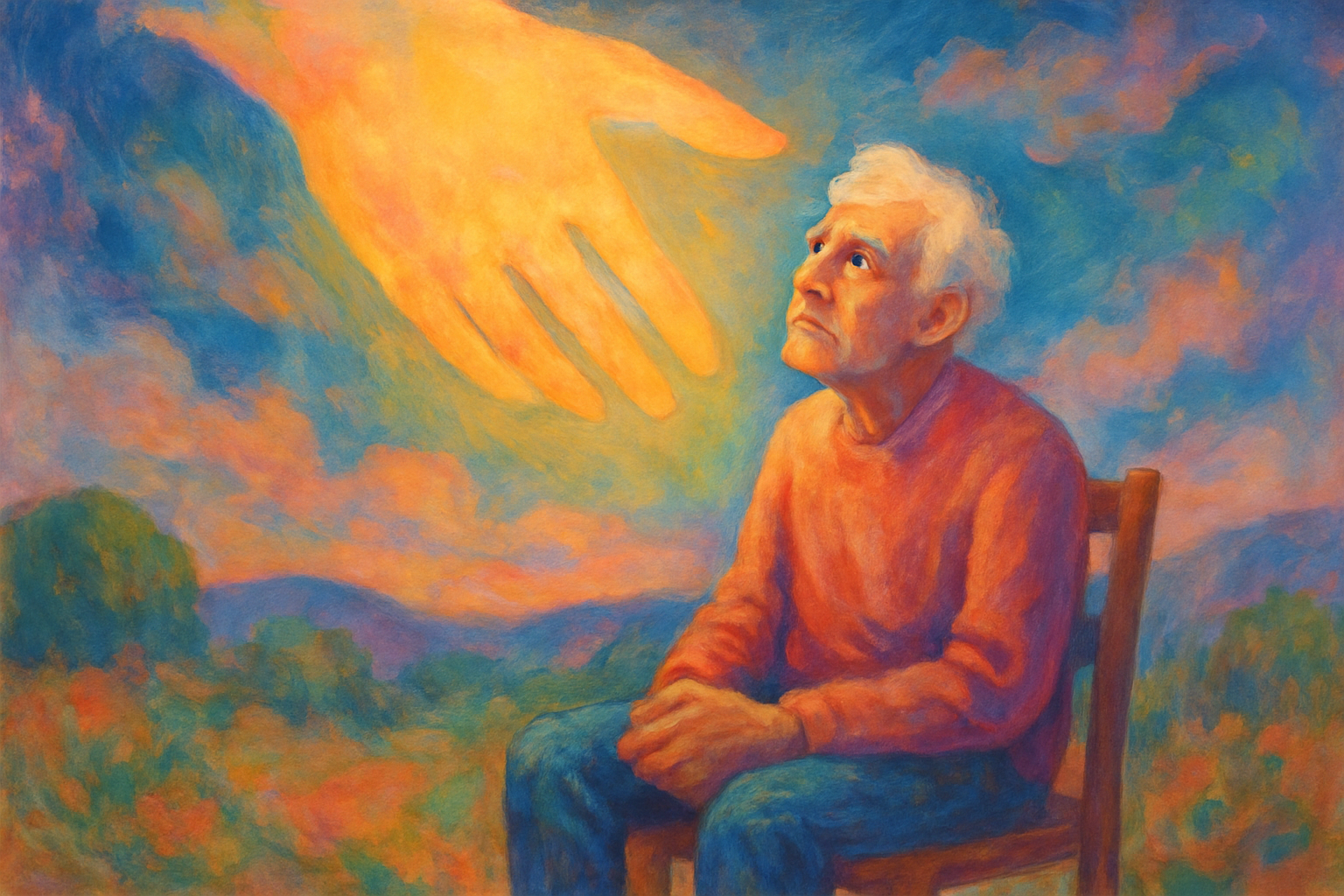
    I’m in my seventies, and I’ve lived a full life as a filmmaker, teacher, father, and now a caregiver for my ninety-six-year-old mother. But as I’ve gotten older, I’ve also felt something slipping. A quiet sense that I’m no longer seen. Not with cruelty—just absence. Like the world turned the page and forgot to bring me along.

    One day in therapy, I said aloud what I’d been afraid to name: “I feel like the world’s done with me.”

    My therapist listened kindly. “Why don’t you write about it?” she said.

    So I did.

    I began an essay about age, invisibility, and meaning—what it feels like to move through a culture that doesn’t always value its elders. I called it The Decline of the Elders, and it became one of the hardest things I’ve ever written.

    Each sentence pulled something raw out of me. I wasn’t just writing; I was reliving. My mind circled through memories I hadn’t fully processed, doubts I hadn’t admitted, losses I hadn’t grieved. I’d get up, pace, sit down again, write, delete, rewrite. It was as if I were opening an old wound that had never really healed. The pain was real—and so was the urgency to understand it.

    Then came the eye injection—a regular treatment for macular degeneration. This time, it didn’t go well. My eye throbbed, burned, and wouldn’t stop watering. Eventually, both eyes blurred. Still, I sat there trying to write, blinking through physical and emotional pain, trying to finish what I had started.

    Everything hurt—my vision, my body, my sense of purpose. I didn’t want to die, but I didn’t know how to live with what I was feeling.

    So I called 911.

    “This isn’t an emergency,” I told the dispatcher. “I just need to talk to someone. A hotline or counselor—anything.”

    She connected me to the Suicide & Crisis Lifeline—a lifeline for people in imminent danger of harming themselves. If you are suicidal, please call. It can save your life. My mistake was using it for something it’s not designed for.

     I spoke with a kind young man and told him the truth: I was in therapy. I was writing something painful. I was overwhelmed but safe. I just needed a voice on the other end. Someone to hear me.

    Then came the knock at the door.

    Three police officers. Calm. Polite. But firm.

    “I’m okay,” I said. “I’m not a danger. I just needed someone to talk to.”

    That didn’t matter. Protocol had been triggered.

    They escorted me to the squad car and drove me to the psychiatric ER. I felt powerless and embarrassed, unsure how a simple call had escalated so quickly.

    They took me to the psychiatric ER at LA County General.

    No beds. Just recliner chairs lined up in a dim, humming room. I was searched. My belongings were taken. I was assigned a chair and handed a bean burrito. They offered medication if I needed it. One thin blanket. A buzzing TV that never turned off.

    I didn’t want sedation. I didn’t want a distraction. I just sat with it—all of it.

    And around me, others sat too: a man curled into himself, shaking; a young woman staring blankly into space; someone muttering unintelligibly to no one at all. Real pain. Raw pain. People who seemed completely lost in it.

    That’s when the shame hit me.

    I didn’t belong here, I thought. I wasn’t like them. I had a home. A therapist. A sense of self, however fractured. I hadn’t tried to hurt anyone. I’d just asked to be heard. And yet there I was—taking up space, resources, attention—while others clearly needed it more.

    But that too was a kind of false separation. Who was I to say I didn’t belong? I’d called in desperation. I’d lost perspective. My crisis may have looked different, but it was real.

    Eventually, a nurse came to interview me. I told her everything—the writing, the injection, the spiral I’d been caught in. She listened. And sometime after midnight, they let me go.

    My wife picked me up. Quiet. Unsure. I didn’t blame her. I barely knew what had just happened myself.

    Later that night, I sat again in the chair where it had all started. My eyes ached less. But I was stunned. And strangely clear.

    The experience hadn’t destroyed me. It had initiated me.

    I also realized how naïve I’d been. I hadn’t researched alternatives. I hadn’t explored my real options. I’d reached for the most visible solution out of emotional exhaustion. That desperation wasn’t weakness—it was a symptom of a deeper need I hadn’t fully acknowledged.

    And I learned something I’ll never forget:

    Vulnerability is powerful, but it’s not always safe.

    I used to think that honesty was always the best path. That if I opened up, someone would meet me there with compassion. And often that’s true. But not always. Systems aren’t built for subtlety. Institutions can’t always distinguish between emotional honesty and risk.

    And not every person is a safe place for our truth. Some people repeatedly minimize our pain or dismiss our feelings. We might long for their validation, but protecting ourselves means recognizing when someone isn’t willing or able to give it.

    Since then, I’ve kept writing. I’ve kept feeling. But I’ve also learned to be more discerning.

    Now I ask myself:

    • Is this the right moment for this truth?
    • Is this person or space able to hold it?
    • Am I seeking connection—or rescue?

    There’s no shame in needing help. But there is wisdom in learning how to ask for it, and who to ask.

    I still believe in truth. I still believe in tenderness. But I also believe in learning how to protect what’s sacred inside us.

    So if you’re someone who feels deeply—who writes, reflects, or breaks open in unexpected ways—this is what I want you to know:

    You are not weak. You are not broken. But you are tender. And tenderness needs care, not containment—care from people you can trust to honor it.

    Give your truth a place where it can be held, not punished. And if that place doesn’t yet exist, build it—starting with one safe person, one honest conversation, one page in your journal. Word by word. Breath by breath.

    Because your pain is real. Your voice matters.

    And when shared with care, your truth can still light the way.

  • The Toughness Myth is a Lie: Hang On To Your Vulnerability

    The Toughness Myth is a Lie: Hang On To Your Vulnerability

    “Sensitive people should be treasured. They love deeply and think deeply about life. They are loyal, honest, and true. The simple things sometimes mean the most to them. They don’t need to change or harden. Their purity makes them who they are.” ~Unknown

    I can picture it perfectly—I was a freshman at the University of Notre Dame. It was my first semester at the school I’d dreamed of attending ever since I was a little girl. Everything felt new, and as I did the make-new-friends dance, I was hyperaware of how others perceived me.

    Standing in line to purchase football tickets with a group of girls from my dorm, I was listening intently to the conversation of intelligent humans discussing current events (Obama was running for president).

    I was suddenly reminded of a distressing image I had seen that morning of a family sitting outside of their home that had been foreclosed on due to the financial crisis. I blurted out, “I get so sad when I read the news. It can really just break my heart.”

    Suddenly, I felt the energy in the circle shift. There was no immediate response, and it was silent for what felt like an hour. One of my new acquaintances broke the silence, saying, “Wanna know what makes me happy? Have you guys been watching Grey’s Anatomy?” The conversation changed, and I stood in line, ashamed and not understanding why.

    If this scenario sounds familiar, you might possess the trait of emotional sensitivity. Emotional sensitivity is a term used in Dialectical Behavior Therapy (DBT) to describe a trait that causes individuals to feel more often and intensely.

    In other words, if you are emotionally sensitive, you feel a lot. Many people who identify as highly sensitive people (HSPs), empaths, and super feelers possess this trait. Emotional sensitivity is a genetic quality. The research indicates that if you are sensitive, you will carry this quality throughout your life.

    Sensitivity and Openness

    Emotionally sensitive folks tend to be more open and vulnerable than their non-sensitive peers. Many of my clients have been told that they “wear their heart on their sleeve” or are “too honest.”

    As an emotionally sensitive person, I relate so deeply to the experiences of my clients. As a young girl, I wanted to share my thoughts, worries, and excitement with the world around me.

    I remember that when I was twelve years old, I went to a beach in Santa Barbara with my family. I spent the whole day playing with a girl I had met—building sandcastles, doing somersaults into the waves, and catching and releasing sand crabs.

    When I returned to my parents to eat a sandy peanut butter and jelly sandwich, my dad said, “You make friends with someone anywhere we go.” This statement was validating; I liked being told that I was friendly.

    In high school, I was notorious for making situations “awkward” because I would instinctively call out dynamics as I perceived them (and, let’s be honest, so many high school dynamics are awkward).

    In college, I was curious about the experiences of my peers and encouraged openness in conversations; as a result, I frequently stood in the corner at parties having a “heart-to-heart” with a peer (who I realize now was probably also a fellow emotionally sensitive person).

    It’s safe to say that the people in my life were not shocked when I became a psychologist.

    When Society Squashes Your Vulnerability

    I find that many clients share similar stories of a childhood of openness. So… what’s the “problem” with this tendency?

    Sensitive people feel that, over time, they have lost this capacity to be vulnerable and authentic. As children, they approached life with openness and curiosity, but as adults, they often feel closed off and disconnected from their emotions.

    I believe this phenomenon is a result of the society we live in. In many cultures, we value “strength” over sensitivity.

    In their book Sensitive: The Hidden Power of the Highly Sensitive Person in a Loud, Fast, Too-Much World, Jenn Granneman and Andre Sólo describe this attitude as The Toughness Myth.

    These authors, who both identify as HSPs, explain that sensitive people attempt to hide their temperament because they have been taught that “sensitivity is a flaw, only the strong survive, being emotional is a sign of weakness, empathy will get you taken advantage of, the more you endure, the better, [and] it’s shameful to rest or ask for help” (p. 25).

    In other words, emotionally sensitive people receive both explicit and implicit messaging throughout their lives that reiterates, “Don’t be vulnerable.” Who wants to lead with openness when you are going to get teased for it?

    Additionally, during childhood, many emotionally sensitive individuals learn that their natural openness is frequently misunderstood. They may feel they do not totally “fit in,” and the awkward silences at parties or the subtle moments of invalidation are frequently internalized, which results in profound feelings of shame.

    This shame can, over time, lead emotionally sensitive people to suppress their feelings (oftentimes through unhealthy means) or wear a social mask to “fit in.”

    Emotionally sensitive people find that the only way to “be strong” is to resort to maladaptive behaviors, such as substance use, eating disorder behaviors, overworking, or avoidance. The behaviors may help to numb feelings in the short term. The act of suppressing feelings can be so automatic that you may not even be aware that it is happening. The problem is that when we shut off our emotions, we also lose the ability to be vulnerable.

    A Reminder: Your Vulnerability Rocks

    When you consider the Toughness Myth, it is understandable that you, as an emotionally sensitive person, might feel yourself becoming less open over time.

    We exist in a society that often misunderstands or outright rejects vulnerability. When your natural openness is met with invalidation, it can really sting. It can be extremely painful to share something deeply personal, only to have people walk away or say, “Keep that to yourself” or “Stop worrying so much.” It is not surprising that a wave of shame might wash over you after experiencing these moments of invalidation over and over again.

    I write this article to remind you that, despite some of the messages you have received, your vulnerability is an incredible strength.

    Brené Brown, a psychologist who is well-known for her research on vulnerability and shame, reminds her audiences that vulnerability is the birthplace of love. Your ability to be vulnerable is what also allows you to feel a sense of belonging.

    When you are open, you demonstrate courage in a society that may not understand that vulnerability allows us to build spaces characterized by joy, empathy, and creativity. When you allow yourself to be vulnerable, you open up the possibility of deeper connections and more authentic interactions.

    I know it may sound a little cheesy, but I truly believe that your vulnerability is what can make this world a better place. Hold onto that, no matter what the haters say.

  • What Migraines Have Taught Me About Being Vulnerable

    What Migraines Have Taught Me About Being Vulnerable

    “Vulnerability is the core, the heart, the center, of meaningful human experiences.” ~Brené Brown, Daring Greatly

    Migraines. I’ve had them since I was five years old. Sometimes they’re bad, sometimes they’re really bad. But I have them.

    When I was five, I had electrodes placed on my skull to do an EEG. I didn’t understand the name, so I called it a “sleepy EG” since they put me to sleep to do it.

    Back then, I didn’t realize how chronic pain could interfere with my daily life. I just knew that I was getting my sleepy EG.

    It was also during my childhood that my personality started to form, as it does with everyone. I was a shy and introverted child, and I quickly learned the societal ropes of not expressing your struggles. I learned to say, “I’m fine,” when someone asked how I was, even if I really wasn’t.

    I saw vulnerability as something to be avoided. However, as I got older and my migraines got more intense, my worlds of chronic pain and vulnerability ultimately converged.

    As many with chronic pain would tell you about living with their conditions, my life has become a delicate dance between preventing/treating my migraines and enjoying my life. But the migraines’ frequency and severity have not made it easy.

    When I was six, I got a migraine the morning of my dance recital. It was a Disney-themed recital, and I was supposed to wear a Minnie Mouse costume. I developed a throbbing pain in my head that debilitated me for a couple of hours.

    The recital was in the evening, and I didn’t know if I would be able to go on to perform that night. I got incredibly anxious that I wouldn’t be able to perform that night while wearing my Minnie Mouse costume. I feared I would let my whole dance class down.

    After lying down in the dark for a couple of hours, the migraine dissipated, and I was able to perform. But it was then that I became acquainted with the anxiety around my migraines and letting others down. It was both out of this anxiety and a fear of showing my feelings that I didn’t let anyone at my dance studio know that this was a struggle for me.

    In my early twenties, I got a migraine that stands out as a turning point in my migraine and, frankly, my life journey. It was the Minnie Mouse costume scenario on a much larger, more disastrous scale.

    I was doing a year-long internship at a theater company. It was a prestigious and selective internship, and I’d moved across the country for it.

    I was qualified, but I was stressed about being new to the professional world, and stress is a trigger for my migraines. I was working at plenty of events that went late at night, and I hadn’t mastered adjusting my sleep schedule around those.

    The combination of lack of sleep and stress was not good, and I got sick a lot with colds, the flu, and, of course, migraines.

    During this internship, the theater company held a fancy gala at the Ritz-Carlton. I was working the event, running around setting up and checking donors in. I’d been in charge of another event the night before, and I was feeling exhausted and depleted.

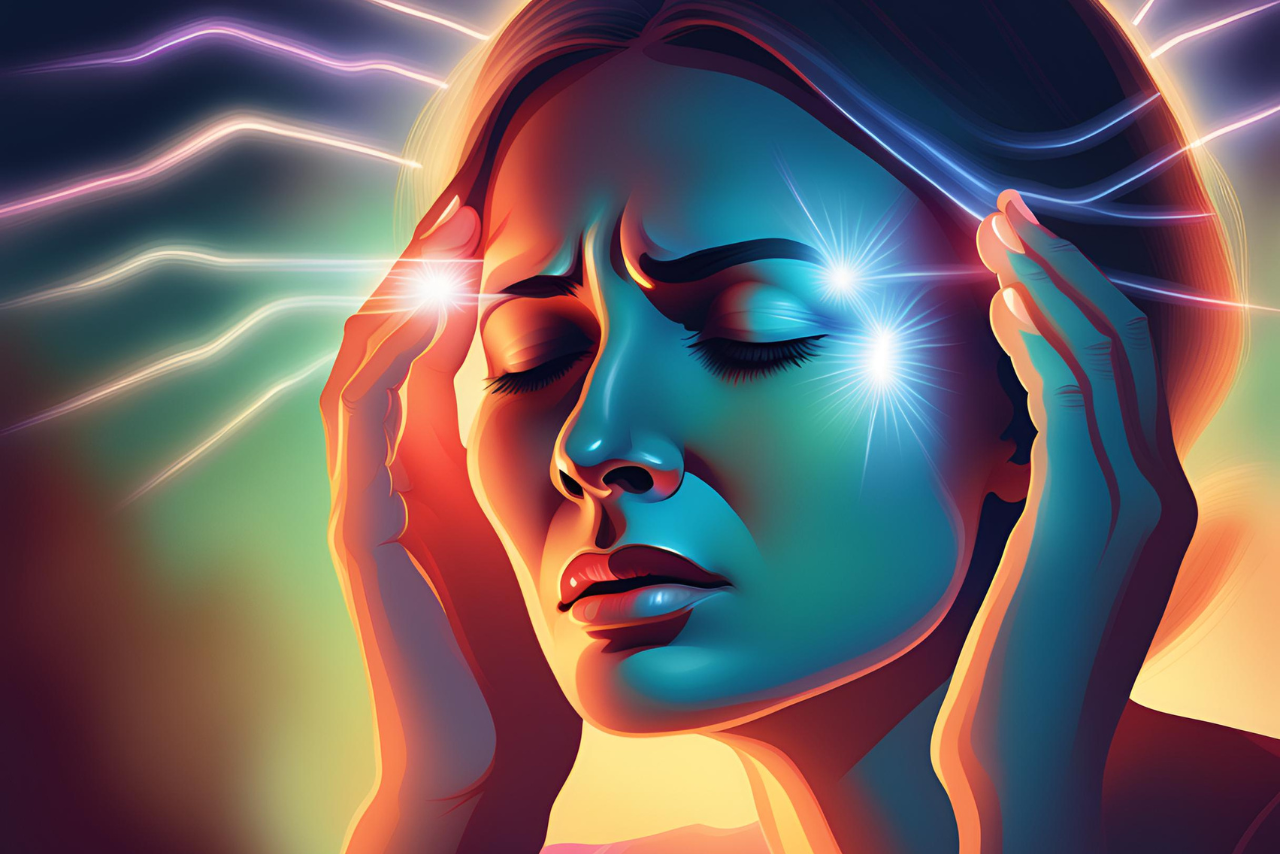
    About two hours before the gala, I saw the dreaded spots of light that usually fill my vision and precede a migraine. But I was working, an early-career professional, and I felt I couldn’t really do or say anything about it.

    The event started, and guests poured in. The migraine set in, but I plastered on my event smile, the one that makes my cheeks hurt when I’ve been doing it for hours. Things were going okay, until I got nauseous and felt like I was going to be sick.

    I tried to make my way to the bathroom, but it was all the way across the event hall. There were also a bunch of people in the room that I had to push past.

    Suddenly, I couldn’t control the urge to vomit anymore. Right there, in the ballroom of the Ritz-Carlton, crammed in between a bunch of fancy partygoers, I vomited.

    It got all over my dress and on the floor. I’ve been told it hit other people, although I wasn’t conscious of that at the time.

    What happened next was a blur of events that included me going into the bathroom to vomit more, crying in a hotel room, and my coworkers and boss coming to check in on me. I felt humiliated.

    After years of avoiding vulnerability, this experience forced me to be vulnerable, both physically and emotionally. I couldn’t control the physical vomit that came out of my mouth in the middle of the gala, and I was too depleted to hide my embarrassment and sadness over the event for the rest of that day.

    We’re taught not to show such vulnerability to others, especially not coworkers. But it had happened. After that event, how could I go back to work the following week and face everyone?

    I returned to work the following Monday, and it was in facing the situation that I learned even more about vulnerability. I didn’t appreciate it at the time, but what I learned would affect how I approach situations and relationships in my life moving forward.

    Since everyone at work had either seen my embarrassing moment or heard about it, one of the few options I had was to simply be honest about the experience.

    It actually felt kind of refreshing to be open about my migraines and my embarrassment over them. I feel like we all spend so much time trying to convince everyone else that we’re fine when we’re not. It was a relief to be open and honest with others about real life.

    Here are some examples of vulnerable things I said to coworkers about my migraine experience.

    “I was really scared. I felt like my migraine would never go away.”

    “When I was nauseous, I tried to go to the bathroom, but it was all the way across the hall. I felt so helpless.”

    “I didn’t want to let everyone down by admitting I had a migraine.”

    Being vulnerable enabled me to connect with my coworkers, and we were able to relate to one another about the very human experiences of embarrassment, pain, helplessness, and anxiety. A couple of coworkers shared stories about migraines or other embarrassing situations in their lives.

    Yes, these were my coworkers, and I saw them that way. But I suddenly also felt as if I could see them as simply human.

    Vulnerability isn’t for every situation. Sometimes it isn’t safe or appropriate. Nowadays, I don’t talk to my coworkers about every life situation, and I only mention migraines if they somehow come up in conversation.

    But this experience with chronic pain gave me a little taste of what opening up to others would feel like and the good that it could do. It encouraged me to be open about migraines and other struggles in my life with family and friends. Some of the best, most fulfilling relationships of my life have come from being vulnerable with others.

    Life is just plain unpredictable. You can plan and prepare all you want, but sometimes things happen. And when they do, being vulnerable can help you glean something positive from unfortunate situations and form strong relationships.

    Although I’ve learned from my migraines, I want to be clear that I’d still rather not have them. They have caused me to have a lot of pain and limitations. I don’t agree with the phrase “everything happens for a reason” for every situation in life.

    But the reality is that I do have migraines, so I might as well look for the silver lining and take what I can from it.

    And it is true that I never would have learned so much about vulnerability if I hadn’t vomited from a migraine at the Ritz-Carlton.

  • How Pain Can Be a Teacher and Why We Need to Stop Avoiding It

    How Pain Can Be a Teacher and Why We Need to Stop Avoiding It

    “The strongest hearts have the most scars.” ~Unknown

    I always hated pain when growing up. For as long as I can remember I tried to avoid it. Physical pain was uncomfortable, but emotional pain was the real torture. It was sometimes easier to have a fight and stop communicating than to have a challenging conversation.

    Disconnecting emotionally and withdrawing from painful experiences was my de facto subconscious strategy. I still pursued goals and succeeded, but this didn’t feel painful to me because I used my passion and bravado to drive through the long hours and grueling work.

    If I wasn’t avoiding pain, I was in denial. It cost me. Ignoring a painful feeling made me numb all over. Denying an unpleasant emotion made me oblivious to the whole spectrum of sensations.

    Avoiding dentists created more issues and massive bills down the road. Dodging challenging scenarios and boredom cost me passions and hobbies that could have led to a different career or a creative outlet.

    This continued until one day I found myself without busy work and distractions when taking a career break. Not being able to hide behind time fillers, a whole army of emotions and feelings came at once. The bottled-up monster escaped, the dam broke, and the castle fell under attack.

    It was overwhelming and frightening. Remembering from my coaching training that sensory adaptation will kick in at some point, I let it all play out. I meditated for hours observing the emotions rising and falling like an ocean tide. Eventually, the monster deflated and the flood dried out.

    Recognizing that there is an issue is the first step to resolving it. I realized that this was not the way I wanted to continue living. After learning more about mind machinery, I became aware of my behavioral patterns. Enneagram type 7, called Enthusiast or Epicurian, perfectly described how I ran “Me”—motivated by a desire to be happy and avoid discomfort.

    Before that, I accepted my pain avoidance patterns as an unchangeable status quo. I did not see reality in any different way. With time, I learned that pain was not the bogeyman to be afraid of.

    Pain became my teacher, an early alarm that something was not going well, and a motivator. Getting praise and encouragement for good behavior isn’t the only way to learn. Our participation prizes-driven society creates a false sense of entitlement, preventing us from personal growth.

    Teacher pain can fix unproductive behavior or an issue almost instantaneously. As cruel as they can be, these lessons are long remembered and followed sometimes our whole lives. A perfect example of this is how Tony Robbins made his early mark as a quit smoking coach by making clients associate nausea and fear of his booming voice with cigarettes.

    To be clear, I’m not suggesting we should knowingly hurt ourselves or others as a teaching tool; just that we need to stop avoiding pain and discomfort because they can both lead to growth.

    When I became appreciative and respectful of pain, I was able to slow down and learn more about what it taught me.

    Our bodies communicate through sensations. Pain is one of the common languages that the body uses to make us understand in a split second that something isn’t right. It also can speak for both your body and mind, as our emotional and physical circuitry is interconnected. Taking Panadol can ease the pain of social rejection in the same way it can fix your headache.

    It is the language that bonds us with other humans. Shared painful experiences do not need to be explained. They are understood on a deeper level. Compassion is born from the language of pain, as it makes us appreciate what another person is going through.

    What would our lives be like if we never experienced pain? Without an early alarm system, a broken bone would not hurt, eventually causing a deadly infection. A serious illness would go unnoticed until a person perished. Congenital insensitivity to pain is a very rare condition affecting 1 out of 25,000 newborns. It is also very dangerous, and most affected people do not survive their childhood.

    When we strip away pain from its emotionally excruciating quality, it is essentially a sensation. Experienced meditators can attest that knee and back pain during long seated meditation sessions eventually lead to the emotional context fading away, showing pain for what it really is.

    It took time to learn the language of pain. Running out of breath, having sore muscles, or feeling anxiety before a performance is good pain. Sharp pain in joints or feeling of discomfort, leading to a crippling flight-or-fight response, is a different animal.

    Good pain keeps us wanting more of the experience. It motivates incremental growth by forming a habit of seeking that familiar feeling. Its bad cousin will cripple us if left unnoticed or overwhelm us, teaching hopelessness.

    The school of pain can’t be skipped. We can’t call in sick or cheat our way out of it. The teacher pain will keep calling our names until we show up for the lesson. Avoiding it would eventually cost more. It is feeding a bottled-up monster that one day turns into a formidable Godzilla.

    It’s pointless to hide from it. Just like Buddha found out about death, sickness, and old age despite his parents’ best efforts to shield him, we will all have to accept that it is ever-present in our lives.

    Walking a life journey made me realize that sometimes there is no other option but to face pain. As uncomfortable and frightening as it may be, if I don’t square up to the monster, it will never go away.

    The saying “the only way out is through” holds true. The next level of personal growth has to happen through discomfort. Though these victories may be invisible to everyone else, they are uniquely valuable to us.

    It may sound like I’ve mastered the art of facing the uncomfortable and I am no longer concerned about pain. That is not true. The lessons I get from pain are still challenging.

    As much as I don’t want to sit through hard lessons, I’ve learned to respect and heed pain’s presence. Knowing that becoming invincible to it is impossible, I’ve learned to recognize the challenge and see it as a catalyst for growth.

    Anticipating pain keeps me motivated to avoid its visits and learn on my own. I will probably never tolerate pain as some people do. I am probably wired that way. But nature can always be complemented by nurture. Resilience, acceptance, and embracing the suck make it valuable learning.

    In her influential book The Upside of Stress, psychologist Kelly McGonigal challenged conventional thinking that stress kills. The research shows that how we perceive stress can turn a negative into positive. Pain can be seen in the same way.

    We can’t pick and choose which parts of human experience we want to face. As tempting as it is to only eat the cherry on top of life’s cake, this will never make us appreciate life wholly. We need to accept all of it. Without pain, we do not know pleasure. Without the discomfort of ignorance, there is no bliss of knowledge.

  • Learning to Speak Up When You Were Taught That Your Feelings Don’t Matter

    Learning to Speak Up When You Were Taught That Your Feelings Don’t Matter

    A proper grown-up communicates clearly and assertively.”

    This is something I have heard many people say.

    By that definition, I wouldn’t have classed as a proper grown-up for most of my life.

    There was a time when I couldn’t even ask someone for a glass of water. I know that might seem crazy to some people, and for a long time I did feel crazy for it.

    Why couldn’t I do the things others did without even thinking about it? Why couldn’t I just say what I needed to say? Why couldn’t I just be normal?

    Those questions would just feed into the shame spiral I was trapped in at that time in my life.

    But the question I should have been asking myself was not how I could overcome being so damaged and flawed, but how my struggles made sense based on how I was brought up.

    Because based on that I was perfect and my behaviors made perfect sense.

    I was the child that was taught to be seen and not heard.

    I was the child whose feelings made others angry and violent.

    I was the child whose anger got her shamed and rejected by the person she needed the most.

    I was the child that got hit again and again until she didn’t cry anymore.

    I was the child whose needs inconvenienced those who were in charge of taking care of her.

    I was the child whose wants were called selfish, attention-seeking, or ridiculous.

    I was the child who was made wrong for everything she felt, wanted, or needed.

    I was the child who was called a monster for being who she was—a child.

    I was the child that grew up feeling unwanted, alone, and entirely repulsive.

    So why would that child ever speak? Why would that child ever share anything about herself? She wouldnt, would she? It all makes sense. I made sense. It was a way of living. A way of surviving.

    I had been taught that I didn’t matter. That what I wanted or needed and how I felt was something so abhorrent it needed to be hidden at any cost. And I did it to avoid getting hurt, shamed, and rejected. Even when I was with different people. Even when I was an adult.

    That pattern ran my life. I just couldn’t get myself to say the things I wanted and needed to say. It felt too scary. It felt too dangerous. It was too shame-inducing.

    So if you struggle to express yourself and feel embarrassed about that, I get it. I did too. But I need you to know this: It’s not your fault. It was never your fault.

    And yes, life is harder when you didn’t get to be who you were growing up. When the only way you could protect yourself was by being less of you. When you could never grow into yourself because that would have gotten you hurt. When you couldn’t learn to love yourself because that was the biggest risk of all.

    But today, that risk only lives on within you. In your conditioning. And thats where the inner healing work comes in.

    For me, that meant getting professional support to help me learn how to safely connect to myself and my truth, and how to banish the critical, demanding, and demeaning internal voice that told me my feelings, needs, and wants were wrong.

    It meant learning to regulate my nervous system so that I could get past my fear and be honest about what worked for me and what didn’t. This was a major turning point in my relationships because I started to represent myself more openly and assertively, which meant that my relationships either improved dramatically or I found out that the other people didn’t really care about me and how I felt.

    It also meant opening up emotionally and learning to understand what my feelings were trying to tell me. Since I’d learned to avoid and suppress my emotions growing up, I knew it would be challenging to truly get to know myself.

    I had the great opportunity of reparenting myself—giving myself the love, affection, and attention I didn’t receive as a kid.

    And that’s what ultimately allowed me to finally feel safe enough to express myself.

    The relationship I had with myself started to become like a safe haven instead of a battleground, and my life has never been the same since.

    Everything on the outside started to align with what was going on inside of me. The safer I became for myself, the safer the people in my life became, which allowed us to develop deeper, more meaningful and intimate relationships.

    So I know that that kind of change is possible. Even if it doesn’t feel like it right now. I know that it is possible because today I am the most authentic and expressed version of myself I have ever been.

    Just look at everything I am sharing here with you. That’s a far cry from asking for a glass of water.

    Today I no longer choke on the words that I was always meant to speak. I speak them.

    Today I no longer hold back my feelings. I feel them. I share them. Freely.

    Today I no longer deny my needs and play down my desires. I own them. I meet them. I fulfil them.

    Today I own who I am and I don’t feel held back by toxic shame in the ways that I once did.

    Back then I would have never thought this was possible for me.

    I hope that in sharing my story and my transformation you will follow the spark of desire in you that wants you to express yourself. To share your thoughts and desires. To express what its like to be you. To finally get to meet more of you and eventually all of you.

    That’s what you need to listen to. Not the voice of fear or shame. Not your conditioning. Not anything or anyone that reinforces your inhibitions or trauma.

    You were born to be fully expressed. That was your birthright. That is the world’s gift.

    Just because the people who raised you didn’t understand you as the unique miracle that you are, that doesn’t mean that you have to deprive the world, and yourself, of experiencing you. More of you. All of you.

    It’s never too late to open your heart and share yourself in ways that feel healing, liberating, empowering, and loving to you.

  • How I Learned That My Pain is Valid and Worthy of My Own Empathy and Love

    How I Learned That My Pain is Valid and Worthy of My Own Empathy and Love

    “Sit with it. Sit with it. Sit with it. Sit with it. Even though you want to run. Even when it’s heavy and difficult. Even though you’re not quite sure of the way through. Healing happens by feeling.” ~Dr. Rebecca Ray

    It’s July 2022 and I’m in the middle of a red tent at Shambala Music Festival in British Columbia.

    I sit elbow to elbow, knee to knee, heart to heart with a group of women who I am meeting for the first time.

    It’s hot and we’re sweaty.

    A teacher is leading a healing womb meditation, and she prompts us to identify a person that has caused us pain, so that we can release that person and the power they wield over us.

    I am coming up short, thinking…

    “No one has caused me any real pain.”

    “I don’t have any real trauma.”

    “The pain I have experienced isn’t bad enough.”

    So I directed my healing energy to two friends who I believed were in need of more healing than me.

    I instantly realized what I was doing. I was defining my friends by their perceived abundance of pain and trauma and defining myself by my supposed lack of pain and trauma.

    I knew in that moment that this was probably not fair to my friends or to me, but this way of thinking had been familiar to me throughout my thirty-two years of living.

    Over and over again, I have found myself feeling guilty for the fact that I don’t think I have any “real” trauma.

    I come from a stable home with parents who love and support me. Growing up, I had everything I needed and most things I wanted. I have a big brother who is one of the best men (best humans) I know. I grew up in a middle-class part of Maryland. I have white skin in America. I can see, hear, and move my body.

    I used to constantly wonder how the challenges I have experienced could possibly stack up against those of my friends. She who experienced the deepest sexual trauma at a young age; or she who had an alcoholic father who was physically and emotionally abusive; or she who is regularly profiled when she walks home to her apartment because of the color of her skin.

    Or how my challenges could stack up against students I’ve mentored…like a ten-year-old boy from Syria whose legs are decorated with shrapnel scars; or a fifteen-year-old boy from Eritrea who was a child soldier; or a sixteen-year-old young woman who is the caretaker for her sick mother and five younger brothers and sisters.

    Luckily for me, and for you, I have detached from my struggle story that my pain is not enough. I have learned quite a few things and shifted away from this unhealthy way of thinking about pain and trauma.

    First, I have learned, and will continue to re-learn, that there is no competition for who has suffered the most. Trauma and pain are not a comparison game. 

    All experiences, emotions, and feelings are valid. And we all get to practice empathy for and awareness of the experiences and heartache of others, and of ourselves.

    I have also learned that people are not defined by their trauma. 

    And I am deeply sorry to the people in my life who I have ever defined in this way.

    My final learning is that the things I have experienced are valid and enough to warrant my own empathy, healing, and love. 

    Like…

    The countless times having sex with a previous partner, even though I didn’t want to, because it was just easier to go along with it. Which resulted in a period of my life where I really didn’t like sex. I told myself, it’s not that big of a deal, it’s just sex.

    The pressure from a friend to mess around with her boyfriend while she watched. Even though I said, “I don’t want to.”  I told myself I was just being a prude. This should be fun. What’s wrong with me?

    The grabs and gropes on the street, in the club, at the bar. I told myself this just came with the territory of being a woman.

    The unwanted touch and advance from a friend. I told myself I’ll just forget this and move on.

    The shame of one-night stands, even though I knew he, whoever he was, felt not shame but something more akin to glory. I told myself it was my fault for having a one-night stand. I brought this shame upon myself

    All of these experiences, and more, have been buried deep within me for years and I had barely been aware of them, until recently, as I have embarked on a very intentional journey of self-excavation.

    For me, this journey has included meditation, prayer, journaling, somatic healing, and experiences like the one in the red tent.

    I embarked on this journey thinking I would unpack a few insecurities and move on with my life with relative ease.

    But what has actually happened is that I have uncovered so many hidden treasures in myself.

    These treasures are sometimes in the form of past pain. Other times they take the form of nuggets of ideas that I buried long ago for a rainy day. And yet other times, they are in the form of things that I used to love as a child but forgot about as I grew up and was told by the world what I was supposed to love and who I was supposed to be.

    And now I get to excavate even further to see what each of these treasures is here to teach me. For the ones I shared above, there is a clear theme of sexuality, and that theme has led me to deep dive into this space with myself. This looks like self-pleasure, dancing naked in the mirror, loving every part of my body, and speaking my desires out loud to my partner.

    This journey has plunged me into the depths of my own darkness. And in that plunge, I have been reminded of my own strength—of my ability to bask in the darkness, all while knowing I will be okay.

    I also get to remind myself that I am enough. My pain is valid. I am worthy of taking up space.

    Guess what. The same goes for you, love.

  • Why Relationships Matter Most: We’re All Just Walking Each Other Home

    Why Relationships Matter Most: We’re All Just Walking Each Other Home

    “We’re all just walking each other home.” ~Ram Dass

    Living in the hyper-individualist society that we do, it’s easy to forget our obligation to those around us. Often in the West, we are taught to prioritize ourselves in the unhealthiest ways, to ‘grind’ as hard as we can to achieve wealth and status.

    We are taught, between the lines, that our first responsibility is to create a ‘perfected‘ version of ourselves to such an extreme that it is alright to forsake our relationships with others to accomplish it.

    From day one, it is embedded in us that it is our individual selves against the world. Like many others, I’d like to challenge this notion. Because what is the purpose of wealth and status if not to share it with the ones you love and who love you the most?

    What is the meaning of life itself if not companionship, community, and love?

    I want to disclaim, of course, that this is by no means attacking the notion of having personal external goals. Career success, physique aspirations, and other tangible objectives can absolutely be noble in pursuit and attainment.

    What I would like to say is that none of those external goals will fulfill you the way that genuine human connection can—and that those goals should not be completed by abandoning your healthy relationships and support systems. And if you are thinking, “who actually does that?” this introduction is not for you.

    To put it simply, life is a series of circumstances, situations, and experiences that we get reluctantly swept into (and sometimes, foolishly, sweep ourselves into). It’s just one adventure after the next, for better or worse. That sounds gloomy, but it is what makes life so beautiful—the human ability to feel a vast range of emotions within an hour and find charm in the worst circumstances.

    A little over a year ago, my aunt passed. Through a blur of tears, I remember thinking about how beautiful the flowers people had sent were and how vibrantly green the grass of the cemetery was. And amidst all the despair, I remember looking around and seeing my friends.

    When I think back to all the times in my life when it felt like the roof would cave in, that I had nothing left, that I didn’t know if I would be strong enough to move forward and continue on, I remember what exactly it was that pushed me forward. It was always my friends, my people. Those who almost daily not only told me that they would be there for me but showed up when I needed them the most.

    Would I have survived my hardships alone? Yes. Would I prefer to do it alone? Never.

    I am infinitely grateful for the community I have created for myself—the network of friends that have become family and mentors that help guide me when things seem too chaotic to untangle.

    Through the gentle counsel of my loved ones, I have come to realize that there is no nobility in solitary living. There is no wisdom or bravery in taking on hardship or challenges alone when I don’t need to. Every time I forsook my loved ones to be (my distorted idea of) independent, it seemed almost like I was just adding gasoline to already growing flames. There was no more profound message beneath suffering in silence, only suffering.

    And I think most of us can agree that attempting to handle problems alone feels infinitely more difficult to manage than with support. It’s part of why people seek romantic partnerships, to have someone always there to walk through the flames alongside. It’s why people invest so strongly in their loved ones in general. It is to feel heard and be seen, to hear and to see.

    Part of the purpose of life, I have come to learn, is within the attempt to know someone else, to recognize yourself in another person deeply. Connection is everything we have in this world. It’s the mirror that holds itself up to us in the face of conflict with another person. It makes us think twice before buying from a brand that uses slave labor, and it’s what makes us recoil at the thought of abused animals or children.

    Connection with all living beings is the deeper understanding that we are all somehow joined by our humanity. And in that, understanding that one of our primary purposes is to know and be known. To know my friends and their joys and fears and draw parallels to how they reflect my own. To walk alongside them through the difficult times and the blissful times. I recognize now that it is in the attempt to know others that I now know myself.

    We are all just walking each other home. Life, at its core, is that simple.

    I am walking, hand in hand, side by side, sometimes a little bit ahead or a little bit behind, with the people around me. Some of those people may walk too quickly for me to keep up, and some may move too slowly. That is when I thank them for walking me as far as they could and continue on without them, as they will continue on without me.

    If the journey of life is a path we walk, then the purpose of our travel buddies is to help us navigate the storms on the road and to make the journey as funny, exciting, and comfortable as possible. If life is a journey, then the whole point of friendship, companionship, and mentorship is to just be with each other.

    If I am walking you home, is my purpose not to try my best to protect, guide, and love you throughout that journey? We are all walking each other and ourselves home. And the least we can do is do our best to make that journey as beautiful, warm, and light as possible.

    So many of us are falling into a spiritual trap of sorts and being wholly sucked into the hyper-consumerist and individualist mentality of the West. Some of us are actively fighting the true nature of our being, which yearns for deep and genuine connection above all else.

    As you age and the world around you changes, your values begin to change. When you’re nearing your final days, when all you want is your family and friends surrounding you, will you have planted those seeds? Will you have spent time cultivating and nourishing your relationships with those around you? Will you have walked your loved ones down their path and done your best to create joy in your (and others’) journey?

    The message I am trying desperately to convey here is that we need one another. We need love, and we need companionship. We need forgiveness, and we need grace. We need to be open to giving our hearts away and open to the risk of being hurt. And in that same breath, we need to do everything possible in our power to avoid hurting those around us. We need to use the path to grasp the importance of being tender with each other.

    The journey of life is not easy. Take a moment and reflect on all those who have walked you in the past and all those who continue to walk you home.

    Think about the connections you have made, the empathy and love you have nourished in the lives of those you care about.

    And remember that at the end of the day, despite all of the problems and chaos around us, we are all just walking each other home, and we are all just trying to be better companions, one day at a time.

    Dedicated to my travel companions, you know who you are.

  • 8 Ways You Can Help Fight the Loneliness Epidemic

    8 Ways You Can Help Fight the Loneliness Epidemic

    “The antidote to loneliness isn’t just being around random people indiscriminately, the antidote to loneliness is emotional security.” ~Benedict Wells

    Emotional security. The feeling of being at home in the presence of another. Safe to be who you are, good times or bad. Feeling seen and seeing the other clearly, accepting the other’s whole lovely mess. It’s good stuff, and it can be hard to find.

    In fact, ever-increasing loneliness stats have led many experts to describe the problem as epidemic. You might assume it was caused by the pandemic, but it was a crisis long before lockdowns and social distancing.

    In 2018, Cigna conducted a survey of U.S. adults and found that loneliness was at 54%, already at epidemic levels. Since then, it shot up to 61% in 2019, with three in five Americans reporting feeling lonely, and now sits at 58%—we’ve got ourselves a big problem. And it’s not just the fact that it’s unpleasant to feel disconnected from others and not have anyone to talk to; research also shows it’s also bad for our health.

    As someone who went thirty-seven years not knowing I’m autistic, for most of my life I’ve hidden a lot of who I am (masking), making it impossible to feel truly connected and seen. So, despite formerly frequent socializing, I’ve been exceedingly familiar with feeling lonely for most of my life.

    However, when health issues took me out of the day-to-day world altogether in 2015, I was surprised at how much worse it got. At first, rarely interacting with others was largely a much-needed relief, but a few months in, things got dark. I was communicating with the people I knew so little—sometimes it’d be months—that I felt ungrounded, like I could just disappear, or die, and no one would even know I was gone.

    When I did get to talk to the people who I then considered close, it often felt like I wasn’t really allowed to talk about my life anymore because it’d become too sad. (So cringe. Positive vibes only.)

    Even with the support of a therapist, feeling so alone in what I was going through made me feel like my life didn’t matter. And it’s not that I was associating with awful humans, it’s just how we’re socially conditioned. Society prioritizes seeming-pleasantness to a severe degree, and as a result most folks have no idea how to hold space for the hard stuff. We just aren’t taught to be emotionally equipped for providing that kind of support; instead, the general example is to repress and deflect.

    It’s like we’ve decided compassion is inefficient and awkward, instead honoring placid insensitivity as a virtue. And, as a result, people feel like it’s not safe to talk about what’s really going on in their lives, what they’re really thinking and feeling. This, of course, creates loneliness.

    Eventually, after half a decade of dealing with severe health and life trauma in isolation, I was diagnosed with autism, which was amazing in many ways… but also a core-shaking thing to handle with only the support of online groups and a telehealth therapist who had dozens of other clients. It was too much to process, and I had a nervous breakdown.

    Afterward, I accepted that I needed to work harder to find people I could regularly and, especially, authentically connect with. It took some time, but I eventually found aligned friends via reaching out to people I didn’t actually know all that well (yet) but had met through very authentic circumstances.

    Routinely talking and connecting with them has changed my life. I’m still homebound for health reasons, and it’s still hard, but despite still being without human company like 95% of the time, I don’t feel like I could just float away anymore; I now feel warmly and safely connected, even seen and understood.

    Honestly assessing if I had people with the bandwidth to connect regularly, that also know how to hold the kind of safe-feeling emotional space I need, was the first step to having consistent connection with people who let me be my whole self; relationships that do provide that precious and hard-to-find feeling of emotional security—progressively replacing my loneliness with connected perspective, understanding, and acceptance.

    If your honest self-assessment comes to the same conclusion as mine—“I need to confront this loneliness thing”—these sorts of authentic-connection-seeking efforts can do the same for you.

    8 Ways to Combat the Loneliness Epidemic

    1. Honestly assess your needs.

    Do you feel lonely? What do you need to feel socially connected? Which interactions leave you feeling drained and which ones lift you up, making you feel less alone? Do you feel safe to be your whole self with the people in your life? What are some characteristics of those who’ve made you feel safe?

    2. Reach out (and reach back).

    Once you’ve got an idea of what you need, reach out to someone who makes you feel relaxed, safe to just be you, and see if they want to catch up. Maybe they’ll be down for it, and maybe they won’t, but keep trying.

    If you don’t really know anyone you feel safe to be authentic with, try joining like-minded activity groups or using a platonic friend-finding app. And if someone who seems safe reaches out, don’t let fear stop you from reaching back.

    3. Set and respect boundaries.

    What you need from someone and what they’re able to provide might not mesh. It’s important to understand that some of us are comfortable with having open, potentially vulnerable, conversations, and others prefer to stick to more shallow waters. And the same is true for the reverse.

    It’s okay to prioritize time with those who connect in a harmonious way and also to distance yourself where needed. Life is pretty demanding and people can only do so much, so try not to take it personally if people can’t meet what you need, and let others (gently) know when you can’t meet theirs.

    4. Practice ‘holding space.’

    Make sure you’re present enough to really listen and ensure you’ve understood and/or been understood (we rely far too much on easily misinterpreted nonverbal communication).

    Learning to stay in the moment—resisting deflection, going into judgment or fix-it mode—is crucial to creating authentic connection in your life (and that includes holding space for your own honest, but difficult, emotions).

    It can be scary to hold space, and/or ask someone to, but we need to get over our societal fear of awkward experiences; isn’t it worth it when it could lead to connection, growth, and clarity?

    5. Resist the pressure to lean on small talk.

    It can be tempting to stick to trivial matters, but it’s not without harm. I concur with the take on small talk that Natasha Lyonne shared on an early February episode of Late Night with Seth Meyers:

    “I don’t believe in it. I would say I aggressively don’t like it. I think it’s damaging to society as a whole… it’s like John Lennon said, just gimme some truth. I think it’s really dangerous because when you ask a person ‘How are you?’ their only option is to lie aggressively, right? Society says you’re supposed to say, ‘Oh, I’m good’ and keep it moving, but you’re not good, are you?”

    It’s isolating that we’re expected to talk in pleasantries, especially since it often happens even in relationships considered close.

    6. Gossip doesn’t count as connection.

    In the same interview, Meyers fights for small talk as a segue into shit-talk, and Lyonne suggests that maybe instead of talking about other people they could segue into some other talk (she suggests inanimate objects, which I don’t hate).

    Our society depends on gossip far too much. People very often rely on it to judge another’s trustworthiness, a fact that is manipulated all the time. And if you’ve ever played the game “telephone,” you know it’s not exactly a science to depend on hearsay.

    Real conversations, asking direct questions, can be intimidating—but it’s a hell of a lot better than writing someone off because of what so-in-so told so-in-so. Also, gossip isn’t connection. It might feel like fleeting togetherness à la “we hate them,” but you know your shite-talking cohort’s talking about you as well. It’s fake. If gossip’s the primary mode of convo, you’re just flapping jaws.

    7. Reflect on and articulate your feels.

    When we don’t understand why we feel alone, it makes it much harder to address, so it’s unfortunate that introspection is underrated in our society (sometimes even ridiculed, which is revealing).

    Gaining emotional awareness and being able to express our feelings is key to reducing loneliness. To quote sociological researcher Brené Brown, “The more difficult it is for us to articulate our experiences of loss, longing, and feeling lost to the people around us, the more disconnected and alone we feel.”

    When we don’t have the words to describe our emotional experience, emotional communication becomes foreign—but by gaining emotional awareness and vocabulary, that kind of connection becomes possible.

    Crucially, we must know that it’s okay to feel whatever it is that we feel, as many of us are taught that emotions like anger or fear aren’t okay. They are. Using tools like the emotion wheel, journaling, and therapy can be of great assistance, as well as opening up to trusted others and holding space when they open up to you.

    8. Know (and love) yourself to connect authentically.

    Finding relationships where I felt supported the way I needed to be involved a lot more time getting to know myself than I thought it would; tons of self-reflection and, ironically, solitude were necessary for me to find the self-acceptance it takes to have any shot at finding authentic support.

    To again quote Brené Brown, “Love is not something we give or get; it is something that we nurture and grow, a connection that can only be cultivated between two people when it exists within each one of them—we can only love others as much as we love ourselves.”

    As far as how to get started on fostering self-love, I think all love grows from appreciation, something many of us find hardest when it’s pointed in our own direction. Appreciate your efforts to choose growth by reading articles on a website like this over mindless scrolling, or reaching out for connection instead of your favorite escape. And acknowledge your needs in addition to your efforts. You deserve love (the whole you).

    Self-reflection and cultivating emotionally secure relationships inherently involves vulnerability, but our social norms dictate staying away from that—safe in the shallows of small talk, leaving the depths to be explored in fifty-minute therapy slots by a complete stranger who won’t have the same security with you (if you’re lucky enough to have the coverage).

    While therapy can be very helpful, emotional support shouldn’t primarily be found at a price as one of many clients on a therapist’s roster. We need to have the emotional tools to express our feelings and support another’s.

    And, in addition to our individual efforts toward authentic connection, we, as a society, need to recognize the costs of mass loneliness and prioritize having a populace that knows how to be there for each other in good times and bad. It’s time to learn how to allow space for authentic connection in our lives and relationships. We need it, we deserve it, and we can do it.

  • How to Let People in So You Can Feel Seen, Heard, and Supported

    How to Let People in So You Can Feel Seen, Heard, and Supported

    “We are hard-wired to connect with others, it’s what gives purpose and meaning to our lives, and without it there is suffering.” ~Brené Brown

    In relationships, I have always felt more comfortable being on the sidelines rather than center stage. I liked playing the supporting role to many people’s leading roles. I am good at it; it’s the career I chose for myself as a life coach. However, personally, constantly staying in the role of supporter created resentment.

    I felt unseen and unheard, and many of my relationships began to feel one-sided—with me listening and holding space for them and then feeling there was no room for me to have a turn. It felt like I could not connect with others, and that left me feeling deeply alone.

    At first, I believed that others were to blame. If they didn’t take up so much space and time, it would be easier for me to open up. As time passed, I realized this was an excuse. It was an excuse that gave me permission to stay quiet. Because staying quiet was easier than sharing whatever was heavy on my heart.

    It was painful to constantly stay silent or to question if I should share or not. It felt like I had created brick walls to protect myself, and it began to feel impossible to start sharing more of my personal experiences, thoughts, and realizations.

    I would think, “They won’t get it anyway. What’s the point?” Or “What they’re experiencing is so much harder.” Or “I will just end up hurt by sharing more.”

    At times when I felt the loneliest, I began to wonder, what was I protecting myself from, and why had it gotten so difficult to speak to my closest and trusted people? I felt like I was walking around like a knight covered in steel armor, but there was no one shooting arrows at me; and on the inside, I felt like a volcano was slowly brewing.

    I knew where parts of these habits stemmed from. I am highly sensitive and guard my heart because I feel things so deeply. In the past, there were times when I shared and people either didn’t listen because they weren’t fully present or they didn’t understand where I was coming from, and this hurt.

    Also, I knew that I was a people-pleaser and wanted others to feel good and happy even if it meant that I didn’t. And I’m naturally an observer and introvert, so it came easily to stay quiet.

    Part of my healing came from this basic knowledge. This is the unique way that I am built, and it is not bad or wrong. However, I had to address the brewing storm inside, and that meant having the courage to share and to cry and to be angry—to be seen in front of people I love and trust.

    A friend of mine has consistently modeled what it means to open up by communicating her thoughts, fears, and feelings with me, even if they are vulnerable. Over time she became someone with whom I felt comfortable testing the waters of sharing my own pain.

    I felt a huge sense of relief when I opened my heart to her and shared that I was struggling to feel good enough in my relationships and roles—and I was met with the simple yet powerful impact of thoughtful listening. Not only did she accept me with my messy emotions, I felt more safe, authentic, and comfortable being me.

    Opening up to others is still a practice for me, but each time I do it I find that others are more loving and capable than I imagined, and that my taking a step toward vulnerability leads to the connection I deeply desire.

    I have realized that opening up has less to do with others accepting or understanding me and more to do with me accepting the vulnerable parts of myself.

    I know now that I deserve to be listened to and supported, even if it is messy and more emotional than logical. The only way to do that is to communicate and share what’s going on in my heart with a reliable or committed partner/friend.

    I believe most of us avoid opening up at all costs because we’re afraid of being judged and rejected.

    In any relationship there is a chance that you are going to get hurt. Whether it is intentional or unintentional, whether you guard your heart or not, the possibility is there. The question is, is the sense of connection worth it for you? This is a question that requires discernment.

    Not all relationships require equal sharing. This is the part that you get to choose. Who do you want to talk to, and who is able to hold space for you? What parts are you willing to vulnerably share, and, as Brené Brown asks, “Who has earned a seat at your table?”

    If, like me, you tend to be guarded and not trust the people you are closest to, take a moment to slow down and acknowledge the part of you that wants to be seen and heard.

    Let yourself know that, though safety and security cannot be promised from another, you can promise them to yourself. You can assure yourself that whether other people understand and support you or not, you will maintain a safe space within yourself by validating your own thoughts and feelings.

    Also, remind yourself that even if sharing was painful for you in the past—if people didn’t offer you their full attention, empathy, or understanding—the future can be different. All people are different, and there are many who care and want to be there. You just have to give them a chance.

    Having the courage to be seen in a vulnerable place isn’t easy; however, it is necessary if you long for connection and authenticity.

  • Everything I’m So, So Sorry About (and Why I Think Apologies Are Hard)

    Everything I’m So, So Sorry About (and Why I Think Apologies Are Hard)

    “There’s the way that light shows in darkness, and it is extremely beautiful. And I think it essentializes the experience of being human, to see light in darkness.” ~Emil Ferris

    I was leading a yoga training in a small village in Greece near the Aegean Sea. One of the trainees was practicing a mindfulness workshop she designed. She led us through a guided meditation based on a beautiful Hawaiian practice for reconciliation and forgiveness called Ho’oponopono. As we sat in the yoga space, she repeated over and over:

    I love you.
    Please forgive me.
    I’m sorry.
    Thank you.

    There was something about how she slowly said, “I’m so, so sorry” that at one point I felt my heart break open, and tears flowed from its depths.

    I have a wellspring of personal and societal hurts tucked in the back of my heartspace that I am so, so sorry about.

    I’m sorry that children and animals are abused for no reason except the amusement or the sickness of adults.

    I’m sorry that women and children are molested and raped by men whose brains can’t process compassion, and that their need for power is so destructive that they can justify their actions.

    I’m sorry that people aren’t given equal access to food, education, and healthcare because of the color of their skin or biases.

    I’m sorry for the learned bias that keep us from treating everyone equally.

    I’m sorry that children don’t tell adults they have been bullied and base their self-worth on their shame about how their peers treated them.

    I’m sorry for daughters whose mothers try to keep them small.

    I’m sorry for the boys who’ve been told that they can’t cry.

    I’m sorry that saying sorry is sometimes too vulnerable.

    I’m sorry for any time I have ever said or done something that was hurtful because I was trying to make myself look good.

    I’m so, so sorry

    The Vulnerability of Being Sorry

    Saying I’m sorry is a vulnerable place. We have to admit that we were not perfect. We have to disclose that we made mistakes.

    Sometimes I’ve raced around my brain desperately looking for some way to justify my actions so that I didn’t have to apologize because it felt too vulnerable. But sometimes, even in a relationship where I wanted to be vulnerable and close to someone, I have defaulted to not apologizing—sometimes out of habit.

    During the pandemic, I came down with COVID-19 and had to call the people I’d been around and tell them. It was hard. One of my friends was very upset with me. It was during the holidays, and after spending a lot of time alone, she had plans for New Year’s Eve.

    I didn’t blame her for being mad. The isolation was driving us all crazy. I was sorry. Apologizing and listening to her anger was uncomfortable. Her friendship was more valuable than the temporary discomfort of her processing her disappointment. I was grateful that I had the courage to be present.

    If we want a relationship to grow, we—the one who erred—need to own the mistake and the apology, no matter how uncomfortable it feels. Without the apology, it’s one more brick in the barrier to growing closer in a relationship.

    We all know people that never say I’m sorry—it just feels too exposed. Alternatively, more worrisome, is that they feel beyond reproach.

    Cindy Frantz, a professor of psychology and environmental studies at Oberlin College and Conservatory, said that when we do something wrong and skirt responsibility by not admitting our wrongdoing, the interaction feels incomplete.

    I know from experience that waiting for an apology can cause a relationship to feel like it is hanging in midair, waiting to get grounded.

    She also warned, “Don’t apologize as a way to shut down the conversation and wipe the slate clean. That’s a shortcut that won’t work.”

    When It Isn’t Safe to Say I’m Sorry

    Some people will use our apology against us—so we keep ourselves safe by not apologizing. Self-preservation might be the best choice when dealing with someone with mental health and abusive issues. It can take a toll on how we feel about ourselves though.

    In the eighties, I was in a twelve-step program for my eating disorder. I wasn’t able to fully complete the fifth step by making amends to my parents for all the extra food I ate to fuel my bulimia. It just didn’t feel safe. Now that I’m in my sixties I could do it, but my parents are deceased.

    I found some comfort in apologizing “in spirit.” I’m still in the process of fully letting go of the conversation that I wish I could have had.

    Over-Apologizing

    I was in a coffee house, writing this article, when I overheard a conversation. A man asked a woman if he could reach across her to get a chess board from a shelf that was next to her. She said yes and then said, “I’m sorry.” His friend said to her, “Why are you apologizing? He’s the one inconveniencing you.”

    Like this woman, I can be very free with my apologies.

    Saying things like “I’m sorry to bother you” instead of “Do you have a minute to talk?” can be a sign of our sense of self-worth or the habits we developed when we weren’t confident.

    Findings show that women report offering more apologies than men, even though there is no evidence that women create more offenses than men.

    For women, over-apologizing can be just a matter of learned language. But when we hear ourselves apologize for taking up space when someone else bumps into us, or apologize for being late rather than thanking people for waiting for us, or apologize just for saying no when someone crosses our boundaries, this can be a sign of self-worth challenges.

    If we listen to ourselves apologize repeatedly, we literally talk ourselves into low self-worth.

    What a Sincere Apology Feels Like

    I can offer a sincere apology when I know the mistakes I make are just a part of being human. I truly don’t want to hurt others. I don’t want them to be suffering from my words or actions.

    I can offer a sincere apology when I forgive myself for not being perfect. I seek to learn from my mistakes and apply insights to my future responses and actions. I refrain from using my mistakes to bring up all my past mistakes and emotionally beat myself up.

    Psychotherapist Sara Kubric says that a genuine apology is more than a statement. It has to be sincere, vulnerable, and intentional. She offers an apology recipe that could look something like:

    1. Taking responsibility for making a mistake
    2. Acknowledging that we have hurt someone
    3. Validating their feelings
    4. Expressing remorse
    5. Being explicit about our desire to make amends

    Apology as a Test of Confidence

    When I sincerely apologize, I know that I am confident. No one is beyond making mistakes. I know that my spiritual growth depends on my ability to be vulnerable.

    I continue to learn new ways of communicating that don’t involve over-apologizing for taking up space or being a normal human being. I know that there are pain, challenges, and injustices in the world that I can’t control, and I can be sorry, sad, and discouraged when they happen. This is the way I can live consciously and compassionately in this, my community.

  • How I Learned the True Meaning of Strength After My Son’s Death

    How I Learned the True Meaning of Strength After My Son’s Death

    “Breathe. Let go. And remind yourself that this very moment is the only one you know you have for sure.” ~Oprah Winfrey

    I tried to stay strong after my fifteen-year-old son Brendan died in an accident. It shattered my world. The shock of it numbed me but when that wore off, I knew I needed to be there for my husband and two other children. Zack and Lizzie were only ten and thirteen and needed my strength. So, I built a wall around my heart and pushed through my day. I went back to work, teaching piano students in my studio.

    But at night my throat burned from unshed tears. My neck muscles ached from holding myself rigid. I had half-moon bruises across my palms; I didn’t even realize I spent the day with my hands clenched in fists, my nails digging into my flesh.

    Still, I stayed strong. Until Matthew ran into my piano studio and I discovered the real meaning of strength.

    Each week he burst into the room, eager to play me his new song. He was a six-year-old boy with freckles bouncing across his cheeks. He threw his bag onto the table, uncaring that books and pencils slid out. He wiggled onto the bench and grinned at me before crashing his hands into the keys.

    He played me his own story about aliens and a spaceship that hopped from planet to planet. He threw his whole body into his song, attacking the keys until he built a wall of sound that screamed throughout the room.

    I smiled. “I love your story.” I gave him a sticker that he proudly placed on his shirt. But then I reached for my lion.

    Leo the Lion was a stuffed animal that sat on the shelf above my piano. He was so soft that students couldn’t resist reaching up and stroking his velvety fur. His arms and legs—filled with tiny beans—drooped over the shelf.

    Sometimes, he sat on the side of the piano, listening to a student play when they felt a little shy. Other times, I put him on a student’s shoulders. Make him fall asleep, I’d whisper, a gentle reminder to keep their shoulders relaxed and down.

    With Matthew, I reached for the lion so I could teach him how to play loud and soft. Playing soft requires a lot of control. Students lean in gently, their fingers brushing the keys, like tickling with a feather. They’re so tentative they barely make a sound. But not when it comes to playing forte.

    Most students love to play loudly. They crashed their fingers into the keys, digging into the note until it sounded like a punch. I wanted the note to sound full and rich, but not like a scream.

    I pulled down Leo and wiggled him so that his arms flopped around. I lifted one lion arm up and let it drop down on its own. “Leo doesn’t try to attack the  keys,” I said. “He just lets the weight of his arm fall into the keys.”

    I let his paw fall a few times on Matthew’s arm so he could feel the weight. Then I put a rubber bracelet around Matthew’s wrist and gently lifted his arm up by the bracelet. I held it up in the air. “Don’t try to fight it when I let go. Just let your arm fall.”

    It was hard for him to let me direct his arm. He couldn’t let it just flop around. “You have to give up control,” I said. “Let me move your arm and then just let it go.” After a few times, he surrendered to the weight of his arm and let it fall into the keys. He looked up at me and grinned.

    “That’s the secret to playing forte,” I said. “Forte actually means strength in Italian. And in order to play a note with strength, we need to give up control. We lift our arm and then let go.”

    And that’s when I realized I was doing strength all wrong

    I tried to stay strong by controlling my grief. I stood tall and stiffened my shoulders, my muscles tight. I swallowed my sorrow until I could barely breathe. And still, I didn’t surrender to the weight of grief. I stayed strong. And if I couldn’t, I hid inside my house and let myself shatter. I refused to let anyone see me without my shields.

    But Leo the Lion reminded me that I had the wrong definition of strength. Staying strong can mean surrendering to the pain. It can mean being strong enough to let go and show my heart even when it’s filled with sorrow.

    I needed to learn how to let go. It didn’t come easy for me. Just like Matthew, it was something I needed to practice over and over.

    I started with becoming more aware. I scanned my body for signs of tension, knowing it was a sign of emotions trapped within my tissues. I stayed patient with myself, just like I did when Matthew played with too much force. I reminded myself to be aware of the tension without judging it.

    I no longer swallowed my emotions. Instead, I leaned into them, naming each one, acknowledging their presence. I felt the tension in my shoulders. Yes, this is grief. I felt the muscles in my arms quiver. Yes, this is anger. I felt my stomach tied in knots. Yes, this is anxiety.

    Once I acknowledged my emotions, it became easier to release them. Some days, I meditated and then journaled. Or I walked in the forest, listening to the leaves whispering in the wind. I wrapped myself in a blanket and listened to music, sinking into each note until it melted away some of my feelings. And some days, I simply let myself sit in sorrow without judging it as a “bad day.”

    I’m not perfect. There are days I forget and put on my mask of strength and pretend everything is fine. But just like my students, I’ve learned it’s a practice. When I forget, I remind myself to stay patient. And I keep Leo the Lion on my shelf as my reminder what strength really means. I stop trying to stay in control. I surrender to my feelings.

    I stay strong by letting go.

  • Why Trauma Doesn’t Always Make Us Stronger (and What Does)

    Why Trauma Doesn’t Always Make Us Stronger (and What Does)

    “Literally every person is messed up, so pick your favorite train wreck and roll with it.” ~Hannah Marbach

    You’ve probably heard this before: “What doesn’t kill you makes you stronger.” A beautiful saying, based on what Nietzsche wrote in one of his books (Twilight of the Idols). It always makes me feel like life can’t go anywhere but up. Forward and up.

    According to Nietzsche, suffering can be taken as an opportunity to build strength. No matter the pain, sickness, or trauma you experience, you will come out stronger for itas long as you take the opportunity to grow.

    But what if you fail to seize that opportunity? What if suffering and emotional trauma don’t result in strength but instead make us weaker?

    I lost my dad to suicide a bit over twenty years ago. His disease and death left their marks on me. Even now, on some days, I feel insecure, not good enough, weak. This usually happens when I’ve been way too stressed.

    On those days, I forget that all I need to do is relax. To deal with that insecurity, I activate my survival mechanisms—and subsequently stress out even more. I keep people out and worry frantically about all sorts of things.

    Workwise, it makes me stick to ‘safe’ jobs, like working for clients I don’t really enjoy working for (I’m a content writer).

    I’d much rather be doing something truly creative, something that comes from my heart. Like writing this article or writing another book. Or reaching out to people to collaborate on projects.

    That’s scary, though! So when I’m stressed out, I put all of that to the side and choose safety.

    Self-Protection or Self-Destruction?

    Doesn’t that mean that trauma then stops us from growing?

    Because if you look at it, if you look at how most of us adults react after suffering trauma in our childhood, what do you notice?

    It makes us more protective. It strengthens our survival mode. Our walls. It stops us from living fully because to live fully means to live fearlessly.

    And I don’t mean without fear; I mean “fearless” as in not being controlled by fear. Because fears are always there. Fears are part of existence.

    When you experience trauma, especially in your younger years, it’s more likely that you will develop a sensitive stress system and become a self-protective adult.

    Eric Kandel, Nobel Prize winner for Physiology, has researched this topic by watching slugs react after getting their tails slapped. He found that they retreat faster if the first slap is the strongest, even when the slaps after that are softer.

    If the first slap is gentle, though, they retreat less quickly. So the trauma of the initial, stronger slap makes the slugs react more violently to neutral stimuli (the softer slaps).

    Humans show similar hypersensitivity. Childhood trauma can make you react more violently to certain situations as an adult. You can have difficulty dealing with rejection, worry about what others think of you, and might be less likely to trust others—or yourself.

    You can do all the work, read all the self-growth and self-help books, and do all the inner child therapy in the world to mend the cracks in the vase that houses your soul.

    But you will forever have this hurt little you inside that enters the stage when you least expect it. It stops you from being your unique, vulnerable self, without you realizing it.

    Your self-defense mechanisms have become so strong that you can’t see how they’re digging your own grave. A grave for your ambitions, your dreams, your expressions, your creativity, your youniqueness.

    Embracing Your Trauma

    It doesn’t have to be this way. Not if we realize that it’s not the cracks that make us vulnerable. It’s not the trauma.

    It’s our desire to be crack-free, trauma-free, that does. We tend to ignore the cracks, not wanting to see—nor show—these imperfect parts of our pretty little vase.

    And then one day, something bad happens again and it all falls apart. You pick up the pieces and try to glue them together with transparent glue so other people won’t notice it’s broken.

    But it’s no use. The original strength of your vase, your soul’s home, is gone. It will forever remain sensitive and in need of protection.

    What if you would do the opposite? What if, instead of using glue that you hope nobody notices, you use gold?

    A beautiful, eye-catching gold that not only gives your vase incredible strength but also makes the cracks the most beautiful and unique part of the whole structure.

    This is called kintsugi: the Japanese art of repairing broken pottery with gold. It teaches us to celebrate flaws and imperfections instead of hiding them. The broken parts are what make the pottery more valuable!

    This perspective doesn’t only free us from the constrictions we place upon ourselves: of always wanting to be perfect, avoiding anything that causes fear, and never being our true selves. It also helps us to connect with others as they see they’re not the only ones who are broken.

    Maybe, for us to truly shine and live a colorful, connected life, we need to embrace our trauma, our cracks. I know it’s hard. And it may take a long time before you reach that point and feel able to let go of the pain, the broken bits, the story.

    But when you do, you’ll see that what remains shines brighter than ever before.

    You’ll be able to use your story and help others deal with theirs.

    That’s when trauma can actually make all of us stronger.

  • A Simple Guide for Introverts: How to Embrace Your Personality

    A Simple Guide for Introverts: How to Embrace Your Personality

    “To be yourself in a world that is constantly trying to make you something else is the greatest accomplishment.” ~Ralph Waldo Emerson

    The world has a preference for the extroverted among us. In school we learn public speaking, and we are expected to raise our hand and participate in discussions. We act as if what we hear and see from a person can tell us everything there is to know about them. But what about the unspoken, that magical light that lives within us?

    Here’s what I’ve learned about being an introvert that has helped me embrace, value, and honor myself.

    1. It’s okay not to love small talk.

    As an introvert, I grew up sometimes wondering why I was different. Quiet time felt like sustenance for my soul. I would relish in the serene morning glow, breathing in the fresh stillness in glorious solitude.

    Then I would go about my day. Often, I could get lost in my thoughts, which were then suddenly interrupted by small talk and chatter from those around me. It took me a while to learn how to do small talk in a way that felt comfortable but still authentic to who I am.

    It’s not that I don’t have a personality or don’t enjoy (meaningful) conversations with other people; it’s just that there is a rich, inner world inside that needs tending, like a garden needs water.

    2. Don’t feel pressured to change who you are.

    “You’re really funny when you come out of your shell!” my classmate told me. Wait? Does that mean I need to change? Should I try to be funny more often? It’s not uncommon for these types of comments to be directed at introverted personality types, like me.

    My classmate had the type of personality that was loud, boisterous, but also charming at times. A much more outgoing personality type, definitely. Luckily, the world has room for all of us, I learned. Not only that, but it needs all of us.

    “Why are you so quiet?” a new acquaintance asked. I tried to make some conversation but felt an awkward pressure to find just the right thing to say.

    I now know there’s nothing wrong with being quiet. It’s just the way I am, and I don’t need to analyze or defend it.

    3. Sometimes silence is best.

    A friend was telling me about the death of her father. Unfortunately, I know this kind of pain and loss myself. No words could change or take away those emotions for her, so I simply sat with her in the silence, just existing and letting it be.

    “I know this is hard,” I said. “Thank you,” she said. There was no more to say at that moment. Only the silence could speak just then. It said enough, and there was no need to interrupt it.

    Introverts don’t shy away from silence, which makes us well equipped to hold space for other people when others might attempt to talk them out of their feelings.

    4. A quiet presence can be powerful.

    While in training to become a teacher, I was told to “be more authoritative” and commanding. At the time I felt hurt by this comment. Now, years later, I look back at that and realize that who I am at my core is not in line with that type of persona. And that’s okay.

    It’s not even a bad thing. It’s just a misunderstood thing. Introversion is not good or bad. It’s just an orientation. The world doesn’t need only extroverts or only introverts. We need each other.

    Now, rather than feeling ashamed of my quiet presence, I know that the world values and needs my good listening skills. I’m good at making observations about people and the world around me. I think deeply and carefully craft what I say.

    5. Choose your environment and your people wisely.

    In college, I spent some time working in a busy restaurant that required a lot of juggling, constant interaction with many different people, and multi-tasking. I learned quickly that this was not the type of environment I could thrive in. It would take me an hour or more after coming home to just feel myself come out of the overwhelm.

    Now, I know that that was a good learning experience about the type of work atmosphere that isn’t compatible with my long-term happiness. I like working with people, but if I fully deplete my battery at work and then use my free time to recover from that, it’s an exhausting way to live.

    The time that we spend at work, at home, and with friends is precious. Choose where you spend your energy and invest wisely. Understand what overstimulates you and where you thrive. Keeping that balance helps to protect you from too much stress and overwhelm.

    6. Be kind to yourself.

    As an introvert, I spend a lot of time with my thoughts. Sometimes these thoughts can feel self-critical. We all have this tendency to be down on ourselves at times. It can feel easy to do this, especially when people are telling you to be more outgoing.

    Rather than being down on myself and self-critical about my skills, I try to leave more room for self-compassion and awareness. I may have a different style or way of being, but there’s just as much room for me in the world as there is for more extroverted types.

    7. Dare to be yourself.

    To my fellow introverts out there, know that you are enough and your rich inner world is beautiful. Don’t let the world pressure you into feeling that you should be louder, more outgoing, or different than you are. It’s the rich diversity of people and personalities that makes the world interesting.

    Also, be sure to take care of yourself so you can be your best. As an introvert, quiet and solitude recharge and energize you—it’s how you’re wired. It’s okay to tend to your need for space and quiet contemplation . Having enough alone time is as important of a need as sleep, food, or other areas of replenishment in your life.

    Sometimes living in a world of extroverted personality types can feel challenging or draining to navigate as an introvert. It’s okay to be different and allow space for that part of you. With time, those special extroverts around you may even get to know you and learn to respect and value you for just the skills and qualities that make you unique.

    “Introverts are collectors of thoughts, and solitude is where the collection is curated and rearranged to make sense of the present and future.” ~Laurie Helgoe

  • Why People-Pleasers Lie and What We Gain When We Share Our Truth

    Why People-Pleasers Lie and What We Gain When We Share Our Truth

    “You’re a liar. People-pleasers are liars,” a friend said to me. I felt like I was punched in the gut. “You say yes when you mean no. You say it’s okay when it’s not okay.” My friend challenged me, “In your gentle way, begin to be more honest.”

    I believed the lie that pleasing people would make my relationships better. It didn’t.

    I decided to take my friend’s challenge to tell the truth. People didn’t have a relationship with me; they had a relationship with another version of someone else. They didn’t know me.

    People-pleasing was safe; it was how I hid and protected myself so I could belong. Besides wanting to belong, pleasing-people is a bargain for love. If I kept people happy, I believed I would be loved. If I took care of others, I believed I would be loved.

    Showing up differently in relationships is like learning a new dance. You may feel clumsy and awkward at first, but the old dance, while comfortable, is unhealthy. The old dance creates overwhelm, frustration, and resentment.

    I am now a recovering people-pleaser. My journey started when I faced the truth that I was a liar. The first step in change begins with self-awareness. Once you are aware, you can learn new dance steps. The new dance looked like saying no, tolerating less, and telling my truth.

    As I told the truth, here’s what I noticed in my relationships:

    First, I experienced true intimacy.

    As I was more engaged in being honest, others began to know me, not a fake version of me.

    In his book, Seven Levels of Intimacy, Matthew Kelly describes intimacy as “In-to-me-see.” I started saying things I’d never felt comfortable saying before—like “I see things differently” and “that doesn’t work for me.” Secret-keeping was killing my soul, so I also started opening up about the pain and brokenness I felt regarding my former spouse’s addiction and how I’d protected him at a cost to myself.

    When we share more of who we are with others, then we are known and loved, which is a powerful need in humans. I was not broken as a people-pleaser but broken open. I allowed myself to receive the love of others as I allowed them to see me. As a result, I experienced intimacy in a new way.

    Secondly, when we stop lying to others and ourselves, it builds trust.

    It is hard to love someone when you don’t trust them. Trust is the foundation of all relationships. When we are real, others trust our words and actions, and we become more trustworthy. We are no longer chameleons, adapting and saying what others want to hear when interacting with us, and trust grows.

    Lastly, when we pay attention to being more real, we are more fully engaged in our relationships.

    We are wired for connection. When we are engaged in bringing a greater depth to our relationships, the investment pays off. It’s like we are making a deposit in the relationship when we allow others to “see us,” and they in turn feel closer to us. As I began to share more in my relationships, it helped others to open up. One friend said, “Keep sharing; it helps us too!”

    Being more honest in our relationships is a dance worth learning. It improves intimacy, trust, and closeness in our relationships. After all, the alternative is being called a liar!

  • My Dad Died From Depression: This Is How I Coped with His Suicide

    My Dad Died From Depression: This Is How I Coped with His Suicide

    “Grief is really just love. It’s all the love you want to give, but cannot. All that unspent love gathers up in the corners of your eyes, the lump in your throat, and in that hollow part of your chest. Grief is just love with no place to go.” ~Jamie Anderson

    When I was seventeen, my dad died from depression. This is now almost twenty-two years ago.

    The first fifteen years after his death, however, I’d say he died from a disease—which is true, I just didn’t want to say it was a psychological disease. Cancer, people probably assumed.

    I didn’t want to know anything about his “disease.” I ran away from anything that even remotely smelled like mental health issues.

    Instead, I placed him on a pedestal. He was my fallen angel that would stay with me my whole life. It wasn’t his fault he left me. It was the disease’s fault.

    The Great Wall of Jessica

    But no, my dad died by suicide. He chose to leave this life behind. He chose to leave me behind. At least, that’s what I felt whenever the anger took over.

    And boy, was I angry. Sometimes, I’d take a towel, wrap it up in my hands, and just towel-whip the shit out of everything in my room.

    But how can you be angry with a man who is a victim himself? You can’t. So I got angry at the world instead and built a wall ten stories high. I don’t think I let anyone truly inside, even the people closest to me.

    How could I? I didn’t even know what “inside” was. For a long time, my inside was just a deep, dark hole.

    Sure, I was still Jessica. A girl that loved rainbows and glitter. A girl that just wanted to feel joyful.

    And I was. Whenever I was out in nature. I didn’t realize it at the time, but whenever I was on the beach, in a forest, or even in a park, I’d be content and calm.

    Whenever I was inside between four walls, however, I felt restless, lonely, and agitated. This lasted for a very long time. I’d say for about twenty years—which, according to some therapists, is a pretty “normal” timespan for some people to really make peace with the traumatic death of a parent.

    But during that time, alcohol and partying were my only coping mechanisms. I partied my bum off for a few years. I’d drink all night until I puked, and then continue drinking. Couldn’t remember half of the time how I got home or what happened that night.

    Hello Darkness, My Old Friend

    Unfortunately, all that alcohol came with a price. I had the world’s worst hangovers—not only physically but also mentally. At twenty-one, hungover and alone at home, I had my first panic attack. Many more followed, and I developed a panic disorder.

    I became afraid of being afraid. I didn’t tell anyone, because I was scared they would think I was crazy.

    Those periods of anxiety never lasted longer than a few months. But they were usually followed by a sort of winter depression. In my worst moments, I felt like the one and only person that understood me was gone. I felt like nobody loved me, not as much as my dad did. And I did think about death myself. Not that I actually wanted to die, but at times, it seemed like a nice “break” from all the pain.

    Acceptance and Spiritual Healing

    Finally, in my mid-twenties, I went to see a therapist. She helped me tremendously and made me realize that the panic attacks were nothing more than a physical reaction to stress. Yet, it wasn’t until I did a yoga teacher training a few years later that I finally learned how to stop those panic attacks for good.

    Wanting to know more about the mechanisms of the body and mind, I dove into mental and physical well-being, and started researching and writing about mental health.

    I understand now that self-love, or at least self-acceptance, and a solid self-esteem are crucial for our mental health. And I know that people with mental health issues find it so, so hard to ask for help. Their lack of self-love makes them think they are a burden.

    I understand that, at that moment, my dad didn’t see any other solution for his suffering than stepping out of this life. It did not mean that he didn’t love me or my family.

    The pain from losing my dad actually opened the door for me to spiritual healing. It brought me to where I am now. It taught me to live life to the fullest.

    It taught me to follow my heart because life is too precious to be stuck anywhere and feel like crap. And it made me want to help others by sharing my story.

    I have accepted myself as I am now. I know that I’m enough. I’ve learned what stability feels like, and how to stay relaxed, even though my body is wired to stress out about the smallest things due to childhood trauma.

    Let’s Share Our Demons and Kill Them Together

    But honestly, the pain from losing him will stay with me for the rest of my life. And sometimes it’s as present as it was twenty years ago. I don’t feel like covering that up with some positive, “unicorny” endnote.

    I feel like being raw, honest, and open instead. Depression and suicide f@cking suck. What I do want to do, however, is to help open up the conversation about this topic. I want to make it normal to talk about our mental health, as normal as it is to talk about our physical health.

    There are way too many people living in the dark, due to stigmatization and fear. Life is cruel sometimes. And every single human on this planet has to deal with shit. It would be so good if we could be real about it and share our stories so other people can relate and find solace.

    I do hope that my story helps in some way.

  • 3 Ways to Help Someone Who’s Recovering from Trauma

    3 Ways to Help Someone Who’s Recovering from Trauma

    “Feeling safe in someone’s energy is a different kind of intimacy. That feeling of peace and protection is really underrated.” ~Vanessa Klas

    I’m now fourteen months into my recovery from complex post-traumatic stress syndrome (c-PTSD aka complex trauma). I’d been in therapy for a number of years before I was diagnosed. I’d been struggling with interpersonal relationships and suffered from severe anxiety and depression, although you wouldn’t have guessed it from looking at me.

    There are so many misconceptions about trauma, and before my diagnosis in 2020 I wasn’t very trauma aware.

    I was your typical millennial thirty-something woman, juggling a successful corporate career with a jet-setting lifestyle. My Instagram feed was filled with carefully curated photos of me adventuring through Europe, eating flashy dinners at Edinburgh Castle or entertaining friends with cocktails in my flat just off the Water of Leith.

    Then 2020 hit. The world was thrust into a global pandemic that saw me lose my job and livelihood, and with it my visa and right to live and work in a place that I had fallen in love with. I went from having a thousand distractions at my fingertips to being confined in a house with nowhere to go and no one to distract me.

    I was facing deportation since I no longer had the right to live in the UK, but wasn’t able to leave, as all flights back to Australia were stopped. I was in purgatory, stuck between where I wanted to be and where I had to go, with no way out

    Everything unraveled. It’s the only way I can describe the slow, torturous unpicking of my carefully pieced together life. Illusions of control disappeared. Choice and freedom were stripped away, and in the prison of isolation I was facing all the shadows I had so carefully avoided.

    In solitary confinement you are forced to face the parts of yourself you can ignore when you have a packed social calendar. We often think of trauma as something that happens if you’ve experienced a sudden violent incident, like a car crash, or if you’ve been assaulted, or if you’ve been in a warzone. Those are all true.

    Trauma can also occur over time with prolonged exposure to incidents and events that dysregulate your nervous system.

    The conflict in my parents’ relationship created the perfect breeding ground for c-PTSD, as my formative years (before I turned seven) were very volatile with a lot of upheaval, travel, and change.

    The stress and anxiety my parents were experiencing, first trying to migrate to Australia from India for five years and eventually going to Canada, resulted in an unfriendly divorce and custody battle. The result: neither parent was available to meet my emotional needs.

    What is Trauma?

    The American Psychological Association describes trauma as an “emotional response to a terrible event such as accident, rape, or natural disaster.” Dr Gabor Mate goes further, describing trauma as “…the invisible force that shapes our lives. It shapes the way we live, the way we love and the way we make sense of the world. It is the root of our deepest wounds.”

    Not everyone who experiences a violent or terrible event will develop PTSD. In fact, only a small portion of the population will develop trauma, even though the majority of people will be exposed to at least one traumatic event during their lifetime.

    What is PTSD?

    Post-traumatic stress disorder is considered to be a “severe reaction to an extreme or frightening traumatic event” and can include flashbacks of the event, intrusive memories and nightmares, avoidance of activities, situations or people that trigger these memories, and hypervigilance and hypersensitivity.

    What is complex-PTSD

    Complex trauma, or complex post-traumatic stress disorder, occurs after repeated and prolonged incidents that disrupt the nervous system’s ability to regulate itself. Complex trauma occurs from events experienced early in childhood development, and it causes problems with memory and the development of a person’s identity and interpersonal relationships.

    Symptoms of complex trauma include negative self-belief, problems maintaining healthy relationships, difficulties expressing emotions, people-pleasing, substance abuse, and ongoing feelings of emptiness.

    My diagnosis of complex trauma in early 2021 felt like coming up for air after being held underwater. It was painful; my lungs burned. But there was also relief.

    At first it felt like I would never be able to fill my lungs with enough oxygen, and then slowly, incrementally, my body started to trust that the oxygen was there, and I could stop gulping, grasping, floundering.

    For years I had been wrapped up in a toxic relationship with a man who was battling his own demons from childhood. For years I never felt like I was doing enough. I was never good enough or smart enough or pretty enough to deserve the relationship, the career, or the life I desired.

    I dipped my toes in the shallows of life; I yearned for community and at the same time I pushed it away. I wanted closeness, but it felt suffocating. I wanted success, but it felt terrifying. Every time life would get good, something would unbalance and everything would crumble, so I would have to pick up the pieces and rebuild.

    I was stuck in a spiral of going one step forward and five steps back in every area of my life. The pandemic only highlighted this as I was forced to move back to Australia, jobless and in debt.

    I didn’t realize it at the time, but this constant spiral of stress and loss was a subconscious play that I kept re-enacting. Subtle, insidious self-sabotaging mechanisms from childhood that had kept me safe now tripped me up and kept me trapped. I kept repeating cycles that triggered familiar responses within my nervous system—ones of unsafety, loneliness, and abandonment.

    Working on my trauma over the last fourteen months with a trauma-informed therapist, rebuilding safety within my nervous system, learning to self-regulate, to reconnect with my body, with myself, has been at times a harrowing process.

    Through it all, it was interesting to see how different people reacted to my pain and loss and grief.

    We’re not taught how to sit with our own uncomfortable feelings, let alone someone else’s. We live in a culture that thinks “positive vibes only” qualifies as a spiritual practice, when in reality, we need to be able to witness and love our shadows in order to fully heal.

    If someone you love is going through a hard time, if you know someone who is struggling, here’s some advice on how to hold space for them, from someone who has been on the receiving end of well-meaning but unhelpful suggestions throughout my recovery.

    Holding space for someone is essentially about being fully present for someone else. This means no agenda, and a judgment-free zone.

    Be Present

    Check in with yourself first. Are you ready, willing, and open to being fully present with this person right now? Are you able to leave your opinions, suggestions, and personal experiences at the door?

    If not, that’s okay. Self-care starts with you, and forcing yourself to be present with someone when you aren’t in the right head space will not help the other person.

    Let them know that you aren’t in the right head space right now and refer them to a helpline or specialist. Check back in with them to make sure they have followed through and have someone to talk to.

    You will be doing both of you a favor. This comes down to co-regulation.

    When you are grounded and fully present with someone who is going through a hard time, you are allowing them to “borrow” your nervous system to down regulate when they are in a heightened state of arousal and activation. If your own nervous system is activated, this will just exacerbate what they are feeling, causing more sensations of dysregulation and unsafety.

    When you are able to sit with someone and be fully present for them, without judging their thoughts or trying to fix things, this can be a profoundly healing experience for the other person.

    Being witnessed in our grief without judgment, pity, or awkwardness removes some of the shame we’re experiencing as we’re processing our difficult emotions.

    Often, those with complex trauma did not have their needs met and didn’t have their feelings validated as children. It’s a deeply healing experience to be with someone who cares about you and to feel seen and validated at your most vulnerable moment.

    Practice Conscious and Reflective Listening

    When we are listening to someone, we’re only half paying attention to what they are saying. Half of our attention is already formulating our response, so we’re rarely ever focused on their words.

    Holding space for someone means being fully present and listening, not only with our ears but with our full attention to what they are saying and how they are saying it. Pay attention to their words, but also observe their body language.

    Allow for pauses. Silence can feel uncomfortable, but when we’re processing difficult emotions, sometimes we need a little silence to gather our thoughts or sit with what we’ve just said. Don’t try to fill the pauses in the conversation straight away.

    Reflect and mirror back what the person has said. This doesn’t have to be verbatim. It could be as simple as “I can see that this situation has really hurt you. I hear that you’re feeling overwhelmed and stressed out because you’ve lost your job. I can image that’s really scary. Can you share more?”

    This allows them to expand and clarify if they want to, or to just feel like they’ve been heard if that’s all they wanted to share.

    Observe Without Judgment

    Be willing to listen without judging what the other person is saying or how they’re interpreting their experience. Those of us with complex trauma grew up being hypervigilant and aware of the emotions of the people around us. This was integral to our survival in childhood.

    This means you need to be aware of your responses, both verbal and non-verbal, to what we are expressing. Listen with empathy and compassion, and stay open to what we are sharing, even if you disagree.

    Even if you think other people have it worse.

    Even if you have a solution.

    You may feel like we are overreacting, but often trauma triggers reactions to something we experienced in the past. When we’re triggered, we’re not only reacting to the situation we are currently facing, but also the unprocessed emotions from the previous situations. We’re dealing with the past and the present simultaneously, and it can feel overwhelming.

    Being witnessed by someone who cares about us without judgment when we’re triggered is a deeply healing experience. Often, those of us with trauma, depression, and anxiety already feel ashamed about our emotions and reactions, so having someone witness us without judgment can be liberating.

  • If You’re Afraid to Ask for Help Because You Don’t Trust People

    If You’re Afraid to Ask for Help Because You Don’t Trust People

    “Ask for help. Not because you are weak. But because you want to remain strong.” ~Les Brown

    I sat in the doctor’s office, waiting—linen gown hanging off me, half exposed—while going through the checklist in my mind of what I needed help with. I felt my breathing go shallow as I mentally sorted through the aches and pains I couldn’t seem to control.

    Fierce independence and learning to not rely on others are two of the side effects of my particular trauma wounds, stemming from early childhood neglect and abandonment. During times of heightened stress, my default state is one of significant distrust.

    Letting people in and asking for help has never been my strong suit.

    Not only did it prove painful at times, asking for help has also proven to be unsafe. I’ve been given poor and damaging advice from people I assumed knew more than me. I’ve emotionally attached to people who disappeared when I least expected it. I’ve been lied to, betrayed, and left behind when my help was no longer useful.

    I’ve been injured both physically and emotionally when relying on others to care for me and have been let down more times than I can possibly recall.

    I have plenty of reasons to convince myself that no one can help me. That I’m in this life all alone. Some days I feel just that.

    Other days, I sit in my doctor’s office ready to make myself vulnerable one more time looking for support that I’ve been unable to give myself. Hoping, fingers crossed, that maybe this time I’ll be seen, heard, and cared for.

    When the doctor walked in, I was writing a note on the depression screening form justifying why I feel sad some days. I know it’s normal to feel sad doing the work I do as a mental health therapist. Working with people’s sad can be sad. I wanted to be upfront.

    And also, I’ve been focusing on healing the trauma in my body that injured my nervous system starting in infancy. Actively inviting my body to retrieve its pain to set it free and regulate my system to a state that is considered normal. Except I don’t know what normal feels like.

    Her very first questions to me: “Are you getting back what you put into your work? Is it worth it?”

    I blink, unsure if I heard her correctly.

    “Are you asking me if the work I’m doing is more depleting than rewarding? Am I receiving as much as I’m giving?” I ask.

    “Yes,” she responds assuredly.

    I exhale.

    She sees me. She actually sees me. I ask myself this very question every day.

    This one question cracks me wide open. I know I can trust her.

    I hear words pouring out of my mouth explaining the work I’ve been doing with myself. My intention to heal my nervous system and my body, how hard it’s been to feel all the emotional pain that’s come up and the subsequent physical pain that comes and goes to remind me just how deep all this stuff runs.

    I shared with her my most recent discovery—my earliest known physical trauma at nine months old, when my mother gagged me to make me throw up to “protect” me.

    When her behavior was discovered, she was admitted to a hospital for psychiatric services for over a month. My brother and I were placed in the care of anyone who was available to watch us.

    At the most important time for healthy attachment and trust to form, I was taught that survival meant staying clear of those who are assigned to protect you. They can hurt you. And the world was not a safe place.

    This was the first of many experiences in my life that would drill in the same belief. My body spent years trying to protect me by tensing up, shaking, or wanting to flee when I sensed any kind of danger—being trapped, pressured, controlled, or trusting authority figures was high on my list of subconscious nos.

    To me, there was no logic to the way my body reacted to what seemed the smallest threat, so I shamed myself for it.

    I couldn’t understand why driving on the highway put me in an instant state of hypervigilance. Why I would wake up in the middle of the night unable to breathe. Why the bright lights and enormous amount of stimuli in the grocery store made me freeze the moment I walked in. Why perceived conflict made me want to curl up into myself or attack and bail.

    All I knew was I was not “normal,” and I felt like I had no control over it.

    I recall the first infomercial that serendipitously came across the screen during a sleepless night while I was traveling in my early twenties. At the time I always slept with the television on to drown out the noise of my thoughts in the silence of night. A woman talked about her struggle with anxiety and the way it internally took over her life. I immediately tuned in.

    She was talking about me. She was talking about so many of us. I couldn’t believe someone understood what I desperately tried to hide and despised about myself.

    It was the first of many books, programs, methodologies, and practices I would try. It was the first time I felt seen and sought help.

    It wasn’t that I didn’t want help. I just didn’t trust it, nor was I comfortable with being vulnerable enough to ask for it. Particularly because I had proof that when I did rely on people, they could turn on me, or even worse, leave.

    And then there was the cultural push to just “suck it up” or accept that “it is what it is.” Key words to encourage us to abandon ourselves.

    Sucking it up is exhausting, and it doesn’t help. It doesn’t change what’s hard, and from what I can tell, years of sucking it up never made me stronger. Just more certain I was stuck in this mess of myself alone.

    Even though I help people for a living, and fully understand that I am the help I encourage people to seek, I forgot that I, too, was able to ask for help.

    This meant I had to have the courage to let my guard down. To let go of the feeling of burden I was afraid to put on another. To remember that every single one of us has our hardships, and we actually want to be needed and helpful to another when we have the space.

    It’s why we are here as humans. To give love and receive it. When I give someone the opportunity to love or support me, it gives them the chance to feel the fullness of my gratitude. To receive love back from me in return and feel needed and wanted as well. It is also the most solid reminder for both of us that we are never actually alone.

    We need each other.

    It is a practice for me to remember this. It’s also a practice to remind myself that I have been cared for far more often than I’ve been hurt. That those who have harmed me or left me had their own burdens to bear that I was not meant to be a part of. And that every time I do ask for help, like in my doctor’s office, and receive it wholeheartedly, I am able to keep myself filled and balanced to be able to help the people I care about even more.

    I exhaled when my doctor acknowledged me. I knew it was safe to let her in, yet I still swallowed tears while I did so. Her validation of my challenge felt comforting; her support, the extra oxygen I needed. Knowing the value of support has never made it easy for me to ask, but it has made it easier.

    As humans we are regularly encouraged to give, yet it is equally important to learn to receive. We need both to keep ourselves balanced and in flow so we can be the love we want to feel. To give is a powerful feeling, while receiving can make us feel a little vulnerable. That’s okay. The more courage we use to ask for help, the more strength we have to give out in return.

    If you are feeling resistance to seeking help, ask yourself where your fear lies. Is it a current concern or is it one from the past? Does vulnerability make you uneasy or bring up insecurities you have around being judged or feeling like a burden? Or do you feel it’s hard for you to let your guard down and trust another?

    When resistance lingers, choose people who’ve been loyal and consistently supportive in the past. If you don’t have any relationships like that, or if involving your personal relationships feels too uncomfortable, consider professional support. There are affordable and even free resources available, if money is an issue.

    The key is to remember that you, too, deserve a place to be you and invite in the help that everyone needs at times. To release your burdens so you can stand back up and move forward with more ease and a lighter load. So you have the strength to be a support for others and also for yourself.

    When feeling weighed down, ask for help—whatever that looks or feels like for you. The past may have taught you what you don’t want, but you have the power to choose what you do want in the present. There are people out there who you can rely on and who want to be there for you. They are simply waiting for you to ask.

    So go ahead and let someone in. No one needs to or is expected to navigate this wild life alone. Not even you.

  • Healing from Shame: How to Stop Feeling Like You’re Fundamentally Wrong

    Healing from Shame: How to Stop Feeling Like You’re Fundamentally Wrong

    “If you put shame in a petri dish, it needs three ingredients to grow exponentially: secrecy, silence, and judgment. If you put the same amount of shame in the petri dish and douse it with empathy, it can’t survive.” ~Brené Brown

    There is a special type of shame that activates within me when I am around some family members. It’s the kind of shame where I am back in my childhood body, feeling utterly wicked for being such a disaster of a human. A terrible child that is worthless, stupid, and perhaps, if I am honest, more than a touch disgusting.

    The feeling of shame in my body feels a bit like I am drowning and being pulverized from the inside at the same time. I have a deep, awful nausea too, like a literal sickness about who I am.

    In an effort to save myself from drowning in shame, I might try to ingratiate myself to the person I am talking to. Make myself sound more palatable, more decent, less dreadful. Or maybe become argumentative to try to kill the feeling in my body by drowning out the voice that seems to be activating the sensation.

    These experiences became like shame vortexes in my life. The place where my true spirit, whatever self-love or esteem I had, went to get pulverized in a pit of torment. A reminder of what a truly dreadful and disgusting person I really was.

    Families are such incredible quagmires of emotional activation. Generations of repressed emotions—of blame, shame, guilt, resentment, rage, frustration, etc.—constantly simmering, occasionally boiling up, being thrown at each other, activating more emotion.

    And yet family are often the people we yearn to receive acceptance and unconditional love from the most. But they’re often the people who find it the hardest to give it to each other.

    My journey with shame has been lengthy because, for a long time, I didn’t know how to work with it. For many years I felt like I was bumping into shame in every corner of my life. And there were many corners.

    In my work, I struggled to be seen, to be what I wanted, to do what I wanted.

    In my relationships, I struggled to relax because I was ashamed about being a pudgy woman who wasn’t wild, free, and fascinating.

    In my friendships, I was often the helpful, problem-solving friend—because to be the messy, chaotic human that I was would jeopardize who I thought my friends wanted me to be.

    In my parenting, it was overwhelming. I wasn’t a calm, healthy-eating, active, patient goddess. I was impatient and distracted, and I dreaded having to play with my kids.

    I was terrified of being rejected, resentful of feeling used by people, and scared of going nowhere in my life because perfectionism gripped me so tightly that I struggled to get started on anything.

    I see now that underpinning all of this was shame. Shame that I was getting life wrong on a number of levels, and really, I just wasn’t trying hard enough. But when I tried harder, it never worked. I would lose energy, fall apart, and then I’d want to hide alone in a room, where no one could see me.

    I didn’t even realize that it was shame. I thought I was just self-conscious, a bit shy, needing to get my act together. I was a perfectionist. I had high standards. I wanted to get things right.

    But now that I know more about emotions, I can see I was drenched in shame. Utterly drenched around this basic concept that I was doing it all wrong, and it was all my fault.

    Shame is in that desire to be invisible, to disappear, to remain unseen.

    Shame is in that desire to hide. To not be looked at. Because being looked at means people might see who we are underneath the veneer. The mask we put on.

    Shame often breeds when it becomes unsafe to be who we are, usually as little children, or when things are happening around us that we don’t understand, that don’t feel normal. When we feel we have to hide who we are or who our families are. When our parents don’t feel comfortable being who they are, there we see shame.

    The thing about shame is that we don’t realize how much of it there is around us. As Brené Brown says, it thrives in secrecy and judgment. Most people aren’t walking around saying, “Hey, look at my shame! Come see the deep, dark crevices of my soul that feel so wrong and awful.”

    Many people aren’t aware that shame is even present for them, as it hides underneath other emotions like anger, fear, or sadness.

    But even though it is hiding, even if we can’t see it, it can control our life like gravity controls us on this earth. We don’t think about gravity, but its powerful force keeps us rooted to the ground. Shame can act in a similar way, its force dictating our actions and behaviors, pulling us in directions that work for shame, but not for the authentic, free-spirited people that we yearn to be.

    Shame serves shame, and only shame. Shame doesn’t care about your desire for authenticity and for being calm, zen, peaceful, joyful, and in love with life. That sounds deeply scary and awful to shame.

    Shame wants us to stay small, to stay hidden, and to be inauthentic. That sounds way safer.

    It doesn’t want us to leap up and say, “Look at me! Look at me as an individual, doing things that are new and wonderful!”

    It doesn’t want us to be free and happy and full of love and light.

    It wants to keep us safe by reminding us how terribly awful we really are.

    Shame is at the root of so many things that plague us—a lack of intimacy in our relationships, an inability to go for what we want in life and have relaxed, authentic friendships, and a sense of stuckness in work.

    It can come out as a sense of persistently feeling rejected, drowning in deep wells of inadequacy, lashing out in anger as a way to hide the shame response, or hiding behind crippling shyness or social anxiety.

    Shame is your worst nightmare talking to you all the time about the ever-present list of limitations in your life.

    Shame is your worst critic analyzing your performance in all things.

    The reason shame feels so horrendous is that it’s not like guilt, which induces feelings about what we’ve done wrong. Shame is so much more pervasive than that. Shame is a feeling that we ourselves are wrong.

    To experience shame is a tremendously reducing experience

    How do we get rid of shame? Well, it’s not something that is quick to shift. It’s a process, and it takes time and emotional safety.

    Emotional safety is an awareness in our bodies, brains, and nervous systems that it is safe to have an emotion. Many of us don’t have emotional safety, so we run, hide, suppress, ignore, and distract ourselves or try to propel ourselves in any way away from an emotion. Many of us learned at a young age that certain emotions are not safe, and shame is usually one of them.

    But to work with shame, to reduce its presence in our bodies and our lives, we need to bring it to the light. We need to expose it to love, acceptance, and empathy. Bit by bit, little by little.

    One effective way to do that is to share little bits of our shame with our most trusted and loved people. Once the shame comes out, it’s out! We are free of it.

    We talk about our shame only with people we feel utterly safe with. We don’t talk to people we don’t feel safe with. Not the stranger on the bus, the friend who gossips to everyone, or your blind date.

    You only give people access to your shame if they have shown you that they are completely responsible with your trust; if you can tell them things and they won’t blame or judge you (which is a re-shaming experience). They come with empathy, acceptance, and love.

    They are honored that you would share your deepest secrets with them. They are prepared for the responsibility that that entails.

    And if we don’t have a person like that in our life? Sometimes when we have so much shame it can be hard to form these types of intimate, vulnerable, and trusting relationships. Shame wants to keep us apart, and separate. That’s how it keeps us alive and safe, by never showing anyone who we really are. Because probably once, long ago, we learned that being ourselves wasn’t safe. And so we chose a safer path—to hide.

    So while we work on shame, we can start this journey with ourselves. Talk to ourselves about what we find when we think about our shame. Have tender, generous, and loving conversations with ourselves. Write or record remembrances.

    And we do this when we know we can be empathic with ourselves.

    Because we all know those conversations when we are down in the depths of shame and we talk to ourselves and make it so much worse—we add more shame, more judgment, more guilt.

    “Why did I do that? Why did I sleep with that guy / not show up for work / send that client brief in late? I know why—because I am such a loser. I always do stupid stuff like this. Always.”

    That’s not an empathetic conversation.

    Shame breeds in conversations like that.

    Shame needs this:

    “Why did I do that! I can’t believe it! Oh wow, now that I think about it, I am feeling ashamed that I slept with that guy / didn’t show up for work / was late with that client brief. And this shame really hurts. So you know what, shame? I am going to stay with you, give you some love, some support, some tenderness, because wow, shame. That’s so painful.”

    We can’t de-shame ourselves by constantly re-shaming ourselves.

    We can’t remove shame by improving either. By doing more things, becoming better incarnations of the humans we are. We can only remove shame with empathy, love, acceptance, and connection.

    That is a pill we have to be willing to swallow. That we are worthy of empathy, love, connection, and acceptance.

    We have to start ignoring what the shame is telling us.

    Shame’s advice is that we should just spend the rest of our lives trying to become better humans. But let’s be honest, we’ve followed that advice our whole lives, and look where it’s gotten us—deeper in the shame well.

    So how about instead of castigating ourselves on a constant basis, we try to interrupt our shame spirals with a bit of love and empathy instead?

    How about we decide that maybe it’s just a feeling, and not an indication of a deep flaw in who we are as humans? How about we try out not whipping ourselves for every small transgression.

    Taking a step toward loving ourselves means working with the vicious, judgmental, potent force of shame.

    But it’s work that can be done. It’s completely possible, and I know because I have drained a ton of shame from my body these past few years.

    We need to not abandon ourselves when we are in shame. We need to take a little tiny bit at a time, just a touch, and bring it out into the light. Share with someone, with ourselves, become familiar with it, look at it, feel it, touch it—and hear it.

    We need to bring love and support to our shame. Bring acceptance and understanding.

    That is what our shame is yearning for, and when we shift our way of seeing it, we can start to shift the power it has over our lives.
  • How I Overcame Shame from Sexual Assault and Began to Love Myself

    How I Overcame Shame from Sexual Assault and Began to Love Myself

    “Our lives begin to end the day we become silent about things that matter.” ~Martin Luther King Jr.

    It was Saturday, August 29th, 2020, when I admitted to myself, for the very first time, that I was a victim of sexual assault as a child.

    Twenty-five years of complete denial that this ever happened, and suddenly all I could think of was the fact that my innocence was taken at the age of five. “Why now?” I wondered. “Why does it suddenly matter? Was I so resentful of my trauma that I denied its existence altogether?”

    Between the ages of five and eight, I was repeatedly molested by a family member. Although I wasn’t sure what was happening, I knew two things: This felt pleasurable, and therefore, there was something inherently wrong with me.

    I carried this shameful image of myself into adulthood, unaware of how it impacted my self-esteem, my sexuality, and my overall perception of myself as a woman.

    As the sexual abuse eventually ended, so did any thoughts about it. No one knew that it had ever happened, and I planned for it to stay that way.

    From the time I became sexually active, I struggled. I never felt safe while being intimate, even when I was with my ex-husband. I always carried this feeling of shame, and the more pleasure I felt from having intercourse, the more shame I experienced.

    When I finally stopped denying that I was a victim of sexual assault, I knew there was no coming back. Once I became brave enough to admit the truth and accept the discomfort of it, I remembered all those times when the assault took place. It was terrifying and intimidating.

    I felt disgusted, shameful, and angry. I was upset that this event was suddenly present in my life. My plans were to build my online business, make money, and have fun with friends, while making sure I consistently whitened my teeth and maintained my Florida tan.

    Instead, I was forced to face my demons and address the truth I’d buried so well. All I could think of was “What’s wrong with me?”

    For many victims of sexual assault, especially young children who can’t comprehend what’s happening, it’s easy to develop a belief that we are sick, dirty, undeserving, and not enough. We develop a strong survival mechanism where we pretend, guard up, in some cases become promiscuous while self-sabotaging any real connection with anyone else.

    Our trauma supports the belief that we can’t trust anyone, everyone is out to get us, and that feeling any pleasure for ourselves is bad and sinful.

    What I couldn’t wrap my head around, and what also brought unbearable shame, was the pleasure I felt when the assault happened. Logically, it didn’t make sense to me.

    These were my thoughts: “I didn’t do anything about it, and there wasn’t any force or rebuttal present. I let it happen over and over, and in a sense, I enjoyed it. How can I ever say that I am a victim of sexual assault? If it was wrong, I would do something. Instead, I did nothing. There must be something wrong with me.”

    What you just read is a common thought process for many victims of sexual assault. It is why we stay silent; why we let the shame grow each day and exercise self-hate full force. Many of us truly believe that there is something inherently wrong with us, and this is where speaking your truth and seeking help comes into play.

    Shame was probably the most intense emotion I observed, but I wasn’t sure how to deal with it. So, as a master in denial, I let it go, again. Or so I thought.

    A year went by, and nothing happened. I kept the truth hidden and didn’t talk about it too much while convincing myself that I’d already addressed it and all this messiness was behind me.

    Then a few months ago one of my friends mentioned the nonprofit RAINN—the nation’s largest anti-sexual violence organization that helps survivors and victims of sexual assault heal and recover.

    I knew this information showed up in my life for a reason. My shame was still present, and my sense of unworthiness wasn’t subsiding. It was time to call their hotline and get help.

    I dialed and hung up four times before I was brave enough to stay on the phone. The process was easy, and I was able to get a counselor within a few days, at no cost.

    It was time for my first session. I was nervous and guarded, but I clicked with my counselor, so it eventually became easier to open up and start sharing.

    At first, we started addressing the elephant in the room: How could I feel pleasure while being sexually assaulted, and would my shame ever go away?

    I learned in my recovery that arousal during a sexual assault is common. It is one of the best-kept secrets that prevent us from speaking up, sharing our trauma, and breaking the shame once and for all.

    We are terrified that no one will understand us and will judge us instead. Considering the amount of judgment and shame we already exercise daily, the idea of criticism and more shame is just too much to bear. Therefore, we stay silent and often let the shame get out of control.

    Although I am not a doctor and can’t impress you with some Ph.D. explanation, here is what I now understand:

    Being aroused during any form of sexual assault doesn’t mean we want it, it doesn’t mean we consent, and it certainly doesn’t mean there is anything wrong with us. Physical pleasure is a natural bodily reaction, even during sexual assault.
    As I progressed with my sessions, I was able to open up about things I never said out loud. Things like excessive masturbation during childhood or using self-pleasure and intercourse in my adult life to punish myself and feel disgusted. Without seeking help and getting a counselor, I might have never been able to overcome my self-destructive beliefs.

    This is the best part about therapy: it provides a safe space to say the things you’ve kept inside. And that, in and of itself, provides healing.

    During my therapy, I learned some powerful coping skills. Things like recognizing my triggers, soothing myself with compassion while drowning in self-hate, pausing, taking a step back, and reevaluating the situation before it gets out of control. These skills were especially useful when I spiraled into one of my shame attacks, wanted to punish myself, or felt overwhelmed by self-judgment.

    I learned the importance of self-love in this process; how to approach myself when feeling defeated, sad, upset, or shameful. Mostly, I understood the universal truth every victim of sexual assault needs to understand and focus on: Recovery requires us to stop questioning what’s wrong with us and instead face what happened to us.

    At the time of this writing, my therapy sessions are coming to an end. If I were asked what’s been the most impactful part of my recovery, I would say it’s the ability to speak up and share my story while exercising empathy and compassion for myself.

    As Brené Brown said, the best way to break the shame is to speak about it with those who deserve to hear our story—people we trust, people who have been through the same or similar situations, and people who are educated enough to understand our trauma. People who aren’t afraid to offer empathy and hold space while withstanding the discomfort of the conversation.

    Although my therapy is ending and the time to run solo is approaching, I know that to heal, I must commit and stay committed to my recovery. I understand now that healing is available to all of us, and all it takes sometimes is five minutes of courage to make a phone call and say, “I need help.”

    As my recovery progresses, my hope for living a happier life grows each day. I am beginning to understand that no matter what I go through or how deep my trauma is, I can make different choices and live my life from the most empowering place that’s available to me—from within.