Tag: volunteer

  • How to Find the Gold When Everything Falls Away

    How to Find the Gold When Everything Falls Away

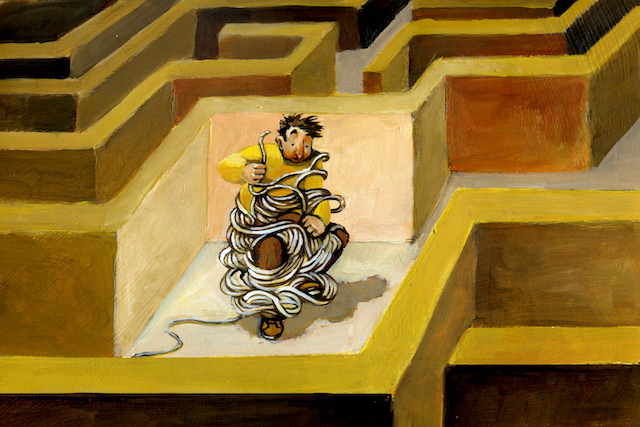
    “To stay with that shakiness—to stay with a broken heart, with a rumbling stomach, with the feeling of hopelessness—that is the path of true awakening. Sticking with that uncertainty, getting the knack of relaxing in the midst of chaos, learning not to panic—that is the spiritual path.” ~Pema Chödrön

    Sixteen years ago, when everything familiar fell away, I felt desperate for spiritual answers. I bartered with a woman who called herself a quantum healer. When I explained I didn’t have enough money to cover rent, bills, and food, she scoffed, “Well, you have to have money to be spiritual.”

    Say what, now?

    In our culture, this myth is pervasive, yet we only have to look at the life of the Buddha (or Jesus or Muhammad) to see that’s untrue. The Buddha left a life of wealth and privilege in order to awaken.

    What this woman probably meant was that people need money to attend retreats in exotic locales, or to purchase expensive courses on manifestation, or to hire coaches who promise them seven-figure incomes.

    To awaken to our true nature requires nothing. It doesn’t even require a teacher, because life is the teacher.

    For many of us, spiritual growth is propelled by a falling away of everything familiar, including income. Admittedly, it’s difficult to focus on spiritual growth when we’re hungry or facing other survival challenges. The paradox is that these can be a crash course in awakening if we allow them to be.

    In my experience, these challenges are designed to humble our egos and show us that all our doing and egoic effort aren’t going to work; only surrender can. Begging and taking a victim stance (historically, one of my areas of specialty) doesn’t work either.

    The Jedi trick is to find peace despite all this, to discover the freedom of emptiness, or, as it’s called in Christianity, “the peace that surpasses all understanding.”

    Prioritize Inner Peace

    “If you get the inside right, the outside will fall into place.” ~Eckhart Tolle

    One year, despite sending 200+ emails, I couldn’t find work. If I hadn’t felt so frustrated, the sheer volume would have made it comical.

    Then, after listening to many, many hours of Eckhart Tolle’s talks, I decided to stop trying so hard. I began practicing a fierce form of presence, staying only on the razor’s edge of this very moment, because to consider anything other than the present moment brought panic.

    I prayed and meditated near-constantly, which helped me become aware of even the smallest signs of grace: seeing the first cherry blossom on a tree, making eye contact with a starling, or receiving a free baguette from a local baker. Each of those moments—and thousands more—brought inexplicable joy.

    In those moments, I felt deeply connected to the network of life. I’d believed I needed a baseline of money to feel inner peace, yet without money, I’d found inner peace anyway.

    The moments that brought up immense fear in our relative world became expansive in the absolute. When I fully accepted and inhabited each moment, life showed me the next step. And the next.

    Life isn’t quid pro quo. Capitalism is. Whatever we put out always comes back, though not always in the same form.

    How to Find the Gold When Everything Falls Away

    Cultivate joy with a giving practice.

    In 2014, amidst a round of financial challenges, I heard about the 29-day Giving Challenge, based on Cami Walker’s book 29 Gifts: How a Month of Giving Can Change Your Life. The book is based on instructions she received from a medicine woman named Mbali Creazzo. The idea is to give something away freely every day for 29 days—and also to pay attention to what flows in.

    These gifts don’t have to be material, though it helps to give what you would like to receive. Because I was hungry and behind on rent and bills, for me, that was money.

    One day, I was able to purchase a $10 gift card for the local grocery store, and I gave it to a woman I saw frequently on the street. Other times, when I was down to less than $5, I left a dollar coin on a wall where children love to climb.

    Being broke had made me feel less than human. Recognizing that I could help someone feel seen and valued again, even briefly, was a revelation. Knowing that a child would find that dollar made me smile all day.

    Giving became, and remains, the most euphoric practice I’ve ever had. This isn’t virtue-signaling or bragging; it completely transformed my life, or rather, the way I experience life.

    We all need something, and we all have something others need. That’s the definition of interdependence.

    Many times, I gave patience, directions, or thanks. Other times, when I could afford it—and this is still one of my favorites—I would leave a chocolate bar on a public bench with a note that read, “Please accept this random act of chocolate.”

    Other times, I wrote notes on Post-its with words I needed to hear and placed them in public areas. Things like “You are loved” or “You make a difference in the world.” Writing each of these gave me a hit of dopamine and helped me feel more like a part of the world rather than forgotten.

    Try community giving.

    For several years, I bartered with an independent coffee shop to be able to eat one meal a day.

    Inspired by an Italian trend called caffé sospeso, we created a practice of “suspended coffee.” If a customer was financially able, they could pay ahead for someone else’s coffee. If someone wanted a coffee but couldn’t afford it, they could request a “suspended coffee.”

    Being able to co-create a giving practice that benefited everyone in the community made me giddy.

    At the same coffee shop, baked goods were typically thrown out after two days. I began taking bags of leftover muffins, scones, and banana bread to a local soup kitchen, where they were a treat for guests more often served soup and stale bread.

    On holiday weekends, instead of throwing out food, we gave whatever pre-made salads remained, as well as day-old baked goods, to people in transitional housing.

    I was flat broke and trying to pay off a five-figure debt, $10 at a time. These giving practices evoked such joy in me that my anxiety about money all but disappeared (okay, mostly). And when that happened, life stepped in to support me.

    Be open to receiving.

    What does it mean to be open to receiving? A complete lack of resistance to what is. Many people feel resistant to receiving financial help because there’s a myth in the dominant culture that accumulated wealth equals an individual’s value, and not having money makes someone ‘less than.’ Those are both false human constructs.

    It’s important not to give in order to receive, nor to give because you believe you have to. Those cancel out the energy of giving. If you can give freely, though, miracles unfold.

    For me, these ranged from a neighbor who spontaneously offered me money to cover rent to an acquaintance who gave me the cash back from her credit card so I could pay down more of the five-figure debt. I saw clearly that flow is always at work in the world. And I stopped feeling ashamed about receiving.

    Giving helps me see what I do have: people who care about me, a roof over my head, a meal that day. It gets me out of my head and my ‘poor me’ stories.

    To my delight, giving helped me rediscover the feeling of oneness, emptiness, or “the peace that passes all understanding.” Because I felt so peaceful, I felt less resistant to my own situation, and that allowed the situation to change.

    We think of items and money as “ours,” but really, we’re just stewards. Indigenous cultures have known for millennia what we settler-descendants need to learn: What we have is to be shared with others, not hoarded.

    Money Can Make Us Forget

    Once income began flowing in, I was mortified to discover how easily I slid back into wanting to keep what I had (after all, I rationalized, it wasn’t much). I began grasping again and believing in the collective delusion of stability. Awareness—access to the experience of emptiness, oneness, or the “kingdom of heaven”—shrank.

    My ego had been so thoroughly humbled, even fractured, during the broke times that it grasped at anything that could help it rebuild a sense of identity—which is antithetical to emptiness and peace.

    It’s not just me. Sociologist Paul Piff, Ph.D., of the University of California, Irvine, ran a game-based experiment in which he found that “rich” players hoarded their fake wealth far more than “poor” players, who tended to be more generous. This aligns with research that demonstrates that, on average, wealthier people donate less than their less-affluent counterparts.

    By maintaining a giving practice, I can reconnect with that expansive feeling of joy at being able to meet someone else’s need, whether that’s a friend, a stranger, or some random child walking along a wall who finds a dollar coin.

    It’s a Process and a Practice

    The gold in the title of this post refers to awareness. That is the experience that all spiritual teachings point toward (and which no words can capture).

    When things fall away, life is inviting us to awaken. As long as we resist what is, the doorway remains closed. When we prioritize inner peace and then generosity, miracles can happen.

    After nearly three years of bartering with the coffee shop, I was offered a contract—out of the blue—that helped me pay off the five-figure debt within six months. This was unusual, though not unheard of.

    More typically for me, and probably for many, when we give from what we have, smaller amounts begin to come in that enable small payments or a few days of groceries. It doesn’t always come back as money. Receiving food by bartering with the coffee shop was a complete gift to me. Be open to different ways of receiving.

    It’s not easy when things fall away, but it is an opening. If we can learn to prioritize inner peace, let go of our egos, and become part of the flow, we can find peace and even happiness greater than we ever imagined.

    If you’re hungry and broke, the apps Too Good to Go (US/Canada), FlashFood (US/Canada), and OLIO (global) may be able to help.
  • Why “Find Your Purpose” is Bad Advice and What to Do Instead

    Why “Find Your Purpose” is Bad Advice and What to Do Instead

    “The meaning of life is to find your gift. The purpose of life is to give it away.” ~Pablo Picasso

    I was fifty-two when I found my purpose. I wasn’t even looking. It literally just smacked me upside the head. That’s a funny thing about life. It throws things your way, and you either grab them and run with them or you turn a blind eye and walk on by.

    I used to turn a blind eye. I don’t anymore. These days I’m taking in all that life tosses my way. The good, the bad, and the ugly.

    How My Purpose Found Me

    I had just left an abusive relationship and declared bankruptcy. You could say my life was a complete mess. I had also just hit rock bottom and was starting the grueling climb out. It was frustrating and exhausting.

    During my healing and self-discovery journey I did something that changed the entire course of my life. I started volunteering at a homeless shelter.

    I’ll be honest with you, I did that for two reasons. One was selfish. The other, humanitarian (and sincere).

    I desperately needed to take my mind off all my problems, and I figured the only way to do that was to surround myself with people whose problems were way bigger than mine. And it worked. But something else happened.

    I fell in love with the homeless people I met and found a deep sense of purpose. Phew! I sure didn’t see that coming.

    I then made it my mission to do more of that. Help people, all people, even animals. I just wanted to help everyone and everything anyway I could, as often as I could.

    I had found my purpose, and that was to do my part to make the world a better place.

    I Never Understood the Meaning of “Find Your Purpose”

    I honestly thought that phrase was overrated and overused.

    It seems to suggest purpose is something outside ourselves that we miraculously stumble upon someday. “Oh, did you hear? Mary found her purpose today.”

    And it also creates a lot of stress and pressure to hurry up and figure it out. “I’m still looking for my purpose, and I’m frustrated that I’m having such a hard time with this.”

    I couldn’t understand why everyone was desperately seeking their purpose. I was just trying to navigate life the best way I knew how in order to have inner peace and be happy, while others were searching for this holy grail.

    I questioned myself. Should I be looking for this too? Do I need to find it before I die? Will my life be incomplete if I don’t? Will I die with regret then?

    I was confused. What’s the big deal about finding your purpose? It was starting to freak me out.

    My Aha Moment

    After my first night at the homeless shelter, I knew without a shadow of a doubt that I wanted to do that for the rest of my life. Just give and serve and make people happy. I wanted to turn frowns upside down and get hugs and make people’s lives better, any way I could.

    Did I finally discover my purpose without even realizing it? Was this what everyone was talking about?

    I assumed it was. I assumed that this was it! I’d found my purpose and now my life was complete. Or was it?

    I was puzzled by something.

    Isn’t This Everyone’s Purpose?

    I couldn’t understand why me serving homeless people and helping humans and critters in any way I could was some special purpose.

    Shouldn’t we all be doing that? As humans sharing the same planet in the galaxy, shouldn’t we all be doing our part to help other human beings (and critters)?

    It’s more than that, though. It’s so much bigger than that. It’s about finding joy and peace in knowing you did your part to make the world a better place.

    That’s what the definition of purpose should be.

    Stop Looking for Your Purpose

    Maybe we should just ditch the word purpose and replace it with something that doesn’t sound so foreboding. Maybe instead of saying, “I’m trying to find my purpose in life” we should try saying, “I’m doing my part to make the world a better place.”

    It just has a nicer ring to it.

    There’s so much anger, hurt, hatred, and frustration in the world today. The world needs more love. People need more love. When we see things and people through the eyes of love and compassion something magical happens.

    We understand, we don’t judge, we feel for each other, and it brings us all one step closer to having inner peace and joy.

    So how can you make the world a better place?

    What special gift, talent, or skill do you have that you can offer the world?

    It doesn’t have to be what you do for a living, though that’s clearly the ideal, since we spend so much time at our jobs. Maybe it starts as something you do on the side and grows over time. Or maybe it doesn’t, but maybe having something that fills you up will help make your 9-5 more tolerable.

    The important thing is that you find some way to help people that leverages your unique passions and interests. Then even if you don’t love your job, you’ll feel a sense of meaning, and you’ll feel good about yourself and the difference you’re making.

    Maybe you love animals and can volunteer at a shelter.

    Maybe you make people feel good about themselves by simply sharing kind words to strangers.

    Or maybe you’re passionate about  knitting or sewing or singing and you can find ways to use those talents to brighten other people’s lives. I mean, the possibilities are endless.

    We need to do more things that spread joy, hope, and love to the people around us, even if it’s something small. Sometimes it’s the smallest acts that have the biggest impact.

    If you’re stressing about the fact that you are getting older and haven’t found your purpose yet, stop. It’s overrated. Instead, find ways to serve and in turn, inspire others to serve.

    It’s not about finding your purpose. It’s about living your life to the fullest and knowing at the end of the day that you did your very best to make someone else’s day brighter and better. It’s about doing that every day until you die. That’s a life well-lived. And if you want to call that your purpose, so be it.

  • How I Found Healing and Happiness in a Developing Country

    How I Found Healing and Happiness in a Developing Country

    “Your life does not get better by chance, it gets better by change.” ~Jim Rohn

    For years I dreamed of leaving the winters of Northern Ontario, Canada and basking in the warm golden sun somewhere in Central America from October to May. I would joke with my co-workers every winter “This is my last winter here, I swear!”

    I did that for years until finally, one year, it was my last winter there. But it wasn’t because it was the most brutal winter we had experienced so far. Oh no. It was much more than that.

    Rewind Back to 2012

    I had just walked out of my eight-year abusive relationship. I was beaten down, ripped apart, and left as a shell of a woman. I had nothing to my name materialistically or emotionally. Very few belongings and no self-respect, self-worth, self-love, or self-confidence.

    I left empty and numb. But at that time, it didn’t matter to me what I had or didn’t have. All I knew was that in order to preserve what little sanity I had left, I had to leave.

    Rebuilding my life took a lot of time. I had just declared bankruptcy and didn’t have two cents to rub together. With the amazing help of family and friends, I was able to get a job, find an apartment, furnish it, albeit very simply, and start my life over again.

    I was fifty-one years old. And scared out of my tree. I have never lived alone, ever, and wasn’t sure I could support myself or how I was going to live.

    My Journey out of Despair

    After I left my relationship I delved into the world of personal development. I needed to get my hands on things that were going to help me improve my life. I read eBooks and self-help blogs and watched YouTube videos by some of the greatest people on earth (Les Brown, Tony Robbins, Lisa Nichols, etc.)

    I had hundreds of Post-it notes with motivational quotes and sayings taped all over my tiny apartment. I read them aloud every chance I could. I had a lot of healing to do and was willing to do whatever I had to do in order to heal.

    I was broken, empty, and numb and I knew I had a purpose here on earth—and it wasn’t to be miserable for the rest of my life. I was not interested in subscribing to that life anymore.

    And then something wonderful happened….

    I Found Home in a Homeless Shelter

    One day I was having a conversation with someone I had just met, and they told me they volunteered at the homeless shelter and how amazing it was.

    I was all ears then. I wanted to know who, what, where, when, and why. All of it.

    The next day I found myself there applying to become a volunteer. And suddenly I had something to look forward to that took me out of my misery, helped me to forget my troubles, and opened my eyes to a whole new world.

    The volunteering gig, I soon discovered, was a huge part of my healing journey. I had no idea how my whole world was about to change simply by feeding homeless people dinner twice a month.

    I fell in love with these people. Each and every one of these broken, lost souls filled my heart with immense joy. It was here that all my troubles disappeared and my heart opened up.

    The more I helped, the happier I became, and I suddenly realized what my purpose was in life. It was right here with the poor, the broken, the helpless, and the hungry.

    Fast Forward to 2014

    Every day I became stronger and happier. I started falling in love with Iva. I found a new Iva. One who had something to look forward to. A woman who, once broken and beaten, was coming alive and had a zest for life.

    One year after I started volunteering at the homeless shelter, I became team captain and was there almost daily.

    But part of me still wanted more. I wanted to help more on a personal level and somewhere poverty, homelessness, and malnutrition was prevalent. I drifted back to my dream of going to Central America and suddenly had a major a-ha moment.

    If I could just find a way to support myself down there, I could go. Once again, I delved into the personal development world but this time with a different goal in mind. I was going to learn how to become a freelance writer so I could make this dream possible.

    But it was two dreams now: escape Canadian winters and help the hungry.

    Suddenly the Dream Became a Reality

    After much research, and submitting numerous amounts of guest blogs for free, I finally found a job as a freelance writer. It took me eight months of cutting hair for nine hours a day and writing for free for three to four hours a day, but I finally did it.

    In July of 2015 I resigned from my hairstyling job and had become a full-time freelance writer. The next step was to downsize, find a country in Central America, and move.

    It was all happening so fast. It seemed like just yesterday I was leaving my abusive relationship, and here I was looking at third world countries to move to.

    I was scared, excited, terrified, and finally happy. I had a new lease on life, and this lease didn’t just include me anymore. It was bigger than that.

    But I Realized Something Very Big and Important

    In October of 2015 I landed in Guatemala with two suitcases on a one-way ticket. I was terrified but knew I had to be here.

    I found organizations that needed help and found families on my own that I helped independently. I helped people on the streets, bought lunch for the young shoeshine boys, and sent kids to school.

    I loved life in the third world. It was simple, people were beautiful, and I was finally happy and at peace with my past and the traumatic life I had lived.

    That’s when I realized one very important thing: When we help others, we help ourselves. Through helping others we create deep connections, which helps prevent depression; we find a renewed sense of purpose; and, research shows, we reduce our stress level and boost our happiness.

    I realized that volunteering was the best thing I could have ever done for myself during my healing journey.

    When we take ourselves out of our own heads and lives and put ourselves in a place that not only rocks our comfort zone but gives us a chance to serve others, that’s when true healing occurs.

    That doesn’t have to mean moving to a third-world country or making any major changes. It can be as simple as volunteering for an hour once a week, or even once a month—or even just helping friends and neighbors in need.

    We heal by helping others. By bringing joy to others. And by sharing our stories of change, courage, and bravery.

    It’s four years later and I’m still in Guatemala, still helping and still growing personally. I don’t think I could ever move back to Canada. Living here has brought ridiculous joy to my life and so much love to my heart.

    It’s changed me in ways I never dreamed possible. And I couldn’t be happier.

  • Why My Chronic Illness Can’t Stop Me from Making a Difference in the World

    Why My Chronic Illness Can’t Stop Me from Making a Difference in the World

    “We are each gifted in a unique and important way. It is our privilege and our adventure to discover our own special light.” ~Mary Dunbar

    What is one eye-opening experience should everyone have?

    I stumbled upon this question a few weeks ago and it got me into deep introspection.

    The first thing that came to my mind made me feel both happy and sad. The smile faded as soon as it crossed my face.

    Let me explain…

    My Eye-Opening Experience

    One eye-opening experience I had and believe everyone should have is spending time with poor kids.

    I love children.

    I’m one of those people who gets wowed when kids can count one to three or recite the alphabet by heart. I was a teacher, and the kids were my favorite students. I’ve met and played with a lot of kids, but my experience with poor kids was extra special.

    In 2012, my friend invited me to visit some kids in a community that I had never heard of. I wasn’t from an affluent family, but I had never seen real poverty up close.

    Tiny and crowded homes made with light materials, no electricity and/or running water for many families, and malnourished, sick, and dirty kids.

    We visited them at least once a week to teach family values, spirituality, and hygiene. We fed them, played with them, and most importantly, we loved them. These were fifty to a hundred kids ages two to sixteen.

    Our leader tasked me to interview ten kids in a span of ten months. The organization that sponsored our feeding program for two years required us to submit these reports monthly.

    I had the privilege to choose which kid to interview per month. I chose kids with different personalities. The shy ones. The playful ones. And the wallflowers.

    I will treasure those interviews forever. The one-on-one talks with these children were life-changing for me. They were the intimate encounters I looked forward to every month.

    I got the rare chance to know their stories in a deep way.

    It was heartbreaking to hear that some kids missed schools because they didn’t have food to eat. Some kids were made fun of because of how they looked. Others had to scavenge and collect recyclables in the streets to sell and help their families earn some money.

    Despite the cold meals and floors, lack of basic needs, and other daily struggles, they had a sparkle in their eyes and sweetness in their smiles. Their resilience was so unbelievable that I had no doubt that one day, they will change the world.

    Words are not enough to explain my thoughts and feelings through this experience. But this experience has given me a new set of lenses that allowed me to see the world in a different way.

    I learned to be more generous, self-giving, loving, and compassionate. The words “gratitude” and “appreciation” became deeper and more meaningful. I learned to view this life beyond me.

    This was my weekly routine for three years until…

    I Had A Relapse

    I stopped going and seeing these kids. Now, this is why the thought of this eye-opening experience gave me mixed emotions. You see, I’ve been fighting chronic illnesses for about ten years, but in 2016, my health took its turn for the worse.

    My dizzy spells became more intense and frequent. I couldn’t stand the outdoors because it was either too hot or too cold for me. I was like a battery that wouldn’t charge up.

    I’ve accepted that my doctors couldn’t give me straight answers (yet) on what has been going on with me. But it was frustrating when my world came to a halt. Again.

    While my recovery has been consistent (slow and steady), I still don’t know if I can go back and serve these kids again. I don’t know if my body could still handle it.

    In a way, I felt my chronic illness robbed my purpose and self-worth once again. I just wanted to serve. What’s wrong with that?

    But one day, I thought that service to humanity takes different forms, shapes, and sizes. Nothing is too big or too small. As long as you give with all your heart.

    I realized I could get around my chronic illness and still help make a difference one life at a time.

    Nothing fancy. Nothing grand. Just me and my warm and sometimes wimpy heart.

    Modern Calligraphy

    Initially, I did this for myself. It was out of boredom, stress, and frustration.

    When I was mostly homebound, I looked for a new hobby that would help me get out of my head and feel the excitement of trying something new again.

    Affirmations, verses, quotes, and words of encouragement that spoke to me took me on a whole new level when I see them beautifully written in bouncy and flowy letters. Every stroke helped me focus, meditate, and relax. Even when the strokes were shaky, I was amused by the work of my hands.

    When I became a little more confident, I decided to share my creations with the world. I set up a public IG account with the goal to edify women with chronic illness through modern calligraphy.

    I also make notes for family and friends extra special with the beautiful and free strokes of modern calligraphy.

    World Vision

    I may not be able to serve and spend time with dozens of kids all at the same time, and that’s okay. Changing one kid’s life would be more than enough.

    Last year, I decided to sponsor one child through World Vision. It was another opportunity for me to have a personal connection with a child from a poor community.

    It’s a humbling experience to help the child to pay for school supplies, uniform, and other expenses. Through this program, her community benefits, too.

    My eyes and heart well up when I get their regular updates with photos, community reports, child’s progress, and more.

    Writing

    I’m introverted. I’ve kept a lot of my deepest thoughts to myself. Last year, I decided to be a little bolder and vulnerable by sharing my journey through writing.

    I’ve realized that every story matters. Every story is special. Every story heals.

    Most importantly, we can learn from each other.

    What’s Next

    You don’t need to do something huge to make a positive difference in the world. Regardless of your time, resources, and individual limitations, you can make an impact.

    I encourage you to create a small service project before the year ends. Before that voice of doubt whispers that it’s impossible or it won’t make a dent in the world, let’s sit down and plan for this project.

    Below, you will see a list of questions that serve as your starting point.

    Skills/Talents/Passion: What can I offer?

    1. What did I love to do as a child?
    2. What types of things do family or friends usually seek my help for?
    3. What are my interests?
    4. When do I feel most joyful?
    5. What do I do most naturally?
    6. What is the idea or vision that keeps me up at night?
    7. What am I doing when I feel the most authentic?

    Time: When will I do it?

    1. How much time can I set aside for this project?
    2. How often do I want to do this?
    3. How long can I do it?
    4. When can I start?

    Recipient: Who will I serve?

    1. Where do I feel the happiest?
    2. Who do I care about?
    3. Who are the people going through what I’ve been through? Or going through similar challenges?
    4. Who needs my skills and talents?

    You may not know the answers to all of these questions right now, and that’s okay. Take all the time you need and go through them again whenever you can.

    And remember…

    Small things add up. Small things make bigger things. Small things create ripples.

    Start where you are with what you have.

  • What I’ve Learned About Life While Volunteering in a Rwandan Youth Village

    What I’ve Learned About Life While Volunteering in a Rwandan Youth Village

    “Perhaps travel cannot prevent bigotry, but by demonstrating that all peoples cry, laugh, eat, worry and die, it can introduce the idea that if we try and understand each other, we may even become friends.” ~Maya Angelou

    Have you ever been in a situation where your thoughts and beliefs are put to test and you have to reconsider who you are? Do you adapt to a new environment or hold on to the values and cultural norms of your past?

    I’m living in Rwanda for the next year, volunteering at a youth village that also serves as a boarding school for over 500 vulnerable youths.

    All our students are orphans and they are some of the most vulnerable youth in Rwanda. I chose to volunteer at the village because I wanted to better understand how I could make a sustainable difference for those I saw as less fortunate than myself.

    On many levels I went into this year with a somewhat warped aim of what I could accomplish. To start, the idea of “having an impact” can be seen as a very ego-driven perspective. I think the real impact has been on me. Every minute of every day—both the good and bad—plays a role in how I perceive the world and how I behave.

    For a fast-paced American, it’s easy to get frustrated in Rwanda. “Africa Time,” the slow-paced lifestyle that many attribute to cultures throughout Africa, is very real, and Rwanda is no exception. Tasks take long, people are less straightforward, and you say “hello”’ to every person you pass on the street. Do you know how many “hellos” that is in a village of 650 people?

    People who know me, know I embody a lot of the qualities we associate with a typical American. I speak my mind, I’m hyper-productive, and I prefer to skip the niceties and jump straight into a meeting. Clearly this cultural clash would create a struggle.

    Not only that, but life in Rwanda is difficult. I see things and feel things I never have before. As someone who does not like to feel emotions too deeply, this has proved challenging.

    My life here is different than what I am used to, and it requires great patience, questioning, and self-awareness. But I have begun to ask myself the question: “Does that make it a bad thing?”

    Lately I have been contemplating if my American capitalistic mindset of “go, go, go” and “get, get, get” is actually the best one to have.

    While I do not expect any insights I mention here to be unheard of, I do think they are unique when you consider them through the context of the vulnerable Rwandan youth at the village where I work.

    Slow down.

    The slower pace of life in Rwanda is a gift. It allows me time to be present and concentrate on living in the moment. Every moment I am reminded that life is a gift that I shouldn’t take for granted. If we rush through our day, we miss the chance of really enjoying it. Why do I need to walk at record speed to the dining hall? Why pass someone on the street and decide not to say hello? I have no idea.

    Body perception is just that—perception.

    The other day a few girls in my Rwandan family told me I have big legs. While this is not revolutionary to me, it still stung a bit.

    I told the girls that it’s mean to say that and they replied, “Are you kidding? I want your legs.” Cultural differences anyone? Accepting your body isn’t the lesson here. The lesson, to me, is understanding that the way we think about ourselves is totally dictated by societal norms. And, when you step into a different culture, that norm changes.

    While I am still conscientious of being seen as fat, I now give myself a break and embrace that one culture’s obsession with being stick thin is another culture’s version of extreme poverty.

    Human touch is a gift.

    Typically Americans embrace upon introduction in a formal handshake. Rwandans first greet each other with a warm two-armed hug lasting a good five seconds, followed by a handshake. Then they’ll hold your hand (men and women), sit on your lap, rub your back, etc. And, the benefits of all this touching are real.

    I didn’t want to believe it because I am a self-proclaimed “anti-hugger,” but I couldn’t be more wrong on this one. Human contact makes you happier, improves how you feel, changes how you behave toward others, and allows you to express yourself in new ways. I’m an addict now. (Watch out!)

    Sharing feels good.

    I’m still experimenting with this one. In a communal society (especially within our village), sharing is the go-to way to do pretty much anything.

    The other day I had a little donut left. I gave it to one girl in my family and she split it up into six pieces! Every girl got a little tiny piece of this donut instead of the girl just finishing the bite herself. How awesome is that!

    I struggle with this one because I do have the scarcity mentality that can exist in Western culture. But, I strive to make small improvements. Yesterday I brought my hot sauce to share at lunch. Seeing the kids get excited when I pulled out the little bottle was pretty great. I guess it’s a muscle I will just need to stretch.

    Death—it’s just part of the life cycle.

    This insight has been one of the more shocking and harder for me to grasp. Last week I saw a dead body. This week I saw a girl get hit by a car and break both legs. (I pray she is not paralyzed.)

    I’ve seen more car accidents in the last four months than in my whole life thus far. Understanding death from the Rwandan culture, where death rates are higher and life risks are so much greater, gives me strength in my ability to just live and not let my fears shatter everything that I can achieve within my life.

    And, while these events were deeply upsetting for me, more than anything they have made me realize how truly grateful I should be for the life I have been given, and they’ve reminded me to live life to the fullest. In addition, these experiences have taught me how much I can give to those around me in helping them bring more meaning and happiness into their own lives.

    Don’t get me wrong; I still very much believe that some of my best qualities are those I have gained from my American upbringing. But it is so refreshing to stop fighting against those behaviors that separate the Westerners here from Rwandans, and instead embrace them.

    Not only does it make it easier to do my job and live here, but just maybe, there will be some long-lasting effects which will improve the quality of life way beyond my experience in Rwanda.

  • Healing Through Service: 20 Ways to Help Others (and Yourself)

    Healing Through Service: 20 Ways to Help Others (and Yourself)

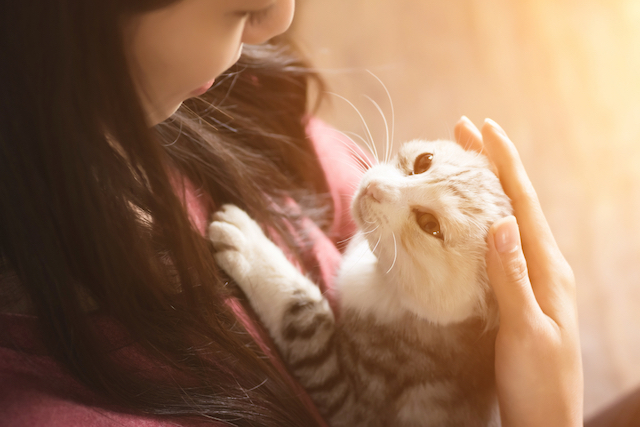
    Woman and a Kitten

    “To ease another’s heartache is to forget one’s own.” ~Abraham Lincoln

    A feral cat tempered my most recent bout with depression. I wasn’t seriously depressed, nothing like the debilitating times in my past, but I had a fairly strong case of the blues.

    It was just before Thanksgiving, that time of year when people across America break bread with family and friends, and I was feeling sorry for myself.

    I missed the gatherings we used to have when I was married. My ex-husband and I both loved to cook and every year we put together a gourmet feast for a group of family and friends.

    This year I would be alone.

    I live on the high desert and winters are harsh. Outside a sixty mile an hour wind was howling and a blanket of snow covered the ground. It didn’t help my mood.

    When I opened the door to let my dog out to pee, I heard a high-pitched mewling. From the frozen hillside a scrawny white and black cat came crawling out of the sage. Its fur was matted and its ribs showed.

    When I moved toward it, it retreated with a hiss. My own calico eats well, so I borrowed some of her Fancy Feast, a cup of dry food, and a bowl of water and set it outside.

    Before long the cat was a regular visitor, but what was more gratifying is within a week it had filled out, and while its tail was still matted, its fur began to look glossier.

    The cat, however, showed no appreciation. It continued to spit and growl when I brought its food out, and I have no doubt it would have taken off a finger if it could.

    As the days went by I found myself looking out the window for the cat. I stuffed some blankets under the shed, although it rarely slept there. Once it ate, it moved back out into the desert.

    I also found my depression lifting. I shared Thanksgiving dinner with a small group of new friends and when I returned home, the cat, with its usual ill-tempered snarl, was under the shed.

    I brought out its food and told it, “You could come inside if you’d just chill out.” It pulled its ears back and hissed.

    Small things can change our mood and they often have one thing in common—helping someone or something else. As soon as we step outside our own problems and feel compassion for someone who has it worse than we do, we begin to appreciate the life that’s in front of us.

    It was impossible to not feel moved for this tiny creature that had survived in such a harsh environment. At night it seemed coyotes crawled out from every bush and burrow, yet it eluded them.

    When it snowed I worried about it, but the following day its tracks would be in the snow and I’d find it hiding under the shed.

    There are many ways we can be of service in the world. Even small acts of compassion can go a long ways. I think it’s more effective than donating money.

    Of course, everyone needs money and it’s great to contribute to something we believe in, but money is service at a distance. It doesn’t alleviate the heart the way genuine human kindness does.

    When we hand over a plate of hot food at a soup kitchen or save an abused animal, we’re connecting with another living being. We’re touching hands or fur, sharing a smile or a word.

    Even if you’re shy and don’t like to be in groups there are many low-key, private ways to help lift someone’s spirit or ease an animal’s suffering:

    1. Do you like to cook? Bake some extra pies and donate them to a homeless shelter.

    2. Become a virtual mentor for a teen through a site like icouldbe.org.

    3. Volunteer at a local school. Many schools are short staffed and welcome community involvement.

    4. Knit or crochet afghans or scarves and take them to your local senior center.

    5. Offer to babysit for a friend. You serve the adult, who could use a night out, and being around kids is often uplifting.

    6. Volunteer to shop for a sick neighbor.

    7. Volunteer for a crisis hotline.

    8. Offer to take an elderly person shopping, to the movies or just for a drive.

    9. Volunteer to read to children at your library’s story hour.

    10. Put together a hygiene kit for a homeless person that includes toothbrush, toothpaste, deodorant, soap, etc.

    11. If you pass a panhandler, take them out for a hot meal. Listen to their story.

    12. Volunteer at your local animal shelter. If you’re able, adopt a shelter dog or cat. If you can’t make a long-term commitment, you might consider becoming a temporary foster parent for a shelter animal until they find a permanent home.

    13. Send a card to a hospitalized kid through a site like cardsforhospitalizedkids.com or to someone in the military through a site like amillionthanks.org.

    14. Rake, shovel or clean for an elderly neighbor.

    15. Donate blood. You never know when your blood will save someone’s life.

    16. Color (alone or with your child) and donate the picture to Color A Smile.

    17. Do you have a special talent? Offer to do a free one-day workshop at a low-income community center or battered women’s shelter.

    18. Offer to teach someone to read.

    19. Donate your used books or clothing to a shelter.

    20. Do small acts of service throughout the day—hold the door for people, let someone go in front of you at the grocery store if they have fewer items. Smile.

    Once you begin to think of ways to help, the possibilities are endless. You are giving to the world, and as a result you’ll find yourself thinking less of your own problems and your heart softening.

    When we approach life with an attitude of service we develop empathy. It’s no longer about us, but about what someone else needs.

    As for the cat, when you feed something, a responsibility goes with it. For the past several weeks I’ve tried to trap it to take into our local feral cat clinic where they will spay or neuter and vaccinate it. So far it’s eluded me, even managing to twice steal the food without setting the trap.

    There’s a lesson in this as well. Service is not the same as saving.

    We can help ease another’s suffering, but we’re not responsible for saving them. We need to accept that sometimes our service isn’t wanted or appreciated and if necessary, we need to step back and let them go.

    Some people don’t want to be saved. Some cats don’t want to be caught.

    It doesn’t matter. Being of service isn’t about accolades or praise. It’s about healing the world and us by taking tiny steps to make the planet a better, more compassionate place for all the creatures that share it.

    Woman and kitten image via Shutterstock

  • The Simple, Free, and Foolproof Way to Become a Happier Person

    The Simple, Free, and Foolproof Way to Become a Happier Person

    Happy Hands

    “For it is in giving that we receive.” ~St. Francis of Assisi

    If there were a magic pill that led to a 22% lower mortality rate and higher levels of self-esteem and happiness, would you try it?

    I’m betting you would.

    Well I’m here to share some good news: there’s no need for pills or money or magic. In fact, the solution is both free and easy. It’s called volunteering, and it’s proven to make you happier and healthier. All it requires is an open mind, full heart, and a few hours of your time.

    Wondering why giving back affects your outlook so dramatically? Here are four reasons:

    Why Volunteering Makes You Happier

     1. You boost your self-esteem.

    Loving yourself is one of the keys to happiness. You may be thinking, I don’t know anything or I don’t have anything to offer the world but you’re wrong.

    I don’t have a lot of practical skills: I can’t fix a car, teach art, or bake an award-winning pie—and don’t even get me started on long division. So I used to think there weren’t volunteer opportunities for me. That is, until I got involved as a mentor to at-risk youth.

    Who knew I could help kids just by hanging out with them? It was an incredible experience, and it showed me that everybody has skills to share.

    Whatever you’re good at, and passionate about, there are causes that need your light and love. You could walk dogs at the animal shelter or deliver meals to the elderly; even if you’re homebound, there are remote volunteering opportunities you can do from behind your computer.

    Seeing how you—yes, you!—can help make the world a better place is one of the greatest self-esteem boosters you’ll ever experience.

    2. You make new friends.

    As an adult, meeting new people is tough. But it’s proven that people with an extensive social network are happier. What’s a good way to create that group of friends? Volunteering.

    While volunteering both in the States and abroad, I’ve met lots of wonderful people. People who I admire and respect; people who have stayed in my life for many years. It was easy to find common ground while volunteering together, and it was easy to stay friends because of our similar worldviews.

    Just last month, I traveled with friends in New Zealand whom I met two years ago while volunteering in Nicaragua; a few weeks later, I ate breakfast with a friend in Singapore whom I met nine years ago while volunteering in East Africa.

    It was so good to see them all again—and because of our shared experiences and perspectives, we never ran out of things to talk about (and likely never will).

    Volunteering = friends. Friends = happiness. It’s a pretty simple equation, if you ask me!

    3. You learn new skills.

    Learning is one of the best ways to engage your mind, and in turn, make you more satisfied with your life. When you think of learning, you may picture a classroom and textbooks, but I believe real life experience is a much better teacher. And one of my favorite ways to learn new skills is through volunteering.

    When I was seventeen years old, I didn’t know a hammer from a screwdriver. But then I co-led an alternative spring break trip during my senior year in high school; we helped to build houses with Habitat for Humanity.

    Though our volunteer vacation was only a week long, I learned more in that week than I probably did my whole senior year.

    Is there a skill you want to learn? Or a foreign country you’d like to discover? How about a language? (I learned Spanish while volunteering abroad in Nicaragua.) Or perhaps, you just want to learn more about yourself.

    Whatever it is, there’s a volunteering opportunity that will help you achieve your goals and bring positive change to your life

    4. You feel fulfilled.

    What’s even more important than happiness? Fulfillment: the feeling that you are contributing to something bigger than yourself. Some people find it through their careers, some through their family, and some through their art. Me? I’ve found it through volunteering.

    Whether you call it the “warm and fuzzies,” or simply just “feeling good,” giving back to others will bring you happiness—as well as its more elusive cousin, fulfillment.

    I volunteer because I feel like something’s missing in my life if I don’t. I currently give my time to a garden and learning center where we teach young kids about the power of healthy eating. Seeing their faces light up when they learn they actually like broccoli is something I wouldn’t give up for the world.

    If you’d like to bring some sunshine into your life, try bringing it into someone else’s first. Whether you serve food at a soup kitchen once a month or go on a volunteer vacation in Tanzania, stop making excuses and just go for it. Your world—and your soul—will thank you.

    Do you volunteer? Does it make you happier?

    Happy hands image via Shutterstock

  • How to Find Your Purpose When Your Life Is a Mess

    How to Find Your Purpose When Your Life Is a Mess

    “What is my purpose here and how may I serve…in the midst of all this confusion?” ~Wayne Dyer

    Your life is a mess and you can’t do anything about it, right?

    Wrong.

    You may be closer to the answers than you think, even while right in the middle of the chaos that showed up.

    You ask yourself, “What happened to the life I had where I knew my purpose?”

    All you know is that a rug you didn’t know you were standing on was pulled out from underneath you, leaving you in a heap. You want a magic carpet to take you out of this craziness so you can find yourself a new world that’s nicer to you.

    Not long ago, that’s what I wanted too.

    One day I was minding my own business, feeling on purpose, and the next…

    California called my name and I listened. I felt all smug and purposeful in the sand and sun of Los Angeles as a stay-at-home mom. I knew my purpose as a mother after spending years in a corporate financial cubicle in New York, and I loved it.

    Along came the cyclone of lost spousal income and a dry job market. The dark winds of change (and a landlord that wanted his rent) moved us over to the shores of New Jersey. A better job was waiting.

    But the jobs didn’t work out, and the mailbox filled with eviction letters and power shut off notices. The nights got cold, and as I lay bundled near my children, I knew something had to change fast. Only I didn’t know what to do first.

    I just wanted the confusion and chaos to end so I could figure out what my purpose in all this was.

    Does this sound familiar? Do you believe you can find your purpose while in chaos?

    The following three steps will help you stop focusing on your problems and make room in your life for your purpose to reveal itself.

    1. Give away your time for free.

    Clear your mind of your problems for a moment by finding someone or some organization that needs a skill you have, and offer it for free, even if just for an hour.

    This may sound like you are being irresponsible; shouldn’t you be spending all your time finding a solution to your life—a job, or a loan perhaps? No. Take a break and step away from the spinning mind; it will be there when you get back.

    The Result: Volunteering makes you feel purposeful and grateful for what you do have, what you can offer. Service and gratitude are a magical combination that comes back to help you tenfold.

    You may even gain some new perspective about your life and purpose. Perhaps you will network, or be inspired to apply for a job you have not thought about before.

    2. Get moving.

    You can easily feel immobile when going through a crisis. Close your eyes and imagine a white light coursing through your blood to every part of your body, energizing it.

    If you can, get down on the ground and do a few pushups, or do some jumping jacks. Head out the door and walk until your feet hurt, or turn some music on and move, no excuses and no equipment needed.

    Choose an easy workout ritual to follow daily.

    The Result: The energy in your body gets shaken and shifted, and endorphins start to flow. You then crave healthy food, leading to a clear mind.

    The depressing thoughts disappear when you work out, and in this moment of clarity you can plan your next step. Perhaps you’ll think of someone that can help to call, or you’ll begin getting ideas about what your purpose is and how to go about living it.

    3. Stop and listen.

    Go to a place where you can sit in solitude and connect with your soul. Your soul is your partner forever and it needs attention; it will give you back as much as you give it.

    Sit under a tree, or on a bench in a busy city, or simply at a window, and breathe. Deeply.

    The Result: You are allowing your soul to guide you to the answers that your mind cannot seem to find about where this chaos is leading you.

    Deep in your soul is a knowing of what your purpose may be. Stop and listen to it. 

    These are the steps I took. I realized that I needed to get out of my mind and connect with my body and soul.

    • I started a four-minute workout every morning called The Peaceful Warrior Workout by Dan Millman. It’s awesome. Best part: it’s only four minutes. Every morning after doing this workout I felt better, good enough to reach out to anyone I thought could help me.
    • I spent time sitting alone on my steps at night, looking up at the stars, to consciously make soul contact. I felt peaceful, and I usually came inside with ideas that I could follow up on the next day.
    • I emailed twenty local recovery centers in my area and offered to do anything they needed for one hour a week. For free. (I am trained as a Holistic Addiction and Recovery Coach.)

    I got one response and started leading a weekly half-hour recovery meeting. The men and women in the meetings inspired me with their hope, strength, and courage exactly when I needed it. They saved me as much as I saved them.

    Their courage led me to write about it, and the essay ended up being published on the website for a magazine I dreamed of writing for all my life. I found my purpose as a writer once again, and the hopeless feelings disappeared.

    Life did not magically change, but when you know you are not staring down a scary path from a distance but are walking on the path, you access ideas and courage you did not have before. You feel deep down that you are living on purpose again.

    Your Path to Purpose

    Choose an area where you think you may want to serve and send out emails or make phone call offers. There are nursing homes full of people needing visitors, children in need of tutoring, and social service agencies available to guide you. Community gardens need gardening helpers and small businesses need an extra hand.

    Add a little workout ritual, maybe visualizing energy coursing through your blood while doing a few yoga poses or jogging outside. Or put music on at home and move around until you break a sweat.

    Find peace looking up at the sky, or out at passersby, or sitting in a park.

    You will realize that it’s a relief to take a break from thinking about your chaotic situation—and it’s productive. Stopping to calm your mind and connect with your body and soul is actually doing something!

    So go ahead and take a leap of faith. Have faith that you can find your purpose in the midst of confusion and chaos.

    And if you don’t have faith, pretend you do. Even a drop will do.

    When taking a step outside of your mind and connecting with your body and soul, your purpose may sneak up on you. So let it.

  • 10 Simple Ways to Make the World a Better Place

    10 Simple Ways to Make the World a Better Place

    young volunteer woman caring for elderly woman

    “As one person I cannot change the world, but I can change the world of one person.” ~Paul Shane Spear

    I have always wanted to change the world.

    I remember being four years old, sitting glued to the television on Sunday mornings, not watching cartoons, but utterly captivated by World Vision. I cried about the injustices in the world, and begged my mother to let me sponsor Maria, the girl with the large, sad eyes who was around my age.

    My mom patiently tried to explain to me that we couldn’t afford to send her money. I couldn’t understand, since we seemed to live in luxury compared to Maria.

    Having been raised in a middle-class community of about 800 people in rural Newfoundland, I had never seen a stark divide between the rich and the poor. We all seemed to be the same to my four-year-old eyes.

    My heart broke for Maria, and all of the other children on the show. I vowed to myself that someday, I was going to help people like her.

    Throughout my childhood, I told everyone that I wanted to change the world. Many didn’t take me seriously. They’d say, “One person can’t change anything.”

    Still, I knew I wanted to make a positive difference by helping people, animals, and the environment.

    I started volunteering in elementary school, and became a vegetarian at the age of 13.

    People asked, “Why bother? You know, that cow isn’t going to come back to life because you aren’t going to eat it.” And they very often said, “It won’t make a difference.”

    I tried to explain that every action counted, and that we all had to make small efforts or nothing would ever change.

    As time went on, people around me began to criticize less, and many friends and family members decided to try some of the things I was advocating.

    Each time I did something to make a positive impact, it left me wanting to do more.

    You may think that you need to be a world leader or a billionaire in order to make a difference.

    I always believed that being a good person is about the small things. It’s about how you treat other people, not how many people you have power over.

    If you’d like to make the world a better place, but aren’t sure how to fit it into your busy life, these ideas may help:

    1. Volunteer.

    Volunteering doesn’t have to consume all of your free time. You can volunteer as few hours as you would like! You can find an organization within your community, or you can even volunteer online, through websites that will allow you to help for even a few minutes at a time.

    2. Donate blood.

    This can be one of the most satisfying ways to make a difference. You can literally save a life with just an hour of your time.

    3. Donate used clothing.

    There are so many places and ways you can donate your used clothing. Some organizations even offer pick up services, Donate them to a homeless shelter, or an organization that sells them to raise funds.

    4. Foster an animal.

    This can be such a rewarding experience. If you’re able to part with the foster animals, they leave a hole in your heart, but fostering your next pet helps fill it, and you will be making a difference in the lives of so many animals in need.

    5. Spread the word about various causes in your community.

    See an interesting fundraiser that an organization is hosting? Share it on Facebook! See an animal that’s up for adoption? Share it. There are so many ways you can help an organization with just the click of a mouse.

    6. Donate something you made to an organization that can use it.

    I make jewelry, hats, scarves, and other crafty things in my free time. I’ve donated many hats and scarves to homeless shelters, and donate jewelry to a cat rescue organization for them to sell or auction to raise funds. You have talents—use them!

    7. Join a bone marrow registry.

    It’s incredibly easy to sign up to donate bone marrow, and you never know when you could save a life.

    8. Spread some kindness.

    Small acts of kindness can go a long way in making the world a better place. Think about a time when someone did something unexpected for you that brightened your day. Weren’t you a nicer person for the rest of the day because of that?

    I’m willing to bet that anyone who receives an act of kindness passes it on in some way, even if it’s just by being in a better mood, and therefore treating the people around them with more kindness than usual.

    Send someone a kind message. Give a small gift. Make something for someone. Tell someone how much they mean to you. There are so many ways to brighten someone’s day.

    9. Change your diet.

    Many people will argue with the validity of this strategy to improve the world; however, what you buy reflects what you value.

    If you don’t want to become a vegetarian, try having one meat-free day per week. If you don’t want to reduce your meat consumption, how about buying some free range meat or eggs? Or, buy organic food products. There are many ways you can change your diet to reflect your values.

    10. Make your purchases support your values.

    Every purchase you make supports something. You can either support a large business that exploits people, animals, and the environment, or you can buy items that are local, organic, or fair-trade. It’s hard to change this all at once, especially if you’re used to shopping for bargains, but try changing just a few of your purchases to make them better reflect the things you value.

    These are just a handful of the thousands of ways you can make the world a better place! Just remember that every single thing you do makes a difference. Don’t ever let anyone—yourself included—discourage you from trying to be a better person and help others.

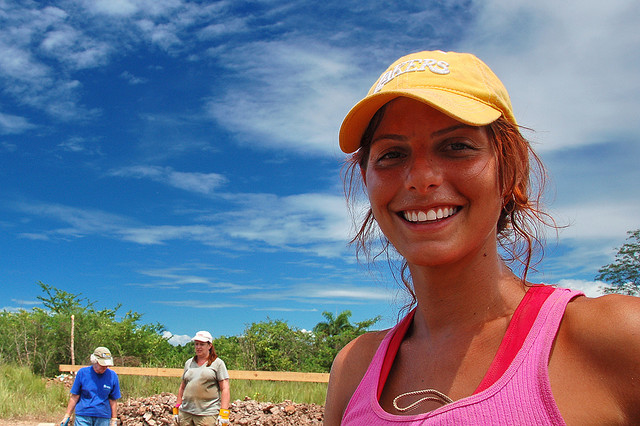
    Photo by Dave Bezaire & Susi Havens-Bezaire

  • Simple Ways to Give Back and Help Others Starting Today

    Simple Ways to Give Back and Help Others Starting Today

    Volunteering

    “We make a living by what we get, but we make a life by what we give.” ~Winston Churchill

    Thirty-plus years ago, when I was applying to college, one of my friends used to say regularly, “We’ve gotta get involved with more extra-currics.”

    He was talking about extracurricular activities. His (and our) interest was to build our “resumes” to enhance our attractiveness to college admissions officers.

    Today, kids are building their resumes at younger and younger ages, and that’s a good thing. Even if their parents have an eye on enhanced college applications, there is a huge benefit to involving young people in community service. For those kids, adult involvement in community service will come naturally.

    For me, community service came later in life.

    When I was starting my career, I remember hoping to one day be wealthy so that I could donate huge amounts to charitable organizations. Fortunately, rather than waiting for “someday” to come, I learned how much of a difference I could make by donating time and energy to good causes and people in need.

    I’ve gotten involved in many activities in my community, and it has been an extremely enjoyable and fulfilling experience.

    There are many benefits that come from giving of yourself.

    One of my daughters, just before she graduated from high school, was asked to answer an essay question: “What advice you give to an incoming high school freshman?”

    Among other things, she suggested that they get involved in clubs, teams, and community service activities, and among the benefits she listed was the opportunity to meet and interact with people who you would otherwise not get to know.

    The same thing applies to volunteering. You can also use volunteering time to spend more time with your family and friends if you arrange to volunteer together. (more…)

  • 15 Ways to Change the World

    15 Ways to Change the World

    Heal the World

    “When I do good, I feel good; when I do bad, I feel bad and that is my religion.” ~Abraham Lincoln

    It’s no secret that we live in a world that’s obsessed with wealth, fame, and celebrities. Some call it the “age of narcissism.” I’m not sure I want to label or judge our current circumstances. Instead, like Gandhi suggests, I’ll put my focus on being the change I wish to see in the world.

    I’m planning to mix things up a bit for 2010, and I invite you to do the same. Instead of creating New Year’s Resolutions that are all about me, I’m going to make mine all about others. Instead of trying to increase my own success, I’m going to set others up to succeed.

    My personal idea was inspired by CNN’s “Hero of the Year 2009” given to one ordinary person making an extraordinary difference. CNN’s panel chose Efren Penaflorida as the winner for 2009. He received $100,000 for his organization. You can read about all 10 nominees here.

    Being an everyday hero does far more for you than you may imagine. Some benefits of volunteering include: (more…)