Tag: visualization

  • A Little-Known Truth About People-Pleasing and How to Stop (for Good)

    A Little-Known Truth About People-Pleasing and How to Stop (for Good)

    “Being a people-pleaser may be more than a personality trait; it could be a response to serious trauma.” ~Alex Bachert

    Growing up in a home, school, and church that placed a lot of value on good behavior, self-discipline, and corporal punishment, I was a model child. There could have been an American Girl doll designed after me—the well-mannered church girl with a nineties hairbow edition.

    I was quiet and pleasant and never got sent to the principal’s office. Complaining and “ugly” emotions were simply not allowed. Though I was very rambunctious and “rebellious” as a toddler, all of that was cleansed from my personality by the time I was school-aged.

    I had no other choice. I felt unsafe in my body at the slightest hint that someone was upset with me. It was enough to tame my inner rebel, at least for many years.

    I carried this pattern into adulthood. I found myself in jobs with supervisors who would fly off the handle at every opportunity. I worked extra hard, more than anyone else, to avoid getting in trouble. When my colleagues got yelled at over their mistakes, they laughed with amusement under their breath—but when the anger was directed at me, I was ridden with anxiety.

    How could my coworkers brush off our manager’s anger, but I felt triggered for hours afterward?

    It took me many years to learn the answer—that some of us are conditioned from a young age to develop a deep-seated fear of losing our sense of belonging and safety in our relationships. To cope with this fear, we develop strategies to safeguard ourselves, which for some, turns into a habit of people-pleasing.

    There’s one clear common denominator for people-pleasers—feeling beholden to others. You put your needs last and feel obligated to manage everyone else’s happiness. You’re hypersensitive to being judged, shamed, and rejected. You worry about what other people think about you. You overextend yourself to be helpful. When you dare to stand up for yourself, you suffer from anxiety and guilt.

    When you don’t address and change these patterns, you may eventually feel resentful, frustrated, and angry. It compromises your emotional and physical well-being and contributes to an overwhelming sense of powerlessness.

    And it lights a blazing fire under your ass.

    Because we aren’t responsible for juggling other people’s emotions.

    We don’t owe anyone comfort.

    We’re not a charity receptacle for others’ emotional venting, unhealed trauma, or misdirected anger.

    Our time, energy, and well-being are not up for negotiation.

    And we don’t deserve the guilt-tripping manipulation.

    Truthfully, we cannot control how other people show up in our relationships, but we can change our patterns of powerlessness and take back our lives, and it doesn’t have to compromise our genuine desire to care for others.

    Brain Ruts

    It’s not a mystery what you should be doing in lieu of carrying the burden of responsibility that comes with people-pleasing.

    You need to set boundaries, speak your truth, be more confrontational, use your voice to advocate for yourself, separate your feelings from others, and put your needs first.

    Which begs the question—what’s getting in the way of you taking these steps?

    Though you may feel the need to change your patterns through sheer willpower or more self-discipline, that isn’t the answer.

    You don’t need to read useless books about how to “grab life by the horns” or “grow some balls” (ew, gross!).

    You don’t need to muscle through debilitating anxiety or guilt.

    You don’t need to give-up your generosity or empathy to take back your power in one-sided relationships.

    You don’t need to be “thicker skinned” or less “sensitive.” (Your sensitivity is a gift.)

    Here’s the little-known truth about people-pleasing—it’s a learned pattern that gets “turned on” in your unconscious mind over and over again.

    Whether it’s avoiding conflict, freezing up when you need to speak your truth, or feeling guilty, people-pleasing is a survival strategy. And all survival strategies are a set of automated behaviors, thoughts, and emotions that repeatedly get turned on unconsciously.

    In a sense, you’re not fully in control of how your people-pleasing habits show up. Which is why just “trying harder” doesn’t work, because you can’t beat the speed at which your unconscious mind is turning on patterns.

    Ninety percent of how we show up in life is unconscious and based on our past. Your brain needs to save energy, so it’s automating your decisions, behaviors, and feelings for you. Think of your bad habits as brain ruts.

    Every time a people-pleasing habit is presenting itself, your brain is riding down the same neural pathway, deepening the grooves, much like how a dirt path naturally forms over time if you keep walking over the grass.

    This well-worn path appears to be safer and easier than walking through the wild, unruly grass, which feels unfamiliar, dangerous, and risky to deal with—you fear being judged, shamed, or rejected out there. Just the thought of standing up to your evil mother-in-law turns on the anxiety.

    But you’ve reached a point where you long to be in the wild grass. It represents the life you could be living—taking up space, effortlessly putting your needs first, being in your pleasure, and feeling amazing in your emotional well-being.

    So how do you take the leap into the metaphorical grassy field of your “hell yes” life?

    By planting new seeds in your unconscious mind and watering them on a regular basis.

    Planting Seeds

    If people-pleasing wasn’t a problem for you anymore, what would be possible in your life?

    Imagine a scenario where you’ve already reconfigured the pathways of your unconscious mind and you feel exactly how you want to feel, showing up exactly how you want to, and it’s just easy. You’re confident, powerful, and unapologetic.

    Whose rules would you stop following?

    What boundaries, enmeshed in barbed wire, would you put in place?

    Whose misdirected emotions would you feel bulletproof against?

    What responsibilities would you shamelessly give up?

    What self-indulgence would you treat yourself to?

    What truths would come spilling from your mouth? (Truths that are SO electric, that you feel you might burst if you don’t say them right now!)

    There’s a reason it’s so intoxicating to fantasize about our ideal life. We’re wired to “believe” what we imagine because a part of our brain doesn’t know the difference between what is real and imaginary. It’s the same reason we get emotionally pulled into TV and movies. You do realize it’s acting, right?

    When the critical thinking part of your mind goes quiet—as it does when you’re getting wrapped up in a good story—you’re accessing your unconscious mind, where all habits are formed. It’s where we’re most swayed, influenced, and sold on ideas.

    To get out of a people-pleasing brain rut, you need to plant seeds in your unconscious mind to “influence” yourself to show up the way you want in your life. Done with repetition, these seeds help build new neural pathways, making it possible to be your best self at home, work, and in your community.

    One of the most powerful ways to plant seeds is to visualize while in a deeply relaxed state of mind. Here are some tips on how to get started.

    Start in the Right Frame of Mind

    Visualization works best when you’re feeling relaxed and calm in your body. If you’re actively triggered, self-regulate your emotions before jumping into visualization.

    One quick and easy way to do this is to combine a breathing exercise with stimulation of the acupressure points on your wrist. Grab one wrist with the opposite hand and squeeze. Take one big inhale, hold at the top of your inhale for a couple seconds, and then exhale twice as long. Repeat two to three times. Once you feel nice and grounded, find a quiet place without any interruptions so you can focus and go inward.

    Get Specific

    The brain works in very specific, finite ways. If you want to be a badass who lives life on your terms, what exactly does that look like? Imagine yourself in specific places, taking specific actions, feeling a certain way about it. Focus on actions like speaking your truth, confronting people, feeling confident, setting boundaries, etc.

    Repetition Counts

    Your mind needs enough new information on who you want to be in order to generalize the changes into your life. You don’t need to visualize for long periods of time—two to three minutes at a time is enough, but be sure to make it a part of your routine. Try starting with a handful of times a week.

    Water the Seeds

    Take real-life action that supports the person you’re becoming. Your brain and nervous system are always learning and adapting when you show up in new ways. It’s like providing the proof to yourself that yes, I can do this. Start with small steps. Choose places where you want to put yourself first and practice using your voice to advocate for yourself. Be tenacious about doing this work—the confidence and bravery you crave will naturally emerge.
  • Two Guided Resources to Help You Live a Fulfilled, Empowered Life

    Two Guided Resources to Help You Live a Fulfilled, Empowered Life

    For many of us, setting goals is easy. Bringing our visions to life is a lot more challenging. And since we inevitably encounter obstacles and self-doubt when we try to do anything new, it can be hard to stay focused, motivated, and confident in our potential and our dreams.

    I remember back in my twenties, before I started Tiny Buddha, I set and abandoned goals countless times because I wasn’t clear on what would be meaningful for me personally. I just knew I felt behind in life and pressured to succeed, which made it hard to choose and stick to anything.

    If you’re struggling on your path like I did, fortunately, you don’t need to travel it alone.

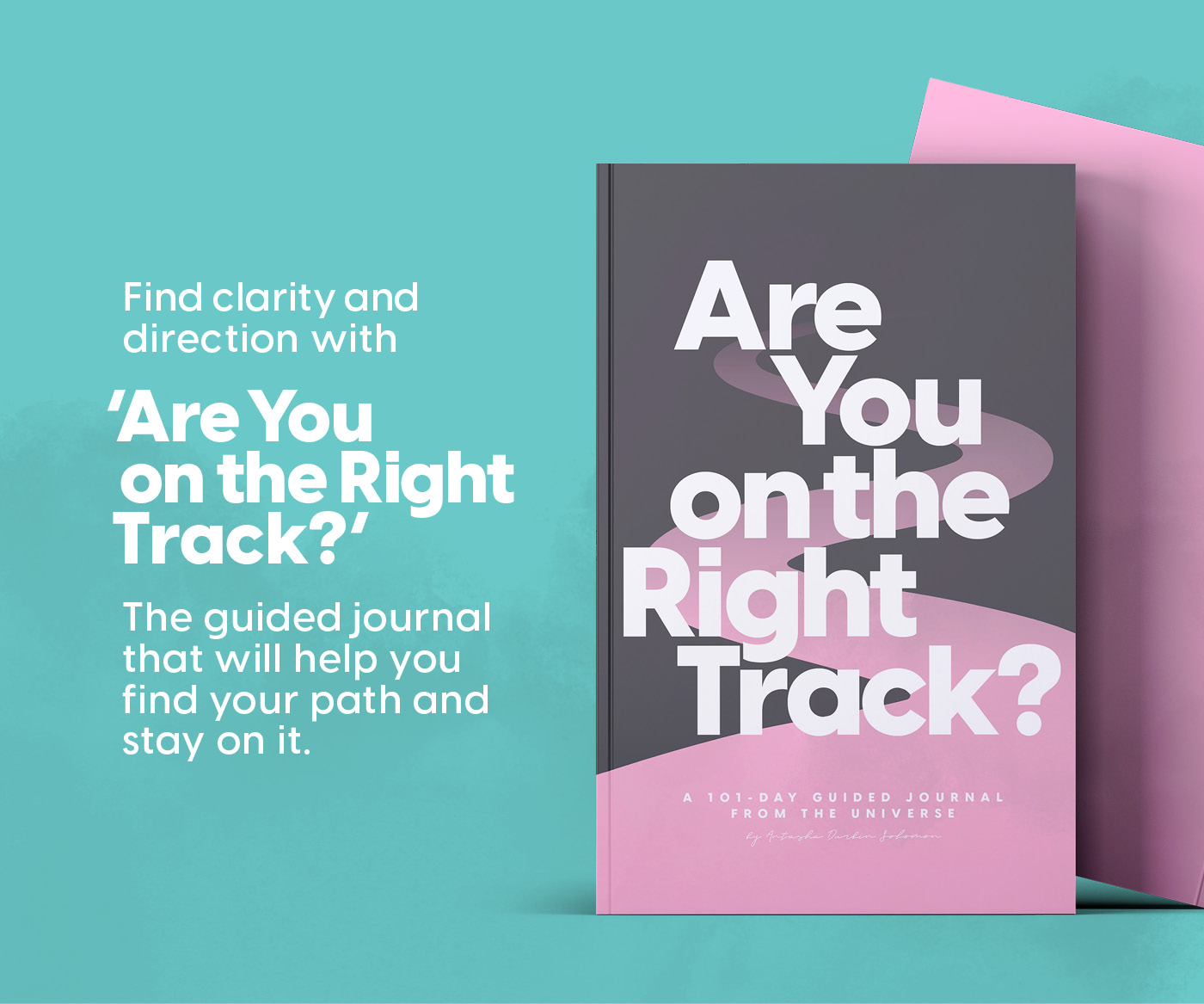
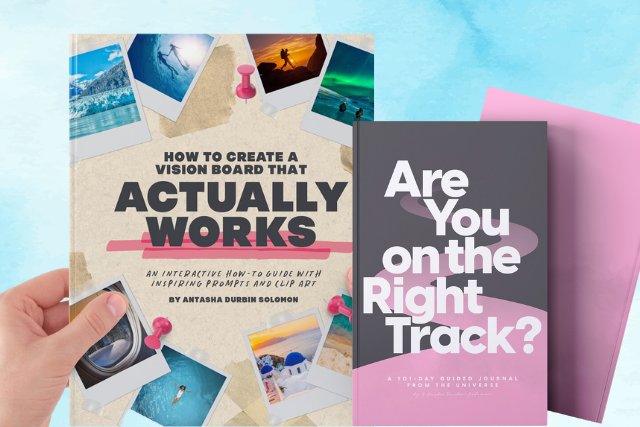
    I’m thrilled to introduce you to two guided journals from Tiny Buddha contributor Antasha Durbin Solomon that will empower you on your journey to success—helping you gain clarity on your goals, understand what it takes to bring them to fruition, and provide you with a structured path to follow.

    **You can get free sample pages for both journals here!

    Book One: Are You on the Right Track? A 101-Day Guided Journal from the Universe

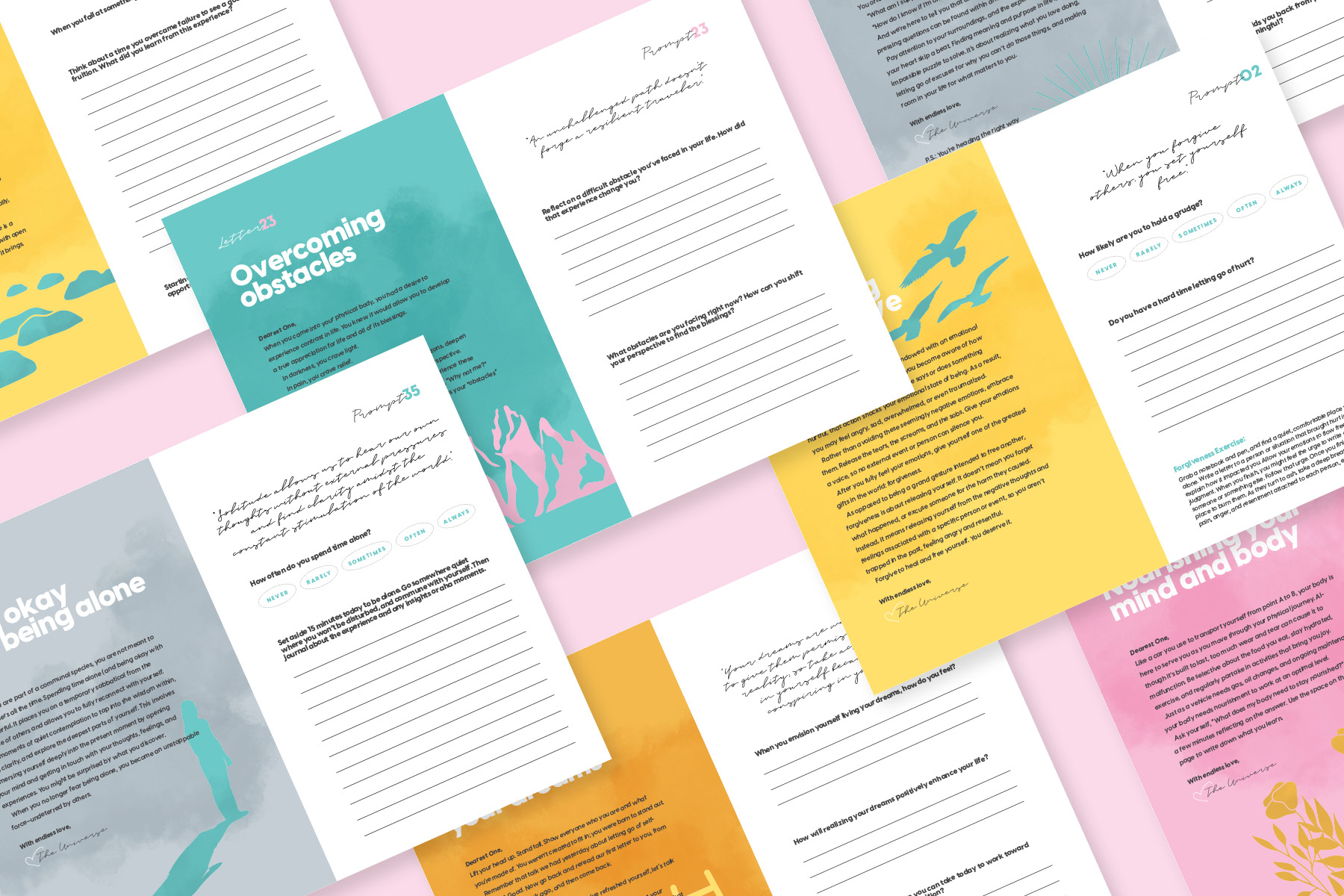
    Get ready for a daily dose of inspiration! This journal features heartfelt letters from the Universe, thought-provoking quotes, and carefully crafted journal prompts tailored to daily themes.

    Whether it’s focused on forgiveness, gratitude, or living with purpose, each entry will gently guide you in the right direction.

    If you’re to release past programming and push past personal limits so you can live an extraordinary, empowered life, this journal is for you.

    Get your copy here.

    Book Two: How to Create a Vision Board that Actually Works

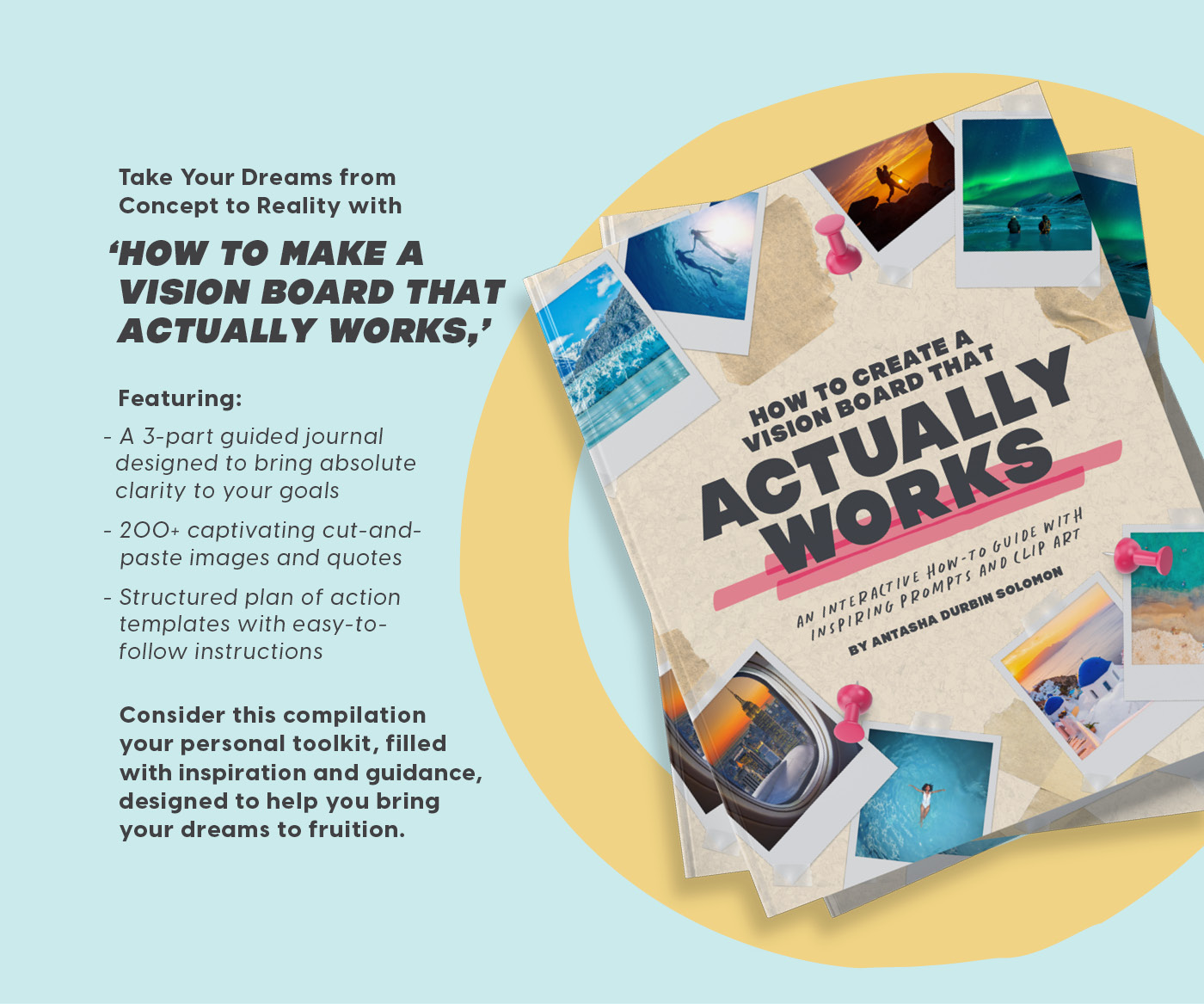
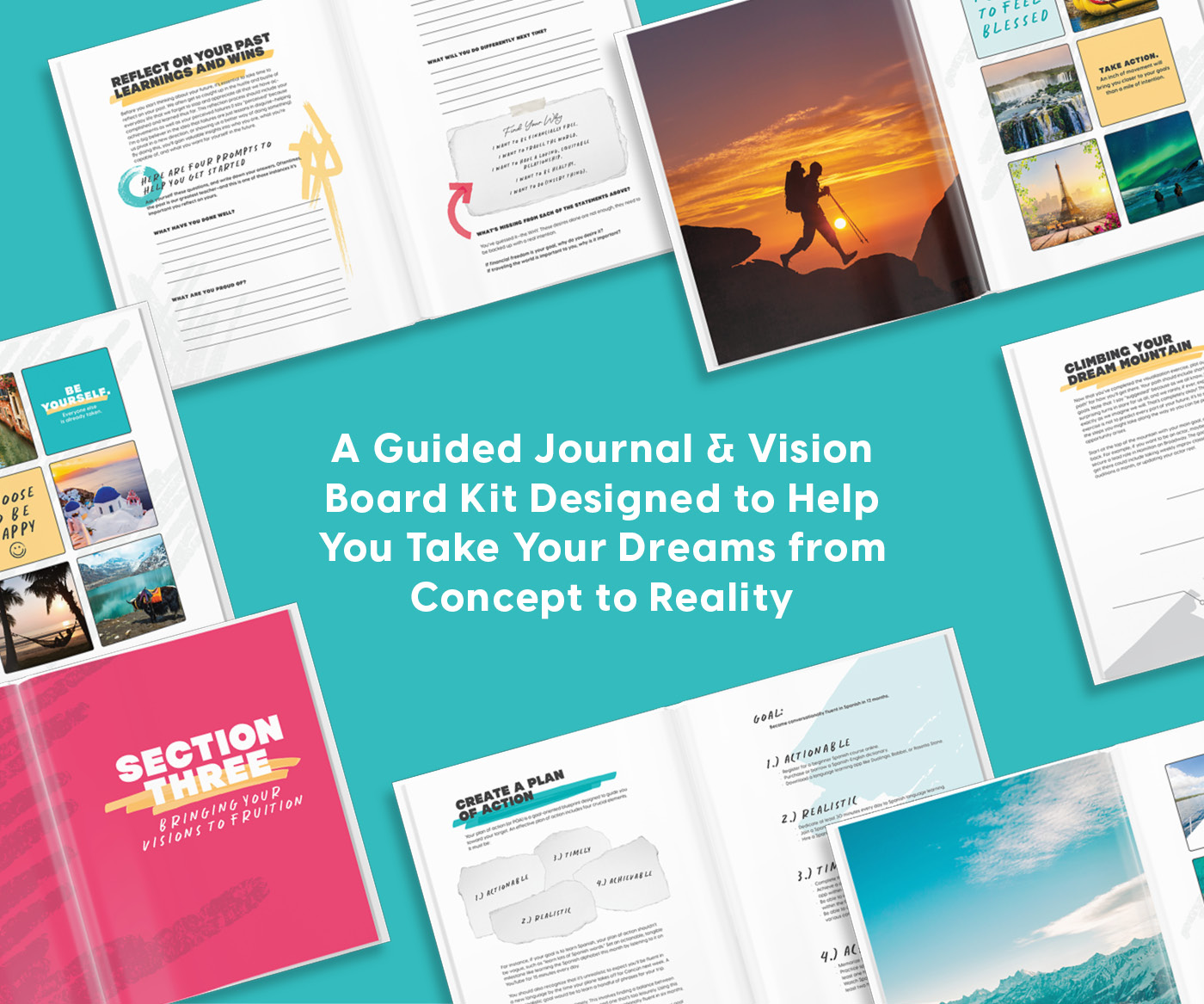
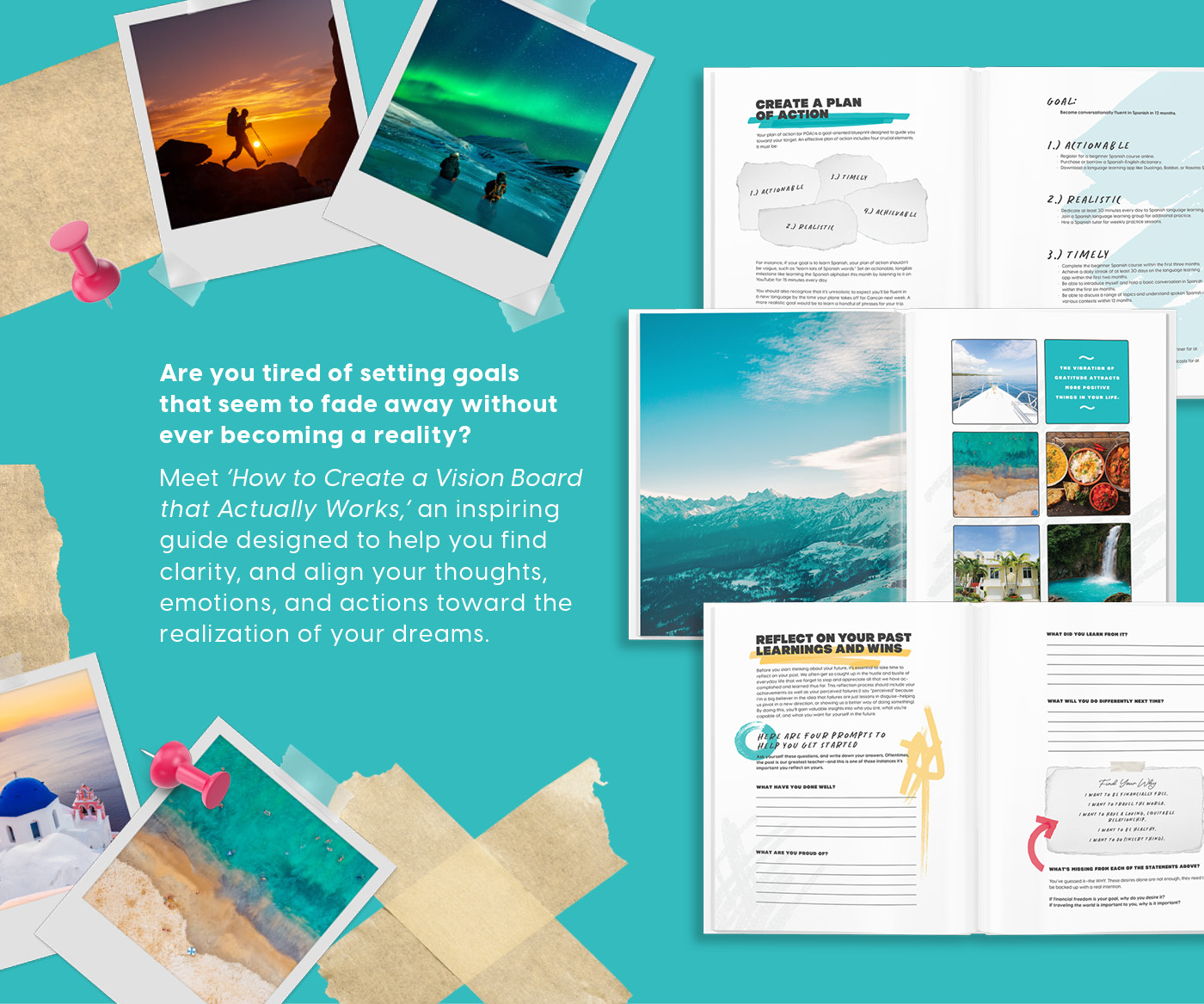
    Unlock the power of visualization with this three-part journal. It’s designed to walk you through the vision boarding process, ensuring complete clarity about your deepest desires and showing you precisely how to turn them into reality.

    With 200+ cut-and-paste images, inspirational quotes, and insightful prompts, creating an actionable vision board is easier than ever. This how-to guide will help you find clarity, set a plan of action, and overcome procrastination, taking your dreams from concept to reality.

    In the interest of full disclosure, I was skeptical about the idea of manifestation in the past because I wondered if it would encourage attachment to specific desires and outcomes. But I’ve come to realize that many of the things we want are actually things we need. Connection, purpose, physical wellness—we all need these things to be our best selves and to make a positive impact on the world.

    Antasha has created a powerful tool to help us all meet those needs—one vision and one action step at a time.

    Get your copy here.

    Intrigued? Head over to Antasha’s site to get free sample pages for both journals.

    I hope these powerful tools help you create lasting positive change!

  • New Year’s Resolutions Simplified: It’s as Easy as 1, 2, 3

    New Year’s Resolutions Simplified: It’s as Easy as 1, 2, 3

    You and I will probably come across a hundred articles about New Year’s resolutions in 2023 … again. And, if you and I are like the majority—the well-intentioned, regular people who genuinely want change—we will aspire to big things and later get frustrated and give up on the list we made … again.

    But what if we kept it really simple this time? What if we didn’t have to make an endless list and be reminded, by looking at it, of all the things we may fail at again?

    What if we made it as easy as one, two, three?

    Let us do that instead, shall we?!

    1. Make “one” your magic number. Count to one each day, starting now, not from January 1st—NOW! What is the one thing you want and will do today?

    One email or paragraph you will write, or one chapter you will read, or one person you’ll reach out to. Who is the one lucky person you will text or call to tell them how you miss or appreciate them? Or how encouraged you feel by knowing them or how you want to ask forgiveness from them? Who is the one person you can write to or call to laugh about that one fun memory that you only share with them?

    I personally made a commitment to write or call or pray for a person whenever they cross my mind, that same day; I do not wait. There is a reason, I believe, we are reminded of people, and life is so fragile. I don’t want to miss an opportunity and regret not uplifting someone who could have been encouraged, or speaking kindness to someone who could have benefited from it.

    What’s one thing you will do today to move toward a healthier and happier you?

    Maybe it’s just one set of squats while you are washing the dishes; one jump rope you will order and one minute of jumping you’ll do when it arrives; one glass of beer or coke or a sweet drink you’ll replace with water or tea or decaf coffee just once today. Which one item will you change in your menu today for something that is better for your body?

    What is the one happy song you will listen to in the car or on a quick walk that you will take today? What is the one shop you will drive to, parking really far away, so you can get extra steps walking back and forth?

    2. Remember that there are two significant ways that your brilliant mind registers and remembers everything: through words and images.

    Paint clear, vivid, beautiful pictures for your mind of what it is that you want. Think backward; create an image of what your completed accomplishment looks like to you and make it as detailed and as exciting as you possibly can.

    See yourself having arrived at the healthy weight you want, you fitting into an outfit of your desires, hearing your friends and strangers complimenting you on how radiant and healthy and great you look, thinking about how you love taking care of your body inside and out.

    See yourself having completed your degree, project, letter, book, task, whatever. See yourself walking across the stage, people wanting to buy your product, welcoming your project, asking you to give your presentation again, asking you about and enjoying the summary of what you read or learned.

    Imagine yourself buying that house you have painted in your mind and furnishing it and having friends over and laughing and resting in your comfortable space every day!

    See yourself in a relationship you just repaired or found and are enjoying. See how good it is for you and the other person; see and hear the uplifting conversations you are having and the fun activities you are enjoying together. Dream in pictures!

    When talking to yourself, use words that are kind, uplifting, life-giving, generous—not the opposite. Speak in the same way you would to someone you love and care about; someone whose success would make you as happy as your own; someone you want to see happy, encouraged, loved. Talk to yourself in your mind and out loud like that each day and see what happens.

    3. Imagine yourself as a triangle.

    One side is your mind, connected to the second, your heart, connected to the third, your amazing body, with the entire space inside filled with who you really and most profoundly are—your spirit.

    All of you needs to be cared for, attended to, and nurtured. Pay attention to what each part needs and requires. How is it lacking? What is it missing? What one thing can you do today to nurture each part?

    I nourish my spirit through prayer and silence daily, which fills me with focus, strength, and insight, and I always pray for at least one person outside of my family as well. Walking is what helps care for my body during this season of life.

    So there you have it: one, two, three.

    When you get to the end of your day today, be sure to congratulate yourself on that one thing you did, that step you took, and look forward to doing it again tomorrow. Be your cheerleader and encourager and then, over time, you’ll see that change you’ve been looking for.

  • What Carrots Are You Chasing, and Are They Worth the Sacrifice?

    What Carrots Are You Chasing, and Are They Worth the Sacrifice?

    “Not to arrive at a clear understanding of one’s own values is a tragic waste. You have missed the whole point of what life is for.” ~Eleanor Roosevelt

    I promise this essay isn’t an attempt to convince you that you’re living inside The Matrix. (Okay, maybe it is a bit.)

    But do you ever find that days, weeks, or even months have passed that you didn’t feel present for? I describe this odd sensation as feeling like you’re going through the motions like Bill Murray trapped in Groundhog Day.

    Every day bleeds into the next because you’re future-focused, and what you’re doing right now only feels valuable insofar as it’s laying the groundwork for something else; the next stage of your career, the renovation that means the house is “done,” a number in the bank account that means you’ll never have to worry about money again.

    I think it’s fair to say we both know this is total BS. We’ve climbed enough mountains in our lifetime to know that as soon as we get what we want, we’re already planning what’s next.

    The problem is not with the aim or the goal but with the belief that we can cross a finish line that will magically make these uncomfortable feelings disappear. In psychology, they call this the hedonic treadmill.

    You know that promotion that would change your life?

    You know that new kitchen you obsess over because it would make life much better?

    You know that extra cash that would mean all of life’s money troubles would disappear?

    Will they provide everlasting happiness?

    Doubtful.

    We can blame this on the hedonic treadmill.

    It’s in our human nature to quickly return to a relatively stable level of happiness despite major positive or negative events or life changes.

    Put another way: No matter what we do, buy, or hope will change our life permanently, it’s a short-lived shot of happiness injected into our life.

    I understand why people don’t want to believe this. Because it forces us to question why we’re working so damn hard to change things and to be present with what is right now.

    When I realized this, I began to reflect on what it meant for my life in a way I couldn’t when I was lost in the chase. Accepting that we have a baseline is liberating. Most of what we’re chasing is nothing more than stupid carnival prizes in a game we didn’t know we were playing.

    If the $40,000 kitchen renovation will give you a flash-in-the-pan taste of happiness, is it worth the years of your life you need to sacrifice to pay that off?

    Is it worth more hours in the office?

    Is it worth less time with your family?

    Is it worth the crippling stress?

    You have no control over the hedonic treadmill. Still, you can control how much of your life you’re willing to trade for a future that won’t make you any happier in the present.

    It’s a hard habit to break because, as philosopher Alan Watts explains:

    “Take education. What a hoax. As a child, you are sent to nursery school. In nursery school, they say you are getting ready to go on to kindergarten. And then first grade is coming up and second grade and third grade… In high school, they tell you you’re getting ready for college. And in college you’re getting ready to go out into the business world… [People are] like donkeys running after carrots that are hanging in front of their faces from sticks attached to their own collars. They are never here. They never get there. They are never alive.”

    It’s drilled into us from the day we’re born to always think of what’s next.

    You end up chasing carrots to eat when you’re not even hungry. Hell, you probably don’t even like the taste of carrots.

    This lack of presence is toxic for our children. They end up repeating the same cycle we do when we role model the idea that we need to prioritize a future self (that may never come) over time spent with them.

    Life only feels short because we burn much of our alive time on shit that doesn’t matter.

    Do you want to experience a deep, rich, and fulfilling life?

    Start by asking, what carrots are you chasing? Are they worth the sacrifice? And what values would you honor in the present if you stopped living for the future?

    I can say family means everything to me, and I’ll do whatever it takes to support and provide for them. But if I’m consumed by my phone when I’m with my ten-month-old daughter, what value am I reinforcing? To make more money in my business so I have the freedom to do exactly what I’m too busy to enjoy right now?

    To honor my values means putting the phone down, looking into her eyes, and giving her literally the only thing she wants and needs from me. My presence. And that right there—being present enough to enjoy our lives—is what will give us the happiness we crave.

  • How the Deathbed Meditation Can Bring You Clarity, Purpose, and Joy

    How the Deathbed Meditation Can Bring You Clarity, Purpose, and Joy

    “Death may be the greatest of all human blessings.” ~Socrates

    There’s a lot of beauty and value in positive, light-and-love approaches to mental, emotional, and spiritual well-being.

    But I challenge you to go a little deeper and to face something we’re all going to experience eventually:

    Death.

    I know this may sound macabre, bizarre, or downright unappealing. But hear me out!

    There is a certain power and beauty in consciously visualizing and meditating on one’s death.

    What could be more awakening and more revealing than putting your current self into the perspective of your dying self—into your last few moments?

    Such a precious practice helps to bring a stunning clarity and crystalline focus to everything going on in your life.

    Indeed, what is referred to as the “deathbed meditation” helps you to:

    • Figure out what is most important to you
    • Let go of old pains and hurts
    • Focus on what brings you joy
    • Find your true life path
    • Uncover your hidden gifts

    As humans, we tend to live our lives as though they will never end. From one day to the next we live in a kind of autopilot mode where we take everything (and everyone) for granted.

    The deathbed meditation is a powerful practice you can incorporate into your life whenever you feel lost, stranded, stuck, out of focus, or simply aimless.

    My Experience With the Deathbed Meditation

    I’ve always been someone who desperately needs a strong purpose in life.

    But something happened last year that tossed me into a dark existential crisis where I questioned (1) what my place in the world really was, (2) why old wounds were rising to the surface, and (3) why I felt so lost—despite having a strong self-care and spiritual practice.

    With the advent of COVID-19 and the retriggering of old traumas, I felt empty inside.

    You know that feeling of falling and not having anything to catch you? That’s how I felt.

    Witnessing the suffering in the world and in my own circle of family members, I realized something major: “I could die tomorrow.”

    I realized this isn’t a groundbreaking thought; we all have it at some point (I know I have). But in that moment it felt like a lightbulb went off in my head—I suddenly realized that the key to finding the answers to life was to contemplate something so few people dare to approach: death.

    The answers I received from that subsequent deathbed meditation have guided my life, reawoken my purpose, and fuelled me with vision ever since.

    How to Practice the Deathbed Meditation

    Doing the deathbed meditation is an act of radical self-love. There, I said it!

    Why radical? The deathbed meditation is radical because it’s rarely mentioned or practiced by anyone (that I’m aware of) due to its intimidating nature.

    But let me assure you that the answers you can potentially find are so soul-nourishing, so meaningful, so profound, that you will be overjoyed that you courageously took this step.

    Before you embark on this inner journey, please ensure you have a neutral mind—we don’t want minds that are feeling down or frazzled or unhappy for any reason (that will bias your discoveries).

    When you’re ready, let’s begin:

    1. Focus on feeling safe and relaxed.

    Before you begin your deathbed meditation, find a space in your house that feels cozy. You might like to place a blanket over you and a pillow behind your head for extra comfort. Draw the blinds or curtains and ensure the atmosphere is dark.

    It’s important that you feel safe and relaxed so that your heart and mind can open up and gain the most from the meditation.

    Place a blindfold, sleep mask, or cloth over your eyes so that you can’t see anything. Then take some gentle, natural, grounding breaths and settle yourself.

    2. Find some funereal music (optional).

    Some people prefer their meditations to be totally silent, but if you’d like to set the mood, find some funereal music (or music that would be played at a funeral) to prepare your mind for the scene.

    Again, do whatever makes you feel most safe and comfortable. If you prefer total silence, that’s okay too.

    3. Visualize yourself on your deathbed, surrounded by loved ones.

    In your mind’s eye, imagine that you only have a few minutes (or hours) left to live. You feel comforted and at peace with your loved ones surrounding you.

    What kind of room are you in? What kind of bed or seat supports you? Focus on some kinesthetic details to help enrich the visualization.

    4. Ask yourself, “What was I most happy to have done in life?”

    Take some moments to reflect on this crucial question: What were you most happy to have done in your life? Let images and scenes play out in your mind for as long as needed.

    This powerful question will help you to hone in on what truly matters in your current life. If you’re struggling with making an important decision or finding a life direction, this simple question could be the key to unlocking deep truths residing within you.

    5. Ask yourself, “What did I regret not doing?”

    Regret is a natural part of life, yet many of us shy away from it, trying to sweep it under the rug. To avoid accumulating too much regret, ask this simple question within your deathbed meditation: What did you regret not doing?

    Let any thoughts, images, memories, or scenes run through your mind’s eye. Take special note of them.

    6. Ask yourself, “What is the most important thing in life to me, above all else?”

    Values are what guide our lives, and yet we are often totally unaware of them. By asking the question, “What is the most important thing in life to me, above all else?” we come to understand, truly understand, what we value deep down.

    Take a few moments in your deathbed meditation to contemplate this question, letting it sink into the recesses of your mind, heart, and soul. The answer you discover can have the potential of shifting, expanding, and empowering your entire life.

    7. Thank your loved ones and end the meditation.

    Once you’re done asking all or some of the above questions, smile warmly to your loved ones and thank them for their presence in your life. Then, when you’re ready, return to the room you’re in, get up very slowly, and do a big stretch.

    You might also like to drink some water to ‘emotionally digest’ your experience.

    The deathbed meditation has been one of the most powerful tools in my life for getting straight to the heart of what I most love, cherish, value, and need.

    After all, what else can put things in perspective other than our own mortality?

    If you’re feeling confused, lost, or in need of direction, I highly recommend that you try this unique meditation at least once. You might be surprised by how intensely transformational such a practice can be!

  • 4 Simple, Heart-Opening Exercises to Fill You with Joy, Love, and Light

    4 Simple, Heart-Opening Exercises to Fill You with Joy, Love, and Light

    “Why are you so enchanted by this world, when a mine of gold lies within you?” ~Rumi

    Happiness, love, and joy—we spend our lives in search of them. We often look to external things to fulfill our desire to experience them. A relationship, a trip abroad, a career, or maybe that shiny new car. We can spend our lives chasing these desires and believing that once we check everything off our list of life accomplishments, we will experience them all.

    But what if I shared with you that all of this—happiness, love, and joy—exists in you right now? That you are the source, not the external items. What if I told you that living in a perpetual state of love and joy is your natural state of being?

    Would you think I’m full of BS? That I’m living in a hippie Never-Never Land?

    Please let me share with you a few simple exercises that showed me my true self.

    Exercise #1: The Love Wave

    Close your eyes and take a minute to connect in your heart with a person in your life that could use a little love. Feel yourself smiling into their eyes and embracing them in a giant, warm hug.

    Allow the love to flow. Sit in this love. Let it grow in strength and surround you both. Then send it out into the world, creating a wave of love. Know that you can come back to this place of flowing love at any time.

    Try this now and then read on.

    Hopefully, you just had a wonderful experience of love. Now I have a question for you. Where did the love originate from? The person you were thinking of, or you?

    It was from you. The person you pictured just helped you unlock the love. You are love. You can actually imagine many different things to unlock it. Try a smiling baby, or playtime with a pet, or a concept such as world peace. These things are just the keys that unlock the true love that is in your heart.

    You can access this love any time you want. You are just tapping into your true being. It is who you are.

    I like to start my day off with this exercise. I tend to do it in the peacefulness of the morning light, right after my morning meditation. Just open your front door or a window and feel the fresh air on your face, then close your eyes and start. It is a beautiful way to begin the day.

    Exercise #2: The Gift of Giving

    One day I was browsing in a bookstore when an old man approached me. He had snow white hair and was wearing a threadbare, beige sweater. He handed me a chocolate rose and said, “Have a beautiful day,” I was taken aback. Who was this man? Was he trying to poison me? Was he hitting on me? I reluctantly took the chocolate rose and said, “Thank you.”

    The clerk noticed my discomfort and told me that the man buys a dozen chocolate roses every day and hands them out to random strangers. I suddenly felt special.

    This incident happened many years ago. Even though my initial reaction was one of unease, I remember this man with fondness. When he finally passed away the entire town mourned. There was a glowing write up in the local newspaper about him. He had brightened the days of countless residents with his gift of a chocolate rose.

    I invite you to pick a day this week and give everyone you meet that day a gift. It doesn’t have to be a physical gift, though it can be. It could also be a compliment, your undivided attention, or a heartfelt smile.

    Don’t expect anything in return. Remember my reaction to the old man? You might not always be met with gratitude. Just practice the act of giving.

    At the end of the day, notice how you feel. You spent the day leaving heart prints everywhere you went. Did this bring you joy? Is the joy within you or did you take it from the people you met?

    Exercise #3: The Vulcan Mind Meld

    We all have goals and expectations. They are important. But what happens when we can’t fulfill them? If we don’t get that promotion or find our perfect mate? We can become disheartened and depressed. How do we prevent this?

    Close your eyes and imagine yourself ten years from now. Give your future self that thing you believe will bring you happiness. Maybe it’s kids, money, power, or something else entirely. Notice how you feel. You might feel confident and secure. Or perhaps loved and important. Whatever you feel, allow it to expand and grow. Sit in it. Enjoy it.

    Then, while keeping your attention on the way you feel, bring back the image of yourself today. Think about what you already have that fulfills you.

    Maybe you don’t have kids, but you have amazing friends. Maybe you wanted a better income, but you can afford things you enjoy already. Look for the abundance within you now. Keep going until your “present self” feels the same as your “future self.”

    It’s almost like a mind meld—make those two beings one. Again, sit in the wonderfulness of it all. When you are ready, open your eyes.

    Try this out before reading further.

    Do you feel happy?

    When we live our lives from a place of lack we experience suffering and discontentment. We are always searching for the external thing that will make us happy. Rather than focusing on the things you don’t have, try living from a place of fullness. You already have an abundance of things to enjoy and appreciate—you just have to change your perspective.

    All that security, love, confidence, happiness, and joy you saw in the vision of your “future self” is accessible right now. Everything you experienced is within you today. Recognizing the abundance or fullness of your life is the key to happiness. If you experience that abundance, not meeting a goal or expectation becomes a minor bump on the road.

    I refer to the belief that we need external things to be happy as “the big lie.” Because when we finally finish off our checklist of life’s “wants,” we often experience “the great disappointment.” The list doesn’t bring us the happiness we thought it would. It’s not the source. We are.

    This frequently happens when people become suddenly wealthy. They think that they will be happier. They are surprised when they aren’t. In fact, having a lot of money comes with its own set of problems.

    Exercise #4: A Gratitude Nap

    This exercise imprints you with the beauty of your life as it is now.

    Lie down and get comfortable. Use as many pillows and blankets as you like.

    Set a timer for three minutes.

    For those three minutes, state out loud things you are grateful for. It’s a bit difficult at first. Please know every item does not have to be deep. Be grateful for the couch you’re lying on, the length of your hair, sand on the beach. Anything goes.

    After the three minutes, set an intention to be open to whatever is there for you to receive. Surrender as much as you can.

    Rest for ten minutes. Notice at the end of the “nap” how you feel. I’m willing to bet you feel a lot lighter after basking in the glow of all your life’s goodness.

    We spend so much of our time dealing with the pressures of life that we forget to do the things that unlock our love and joy. Our true nature gets covered by layers of life experiences and traumas.

    There is an Ayurvedic concept that you can shine with so much light that the darkness has no place to take hold. That light is within you now. It is your true state of being. It just needs to be set free.

    Tips to help access the joy, love, and light of your true being:

    1. Start your day with the love wave exercise.
    2. Make it a priority to do one thing each day that unlocks your joy.
    3. Live life from a place of fullness and abundance rather than from a place of lack.
    4. Practice gratitude.

    I would like to thank all of my teachers who have shared these beautiful exercises with me. Please feel free to share them too.

    Namaste.

  • Want to Change Your Life? Draw the “You” You Want to Be

    Want to Change Your Life? Draw the “You” You Want to Be

    “You are not too old and it is not too late.” ~Unknown

    In less than a month, I’ll be hitting a major “milestone” birthday. I quit my full-time job six months ago, ending a twenty-plus year career in education, and have spent time thinking about what I want the next chapter of my life to look like. I found myself thinking back to a drawing exercise I did a few years ago that has made such an impact on my being willing to make major changes in my life.

    Entering my mid-forties, I had come to a point where something just felt “off.” I wasn’t sleeping well, often waking at 3am with anxiety about real or imagined catastrophes. I was often stressed and short-tempered. I was gaining weight and my health wasn’t in the top-notch condition the way it had always been. I felt directionless and unmotivated, but wasn’t sure what I would rather be doing.

    I recalled a TED talk I had seen in which Patti Dobrowolski discussed the power of “drawing your future.” While the concept seemed a little silly to me at first, I decided to give it a go one evening while journaling.

    The end result is a poorly drawn stick figure of myself in lotus position (which I can’t actually do) and a few notes in the margins. My goal was to draw and describe myself nine years in the future. What kind of “older woman” did I want to be? What were my activities? Had I conquered anything that currently plagued me?

    The stick figure I drew has salt-and-pepper hair, as she no longer feels any need to waste her time and money trying to look younger. She instead proudly wears her silvers as a testament to her experience.

    She is a vegetarian…maybe even vegan. She practices yoga and meditation daily…possibly is a yoga instructor. She rarely, if ever, drinks alcohol. She owns her own business, makes a six-figure salary, and has a healthy nest egg for retirement.

    Most importantly, she is completely at peace with herself and her place in the world.

    That fifty-five-year-old stick figure was so far removed from the forty-six-year-old me who drew her.

    I was still spending exorbitant amounts of money every eight weeks coloring my hair. I was an omnivore though eating meat disgusted me more than I cared to admit. I practiced yoga every now and then, but not seriously, and I never meditated. While I never identified as an “alcoholic,” my drinking went far beyond the recommended single four-ounce glass of wine per day. I did not own my own business, but rather was in a job that wasn’t going anywhere.

    Here’s what I found amazing. Within weeks of drawing that picture, I stopped eating meat. Within just a few months, I had cut out dairy and eggs as well. Six months later, I dyed my hair for the last time. I do at least a few sun salutations every morning. Most recently, I stopped drinking alcohol and said “good-bye” to that dead-end job.

    The biggest change was the confidence to make all of these decisions and to realize there is a thrilling and fulfilling future awaiting me.

    I still haven’t accomplished everything that stick figure has. My nest egg is growing, but I still have a way to go before I consider myself comfortably “financially independent.” I don’t yet own my own business, and I’m still working on trying to meditate more regularly. But having this vision of the future has helped me to set manageable goals about what’s important to me.

    None of this has been done easily. It has required vast amounts of reading, educating myself, learning new recipes, and discovering that kombucha or a shrub in a fancy glass makes me just as happy (actually more so) than a glass of champagne.

    I’m blown away by how inspiring that little stick figure has been and how the simple exercise of drawing my future helped me to get clarity about what I want out of life.

    Research shows that the odds of anyone making a change in their life are nine to one. If you want to beat those odds, according to Dobrowolski, you need to see your ideal future, believe it’s possible, and then ask and train your brain to help you bring it to life.

    That’s why a picture can be so powerful. When we draw, we utilize our creativity and imagination. This gets us away from our inner critic which often runs the show and tries to keep us safe from harm.

    Once we have our picture, we’re able to close our eyes and connect the dots from the present to the future, factoring in all our life experiences and imagining the steps that would help us get from A to B.

    If you’re struggling to picture your next steps in life, consider watching Dobrowolski’s video. She encourages you to first draw your current state—with complete honesty— and your desired new reality. Add color to the new vision to make it pop. Make it something that draws you in and gets you excited. Then outline steps to take that will make your new reality possible. You may be surprised at the clarity that transpires! Draw the “you” you want to be.

  • Be Your Own Role Model: Visualize Your Way to Your Goals

    Be Your Own Role Model: Visualize Your Way to Your Goals

    Man and the Mirror

    “You can search throughout the entire universe for someone who is more deserving of your love and affection than you are yourself, and that person is not to be found anywhere. You, yourself, as much as anybody in the entire universe, deserve your love and affection.” ~Buddha

    One day, I’d had enough.

    I heated up my yoga studio, rolled out my mat, and prepared to change this voice that I am embarrassed to admit torments me every day.

    I stood at the top of my mat, closed my eyes, and tuned into my inner voice.

    “I am tired.”

    “I should exercise tomorrow.”

    “I have too much work to take time from my schedule.”

    As my inner voice continued on and on, I began to visualize another mat rolled out next to me.

    On this other mat was an exact replica of myself. She was also standing still with her eyes closed, except there was one very big difference: this person was still, silent, relaxed, calm, and ready.

    For the next hour, I moved through my typical yoga practice with my new my imaginary friend.

    We lifted our arms up in the air as we moved into the first pose. I watched her in my mind’s eye and moved with her. She was the perfect role model. She remained composed, graceful, and poised throughout the entire hour.

    I, on the other hand, was working hard not to make audible groans. However, each time I started to feel like I was filling up with negativity, I turned my attention to my new friend and I imitated her movements, energy, and attitude.

    Within moments, I was able to transform my attitude with a simple shift of focus away from myself and onto her.

    Why did I create this alter ego?

    I want to be in shape. I want to feel strong. I want to feel that awesome post-exercise glow from a great workout.

    If I want all these awesome benefits from exercise, why does it have to be so hard some days to make it happen?

    And by hard I don’t mean that exercise is too hard on my muscles, that they won’t fire. If I was just too sore from the previous day, it would be understandable to miss a day of exercise.

    It’s not my lack of physical strength that stands between me and my goals—it’s the endless whining, complaining, excuse-giving voice in my head.

    Maybe you don’t struggle with complaints. Maybe you just hate on yourself enough until you feel motivated. Either way, it is enough negativity to ruin anything!

    What if there was a way to reach your goals and feel good, even happy, at the same time?

    Why Does Visualization Work?

    Visualization works because you are using yourself as your role model. Don’t get me wrong; I appreciate the value of other people as role models. Sometimes we need advice, other opinions, or just a good listener.

    But most of the time we need to get out of own way. We are the problem. The voice in our head is the problem.

    When I use other people as role models in certain situations, I just feel worse. Here is why: I use them for inspiration.

    The very moment that I use someone else as my inspiration, I place myself in a space of not being good enough because they are the ones accomplishing the goal I desire.

    I visualize the other person. I don’t see myself as successful. I don’t see my own face. I see the other person. I see myself as not good enough relative to someone else’s success. Visualize yourself and you will believe you already have everything you need to accomplish your goals.

    What do you wish you were doing more of?

    • Visualize yourself doing it. Really, create a full image filled with details. What outfit are you wearing? Where are you? What does your face look like? What is the weather like? What does the space look like where you are completing this task?
    • Pull the image of yourself close to your minds eye.
    • Make it as big as possible, 3D, and add lots of color.

    My yoga friend is the same size as I am. She has the same outfit, same mat, even the same pedicure.

    You have more resources within than you realize.

    My yoga practice was peaceful, rewarding, and I actually pushed myself harder than usual. I was my own mentor and I had a lot to offer myself that I did not know existed.

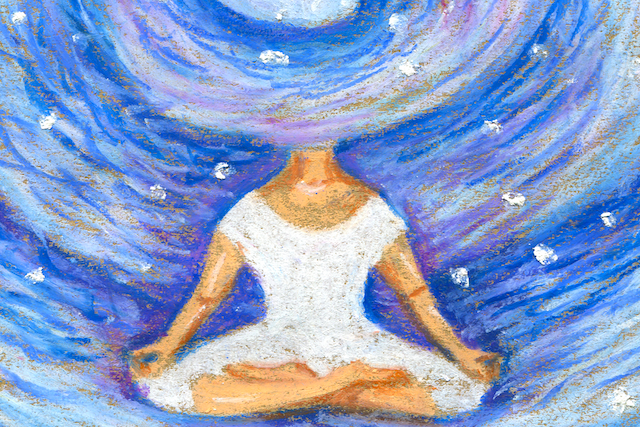
    Man visualizing success image via Shutterstock