Tag: violence

  • How Trauma Can Cause Mental Illness (It’s Not Just a Chemical Imbalance)

    How Trauma Can Cause Mental Illness (It’s Not Just a Chemical Imbalance)

    “What seems to be clear is that we humans are an accumulation of our traumatic experiences, that each trauma contributes to our biology, and that this biology determines, to some extent, how we respond to further traumatic events as they emerge in our lives.” ~Shaili Jain

    The stigma of mental health is decreasing. That’s wonderful, but the way we’re doing it is wrong and damaging. We are ignoring the trauma that is so prevalent and pervasive in our society.

    Think about how many times you’ve read something equating mental illness to cancer or some other disease. People say that taking medication for mental illness should be considered the same as taking medicine for blood pressure, cholesterol, or other medical issues.

    The phrase “chemical imbalance” is used quite often when referring to mental illness. There is a connection, but there’s so much more to mental illness than that.

    When we say that mental illness is simply a result of a chemical imbalance, we are pretending our trauma isn’t what causes so many of our mental health struggles. Most of us have had more than enough of others invalidating our trauma and the mental illnesses resulting from it.

    Now, before anybody starts screaming that their mental illness is purely a result of a chemical imbalance, hear me out. I do believe it is possible to have a genetic chemical imbalance.

    At the same time, I think that possibility needs to include a look at epigenetics. I’m not going into detail about that. Take yourself on over to Google for that.

    What I will say about epigenetics is that I believe these “genetic chemical imbalances” come from trauma that is inherited from each generation. It has been proven that trauma can change our DNA.

    That is probably why scientists have shown that some have a genetic predisposition to mental illness. The brain has a chemical imbalance as a result of epigenetics.

    Now, back to simply labeling mental illness as a chemical imbalance. I suppose it feels like a softer blow for some to believe that’s why they have a mental illness.

    This allows them to think that they and/or their experiences have nothing to do with their mental illness. Let me just take this pill to fix my brain.

    When I hear or read that anywhere, I get incredibly frustrated. It is minimizing or completely ignoring the fact that mental illness is typically a result of trauma.

    My father was a depressed alcoholic who died of cirrhosis nine years ago. I experienced a good bit of trauma as a result of his drunken rages on top of him being absent for a large part of my childhood.

    Not only that, but I had the additional trauma of my mother pretending there was nothing wrong with him. I was also taught to pretend the violence wasn’t a big deal.

    It was incredibly confusing for me as a little girl because my mind and body knew those experiences were traumatic, but I heard otherwise.

    I got a double whammy when it came to mental illness. Unfortunately for me, my mother was not emotionally available. I needed a parent who would validate my feelings and allow me to express what I was feeling.

    So, I had the genetic predisposition to depression from my father and probably my mother as well since she stayed with him for many years. However, I also had severe depression and anxiety as a result of my childhood trauma.

    I believed my depression was simply genetic and a chemical imbalance until I began therapy. As it became clearer that my childhood trauma was the biggest reason I struggled with my mental health, that way-too-simple theory began to piss me off.

    If a genetic chemical imbalance was the sole reason I was depressed and had anxiety, that meant my trauma shouldn’t have affected me the way it did. That didn’t sit well with me.

    How could a genetic chemical imbalance result in my thinking that I was worthless and unlovable? How could it be the reason I never felt safe, emotionally or physically? It just was not possible in my mind!

    A genetic chemical imbalance wouldn’t cause those negative, false beliefs. It would make me feel depressed or anxious overall, but not linked to any particular event.

    Witnessing violence in my home was the reason I had anxiety. I never felt physically safe after the first episode. I was always creating plans of what I could do to be safe if this or that happened.

    When I was little, there was a roof over a storage shed outside my window. If I heard my father throwing furniture or screaming violently, I could go out my window, slide down the roof, and run into the woods behind my house.

    I had escape plans for every room in my house. I also used to sleep with a portable phone so that I could call 911 if I was ever somehow brave enough to do that.

    Hearing that the violence I witnessed was not a big deal and being told not to talk to anybody about it resulted in a very confused little girl.

    I felt intense sadness because I believed that my father didn’t love me enough to quit drinking. When I would voice that sadness, I was told that I didn’t have a reason to be sad. So then I thought there was something really wrong with me.

    Why am I so sad if I don’t have a reason to be? Why should I feel unlovable if that’s stupid to say or feel?

    Once I began therapy, I learned that all of those thoughts and feelings resulted from my trauma. So, even if I didn’t have that predisposition to a genetic chemical imbalance, I would still have had depression and anxiety.

    Any child who experienced anything similar to what I experienced would have depression and anxiety. That genetic chemical imbalance garbage was keeping me from acknowledging the fact that trauma was the cause.

    As I mentioned earlier, I hear a lot of people saying they need medication for mental illness simply because they have a chemical imbalance. In my opinion, that is incredibly dangerous and prevents people from healing.

    It typically results in people thinking a pill will solve all of their mental health struggles. I’ve yet to hear about anybody who took a pill that completely removed all symptoms of mental illness.

    Now, I’m not saying the medication does not help. It most certainly does for many people. However, there is much more to mental illness.

    Not only that, but the chemical imbalance can also be a result of trauma. There is much more needed to heal trauma than just a pill.

    In my late teens and into my early twenties, I tried tons of different medications for depression, but I knew I needed more than that.

    Also, each medication only helped a little bit, and only with the day-to-day functioning to get my work done. I was just going through the motions, though. I never even had moments of peace or happiness.

    There was no medication that changed my feelings of worthlessness. I still felt unlovable. If I heard or saw certain things, I would get triggered with anxiety. Quickly, my mind would return to that childhood fear that I wasn’t safe emotionally or physically.

    If my mental illness wasn’t a result of trauma, then the medications would’ve cured it all.

    Oh, how I wish those medications would’ve been the answer for me. That would’ve saved me a lot of time, energy, and money in therapy.

    Therapists wouldn’t even exist if mental illness were nothing but a simple chemical imbalance. Medications for mental illness truly would be “happy” pills.

    It just doesn’t work that way. Mental illness typically results from years of trauma, covered up or not processed.

    Trauma needs intense therapy in order for the brain to get rewired. Trauma also needs to be acknowledged and validated for people to function in a healthier way and begin the healing process.

    Saying mental illness is just a chemical imbalance sends the message that your brain is just screwed up and some loose screws need to be tightened.

    Equating mental illness to cancer or any other medical illness or disease is denying the major damage trauma causes.

    For me, I had enough people downplay my childhood trauma. I’ve also heard way too many people downplay their own.

    So, let’s stop doing that. Let’s start naming trauma as equally damaging, if not more, than a simple chemical imbalance.

    Name the traumas that resulted in your mental illness. Acknowledge the significant impact that trauma has had on your life and the ways it continues to affect you on a daily basis. And find a good therapist who can guide you through processing your trauma, as I did, so you can heal. Your mind, body, and soul need you to do that.
  • Why Belonging Is So Difficult for Survivors of Domestic Abuse

    Why Belonging Is So Difficult for Survivors of Domestic Abuse

    “Our sense of belonging can never be greater than our level of self-acceptance.” ~Brené Brown

    Sitting there watching The Greatest Showman, with tears pouring down my face, I asked myself why does this song, in fact this whole film, make me cry so much? Why does it evoke so much emotion in me?

    “I am brave,

    I am bruised,

    I am who I’m meant to be.

    This is ME.”

    “Look out cos here I come,

    And I’m marching on to the beat I drum,

    I’m not scared to be seen,

    I make no apologies.

    This is ME.”

    I am brave, I am bruised, and I know, after many years of working on myself, that I am who I am meant to be. But if I am honest, I am still not marching to the beat of my drum, I am still scared to be seen, and I am still apologizing.

    The reason why this film makes me so emotional is because it brings up emotional scars that have still not fully healed. It highlights a part of me that still needs work. I watch these people who have lived their lives as outcasts and have never before found somewhere they belong, and I empathize.

    I have never been cast out of anywhere. I grew up in a stable, loving family, but I am familiar with the feeling of not belonging because for many years I have been scared to show the real me.

    This fear or inability to be me started the minute my ex pushed me over for voicing my opinion and trying to argue my point. It grew with every punch, kick, threat, humiliation, criticism, and brush off. It grew as the secrets I was keeping mounted up, as the lies I was telling became bigger and bigger.

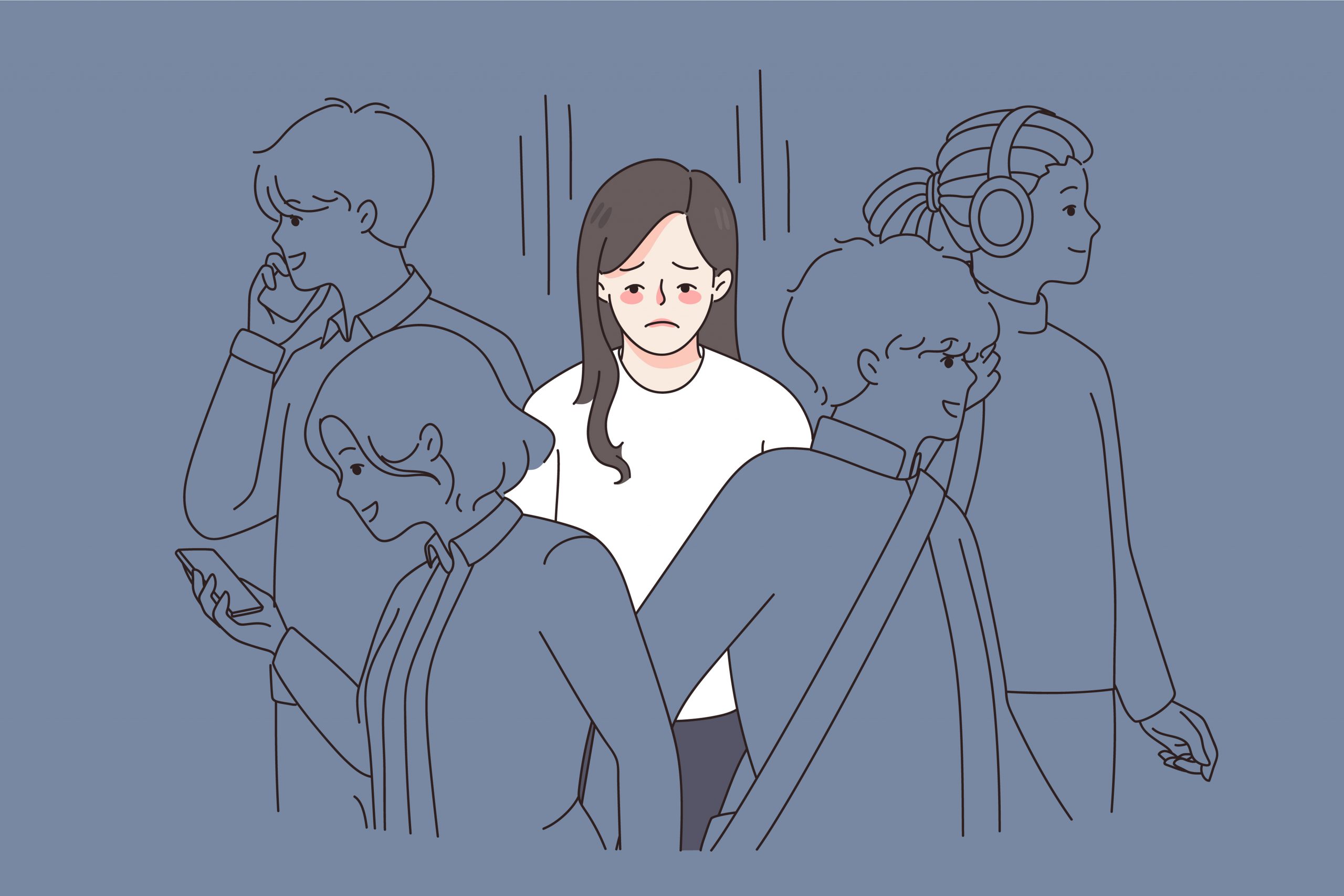
    From the moment my relationship became abusive I did not belong anywhere because I was no longer free to be me.

    I hid what was going on, and when it was obvious something was happening because of the bruises, I made light of it and played it down.

    I withdrew from myself, becoming just a shell of a person. When I was at home with my partner, I was who he expected me to be; when I was with my family, I tried to be just like them. When I was at work, I was who I thought they wanted me to be.

    I found some sense of belonging when I gave birth to my first son. As I lay there in hospital with him in my arms this new feeling came over me—nothing else mattered apart from this wonderful little person. However, I quickly learned to be the mum my partner wanted me to be rather than the mum I wanted to be, and that broke my heart.

    Friends disappeared, work colleagues were unsure how to treat me, and on the one occasion I reached out for help (to one of my son’s teachers), I was brushed off. It was a private school, and domestic abuse was not something that was part of their agenda. I did not belong there.

    When I finally left for good, I turned up to a women’s refuge, with my seven-year-old son, in a place that I did not know, miles away from my family and friends. I thought that was it, that all my pain was going to stop. While the physical pain obviously stopped, the pain on the inside has taken much longer to heal.

    Over fifteen years later, after years of inner work and a happy marriage, I still do not feel that I belong in many places. This is because I am still holding myself back from being me.

    My self-preservation tendencies, which were once so vital for my survival, are now holding me back. The fear that kept me on high alert, that helped me to evaluate my words and actions before speaking or acting, to keep me safe, was so strong that even after all these years, it is still there.

    What if I do something to upset my husband, will he leave me?

    If I voice an opinion that is different to someone else’s, will they brush me off and think I am stupid or stop liking me?

    What if I say something and open myself up and no one cares or listens? That will just make me feel worthless and unimportant again.

    If I do what I really want to do and get it wrong or fail, others will think I am useless.

    Why would anyone want to listen to what I say?

    Making decisions that everyone agrees with means I am doing the right thing, even if I am not sure that is what I want.

    This fear has prevented me from finding places I belong.

    Yes, I fit in wherever I go because I speak and act in a way that suits the situation, that ties in with everyone else. I sit on the fence and do my best to understand and accept everyone’s point of view without voicing my own because then everyone will like me, and I will not get hurt.

    But just fitting in is not good for your self-esteem. It just cements the belief that you need to hide the real you.

    Being a good communicator involves adapting to suit the environment and situation that you are in, but it should not be at the expense of your own values and opinions, which are just as important as everyone else’s. Pleasing everyone else at the expense of yourself means that you are not giving them the best of you, because that can only come from being wholly and truly YOU.

    As a result of domestic abuse, I suffer from low self-esteem. It has got a lot better over the years, but it still pops up now and again.

    I go through times when my self-love and self-worth are purely based on what others think of me. One unkind word, one difference of opinion, one moment of feeling ignored has me plummeting into the depths of self-hatred and self-doubt.

    It normally happens when I meet someone new or join a new group. I am overly concerned with what they think of me, so I mold myself into someone I think they want me to be, ensuring that they like me. I still hold back now and again with my husband, preventing a disagreement that could potentially result in him deciding he doesn’t love me anymore.

    The truth is, everyone who meets you genuinely wants to meet the real you. The best you is the authentic, bruised, brave, perfectly imperfect you.

    There are times when I genuinely feel that I belong, when I feel comfortable being my funny, hyper, jokey self, when I can speak up and voice my opinion, when I have the confidence to make a mistake and to listen to and act on my intuition.

    At these times I feel content, my head is not working on overdrive trying to figure out what I should say and do, my heart is open, and I feel safe to be me. And I know that during these times I am able to give the best of me. These are the times when I feel I am just as important as everyone else. When I feel that I am an equal.

    I want to feel like this all of the time! I don’t want to just fit in. I want to belong wherever I go. I want to march to the beat of my own drum. I want to fulfill my potential and be all I can be.

    I know, however, that there is only one place I truly need to belong and feel safe to be me, and that is within.

    I need to know who I am, what I want, what I like, and what I don’t like. I need to be clear on what my values are and what my dreams and aspirations are. I need to be honest with myself about how I am feeling. I need to work on that overpowering self-preservation mode that is still on autopilot by recognizing that I am safe, that I will not get hurt if I open up and let my true self out.

    I need to give myself a break from the ridiculously high expectations I have of myself and treat myself with compassion and respect. I need to love and accept myself for who I am, not just when I have achieved something.

    Only then will I truly belong, will I be able to unapologetically be me and shout from the rooftops “THIS IS ME!”

  • Letting Go of the Victim Label: The Past Will Not Define Me

    Letting Go of the Victim Label: The Past Will Not Define Me

    TRIGGER WARNING: This post deals with an account of domestic violence and sexual abuse, and may be triggering to some people.

    “Things turn out best for the people who make the best of the way things turn out.” ~Unknown

    It wasn’t long ago that I lived my life as a professional victim.

    It wasn’t intentional, but somewhere along the way I had internalized the fact that my victimhood gave me an excuse to remain stuck. As long as I was a victim, I had a reason to wallow in sadness and self-pity, a reason to not move forward, and sympathy that was poured upon me like praise—because no one wants to shame the victim, right? So I put on my victim’s Badge of Honor and remained firmly planted in the past.

    The thing about being a victim is that it doesn’t end there. Resentment is not far behind, and I soon found myself immersed in resentment. After all, I never asked to be born into a household filled with domestic violence, nor did I ask be molested by someone I shared the same bloodline with, but it happened, and I resented it.

    In my mind, no one could understand what it was like to live in constant fear of the day that your mother would be murdered. No one could understand the hopelessness that comes with feeling unsafe day after day. But I did.

    I knew what it felt like to be awakened in the middle of the night by screaming voices, dishes crashing against walls, or the volume on the TV up as high as it could go, because if he was angry, no one was getting a good night’s sleep.

    I knew what it was like to wish for death, because death was better than terror.

    I knew what it felt like to live in a household where everyone walked on eggshells because the alternative was an encounter with rage.

    I knew what it felt like to have a dysfunctional childhood while others had what I thought to be a fairytale life, and I resented it.

    I could not reconcile why some children were born into wealth and privilege and I was not. I did not understand why my family, which should have been a safe haven, was the exact opposite. Why were some children loved and adored, and I molested and used? It wasn’t fair, and I wasn’t going to let life, or anyone who would listen, forget it.

    I didn’t ask for that life, I was a victim, and had earned the right to complain about it as much as I saw fit. I did not realize that I had the power to overcome everything I had experienced, and maybe there was a part of me that didn’t really want to. I knew who I was with my experiences, but what was my identity without those stories? It was time that I found out.

    It took a while for me to even realize that I needed to let go of the victim label, but thankfully the day came. It became too much effort to be sad and depressed about something that happened, and was not changing.

    I began to read every self-help book I could find in hopes that one of them held the key to my emotional relief. I began attending counseling sessions and put forth the necessary effort to get the most out of each session. Then, one day it happened. I woke up knowing enough was enough.

    No, life wasn’t fair, but this was the only life I had, and I had better make the most of it. I knew that in order for me to move forward, I had to accept this fact. My experience was my experience, and nothing was going to change what happened to me, but I could surely change how I responded to it.

    The first thing I did was remove toxic people from my life. I understood that as a child I had little control over the people I was exposed to, but as an adult, it was my responsibility to set strong boundaries, even if that meant removing some people.

    This was no easy task, and I immediately felt waves of fear and guilt. I was so used to not having boundaries, and being expected to accept bad behavior just because it came from family. Still, I followed through with my plan to set boundaries or to sever ties completely.

    Next, I began to follow the advice I had received from literally hundreds of self-help books. I began to retrain my mind from the mentality of a victim, to one of strength, poise, and success.

    Almost immediately, I stopped feeling sorry for myself and began to feel empowered and capable. Yes, I had bad experiences growing up, and yes, those experiences affected my life, but I did not have to let them define me.

    I worked diligently to change my self-talk and I was very intentional about ensuring that I would make the most of my life. I had wasted enough years existing, and I knew that it was time to start living.

    Retraining my mind became my full-time focus, as I knew that all success starts in the mind. I continued with counseling and was told that I had a form of post-traumatic stress disorder, which was evident from my having nightmares about the abuse in my home, even though I was an adult and in a safe place.

    I learned how witnessing domestic abuse and being molested affected my self-esteem, the way I viewed relationships, and the way I viewed the world.

    I learned that none of it was my fault, and that I did not have to continue to tell myself those stories. I had new stories to tell. We all do. You too, can move past the pain and hurt you have endured in this lifetime. You can forgive, even if you never forget, and you can move forward. It won’t be easy, but it will be worth it.

    My transformation didn’t happen overnight, and neither will yours. I spent years studying the power of the mind, and being intentional in my desire to turn my life around.

    Today I am free of toxic relationships and toxic thoughts. I’ve replaced my victim badge with a crown of success, love, self-confidence, and peace. And I replaced self-pity and sadness with a fierce determination to live my best life, free of resentment.

    I recently met a man who told me he has found happiness all his life by learning to “play the hand he was dealt.” I smiled, because I had come into the wisdom that this is truly the only way to live, because “Things turn out best for the people who make the best of the way things turn out.” The choice is ours to make.

  • Dealing with Pain or Abuse: You Can Let It Destroy You, Define You, Or Strengthen You

    Dealing with Pain or Abuse: You Can Let It Destroy You, Define You, Or Strengthen You

    Strength

    “When something bad happens you have three choices. You can let it define you, let it destroy you, or you can let it strengthen you.” ~Unknown

    When I was twenty-four, leaving my ex was my “something bad.” It was about as bad as it could get.

    After four years of dating, I was certain marriage was right around the corner. Our lives were completely intertwined. I knew he wasn’t a great guy for me, but that didn’t matter because I truly believed I was ready to take the next step.

    One night changed everything.

    I found his drugs, confirming what I had suspected all along: his attempts at recovery were just an act. Admitting to flushing them initiated the scariest experience of my life. Immediately, he searched for his pills and destroyed my apartment when he couldn’t find them.

    When he finished looking, he came after me next, verbally and physically terrorizing me as if he had not already proven his anger. I broke free from his grip and fled, in search of help. This wasn’t our first incidence of violence, but enough was enough.

    I was tired of living alone in silent abuse.

    First, It Defined Me

    When I say that night changed everything, I mean it. Aside from the major life change, something shifted in my mind. I was no longer Akirah, but rather a single, lonely, and abused victim who would never find happiness.

    The abuse diminished my self-esteem, leaving me very little to rely on for healing. Low self-esteem made it easy for me to define myself as a victim. And I preferred it that way because doing so allowed me to remain focused on him.

    This continued for several months until I eventually grew tired of defining myself by my abuse. Unfortunately, being myself did not feel like a feasible option, as I had no clue who I was anymore.

    For four years I skipped out on traveling and making new friends because of our relationship. I never made even the tiniest decision without considering his feelings first. Recalling all the sacrifices I made for him gave me a sick feeling to my stomach.

    It was too much to think about. I needed to numb the pain.

    Then, It Destroyed Me

    My destruction occurred gradually, progressing with the help of alcohol and men. Every weekend was exactly the same routine: get dressed up, get drunk, get attention. I rarely skipped a week.

    My problem with alcohol was actually secondary to my addiction to male attention. Any hint of male validation caused a rush inside of me.

    A look was good. A smile was great. Wanting my name and number?

    Jackpot.

    I maintained an illusion of confidence because I read somewhere that men are attracted to that. But nothing else could be further from the truth. If anything, I had confidence in what I wanted and who I was trying to be, but certainly not in myself.

    After each short-lived relationship, I would think of my ex-boyfriend, wondering if I had maybe made a mistake. I knew deep down it would never be right between us. I could not imagine living my entire life being abused and controlled.

    So in order to avoid getting back together with him, I would find other men to distract me.

    Because, you know, being alone was not an acceptable option.

    I was destroyed. Yes, the abuse started it, but my refusal to heal brought me over the edge. It took one sentence during an episode of Oprah to change my perspective.

    Then It Strengthened Me

    “You have to walk through the fire of grief.”

    I did a double take.

    Fire? Grief? This advice did not sound enjoyable.

    But nothing else was working. Time was not healing my wounds; hangovers and breakups were becoming exhausting and embarrassing.

    Who was I becoming? Someone who needed to walk through the fire of grief, that’s who. So I tried it. It was terrifying at first, of course, but I tried it.

    My first order of business was crying. Can you believe I would never let myself cry? After deciding to walk through the fire of grief, I knew that needed to change. So I cried.

    Then I joined a support group for other survivors of abuse, which initiated even more crying. It felt awful talking about past violence and abuse, yet comforting to know I wasn’t alone. It was as if each tear gave me strength.

    And with that strength, I blossomed.

    I traveled across the country. I ran my first 10K. I even started wearing my hair in its natural state—my afro.

    My life was moving forward and I was choosing how. It felt wonderful. Hard. But wonderful.

    Strength Was In The Healing

    Yes, abuse is awful, but I don’t regret my experience.* I don’t regret how it temporarily destroyed me either. Because without that destruction, I would have no idea today of how strong I am.

    (Sometimes a breakdown can be the best thing to happen to a person.)

    Whether you are letting your “something bad” define you, destroy you, or strengthen you, remember this: Pursue healing.

    Rather than running away from the pain, feel it. If you’ve hit rock bottom, acknowledge it. If your “something bad” defines you, consider defining yourself as someone in healing instead.

    No matter what season you’re in, it’s never over until it’s over.

    So if you don’t feel strong right now, that’s okay. Don’t pursue strength; pursue healing. Because your strength is in your healing. And healing is wonderful.

    Hard.

    But wonderful.

    Plus, you deserve it.

    *Though my abuse was horrific, I did not marry my abuser or have children with him. Additionally, he did not seriously injure me or end my life. Too often I hear stories about others whose choice to safely leave their abusive relationships was tragically taken away from them. It is in their honor that I do the work I do. If you think you might be in an abusive relationship, I urge you to contact the National Domestic Violence Hotline for support and guidance. You are not alone. You are worth healing. 

    Photo by Hartwig HKD