Tag: valuable

  • Why You Should Love Your Imperfect Self

    Why You Should Love Your Imperfect Self

    “Love yourself first and everything else falls into line.” ~Lucille Ball

    If you were to ask me ten years ago what self-love meant, I would’ve probably said something general like “being happy.” But self-love goes way deeper than that; it involves accepting the past versions of yourself and your present challenges, while giving yourself credit for how far you’ve come.

    While we may have an idea of the “perfect person” we want to be, sometimes we are so hard on ourselves that we forget to appreciate who we are right now. The notion that we won’t be the ideal version of ourselves until we are the ‘right’ weight, have a certain job, or overcome all our personal issues is not serving us.

    For years I struggled with my weight and what my “perfect body” would look like. Years of being called fat and being bullied in elementary school had instilled in me that I wasn’t enough.

    Even though I was too young to know I wasn’t going to be this way forever, I started a cycle of self-hate.

    At around ten years old I was already obsessed with my weight, taking weight loss supplements behind my mother’s back and dreaming of the day I could finally be skinny. The cycle eventually led to binge eating and even more weight gain.

    Every time I was able to go a day without eating, I felt powerful, invincible, but this was quickly followed by shame and guilt when I gave in—and I would punish myself by repeating the same cycle. Over and over.

    Looking back at my life now, I wish I could’ve just told the younger version of myself to let go of my own expectations and enjoy the innocence of youth.

    Self-love is forgiving ourselves for our past mistakes, giving ourselves credit for what we have done, and finding comfort within ourselves during dark times.

    I suspect we’ve all been so hard on ourselves for not living up to our own expectations (or others’) that we’ve forgotten to enjoy who we are in the moment. But only the present moment is promised. We don’t know where we will be tomorrow, or if we will even be here.

    So, instead of getting too caught up on your past versions, realize that you are the best version of yourself you can be right now. And then commit to loving yourself as you are. Why?

    The world deserves all of you—just as you are now.

    This is the only guaranteed moment we have. It doesn’t matter if you made a mistake in the past because dwelling does not serve you in the now. Your family, friends, and spouse deserve the authentic you that isn’t tainted by doubt, insecurities, or past mistakes. Allow self-worthiness to flow through you and let go of the idea that you aren’t enough. You are. Flaws, weaknesses, and all.

    If you don’t love yourself, you’ll settle for less.

    When we don’t love ourselves, we tend to settle for less from others and life because we don’t think we are worthy. We figure that since we can’t even live up to our own expectations, we shouldn’t have expectations for others.

    So, we give in, saying yes more often than we should. We accept relationships that add no value to our lives and do things that aren’t in our best interest. Self-love teaches us that we don’t have to make huge sacrifices just to please other people or accept anything that doesn’t serve us.

    You are valuable.

    I’ve had many situations in my life that made me feel less than. I’ve compared myself to others and felt I would never be as important as them. However, feelings aren’t facts. Just because someone may have more, or may have done more, that doesn’t mean their lives are worthier than yours.

    We can learn to accept that others might be more fortunate and accomplished than us, but we still have something to offer to the world. We all have strengths, skills, knowledge, and ideas. And for many of us, our strengths come from our struggles, which means we have something to offer because we’re imperfect. So forget about what everyone else is doing and recognize you are capable of more than you realize.

    You need self-love to break the cycle.

    It may be hard to break deeply engrained habits, especially when they stem from trauma, but with self-love, change is possible.

    For me, the cycle of binge eating resulted from wanting to be a perfect version of myself. I lied and told myself that next time would be different, but next time was the same as the last because I was always so hard on myself. It wasn’t until I started being kinder to myself that I finally broke the cycle because I was able to forgive myself for a setback and get back on track instead of acting on my guilt and shame.

    What is the cycle that is holding you back in life? Can you be kind to yourself when you struggle so it’s easier to break it?

    Self-love isn’t something that happens overnight. It’s ugly, it’s crying yourself to sleep some nights, it’s accepting some of the trauma from your past, but it’s worth it. You are the only version of yourself that you have. You don’t need to sacrifice who you are in the present moment to fulfill an idea of who you should be. Everything you need to be, you already are.
  • You’re More Valuable Than You Think

    You’re More Valuable Than You Think

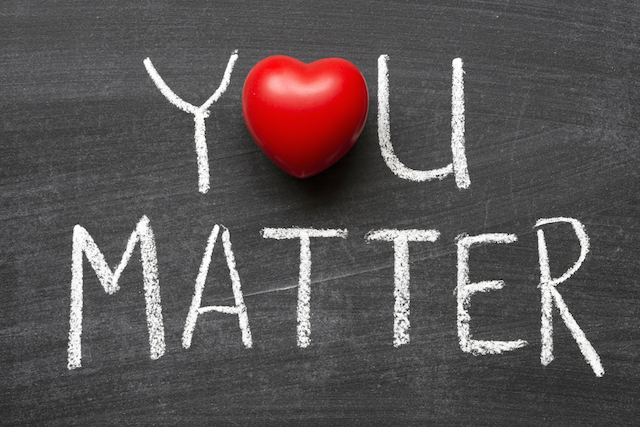
    You Matter

    “Your value doesn’t decrease based on someone’s inability to see your worth.” ~Unknown

    On a summer night in Hicksville, Long Island, I swung the bat and drove a double down the left-field line. I broke up the pitcher’s no-hitter, and he was one of the best pitchers in the league. I felt completely at home. I was myself.

    On another summer night in Vergennes, Vermont, I stumbled back to the fence tracking down a fly ball. I speared at it with my glove, then watched it bounce off of my hand and go over the fence for a grand-slam home run. I felt numb and hateful.

    For each negative episode on the baseball field, it would take days to recover. It tortured me, and by association, those around me. It wasn’t just baseball, either. It was all things—academics, peer-acceptance, or any life event.

    Well into my late twenties, I was still soaring through emotional ceilings and crashing through emotional floors. The longevity of the pattern was beginning to drive me crazy. I needed to end this cycle, but how?

    I didn’t know at the time that this was a self-esteem issue. The major flaw in my worldview back then was that my self-worth was based on what other people thought of me.

    Going back to when I was a kid, and well into adulthood, I was highly sensitive to the feedback of others. As a kid, a teacher would praise me and I’d be on top of the world. Later in the day, a coach would yell at me and I’d feel worthless.

    I had no internal anchor or innate sense of value. And why would I? The culture I grew up in was one where you could have worthless people. If you didn’t add value in some way to some person, you had no worth. You didn’t have a reason to exist.

    For me, grades and sports were what I did to prove I was worth existing. When things went well, I was untouchably confident. I felt alive and powerful. On the other side of that coin, during the bad periods, I felt homeless. Like I didn’t deserve to be, well, anywhere.

    I had no idea that life didn’t have to be this way.

    A Moment of Clarity

    One weekend in my early thirties, I was bed-ridden with the flu. Through the bedroom door, I listened to my wife and two small kids the entire weekend. On Sunday night, when I was feeling better, I came out to spend time with them.

    As I walked out, I could feel the energy in the room lift. This was something I had never experienced before. I felt a relaxing of tension and a sense of uplifting from my wife and kids. As I began talking and catching up on the weekend, I could see the positive effects continue.

    In that moment, the thought struck me—I’m being valuable just by showing up.

    Just by being myself, and expressing myself, I had a positive effect on everyone in the house. It was clear to me that things were different and better, simply because I was present.

    I gave more thought to how people’s lives would be if I simply disappeared. I began paying attention to the effect my presence had in normal, everyday situations. I realized that by expressing my truer nature—my quirky, sometimes nerdy, genuine self—I made a positive impact. I was giving out positive energy.

    This had been happening my entire life, but I wasn’t aware of it until that weekend.

    Over time, as these ideas took root in my mind, I sensed for the first time that I deserved to be here on Earth. I had an inherent right to exist; not a right I had to earn. I no longer felt like a guest.

    It was the start of a confidence rooted deeply within myself. I wasn’t emotionally dependent on the feedback or opinions of others. I now knew I had something of value, something that was intangible and plentiful, and I could give it to others all of the time. It was me and my energy.

    From there, I started to look for the same in others. I realized everyone has a unique piece of life’s puzzle to contribute. Some contribute in small ways, some contribute in large ways, but everyone’s piece is important. You cannot have a whole puzzle if a piece is missing.

    With this increased sense of value on my own life and the life of others, the quality of each day is noticeably better. Spending time and connecting with others not only feels like I’m giving a unique gift, but I’m receiving one as well. It’s a completely different way of living.

    This is a far cry from the me who kept his true self hidden. I used to think that revealing my true self was the cause of turmoil and destruction, and now I’ve realized that my true self is the vehicle through which I enjoy life.

    What I’m saying here goes beyond people who have a wife and kids. It goes beyond whatever limits you might feel you have based on your lifestyle or social circle. It’s impossible for you to know what kind of effect you are having on the world as a whole.

    You are you for a reason. Your quirks, your idiosyncrasies, the things that make you unique and who you are—you are meant to be these things and go about life in this way. Each action you take that’s based in your unique personality has ripple effect upon ripple effect.

    It’s impossible for you to know that the random person you chatted with on a bus about the Lord of the Rings trilogy ended up reading the books and became passionate about them. And that person shared them with someone else, who loved them so much and felt so inspired that they went on to become an author for themselves, writing books that sparked the imaginations and passions of thousands or even millions.

    Could you have ever known that sharing your interest on some random Tuesday on a bus could have had that effect? Did you consider that by staying silent, you broke the chain that would’ve resulted in joy for millions of people around the world?

    Nobody can know these things, but they are the everyday miracles of life. There is your value—it’s you, your uniqueness, and your expression of it.

    We are all blessed with a unique value, and the more we cultivate it and share it, the better we feel every day. Your true self is a gift and a key to unlocking a life of greater satisfaction. Go ahead and use that key. It will open a lot of doors.

    You matter image via Shutterstock

  • Why Rejection IS Sometimes Personal (but Not About Your Worth)

    Why Rejection IS Sometimes Personal (but Not About Your Worth)

    “No one can make you feel inferior without your consent.” ~Eleanor Roosevelt

    It’s not about you. It’s about them. It’s their loss. Don’t take it personally. It doesn’t mean anything.

    Well-intentioned people have told me these things many times to soften the blow of rejection. And I wanted so badly to believe them, but how could I?

    When someone doesn’t want you, it’s hard not to take it personally. They don’t want you. It must mean something about you, right?

    When five college theater programs rejected me, when guy after guy ditched me, when countless potential friends avoided me, I thought for sure it meant I wasn’t talented or lovable.

    I beat myself up, put myself down, and wished I could be someone better, someone people wouldn’t so quickly write off.

    I tried to reframe it, to consider that it really had nothing to do with me. I knew this thought was supposed to comfort me, but something told me this wasn’t right—and it wasn’t my low self-esteem.

    Eventually, I was able to look beyond the simplicity of black-and-white thinking and recognize a beautiful grey area.

    That grey area was the key to bouncing back from rejection. It was the key to learning about myself. And it was the key to changing how I showed up in the world, and how I experienced it.

    In the grey area, rejection sometimes is about us, but not about our worth.

    In high school, I had tremendous potential as an actress and singer. I got cast in lead roles plenty of times, received abundant praise for both my dramatic chops and my comedic timing, and represented my school choir at a national competition.

    I had talent; I know this now. Still, with the benefit of hindsight, I also know that my college rejections did mean something about me.

    I didn’t take care of myself back then. My throat was constantly hoarse due to aggressive bulimia. And I was terrified of judgment, which made it difficult to be present and throw myself into my monologues.

    But none of those things meant I was untalented or unworthy. They meant I needed to be kinder to myself, to strengthen my confidence, and to grow as a person and performer.

    As a teen and in my early twenties, I had a lot to give in relationships. I was compassionate, good-hearted, and loyal to those I cared about.

    I was lovable; I know this now. Still, with the benefit of hindsight, I also know that my inability to sustain relationships and friendships did mean something about me.

    I frequently looked to others to fill gaps in my self-esteem. I obsessed about myself while blinding myself to their needs. And I was clingy, insecure, and unwilling to heal the pain that caused me to focus all my attention on winning their approval.

    But none of these things meant I was unworthy of love. They meant I’d experienced tremendous pain and I needed to heal and learn to love myself before I could truly love or be loved by others.

    Some rejections really weren’t about me—like when a casting director was looking for someone older.

    Most times, there was a lesson for me in the rejection, some area where I could learn and improve. But the lesson never had to do with my worth as a person—only about my potential for growth.

    This isn’t a mindset I adopted quickly or easily. 

    For years, I hated myself when I failed or it seemed people didn’t want me. Even the tiniest rejections would push me down to a dark, dirty place of “There’s something wrong with me.”

    And it was awfully tempting to stay there. In a way, it felt safe. It was a place where I could hang out without getting shut out.

    In accepting my inadequacy, I was free to shut down and avoid future rejections. What was the point of trying when I knew I was the problem, and there was nothing I could do about it?

    If I plain and simply wasn’t good enough—if I was intrinsically unworthy of all the things I wanted—then I could stop putting myself in a position to have this disheartening truth confirmed.

    Or, perhaps even more depressing, I could lower the bar on what I wanted so that it aligned with what I believed I deserved. I could seek out jobs that dissatisfied me, men who looked down on me, and friends who devalued me.

    Because that’s what happens when you conclude that you’re unworthy and undeserving—you find people and situations that confirm it.

    Like I did in my mid-twenties, when I casually dated a man who said I was lucky he spent time with me because I wasn’t really a great catch (while torturing myself by living in NYC but not auditioning because I thought I wasn’t good enough).

    I know now that I am good enough. I deserve so much more than I once settled for, despite all the rejections I received. And I have a light I can share with the world, if I choose to kindle it instead of stifling it.

    In a way, I’m grateful for those rejections. They enabled me to identify areas for growth, to develop confidence while making progress in those areas, and to tame the cruel, critical voice inside that hurts far more than anyone else’s rejection.

    We all have a voice like this, and it has a knack for getting louder right when we need compassion the most.

    When we’ve failed to achieve something we wanted, it likes to obsess over all the reasons we probably shouldn’t have put ourselves out there.

    Really, it’s trying to keep us safe by discouraging us from putting ourselves in a position to be hurt again. Just like our friends are trying to protect us from pain by telling us it really isn’t about us.

    But safe isn’t a place where we learn or grow. It’s not the key to feeling alive, engaged, challenged, or proud of the way we’re showing up in the world.

    To feel those things we have to first tell ourselves we’re worthy of those feelings—no matter how much room we have for growth.

    We have to tell ourselves that we can achieve more than we think, but we are so much more than what we achieve.

    We have to live in that grey area where failures and rejections provide information, but not confirmation that we’re not good enough.

    I’m not always open to that information. On days when I’m feeling down on myself, it’s tempting to interpret “no” as “no, you don’t matter.”

    Even those days are opportunities, because I get to practice telling myself, “Yes, you do. Now prove it. Keep learning. Keep growing. And keep showing up, because you have so much more to give.”

  • Why We Should All Stop Trying to Be Good Enough

    Why We Should All Stop Trying to Be Good Enough

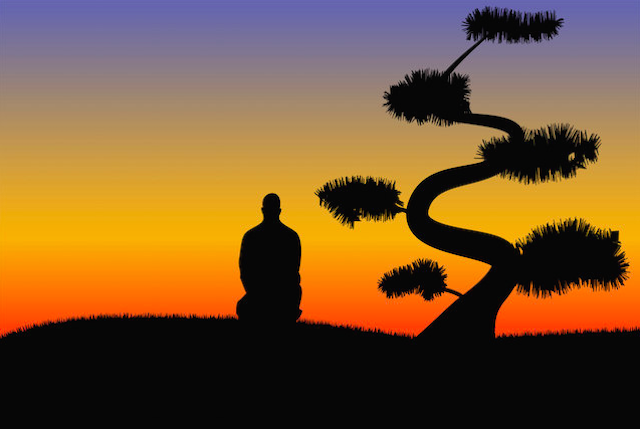
    Man Sitting Under Tree

    “Only something as insane as human beings would ever asked themselves if ‘I’m good.’ You don’t find oak trees having existential crisis. ‘I feel so rotten about myself. I don’t produce as much acorns as the one next to me.’” ~Adyashanti

    The feeling of not being good enough is widespread among the population regardless of age or social status. Even people who, from society’s standards, are highly successful may very well feel they are not good enough and that something is missing.

    For most of my life, I suffered from that feeling of not being good enough.

    When I joined a master’s degree program a year and half ago, I was shocked to see how smart some students in my class were. I was surrounded by people who had more work experience than me and were way more confident than I was.

    Sometimes I felt stupid in their presence. No matter how hard I tried, I just couldn’t find a way to contribute in class. Never befor had I felt such a deep sense of not being good enough.

    Achieving, learning, or experiencing more never seemed enough to fix my issue. I started to seriously question whether anything I would accomplish could ever help me feel “good enough.”

    I perfectly understood that there would always be people around me that are more confident, more attractive, smarter, richer, or more knowledgeable than I am, but this still didn’t make me feel better.

    Since I always felt that my duty was to contribute to society, feeling that I couldn’t contribute as much as I would like to made it difficult for me to maintain a healthy self-esteem.

    When it comes to self-worth, experts generally recommend using positive affirmations, learning to be more self-compassionate, or achieving small goals to create momentum and build confidence.

    These techniques are certainly good ways to build self-esteem, and I used them personally with some success. However, it’s likely that they might be missing the point.

    Rather than “How can I feel good enough?” wouldn’t a better question be: “Do I need to feel good enough?” or “Is it actually possible not to be good enough?”

    Most people spend their life trying to be good enough, to be liked and appreciated, often without actually succeeding to fill a void within themselves. It’s insane to see how everyone tries so hard to be “somebody.”

    I started wondering if, during all that time I spent trying to be good enough, I wasn’t actually fighting the wrong battle.

    Our society conditions people to tie up their self-worth to how much they “contribute,” and that supposed “contribution” often refers to the amount of money we earn or our social status. Society creates an artificial duality between “successful” people and others.

    Nowadays, the idea of success is a constant obsession. Media and personal development websites are continually talking about what more can be done to become more successful. Success has become the Holy Grail to pursue, the only path to living a life worth living and earning recognition from society.

    However, I could easily come up with names of people that are regarded as “successful” from society’s standards, but are not from an objective point of view.

    Interestingly, the definition of success is rarely explained. It seems as if we have all agreed with society’s definition. There appears to be very little space to question it; however, could the assumption under which we operate our life actually be false?

    To be honest, this whole idea of good enough or not good enough is nonsense. I’m sure the doctor didn’t tell your parents when you were born that, “I’m sorry, but your son won’t be good enough.”

    The entire paradigm of “good enough or not good enough” comes from the misconception that we need to become “somebody” and that other people have the power to determine our self-worth.

    It is a mere product of social conditioning, not of reality, and it certainly doesn’t have to be that way!

    Depending on your belief or reasoning, you could spend your entire life just meditating under a tree, doing absolutely nothing, and you would still be totally relevant as a human being.

    So why don’t we get rid of that concept once and for all, discard it as irrelevant, and rebuild our life on a healthier assumption?

    Being a total “failure” under society’s standards can never ever make you a failure as a human being. Nothing can turn you into a not-good-enough person without your consent, without you buying into the current fallacious assumption that society is telling you to live under.

    Sure, you might have failed at many of the things you’ve tried and some of your friends might be more “successful” than you are, but then, does that mean you are not good enough? Does that really mean you are not worthy?

    If you buy into society’s expectations, yes, probably. If you don’t, the question then cannot be answered, because it’s irrelevant!

    A tree doesn’t have self-esteem issues. A bird doesn’t ask itself, “Am I good enough?” Why should you?

    Are your attempts to become somebody actually working? If not, it might be time for you to stop trying to be “somebody” and just relax.

    Imagine the sense of freedom that you would experience if you were to stop trying to be “good enough.” Suddenly, the burden you’ve being carrying on your shoulders would become lighter.

    You could then enjoy your time with others without trying to impress them. You’d be able to free up your energy for more creative purposes. Suddenly, you could just be yourself.

    The greatest and wisest spiritual teachers of all time stopped trying to be somebody because they realized that it was not possible. If after all those years of inquiry and self-reflection they came to that conclusion, is it possible that they were on to something?

    So do you really need to be good enough? Are you fighting the right battle? This is something you might want to meditate on. It might require some time before you can change your former conception, but isn’t it worth trying?

    Personally, I chose to fight less and to progressively distance myself from the battlefield. I’m not “not good enough” or “good enough.” I am just who I am and that’s more than enough!

    Man sitting under tree image via Shutterstock

  • What Are You Worth?

    What Are You Worth?

    Have you ever worked a job where you were grossly overqualified or underpaid?

    I once had a job where I was getting paid $12/hour for doing stuff that I thought I liked.

    I was working in a field very closely aligned with what I wanted to do in the future, and I had access to all kinds of experts that I could talk with.

    At the start, I thought it was great; I was young, the pay was tax free, and it was my first job after a long absence from the United States.

    But as time wore on, I was using all kinds of skills that, in their respective marketplaces, fetched much more than $12 an hour. I was suddenly doing tech work and website alterations, newsletter creations, and online marketing.

    I still thought nothing of it because I was learning and helping my employer.

    One night I was eating dinner with a friend who sowed the seed of something insidious in my head:

    She said, “Are you serious? You should be getting paid three times what you are for what you’re doing. They are paying you to be a secretary essentially—not to do web design and marketing. That’s absurd. And that’s not what they hired you for.”

    I went home that night and couldn’t sleep. Am I worth $12 an hour? Or am I worth more? What am I worth? Should I demand more pay or just quit?

    I didn’t realize it then, but I willfully decided I was not going to be happy at work from then on. I spontaneously decided I was worth much more than $12 an hour—but instead of quitting, I stayed and felt indignant about being devalued. (more…)