Tag: validation

  • The Lie of Packaged Healing and the Truth About Feeling

    The Lie of Packaged Healing and the Truth About Feeling

    “Emotions are not problems to be solved. They are signals to be felt.” ~Vironika Tugaleva

    We’ve been taught to package our emotions like fast food—served quick, tidy, and with a smile. Americanized feelings. Digestible. Non-threatening. Always paired with productivity.

    If you’re sad, journal it. If you’re angry, regulate it. If you’re overwhelmed, fix it with a three-step plan and a green juice. And if that doesn’t work? Try again. You probably missed a step.

    This is how we sell emotional healing in the West—marketed like a self-improvement product. Seven-minute abs. Seven habits. Five love languages. Follow the formula. Find the peace.

    But what if the formula is the lie?

    As a mental health therapist, I’ve lived it on both sides. I’ve sat in the client chair, feeling broken because my sadness didn’t resolve after enough gratitude lists. And I’ve sat across from clients who whisper their grief like a confession, wondering what they did wrong because they still feel something.

    They aren’t doing it wrong. They’re just human.

    Healing isn’t about “doing” our feelings. It’s about learning how to actually feel them—without the compulsion to justify them or translate them into something useful.

    You owe no explanation for your feelings.

    And still, even knowing that, I get caught in it too.

    I, too, am a product of this culture—a place where feelings are only tolerated when packaged properly. Not too loud. Not too long. Preferably resolved by morning.

    Because of that, there are days I feel a deep aloneness. But I’ve come to realize the aloneness isn’t a flaw—it’s a longing. A longing to be witnessed in the fullness of my humanity. Not fixed. Not analyzed. Just seen.

    I don’t need validation. I don’t want to defend how I feel. I just want space. Presence. Room to let the feeling pass through me.

    The loneliness reminds me how deeply I’ve been shaped by a culture that fears emotions unless they come with an action plan.

    So I’ve learned to hide mine from most people—not because I’m ashamed, but because they’re afraid. People are afraid of their own feelings, so of course they’ll fear the vulnerability of mine. Most people in this country don’t know what to do with real feelings. And the doing has become the problem.

    That fear of being too much or too messy is rooted deep not only in American culture but also me.

    That part inside me judges the part of me that feels sadness at times. She calls it weakness. Not out of cruelty, but out of fear. She believes that if she can shame that part, a much younger, more authentic part that lives inside me, she won’t risk being shamed by others.

    I’m sure many other Americans have this exact same part inside them as well.

    We have to be tough, suck it up—whatever that even means.

    The part of me that gets sad. The part that gets afraid. The part that feels lonely. These are parts I exiled long ago. But I am beginning to bring them home to me. The parts that are terrified of taking up space. They don’t know yet how precious they are.

    They’re not just tender. They’re wise. They’re the intuitive, empathetic, deeply alive parts of me. The parts our culture has spent countless centuries trying to forget.

    But I won’t forget those parts. Not anymore.

    I speak to them now, with clarity and compassion. I tell them: You are allowed to feel without defending it. You are allowed to take up space without apologizing for the weight of your truth. Expand. Don’t shrink.

    The sad one. The scared one. The one who wants to hide. The one who’s learning to stay. Even the critic. They can all exist inside me—side by side—without contradiction. Without shame. Without needing to explain themselves to anyone.

    I will no longer betray them because others betray their own parts and project their self-betrayal onto me.

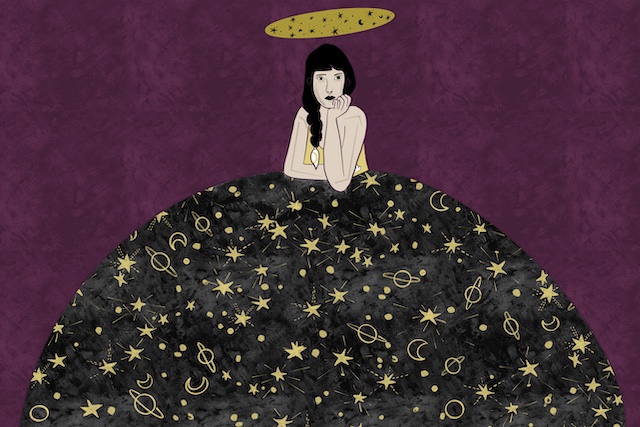
    There’s a whole galaxy inside me, and there’s a whole galaxy inside of you. Of course no one else will fully understand it.

    What matters is that I do.

    And I’m learning… I’m not here to be understood. I’m here to simply be me—and to allow all that resides in me to be, too.

    And maybe you are, too.

  • The Monumental Trap of Overworking Yourself for Recognition

    The Monumental Trap of Overworking Yourself for Recognition

    “Expectations are premeditated resentments.” ~Unknown

    Yesterday, I found myself sitting across from my boss, fighting back tears as I voiced something that had been eating away at me for three years: “I don’t feel valued enough.”

    The words felt heavy in my throat. As a law professor, I’d always prided myself on being composed and professional. But in that moment, all my carefully constructed walls came crumbling down.

    “I put in extra hours. I mentor people. I’m always available when someone needs help,” I continued, my voice barely above a whisper. “But it feels like nobody really appreciates it. Like all this effort goes unnoticed.”

    Anyone who’s ever poured their heart into their work might recognize this feeling.

    Maybe you’re the colleague who always stays late to help others meet deadlines. Perhaps you’re the team member who takes on extra projects without being asked. Or the person who remembers everyone’s birthdays and organizes office celebrations.

    You give and give, hoping that somehow, this dedication will translate into the recognition and respect you crave.

    My boss listened quietly, his expression thoughtful. Then he shared two insights that shook my understanding of professional relationships.

    “First,” he said, leaning forward, “mastery in any field takes time. But here’s what most people miss—it’s not just about mastering your technical skills. It’s about mastering your relationship with the work itself.”

    I sat with that for a moment, letting it sink in. How much of my frustration came from actually doing my job versus my expectations of how others should respond to my efforts?

    “Second,” he continued, “when we tie our confidence to others’ reactions, we’re building our professional house on shifting sand.”

    That hit home hard. I realized I had created an elaborate scorecard in my head: Each extra hour should equal a certain amount of appreciation; each additional task should translate to a specific level of respect. When reality didn’t match these expectations, my confidence crumbled.

    It’s a trap many of us fall into. We believe that if we just work hard enough, stay late enough, and help enough people, recognition will naturally follow. When it doesn’t, we feel betrayed and undervalued and begin to question our worth.

    Ultimately, we need to learn to validate ourselves, but here’s where things get nuanced—and important. This doesn’t mean we should accept environments that consistently undervalue or exploit our dedication. There’s a delicate balance between developing intrinsic motivation and recognizing when a situation is genuinely unhealthy.

    Let me share what this balance looks like in practice. A few months ago, I noticed I was staying three hours late every day, answering work messages at midnight, and constantly taking on others’ responsibilities. At first, I told myself I was just being dedicated. But then I asked myself three crucial questions:

    1. Is this a pattern of working hard without any recognition, or am I overextending myself because I’m seeking validation?

    2. Are my extra efforts occasionally acknowledged, even if not always?

    3. Do I feel safe expressing concerns about workload and boundaries?

    The answers helped me distinguish between my desire for constant validation and my legitimate need for basic professional respect. I realized that while I needed to work on my own relationship with external validation, I also needed to set clearer boundaries about my time and energy.

    That evening, I opened my laptop and started a different kind of work journal. Instead of tracking others’ reactions, I wrote down what I felt proud of that day: explaining a complex concept clearly, helping someone understand a difficult topic, and making progress on a challenging project. But I also noted when my boundaries were crossed and when additional effort went beyond reasonable expectations.

    This dual awareness—of both internal validation and external respect—changed everything.

    I learned to appreciate my own efforts while also advocating for myself when necessary. I started leaving work at a reasonable hour most days, saving those extra hours for truly important projects. I began setting boundaries around my availability, and surprisingly, this earned me more respect, not less.

    Here’s what I’ve learned about finding this balance:

    1. Question your expectations. Distinguish between needing constant praise and deserving basic respect.

    2. Look for impact, not appreciation. When I did this, I noticed small moments I’d previously overlooked: a quiet nod of understanding during a presentation and a subtle shift in someone’s confidence after our interaction.

    3. Build internal metrics. Define success on your own terms, but don’t ignore red flags in your environment.

    4. Set healthy boundaries. Your dedication shouldn’t come at the cost of your well-being.

    5. Recognize the difference. Know when you’re seeking validation versus when you’re being undervalued.

    Most importantly, I’ve learned that true professional satisfaction comes from a combination of internal confidence and external respect. It’s about knowing your worth while ensuring you’re in an environment that, at least fundamentally, recognizes it too.

    Now, when I catch myself slipping into old patterns—checking for signs of appreciation or feeling resentful about unacknowledged efforts—I pause and ask two questions: “Am I doing this because it matters to me, or am I doing it for recognition?” And equally important: “Is this a reasonable expectation of my time and energy?”

    Some days are still challenging. There are still moments when I wish for more recognition. But I’ve found peace in knowing that while I don’t need constant validation, it’s okay to expect basic respect and appreciation in my professional life. The key is building enough self-worth to know when you’re seeking excess validation and when you’re simply asking to be valued appropriately.

    This morning, I walked into my workplace with a different energy. I felt confident in my worth, clear about my boundaries, and secure in knowing that while I don’t need endless praise, I deserve to be in an environment that recognizes my contributions. Because true professional growth isn’t about learning to accept less than you deserve—it’s about finding that sweet spot between internal validation and healthy external recognition.

  • 6 Mindset Shifts to Overcome the Need for External Validation

    6 Mindset Shifts to Overcome the Need for External Validation

    “Relying on external validation to understand your worth is not sustainable. If you depend on people to build you up, you also give them the same power to break you down. You are worthy regardless of their opinion.” ~Unknown

    In my heart of hearts, I knew I wasn’t supposed to rely on others for validation. Yet, for the longest time, I found myself seeking external approval to define my worth.

    I was constantly seeking reassurance from friends, family, and even strangers. Their validation became the measure of my self-esteem, leaving me trapped in a cycle of doubt and insecurity.

    I had several achievements under my belt, yet the accolades and praise never felt quite enough. The need for external validation consumed me, overshadowing my own sense of accomplishment and robbing me of genuine pride in my achievements.

    It seemed like I had the best job and everyone admired my success. Despite the external validation pouring in, there was an emptiness within me, a hollowness that reminded me I was seeking validation in all the wrong places.

    I had a nagging feeling that something was amiss.

    But was it the right thing? Is doing anything in life out of a desperate need for validation truly fulfilling?

    Interestingly enough, not only did I know I didn’t want to rely on external validation, but deep down, I also knew that those who constantly sought validation were often less fulfilled.

    I was one of those individuals who would sacrifice their own desires to gain the approval and validation of others. It became clear that this dependence on external validation was holding me back from true self-acceptance and happiness.

    So why did I continue down this path? Why did I keep seeking validation from others when I knew deep down it wasn’t serving me? And most importantly, how can one overcome this toxic need?

    Before I get to the mindsets required to overcome the need for external validation, let’s talk about the mindsets that will almost certainly lead to a dependence on external validation.

    See, it’s often better to figure out what to avoid first instead of trying to navigate through a maze blindly. I know, because these are all mistakes I’ve made myself.

    Mindsets That Lead to a Dependence on External Validation

    1. The Pursuit of Perfection

    For the longest time, I couldn’t escape the allure of perfection. I always had to strive for flawlessness, believing it was the key to validation. But the truth is that perfection is an illusion. It sets an unrealistic standard and creates an insatiable need for external validation.

    We develop a flawless mindset because we’re driven by the fear of being judged or rejected. However, it hinders self-acceptance and prevents us from embracing our authentic selves.

    2. Fear of Failure 

    Fearing failure is closely linked with seeking external validation. That’s the trap we fall into—we perceive failure as a reflection of our worthiness. We think that just because we’ve stumbled, we are somehow lesser. We don’t recognize that we can learn and grow from failure because we’re too afraid of what other people will think.

    3. Comparison Trap

    Seeking validation in comparison leads to a never-ending cycle of frustration. For me, it was having an incessant need to be better than others. For others, it’s simply being acknowledged as equal. Some might siphon validation through getting more social media likes or job promotions than their peers. Whenever we seek validation through comparisons, it tends to be a trap.

    4. Seeking Approval from Everyone

    Even though I didn’t always love being a people-pleaser, seeking approval from everyone and sacrificing my own needs and desires became ingrained in my identity. Then, when the realization hit, I found myself having to build a new life based on my own values and aspirations. Had I established an identity of wholeness rather than seeking universal approval, I wouldn’t have fallen into the trap of constantly trying to please everyone.

    5. External Validation as a Measure of Self-Worth 

    You should get that promotion, those accolades, and the approval of others. Living on external validation is the only way to measure your self-worth, right? You should have a constant stream of praise to feel good about yourself.

    But you shouldn’t. You know the tropes, but here’s the truth: External validation can never truly define your worth. And you’re the only one who can recognize and embrace your inherent value beyond others’ opinions.

    6. Neglecting Inner Reflection

    I was caught up in seeking external validation for so long because I didn’t know who I was. But in the wake of countless disappointments, I completely gave up on that approach.

    For months, I quit searching for approval and turned inward. I got more and more in touch with my values, my passions, and my true self. It’s only through putting ourselves first and nurturing self-awareness that we can cultivate a strong foundation of self-validation.

    So, what mindset can help you overcome the need for external validation?

    I can’t give you any definitive answers because I don’t know you. I’m not a psychology or mental health expert. I’m just a guy who’s tried, failed, lived, failed, and done it all over again.

    So, just like I’ve given you insights about what not to do based on my personal experience, I’m going to give you some insights based on the way I’m living my life now.

    1. Embracing Imperfections

    Every experience I have now is an opportunity for growth. I do my best not to strive for perfection but rather to embrace imperfections as part of being human. I don’t feel sour about my flaws; instead, I see them as stepping stones to becoming a better version of myself.

    I try to look at outcomes as lessons rather than measures of my worth. Instead of using external validation as a benchmark, I’ve become more focused on self-acceptance and personal growth.

    You can’t experience true growth without embracing imperfections. They operate on different ends of the same spectrum and wavelength, shaping us into resilient individuals. If you try to avoid imperfections, you deny yourself the opportunity to learn, evolve, and ultimately become your authentic self.

    2. Self-Defined Success

    This doesn’t mean I don’t care about the opinions of others; I do. But I’m not going to construct an identity around their validation. I’m focused on living a life that aligns with my values and aspirations.

    I’m more than welcome to let people into that experience, and of course, their support and encouragement are valuable. But I’m no longer going to chase external validation or base my self-worth on it. And I’m not going to analyze every comment or reaction as though they’re saying something about who I am. The goal is to be true to myself, define my own success, and find fulfillment from within.

    3. Authenticity and Vulnerability

    I feel no pressure to present a curated version of myself for validation. I could easily mold my image to fit societal expectations, but it just doesn’t matter. I don’t go on a quest for likes and approval. I just do me, unapologetically.

    This isn’t just a mindset I’m using for personal gain; it’s about living authentically. I’m now embracing authenticity and vulnerability as strengths and prioritizing self-expression over seeking validation from others. It’s a path of courage, growth, meaningful connections, resilience, and living with integrity.

    4. Internal Validation Practice

    I learned how to validate myself—who I am, what I enjoy, and my values—because I realized that seeking validation from others was an endless pursuit, and I could never control how others perceived me. I also took time to acknowledge and celebrate my own accomplishments. I took the approach that everything in my life, both big and small, deserved recognition.

    Moving forward, my attitude shifted toward self-appreciation and recognizing my worthiness independent of external validation. This is a never-ending process, but it’s also the most useful process for self-empowerment, self-compassion, intrinsic motivation, balanced self-perception, and authentic self-acceptance.

    5. Constructive Self-Talk

    I’ve had moments of insincerity when I’ve portrayed a persona that doesn’t align with my true self, leading to a feeling of dissonance and self-deception. I’ve also spent a lot of time criticizing myself, doubting my worth and capabilities, without realizing I was viewing myself through a distorted lens.

    Moving forward, I’ve decided I’m going to be honest about who I am. No more pretending to be someone I’m not. And I’ll no longer lie to myself about my worth.

    That’s the hardest part: replacing self-criticism with self-compassion and encouragement. However, fostering a mindset of positive and constructive self-talk is essential for nurturing self-esteem and self-acceptance.

    6. Embracing Supportive Relationships

    The irony is that we often hide who we really are so other people will validate our worth—but how can they if they don’t truly know us? We might also try hard to seek validation from people who are unable or unwilling to give it.

    None of us can do life alone. But instead of changing to please others or fighting for approval from the wrong people, we all need to surround ourselves with supportive and uplifting individuals who value and appreciate us for who we are.

    So, what should you do with these pieces of advice?

    I suggest you analyze them. Discard the ones that don’t resonate with you and keep the ones that do.

    The important thing is that you see what mindsets are guiding your life and release the ones that aren’t serving you so you can be free and present, not controlled by other people’s opinions and the endless pursuit of validation.

  • 4 Things You Need to Know About Your Hurting Inner Child

    4 Things You Need to Know About Your Hurting Inner Child

    “She held herself until the sobs of the child inside subsided entirely. I love you, she told herself. It will all be okay.” ~H. Raven Rose

    The first time I heard about inner child work was in a random article I found on the internet.

    It caught my attention because I was struggling to develop loving and compassionate feelings toward myself. Although I understood the role of limiting beliefs and unhealthy habits in my healing process and how to overcome them, I couldn’t feel love and empathy for myself.

    Most of the time, I was either very harsh toward myself for any minor mistake or denied feelings that came up.

    For example, as a teenager and a young adult, I struggled with anger. As I got older, I realized that emotional outbursts aren’t healthy, so I began to mask my anger with passive aggressiveness. However, the shame around anger remained because there were times when I still felt strong and intense anger. I just got better at hiding it. Or so I thought.

    I felt anger quite often, and I couldn’t stand it. I got angry with myself for being angry.

    The same denial and frustration applied to other emotions that made me feel vulnerable, like shame, guilt, or judgment.

    Because of the work I was doing with women, I thought I should be somewhere else, focusing on blooming flowers and appreciating the sunshine. In the meantime, I didn’t feel like I was walking my talk. And that, with no surprise, brought more shame and anger.

    Then, one day, my fridge broke down.

    I began to deal with the issue, trying to schedule maintenance. As I was driving to meet with a client, I received an email regarding appointment times that wouldn’t work for me, and there wasn’t a lot of flexibility in rescheduling.

    Suddenly, I felt an intense upsurge of anger and frustration flooding my body. Although I was able to witness it without reacting, it alarmed me since I hadn’t felt this way in a long time. Tears started to run down my cheeks.

    I felt defeated while asking myself,  “Why am I feeling this way? Why are these emotions still here? When is it going to stop?”

    As I was trying to wipe my tears while navigating rush-hour traffic, a thought came to mind: “It’s okay to feel angry.”

    I placed my hand on my chest, briefly closed my eyes as I was waiting at a red light, and whispered, “I see you” (referring to my inner child, recognizing her acting up by being angry).

    Soon after, something unexpected happened.

    I opened my eyes and felt a profound sense of lightness. The anger had left my body.

    I was in awe. More tears began rolling down my face, but this time from gratitude for the acceptance and grace I was able to give to myself.

    I realized that the whole time I was suppressing my anger, the inner version of me was asking for acceptance. She wanted to be seen and acknowledged, without judgment. It felt as if my inner child had been trying to get my attention and show me something (as kids do), but I kept pushing her away while being busy with other stuff.

    The moment I turned to her and gave her the attention she needed, she settled down.

    After this profound experience, I began to dive deeper into this healing modality and understood four things about the inner child in all of us.

    1. Our inner child wants to be seen.

    When we are acting on our triggers and behaving in ways that we know are not healthy for us, it means that our inner child is acting up. I always visualize a scene of a little girl or boy pulling their mom’s sleeve, trying to show her something. It’s like they are saying, “Mom, look. Mom, pay attention to me. There is something important I want to show you.”

    When emotions we don’t like come up, or we act in the same old ways that bring judgment, our inner child is simply trying to get our attention. He or she wants to be seen, recognized, and acknowledged.

    One of the questions I ask my inner child when she is (I am) acting up is, “What are you trying to tell me?” When I do it with my eyes closed, the answer is almost instant.

    2. Our inner child wants to be validated.

    Most of us have had experiences when we got hurt but didn’t receive an apology.

    We’ve also had experiences when the person who hurt us apologized with sincerity. I’m guessing that at least half of our healing took place at that very moment. Instead of being ridiculed or dismissed, we were validated.

    The same applies to our inner children. As I previously described, only when I justified my little girl’s emotions instead of dismissing her did I experience emotional release and healing.

    Since inner child work is about reparenting ourselves, this is how we can understand it. I look at my subconscious mind as my inner child. That’s where all my beliefs, perceptions, and triggers are stored. My conscious mind is my parent. This part of me is logical, able to question my limiting beliefs and actively acknowledge and heal the wounds that are there.

    The beauty of inner child work is that we don’t need apologies from those who we feel wronged us.

    Since we are in the position of a parent and a child, we can give our inner child anything s/he needs.

    3. Our inner child is missing and seeking love.

    Love is the most resilient emotion. It gives us courage, strength, determination, gratitude, and acceptance, and it is often the emotion that our inner child craves the most.

    After we acknowledge and validate our inner child, we can soothe them with loving affirmations and words of encouragement.

    Here is a simple exercise I learned from a guided meditation.

    Close your eyes and take three deep, cleansing breaths. Bring into your vision a simple bench where you and your inner child are sitting together. First, ask your inner child if you can hold his or her hand. Once you receive permission, gently stroke your child’s hand and say the ancient Hawaiian Ho’oponopono mantra three times.

    I am sorry.

    Please forgive me.

    I love you.

    Thank you.

    When I practice this mantra, I use the first affirmation, “I am sorry,” to apologize to my inner child for any pain and hurt I caused her by not paying attention to her when she needed me. Then, I ask her to forgive me for denying her presence and the healing she was so desperately asking for.

    These first two mantras are deeply healing because once I forgive myself for betraying myself and my inner child, I feel instant relief and more drive to keep going. I am not paralyzed by subtle guilt anymore.

    In the end, I reassure her that I am here for her by saying that I love her and then thank her for giving me this opportunity to heal both of us.

    4. Our inner child is a gateway to heartfelt emotions.

    Often, when I see a child, there is a level of softness that enters my body. I attribute it to the innocence and sweetness children represent.

    Imagine yourself being upset, and suddenly a three-year-old comes in front of you and starts smiling. Whether you want it or not, it will affect you to some extent, and you may even smile back.

    We can embrace the same dynamic with our inner child and use it as a way to feel heartfelt emotions. One of those ways is to use the visualization exercise I shared with you earlier.

    The more we practice feeling love, compassion, and empathy toward our little selves, the more accustomed we become to feeling these emotions.

    Although guilt, judgment, shame, or anger may still arise, instead of judging or denying them, we can use compassion and curiosity to understand what these emotions are trying to tell us.

    By validating and accepting what we feel, we can reparent ourselves, heal our wounds, and start living from the most powerful place there is—the place of love.

  • My New Goal: To Believe in My Inherent Worth

    My New Goal: To Believe in My Inherent Worth

    “I have inherent worth. It cannot be raised by my strengths or lowered by my weaknesses or defects of character.” ~Pia Melody

    Perhaps you’ll resonate with the way I am feeling as of late: I tell myself I am enough. I have always been enough, just as I am, without doing anything at all. But I struggle to accept this truth without feeling like I have to earn it. Like I have to take a zillion steps for self-care, accomplish a certain number of goals, or do enough things to win validation from other people.

    I believe at the core of my being that I am born to be of service. I am a generator, here to bring love and beauty. I am a Capricorn sun—worker bee; Virgo rising—organizer; Cancer moon—deep feeler. All of that makes sense to me. The fact that I am worthy without any of these aspects, that is the part I have a hard time wrapping my mind around.

    My entire life I’ve believed that we should be constantly striving to evolve and do better and feel more and be better. That makes sense. Even checking the box of “work on giving yourself grace” makes sense. What does NOT feel actionable, and perhaps feels even a bit unattainable, is the fact that I am supposed to feel completely worthy just for being alive. For existing. What!?

    All of my astrology charts and tarot readings and apps and friends tell me I should work on living in my worth, and my initial response is “I’m TRYING! I am doing all the things and trying to get there!” I completely miss the fact that it’s not the doing that’s going to get me there, but the knowing, the believing, and the subconscious agreement that I am worthy. 

    My current goal (or maybe not a goal, since it is more of a daily practice) is “knowing, embodying, embracing, and LIVING IN my worth.” So, as of now, I am going to work on not working on this. “The Work” is actually more about rest. Forgiveness. Play. Pleasure. Softness and release and acceptance. That doesn’t sound like something I can make a checklist out of, but okay, challenge accepted.

    “I have nothing to prove” is my motto for this next year, or chapter of my life. In every moment that I feel unworthiness, competition, or judgment, I am choosing to repeat to myself, “I have nothing to prove.” How powerful is that? I have nothing to prove! 

    Everything that needs to be proven by my soul expression is proven already just by my existence. Just by being alive, I have proven myself, and so have you. In fact, my only real goal is to truly believe I am worthy, just as I am.

    But, if that’s it, then what? Is all of life pointless if that is my only goal? If I believe I am worthy just as I am, what will I lose? Will my drive and purpose escape me? No, of course not; in fact, the opposite is true, and I will be able to continue doing what matters to me with more space, joy, and enthusiasm.

    I’ll be able to honor my top values, the things I truly cherish—freedom, creation, growth, and connection—without feeling pulled to do things I believe will bring me praise.

    I’ll be able live a life that feels in alignment with me, live a fuller expression of who I am at my core, and redefine how I view and implement self-love, self-care, and self-worth.

    Yet, it can be incredibly scary to let go of who you have always been, and I have always strived for the gold stars, the “good girls,” and validation from any and every source, in any and every form.

    It’s been exhausting, and I so badly want to put down the weight of needing these unachievable levels of approval, yet I am still learning how. Maybe I will always be learning how, but with each expectation I release, I feel a bit lighter. Each time I choose myself, I open myself up to better things, like bigger love and more peace. 

    I embrace the “let them” theory when it comes to other people’s perceptions of me. They think you are mean? Let them. They don’t like you? Let them. Everyone will have their own truth and story, and if they aren’t interested in hearing your side or do not want to understand your perspective, do not spend your time and energy on what they are doing any longer. It is safe to let it go.

    Focusing on yourself and implementing the “let them” theory is much easier when you remember you are worthy no matter what. When we are living in our worth, we are also much less likely to act in ways that are destructive to ourselves and others.

    The times in my life when I made the biggest mistakes or hurt others were times when I felt unworthy or was struggling with self-worth. This does not excuse poor behavior but can be a reminder of why living in our worth is important not only for ourselves, but for the good we want to do in the world.

    I have slowly made the shift from external to internal validation, yet even that does not feel like true self-worth. Yes, I might have let go (to an extent) of what others think, but I still am telling myself “gold star IF you work out every day this week,” or “good job IF you keep your house perfectly clean,” or “you are an incredible mom IF you make sure to work on these specific skills with your toddler at least three times a day consistently.”

    I tell myself this is better than external validation because the goals and approval are coming from myself, but unfortunately, they are not coming from me at all but from my ego—that part of my humanity that still thinks I need to do and achieve, or be a certain way or look a certain way or show up a certain amount in order to earn my worth.

    So there is another shift I must learn to make. If I have made the shift from external to internal validation, I can make the next shift too. The next shift is believing in my inherent worth regardless of what else I do in life and who approves of me. 

    This is the part where I tell you I have no clear-cut formula for doing this. But I do have an idea of what I need to do that is becoming less vague every day. I am focusing on letting go of limiting beliefs, dreaming in authenticity, and becoming who I believe I am meant to be. Beyond that, I don’t know how yet, and that’s okay.

    I will end by leaving you with these questions: Is there really nothing to DO to become worthy? I just AM, and that’s that? Okay. It is a valid pursuit. I will let you all know how it goes.

  • How Being Alone Made Me Fall in Love with Myself

    How Being Alone Made Me Fall in Love with Myself

    “Solitude is where one discovers one is not alone.” ~Marty Rubin

    “No one invites me to their party.” That’s what middle school was like for me, anyway. No matter how hard I tried, I could never really fit in with any friend groups.

    It seemed like everyone got the instructions on who to hang with and where to sit except me.

    I was the serious, quiet type. And the gossipers and sleepover crews didn’t want serious and reserved. So I bounced around, making a buddy here and there. But I was never fully brought into the social scene.

    At first, I figured it would sort itself out and I’d find my people. But middle school turned into high school. And high school turned into my first year of college.

    I was still on the outside looking in.

    No matter how often I put myself out there to try and squeeze into different circles, I’d end up alone again before long—feeling even more lonely than when I just kept to myself.

    The worst part was when I pretended to be someone else, just trying to fit in. And it would work…for a minute. Then I couldn’t keep up the act anymore.

    I was back to being an outsider. But now I also felt like I lost some inner part of me that made me, me. I was drained. I was bummed.

    Eventually, I realized I had hit rock bottom. I was tired of criticizing myself and trying to contort into someone I was not just to please people who didn’t actually care about me.

    I had already chased after so many groups and friends, desperate for that connection, but all I was left with was emptiness.

    Finally, one day, I asked myself, “Who has been here through it all? The highs and lows, wins and losses?”

    The answer was me, myself, and I. ‘I’ was the constant.

    ‘I’ was the one listening and providing answers when I talked myself through difficult situations. ‘I’ was the one patting myself on the back when I succeeded at something.

    That realization—that I already had the most loyal companion imaginable—brought me more comfort than any superficial friendship or party invite could. I had myself, and I was enough.

    I decided to stop begging for validation or acceptance from others. I was going to validate myself.

    I started actively spending more time alone, without distractions or social media. Reading, writing, and taking myself on solo dates.

    I discovered so much about my interests and strengths. I found inspiration and magic in solitude I had never known before.

    For the first time in ages, I was at peace. I felt whole, not like some fractured version of myself. I was alone but not lonely. I was independent yet fulfilled.

    I became my own best friend. And that made all the difference.

    It taught me that I alone am enough, even if others don’t see my worth. Their approval is meaningless unless I have self-approval first.

    Further, an interesting thing happened once I stopped desperately chasing friendships—I started attracting people who liked me for me. Turns out when you’re confident and self-assured, you give off good vibes that draw others in.

    I made some fantastic friends in college who didn’t care that I was an introvert. And you know what’s the best part? I even found my love partner! Everyone valued my insight and quiet persistence.

    For the first time, I felt like I belonged while still being fully myself.

    I learned four vital lessons from my lonely middle school days:

    1. You are your own best friend or worst critic. How you talk to yourself matters. Build yourself up rather than tear yourself down.

    2. Embrace what makes you different. Don’t hide your unique gifts and talents away in some quest to fit in. The right people will appreciate them.

    3. Connections can’t be forced. Friendships and relationships worth having tend to come when you least expect them. Stop chasing and let things unfold.

    4. It’s better to be “alone” than in bad company. Having toxic or fake friends is far lonelier than having just yourself.

    My middle school self would never believe me if I told him one day, he’d have true friends and a partner who adores his little quirks.

    But by making peace with being alone, I found the relationships I had craved for so long and discovered that all the acceptance I needed was my own.

    I still consider myself an introvert. I enjoy my solo time and quiet hobbies. But now I don’t feel pressured to be someone I’m not just to keep friends around. The connections I do have are based on authenticity from both sides.

    And when I need advice or just someone to listen, I turn inward. I explore my feelings through journaling. I tap into my inner wisdom through long, contemplative walks alone. I’ve become my own counselor and cheerleader.

    I’m so grateful that the younger me kept striving to find his place. All that perseverance led me right where I needed to be—firmly rooted in myself.

    If you’ve been going through something similar, I see you. And I want you to know that you are enough, exactly as you are. You don’t need to earn a spot at anyone’s table for your life to have meaning.

    The people who will love you most deeply are on their way. For now, love yourself. Treat yourself kindly. Pursue your passions unapologetically.

    Speak encouraging words into the mirror each morning. Put in the work to be your best friend.

    And know that wherever you end up in life—surrounded by a tribe of people who adore everything that makes you different or embracing solitude and forging your own singular path—you can’t lose as long as you have yourself.

    I am my own closest companion. You can be your own, too.

    Whatever stage you’re at in your journey of self-discovery, keep going. Know that the loneliness and feelings of not belonging won’t last forever.

    Have faith that things will get better, especially when you nurture your relationship with yourself above all else.

    Maybe today is an awkward day where you’re struggling to find your place. That’s okay. Breathe through it. Tomorrow holds new possibilities.

    Maybe you’re entering a season of solitude that first feels uncomfortable but will ultimately lead to profound growth. Lean into it entirely rather than resist it. There is a treasure to uncover.

    Or maybe you have finally attracted a “tribe” that appreciates the unique shades of who you are. Congrats! But never lose sight of your own worth that exists with or without them.

    Wherever you’re at, you’ve got this. And you’ve got yourself. That’s all you’ll ever really need.

    So stay true to yourself. Don’t shrink parts of you to appease others. Keep taking chances on yourself, even when no one else will.

    Trust that by being loyal to your own soul, you will find both inner fullness and meaningful connections with time.

    For now, chin up, sweet soul. I’m proud of you for how far you’ve come. How far you’ll go from here is breathtaking. Onward.

  • How I’m Learning to Feel Confident Without Approval

    How I’m Learning to Feel Confident Without Approval

    “Children need to feel seen. Adults do, too.” ~Unknown

    As a teenager, I played the flute for about nine years. I never practiced—apart from that guilt-ridden last half hour prior to my weekly lessons. It was important for my parents that their children learned a musical instrument, and so I was given the flute, while my brother played the clarinet (bizarrely, because our grandmother had wanted someone to play Mozart’s clarinet concerto at her funeral).

    Truth be told, I think my brother would have much rather learned the guitar, while I was very envious of his clarinet (he got around playing Mozart at my grandmother’s funeral, by the way).

    Inevitably, we both ditched our instruments as soon as we hit adulthood—except for a few years at university where I played second flute in an amateur orchestra. I had a great time, simply because there is nothing like playing Mussorgsky’s Night on a Bare Mountain as part of an orchestra. It was pure magic.

    When I turned forty, I decided that if I ever did want to learn the clarinet, I ought to do it now, rather than wait until retirement.

    High Expectations

    My clarinet teacher turned out to be a softly spoken man in his fifties, always friendly, ever so polite, someone who had spent his entire career at our local music school and a grammar school for musically gifted children. A fair number of them have been regular (and successful) contestants at the Jugend musiziert competition—a prestigious award for aspiring young musicians here in Germany.

    That aside, I knew nothing about my clarinet teacher, so I googled his name (as one does) and stumbled upon an old newspaper article.

    In it, he was quoted saying that untalented students gave him no real joy.

    Crikey! I was not untalented, I knew that. However, I was quite old to pick up the clarinet, so I reckoned I’d be one of those students he’d rather not teach. Not a nice feeling!

    To be fair to him, I have no idea if those lines were his actual words or something the journalist had concluded from what he had said. I never brought up the subject with him. Either way, right from the start, our lessons weren’t quite going the way I’d expected them to go.

    For instance, we never covered any basic technique. He obviously expected me to figure this out myself. In the beginning, we focused on simple tunes for children. It felt like he wasn’t even trying to teach me anything. By Christmas, I was so bored that I brought along a clarinet concerto that I had nicked from my brother’s stash of sheet music—just to make a statement.

    I will never forget that lesson. The look on his face was priceless. Danzi’s Concerto in C-Major was a million times harder than anything he had ever played with me. Suddenly, I felt like he was treating me a bit more seriously.

    Yes, I admit, a part of me felt very smug at his realization that he had underestimated me. Mainly, though, I still felt awful. I sensed I had climbed his approval ranking purely based on my abilities. It was a shaky victory that could be taken away from me just as soon as I made a mistake.

    Somehow, it reminded me of something from my childhood. I just wasn’t sure what it was.

    Life without Feedback

    I practiced harder than I had ever done before. Frustratingly, I never got any feedback from him. No criticism, no praise, nothing. He remained completely indifferent to me. Every lesson was the same: He’d bring along sheet music, and we’d play together. He’d lecture me about the composer or the piece’s musical merits, but no word regarding my ability or the obvious problems I was having with my clarinet.

    After a while I felt silly, like a frantic child jumping up and down in front of an adult shouting, “Notice me, notice me, please, please notice me!” I had no idea if I was doing well, or if I was a hopeless case. I had no idea where I measured up in comparison to the rest of the world. I was in limbo.

    “I am not learning anything from him,” I kept complaining to my partner, who also happens to be a professional musician. “Well, then talk to him about it or change teachers,” was his pragmatic solution. I didn’t do either, of course.

    A Million Miles Just to Feel Seen

    Instead, I went on a summer course designed for adults who just play music as a hobby. That’ll show my teacher I am serious about the clarinet, I thought.

    I couldn’t find anything suitable in Germany, so I had to go all the way to the UK for that. Even though I don’t regret going (the course was amazing!), I find travel stressful and was already shattered before the course had even started. More than once I asked myself why I was putting myself through all this hassle.

    Was I really doing it because I loved the clarinet and wanted to learn how to play? Or was there another reason, one that I perhaps would not like to admit to myself?

    I remember pondering this while waiting for the course to start. We’d been asked not to turn up before 6 p.m., so I’d spent the day in Cambridge. It wasn’t university term time, but the streets were crowded anyway with tourists and noise and bustle. It was too hectic for me, plus I was lugging around a heavy backpack and a clarinet case. So I fled to Parker’s Piece, a public park between the train station and ancient colleges of Cambridge University.

    As I sat in the grass and watched a local cricket match, it occurred to me that I had literally traveled a thousand miles just to be noticed by someone whose opinion shouldn’t really matter to me. It made no sense to me.

    I thought back to my childhood and why I had stuck to playing the flute, an instrument that I had never cared for to begin with. Suddenly it all became very obvious.

    Ghosts from the Past: Childhood Strategies to Feel Worthy

    Music had been my ticket to recognition. Except that now, apparently, the ticket had expired.

    My parents (and indeed our teachers) had always given my brother and me the impression that we were musically gifted. Consequently, a large proportion of my motivation to play the flute stemmed from the fact that I received a pat on the back for it. My grandparents would attend every single concert, no matter how small my part would be. My parents would be there right next to them, beaming with pride. In those moments, I felt loved.

    I suppose I played my part well to please my parents, who in turn used my achievements to impress theirs. It’s funny how my parents never ceased to be my grandparents’ children.

    Afterward, they would compare my performance to others. Inevitably, my parents concluded that nobody could compete with me. This judgment was seldom correct and entirely unnecessary to boot. It left me with a weird mixture of pride and unease, which I later recognized as my rebellion against the idea that the most important thing in music—or indeed life as a whole—was to be better than everybody else.

    What is more, making your self-worth dependent on achievements is a fragile house of cards, because the very moment somebody better than you shows up, your confidence is in tatters.

    Yet that was what I had grown up with: The expectation to excel and to be better than the rest. In fact, my mother once admitted to me at point-blank she would have had trouble loving me if I had not been intelligent. In her eyes, only achievements made me a worthy person.

    For a child, there is nothing more precious than your parents’ approval. So of course I played the flute, and luckily, I played it well without having to work hard for it.

    Dishing out Achievement, Expecting Love in Return

    They say that if a childhood issue remains unresolved, it will continue to raise its ugly head in adulthood. You will keep rehashing the same old battles—not necessarily with your parents, but other significant people in your life acting as stand-ins for them. In other words, while the people and scenarios may be different, the underlying psychological mechanisms remain the same. You encounter the same difficulties and resort to the same coping strategies that you used as a child.

    My childhood issue was that my parents would only notice their children if we achieved something. Love was not unconditional. It was earned by merit.

    My clarinet teacher was not my father, of course, but it struck me that I was jumping through hoops once again to impress somebody, to gain approval. In fact, not long before I had had a similar situation with my horse-riding instructor, a woman who reminded me of my mother in more ways than I care to admit. She was always a little dismissive of me, and I kept doing the same metaphorical jumping jacks in front of her that I was now doing for my clarinet teacher.

    She proved a hard nut to crack. When I realized I was never going to get her attention with my riding skills, I reverted to an area where I thought I could impress: photography.

    I took photos of her horse-riding events and the horses, hoping she’d like them. She never took much notice, nor did she thank me. When a little while later somebody else started taking photos of her horses, she published them on her website and boasted about them everywhere. I was hurt and jealous.

    It was only in hindsight that I understood it had never really been about the photos or my instructor.

    I was simply treading old grounds, dishing out achievement and expecting attention in return. To my chagrin, neither my horse-riding instructor nor my clarinet teacher were clued in on the rules of this game that I had played so well with my parents.

    I still hadn’t grasped that achievement is no safe route to connecting with others. It was so contrary to anything I had experienced in my childhood.

    You Are Enough

    I wish I could claim that spotting this pattern in my behavior was enough to magically discard my desire to prove myself. That’s not what happened. I still want to feel seen. I still cherish praise. To some extent, that need is quite normal—acceptance by our peers is, after all, a basic need we all share.

    It ceases to be normal, though, when your self-worth is damaged by somebody’s unwillingness or inability to care about you.

    Now, whenever I catch myself frantically playing tricks to get somebody’s attention, whenever I feel the need to justify or defend myself, when I do more than is needed, I take a moment to breathe in and say, “Stop. You know your value. It is enough. You are enough.”

    What is more, when I realize my issue or coping strategy is really a ghost from my past, I try to protect others from becoming part of a problem that is not theirs. My parents’ attitude toward success is not my clarinet teacher’s fault. It is not fair to drag him into this. It is my issue—not his.

    Confidence in the Absence of Approval

    Ironically, ever since giving up waiting for a sign of approval from him, I find I can relax in his lessons a lot more. When things go pear-shaped, I remind myself that mistakes are a part of life. I praise myself for the progress I make. I try to be loving and kind with myself.

    Will I keep him as a teacher? Probably not. I don’t see myself improving if he fails to give advice on how to play the clarinet. But if and when I do change teachers, I want to be sure that it is for the right reasons, and not because I have self-worth issues. For now, I see my teacher as a great sparring partner to practise confidence in the absence of approval.

    In my childhood, I may have felt invisible unless I came home with good grades. However, there is no reason why I should treat myself the same way as an adult. My sense of self-worth is not dependent on achievement or the recognition by others. Or in the words of the wise Buddha:

    Peace comes from within. Do not seek it without.

  • Dealing with Unrequited Love: How I Started to Let Go and Love Myself

    Dealing with Unrequited Love: How I Started to Let Go and Love Myself

    “If you don’t love yourself, you’ll always be looking for someone else to fill the void inside you, but no one will ever be able to do it.” ~Lori Deschene

    I was a simple girl who met a complicated boy and fell in love. It was unrequited. I loved him with all my heart for six months, and acted like a teenager with her first crush. It was humiliating. I did things that I should never have done—the incessant texting, calling, arranging meetups, and what not.

    Embarrassment doesn’t even cover the emotions I feel now. There is also a lot of guilt and pain.

    When I was kid, I learned by watching my parents to sacrifice myself and show up for others before myself.

    Gradually, my sense of self become entwined with others. I only felt worthy when I served a purpose in someone’s life, and otherwise, I didn’t think I mattered much.

    Every little thing became focused on other people—how I behaved, how I dressed, how I worked. I would mindread, try to control how people perceived me, and stretch beyond my limits to show up for people who probably never even cared about me.

    That is exactly what happened with the boy I loved. My life became all about him—what he said, what he never said. I was waiting for a proposal that was never going to happen. My mind had created all these stories about a fantasy relationship that would never be and was constantly lost in a daydream.

    Instead of loving myself, I was pouring all my time and energy into someone else. My family and friends knew what was happening, and they told me I needed to accept that he didn’t love me back, but I didn’t listen to them. I was on a high, addicted to the dopamine rush of seeing him and talking to him.

    One day, I suffered a nervous breakdown and cried. The boy I loved would never love me back. It was emotionally traumatizing, both for me and my family. The heart of it was my need for validation from someone else.

    It was hard for me to accept the fact that he would never love me. I wanted him. I loved him so much. Why couldn’t he see my love for him and love me back?

    It’s been one year since I’ve talked to him. My heart still beats a little faster when I think about him or see him.

    For a long time, I was ashamed of how I’d obsessed over him and pursued him. Sometimes I wish that I hadn’t met him. He was the beginning of a dark and depressing change in my personality. I was so sad. I couldn’t eat properly, sleep properly, think properly.

    I blamed it all on myself. It triggered a sense of worthlessness. I wasn’t good enough for his love, for him. I cried a lot. More than I should have.

    It felt silly. To cry over someone who doesn’t even know what you’re going through.

    For a long time, I didn’t forgive myself. I would wallow; I was in pain. I’d always struggled with low self-worth and self-esteem, and the pain of a broken heart was too much for my already broken self to handle.

    I had placed my worth in someone else’s hands instead of my own. I was cruel to myself, constantly criticizing myself and putting myself down, all because of a boy. I had been abandoning myself and treating myself far worse than I treated others. My mind was suffering; it felt rejected.

    But thankfully, support from the right people and therapy slowly helped me figure out what was going wrong and forgive myself.

    Therapy helped me rediscover myself. I was no longer the girl who placed her self-worth in someone’s hands.

    It also helped me recognize that my obsession was more about me and my issues than him. I already didn’t feel good enough; his rejection just magnified it.

    It was a gradual process, and at first, it was a little scary. I was fundamentally changing myself and rewiring my personality, learning to treat myself with kindness and compassion. Letting go of my old self wasn’t easy, as I had been so used to the pain and heartbreak.

    But I was patient with myself, and it paid off. I conquered my demons, and slowly, gradually, fell in love with myself.

    All of this happened last December and one year later, I can finally say that I’m letting go.

    It hasn’t been an easy journey. There are days when I don’t treat myself kindly. There are days when I still place my worth in someone else’s hands and expect them to ease my self-hatred and guilt and make me feel good enough. There are days when I end up sacrificing myself for people, but those are outnumbered by the days when I look at myself with loving kindness.

    There are far more days when I take care of myself instead of focusing on someone else who probably doesn’t care about what I’m going through.

    I have finally forgiven myself for all that happened. I look at the past and I wonder how I survived. I am far stronger and more resilient than I thought myself to be before, and now I can show up for myself, hold myself together, and be there for myself.

    I look at myself in the mirror and feel proud of coming so far. I love myself, and I’m not ashamed of what happened. Unrequited love teaches you a lot: It teaches you what you’re looking for and what you don’t want in someone.

    I know my worth, and I know that the right person will love me the way I deserve to be loved.

    But most of all, I know that I will love myself the way I want to be loved. I no longer look at myself with hatred. The pain of my heartbreak comes and goes, but I know I’m strong enough to handle whatever life gives me.

    I’m happy after a long time, and I want to hold on to this happiness and cherish all the good memories I’ve made.

    I have collected all my broken pieces and created art, writing down my thoughts and emotions, and also, appreciating all I’ve gained through my struggles has helped me work toward forgiveness and acceptance.

    Unrequited love can be a blessing because it gives us an opportunity to practice loving ourselves.

    Loving someone is hard but unloving someone and pouring all your love into yourself is even harder. It doesn’t happen overnight. Self-love is a journey, and it has its highs and lows, but it is worth it.

  • Unbecoming the Old Me: How I’m Finally Discovering That Life Can Be Fun

    Unbecoming the Old Me: How I’m Finally Discovering That Life Can Be Fun

    “The definition of insanity is doing the same thing over and over again expecting different results.” ~Albert Einstein

    I woke up one morning and realized that I had no idea who I was. I realized that over the past thirty-something years I had been everyone but myself.

    I was like a chameleon molding into the people that surrounded me. Not wanting to make noise or cause disturbance to others or trigger my own inner wounds.

    My goal was being whoever I thought the person around me wanted me to be. To be accepted, loved, and liked by others. I realize now that I was searching for something external to validate what I needed to give myself. I needed to learn who I was. I needed to like, love, and get to know myself.

    Once you discover that you do not like yourself and that you don’t even know who you are or what you like, change starts to happen. You start to identify areas where you were using people and things to fill a void that only you can fill. Alcohol to numb the pain, sex to feel less alone, to feel valuable. Helping others and fixing external problems so you don’t have to look at yourself.

    I had no clue this is what I was doing. Honestly, I thought I just wanted to help people. Turns out I was projecting externally what I needed to be doing internally. We tend to do this without any awareness. If you find yourself constantly nurturing or encouraging other people but, on the inside, you feel alone, sad, or wondering if this is all life has to offer, you may be doing this as well.

    Pay attention to what you constantly give to others. It’s likely that’s what you need to give yourself. Pay attention to what you say to others because you likely need to say that to yourself. 

    The journey to discovering myself has been a long one. It has been a fun one and a difficult one. I have explored different activities and hobbies—reflecting back on activities that I enjoyed as a child and bringing those back into my life; trying new things that I have always been curious about or wanted to try. I have kept the ones that bring me joy and peace and eliminated the ones that lower my energy.

    I have also done this with people, jobs, and my own thoughts. The voices in my head have been the most challenging to discard. But after years of consistently working with them, my inner dialogue is finally much nicer.

    Yes, the criticism does still arrive, but I see it for what it is and get curious about it. I ask if what my negative inner voice says is true. Ninety-nine percent of the time it is not. I see what it is trying to teach me.

    I often will ask myself: Who said that to you and when? Oddly enough, my thirty-year-old self’s belief system was one I built as a kid, when I concluded that I wasn’t good enough and I was only valuable when I had something to give someone. It’s really funny when you realize you are an adult body carrying around beliefs you developed as a child, with zero awareness. 

    I also had to take the time to reflect on how my actions and thoughts were playing a role in my life. I had to make the decision to basically do the opposite of what I had been doing to get different results.

    For example, instead of waiting for the people around me to start respecting and prioritizing me, I had to start respecting and prioritizing myself. I had to identify my wants, honor my needs, and set boundaries in relationships.

    Instead of sleeping in, I had to start getting up early before my son so we could have a pleasant morning versus running out the door. I had to nurture myself at the beginning of the day before the world had a chance to pull at me.

    Instead of holding my truth in, I had to muster up the courage to speak it. To share my feelings, rock the boat if I had to, and trust I wasn’t “being crazy.”

    Instead of tiptoeing around everyone and trying to please them, I had to understand that this is not even possible.

    Instead of hating myself, I had to start loving myself.

    Instead of being closed off, I had to open my heart—to myself, others, and the world.

    Instead of remaining stuck, I had to start taking baby steps to discover who I am and who I want to be. Like spending time in silence in nature so I could hear my inner voice, making art, saying positive words to myself in the mirror while brushing my teeth, and meditating for just three minutes a day.

    Before I started doing the opposite of what I had been doing, I had no clue that life could be fun. I am here to tell you that life really can be fun, you’re not alone, and by taking one small step you can begin to transform your life into something you didn’t even know was possible for yourself.

    It does take courage, compassion, consistency, and commitment, but if you start today, when you look back in a few years you will not even recognize yourself or your life.

    If you start to believe bigger than your beliefs about yourself and this world, magic will start to happen.

  • Why I Didn’t Trust Myself to Make Decisions (and What If It’s All Okay?)

    Why I Didn’t Trust Myself to Make Decisions (and What If It’s All Okay?)

    “Tell me, what is it you plan to do with your one wild and precious life?” ~Mary Oliver

    Lately, I’ve been taking time to think about what I actually want. Not what I “should” want or what other people want for me.

    One thing I have learned is that mistakes happen when you choose not to follow your inner guidance system. The problem is that, for many years, I chose not to listen to mine.

    Whenever it screamed and pulled at me, desperate to get my attention (“Don’t purchase a car from that shady car dealership! Don’t go out with that person who makes you feel very uneasy! Don’t spend thousands of dollars on a degree that doesn’t make you happy!”), I would simply override it. I would tune out everything my gut was telling me, and instead, justify in my head why doing xyz would be a perfectly fine idea.

    After enough of these experiences piled up, rather than arriving at the realization that I willfully chose to ignore my intuition and that’s what got me into trouble… I arrived at a somewhat different conclusion. I decided that I simply wasn’t good at making decisions.

    So I stopped trusting myself. Before making an important decision about anything, I’d always have another person “validate” it. You know, just in case. My justification was, if I end up making a totally messed up decision, well, I don’t need to feel too badly about it since it was backed by another human being. Evading personal responsibility at its best.

    Now, short term, this sort of worked.

    The people offering guidance and helping me with my decisions were sound-of-mind individuals who cared about me. In fact, some of their guidance was largely beneficial to me, and I’m glad I listened.

    The thing is, while listening to others can be very helpful, it should not be used as a crutch. If someone gently encourages you to make a decision that you know, deep down, is good for you, that is perfectly fine. However, if you are relying solely on input from others because you’re afraid to make the “wrong decision,” that needs to be examined.

    Three problems started to slowly arise for me.

    One, I started to lose my own voice. I started to forget my own taste and what I liked, disliked, agreed with, or disagreed with. I convinced myself that I honestly didn’t know. But oh, I knew. I just was terrified of admitting it to others, much less myself.

    Two, there were occasionally moments where someone’s advice did not resonate with what I wanted. Wait, disagreeing with someone?! Feeling like I might have a separate, completely valid opinion that is different than another human’s?? TOO MUCH TO HANDLE.

    And three, chaos ensued when multiple people had multiple opinions about how I should live my life. And every single person expected me to honor their advice and guidance. And oh my god, what do I even do now?

    After years of dealing with the anxiety caused by trying to do everything everyone wanted, as well as the deep depression that arose as I realized I had become a former shell of who I was, unsure of who I was or what I wanted, I knew that something needed to change. I was lost and slipping away.

    I started making small decisions. It felt terrifying.

    I would like to buy this shirt. I would like to eat sushi for lunch. I would like to stay in this evening, rather than go out.

    Little wins for self-advocacy!

    Then I started making bigger decisions.

    I would like a new job. I would like to stop “hustling” during my non-work hours and just do things that make me happy. I’d like to take more abstract, nature photos than cookie-cutter family photos.

    With each little decision I made, I also made sure to pay close attention to how I was feeling.

    If I felt a tightness in my chest and a feeling of uneasiness, I would pay attention to that. I’d think to myself, “You know what, brain… I know you might object to this for various reasons, but the heart is telling me to steer clear of this decision.”

    I slowly started becoming much more aware of everything my body was feeling at any given moment.

    I also started to realize something else. Maybe there truly are no “shoulds.”

    No matter what decision you make, there will be someone who is all for it and someone who disagrees completely. There are thousands of choices that a person can make in a day. It’s impossible to guarantee that everyone will like or approve of all of these little choices. From the decision to order a cinnamon dulce latte at Starbucks (yes, I see all you Dunkin’ Donuts diehards out there cringing), to the decision to dye your hair purple.

    What about the even bigger decisions? Such as the choice to work a certain job, have a family or not have a family, follow a certain political party, etc.

    What if the whole point is to simply live in accordance with our values, and honor other peoples’ desire to do the same?

    What if it is literally all okay?

    To plant down roots. To fly with wings.

    To be financially abundant and have more than you could need. To have just enough to live happily and comfortably.

    To be tall, short, skinny, fat, lean, muscular, and everything in between.

    To live on your own or to live with others. To be in a relationship or to be single. To work sixty hours a week or five hours a week. To have a job you adore or a job that pays the bills.

    To be a work in progress. To be sure. To be unsure.

    To still be learning. To still be searching. To be saved. To not believe. To be straight, gay, bi, or none of the above. To love men. To love women. To love animals. To simply love.

    What if it is okay to have hard ambition and dreams that are larger than life?

    What if it is okay to have soft ambition and dreams that are just right, which make us happy and honor our capacity?

    What if it is okay to not have any “ambitions,” per se, and to simply focus on cultivating habits rather than reaching goals?

    To experience satisfaction on our own terms without needing to prove anything to anyone, ever.

    What if being enough isn’t about trying to be everything to everyone? Rather, it is about being who you want to be, unstoppably, and nothing more?

  • 5 Life Lessons from a Brain Tumor That Could Have Killed Me

    5 Life Lessons from a Brain Tumor That Could Have Killed Me

    “Life is a balance between what we can control and what we cannot. I am learning to live between effort and surrender.” ~Danielle Orner

    I was slumped against a wall at Oxford Circus Station early one Sunday evening when an irritated male voice suddenly barked, “MOVE!”

    Moments beforehand, I had lost my vision.

    Without conscious thought, I muttered, “RUDE!” and staggered off without clearly seeing where I was going.

    It was only months later, on retracing my steps at Oxford Circus, that I realized I’d been blocking his view of some street art.

    I’d allowed a guy to bully me out of the way while in a vulnerable state so that he could take a picture for social media.

    Lesson 1: Not all disabilities are visible.

    We can never fully know what someone else is experiencing. Mental health, chronic pain, and disabilities are not always apparent. So, when we come from a place of not knowing and are patient with others by default, we open up a window of possibility that exists outside of our judgment.

    Minutes prior, I’d stepped off an underground train and onto an upward escalator. A pain hit my right temple like a bullet. It took my breath away, everything went black, and I felt I might faint.

    Desperately, I clung to the railing. And as the top of the escalator approached, my right foot went floppy, and my vision disappeared. I could see light and color, but the world was blurry, lacking definition.

    I used what little vision I had to follow the distinctive white curve of Regent Street down to a spot where I’d arranged to meet a friend

    Panic finally set in when I realized that my friend was walking toward me, and I could recognize his voice but I could not see his face at all.

    We sat down in a restaurant, and a concerned waitress brought a sugary drink.

    My mind went into overdrive: “Had I cycled too much? Was my blood sugar low? Had I eaten/drank enough? Given myself a stroke? Was I just stressed?”

    Twenty minutes later, my vision slowly returned.

    Relieved but freaked out, I asked my friend if he thought I should go to A&E (ER). He said, “Only if you think you need to.” I felt silly. Scared to take up space. Afraid of being a drama queen. I didn’t trust myself or my experience.

    LESSON 2: Don’t seek external validation.

    The opinions of others are helpful, but only you see and experience life from your own unique perspective. Learning to trust and validate our own experience first and foremost is how we step in our power.

    Later I went back home but couldn’t shake it off.

    The next morning, I visited my doctor, who sent me straight to A&E (ER). The hospital admitted me overnight, concerned it was a mini stroke or aneurysm. But the following morning they discharged me, citing dehydration as the cause.

    One week later, I was back in A&E. More dizziness, more foot numbness, more blurred vision. A doctor described it as “classic Migraine Aura.”

    My gut leapt; that didn’t feel right. “I don’t get headaches,” I protested. “I rarely take painkillers. Why so many all of a sudden?”

    They seemed confident it wasn’t serious, but booked an MRI scan, just to be certain.

    Twenty-five minutes of buzzing, clanking, and humming later, I glided out of an MRI scanner.

    I thanked the technician. “All good?” I asked.

    “It’s very clear,” she replied.

    LESSON 3: Listen to your gut.

    If your gut says that something is off, listen to it. A gut feeling is typically a lurch from your stomach rather than chatter from the mind.

    My gut knew it wasn’t migraines; it told me so, and if I hadn’t strongly advocated for myself, then I may not have got that MRI scan.

    A week later, I was back with my local doctor, experiencing vertigo and earache.

    Did I have an ear infection? Was that the issue all along, some sort of horrible virus affecting my sight and balance?

    The GP opened my records up on his computer and his face immediately dropped.

    “Do you mind if I take a moment to read this?”

    “Of course,” I said.

    He composed himself but his face was ashen.

    “Has anyone spoken to you about your MRI result?” he ventured at last.

    I found myself detaching from reality, like I was watching a movie.

    He told me that they’d found a lesion on my brain and there was a possibility of brain cancer. “I’m so sorry,” he offered finally.

    I left and immediately burst into tears.

    Six days I lived with the idea of having brain cancer.

    Had it spread? How would they treat it? Could they treat it?

    More dizziness, more vertigo ensued, and a wise friend firmly told me to go back to the emergency room and refuse to leave until I got answers.

    Reluctantly, I entered A&E (ER) for the third time.

    After a long wait, a neurologist sprang from nowhere, took me to a room, and showed me my MRI scan. I was shocked by the large white circle in the middle of it.

    “How big is that?” I gasped.

    “About the size of a pea,” the doctor said casually. “I believe it’s a colloid cyst, a rare, benign, non-cancerous tumor. It can be removed by operation, using a minimally invasive, endoscopic camera.”

    Relief flowed through me. “It’s not cancer?”

    After reassuring me it was not, the doctor sent me away, telling me to await further news.

    Outside the hospital I hung around updating loved ones by phone. Suddenly a withheld number rang.

    It was the neurologist: “I’ve spoken with neurosurgeons, and they think you should be admitted to the hospital for emergency surgery. If the cyst bursts you have one to two hours max, or that’s it.”

    “Okay,” I stammered. “I’m actually still at the hospital.”

    “Not this hospital,” he said. “A different one.”

    A taxi ride later, it was 5 p.m., and I was in an emergency room for the second time that day and fourth time that month. Despite the chaos around me, I eventually curled up and got a little sleep.

    Suddenly it was 3.30 a.m. and I was still in A&E. Staff rushed in, grabbed my bed, and hurtled me through corridors. Bright lights from London’s skyscrapers flashed past windows, everything surreal and movie-like again

    The next day, surgeons explained that they wouldn’t be sure that they could reach the tumor until they operated, and there were four different options for surgery, ranging from a minimal endoscopic camera through to opening my skull up with major surgery.

    I hoped and prayed for endoscopy but wouldn’t know the outcome until I woke up.

    The operation was planned for 8 a.m. the following morning. I said an emotional goodnight to my sister. Suddenly a lady interrupted us and said, “I hope you don’t mind me saying, but I saw you earlier and you don’t look sick enough to be on this ward.”

    And there it was—the trigger again, the gift, the insight, the lightbulb moment:

    “Despite how bad I feel on the inside, I don’t look ill enough to have a brain tumor.”

    I didn’t look ill enough to the guy at Oxford Circus taking a selfie.

    I didn’t look ill enough to my friend.

    I didn’t look ill enough to the doctors who turned me away initially.

    And now I didn’t look ill enough for this lady’s expectations of who should be in a head trauma ward.

    I breathed into that pain. Into the feeling of not being seen. Of not being heard.  Of not being validated. Of feeling like a fraud, an imposter. Of not deserving to take up space. Of not trusting my experience.

    And when I found my center, I quietly replied, “Actually, I’m having surgery to remove a brain tumor tomorrow morning.”

    Her face fell, then she wished me luck and moved on.

    LESSON 4: Our triggers are our gifts.

    When we are triggered, it shows us what needs to heal.

    It was me who felt unworthy of taking up space. It was me who felt like a fraud. She was simply my mirror. It’s up to me to heal those aspects within myself and to believe that I’m worthy of taking up space—and to then take it.

    The next morning, my operation got pushed back. It was a major trauma hospital, and bigger emergencies took precedent. I engaged in mindfulness to stay centered.

    I did an hour of breathwork to calm my nervous system. I listened to uplifting music to raise my vibration. I watched emotionally safe movies to collect warm, fuzzy vibes. I drew on my iPad and alchemized my head tumor into a cute pea cartoon character—benign, polite, and cute, not threatening at all.

    A porter arrived at 5.30 p.m. and whisked me away for surgery. After weeks of surrendering to the unknown, it was now time for the ultimate surrender of any illusion of control. I took a deep breath as anesthetic filled my veins.

    LESSON 5: Surrender.

    We can’t always control what happens to us or the outcome. We can only control what happens inside of us and how we choose to show up. We take our power back when we lean into the unknown and surrender. When we resist our current reality, we suffer more.

    I woke up two hours later and got sick.

    My brain was rebalancing after months of increased head pressure. Clutching a blue plastic bag, I looked up to see one of London’s best neurosurgeons waving cheerfully at me. “Your operation is over. We used an endoscope. Minimal invasion. We think we got it all, and it’s not likely to come back.”

    Relief, nausea, and gratitude flowed in abundance.

    I dozed a little while morphine played tricks on my mind. Delicious little dreams filled my head, and I saw the world as one big, animated garden with flowers as cartoon characters.

    I giggled at the thought of plants acting as humans do and imagined an aggressive rose bush declaring war on all of the other plants and throwing bombs. It seemed ridiculous. Humans should be more like flowers, I thought—less ego, just growing, flourishing, blooming.

    I enjoyed this magical trip a little longer, a welcome respite from the hell of the last month, and eventually they wheeled me back to the ward.

    I arrived in time to see the sun setting across London from the twelfth floor.

    It was magnificent. Its beauty, color, and intensity moved my weary body to tears.

    A nurse came to check that I was okay, and I assured her that I was crying happy tears.

    I silently watched the sun as it made its final slip over the horizon, safe in the knowledge that I’d survived another day.

  • How to Release the Fear That Holds You Back and Keeps You Small

    How to Release the Fear That Holds You Back and Keeps You Small

    “The purpose of fear is to raise your awareness, not to stop your progress.” ~Steve Maraboli

    I used to hate my fear because it scared me. It terrified me that when fear arose, it often felt like it was driving me at full speed toward the edge of a cliff.

    And if I were driven off a cliff, I would lose all control, all function, perhaps I would collapse, perhaps I would shatter into a million pieces. I was never totally clear on the details of what would happen if I let the fear get out of control. That’s because I spent most of my life trying to control it.

    It’s why, when things don’t go according to plan, when I am running late or things change at the last minute, I can get snappy and sound angry. I feel rage when people come along and do things that seem to amplify my fear—like my husband using the bathroom three minutes before the train is leaving, or not locking the front door at night with all its three locks.

    Oh, I had so much judgment around this fear. I hated it, but I hated even more that I seemed to be an overly fearful person. I felt disgusted and full of shame for not wanting to do things that other people seemed to find easy, like flying, or for freaking out when I was sick, thinking I was dying.

    I carried the shame of fear around with me, hoping I didn’t have to reveal it, and if I did, if I had to show people how terrified life made me, I would be horribly self-deprecating.

    Because I had this sense that I shouldn’t be like this. It wasn’t normal. So I blamed it on myself as a character default.

    That’s why I wouldn’t want to walk toward scary things. That’s why I avoided things that brought up the fear because if I didn’t, it would have driven me off the cliff so freaking quickly, and I’d think, how stupid could I have been to allow it?

    I see now that my fear lived at such a low-level frequency in my body that I didn’t notice it was there. It was on a low buzz all the time, like a refrigerator noise—not really in my awareness but controlling how I made decisions.

    I know this because, when I was really paying attention, I realized I was always trying to pick the least scary option. But when I kept choosing the least scary option, the least challenging to me, my life got smaller and smaller.

    I was not even really aware that I was doing this. It just felt like I was being sensible.

    But sometimes I would get this glimmer of another world where I did the most interesting and exciting things, like exploring alone somewhere new or taking a belly dancing class. Where I lived unleashed and unbounded by fear. I said what I meant, I did what I wanted, and I didn’t worry all the time about terrible things happening to my loved ones.

    Living a life immersed in fear felt like being bound with invisible rope that no one could see. And because people couldn’t see this rope, they would ask me to do things that I couldn’t possibly say yes to.

    Things started to change when I didn’t just ask how I could get the fear to stop, but I started to learn why there was so much fear in my body, where it came from, and how it was affecting how I experience life. So much of my fear came from a lack of emotional safety, and sometimes physical safety, as a child and young woman.

    When I learned to start being curious about the fear that confined me and not judge it as a character defect, I started unraveling it. This, along with some powerful emotional processing and nervous system regulation, transformed how I now experienced fear in my life.

    Here’s the thing: We don’t intentionally create bodies that can’t handle emotions like fear. We don’t intentionally create nervous systems that are jumpy and hyper-vigilant. We don’t create sensations of immense doom for pleasure.

    How we were taught to be with emotions, how we were taught to allow or not allow them, how we were cared for when we were in the midst of emotions—this all informs how we now deal with fear.

    It makes sense that fear feels too much for our bodies to handle when we have lived with too much fear; when we haven’t had enough emotional support of someone helping us hold that fear; when we’ve had experiences that have terrified us down to our very bones, that have stayed trapped in our bodies; when our lives have been rocked by tragedy; when sudden life-changing events shake any sense of stability from us; when fear has just been too much for too long.

    We need to learn how to provide deep emotional support, a sense of safety, love, empathy, and validation, to our bodies that have held so much pain and discomfort. We need to learn how to tend to and meet our needs.

    Emotions need to be seen, felt, and heard. When we haven’t learned how to do that, how to hold emotions and really be with them, we get pushed into a part of our brains where things feel deeply overwhelming and urgent—our survival reactions.

    It’s a part of our brain that uses primal methods for dealing with emotion—meant to be utilized in emergencies and when our survival is under threat, but too commonly used to discharge uncomfortable emotions. And none of these survival reactions feel good.

    When we are in our survival reactivity, we can feel doomed and trapped; we can feel like there are no options; we can feel the red mists of rage or a deep-freezing panic. We can go into overdrive doing too much, or sometimes we just slow down and shut off. Everything feels like too much.

    That’s why we feel we could go over the edge. That’s why we don’t feel safe. That’s why we desperately try to stay in control. Because we have this sense of an unknown, dark, and terrifying force in our bodies that feels like something beyond what we can handle.

    We don’t know how to deal with this part of our brain, these survival reactions, so we spend our lives attempting to control our fear, hoping that it won’t rear up and push us over the cliff edge.

    But there is another way. And it’s not by feeling the fear and doing it anyway. I couldn’t dislike that piece of advice more because of how wildly misunderstood it is. You can only feel the fear and do it anyway if you have a comfortable relationship with fear and it doesn’t push your nervous system into overwhelm and survival reactivity—where you feel like you are actually fearing for your life.

    If you are in survival mode, you don’t want to be pushing through anything.

    In fact, quite the opposite.

    You want to be doing everything to reassure yourself that you are physically safe, that there is no emergency, that all is well.

    And that is step number one. That’s the first place I go to when I feel the escalating sensations of fear.

    It’s learning to look after yourself and meet your needs in ways that maybe you have never done before. You learn to build your own safety, and to repair all the damage that has been done to that solid feeling of protection that others seem to have but you sense you deeply lack.

    There are several things you can do for this..

    1. Stop the overwhelm.

    My first suggestion is an exercise you can do when you feel you have entered that survival mode of things feeling like way too much—when you are overwhelmed, feeling doomed or trapped. This is an exercise called regulating breath. The aim is to activate your parasympathetic nervous system, which is where you are “resting and digesting.”

    It’s super simple—short, quick inhale, long exhale. Then repeat this until you are moving away from that deep overwhelm. It’s a signal to the brain that you aren’t unsafe; this isn’t an emergency; you are safe to move out of survival mode and back into your body. I use this breath daily to keep my nervous system regulated and feel a sense of physical safety.

    2. Be curious about why the fear is here.

    The fear didn’t just show up unannounced today. If the fear feels like too much, there is definitely a history that you can trace back. And when you know your history, it can help you drop a lot of the judgment that you feel about it.

    Ask your fear: Where have you been showing up in my life, and how far does this go back?

    3. Ask your fear what it needs.

    Uncomfortable emotions like fear are expressions of needs that have been unmet perhaps for all of your life. Needs like clarity, structure, peace, or consistency. When you can learn to really connect with your emotions and hear what they have to tell you, you can then start meeting those needs.

    I love to talk to my fear. I ask it questions on a regular basis. I ask my fear: What do you need? Why are you here? What are you trying to tell me?

    When I am able to really sit with the fear and hold it in my body, it will tell me things like: I’m just trying to keep you safe. I just want you to be protected. I don’t want you to do unsafe things!

    When I know that the fear just wants to keep me safe, I can then reassure it, and myself, that I can provide the safety that I need. That I know how to make good choices; I know, as an adult, how to look after myself.

    4. Offer empathy and validation.

    Give yourself the deeply nourishing support of validation and empathy. Fear is a normal emotion that manifests as physical reactions in the body because of how we’ve learned to be with emotion, or due to the limited support we have received around big, challenging experiences.

    When you recognize this, you can start to not judge your reactions. You can say to yourself: It makes sense that you feel like this. It’s okay, I’ll stay with you. I will support you through this. 

    You can give yourself the tender validation and empathy you would offer to someone you deeply love—your child, a friend, your partner. You can treat yourself as someone deserving of being wrapped in beautiful, loving empathy.

    When you do things like double-check the locks at night or keep checking your phone to see if your teenager has messaged, when you are asked to take a trip to a place you haven’t been to before, instead of getting lost in the fear or loading yourself down with shame about it, offer empathy and validation instead.

    “You know what? This is bringing up a lot of fear. And it’s understandable that I have fear around this; it’s completely okay. So I am going to support myself through this feeling. I am going to tend to my needs around this feeling. And I am only going to do what feels best for me. What feels right for my body right now.”

    By meeting the needs your emotions are expressing we start to change our relationship with the emotions we find most uncomfortable. When we try to white-knuckle through, we often end up more rattled, more exhausted, more overwhelmed, and sometimes with more trauma than if we had actually taken tender, gentle care of ourselves.

    And by taking loving care of ourselves, by showing up and giving our feelings—and our sense of overwhelm—attention, we can end up naturally starting to want to do those things that maybe we were too scared to do before.

    By giving ourselves the empathy that our emotions so yearn for, we create a much deeper, more loving and trusting connection with ourselves. When we know how to emotionally support ourselves then we can learn how to emotionally support other people.

    My relationship with fear is a work in progress. Sometimes it slips out of my grasp and escalates before I have the chance to process it. But I know now that I can always bring myself back from that edge. I can always bring my nervous system back into regulation, even when it feels a bit messy.

    When we know that we can handle any emotion that comes our way, we have so much more freedom in our lives to make the choices we want to make instead of just choosing the least scary thing.

    Fear is a normal part of life. It’s there to help us stay safe and protected and make good choices. But sometimes, when we have had experiences that have intensified our fear, we can end up keeping ourselves small. Changing how we take care of ourselves to support ourselves in these big emotions is a great first step to living a more exciting, fulfilling life. I hope these tips have been helpful.

  • How I Stopped Chasing Men Who Hurt Me and Found Healthy Love

    How I Stopped Chasing Men Who Hurt Me and Found Healthy Love

    “There are two things you should never waste your time on: things that don’t matter and people who think that you don’t matter.” ~Ziad K. Abdelnour  

    “What is wrong with me?” I asked myself. Crying in the dark of the night. “Why doesn’t he love me?”

    I’d tried to fold myself in all the ways I could to be loved and accepted, but it was never enough. I found myself repeating patterns of chasing men who just didn’t want me. Same cry in the night, different men.

    The more I chased them, the more they ran away, and the deeper I lost my self-worth. 

    I was addicted to them. They were my drug. These men who were wounded and just needed a loving, caring woman to come save them. I wanted to be the answer to their pain so then finally, a man would choose me. Finally, I would get the love I had longed for and chased my whole life.

    I always chased men that were unavailable in some way. They may have been addicts, in other relationships, or just not ready for a relationship. The more they didn’t want the relationship, the harder I would chase.

    I would be up late in the night, full of anxiety, obsessing about them. So preoccupied with trying to make them love me that I forgot to take care of myself.

    I had no boundaries and would accept any kind of awful behavior. It would break my heart and I may pull back for a moment, but then they would notice and come toward me, so the pull-push cycle would begin again.

    I lacked self-love and self-worth, and this pattern was destroying what little I had. I felt like nothing and like there was something fundamentally wrong with me.

    My happiness, my everything, was tied up in receiving validation from these unavailable men. The older I got, the worse it got, and the more obvious it was that something was not right. My friends were getting married, having children, and moving forward. But I was stuck ruminating about my latest obsession.

    I even drove my friends mad! No matter what they said to me, it wouldn’t stop me chasing a fantasy. When they stopped listening, I rang a psychic line multiple times a day for validation that the man I wanted was ‘the one.’ So not only did my self-worth disappear but my bank balance with it.

    It was exhausting and brought me to my knees in my mid-thirties.

    Then I noticed something. If someone was interested in me, available, and wanted to move forward, I would feel suffocated and tell myself there was no chemistry. But if someone showed some interest but was not available, I would want them more than anything.

    I felt like there was something really wrong with me because of this pattern, but I was determined to change, so I could have healthy, loving romantic relationships.

    I read You Can Heal Your Life, by Louise Hay, and decided to change my beliefs.

    Here are the five things I did to heal so I could open up to a healthier relationship:

    1. I adopted a daily self-care practice.

    It became painfully obvious to me that I knew how to love others but not myself. So I began with adding some practices to my day to help me build self-love.

    I listened to affirmations on Spotify and read them to myself looking in the mirror. I tried meditation and hot baths to begin my journey. I was always researching new ways to show myself love. In addition to developing a self-care practice, I invested in support to help me get better, including therapy.

    2. I began doing inner child work.

    I went back to my earlier story through meditation and discovered that younger-me was always chasing after my dad’s unavailable love. Trying to help him, to be seen. Trying to fix him so he would tell me I was enough. Seeking his validation, his connection, because he was unavailable due to his own childhood trauma. My inner child had internalized this to means I was unlovable.

    I began to say affirmations to a photo of my younger self. “You are loveable,” “You are enough,” “You are worthy.” I would literally talk to her and ask her how she felt and what she needed. I would imagine playing with her and showing her love.

    I explored my inner child’s story and learned lots about attachment theory. I realized that I had disorganized attachment from my father’s inconsistency, and that this was not my fault but just part of my old programming. The great news was I could change this! A book that helped me was Healing Your Attachment Wounds, by Diane Poole Heller.

    When I recognized why I sought love from men who couldn’t give it to me, that ache for unavailable love lessened.

    3. I set clear intentions.

    I grew up on my dad’s little crumbs of love. It made me feel starved for love and attention, so later in life, I would accept them from any man who showed me interest. Even if they weren’t the right fit for me. I had no idea what that was!

    When I realized this, I compiled a list of what I didn’t want. I tuned into what brought me pain and unhappiness growing up. Things that made me feel unsafe. These became my red flags. For example, emotional unavailability, anger, shouting, gaslighting, denying my reality, and addiction were a few items from my list.

    I became conscious about what I didn’t want so I wouldn’t blindly go into a relationship that made me feel unsafe again.

    I also compiled a list of things I did want—must-haves like kindness and safety.

    4. I ended contact with unavailable men.

    This was a hard one and felt very uncomfortable. I took a step back from my ‘drug.’ I even unfollowed people on social media to allow myself space to heal. Sometimes I would have a bad day and make contact, but slowly my addiction lessened.

    To support myself through this process, I read books, listened to podcasts, and even trained for a marathon to give me another focus. Books like Father Therapy, by Doreen Virtue, and Facing Love Addiction, by Pia Mellody, helped me to understand my pattern. I also found communities where I could share my story and not be judged.

    I learned how to stop numbing the pain from my past with these unhealthy relationships by learning how to soothe myself and let my wounds heal.

    5. I dated myself.

    I stepped back from dating and focused solely on learning to love and date myself. To start, I took myself on a trip for three days in Italy. I took my books, went on tours on my own, and journaled about my story. I  regularly spent time with myself and even found new hobbies. Before, I had been so obsessed with these men that pleasing them was my hobby.

    I found ways to enjoy my own time and have fun! To feel whole and enough on my own. I took myself to restaurants and treated myself to gifts. I became the person I always wanted. Validating, attentive, kind, and fun!

    Sure enough, in time, I found an emotionally available man who chose me and was everything I wrote on my intention list. He had no red flags, unlike any of my previous partners. He makes me feel safe every day, and most importantly, he gives me space to continue the most important relationship in my life. The one with me.

    If you can relate to this pattern of choosing emotionally unavailable partners, just notice the behavior. It is not you. It is just a behavior you are doing to keep safe. Thank this part and know that it is possible to change and find your healthy love.

  • No One Was Coming to Save Me: The Insignificance I Felt as a Kid

    No One Was Coming to Save Me: The Insignificance I Felt as a Kid

    Never make the mistake of thinking you are alone—or inconsequential.” ~ Rebecca McKinsey

    I can still remember it as vividly as if it happened yesterday.

    Our kitchen was small. Only enough room for a few people, and there were four of us kids scrounging to get our hands on the rest of the leftovers. It wasn’t a fight, but I can say with certainty that there was an underlying assumption that whoever got their hands on it first was able to claim it, so there was competition.

    I grabbed my spoon first and then went to the fridge to get my food when my dad grabbed the spoon out of hand.

    “Dad! Give it back!” I said in my most rude teenage voice.

    Not a second passed and his hand met my cheek with a blow that knocked me to the floor. There must have been a loud noise as I flopped to the floor, hitting the dishwasher, because my mom, who was doing laundry, came running inside to see what was going on.

    I lay there helpless on the floor, not struggling but also not fighting.

    I looked up at my mom, who looked back at me, then at my dad. She gave a sigh of disapproval, turned the corner, and walked away.

    Still on the floor, I looked up at my brother who was eating at the bar that faced where I was lying. He looked at me chewing his food, continued to eat, and said nothing.

    This was the first time I remember feeling alone. It was a reminder that hit me like a ton of bricks that nobody was coming to save me… nobody. 

    Of course, this reality check didn’t come without consequences. It most certainly left a hole in my heart and closed off parts of me that later became nearly impossible to break. But I survived. I just learned to survive without the parts of me that were open to love and compassion.

    While the trauma of getting hit by a parent has repercussions, I believe it was the ignoring of suffering that had more catastrophic consequences for me.

    Having both parents fail me at the same moment and then looking up to see my brother carrying on with his life as if nothing was out of the ordinary was complete devastation for me.

    In that moment, it was a reminder of my worth, and it was a reminder of my insignificance within my family. 

    And that became my voice for a large part of my life.

    It’s funny, though, because I never remember feeling alone as a kid, and it’s probably just because I never understood what that even looked like. It took years of trying hard to sit with my feelings to understand that what I was feeling was insignificance. Years.

    Not having the vocabulary around my feelings made normalizing them so difficult. Now I can look at what I was feeling with confidence and not give it more weight than it deserves. I can label it, feel it, look at it objectively, and move on without taking it personally.

    Today I realize that feeling lonely, unseen, and insignificant was simply a product of emotionally immature parents, not a reflection of who I was. But as a kid, I internalized it as a problem with myself because I couldn’t properly label it and assign meaning to it. Instead, I made what I was feeling a part of my character, and thus I subconsciously became a magnet for all the things that would validate that “character flaw” in myself.

    I dated people who treated me like crap and sought out mean guys. I had friends who were hurtful. And all the while I felt like I had a problem that made me unlovable.

    And I’m not gonna lie, I’m a lot of “too-much-ness” for a lot of people, but emotionally mature people cannot just handle me, they can love me too. Because while I am a lot, I’m also full of a lot of love too.

    I tell this story because I realized that naming our feelings is foundational to learning to communicate without projecting blame onto others. This isn’t just true for children going through a difficult time. This is true for many of us adults who just never learned the vocabulary around what certain feelings even look like.

    When we own our feelings, we’re less likely to blame other people for causing them because we understand where they originated and know it’s our responsibility to work through them.

    My feelings of insignificance will probably never go away when it comes to my relationship with my family. Mother’s Day was difficult for me this year because it brought back those same feelings of loneliness (and a bit of sadness), but they no longer hold the same weight. I now can see my feelings at face value without judging myself and my character as a result.

    Instead, I know that…

    I am not insignificant, and I am worthy of love. And that is why I have created a life full of love and meaning in my own family.

    My “too-much-ness” is only “too much” for those that don’t have the ability to see the beauty in me. And that is why I surround myself with only those who see me through a lens of love.

    There is value in learning what our feelings are, defining them, recognizing what they look like, and realizing how they can run us ragged if left unchecked. If you do one thing this year, learn about your feelings so they no longer can control you.

  • Why Many of Us Chase Big Dreams and End Up Feeling Dissatisfied

    Why Many of Us Chase Big Dreams and End Up Feeling Dissatisfied

    “A dream written down with a date becomes a GOAL. A goal broken down into steps becomes a PLAN. A plan backed by ACTION makes your dreams come true.” ~Greg Reid

    We all have dreams, some of them really big. And if we are serious about achieving these dreams, the next logical step is to set a goal, make a plan, and start taking action.

    But we are missing out on one very important step in the dream-creating journey.

    This step is one that has taken me, personally, two decades to come to realize. And my first clue came from my kids’ bedtime story book, of all places!

    Down in the depths of the ocean lived a sad and lonely whale who spent his days searching and searching for the next shiny object, never feeling complete or fulfilled in his quest for more. Then one day, stumbling upon a beautiful reef, a clever little crab stops him and asks:

    “You are the whale that always wants more. But what are you really wanting it for?”

    We seem to spend our whole lives setting goals and planning out our dreams, but we rarely stop to ask ourselves what we want these things for. What do we want the new car, job, promotion or house for?

    If we stopped to think, and if we were really honest with ourselves, we would all have a similar answer. Because our goals and dreams often boil down to the same underlying human need for significance: to feel good enough, valued, validated, accepted, loved, or worthy.

    Most of our goals are essentially attached to our need to feel good enough in the eyes of others and ourselves.

    The Missing Step of Having an Unattached Goal

    Having an unattached goal is the missing step in our dream-living process. It is such an important step for two simple reasons. When we have goals that are conjoined to the need to be good enough, we can only end up with one of two finish-line photos:

    • You on the podium with the winning medal around your neck, but looking around at the next shiny medal to chase, not fulfilled by your achievement.
    • You not crossing the finishing line, with an “I’m a failure” sign around your neck, left with an even bigger hunger for validation and self-worth.

    Cease the Endless Quest for More

    Just like in the children’s book The Whale Who Wanted More, a typical pattern is to chase goal after goal, finding that we are never satisfied for long and continually hatching plans for the next shiny object to chase.

    It makes complete sense when you realize that these goals are forged together with the need for significance, acceptance, or validation. Because if we don’t fill those needs first and instead use our goals to meet them, there is no car, house, promotion, or partner that will. And we will always be looking for that next thing to meet those needs.

    Cease the Self-Sabotage

    Self-sabotage was my MO for many years. Just like an ironsmith beating his flame-red metal into shape, I had beat and bent my purpose so that it would fulfill what I lacked in self-worth and what I secretly craved in acceptance and validation. I would be enough only when I achieved my purpose-related goal.

    And here’s the kicker—I not only needed to live my purpose in order to fulfill my need for significance, I also had to swim against the undercurrent of feeling like I wasn’t capable of actually doing it.

    The fear of failure was so real, because if I failed at this I wouldn’t get the validation and worth that I needed. So any time I felt like failure was in sight, I would give up and hatch a new plan to reach my purposeful goal, and in doing so, sabotage my own path to it. My way of seeing the world had become: better to keep the dream of a possibility alive than have the reality of failure come true.

    The Question That Opened My Eyes to My Attached Goals

    I lived for twenty years under the guise of a pure purpose, a burning flame to help others. And though that was very much part of my drive and work over the years, it was subtly intertwined with the need for recognition and “becoming someone.” And it had slowly and silently transformed into a shackle for self-worth and significance.

    About a month or two after reading that bedtime book to my children, I heard a question that split my tug-of-war rope in half; a question that left my goal on one side and my self-worth safely on the other. It gave me the separation, distance, and freedom I needed to be me and to go after my goals with no emotional agendas, just pure passion and purpose.

    And the magic question was:

    If you don’t get what you want, what would that mean about you?

    When I first heard that question, my answer came so quickly:

    I’d be a failure.

    It seemed like a simple mathematical truth to me: don’t achieve my life-long goal equals failure. What other answer could there possible be?

    As it happens, there is only one right answer to this question. And it wasn’t the one I gave. The right answer sounded simple. There was nothing complicated about it, but it just didn’t sit, settle, or disperse in any way. It just kind of hung there in front of me, just waiting for something to happen.

    And something did happen, about a week later.

    I was running through my typical pattern: the way I would always approach my purpose-related goals and how, after seeing and concluding that nothing would ever come from my efforts, just give up.

    But that day, I suddenly remembered the question, if you don’t get what you want, what would that mean about you?

    And more importantly, I remembered the right answer:

    Nothing.

    Yes, you read that right. The right answer is nothing. Not getting what you want changes nothing about who you are. You are still you.

    You are still worthy. You are worthy, whether or not you achieve your goal. When we tie so much meaning and worth to what we are trying to achieve it becomes a huge block. And we end up chasing that goal or that dream for all the wrong reasons: so that we don’t feel like a failure; so that we feel loved, accepted, and recognized.

    Your goals do not complete you. You are complete whether you achieve them or not.

    When you truly feel that not getting what you want means absolutely nothing about you, you know that you have an unattached goal. And when you have an unattached goal, you are free to go after it without those typical self-sabotaging patterns and to enjoy achieving your goal when you reach it.

    A dream written down with a date becomes a GOAL. A goal broken down into steps becomes a PLAN. A plan backed by ACTION makes your dreams come true.

    But a dream unattached to your self-worth is the real dream come true.

  • Not Happy with Your Life? I Changed the Rules and You Can Too

    Not Happy with Your Life? I Changed the Rules and You Can Too

    “I really believe in the philosophy that you create your own universe. I’m just trying to create a good one for myself.” ~Jim Carrey

    If someone had told me years ago I’d one day be serving mushroom mafalda to a former VIP client, I’d have laughed in their face. Not an “I wouldn’t be caught dead doing this” type of cackle; more with an “I haven’t waited tables in twenty-five years, why would I start now?” kind of incredulity.

    But it’s true. I’ve gone from defining myself as “Career Girl Sam”—toiling in an industry that was killing me—to a far simpler existence. Literally pulled from my laughable one-page resume: giving people a positive dining experience.

    Now this trope may seem overdone. People quit their highfalutin jobs every day. Maybe they’re sick of the rat race. Maybe they wake up and realize the lifestyle they’re trying to maintain is unnecessary. Or maybe their mental health is under attack (mine was). Whatever the reason, walking away from a pressure-cooker job is not a new thing.
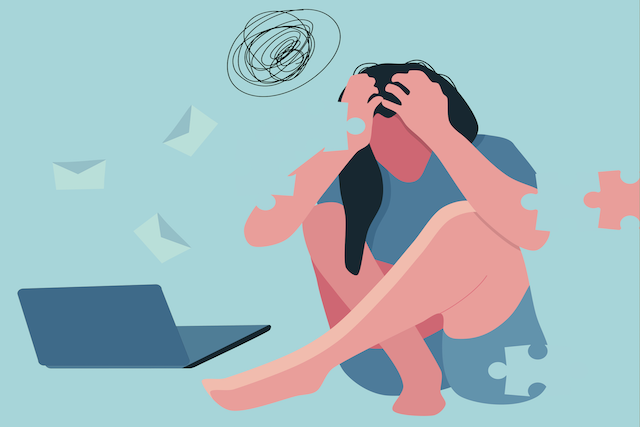
    Since I walked away, however, I’ve been challenging the so-called “rules” of life. I’ve decided to re-write them. And I have the pandemic to thank for giving me the clarity I never even knew I needed.

    The First Shift

    I’ll start with how I saw myself. Like all of us, I had a different hat for every role. The one I wore as Sam, the mom. It was a practical hat, meant to keep my ears warm in the winter. The one for Sam, the career girl. More a signature, fashion piece netting plenty of compliments. And, of course, the ones I wore as Sam, the daughter… Sam, the friend… Sam, the sister… I could go on, and so can you.

    Over the course of twenty odd years, I’d worn and collected so many damn hats I’d forgotten who was underneath them.

    I’d forgotten about the Sam that I am.

    Well, you reach a certain age and suddenly you’re aware of time running out. I could hear the clock pounding in my head at night.

    Once I realized there was someone living inside me who had been buried underneath all those hats, I decided I needed to give her a chance. And the best way I knew was to figure out how to thrive in my own way, on my own time, and with my own set of ideals.

    I don’t hold any secret sauce to succeeding at this game called Life. But I can tell you, I’m happier these days. Changing up the rules has made a huge difference.

    Screw the Productivity Hustle

    I’ve been in a perpetual state of anxiety for most of adulthood. In the past, I was rarely in the moment. (Was I ever? Probably not.) Because it was a constant series of this, then that, then don’t forget about these 500 other things I was juggling. All of which could come toppling down at any moment.

    And here’s the deal: I’m not ashamed of my incessant quest to get sh*t done. It’s part of who I am. But I’ve learned some things that shocked me. Thank you, pandemic, for showing me that it’s okay to wake up and know your contribution to the world is simply being alive.

    The stripping away of so much from our regularly scheduled days has created space for… well, nothing, if I choose. Understand this is decidedly not how I roll. I will try to squeeze seven minutes out of every five whenever I can.

    But it’s unhealthy. And I saw myself projecting my constant hustle onto others. If my husband “sat around” on his day off, it would trigger me. “What did you get done today?” “Uhhh, I watched ‘Forged in Fire.’ Why?” The poor dude. He’s entitled to rest and restoration. Just because I didn’t allow myself the same luxury didn’t mean he had to operate under that hard-core philosophy.

    He said to me the other day, “Sam, I’m not you,” and then it hit me. Why am I driving myself so much?

    I fill every second with a TO-DO that, quite frankly, does not add much value to my life. So what if the house hasn’t been vacuumed in a month? So what if the laundry resembles a mountain of clothing chaos I summit only when necessary? (Like, hardly ever. Rummaging is more our style these days.)

    I’ve decided to stop chasing—and exalting—productivity. It’s exhausting! Here’s what I now do instead.

    Do you and forget about validation.

    Along the way, I’ve prided myself on being a woman who could pull amazing things out of thin air. Elaborate costumes made at the eleventh hour. Corporate events I’d swoop into and sprinkle my own “something something.” Need a little pick-me-up? Standby while I write you a rap song and perform it in front of all your peers.

    I believed in trying to nail everything I was involved in. Which meant operating at high intensity, twenty-four-seven.

    And I documented it all on social media.

    I wanted everyone to know how capable I was. I gobbled up their validation, morning, noon, and night. But unconsciously.

    In fact, I thought I was just being funny. In some ways, I was. Getting stuck in my red leather boots at airport security in Toronto proved highly entertaining for my Facebook peeps a number of years ago. Losing my keys in the snow. Smashing my phone for the umpteenth time. It was all part of my little show. Another persona—Sam, the relatable dumpster fire.

    For the last eight months, I’ve mostly been off social media. I was initially motivated to take a break by the same things that probably irk you. But when I felt an uncomfortable vacancy after completing something cool that nobody knew about, it hit me.

    Newsflash: I was desperate to be liked, and hungry to be lauded. I knew I needed to stop relying on this external validation.

    Now if I have a private moment to myself, I don’t feel any pressure to whip out my iPhone and snap a photo. I can, if I want to, but it’s for me. Or my family. These moments have become sacred.

    And I’m not pooh-poohing anyone who loves their daily scroll through the lives of others. Nor am I judging those who enjoy sharing things themselves. Have at ‘er.

    But I can tell you, I have more available real estate in my head, and I truly do not give a flying you-know-what on the opinions of followers. I’m doing me. On my terms. No permission needed.

    Prioritize joy.

    I’m not sure why, but I grew up attaching a sense of shame to the feeling of joy. Maybe it was because my mother suffered from crippling depression. We kind of tip-toed around, trying to keep the confusion at a minimum. Maybe it was the energy placed on productivity and success. I’m not sure. But what I now know is that joy is allowed. Joy matters. And I’m not going to dim my pursuit of it to make anyone else feel better.

    Because I’m choosing to find it in the smallest of things. Like my hot oatmeal this morning. How incredible was that first taste—the crunch of the green apple, the punch of the cinnamon I added. A small moment; just for me.

    How lovely is it to sit in that one sliver of sunshine that beams in your house first thing in the morning? Or to notice the squirrels chasing each other? These seemingly silly observations which at one point in my life would have gone completely unnoticed are now part of my ongoing quest.

    Where can I find joy? Is it in the smile of the barista who made my latte? Is it in this parking space I lucked out on? And I don’t just look for it, I want to dish it out. Because it matters. We all deserve joy.

    Get real with yourself. And calm the F down.

    My tendency in life is to live in the extremes. When things are bad, I assume the worst. When the going is good, my rose-tinted glasses convince me that only the best possible outcome is reserved for me.

    Well, I’ve spent the last year getting real with myself. This has involved challenging the absolute worst-case scenario that lives in my head.

    I quit my career to lead women on these gorgeous, global walking adventures. I’m oversimplifying, but it’s what I did. It seems so obviously like a pipedream, it’s not even funny. The truth is nothing is as simple as the idea. I’m learning this. (She says while popping a Tums!)

    With the pandemic stalling my plans for this new business, I’ve found myself twisted up in even more fear. But I’ve looked it square in the eye and decided I can live with the worst-case scenario: instead of getting this thing off the ground, what if it plummets into cold water like some sloppy cannonball?

    What will that mean? I’ll have spent time and money chasing a dream that didn’t work out. Will I say it was wasted? No way. Because I’ve always believed we can’t know until we try. Will we end up in the streets? I mean, I guess, that’s always a possibility. But unlikely. I have skills, and I’m fairly certain I can just go out and get another J-O-B.

    Which brings me to my next point.

    Stop asking people what they do for a living. Ask them what they’re about, instead.

    A part of me has had to face some ugly bits of my ego. I used to feel good about myself when I answered that famous question, “What do you do for a living?” I’d pretend to stammer around, but secretly would be full of pride that I owned a company and worked in finance. I thought (foolishly) this gave me credibility. I thought, somehow, I was worthy. Because I flat-out defined myself as Sam, the career woman.

    I’m here to tell you it’s all rubbish.

    Thanks in part to walking the Camino, I figured out that I am not that. The “Sam I Am” is not what I do for a living. Nor does anyone give a rat’s ass what I do for a living, unlike what we’re led to believe. I could be perfectly content living a simple life, under the radar, away from regulations and scrutiny and incessant pressure.

    Like my new part-time gig of waiting tables. I live in a small town with a handful of nice restaurants. I knew it would mean the inevitable bump into past clients. But it doesn’t faze me—not even a noodle. And it will happen one day. I imagine a conversation going like this: “Oh hello, Mr. Former VIP Client! Yes, I do work here now. Any questions about the pasta selection?”

    Let’s redefine that annoying question, “What do you do for a living?” Why do we feel the need to put people in boxes? Why does it matter how someone earns money these days? As though their job somehow defines them. Hypocrisy moment: it used to define me. Or so I thought, until it didn’t anymore.

    And I’m a little frustrated that we start as young as we do, even with kids. “What do you want to be when you grow up?” I’m all for having dreams and a path to work toward. But are we not setting ourselves up for a future that has far too much emphasis on what we do and how that relates to our worth in the world?

    I think it would be more interesting to answer the question, “What are you about these days?” or “What matters to you in life?” Next time you find yourself in that classic situation, why not switch things up?

    I’m just now figuring out what matters to me in life. It’s not the job. Not the house. The car. The clothes I wear. It’s not the likes. The comments. Or the number of holiday cards I receive. It’s not even the hikes I go on.

    What matters to me are the same things that truly matter to you. Your family. Your sense of self-worth. Trying to stay on a path that feels like your own.

    So throw out the rules that aren’t working for you. Nobody said you had to follow them anyways.

  • Was I An Overachiever or Really Just Trying to Prove My Worth?

    Was I An Overachiever or Really Just Trying to Prove My Worth?

    “I spend an insane amount of time wondering if I’m doing it right. At some point I just remind myself that I’m doing my best. That is enough.” ~Myleik Teele

    Just one more client. Just one more call. Just one more. Repeat, repeat, repeat.

    Then, maybe, just maybe, I will feel validated. Worthy. Appreciated.

    That’s how success works, right? Everyone has to like you, think you’re amazing, and recognize all of your hard work for you to be successful? I learned the hard way that this is the path to overwhelm, burnout, and a massive anxiety disorder. Because, you have to grind it out for that business; forget your physical, emotional, and mental health.

    Let’s not scapegoat my business, however; my lack of self-worth started years, decades even before I opened my former company.

    As the oldest of three, I was expected to achieve.

    In middle school, I played competitively on an AAU (Amateur Athletic Union) basketball team. I remember never feeling good enough, tying my self-worth up in what my coach thought of me, if our team won or not, or if I scored a certain number of points. Something I loved became something I despised.

    Playing basketball in high school left me feeling empty and like fraud. If I wasn’t the best, who was I? The performative pressure was suffocating.

    The overachiever in me was never satisfied, never okay with mediocre.

    In high school, I took the SAT three times to earn the scholarship I needed to pay for most of my education. I got into the top state schools and even some private colleges. I couldn’t apply to just one. I had to apply to just one more.

    With each letter of acceptance, I felt validated. Like I actually belonged and that my life held meaning. Maybe then, when I got into my dream school, I would be worthy, and all of this anxiety would be worth it.

    “Where are you going in the fall”? I remember not knowing how to answer that question.

    Wanting to go to college and actually going were two very different things.

    My parents sent me to a private college prep school, where we were practically reading through course catalogs freshman year. I thought it was something that was next in the sequence of achievements.

    On the way home from a college tour in the spring, my mom told me I had to pay for room and board. I just had to figure out how. I ended up staying in my hometown and going to community college, which was a blow to my eighteen-year-old ego. I was devastated, angry with my parents, and frustrated about all the hard work I had put in with nothing to show for it.

    My self-worth was in the tank; my need to prove myself was at an all-time high. So was that constant, chirping companion, anxiety.

    After two years of community college, I transferred to a state college and chose education as my major. I wanted to be a leader, a catalyst for change, a visionary. I made the Dean’s list, worked my way through college, and even got married.

    After I graduated, I taught physical education and was also athletic director of a grade school. I believed that by using my degree I worked so hard for, I would finally be happy and fulfilled. Instead, the position came with a principal who gaslit and bullied me daily, at the time taking away any joy that I had in my chosen field. But I had worked so hard for this. Shouldn’t that be enough?

    Working hard was always a badge of honor I wore proudly; more accolades from others to put into the validation tank. All the while, I never felt worthy. As the things I’d worked so hard for were taken away from me, I began to wonder if success was even in the cards.

    I felt lost. Undeserving. I was focused on my first year of marriage, teaching, and working on extended family relationships. Would I ever be accepted?

    If I tried hard enough, they would like me, the overachiever in me believed.

    But wait, was I really an overachiever? Maybe it was something deeper?

    Was I just addicted to working hard because I was trying to prove my worth and gain approval?

    With a full-blown anxiety disorder, depression, a drinking problem, and zero boundaries, I entered my thirties thinking that if I just made it in business, I would be whole.

    What a crock.

    The patriarchal standards I had tried to measure up to, were the same ones holding me back from living a life of peace. If I just, “hustled,” and “grinded,” despite the effects on my mental, emotional, and physical health, I could finally prove my worth. All that ended up proving was that mental health matters. My work is not my worthiness.

    So how did I go from codependent thinking and seeking validation outside of myself to understanding that we are all born worthy?

    First, I had to decide what really lights me up like a firecracker. Passion, playfulness, and purpose are lost when you were trained to look outside yourself for validation.

    I’d spent my life focused on achievement. What did “success” even mean? It wasn’t until I was well into my thirties that I realized success, to me, means freedom, and freedom meant letting go.

    I had to then get radically honest with myself about my upbringing, my relationships with family members, my belief system, and what I wanted out of life.

    Did I really want to run the service-based business I’d started after I quit my teaching job, with several employees, ongoing calls and emails, that had me working holidays, nights, and weekends, and that left me in a people-pleasing tailspin on a regular basis?

    My honest answer: No.

    Relief washed over me. Not regret, longing, or sadness.

    Relief.

    I then realized I needed to let go of people-pleasing, overachieving, and the need for external validation in other aspects of my life, which meant doing some radical boundary setting and self-reflection.

    Looking back through my years of wearing my hard work in school as a badge of honor, drowning in my former business like a sacrificial lamb, and navigating the sometimes-chaotic waters of a new marriage and family, I can finally understand that my worthiness doesn’t come from others. I am good enough as I am. My oneness comes from within, not from outside accolades.

    Getting to the root cause of the unworthiness, worry, and workaholism was a deep dive into my childhood and young adulthood. I realized I carried toxic shame and guilt and believed that if I was just “enough,” I would be able to finally be free.

    Turns out, the complete opposite is true. Chasing becomes all-encompassing. I had been treading water; doggie-paddling, not knowing that the pool of people-pleasing I was swimming in was keeping me stuck.

    These days, creating takes the place of hard work, clarity takes the place of drinking to cope, and self-compassion takes the place of validation-seeking to prove my worth. And that toxic friend named Anxiety? She still likes to show up unannounced, but I have the self-acceptance and healthy internal dialogue to keep our interactions short.

    Take it from this former overachiever: You are worth more than your work and your accomplishments. Just one more client? Just one more call? Not anymore. Now I just choose freedom.

  • When a Mother Fails to Love: What’s Helped Me Move On

    When a Mother Fails to Love: What’s Helped Me Move On

    “You keep meeting the same person in different bodies until you learn the lesson.” ~Brandon Tarot

    Like most girls in junior high school, I tried out for all the cheerleading squads every time tryouts came around—basketball, football, even wrestling. And like 95% of the girls, I never made the squad.

    My kicks weren’t high enough, my splits weren’t split enough, my arms weren’t board-straight enough, I couldn’t jump high enough—and, let’s be real here: I wasn’t pretty enough and I wasn’t popular enough. After all, we are talking about junior high school.

    But eventually, the one tryout came around that I had half a chance at: the pom-pom squad. Even at thirteen years old, I knew I could dance. Pom pom was the group of ten to twelve girls that performed choreographed routines to music at half-time during basketball games, and rarely during the period breaks at hockey games, on ice (I grew up in North Dakota, where hockey was a big deal).

    To try out for pom pom, you usually got together with two or three of your best girlfriends who also wanted to make the team, picked a song you all liked, and tried to choreograph a dance routine to that song.

    Picking the right song was crucial: it had to be a popular song that everyone would immediately recognize (Top 40, currently getting radio play time was best!), and it had to have the right rock-and-roll beat that was not too slow so that it would be boring to dance to, yet not too fast so that we would have a hard time making spins, kicks, or coordinated moves in time with the beat.

    So it came to pass: Eighth grade, tryout date was announced, and teams signed up to compete. It turned out to be myself and my friends Diane and Becky who agreed we were going to go for it that year.

    We had no experience whatsoever in coming up with a dance routine; all we had ever done was watch the previous year’s dance team do their thing, and we figured we might be able to copy a few moves from them. This was 1970, and I believe we chose an Elton John song that was getting a lot of airtime that year.

    We pulled my bright orange record player out to my back concrete patio and set it up, where we played that song over and over as we practiced sequences of turns, kicks, fancy footwork, arm movements, and hip action.

    This patio was right off the back door leading from our kitchen, and in retrospect I’m sure hearing that song play endlessly must have driven my mother insane, because even after my friends left for the day, I continued to practice, practice, practice.

    Finally, the day of tryouts arrived! It was long and nerve-wracking, as we had to watch everyone else’s performance until our turn came around.

    We watched as their nerves got the better of them—as the plastered smiles froze and then faded completely, their eyes widening like deer in the headlights. We saw them forget their steps; turn in opposite directions; one girl ran off before her routine was even over. A few routines went smoothly, and you could hear the collective sigh of relief from those of us still waiting, but the disastrous ones unnerved us completely.

    I actually have no memory whatsoever of how our routine went. I remember our names being called, scampering up onto the gym floor, hearing the scratching of the needle on the record, and shaking like a leaf until the music started. Then I remember sitting down and the polite applause afterward. That’s it.

    We watched as the final teams competed, and waited for the judges to make their picks. This was the worst part of all. The gym was full of girls who all wanted a shot, and they would hear in front of everyone whether they would get that shot or not.

    It was already getting late and the judges seemed to be taking a long time. This event had taken place on a school night, so by now it was past 9:30 p.m.

    One by one, they started to call the girls’ names who had made it onto the dance team. When they eventually said “Gail …” and hesitated on the last name, I knew it was me they were referring to! (I had a Polish last name that always seemed to get massacred.)

    I leapt to my feet and ran out onto the gym floor in complete shock—OH MY GOD OH MY GOD!! My girlfriends pounded me on the back on my way out to the floor and shrieked and clapped for me. Finally, the ONE thing I knew I was good at, and I got my chance to be a part of this group. I was over-the-top euphoric!

    I lived a little more than a mile from my junior high school and had to walk back home that night. Well, I practically ran all the way home; I was so excited and couldn’t wait to tell my mom that I had made the pom pom team! I burst into the back door about 10:30 p.m.

    I yelled out, “Mom!”

    She stormed through the living room and into the kitchen, furious and screaming at me, “Where the HELL have you been??”

    Taken aback, I said, “You know I was at pom pom tryouts. I made it!”

    She said, “I don’t give a damn. You know your curfew is 10 o’clock. What the hell have you been doing this whole time?”

    Dumbfounded, I tried again. “Ma, you know where I was. It went late. It wasn’t my fault. Ma, didn’t you hear me? I made the squad.”

    “I don’t care about that. Next time you call if you’re going to be late.” Then she turned around and went to bed.

    I was stunned. If she had slapped me in the face, it wouldn’t have hurt worse. Literally the only thing I’d ever competed for, and they had said “Yes, Gail, you have talent, and we want you on our team,” and my own mother didn’t give a damn.

    If I ever needed a message that in her mind, my accomplishments meant nothing, she delivered it loud and clear that night. Unfortunately, it left a scar so deep that it remained with me for rest of my life, as the same message continued to be delivered, over and over.

    That night I could not get to sleep. Waves of excitement kept washing over me as I couldn’t believe my good fortune in being picked for this elite team. I remember literal chills going through my body; I simply could not relax. Then I would remember my mom’s reaction and a feeling of incredulity would take over.

    How could someone do that to their own daughter? How could someone do that to anyone who had such great news to tell—be such a horrible wet blanket?

    I never forgave her for how she treated me that night. At the end of that school year, the teacher/advisor who was the head of the pom pom squad thought it would be nice to host a mother-daughter night. The girls would choreograph a special routine, showing the mothers what they had learned all year long, and the teachers would prepare a special buffet for the mothers. This would take place after school one night. I didn’t even tell my mom about it.

    The day arrived, and I just told my mom I had a performance after school and would be home late. When I got home several hours later, she tore into me, furious. One of the other mothers had called her up, offering her a ride to the mother-daughter night. Of course this caught my mom off-guard because she didn’t know anything about it, and it embarrassed her as well. She declined the ride, seeing as she wasn’t ready to go out.

    Obviously, I got yelled at again because of the embarrassing phone call. But this time I didn’t care. I just tossed my head and said, “I didn’t tell you about it because I knew you wouldn’t want to go anyway.” And I walked away.
    The following year, as I was transitioning into high school, I tried out again for the high school pom pom squad. That year, I was the only one from my entire junior high school who made the team. For all three years of high school, I continued to try out and make the team. My senior year, I was the only senior on the squad.

    All this is to say that I was good at what I did. And for the four years I was performing with these girls, my mother never came once to watch me dance.

    I think her ugly dismissal of my winning a spot on the team, and my response by keeping her away from the mother-daughter night, created a gulf between us that never got repaired. The battle lines between us were already drawn, but that incident firmly entrenched them for many decades to come.

    When the most important people in my life essentially told me that I didn’t matter, that my accomplishments didn’t matter, two things resulted: I stopped “putting my pearls before swine,” and I started to seek validation from the wrong people and in the wrong places.

    By pearls before swine, I mean this: I protected my heart by not including her in the big celebratory events of my life. I felt that because of her lack of support, she didn’t deserve to be there and wouldn’t really appreciate what I’d accomplished anyway.
    We started to live a tit-for-tat existence. One day I came home from high school to find out that she’d given away my dog—she left a note for me on the kitchen table. The explosive fight we had when she came home that evening was epic, as was the silent treatment around the house that lasted for weeks afterward.
    She tried to prevent me from attending college, telling me I’d only be wasting money and was only going there to “chase boys” anyway. Four years later when I earned my B.S. degree, I purposely didn’t walk the graduation ceremony to spite her, thus robbing her of her day in the sun. “Why should she get any credit for that,” I thought? Several years later when I earned my M.S. degree, I didn’t invite her to that ceremony either, which I did participate in.

    The most far-reaching decision I made, as early as high school, was that I would never have children. I was the youngest of seven in my family and the only one who never had kids. I was so afraid I would turn out to be a mother just like her, and I didn’t want to inflict that kind of misery on any child.

    Where was my father in all of this? When I was in junior high school, my father had an operation for a brain tumor and its removal was successful. But a few days later he had a stroke that left him paralyzed on his right side and unable to speak. He remained in this state, wheelchair-bound, for the rest of his life.

    This was our alcoholic father who was unfaithful to my mother and physically abusive to her and to his seven children. Our mother, being the righteous Catholic martyr that she was, insisted it was her duty to now care for him at home. I am convinced it was this intensive caregiving for a man she did not love and who had been horrible to her that turned her into the bitter woman who was doing battle with me.

    It took decades of hindsight and therapy for me to see and understand this, but in the thick of our day-to-day dogfights, all I saw was a woman who would do everything in her power to hold me back. If she couldn’t be happy, no one was going to be happy.

    I’ve had three failed marriages, the final one lasting only nine months. My therapist helped me to see that I chose the same personality type each time: three overachievers, three brilliant and talented individuals, three bright and shiny objects. And by doing that, I was seeking my own validation—they reflected well on me, and surely they must see the same qualities in me.

    What I didn’t realize was that in these types of partnerships with high-achieving individuals, there is only room for one successful person, and that person would not be me. Megalomaniacs do not share the spotlight.

    Finally, in my sixties now, I understand that aloneness does not mean loneliness. I am more content and fulfilled than I’ve ever been in my life, as I pursue as many passions and dreams as the remaining years will allow. To finally achieve self-acceptance and self-esteem through rigorous study and therapy has been the greatest gift imaginable.

    It all started with understanding that my mother’s mistreatment had nothing to do with me. She let her pain shape her life. I won’t do the same. And I won’t spend my time seeking validation from anyone else, as I once did with my mother and three husbands. It’s natural to want approval from other people, but all that really matters is that we approve of ourselves.

  • Why I Stopped Measuring My Self-Worth and Trying to Prove Myself

    Why I Stopped Measuring My Self-Worth and Trying to Prove Myself

    “You alone are enough. You have nothing to prove to anyone.” ~Maya Angelou

    How do you measure your self-worth? By the salary you make each year? By the length of your resume? By the number of people who follow you on social media?

    Now what if you never had to measure your self-worth again? That is what I want to do.

    I grew up as a gifted kid with high expectations to boot, always pushing myself to meet them. I earned the best grades I could, secured a full-ride scholarship to a local university, and soon enough ended up at one of the top law schools in the country.

    Thanks to all the achievements, my self-worth was high. I believed I was outshining my peers, boosting my ego. I felt safe in this comfort zone I’d created. 

    Law school drastically changed my perspective of the world. My peer group became some of the smartest and most talented people in the country. I tried competing against them to prove myself, but I struggled more than ever to stand out and feel accomplished.

    In just a few months, my ego began crumbling apart, taking my once lofty feelings of worth down with it. I was out of my comfort zone and felt invisible.

    I turned to strangers online in an attempt to put the pieces back together and resurrect my worth. I relied heavily on social media to put myself out there for superficial likes and comments. I turned lifelong hobbies into side hustles, trading content I cared about for bits of validation here and there.

    I was desperate to find some new measure of success on which I could rely. But I never noticed the damage that desperation was doing to my psyche until it had already taken its toll.

    My ego had protected me for so long from doubt that as soon as it was gone, I never felt good enough. Once I believed I was a failure, I only kept confirming my demoralizing feelings by pushing myself to excel immediately in new areas. I compared myself to the best of the best and treated myself like the worst of the worst.

    I was trapped in a downward spiral leading to worthlessness. It was only when I slowed down to reflect on my mental health that I realized my life looked like an endless rat race to find some proverbial cheese. I strained to earn my worth and ended up empty-handed.

    If you always chase after self-worth, you never stop to see if you have found any.  

    How is it so many of us believe our worth is conditional? I believe it is a long, grueling process.

    Many of us learned growing up to associate self-worth with achievement of some kind. As we discovered authority figures gave us the most positive feedback and attention when we were doing a great job, we linked our worth to excelling. Without that encouragement, we were lost.

    The world around us exploits this correlation on a daily basis. To some extent, it makes the world go round.

    Western culture, in particular, thrives on permanently tying worth to achievement: the more people pursue success in what they do, the more productive they are and the more money that flows. Accordingly, society constantly tries to push the idea that hard work is sacred and will ultimately lead us to a life of achievement, ergo worth.

    Western culture does not reward those happy to just be. Instead, we are expected to keep laboring away until we can do something well. Even then, some types of work are highly valued over others, so we have to find the right work to do just to get by. 

    So, if you do not feel happy and fulfilled, do you not just have to work harder?

    Yet, not all hard workers reap the benefits. After all, achievement requires meeting a certain standard, inevitably doing better than someone else. Only significant time and effort may lead to a worthy triumph.

    There will inevitably be haves and have-nots because the system at play rewards a limited number of people who play the system best, who achieve the most success. The more limited the rewards, the more everyone forces themselves to try harder day in and day out.

    Unfortunately for us, the reward is merely the validation we apparently need to go about our lives. If our worth is dependent solely on our achievements, we have no choice but to compete with one another over a limited, essential resource. Achievements are only as valuable as they are rare.

    But this competition cannot be won. There will always be more to do. And someone will always do more.

    External validation never makes you content. It only keeps you hungry for more.

    In my struggles, I have had a difficult time understanding how to view my worth.

    How much worth do I have? How does it compare to other people’s worth? Does it go up and down?

    When am I finally worthy once and for all?

    To answer these questions, I vehemently tried to attach a number to my worth whenever possible. After all, a number is a concrete, self-explanatory concept. I could tell when I had more or less than someone.

    Thus, using numbers allowed me to measure my worth and other people’s worth with ease. This gave me a way to understand my place in the world.

    Using numbers also allowed me to gauge how my worth was changing. For example, if I received more likes than usual, I was happier than usual since I must have been doing something right. If I received less, I was in need of quick improvement.

    Except numbers are hollow. They have no value unless we agree to give them value, but our obsessive nature often gives extraordinary value to the benign.

    We use shortcuts like numbers to explain concepts we have a hard time comprehending. Self-worth certainly seems to be one of those trying concepts, always just out of reach like an elusive fruit hanging above us or a receding pool of water.

    Breaking away from society’s expectations provided me the room to realize self-worth is only as complicated as I make it.

    If self-worth need not exist conditionally, it can exist inherently. In fact, it exists now without exception.

    Your worth cannot be assigned a value. It simply is. 

    By virtue of the fact that you are alive, you are just as worthy as anyone else who has lived before, lives now, or will live after.

    We all come into the world the same, and we all leave the same way. Our lives may differ widely in content, but not in value. Nothing separates us at the most fundamental level.

    And none of us start out deficient in worth. We need not go on a lifelong journey to earn our worth by moving up in the world. Our worth remains steadfast regardless of how our lives take shape.

    Work does not shape our worth. No matter how you decide to share your skills and talents, the world will be better off, even if you alone trust the value in what you do and who you are.

    Society may try to tell us how we should view and feel about ourselves, but we are not obligated to listen. Fighting those ingrained ideas of what others think we should do is never an easy battle, but it is worth the independence.

    No matter how one does or does not measure worth, it does not vary, and it does not waver.

    We are all enough as is, right now.

    There exist millions of ways to compare ourselves to others, but we owe it to ourselves to make light of differences and revel in our shared humanity.

    So how do we move forward knowing that we cannot improve or reduce our worth?

    Well, the possibilities are endless. The doors open up to a life where you can be you unabashedly. And more importantly, you can be a part of something bigger than yourself without feeling small.

    Waiting for others to prove you are worthy is time better spent sharing your true self. 

    After spending the last few years of my life trying to prove myself without ever reaching the level of success I wanted, I realized my definition of success kept changing until I made it impossible to feel fulfilled. I stopped myself from being happy unless I was universally revered.

    I lived thoughtlessly, spending what free time I had attempting to make myself look accomplished rather than enjoying the time. I conformed to what I thought people would like rather than let myself flourish.

    My true self was suffocated. Receiving even the most primitive criticism felt like being stabbed in the chest. I was more distanced from others than ever before because I did not feel like I deserved to be liked anymore.

    But I do deserve to be me, to take up space, to contribute to the world in my own way. And you do too.  

    Knowing that what you do cannot change who you are promotes freedom in how you want to live, freedom not just from others, but also from expectations and doubt.

    Knowing you always have worth allows you to connect with the people around you more deeply, empathize with them, and support their journeys through life.

    It is with this knowledge you can find and share true joy.

    You can pursue what you love instead of what you feel you ought to do. You can work at your pace to be the person you want to be. You can stay present knowing neither praise nor disapproval affects your worth.

    Many will struggle to agree with you, though, that you can exist in peace without having to fight to prove your value. Even I still struggle to keep not just naysayers, but also my inner, learned uncertainties at bay in regard to whether I offer anything worthwhile.

    Learning more about your inherent worth means unlearning those harsh, ingrained principles of life as we have known it. These principles will never fade away completely, but we can make a choice every day to drown them out.

    Take it from me, your life will not immediately change in discovering your own worth, but it can improve a little day after day the more you take your discovery to heart. As is the case with any transition, there will be ups and downs. I still have doubts creeping in when I least expect them.

    But the more you live openly and share yourself with others, the more those principles will take hold and the stronger you will be in challenging what life throws your way. Instead of seeking achievement and improvement, you will be content, one with the universe.

    You will be free.