Tag: unplug

  • How to Be a Lot Happier: A Simple Solution

    How to Be a Lot Happier: A Simple Solution

    “Simplicity is the ultimate sophistication.” ~Leonardo da Vinci

    There’s a funny thing with us humans.

    We spend our lives trying desperately to find happiness, and yet we don’t even know what it is. We can’t explain, describe, or define it. We just know that we want it because it’ll make everything peachy. Time and time again, though, studies have shown that our never-ending quest for happiness is quite often the very thing that makes us miserable.

    Trying to find happiness is an exercise in futility. This is a truth I did not easily come to realize. It took a succession of major depressive episodes, the sudden death of my father, a cross-country move, a broken heart, and countless hours reading airy-fairy, self-help nonsense for me to understand that instead of trying to find happiness, I should consciously take steps that let happiness find me.

    Suffice it to say, you will no longer find me spinning my wheels, dejectedly searching for answers and chasing the abstract. You will no longer find me on a never-ending quest for happiness.

    But given my endless fascination with the subject, my work as a coach, and my ever-present desire for more street cred, I recently found myself immersed in a year-long Psychology of Happiness certification program created by best-selling author and former Harvard professor Dr. Tal Ben-Shahar.

    During the program, we were asked:

    What was one of the happiest periods of your life?
    What did you do during that period that made it so good?
    How can you generate more happiness in your life?

    I had a profoundly difficult time answering these questions, particularly the first two. But the more I scanned through my mental scrapbook, the more I kept thinking about the months between ninth and tenth grade—my last romp as a camper at the sleepaway camp I’d been going to for six consecutive summers.

    It wasn’t so much what I did—or what we­ did—that made it so good. I think, perhaps, it was what we didn’t do.

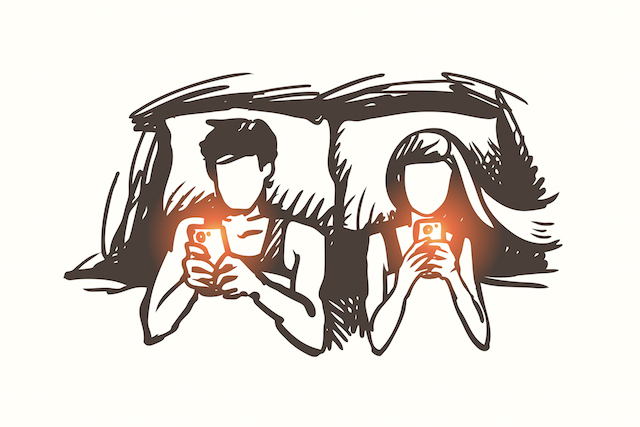
    There were no smartphones. So, there were no screens to stare at, no calls to make, no messages to check, no constant dinging notifications.

    There was no social media. There were no Facebook rants, no Twitter trolls, no outlandishly phony Instagram influencers to drum up our insecurities.

    We weren’t constantly comparing ourselves to others while looking at the carefully curated highlight reels from their lives.

    No, we were making our own highlight reels in the middle of nowhere—or, more accurately, in the middle of northern Wisconsin. We hadn’t the slightest idea what anyone else was doing, and we didn’t care.

    There were no dating apps, no heads to swipe on for hours at a time. There was no ghosting, no haunting, no orbiting, no zombieing, no submarining, no breadcrumbing, no roaching. These hyper-specific subtypes of appalling human behavior simply didn’t exist.

    And despite our raging hormones, there was no palpable desperation. You either “hooked up” with someone the night before or you didn’t. Then, you moved on with your life.

    Nobody gave a damn who was president, either. We just knew it was some old, white guy just like it was the year before, and the year before that, and the year before that. He sat in his office, and signed some papers, and maybe spoke to the country every few months and that was it.

    There was nobody on the far left trying to ruin the life of anyone who’s ever made a mildly offensive quip. There was nobody on the far right trying to accelerate conflict and build some kind of white ethnostate. There were no conspiracy theorists trying to convince the world that celebrities run pedophile rings out of pizza parlors or that Jewish folks crisscross the country to start wildfires with space lasers.

    Oh, but Tony, you might be saying to yourself. There were definitely people like that back then! And you get no argument from me.

    But we never heard from them. They didn’t have public platforms. There were no 24/7/365 news channels, there were no online news magazines, and there was no YouTube; so, they just kind of kept their crazy crap to themselves.

    It’s no wonder that one of the happiest periods of my life was the summer of 1997, in the middle of nowhere in northern Wisconsin. We spent all of our time in nature, laughing and singing and bonding and playing frisbee.

    One could theorize that we were happier purely because we were kids, but I’m not so sure. From what I can tell, kids today are lost, distracted, and isolated. They spend most of their time indoors, glued to their devices. They are overstimulated, oversensitive, and overprotected. They are riddled with anxiety and depression as they deal with the psychological trappings of growing up in a technological world.

    Twenty-five years ago, during the summer of 1997, life was just…simpler.

    That’s what made it so good.

    And I don’t think that life in general will ever be that simple again.

    But every time I simplify my own life, even just a little bit, I’m a little bit happier.

    Every time I de-clutter, I’m a little bit happier.

    Every time I delete a dating app, I’m a little bit happier.

    Every time I forgo watching the news or sign off social media, I’m a little bit happier.

    Every time I turn my phone on Do Not Disturb, I’m a little bit happier.

    Every time I have a real conversation in real life with a real person I really care about, I’m a little bit happier.

    Every time I go outside and walk around and do nothing but look at the sky, and the trees, and the architecture, I’m a little bit happier.

    Every time I sit in silence and meditate and let my thoughts pass by like the weather, I’m a little bit happier.

    So, how can you generate more happiness in your life?

    Well, I don’t have a whole lot of street cred. But if I had to take a stab at it: Stop doing the things that cause you unhappiness. Simplify, simplify, simplify. And maybe find a summer camp for adults.
  • How to Wake Up Smiling: 5 Daily Habits That Made Me a More Positive Person

    How to Wake Up Smiling: 5 Daily Habits That Made Me a More Positive Person

    “You create your future based on your energy in the present.” ~Unknown

    I’m usually a pretty happy person, but about a year ago—perhaps due to a lack of social connections and laughter—I experienced a few dark months. During those months, I spent most of my waking hours (and probably nights as well) consumed with negative thoughts.

    I woke up feeling angry in the morning, continued having negative thoughts most of the day, and went to bed in that same state of mind.

    Luckily, I didn’t have many opportunities to spread my negativity to others because we were in confinement.

    On one of those moody mornings, I played a video of a spiritual teacher that a friend had recommended listening to while getting ready for the day.

    Halfway through the video, he said, “Humanity is ascending into more loving and conscious states of being. You are becoming more of who you truly are, which is love.”

    At that moment, I caught my eyes in the mirror and stared at my unhappy face.

    “I’m not ascending. I’m descending further and further into the ‘hell’ in my own mind.”

    My negativity was eating me alive, but, strangely, it was so addictive.

    Since it had been escalating for some time (a few months by then) and had acquired a good bit of momentum, I really didn’t know if I’d be able to shift all that negativity into a more positive state of being. I knew that the longer I waited, though, the harder it would be.

    Still looking at my face in the mirror, I noticed the corners of my mouth pointing slightly downward.

    “If I continue like that, I’m going to get grumpy face wrinkles.”

    I made my bed and then went to the kitchen. As the coffee was brewing, I grabbed my laptop and Googled “how to be a more positive person,” and I scribbled down a few ideas that resonated with me.

    Later that day, after mixing and matching advice from different articles, I created what I called my “emotional hygiene routine.”

    It’s a series of simple habits that I committed to doing most days of the week for an entire month (and still continue to do today on most days) and that, over that month, took me out of my depressive state and made me wake up smiling in the morning again.

    I’d like to share them with you.

    1. Fall asleep in the “vortex.”

    One idea I came across in my research on being more positive came from Abraham Hicks:

    “If you go to sleep in the vortex, you wake up in the vortex. If you go to sleep not in the vortex, you wake up not in the vortex.”

    Being in the “vortex” refers to a state of pure positive energy. The idea in that quote is pretty straightforward: go to bed thinking positive thoughts and feeling happy feelings, and you’re more likely to wake up thinking and feeling positive in the morning.

    I knew this had to be true. I knew it because when I went to bed thinking angry thoughts, I usually dreamed that I was unhappy and then woke up grumpy (and exhausted) in the morning.

    So, I decided to try something. As I closed my eyes to sleep at night, I scanned the day from the moment I woke up until the present moment when I was lying in bed, and I tried to recall all the positive things (even tiny things) that had happened that day.

    I could have thought about the delicious mocha latte that I drank that morning, the fact there wasn’t snow on the ground and that I was able to run outside in the afternoon, or a nice comment someone left on one of my videos.

    I spent a few seconds remembering a happy moment before moving on to the next one. After scanning the entire day, I would do it again, trying to find even more subtle positive things, and I did this until I fell asleep.

    This exercise is probably the number one thing that helped me (and still continues to help me) wake up happier in the morning.

    2. Have something to look forward to on the following day.

    Something else that has helped me wake up happier is having something to look forward to every day, even if I have a busy day ahead and have minimal free time available.

    Still to this day, every evening, I schedule at least one activity that brings me joy for the following day. It can be going for a walk with a friend, baking cookies, or watching the sunset. It can also be as simple as wearing my favorite outfit.

    Scheduling one activity that brings me joy for the following day gives my mind something fun to anticipate and puts me in a good mood in the evening.

    And again, how the day ends is a good indicator of how the following day begins.

    3. Absorb uplifting ideas in the evening.

    We all know that what we feed our minds affects our mood. I don’t have a TV and don’t follow the news, but my Facebook feed is often enough to get me irritated. So, I decided to stop scrolling mindlessly on Facebook (or at least do so less often) and consume positive-only content instead.

    For the past few months, first thing in the morning and before going to bed, I’ve been reading a few pages of an inspiring book—usually something spiritual. I just finished reading the entire Earth Life book series by Sanaya Roman, and right now, I’m reading Wishes Fulfilled by Wayne Dyer.

    Reading those kinds of books brings me peace. I can notice a significant difference in my mood and stress level if I just take even fifteen minutes to consume uplifting content in the morning and evening.

    (If you have any book recommendations, you can share them in the comments.)

    4. Make a gratitude list—with a twist.

    After reading in the morning, I write down three to five things I’m grateful for—and why I appreciate each thing.

    I used to write gratitude lists of fifteen-plus items and do it very quickly—almost mindlessly—just to “get it done.” It made the practice sort of mechanical and not very effective.

    I’ve found that writing fewer items on my list and taking the time to dive into the reasons each thing makes me happy intensifies the feelings of gratitude and makes the exercise more profound. I try to do this daily, although I do forget sometimes. When I forget several days in a row, I can feel the difference in my general mood.

    Gratitude is perhaps the lowest-hanging fruit for cultivating a more positive attitude.

    5. Choose your state of being as you open your eyes.

    The last thing that has helped me is a piece of advice from Dr. Daniel Amen, one of the leading brain health experts. In an interview on The School of Greatness Podcast, he talked about the importance of setting a positive intention from the very start of the day to cultivate what he calls “a positivity bias.”

    An affirmation he uses himself and recommends using is: “Today is going to be a great day.”

    When we tell ourselves this in the morning, our unconscious mind then looks for things that are going right to prove that this is true. This isn’t toxic positivity—ignoring or denying the negative. It’s training our brains to see what’s positive instead of focusing on the negative by default.

    I’ve taken the habit of saying this affirmation (or a similar one) just after waking up and before opening my eyes in the morning. It’s a bit like choosing and declaring from the very start of the day what attitude you’ll adopt that day. It’s easy to do, and it sets the tone for the day.

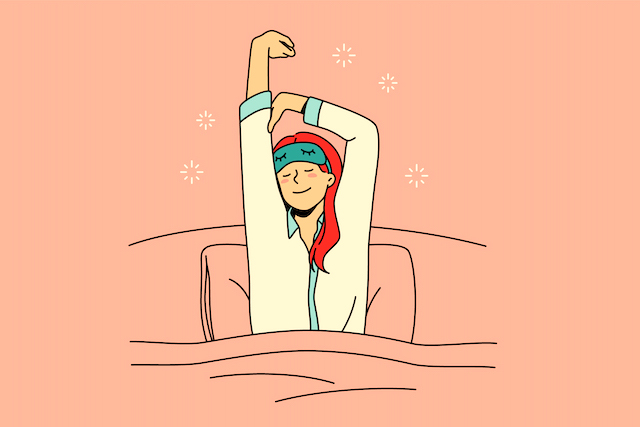
    In the beginning, I didn’t always remember to declare my intention until later in the morning, but it didn’t take long before it became automatic. Now, just remembering to think about my intention (and then mentally saying it) makes me smile as I wake up.

    . . .

    Our lives don’t need to be perfect to wake up smiling in the morning; they just require a conscious effort to develop a positive attitude, which is what the five habits in this article have helped me accomplish.

    I hope they serve you well, too, if you choose to implement them.

  • How to Get Comfortable Being Alone and Get the Most Out of Solitude

    How to Get Comfortable Being Alone and Get the Most Out of Solitude

    “The act of sitting down is an act of revolution. By sitting down, you stop that state of being: losing yourself, not being yourself. And when you sit down, you connect to yourself. And you don’t need an iPhone or a computer to do that. You just need to sit down mindfully and breathe in mindfully.” ~Thich Nhat Hanh

    The day my ex-wife moved out was also the day when our dog moved out and when I was laid off from my bankrupt ex-company. It felt like everything around me had suddenly died. Many of our common friends and loved ones distanced themselves from me, and I felt abandoned.

    As I took my first few steps through the rubble, I felt the full force of this new solitude that was now forced upon me. And it wasn’t going anywhere soon.

    I immediately lost my appetite and my desire to cook. I started taking irresponsibly long hot showers and baths till my skin burned. I decluttered. I threw away pictures and memorabilia, love notes and cutlery, teabags and cushion covers. I stopped vacuuming.

    But I continued running. I started reading. I read anything that looked like it held a secret to end my suffering.

    I lost interest in my job. I’d wake up every morning with dread, sometimes not sleeping entire nights.

    I kept running. I got faster and stronger. I also got injured and had to stop. The darkness stayed even as the days started to get longer. While I lived abroad, the second wave of covid had just hit back home. One of my best friends from childhood died. Also a cousin. A friend lost his father and never saw the body. My dad got very sick and almost died. I sank further.

    But I kept meditating in solitude. Every time the void of existence hit me with boredom, anxiety, and restlessness, something deep within forced me to continue sitting through it. It started feeling familiar. And I slowly started to come back to life. My sense of taste returned. I started cooking again. I started having friends over.

    Still, some days I would collapse on the floor and cry till I got thirsty. Then I’d hydrate and go back to my laptop to run the next zoom meeting, smiling through it.

    I realized what a shell of a person I was now that my ex-wife had left me. At the same time, I continued to befriend the solitude and get comfortable with my aching heart—to sit with it, have a conversation with it, and see what it had to say and what it had learned.

    I was starting to get to know myself from a brand new perspective. It was almost like getting to know this new person who had been living in the basement all these years and I had no idea! And this person sure was interesting!

    The solitude soaked in all my tears so I could laugh again with people. It became my duvet in the winters, my picnic blanket in the summer. The solitude and I would often do karaoke at 7:00 on a Sunday morning till the neighbors started complaining. We went on bike trips together, dipped in cold lakes, went to eat at buffets, and sat through boring dates.

    It became my best friend when there was no one around. It taught me to write, to read, to think, to philosophize, to know what’s good for me, to love everyone unconditionally, and to be kind.

    It showed me things as they truly are and caught me when I was being judgmental. It took away my anger and my desperation. It carried my dreams and filled me with hope.

    Solitude has the power to teach us about ourselves. It is the gym where we must go to train.

    A century ago, people would look forward to solitary periods of relaxation on their porch after a long day of work. But today, we devote most of our conscious time to the pursuit of feeling connected with other people, either offline or online. A simple notification instantly pulls us away from the present moment. We are constantly everywhere but here and now. But our true self lives in the here and now, though we seem to spend less and less time with it.

    In the raw moments of loneliness that succeed a breakup or a bereavement, when we have nowhere to run, we encounter our true self. Like I did. And it was scary. It felt like sitting in the corner of a dungeon with a chain locked around my ankle as a stranger towered over me. I wanted to run away, but there was nowhere good enough to run to. I went scuba diving in the tropics, but my broken, ghost-of-a-self found me under water too.

    The key to cultivating fearlessness in these moments is getting to know yourself through solitude. It means deliberately taking time out to sit alone so you feel comfortable with yourself, connected to yourself, and at peace with yourself.

    To practice solitude, try this.

    1. Think of your favorite meditative activity.

    Ideally, it should involve interaction with physical objects, not digital ones. And definitely not a phone or something with a screen. It should be mundane and not involve rational thinking. This provides the ideal setting for your true self to emerge. An example is doing the dishes, focusing on your breath, or just sitting out in the garden, hearing and seeing what’s around you.

    2. Set aside a fixed time during the day.

    This is especially important if you are just starting out, because a strict regime is helpful to cultivate a habit. A good time is early in the morning. A recent study showed that early morning is the ideal time for alpha wave activity in the brain, which is associated with restful attentiveness. But depending on your schedule or your routine, any other time of the day is good enough to start with. Start with ten minutes and slowly make your way up to an hour. There’s no right or wrong duration, but the more the better.

    3. Start with an intention.

    Make a decision to consciously choose solitude. Embrace it like it’s your best friend. Know that it is good for you, that it is the right thing for you. That there is nothing better you’d rather do right now, and no one more important to talk to than yourself.

    Most importantly, don’t get too serious. Develop a sense of joy, a sense of humor about the whole thing.

    Sometimes it all may seem impossible, especially when painful memories and a sense of loss come back with profound pain. It may feel hopeless as the thoughts and feelings overwhelm you. But believe that those thoughts and feelings are like a movie playing in your head. They do not define your reality in the present moment. Do not let them consume you.

    Believe you are the mountain in the storm. And when the thoughts and feelings eventually pass, which they will, come back to your practice. Develop almost a blind devotion to it in the beginning, because it may take many sittings to feel the first signs of solidity and bliss coming back.

    If you are finding it tough to start by yourself, go to a local yoga or meditation class and work on your basic form. Then come back and try it again.

    4. Start enjoying your company whenever the opportunity arises.

    As you start building a regiment for solitude, you will start to appreciate moments to yourself. While you wait for your friend at the subway before you head to that party together. While you wait for your favorite burger to arrive after deciding to eat out by yourself.

    Think of those fleeting minutes as a gift, as an opportunity to see if you can appreciate the world around you. Wait before you flip out your phone or put on your music. Can you see how solid and calm you feel now, compared to before? How rich the world around you is? Give yourself a high-five for putting in all those hours of solitude practice.

    And if by chance that solitude is forced upon you by a tragedy or unforeseen event, even better! Because when your heart is broken it’s the most open, and ripe for new wisdom and the richness of the world to take root. Acclaimed author and Buddhist nun Pema Chödrön says, “To stay with that shakiness—to stay with a broken heart, with a rumbling stomach, with the feeling of hopelessness and wanting to get revenge—that is the path of true awakening,”

    Be deliberate. Be disciplined. And you will soon get to know the most interesting person you have ever met! One who will always be with you, no matter what else you lose.

  • Alone Doesn’t Have to Mean Lonely: How to Be Happy by Yourself

    Alone Doesn’t Have to Mean Lonely: How to Be Happy by Yourself

    “Sometimes, you need to be alone. Not to be lonely, but to enjoy your free time being yourself.” ~Unknown

    First, let’s be clear, being alone is different than feeling lonely. The feeling of loneliness can arise even if you are not alone, or you can be alone and not feel lonely. It all comes down to the meaning your mind creates at that moment in time.

    In my twenties being alone was something so triggering that I would find any distractions I could come up with to avoid it: partying, unhealthy relationships, constantly being on the go and busy… Being alone meant not being good enough—not good enough to have friends, not good enough to be in a relationship, not good enough to be loved…

    I have learned over the years to truly enjoy my own company and now find being alone rejuvenating—most of the time. However, during the time of isolation and disconnection we have all lived in the past couple years, my old patterns and limiting beliefs around being alone have brought back that old, familiar discomfort with solitude on a couple of occasions.

    Even if you’ve gotten to a point where you enjoy being alone most of the time, solitude can trigger some discomfort. Let’s explore ways to stop the mind from creating unnecessary pain, and learn how to enjoy being alone in those triggering moments.

    1. Honor those feelings.

    First and foremost, listen to what is happening within. As soon as you feel that a situation triggers difficult emotions (sadness, discomfort, anxiety…), take a breath and observe what the trigger was.

    Maybe you came home from work to an empty apartment. Maybe you saw a happy family on the street, and you are going through a divorce. Maybe you spent some time on social media and saw families reunited for holidays, whereas you are away from family.

    2. Do not distract yourself.

    Take a breath and choose not to turn to whatever habits you might have developed to distract yourself from those uncomfortable feelings. Maybe you tend to open the fridge and eat, maybe you tend to turn on your mobile phone and scroll on social media, maybe you numb with alcohol, TV, or anything else.

    Just pause.

    Take a breath. Or two. Or three.

    3. Trust.

    Trust that you can handle the emotions that are there to be felt.

    Observe the emotions’ flow, the movement of energy, with no resistance. Observe with curiosity and kindness the sensations within the body. Where are they located? Do they have a certain texture or color? What type of sensations arise? Tightness? Contraction? Sweating? Your heart beating faster?

    4. Observe the thoughts and beliefs that make the feeling worse.

    Observe where you mind goes.

    Maybe you equate being alone with being miserable.

    Maybe you think being alone means “nobody loves me.”

    Maybe you equate being alone with being a failure or a burden.

    Maybe you think being alone means “I will always be alone.”

    As I mentioned before, I associated being alone with not being good enough.

    All our beliefs come from what we’ve experienced or learned in the past. Maybe your grandmother was alone and perceived as a burden because everyone had to take care of her. Maybe in your family there was a big emphasis on being social, outgoing, and fun, going out and having friends around, and being alone meant being some type of loser.

    Maybe your expectations are coming from the culture of the society you live in, expecting you to be married, having kids; and if this is not the model you are living, you might feel disappointed or you might think others might be.

    Maybe it’s the optics that bother you most. “What would people think if I spend New Year’s Eve alone? What would people think if I am not married by thirty-five?”

    5. Reframe what being alone means to you.

    Once you observe those thoughts and beliefs and the negative impact they have on your state of being, give yourself permission to choose different beliefs.

    Are those beliefs absolute truth? Or are they a construct of your mind and society? Are those constructs serving you well? Do you know someone who is single and happy? Do you know someone who chose to be alone for New Year’s Eve and enjoyed it? Are any of your single friends happy and free? Don’t you long sometimes to be alone, quiet, at peace

    Are you ready to let go of those beliefs? If so, take a breath and make the decision that those beliefs are gone for good. Visualize them dissipating into the air as you breathe out.

    Maybe reframe being alone as being free. Doing anything you would like to do, when you want to do it. Maybe being alone means being strong and independent.

    Maybe being alone means being quiet, being at peace. Maybe being alone is simply giving yourself time to rest and rejuvenate.

    The truth is that being alone only has the meaning you create for it, so choose a better belief. A belief that serves you right here, right now.

    6. Do more of the things that energize you.

    Now that you’re not attaching a meaning to being alone, learn to enjoy your own company by doing things you love to do, on your own.

    • Go for a walk in nature. Nature has a way of bringing you back to your true self, your natural self, to a state of balance and peace. Nature is non-judgmental. Nature is beautiful. And you are nature. So spend time outside. In winter, in summer, on a rainy or sunny day. Breathe, look, observe, feel.
    • Read an inspiring book from one of your favorite authors or spiritual teachers.
    • Listen to the music you love and give yourself permission to dance.
    • find a guided meditation that you truly enjoy and cultivate a peaceful, elevated state of being.
    • Move your body. Yoga is one of my favorites because it is a full mind-body-spirit practice, but anything from rock climbing to dancing could work—or any type of exercise you enjoy. Get the energy flowing.
    • Sign up for something you always wanted to do or learn, online or offline, like painting classes or singing lessons.

    Being alone doesn’t have to mean being lonely if you stop judging yourself and let yourself enjoy your solitude.

  • How to Prevent Burnout: 15 Simple Self-Care Ideas to Help You Recharge

    How to Prevent Burnout: 15 Simple Self-Care Ideas to Help You Recharge

    “It’s okay if you fall apart sometimes. Tacos fall apart, and we still love them.” ~Unknown

    Do you often find yourself saying, “I just have to get through this week…” and then that turns into every week? I know I do.

    Between work responsibilities, chores, and spending time with family and friends the calendar can start to fill up quickly. Unfortunately, there was a time in my life where I let those activities push self-care off my to-do list, leaving me constantly feeling exhausted and burned out.

    Before this experience, I always thought burnout was predominantly mental, not necessarily physical. But then I experienced a major wake up call.

    Recognizing the Signs of Burnout

    A couple of years ago, I was working long hours and filling my hours after work with hobbies, chores, and time with my significant other. This constant activity started to take a physical toll on my body.

    I felt tired all the time.

    I had gained ten pounds in a short amount of time. I was experiencing constant joint pain and headaches several times a week. Sometimes I would even get chest pain and a fever.

    Naturally, these physical symptoms were alarming, so I went to see my doctor. She thought I may have some kind of serious issue, so she sent me to get some bloodwork.

    As I waited for the results, I felt nervous. The prospect of facing a serious health issue in the midst of all of the other overwhelm I was experiencing felt like more than I could handle.

    When I got the email notifying me that my test results had come in, I took a deep breath and opened it.

    Everything was all clear. At first, I felt confused. How could nothing be wrong when I felt so sick?

    My diagnosis? Stress and burnout.

    After talking it over with my doctor, we determined that my lack of time to relax was causing me to feel so burned out that I was feeling physical symptoms in addition to the mental symptoms. I felt a little stunned. Could stress really cause me to feel that physically sick?

    Overcoming Burnout and Finding Relief Through Self-Care

    I knew then that I needed to change my lifestyle.

    Previously, I often turned to unhealthy ways of coping with stress like treating myself to fast food for dinner… every night.

    I would also have trouble falling asleep because it was difficult to turn my mind off at the end of the day. I wasn’t getting enough sleep and compensating with caffeine throughout the day instead of improving my sleep habits.

    As I started investing more time on self-care, I started to feel more like myself again. I was feeling rested, and those physical symptoms of burnout started to go away.

    If you’re also feeling burned out…

    Take items off your to-do list.

    Because burnout often stems from feeling overwhelmed by our schedule and how much we need to get done, I started by taking non-essential tasks off my to-do list and leaning on my support system. For example, asking my significant other to take care of dinner.

    Downsizing my to-do list allowed me to set a more realistic schedule for myself, so I was able to lower my expectations on how much I should accomplish every day.

    I learned to forgive myself for not completing everything on my to-do list. When feeling burned out, it’s important for us to be gentle with ourselves if the quality and quantity of what we accomplish isn’t up to our usual standards.

    It can be difficult to say no to people at first, but the more we do it the more comfortable we start to feel with letting others know we don’t have the bandwidth to support them right now.

    It’s also important to be realistic about time frames and what needs to be accomplished every day. When creating a to-do list and schedule, also estimate how long it will take to complete each task to avoid agreeing to too much.

    Take time to rest and relax.

    When feeling burned out, it is so important to give ourselves space to rest and recover.

    If we are feeling sick or experiencing physical pain from burnout, we need to take time and care to treat these ailments.

    It’s also important to mentally rest and recover. It can be easy to fall into a habit of coming home from work and watching Netflix on the couch all night. I used to drown out the stressful thoughts of everything I needed to get done by distracting my mind with TV shows and social media.

    Now, instead of binge-watching shows or scrolling, I make sure to spend some quiet time relaxing.

    Sleep is also really important in preventing burnout and exhaustion. If we find ourselves cutting back on sleep to make room for items on our to-do list, that tells us that we might be biting off a little more than we can chew.

    Find the right self-care activities.

    Self-care activities help us mentally decompress from the stressful impact of our daily schedule. Self-care isn’t just about relaxing, it’s about caring for yourself physically, mentally, and emotionally so you feel energized and strong enough to handle whatever the next day throws at you.

    Physical self-care ideas:

    • Do some yoga to stretch your muscles, reduce body aches, and help you get a better night’s sleep.
    • Get a massage to ease muscle tension and relax your body.
    • Hydrate to increase your energy and flush out toxins.
    • Eat a healthy meal to aid your digestion and boost your immunity.
    • Schedule a check-up with your doctor to stay on top of potential health issues.

    Mental self-care ideas:

    • Read a book to get lost in a story and give your mind a break from worries.
    • Take a mental health day to reconnect with yourself.
    • Unplug from technology for a while to find peace and stillness in the present.
    • Do a craft to boost your mood and get into a state of flow (research has shown crafting is a natural antidepressant!)
    • Listen to a podcast for inspiration, education, entertainment, or all three.

    Emotional self-care ideas:

    • Journal to identify and process your emotions.
    • Meditate to create space between your thoughts, emotions, and reactions.
    • Talk to a therapist to work through feelings you find difficult to address on your own.
    • Make a list of five things you are grateful for to boost your hope and optimism.
    • Set healthy boundaries for yourself to ensure you’re not taking on other people’s feelings.

    The key is finding self-care activities that are enjoyable and leave us feeling recharged and refreshed. That means getting clear on what works for you, knowing that may change on a day-to-day basis.

    Don’t choose activities that might be mentally or physically draining when you’re already feeling burned out. Today you might feel like running, tomorrow you might feel like walking, the next day you might feel like napping. Ask yourself what you need right now, then honor what you find, without judgment.

    There Is Hope

    We all feel burned out at times, because we all go through phases when life gets busier than usual. Just know there’s a light at the end of the tunnel if you release your high expectations of yourself, set boundaries around your time, and give yourself permission to put your well-being at the top of your priority list.

  • How Spending Time Alone Helped Me Overcome My Loneliness

    How Spending Time Alone Helped Me Overcome My Loneliness

    “If you’re lonely when you’re alone, you’re in bad company.” ~Jean-Paul Sartre

    I have spent most of my life surrounded by people, which is probably why I never realized I was lonely. For the majority of my adult life, the only quiet times I had to myself were the very start and very end of the day. Otherwise, my mind was inundated with chatter, notifications, and distractions.

    This constant noise let me mask the depths of my loneliness. I was bombarded with texts and distractions at all times, but I lacked deeper connections. As the years passed and I grew busier and busier, I found that I actually took steps to reduce my alone time. I’d watch TV until I fell asleep; I’d check my work emails first thing in the morning.

    Looking back, the situation was obvious—I was terrified of being alone with my own thoughts—but at the time, I just thought I was being productive, or simply didn’t like being bored.

    I didn’t realize my problem until my laptop suddenly broke. One chilly afternoon, when I was curled up on the sofa, ready for some New Girl, it unexpectedly powered off, and I was faced with my own reflection in the black screen. My phone was out of charge.

    Without distractions, work, or social media filling up my mind, I came to the abrupt realization that, despite all my activities and invites, I was deeply lonely. And that was making me profoundly miserable without even realizing it.

    That afternoon, I found out I was terrified of being alone. I looked at my relationship with myself and found it lacking.

    The prospect of being stuck in my own company was so scary to me that it jarred me into action. I’d gotten so good at filling my mind with chatter, I didn’t know who I was when I was alone. I was definitely one of the many Americans who spend more than five hours a day on their phones, according to a 2017 State of Mobile report—never really alone, after all. But I didn’t know how to start being less lonely.

    I didn’t want to only rely on others, so I made a plan to build my relationship with myself.

    I decided then to be mindful about my intentional alone time. First, I figured out when I had space to be with myself. Then, I identified the times I found it hardest to be alone. Finally, I picked out the obstacles.

    That left me with a solid three-point strategy: I had roughly three chunks of time during the day when I could have mindful alone time. My mornings and evenings were roughest for me. And my phone was the primary driver in stopping me from my goals.

    My plan was to have three sections of alone time: active alone time, time meditating, and time doing something that didn’t involve a screen. But before I did any of that, I had to remove the biggest obstacle: my phone.

    Even though it kept me connected to the world, it was holding me back from developing a deeper relationship with myself. I spotted that I used it most in the morning and the evening, so I invested in an old-fashioned alarm clock and decided on a strict no-screens-after-9:00pm rule.

    Normally, my morning started with me staring at my phone’s notifications. Instead, I got up and went for a fifteen-minute walk in my neighborhood. At first, it was boring—I was desperate for distraction. But the more I did it, the more I found myself capable of noticing birdsong, thinking about my plans for the day, unraveling the tangled feelings of the day prior, and looking forward to my first cup of coffee.

    I also worked in a five-minute meditation. At the time, meditation was new for me, so I figured that five minutes would be short enough for me to start getting into the habit. I quickly realized I needed to invest in an app to do guided meditation, which really helped me stay consistent and get actual benefits from it.

    Finally, I filled my evenings with reading and painting. Both of these activities are manual, which meant that I couldn’t check my phone while I was doing them. I was able to rediscover my love of books, and while I’m not very good at painting, the process of producing tangible art helped patch the gap in the evenings when I normally would reach for my phone.

    Research proves that loneliness is harmful for your physical and emotional well-being, but you don’t necessarily have to look outside yourself to cure your loneliness.

    All my habit changes pointed to one final conclusion: You can’t depend on others to feel better about yourself. Learning to be okay with being alone was crucial to my journey with myself. You can’t begin to work on real relationships with others until you have a solid relationship with yourself.

    For me, it took one crucial moment to bring home the reality of the situation. From there, I needed to actively carve out alone time—not just time without other people physically present, but time without distractions, notifications, phone calls, or emails.

    Time that belonged just to me.

    Finally, it did take tweaking. I tried to do it with my phone, but realized it was impossible, so I removed it. I originally tried to do a half-hour walk, but the time away from any devices stressed me out. When I began meditation, I thought I could do it without an app, but found I spiraled into negative thought patterns or fell asleep.

    My point is, I didn’t get it right on the first try. The most important thing for me was that moment of realization. From there, I was able to keep trying until I found methods that worked for me. The results were amazing in the long run. I have a better image of myself, and I’ve found my relationships with others have improved.

    Because I’m dedicated to feeling my feelings instead of drowning them out in a blur of notifications and escapes, overall, I’m more present and self-aware than I used to be, which helps keep me more self-accepting and centered. Nowadays, when things get rocky—and that does happen, as an unavoidable part of reality—I’m able to draw from my reserves and go with the flow.

    It was uncomfortable, it was difficult, it was frustrating, but it’s definitely been worth it.

  • Why We All Need Time Unplugged

    Why We All Need Time Unplugged

    “Life is what happens while we’re busy worrying about everything we need to change or accomplish. Slow down, get mindful, and try to enjoy the moment. This moment is your life.” ~Lori Deschene

    Technology is everywhere today, integrated into our lives from the moment we wake up and check our email to the twenty minutes we spend checking our Twitter feed before falling asleep.

    From smartphones and tablets to Fitbits and multi-display work computers, it’s hard to use technology mindfully, and most of us spend a great deal of time throughout the day looking at screens.

    Choosing to unplug, disconnect, and put down our devices is a deliberate decision. For me, the decision to unplug came as I was preparing to set off for a year and a half of traveling around New Zealand.

    The Problem

    I had just left a job where I spent most of my day emailing, updating social media, and scouring the Internet for websites that would be useful contacts for my company. I would get home from the office and eat something while simultaneously scrolling through my personal Facebook, Instagram, Twitter, and email accounts. The barrage of information was endless. I would often end the day red-eyed and battling a headache.

    I realized I didn’t actually know how to relax and unplug, and I also realized I didn’t know what a huge toll the excessive screen time was taking on me until I stopped the flow. It took a few weeks, but slowly the constant need to check feeds and update statuses faded, and I spent a great deal more time actually, well, doing things in the world—without posting about it.

    Deciding to Unplug

    Since I was embarking on a new chapter in my life, it seemed like a good time to try something new and try to not let technology take over my life. I was afraid of missing out on the experiences I would have while traveling because I was too busy trying to take the perfect photo or craft the perfect post instead of just being there and enjoying the moment.

    I sold my smartphone, cancelled my cell phone service, deleted my social media accounts, and asked all my friends and family for their mailing addresses so I could send postcards and letters instead of emails and tweets. I went cold turkey and all-in.

    While resistant at first, most people close to me were supportive of this change in the long run, although I did get the occasional, “How will I ever contact you if you’re not on Facebook?!” I figured the people who mattered would find a way to stay in touch, Facebook or no Facebook.

    My partner and I decided that while traveling, we would share one iPad mini we’d use to post monthly blog posts about our travels, and all other devices would stay at home. No phones, no nothing.

    Technology’s Impact on Behavior

    The effects of technology on our thought patterns and behaviors aren’t great. The presence of technology seems to give us a free pass to be rude and unmindful in group situations (i.e. texting during dinner), or to flake out on our friends. It also changes the way we interact with others, including our children, when doing an activity together, like reading.

    “Electronic readers seem to change the types of conversations that parents and children have over a story,” according to KinderCare Learning Centers. “With e-readers, we adults tend to be more prescriptive when talking—push this, swipe that—and less conversational…”

    For all the talk about technology connecting people around the world, it certainly does its share of creating disconnection, too. I strongly believe we would all be happier if we spent more time face-to-face and less time face-to-screen.

    Together but Apart

    I recently moved into a new house, and it took a few weeks for my Internet to get hooked up. There was a very noticeable shift in my behavior and that of my roommates once we were online.

    Before the Internet, we all interacted with each other when we were in common spaces, playing games and talking about our days. With the Internet, we were more likely to be in our own rooms, procrastinating and wasting time.

    Of course we still interacted and still have frequent game nights together, but often the presence of a smartphone or laptop changes the entire vibe of an evening. I long for the days when we were unplugged and connecting more deeply.

    Physical Reasons to Unplug

    In addition to emotional and behavioral patterns, the physical costs of excessive screen time are great. Vision and eye problems like dry eye syndrome can be exacerbated by too much screen time, while headaches and back problems are common among people who sit in front of computers all day. Lack of exercise due to too much sitting in front of computers directly leads to obesity and other health issues.

    Somehow, these ailments don’t seem to stop us. We’d rather end up at rehab camps for tech addicts than set down our devices. Do we really want to be chained to the Internet and at the beck and call of each notification that lights up our smartphone?

    A Different Way

    It’s unrealistic to banish technology from our lives completely. But we can take steps to unplug from certain networks or devices, or to designate a no-tech period in the day that’s screen-free. For me, finding that balance is key.

    Once I returned home from my travels, I found myself wanting to connect to all the social media networks I had abandoned. I wanted to share travel photos and stories and see what friends had been doing while I was gone. I felt torn between this urge to scroll and post and the desire to stick to my commitment of trying to be a more mindful user of technology.

    So I made some compromises. I waited a year before getting back on Facebook (and have since found it significantly less interesting) and I use a flip phone (I know, I know—living in the Stone Age) instead of a smartphone. I know I have to make it easy for myself to not get sucked into the social media/internet vortex.

    One technique I also like to use is list-making. Have you ever gotten online to do one simple thing and then found yourself staring blankly at your computer an hour later, having no idea what you set out to do in the first place? I like to make a specific list of what I need to accomplish online and stick it in front of my laptop where I can see it. That way I’m reminded of my goal and purpose for opening my computer.

    Finding individual solutions is the key to success, whether you need to get outside and completely away from technology, or you simply need some productivity tools to keep you on task so you can be done with your work sooner. Either way, everyone can benefit from unplugging from time to time. Our health depends on it.