Tag: unknown

  • Could Curiosity Be the Best Medicine for Chronic Illness?

    Could Curiosity Be the Best Medicine for Chronic Illness?

    Whether you think you can, or you think you can’t, you’re right.” ~Henry Ford

    We’ve all been there: happily ticking off life’s checkboxes, certain we’ve cracked the code, until—bam!—life decides otherwise. Divorce papers, layoffs, grief, or unexpected illness—life’s curveballs don’t discriminate.

    For me, it was a sudden mystery illness at sixteen. What should have been a simple infection changed the trajectory of my entire life. Doctors were at a loss, tests offered no answers, and I was left navigating an uncertain reality, desperately clinging to control as my lifeline.

    One day I’m cheering at the Friday night football game, and the next I’m navigating a seemingly endless string of endoscopies, colonoscopies, biopsies, EEGs, EKGs, psych tests, countless blood tests, and still no answers.

    I remember the day it all went wrong.

    I was in high school watching a movie at a friend’s house when we burned the popcorn. Annoying, sure, but not a cause for concern. Except for me, the room started spinning, and my head felt like it was going to explode, so I stepped outside to get some air.

    Next thing I know, the cute boy I had a crush on found me passed out in the driveway. This was the beginning of chasing symptoms that were only getting more mysterious and increasingly worrisome.

    Navigating a chronic mystery illness as a young adult felt impossible, devastatingly unfair, and inconsistent. One week I would think the worst was behind me, finally able to put my life back together, and the next I was blindsided once again by some new symptom.

    My friends were getting jobs, going to parties, dating, and discovering who they were while I was curled up on the bathroom floor. By my twenties, leaving important meetings at work to throw up blood in the bathroom was my normal.

    The hardest part was never knowing if I could trust my own body. Was I going to wake up healthy or in excruciating pain?

    I spent years in victim mode, trying to “get it right,” believing if I tried hard enough I could control my way out of the problem. If I could just anticipate every twist, I’d never feel blindsided again.

    Spoiler alert: it didn’t work. My health spiraled, my relationships suffered, and financial problems and self-medication replaced self-compassion and security. No amount of control shielded me from the inevitable messiness of being human, especially a human with a chronic illness.

    Along the way, there were so many rock bottoms I’m not sure I could choose one pivotal moment. By the time I was approaching thirty, I had been on state disability and was taking so many meds that I was having paranoid, suicidal thoughts. It was clear that whatever uphill battle I was fighting wasn’t working, but I didn’t see another way out, and I was too young to give up. I think they call this being stuck between a rock and a hard place.

    There was nowhere to go for advice or more answers, and that is the loneliest I have ever been. The unknown was sitting there, staring me in the face, playing a game of chicken.

    Despite any evidence that I was going to win, I wasn’t going to back down either. So I walked away from traditional treatment plans, which weren’t working anyway, and focused on what I could control: my mindset and my attitude. It was time to learn how to make proverbial lemonade from a batch of rotten lemons.

    To preserve the small amount of sanity I had left, curiosity became my lifeline. Since resisting or controlling reality didn’t work, what if I got curious about it instead? This wasn’t about blind optimism, toxic positivity, or magical thinking. Frankly, manifesting and cosmic trust felt too far-fetched for someone who didn’t know if they would be able to physically or mentally get out of bed.

    I needed something practical, something that felt grounded and possible. “What if?” helped me suspend reality just long enough to see things in a different way. It shifted from a challenging self-experiment to my new guiding principle.

    • What if my body wasn’t betraying me but teaching me something crucial?
    • What if every upheaval wasn’t punishment but an invitation to deeper self-awareness?
    • What if I could find a way to be happy, even if life wasn’t what I thought it would be?
    • What if I wasn’t broken; I just needed to do things differently than other people?
    • What if it didn’t need to be this hard?

    Over time, curiosity helped me open a new reality, one where my biggest pain was also my greatest teacher. I was forced to practice sitting in the discomfort of the unknown and am all the better for it. Eventually, I was diagnosed with a mitochondrial disorder, but at the time, treatment options were limited, so my diagnosis didn’t provide any more certainty than before.

    The road was long and bumpy, to say the least. I mean, there was an entire decade I was hopeless, jobless, and puking blood on the daily. But along the way, my medical journey forced me to embrace a new narrative, one where I didn’t see myself as sick. I changed my relationship to not only my body but also to how I look at life. What felt like a limitation was the key to unlocking my liberation—I just didn’t know it at the time.

    While not a magic pill, this shift helped me heal and stay healthy for almost ten years. Little did I know that another curveball was waiting for me on my fortieth birthday.

    After suffering mold poisoning due to a water leak in my apartment, my mitochondrial disorder came back in full force. I was puking blood on the bathroom floor and all. This time, I wasn’t sixteen, and I had the tools to reclaim my power when everything around me was falling apart. Instead of spiraling about my lack of control or the unfair circumstances, I had the framework to move forward.

    This didn’t change my very real and painful challenges. It didn’t lessen the financial blow or logistical upheaval to my life. But it did allow me to traverse a relapse with the curiosity I needed to move forward calmly and confidently, despite this new uncertainty.

    If you’ve struggled with Hashimoto’s, perimenopause, gut issues, chronic fatigue, back pain, depression, or any other unwanted diagnosis, maybe you can relate. That’s the thing about chronic illness—the symptoms may be different, but the pain of knowing how to move forward is usually the same.

    My lessons were hard-earned, but they helped me transform pain into possibility when everything felt uncertain, and hopefully, they can help you too.

    My three steps to navigating life’s uncertainties:

    1. Curiosity is the door to possibility.

    When life inevitably disrupts your carefully laid plans, allow yourself the space to grieve the loss of your expectations. Let yourself feel the pain because acceptance is key to moving forward. Then gently ask, “What if?”

    This can feel disruptive at first because, if you’re like me, you’ll cling to the reality you know like a life raft in a stormy sea. But if you can’t even entertain a different outcome for a moment, then nothing will ever change.

    • What if my body isn’t failing but asking me to slow down?
    • What if ending this relationship allows space for a deeper connection?
    • What if losing my job is forcing me not to settle for good enough?
    • What if this situation is asking me to finally face a hard truth I’ve been hiding from?

    This isn’t naive positivity; it’s a powerful cognitive shift. Curiosity disrupts habitual thinking and creates space for new truths you previously couldn’t imagine. When you explore different realities, you can start seeing opportunity where before all you saw was pain.

    Action: List your current struggles. Beside each, write down one bold, curiosity-driven “What if?” question. It isn’t wishful thinking—it’s challenging yourself to open your mind to a new possibility.

    2. Radical responsibility is your personal power.

    We’re all storytellers, weaving meaning into the events in our lives. For years, my narrative was, “This isn’t fair,” “Why did this happen to me,” or “I’m sick, so something’s fundamentally wrong with me.”

    While not great for my mental health, this narrative provided comfort because there is safety in certainty—and if you’re the victim of your own story, you don’t need to change. But comfort came at the cost of my agency. Even if it isn’t your fault, you are responsible for the state of your life because what you don’t change, you choose.

    Over time, I recognized that while the limitations of my illness were real, my identity didn’t have to be defined by them. Radical responsibility doesn’t mean blaming yourself or anyone else for life’s twists. It means reclaiming your ability to choose how you interpret and handle those events.

    I eventually chose to rewrite my narrative: my illness wasn’t proof I was broken; it was evidence of my resilience, a catalyst for growth, and my greatest teacher. This allowed me to create a reality where I wasn’t just enduring a chronic illness; I was thriving and learning how to become the best version of myself.

    Action: Write down a belief that’s keeping you stuck. Rewrite it starting with, “I choose to believe… because…” Then decide if that belief is serving you, or if you want to make a different choice. Notice how this shift feels. You control the narrative, not the circumstance.

    3. Community is the key to courage.

    Facing uncertainty alone is overwhelming and counterproductive. Who you surround yourself with not only provides support; it shapes your reality profoundly. I learned quickly that surrounding myself with people who validated my struggles instead of my growth kept me spinning in cycles.

    Statements like “Life isn’t fair,” “There is never enough,” or “That’s just how things are” are everywhere, but they become silent saboteurs. What you say and who you spend time with shape what you believe is possible for yourself and others.

    Finding people, places, and hobbies that support your curiosity, challenge your perception of what is possible, and encourage your evolution are essential. I’ve been moments away from quitting countless times, only to be saved by those who reminded me of my strength and progress. I look at the people around me with deep love, gratitude, and respect because how they show up in the world reminds me of what’s possible.

    Action: Reflect honestly on your relationships. List people who inspire courage and growth and those who reinforce limitations, even if they mean well. Prioritize nurturing the supportive connections.

    The Takeaway

    My experience navigating a lifetime of chronic illness has taught me that you can’t fight the inevitable, messy parts of life. They aren’t always fair (or fun), but you can find freedom instead of fear during the liminal spaces. Embracing uncertainty, however uncomfortable, has shown me that when everything is unknown, anything is possible.

    If you’re skeptical, I understand—I’ve been there. But what if the unknown isn’t something to fear but something to explore? What if embracing uncertainty is the secret superpower you’ve been looking for?

    Whether it’s dealing with chronic illness or any other unexpected plot twist life throws your way, stepping into the unknown isn’t easy, but trust me, it’s so worth it. On the other side is a life that is authentically, unapologetically yours—messy, imperfect, and profoundly liberating.
  • 5 Lessons About Change I Learned from Moving to a New City

    5 Lessons About Change I Learned from Moving to a New City

    “You may not be able to control every situation and its outcome, but you can control how you deal with it.” ~Unknown

    I recently moved to Florida, a decision thirty years in the making.

    Growing up in Haiti, I always longed to return to a warm climate. I remember being on our layover in Miami when we first moved to the States and thinking, “Why don’t we just stay here?” Moving to Boston at ten, the cold rain was a shock, and I’ve been dreaming of Florida ever since.

    Here’s the thing about dreams—they take time, and life sometimes gets in the way. I stayed in Boston for college, built a career, and raised my daughter, and every time I thought about making the move south, something else needed my attention.

    When my daughter graduated from high school, I felt the time was right. So I handed in my resignation, let our landlord know that we would be moving out, and started planning our move to Florida.

    You might be wondering, “Did you really move just for the sunshine and palm trees?” Well, yes and no. Those are wonderful (especially after decades of Boston winters!), but the truth is, it goes much deeper. It’s about finding a sense of belonging and reclaiming a piece of myself that I felt I lost along the way, reconnecting with the warmth that reminds me of my childhood in Haiti.

    Leaving Boston wasn’t easy. The friends, the routines, the community—I had built a life there. It was a terrifying decision. There were nights I lay awake wrestling with doubt, but deep down, I felt it was right.

    Reflecting on the move, here are five lessons it taught me, which I hope you can relate to.

    Lesson 1: Embrace the unknown.

    The fear of the unknown is usually one of the most daunting parts of any major life transition. And for me, moving to Florida was no different. I had to leave behind everything familiar to enter a world of uncertainty.

    I spent thirty years building a comfortable life in Boston. But comfort can be a double-edged sword—it can keep you from exploring and from finding new parts of yourself.

    During one of my first morning walks in Florida, I noticed how different everything felt—the air was warmer, the pace rather slow, and the faces were all unfamiliar. It hit me then: I was truly starting over.

    But it also reminded me of when I first moved to Boston from Haiti as a child and how different everything felt back then. Just as I adapted then, I knew I could do it again.

    Yes, the unknown can be scary, but growth happens when you embrace it—when you open yourself up to new experiences, people, and places.

    You have to be willing to explore, to try new things, to make mistakes and learn from them.

    Lesson 2: Plans don’t always work out.

    I’m a big-time planner. I love having everything mapped out, knowing exactly what’s going to happen and when. So, before our move, we knew where we were going to live, what college our daughter would attend, and how we would adjust to the new city.

    But life had other plans.

    We faced unexpected challenges—delays, changes in schedules, and problems we didn’t see coming.

    For example, right before our move, the moving company that had agreed to transport our belongings, cancelled at the last minute. I remember standing in the middle of our packed-up living room, filled with hundreds of packed boxes, and feeling utterly overwhelmed. How could something so important go so wrong at the last minute?

    In the end, we scrambled to find an alternative. When we finally did, the new company was delayed by several days, leaving us in limbo with everything packed but nowhere to go.

    So here is the thing—no matter how perfectly you plan, life has a way of throwing you curveballs. I had to accept that plans don’t always work out and that being adaptable is what really gets you through when things don’t go as expected.

    Lesson 3: People handle change differently.

    One thing I have learned about change is that everyone experiences it differently. We each have our own perspectives and our own ways of processing and reacting to what’s happening around us.

    My daughter was a bundle of nerves and excitement, stepping tentatively into adulthood, balancing her part-time job with college orientations and a whole new social scene. My husband, usually the rock, struggled to adapt to our new surroundings and missed his after-work routines and his usual grocery store.

    As for me, I was managing the logistics and emotional toll of the move, trying to keep everything on track—all while running a business still in its foundational stages.

    What worked for us? Regularly checking in with each other.

    It was powerful to ask—and really listen—about each other’s well-being and how each of us was dealing with this move. Taking the time to understand and connect with each other made all the difference.

    Lesson 4: Find your anchors.

    Amidst all the uncertainty and chaos that comes with a big life transition, finding things that ground you (I call these anchors) becomes your lifeline. These can be routines, habits, or places that give you a sense of stability when everything else is in flux.

    For me, journaling has become that sacred anchor. It’s my time to slow down, be present, and listen to myself. Every morning, I grab my journal and simply ask:

    “What am I feeling right now?”

    This one question opens up so much for me. It’s not just writing things down—it’s about connecting deeply with myself. It helps me embrace all the newness here in Florida, from the excitement of fresh starts to the occasional twinge of missing what I’ve left behind.

    Lesson 5: Don’t forget to laugh.

    Mistakes happen, especially during a big move.

    Like the time we realized we had packed essential items in the wrong boxes. We tore through boxes at midnight, finding only kitchen utensils and winter coats. We ended up using towels as makeshift pillows.

    We were stressed, tired, and frustrated beyond belief. But then we laughed about it.

    In moments of frustration, finding something to laugh about can shift your perspective and remind you that even in the most chaotic times, there are moments of joy and connection.

    Take a moment to think about these points.

    • How do you handle change? Do you find yourself trying to control every aspect, getting frustrated, or using humor to cope?
    • What unexpected changes have you faced recently? How did you adapt, and what did you learn about yourself in the process?
    • How do you support the people around you at times of change? Remember, you’re not the only one experiencing change; those around you are, too.

    Change is inevitable, but how we handle it defines our journey. Embrace the unknown, support each other, and don’t forget to laugh along the way.

  • The Dangers of Safety and How to Live Fully

    The Dangers of Safety and How to Live Fully

    “A ship in a harbor is safe, but that’s not what a ship is built for.” ~John Augustus Shedd

    Growing up in the Midwest in a traditional family steeped in Catholic values, safety was paramount. We adhered to conventional roles: father, mother, brother, and sister, with me as the baby sister.

    My parents were loving, but my mom parented through a lens of fear, constantly worrying about potential dangers. This fierce protection was a testament to her love, yet it ingrained in me the belief that taking the safe route was the only way to navigate life.

    One day, when I didn’t get off the bus because I went to a track meet after school, I was met with a sobbing woman when I got home an hour late. Now, as a mother, I can fully understand this. It was long before cell phones, but she taught me early on that safety was my priority, and I never wanted her to be scared for me again.

    In the Midwest, the traditional path is clear: go to school, come home, play outside with friends, graduate from high school, stay close for college, meet a partner, get married, and have kids. This is the safe plan. The thought of deviating from this path—being thirty, unmarried, or childless—was paralyzing.

    What if I didn’t follow the script? What if I dared to be brave and bold and leave the familiar zip code? What if I yearned for non-traditional roles and longed to explore the world? Who could I have become if I had let my heart lead instead of my fears?

    Safety is a universal desire. We plan for financial security, choose safe neighborhoods, and follow predictable paths. As a coach, I see this pattern repeatedly. Clients stay in marriages longer than they should out of fear of the unknown. They stick with toxic friends or jobs, fearing how their lives might change if they let go.

    This fear surfaces when people want to leave their industry or start their own business, worrying they are too old or lack the skills to succeed independently. Consequently, they live quiet, safe lives, confined by a small glass box that keeps them stuck.

    What if we were taught and supported early on to stretch beyond our comfort zones? To make brave decisions? To put ourselves out there, even at the risk of failing? We could maintain the safety net of “you’re always welcome at home, and home is safe” while also encouraging bold steps—go play, go away to school, travel the world. I often wonder who I would be if I had learned this lesson earlier.

    I followed the traditional plan to a T. I did what was expected and what was safe. I attended a nearby college, graduated, got a job, met a man, got married, and had two children—a boy and a girl. I thrived in business, got promoted, bought a house, and built another. I followed the rules and fit right in. I made friends and, by all accounts, was successful, checking all the boxes.

    But I was in an unhappy marriage, and things on the inside did not reflect the outside. Divorce wasn’t part of the plan. There wasn’t a checkbox for it, so I stayed. It wasn’t until my husband said, “You won’t divorce me, hotshot,” that I decided to let go of the checkbox and let myself take the reins of my life.

    I vividly remember sitting there with a racing heart, feeling like it would beat out of my chest. Did he call me “hotshot?” about our lives?

    The thing is, he was trying to call my bluff. I told him I was unhappy that the years of pain had finally caught up with us, but he knew, or at least he thought, that I would never leave. Because I followed the rules, he felt that we could continue the same abusive path that we had been on for a decade because I would not veer from the good girl path.

    This time, I boldly made the change. I called the lawyer and started the process of filing for divorce. This started my seven-year journey of trying to come back to who I am at my core. What do I want in my life, and am I living for my heart or out of fear?

    Only when I allowed myself to step outside the lines did I truly start living. I feared what others would think, but how could I continue living based on others’ expectations and not on what I wanted for myself? I took the brave step to file for divorce.

    This fear of judgment resurfaced when I wanted to leave my high-income corporate sales job to start my own business.

    I had just started with a company a few months earlier, went through training, and knew this wasn’t going to be a long-term fit. I hated corporate culture and the made-up rules that went along with it. We were governed by rules created out of fear. I knew I wasn’t going to survive in this role. But quitting after I just started was scary, and I agonized over what others would think.

    I knew I wanted to do something so much more, with deeper meaning, with the possibility of helping others. But this, again, was not something that was on the checklist. Start a business? Become a coach? What the heck is a coach anyway? Will people make fun of me behind my back? That thought made me want to play small.

    I explored every possible way to succeed without sharing my plans with those who knew me. Again, there wasn’t a checkbox for this. But I did it anyway.

    Looking back, I realize that staying small in my life has hurt me. I got married before I was ready, remained in a marriage longer than I should have, and worked corporate jobs with chauvinistic men who I wouldn’t say I liked because that is what I was supposed to do.

    My house was pretty, my Facebook pictures looked happy, and my salary grew. By all external accounts, I was a success. But these come at their own costs. Playing safe has confined me, limited my potential, and stifled my dreams.

    I have learned that safety, while comforting, can be dangerous. It can keep us from truly living, experiencing the fullness of life, and discovering who we are meant to be.

    So, I urge you to leap. Be brave. Step out of your comfort zone. Embrace the unknown.

    We are all given one chance here on this earth, and we spend it playing safe. What a shame not to allow your beautiful visions to become a reality. Safety may protect us, but it can also hold us back.

    Let go of the fear and let your heart lead the way. You might stumble, you might fall, but you will also soar. And in the end, you will find that the dangers of safety are far greater than the risks of living boldly.

  • 4 Powerful Ways to Master the Art of Living with Uncertainty

    4 Powerful Ways to Master the Art of Living with Uncertainty

    “Uncertainty is the only certainty there is, and knowing how to live with insecurity is the only security.” ~John Allen Paulos

    Uncertainty has always been a fact of life, but I think we can all agree that its looming presence seems to be more potent than ever.

    As if the uncertainties of personal matters—finding love, holding down a job, raising healthy kids—weren’t challenging enough, now we’re facing political, environmental, and technological uncertainties on a scale not previously known.

    Polarizing figures are running for office and winning.

    Heat domes and super blizzards are disrupting our quality of life.

    Artificial intelligence might single-handedly upend entire sectors of jobs.

    Suffice it to say that uncertainty isn’t going away.

    It’s raised a lot of questions in my own life. How can I secure my future? Am I prepared to give up certain comforts? Should I be stocking up on more emergency food and water?

    I’ve come to realize that it’s in my best interest to learn how to live with uncertainty—not simply to make it less intolerable, but to awaken the personal power that comes through dancing with the unknown.

    Several years ago, I experienced a wake-up call in the face of new uncertainties, and I was in no way prepared for it.

    I sustained work-related injuries that completely upended my life. While living in a state of intense physical and emotional pain for almost a year, I was unable to work or take care of myself. Brushing my hair and putting on skinny jeans was a struggle.

    Long after my injuries healed, my doctor told me the lingering chronic pain was likely going to be permanent. Suddenly, I had to consider a future where I would be unemployable, completely reliant upon others, and in constant pain. But after months of mental suffering, I finally found the silver lining.

    My true power lies in my ability to embrace the unknown.

    From that moment forward, I began taking risks to create the life I actually wanted. I left the career that led to my injury, and I started over, even though I had no shred of evidence to prove that I would be successful. I chose to believe I could reshape my future and thrive.

    Your power isn’t measured by how well you perform when the temperature is just right, everyone agrees with you, and the outcomes are guaranteed. It’s easy to be kind and feel confident when life flows smoothly and predictably.

    But when your kid is having a meltdown two minutes before your job interview?

    Or your landlord decides not to renew your lease?

    Or your spouse is diagnosed with a chronic disease?

    These are the moments when you have an opportunity to stop old habits—catastrophizing, finger-pointing, or coming apart at the seams—and to start trusting yourself to grow into an expanded, more resilient version of you.

    Everything has a degree of uncertainty. I believe that mastering the art of living with unknowns is the secret to being successful at anything you put your mind to—whether it’s building a business or reentering the dating world.

    Because your relationship with uncertainty is a choice.

    What if you could be a master sorcerer at responding to, playing with, and leveraging the unplanned circumstances of your life?

    What if it felt empowering or even magical to be with the unfolding unknown?

    This isn’t to say that feeling afraid or grieving change is wrong. When everything that once felt secure is now on the chopping board, it’s normal to be upset. But endless suffering isn’t necessary, healthy, or empowering.

    If you let your survival brain steer the wheel, you’ll easily get stuck in indecision and doubt, which will obscure what’s possible.

    Power comes through experiencing your unrealized self-agency precisely when everything seems out of control—to remember that you have choice in every moment.

    To be fair, very real, very harmful changes are happening in the world. When your rights are being taken away, global warming is destroying the earth, and no one can agree on what’s the “truth” anymore, we need to mobilize to create the change that’s desperately needed. You can’t make a difference when you’re busy complaining, floundering, or hiding from the problem.

    Expanding your capacity to embrace uncertainty is an inevitable journey that life will keep inviting you to participate in until you finally say yes.

    Here are a few ways to start building a new relationship with uncertainty.

    4 Ways to Master the Art of Living with Uncertainty

     1. Reduce anxiety and turn up the curiosity. 

    Anxiety is the result of your internal threat sensors getting activated, and this is natural, but it can easily become a self-perpetuating cycle.

    Intercepting anxiety is a superpower you want to have. It allows you to problem-solve like a wizard from a place of curiosity. Curiosity is neutral, unbiased, and open to possibilities. It doesn’t care about failure; it only cares about learning. It doesn’t listen to your ego; it only draws insight from your deeper wisdom. Curiosity will help you spark ideas and take action. Anxiety will crush innovation and paralyze you.

    There are countless tools that can help you turn off the stress signals in your brain. Anytime you feel anxiety rearing its ugly head, try this breathing technique. Pause what you’re doing to inhale for four, hold for four, and exhale for four. Repeat a few times. Small interventions like breathing have a powerful cumulative effect in building resilience in your nervous system.

    2. Consult your three centers of intelligence.

    They say there are three brains—one in your head, one in your heart, and one in your gut. There are actually thousands of neurons in your heart, and we all know that gut-instinct feeling in our belly.

    Each of these wisdom centers gives you messages that are each meaningful in their own way if you pause to listen. All you need to do is ask your mind, heart, and gut what they each know to be true about a situation you’re facing.

    To get the most out of this practice, go to a quiet, uninterrupted space. Center yourself, step into your curiosity, and go inward for some wisdom. “What does my heart, gut, and mind know about this situation that’s important for me to know?”

    When I took a leap of faith in quitting my nine-to-five job to become a healer, my heart and gut were in full agreement about this decision. I was excited and relieved to realize what I truly wanted to do. But my mind was initially full of questions like, “How do I start taking steps to make this happen?” and “How can I afford this risk?”

    Sometimes your centers of intelligence might not be in alignment, which creates that feeling of inner conflict. That is completely normal. Consulting your three centers is about gathering information.

    In my case, the practicality of my mind wasn’t ready to shake hands with my feelings and intuition. So I knew I needed to listen carefully to my inner wisdom, which said loud and clear, “You need to plan this out carefully and not make any naive decisions!”

    3. When in doubt, remember you always have two options.

    When you’re struggling to embrace change or uncertainty, remember that you always have one of two options: gracefully surrender or rise up and play a part. In other words, you can change your thoughts about the situation, or you can change the situation.

    Making decisions can feel taxing. Isn’t it easier to choose between one of two options, as opposed to endlessly resisting, lamenting, or overthinking it?

    Whether you decide to surrender or take action, all you need to ask yourself is, “What’s the next smallest step I need to take?” Focus on one small step at a time.

    4. Plant new seeds.

    How often do you doubt yourself or assume the worst? How likely are you to label your experience as “hard,” “impossible,” or “unfair”? If you allow limiting beliefs to run amok, you’re giving up a lot of rent-free space in your mind to thoughts that do not serve you. Fixating on despair and hopelessness creates a self-fulfilling prophecy. Don’t do that.

    You were made to rise up to something greater—believing and embodying this truth is perhaps your greatest unrealized power. Choosing to believe that you have free will, are inherently worthy, and have infinite creativity is a game-changing strategy that very few people take advantage of.

    You get to create the narrative of your life. What beliefs do you want to have about yourself and what you can achieve? Get specific, write them down, and make a regular practice of rooting into these beliefs and embodying them.

    Embodying a belief means that it feels congruent inside when you think it. A belief is just an empty thought if you don’t emotionally embody it. If a new belief feels like too big of a jump, start really small. Remind yourself, “Even though I feel this way, I am learning to feel differently.”

    When I first started putting myself in front of people to talk about my work as a healer, I was not used to the visibility and vulnerability it required. Despite being over-the-moon excited to help people, I was surprised to learn that it was also frightening.

    I knew I needed to build more capacity to feel safe being seen and taking up space. So I started to gently remind myself that “I am safe when I’m visible” as I embodied the feeling of inner security. This is not an overnight trick. This is a dedicated practice that takes time and tenacity to commit to.

    Planting seeds is a long-term investment in yourself—treat it like a non-negotiable part of your health routine and a sacred remembering of who you’re becoming and where you’re going.

    Strengthening your relationship with uncertainty is going to set you up for unimaginable success in your relationships, career, and creative endeavors because it will enable you to take chances you might otherwise be afraid to take. And it will also help you better cope with the varied challenges of our time.

    If you waver on a big decision because you’re scared of the unknown, simply ask yourself what would make you proud of yourself in the long run. Treat every obstacle or mishap as a learning opportunity, where your only job is to stay curious and get better at pivoting. This will build your self-trust muscle and your confidence. Eventually you’ll realize how much more comfortable you are with uncertainty. Last but not least, be sure to celebrate this momentous win!

  • How to Get to the Amazing Life on the Other Side of Your Fears

    How to Get to the Amazing Life on the Other Side of Your Fears

    “As we are liberated from our own fear, our presence automatically liberates others!” ~Marianne Williamson

    Have you ever felt trapped by fear, unable to break free from the shackles of insecurity and doubt? It’s a shared experience that often holds us back from living authentically and pursuing our true passions.

    Fear comes in many forms—fear of failure, fear of success, fear of the unknown. Yet, at its core, fear is a prison of our own making, constructed from limiting beliefs and negative self-talk.

    But what if I told you that confronting your fears could lead to liberation? What if facing your deepest insecurities was the key to unlocking your true potential?

    Consider the metaphor of caged dogs accustomed to electric shocks. Despite the opportunity to escape, they remain imprisoned by familiarity, opting for discomfort over the unfamiliarity of freedom. This phenomenon is mirrored in our lives, where we cling to dissatisfaction for the illusion of security.

    Reflecting on my own journey, I recall a time when I grappled with chronic illness. Despite yearning for healing, I realized I harbored a deep-seated fear of what lay beyond the confines of my suffering.

    I had an epiphany (post-existential crisis): Did I fear failure? Or did I fear success? Did I actually fear what success and healing meant and what they came with?

    What would healing mean for me? It would mean relinquishing the safety net of my pain and stepping into a reality where I was called to fulfill my purpose and potential. The prospect was daunting, especially after being confined to the shadows and the comfort of my sofa for so long.

    As I embarked on the journey toward healing, I found myself grappling with a profound fear—one that extended beyond the confines of my illness. I yearned for recovery, yet I couldn’t shake the apprehension of what lay beyond the familiar territory of my suffering.

    Would I lose the identity I had forged amidst my struggles?

    Would I be able to navigate a world without the crutch of my suffering?

    These questions loomed large, casting shadows of doubt and hesitation on my path to recovery. It became evident that my fear wasn’t merely rooted in the prospect of being sick or well but rather in the unknown territory ahead.

    Yet, amidst the uncertainty, a glimmer of hope emerged—a reminder that growth often requires us to confront our deepest fears head-on. I realized that true healing transcends physical recovery; it demands a willingness to embrace change and step into the unknown.

    As I grappled with these uncertainties, I came to understand that the journey toward healing is not just about overcoming illness but about rediscovering ourselves and embracing the fullness of life that awaits on the other side of fear.

    We fear that the life we truly want would be too scary to bring into manifestation. But to live in such a way is doing ourselves a massive disservice. You can feel it in your soul when you abandon your desires in this way.

    Yet, as I confronted my fears head-on, I discovered a newfound sense of empowerment and freedom. I realized that true liberation comes from within, from the courage to embrace change and step into the unknown.

    Marianne Williamson poignantly remarked, “Our deepest fear is not that we are inadequate. Our deepest fear is that we are powerful beyond measure.” Embracing our innate power liberates us and those around us, igniting a ripple effect of inspiration and transformation.

    So, how do we break free from the chains of fear? Here are some actionable steps to help you overcome anxiety and step into your authentic self.

    1. Identify your fears.

    Take time to reflect on the fears holding you back. Write them down and acknowledge their presence in your life.

    2. Challenge your beliefs.

    Question the validity of your fears. Are they based on facts or assumptions? Challenge the negative self-talk that reinforces these fears. When I did this exercise, I realized I believed I wasn’t good enough and assumed it would be too much work to pursue the life I wanted.

    3. Learn and practice nervous system regulation.

    Fear is programmed into our bodies from a young age. If we don’t deal with it, then it can become trapped inside us and cause things like anxiety, depression. and chronic illness. Teaching my body how to feel fear and stay regulated was vital to my healing journey.

    One way I do this is through breathwork, focusing on longer exhales to activate the parasympathetic nervous system. I also discovered that movement really is medicine when it comes to the nervous system. And I underwent somatic trauma therapy and somatic experiencing, which was game-changing in my healing journey and recovering from chronic anxiety.

    4. Visualize success.

    Imagine yourself overcoming your fears and achieving your goals. Visualize the empowerment and fulfillment that come with stepping into your authentic self.

    5. Take small steps.

    Break down your goals into manageable steps and take action toward overcoming your fears. Celebrate each small victory along the way.

    When I knew I wanted to travel the world and work online but was housebound due to my health and anxiety, I started with going to the shops. Then months later, I went back to work one day a week. I built myself up, and three years later, I just came back from three months travelling in Bali!

    6. Seek support.

    Surround yourself with a supportive network of friends, family, or a therapist who can offer encouragement and guidance as you confront your fears. You do not have to do this alone! It takes a village!

    7. Cultivate compassion for the part of you that is scared of thriving.

    Be kind to yourself throughout this process. Recognize that facing your fears takes courage, and it’s okay to experience setbacks along the way.

    Feeling scared or hesitant about the prospect of thriving and healing is natural. After all, change can be daunting, and the unknown can evoke feelings of vulnerability. However, it’s essential to approach these fears with compassion and love, recognizing that they stem from a place of self-protection and past experiences.

    Start by acknowledging the validity of your fears and the emotions they evoke. Instead of dismissing or suppressing them, offer yourself empathy and understanding. Remember that feeling scared is okay, your emotions are valid, and you’re doing your best to navigate this journey.

    Offer yourself the same compassion you would extend to a loved one facing similar challenges.

    8. Practice self-care.

    Engage in self-care practices that nurture your emotional well-being and cultivate inner peace. This could include mindfulness meditation, journaling, time in nature, or engaging in activities that bring you joy and comfort. By prioritizing self-care, you create a supportive foundation for addressing your fears with compassion and love.

    9. Be patient with yourself.

    Finally, remind yourself that healing and thriving are gradual processes that require patience and perseverance. Support yourself through each step of your journey, knowing you deserve to live a life filled with growth, joy, and fulfilment.

    Ultimately, the path to liberation lies in embracing change, confronting our fears, and stepping into our authentic selves. It’s a journey of self-discovery and empowerment that promises freedom, fulfilment, and the realization of our true potential.

    Are you ready to embrace the unknown and liberate yourself from fear? The choice is yours.

  • Getting Unstuck After an Unexpected Life Change

    Getting Unstuck After an Unexpected Life Change

    “If you don’t know where you are going, any road will get you there.” ~Lewis Carroll

    After an unfortunate layoff earlier this year, I found myself feeling stuck, spiritually, physically, and mentally. I had moved from Virginia to Los Angeles for my MBA, and I was working remotely as a product manager for a climate fintech company, which combined a lot of things I enjoyed.

    In the two years I had spent out west, I built a great group of climbing buddies, felt a sense of community, and was involved with local non-profits. Los Angeles wasn’t a perfect match for me, but I had made myself at home, and I was feeling settled.

    When the layoff happened, it was jarring. I felt I was an asset to the company, and I had built solid relationships and finished important work in my tenure there. But I wanted to maintain the go-with-the-flow attitude I aspire to, so I told myself everything was fine.

    After my computer dramatically shut itself off, I pulled out some Post-it notes. Then I added to my wall some goals that I wanted to accomplish in my personal and professional life, with my newfound lack of purpose. I knew a big shift was happening and it felt non-consensual.

    I had been content in my role. And previously, my life changes had been easy to predict. Graduate > get a job > apply to grad school > move near the grad school > get a job > aim for promotion. I had yet to experience a life change where I didn’t know what was next by the time the last chapter ended. I felt like I was in a sort of purgatory, waiting for something to happen to me.

    I started applying to jobs right away to numb that feeling and the discomfort it brought. Initially, I was searching for an exciting opportunity to magically appear and fill my time. 

    I didn’t expect much to change in my life, just the team and the name of the company I worked for. I expected to get hired and go back to what I was doing before—working on something I cared about, living in Los Angeles, and continuing my nice little life I had started to feel comfortable in.

    But I struggled. The market wasn’t great, and I found myself putting in great effort on applications only to be rejected automatically. Or I’d get interviewed, but they’d decide to hire internally instead. Nothing seemed to work out, and I couldn’t figure out why. I was networking, customizing my resume and cover letters, and getting referrals—everything I was supposed to be doing after a layoff. It was demoralizing.

    Eventually, I realized I was struggling because I was resisting the change. I was looking for the same situation I’d had—remote work as a product manager in climate tech. I was trying to resurrect the life I had been living before. But that version of reality was over, and there was no going back. 

    Even if I got a new role in the same industry and function, life would be different; it was a new chapter. And maybe seeking out something that already left my life wasn’t a great idea but was actually a way of clinging to the past.

    So I set out to intentionally figure out what was next. I decided to give myself some space to do that, and I spent time road tripping, climbing, and sleeping outside or in my car, living very simply and introspecting. I looked back at how I’d ended up in the situation I was in. I had always been good at fulfilling the expectations of others and doing what I was “supposed” to do.

    External forces had driven my life. I had always been pushed toward something or pulled by something. I got a job offer, so I took the job; I got admitted, so I matriculated.

    I had never given myself permission to turn down a “safe” opportunity that came my way. I had never taken a next step in life from a point of stillness, only as a result of some irresistible magnetic external force.

    It was time to exist in the stillness and choose which path to go down rather than wait for something to pull me. As a people-pleaser, it felt daunting to sit in the stillness and create my own vision for my future, not driven by an external magnetic force. But I was already unemployed, aka not doing what I was “supposed” to be doing, so I figured I might as well lean into the discomfort and really focus on what I wanted.

    I had to get in touch with my own gut, something I had long silenced. So I evaluated the parts of my life that I liked and the parts that I wanted to adjust. It looked a lot like my annual goal setting, which was full of goals that I wasn’t going to reach this calendar year anymore, including “get promoted to senior product manager,” among other things.

    I evaluated my satisfaction with my life, broken out by category. I looked at how I spent my time within each category and how I felt during that time. These are the categories I used:

    1. Career & Financial

    2. Relationships

    3. Wellness

    4. Fun & Hobbies

    5. Lifestyle

    I was left with a clearer picture of what I valued versus what was in my life due to external forces. I loved climbing; I didn’t love living downtown. I loved working on climate issues; I didn’t love driving in traffic. I started creating a vision for my life with these values in mind and I began to feel more at ease.

    “The direction of your focus is the direction your life will move.” ~Ralph Marston

    One big takeaway I got from the exercise is that I was leaving the city to go climbing (and therefore sleeping in my car) more nights than I was spending in my downtown LA apartment. Plus, I had insomnia when I was staying in LA. When I lived out of my car, I felt at ease. Everything felt simpler and made more sense. I didn’t feel frenetic or stressed, yet only my surroundings had changed.

    That’s how I realized that my downtown apartment had come to represent clinging to the past. I didn’t even like spending time in it—my insomnia was cured whenever I left. It was time to leave that apartment for good. LA wasn’t the problem, but what the apartment itself had come to represent was pointing to the problem—I had been playing it safe trying to please others and ignoring my own gut. It was time to rearrange my life to stay focused on the things that energized me.

    I wanted to live out of my car and just climb for a little while. But that felt like jumping off a cliff. I researched options and talked to friends living the so-called “climbing dirtbag” lifestyle.

    I gave myself permission to embrace the instability and the uncertainty. I canceled my apartment without another living space lined up and moved my things into storage. I knew I would have challenges and inconveniences in my life either way. At least this way I felt in alignment with my gut.

    The move created real momentum in my life. I was no longer waiting to be pulled by the external happenings in my life. I was intentionally creating movement in the direction of something I wanted.

    I was moving even though it was scary, and even though the change may have been small in the eyes of others, I didn’t know how the gaps would be filled in or what would be next.

    The change was an emotional rollercoaster. The planning phase was incredibly stressful, amplified by the questions others asked me, which I did not have answers for. But once I started acting on my move, I felt more relaxed, then elated and grief-stricken all at the same time.

    I was relaxed because I fell into a flow of checking off to-do items. I was elated because opportunities were opening for me. I began to see a vision for a future that was positive and that also looked very different than the past. I was grieving the loss of the job I’d enjoyed and the life I’d had.

    I realized a lot of feelings I had silenced right after the layoff were surfacing during this move. In my effort to “go with the flow,” I hadn’t let myself fully experience the present moment and the discomfort it brought. I resisted rather than surrendering.

    I learned that I have to actually experience the discomfort that is there in my life. I can’t avoid it, or it will keep resurfacing again and again, pushing me to make a change. And if I experience it, it will pass.

    For me, there was so much tied up in the apartment and what it had come to represent. The change was hard, but I felt more authentic. I was in the driver’s seat, and I was starting to feel more comfortable making decisions about the direction I wanted to take.

    Just taking some small decisive action in alignment with my own vision for my future made it possible for me to see good things that might come next—possibilities that felt exciting. It’s a lot easier to exist day to day from a place of playfulness when the uncertain future feels bright.

    If you’re at a crossroads after an unexpected change, like I was, take a pause before jumping into a life that looks a lot like the one you had before. Maybe this is a perfect opportunity to reevaluate your life and consider what would really make you happy. Surrender to the changes, and the flow of life might surprise you.

  • Handling Lifequakes: How to Navigate the Storms of Change

    Handling Lifequakes: How to Navigate the Storms of Change

    “How you revise, rethink, and rewrite your personal narrative as things change, lurch, or go wrong in your life matters a great deal.”  ~Bruce Feiler

    It’s happened to all of us.

    Just when life is going smoothly, a big, scary event comes along that threatens to ruin everything.

    A frightening diagnosis, a relationship breakup, the death of a loved one, a job loss, or the COVID-19 pandemic.

    Your life gets turned upside down when you least expect it.

    I don’t know about you, but my life has been full of significant life changes over the last ten years: my husband’s retirement and chronic lymphocytic leukemia diagnosis within a month of each other, the death of a beloved old pet, and my husband’s six months of chemotherapy. This was followed by him breaking his back plus having heart surgery only a few months later.

    After that, we spent a year going through a highly stressful move. And then the pandemic started. Earlier this year, we had to move my parents into assisted living after Mom broke her hip and Dad had to stop driving.

    I’ve come to the realization that learning to master these types of daunting challenges may be the most crucial skill we need, regardless of our age.

    So I’m always on the lookout for helpful advice.

    Navigating Lifequakes

    Bestselling author Bruce Feiler spent five years talking to people about the most significant transitions of their lives. Spurred on by a series of personal crises, he traveled the country, gathering the life stories of hundreds of Americans from every state.

    He then spent a year combing through those stories, unearthing patterns and insights that can help us all handle challenging times more effectively. His efforts culminated in his excellent book Life Is in the Transitions: Mastering Change at Any Age.

    Feiler learned that massive life disruptions, what he calls lifequakes, strike us at the core of our being. We feel scared, overwhelmed, and stuck, leading to a “meaning crisis” (a feeling of meaninglessness). But a transition is what helps us break free and move forward.

    A lifequake can come in different forms—a choice we make, like leaving a bad marriage or starting a new venture, or something that happens beyond our control, such as losing a job or facing illness.

    Regardless of how it comes about, the key is that the transition itself must be voluntary. We must work to turn our fear and anxiety into something positive and life-affirming.

    “As long as we all have to go through these tumultuous periods; as long as we have to experience all this stress and distress, heartrending and heart-mending; as long as we have to readjust our personal narratives; why do we insist on talking about these periods as something dire and defeating? As long as life is going to be full of plot twists, why not spend more time learning to master them?”

    Based on Feiler’s research, here are five tips, with examples from my own life, to make the transitions you experience go more smoothly.

    Use Your Transition Superpower and Get Help with Your Kryptonite

    Feeling all over the place or stuck in one spot during significant changes is normal. But Feiler discovered there’s actually some order to these times.

    Transitions can be broken down into three phases. There’s the long goodbye, where you leave the past behind. There’s the messy middle, where you stumble toward a fresh identity. And there’s the new beginning, where you embrace your new way of being.

    But these phases don’t always happen in a straight line, and the order is different for everyone. Also, they rarely begin and end in a clean way. We go in and out of them in highly unique patterns. And it’s easy to get stuck in one phase for a long time.

    Each person has their own strength in one phase (their transition superpower) and may struggle with another (their transition kryptonite).

    For example, I’ve noticed that my husband’s superpower is the messy middle of things.

    He has trouble with goodbyes and letting go of the past. But when he finally does, he demonstrates tremendous patience and perseverance in dealing with the ongoing chaos of the messy middle.

    For instance, when his leukemia flares up every few years, it requires more frequent visits to the oncologist and treatment for as long as it takes to get back to the desired state of remission. I think he handles the uncertainty and discomfort of this relatively well.

    My husband’s superpower is my kryptonite. The messy middle of things always feels never-ending and draining to me. I am frequently impatient and must work hard to keep my energy up.

    Over time, we’ve learned how to help each other through transitions. I give him extra support with his goodbyes, and he’s a caring cheerleader through my messy middles.

    Accept and Balance Your Emotions

    Feiler asked everyone he interviewed about the most potent emotions they struggled with during their transitions. Fear was the top emotion, with 27% of people feeling that one the most. Sadness and shame were also common reactions.

    People dealt with these emotions in different ways. Some wrote down their feelings, while others threw themselves into new tasks to keep busy.

    But nearly eight out of ten people turned to rituals to cope. They sang, danced, hugged, got tattoos, and skydived. They changed their names and went to sweat lodges.

    These rituals are super effective, especially during the long goodbye phase. They serve as statements to ourselves and others that we’ve gone through a change and are ready for whatever comes next.

    Supporting my elderly parents through their decline and suffering this year has been a new life stage for me. In many ways, the experience reminds me of the demands of parenting. Selflessness, on-the-spot problem-solving, patience, and resilience—all constant requirements.

    And the emotions have been intense. One of the rituals I use is my early-morning journaling practice. Over the last several months, writing my truth about this has helped me reach a state of acceptance, reducing my fear and sadness.

    Let Go of Something

    When we reach the messy middle, we start getting rid of things—like old ways of thinking, bad habits, false beliefs, and even dreams that no longer suit us. It’s like animals shedding their outer layer to grow bigger or prepare for their next life stage.

    When Loretta Parham, a librarian from Atlanta, lost her daughter in a car accident and took on the responsibility of raising her granddaughters, she had to let go of just indulging them and become more of a disciplinarian.

    When I was in the middle of that season of one health scare after another with my husband—it went on for sixteen months—I had to let go of how he used to be.

    He had been hale and hearty, “large and in charge.” Making our life work had been a 50/50 partnership, but he only had maybe 10% to give, so I had to step up and provide 90%.

    This shedding process allows us to do away with what no longer serves us and make space for a new reality.

    Do Something Creative

    Many people Feiler talked to during his interviews found comfort in being creative during times of change. They turned to dancing, cooking, painting, writing poems, thank-you notes, and diary entries.

    When faced with chaos, their response was to create something meaningful.

    After leaving her husband, Khaliqa Baqi set up a sewing room in her home and “started making beautiful creations with fabric.”

    Gayla Paschall started building hand-painted birdhouses after getting caught up in a faculty scandal at Emory and losing her research position. Soon, she was selling her creations at a gallery.

    While accompanying my husband to the cancer center for chemotherapy years ago, I saw the nurses bring out warm, hand-made throw blankets for the patients who were feeling cold. The nurses said the patients loved them and they could always use more.

    So I dusted off my crochet skills and made throws to donate to the center. I enjoy the meditative nature of crocheting and love giving my creations away. Other creative practices that help me through chaotic times are coloring mandalas and nature photography.

    This desire for renewal through creativity has been a part of humanity since the beginning of time. It’s as if we instinctively know we can find a fresh start by creating something new.

    Compose a Fresh Story

    Going through a life transition is like writing a new chapter in our story. We can find meaning in our lifequake and the resulting changes we go through.

    Whether our experience was positive or not, we can choose to end the story with positivity and hope. One of my favorite teachers, author Martha Beck, calls this writing into light.

    I now make sense of lifequakes by viewing them as spiritual practice and asking, “What can I learn from this?”

    We have the power to shape the stories of our transitions. Feiler says that instead of seeing them as tough times we must struggle through, we should view them as healing periods.

    They give us a chance to mend the frightening parts of our lives, helping us move forward in renewal and growth.

    ——

    We all face those moments when our world turns upside down and the road ahead seems uncertain. But it’s during these very times that we discover our inner strength, resilience, and creativity.

    We can embrace change as a chance to rewrite our story, shed what no longer serves us, and dream a new dream.

    May we all have peace of heart as we go.

  • Stop Catastrophizing: How to Retrain Your Brain to Stress and Worry Less

    Stop Catastrophizing: How to Retrain Your Brain to Stress and Worry Less

    “Don’t believe everything you think.” ~Unknown

    A couple of years ago, I entered a depressive state as I sat through many long, eventless days while on partial disability due to a bilateral hand injury. I was working one to two hours a day max in my job, per doctor’s orders. The medical experts couldn’t say if or when I would feel better.

    As I sat in pain on my sofa, day after day, running out of new TV series to occupy my time, I couldn’t help but catastrophize my future.

    What’ll happen if I can’t use the computer again? My whole career is based on computer work. 

    Will I ever be able to cook, clean, and drive like normal without pain?

    Do I have to give up my pole dancing hobby—a form of self-expression that I love so dearly?

    Shortly before my injury, I was preparing to change careers, and I was particularly excited about it. But worker’s compensation required me to stay put in my current job because I relied upon them to cover my medical expenses. I felt stuck, and I didn’t know how to get out.

    If you’re familiar with the slippery slope of catastrophizing, then you’re no stranger to how quickly you can get swept up in a thought that takes you down a dark tunnel. When you fixate on a problem and the worst possible outcome, it can feel viscerally real in your mind and body.

    There’s no mystery as to why any of us catastrophize. Perhaps you do it more than other people, but the truth is that our brains and nervous systems are evolved to keep us safe through protective measures, such as assuming the worst in order to prepare for it or to avoid taking risks altogether.

    If your brain judges a certain situation as potentially dangerous to your physical or social survival, it will not hesitate to activate the stress response in your amygdala, pumping the stress hormone cortisol throughout your body.

    Everyone’s brain also has a negativity bias, so it likes to err on the side of caution—in other words, you often experience more anxiety over a problem than is necessary or even helpful.

    When I was on disability, my nervous system downregulated my body into a depressive state, where I assumed nothing good was possible and I didn’t have to feel disappointed if the worst came true—which it never did.

    When you’re immersed in an anxiety episode, you have less access to the conscious, wise part of your brain that can solve problems. The biochemicals produced in your body generate more similar thoughts and feelings, which makes it easy to spiral into an even worse state of anxiety or depression. Your stories about yourself and the world become increasingly negative. It’s like the stress response is hijacking your brain and nervous system.

    Understanding how your brain functions when you’re engulfed in a catastrophizing episode is important for a couple of reasons.

    First of all, your body is doing what it knows to do best—mobilizing you to stay safe. The stress hormone helped us escape wild animals in our evolutionary past, but we’re not facing life-or-death situations anymore. The problem is that our brains haven’t updated to modern times.

    Once you know that your body is just trying to spin a doomsday story to protect you, then you can drop any beliefs you have about yourself—like “There must be something wrong with me for picturing such horrible possibilities!” Because there is nothing wrong with you.

    Secondly, the key to returning to reality and stopping the habit lies in your ability to reverse the stress response and regain control of your thinking brain, where you have clarity. Regulating your emotions and nervous system will biochemically allow you to change your stories and beliefs about yourself and the future. When you’re regulated, the narrative shifts into hope, possibility, and inspiration.

    How to Change Your Stories

    There is no shortage of somatic and mindfulness practices that regulate the nervous system, allowing you to reduce stress hormones and climb out of the non-existent future catastrophe.

    The first step is deciding you want to change.

    You have control over how you want to feel and what you want to do differently. If you’re ready to let go of catastrophizing your future, then the next step is to start noticing when you’re going down that old habit road. Catch yourself in the moment and try the following techniques to shift out of the problematic state so you can put an end to those unhelpful thoughts.

    Shift into Peripheral Vision

    If your inner dialogue is running rampant and you know it’s not serving you, peripheral vision is a great way to silence those thoughts immediately. Find a focal point in your room or the space around you. Without moving your eyes, soften your gaze like you’re diffusing your focus. Expand your awareness to all the space around that focal point. Continue to slowly expand out, as if you can almost see behind yourself. Try this for about twenty seconds. Shift back into focus and repeat at least once more.

    Palpating + Self-Touch

    Bring your palms together and start rubbing them one against another, creating some warmth and friction. Bring your full attention to your hands, noticing what you’re feeling in between your fingers and palms. Play with speed and pressure. Notice the temperature of your own hands. Maybe you even want to stretch the fingers back and forth.

    Do this for about thirty seconds, and then bring both hands to opposite shoulders, like you’re giving yourself a hug. Let both hands trace down your arms to the elbows in a sweeping motion. Then bring them back to the shoulders and back down again. Repeat for as long as it feels good.

    Build a Case for Possibilities

    As you build a practice of resourcing your body, get curious about what you’re moving through and moving toward. As you find moments of hope and possibility, write down what you’re excited about, looking forward to, and ready to change. Provide the written evidence to yourself that you know how to feel differently about your future. Remember this feeling, because you have control over finding your way back to it.

    Remember That Things Can Always Turn Around

    Recognize that your brain thinks anxiety will help you prepare for the worst, but that too much anxiety limits you. And remember that it’s possible things will turn out far better than you imagine.

    Challenge your own thoughts, and teach your mind how to imagine best-case scenarios instead of tragedies. What’s everything that could go right? This isn’t about hinging your happiness upon a narrowly defined marker of success, because no one knows how the future will unfold. Rather, consider that the future might pleasantly surprise you, so you can have a frame of mind that’ll make it easier to keep moving forward, pivot when needed, and develop resilience for the uncertainty of life.

    Your Brain is Paying Attention

    The incredible truth about interventional self-regulatory practices is that your brain is paying attention. In other words, it’s noticing that you’re cutting short an old habit and taking a turn down a new path. With repetition, this rewires the brain.

    Your brain is always learning, always picking up how you’re feeling and responding to the same old triggers and stressors. Thanks to neuroplasticity, your brain and nervous system are changing. Be tenacious about stopping the self-limiting patterns, and your body will have no other choice than to update.

  • How I’m Accepting the Uncertain Future (with Less Worry and More Joy)

    How I’m Accepting the Uncertain Future (with Less Worry and More Joy)

    “Life moves pretty fast. If you don’t stop and look around once in a while, you could miss it.” ~Ferris Bueller

    For as long as I can remember, my life has consisted of change.

    I grew up moving around the world. I went from Canada to Pakistan, Egypt to Jamaica, Ghana to Ukraine, and then finally China to Australia.

    Moving to new countries and adapting to new cultures is like a cold plunge to your entire system and way of being. I felt I had no choice but to fit in as quickly as possible.

    By the age of six or seven years old, I pre-empted every move by being constantly prepared. I thought about every possible scenario and planned in detail how I would survive. This technique served me well as I bounced around the world, saying goodbye to my best friends and immersing myself in a whole new culture, time and time again.

    However, when I became an adult and had control over my life, I no longer needed to plan and prepare for my next move. I could live where I wanted. I could stay where I wanted. Yet my overthinking and planning continued.

    Even if I had no intention of moving to another country, my body prepared me for it anyway. It served me up a million scenarios; it prepared me for the heartbreaking goodbyes and the awkward hellos.

    I became addicted to thinking, and not the kind of thinking that earns you academic achievements. It was the kind of thinking that was built by years of worry. But the thing about worry is that it feels like productivity when in reality it’s a depleting sense of anxiety.

    It feels like I’m doing the right thing by planning ahead, and for many years I felt like this was a very good, honest way to spend my time. It seemed very normal to plan every little part of my life in infinite detail and would-be scenarios. I mean, doesn’t everyone do that?

    Apparently not. Apparently, some people deal with every situation as it comes. They don’t spend any time preemptively worrying about things before they happen or imagining all the possible scenarios that could unfold.

    Instead, these particular people go about their daily life, and once they encounter a challenge, they deal with it in the moment. They just handle the situation and then move on. I can’t even imagine how calm and pleasant it must feel to have a mind like that.

    Right now, we are in the middle of a crossroads, yet again. We are expats living in a country far away from any family and raising our young daughter on our own.

    We’re debating whether to move closer to my husband’s family or closer to mine. We’re trying to figure out what jobs we could get and how much they could pay and if we need to go back to school. We want to do what’s best for our daughter, but also for us. We want to stick to our values, but we know we can’t have it all. We’re aware we need to compromise and sacrifice something.

    My old self is rearing to plan, prepare, and organize my potential new life. It’s constantly on overdrive waiting to pounce and dive down a rabbit hole of overthinking. It hates living in uncertainty. But with this many potential scenarios, my head will explode if I sit down and think about every single one of them. Not to mention the life I will miss out on now by thinking about the life that awaits me.

    Right now, it’s summer in Australia. The days are long and warm and humid, just the way I like it. As much as I feel like I need to spend every single waking moment planning and worrying, I also want to enjoy my life now.

    The other day I went to the beach with my husband and one-year-old daughter. It was a sunny, hot day, and as we were getting ready to go, I began worrying if we’d ever find parking. “It’s okay. If there’s no parking, then we’ll just go home,” I told myself reassuringly.

    We drove to the beach, and miraculously we found parking extremely close to the water. I found a little, tiny spot under a rock with shade to ensure no one would get burned. My husband took my daughter, and off they went in the water.

    I stood back under the shade with my long-sleeved shirt and responsible hat, taking photos of them as I always do. A cheerful voice inside of me said, “Go swimming. Let’s enjoy the sun!” For the first time in a long time, I decided to go into the water.

    The water was a bit cold; I prefer when it’s very warm, but I paddled around anyway. I disregarded any fear of sharks, any fears of getting burned, and just enjoyed the water.

    My husband wanted to do a few laps, so I took my daughter and sat on the shore with her. Gentle waves crashed at our feet, and she looked up at me and smiled.

    I grabbed a fistful of wet sand, and my daughter stared in amazement as it formed into intricate blobs on my bare legs. I normally hate the feeling of sand on my body, but in that moment I didn’t even notice. She squealed in delight as I started to build little sandcastles on her legs.

    I remembered that I hadn’t put sunscreen on my back, and I’m very pedantic about sunscreen. I wondered if we should move to the little shady spot I found up on dry sand. But we were having so much fun there I didn’t want to leave. I could tell my daughter didn’t either. So we stayed.

    The waves came again and again, washing away the sandcastles we built. My husband came out of the water and joined us. I felt so much love and happiness in that moment. I wanted to run to my purse and get a photo of how happy we were. But instead, I sat there continuing to build sandcastles.

    When we finally got home, my back was burnt. Normally this would really concern me. I have known people who have died of skin cancer, and I do everything I possibly can to avoid a burn. But on this very day, I let myself be sunburnt. I let it be okay.

    I had so much fun at the beach that reflecting on it left me with tears in my eyes. I cannot remember the last time I was so fully present, alive, and engaged.

    So often the voice of anxiety is pulling me away from my life and trying to protect me by forcing me to think about all the things that could go wrong and how best to avoid them. For once, I didn’t let that voice win, and it wasn’t a battle. It was a natural feeling of allowing another voice, the one of calm, to take center stage.

    I know I can’t plan for everything. But I’m trying to take confident strides in the direction of what feels right, moment by moment. Believing that whatever comes, I can handle it. Life happens fast, and I don’t want to miss these many special moments building castles in the sand with my little family.

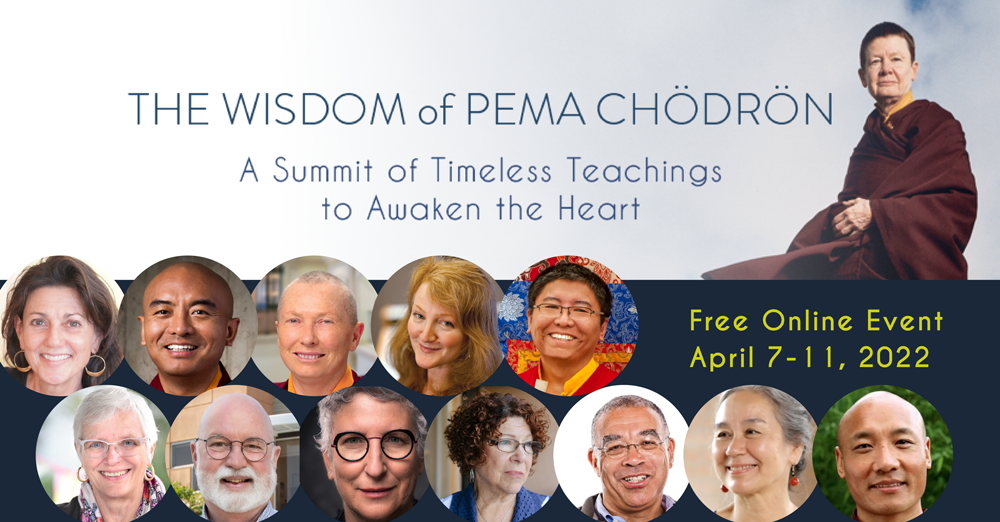
  • You’re Invited: FREE Wisdom of Pema Chödrön Online Summit

    You’re Invited: FREE Wisdom of Pema Chödrön Online Summit

    Hi friends. I know that many within the community are grappling with uncertainty right now—as really, we always are—and I also know how terrifying it can feel to embrace not knowing. Whether you’re dealing with health issues, unemployment, or relationship struggles, the question of what’s going to happen can keep you up at night. And then there’s the uncertainty in the world at large.

    When we’re overwhelmed by groundlessness and fear, it can feel like we’re free-falling with nothing to hold onto. In those moments of panic, we search for something, anything, to help us calm the voice within and cope with the suffering that surrounds us. If there’s one person who we can count on for support in turbulent times, it’s Pema Chödrön.

    Pema Chödrön has been a guiding light for millions of people around the world. She has shown us how to appreciate life, embrace uncertainty, and find courage and compassion when things fall apart.

    As someone who’s benefitted immensely from Pema’s teachings, I’m excited to share a one-of-a-kind opportunity to hear from 11 Buddhist teachers and heart friends inspired by Pema Chödrön. In this life-changing event you’ll explore powerful teachings to transform difficulty and live fearlessly with an open and compassionate heart.

    The Wisdom of Pema Chödrön: A Summit of Timeless Teachings to Awaken the Heart is a FREE online event taking place from April 7-11.

    Sign up here to save your spot.

    When you sign up, you’ll receive a free gift: 5 Teachings of Pema Chödrön (instant PDF download)

    Hosted by Krista Tippett, award-winning creator and host of On Being, this free, 5-day summit will include presentations from Tsoknyi Rinpoche, Mingyur Rinpoche, Elizabeth Mattis Namgyel, Gaylon Ferguson, Judy Lief, Fr. Greg Boyle, Tami Simon, Margaret Wheatley, Anam Thubten, Karma Lekshe Tsomo, and Arawana Hayashi.

    In addition to the inspiring talks, spiritual teachings, and practice instruction from summit presenters, each day of the summit also includes Tonglen and lojong workshops with Judy Lief and exclusive archival teachings from Pema Chödrön, courtesy of Shambhala Publications.

    This free online summit is for you if you’ve found yourself asking:

    • How can I shake feelings of restlessness and learn to be okay with uncertainty?
    • How can I embrace life’s ups and downs and use challenges to awaken my heart?
    • How can I learn to practice loving-kindness when I feel hurt or betrayed?
    • How can I move more gracefully through undeniable change?
    • How can I bring more joy into my life, and into the lives of others?

    As Pema says, “From great suffering can come hatred, resentment, and despair… or from great suffering can come great openness of heart and a great sense of kinship with others.”

    I hope you enjoy the summit and learn new ways to cultivate openness, kinship, joy, and resilience, inspired by one of the greatest Buddhist teachers of our time, Pema Chödrön.

    Join the FREE Wisdom of Pema Chödrön Summit

    If you have any issues signing up or need additional support, please contact Lion’s Roar at learn@lionsroar.com.

  • How to Push Through Phases of Uncertainty

    How to Push Through Phases of Uncertainty

    “I beg you, to have patience with everything unresolved in your heart and to try to love the questions themselves as if they were locked rooms or books written in a very foreign language. Don’t search for the answers, which could not be given to you now, because you would not be able to live them. And the point is to live everything. Live the questions now. Perhaps then, someday far in the future, you will gradually, without even noticing it, live your way into the answer.” ~Rainer Maria Rilke

    I once trekked on my own along the Salkantay Trail in Peru between the town of Mollepata and the magnificent Machu Picchu. The journey in total was fifty miles, and it took me four days. I had never backpacked before, let alone on my own, let alone in a foreign country, but the opportunity was appealing.

    Along the way, I learned four important lessons that have helped me accept and make sense of phases of uncertainty. But before I share those, a little backstory:

    The year prior, I experienced many internal challenges. In a short time, I transitioned from having clear direction in my life and knowing what was important to me to having no grasp of what I wanted and feeling lost. The feeling was unfamiliar to me. I had spent much of my life plowing forward, knowing exactly what I wanted, why, and how to get there.

    Almost two years before my trip to Peru, I had just finished working breathlessly on a local political campaign for the 2016 election. The candidate lost, and the outcome of the presidential election left me feeling even more defeated.

    Shortly after, I traveled to Thailand for three weeks with a friend. When I returned to the states, I was unsure of where I wanted to place my next step. I was still feeling politically fired up, and with that energy, I decided to start a nonprofit organization in my state to encourage women to run for office.

    I worked day in and day out putting together statistics, a website, a business plan, and coffee dates with important people in the community. It didn’t take long for the organization to gain momentum because it attracted the support of people who were also intensely moved by the election.

    Meanwhile, I entered into a tumultuous and emotionally exhausting relationship, I moved to a different town after living in my parents’ basement, and I was seeking full-time work to pay bills that I barely had the money to cover. I felt split between two worlds: one of chaos and one of professionalism. In my naive mind, I believed those two worlds existed separately, and I couldn’t find my place in either one.

    When I jumped on the opportunity to start an organization in my community, I wasn’t fully aware of how demanding it would be. Just as it started to gain momentum, I secretly knew I didn’t want to be part of it long-term.

    I knew I was capable of building the organization, but I was also young and inexperienced, insecure, and distracted by the ambiguity of being a fresh college graduate. I chased after a shiny object that I, as I got closer, discovered wasn’t something I was as interested in as I initially thought.

    A year after the organization started, I resigned from the Board of Directors. We then decided to dissolve the organization altogether, and I breathed a major sigh of relief.

    Around the same time, my boyfriend and I split for the second or third time. I was left in a state of confusion and felt defeated again, but it was a different type of defeat. It was a feeling of intense vulnerability. I felt exposed and lost—two feelings I’ve always been good at avoiding.

    When I decided to trek fifty miles through the Andes Mountains, it was an attempt to find clarity. I hoped that hiking by myself in nature would bring sudden insight into what I had just experienced and what I needed to do next.

    I instead learned that clarity doesn’t arrive just because we demand it. Rather, clarity comes in its own time, typically after one has endured the uncomfortable but often necessary road of uncertainty.

    If you’re currently facing uncertainty in your career, relationships, or any other area of your life, perhaps some of my other lessons will be helpful to you.

    1. It will be painful—keep going anyway.

    On the third day of my hike, I grew nasty blisters on the heels and toes of my feet. I also felt a throbbing pain on the inside of my calves. Halfway through the day, simply putting weight on my foot became the most painful task.

    I was walking by myself on a dirt road, and I had no idea how much further I had to walk before reaching my campsite. I wasn’t even confident I was headed in the right direction.

    Okay, just walk to that point, I’d tell myself, looking about 100 meters ahead where the road curved or changed in some way. Maybe the view will change once you get there, I thought.

    A different view meant that I might suddenly see my campsite in the near distance. Not knowing kept me going because there was always the possibility that I was meters away from resting.

    Breaking the hike down into smaller chunks also helped me to stay motivated. If I imagined the total distance I had left to go, it was overwhelming.

    A journey of uncertainty guarantees pain. It’s uncomfortable. It’s vulnerable. It’s frustrating. Sometimes we want to lie down in the middle of the road and give up. It feels easier to stay in the same place than to walk toward something that’s unknown.
    But with uncertainty, there is no way out but through. Try to break it down into more manageable parts—can you make it through the day? The week? The next month?

    With uncertainty, you never know when you might turn the corner and suddenly see answers in sight. Tomorrow might offer insight, so why stop now?

    2. Distractions don’t solve uncertainty.

    The beauties of traveling alone are many, but they always come with a degree of loneliness. In Peru, it was difficult to wake up cold and alone in a tent, knowing I only had myself to talk with. I would’ve much rather reached my arm across to pull a warm body close.

    I was jealous of the couples I had encountered on the same trail who were hiking together. I was frustrated with my loneliness and annoyed with myself for being alone.

    Really, what I wanted was love to distract me from the uncertainty I was facing in my life. But I knew that if I wallowed in what I wanted instead of what I had to do, which was to pack my tent and all my other belongings into my backpack and move forward, I would stay stuck in the same place and wouldn’t get any closer to my destination.

    When we’re caught in a phase of uncertainty, it’s tempting to attach to distractions that’ll keep us from focusing on the discomfort we feel. The most appealing distraction when confused about life is to chase after opportunities that aren’t necessarily best for us. The panic we feel when we lack direction is so strong that we would rather seek mediocre, senseless options than stay in the uneasiness as we wait for clearer direction.

    Ultimately, waiting for direction leads us to our greater purpose. But we can’t follow the direction if we’ve already made a decision based on fear.

    3. Trust that there will be guides.

    The first time I went the wrong way along the trail was on day one. I had just walked through some sort of political event. Interested citizens sat along a ledge while they listened to a well-dressed man speak in a confident tone.

    After I passed, I took a left turn at a crossroads. I heard a voice behind me and turned around. It was one of the men from the group, pointing in the opposite direction. He had followed me a few steps up the trail, making an effort to redirect me. “Salkantay?” I said. He nodded.

    On the third day, I arrived at a small village where a family of three lived. After hiking a steep hill, I sat on a wooden stump by their home to rest. I bought and devoured two passion fruits from their garden.

    On my way out, I turned right on a dirt road. A boy about two years old saw me and pointed left. “Salkantay?” I said. He cocked his head. “La Playa?” I said the town where I was headed. He nodded and pointed left again. I turned around and continued to hike along the dirt road.

    On the last day, I passed a turn I needed to take. My senses stopped me. I had just passed a few hikers, and they weren’t behind me any longer. I pulled out a book of directions (which I’m never good at understanding), walked back, and found the small path that led me into the mountains.

    Without unfamiliar faces along the way to guide me, I would’ve easily wound up lost in the Andes Mountains. Maps and written directions aren’t always helpful when standing in a specific place.

    Sometimes, finding the way requires trust. If you haven’t found a sign to help guide you on your path of uncertainty, have faith that it’ll arrive in the right moment. The only way to find the signs is to keep walking—keep taking action and trying new things. The signs and guides are waiting for you to arrive.

    4. Take good care of yourself.

    Near the end of the trek, when my feet were blistered and my legs swollen, it was important that I had enough time to rest before the next day. I knew that in order to push forward, I had to take care of my body.

    I spent the evenings stretching, massaging my muscles, and wrapping tape around my blisters. Though the pain would still be there the next morning, it was a little more manageable than the night before. The pain had subdued just enough that I knew I could continue hiking.

    Since we’re never sure when a phase of uncertainty will end, it’s critical that we take care of ourselves throughout it. Creating time to rest and take care of ourselves—which for me is getting enough sleep, exercising, and journaling—ensures that we will have enough energy to push through the discomfort we feel.

    It’s when we lose our energy that we cling to distractions, miss important signs along the way, or give up. Trust that no matter how difficult a single day is, there is always space to pause and take a deep breath. Sometimes that’s all you might have energy for, and that’s okay. Without rest, there is no journey.

    On my flight out of Peru, I peered out the window at the many trails that marked the earth’s skin like scars. I thought about the trek I had just experienced. I wondered, what did the trail look like from the sky?

    I imagine a life’s journey looks similar. It curves and zigzags through different terrain, some parts uphill, some downhill. It’s never a straight line.

    Uncertainty is a natural and guaranteed part of life. A journey isn’t intended to be seen from a bird’s-eye view. It’s rather meant to be lived in the moment through our own experiences. We don’t need to know what lies beyond what’s right in front of us. We’ll reach it eventually, in the right time.

    There are moments when we reach a lookout point and can make sense of the larger picture of our lives. From that perspective, we can look back at the journey we just accomplished. We can understand the connection between the series of events that have created our lives up to that point.

    But more often than not, we don’t have the ability to see our journeys from the lookout point. We instead see what it looks like right in front of us: a steep hill, thick trees blocking the view, and no signs in sight. We have doubts about what lies ahead.

    When we trust that there’s a grander view of the trail we see directly in front of us, we can muster the energy we need to carry us to a day when, finally, we reach a lookout point. From that view, everything makes sense. Trust that, regardless of what it looks like now, the lookout points are waiting for you along your path.

  • How to Face Uncertainty: Why We Don’t Need to Press the Panic Button

    How to Face Uncertainty: Why We Don’t Need to Press the Panic Button

    “This time, we are holding onto the tension of not knowing, not willing to press the panic button. We are unlearning thousands of years of conditioning.” ~Sukhvinder Sircar

    This morning I awoke feeling uncertain about the direction my life was taking. Was it what I wanted in all areas? Was I right to be living where I wanted to, in London, away from family? Was I doing the “right thing” restructuring my business, and was I doing the “right thing” going away for two months next year?

    I’ve had a few days like this recently, and while I’d like to blame it on my external circumstances, I know differently. I’m simply feeling stuck in thought.

    I learned this in what I perceive as “the hard way.”

    Three years ago, I experienced trauma that left me feeling empty and abandoned. I got married. You wouldn’t think that this was a traumatic experience, but in the space of one month (and for no apparent reason whatsoever), my family told me that I was “no longer part of their family” and that I “deserved” to be abandoned by my dad when I was four, and my new mother-in-law-to-be told me that she had “never liked me but that she would try.” Also, I lost my best friend of ten years.

    It’s safe to say that my wedding day was a blur, and I felt broken. Instead of experiencing wedded bliss, I ended up questioning my relationship and traveling alone to try to “find myself.” Really, I was trying to escape my pain and run from the uncertainty I was feeling about life.

    Fast forward three years, and I now know something different. When we are feeling uncertain or doubtful, trying to predict the future or trying to work out the past—whenever we are not in the moment—it is because we are actually caught up in our thinking.

    Sure, we can blame many of our external circumstances for these feelings and choices—there are plenty of things that have occurred this week that I could say have “made me” feel uncertain. But since I’ve discovered the truth of who I really am, I now know that my uncertainty is, in fact, coming from me.

    Ultimately, our thinking influences how we experience the external world, which means we have a choice in how our circumstances impact us. That being said, it is human nature, and completely normal, to get caught up in our feelings about external events at times. The point is that we don’t need to be scared of our human experience or try to think our way out of it; we just need to accept our feelings until they pass.

    It’s an Inside-Out Reality

    As I journeyed through life after what felt like a breakdown, I came across a profound understanding about the nature of our human experience, which totally transformed the way I saw and danced with life. I now call this my “transformational truth principles.”

    These principles explain how our entire reality is thought-created, which means that everything we see in the world and everything we feel comes from our thinking.

    So, using my current experience as an example: I’ve been feeling uncertain about where I should live, whether I should travel for such a long time, and how I’m going to restructure my business and maintain my finances. I know that I am feeling anxious about these things solely because of my thoughts.

    If I weren’t worried about uncertainty (if I didn’t have an “uncertainty bothers me” lens), then it wouldn’t upset me at all. If I focused on the potential of my business growth, the excitement of the travel journey, and the beautiful feeling of living where I want to be living in London, I’d be feeling that thinking instead.

    So, external events that are happening can’t impact us unless what we believe about them bothers us. It’s the same with anything. If someone criticizes us, it can’t impact us unless we believe it ourselves.

    Say someone criticized my creative talents, for example; I would probably laugh because I see myself as creative. If, like with my wedding, they criticized my worthiness, my ability to be loved, or left me, I might sob into my pillow for days, because at times, like many of us, I doubt my self-worth and question if I’m lovable.

    Just because people thought I was unlovable, that doesn’t mean I am. The only reason it impacted me was because I believed it myself. In this way, the external only ever points us to what we think about ourselves and not to the truth.

    Our Thoughts Are Not the Truth

    We get so caught up in believing our own stories that we often forget to step back and see that what we think is just thought. Thoughts aren’t always facts. What’s more, you might notice how our thinking fluctuates. We can think differently about the same thing in each different moment. That’s because our thoughts are transient, and fresh new thinking is available to us in each moment.

    When you understand this, you might well wonder, “Well, what is the truth then?” The truth is underneath our thinking. Within all of us there is a wisdom—a clarity—that is innately accessible to us, if we just allow the space to listen to it.

    We do this by simply seeing our thoughts as “just thoughts” floating around in our heads. Noticing this allows our thoughts to drop away—without us doing anything.

    Allowing Space and Flowing

    Usually, instead, we are likely to have a whole host of thoughts around how to react when we feel anxious about uncertainty.

    For me personally, I would usually want to force and control things in order to “fix” my lack of certainty over my relationship or whatever my uncertainty might be in the moment—living where I was living, traveling, or restructuring my business.

    You might make lists of action plans, or work out worst-case scenarios, or analyze why it happened.

    This has always been a temptation of mine, and I spent months on this after my wedding, trying to work out if I should be with my husband or not, whether life would forever be difficult if I had children, why my in-laws didn’t like me, and why my dad left.

    But, again, in the same way I now understand that it is not the external that creates my feelings about uncertainty, I also understand that there is no need to force certainty, or even look for the “why.” Sometimes there isn’t one.

    Certainty is an Illusion

    It’s an illusion that there is any certainty in the first place. Life is always evolving, and, as such, there is no safety net beyond the one we imagine. We do this all the time, but the only certainty in life is that there isn’t any!

    Anything we predict is just our mind trying to “fix something,” which is futile. It can seem scary to think that we have no certainty, that we can’t fix things, but when we understand that there is actually nothing to fix—because nothing is broken—we can settle back into the flow of life.

    I’m not saying it always feels easy, but I have experienced how my feelings about my wedding traumas settled down when I began to understand this.

    We are Universally Guided and Already Whole

    We only see that there is something to “fix” because this is, again, our construction of reality. We are unlearning thousands of years of conditioning of how we view the world: ideas that certainty exists and that we need to fix ourselves if things don’t look how we think they should.

    Sydney Banks, the original inspirer of my Transformational Truth principles, said:

    “If the only thing people learned was not to be afraid of their experience, that alone would change the world.”

    Because, actually, there is nothing to fear. I believe we are always exactly where we need to be—because we are part of this amazingly miraculous universe, which is guided by some sort of powerful intelligence that no one really understands. In this way, we are already whole, always connected, and always safe. There is nothing to fix because we are not broken.

    Ultimately, the “answer” we are looking for is pointless. There is no “answer,” and we don’t need one. All we need to do is see how life really works and allow ourselves to accept where we are in each moment, knowing that it is a transient, thought-created experience of life.

    We just need to flow, move with what happens, and sit in our feelings, knowing that they are thought-based, they can’t harm us, and they will soon pass.

    In her poem “She Is a Frontier Woman,” Sukhvinder Sircar explains this well in saying that all we really need to do is hold on to the tension of not knowing and not press the panic button.

    Allow the Creative Force of Life Flow

    And so, this morning, as I woke feeling uncertain, I got out my yoga mat and journal. I stretched, I moved my body, and I sat in the feelings I had, knowing that they would pass, even though they felt horrible.

    I knew that they were not part of me, but simply my thinking, trying to convince me of something I believed that was fundamentally not the truth. I let go. I flowed. I accepted what I didn’t know. I didn’t press the panic button. Instead, I wrote this.

    In the space where I could have (and would have previously) worried and attempted to solve things, the creative force of life—which is actually underneath all of our thoughts—simply flowed through me. In a much more beautiful way than it could have done had I indulged my imagined beliefs about the external.

    When we sit back, creation gifts us with exactly what we need in each moment. We simply need to understand how this works and allow it.

  • Leaping into the Unknown: Why We Don’t Always Need a Plan

    Leaping into the Unknown: Why We Don’t Always Need a Plan

    “You don’t always need a plan. Sometimes you just need to breathe, trust, let go, and see what happens.” ~Mandy Hale

    Wake up.

    Wish I could go back to sleep.

    Get up and ready for work. Tell myself that today I’ll leave earlier but then leave the same time as usual.

    Walk to work. Pass all the same people I did yesterday. At the same time.

    Arrive at work. Listen to the same people complaining about the same things. Complain about the same things myself.

    Teach my classes. Tell people off for being late—the same people as yesterday and the day before that.

    Go home. Try to work toward my dream life. Collapse from exhaustion after about half an hour and wonder what the point is.

    Go to bed. Cry lots. Hope that I don’t wake up in the morning.

    Wake up again and repeat.

    This was my routine for a good number of months before I finally couldn’t take it anymore.

    Did I have the world’s worst job? No, not really. Did I live in a hell hole? Not at all. In fact, you could probably say that I didn’t have any problems, yet I was possibly more miserable than I’d ever been.

    I couldn’t believe it. How had I ended up like this? I’d tried so hard to change my life. I’d meditated, done yoga, followed my dreams, made a vision board, and bought lots of self-help books. I’d even read them, too!

    What more was a girl supposed to do? Why wasn’t my life changing?

    I desperately wanted to leave my job, but couldn’t. I wouldn’t have the money to pay the rent. I wanted to leave my apartment but I had nowhere to go. Not unless I went to stay with my mother and, I couldn’t do that—not at my age!

    So I plodded on, I tried to be a good ‘spiritual’ person and accept my life as it was. I tried to make the best of things. And sometimes, it worked, but not for long.

    Eventually the feelings of dissatisfaction would return. The feeling of helplessness. Feeling stuck. Wanting to escape.

    But there was no way out. I’d be repeating this day forever. And ever.

    Let It Go

    Around this time, I was reading a lot about how we need to close one door before another can open. I was also seeing colleagues leave work to pursue a life of their dreams.

    Rather than giving me hope, this made me feel more downhearted. It was all right for them; they had money, a partner, a new job, or an already-up-and-running business.

    I was all alone. I was broke. I had no husband to support me. No rich relatives to bail me out.

    Everything I’d done to try to make a living out of work that I loved had already failed. I didn’t even know what I wanted anymore. I just knew I didn’t want what I had.

    I’d get irritated when I’d read about how I had to simply quit my job, how I had to follow my heart. What if my heart was only telling me what I didn’t want? What if it was refusing to tell me what was next?

    What if I closed one door and the other one got stuck?

    What then?

    I was so afraid of what would happen, I held on for months, hoping for an answer to drop out of the sky.

    Until the pain of staying where I was suddenly became too much to bear. I couldn’t take it anymore. Suddenly, what happened next didn’t matter.

    I didn’t care.

    I saw the madness of what I was doing: staying in a job I didn’t want to do, to live in an apartment that I didn’t want to live in, to stay in an area that I didn’t particularly like. Just to survive. And even surviving wasn’t much fun.

    So I surrendered. I did what I’d felt called to do all along: I said goodbye to the security I’d been clinging to. With no idea of what was coming next. With no income and little money. And no idea where I was going to live.

    But as soon as I made my decision, I felt a huge sense of relief. I wondered what had taken me so long.

    Of course, it wasn’t long until the fear crept back in. I had moments when I wondered what I was doing and how I would survive.

    But even in those moments of doubt, there was a knowing that leaving my present situation was the right thing to do.

    All my life, I’d put survival first. Now it was time to put myself first.

    My happiness. My sanity. My peace of mind.

    The worst-case scenario may not be so bad. In fact, it might be quite good.

    I was lucky. I was never going to be out on the streets. I knew I had the option of returning to stay with my mother until I sorted myself out. But I really didn’t want to do that. I was far too old for that now.

    Besides, that would mean living in a town far away from anywhere, with no transport of my own. I’d be so lonely. I’d have even less chance of finding work I loved. I’d be even more stuck!

    Despite my best hopes that something else would magically turn up, I indeed ended up returning home. I tried telling myself it would be fine, but the scary thoughts were still lurking.

    However, within a couple of weeks of the move, I saw the new path begin to emerge—chance meetings with like-minded people, work opportunities in unexpected places, community events where I thought there’d be none.

    And for the first time in months, I actually felt happy. Because for the first time in my life, I was truly putting myself first. And I was truly living in the present. Survival was no longer the name of the game. My own peace of mind and happiness was.

    When the pain of being where you are is too much to handle, when life is shoving you in the direction of the unknown, dare to trust it.

    As I said, I was lucky. I know not everybody can do exactly as I did. Not everyone has someone who can help them out while they make a drastic life change.

    I also know how annoying it can be to be told to change your life when you simply don’t see how. But the point here isn’t to do what I did, but to let go where you can even if you have to face your own worst-case scenario.

    When you begin to take care of yourself, when you follow what feels good for you and put your own physical and mental health first, you’ll find the path will begin to open up. You’ll find support from unexpected places.

    You may even find that your worst-case scenario turns out to be the best thing you could have hoped for.

    What I’ve learned is that having a plan is overrated. Sometimes we really do need to let go and see what happens next.

  • The Beauty of Uncertainty: Each Day is a Blank Canvas

    The Beauty of Uncertainty: Each Day is a Blank Canvas

    Every New Day

    “Twenty years from now you will be more disappointed by the things that you didn’t do than by the ones you did do. So throw off the bowlines. Sail away from safe harbor. Catch the trade winds in your sails. Explore. Dream. Discover.” ~Mark Twain

    It occurred to me one day, while staring at my computer at work, that I have always been uncomfortable with the idea of having uncertainty in any area of my life.

    I plan my schedule rigidly, including what social/extracurricular activities I’m going to do over the next week. I take very few risks, and when I do take one, I vow to never do it again. You could say I live life very safely and am a “stick to the rules” kind of person.

    At this moment, I am feeling anxiety from thinking about all the things I have no control over.

    I am about to finish graduate school with a doctorate in biology and I have no idea what I’ll be doing next. Will I actually submit my thesis by the March deadline? What will the peer review process be like for my publication—will it require me to delay my graduation?

    This can even go further into my personal life. Where will I be living next? Who will I be with? Will I get married within the next five years? Will I be happy where I am?

    As I sit here and think of these questions, I feel a huge black cloud hovering above me. When I think of the future I don’t see any clear pictures, but instead, a blank canvas.

    I see uncertainty as something to fear because it is unknown.

    Uncertainty leads to changes in life that we may or may not be prepared for, or expect at all. These changes can be good for us, or they could tear us apart. There is even research on the ethics of uncertainty, so I know that I’m not alone in fearing uncertainty, but…

    Why? Why do we fear not knowing? Why must we try to exert control on every aspect of our lives?

    We make schedules every day, we plan ahead for events, we fall into this routine of life because we know what to expect.

    We like knowing what to expect. We know that on Monday we are going to wake up and go about with our morning routine, go to work, come home, and either have plans with other people or continue with our nighttime routine. It’s back to square one on Tuesday. 

    We feel comfortable knowing that we have something to look forward to. When we lose this control, it results in discomfort, anxiety, and fear, and this can break us apart

    What if you woke up one day and that certainty in life was taken away from you? What if you were essentially placed on a blank canvas and had to paint your life as you go?

    How would you feel? Even writing about living on a blank canvas stirs fear of uncertainty within me. It’s because uncertainty equals risk. You are risking treading into waters that you’ve never waded through before. You don’t know if there are “sharks” out there.

    But, what if you end up liking what’s in the previously unexplored waters? You’re risking change happening. You are risking doing something you didn’t think you’d do, feeling something you didn’t think you’d feel, or being someone you didn’t think you would be.

    Uncertainty sometimes forces us to explore aspects in life we never even knew existed, and that’s what makes uncertainty and change so beautiful.

    Think back to a time when you tried something new or met new people and it/he/she/they became an important part of your life. It’s because you went past your fear of uncertainty and took a risk.

    Not all risks result in negative outcomes. In fact, all the risks you’ve taken up to this point have brought all those things and people into your life that you have today. Or maybe all the risks taken have led you to eliminate what has been toxic in your life.

    Either way, change and uncertainty are crucial in the process of creating the type of life we want to live and the people we want to be. I think we should open our eyes and embrace not having everything figured out all the time. Every once in a while, we should wake up with no plans and just paint as we go.

    If you think about it, the only thing permanent in life is change. The process of growing from a baby into an old man or woman involves necessary (and quite remarkable) changes. Seasons change. Our minds are constantly in a state of change and help us adapt to physical, spiritual, mental, and emotional choices we make in life.

    Change can be good. We should be grateful that we are alive and even have the choice to change and accept changes. We should be grateful for the changes that life forces us to make that ultimately end up painting a better life for us.

    Each day is a new blank canvas. How lucky are we to be able to continually renew like this? To be able to start all over every day?

    All the uncertainty you’ve openly embraced, the fear you put aside to try something new, and the changes you’ve made thus far have made you the person you are this moment, reading this article.

    While there are certainly (no pun intended?) moments in life that you may not think have been for the better, they are guiding you on the path to where and who you’re meant to be. Take risks in life. Wear your heart on your sleeve. Be vulnerable.

    Just like in the Mark Twain quote above, we should explore life, create room to discover new things, and go for our dreams. We should be open-minded, explore the unknown, meet new people, and accept change and uncertainty.

    We should be excited that every day we get to wake up and automatically have a new beginning on that blank canvas. The whole world is at our hands and feet, and we get to move in whichever direction we choose.

    Let’s wake up every morning, grab that paintbrush, and embrace all the colors and strokes we choose to paint, as well as what life paints for us.

    You have all the colors, brushes, and various materials to create what you envision, but make sure to enjoy every moment of the process, especially uncertain ones, in creating your beautiful masterpiece.

    Every new day image via Shutterstock

  • Choosing Inspiration Over Intimidation: How the Unknown Can Empower You

    Choosing Inspiration Over Intimidation: How the Unknown Can Empower You

    Facing the Unknown

    “When you become comfortable with uncertainty, infinite possibilities open up in your life.” ~Eckhart Tolle

    Lately, I have been reflecting a lot on what I was like when I was a kid.

    Back then, what I didn’t know seemed magical. It gave me room to imagine, to fill in the blanks with my own creative inspiration, and to live with a sense of wonder and awe.

    I loved fantasizing and daydreaming and imagining what magical situation might be brewing in my life.

    As children, curiosity was a natural and automatic part of us, and what we didn’t know didn’t scare us. If anything, it made us into warrior explorers who took adventures into the unknown, unafraid to change direction if something wasn’t working, unattached to the outcome, and perfectly content on the journey.

    As a child, I was open and available to the possibility of the kind of world I wanted to live in. I loved learning about people and their life situations.

    What I didn’t know inspired me to ask questions. And I asked a lot of questions. I was unscripted and unedited. It took people by surprise, but I shook things up everywhere I went and saw nothing wrong with that.

    I was unapologetic about who I was.

    I believed in the good, the magical, and the powerful, and I believed that fairytales were real. After all, no one had told me yet that it was silly, crazy, or impossible. No one had convinced me yet that fantasy was not a useful tool for creating a worthwhile life.

    But sadly, I was only wholeheartedly curious and unedited until about age five. Then I began to doubt, to limit what I knew to be true, and to edit the world I believed was possible.

    I got really good at fitting in and being whatever I thought others would adore. I stopped asking questions, and I went through years of agreeing with everyone all the time.

    I had forgotten who I was and grew fearful of rocking the boat. I now felt threatened by the unknown, and I lived with anxiety because of it.

    All those years of forgetting about who I am wound me up good and lost by the time I graduated college. I went through some pretty heavy rock bottoms in my twenties, super lost and so unsure of myself.

    I struggled because there was this world I believed in, but then there were all the ways in which I had edited myself into a world much smaller. I knew there had to be a way out. It just took me some time to find it.

    As it turns out, the way out was not some external thing that changed for me, but rather the willingness to search inside myself, a place I hadn’t spent much time up to this point.

    I let myself start asking questions again, and I contemplated those questions for months and years. Just asking them was enough to open up a whole new world to me.

    I believe in the practice of taking what we do not know—that precious space where anything is possible—and allowing ourselves to live in its question mark, to play with what we really want, and to dance in the discomfort, challenging ourselves to build and create the world we want to live in.

    If we don’t choose this, then what are we choosing?

    What if we let the unknown be an invitation, a calling to a greater you and me? What if the unknown was a blessing and a gift, presenting us with a blank to fill in with whatever we want to create? What would be available to you if you let the unknown inspire you instead of letting it intimidate you?

    I have so many unknowns in my life right now, and I am pretty positive I always will.

    Will I become a wife or won’t I? Will I be a mom or not? Will I live here for the rest of my life, or will I move again? Will I travel the world again? Is this what I am meant to be doing, or is there something else or something more? What do I really want, and am I willing to do whatever it takes to create that?

    Instead of making myself crazy, trying to get answers that I cannot possibly have in this moment, I choose to practice surrender and mindfulness.

    Whenever I’m facing the unknown and I see myself going into a negative, fearful, victim place, asking questions helps me shift.

    I ask questions like:

    How do I know this bad thing is going to happen? Is that a fact? Since this is not a fact, what is a fact? The fact is that I am facing the unknown.

    What do I prefer to create right now? Where is the magical place that I wish to go instead of this limited place? What do I want this unknown to mean for me? What would it take to create something better that I haven’t even thought of yet? Can I just live in the question of that? How does it get any better than this?

    As we become responsible adults, we need to reclaim our power, remember who we are, and become the person we wish would save us so we can create the world we would be joyful living in.

    It is up to us to let go of the outcome and to be curious and adventurous, like when we were kids.

    When you are faced with the unknown, notice what you do. Become aware of whether you make up a negative story about it. If so, what would happen if you made up a fun, exciting, empowering, inspirational story about it instead?

    Use your curiosity. Investigate your own mind, heart, and spirit. Ask questions. Explore. What adventure do you want this unknown to mean for you? What do you want to create?

    Lastly, look outside your comfort zone. Instead of reaching for what you know based on your past, look outside the bubble that includes everything you’ve ever known. What is a new way for all the pieces to come together? How might this time be different for you?

    Be willing to look beyond what is currently showing up. Sometimes we may not know how something will come into being, so we must stay present with the knowing we hold deep inside and committed to the vision we have for our lives.

    We are human. There will always be uncertainty, but it doesn’t have to overwhelm us or freak us out. It could inspire us and get us excited about what magic is unfolding for us.

    As for me, I am choosing to just be with what is. As I sit with my resistance to what is, I become aware that the temptation to make the unknown mean something scary and bad is just another distraction so I don’t have to sit in the discomfort of not knowing.

    So every day I must recommit to sitting with the discomfort instead of giving in to the temptation to make up scary stories about it. Just embracing what is can be the very relief we are searching for!

    Uncertainty image via Shutterstock

  • Feeling Trapped? Step into the Unknown and Set Yourself Free

    Feeling Trapped? Step into the Unknown and Set Yourself Free

    Man and Birds

    “Dont call it uncertainty—call it wonder. Dont call it insecurity—call it freedom.” ~Osho

    My daughter loves birds. So, as a treat, we all went to a Bird of Prey center near to where we live. Here in the UK, there is a long tradition of keeping these birds. As stated on one hawking site, falconry is “the noble sporting art of flying trained birds of prey.”

    Noble or not, I have an issue with keeping birds captive. I had hoped that, in the center we would be visiting, these would be rescue birds.

    They weren’t.

    They were raised in captivity, slightly better than being caught in the wild, but only slightly. There was one area I referred to as Prisoner’s Row. Big, powerful and noble birds like falcons and kestrel chained to a post. A long row of them stuck there for visitors to gawk at.

    Yes, they are beautiful, and amazing to see up close, but they are much more beautiful to see flying up there in the wild expanse of sky.

    In any case, we were there for the Owl Experience. One by one, they brought out owls, starting with the smallest burrowing owls and getting bigger until the huge and majestic European eagle owl was brought out.

    The birds were coaxed over to the leather gauntlet our kids were given to wear. They were stunning and tolerant of us, but it was clear they were doing something against their nature. Owls are not meant to perch on human arms. These owls have been trained to do so, but trained against all natural inclinations.

    Then we went out to the flying arena where our children fed them. Chopped up bits of baby chick feet were dangled temptingly in the air then placed on a gauntlet, and eventually and very reluctantly the owl swooped down and picked up the morsel.

    They weren’t good flyers, these birds. They knew how to fly but their muscles were weak. They flew short distances and preferred to hop.

    It all left me feeling uncomfortable. It was a privilege to see these beautiful creatures up close, but at what cost?

    Perhaps it makes me uncomfortable because it is uncomfortably close to our own limited experience of life.

    As I watched the owls soar within the flying arena, I wondered why they didn’t simply soar off to freedom. They weren’t chained. Their wings were not clipped. They could do it, if they chose to.

    But they stayed. They hopped and half-flew to each wiggly bit of chick foot and hop-flew back to their post, with thinly veiled resentment. But they stayed. And then, after the show, they allowed themselves to be carried back to their cage.

    Why?

    Perhaps the birds are as susceptible to the lure of certainty as we are.

    There is the certain provision of chick feet if they fly to their keeper’s arms and back to a post within a small outdoor arena. After all, having been raised in captivity, that’s all they’ve known.

    And then there is the great, wild uncertainty that exists beyond the arena. Will there be food there? Will they be able to catch it? Are there unknown dangers lurking in that great blue expanse of sky?

    And here’s the clunky metaphor. My husband and I are in our own sort of flying arena at the moment. We’re both in regular jobs, jobs that more often frustrate than inspire, getting regular paychecks.

    We’re eating with these paychecks. It may be our own version of chick feet, but, hey, we’re eating. We are testing our wings, though. Flying a bit further. But, for the moment, we are returning to our keeper’s arms.
    We gaze out at that broad blue expanse. We know we’re capable of more. We know we haven’t really tested ourselves; we haven’t really indulged our deeper passions. It seems to me that we’ve all been trained to do things against our true nature, and have grown up in this limited, but safe, way.

    The few times I’ve flown into uncertain territory have been terrifying but thrilling.

    As it has been said, uncertainty is the only certainly. To resist it is to resist our true nature. To resist it is to stay trapped, to accept the cage, the gauntlet, the chick foot for supper. To embrace the uncertain is to fly beyond the arena into that beautiful blue expanse of freedom.

    We know beyond a shadow of a doubt that the owls can do it. Not just can, we all intuitively know that they should do it. To live in the freedom of uncertainty is infinitely better than to live in the security of captivity.

    We know this and wish this better life for the owls. Why, then, can’t we know it and create it for ourselves?

    So this is my challenge, to myself, and to you, should you choose to accept it: try something you’ve never done before. Taste something you’ve never tasted before. Read someone you’ve never read before. Say something you’ve never said before. Write something you’ve never written before and then share it.

    Step into the unknown and feel it—that ground dropping away, breath-catching feeling. That’s the feeling of the limitless expanse of creative potential. That’s life as it’s meant to be lived.
    Man and birds image via Shutterstock

  • How To Move Forward When You Feel Paralyzed by Uncertainty

    How To Move Forward When You Feel Paralyzed by Uncertainty

    “When you become comfortable with uncertainty, infinite possibilities open up in your life.” ~Eckhart Tolle

    A woman in a relationship that is breaking her spirit might remain there for fear of what leaving will bring.
    She doesn’t know if she will find another to care for her, and having a warm body is better than having no one. The uncertainty about whether or not she will survive that decision, and be happier for it, keeps her there.

    I know the harsh clutches of uncertainty all too well. It wasn’t long ago that I waffled and wavered about every decision I faced, feeling afraid to make one for fear that some mistakes cannot be undone.

    I resisted relationships because loving led to marriage and then divorce. I resisted starting my business because seven out of every ten businesses fail. I refused to quit the job because it was the only way I thought I could succeed.

    I allowed myself to fall in love only when I was certain that he loved me more and would stay. To ensure that it worked, I planned every detail of the relationship and the wedding.

    Feeling doubtful that this relationship was truly the one I wanted, I was unhappy and silently praying for something to happen to help me out. But I stayed the course because at least I knew what would happen next; I had it all planned.

    My awakening came when my engagement fell apart and there was nothing that I could do about it. I broke into a million pieces. I lost twenty pounds in one week and wept until there were no more tears.

    I had placed a certain level of trust in things working out and was certain that it would. The experience left me paralyzed because “I had it all planned.” What was I supposed to do then?

    I woke up daily gasping for air, knowing I’d go to work where I’d help people and come home to a crumbled life. It was then I knew that if I didn’t move I would die.

    I fought against the emotional pain of the break-up and decided that I would have no more of it. I quit my two jobs, went home, and began packing my bags.

    Two months later I sold my belongings, counted out the little savings I had stashed away for a safety net, and moved back to Jamaica to be with my family.

    I had no fear about what would happen; I had been so fearful for so long and life happened anyway. All I knew was that I needed to have a hand in my own life, to be an intentional co-creator of my reality, to accept uncertainty as a friend.

    So how do you move forward in uncertainty?

    1. Accept that at the root of uncertainty is a fear of failure.

    We’re not afraid that we don’t really know what’s going to happen tomorrow. We’re afraid that what happens tomorrow will be so painful that we won’t survive it. We have already created a worst-case scenario in our minds, and the likelihood of it becoming reality is what really keeps us bound, not uncertainty itself.

    Action Step: Examine your uncertainty. What lies at its root? What emotion comes up when you think about doing the thing that you’re uncertain about?

    2. Understand that failure is a natural part of life, and embracing uncertainty is key to defeating failure.

    Everybody fails, and failure holds the best opportunities for growth. When we succeed without experiencing failure, our account is narrow. A person who can speak to both failure and success has a much more textured life and can help others navigate both waters.

    For every success story that you hear, there are at least ten stories of failure to supplement it.

    Action Step: Talk with someone who you view as successful and ask about the times that they have failed.

    3. Embrace the idea that nothing is completely within your control.

    We saunter into the world daily, ignoring the many risks that we encounter. When we step out the door, we take an enormous leap of faith that we will get to our destination. We trust that other motorists are as diligent as we are. We hope that no one decides to harm us. We assume that we are healthy and nothing will happen to us.

    We hedge our bets with the universe, forgetting that nothing is guaranteed. It is just as likely that you will survive your break-up as it is that you will find another partner. It is just as likely that your business will succeed as it is that it will fail. Life is about taking risks, and without uncertainty, surprises would not exist.

    Action Step: Make note of everything that requires trust in the uncertain. Some of them are automatic, such as driving. Note the times you rely on others to make decisions in your best interest. What are you really in control of?

    4. Be willing to open up to the universe.

    When we release our expectations of what should happen for us, we allow the universe to deliver in ways far beyond our wildest dreams. By dwelling in uncertainty, we limit the space in which the universe has to work.

    Approaching the unknown with openness breeds a multiplicity of experiences that strengthen our resolve and help us grow. I learned my best lessons when I relinquished control.

    I quickly came to understand that in order for me to grow, I had to let go and leap. By choosing to remain paralyzed, I was choosing to rob myself of some of the best experiences of my life, like a new relationship that supports my growth and my beautiful daughter who helps me appreciate life.

    Action Step: Take a situation that you are uncertain about and imagine what could happen if it turns out ten times better than you hope it will. What emotions would you have attached to that experience? How would releasing expectation free you?

    5. “Make the best use of what is in your power and take the rest as it happens.”

    This quote by Epictetus is an excellent piece of advice. It provides a clear path through uncertainty—taking one step at a time. Sometimes we look at the first step as insufficient, but all you need is one step.

    Once you take that step, the next step becomes easier, and so on. Having too definite a path can serve to block opportunities disguised as surprises.

    Action Step: Think back on all the experiences in which you only saw the first step. How did they turn out? Was the second step anything that you could have predicted?

    6. Take your worst-case scenario and dissect it, asking “what if?”

    “What if?” is a powerful question. It primes us for possibilities and allows us to examine the constancy of our reality. If we are fully devoted to the process, asking “what if” can challenge our perceptions of what is possible for us.

    So what if you did quit your job and had no money? Would you be forced to use talents that you have kept hidden? Would you face your fear of asking for favors?

    What if you left the relationship and didn’t find someone right away? Would you sit with yourself getting to know the you that you forgot in that relationship? Is the worst thing that could happen truly that bad?

    Action Step: Complete this activity with a trusted friend and continue until you can’t think of anything worse. Build a scenario of survival and thriving from your rock bottom.

    7. Keep moving forward.

    Nothing beats uncertainty like facing your fears. Moving forward brings you face to face with risk but also with hope.

    Your life is not the same as it was last year, nor will it be the same tomorrow. When you make an intentional choice to embrace uncertainty, you take back your power. Not only will you be at peace with what may come, you will also have released your attachment to things going exactly as planned.

    Action Step: If you are facing a paralyzing fear of the uncertain, your best bet is to take a step forward. Everyone has experienced the negative effects of uncertainty. The majority has thrived. You are not alone and you can do it.

    What steps have you taken when faced with paralyzing uncertainty? How did you move through it?