Tag: unfulfillment

  • What Carrots Are You Chasing, and Are They Worth the Sacrifice?

    What Carrots Are You Chasing, and Are They Worth the Sacrifice?

    “Not to arrive at a clear understanding of one’s own values is a tragic waste. You have missed the whole point of what life is for.” ~Eleanor Roosevelt

    I promise this essay isn’t an attempt to convince you that you’re living inside The Matrix. (Okay, maybe it is a bit.)

    But do you ever find that days, weeks, or even months have passed that you didn’t feel present for? I describe this odd sensation as feeling like you’re going through the motions like Bill Murray trapped in Groundhog Day.

    Every day bleeds into the next because you’re future-focused, and what you’re doing right now only feels valuable insofar as it’s laying the groundwork for something else; the next stage of your career, the renovation that means the house is “done,” a number in the bank account that means you’ll never have to worry about money again.

    I think it’s fair to say we both know this is total BS. We’ve climbed enough mountains in our lifetime to know that as soon as we get what we want, we’re already planning what’s next.

    The problem is not with the aim or the goal but with the belief that we can cross a finish line that will magically make these uncomfortable feelings disappear. In psychology, they call this the hedonic treadmill.

    You know that promotion that would change your life?

    You know that new kitchen you obsess over because it would make life much better?

    You know that extra cash that would mean all of life’s money troubles would disappear?

    Will they provide everlasting happiness?

    Doubtful.

    We can blame this on the hedonic treadmill.

    It’s in our human nature to quickly return to a relatively stable level of happiness despite major positive or negative events or life changes.

    Put another way: No matter what we do, buy, or hope will change our life permanently, it’s a short-lived shot of happiness injected into our life.

    I understand why people don’t want to believe this. Because it forces us to question why we’re working so damn hard to change things and to be present with what is right now.

    When I realized this, I began to reflect on what it meant for my life in a way I couldn’t when I was lost in the chase. Accepting that we have a baseline is liberating. Most of what we’re chasing is nothing more than stupid carnival prizes in a game we didn’t know we were playing.

    If the $40,000 kitchen renovation will give you a flash-in-the-pan taste of happiness, is it worth the years of your life you need to sacrifice to pay that off?

    Is it worth more hours in the office?

    Is it worth less time with your family?

    Is it worth the crippling stress?

    You have no control over the hedonic treadmill. Still, you can control how much of your life you’re willing to trade for a future that won’t make you any happier in the present.

    It’s a hard habit to break because, as philosopher Alan Watts explains:

    “Take education. What a hoax. As a child, you are sent to nursery school. In nursery school, they say you are getting ready to go on to kindergarten. And then first grade is coming up and second grade and third grade… In high school, they tell you you’re getting ready for college. And in college you’re getting ready to go out into the business world… [People are] like donkeys running after carrots that are hanging in front of their faces from sticks attached to their own collars. They are never here. They never get there. They are never alive.”

    It’s drilled into us from the day we’re born to always think of what’s next.

    You end up chasing carrots to eat when you’re not even hungry. Hell, you probably don’t even like the taste of carrots.

    This lack of presence is toxic for our children. They end up repeating the same cycle we do when we role model the idea that we need to prioritize a future self (that may never come) over time spent with them.

    Life only feels short because we burn much of our alive time on shit that doesn’t matter.

    Do you want to experience a deep, rich, and fulfilling life?

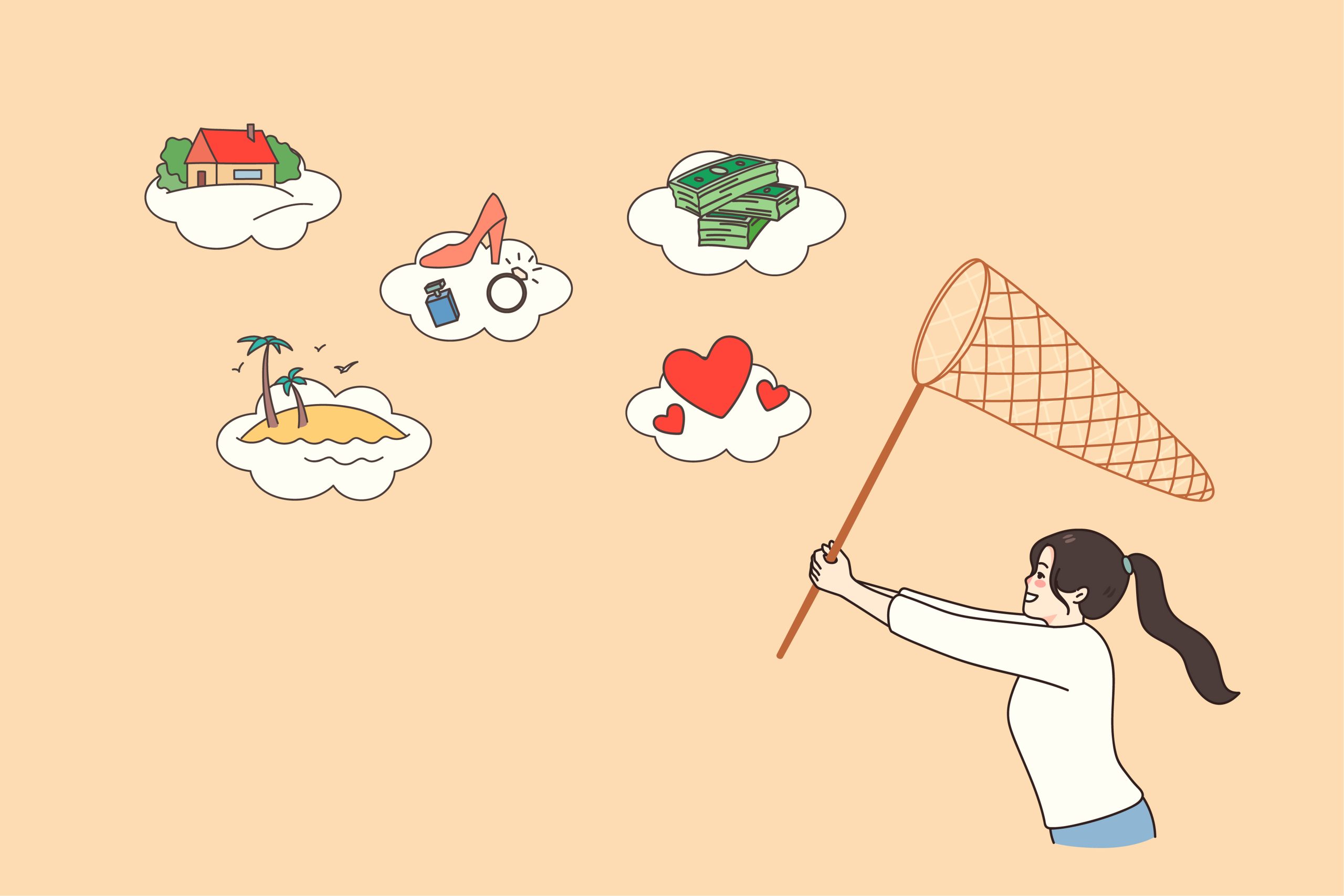
    Start by asking, what carrots are you chasing? Are they worth the sacrifice? And what values would you honor in the present if you stopped living for the future?

    I can say family means everything to me, and I’ll do whatever it takes to support and provide for them. But if I’m consumed by my phone when I’m with my ten-month-old daughter, what value am I reinforcing? To make more money in my business so I have the freedom to do exactly what I’m too busy to enjoy right now?

    To honor my values means putting the phone down, looking into her eyes, and giving her literally the only thing she wants and needs from me. My presence. And that right there—being present enough to enjoy our lives—is what will give us the happiness we crave.
  • Our Creative Genius Shows Us Possibilities the Rational Mind Can’t See

    Our Creative Genius Shows Us Possibilities the Rational Mind Can’t See

    “There are moments in our lives, there are moments in a day, when we seem to see beyond the usual. Such are the moments of our greatest happiness. Such are the moments of our greatest wisdom.”  ~Robert Henri, The Art Spirit

    In my twenties, I worked for a Fortune 500 company at 401 North Michigan Avenue in downtown Chicago. It was fun to work in the city, and my office overlooked Lake Michigan—I never got tired of the stunning view. Weekends were spent with friends eating at unique ethnic restaurants and visiting comedy clubs, blues bars, art galleries, museums, and theater.

    Chicago is a thriving city with a vibrant cultural life. I had a great time.

    I eventually went on to get a Ph.D. at the University of Chicago, and after I completed the degree, everything in my external world nudged me to “get out there and do great things.” Fellow students were receiving grants, fellowships, and prestigious tenure-track positions at major research universities. My advisor (Mihaly Csikszentmihalyi, the author of Flow) was excited about my dissertation research and wanted me to publish.

    Everywhere I went, freshly minted Ph.D.s were busily writing papers, interviewing, and speaking at important conferences. And if that wasn’t enough incentive, my department was being closed by the University, and administrators, faculty, and students were launching a massive fight to try to keep it open. The centerpiece of their argument was to show how their recent graduates (i.e., me…) were doing amazing, brilliant things in the world. Yikes.

    I pushed myself—secluding myself away at a quiet retreat center for a week to try to focus, write a research article, and finally get serious about my academic career. My writing was stiff, contrived, and boring.

    I was miserable.

    So, instead of launching an illustrious academic career, I moved to the wilderness of northeast Montana.

    Montana enchanted me. Everything was so different. I fell in love with the spectacular natural beauty, but also the people who were so different from anyone else I’d ever known.

    There were backwoods hippies living off the grid, musicians who played on homemade instruments, unique one-of-kind handmade houses, and artists of all kinds.

    I moved in with a longhaired hippy in a teepee. My dog and I could hear the wolves howl at night, and we crossed paths with bears during the day. I immersed myself in the beauty of the wild with its craggy mountains and deep dark winters.

    I was far, far away from the world of exalted professional accomplishments. Here’s what happened instead.

    1. I developed self-reliance.

    One day a bird flew in and got stuck between windowpanes when trying to get out. Another day, a neighbor’s stray dog got his eyelid hooked on barbed wire. (Ouch!)

    In the city, my go-to response was to get the nearest person to help. But here in this remote area, there were no neighbors to be called. I managed to successfully extricate both animals on my own and without harming them further.

    2. I developed a wide skill set.

    In rural and remote areas, by necessity, you become a generalist. I did things I never would have done had I remained in the city.

    I was asked to speak at a church service. I started leading creative writing workshops at the yoga center. I was asked by an artist to write a book about her work and the local paper invited me to participate in a community forum.

    3. I developed openness.

    In the city, I held staunch beliefs about issues such as the need for gun control. Living in the country, I developed a deeper and more fleshed out understanding of diverse views. In rural Montana, churchgoers, new-age hippies, and hunters all mix together at the post office, grocery store, and local cafe.

    My perspectives broadened. I was no longer automatically locked into a particular position. Whereas before I saw the world in stark black-and-white, I now saw shades of gray.

    4. I developed leadership skills.

    In the city, civic organizations can feel large and intimidating. In a rural setting, everyone pitches in.

    I was asked to organize a United Way meeting. I became involved in the Rotary club. The employment agency asked me to lead a staff meeting,

    5. I developed passions for different things.

    I became proficient at river rafting. I spent weekends contra dancing. A band needed a bass guitar player and there was no one else around, so I volunteered to give it a try. (I loved it.)

    I had no idea of the fun to be had in the country.

    6. I discovered a freedom of identity.

    I’d spent my life growing up in a conservative Midwestern family, then following corporate rules as a computer scientist before embarking on a rigorous Ph.D. program.

    In Montana, I let myself break the rules for a while, stepping out of everything I had known and trying on something completely new and different. I discovered what it felt like to be free of roles and expectations.

    A friend of mine, a massage therapist, absolutely loved her work. After several years, she decided she wanted to make more money and she made the rational decision to switch to a career in nursing. Since both professions involve healing work, she naturally believed nursing would be a good choice for her.

    Years and tens of thousands of dollars later, she admits that she hates nursing. Logic doesn’t help us find our next step.

    By the way, I also have a dear friend who loves being a nurse. This is not a story about nursing (or academia). It’s a story about uniqueness.

    What are the unique paths that inspire each of us? What are the unique places, people, and situations that help us grow?

    When we’re stuck, it’s often because our minds are dead-set focused on the direction that seems reasonable. It’s the only direction that our minds can see.

    Our creative genius has a much different approach. It offers us unique, peculiar possibilities that our rational mind can’t see.

    Your creative genius will take you in directions that you don’t expect and can’t predict ahead of time. Directions that aren’t a linear, incremental next step. Instead, they open up entire new worlds that you didn’t know existed.

    Here’s a tip…

    When you’d like to make a change, feel blocked, or frustrated that whatever you’re doing is no longer working, consciously step back and imagine opening space for possibilities you hadn’t considered. This can be a challenge—your mind may have a hard time letting go of the reins.

    You are more than your thinking mind. You have another, non-cognitive creative intelligence operating in your life as well. It’s your creative genius and it’s worth listening to.

    Opening space for it will give it a chance to express itself.

  • The Two Sides of Gratitude: When It Helps Us and When It Hurts Us

    The Two Sides of Gratitude: When It Helps Us and When It Hurts Us

    “When life is sweet, say thank you and celebrate. When life is bitter, say thank you and grow.” ~Shauna Niequist

    Imagine if you had a tool that, with no effort or change on your part, could cast a glow around you, exposing hidden gems within your everyday life.

    You do! It’s called gratitude.

    It has the power to light your way through tough times. And it can multiply the good. Of the many tools I use daily, I love gratitude the most. It is so simple to implement and immediately effective. It’s a powerful way to change the world—through seeing, not doing.

    I’ve invested a lot of thought, time, and deliberate action into creating the life I want. But building a life is one thing; relishing it is another.

    Having gratitude allows me to squeeze every last bit of joy from what already exists around me and within me, creating more with no extra effort. Few things in life are simple, practical, and magical.

    Without gratitude, our tendency is to focus on what’s missing. Life is what we choose to see. Without gratitude, we might waste a lifetime searching instead of enjoying.

    Using this practice keeps me out of dark places. There are days when I find myself in an emotional fog for reasons I cannot explain. I used to dwell in those moments, or days, weighted down and powerless. Though I wanted to feel like myself again, I would retreat within rather than allow myself to engage with the world and resurface.

    Gratitude has forever changed that. I possess a knowing (stemming from a consistent gratitude practice) that gifts are all around me, and I use them like a ladder to climb out of my hole. Gratitude shows me I always have choice.

    I choose to want to feel better and then I ask for what I need—a hug, time, inspiration—and then I allow myself to move on. Spending so much time in awe and appreciation for life allows me to see beyond my temporary state. I no longer confuse my present state with my true state of being—joyful, grateful.

    Gratitude doesn’t eliminate all the icky feelings and thoughts, but it absolutely makes me more resilient. It is my springboard. Not only am I aware of my shifting mood, but I actually take the action I need to take in order to come back to my true self.

    Gratitude and I go way back. As a first generation South Asian, it was instilled in me to always see the blessings around me. My family worked hard to give me a leg-up in life: a life with love, education, and opportunity.

    Gratitude also complements my positive nature. But it took me years to realize gratitude also appealed to my younger self because I was a pleaser, a peacemaker, a don’t-rock-the-boater. It turns out gratitude was also a great tool to keep me small. I used it as a ceiling.

    As my dream job turned into a nightmare, I confused fear for gratitude. I could not bring myself to seek a solution because it felt ungrateful. I was so thankful for the opportunity that I endured a hostile work relationship with a superior that belittled and disrespected me. I am not a complainer, I told myself. This is the price I pay for my dream, I thought.

    Gratitude allowed me to settle for less.

    I have avoided conflict by exercising gratitude. In difficult situations, it gave me an out. Have you ever said or thought the following?

    “It could be worse.”

    “At least they didn’t …”

    “I’m so grateful for this job/partner/friend. Who am I to complain?”

    In all of these scenarios, I wasn’t wrong to see the upside. Things absolutely could’ve been worse. But they also could have been opportunities to practice enforcing boundaries, to see my own self-worth, and to imagine new possibilities.

    I wasn’t able to see it then, but it’s clear now. Gratefulness is a powerful tool, but it should never be a way of accepting less than we deserve. It should amplify us, not diminish us. It should be our springboard.

    Gratitude is a way for each of us to find joy, not a way to make excuses for others.

    Yes, I have a loving family, but that’s no excuse to allow or accept disrespectful behavior. Yes, I work for an amazing company, but no, I don’t have to accept a toxic work environment. Yes, I love my partner, but I am worthy of a healthy relationship and love.

    It can be so easy to slip into limiting beliefs, tricking ourselves into thinking we are grateful when we are actually unhappy. Many of us have more than we need and are aware of how many are in need in our communities, near and far. But we serve no one by making ourselves small.

    How do you know when gratitude is limiting or a springboard? Know this: More is never made from less. Putting yourself below someone won’t create lasting joy, love, peace, or happiness.

    Practicing true gratitude requires understanding that we are equals. No one is better. If you hold yourself to the same (not higher or lower) standards as someone else, then gratitude will be your springboard.

    Gratitude is also a way to find what you’re looking for within your current life. It often requires little to no change. When we’re unhappy or unfulfilled we often think we need to get rid of things, maybe start from scratch somehow.

    But the truth is, what we’re looking for is often already in our lives. We must simply possess (or practice) the ability to see it.

    Gratitude also slows things down for me which, in this day and age, is precious. Being able to identify the gifts I have means knowing what’s important to me and taking the time to cherish them. It’s the ability to find my why—why I work hard, why I sacrifice and give of myself… why I am here.

    That’s a lot to gain from one simple act of seeing. How grateful I am to gain so much from a simple practice.