Tag: unfulfilling

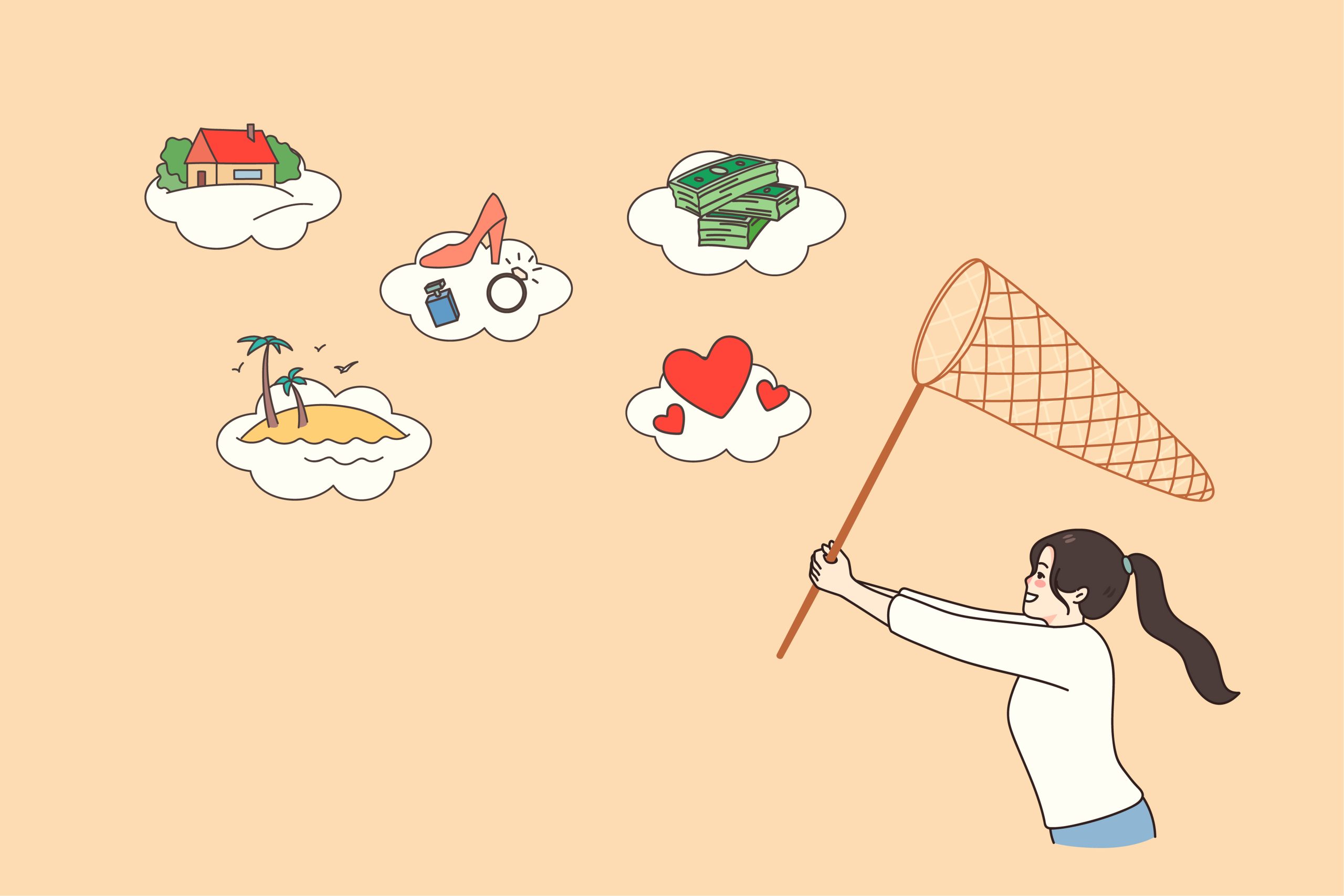
  • What Carrots Are You Chasing, and Are They Worth the Sacrifice?

    What Carrots Are You Chasing, and Are They Worth the Sacrifice?

    “Not to arrive at a clear understanding of one’s own values is a tragic waste. You have missed the whole point of what life is for.” ~Eleanor Roosevelt

    I promise this essay isn’t an attempt to convince you that you’re living inside The Matrix. (Okay, maybe it is a bit.)

    But do you ever find that days, weeks, or even months have passed that you didn’t feel present for? I describe this odd sensation as feeling like you’re going through the motions like Bill Murray trapped in Groundhog Day.

    Every day bleeds into the next because you’re future-focused, and what you’re doing right now only feels valuable insofar as it’s laying the groundwork for something else; the next stage of your career, the renovation that means the house is “done,” a number in the bank account that means you’ll never have to worry about money again.

    I think it’s fair to say we both know this is total BS. We’ve climbed enough mountains in our lifetime to know that as soon as we get what we want, we’re already planning what’s next.

    The problem is not with the aim or the goal but with the belief that we can cross a finish line that will magically make these uncomfortable feelings disappear. In psychology, they call this the hedonic treadmill.

    You know that promotion that would change your life?

    You know that new kitchen you obsess over because it would make life much better?

    You know that extra cash that would mean all of life’s money troubles would disappear?

    Will they provide everlasting happiness?

    Doubtful.

    We can blame this on the hedonic treadmill.

    It’s in our human nature to quickly return to a relatively stable level of happiness despite major positive or negative events or life changes.

    Put another way: No matter what we do, buy, or hope will change our life permanently, it’s a short-lived shot of happiness injected into our life.

    I understand why people don’t want to believe this. Because it forces us to question why we’re working so damn hard to change things and to be present with what is right now.

    When I realized this, I began to reflect on what it meant for my life in a way I couldn’t when I was lost in the chase. Accepting that we have a baseline is liberating. Most of what we’re chasing is nothing more than stupid carnival prizes in a game we didn’t know we were playing.

    If the $40,000 kitchen renovation will give you a flash-in-the-pan taste of happiness, is it worth the years of your life you need to sacrifice to pay that off?

    Is it worth more hours in the office?

    Is it worth less time with your family?

    Is it worth the crippling stress?

    You have no control over the hedonic treadmill. Still, you can control how much of your life you’re willing to trade for a future that won’t make you any happier in the present.

    It’s a hard habit to break because, as philosopher Alan Watts explains:

    “Take education. What a hoax. As a child, you are sent to nursery school. In nursery school, they say you are getting ready to go on to kindergarten. And then first grade is coming up and second grade and third grade… In high school, they tell you you’re getting ready for college. And in college you’re getting ready to go out into the business world… [People are] like donkeys running after carrots that are hanging in front of their faces from sticks attached to their own collars. They are never here. They never get there. They are never alive.”

    It’s drilled into us from the day we’re born to always think of what’s next.

    You end up chasing carrots to eat when you’re not even hungry. Hell, you probably don’t even like the taste of carrots.

    This lack of presence is toxic for our children. They end up repeating the same cycle we do when we role model the idea that we need to prioritize a future self (that may never come) over time spent with them.

    Life only feels short because we burn much of our alive time on shit that doesn’t matter.

    Do you want to experience a deep, rich, and fulfilling life?

    Start by asking, what carrots are you chasing? Are they worth the sacrifice? And what values would you honor in the present if you stopped living for the future?

    I can say family means everything to me, and I’ll do whatever it takes to support and provide for them. But if I’m consumed by my phone when I’m with my ten-month-old daughter, what value am I reinforcing? To make more money in my business so I have the freedom to do exactly what I’m too busy to enjoy right now?

    To honor my values means putting the phone down, looking into her eyes, and giving her literally the only thing she wants and needs from me. My presence. And that right there—being present enough to enjoy our lives—is what will give us the happiness we crave.
  • Our Creative Genius Shows Us Possibilities the Rational Mind Can’t See

    Our Creative Genius Shows Us Possibilities the Rational Mind Can’t See

    “There are moments in our lives, there are moments in a day, when we seem to see beyond the usual. Such are the moments of our greatest happiness. Such are the moments of our greatest wisdom.”  ~Robert Henri, The Art Spirit

    In my twenties, I worked for a Fortune 500 company at 401 North Michigan Avenue in downtown Chicago. It was fun to work in the city, and my office overlooked Lake Michigan—I never got tired of the stunning view. Weekends were spent with friends eating at unique ethnic restaurants and visiting comedy clubs, blues bars, art galleries, museums, and theater.

    Chicago is a thriving city with a vibrant cultural life. I had a great time.

    I eventually went on to get a Ph.D. at the University of Chicago, and after I completed the degree, everything in my external world nudged me to “get out there and do great things.” Fellow students were receiving grants, fellowships, and prestigious tenure-track positions at major research universities. My advisor (Mihaly Csikszentmihalyi, the author of Flow) was excited about my dissertation research and wanted me to publish.

    Everywhere I went, freshly minted Ph.D.s were busily writing papers, interviewing, and speaking at important conferences. And if that wasn’t enough incentive, my department was being closed by the University, and administrators, faculty, and students were launching a massive fight to try to keep it open. The centerpiece of their argument was to show how their recent graduates (i.e., me…) were doing amazing, brilliant things in the world. Yikes.

    I pushed myself—secluding myself away at a quiet retreat center for a week to try to focus, write a research article, and finally get serious about my academic career. My writing was stiff, contrived, and boring.

    I was miserable.

    So, instead of launching an illustrious academic career, I moved to the wilderness of northeast Montana.

    Montana enchanted me. Everything was so different. I fell in love with the spectacular natural beauty, but also the people who were so different from anyone else I’d ever known.

    There were backwoods hippies living off the grid, musicians who played on homemade instruments, unique one-of-kind handmade houses, and artists of all kinds.

    I moved in with a longhaired hippy in a teepee. My dog and I could hear the wolves howl at night, and we crossed paths with bears during the day. I immersed myself in the beauty of the wild with its craggy mountains and deep dark winters.

    I was far, far away from the world of exalted professional accomplishments. Here’s what happened instead.

    1. I developed self-reliance.

    One day a bird flew in and got stuck between windowpanes when trying to get out. Another day, a neighbor’s stray dog got his eyelid hooked on barbed wire. (Ouch!)

    In the city, my go-to response was to get the nearest person to help. But here in this remote area, there were no neighbors to be called. I managed to successfully extricate both animals on my own and without harming them further.

    2. I developed a wide skill set.

    In rural and remote areas, by necessity, you become a generalist. I did things I never would have done had I remained in the city.

    I was asked to speak at a church service. I started leading creative writing workshops at the yoga center. I was asked by an artist to write a book about her work and the local paper invited me to participate in a community forum.

    3. I developed openness.

    In the city, I held staunch beliefs about issues such as the need for gun control. Living in the country, I developed a deeper and more fleshed out understanding of diverse views. In rural Montana, churchgoers, new-age hippies, and hunters all mix together at the post office, grocery store, and local cafe.

    My perspectives broadened. I was no longer automatically locked into a particular position. Whereas before I saw the world in stark black-and-white, I now saw shades of gray.

    4. I developed leadership skills.

    In the city, civic organizations can feel large and intimidating. In a rural setting, everyone pitches in.

    I was asked to organize a United Way meeting. I became involved in the Rotary club. The employment agency asked me to lead a staff meeting,

    5. I developed passions for different things.

    I became proficient at river rafting. I spent weekends contra dancing. A band needed a bass guitar player and there was no one else around, so I volunteered to give it a try. (I loved it.)

    I had no idea of the fun to be had in the country.

    6. I discovered a freedom of identity.

    I’d spent my life growing up in a conservative Midwestern family, then following corporate rules as a computer scientist before embarking on a rigorous Ph.D. program.

    In Montana, I let myself break the rules for a while, stepping out of everything I had known and trying on something completely new and different. I discovered what it felt like to be free of roles and expectations.

    A friend of mine, a massage therapist, absolutely loved her work. After several years, she decided she wanted to make more money and she made the rational decision to switch to a career in nursing. Since both professions involve healing work, she naturally believed nursing would be a good choice for her.

    Years and tens of thousands of dollars later, she admits that she hates nursing. Logic doesn’t help us find our next step.

    By the way, I also have a dear friend who loves being a nurse. This is not a story about nursing (or academia). It’s a story about uniqueness.

    What are the unique paths that inspire each of us? What are the unique places, people, and situations that help us grow?

    When we’re stuck, it’s often because our minds are dead-set focused on the direction that seems reasonable. It’s the only direction that our minds can see.

    Our creative genius has a much different approach. It offers us unique, peculiar possibilities that our rational mind can’t see.

    Your creative genius will take you in directions that you don’t expect and can’t predict ahead of time. Directions that aren’t a linear, incremental next step. Instead, they open up entire new worlds that you didn’t know existed.

    Here’s a tip…

    When you’d like to make a change, feel blocked, or frustrated that whatever you’re doing is no longer working, consciously step back and imagine opening space for possibilities you hadn’t considered. This can be a challenge—your mind may have a hard time letting go of the reins.

    You are more than your thinking mind. You have another, non-cognitive creative intelligence operating in your life as well. It’s your creative genius and it’s worth listening to.

    Opening space for it will give it a chance to express itself.

  • A Life Full of Favorites: The True Essence of Minimalism

    A Life Full of Favorites: The True Essence of Minimalism

    “Happiness can only be found if you free yourself from all other distractions.” ~Saul Bellow

    What was your favorite toy as a child? Mine was a Spider-Man action figure. The limbs were adjustable, and there was a switch on his back that made his eyes light up.

    I played with that toy for years, even after his fingers broke off and his switch got stuck. While I had plenty of toys as a child, this is the one I remember best.

    Maybe you notice a similar trend in your own children. According to a study conducted by British researchers, the average 10-year-old has 238 toys but plays with 12 daily.

    Even if you don’t have children of your own, maybe you are inundated with your own toys. Outdated electronics that sit on the shelf, trinkets that sit in the closet, or old sweaters that you haven’t touched in the last decade. How many toys do you play with daily, and how many get in your way and cause havoc?

    What if I told you these things are getting in your way of living a happier and more meaningful life? What if you didn’t have to spend time paying off old junk that always needs to be fixed, maintained, cleaned, and repaired? What if you had more time to enjoy friendships, hobbies, and passions?

    As I started to ask myself these questions I noticed others, who called themselves minimalists, asking similar questions. After this discovery, I began my own minimalist journey and never looked back.

    People become intimidated when they discover minimalism because they think they have to sacrifice all their possessions and live like a monk.

    If you think like this, I can’t blame you. I wouldn’t like that either. My five-year-old self would’ve been devastated to get rid of that Spider-Man action figure.

    Fortunately, minimalism doesn’t require such sacrifices. In fact, minimalism doesn’t require anything. There are no rules, judgments, or requirements.

    If the term minimalism is intimidating, think of it as focusing on all your favorite things, every day. This may sound enticing, but what does it look like in practice? Let’s explore together.

    1. Visiting our wardrobe

    If I were to walk with you to your closet, there would be a few different types of clothes.

    Clothes for work.

    Clothes for a formal event.

    Clothes for a night out.

    Clothes for the gym.

    Clothes for lounging and watching Netflix.

    Within each of those categories, which outfits do you usually wear? Which outfits give you the most joy? Which outfits do you gravitate toward, and which outfits sit in the back and collect dust?

    What would your closet look like if you donated the clothes that took up space and hid your favorite apparel? If donating is too daunting, pack them in a box and stash it away for a couple months.

    Giving ourselves space and time helps us realize we never enjoyed, or used, any of that clothing anyways. This gives us the courage to donate the clothes with a sense of pride. If this sounds interesting, but you aren’t sure where to start, look up “Project 333” for some additional tips and support.

    2. Reconsidering our relationships

    In the 1990’s, British anthropologist Robin Dunbar discovered that people can only maintain an upper limit of 150 social relationships.

    Thirty years later, this number sounds like an underestimate. Many people have hundreds of Facebook friends and thousands of Instagram followers. In our everyday lives, this translates into the notion that having more friends leads to more popularity, likeability, and a happier life.

    But the quality of our friendships also matters. Out of hundreds of digital connections, how many people do you spend time with in real life? How many people can you depend on to lend a hand, listen to a problem, or provide feedback to help you improve and grow?

    When I thought about my own friend circles, I realized they were often dictated by proximity rather than by shared values or interests.

    As an avid reader, I like to surround myself with people who are passionate about reading. Using modern technology, I created a book club with members from my local community. What started off as monthly conversations around books turned into regular social gatherings.

    Through discussing our similar values and mindsets, we became close friends who have been a great source of support and joy for each other over the years. Instead of relying on surface level connections that were simply birthed out of proximity, I can now count on these rich and satisfying relationships to help me thrive.

    What would your life be like if you surrounded yourself with people who shared similar values or mindsets? How would your life be different if you spent time with people who enjoyed the same hobbies as you?

    Explore different options, like Facebook groups or Meetup activities, that match your interest. It takes time to foster deep and satisfying social connections, but they can last a lifetime.

    3. Evaluating our time

    I had one of my biggest revelations when I took a hard look at how I was spending my time. I spent all of my time checking my emails and looking productive, while sacrificing the chance to read, write, and spend my time in ways that help me feel happier. I did a lot on any given day, yet none of it was meaningful or fulfilling.

    Does this resonate with you? Look at the commitments and activities taking up your time. Can you delegate anything to someone else, or completely let go of it?

    Are there activities you’re doing because you think you should do them? Ask yourself these questions to pare down your to-do list:

    1) Does this task bring value to my life?
    2) What would happen if I didn’t do this task?
    3) Does this task align with my values?

    Shining light on our habits uncovers fascinating insights.  If someone were to ask me why I was engaging in habits like yoga or meditation, it was because it’s what I thought successful people did, not because I enjoyed those habits.

    Instead of yoga, I now go on walks. Instead of meditating, I express my thoughts through writing.

    Everyone has their own recipes to live a meaningful life, and it will look different for each individual in each season of their life. Consider what you need, what you enjoy, and what habits will be the best tools to help you get there.

    By questioning ourselves, we get better answers that best suit our own needs and desires. Start off with those three questions and add others you see fit.

    What’re your favorites?

    Imagine a life where you only wear your favorite clothing. A life where you surround yourself with people who lift you up and bring joy to your days. A life where you have the time to do the activities that you enjoy most.

    You already have your favorite clothes, friends, and activities. Minimalism isn’t about getting rid of everything, it’s about rediscovering our favorite things—some which aren’t even “things” at all.

    Being surrounded by our favorites can lead us to a happier and more fulfilling life. This switch may even cause our eyes to light up, like my favorite Spider-Man action figure from so many years ago.

  • If You’re Trapped Under a Pile of “Should” and Tired of Feeling Unhappy

    If You’re Trapped Under a Pile of “Should” and Tired of Feeling Unhappy

    “Stop shoulding on yourself.” ~Albert Ellis

    I was buried under a pile of shoulds for the first thirty-two years of my life. Some of those shoulds were put on me by the adults in my life, some were heaped on because I am a middle child, but most were self-imposed thanks to cultural and peer influence.

    “You should get straight A’s, Jill.”

    “You shouldn’t worry so much, Jill.”

    “You should be married by now, Jill.”

    “You should get your Master’s degree.”

    I could go on forever. The pile was high, and I was slowly suffocating from the crushing weight on my soul.

    What’s so significant about age thirty-two? It’s when I decided to divorce my husband of eighteen months (after a big ole Catholic wedding) and ask my parents for money to pay the attorney’s retainer. This is a gal with a great childhood, MBA, and a darned good catch for a husband.

    From the outside, our life looked charmed and full of potential. We’d just purchased our first home, were trying to start a family (despite suffering two miscarriages) and were building our careers. What no one else saw was the debilitating mountain of consumer debt, manipulative behavior, and my intuition’s activated alarm system… sounding off in reaction to the life I’d built and was, for all intents and purposes, stuck in.

    My intuition was done with the low-level warnings. She was sick and tired of being ignored, so she sounded the big one—an alarm that demanded action instead of lip service. I still tried challenging her; what she had presented me with was asinine.

    “But I can’t divorce him. We just got married. What will everyone think? I’m so embarrassed. I should have made better choices. How did I end up here? I did everything right, right? I should suck it up and stick it out; that’s what good Catholics do. This is kind of what life is, I guess… kinda sad, but it seems to work for most everyone else. Ugh, I wanted this… now I’m, what, changing my mind?”

    The alarm was not going to shut off until I sat long enough with those notions to yield honest answers. That was some tough sh*t to sit in. And even tougher to plod through. But it was better than being buried under it.

    This was my first lesson in “There’s only one way out of this mess.” There’s no express lane, no backroad, no direct flight. This ride resembled the covered wagon kind. Bumpy, hot, dirty, and uncomfortable as hell.

    I relented, listened, and tapped into the hidden reserve of courage I didn’t know existed within me.

    The time had come to quit living according to the “should standard” everyone else around me had subscribed to. The time had come to accept this curated life was not the one that would yield happiness for me. The time had come to turn up the volume on this newfound voice and assert to myself (and everyone else) that I was cutting my losses and trusting my inner compass.  

    The time had come to stop shoulding myself.

    Shoulds were my grocery list, my roadmap for life. How was I going to do this adult thing without my instructions???

    I’d already managed to clear a huge should—hello, divorce—and after that, with every should I challenged, another paradigm crumbled. I began to notice shoulds all over the place. After that, my awareness of intention got keener, and I could sniff out the subtle shoulds like a bloodhound.

    SHOULD: When are you having kids?

    CHOICE:  I do not want to have children. (Remember I miscarried twice with my first husband. I was checking boxes on my adulting grocery list. Honesty yielded clarity.)

    SHOULD: He’s too old for you and he has four boys of his own.

    CHOICE:  He is my person. His sons deserve to see their father in a healthy, happy relationship. I can show them love in a new, different way.

    SHOULD: You’re making great money in your job. Why walk away from your amazing 401(k) and great benefits to risk starting your own business?

    CHOICE:  I want to build a life I’m not desperate to take a vacation from. I want to live, serve others, and know when I’m at the end of my life that I chose it and made the most of it.

    Deleting the word “should” is a big first leap in taking ownership of your life. By altering your vocabulary in a simple way, you naturally become mindful of the words you put in its place. Instead of “I should….” substitute with “I choose to….” Instead of “You should…” try “Have you considered…?”

    Keep track of every time you say or hear “should” in a day. Then spend time with each one and get toddler with yourself. Ask why. Ask it again.

    Who says you have to get married or have kids or work a job you hate that looks good on paper? Who says you have to look a certain way or do certain things with your free time that don’t appeal to you? Why are you restless in your life? What idea keeps popping up, begging for your attention? Are you living your truth? What’s in the way? What pile of shoulds are you buried under?

    I get it. We’ve been programmed by our culture and our family traditions to follow the path, stay on course, climb the ladder to success! It’s the only way to be happy, they say. It’s the only way we’ll be proud of you, they insinuate.

    We’ve been indoctrinated with this thought pattern and belief system, and it seems impossible that we have the power to choose otherwise. We have the opportunity, the autonomy, the choice to rewire our iOS and make it what is ideal for ourselves.

    Overwhelm is natural; the antidote is to start small. Find one piece of low-hanging fruit, take a bite, and taste how sweet it is. For example, say no to an invite if you’d rather spend your time doing something else. Allow yourself to do nothing instead of telling yourself you should be doing something productive. Or let yourself feel whatever you feel instead of telling yourself you should be positive.

    Feel how nourishing it is to choose yourself. Experience satiety in your soul. Release restlessness and replace it with intention guided by your intuition.

    Do that and you’ll never should again. Or maybe you will—who says you should be perfect? At the very least you’ll think twice before letting should control you, and you’ll be a lot happier as a result!

  • Why It No Longer Matters to Me If My Job Impresses People

    Why It No Longer Matters to Me If My Job Impresses People

    “Do not let the roles you play in life make you forget who you are.” ~Roy T. Bennett

    Wherever I go and meet new people, they ask me, “What do you do?”

    I love talking about what I do because I love what I do, but It’s not what I’ve always done, and it certainly isn’t all of who I am. It’s part of who I am, but there is so much more.

    When we’re young, we’re asked to decide on a career. You know, the question, “What do you want to be when you grow up?” The problem is, does anyone in high school truly know what they want to do for the rest of their lives? I’d venture to say that many high school kids don’t even know who they really are yet.

    When I was growing up, I was a straight-A student, a star athlete, a perfectionist, and an overachiever. I learned at a young age that performing well was my ticket to feeling good about myself. My accomplishments garnered the praise and admiration of many and gave me what I needed to feel good.

    Validation.

    As a senior in high school, it was natural that I chose to go to college for aerospace engineering. I was interested in aviation, but more importantly, when I told other people what I had decided on, they nodded their heads in approval. A smart girl should choose a “smart career,” right?

    Validation and approval drove me forward.

    When I got out of college with a BS in aerospace engineering from the University of Minnesota, I went to work for The Boeing Company in Seattle, Washington. I didn’t love it. Part of it may have been homesickness, or the dreary Seattle weather, but a huge part of it was that the corporate cubicle life was not for me.

    I thought there was something wrong with me. After all, I had worked so hard to reach this point in my life. I should love it, right? Hadn’t I finally arrived?

    I struggled with it so much because on one hand, I dreaded going to work. On the other hand, when I told people what I did for a living, they leaned in and listened a little harder. Even my own father was proud to talk about my engineering career and the fact that I worked for one of the top aerospace companies in the world, but I’ve since moved to less impressive pursuits, he has never once asked me about those endeavors.

    My career looked awesome and interesting and impressive on paper, but I was quietly dying inside.

    My husband and I ended up moving all the way across the country to Savannah, Georgia, where I worked for another top aerospace company—Gulfstream Aerospace. I didn’t really feel any different about my position there, until I transferred into a group called Sales Engineering.

    In this area, I was able to interact and collaborate with sales and marketing to create the technical data they would use to pitch Gulfstream’s fleet to potential customers. I enjoyed the challenge, but I really enjoyed the collaboration with other people that weren’t buried in their computers all day. It was here that I first got a glimpse that I loved connecting with other people.

    When my first child was born, I left the aerospace industry. We had just moved cross-country again to Los Angeles, and it made more sense for me to be a full-time mom since I wasn’t the family breadwinner, and we didn’t absolutely need a second income. Plus, I wasn’t enamored with the whole engineering gig either, so in a sense, it was a way out.

    Quitting the career that I didn’t love was, on one hand, so freeing. But on the other hand, without that thick layer of validation that kept getting piled on every time someone asked me “What do you do for a living?”, I felt naked. I felt inferior. I felt like I was a failure who couldn’t hack it in the real world.

    My identity was wrapped up in my career that looked so good on paper but didn’t feel good in my soul.

    My ex-husband is an attorney, and we’d attend events with lots of other attorneys and highly educated people. At these events, I dreaded the question “So, Kortney, what do you do?”

    My response was always a little timid, almost apologetic.

    “I stay at home with our son.”

    There was typically a slow nod, with a bit of feigned interest, as if they weren’t really sure what more to say about the occupation stay-at-home mom.

    Because I also had a side-gig photography business, I’d quickly add, “and I’m also a photographer.”

    That tended to garner a bit more interest.

    “But I used to be an aerospace engineer,” I’d tack on, in a final effort to gain the nod of approval I so desperately sought.

    Bingo. Alarm bells sounded. The crowd cheered. People were reeled back into something more exciting.

    That good, old familiar friend, validation was back.

    I struggled for a long time to find my identity without all the “stuff” on the outside. It wasn’t until I got divorced and had to figure out how I would financially support myself after my spousal support ran out that I even scratched the surface of “Who am I, really?”

    Who am I without my career, the accomplishments, the external validation?

    All those years, I lived with one foot in the world of wanting to love myself for who I am rather than what I did and one foot in the world of doing more, doing better, doing it ALL.

    I lived in between the worlds of self-validation and external validation. 

    I knew I wanted the former, yet I craved the latter.

    In doing the work of figuring out who I really am, learning to love myself fully, and being able to validate myself without any help from the outside, I realized that I was asking myself the wrong questions all along.

    As a society, we ask the wrong questions.

    Instead of asking our kids, “What do you want to be when you grow up?”, I think we should be asking them, “Who do you want to be?

    I asked my eleven-year-old daughter this, and she looked at me in her quizzical mom-why-are-you-asking-me-such-a-weird-question way and said, “Umm, I just want to be me?”

    Yes!

    Shouldn’t we all just want to be who we are? 

    Instead of pursuing goals that are impressive because they bring us accolades and attention, what if we were to pursue our goals because they lit us up and we were truly passionate about them?

    What if we started asking our kids questions about what lights them up? How do they want to feel? What things do they like to do that make them feel that way?

    Even as adults, we can ask ourselves these questions.

    If you’re in a job that doesn’t feel right, you can ask yourself, “How do I want to feel?

    What’s authentic to you? How do you want to show up in the world? What jobs or careers would allow you to show up that way?

    This is the work I did after my divorce. I’m in a completely different career now, and believe me, as much as I fought going back to a job in the engineering industry, I had to do a lot of work on my thinking about not having a “smart job” like being an engineer. The validation I craved and was so used to was like a drug.

    Through this work, I learned how I want to feel in my life and that guides everything.

    I discovered that I want to feel freedom, ease, joy, and meaning in my life. 

    Going to a cubicle every day didn’t allow me to create those feelings. I want to show up in the world authentically—I want to be able to be a human being who makes mistakes and can share myself with other people. Corporate life didn’t allow me to be that authentic person that I now so deeply love.

    Some of you reading this may have corporate jobs and love them. You may be able to create the feelings you want to feel and show up authentically with that type of career. That’s awesome!

    The goal is to be able to feel the way you want to feel. The goal is to be able to show up in the world in a way that is true to who you are. 

    Because how you show up to do the things you do in the world is what really matters.

  • Where My Depression Really Came From and What Helped Me Heal

    Where My Depression Really Came From and What Helped Me Heal

    “How you do one thing is how you do everything.” ~Unknown

    One afternoon, during a particularly low slump, I was getting out of the shower. Quickly reaching for something on the sink, I knocked an old glass off the counter, shattering it onto the floor.

    In most cases, one might experience stress, frustration, or sadness upon accidentally breaking an object that belongs to them. They might feel agitation on top of their already poor mood. But in the moment the glass shattered, I felt instant relief.

    It was an old item I’d gotten at a thrift store, and the image on the glass was all but worn off. In the back of my mind, I’d wanted to get rid of the whole glass set, and the shattering of one of its pieces served as a firm confirmation it was time to let go.

    In that unexpected moment of relief, I realized I was holding on to the glasses out of some strange obligation and a fear that I wouldn’t have the money to replace things if I gave them away.

    I marveled at this interesting aspect of my consciousness I had not noticed before, wondering, “What else am I doing this with? How many things in my life are subtle burdens that I tolerate out of some vague sense of obligation? Does it really make me a “good person” to tolerate so much, to hold on to so much unwanted baggage from the past?

    Suddenly, I remembered something I had recently learned from one of my mentors about depression: We must stop clinging to people, places, and things that no longer deliver the joy they once did. Even more importantly, release things that never delivered joy, even when we thought they would.

    This sacred practice is all too underrated. We must cut the dead weight in our lives, even if it is unnerving. Whether it is a negative relationship, a job in which you are disrespected, a habit that is draining your health, or even some unwanted items in your home that are taking up too much space.

    It is our stubborn unwillingness, our fear of letting go, that keeps us in low spirits, day after day. In these instances, we are waiting for the impossible. We are waiting for things to miraculously improve without us having to do anything different.

    Even though I was in a bad mood, I thanked the glass and the sudden shattering for its lesson. The humbling realization was that I was a clinger—someone who stuck with people, places, and things long after they’d proven they were not right for me.

    As the saying goes, “How you do one thing is how you do everything.” The glasses that I didn’t really want any more were a small symbol of how I was an energetic hoarder. I kept things until life forcefully yanked them out of my hands.

    Often, I clung to subpar situations out of fear. I was afraid of being left alone, with nothing, so I’d gotten myself into the habit of anxiously settling. And as we all know, settling is no way to live a satisfying, dignified life.

    When we settle, the parts of us that aspire to grow are denied respect. We subconsciously tell ourselves it is not worth it—we are not worth it.

    My habit of settling had gotten me into more binds than I could count—low-paying jobs, incompatible relationships, boring days, and restless nights wondering what I was supposed to be doing. Why weren’t things better?

    The simple answer was, I didn’t choose anything better. I didn’t know how.

    When we don’t know ourselves, we don’t know what we want and need. And when we doubt our worth or our ability to make things happen, we hold ourselves back from what would make us happy. This is where depression breeds, along with burnout, stress, and apathy.

    So how can this painful spiral be prevented? And if you already find yourself in this predicament, how can you climb out of the hole?

    1. Assess everything in your life.

    What just isn’t working, no matter how hard you try, in work, your relationships, your habits? These are the areas where you need to make a decision. Either let something go or make a change that is significant enough to transform how you feel about the situation.

    2. Find the hope.

    Hopelessness is a huge aspect of lingering depression. The problem is, people often try to talk themselves into being hopeful about something that actually isn’t going to work (e.g.: a relationship that was meant to end). Instead of clinging, let go and seek out new things that feel truly hopeful instead.

    It’s not always easy to let go, especially when it pertains to relationships, and particularly when you’re not hopeful there’s anything better out there for you. Start by asking yourself, “Why do I believe this is the best I can do, or what I deserve?” And then, “What would I need to believe in order to let go of this thing that isn’t good for me and open myself up to something better?”

    3. Change anything.

    When we are stuck in a rut, it usually means things have been the same way for too long. Routine and consistency can be a poison or a cure, depending on the situation. If you’re feeling stuck, look for how doing the same thing every day isn’t working. Sometimes, making any random change is enough to shake you out of that rut.

    This could mean taking a new route to work or doing something creative when you usually binge watch Netflix. Sometimes little changes can give us a surprising level of new insight and self-understanding.

    4. Lastly, admit to what you really want.

    If you won’t risk being hopeful and taking action toward what you really want, you will default to a life of tragic safety. You will shy away from the truth, clinging to all the things that don’t really resonate with you. Ironically, you have to be willing to risk loss to in order to acquire valuable things in life.

    So start by being brave enough to admit what you really want in all aspects of your life, and perhaps more importantly, what you need. What would make you feel fulfilled and excited about life again?

    We often think of depression as a vengeful disease that robs us of our joy and vitality. But when we begin to look at our lives with more honesty, we can see depression for what it really is: a messenger.

    I like to think of depression as the first phase of enlightenment—a reckoning we must endure to come out the other side with clarity. When we stop pushing negative feelings away, we can discover why they exist and what steps will resolve them.

    For me, this meant letting go of how I thought my life should be and embracing how it was. Rather than lamenting about the past or obsessing about the future, I started taking practical steps to improve the present. This included cleaning up my diet, giving up a job that no longer worked for me, and digging into attachment styles to learn how to improve my relationships. The more action I took, the more hopeful and empowered I felt.

    The road to happiness isn’t nearly as direct as we would like it to be, but this gives us the opportunity to access what we truly wanted all along: self-understanding, self-acceptance, and self-empowerment. Depression isn’t a problem, but a road-sign. The question is, will we ignore it, or let ourselves be guided?