Tag: understanding

  • How to Stop Arguing and Start Understanding

    How to Stop Arguing and Start Understanding

    “Raise your words, not your voice. It is rain that grows flowers, not thunder.” ~Rumi

    One of the most common sources of conflict among people is in the way we communicate. Often times, conflicts arise because of the variety of our opinions and beliefs, and also from the way we express our thoughts and communicate disagreement.

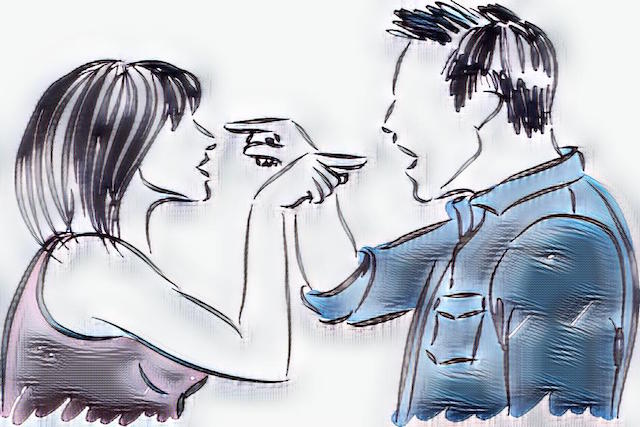
    A blaming, sometimes even aggressive tone of voice can seep into our language, which invites confrontation instead of collaboration, and conveys a closed “my way or no way” kind of approach.

    Looking back on my past, I can recall myself during my childhood years, when anything felt possible. In my world, full of playfulness, creativity, and fun, things were straightforward and clear. Whenever I was hungry, I made sure my mother knew about that. When I was afraid, sad, or upset, I said so. Whenever I wanted anything, I asked for it.

    In this open communication space, there was no room for mind reading or making assumptions. I didn’t claim to know what other people felt or thought. If anything was unclear, I asked. I didn’t let my mind play with me and create scenarios about what other people had in their minds or hearts, because I knew I wasn’t them. Life was quite simple, and the older I got, the stronger my need to complicate it became.

    Taking an honest look at my life as a grown-up woman, I came to realize I was often aggressive with people, without even being aware of it. I never screamed and yelled at people, but I expressed my thoughts and emotions aggressively, especially when I was trying to convey opinions I strongly believed in and get my voice heard.

    That is an area I am still working on. However, I have spent a while reading about the field of non-violent communication, learning how to communicate with clarity and confidence in any situation and, by that, avoid unnecessary drama or confrontation.

    A few years ago, I started to apply this learning in my everyday life. Surprisingly, I could see how small adjustments in my communication helped me to improve my relationships with people in my personal life and career.

    Here are four useful suggestions that helped me refine my communication skills and build bridges of mutual understanding with others.

    1. Be curious about others’ intentions.

    Conflict often arises because we tend to evaluate our actions based on our intentions, yet judge others based on their actions.

    For instance, when I fear I might have offended someone with my words, my immediate reaction would be to explain myself and make it clear my real intention was not to hurt anyone: ”I’m sorry, I didn’t mean to sound like that. My point is that…”

    However, when I didn’t like what I heard in a sensitive conversation, I would jump immediately into a defensive or even aggressive posture, without even trying to understand more about what others wanted to tell me.

    As a solution, I learned how to ask questions with the genuine curiosity of a child, as if I knew nothing. I want to know more about the story behind the words: the circumstances, the impact on the people involved, their intentions, and so on.

    Here are some of my favorite questions that help me do that:

    • How did this happen?
    • Can you tell me more about it?
    • What can we do to sort this out?

    The way we formulate our questions is also essential, so stop asking “why?”

    Let me ask you one the same question, in two different ways. Say I’m disturbed by your words. I could choose to either reply with, “Why are you saying that?” or I could ask, ”What makes you say that?”

    Can you feel the difference between the two questions? Don’t you feel like the “why” question sounds more accusatory than the other?

    When asked “why,” people tend to feel blamed. As a consequence, they either shut up entirely or go into a defensive mode, trying to justify themselves. Meanwhile, the “what” questions invite an open discussion and transparent communication. They help bring more balance, harmony, and peace during sensitive conversations.

    In reality, we only judge what we don’t understand, so I make sure I stay away from confusion. People can only be responsible for what they say, not for what I understand. And no one is a mind reader.

    “Don’t make assumptions. Find the courage to ask questions and to express what you really want. Communicate with others as clearly as you can to avoid misunderstandings, sadness, and drama.” ~Don Miguel Ruiz

    2. Practice the art of listening.

    I will be brutally honest with this one: In the past, I used to be very self-absorbed and eager to take space in conversations. I used to listen in order to know what to say next instead of being fully present for others with mind, body, and soul, so that I could understand their perspectives and points of view. I tended to interrupt others in the attempt of explaining or defending myself. In other words, conversations were generally a lot about me, not so much about others.

    Sometimes, the only thing we have to do in a situation that might look like a conflict or disagreement is to hear what other people have to say with genuine care, curiosity, compassion, and attention.

    In my case, I had to learn how to listen actively. During conversations, I imagined myself having a zipper on my mouth, closing that zipper while people were talking, and allowing myself open the zipper only once they finished. This simple exercise helped me to get present and focused on the other person, both in my personal life and career.

    In a world where most people love to talk about themselves, being able to listen to another person is a form of love.

    “Most people don’t listen with the intent to understand; they listen with the intent to reply.” ~Steven R.Covey

    3. Express your wants and needs assertively.

    One of the most transformational days of my life was the day I found out I was underpaid. I turned into a volcano of anger and blame and ended up in a severe conflict with my manager at the time.

    The moment I stopped acting like a victim (How could they do this to me? How could this ever happen?) and took charge of the painful situation I was in, everything shifted. I realized that during fourteen years spent in the corporate world, I had never negotiated a salary or asked for a raise. I used to be a perfectionist and an overachiever, often working overtime and weekends and expecting my managers to finally compensate me for my hard work and efforts.

    I never dared to express my wants regarding pay assertively, as if that was some kind of taboo or embarrassing topic one couldn’t talk about. The truth is that sometimes in life, we don’t get what we want just because we don’t dare asking for it.

    So what is assertive communication?

    Assertiveness is an attitude of confidence and respect, expressed through a combination of words (I think, I believe, I want), voice (steady and clear), and body language (upright stance). Assertive people are more able to deal with conflicts and to get to a “win-win solution,” they are better problem solvers and are less likely to get stressed.

    Passive communication comes with putting others needs ahead of our own. Allowing people to make fun of us, putting ourselves down or making ourselves small so others can feel good about themselves, could be one example.

    Aggressive communication would impose our thoughts or wishes on others (you should, you must, you better do that, how can you think like this).

    Assertiveness is an open and direct expression of our thoughts and feelings while respecting the right of others to express themselves. It is a form of being kind to ourselves as well as to the other person.

    4. Be open to different points of view.

    I once had an interesting conversation with a friend about one of my favorite topics: life. At the time, I was convinced there was a predefined path for us humans, a destiny one could never change. Meanwhile, my friend had a very different view on her life: “I can create my future every single day,” she said. “If there’s some kind of destiny I dislike, I can surely change it.”

    I found that unacceptable. Who did she think she was? I didn’t speak to her for weeks.

    I acted in the same way years later, during the presidential elections in my home country, Romania, when a close friend decided to vote for the candidate I disliked. I can recall how angry I was. I thought she was smart, so how could she?

    This aggressive way to relate to people was a toxic behavior I’m not proud of. However, I don’t get into the trap of the guilt, shame, and self-blame any longer. Today, I know that was the best I knew and the best I could, with the instruments of awareness I had at the time.

    And here’s what I know to be true today:

    When we come to this world, we know nothing. We are all products of the societies and cultures that raised us (family, school, religious, or political systems). Since societies and cultures are different, it is expected to encounter a variety of individual values or systems of belief.

    As described by Descartes, humans are “social animals,” and we all have a basic need to belong to a community. We tend to feel more at ease when surrounded by like-minded people. Whenever I am having a conversation with someone whose opinions differ from mine, I try not to take things personally. Today I know I can always agree to disagree.

    People also have the right to change their mind. As we grow and evolve, mindsets and perspectives on life can change, as well. Take my example: years ago, the Old Me was blaming that dear friend for saying she could create her own path in life. The New Me thinks the same: I believe everything in life is a matter of personal choice, and we are the sum of our decisions. Interesting how a belief that once disturbed me a lot can feel so resonant today.

    I refuse to think we live in the world where fear, hate, anger, and separation are part of a new, modern Era. I think Mother Earth needs more of our loving energy to heal: more heart, understanding, less judging and more compassion, less taking and more giving, less competition and more collaboration and care.

    Diversity is necessary for thought exchange and ultimate growth. Respecting our differences is a sign of self-care, and a way to make the world a much better place. Souls don’t hold a passport. Those have been assigned to us at birth. Hurting you is hurting myself. Loving you is loving myself. In spirit, we are all one.

    “If you judge people, you have no time to love them.” ~Mother Teresa

    And now, I would like to hear from you. How do you handle difficult conversations, stay away from confrontation, and create harmonious relationships with people?
  • What Annoys Us About Others Can Teach Us About Ourselves

    What Annoys Us About Others Can Teach Us About Ourselves

    “Everything that irritates us about others can lead us to an understanding of ourselves.” ~Carl Jung

    When my wife and I had children, little did we know that we’d be creating little bundles of nerves. Between my wife’s depression and my own anxiety, we created two anxiety-ridden, depressed balls of mess, and then some.

    Don’t get me wrong, we love our two girls to death, and we are very proud of them. They are both very strong and beautiful young ladies. Occasionally we like hanging out with them too.

    While the two girls have similar interests, their personalities couldn’t be more different. They both exhibit anxiety and depression, yet they show it in different ways. The oldest has panic attacks and hyperventilates, unable to stop herself from crying and heaving. The youngest just curls up in a ball and is unable to move or do anything.

    We find it interesting that the qualities we love, and those we dislike, about both girls stem from both of us. It is as though the Universe took the best and the worst from both of us and amplified it in our children.

    All That Talent Gone to Waste

    My oldest daughter is naturally talented in many areas. She’s strong and athletic, she’s naturally artistic, she’s smart, and she also has a talent for music. She has a beautiful voice, and picked up playing classical guitar in almost no time.

    What drives my wife crazy is that my daughter doesn’t realize how talented and gifted she is.

    What drives me crazy is that she doesn’t develop that talent, and do something with it. She has so much potential.

    As parents, it is easy for us to look at our children and wail and moan about their perceived shortcomings, their lost potential, and so forth. We know what they are going through, because we have both been there. We both struggle with anxiety, so we know what it looks like and how it affects our children.

    In general, isn’t it easier to see the shortcomings that we perceive in other people, than our own?

    Little Mirrors

    What I’ve realized, however, is that our children mirror our own behaviors and attitudes as parents. What annoy us about our children’s personalities are often quirks we ourselves have.

    This principle actually applies to all our relationships, not just with those of us with children. We should stop and ask ourselves, “Am I setting that example? Am I acting the same way?” Often, we don’t realize that what annoys us about someone else is actually an issue we ourselves have.

    For instance, in extreme cases, children who exhibit violent behaviors often come from violent households. They are mirroring the behavior they have been exposed to at home.

    In my wife’s case, it drives her crazy that my oldest daughter doesn’t realize how talented and gifted she is, even though my wife clearly sees it. Yet, when I look at my wife, I see the same thing in her! It is indeed ironic.

    My wife doesn’t think she’s very talented or gifted, and wonders what people see in her. Obviously I saw something in her, because I married her! So the very issue that irritates my wife about my daughter is the very issue that she herself unconsciously struggles with.

    So Much Potential…

    What drives me nuts about my oldest daughter? It frustrates me that I see so much potential in her, and yet I don’t see her developing it. She has so much natural talent, she could be a leader. Her peers look up to her and admire her, and she doesn’t even realize it.

    What does this say about me? Am I the same way?

    Looking at myself through the same lenses, I am forced to laugh, because I do see the same thing! Like my daughter, I probably have many talents I don’t even realize I have. Looking at myself from the outside, I think I have the potential to be a leader as well, but I choose not to. I had so much potential…

    Learning About Ourselves

    From this perspective, I can’t really blame my daughter. I have social anxiety and don’t want to deal with people, and I know she does too. Often times I’ll go out of my way to avoid people. What I perceive as my daughter not developing her talents is more than likely her not wanting to be the center of attention. I can relate to that—I don’t like being the center of attention either.

    I never thought I would be learning about myself from my own children. Sure, I figured they’d know more about new technologies than me, for example. When I have a question about how to do something on my iPhone, for instance, I go to them, and they can show me right away.

    Yet, what my children are teaching me are what issues I need to deal with in myself. Perhaps I, too, have many skills and undeveloped potential, if only I could learn to manage my social anxiety. We often want our children to be different from us, to have different experiences. We don’t want them to go through the same things we struggled with, yet as much as we try or want to, we can’t change who they are.

    We can, however, change ourselves. There is value in stopping to reflect on what frustrates you about your children, your family, or your friends. What behaviors irritate you? What do you think they could be doing better?

    Then stop and look at yourself. Are you exhibiting the same behaviors? What could you be doing better? Are you making the changes in yourself that you’d like to see in your relationships?

    Practice the Golden Rule

    Of course as parents, we want to support our children and provide them everything they need to be happy, healthy, and successful. What parent doesn’t? It may frustrate us that they are not living up to their potential, as we see it—but the apple doesn’t fall too far from the tree. Are they mirroring our own behavior?

    As parents, we show our children love and patience, but our expectations of them should follow the mirroring principle, or the golden rule—would we want to be held to the same standards? My daughter could be captain of the soccer team, but would I want to be one, if I was in her position? Probably not.

    We could make our kids practice the piano for an hour every day, and do their homework for three hours after school. Would we want to do that? Probably not.

    The mirroring principle with our children, family, and friends, then, goes both ways. What can we learn about ourselves from our relationships? Conversely, what should we expect from our family and friends, that we ourselves would be willing to do?

  • How to Move Let Go of the Fear of Judgment and Break the Silence of Shame

    How to Move Let Go of the Fear of Judgment and Break the Silence of Shame

    “If we can share our story with someone who responds with empathy and understanding, shame can’t survive.” ~Brené Brown

    Every time I think I’ve unloaded most of the pain from my past, something surfaces that tells me I have more work to do.

    A couple of weeks ago, my boyfriend and I were cuddling one morning. I’m not sure what the trigger was, but out of nowhere, my thoughts rolled down a hill and into a painful memory that I must have blocked out.

    Tears rolled down my cheeks as my whole body curled up into the fetal position. He asked me what was wrong and I slowly told him about a sexual trauma I had experienced.

    We are radically honest with one another. Sharing the not so beautiful has deepened our connection. I thought I had shared my darkest secrets that carry shame.

    I was wrong.

    I had minimized and buried this story. Maybe subconsciously, I was afraid he would see this situation as my fault. He absolutely didn’t, and sharing my experience with him made me feel like a heavy burden was lifted.

    This last part rang especially true the following week when the #metoo hashtag went viral. It was during that week of teasing through my feelings and thoughts that I realized just how much confusion shame can create.

    The word shame can evoke such discomfort that we often don’t see how it shows up in our lives.

    If there’s one emotion I see as most prevalent and most hidden in the work I do, it’s shame. Every time I lead a workshop or retreat, there’s a common theme that I witness in nearly everyone. As humans, we all tend to feel in some way that we’re unworthy.

    Yet, the last thing we want to do is acknowledge our shame and vulnerability.

    But if left buried, shame inevitably causes harm to ourselves and our relationships. In my experience, I’ve seen firsthand how understanding and shedding light on shame can hold the key to healing.

    Shame is the emotion that says, “I am bad. I am unworthy.”

    It’s not that we did something bad and feel remorseful. That’s guilt. Guilt says, “I did something bad.” But shame is the internalization of “I am bad.”

    Most of us, even if we had kind, loving parents, grew up feeling a bit like we had to censor our true feelings and experiences. We may have done this to avoid dismay, protect others, or keep the peace in our families.

    We’re conditioned from a young age to feel shame when we learn who we shouldn’t be in the world. But as we get older, we don’t need others to make us feel shame. Shame becomes easily internalized and lives in that voice that says, “It’s dangerous to let others hear my story,” or, “They won’t love me if I share this secret.”

    Who we are becomes fragmented so that we hide the parts of ourselves we want no one to see. We unconsciously employ defense mechanisms. While those defense mechanisms might help us to survive, they’re bound to stand in the way of having healthy relationships and growing a sense of self-love.

    When we’re afraid to share our vulnerable side because we believe it would render us flawed, dirty, weak, and so forth, we’re carrying shame.

    Shame is carried silently and secretly for fear of judgment; yet, it is the self-judgment that grows the longer we conceal our vulnerability.

    I refuse to keep painful secrets festering inside of me, as I know that will only keep me repressed and disempowered in the long run.

    All humans experience shame, and it presents in many ways. Here are a few examples I’ve noticed within myself that maybe you can relate to:

    • Being too sensitive and emotional
    • Not doing enough to “save” my mother from her death
    • Being too selfish to fully want to be a mother myself
    • Feeling I’m not ambitious or smart enough to live up to my potential
    • Struggling to communicate clearly when I have too much in my head
    • Feeling too “needy” with my partner at times
    • Believing I was somehow at fault for the sexual abuses I have experienced

    My personal list could go on… But what I noticed when writing this list is that while many of the original sources of shame might be specific people or society as a whole, the critic is still me.

    When we keep shame locked away inside, we get stuck in feelings of inadequacy. Shame may cause us to feel mentally or physically ill. Feelings of inadequacy can be accompanied by emotions such as anxiety, anger, and loneliness. And when we feel inadequate, we sometimes develop destructive ways of relating to others: avoidance, lying, blaming others, attempts to control others, and so forth.

    So how can we deal with this lurking self-critic that wants to keep our stories in the dark?

    1. Speak kindly to yourself.

    Most likely, at some point you’ve heard the phrase, “Shame on you,” or, “You should be ashamed.” It can easily become habit to talk similarly to ourselves and challenging to learn to speak kindly.

    A simple framework for healing I teach comes from an ancient Hawaiian tradition called H’oponopono. H’oponopono means “to make right,” and it’s rooted in the essence of reconciliation and compassion.

    H’oponopono consists of four phrases: I’m sorry. I forgive you. Thank you. I love you. You can use these phrases speaking to another person. And you can use them with yourself. Here’s a personal example of the latter:

    Melissa, I’m sorry for making you feel the trauma you experienced was your fault.

    Melissa, I forgive you for placing blame on yourself and carrying shame all these years.

    Melissa, thank you for your courage to shine light on your vulnerability and resilience.

    Melissa, I love you and I commit to treating you with lovingkindness.

    2. Self-soothe with movement and massage.

    Think about what happens to your body when you recall a memory that carries shame. Often our bodies slump sinking our heart into the back body. Our gaze drops and our brows furrow.

    Emotions, including shame, reside in the body. Much of what I practice and teach relates to physical ways to release stuck emotion for this reason.

    If we want to reduce the unworthy and unlovable feelings we carry, it can help to self-soothe your body through dynamic movement practices like yoga and dance. Self-massage, tapping, and comforting touch while speaking kindly to yourself can help to release shame.

    3. Share your story.

    The most uncomfortable, but perhaps most effective method I can offer you is to share.

    You don’t have to share your vulnerability with the whole world. Many of my friends shared courageous, deeply personal stories on Facebook in response to #metoo. For a moment, I thought I had to share this way as well, but then I did some reflection.

    There are times I share my vulnerability through my blog or when I hold space for a group. But I don’t always want to share everything with strangers. In those cases, my partner is my greatest witness because of his ability to hold space for me.

    Whether you share in a twelve-step program, with a loved one, or therapist, or in an article for the world to see, there’s immense healing power in this process. When our voices are heard and we’re seen just as we are, we open up the door to growing a new sense of self-love and self-worth.

  • How To Be Open-Minded When Others See the World Differently

    How To Be Open-Minded When Others See the World Differently

    “Most disagreements are caused by different perceptions that created different realities.” ~Unknown

    When I was thirteen, I experienced a monumental change in my young life.

    It wasn’t a big move, no one close to me died, and although puberty was rocking my world in the worst way, it was something else altogether that shook me to the core:

    The movie Titanic came out.

    I know, I know, it’s just a movie, and I was just another swooning teenager wishing that I was the one Jack never wanted to let go of, but it hit me hard. Truth, love, the pain of loss: a woman following her heart and risking it all for true love. I relished every second of its three hours and fifteen minute run time.

    So much that I saw it multiple times over winter break at school—usually with my equally enamored mom, sometimes with my best friend, always with a lump in my throat. I held back tears as I saw Jack’s face disappearing into the icy waters, always wondering why Rose couldn’t make room for him on the raft, each time imagining myself in the situation: falling in love, making tough choices, persevering through loss.

    (Spoiler alert: the ship sinks.)

    Returning to school a few weeks later, I knew I’d been changed. Titanic was helping me to sort out the girl I was from the woman I was becoming, and I figured it was having an equal effect on those around me. I was pleasantly surprised when I walked into class on the first day back at school and read an obviously related quote on the white board:

    “’Tis better to have loved and lost than never to have loved at all.” ~Tennyson

    I smiled inside, realizing that my eighth grade teacher must have seen Titanic too, feeling a kindred recognition of just how important this epic film was. After all, it was a sweeping success across the country, breaking records and hearts and box office sales.

    As I settled into my seat and he began to lecture, I prepared to listen to what his thoughts were about the film: maybe he had a historical critique, or an interpretation of the film’s depiction of the human condition?

    Oh, how wrong I was.

    It turns out that the local football team had gone to the super bowl during this same break, and while I was losing it over Jack and Rose, many others were losing it over this team’s big loss.

    As my teacher began to lecture and joke with classmates about “the value of making it to the super bowl at all” I hung my head in frustration and confusion. There was a life-changing movie in theatres, cataloguing one of the worst catastrophes in history. Why didn’t anyone care about this? Isn’t this quote on the board far more applicable to a love story than to a football team?

    Doesn’t everyone feel the way that I do??

    In retrospect, my Titanic example is funny (and somewhat ridiculous). Of course not everyone felt the same soul shaking connection to a movie, and of course not everyone had the newly awakened hormones of a teenage girl. (Say Leeeeoooo with some longing in a whispery voice, and you’ve got my thirteen-year-old daydreams pegged pretty well.)

    When we’re that young it’s easy to make major mistakes in our perception of others, but within this comical event are the seeds of an issue that would continue to show up, both in my life and others.

    There’s Imperfection in Perception

    My misinterpretation of a teacher’s quote on the board is an early mistake in “encoding” and “decoding.” Those two words are just fancy talk for the complicated interaction that is communication, and how they’re related to something called the “confirmation bias.”

    See, when I read those words on the white board, they confirmed something that I (unconsciously) assumed to be true: everyone cared about this thing that I did (ahem, Titanic, cough) and of course this quote about love must relate to it. The words on the board spoke to me in a way that I thought was universal: my thirteen-year-old brain knew exactly what they meant.

    When words are spoken, however (or written on a white board in eighth grade), the intention of the communicator can get lost in the understanding. When I say something to you, I’m “encoding” information that I want to communicate; I’m trying to get you to understand me.

    The trouble comes when we forget that each person understands (or “decodes”) information differently—we hear what we know, we hear what we want, and we hear what makes sense based on our life thus far.

    See, this variability in perception happens because each of us views the world through a slightly different lens. What the word “love” means to me could be different than what it means to you; for example, what has the word “love” meant in the past? Has it been controlling or unconditional, loaded with expectations or adoration?

    The actual words we use are simply a jumping off place, and then they’re strung together in beads of sentences that can appear a different color to each person listening. The “colors” (or meaning) we assign to words vary because all of us do; and because our minds are expert categorizers, we often understand things in a way that already makes sense with our existent worldview.

    It’s for this reason that two people can read the same news article and come away with different interpretations, or feel entirely different about the events going on in the world: We tend to pay attention to information that confirms what we already believe to be true, and disregard the rest of what we see. It’s not due to callousness either; it’s the way that we’re wired.

    Our brains are really good at simplifying and organizing. In order to cognitively make sense of a complicated and busy world, we have to become expert categorizers. This is adaptive, and it helps our overworked brains make sense of things.

    The hiccups only come when we forget that the way we’ve organized the world is different than the way that others have; when we assume that each person interprets the world and its events the way that we do.

    So, what do we do? If everyone could mean something different when they say “I love you” or “let’s go get some ice cream” then how on earth are we ever supposed to understand each other? Is all social coherence lost?

    The answer is simple, but not easy: We must keep an open (and present) mind.

    Open-mindedness

    Keeping an open mind is realizing that we all perceive the world that we live in differently. It’s remembering that when we read (or listen) we are “decoding” at the same time—trying to understand and make sense of information, all through our unique and limited worldview.

    It’s being patient when we feel misunderstood, and allowing for the possibility that we’re also misunderstanding others.

    Open-mindedness is being forgiving of people who hold different opinions and reminding ourselves that we’ve really only ever been one person; we don’t necessarily know what the world is like for others.

    Being open-minded is another form of mindfulness, really. It’s pausing before responding, and asking ourselves: What do I already believe to be true about this person, this event, this political party? What in my past is causing me to feel agitated, or generous, or suspicious? What does the person speaking to me actually mean?

    Even if we don’t always have the answers, simply allowing the questions to percolate our perception can open us up to the world around us.

    Not having answers also gives us the chance to ask questions; if we don’t know what someone means by a statement, we can ask them to clarify. If that’s not an option (because who likes to feed trolls on the internet, right?) then can we at least hold space for a worldview that varies from ours?

    Even if we don’t agree with it, even if it makes our blood boil, can we pause while we try to understand it? Slow down our categorizing minds and realize that the world looks different from varying angles?

    It’s difficult to pause when we’re agitated, but it’s definitely possible. Practicing mindfulness in communication (whether it’s with a loved one or a stranger on the internet) can give us space to ask these questions, extend our understanding, and allow for differences.

    Listening to an idea with an open mind is letting go of all the reasons it’s wrong, or right, and allowing the person (or words) to be what they are. It’s digesting things with the knowledge that we’re bringing our own “stuff” to the table; keeping in mind that our history colors each and every interaction we have.

    It’s a complicated world that we navigate, and there are benefits to the assumptions we jump to minute by minute. But in order to sift through assumptions we’ve first got to be aware of them, and that involves being vigilant of our monkey minds as often as possible. It involves pausing, taking a breath, and asking ourselves: Is this person talking about Titanic, or football?

  • What Creates Abusive People and How to Release Your Anger

    What Creates Abusive People and How to Release Your Anger

    Peaceful Man

    “The biggest problem for humanity, not only on a global level, but even for individuals, is misunderstanding.” ~Rinpoche

    Through the course of the relationship he was dishonest, emotionally manipulative, and unkind. It was subtle at first—do we really sign up for this on the dating application? But the acts wound their way through like a slow vine that eventually kills a tree. When it ended, he handled it atrociously.

    It took me many months to process it all, facing things I had suppressed in denial. When the shock wore off, I had a desire to let him know how he traumatized me—to outline all the ways in which he made me uncomfortable and how unbelievable and disgusting his behavior was.

    I wanted to punish him.

    I wanted him to understand that his actions—secrecy, meanness, disregard—were simply not the way you treat someone you supposedly love, someone that cares for and supports you.

    I knew I had my own issues to work out around why I chose to stay in this kind of dynamic, but I somehow thought a really good apology on his part would at least validate my experience and hike me back up onto the pedestal on which I deserved to stand.

    I wanted to believe that somehow my words would enlighten him—that understanding my experience would affect and change him for the better.

    And I tried! My goal honestly wasn’t to get all prison gangster on him. I just wanted my pain recognized; to feel regarded and important.

    I wrote a few letters that I thought diplomatically captured my hurt and positioned him perfectly to validate me and apologize. That apology would never come. In fact, when he did respond, it was in the form of anger, denial, projecting or minimizing. 

    When engaging him didn’t work, I turned inward. I created little pieces of art that depicted him with a huge ego and small…other parts. (I did not send those. One mature point for me there.)

    In time I accepted that the recognition and apology were clearly not going to happen.

    But the anger kept surfacing, and it was getting annoying. I had read volumes on the notion that “the behavior of others is about them, not you.” Logically I understood this, but I remained stuck in a purgatory. I couldn’t fully connect to and let go of the hugely distracting resentment.

    Then a curious thing happened. As I began to learn the deeper roots of why a person mistreats another, the anger dissipated.

    This didn’t require an individually detailed personal history to construe. They were facts that can be generally applicable to anyone that displays habitually abusive or destructive behaviors. They came through lots of therapy and research as I sought understanding I would never receive from him.

    It is this:

    When a healthy person behaves in a way that hurts others, they take responsibility for that action and make amends.

    I was dealing with an unhealthy person.

    There are people who, because of an abusive childhood (emotionally, physically, or otherwise), navigating their way with a narcissistic or extremely controlling parent, or suffering other emotional trauma, developed protective mechanisms early on to avoid dealing with the shame and violation they experienced.

    These mechanisms can start in the form of an inflated sense of self, denial, or even a secret life. They are ways to create “emotionally safe” conditions that allow them to experience freedom, “love,” or accomplishment in a way they didn’t have access to through healthy means.

    Emotional stability was the most immediate, basic human need. But they had to learn to achieve it at a time when core values—such as respect, honesty, and empathy—may have not been fully developed.

    When this person fails to deal with their pain and anger into adulthood, they never outgrow their early emotional survival skills. As these mechanisms take on an increasingly functional role, values that the person eventually came to understand (or claim to adhere to) become secondary to protecting their emotional safety.

    These methods weld to their identity: they can live without the values but not without the relief their emotional protections provide. They develop into practices such as criticism, disconnection, projection (applying their transgressions or perceived shortcomings—whatever they don’t want to own about themselves—onto their victims), lying, and addictive behaviors.

    What a healthy person considers a normal relationship negotiation or expression of personal needs, or even when life demands the basics of responsibility of regard for others, the unhealthy person perceives a threat to their vulnerable sense of self and unleashes their behaviors to maintain the emotional “safe place.”

    Their abusive techniques essentially produce short term (false) feelings of success, confidence, or acceptance that feel uplifting and comfortable, especially when the alternative is to face a reality that is filled with perceived failure. 

    In my experience, there was often no discernable threat when my ex displayed inconsiderate, bizarre, or hurtful behaviors.

    For example, if his sense of self was feeling particularly low—despite my adoration and support—that may have meant him blatantly ignoring me in a social situation to drink and flirt with other women. He often met requests to accommodate my schedule or needs with indignation. Playing with my son started to turn antagonistic to the point where I’d have to intervene.

    Mere days after we ended our relationship, he claimed he had become “emotionally connected” to a new lover. A couple of weeks later he purposely paraded her in front of me and my children, yet completely ignored us. I couldn’t fathom what I, much less innocent children, had done to deserve that.

    Even long before this absurd “new lover parade,” trying to have open, mature dialogue about the effects of his behavior, even in the most non-threatening way, resulted in projection, disconnection, or playing the victim.

    There they were: the mechanisms to cushion himself from the emotional pain associated with having to take responsibility for his behavior (that he most likely regretted or felt ashamed of already).

    The crazy-making boomerangs hurled at me made me realize the relationship would never grow into the beauty I had envisioned for myself, and if I stayed in, I would have to live with only erratically and unreliably receiving the things that were important to me: honesty, respect, commitment, kindness, empathy.

    And that’s when a giant light bulb shone on my anger. His mechanisms for achieving emotional “stability” occurred in direct conflict with some of my deepest core values.

    Anger is not a primary emotion; it is created to avoid core hurt feelings such as being disregarded, devalued, or rejected. And I felt all of those things every time my values were trampled.

    Anger isn’t a measurement of something negative in your life; it’s a signal to reaffirm your own boundaries and values. 

    With emotionally unhealthy people, we’re not talking about mild immaturity or self-centeredness—we’re talking full-scale inability and unwillingness to recognize responsibility for their actions. And almost anyone is subject to the pie-flinging.

    The slightest thing that he could translate into a question of his principles, responsibility, or regard for others resulted in anything from stonewalling to an aggressive verbal assault. I observed it wasn’t just me: it was his siblings, parents, the mother of his children—anyone he felt was “locked in” to him enough to have to swallow his behavior.

    When I could finally understand that his motivation wasn’t to devalue me—that his destructive decision-making processes existed long before I came along—the adage “Don’t take anything personally” finally, fully came to life for me.

    I was able to dissociate from the anger and focus on the more critical issue: regaining control of my life and all the wonderfulness of me. He was stuck in his own tornado, but I had a choice to live differently.

    There are still moments where a tiny part of me wonders “Why won’t he change?” Because the fact is, he could. We are all capable of extraordinary growth. He chooses the comfort of the known; though disappointed, I can now accept that the disregard, disrespect, and uncompassionate behavior I experienced weren’t a matter of my value or importance.

    I never thought it could be possible, but the love I feel now being alone with just my kids and my friends is more fulfilling and inspiring than having a partner I couldn’t trust to live by the values of basic human kindness when life gets challenging.

    Understanding allows me to hold a prayer for peace for him in my heart, while I live my own life of opportunity from a place of strength and joy.

    Peaceful man image via Shutterstock

  • How to Stop Blaming Your Parents for Messing Up Your Life

    How to Stop Blaming Your Parents for Messing Up Your Life

    Parents

    “Compassion is not a relationship between the healer and the wounded. It’s a relationship between equals.” ~Pema Chodron

    I was nineteen when it happened.

    Legally an adult, but in no way equipped with what I was expected to deal with.

    As I found myself agreeing to a marriage arranged by my mum, my thoughts turned to my dad.

    We had buried him two days prior. He’d suffered a lot before he died. I wondered what he’d make of all this.

    What followed my agreement was nothing short of a whirlwind, but not the romantic whirlwind that’s often associated with marriage.

    Sure, there was the buying of clothes and jewelry, the organizing of venues, and the excited congratulations.

    But then came the serious part. The living together. The getting to know your partner. The complete indifference to each other.

    And before I’d even acknowledged that I was a married woman, I was getting divorced.

    We weren’t suited. We didn’t agree on anything. I refused to live my life with someone I couldn’t stand the sight of. And despite my own shortcomings, there was one person I blamed for everything I experienced: my mom.

    If it wasn’t for her, I wouldn’t have been married in the first place. I agreed to it because she asked me to—and because I wanted to see her happy.

    I’d been the black sheep in my family up until that point. Agreeing to something she wanted for me could be a fresh start, especially since she’d lost her husband merely days before.

    I felt guilty for saying anything but yes.

    So the fact that I agreed to the marriage for her was justification enough to blame her for everything that went wrong.

    It started with her, and so it had to end with her.

    I lived with this feeling for years. The resentment turned to anger. The anger turned to bitterness. And the bitterness led me to blame her more.

    Over time, I grew pretty tired of feeling like that. I didn’t see what function it had in my life. I was ready to feel differently.

    But my feelings towards her didn’t change after some miraculous revelation or insightful discussion. They changed gradually, and with a lot of questions.

    What had influenced her at the time?

    How had her life experiences shaped what she’d asked me to do?

    What had she gone through that led up to that moment?

    The more I questioned her, the more I understood her. And the more I understood her, the more compassion I felt toward her.

    Compassion didn’t have any room for judgment, resentment, or bitterness.

    It did, however, have a lot of room for understanding.

    And compassion taught me three clear steps that led me to forgive her:

    Step One: Recognize that parents are human, too.

    As the children of our parents, we often forget they had a life before us.

    They had experiences and challenges; they made mistakes and felt joy and regret.

    They had parents of their own, a childhood, friends, and relationships.

    They had an entire life before we came into the picture.

    Once I started seeing my mum as another human being, the dynamics of our relationship changed.

    Each experience we had was no longer a parent-child interaction. It was an adult-adult interaction. And this made all the difference.

    Rather than seeing her as my mother, who should be the adult in the relationship, I started relating to her like any other adult in my life, and I saw her for who she was—a woman who had lost her husband sooner than she expected, and was struggling with her own demons.

    Start seeing your parents as human beings.

    Recognize that they struggle in the same way you struggle. They feel fear, and loss, vulnerability, and joy.

    Once you do this, you can then move to:

    Step Two: Question them to understand them.

    This is both the most difficult and the most rewarding of the three steps, especially if your parents have done something seemingly unimaginable.

    If you’ve had parents that have abused you in any way, questioning why they did this can be incredibly challenging.

    It means you have to take yourself back to when it happened. Replay it in your head and put yourself in their shoes.

    By asking more questions, and seeing events from their perspective, your mind begins to open.

    If your parents abused you, ask: Why would someone do this to their child?

    What did they experience in their childhood and life before you that may have influenced this behavior?

    What was their relationship like with their parents?

    This doesn’t condone what they did; it just helps you understand.

    When I started questioning my mom’s motives to arrange my marriage, it became clear to me that she had been under an entirely different kind of pressure than me.

    She’d had pressure from her relatives to do the right thing and marry her children off soon. Having been born and raised in Pakistan, she had been conditioned to believe marriage was imperative for everyone.

    She had also become a widow at a very young age. After my dad had died, she was in no emotional state to respond to that pressure in a healthy way.

    The more I questioned her, the more I understood the context of what she had been experiencing.

    And this took me to the last step.

    Step 3: Forgive them.

    The understanding that you build about your parents could lead you to feel more resentment toward them.

    But this is unlikely.

    Because questioning leads to compassion, and compassion has a tendency to lead to forgiveness.

    And forgiveness means you can start to heal.

    Forgive them because it’s a remedy to your pain.

    Forgive them because they, too, can make mistakes.

    Forgive them because they’re human.

    I found myself forgiving my mom far quicker than I thought I would. Once she told me the pressure her relatives put her under to arrange my marriage, I saw that she acted in the best way she thought at the time.

    It became impossible not to forgive her and move on.

    This article comes with one huge caveat: your parents’ cooperation in this isn’t guaranteed.

    They must be willing to open up a dialogue with you for you to have your questions answered.

    And it will be tough, especially when they are forced to face their actions, demons, challenges, and frustrations.

    This means you have to see the bigger picture and be the bigger person.

    It means you must have the courage to take the first step. And you have to accept that there is some understandable explanation for their behavior if they aren’t willing or able to share it, even if they aren’t able to take responsibility for what they’ve done.

    None of this is easy, but it’s worth it to heal the wounds from your past.

    Parents image via Shutterstock

  • 5 Reasons We All Deserve Forgiveness

    5 Reasons We All Deserve Forgiveness

    Remorseful Woman

    “To forgive is somehow associated with saying that it is all right, that we accept the evil deed. But this is not forgiveness. Forgiveness means that you fill yourself with love and you radiate that love outward and refuse to hang onto the venom or hatred that was engendered by the behaviors that caused the wounds.” ~Wayne Dyer

    When we have been deeply hurt or betrayed by a friend, loved one, or even an acquaintance, it can be incredibly difficult to let it go and forgive them. Some acts seem almost unforgivable, but really not much is.

    My belief is that people who hurt us are more often than not in a lot of pain themselves, and they’re making choices and decisions based on their own wounds.

    I’ve spent the past two years working hard to forgive someone I loved deeply who hurt me. It hasn’t been easy, and it’s taken a huge amount of time looking within, acknowledging my own mistakes in life, and seeing all the reasons it’s imperative I forgive others for their wrongs. They deserve it as much as I do.

    It’s one of the most powerful and loving things we can do, and it ultimately brings us peace of mind and the loving energy we deserve in our lives.

    So, why should you let go of your resentment and rage and forgive someone who has hurt you? A few reasons that have been motivators for me:

    1. Forgiving allows the other person to work on themselves.

    Nobody is perfect. We have all had times in our lives when things have gotten out of control or we acted in ways that weren’t in alignment with who we want to be in this world.

    Yes, sometimes people do hurtful things because they are flat out selfish, but most of the time we screw up without meaning to. We all deserve a second chance to do better.

    Receiving a second chance when I have hurt someone else has allowed me to step up my game and prove to myself and to them that I can do better.

    Sometimes it’s taken time for me to really get it. We don’t change our thought patterns and behaviors overnight. But I know that when somebody has forgiven me, it has forced me to take stock of my actions and motives and work on myself. And in the process, I have shown up as the woman I want to be in this world and proven to myself and to others that I can change.

    We wouldn’t even bother trying if another person hadn’t forgiven our actions as a way of saying, “I can let this go, and I trust and hope this experience has taught you something.”

    2. If we show others compassion, we learn how to develop it for ourselves.

    Often when we are holding onto resentment toward someone who hurt us, it’s about our ego. We want them to suffer as much as we did.

    One of my close friends has been teaching me about compassion. I don’t show much for myself, so I have a difficult time showing it for others. But as I have slowly learned to develop compassion for people who have hurt me, digging deep into the reasons why they may have done it, it’s allowed me to develop more compassion for myself for the things I have done.

    Developing compassion for someone who has hurt you is a powerful and integral step toward healing for both of you.

    3. Forgiveness helps everybody involved move on.

    Not all people and situations are meant to be a part of our lives forever. Sometimes, they are there for a period of time to teach us something, and once their purpose is served, they move on and the next chapter of our story begins.

    As difficult as it may be to let people go, whether they are a long time friend, a family member, a spouse, or a lover, when we forgive them we create a space for them to move onto their next chapter, as well as ourselves.

    If we’re holding onto the old story of “what they did to us,” we can’t create a space for better things to come into our life.

    4. When we know better, we do better.

    I live by Maya Angelou’s quote that for most of us, “when we know better, we do better.” I truly believe that people don’t go around intentionally trying to hurt others, especially those closest to us.

    Most people are doing the very best they can with what they know, how they were raised, and where they are at in life. I know that I personally have often made the same mistakes over and over again until I really got the lesson and developed the tools to do things differently. When I’ve known better, I’ve done better.

    Try to recognize that every experience in your life, especially the most painful ones, are teachers that reveal to us what we still need to master. You have the opportunity to become better if you can avoid holding onto bitterness.

    5. Without forgiveness we don’t grow spiritually.

    The process of spiritual growth is infinite. Some of our spiritual lessons are to learn compassion, self-love, and unconditional love for others. We are still operating at the bottom realms of our spiritual growth when we are carrying around feelings of hate and bitterness and thoughts of revenge.

    When we receive somebody else’s forgiveness, I believe we graduate one step up that spiritual ladder. Whether we feel we deserved it or not, somebody gave it to us. And when we receive such a beautiful and selfless gift from somebody else, we are compelled to give it back.

    This mutual exchange of loving energy between people who have wronged us is a beautiful step forward on our spiritual journey.

    The bottom line is, forgiveness is something we ultimately do for us, not the other person. And without it, the pain inside our hearts will never heal.

    Remorseful woman image via Shutterstock

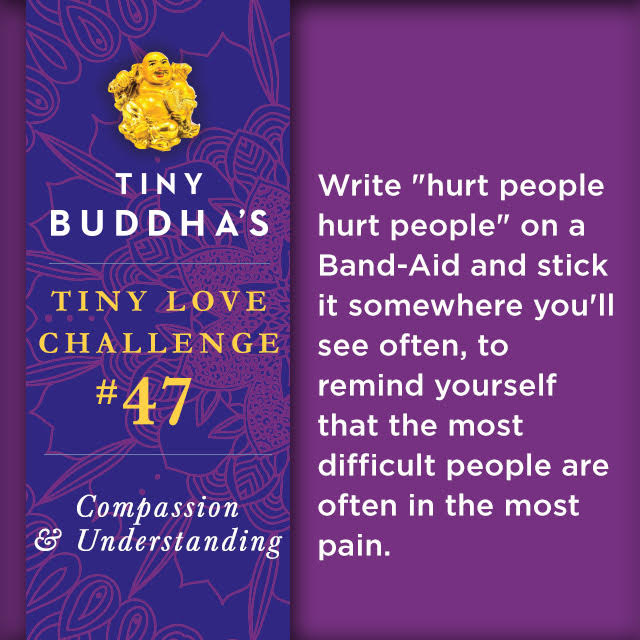
  • Love Challenge #47: Hurt People Hurt People

    Love Challenge #47: Hurt People Hurt People

    Hurt People Hurt People

    Sometimes the most difficult people are in the most pain.

    (This challenge comes from the upcoming book Tiny Buddha’s 365 Tiny Love Challenges. Pre-order before October 6th and get $300+ in free bonus gifts!)

  • A Tiny Act of Kindness Can Help Someone in a Big Way

    A Tiny Act of Kindness Can Help Someone in a Big Way

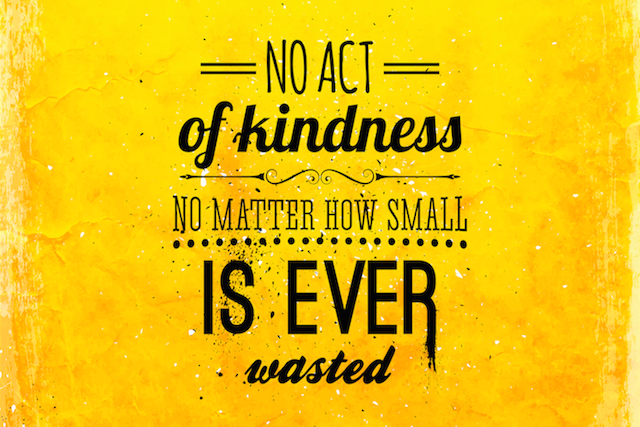
    No Act of Kindness Is Wasted

    I started working in the food industry when I was just twelve years old.

    I couldn’t drive, stay out past 11:00pm, or do algebra, but I could easily fill a bag with bagels at a business owned by a close family friend. And so I did, every weekend.

    It was a simple job, working the dozen counter. I didn’t even have to ask people how many they wanted (thirteen, a baker’s dozen—that’s just good business!) I only had to ask what kind they wanted, then hand it to them, make change, and send them off with a “Have a nice day!”

    I tried, as often as I could, to stay neatly tucked behind the register, but every now and then someone asked me to help with something unrelated to my one responsibility.

    I knew it would reflect poorly on the business—and would erode my self-esteem—if I responded to those requests with, “I don’t know how to do that—I’m just a kid,” so I often tried to do things I’d never been trained to do. Like make coffee.

    Sounds easy, right? It should have been. Except I didn’t know the commercial coffee maker wouldn’t light up after I hit the “twelve cups” button, to register that it was, in fact, brewing. So I hit that button five times, flooding the coffee island in the middle of the restaurant.

    I remember the angry looks on customers’ faces, and I remember feeling both embarrassed and bad about myself. I’d failed at a simple job, and people weren’t happy with me.

    That kind of thing happened a lot, and not just when I worked at the bagel shop.

    A couple years later I worked with a few friends at a dinner theater fundraiser for my community theater group.

    We all wanted to raise money to do Grease, and we thought serving would be good practice for adulthood, when we’d likely wait tables between endless rejections (at least, that’s what I thought). So we were eager to work the event.

    Even though there wasn’t a coffee maker in sight (I didn’t have to go too deep into the kitchen) once again things went less than smoothly.

    Since the cooks were amateurs too, it took a while to get all the food prepared and plated. As table by table received their heaping piles of pasta, the patrons in my section appeared to get a little antsy. So I worried, once again, that they were annoyed and angry with me.

    When their food was finally ready, I loaded it all onto one massive tray so no one would have to wait a second longer for their saucy carbs, and then hoisted the tray above my head.

    I made it just a few feet shy of the table before it all came crashing down. On me.

    I’m not sure if it was the sight of me fighting back tears or the knowledge that I was only fourteen, but the patrons didn’t act annoyed. In fact, they got up and helped me clean the mess.

    I was amazed that they weren’t infuriated, especially knowing they’d have to wait even longer to eat. They were patient, kind, and giving, as I learned at the end of the night when a man slipped a twenty in my hand and said, “You did a good job—thanks!”

    He was lying, I knew, as I cleaned sauce out of my hair, but it didn’t matter. These people didn’t focus on what I’d done wrong. They saw how I’d struggled and they chose to respond with understanding and compassion.

    In doing so, they helped me show myself understanding and compassion—yet one more thing I haven’t always done well.

    I’ve reflected on this experience many times over the years when I’ve encountered servers or workers in other businesses who’ve done less than stellar jobs, and I’ve tried to show them the same kindness a group of strangers once showed me.

    They may not all be minors with tears in their eyes and spaghetti in their hair, but they are, no doubt, hard working people who are carrying a lot around—and I don’t just mean their trays.

    They all have struggles, and dreams, and goals, and responsibilities, and they too could benefit from someone showing them patience, kindness, and understanding if they’re a little slow or less than friendly.

    I’m not saying it’s not reasonable to expect good service, just that the world is a better place when we see people beyond their nametags, and visualize everyone as a kid who truly is doing their best.

    As you may have seen on the site or Tiny Buddha’s social media pages, I recently wrote a book titled Tiny Buddha’s 365 Tiny Love Challenges (on sale October 6th), with the help of seventy Tiny Buddha contributors, that shares numerous stories just like this.

    Reading through these stories reminded me how similar we all really are.

    We’re all a little scared and a little rough around the edges.

    We’re all looking for love, support, acceptance, and appreciation.

    And we can all get and give these things every day, one tiny act at a time.

    I’ve seen the power of tiny acts of kindness, forgiveness, and acceptance countless times in my own life, and as the title suggests, I’ve created 365 of these small acts that we can all do, including this one from the seventh month:

    Be patient and understanding with people who serve you, especially if they have a lot of customers to tend to.

    It may seem like a tiny thing, but sometimes the tiny things are the big things.

    Empathizing instead of criticizing is a big thing. Getting up to help instead of sitting back and judging is a big thing.

    And it’s big things like these that help us all feel seen, appreciated, and loved—and far happier for it.

    Kindness quote image via Shutterstock (attribution: Aesop)

  • Forgiving Abusive Parents and Setting Ourselves Free

    Forgiving Abusive Parents and Setting Ourselves Free

    TRIGGER WARNING: This post deals with an account of physical abuse and may be triggering to some people. 

    “Forgiveness is not always easy. At times, it feels more painful than the wound we suffered, to forgive the one that inflicted it. And yet, there is no peace without forgiveness.” ~Marianne Williamson

    Growing up in the seventies and eighties with Italian immigrant parents definitely had its challenges. In a family of four girls, I was number three. That in itself was tough enough. Never as good as the first-born and not as loved and protected as the baby. Yes, it was challenging.

    On the outside, one would think that we were a picture perfect family. Our lives were as normal as normal could be.

    Both parents worked. We had a beautiful house in a nice, quiet neighborhood. We all went to good Catholic schools. Had fun family vacations in the summer. Our parents entertained a lot, so there was always a bustling of activity at the house. Picture perfect, indeed.

    Unfortunately, Mom and Dad lacked parenting skills. Sure, they provided food, shelter, and the necessities of life. Compassion, encouragement, and love? Not so much.

    Behind Closed Doors

    My mom was cold and mean to Dad, and often to us. My dad was cold and mean only to daughter number two and me. I never liked my dad. He didn’t get us. He was always angry with us. I’m pretty sure he didn’t even like me.

    And so began the misery.

    The beatings started when I was ten and continued until I finally fled at eighteen years old.

    I ran away several times throughout that period, always returning simply because, as bad as the beatings were, I had a nice roof over my head, food in the fridge and great meals, a nice bedroom, nice clothes, and all kinds of other luxuries.

    So in exchange for all these lovely things, I took the abuse.

    I never knew when I was going to get beaten either, which was the worst part for me. It wasn’t always like I knew I did something wrong, though I’ll admit, I wasn’t an angel.

    More often than not though, it was more like, if sister number two did something wrong and she wasn’t around to get beaten, they took it out on me. I was always on my toes. I never knew.

    There were many nights I would be in bed sleeping. Dad would come home late from work, bust through my bedroom door, tear off the blankets, and whip me til he thought I had learned my lesson. The problem was, I rarely knew which lesson I was supposed to have learned.

    I can recall one incident when my parents had company over for dinner, a lovely elderly couple, a minister and his wife. I loved them so much. They were the sweetest people you could ever meet.

    I came home from a friend’s house, Mom and Dad and John and Sally (not their real names) were sitting in the living room having coffee. I came running in, so very happy to see them, and Dad had that look on his face.

    I froze. Omg, you’re kidding me, right? He’s seriously not going to do this right here, right now, in front of these people, is he? Yup. He sure is. And he whipped me right there. He had an audience and no one stopped him. They just sat and watched. And once again, I had no idea what I had done.

    I hated my father and lived in fear of him throughout my teen years.  Constant fear of never knowing when the next beating was going to be.

    Forgive and Forget?

    As I grew older, I tried to have more of an appreciation for him, but failed.

    I tried to gain his respect and love as I grew into a beautiful, somewhat successful woman. That didn’t work much either. I gave him a grandson that carried the family name. That seemed to work a little. He respected me a little more then and actually even supported me more. Finally something.

    I spent most of my adult years trying to forgive him, like him, maybe even love him a little. The forgiving finally came. Liking and loving, not so much.

    It was clear in my thirties, forties, and into my fifties that I simply did not like my father. Not one bit. Because of that, I lived daily with this monkey on my back. This thorn in my side. Guilt in my soul.

    It ate away at me constantly. Why can’t I just let this go? Who knew that forgetting wasn’t going to be as easy as forgiving? I always thought that once you forgave something, you just naturally forgot about it. Nope. It was clear to me it just didn’t work like that. Not for me anyway.

    Step Up to The Plate

    Years later, Alzheimer’s had struck Mom and it was time to place her in a nursing home. Dad was eighty-four and home alone. This meant only one thing to me. It was my turn to look after dad.

    Daughter number one and I had a schedule worked out. She was retired; I worked full time, so my *duty days* with dad were limited to two to three days a week. That’s not so bad, right? Wrong! It was the hardest thing I’ve ever had to do, and I cringed every single time I pulled into the driveway.

    My job was to sit and have dinner with him and keep him company for an hour or two. I had nothing to say to him, ever. I could barely even look at him. I had no patience for him, and the only thing I felt was pity.

    He was a pitiful old man, sitting alone in a house waiting for people to come visit him, and all I could think was, “Good for you! You deserve this, you miserable old man.”

    I know, shame on me.

    Two years later, we finally placed him in a nursing home. My visits were few and far between. I was overcome with guilt. I should be visiting him more often, right? He’s coming into his last years now and all he wants is love and company.

    I just couldn’t do it. There was nothing left in me.

    I went about once a month, maybe every two months. Still cringing. My only thought was “Geezus, when is this old man going to die?”

    Pretty sad, eh? Here was the man that gave me shelter, food, clothes, money when I was broke, took me on nice family vacations every summer, and all I wanted was for him to get out of my life.

    Fake It Till You Make It

    I struggled with these emotions for a long time. How is it that I, Iva, the sunshine happy girl that sprinkles pixie love dust everywhere, could possibly be having and thinking these horrible thoughts?

    It took some time but I finally learned to rewire my brain. Think new thoughts. “Fake it til you make it if you have to” I kept telling myself.

    I realized it wasn’t going to kill me to show him some love. Some compassion. Show him something for goodness sake, Iva! So I did.

    I hugged him when I went to visit him and said, “I love you daddy” when I left. Maybe it was a lie, but he didn’t know that. That’s all he needed to hear. Someone to tell him they loved him. In his last lonely moments of his life, dad just needed love. And I gave it to him.

    I dug deep down as far as I could and gave him the love he longed for all his life. It meant little to me but everything to him. That’s all that mattered.

    Understand and Set Yourself Free

    When Dad died at eighty-eight years old, I cried tears of relief and closure. But it wasn’t his death that set me free—it was the choice to forgive and treat him with more kindness than he offered me. I knew then the pain hadn’t scarred me for life; I had taken that pain and turned it into strength and wisdom.

    I forgave him because I could finally see he raised me the only way he knew how. That’s all he knew—it was how he was raised—and I felt sad for him.

    Did it make it okay? No. Understanding doesn’t mean we condone it when someone hurts us. It means we understand. And understanding and compassion are the keys to forgiveness.

  • How to Let Go of the Pain of Anger and Blame

    How to Let Go of the Pain of Anger and Blame

    Sad Woman Crying

    “Resentment is like drinking poison and then hoping it will kill your enemies.” ~Nelson Mandela

    Has anger ever filled you up so completely that you felt you’d explode?

    Two months after I had a baby I suddenly found myself inextricably angry. Yes, I felt the joy and happy stuff that everyone tells you about.

    But having a daughter also triggered a flash flood of buried anger, blame, and resentment. And it was all directed to one person—my mother.

    A therapist told me once that my mother had “verbally abused” me. That launched a fifteen-year process of rehashing and blaming my plethora of emotional issues on my mother.

    But no matter how many therapists or coaches told me that she “didn’t form a proper attachment” or whatever, I always defended her. That is, until I became a mother myself.

    When my own nurturing instinct kicked in, I realized what I’d missed out on as a child. I was overwhelmed by “how coulds.” How could anyone treat a little girl that way?

    The anger overtook me. It was like a well of blame had opened up and I had fallen in. Something had to shift.

    In truth, it happened fast. You might think it would take years to let go of anger and blame so strong it feels like it’s coming out of your eyeballs.

    But once I realized how to let it go, all at once, poof, I was free. Now years later, I’ve never looked back.

    How did I do it? I discovered the profound meaning of two words: perspective and compassion.

    Life is Like a Box of Hair Dye

    My mother grew up in the South in the sixties. I’ve watched enough Mad Men to know that life for women in my mother’s generation was very different.

    Women’s value was heavily dependent on their looks and the look of their houses. Combine that world-view with a heaping helping of stress from an overwhelming job and you get a picture of my mother.

    Think of an uber stressed-out Betty Draper. At thirteen, when my blonde hair started fading to light brown, she started dying it. “Boys won’t like you with brown hair,” she said.

    Yelling was the norm and more I cried the more she yelled. I was an only child, lost in a world where my looks and image were tantamount to survival and nothing I did was enough.

    The Blame-Spin Cycle

    Getting stuck in blame feels like walking through an endless maze, looking for cheese that doesn’t exist. That’s what therapy felt like.

    The more I re-counted the past, the madder I became and the more hopeless I felt. I was spinning in an endless cycle of blame, anger, and resentment.

    What is the end game? What do I do with the fact that my mother’s behavior may have caused me pain later in life?

    It was a well-meaning friend who finally cracked the code, over wine and panic one afternoon. I had called her over because I felt too emotionally unstable to be alone with my infant daughter.

    “Why don’t you just ask her why she did it?” she asked.

    That had never occurred to me.

    I’d Like Perspective with a Side of Compassion Please

    “It was the only way I knew…” she explained, after I found the courage to ask her why she had treated me so harshly.

    My mother then went on to recount tales of her childhood. You know the beginning of Cinderella, when she spends her hours cleaning endlessly at the whim of a demanding mother?

    That’s the image that came to mind as my mom recounted years of cleaning and re-cleaning my grandmother’s house. The family was not allowed to leave the house to do any activities until the house was spotless.

    And of course, the cleaning always took up the entire day, disappointing my mom and her sister every time. My grandmother, it turned out, had been an even stronger product of her environment.

    Why are people the way they are? If you can ask yourself that question before passing judgment, you can save yourself tremendous mental energy.

    When I started understanding the world for my mother and grandmother, I was flooded with intense compassion. Think of Biff in any Back to the Future movie, when manure was inevitably dumped on his head—that was what happened to me with compassion.

    Suddenly I realized that no one is to blame. If I blame my mother for my problems, then I have to blame my grandmother for my mother’s problems. And then I’d have to blame the Great Depression and society for my grandmother’s problems.

    I just don’t have enough space for all of that anger.

    Getting perspective on a situation and fully understanding the whole story is like pulling back the curtain and finding the little man with the booming voice in The Wizard of Oz. It loses its power over you.

    Could my mother have made different choices? Of course she could have. Did she do the best she could with who she was back then? Yes, I believe she did.

    Setting Yourself Free

    What happened happened. No amount of blame, resentment, or anger at my mother will make it not have happened. It is just what happened.

    We can let what happened control us and we can live in blame and anger, or we can let it go and free ourselves. When you hold on to anger, it’s you who suffers. You’re the one who has to live in your head.

    Forgiveness has nothing to do with the other person. You don’t have to tell him that you forgive him, or even talk to her again if you don’t want to.

    This process is simply about changing the way you see someone so that you can stop wasting valuable emotional energy. If you are holding onto resentment or anger, today is the day to set yourself free.

    Right now, think of one person who isn’t safe to walk down the streets of your mind without being attacked.

    Picture your story about that person. Then try to tell the story again from her perspective.

    What is the back-story? Think about her childhood; when did she get hurt?

    Find some way to see the story that allows you to feel compassion. It may not be easy at first, but there is always an answer.

    The forgiveness journey is worth taking 1,000 times over. I can’t even begin to describe how much this idea shifted my experience in life.

    Letting go of the anger feels like flying. By getting perspective on the story and uncovering compassion, you have the power to set yourself free.

    Sad woman image via Shutterstock

  • 7 Courageous Steps to Reconciling a Struggling Relationship

    7 Courageous Steps to Reconciling a Struggling Relationship

    Back to Back

    “Peace is not absence of conflict, it is the ability to handle conflict by peaceful means.” ~Ronald Reagan

    I have always had a tumultuous relationship with my mother. One filled with conflict, anger, and struggle.

    After years of non-communication, miscommunication, arguments, and fights, I realized it was time to reconcile what was left to whatever degree we were both capable.

    I had to let go of the past and get honest with myself—because whatever I was doing on my end was not only hurting our relationship, but also killing me from the inside out.

    I was crying out for resolution with my mother, not because I didn’t think I tried hard enough in the past, but because I knew I would regret it if I didn’t.

    This didn’t mean she would accept my feelings, or that we would suddenly become the best of friends. It was an opportunity to become the best versions of ourselves for this relationship—whatever that meant—whether we spoke every day about the weather or just on major holidays to say I love you.

    Now here I stand with a mother in my life and a relationship to go with it.

    And to be honest, it’s not the mother-daughter relationship I always wished for. But I am content and at peace with what we have now rather than what we didn’t have before.

    It’s a place where we can co-exist peacefully while respecting and loving one another.

    It is a relationship, and it took courage.

    Some relationships aren’t meant to be reconciled, and that’s okay. But that is a choice each of us must make. You must ask yourself, is this what I truly want? 

    The following seven steps contributed to the reconciliation of my relationship, and I hope they do the same for yours.

    1. Stop lying to yourself.

    If we lie to ourselves about what is okay and what is not, we are setting ourselves up for a major letdown.

    If something is not sitting right with you, don’t ignore it. Acknowledge your feelings, then promise yourself you’ll do something about it.

    My strained relationship with my mother was unsettling. I needed to acknowledge my feelings and make a plan of action to address it rather than ignore and repress.

    Once I became honest with myself, I felt a responsibility to confront the uneasiness inside. Doing so gave me a greater sense of control over myself rather than the issue having control over me.

    2. Be bold and make a move.

    Being assertive is a way of holding yourself accountable to the promise you made, and it’s the first proactive step toward letting the other person know you want resolution, not dissolution.

    I made the first step in contacting my mother. It wasn’t easy. I swallowed the big pill of pride I had in the bottom of my throat and trusted myself.

    I didn’t know if she would be receptive to me, but it was a risk I was willing to take.

    Making the first move to repair what’s broken isn’t a sign of weakness; it’s a sign of complete courage.

    3. Expose your guts.

    Being vulnerable is a way to display that you’re coming from a place of peace and honesty. It’s not always easy, but if a relationship is worth it, it won’t be as hard as you think.

    Stay committed to avoiding defensiveness. Tell yourself that you may experience some, along with resistance from the other person, but that’s okay.

    When speaking to my mother, I expressed my pain. It came from a pure place where I was able to be completely transparent to her in such a way that she could meet me for the first time, yet recognize all that was familiar to her.

    I was honest, loving, forgiving, and vulnerable; it was the only way to show my true self.

    4. Get vocal and keep an understanding ear.

    I confided in my mother about the effects our falling out was having on me. I say confide because I never told anyone else. No one else in my world could relate except my mom because she was hurting too.

    Listen to the other person. Just as you have your own perspective and experiences, so does the other person. There are no wrong or right feelings, so you must put yourself in their shoes.

    As hard as it was to hear the pain I had put my mom through, it gave me the clearest vision of what she had been experiencing. We were given an opportunity to understand and forgive each other.

    5. Make a deal.

    Be willing to give as well as take.

    Compromising is a fair and expressive way of giving your relationship love and attention.

    It doesn’t mean you have to sacrifice your values or beliefs.

    It simply means that when both parties are asking for something, you’re both willing to give as much of yourselves that you are comfortable with, as well as take what you need in order to be happy.

    Just as I told my mother what I needed from our relationship, and what I would and wouldn’t stand for, she did the same. We compromised and agreed to give to each other in places where we felt we needed more support.

    6. Set your limits.

    A common misconception about boundaries is that they are meant to keep people or feelings out. That’s far from the truth.

    Boundaries are there to show respect to yourself and others.

    If something makes you uncomfortable, a boundary is set to tell others that it’s not okay to cross. You wouldn’t want to intentionally cross another’s boundary knowing it makes them uncomfortable, so why would you allow someone to do that to you?

    One of the biggest obstacles my mother and I had to overcome was our lack of boundaries. We ran all over each other as if respect didn’t exist—because, well, it didn’t.

    Once I established my boundaries, I felt safer. She communicated her boundaries, and it was as though a respect was born between us.

    Setting boundaries is key to earning and giving trust, which is the foundation of all healthy relationships.

    7. Follow through.

    The action of the relationship, especially when reconciling, is crucial. Trust has to be rebuilt, so the action needs to be seen as well as the words being heard.

    My phone calls and texts to my mother might seem like a minimal action to some, but for us, it’s major. It’s far more than we had in the past, and it’s what we said we would do, so we do it. It holds us accountable for keeping this relationship moving forward and not stagnating.

    Whatever the action, if you can make time to be fully immersed in your relationship when you’re together, it will create a sense of security and keep you moving forward.

    It’s worth it; now go for it.

    Relationships can feel like marathons, especially the difficult ones. They can feel like a race you can’t ever seem to win, but that usually means the techniques you’re using aren’t working.

    It’s okay to fall, fail, be wrong, get mad, and be frustrated. We are human. And as humans, we thrive and survive off of the relationships we make and maintain throughout our lifetimes.

    Give yourself and your relationship that chance to succeed. It’s not easy. It’s painful, it’s exhausting, and it’s humbling.

    But, man, it’s worth it.

    Imagine yourself running around the same track engulfed in a thick layer of fog for months, or even years. That’s your struggling relationship.

    Imagine how exhausted you feel. Imagine how you’re blinded from seeing anything else around you because you’re in the thick of it. Those are the issues in your relationship.

    But if you keep pushing through by following these seven courageous steps, it will pay off.

    Now, imagine yourself committing to that action and one fine day, after all your hard work, you run from the wet, pale fog into the warmth and light of the sun.

    And for the first time in a long time, you can see clearly all around you.

    You stop running and just breathe.

    That feeling of relief is the feeling I felt after reconciling with my mother, and it can be the relief you feel when you reconcile your struggling relationship.

    Back to back image via Shutterstock

  • 3 Unconventional Tips for Forgiving and Letting Go

    3 Unconventional Tips for Forgiving and Letting Go

    “The greatest obstacle to connecting with our joy is resentment.” ~Pema Chodron

    Forgiveness is good, right? I don’t mean in a heal the planet kind of way—I mean in a selfish, me me me kind of way.

    We want to let go of our resentments and connect with people genuinely. We want to feel happy and contented, full of love for ourselves and those around us. We want to run, carefree, through the fields in a pretty cotton dress, not sit around in our pajamas, twisted with bitterness.

    But how do you experience genuine forgiveness and stop feeling resentful? Because it’s one thing to know it intellectually but another to actually feel it. Like, in your bones.

    A few years ago, in an effort to “get over things,” here’s what I did:

    I read. I saw a therapist. I journaled. I even did the thing where you write down your hurt feelings, burn the piece of paper, and poof, up they all go.

    (I also did the one where you put your “angry feelings” in the freezer to help you calm down.)

    And sure. I felt a little better.

    But I was a long way from getting out my sundress and Googling “field with long grass to run through.” There was still that nagging thought: if they hadn’t done (blah de blah) then I wouldn’t have to deal with this.

    And it’s confusing—if you forgive, does it mean someone’s off the hook?

    It’s as if one bit of your brain is saying “It’s all good” and the other bit is saying, “Ah, I don’t think so, mister.” And in a way, this is exactly what is happening.

    Trying to forgive someone is like trying to give up smoking; until you change your underlying beliefs it’s almost impossible.

    Most smoking cessation campaigns focus on the effects. The images are frightening but they rarely change behavior.

    The most successful technique to stop smoking is Allen Carr’s Easy Way to Stop Smoking. It was how Ellen, Ashton, and I quit.

    So how does Carr succeed where squillions of health promotion dollars fail?

    It’s simple. Carr explains that cigarettes don’t elevate you to some higher plane, like most smokers think. The nicotine just raises you up to where non-smokers are naturally and then drops you back down, almost seconds after your last puff.

    The belief at the heart of why smokers don’t want to stop is they’ll miss out on the relaxing feelings. But Carr shows, give up smoking and feeling good becomes the norm. He flips the old belief.

    And this is what we need to do when dealing with the slippery fish of forgiveness. We need to flip the beliefs that make it seem difficult.

    I used to see forgiveness as something you did. A verb. Now, I see it more as a noun—something that occurs naturally when you understand the truth about your thoughts and feelings.  

    Here are my 3 Carr-like forgiveness “belief flippers” that have helped me not only let go of hurt feelings but deepen my sense of well-being.

    Admittedly, the bigger the hurt, the more challenging this gets. My hunch is these ideas might help the thing you’re trying to let go of.

    1. Your thoughts cause your feelings.

    A few years ago during an intensely challenging personal time, a good friend of mine told me she no longer wanted to be friends. It touched something deep within me, and for a long time I saw her actions as hurtful.

    But then I realized two things:

    First, I was being supremely self-centered by not considering what it was like for her.

    And second, the real reason I was upset had nothing to do with her and everything to do with me. She hadn’t done anything to me, really, but my “I’m not good enough” radar was going off big time.

    My hurt feelings were due to what I thought of myself deep down. (I say “deep down” because not so deep down, I’d convinced myself I was awesome).

    If my sense of self-worth had been rock-solid, I would’ve more easily seen her side of things. Yes, I would have missed her, but I wouldn’t have taken it personally and felt heart broken.

    Your feelings are the result of what you tell yourself about what happened. It’s your thinking causing your pain.

    Which in practical terms means you need to stop blaming others for how you feel.

    2. The art of just noticing.

    So if thinking is the cause of icky feelings, you should change your thoughts, right? Or at least figure out where they come from?

    This is a common belief. But it’s also, I believe, the hardest way. Here’s what I think is a better option:

    Rather than try and think a different thought, like gratitude, or even forgiveness, just notice your thoughts without getting caught up in them.

    Once I understood I was the creator of my own feelings, this is what I did. And for years, on the odd occasion the topic of my friend came up I’d burst into tears, but always I’d be thinking, “Wow, am I really still working through that?” Almost as if I were a bystander.

    And guess what? Over time, my sad feelings lessened and my genuine love grew. Not just for my friend, but for me too.

    By not judging my feelings or blaming them on anyone else there’s been a shift in something much bigger—my sense of self worth has got stronger.

    It’s not like I don’t get upset anymore. Cripes no. I do. But knowing that my feelings are “my bad,” I rarely take it personally. The sting has gone.

    3. Consider that there’s nothing to forgive.

    Over the years I’ve thought about the shift that happens when we go from feeling angry and hurt to loving and peaceful.

    Are we learning forgiveness or do we simply reach a point where we now see there was nothing to forgive in the first place?

    Is forgiveness so tricky because the real “cotton dress running through the fields” feeling we’re after only comes once we realize there’s nothing to forgive??

    To help me wrap my head around this I find it helpful to consider the larger picture. As in, outer space large:

    I imagine a kinder, wiser and more compassionate version of myself sitting on the moon, perhaps kicking back on a deck chair drinking a margarita with Alice Kramden, looking down and watching, as the earthly me muddles my way through life…

    Watching myself hold onto dodgy beliefs and making some epic mistakes.

    Watching children around me born into challenging times and how this affects their sense of self-worth and how easily this passes on to others.

    Watching us all learning to love ourselves unconditionally—trying, failing, and even succeeding, as we do.

    And I figure this wise margarita-drinking self would conclude that everyone in their own unique way was doing their best.

    And when you think about it, if everyone’s doing their best, what’s to forgive—doing your best? 

    Toss around the idea: “Forgiveness is understanding there’s nothing to forgive.” It’s big, but when it sinks in, it really helps. And check this out…

    Forgiveness is understanding. There’s nothing to forgive.

    Woman begging for forgiveness image via Shutterstock

  • How the Need to Be Right Can Lead to Guilt and Regret

    How the Need to Be Right Can Lead to Guilt and Regret

    Sitting Together

    “The obstacles of your past can become the gateways that lead to new beginnings.” ~Ralph Blum

    I think we all have this issue: guilt, followed by its sister, regret.

    I didn’t realize how dark a blemish it was on my heart until I fully felt the anguish of my mother’s death. I never quite realized my full potential, courage, or strength until her passing.

    Her greatest sacrifice, leaving this earth, proved to be my greatest motivation to search myself for the answer of whom I was and why; it was the major catalyst in my life for change.

    Sometimes the best things for you are the hardest.

    Admitting the darkness you’re carrying inside is one of the hardest things to do. Convincing yourself that you have been wrong and need to change can be even harder.

    Forgiving yourself because you are human, and loving yourself enough to know you deserve more, and deserve to give others more, is the hardest task of them all.

    I was an embittered person almost my whole life. I could hold a grudge with the best of them. I felt I had a lot to be resentful for, and truthfully, much of it was not unwarranted. But with my inability to never let go of things, I was miserable, making everyone else around me miserable, as well.

    This went far beyond just being angry. I felt I was being terribly misunderstood and never heard. I also felt the constant need to have to defend myself and my views with a strong argument.

    I had a very strained relationship with my mother starting when I was 14. I was at that age when I thought my parents knew nothing and I was smarter than they were.

    I can now fully understand why I felt that way, beyond just normal teenage rebellion. I was projecting a lot of my older siblings’ perceived unpleasant experiences with my parents onto my own, and letting that determine my relationship with them.

    There was a lot of friction between them, and I somehow felt that if I didn’t share their same resentment I was somehow betraying them.

    Because of this, I went through my youth and into my adulthood expecting my mom to give more than she could and blaming her, instead of blaming myself for not having enough compassion and never taking the time to understand that she was a person, too.

    I seemed to always be aggravated at everything she did.

    I held onto the need to be right, never letting up and always needing to argue. I grew into this person who could never listen with a compassionate heart and lived with resentment instead of love, kindness, and forgiveness.

    I was very hard-hearted instead of soft and pliable and forgiving.

    We would have bouts of calm when we got along great, then something would shift in her mood or mine and it would turn volatile. I see now that, because we were so much alike, it caused much of that friction. This went on for our whole relationship, up until just a couple of years before she died.

    I’m not saying she was without her faults, too. But now that she’s gone, and since I am much older, I can see everything so much clearer. That’s where the guilt comes in.

    We had been working on our relationship, though we didn’t acknowledge that openly, and we were really making headway. You see, I couldn’t even hug her, hadn’t done since I was a kid. But I was getting closer to her and hugging her more because I knew she needed it, and so did I.

    My great wall was crumbling.

    We had always done things together for years, not that that stopped the bickering. But that was all but over for a long while. Not long enough, though. And this is where the regret comes in.

    I wasted so much time being angry and self-righteous that I missed out on having a better relationship with my mother.

    If I had only known then what I have learned in the last few years and especially since her death, I could have saved myself the burden of that guilt and regret.

    There are so many moments each day where I will have a memory of us together and I will feel shame for the way I reacted to a situation. In my mind I can change the outcome to something that I should have done to handle the situation better.

    When she would be difficult, and she could be at times, why did I have to make it worse? Why couldn’t I have just stayed calm and had compassion for her feelings instead of getting overwhelmed and lashing out?

    I was incapable of doing that at the time because it’s hard to do when you are totally unconscious. You act before you think, lash out before you embrace.

    Oh, how I wish I had known this calm before it was too late! I think about the agony I could be saving myself now, and I am filled with remorse. But it doesn’t have to be that way. You can save yourself from the pain that I am trying to overcome.

    All it takes is a step in the right direction.

    It is so important to put your prideful ego aside and try the softer way. Ask yourself these three questions:

    1. Will it destroy me to “give in,” take the barriers down, and not have to be right all of the time? 

    When you “give in” it is not to lie down and be trampled on, but to slow down and reflect on what’s most important. The egotistical need to be right is what will ultimately destroy you. It leaves no room for compromise or compassion for another’s feelings, and will cause you more damage in the long run.

    2. Is it worth it to be right, making the argument more important than making someone else happy?

    When you constantly reinforce to the people in your life that you value your own opinions more than their feelings, it can cause a lot of hurt. Why not take the higher road and save the moment by saving your voice?

    3. Will my actions now cause me pain and regret later? 

    My biggest lesson learned was that, if I had only known then what I know now, I could have prevented so much grief.

    I wish I had had more generosity in my heart at that time. I wish I knew how to pause and let myself have that moment to feel the clarity that I needed to make a better choice in how I handled the situation at hand.

    I know that, when she did things that I considered unforgivable, it’s because she didn’t know any better and was only doing the best she knew how at that time, as was I.

    I am so grateful that I have learned these lessons now so that I can have the opportunity to live this way from here on out. I’m a big believer in things happening for a reason, and though I don’t quite know how to justify this one, I thank my mother every day for her sacrifice in that in losing her, I gained the greatest insight.

    I just wished I’d learned these lessons sooner.

    Photo by Kevin Krejci

  • The Gifts of Empathy: We’re Not Alone with What We’re Feeling

    The Gifts of Empathy: We’re Not Alone with What We’re Feeling

    Hugging

    “In separateness lies the world’s great misery, in compassion lies the world’s true strength.” ~Buddha

    When asked why I write fiction, I used to say, “Because I enjoy writing and revising sentences” or “Because I like practicing an art I’ll never perfect” or “Because I love to read.” All those reasons remain true, but my answer has changed.

    The most important reason I write stories, and read them, is to practice empathy.

    Strange how we often feel empathy more easily for fictional characters than for real people. One reason is that sometimes we get to know fictional characters more deeply than our family members and friends.

    Too often in real life we keep aspects of our true selves hidden and miss an important opportunity to connect with other human beings.

    How many times has this happened to you? You run into a friend, sometimes a close friend, who says, “How are you doing?” and you say, “Good! How are you?” and the friend says, “Good!” Meanwhile, you’re not doing well at all, and later you discover that your friend hadn’t been doing well.

    Recently, I tried something different. When a friend asked how I was, I told him the truth—that I’d had a difficult week.

    He said, “I’m sorry to hear that. I know a few other people who had a rough week.” He waited to see if I wanted to share more, but didn’t prod. Then he said, “Hey, I hope you have a better week next week.” I could tell that he meant it, and that made me feel a little better, a little less alone.

    I’m not suggesting that we all become confessional and reveal our secret struggles, fears, and pains with everyone we meet. But I am suggesting that you don’t have to feel alone. When you take a chance and share a hidden part of yourself with someone, it’s amazing how often people respond with, “Me too.”

    Here is the most important thing to remember: Whatever you’re feeling, someone else has felt it. Whatever you’re going through, someone else has gone through it. You may feel alone, especially if what you’re experiencing is very frightening or painful, but you are never alone.

    I was having dinner with a close friend the other night, sharing with him about a difficult time in my life, the most difficult, when I had hurt someone I love very much. (more…)

  • We Need Compassion the Most When We Seem to Deserve it the Least

    We Need Compassion the Most When We Seem to Deserve it the Least

    “Our sorrows and wounds are healed only when we touch them with compassion.” ~Buddha

    When babies cry everyone rushes to find what’s wrong and alleviate their stress. It’s a bit of an instinct to do this in our culture.

    We understand that the only way that a baby can communicate a need to us, whether it’s hunger, a necessary diaper change, fatigue, or discomfort, is to cry out. No one wants to hear a baby cry, so we respond quickly.

    Unfortunately, as a child begins to grow and learns the language, we assume that they know how to communicate their needs effectively, yet do they?

    As an elementary teacher I have come to know that even though children have more vocabulary words when they enter school, they still do not know how to communicate their needs. Often, children cry out to get their needs met, but all we see is defiance instead of their plea for help.

    Bella is an adorable first grader who entered my classroom in September. I remember getting her kindergarten card, which noted that she could be a handful at times. I put the card in my filing cabinet at the start of the year because I like to get to know my kids from my own perspective without previous judgments.

    When I met Bella and her mom at our welcome back picnic, I noticed that Bella appeared to be running the show. Her mom and I talked for a bit, and she shared that Bella’s dad died when she was only eight months old, and it was just the two of them still to this day. It was easy to see that mom was compensating for the loss.

    Within the first month of school, I could certainly see why Bella had earned this reputation of being a handful. She could be a bit silly and somewhat defiant at times, but she knew the rules of our classroom and understood what kind of behavior was expected, so she did well with me.

    Right after the December break, things started to change.

    Bella was getting herself in trouble in art, music, and gym. She was not listening to directions and defying the teachers when they asked her not to do something. She was also talking back to adults in the building and getting herself into trouble at her before and after school program.

    Her mom and I talked on the phone to create a plan of action. I suggested a behavior plan to help her, but asked mom to promise to follow through at home for this to be effective. The plan worked for only a few days because Bella just didn’t have a strong interest in following the rules. (more…)

  • Help People Feel Better: The Power of Understanding

    Help People Feel Better: The Power of Understanding

    “When you judge another, you do not define them. You define yourself.” ~Wayne Dyer

    I used to be someone who always gave my opinion, or confronted issues in relationships regardless of whether someone was in the mood for what I had to say.

    I always brought up whatever was bothering me or said my opinion, perhaps in not so tactful ways. Needless to say, this led to a lot of emotional confrontations and blowouts with friends and family members, sometimes destroying important relationships.

    I justified my actions by thinking that people deserved to hear the truth, no matter what.

    Despite my strong opinions, loved ones still came to me for advice or help when they were in need. This might have been because I seemed like a well-grounded person with strong convictions—someone who knew what to do.

    When giving my opinion or advice, I would always think to myself, “Well, they are coming to me for the truth, so they deserve to hear it no matter how bad it might sound.”

    While I thought my advice came from a place of caring, it would take years before I realized how selfish and thoughtless I was being.

    Sometimes my sister would talk to me about issues she had with friends, and I’d say, “Why don’t you just tell them what’s bothering you. Why not tell them the truth?”

    It would frustrate me to see my sister upset with such friends, putting on a happy (or, what I thought was, fake) face, and going on with life.

    What I had yet to realize was that by being patient and understanding with her friends, my sister was avoiding confrontations for situations she may eventually let go of with time and understanding.

    My attitude only began to change after a series of big mistakes that I made. These painful events pushed me to take a big look within. I saw that I’d made a lot of judgments or criticisms of my loved ones for things they had done, when meanwhile, I had done the exact same things!

    I thought about how I had moments when loved ones came to me in pain or in need of a friend, and instead of being there for them or listening, I would give my opinion, for better or worse—even if it made them feel worse off.

    After I made my mistakes and sought advice from others, some of the things I heard really hurt me, and I would think to myself, “Wow, is that how I sounded?”

    Around the same time I had these realizations, I was doing a lot of traveling, and meeting people from all walks of life. I really started to appreciate the beauty in people’s stories, including their blunders. (more…)