Tag: understanding

  • How to Mindfully Temper Road Rage and Make Driving Less Stressful

    How to Mindfully Temper Road Rage and Make Driving Less Stressful

    “Smile, breathe, and go slowly.” ~Thich Nhat Hanh

    As a Lyft driver, I once spent significant time out on the road—a setting rife with provocations and stressors.

    Driving can feel like a constant challenge to employ mindfulness instead of giving way to destructive emotions like impatience and frustration. Meditation can be difficult to practice when you’re navigating a vehicle (demanding as both activities are of your full attention)—try channeling all your senses into it, and you’ll likely plow over a pedestrian or end with your car in a ditch.

    Navigating the road mindfully, though, doesn’t have to mean closing your eyes or adopting any of the other classic “meditative” stances. I think it involves something simpler: momentary detachment—both from everything that’s happening around you and from your own internal reactions as you watch from an ever so slight distance while they ebb and flow.

    Here’s some of what I’ve learned about maintaining equanimity when out there on the stress-inducing road.

    The importance of keeping in mind that sometimes there’s something we’re not seeing.

    Driving down Market Street through downtown SF, I once noticed a number of pedestrians stopped inside the crosswalk in the middle of the street. They didn’t have the right of way; the light was red for them and green for us drivers who were trying to get through. Cars were honking.

    For maybe a second my impulse was to add to the honk melee. Then I took a closer look and saw what was actually going on: a lady had dropped her bags, causing their contents to spill to the pavement. The people in the street were passersby who had run to help her pick them up.

    Once they were finished, I noticed how they stood and raised their hands in apologetic gestures [to the perturbed honkers] that seemed to say both “Just wait one minute please” and “Sorry, sorry, sorry.”

    Witnessing this got me thinking about how often in this fast-paced world we jump to reactivity before even understanding what’s going on first. We’re especially primed to do this out on the road, I think.

    As Shankar Vedantam said on his podcast Hidden Brain, “This woman didn’t bump into you maliciously; she’s blind. This soldier standing in formation didn’t pass out because he doesn’t have what it takes; he’s diabetic and needs his insulin. This woman isn’t heartless because she didn’t help the elderly person who had fallen; she’s paralyzed from a spinal cord injury.”

    Often in life, crucial pieces of a larger whole are unavailable to us—yet sometimes we act or respond as if under the assumption that we have access to all of them.

    Particularly when a driver in front of me is moving very slowly, or randomly stops, I sometimes feel the impulse to honk. I wonder why they’re being “so inconsiderate.” I ask them, in my head, if they’ve forgotten where the gas pedal is located. My immediate instinct is to cast blame on whoever’s holding me up.

    Yet I have to remind myself that I’m missing information. Maybe the driver in front of me is stopping to let someone cross the street. Maybe there’s a red light in front of us that I can’t see. Maybe… [insert any other number of possibilities here].

    I can’t see any of that though.

    I’ve also been on the receiving end; for instance when I stop to let a baby animal cross the road. Unable to see the road-obstructing animal, the cars behind me get annoyed and honk their disapproval.

    Willingness to admit when I am wrong (similar to the point above).

    Once when driving home across the Richmond Bridge, I thought there were only two lanes, which led me to assume that the guy next to me was cheating by driving along the shoulder.

    In response, my mind wove an entire narrative involving an entitled driver that does whatever he wants—weaves in and out, causing near collisions; uses the shoulder as his own lane, so that he can accelerate past the mass of stopped cars before cheating his way back into the pack once he’s gained a clear edge.

    To the driver he has endangered [through this behavior], who has responded by honking, he says, “Why don’t they just chill out?”

    I pictured the people out there who engage in similar behavior when not in their cars. The ones with blinders on to their own actions, who maybe call out others for “being too sensitive” while refusing to acknowledge their contribution to eliciting this supposedly sensitive response from them.

    Outraged, I honked at the driver—yet he kept driving along the “shoulder.” I shot him a look of disbelief; he didn’t look back. He seemed to not have even registered that my honk was directed toward him.

    That’s when I realized why: the “shoulder” was actually a legitimate lane.

    Remembering I’ve been wrong in the past helps me practice equanimity when I’m tempted to get outraged on the road.

    Practice forgiving mistakes.

    I think about those cars that get stranded in the middle of the intersection during high-traffic hours—usually because the light turned red when they were halfway through it. I think about how the cars around them often unleash an ambush of honks to signal their disapproval.

    I say this to myself when I’m about to become an angry honker: The trapped driver made a mistake. He or she is probably already aware. Your honk won’t teach him something he doesn’t already know.

    I realize that all my honk would have added was more noise to an already overly raucous road, compounding the driver’s shame while maintaining my own stress and self-righteousness.

    On somewhat of a side note, I’ve noticed how at times the most reckless drivers can also be some of the most intolerant of other drivers’ mistakes. One time a man who’d been driving eighty on a commercial street seemed very disgruntled when I changed into his lane (even though my doing this wouldn’t have been a “near miss” to someone who’d been following the speed limit).

    First he slammed the brakes. Then he wove theatrically around me into the lane next to us. From there he proceeded to change lanes three more times in the course of one block, dodging cars like they were opponents in a high-speed chase video game.

    If we can remember we all make mistakes, it will be easier to offer other drivers grace.

    Practice gratitude. When you do have a smooth ride, acknowledge it to yourself. Hold onto that moment and remember how it felt.

    A metaphor comes to mind each time I drive over a trafficless bay bridge (which happens very rarely but when it does, feels magical). Cruising over the smooth pavement without a car in sight conjures a wintery, white Christmas feeling.

    This calming and cleansing sight contrasts starkly with the default state of the freeway: normally a long stretch of cars, constant reminders of overpopulation and limited resources. It feels similar to gliding down a ski slope when the snow is fresh, pristine, newly plowed, and un-scuffed by other skiers.

    I made a note to be grateful for it.

    Even machines like Siri can be recipient to your gratitude. When traffic clogs the freeway, for example, I appreciate how she escorts me onto an alternative route. On one, we drove down bucolic side roads past fields of sunflowers while country music played from my car speakers (and bugs splattered against the windshield). On another, a river gushed a few feet away from us, providing a peaceful backdrop both visually and auditorily.

    Don’t force it, but when a moment that might be worthy of some gratitude does present itself, register it (even if it’s extended toward an inanimate object). Acknowledge it, if only to yourself.

    Humanize the other drivers around you.

    I think part of what exacerbates and heightens road rage is the ease with which we’re able to dehumanize the drivers we’re sharing the road with because we see cars first, people second. Attuning to certain visual cues, though, can reinstate a human component.

    I’ve found that making eye contact with another driver can at times quell any road rage that’s starting to bubble on my end. Other little things, like keeping my corgi stuffed animal visible, also help (when drivers get mad, the sight may calm them).

    One time when driving, I came upon a car stopped in the middle of the road. Just as I was about to get annoyed at the hindrance, a little Latino boy eating an apricot stuck his head out the car window. Juice dribbled down his chin while he waited for his dad to fix their car (which was why they were stopped). The innocent sight instantly calmed me. It was almost Hallmark-card level of sweet and centering.

    Another “tempering” visual cue: when a dog sticks its head out the window to feel the breeze against its face. Irritation was beginning to mount one day when I saw them: those big, brown eyes—opened wide, earnest, and slightly damp—shining above a golden snout in the back window.

    Once again I was calmed, my anxiety diffused by our eye contact—reminded that we’re are all flesh and bone, even when stress pushes us to reduce each other to the metal contraptions we cart ourselves around inside of.

    Take your time, Sir. I’m just going to have a moment with your sweet fur baby in the meantime, if that’s okay…

    In the absence of visual cues, use your imagination.

    Whenever I start to feel impatient with the slow driver in front of me, but I can’t see their face (or no other visual cues are present to temper the impatience), I take a deep breath. Then I gently counsel myself to envision the human inside the car.

    The specifics of whichever person pops into my head don’t really matter. What matters is that I recognize their humanity and extend patience toward whoever does.

    If that doesn’t work, try picturing one of your family members. What if the driver was your uncle, or your kind elderly neighbor, or your mom? Use your imagination to see inside the 2,000 pound metal machine that’s obstructing your path. Draw features onto the faceless foe inside it. De-objectify its operator.

    Driving and traffic can be stressful and draining. During the times when it feels like the surrounding cars and I are basically just crawling to our destination, I feel like I might as well be outside the car, pulling it with a rope—at least that way I’d get some exercise and Vitamin D.

    Sometimes I wish someone would invent a car feature that would allow the driver to switch to “pedal mode.” It’d be a great way to release endorphins through exercise (thereby reducing stress levels) during these inherently stressful situations.

    Until those innovations get brought into existence, though, we can work on controlling our own internal responses to whatever external road frustrations come our way.
  • If You’re Afraid to Ask for Help Because You Don’t Trust People

    If You’re Afraid to Ask for Help Because You Don’t Trust People

    “Ask for help. Not because you are weak. But because you want to remain strong.” ~Les Brown

    I sat in the doctor’s office, waiting—linen gown hanging off me, half exposed—while going through the checklist in my mind of what I needed help with. I felt my breathing go shallow as I mentally sorted through the aches and pains I couldn’t seem to control.

    Fierce independence and learning to not rely on others are two of the side effects of my particular trauma wounds, stemming from early childhood neglect and abandonment. During times of heightened stress, my default state is one of significant distrust.

    Letting people in and asking for help has never been my strong suit.

    Not only did it prove painful at times, asking for help has also proven to be unsafe. I’ve been given poor and damaging advice from people I assumed knew more than me. I’ve emotionally attached to people who disappeared when I least expected it. I’ve been lied to, betrayed, and left behind when my help was no longer useful.

    I’ve been injured both physically and emotionally when relying on others to care for me and have been let down more times than I can possibly recall.

    I have plenty of reasons to convince myself that no one can help me. That I’m in this life all alone. Some days I feel just that.

    Other days, I sit in my doctor’s office ready to make myself vulnerable one more time looking for support that I’ve been unable to give myself. Hoping, fingers crossed, that maybe this time I’ll be seen, heard, and cared for.

    When the doctor walked in, I was writing a note on the depression screening form justifying why I feel sad some days. I know it’s normal to feel sad doing the work I do as a mental health therapist. Working with people’s sad can be sad. I wanted to be upfront.

    And also, I’ve been focusing on healing the trauma in my body that injured my nervous system starting in infancy. Actively inviting my body to retrieve its pain to set it free and regulate my system to a state that is considered normal. Except I don’t know what normal feels like.

    Her very first questions to me: “Are you getting back what you put into your work? Is it worth it?”

    I blink, unsure if I heard her correctly.

    “Are you asking me if the work I’m doing is more depleting than rewarding? Am I receiving as much as I’m giving?” I ask.

    “Yes,” she responds assuredly.

    I exhale.

    She sees me. She actually sees me. I ask myself this very question every day.

    This one question cracks me wide open. I know I can trust her.

    I hear words pouring out of my mouth explaining the work I’ve been doing with myself. My intention to heal my nervous system and my body, how hard it’s been to feel all the emotional pain that’s come up and the subsequent physical pain that comes and goes to remind me just how deep all this stuff runs.

    I shared with her my most recent discovery—my earliest known physical trauma at nine months old, when my mother gagged me to make me throw up to “protect” me.

    When her behavior was discovered, she was admitted to a hospital for psychiatric services for over a month. My brother and I were placed in the care of anyone who was available to watch us.

    At the most important time for healthy attachment and trust to form, I was taught that survival meant staying clear of those who are assigned to protect you. They can hurt you. And the world was not a safe place.

    This was the first of many experiences in my life that would drill in the same belief. My body spent years trying to protect me by tensing up, shaking, or wanting to flee when I sensed any kind of danger—being trapped, pressured, controlled, or trusting authority figures was high on my list of subconscious nos.

    To me, there was no logic to the way my body reacted to what seemed the smallest threat, so I shamed myself for it.

    I couldn’t understand why driving on the highway put me in an instant state of hypervigilance. Why I would wake up in the middle of the night unable to breathe. Why the bright lights and enormous amount of stimuli in the grocery store made me freeze the moment I walked in. Why perceived conflict made me want to curl up into myself or attack and bail.

    All I knew was I was not “normal,” and I felt like I had no control over it.

    I recall the first infomercial that serendipitously came across the screen during a sleepless night while I was traveling in my early twenties. At the time I always slept with the television on to drown out the noise of my thoughts in the silence of night. A woman talked about her struggle with anxiety and the way it internally took over her life. I immediately tuned in.

    She was talking about me. She was talking about so many of us. I couldn’t believe someone understood what I desperately tried to hide and despised about myself.

    It was the first of many books, programs, methodologies, and practices I would try. It was the first time I felt seen and sought help.

    It wasn’t that I didn’t want help. I just didn’t trust it, nor was I comfortable with being vulnerable enough to ask for it. Particularly because I had proof that when I did rely on people, they could turn on me, or even worse, leave.

    And then there was the cultural push to just “suck it up” or accept that “it is what it is.” Key words to encourage us to abandon ourselves.

    Sucking it up is exhausting, and it doesn’t help. It doesn’t change what’s hard, and from what I can tell, years of sucking it up never made me stronger. Just more certain I was stuck in this mess of myself alone.

    Even though I help people for a living, and fully understand that I am the help I encourage people to seek, I forgot that I, too, was able to ask for help.

    This meant I had to have the courage to let my guard down. To let go of the feeling of burden I was afraid to put on another. To remember that every single one of us has our hardships, and we actually want to be needed and helpful to another when we have the space.

    It’s why we are here as humans. To give love and receive it. When I give someone the opportunity to love or support me, it gives them the chance to feel the fullness of my gratitude. To receive love back from me in return and feel needed and wanted as well. It is also the most solid reminder for both of us that we are never actually alone.

    We need each other.

    It is a practice for me to remember this. It’s also a practice to remind myself that I have been cared for far more often than I’ve been hurt. That those who have harmed me or left me had their own burdens to bear that I was not meant to be a part of. And that every time I do ask for help, like in my doctor’s office, and receive it wholeheartedly, I am able to keep myself filled and balanced to be able to help the people I care about even more.

    I exhaled when my doctor acknowledged me. I knew it was safe to let her in, yet I still swallowed tears while I did so. Her validation of my challenge felt comforting; her support, the extra oxygen I needed. Knowing the value of support has never made it easy for me to ask, but it has made it easier.

    As humans we are regularly encouraged to give, yet it is equally important to learn to receive. We need both to keep ourselves balanced and in flow so we can be the love we want to feel. To give is a powerful feeling, while receiving can make us feel a little vulnerable. That’s okay. The more courage we use to ask for help, the more strength we have to give out in return.

    If you are feeling resistance to seeking help, ask yourself where your fear lies. Is it a current concern or is it one from the past? Does vulnerability make you uneasy or bring up insecurities you have around being judged or feeling like a burden? Or do you feel it’s hard for you to let your guard down and trust another?

    When resistance lingers, choose people who’ve been loyal and consistently supportive in the past. If you don’t have any relationships like that, or if involving your personal relationships feels too uncomfortable, consider professional support. There are affordable and even free resources available, if money is an issue.

    The key is to remember that you, too, deserve a place to be you and invite in the help that everyone needs at times. To release your burdens so you can stand back up and move forward with more ease and a lighter load. So you have the strength to be a support for others and also for yourself.

    When feeling weighed down, ask for help—whatever that looks or feels like for you. The past may have taught you what you don’t want, but you have the power to choose what you do want in the present. There are people out there who you can rely on and who want to be there for you. They are simply waiting for you to ask.

    So go ahead and let someone in. No one needs to or is expected to navigate this wild life alone. Not even you.

  • Healing from Shame: How to Stop Feeling Like You’re Fundamentally Wrong

    Healing from Shame: How to Stop Feeling Like You’re Fundamentally Wrong

    “If you put shame in a petri dish, it needs three ingredients to grow exponentially: secrecy, silence, and judgment. If you put the same amount of shame in the petri dish and douse it with empathy, it can’t survive.” ~Brené Brown

    There is a special type of shame that activates within me when I am around some family members. It’s the kind of shame where I am back in my childhood body, feeling utterly wicked for being such a disaster of a human. A terrible child that is worthless, stupid, and perhaps, if I am honest, more than a touch disgusting.

    The feeling of shame in my body feels a bit like I am drowning and being pulverized from the inside at the same time. I have a deep, awful nausea too, like a literal sickness about who I am.

    In an effort to save myself from drowning in shame, I might try to ingratiate myself to the person I am talking to. Make myself sound more palatable, more decent, less dreadful. Or maybe become argumentative to try to kill the feeling in my body by drowning out the voice that seems to be activating the sensation.

    These experiences became like shame vortexes in my life. The place where my true spirit, whatever self-love or esteem I had, went to get pulverized in a pit of torment. A reminder of what a truly dreadful and disgusting person I really was.

    Families are such incredible quagmires of emotional activation. Generations of repressed emotions—of blame, shame, guilt, resentment, rage, frustration, etc.—constantly simmering, occasionally boiling up, being thrown at each other, activating more emotion.

    And yet family are often the people we yearn to receive acceptance and unconditional love from the most. But they’re often the people who find it the hardest to give it to each other.

    My journey with shame has been lengthy because, for a long time, I didn’t know how to work with it. For many years I felt like I was bumping into shame in every corner of my life. And there were many corners.

    In my work, I struggled to be seen, to be what I wanted, to do what I wanted.

    In my relationships, I struggled to relax because I was ashamed about being a pudgy woman who wasn’t wild, free, and fascinating.

    In my friendships, I was often the helpful, problem-solving friend—because to be the messy, chaotic human that I was would jeopardize who I thought my friends wanted me to be.

    In my parenting, it was overwhelming. I wasn’t a calm, healthy-eating, active, patient goddess. I was impatient and distracted, and I dreaded having to play with my kids.

    I was terrified of being rejected, resentful of feeling used by people, and scared of going nowhere in my life because perfectionism gripped me so tightly that I struggled to get started on anything.

    I see now that underpinning all of this was shame. Shame that I was getting life wrong on a number of levels, and really, I just wasn’t trying hard enough. But when I tried harder, it never worked. I would lose energy, fall apart, and then I’d want to hide alone in a room, where no one could see me.

    I didn’t even realize that it was shame. I thought I was just self-conscious, a bit shy, needing to get my act together. I was a perfectionist. I had high standards. I wanted to get things right.

    But now that I know more about emotions, I can see I was drenched in shame. Utterly drenched around this basic concept that I was doing it all wrong, and it was all my fault.

    Shame is in that desire to be invisible, to disappear, to remain unseen.

    Shame is in that desire to hide. To not be looked at. Because being looked at means people might see who we are underneath the veneer. The mask we put on.

    Shame often breeds when it becomes unsafe to be who we are, usually as little children, or when things are happening around us that we don’t understand, that don’t feel normal. When we feel we have to hide who we are or who our families are. When our parents don’t feel comfortable being who they are, there we see shame.

    The thing about shame is that we don’t realize how much of it there is around us. As Brené Brown says, it thrives in secrecy and judgment. Most people aren’t walking around saying, “Hey, look at my shame! Come see the deep, dark crevices of my soul that feel so wrong and awful.”

    Many people aren’t aware that shame is even present for them, as it hides underneath other emotions like anger, fear, or sadness.

    But even though it is hiding, even if we can’t see it, it can control our life like gravity controls us on this earth. We don’t think about gravity, but its powerful force keeps us rooted to the ground. Shame can act in a similar way, its force dictating our actions and behaviors, pulling us in directions that work for shame, but not for the authentic, free-spirited people that we yearn to be.

    Shame serves shame, and only shame. Shame doesn’t care about your desire for authenticity and for being calm, zen, peaceful, joyful, and in love with life. That sounds deeply scary and awful to shame.

    Shame wants us to stay small, to stay hidden, and to be inauthentic. That sounds way safer.

    It doesn’t want us to leap up and say, “Look at me! Look at me as an individual, doing things that are new and wonderful!”

    It doesn’t want us to be free and happy and full of love and light.

    It wants to keep us safe by reminding us how terribly awful we really are.

    Shame is at the root of so many things that plague us—a lack of intimacy in our relationships, an inability to go for what we want in life and have relaxed, authentic friendships, and a sense of stuckness in work.

    It can come out as a sense of persistently feeling rejected, drowning in deep wells of inadequacy, lashing out in anger as a way to hide the shame response, or hiding behind crippling shyness or social anxiety.

    Shame is your worst nightmare talking to you all the time about the ever-present list of limitations in your life.

    Shame is your worst critic analyzing your performance in all things.

    The reason shame feels so horrendous is that it’s not like guilt, which induces feelings about what we’ve done wrong. Shame is so much more pervasive than that. Shame is a feeling that we ourselves are wrong.

    To experience shame is a tremendously reducing experience

    How do we get rid of shame? Well, it’s not something that is quick to shift. It’s a process, and it takes time and emotional safety.

    Emotional safety is an awareness in our bodies, brains, and nervous systems that it is safe to have an emotion. Many of us don’t have emotional safety, so we run, hide, suppress, ignore, and distract ourselves or try to propel ourselves in any way away from an emotion. Many of us learned at a young age that certain emotions are not safe, and shame is usually one of them.

    But to work with shame, to reduce its presence in our bodies and our lives, we need to bring it to the light. We need to expose it to love, acceptance, and empathy. Bit by bit, little by little.

    One effective way to do that is to share little bits of our shame with our most trusted and loved people. Once the shame comes out, it’s out! We are free of it.

    We talk about our shame only with people we feel utterly safe with. We don’t talk to people we don’t feel safe with. Not the stranger on the bus, the friend who gossips to everyone, or your blind date.

    You only give people access to your shame if they have shown you that they are completely responsible with your trust; if you can tell them things and they won’t blame or judge you (which is a re-shaming experience). They come with empathy, acceptance, and love.

    They are honored that you would share your deepest secrets with them. They are prepared for the responsibility that that entails.

    And if we don’t have a person like that in our life? Sometimes when we have so much shame it can be hard to form these types of intimate, vulnerable, and trusting relationships. Shame wants to keep us apart, and separate. That’s how it keeps us alive and safe, by never showing anyone who we really are. Because probably once, long ago, we learned that being ourselves wasn’t safe. And so we chose a safer path—to hide.

    So while we work on shame, we can start this journey with ourselves. Talk to ourselves about what we find when we think about our shame. Have tender, generous, and loving conversations with ourselves. Write or record remembrances.

    And we do this when we know we can be empathic with ourselves.

    Because we all know those conversations when we are down in the depths of shame and we talk to ourselves and make it so much worse—we add more shame, more judgment, more guilt.

    “Why did I do that? Why did I sleep with that guy / not show up for work / send that client brief in late? I know why—because I am such a loser. I always do stupid stuff like this. Always.”

    That’s not an empathetic conversation.

    Shame breeds in conversations like that.

    Shame needs this:

    “Why did I do that! I can’t believe it! Oh wow, now that I think about it, I am feeling ashamed that I slept with that guy / didn’t show up for work / was late with that client brief. And this shame really hurts. So you know what, shame? I am going to stay with you, give you some love, some support, some tenderness, because wow, shame. That’s so painful.”

    We can’t de-shame ourselves by constantly re-shaming ourselves.

    We can’t remove shame by improving either. By doing more things, becoming better incarnations of the humans we are. We can only remove shame with empathy, love, acceptance, and connection.

    That is a pill we have to be willing to swallow. That we are worthy of empathy, love, connection, and acceptance.

    We have to start ignoring what the shame is telling us.

    Shame’s advice is that we should just spend the rest of our lives trying to become better humans. But let’s be honest, we’ve followed that advice our whole lives, and look where it’s gotten us—deeper in the shame well.

    So how about instead of castigating ourselves on a constant basis, we try to interrupt our shame spirals with a bit of love and empathy instead?

    How about we decide that maybe it’s just a feeling, and not an indication of a deep flaw in who we are as humans? How about we try out not whipping ourselves for every small transgression.

    Taking a step toward loving ourselves means working with the vicious, judgmental, potent force of shame.

    But it’s work that can be done. It’s completely possible, and I know because I have drained a ton of shame from my body these past few years.

    We need to not abandon ourselves when we are in shame. We need to take a little tiny bit at a time, just a touch, and bring it out into the light. Share with someone, with ourselves, become familiar with it, look at it, feel it, touch it—and hear it.

    We need to bring love and support to our shame. Bring acceptance and understanding.

    That is what our shame is yearning for, and when we shift our way of seeing it, we can start to shift the power it has over our lives.

  • Why Judging People Hurt Me and 5 Things That Helped Me Stop

    Why Judging People Hurt Me and 5 Things That Helped Me Stop

    “It’s very easy to judge. It’s much more difficult to understand. Understanding requires compassion, patience and a willingness to believe that good hearts sometimes choose poor methods.” ~Doe Zantamata

    In the past, judgments kept me safe. They reassured me that I had worth. That I was right. That I was good. I believed I knew the “right” way to live.

    I felt I could clearly see the truth of matters. I didn’t understand why others weren’t always able to grasp the truth that I saw. However, the real truth was that my inner world was full of turmoil.

    Since adolescence, I went about my day with a certain level of tension in my chest. It was almost imperceptible, but always there. I felt I was constantly fighting the world, the universe. I tried to control it, to mold it to the way I saw things. I judged anyone who didn’t follow my vision of right and wrong.

    I spent a lot of time arguing and judging. Politics, religion, even school board meetings—they all elicited strong judgments from me. Judging others felt OH SO GOOD for a minute. That’s the kicker. Inevitably, though, the negative energy of the judgments left me feeling irritated or angry.

    Why was I judging so much? Because I believed that missteps should be punished. My judgments were just that. I thought punishments were critical to learning. To growing.

    The reality was that the person I was judging was mostly unaware of my judgy thoughts. My judgments weren’t resulting in positive change. When I sat down and actually thought about what punishments accomplish, I realized that no one needs to be punished in order to change. I saw that I was operating from a false “truth.”

    What I hadn’t understood was that the only person I was punishing when I judged was myself. I was poisoning my body, my mind, even my soul, with anger.

    What is clear to me now is that when I judge, I create division. When I judge someone, I am saying “I’m here and you’re over there.” I’m thinking, “I’m right and you’re wrong.” The problem is—they are thinking the same thing!

    I experienced the wisdom of the introductory quote in what turned out to be a pivotal moment in my spiritual journey.

    I was a witness to an unpleasant argument about vaccines between two friends. I started to feel the tension in my chest increase. I began to judge and felt the need to jump in and share my “right view” with them.

    Then I centered. I became still. And I saw two moms who were scared. Two moms who loved their children. Two moms who were just trying to do their best. The tension fell away. I stopped judging and felt compassion for my two friends instead.

    My inner world changed. The tension was replaced with expansion. I felt peaceful. I felt love.

    There is a concept in Buddhism called “the right view.” The “right view” is often described as the perspective that doesn’t cause suffering. I’ve also heard it described as “all views, or none at all.”

    I’ve learned that we filter all external information through our own personal experiences, knowledge, and traumas before coming to a conclusion. Our inner world and patterns determine our reactions. This is why we can all receive the same information and still come to different conclusions. None are right, and none are wrong. They are just different paths.

    In the past, I would have tried to convince you that my path was right. I wouldn’t allow you to be who you were. I wanted you to be who I wished you to be. I would have judged you.

    I don’t know about you, but when someone judges or shames me, I don’t change. I dig my feet in. It’s not a very effective communication technique.

    Instead of judging, if we try to understand each other and allow each other to be who we are, we foster acceptance rather than division. We have compassion rather than judgment and our inner world changes. We feel an inner peace within.

    It’s important to note that not judging someone doesn’t mean you condone what they’re doing. It also doesn’t change the consequences of their actions. It just allows you to keep your inner world peaceful.

    So, how did I get here?

    First, I learned to meditate and find that place of stillness within me.

    Second, I learned how to find that place of stillness with my eyes open. These first two steps allowed me to create a space between an event and my emotions. This moment (or space) allowed me to respond rather than react. In this moment, the truth will often become clear.

    Third, I practiced catching myself judging. I would take a moment and hold the person in compassion instead. I would try to understand them. I would allow them to be who they are rather than who I wished.

    Fourth, I saw that punishments don’t work. Judging others or ourselves doesn’t facilitate growth. It creates tension and division.

    Finally, I discovered that judging ties you to the past. To past patterns, reactions, and impressions. I’m judging based on my personal past experiences. I learned to let go and to forgive things in my past. I knew if I didn’t, nothing would change.

    The result was inner peace. My chest doesn’t feel tight anymore. In fact, it feels like there is an open, shiny jewel in place of the tension. Love flows through me daily. I see the bliss of the present moment. I spend less and less time in the past.

    When someone says something hurtful to me now, I try to pause and center. I bless them. I know when people are suffering that suffering often spills out onto others. I hold them in compassion. I understand that they are doing the best they can.

    I’m also not perfect. I do still catch myself judging. I am also doing the best that I can.

    I challenge you to try leading with compassion. First, compassion for yourself. We are all learning and growing. Then compassion for each other. See what happens to your inner world.

    It is easy to judge; it’s much harder to try and understand.

  • Why We’re Afraid of Real Connection and Why We Need Deeper Conversations Now

    Why We’re Afraid of Real Connection and Why We Need Deeper Conversations Now

    “It’s one of the great paradoxes of the human condition—we ask some variation of the question ‘How are you feeling?’ over and over, which would lead one to assume that we attach some importance to it.  And yet we never expect or desire—or provide—an honest answer.” ~Mark Brackett, Ph.D., Permission to Feel

    I used to feel so satisfied if I had made them cry.

    Not in a twisted, sadistic way.

    I just knew once things went quiet and they felt safe, we could peel back enough layers, the tears would flow, and we could finally get to the truth. The truth of how they were really feeling, what their real struggles were, and what they really believed about themselves.

    I did not like seeing their pain, but I did know how to hold space for it.

    This was not achieved in a psychologist’s office or in some sort of support group for mental health. I carried this out in a workplace… for employees.

    You see, I have never been a surface level communicator. Most days, I would rather stick pins in my eyes than chitchat about the weather with someone, knowing there is so much more going on beneath the surface of that person. I get frustrated with the façade, pretending we are all okay, when everyone, on some level, is struggling.

    Product of Conditioning

    I know it is not how most of us are conditioned to operate in society. For many, cultural norms dictate that we be polite, keep emotions to a minimum, and keep conversational topics within acceptable boundaries.

    Why are our conversations this way when our fundamental need for connection and belonging is as strong as eating and sleeping?

    We have enough solid evidence to confirm that we feel more connected and happier when we take our conversations just a little deeper, yet we don’t. We even have a chemical in our brain called tachykinin that’s released when we feel lonely. It’s the brain’s way of making us feel uncomfortable, so we search out others and connect.

    It’s obvious we’re wired for connection. So then why is it so difficult to have meaningful connections that go beyond shallow pleasantries?

    Our Beautiful, Messy Complexity

    Well, as with most human behavior, I believe the answer is an intriguing confluence of reasons.

    I say this based on my academic studies and professional consulting experience. But a more honest answer would be to admit that my response is predominantly coming from my own childhood experiences going back decades, and even some personal experiences from as little as a few years ago.

    Since we see the world through our own filters and perceptions, we tend to focus on what we unconsciously decide is important. And I think for me, being able to sense the greater depths of other human being stems from my own childhood of no one acknowledging my own.

    I am aware I am not Robinson Crusoe, as all of us, to some degree, had some need that was not met in our smaller years, and I am sure Freud could have a field day here.

    The point being my dedication to creating more connection and belonging (primarily in a workplace context) with people, is mostly due to my past experiences. And thankfully for my past, I totally understand why people do not want to connect on a more meaningful level, even though it is so good for our psychological and physical health.

    Our Aversion to Deeper Connection

    There are many reasons why people find it challenging to have more meaningful, connected conversations with one another, and I feel the list would be even longer if we put this in a work context.

    However, here are my top five:

    1. We make emotions binary.

    Emotions are not “good” or “bad.” They’re simply data, giving us signs and clues. We have not been taught to be with and embrace all of our emotions, so we judge and suppress many of them. We are comfortable around someone who is happy but feel very uncomfortable if someone is sad.

    2. We hide our vulnerability.

    When we experience uncomfortable emotions like sadness, guilt, shame, or fear it can be scary and vulnerable to share these emotions with someone else. Naturally, we want to protect ourselves from this type of exposure.

    Yet sharing these deep parts of ourselves with someone we trust can provide us with a deep sense of connection, as well as a sense of acceptance and belonging (not to mention a cascade of feel-good brain chemicals).

    3. We don’t want to risk being ousted.

    The need to belong to a group is hardwired into our brains, so if we experience social exclusion, it actually registers in the brain as physical pain (true story). So, it would make sense that we would forgo our own needs, not take risks such as expressing our opinion or sharing deeper parts of ourselves in conversations, if it meant we get to stay and be part of a group. I think we have all seen plenty of this play out at work

    4. We get triggered.

    Any conversation that goes below the depths of surface level chitchat always runs the risk of an emotion making a guest appearance at some stage. With heightened emotions comes the gamble of getting triggered and moving into a threat response, which can be distressing and traumatic for some people. It is in this space we often see old patterns, defense mechanisms, childhood conditioning, and other unconscious behavior playing out.

    5. We hold ourselves back because our emotions were met poorly as children.

    When we were growing up, if any of our strong emotions like fear, sadness, or anger were met with negative consequences, we may have learned to shut down that part of ourselves. The narrative then became “it is not safe to show how I really feel.” This coping mechanism can make it difficult to connect with anyone on a deep level as an adult.

    Where There is Connection There is Light

    Even though this list may act as encouragement to keep our emotions and vulnerability to a minimum, doing so would not allow us to feel the full, beautiful, rich experience of being human.

    Thankfully, Covid has provided us with some benefits. All this disruption we have been experiencing the last couple of years has made us acutely aware of how we need to make connection a priority. Loneliness now becoming a public health concern.

    I’ve even noticed an increase in my own introversion and a strange apprehension to connect with others at the moment. Even though I specialize in connection and know all the benefits that come with it, I have had to give myself a bit of a push to get out and about and be with others (insert face palm here).

    But what I know for sure, is that sharing our vulnerability and struggles connects us. This is where we find commonality, where we do not feel alone. Where we get to see that we are all the same, trying to do the best we can with the tools we have. Where our hearts can soften, so that we have more compassion with not only those around us, but also with ourselves.

    Moments of real connection make for a real rich life. So go on, get out there….

  • The Many Shades of Support: Everyone Shows Up for Us in Different Ways

    The Many Shades of Support: Everyone Shows Up for Us in Different Ways

    “Empathy has no script. There is no right way or wrong way to do it. It’s simply listening, holding space, withholding judgment, emotionally connecting, and communicating that incredibly healing message of ‘You’re not alone.’” ~Brené Brown

    What do a pregnancy test, a wheelchair, and an Airbnb have in common? The answer is this story.

    In February 2019, one night before I was to get on a flight for my first ever trip to Paris, with my sister and best friend, I took a pregnancy test and it read… positive.

    Excited? Worried? Anxious? I was all of the above.

    You see, I have a history of early pregnancy loss, at least one of which has been an ectopic pregnancy. This means that for me, every positive pregnancy test is considered high risk because ectopic pregnancies can be fatal.

    Normally, I would have to notify my doctor about the positive pregnancy test. Then, they would test my blood for pregnancy hormones every two days to keep an eye on the trend. The direction of the numbers tells us whether we should expect a normal pregnancy or a miscarriage or suspect an ectopic pregnancy.

    Well, in this case, I wouldn’t be doing that… because, well, Paris.

    Another consequence of my history of recurrent miscarriage is that I never tell anyone, other than my husband, when I test positive for pregnancy. I usually lose the pregnancies so quickly that it’s not worth the shame and emotional rollercoaster to have other people involved.

    So, when I boarded that plane to Paris, my sister and best friend had no single idea that I was a ticking time bomb.

    The festivities commenced.

    One night near the end of our weeklong trip, I was standing in the kitchen of our Airbnb when all of a sudden, it felt like a dagger had been hurled through the right side of my groin.

    I dropped to my hands and knees.

    In between the stabs of pain and trying to catch my breath, the alarm bells started going off in my head.

    The girls immediately came running over. “What’s wrong? What happened?”

    I managed to get out the words “Call my husband. Tell him what’s going on.”

    They called him and he told them that I would need to get to a hospital immediately … in Paris … where none of us spoke French.

    Luckily, our Airbnb host, an American expat, lived in the same building and was an absolute angel. She responded when they called and then quickly escorted us to the nearest hospital and even stayed around to translate for me.

    We were in those waiting rooms for hours.

    At some point in the middle of all the ruckus, I had had to come clean to the girls. Sheepishly, I explained that I had had a positive pregnancy test and it was possible that I was having another ectopic pregnancy. (They knew about my first one and understood the gravity of this emergency).

    When the seriousness of the situation became clear, shock initially brought them all into silence.

    Soon after, my best friend sprung into action. She was offering encouragement and consolatory back rubs and updating my husband every few minutes. I can’t quite remember how many cups of water she offered me.

    My sister, on the other hand, my own flesh and blood, had no words. The few that she had, awkwardly dripped from her mouth—“Do you … need anything?” She had this shocked and frightened look stamped permanently across her face for the whole ordeal.

    There is one moment that I can’t forget, however.

    When they finally brought a wheelchair to wheel me down to the OB/GYN side of the hospital, someone else attempted to take hold of the wheelchair, and she quickly said “No” and rushed in.

    She planted her hands on those wheelchair handles and didn’t let go as we silently walked down the long, cold, concrete corridor to the other side of the hospital.

    Our Airbnb host eventually returned home to her son.

    But as for my sister and my best friend? They were there all night into the wee hours of the morning.
    In those uncomfortable waiting room chairs. While it was cold. Despite hunger. Without asking why I hadn’t told them ahead of time. And without once making me feel guilty about the obvious demise of the rest of our trip.

    We eventually went home and took flights back to our respective cities.

    A couple days after we had returned to the US, my sister called me to see how I was feeling.

    After giving her the updates, she offered an apology. She said that she was sorry if she hadn’t said or done the right things. She admitted that she didn’t know the right thing to say and felt bad that my best friend had been so much more proactive.

    I was happy to reassure her that she had done exactly what I needed at that time.

    You see, she was there. And she stayed there. Without complaint. Without exception. Without excuse. She was there. And that was all I needed from her at that time.

    My best friend also did exactly what she needed to do. She offered comfort and tried to advocate for me as much as she could. She gave me everything that was within her capacity in that moment.

    And I don’t take either response for granted.

    You see, when it comes to support, there is no one right way to do it. It means different things to different people in different situations.

    In any given moment, the support of a loved one can mean a word of encouragement or a pot of food. It can mean buying something from your friend’s new business at full price. It can mean connecting them to resources, driving them where they need to be, a hug, and it can mean just being there.

    Sometimes we underestimate the power of just holding space. Even though oftentimes, that is enough.

    And for those in the position to receive support, it’s important to remember that the people that love you all have different capacities for supporting you at any given time. Show them grace and be thankful for how much or how little they can offer you.

  • The Messiness of Being Human and Why We Shouldn’t Judge Each Other

    The Messiness of Being Human and Why We Shouldn’t Judge Each Other

    “Those who understand will never judge, and those who judge will never understand.” ~Wilson Kanadi

    I’m waiting for my mother’s nurse to pick up. The hospital recording has been on a loop for twenty minutes: “Our hospital is committed to integrity, to the destitute, the sick. Our physicians and nurses have trained at some of the most prestigious colleges in the country. Our patients’ health and comfort is our #1 priority.”

    The woman on the recording sounds so clear and passionate. I can picture her in the recording studio. Maybe she had to audition for the part. Maybe she got paid a lot of money to say these things. Finally, a nurse picks up. She sounds exhausted. Would never have gotten the part.

    “Has anyone been in to see my mother? She’s hysterical and can’t breathe.”

    “Your mother is getting a new nurse.”

    “But the nurse I spoke with earlier said she was on her way with meds!”

    “Someone will be there within the hour.”

    “She’s got to suffer for an hour?”

    “Someone will be there as soon as they can.”

    “That’s not what your hospital recording says!”

    The nurse takes a deep breath. “Oh god,” she mutters. Then I hear the phone land on a hard surface.

    I know from experience what happens when the recording ends. When the recording ends, individuals take over.

    Recordings are usually neat and tidy. Real individuals are not. There may still be a commitment to life, to kindness, but unscripted commitments are harder to decipher. I think because behind the slogans and edited promises, everyone has to deal with their own relationship between the way we are told things are going to be and the way things are.

    My mother, for example, has a slogan that goes something like: I am a strong as sh*t individual with impeccable judgment. And she often is. But behind the scenes, in the moments of reality when whatever pain sets in and there’s no one around to slogan to, she cannot handle her anxiety and has a tendency to drink herself nearly to death and wind up in the hospital on life support.

    Me, for example, when I’m writing this, I’m pretty grounded in my ideas for about ten minutes at a time. But in between those moments, when the vastness of everything collides with the tininess of who I think I am, when my insane restlessness causes unbearable pain, I clench and then go to places like Amazon to look for things to better organize my pantry.

    I think of the nurse, obviously in no mood to hear about slogans. Perhaps she hasn’t slept in days and has been taking care of so many sick and destitute people that she has not been able to take care of herself. Maybe I caught her at one of those moments when she didn’t have enough energy to pretend to be a spokesperson for anything. Who knows what people have to deal with behind their job descriptions?

    There’s the slogan, and then the fractaling inward to a more intimate reality, to those minutes in secrecy behind all closed doors, where there are individuals dealing with themselves and other individuals.

    My mother’s neighbor has visited my mother every day in the hospital. He cares about my mother. And yet, he’s the one who gives her the vodka. He says he figures if she doesn’t get it from him, she’ll get it from someone else. He doesn’t think of himself as being a bad person; he’s just doing what he does based on the equipment and experiences he has.

    Just like the woman who called from the Special Olympics on the other line who got upset with me because I didn’t have time to listen to her slogan. “Thanks a lot,” she told me. “Now I won’t meet my quota.”

    I laughed to myself, thinking I must be attracting every fed-up person in the country. And I couldn’t wait to dismiss her as horrible, to throw her in that bin in my mind where ridiculously horrible people go. But if I dismissed everyone for being horrible, who would be left? Not even me. And I wouldn’t be able to call anyone to commiserate with, because they’d all be in my trash can.

    I think my expectations for people were learned from television. I grew up on television. Life on television always had a beginning, middle, and end, then applause and credits. People on television were always who they said they were, and if they weren’t, everyone would band together and help get them back.

    I remember when the television shows would end, resenting the real people around me for not being recognizable from one day to the next. What I didn’t realize was that the people on television were dependent on a budget, on someone to write their lines, on rehearsals. I didn’t understand that in real life people were dealing with their own thoughts and doing their best to express them in some manner that didn’t get them made fun of, divorced, in jail, or all alone.

    In reality, things are messy. In reality, the judgments we make of each other are judgments based on each other’s slogans and worldly circumstances. 

    I think of this wealthy relative of mine who says things like, “I feel so badly for your mother. It’s so sad.” And then I think of my mother, who says about this same person, “That poor sap. I am so grateful not to be her. She’s never had to survive any sort of malignancy. She’s just so blasé. So benign.”

    Sometimes I don’t think we really know each other. At best, I think we know our experiences of each other. Or maybe, just our experiences of ourselves experiencing each other. Perhaps the only way to really and truly be neat and tidy is to admit that we’re not. When we are honest about our shortcomings, maybe then we become real. And when we are real, maybe then we can be there for each other in ways that don’t disappoint as much.

  • 5 Simple Ways to Overcome Your Mind’s Constant Judgments

    5 Simple Ways to Overcome Your Mind’s Constant Judgments

    “It’s easy to judge. It’s more difficult to understand. Understanding requires compassion, patience, and a willingness to believe that good hearts sometimes choose poor methods. Through judging, we separate. Through understanding, we grow.” ~Doe Zantamata

    If you don’t live in a cave, you have probably noticed two things. First, there are a lot of annoying, incompetent, stupid, and very difficult folks living in this world. Second, assuming you agree with my previous sentence, you have a very judgmental mind.

    For better or worse, you’re not alone. A hundred thousand years ago, the ability to judge people quickly helped our species survive. If we saw an unknown caveman and thought they “looked friendly,” we could die if they actually ended up being a killer. Thus, our minds learned to judge people quickly, and if in doubt, with great suspicion. After all, judging and being afraid of strangers could save your life.

    Yet nowadays, the tendency of our minds to judge most everyone as annoying, different than us, or just plain difficult simply leads to stress and unhappiness.

    Fortunately, there are five simple phrases you can use to overcome your mind’s constant judgments, and instead feel open hearted, compassionate, and at ease with others’ behavior.

    Your mission, should you decide to accept it, is to find the simple phrase or phrases that work best for you. Once you find a phrase that works for you, you can maintain a peaceful and loving attitude toward people—even when they’re committed to being super annoying.

    It Must Be Hard Being Them

    The first phrase I’ve used to quickly let go of judgment is, “It must be hard being them.” This sentence is meant to evoke compassion, not superiority. If you think this phrase and feel superior to whoever you’re judging, you’re not using it the way it’s intended. However, if you think this phrase from your heart, and feel compassion for a person for being burdened by their difficult behavior, then you’re using it well.

    Recently, I talked to a very rude airline reservation clerk over the phone. She was curt, unhelpful, and incompetent (in my judgmental opinion).

    Anyway, she was either a very wounded and angry person, or she was having a particularly bad day. Yet, when I thought in my mind, “It must be hard being her,” I immediately felt more compassion for her. After all, someone as angry and unhelpful as she must create a lot of havoc in her life.

    She probably feels very lonely, frustrated with her job, and angry that she gets a lot of resistance to her difficult personality.

    Strangely, as soon as I felt more compassion for her, her behavior became less troubling. It often goes that way.

    How is That Like Me?

    I used to live in a spiritual community. I liked some of the members of this community, while others I found particularly irritating. When annoyed, in this community we were encouraged to use a phrase that helped us to immediately let go of our self-righteousness and annoyance. The phrase was, “How’s that like me?”

    So, if Joe was complaining about how it was too hot to work outside when it was eighty degrees, I’d ask myself, “How’s that like me? Do I ever complain like Joe is doing?” The answer was an inevitable “yes.” In fact, I’d try to pinpoint exactly how I sometimes behaved like Joe’s current annoying behavior. For example, I might remember that my complaining about being out of potato chips was similar to Joe being upset about working in less than perfect weather.

    When I would see how I sometimes acted in ways that were similar to whatever I found annoying or difficult in another, two things would happen. First, I would let go of my self-righteousness and feel humbled. Second, I would feel more compassionate toward whoever I had been judging.

    After all, we all do annoying and even stupid things at times. We’re human. The phrase, “How’s that like me?” has helped remind me of our shared humanity and assisted me in seeing that I, too, am not perfect.

    Don’t Know Mind

    A third approach to overcoming our mind’s judgmental tendencies is to think a phrase such as, “I don’t really know the whole story.” In the Zen tradition, they call this “don’t know mind.”

    Our mind always wants to attach a story to whatever is happening in our lives. Even when we have almost no information, we create a story in our head as to what things mean and what’s really going on. Most of these stories that we create make us look pretty good and make others look pretty bad. Yet, if and when we get a fuller picture of reality, we see that there’s no such thing as one person being “all good,” and another being “all bad.”

    People are complex, and they often have very good reasons for their behavior—even if we can’t see it at the time or know what it is.

    As a psychotherapist, I get to see “behind the curtain” of why people behave the way they do.  Several years back, I had a client who was required by a court to see me due to his having repeatedly hit his wife and kids.

    I had never seen such a person in my office, and my initial reaction to him was one of judgement and disgust. However, I soon learned that his father had not only beaten him, but sexually abused him as a child. As I learned about his life, I understood why he had turned out the way he did. I felt deep compassion for this wounded man, and as therapy progressed, I let go of my judgments and he let go of his violent tendencies.

    Had I held on to my initial judgment that he was a bad person, neither of us would have been healed. Not believing your mind’s initial judgments can be a path to greater freedom for both you and others.

     They Are a Perfect Them

    In most spiritual traditions, there is the idea that behind our personality and behaviors, we all share a common awareness, soul, or divine nature. This divine nature may be hidden under many layers of ego and problematic behavior, but it’s there somewhere.

    If you can quiet your mind and open your heart, you can sometimes tune into this soul or divine aspect in others—even if they’re being annoying.

    A phrase I’ve used to help me along this path is, “They are a perfect them.”  When I say this sentence from my heart, it reminds me that everyone is simply doing the best they can, and that a perfect soul is hidden underneath all their wounding.

    In movies, there’s always a “bad guy” or gal who we root against. Even if that character’s behavior is abhorrent, we may still marvel at the acting abilities of the person portraying the antagonist.

    In a similar way, when I see someone doing something I find offensive, I can still admire how well they’re playing their role. They might be a world class jerk, but at least they are playing that role perfectly. And behind the role they are playing, they are a wounded, vulnerable human being—just like me.

    In short, they are a “perfect them,” and as I allow them to be who they are, it gives me the chance to let go of my judgment and feel compassion and peace.

    A fifth and final way to conquer your (and my) judging mind is to use a phrase that Jesus used: “Forgive them, Father, for they know not what they do.”

    People don’t consciously do stupid or self-destructive things. After all, people never put their hand on a hot stove if they know it’s hot. If we see someone acting in an upsetting or self-destructive manner, it inevitably means they’re too unaware—or too compelled—to do anything else.

    Because we assume babies are not very aware and have little or no free will, we tend to not judge them when they do things we don’t like—such as cry. In a similar manner, we can see that many adults also are so unaware or so compelled by their past conditioning that they’re really like a little baby. From our understanding that they “know not what they do,” it’s easier to let go of our judging and being annoyed at them.

    Ultimately, we all want to love and be loved. Unfortunately, our Neanderthal-like judgmental minds get in the way of what we truly crave deep down inside. By trying out the four phrases I’ve discussed, you may find a quick way to sidestep how your mind creates separation and annoyance. Once you find a simple way to elude judging others, you can instantly enjoy more peace, compassion, and love.

  • Want to Help Someone Through Depression? Here Are a Few Things to Try

    Want to Help Someone Through Depression? Here Are a Few Things to Try

    “There were two classes of charitable people: one, the people who did a little and made a great deal of noise; the other, the people who did a great deal and made no noise at all.” ~Charles Dickens

    “It’ll be okay, just…”

    If I could have taken that expression and thrown it at each person who said it to me when I was struggling with depression, it would have felt much better than hearing it each time.

    Here are a few ways people ended that sentence:

    “Try not to think about it.”

    “Cheer up.”

    “Get some exercise.“

    “See someone about it.”

    All well-intentioned, true, and completely unhelpful.

    I didn’t need to hear advice, or pointers or solutions. I just needed them to be present, to remind me I wasn’t alone.

    I was in a new town, totally broken, in despair, having had no physical rest for weeks. I couldn’t pray, couldn’t read (I tried), couldn’t sleep, and felt like moving forward was the most insurmountable task of my life.

    I could write a book about my journey to and through depression; I could list all the unhelpful things people said and did, but instead I just want to share a few things that did make a difference for me personally while I was at my lowest point. If someone you love is struggling with depression, here’s how you might be able to help.

    Be present.

    It is so difficult when we don’t know what to do or say to help. Just being present is so valuable. Make it a point to be there physically whenever you are able. And if you’re not able to be there in person, be present from afar.

    My best friend Crystal lived very far away at the time. But she knew about my struggle. One day she called, and when I was too drained to even talk, she started praying for me on the phone. She continued to call every weekend and prayed on the phone for about thirty to forty minutes, while I just sat there and listened, often crying. For a year! That was like someone picking me up and carrying me. I am so grateful to her.

    You may not do exactly the same thing, but if you can, make yourself present. Physically be with the people you want to help. You don’t even need to say much. If you are unable to do that, call or write. A quick note that will only take thirty seconds to write, a text that reads, “I love you.” Or “I’m thinking about you.” Or “I’ll see you soon.” Or “You are such a good…” (friend, mother, person, artist, whatever …

    This will remind them that they are not alone or forgotten.

    Let them talk.

    Without judgment or interference. There may not be too many insights you can provide, especially if you haven’t been through the same struggle, but listening is such a priceless gift to offer.

    Most of their thoughts or perspective may be flawed—depression can distort our perception—but they need the freedom and safety to express them. Then, you can gently and graciously challenge their thinking if you think that would be helpful.

    Let them cry too, it’s okay. It’s a release. Feelings need to be felt in a safe environment until they’re processed. It’s better than holding them inside and letting them weary and crush you.

    Take them for a walk.

    Somewhere beautiful, if possible, and if you can throw a dog into a mix, even better.

    Nature and animals are so healing! When Winston Churchill said, “There is nothing better for the inside of a man than the outside of a horse,” he knew what he was talking about.

    I personally felt like I was being rebuilt from the inside every time I was around trees, or just touching a horse or a puppy.

    Help with what they need.

    Find out what they need, not what you think they need. Maybe it’s to watch their kid while they sleep, or perhaps bring them a meal they would enjoy. Maybe you can help them clean their desk or a bedroom, a kitchen, a closet. Find out from them what would be helpful.

    One time, when I was struggling, an older woman who met my husband at work learned that I was in a rather tough spot in life and insisted that she and I talk because she really “wanted to help.” This lady, knowing I had just had a baby, asked if I “could get a babysitter so she could visit with me and teach me some things” about life and parenting. It seemed like it was more about her than me. Needless to say, I didn’t want anything to do with her or her “wisdom.”

    Hug and hold.

    A good hug fills a gap between loneliness and belonging and triggers oxytocin, along with the rest of the “happy” hormones. It’s so comforting and therapeutic.

    Remind them of all they have overcome.

    They may resist your attempts to show them their strength, but you can state the facts that prove they are strong or determined, and that these qualities are already in them and will assist them in getting well.

    Celebrate little victories.

    Because they probably won’t.

    Accomplishing anything is a victory for someone who is barely motivated to do anything at all. Help them see that they are progressing, even if it doesn’t feel like it. Hope is what is so needed in order to keep moving forward.

    Then, after doing these things, you can tell them: “it will be okay.” And maybe then they’ll believe it.

    I wish you well in encouraging those you love.

  • Please Don’t Fix Me: What True Empathy Is (And Isn’t)

    Please Don’t Fix Me: What True Empathy Is (And Isn’t)

    “No one mentioned until I was in late middle age that—horribly!—my good, helpful ideas for other grown-ups were not helpful. That my help was in fact sometimes toxic. That people needed to defend themselves from my passionate belief that I had good ideas for other people’s lives. I did not know that help is the sunny side of control.”  ~Anne Lamott

    I’m a well-meaning empath.

    If you share your problems with me, I’ll quickly make them my own. I’ll listen intently, feel deeply, and want to help. I’ll give you advice and solutions you didn’t ask for, then be annoyed when you don’t do what I suggest.

    I used to think this was being helpful.

    When my partner told me his joints were aching, I thought he wanted me to teach him yoga poses to ease the pain. When my friend told me how much she hated her job, I thought she wanted me to tell her how to find a career she’s passionate about. When my colleague told me about his breakup, I thought he wanted me to encourage him to get back out there.

    Now I know better.

    We Don’t Want Advice (Unless We Ask for It)

    Most people who call themselves “empaths” also suffer from this affliction.

    We think because we feel another’s pain as if it were our own—and find it easy to put ourselves in other people’s shoes—that it’s our responsibility to fix that pain. We believe we need to offer a solution because sitting with the pain is uncomfortable for us and for them. We want to rescue them. We think advice is what they need.

    Turns out, this isn’t true. I learned this lesson when my sister told me about a big argument she was having with her best friend.

    As we sat eating noodles over dinner, she shared how hurt she felt and how unsure she was about whether their friendship would recover. I offered a few suggestions: “Have you tried calling her instead of texting? Could you ask her to meet for coffee so you can talk it out? Maybe when you do, you should take it in turns to speak to each other, while the other listens without interrupting?”

    She looked at me with a flash of annoyance.

    “Becki, I don’t need you to fix this for me. Please don’t give me advice about it. I just want you to listen.”

    Admittedly, this took me aback. She just wants me to listen? As in, sit there and say… nothing?

    “Yes, that’s exactly what I want,” she said. “Maybe you can tell me what you heard so I know you’ve been listening. But I don’t want any tips. Thanks.”

    Honestly, this was a total revelation. Since my sister is pretty direct, she has no problem asking for what she wants and needs from me (or anyone else). But most of us are too polite—or too scared—to ask for what we really want.

    When I thought about it, I realized that when I share my inner world with someone, I don’t want a solution, unless I explicitly ask for one.

    What I actually want is to be heard.

    Wait, so just listening is enough?

    We don’t share parts of ourselves with others in an effort to receive tips and tricks. When that’s what we want, Google has us covered.

    Personally, I share with people because I want to receive support. That support can be as simple as someone looking me in the eye and saying, “I get it.” Letting my pain exist between us and letting it be okay that it’s there. Making me feel less alone.

    The need to be seen, heard, and understood—the need to matter—is universal.

    Ironically, when we try to help others by rescuing them, we don’t meet this need at all. In fact, what we’re saying is, “I don’t believe you have the resources you need to find your own solution to this. Here’s what I know, so do this instead.”

    We’re saying their pain isn’t okay. That it needs fixing.

    I’m also ashamed to say that, more often than not, I make someone else’s problems about me. If they tell me what’s on their mind, I might share my experience of a similar situation (and how I dealt with it) or emotionally react to what they’ve said (so they end up taking care of me instead of the other way around).

    Recently, my partner said he’s having an issue with our relationship.

    “I want to tell you this, but it would be great if I could talk without you reacting to it,” he said. “If you could just listen—without sharing your thoughts—and give me space to be open about this with you. Then we can have a dialogue afterwards. Is that okay?”

    Now, let me be clear. It’s been years since my sister taught me to quit giving advice and calling it “empathy.” I thought I’d become so much better at listening. As it turns out, I’m better at not trying to fix people. But I still have a tendency to react to people’s stories with my own thoughts and opinions, instead of showing that I’m actually hearing them.

    “He knows I’m an emotional creature, though,” I said to myself. “What the hell does he expect?!”

    On some level, this is true. We empaths are emotional creatures. It’s how we’re wired.

    But I decided not to use this as an excuse. If I wanted to experience the kind of love, intimacy, and connection I really craved, I needed to learn how to be there for people—without inserting myself into their problems.

    What True Empathy Is—and Isn’t

    In my studies, ranging from the work of Marshall Rosenberg and Nonviolent Communication to everything by Brené Brown, here’s what I’ve learned about empathy so far.

    First of all, empathy is something we do. Not something we are.

    Yes, some of us are more naturally empathic and find it easier to relate to others. But true empathy is a skill. It’s something we can learn and improve at. Plus, many of us who call ourselves “empaths”—myself included—think we don’t need to work on these skills. Trust me, we do. We all have blind spots.

    Let’s say a friend comes to us and says they’re having a hard time right now. They’re in piles of credit card debt and feel like they’re drowning. They’re working extra hours and even started a side hustle to pay it off, but they still feel stressed, overwhelmed, and burnt out.

    Feeling the urge to offer advice already? Yeah, me too.

    Instead, let’s pause and think about what our friend wants. They might be feeling ashamed, so it’s vulnerable for them to share this with us. Since they’re already actively working to solve the problem, they probably don’t need our best debt-clearing tips, either.

    Here’s what true empathy might look like in this situation:

    • Consciously staying centered, grounded, and present with our friend
    • Paying attention to what they’re saying and reminding ourselves it’s about them, not about us
    • Maintaining eye contact, nodding, and offering non-verbal cues so they know we’re listening (“mmm”)
    • Reflecting what they’ve told us (“I’m hearing you feel really stressed about this and you’re worried about paying your rent next month”)
    • Using this magic question: “Is there more you want to say about that?”
    • Asking before offering advice and being okay with hearing a “no” (“I have an idea that might help. Do you want to hear it?”)
    • Asking before jumping in with our thoughts (“I’d like to share my perspective on this with you. Are you open to hearing it?”)

    And here’s what it wouldn’t look like:

    • Offering judgments, analyses, or opinions on what they could—or should—be doing differently (“You should read this great personal finance book.”)
    • Dismissing their feelings and therefore invalidating them (“It will be fine.” Or “Yes, but at least you have enough money to get by; some people don’t even have that.”)
    • One-upping them by sharing a personal experience which seems worse (“I know what you mean, I got myself into twice that amount of debt a few years ago…”)
    • Explaining why we think it’s happening and trying to pinpoint the reasons (“Your parents never taught you how to manage your money.”)
    • Sympathizing with them (“Oh, you poor thing, what a mess you’re in.”)
    • Educating them about what we’ve learned and how this can be applied to their situation (“I started by saving 20% of my paycheck; that might work for you.”)
    • Sneakily “coaching” or interrogating them—especially if we’re qualified coaches (“How are you getting in your own way here? How has been in debt kept you feeling safe in some way?”)

    Looking at these two lists, it’s clear what I’d like to receive from another human in response to the debt situation. The first list feels far more intimate, affirming, and nourishing. Despite this, I still find myself doing things on the second list all the time.

    Luckily, I get tons of practice to develop my empathy skills.

    I get daily practice with my partner, my family, and my friends. I even get it with the elderly woman who sits next to me on the bus, the friendly barista at my local coffee shop, and the cashier at my nearest supermarket. I don’t always do it perfectly, and that’s alright.

    I’m just trying to remember that people don’t need me to fix them. They’re not broken.

    What they need is for me to present with them. To be with them—to listen—without the need to do anything. For us to dance in the pain, together. And maybe, just maybe, that’s more than enough.

  • Who Are You Protecting? Why Telling Your Story Is Powerful

    Who Are You Protecting? Why Telling Your Story Is Powerful

    “There is no greater agony than bearing an untold story inside you.” ~Maya Angelou

    Throughout my childhood experiences I did what every child does and rejected parts of myself. It makes sense because kids depend on adults for survival, so I was in no position to reject my parents. But as an adult I feel it is now my job to reclaim those parts of myself.

    While I had two parents that loved me and what I’d describe as a normal childhood, nonetheless I became hyper-attuned to others, over-sensitive to criticism, and a perfectionist, particularly under stress. It led to all sorts of pain within relationships and, upon becoming parent, I could see I needed to address some things. I had little sense of self and had to learn about having and holding healthy boundaries.

    I have been fortunate not to have been directly subjected to any of the more readily recognized trauma (sometimes known as big-T trauma), like addiction, violence, or sexual abuse. But my childhood was dominated by the kind of trauma that descends from the big stuff.

    The aspects of my dysfunctional persona I mention above come under the heading of developmental trauma. I think it’s important to expose these aspects of who we become in the world as they have been getting perpetuated subtly throughout families all over the world for generations and they prohibit our collective growth.

    Yet, for all the personal experiences I have shared, one I have never spoken of until recently is probably the one that shaped me more than anything else. Simply put, I had a mother who did not cope well when looking after us kids on her own. I learned to think ten steps ahead and project into the future in order to avoid any major meltdown. It drove perfectionist behavior in me, and I learned to choose my words carefully.

    Why have I never spoken about it? I suspect this is multifaceted and ranges from things like not wanting to air dirty laundry, so to speak, to knowing that both my parents (like most parents) did the best they could with what they knew and the resources they had available to them at the time. Yet these were my experiences, for better or worse they shaped me, and if I tell my story it might help someone else.

    To be more specific, mum used to often drop into this hyper tense state when she was alone with my brother and me; something I now readily recognize as a trauma state. She would say she was “up to high doh” (an old Scots expression) with our behavior, then snap at us, scream and yell, and chunter on afterward for a period of time somewhere else in the house.

    When she would yell at me or chunter afterward, I now know it was most likely a deflection of her own pain. As my bedroom was above the kitchen I could hear the aggressive slights about me “being a bitch” or a “slut” or “a selfish cow” even though I was only a child.

    When my father got home she would immediately approach him using a baby voice, another thing I could hear from my bedroom, conveying just how stressed she was (we kids usually being at fault). In the evenings Mum would then sit in front of the TV sucking her thumb, which I suspect were signs that she was likely regressing into her child self.

    Watching this cycle, at the time, made me feel disgust and anger on top of the fear I already felt in being under her watch each day. My nervous system was under constant alert not knowing what aspect of her would show up.

    Everything was our fault because we had broken the rules. With hindsight, and far more knowledge of children’s development, I now know we were just going through the normal growth and development cycles that kids go through rather than being bad kids.

    Because it was probably a dissociative state that emerged when my mother was in flight-or-fight mode, it is possible (especially since Mum never did any meditation or therapy around this) that she had no clear memory of acting like that, or the frequency with which it occurred. I expect she was too identified with the thoughts of how bad we were and how bad it made her feel.

    Dr. Gabor Maté’s words ring true: “It is often not our children’s behavior, but our inability to tolerate their negative responses that creates difficulties. The only thing the parent needs to gain control over is our own anxiety and lack of self-control.”

    My mother was not able to do that, and nor are most people to be fair. It is far easier to blame people or circumstances than take a good hard look at ourselves and have a willingness to explore the hidden depths that we are held hostage to.

    All this was unspoken with my mum. It is like it never happened, as if my brother and I somehow lived in a parallel universe.

    Likely looking after young kids on her own was overwhelming and activated the trauma stored within her, perhaps in response to her own father’s violence and/or possibly the disgust at my grandmother’s passivity about it, or her own guilt in not doing something more (even although she was incredibly young at the time and couldn’t possibly have intervened).

    However, when she was diagnosed with cancer my mum did say, “You know how I like to stick my head in the ground” when I tried to share with her the metaphysical possibilities related to the disease. Since my mother was most often too open with her opinions and usually gave us direct answers to questions we asked, sticking her head in the proverbial sand wasn’t something I immediately associated with her.

    But now in retrospect I wonder whether, on some level, she may have been acknowledging her dissociative behavior when bringing us up, and the effects it may have had on us kids. Certainly it wasn’t something she ever directly acknowledged.

    Though she did not readily share details during her life, she was simply what I would have called very dark on her father and her eldest brother. Just before she died I discovered her father was an abusive alcoholic. I also knew her eldest brother, a half sibling, abandoned the family as his father before him had abandoned him.

    My mum, like a lot of people, never saw any value in revisiting those childhood experiences; she couldn’t fathom why anyone would partake in coaching never mind counseling, perhaps because she felt herself adequate enough and externalized her feelings. She certainly did not believe she was in any way held hostage to her experiences, which is what most of us would like to believe I expect.

    As a result, I felt very alone and invalidated. My parents had each other, whereas my brother and I were left to deal with our emotions alone. Certainly it often felt our needs were not important (which was the predominant theme of the “do as I say and do not argue/we know best” approach to childrearing that had gone on for centuries).

    While, like anyone, I could express many more things in my childhood that have stuck with me, experiencing my mother’s own trauma when we were alone with her, which was for significant amounts of our early life, elicited a feeling of constantly being on edge.

    As I grew I spoke up more, unwilling to accept the emotional load being put on me, which resulted in a lot of raging arguments in my teenage years.

    No one except my brother would have much of an appreciation for this, because around others my mother was quite different. In fact, around others, especially my father, she would have felt safer and, therefore, calmer. This Jekyll and Hyde behavior obviously made it very difficult for me to bond with a mum who, for all that I knew loved me, because my internal shields were well and truly up.

    While I did not have the words for any of this back then, having caught myself descending into this chuntering state with both my partner and our own kids at times was a red flag for me. I knew I had to address my own reactions to break the cycle.

    All that said, I feel blessed with my experiences because they helped shape me and to relate to others’ struggles and other dysfunctional behavior. I feel strongly that I have come into this life to shine a light on this more insidious type of trauma, one that lives in all of us in various guises, and help break the chain of pain that is occurring in pretty much every home across the planet. So in this sense, um was the perfect mother for me.

    I also recognize that this was but one facet of my mum, one I have come to see with compassion, and she had many more that were far more positive. As a grandparent she was generous and loving, as a friend she was insightful and loyal, and as my parent she was all those things too; I always knew I was wanted and loved, it just did not always feel that way, especially when she was “up to high doh.”

    It seems to me that through shame, guilt, and pain very few of us talk about our experiences, not realizing the person next to us is living their own twisted version of the same. The systemic issues we face in society today are all fed by the ongoing cycles of trauma within us and can only be solved by bringing them into the light. 

    We don’t all have to share our stories publicly. Even just opening up to a trusted friend or therapist can help us understand what we experienced, chip away at our shame, and break the cycle of pain so we don’t unknowingly repeat the same patterns.

    So who are you protecting? What trauma shaped you? Is it time to tell your own story? Maybe sharing is the key to your healing, or helping heal someone else.

  • The Only Way to Form Meaningful Relationships with People Who Get You

    The Only Way to Form Meaningful Relationships with People Who Get You

    “A friend is someone who gives you total freedom to be yourself.” ~Jim Morrison

    When I left my full-time position at an ad agency and ventured out on my own, I had a clear goal in mind—to connect with like-minded people who align with my highest good. As far as how I was going to do that, I had little clue.

    My life was full of relationships built from forced, sometimes toxic circumstances where we found each other out of need or convenience. I am grateful for each of those people because they were there when I needed them most, but there was always a part of me that felt unknown or misunderstood. They did not speak my language.

    After a couple of decades of those experiences, it became natural to think that no one understood who I was, and no one ever would.

    Being an idealist, I’ve always believed in true heart-to-heart connections with other human beings as the most fundamental component of strong relationships, above cultural backgrounds, titles, properties, or romance.

    Most of the people around me, however, seem to pursue relationships to either avoid being alone or to create financial security, without the desire to form a deeper connection with others. Perhaps they don’t believe in the type of connection I know exists and think of it as a fantasy. In the past, I was often criticized as being naive and impractical.

    My idealistic nature often shows up in work environments, too, unguarded and without an agenda, while I watch others focus only on their own goals.

    I’ve always cared about coworkers as well as clients, and I’ve been enthusiastic about creating great designs to help them succeed. Those efforts were often seen as an agenda to get promoted, even perceived as a threat at times by supervisors fearing I was after their job. So, I finally gave into conformity and kept these idealisms to myself and pretended I had the same drives as everyone else.

    I wanted to be perceived as professional, to have friends, and to live every day drama-free, so I showed the world just enough of me in order to fit in comfortably.

    It is no wonder, in hindsight, I never met anyone who truly got me, because no one really knew about the existence of that part of me. And if I ever mustered enough courage to share those deep thoughts and visions, the slightest pause in our conversation or a split-second blank stare would scare me back into my shell all over again.

    Interestingly enough, after my “release” into the ocean (as I like to call it) from the corporate pond, and since taking full advantage of my freedom to work with whomever I choose, I find myself attracting more and more like-minded people. Whenever I marvel at the miraculous synchronicities, I begin to realize more and more why that is…

    I unknowingly started to come out of my shell and show the world all that I am.

    I was no longer met with judging eyes, passive-aggressive statements, and indirect criticisms that conditioned me to refrain from expressing myself in ways that I wanted to. Without having to deal with constant judgment and negativity, I naturally opened up and let my walls down.

    I spent the three-month grace period I granted myself following the leave nurturing feelings of self-appreciation and comfort and self-reflecting. What kind of relationships did I want moving forward? And what type of professional relationships would I want to build for my long-term success? The answer from deep within brought tears to my eyes—whatever business endeavors awaited, I always wanted to be as happy as I was right then.

    This morning, on an introductory Zoom call with a client who came to us for marketing and PR services, I had déjà vu listening to her echoing my own recent experiences.

    She is a veteran in her industry, well-educated across all subjects, has a rich cultural background, and is already a highly successful entrepreneur; yet she expressed discomfort in telling her personal story because she felt she would be seen as weird and unrelatable, at the same time wondering how her unique perspective and her desire to better the world could come across to the right clients.

    I immediately felt my pulse a little stronger, blood flowing, and wasted no time in sharing what I had just gone through.

    I gave her the following advice in hopes she would be encouraged to share all that she is with the world and build the clientele she truly desires. I got my confirmation immediately when her eyes lit up and her wonderfully mischievous childhood stories began to flow out naturally and comfortably… (Joy!)

    Your “weirdness” is your uniqueness.

    Since I’ve allowed myself to be more authentic, I’ve crossed paths with many people who share the same fear of being seen as “weird.”

    Many of us carry this heavy weight, the shame we felt perhaps from a young age of being judged, reprimanded, or made fun of, just for being ourselves. We then spent decades trying to fit in, prove we were “normal,” and worthy of love and respect. We diminished all the amazing qualities that make up exactly who we are as unique individuals.

    If you ever feel the need to hide your history, struggles, or emotions to appear “normal” to the rest of the world, consider this: You are actually depriving the world of getting to know you.

    What if the world needs your unique personality? What if the world is waiting to hear your personal story? Every single one of your qualities, even those some may consider “weird,” is a contribution to who you have become and what you have to offer the world.

    If you have read this far, you most likely have a desire to be known, to be acknowledged, and you are likely already sharing pieces of yourself with others, at least on a surface level. I encourage you to gently peel off another layer and share a deeper part of yourself. Because not doing so will keep you wondering and feeling caged.

    Like-minded people are trying to find you, too.

    Finding people who click with you can seem like a challenge, even if you lead a dynamic and interesting life and/or have a rich inner world.

    As I get older, I value deep connections more and more because I enjoy getting into a state of flow over effortless, meaningful conversations. I spent many frustrating years trying to figure out how exactly to meet the right kind of people, but it had never occurred to me they were looking for me, too. And I hadn’t made it easy for them to connect with me.

    When I met new people, I stuck with superficial conversations because, again, I didn’t want to be perceived as “weird” and be rejected. When I formed a friendship, I tried to maintain it the same way I had earned it, by not being who I truly am. Needless to say, those relationships were unfulfilling and short-lived.

    Sharing who you are authentically in each present moment not only helps connect you to those similar to you but also filters the relationships that are incompatible from the get-go. By bringing your inner world to light, you acknowledge your own uniqueness and allow others to fully see you, thereby making a connection with you.

    The more you let other people in, the deeper the connections you will form.

    The levels of connection you can create with another person can be exhilarating but also a little intimidating. Relationships can form from a fun-loving, surface-level interaction into something that touches the most intimate parts of your souls. But you have to be willing to risk discomfort and rejection in order to find the right people.

    If you are tired of superficial relationships that bear little fulfillment and want deeper connections you can build on, then your only option is to be brave, open up about your inner world, and let other people in.

    How deep the connections are will depend on how vulnerable you allow yourself to become and whether or not others reciprocate. Not everyone will, and that’s okay. It’s worth opening up to people who’ll reject you to find the one who won’t.

    Conversely, you need to be prepared to reciprocate just the same when someone else trusts you enough to show you their inner world. While this may take some courage to build up to, it’s also well worth the risk.

  • Hurt by Negative People? How to Stop Taking Things Personally

    Hurt by Negative People? How to Stop Taking Things Personally

    “Some people are in such utter darkness that they will burn you just to see a light. Try not to take it personally.” ~Kamand Kojouri

    The saying goes that money makes the world go round, but of course that’s not true.

    It’s our relationships.

    How we relate to other people and how they relate to us keeps our world turning. When things go well, all’s right with our world. When things go badly, it can feel as though our world has ground to a halt.

    This is exactly how I felt whenever I had a difficult experience with a loved one or friend.

    Whenever they lashed out at me for no real reason, it felt as if I couldn’t move on again until their negativity or bad temper had blown over. Until that happened, I replayed the scenarios in my mind, trying to work out where I was to blame for their behavior, and feeling awful in the meantime.

    That’s why our relationships will always be the most important thing in our lives—they have such a strong impact on us, both good and bad.

    That is also why it serves us well to try to have the best possible relationship with others, as well as ourselves. That includes improving the connections we have with the difficult and less-than-positive people in our lives and strengthening our boundaries in the process.

    We probably all have several negative people in our lives—those who criticize, complain, belittle us and other people, and say or do cruel things. They can be the closest to us, people we have known all our lives, and that makes their negativity harder to escape and endure.

    I had a family member who was very negative about pretty much everything. Spending time in their company was usually a draining and disheartening experience due to their complaining and sniping comments.

    This person made it very clear whenever I met them that they had little time or affection for me, which of course made family get-togethers less than enjoyable.

    I was also puzzled as to why they were like that: we’d never argued, and I had never, to my knowledge, done or said anything mean to them. Yet, they still acted in a negative way toward me, especially if I mentioned affirmative life experiences such as a great holiday or a new exciting project.

    Unsurprisingly, I responded to their negativity with a sense of apprehension, frustration, and confusion, which stopped me from enjoying the company of my other relatives. It also made me wary about fully expressing myself or talking about my life. And my uneasiness undoubtedly made the atmosphere between my family member and me even more negative.

    We all Have Emotional Scars from the Past

    I eventually recognized that I was hurt by my relative’s treatment in large part because I took it personally and allowed it to affect my self-image and self-esteem—as if I somehow deserved it. Then I realized something that changed everything for me.

    We all have a self-image shaped in large part by other people. Family, friends, and partners, who’ve likely scarred us through anger, resentment, jealousy, judgment, neglect, or even outright abuse. And this affects how we show up in the world.

    Everyone, including the people who have wronged you or been negative toward you in some way, has scars from their past too.

    Maybe your critical mother doesn’t know any better because her mother was critical. Maybe your absent father never knew his father either. Maybe your backstabbing friend was jealous of you for reasons only known to them. Perhaps your cheating partner had abusive parents, and your partner sabotages relationships because they don’t believe anyone can love them.

    Each and every one of us carries around our scars, going out into the world to meet other people who have scars, and when we connect, these combined scars can sometimes tear open.

    We all See Ourselves Through Others’ Eyes

    We all tend to see ourselves through our loved ones’ eyes—starting with our parents when we’re young—because we assume their perceptions of us are accurate and blame ourselves if they’re not flattering. Our self-image can alter based on their comments, emotions, and actions—positive and negative.

    This is a classic case of our relationships shaping our sense of self, an ongoing shaping that begins even before we can fully understand the meanings of what other people say or do to us.

    We are each the result of our experiences within our multiple relationships and interactions. How other people relate to us affects our image of ourselves, but that doesn’t mean we are helpless in the face of other people’s behavior toward us.

    We may not have had much of a choice as a child, but it’s a different matter once we’re adults. With awareness, we’re now able to protect ourselves far better from others’ negativity toward us and set necessary boundaries.

    Learning to Connect in a Different Way

    If you’re dealing with a negative or painful relationship that leaves you feeling bad about yourself, you can of course choose to distance yourself from the person and limit contact. Sometimes, however, this isn’t possible, so you have to learn how to connect in a different way while safeguarding yourself from their negative impact on you.

    I decided I had to respond differently to my family member and their negativity for the sake of my well-being. I began to look beyond their behavior and actions, and in doing so I started to piece together an idea of what might be the real cause of their pain and unhappiness.

    I recalled they had often moaned about how much they hated their job, how they disliked the town they lived in and their neighbors, and they also often complained of tiredness and physical aches and pains.

    I began to see that this person’s negativity—even if it was aimed at me, maybe due to their feelings of envy—wasn’t really about me. They were unhappy with their life in general. Negative people are often unhappy on many levels.

    It also helped me to remember we all have emotional scars, as mentioned before. When you approach people from a place of understanding, compassion, and empathy, you no longer see them as cheats, liars, betrayers, or “bad” people out to get you—even though they might cheat, lie, or betray you. You instead begin to see beyond their behavior and recognize that they’re in pain.

    When you do that a lot of their power over you starts to fade. You begin to see them as vulnerable, like everyone else. You start to realize that their negative actions toward you reflect far more on them than they do on you.

    People often hurt each other because of their own deep pain and because they don’t know any other way to act. This is often a painful lesson to learn.

    But when you finally grasp this difficult truth, you become more accepting of what happened, more forgiving, and ready to let go and move on. You realize you do not need to take on their negativity, brood about it, or feel you are the cause of it.

    That doesn’t mean you have to condone or accept mistreatment. And that’s not to say people’s negativity toward you won’t bother or hurt you ever again, but the effect won’t be so intense. You’ll realize that the situation isn’t really about you at all. Any pain they try to inflict on you is simply a reflection of what they feel inside; it no longer feels so personal.

    When I stopped taking my relative’s negativity personally, I was able to interact with them in a different way. I was much more relaxed in their company and able to enjoy family gatherings much more.

    When you stop taking other people’s negativity personally, you cease to be so susceptible to creating your self-image through their eyes. In fact, you start to focus far more on how you view them.

    Then you’re also free to focus less on their negativity and bad behavior and more on how you respond to it. That might mean setting boundaries and limiting your contact with them, and that’s okay. Sometimes you have to understand and empathize from afar to take good care of yourself.

    We’re All in the Same “Life” Boat

    Essentially, we’re all in the same “life” boat, bobbing up and down on the vast ocean of existence.

    We are all fallible. We all inflict hurt on others, intentionally and unintentionally.

    We all experience negative situations and inevitable suffering, and we simply have to accept this. Without pain and suffering we might not value joy or experience spiritual growth. If we never experienced adversity, we might not appreciate our strength.

    And without negative people we might not be truly grateful for or cherish the loving, supportive people we have in our lives.

  • If You Want Closure After a Breakup: 6 Things You Need to Know

    If You Want Closure After a Breakup: 6 Things You Need to Know

    “We eventually learn that emotional closure is our own action.” ~David Deida

    When my last relationship ended, I didn’t really understand why. After eight years together and still feeling love for each other, my partner walked away saying he didn’t feel able to commit.

    He didn’t want to work on the relationship because he felt that nothing would change for him. So, I had no choice but to let it end and do everything I could to pick myself up from deep grief, intensified by great confusion.

    Now, over a year later, I still cannot give you a definitive reason as to why we broke up. I do still think about the breakup and occasionally it can bring up emotion, even now.

    But these days, instead of that burning need to understand and make sense of it, I have a more distanced curiosity when I think about the reasons we ended. I think this might be that elusive state we call “closure.”

    This reflection led me to explore what closure means: why we strive for it and why it feels so hopeless when we think we can’t reach it. Do we ever truly have it and where does it come from?

    What is Closure?

    When we say we want “closure” at the end of a relationship, what do we actually want?

    I have discovered that when people talk to me about needing closure, what they generally tend to mean is that they want answers and understanding about why things ended the way they did.

    Heartbroken people often believe that they will get the closure they so desperately desire, if only they could make sense of why. They expect that this knowledge will help them stop the overthinking and relieve them of their painful emotions.

    I used to believe this too, but experience from my previous crushing divorce taught me it doesn’t work like that. Closure must come from within because if you look to your ex or anywhere else to find it, you will be left frustrated and helpless and you will prolong your healing process.

    So, let’s look at some truths about closure that explain why it has to be an inside job:

    1. Your ex’s responses will lead to more questions.

    At the point of my breakup, my ex and I had a couple of conversations that involved me doing a lot of asking why, but not getting many answers. He couldn’t really explain; he told me “It’s not you, it’s me,” and when someone gives you that as their reason, there is nowhere you can go with it.

    For the person leaving it probably feels like the best way to end it. But for the person left, it’s deeply unsatisfying, and our natural tendency is to desperately ask more questions: “What’s wrong?” “Can I help you with whatever you’re going through?” “Can we fix it somehow?” “Can we at least work on it?”

    It’s important to know that when we are still in love with someone, nothing they can say will us give closure. The answers will never feel enough, they will only lead to more questions and more longing.

    2. “One last meeting” extends the pain.

    If there is still communication after a breakup it’s tempting to ask for one last face-to-face, to help you understand and gain the closure you seek. But for all of the reasons above, this will not help.

    A meet-up is often an excuse to get in touch because the ending feels too painfully final. Sometimes there’s a veiled hope that by seeing them for “one last talk” they may rethink or have doubts about leaving.

    Nobody is ever wrong for seeking closure this way, but before deciding to meet, check whether you are really hoping for reconciliation. Consider how your pain might be prolonged if you don’t get it.

    3. Your closure can’t come from their truth.

    You cannot rely on the words of the person who broke your heart for your own closure. Not because they are being deliberately dishonest (except for specific cases when they are), but because there is never just one truth at the time of the breakup.

    The answers you receive from your ex may bring you a little bit of understanding or peace at first. But if you depend on them for your closure, and then the reality shifts, it can set you back and bring even more pain.

    I allowed myself to feel deeply reassured by my ex’s assertion that he left because he needed to be by himself. So, when he told me two months later that he was dating again, it left me utterly devastated because I had allowed my peace of mind to come from his words and not my own healing. I had believed “It’s not you, it’s me,” then felt the gut punch that it actually was me.

    However, as I started to move through the healing process, my growth allowed me to shift my perspective on the meaning I gave to this revelation. I learned to reframe the deep feelings of rejection to create my own, more empowering, understanding of why we ended.

    You cannot cling to reassurance from someone else’s truth or explanations, because they will not hold lasting meaning for you. Your closure will only have a strong foundation if it comes from your own truth.

    4. Moving on should not be conditional.

    You disempower yourself when you believe that you can only get closure via your ex-partner. In doing so, you are effectively allowing them to say whether it is okay to move on.

    If you require an apology, changed behavior, an explanation, empathy, forgiveness, or anything else from them before you can move forward, what happens if those things never come? Are you okay with potentially spending years waiting for someone else to fix your pain?

    Whatever your ex-partner tells or withholds from you, however they acted back then, whatever their current situation or future behavior, is far less relevant than your response to any of these things.

    Your ability to gain closure is unconditionally within your control, and it becomes far easier when you stop focusing on your ex.

    5. Closure is not passive—what you do counts.

    We have a common understanding that “time heals a broken heart.”

    While it’s true that the intensity of grief emotions can lesson over time, what really makes a difference to your speed of moving on, is how willing you are to do the inner work to change and grow.

    As you gain closure, you’ll notice you are no longer so emotionally triggered by the same external situations. However, this doesn’t happen because anything out there is different; it’s because you are different.

    When you learn to heal an internal wound, shift your perspective, and change your responses to events, you gain peace from the inside. This is not dictated by time; it’s up to you how soon you want to make these changes.

    6. Closure is not a one-time event.

    There is a misconception that closure is something we finally “get.” The word itself implies that it’s a conclusion to everything related to the breakup. Because of this belief, we find ourselves constantly wondering when we will “have it.”

    Instead, if we see it as a process rather than a one-time event, it takes the pressure and expectation away from reaching this end goal. Creating closure is a continual journey of self-awareness, learning, and checking-in on our progress. We don’t just wake up one morning with a clean slate for a new life.

    Reframing closure this way also relieves us of judgment about how we should feel. It’s common to regard new emotional triggers, after a period of good progress, as unwelcome. They are negatively seen as a sign of a setback, but they are just highlighting where we still need a little more healing.

    Allow Yourself Achievable Closure

    The way we view closure matters. Compare the statement “I’m gaining closure every day” with “I don’t have closure yet.” You know straight away which feels kinder, more healing, less self-judging.

    I recently asked people what closure looked like to them, and I found that most believed that it is something you reach when you no longer think about or have emotions around your breakup.

    I wonder how realistic this thinking is. Perhaps it’s healthier and more attainable to claim we have closure, not when our thoughts and feelings have completely gone, but when they no longer have power over us.

    In my experience, becoming at peace with your breakup ultimately comes from healing through growth, and choosing to focus on what is within your control. This is the kind of closure that doesn’t come from an ex-partner, a rebound relationship, or any other external source. When you gain closure this way, it cannot be taken away from you.

  • Why I Now Believe Everyone Is Doing the Best They Can

    Why I Now Believe Everyone Is Doing the Best They Can

    “You just never know what someone is dealing with behind closed doors. No matter how happy someone looks, how loud their laugh is, how big their smile is, there can still be a level of hurt that is indescribable. So be kind. Even when others are not, choose to be kind.” ~Andrea Russett 

    Everyone is doing the best they can. When they can do better, they will.

    “I disagree,” you say. “I see people who are not doing their best all the time!”

    Before the year 2006, I had a ton of complaints about the world and the people around me, including my parents, friends, and coworkers. I felt no one cared. Or at least didn’t care enough to try to do better. People seemed to do the bare minimum to get by or only what benefitted them directly. They didn’t care about how they affected others. They certainly didn’t care about me.

    I had issues with my family I couldn’t make sense of, such as how my parents treated me, the way they communicated or lack thereof, and how they were never there for me. Everything I experienced in my family seemed like the direct opposite of how parents love their children was publicized.

    Outside of my own family dynamics, I saw others with a variety of their own family issues. From financial struggles, household duties, to resentment and neglect, even abuse.

    My view of mankind and my hopes to find happiness were dark and pessimistic.

    I went to therapy, attended workshops, tried support groups, but nothing really answered the burning question I had in my mind: “Why do people continue to behave the way they do when they can change? WHY?”

    Then in 2006, I attended a three-day workshop hosted by the late Dr. Lee Gibson. It changed my perspective forever.

    Lee, as we all lovingly called him, was a brilliant behavioral psychologist who taught from a spiritual and energetic foundation. It was my first experience seeing everything from a holistic point of view, and I was hungry for more. I still practice all of his teachings today.

    Among all the Leeisms he shared, it was the insight, “Everyone is doing the best they can. When they can do better, they will” that sparked a lightbulb in my head. It would free me from an emotional trap I had created for myself.

    I will admit, it took me some time to fully grasp and embrace that perspective. I was not going to let everyone off the hook that easily. Every moment I was hurt, ignored, and betrayed flashed before me. What about my uncaring parents, my condescending boss, or my selfish boyfriend? Why should I give them the benefit of the doubt?

    Then it occurred to me that I was, in fact, doing my best at the very moment but still felt sad, angry, not good enough in many areas of my life. Not because I wasn’t trying, or didn’t want to be better, but because I didn’t always know the exact right things to say or do every step of the way. I was filled with confusion and uncertainty a lot of time, bombarded by my own emotional past. And as far as I knew, I had never chosen a lesser option if I knew there was a better way. Turned out I was the first person I needed to give that benefit of the doubt.
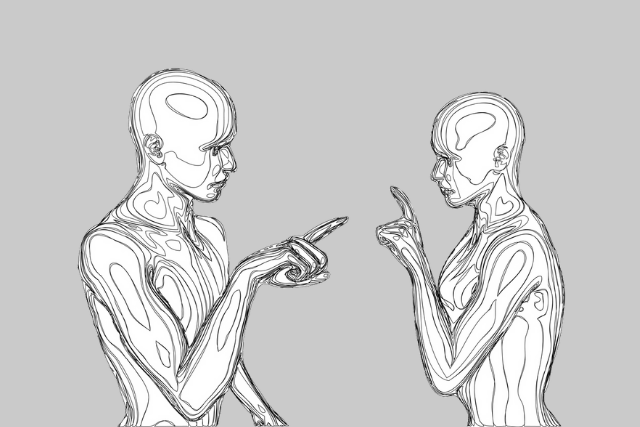
    If others are going through similar struggles, bound by emotional pains and egotistical voices, then I can surely believe they are as helpless as I was in breaking free of those patterns until they are aware and have the right tools to do so.

    Life events are arbitrary, and most of us don’t get to practice each scenario over and over again until we get it right (like in the movie Groundhog Day). We are often put in a position to respond to whatever is thrown at us unexpectedly. All we have to go by is what we learned at a young age from our guardians or mentors. Even if we suspect they were not the best ways, we are still unsure what the best ways are.

    It was as if a weight was lifted off my body. My mind felt more open, and I began a sort of social experiment by slowing down, observing the way people react in different situations from an outsider’s point of view, and freeing myself from taking anything personally.

    What I discovered was when I positioned myself at a place of compassion and objectivity, I became less reactive to others’ reactions. The knowledge of everyone is doing the best they can but can’t help themselves gave me a sense of power—a power to disengage from their personal struggles and maintain focus on my own powers.

    Shortly after that shift of perspective, my relationship dynamics began to shift as well. The people around me gradually put down their weapons and began to relax and open up about their internal struggles. They even started to take an interest in how I felt and expressed remorse in how they behaved in situations. It was unbelievable!

    I won’t lie in saying all my relationships have flourished. A few of them remained the same or faded away, while others were brought closer than ever because of my newfound perspective.

    For me, the greatest outcome was knowing that the few relationships that could not progress was not because of my rigid condemning stance of “Why wouldn’t you try to be better?” And that was a new level of emotional freedom.

  • If You’re in a Painful Relationship and Considering Estrangement…

    If You’re in a Painful Relationship and Considering Estrangement…

    “I understand the life around me better, not from love, which everyone acknowledges to be a great teacher, but from estrangement, to which nobody has attributed the power of reinforcing insight.” ~Nirad C. Chaudhuri

    I was brought up to understand that family is family.  So I have naturally given great weight to the importance of family bonds. However, what happens when a familial bond breaks? Do you commit yourself to holding on despite the cost, or do you acknowledge the damage and take the necessary steps to sever the tie?

    Personally, I sit somewhere in the middle. Any important relationship deserves an extended amount of effort, patience, understanding, and forgiveness in rebuilding. However, you can only do so much, and there comes a point when it could be in everyone’s best interests to walk away.

    I speak from personal experience. I’ve been estranged twice in my lifetime. Once from my father, which was my choice, and the other time from my sibling, who ultimately made the decision to walk away; I guess I just dotted the i’s and crossed the t’s on it.

    Let me be clear, neither estrangement was a wonderful experience. The process of severing ties is heartbreaking, regardless of the situation that led to the estrangement. It hurts when you feel you’ve been rejected, and it hurts when you know you’re rejecting someone.

    But when it’s the right decision for you, and once the hurt abates somewhat, there is a sense of relief. Although you may never feel happy about it, you’ll feel happier overall for the steps you took in protecting yourself and your well-being.

    As with all life events there is opportunity to learn and reflect…

    In hindsight, there are certain actions I should have taken before the relationships ended, especially when it came to my sibling. Perhaps taking these actions could have prevented the outcome? Who knows? Regardless, these behaviors would certainly have helped me heal quicker even if the end was inevitable.

    If you find yourself struggling in a relationship with a family member—or any type of relationship for that matter—these five suggested actions can help.

    1. Be yourself.

    This is what I kick myself the most about when I think about my estrangement from my sibling. I was never myself. I was always trying to impress them and seek their approval.

    You see, my sibling was a lot older than me; by the time I was two they had already left home. Visits were few and far between, and when my sibling married, there were tensions between my family and their spouse.

    Everything had to be done to keep them happy. We had to tread on eggshells around them to maintain the relationship, and that stuck with me well into adulthood. I believed If I stepped out of line then the relationship would end. So I said what I thought they wanted to hear and acted in the way I felt I needed to act.

    This led to a lot of resentment on my part. No matter how hard I tried, I never felt fully accepted.

    As I saw this would soon impact my own children, I knew things had to change.

    I stopped kowtowing, and within a year they had broken away, communication basically stopped. The hardest thing was knowing that all those years I had presented an unauthentic version of me. I felt I had let myself down. What might have happened if I had just been myself?

    It can be challenging to be yourself when it’s a family member you want to please, but you can’t let the labels they place on you define you. Be who you really are. Yes, you might be rejected, but being someone you’re not is exhausting and likely to lead to more unhappiness. You’re the one who has to live with yourself after all—it’s better to love the person you are!

    If I had my time again, I would just be me, and I encourage everyone to adopt this approach too.

    2. Communicate.

    Relationships all too easily break down when there is a lack of communication. Good communication builds your connection, helps you deal with potential issues early, and allows both parties to have their needs met.

    Too often, we end up shouting, judging, criticizing, or not communicating at all. This isn’t a recipe for a healthy relationship.

    In his book Non-violent Communication, Marshall Rosenberg sets out a framework he created which allows people to express their needs and make requests without any negative behaviors. Using this method can make it easier to ask for what you want, and it also gives you a better chance of actually getting it. It’s a technique I wish I had known a lot earlier, but one that I use now to great effect.

    It’s a four-step process:

    Convert judgements to observations.

    So rather than saying, “You never listen to me” (quite an emotionally charged statement), you would say, “I see you checking your phone when I try to talk to you,” which is more factual and less likely to trigger a defensive response.

    Say how you feel.

    Express how you’re feeling without blame or judgment. Instead of saying, “I really needed you and you weren’t there,” express your feelings like this: “I was feeling really alone.” This is a powerful way of expressing ourselves and taking ownership of our feelings.

    State your needs as they relate to you and your values.

    So rather than saying, “You need to change how you treat me,” you would say, “I have a need to be respected as a human being.”

    Ask for what you want.

    Start with “Would you be willing/like to…?” For example, “Would you be willing to put your phone down when we have a conversation?” Framing your request in this way gives the other person the freedom to say no, meaning they don’t feel forced or pressured and in turn more likely to say yes.

    Here’s an example of the four-step process all put together:

    I see you checking your phone when I try to talk to you. I feel frustrated. I value being listened to. Would you be willing to put down your phone when we have a conversation?”

    3. Stand strong (even when you’re scared).

    As a recovering people-pleaser, I used to shy away from standing up for myself. I would choose to agree rather than confront. Life was more peaceful when I just smiled and nodded. But this is not a healthy strategy.

    With my father, I needed him to acknowledge and take responsibility for his actions. With each attempt to broach the subject of his behavior toward my mother and me, there would be denial, false accusations, and even aggression. Fear would make me back down.

    But you have to stand strong, even when you’re scared. If an issue is important to you, don’t allow for it to be brushed under the carpet to fester. Facing issues head on allows you the opportunity to resolve them. It provides you (and them) with clear boundaries and makes repeat behaviors less likely.

    4. Accept your part.

    Nobody is perfect. Relationships are two-person territory. It would be so easy for me to look back and put everything on my sibling or on my father, but that would be inaccurate. I have to accept my share of accountability too. We all do.

    I should have spoken up. I should have acted differently in certain circumstances. I should have been honest about how I was feeling. People aren’t mind readers after all. This isn’t about accepting all of the blame; it’s just about acknowledging your part. It helps you grow as a person.

    5. Forgive and let go.

    Firstly, you need to forgive yourself. You’re a human being after all, we all make mistakes. Show yourself the same compassion you readily show to others.

    Secondly, when you’ve had time (which may include therapy) and feel capable, start to forgive the person, even if you’re now estranged. This doesn’t mean you have to forget what happened but more allow the anger, resentment, or any other emotions that don’t serve you to be lifted from your heart.

    I find writing a gratitude letter (listing what you found good about them and your time together, plus anything you’re grateful to them for) really helpful in the process of forgiving and letting go. It helps to refocus on the good side of the person (and your relationship) rather than the negative.

    Remember, we feel hurt because we loved and cared deeply, two important components of a happy life. Letting go allows us to move forward to what is right for us. Use what happened to personally grow and build a better life.

    Every life event, good or bad, has something to teach us…

    I’ve grown so much from my own experiences and use those learnings to positively affect all the other relationships in my life. There is always hope for reconciliation, but for now, I’m at peace with where I’m at, and I hope you will be too.

  • Understanding Is Love (and the World Needs More Love)

    Understanding Is Love (and the World Needs More Love)

    “Understanding is love’s other name. If you don’t understand you can’t love.” ~Thich Nhat Hanh

    I recently attended a weekend workshop, and there was a man in the group who always had a strange look on his face whenever we had to look for a partner to work with. I noticed that some people avoided him, like they didn’t want to work with him. Perhaps it was the vibe he gave off because of the way he looked at people.

    At some point later in the weekend I sat with him. It was hard to put my finger on it, but there was something about him that did feel a little strange, and I could see that other people were put off by him.

    After the weekend had finished, we happened to be sitting next to each other and started talking, which somehow led to him telling me that he is almost completely blind. With his contact lenses in he can see okay, but the low light of the room made it very hard for him to make out faces.

    In that moment I understood. That was why he gave off a weird vibe—because he was having trouble seeing. The “look” he gave was simply a result of him trying to see and ultimately connect with someone.

    The internal label I’d given him of “strange” dissolved in an instant, and in that same moment I felt an opening in my heart. It was an unconditional level of understanding that brought with it a sense of peace and connection.

    Understanding and Letting Go

    We often get frustrated or angry with the people around us, projecting our emotions and frustrations onto them when we don’t understand them. The moment we understand, it can change our whole attitude, creating a space of opening.

    Imagine you’re driving your car, and the car in front of you starts slowing down. You don’t know why they’re slowing down, so you get frustrated and possibly impatient. Maybe you start verbalizing your frustration, or perhaps you even honk your horn in an effort to release some of your tension.

    Then you see an elderly woman crossing the road, moving very slowly.

    In that moment your frustration softens, because you now understand why the driver in front of you was slowing down. They saw something you didn’t.

    We can take understanding in this example even further. You also understand the woman moving slowly. Perhaps you have a mother or grandmother who moves slowly, or you realize that one day, as you age, this could be you, and you’d appreciate drivers slowing down for you. Or maybe you’re young but injured.

    Understanding creates a mental shift enabling us to replace reactive emotions and disconnection with compassion and connection.

    Understanding Is a State of Mind

    Understanding is more than something we do, as in trying to understand someone else’s perspective or how they feel. Yes, this is part of it, but understanding is also a state of mind that we can cultivate. Just like joy, enthusiasm, sadness, or frustration are states of mind that govern the way we experience life.

    When we feel joyous, we think, act, and respond to life in a certain way—joyfully. When we feel frustrated, we think, act, and react to life in a different way—finding reasons to justify our frustration everywhere.

    Understanding is a state of mind that makes us feel more peaceful, compassionate, and connected, creating an attitude of “us” as opposed to a “me vs. you” mentality.

    When we proactively nurture an understanding mindset, we approach people with openness—even if they’re difficult—because we’re committed to always looking beneath the surface instead of making judgments and assumptions.

    We may not always know why someone acts the way they do. But an attitude of understanding does not actually require us to know the exact details of other people’s story.

    Understanding at its deepest level is just like love—an unconditional understanding of another’s humanness. We don’t have to know their story, but we can appreciate they’re going through the human experience, just like us.

    Cultivating an Attitude of Understanding

    There are various ways to cultivate understanding in your life, but I’d love to share a reflective exercise here to help you understand and connect more deeply to yourself and humanity.

    Think of a time when you lost it. A situation when you got angry or frustrated. Maybe a family member did something that really upset you, or maybe someone undermined you at work. The reason why does not matter here; you’re not trying to justify it, and you’re definitely not judging it as right or wrong.

    When you have that memory in mind, just feel it. Feel the sensations in your body—the intensity, the heat, or the thoughts and emotions that come with it. If it’s uncomfortable, that’s okay.

    Don’t try and change it. Just feel it.

    As you feel it, notice that in that moment you were unable to maintain peace inside yourself.

    We can’t be at peace inside while reacting with anger.

    I’m not suggesting there should be a suppression of anger in any way. This is about recognizing the truth of what’s happening inside us when we react with anger. When it happens unconsciously there’s nothing we can do about it—the result being we act mindlessly. But when we consciously pay attention, we deepen our self-awareness, and this gives us the opportunity to choose how we act.

    I had an experience at a coffee shop where I was returning my drink because they’d made the wrong one. When I told the woman at the cashier they’d made the wrong order she was quite rude, and told me bluntly, “That’s what you ordered!”

    It caught me by surprise. Her attitude made me feel like I was being accused of something I didn’t do. I could feel myself getting angry and ready to defend myself.

    I felt a wave of intensity come up inside me.

    As I was about to react and get into an argument with her, there was a moment where instead of feeling my anger, I could feel she was stressed. Something was bothering her, even before our interaction. I don’t know what it was, but it was enough for me to pause, reflect, and understand that we often don’t know what’s causing someone to act the way they do. We can never know what’s happened in their lives just before we began interacting with them.

    There are so many different reasons why someone might be stressed or upset—an argument or breakup, chronic back pain, the death of a loved one, or inability to pay their mortgage to name a few possible explanations.

    That moment of understanding her human nature allowed me to let go of my reaction. I’d taken her reaction personally, and it put me in a state of “you vs. me” where I was ready to fight to defend myself. And I would have felt quite justified in doing so because I felt falsely accused. But if I had, it would’ve just been me reacting to her reaction, and we likely would have ended up in an argument.

    Reaction versus reaction = conflict.

    The world is already so full of conflict. If we want to create more peace in the world, we have to choose not to take things personally and instead respond with understanding, compassion, connection, and peace.

    I’m not suggesting it’s easy, but I believe moments like these offer an opportunity to live from our heart when a natural reaction is conflict.

    For me, in this case, the shift to understanding opened my heart and created a sense of peace and connection to the woman.

    She must have felt it on some level, because without me pushing back at her with my own reaction, she also softened. Something dropped, and she simply asked the barista to make me a new beverage.

    Whatever was bothering her before was still there, but I could feel she wasn’t projecting it outward onto me.

    A moment of understanding can change everything.

    The World Needs More Love (Understanding)

    We often judge or complain about other people’s actions, but if we can pause and be honest with ourselves, we’ll realize we often do something of a similar nature ourselves.

    Everyone has different life stories and traumas that condition their unique personality, but we all experience moments when we’re unable to maintain peace inside, so even though we may not know someone’s exact story, we’re still capable of understanding.

    Instead of wasting our energy judging or complaining about others, we can put ourselves in their shoes and understand that we struggle with similar emotional challenges. This allows us to be more present and compassionate, cultivate deeper self-awareness, and connect on a human level.

    Imagine a world where more people chose understanding and truth rather than reaction and conflict.

    But ultimately imagining it is not enough; it’s a good start, but we need to act. We need to live and engage life from our heart.

    “Understanding is love’s other name…”

    “Understanding is an avenue into love. It’s also an expression of love in action. When we enter into understanding we are entering into love… and “When the power of love overcomes the love of power, the world will know peace.” ~Jimi Hendrix

    What kind of a world do you want to live in?

    Will you choose understanding instead of reaction today?

  • A Most Difficult Lesson: People Are Just Doing Their Best

    A Most Difficult Lesson: People Are Just Doing Their Best

    “People are doing the best that they can from their own level of consciousness.” ~Deepak Chopra

    My father passed away suddenly and not so suddenly several weeks back.

    He had been sick for a long time, but it was a gradually progressing illness and not what ultimately caused his passing. So, it did come as a shock, and the last few weeks have been filled with all the random things you need to do when someone dies—change the names on insurance policies and automobile titles, call social security, etc.

    The list seems endless, but now that the tasks are winding down, the silence that is settling in is leaving both my mom and I alone with our feelings.

    I knew this silence would come, and I dreaded it. I was afraid I’d think terrible thoughts about him, and that in turn would make me feel like a terrible person. It’s a long story…

    There’s no sugarcoating it: My dad was not a great father to me. He provided for our family and didn’t do drugs or drink. He bought us nice presents for the holidays. He did teach us a healthy respect for the rules. He also made it very clear he had a favorite child, and it wasn’t me.

    He wasn’t affectionate to me, and he once told me as a child that he wasn’t interested in me as a person because I wasn’t interested in what he liked to do, and he followed through with that by withdrawing from participation in my various childhood pursuits. He occasionally, though not often, beat me with his hands and objects.

    Nothing I did ever seemed to please him. When I got a job in addition to taking a full suite of university courses in high school (I was the only child of four who did that), he said I didn’t make enough money.

    When I got into the university of my choice (an elite one), he said I should have chosen a secular school, and the one and only time he visited (it wasn’t too far from our house), he said it was “full of crosses.” I cannot remember him ever saying he was proud of me.

    He was rarely affectionate with me, and he was loath to comment on my successes while he frequently reminded me of my failures and, above all, the expense I was costing him. The list of the scars I bear from my relationship with him could go on and on and on.

    So, though I have always had a problem with the phenomenon of people being beatified when they pass away, I feared not responding to his passing with compassion and instead being accosted by negative thoughts and feelings about him during the silence that followed.

    Silence of course invites in the ego, that often very negative voice in the head. I feared feeling and acting like an insensitive, ungrateful person and wondered how I would feel if my own family thought such things about me if I died.

    Like so many times when we face a spiritual test, I surprised myself. Once the initial shock and overwhelming grief I felt passed, I found that my disposition toward him was surprisingly kind.

    First and foremost, I just feel sorry for him—he suffered for a long time and died too young. Beyond that, I feel grateful for having him as a father because I know he did his very best, and I recall that as perhaps the most important lesson he taught me years before: people are always just doing the best they can.

    This lesson is a very difficult pill to swallow. Most everyone knows lying and stealing are wrong, and yet so many people do them anyway. Violence and aggression are among society’s universally believed wrong, and yet our world has way too much of them. In the grip of feeling oppressed or victimized, it’s almost impossible to hold this thought in our head—we’re too logical for that.
    But consider for a moment: That lady in the store knew that hurling invective at the cashier who couldn’t figure out the correct coupon code is impatient, unkind, and probably unreasonable. The guy on the road who cuts people off knows he doesn’t like it when people do that to him, and he knows his actions make a road accident more likely. They do it anyway. How can we even think they’re doing their best?
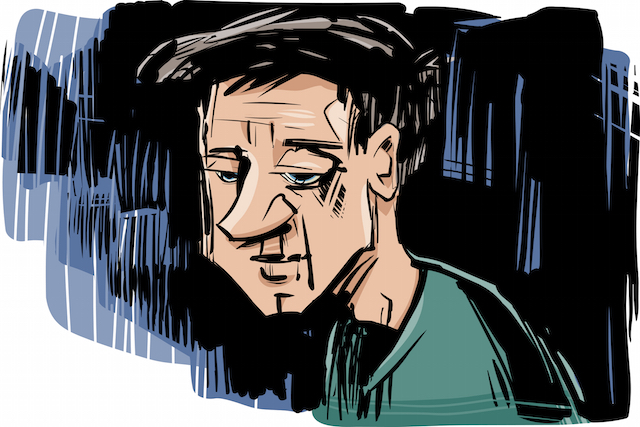
    One way is to think about it very cleanly: What would you say about someone who knows something to be wrong and yet cannot summon the self-control, patience, compassion, or whatever it may be to stop themselves from doing it?

    In that moment, the person is not conscious enough to refrain from the hurtful action. The person is not connected enough to identify with those his or her actions are harming. Something is holding that person back from showing up fully and achieving his or her full human potential for goodness.

    The maddening fact for those of us who skew to the hyper-logical side of the spectrum is that in 99.9% of cases, you’ll never know what that something is. In fact, no matter how well you know someone, the best you can do in terms of understanding his or her motives, subconscious thoughts and emotions driving behavior is an educated guess.

    However, I knew my dad as well as he allowed anyone to, and I was very familiar with his personal history, so I had a pretty good idea what those somethings holding him back were.

    He grew up in an abusive household, and his dad eventually abandoned his mom and him. He was poor. He lived in a tough inner-city neighborhood and was bullied terribly as a child.

    His mom was a cold and distrustful woman with few if any friends and estranged from almost her entire family. She relentlessly hounded him about his every dollar of expense.
    Not surprisingly, he carried the pain of this upbringing with him throughout his whole life, and he had no example of what good parenting looked like.

    Without that example and with all the wrong lessons and accumulated pain he carried, is it any surprise Dad had difficulty expressing affection?

    Given how little positivity and support he had growing up, how would he have known how to or even that he should have expressed those things to his family? With his mom being estranged from so many people, how could we not expect him as a child to have learned this as a normal state of affairs?

    Indeed, he struggled to improve on key parts of what was lacking in his childhood. He was singularly focused on materially providing for all his children—even after he strongly established his financial security—because he knew what it was like to be without material well-being.

    Though he definitely was abusive to me at times, this was something that was not a normal state of affairs in our household the way it was in his. Thus, the ways in which he was traumatized most reflected in his parenting, in some way for the better and in some for the worse. It must have been difficult for him.

    I can’t say that this realization came easily to me. It took time and distance and only came to me after I had left home for years, during which my time personal hurt gradually faded.

    As my life began to fall into place literally on the other side of the world, I saw from afar all the dysfunction unfolding in my family. Not only did I realize that I should be thankful I was removed from it, but I understood it was the best they could do.

    As an outsider in the family, I had observed the various inter-personal dynamics at work, and I could identify with how powerless and ill-equipped Dad must have felt to deal with all of it.

    This understanding gave me such peace and even empathy, and it freed me from my youthful anger and resentment toward them. Nevertheless, it was only years later when I had my own spiritual awakening that I fully understood the implications, universal applicability, and power of this lesson.

    But the truth is that you’ll never know most people that well, and even if you did, you may never even think you understand the ways in which they’ve been damaged. Some of the most unfortunate people are against all circumstances among the most joyful, while many of the wealthiest and most popular celebrities are miserable and lead tumultuous lives.

    The mind and the ego are capable of creating their own narratives, which their hosts typically completely identify with. We can never fully understand, but that’s just it—people themselves are rarely aware of their reasons for doing what they do and feeling what they feel.

    And there it is: People’s level of consciousness—their awareness of their own feelings and mind (i.e. their ego), as well as those of the people around them—determine how well they can see their own actions and behave with grace.

    Dad had a lot of accumulated pain, which had never been given voice, and he didn’t even realize it to be able to strive for better. What he did realize, for example the insecurity of poverty, he tried mightily and indeed succeeded in improving upon.

    Likewise, when I beat myself up for responding to others’ plight with coldness and distance, I need to remind myself that this was the model I had growing up, and unless an outside observer was really familiar with the dynamics of our family, there’s no way he or she would understand that about me.

    When I feel shame at failing to recognize others’ efforts and accomplishments, I need to remember that’s how I was raised. This was the next step I made after my spiritual awakening—I was able to broaden the whole “they’re doing their best” lesson to myself and others.

    And now the next step—the most challenging one—is to try and remember this each and every day.

    When faced with that lady yelling about the coupons or the guy who just cut you and four other people off as he sped down the highway, in the midst of your indignation, can you take a breath and remember that they’re doing their best?

    How do you know if that lady is maxed out on her credit cards or has a sick husband or just lost her job? Perhaps the angry driver is rushing home to see his sick son or has an anxiety disorder. Whatever the circumstances—and in these cases you’ll never know what those are—that is quite simply the best they can do in that very moment.

    When your coworker takes credit for your work and tries to hide it from you, can you accept that she’s operating from a place of pain or fear and that you will likely never understand what exactly that looks like?

    Knowing that the coworker is still doing his best doesn’t mean you can’t respond appropriately to right the situation, but can you do so from a state of compassion and not anger? If you can summon the empathy to do so, you’ll likely realize how much more effective your response will be.

    So, though it may annoy you to no end, you’ll never know how people process their own past and how that past is expressing itself in the present. In the grip of a terrible situation when you just want to wring someone’s neck, try to remember that. Moreover, when you find yourself remembering, give yourself credit. You may surprise yourself, as I just did with my father’s passing.

    I’m still grieving and will be for some time. The pain and fear my dad felt for so long… it just isn’t fair. He didn’t deserve that, just like I didn’t deserve my lonely childhood.

    None of us deserve what happens to us, right? We’re born innocent, and yet we all suffer through a lot, whether that be physical or emotional—totally in our own heads. Just try to remember that—we’re all in this together.

    Thanks, Dad for teaching me that lesson to live by, and so long.