Tag: understanding

  • Shadow Parts: How to Recognize and Release Them

    Shadow Parts: How to Recognize and Release Them

    “When we are aware of our weaknesses or negative tendencies, we open the opportunity to work on them.” ~Allan Looks

    Last year, I took my then-six-year-old son to a kite festival. He was ecstatic about flying his kites, and we spent a lot of time doing just that!

    At one point, his kite string got tangled with another lady’s kite string. Both kites crashed to the ground, and the lady and I started working to untangle the strings.

    In his excitement, my little one repeatedly asked if we were done yet and if he could fly his kite again. I reassured him, saying I understood his excitement and that his kite would be ready soon.

    However, the lady, visibly annoyed, gave him judgmental looks and eventually told him he was being impatient and needed to stop asking.

    Calmly, I explained to her that he was just excited to fly his kite and reminded her that he was only six years old.

    This incident made me observe her shadow of impatience. She was essentially impatiently telling a young, excited child to be patient without recognizing her own impatience. This is what we call a shadow.

    Recognizing our own shadows can be challenging because they are hidden within us, much like how a computer operates with its set of programs without being aware of them. Our shadows are ingrained from early childhood, making it difficult for us to see them clearly.

    Here are some common examples of shadows I’ve witnessed in clients, family, friends, and even myself:

    • A parent yelling at their child to stop yelling.
    • A parent (or anyone) being impatient with their child’s impatience.
    • Someone badmouthing another person while complaining about that person’s meanness, not realizing that badmouthing is unkind.
    • Someone desiring more benevolence from others but gossiping behind their backs.
    • I often feel unsure if someone wants me in their life or business, but the truth is, I am the one who is indecisive.

    Shadows make us judgmental and inhibit our capacity for love, compassion, joy, presence, and understanding. They limit our experience of life. This is why I believe shadow work is crucial for living a joyful and connected life.

    So, how can we shine a light on and release our own shadows? Here are a few steps:

    1. Bring Awareness: Notice your triggers—when you feel frustrated, impatient, annoyed, or judgmental towards someone else.

    2. Acknowledge the Emotion: Allow yourself to feel the emotion fully, without judgment or resistance.

    3, Be Curious: Curiosity transcends judgment. Ask yourself: What is it about this person that makes me feel this way?

    4. Identify the Shadow: Recognize that the part of yourself you have denied or repressed is being projected onto others. Ask yourself why you are judging them.

    5. Observe Honestly: Be radically honest and observe this shadow part of you. Acknowledge it by saying, “I see you.”

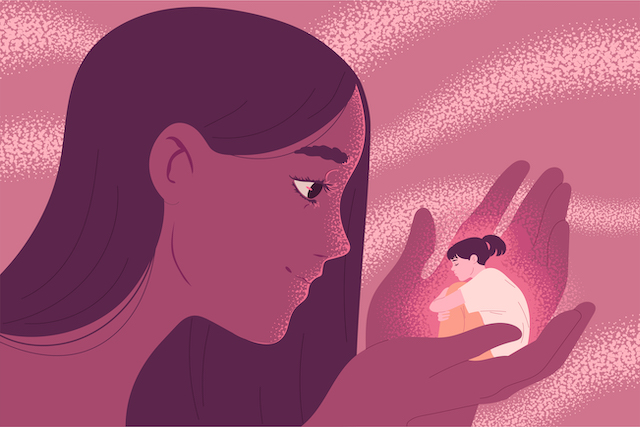
    6. Understand the Cause: Ask yourself why this shadow is showing up. Often, a younger, wounded part of yourself needs healing and love.

    7. Nurture the Wounded Part: Identify who you are protecting—perhaps a little girl who was scolded or punished. Hold this part of yourself with love, acceptance, and compassion.

    8. Heal with Love: Send love, patience, and kindness to this part of yourself. Give her what she needed at the time.

    9. Apply this Love Now: Extend this love to your current self and observe how it changes your feelings toward the situation or person.

    10. Practice Regularly: Repeat these steps until it becomes easier. As you nurture these parts of yourself, they will trust you more, and you will feel more grounded and loving.

    By shining a light on our shadows, we can transform judgment into understanding and impatience into patience, and ultimately live a more joyful and connected life.

  • Trust Restored: Why I’m Letting Go of Preconceived Ideas About People

    Trust Restored: Why I’m Letting Go of Preconceived Ideas About People

    “The problems around us are only compounding. We will need to rediscover our trust in other people, to restore some of our lost faith—all that’s been shaken out of us in recent years. None of it gets done alone. Little of it will happen if we isolate inside our pockets of sameness, communing only with others who share our exact views, talking more than we listen.” ~Michelle Obama

    I’m up at the American River, one of my favorite summertime spots. I have a ritual of floating down it, then hiking back up the hill to my clothes. I love how the swift current knows exactly where it’s going, making any paddling unnecessary. I love how you can just lie back and let it take you as you look up at the cloudless blue sky.

    As I float, the sun beats down on my skin, but the river’s coolness counteracts its scorch. Small groups of Canadian geese speckle the shore. The air is still, its quiet punctured only by the occasional train sounding in the distance.

    Once I’ve reached the bottom, I set out back towards my towel—walking along a series of dirt paths consisting of small hills. They’re quick and steep like bunny slopes, coated with golden dust that glints beneath the sunlight.

    While walking them I notice two men picking fruit from a tree in the distance. Feeling exposed in my half-clothed state, I immediately tense up. I realize that having no shoes means I’ll be unable to walk quickly past.

    Bracing myself for discomfort, I continue walking. As the distance between us narrows, I wait for them to whistle, or to jokingly ask  if I need help finding my clothes—or create discomfort in whatever other way, be it through words or stares (as I’d become accustomed to men doing).

    I walk past, armor on, shield up—raising it a little more when one of the men begins to speak.

    His words are, “Hello,” followed by,  “You’ve got some tough feet!”

    They contain no sexualizing, nor any subtle attempt at intimidation. And in response to this comment— the kind one human would make to another, his equal—I find myself reacting with human thoughts in return:

    Yes—this terrain IS pretty rugged. I guess my feet ARE pretty strong. Thank you, Sir.

    **

    I think about how, in Whistling Vivaldi, a black man whistles classical music when crossing paths with white strangers on the street. He does this in hopes of quelling their fear and discomfort that are born from prejudice. Implying benevolent intentions and sophistication, his whistling preemptively wards off prejudicial treatment.

    Perhaps this man’s comment was the (gender) equivalent to this example—an attempt at polite conversation to keep from coming across as threatening.

    Or maybe he’d briefly entertained the same thoughts that often precede the sorts of comments I’d anticipated. Maybe in the past he would have converted those thoughts into unwitting weapon words, then launched them my way. Maybe, though, because our society is growing and learning and its people are evolving, he decided that day not to.

    Either way, I felt relief that the men did not behave in the way I’d predicted.

    It got me thinking about preconceived ideas. How we often develop templates, then apply them to the individuals we regularly interact with. How few encounters encourage us to challenge or expand these templates, because much of our lives are structured around familiarity. And how it’s easy to take one look at a person and file them away into a specified bin inside our minds, perhaps unaware we’re even doing it.

    How often do we go into an encounter with our mind already made up—both about the person and about what they could possibly have to say? Their words pass through a filter in our head, confirming what we already know or believe to be true.

    Sometimes our expectations turn out to be accurate. Other times they do primarily because we expect this of them, therefore never open our minds to the possibility that we might be proven wrong.

    People act in ways that contradict our initial views of them, but we don’t see it when we’re not looking for it.

    When I was a Lyft driver, I drove many passengers I was sure I’d have nothing in common with. One was a seemingly straight-laced white man who worked for a tech company. I thought we’d have little to talk about, but an hour later we were eating In ‘N Out and discussing everything from our country’s quick fix approach to handling emotions to how his brother’s coming out changed their relationship to finding a balance between impactful work and a job that pays the bills.

    So often we decide a person is a certain way. Our mind closes. Thereafter we do, indeed, fail to connect. But not on account of differences, but the fact that no connection is possible when the heart and mind are closed.

    **

    No shift in thinking takes place in a single instance. The fact that those two men at the river pleasantly surprised me, for instance, doesn’t erase the overall pattern. Many more such encounters would be necessary for a true paradigm shift.

    But it’s a start. And from now on when I have the bandwidth, I want to give people the opportunity to act in ways that contradict my preconceived notions of them.

    I don’t want to get to that point anymore where I stop seeing others as individuals. Where I’m blinded to what we have in common because I’m seeing only what they represent; the harm done by the larger group they belong to; the political implications of their behavior.

    For instance, several years ago a young man had approached me while I was reading at a bar—and I completely ignored him. At that time I was so fed up with men, so annoyed with their repeated intrusions on my dates with women, and so frustrated that it was them who approached me in public (never women), that I just kept staring down at my book. I didn’t say anything back. In the moment it felt empowering.

    When I thought about the incident years later, though, I regretted my behavior. The guy hadn’t even been aggressive in the way he’d approached me. He’d been earnest, apprehensive, even shy—the way I imagine I can also be at times when I approach women. He didn’t represent All Men; he was his own person, doing something in that moment that might have made him nervous, or pushed him out of his comfort zone.

    I’m not saying it was my job to ease those feelings, or that I owed him this. It’s more that I realized that now I would have genuinely wanted to. Wanted to have at least said hi. Wanted to have at least politely told him I wasn’t up for conversation. Wanted to, maybe not have smiled, but at least treated him more like a human than an implied enemy.

    I want to take my frustrations with patriarchy and heteronormativity up with the concepts themselves—and with individual humans only when they are truly practicing it.

    I’d like to believe that polarized positions aren’t set in stone. That they can evolve and expand with time. That we won’t be doomed to perpetual gripping of shields while walking this planet.

    This isn’t our climate right now—but I hope and wonder if one day we’ll at least start inching closer.

  • An Unexpected Place to Find Kindness: What Made Me Feel Like I Belong

    An Unexpected Place to Find Kindness: What Made Me Feel Like I Belong

    “Not all of us can do great things. But we can do small things with great love.” ~Mother Teresa

    Routines are important to me. I rely on certain things to bring me back home to myself; to feel clear and open in my mind, body, and heart.

    One of the activities that bring steadiness to my life is swimming. It’s one of my greatest pleasures. There is something magical to me about the feeling of water on my skin, the repetition of the arm strokes that calm my mind, the sound of my breath that relaxes my body, and the rays of sunlight that reflect off the water.

    I rely on swimming three mornings a week. I like to say it gets me back in my lane or it keeps me out of the others’ lanes.

    I showed up to my local pool several weeks ago—pool closed due to mechanical issues.

    It was just supposed to be for a few days. I told myself that it was a gift to give my body a rest from swimming. Over the next few days, I told myself that this time allowed me to help a loved one who needed extra care. But as more time passed, I couldn’t find a reason to find peace without swimming. I missed it.

    I found another pool a bit farther away from my home. Though I felt irritated that I had to go to another pool and create a new routine, I chose my love for swimming over any of the inconveniences.

    After my first swim, an employee ran over to me and said, “I’d like to introduce myself and welcome you to our pool. It’s wonderful to have more lap swimmers here.” We connected over our love for swimming.

    I left feeling a little more cheerful than I usually do after a swim, and I am already pretty cheerful after swimming.

    I came back the following week, and after finishing my swim was greeted by the water aerobics women. As I got out of the pool, they chatted with me about swimming and how they want to learn to do laps.

    Over the next few weeks, I began to notice that every time I left swimming, I was a bit more cheerful.

    One morning, as the aerobics women came into the pool, I noticed that they greeted each other with hugs and kisses (yes, in the pool at 9:00 a.m.).  I asked the lifeguard, “Does this always happen?” 

    He replied, “Sure does.”

    In the locker room women hum songs, tell me to have a blessed day, and chat with me about all sorts of things as I shower. I don’t know anyone personally, and yet they are undeniably kind and warm to me.

    Just this past week a woman belted out in the locker room I AM BEAUTIFUL. I couldn’t help but feel completely overjoyed at this women’s confidence and radiance.

    I have been noticing how I’ve been feeling after swimming, and I have become curious about what’s contributed to the fact I haven’t checked if my pool has reopened.

    It’s the women. It’s the kindness. It’s the singing. It’s the joyful greetings. It’s the curiosity.

    While I only know two women by name, they know even less about me and how the things they have been doing for many years have been bringing an extra dose of cheer into my life.

    It has not been easy for me living in a neighborhood that is known for intergenerational legacies of families living here. I didn’t come from this neighborhood. Even though I have been here for eighteen years, feeling like I fit in has been a private struggle that I don’t often share with others.

    In this pool, a short drive from my home, in another neighborhood, I have found a place that I need more of in my life. 

    We all want to find our people; we all want to belong.

    Sometimes we don’t actually know how much pain we hold until we are blessed with the one thing that has been missing—kindness.

    And with that kindness, the protection starts to soften and the hurts come to the surface. We realize that’s just what our heart was holding all of these years.

    In my mind, I’ve known the story of the past eighteen years of living in a place I don’t really feel like I fit.

    I’ve worked with the beliefs. I’ve taken responsibility for what is mine to learn, heal, and grow from. I’ve also come to accept that this was what life gave me and that even in not feeling like I belong, there have been tremendous gifts and blessings these past years.

    But it is also true that we need to give words to our truth. I want to belong. It is a human birthright to belong. We are designed to belong to groups of human beings.

    We see people through our own lens and make up stories about them that aren’t necessarily true. I am grateful that these women at the pool didn’t make up a story about me and instead treated me with kindness.

    They could have easily made up a story about me. They are black, and I am white. They know I am not from their neighborhood, but instead, they saw past what I looked like and opened their hearts to me. They sang to me in the shower, blessed my day with prayers, and wished me well for the rest of my day.

    None of us know the story of someone’s insides. None of us know how simple acts of kindness and inclusion can make someone feel like they belong.

    Sometimes the people that we least expect to make a difference in our lives do. We are all capable of this.

    We all live with a protected heart in some ways; none of us are free from hurts. If I hadn’t sat with the pain of not belonging and feeling disappointed in past relationships, my heart may have been impenetrable. I had to learn to be there for myself with kindness before I could allow others to be there for me. I think this is true for all of us.

    Sometimes the simple gesture of placing your hand on your heart and saying to yourself, “I am here for you” is a great act of kindness and allows the unexpected joys of life to be felt when you least expect them.

  • How to Let People in So You Can Feel Seen, Heard, and Supported

    How to Let People in So You Can Feel Seen, Heard, and Supported

    “We are hard-wired to connect with others, it’s what gives purpose and meaning to our lives, and without it there is suffering.” ~Brené Brown

    In relationships, I have always felt more comfortable being on the sidelines rather than center stage. I liked playing the supporting role to many people’s leading roles. I am good at it; it’s the career I chose for myself as a life coach. However, personally, constantly staying in the role of supporter created resentment.

    I felt unseen and unheard, and many of my relationships began to feel one-sided—with me listening and holding space for them and then feeling there was no room for me to have a turn. It felt like I could not connect with others, and that left me feeling deeply alone.

    At first, I believed that others were to blame. If they didn’t take up so much space and time, it would be easier for me to open up. As time passed, I realized this was an excuse. It was an excuse that gave me permission to stay quiet. Because staying quiet was easier than sharing whatever was heavy on my heart.

    It was painful to constantly stay silent or to question if I should share or not. It felt like I had created brick walls to protect myself, and it began to feel impossible to start sharing more of my personal experiences, thoughts, and realizations.

    I would think, “They won’t get it anyway. What’s the point?” Or “What they’re experiencing is so much harder.” Or “I will just end up hurt by sharing more.”

    At times when I felt the loneliest, I began to wonder, what was I protecting myself from, and why had it gotten so difficult to speak to my closest and trusted people? I felt like I was walking around like a knight covered in steel armor, but there was no one shooting arrows at me; and on the inside, I felt like a volcano was slowly brewing.

    I knew where parts of these habits stemmed from. I am highly sensitive and guard my heart because I feel things so deeply. In the past, there were times when I shared and people either didn’t listen because they weren’t fully present or they didn’t understand where I was coming from, and this hurt.

    Also, I knew that I was a people-pleaser and wanted others to feel good and happy even if it meant that I didn’t. And I’m naturally an observer and introvert, so it came easily to stay quiet.

    Part of my healing came from this basic knowledge. This is the unique way that I am built, and it is not bad or wrong. However, I had to address the brewing storm inside, and that meant having the courage to share and to cry and to be angry—to be seen in front of people I love and trust.

    A friend of mine has consistently modeled what it means to open up by communicating her thoughts, fears, and feelings with me, even if they are vulnerable. Over time she became someone with whom I felt comfortable testing the waters of sharing my own pain.

    I felt a huge sense of relief when I opened my heart to her and shared that I was struggling to feel good enough in my relationships and roles—and I was met with the simple yet powerful impact of thoughtful listening. Not only did she accept me with my messy emotions, I felt more safe, authentic, and comfortable being me.

    Opening up to others is still a practice for me, but each time I do it I find that others are more loving and capable than I imagined, and that my taking a step toward vulnerability leads to the connection I deeply desire.

    I have realized that opening up has less to do with others accepting or understanding me and more to do with me accepting the vulnerable parts of myself.

    I know now that I deserve to be listened to and supported, even if it is messy and more emotional than logical. The only way to do that is to communicate and share what’s going on in my heart with a reliable or committed partner/friend.

    I believe most of us avoid opening up at all costs because we’re afraid of being judged and rejected.

    In any relationship there is a chance that you are going to get hurt. Whether it is intentional or unintentional, whether you guard your heart or not, the possibility is there. The question is, is the sense of connection worth it for you? This is a question that requires discernment.

    Not all relationships require equal sharing. This is the part that you get to choose. Who do you want to talk to, and who is able to hold space for you? What parts are you willing to vulnerably share, and, as Brené Brown asks, “Who has earned a seat at your table?”

    If, like me, you tend to be guarded and not trust the people you are closest to, take a moment to slow down and acknowledge the part of you that wants to be seen and heard.

    Let yourself know that, though safety and security cannot be promised from another, you can promise them to yourself. You can assure yourself that whether other people understand and support you or not, you will maintain a safe space within yourself by validating your own thoughts and feelings.

    Also, remind yourself that even if sharing was painful for you in the past—if people didn’t offer you their full attention, empathy, or understanding—the future can be different. All people are different, and there are many who care and want to be there. You just have to give them a chance.

    Having the courage to be seen in a vulnerable place isn’t easy; however, it is necessary if you long for connection and authenticity.

  • If You’re Feeling Judged: One Thing You Need to Understand

    If You’re Feeling Judged: One Thing You Need to Understand

    “Peace cannot be kept by force; it can only be achieved by understanding.” ~Albert Einstein

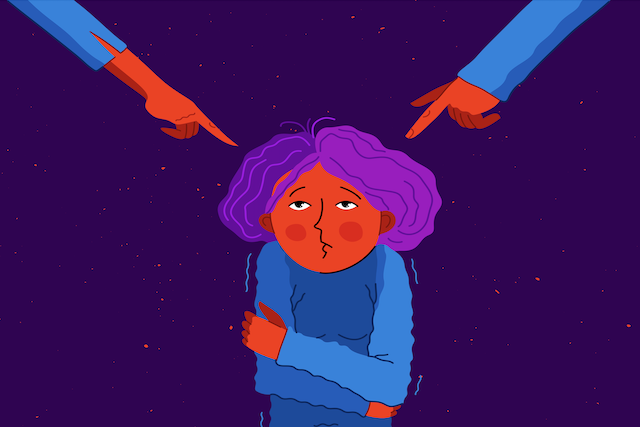
    Most of us feel judged at times. We might feel judged for the way we look, the things we do (or don’t do), the things we say (and the way we say them), or for the things we believe.

    We might respond to feeling judged by retreating inside ourselves, hiding, and silencing our voice, or we might react in defense or retaliation as if we’re being attacked.

    It doesn’t feel good to feel judged. It can hurt, make us feel like we’re not good enough, and drain our energy.

    But if we want to be free of the heavy burden of feeling judged, there’s something very important we need to understand.

    Feeling judged and being judged are not the same thing!

    This is such an important distinction. And understanding it can make the difference between feeling insecure or stable.

    It’s the difference between hiding and shining.

    Feeling Judged vs. Being Judged

    When we feel judged, it’s something we experience inside ourselves.

    It’s a feeling, not necessarily a fact.

    It’s important to understand that how we feel and react to others is up to us. It’s a result of our conditioning, traumas, fears, emotions, insecurities, attitudes, and the things we believe (whether they’re actually true or not), but it’s ours.

    It may be triggered by what someone says, but the feeling is still ours.

    Being judged is something else. It’s something people outside of us do. Whether someone passes judgment on us through their words, actions, a certain look, or a sneering sound under their breath, it’s an external thing… and we can react to it, or not.

    I’m not suggesting it’s easy to not react or take it personally, but understanding the distinction is important.

    Taking Things Personally

    If someone questions something we’ve said or done or why we believe something, we might take it personally and feel like that person is judging us.

    Have you ever felt judged because someone asked you a question?

    Be honest!

    We might act defensively or angrily when someone questions something we believe, but that person may genuinely want to understand us better.

    If we’re insecure about who we are, or if our sense of self is deeply attached to our beliefs, then any question can feel like an attack or judgment.

    But that doesn’t mean it was a judgment.

    I’m a very curious person. I’ve always been curious to understand myself, my mind and emotions. I know this comes through self-inquiry—meaning to question myself and my beliefs—and sometimes that is uncomfortable.

    But it’s more than just understanding myself, it’s a curiosity to understand the human experience. This also means understanding others. This curiosity to understand is also the desire to connect on a deep, authentic level.

    As Thich Nhat Hanh said: “Understanding is love’s other name. If you don’t understand, you can’t love.”

    Because of who I am and what I do, I often ask people questions about who they are and why they believe what they believe.

    Most of the time I’ve found people are quite open with me; however, occasionally people take my questions personally. Now, I know I had no sense of judgment in my questions, only my curiosity to understand and connect, yet there are times when the people I’m talking to become defensive.

    Even though I understand, when this happens, I can sometimes still feel a sense of being judged. Judged for something I didn’t do. But this is my reaction. I perceive their reaction as a judgment for my perceived judgment.

    I know, it sounds a little complicated, but that’s what happens sometimes. If I catch myself and feel what’s happening inside, I’m able to move through it and let it go.

    But it starts with recognizing and being mindful of my reaction.

    We Have a Choice

    In times when we feel judged, we can react, defend, and justify our emotions by trying to blame someone else, or we can use it as an opportunity to be curious about ourselves—to understand so we can learn and grow.

    Choosing to grow does not mean we don’t feel our emotions. We do. We feel them, and it can be uncomfortable at times. But choosing to grow means we feel our emotions consciously and recognize our reactions so we can take responsibility for them. Because we understand our emotions and reactions are ours.

    As long as we try to blame others for how we feel, we will always be the victim, because it will feel like we don’t have a choice.

    By learning to own our emotions by being present with them, we have the power to transform our relationship to them. We can then learn to navigate the landscapes of our mind.

    Let Go by Being Curious

    If you’re feeling judged—assuming someone is thinking badly of you and feeling bad about yourself in response—engage your curiosity.

    Follow your emotions mindfully. Just feel them. Be present with them (to the degree that you are able). Let them take you deeper into yourself.

    Ask yourself:

    Why do I feel judged?

    What beliefs am I holding onto?

    What do I not want to see about myself?

    What do I not want to admit?

    Am I judging myself? If so, for what?

    Why does it matter what someone else thinks?

    Don’t underestimate the power of our curiosity. It’s a superpower!

    It really can shift us from a closed and reactive state of mind into an open and receptive state of mind. Open and receptive is the place where we can break our self-imposed limits, connect to our heart, and grow.

    It’s also the place where understanding becomes love. Both within ourselves and within our relationships and interactions. It’s the place where we can heal our collective separation and bring back a sense of unity.

    Curiosity is the magic that can facilitate it.

    Journaling is a great assistant to curiosity. It helps us connect more deeply to what’s happening inside us. Any time you feel judged, take some time to sit quietly and reflect on your emotions, thoughts, and feelings. Writing them down can help to make it more tangible.

    Do this enough and you’ll start to see familiar patterns emerging.

    Find Your Strength

    It’s likely that people will judge you at some point. But remember, that doesn’t mean you have to take it personally or feel bad about yourself.

    Whenever you’re feeling judged, whether someone else is judging you or not, remember, it’s just a feeling. Use these times as opportunities to deconstruct your limits and insecurities.

    By doing this you connect with your true self and allow the strength of your heart to emerge.

    And the world needs your heart to shine!

  • All the Things I Didn’t Tell the Men I Dated Because I Was Afraid

    All the Things I Didn’t Tell the Men I Dated Because I Was Afraid

    I’ve recently been reflecting on my relationship history and how often I did things I wasn’t comfortable with instead of speaking up.

    It would be easy to solely blame the men I’ve been with, but I’ve recognized I played a role by remaining silent instead of communicating my wants and needs and telling them when they were pushing my limits.

    I have played a role in my own disrespect by swallowing my truth and showing a smile when I really felt uncomfortable.

    I realize that everyone’s experiences are different, but if you can relate to what I wrote, perhaps you might appreciate these reminders I wrote for myself.

    Tell him that he hurt you.

    Tell him that when he rolled over on top of you and penetrated you that you were not ready.

    Tell him you froze. So thrown off by the quickness of his moves that you were in shock.

    Tell him it felt like you were not present in your body.

    Tell him that even though you kissed him and laid in the bed with him with your bodies close, you were not ready.

    Tell him you were afraid to tell him these things.

    Tell him that you have silenced your feelings for most of your life and were afraid to speak your truth.

    Tell him you thought that he was the key that unlocked the door to your happiness.

    Tell him you knew that if you kept having sex with him, he would keep coming around.

    Tell him that you learned and that he taught you what it was you needed.

    Tell him that you love him.

    Tell that you understand that he could not see past his own desires.

    Tell him you know the pain inflicted was not intentional; it was unconsciously embedded by society and personal desire.

    Tell him that you are healing.

    Tell him to get consent.

    Tell him to take his time with a woman.

    Tell him that you thought he was the one, that you felt it to your bone.

    Tell him you were wrong.

    Tell him that you used him without conscious awareness because he felt like home—familiar but, like the home you grew up in, not happy or safe.

    Tell him you are whole.

    Tell him you found your own key to happiness and that it resides in your heart.

    Tell him that you forgive him.

    Tell him that you forgive yourself.

    Tell him thank you for all the warnings about the reality of your relationship, like blocking your number and ignoring you at times.

    Tell him that you chose to ignore how emotionally unavailable he was because you too have trouble looking past your own desires—in your case, the desire to feel wanted to validate your worth.

    Tell him that you wanted to do things differently, but old patterns are not easy to break.

    So often we avoid conversations that are difficult. We avoid feeling the pain or simply the discomfort of honesty.

    I believe that if we start having these uncomfortable conversations we can heal. If we acknowledge what role we played in the situation and acknowledge another viewpoint besides our own. If we stop blaming and start speaking our truths, how much progress could we make?

    I have pushed down my truth my whole life. As these truths are coming up and out my goal is not to blame.

    My goal is to have a conversation so perhaps we can all understand each other a little better.

    My goal is to learn what role I played in these events and how to do better.

    My goal is to be comfortable being uncomfortable. Because what I know now is that you can only silence your truth for so long; there is only so much space to push things down. It will come out. Why wait until it makes you sick?

  • If You Really Want to Change the World: 4 Ways to Be Kind

    If You Really Want to Change the World: 4 Ways to Be Kind

    “I’ve learned that people will forget what you said, people will forget what you did, but people will never forget how you made them feel.” ~Maya Angelou

    I’ve now reached the age in my life when every so often, I get an email or text informing me that someone I know has died. Some of the people who have passed away have been former supervisors or teachers from high school. Others have been the parents of friends or elderly members of my church.

    At one time, the news that someone had died was shocking to me. Now it’s nearly a monthly occurrence, and I’ve become accustomed to it.

    Whenever I receive one of these texts or emails, I always go in search of the obituary. This may sound macabre, but I love a good obituary. I like to learn what people chose to do with this one life that they were given. I particularly like the obituaries in which you get a sense of who the person was. Aside from their accomplishments, what was that person really like?

    Because the reality is that your accomplishments aren’t what will have mattered most about your life.  Instead, what matters about your life is how you made people feel, as so aptly put by Maya Angelou. Another way of putting it is this: Were you kind to others?

    Why does kindness matter so much? Because kindness is the only real way to change the world for the better. For example, I can give you $20, and you can use that to buy one meal. Certainly, that is a nice gesture.

    But what if I encourage you? What if I take the time to specifically identify your gifts and talents? What if I explain to you that you have the ability to do great things with your life? Then my kindness potentially has changed your life.

    Kindness is powerful. In fact, being kind is the most important thing that we do in life.

    Below are ways to start incorporating kindness into your daily life. If you make kind acts part of your daily routine, you’ll end up being someone who changes the world in the most beautiful way.

    To Be Kind, Be an Encourager

    We live in a very critical world. Sadly, people are quick to criticize, and they are reluctant to offer praise. Given the harshness of our world, it’s no small wonder that so many people lack confidence in themselves.

    Kind people are our only hope to fight the world’s negativity. That is because kind people encourage others. They are the type of people who go out of their way to comment when someone does something well. And they readily point out others’ gifts and talents.

    But realize that encouraging others is something that we have to intentionally choose to do. For example, often a complimentary thought will float through my head. “Her hair looks great today.” Or “That was a terrific presentation.” But unless I catch myself, that idea will float out of my head just as quickly as it floated in! As a result, I try to make an effort to say those complimentary thoughts out loud whenever I can.

    Realize that being an encourager has to be a conscious choice. Otherwise, those complimentary thoughts will just stay inside our brains. And the other person won’t benefit from those precious words of encouragement.

    So choose to be kind by choosing complimenting over criticizing. Build others up instead of tearing them down. If you do, you’ll make the world a far more pleasant place to be for everyone.

    Be Helpful in the “Right” Way

    Most of us strive to be helpful. After all, that is what good people do—we help others! But the problem is that so often we help others in the wrong way.

    For example, I learned many years ago that to be a good mother, I had to help my daughter in the ways that she wanted help.

    The issue came to the fore one day when her room was messy. I thought I would help her out by tidying it up. Later that day, she returned home from school and wanted help with her homework. However, by that point, I felt worn out because I’d already cleaned up her room. She then said to me, “But Mom, I can clean up my own room. I didn’t ask you to do that for me. What I need help with is my homework.”

    She was right. That moment was a turning point for me. I tend to think that I know what is best for everyone! But after that experience, I came to realize that even if I think I know best, I need to help others in the ways that they want help.

    Because if you help people in the way that you think is best for them, you aren’t respecting them. You effectively are saying, “I know better than you what you really need.” And that attitude diminishes people.

    So part of being kind to others is helping them in a respectful manner. If you want to want to help someone (or give them a gift), find out what that person wants. You aren’t being truly kind and helpful if you simply help them in a paternalistic fashion in which you convey that you know best. Instead, be kind by helping others in the right way.

    To be Kind, Choose Compassion Over Judgment

    Unfortunately, it’s human nature to judge others. After all, how often do we walk by a homeless person and think, “That person needs to get a job!” Or we may have a family member with an alcohol addiction, and we’ll say, “For heaven’s sake, just stop drinking! Pull your life together.” Or we may have a child who is failing math, and we’ll tell the child, “These bad grades are your fault. You need to study more and stop goofing off.”

    But being kind means offering compassion, even when it is oh so easy to judge. I find that the best way to avoid the “judgment trap” is to say this to myself on a regular basis: “But for the grace of God go I.”

    What that means is that some of us get lucky in life. We may have been blessed with a stable upbringing, or with good genetics. Or we may have been born with a gender, skin color, or nationality (or all three!) that simply makes our lives a lot easier than other people’s lives.

    Given that some folks are just dealt a better hand in life than others, it makes sense that we should interact with people who are struggling by coming to them from a place of compassion rather than judgment. Our attitude should be “I’m so sorry that you are suffering. Let’s figure out a way to fix this situation.”

    I’ll concede that it is frustrating when people make big mistakes that negatively affect our lives and the lives of others. Nevertheless, be kind. Remember that to be kind means to be compassionate, even when it is so much easier to judge.

    Value Kindness Over Being Right

    Years ago, I hosted a family gathering in which there was a heated argument about politics. Angry words were said. People insulted each other. And everyone left the gathering feeling terrible.

    What was particularly stupid about the whole thing was that the argument was pointless. Not one of us worked in politics. And not one of us had any sway over politics outside of our one vote in each election. So we didn’t change the world by arguing. We simply damaged our relationships with each other.

    I’ve had a similar experience when it comes to discussions about other hot button topics, like religion. For instance, I happen to go to church. Now, I never try to inflict my religious views on anyone. Rather, I consider religion to be a deeply personal matter.

    Yet, every so often, I’ll receive a snide, insulting remark about my religious faith from people who are atheists or agnostics. I choose not to argue back when I hear those remarks, but I always think to myself, “What was the point of that remark? How did that remark make the world a better place?”

    Realize that problems arise when we are more concerned about being right than we are about being kind. Of course, there are times when we need to voice our concerns. For instance, we should always speak up when we see someone being treated unjustly. But that is different from demanding that others see the world in the exactly same way that we do.

    To treat others with kindness, we have to be willing to agree to disagree. We can’t bully others into our point of view. Instead, we have to value being kind over being right.

    If you really want to change the world, the simplest thing you can do is be kind. Be kind consistently. Strive to be kind, even when you don’t feel like it. Be kind because it is the easiest thing that you can do to make the world a better place.

  • 11 Important Things I’ve Learned in 11 Years of Marriage

    11 Important Things I’ve Learned in 11 Years of Marriage

    “A great marriage is not when the ‘perfect couple’ comes together. It is when an imperfect couple learns to enjoy their differences.” ~Dave Meurer 

    My husband and I will soon be celebrating our eleventh anniversary. By no means do we have the perfect marriage or are we the perfect couple. Over our eleven years of marriage, I’ve recognized a few critical areas needed to build a solid and lasting union as a couple.

    Here are eleven things I’ve learned in eleven years of marriage.

    1. Communicate.

    In the early days of my marriage, I was terrible at communicating my feelings with my husband. Rather than sharing what was bothering me, I suppressed my feelings, hoping he would read my mind.

    Over the years, I’ve learned that my spouse is not a mind reader, and if something is bothering me, I need to talk to him about it so change can occur.

    Both parties must be willing to communicate openly for a marriage to succeed.

    Admit when you both are not aligned with each other. You don’t always have to compromise or give in, as doing this will make only one of you happy. Instead, find common ground by communicating your feelings honestly and looking at things from each other’s perspectives.

    2. Support each other.

    As a couple, we’ve always supported each other’s dreams—big or small.

    Last year, my husband needed to move across three provinces for work.

    While I didn’t see that in our future and wasn’t a fan of moving, I knew what it meant for him.

    He’s always been an enormous support and constantly encourages my growth in business and my personal life. Without a shadow of a doubt, I knew I needed to stand by him and make a move, so we did!

    Even when difficult, we must give each other support to grow.

    3. Apologize to each other.

    I’m not always the best at apologizing, but I’ve improved over the years. I’m mature enough today to say, “I’m sorry” or “I apologize for XYZ.”

    In the past, I was way too proud to say I was sorry or even acknowledge I was wrong, but over the years, I’ve learned to apologize rather than start a small conversation and carry on as usual without owning or acknowledging the argument.

    Saying I’m sorry shows that we validate each other’s feeling and are willing to work through our disagreements.

    Saying I’m sorry also promotes that we are a mistake-making couple, willing to improve ourselves while lifting each other up.

    4. Set boundaries with relatives.

    Relatives love giving their two cents in relationships.

    We had a lot of comments from relatives regarding when we should start a family. The choice to exclusively breastfeed both of our kids also got a lot of criticism (especially with the first one).

    The most recent was when my spouse had to move across the country due to work, his parents suggested he shouldn’t.

    We learned the importance of setting boundaries with family members early as a couple—being brave and bold enough to say, “Thanks for the advice; however, we will make a decision best suited for our season of life and our family.”

    5. Have common goals.

    My spouse and I are total opposites. But I believe that our differences complement each other.

    Not all of our goals are the same. My husband has his personal goals, and so do I. But we, as a couple, have common goals and key areas we agree upon. For example: how we raise our kids, invest our money, spend our time, plan vacations, give gifts, and so forth.

    6. Make time for each other.

    As a couple with two young kids, we are constantly interrupted. That’s the season of life we are in, and we openly embrace that.

    In fact, we enjoy incorporating our kids into almost everything we do, spending as much time as possible with them.

    However, once the kids are asleep, we spend an hour or so every night intentionally chatting and catching up before heading to bed.

    7. Don’t judge or criticize each other.

    After eleven years of marriage, I’ve realized there’s always going to be something he does that irritates me. Likewise, some of my actions will annoy him. It’s an inevitable part of being married.

    I no longer get frustrated when he changes and leaves his PJs on the bed. Instead, I put them in the hamper for him.

    Paying attention to all your spouse’s quirks and quickly getting annoyed will only hinder you from seeing their endless good qualities.

    8. Show interest in learning more about each other.

    When you’ve been with someone a long time, it’s easy to assume you know everything about them, but there’s always more to learn and understand, and curiosity can keep a relationship fresh and exciting.

    Even though we’ve been married for over a decade, there’s still so much to be known.

    I’m always interested in learning more about my spouse, listening attentively to him, and noticing what triggers him when he’s looking at the news, or what is of interest to him when he’s playing a game, watching a movie, or playing with the kids.

    9. Choose not to keep score.

    Tit for tat never works well and is quite unhealthy for any relationship.

    Of course, both people should have time and the ability to nurture their own interests. But if you think you need to find a new adventure as some sort of payback for your partner golfing all afternoon, you’re probably breeding resentment.

    10. Avoid running to your parents or best friend to complain about trivial matters.

    Arguments in marriage are inevitable, and disagreements can be healthy. I believe they provide an opportunity to learn something new about each other.

    The more people you involve in your affairs, the more complicated things get because it’s tempting to let them influence you instead of making the choice that’s right for you and your relationship.

    When spouses sit together and have an honest, open, thoughtful conversation, they can understand each other better.

    11. Be playful.

    Over eleven years of marriage, I’ve recognized the importance of not always talking about mundane activities and things happening worldwide. Our hearts can easily become heavy when we focus on everything that’s going on in the world.

    As a couple, you must take a moment and indulge in life’s light-hearted, playful side. Sometimes, for us, this involves looking at funny TikTok videos together or sending funny text messages to one another.

    This allows us to add joy and bring a much-needed sparkle into our life.

    Marriages are not always easy. We’ve got stats to prove it, right?!

    Today, I feel blessed and thankful to be entering another year of marriage with my husband.

    I’m ready to learn, grow, and aspire to be the best version of myself while supporting him to be the best version of himself.

  • It’s Amazing How a Little Kindness Can Open Someone’s Heart

    It’s Amazing How a Little Kindness Can Open Someone’s Heart

    “We cannot tell the precise moment when friendship is formed. As in filling a vessel drop by drop, there is at last a drop which makes it run over; so in a series of kindnesses there is at last one which makes the heart run over.” ~Ray Bradbury

    I have a weekly ritual of stopping by a small Vietnamese market close to our home. Thursday is delivery day for Lady Finger bananas, which are sweet little bananas from Mexico.

    When I first frequented the shop, the small, dark-haired owner behind the counter would comment rather sternly, “Only bananas, that it!” She would weigh them and stretch out her hand, and I’d dutifully pay, hoping my small purchase would not continue to irritate her.

    After a few months, I asked her name. “Maria,” she answered abruptly. I decided it best not to burden her with mine.

    As the months continued, I always made sure I said, “Hi Maria!” and “Bye Maria!”

    One day there was a younger man behind the counter, and since it was a family-owned business, I assumed it might be one of her sons. When I asked about where his mom might be, he explained she was taking a few days off.

    As we started chatting, he shared how stressful the grocery business can be for her. “But I always tell her, Mom, you have to be nicer to the customers. You can’t yell at them!”

    I decided to continue my quest to make friends with Maria. One day I brought her banana bread made with my little bananas. I handed the small loaf across the counter. She tilted her head and asked, “What this for?” I explained I just wanted to thank her for selling me so many bananas. I think she thanked me but maybe not.

    One cold morning in December, she seemed unusually subdued. When I asked how her day was going, she answered quietly, “My eldest son die.”

    I let her know how very sorry I was, and on my next visit I brought her a card and another loaf of bread. This time she thanked me with a hint of a smile.

    I often felt she didn’t know what to do with my gestures of gratitude and concern, but as the months wore on, she no longer reprimanded me for only buying bananas. One day she made my purchase that much sweeter, when she asked, “Your name?” “Priscilla,” I answered proudly carrying my sack toward the door.

    Winter passed and spring arrived bringing relief to our small Colorado town. As I approached the shop, a sign on the door read, “We will close early today and stay close over weekend.” Her younger son was behind the counter, and I politely asked why they were closing.

    “My dad passed on yesterday.” Once again, I offered my condolences.

    Soon Maria was back, looking thin and tired. As I handed her my bananas to weigh, I said how very sorry I was to hear about her husband. I pulled my credit card from my wallet and saw a green and white Starbucks gift card nestled behind it. I reached across the counter and offered Maria the small gift.

    “Would you buy yourself a big cup of warm tea and know it is from me?” As I turned to leave, I heard her say quietly, “Wait.” She came around the counter and held out her arms for us to hug. We held each other close. After a few years I had made a new friend.

    It’s amazing how a little kindness can open someone’s heart.

  • My Second Mother: When Someone Steps Up Like Family Never Did

    My Second Mother: When Someone Steps Up Like Family Never Did

    We are all blessed with two birth parents, and if we are lucky one or two of those are positive role models and on board for at least some portion of our lives. If we are really lucky, we may have the good fortune to score another mom or dad figure, someone who appears virtually out of nowhere, as fate or serendipity might have it, and takes us under their propitious wing.

    Such a thing happened to me in the form of a bright, spunky, and emotionally generous woman named Joanie Arnesty, who helped me through the veil of darkness that infiltrated every corner of my being.

    As a child of a German-Jewish Holocaust survivor, my mother’s past of suffering and trauma filled my own life with perpetual sadness, which I found difficult to eviscerate.

    There was scant laughter in our house and constant retellings of what my maternal family had gone through in World War II and how many of them had perished in the Shoah. I yearned for the happy childhood I intuitively felt was my birthright but which evaded me because the spectre of war filled up our entire home.

    Although grateful for my parents, I felt the emotional burden of my mother’s scarred and tattered life to ultimately be too much, and I fled at age nineteen to a coastal California town to begin a college life. I was excited by the prospect of sand and sea at my doorstep and new stories and events that had nothing to do with the Holocaust, which had stolen so much from us.

    Throughout my adulthood I wondered why I had not been given a happy family and a childhood that was punctuated with cheery memories.

    In every photo that was taken of me by my Polish father—who had hoped to become a photographer but instead found himself bitterly working in low-paying factory jobs, never with anyone who appreciated his creative intelligence—I look depressed and off-kilter, as if the vagaries of life have already turned me to the dark side.

    My mother has piled my auburn-colored ringlets high atop my head, in some vague European-influenced do, and I am wearing clothes that are old beyond my years, somber and unflattering, out of step with the fashion of the day.

    In those pictures it looks as if I am always on the brink of tears, under the impress of her reminders that I should not be pouting, or acting “beleidig” (the German word for angry), and should be grateful for my very life when so many had died during World War II. 

    When I was finally able to leave the house of despair that was my family, I felt I had been given a second chance at life, although throwing off the yoke of depression would be a battle I’d fight my entire existence. It still pulls at me with its relentless and intractable force, not stayed or mitigated by a battery of allegedly efficacious anti-anxiety/anti-depressant meds in conjunction with weekly psychotherapy.

    When I look back the years often blur, although I seem to remember with some affection those when I lived in the world of academia.

    I made my way through undergraduate school, a year of graduate school, and finally three years of law school. Not in any of those venues did I ever meet anyone whose parents were Holocaust survivors or who seemed to live daily with the scourge of the remembrances attached to that horrific event.

    I had long ago learned to blend in, to shed the apparent manifestations of an inherited life where pain, not pleasure, always predominated. I chose as my companions those who laughed easily and often, who absorbed the impostor that I always felt I was without any real resistance.

    In my thirties, then settled in Berkeley, California, and working in the legal field, I met someone who would change the architectonics of my life and the notions of family, from the fragmented moorings of a biological one to a new definition of what benefits an intentional family might confer.  

    Joanie Arnesty entered my life, encountered at some now forgotten community event, and became the mother I had always hoped for, full of effusion and contagious laughter and shining hopes.

    The first time we met I recall her saying “Such a beautiful girl you are! That hair! People would die to have that glorious mane of hair. And a law degree? Beautiful and smart! Well, that’s the icing on the cake!”

    Compliments were not the tender my parents traded in, and I yearned inveterately to hear a good word thrown in my direction. With my own son, I have emphasized the importance of being around what I call “encouragers”—those who not only give you emotional support but do it with a fiery and unrelenting vengeance. These are the folks who throw fairy dust on any situation, and you emerge wiser and better.

    Joanie, who was my mom’s age, was the physical embodiment of the epiphany I needed and became the female parent who helped me navigate the sudden storms and vicissitudes of life and celebrate the good times. 

    The turbulences of her own life seemed to have borne no apparent adverse impacts upon her. The product of an out-of-wedlock pregnancy, she lost her own mother, a Jewish woman who worked as a nurse and got involved with a married Irish Catholic man named John Brown, around five years old.

    Raised by her mother’s sister, she inherited her father’s red hair and storied charm and wit but never met or even saw a photo of him.

    After high school, she married a man who, in quick succession, gave her three brilliant daughters, but there were black eyes and beatings, which finally caused her to run with just the clothes on her back and the three children in tow.

    When I think of Joanie, I remember the name of a film, The Unsinkable Molly Brown, which turned out to be a perfect descriptor of her. A single parent, she raised three girls, with never a male in the picture, all embodying her own unshakeable confidence and optimism.

    She watched them eventually attain professional identities, as an optometrist, pediatrician, and university professor. During their childhood she held numerous jobs and worked as a seamstress, baker, cook, and babysitter and lived a lean but happy life, never dwelling on her own misfortunes, which were incontrovertibly substantial.

    As our friendship grew from a chance meeting, I grew comfortable in sharing insecurities and what it meant to have never felt comfortable in the family I was born into.

    When I told my own mother one day that I wanted to be a writer, she yelled at me in German that this was “a stupid idea” and added “you have a lot of those.” I never forgave her for that outburst, and I still feel the sting of what it means to be deeply and disinterestedly misunderstood. 

    I shared my mother’s words one time with Joanie, and this woman, who admittedly was not book-smart and tutored, said energetically to me, “The meaning of life is to find your gift. The purpose of life is to give it away. Pablo Picasso said that. I saw it in a magazine and I cut the words out and put them on the refrigerator.”

    And there they were on her old General Electric fridge, with magnets on each end, their wisdom illuminated in the midst of Safeway coupons and doctors’ business cards.

    “You need to have faith in yourself and to follow your dream. You are a great writer, but you need to first and foremost believe that yourself.”

    I have many failings but do not number among them the inability to listen closely.

    The reality is that we may not have parents that are a good or appropriate match for us, but it is within our power to seek out those who can fulfill these roles. I consciously chose Joanie as a second mother, who encouraged me to feel that I was good and able enough and deserved the fruits of a celebratory life.

    In time she introduced me to my husband, saw me through a difficult pregnancy, and threw a large and amazing baby shower, replete with a ton of baked dishes and desserts, scratch-made by her.

    She seemed able to put her unique and affectionate brand on everything. She loved and worried over my son, who was born with congestive heart failure and an array of other medical conditions.

    She once said to me “you’re my fourth daughter,” and my eyes filled with tears. She was always at my side, bouncy and ebullient, helping to lift me emotionally when I so often foundered.

    My own mother, 800 miles away in Los Angeles, issued regular rebukes and continued her criticism, saying that I had ruined my life, remaining emotionally distant and mired in depression after my father’s passing.

    She could never see my life because hers was always in the way. It was as if she had no happiness to give anyone, including herself, and the role of a biological parent disappeared into the background.

    What I have taken from my own story is this: We don’t all have parents who can offer us the love and encouragement we need, but we can all search for a parent or a mentor to fill in the spaces where support is lacking. It’s not always easy to find a person who can fill that role, but there are lots of good people out there with love to give. We just need to open our eyes and hearts to find them.

    In my case, I required encouragement and someone who was willing to listen closely. I needed laughter because there seemed so little of it in my own familial background.

    I remember seeing another quote on Joanie’s refrigerator that stood out, remarkable because it really captured the essence of who she was. I wrote it down on a yellow post-it and have it to this day:

    “Nothing is worth more than laughter. It is a strength to laugh and to abandon oneself, to be light.”

    The author was Frida Kahlo, a Mexican artist who I was not familiar with at that time. Joanie taught me the importance of rising above what could be the oppressive weight of life, of laughing often and out loud, and embracing a path of positivity.

    The photo of my son and I on her desk shows us both smiling, seemingly recovered from our battles— mine of a life filled with emotional turbulence and his of a successful fight with a life-endangering condition.

    Years later, when I moved to central California, I wrote her a letter and told her that I was writing again, that I had returned to what I characterized as being a “wordsmith.” A week later I received a beautiful card and opened it to see the words imprinted in a careful and deliberate hand: “Always be yourself.  And be grateful for your gift and the ability to share it.”

    I do not know that I am a good writer or that any critical commentary will make such a determination.  But I do know that having a second mother, who stepped in time with me like some ineffable Mary Poppins character, made a difference. Her enthusiasm and encouragement restored to me the idea of what a family who embraces you really feels like.

    In the end it is not the biological bonds that necessarily provide succor and strength and understanding—there are other mothers and fathers to be found, intentionally or not, that can provide those qualities as well.   

    Here is to all the Joanie Arnestys in the world that have rescued the people whose families were emotionally missing in action and gave us the hope to soldier on and create new networks of families to lean into.

    Anf if you haven’t found your own Joanie yet, here’s to you for moving through this sometimes challenging life without the love and support you’ve always deserved.

  • Why People-Pleasers Lie and What We Gain When We Share Our Truth

    Why People-Pleasers Lie and What We Gain When We Share Our Truth

    “You’re a liar. People-pleasers are liars,” a friend said to me. I felt like I was punched in the gut. “You say yes when you mean no. You say it’s okay when it’s not okay.” My friend challenged me, “In your gentle way, begin to be more honest.”

    I believed the lie that pleasing people would make my relationships better. It didn’t.

    I decided to take my friend’s challenge to tell the truth. People didn’t have a relationship with me; they had a relationship with another version of someone else. They didn’t know me.

    People-pleasing was safe; it was how I hid and protected myself so I could belong. Besides wanting to belong, pleasing-people is a bargain for love. If I kept people happy, I believed I would be loved. If I took care of others, I believed I would be loved.
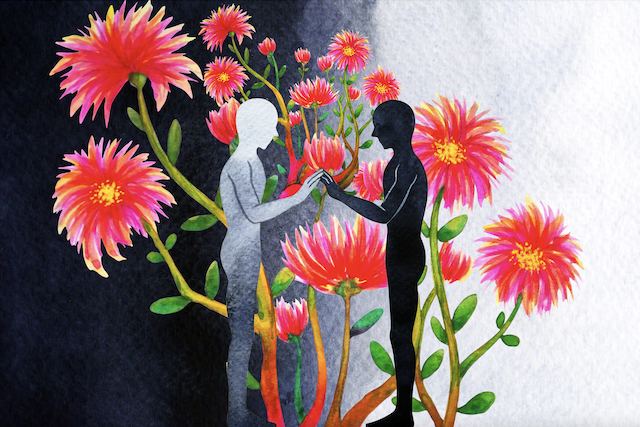
    Showing up differently in relationships is like learning a new dance. You may feel clumsy and awkward at first, but the old dance, while comfortable, is unhealthy. The old dance creates overwhelm, frustration, and resentment.

    I am now a recovering people-pleaser. My journey started when I faced the truth that I was a liar. The first step in change begins with self-awareness. Once you are aware, you can learn new dance steps. The new dance looked like saying no, tolerating less, and telling my truth.

    As I told the truth, here’s what I noticed in my relationships:

    First, I experienced true intimacy.

    As I was more engaged in being honest, others began to know me, not a fake version of me.

    In his book, Seven Levels of Intimacy, Matthew Kelly describes intimacy as “In-to-me-see.” I started saying things I’d never felt comfortable saying before—like “I see things differently” and “that doesn’t work for me.” Secret-keeping was killing my soul, so I also started opening up about the pain and brokenness I felt regarding my former spouse’s addiction and how I’d protected him at a cost to myself.

    When we share more of who we are with others, then we are known and loved, which is a powerful need in humans. I was not broken as a people-pleaser but broken open. I allowed myself to receive the love of others as I allowed them to see me. As a result, I experienced intimacy in a new way.

    Secondly, when we stop lying to others and ourselves, it builds trust.

    It is hard to love someone when you don’t trust them. Trust is the foundation of all relationships. When we are real, others trust our words and actions, and we become more trustworthy. We are no longer chameleons, adapting and saying what others want to hear when interacting with us, and trust grows.

    Lastly, when we pay attention to being more real, we are more fully engaged in our relationships.

    We are wired for connection. When we are engaged in bringing a greater depth to our relationships, the investment pays off. It’s like we are making a deposit in the relationship when we allow others to “see us,” and they in turn feel closer to us. As I began to share more in my relationships, it helped others to open up. One friend said, “Keep sharing; it helps us too!”

    Being more honest in our relationships is a dance worth learning. It improves intimacy, trust, and closeness in our relationships. After all, the alternative is being called a liar!

  • When You Strongly Disagree with Someone: How to Find Common Ground

    When You Strongly Disagree with Someone: How to Find Common Ground

    “The truth you believe and cling to makes you unavailable to hear anything new.” ~Pema Chodron

    I was recently having dinner with a group of friends, and I casually mentioned that I’ve been making more effort in my life to help prevent climate change.

    Across the table, someone looked straight at me and said, “You know human-induced climate change isn’t real, right?”

    I was shocked because I’ve known this person for years, and we’ve always agreed on important topics in the past. I immediately shot back with, “Umm, yes it is!” and proceeded to tell him exactly why he was so wrong.

    I’ll spare you the gory details, but let’s just say the rest of the conversation didn’t go well. It gradually got more and more heated until we were the only two people talking (read: yelling) at each other across the table.

    In the end, someone shut the argument down by saying, “You’ll just have to agree to disagree.” We both took the hint, retreated into our corners, and glared at each other for the rest of the evening.

    A few days later, I was relating the incident to another friend. In all honesty, I was looking for an ally who would help stoke my righteous indignation. But instead of nodding and agreeing with me, she said, “It sounds a lot like you were trying to force your beliefs on him and got mad when he wouldn’t back down.”
    This comment stuck with me, and over time I was forced to admit she was correct. I was so caught up in being right that I had refused to accept anyone could believe differently. Even worse, emotion had completely taken over, and I’d made no effort to find common ground or try and see things from a different perspective.

    In hindsight, I’ve realized I was missing the larger truth that we all believe we are seeing the world as it should be. Our entrenched beliefs become part of our identity because they help us make sense of the chaotic world we live in. And when someone holds a radically different view to our own, it shakes the foundation of our own beliefs and makes us feel off balance and insecure.

    But the good news is, no matter how differently you see the world from someone else, there’s always a way to find some common ground. Here are six tips I’ve learned to help have productive, respectful conversations and open your mind to different perspectives.

    1. Focus on the outcome.

    When you get bogged down arguing about specifics, take the argument up as many levels as you need until you find common ground.

    For example, in the case of climate change, we could have both easily agreed that the environment is important and we want to leave the world a better place for our kids. We just have different views on how to get there. This is a great way to reset the conversation because you’re focused on discussing the outcome rather than winning the argument.

    2. Understand their perspective.

    Learning the underlying reason why someone believes something can help you see a different side of the issue. It might not change your mind, but it will help you treat the other person with more empathy and give you fresh ideas to discuss.

    For example, someone’s refusal to accept climate change might be caused by concern about the negative effects it will have on their life. Maybe transitioning to renewable energy means they will lose their job or be forced to change their lifestyle in ways they don’t want to accept.

    If you can understand these underlying concerns, you’ll be much more likely to find common ground and have a productive discussion.

    3. Separate emotion from logic.

    A stressful argument can hijack the prefrontal cortex—the part of the brain responsible for critical thinking and decision-making. When this happens, you go into “fight or flight” mode and become more likely to react emotionally, think less creatively, and say things without thinking them through.

    The next time you find yourself getting angry or defensive in an argument, take a step back and try to de-escalate your emotions by acknowledging them. Once you’re feeling more logical and calm, you can start to look for common ground again.

    4. Practice active listening.

    Active listening is a communication technique that involves hearing, paraphrasing, and responding to what the other person is saying. It’s an essential skill for finding common ground because it shows that you’re genuinely interested in understanding their perspective.

    The next time you’re in an argument, try repeating back what the other person has said in different words to make sure you’ve understood them correctly. Then, add your perspective to what they’ve said. For example, “I can see why you feel that way, but I also think…”

    5. Be mindful of your own biases.

    We all have biases—it’s part of being human. We want to win arguments, be right, and be liked, so it’s easy to fall into the trap of only listening to information that supports our point of view.

    In this case, I was forced to admit that I haven’t actually read any of the climate change research myself. My beliefs are almost entirely based on existing in a bubble with other like-minded people who reinforce those beliefs.

    Exposing yourself to different perspectives—even if you don’t agree with them—can help you think more critically about your own beliefs. It might even help you find common ground where you thought there was none.

    6. Remember that differing views are important.

    If everyone agreed on everything, the world would be a pretty boring place. But even more importantly, differing ideas help to push society forward. They challenge us to think critically about our own beliefs and come up with new solutions to problems.

    So the next time you find yourself in an argument with someone, try to see it as an opportunity to learn and grow rather than a chance to prove your point. You might just be surprised at how much common ground you can find.

  • My Mother’s Abuse and the Two Things That Have Helped Me Heal

    My Mother’s Abuse and the Two Things That Have Helped Me Heal

    “I love when people that have been through hell walk out of the flames carrying buckets of water for those still consumed by the fire.” ~Stephanie Sparkles

    I have a tattoo on my back of Charles Bukowski’s quote “What matters most is how well you walk through the fire.” It spoke to me as I had been walking, often crawling, through a fire for much of my life.

    At times, I took different paths, skipping through fields of flowers, but eventually I would find my way back to what I knew, which gave me a strange sense of comfort—the fire whose roots had begun in childhood, with my abusive mother.

    I used to be consumed by this fire. I have another tattoo on my foot that reads “Breathe.” For years I lived with a very dysregulated nervous system, constantly alerting me to the threats of the flames forming around me, and breath was something that eluded me.

    How could I breathe when at any moment she could walk up the stairs and find something to lash out at me over?

    How could I breathe when no one wanted to hear how I felt, and my emotions were something I did not understand, nor know how to handle?

    How could I breathe when everything was so frightening?

    How could I breathe when no one ever showed me how?

    Those entrusted to my care were in their own fires that they had never learned to come out of. So of course, as I grew, I felt unsafe and uneasy. And I learned to ignore my breath, ignore that others were able to feel it move through their body, and learned to see only flames everywhere. 

    I grew up in a traditional home as a child of immigrants who had come to the USA for work and to give their children a better life. I went to Catholic school, where I threw myself into academics as a way to be seen, and excelled. My parents were excellent cooks and displayed their love for us through the kitchen table. I had all of my physical and academic needs met.

    I spent my early childhood playing with my brother, who I latched onto as a support system. My mother’s inability to soothe us as babies and toddlers created very sensitive, shy children, deeply afraid of the world around us and deeply connected to each other.

    Unfortunately, my brother and I began to distance during our preteen years. We had created different survival strategies to navigate my parents, and he began to view me as the problem, as my mother was teaching him. I then began to view myself through the same lens.

    I was ridiculed, abandoned emotionally, shamed, and made to believe the dysfunction of the family lay entirely on me. There was a period of physical abuse as well, but during these situations, I at least felt seen.

    I was gaslit to question everything I believed to be true and found myself in imposed isolation in my childhood and teen years, later self-imposed. The world felt too frightening to face. As I grew older, I rebelled against the isolation by looking to others to help soothe me, especially romantic relationships.

    If they didn’t soothe me as I wanted, I grew angry and hurt, isolating myself more and more, or lashing out internally or externally.

    I looked to ease the suffering inside with external gratifications, shopping, traveling, and sex. Unfortunately, nothing could soothe the pain I was feeling.

    In my early twenties I went to a therapist and could do nothing but cry. After a few months of not being able to communicate, she insisted I take benzodiazepines or we would be unable to continue working together.

    My symptoms worsened both emotionally and physically, and I now needed “saving” from both. The helplessness I learned early on continued, as did my need to have others make me feel safe. Both my body and brain became impossible to withstand, and proved to me that I was a victim of life and no one cared about me.

    I found relationships to validate this idea, with addicts, narcissists, and codependents who all eventually grew tired of my need to be loved and soothed out of my pain.

    I was attracting the familiar in these people, who could not show me the love and safety I needed. In other words, I was attaching myself to others to regulate, but they too were stuck in a cycle of dysregulation.

    I found various ways to hurt myself, overspending, starving myself, overexercising, and on more than one occasion taking too many medications to calm myself down, and finding myself in an emergency room. The familiar was living in my nervous system and demanded to be entertained.

    After decades of chronic health issues due to emotional and physical trauma, they finally hit a peak when I was forty-seven and no longer able to work, the one area of my life I’d had some control of. I had to learn to breathe or be completely extinguished by the flames. During this time, I began to learn how to put out the fires.

    I worked hard on retraining my nervous system out of the fight-or-flight state it had entered when I was not soothed as a baby, and rewiring thoughts and behavior patterns created as an extension of that state. In this process, I found the authentic part of myself, the inner child, which brought a deep peace, the peace of integration.

    An integral part of my healing came from practices of forgiveness and compassion. As I rewired old patterns living in my nervous system, I learned about how the brain works, how trauma is stored there, and how our realities are shaped by early experiences.

    Each day in my practices I discovered new associations, when new thoughts and behaviors had started, and had to look at these strategies and their results with self-compassion and forgiveness.

    At first, this was difficult, as it was new to my brain, but as I practiced it became easier, and I started feeling self-compassion and self-love for the first time.

    As I worked with my own toxic personality in these practices, I experienced deep grief for the past and what I was not able to enjoy as a result. Anger was holding on, and I knew it was time to let go. So, I began a practice of curious empathy for the woman who had started my fires, my mother. Awareness of my own dysfunction, self-compassion, and now self-forgiveness allowed me to do the same for others, including her.

    In this case, curious empathy meant becoming aware of her patterns and where they came from by connecting to my own experiences and empathy.

    I had observed her throughout my life to learn about what I was experiencing and how to navigate her, as well as others in the world. I also read tons of self-help books about personality disorders and toxic people, but cognitive knowledge wasn’t enough to understand my mother.

    I watched, listened, and heard stories from my father about my mother’s childhood. I drew upon my own strategies and where they originated. I opened myself up to curiously knowing her, at first from a distance (during this time of healing), and then I incrementally exposed my healing nervous system to her with empathy.

    When I felt balanced and regulated enough, I rejoined our relationship, but with strict boundaries—for both of us. And I found a somewhat different human in front of me, one who had softened in her old age but still retained old behaviors when “triggered.”

    I began to identify her triggers and remained strong when she reacted. I now knew no other way; my nervous system and heart had been retrained into compassion.

    I came to understand that she had created toxic survival strategies because of an inability to communicate and soothe emotions and needs in an effective way. She had been stuck in a fight-or-flight state that prevented her from seeing the world as it was, and seeing the motivations of others clearly.

    And I had learned (and now unlearned) similar methods of interacting with the world.

    I often pictured her as a child or a teen and connected with this version of her through my own inner child. In the moment, I was able to change the hurt and anger I felt to compassion for the way she was trying to get what she needed. This was followed by an inner forgiveness and releasing of the negative emotions.

    I made it clearly known what I would accept, and often joked with her about the way she was acting. She responded with smiling or laughter.

    It became clear that she reacted when she felt vulnerable, and I understood that throughout her childhood, vulnerability was not acceptable, and she was shamed in it. 

    In identifying her methods of showing love, I felt loved and seen, and it was easier to react to her with forgiveness and compassion. It became natural to me to speak as the “parent” (adult) when her old armor of defense came up.

    In daily forgiveness and compassion practices, I find enormous love for the woman still stuck in a fight-or-flight state created in her childhood. There are times I pull away to reinforce that her behavior is unacceptable, but these times are not as prevalent as before.

    As I changed my behavior toward her, she began to change hers toward me. As I regulated my nervous system into safety, it seemed to soothe hers, and she inched closer to the idea of vulnerability with me.  As I let go and replaced the anger with compassion, she felt safe. It is with this safety that she is able to chip away a tiny piece of her armor in our interactions.

    I cannot ever change her, and she will pass with the trauma state she is in as her identity. But, for my own well-being, I chose forgiveness and compassion, to bring her a small drop of water each time I see her. Remaining in the fire with her, by being angry, was not an option any longer. 

    I found my way out of a fire that had nearly taken my life and hope to continue sharing my experience of healing. These days I find myself skipping through fields of flowers on a regular basis, and feel it is a blessing to share it with those who have not yet gotten there—and those who may never.

    **I am not suggesting that anyone should keep people in their lives that they feel are “toxic.” We all need to do what we feel is best for us based on our own unique experience.

  • The Joy of Unexpected Kindness and 3 Reasons It’s Hard to Be Kind

    The Joy of Unexpected Kindness and 3 Reasons It’s Hard to Be Kind

    “Small acts, when multiplied by millions of people, can transform the world.” ~Howard Zinn 

    Have you ever experienced an unexpected act of kindness that completely changed your day?

    I have, and I sincerely hope you have too.

    Please pause for a moment and try to remember the last time that happened. How were you feeling before? What happened? And how did the act of kindness impact you?

    If I look back on my own life, I can find countless moments where the suddenness, the unexpectedness of an act of kindness, shook me awake.

    It might sound strange, but this seems to have been especially so when it came from a stranger.

    That’s not to say that the kindness of those close to us isn’t important, because it is. The kindness of our friends, family, and colleagues can keep us going when life throws challenges in our way, and their joy in our happiness makes the good moments radiate even stronger.

    But there is something about an act of kindness from an unexpected source that causes its healing ripples to be especially powerful.

    And most of the time this isn’t some great or inspiring act but just a very small gesture: a smile, a friendly greeting, a sincere question, a few words from someone who genuinely seems to wish you a good day.

    I remember the first time I went backpacking, feeling lost in a city, staring at my map, when a random stranger offered me his help in pointing out the way.

    I remember feeling tired and lost in thought after a long drive, stopping for gas and a quick bite, and the man working behind the counter at the restaurant clearing my mind with the pleasure he took in his work, smiling with a disarming friendliness.

    I remember sitting in a train in Thailand for fourteen hours, anxiously moving toward my first month-long meditation retreat, and suddenly getting a few genuine words of encouragement and advice from a pair sitting across the aisle.

    I remember a woman sitting in her car, rolling down her window to share her joy in seeing my son race down a hill on his bike.

    I remember yesterday, when the cook at our canteen advised me on what to choose, doing her best to prepare my dish with full attention and then sincerely wishing me a good day.

    In all these situations I was not only left with a feeling of joy, but also a sense of connection.

    Kindness can bring a short moment of relaxation in an otherwise busy day, or a complete change from feeling stressed and chagrined to feeling elated, open, and interconnected with the world.

    Kindness is just that powerful.

    And the beautiful thing is that we all have the chance, every single day, to contribute to this kindness in the world.

    So, again, pause for a moment and this time think about the last time when you were the kind stranger. When was that? How did it make you feel?

    To start with the second question, my guess would be that it made you feel good. The first question might be more difficult to answer. Looking at myself, although I would love to say “today,” that just isn’t true.

    Interesting, isn’t it.

    So, kindness is very powerful and important, it helps us and others, it doesn’t cost us anything, yet it still is difficult to give every day.

    I can think of many reasons why it is difficult, but to keep it simple I’ll list three:

    1. You can only give what you have.

    If you want to give somebody money, you must first have money in your bank account. If you want to give kindness, you must first practice being kind to yourself.

    That is why, for example, Buddhist meditation on loving-kindness (mettā) begins by giving loving-kindness to yourself, and only then to others.

    But don’t worry, you don’t have to spend hours each day meditating; just start with a few minutes every morning (or any other time that fits your schedule) by wishing yourself and those close to you happiness and health. Then try to act on this throughout the day by honoring your needs and prioritizing things that bring you peace and joy.

    It’s okay to wish yourself happiness; it’s not selfish. If you are happy you will be able to radiate that happiness outward, making spontaneous acts of kindness easier to do.

    As your ability to do so strengthens, you can always add a few minutes to wish the same to people you know but about whom you do not have a specific feeling, or a neutral feeling. If that gets easier and easier you can even start adding people you dislike, strengthening the power of your kindness further and further.

    2. You have to see the other person.

    If you are anything like me, then you probably live most of your life in a form of zombie state. Moving from place to place, working, talking, acting on what’s happening, checking your smartphone way too often, all without any form of true consciousness or mindfulness.

    You can do the following test to check this for yourself.

    At the end of the day, look into the mirror and ask yourself how often that day you truly noticed how and what you were doing. That’s all.

    Chances are the honest conclusion will be that you just rushed through the day (again).

    If you don’t notice how you are during the day, if you are not mindful of your own state of mind, if you do not see yourself, then how can you truly see another person?

    It all comes down to how much conscious space we have—how open our mind is toward ourselves and those around us.

    Consciousness tends to expand when we harbor wholesome qualities such as patience, energy, calm, and so on, and it tends to narrow when we harbor unwholesome qualities such as anger, desire, envy, and so on.

    Fundamentally, these mental qualities depend strongly on mindfulness, on our ability to see our mind for what it is.

    If you let a goat loose in a field of grass it will just do whatever it pleases and eat wherever it pleases. If you tie the goat to a pole, the goat will only eat the grass within the circumference of the rope and pole.

    Mindfulness is like the rope that binds our mind to ourselves, keeping it within. Keeping the mind within prevents it from creating all kinds of illusions and personal realities that cause the unwholesome aspects of your mind to arise.

    Keeping the mind within helps bring calm and contentment.

    To strengthen your mindfulness, you do not necessarily have to sit down on a meditation cushion as is often suggested. Mindfulness is something you can practice every day, whatever you are doing.

    Just pick a few routines you do every day and cultivate the intention to do them as mindfully as possible. Do only what you are doing, with all your attention, and if you find your mind drifting off bring it back to your task.

    The more you practice this, the more it will become an ingrained aspect of your mind, bringing with it the experience of calm and openness—and the better you’ll be able to really see other people and recognize opportunities for kindness,

    3. You have to practice regularly and be patient with yourself.

    In the end, kindness isn’t different from other skills. Every human possesses the potential to be kind, but you have to practice it in order to bring that potential to fruition.

    Research by the University of Wisconsin showed that compassion can be learned. Just like a muscle can be trained by weightlifting, people can build up their compassion.

    The most direct route I know of is training through meditation—by practicing loving-kindness meditation and the practice of being mindful, as mentioned about, even if it is only for a few minutes every day.

    But don’t go at it with the businessman’s approach most of us grew up with. A businessman’s approach means expecting results relative to the time you invest. Developing the mind, developing kindness, doesn’t work that way.

    We all have our own personal qualities and hindrances, and just as with other skills, to some it comes natural, while others need more time and effort.

    Don’t worry too much about the results; getting on the path to becoming a kinder person is the most important thing. If you keep practicing patiently you will develop the power of kindness within yourself sooner or later. And it will become second nature to offer those small gestures of support, appreciation, and encouragement that can completely change someone’s day.

  • 3 Ways to Help Someone Who’s Recovering from Trauma

    3 Ways to Help Someone Who’s Recovering from Trauma

    “Feeling safe in someone’s energy is a different kind of intimacy. That feeling of peace and protection is really underrated.” ~Vanessa Klas

    I’m now fourteen months into my recovery from complex post-traumatic stress syndrome (c-PTSD aka complex trauma). I’d been in therapy for a number of years before I was diagnosed. I’d been struggling with interpersonal relationships and suffered from severe anxiety and depression, although you wouldn’t have guessed it from looking at me.

    There are so many misconceptions about trauma, and before my diagnosis in 2020 I wasn’t very trauma aware.

    I was your typical millennial thirty-something woman, juggling a successful corporate career with a jet-setting lifestyle. My Instagram feed was filled with carefully curated photos of me adventuring through Europe, eating flashy dinners at Edinburgh Castle or entertaining friends with cocktails in my flat just off the Water of Leith.

    Then 2020 hit. The world was thrust into a global pandemic that saw me lose my job and livelihood, and with it my visa and right to live and work in a place that I had fallen in love with. I went from having a thousand distractions at my fingertips to being confined in a house with nowhere to go and no one to distract me.

    I was facing deportation since I no longer had the right to live in the UK, but wasn’t able to leave, as all flights back to Australia were stopped. I was in purgatory, stuck between where I wanted to be and where I had to go, with no way out

    Everything unraveled. It’s the only way I can describe the slow, torturous unpicking of my carefully pieced together life. Illusions of control disappeared. Choice and freedom were stripped away, and in the prison of isolation I was facing all the shadows I had so carefully avoided.

    In solitary confinement you are forced to face the parts of yourself you can ignore when you have a packed social calendar. We often think of trauma as something that happens if you’ve experienced a sudden violent incident, like a car crash, or if you’ve been assaulted, or if you’ve been in a warzone. Those are all true.

    Trauma can also occur over time with prolonged exposure to incidents and events that dysregulate your nervous system.

    The conflict in my parents’ relationship created the perfect breeding ground for c-PTSD, as my formative years (before I turned seven) were very volatile with a lot of upheaval, travel, and change.

    The stress and anxiety my parents were experiencing, first trying to migrate to Australia from India for five years and eventually going to Canada, resulted in an unfriendly divorce and custody battle. The result: neither parent was available to meet my emotional needs.

    What is Trauma?

    The American Psychological Association describes trauma as an “emotional response to a terrible event such as accident, rape, or natural disaster.” Dr Gabor Mate goes further, describing trauma as “…the invisible force that shapes our lives. It shapes the way we live, the way we love and the way we make sense of the world. It is the root of our deepest wounds.”

    Not everyone who experiences a violent or terrible event will develop PTSD. In fact, only a small portion of the population will develop trauma, even though the majority of people will be exposed to at least one traumatic event during their lifetime.

    What is PTSD?

    Post-traumatic stress disorder is considered to be a “severe reaction to an extreme or frightening traumatic event” and can include flashbacks of the event, intrusive memories and nightmares, avoidance of activities, situations or people that trigger these memories, and hypervigilance and hypersensitivity.

    What is complex-PTSD

    Complex trauma, or complex post-traumatic stress disorder, occurs after repeated and prolonged incidents that disrupt the nervous system’s ability to regulate itself. Complex trauma occurs from events experienced early in childhood development, and it causes problems with memory and the development of a person’s identity and interpersonal relationships.

    Symptoms of complex trauma include negative self-belief, problems maintaining healthy relationships, difficulties expressing emotions, people-pleasing, substance abuse, and ongoing feelings of emptiness.

    My diagnosis of complex trauma in early 2021 felt like coming up for air after being held underwater. It was painful; my lungs burned. But there was also relief.

    At first it felt like I would never be able to fill my lungs with enough oxygen, and then slowly, incrementally, my body started to trust that the oxygen was there, and I could stop gulping, grasping, floundering.

    For years I had been wrapped up in a toxic relationship with a man who was battling his own demons from childhood. For years I never felt like I was doing enough. I was never good enough or smart enough or pretty enough to deserve the relationship, the career, or the life I desired.

    I dipped my toes in the shallows of life; I yearned for community and at the same time I pushed it away. I wanted closeness, but it felt suffocating. I wanted success, but it felt terrifying. Every time life would get good, something would unbalance and everything would crumble, so I would have to pick up the pieces and rebuild.

    I was stuck in a spiral of going one step forward and five steps back in every area of my life. The pandemic only highlighted this as I was forced to move back to Australia, jobless and in debt.

    I didn’t realize it at the time, but this constant spiral of stress and loss was a subconscious play that I kept re-enacting. Subtle, insidious self-sabotaging mechanisms from childhood that had kept me safe now tripped me up and kept me trapped. I kept repeating cycles that triggered familiar responses within my nervous system—ones of unsafety, loneliness, and abandonment.

    Working on my trauma over the last fourteen months with a trauma-informed therapist, rebuilding safety within my nervous system, learning to self-regulate, to reconnect with my body, with myself, has been at times a harrowing process.

    Through it all, it was interesting to see how different people reacted to my pain and loss and grief.

    We’re not taught how to sit with our own uncomfortable feelings, let alone someone else’s. We live in a culture that thinks “positive vibes only” qualifies as a spiritual practice, when in reality, we need to be able to witness and love our shadows in order to fully heal.

    If someone you love is going through a hard time, if you know someone who is struggling, here’s some advice on how to hold space for them, from someone who has been on the receiving end of well-meaning but unhelpful suggestions throughout my recovery.

    Holding space for someone is essentially about being fully present for someone else. This means no agenda, and a judgment-free zone.

    Be Present

    Check in with yourself first. Are you ready, willing, and open to being fully present with this person right now? Are you able to leave your opinions, suggestions, and personal experiences at the door?

    If not, that’s okay. Self-care starts with you, and forcing yourself to be present with someone when you aren’t in the right head space will not help the other person.

    Let them know that you aren’t in the right head space right now and refer them to a helpline or specialist. Check back in with them to make sure they have followed through and have someone to talk to.

    You will be doing both of you a favor. This comes down to co-regulation.

    When you are grounded and fully present with someone who is going through a hard time, you are allowing them to “borrow” your nervous system to down regulate when they are in a heightened state of arousal and activation. If your own nervous system is activated, this will just exacerbate what they are feeling, causing more sensations of dysregulation and unsafety.

    When you are able to sit with someone and be fully present for them, without judging their thoughts or trying to fix things, this can be a profoundly healing experience for the other person.

    Being witnessed in our grief without judgment, pity, or awkwardness removes some of the shame we’re experiencing as we’re processing our difficult emotions.

    Often, those with complex trauma did not have their needs met and didn’t have their feelings validated as children. It’s a deeply healing experience to be with someone who cares about you and to feel seen and validated at your most vulnerable moment.

    Practice Conscious and Reflective Listening

    When we are listening to someone, we’re only half paying attention to what they are saying. Half of our attention is already formulating our response, so we’re rarely ever focused on their words.

    Holding space for someone means being fully present and listening, not only with our ears but with our full attention to what they are saying and how they are saying it. Pay attention to their words, but also observe their body language.

    Allow for pauses. Silence can feel uncomfortable, but when we’re processing difficult emotions, sometimes we need a little silence to gather our thoughts or sit with what we’ve just said. Don’t try to fill the pauses in the conversation straight away.

    Reflect and mirror back what the person has said. This doesn’t have to be verbatim. It could be as simple as “I can see that this situation has really hurt you. I hear that you’re feeling overwhelmed and stressed out because you’ve lost your job. I can image that’s really scary. Can you share more?”

    This allows them to expand and clarify if they want to, or to just feel like they’ve been heard if that’s all they wanted to share.

    Observe Without Judgment

    Be willing to listen without judging what the other person is saying or how they’re interpreting their experience. Those of us with complex trauma grew up being hypervigilant and aware of the emotions of the people around us. This was integral to our survival in childhood.

    This means you need to be aware of your responses, both verbal and non-verbal, to what we are expressing. Listen with empathy and compassion, and stay open to what we are sharing, even if you disagree.

    Even if you think other people have it worse.

    Even if you have a solution.

    You may feel like we are overreacting, but often trauma triggers reactions to something we experienced in the past. When we’re triggered, we’re not only reacting to the situation we are currently facing, but also the unprocessed emotions from the previous situations. We’re dealing with the past and the present simultaneously, and it can feel overwhelming.

    Being witnessed by someone who cares about us without judgment when we’re triggered is a deeply healing experience. Often, those of us with trauma, depression, and anxiety already feel ashamed about our emotions and reactions, so having someone witness us without judgment can be liberating.