Tag: truth
-
Why We Need to Share Our Honest Feelings
“I learned that courage was not the absence of fear, but the triumph over it. The brave man is not he who does not feel afraid, but he who conquers that fear.” ~Nelson Mandela
She hurt my feelings. She was leaving soon to live in another country for up to six months. I knew that if I held on to my hurt, this resentment would fester, and my best friend would be the recipient of my anger.
I prayed for courage to find the right words. I didn’t want to hurt her. I knew I had to say something or I would allow my hurt to manifest into something huge.
The courage came, and I acted immediately. I dialed; my heart pounded. I was so afraid.
She answered. The lump in my throat made me silent. I began to weep.
I gently uttered, “I’m calling to tell you that you hurt my feelings. When you didn’t show up for my big event, with no phone call, no communication, it hurt my feelings. When I asked for your opinions on my new gig, you didn’t respond. It hurt my feelings.”
I stopped and let the silence set it in. Within a few seconds she responded.
“That was the bravest thing I have ever heard you do. That took so much courage. I’m sorry. I’ve been self-absorbed.” And the story went on.
She ended by saying that she, too, has been seeking to speak her truth, and that I had just provided the greatest example of how to do it gently and with kindness.
The woman I called is one of my best friends from childhood. Believe it or not, making that phone call was one of the hardest things I’ve done in my new way of living. I’m a recovering alcoholic, and I’m learning how to feel and how to communicate.
I spent my first forty-plus years sugarcoating my life and my feelings—putting a beautiful spin on everything and avoiding controversy at all costs. But that didn’t work, and the ultimate cost was I almost lost my life to alcoholism.
Growing up in a dysfunctional and alcoholic home, I developed the ability to shine things up at an early age. I spit polished every word that came out of my mouth.
I painted a thick coat of pretty on every fear that besieged me. When asked how I was doing, the simple “fine” or “great” would ward off further inquisition.
There was a lot at home to worry about back then, but I believed that worry was for the weak and that I was stronger than worry, so I locked it in a steel-cased compartment deep inside of me and threw away the key. Things were just fine.
And I did not even acknowledge anger. I can’t tell you where or how to access the anger that has burned slowly within me for decades because I have never given it a voice.
“Aren’t you angry?” a therapist would ask me on occasion. With a genuine and convincing smile on my face, I would nod no. I didn’t feel angry, but the truth is that I really didn’t feel anything.
I learned at an early age that it was just easier to get along in this world by placating everyone. I didn’t realize that while I was overly concerned about not hurting others with the truth, I was sacrificing my soul.
I know now that I was an incredible liar. I lied all of the time and to everyone. And while a lie about how I was feeling may have seemed insignificant, it wasn’t. Those lies were the most powerful and did the most damage to my psyche. They continued to reaffirm the idea that I did not matter.
I had my first drink at thirteen. I was a blackout drinker from the start, and alcohol let me escape from my fraudulent life.
I was a high-functioning alcoholic for many years achieving much success in my career and personal life despite my drinking patterns. I could mold the veneer of my life into whatever I thought would earn society’s approval.
After years of heavy drinking, I was graced with the gift of sobriety at forty-four. Let me tell you, getting sober is like growing up all over again, and it’s a rollercoaster of a ride. There are many days when I simply feel like a little kid, paralyzed by fear, overcome with sadness, or gleefully happy.
One of the many gifts of sobriety has been discovering my true self and creating new habits and patterns for living.
Over the course of my journey, I’ve regularly struggled with two issues—faith and honesty. I will leave faith for another post, but learning how to be emotionally honest with myself has been a brutal and slow process.
Like peeling away the skin of an onion, I find that I have to peel away my old habits and walls that I have in place to shield me from the truth. Every time I think I have it mastered, another opportunity arises that challenges my commitment. I find I actually have to practice being honest with myself.
A good friend of mine who has helped guide me in this new way of life constantly reminds me to pray for and meditate about courage. During my first summer of sobriety, I did this constantly.
I’ve had some hard conversations. Actually, the terrifying part was imagining how those discussions would unfold, but in reality, they weren’t that difficult. And, I found that people tend to admire and respect someone who can be completely honest.
These are the steps I take when I face emotional honesty. It’s a simple process.
- Identify and connect with my emotions.
- Identify my part in the situation.
- Pray for the courage to speak honestly, with kindness and authenticity.
- When courage hits me, act immediately.
For those who don’t believe in a higher power, meditating on courage will help them find the strength within to be emotionally honest and tell the truth to themselves and others.
We may think that it’s easy to tell a little white lie to save someone else’s feelings, but is it? Wouldn’t it be easier to just tell the truth?
It’s funny, but I relish the opportunity to practice honesty now. And, it is becoming more of a natural way of life for me. If I feel overwhelmed by the truth I have to share, I begin praying for courage immediately.
I also have learned to speak with compassion and without hate or anger.
When I told my friend that she had hurt my feelings, I was overcome with relief, as well as a feeling of gratefulness for her friendship. By speaking up, it allowed us to grow closer, but I had taken a stand for me first; I had demonstrated to both of us that I matter.
Each day we are given a precious gift—the gift is that day. What we do with it is up to us. I choose on this day to be authentic to the world. It’s all I can be. It’s freeing just being me. I choose to remain vulnerable by speaking my truth and sprinkling love wherever I go.
When we learn to speak our truth, we become courageous, we value ourselves, we shine our light from within, we become worthy, and we feel, share, and connect on a more intimate level. We can inspire honesty in others.
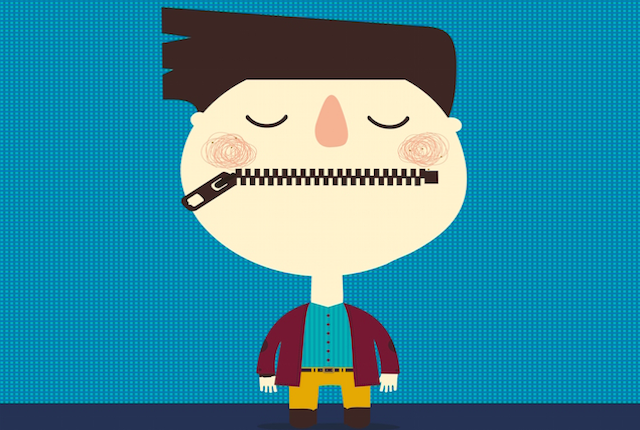
Sealed lips image via Shutterstock
-

When You’re Afraid to Speak Up and Be Yourself in Relationships
“Your fear is boring.” ~Elizabeth Gilbert
It has taken me eighteen years of marriage, two kids, and twenty-plus years of healing to realize I have been afraid of being myself with my husband.
It has taken me decades to step into my power and become the fiercely alive, joyful, and creative expression I am today.
I often think about the guy I met at the bar on the beach and wonder about things like fate, purpose, and “The Grand Plan,” meant-to-be sort of stuff. I stare at my two gorgeous children and part of me knows that every morsel of pain was worth it. But I am sad and tired.
I have everything I am supposed to have, I have done everything I was supposed to do, and I have achieved so much, but still there is a hole in my soul.
Am I afraid to bring the bigger love into my life, to feel joy? Am I meant to suffer? Do I have the nerve to stick this out, face the mirror, and do the vulnerable work it might take to get where I want to be?
I have lots of unanswered questions.
Yet, when I slide out of my confused mind for a bit, into the now of me sitting in the little sanctuary I created, where I sort out my dreams, I am truly at peace.
The meanings and troubles, the disagreements and polarized values that plague my marriage with tension and keep me from deeper love disappear in a poof of sunrays through my big window.
I realized, after many years of searching, that I have been afraid to be me, but the me I have been afraid of expressing to my husband isn’t the same me he married.
I don’t remember feeling afraid when we met, all glistening and sandy on the beach, giving each other those “You’re sexy” and “I dig you” kind of smiles.
Standing there, gazing into his adoring eyes, at the beginning of my life, my career, and my marriage, I hadn’t arrived yet. The divine, creative, fiercely alive woman and healer would emerge many years later, so now I wonder, who the heck got married?
And so it goes—the people we marry, the family we grow up with, and the friends we have adventures with are growing, shifting, changing, and transforming, each in their own way, each on their own path, navigating life by our sides for a while until we don’t recognize each other.
I look up at my husband after he screams at our son for making his sister shriek by sitting on her, and I cower into the three-year-old little girl I have been fighting for forty years to not be. Who is that little girl, and why is she so afraid all of a sudden?
I am in a place in my life and marriage now where I can no longer tolerate what I feel when the three year old shows up.
I am braver and have cultivated the awareness it takes and the practices necessary to be with people who are on a different path, who may not be growing along with me, or worse, who criticize me for the way I live.
It seems like it took forever to get to the place where I am not willing to compromise my self-worth, but the rewards have been great.
These are the practices that allow me to stay and be me in this relationship.
1. Get clear about who matters to you, and why.
It is easy to stay confused about life; confusion doesn’t require making a choice or taking action.
I had to acknowledge that my marriage meant everything to me before I could commit to staying the course and devote to energy required to do that.
2. Get help with learning how to move through your fear and speak up for what you want in your relationships.
You can’t expect the people you love to read your mind, so express yourself, even when you are afraid. I received much help over the years to do this simple thing.
My rituals and practices have included therapies that opened my heart and energy, enhanced my awareness, and helped me discover my self-worth, such as:
- John F. Barnes Myofascial Release
- Acupuncture
- Meditation
- Breathwork
- Emotional Freedom Technique
- Life Coaching
A little work on my throat chakra didn’t hurt either. When I opened up the blocks and the fear that kept me from expressing my voice, a whole new world opened up to me.
3. Discipline your mind.
Challenge the negative thoughts that sabotage your efforts to speak up, and fight for what you want in your relationships.
Your fear voice will come up with all sorts of reasons not to speak your mind. Some of them may be valid concerns; if you fear that speaking up may rock the boat, know that it possibly will. Unless you want to repress your true self indefinitely, it’s a risk worth taking.
As I recognized my fear voice more and more, and got comfortable differentiating her from the me that was the intuitive, joyful healer, I was able to give her a name: Martha.
Now, whenever that voice pipes up, I call her out. That separates me from the noise going on in my head and the meanings I give to the situations that make me feel powerless. When I notice Martha doing the talking, I detach. With awareness, I choose to believe and act differently in my conversations with people.
There are many ways to discipline your mind and detach from the negative thoughts that control you.
- Therapies and books that focused on the mind/body connection were important for my transformation, such as Eckhart Tolle’s book A New Earth. Other authors that changed my perspective and boosted my awareness include Dr. Wayne Dyer, Rhonda Byrne, John F. Barnes, Anthony De Mello, Peter Levine, and Bruce Lipton. The key is to find the resource that wakes you up to the connection between your thoughts and your suffering.
- Therapeutic writing and journaling helped me sort things out. This is a powerful tool that you can use to reflect and move the thoughts and energy from the inside to the outside, where it’s just words on a page.
- Talking and connecting with other people can also be powerful. Sometimes a conversation about relationships or the mysteries of life will give you new perspective, and if you are paying attention, they might also provide a mirror to look at your own beliefs and attitudes.
4. Recognize when you feel fear, and use it as a compass.
Feel fear as a bodily sensation, keeping you small or preventing you from expressing the you that you desire to be in your relationships.
Fear can be your compass, giving you an opportunity to move through it and speak your truth.
To be myself with my husband meant I had to do this over and over again, and I did, learning along the way as the triggers got quieter and my confidence grew. Now, when I feel that tightness in my chest, I know it means I have a chance to express myself and do a tiny bit of healing.
5. Decide which relationships to let go of and which ones to nurture.
This is the choice that matters the most. Most days it was easier to just stay confused about this, playing out the foggy drama of my fears. Martha sounded something like, “I just don’t know what to do about this,” or “I just can’t make a decision,” or, my favorite, “I am just not smart/good/strong enough to make this happen.”
Getting clear about what I wanted, staying awake to my fear, and loving myself enough to make a choice was way more complicated and difficult than being confused. It hasn’t been easy, but it has been worth it.
I am going to nudge you gently now and ask you to take action on your dreams for big love.
Get clear about what you want. Start making choices, be aware of your thoughts, and move through the fear by speaking your truth to the people who matter most to you. The simple act of expressing yourself to the world is where the magic begins.
Upset woman image via Shutterstock
-

Your Story Matters More Than You Think
“I now see how owning our story and loving ourselves through that process is the bravest thing that we will ever do.” ~Brené Brown
When it comes to taking on a creative endeavor—or even just putting ourselves out there in ways large and small—one of the (many) ways we get ourselves stuck is by saying we don’t have anything new to offer.
What am I adding to the conversation that hasn’t already been said, we ask. This has been done to death, we worry.
Such a disservice to our own unique voices, I say. Not to mention the people who need to hear them.
I was the type of student who rarely spoke in class. I was engaged and excited by the material, but when it came to discussion or asking questions, I was so afraid of looking stupid that I typically clammed up—so much that a high school classmate of mine, a good friend, once yell-whispered “Say something!!” to me during a heated class debate in which I was anxiously silent. (That didn’t make things better.)
What I came to notice, though, through high school and beyond, was that people would often ask questions or make observations that I’d been thinking of, but that hadn’t occurred to me to say. And then I’d get annoyed that I hadn’t!
There, again, was the belief that I had nothing new or interesting to say. The fear went deeper, though: in all the ways I felt different, I worried that no one could relate to me. By remaining silent, I believed, I could avoid the pain of feeling rejected, or conversely, avoid the anxiety of having to discuss life circumstances that felt overwhelming.
Whether from others or within myself, the threat of rejection was everywhere. And so for years I unconsciously dismissed my opinions before they fully surfaced in my mind; but they were validated whenever someone echoed them.
Your experience matters more than you know, and sharing it could create the permission someone else needs to do the same.
It’s true: there’s a whole lot of similar content out there. We want to learn something new, be inspired, feel something special, be moved—and so we judge, because we feel cheated when we don’t get that.
We have all sorts of ways of writing off “derivative” work. And if we happen to have already started telling our stories publicly (as I have recently, finally!), the internal pressure to keep it fresh can threaten to stifle us further.
Gradually, I’ve learned that what we’re really seeking is integrity—the spark that comes from getting fired up about something and letting people see us there.
No one’s gotten your perspective on a topic yet. No one’s heard it the way you’d say it.
Even the most done-to-death idea might be waiting for you to breathe new life into it, because you approach a subject with your one-of-a-kind combination of life experience, personality traits, and philosophical leanings.
Your worldview, and your work, is yours alone. But your vitality is contagious, as is the courage you demonstrate when you bring it.
In reality, you don’t know what others have seen or heard or experienced. Your audience is largely unknown—particularly if your goal is to connect beyond your immediate circles.
If you’re bored by your work, that’s one thing; if you stall because you’re concerned about others’ judgment, understand that judging yourself first doesn’t serve you (as protective as this may feel).
Yes, we want a positive response; but releasing your honest work into the world is gratifying for its own sake. If your inner critic prevents you from doing even that, you’ll never get to know the positive impact you might make.
You’ll never feel the joy of hearing how your work has led someone to think of something in a new way; the warmth of learning that your work has come into someone’s life at just the right time; or the thrill of seeing how your ideas have inspired people to do something similar!
Creating, self-promoting, or speaking up might take time, but it’s worth it.
So, shy folks, if you feel moved to comment on something, go for it, because the passion that’s prompted your voice—and the vulnerability it takes to offer it—is what people want to feel.
Speaking your heartfelt truth is deeply satisfying, both to do and to witness. And, paradoxically, it’s that sharing of yourself that lets us all feel more connected.
Man speaking image via Shutterstock
-

3 Tips to Help You Stop Saying Things You Regret
“If you propose to speak, always ask yourself, is it true, is it necessary, is it kind.” ~Buddha
I initially saw this quote and, in true ego-first fashion, thought of my kids: this’ll be perfect for them. I’ll put it up in the kitchen as a regular reminder to stop pestering each other.
But then, something a bit deeper poked me gently. Riiight, just for the kids, is it? You’ve got this mastered, then. I guess my true self is not afraid to use sarcasm when it needs to.
My true self was right (as it always is). When I began to think about those small regrets that plague my running thoughts, so many of them came about because I didn’t adhere to the Buddha’s sage advice.
Here are a few examples that spring to mind:
The times I’ve blurted and blathered random nonsense to other parents while waiting for my kids to appear at the school gate.
The times I’ve made a negative comment about someone.
The words I’ve chosen when pestering my kids to get things done.
All my many miserable rants about the usual annoyances in life.
When I thought about it, I decided there are common themes to the things I say which I later regret. They usually fit into one of three categories:
- I speak to avoid the discomfort of silence.
- I speak to unload an ego-driven thought.
- I speak with negative emotion like frustration or anger.
Let’s drill down to see where each of these breaks one of the precepts of speaking only good words.
I speak to remove the discomfort of silence.
So many times I’ve been in the presence of people when there is an uncomfortable silence and I am desperate to break it. But why? And is it really uncomfortable, or is that just me?
Inevitably, I end up speaking things that may well be true and kind, but are certainly not necessary. And I end up feeling like a blathering fool.
Speaking just for the sake of speaking doesn’t help. And sometimes it can hurt, if I’m speaking in a rush, without thinking. So, the next time I’m standing with someone and conversation isn’t flowing, I will always stop myself and ask: is this necessary?
I speak to unload an ego-driven thought.
By ego-driven, I mean a thought that makes my self-image feel bigger and better. Gossip fits well into this category. Or bragging. Complaining about a negative situation is another. (Because in the complaining, I’m pointing out what everyone else is doing wrong.)
If I speak these thoughts aloud, I usually do so with someone I can trust, like my husband, but that does not make it better. Vocalizing something negative about someone else always makes me feel worse, even if I can trust the person I’m sharing it with. It’s just not worth it.
I speak with frustration or anger.
This one’s a bit more nuanced, and often comes down to tone. Even if the words themselves are true and necessary (such as: “because you dilly dallied over breakfast, we’re now going to be late for school”), they are not kind. The unkindness often comes through in the tone, if not the words themselves.
As usual, sage advice seems so simple but is not at all easy to put into practice!
Here are some strategies to try:
1. Breathe.
Take a moment for a conscious breath before speaking. It’s an imperceptible pause, but it allows you the space to consider your comment before it is spoken. Not only does it give you space for second thought, it can somehow magically reframe the situation.
I’ve found that noticing the simple miracle of breath can cause me to see the current situation in a completely different light.
2. Respond; don’t react.
There is a huge difference between a thoughtful response and a knee-jerk reaction. Often, the knee-jerk reaction is fueled by subconscious anxieties.
Enabling yourself (via #1) to have a thoughtful response means taking control of the situation and not letting your subconscious run your life.
3. Reflect.
Use the lapses in judgment when you’ve said something regrettable to consider why you responded the way you did.
The trigger is usually only half of the problem. It’s worth considering what in ourselves, deep down, was irritated enough to strike back. Being aware of these personal vulnerabilities is what contributes to tremendous personal growth over the long run.
Ideally the transformation would occur at the level of thought, so words would never have to be checked at the door, as it were. Oh, to have only true, kind and necessary thoughts!
Until then, this quote is going up on our fridge as a regular reminder for me to tick all three boxes before speaking. I’ll take it one day at a time. (Heck, one hour at a time!) If it rubs off on the kids, all the better.
Woman holding mouth image via Shutterstock
-

How to Change What You Feel and Believe About Yourself
“Wisdom is nothing more than healed pain.” ~Robert Gary Lee
A year ago, I began to accept that I was depressed, and had been for a long time. It was scary. I broke up with my live-in boyfriend of almost three years, quit my job, and though I didn’t want to, I moved halfway across the country to move back in with my parents.
I was a wreck; all of the feelings that I had been suppressing for years, some literally since childhood, came flooding back. My only defense in the past had been to ignore these feelings, though I did so quite poorly and ended up being an emotional basket case most of the time anyway.
After months of talking to my therapist and anyone who would listen, I finally began to heal. I started to find strength in myself, in my own thoughts, and was able to stop denying the truth that has always been inside of me. Now, when I get upset, I am able to accept it as a feeling, not as a truth; and I no longer have to run from my feelings.
This is a process that I wrote out, but came from a combination of help from good friends, said former boyfriend, and of course, my wonderful therapist.
1. Identify your feelings.
Where in your body do you feel it? What does it feel like? What thoughts come up?
These thoughts are what your mind is defining as your “truth.” You can redefine your truth. You may be thinking, “I’m not good enough,” “I’m weak,” “I’m broken,” or something similar.
These are not feelings; these do not describe how you feel. They describe what you think you are, your false “truth.”
Change “I am” to “I feel” when these “truths” come up.
When you hear, “I’m broken,” replace it with, “I feel broken.”
My personal false “truth” was, and sometimes still is, “I am incapable.” When changed to “I feel incapable,” I really notice the difference in emphasis.
I used to truly believe that I was incapable of a lot of things, usually relating to work or school. “I feel incapable” is a statement of the negativity that my mind was stuck in, a false belief, not a “truth” about myself.
Now that you’ve recognized you aren’t this thing—you only feel this way—dig deeper. Ask yourself why you feel this way; what’s behind the feelings?
2. Accept your feelings.
Repeat them to yourself. Don’t judge them; just feel them.
If you feel like crying, let yourself cry. If you have tension, sit with that tension; breathe it in and breathe it out.
I felt incapable because I had performed poorly in jobs before, and I used this as evidence that I truly was incapable of doing better.
This acceptance hurts, but it ultimately brings us peace by releasing the negativity that we are holding onto.
3. Replace your old truths with new ones. Back them up with reasoning, and trust that this is the real truth.
For example, you might change “I feel that I’m not good enough” to “I am good enough. I am having a hard time because… and I accept that. I am working on these issues to become even stronger.”
By accepting that I felt incapable because of the past, I could now remember the good things that happened at work—the projects I was proud of, the people who I had helped, the difference I made.
4. Repeat the new “truth” back to yourself.
Notice what feelings come up and compare them to the feelings that came up from step two.
Which feels better to you? Which sounds more true to you now?
The intent of going through these steps is to examine these “truths.” In your gut, you know the real truth.
You may feel a sense of relief after doing this once. You may not feel much different at all. But if you trust your intuition, the new “truth” will become the new voice in your head, after going through the steps more times.
I knew on a deeper level that I was actually capable of doing a good job at work, a job I could be proud of. The negative “truth” hid what I really know I am capable of.
5. Do something constructive with these good thoughts.
Write. Make art. Make music. Dance. Exercise; do something physical.
Do something that expresses how you feel now, that solidifies in your body as well as your mind what your “truth” really is, and how good you deserve to feel about yourself, no matter what unpleasant circumstances you may be going through.
Our bodies contain memories that we don’t consciously know of. Doing something active with these new ideas and feelings will bring positive body associations.
I find journaling and yoga to be very healing. I sit and give myself time to really think and feel instead of never questioning the false “truth” that I sometimes carry around with me. I write that out. And I reinforce the new truth when I am going through the movements in yoga poses. My body remembers that feeling.
—
Each time the old “truth” comes up, go through these steps. Your brain currently has a habit of jumping from a negative feeling to a false truth in your consciousness as a single thought. Sometimes these thoughts are also subconscious, as they were for me, because you’ve ignored them for so long as your mind tried to shield you from the pain of admitting negative feelings.
“I am incapable” actually led me to feel so poorly about myself that I really did perform inconsistently at work. Once I started to dismantle it, I was able to start fresh and not let the subconscious “truth” fester and keep me from being productive.
Even better than waiting for these thoughts to come up, practice this daily. Soon, you’ll change the habit of clinging to false truths so to the positive, real truth becomes your first thought.
Instead of the old thoughts festering, these new thoughts are mindful, and they creative positive energy, which will continue to build.
If you still can’t get yourself to really feel that this new truth is reality, just try to trust it. Trusting it is trusting yourself. And once the habit forms, it starts to feel like the truth.
-
Why Positive Affirmations Don’t Always Work (and What Does)
“Three things cannot be long hidden: the sun, the moon, and the truth.” ~Buddha
My final exam is tomorrow.
It’s a big one—one that covers a lot of material with a major grade component—and my body is clenched with anxiety.
I pick up my book, flick through my notes, and scan a few scribbles. The anxiety builds like a wave. Cresting on top of that wave? Negative, self-critical thoughts.
I’m never going to retain all this material during the exam. I won’t be able to answer the questions fast enough. I have to be a lot smarter to pass…
I should have studied more. I’m such a loser. Everyone’s gonna think I’m such a failure.
Fast-forward thirty minutes: I’m sitting amidst a pile of empty candy wrappers and potato chip bags, the aftermath of a stress-induced binge.
Stuffing my face feels like the only way to numb my fear. For a few minutes, it works. Until it doesn’t.
I move on, seeking another distraction. Flipping through a magazine? Nope. Music? No way. A walk around the block? Please.
I decide to drown out my feelings with a few hours of TV. First up? A mid-day talk show with a motivational speaker who is supposedly going to change my life.
“You can achieve anything you put your mind to,” the guest says.
“Just tell yourself that you can. When you feel like you can’t do something, think positive thoughts. Use affirmations. Remember: your thoughts shape your reality.”
Smiling broadly, she encourages her viewers to create a positive affirmation, right then, on the spot.
I start talking out loud, trying a few affirmations on for size:
I make beautiful eating choices.
I have a healthy, strong body.
I love the way that I look.
Saying the words, I feel better. Like, a lot better. I feel empowered, like I’ve found the “magic words” to change my life, at last.
The happy feeling of “empowerment” continues for several days…until I get hit with a tidal wave of anxiety again.
This time, it’s not an exam; it’s something else. My computer gets a virus and I lose a ton of crucial work. Then, all of my clothes in the laundry machine mysteriously turn blue! Minor setbacks, in the grand scheme of things, but it’s enough to send me running to the freezer, scarfing down three giant bowls of ice cream.
My “positive affirmations” are no match for the overwhelming emotions that I’m feeling. The affirmations are like gentle breezes, compared with a violent storm. They just can’t fight back.
And of course, my merciless inner critic takes the floor, once again:
You’re so stupid, you can’t even do positive affirmations correctly. You didn’t say them properly. That’s why they didn’t work. You don’t deserve to have them work.
Many years, tons of self-help books, and a PhD in psychology later, I finally figured out why my positive affirmations never led to permanent transformation. Because they were, essentially, lies. And lies don’t heal us.
Only love, self-respect, and honesty can do that.
When I used to say, “I love my gorgeous body” after an eating binge, it was a lie, because I really didn’t. That particular affirmation wasn’t going to lead to lasting change. That statement was untrue. And sooner or later, my smart lil’ mind figured it out—and angrily lashed back.
I learned, the hard and slow way, that affirmations need to be scripted with total honesty in order for them to work.
Like this:
I am frustrated by my eating habits, but I am learning to treat myself with the respect I deserve. I am learning to do better.
I am sad about the fact that I’m still single, but I am learning how to relate with men in a more open, brave, and vulnerable way. I am learning to do better.
I am scared about handling this big, new project, but I am learning to have confidence in my ability to achieve my goals. I am learning to do better.
These statements aren’t “empty self-praise” or temporary “mood-boosters.”
They’re honest, self-respecting assessments about where we’re at, what we’re learning, and what we’re capable of becoming. They are affirmations of truth—and the truth will set you free.
-
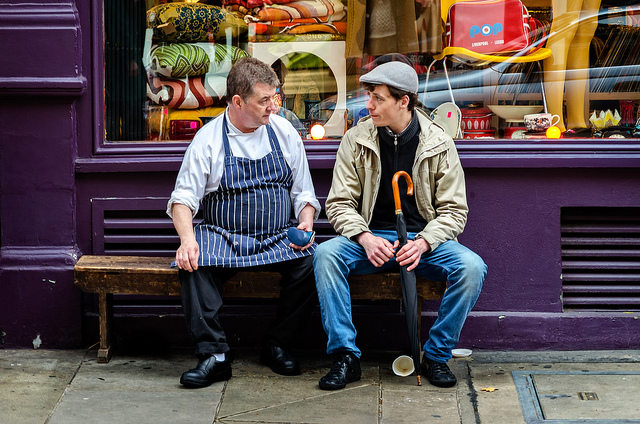
How to Share Your Feelings and Be Heard
“The most precious gift we can offer anyone is our attention. When mindfulness embraces those we love, they will bloom like flowers.” ~Thich Nhat Hanh
Not so long ago, a dear friend of mine approached me wishing to be heard for some overwhelming grief and anger she was carrying.
I gave her my full ear and attention, but as I listened to her, I noticed a worry begin to stir inside me—a worry surfacing around a great deal of violent intent I heard in her words. Could she really want to hurt someone I believed she loved?
After another twenty minutes of listening, I decided to authentically voice my worry to her until I felt fully heard around it, and together that evening we came to a place of deeper understanding and care.
You may be thinking, “Wow! Your friend sure took it well despite being so angry. You must have been pretty careful in how you worded it, though.”
But what if I told you that I managed to voice my truth without stimulating further anger or a sense of disconnect in her precisely because I did not try to be careful about what I said?
Most of us, in first learning greater compassion and becoming aware of our needs and inherent worth, are not unlikely to come off sometimes as careless in how we express ourselves to others. We’re finally finding our voice, after all, and in standing up for our precious needs, such “carelessness” is no too high a price to pay for it.
Our desire for authenticity at this stage outweighs our tact, you might say.
As we become more adept to compassion over time, however, our awareness extends and reinforces the importance of other people’s needs, as well as our own. And thus, another phenomenon occurs: We transition from being careless to being careful compassionate speakers.
But therein lies a tragedy.
For while we may have genuine intentions to recognize others’ needs and feelings—knowing that our feelings and needs are not the only ones in the room—exercising careful consideration of our words in that respect can easily pose a whole new barrier to our ability to authentically communicate with others.
We can end up, as they say, throwing out the baby with the bathwater.
How does this happen? How do we regain the fuller authenticity we finally became able to express without seeming careless to otherswith our words?
Well, first, it happens for the simple reason that withholding the honesty of our experience from others in a careful way too often tends to stem from a fear of the consequences (that might either befall us or bring further pain to someone else) in voicing ourselves.
So what other resort do we have?
What I’m recommending here is neither the obnoxiousness of careless honesty, nor the caution of careful consideration at the expense of sharing our whole truth, but the mindful awareness of everyone’s needs and the potential effect of our words—a mindfulness that incorporates the best parts of the former two.
Returning to the case of my friend, I took my time to be sure that there was a deep sense of connection between the two of us, and a ground of empathy around her pain for me to stand on, before I expressed my concern around her intentions—holding nothing back.
But before even expressing that concern, I conveyed to her what makes the crucial practical difference in what I’m talking about: the depth of my care for her, and the worry I felt in how she could potentially receive my words in a way other than as caring.
You see, through mindful awareness, all needs—both yours and mine—can be given full consideration while one of us expresses their two-fold truth.
It’s two-fold because we’re not only sharing the truth of our pain or problem, but also the care that we feel for the other person around how hearing our concern could land in them. When I told the friend my concern, I honestly expressed the worry rather than making the decision to speak honestly or not based on the worry.
Let me give you four basic steps for compassionately sharing that, for me, allow for the fullness of our painful truth while also speaking to the fullness of our care:
1. Be sure you’ve self-empathized before sharing.
Sharing either our pain or our care without being in a place of empathic understanding could indeed result in “careless” self-expression. Sometimes such clarity doesn’t come easily, but if you can practice waiting for it before committing to expressing yourself, you’re way ahead of the gang.
2. Be sure as well that you’ve empathized and connected with the other person.
This is as much for our sake as theirs. If I listen to someone but then choose to share my truth while still holding a grudge or judgment against them, then it may be the case that I don’t actually care that much how it lands in them at this time. It could save you loads of unintended ordeals to realize this now than later.
That said, I also highly recommend not empathizing with someone for the purpose of getting heard for your truth. “Empathy with an agenda” isn’t really empathy, nor does it effectively open us up to a space of acceptance and true listening around what’s happening for either of us.
3. Share the truth of your care.
By letting someone know you have something important to share and that you really care how it will be received, you give yourself an amazing opportunity for vulnerability to open between you. It will also quickly tell you whether the other person is even in a place to hear you or not.
Knowing that allows you the choice and power to decide to maybe empathize with them more before sharing, or to process together what could be making it difficult for them to really hear you.
4. Share the truth of your pain or problem, fully and authentically.
Having conveyed your care to someone, you now have the opportunity to deepen into even greater vulnerability—and deeper sharing of your experience—thanks to the more open understanding facilitated by the depth of the care you expressed.
To be sure, none of this guarantees that your truth won’t be difficult to hear.
However, you do stand a far greater chance of being heard and held. I myself discovered that sharing in this way offers an amazing gift to those I love, as my willingness to be vulnerable also expresses to them the extent of my trust in them to receive it, whether either of us handle the dialogue gracefully or not.
Compassion-based speaking and listening, done skillfully over time, has cultivated greater intimacy and deeper care with those dearest to me. At the end of the day, the degree of love and intimacy between you can only stand to be increased with the ability to authentically share your experiences with mindful awareness and care.
So rather than be careful, why not be “care-full”? Let mindfully aware communication be your guide, and watch the natural love and connection grow!
Photo by Garry Knight
-

3 Tips to Get Out of Your Head and Start Expressing Yourself
“Always be yourself, express yourself, have faith in yourself, do not go out and look for a successful personality and duplicate it.” ~Bruce Lee
I have always been timid when it comes to expressing myself, speaking my mind, and standing up for something. This stems from being raised in a culture where showing emotions is frowned upon.
Nothing I ever did seemed good enough. There was constant criticism that I could do better, and be better. I was raised to never to talk back to my seniors and not to say anything when I had nothing nice to say.
So I’ve always played it safe and stood by the sideline, and I never wanted to rock the boat. And sometimes, when I’ve felt like saying something, I’ve wondered if people would even care.
Because, frankly, sometimes people talk just for the sake of talking or because they want attention, and that bothered me. However, I also envied those who could just say what they think and speak their truth, even though I may or may not have agreed with them.
Nonetheless, as years passed, the more I stayed mummed, the more horrible my body and mind felt.
I eventually became depressed. I felt like no one cared, I didn’t know who I should be, and I felt lost. Not wanting to blame the past anymore, I knew I needed to find something to take me away from this darkness.
Along the way I found Bodytalk and yoga, and these were the things that helped me get out of my depression and helped shift my mindset. As I became more engaged with these activities, my inner voice grew stronger and stronger, and it wanted to come out and express itself.
I began to accept myself for who I am, and soon, much like Katy Perry, I was ready for the world to hear me “roar.”
The Problem
It took me forever to express myself in both writing and speaking because I felt like I had to craft the perfect message to sound smart, funny, and diplomatic. By the time I was ready to share my thoughts, the conversation topic had gone and the moment had passed.
Yes, it’s great to be thoughtful but Come on! I would tell myself. Stop bottling up your thoughts and start expressing yourself without care.
I’ve learned to nurture my voice and not spend so much time crafting my message and worrying about what others think.
These are the three philosophies that have helped me get out of my head, let go, and start expressing myself.
1. The only person you need to impress is yourself.
Yes, it’s scary to put yourself out there to potentially have people judge you. But if you know who you are and what you stand for, does it matter what others think, when you know your truth and what it means to you?
The truth is, if you are comfortable in your own skin, what others think of you probably won’t bother you that much. After all, you will always have people who will be for you or against you, so why not stand for something and just be you? What’s the worst thing that could happen?
“In the end people will judge you anyway, don’t live your life impressing others. Live your life impressing yourself.” ~from Raw for Beauty
2. Stand for something.
This is important. It allows you to let your personality shine. It’s also the foundation of your values, which help shape your identity, allowing people to connect with you and enabling you to surround yourself with like-minded people for support.
Remember, no man is an island, as John Donne wrote. We, as human beings, need to interact with another and need each other to find fulfillment in our lives. So stand for something to build your world of lovers and ‘haters,’ instead of having no supporters or challengers to help you grow.
3. Let go of the outcome.
Sometimes we say things or do things because we want to get a certain reaction or action out of people. However, keeping in mind we have no control over anything in life (except for our actions and our responses), why not speak your truth?
Your body and mind will be grateful because you are being honest with yourself. In the end, whatever happens, you’ve got nothing to lose because you have honored your truth. No regrets.
“Say what you wanna say, and let the words fall out. I wanna see you be brave.” ~Sara Bareilles, Brave
Have you ever felt like you were holding back from speaking your truth? What helped you?
Photo by Leland Francisco
-

How to Stop Feeling Inadequate and Embrace Your Imperfect Self
“The thing that is really hard, and really amazing, is giving up on being perfect and beginning the work of becoming yourself.” ~Anna Quindlen
As I sit in bed typing this, all cozied up with a hot cup of tea and my fuzz ball Maestro relaxing at my feet, I feel happy and at ease.
I scan the room and see a couple of stacks of laundry that need to be put away. I recall that my daughter’s toys are still strewn across the house because I didn’t feel much like stopping to pick them up prior to my retreat to writing, my happy place. I realize that I have an inbox full of emails to answer. That can all wait.
Sounds kind of normal, right? But, for me, this maintained mellowness in a sea of what could be perceived as chaos is a pretty big deal.
You see, I’m a recovering perfectionist. There was a time in my life when uncleaned messes, unanswered emails, and other various untied loose ends would have gnawed at my very core and robbed me of my peace until I finally cried mercy, giving them the attention they demanded.
But at some point I realized that the stacks of certificates and awards collecting dust inside a drawer in my perfectly clean house weren’t doing much for me. In fact, they were only temporary fixes to fill the voids of my spirit, as I desperately avoided being completely honest with myself and opening up to my truth and vulnerability.
I would take on one project after the other and work myself to the bone until they were executed perfectly.
Putting in more than fifty hours a week at the office and hitting the gym six days a week was, once upon a time, my norm.
I remember days of changing my outfit a dozen times before leaving the house and then doing fifty sit-ups for good measure. The voice in my head was telling there was room for improvement, to reach perfection.
I hid behind my straight A’s in school, my top sales awards as an employee, and the recognition and accolades I fought for as I dove head first into my entrepreneurial adventures. They were my mask, my shield.
What’s wrong with all of that, some might ask? The pursuit of excellence is a good thing, right? Aren’t hard work and dedication admirable traits? Yes, and no.
Following your passion and making a difference in the world are certainly high up on the list of things to do for a happy life. But, when you are coming from a place of lack instead of a place of love and when you get so caught up in the end results that you totally miss out on the journey, that’s a recipe for burnout and a life unfulfilled.
So, what is the difference between perfection and excellence? It’s quite subtle, actually, but they feel very different.
Perfect feels constrictive, judgmental, painful (especially when the mark is missed), and is fueled by feelings of lack, of wanting to be accepted and liked. Excellence, on the other hands, feels warm, honorable, accepting, and is fueled by feelings of love and pure intentions of being in service and becoming a little bit better version of yourself each day.
When you come up a bit short of excellence, you still win. When you strive for perfect, you’re never quite good enough. It’s like being in an abusive relationship—with yourself.
Simply put: In the pursuit of perfect, we miss out on much of the beauty around us in our everyday lives. Nobody is actually perfect, so it’s really like living a lie. The truth is buried under all the “perfect” walls that we put up.
Perfectionism is a cozy little blanket we try to wrap ourselves in. But, while we trick ourselves into believing it is keeping us safe and warm, in reality, it’s just a shield to hide what’s really going on inside.
Becoming “mommy” six years ago was the catalyst in my life that finally helped me to see past my crutch.
I believe that our actions are our strongest teacher, and I didn’t want my daughters to learn through mine how to torture themselves and feel inadequate by striving for the delusional ideal of being perfect.
Plus, it feels pretty amazing to just relax and enjoy the journey of life moment by moment. Basking in my children’s laughter, sharing with them my presence and genuine goofiness. No outside validation or approval required.
If you can relate to this at all and are ready to peel back some of your own layers, here are a few things to think about. These really helped me along my road to accepting my perfectly imperfect authenticity.
1. Remember: You are enough!
Ask yourself this: Whose approval are you after, anyway? You don’t need to impress anybody! Think about it. What does outside approval even get you? Other people think you are cool? They give you the “thumbs up”? You’re living your life in a way that somebody else agrees with? Hmmm.
Well, at the end of the day, if you are not living your own truth and doing things that are in alignment with your own soul’s calling, then you will be left feeling unfulfilled and always grasping for that outside validation.
Instead, remember this: Everything you need is already inside of you. Learn to drown out all that outside noise and just celebrate your unique beauty. A good self-check is to ask, “Am I doing this for the cause or the applause?”
2. Perfection is an illusion.
There is simply no such thing. We’re not meant to be perfect—by design, humans make mistakes. (Otherwise, we’d be called robots).
We all have good days and bad days. Plus, one person’s definition of “perfect” can be completely different from the next. So, why act like a crazy person and give yourself a hard time over something that is delusional? Stop the madness!
3. Think “Wabi-Sabi.”
No, not the spicy green horseradish-like stuff you eat with sushi! It’s a Japanese aesthetic that describes beauty as imperfections. It celebrates cracks and crevices and other marks of time. Yes, it is, in fact, our imperfections that make us beautiful. Embrace them.
4. Consider: What is the impression you want to leave on the world?
In pursuit of perfection, we can seem aloof, despondent, closed in. It’s because by being so focused on the end result, we put some serious blinders on and miss out on beautiful connections with others. People will much more closely connect with your truth (especially the right connections for you). No need to hide. Let your soul shine!
5. There is pure joy and love in truth and vulnerability.
Allowing ourselves to be real and vulnerable is not always easy. However, living a life hiding from our true identity is even more painful.
Living your truth means embracing and accepting all aspects of you—bumps, bruises, and all. This is, after all, the meaning of life. Unlock the potential of unlimited happiness in your life by letting go.
Our existence here on earth is too short to live it under the neurotic premises of doing everything perfectly. Throw caution to the wind, embrace your imperfections, celebrate your authenticity, breathe in each precious moment, and give vulnerability and acceptance a try.
You might just discover the glorious freedom that exists within, underneath the “perfect” armor.
Once you peel back all those layers and discover the breathtaking beauty of self, you might even find yourself tilting your head back toward the sky and allowing a giant smile come across your lips. You are home. Enjoy, enjoy, enjoy. Namaste.
-
A Place to Release Your Secrets and Shame: Share Your Truth in the Forums
Ten months ago when I launched the Tiny Buddha community forums, I hoped they would better enable us all to connect with and support each other.
Since then, I’ve been amazed and inspired to see the love and compassion people extend there, without any agenda beyond helping others feel less alone and more at ease in our uncertain, often confusing world.
There are now over 10,000 active forum members, and there have been more than 1,600 conversations on a wide range of topics related to spirituality, self-esteem, relationships, purpose, parenting, health and fitness, and more.
Whether you’re an active member or just discovering the forums for the first time, I’d like to draw your attention to a new forum category that I hope will be helpful and inspiring.
I launched it last week after receiving a number of blog submissions with a similar message: We can set ourselves free by sharing the stories we may otherwise be tempted to hide.
One of these posts came from a woman who’d given birth secretly in a convent at age sixteen and then given her child up for adoption.
Another came from a brave woman named Sonia Friedrich, who graciously agreed to be the first poster in this new category, with her story about coming out after years of hiding her sexuality.
All the stories had one thing in common: a secret that, when kept, hardened into shame, and when released, softened into peace.
The new section is called “Share Your Truth,” and I launched it with this introductory post:
We all do it to some degree—look at our experiences with a critical eye and decide which ones feel unsafe to share.
We don’t want to be judged, or ridiculed, or misunderstood; we all hope to be loved, supported, and accepted.
But ironically, in hiding pieces of ourselves or our past, we limit our ability to receive unconditional love and acceptance. How can anyone offer us those things if they don’t know who we really are?
And even if they do know who we are, how can we accept their love if we don’t fully believe we deserve it?
That’s what we’re telling ourselves when we choose to hide—that we’re not beautiful, loveable, and worthy, just as we are, and we better hold tight to all the evidence, lest others see it and confirm our fears.
So I say we challenge that scared voice inside that tells us there’s something wrong with us. I say we fight the instinct to cower in shame instead of showing up fully and letting ourselves be seen. I say we own it all—the light, the dark, the highs, the lows—and instead of fearing that others will not accept us, we show them what it looks like to do it.
My name is Lori. I spent more than a decade struggling with low self-esteem, depression, and bulimia. I then spent several more years drinking, smoking, and hiding from the world because I was afraid you wouldn’t like me.
Though I’ve come a long way, due, in large part, to years of therapy and a commitment to personal development, I still struggle with people-pleasing instincts at times, and I still go through phases when I feel insecure. I don’t know if that will ever go away fully, but I am okay with that.
I am proud that I keep going and growing. I am proud that I keep showing up, despite my struggles and imperfections. And I am proud to share my truth.
Is there a truth you’ve been hiding? Are you ready to set yourself free by sharing it?
Start a new thread by scrolling to the bottom of this page: http://dev.tinybuddha.com/forum/share-your-truth/
Feel free to write as little or as much as you’d like—a word, a sentence, a paragraph, or more. This isn’t about getting advice, though you’re free to ask for it, if you’d like. It’s about sharing yourself authentically, knowing there’s beauty in who you’ve been, who you are, and who you will be.
It’s also about letting those who read this know they’re not alone in whatever they’re going through. Whatever it is you’ve been hiding, you can rest assured there are countless others out there, just waiting for someone else to say they can relate.
Just to let you know, before you even share, I admire you for doing this. And knowing this community like I do, I think I can speak for the other members when I say: we value and accept you, just as you are.
—
If you’re not yet a forum member, you can create a free account here. You can then share your truth—whatever it may be—here.
Thank you for being part of the Tiny Buddha community. You make a difference, and you’re appreciated!
-

Lessons from a Former Liar: The Power of Owning Our Stories
“I now see how owning our story and loving ourselves through that process is the bravest thing that we will ever do.” ~Brené Brown
I don’t know about you, but I used to lie. I used to lie a lot. I remember one particular instance when I lied about being a passenger in a drive-by.
I lied about my age, my weight, and the reason for the injuries on my body. Sure, I’d just bruised myself by walking into a table, but it made a much more seductive story if I told people that I’d fallen from the rooftop of a friend’s house and lived to tell the tale.
I reached the peak of lying around the age of 12, which was when I kept the infamous drive-by tale in circulation. At that point, everything that came out of my mouth was a complete fabrication and not a well-crafted one. After all, I was in grade seven and I didn’t really shoot people, nor did I know anyone who did, nor would I have known where to find them.
At that point, it was easy to keep lying because, after all, I had no friends. When you have no friends, you can lie about anything and everything. No one holds you accountable, because no one really knows anything about you.
When you have friends, you can’t really go around telling people that you were in a drive-by last Thursday. Your friend will call your bluff because, after all, you can’t be in a drive-by while having a cup of tea a few blocks away.
So, I got some friends and the preposterous-factor in my tales decreased. Still, I continued to exaggerate. I would say five when it was really two. I would say “everyone” when it was really just my mom. I would say it happened to me when it really happened on television.
When I was in acting school, I did some extra work for Degrassi. That’s when you get paid exactly minimum wage to sit in a room for ten hours and spend about an hour of that, off and on, walking around behind real actors who had speaking parts. Then, they blur you out. It wasn’t the worst job, but it certainly was not a major, regular part on a national television show.
The most interesting thing I detect, looking back on my blatant and not-so-blatant lies, was that I selected them by the emotions that they produced. Like a farmer picking her crop, I picked my stories by how well I thought they’d do in the market.
Every story I ever told would get one of three responses: “That is such a lie!”, nothing (which I assume now is a stand-in for “That is such a lie!”), and open-mouthed, wide-eyed shock and pity. The latter, I lived for.
I wasn’t sure why I wanted it so badly, but I did. I wanted it, needed it, craved it. I was like a moth to the flame of attention and everyone knew it. Yes, I was that girl, the one none of us want to be.
Recovering from my cluelessness was largely correlated to my forming close relationships with other human beings. The closer I got, the less I had to lie. These people, it seemed, liked me for just who I was and not this fabricated, nonsensical version of myself.
At some point, I got the courage to tell my story. My real story. The one with no drive-bys and no star television appearances. It was the real-live tale of what I’d been through.
I still remember the open-mouthed, wide-eyed shock and pity.
Then, I felt a combination of ravenous embarrassment and gleeful hope. Oh, I thought, this is much easier than keeping up with all those story lines.
Looking back on my past, it was difficult, at first, not to judge that girl I used to be.
I would cringe thinking about how obvious my lies were and how horribly desperate I was for attention. That is, until I realized that I was hungry for something that we’re all hungry for—that feeling of being seen, really seen, and accepted.
The more I’ve told my story and the more I’ve helped others tell their stories, the more I’ve realized that the girl I used to be isn’t just an embarrassing part of my life that I can sweep under the carpet.
That sort of desperate hunger for love and acceptance runs silently and rampantly through our society destroying our courage and our relationships with one another.
If we’re ever going to be happy, we’ve got to come back to the truth about ourselves. That journey starts individually. It starts with accepting and sharing those parts of the human condition that we all know about, but we’re too afraid to share.
Those parts of our past that make us cringe are, paradoxically, the very parts of ourselves that we should be showing to people.
When I first set out to be an author, I tried to write about things in a distant, authoritative sort of tone. Here’s a top ten list of how you can be more authentic, I’d say.
At the end of the day, no one really wanted to read that. However, everyone wanted to hear the open-hearted, vulnerable pieces of my soul. Everyone wanted to see the courage that it takes to be true, honest, and authentic, because it gives them that courage as well.
If you’re struggling for authenticity, struggling to live a completely honest existence, I’ll share with you a secret: it gets easier.
It gets easier not just because of practice, but because the willingness to go out there and be yourself in a world that is constantly shoving into your face ready-made formulas for how to be someone else, that inspires people.
And, if there’s one thing I’ve learned from my experiences as both a pathological liar and a completely authentic human being, it’s this: inspiring people is much more worthwhile than shocking them.
Photo by Matthias
-

The Dangers of Staying Quiet: Learning to Ask For Help
“The greatest mistake you can make in life is to be continually fearing you will make one.” ~Elbert Hubbard
My right leg lay twisted, broken and disconnected. As I regained awareness, I could hear a primal scream.
It took a while to register that it was coming from me.
At the time, I was supposedly living my dream, but in truth I was drowning in my loneliness. So I had stood almost directly behind a horse I knew was prone to kicking and pulled her tail.
She wasn’t malicious; if she was, I would be dead now, as I had lain under her until I was found. But I had invaded her space and she told me she didn’t like it.
That was fifteen years, three long operations, and one titanium rod ago.
I had been riding since I was four, and at the time I was twenty-two and competing professionally. I had trained with Olympic medallists and I had supposedly landed this great opportunity and I was on my way.
It all looked right and perfect. The truth was that I was miserable and felt completely out of my depth. I knew no one where I lived. I was isolated yet expected to succeed—to deliver without any support.
The more time went on, the more I hid the truth of my situation and how I felt from everyone who loved me, denying myself, because I didn’t know how to say I had made a mistake. I was struggling and desperately needed help.
I had realized I’d made a mistake by accepting this job. I didn’t trust the owner for whom I was working and I couldn’t do everything I was expected to do alone, but I didn’t want my friends and family to think I had failed.
It took me ten years to admit to myself that I was ashamed for having caused my accident.
I chose to sacrifice myself and put my body in danger so that I could make the situation end—to somehow be rescued and for things to change.
I was ashamed that I had caused drama in my life and trauma to myself as a way of getting what I needed. I got change, but the consequences were more dramatic than I could have imagined.
Not only did I lose my job, but I also ended my professional riding career for good.
I ended my dream of competing at the Olympics, which I had been striving, training, and working for my whole life. I lost my house and my friends, who I had left when I moved away to the new job. For a year, I totally lost my independence, and it would take several years until I was fully physically recovered.
I would live the rest of my life with physical scars to remind me, and internal scars that would haunt me for years.
It has been my greatest lesson in life to find a voice and not just speak, but to speak up and tell the truth about how I feel. To be true to myself and take care of what I need and want, and demonstrate to myself that I matter, by telling other people what is important to me.
We are taught in school that if we don’t understand something and need help, to put our hand up and ask. It sounds so simple, but why do so many of us see this as a weakness and instead believe we must struggle and suffer in silence?
My suffering in silence eventually led me to dramatic and potentially life-endangering measures.
When I lay on the floor waiting for the paramedics, before someone had covered my leg, I stared at it broken like a china doll.
I was lucky that I had been wearing calf-length leather riding chaps and it was to them that I owe the fact I didn’t lose my leg; it managed to keep everything together enough to be saved.
My physical healing was relatively easy, with some time, patience, and loving care. Although I did eventually get up and ride again, even compete, even though I was told I never would, the psychological damage stripped me of my trust in myself, something that would last for years.
I came to fear that I might self-sabotage again, betraying myself, and that there would be dire consequences if I took any risks.
So I quit trying.
For a long time my life was small and riddled with fear, which kept me prisoner—physically safe but, ironically, once again deeply lonely.
It has taken an immense amount of courage to change this, and sometimes I would start to feel better, only to end up back in my cell.
I had to stop waiting to be rescued by someone—anyone—who might telepathically know how I felt without me actually saying.
I laugh now, because I have been taught by life that real love means being encouraged to be the biggest, most confident, strongest version of myself, to be able to stand up for myself and tell the truth, even if it might hurt someone else’s feelings.
It is not my destiny to be self-sacrificing for fear of disappointing someone or hurting other people, but instead my responsibility to protect, love, and honor my well-being and happiness.
My mistakes, actions, or consequences no longer need to be catastrophic, as long as I speak up and be honest early on, ask for help, talk to others, ask for someone to listen to me or even sometimes just give me a shoulder to cry on or a hug.
A plaster always needs to be ripped off quickly to minimize the pain—and sometimes speaking the truth must be done in the same way.
Because I didn’t do this, the pain, grief, shame, and trauma of that time in my life got stuck in my body and festered, eventually becoming too painful to hide from. Strangely, though, it actually helped me find the strength I needed to face how I had let myself down.
I had chosen to be the victim, rather than speak up.
I finally chose instead to let the tears fall, to wash away the pain, and I started speaking the truth. It wasn’t pretty, but I wanted to find a way to forgive myself and finally let go of the past.
A few years on, I still sometimes struggle a little to speak up straight away when I am cross, in pain, and upset, but the truth always finds a way to bubble to the surface.
Something in me won’t let me be quiet any more.
With practice, I have learned to quieten the inner voice that tells me to ignore my feelings and keep pretending that everything is fine and dandy.
Instead, I have to practice speaking with emotional clarity to say what I need, even if I have to shout it, write it, or repeat it over and over again to be heard.
I have learned the simple truth that mistakes only happen when we are confused, don’t understand what is being communicated to us or expected of us, and when we don’t ask for help to make sense of something we don’t understand.
So, the next time you find yourself in that state of fear, confused about which way to turn, don’t stay quiet, don’t suffer in silence!
Remember our school lesson and put your hand up, either metaphorically or physically, and ask for help from anyone, whether in prayer or from another person.
Be honest, keep asking, and don’t give up until you find what you need.
You might not always find the answer straight away, but by talking about it, asking, and listening, it will come.
Photo by Mitya Ku
-

How to Speak Your Mind Without Making Someone Else Wrong
“Would you rather be right or free?” ~Byron Katie
Do you have the freedom to say what you really feel? Do you share your true thoughts and ideas, or do you struggle to avoid hurting, disappointing, or angering others?
It can be easier to try to meet others’ expectations and avoid conflict. We may even believe we are making someone happy by not speaking our truth. What’s the cost? Slowly giving up fragments of who we genuinely are: our authentic self.
There was a time when right and wrong worked for me. I had stability, harmony, and a practical path for pursuing a career in accounting, marrying a wonderful man, and raising three beautiful children.
I didn’t realize I was following expectations of what I thought should make me happy based on what I learned and believed to be true. I was living on the surface, stuck in the paradigm of right and wrong. Though I was happy, something was missing.
Until I ventured within and followed my real passion (psychology, writing, and seeking spiritual truth), I couldn’t see that I’d been living in the framework of family norms and social conditioning, not knowing how to listen to myself.
I grew up shy, fearful of having the wrong answer, one that didn’t fit into what others told me I should be, do, know, and think.
The social mask forms the moment we’re born and we hear our first words. We learn to please, meet expectations, and avoid sharing our feelings, which can turn into a lifelong struggle to be good enough, know enough, and have enough.
We long to be seen and heard for who we are unconditionally, but we find ourselves on the path of conditional love, seeking the approval and appreciation from others that we eventually discover must come from within.
When I began sharing my ideas, it went against expectations of “right and wrong,” and I faced criticism and judgment. I was finally following my own values and the things that excited me.
I’d eagerly share with my family, not realizing how far “out of the box” I’d gone, and was met with silence, or criticism behind my back.
As I stepped into my beliefs, I encountered defensiveness and attempts to prove I was wrong. Conflict for the first time! Both of us were living in our ego’s fear, needing to be right in a space of “how could you think that?”
Then a twenty-year friendship ended abruptly when I wasn’t following her “right” way of business ethics.
As university friends, we had both become coaches, leaving behind our corporate careers, and suddenly I was a competitor instead of a friend.
She felt the need to control the way I did business. Sadly, it turned out to be more important than our friendship.
Soon after, I faced blaming, false assumptions, and horrific judgments from a friend of over a decade. I no longer followed her “right way,” which culminated in a six-page letter about why I was wrong, and who I should be—otherwise this friendship wasn’t working for her!
I was shocked, and felt enormous hurt, disbelief, and some things I didn’t expect: anger, hatred, and resentment.
I hadn’t felt this intensity of negative emotions toward anyone in my entire life. I couldn’t forgive because I’d become attached to my way needing to “be right” for her.
At the same time I’d developed a strong inner trust, validated by the most fulfilling life experiences in all areas of my life. Suddenly, I could see that who was right and wrong didn’t matter.
I was judging her for judging me!
I was also trying to correct her in an effort to fix her, convincing her of my beliefs, needing to control, or trying to change her to make me happy.
It often happens with those close to us who are now hurting us with their “disregard, disobedience, or disrespect” for not following our right way.
I now held the energy of criticism (finding fault, complaining), and judgment (blaming, resentment, punishment). While I trusted what was right for my well-being, I needed to let go of it being right for someone else.
Doing this does not mean we accept or absolve responsibility for all manner of words and behavior. It just means that we stop blaming and judging someone else and consider that they’re doing their best from their own state of consciousness.
The constructive or destructive choices they make form their learning and experiences, and can only be 100% their responsibility.
We may have the best of intentions with our criticism and judgment, and we might find ways to punish, yell, impose, demand, and justify them as the “right way,” but love does not condemn.
When we’re coming from a place of love, we share, teach, and role model in a space of curiosity, compassion, and understanding.
How do you communicate authentically from a judgment-free space so others will stay open to your thoughts? It may help to use these phrases:
- I notice that…
- Are you willing to…
- I’m curious about…
- Here’s how I’m feeling, what are you feeling?
- Are you open to hearing my thoughts and feelings around this?
- Here’s what I desire for our relationship…what do you want?
- Are you willing to listen to my point of view, even if it may not be the same as yours?
- I’m feeling disappointed or not okay with….because what’s important to me is…
- I think/believe that…what do you think/believe?
- What exactly did you mean by…
- I just want to understand where you’re coming from, can you say more about…?
You may want to avoid certain phrases that come across as criticism and judgment, as they may cause defensiveness and affect other’s ability to be authentic with you:
- You should…
- You never….
- You always…
- Why can’t you get that….
- What’s wrong with you?
- Why or how can you not see that…
- I’m so disappointed that you…
- How could you…?
- I can’t believe you…
- You are so…
I’ve learned that, at times, I cannot be authentic because it will bring out someone’s ego (blaming, complaining, condemning), even if I share from a genuine place of love.
We have no control over where someone chooses to live on the spectrum of fear versus love, and must discern whether there’s space to share—and what’s better left unsaid, so we don’t step on other people’s spiritual path.
Sometimes we may simply need to wish others well on their journey, creating a new space for both sides to reflect on what truly matters. This is also a loving choice.
And when you love without judgment, you won’t need to be right because you’ll be free.
“Out beyond ideas of right and wrong there is a field. I will meet you there.” ~Rumi
Photo by Elvert Barnes
-

Respond Instead of Reacting: Speak Your Truth, Not Your Fears
“Speak when you are angry and you’ll make the best speech you’ll ever regret.” ~Laurence J. Peter
Finances, relationships, responsibilities, and life in general can certainly create a great deal of noise in our heads. However, if we truly want to feel inner peace, we must take the time to learn to be mindful instead of mind full. This, and only this, will allow us to respond to life instead of reacting to it.
I have tons of happy memories from my childhood and a few harsh ones too. Unfortunately, the harsh memories are those that we replay over and over again, until we heal them. A difficult memory that stuck with me for a very long time was my mother’s pattern of despair.
She would appear agitated or frustrated about something and soon after she would yell, “One of these days, you’ll come home and you’re not going to find me!” (There’s still a part of me that shudders a bit when I hear those words.)
As a child, this was a clear sign that my mom was angry about something and if I didn’t hurry up and make it better, she just might leave.
All I knew in my youth was that I didn’t want my mom to be mad and I surely didn’t want her to leave. As an adult, I have a very different view.
I am the youngest of four girls in my family, and I was born eleven years after my next eldest sister. My mom was in her late thirties when she gave birth to me, and she had been a mother from the age of seventeen.
When I think back to my own life at the age of seventeen, I certainly did not have the worries or concerns that my mother did.
I wasn’t worried about finances, a marriage, or taking care of a young child. Instead, I was worried about what to wear to school the next day and when I was getting my braces off! One memory that sticks in my brain that happened when I was seventeen, was the day my mom stopped saying she was leaving.
I remember sitting at our kitchen table when my mom asked me to pull a turkey out of the oven for her because she had recently hurt her back and needed some assistance with this simple task. I was busy writing in my journal so I responded, “Sure mom, in a minute.” (more…)
-

The Wisdom of Learning What’s Right and True for You

“Knowing others is intelligence; knowing yourself is true wisdom.” ~Lao-tzu
There seems to be a common perception in our culture that knowledge equals wisdom; however, I don’t believe this is true.
I would say that wisdom is what knowledge becomes when we have brought it into our hearts and experienced it as true.
Wisdom cannot be gained by passively accepting what we read or by believing what another person tells us. We must take an idea or thought and test it, truly investigate it, before it can become wisdom.
Wisdom requires awareness and a willingness to ask ourselves—and experience firsthand—what is true for each of us.
We’ve all read a book, or heard someone speak, and learned ideas and theories that sounded really great; but this information cannot be wisdom until it has been tested in our own experiences.
In other words, wisdom comes from walking the walk, not just talking the talk.
According to Buddha, we cannot believe something just because it is written in a book, or because the person who said it is well-known, or a teacher, or an elder. He said to only believe something after you have tested it in your own heart and found it to be true.
He states, “Those who recite many scriptures but fail to practice their teachings are like a cowherd counting another’s cows.”
In my early years as a therapist I felt as though I needed to be the “expert.” I would offer my clients, and friends, and family, and people I barely knew, what I thought were wise phrases hoping to impress and impact them with my “wisdom.”
I thought that I could gain the assurance I was looking for by demonstrating how smart I was, relying purely on my education and the knowledge I had attained from teachers and supervisors.
However, the harder I tried to prove myself, the less confident and effective I felt. I would stumble over my words, trying to recite some theory that would end up just coming out like advice-giving, leaving the other person feeling confused and uncertain.
I thought wisdom meant knowing all the answers all the time. I had been in my own therapy for years and had a high level of insight and awareness of myself; however, I had not yet really begun practicing the principles I was preaching of compassion and self-acceptance. As a result, I felt a bit like a fraud.
What I’ve since realized is that wisdom does not mean “knowing” all of the answers.
Wisdom is a state of mind, specifically, an openness of mind, that has explored and experienced truth. Wisdom requires action.
Wisdom does not have set answers for everything, but instead has a willingness to learn. Rather than trying to resist or hide my not-knowing, I have learned to embrace it with compassion and use it as an opportunity to consider a new way of understanding something. (more…)
-

The Fable of Fear and 3 Simple Steps to Conquer It

“Fear: False Evidence Appearing Real.” ~Unknown
Once upon a time, there was a young woman who carried Fear as her constant companion.
It wasn’t fear of wild animals, impending danger, or the shadows that lurk in the night. In fact, her friend Fear had become disassociated with any real thing. It had become an entity all its own that could morph and wind its way into any circumstance the woman happened to be in.
The woman wasn’t born this way.
When she was small, Fear had served her well and taught her how to stay out of harm’s way. But as the girl grew and experienced the world around her (which could sometimes be harsh and painful), Fear found a foothold for power.
Fear taught the girl that Harsh and Painful were always just around the corner, even when they weren’t, and showed her how to avoid life so that she wouldn’t meet them. When she did meet Harsh and Painful, Fear said, “I told you so. You better stick with me.”
Fear’s Sneaky Plot
Sometimes her erstwhile friend Fear thought it was fun to poke around in the young woman’s mind, searching for weak spots so that it could manufacture something that felt as real as an oncoming train or a lurking monster.
Fear was sneaky like that. It liked to torment and create havoc in the woman’s heart and mind. It whispered stories in her ear that weren’t true or only had a grain of truth. Fear liked to embellish. Fear liked to stir the pot.
The woman knew that she’d allowed Fear to become her master. But she kept feeding it by worrying, over-thinking, pontificating, ruminating, and believing without question. As Fear munched away growing fatter and stronger, the young woman began to shrink. (more…)
-

A Simple Guide to Being Yourself Instead of People Pleasing
To be beautiful means to be yourself. You don’t need to be accepted by others. You need to accept yourself. ~Thich Nhat Hanh
Many people I talk with feel that they have no joy in their life. They feel obligated to do so many things that they don’t have time for themselves and the things they really want to do.
As a result, they feel drained, anxious, and resentful. With so many outside forces competing for their time, energy, and financial resources, is it really any wonder they feel this way?
So what do we do? How can we remain balanced among this sea of obligations and commitments?
The answer is to live consciously. By looking at each decision we are making and by asking ourselves, “Is this really what I want to be doing? Is this really what is right for me?” And then by making sure our actions stay in alignment with our true intentions.
Saying yes when we mean no often causes us not to trust ourselves. It damages our confidence and lowers our self-esteem.
So why do we do it?
From a young age, we are conditioned to act in certain ways in order to feel loved and accepted. This is the beginning of our loss of personal power and authenticity.
In order to create change, we will need to recondition our beliefs by discovering what is really true for us. (more…)